



A long angled bob has a nice little trick up its sleeve: it keeps enough length to feel familiar, but the angle changes the whole mood of the cut. The back sits shorter, the front drops longer, and suddenly the hair has movement even when you have done very little to it. That’s why the long angled bob hairstyle keeps showing up on women who want something polished but not stiff.
What I like about this cut is how much it can change with tiny decisions. A deep side part makes it look sharper. Soft waves make it feel easy. Blunt ends can make it look expensive in that quiet, no-nonsense way that never needs explaining. And if you have ever stared at your hair in the mirror and thought, “It needs shape, but I am not ready to lose much length,” this is one of the few cuts that actually listens.
The angle matters more than people think. Too steep, and you end up with a dramatic front piece that feels old-fashioned fast. Too subtle, and it starts to look like a regular lob with a shy opinion. The sweet spot is a line that skims the collarbone in front and lifts just enough in back to show the shape. That small difference does a lot.
So here are 15 long angled bob hairstyles worth trying, each with its own vibe, its own maintenance level, and its own reason to exist.
1. The Sleek Long Angled Bob With a Clean Side Part

A sleek long angled bob looks sharp the second it’s cut right. The side part gives the whole shape more direction, and the straight finish lets the angle show without any fuss. If your hair naturally leans straight or only has a slight bend, this is one of the easiest versions to wear every day.
Why This Version Looks So Crisp
The clean line from the nape to the longer front pieces does most of the work. A flat iron pass, a smoothing cream, and a touch of shine serum are enough to make the cut look deliberate instead of flat. The key is not to overdo the product. Too much oil at the roots turns the style limp fast.
- Best on hair that is straight, relaxed, or only mildly wavy
- Works well with a side part that sits just above the arch of one eyebrow
- Needs a trim about every 6 to 8 weeks if you want the angle to stay neat
- Looks strongest when the ends are blunt rather than feathery
Pro tip: tuck one side behind the ear and keep the other side loose. That tiny asymmetry makes the cut look more expensive than it is.
2. Soft Waves That Start Below the Chin
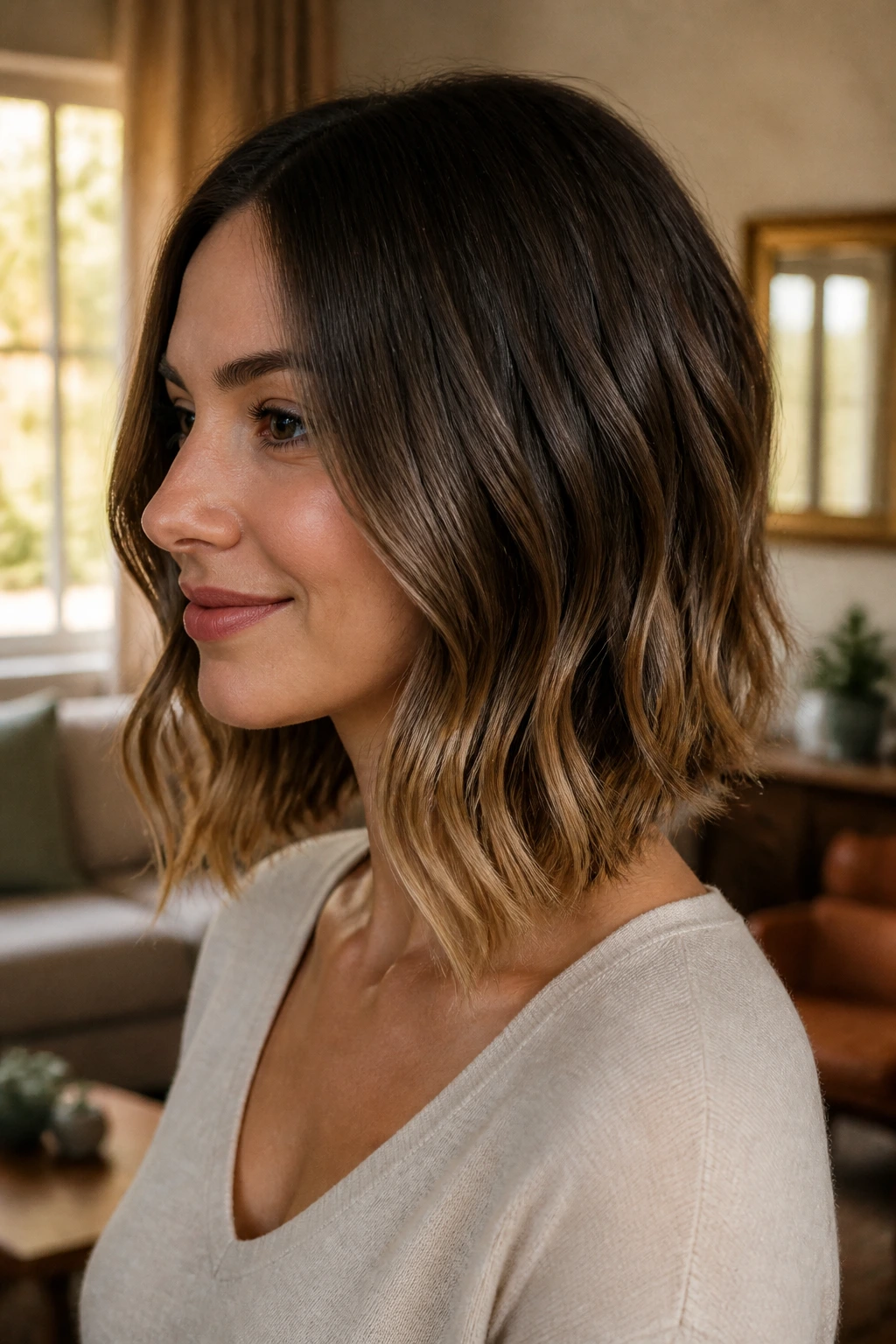
If you want movement without losing the shape, this is the version I’d point you toward first. The long angled bob gets friendlier when the waves start below the chin, because the top stays smooth and the bottom has enough bend to show off the angle.
Use a 1 to 1¼-inch curling iron and wrap only the mid-lengths. Leave the last inch or two out. That keeps the ends from looking curled under in a dated way, which is a mistake I see a lot. Brush the waves out once they cool, then mist on a light texture spray. The hair should look soft, not crunchy.
This style is especially good if your face shape feels strong and you want the haircut to take the edge off a little. It also plays nicely with medium-density hair that needs movement but not too many layers. The waves catch the longer front pieces and make the cut feel airy.
And no, it does not need to be beachy in the overly perfect sense. Loose, messy, slightly uneven—that’s the point.
3. The Blunt Long Angled Bob With a Sharp Edge
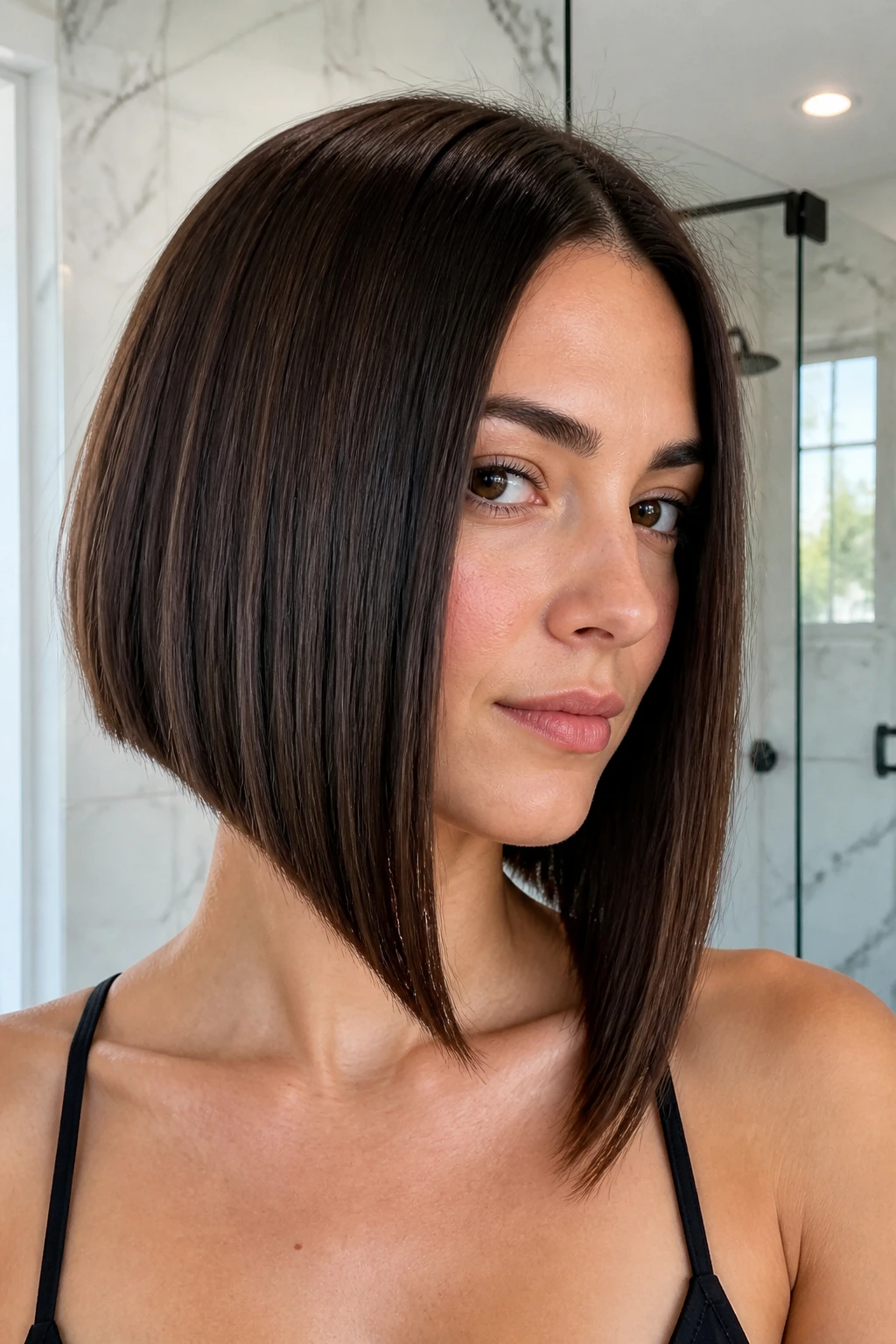
Can a long angled bob still look soft? Yes, but this version is not trying to be soft. It is about clean ends, a straight outline, and a front edge that says the cut was done on purpose.
What Makes It Different
The blunt perimeter gives thicker hair a solid shape, which means you do not have to fight frizz or split-looking ends every morning. It also keeps fine hair from looking wispy at the bottom. I like this version most on hair that has enough body to hold a line without collapsing.
The trick is restraint. Keep layering light, or skip it altogether if your hair already has a lot of texture. You want the front pieces to swing, not fray. A center part can work here, but a slight off-center part often looks better because it keeps the strong line from feeling too severe.
How to Wear It
- Blow-dry with a paddle brush for a smoother finish
- Run a flat iron only through the last few inches if needed
- Use a tiny drop of serum on the ends, never the roots
- Ask for a crisp perimeter with minimal thinning
This is the cut for someone who likes a neat hemline on a dress. It has that same feeling. Clean. Intentional. A little bit blunt in the best way.
4. The Layered Long Angled Bob for Fine Hair
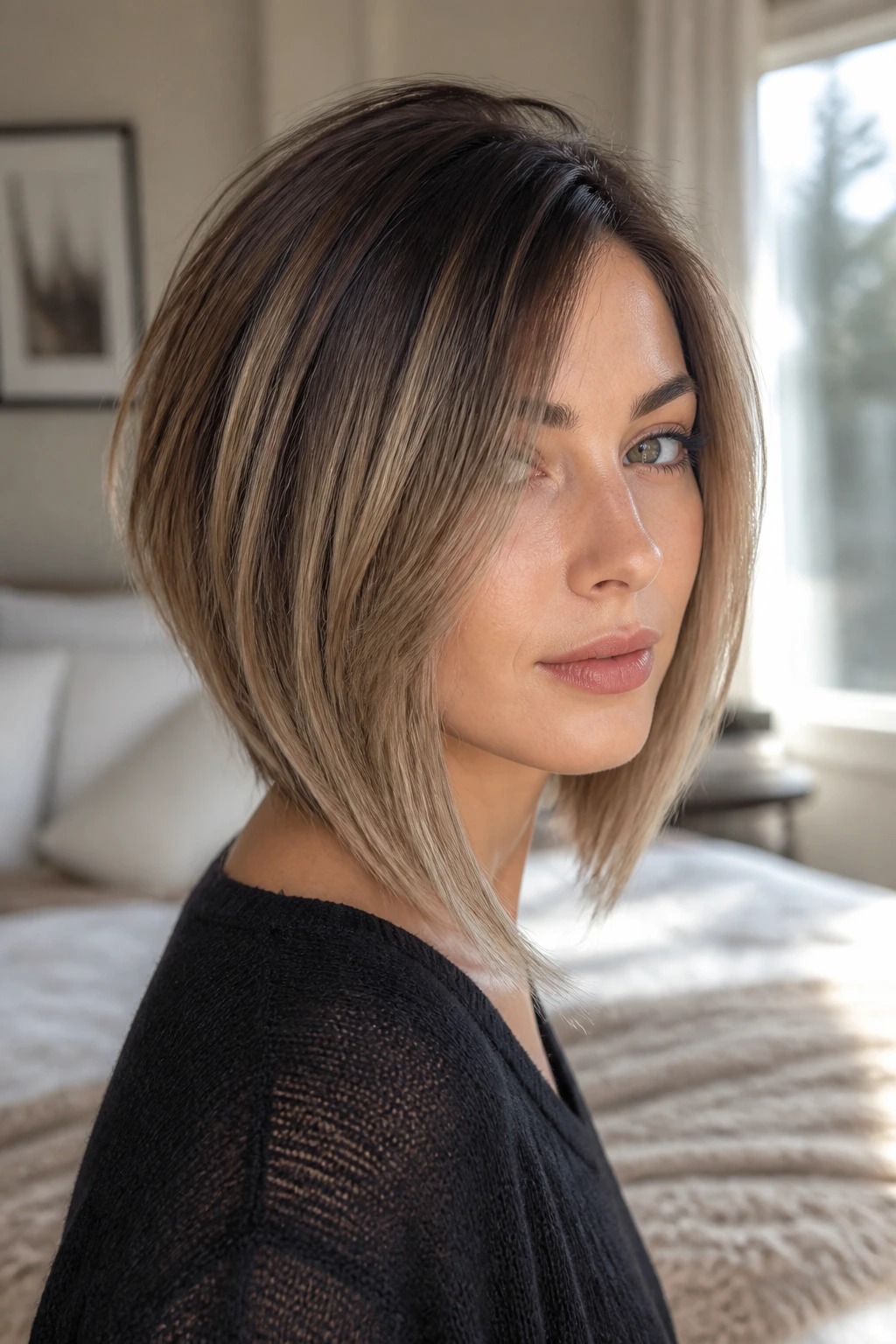
I have seen fine hair go flat in a long angled bob when the cut is too heavy, and it is a shame because the shape can be gorgeous on thinner strands. The answer is not a dozen short layers everywhere. It is a careful lift at the crown, a lighter weight line, and a front that still holds enough length to frame the face.
The best version usually starts with subtle layers through the top and just enough internal removal to keep the back from puffing out. You want movement, not gaps. If the stylist chops too deep into the ends, the haircut starts to look thin in daylight and even thinner in photos.
A round brush helps here. So does a root-lift spray at the crown. Dry the hair in the direction opposite your part for a few minutes, then switch back. That small trick gives the cut a little air without making it feel overworked.
Watch For This
- Too much texturizing can make fine hair look stringy
- Heavy conditioner near the roots will flatten the shape
- A little bend at the front is better than tight curls
- Light-reflecting color helps the angle show up more clearly
This version is quietly practical. It gives fine hair a better outline without pretending the hair is something it is not.
5. The Curly Long Angled Bob That Keeps Its Shape

Curly hair and an angled bob can be a very good match, but only if the cut respects shrinkage. Cut it too dry and too short in the front, and the whole shape can jump upward in a way that feels accidental. Cut it with the curls’ actual behavior in mind, and the result is gorgeous.
The angle still matters, but on curly hair it reads more like a contour than a strict line. The back sits lighter and closer to the neck, while the front keeps enough length to let the curls fall where they want. That longer front piece helps the cut feel balanced when the curls dry and spring up.
Moisture is the whole story here. Use a leave-in conditioner, then a cream or gel that gives the curls enough hold to keep the shape. Diffuse on low heat and stop when the roots are mostly dry but not puffed out. If you touch the hair too much while it is drying, the outline gets fuzzy fast.
Best part: the long angled bob on curls has a built-in softness that straight hair has to work for. The cut does not need to look perfect. It needs to look like the curls belong there.
6. The Deep Side-Part Angled Bob With Extra Lift
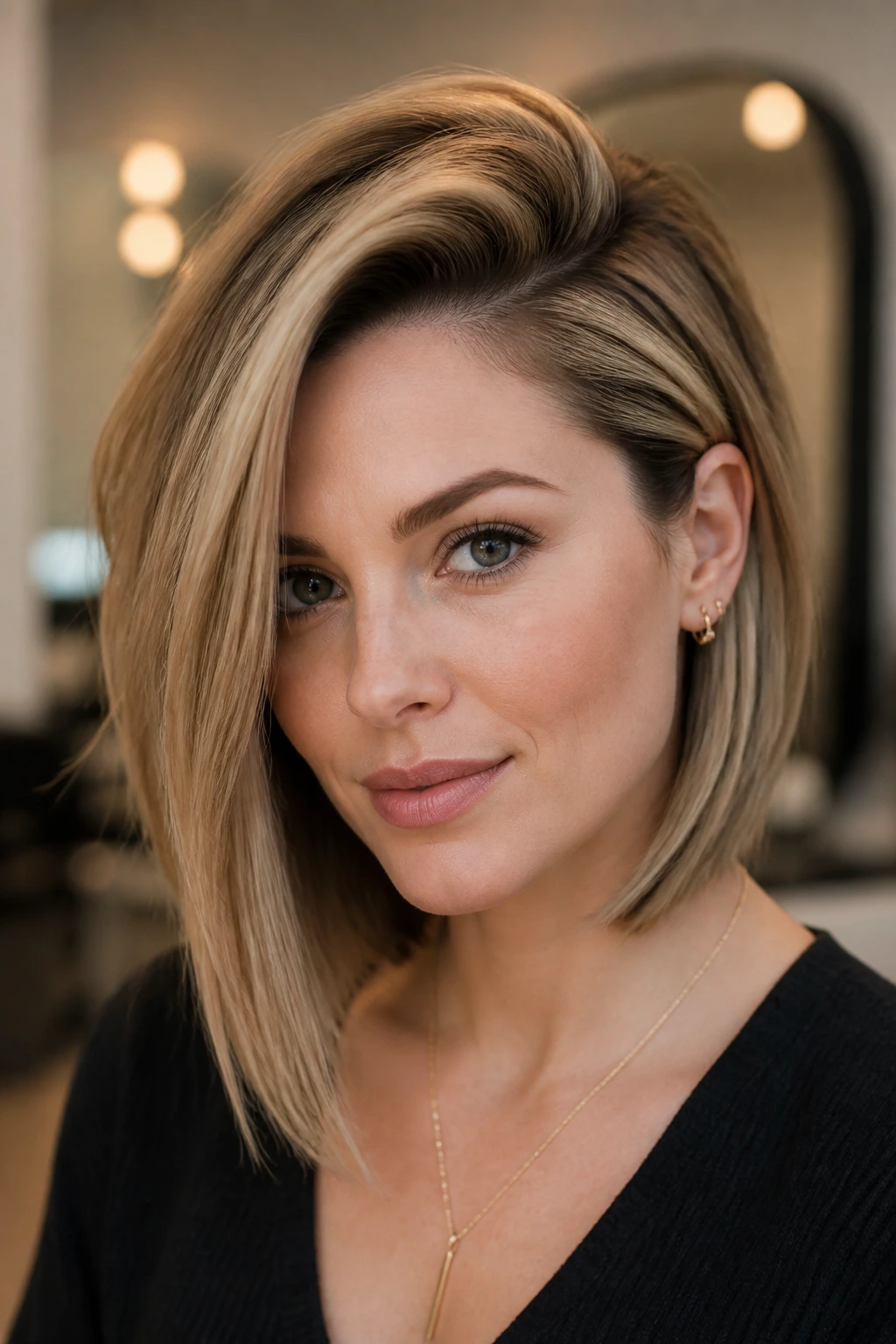
A deep side part changes the haircut more than most people expect. It throws weight to one side, opens up the face, and makes the long front pieces feel longer without adding a single inch. If you like a little drama in your hair but do not want obvious layers, this is a smart move.
Unlike a center-part angled bob, this version gives the roots a natural lift at the crown. The side with less hair falls closer to the cheekbone, while the heavier side creates a sweep that looks good tucked behind the ear or pinned back with one small clip. That asymmetry is the point.
It works especially well on round and heart-shaped faces because the longer line on one side pulls the eye downward. Straight hair shows the shape most clearly, but soft waves can make it feel a bit less formal. If you want the part to hold, blow-dry the roots in the opposite direction first, then flip them back once they cool.
I prefer this cut when someone says they want “something different” but do not want a full haircut personality change. Fair enough. This one changes the mood without changing the whole script.
7. The Long Angled Bob With Curtain Bangs
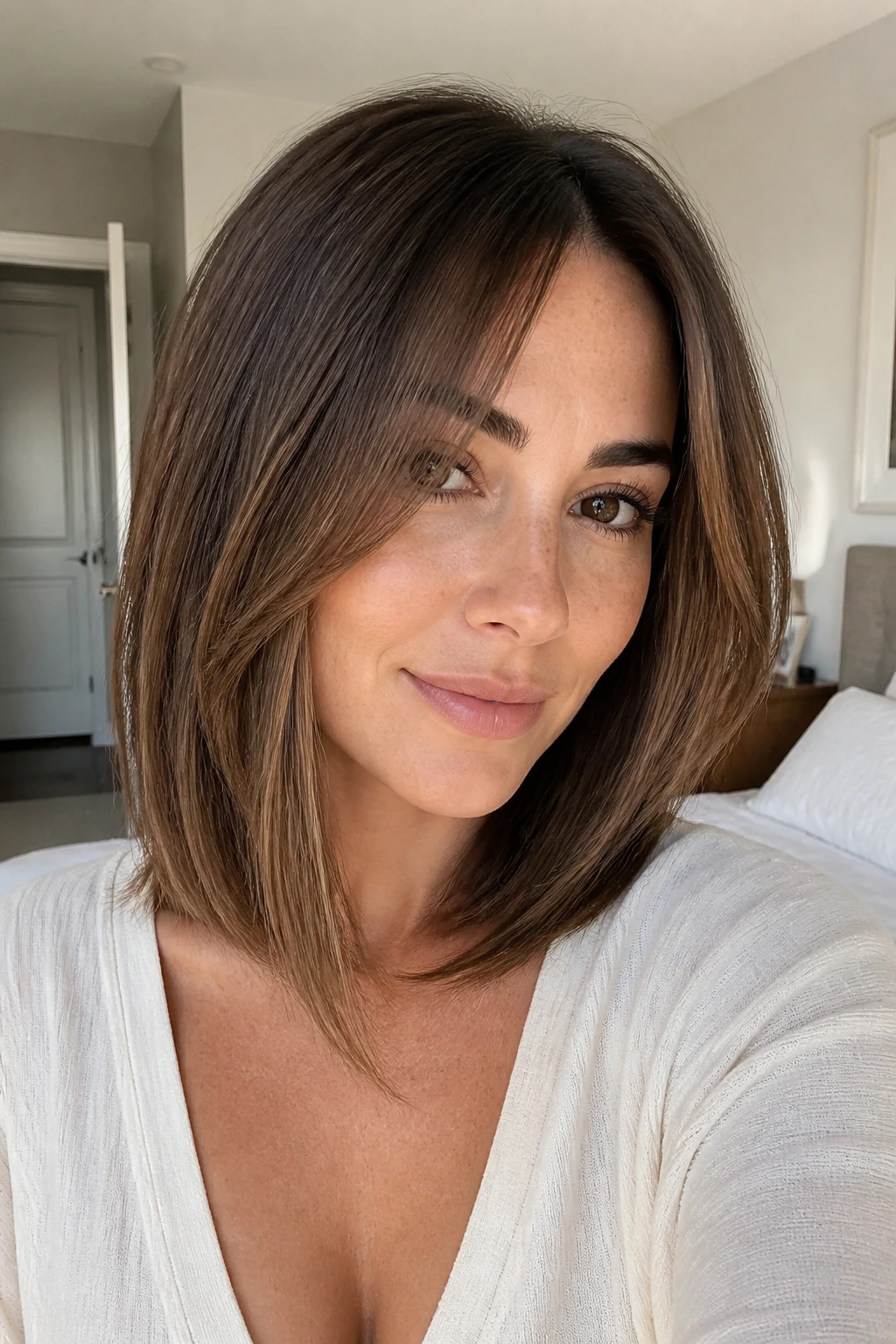
Curtain bangs and a long angled bob get along because both shapes want to frame the face instead of boxing it in. The bangs soften the top of the haircut, and the angle keeps the lower half from feeling too round or too sweet.
How to Make the Blend Look Natural
The bangs should start high enough to open around the cheekbones, not fall like a heavy curtain over the eyes. That means a soft center part, a round brush, and a little bend away from the face at the ends. If the bangs are cut too thick, they fight the rest of the style. If they are too sparse, they just look like grown-out fringe.
This combo is good for people who want the haircut to feel lived-in but still styled. The bangs can hide a high forehead, soften a strong brow line, or make the whole cut seem less severe. A quick blow-dry on the fringe and a flat brush through the lengths is usually enough.
- Use a heat protectant every time you style the bangs
- Trim the fringe more often than the rest of the haircut
- Keep the front pieces slightly longer than the cheekbone
- Style the bang away from the face, not straight down
It is a forgiving cut, which is rare. The bangs can be a little imperfect and still look right.
8. The Face-Framing Long Angled Bob With Cheekbone Layers

This is the version I recommend when someone says, “I want my face to show up better.” The cheekbone layers do a lot of the visual work, but they do it softly. You get shape without the haircut screaming for attention.
The front pieces usually start around the cheek or jaw, depending on how much framing you want. That placement matters. If the layers start too high, the cut can get fluffy in a hurry. If they start too low, the face-framing effect disappears. The sweet spot is where the ends skim past the corners of the mouth and the longest pieces fall just below the collarbone.
This style looks especially good with subtle styling—think a quick bend with a flat iron or a round-brush blowout with a little movement at the ends. It is one of those cuts that does not need a lot of product. A light cream and a flexible hairspray are enough.
I keep coming back to this shape because it has range. It can feel polished for work, then a little loose later in the day, and neither version feels wrong.
9. The Stacked Back Long Angled Bob for Extra Lift
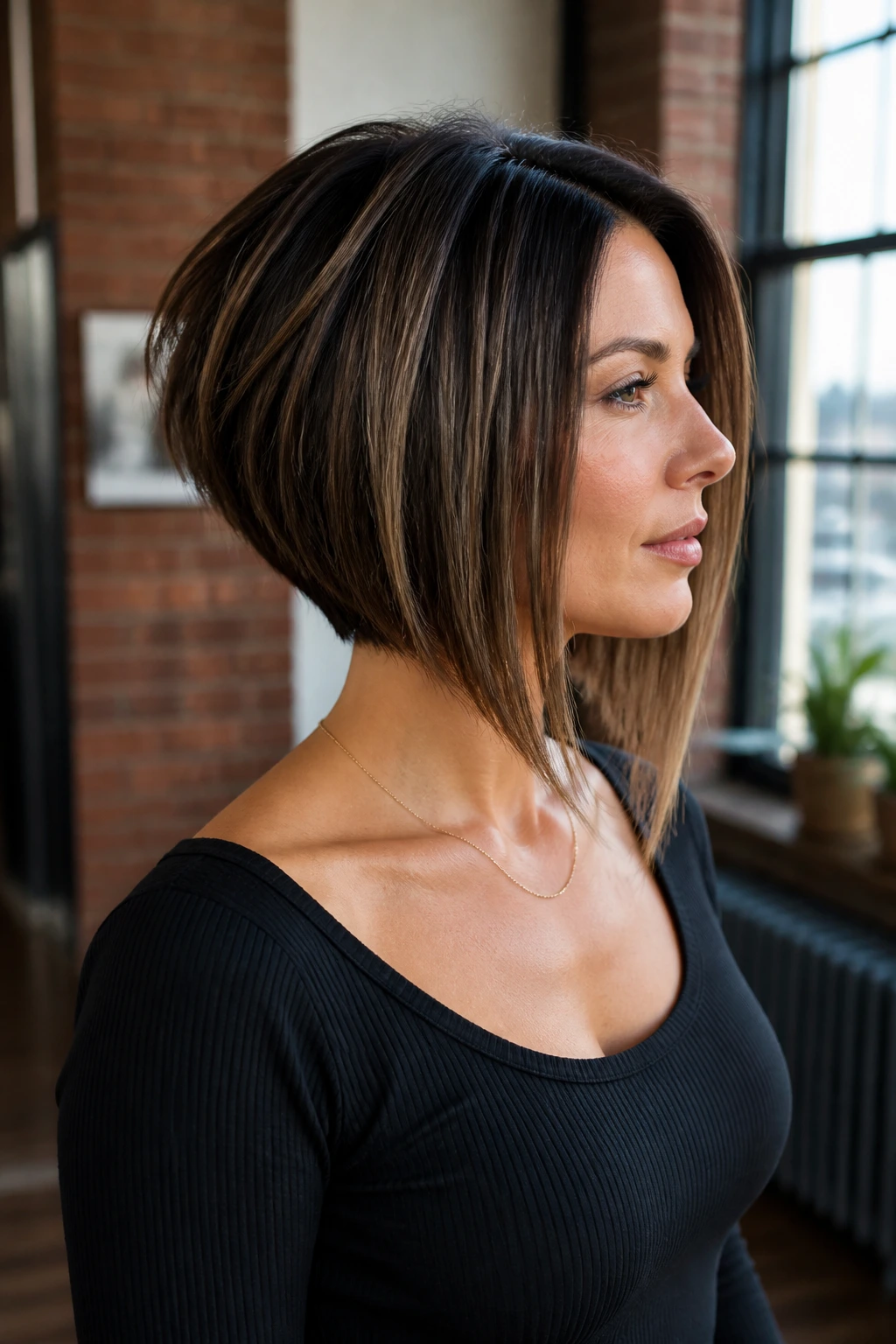
A stacked back gives the long angled bob more structure at the nape. The shorter layers underneath create lift, which is handy if your hair tends to sit flat against the head or collapse after a few hours. The front still keeps length, so you do not lose that sweeping angled line.
Why the Stack Matters
Without the stack, the back can feel too heavy on denser hair. With it, the haircut gets air between the layers and sits better around the neckline. That can make a big difference if your hair is thick, slightly coarse, or stubborn about holding shape. It also helps the style dry faster, which is a nice side effect.
The downside is maintenance. A stacked back grows out more obviously than a softer lob. If you let it go too long, the shape can turn blocky around the nape. Trims keep it tidy.
Quick Styling Notes
- Blow-dry the back first to set the lift
- Use a vent brush or round brush at the crown
- Keep the ends smooth so the stack does not look choppy
- Ask for a gentle stack, not a dramatic wedge
This is a more tailored cut. It feels neat, structured, and slightly architectural without becoming fussy.
10. The Long Angled Bob With Balayage Dimension

Color changes the long angled bob more than people expect. Balayage especially can make the angle visible even when the haircut is simple, because the lighter pieces catch the movement in the front and soften the darker back. The cut starts to look more layered without needing a ton of slicing.
A good color placement matters here. The longer front pieces can carry the lightest ribbons, while the back stays a shade deeper for contrast. That contrast helps the angle show up from the side, which is where this haircut usually looks best anyway. Too much light all over can flatten the shape. Too little, and you lose the movement.
This is one of those styles that looks especially nice when the hair is curled away from the face. The color shifts in the bend of the wave, and the cut reads as fuller. If you wear your hair straight, the lighter ends still help the line stand out.
A practical note: balayage on an angled lob grows out more gracefully than chunkier highlight patterns. That matters if you do not want your color screaming for attention every few weeks. Quiet color. Good shape. Easy win.
11. The Asymmetrical Long Angled Bob
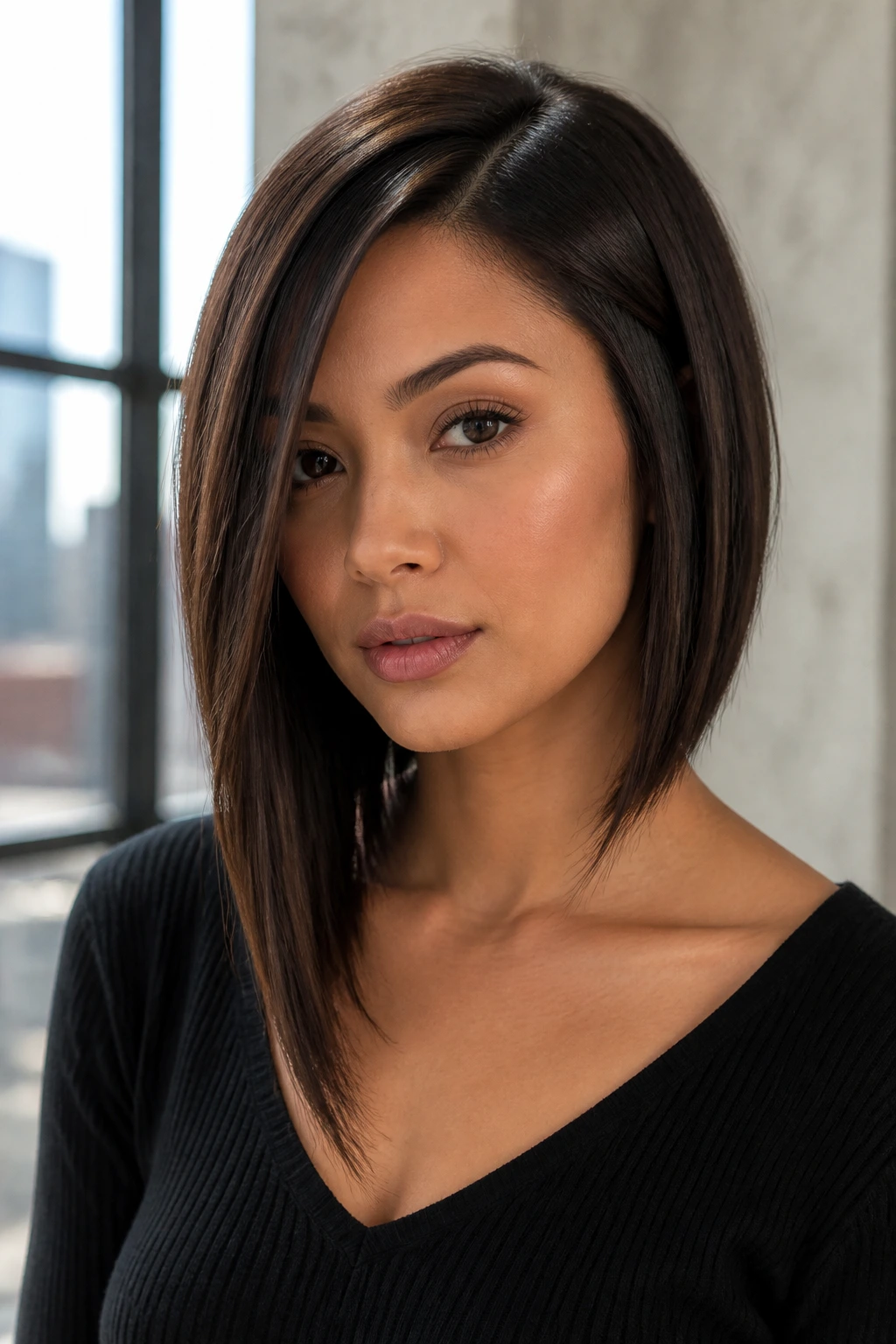
This is the bolder cousin of the classic angled bob. One side sits longer than the other, and that small imbalance changes the whole mood of the haircut. It feels sharper, a little more editorial, and a lot less predictable.
Unlike a standard angled lob, which usually keeps both front sides balanced, the asymmetrical version asks the eye to travel. That makes it useful if you want to draw attention to one side of the face, a jawline, or even an earring you actually want people to notice. It also works well if you like haircuts that look intentional from every angle.
The cut does need confidence, though. If the asymmetry is too extreme, it can take over your face. I like it best when the difference is noticeable but not theatrical—enough to be seen, not so much that it starts doing the talking for you.
It is best on straight or softly wavy hair because the shape stays visible. On very curly hair, the asymmetry can disappear unless the curls are cut with that difference in mind. If your style leans toward clean lines and a little edge, this one is worth a serious look.
12. The Shaggy Long Angled Bob With Rough Texture
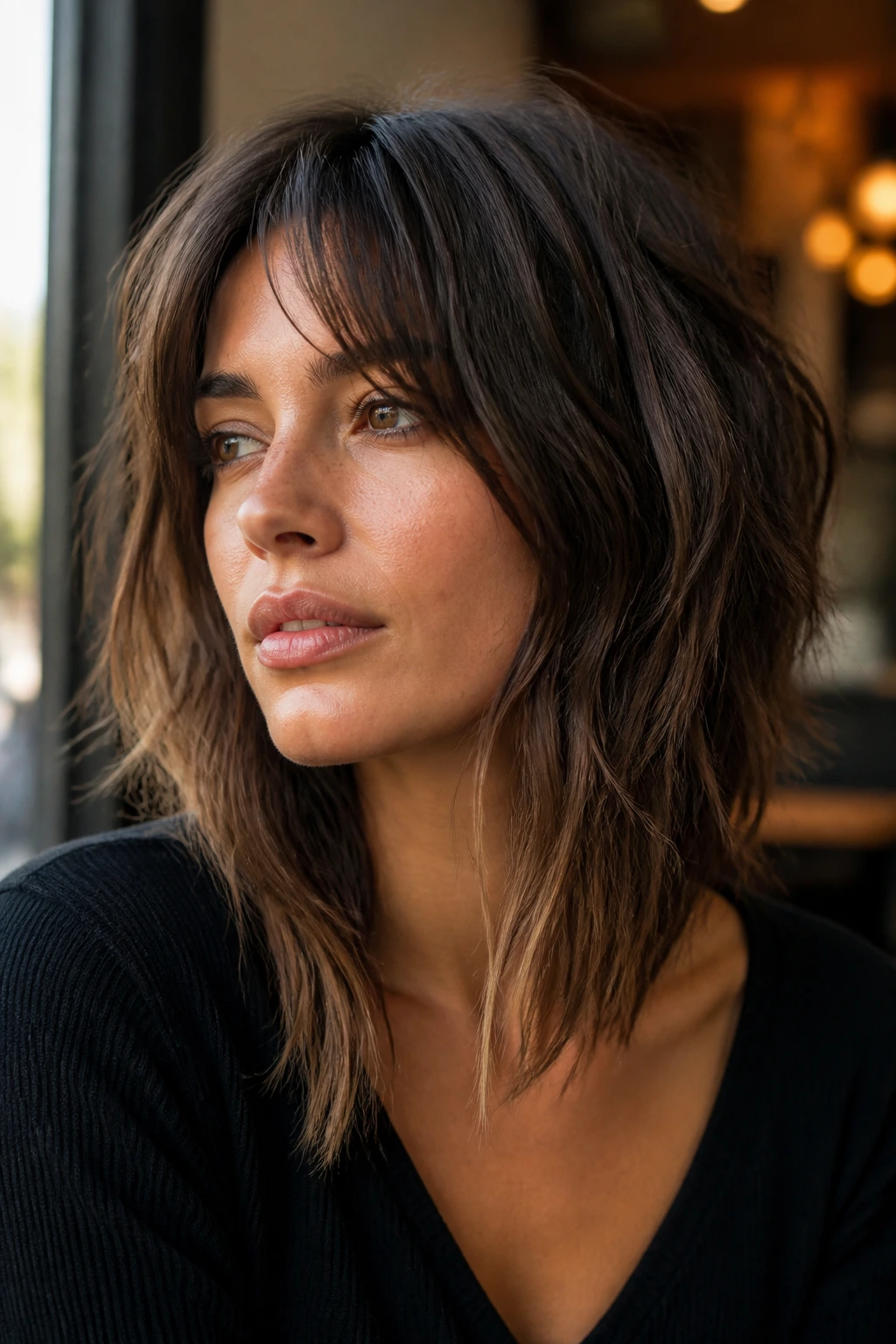
Why does a shaggy angled bob work so well? Because the angle gives the haircut a backbone, and the shaggy texture keeps it from feeling too polished. That mix is useful if you want your hair to look like it has movement even when you have barely touched it.
The Texture Story
This version usually uses point-cutting or light razor work to break up the ends. The result is a softer edge and a little roughness through the surface. It is not messy in a careless way. It is messy in a good, modern, lived-in way. That difference matters.
Air-drying works here if your hair has natural bend. If it does not, a diffuser and a small amount of mousse can create enough lift to support the shape. Finish with texture spray on the mid-lengths, not the roots. Too much product at the scalp makes the style collapse.
- Best for medium to thick hair
- Great if you like second-day hair
- Less ideal if you want a super neat outline
- Needs a stylist who knows how to remove weight without chewing up the ends
I like this cut on people who are tired of hair that behaves too nicely. It has attitude, but it still has shape.
13. The Rounded Blowout Long Angled Bob
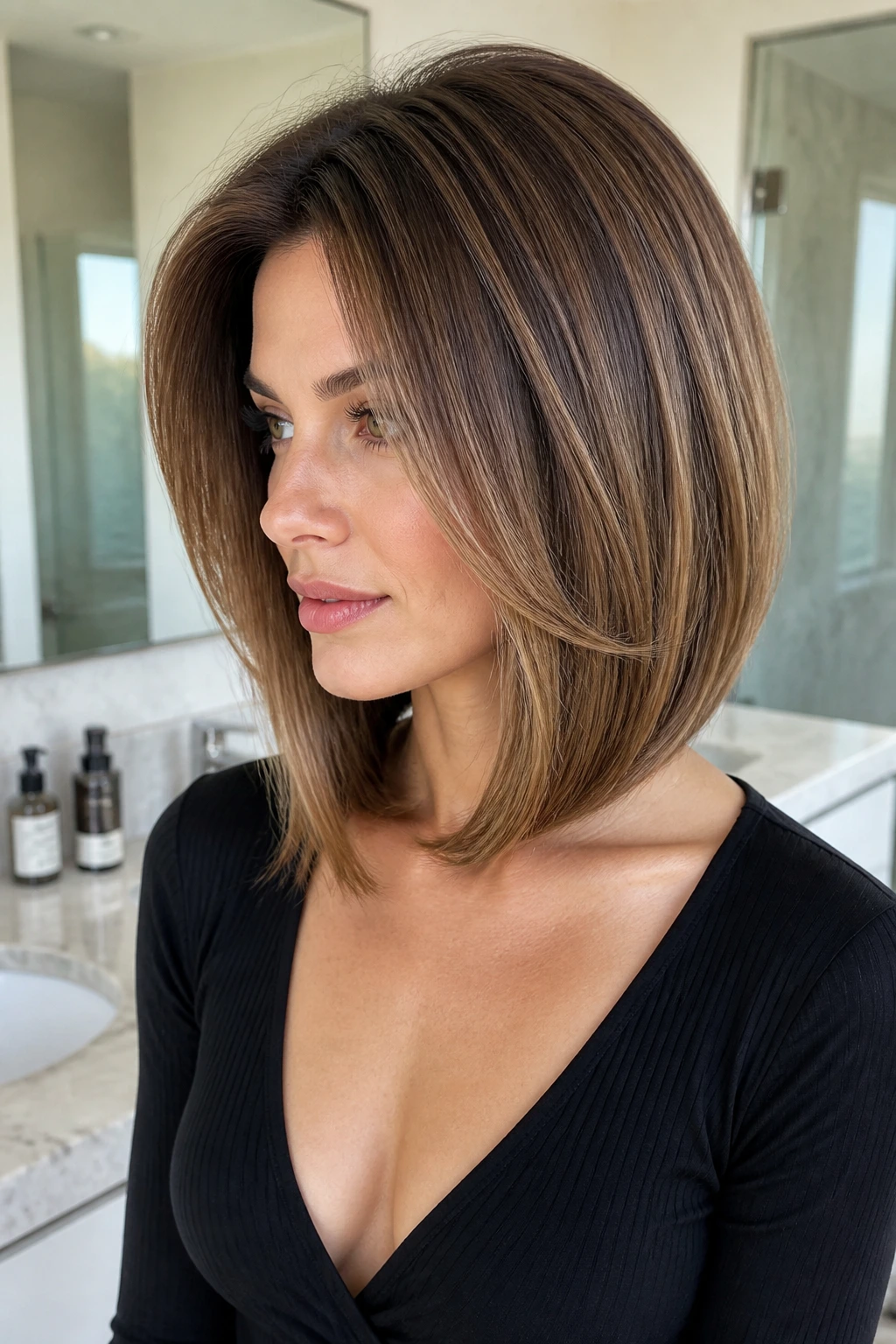
Picture the kind of blowout that swings when you turn your head. That is what this cut wants. The rounded finish softens the angle a little, which makes the style feel fuller and more luxurious without turning into a helmet.
The trick is tension. Use a round brush, aim the nozzle down the hair shaft, and lift the roots as you dry. Then roll the ends under just enough to create a curve, not a curl. The front pieces should still fall longer, but they can have a polished bend at the ends that makes the haircut look finished.
What Helps Most
- Start with a smoothing cream before blow-drying
- Dry the roots first so they do not stay flat
- Use the cool shot on each section before releasing it
- Keep the ends soft, not pin-straight
This style is one of the most flattering versions for work, events, and anything where you want your hair to look deliberate. It also photographs well in real life, which is not the same as being overly styled. The hair moves. That is the whole point.
If you like a haircut that feels dressed without wearing obvious styling, this is the one to keep in mind.
14. The Low-Maintenance Long Angled Lob for Thick Hair
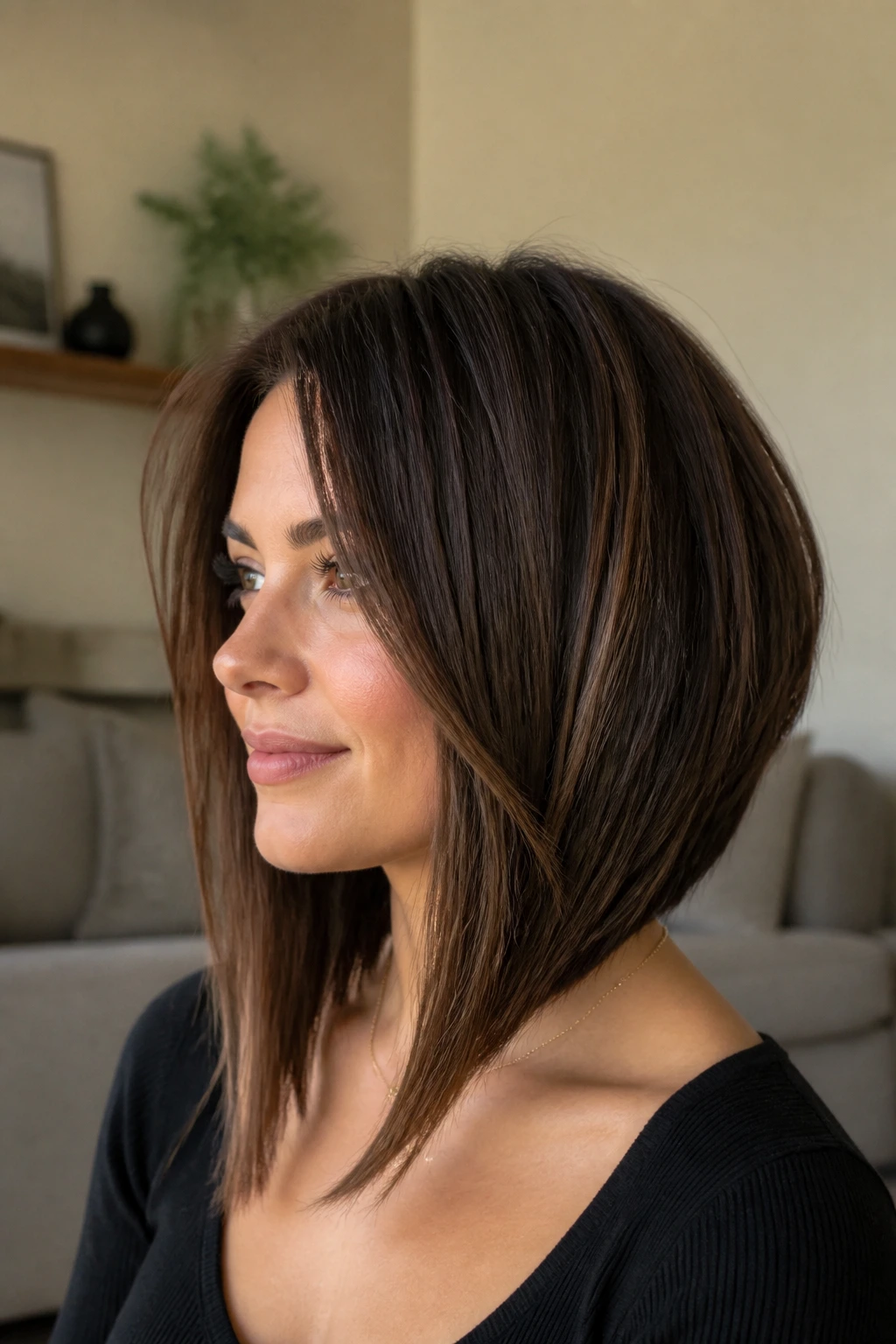
Thick hair can look heavy fast in the wrong bob, but the long angled lob handles it well when the weight is taken out in the right places. The longer front pieces keep the shape from ballooning outward, while the shorter back helps the bulk sit closer to the neck.
The smartest version usually has internal layers, not a lot of chopped-up surface texture. That keeps the haircut from frizzing up at the ends. A stylist who knows how to remove weight in the right spots can make thick hair move instead of sit there like a brick. That is the goal. Not thinner hair. Just better behavior.
This cut also dries faster than a one-length bob, which thick-haired people usually appreciate. Less time under the dryer. Less time fighting the ends. And because the angle naturally gives the front some swing, you can often wear it with a quick blow-dry and leave it at that.
I think this version deserves more attention than it gets. Thick hair does not need to be tamed into silence; it just needs a shape that knows where to go.
15. The Polished Long Angled Bob for Straight Hair
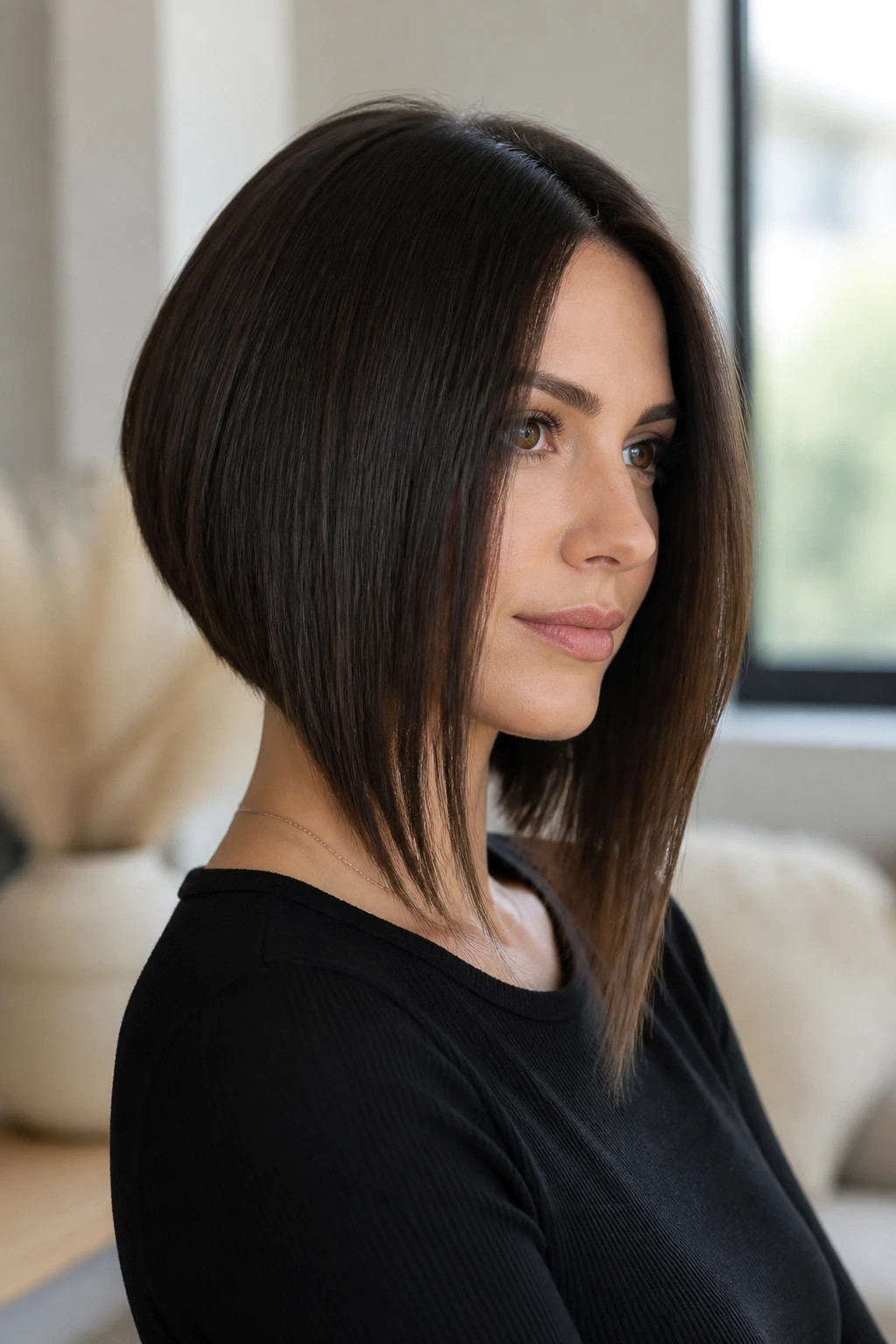
Straight hair can make a long angled bob look almost architectural. Every line shows. Every small error shows too, which is why the cut needs clean edges and a good trim schedule. If you like a haircut that looks composed with very little daily work, this is a strong finish.
The beauty of this version is that the angle does the styling for you. A smooth blow-dry, a quick pass with a flat iron if needed, and a dab of serum on the ends are enough. The front pieces swing forward, the back sits tighter, and the whole shape looks deliberate without being flashy. That kind of haircut ages well between salon visits, especially if your hair grows in evenly.
It also plays nicely with minimal makeup, bold lipstick, sharp collars, or simple clothes. That may sound like a side note, but it matters. A clean bob changes how the rest of your look reads.
If you want the safest bet in the bunch, this is probably it. Not boring. Just reliable in the smartest way, and sharp enough to make you feel like your hair finally got the memo.
