



Curly hair does not wear blonde the same way straight hair does. A single flat shade can make curls look blurred, while the right mix of tone and placement can make every bend look fuller, brighter, and far more alive.
When people search for blonde hair color ideas for curly hair, they usually want two things at once: brightness and shape. That is the tricky part. Curls catch light on the outside of the curve and hold shadow on the inside, so the color has to move with the texture instead of sitting on top of it like a paint job.
That is where so many blonde photos go sideways. A shade that looks soft on a smooth bob can look harsh on a ringlet, or brassier than expected, or too one-note once the curls dry and shrink up. Placement matters. So does the undertone. So does leaving enough depth at the root and inside the curl clumps.
The shades below lean warm, cool, soft, bold, and lived-in, because curly hair can handle all of them when the color has some thought behind it. Some are low-maintenance. Some are high-drama. A few need a very good toner and a patient colorist. All of them can work, and the details make the difference.
1. Creamy Butter Blonde
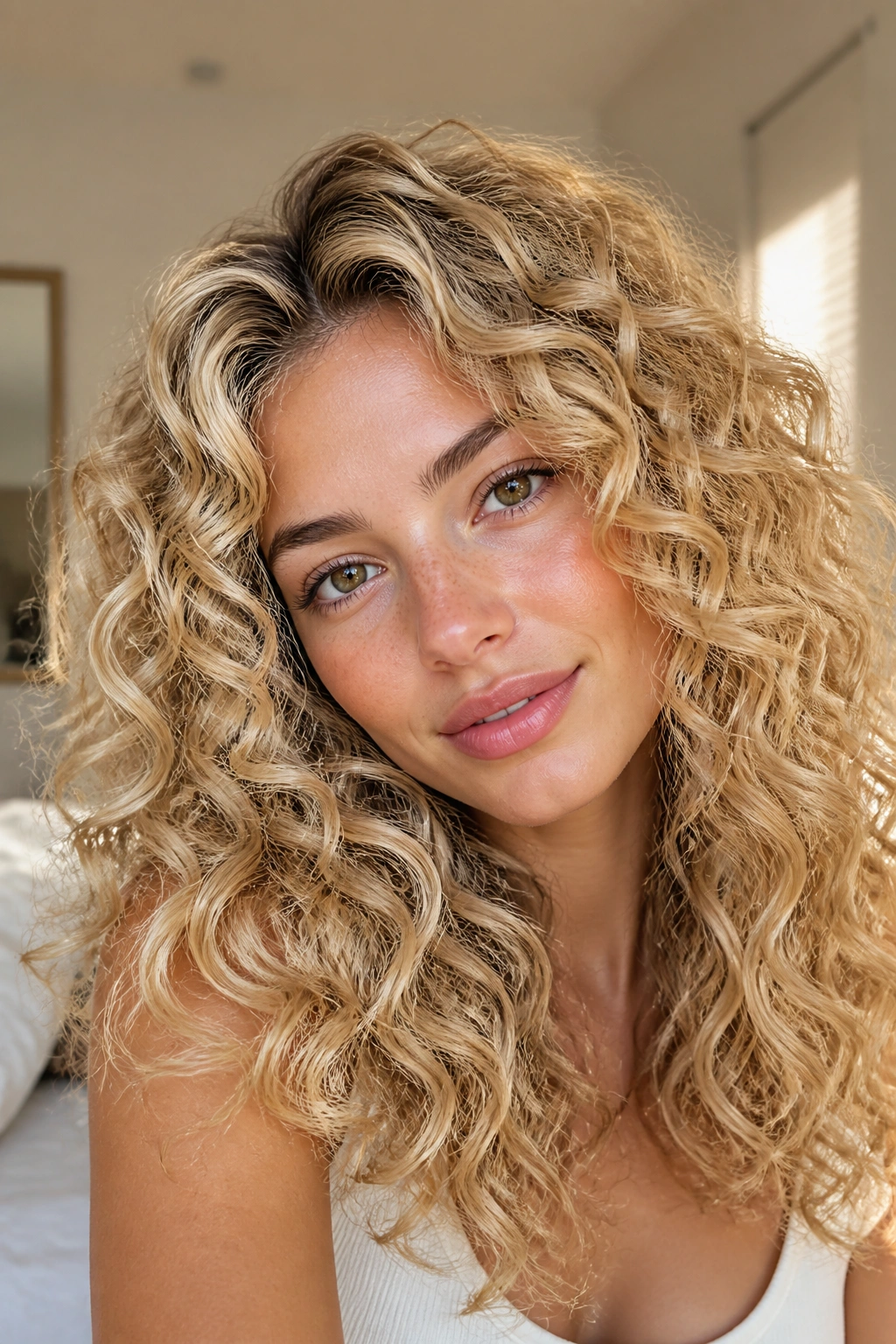
Creamy butter blonde is the shade I reach for when someone wants light hair that still feels soft and touchable. On curls, that warmth keeps the pattern from looking chalky or flat, which is a real problem when the blonde sits too pale against a strong texture.
Why It Flatters Curls
Ask for level 8 to 9 lift with a beige-gold toner, not a stark yellow or icy silver finish. The goal is to keep the blonde plush, almost like soft whipped cream rather than a bright strip of color.
- Best on 2C to 3B curls
- Looks strongest with a soft root shadow
- Needs a gloss refresh every 6 to 8 weeks
One small warning: if your curls pull orange fast, keep the golden tone clean and controlled. Butter blonde should read warm, not brassy.
2. Honey Ribbon Balayage
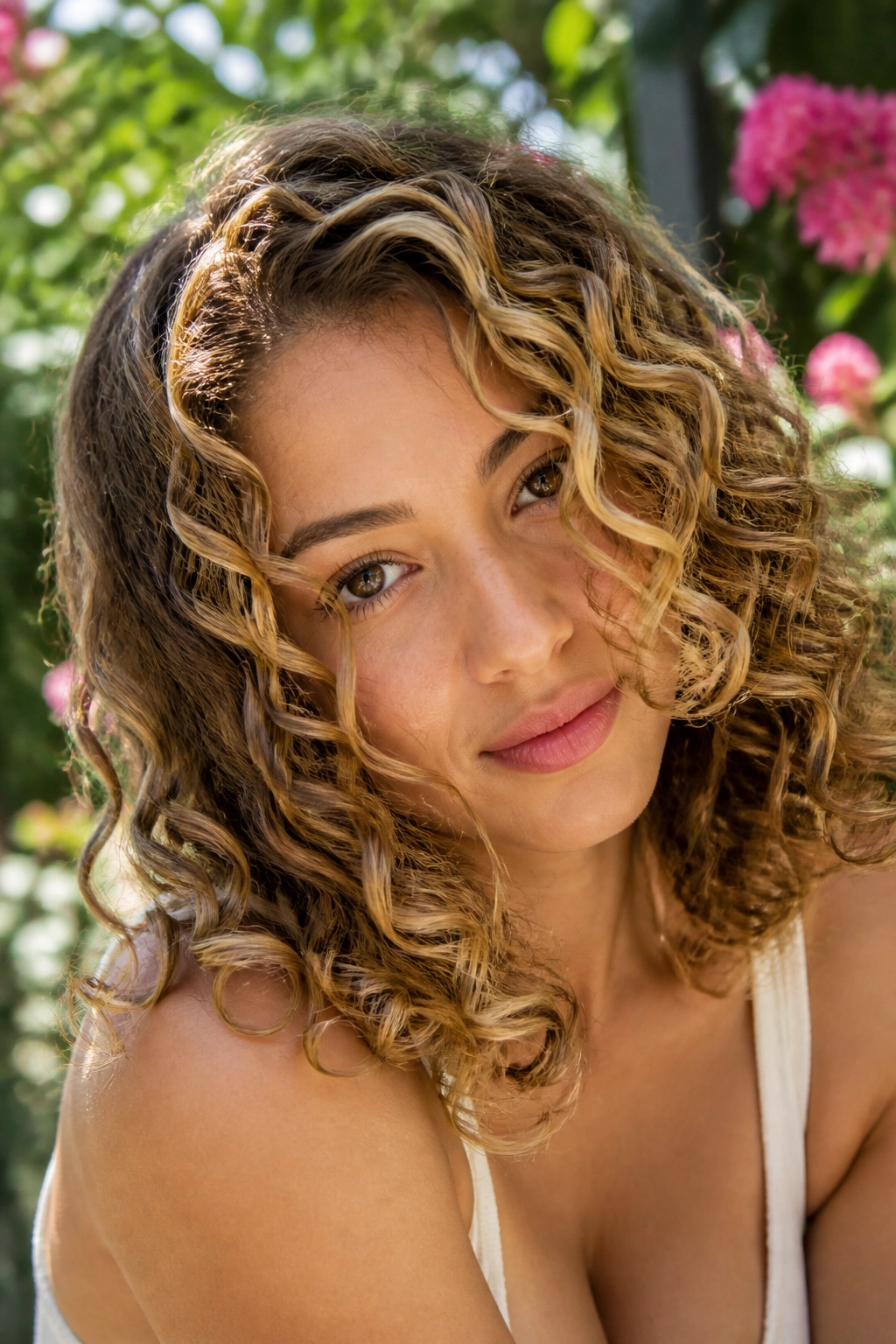
Honey ribbons make curls look thicker. That is the real reason this shade works so well. The painted pieces break up the darker base just enough to add movement, but they do not erase the curl pattern the way an all-over pale blonde can.
Balayage also helps here because the lighter sections can sit on the outer curves of the curls instead of hiding in the underlayers. That means the color shows when the hair moves, not just when it is freshly styled. Ask for thin, hand-painted ribbons around the face and through the top half of the head, then leave the underside deeper.
It is a kind shade for grow-out too. The root line stays soft, which matters when your curls already bring enough texture to the party.
3. Beige Blonde Ribbons
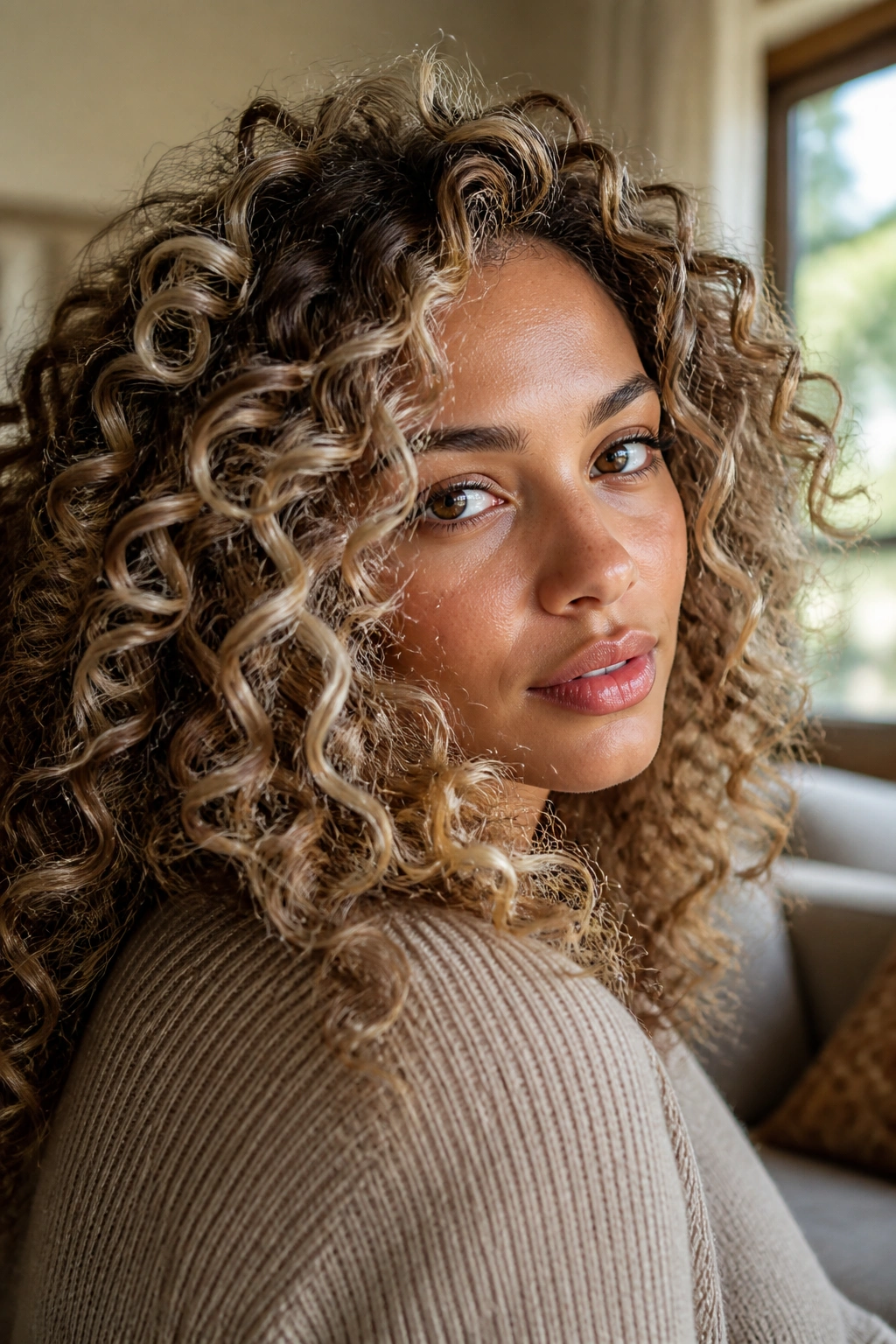
Want something lighter but calmer than gold? Beige blonde ribbons are a nice middle ground. The tone is neutral enough to avoid looking yellow, but warm enough that the hair still feels rich and not washed out.
How To Ask For It
Tell your colorist you want fine woven highlights, not chunky stripes. On dense curls, that makes a big difference because the blonde threads in and out of the pattern instead of sitting on top of it like a highlight cap from another era.
Use a beige toner with a tiny bit of violet. Not much. Just enough to keep brass from stealing the show. This shade is especially good if your curls are tight and springy, because the neutral tone lets the shape do the heavy lifting.
4. Champagne Money Piece
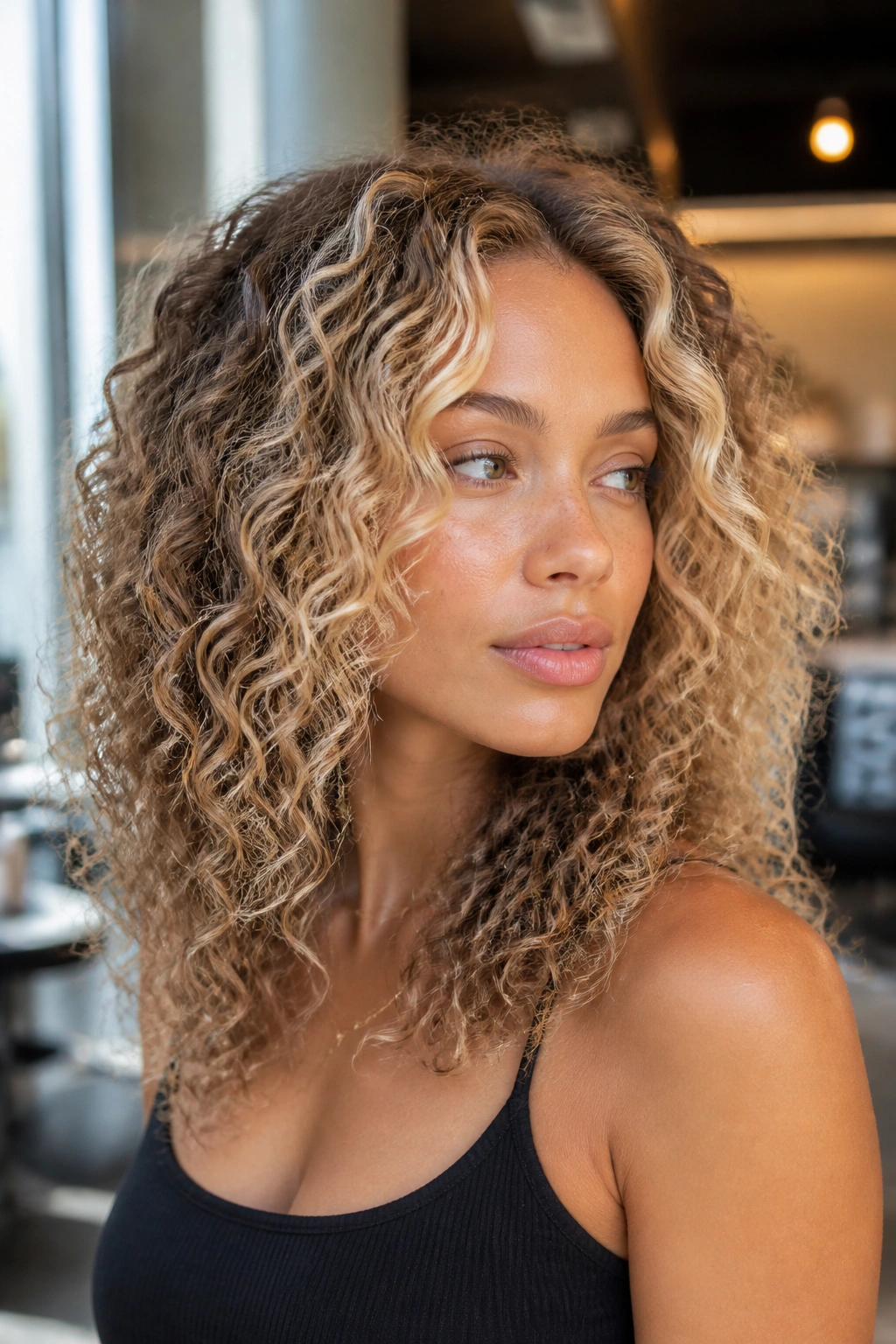
A curly bob with a champagne money piece can look polished in about five seconds. That front section draws light right where the face meets the hair, and champagne has just enough coolness to feel bright without going icy.
The trick is restraint. Keep the face frame brighter than the rest, but not so pale that it reads like two separate colors. A good colorist will feather the champagne into the front curls and stop before the highlight line gets obvious. Around the temples and fringe, that soft fade matters.
This one is especially good if you want a small change that still shows up in photos. The rest of the hair can stay deeper. Nice and easy.
5. Icy Platinum Curls
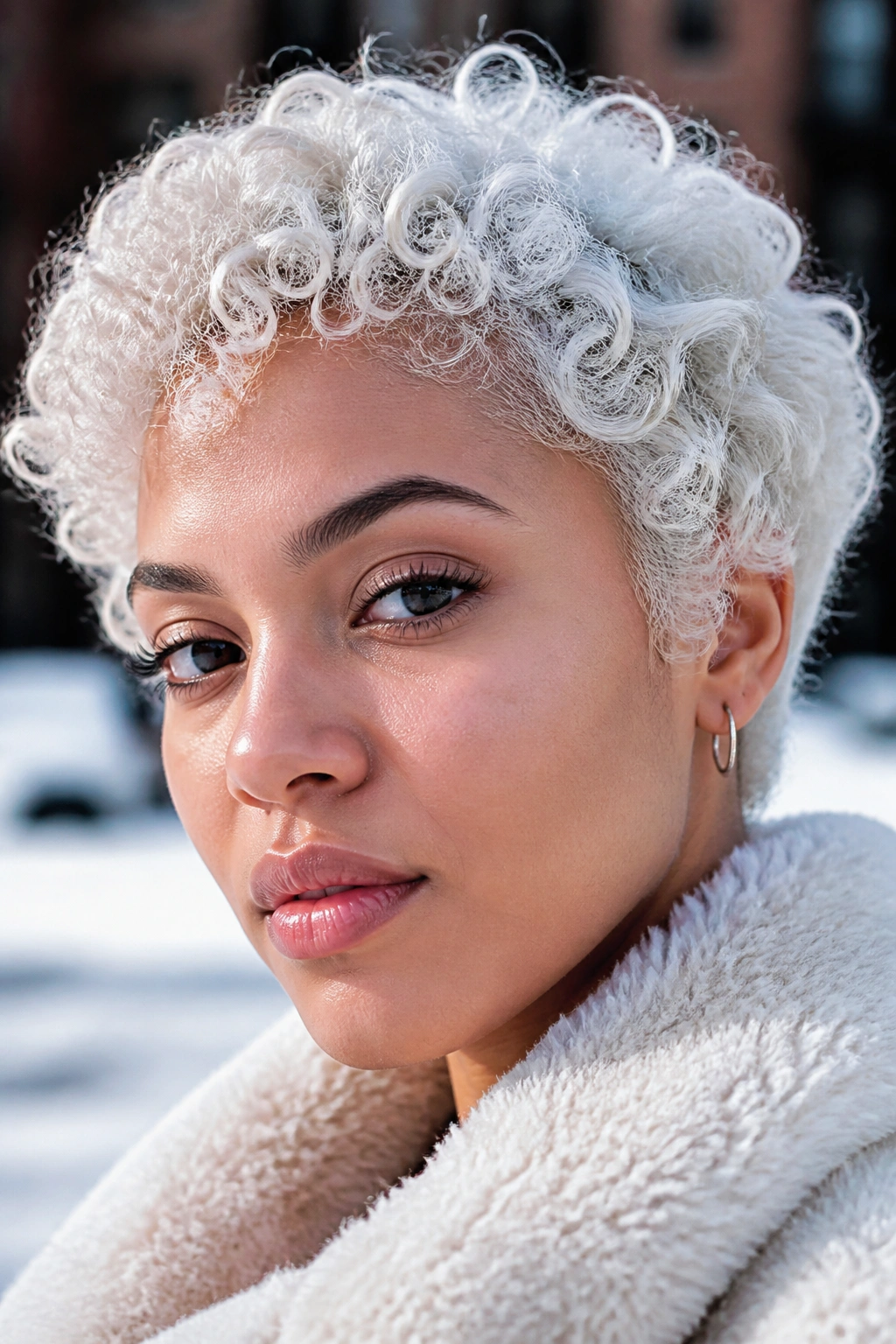
Icy platinum on curls is a mood. Sharp. Clean. A little fearless. It can look stunning on short curls, cropped coils, and defined ringlets, but it asks for honesty about hair health.
If your strands are already fragile, this is not the place to improvise. Platinum usually needs the most lift, the most toning, and the most maintenance. Bond builders, regular trims, and a careful blow-dry routine are not optional here; they are the price of admission.
The payoff is strong contrast. Tight curls in platinum can look almost sculptural, especially when the root is kept soft and the finish stays glossy rather than dry and fluffy. Gorgeous? Yes. Low-effort? Not even close.
6. Caramel Bronde Melt
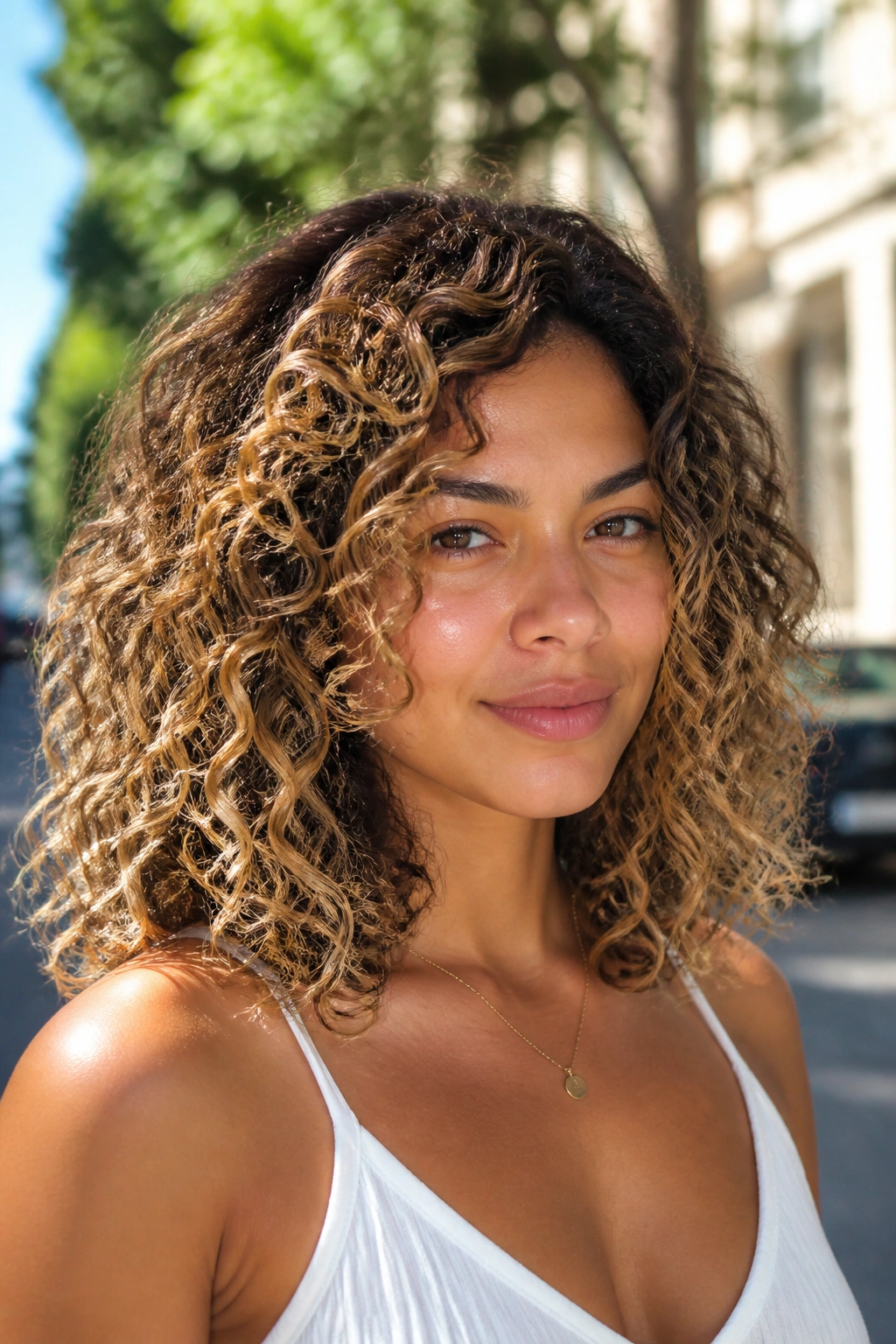
Caramel bronde is the shade I suggest when someone says, “I want blonde, but not too blonde.” That sounds vague until you see it on curls. Then it makes perfect sense.
Why It Works Better Than A Flat Blonde
The brown-gold blend keeps depth where curls need it most. Instead of forcing the whole head into a single pale tone, the color melts from brunette at the root into caramel through the mids and lighter beige at the ends. The result feels expensive without looking overdone.
It suits darker bases beautifully, especially if you do not want a hard maintenance schedule. Ask for a gloss finish rather than an overly ash tone, because curls tend to swallow cool color fast. One more thing: this shade really likes a little shine. A lightweight serum on the ends makes the caramel read richer.
7. Golden Foilayage
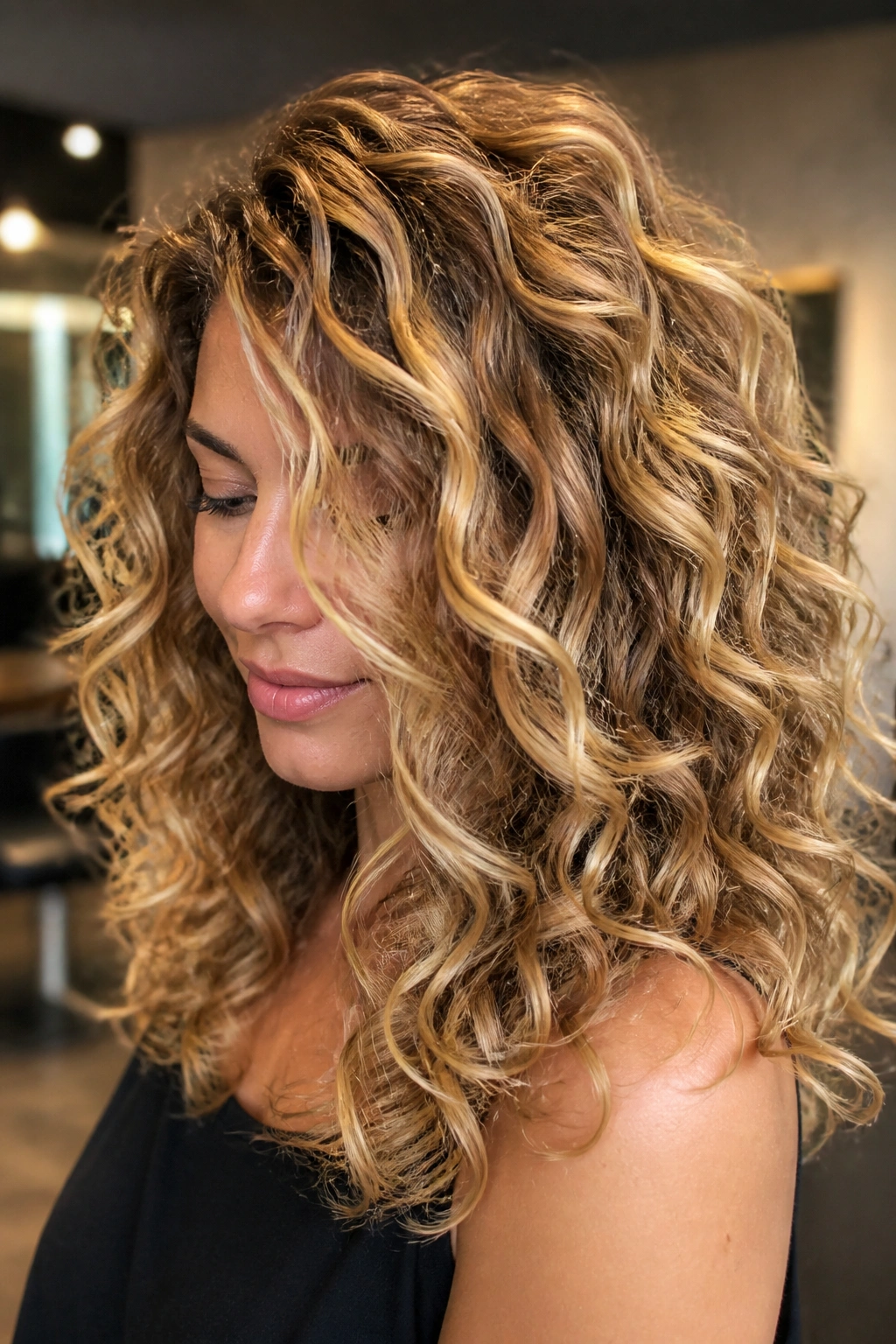
Golden foilayage gives curls a brighter punch than hand painting alone. The foils push the lift a little farther, which is useful if your hair is resistant or if you want those sunny gold pieces to show from across the room.
The best part is placement. Put the brightest pieces near the crown, around the front, and on the outer layers where curls catch the eye first. Leave the underside richer so the whole head keeps some shadow. Without that contrast, gold can go one-note fast.
This shade works well on 3A to 3C curls that hold a clean curl clump. The definition helps the gold look expensive instead of streaky.
8. Sandy Ombre
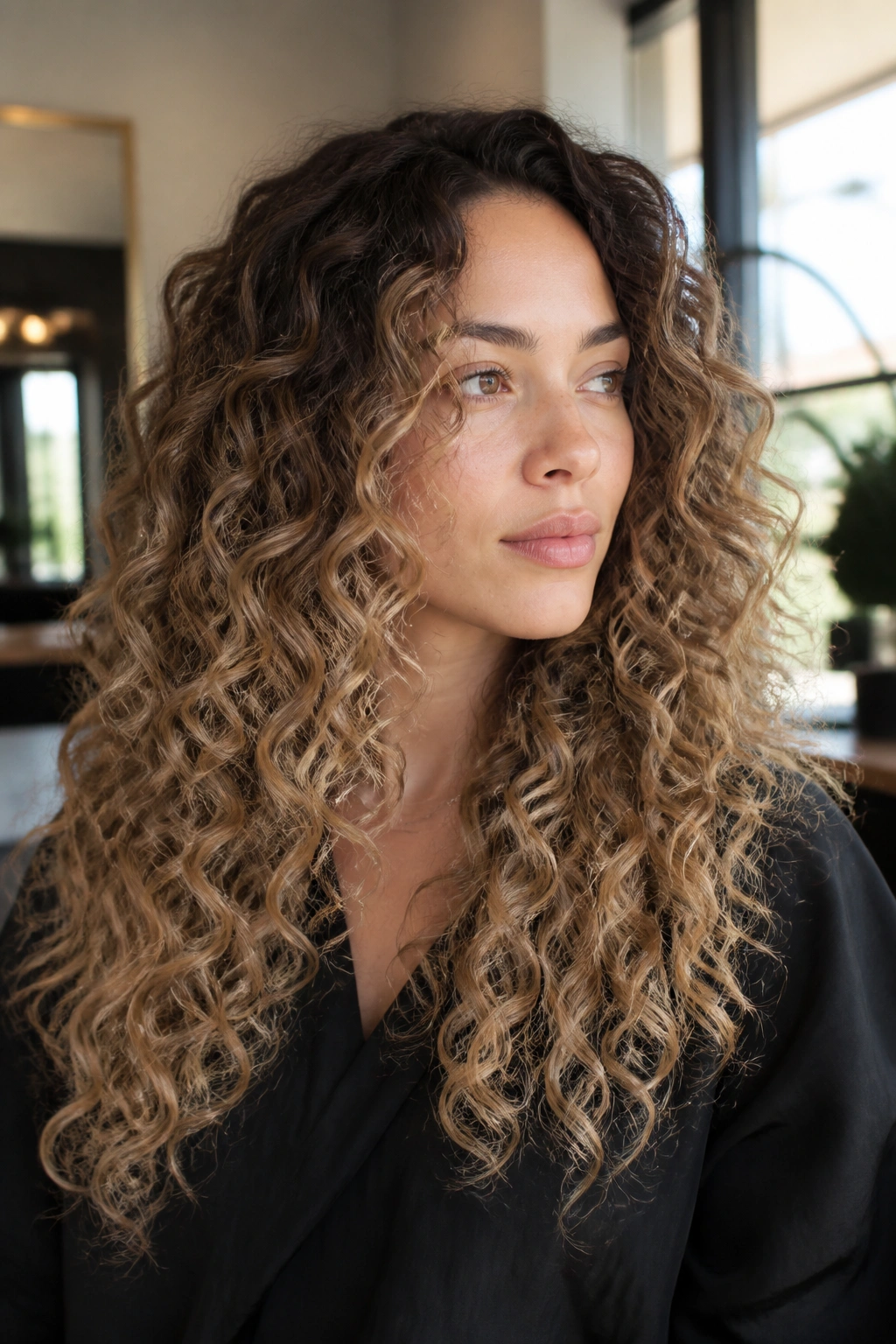
Sandy ombré is a softer move than people expect. The fade starts deeper at the roots and gets lighter as it drops, but the blonde ends stay earthy and beige rather than glaringly bright.
That makes it a smart choice for long curly hair. The length gives the color room to breathe, and the ombré line hides in the movement of the spirals. You do not have to fight a hard grow-out line every few weeks. That alone is reason enough for a lot of people.
It also plays well with air-dried texture. Sandy blonde does not need perfect styling to make sense. A little frizz at the ends? Fine. It still reads soft.
9. Vanilla Root Shadow
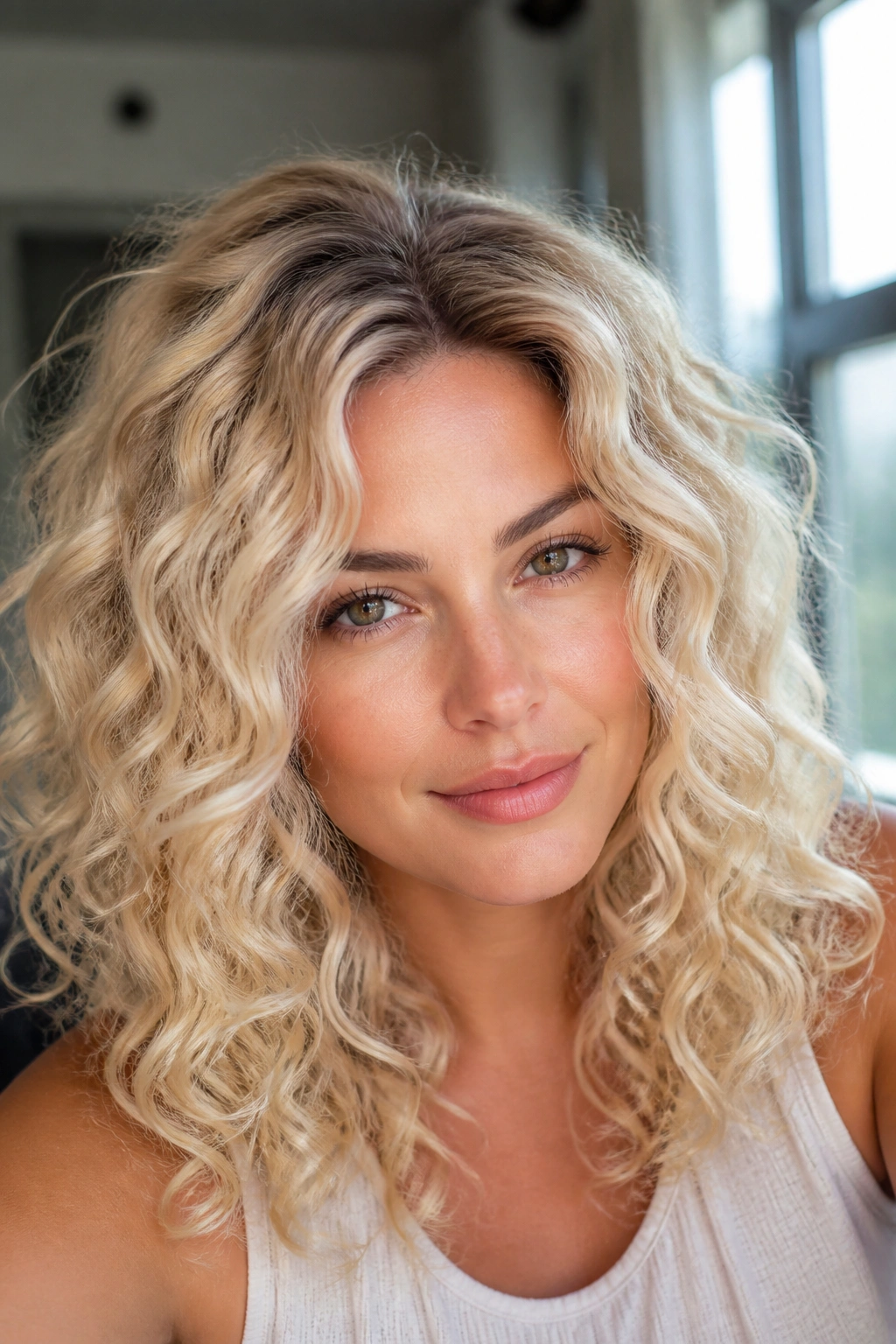
Vanilla root shadow is for the person who wants a pale blonde finish but does not want to stare at obvious regrowth. The root stays a shade or two deeper, then melts into a creamy vanilla length that feels light but not sterile.
What Makes It Feel Expensive
The shadow root is doing the quiet work here. It keeps the scalp line soft, which matters a lot on curls because the root area can already look busy once the hair dries and expands. Ask for the root to stay natural or close to natural, then let the lightness begin a little lower down.
This shade is lovely on springy ringlets and shags. It gives the cut dimension without making every curl compete for attention. Also, it is one of those blondes that looks better after the first wash, once the toner settles.
10. Maple Melt
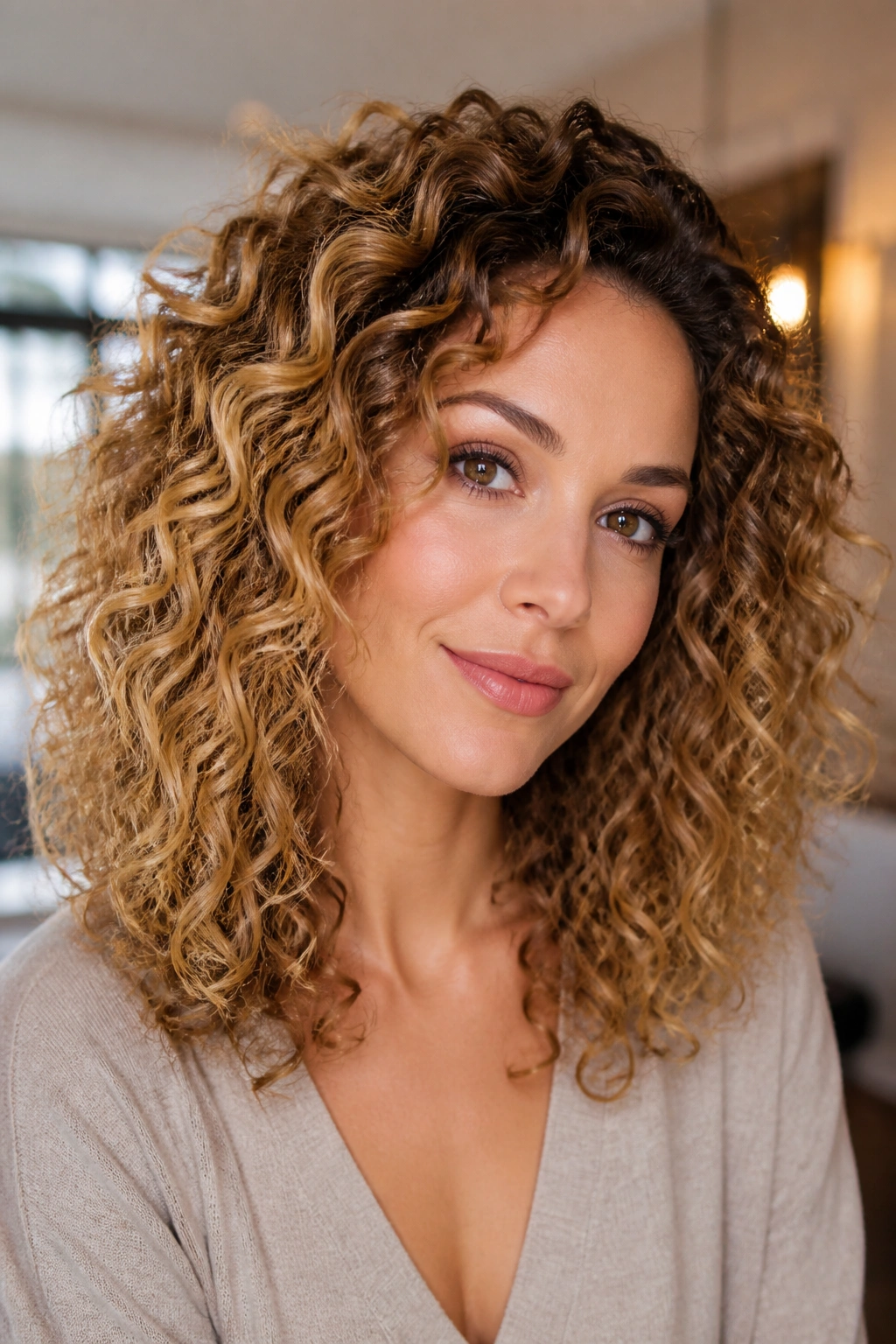
Maple blonde has a warmer, deeper feel than classic honey. Think of a blonde that picked up a little amber and a little toasted sugar, then was blended through the hair instead of painted in blocks.
On curls, that warmth can be flattering because it keeps the pattern soft. The shade is especially nice if your natural base is medium brown and you want a blonde result without jumping all the way to pale beige. Ask for a melt, not a hard highlight pattern. The transition should feel smooth from root to tip.
If you like autumnal tones without going copper, this is a smart lane. It sits right between bright blonde and brunette.
11. Strawberry Blonde Flush
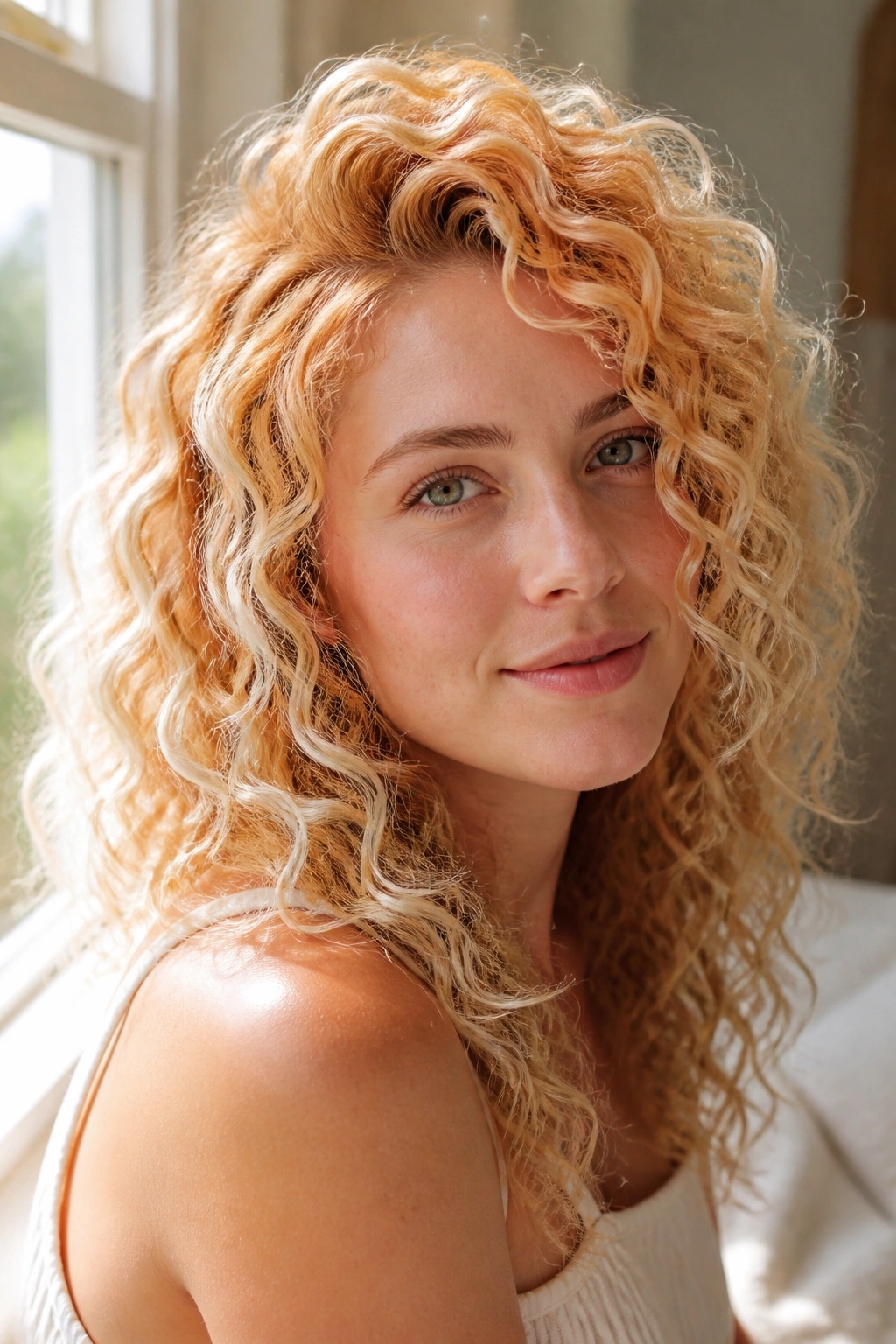
Strawberry blonde on curly hair can be lovely, but it needs a light hand. Too much pink and it turns candy-like. Too little and it just looks warm. The sweet spot is that peachy-gold flush that sits on top of a blonde base and gives the curls a soft blush.
- Works best on lighter natural bases
- Looks good with a sheer demi-permanent glaze
- Can go pink fast on porous ends
- Needs a strand test if your curls grab color unevenly
I like this one on shorter curly cuts and airy layers because the warmth gives the curls a lifted, sunny feel. It is playful without being loud, which is harder to pull off than people think.
12. Mushroom Blonde
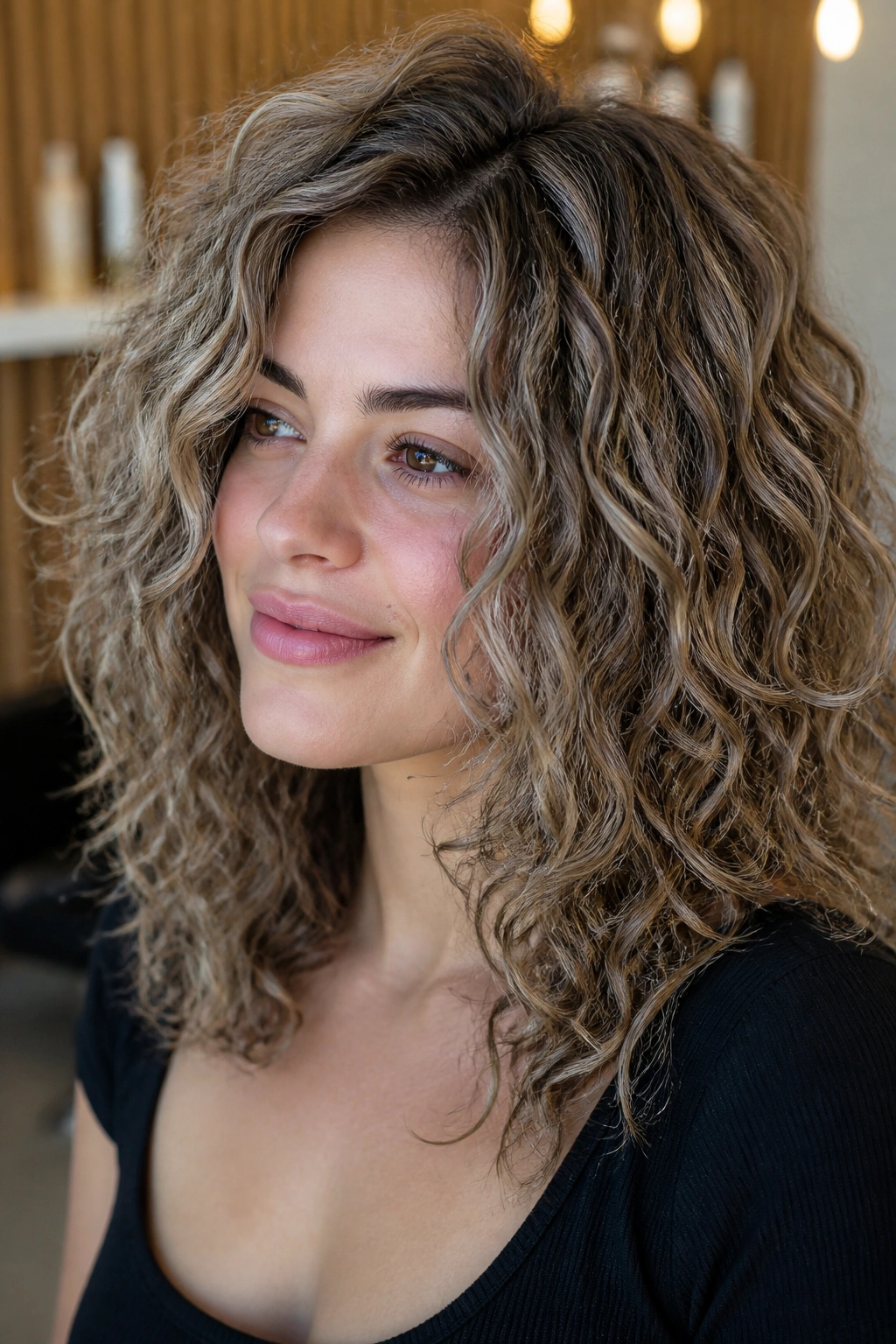
Cool blonde does not have to look flat. Mushroom blonde proves that. It leans taupe, beige, and smoky blondish-brown, which is useful if your hair pulls too golden every time it sees bleach.
This shade is especially good for loose waves and curly shags where you want depth at the root and softness through the mids. A mushroom toner can tame brass without making the hair look gray. The color should feel earthy, not muddy.
I like this on people who want dimension more than brightness. It is calmer than platinum, less sweet than honey, and easier to wear with a lot of texture.
13. Rose Gold Diffusion
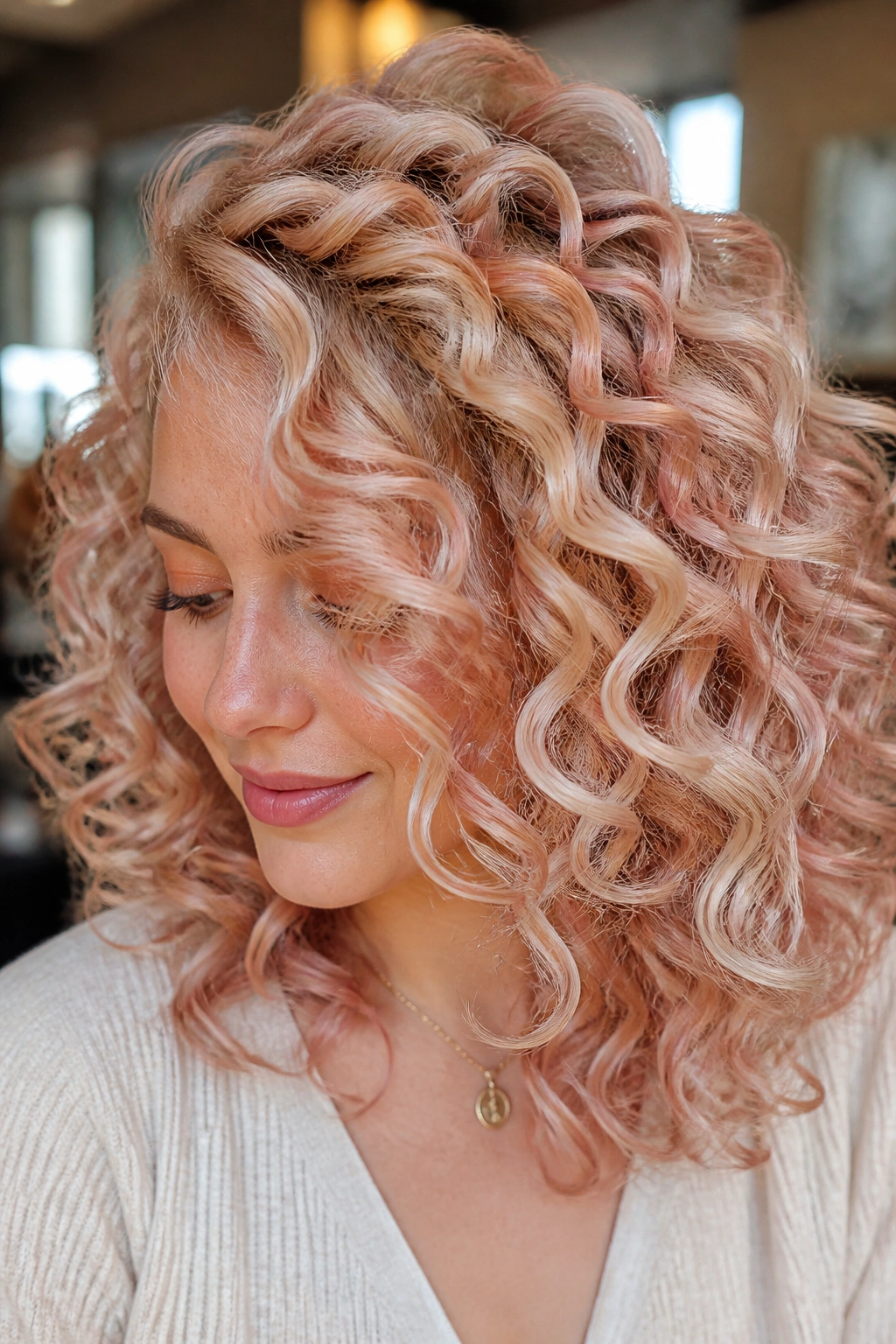
Rose gold on curls can be dreamy when it is diluted enough. The color should look like a blush filter, not a neon metallic. A pale blonde base with a rose-gold gloss gives the ringlets a warm sheen that shifts as the hair moves.
The best versions are subtle. A demi-permanent glaze over pre-lightened hair can soften the rose tone and keep it from getting too pink. If your curls are porous, watch the timing closely. Rose can grab faster than you expect, especially on the ends.
It is a fun choice for someone who wants blonde with a little personality. Not loud. Just a little romantic.
14. Sunlit Face Frame
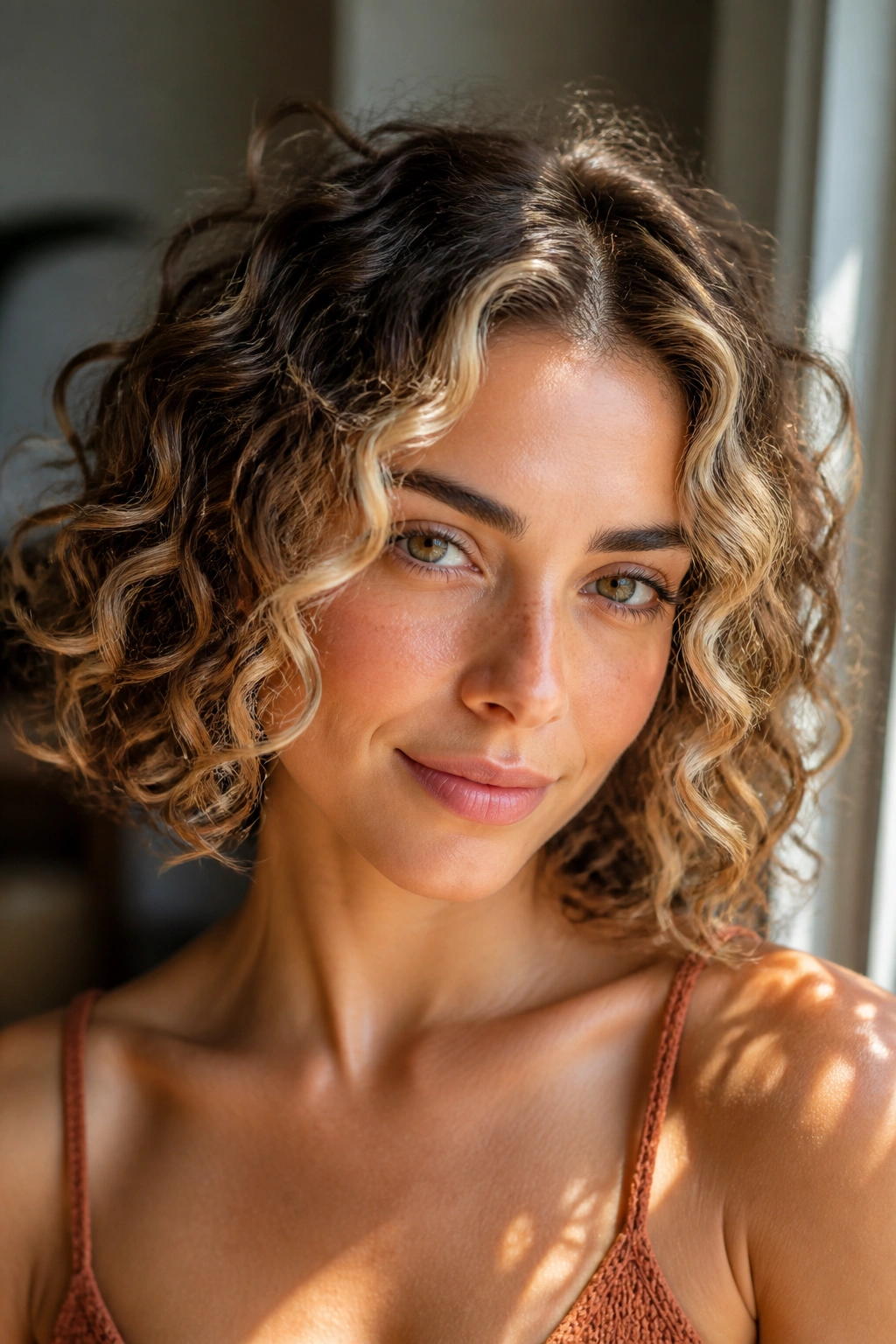
A bright face frame is the quickest way to test blonde on curls without going all in. Leave most of the head close to the natural base, then lift the front curls and maybe a few pieces at the crown to a lighter level.
Where It Should Sit
The best placement usually starts just inside the hairline and continues through the curls that fall around the cheekbones. That gives you brightness where you see it most, and it keeps the rest of the hair grounded. On curly bobs and shoulder-length cuts, this can be enough to change the whole feel of the style.
It also works for cautious color clients. If you love it, you can build from there. If you do not, grow-out stays simple.
15. Vanilla Cream Ends
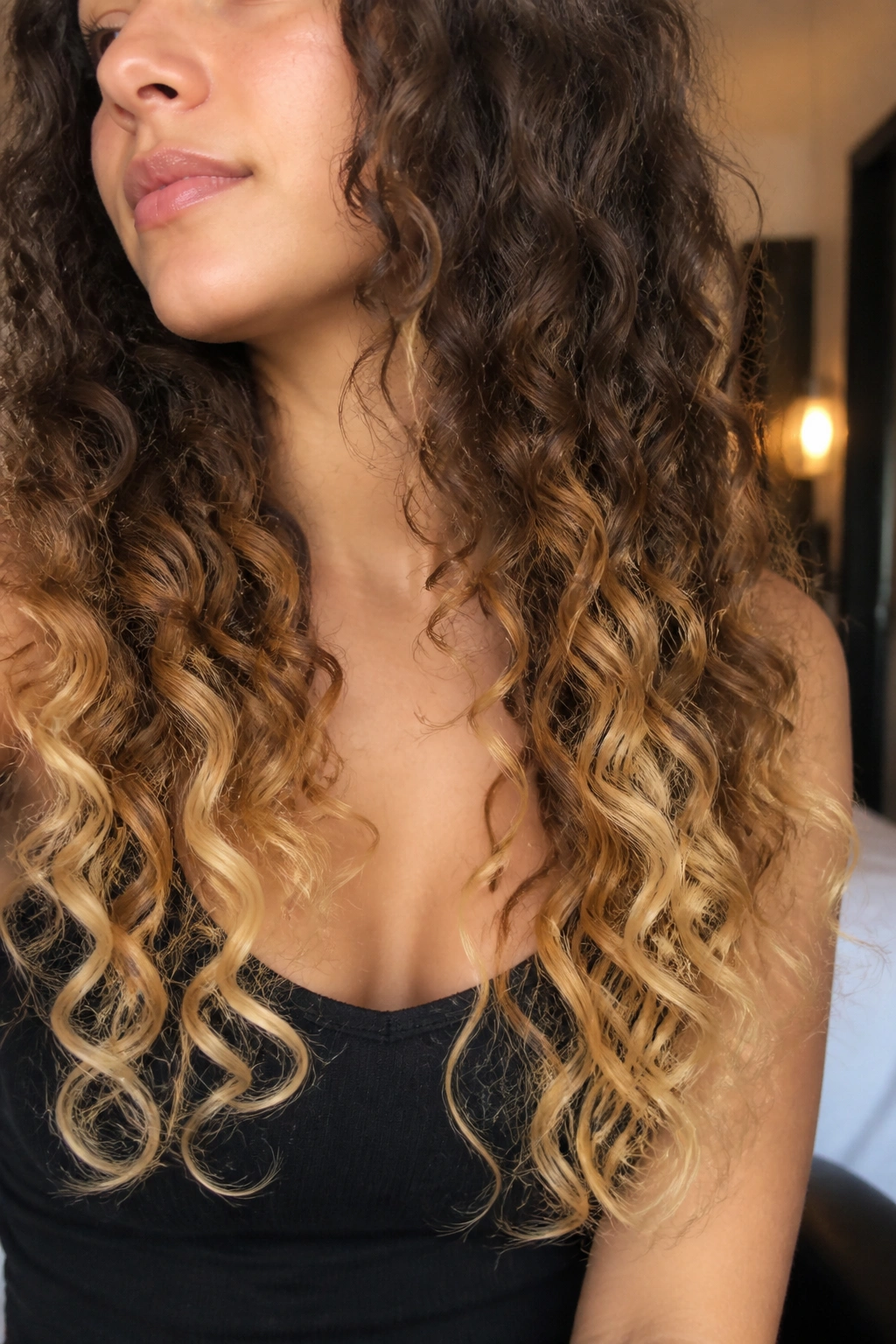
Vanilla cream ends lighten the last few inches of curly hair and leave the root area alone. That sounds simple, and it is, but the effect can be huge on long spirals.
The ends already carry the most visual movement, so making them lighter gives the whole style a lifted, airy finish. Ask for the transition to start low, not halfway up the head. A harsh mid-length line will fight the curl pattern. A soft fade will not.
This is also a kinder option for hair that has been colored before. Less lift. Less stress. Still a clear blonde moment.
16. Apricot Blonde
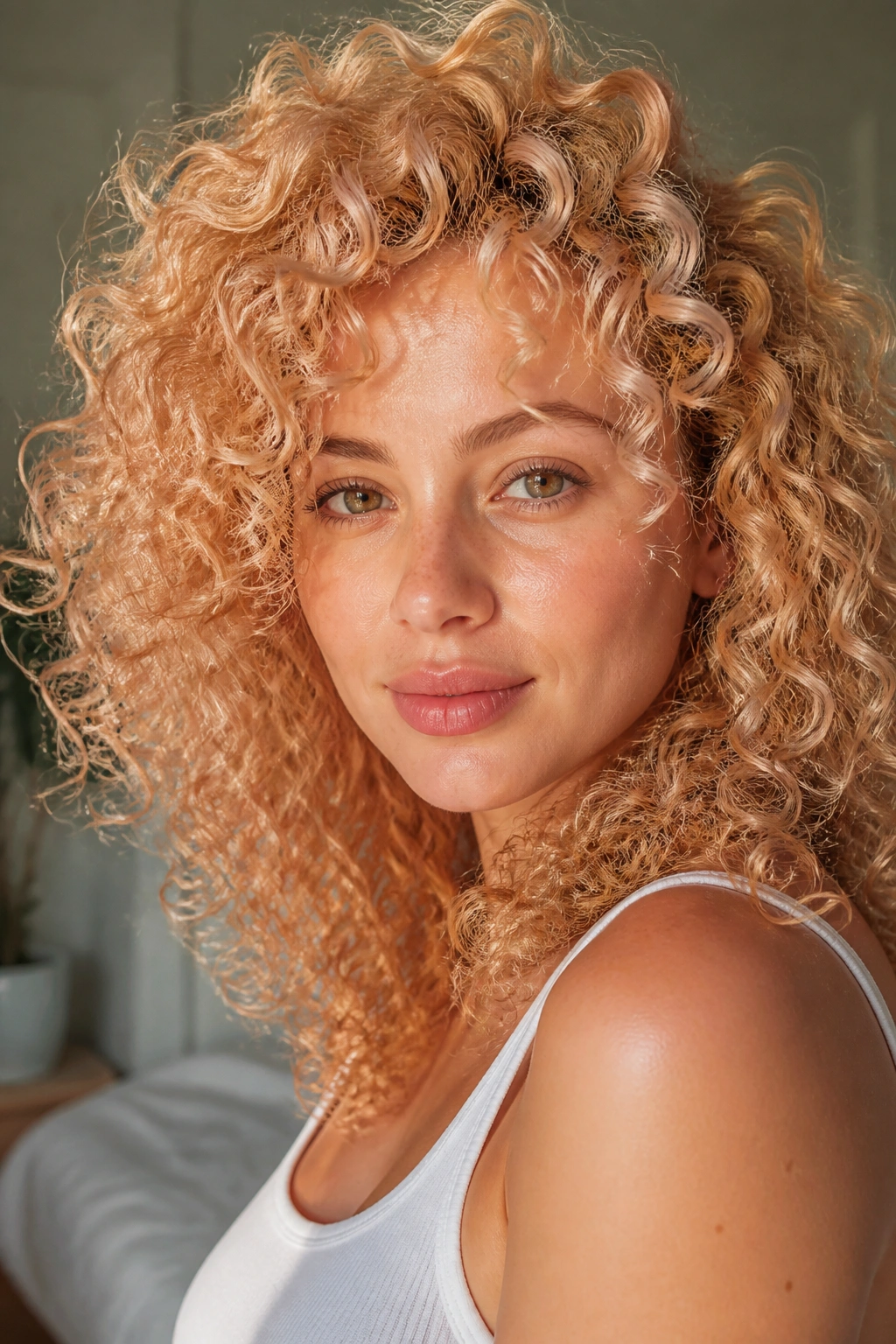
Apricot blonde sits between peach and gold, which is why it can look so fresh on curls. It adds warmth without tipping all the way into copper, and that slight peach note can wake up faded blonde in a way plain beige cannot.
The shade works best when the base is light enough to show the tint. If the hair is too dark, apricot disappears. Ask for a translucent gloss or toner, not an opaque dye block. You want the blonde to shine through.
It is a lively option for people who like warm colors but want something softer than strawberry. The curl shape keeps it from feeling syrupy.
17. Wheat Blonde
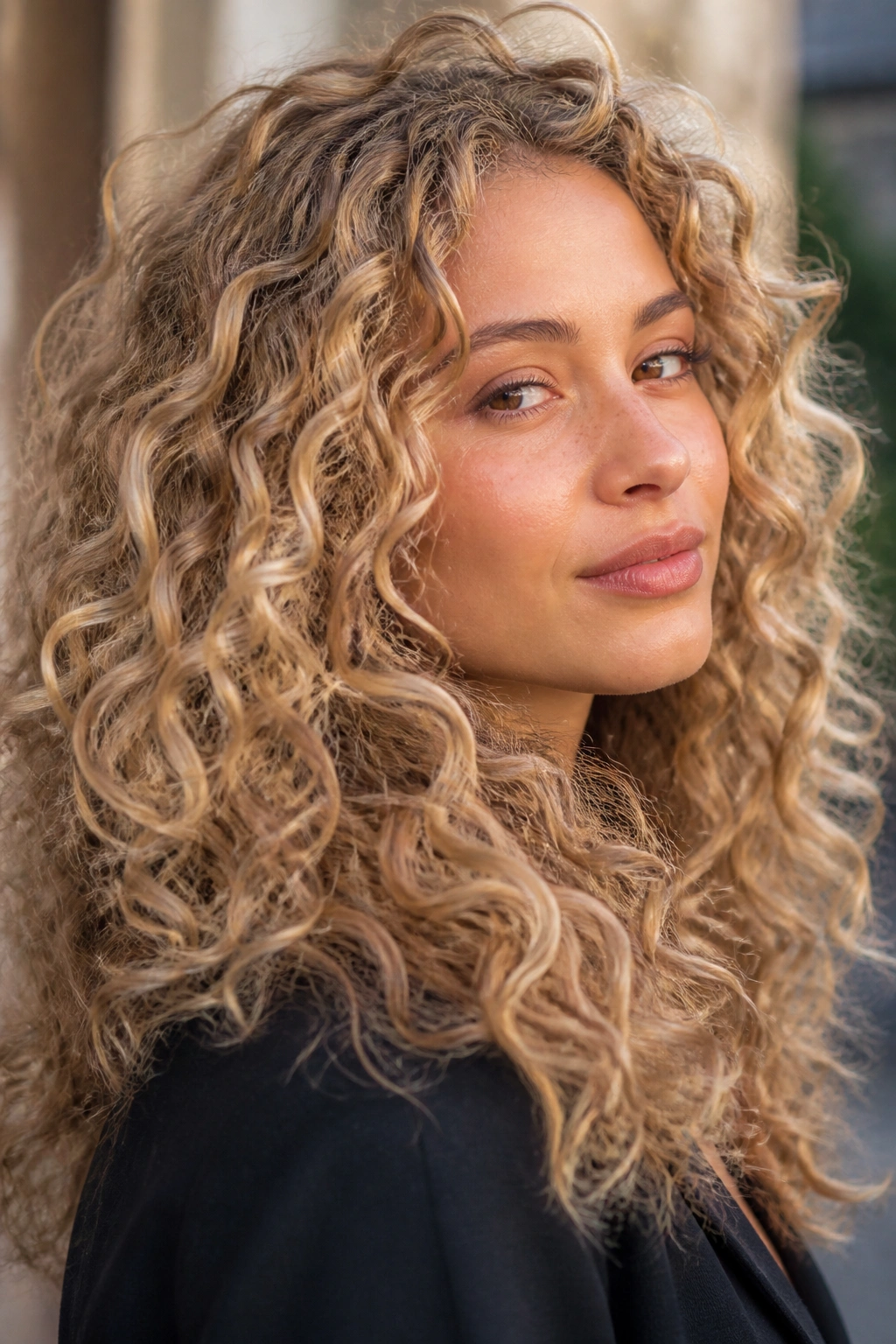
Wheat blonde has that dry, sun-softened look that suits big curls and thick hair especially well. It is not flashy. That is the point. The color feels natural, airy, and a little matte in the best way.
Because the tone sits in the neutral-warm lane, it helps curls look clean rather than muddy. A good wheat blonde should have enough beige in it to avoid brass, and enough warmth to stop the hair from looking dusty. That balance matters.
This is one of those colors that plays nicely with layered cuts. The movement of the haircut and the quiet tone of the blonde do the work together.
18. Ash Blonde on Coily Hair
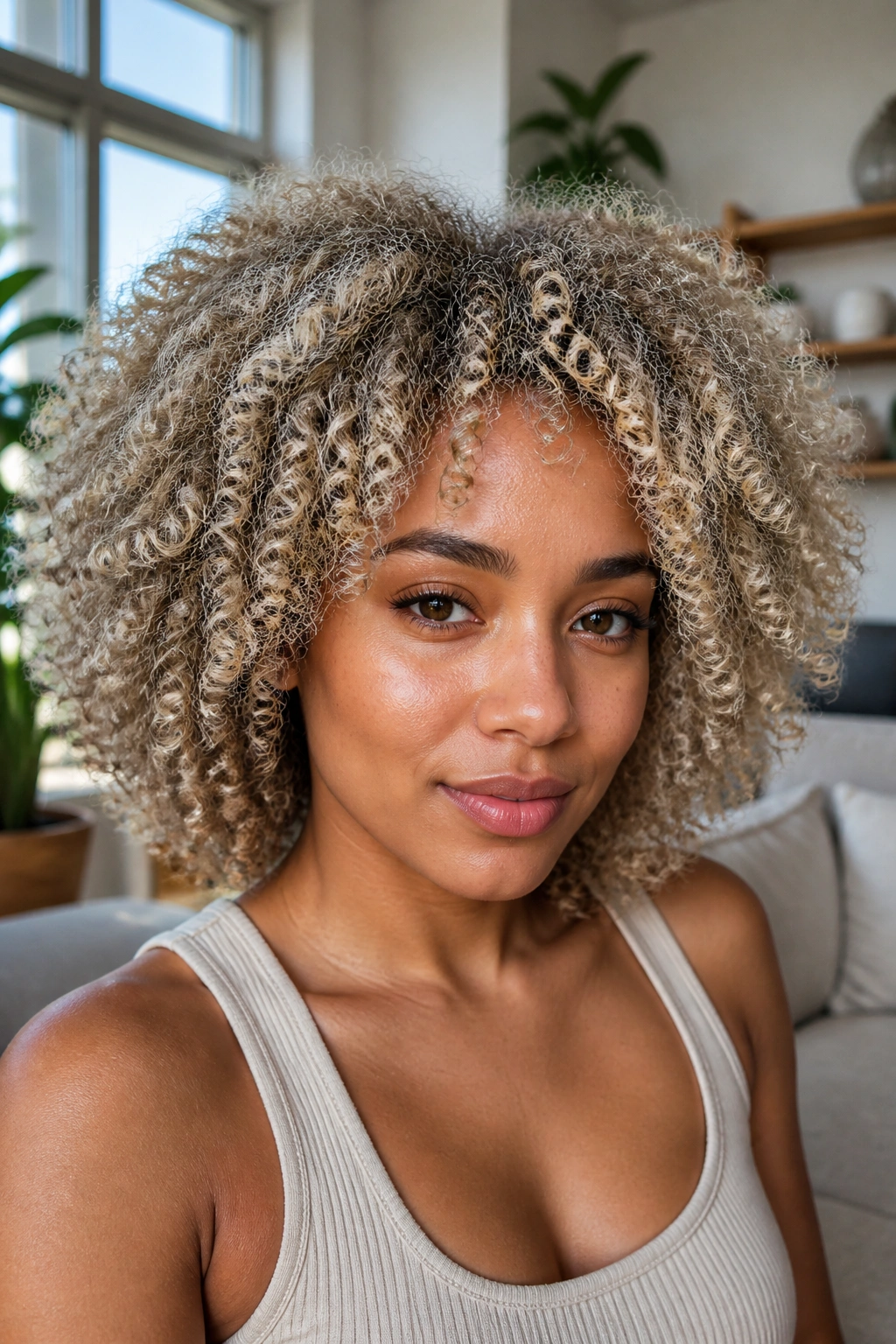
Ash blonde on coily hair is beautiful when it is balanced properly. Too much ash, and the hair can look dull or even greenish. Too little depth, and the color loses the contrast that makes the coils pop.
What To Ask For
- Keep some lowlight depth through the interior
- Use a cool toner, but not a heavy gray one
- Leave a shadow at the root
- Refresh with gloss before the tone turns muddy
The real goal is a cool blonde that still has life. Coily hair often looks best when the blonde pieces are placed where the coil bends catch the light, not in big flat panels. Done well, the result is crisp and dimensional.
19. Pearl Blonde Glaze
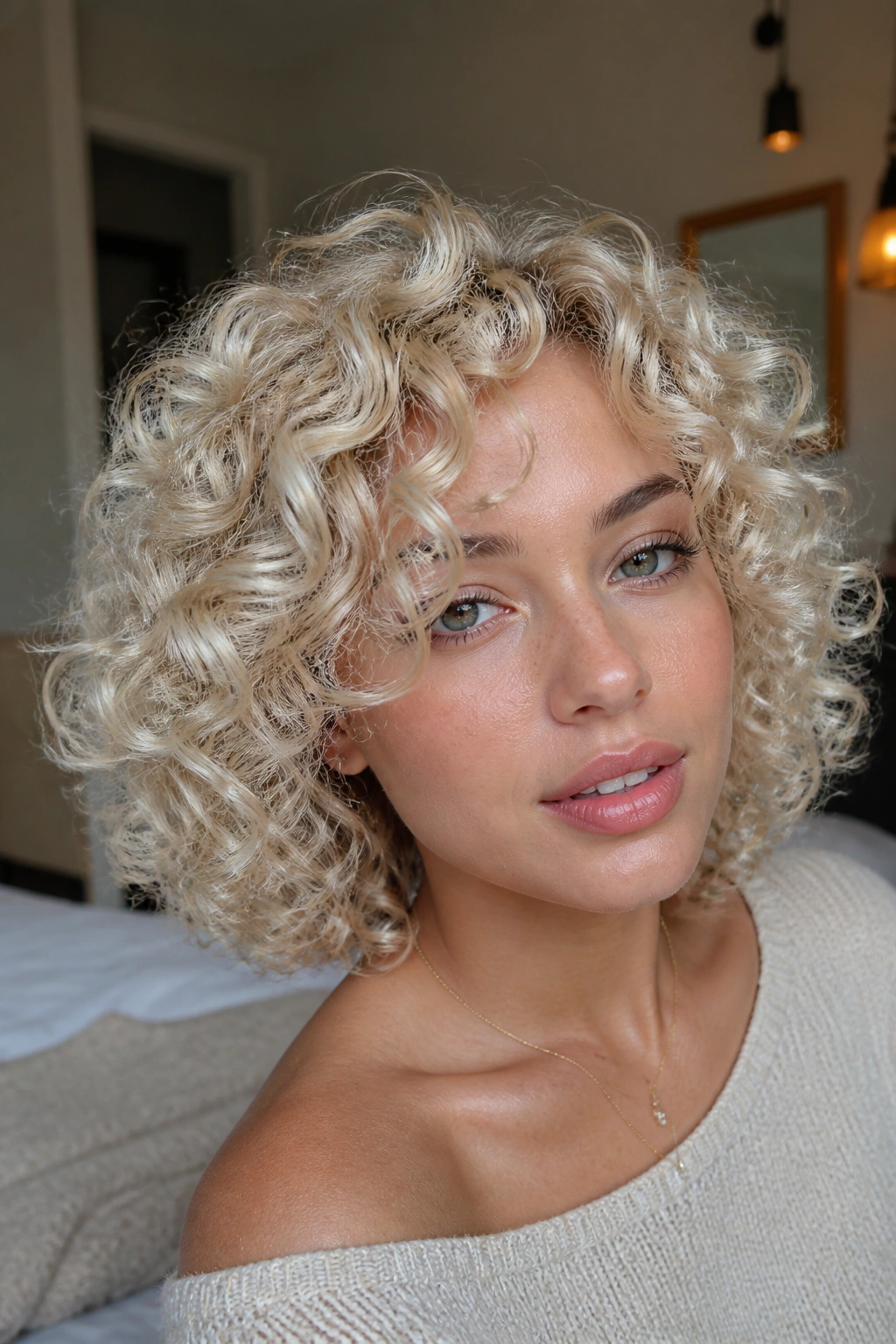
Pearl blonde has a soft shine that looks almost milky on curls. It is lighter than beige, cooler than butter, and smoother than platinum. That makes it a nice choice if you want brightness without a sharp edge.
The glaze matters more than the lift here. Pearl reads best over a pale base that already has some level of lightness. Then the toner adds that polished, shell-like finish. If the base is too yellow, the pearl tone gets lost. If it is too white, the curl texture can disappear.
I like this on curly bobs and short layered cuts. The smaller the shape, the more the sheen shows up.
20. Toasted Coconut Balayage
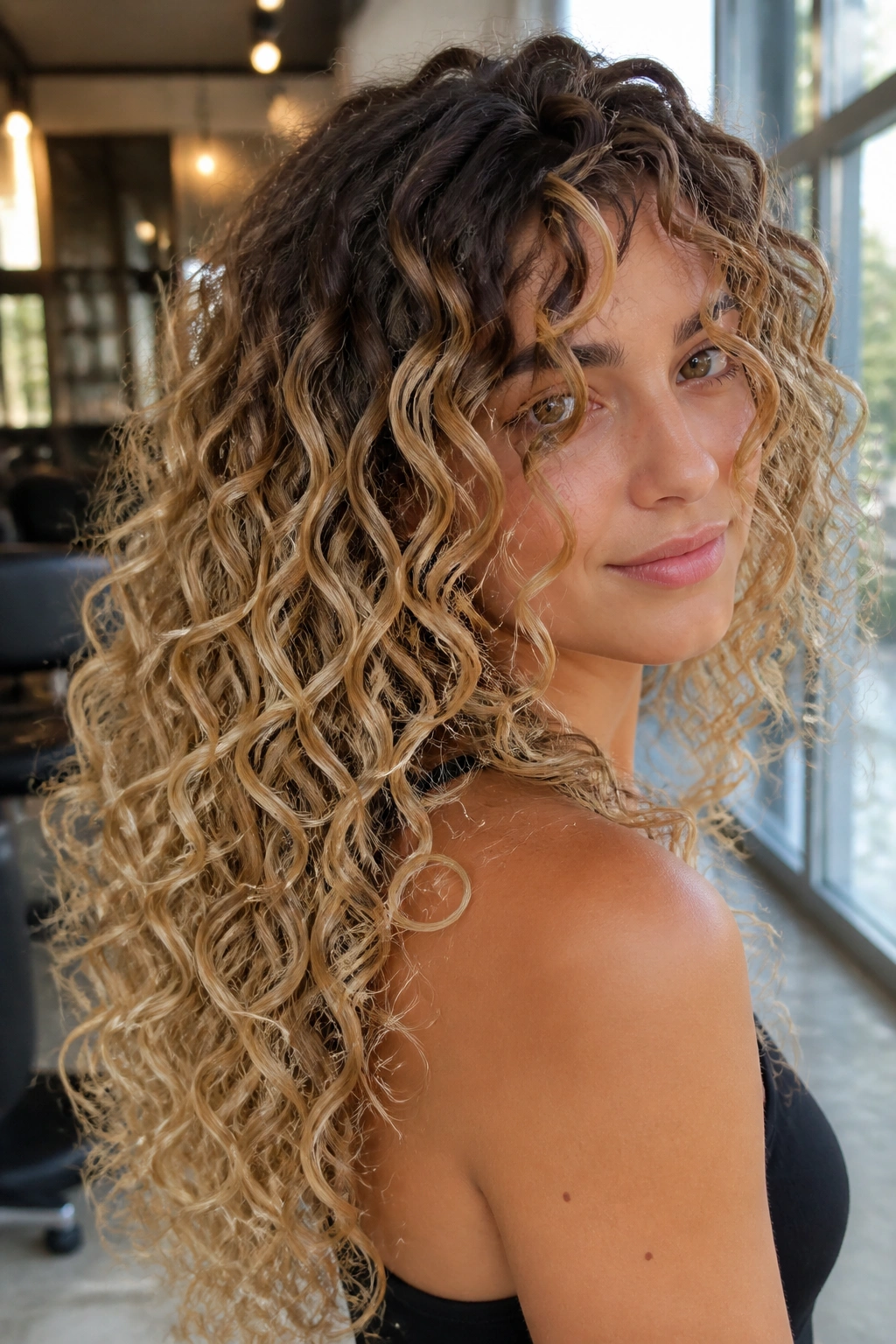
Toasted coconut balayage gives you dark roots, creamy mid-lengths, and soft blonde ends that never look loud. It is one of those shades people ask for when they want to feel lighter without signing up for a full bleach life.
The name fits the look well. There is a toasted brown base, then a pale, almost coconut-cream finish on the lighter pieces. On curls, that contrast can make the shape look fuller because the darker depth stays under the lighter surface. Good colorists keep the top pieces soft and let the ends carry most of the brightness.
It grows out well. That is the big draw. Fewer hard lines, fewer emergency salon visits, less stress.
21. Miel Blonde
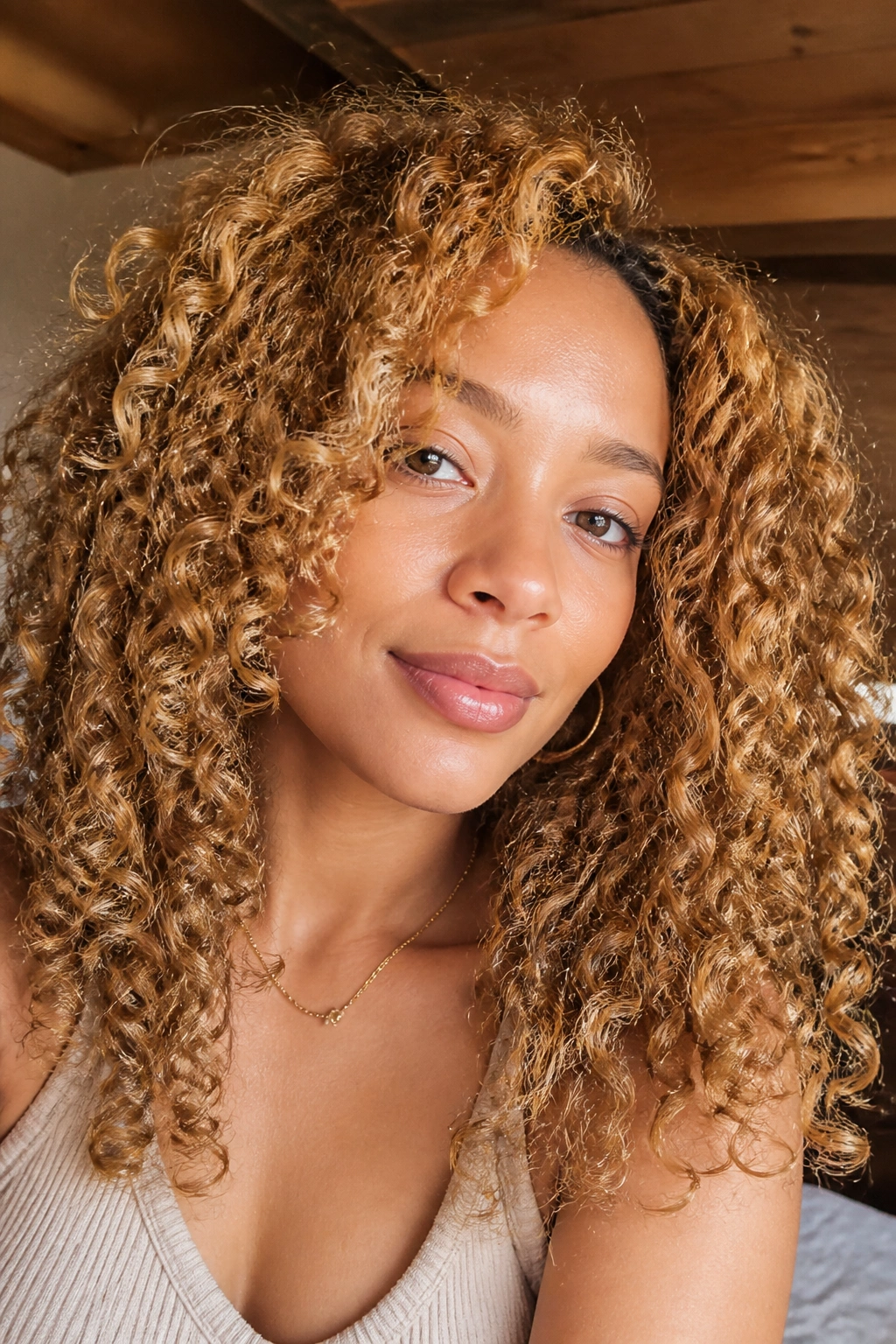
Miel blonde has a honeyed warmth, but it feels a touch deeper and richer than standard honey. The tone is golden without turning brassy, which is a useful distinction on curly hair that loves to drink up pigment.
This one is flattering on medium brown bases because it does not fight the natural depth. Instead, it nudges the color brighter and sweeter. The result is soft, plush, and wearable. It also works well if your curls go a little frizzy around the edges, since the warmth helps the texture look intentional instead of unfinished.
If you want blonde that feels warm but not sugary, this is a good lane.
22. Buttery Dip-Dye Ends
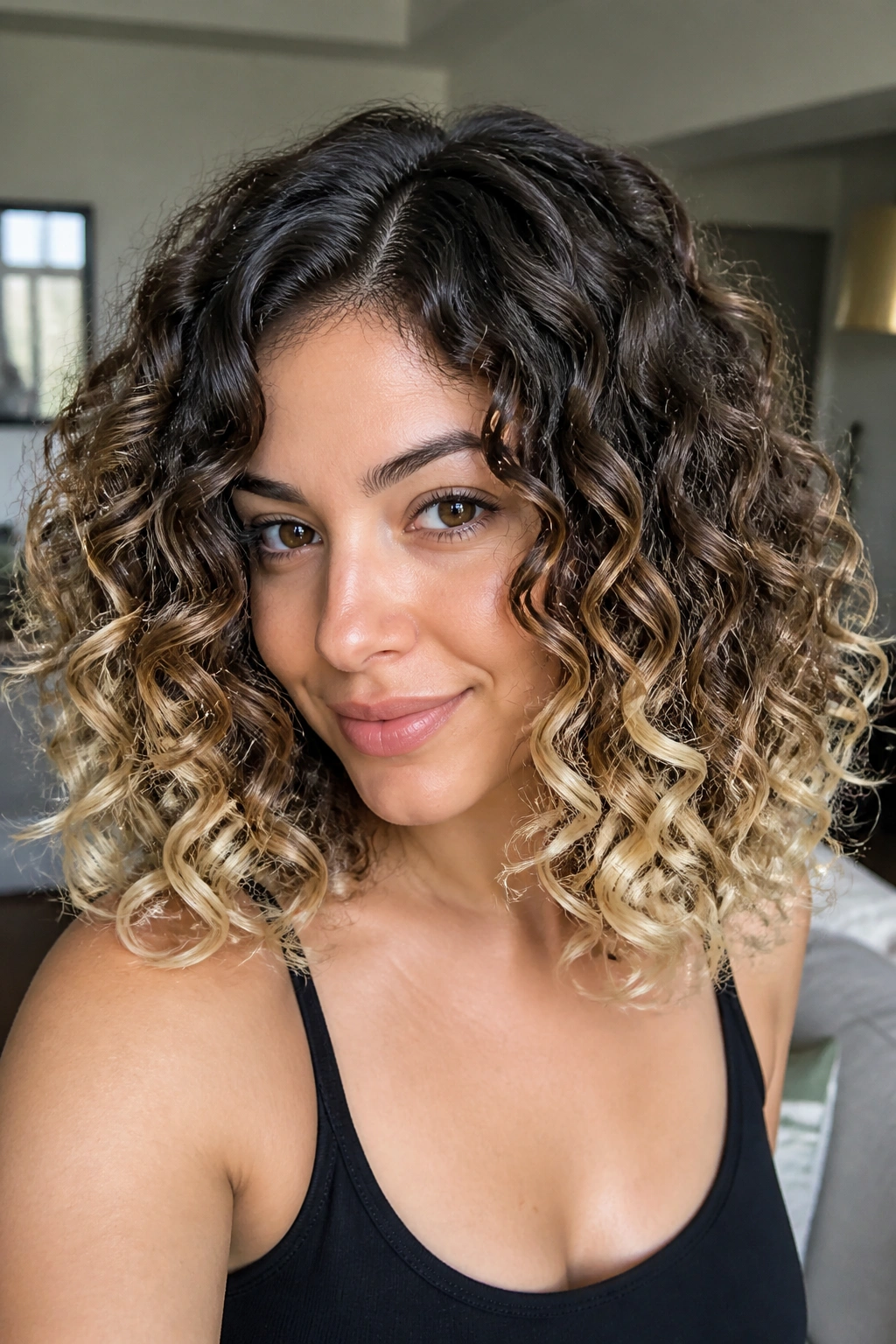
Buttery dip-dye ends are playful, and they are less committal than people think. Only the bottom section gets the lightest blonde, which keeps the color anchored at the top and bright at the finish.
That makes sense on curls because the ends often show the most movement anyway. The lightness gives the shape a little kick, especially on shoulder-length coils or long spirals with a blunt edge. Ask for the transition to stay soft. A hard dip-dye line can look dated fast.
It is also a useful choice if the ends are already a little tired from old color. Lighten only what you can afford to lose.
23. Bronze Blonde
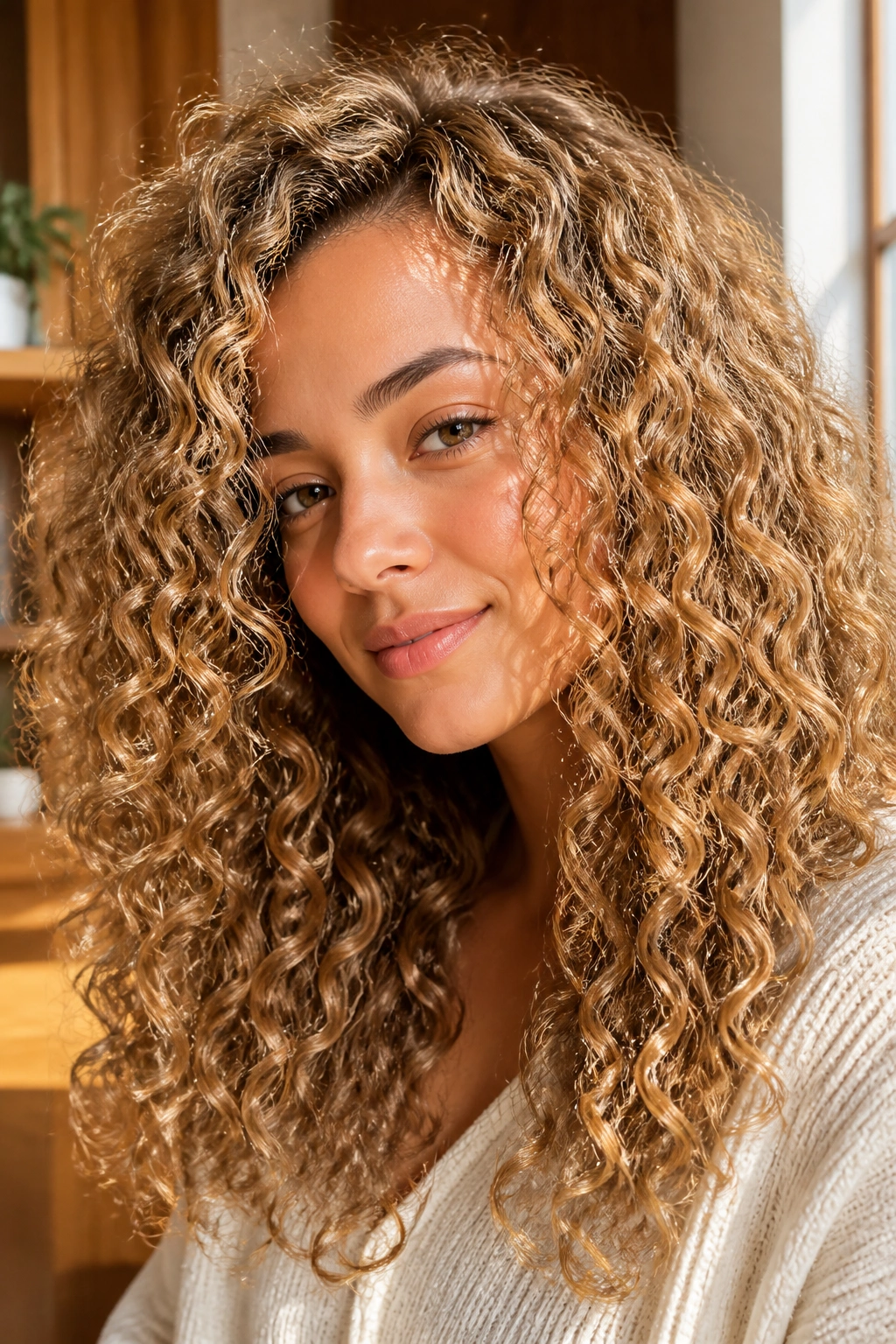
Bronze blonde sits warmer and deeper than classic beige, and that extra richness keeps curly hair from looking pale or washed out. It is a blonde, sure, but one with real body.
The color works well on darker bases where full blonde would feel too sharp. A bronze glaze through the mids and a few lighter pieces at the crown give the hair enough lift without losing the earthy tone. I like it with big voluminous curls because the warmth helps the shape feel full rather than heavy.
If your wardrobe leans gold, rust, cream, or deep brown, bronze blonde tends to play nicely with it. No drama required.
24. Soft Sand Bronde
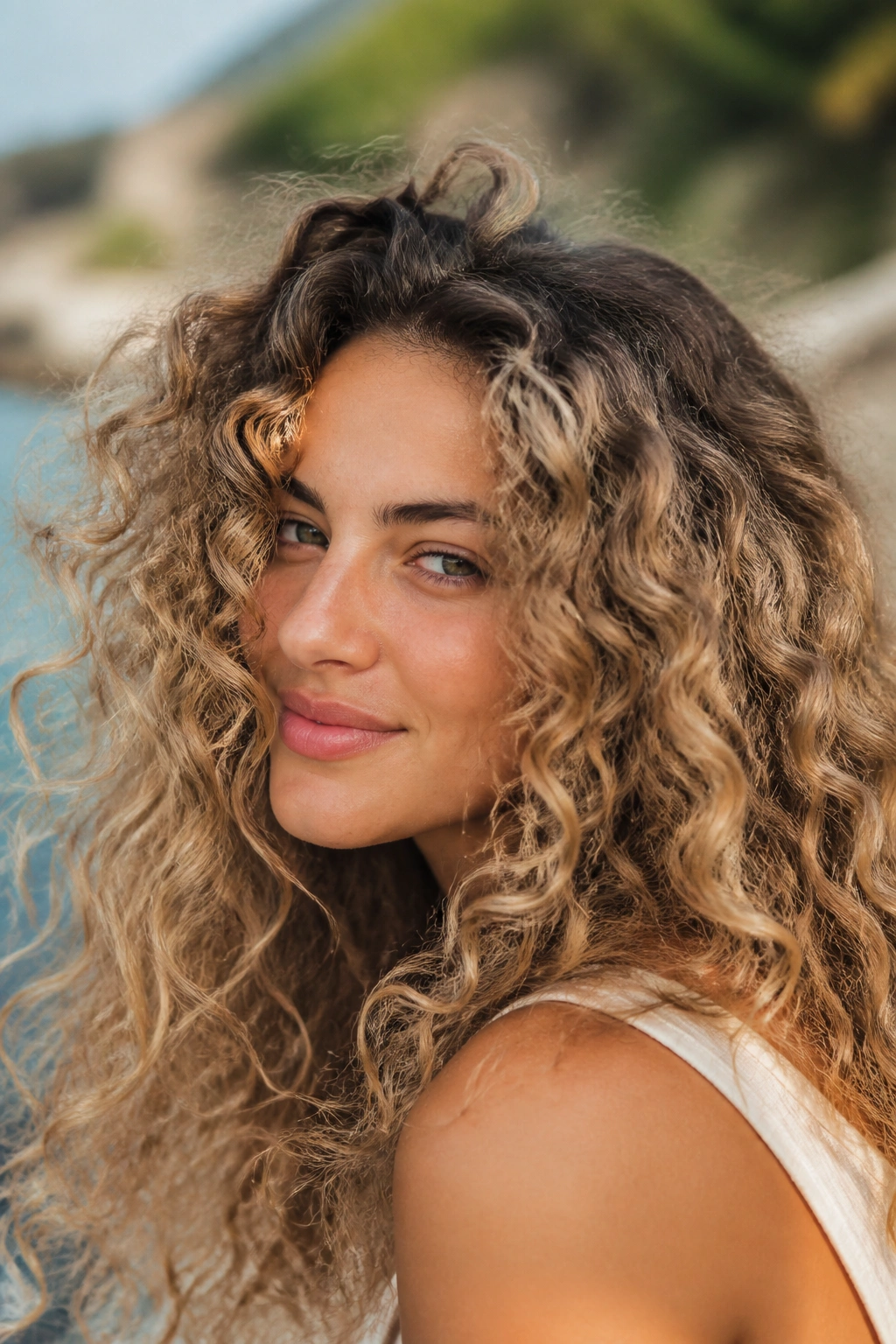
Soft sand bronde lives in that useful middle place between brunette and blonde. It is lighter than brown, darker than blonde, and balanced enough to keep curls looking dimensional.
The tone has a dry, sandy feel rather than a golden one. That matters. Too much gold and the hair can look brassy; too much ash and it can look flat. Soft sand keeps a little warmth, a little coolness, and enough depth in the root zone to hold the curl shape.
This is the kind of color I recommend to people who want brightness but hate obvious maintenance. It grows out like it belongs there.
25. Smoky Beige Lowlights
Sometimes the smartest blonde move is adding darker pieces, not lighter ones. Smoky beige lowlights bring back shadow into a blonde head that has gone too bright or too one-dimensional.
Why This Helps Curls
Curls need contrast. When every strand is the same pale tone, the texture can look puffy instead of defined. A few lowlights in a smoky beige or taupe shade carve the pattern back out and make the blonde highlights stand up better.
- Ask for lowlights 1 to 2 levels deeper than the blonde
- Keep them fine, not chunky
- Focus them under the top layer and around the crown
This is a repair move as much as a style choice. Sometimes the fix is adding darkness.
26. Cream Soda Blonde
Cream soda blonde has a soft, bubbly feel that suits curls with a lot of bounce. It mixes pale beige, light gold, and a touch of root shadow, so the color stays creamy instead of flat.
The best versions have a little contrast between the root and the ends, but not enough to make the grow-out obvious. That small shift keeps the blonde moving through the curls. When the hair dries, the lighter pieces show up on the outer bends and the darker pieces sit in the curves, which gives the shade some life.
It is an easy color to wear. Friendly, even. Not precious.
27. Copper-Kissed Blonde
A copper-kissed blonde is warmer than most people expect, and that is exactly why it works on curls. The touch of copper keeps the blonde from looking pale or washed out, especially on deeper natural bases.
The key is to keep the copper as a kiss, not a takeover. A soft glaze through the ends or around the front curls is enough. Too much and the shade turns orange. Too little and you miss the point. A good colorist will keep the blonde visible while warming the edges just enough to make the texture glow.
If you like rich jewelry tones, warm lipstick, or golden makeup, this shade fits that mood without trying too hard.
28. High-Contrast Streaks
High-contrast streaks are bold, graphic, and a little rebellious on curly hair. Dark base. Bright blonde panels. Clean separation. It is not subtle, and that is why it works.
The important thing is shape. Chunky streaks need strong curl definition, because the contrast looks best when the curls clump in a clear pattern. If the hair is too fuzzy or heavily layered, the blocks can blur in a messy way. Place the brighter pieces where they can be seen on the surface, then leave enough depth underneath to avoid a helmet effect.
This is a good choice if you want the hair to read from across the room. It is also one of the few blonde looks that feels better when it is a little imperfect.
29. Lived-In Balayage
Lived-in balayage is the quiet favorite, and honestly, there is a reason it keeps hanging around. It gives curly hair brightness without asking for constant touch-ups, and it lets the natural pattern stay in charge.
The base stays deeper at the root and through the inner layers, while the lighter pieces are painted where the curls fall most visibly. That creates a soft stretch of color that looks grown and relaxed instead of freshly processed in a stiff way. The trick is not to chase evenness. Chase balance.
Where It Wins
This is the one I point people to when they want blonde that ages well. The root blur hides regrowth, the surface brightness lifts the shape, and the whole look stays believable as it grows.
30. Micro Babylights
Micro babylights are tiny, fine highlights that scatter light through curly hair without shouting. They are a smart option if you want movement, not a major color change.
Because the sections are so fine, the result looks soft when the curls dry and expand. No hard stripes. No obvious highlight rails. Just a gentle shimmer that shows up when the light hits the hair at different angles. If you are cautious about bleach, this is one of the gentlest visual approaches.
- Best for first-time blondes
- Great on fine curls that can look heavy
- Easy to blend with a gloss
- Needs patience in the chair, because the weaving is slow
It is subtle. That is the charm.
31. Peaches and Cream Blonde
Peaches and cream blonde feels soft in a way that suits airy curls and loose ringlets. The blonde stays warm and pale, while the peach tone adds a little roundness to the color so it does not go flat.
This shade is nicest when it is not too saturated. Think cream first, peach second. That ratio keeps the result wearable. On curly hair, the peachy warmth can show up on the surface curls while the cream tone sits underneath, which gives the whole head a gentle glow.
It is one of the more cheerful blonde ideas in the bunch. Not childish. Just friendly and light.
32. Flaxen Blonde
Flaxen blonde is pale, dry-looking in the right way, and a little old-fashioned in the best sense. It is the sort of blonde that feels airy rather than shiny.
On curls, flaxen works because it stays soft and light without leaning too gold. If your hair gets brassy quickly, this shade needs careful toning, but the payoff is worth it. The color can make spirals look featherweight and delicate, especially on layered cuts that need a lighter visual touch.
I would choose flaxen for someone who likes understated blonde more than statement blonde. It whispers. That is the whole point.
33. Almond Blonde
Almond blonde sits in a sweet spot between beige and honey. It has enough warmth to feel healthy, but enough restraint to avoid looking orange or yellow.
This shade is one of the easiest blonde ideas for curly hair because it does not fight the texture. The tone blends into the curl pattern instead of sitting on top of it. Ask for a beige base with only a touch of gold through the mids and ends. That keeps the finish from going dull.
It is a good choice if you want something that works with both casual air-dried curls and a more polished blowout. Flexible. Reliable. Not flashy.
34. Honeyed Root Melt
Honeyed root melt gives you the brightness of blonde without the headache of a hard line at the scalp. The root stays deeper, then the color melts into a honey-blonde body that feels soft and generous.
Why It Lasts So Well
The melt keeps the grow-out smooth, which matters when curls are involved because the shape already hides and reveals the root in a shifting way. That softness means you are not stuck with a harsh stripe six weeks later. The blonde can age with the hair instead of against it.
This shade is especially nice on medium to dark bases that want a lifted look but not a bleach-heavy one. It also gives curly layers more depth than a pale all-over blonde would.
35. Scandinavian Blonde with Dark Root
Scandinavian blonde with a dark root is the boldest option on this list, and it is not pretending to be easy. The contrast is part of the look: very light lengths, a deliberate root shadow, and curls that can show off the difference as they bounce.
The style works when the curls are defined and the tone is kept clean. If the blonde gets too yellow, the whole effect falls apart. If the root is too soft, the contrast disappears. You want crispness, not mess. That means toning upkeep, good conditioning, and a little respect for how much lift curly hair can handle.
It is striking. It is high-maintenance. It is also the kind of blonde that makes a curly shape look sharp from the first glance, which is not a small thing.
A good blonde on curls is never only about how light it is. It is about where the brightness sits, how the root is handled, and whether the tone gives the curl pattern room to breathe. Some shades are soft enough to live with for months. Others ask for more care, but they give back a lot of personality.
Pick the one that matches your curl pattern, your patience, and your appetite for upkeep. That part matters more than a trendy color name ever will.
