



Brown hair doesn’t need to get lighter to look fresh. If you’re hunting for hair color change ideas for brunettes, the smartest moves are usually about tone, placement, and shine — not a full bleach-and-pray makeover that leaves your ends dry and your schedule hostage to root touch-ups.
A single ribbon of caramel can make waves look fuller. A cool mushroom brown can calm down brass that keeps sneaking back after every wash. A cherry-cola gloss can make dark hair look richer without screaming for attention. That’s the sweet spot for brunette color: enough change to feel new, not so much that your hair starts negotiating against you.
The real question is how much upkeep you want to sign up for. Some brunette transformations live happily in a demi-permanent gloss, while others need balayage, babylights, or a root smudge so the grow-out stays soft instead of blunt. Neither route is better in the abstract. One just needs less babysitting.
The ideas below move from subtle to bolder, and each one uses a different technique so you can match the shade to your hair, your face, and your patience. Start with the one that fits your maintenance mood, because that part matters more than people like to admit.
1. Caramel Balayage Through the Mid-Lengths

Caramel is the easiest warm shift for brunettes, and I’ll die on that hill. It adds movement fast, especially on hair that’s one flat shade from roots to ends, and it does it without turning your whole head light.
The trick is placement. You want the caramel painted through the mid-lengths and lower thirds, not blasted straight up to the roots unless you’re chasing a more obvious grow-out. On level 4 or 5 brunette hair, caramel ribbons usually sit in that sweet level-6-to-7 zone where they read soft, not stripey.
What to Ask For
- Painted balayage ribbons that start around the cheekbone area and get denser toward the ends.
- A warm caramel or honey-beige tone, not orange.
- A soft root shadow if your natural brunette is deep and you want the grow-out to stay calm.
- Face-framing pieces that are one shade lighter than the rest for a little lift near the cheeks.
Pro tip: Ask your colorist to keep the lightest pieces around the front and in the top layer. That gives you brightness when your hair moves, which is where caramel really earns its keep.
2. Espresso Money Piece Highlights

A bright face frame on dark brunette hair can wake up your whole face in a way that full-head lightening often can’t. It’s sharp, modern, and a little bit bold without needing every strand to change.
The reason it works is contrast. If the rest of your hair stays close to espresso or chocolate brown, just two front pieces lifted a few levels lighter will look deliberate and clean. This is a good move if you want something you can see in the mirror every day, especially when your hair is worn straight or tucked behind the ears.
It’s also easier to maintain than a full highlight plan. The money piece grows out with enough softness that you don’t feel trapped, and it can be toned warmer or cooler depending on whether your brunette leans golden or ash. For finer hair, it gives the illusion of more density around the hairline.
Honestly, this is the choice for someone who wants a visible change but does not want to sit in the chair for half a day. Low effort. High payoff.
3. Cherry Cola Brunette Gloss

Why does cherry cola keep showing up in color conversations? Because it gives dark hair life without making it look like you tried too hard. The red-violet reflect is subtle in indoor light and richer outside, which makes it one of those shades that keeps revealing more of itself.
A cherry cola gloss works best when your brunette base is already medium to dark. A demi-permanent formula can deposit that wine-red sheen over the top without needing serious lift, and that matters if you want shine more than you want brightness. If your hair tends to look dull after a few weeks, this is a sneaky good fix.
How to Wear It
- Keep the base close to chocolate or espresso.
- Ask for red-violet reflect rather than bright red.
- Pair it with loose waves so the color catches on bends, not just on flat strands.
- Refresh with a gloss every 4 to 6 weeks if you want the tone to stay glossy.
Cherry cola is a favorite for anyone who likes dark hair but wishes it had a little more attitude. It’s moody without being severe.
4. Mushroom Brown With Cool Ribbons
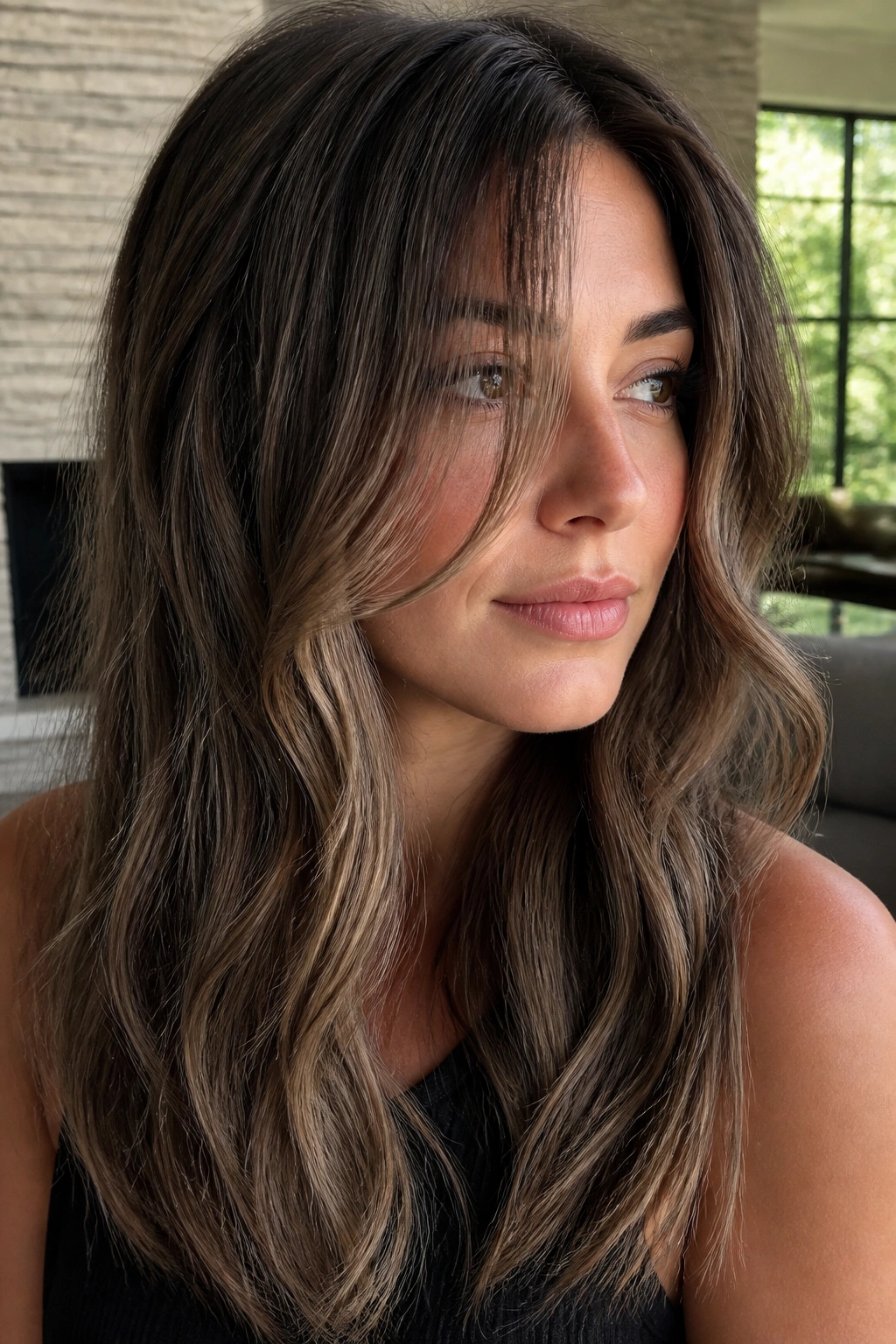
If warmth keeps fighting you, mushroom brown is the calm answer. It sits in that gray-beige zone that makes brunette hair look expensive in a very quiet way, and it’s especially good when your natural color pulls too orange under salon lights.
The key is not making it muddy. You want cool ribbons, not flat ash soup. A stylist can weave in beige and taupe tones through the mids and ends while leaving enough depth at the root to keep the hair from going lifeless. On someone with neutral or cool skin, mushroom brown can be a beautiful reset.
Picture it on a textured lob or a blunt cut with movement. The cooler pieces shift just enough in the light that the whole style feels more deliberate. If you wear a lot of black, gray, cream, or denim, this shade slots in easily.
It’s a quieter color change, but not a boring one. That’s the whole point.
5. Copper Glaze on Medium Brunette Hair

Copper on brunette hair can go wrong fast if it’s too bright or too orange. A glaze is the safer, smarter version. It gives medium brown hair a warm lift that looks shiny instead of loud, which is a better fit for most people than going full copper head-to-toe.
The nice thing about copper glaze is that it can be tuned. On level 5 or 6 brunette hair, a warm copper-brown glaze adds auburn heat without erasing the base. On darker hair, it may show more as warmth and reflection than a full copper read, which is still worth it if your hair tends to look flat.
You’ll get the best result if your cut has some layers or face movement. Straight, one-length hair can still take the color, but the tone really comes alive when light hits bends and ends. It’s also one of the faster changes to maintain, since a gloss or glaze fades softer than permanent color.
If you like warmth but hate brass, this is the move. Warm is the goal. Orange is not.
6. Mocha Ombré With Soft Ends
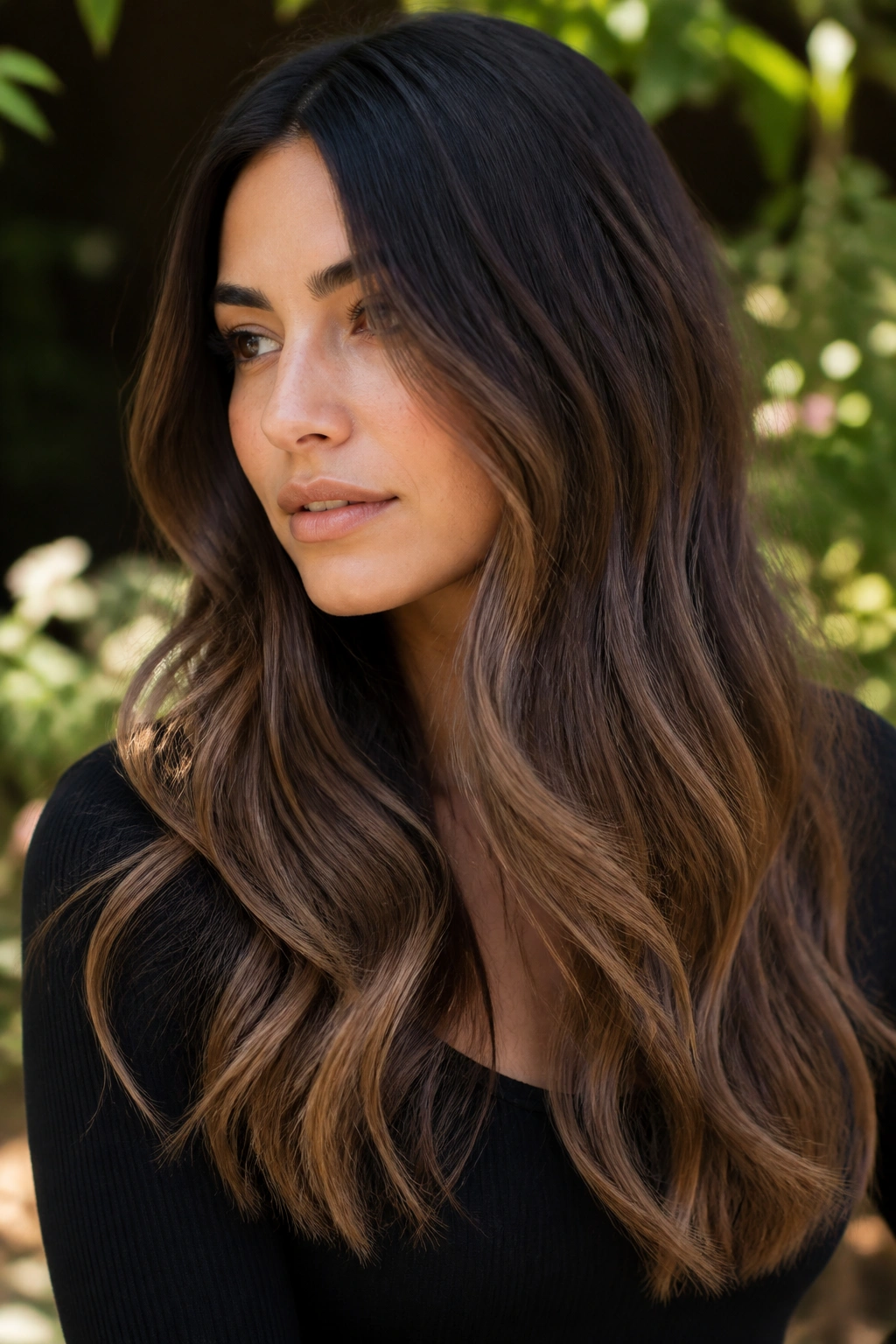
A good ombré should look like the color grew that way. Not dipped. Not striped. Just a gradual shift from deeper roots into softer mocha ends that feel believable on brown hair.
What makes mocha ombré so wearable is that the transition stays gentle. The roots hold onto your natural brunette depth, and the mids and ends lighten in a controlled way that can make long hair look thicker, not thinner. If your ends are a little porous from old color, mocha tones are forgiving because they don’t chase maximum contrast.
Why It Works
The ombré pattern keeps your scalp area dark, which lowers maintenance right away. It also lets you play with the lower half of the hair where the eye tends to follow movement. On curls and waves, that lighter tail end can make the entire shape look more defined.
Best Way to Wear It
- Keep the root area at your natural depth or one shade deeper.
- Ask for mocha, cocoa, or taupe-brown on the ends.
- Blend the line between dark and light higher on the back than the front if you wear your hair up a lot.
- Use a gloss every so often to keep the fade from turning flat.
Mocha ombré is a solid pick if you want dimension but not a lot of upkeep drama.
7. Honey Babylights Over Chestnut Hair

Honey babylights are tiny, fine highlights that sit close together, and on chestnut hair they can be gorgeous. Not loud. Not chunky. Just a soft glow that makes the whole head look more detailed.
This is the kind of color change that rewards patience. Babylights take longer to place because the sections are small, but the payoff is a much more natural-looking lift than broad highlights. On brunette hair, that matters. A few thick stripes can look dated fast. Tiny strands blend like they belong there.
Chestnut is a strong base for this idea because it already has a warm brown undertone. Add honey and you get a soft, golden finish that flatters curls, waves, and blowouts equally well. It also works nicely if you like wearing your hair half-up; the little lights around the crown and temples keep the style from disappearing into a single brown block.
Best for: Someone who wants brightness without the obvious stripey look.
8. Burgundy Peekaboo Panels Under Dark Brown Hair
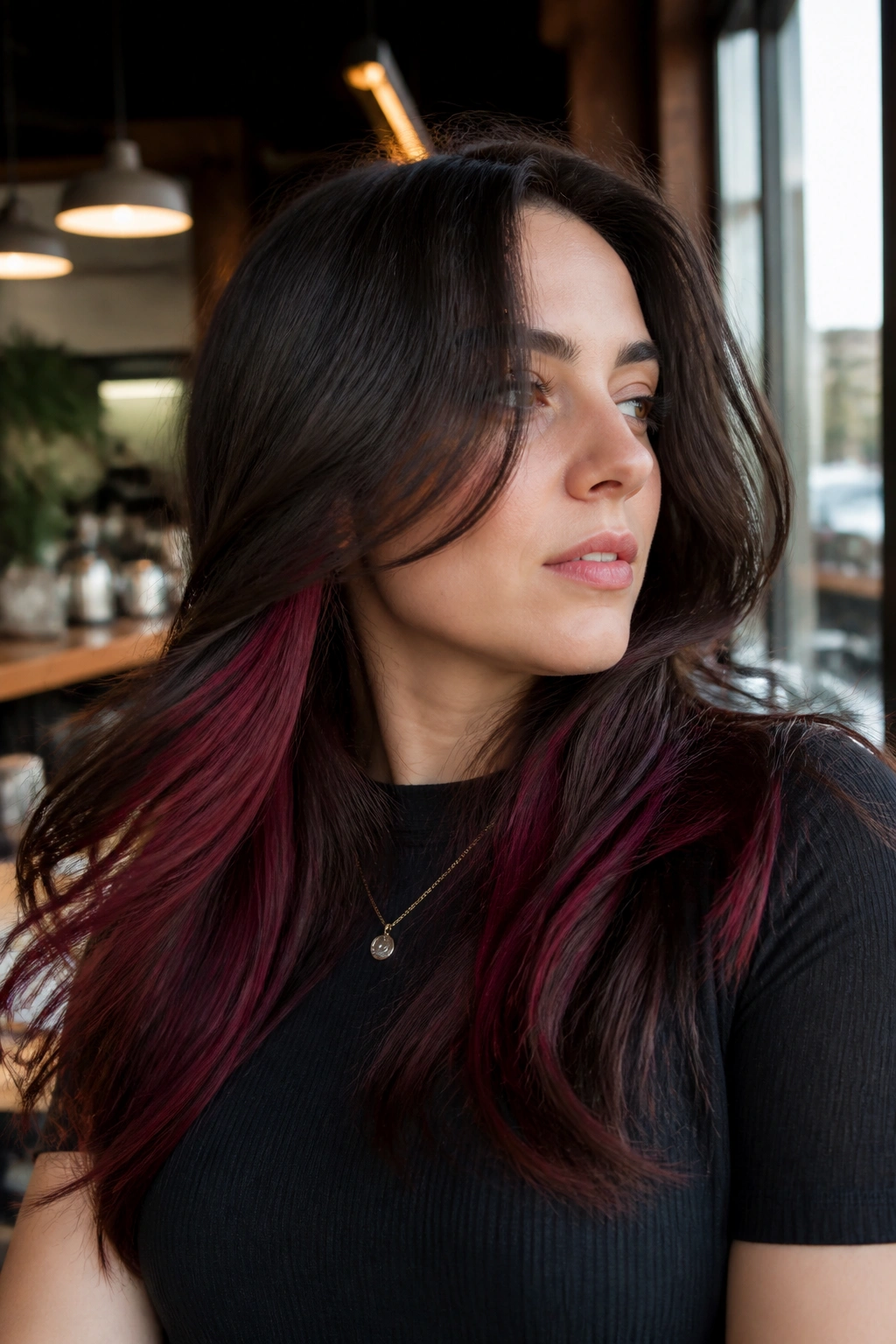
Hidden color has a loyal fan base for a reason. Burgundy peekaboo panels let you keep your dark brunette top layer while hiding a richer, redder shade underneath for movement and surprise.
The setup matters here. Those panels usually sit in the lower sections or the underlayer, so they show when your hair swings, gets tucked behind one ear, or is worn in a half-up knot. On dark brown hair, burgundy reads deep and plush rather than fire-engine red, which makes it feel grown-up without feeling flat.
This is a nice choice if you work in a setting that likes conservative hair but you still want something with personality. The top layer can stay close to your natural color, while the hidden sections carry the drama. You get both.
It also plays well with layered cuts. The more movement your hair has, the more often those burgundy panels peek through. That’s the whole point, really. A little secret can be fun.
9. Ash Brown Lowlights for More Depth

Can brunette hair be too light? Absolutely. After a lot of highlighting, hair can start looking fuzzy at the ends and a little washed out at the root. Ash brown lowlights fix that by adding depth back in.
This is a repair move as much as a style move. Lowlights are darker pieces woven through lighter hair, and ash brown keeps them cool instead of warm. That makes the final result look more grounded and less stripey. If your brunette has started to feel thin or overprocessed, lowlights can rebuild the look of thickness in one appointment.
The Science Behind It
Color contrast makes the hair read fuller. Darker strands sit behind lighter ones and create shadows, and those shadows matter when the cut is layered or the ends are a little dry. You don’t need a dramatic change for this to work.
What to Watch For
- Keep the lowlights one to two levels deeper than the base.
- Ask for an ash tone if your hair pulls gold or copper too fast.
- Use a demi-permanent formula if you want the option to soften the effect later.
- Pair with a blunt cut if your ends feel wispy; the added depth helps the shape look cleaner.
This is the unglamorous option, maybe, but it’s smart. Sometimes smart is prettier.
10. Toffee Face-Framing Ribbons

A tiny color change can make a big difference when it sits around the face. Toffee ribbons are warm, soft, and easy to wear, especially on brunettes who want a lift without committing to a heavy highlight schedule.
The color itself sits between caramel and light brown, which gives it a gentler finish than gold or blonde. Place those ribbons around the cheekbones, temples, and part line, and they instantly create more brightness near the face. It’s a sneaky way to open up the whole cut.
I like this option for shoulder-length hair and long layers because the lighter strands fall into the shape instead of fighting it. If you wear your hair in a center part, toffee pieces can soften the line down the middle. If you wear a side part, they can make the fuller side look even more intentional.
Quick Details
- Best on level 4 to 6 brunettes.
- Works well with loose bends or a round-brush blowout.
- Needs less upkeep than full highlights.
- Looks especially good when the ends are a little lighter than the roots.
Toffee is one of those shades that’s easy to underestimate. It shouldn’t be.
11. Mahogany Melt From Roots to Ends

Mahogany is red-brown with a little weight to it, and on brunette hair it can look rich rather than bright. A melt version keeps the root deeper and lets the red-brown build gradually through the lengths, which makes the whole thing feel polished instead of obvious.
This shade has a nice old-school glamour to it. Not costume-y. Just lush. The red tones show through in sunlight and soft indoor light, while the darker root keeps it grounded. If your natural hair is already a medium brunette, the melt effect can be done without needing a hard line of demarcation.
It’s also a good choice if your hair is thick and you want the color to hold some depth. Too much lightness can make thick hair look sprawling. Mahogany keeps the shape a bit more contained. That sounds strange, but once you’ve seen it, you get it.
If you wear warm makeup, gold jewelry, or rich lip colors, mahogany fits right in. It has presence.
12. Bronde Highlights for Brunettes

Bronde sounds like a compromise, but it’s usually a smarter plan than going all-in on blonde. It keeps enough brown to belong on a brunette base while adding lighter pieces that catch the eye and move the cut forward.
The reason bronde works so well is balance. You get the brightness of highlights without losing the depth that makes brunette hair look healthy. On someone who is nervous about becoming “too light,” bronde is a good halfway step. It also suits people who want dimension that won’t look harsh a month later.
What Makes It Different
Bronde usually mixes beige, caramel, and soft blonde pieces over a brown base. The result should never look painted on. If it does, the balance is off. The best versions use darker lowlights too, which stop the lighter pieces from floating on their own.
Who It Fits Best
- Brunettes who want a softer move toward blonde.
- Thick hair that can hold contrast without looking stringy.
- Wavy hair, where the mixed tones can shift with movement.
- People who don’t want a harsh root line.
If you’ve been flirting with blonde but don’t want the maintenance bill, bronde is the sane choice. Sane can be stylish.
13. Chestnut Gloss for a Fresh Brunette Finish
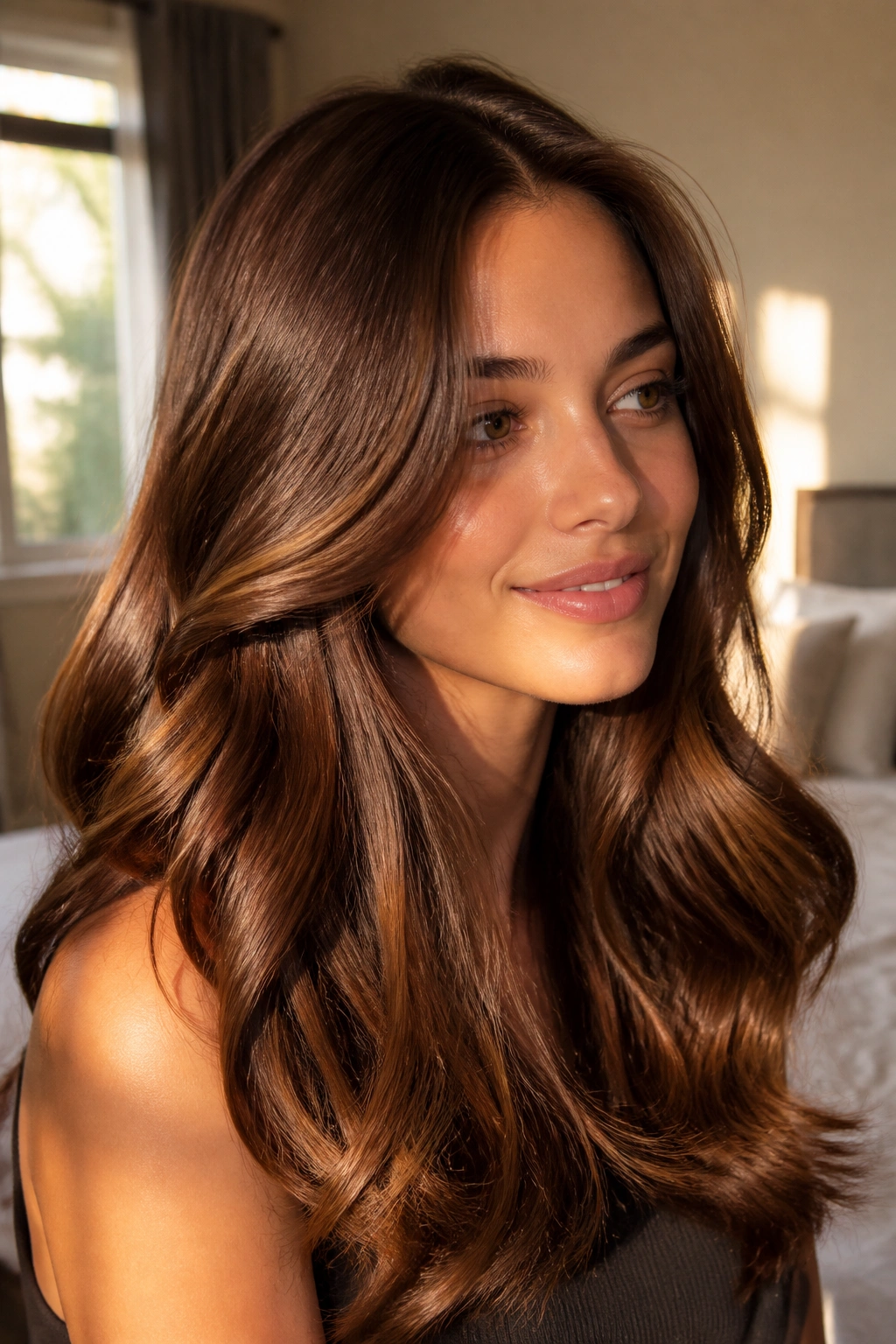
Sometimes the answer is not a new color family. Sometimes your brunette just needs a better finish. A chestnut gloss deepens the brown, adds a warm sheen, and makes the whole head look cleaner without changing the shade dramatically.
This is one of my favorite low-commitment changes because it respects the base you already have. Chestnut adds a bit of red-gold warmth, which can be beautiful on dull, faded brown hair that’s lost its shine. You’re not trying to reinvent the wheel here. You’re trying to make the wheel look expensive.
A gloss is also a good move between bigger color services. It can refresh faded balayage, blur out rough ends, and make the cut read sleeker. If your hair is healthy but looks tired, a chestnut gloss is a fast fix.
It wears best on medium to dark brunettes. On very dark hair, the effect is more about shine than visible warmth, which is still a win. Shine matters. More than people think.
14. Smoky Bronze Highlights

Bronze is what happens when warmth gets a little edge. Smoky bronze tones keep the golden side of brunette hair, then dull it down just enough to avoid looking brassy. The finish is cool enough to feel modern, but not so cool that it turns flat.
This shade is especially good if you like warm makeup tones but don’t want your hair drifting into orange. The bronze pieces usually sit between caramel and soft copper, then get softened with a beige or taupe toner. That mix gives the highlights a mineral look — soft shine, not glittery shine.
Smoky bronze also flatters layered cuts because the varied tones show up on the outer surfaces of the hair. On a textured bob, a shoulder-length shag, or long waves, it can look like the hair has more shape than it did before. That’s the real selling point.
If your skin leans olive or neutral, this shade can be especially friendly. It brings warmth without going too yellow.
15. Vanilla Chai Ribbons in Brunette Hair
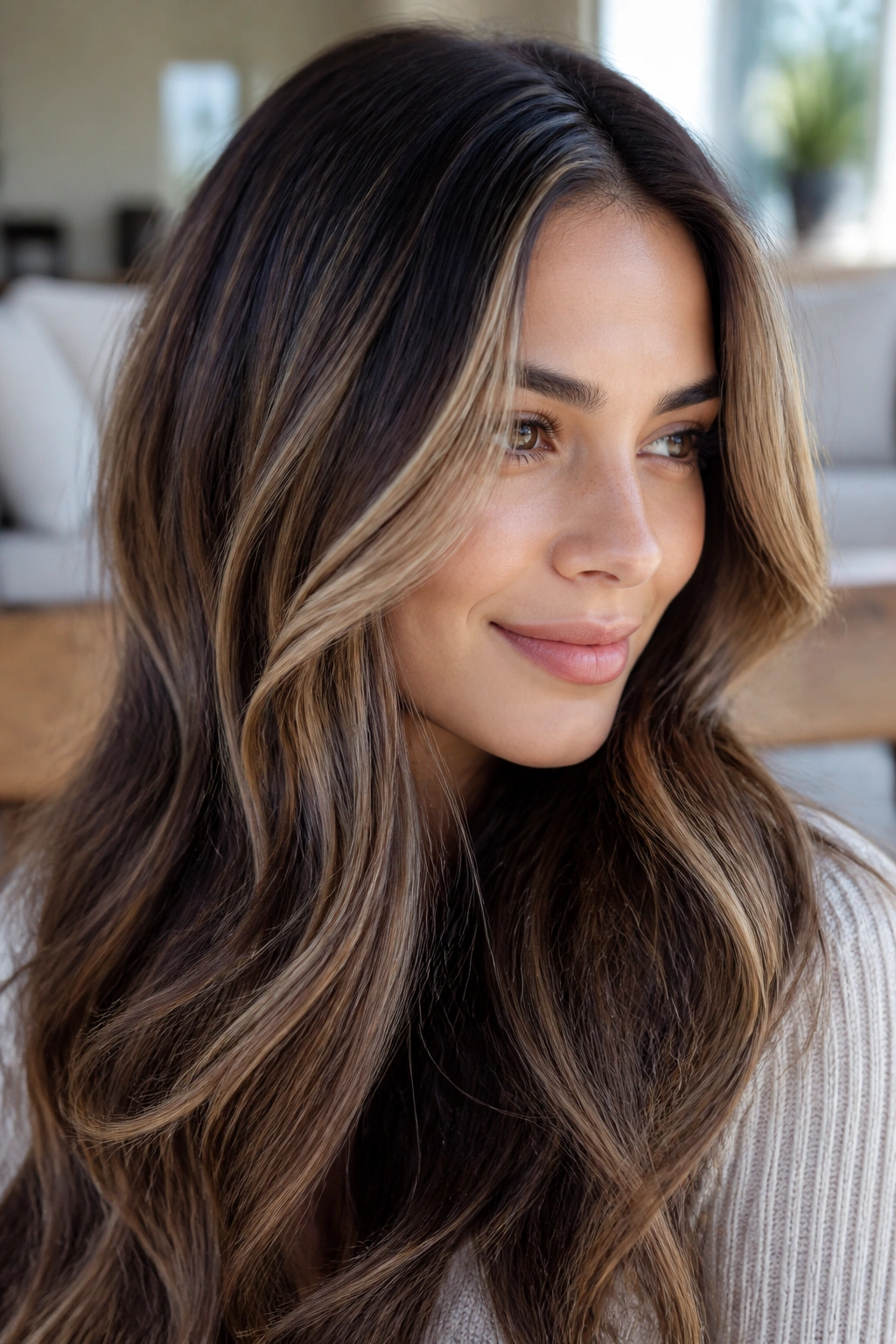
Want a lighter brunette change that still feels soft? Vanilla chai ribbons are a strong choice. They sit in that creamy beige-gold zone that brightens the hair without making the contrast too sharp.
The name sounds sweet, and the color usually is. It works best when the lighter pieces are thin and spaced with care, so the brunette base still does most of the talking. A few wide stripes would ruin the effect. Fine ribbons are the whole point.
How to Get the Most From It
Use this shade on hair that can tolerate lift, because the lighter pieces need enough brightness to read as creamy instead of muddy. Ask your stylist to tone away any yellow cast, but not so much that the result turns icy. The goal is soft warmth.
Good Ways to Wear It
- Loose waves, where the ribbons can move.
- Half-up styles that show both base and light pieces.
- Face-framing pieces that blend into longer layers.
- Gloss treatments between color sessions to keep the beige tone clean.
This is one of those shades that looks understated in the chair and better every time you style it at home. That’s a good sign.
16. Auburn Brown With Soft Copper
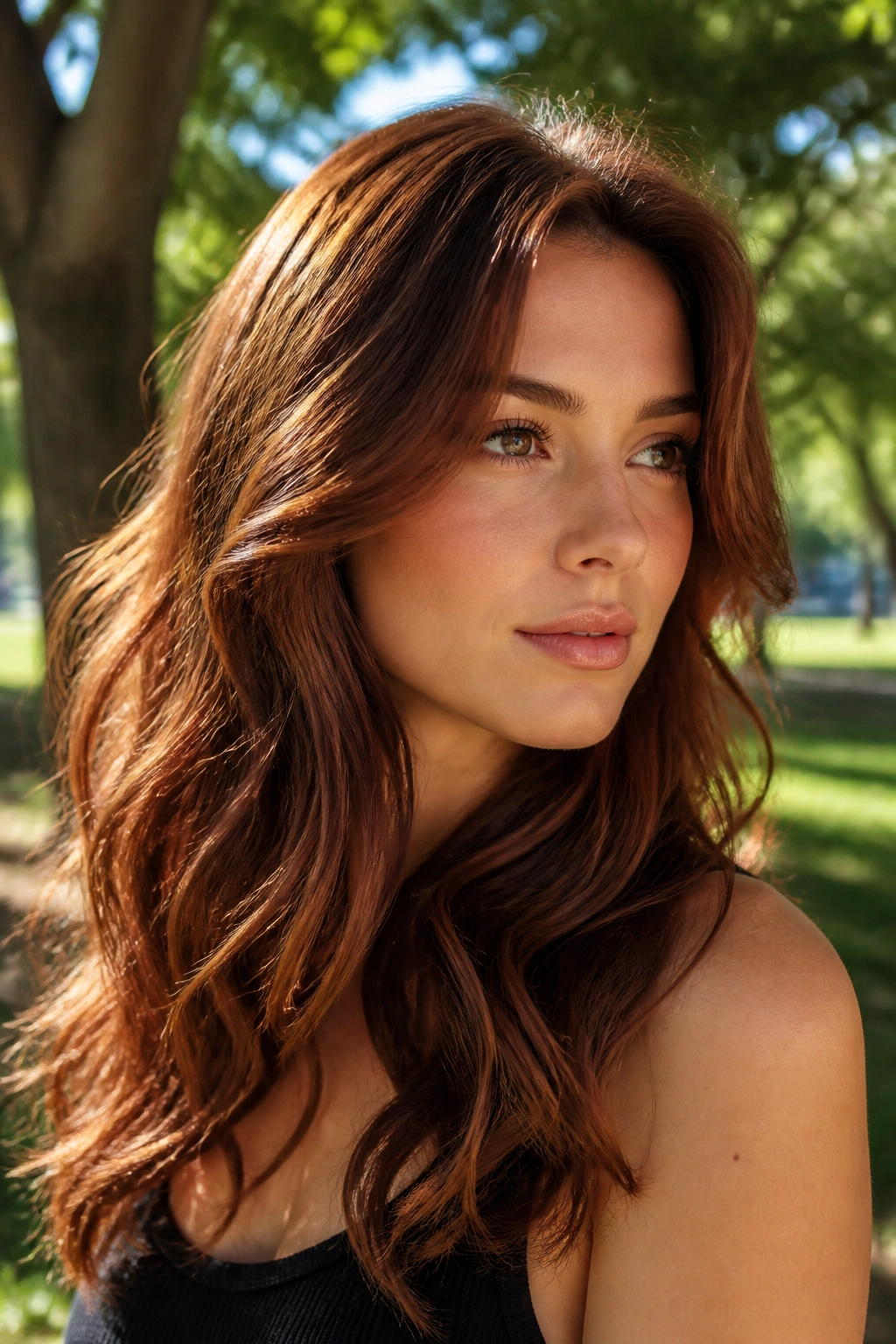
Auburn brown sits in the zone where brunette and red meet, and that’s exactly why it works. You get enough copper to notice it, enough brown to keep it grounded, and enough shine to make the whole style feel deliberate.
The best auburn brown shades are rarely bright red. They’re more like brown hair that has been warmed by a copper filter. On medium brunettes, the result can be surprisingly flattering, especially if you want color that reacts to light instead of sitting still. The tone looks richer in sunlight and more chocolate-red indoors.
I’d call this the color for someone who likes a little drama but doesn’t want to explain it every five minutes. It’s visible. It’s wearable. It doesn’t look like a costume unless you ask for it to be one.
It also loves texture. Curls and waves catch auburn pieces in a way that straight hair sometimes doesn’t, so if your hair has movement, this shade earns its place fast.
17. Plum Brown Hidden Panels
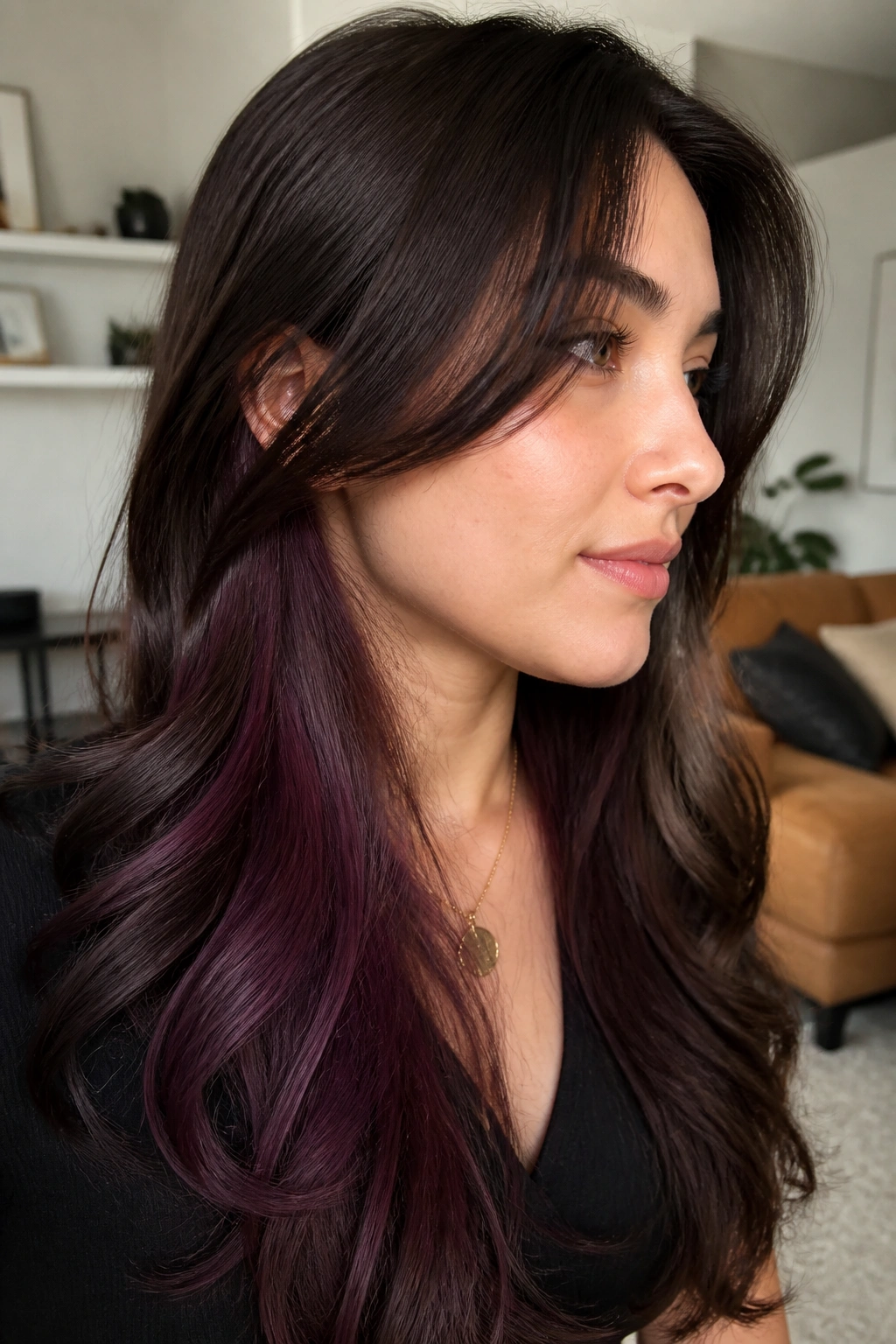
Plum brown is for the brunette who wants color with a little bite. It’s cooler than burgundy, darker than violet, and much easier to wear than a fully vivid purple because the brown base keeps it from feeling loud.
Hidden panels are the smartest way to use it. Put the plum color underneath the top layers, and it shows when the hair swings or when you curl it away from the face. This is one of the few color ideas that can feel both playful and reserved at the same time. That sounds contradictory, but hair does that.
What to Watch For
- Keep the plum tone deep enough that it reads as brown first and purple second.
- Use hidden placement if you need the top layer to stay work-friendly.
- Choose a gloss or demi-permanent formula if you want a softer fade.
- Pair it with a blunt hem if you want the underlayer to pop more sharply.
Plum brown hidden panels are especially nice on darker brunettes because the contrast is subtle until the light hits just right. Then it wakes up.
18. Cinnamon Swirl Balayage on Waves

Cinnamon swirl balayage is one of the easiest ways to make brunette waves look expensive. The warmth is softer than copper, spicier than caramel, and usually more flattering than either one when you want the hair to feel alive, not dyed.
The best versions trace the bend of the wave. That means the lighter cinnamon pieces are painted where the hair naturally curves, so the color rides the shape instead of sitting flat on top of it. On layered hair, this can make the texture look fuller at the crown and more animated through the ends.
Why It Looks Better on Waves
The movement breaks up the color. A flat surface shows every line; a bend hides the join and gives the color a softer edge. That’s why cinnamon balayage can look richer on wavy hair than on poker-straight hair.
How to Style It
- Use a 1-inch curling iron or wand for soft bends.
- Leave the ends out on a few pieces so the color feels casual.
- Add a light gloss if the cinnamon starts reading too orange.
- Keep the base a shade deeper so the dimension has room to show.
This shade has a cozy feel without leaning dull. That balance is harder to find than it sounds.
19. Maple Brown Dimension With Lowlights and Light Ribbons
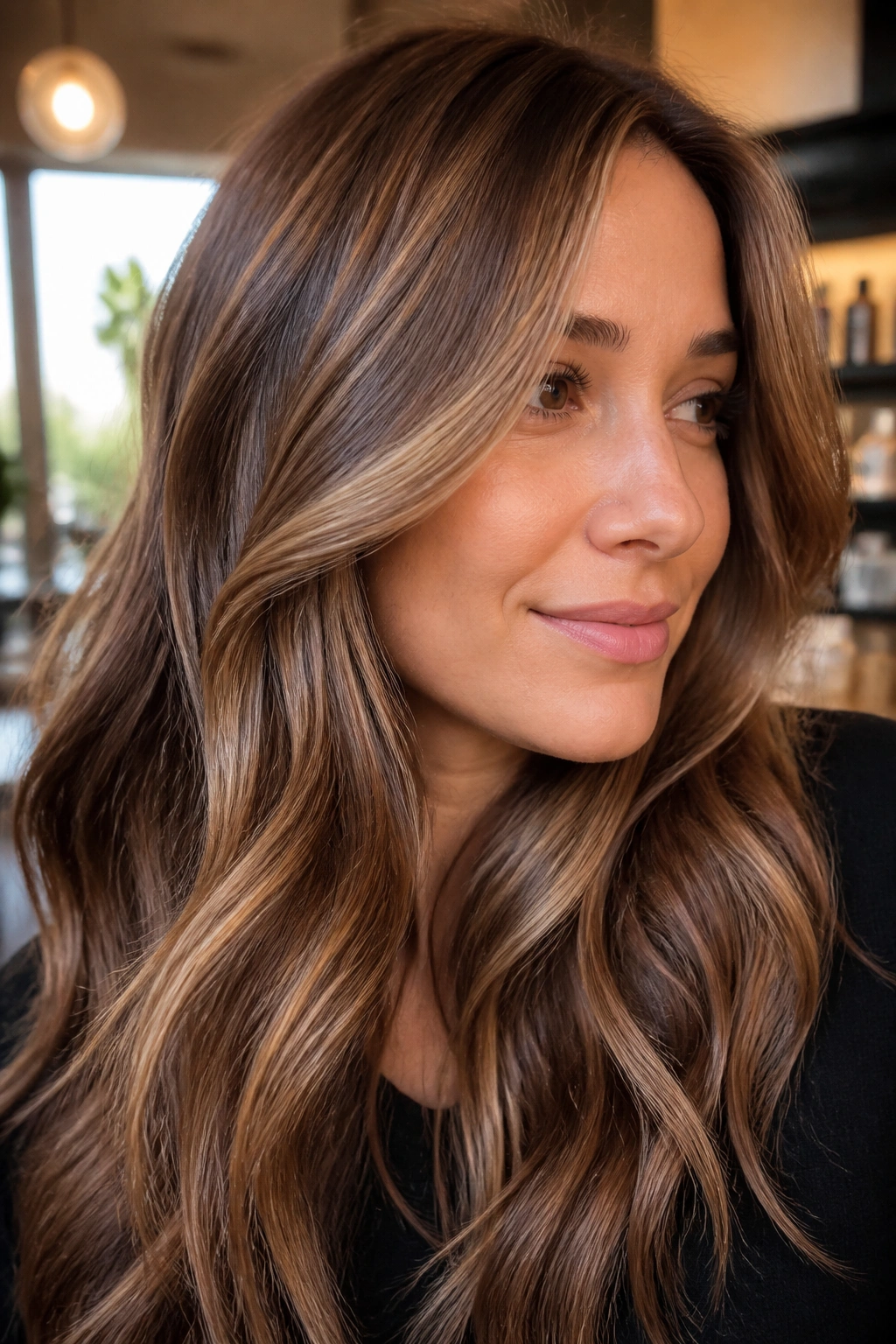
Maple brown sits in that golden-brown space that makes hair look sunlit without looking blond. The reason I like it as a brunette change is that it does two things at once: it warms the base and breaks it up with darker lowlights so the color never turns flat.
That mix matters. If you only add light ribbons, the hair can start to look thin around the ends. If you only add lowlights, it can feel heavy. Maple brown gets a better result by combining the two in measured amounts. You keep the brunette identity, but the surfaces catch more variation.
This is a strong option for medium brown hair that wants a softer finish. It also works nicely on thicker hair because the alternating depths help the style read more textured. If you usually wear your hair in a low bun or ponytail, the variation keeps it from looking like one block of color.
The color is warm, but not syrupy. That’s why it holds up well.
20. Soft Black Cherry Brunette
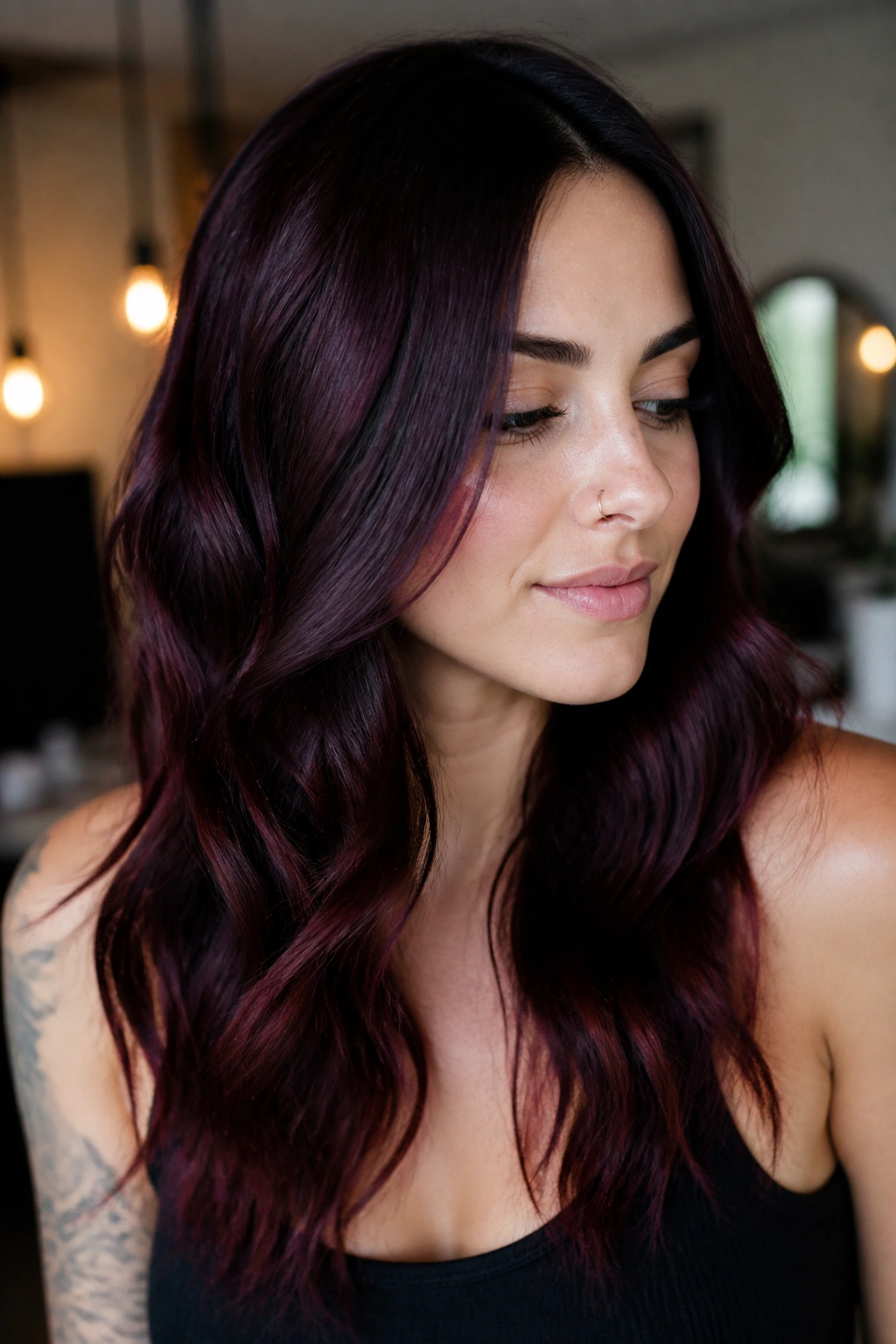
Soft black cherry is the dramatic brunette shade I recommend when someone wants a real change but doesn’t want to leave the dark side. It reads deep, glossy, and slightly red-violet, with enough richness to feel special and enough darkness to stay wearable.
The best version isn’t bright cherry. It’s almost black in low light, then gives off a dark ruby or berry glow when the light moves across it. That shift is what makes the shade interesting. If your hair naturally sits at level 2, 3, or 4, this can be a beautiful way to add color without needing obvious highlights.
It also looks best when the finish is polished. A smooth blowout or soft wave helps the cherry tones show through. On dry, frizzy lengths, the shade can lose some of its shine and look heavier than you want, so a gloss or smoothing treatment helps a lot.
If you want brunette hair that feels deeper, richer, and a little more mysterious, this is the one I’d point you toward first. It doesn’t ask for much. It just looks good.
