



Fall is the season when hair color can get a little deeper and look better for it. Balayage hair ideas for fall work so well because the color can shift warm, smoky, or caramel-rich without losing that soft grow-out line people actually want.
Hand-painted light pieces make more sense here than a blunt all-over dye job. A good balayage gives you movement at the mids and ends, a shadowed root, and enough contrast to keep the hair from reading flat under indoor light. That matters more than people think. A color that looks fine in daylight can look dull under office lights or too harsh in a restaurant, and the right placement fixes that.
The sweet spot is usually somewhere between obvious and invisible. You want enough brightness to lift the face, enough depth to keep the base believable, and enough tone control that the result does not drift orange, muddy, or chalky after a few washes. That’s the real game with fall balayage. Not loudness. Control.
These 15 balayage ideas lean into cinnamon, chestnut, auburn, beige, and smoky brunette territory, with a few lighter options for anyone who wants dimension without giving up brightness. Some are easy to live with. A few need more upkeep. All of them can be tailored to your base color, your haircut, and how much contrast you actually want to see when you catch your reflection in a window.
1. Cinnamon Melt Balayage

Cinnamon is one of those shades that makes brunette hair feel warmer without turning it copper-red. On a medium brown base, the tone reads rich and spicy, not loud. I like it most when the light pieces are painted through the mids and ends in a loose melt, so the hair keeps a darker root and a softer edge.
Why It Works
Cinnamon sits in that middle zone between brown and red, which is exactly why it suits fall so well. It adds warmth in a way that feels natural on wavy hair, long layers, or a shoulder-length cut that needs a little more life.
- Works especially well on level 4 to 6 brunettes.
- Ask for a soft root shadow so the color grows out cleanly.
- Keep the light pieces concentrated around the face and the outer layers.
- A warm brown gloss helps the cinnamon stay rich instead of turning coppery.
Best tip: if your hair pulls orange fast, ask for a cinnamon-brown blend, not a bright copper lift.
2. Chestnut Ribbon Balayage

Chestnut ribbon balayage is the answer when you want dimension but do not want your hair to look striped. Unlike a chunky highlight pattern, these ribbons are narrow, softly blended, and placed where the hair naturally moves. The result is quieter, and honestly, that is what makes it work.
This shade looks especially good on straight hair and polished blowouts because the ribbons show up as soft shifts rather than obvious streaks. On layered cuts, the color catches on the movement of the ends and gives the whole shape a little more body. On one-length hair, it can keep the style from feeling too heavy.
I’d choose this if your natural base is medium brown and you want a color that still looks believable when your hair is pulled back. It is one of the easier balayage options to maintain because the contrast stays modest. You see the depth first, then the lighter pieces. That order matters.
And that’s why chestnut usually looks expensive without trying to be flashy. It’s calm. It’s controlled. It does not beg for attention, which is exactly the point.
3. Copper Apricot Ends
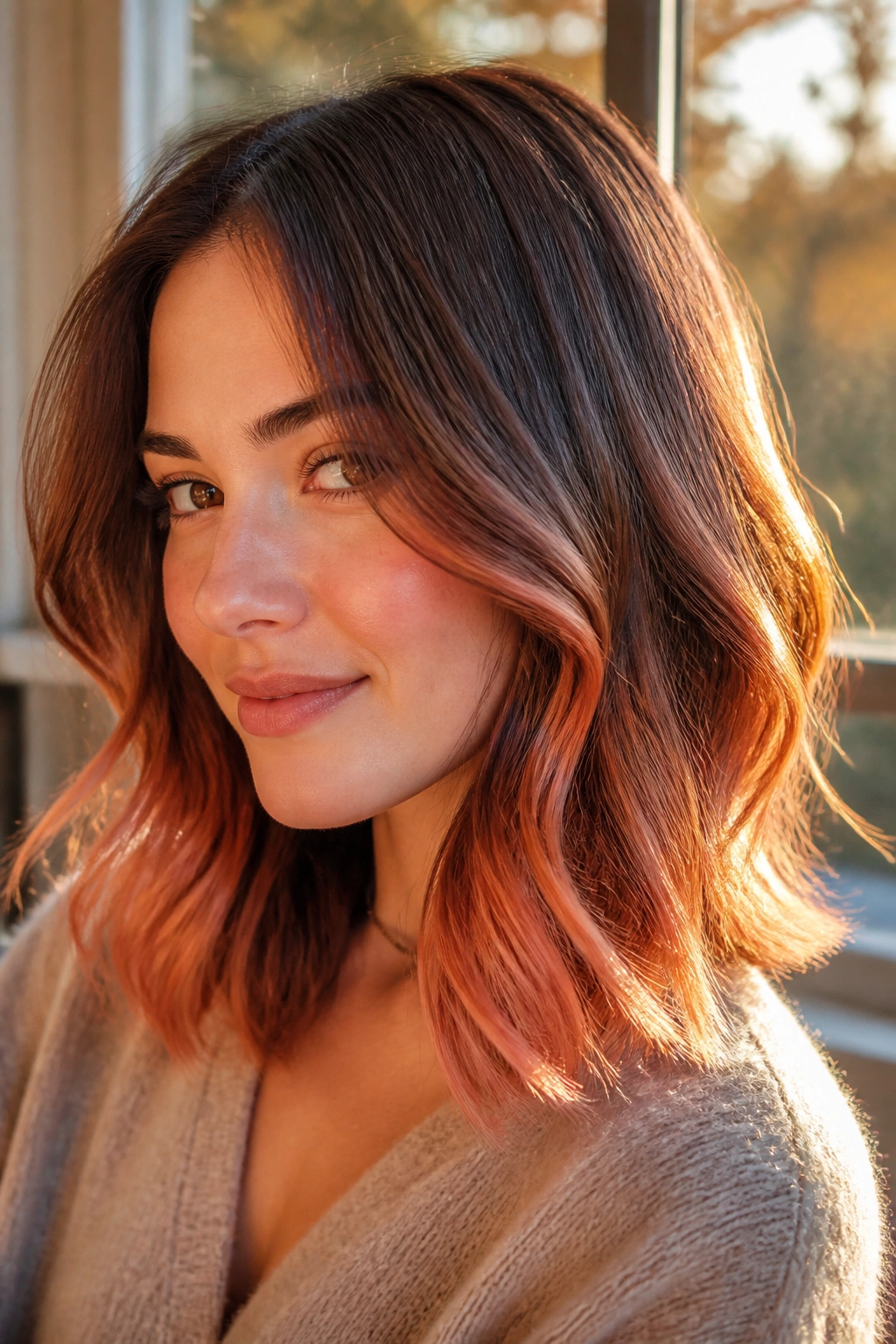
Can copper balayage work without looking costume-level bright? Yes, if the copper lives mostly through the ends and gets softened with apricot and brown in the mids. The mistake people make is lifting everything too high. Then the color goes loud and loses the autumn feel.
The cleaner version starts with a darker root area and lets the warmth show only where the hair bends and moves. That keeps the face frame soft and makes the ends do the talking. On a light brown or dark blonde base, this can look especially good on layered hair because the ends catch the most light.
How to Wear It
- Ask for apricot-copper ribbons instead of a solid copper overlay.
- Keep the root area one to two shades deeper than the ends.
- Wear it with waves or a round-brush blowout so the warmth shows in the bends.
- Skip overly cool styling products, which can mute the red-orange glow.
The trick is restraint. A few careful copper pieces can make a whole head of hair feel alive. Too much lift, and the whole thing starts arguing with itself.
4. Mushroom Brown Dimension
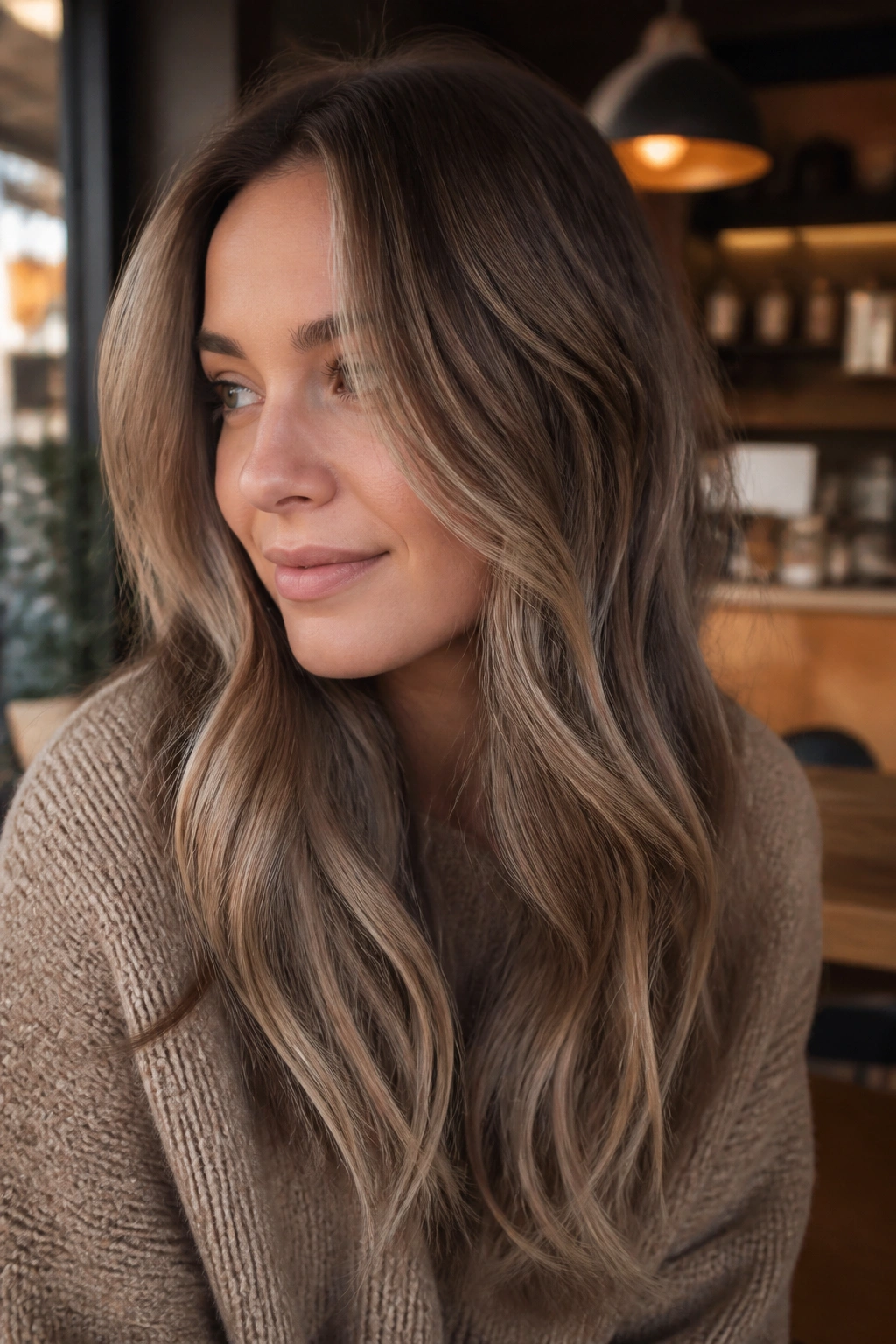
Mushroom brown is the cooler cousin in the fall balayage family, and that is why it deserves a place here. It mixes beige, taupe, and soft brown tones so the hair looks smoky instead of golden. Done well, it feels soft and modern. Done badly, it can look flat or a little muddy, which is why the toner matters so much.
I like this look on thick hair and on brunettes who do not want warmth fighting their skin tone. The color sits quietly, then opens up when the hair moves. It is subtle in a way that still reads as a color service, not a missed highlight appointment.
A stylist usually needs to avoid over-toning the lighter pieces. If the blonde goes too ashy, the hair can lose all of its dimension and start looking dusty. The better move is a beige-brown finish that keeps a hint of warmth underneath. That tiny bit of warmth saves the whole thing.
The best mushroom brown balayage has depth at the root, a smoky midsection, and ends that are just light enough to break up the base. No stripey stuff. No flatness either. That balance is the whole show.
5. Honey Bronde Sweep for Fall
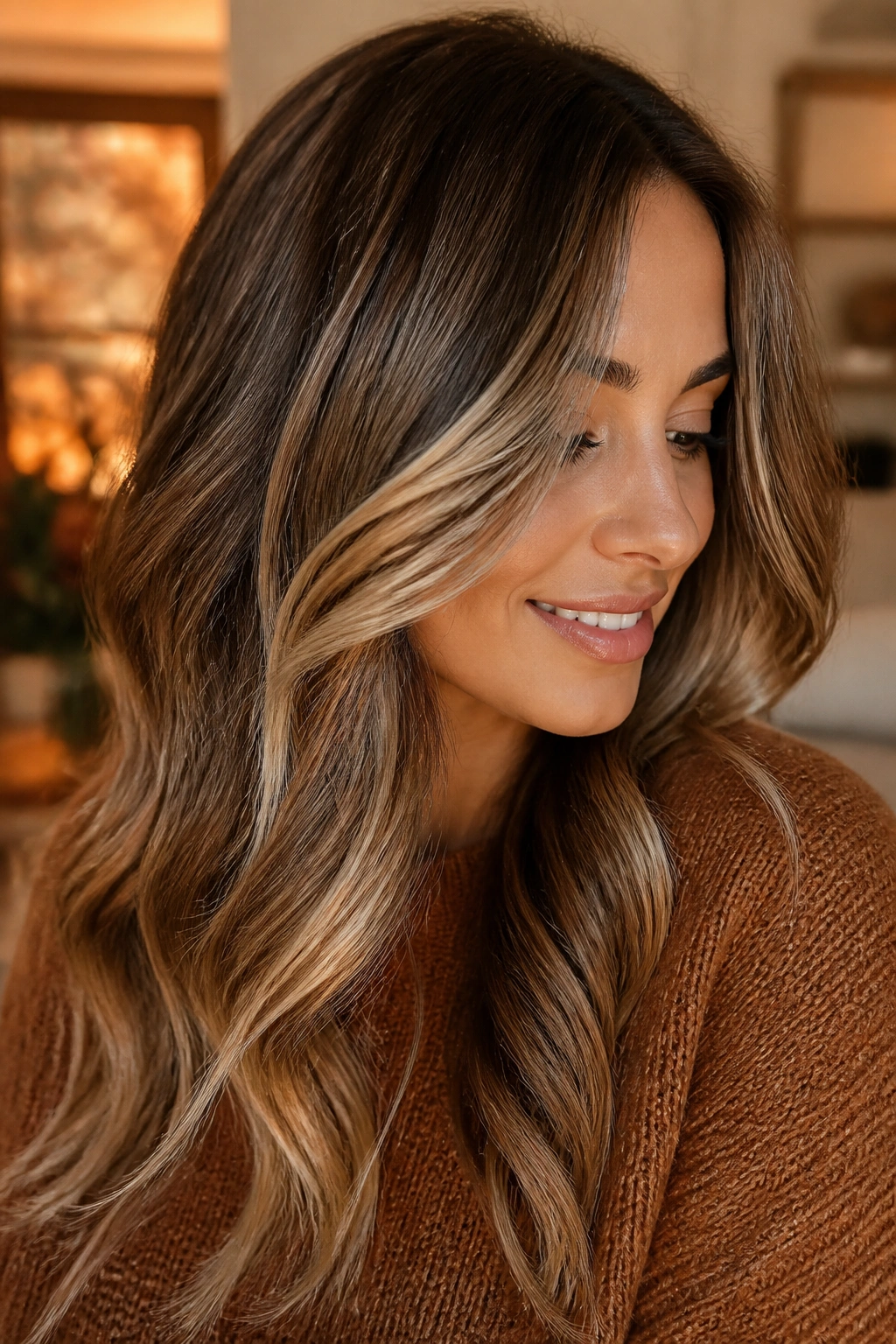
Honey bronde is the least fussy way to brighten dark blonde or light brown hair for colder months. It gives you warmth without pushing the whole head into blonde territory, and it looks especially good when the color is swept through the mids rather than packed at the ends. The result is sun-soft, not summer-bright.
What makes this shade useful is its range. It can sit close to your natural color and still catch light around the face and crown. That matters if you want your hair to look richer under indoor lighting and softer in daylight. A good honey bronde balayage is not trying to change your base. It is trying to wake it up.
I like it on long layers because the movement shows off the warmer ribbons. On shorter cuts, the color can still work, but the pieces need to be placed with care or the whole style can read too yellow. That is the trap. Keep the honey toned, not lemony.
If you want a fall color that grows out gently and still feels bright, this is one of the safest bets.
6. Espresso-to-Toffee Melt

Espresso roots melting into toffee ends is one of those looks that sounds simple and ends up doing a lot of work. The dark base keeps the hair grounded, while the toffee through the mids and ends gives it warmth and movement. On dark brunettes, that contrast can be enough to make the haircut itself look better.
I prefer this on longer hair or layered mid-length cuts because the melt has room to show itself. If the hair is very short, the shift can disappear before it has a chance to do anything useful. On longer lengths, though, the gradient feels smooth and elegant without being stiff.
A stylist will often use foilyage or surface painting here, especially if the hair is dark and resistant. That helps lift the ends enough to take a toffee tone instead of just turning them reddish. If your hair is porous, the color needs a careful gloss afterward or the lighter pieces can go too warm too quickly.
There’s also a nice practical side to this color: the regrowth line stays soft, so you do not get that blunt demarcation some darker dye jobs leave behind. It is one of the more forgiving balayage options if you like depth but still want change.
7. Auburn Glaze Balayage
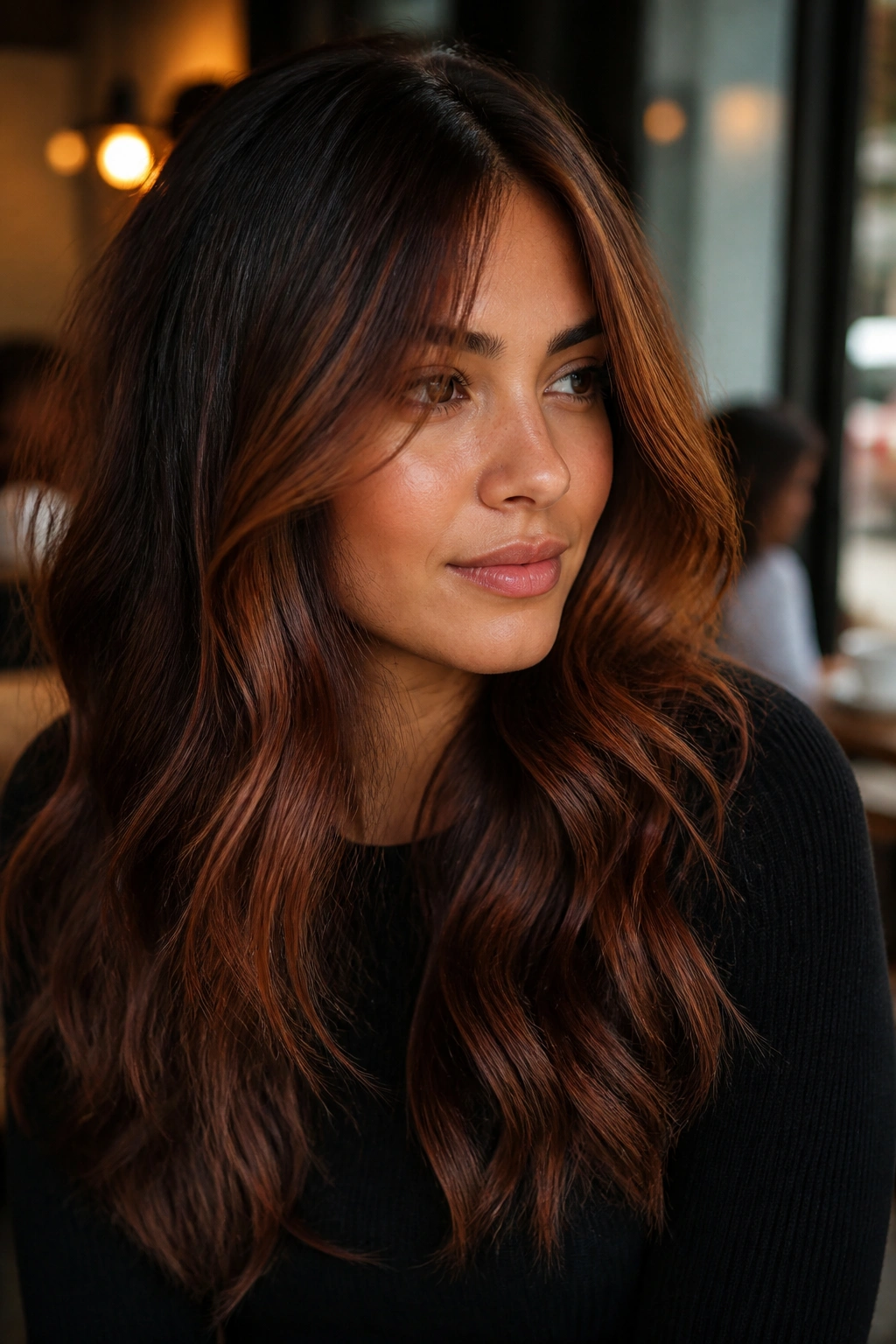
Auburn glaze balayage has a real place in fall because it gives brunette hair a red-brown glow without turning the whole head red. That difference matters. Auburn done badly can look flat and heavy; auburn done well looks like the light picked up the hair and warmed it from the inside.
What Makes It Different
The glaze is doing a lot of the work here. Instead of painting bold red pieces everywhere, you soften the mids and ends with a demi-permanent auburn tone so the color stays transparent. That lets the brown base stay visible, which keeps the result believable.
- Works well on medium to dark brown hair.
- Looks nicest when the brightest pieces stay around the face frame and top layers.
- Needs a color-safe shampoo or the red tones fade fast.
- Feels strongest on curls and waves, where the red-brown shifts show up naturally.
Small warning: if you want a subtle result, do not ask for bright cherry tones. Auburn is warmer and more brown than that.
8. Beige Blonde Root Smudge

Why does beige blonde still feel right for fall? Because the root smudge keeps it from floating too light and too cold. A beige balayage with a deeper root gives you brightness, but it also keeps the color tied to the haircut instead of letting it look like a summer leftover.
This works best when the root area is a shade or two deeper than the blonde pieces. That small shadow makes the whole style look smoother as it grows out. On a bob, the contrast can make the shape look sharper. On longer hair, it keeps the ends from disappearing.
Where the Shadow Belongs
The root smudge should be soft, not muddy. If it is pushed too dark, the blonde can look disconnected. If it is too light, the color loses that grounded feel and starts to look overprocessed.
I like beige blonde on people who want brightness near the face but do not want a high-contrast stripe running through the hair. It’s cleaner than icy blonde, warmer than ash, and easier to wear with sweaters, makeup, and the rest of a fall wardrobe that leans cozy.
And yes, a beige toner matters here. Skip it, and the blonde can slide too yellow in a hurry.
9. Maple Brown Caramel Veil
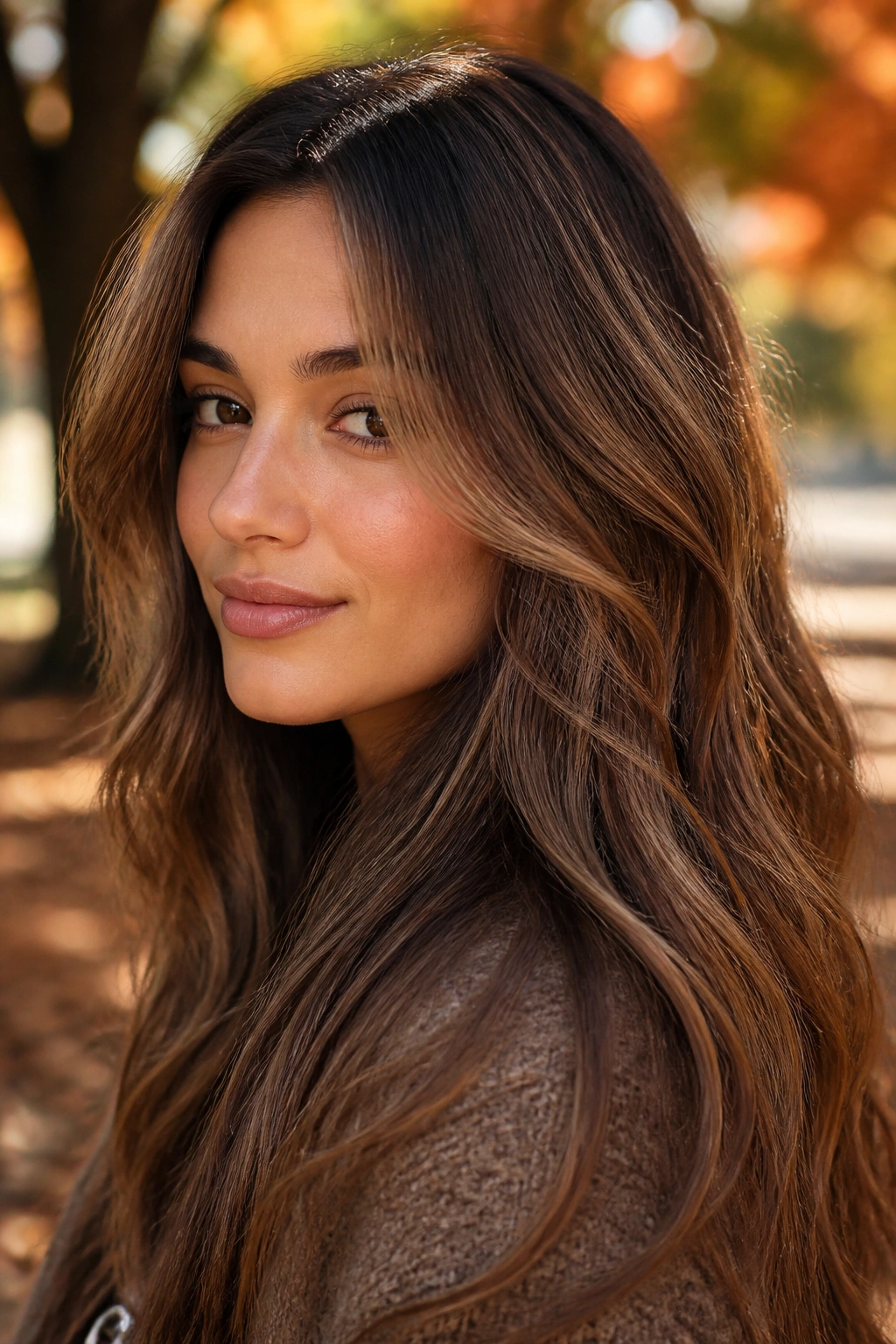
Maple brown with a caramel veil is softer than the usual high-contrast caramel balayage, and that softness is what makes it interesting. Instead of obvious light ribbons, you get thin, translucent pieces that sit over a deeper brown base like a layer of warm light. It feels richer than a single-process brunette, but it never shouts.
This is a strong choice for long hair because the veil effect has room to spread. On thick hair, it stops the color from feeling heavy. On fine hair, it can add dimension, but the pieces need to stay delicate or the hair can look patchy. That’s where a careful hand really matters.
I also like this for people who are easing into lighter color. You do not need to jump straight to blonde to see movement. A maple brown base with a caramel veil gives you warmth, depth, and a good amount of softness around the face.
The result is easy to wear, but it is not boring. That’s the sweet spot.
10. Smoky Bronde Face Frame for Fall

A dark blonde with two smoky face-framing pieces and cooler ends can change the whole haircut in one visit. I keep coming back to this look because it gives you brightness without committing the whole head to warmth or blonde. The front pieces do the lifting, and the rest stays grounded.
What the Pieces Should Do
The front should be just a little lighter than the rest, not several levels lighter. If the frame is too bright, it breaks the balance and starts to look disconnected. A smoky bronde mix keeps the contrast low and the movement soft.
- Ask for 1 to 2 levels of lift around the face.
- Keep the mids and ends in a neutral-beige family.
- Let the front pieces start near the cheekbone or jawline.
- Works especially well with curtain bangs and layered lob cuts.
I like this because it gives you a visible change without needing a heavy maintenance schedule. The haircut stays in charge. The color just follows along.
11. Peachy Rose Gold Ends

Peachy rose gold ends are the playful one in the group, but they are not nearly as hard to wear as people think. The trick is to keep the peach muted and the rose gold soft, so the shade reads as a warm blush rather than a neon pastel. On the right base, it looks fresh in a way that still makes sense for fall.
This is a smart option if you already have blonde or light brown balayage and want to shift the tone without redoing everything. A stylist can glaze the ends so the peach sits over the existing lightness instead of fighting it. That makes the color feel more layered and less obvious.
I would not push this too high up the head. The roots should stay shadowed, and the brighter warmth should live mostly at the ends and the outer layers. That keeps the look wearable and keeps the grow-out from turning weird.
If your makeup leans warm, the color sits in nicely. If your wardrobe is full of deep browns, creams, and burgundy, even better. The hair suddenly fits the clothes.
12. Mahogany Balayage on Dark Hair
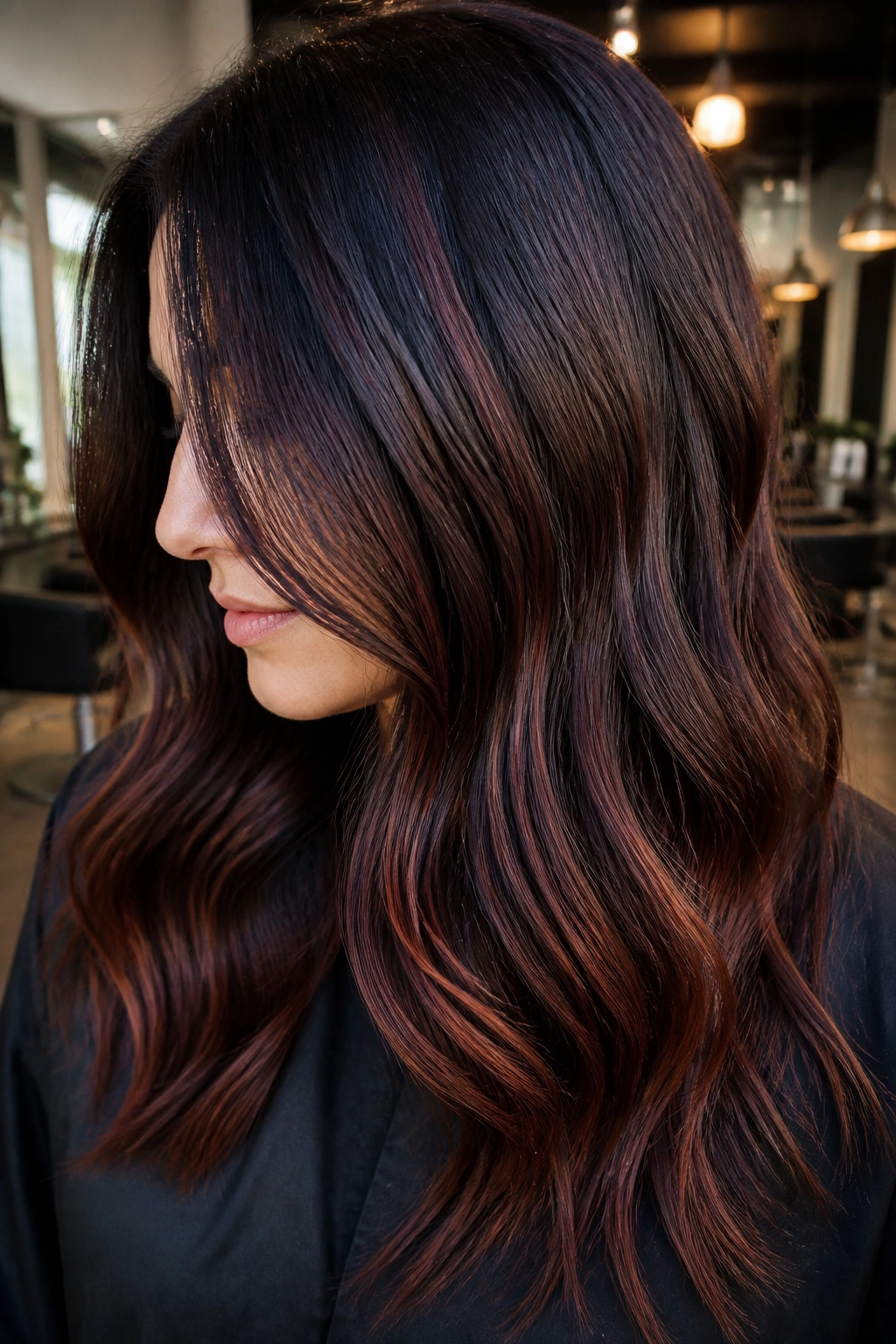
Mahogany balayage on dark hair is one of the few deeper color choices that still shows movement in low light. Black-brown or very deep brunette hair can swallow lighter tones if they are not placed carefully, but mahogany brings out a red-brown sheen that stays visible without needing a huge lift.
The best version starts with a dark base and adds mahogany through the mids, ends, and surface layers. That keeps the hair looking full, not streaky. On curly or coily hair, the red-brown shifts are even better because each bend catches a little different light. Straight hair can wear it too, but the placement has to be precise or the color disappears.
A gloss is usually enough here. You do not need to push the hair into a lighter level just to get dimension. In fact, too much lift can make dark hair lose the richness that makes mahogany appealing in the first place. Let the depth do some work.
This is the kind of color that reads quietly from across a room and looks more alive the closer you get. That’s a good sign.
13. Golden Beige Babylights and Balayage
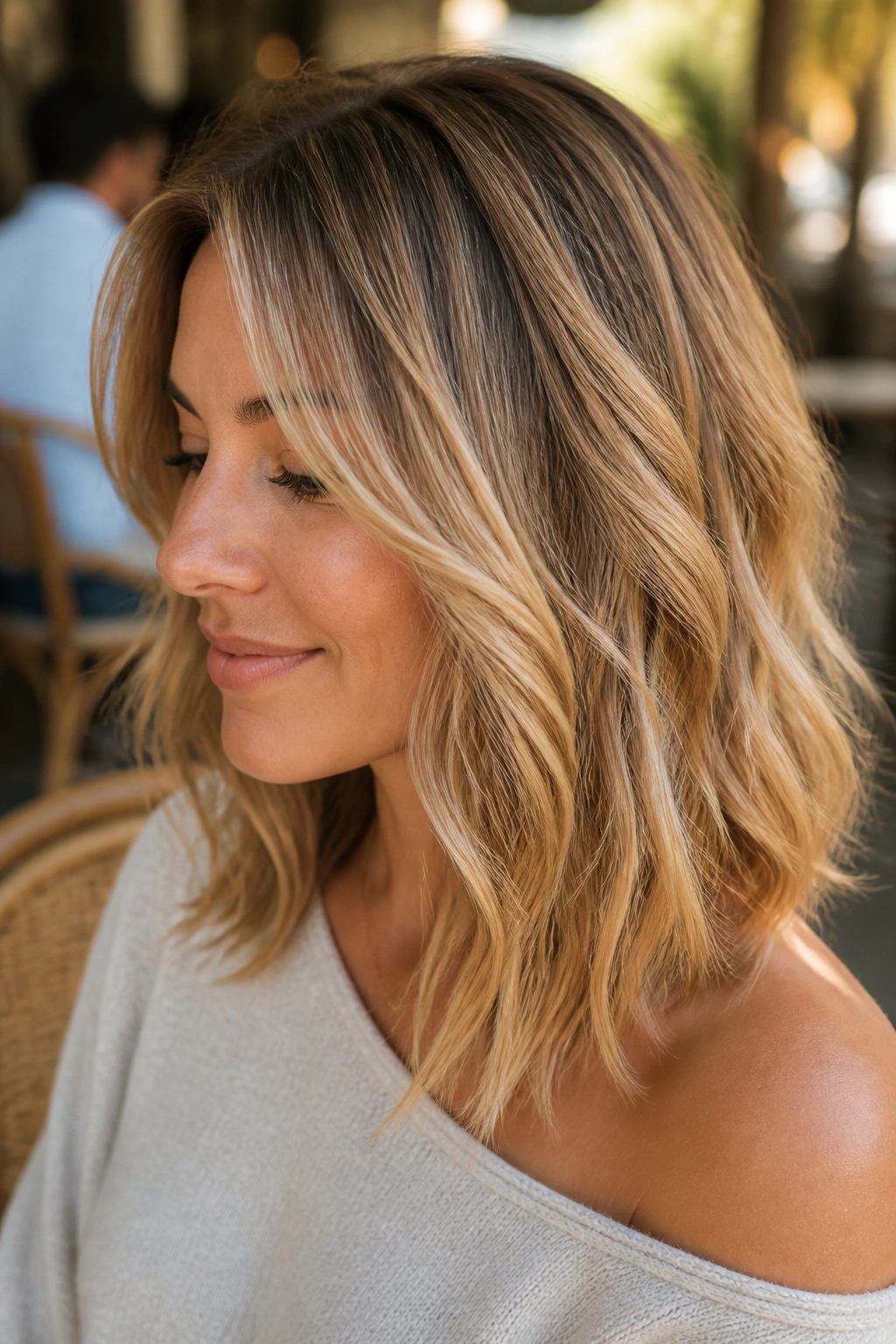
Why mix babylights with balayage at all? Because the tiny pieces give the bigger painted sections somewhere to land. A broad ribbon can feel a little obvious on its own, especially on fine hair. When you weave in narrow golden-beige babylights, the whole color story looks finer, softer, and more full.
The Science Behind the Softness
Babylights work because they mimic the smaller, natural shifts that hair gets from sunlight. Balayage handles the larger movement through the mids and ends. Put them together and the result looks layered instead of painted. That matters most on shoulder-length hair and longer cuts where the eye can see more than one texture at a time.
- Best on fine to medium hair that needs more visual density.
- Keep the blonde in a golden-beige range, not bright yellow.
- Place the babylights near the part line and crown.
- Let the balayage pieces stay a little wider through the ends.
A small caution: if you overdo the lightness, the hair can lose depth and start to look washed out. Keep some brown in the picture. That’s what makes the blonde feel expensive instead of flat.
14. Platinum Sand Ribboning
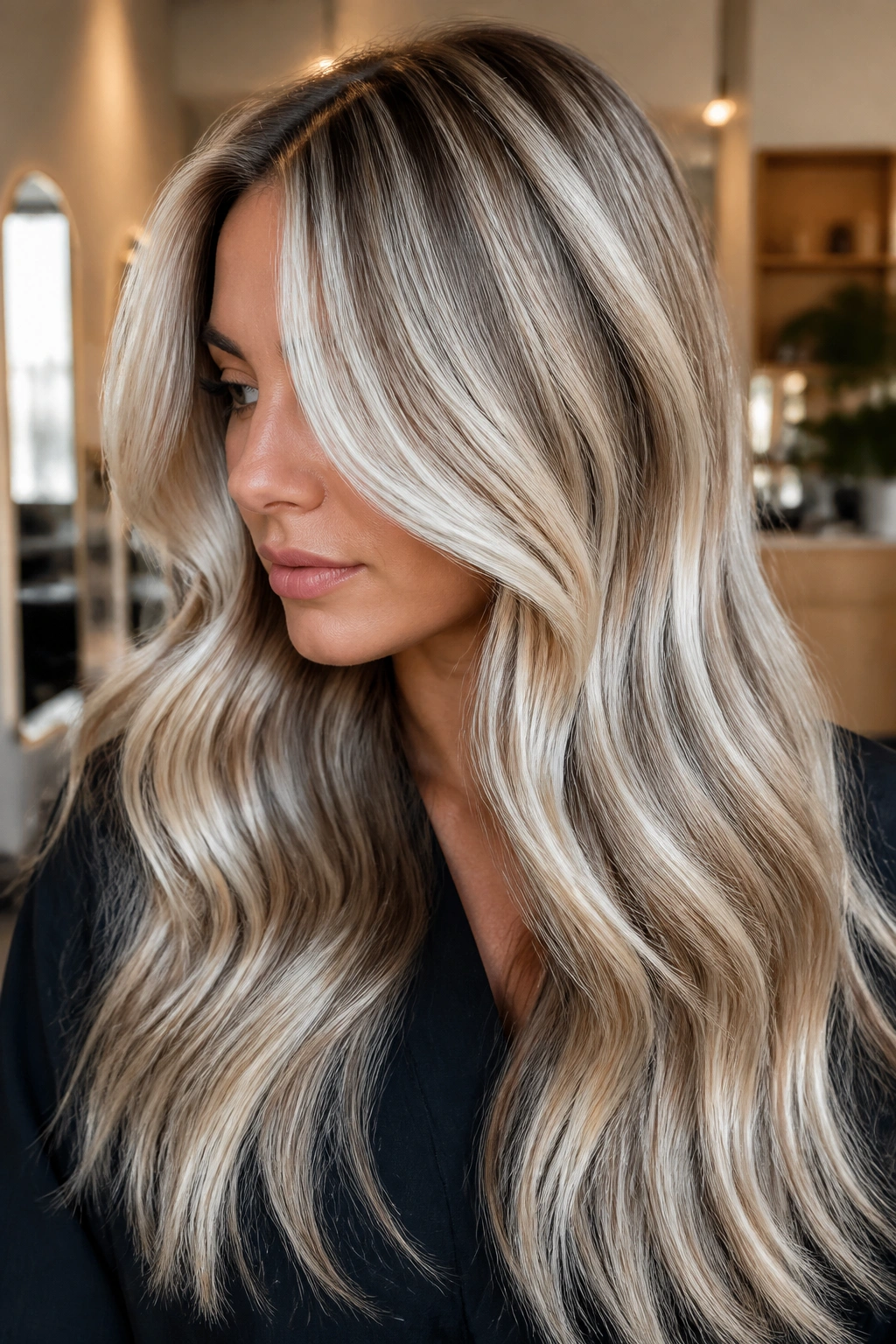
Platinum sand ribboning is for people who want brightness but do not want the hard edge that icy platinum can bring. The sand tone softens the cooler blonde, so the color still feels light but does not go stark white against a fall wardrobe. That little beige note makes a huge difference.
This look is strongest when the blonde is placed in long ribbons rather than packed everywhere. On light brown or dark blonde hair, those ribbons can look airy and deliberate. On darker bases, the maintenance climbs fast, and the contrast can get severe if the tone drifts too cool. That’s the main catch.
I’d recommend this for someone who already likes being blonde and wants the color to feel a bit less summer-bright. The face frame can stay brighter, while the mids and ends keep a sandy softness. That balance keeps the hair from looking like a single block of platinum.
The downside is upkeep. Platinum sand looks beautiful when the toner is fresh and less interesting when it is not. If you hate toner appointments, skip this one. If you do not mind them, the result can be clean and sharp without feeling icy or harsh.
15. Soft Mocha Face-Framing Melt for Fall
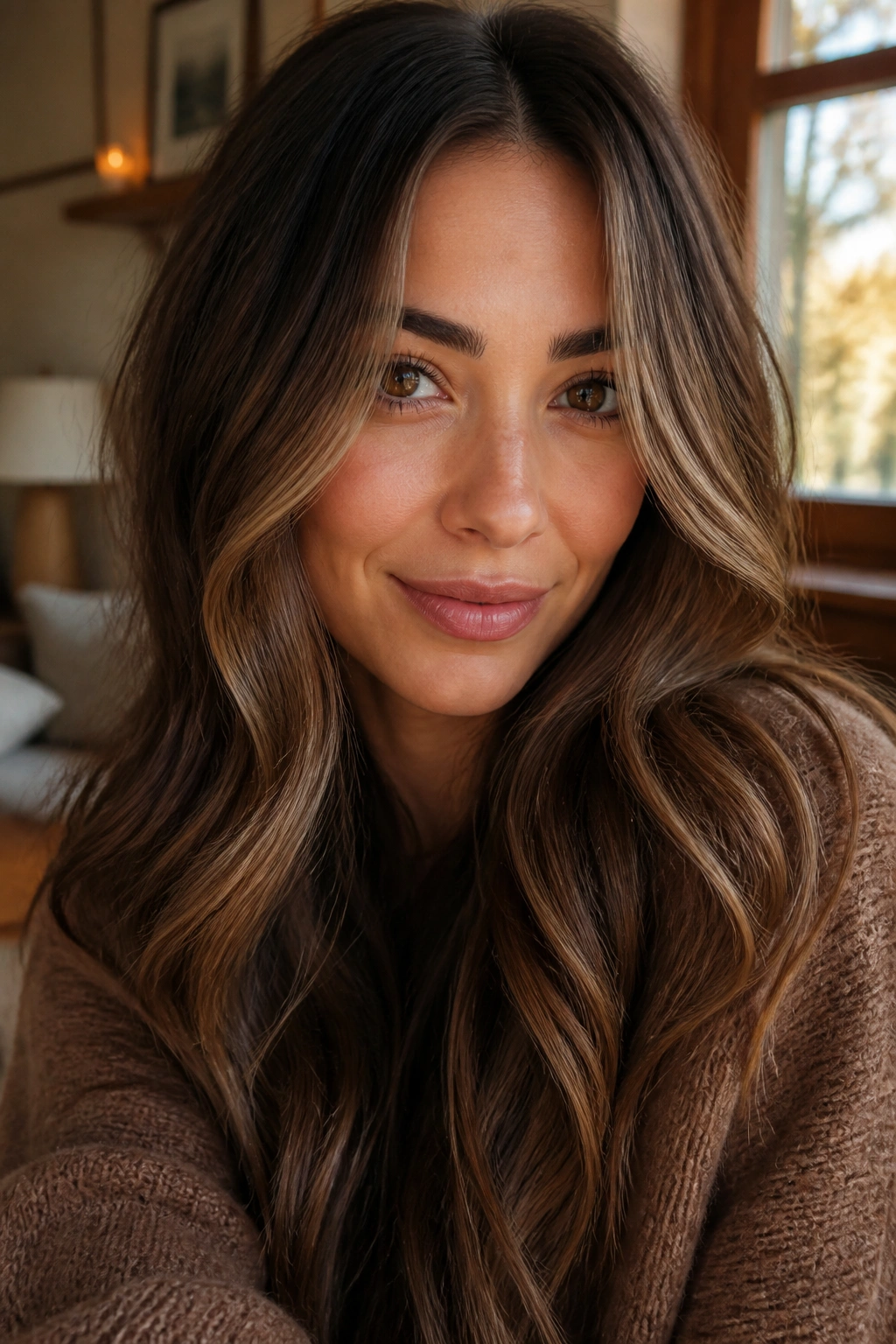
If you want the smallest possible change with the biggest visual payoff, soft mocha face-framing pieces are hard to beat. A few lighter mocha ribbons around the cheekbones and through the front layers can change the way a cut sits, especially if the rest of the hair stays close to its natural brunette base. It is one of my favorite quiet moves.
The best version starts with a color that is only a shade or two lighter than the rest of the hair. That keeps the front from looking stripy. The melt should begin near the hairline, then fade into the mids so the lighter tone disappears into the base instead of sitting on top of it.
This is especially nice on hair that feels heavy around the face. A little mocha brightness can open the whole shape without changing the rest of the head. You notice it when the hair moves, which is usually how the most wearable balayage works. Not with a giant reveal. With a small shift.
If you only want one thing to remember from all of this, keep it simple: the best balayage for fall is the one that matches your base, your haircut, and how much contrast you can live with on a busy Tuesday morning. Two lighter pieces can do more than twenty. And sometimes that’s enough.
