



The best ombre hair ideas do one thing most color jobs miss: they make the shift from dark to light look soft instead of stamped on. A clean melt keeps the root rich, lets the mids carry movement, and stops the ends from looking like they were dipped in bleach and left there too long.
That line matters.
I’ve always thought the prettiest ombre lives in the space between shades. You notice the shine first, then the depth, then that quiet little change from root to tip that feels expensive without shouting about it. When the blend is off, the whole head looks busy. When it’s right, the color seems to drift.
Soft ombre also buys you breathing room. The grow-out is calmer, the regrowth line is less annoying, and the color often settles in better after a few washes because the toner stops looking so fresh and starts looking like it belongs there. The shades below lean warm, cool, bright, and barely-there, but they all share the same idea: the transition should look like a fade, not a stripe.
1. Dark Brunette to Caramel Melt
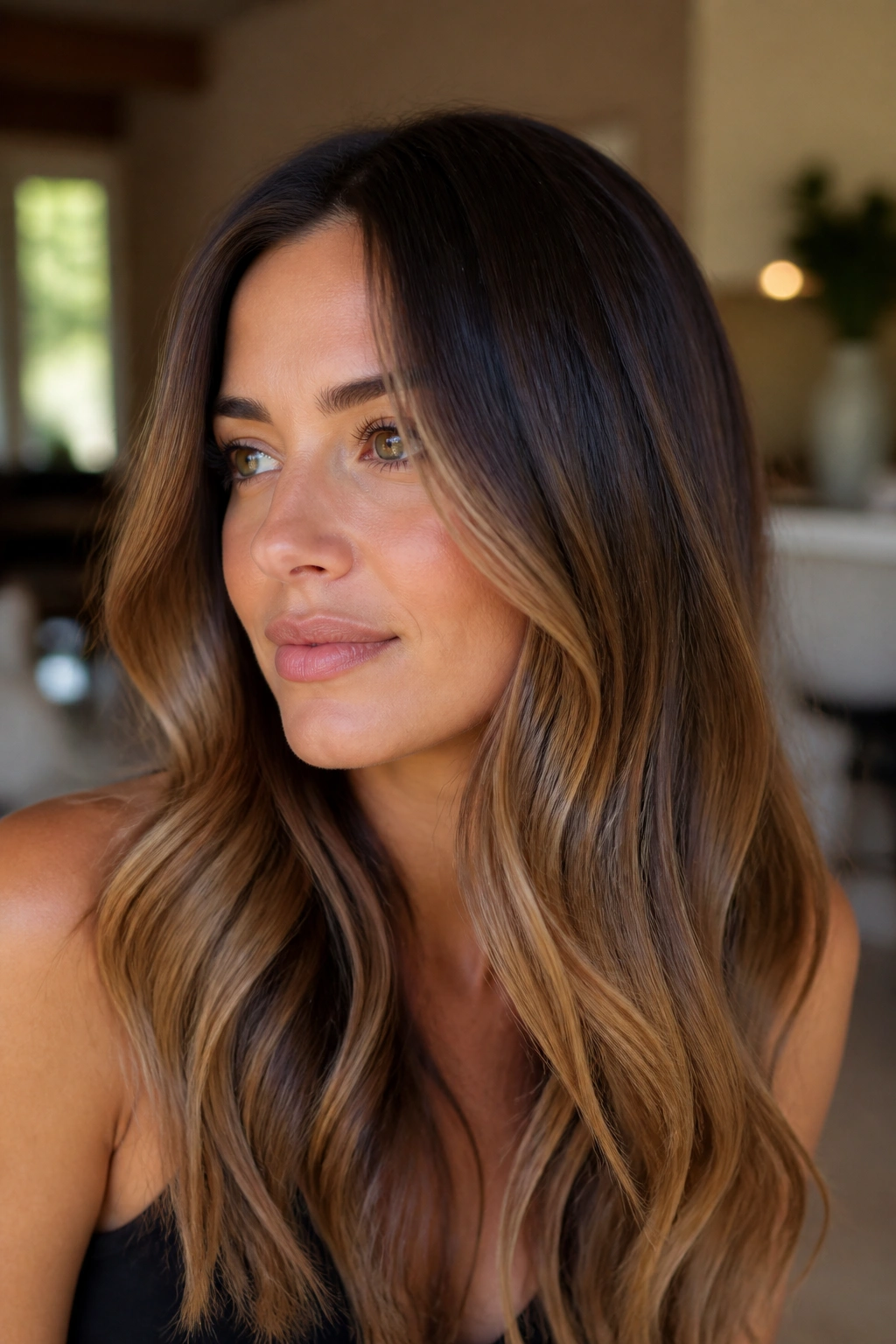
Caramel melts are the reason ombre still looks so good on brunette hair. A level 4 or 5 base can slide into a level 7 caramel and stay soft if the lighter pieces begin low and the transition is feathered, not chopped.
Why It Stays Soft
The trick is keeping the root deeper than the mids by about two shades. That little gap gives the eye a place to rest, which is why the color feels blended instead of loud.
- Best on medium to long layered cuts.
- Ask for a demi-permanent gloss after lifting to keep the caramel warm, not brassy.
- The prettiest version usually starts lightening around the cheekbone or below it.
- A loose wave shows the melt better than a pin-straight finish.
Best tip: keep the last 2 to 3 inches the lightest part, not the whole lower half. That’s where the softness comes from.
2. Chestnut to Honey Blonde Fade
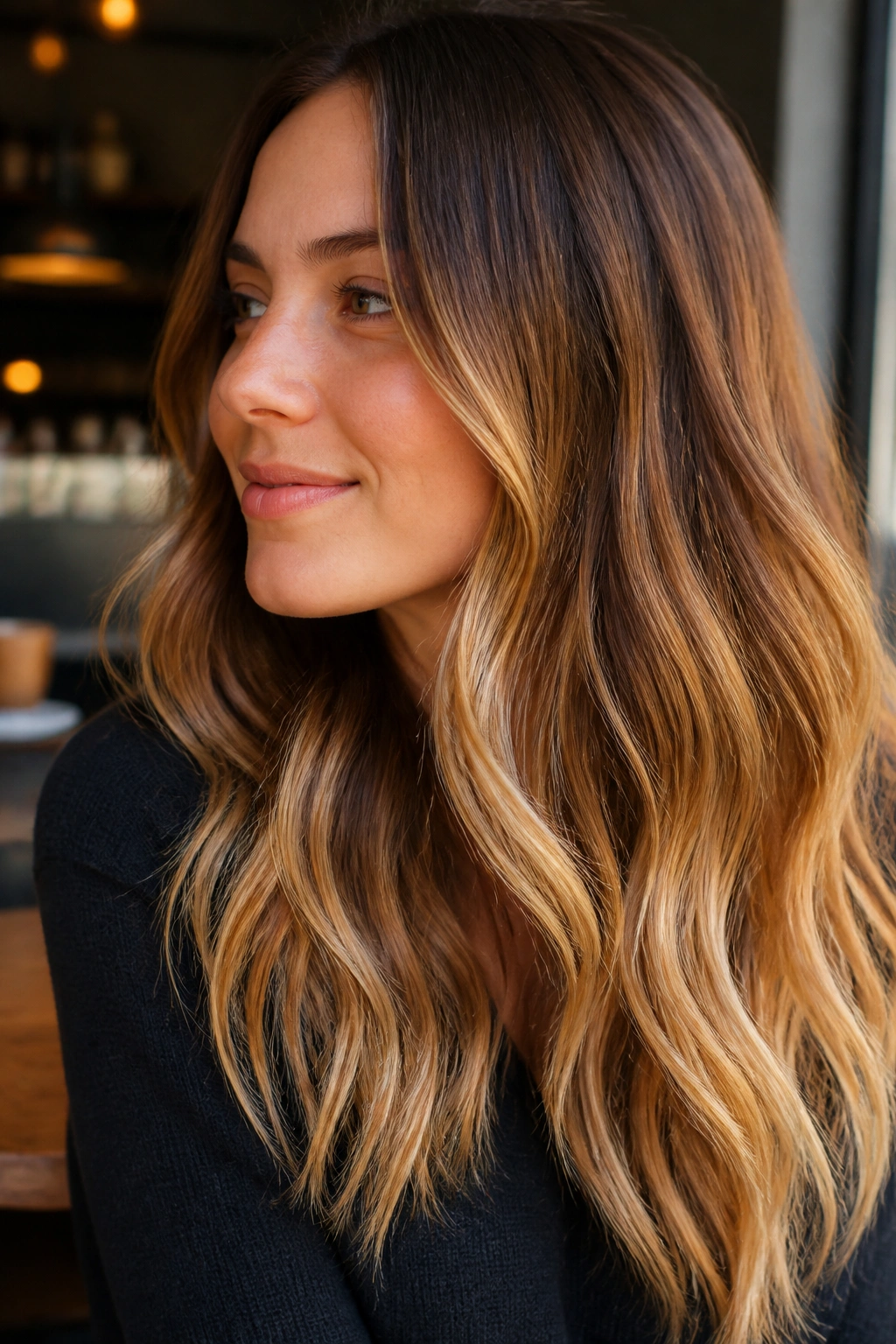
Warm-to-warm ombre has an easy confidence about it. Chestnut doesn’t fight honey blonde; it eases into it, and that makes the whole thing look less forced than a brown-to-icy-blonde jump.
The color works especially well on wavy hair because the bends break up the transition line for you. Straight hair can wear it too, but the melt needs to be more careful, with the lightest tone tucked into a few wide ribbons instead of sprayed everywhere.
Honey ends also play nicely with red undertones in the base. That sounds small, but it matters. If your natural brunette pulls a little red in the sun, this kind of ombre looks intentional fast.
3. Soft Black to Mocha Brown Ombre
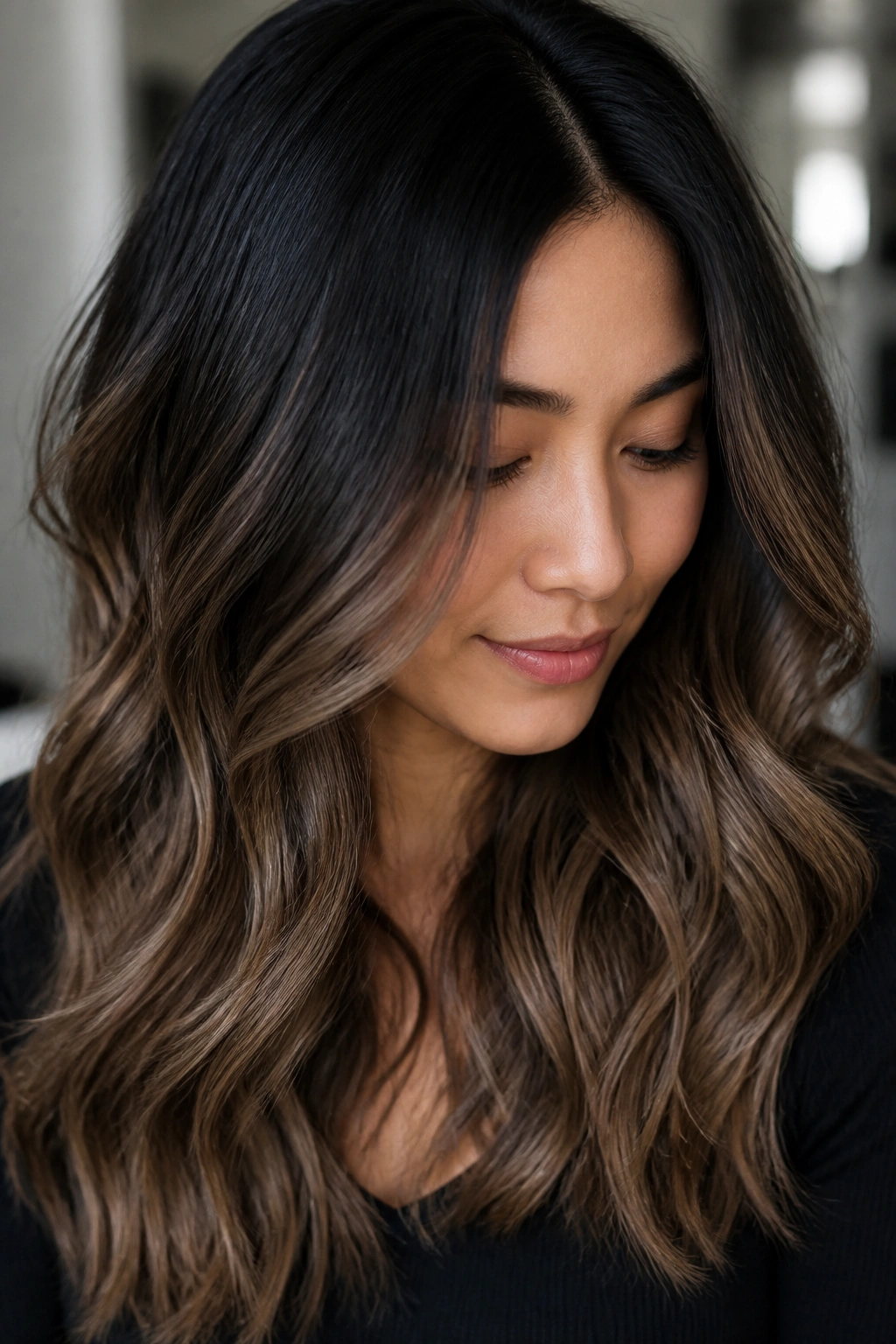
Can dark hair do ombre without looking harsh? Absolutely, if you stop trying to drag it straight to blonde. Soft black into mocha brown is one of the easiest ways to keep the contrast low and the blend believable.
How to Ask for It
A colorist usually needs to lift only 2 to 3 levels here, then tone the mids with a neutral mocha or cocoa gloss. The goal is not brightness. It’s movement.
What to Tell Your Colorist
- Keep the root close to soft black or deep espresso.
- Lift the mids just enough to show a brown shift, not a blonde one.
- Blend the transition around the ears and lower cheekbone.
- Use a neutral toner so the brown doesn’t turn orange.
This version is perfect if you want dimension but hate seeing obvious regrowth. It grows out like a dream, which is half the point.
4. Mushroom Brown to Beige Blonde Blend
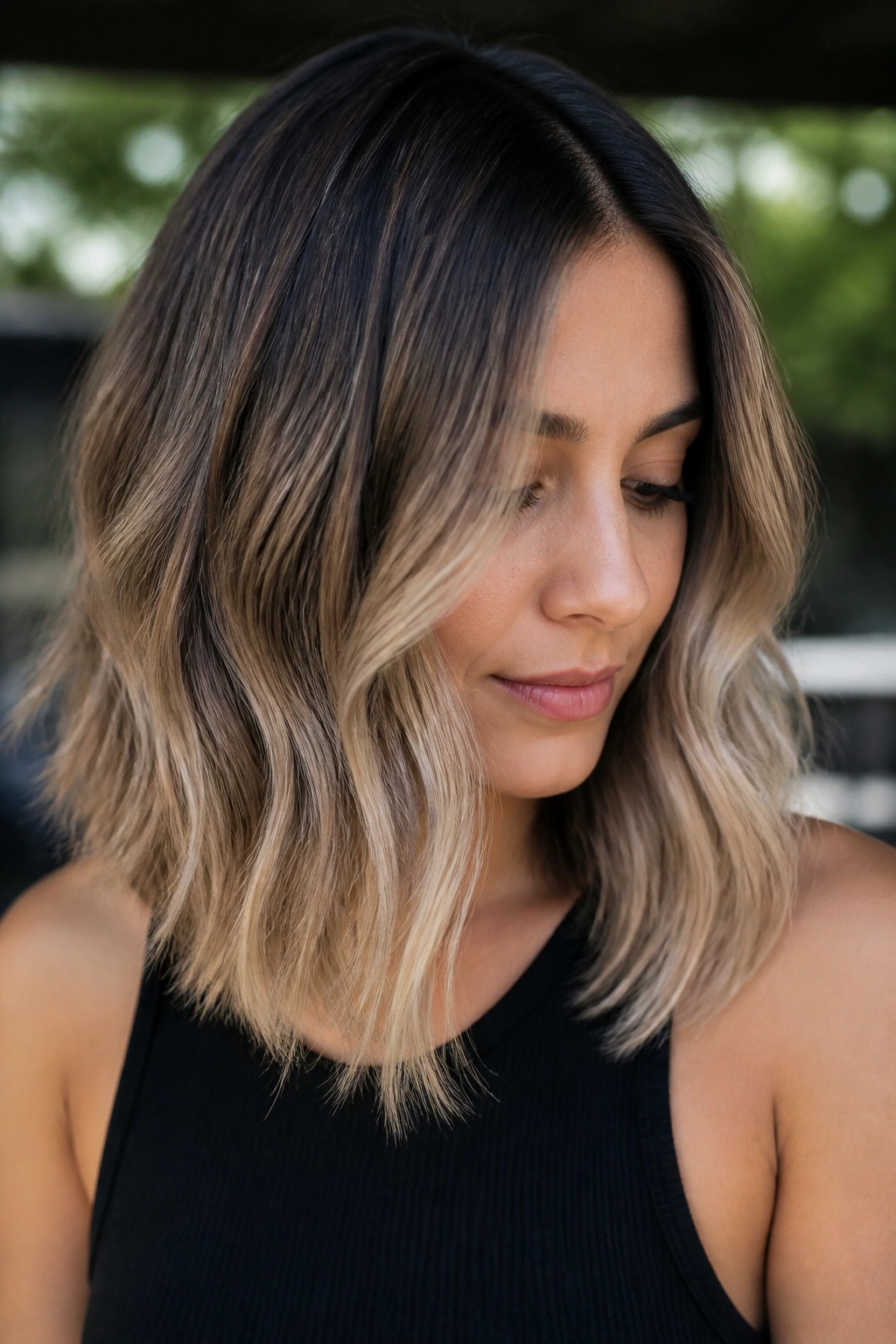
Cool ombre can look amazing, but it needs restraint. Mushroom brown into beige blonde gives you that ashier feel without the flat, muddy finish that sometimes shows up when cool tones are pushed too hard.
The base should stay smoky and soft, not gray in a heavy way. Then the lighter ends should land in a beige zone, not a bright platinum zone. That middle step keeps the color from snapping apart visually.
A shoulder-length cut makes this one especially pretty. The lighter pieces sit where the hair moves, so you get that airy shift every time you turn your head. It’s subtle. It’s polished. And it’s easier to live with than full cool blonde.
- Works well on fine hair because the contrast stays gentle.
- Ask for a beige gloss, not a silver toner.
- Good choice if gold tones bother you.
5. Copper to Strawberry Cream Ends
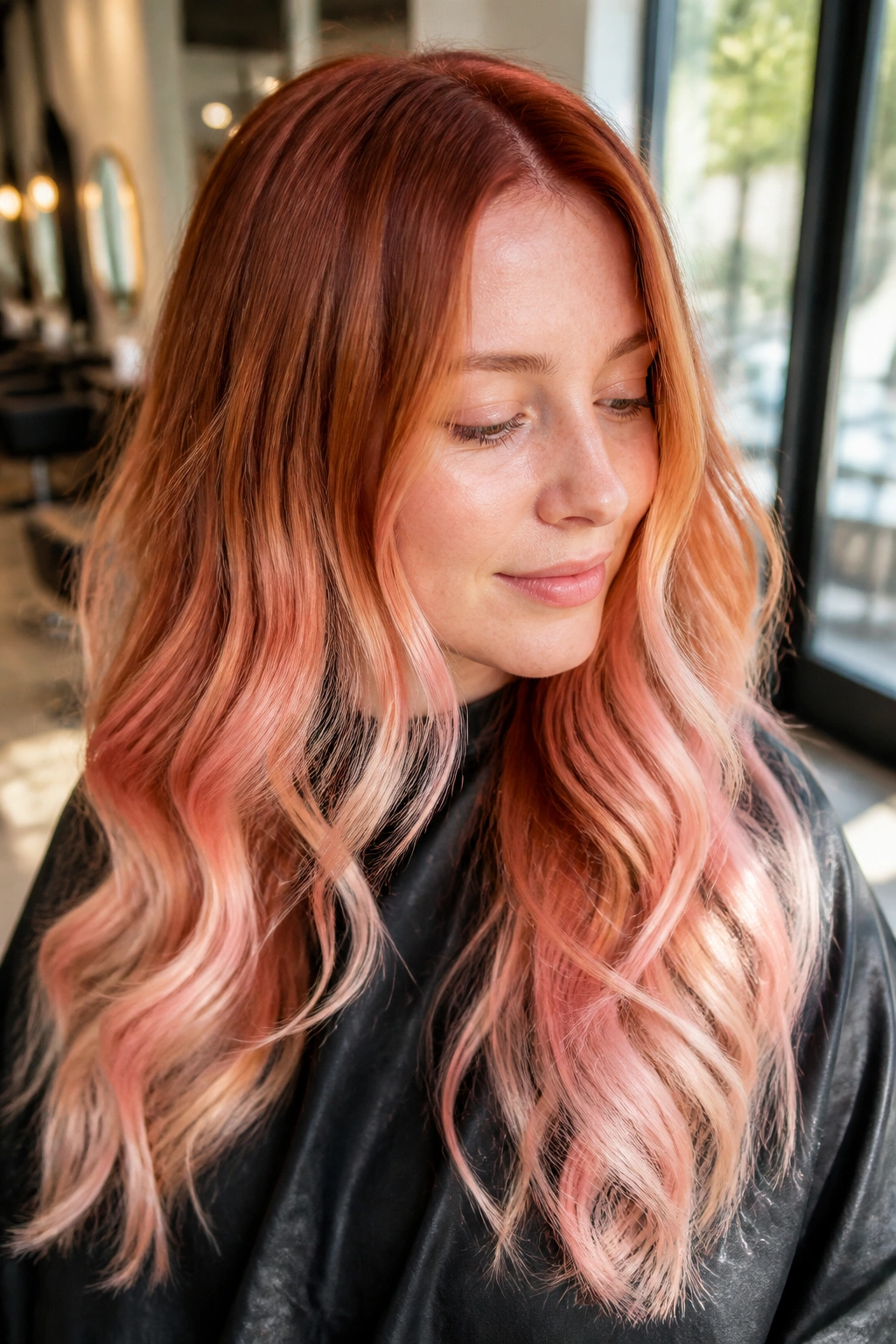
Red ombre gets messy fast when the shades are too far apart. Copper into strawberry cream stays soft because both colors still live in the warm family, even though one is brighter and the other is more washed out.
I like this version on hair that already has some natural warmth. A copper base with strawberry ends feels lively, but it doesn’t shout the way a true red-and-pink mix can. The fade is the thing people notice, not the color blocks.
Red tones fade faster than brown, so this is one of those looks that benefits from a little care. A color-depositing mask once every couple of weeks helps, and sulfate-heavy shampoo will flatten it out quicker than you want. The shine matters here. Without shine, the whole look loses its softness.
6. Auburn to Cinnamon Ribbon Ombre
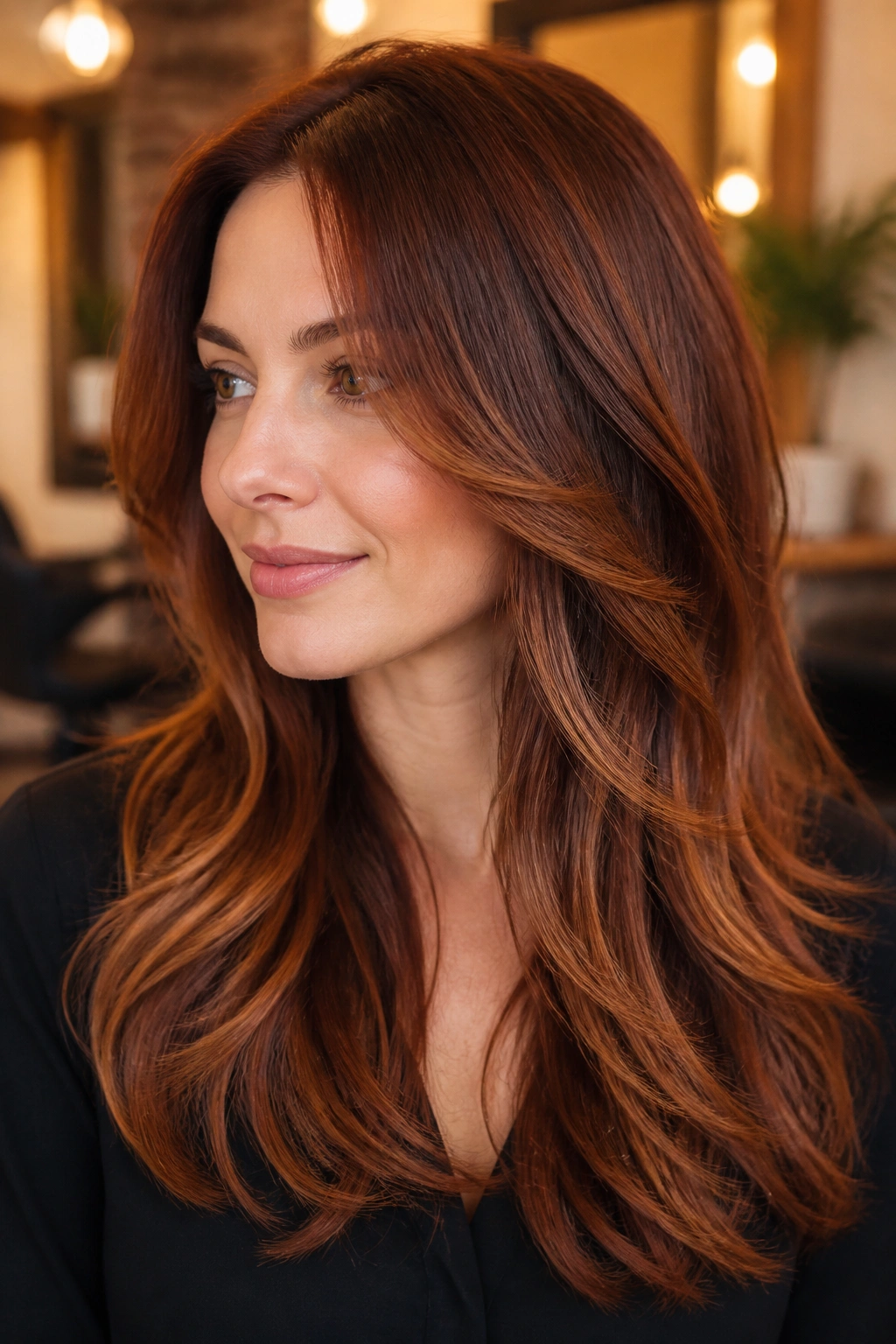
Auburn ombre is calmer than people expect. Compared with a full auburn color, the cinnamon ends give you warmth without turning the whole head into one note.
Think of this one as a low-stress red. The root stays deeper, almost chestnut at the crown, while the lower half lifts into a cinnamon-brown that still looks rich under indoor light. That makes it an easy choice if you want warmth but not a bright copper flash.
It’s especially good on layered cuts because the ribbons fall differently on each layer. A blunt cut can wear it too, but the change needs to start lower so the ends don’t feel crowded.
If you’re worried about red fading too fast, keep the lightest cinnamon tone to the very ends. The mid-lengths can stay a touch darker and will hold their shape longer.
7. Sand Blonde to Vanilla Cream Fade
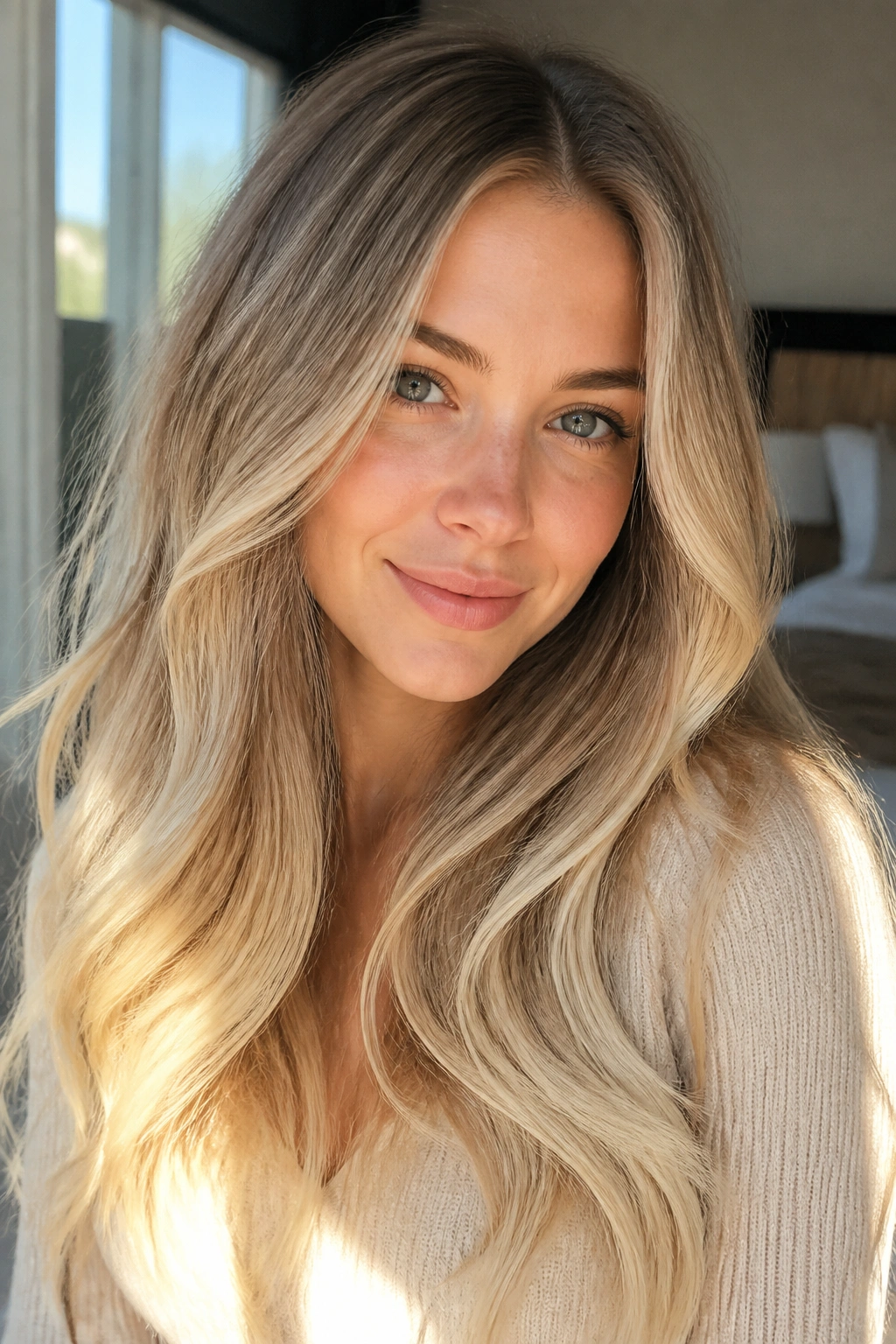
Sand blonde into vanilla cream is one of those blonde ombre looks that feels soft because it never gets too icy. The root stays beige and grounded, then the ends lift just enough to look clean, almost whipped.
What Makes the Blonde Soft
The softness comes from leaving some warmth in the middle. A flat, all-over pale blonde can look sharp in a bad way. Sand and vanilla give the eye a more gradual path.
- Best on hair that starts at a dark blonde or light brown base.
- Ask for a root shadow about 1 to 2 inches long.
- The ends should be pale, not white.
- A purple shampoo once a week is usually enough.
A loose blowout shows the color better than tight curls. The movement helps the fade read as creamy instead of streaky.
8. Shadow-Root Blonde with a Soft Lift
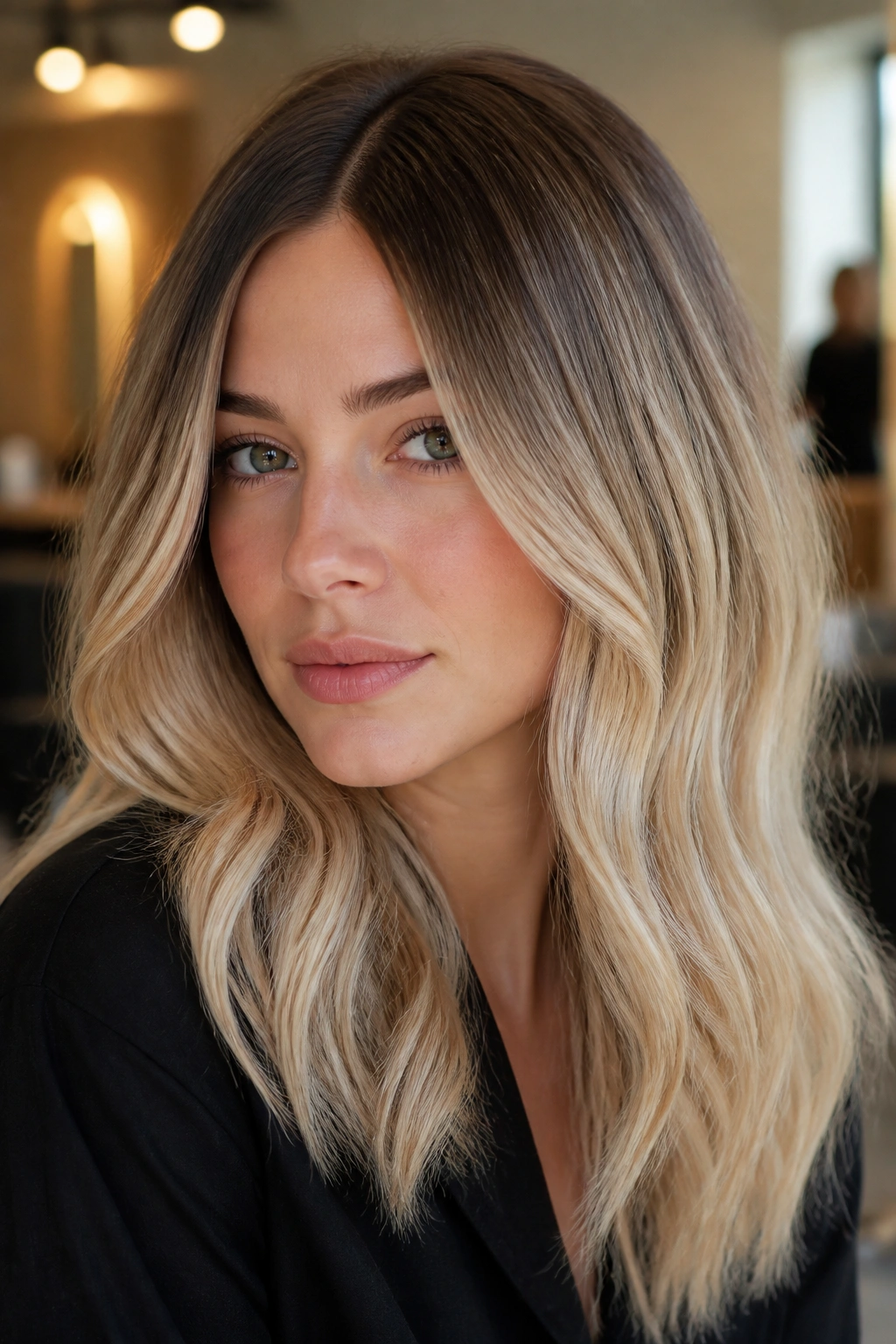
Why do some blondes look grown-up and expensive while others look striped? The answer is usually the root shadow. A deeper root gives the blonde a place to start, and the lift can happen in a slow, believable way.
How to Wear It
This look works on long hair, but it shines on a lob because the root stays visible enough to frame the face. Ask for a shadow root that’s about two shades deeper than the mid-lengths, then let the lighter blonde live mostly below the chin.
A good shadow-root ombre also saves you from that awkward line you get when pale blonde starts too high. That line is the enemy. It makes the head look wide and the color look busy.
Wear it with soft bends, not tight curls. The color should move. If it looks too smooth, the root-to-end contrast can take over.
9. Rose Brown to Dusty Pink Wash
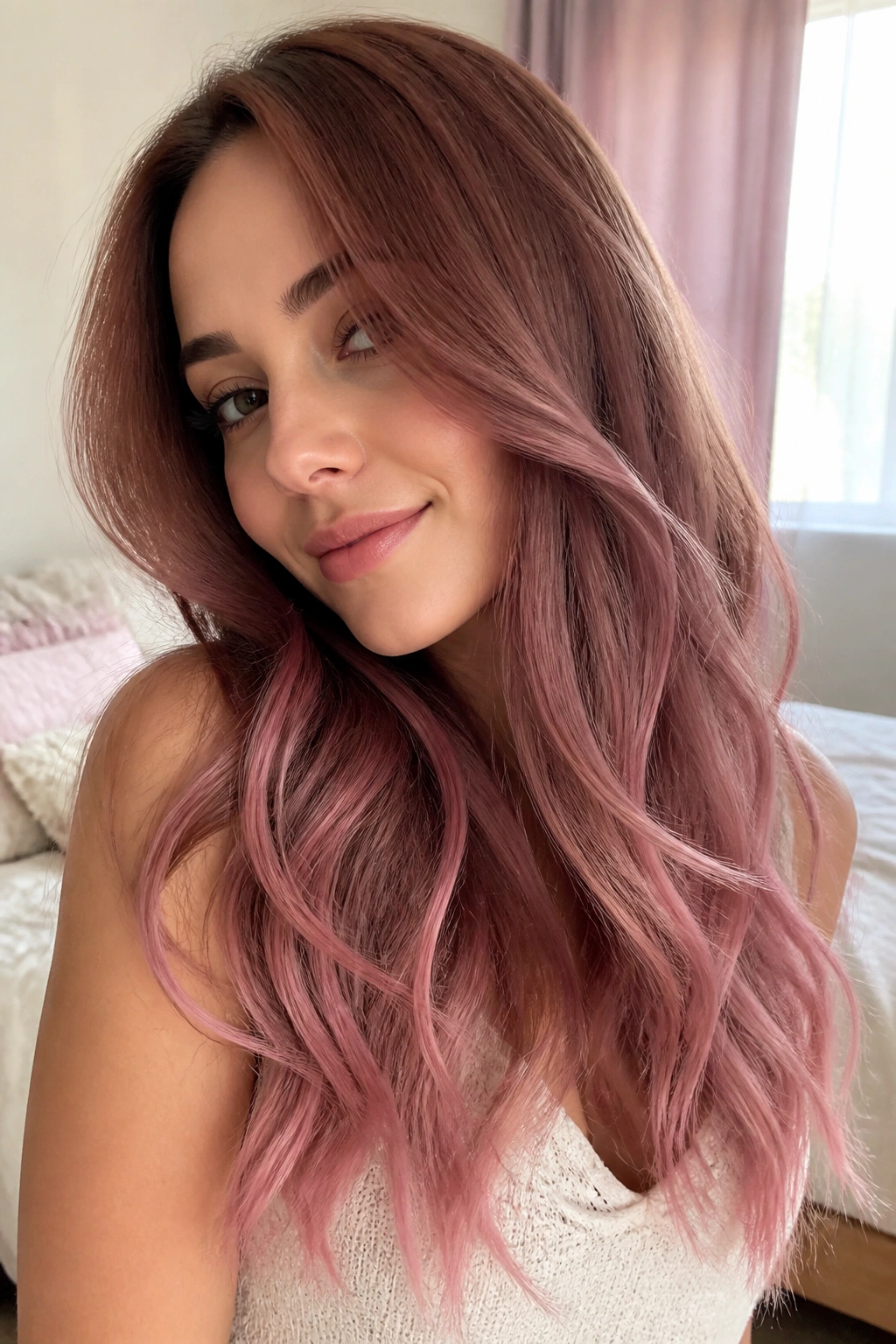
A rose brown base with dusty pink ends is one of the few pink looks that still feels grown-up. The brown keeps the color from drifting into candy territory, and the pink stays soft enough to fade into a blush tone instead of a neon one.
This is the kind of ombre that suits someone who wants fun color but does not want a loud block of pink. The best version usually keeps the pink only on the bottom third of the hair, where fading happens naturally and the color can blur a little over time.
A color-depositing conditioner helps keep the blush tone alive. So does lower heat. Pink shades lose their shape fast when you fry them flat with a hot tool every day.
The nicest part? When the pink softens, it often looks better, not worse.
10. Chocolate Brown to Mocha Bronde
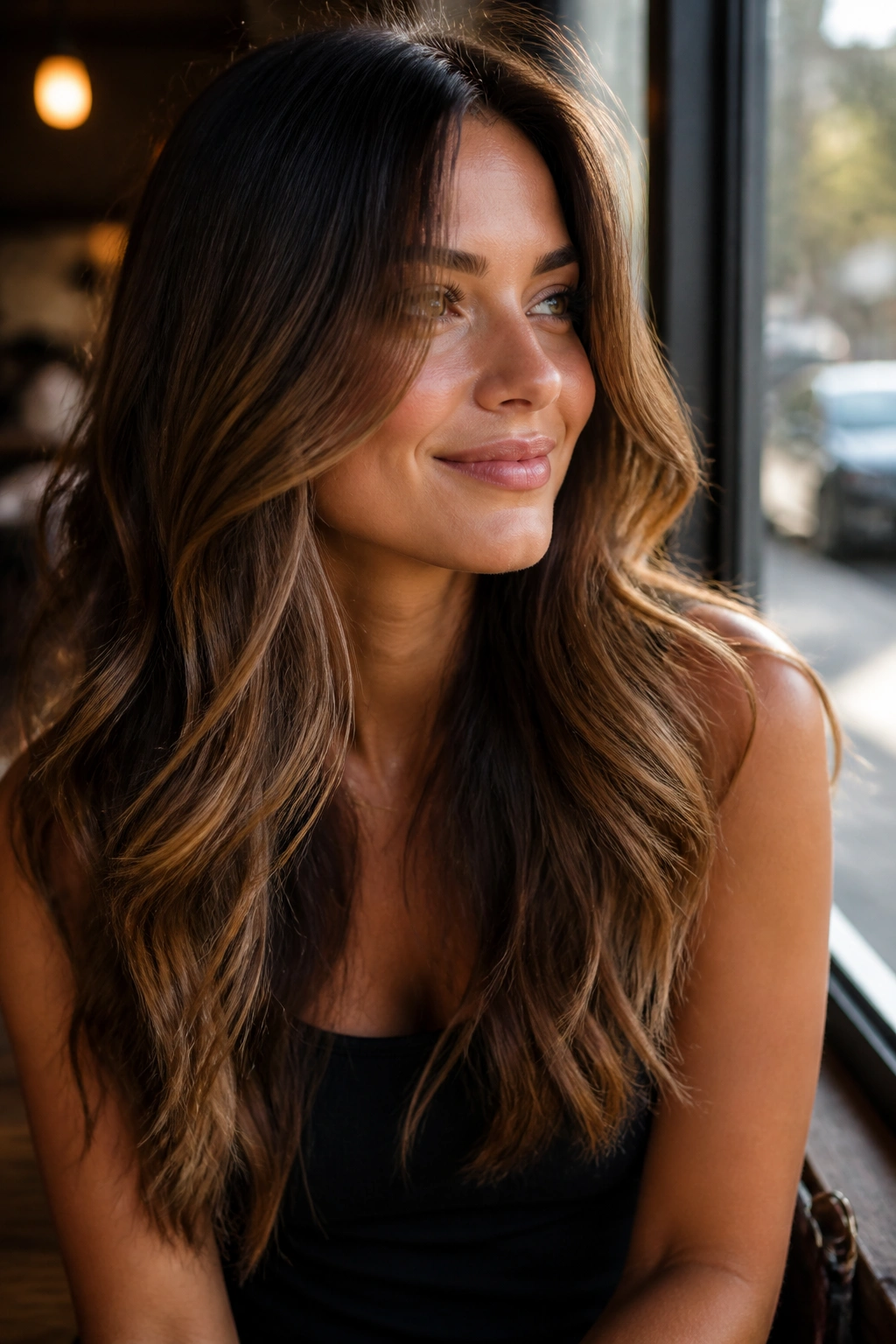
Chocolate into mocha bronde is a quiet answer for anyone who wants dimension without a big color leap. It sits between brown and blonde, which makes it easier to wear on day one and even easier to grow out.
Unlike a high-contrast caramel ombre, mocha bronde keeps the light pieces close to the base color family. That means the finish reads as fuller hair, not louder hair. On thick hair, that difference matters a lot because too much contrast can make the ends feel heavy and the top feel flat.
I like this on long bobs and collarbone cuts. The lighter pieces around the face lift the whole shape, but the ends stay grounded. It’s also a smart pick if your natural hair pulls warm fast and you don’t want to keep fighting brass.
11. Brunette to Ash Brown Ombre
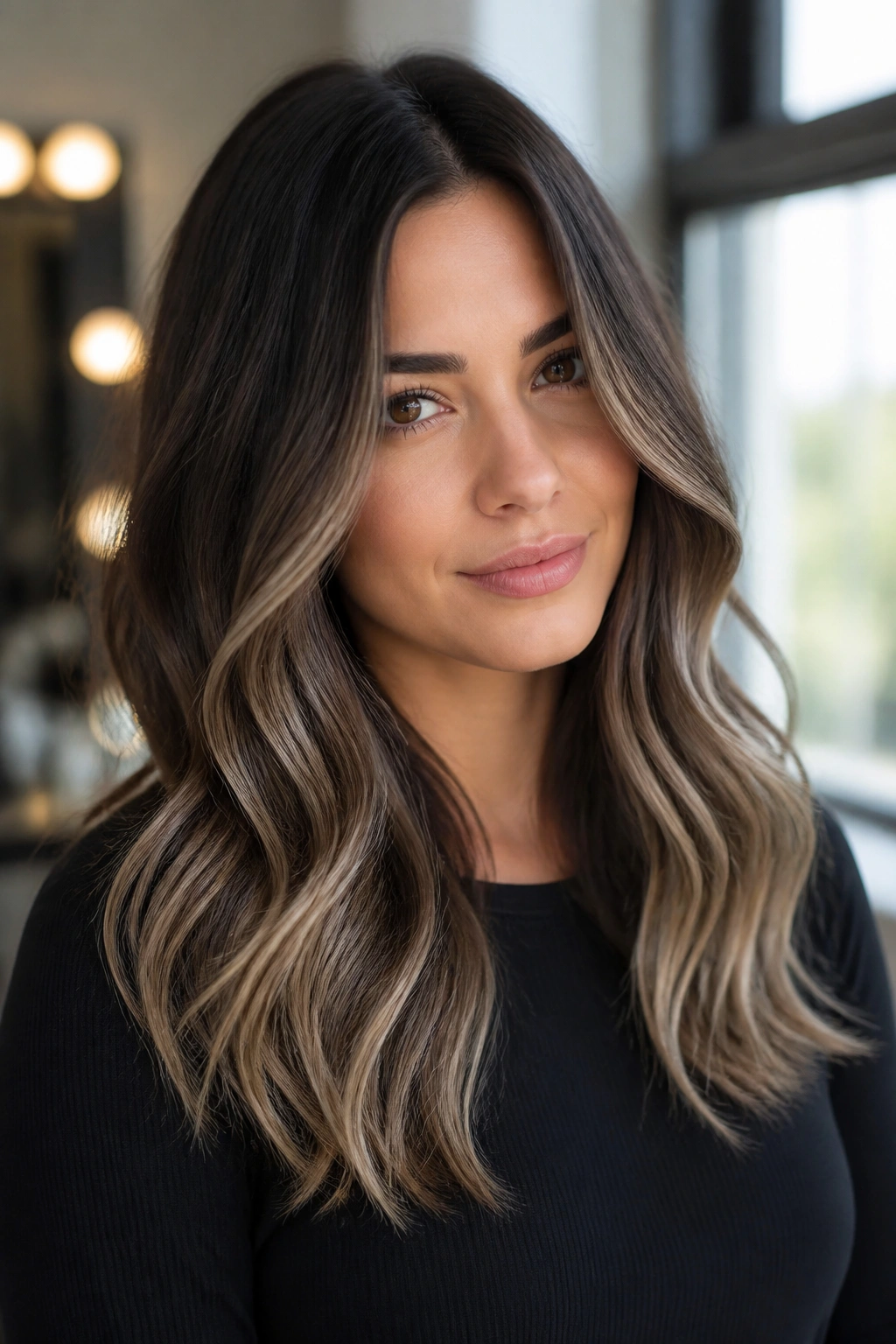
Ash brown ombre is the choice for people who keep saying they want “something cooler” but don’t actually want to go silver. The shade shift stays brown, yet the finish feels cleaner because the warmth is dialed way back.
That coolness can be tricky on hair that naturally pulls orange. A blue shampoo once in a while can help, but too much of it can make the color look dull. I’d rather see a good neutral gloss every few weeks than a pile of strong toning products that leave the hair flat.
The blend looks best when the lift is modest. A brunette base can move into ash brown without screaming for attention, and that restraint is what makes it so wearable. It’s not flashy. It’s tidy.
If you like a polished finish, this one’s a solid bet.
12. Espresso to Toffee Melt
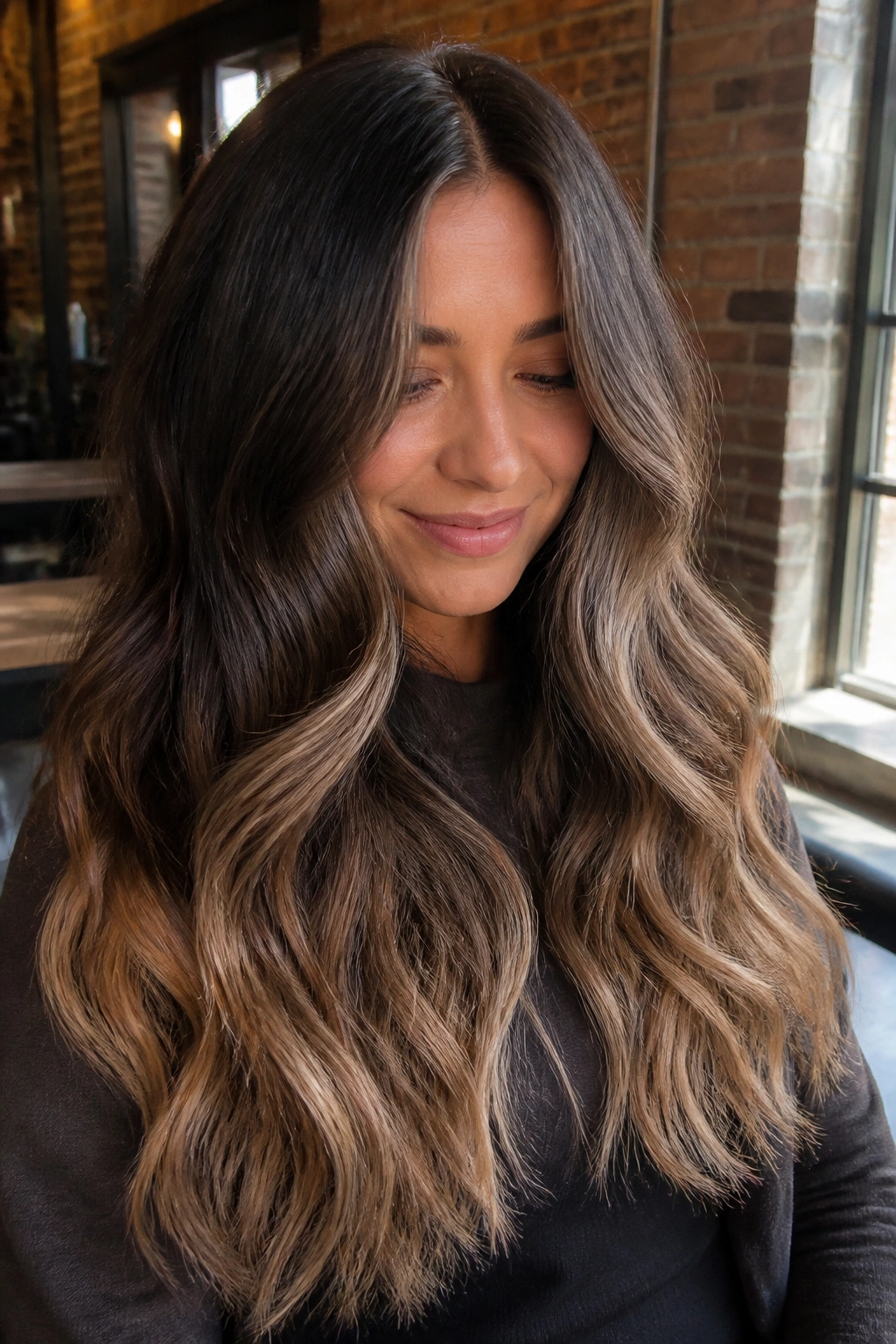
Espresso into toffee is softer than caramel and deeper than honey, which is why it works so well on dark hair that needs dimension without a big jump. The whole point is to keep the richness of the espresso while easing the ends into something warmer and a little lighter.
Unlike caramel, toffee doesn’t ask the hair to become golden. It stays closer to brown, which is easier on very dark bases and kinder to the grow-out. That makes it a good pick if you want to color your hair less often and still see movement when the light hits it.
This version looks especially good with a center part and loose layers. The toffee pieces frame the face, while the deeper root stops the color from floating away. It’s low-drama in the best way.
13. Dark Blonde to Champagne Ends
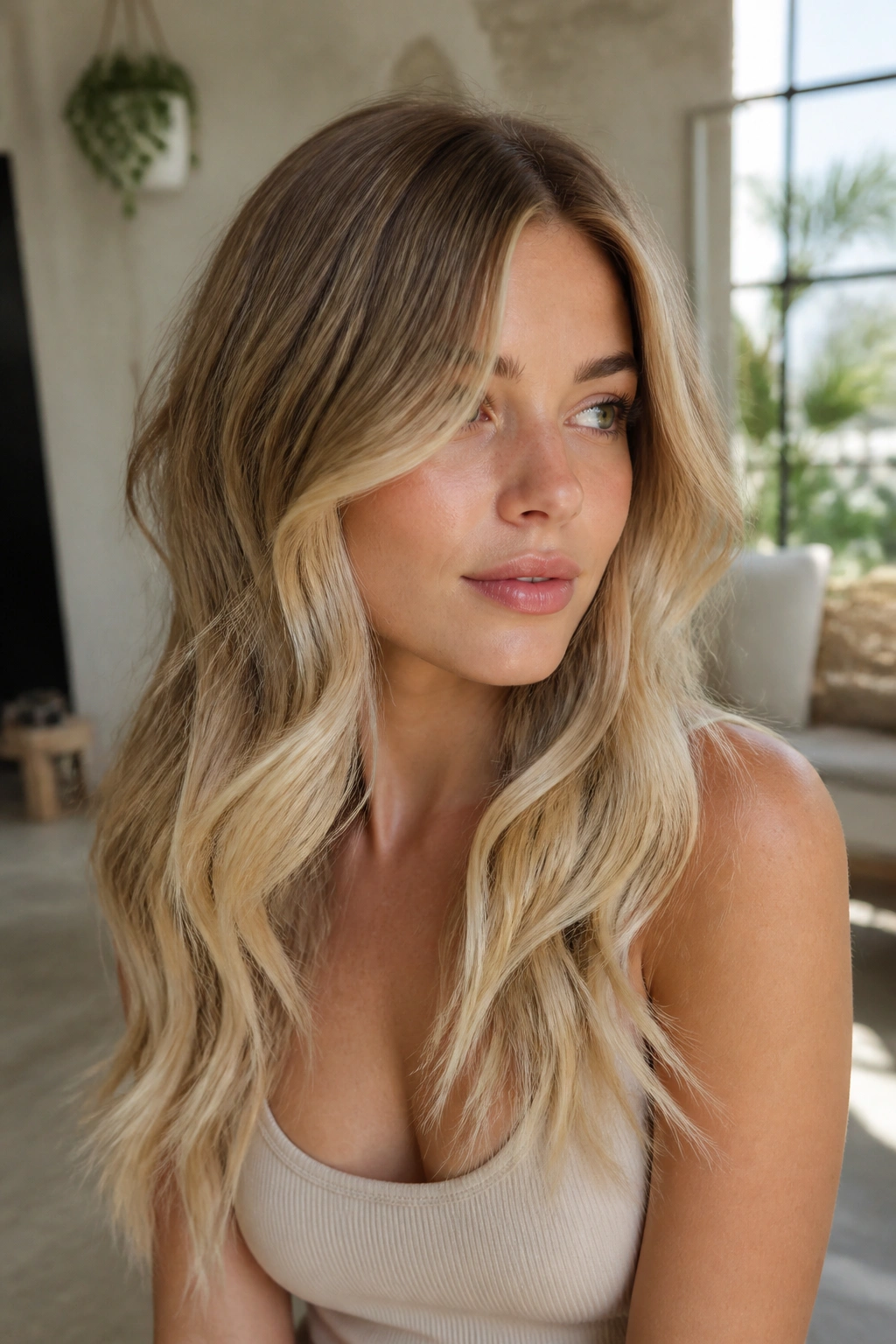
Dark blonde into champagne is one of those shades that looks soft because neither end is too loud. The root stays warm enough to feel natural, and the champagne ends bring a pale sheen without crossing into icy territory.
What to Ask For
A level 7 or 8 base with a soft lift to a beige-champagne finish usually works well. The color should look like it was brushed upward, not dropped on top.
- Best on fine to medium hair.
- Ask for a subtle money-piece around the face if you want more brightness.
- Keep the toner beige, not silver.
- Works beautifully with waves or a smooth blow-dry.
This is a good choice if you like blonde hair but hate the maintenance of full blonde. The shadow keeps regrowth less obvious, and the champagne tone keeps the finish clean.
14. Rust Copper to Peach Apricot Ends
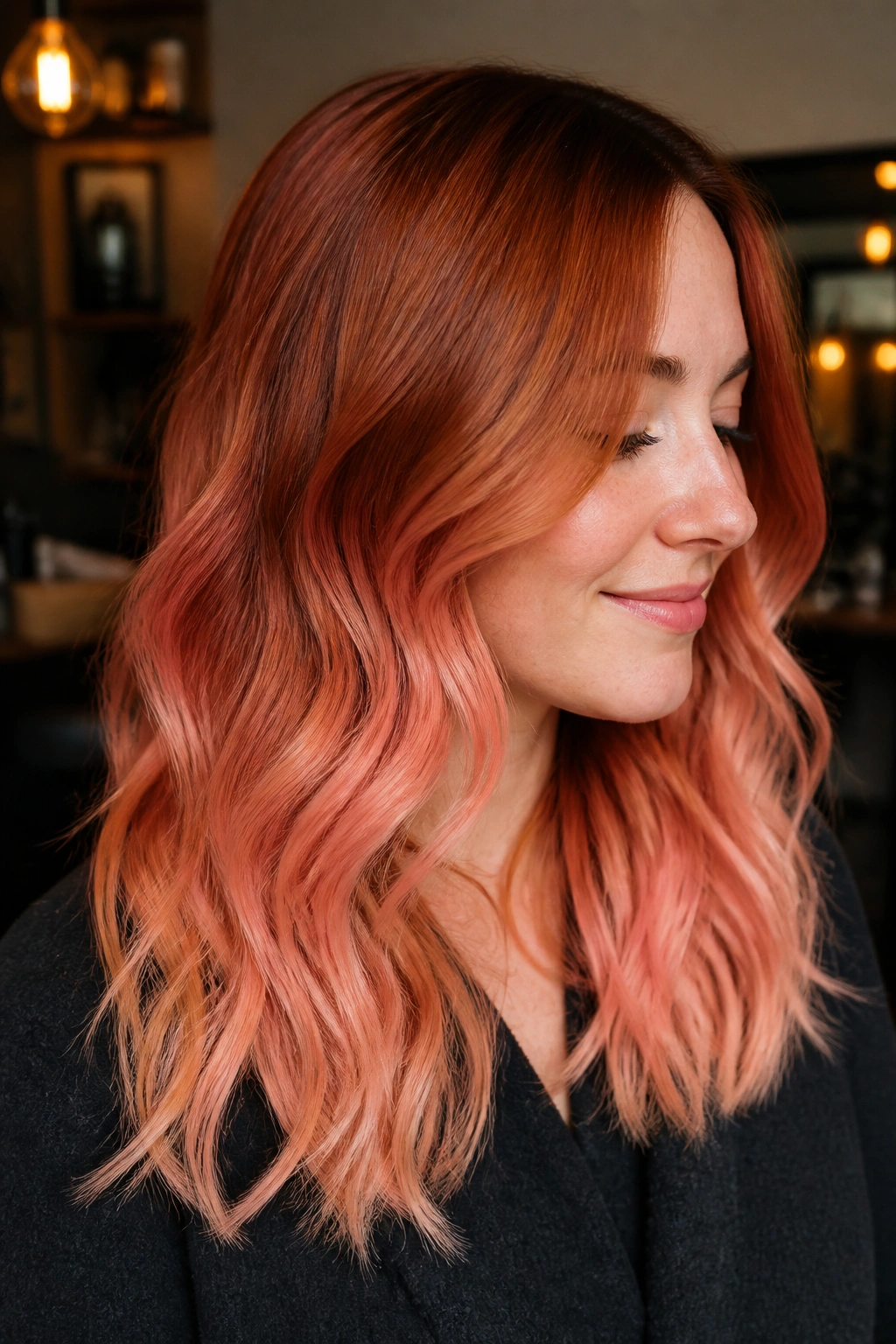
Rust copper into peach apricot is playful, but it can still look soft if the peach stays dusty rather than bright. The base does the heavy lifting here. Without that rustier root, the lighter ends would look too sweet.
A look like this works best when the peach is concentrated toward the bottom third of the hair. That gives you a pretty fade without making the whole head look like one flat pastel wash. Layered hair helps, since the color can peek through in different places.
Key Details
- Use a copper base with a soft rust note.
- Keep the apricot tone sheer at the ends.
- A gloss with a tiny peach tint helps refresh the fade.
- Wavy styling shows the color shift better than straightening.
It’s a good fit for someone who wants warmth with a little personality.
15. Charcoal to Silver Smoke Ombre
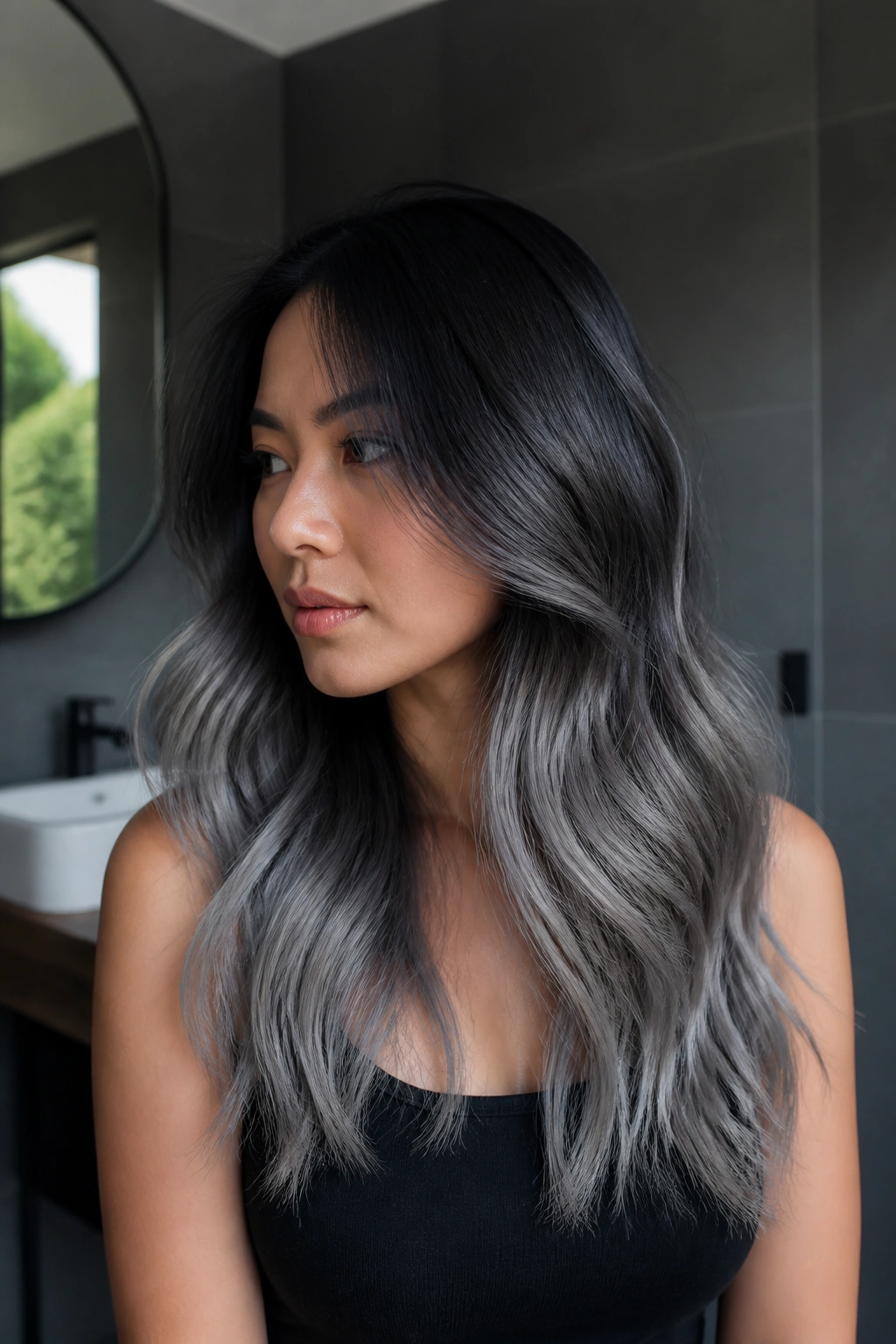
Can silver hair still look soft? Yes, if the transition starts in charcoal and the silver stays smoky rather than mirror-bright. The problem with many gray-toned looks is not the color itself. It’s the shine level.
What Keeps It from Looking Harsh
A charcoal root gives the silver somewhere to land. Without that darker anchor, the lighter tone can jump too fast and look stark, especially on straight hair.
A smoky silver also needs careful toning. Push it too far and you get a flat, metallic finish that can look harder than you meant. Keep the silver muted, almost misty, and the whole look reads calmer.
A shine spray helps here more than people expect. So does skipping heavy purple shampoo all the time. Too much toning can make the silver look dusty, which is the opposite of what you want.
If you’ve got natural gray coming in, this is one of the prettiest ways to work with it instead of against it.
16. Long Layers with Face-Framing Ombre
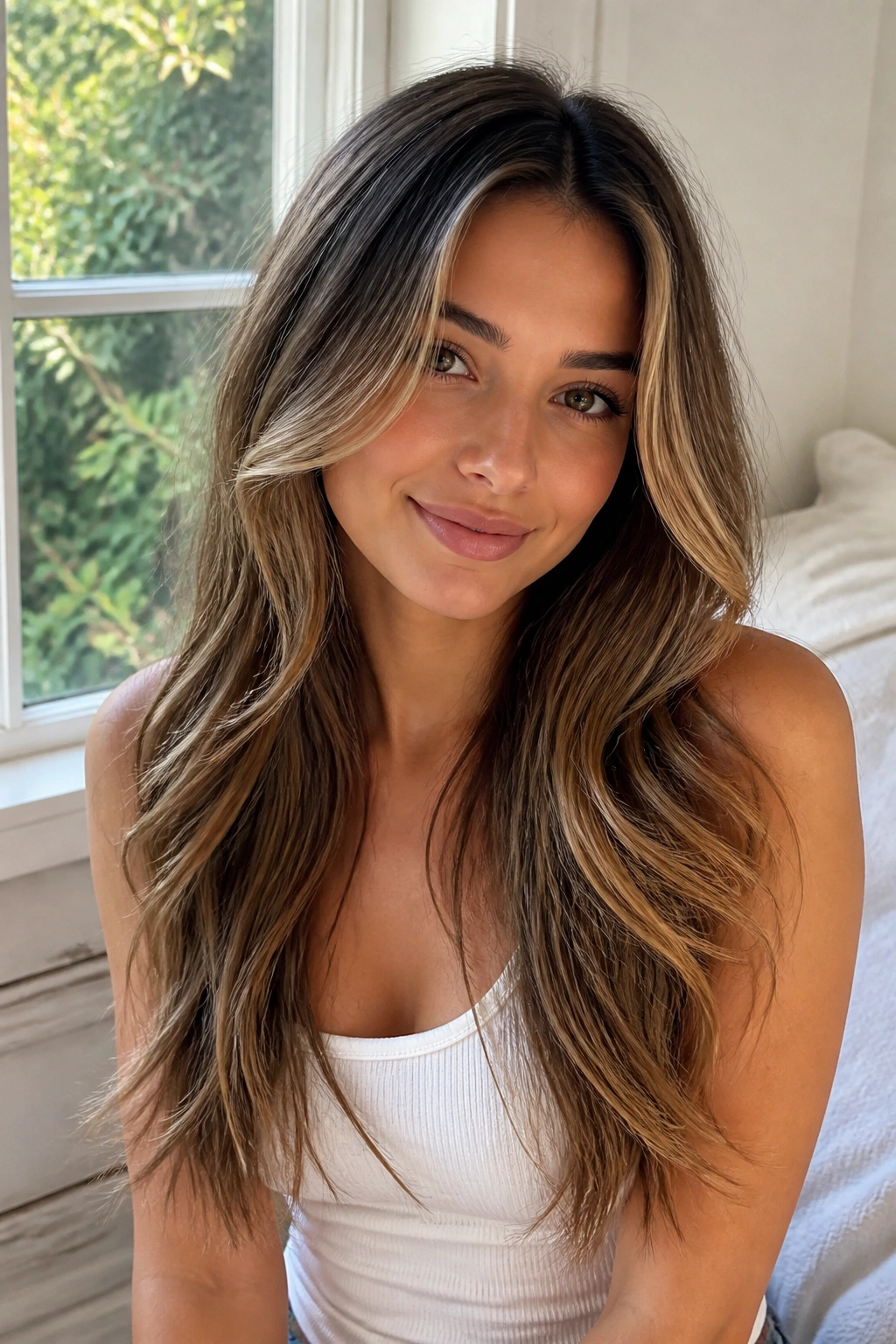
Placement changes everything. You can use a soft ombre on almost any color family, but long layers are where it really gets interesting because the fade has room to move from the front of the face to the ends.
The lightest pieces should sit around the cheekbone, jaw, and the longest front layer. That keeps the color from sinking too low and making the whole style look bottom-heavy. The back can stay a touch darker, which actually makes the hair look fuller.
I like this version when the client wants a soft change but doesn’t want the hair to look obviously colored from every angle. It’s a subtle setup. People see shine first, then movement, then the color.
A center part gives you one feel, a side part gives you another. That flexibility is part of the appeal.
17. Curly Hair with Warm Honey Ends
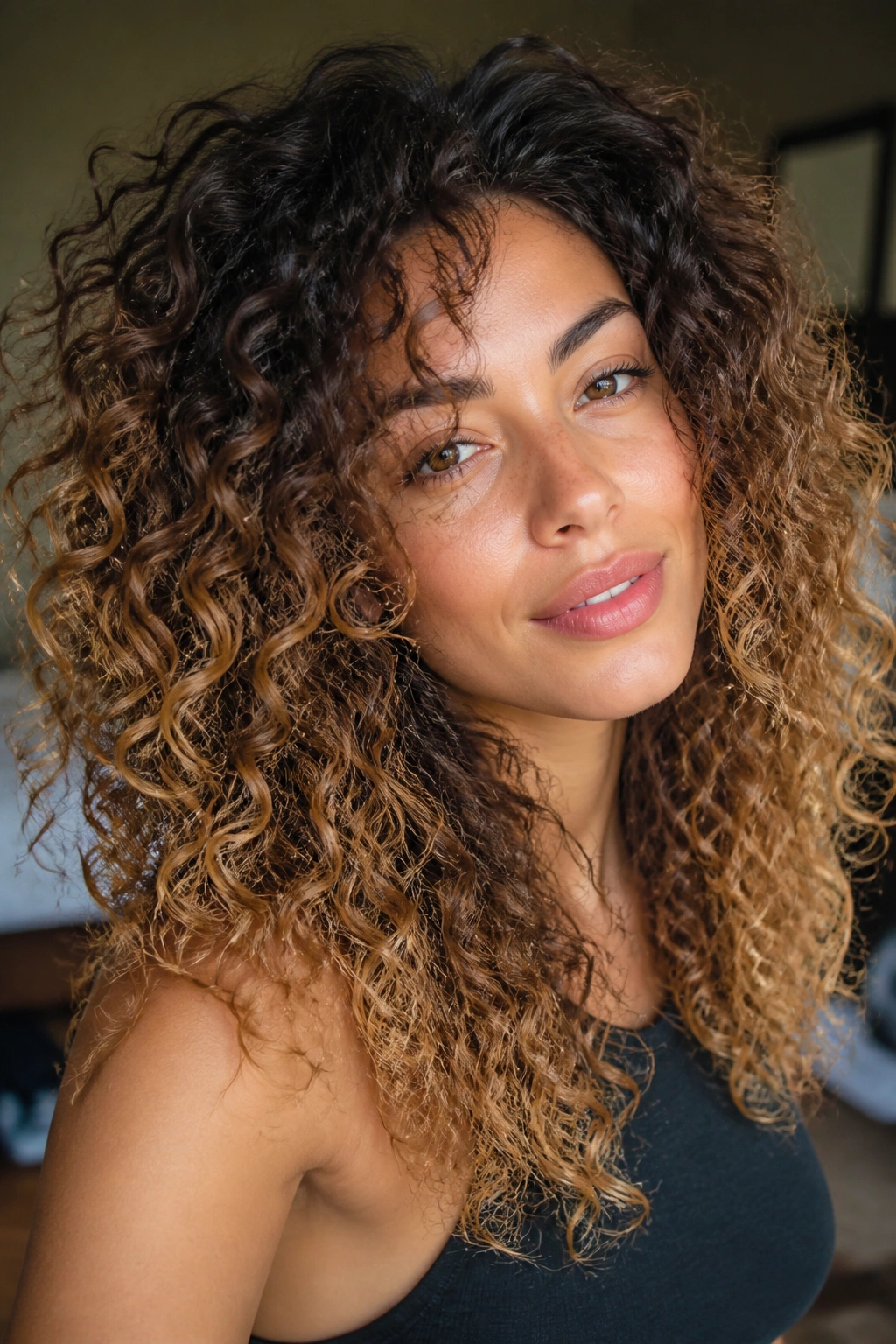
Curly hair loves a soft ombre because the curl pattern breaks up the color for free. A warm honey end on a curl will often look brighter than the same shade on straight hair, so the lift can stay modest and still show up.
That matters. Curly hair shrinks, and if the lighter pieces are painted too high, the whole thing can look puffy instead of blended. Keeping the lighter tone lower lets the curls bounce without losing the fade.
A colorist who works on curls will often paint the hair in its natural dry state or at least stretch a few sections first. That helps them place the honey where the curl will actually sit once it dries.
The result is soft, sunlit, and a little dimensional even when the hair is air-dried.
18. Bob-Length Soft Ombre
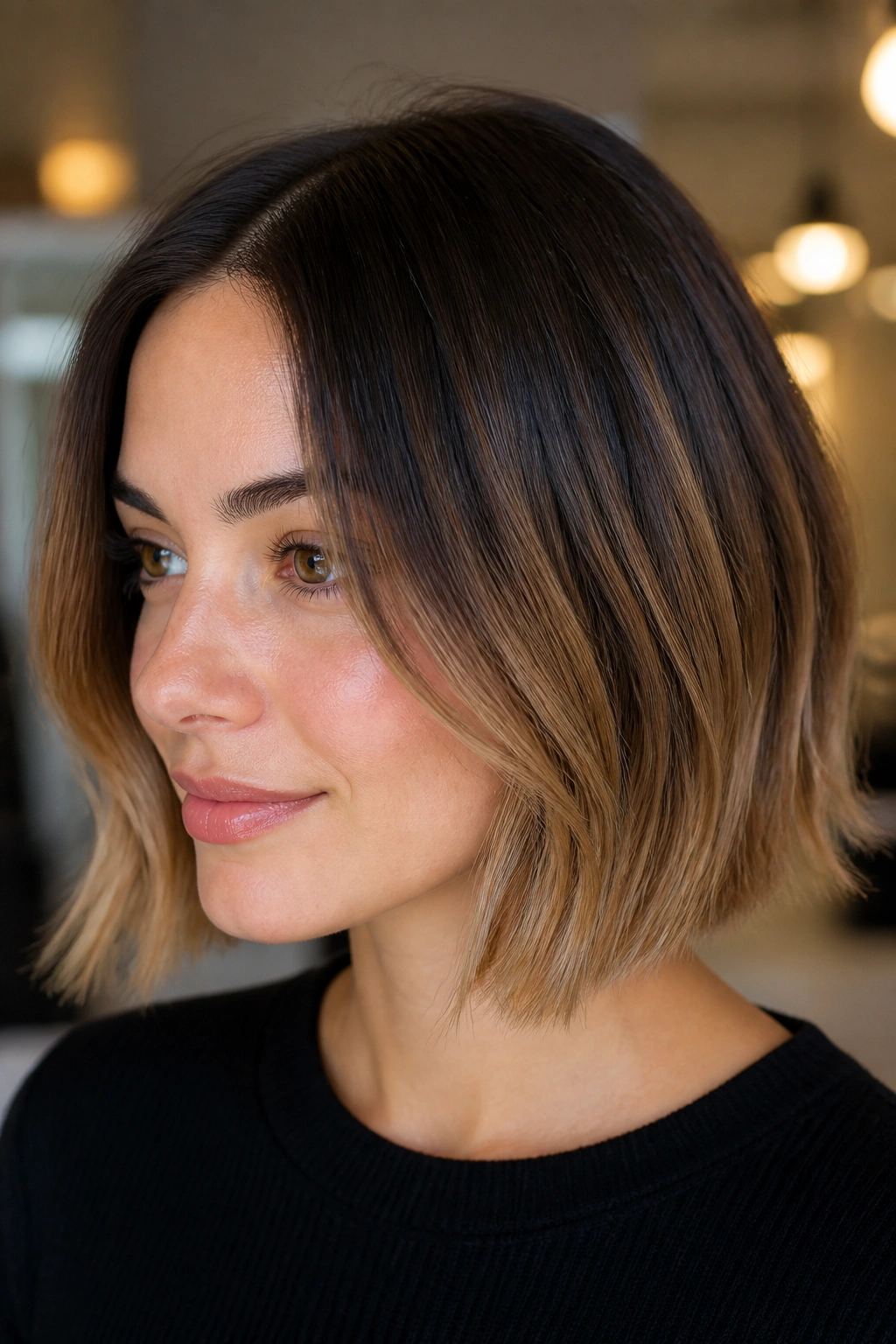
Short hair can wear ombre, but the fade has to start lower and stay tighter. On a bob, there just isn’t enough length for a slow, dramatic melt, so the color needs to do more with less.
Unlike long-hair ombre, the bob version is about a gentle brightening through the ends, not a big color sweep. A chin-length cut can take a soft brunette-to-caramel shift or a dark-blonde-to-beige shift without looking choppy, as long as the transition stays subtle.
This is a smart choice if you want movement without waiting for long hair. The color can make the cut look airier, which is useful on one-length bobs that risk feeling heavy.
A rounded blowout shows off the fade best. Straight, flat styling can make the line too obvious.
19. Blonde-to-Taupe Reverse Ombre
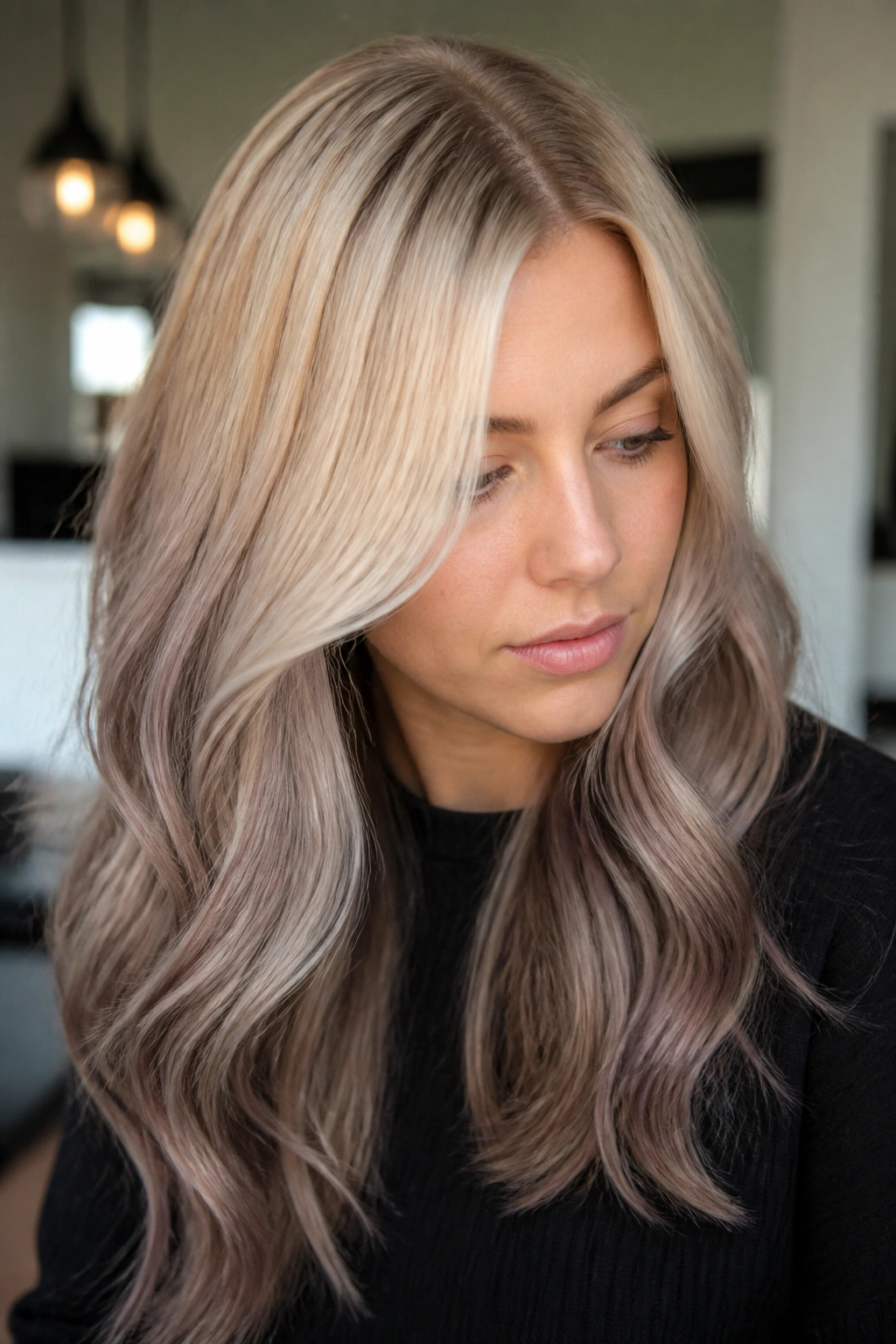
Reverse ombre sounds dramatic, but a soft blonde-to-taupe version can be much gentler than the name suggests. Instead of going dark at the ends in a heavy way, the color slips from a pale blonde root area into a muted taupe through the lower lengths.
Why It Works
The taupe gives the blonde a grounded finish. That keeps the look from feeling top-heavy, which can happen when very light roots sit over a darker base.
- Best when the blonde is already soft and beige.
- Ask for taupe, not flat brown, at the ends.
- A low-contrast melt looks better than a sharp dip.
- Works well on hair that has natural volume.
It’s a useful option if you like blonde but want something a little less bright and a little less familiar. Not everyone wants the usual blonde-to-bronde story.
20. Smoky Brunette to Mushroom Beige Ends
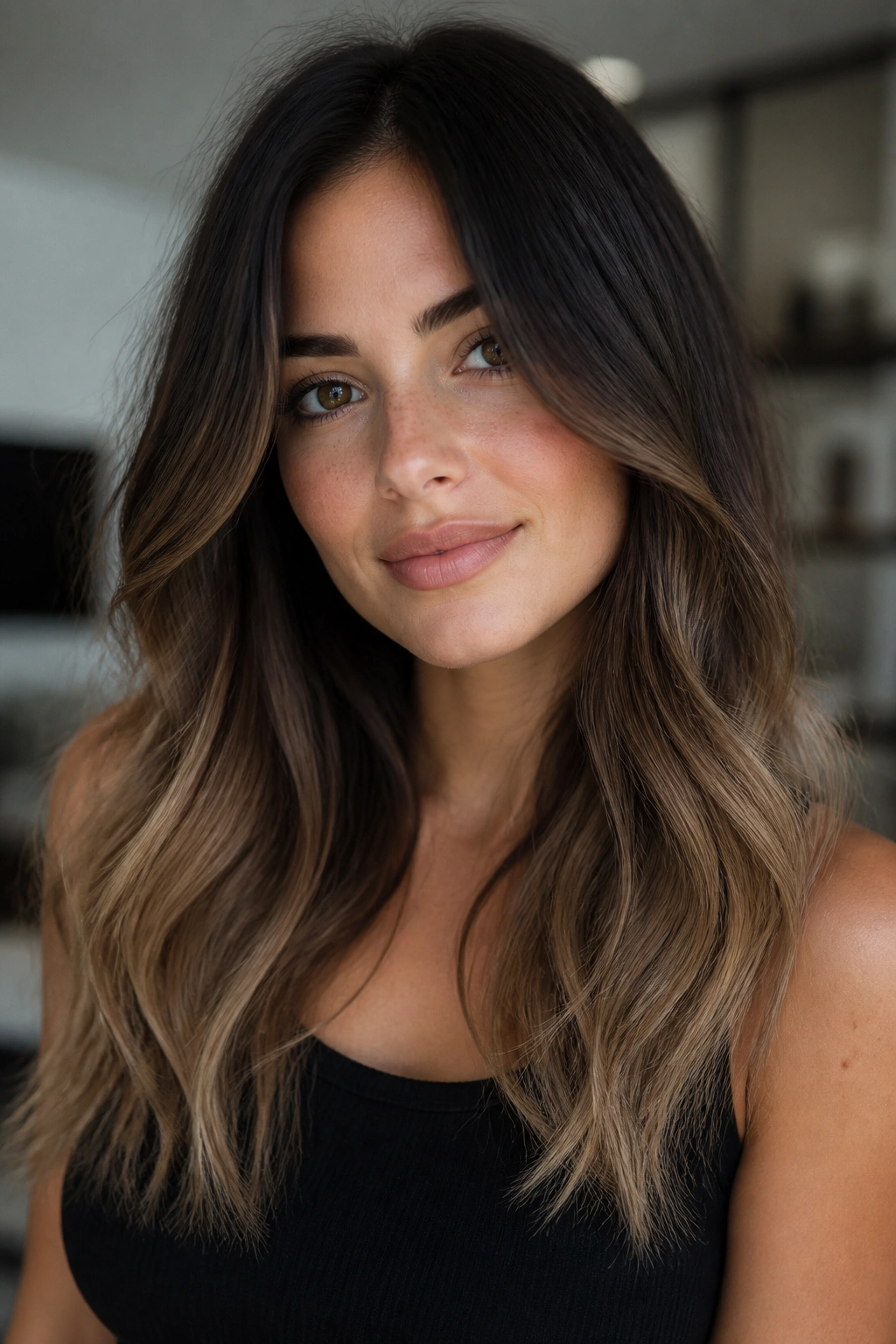
Why does mushroom beige look so good on brunette hair? Because it sits right between warm and cool. The shade has enough softness to blend, but it still has a clean edge that keeps the hair from looking muddy.
How to Keep the Finish Creamy
The brunette base should stay smoky, not flat black. From there, the ends can move into mushroom beige with a neutral gloss that softens any orange residue left from lifting.
A look like this works especially well if your natural brunette tends to pull red in the sun. Mushroom beige cancels some of that warmth without making the whole head look icy. That balance is the whole trick.
It’s a strong pick for people who want a cool-toned ombre but don’t want silver, ash, or platinum. The result feels grown-out in a good way, which sounds odd until you see it.
21. Golden Brown Bronde with a Low-Contrast Finish
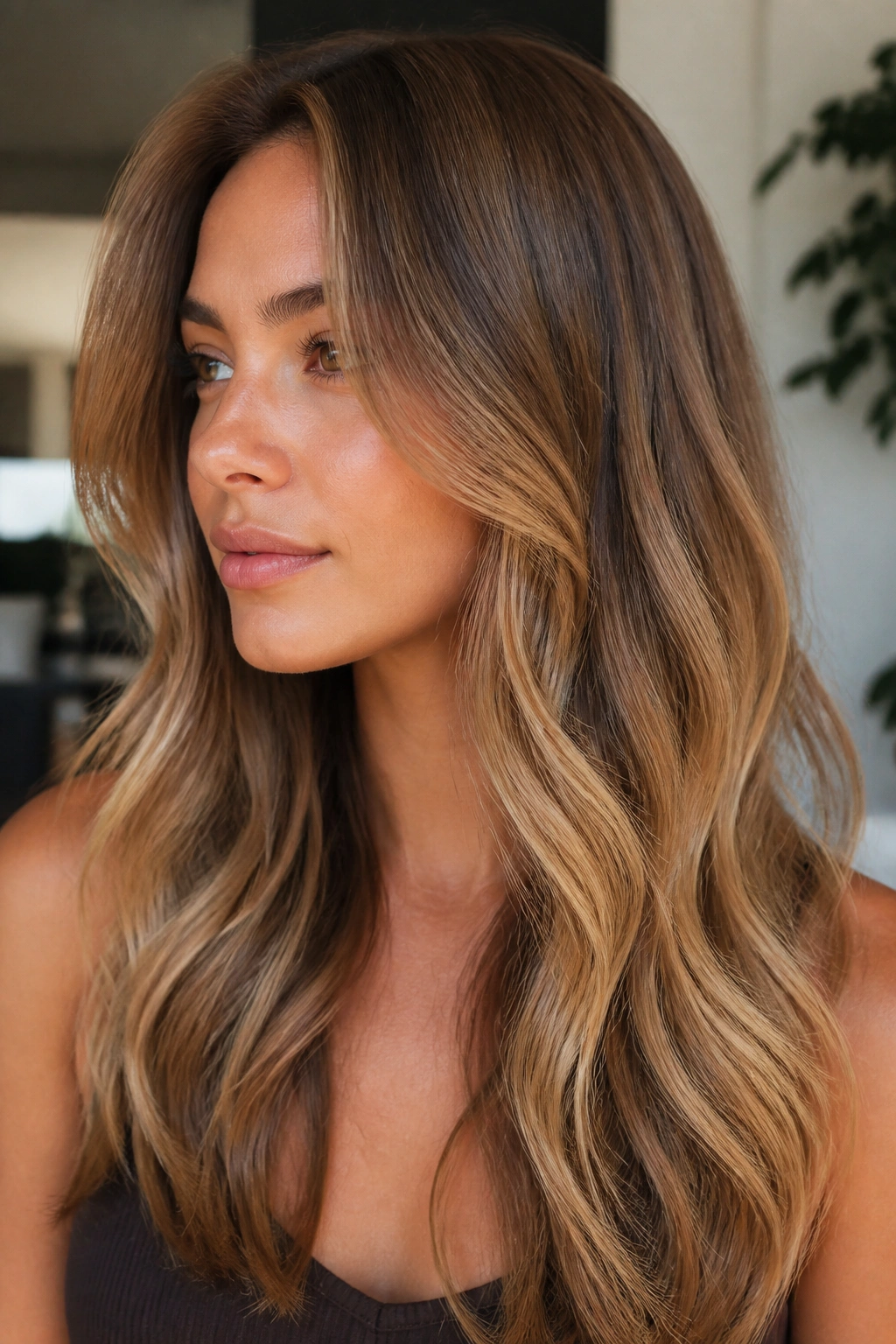
Low-contrast bronde is the quiet cousin of ombre. The color doesn’t announce itself; it just makes the hair look fuller, warmer, and less flat from root to tip.
This is the version I’d point someone toward if they keep saying they want “something subtle.” The root stays golden brown, then the mids and ends lighten only a little, enough to catch light but not enough to turn blondish. That small difference can make fine hair look thicker because the tone variation creates depth without harsh lines.
- Great on straight hair that needs movement.
- Ask for wide, feathered sections instead of tiny highlights.
- Keep the lightest pieces around the face and crown.
- Use a beige gloss to avoid too much gold.
The overall effect is softer than a standard ombre and easier to maintain.
22. Balayage-Ombre Hybrid with Soft Dimension
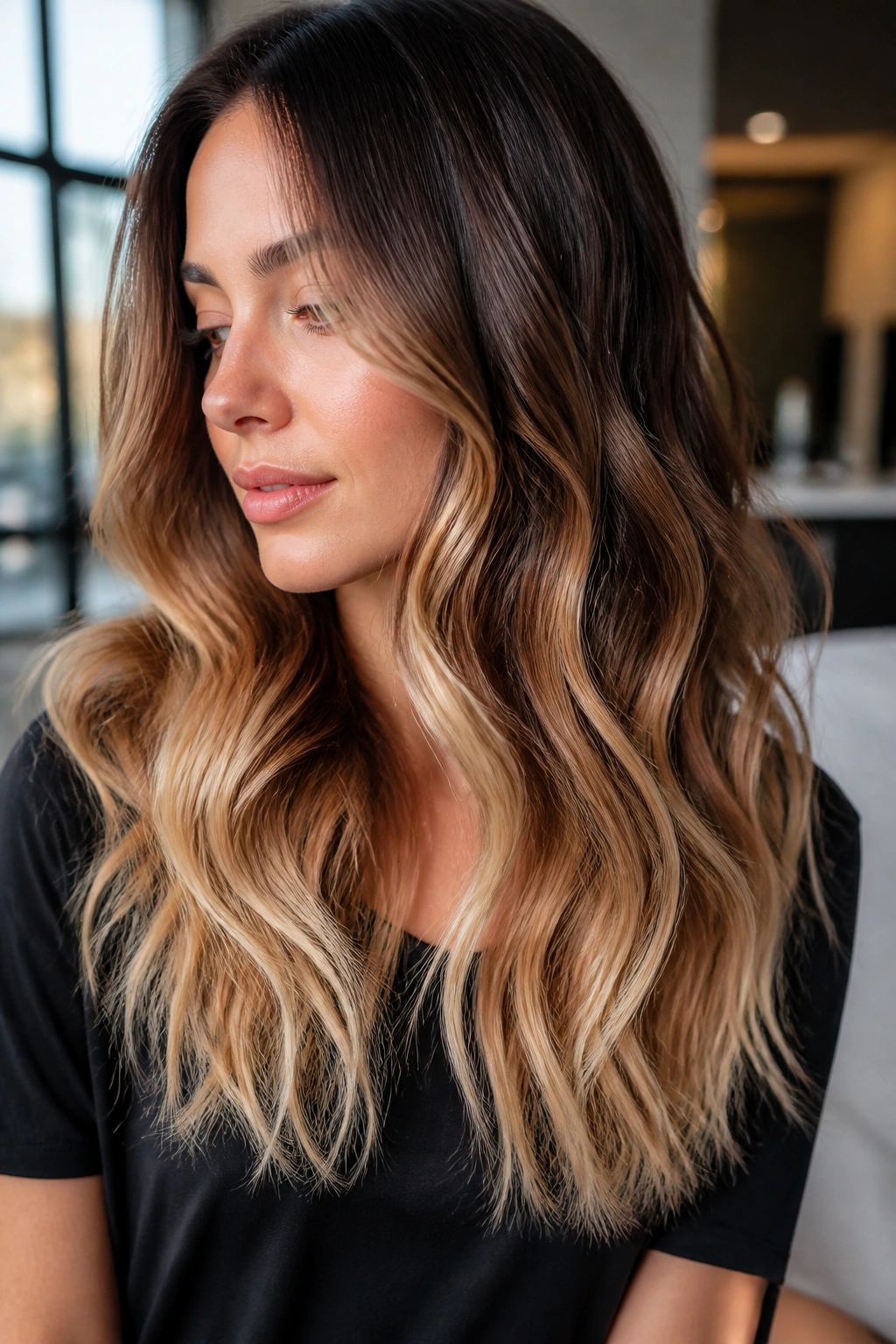
A balayage-ombre hybrid is for people who want depth up top and a loose fade at the bottom. It borrows the hand-painted softness of balayage through the mids, then lets the ends drift lighter in an ombre shape.
That mix matters because pure ombre can sometimes feel too uniform if the hair is thick, and pure balayage can feel scattered if you want a real color shift. This hybrid lands in the middle. The ribbons create movement around the head, while the lower ends still give you that clear fade.
It works on almost every hair length, but it shines on layered cuts. The layers catch the different placements of light pieces, and the result looks more natural than a blunt band of color.
If you like hair that looks dimensional from every angle, this is one of the smartest choices.
23. Honey Copper to Apricot Peach Ends
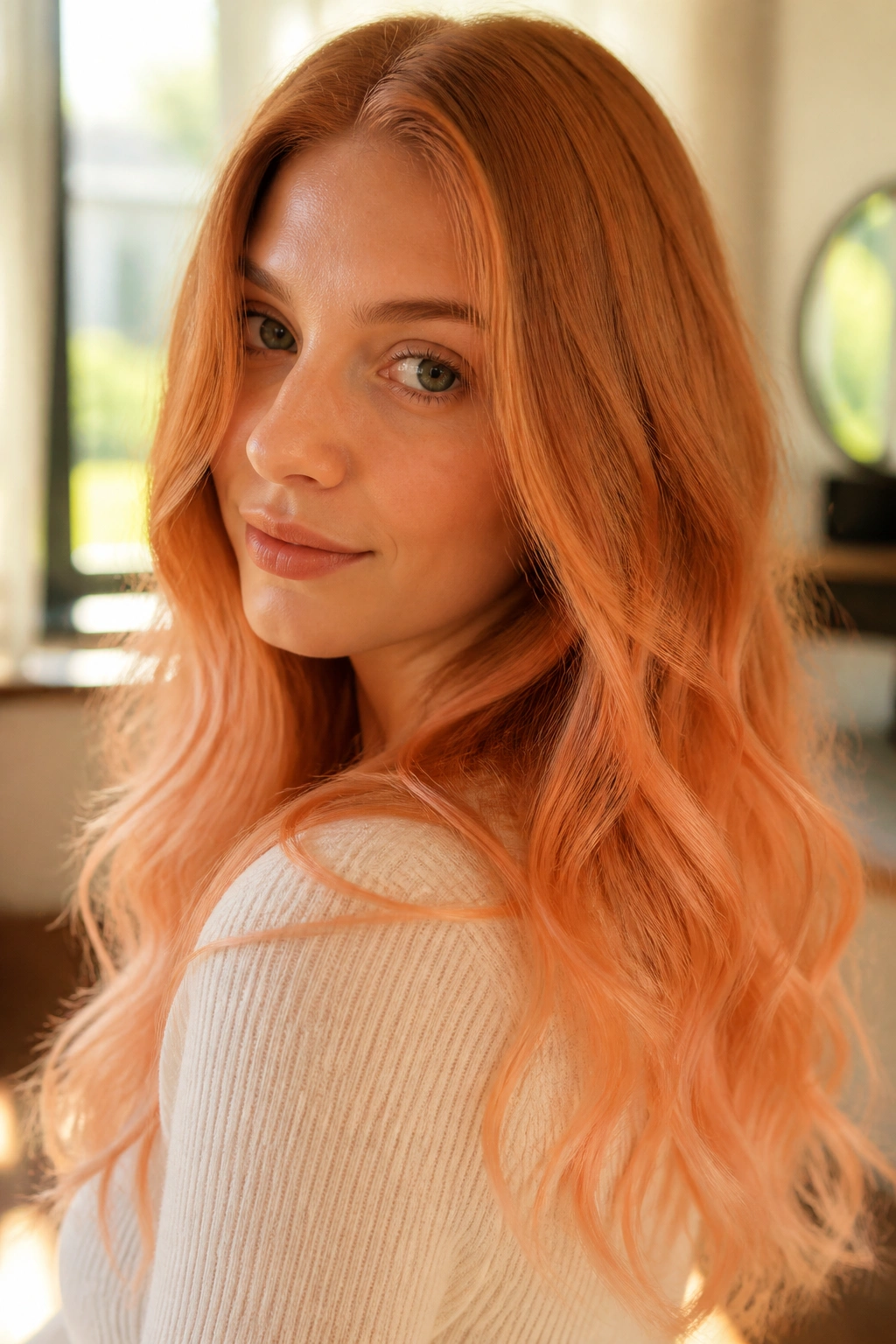
Honey copper into apricot peach is warmer and softer than a standard copper-to-blonde fade. The honey in the base keeps the color rich, while the peach at the ends gives a little brightness without turning neon.
Unlike strawberry blonde, this version has a clearer orange-pink tilt. That makes it a stronger choice for people with warm skin or freckles, where the peach tones can echo the face instead of fighting it. It also suits wavy hair, since the texture breaks up the color and keeps the ends from looking flat.
I’d ask for a clear gloss with a small amount of peach pigment if the stylist wants to refresh it later. Too much direct color can make the ends opaque. A sheer finish keeps the softness intact.
It’s a cheerful look, but still wearable.
24. Pearl Blonde with a Deep Shadow Root
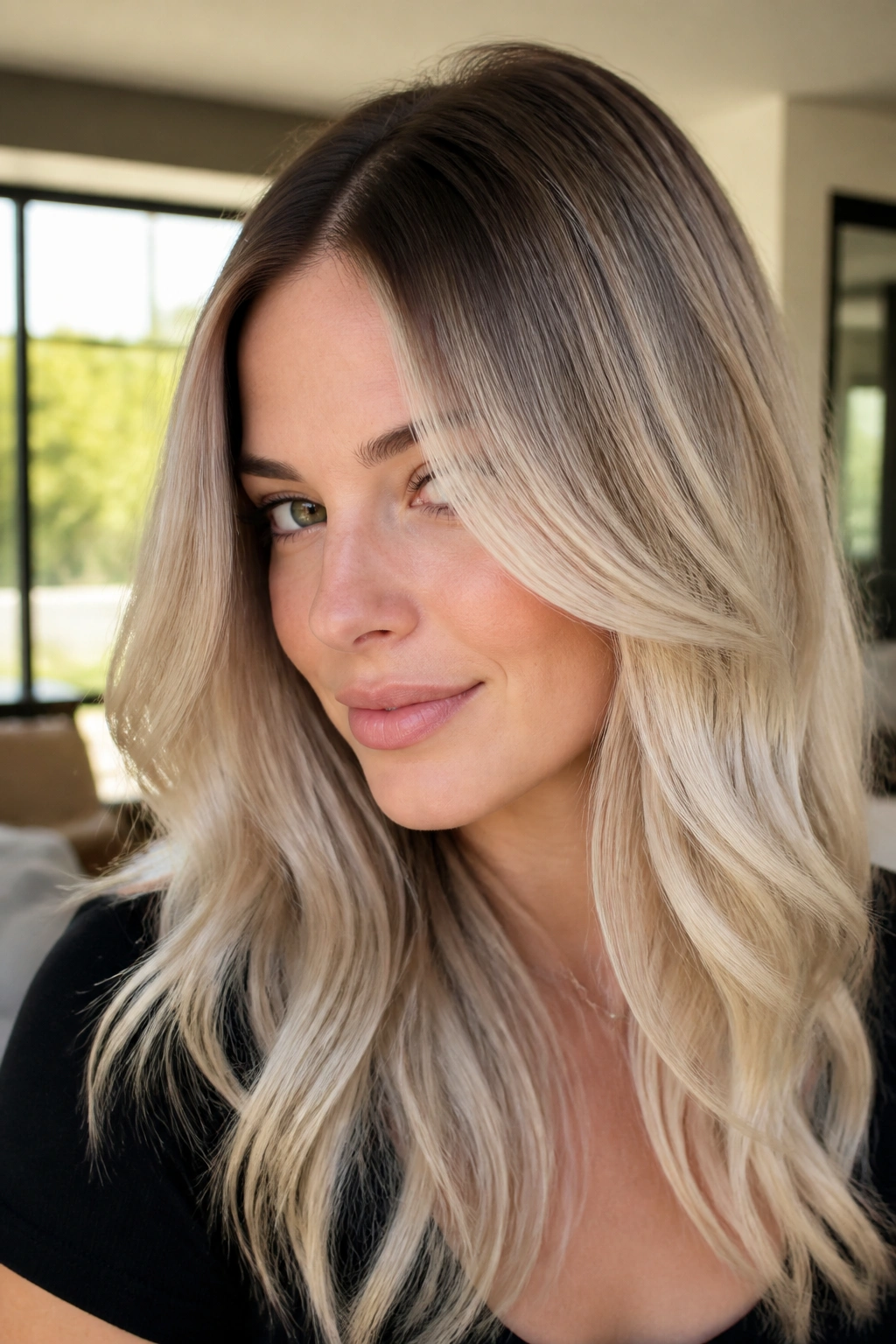
Pearl blonde can look fragile if the root is too light. A deeper shadow root changes that fast. It gives the pearl ends a frame, and the contrast keeps the blonde from reading washed out.
The root should usually sit a few shades deeper than the longest blonde sections, with a soft blend through the crown so the color doesn’t stop in a blunt line. That shadow makes the pearl tone feel intentional instead of fragile.
I like this on long hair and on anyone who wants blonde that grows out without turning into a maintenance headache. The shadow root does the work of hiding regrowth while the pearl finish keeps the hair bright enough to feel fresh.
If you love pale blonde but want something easier to live with, this is a strong pick.
25. Salt-and-Pepper Ombre with Smoky Ends
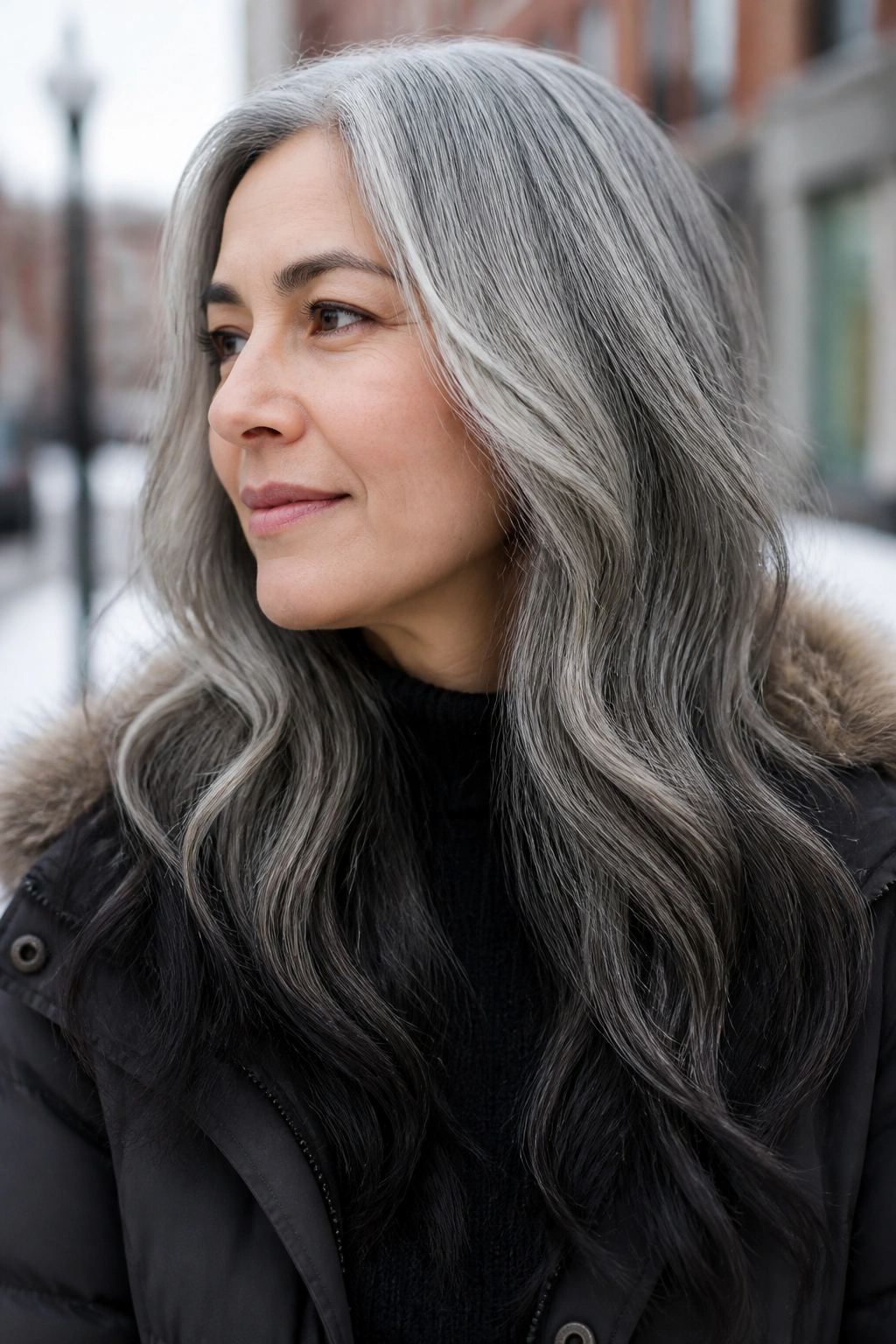
Salt-and-pepper ombre is one of the most honest soft-blend looks out there. It works with natural gray instead of pretending it isn’t there, and that alone makes the finish feel calmer.
What Makes It Look Intentional
The key is using the gray as part of the fade. A smoky end tone helps the silver pieces feel tied to the rest of the hair, while a deeper peppered root keeps the top from going flat.
- Best when gray is already visible through the crown.
- Ask for smoky lowlights, not heavy dark dye.
- A gloss every few weeks keeps the silver from looking dull.
- Loose waves show the gradient better than a tight set.
This is the kind of ombre that doesn’t try to hide age or fight texture. It just gives the color a softer path from one shade to the next, and that can be more flattering than any dramatic blonde fade.
