



Short bangs are not a small detail.
They sit right on the face, and they make the rest of the haircut carry more weight. If the layers are timid, the whole shape can look unfinished. If the layers have some thought behind them, the short fringe suddenly feels sharp, modern, and a little expensive-looking without trying too hard.
That is why layered haircuts with short bangs can go in so many directions. They can feel soft and airy, or blunt and cool, or messy in the best way. They can sharpen a round face, bring attention to cheekbones, or make thick hair feel lighter around the edges. The trick is knowing where the shortest pieces should land, how much movement the layers need, and whether the hair texture can support a fringe that sits higher than the brows.
I keep coming back to one simple truth: short bangs are honest. They show the cut. They show the skill. They also show the mistakes. A fringe that sits too high on the wrong face shape can feel abrupt, and layers cut too hard can make the whole thing flare out in a weird triangle. The good versions below solve that by working with the hair’s natural bend instead of fighting it.
1. Soft Shag With Baby Bangs

The soft shag is the easiest place to start if you want short bangs without looking boxed in. The crown stays a little airy, the layers fall in loose pieces, and the baby bangs sit high enough to add attitude without swallowing the face.
Why It Works
This cut works because the shape is broken up on purpose. The shortest fringe usually lands about 1/2 to 1 inch above the brows, and the layers around the cheekbones and jaw keep the eye moving downward instead of locking onto one hard line. That matters a lot if your hair tends to puff out at the ends or collapse at the roots.
I like this cut most on wavy hair, but straight hair can wear it too if the stylist avoids over-layering the ends. Ask for soft point-cutting, not a razor-heavy chop that frays the perimeter. A little mousse at the roots and a diffuser or rough-dry with your fingers usually gives the right amount of lift.
Quick Notes
- Best for: Wavy hair, fine hair that needs body, and medium-density hair.
- Styling tool: A 1-inch curling wand or a diffuser, depending on your texture.
- Maintenance: Trim the bangs every 3 to 5 weeks so they do not fall into the eyes.
- Watch out for: Too many short layers at the crown, which can make the top look frizzy.
Pro tip: Keep the bangs slightly shorter in the center and softer at the sides. That tiny shift makes the fringe feel less stiff.
2. French Bob With Micro Bangs

French bob cuts can handle short bangs because the line is already disciplined. The hair usually hits somewhere between the chin and jaw, the ends stay clean, and the micro fringe adds a little bite without needing a lot of extra styling.
The best version is not harsh. It should feel like a strong shape with a soft hand. I prefer a bob that has just enough interior layering to stop it from sitting like a helmet, but not so much that it loses the clean edge. That clean edge is what makes the short bangs look intentional instead of accidental.
Micro bangs are commitment hair. They sit well on straight or slightly wavy textures, especially if the forehead is on the shorter side or if you like a haircut that shows off brows, earrings, and neckline. The cut has a nice tension to it. It is neat, but not sweet.
A dab of light smoothing cream and a quick bend at the ends with a flat iron is usually enough. If you air-dry, use your fingers to push the fringe into place before it dries completely, or it can separate in odd little spikes.
3. Curly Crop With Short Fringe
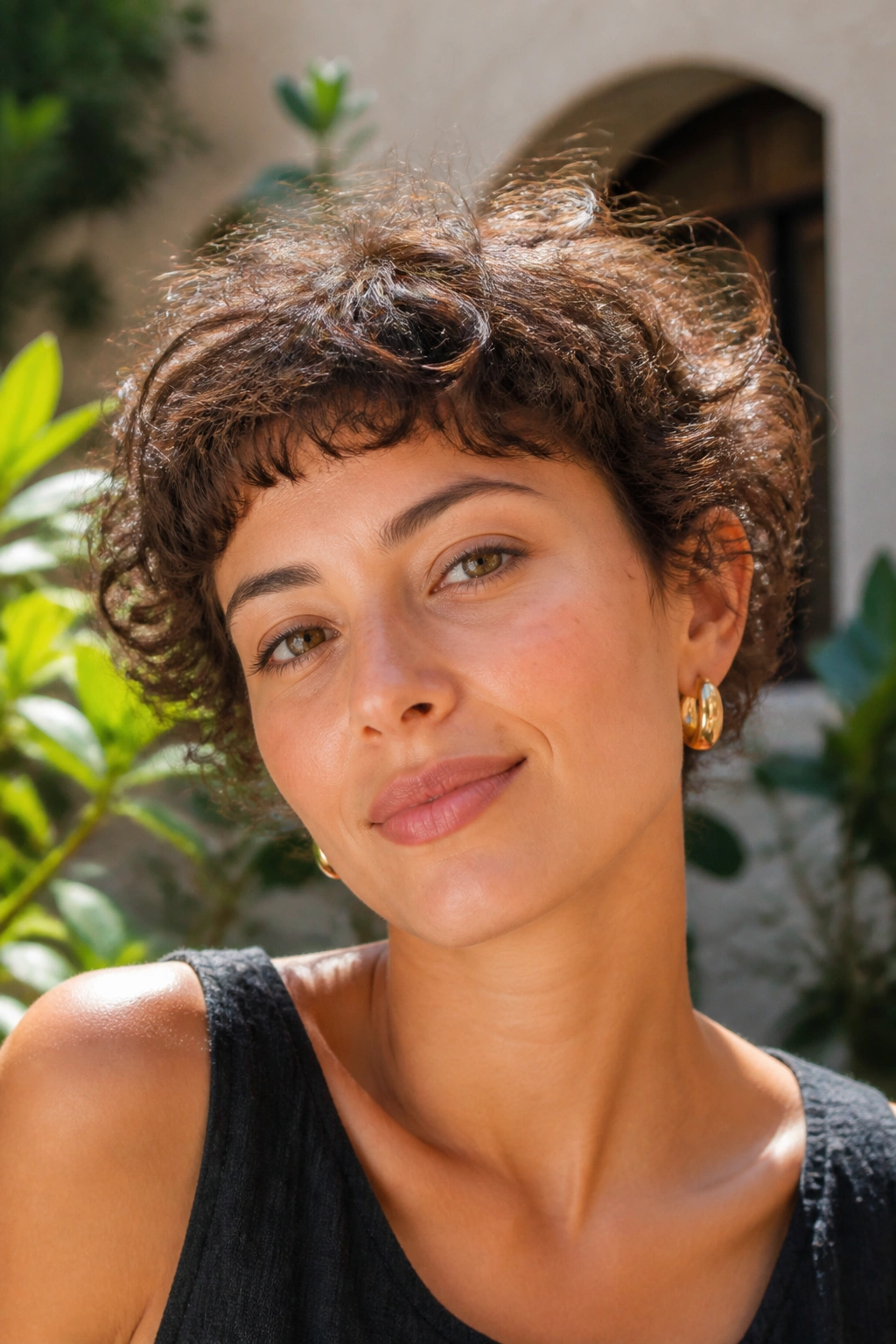
Can curls wear short bangs? Yes, if you stop pretending curls behave like straight hair.
Curly hair needs a dry cut more often than not, because shrinkage changes everything. A fringe that looks like a tidy 1 inch on the floor can spring up much shorter once it dries. That is why the smartest curly crops with short bangs are cut with the final shape in mind, not the wet shape. The layers should build a loose halo around the face, and the fringe should skim the forehead rather than sit stiffly on it.
How to Style It
- Work in a curl cream while the hair is damp, then scrunch lightly from the ends upward.
- Use a diffuser on low heat until the curls are about 80% dry, then stop touching them.
- Separate the bangs with your fingers only after they are dry, so they keep their little bend instead of clumping.
- Ask for face-framing layers that start around the cheekbone, not right at the jaw, or the shape can turn bottom-heavy.
The best curly versions have enough spring to feel playful, not boxed-in. That is the part people get wrong. They ask for short bangs and then keep the rest of the haircut too neat. Curly hair wants room.
4. Wolf Cut With Choppy Short Bangs

If your hair goes flat at the crown by lunch, the wolf cut earns its keep fast. It puts lift where you need it, removes weight where it gets bulky, and makes short bangs feel part of the whole shape instead of a separate little project perched on the forehead.
Picture a cut that looks a little wild when you wake up and somehow better after ten minutes of fussing with it. That is the wolf cut when it is done well. The shortest fringe usually sits in the baby-bang zone, while the rest of the layers break into longer, jagged pieces around the cheekbones and neck. The contrast is the whole point.
The strongest versions keep the top light but leave enough length through the back to avoid the full mullet effect unless that is what you want. If your hair is thick, the stylist should remove bulk inside the shape, not just hack at the surface. If it is fine, the cut needs restraint. Too much removal and the ends go wispy fast.
- Styling product: Texture spray or a light mousse.
- Best tools: Fingers, a diffuser, or a small round brush for the bangs.
- Maintenance note: The fringe needs regular trimming because choppy short pieces grow out unevenly.
- Good match for: Hair that already has natural wave or bend.
The wolf cut lives or dies on proportion. Get that right, and the short bangs feel cool. Get it wrong, and it looks like you lost a fight with scissors.
5. Bixie With Feathered Layers

This is the cut that saves people who want movement but refuse a full pixie. A bixie sits between a bob and a pixie, and the feathered layers keep it from feeling heavy around the ears or stiff at the crown. Add short bangs, and the whole thing gets a sharp little frame without losing softness.
I like this one on finer hair that needs shape more than weight. The short bangs pull attention up, which can make the eyes look brighter and the cheekbones more obvious. Meanwhile, the feathering around the sides keeps the cut from building too much width at the jaw. That balance is what makes it wearable in real life, not just in a haircut photo.
It also grows out well, which matters more than people admit. A bixie with short bangs does not collapse the minute the fringe gets half an inch longer. It turns into a more relaxed crop, and the layers still give you some movement as it grows. That makes the maintenance less annoying than a razor-sharp pixie.
A pea-size bit of cream or paste is enough. Work it through damp hair, then push the bangs forward with your fingers and leave the ends slightly broken up. Polished is not the goal here.
6. Collarbone Lob With Brow-Skimming Bangs

Unlike a blunt lob, this version leaves room for movement. The length still sits around the collarbone, but the layers around the front stop the haircut from hanging like one solid block. The short bangs skim the brows, which keeps the forehead from looking too open while still letting the face breathe.
This is one of the better choices if you want short bangs but do not want to look like you committed to a very short haircut. The lob gives you safety. The bangs give you personality. Together, they make a haircut that looks deliberate in a T-shirt and still works with a blazer or a dressy jacket.
What to Ask for at the Salon
- Keep the perimeter soft, not razor-blunt from side to side.
- Start the face layers around the chin or upper lip so the front has motion.
- Cut the bangs slightly curved, not dead straight across, if your forehead is wide or your hair swirls at the front.
- Tell the stylist how you part your hair, because short bangs shift a lot depending on the part.
This cut suits oval, heart, and square faces especially well. It does not need a dramatic styling routine, which is half the appeal. A medium round brush and a quick bend under the ends is usually enough.
7. Inverted Bob With Piecey Bangs

This is the cleanest shape on the list. The back sits shorter, the front falls longer, and the piecey bangs keep the cut from feeling too formal. If you want something polished but not stiff, this is a very strong option.
The inverted bob builds visual lift through the nape, which means the head shape looks a little more sculpted from the side. Short bangs help that effect because they pull attention upward and leave the jawline open. I especially like this cut on straight hair or hair with just a small bend, because the geometry stays clear. Wavy hair can wear it too, but the styling gets a little more involved.
The bangs should not look chopped into one dense block. They need little breaks between the pieces, which is where point-cutting matters. Too blunt, and the front can feel heavy against the structure of the bob. Too thinned out, and the fringe starts looking see-through.
A root-lift spray at the crown and a round brush through the bangs usually do the job. Keep the side pieces tucked behind the ear or curved inward with a flat brush so the inverted shape stays visible.
8. Razor-Cut Midi With Mini Fringe

Why does razor cutting matter here? Because it changes the whole mood of the hair. A midi cut that falls between the shoulders and collarbone can feel very solid, even a little boxy, unless the ends have some movement. Razor-cutting softens the perimeter and gives the fringe a lighter edge, which keeps the mini bangs from overpowering the face.
This version works well on hair that has some texture but not so much frizz that every feathered edge explodes on its own. Fine to medium strands usually do well. Very fragile hair can look ragged if the razor is used too aggressively, so the tool matters less than the hand behind it.
How to Keep It from Frizzing
- Use a smoothing cream on damp hair from mid-length to ends, not at the roots.
- Dry the bangs first so they do not dry in random directions while you work on the rest.
- Keep heat low to medium if you use a flat iron, or the soft edges can look scorched.
- Ask for the fringe to sit a touch shorter in the center if you want the eyes to stay open.
I like this cut because it does not try to be precious. It has movement, a bit of air, and enough edge to feel current without needing a lot of product.
9. Feathered Shoulder Cut With Rounded Bangs
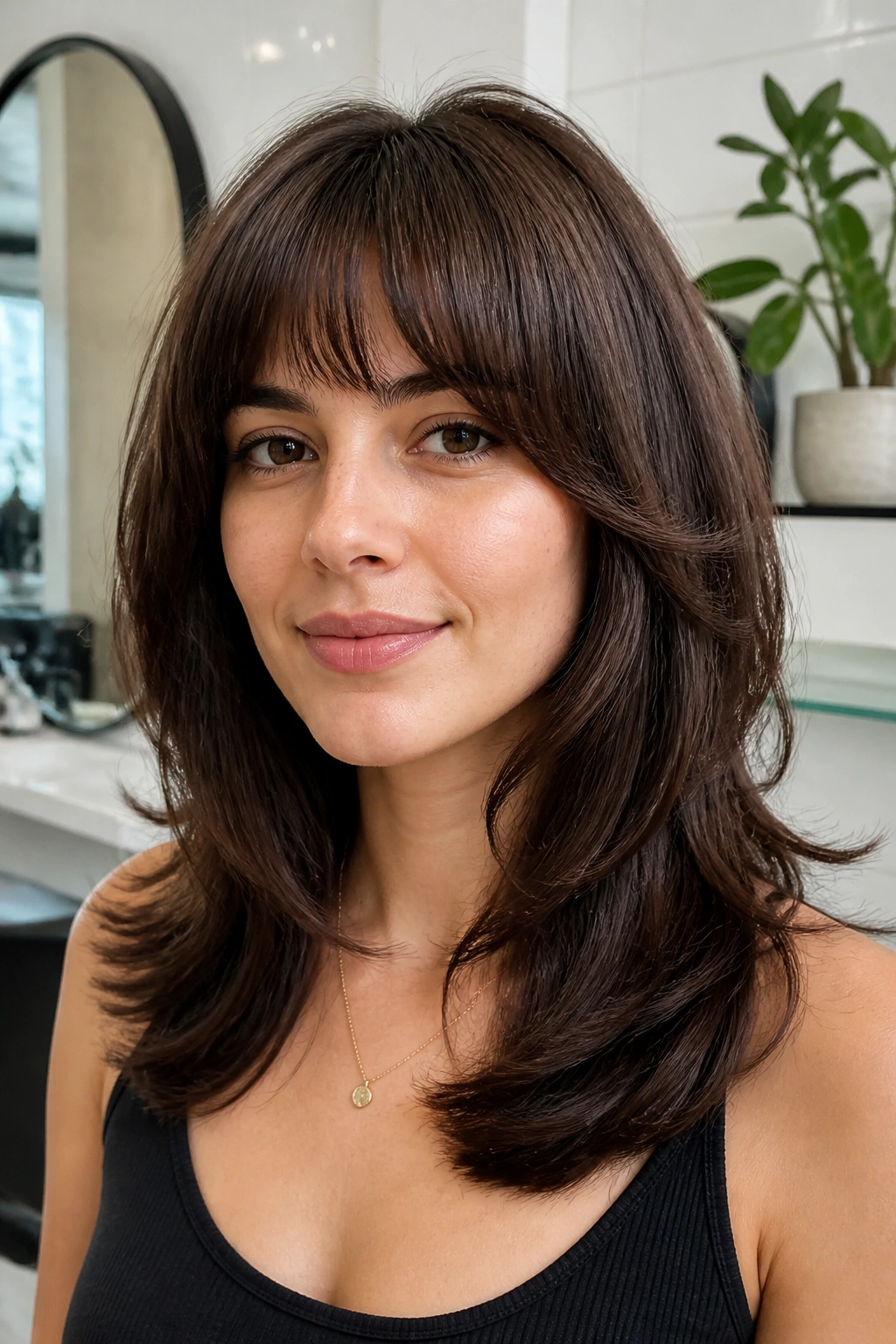
I always think of this cut as the one for people who want their hair to look kind, not severe. The layers sweep away from the face, the shoulders stay covered, and the rounded bangs curve gently over the forehead instead of slicing across it.
The shape matters more than the length here. A shoulder cut can get bulky fast if the layers are cut too bluntly, so the feathering should start around the cheeks and continue through the ends in a soft, brushed-out way. Rounded bangs work because they mirror that same curve. They soften the front without disappearing into the rest of the haircut.
This is a strong choice for medium-density hair, especially if you like a blowout look. The layers respond well to a round brush, and the bangs can be rolled under or swept slightly aside. If you let it air-dry, it still behaves, which is more than I can say for some salon-perfect cuts that fall apart at home.
- Best brush: A medium round brush, around 1.5 inches.
- Best finish: Light shine spray or a drop of serum on the ends.
- Best face shapes: Oval and long faces, though it can be adjusted for square faces too.
- Stylist note: Keep the shortest bang pieces soft enough to move when you blink.
The whole thing feels easy without looking lazy. That is a better outcome than it sounds.
10. Disconnected Pixie With Short Bangs
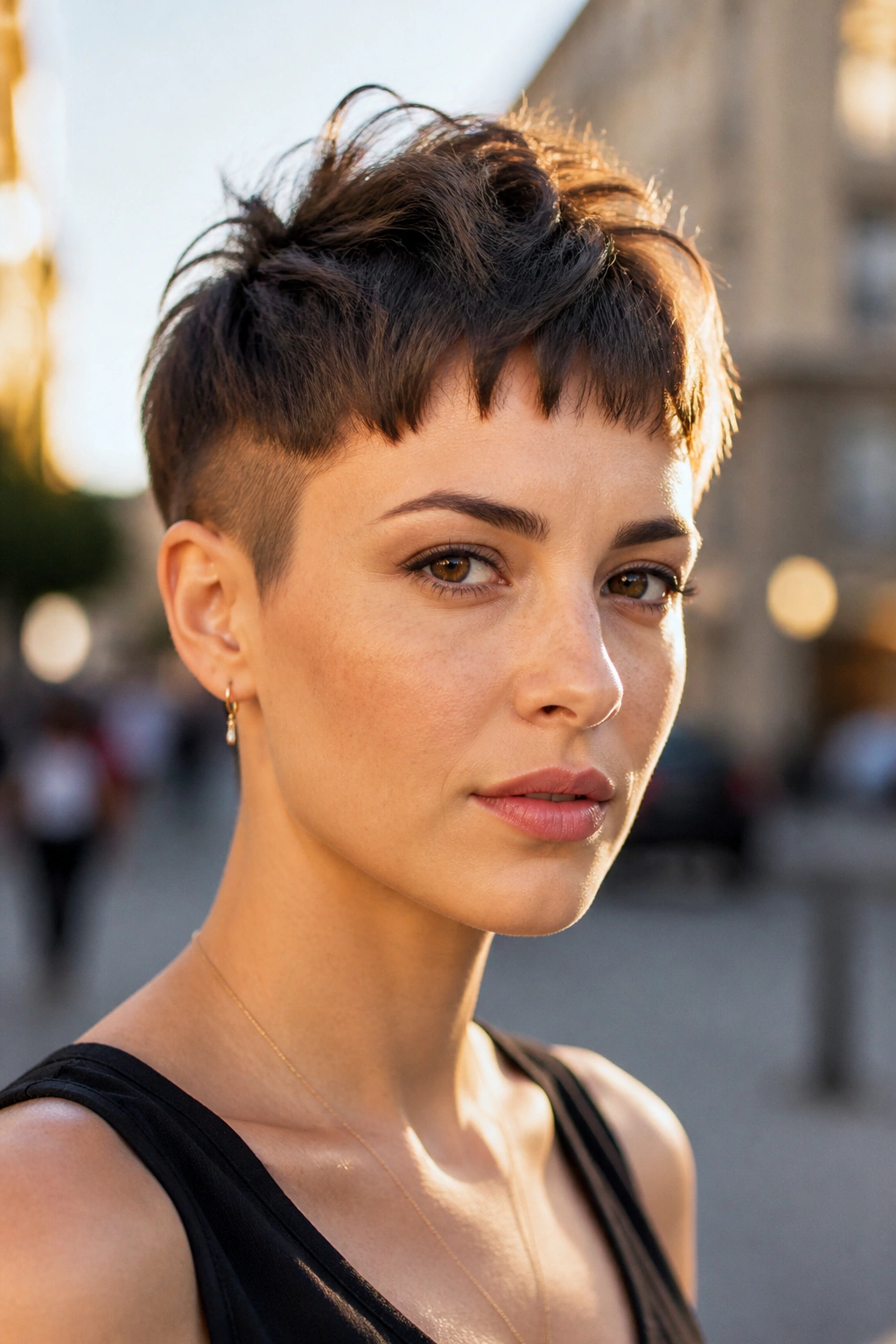
This one has nerve.
A disconnected pixie keeps the sides and top visibly different, which gives the haircut a little tension and stops it from looking flat. The top can stay longer and more textured, while the sides and back sit tight enough to show off the shape of the head. Add short bangs, and the result is bold without needing extra length anywhere else.
I like this cut on people with strong brows, good cheekbones, or glasses, because the fringe can frame the upper face instead of hiding it. It also suits anyone who wants a haircut that dries fast and doesn’t demand much daily fuss. That said, it is not the cut for someone who wants to tuck hair behind both ears and forget about it. It wants to be seen.
Use a matte paste or a light pomade, not a glossy cream. Work it through dry hair in tiny amounts, then pinch the bangs into place with your fingers. If the top is too soft, the disconnect disappears. If the product is too heavy, the shape turns helmet-like. Both are avoidable.
This is one of the shortest cuts on the list, but it does not feel small. That is why people keep coming back to it.
11. Butterfly Layers With Short Fringe

Butterfly layers usually chase softness, but a shorter fringe gives them a cleaner top. The long face-framing pieces keep the length feeling glamorous, while the short bangs stop the front from drifting too far down the face. It is a useful balance if you like fullness through the ends but want more shape around the forehead.
The cut works best on medium to long hair that can hold a blowout. The top layers create lift around the crown and cheekbones, and the lower layers keep the length visible. The short bangs are what make it feel fresh. Without them, butterfly layers can lean a little too familiar. With them, the haircut has a stronger point of view.
I would ask for the shortest fringe pieces to sit around the brow line when dry, with longer sides that blend into the face frame. That way the bangs do not become a separate chunk. The transition matters. If the front is too abrupt, you lose the floating effect that makes this cut interesting.
A big round brush and a little root lift at the front go a long way. This is a blow-dry haircut more than an air-dry haircut, and it wears that fact well.
12. Wavy Lob With Bottleneck Bangs Cut Short

This is the cut I suggest to people who want short bangs but refuse a hard edge. Bottleneck bangs start a little tighter at the center and widen toward the temples, so when they are cut short they still feel soft enough to move with the rest of the hair. Put them with a wavy lob, and you get shape without stiffness.
The lob usually sits between the chin and collarbone, which gives the waves enough length to fall in loose bends instead of puffing out. The short bangs give the cut a clear face frame, but the bottleneck shape keeps the forehead from looking chopped off. That matters more than people think. A short fringe can either sharpen a face or make it feel crowded. This version does the first one.
Air-drying with a curl cream works well here, though a diffuser helps if your wave is loose and needs a bit of support. I would avoid heavy oils around the bangs. They tend to separate the fringe and take away the airy finish that makes the style work.
The whole cut feels relaxed but not random. That is a nice place to land.
13. Thick-Hair Layered Cut With Heavy Short Bangs

Can thick hair wear short bangs without looking bulky? Yes, but the haircut needs real control.
Density is the issue. Thick hair can hold a beautiful fringe, yet if the stylist removes too much weight in the wrong places, the bangs puff out and the layers flare at the sides. The smartest approach is to keep the bangs dense enough to sit cleanly, then remove bulk through the interior of the layers instead of shredding the perimeter. That keeps the shape strong and stops it from frizzing into a triangle.
How to Remove Bulk Without Killing the Shape
- Ask for point-cutting through the ends instead of heavy razor work on the fringe.
- Keep the shortest bang pieces full, so they do not separate into wisps.
- Build long internal layers that release weight around the mid-lengths.
- Use a blow-dryer nozzle and paddle brush to smooth the fringe downward.
This cut loves a little discipline. If you let thick hair do whatever it wants, the short bangs can disappear into the mass. If the shape is managed well, though, the result is strong and easy to wear. It looks expensive in the plainest sense of the word: the cut does the work.
14. Fine-Hair Layered Cut With Feather-Light Short Bangs

Fine hair can look thin fast if the layers are too eager. That is why the best version of this cut keeps the fringe light but not stringy, and the layers controlled enough to preserve some weight at the ends.
The mistake people make is asking for lots of short layers because they want volume. Sometimes that works. Often it does not. Fine hair usually needs a perimeter that keeps some density, plus very soft layering near the front so the bangs do not separate into see-through strands. A feather-light short fringe can be lovely, but it has to be supported by the rest of the cut.
- Ask for a blunt-ish base line at the back or around the collarbone.
- Keep the bangs slightly longer than you think, then trim them up after you see how they fall dry.
- Use root spray or a light mousse at the crown to give lift without stickiness.
- Avoid heavy oils on the fringe, which can make fine hair collapse by midday.
This cut works because it treats fine hair with restraint. Not every head of hair needs to be pushed harder. Some need better lines.
15. Modern Mullet With Short Bangs

A good modern mullet does not look like a dare. It looks like a haircut with intent.
The front stays short enough to create a strong little frame across the forehead, while the back keeps more length so the overall silhouette has movement. The layers around the sides are what keep it from turning into a costume piece. They connect the short bangs to the longer nape in a way that feels deliberate, not random. If you like a bit of edge and you do not mind being noticed, this cut has a lot going for it.
It also plays well with natural texture. Wave and curl give the shape life, but straight hair can wear it too if the layers are cut with enough difference in length to show the disconnect. I like this cut on people who want to air-dry and go, or who are happy to rough-dry with a little paste and stop there. It is not precious. That is the appeal.
The warning is simple. If the bangs are too short and the back is too thin, the whole thing starts to feel unfinished. Leave enough length in the back to anchor the style, and keep the front pieces small but not wispy. That is the whole trick.
A strong mullet, like a strong shag, depends on shape more than shock value. Get the shape right, and the short bangs do exactly what they should: they make the haircut look sharp from the front and full of motion from the side.
