



Heart-shaped faces and bangs can get along beautifully. They can also argue.
The thing that usually causes trouble is weight in the wrong place. A fringe that sits too heavy across the temples can make the forehead feel wider than it is, while a blunt, straight-across line can make the top half of the face do all the talking. Soft wavy bangs fix that by breaking up the line, adding movement, and letting the face taper naturally toward the chin.
That’s why texture matters so much here. A little bend through the fringe keeps it from looking severe, and the right length can pull attention to the eyes instead of parking it on the hairline. I’m partial to styles that leave room around the temples and cheekbones; they feel lighter, and they tend to grow out better too.
Some of these bangs are barely there when they’re dry. Good. That’s the point. The best ones for a heart shape don’t fight the face—they soften it, open it up, and make the whole cut look a little easier to live with.
1. Curtain Bangs That Split at the Brow

Curtain bangs are the easy answer for a heart-shaped face, and there’s a reason they keep coming back around. They split the difference between coverage and openness, which is exactly what a wider forehead usually needs.
What I like most is the way they let the center of the face breathe. The shortest point usually sits around the upper brow or just below it, while the outer pieces drift down toward the cheekbones. That shape keeps the forehead from feeling boxed in, and it gives the chin area a little more visual company.
Why They Work on a Heart Face
The split line matters more than people think. It creates two soft diagonal paths that guide the eye away from the widest part of the forehead and toward the middle of the face, where a heart shape usually looks best.
- Ask for the shortest point around mid-brow.
- Keep the outer corners long enough to skim the cheekbones.
- Style with a 1-inch round brush or large Velcro rollers.
- Let the bangs cool before touching them. Warm hair collapses fast.
Best tip: part them while they’re still damp, then blow-dry them in the direction you actually wear them. If you wait until they’re dry, the bend usually turns stubborn.
2. Brow-Grazing Fringe for Heart Face Shapes

A brow-grazing fringe can make a heart-shaped face look calmer in one cut. It sits close enough to frame the eyes, but not so low that it crushes the forehead.
The sweet spot is a fringe that barely kisses the brows, then breaks into tiny pieces at the ends. That little bit of irregularity keeps it from reading as severe. Straight-across bangs with a hard edge can feel bossy on this face shape; a soft, broken line feels friendlier.
I like this most on hair that already has a slight wave or a bend in it. The natural movement helps the fringe settle instead of sticking out like a shelf. If your hair is very fine, though, keep the cut light around the center and avoid over-thinning the ends. Too much texturizing leaves the fringe wispy in a bad way, like it lost the plot halfway through the day.
This style also needs regular trimming. Not fancy maintenance. Just honest upkeep. Once it starts sliding past the brows, the whole effect changes, and not always for the better.
3. Side-Swept Bangs That Slide Past the Temple

Need a fringe that quietly shifts attention away from a broad forehead? Side-swept bangs do that without making a big speech about it.
They work because the line is diagonal, not horizontal. That diagonal gives the face movement and breaks up the width at the top. On a heart shape, I especially like them when the longest piece lands somewhere near the outer eye or cheekbone rather than floating too high.
How to Style the Sweep
Use a side part that feels slightly deeper than your usual part, then blow the bangs in the opposite direction first. That gives the roots a little lift, which matters more than people admit.
- Start with damp hair and a light mousse at the roots.
- Brush the fringe across the forehead with a medium round brush.
- Direct the ends toward the side of the face, not straight down.
- Finish with a touch of flexible hairspray, then run your fingers through once.
The finished look should feel soft and a little undone, not glued to the forehead. If it sticks too close, it loses the airy shape that makes it work.
4. Bottleneck Bangs With a Soft Pinch

Picture a fringe that starts narrow in the middle, then opens outward like the neck of a bottle. That’s bottleneck bangs, and they’re especially kind to heart-shaped faces.
The center stays light, which keeps the forehead from feeling crowded. The sides widen just enough to soften the cheekbone area, so the whole face gets a more balanced frame. It’s a clever little shape, honestly. Quiet, but smart.
The trick is in the spacing. A good bottleneck bang should not look cut into a solid block. The middle needs to be shorter, the sides longer, and the edges a little feathered so they blend into the rest of the cut. When the wave bends through the ends, the shape feels lived-in instead of styled within an inch of its life.
I’d ask for this if your hair has some natural movement and you don’t want bangs that demand a perfect blowout. They can be worn smooth, but they also forgive a bit of air-drying. That’s a nice thing to have on a busy morning.
5. Feathered Bangs That Skim the Cheekbones
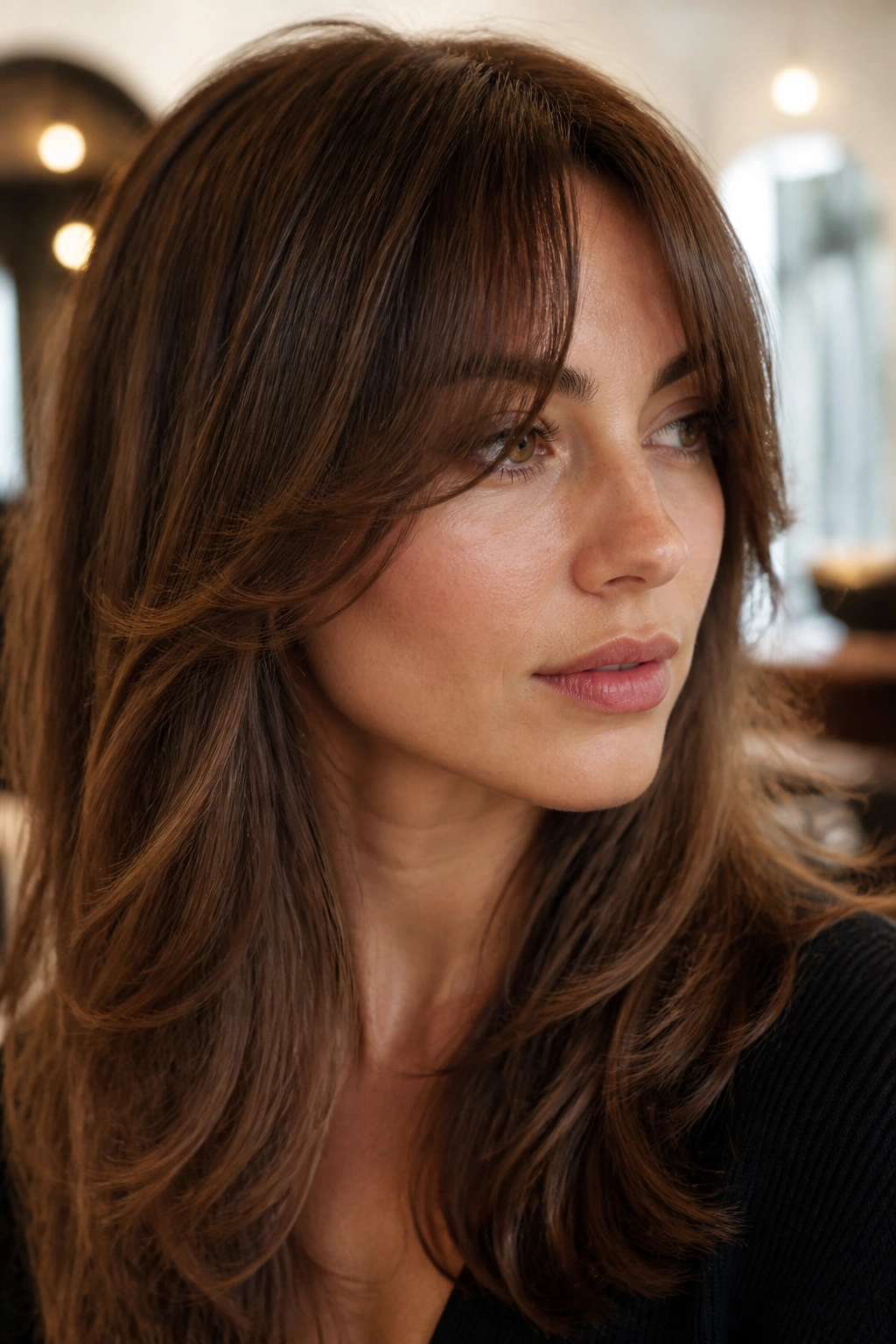
Feathered bangs are the ones I reach for when a heart face needs softness more than structure. They never look heavy, and that matters.
The whole point is to remove enough weight that the fringe moves with the rest of the hair. A feathered edge keeps the bang from making a hard wall across the forehead, which is exactly what can throw a heart shape off balance. The best versions skim the brows, then melt toward the cheekbones in little broken pieces.
Too much density is where this style goes sideways. You want separation, not bulk. That means point-cut ends, light layering, and a blow-dry that lifts the roots without puffing the whole front section into a helmet. A nozzle attachment helps. So does a small round brush, used with a bit of patience.
This one is especially good if your hair is thick or coarse. Fine hair can wear it too, but the cut has to be handled gently. Heavy thinning shears can make the fringe look see-through in a way that isn’t flattering. A softer hand is better.
6. Shag Bangs With Built-In Movement
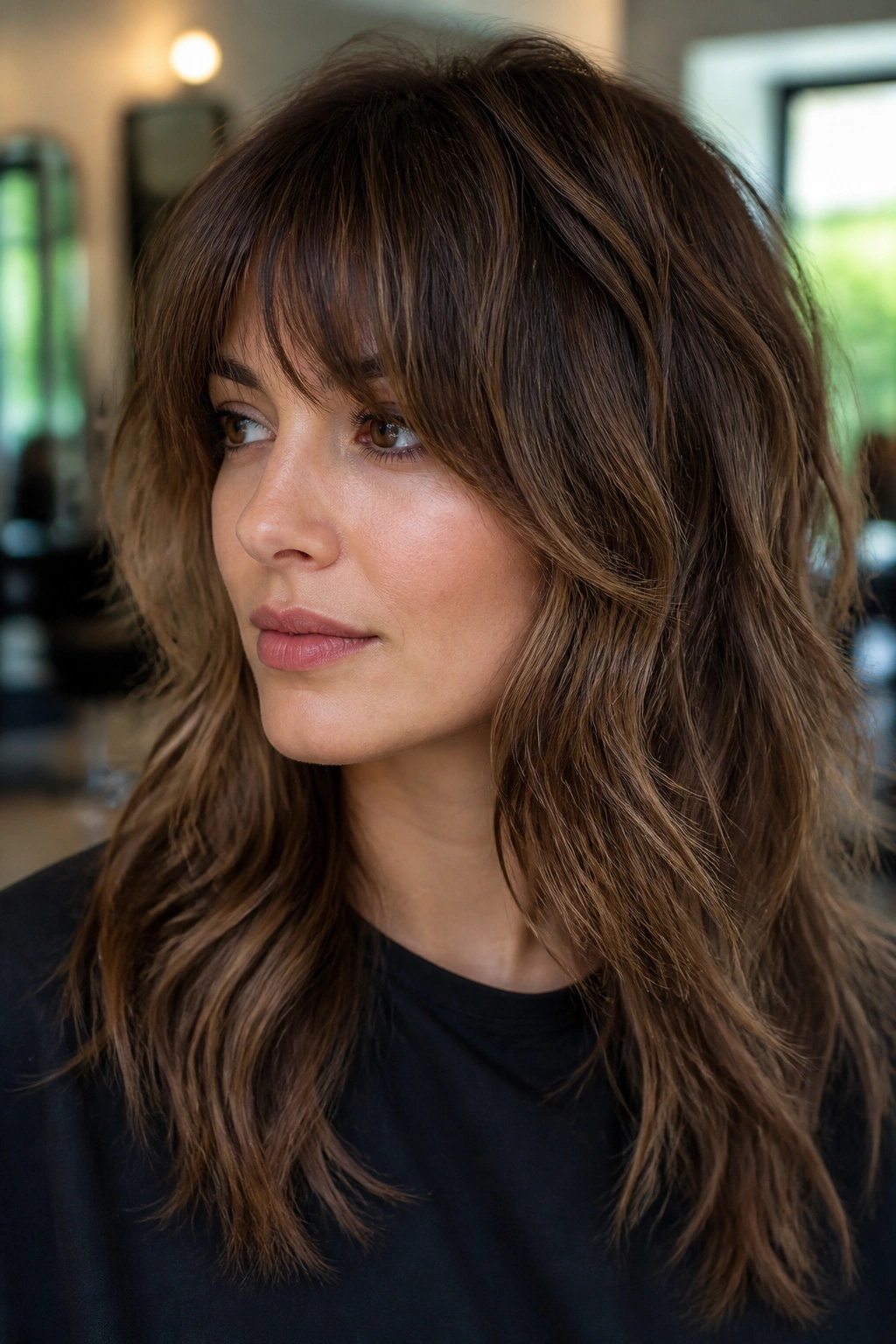
Unlike a straight-across fringe, shag bangs live with the rest of the haircut. That’s the big reason they work so well on a heart shape.
The shag gives you layers around the face, and the bangs ride those layers instead of sitting on top of them. The result is casual movement, not a separate bang section that demands attention. For a heart-shaped face, that means less emphasis on the forehead and more softness around the cheekbones and jaw.
If your hair is naturally wavy, this style is almost suspiciously easy. A little texture spray, a rough dry, maybe a quick bend with a flat iron on the front pieces, and you’re done. If your hair is straight, you’ll need a bit more help to keep the fringe from falling flat, but the cut still does most of the work.
I like shag bangs for people who don’t want to babysit their hair every morning. They look better a little imperfect. In fact, they look a little wrong when they’re too polished. That’s the charm.
7. Wispy Arch Bangs That Follow the Brow
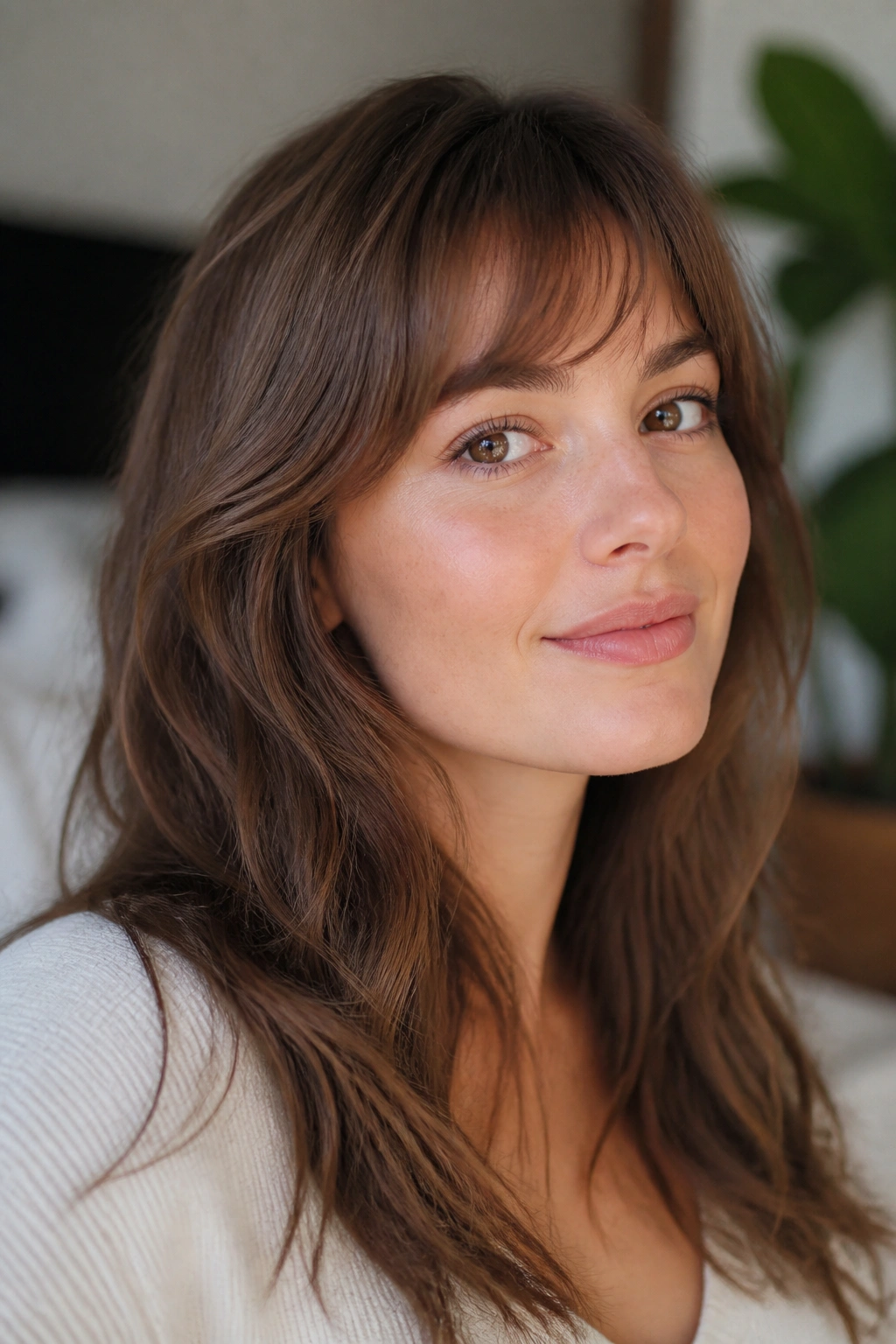
If you wear glasses or have strong brows, wispy arch bangs are worth a look. They sit lightly on the face, and the curved shape echoes the brow line instead of fighting it.
That arch matters because it keeps the center from feeling blunt. The middle can sit just at or above the brows, while the sides taper out softly toward the temples. On a heart face, that shape keeps the forehead open but still gives the eyes a frame.
What Makes the Arch Work
A good arch bang should feel airy, not sparse. There’s a difference. Sparse bangs look like hair was removed to make room for a shape; wispy arches look intentional because the curve is soft and the ends are clean.
- Keep the center piece light and short.
- Let the side pieces blend into the temple layers.
- Ask for point-cutting rather than blunt trimming.
- Use a pea-size amount of light cream, not a heavy paste.
The best ones don’t scream “bangs” from across the room. They just make the face look a little more open and a little more finished.
8. Rounded Wavy Bangs With Soft Ends
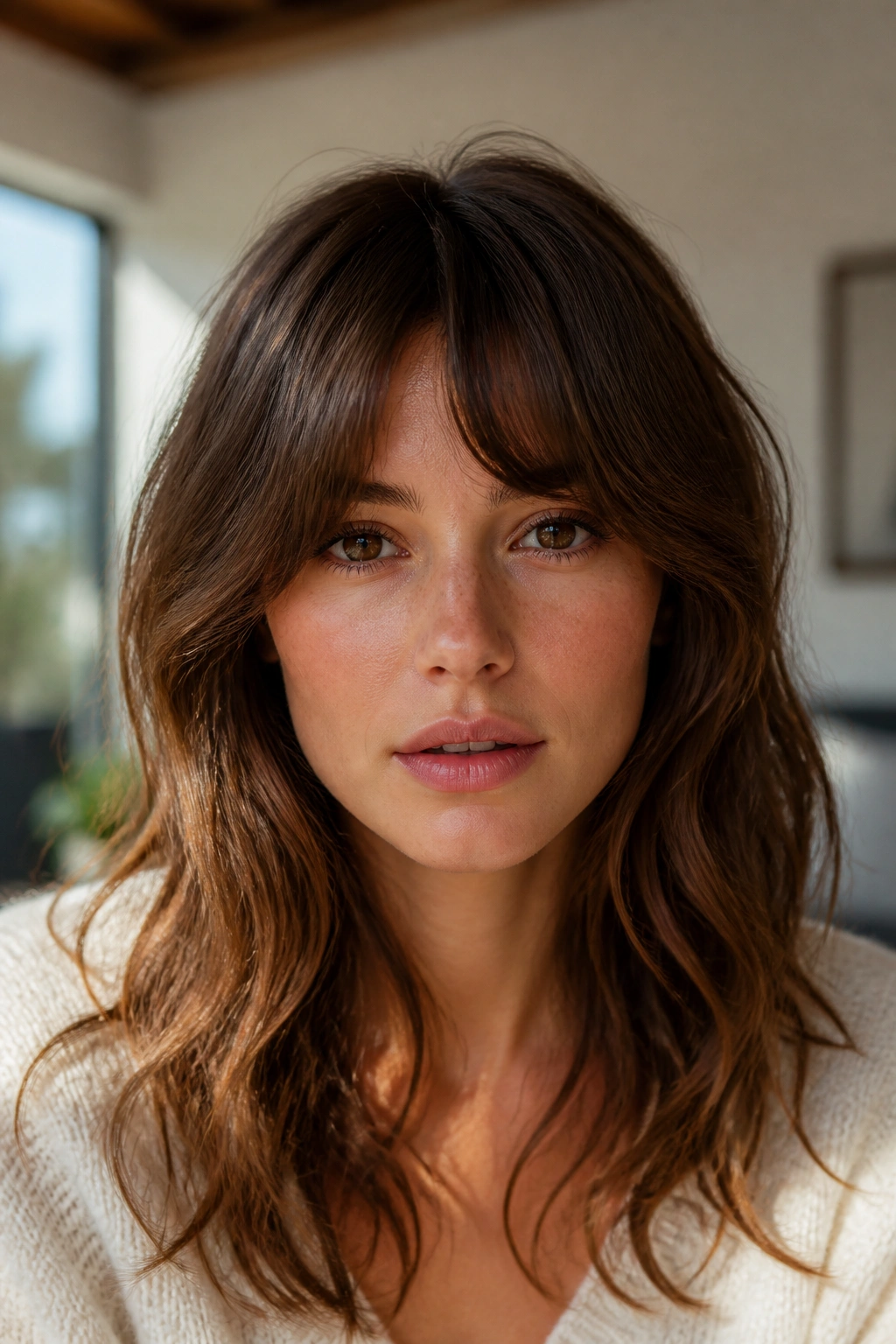
Some heart-shaped faces look better when the fringe curves instead of parts. Rounded wavy bangs do that beautifully.
The rounded line softens the forehead without creating a sharp center gap. It also gives a little echo to the natural curve of the face, which helps the top half feel less dominant. I’ve always thought this style looks especially good when the rest of the cut has some body through the sides, because the shape reads as deliberate rather than accidental.
Keep the center a touch longer than you think you need. That’s the part people usually shorten too much. The side pieces should arc down gently and stop before they crash into the cheekbone. If they end too abruptly, the whole thing turns choppy. If they’re too long, the fringe loses its purpose.
A medium-barrel curling iron can help set the curve, but don’t curl every hair the same direction. That makes the fringe look too neat, and neat is not what this style needs. A few bends, a little swing, and some separation at the ends are enough.
9. Long Blended Bangs That Melt Into Layers
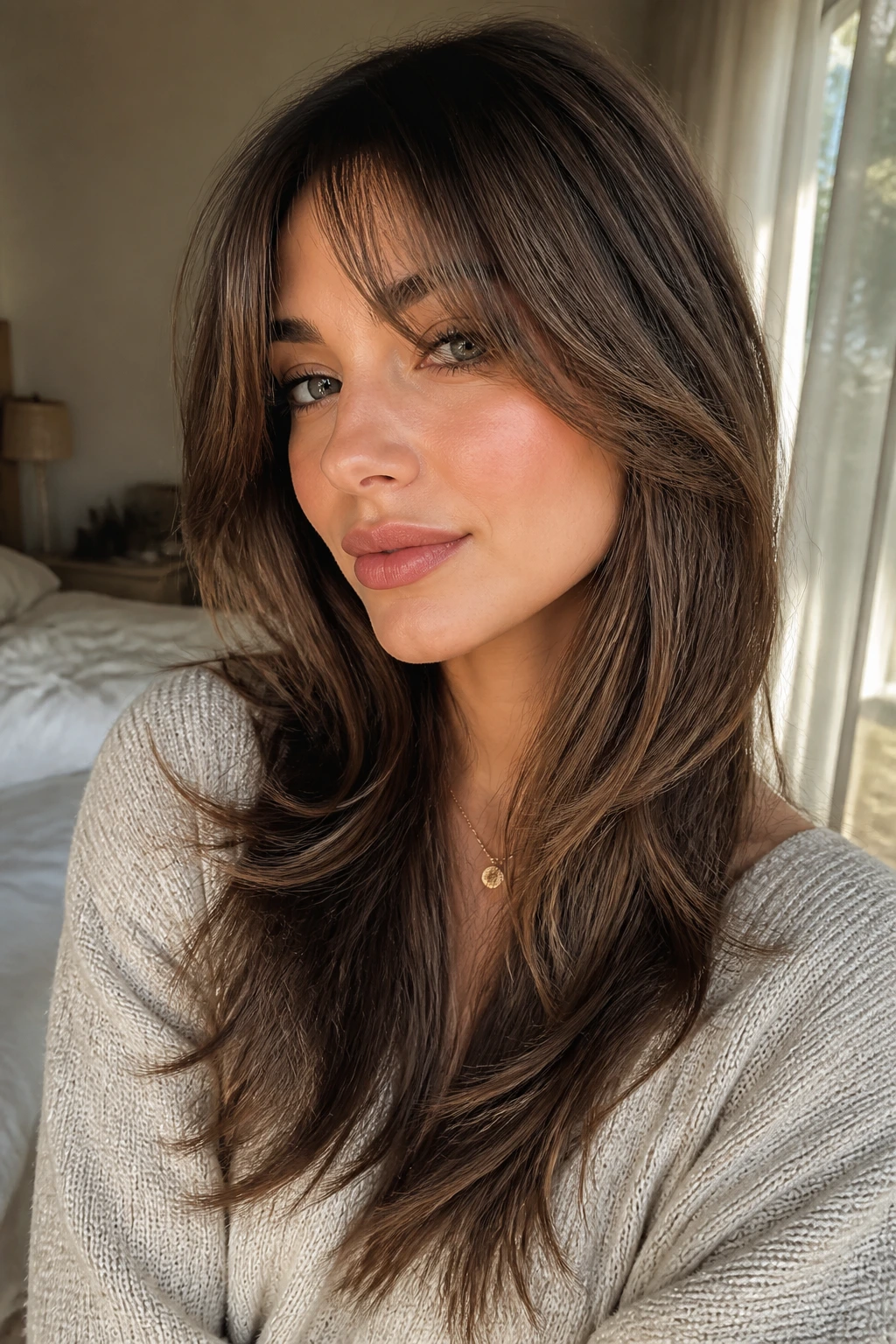
If you hate the feeling of a hard bang line, this is the one to bookmark. Long blended bangs don’t announce themselves.
They start near the brow or slightly below it, then disappear into the face-framing layers around the cheekbones and jaw. For a heart-shaped face, that gradual fade is useful because it keeps the forehead open while still softening the upper third of the face.
This style is especially kind to people who wear their hair up a lot. You can sweep the bangs to the side, tuck them back, or let them fall forward when you want more movement. There’s a nice flexibility built into the cut, and that flexibility is half the appeal.
How Long to Keep Them
The shortest point should be long enough to move with your eyes, not sit like a fixed strip across the forehead. The longest pieces should graze the cheekbone or even the top of the lip if you like a more dramatic blend.
- Shortest point: brow level
- Longest point: cheekbone to lip
- Best styling tool: small flat iron or medium round brush
- Best finish: soft, not sticky
This is a quiet style. That’s what makes it strong.
10. Airy Micro Curtain Bangs for Heart Face Shapes

Airy micro curtain bangs are a little shorter and lighter than the classic version, and that’s exactly why they can work on heart face shapes.
They open the forehead without giving you a thick curtain of hair to manage. The center stays very light, often just above the brows, while the outer pieces move outward and down in a barely-there sweep. The result feels fresh, but not precious.
This style needs a bit of confidence from the cut. If the center is too blunt, the whole thing turns choppy. If the outer corners are too short, you lose the softness that makes the shape flattering. I like them most when the ends are texturized enough to fall in a loose bend instead of a stiff arc.
They also suit people who like a little edge in their haircut but don’t want the forehead hidden. A heart-shaped face can handle some openness up top as long as there’s movement near the sides, and this style does that well. It’s a small shape with a big effect.
11. Split Fringe With Volume at the Sides

A split fringe is not quite the same thing as curtain bangs. It leans more on side volume, which gives the face a different feel.
Instead of opening evenly from the middle, the split can sit a little off-center and push the eye outward. That works well on a heart-shaped face because it balances a wider forehead without making the center of the face look narrow. The movement happens near the temples, where a little softness usually helps the most.
Unlike a center-parted curtain fringe, this shape feels a touch more directional. There’s a bit of sweep to it, and a bit of lift at the roots. That lift matters. Without it, the fringe lies flat and loses the airy look that makes it flattering.
I’d recommend this if you already like side parts but want something softer than a full swoop. Ask your stylist to leave more length at the outer edges than in the middle, then keep the center broken up rather than solid. The shape should feel like it’s moving away from the forehead, not camping there.
12. Grown-Out Baby Bangs With Texture

Grown-out baby bangs sound a little intimidating, and straight-across versions can be tricky on a heart-shaped face. Textured ones are a different story.
The softness is what saves them. Instead of a hard, short shelf across the forehead, you get little broken pieces that sit higher on the face and bend slightly as they dry. That keeps the look light, which matters when the forehead already has a strong presence.
This is not the haircut I’d hand to someone who hates styling. It needs a bit of attention. You’ll probably use a tiny flat iron or a mini round brush to redirect the ends, and you may have to fuss with a cowlick or two. Still, when it works, it gives the face a playful frame without swallowing the eyes.
I like it best with a messy bob or shaggy layers. The contrast keeps it from looking too severe. If the rest of the hair is sleek and the bangs are very short, the look can tilt sharp fast. Texture keeps it human.
13. French-Girl Bangs With a Loose Bend
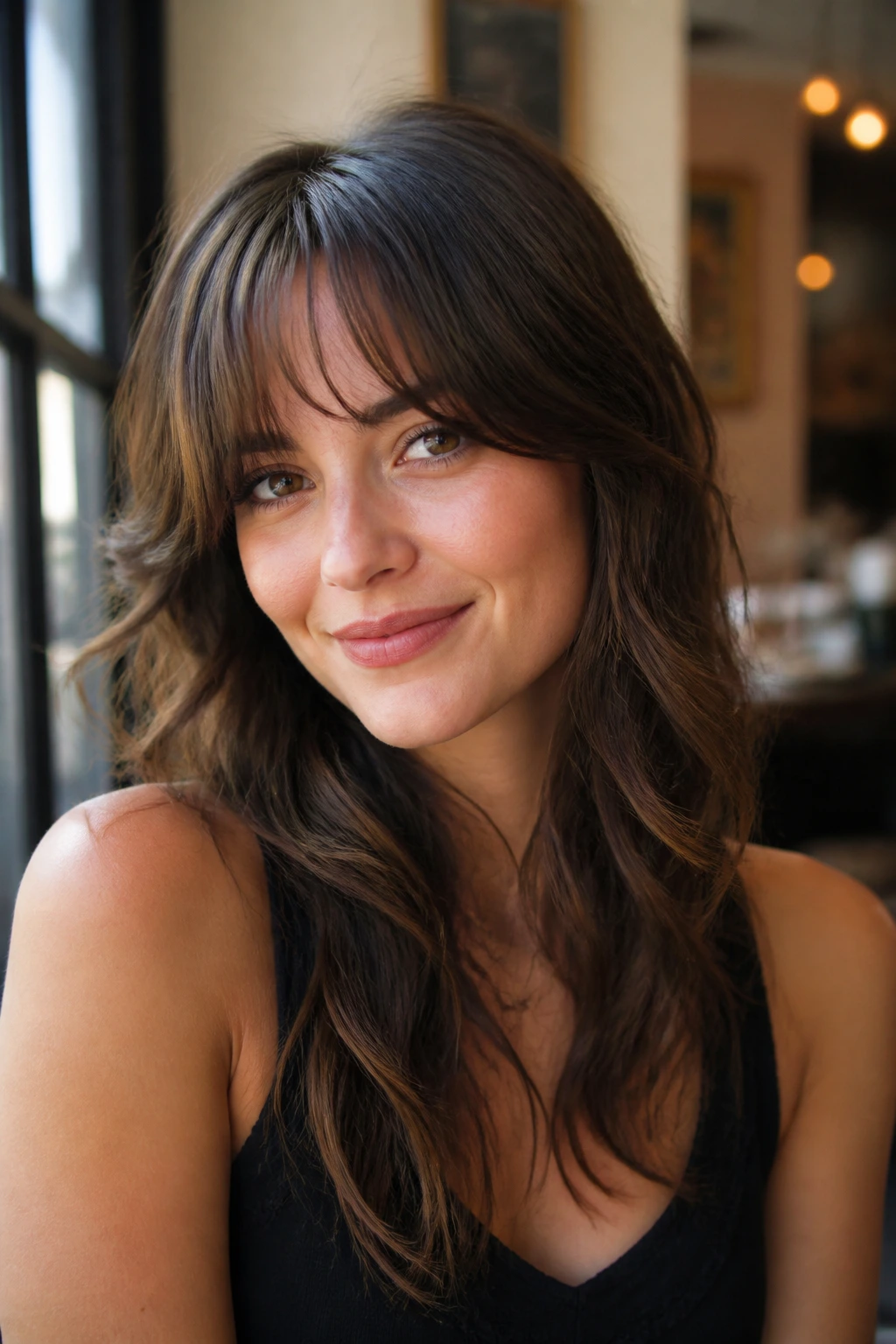
French-girl bangs are often sold as effortless, which is a slightly annoying word, but the style itself is useful. On a heart-shaped face, the loose bend and piecey finish can make the forehead look less dominant without hiding it.
The shape usually sits somewhere between a curtain bang and a wispy fringe. There’s a central softness, some movement at the sides, and a little imperfection in the finish. That last part matters. A fringe like this should not look ironed into place. It needs to move when you turn your head.
I prefer this on wavy hair because the natural bend makes the style look less forced. If your hair is straight, you can still get the effect, but you’ll need to shape it with a brush or a flat iron and then break it up with your fingers. A tiny bit of styling cream helps keep the strands separated without getting greasy.
The best version of this style sits just below the brows or skims them in the center, then softens at the edges. It’s easygoing, but not sloppy. That line is thin, and it’s where the haircut either works or doesn’t.
14. Cheekbone-Skimming Swoop Bangs
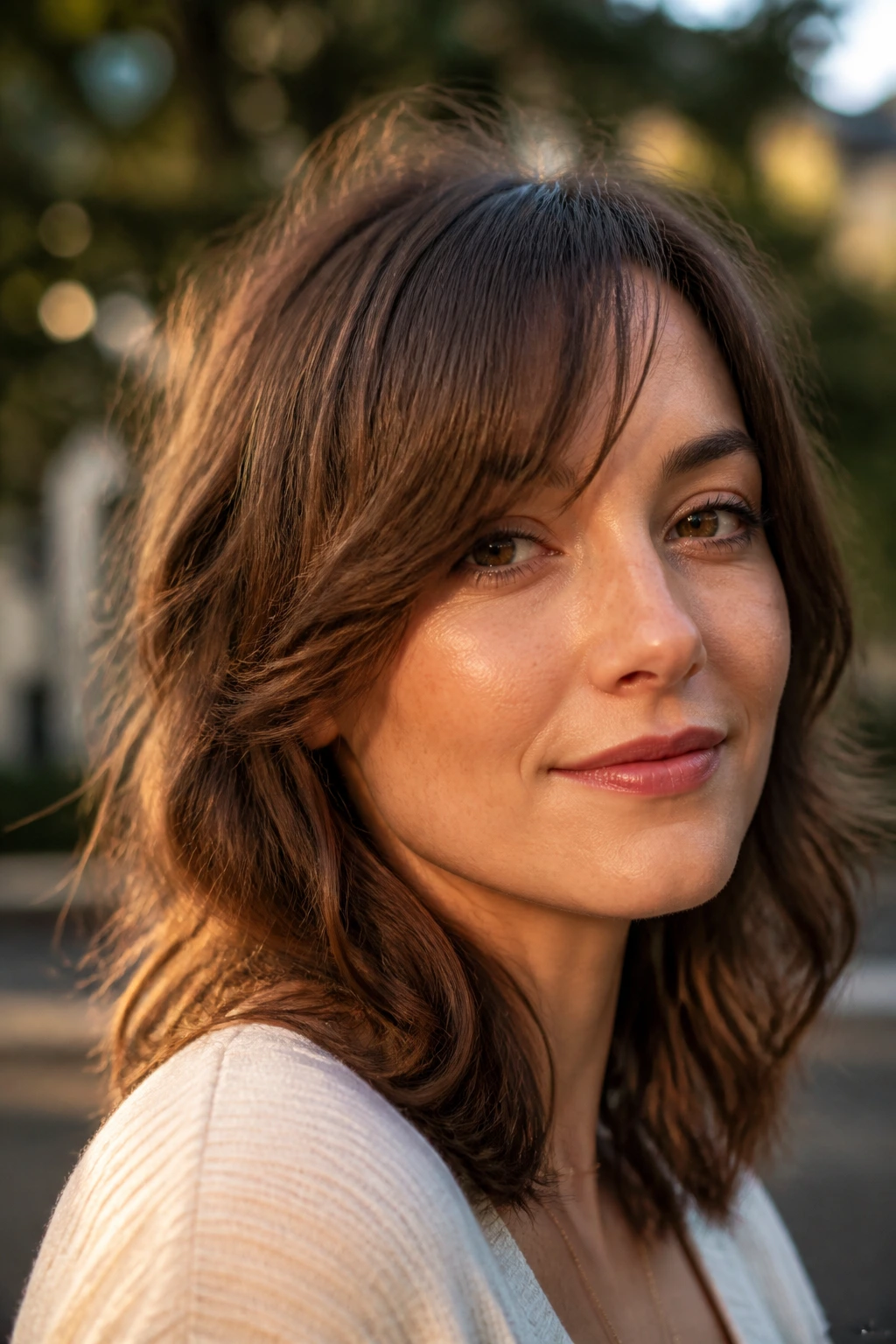
Want a fringe that actually makes the cheekbones work for you? Cheekbone-skimming swoop bangs do exactly that.
The sweep starts higher at one side of the forehead and curves across the face until it lands near the cheekbone. That diagonal line is useful on a heart shape because it pulls attention off the widest part of the forehead and toward the middle and lower parts of the face. It also gives the haircut a little motion, which softens the pointed chin.
Why the Cheekbone Mark Matters
The landing point changes everything. If the bang stops too high, it can feel unfinished. If it drops too low, it can crowd the face. The cheekbone is usually the sweet spot because it gives the sweep a clear destination.
- Best for medium to thick wavy hair
- Works well with a deep side part
- Ask for the longest piece to hit the top of the cheekbone
- Finish with a light mist of flexible hairspray
This style has a bit more drama than a plain side fringe, but not so much that it overpowers the face. That balance is what makes it stick.
15. Full Wavy Fringe That’s Broken Up, Not Heavy
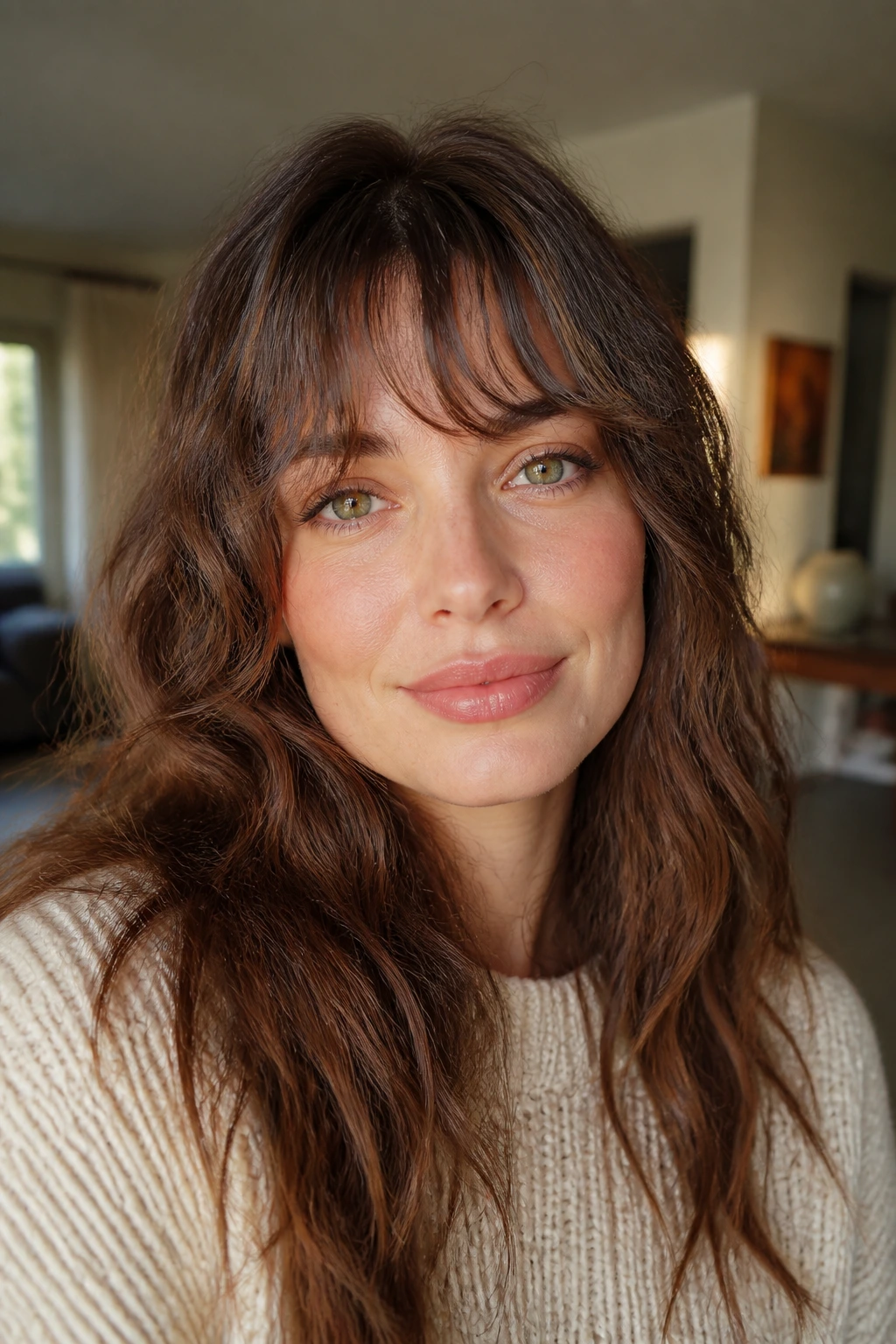
Yes, a fuller fringe can work on a heart face. The catch is that it has to be broken up, not heavy.
A solid block of bangs usually makes the forehead look bigger by contrast and can make the chin feel narrower. A wavy, piecey version fixes that by keeping gaps in the line and letting the texture do some of the visual work. You still get coverage, but the face can breathe.
This is the one I’d choose for thick hair that naturally holds a wave. The density gives the fringe substance, and the wave keeps it from turning into a blunt curtain. Ask for point-cut ends, a little extra softness near the temples, and enough length that the bangs can bend rather than stand up stiff. That last part is huge. Shorter isn’t automatically better.
I’d skip this if your hair is very fine and flat unless you’re willing to style it every day. On the right hair, though, it looks rich and relaxed at the same time. That’s a hard thing to pull off, and not many bang shapes manage it.
The Bottom Line
Heart-shaped faces tend to look best with bangs that move—not bangs that sit there and boss the forehead around. Soft waves, broken edges, and a little extra length at the sides do a lot of quiet work.
If you want the safest place to start, curtain bangs, side-swept bangs, and long blended fringe are the easiest bets. If you want more personality, bottleneck bangs, shag bangs, and cheekbone-skimming swoops give you that without flattening the face.
Bring photos that show both shape and texture. That part matters more than people think. One picture for the length, one for the finish, and a stylist who knows how to cut bangs dry if your hair has any wave at all—that combination usually gets you much closer to the result you actually want.
