



Cutting curtain bangs sounds easy until you stand in front of a mirror and realize one person’s soft frame is another person’s awkward shelf. The difference usually isn’t the stylist’s mood or the photo you brought in. It’s the hair itself — how dense it is, how fast it bends, how much it shrinks, and where it naturally wants to fall.
That’s why curtain bangs can look dreamy on straight hair, airy on wavy hair, and downright fussy on curls if the cut ignores texture. The best version is not the one that looks best on a mannequin head. It’s the one that works with your hair type, your part, and the amount of styling you’re willing to do on a normal morning.
I’ve always thought curtain bangs are at their best when they look deliberate but not overworked. A good pair should open at the center, skim the cheekbones or lips, and blend into the rest of the haircut instead of sitting on top of it like a small helmet. That balance is harder than it sounds, which is exactly why the details matter so much.
1. Soft Center-Part Curtain Bangs for Straight Hair

Straight hair loves a curtain bang that has a little bend and a little movement, not a hard line. If the section is cut too blunt, it can fall flat against the forehead and look like an unfinished fringe. If it’s cut too wispy, it disappears by noon.
Why This Shape Works
The trick is to keep the center a touch longer and let the sides open toward the cheekbones. Straight hair shows every line in the cut, so the shape has to be clean. A soft center part gives the face some lift without asking the hair to do anything dramatic.
What to Ask For
- A center section that starts narrow, then widens slightly as it hits the cheekbones
- The shortest point around the bridge of the nose or just below the brows
- A soft point cut through the ends, not a blunt chop
- Light face-framing layers that connect the bangs to the rest of the cut
Best tip: Blow-dry them forward first, then sweep them away from the face with a round brush. That little detour gives straight hair more bend than a direct side sweep ever will.
2. Bottleneck Curtain Bangs for Fine Hair

Why do bottleneck bangs work so well on fine hair? Because they cheat the eye a little. The center stays narrow and airy, while the sides widen just enough to create the feeling of fullness where you need it most.
Fine hair usually goes limp when it’s over-thinned, so this is not the place for aggressive texturizing. Keep the interior soft, but leave enough weight at the ends so the fringe doesn’t separate into see-through pieces the second humidity shows up. A tiny bit of density near the center makes the whole cut look more expensive, even if the rest of the hair is barely doing anything.
I like this shape for people who want bangs without committing to a heavy block across the forehead. It grows out cleanly, which matters if your hair lies close to the head and you hate constant touch-ups. The style looks best with a light mousse or root spray at the crown, then a quick lift with the dryer and fingers. Not a lot. Just enough to keep the front from melting into the skin by lunchtime.
3. Feathered Curtain Bangs for Thick Hair

Thick hair can wear a feathered curtain bang beautifully, but the cut has to remove bulk in the right places. If the stylist leaves the whole section too heavy, the fringe drops forward like a curtain rod with no drape. That is not the look.
What Makes It Different
The softest version starts with a fairly wide front section, then uses internal layering to break up the density. Point cutting helps. So does a little over-direction, where the sides are pulled slightly away from the face before they’re trimmed. The goal is movement, not emptiness.
Styling Notes
- Use a medium round brush, not a tiny one
- Dry the bangs side to side first, then center
- Keep the ends piecey with a pea-sized amount of styling cream
- Ask for the shortest point to stay below the brows if your hair puffs up when dry
Thick hair usually needs a stronger shape to keep curtain bangs visible. Feathering gives you that shape without making the front look blocky. And if your hair has a bit of wave, this version tends to fall into place with less daily fuss than a blunt bang ever will.
4. Long Curtain Bangs for Wavy Hair

A good wavy fringe already wants to move, so the cut should leave room for that motion. Long curtain bangs let the wave form its own bend instead of fighting it, which is why they often look better a little grown-out than freshly clipped short.
I’ve seen too many wavy bangs cut too high, only to spring up and sit awkwardly on the forehead. Leave them longer. Let the shortest point graze the nose or upper cheek, then let the outer corners fall into the rest of the layers. That extra length gives the wave something to curl around.
How to Wear It
You can air-dry these with a touch of mousse, then twist each side once while it’s damp so the shape settles in a soft curve. If you use a diffuser, keep the heat low and stop before the front goes puffy. Wavy hair does not need a lot of help here.
- Best with shoulder-length cuts and longer
- Looks strongest when the wave pattern is left intact
- Needs trimming every 6 to 8 weeks if you want the shape to stay open
- Works well with a light leave-in, not heavy oil
5. Blended Curtain Bangs for Curly Hair
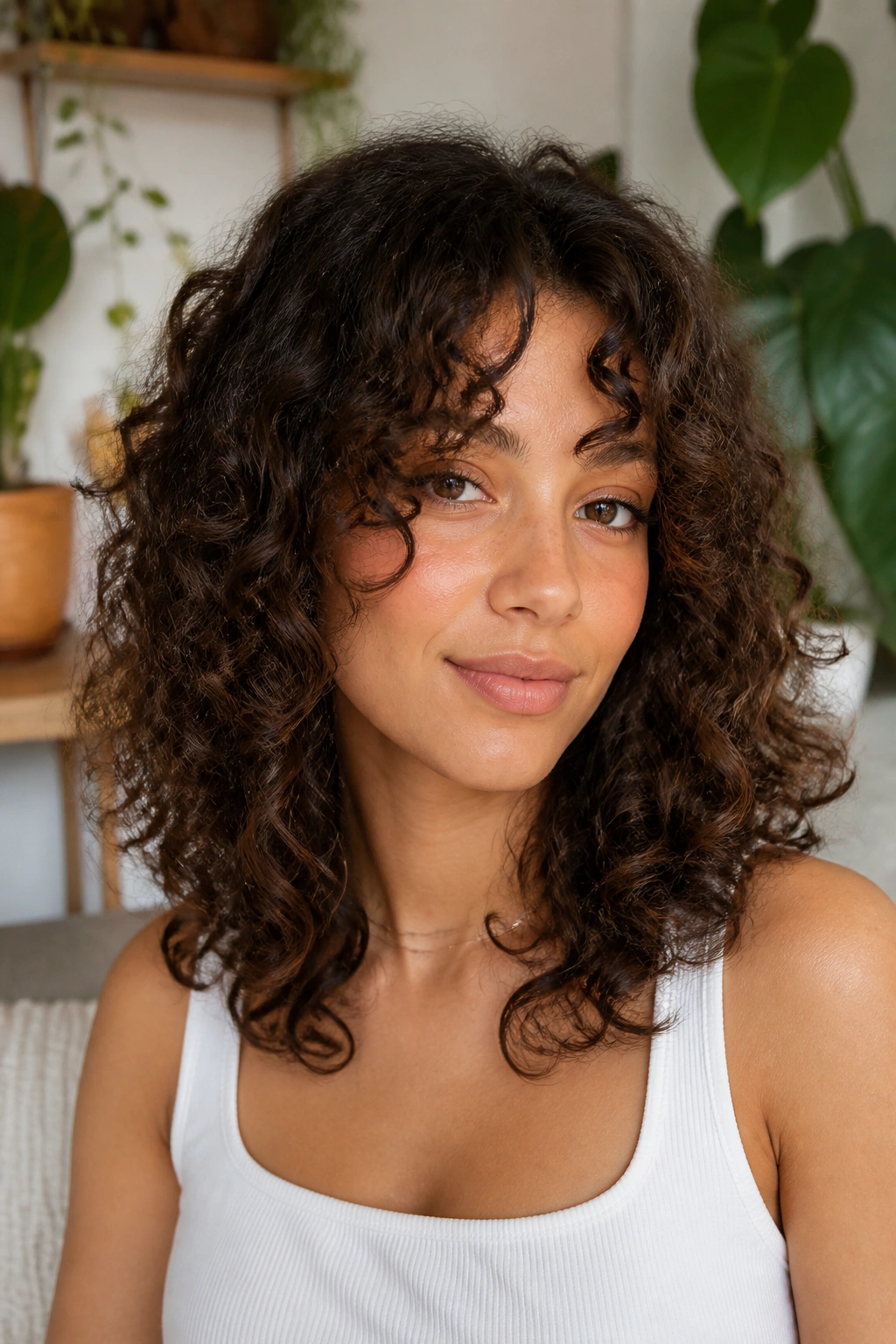
Curly hair shouldn’t be forced into a skinny, wispy curtain bang that sits apart from the rest of the head. That’s how you end up with a fringe that looks pasted on. The better move is a blended version that follows the curl pattern and lets the bang live inside the haircut.
Curly curtain bangs need length. More than most people expect. Once the curls spring up, a bang that looked long in the chair can land right where you want it. That’s normal. It’s also why dry cutting or at least dry-checking the shape matters so much with curls.
The best ones taper from the center outward and connect to the face-framing layers at the cheekbone. If the curls are tight, ask for a slightly looser opening in the middle so the fringe doesn’t puff into a solid wall. Keep styling simple: water, curl cream, then a little gel scrunched in at the ends. No brushing once it dries. Not unless you want frizz with opinions.
6. Air-Dry Curtain Bangs for Frizz-Prone Hair
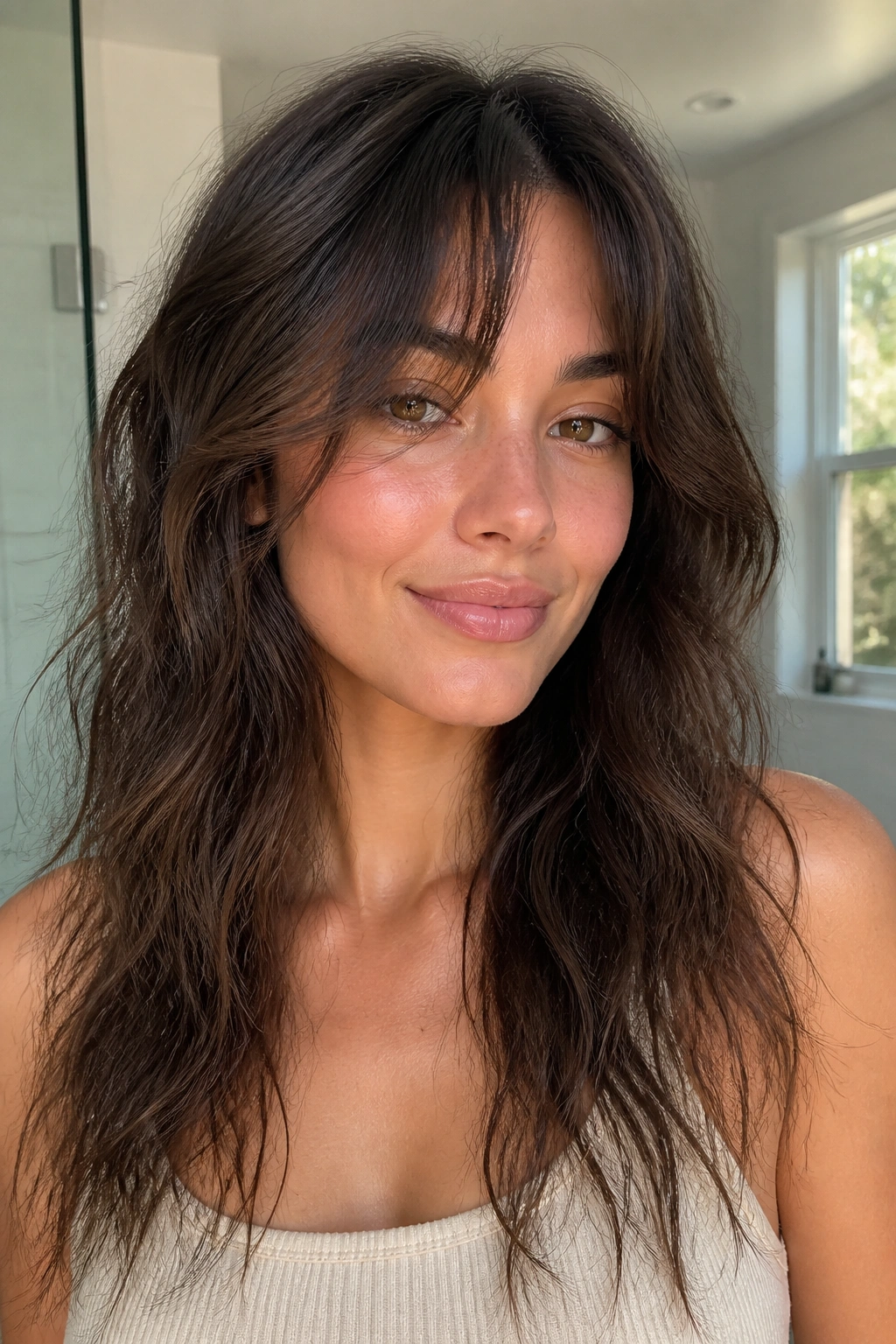
Frizz-prone hair needs a curtain bang that still looks good when styling goes sideways. That means soft layering, no razor-heavy ends, and a shape that doesn’t collapse if you skip the brush for one morning.
Unlike sleeker versions, this cut should be built to live with texture, not against it. A center part helps, but the real work is in the length and the edge softness. Keep the bang long enough to tuck into the rest of the hair if needed. That way, on a rough day, it reads as a face frame instead of a failed fringe.
I’d ask for a cut that leans slightly longer at the sides than you think you need. Frizz tends to shorten the shape visually. A light smoothing cream or silicone-based serum can help, but the point is not to iron the personality out of the hair. It’s to keep the front from exploding into a halo when the weather gets damp or the air is dry and weird.
7. Chin-Grazing Curtain Bangs for Shoulder-Length Hair
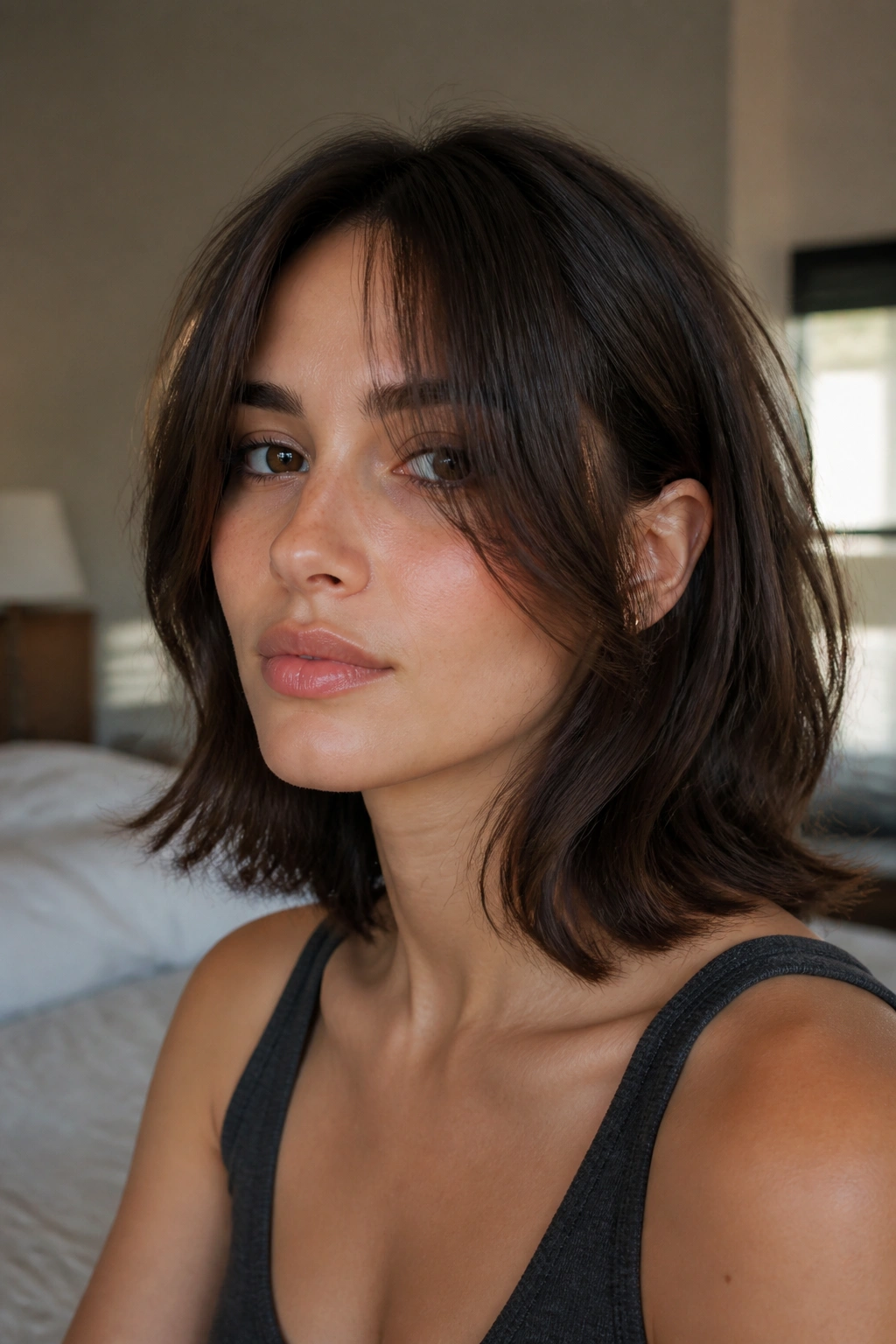
Shoulder-length hair sits in a strange middle zone. Too short for very long bangs to feel dramatic, too long for baby-fine fringe to matter much. Chin-grazing curtain bangs solve that problem by giving the front enough weight to stand on its own.
What to Watch For
If the cut lands around the jaw, it creates a nice diagonal that draws the eye downward and softens the edges of the face. That’s useful when the rest of the haircut is one length or only lightly layered. The bangs become the feature, not an afterthought.
Good Pairings
- A blunt lob with soft interior layers
- A collarbone cut with a center part
- Slightly flipped ends from a round brush or flat iron
- A loose bend through the middle for extra movement
There’s also a nice practical side to this length: it grows out without looking sloppy. That matters. Lots of fringe styles look polished only during the first two weeks, then turn into a maintenance chore. Chin-grazing curtain bangs stay readable much longer.
8. Piecey Curtain Bangs for Layered Hair
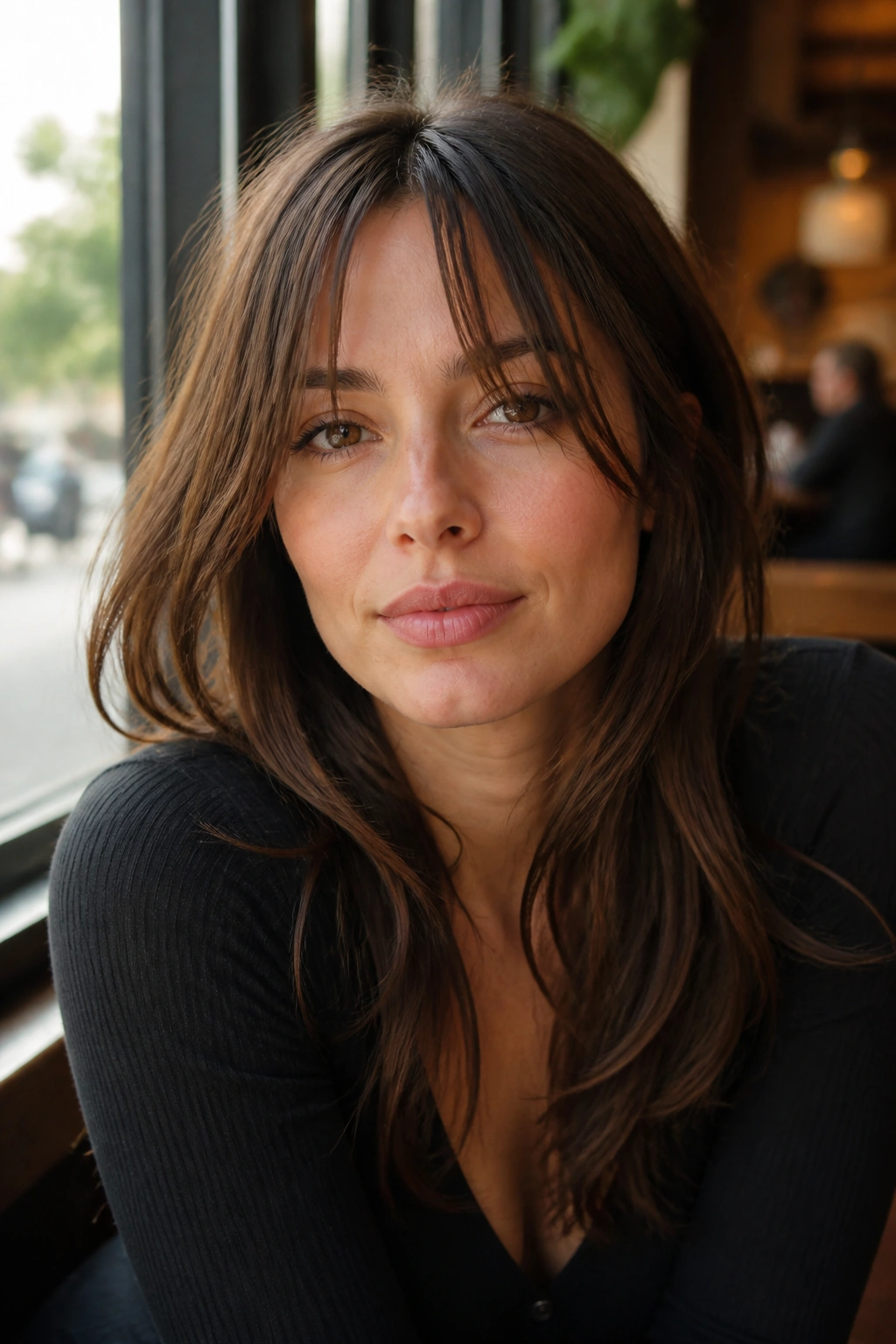
Piecey bangs belong with layered hair because they echo the shape already built into the cut. If the rest of the hair has movement, the fringe should join the conversation instead of sitting there like a separate event.
I like this version on hair that already has a few shorter internal layers around the crown or cheekbones. The front pieces can be separated into small sections, each with its own soft bend. That creates texture without making the bangs look thin. Weirdly, a little irregularity here looks more natural than a perfectly even sweep.
The styling is half the charm. A small flat iron bend on one or two pieces is enough. So is finger-twirling with a dab of cream. You don’t need every strand to cooperate. If anything, it looks better when one piece lands slightly higher and another brushes the lashes. That small messiness makes the cut feel lived-in instead of staged.
9. Sweeping Curtain Bangs for Short Hair

Short hair can carry curtain bangs better than people think, but the shape has to be sweeping rather than floppy. A cropped cut needs the front to move diagonally out from the center so it doesn’t fight the short length behind it.
What makes this work is contrast. The sides of the bang should be long enough to blend into the top layers, while the center stays light and open. If the fringe is too thick, it steals all the air from the haircut. If it’s too short, the whole thing turns into a shelf.
A blow-dryer nozzle and a small round brush help here, but you can also use a flat iron with a slight curve at the ends. The point is to keep the front soft and directional. Short hair likes intention. It does not like confusion.
10. Wispy Curtain Bangs for Thin Hair
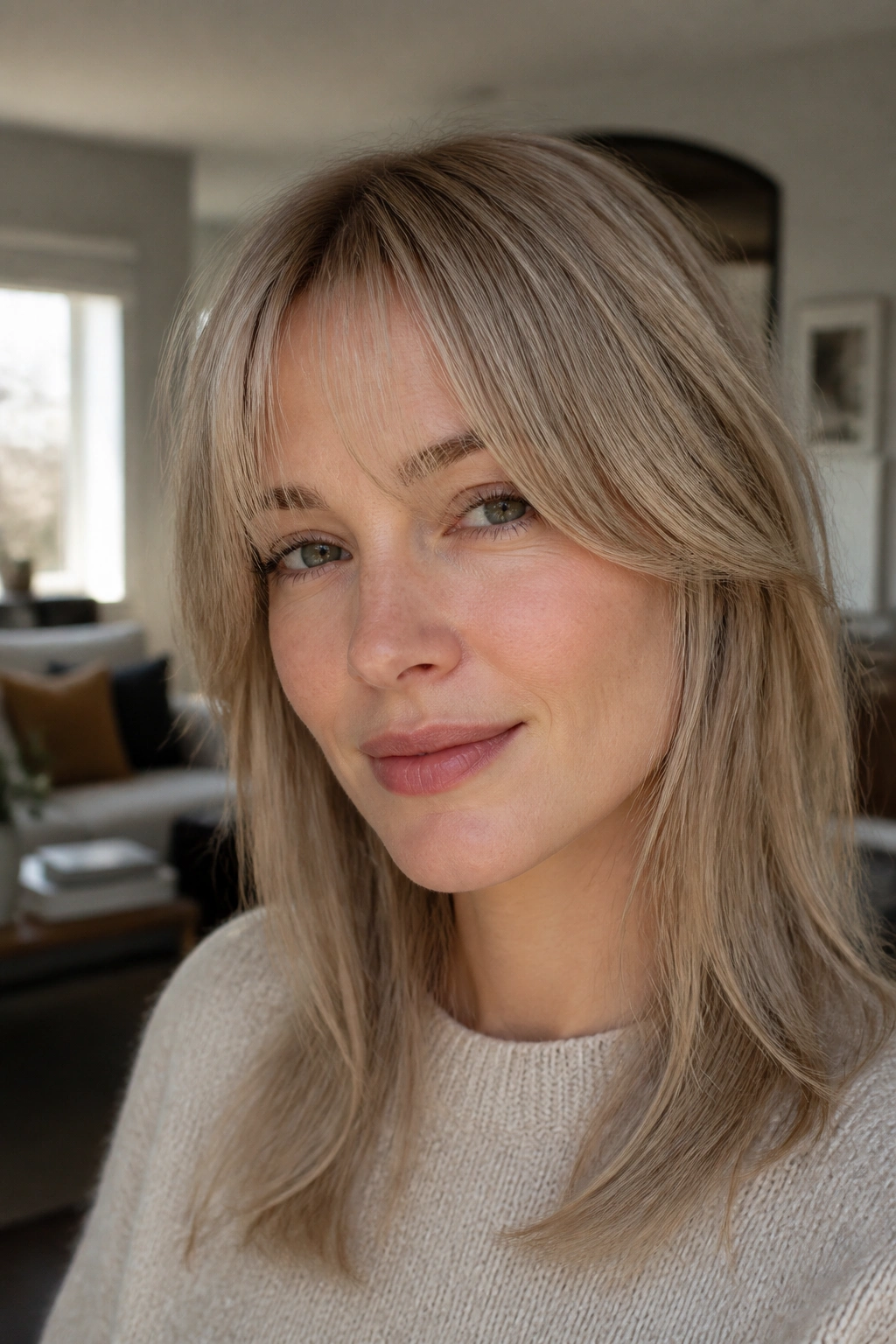
Thin hair needs a careful hand. Not a timid one — a careful one. There’s a difference. Wispy curtain bangs can work beautifully, but only if the cut keeps enough fringe density to look intentional instead of sparse.
The danger with thin hair is over-removing weight. Once the front gets too airy, it separates and exposes the scalp faster than most people expect. A narrow center section, soft graduation, and very light texturizing at the ends are usually enough. More than that and the bangs start to look tired before the rest of the hairstyle even has a chance.
How to Keep Them Full Enough
- Dry the roots first so the front doesn’t cling to the forehead
- Use a light volumizing spray, not a heavy cream
- Keep the center slightly longer than the sides
- Trim before they become too see-through at the corners
These bangs are best when they suggest softness instead of shouting for attention. Quiet hair has its own charm. You just have to avoid starving it.
11. Heavy Curtain Bangs for Dense Hair

Dense hair can take a heavier curtain bang and wear it well. In fact, it often needs one. A light, see-through fringe can look lost when the rest of the hair has serious volume, while a fuller bang helps the front feel anchored.
The key is balance. Heavy does not mean blunt. It means there’s enough hair in the fringe to hold a shape without splitting apart. A stylist usually needs to remove bulk inside the section while keeping the perimeter full enough to lie flat. That’s where point cutting and careful layering matter.
I’d pair this with longer side pieces that sweep into the cheekbones. If the bangs stop too abruptly, the thickness at the front feels like a wall. A good heavy curtain bang should open in the middle and then taper as it reaches the outer edges. It should feel strong, not stiff.
A round brush and a little tension while drying help the section settle. Without that, dense hair tends to flip where it wants, which is usually not where you want it.
12. Soft Curve Curtain Bangs for Coily Hair

Coily hair deserves curtain bangs that follow the curve of the texture instead of flattening it. A soft curve shape works because it respects shrinkage and keeps the front from turning into a short, uneven line after the curls settle.
This is one of those cuts where dryness matters more than most people realize. Coils can spring up several inches, and the shortest point at the center may land much higher once the hair is fully dry. That means the cut should be planned with the finished shape in mind, not the wet version in the chair.
The Shape to Ask For
Ask for longer sides that skim the cheekbones and a center that can still split open after shrinkage. The edges should be softly rounded, not chopped straight across. If you wear twist-outs, braid-outs, or stretched styles, tell the stylist that too. The bang should work with your styling routine, not against it.
A leave-in conditioner and a little cream are usually enough. This is not the place for a lot of brushing. Hands, a wide-tooth comb, and patience do the job better.
13. Brow-Skimming Curtain Bangs for Long Hair
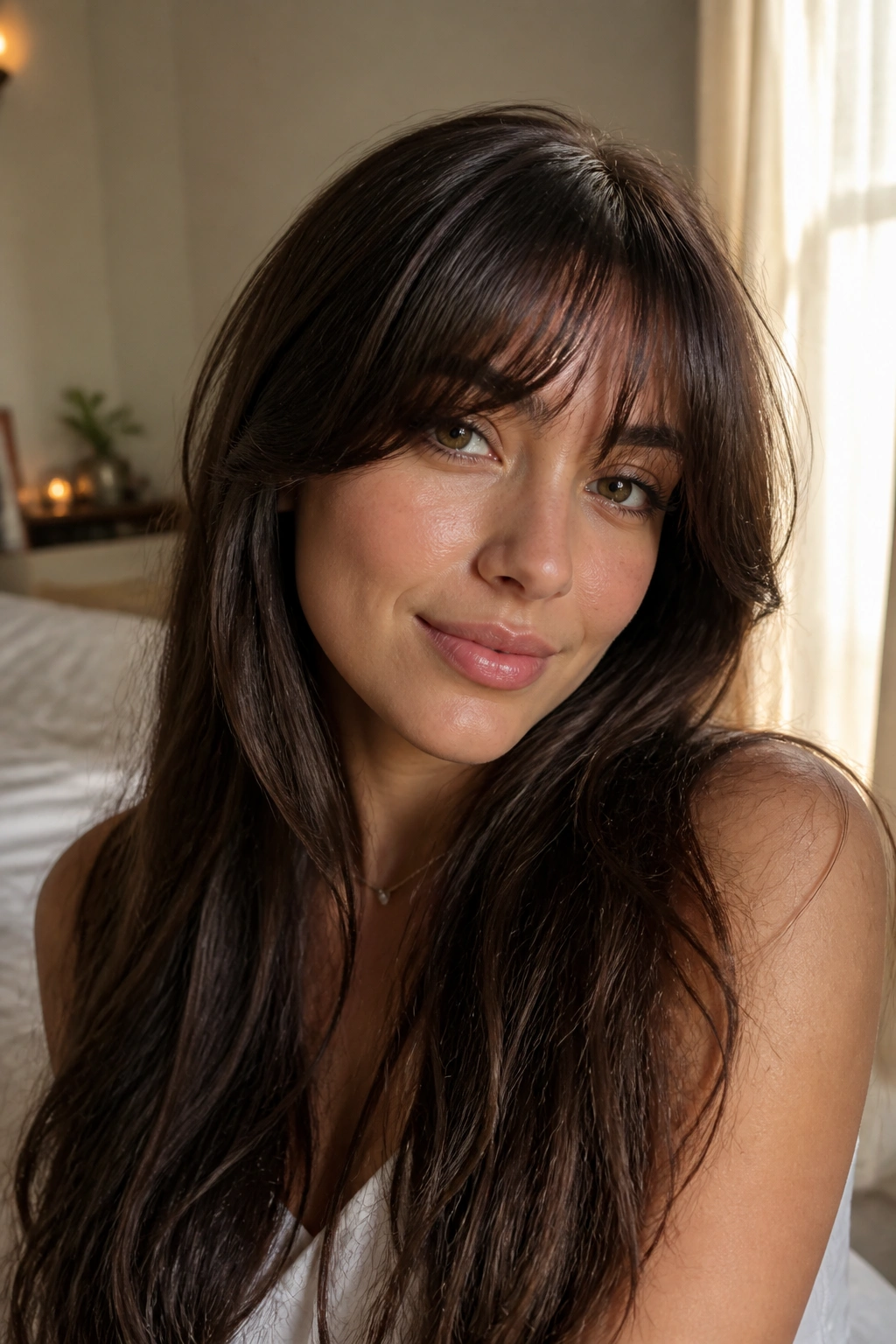
Long hair can carry a brow-skimming curtain bang without losing its length or its calm. That’s the appeal. You get the face frame, but the rest of the hair still does the heavy lifting.
The shape works best when the center just kisses the brows and the sides fall into long, sloping layers. That makes the haircut feel connected from top to bottom. If the bangs are too short, they end up competing with the length. If they’re too long, they vanish into the rest of the hair and stop reading as bangs at all.
Why This Version Ages Well
It grows out into cheekbone layers instead of a weird middle stage. That alone makes it easier to live with. Long hair already takes time to style, so the front should give you payoff without asking for a whole separate routine. A quick blow-dry with a medium brush usually does it. On straighter lengths, a soft bend at the ends keeps the bang from hanging lifelessly. On wavier lengths, a little natural movement is enough.
14. Angled Curtain Bangs for Round Faces

Can curtain bangs flatter a round face? Absolutely, if the angle is right. The cut should create vertical movement and keep the center opening narrow enough to elongate the face rather than widen it.
A rounded face usually benefits from bangs that start a little higher at the center and drop longer toward the jaw. That diagonal line pulls the eye down. It’s a small thing, but it changes the whole frame. If the bang is too short and too wide, it can make the face look broader. That’s the version to avoid.
I prefer this shape paired with soft layers that begin below the cheekbone. It keeps the hair from ballooning out near the cheeks, which is where a lot of round-face cuts go wrong. A side-swept finish on one or both sides can also help if you want a little more length through the face.
The styling should stay loose. Anything too round-brushed and puffed can work against the shape you just paid for.
15. Soft Shag Curtain Bangs for Natural Texture
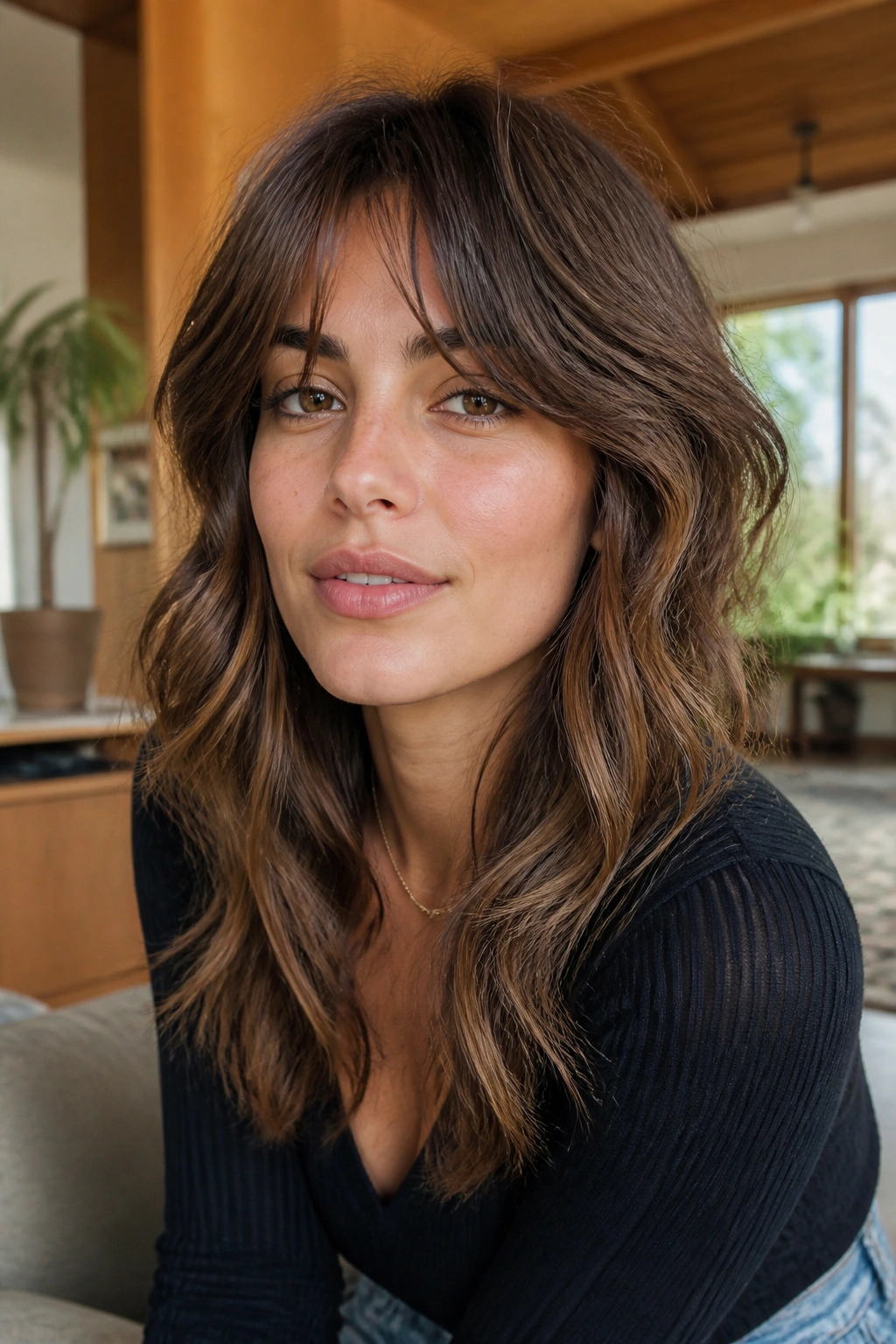
A shag and curtain bangs are old friends for a reason. The cut already wants movement, and the fringe fits into that motion instead of fighting it. For natural texture — waves, bends, curls, and all the little irregular bits in between — this is one of the easiest pairings to wear.
The best version is soft, not chopped to pieces. You want the bangs to blend into the shag layers around the face so they don’t sit like a separate front section. A little irregularity is fine. Encouragingly, it’s part of the charm. The bangs should look as if they were always meant to be there, even when the hair is tied back or air-dried with minimal effort.
How to Keep It from Looking Too Choppy
- Keep the ends feathered, not razor-thin
- Use a diffuser or air-dry with a light cream
- Let the bangs fall where the texture wants them
- Ask for face-framing pieces that connect to the rest of the shag
This is one of the few curtain bang styles that gets better when it isn’t trying to be perfect.
16. Side-Blended Curtain Bangs for Grow-Out Phases

Grow-out can be awkward, or it can be styled into something useful. Side-blended curtain bangs belong in the second camp. They’re the bridge between a fresh bang and a longer face frame, and they make that in-between stage feel intentional.
Unlike a crisp center curtain, this version leans slightly to one side while still keeping enough opening in the middle to soften the forehead. That makes it easier to live with if one side of your hair naturally falls heavier than the other. It also helps when you’re not ready for a full trim but want the front to stay visible.
The styling trick is small. Blow-dry the heavier side away from the face first, then let it settle into the natural part line. A tiny clamp clip at the crown can set the shape while you do makeup or get dressed. No drama. No hard line. Just a softer transition that buys you time between appointments.
17. Curved Curtain Bangs for Blowout Lovers

If you love a round-brush blowout, curved curtain bangs are the version that pays you back. They’re shaped to swoop away from the face with a smooth bend, which means the styling effort shows in the best possible way.
This cut tends to look especially good on medium to thick hair that holds a curve after heat styling. The center should open cleanly, then roll outward in one soft arc. Too much layering and the front can split into pieces. Too little and it droops. That’s a narrow lane, but it’s worth it if you enjoy a polished finish.
Good Tools for This Shape
- A medium round brush
- A blow-dryer with a concentrator nozzle
- A lightweight heat protectant
- A touch of finishing cream on the ends
This is not the lowest-maintenance option on the list. It is, however, one of the prettiest when done well. If you like the feeling of hair that swings instead of sits, this is your lane.
18. Low-Maintenance Curtain Bangs for Busy Mornings

Not everyone wants to wrestle with a round brush before coffee. Low-maintenance curtain bangs are for the person who wants shape without a daily production. The cut should be forgiving enough to air-dry, tuck behind the ears, or fall forward on its own and still look decent.
The secret is restraint. Keep the lines soft, leave the center a little longer, and avoid over-layering the sides. When bangs are too shredded, they need more styling, not less. A low-maintenance version should be broad enough to blend if you skip the blow-dryer, but shaped enough to separate from the rest of the hair when you do put in five minutes.
This style makes sense on almost any texture if the length is right. Straight hair can part and settle quickly. Wavy hair gets a nice bend from its own shape. Even thicker hair can wear it, as long as the front is not packed with too much density. The real win is that it looks fine on ordinary days, not only on the days you have time to fuss.
19. Face-Framing Curtain Bangs for Updos

Updos can look severe fast. Face-framing curtain bangs fix that with two soft pieces at the front and a center opening that keeps the style from feeling pulled back too tightly.
The beauty of this version is that it works even when the rest of the hair is in a bun, ponytail, or clipped twist. The bangs give the face some movement and keep the style from feeling like a gym hairstyle dressed up for dinner. If you wear your hair up a lot, the front pieces should be cut long enough to fall into the cheek and jaw area, not stop at the brows.
I like a slightly layered finish here so the pieces can be tucked, pinned, or left loose without looking awkward. A little bend with a flat iron is enough. You do not need a full blowout. In fact, too much volume at the front can compete with the clean line of the updo. Soft is better. So is a side pin if one piece decides to live its own life.
20. Micro-Layered Curtain Bangs for a Subtle Change

Micro-layered curtain bangs are for people who want the idea of bangs without a big personality shift. The layers are fine and close together, so the fringe softens the face without looking like a separate feature. It’s the least dramatic option here, which is exactly why I like it for cautious first-timers.
This version works especially well when you already have some face-framing pieces and just want the front to blend a little more cleanly. The center can stay long, the sides can feather into the hairline, and the whole thing reads as a small edit instead of a haircut with opinions. That makes it easier to grow out, too.
A straight-across blow-dry is enough on most days. If your hair bends easily, you may barely need tools at all. That’s the quiet charm of micro-layered curtain bangs: they change the shape of the haircut without asking you to reorganize your mornings.
If you’re nervous about committing, start here. It’s the safest doorway into curtain bangs, and a good stylist can nudge the shape bolder later if you want more face frame, more swing, or a little extra edge.
