



A round face does not need to be hidden; it needs angles. The best short hairstyles for round faces make the eye travel up, down, or diagonally instead of letting everything sit in one soft circle.
Flat at the sides? Bad trade.
That is why a pixie with a little crown lift can look sharper than a longer cut that hugs the cheeks. The same goes for bobs: a side part, an offset fringe, or a front corner that drops below the jaw can change the whole read of the face.
What usually backfires is symmetry. Hair that ends right at the fullest part of the cheeks, or a center part with zero height, can make the face feel wider even when the cut itself is neatly done. The useful cuts bend, stack, flip, or sweep. And the good ones still look easy when you’re running late, which matters more than people admit.
Fine hair, thick hair, curls, and coils all need a slightly different version of the same idea. Start with the cut that matches your texture, then tweak the part, the fringe, and the weight line so the shape works with your face instead of sitting on top of it.
1. Side-Swept Pixie for Round Faces

A side-swept pixie is one of those cuts that looks simple until you watch what it does to the face. The diagonal fringe breaks the roundness fast, and the extra height on top gives the illusion of length without adding bulk at the cheeks.
Why It Works
The trick is in the balance: short sides, longer top, and a fringe that moves across the forehead instead of stopping straight across it. A round face usually benefits from vertical lines, and this cut gives you that in a clean, low-maintenance way.
Ask for the top to stay around 3 to 5 inches, with the sides kept tight but not shaved unless you like a stronger edge. A deep side part helps too. It pushes the eye off center, which sounds small, but it changes everything.
- Keep the crown slightly lifted with a blow-dry or root spray.
- Use a matte paste, not a heavy cream, so the top stays airy.
- Let the fringe fall diagonally toward one brow.
- Ask for soft texturing at the ends, not choppy thinning.
Best move: blow-dry the roots in the opposite direction first, then sweep the hair over. That little flip gives the cut its shape.
2. Asymmetrical Bob That Drops Below the Jaw

An asymmetrical bob does the work for you. One side is longer, one side is shorter, and that uneven line pulls the face downward in a way a balanced bob never can.
The longer front corner should usually fall below the jawline, not right on the widest part of the cheek. That tiny difference matters. If both sides hit the same point, the cut can read boxy. If one side drops a bit farther, the face looks slimmer and more pointed.
This is a good cut if you like structure. It has a little attitude, but not in a loud way. Straight hair shows the line best, though soft waves can make it feel more relaxed. A center part is not the only option here, either. A slight side part keeps the diagonal shape alive.
I like this shape for people who want a short haircut that still feels polished. It does not collapse into fluff at the sides, and it does not ask for fancy styling every morning. A quick pass with a flat iron or a round brush is usually enough.
3. Chin-Length Bob for Round Faces
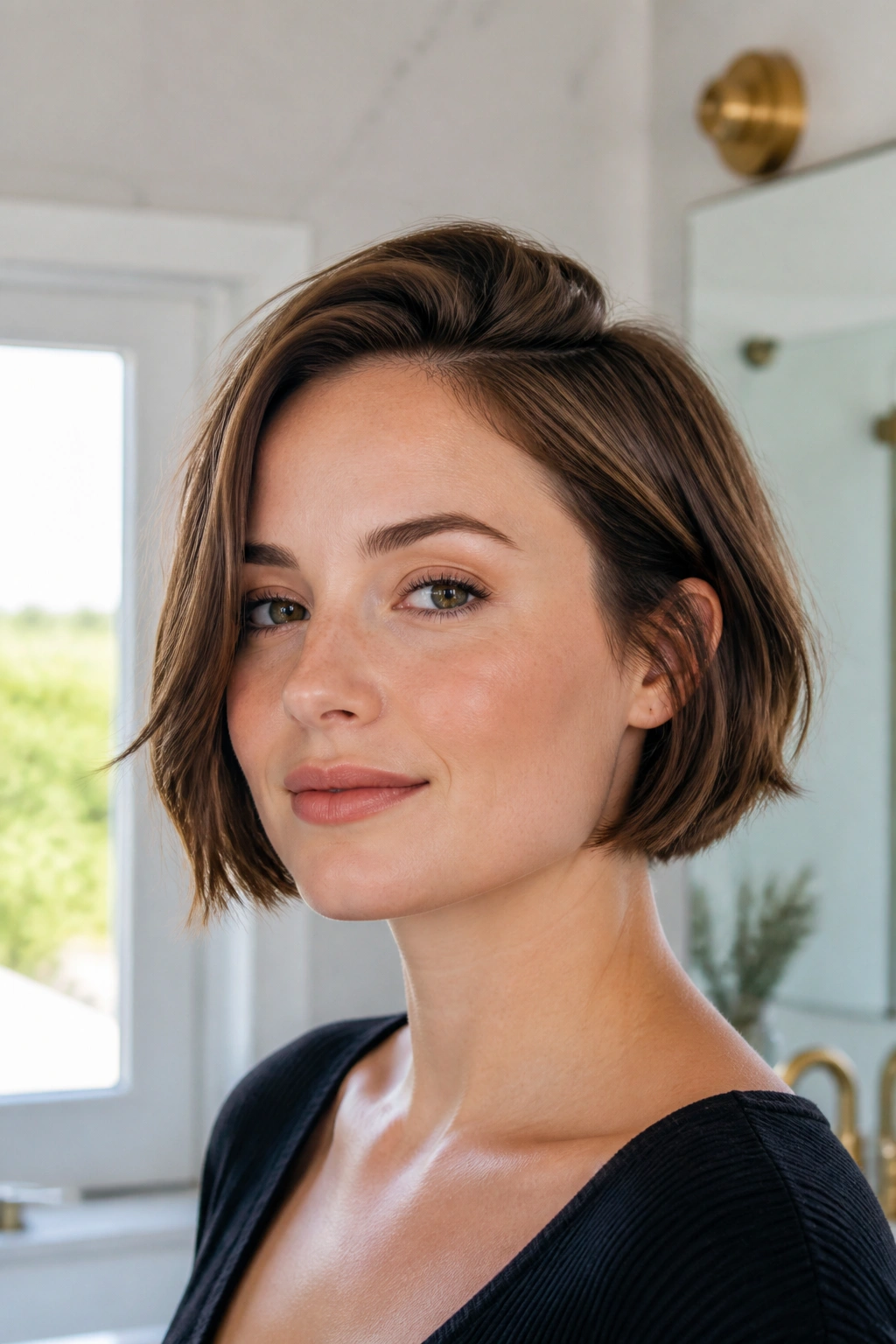
Why does a chin-length bob sometimes look sharper than a pixie? Because the length can be placed with more intent. When the ends hover at the chin or just below it, the cut creates a clean line under the face instead of adding width at the cheeks.
The part matters more than people think. A deep side part pushes volume up and away from the center of the face, which helps the whole shape feel longer. If the bob sits too evenly on both sides, it can flatten the effect and make the cut feel too polite. Polite is not always flattering.
How to Style It
Use a 1-inch curling iron or a flat iron to bend the mid-lengths only. Leave the ends a little straighter so the bob does not turn into a puffy ball. That bent-not-curled finish looks modern and keeps the line crisp.
If your hair is fine, a lightweight mousse at the roots can help the shape hold. If it’s thick, ask for a little internal layering so the ends do not stack up around the jaw.
A chin-length bob like this is one of the easiest short hairstyles for round faces when you want movement without losing structure. It feels controlled, but not severe.
4. Cropped Shag With Piecey Layers

If your hair balloons at the sides, a cropped shag can calm that down faster than a one-length cut. The layers break up the width, and the piecey finish keeps the whole shape from sitting like a helmet.
This cut is especially good for wavy hair. The texture wants to move anyway, so the shag gives it a place to go. Shorter layers around the crown add lift, while the front pieces stay a little longer to frame the face in a softer line. That combination is what keeps a round face from looking even rounder.
- Ask for the shortest layers near the crown, not right at the cheeks.
- Keep the front pieces long enough to graze the mouth or chin.
- Use mousse or sea-salt spray on damp hair.
- Scrunch with your hands, then diffuse on low heat.
The biggest mistake here is over-thinning. A shag should look broken up, not frayed. If the ends are stripped too much, the cut loses its shape and starts to look tired fast. A little grit is good. Too much is not.
5. Bixie Cut With Soft, Tapered Ends
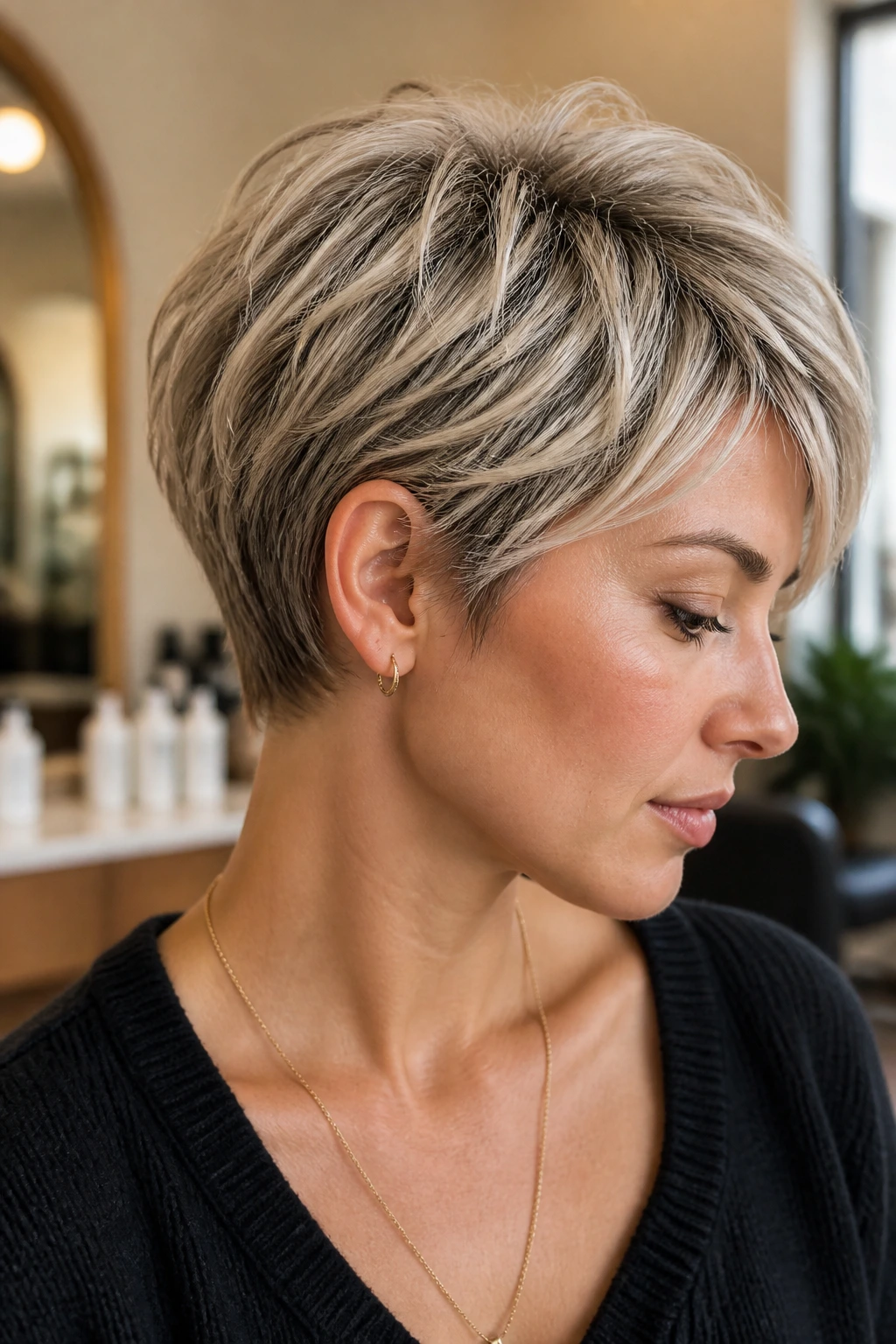
The bixie sits in the sweet spot between a bob and a pixie, and on round faces that in-between length can be the most forgiving of all. It has enough shape to feel like a real haircut, but not so much length that it starts hugging the sides of the face.
What makes it useful is the softness. The nape stays shorter, the top carries a bit more length, and the sides taper instead of puffing out. That taper matters. It gives the face a cleaner edge and stops the cut from turning into one big circle.
A bixie also has a nice practical side. It can look neat with a quick finger-dry, but it still has enough texture to look interesting when it’s a little messy. I’d choose this for someone who wants a low-fuss cut that still feels current in shape, not just short for the sake of being short.
A small amount of styling cream is usually enough. Work it through damp hair, then twist a few front pieces between your fingers as they dry. Done right, the cut looks soft around the cheeks and slightly lifted at the crown. That lift is doing more work than you might guess.
6. Stacked Bob With Lift in the Back
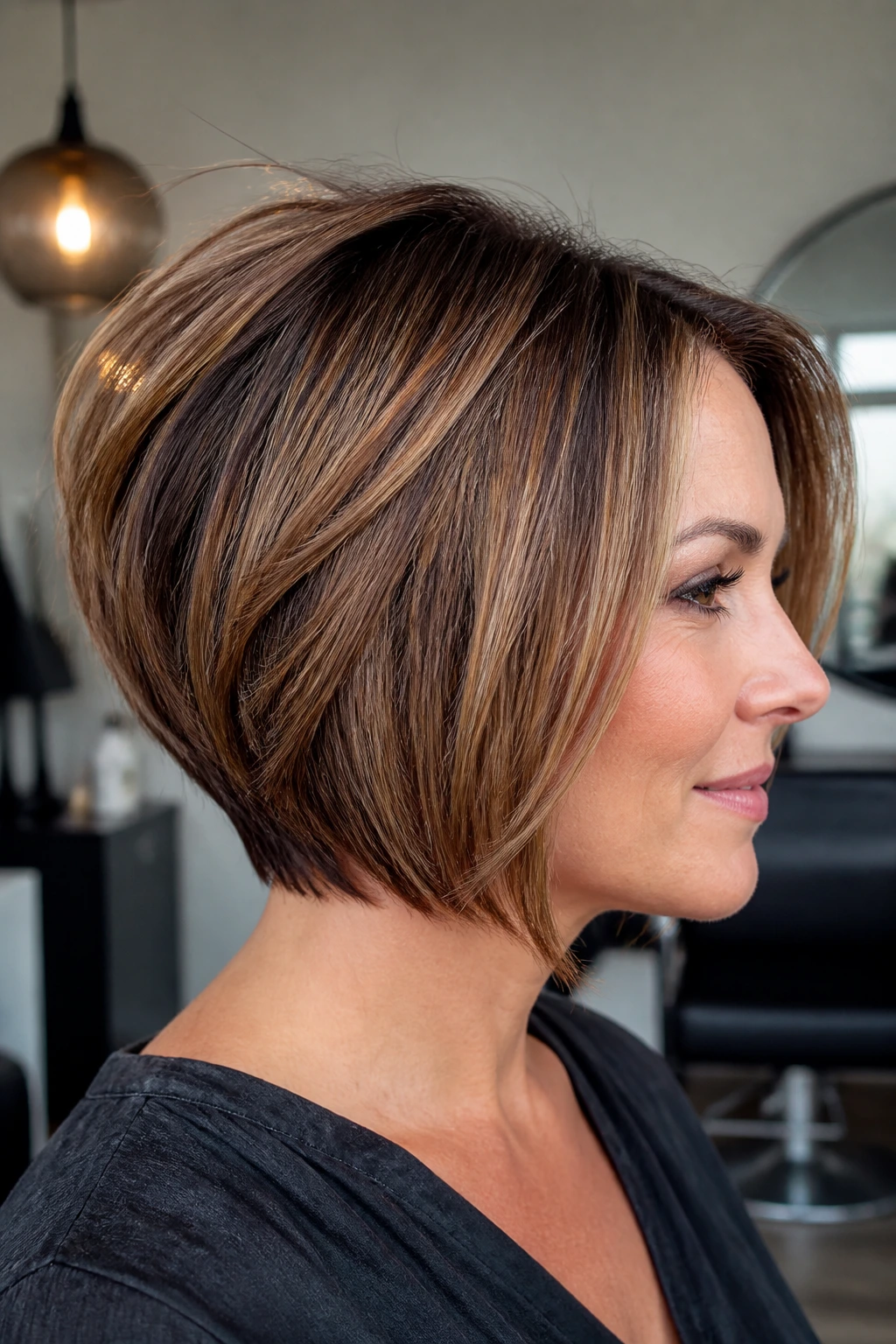
Unlike a blunt bob, a stacked bob builds height where round faces usually need it most: the back of the crown. That little rise creates a longer profile and keeps the cut from sitting flat against the head.
The back is cut with graduated layers, so each section sits a touch shorter than the one below it. The front stays longer and softer, which keeps the jaw from feeling boxed in. This is one of those styles that looks plain in a salon chair and noticeably better once it’s blown out properly.
What to Ask For
- A shorter nape with visible stacking through the back.
- Front pieces that sit 1 to 2 inches longer than the back.
- Soft corners near the cheek, not blunt ends that stop hard.
- Enough internal weight removal that the back lifts, but does not puff.
A round brush helps here. Pull the crown up while drying and direct the ends inward just enough to curve, not curl. That shape gives the bob a clean line from the side, which is where round faces often benefit most.
This cut is especially good for straight or slightly wavy hair. It has structure, and structure is usually the friend of a round face.
7. French Bob With Curtain Bangs

Can a French bob work on a round face? Yes — if the bangs are long enough to split and the cut sits with a little air around the jaw. Too short, and it can turn boxy. Done right, though, it has a sharp little swing to it.
The curtain bangs are the part that earns their keep. They should start around the brow line and open toward the cheekbone, not sit like a shelf across the forehead. That opening creates a vertical path down the face, which is exactly what you want when the face shape is soft and full.
A French bob also likes a bit of natural bend. You do not need perfect blowouts here. A little wave at the ends makes the cut feel less rigid and keeps it from reading too blunt. If your hair is straight, a quick tuck behind the ears on one side helps break the symmetry.
Small Styling Detail That Matters
Keep the perimeter at or just below the cheekbone, not right at the widest part of the cheeks. That tiny shift is the difference between chic and puffy.
A light texture spray at the ends is enough. Anything heavier can make the bangs collapse, and once that happens, the shape gets lost fast.
8. Layered Wedge Cut
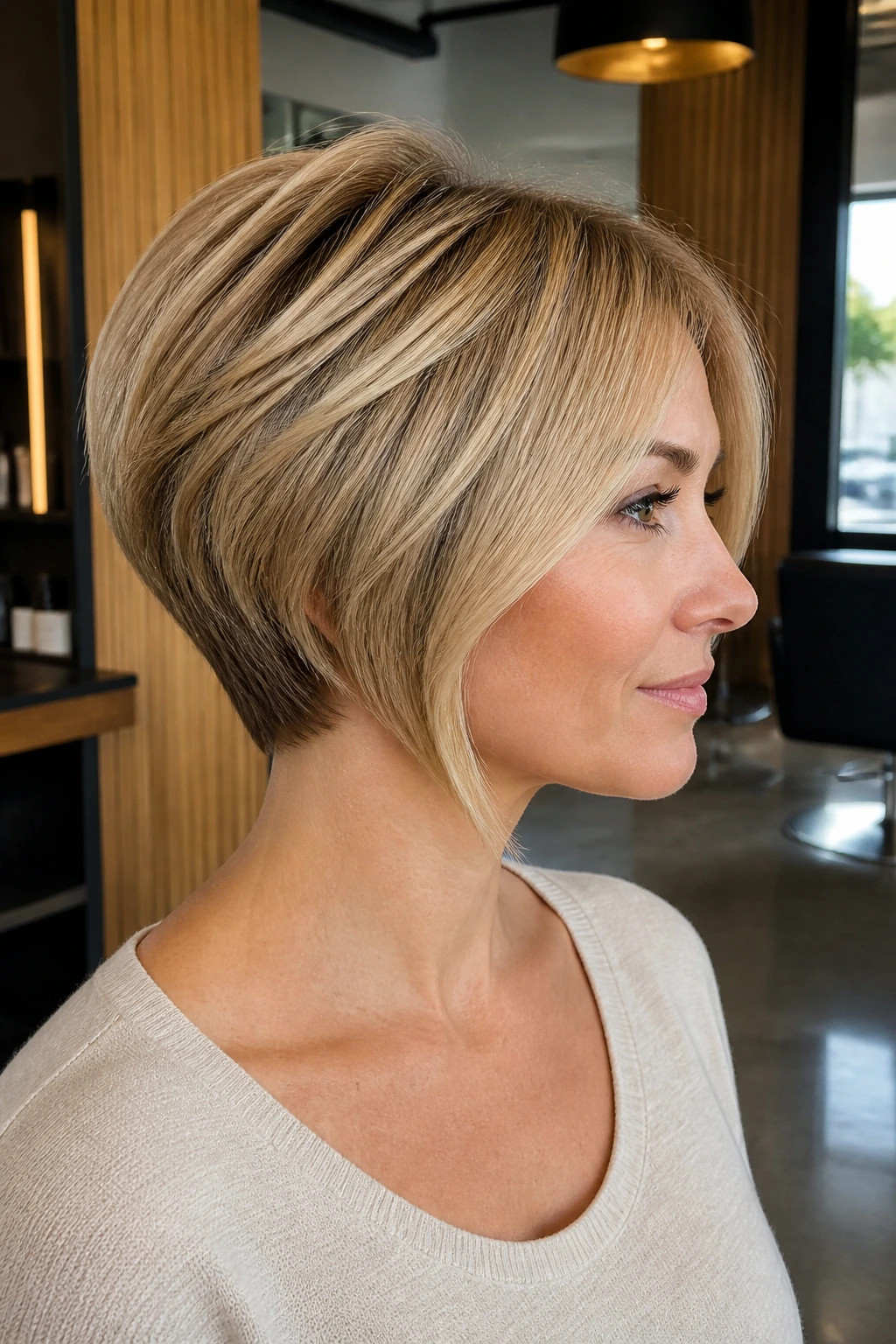
The wedge cut has a bad reputation only when it’s cut too hard. Soften the graduation, keep the back neat, and it becomes one of the smartest short hairstyles for round faces.
What you want is a shorter nape with a gentle rise through the crown and a longer front line that angles forward. That diagonal shape draws the face downward. It also gives the illusion of a slimmer jaw because the eye keeps moving instead of stopping on one wide point.
This cut is made for people who like a neat shape without too much daily fuss. It dries quickly, it holds its form, and it does not need a lot of product. A small amount of styling cream or lightweight mousse is usually enough.
Ask your stylist to avoid a hard shelf in the back. That’s the mistake that makes wedge cuts feel dated. A softer stack looks fresher and lets the cut move with your head instead of sitting like a fixed shape.
If you like clean lines and quick mornings, this one deserves a serious look.
9. Undercut Pixie for Thick Hair
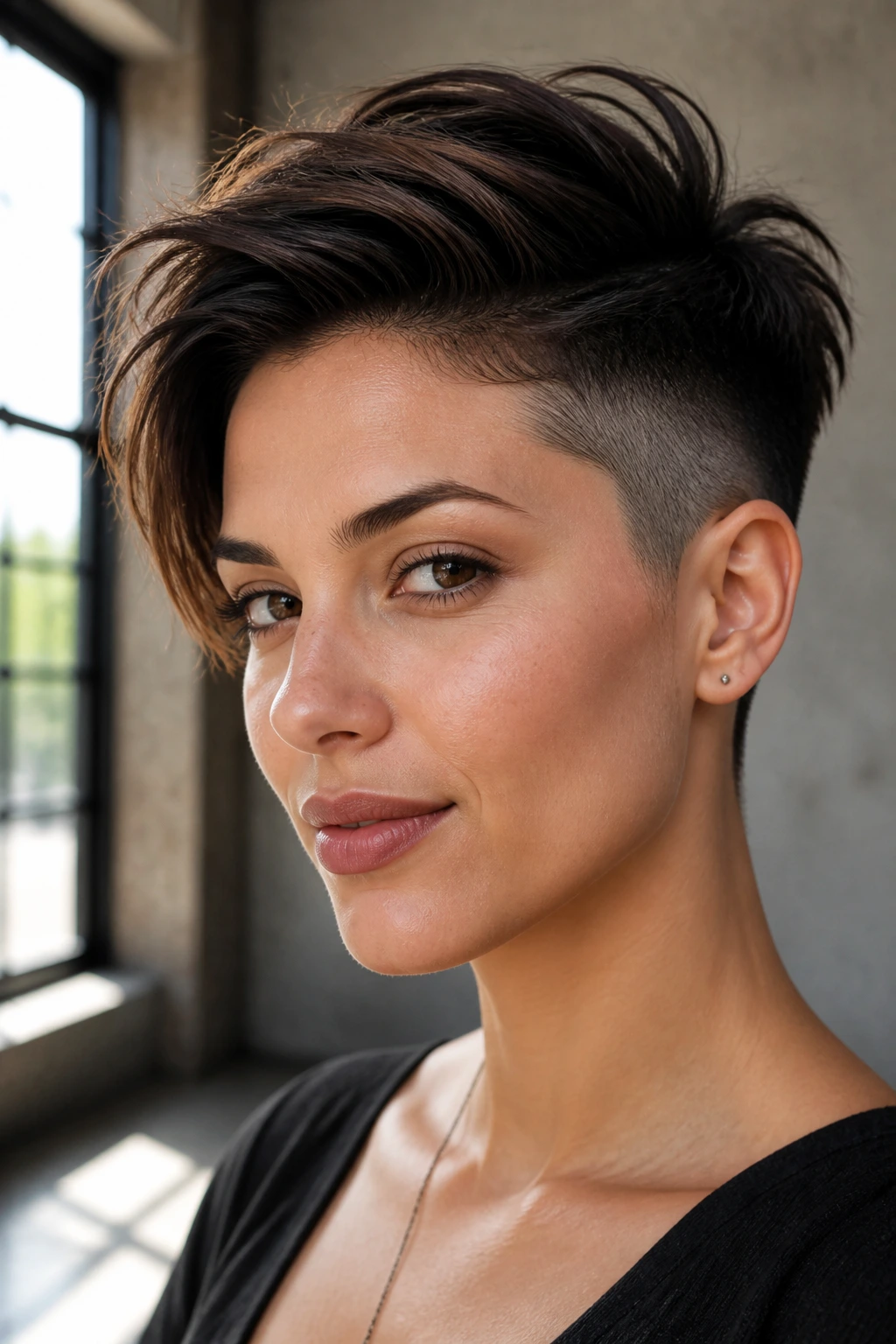
Thick hair and a round face can fight each other unless you remove bulk in the right places. An undercut pixie does exactly that. It takes weight out of the sides and nape, then leaves the top long enough to sweep, spike, or tuck.
That top length is important. If you shave the whole thing down too evenly, the cut loses the length that helps a round face look longer. Keep the crown around 4 to 6 inches if your hair density allows it. The side sections can be much shorter, especially if your hair grows wide at the temples.
A hidden undercut is often the smartest version. It keeps the outline clean without making the whole cut look extreme. You get the benefit of less bulk, but the style still reads as wearable.
- Best for hair that swells at the sides.
- Helpful if your hair takes a long time to dry.
- Good if you wear glasses, since the cut keeps the area around the ears neat.
- Needs regular cleanup on the shaved areas so the shape stays crisp.
Use a cream, paste, or light wax, but not all three. Too much product makes thick hair separate in bulky chunks, and that can drag the whole style down.
10. Blunt Bob With a Long Side Fringe

A blunt bob can work, but not the dead-straight version that ends right at the widest part of the face. The useful version keeps the line clean and lets the fringe do the softening.
The long side fringe is the key. It should start somewhere near the temple and sweep down toward the cheekbone. That diagonal break keeps the cut from feeling too square, which is a common problem with blunt bobs on round faces. The fringe should move, not sit like a curtain.
This look is best on straight hair or hair that can be smoothed easily. You want the perimeter to feel controlled. Not stiff. Controlled. If the ends are too wispy, the blunt effect disappears, and the whole cut can lose its shape.
A flat iron pass on the front sections can sharpen the line fast. Then tuck one side behind the ear. That small move changes the balance and reveals more face, which is the whole point. I also like this cut for someone who wants a polished look without a lot of layers. Sometimes the cleanest answer is the right one.
11. Feathered Crop With Wispy Ends
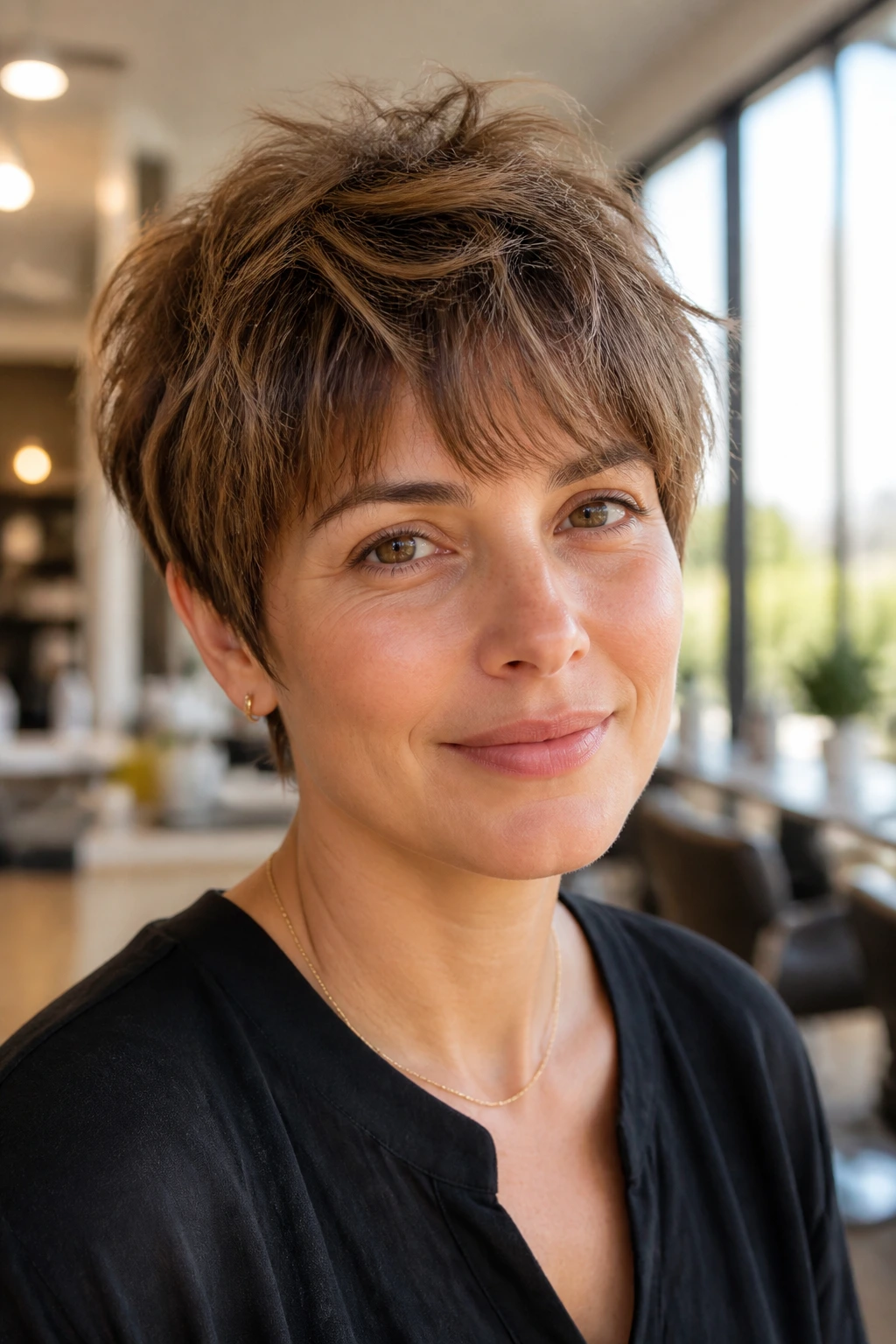
The cut that looks light in motion can look flat if the ends are too blunt, so feathering matters here. A feathered crop breaks up the outline and keeps the hair from hanging in one heavy band around the face.
What Feathering Actually Changes
It changes the weight line. Instead of ending all at once, the hair tapers in small, soft pieces. That taper keeps the cheeks from looking boxed in and gives the crown a bit more lift.
This style is especially handy if your hair is fine to medium and you want movement without a lot of bulk. It also works well if you wear glasses, because the wispy edges keep the frame and the hair from competing with each other.
A few practical notes:
- Ask for point cutting at the ends, not aggressive thinning.
- Keep some length through the top so the crop does not collapse.
- Use a small amount of light mousse or styling milk.
- Blow-dry with fingers first, then shape the front with a brush if needed.
One warning: if your hair is very curly or frizz-prone, too much feathering can make the surface look fuzzy. In that case, ask for softer, longer layers instead of lots of short broken pieces. Same idea. Less frizz.
12. Curly Bob for Round Faces
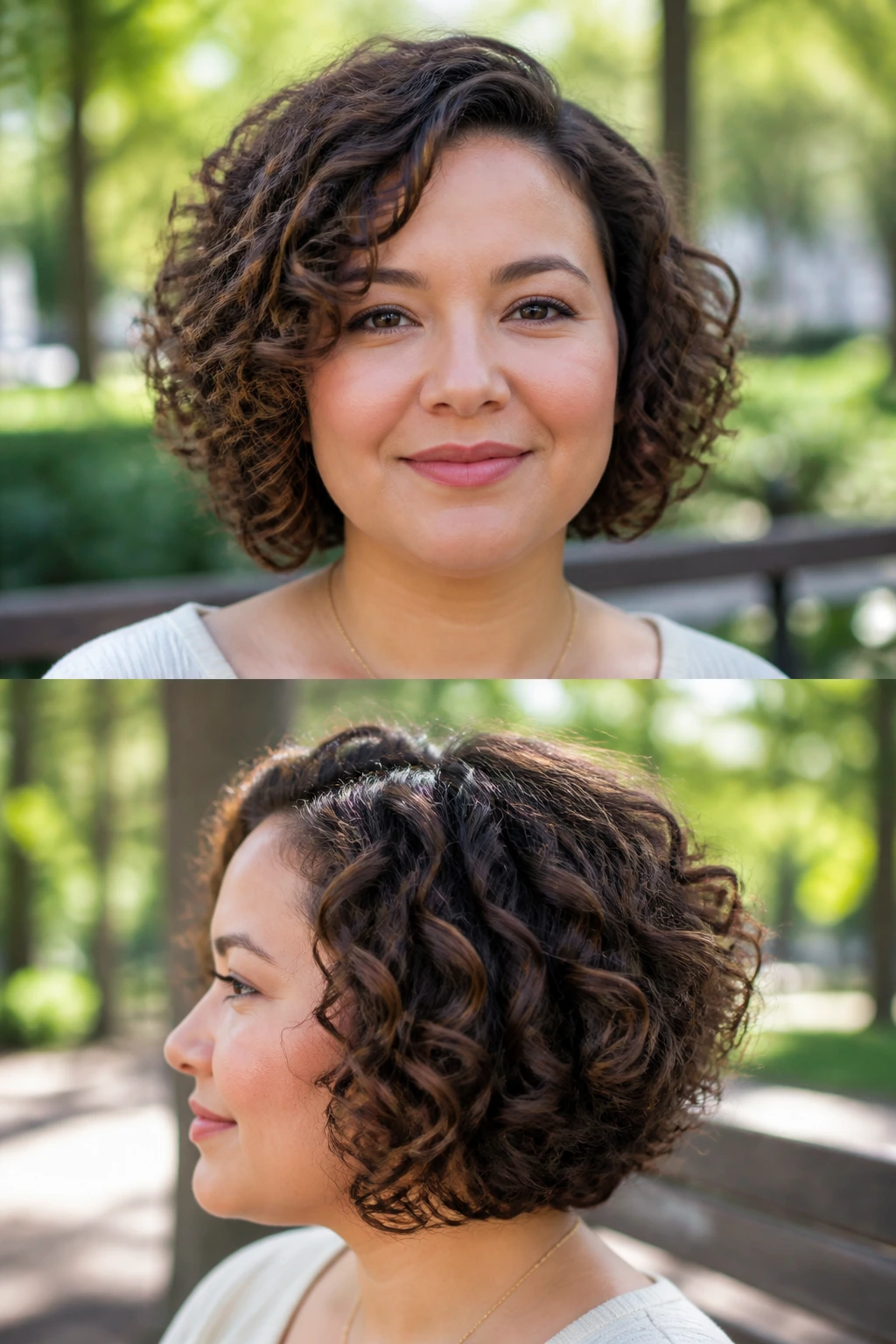
Curly hair needs a different rulebook, doesn’t it? The shape should follow the curls, not fight them. A curly bob for round faces works when the cut gives the curls room to stack upward and drop below the widest part of the cheeks.
That means the curl pattern has to be respected. If you cut curly hair too short around the sides, it can puff outward and make the face feel wider. Better to keep the length a little below the jaw and place the shortest face-framing pieces near the chin or slightly lower. That way the curls frame the face instead of hugging the cheeks.
How to Style It
Cut it dry, or at least dry enough that the curl pattern is honest. Wet curly cuts can fool you into trimming too much.
Use gel or curl cream on soaking-wet hair, then scrunch upward with a microfiber towel. Diffuse on low heat if you need speed. Do not rake through it once it starts drying. That usually creates frizz at the exact spot you want cleanest.
A side part can help too, especially if one side tends to puff more than the other. The asymmetry is useful, and it looks less rigid than a center part on a round face. Curly bobs can be soft, fun, and very flattering when the shape is placed carefully.
13. Tapered Natural Crop for Coils
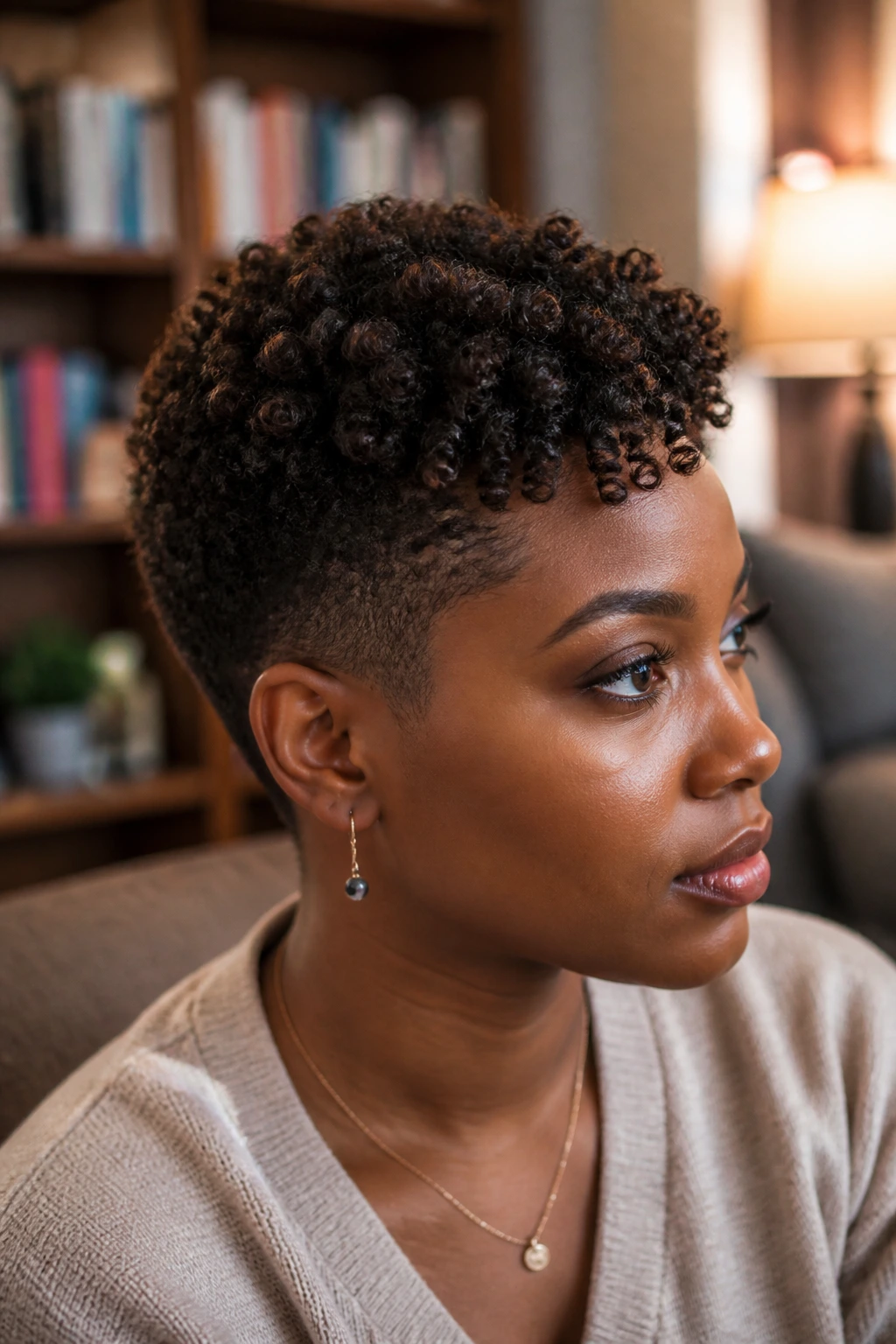
If you wear coils or a tight curl pattern, a tapered natural crop gives you shape without adding width at the temples. The sides and back stay short, and the top keeps enough length to show off the curl pattern properly.
That taper matters because it changes the outline. Instead of creating a round halo all the way around the head, the style narrows at the sides and builds upward. Round faces need that lift. They need the eye to travel up, not just side to side.
This cut can be shaped in a few different ways. Some people like a crisp edge-up and a neat line around the hairline. Others prefer a softer finish with more texture on top. Both work. The difference is how sharp you want the final look to feel.
A little curl sponge, twist cream, or leave-in conditioner usually does the trick on the top. If your curls are dense, ask the stylist to leave enough length on top for shrinkage. That part gets missed all the time, and then the crop ends up shorter than anyone expected.
It’s a strong choice if you want clean sides, easy upkeep, and a shape that looks deliberate from every angle.
14. Short Wolf Cut With Soft Length on Top
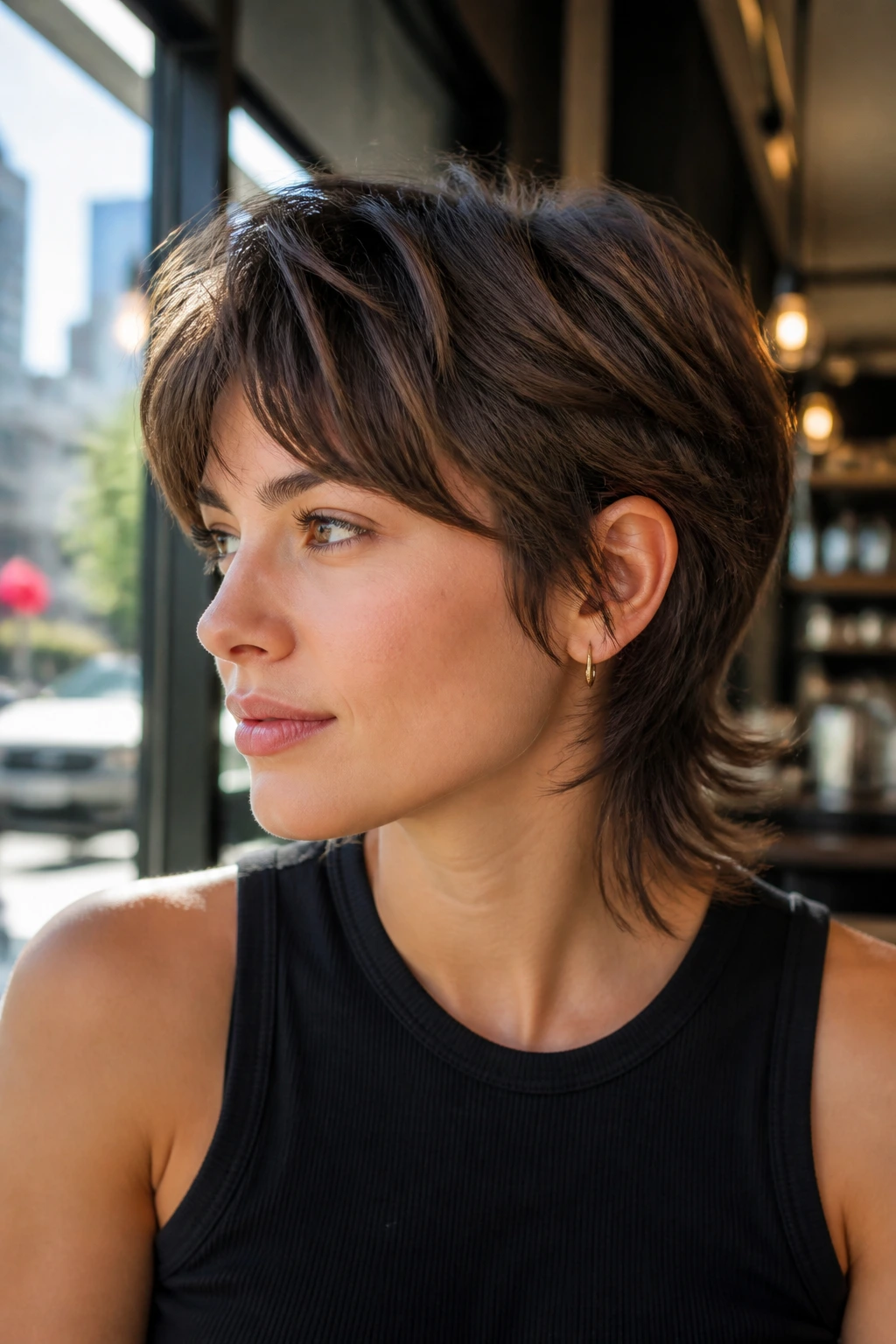
A short wolf cut can work on a round face when the layers are kept vertical instead of puffy. The point is not to make the hair bigger all around. The point is to create broken, moving layers that stretch the silhouette.
The top stays a little longer, the sides stay narrower, and the ends look choppy rather than neat. That broken outline keeps the face from reading extra wide. If the layers are cut too evenly, the style turns into a fuzzy halo. Nobody wants that. The shape needs contrast.
This is one of the better choices if you like texture and a slightly undone finish. Straight hair can wear it too, but it usually needs a little bend from a flat iron or a round brush to keep the layers from lying flat. Wavy hair gets an easier ride.
- Ask for longer layers through the crown.
- Keep the front pieces longer than the cheekbone.
- Let the ends look a little shattered, not thinned to nothing.
- Use foam or mousse for hold if your hair drops fast.
A short wolf cut has personality. It just needs restraint in the right places.
15. Flip-Out Bob With a Side Part

A bob that flips out at the ends feels playful, but on a round face the real trick is where the flip starts. If the bend sits below the jaw, it opens the face. If it starts too high at the cheeks, it can make the face look broader.
That side part does some quiet work here. It keeps the top from splitting the face straight down the middle, and it gives the roots a little lift. The flip-out ends add movement, which keeps the cut from feeling heavy or static. This version is especially nice if you like a retro shape but do not want something stiff or overly styled.
What to Ask For
- A bob that lands just under the chin or slightly lower.
- Soft layering at the front so the ends can flick out.
- A side part rather than a dead center part.
- Enough weight at the perimeter so the flip stays neat, not frizzy.
A round brush or a large curling brush can train the ends outward in minutes. Keep the movement loose. You want a gentle kick, not a hard bend.
If you want a short haircut that feels lively, easy to dress up, and friendly to a round face, this one earns its place. Bring the front pieces forward, keep the side part honest, and let the ends do the talking.
