



A long face can take more hairstyles than people give it credit for. The trick is not to hide length; it’s to break it up in smart places so the eye doesn’t travel in one straight line from forehead to chin.
The best hairstyles for long faces usually do one of three things: they add width near the cheeks, shorten the forehead with fringe, or create movement around the jaw so the whole shape feels more balanced. Height on top can be tricky. So can hair that hangs poker-straight with no bend at all. That’s when a face starts looking even longer than it is.
I keep coming back to one simple idea: the face needs a place to stop. A side sweep, a blunt line at the chin, a wave that turns outward, a low bun with loose pieces around the temples — all of those interrupt the vertical line in a different way. Some are polished, some are messy, and some are plain old practical. Good hair does not have to be complicated.
Here are 30 styles that work with long faces instead of fighting them.
1. Side-Swept Bangs That Cut the Vertical Line
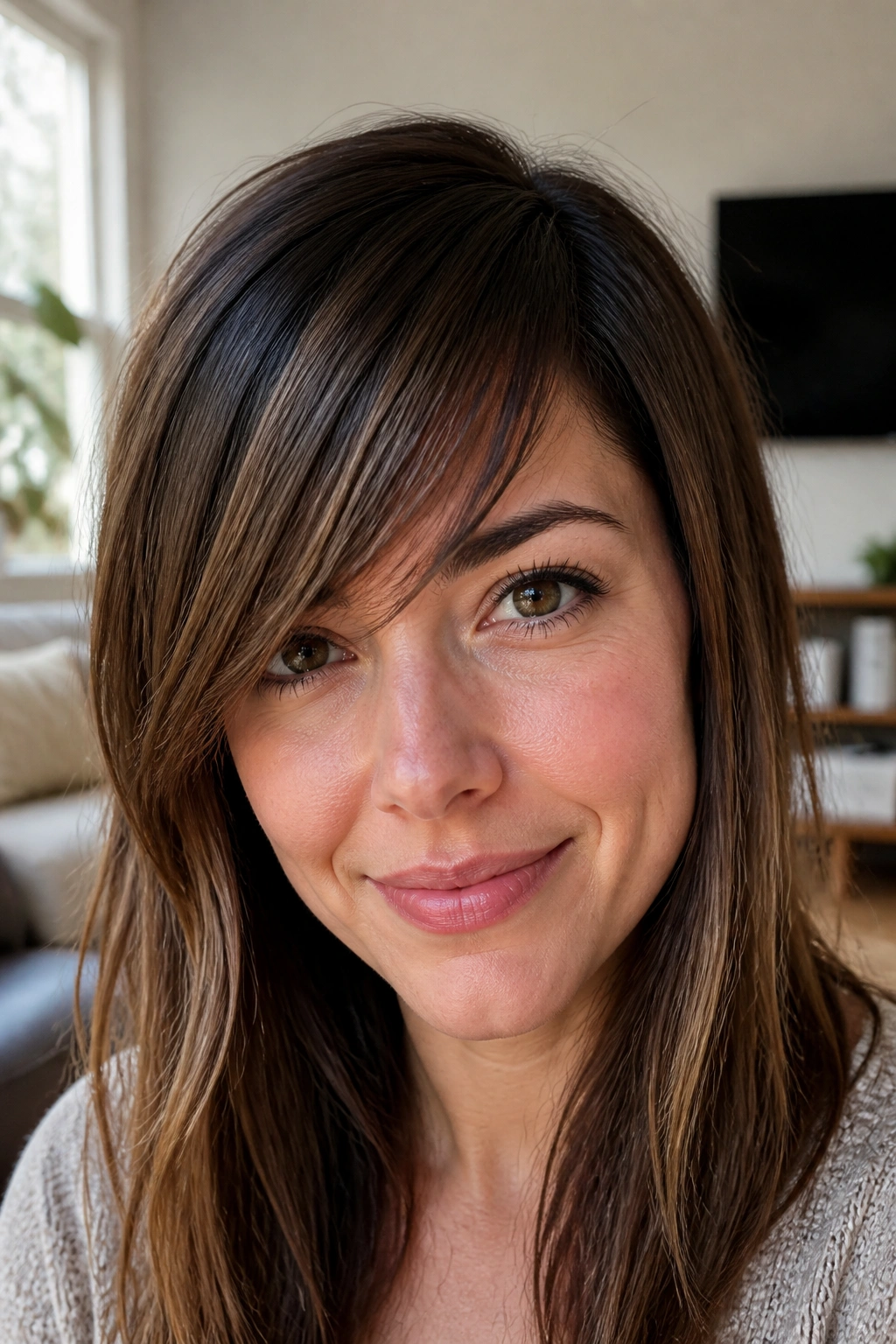
Side-swept bangs are one of the fastest ways to make a long face look a little shorter and a little broader. They slice across the forehead on a diagonal, which gives the eye somewhere else to go besides straight down.
Why They Work
The diagonal line matters. It softens the forehead without boxing the face in, and it usually looks easier to wear than a heavy straight fringe.
Ask your stylist to keep the shortest piece around eyebrow level and let the rest taper toward the cheekbone. That length hits a nice middle ground. Too short and the bangs can feel choppy; too long and they lose the point.
- Blow-dry the bangs from the opposite side for a fuller sweep.
- Use a small round brush, not a giant one.
- Keep the ends soft, not pin-straight.
Best for: straight, wavy, and slightly thick hair that can hold a bend.
2. Curtain Bangs Paired With Long Layers

Curtain bangs are a smart choice when you want softness without committing to a blunt fringe. They part in the middle, fall away from the face, and hit around the cheekbones, which is exactly where long faces often need some width.
I like them best with long layers that start below the chin. That keeps the hair moving without stealing too much density from the sides. If the layers start too high, the whole cut can get wispy and the face can start to look even longer.
The sweet spot is a fringe that opens like a little drape. Easy. Low drama. Strong effect.
3. The Chin-Length Blunt Bob

A blunt bob at the chin is one of the cleanest ways to balance a long face. The hard line across the bottom interrupts length fast, and the shape feels compact in a way that softer cuts sometimes do not.
Ask for This Shape
Keep the cut mostly one length, with only tiny internal texture if your hair is dense. If you stack too much volume at the crown, the face can stretch again. That’s the part people miss.
A chin-length bob works especially well when the ends are tidy and the outline is crisp. Airy, shaggy ends can be pretty, but they do a different job. This cut is about structure.
Tip: tuck one side behind the ear and leave the other side loose. It gives the bob a little asymmetry without losing the sharp line.
4. Soft Waves on a Textured Lob

A lob that sits between the shoulders and the collarbone gives you room to play, and soft waves keep it from looking flat. On a long face, that little bit of texture makes the whole head look wider through the midsection.
The easiest way to get there is with a 1.25-inch curling iron or a flat iron bend, alternating directions so the waves don’t all collapse into the same pattern. Leave the ends a little straighter if you want a more modern look. Curling the entire strand from root to tip can feel too round and a little dated.
What Makes It Useful
- The lob length adds weight around the jaw.
- The wave breaks up the vertical line.
- The cut still moves, which keeps it from looking heavy.
Best move: finish with a light spray wax or texture mist so the bends stay separated instead of puffing out.
5. A Deep Side Part With Lift at the Roots

A deep side part can change the feel of a face faster than a haircut. It shifts the balance, adds a little width on one side, and takes attention off the center line.
You do not need a giant bump at the crown. Please don’t. A small lift at the roots near the heavier side is enough. If the top gets too tall, the face starts reading longer again, and that’s the opposite of what you want.
This is the style I suggest to people who are nervous about bangs. It gives a similar softening effect without scissors touching the forehead.
6. Face-Framing Layers That Start at the Cheekbones

Face-framing layers can be a mess or a miracle. The difference is where they begin. For a long face, the best starting point is usually the cheekbone or just below it.
That placement pulls the eye outward rather than straight down. It also gives long hair some shape near the sides, which is where a lot of long faces need help. If the shortest layer starts at the chin, the effect can be too narrow. If it starts at the nose, the face can look longer. Cheekbone level is the sweet spot.
Keep the layers soft and broken up, not super thin. The goal is movement. Not wisps.
7. The Shag Cut With a Soft Fringe

A shag can be brilliant on a long face, but only if it’s the softer kind — not the giant, overbuilt version that looks like it needs a wind machine. The best shags put texture through the sides and the ends so the face feels less vertical.
What to Ask For
Tell your stylist you want layers around the cheekbones and ear, plus a fringe that skims the brows or opens in the middle. That keeps the cut from looking top-heavy. The texture should feel piecey, not hacked.
How It Helps
- Adds width through the middle of the face.
- Breaks up long, straight lines.
- Works well on wavy hair that wants to move anyway.
My take: this one looks best when it’s slightly undone. If you spend 40 minutes making it perfect, you’re probably working against it.
8. Shoulder-Length Curls With Rounded Ends
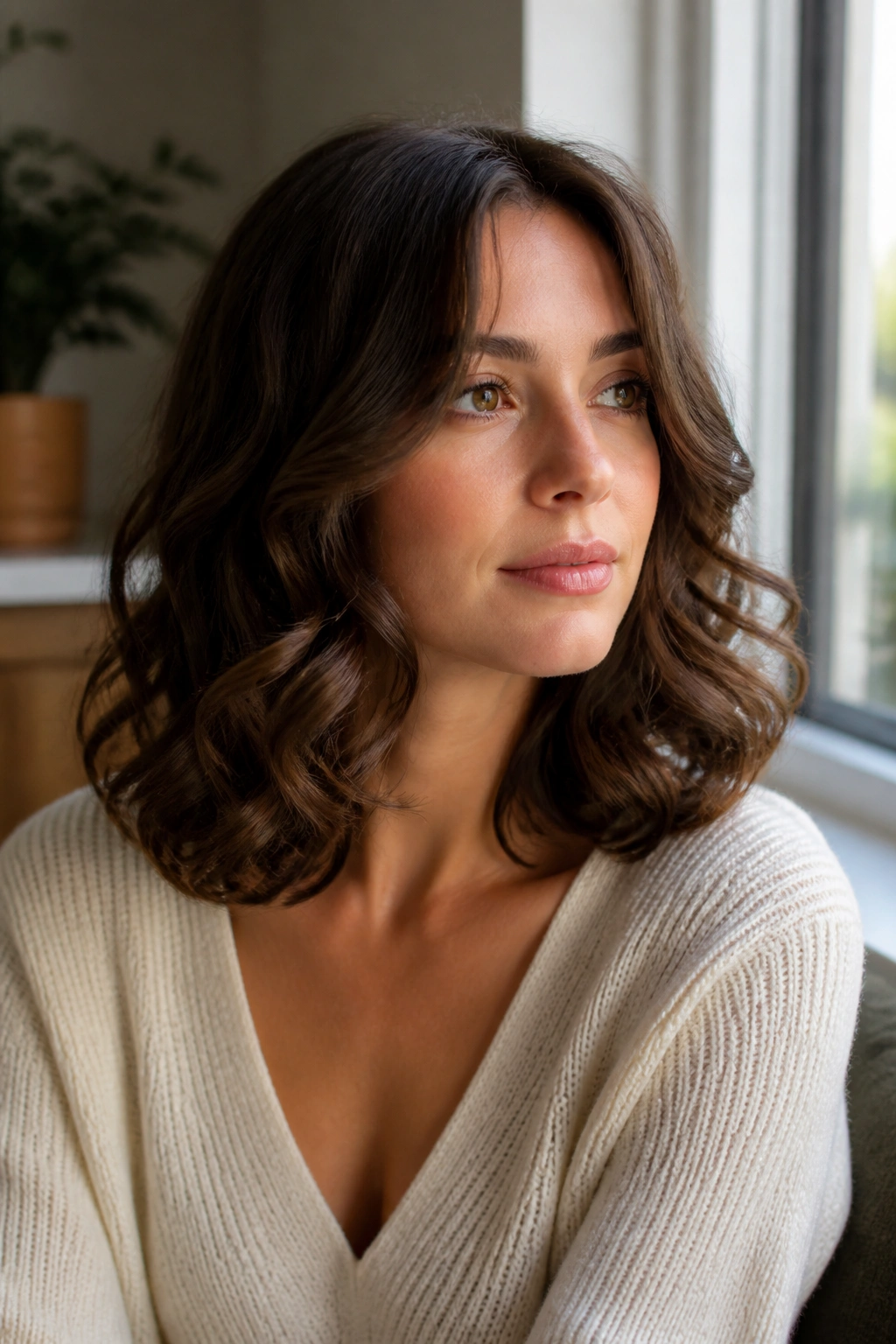
Shoulder-length curls hit a nice balance for long faces because they bring attention to the jaw and neck without dragging the eye down. When the ends are rounded, the whole shape feels fuller at the sides.
I like this cut on hair that already has some body. A diffuser on low heat, a curl cream, and a little root lift are usually enough. If the curls are brushed out too hard, they can turn into a triangle. If they’re left too tight, the style can feel dated. You want soft bounce with a bit of space between the pieces.
The shape should look touchable, not helmet-like.
9. The French Bob With a Bit of Bend
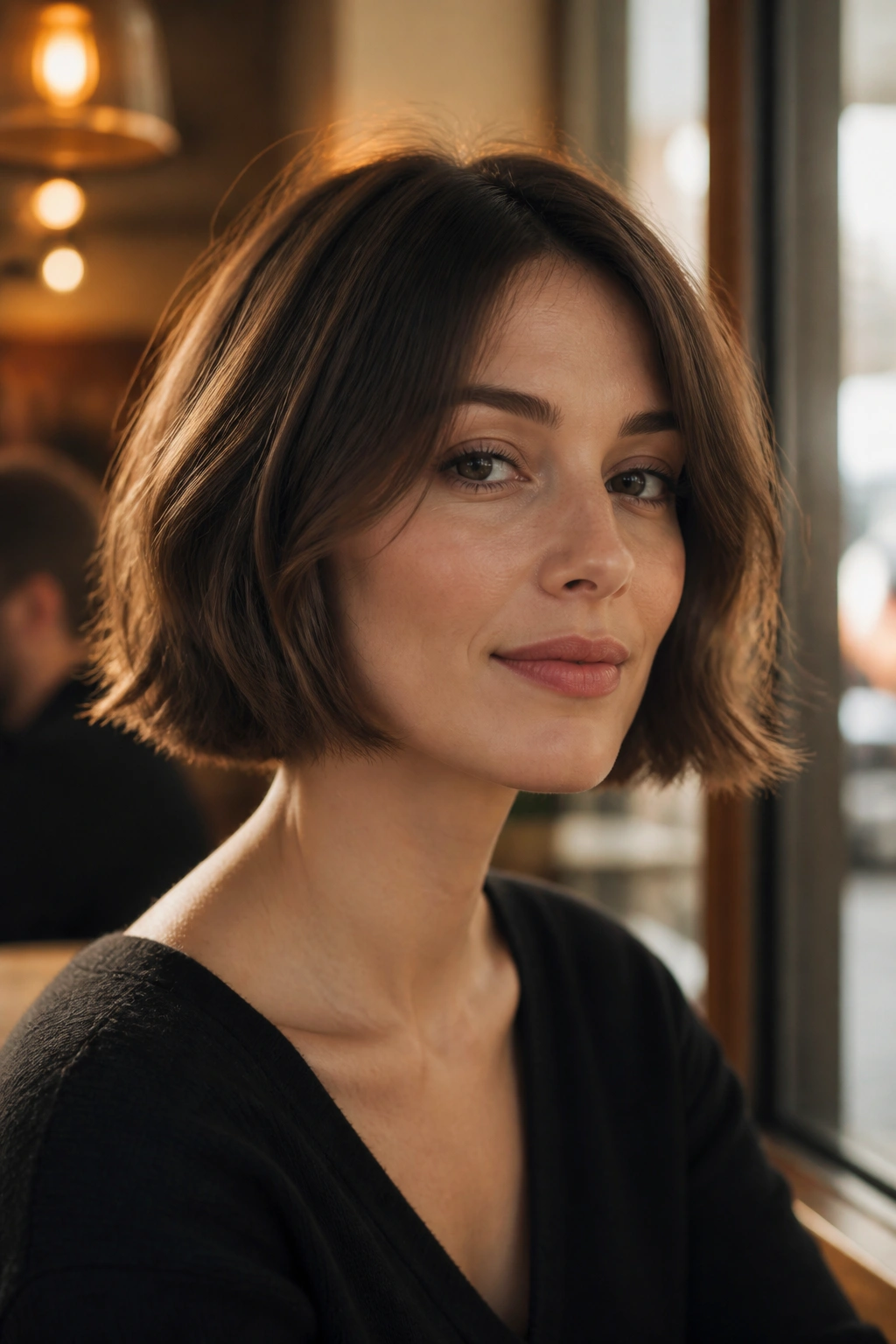
A French bob can work on long faces because it sits high enough to shorten the face and wide enough to add presence near the cheekbones. The trick is keeping the bend soft, not severe.
A little inward curve at the ends changes everything. A sharp undercurve can make the cut feel too heavy, while a flat, straight bob can look severe. The sweet spot is a bob that sits around the jaw and moves when you turn your head.
Small Details That Matter
- Keep the length near the mouth or jaw, not below the collarbone.
- Add a loose side part or a broken center part.
- Use a round brush to give the ends a soft curve.
This cut has attitude. It also has manners.
10. An Asymmetrical Bob for Sharp Balance

A long face does not always need softness. Sometimes it needs a line that refuses to behave like a straight vertical frame. That’s where an asymmetrical bob comes in.
One side slightly longer than the other creates a visual break, which keeps the face from reading as one long shape. The effect is stronger when the longer side hits near the chin or cheekbone, not the upper neck. You want geometry, not drag.
Good Version vs. Bad Version
- Good: one side grazes the jaw, the other sits a little higher.
- Bad: one side keeps dropping way past the shoulder.
- Good: smooth edges with a clean outline.
- Bad: too much taper, which makes the whole head feel narrow.
If you like clean cuts with a bit of edge, this one earns its keep.
11. Full Blunt Bangs and Long Straight Hair
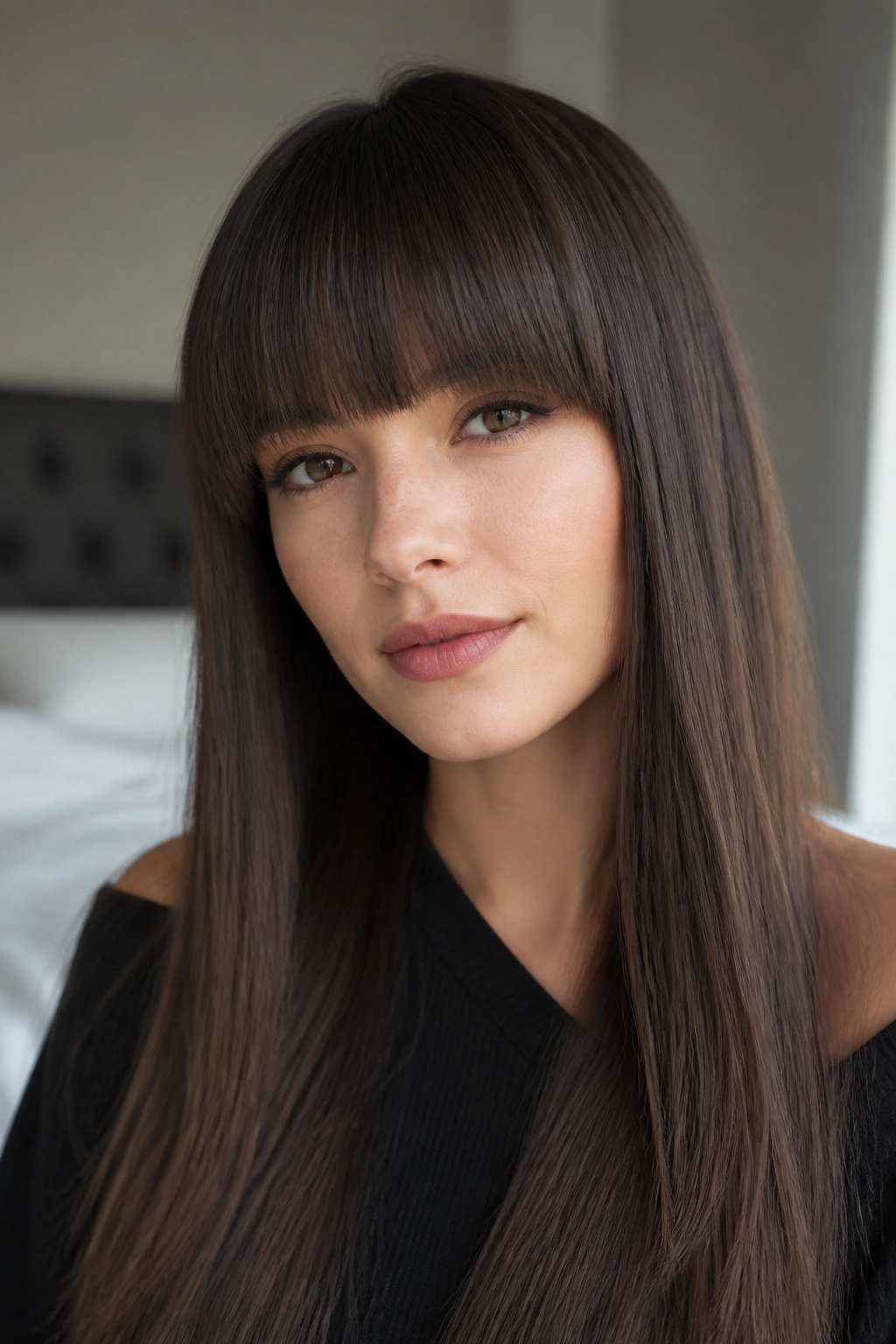
Can long, straight hair work on a long face? Yes — if the forehead gets interrupted. Full bangs do that job fast.
A blunt fringe cuts across the top third of the face and takes away some of the vertical stretch. The rest of the hair can stay long, but it should not hang like a single curtain. Add a little bend through the ends or a soft bevel at the bottom so the shape has some width.
Who This Fits
This is a strong choice if your hair is naturally straight and you’re willing to keep up with trimming the fringe every 3 to 5 weeks. Bangs that grow into your eyes stop doing the work you asked them to do.
It’s a bold look. Not a fussy one.
12. Flipped-Out Ends on a Collarbone Cut
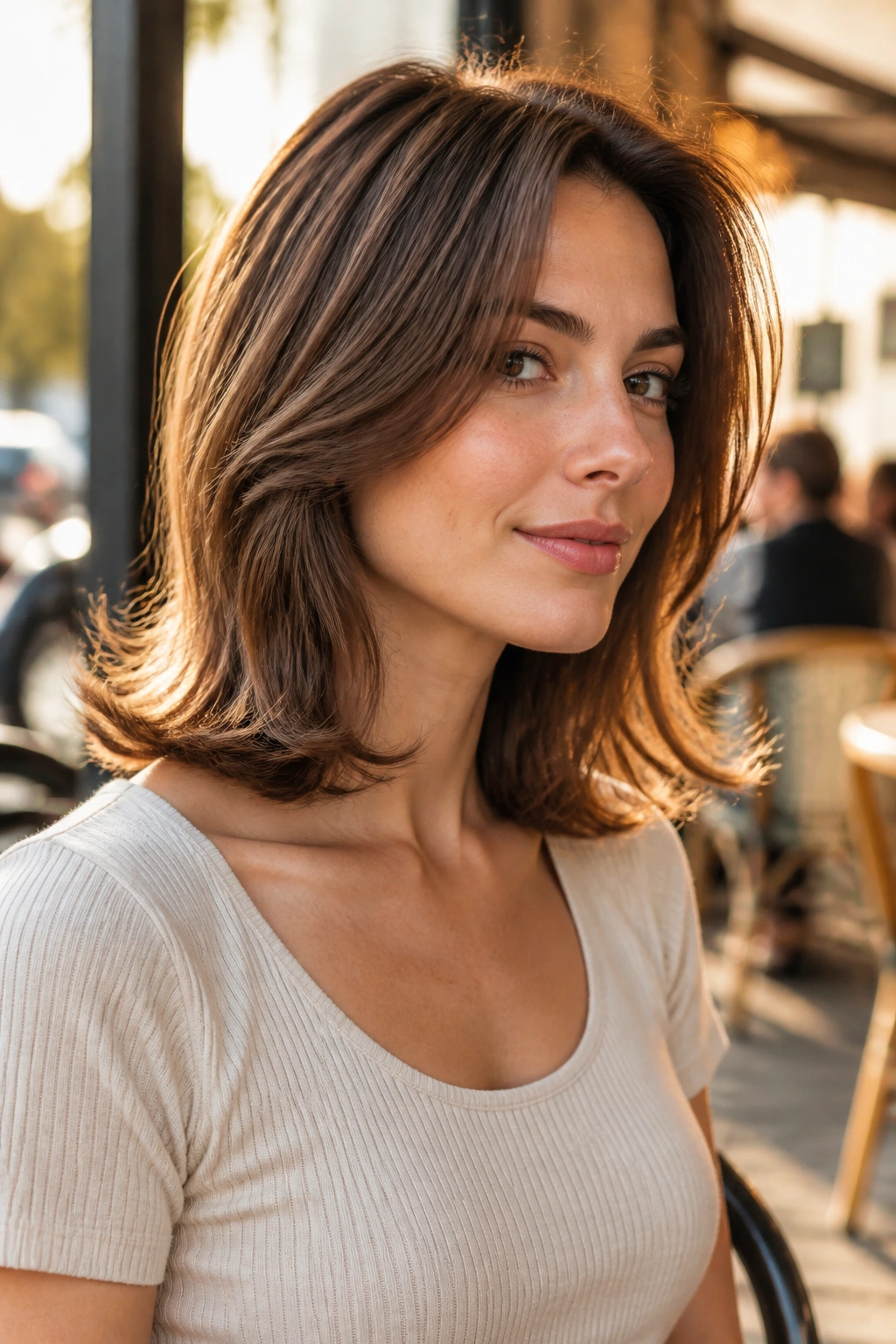
A collarbone-length cut with flipped-out ends gives the face more width at the bottom half, which long faces usually welcome. The flip changes the direction of the line. Instead of pointing down, the ends point outward.
That little turn matters more than people think. It gives the cut some lift without adding height at the crown. It also keeps medium-length hair from falling flat against the sides of the face, which is where a lot of long-face haircuts lose their shape.
Use a round brush or a flat iron to bend the last 1 to 2 inches outward. Keep the root area calm. The drama belongs at the edges.
13. A Layered Pixie That Keeps Width at the Sides
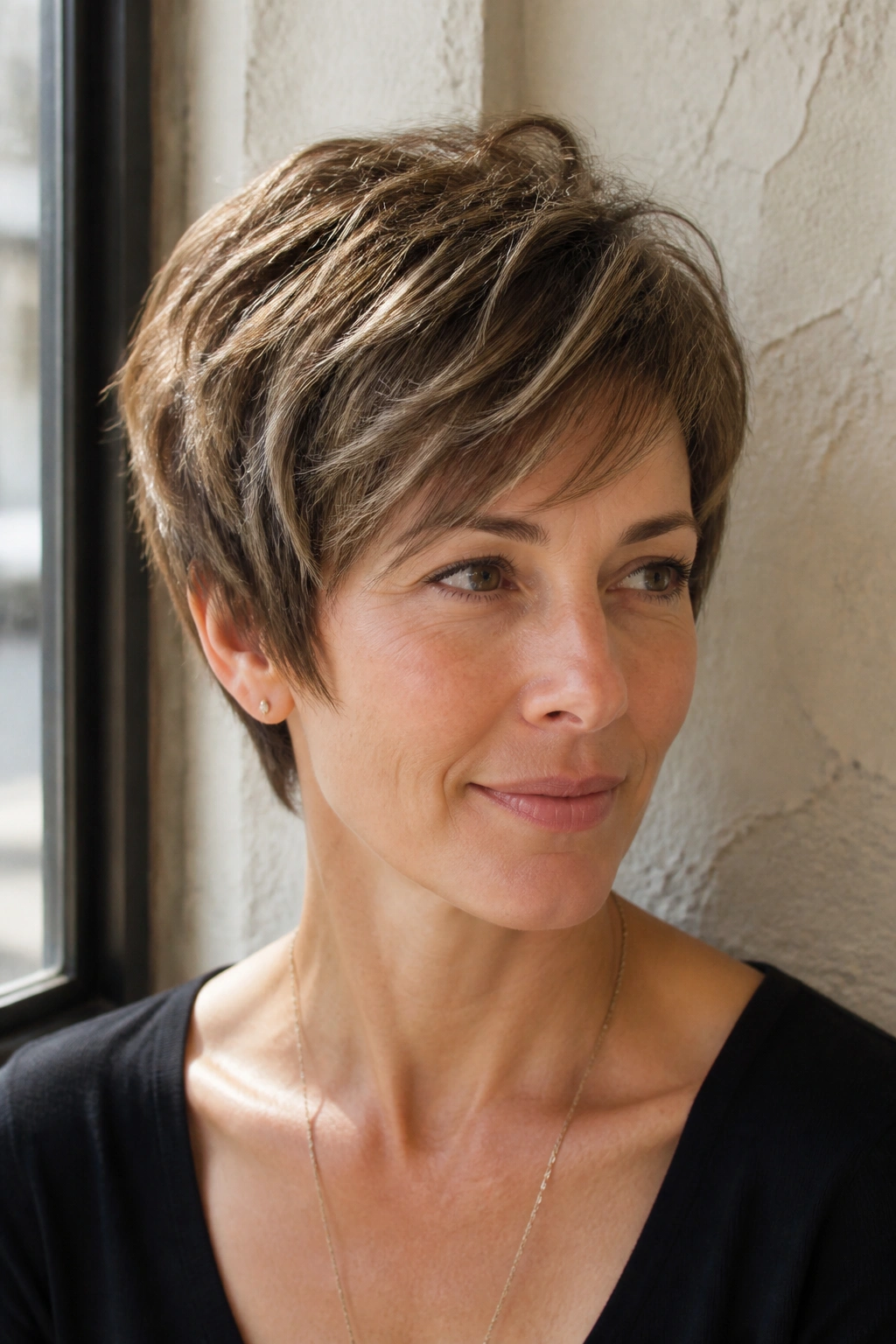
A pixie cut can work on a long face, but the shape needs to be controlled. Too much height on top makes the face look longer. Too much length at the nape makes the neck feel dragged out. The answer is a layered pixie with fullness around the temples and ears.
This is one of those cuts that looks easy when it’s good and awkward when it isn’t. Piecey texture on top is fine. What you want to avoid is a spiky, vertical shape that points upward.
Best detail: keep the sides soft and a little feathered, not shaved too close if you want more balance.
It’s a sharp cut. It just needs the right silhouette.
14. Old Hollywood Waves With a Low Part
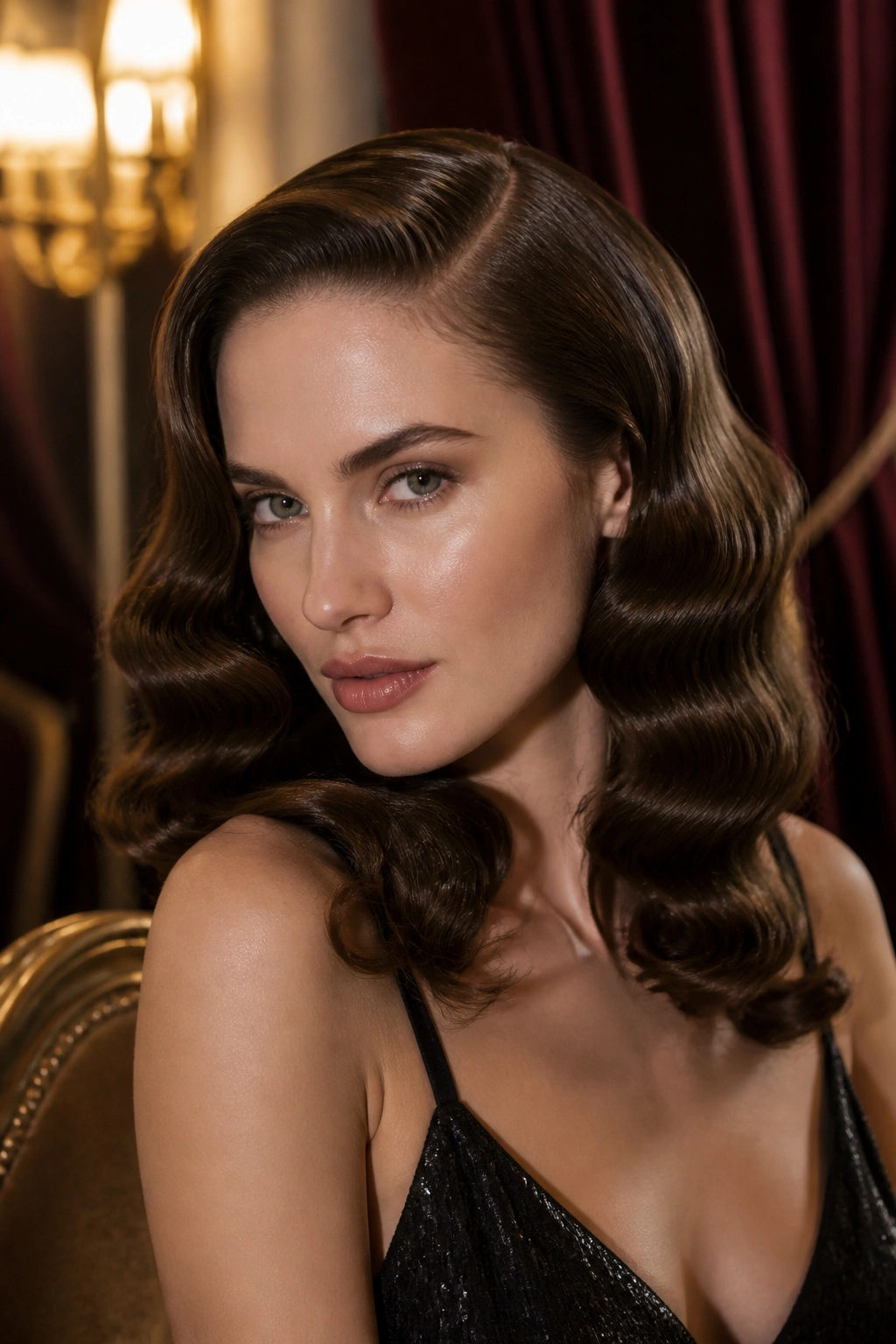
Old Hollywood waves are almost built for long faces because the wave pattern runs horizontally across the head. That creates width, polish, and a bit of structure all at once.
How to Wear Them Without Making the Face Longer
Keep the part low and slightly off center. Set the hair in 1.25-inch sections, pin each wave while it cools, then brush through gently once the shape sets. The wave should roll from cheekbone to collarbone, not sit high and fluffy at the root.
- Use a shine spray, not a stiff hairspray helmet.
- Brush only after the curl has cooled.
- Aim for a soft S-shape, not a tight pageant wave.
This style loves an event. It also looks surprisingly good with a plain black shirt and no jewelry.
15. A Half-Up Style That Leaves Volume Around the Face
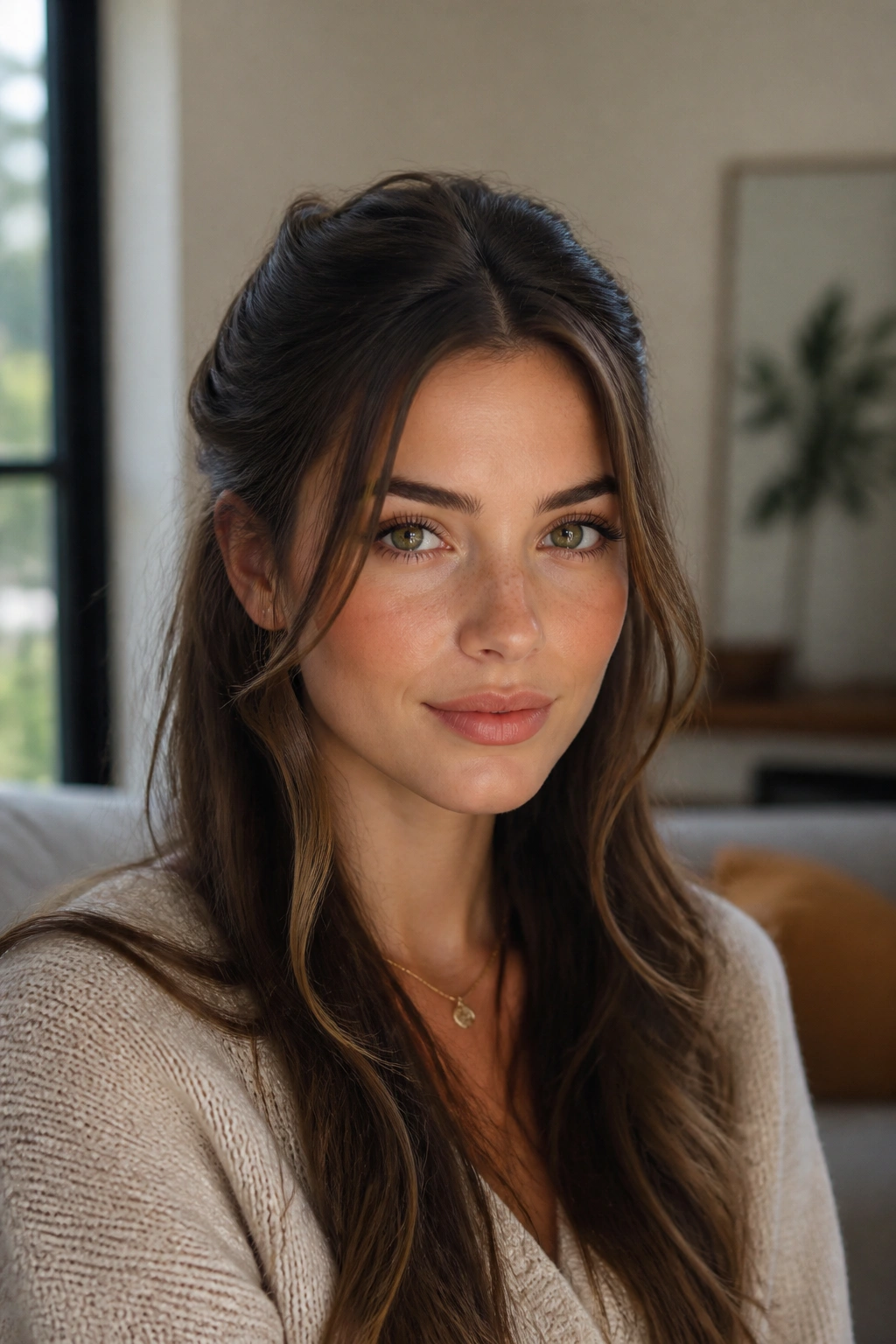
A half-up style can be a bad idea on a long face if all the hair gets pulled tight and high. The better version keeps the top section low and leaves soft pieces around the temples and cheeks.
Think of it as a frame, not a lift. A low half-up twist, a clipped-back crown, or a small knot placed near the back of the head will keep the top neat while the sides stay full. That side fullness matters more than a lot of people realize.
If you want this to feel intentional, curl the pieces left down around the face. Straight pieces can look severe.
16. A Low Messy Bun With Loose Front Pieces
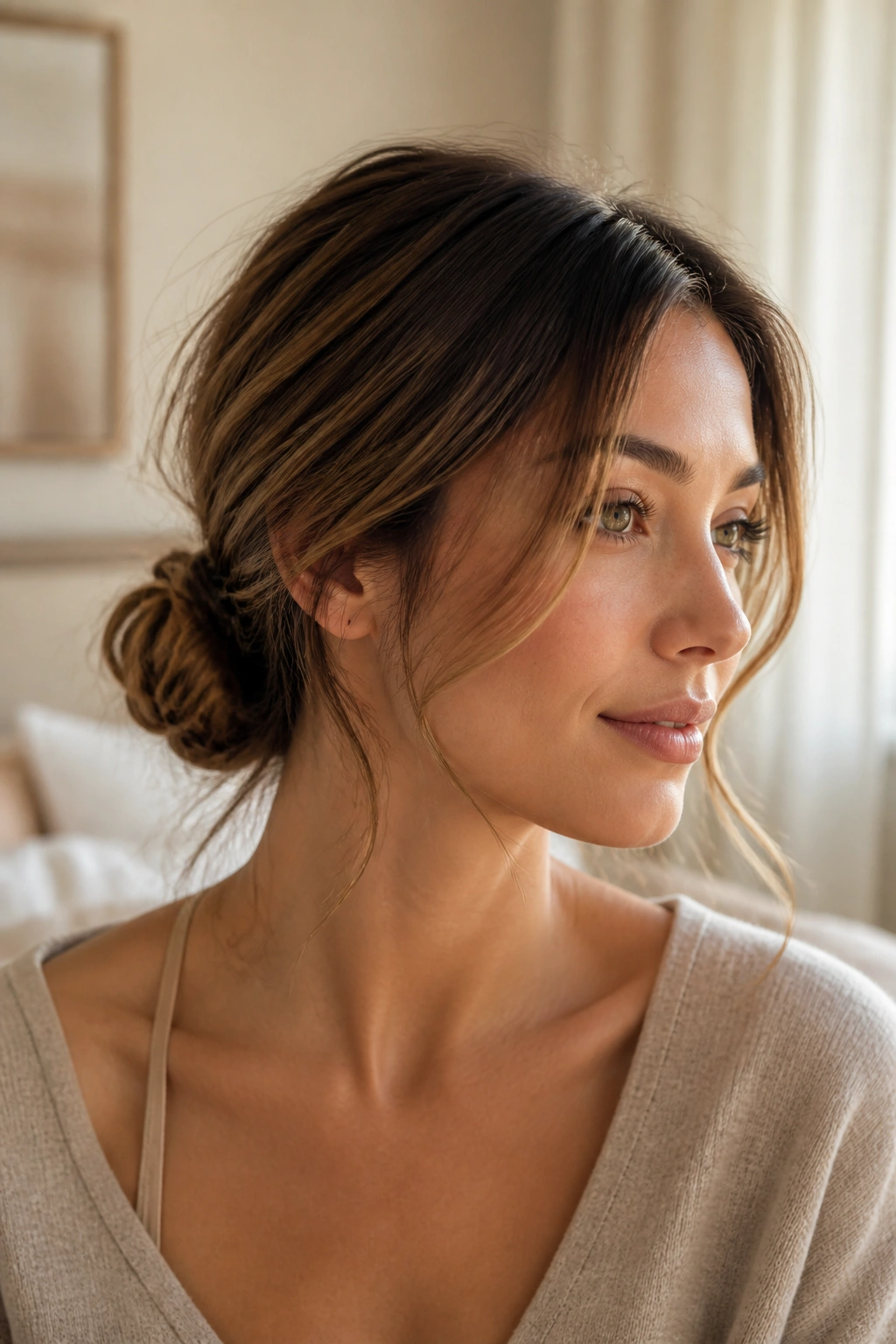
A low messy bun is one of the safest updos for a long face, and I mean that in the nicest way. It keeps the weight low, which helps shorten the overall shape, and the loose front pieces stop the face from looking bare.
The bun should sit at the nape, not high on the head. That placement keeps the eye down. Pull out two face-framing strands about 1 inch wide, then soften them with a wave or bend. If the front is too slick, the face gets stretched. If the bun is too round and high, same problem.
Warning: don’t drag every strand tight. A little looseness is the point.
17. Curtain Fringe and a Collarbone Cut

Curtain fringe with a collarbone cut works because it gives you the best of both worlds: softness near the forehead and enough length to keep the lower half of the face from feeling empty.
What to Tell Your Stylist
Ask for a fringe that opens around the cheekbones and a base length that lands right around the collarbone. That length feels forgiving. It also moves well whether you wear it straight, wavy, or tucked behind one ear.
The fringe should be long enough to blend, but not so long that it disappears into the rest of the cut. The whole point is that little break at the top third of the face.
I’d choose this over straight bangs if you want something lower-maintenance.
18. Waterfall Braids With Soft Side Volume
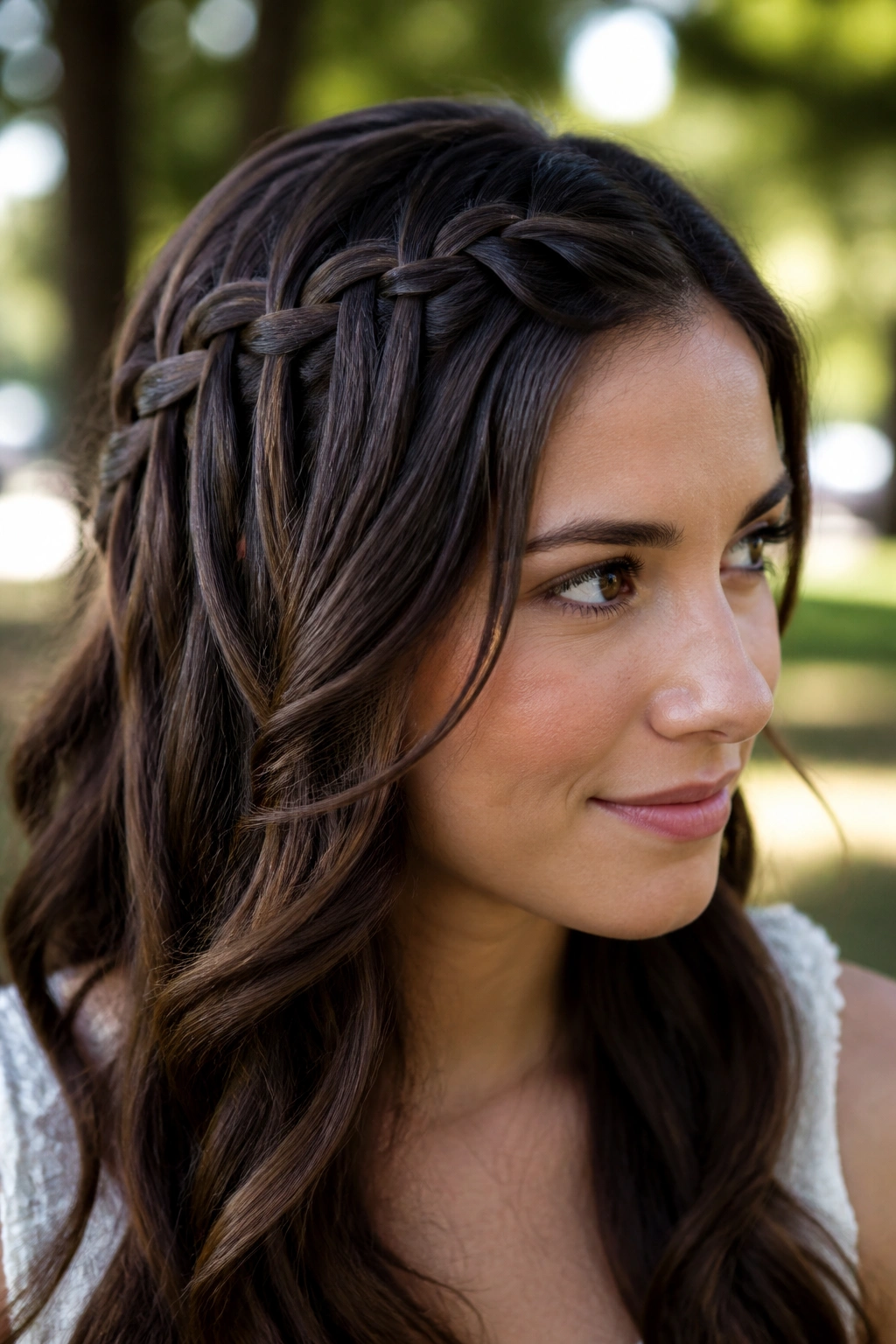
Waterfall braids are a good match for long faces because they keep hair off the forehead while still leaving enough loose hair around the sides to add width. A tight crown braid can make the face feel narrow. This one does the opposite.
The loops of the braid create movement at eye level, and the loose lengths drop softly around the cheekbones. That balance is the whole trick. Keep the braid loose enough that the braid pattern is visible but not so loose that it falls apart halfway through the day.
This style is prettier when it is a little imperfect. That’s not a flaw. It’s the point.
19. A Wolf Cut With Airy Texture

A wolf cut can be a little risky on a long face, but the right version adds width without turning the hair into a triangle. The lengths stay shaggy and airy, while the layers create movement through the sides and neck.
The trick is restraint. Too much crown volume and the face stretches. Too many short pieces at the top and the cut starts to look noisy. A longer wolf cut with soft fringe tends to work better than the extreme, choppy version.
Where It Helps Most
- At the cheekbones, because that’s where the layers widen the face.
- At the jaw, because the ends don’t hang in one straight line.
- On wavy or thick hair that likes texture already.
This one has personality. A lot of it.
20. Chin-Grazing Layers With an Inward Bend
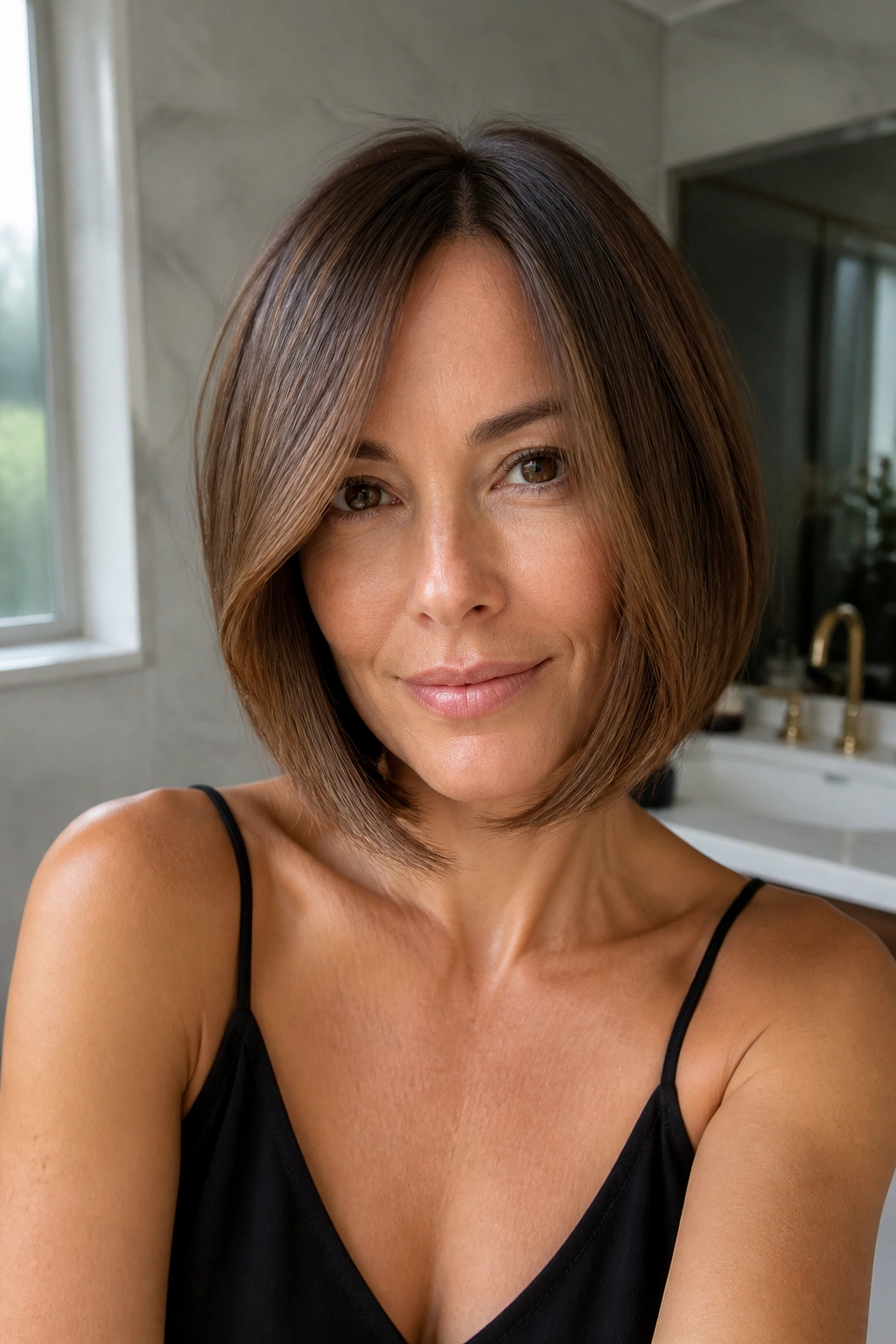
Chin-grazing layers are a simple way to keep a long face from looking stretched out. The bend at the chin creates a visual stop, and the layers above it keep the sides from falling flat.
The Styling Difference
A round brush or blow-dry brush turned inward at the ends is what makes this work. The hair should curve softly toward the face, then settle around the jaw. Straight down lengths do not give the same effect.
If your hair is fine, use a mousse at the roots and a small amount of styling cream through the ends. That gives the bend something to hold onto without making the cut greasy.
This style is quietly strong. It does not shout.
21. A Low Ponytail With Teased Temples
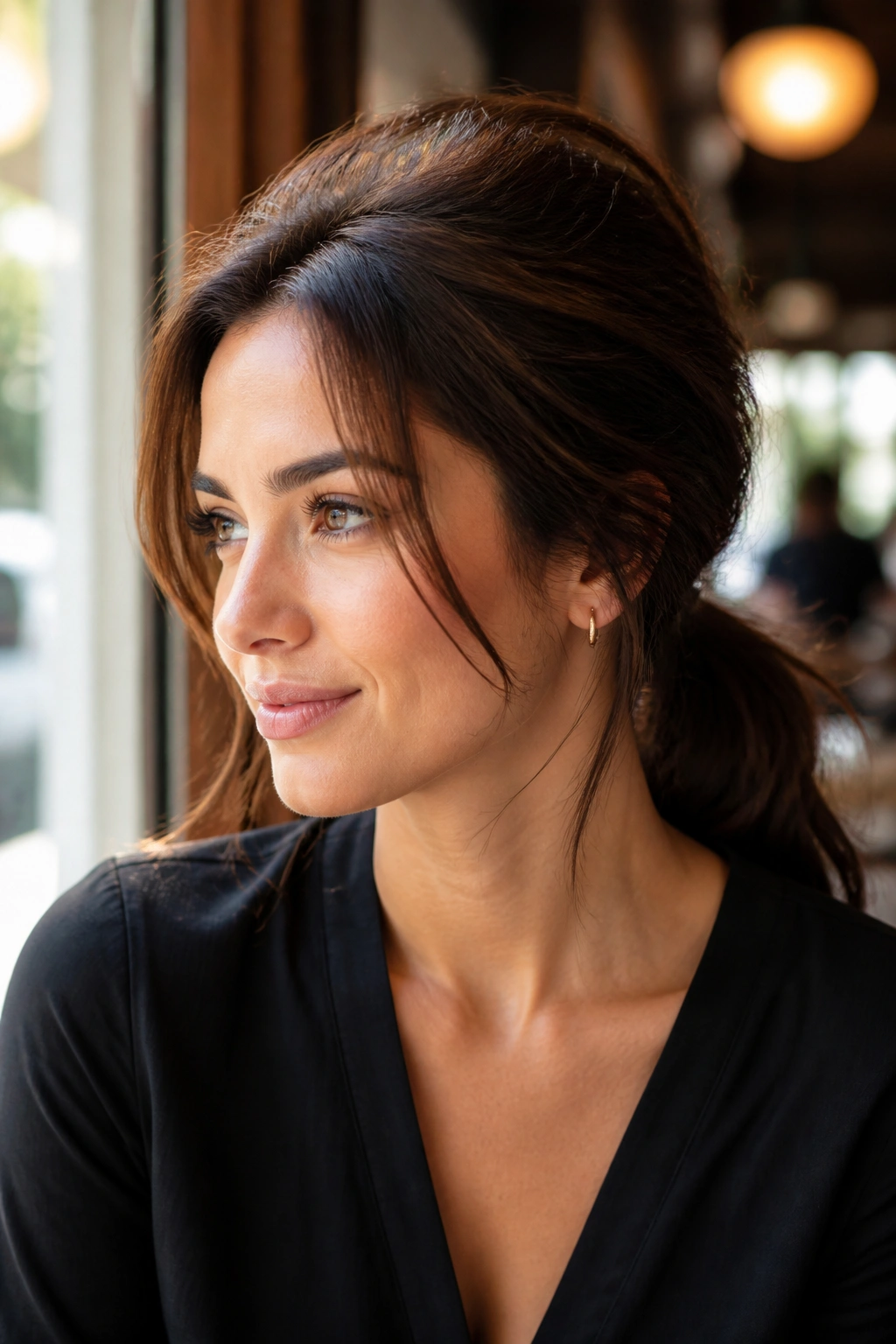
A low ponytail can absolutely work for a long face, but only if the front has some life. A slick, high pony can make the face look longer in a hurry. A low ponytail with a bit of lift at the temples does the opposite.
Backcomb the hair lightly at the sides near the temples, smooth the surface, and tie the pony just above the nape. That little volume out wide changes the proportions. Wrap a small strand around the elastic if you want it to look finished.
This is the style I reach for when I need clean hair and zero fuss.
22. A Rounded Natural Afro

A rounded afro is one of the best shapes for a long face because it brings width to the sides instead of pushing everything upward. The silhouette matters more than length here. A round shape balances the face; a tall shape can extend it.
Moisture is the main job. The second job is shape. Pick the hair outward at the sides and lightly up at the top, but do not chase height for the sake of it. The goal is a soft halo that feels even around the head.
The Shape Check
- Wider at the cheekbones than the crown.
- Softly rounded at the edges.
- Not flat at the sides.
The result is bold, but not harsh.
23. Box Braids With a Side Sweep
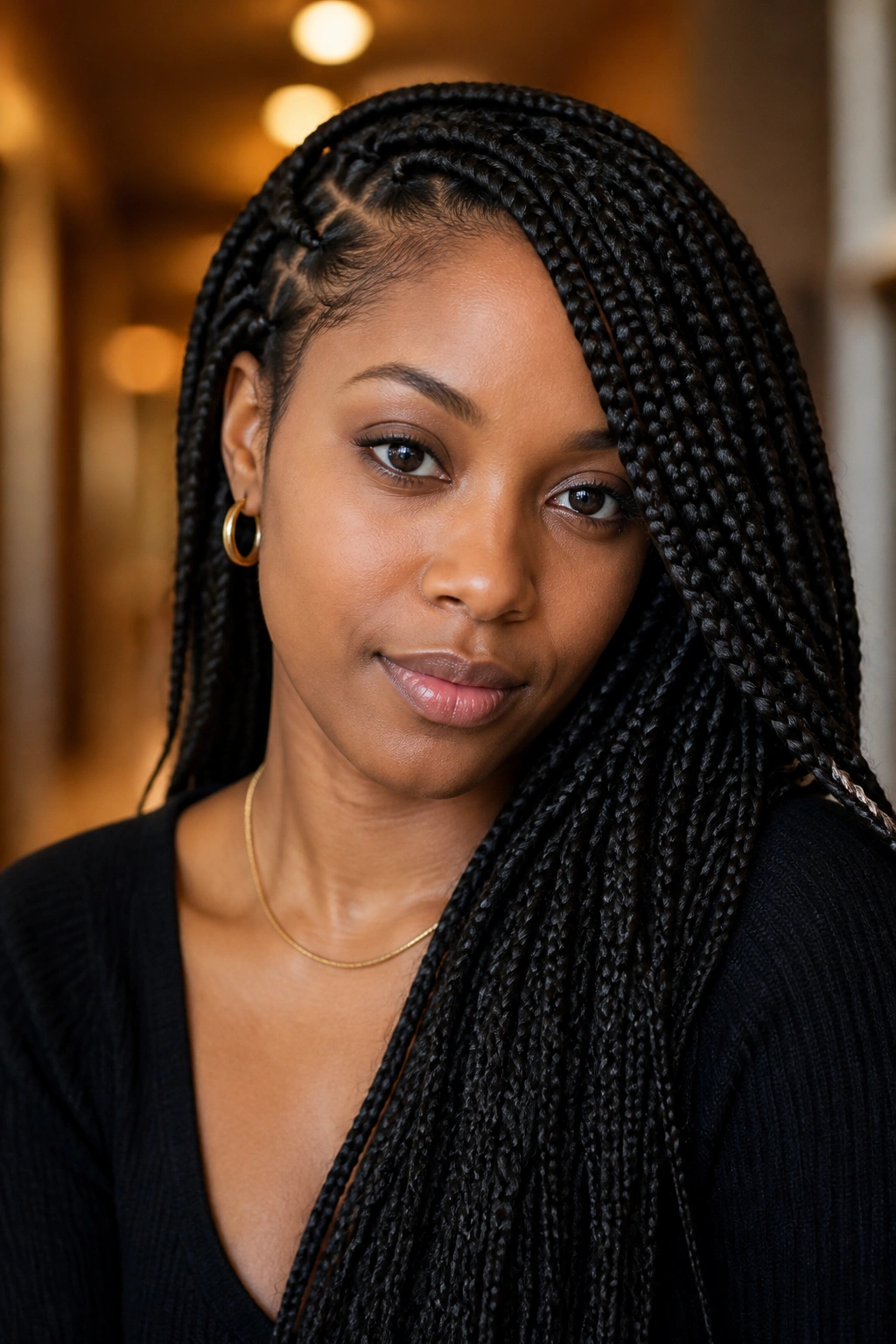
Box braids can be very flattering on long faces when they’re worn with a side sweep or a deep side part. That shifts the line of the hair and creates width across the forehead and cheeks.
What to Ask For
Medium-sized braids usually give the best balance, since tiny braids can sometimes look too thin against a long face. A length that lands at the collarbone or just below tends to be easier to control than waist-length braids, though longer braids can work if they’re styled over one shoulder.
- Try a deep side part.
- Wear them swept to one side on low-friction days.
- Leave a few face-framing pieces loose if you like a softer look.
It’s a protective style, yes. It can still be a shape play, too.
24. Low Braided Pigtails for a Playful Shape
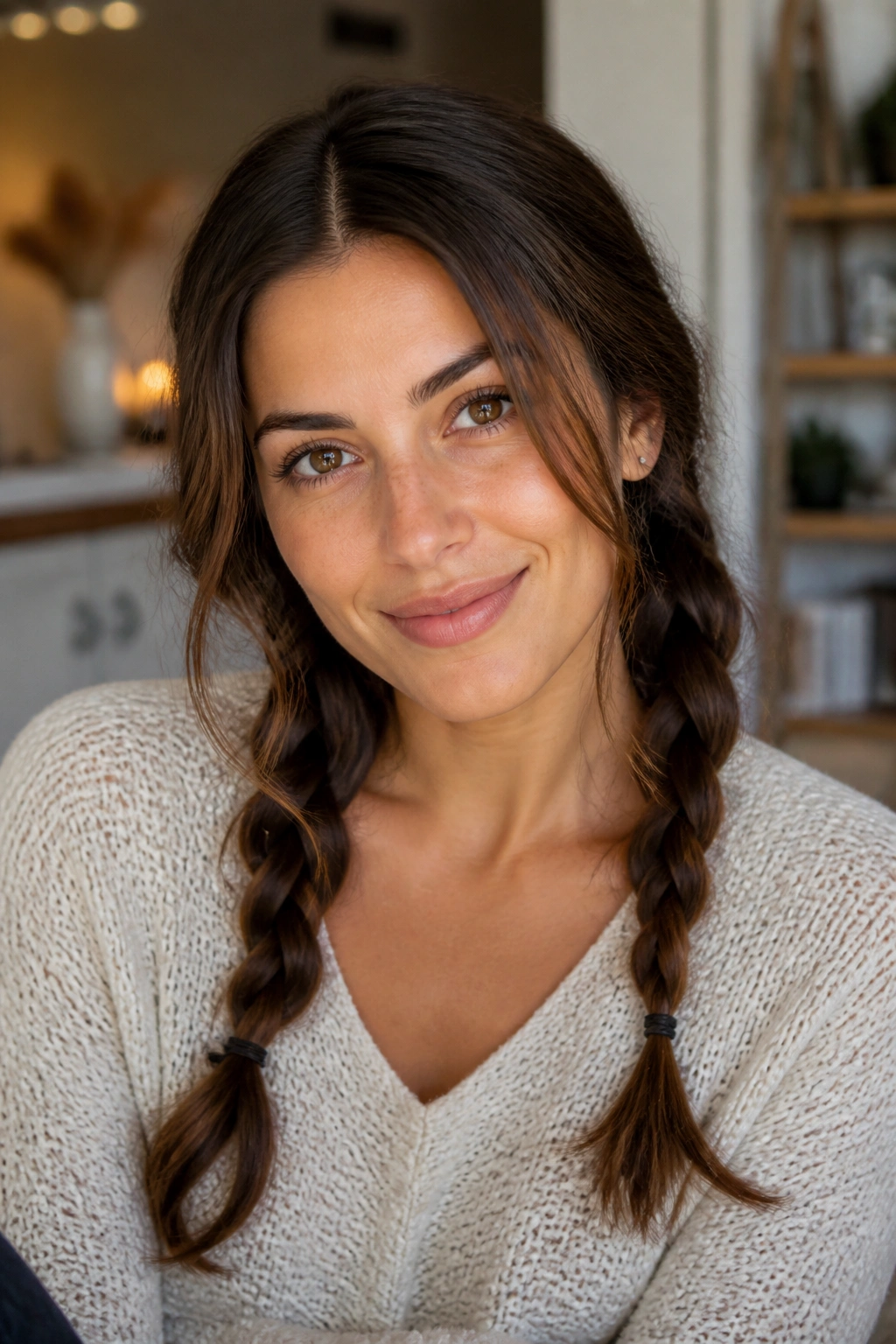
Low braided pigtails feel a little younger, a little less formal, and a lot more useful than people expect. For a long face, they work because the two braids sit low and wide, which interrupts the vertical line in a good way.
The key is placement. Keep them low near the jaw and let a few pieces fall around the temples. If they sit too high, the face starts to look longer. If they’re too tight, the style loses the softness that makes it work.
I like this with a center part and loose texture through the front. It keeps the look from feeling severe.
25. Sculpted Curls With Side Width

Not all curls need to go up. On a long face, side width usually matters more than extra height, and sculpted curls are a good place to prove that point.
The curls should sit at the sides and around the jaw, almost like they’re building a frame. Use a curl cream or foam, then shape the curls while they’re damp so the side sections don’t collapse into one long line. If the crown is too tall, the effect goes the wrong way fast.
This style works on naturally curly hair and on heat-styled curls. The shape matters more than the method.
26. A Tucked Bob With a Deep Side Part
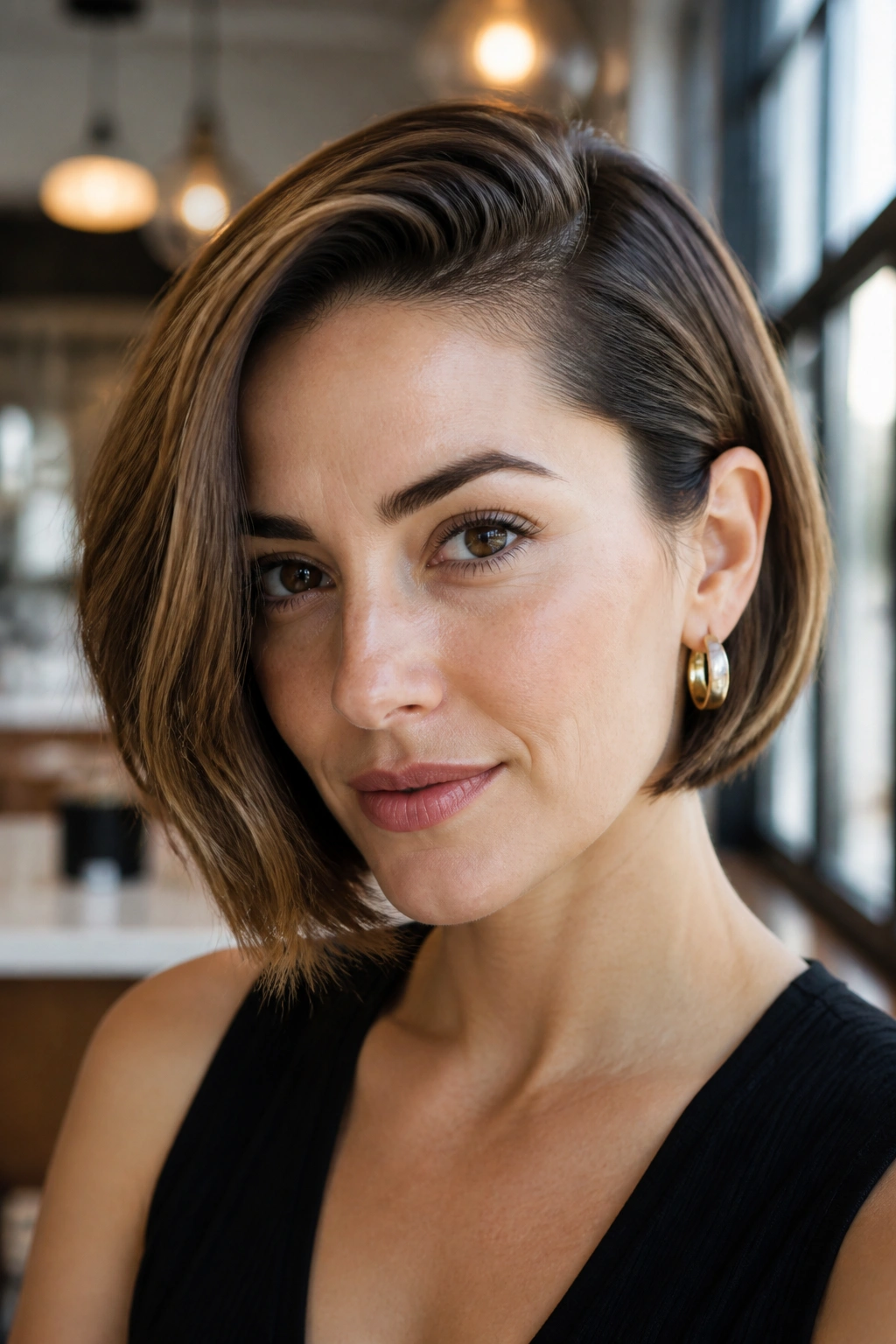
A tucked bob gets a lot of mileage out of one simple move: one side tucked behind the ear, the other side left loose. On a long face, that asymmetry adds width and keeps the cut from hanging straight down the head.
A deep side part strengthens the effect. It gives the bob a bit of drama without needing length. If you wear earrings, even better — the exposed side becomes part of the style rather than a fix you forgot to make.
This is one of the easiest ways to make short hair look intentional rather than plain.
27. Long Layers and a Thick, Sweeping Fringe
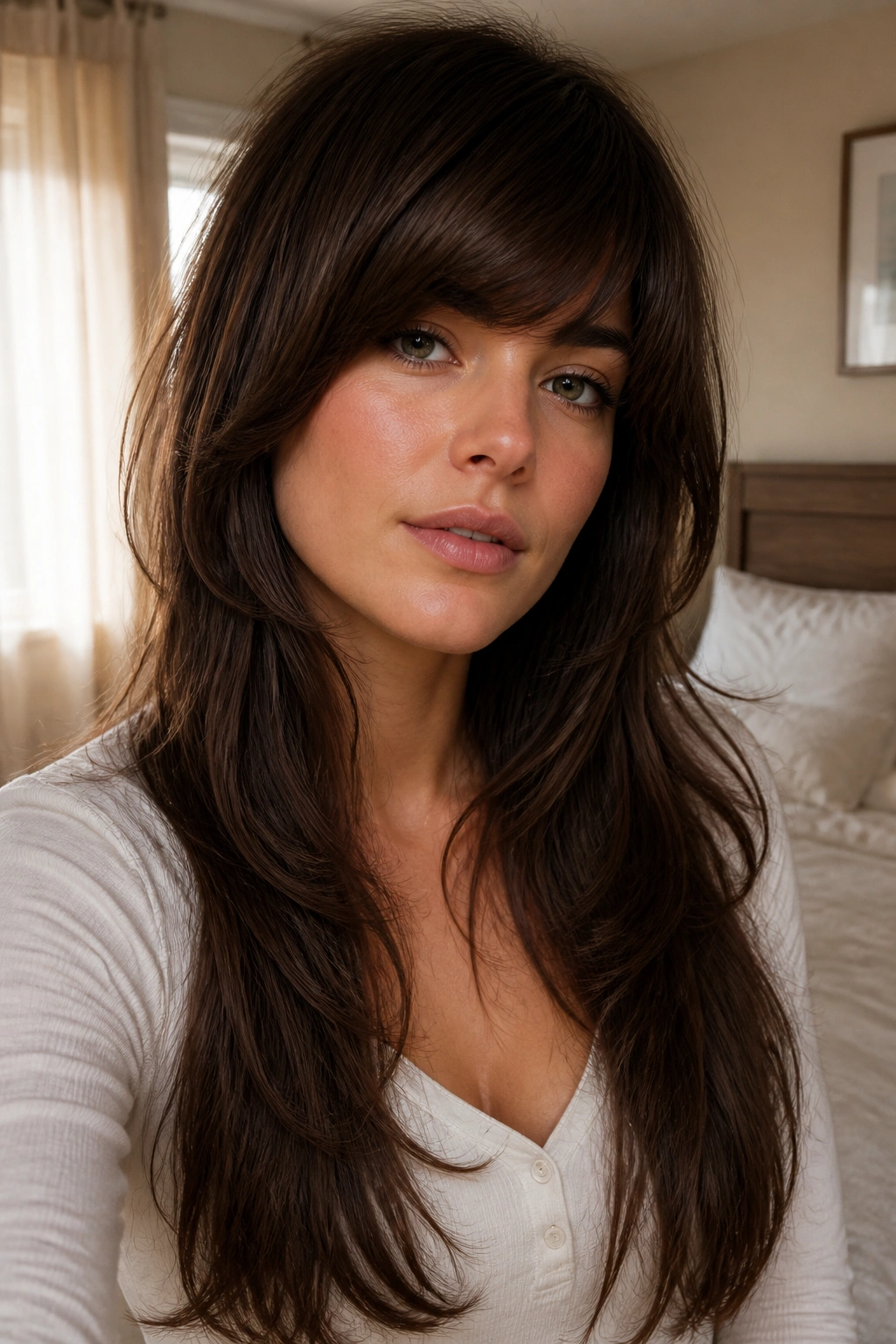
If you love long hair and do not want to give it up, this is the version I’d point to first. Long layers keep the length, and a thick sweeping fringe shortens the forehead without cutting the whole shape down.
The fringe should be dense enough to matter. Thin wisps can look accidental on a long face. The layers should start below the chin so they add movement without hollowing out the sides.
Best tip: keep the ends slightly beveled, not dead straight. Even a subtle curve keeps the whole style from reading too vertical.
It’s a good compromise. Sometimes that’s the winning move.
28. Bubble Braids Worn Low
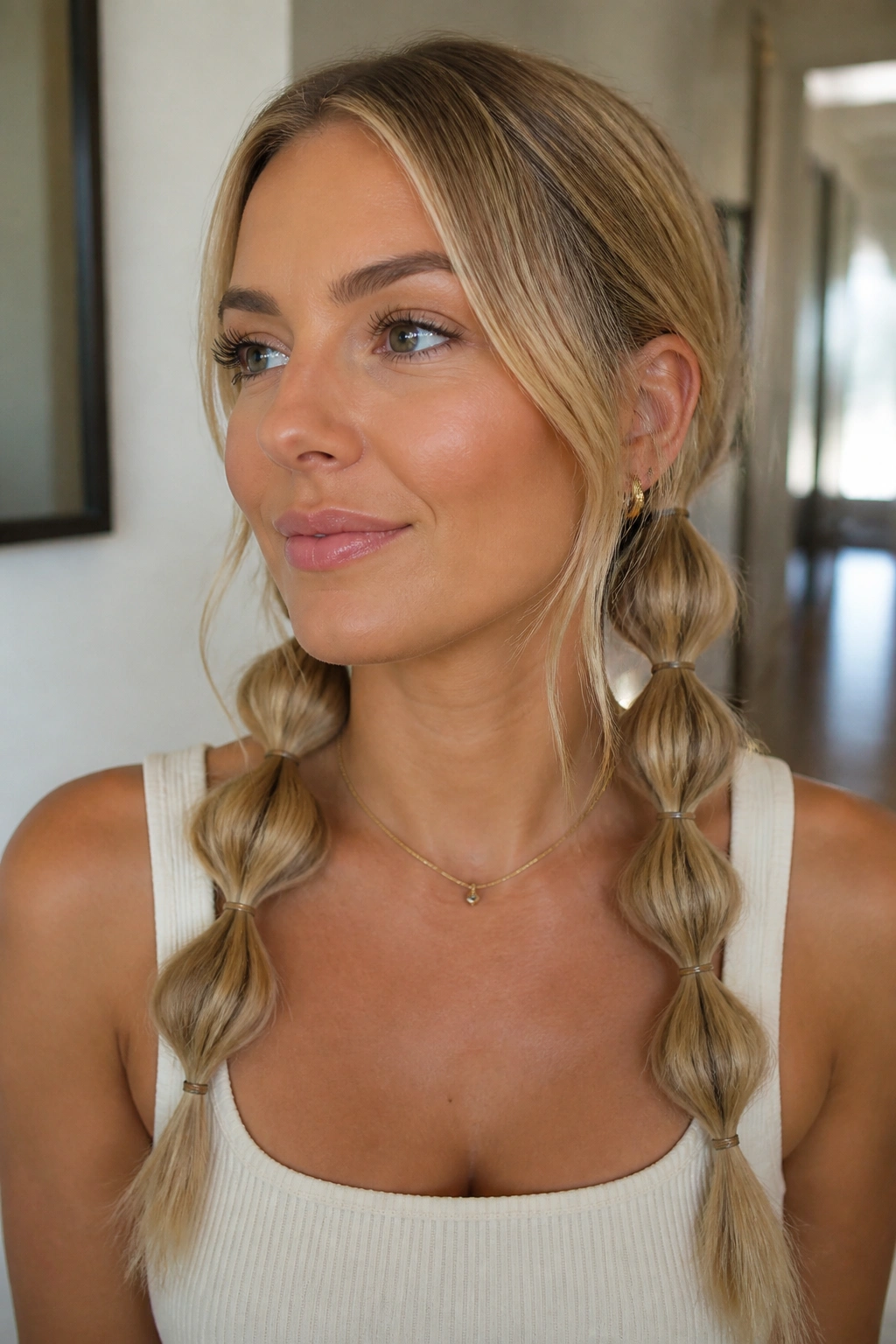
Bubble braids have a playful, segmented shape that works well on long faces because each elastic creates a horizontal break. Worn low, they keep the energy at the lower half of the head instead of stacking everything on top.
How to Place Them
Start with a low ponytail or two low sections, then add clear elastics every 2 to 3 inches down the length. Gently pull each section outward so it forms a bubble. The wider the bubble, the more side balance you get.
- Keep the roots smooth.
- Leave the crown flat.
- Use small, even spacing between elastics.
This style is fun, but it is not random. Placement decides whether it flatters or just looks busy.
29. A Silk Scarf and Loose Waves
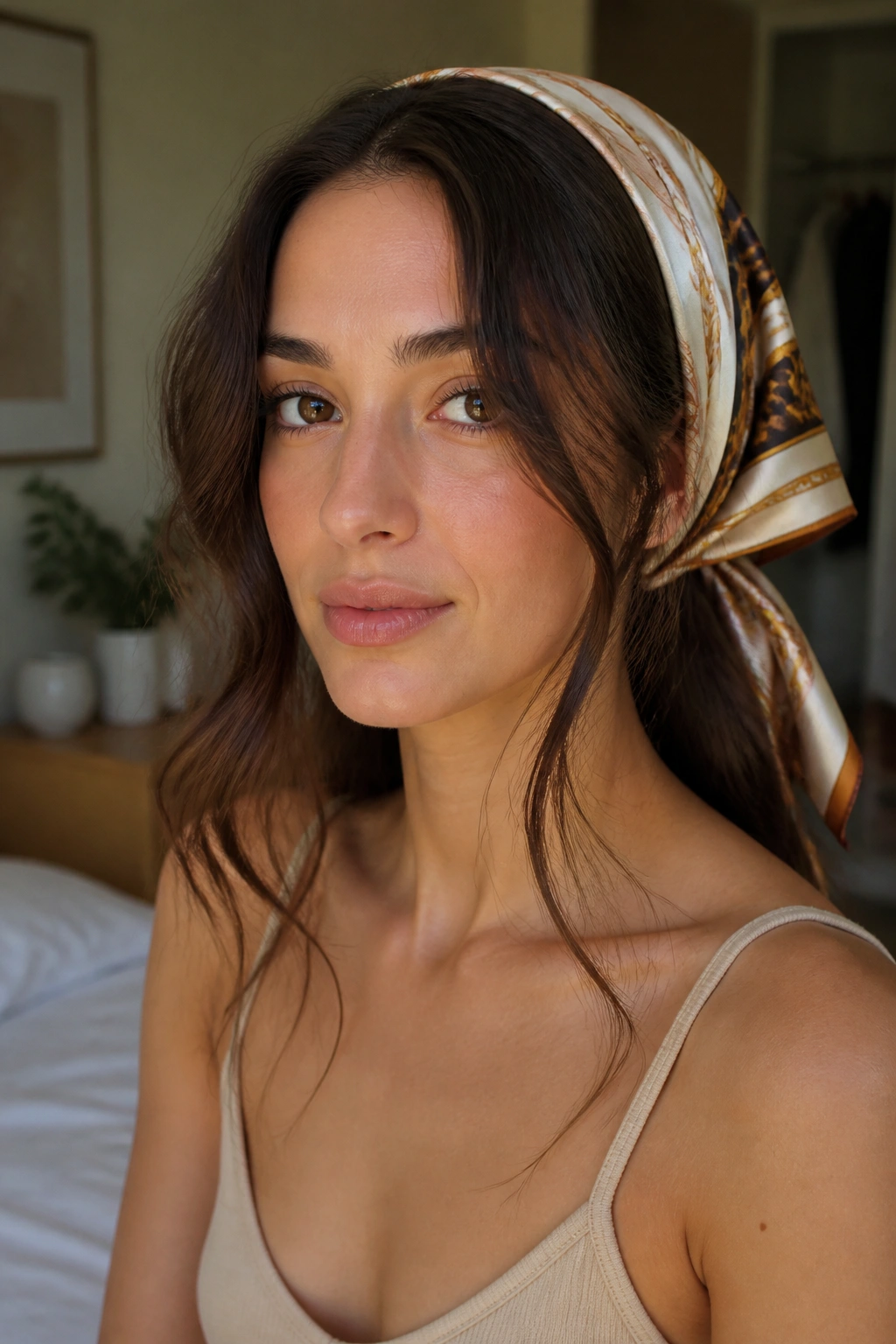
A silk scarf can do more for a long face than people expect, especially when it’s tied around loose waves or a low ponytail. It adds width at the sides of the head and draws attention to the cheek area instead of the length of the face.
A Few Ways to Wear It
Tie the scarf at the nape and let the ends fall over one shoulder. Wrap it around a low bun and leave the waves loose at the front. Or fold it into a narrow band and wear it across the crown while the hair stays textured below.
Loose waves matter here. Straight hair plus a scarf can feel too severe. A bend through the mid-lengths keeps the whole thing soft.
It’s a small accessory with a surprisingly useful job.
30. The Soft Blowout With Curved Ends
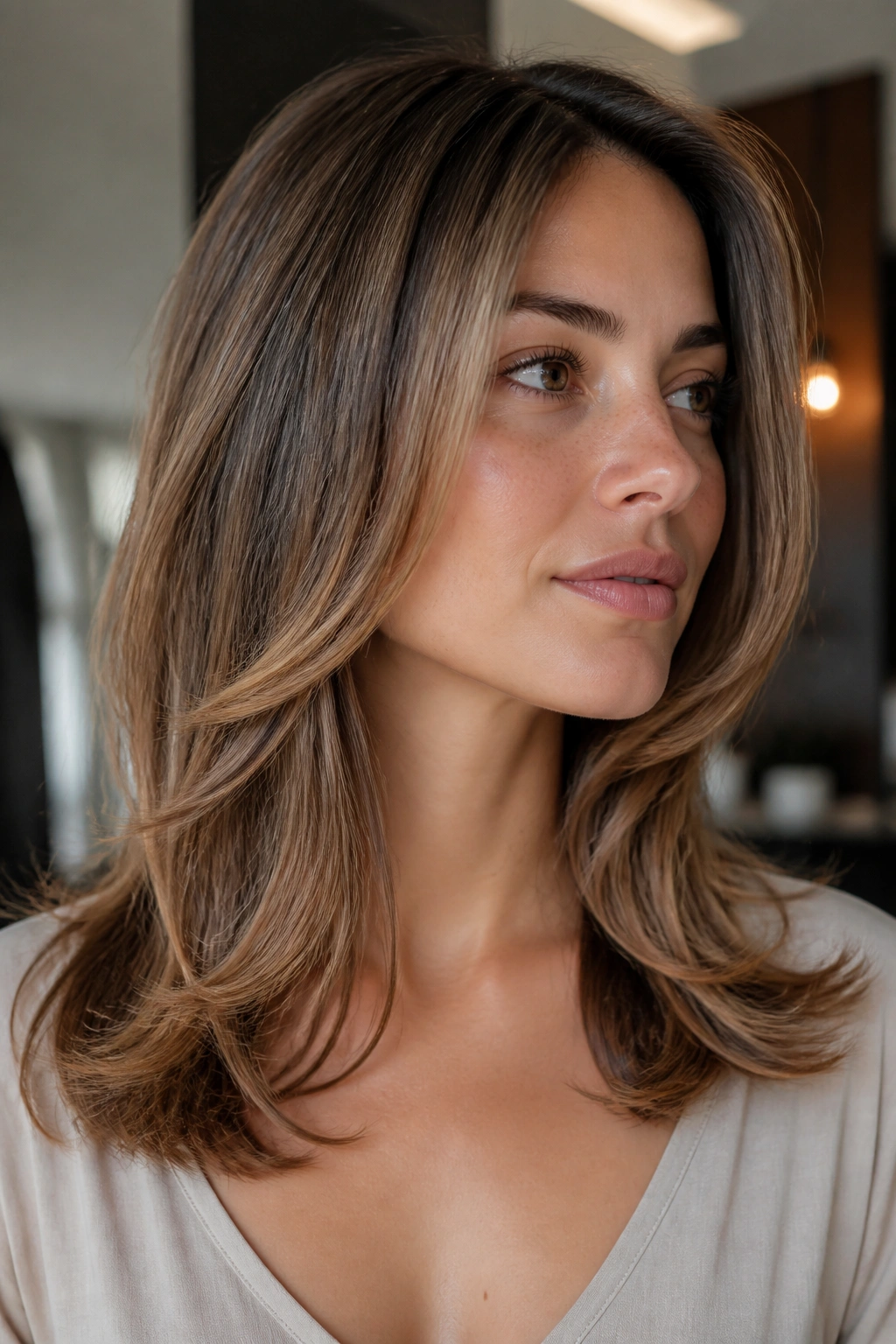
A soft blowout is the style I keep recommending when someone wants movement, polish, and a shape that doesn’t exaggerate length. The round brush creates width through the sides, and the curved ends stop the eye around the jaw and shoulders.
The best version does not chase huge volume at the crown. That part is easy to overdo. Keep the root lift gentle, focus the body through the mid-lengths, and turn the ends in or out depending on what flatters your hairline best. On a long face, that softness around the bottom half matters more than big hair at the top.
If you want one style that can look clean at work, relaxed on a weekend, and dressed up with a clip or barrette, this is the one I’d start with.
