



Ponytail hairstyles have a way of rescuing hair that refuses to cooperate. One minute your crown is flat, the ends are puffing out, and you have exactly five minutes to get out the door. The next minute, a clean ponytail can make the whole head look intentional.
A good ponytail is not lazy. It’s one of those styles that looks easy only when the details are right: where the elastic sits, how smooth the top is, whether the tail has shape or hangs like a rope. Get those pieces right and the style works for errands, office days, weddings, workouts, and the sort of dinners where you want to look polished without fussing over an elaborate updo.
The best part is how far one basic idea can stretch. A low ponytail can look sharp and expensive, while a high ponytail can feel sporty, flirty, or dressed up depending on the finish. Add braids, scarves, ribbons, texture, curls, or a wrapped base, and the same hairstyle changes personality fast.
A ponytail can be practical and still feel like a real style. That’s the sweet spot. And that’s where the good ones start.
1. Sleek Low Ponytail
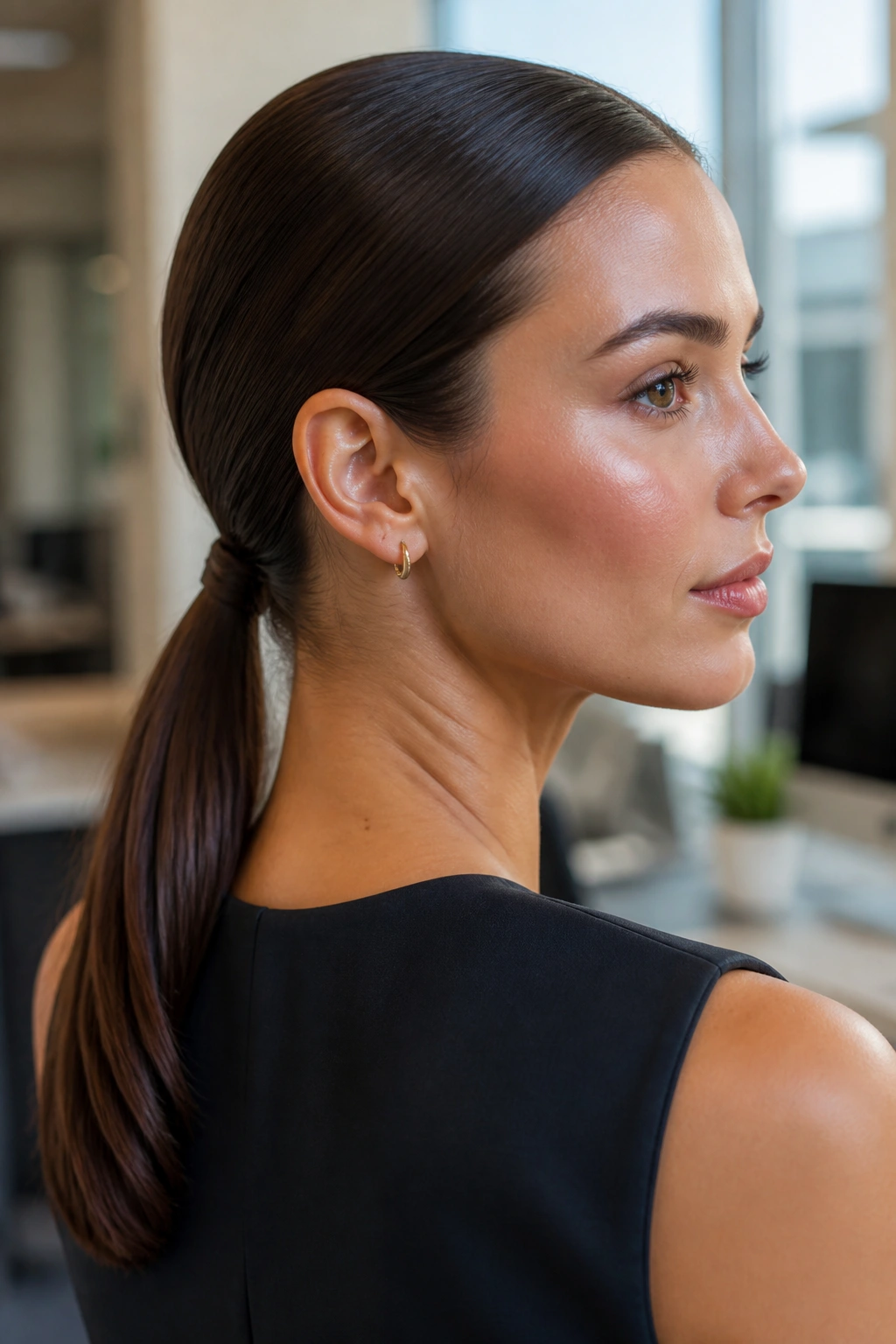
The sleek low ponytail is the cleanest version of the style, and that is exactly why it works so well. It sits at the nape, keeps the profile neat, and lets the face take center stage without looking severe.
Why It Works
A low ponytail lands in that rare spot between simple and finished. It pairs well with a blazer, a knit dress, a white T-shirt, or anything else that needs a little order. The shape is calm. The effect is strong.
A wide brush, a small amount of smoothing cream, and a clear elastic are enough for most hair types. If the crown tends to puff up, brush the top section back in short strokes instead of trying to yank everything into place at once. That’s where the bumps come from.
- Place the elastic right at the hollow of the neck for the neatest line.
- Use a fine mist of hairspray on the brush, not directly on the hair, to tame flyaways.
- Wrap a thin strand around the base if you want the style to look more polished.
- Keep the tail straight, curled, or bent under slightly at the ends depending on the outfit.
Best tip: keep the top flat, but don’t drag it tight enough to pull at the hairline. Clean is the goal. Tension is not.
2. High Lift Ponytail
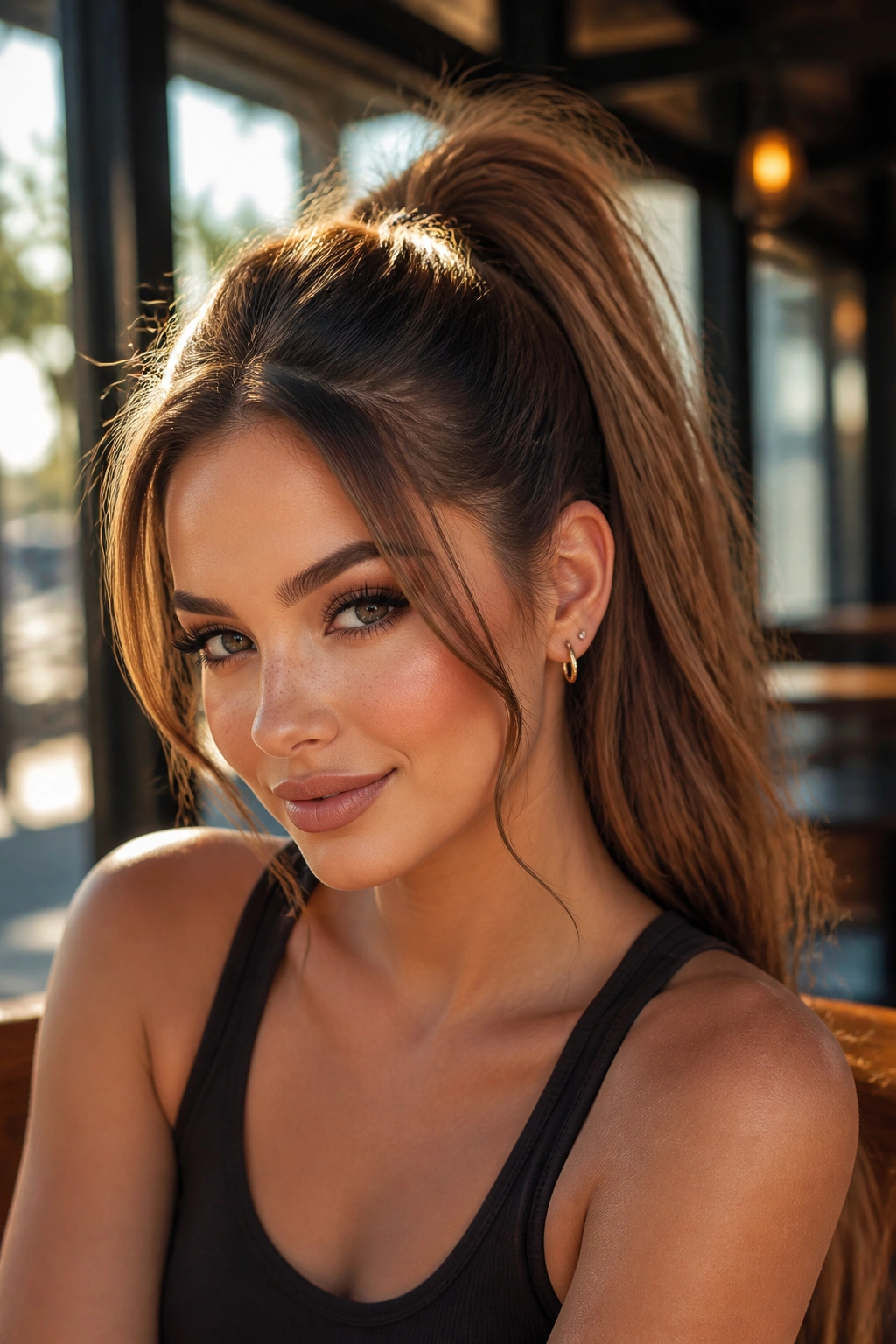
A high ponytail wakes the whole face up. It lifts the eyes, shows off the cheekbones, and gives even tired hair a bit of energy.
The trick is placement. Put the elastic at the highest point the head can comfortably support, then lift the roots at the crown with your fingers before you smooth the surface. If the ponytail sits too low, it starts to look like an afterthought.
I like this one for days when hair feels dull but still needs to hold up for hours. A little dry shampoo at the roots gives grip, and that matters more than people think. Silky hair slides. Hair with a touch of grit stays put.
A high ponytail also looks better when the front isn’t flattened into the skull. Leave a little height at the crown, then smooth only the top layer. That tiny bit of lift makes the whole style feel deliberate instead of rushed.
3. Bubble Ponytail
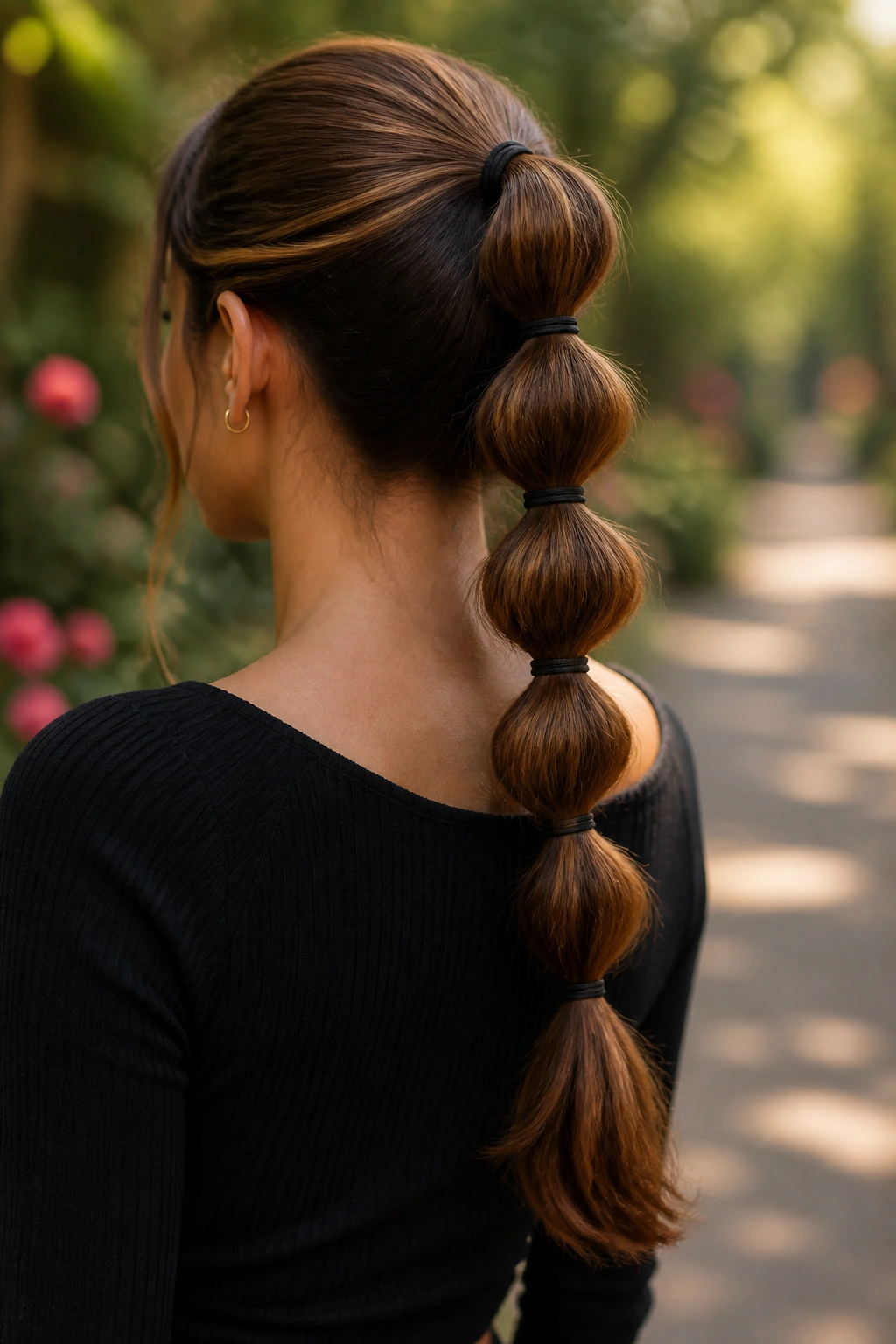
Why does a bubble ponytail look so styled when the technique is almost laughably easy? Because the repeating sections give the tail shape. Hair stops hanging in one long tube and starts reading like a design.
How to Get the Spheres Even
Start with a regular ponytail, then add small elastics every 2 to 3 inches down the length. Tug each section gently after securing it so the hair puffs between the bands. The bubbles should feel rounded, not stiff.
- Use clear elastics for fine hair or matched elastics for darker shades.
- Pull the bubbles apart with both hands, a little at a time.
- Keep the sections close together if the hair is short, farther apart if it is long.
- Mist the finished style lightly so the shape holds without crunch.
This style works well for school, travel, festivals, and any day when you want something playful without a lot of braid work. It also gives thin ponytails a little more presence. Small detail. Big payoff.
4. Braided Ponytail
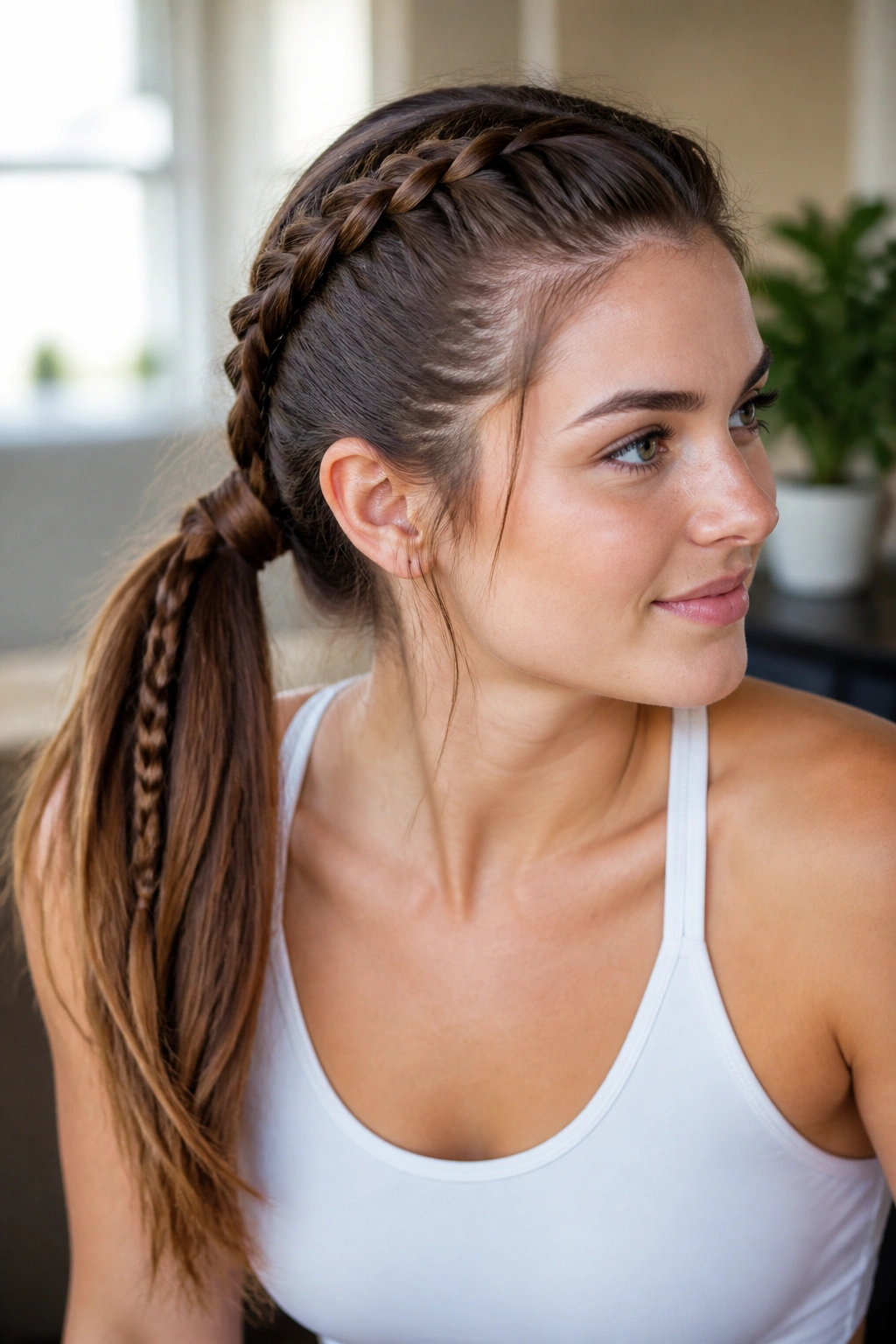
A braided ponytail is one of those styles that never looks out of place. It can lean neat, sporty, romantic, or straight-up formal, depending on how tight the braid is and where you start it.
The reason it works is structural. A braid locks the tail together, which helps on windy days, humid days, and long days when loose ends would normally fray out. If the hair is layered, braid a little tighter near the top so the shorter pieces do not slip free halfway through the day.
I reach for this one when I need the style to last. It holds better than a plain tail and looks more thought out than a fast knot at the back of the head.
- Try a three-strand braid for a classic finish.
- Switch to a French braid that ends in a ponytail when you want extra grip at the scalp.
- Leave the braid loose for softness, tight for a sharper line.
- Finish with a small elastic and a drop of serum on the ends.
The smaller the sections, the more detailed the braid feels. That’s the part most people miss.
5. Curly Ponytail
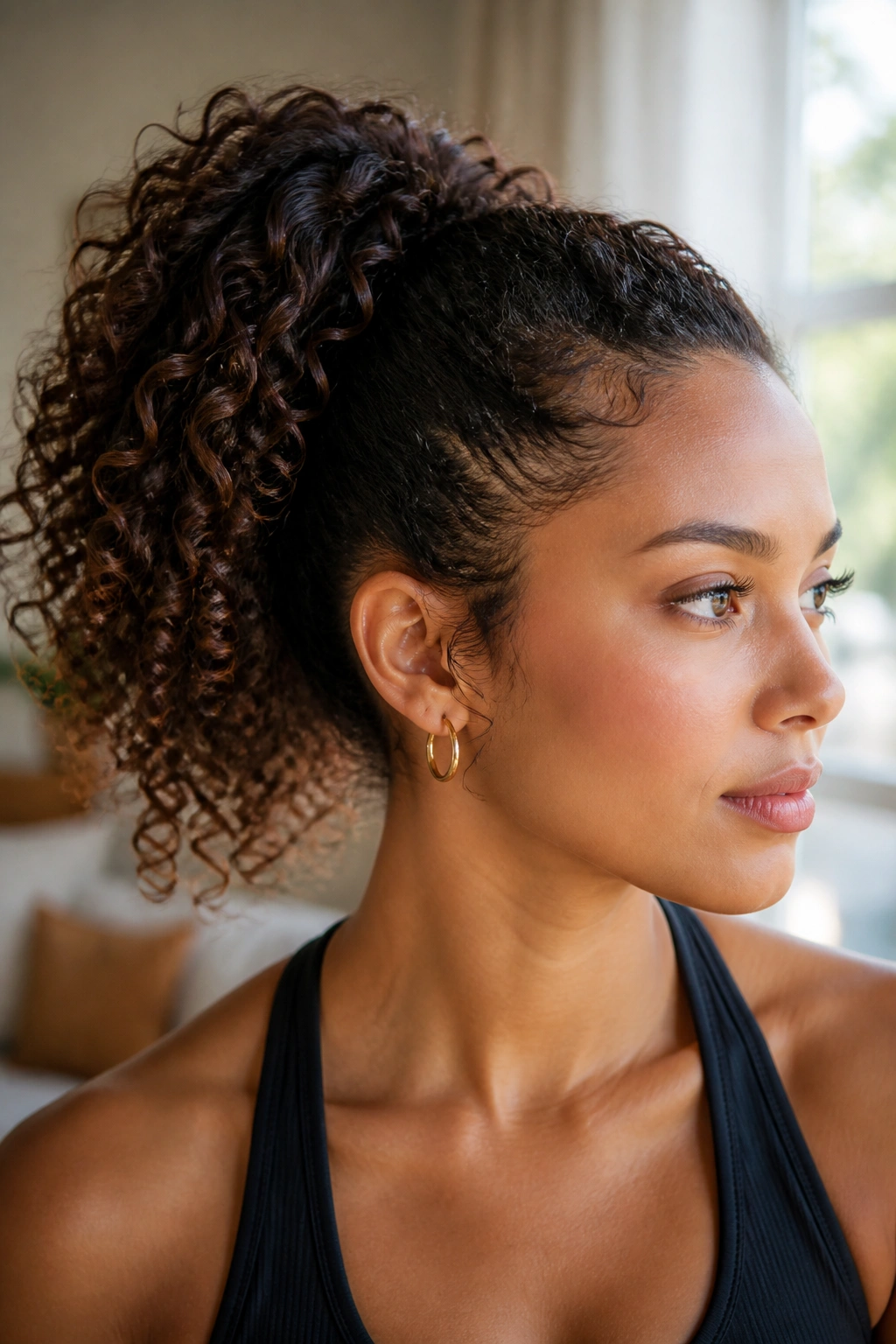
Curly ponytails need a different kind of care. The point is not to force the curls into obedience. The point is to keep the curl pattern alive from root to tip.
If your hair is naturally curly, skip brushing it dry unless you want the shape to balloon out in the wrong places. A little leave-in conditioner, a curl cream, and a gentle scrunch are usually enough. Then gather the hair with your hands, not a brush, so the pattern stays intact.
A high curly ponytail gives bounce and height. A low curly ponytail feels softer and a little more romantic. Both work, but the ends should stay defined. Frizz at the root is fine if it reads as texture. Frizz in the tail looks unfinished.
A satin scrunchie helps here. So does a loose hold. Tight elastics can leave a dent that flattens the curl, and once that happens, the whole tail loses shape.
One small rule. Preserve the curl first.
6. Side Ponytail
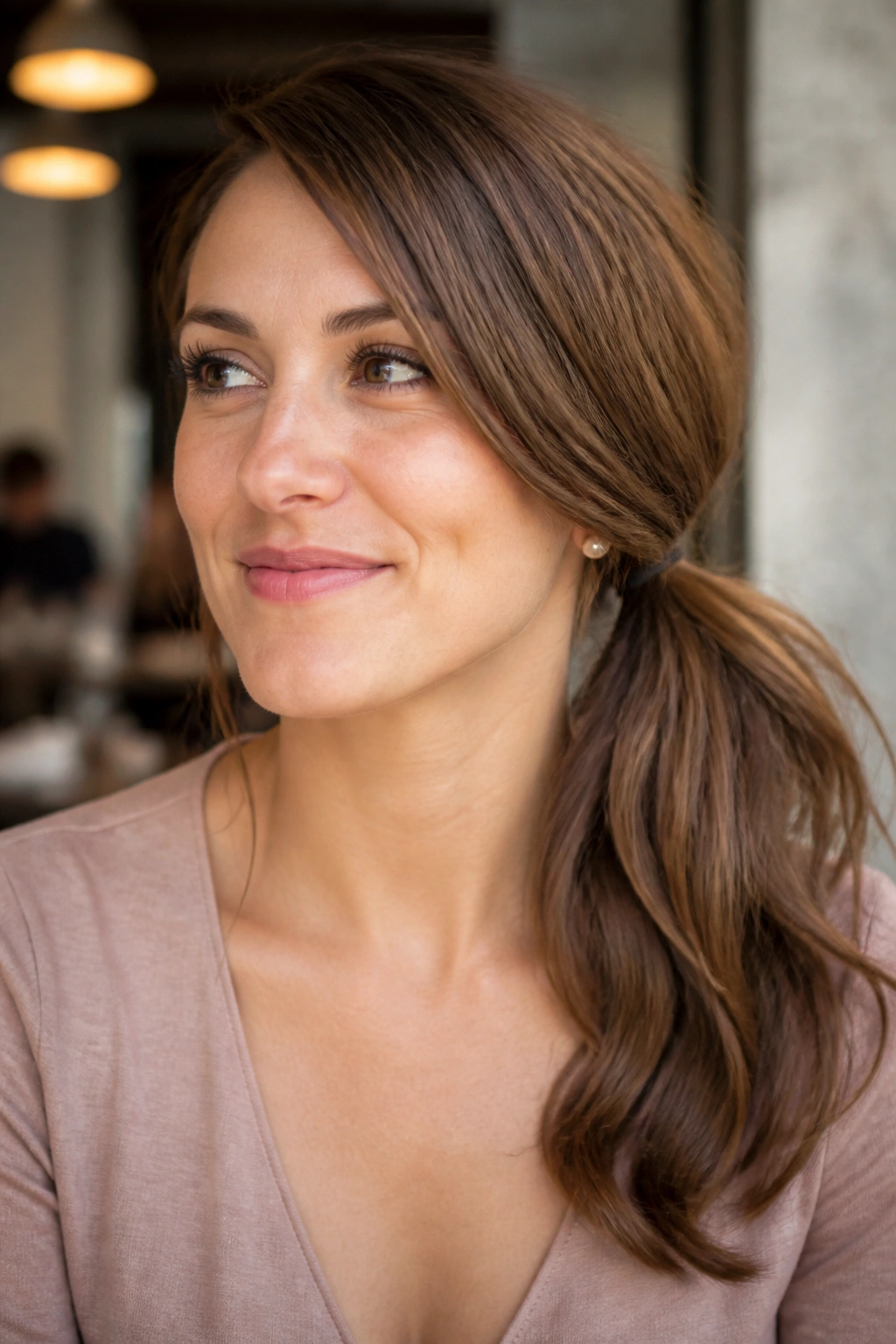
Unlike a centered ponytail, a side ponytail changes the whole mood fast. The shift is small, but the effect is not. Everything feels softer, a little more playful, and a bit less strict.
This style works especially well when the hair has movement. Put the elastic just below one ear or at the collarbone, then pull a few strands forward if you want the face to feel framed rather than pulled back. A side ponytail can also be the answer when a straight middle part feels too exact for the outfit.
What Makes It Different
It gives the tail a resting place off to one side, which breaks up the symmetry in a nice way. That makes it useful for dresses with one shoulder, sweaters with wide necklines, and any outfit that would look too rigid with a center tail.
A light mist of flexible spray is enough. If the tail is too stiff, the whole thing loses the swing that makes the style worth wearing.
7. Half-Up Ponytail
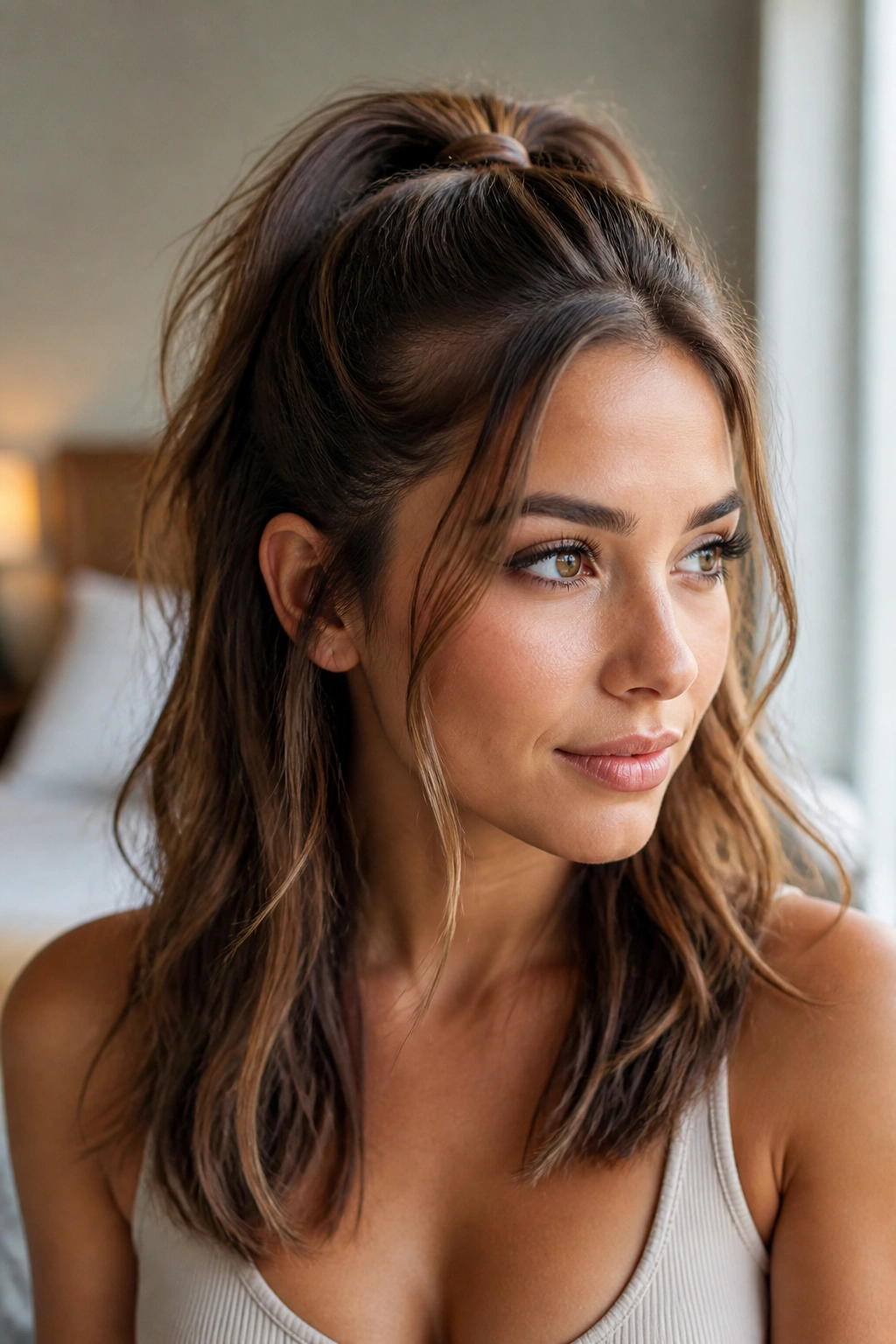
When you want hair off the face and still want length down the back, the half-up ponytail is the answer that keeps showing up. It can be casual, cute, polished, or a little glam if the crown has enough lift.
How to Keep It From Looking Childish
Take the hair from the temples back to the crown, then leave the lower section free. That shape matters. If you grab too much hair, the style turns into a full ponytail with pieces hanging awkwardly underneath.
A small tease at the crown helps. So does leaving a few strands loose around the face. The goal is balance, not perfection.
- Secure the top section with a small elastic or a slim clip.
- Curl the ends if you want the style to feel more dressed up.
- Keep the lower half brushed out so it falls smoothly.
- Add a tiny barrette if the top feels too bare.
This one is easy to wear and hard to ruin. That’s part of its charm.
8. Wrapped-Base Ponytail
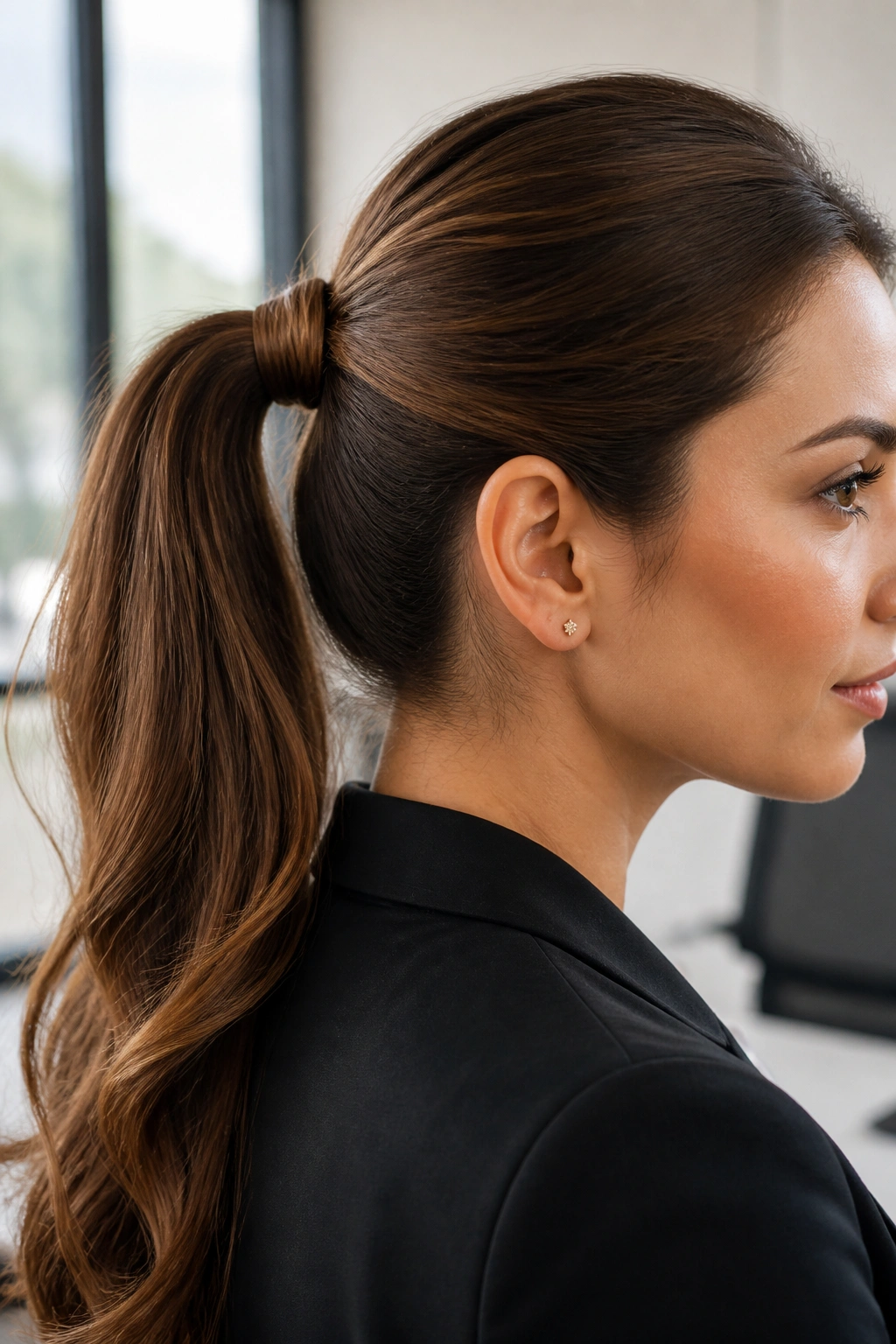
A wrapped-base ponytail is a tiny fix that changes the whole read of the style. Hiding the elastic makes the finish look cleaner, and the style suddenly feels like it was planned instead of thrown together.
The wrap can be a thin strand from the tail or a separate piece that gets pinned underneath. Either way, the eye stops on the smooth base instead of the hair tie. That’s why this version works for work events, weddings, and dinners where a regular elastic would feel a little plain.
I use this one when I want a ponytail to look finished without piling on accessories. It is a small detail, but hair is full of those little tells. A visible elastic makes the style look hurried. A wrapped base gives it some shape.
Pull the wrap snug, tuck the end underneath, and pin it flat. If the piece sticks out, the whole illusion falls apart. Annoying? Yes. Worth it? Also yes.
9. Rope Braid Ponytail
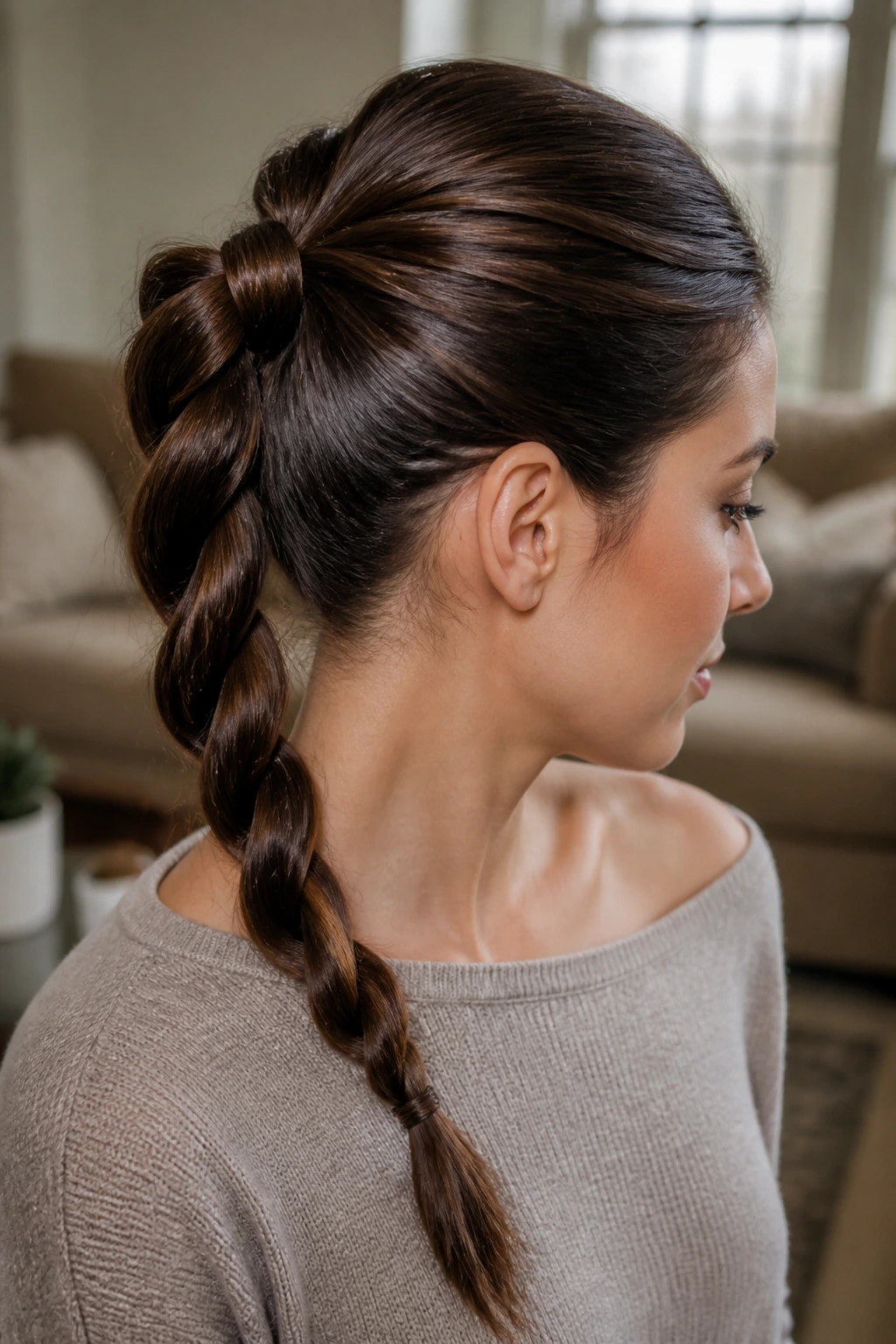
Why does a rope braid hold so well? Because the hair is twisted in a way that makes the tail lock into itself instead of splitting apart. It looks fancier than a simple braid, but the method is cleaner than most people expect.
How to Wear It
Split the ponytail into two sections, twist each section in the same direction, then wrap them around each other in the opposite direction. That direction detail matters. If you twist randomly, the braid loosens fast.
- Use a touch of mousse or cream on slippery hair before you start.
- Keep the twists even from top to bottom.
- Secure the end with a tiny elastic so the braid does not unravel.
- Pull the rope slightly wider if you want a fuller look.
This ponytail suits long hair especially well because the twist shows off length. It also works on gym days when you want something neat but not boring.
10. Messy Textured Ponytail
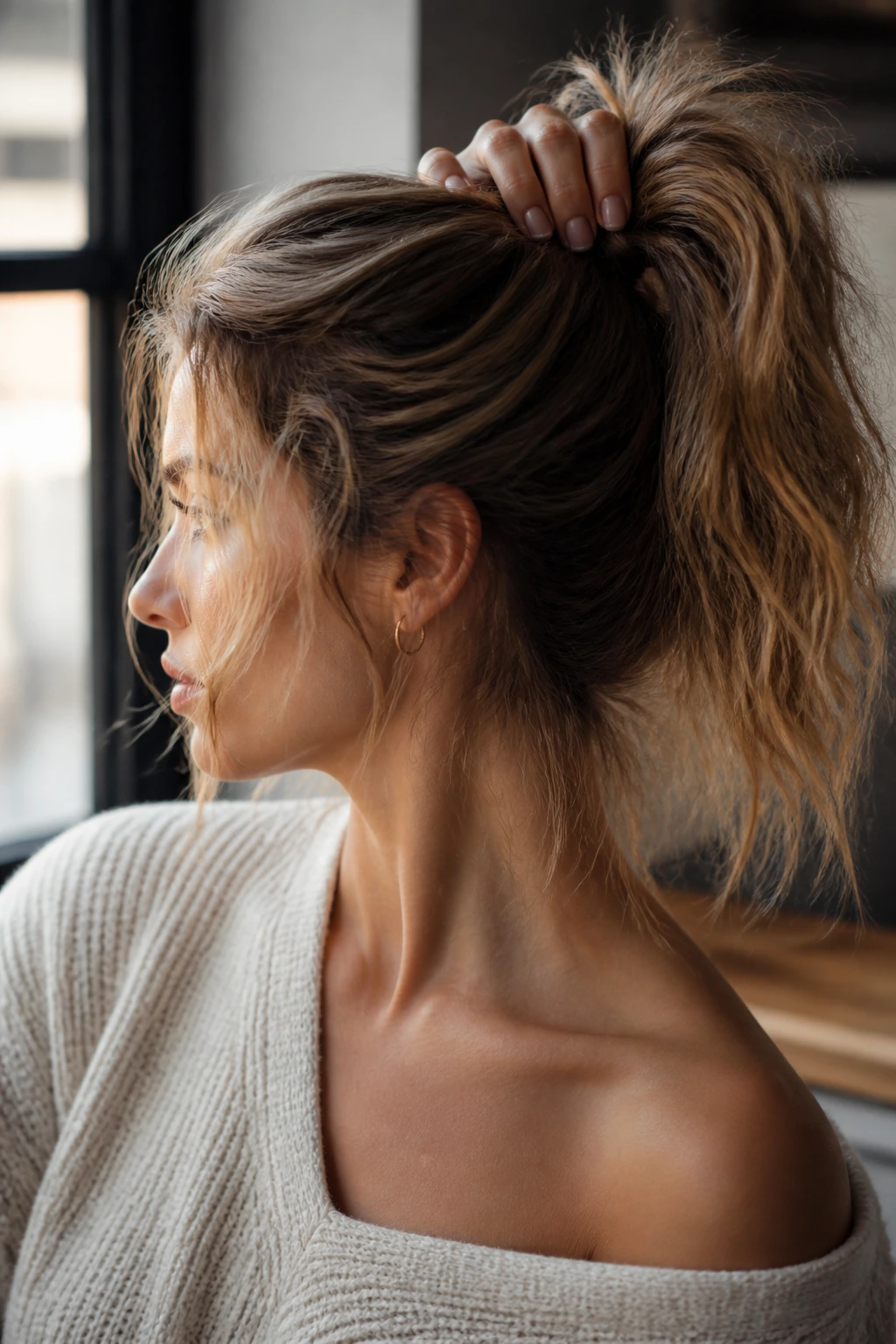
The messy textured ponytail is what I reach for when clean hair looks too stiff. It has movement, soft pieces around the face, and enough looseness to feel easy without falling apart.
Start with hair that has a little grit. Second-day hair works. So does a mist of dry shampoo at the roots and a few bends through the mid-lengths. Then gather the ponytail with your fingers instead of a brush so the surface keeps some irregularity.
A few loose strands around the temples change the whole thing. Don’t overdo it, though. If every piece falls out, the ponytail looks accidental. If two or three strands escape on purpose, it reads as relaxed.
- Pinch the crown slightly for lift.
- Scrunch the tail with a small amount of texture spray.
- Leave the ends a little undone for a softer finish.
- Choose a low or mid placement depending on how casual you want it.
This one is good for weekends, concerts, coffee runs, and any day that can handle a little undone charm.
11. Wet-Look Ponytail
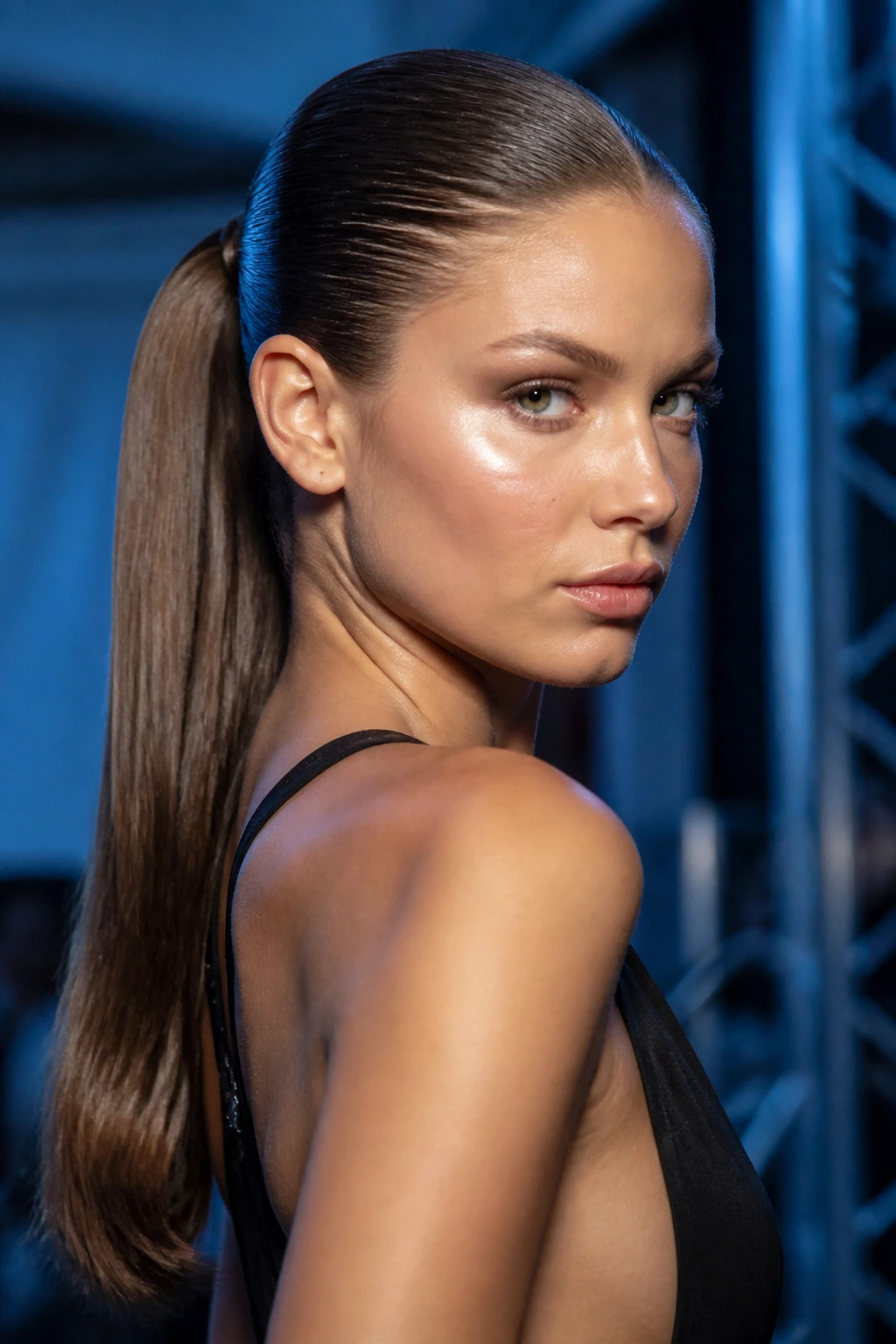
The wet-look ponytail is blunt in the best way. It has shine, control, and a little edge. There’s no hiding behind softness here. Every line shows.
That is why the prep matters so much. Use gel or a strong smoothing product at the roots, then comb the hair back until the surface lies flat and glassy. A fine-tooth comb gives a cleaner finish than fingers ever will. The ponytail itself can hang straight, curl at the ends, or stay tucked into the back of a jacket collar for a sharper effect.
This style works for nights out, fashion events, and dressier settings where a normal ponytail would feel too plain. It also handles shiny accessories well because the hair already has that polished, reflective look.
A wet finish is not forgiving. If the part is crooked or the base is bumpy, the problem shows immediately. That sounds harsh, but it is also the reason the style looks so crisp when it works.
12. Middle-Part Low Ponytail
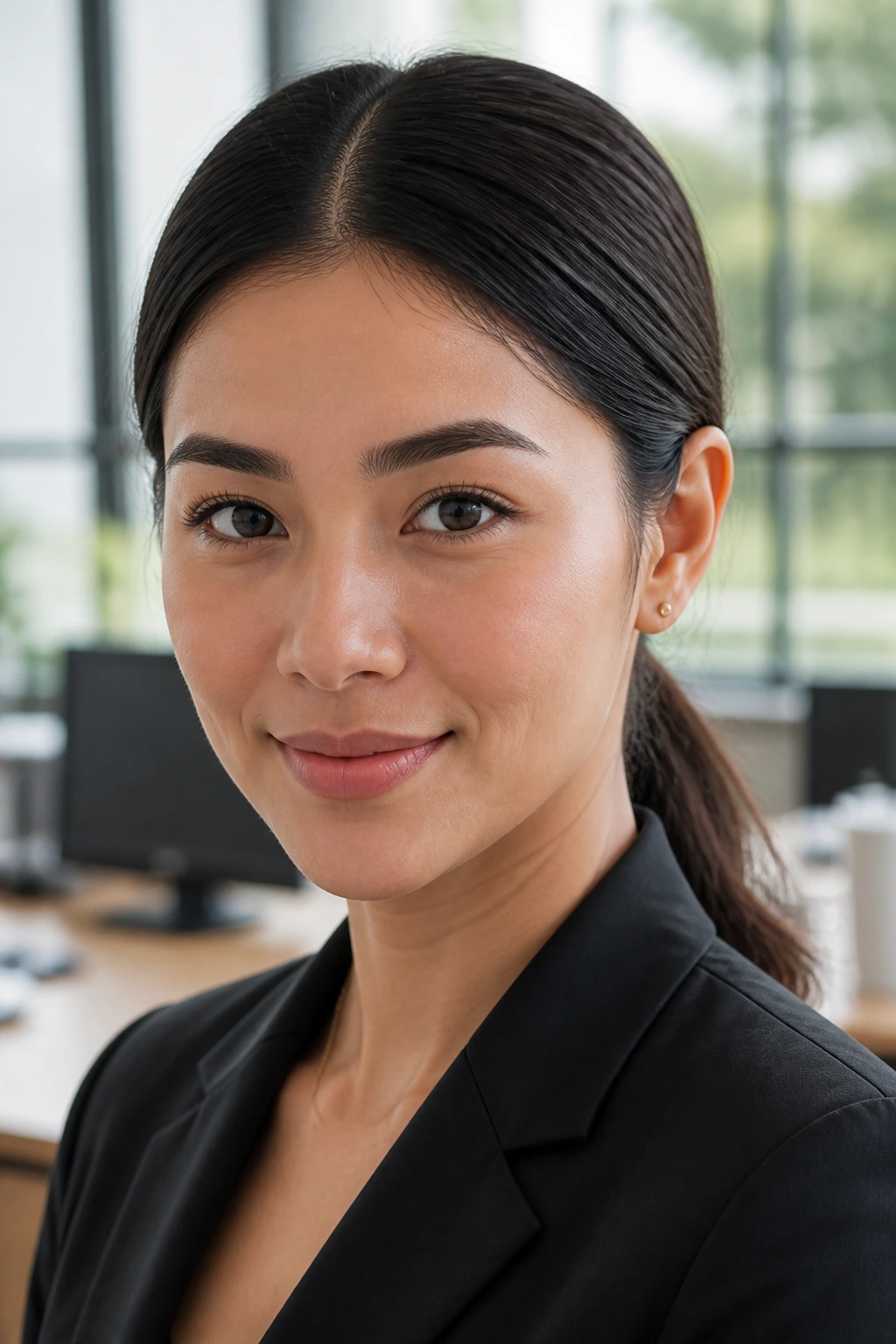
A middle-part low ponytail has a calm, exact feeling that a side part can’t quite match. It is the hairstyle version of a clean line on paper.
The middle part splits the face evenly, which makes the low ponytail feel balanced and a little more formal. It works especially well with straight hair or softly blown-out waves. If the crown needs help, flatten it first with a brush and a bit of smoothing cream so the part stays visible all the way back.
This is the ponytail I would choose for interviews, office settings, and dressed-up basics. It does not need extra decoration to make sense. The part is the point.
Use a low placement at the nape and keep the tail tidy. If the ends are curled under, the style feels softer. If they hang straight, the whole look gets sharper. Either way, the middle part keeps it anchored.
13. Deep Side-Part Low Ponytail
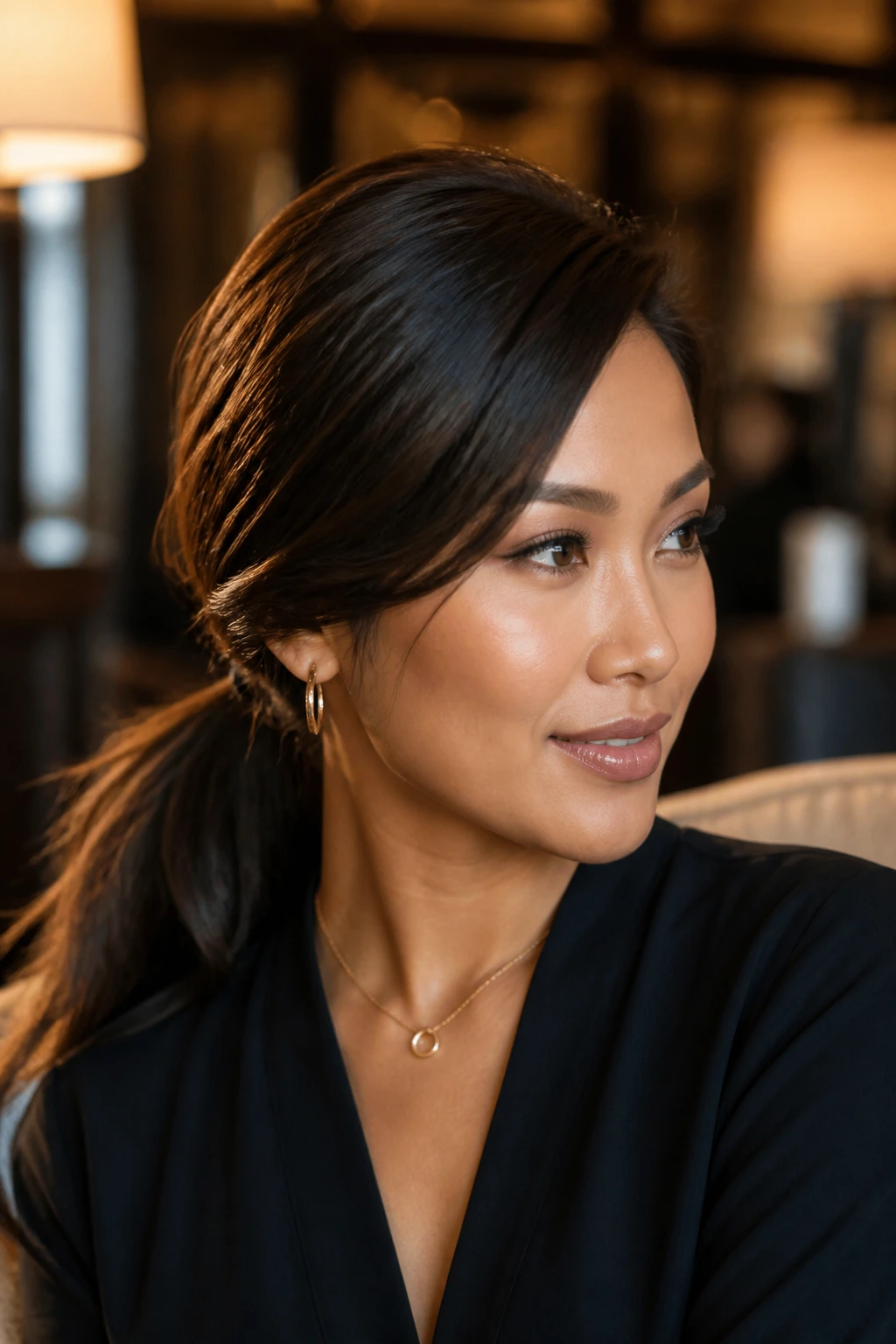
If the middle part feels too strict, the deep side-part low ponytail loosens the whole style without making it messy. That shift in balance changes the mood fast.
The part should start well off center, then sweep across the forehead before the hair gets gathered low at the back. It works beautifully with one ear tucked and one side left a touch fuller. That asymmetry gives the face movement and keeps the style from looking flat.
I like this version when an outfit needs a little softness. It reads less exact than the middle-part version, but it still feels neat enough for work or dinner. A small lift at the crown helps too, especially if the hair is fine and tends to collapse near the scalp.
Keep the tail smooth and let the part do the talking. That is the whole trick. No drama. Just shape.
14. Teased Crown Ponytail
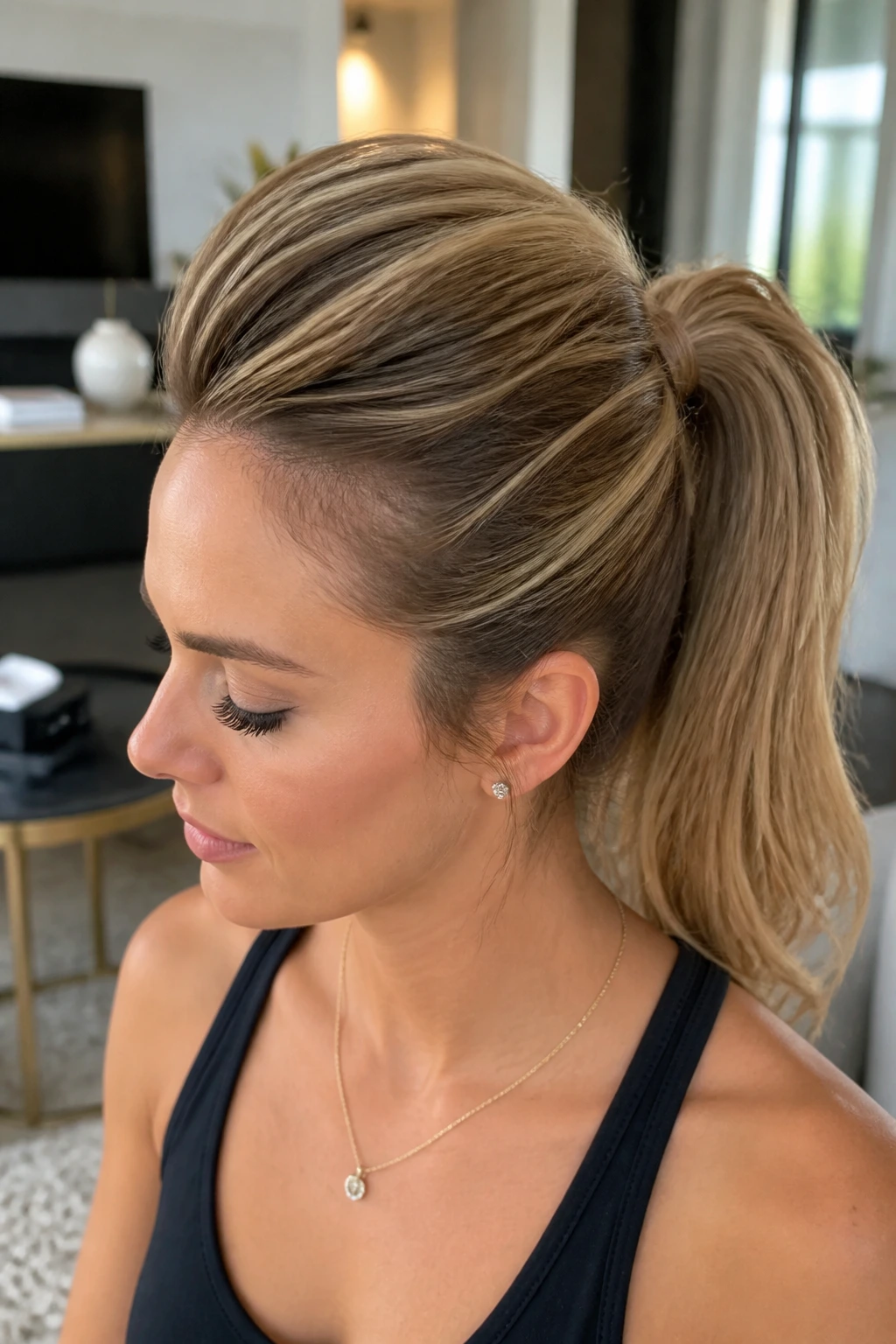
Can fine hair look fuller in a ponytail without extensions? Yes, and teasing the crown is the fast way to do it. The lift happens where the eye notices it most.
How to Build Lift Without Ruining the Ends
Take 2-inch sections at the crown and backcomb lightly at the roots. Then smooth only the outer layer so the tease stays hidden. If you comb too hard, the top goes flat again. If you tease the whole head, the texture turns rough and puffy in all the wrong places.
- Spray a little dry texture spray at the roots first.
- Backcomb only the first inch or two near the scalp.
- Secure the ponytail slightly below the highest point of the tease.
- Finish with hairspray under the crown, not over the whole head.
This is a smart option for thinner hair, but it works on thicker hair too when you want extra height. The key is restraint. A small amount of lift reads as stylish. Too much reads as fight-or-flight.
15. Curtain Bang Ponytail
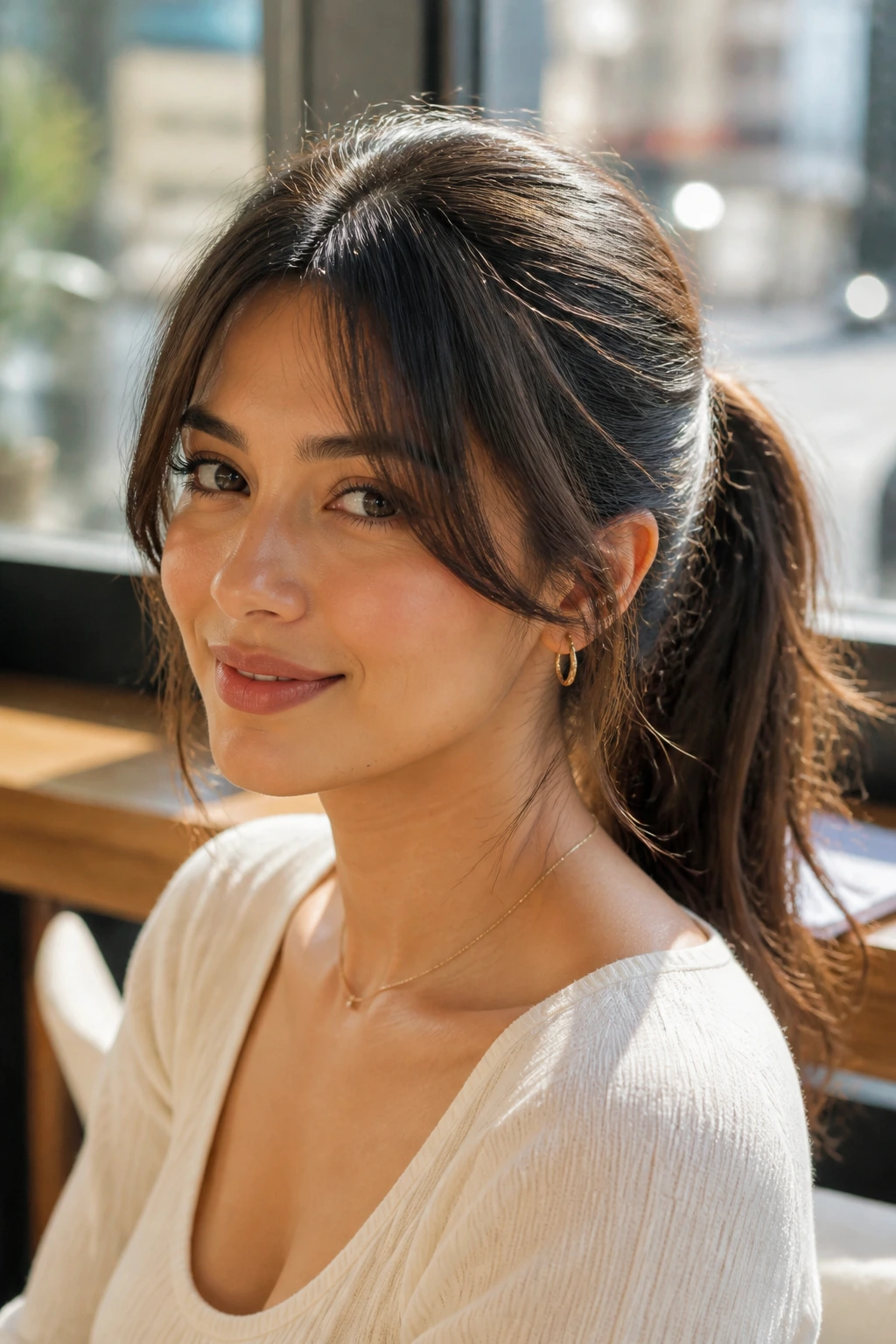
A ponytail with curtain bangs gives you the clean-up-the-face benefit without losing softness around the eyes. It is one of the easiest ways to make a simple tail look shaped.
The bangs need their own styling. Blow them away from the center with a round brush, then let them fall in pieces that skim the cheekbones or jaw. If they are left too short or too stiff, they fight the ponytail instead of framing it.
This style works across a lot of occasions because it does two jobs at once. The hair is up, which keeps it practical, but the face-framing pieces keep it from looking severe. That matters on days when you want polish without the hard edges.
A mid or low ponytail usually suits this look best. A high one can still work, but the bangs need a little extra softness to balance the lift. Small detail. Big difference.
16. Bow Ponytail
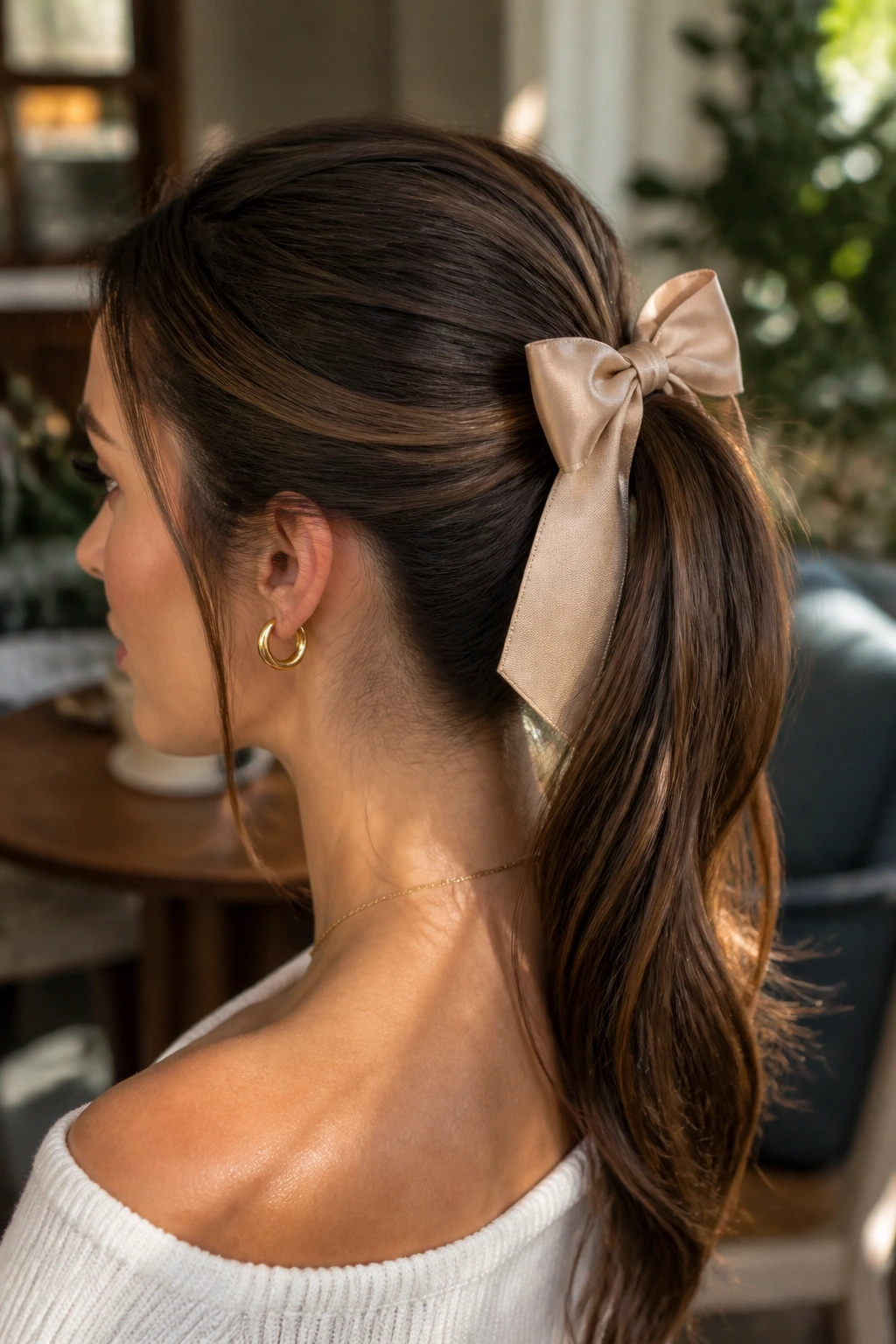
A bow tied at the base can change a ponytail from plain to charming in one move. It is one of the few accessories that feels sweet without looking childish when the scale is right.
Choose the bow with care. A ribbon that is too tiny disappears into the hair. One that is too wide starts to dominate the whole style. I like satin, grosgrain, or velvet depending on the outfit, with a width somewhere around 1 to 2 inches for most ponytails.
The neatest version sits just above the elastic, not hanging loose behind it. That keeps the shape tight and the finish clean. A bow ponytail works for parties, brunches, school events, and even a plain sweater when the hair needs a point of interest.
One small note: if the hair is very textured, secure the base first and pin the ribbon from underneath. Otherwise the bow slides around and loses the crisp knot that makes it appealing.
17. Silk Scarf Ponytail
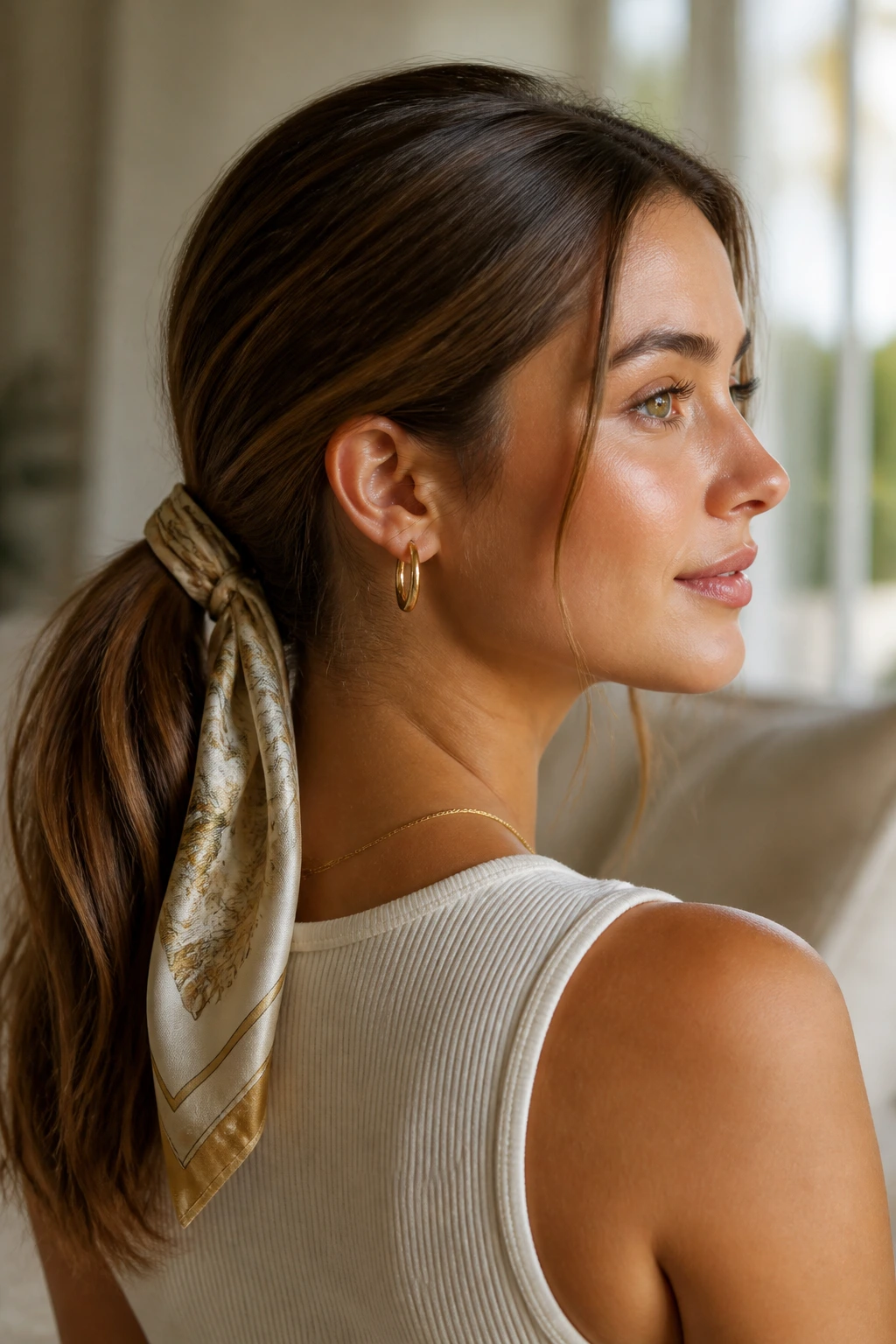
A silk scarf ponytail does something a bow can’t. It adds movement, print, and color all at once. The scarf becomes part of the shape instead of sitting on top of it.
This style works best when the scarf is folded into a narrow band or tied in a long tail from a low or side ponytail. That keeps it from swallowing the hair. A smooth scarf also helps tame flyaways, which is handy when the rest of the style is simple.
What the Scarf Changes
It softens the ponytail without making it fussy. It can hide an elastic, add contrast to plain clothing, and make a low ponytail feel more finished than a plain tie ever will. I prefer this version when the outfit is minimal and the hair needs one bold detail.
Pick a scarf that is not too slippery. If it slides out of the knot by lunch, the whole point is gone. A little friction helps, and so does a secure wrap at the base.
18. Dutch Braid Ponytail
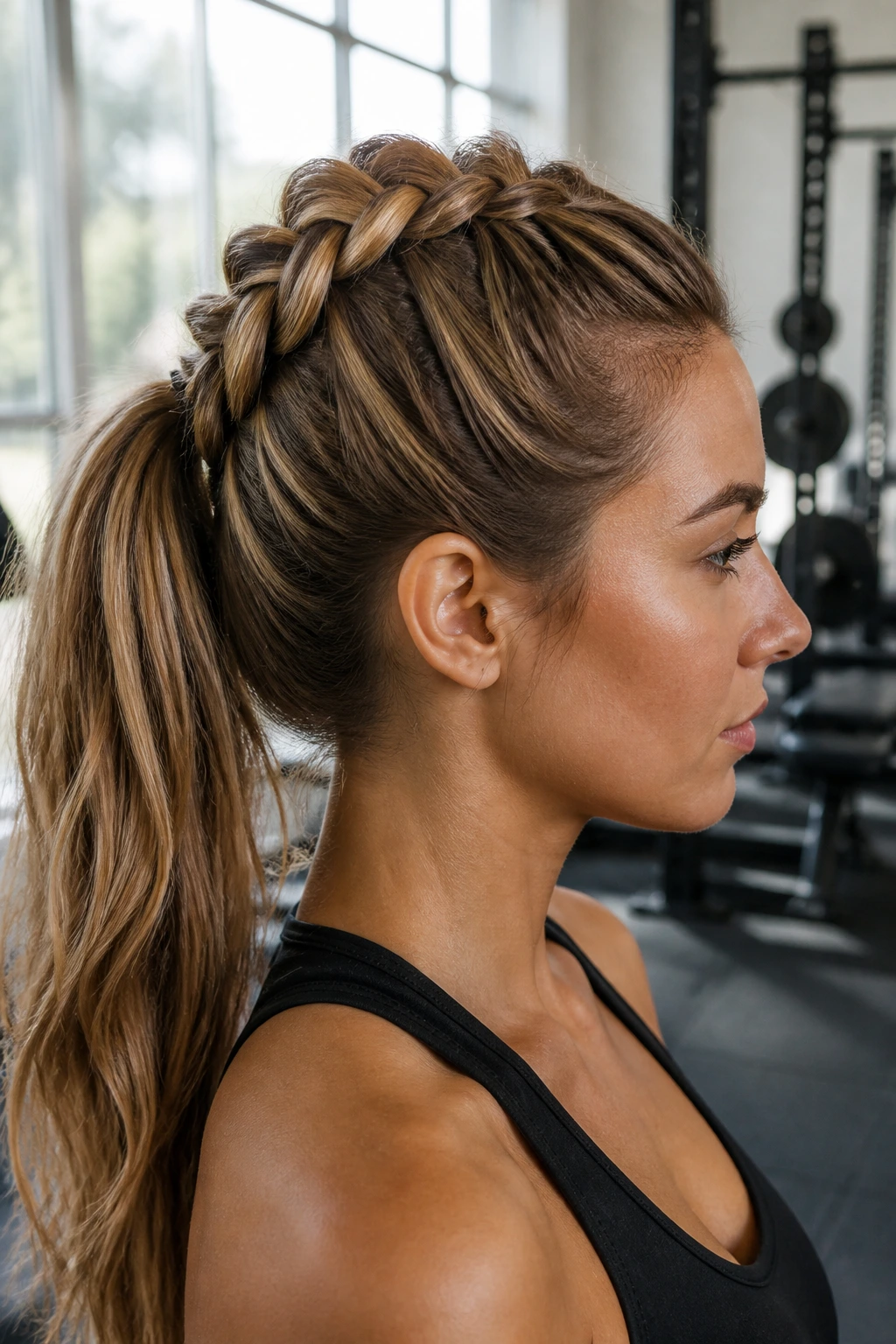
A Dutch braid ponytail brings the braid off the scalp in a raised pattern before it drops into the tail. That extra height gives the style structure right at the top, which makes it a strong pick for long days.
The braid starts near the hairline and feeds backward, so it keeps the front neat and controlled. Then the remaining hair can fall into a ponytail for more length and less bulk. It is a smart style for workouts, travel days, and any setting where you do not want the hair falling across your face.
- Keep the braid close to the scalp for a clean shape.
- Stop braiding at the crown and secure the rest into a tail.
- Use a small elastic at the end of the braid before joining the ponytail.
- Pull the braid slightly wider if you want more texture.
This one has more grip than a plain tail, which makes it useful on slippery hair. That grip is not glamorous, but it is useful.
19. Cornrow Ponytail
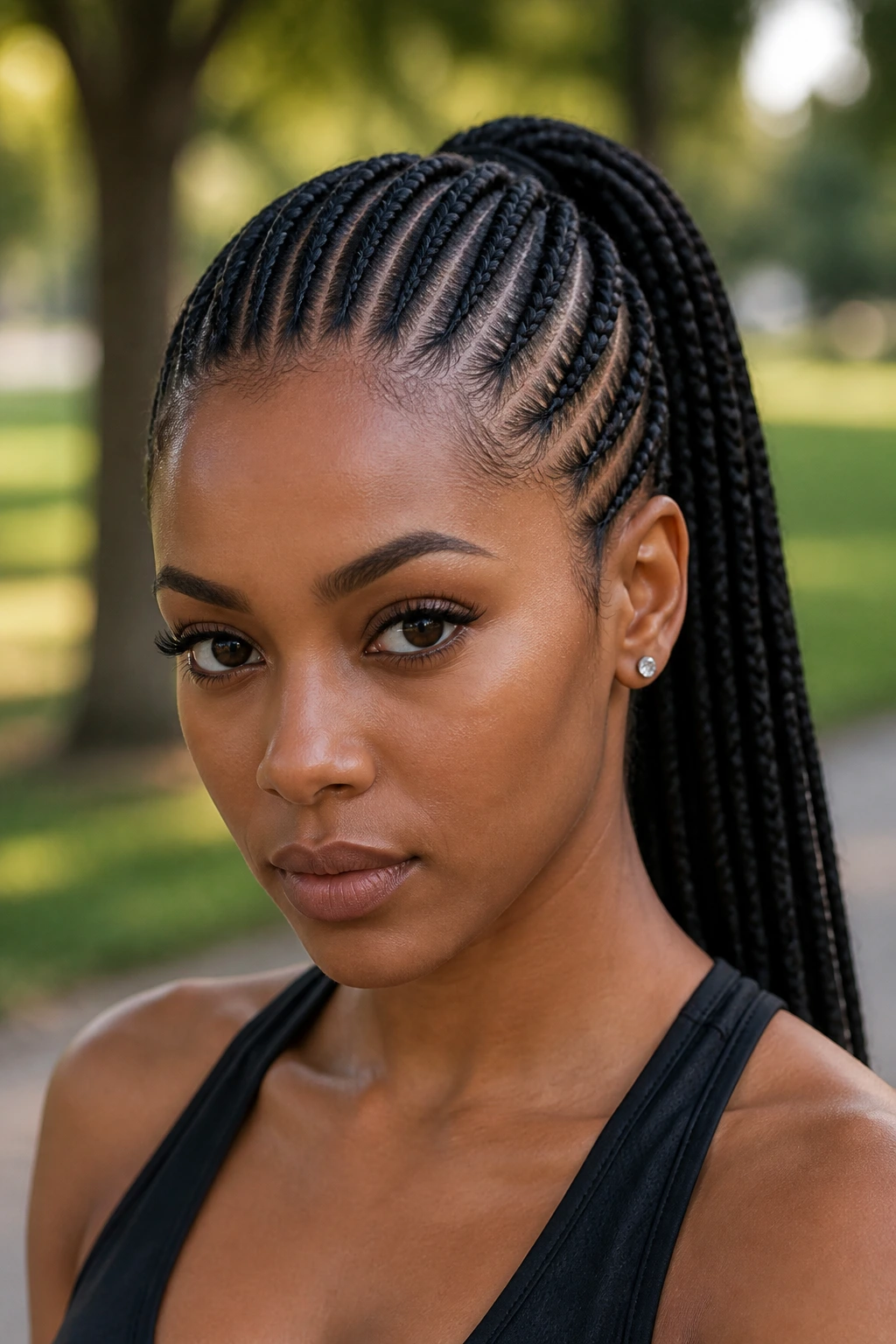
Cornrows pull the hair tight at the scalp, and that makes the ponytail itself feel almost weightless. The style is firm, neat, and built to last.
This is also one of the ponytail styles where scalp comfort matters. The braids should feel secure, not painful. If they are pulled too hard, the style stops being wearable long before the day is over. Respecting the scalp is part of the look.
A cornrow ponytail can be simple with a few rows feeding into one tail, or more intricate with several clean sections that lead into a high or low ponytail. Either way, the design lives in the base. That is where the visual interest is.
I would choose this style for long wear, humidity, and active days when loose hair would be a nuisance. It’s also one of the most dependable ways to keep textured hair controlled without fighting the pattern.
20. Crown Braid Ponytail
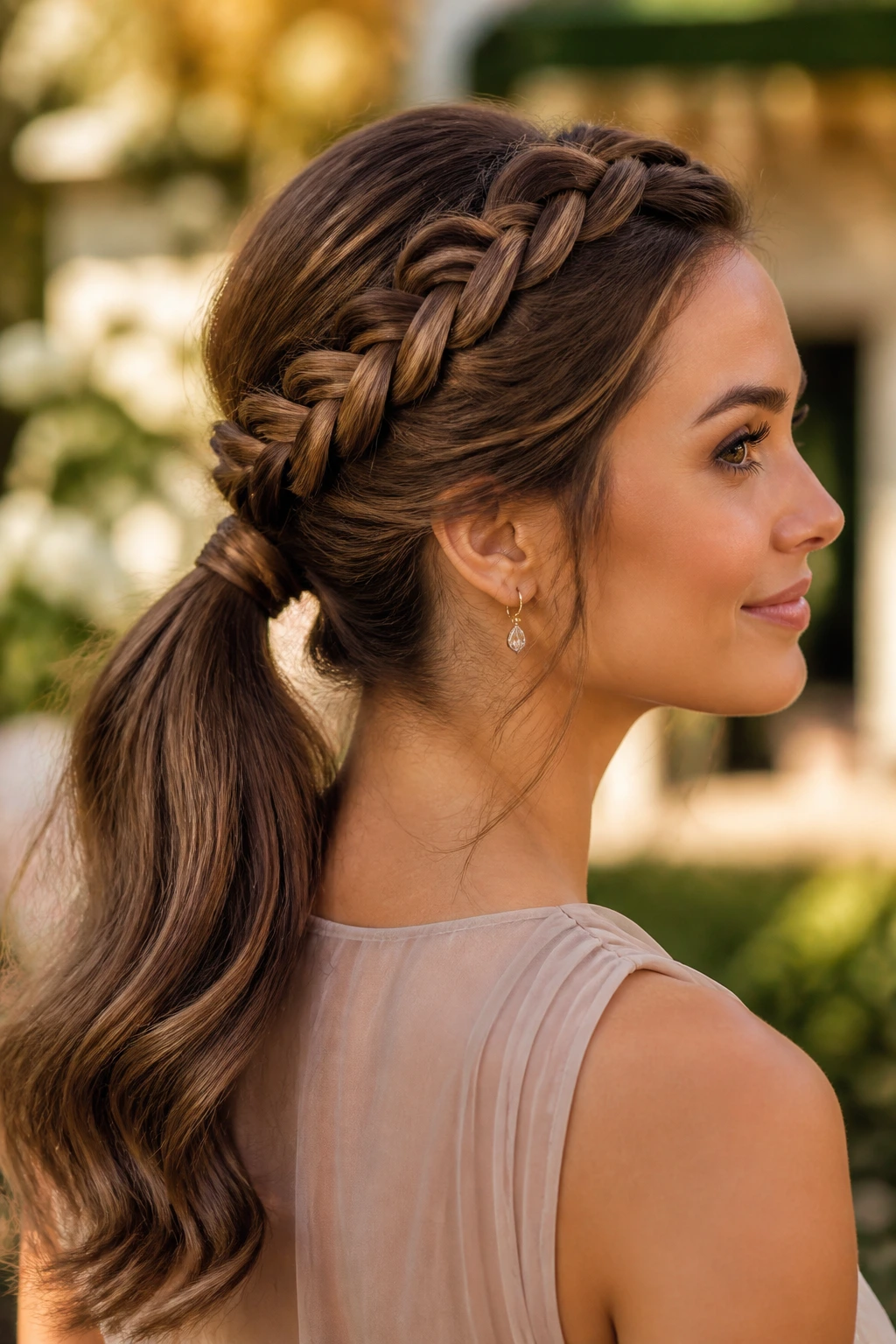
Why does a crown braid make a ponytail feel so dressed up? Because the braid creates a frame before the tail even starts. The eye reads the whole head as styled, not just the back.
Where to Place the Tail
A low tail gives the braid a romantic finish. A mid tail keeps it balanced. A high tail makes the style feel more spirited and a little less formal.
- Braid from one side of the hairline across the crown.
- Secure the braid before gathering the remaining hair.
- Leave the ponytail smooth if you want the braid to stay the focus.
- Add a small pin or pearl near the braid’s end for a dressier touch.
This style works for weddings, outdoor events, and dinners where a simple tail needs one extra detail. It is also one of those styles that photographs cleanly from the side. The braid does the framing work for you.
21. Double Ponytail Illusion
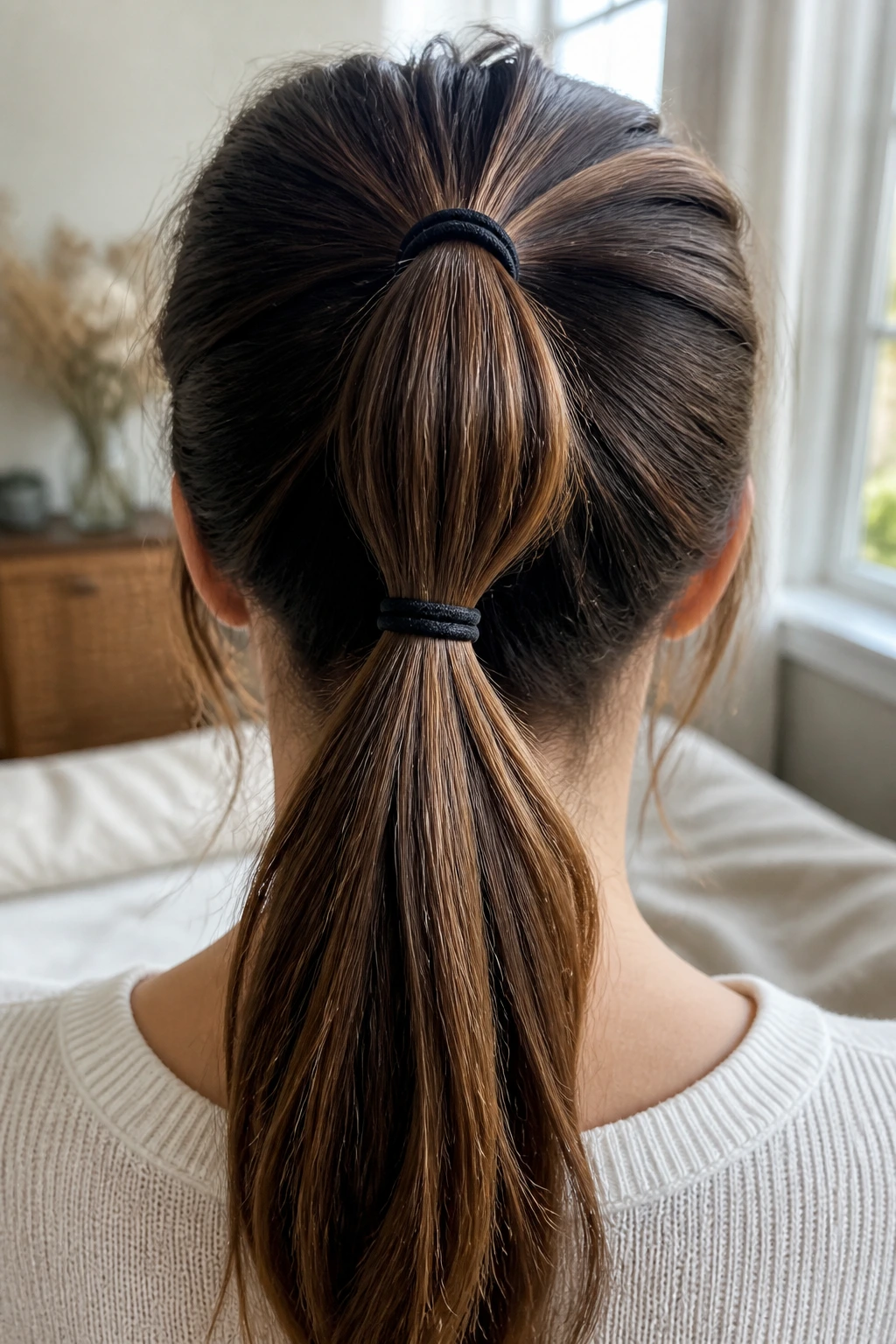
If your hair is long but fine, the double ponytail illusion can make the style look fuller without adding fake volume at the roots. It uses two ponytails stacked vertically so the shape sits higher and the tail looks thicker.
The first ponytail goes near the crown. The second sits underneath it, hidden by the top section. Together, they create a longer, more lifted shape than a single elastic can manage on its own. This trick is not about tricking the eye for fun. It is about giving long hair a better silhouette.
This works especially well when the ends are a little thin. The split structure keeps the weight from dragging everything down in one long line. A soft brush-over at the top hides the seam between the two ties.
It looks more complex than it is. That is half the appeal.
22. Knotted Ponytail
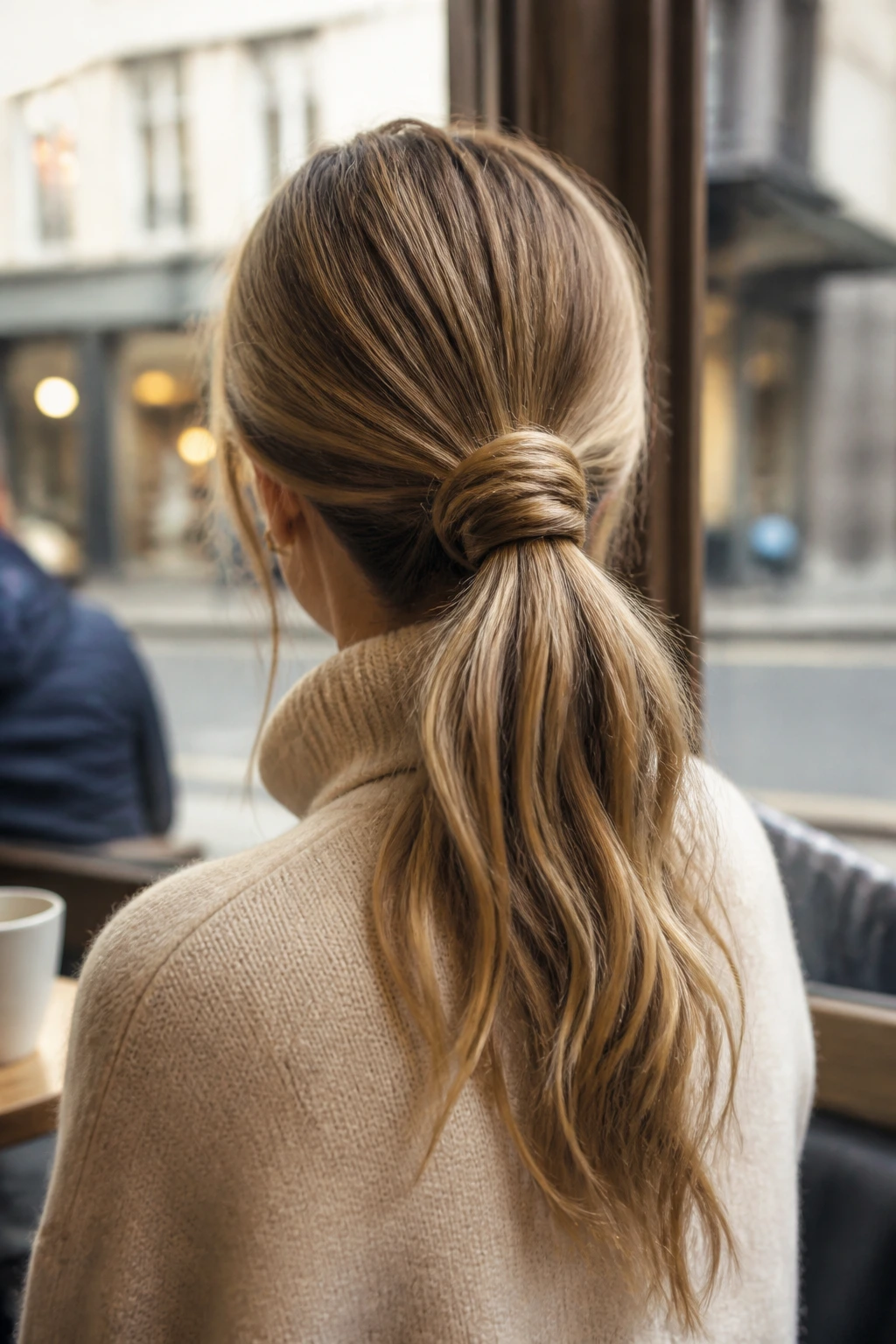
A knotted ponytail has a little more character than a standard tail because the base itself becomes part of the design. You split the hair, tie it in a knot, and let the rest fall from underneath or through the loop.
It sounds fussy. It is not. Once you learn the hand motion, it goes fast, and the result looks more editorial than a simple elastic ever will. The knot gives a clean twist at the back without needing a braid.
I like this one for medium to long hair when I want something different but not loud. It reads modern in a quiet way. The shape is the draw, not extra decoration.
Pin the knot flat if the hair is slippery. That small step keeps the style from loosening right at the base, which is where it tends to go wrong.
23. Loop-Through Ponytail
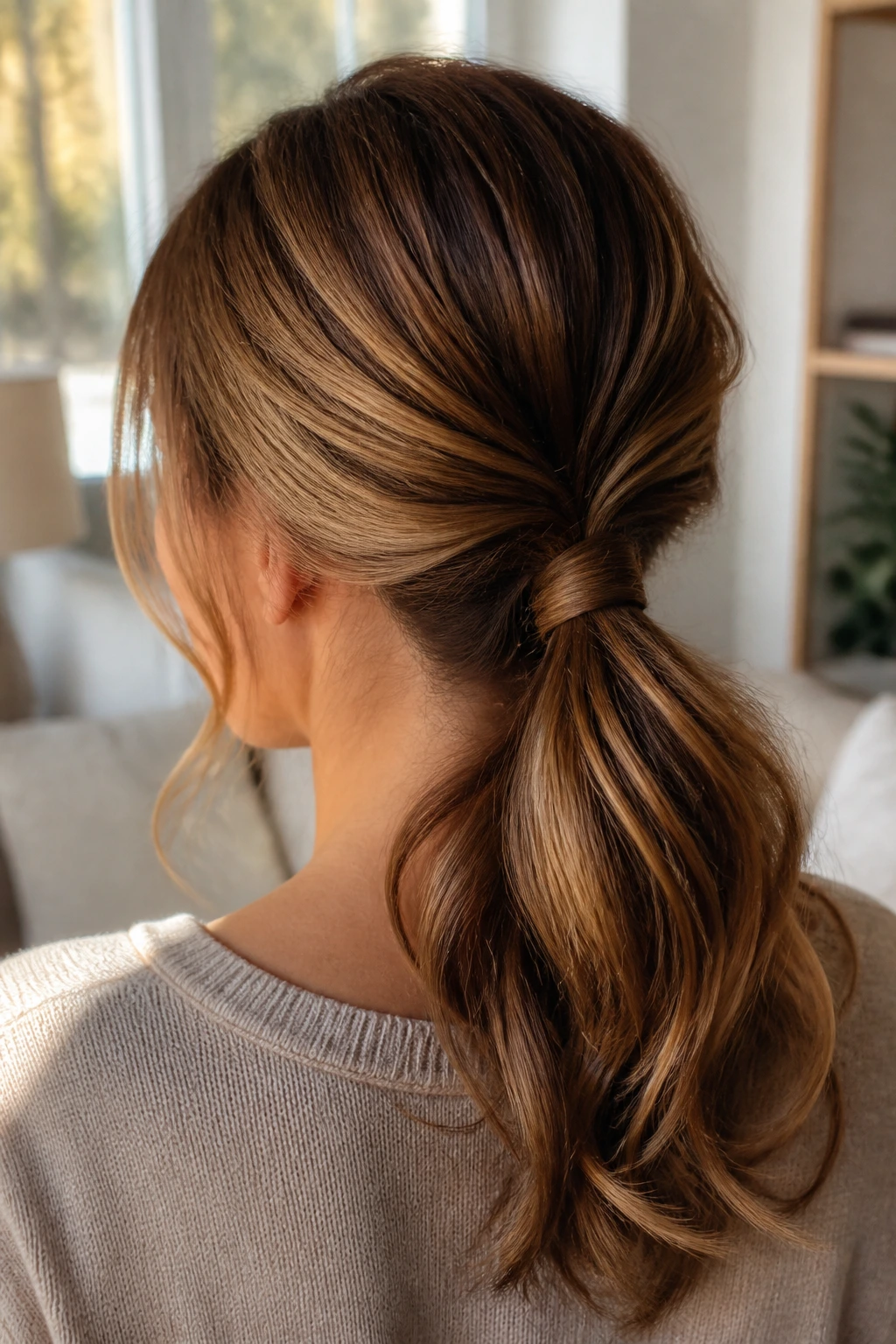
Unlike a standard ponytail, the loop-through version adds a twist at the base with almost no extra tools. It is the kind of style that looks harder than it is, which is useful on rushed mornings.
You gather the hair into a low or mid ponytail, create a small opening above the elastic, then flip the tail through that opening. The result is a tucked twist that makes the ponytail look more finished. It is a neat option for medium-length hair and a good backup when braids feel like too much effort.
The best part is the shape at the base. It gives the ponytail a little depth without needing teasing, pins, or extra accessories. If the hair is very layered, use a bit of grip spray before you start so the top section stays smooth.
Fast. Clean. No drama.
24. Ribbon-Laced Ponytail
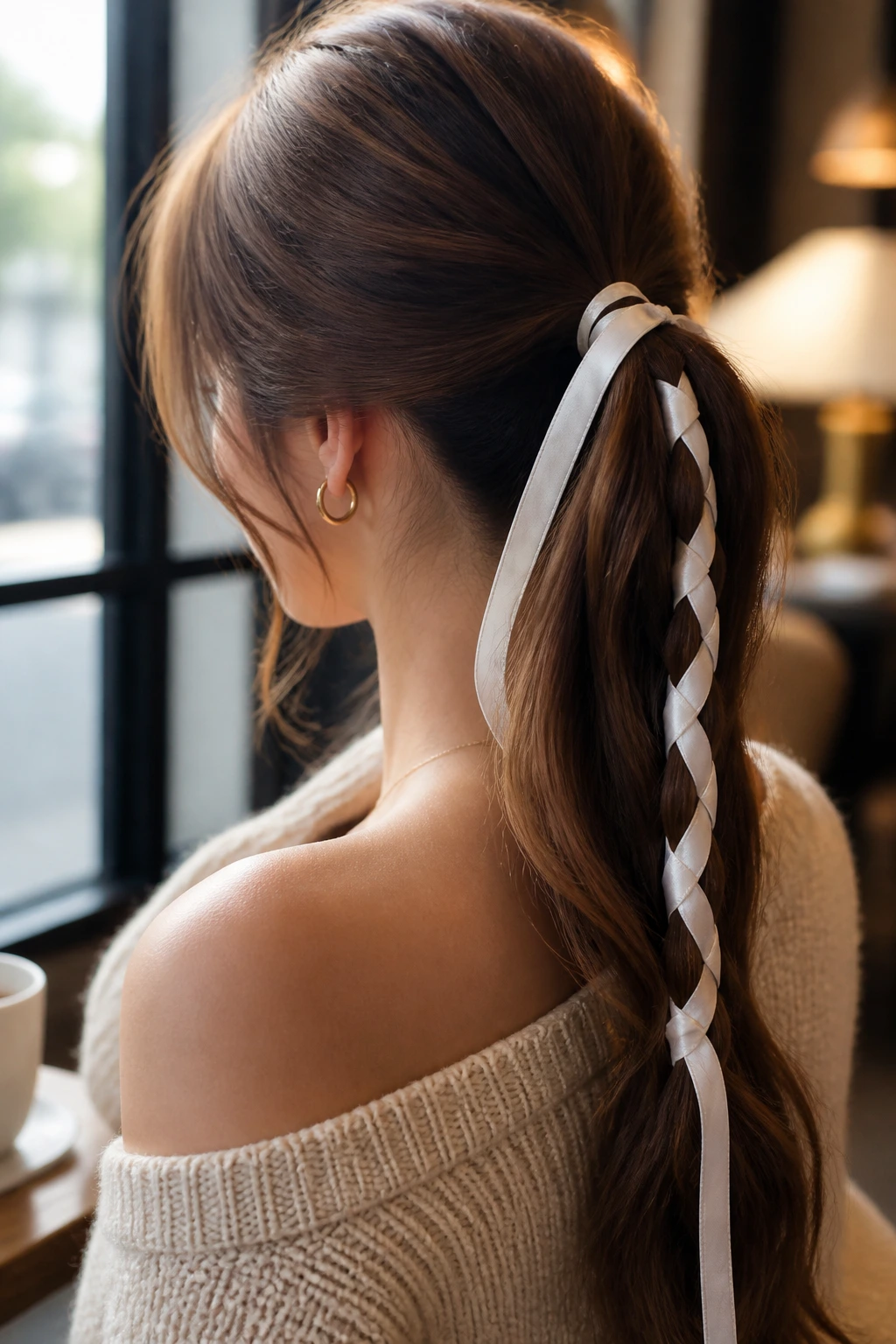
A ribbon-laced ponytail feels more playful than a bow because the ribbon becomes part of the tail itself. It can weave through the hair, wrap around sections, or trail from the base like a soft accent.
What to Watch For
Use enough ribbon. A short piece disappears. For most medium to long hair, a strip around 24 to 36 inches gives you room to work without cutting it too close. Satin and grosgrain both work, though grosgrain has a little more grip.
- Thread the ribbon through the base before tying it off.
- Keep the ribbon flat so it does not twist into a knot.
- Match or contrast the color depending on how loud you want it to look.
- Stop before the ribbon becomes too bulky at the ends.
This version is nice for celebrations, photos, and days when you want the ponytail to feel special without going full formal. It also looks good with a low, smooth base.
25. Extension Ponytail
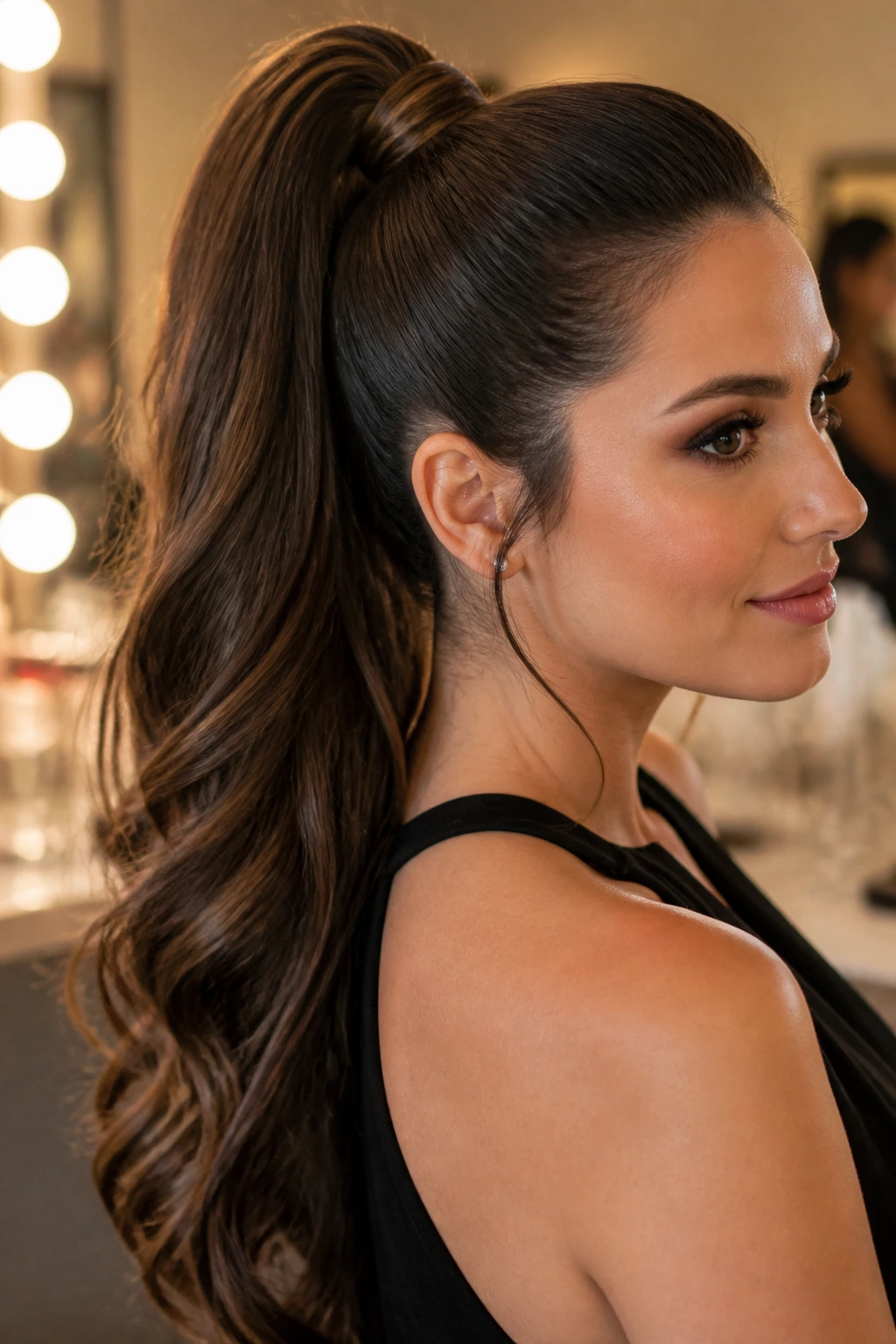
A clip-in ponytail can change the whole shape of the head in ten seconds. Length appears, fullness appears, and the style suddenly has more drama than your natural tail might give on its own.
The real trick is matching texture, not only color. Straight extensions on wavy hair look obvious. Thick extensions on very fine hair can pull the base down. The goal is balance, so the added hair disappears into the real hair at the join.
I like this option for parties, formal photos, and any occasion where a regular ponytail needs more presence. It is also useful if your natural hair is in that awkward in-between stage and will not sit the way you want.
Wrap a small section of your own hair around the clip if possible. That hides the attachment and gives the ponytail a cleaner base. Tiny bit of work. Huge difference.
26. Sport Ponytail
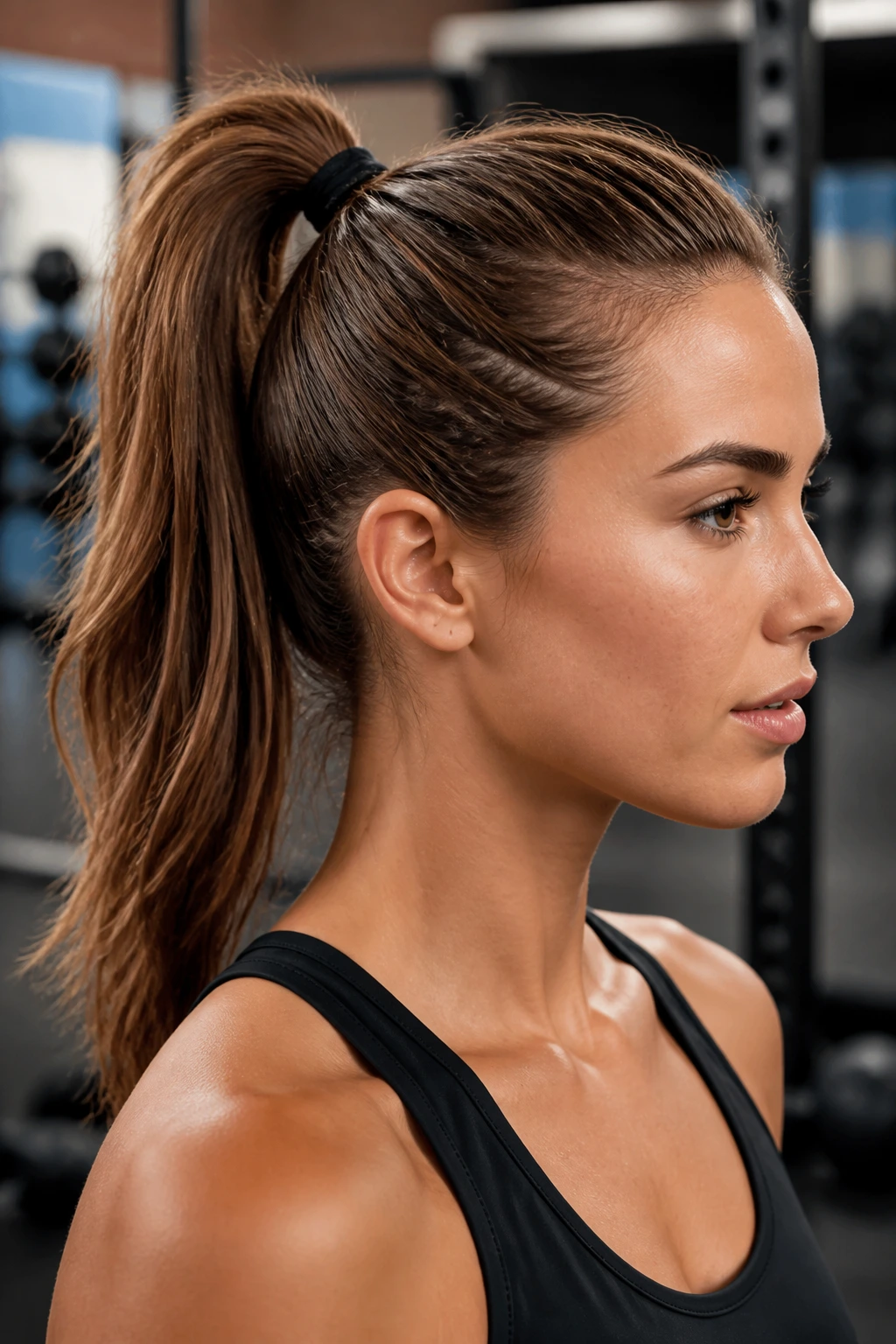
What makes an athletic ponytail different from a pretty one? It has to stay put. That means the placement, tension, and tail shape all matter more than decoration.
A mid-high ponytail usually works best because it clears the neck without bouncing too much. If the hair is long, a second elastic lower in the tail can keep the length from pulling on the scalp. Braiding the tail is another smart move if the hair tends to swing around during runs or workouts.
The Details That Keep It Secure
- Start with dry hair that has a little grip.
- Use a firm elastic, not one that stretches out after a single use.
- Smooth the hairline with a touch of gel or cream if flyaways bother you.
- Keep the tail compact so it does not whip around.
This is not the place for loose accessories. The style needs to stay focused, stay secure, and get out of your way.
27. Romantic Event Ponytail
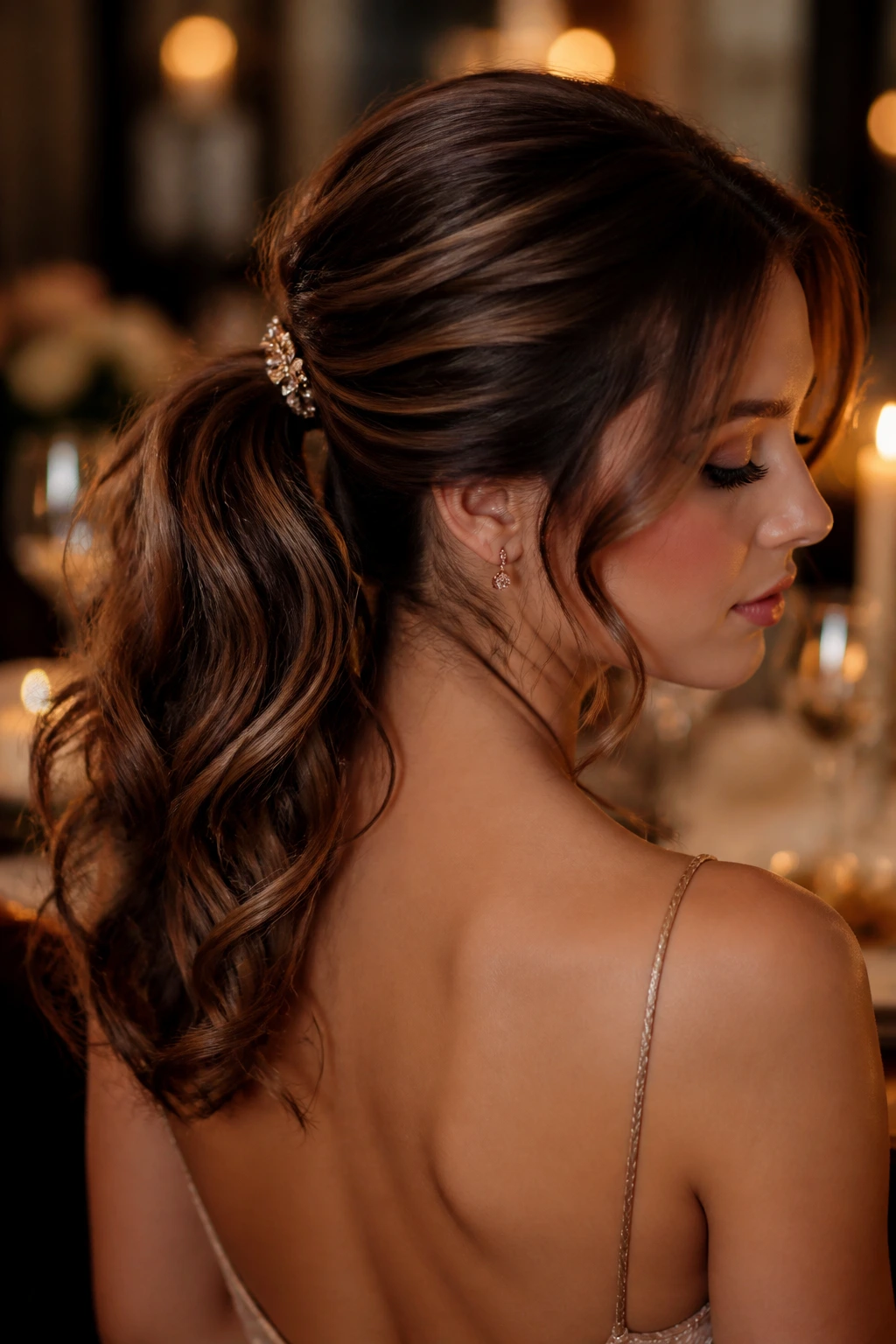
A romantic event ponytail is the version I’d pick for a wedding guest look, a dinner out, or anything that needs a little softness without a full updo. It usually sits low or mid, with curled ends and a few face-framing pieces left free.
The softness comes from movement. The crown should not be nailed flat. The tail should not look over-combed. And the front pieces should be shaped enough to skim the cheeks, not hang in random strands. That balance makes the style look intentional.
A curling iron with a 1-inch barrel gives enough bend for the ends without making the whole tail too done. If the hair is naturally wavy, a quick twist and pin set can do the same thing with less heat.
This style looks nicest when there is one detail that carries the mood — a pin, a ribbon, or a wrapped base. Pick one. Too many and the look gets busy fast.
28. Pearls-and-Pins Ponytail
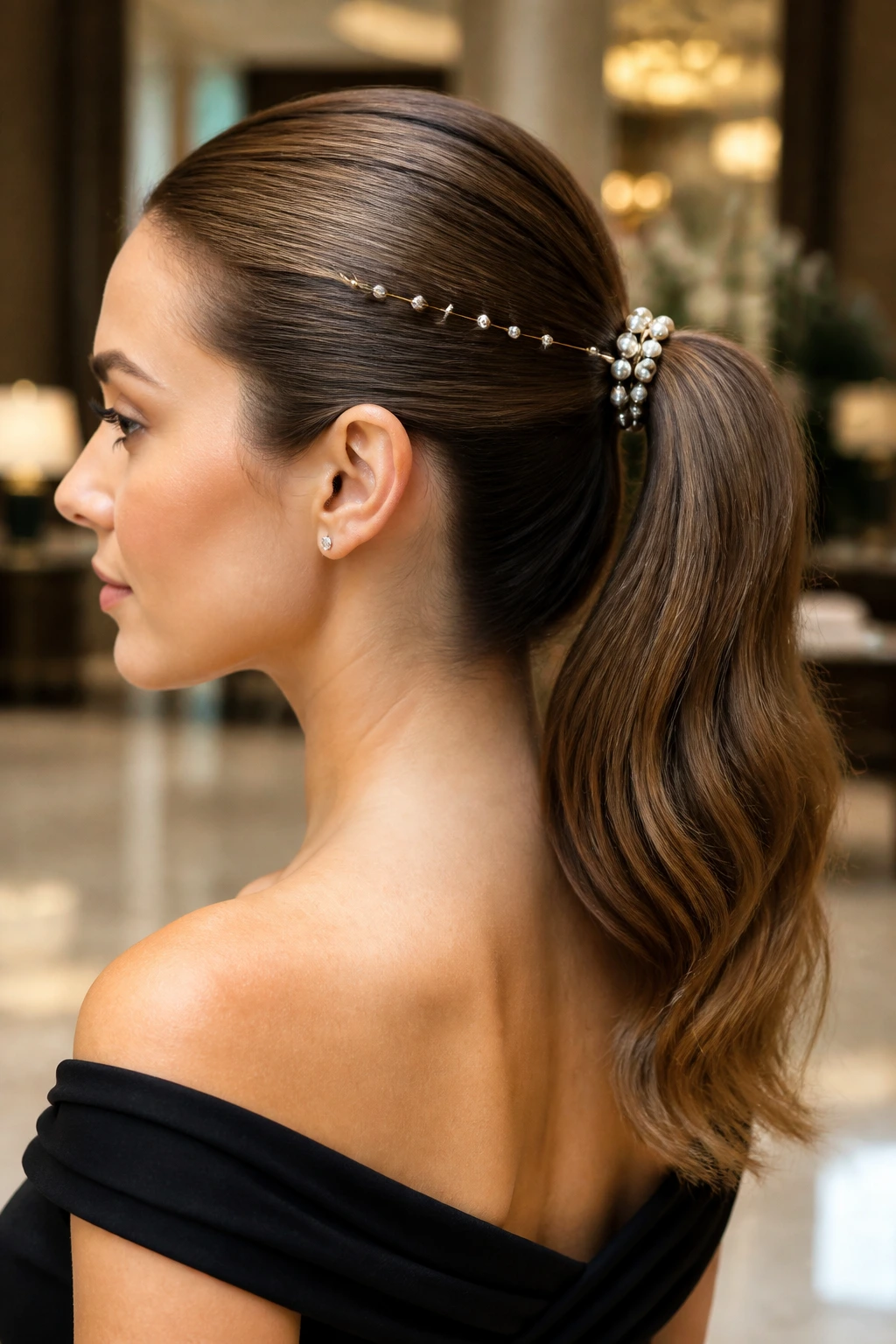
Pearls and hairpins can turn a plain ponytail into something much more specific. The style feels deliberate, not overloaded, when the accessories are placed with a light hand.
I like this best on smooth ponytails or softly curled ones, because the decoration shows more clearly against a clean surface. A line of three pins at one side of the base can be enough. So can a single pearl clip near the elastic. The idea is to accent the shape, not bury it.
The good thing about pins is that they work in small doses. You do not need a full constellation of them. In fact, too many metal pieces start to feel heavy and distract from the hair itself.
If the event leans formal, keep the ponytail low and the accessories close to the base. If it leans playful, let the pins climb slightly up the tail. Little shift. Different mood.
29. Twisted Sides Ponytail
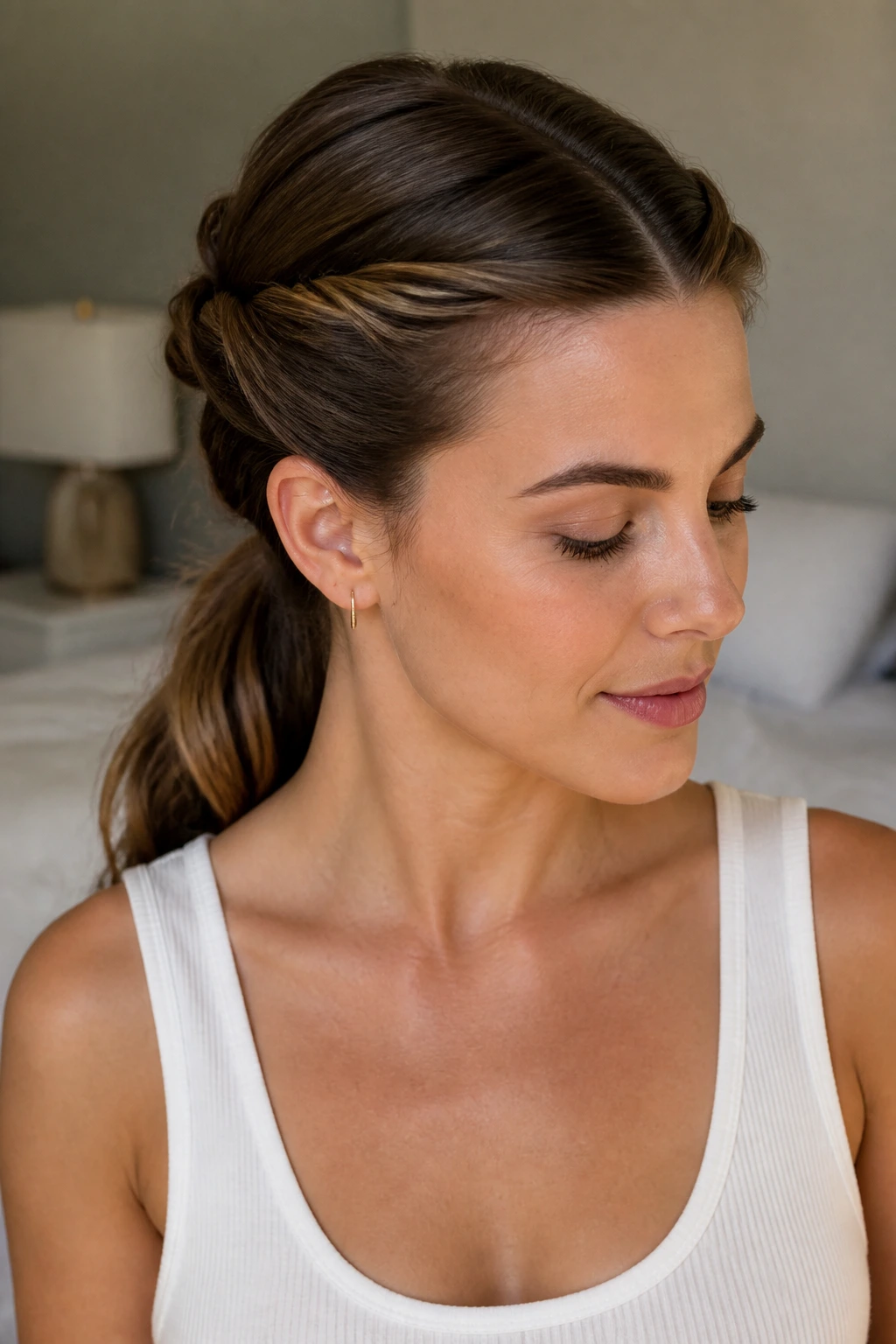
If braids feel too busy, twists give the same control with a cleaner surface. A twisted-sides ponytail pulls two front sections back, secures them, and lets the remaining hair fall in a simple tail.
This works well when the hair around the temples tends to slip forward. Twisting those sections gives a neater line than pinning them alone, and it does not take much time. A couple of turns on each side is usually enough.
How to Wear It
Take 2-inch sections from each temple, twist them back toward the center, and secure them with the rest of the hair. You can place the ponytail low for a softer mood or mid-height for a sharper one.
- Keep the twists close to the head.
- Pin them flat if the hair is thick.
- Leave the tail straight for a crisp finish.
- Curl the ends if you want the style to read gentler.
This one lands neatly in the middle between polished and casual. I use it when braids feel too much and a plain tail feels too bare.
30. Statement Part Ponytail
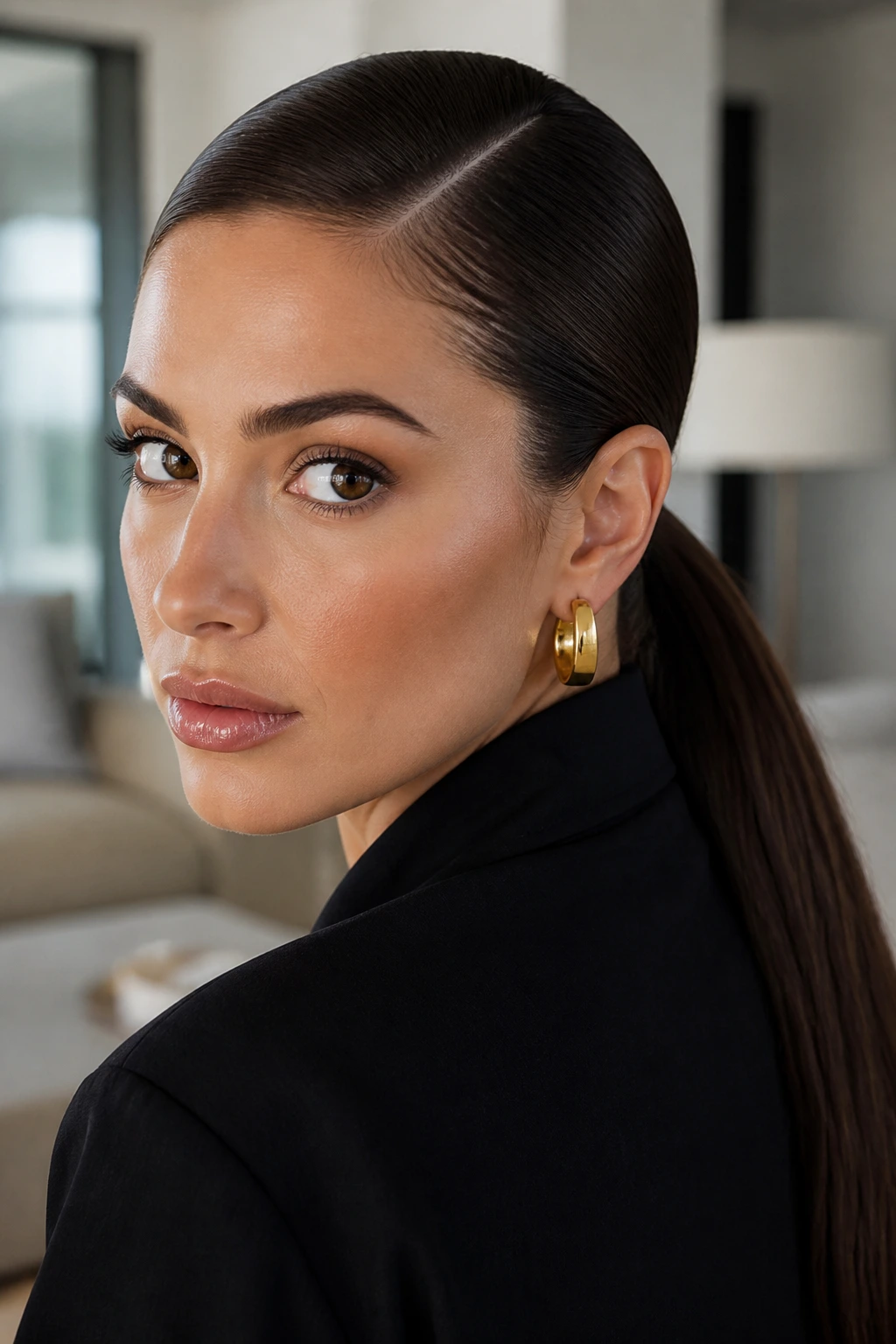
A sharp part can do more for a ponytail than extra spray ever will. A slight off-center part or a deep side part changes the whole balance of the face and makes the style feel chosen.
This version works especially well with a sleek base and a tail that stays simple. The point is contrast. The top is precise. The back is easy. That mix gives the hairstyle some edge without making it hard to wear.
A statement part also helps when the rest of the outfit is minimal. Black dress, plain shirt, clean lines — the ponytail becomes part of the look instead of something you added at the last second. If the part is crisp and the crown is smooth, the whole style looks sharper from every angle.
Sometimes that is enough. A part, a clean line, a good elastic. Hair does not need to shout to be noticed.
Final Thoughts
A ponytail works because it can be almost anything. Neat, sporty, dressy, soft, sharp. The shape stays the same, but the details change the whole feel.
Placement matters more than people admit. So does tension. So does the finish at the base. Those three things do more than a pile of products ever will.
If you keep one small rule in mind, make it this: match the ponytail to the job it has to do. A workout needs grip. A dinner needs polish. A wedding guest look needs softness and a little movement. Hair behaves better when you stop asking one version to do everything.
