



Straight hair can be brutally honest. It shows every blunt line, every uneven layer, every flat root, and every choice you made with the flat iron last Tuesday.
That honesty is also the reason medium length hairstyles for straight hair can look so good when they’re cut well. A clean edge lands sharply. A soft bend at the ends looks intentional. A center part can make the whole face feel longer, while a side part can wake up hair that otherwise falls a little too neatly.
The trick is not to fight straight hair into something it isn’t. Straight strands usually look best when the shape does the work. Give them a strong line, a smart fringe, or a small twist in the finish, and they stop reading as plain. They start reading as polished.
And yes, medium length is the sweet spot for a lot of people. It’s long enough to move, short enough to keep shape, and easy to style without spending half the morning wrestling with sections that refuse to stay put.
1. Blunt Lob

A blunt lob is the cleanest, most dependable answer when straight hair needs structure. The cut sits somewhere between the jaw and the collarbone, and the straight line makes the hair look fuller without any fuss. No soft fluff. No fiddly layers. Just a sharp edge that does its job.
What Makes It Work
The blunt end gives medium straight hair a heavier outline, which is handy if your hair is fine or naturally flat. A one-length cut also keeps the silhouette calm, so the hair falls in a sheet instead of breaking into wisps.
A few details matter here:
- Ask for a collarbone-length blunt cut with no heavy texturizing at the ends.
- Keep the perimeter even all the way around, or the shape loses that crisp look.
- Style with a small bend inward at the tips if you want it softer.
- Trim it every 6 to 8 weeks so the edge stays clean.
Tip: If your ends split fast, this cut shows it. Keep the bottom inch in good shape or the whole look gets messy fast.
2. Center-Part Clavicut
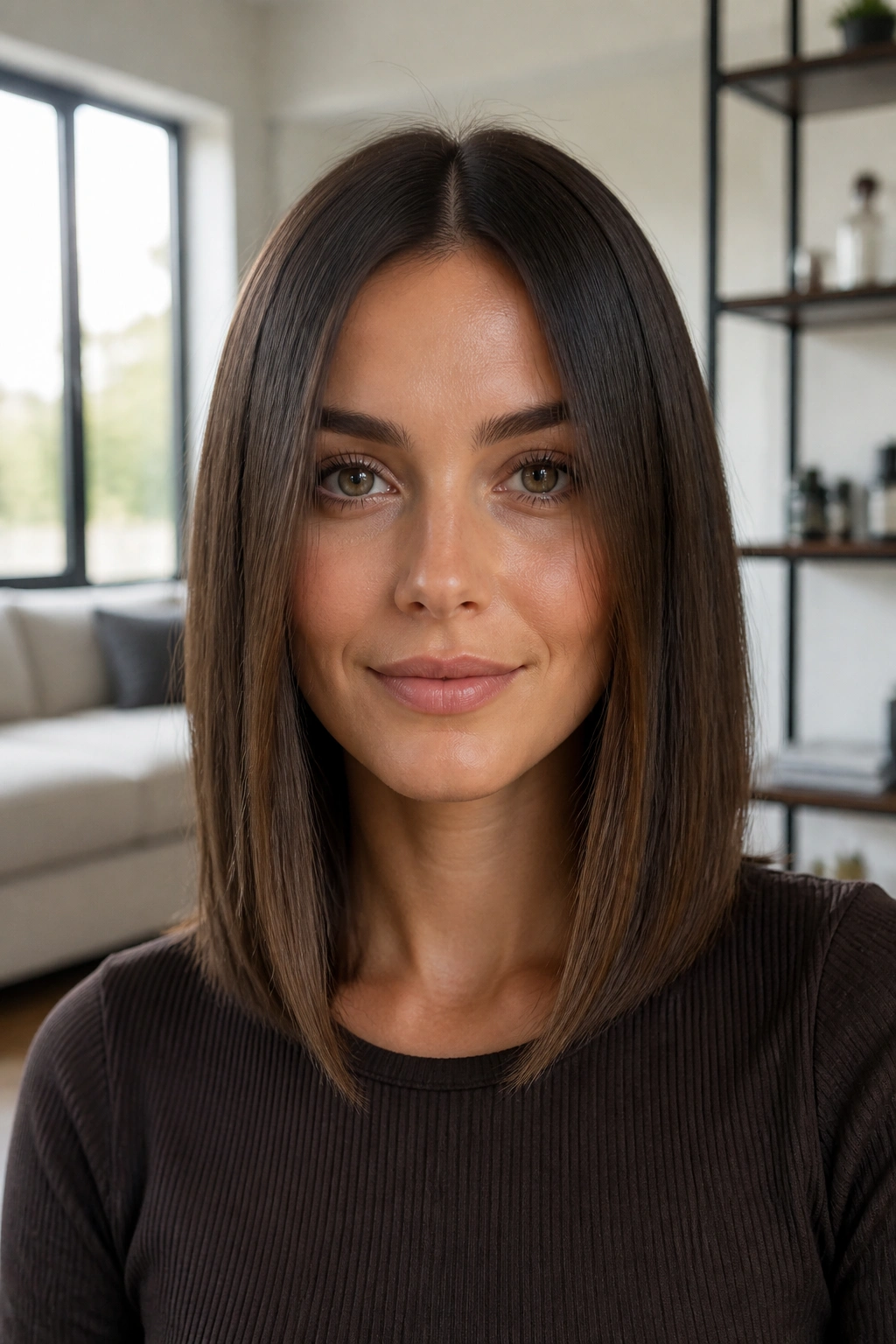
Why does a center-part clavicut look so good on straight hair? Because it uses symmetry instead of volume. The length hits the collarbone, the part runs clean down the middle, and the face gets framed by two long panels that fall with almost no effort.
This is one of those styles that looks calm without being boring. The collarbone is the magic point. Hair that lands there moves a little when you walk, but it does not flop into the shoulders the way longer lengths sometimes do. Straight hair helps the shape stay neat, which means you do not need much styling to make it work.
A tiny bevel at the ends keeps the line from feeling stiff. I like this cut with a blow-dry that bends the last half-inch under just enough to stop the ends from pointing straight out. Nothing fussy. Just enough shape to keep it from looking accidental.
3. Side-Part Lob

A side part throws a shadow across the face, and that’s exactly why a side-part lob can look so flattering. It gives straight hair a little lift near the crown without asking for layers everywhere, and it changes the whole mood of the cut in two seconds.
How to Wear It
Start with a deep-ish part, not a dramatic one that feels costume-y. Then tuck the heavier side behind one ear and let the shorter side skim the cheek. That alone gives the haircut a bit of swing.
Straight hair behaves well here, which is a blessing. You can keep the rest of the hair smooth and let the part do the lifting.
- Use a root spray or light mousse at the crown.
- Blow-dry the front away from the face so the part does not collapse.
- Keep the ends blunt or slightly rounded, depending on how sharp you want the look.
- A 1-inch flat iron is enough for a tiny bend, not ringlets.
4. Collarbone Cut with Face-Framing Layers

This is the cut I’d point to if someone wants movement but hates the look of too many layers. The shape sits around the collarbone, and the front pieces start just below the cheekbone or near the jaw, so the hair falls around the face instead of hanging like a curtain.
I’ve always liked this one on straight hair because it does a quiet job. It softens strong angles. It makes a heavy face line feel lighter. It also helps medium length hair move a little when you turn your head, which sounds minor until you compare it to a dead-straight one-length cut.
What to Ask For
- Keep the back close to collarbone length.
- Ask for soft face-framing pieces, not choppy chunks.
- Have the stylist angle the front slightly longer than the back.
- Keep the layers blended so they do not split into obvious steps.
A little round-brush bend near the front is enough. The cut should look like it belongs to your hair, not like it’s trying on someone else’s outfit.
5. Curtain Bangs with Straight Ends

Curtain bangs are one of those styles people either wear badly or wear very well. On straight hair, the difference usually comes down to length and patience. Too short, and they poke out like a bad decision. Long enough, and they split softly in the middle and frame the eyes in a way that feels easy.
The rest of the hair should stay fairly simple. Medium length straight hair gives curtain bangs room to breathe, especially when the ends are kept blunt or only slightly curved. The contrast matters. Soft fringe, strong outline. That mix is what keeps the style from sliding into “I just grew out my bangs and gave up.”
I also like this look because it grows out in a useful way. The fringe becomes face-framing layers if you let it, which is less annoying than a cut that turns awkward after three weeks.
Straight hair does need a little help here. A quick round-brush blow-dry or a twist with the flat iron keeps the bangs from splitting too flat against the forehead.
6. U-Shaped Midi Cut

A U-shaped midi cut is what you ask for when you want the ends to feel softer than a blunt line but you do not want obvious layers. The back sits a little shorter, the sides sweep down a bit longer, and the whole shape looks rounded instead of square.
That curve matters. On straight hair, a blunt cut can sometimes feel a touch heavy, especially if the hair is thick. The U shape keeps the length from looking like a block. It still reads clean, but it has enough give that the hair moves when you walk or turn your head.
Unlike a straight-across blunt cut, this one works better if you hate the feeling of too much weight at the bottom. It is also a nice option if you wear your hair tucked behind the ears a lot, since the front pieces fall in a more flattering way.
Best for: straight hair that needs softness without obvious layers.
7. Glass Hair Lob
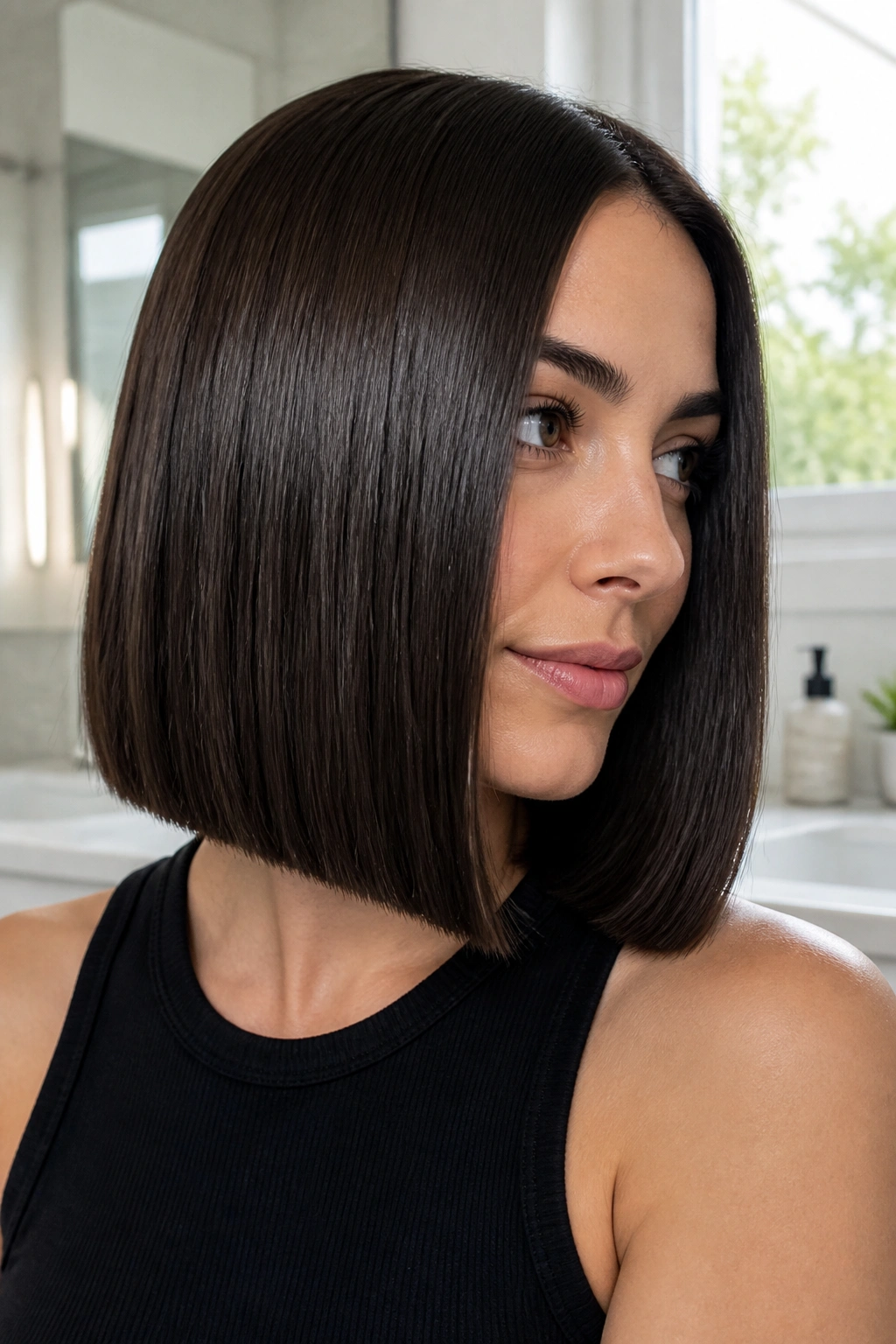
A glass hair lob is all about shine and control. The cut itself is usually simple, but the finish makes the difference. Hair is worn smooth, reflective, and so flat that the surface almost looks polished. It sounds fussy. It isn’t, if your hair already likes to lie down.
The Finish Matters More Than the Cut
The lob gives the style enough length to show off the shine without dragging it down. Straight hair is the perfect base because there’s less fight involved. You want a clean center or side part, a heat protectant, and a flat iron that seals the surface without puffing it up.
A few practical details help here:
- Start with a light smoothing cream on damp hair.
- Blow-dry with a nozzle to keep the cuticle flat.
- Use a flat iron in small sections, one pass at a time.
- Finish with a drop of serum on the mid-lengths and ends.
Skip heavy oils. They can make the hair look greasy instead of glossy, which is a very different thing.
8. Soft Shag for Straight Hair

Can straight hair wear a shag without looking frayed? Yes, if the layers are soft and the finish stays tidy. The modern version is not the choppy, over-thinned mess some people picture. It’s a medium-length cut with movement around the crown and ends, plus a little grit in the shape.
The point is to keep the hair from hanging in one heavy sheet. Straight strands can do that if the cut is too heavy. A soft shag breaks the line in a controlled way, so the hair has lift near the roots and a lighter fall through the ends.
How to Keep It Polished
Use a blow-dry brush or a round brush only at the roots and face frame. The rest can stay straight. That keeps the style from looking overworked.
A little bend at the ends helps, too. Not curls. Just a bend.
If your hair is fine, ask for light layers around the crown and avoid anything too aggressive through the bottom. The style should still feel wearable on a Tuesday morning.
9. A-Line Lob
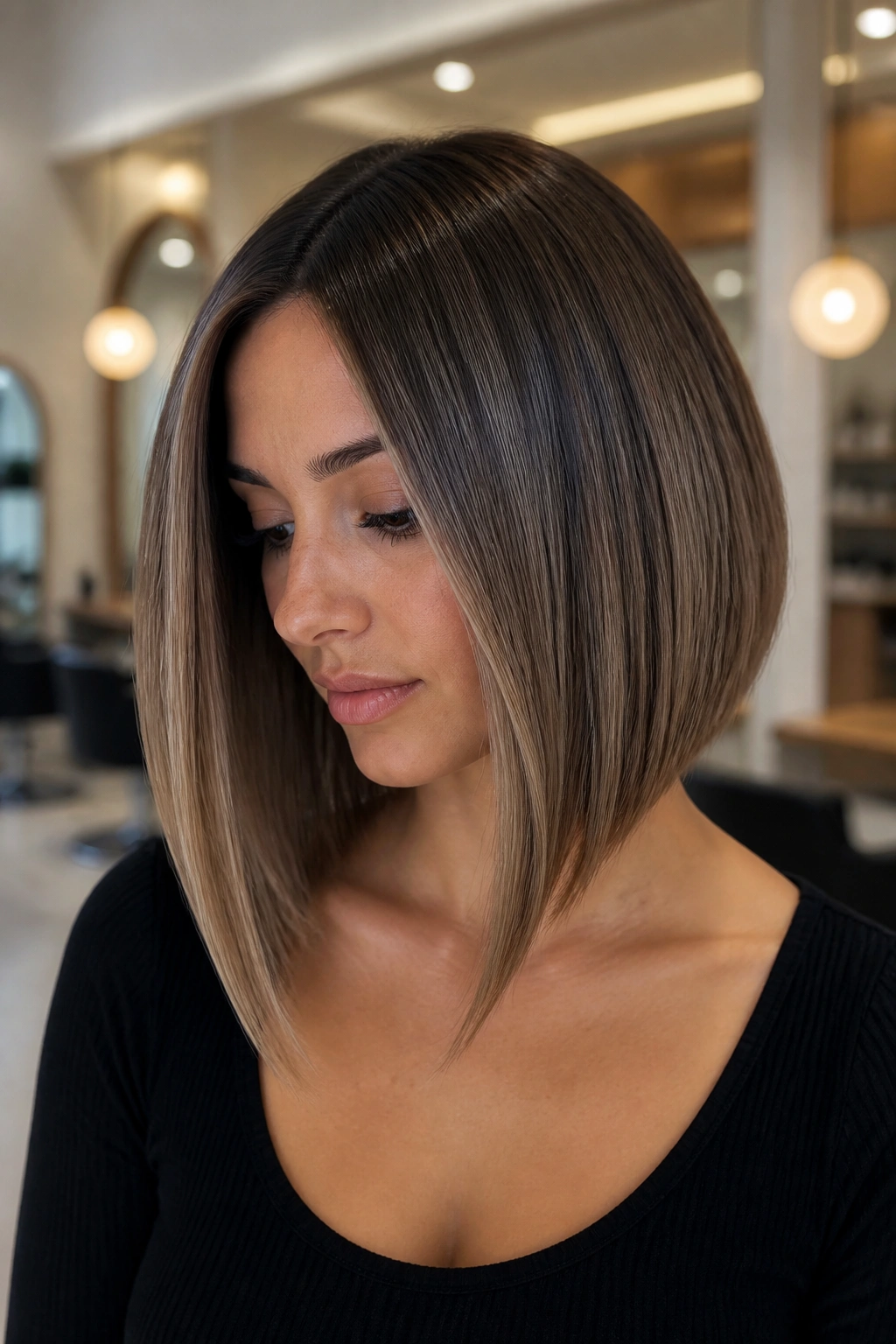
An A-line lob is the haircut that quietly fixes flatness. The back sits a touch shorter, and the front falls longer toward the collarbone or the shoulders. That angle creates movement even when the hair is straight and still.
I like this one on people who want shape without the obvious look of layers. It gives the face a little lift because the front pieces lead the eye downward. The neck looks longer. The jaw looks softer. Nothing dramatic, but enough to notice in the mirror.
A small amount of styling makes the cut look more intentional:
- Blow-dry the front sections forward first, then turn them slightly under.
- Keep the angle gradual rather than severe.
- Avoid cutting too much into the front if your hair is already fine.
- Use a smoothing spray if the ends tend to flip where you do not want them to.
The best version looks neat from every angle, which is harder than it sounds. When it’s right, it has that clean, slightly tailored feel.
10. Shoulder-Length Cut with Flipped Ends

A shoulder-length cut with flipped ends has more personality than people expect. Straight hair can go from plain to sharp with one outward bend at the bottom. It is not a retro costume move. It is just a way to make medium length hair feel a bit lighter.
The flip works best when the length sits close to the shoulders, because the ends have enough space to move but not enough to collapse. If the hair is cut too long, the bend drops. If it’s too short, it can stick out in a way that looks awkward. Right around the shoulders is the sweet spot.
A 1-inch flat iron or a round brush can create the bend. Keep it gentle. A hard flip reads stiff, while a soft outward curve gives the haircut life. This style is good when you want a little motion around the face without losing the clean feel that straight hair does so well.
11. Blunt Cut with Full Fringe

A blunt cut with a full fringe is not subtle. That is part of the appeal. Straight hair makes this style look crisp, and the heavy fringe gives the face a strong top line that can feel very sharp in a good way.
The fringe needs density. Thin bangs with a blunt cut usually look stringy unless you style them every morning. A fuller fringe sits better on straight hair because the texture holds a clear line. The rest of the cut should stay one length or close to it, so the top and bottom feel balanced.
This style suits people who like structure and do not mind trims. Bangs ask for upkeep. There’s no getting around that. But if you enjoy a cut that looks deliberate the second you wake up, this one is worth it.
I’d choose it for hair that already lies flat and for anyone who wants to frame the eyes more than the cheeks.
12. Invisible Layered Cut

Invisible layers are the quiet fix for straight hair that feels too heavy but still needs length. The layers are cut inside the shape, not as obvious steps on the outside, so the hair keeps its clean outline while gaining movement underneath.
That’s the part people miss. You do not always need visible layers to get a lighter feel. Sometimes you just need a stylist to remove bulk in the right places. On medium length straight hair, invisible layering can stop the ends from looking like one solid block, especially if the hair is thick or bluntly dense.
What to Watch For
- Ask for layers that are internal, not choppy on the surface.
- Keep the perimeter visible and neat.
- Let the stylist check the hair in motion, not just while it’s wet.
- If your hair is fine, keep the layers conservative.
The haircut should fall naturally when you brush it. If you can see the layers too much, they are probably too aggressive.
13. Half-Up Claw Clip Style

A half-up claw clip style is the fastest way to make medium straight hair look finished. The top section gets lifted, twisted once or twice, and clipped at the back while the rest falls loose. That’s it. No heat required if your hair already lies smooth.
What makes this work on medium lengths is the balance. You keep enough hair down to keep the style soft, but you get a little volume at the crown so the haircut doesn’t feel flat. Straight hair is a good match because the clip holds better on hair that doesn’t snag and puff out as much.
A few inches of hair left loose on each side make the style look less severe. Pull too much back and it starts to feel like a gym fix. Leave a little face framing, and it reads polished.
I’d use a medium-sized claw clip with teeth that grip but do not pull. Cheap clips slip. Annoying.
14. Low Ponytail with Wrapped Section

Why does a low ponytail look so clean on straight hair? Because the texture lets the shape stay neat. When you wrap a strand around the base, the elastic disappears, and the whole style looks much more intentional than a plain ponytail.
Medium length is enough for this, as long as the ponytail sits low at the nape. If the hair is cut just at the collarbone, you get a tidy tail that doesn’t feel tiny. If it’s a little longer, you can still keep the finish sleek.
How to Make It Sit Right
- Brush the hair back with a smoothing cream.
- Secure it with a thin elastic at the nape.
- Take a 1-inch strand from underneath and wrap it around the band.
- Pin the wrapped section underneath with one bobby pin.
A little shine spray at the end helps, but don’t drown it. The style should look neat, not wet. That’s a very different thing.
15. Deep Side Sweep Style
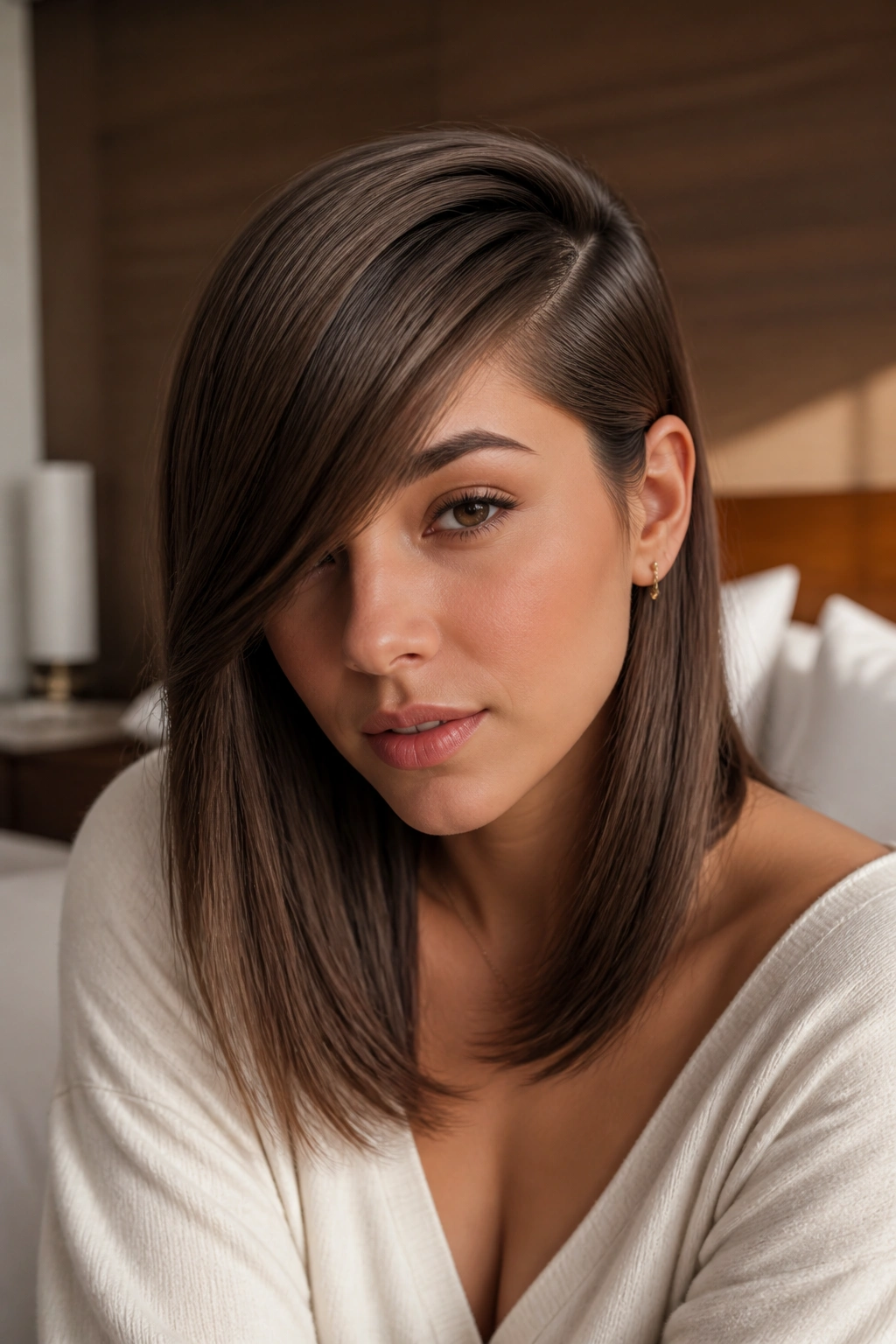
A deep side sweep changes the whole geometry of medium straight hair. One side drops across the forehead, the other gets tucked back or pinned, and suddenly the haircut feels much more dressed up than it did ten minutes earlier.
Where It Helps Most
This style is especially nice if the crown is flat or if the face needs a little asymmetry. Straight hair makes the sweep stay in place better than airy or frizzy textures, which means you can get away with less product than you’d think.
A fine mist of root spray near the part gives the front some lift. Then the longer side can be bent slightly at the ends so it doesn’t hang like a curtain. If you want more hold, use one small pin under the top layer where nobody can see it.
The effect is strongest when the sweep starts a little behind the eyebrow, not way over at the ear. Go too far and the style gets heavy. Keep it controlled and it looks elegant without trying too hard.
16. Braided Crown Accent
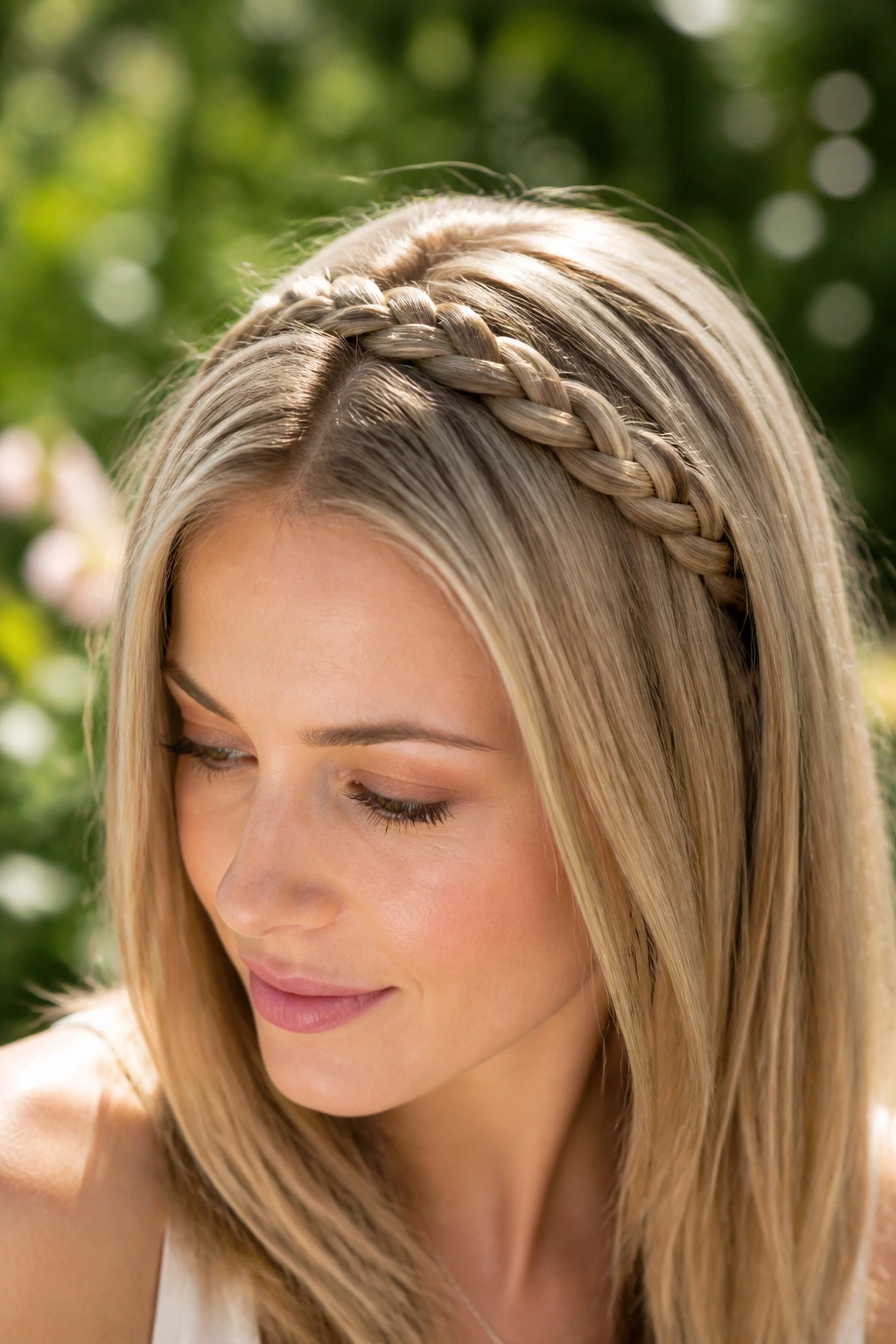
A braided crown accent is a smart way to make straight medium hair feel styled without committing to a full braid. One small braid runs along the hairline or temple, then disappears into the rest of the hair. It keeps the front pieces in place and gives the cut a little detail.
I like this because it solves a real problem. Straight hair tends to slide out of clips and loosen from pins unless there’s some grip. A braid creates that grip. It also makes a simple mid-length cut feel more thought-out, especially if the rest of the hair is left smooth.
The braid does not need to be thick. In fact, a narrow braid often looks better because it blends into the haircut instead of taking over the whole head.
- Keep the braid tight enough to stay put.
- Pin the end under a top layer.
- Use a light mist of spray before braiding if the hair is freshly washed.
- Leave the rest of the hair straight for contrast.
17. Low Knot with Loose Tendrils

A low knot on medium straight hair can look unexpectedly refined when the length is just right. The knot sits at the nape, the hair twists once or twice, and a few thin pieces are left out at the front so the style doesn’t feel too severe.
Straight hair helps here because the knot can look tidy instead of puffed up. The only trick is not to over-tighten the twist. A knot that is pulled too hard can make the head look small and the hair look shorter than it really is. Keep some softness near the hairline, and the whole thing relaxes.
The loose tendrils matter more than people think. They break up the shape and stop the style from looking like a ballet bun you rushed through in the locker room. I usually like the front pieces bent slightly, not curled into perfect spirals. A soft bend feels more current and less precious.
18. Double-Barrette Side Sweep

A double-barrette side sweep is one of those styles that seems small until you try it on straight hair and realize how useful it is. Two barrettes hold one side back while the rest of the hair stays loose, so the look reads neat without losing length.
Unlike a single tucked side, this one has more hold. That matters if your hair is fine and slips out of pins, or if you want the style to stay put through a long day. Medium length hair works especially well because there’s enough weight to fall nicely, but not so much that the clips get buried.
The best version uses barrettes that sit close together, about an inch apart. Space them too far apart and the style looks accidental. Keep them near the temple or just above the ear, and the line feels deliberate.
Best for: days when you want your hair off your face but do not want an updo.
19. Flipped-Out Lob

A flipped-out lob gives straight hair a little attitude without asking for a total style change. The ends turn outward instead of under, which makes the haircut feel lighter and slightly more playful.
The shape works because the lob already has enough length to show the flip. If the hair is too short, the ends can stick out in a way that feels stiff. Around the collarbone is where it starts to look right. You can use a round brush or a flat iron, but keep the bend soft. A hard, exaggerated flip can look dated fast.
This is one of my favorite choices for medium length straight hair when the hair feels too serious. It changes the outline without changing the whole cut. No layers needed. No big styling session. Just a controlled bend at the bottom and a clean part.
A little shine spray helps the curve hold its shape and keeps the ends from looking dry.
20. Bottleneck Bangs with Straight Lengths

Can bangs look softer than curtain bangs? Yes, if they’re bottleneck bangs. The center is a little shorter and the sides open out more gradually, so the fringe narrows near the middle of the forehead and widens near the cheekbones.
That shape suits straight hair because the fringe sits flat enough to show the cut clearly, but not so flat that it looks blunt and heavy. The rest of the hair can stay medium length and straight, which keeps the whole style balanced. Too many textures would fight the fringe.
Why It Suits Straight Hair
The bangs need a smooth surface so the narrow center and wider side pieces read as one shape. Slight bends at the sides help, but you do not want big volume everywhere.
- Blow-dry the fringe first.
- Use a small round brush only at the ends.
- Keep the longest side pieces around the cheekbone.
- Trim often, because bangs change fast.
This is a good choice if you want softness around the eyes without covering half the face.
21. Tucked-Behind-the-Ears Cut
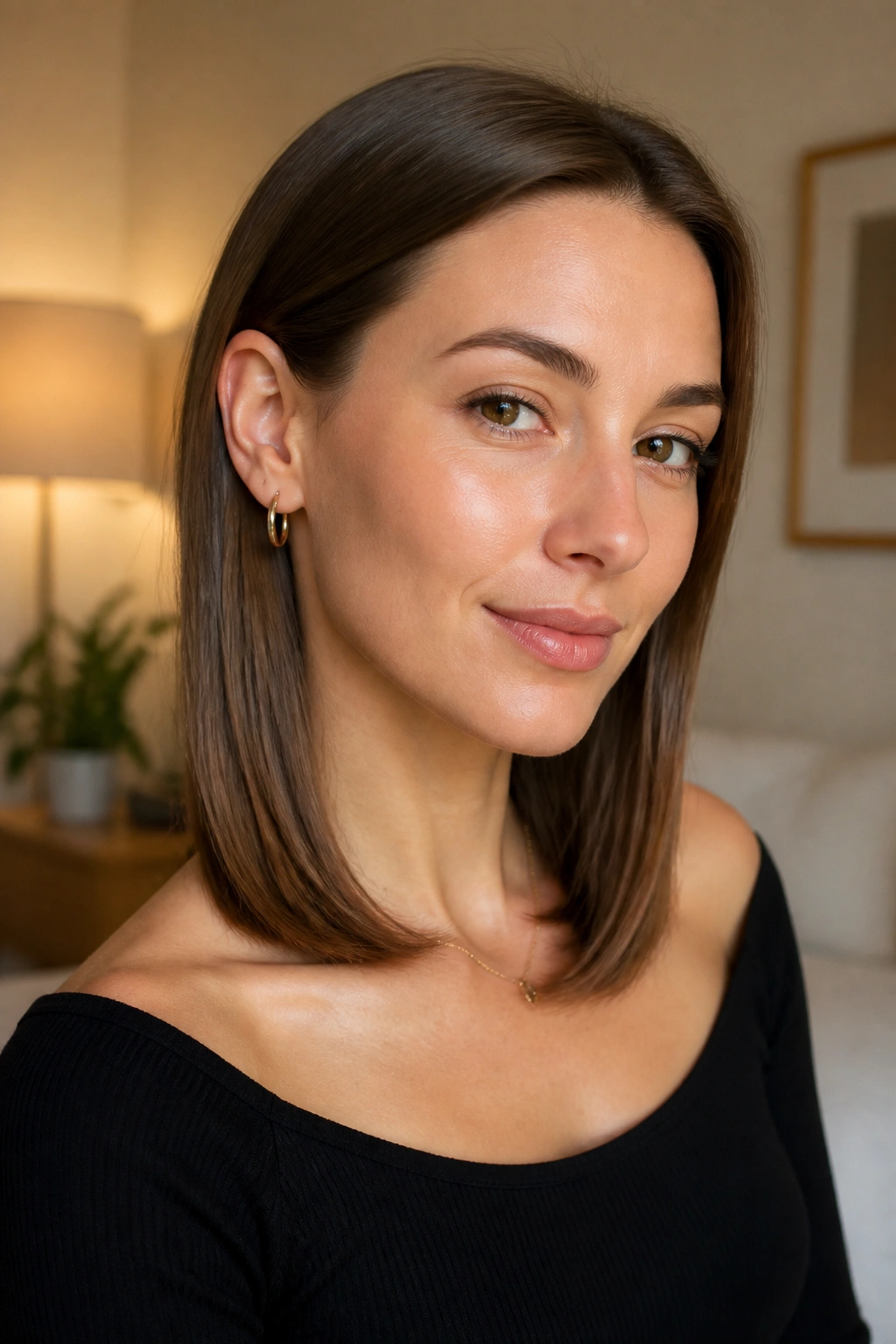
A tucked-behind-the-ears cut sounds simple, and that’s the charm. Medium straight hair is cut so the front falls cleanly enough to tuck back without puffing out, then the rest hangs loose and smooth behind the ears.
The effect is cleaner than people expect. Tucking the front opens the face, shows the cheekbones, and makes the hair feel more deliberate even when the cut itself is plain. It works best when the hair has a neat edge around the collarbone or just above it, because the tuck exposes the shape.
What to Ask For
- Keep the front pieces long enough to tuck without springing loose.
- Avoid too much layering near the ear.
- Ask for a clean perimeter that sits well after a tuck.
- Use a tiny bit of smoothing cream at the sides if flyaways bother you.
It is a small move. That’s the point. Small moves matter when hair is straight and every line shows.
22. Wet-Look Straight Back Style

A wet-look straight back style is a sharp option for medium lengths, especially when you want the hair off the face and you do not feel like pretending it’s effortless. It’s sleek, controlled, and a little dramatic in a good way.
The finish starts with product. A smoothing gel or strong cream goes through damp hair, then a comb presses everything straight back from the hairline. Medium length straight hair tends to cooperate because the strands already want to lie down. You are not forcing volume out of the equation; you’re simply telling it where to go.
I like this style more than most people do because it can look expensive without much complexity. The key is keeping the surface smooth and the ends neat. If the hair is frizzy at the crown, the whole thing falls apart fast. If the hair is clean and the product is spread evenly, it looks polished from the front and surprisingly modern from the side.
23. Curved Ends Lob
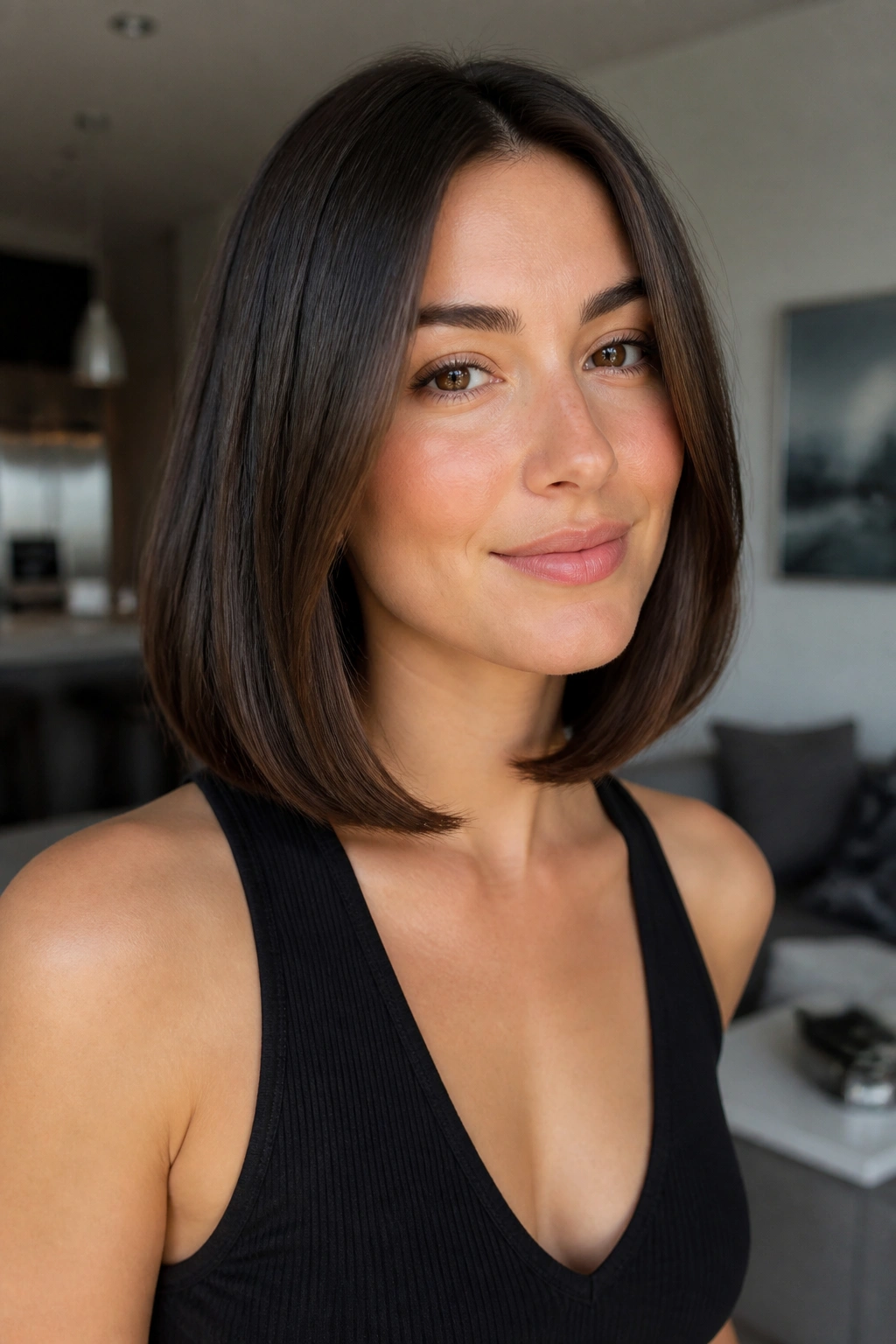
A curved ends lob is the softer cousin of a blunt lob. The length still sits at the medium point, but the last inch of hair bends inward slightly, so the edge feels rounded instead of square.
That tiny difference changes everything. Straight hair can sometimes look too sharp if the perimeter is cut straight across and left alone. A curved end removes the feeling of a ruler line at the bottom. It also flatters jawlines because the curve follows the shape of the face instead of cutting across it.
This style is best if you want the safety of a simple cut with a little gentleness built in. It does not need layers. It does not need bangs. It just needs the ends to be shaped with care, preferably by someone who knows how straight hair settles after it’s dry.
A round brush can help, but the cut should still look good when air-dried. If it only works with heavy styling, it’s probably too fragile.
24. Center-Part Midi with Airy Layers
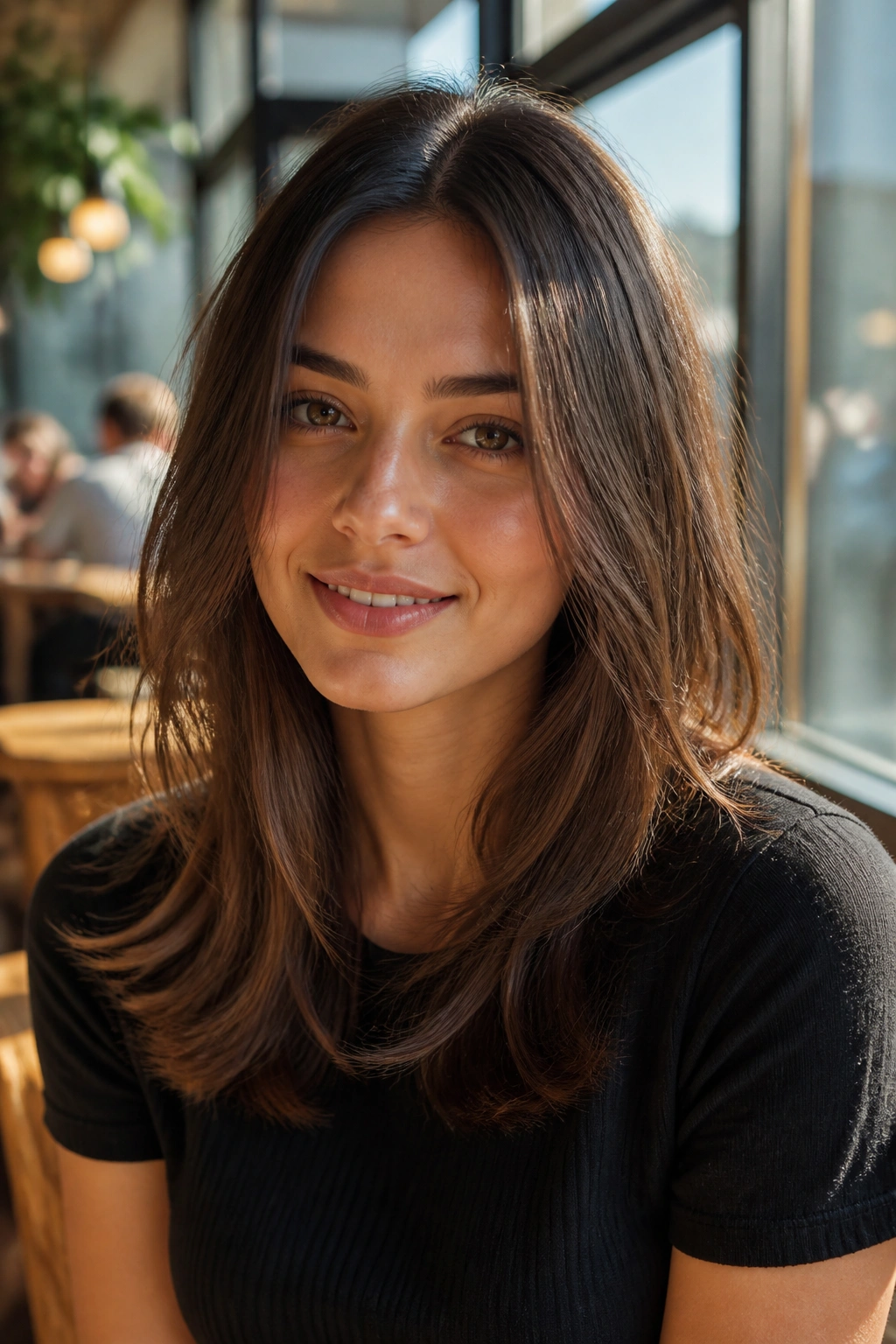
The easiest way to keep straight hair from looking heavy is to lighten the shape where it counts. A center-part midi with airy layers does that without turning the haircut into a shag or a stack of obvious steps.
The center part keeps the style clean. The airy layers around the face and lower lengths stop the hair from lying like one dense sheet. On medium lengths, that combination feels balanced and easy to wear. It gives the hair some movement when you walk, but it still falls neatly after a brush-through.
This cut works especially well if your hair is thick enough to hold shape but not so thick that it needs to be thinned out aggressively. That’s the trap with a lot of straight haircuts: people remove too much weight too high up, and the ends start acting weird. Here, the layers stay soft and low.
A little bend on the front pieces keeps the style from reading too plain.
25. Claw-Clip Twist
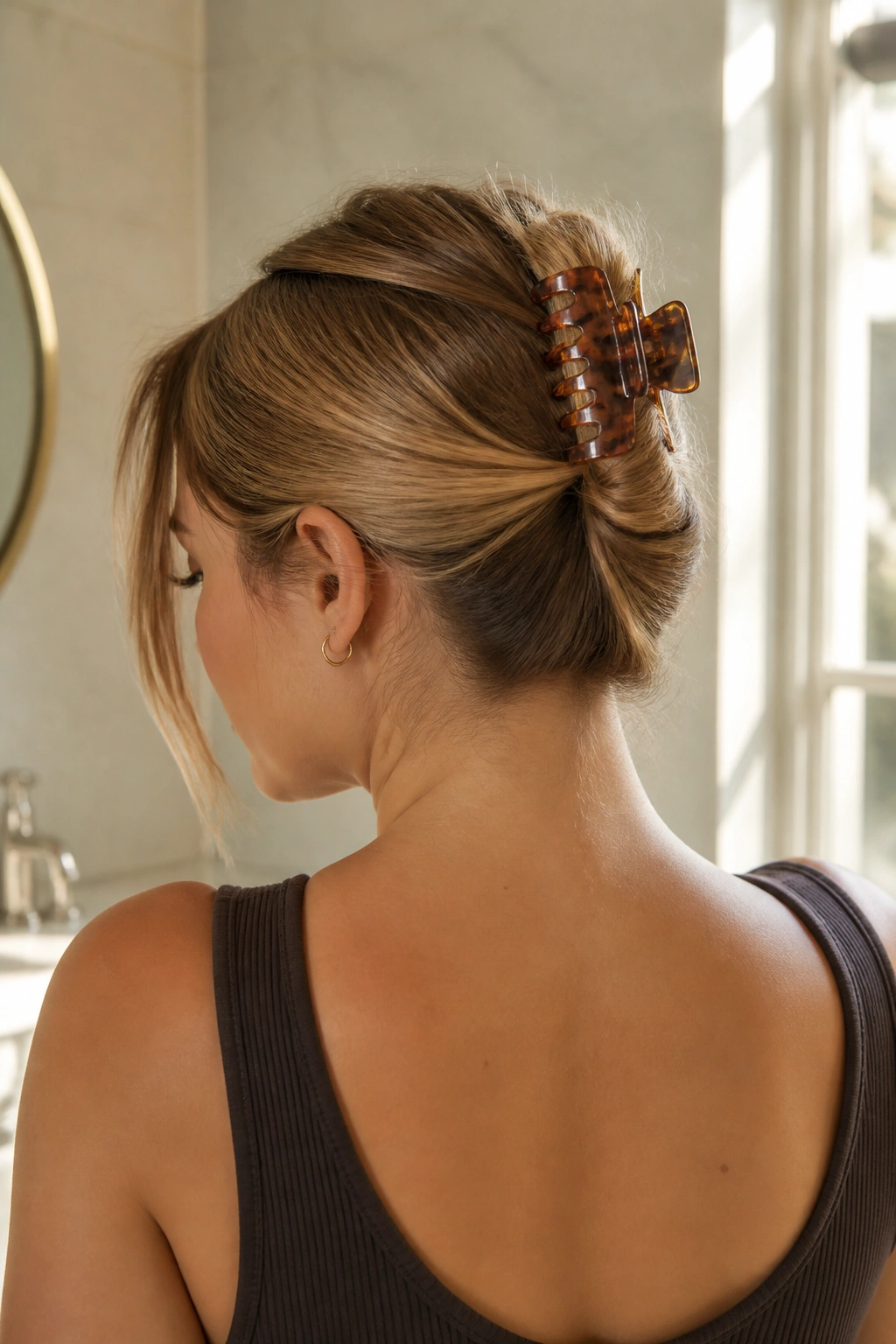
Why does a claw-clip twist work so well on medium straight hair? Because the length is long enough to twist, but short enough that the clip actually holds. Longer hair can feel heavy and slide. Medium length usually stays put.
The style is simple. Gather the hair at the back, twist it upward, and fold the tail back toward the crown or mid-back. The clip catches the twist and leaves the ends tucked in or peeking out depending on how much hair you have. Straight hair makes the finish look neat rather than bulky.
A medium-size clip with firm teeth works best. Soft plastic clips tend to slip, especially if the hair is very smooth. If your hair is freshly washed and silky, a little dry shampoo at the roots gives it grip.
This is the kind of style that looks better after a quick adjustment in the mirror. Pull one side up a touch, loosen the twist a little, and it suddenly feels more relaxed.
26. Polished Low Bun with Middle Part

A polished low bun with a middle part is one of those styles that looks formal even when the hair itself is fairly simple. Straight medium-length hair sits close to the head, which makes the bun compact and neat at the nape.
The middle part matters because it keeps the front symmetrical and clean. Pulling the hair back from a center line also helps the bun feel more modern than a soft side-swept version. I like this style for events, dinners, or any day when you want your hair out of the way but still want it to look intentional.
Little Details That Make It Work
- Smooth the hair with a light cream before gathering it.
- Twist the bun low and tight, then pin it from underneath.
- Leave the part crisp all the way back to the crown.
- If your hair is too short to wrap fully, tuck the ends under and pin them flat.
A few loose baby hairs are fine. A halo of fuzz is not.
27. Choppy Midi with Soft Texture
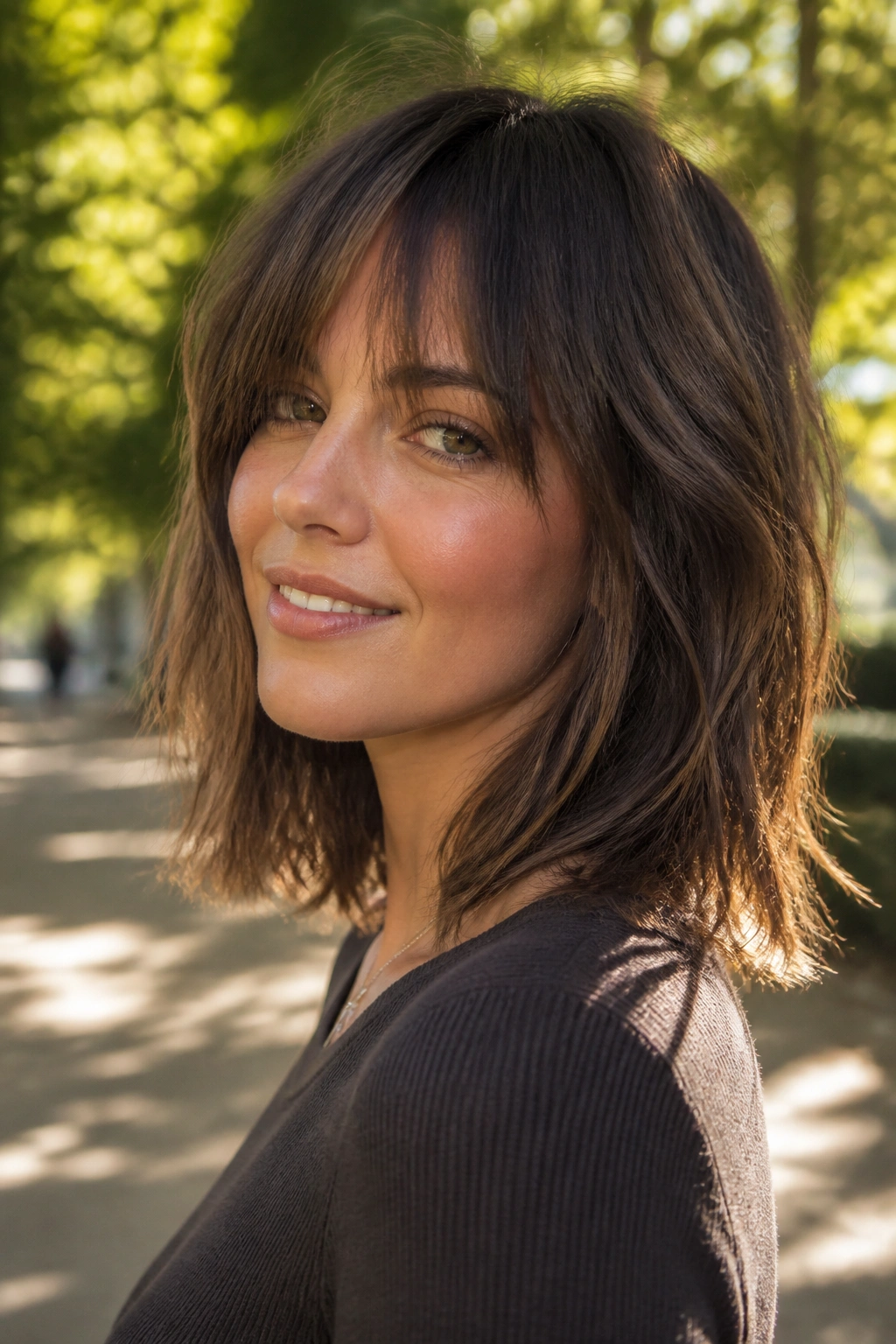
A choppy midi is not the same thing as a messy cut. The best version has enough separation to keep straight hair from looking heavy, but not so much that the ends get thin and ragged.
The texture should feel soft, not shredded. That distinction matters. Straight hair can handle a little irregularity in the outline, especially around the lower lengths and cheekbone area. It gives the style movement and keeps the cut from lying like a single slab.
This is a good choice if you prefer hair that looks lived-in rather than polished. It still needs a clean shape at the perimeter, though. If the outside line is bad, the texture won’t save it. That’s the part people sometimes miss when they ask for “something with movement” and then wonder why the haircut looks frizzy.
Ask for light point-cutting at the ends and keep the layers blended so the chop feels controlled. Too much razor work on fine straight hair can turn delicate fast.
28. Arched Fringe with Straight Lob

An arched fringe gives straight hair a softer top line than a blunt bang. The center sits a touch shorter, the sides fall longer, and the whole fringe curves gently instead of stopping in a hard line across the forehead.
That shape is nice with a straight lob because the contrast keeps the haircut from feeling too boxy. The fringe adds shape up top, while the lob keeps the bottom clean. Together, they make the face look a little more open, especially if the hair around the cheeks stays smooth and not too bulky.
This cut does need maintenance. Fringe grows fast and loses the arc quicker than a person expects. But the payoff is real: the face gets framed without the weight of a full heavy bang.
I’d choose it for straight hair that wants definition near the eyes but not a full curtain of fringe. It looks especially good when the ends of the lob are turned in just enough to echo the curve above.
29. Ribbon-Tied Half-Up Style

A ribbon-tied half-up style turns plain medium straight hair into something softer in about thirty seconds. The top section gets gathered back, tied with a ribbon or fabric tie, and left to fall loosely so the rest of the length still shows.
What makes this one nice is the contrast. Straight hair already gives you a smooth base, so the ribbon adds a little texture without making the style fussy. The half-up shape lifts the crown, opens the face, and still keeps the hair down, which is useful when you want a style that feels dressed up but not formal.
The ribbon itself should sit flat, not puff up into a big bow unless that is the point. A narrow velvet or satin tie usually looks better on medium hair because it doesn’t swallow the shape. Leave a few front pieces out if you want softness near the cheeks.
It’s a good choice for dinners, daytime events, or plain old weekdays when you want your hair to look like you thought about it.
30. Minimalist Ear-Tuck Lob

A minimalist ear-tuck lob is one of the most practical styles in the whole bunch. The cut itself stays clean and medium in length, usually somewhere around the collarbone, and the styling move is almost nothing at all: tuck one or both sides behind the ears and let the shape speak for itself.
Straight hair suits this because it falls back neatly after the tuck. There’s no need for a lot of product, no need for curl, and no need to build fake volume just to make the cut look finished. The detail is in the line of the hair around the jaw and neck. If the edge is clean, the style looks calm and expensive in a very plainspoken way.
I also like this one because it’s honest. It does not pretend to be more than it is. A good cut, a clean part, maybe a tiny bend at the ends if you feel like it. That’s enough.
Some hairstyles need a mood. This one only needs a decent trim.
