



Straight fine hair can look crisp and expensive one minute, then limp the next. That is why short haircuts for straight fine hair have to do a specific job: keep the ends full, hold a little lift at the crown, and avoid that stringy, see-through look that shows up when a cut loses its shape.
There’s a detail people miss all the time. Fine hair is about the thickness of each strand, not how much hair you have on your head. You can have a lot of fine hair and still need blunt structure. Or you can have sparse fine hair and need a cut that creates the illusion of density without looking stiff. Those are not the same problem, and the haircut should answer the right one.
I’m partial to cuts that respect the hair’s natural behavior instead of fighting it. Too many layers can make straight fine hair look thinner than it is. Too much texturizing can leave the ends wispy in the worst possible way. The smartest short shapes keep a clean perimeter, then sneak in movement where it actually helps.
A good short cut also makes daily styling less annoying. A light mousse, a root-lift spray, and a quick blow-dry can carry a cut a long way. No drama. No ten-step routine. Just a shape that still looks like a shape when you are in a hurry.
1. Blunt Chin-Length Bob

Nothing works harder on straight fine hair than a blunt chin-length bob. The clean edge gives the illusion of density, and chin length lands in that sweet spot where the hair still has enough weight to behave.
I like this cut because it looks tidy even when you do very little with it. A center part makes it sharp. A slight side part softens it up. Either way, the outline stays strong, which is the whole point.
Why It Flatters Fine Hair
Fine strands tend to collapse when the perimeter gets shredded. A blunt edge avoids that. It also reflects light in a smoother line, so the hair looks fuller from root to tip.
If your jawline is something you like to show off, this is a strong choice. It frames the face without swallowing it.
- Ask for a one-length line at the chin or just below it.
- Keep face-framing pieces minimal unless your hairline needs softness.
- Style with a small round brush and a light smoothing cream, not a heavy oil.
- Trim every 6 to 8 weeks so the line does not get scruffy.
Skip aggressive thinning shears; they steal the fullness you are trying to keep.
2. French Bob with Soft Fringe

Why does the French bob work so well on straight fine hair? Because it uses a short, compact shape and a light fringe to make the whole cut feel denser than it is. The effect is subtle, not fussy.
This cut usually sits around lip to jaw length, with a tiny bit of bend at the ends. The fringe matters, but not in the heavy, helmet-bang way people worry about. It should look airy and a little broken up, enough to soften the forehead without hiding half the face.
A French bob is especially good if your hair lies flat on top but behaves well at the ends. It gives you a little attitude without needing lots of texture. And that is a relief, frankly.
It also grows out nicely. The shape can slide into a short bob or a longer bob without turning awkward right away. That matters more than people admit.
3. Pixie Cut with a Long Top
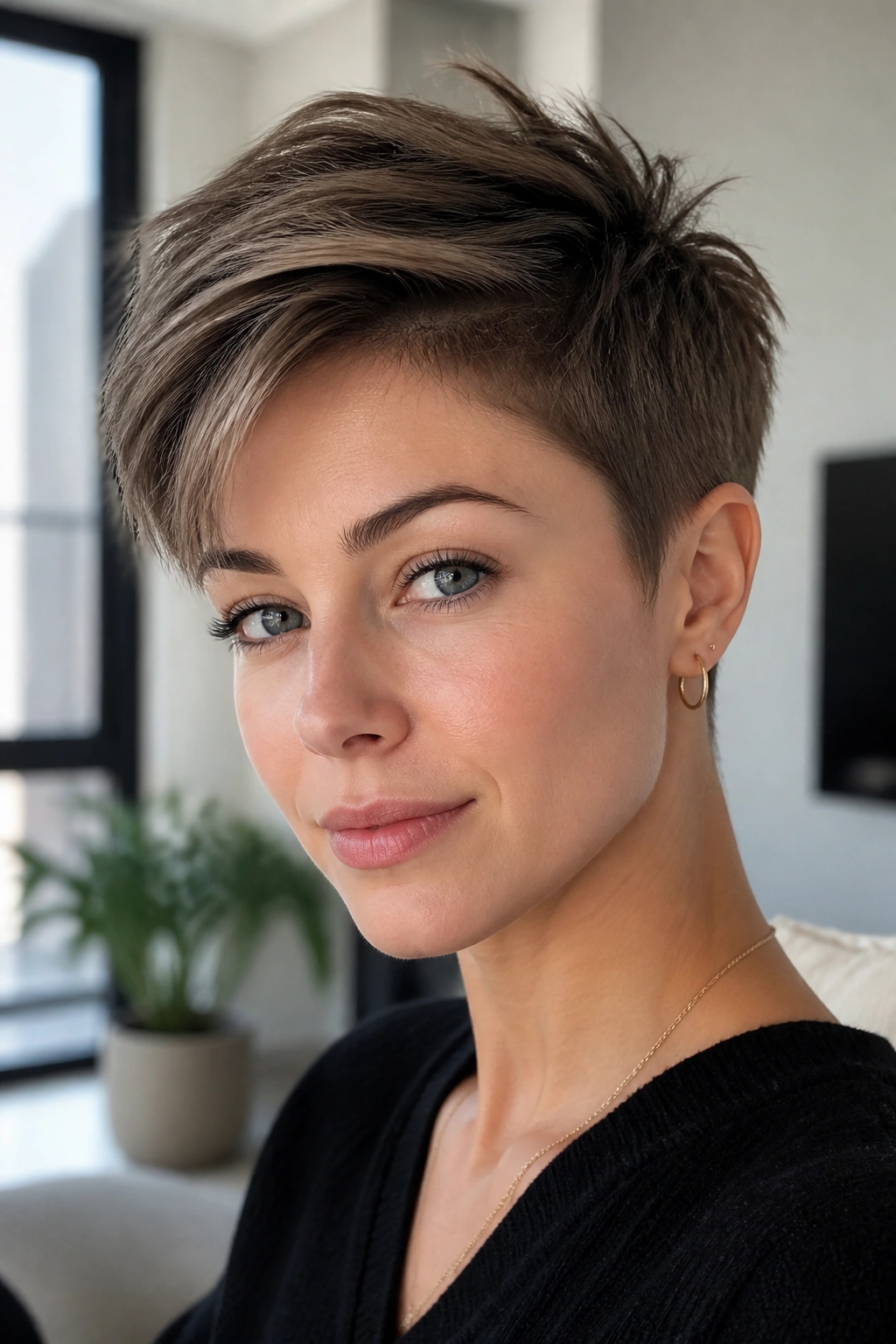
You walk out of the salon with cropped sides, a longer top, and suddenly your hair has opinions. That’s the charm of a pixie with length on top: it gives fine hair a real sense of lift without asking the ends to do too much work.
The long top is the part to pay attention to. Leave enough length for direction, not so much that it droops by lunchtime. On straight fine hair, a top section around 2 to 3 inches can be enough to push upward, sweep to the side, or fall forward in a soft wave.
How to Style It in 5 Minutes
Use a pea-size amount of lightweight paste or cream. Warm it between your fingers first. Then work it through the top, starting at the back of the crown and moving forward so the front does not get greasy.
- Blow-dry the roots first for about 60 to 90 seconds.
- Aim the dryer at the crown and lift with your fingers.
- Use a touch of product only on the ends of the top section.
- Keep the sides neat; that contrast is what makes the cut look intentional.
This is a good choice if you want a little edge without a lot of fuss. It does need trims, though. Short hair shows growth fast.
4. A-Line Bob

A bob does not have to be even to look neat. In fact, a slight A-line can be a gift for straight fine hair because the longer front pieces create a little visual length while the shorter back gives the crown some lift.
The angle should be gentle, not severe. If the front hangs too far forward, the cut can start to feel heavy and dated. Keep the difference from back to front modest — about an inch, maybe a bit more if your hair is dense enough to hold the shape.
This is one of those cuts that makes people think your hair is thicker than it is. The eye reads the diagonal line as fullness. Clever? Yes. Fake? Not really. It’s just geometry doing some of the work.
It also plays well with glasses, because the front can sit just under or just above the frames without getting lost.
5. Collarbone Lob with Airy Ends

A collarbone lob is the safe choice only if you do it right. The length gives straight fine hair enough weight to look healthy, and the ends can still swing a little instead of hanging like wet thread.
I prefer this cut with airy ends rather than carved-up layers. That sounds contradictory, but it isn’t. The internal shape can be very light while the outer line stays solid. The result is movement without the frayed look that happens when fine hair is overcut.
This length is good for people who are not ready to go fully short. It also works when you want to tie your hair back on rough days. That matters. A lot of stylish cuts are bad real-life cuts, and I have no patience for that.
If your hair is pin-straight, ask for a soft bevel at the ends rather than a chunky blowout shape. It will sit better after air-drying and still look clean after a brush-through.
6. Textured Crop with Piecey Bangs

Can straight fine hair handle a textured crop? Yes, but only if the texture is placed with a light hand. This is not the place for heavy choppiness. It is about tiny, controlled breaks in the shape.
The best version has short sides, a bit of lift at the crown, and piecey bangs that separate easily. The fringe should look like a few soft sections rather than one solid block. That keeps the front from overpowering the face.
What to Ask For
A good stylist will talk about where your hair naturally wants to fall. If they don’t, ask them. The crown, the hairline, and the way your part sits all change the result.
- Keep the top long enough to move, usually around 2 to 4 inches.
- Leave the bangs soft and narrow so they do not eat up density.
- Ask for light texturizing only at the top, not all the way through the sides.
- Finish with a matte paste or a tiny bit of styling wax.
What to Avoid
Do not ask for chunky layers everywhere. Fine hair can turn see-through fast, and once the cut is too broken up, it takes months to grow back into something solid.
7. Stacked Bob with a Clean Nape

A stacked bob is one of the best fixes for a flat back of the head. The short, graduated layers at the nape create lift, while the longer top gives the cut enough surface area to look full.
This works especially well if your hair lies flat near the crown but still has enough strand strength to hold a curve. A clean nape keeps the shape neat, which is helpful because messy stacking on fine hair can look hollow fast.
The trick is restraint. You want a gentle rise at the back, not a shelf. Too much stacking can leave the top looking sparse, and that is the exact problem you were trying to solve.
I like this cut for people who want polish without length. It behaves nicely with a blow-dry brush, but it does not demand perfect styling every morning. That is a decent trade.
- Short nape, rounded crown, soft side weight.
- Trim every 5 to 7 weeks to protect the stacked shape.
- Use a round brush only at the roots; the ends do not need much bending.
8. Side-Parted Micro Bob
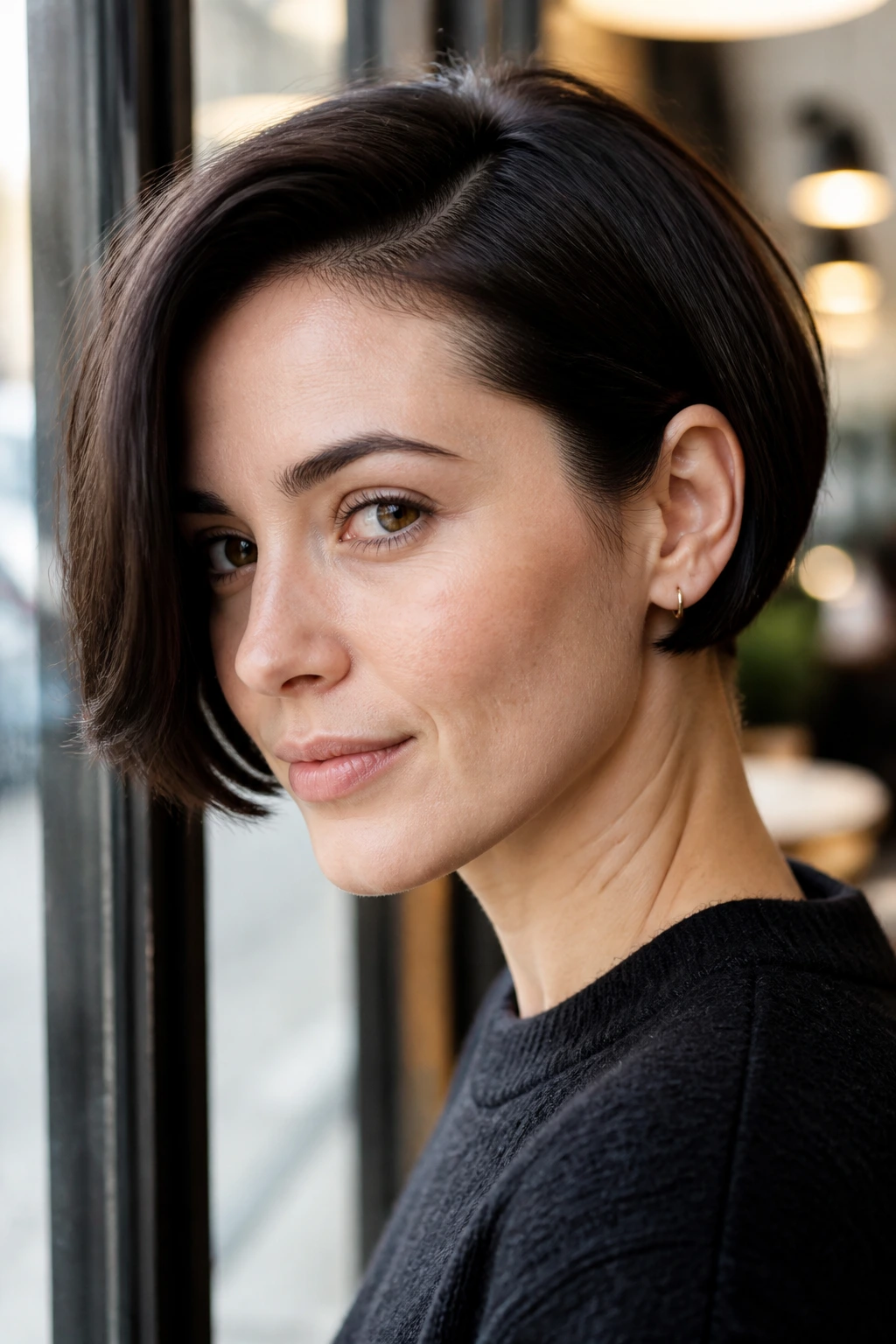
A side-parted micro bob can look sharper on fine hair than a longer bob that has lost its edge. The shorter length concentrates the weight, and the side part gives the crown a little extra lift where straight hair usually needs it most.
This is the cut for someone who likes a clean line and does not mind seeing the neckline. It often lands around the earlobe or just at the jaw. Tiny shift, big difference. Short hair can be very unforgiving, but it can also be incredibly tidy when it’s cut with discipline.
I would not recommend this one if you hate trims. It grows out quickly and shows every stray inch. Still, for the right person, it makes fine hair look dense in a way that longer shapes sometimes cannot.
The side part is the quiet hero here. It breaks up the flatness and gives the front a little lift without needing bangs.
9. Curtain Bang Bob

Why do curtain bangs keep showing up in short haircuts for straight fine hair? Because they soften the face without taking too much hair out of the perimeter. That balance matters when every strand counts.
A bob with curtain bangs works best when the fringe is long enough to move but short enough to open around the cheekbones. If the bangs are too thick, they can swallow the front. If they are too sparse, they just look accidental.
How Much Fringe Is Enough?
Usually, the shortest point should land somewhere near the brow or just below it, with the longer pieces tapering to the cheekbone. That gives you a gentle frame instead of a curtain that sits heavy on the face.
A quick blow-dry with a round brush helps the bangs split properly. Direct them away from the center, then let them settle. Do not overthink the part. Curtain bangs look best when they behave a little imperfectly.
- Best with a chin-length or slightly longer bob.
- Works well if you like wearing hair tucked behind the ears.
- Needs light styling cream, not a thick balm.
- Trim the fringe more often than the rest of the cut.
10. Soft Shag Bob

A soft shag bob is for people who want movement and do not worship the mirror. Straight fine hair can wear this cut well if the layers are soft and the length stays near the jaw or just below it.
The key word is soft. A hard shag can strip out too much weight and leave fine hair fluttery in the wrong way. A better version keeps the outline usable while building slight lift through the crown and a loose bend around the face.
I like this option when the hair has some natural slide to it. It won’t fake thickness, and I would not pretend otherwise, but it can make the hair feel more alive. That matters if your current cut looks stiff by midday.
One-sentence truth: this cut looks best when you stop trying to force it into perfect shape.
Use a bit of mousse at the roots and scrunch the ends only if they need help. The point is movement, not puffy volume.
11. Tapered Pixie Bob
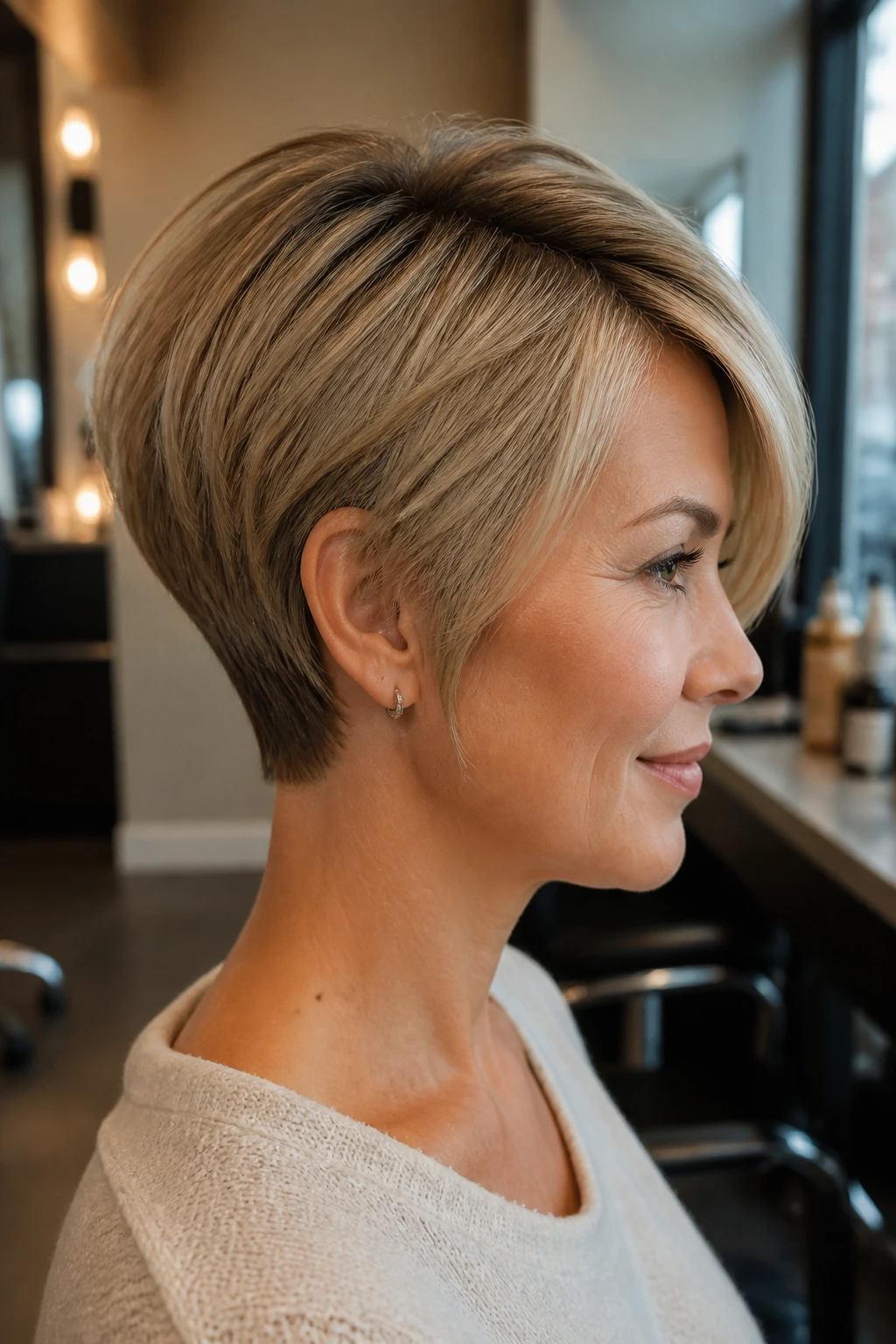
Picture a pixie and a bob meeting in the middle. That is the tapered pixie bob: short around the nape, fuller through the crown, and long enough around the ears to still feel like you have some hair to play with.
This is a smart cut for straight fine hair because it gives the top a little height without making the whole head look tiny. The taper at the nape cleans up the back, which keeps the silhouette neat. The longer top can be swept over, side-parted, or rough-dried for a softer shape.
It’s also forgiving on days when you do not want to style much. A quick blast of the dryer and a dab of cream can be enough.
- Ask for a tapered back, not a hard fade.
- Keep the top textured in small sections, not shredded.
- Great for people who want short hair but not a pure pixie.
- Needs a trim every 5 to 6 weeks to stay crisp.
This cut has a nice practical streak. It looks modern, but it does not ask for a lot of ceremony.
12. Jaw-Length Box Bob

A jaw-length box bob is blunt in the best way. It has a clean outline, little internal layering, and enough structure to make straight fine hair look deliberate instead of fragile.
The boxy shape is what gives it power. On fine hair, soft layers can disappear. A box bob says the opposite: keep the line, keep the weight, trust the shape. If your hair is straight, that shape will stay visible all day instead of collapsing into fuzz.
Some people worry it looks severe. Sometimes it does. That is part of the appeal. It feels graphic, a little edited, and very easy to dress up with earrings or a strong brow.
If you want softness, keep a slight bend in the ends and a side part. If you want more edge, wear it straight and center-parted. Either way, the haircut does the heavy lifting.
13. Ear-Length Crop with Tucked Sides
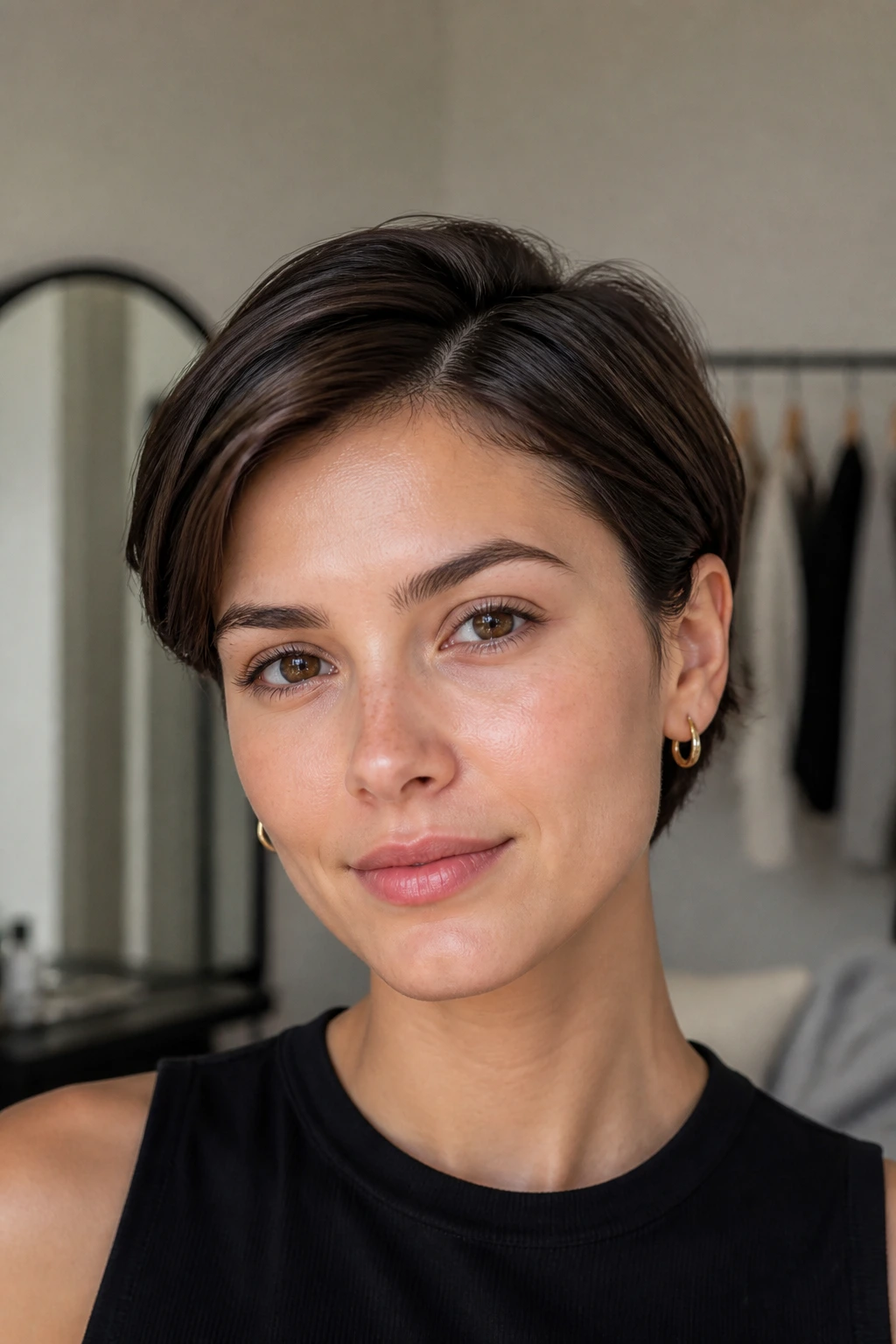
Shorter can be better when fine hair refuses to look full at longer lengths. An ear-length crop with tucked sides puts the focus on the face, not the hair density, and that shift is often the whole fix.
This cut is sharp without being loud. The sides sit close enough to tuck behind the ears, which makes it nice with earrings, glasses, and high necklines. The top can be soft and slightly longer, but the outline should stay compact.
It’s not the most anonymous haircut in the room. Good. Fine hair often looks best when it stops trying to behave like thick hair.
The styling is painless: a small amount of lightweight paste, fingers through the top, then leave the sides alone. If the crop is cut well, it will fall into place in under two minutes. That’s the appeal. No one needs a complicated morning.
14. Grown-Out Pixie

Is a grown-out pixie just an in-between haircut? Not really. When it’s cut well, it becomes its own shape — softer than a standard pixie, lighter than a bob, and surprisingly good on straight fine hair.
The grown-out stage is where the top has enough length to move while the sides stay close enough to the head to keep the outline neat. This can be a relief if you like short hair but hate the ultra-short feeling of a fresh crop.
Why It Flatters Fine Strands
The shape uses contrast. Longer top, shorter sides, cleaner nape. That contrast makes the hair seem fuller because the eye sees different layers of silhouette, not just one flat sheet of hair.
A little root spray helps here. So does a quick finger-dry with the head tipped forward.
- Keep the top around 3 to 4 inches.
- Ask for soft edges around the ears so it does not look like a helmet.
- Trim every 6 weeks if you want the shape to stay controlled.
- Use cream or mousse; heavy pomades make it collapse.
This is a useful cut if you want short hair with room to move.
15. Rounded Pageboy Bob

The pageboy gets overlooked because people think of it as old-fashioned. I think that’s unfair. A rounded pageboy bob can be one of the best shapes for straight fine hair because it creates a fuller silhouette without needing much product.
The rounded curve at the ends gives the hair a soft shell of shape. That matters. Straight fine hair often looks best when the outline is intentional, and this cut is all outline. The result is smooth, neat, and a little polished in a way that does not feel precious.
It also works well if your hair has a stubborn habit of flipping out at the ends. A pageboy uses that tendency rather than fighting it. The curve becomes the point.
A short neck line and a slightly fuller crown make the whole thing feel balanced. If the curve is too exaggerated, it can look costume-y. Keep it modern by letting the ends hug the jaw instead of curling under too hard.
16. Choppy Bob with Invisible Layers

Invisible layers are the sneaky fix for straight fine hair. They add movement from the inside out, which means the outside still reads as full and clean. That is a much smarter move than carving obvious layers all over the place.
A choppy bob with invisible layers keeps the perimeter intact while just breaking up some weight inside the shape. The hair moves a little more easily, but it does not lose its outline. That’s the part I like. The cut feels lighter without looking thin.
One-sentence version: you get motion without the ragged ends.
This haircut is useful if your hair gets too blunt and heavy at the same time. Yes, that can happen with fine hair. A solid line can look dense but also flat, and hidden layers solve that tension. They create lift where the eye does not immediately see it.
Ask for soft internal texturizing rather than aggressive slicing. The difference matters. One gives shape; the other can eat the shape alive.
17. Undercut Pixie

An undercut pixie is not just for people who like a tougher look. It is also practical. Removing bulk underneath lets the top sit better, which can make straight fine hair look denser where it counts.
If your nape gets fuzzy or your crown lies flat against your head, this cut can clean up the whole silhouette. The undercut takes weight out of the bottom layers, and the top becomes the star. That contrast is strong. So is the maintenance.
Who Should Try It
This is a good fit if you want short hair that dries fast and holds its form with minimal effort. It is less good if you hate frequent upkeep. The clipper section needs regular cleanup, or the shape loses its sharpness fast.
- Top length usually sits around 2 to 4 inches.
- The undercut should blend gently into the sides unless you want a harder edge.
- Works well with a side sweep or a loose quiff.
- Use a tiny amount of matte paste, not a greasy cream.
If you like a haircut that feels decisive, this one delivers. It does not whisper.
18. Sleek One-Length Bob
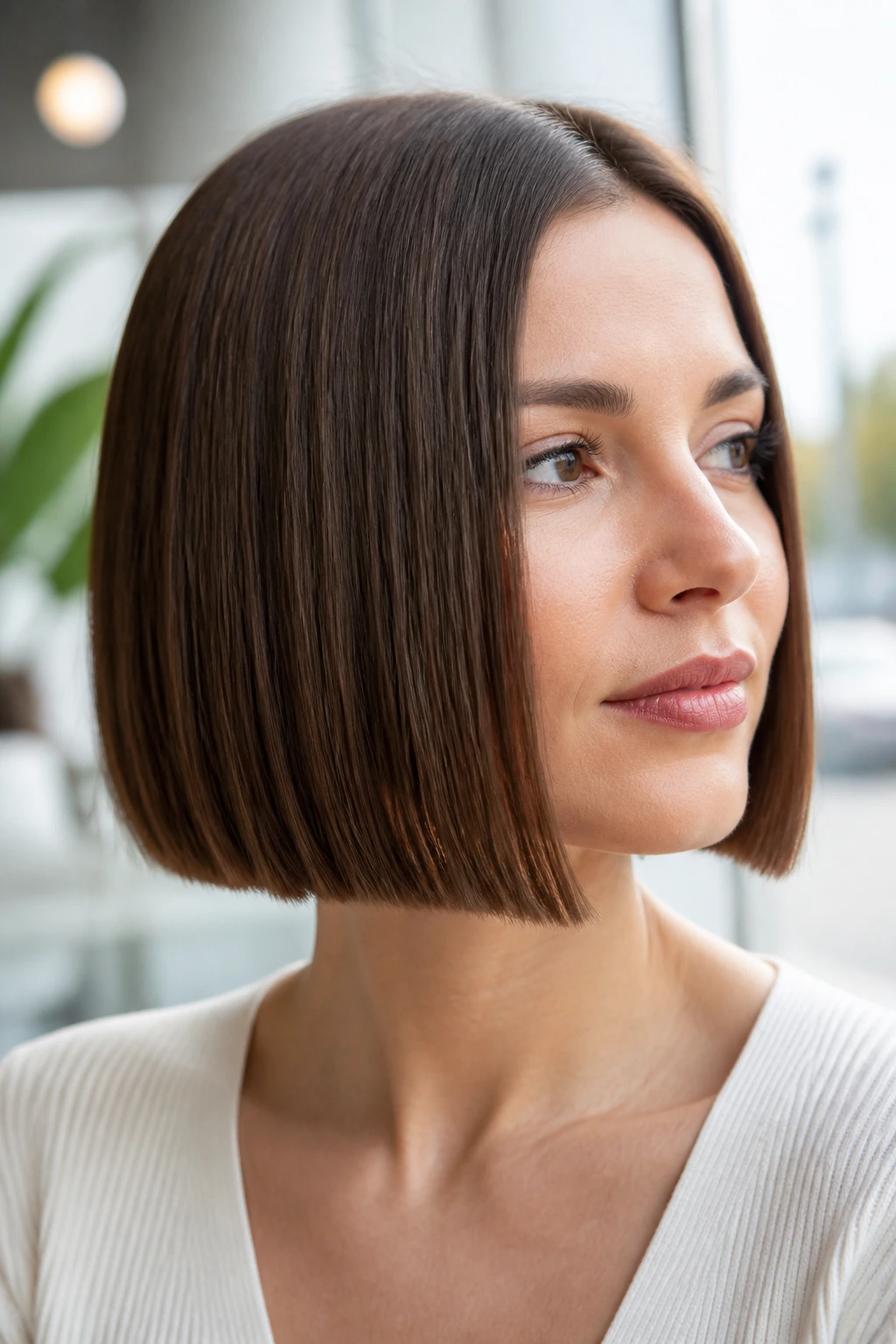
If you want the least fussy option on straight fine hair, this is the one I trust most. A sleek one-length bob gives the hair a solid edge, and that edge is what keeps fine strands from looking flimsy.
The length can sit anywhere from jaw to just below the chin, but the line itself should stay clean. No choppy layers. No overworked texture. Just a strong perimeter and a finish that looks smooth rather than overstyled. A center part makes it precise; a side part makes it a little softer.
This cut grows out gracefully, which is half the battle. The shape stays readable for weeks, and the hair still looks neat when tucked behind one ear or pinned back on a busy morning. That flexibility is worth a lot more than flashy tricks.
A small flat iron pass, a light heat protectant, and a quick brush-through are usually enough. If you want a cut that behaves, this is the plain-spoken answer. And sometimes that is exactly what fine hair needs.
