



Thick hair has a personality of its own. It can hold a curl for hours, eat a bobby pin for breakfast, and turn a tiny ponytail into something with real presence. That’s the upside. The downside is familiar too: heavy lengths, bulky elastics, braids that puff up in odd places, and styles that look cute in the mirror but collapse by lunch because there’s simply too much hair to support.
The good news is that thick hair is not hard to style when you work with its weight instead of fighting it. A strong elastic, a clean part, a few well-placed pins, and the right amount of texture make a huge difference. I also think thick hair looks best when it’s allowed to look thick — not flattened into submission, not over-sprayed into helmet territory. That balance is the whole trick.
So the list below leans into styles that hold, flatter, and still feel playful. Some are fast enough for a school run. Some look like you spent 20 minutes longer than you did. All of them are friendly to dense, full hair, which is the real test.
1. High Ponytail With Wrapped Base for Thick Hair

A high ponytail on thick hair has a clean, lifted look that never feels fussy. The height pulls the face upward, and the wrapped base hides the elastic so the whole style looks a little more finished than a plain ponytail.
Why it works on thick hair
Thick hair gives the ponytail enough weight to fall in a sleek line instead of sticking out like a fountain. If your hair is layered, smooth the top with a light cream first and keep the wrap section small. One half-inch strand around the base is usually enough.
- Use a strong no-slip elastic so the ponytail does not slide down.
- Brush the crown upward before securing; that tiny bit of lift changes the whole shape.
- Wrap a 1/2-inch strand around the elastic and pin it underneath with one bobby pin.
- Finish with a mist of flexible hairspray, not a crunchy one.
Tip: If your hair is extra dense, split the ponytail into two sections and wrap the top section around a second elastic for better support.
2. Claw Clip French Twist
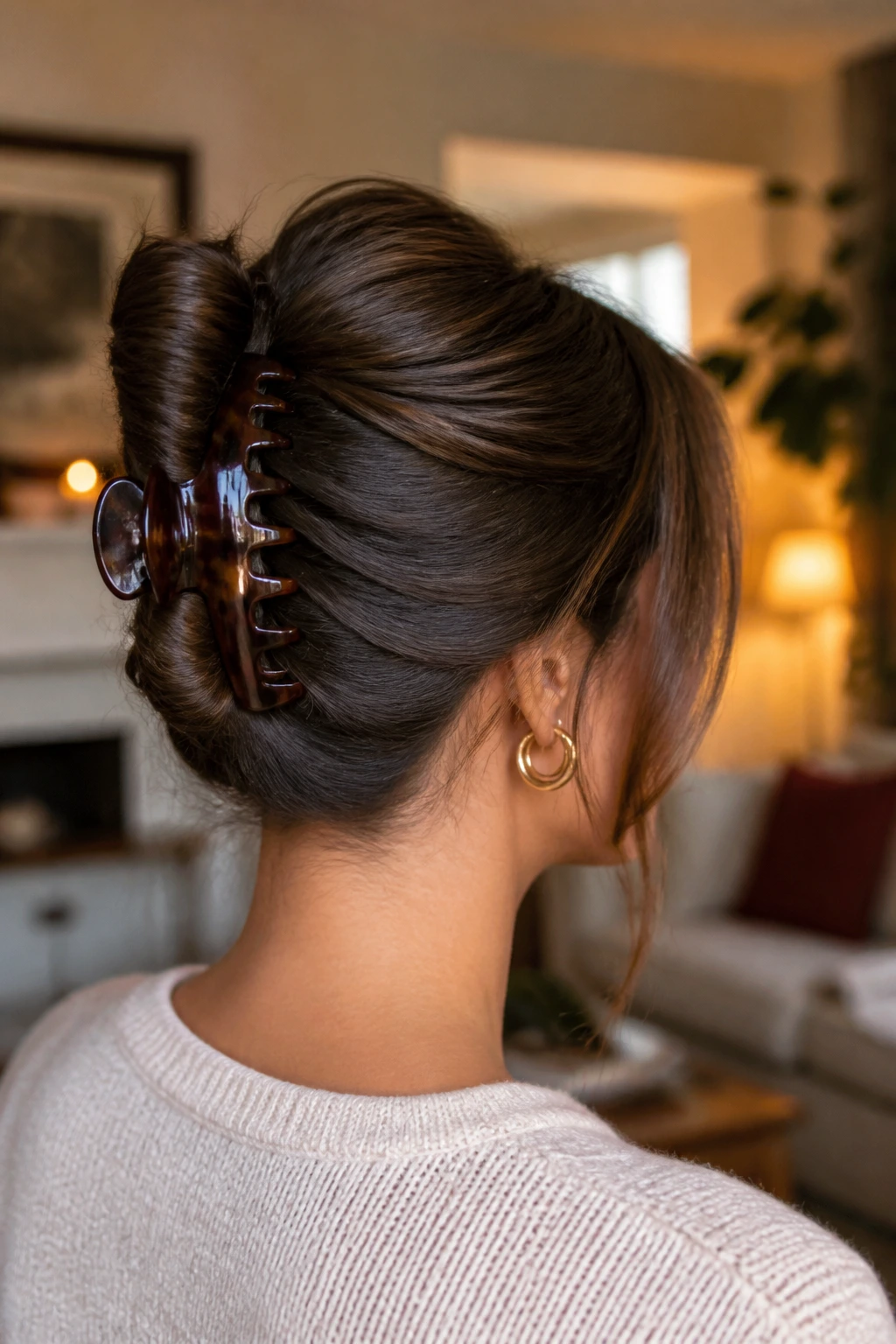
A claw clip French twist looks elegant without trying too hard, which is exactly why I like it for thick hair. The twist uses the hair’s own bulk as structure, so you get a full, tucked shape instead of a flimsy roll.
The trick is to twist upward in one smooth motion, then fold the ends under before clipping. A medium-to-large clip with strong teeth matters here. Tiny clips are cute on fine hair. On thick hair, they are a joke.
This style works best when the hair has a little grip. Day-two hair, a touch of dry shampoo, or a light texturizing spray gives the twist something to hold onto. If the twist feels bulky, leave the ends softer and let a few pieces spill out near the nape. That keeps it from looking severe.
3. Half-Up Top Knot

Can a top knot be cute and practical at the same time? Absolutely, and thick hair is one of the few hair types that makes it look full instead of skimpy.
Pull the top half of your hair into a small knot at the crown, then keep the knot loose enough that it still has shape. If you over-tighten it, the knot gets heavy and starts to tilt. That’s the part people miss. Thick hair looks better in a top knot when the bun is compact but not compressed.
How to wear it
Use a snag-free elastic, twist the ponytail once, then loop the ends through only halfway on the last pass. That leaves a soft bun shape with a little volume. If you want more polish, smooth the sides first and tuck in flyaways with a pea-sized amount of cream.
4. Bubble Ponytail
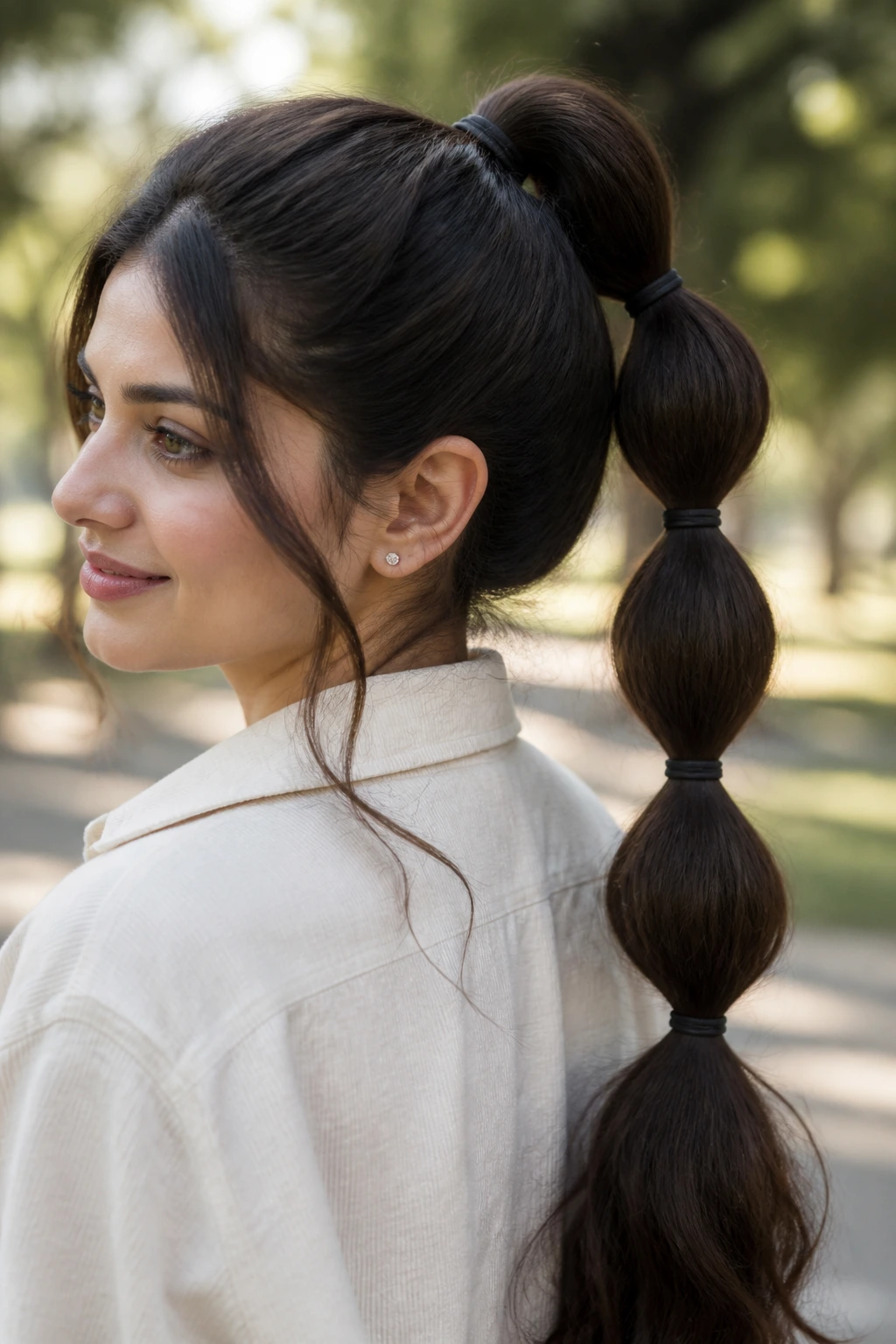
A bubble ponytail is one of those styles that looks more complicated than it is. On thick hair, it gets a naturally full shape between each elastic, so the “bubbles” look plush instead of saggy.
Start with one ponytail, then add small clear elastics every 2 to 3 inches down the length. Gently tug each section outward so it rounds into a bubble. The important part is restraint. Pull too hard and the bubbles turn lopsided. Too little and the style disappears.
I like this style for busy days because it stays put better than a loose braid. It also works with straight, wavy, or lightly curled hair. If your hair is very long, keep the bubbles slightly larger near the top and smaller near the ends so the whole ponytail keeps its shape.
- Best with medium-hold elastics
- Looks fuller on second-day hair
- Easy to dress up with ribbon ties
5. Braided Crown

A braided crown gives thick hair that soft, romantic look without relying on curls or a ton of product. The braid wraps around the head, which means the hair’s fullness becomes part of the style instead of getting in the way.
This is one of those styles that benefits from a little looseness. A tight braid can make thick hair feel heavy at the scalp. A slightly looser braid sits better and feels more wearable for longer stretches. That soft pull is what keeps it cute rather than severe.
If you want a cleaner finish, braid each side separately and pin them across the back. If you want it softer, pancake the braid a little — gently widen each braid section with your fingers after braiding. Do not yank. Thick hair already has enough volume.
6. Low Sleek Bun
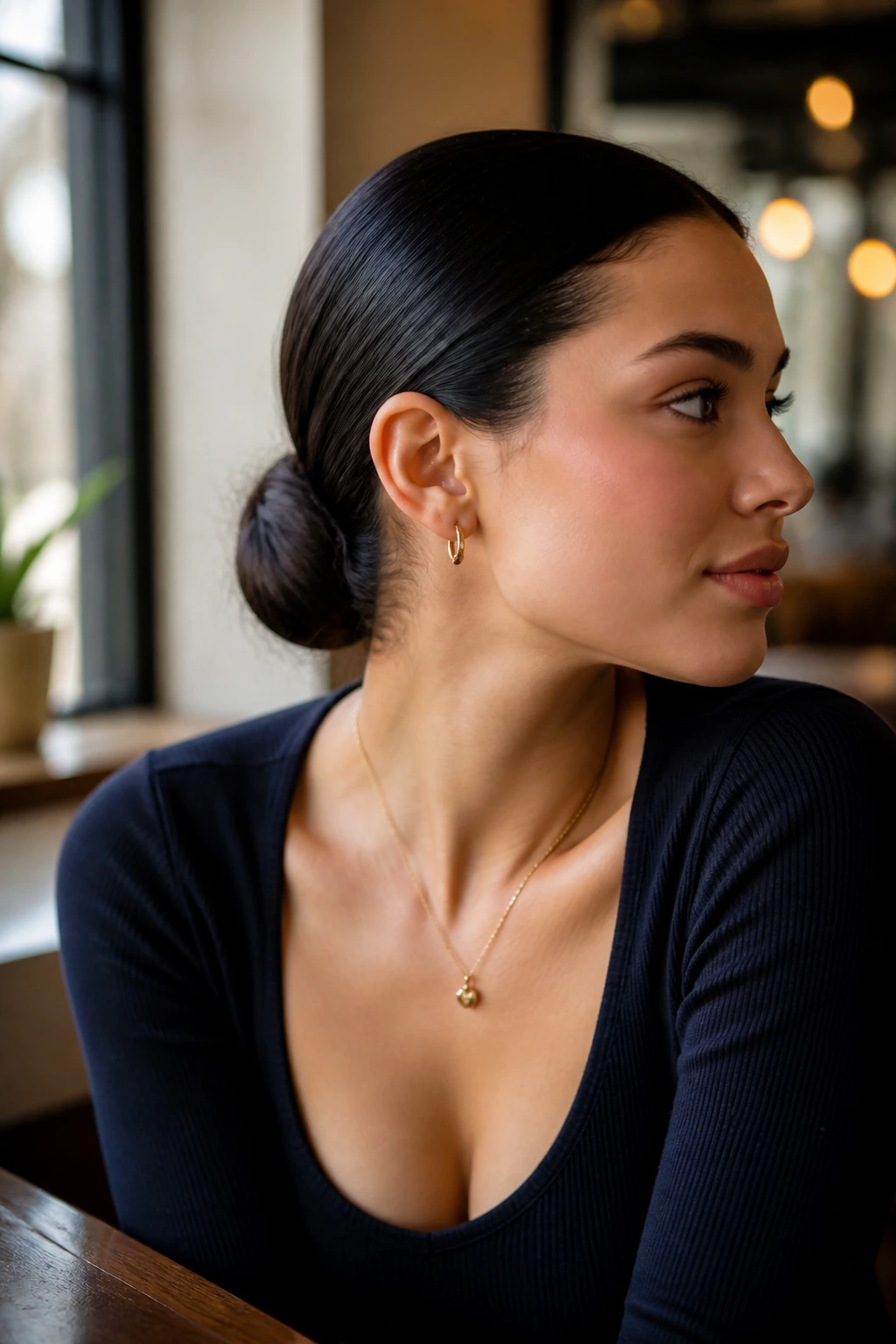
A low sleek bun is the style I reach for when thick hair needs to look controlled in a hurry. It sits close to the neck, feels neat, and gets that polished look without needing a salon hand.
Unlike a big messy bun, this one uses the hair’s density to create a smooth, solid shape. A bit of gel or smoothing cream at the roots helps, but the real secret is brushing the hair down in sections instead of trying to smooth everything at once. That usually leaves fewer bumps.
It is best for work, dinner, or any day when you want your hair out of the way and still looking intentional. Pin the bun in a spiral, then secure it with two or three pins crossed over each other. Thick hair holds better when the pins are doing small jobs, not one giant job.
7. Loose Mermaid Braid

A loose mermaid braid is a good answer when you want something pretty but not too precious. Thick hair gives it enough body that each braid section looks intentional, not stringy.
Start with a low braid and keep the tension relaxed from the beginning. Once it is tied off, gently pull the sides of each braid section wider. That’s what creates the soft, full shape. If your hair is layered, a few shorter pieces may slip out. I actually like that here. It keeps the braid from looking too stiff.
This style shines with wavy hair, but straight hair works too if you add a little texture spray first. A single ribbon woven through the braid can make it feel softer without changing the structure.
8. Double Dutch Braids

Double Dutch braids are one of the smartest styles for thick hair because they keep everything close to the scalp and under control. The raised braid pattern also gives a little depth, which looks great when your hair has plenty of density.
If your hair is very thick, sectioning matters more than speed. A clean center part and two even halves make the braids feel balanced. Use clips to hold one side while you braid the other so your arms do not get tired halfway through. That sounds basic, but it saves frustration.
This is a strong pick for active days, humid weather, or hair that tends to frizz at the first hint of movement. The braids can be worn tight for a sporty look or loosened slightly for a softer finish. Either way, they stay put.
9. Side-Swept Fishtail
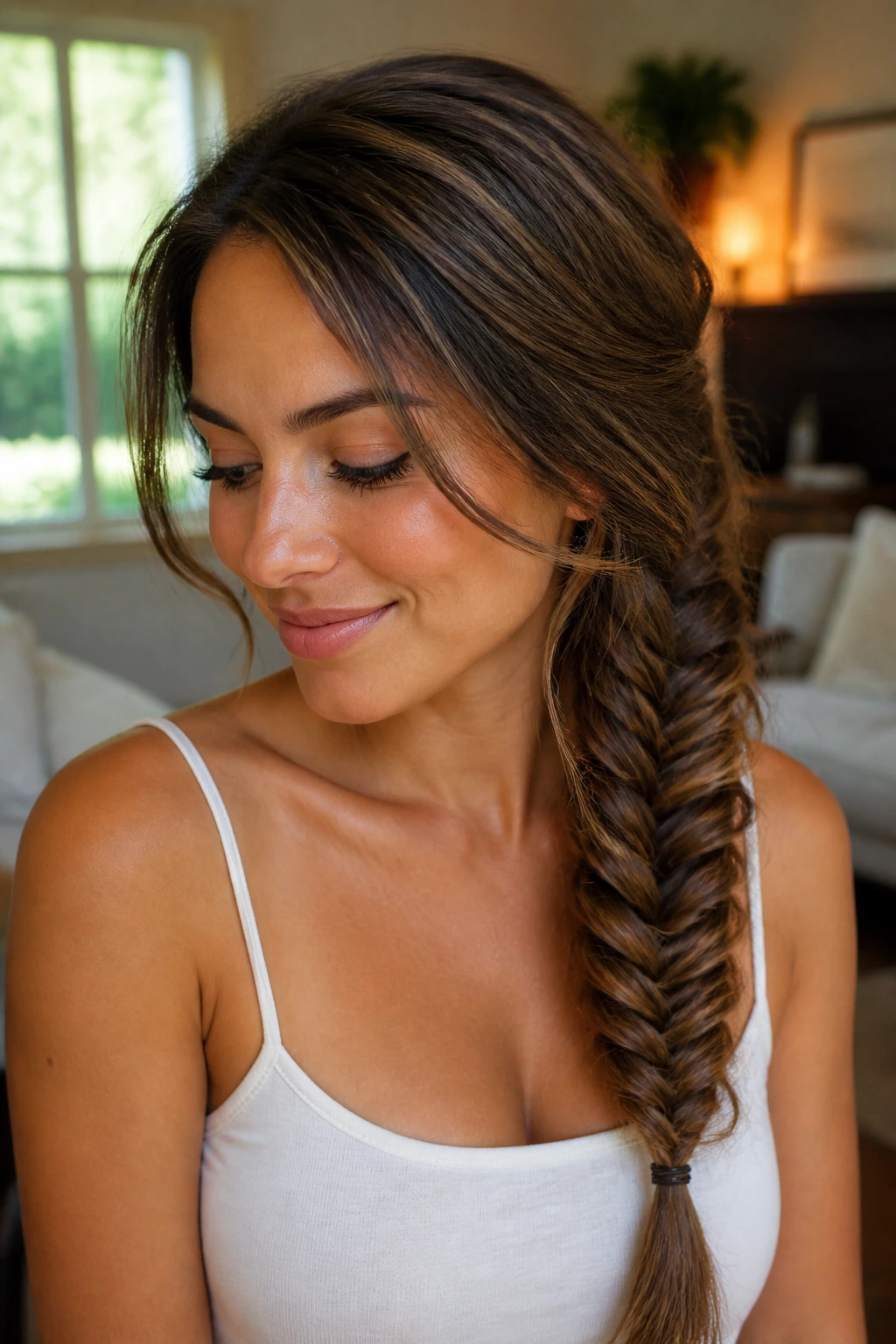
A side-swept fishtail braid has a little drama, but not in a loud way. Thick hair gives the braid enough texture that the weave looks full from the start, which is half the battle.
The side placement matters. Bring all the hair over one shoulder, then braid slowly so the tension stays even. A fishtail can look messy if the strands are uneven, but on thick hair it also looks forgiving. The extra mass hides tiny mistakes. Nice little bonus.
How to get the most from it
- Start with a low side ponytail if your hands need more control.
- Use a small clear elastic at the end.
- Pancake only the outer edges, not the whole braid.
- Leave the front pieces a little soft for a less severe look.
10. Half-Up Bow Bun
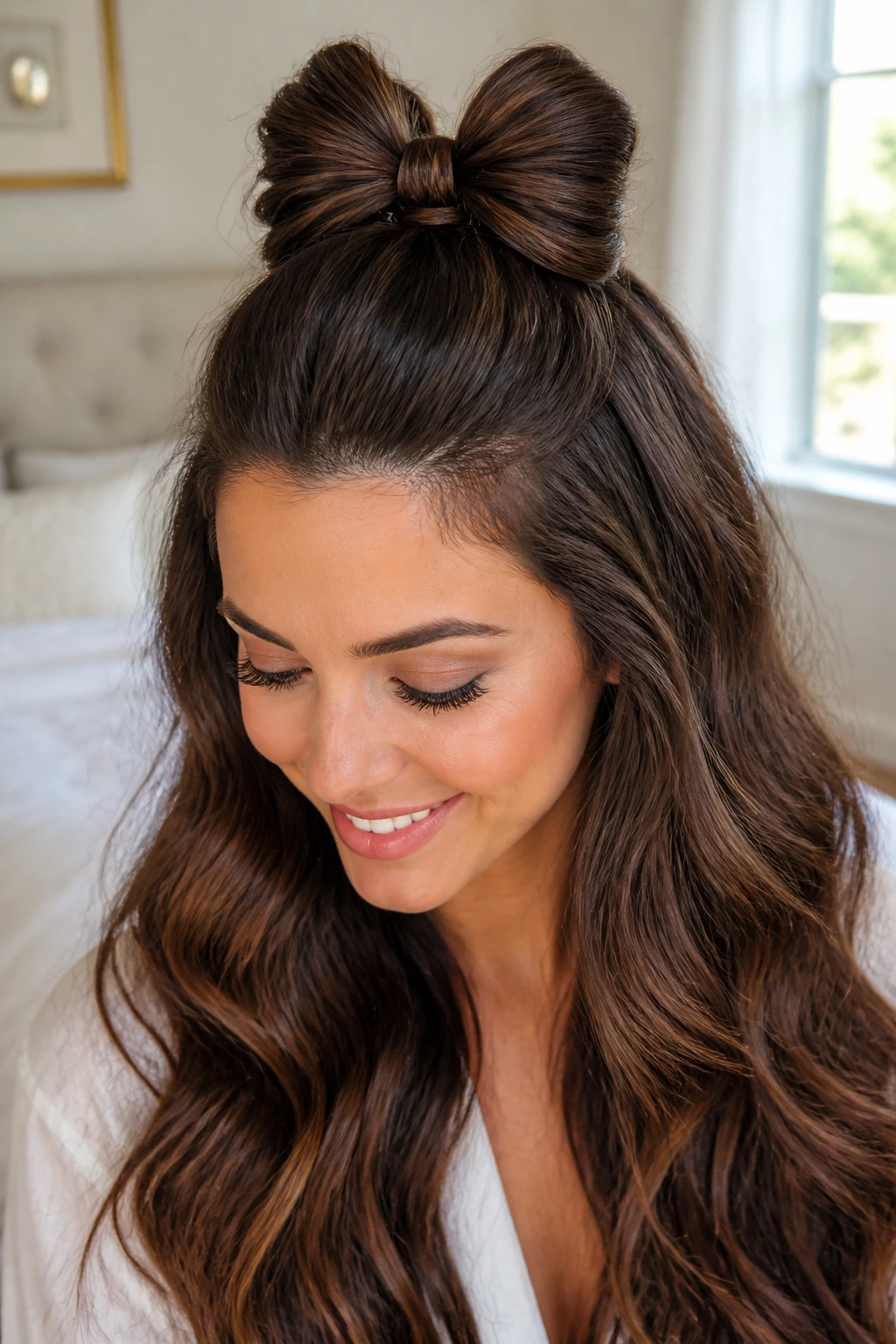
The half-up bow bun is playful without being childish, and thick hair makes the bow shape easier to see. The top section gets enough body to hold the loops, which is the whole point.
Divide the half-up ponytail into two loops, then pin them flat so they resemble a bow. The rest of the hair can stay straight, wavy, or softly curled. I like this style for days when you want your hair off your face but still want to keep length visible. It has a kind of built-in charm.
If your hair is too heavy for the bow to hold its shape, tease the base lightly before forming the loops. A tiny bit of grip spray helps too. Not a lot. Too much product makes the bow feel sticky and awkward.
11. Heatless Rope Twist Waves for Thick Hair
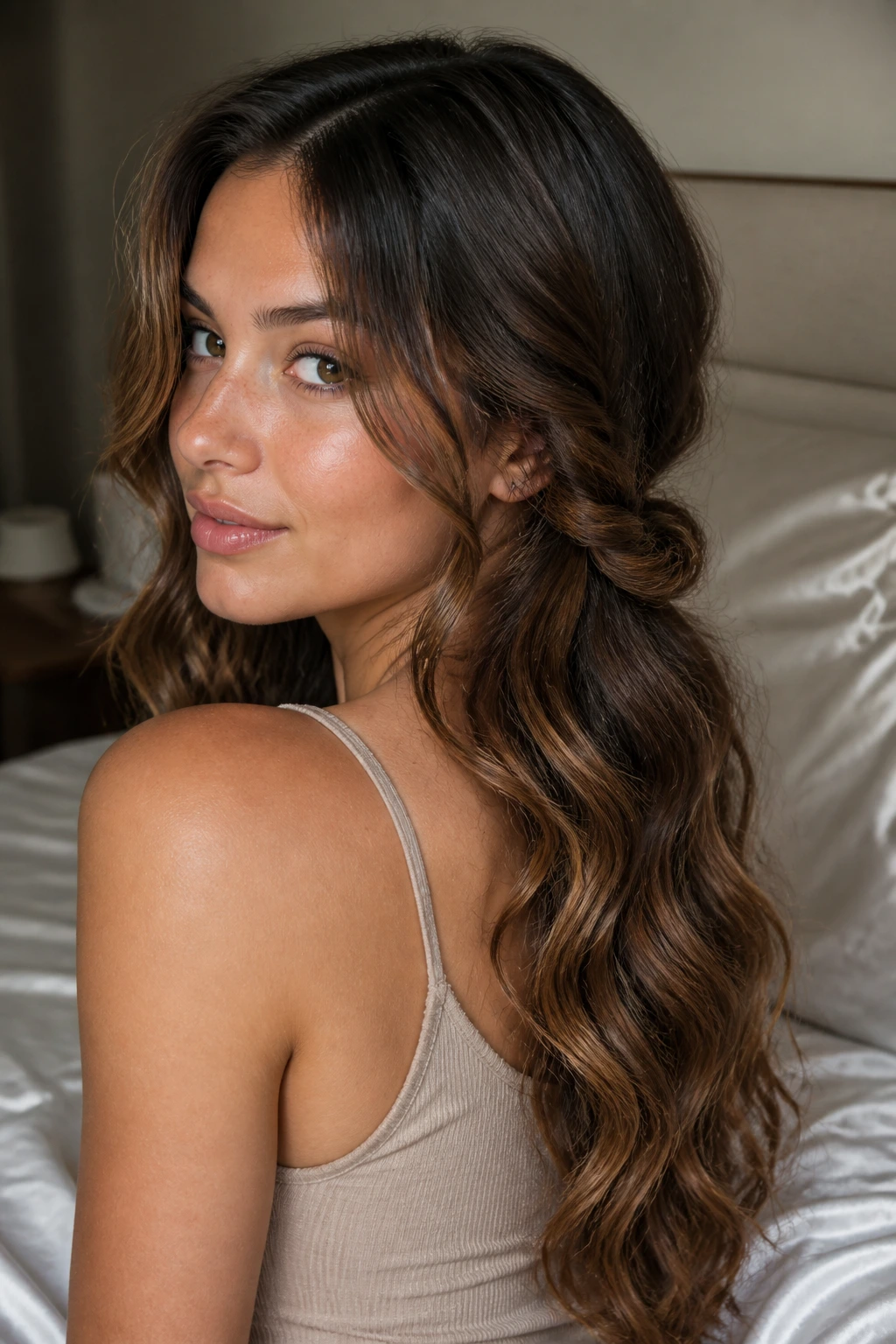
Heatless rope twists are one of those styles that looks casual but takes the edge off very thick, bulky hair. The twists press the hair into soft waves overnight, and the result feels airy instead of flat.
The method is simple: split damp or lightly misted hair into two sections, twist each side away from the face, then wrap the twists into buns or secure them low. When you take them out, the wave pattern is more open than a tight curl, which suits thick hair well. Tight curls can get too puffy fast. This sits in a nicer middle ground.
Use a light leave-in conditioner before twisting if your ends get dry. Then sleep on a silk pillowcase if you have one. It helps the shape stay cleaner and keeps the hair from frizzing into a cloud by morning.
12. Layered Blowout With Flip Ends
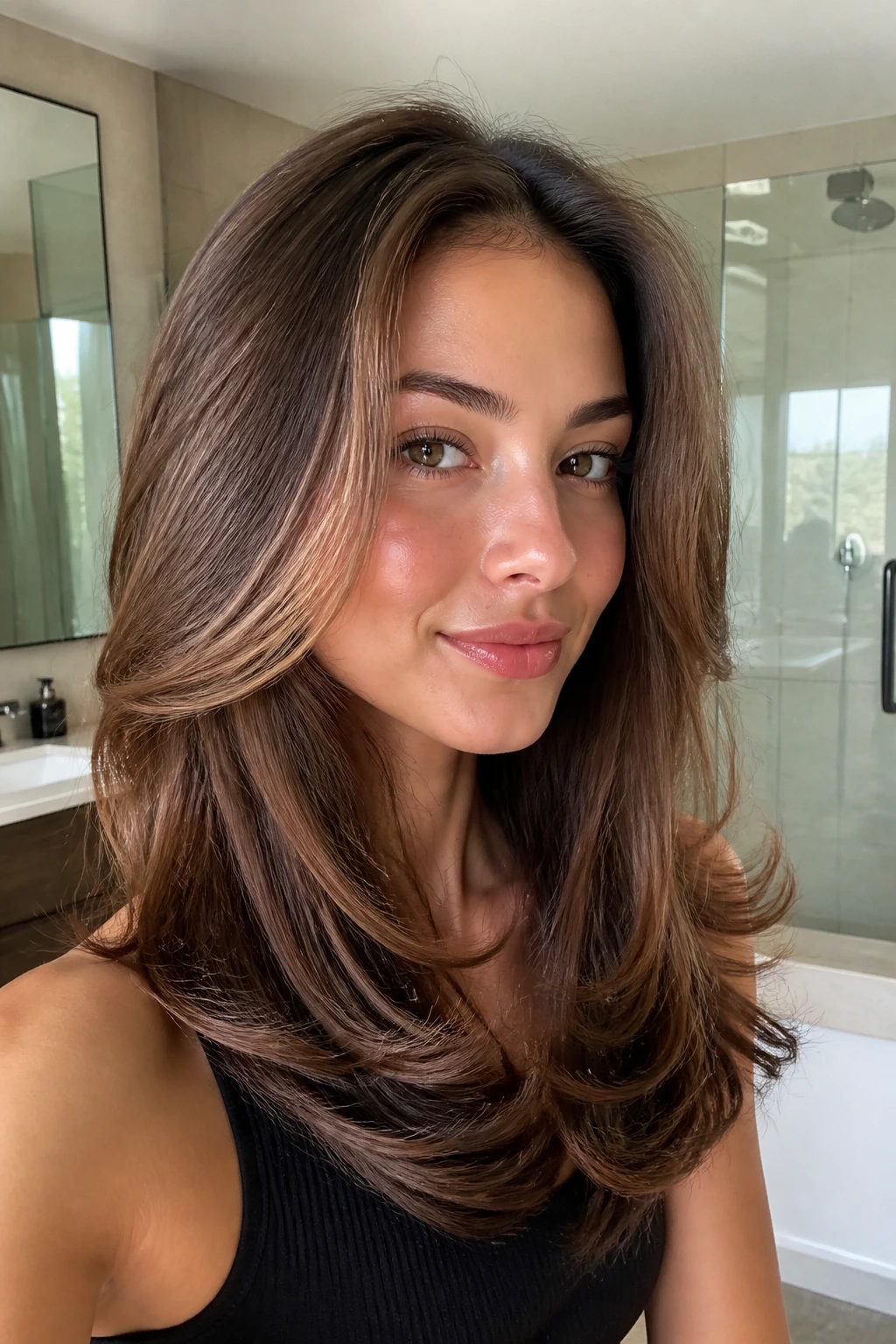
A layered blowout with flip ends is a favorite of mine because it lets thick hair move instead of sitting like one solid block. The layers keep the weight from feeling heavy, and the flipped ends make the whole style feel lively.
This works especially well if your hair already has a round brush bend or a soft blow-dry. Use a medium round brush, lift the roots, and flip the ends outward around the face. The shape does not need to be perfect. Slightly uneven flips actually look better than stiff symmetry.
The key is to avoid overloading the roots with product. Thick hair can get weighed down fast, and a flat crown ruins the whole effect. A light mousse at the roots and a small mist of shine spray on the mids and ends is enough.
13. Messy Low Ponytail With Face-Framing Pieces
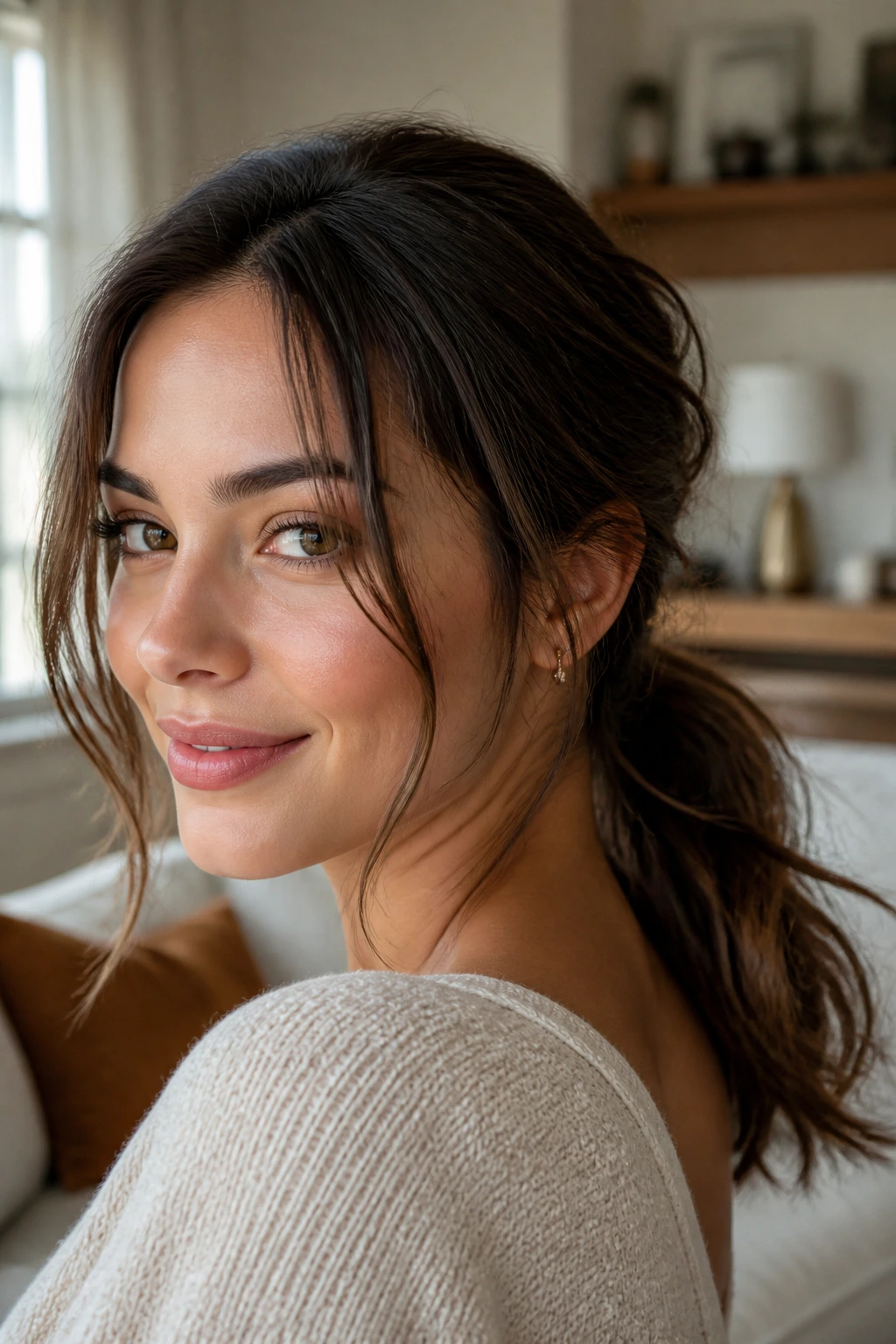
A messy low ponytail sounds simple, but on thick hair it can look quietly expensive when the shape is right. The ponytail sits low at the neck, while a couple of loose face-framing pieces soften the front and keep it from looking too pulled back.
I like to start by leaving out two slim sections around the face before tying the ponytail. Then I tease the ponytail base just a little so it has lift. The ends can stay natural, curled, or lightly waved. The point is ease, not precision.
Quick shape notes
- Keep the ponytail slightly off-center for a softer line.
- Wrap a thin section of hair around the elastic if you want a cleaner finish.
- Use a dab of cream on the front pieces so they bend instead of puffing out.
- Pull a few crown strands loose if the style feels too tight.
14. Pigtail Braids
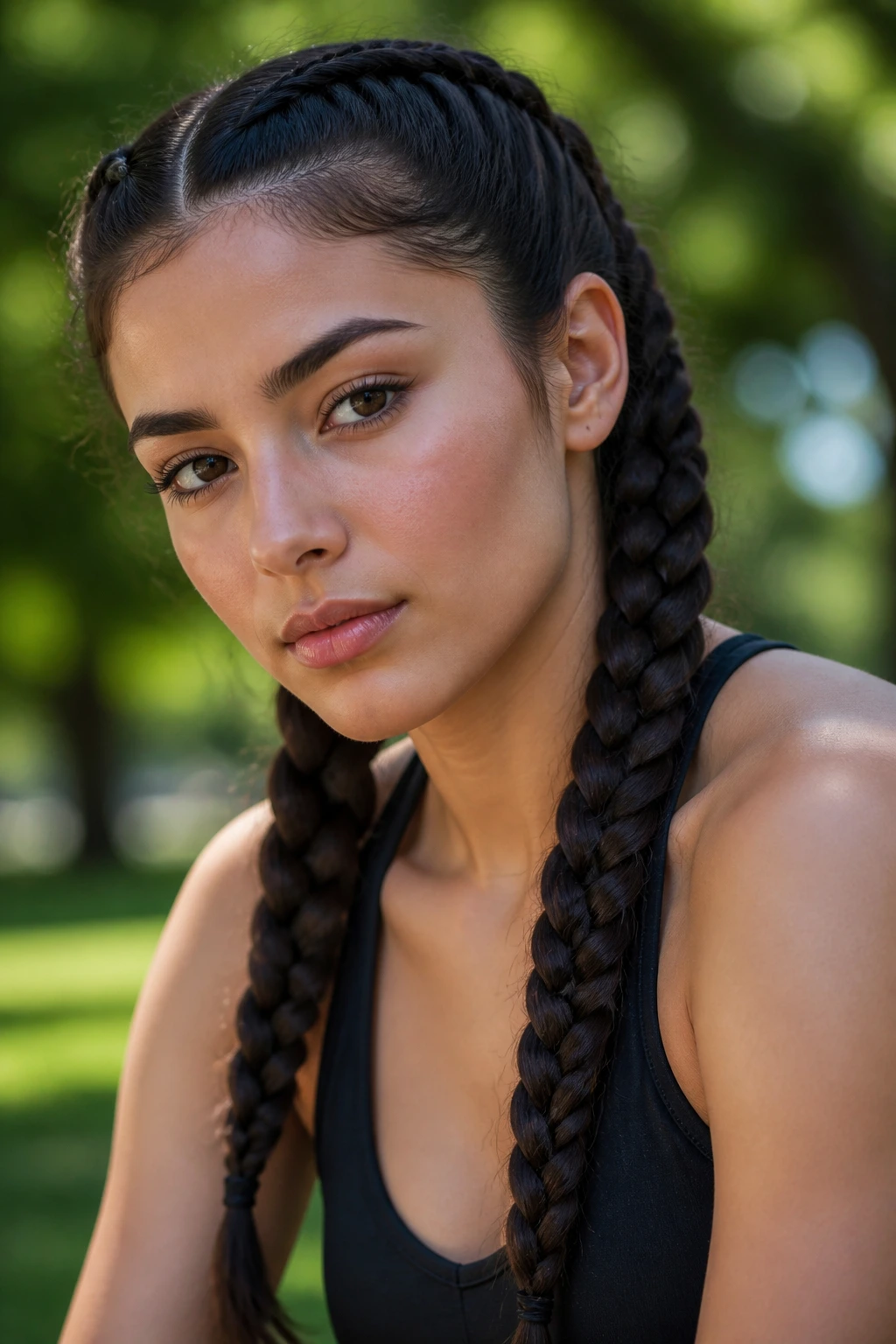
Pigtail braids are not only for school photos. On thick hair, they can look crisp, practical, and a little bit sporty in a way that feels fresh instead of childish.
The best thing about this style is control. Thick hair splits neatly into two strong braids, and each braid holds its own shape. If your hair is very long, the ends may get heavy. A small elastic near the bottom of each braid keeps the shape from unraveling before the day is done.
I prefer slightly offset braids for this look — not too perfect, not too severe. A center part is fine, but a soft side part can make the style feel more relaxed. If you want a dressed-up version, tie each braid with a small ribbon instead of a plain elastic.
15. Twisted Half-Up Half-Down
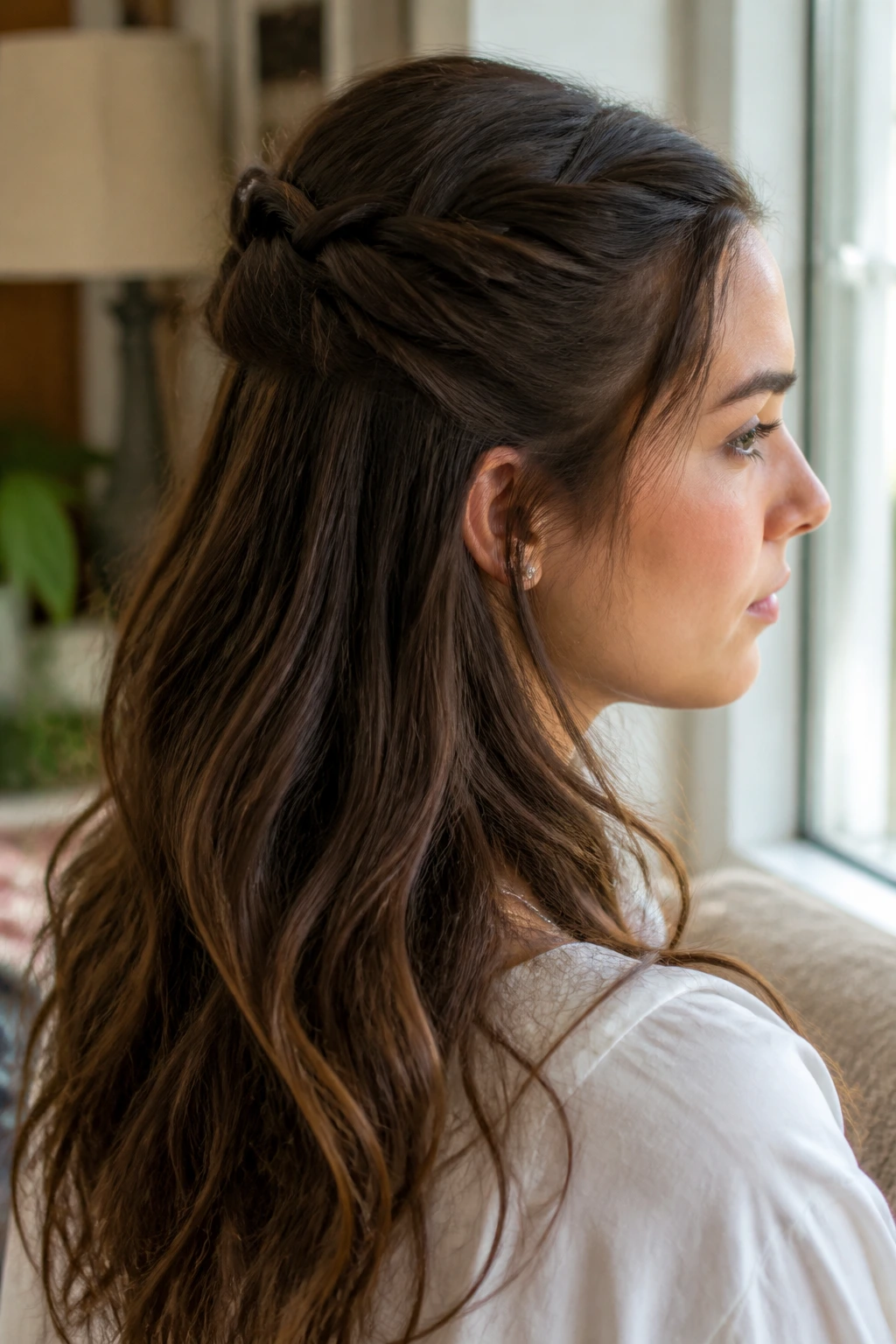
The twisted half-up half-down style is one of the easiest ways to tame thick hair without hiding it. You twist back two front sections, pin them together, and let the rest fall loose. That’s it. And it works.
What makes it useful is the balance. The top section gets lifted off the face, while the bottom still shows off the hair’s length and density. If your hair is wavy, the twists blend in nicely. Straight hair looks clean and modern. Curly hair turns this into a soft, full shape that sits beautifully.
How to wear it
Use two medium bobby pins in an X shape if the twists feel slippery. If you want more hold, spray the twists lightly before pinning. Keep the rest of the hair brushed through but not overly smoothed. A little natural movement keeps the style from feeling stiff.
16. High Half Ponytail
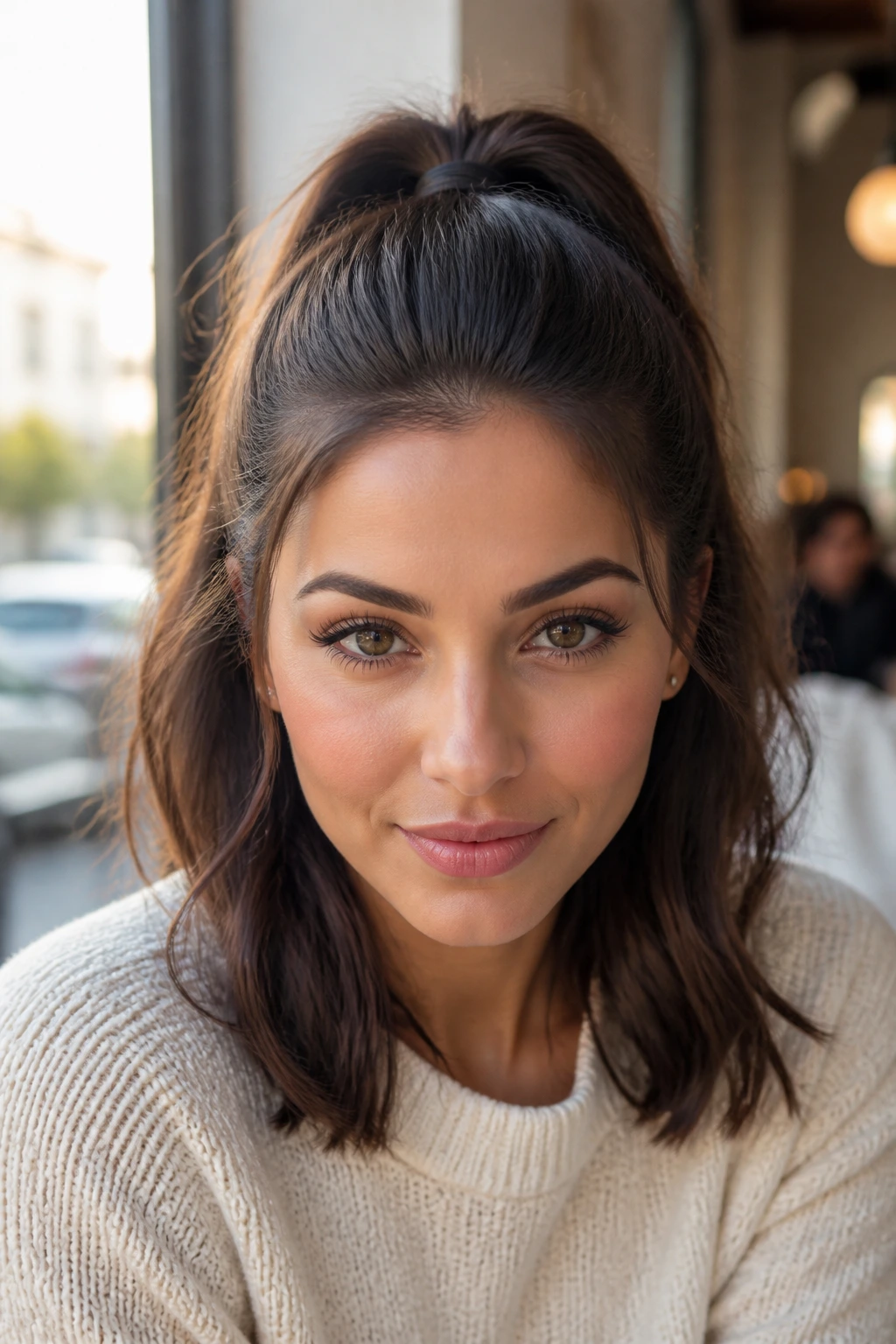
A high half ponytail gives thick hair a lifted, flirty shape without putting all the weight up high. It is especially good when the crown needs a little height but you do not want a full ponytail pulling at the scalp.
This style works because the top section gets all the attention. Pull it to the crown, secure it tightly, then gently spread the base a little so it sits fuller. The lower half stays loose and frames the neck and shoulders. The contrast makes the whole style feel playful.
If your hair is very dense, avoid using a tiny elastic. It will dig in and slide. A thick elastic or a spiral tie gives much better grip. You can also curl the bottom half loosely if you want the whole look to feel softer.
17. Space Buns
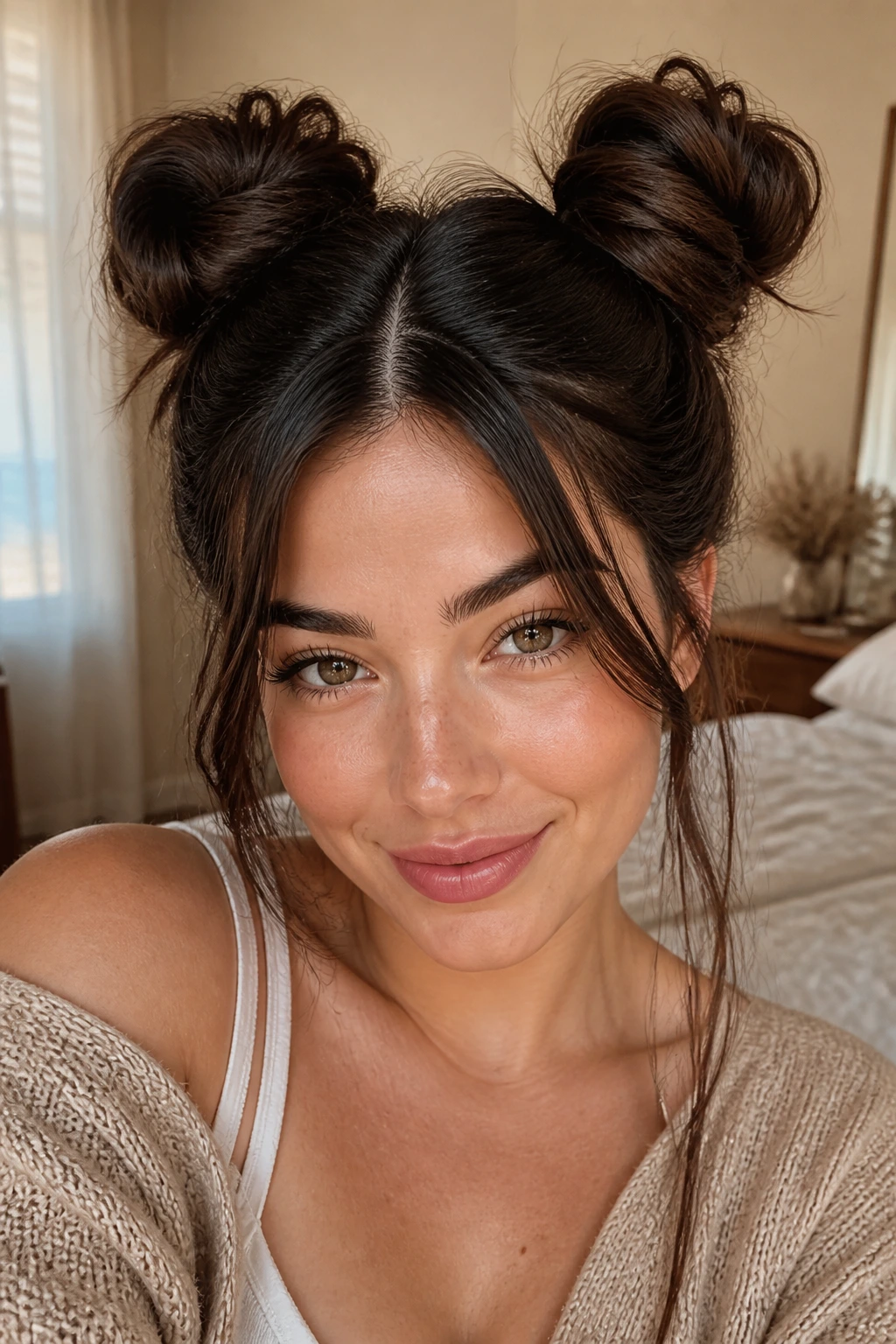
Space buns are a little cheeky, and thick hair gives them the bulk they need to look deliberate. On fine hair they can look skimpy. On thick hair, they usually have enough body to stand up on their own.
Part the hair down the middle, gather two high pigtails, and twist each one into a bun. Keep the buns slightly loose so they do not sit like hard knots. A few face-framing pieces help a lot here, especially if you want the style to feel less costume-y. That small detail changes the mood.
They are a fun pick for concerts, casual weekends, or any day when you want your hair out of your face but still want shape. If the buns feel too big, flatten them a little with your palms before pinning. Don’t overthink it.
18. French Braid Into Ponytail
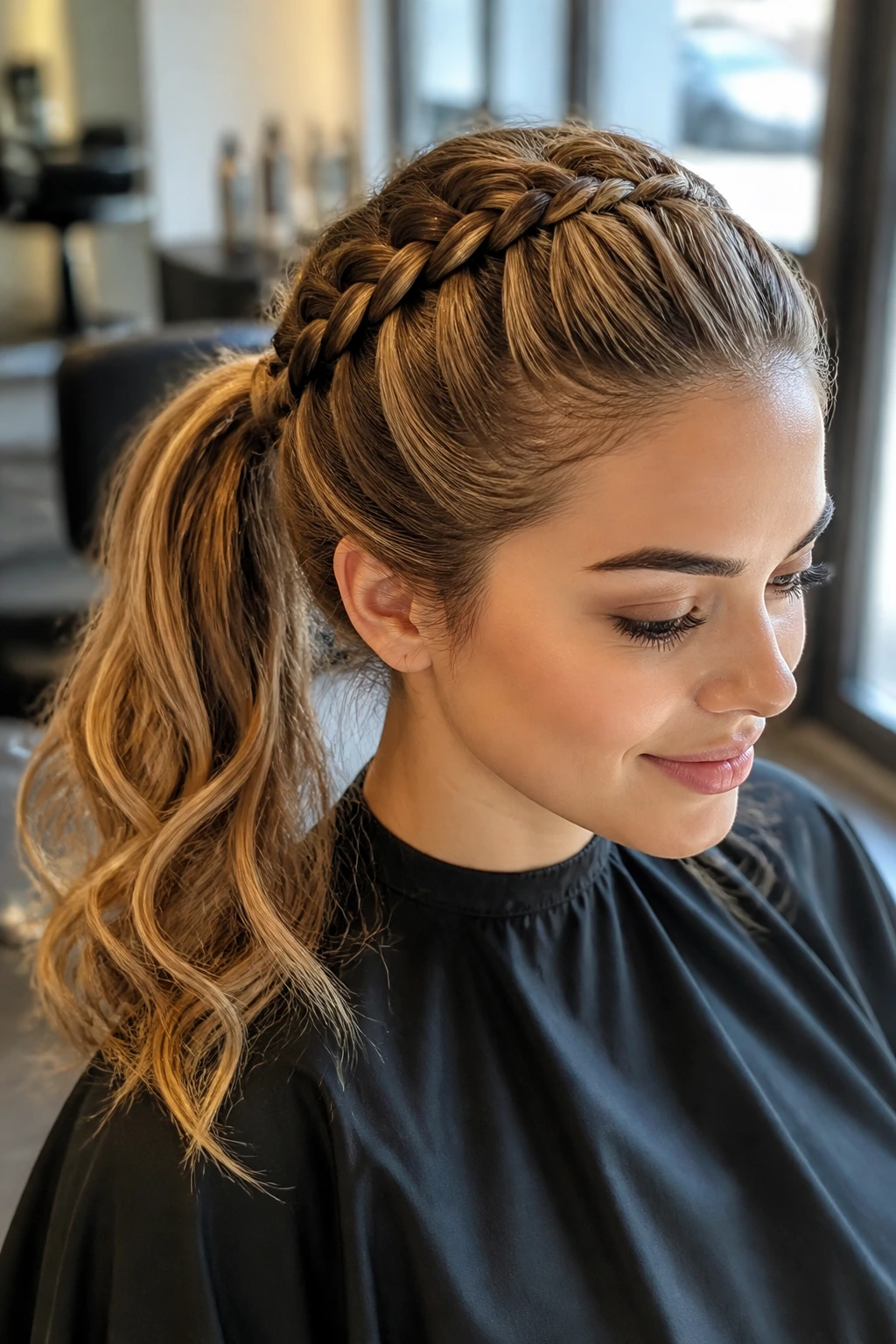
A French braid into a ponytail gives you the best of both worlds: the neatness of a braid up top and the ease of a ponytail through the ends. Thick hair makes the transition look full instead of patchy.
Start braiding at the crown and add hair evenly as you go down toward the nape. Once the braid reaches the back of the head, secure everything into a ponytail. The braid acts like a built-in headband, which keeps flyaways down and gives the style some structure.
This is a smart choice when you need your hair out of the way but still want something more interesting than a plain ponytail. If you’re in a hurry, keep the braid tight and the ponytail low. If you have a few extra minutes, loosen the braid edges just a touch for a softer finish.
19. Pull-Through Braid
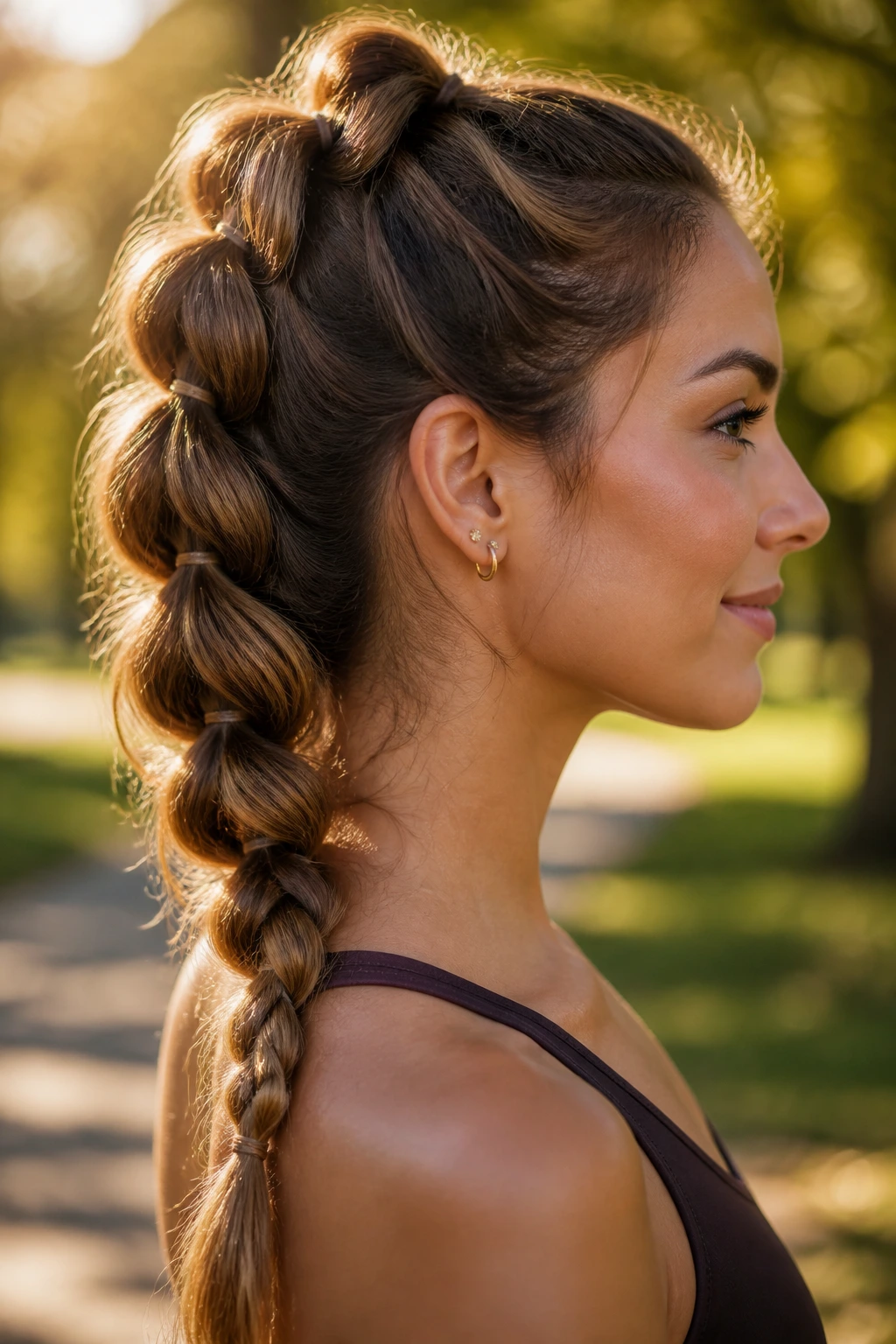
The pull-through braid looks like a thick, chunky braid, but it is built from ponytails rather than traditional braiding. That makes it a friendly option for people who struggle with three-strand braids or simply want a bigger shape.
Thick hair is perfect for this style because every section already has enough volume. Divide the hair into small stacked ponytails, then pull each lower section through the split of the one above it. The shape grows fast. It also stays surprisingly tidy once you secure the ends well.
What makes it different
- It creates a bigger braid effect than a standard braid.
- It works well on hair that slips out of ordinary braids.
- It can be worn high, low, or to one side.
- It looks more intricate than the effort it takes.
20. Crown Braid Ponytail
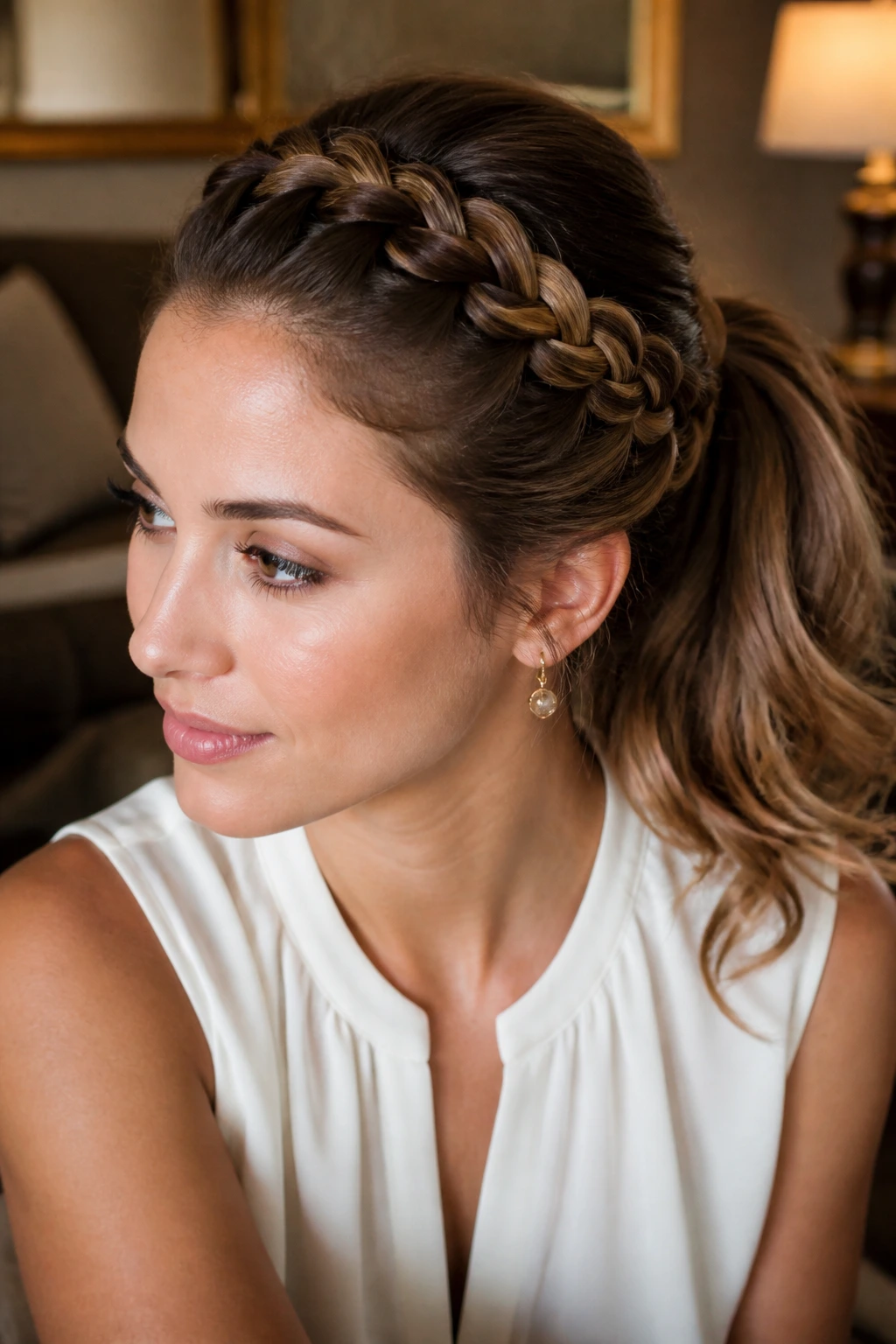
A crown braid ponytail keeps the pretty braid detail around the front while letting the rest of the hair stay loose in a ponytail. On thick hair, that means less bulk at the scalp and a more balanced shape overall.
I like this when I want something that looks dressed up but does not take forever. The braid holds the hair back from the face, then the ponytail gives movement at the ends. It is a practical compromise, which is often the best kind of hairstyle.
If you have layers, keep the braid close to the hairline so shorter pieces do not pop out too much. A little texturizing spray before braiding helps the braid stay tidy. The ponytail can be curled, waved, or left straight depending on your mood.
21. Slicked-Back Bun With Texture

A slicked-back bun can look too severe on some hair types, but thick hair gives it a better shape. The bun has enough mass to feel intentional, and a bit of texture in the bun keeps it from looking stiff.
The roots should be smooth, not greasy. Use gel only on the top and sides, then gather the hair into a bun and leave the bun itself a little piecey. That contrast is the sweet spot. Too much smoothing all the way through makes thick hair look flat in the front and bulky in the back, which is not flattering.
This style is good for humid days, formal outfits, or anyone who wants a neat profile without fuss. Pin the bun close to the base with several pins instead of one large pin. Thick hair likes support in more than one place.
22. Waterfall Braid
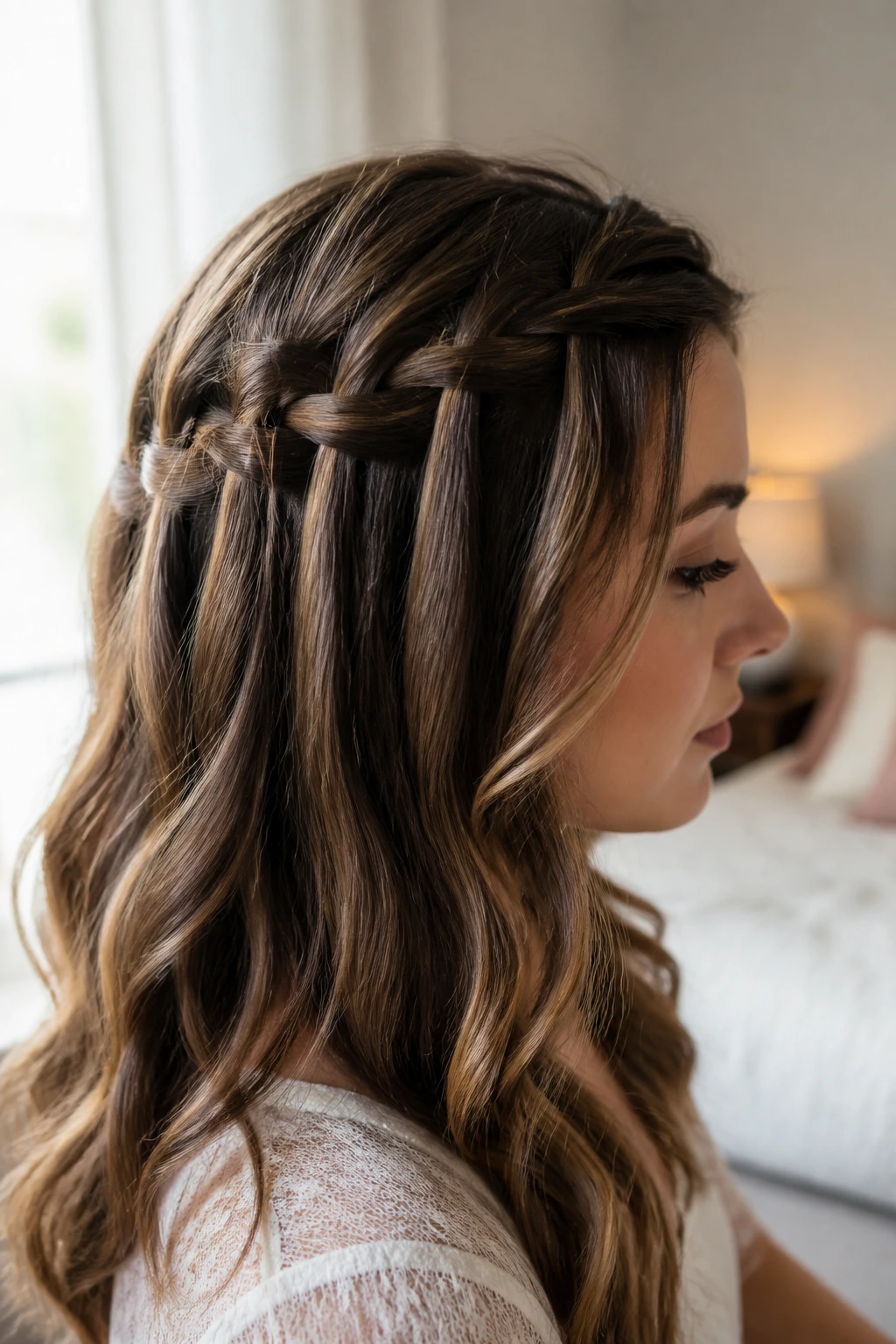
A waterfall braid is one of the prettiest ways to show off thick hair without hiding the length. The braid lets sections drop through, so the style feels soft and open instead of heavy.
Because thick hair has so much body, the waterfall pattern stands out well. Each dropped strand hangs with a little weight, which makes the braid look dimensional. If your hair is very layered, the fallen pieces can be a bit uneven. That is not a flaw here. It actually adds to the effect.
This style usually works best on smooth, brushed hair that still has some grip. A tiny bit of mousse or styling cream helps the braid stay in place while you work across the head. Finish by curling the loose hair if you want a softer, more romantic result.
23. Side Ponytail With Ribbon
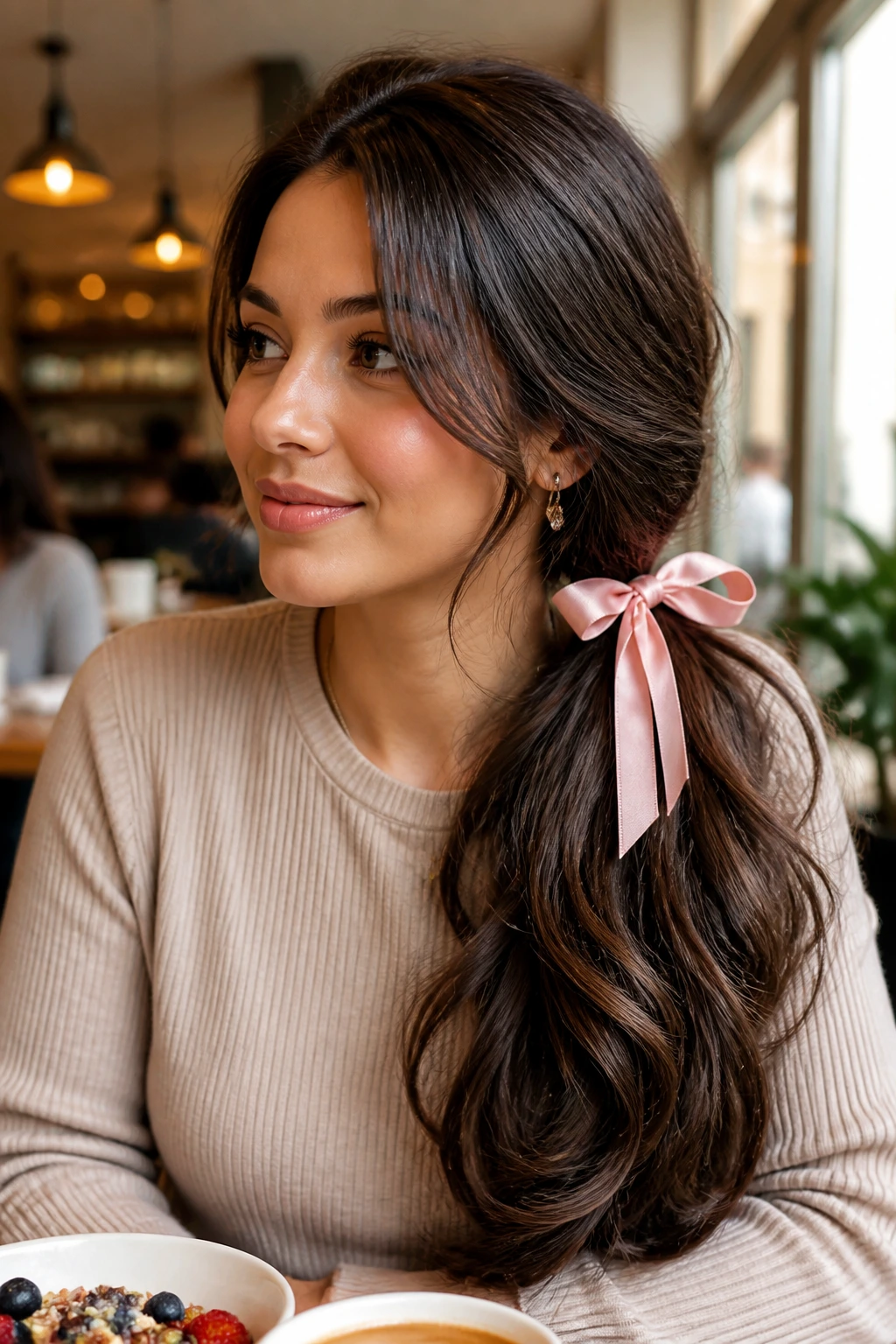
A side ponytail with a ribbon feels sweet in the best way. Thick hair gives the ponytail enough fullness that the ribbon sits like a real accessory, not an afterthought.
Place the ponytail low over one shoulder, then tie a ribbon around the elastic or weave it through the base. Satin feels dressier. Grosgrain feels a little more playful and stays tied better. The ribbon is doing more than decoration here — it can also hide a blunt elastic that would otherwise look too plain.
If the ponytail feels too heavy, curl only the ends and leave the top smooth. That keeps the style from ballooning out. A side ponytail also works well with a soft wave, especially if you want something easy for brunch, a casual dinner, or a day when you want to look put together with very little effort.
24. Low Twisted Chignon
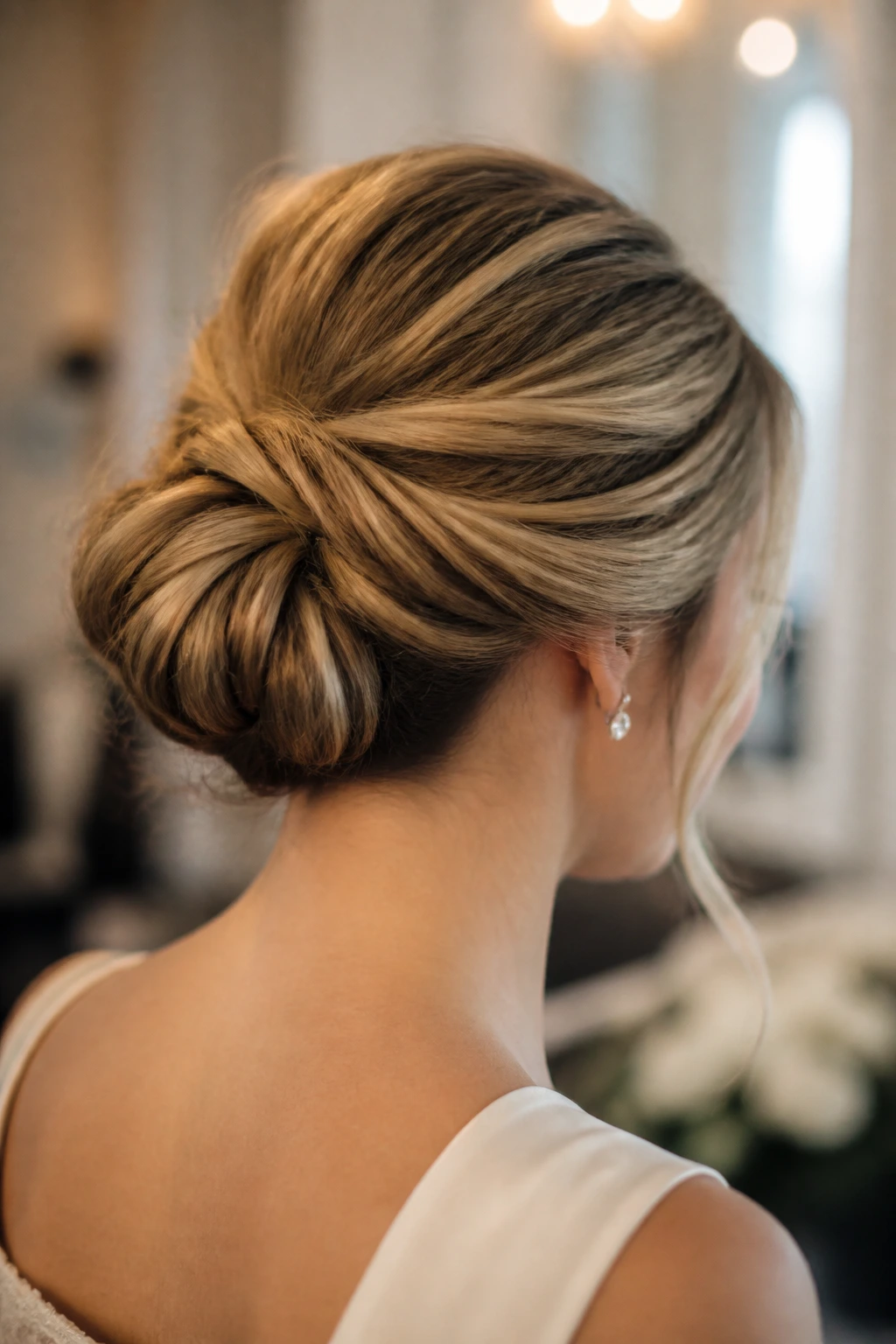
A low twisted chignon is graceful without being overworked. Thick hair makes the twist look substantial, which is a nice change from the tiny buns that can disappear into the nape.
Gather the hair low, twist it upward, then coil the length into a compact knot. You want the shape to sit close to the head, but not so tight that it pulls. Thick hair can feel heavy at the neck if the bun is pinned in only one spot, so distribute the pins around the outside edge of the chignon.
This is a strong option for weddings, meetings, or any setting where you want your hair to behave. A side part makes the chignon softer. A middle part makes it cleaner. Both work; it depends on the mood you want.
25. Braided Ponytail With Elastic Ties
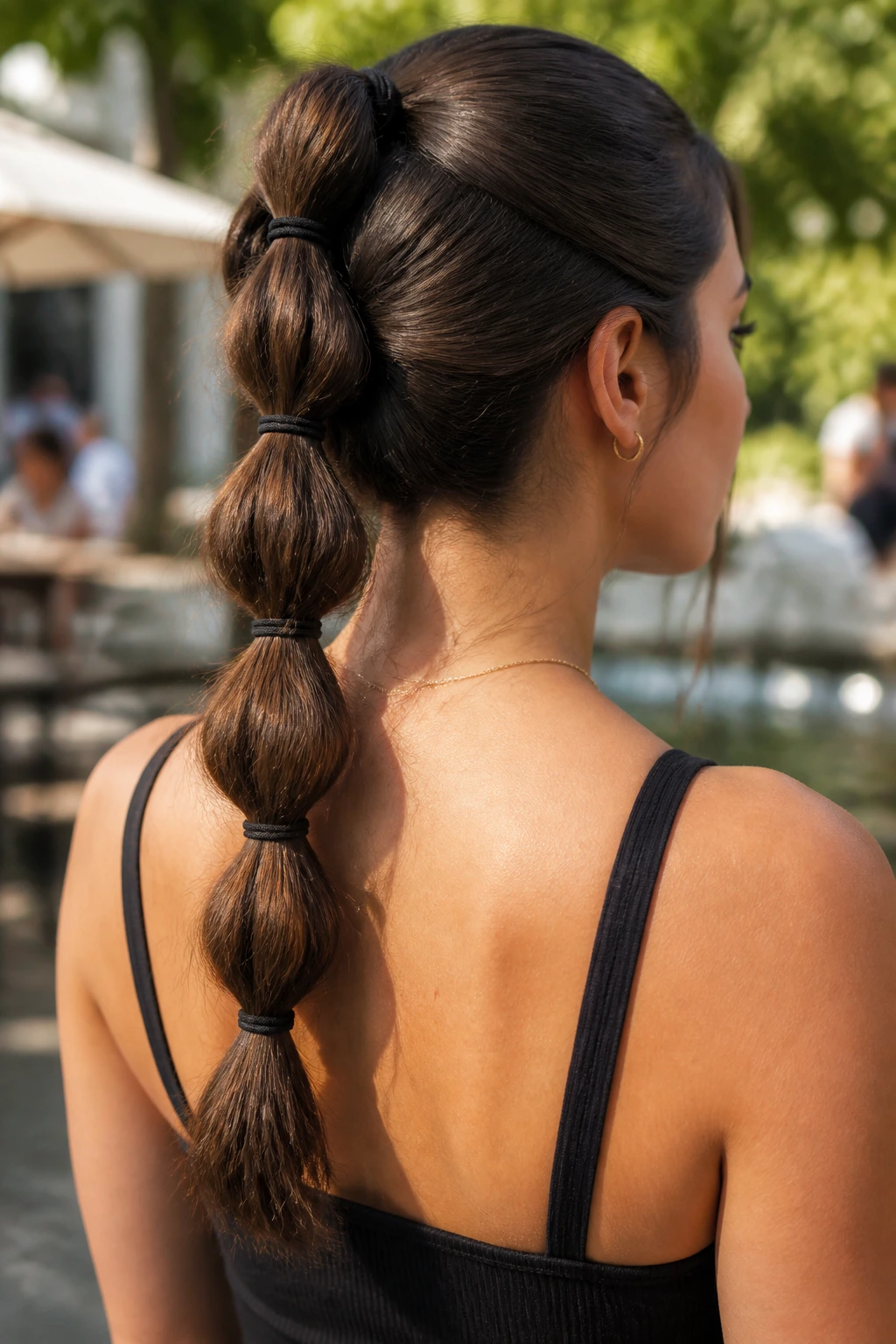
A braided ponytail with elastic ties gives thick hair a modern, segmented look that feels a little edgy without crossing into hard styling. The braid holds the shape, and the elastics add rhythm down the length.
Start with a ponytail, braid it down, then add clear or matching elastics every few inches. Pull the sections apart slightly if you want a fuller shape. This works especially well on long, thick hair because the braid has enough length to show off the pattern. Shorter hair can do it too, but the effect is better when there is room for the segments to read clearly.
I like this when the ponytail needs a little something extra. It is simple, but not plain. If the hair is very smooth, mist the ponytail with texture spray first so the braid does not slip apart while you work.
26. High Bun With Tendrils
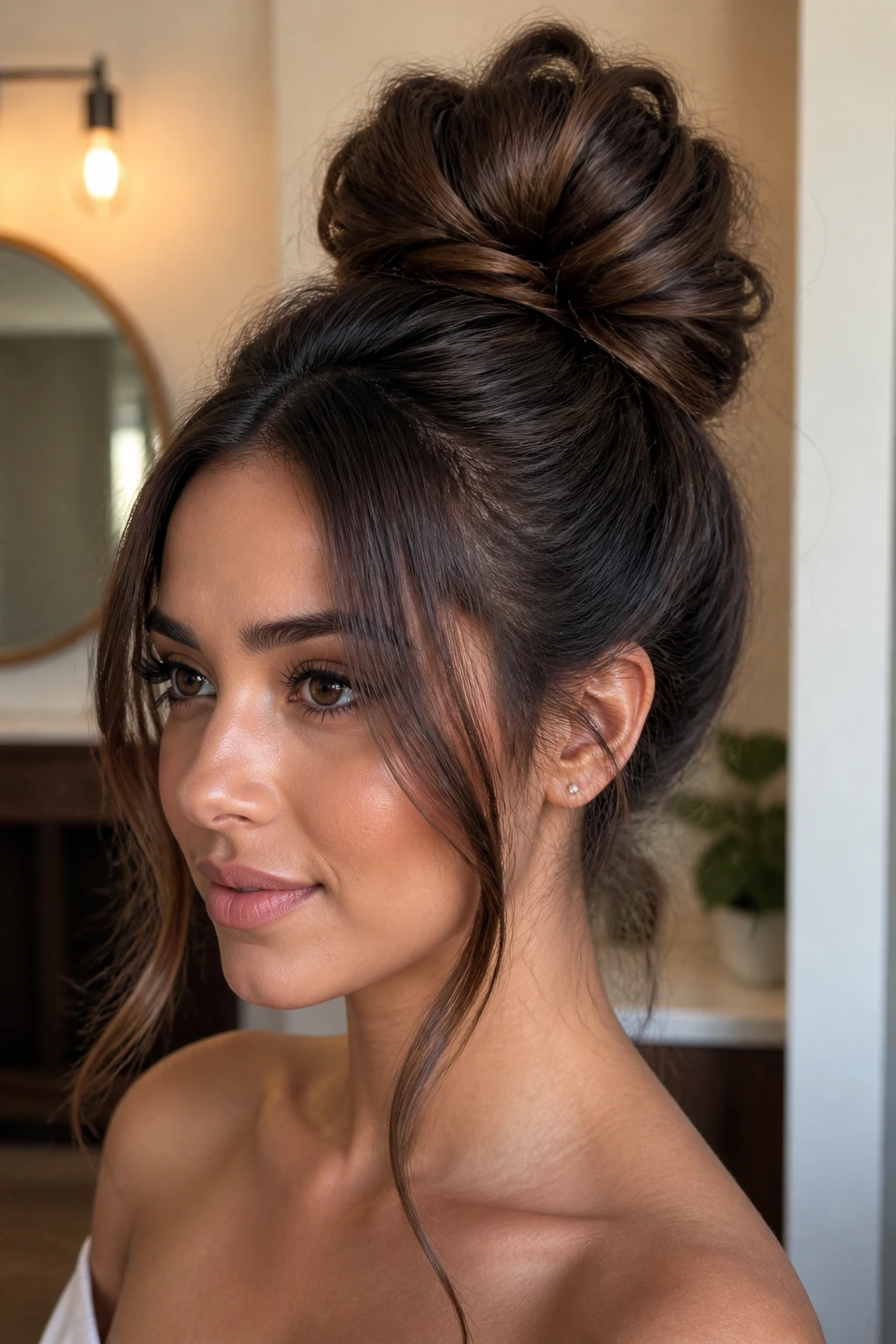
A high bun with tendrils is one of those styles that can look soft or sharp depending on how much you leave out in front. Thick hair makes the bun itself full and interesting, while the tendrils keep it from feeling too pulled back.
Pull the hair into a high bun, but leave two slim front pieces out before you tie it off. Curl those tendrils lightly or bend them with a small iron if you want a softer frame. The tendrils matter more than people think. They change the whole mood of the style in about thirty seconds.
A useful detail
If the bun is too large, twist it into a flatter coil before pinning. If it is too flat, tug the outer edges a little after securing. Thick hair gives you room to shape it. Use that room.
27. Half-Up Braided Crown
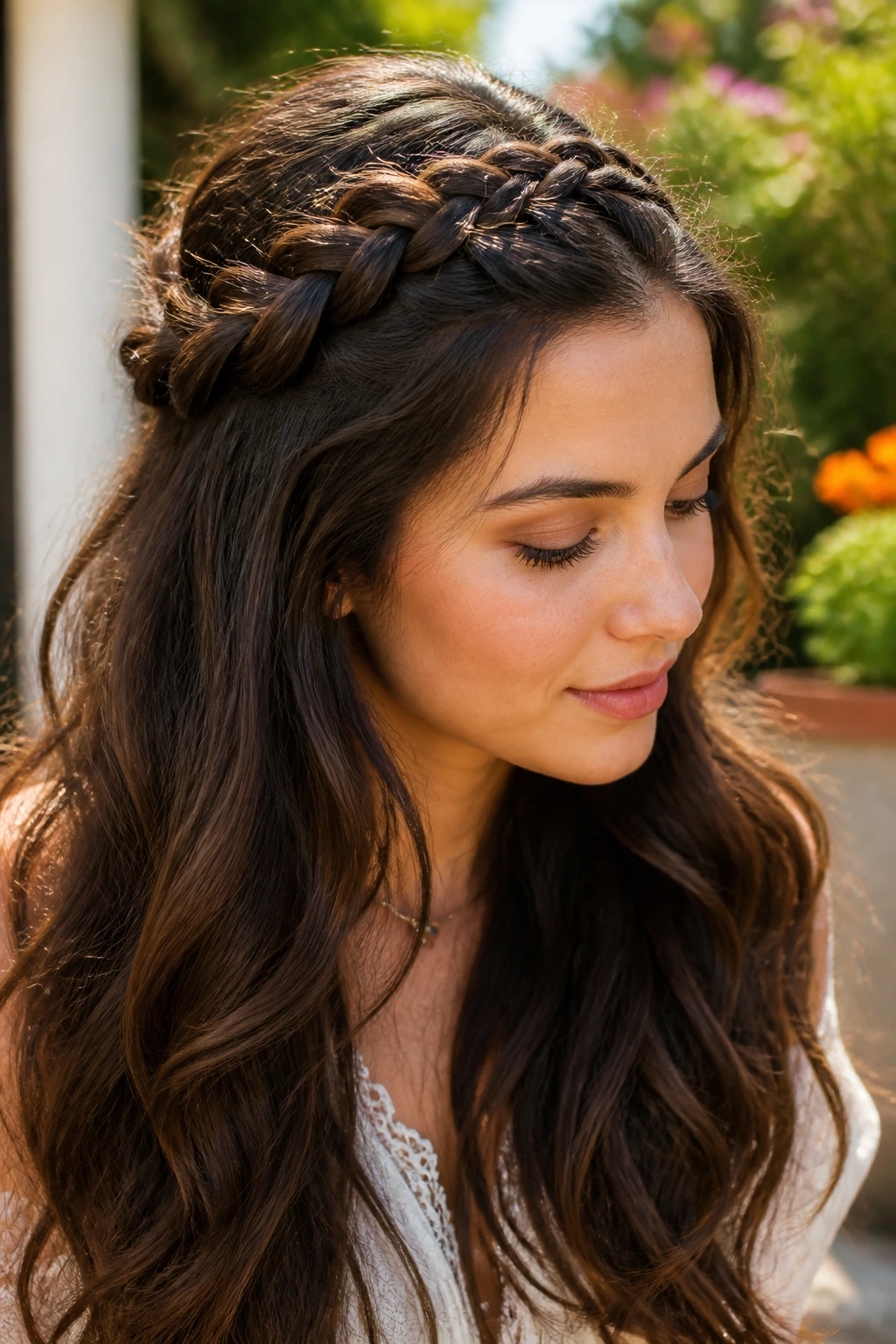
A half-up braided crown is a lovely way to control thick hair without committing to a full updo. The braid line draws attention to the head shape, while the rest of the hair stays loose and full.
This style can be done with a single braid that wraps from one temple to the other, or with two braids meeting at the back. Both work. The first feels more romantic. The second feels a little more structured. I lean toward the two-braid version when the hair is especially thick because it helps the weight distribute more evenly.
Use a pin at each end and hide the ends under the loose layers. If you want extra softness, curl the bottom sections in large 1-inch to 1.25-inch pieces so the braid and the length feel connected.
28. Dutch Braid Pigtails
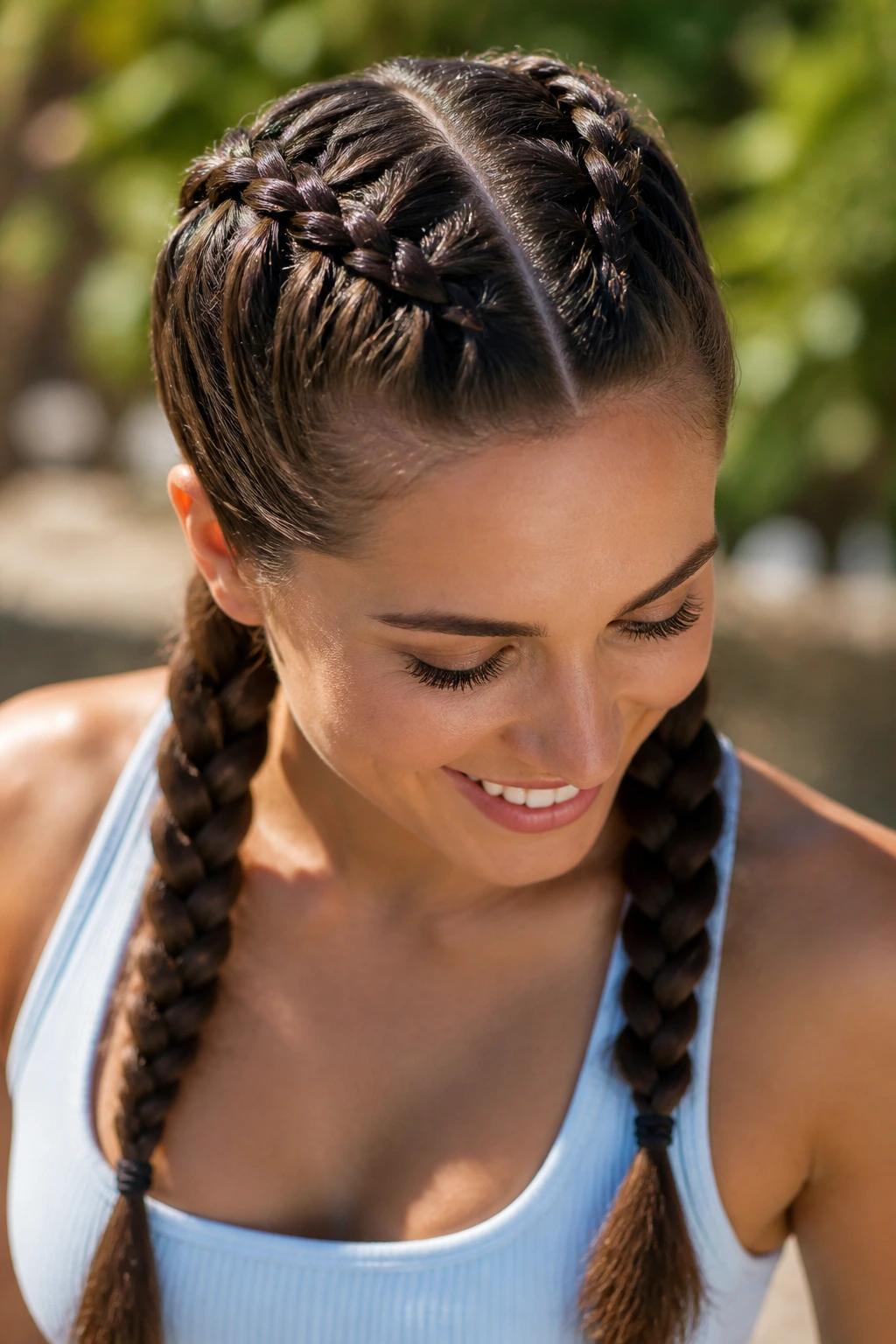
Dutch braid pigtails are a sturdier, more lifted version of regular pigtails. Thick hair gives them a nice raised texture, and the braids stay visible all the way down.
The braid sits on top of the hair instead of disappearing into it, which is why this style reads well on dense strands. Section the hair neatly, keep the parts balanced, and braid close to the scalp for the first few inches. After that, you can relax the tension a bit. That keeps the braids from feeling too tight around the head.
They work well for active days, travel, and hot weather. They also look cute with a center part and a few loose strands around the face. If your hair has a lot of slip, braid on dry hair with a light texturizing spray.
29. Sleek Middle-Part Ponytail
A sleek middle-part ponytail has a sharp, clean look that thick hair can pull off better than most textures. The center part gives structure, and the ponytail length balances all that volume.
The key is not to fight every tiny bump. Smooth the front with a brush and a small amount of gel or cream, then tie the ponytail at the nape or just above it. If your hair is extremely full, a low placement often looks better than a high one because it keeps the silhouette controlled.
This style is excellent when you want the face fully open. It also works beautifully with earrings, which is one reason I reach for it when the outfit needs a simple hair solution. Wrap a strand around the elastic if you want it to look a little more finished.
30. Loose Side Bun
A loose side bun gives thick hair a soft, slightly undone feel that still looks thought through. The side placement makes the shape feel less formal than a centered bun and more relaxed around the face.
You can build it by gathering the hair just behind one ear, twisting it into a bun, and leaving a few pieces loose at the hairline. Thick hair gives the bun enough shape that it does not need to be perfect. In fact, perfection can make it look stiff. A few deliberate imperfections keep it interesting.
If the bun pulls too much, anchor it with pins in a triangle pattern rather than relying on one elastic alone. That helps the weight sit better. A side bun also works nicely with textured hair because the shape stays visible without needing much fuss.
31. Four-Strand Braid
A four-strand braid has a richer, more woven look than a standard braid, and thick hair is the perfect canvas for it. The extra strands create a flatter, wider braid with a polished feel.
If you have never done one, it sounds harder than it is. You keep moving outer sections over and under in a steady rhythm. The good part is that thick hair makes the braid look full even if your hands are not perfect yet. The pattern hides small errors better than a thin braid would.
This style is worth learning because it feels special without needing accessories. Use a small elastic at the bottom and gently widen the braid once it is done. Just a little. Too much pulling can make the pattern look fuzzy instead of intentional.
32. Half-Up Clipped Back Curls
Half-up clipped-back curls are easy, pretty, and one of the fastest ways to make thick hair look styled. The clip lifts the top section, while the curls below give the hair a soft, full shape.
Use a large clip that can actually hold the amount of hair you have. Small decorative clips look cute in theory and fail in practice when the hair is dense. The top section should be smooth enough to sit neatly in the clip, but not so slick that it slides out after an hour.
A bit of curl cream on the loose lengths helps the shape stay separated. If your hair is naturally wavy, this style is almost unfairly easy. If it is straight, a few loose bends at the ends are enough to keep the half-up section from looking plain.
33. Headband Tuck
A headband tuck is one of the most underrated styles for thick hair. It looks soft and polished, and it does not ask much from the hair except a little length and a little patience.
Slip on a stretchy headband, then tuck the lengths up and into it section by section. Thick hair gives the tucked roll real body, so the style ends up looking fuller than it would on finer hair. That fullness is the whole appeal. It feels neat, but not severe.
How to get the shape right
- Use a stretchy band with enough grip to stay put.
- Tuck in smaller sections if the hair is very dense.
- Leave a few front pieces loose if you want a softer face frame.
- Pin the sides under the band if the hair keeps slipping out.
34. Faux Hawk Braid
A faux hawk braid has attitude, and thick hair gives it enough height to make the shape clear. The sides are pulled back tightly, while the center section is braided or twisted into a raised line down the middle.
I like this style because it looks more complex than it is. It also keeps a lot of hair off the neck, which is useful when you want something edgy but still wearable. The center section can be a Dutch braid, a twisted rope, or a pulled-apart braid. Any of those will work.
If your hair is especially thick, pin the side sections at regular intervals rather than leaving them to rely on one clip. The shape will last longer and feel better. A little texture spray at the roots helps the center section stand up cleanly.
35. Big Loose Waves With Barrettes for Thick Hair
Big loose waves are almost unfairly flattering on thick hair. The hair already has the body; the waves just guide it into a softer shape. Add a few barrettes at one side, and the whole look turns from everyday to polished with almost no extra work.
Keep the wave pattern broad — 1.5-inch sections, not tiny curls. That keeps the style from getting too puffy. Then slide in two or three barrettes above the ear, either stacked or slightly staggered. Simple clips usually look best here. The hair is doing most of the visual work, so the accessories should stay quiet.
This is the kind of style that works for a dinner out, a casual party, or a day when you want your thick hair to look full on purpose. And honestly, that’s the sweet spot most of us are after: hair that feels easy, looks full, and stays on your side instead of fighting you all day.
