



Thin hair behaves differently once you cut it short. The best short hairstyles for thin hair do not chase length; they build a shape that makes the hair look fuller at the edges, fuller at the crown, and less dependent on heavy styling.
The trap is thinking any short cut will help. It won’t. Feathered ends that are too wispy can make the whole head look smaller, and over-layering can leave little see-through gaps that show up the second the light hits your part.
I always look at three things first: where the weight sits, how much scalp shows at the root, and whether the cut can survive a rushed morning. Those details matter more than whatever name is printed on a salon menu. A good short cut should look intentional when it is freshly blown out and still behave after a hoodie, a nap, or a humid walk outside.
Some hair needs a hard line. Some needs a little bend. The smart move is to start with blunt cuts, because they do the heaviest lifting, then move into softer shapes if you want movement without losing the illusion of thickness.
1. Blunt Chin-Length Bob with a Deep Side Part
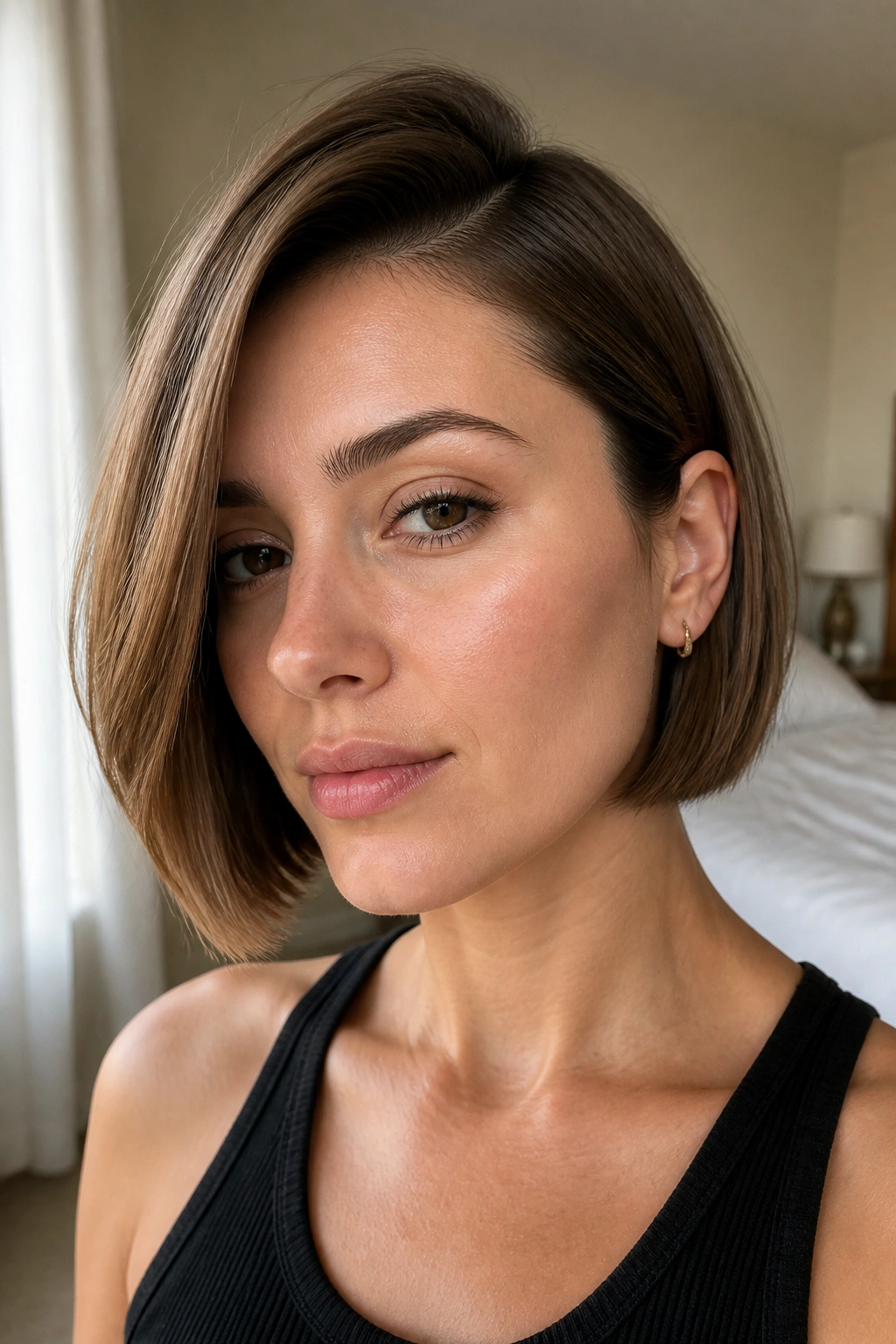
This is the cut I reach for first when someone wants more fullness without losing polish. A blunt chin-length bob gives thin hair a strong edge, which makes the ends look denser than they would in a longer, softer cut. The deep side part adds lift right where hair usually goes flat.
What makes it work is the perimeter. Keep it clean. Keep it sharp. If the ends are sliced too much, the bob starts to fray visually, and fine strands can look even lighter than they are. A small bevel at the very bottom is fine, but the line should still read as solid.
I like this cut on straight and slightly wavy hair, especially when you want a style that can go from tucked behind the ear to sleek and face-framing in a minute. A round brush and a root-lifting spray are enough for most people. If your hair collapses by noon, flip the part from one side to the other and give the crown two quick blasts with the dryer.
2. Textured French Bob with Soft Ends

A French bob is short, cheeky, and a little bit chic in a way that never feels try-hard. For thin hair, the trick is to keep the texture soft at the ends rather than shredded everywhere. Too much roughness reads as thinness. Soft movement reads as body.
Ask for a bob that sits around the mouth or just above the jaw, with a barely broken edge. That slight irregularity keeps the cut from looking helmet-like. I prefer this shape when the hair has a bit of natural bend, because it lets the cut move instead of hanging in a stiff block.
Best details to ask for:
- A length that lands between the cheekbone and jawline
- Light texturizing only at the very ends
- A soft side part or a slightly off-center part
- A styling finish that keeps the roots lifted, not puffy
A pea-size amount of mousse in damp hair is enough. Blow-dry with your fingers first, then use a small round brush only at the front. That keeps the shape airy instead of overworked.
3. Layered Pixie with a Long Crown
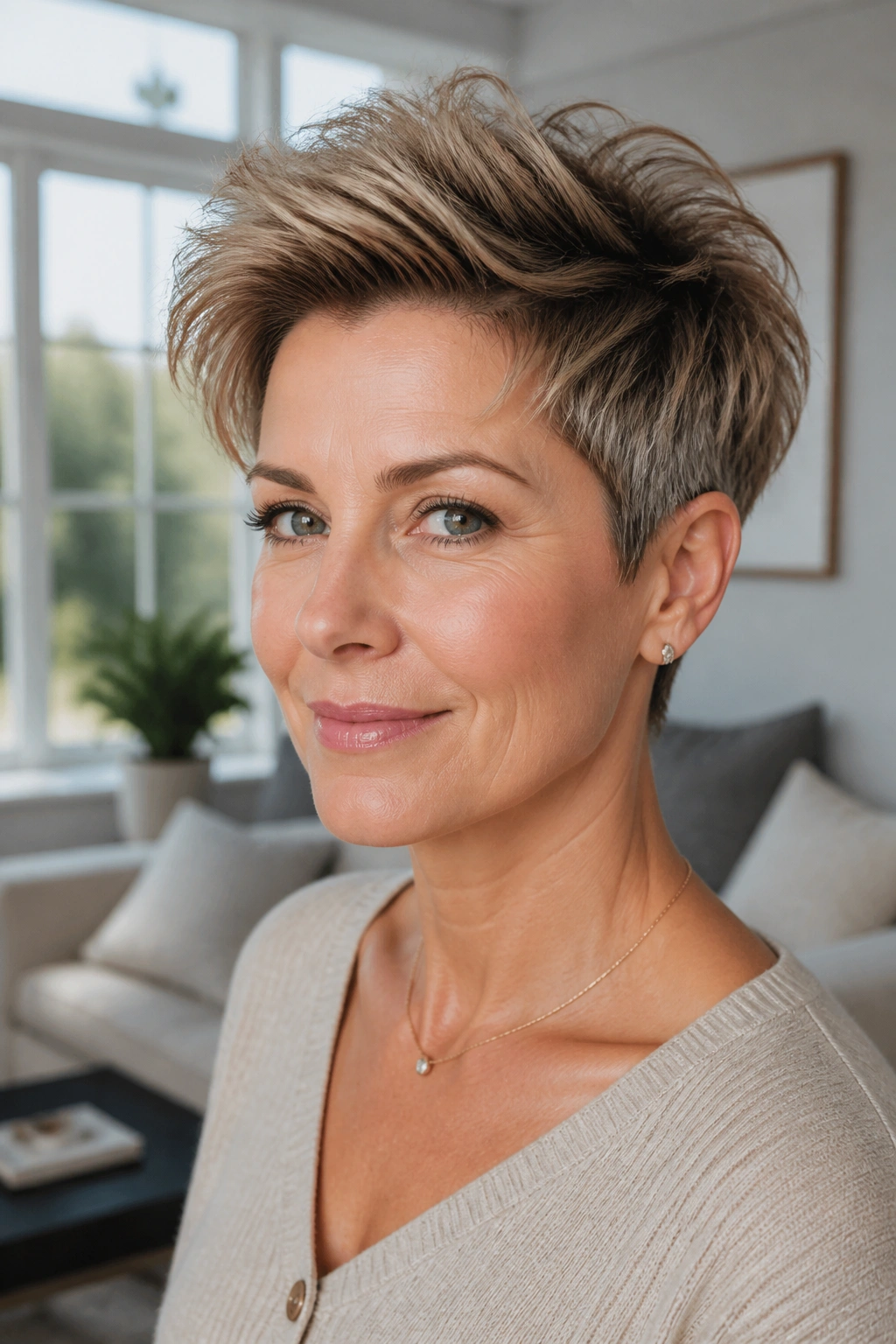
A pixie can be magic on thin hair, but only if the crown has enough length to stand up and move. Short everywhere makes fine hair look sparse. Short on the sides, longer on top, and slightly piecey through the crown gives the eye something to hold onto.
Why the crown matters
The top section does most of the visual work. If it sits flat, the cut looks smaller. If it has 1 to 2 inches of length to sweep upward or across, the whole style reads fuller. That is why a good pixie is less about being tiny and more about being shaped on purpose.
How to style it
- Blow-dry the crown first, lifting with your fingers at the roots
- Use a light matte paste on dry hair, about a pea-size amount
- Twist 2 or 3 top pieces between your fingertips to create separation
- Keep the sides neat so the top stays the focus
This cut is a favorite of mine for thin hair that gets oily fast. It holds shape better than longer hair, and the crown gives you room to fake volume without teasing the living daylights out of it.
4. Ear-Grazing Crop with Tucked Sides
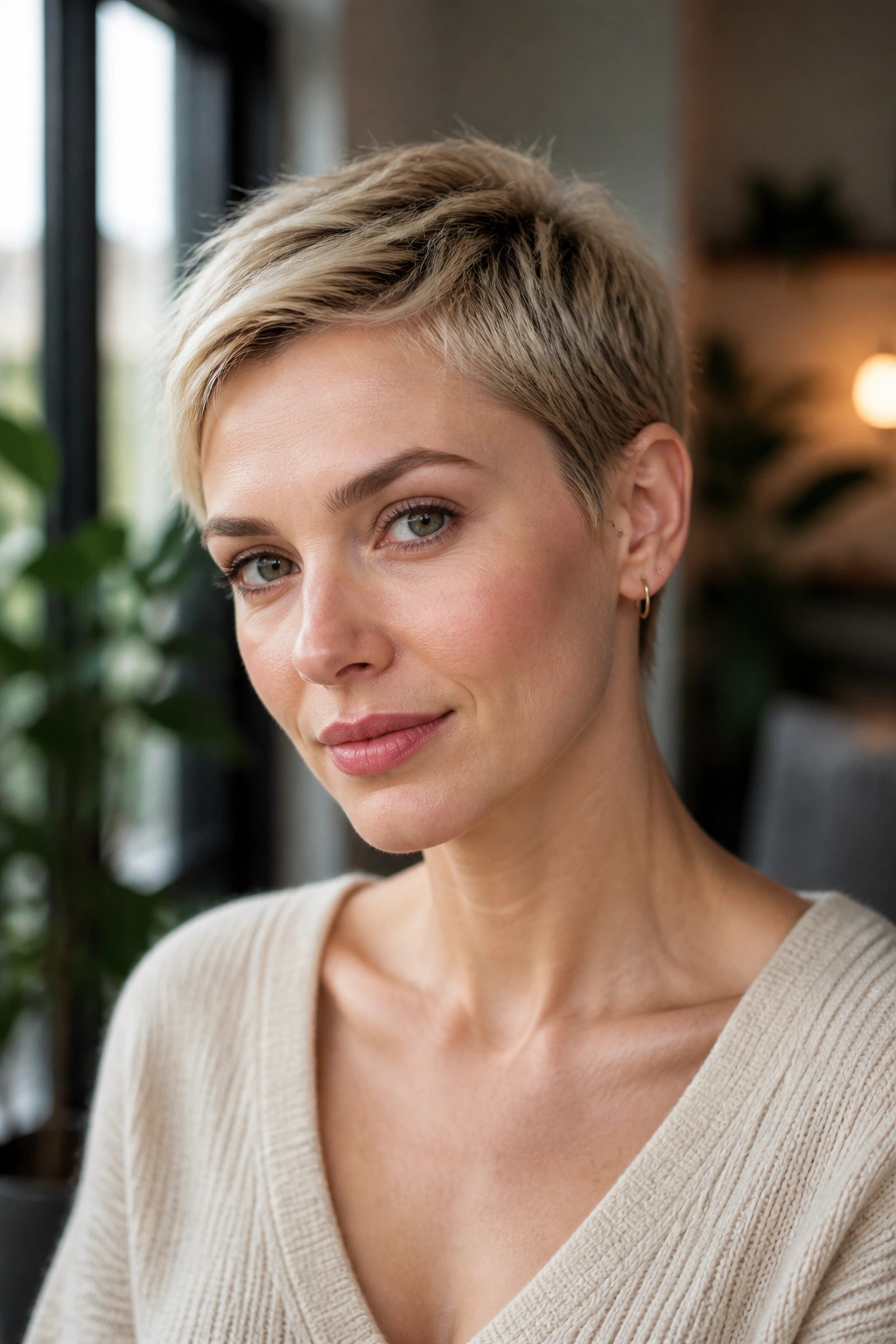
There is something brutally practical about an ear-grazing crop. It keeps the shape compact, which can make thin hair look denser, and it exposes the neck in a way that feels clean instead of severe. The trick is to let the side pieces skim the ears, not hover awkwardly above them.
I like this cut when the hair is fine but not especially flat at the root. The short length means the strands are not fighting gravity all day. That alone helps. And because the crop is so close to the head, a tiny bit of texture goes a long way — you do not need much product, and you do not want much.
A soft tuck behind one ear looks especially good here. It creates asymmetry without requiring a dramatic haircut. If your hairline tends to puff out near the temples, ask for a gentle taper there so the sides sit closer to the head.
5. Side-Swept Crop with a Soft Fringe

Can a fringe help thin hair? Yes, if it is handled with restraint. A side-swept crop with a soft fringe is one of the easiest ways to give the front of the hair more presence without cutting heavy bangs that split and separate too quickly.
The long diagonal fringe does a useful job: it interrupts the forehead area, gives the front a fuller look, and hides a part line if that is where the scalp shows most. It also grows out nicely, which matters more than people admit. A blunt mini bang can be high-maintenance. A side-swept fringe is easier to live with.
What to ask your stylist for:
- A fringe that blends from the crown, not a heavy chunk from the front
- Soft edges around the temples
- Enough length to tuck or sweep across
- A cut that still looks good if the part shifts
Blow-dry the fringe first, using a small round brush and directing it opposite the way it will sit. That little trick gives the hair memory. Simple. Effective.
6. Jaw-Length Bob with Tucked-In Ends
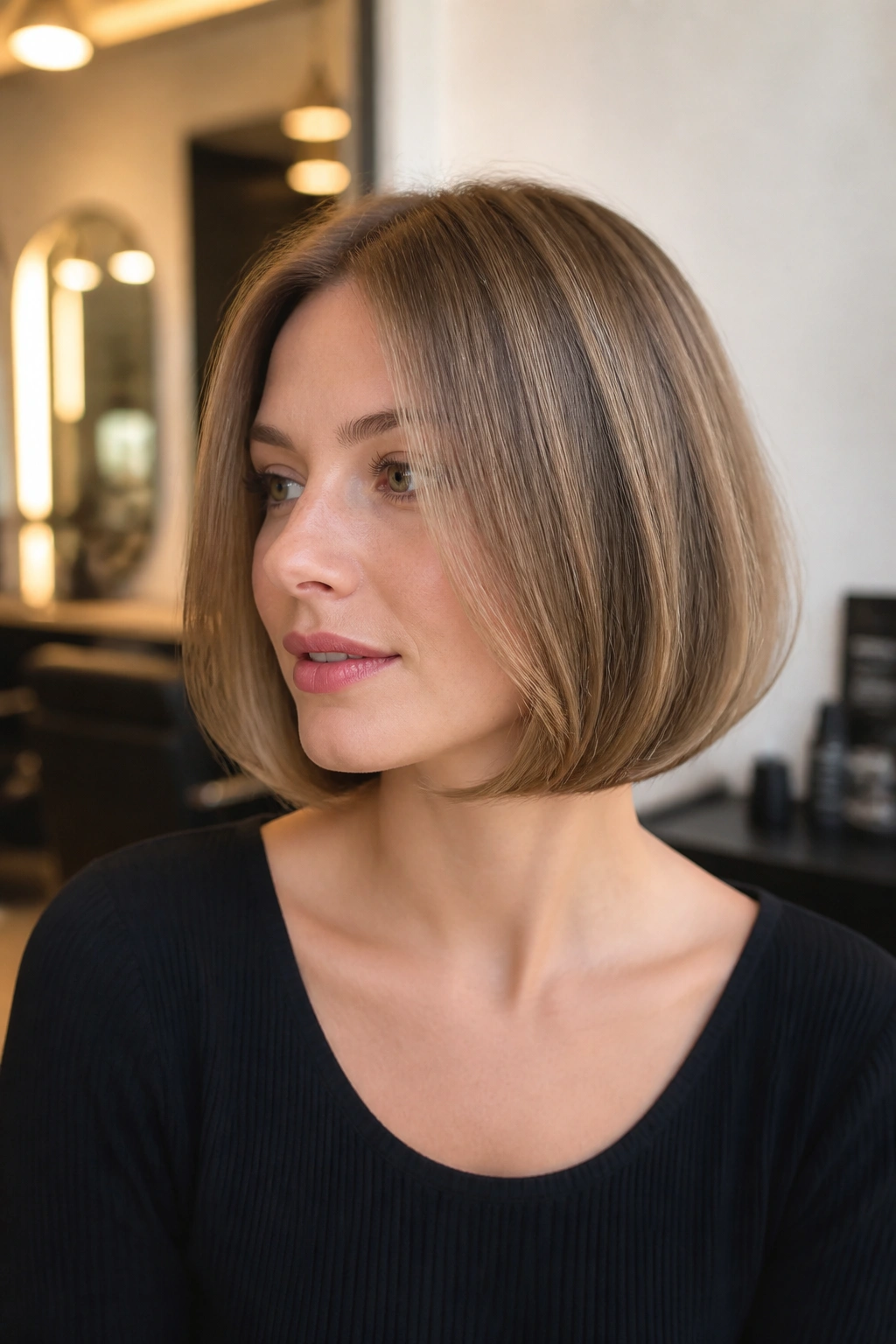
A jaw-length bob is one of those cuts that looks modest on paper and quietly excellent in real life. It sits short enough to keep the hair from dragging down, but long enough to tuck under at the ends, which gives thin hair a neater outline and a fuller bottom edge.
I prefer this shape to a longer bob for fine hair that falls flat. Once the length gets past the jaw, the ends often start to look see-through unless the density is there to support them. At the jaw, the haircut feels lighter on the head but stronger in the silhouette.
A small inward bend makes the difference. Use a medium round brush or a flat brush with a quick undercurve at the ends. If your hair is straight, a one-pass blow-dry is usually enough. If it is wavy, keep the layers minimal so the curve of the bob stays the star.
7. Shaggy Mini Cut with Wispy Bangs
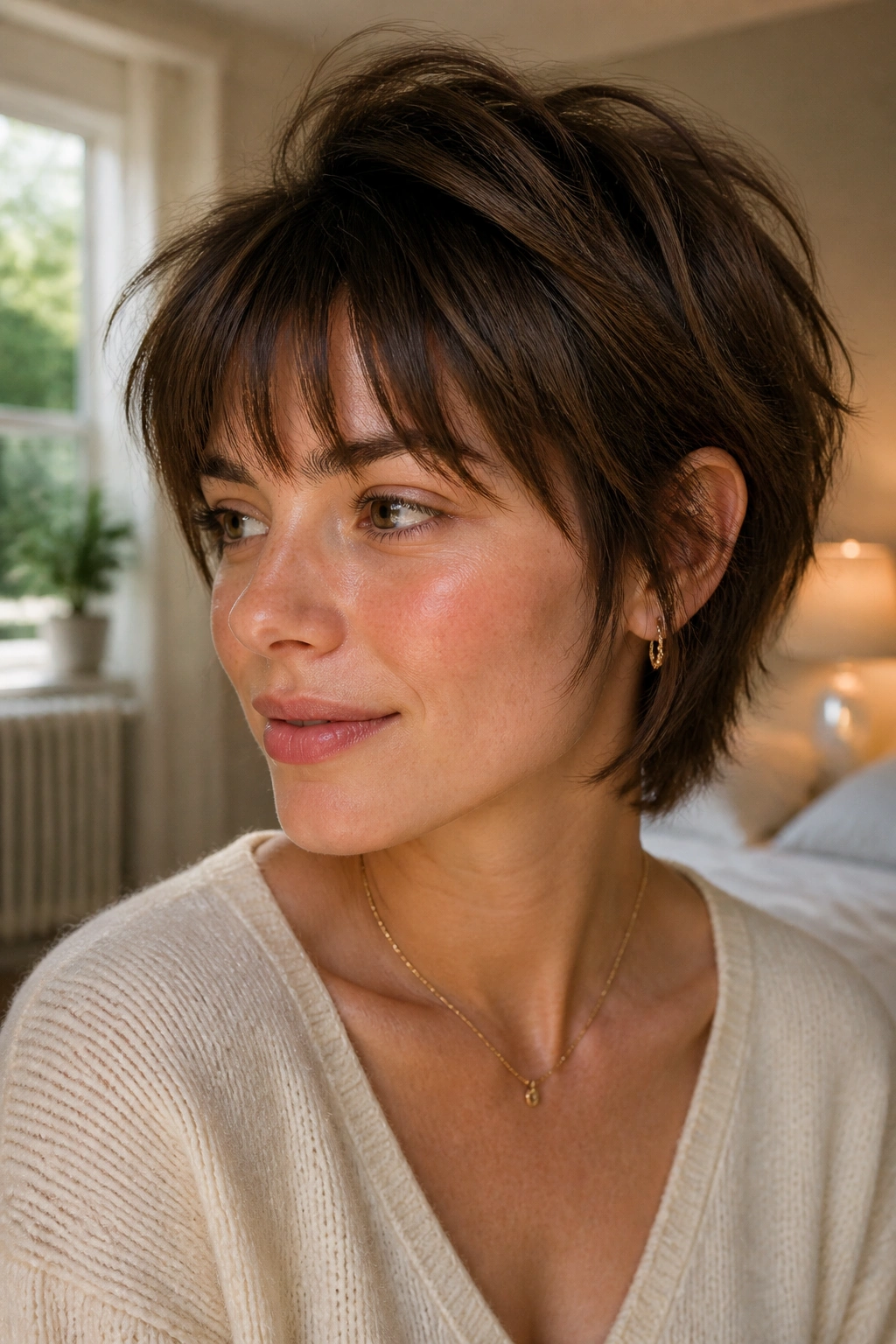
A shag on thin hair can be brilliant or disastrous. There is no middle ground. The cut only works when the layers are controlled and the bangs stay wispy enough to move, not thin enough to look broken up. That balance matters.
What I like here is the sense of motion. The hair never has to sit in one exact place, which helps if your strands tend to collapse. The crown gets a little lift, the sides get a little swing, and the bangs soften the face without hiding it under weight. But this is not the place for aggressive thinning shears. Those can strip the cut too much.
A good version of this cut feels lived-in, not ragged. You want soft texture at the top, a clean outline at the bottom, and bangs that separate into two or three pieces rather than one heavy curtain. If your hair is very fine, ask your stylist to keep the ends blunt enough to hold the shape.
8. Asymmetrical Bob with a Heavy Side Sweep

An asymmetrical bob can do a lot for thin hair because it gives the eye a clear direction. One side being a bit longer creates movement all on its own, which means the style looks fuller even before you touch a product.
I’ve seen this cut rescue hair that sat flat in a center part. The longer side drapes a little, the shorter side keeps the profile clean, and the whole thing feels deliberate. It is especially good if one side of your hair naturally falls better than the other — and most people have one side that behaves.
A few useful details:
- Ask for a difference of about half an inch to 1 inch, not a dramatic slash
- Keep the back tidy so the length difference does the talking
- Use a flat iron only on the front pieces if you want a gentle bend
- Finish with a light mist of flexible hairspray, not a stiff shell
The style has presence without needing a lot of hair. That is the point.
9. Curly Crop with a Rounded Shape
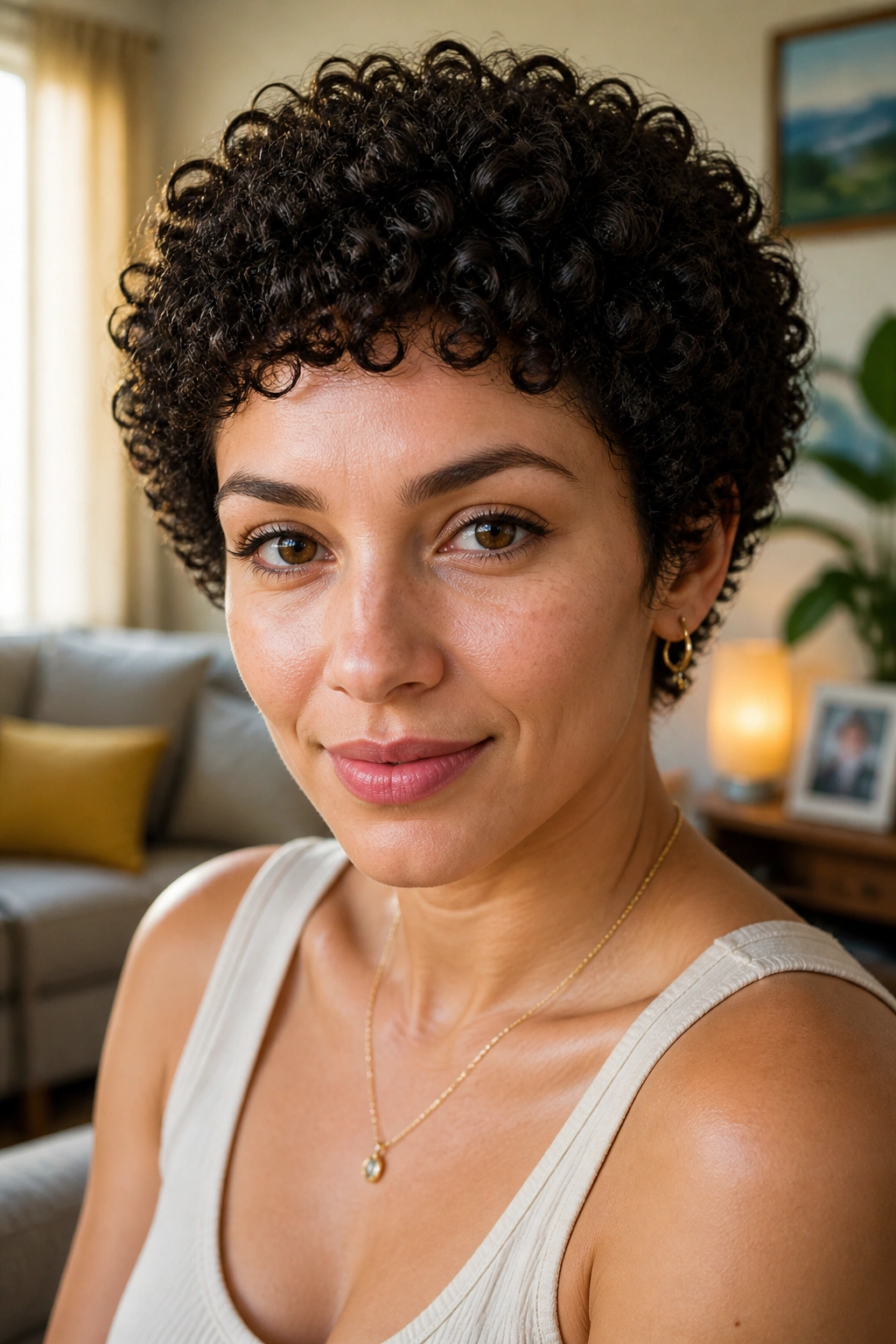
Curly thin hair needs a different kind of thinking. The goal is not to force it straight or pile on layers until it frizzes out. The goal is a rounded shape that lets the curls sit close enough together to read as fuller.
Shape first
A round outline helps curls cluster visually. If the cut is too boxy, the lower edges can look thin and awkward. If it is too layered, the curls separate too much and the scalp shows through. A rounded crop keeps the energy in the middle of the shape, which is where you want it.
How to define it
Use a curl cream that is light, not sticky. Work it through soaking-wet hair, then scrunch gently with a microfiber towel. A diffuser on low heat for 5 to 7 minutes can be enough to set the pattern without puffing it up.
This one looks best when the curls are allowed to live. No heavy brushing. No fighting the bend. The cut does enough if the shape is right.
10. Bowl-Cut-Inspired Pixie with Choppy Edges
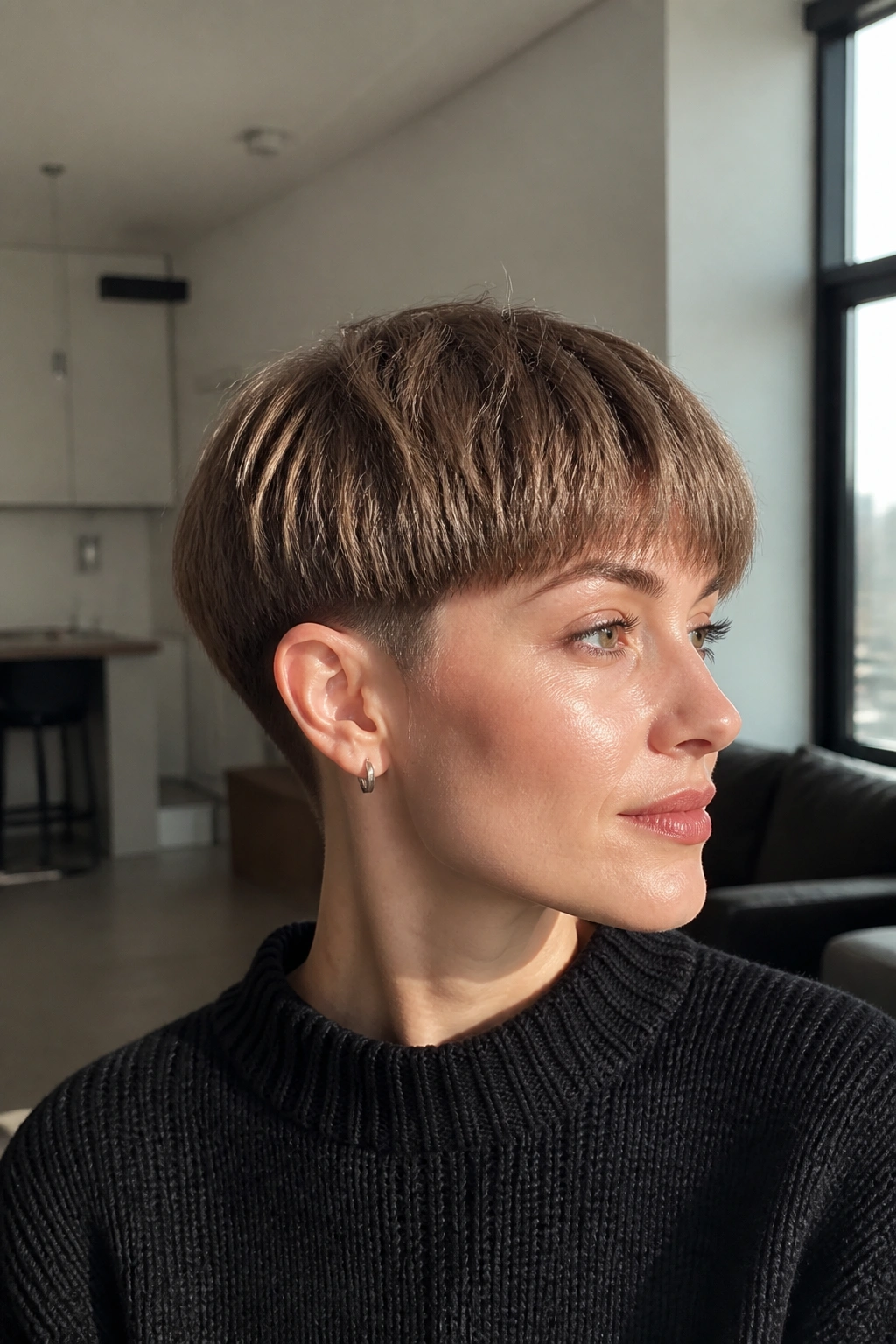
A modern bowl-cut-inspired pixie sounds riskier than it is. The old version was blunt and severe. The newer version keeps the strong line but softens the edges just enough that thin hair looks compact rather than pasted down.
The reason this cut works is density control. It keeps more weight on top and around the sides, which makes the whole head read fuller. Thin hair often looks sparse when the length gets too broken up. This style avoids that by keeping the outline solid and the texture concentrated where it matters.
I like this best on straight hair that can hold a clean shape. A little styling cream or a light paste is enough. Work it through the top, then push the fringe area forward or slightly to the side. The finish should look piecey, not crunchy. If the ends start to fray, they need a trim sooner rather than later.
11. Feathered Bob with Face-Framing Layers
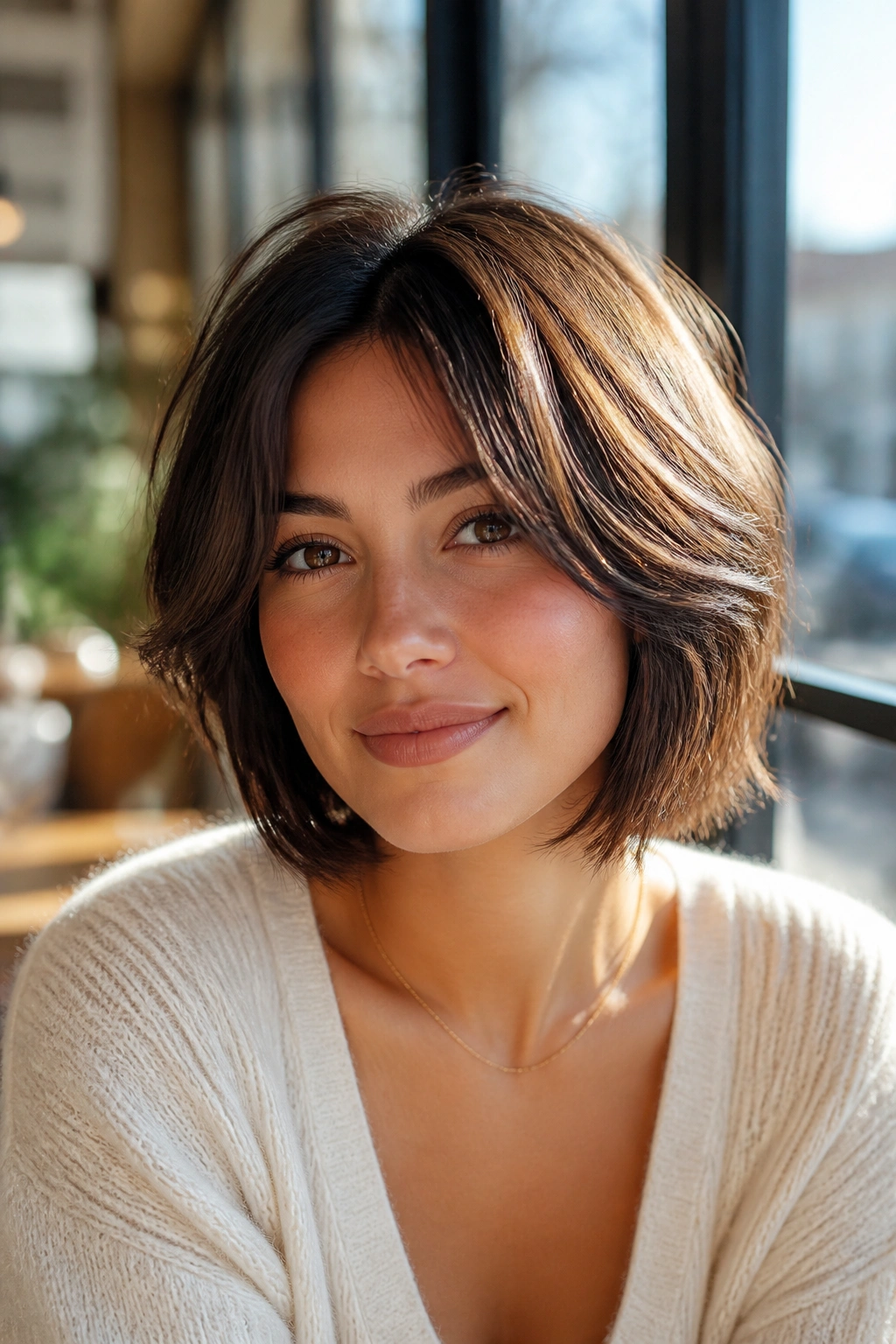
A feathered bob can be lovely on thin hair if the feathering stays near the face. That is the part people can see most, and it is where a touch of movement can create the illusion of more hair without stripping the whole cut apart.
The mistake is feathering everything. Once the back and sides get too airy, the bob loses its body and starts looking smaller than it is. Keep the perimeter heavier. Let the front pieces soften around the cheekbones and jaw. That contrast is what makes the style feel easy.
Less is the point.
This cut is especially good when you want to soften a strong jaw or bring some motion around the face without committing to bangs. A 1-inch round brush, a quick bend away from the face, and a dab of smoothing cream on the ends are usually enough. If the hair is fine and slippery, pin one front section while it cools. That gives it a little memory.
12. Italian Bob with Full Ends
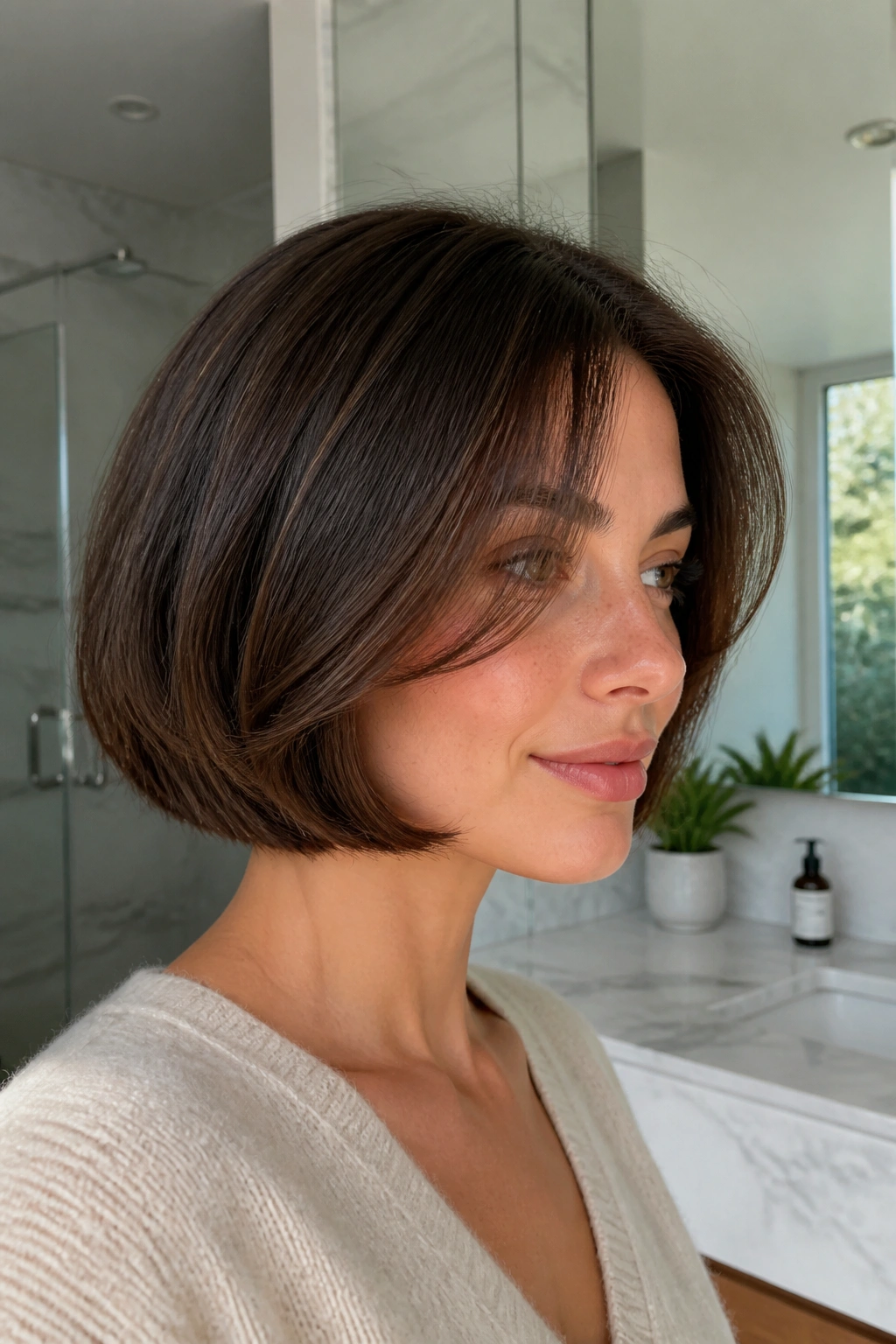
The Italian bob has a lush feel that works well for thin hair, as long as the ends stay full. It usually sits between the jaw and the tops of the shoulders, but the important part is the outline: rounded, rich, and not choppy.
What I like here is the sense of weight. Thin hair often looks better when the ends feel substantial, even if the overall cut is short. This bob gives you that heft without dragging the style down. It also plays well with a side part or a middle part, which is handy if you like to switch things up.
A big round brush helps, but so does restraint. Don’t over-texture it. Don’t over-layer it. A subtle undercurve at the ends is enough. If the hair is straight, a smoothing cream and a brisk blow-dry can make the cut look more expensive than it is — not because of branding nonsense, but because the shape is clean.
13. Micro Bob with Barely There Layers
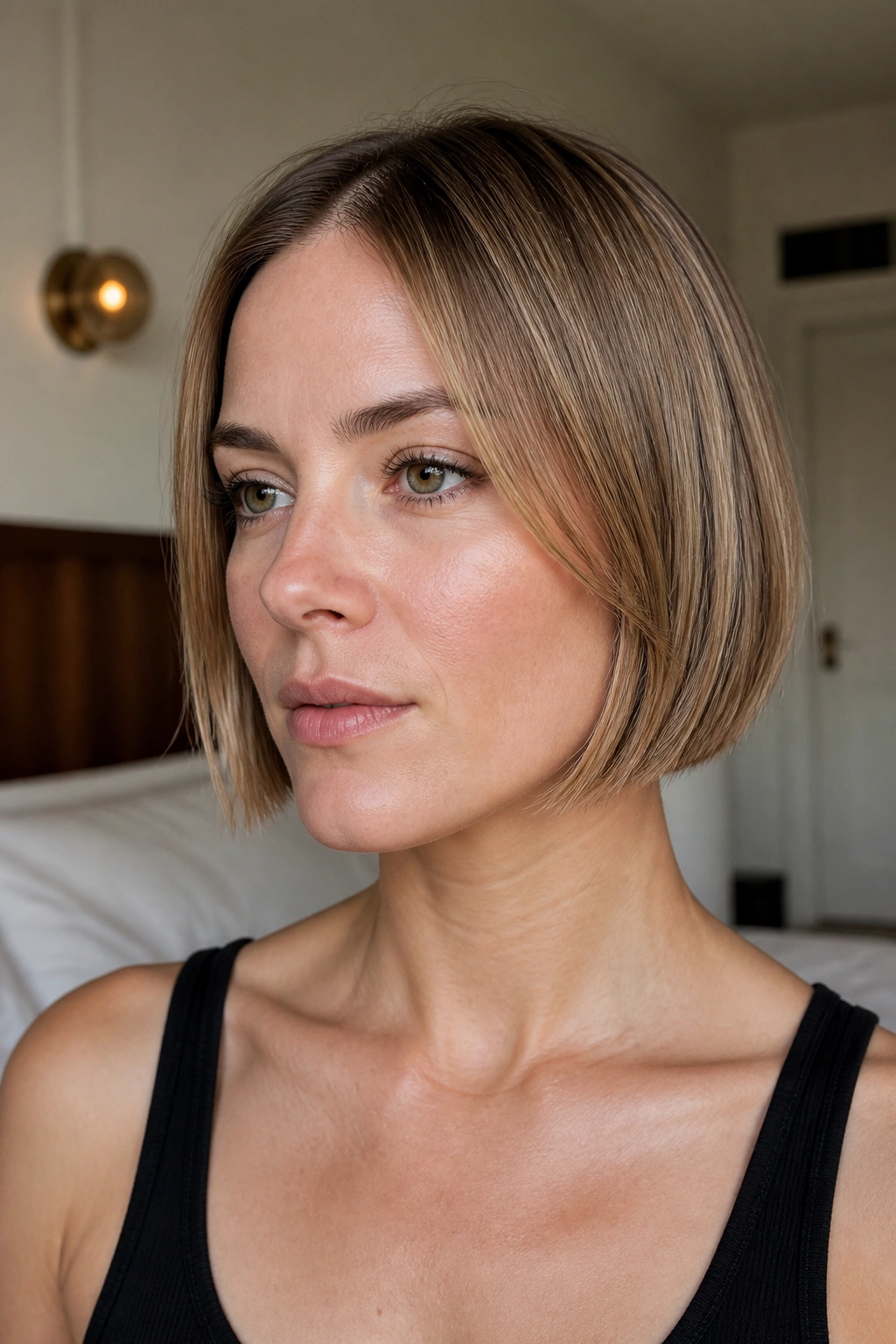
A micro bob sits short and looks sharp. On thin hair, that sharpness is useful. The shorter the length, the less the hair collapses under its own weight. That is why this cut can look surprisingly full even when the density is low.
Why it works
A length that grazes the cheekbone or sits just below it keeps the hair in a compact zone. The eye sees a finished shape, not a long tail of see-through ends. Barely there layers can add movement, but the cut should stay mostly blunt.
How to wear it
- Part it a little off center for lift
- Tuck one side behind the ear
- Use a drop of serum on the last inch only
- Flat-wrap dry the front so the line stays clean
This is a strong choice if you like simple styling and clean edges. It also grows out gracefully, which is not something every short cut can claim.
14. Boyish Crop with a Soft Fringe

A boyish crop sounds blunt, but the soft fringe changes the whole mood. The sides stay short, the top stays movable, and the fringe falls forward just enough to keep the face from looking too bare. On thin hair, that small amount of forward movement matters.
What keeps this from looking severe is the texture at the front. You want the fringe to be broken up a little, not cut into a hard line across the forehead. That makes the cut easier to style and less likely to separate into odd little gaps.
I like this cut for people who want low maintenance but not zero maintenance. A matte cream, worked through damp hair, can shape it in under 3 minutes. If your hair sticks up at the crown, this style is forgiving because it is meant to look a little lived-in anyway. It also grows out in a decent way, which saves you some salon panic.
15. Wavy Bob with Air-Dried Texture

A wavy bob can be a gift for thin hair, as long as the wave is loose and not frizzy. The shape needs to sit around the jaw or a touch below it, where the movement can build width without turning into a puffball.
Air-drying works here because it keeps the strands from being stretched too flat. A golf-ball-size amount of mousse through damp hair gives enough hold for the wave to form. Scrunch once or twice, then leave it alone. That part matters. Over-touching thin hair while it dries tends to separate it in all the wrong places.
If your hair is mostly straight, you can fake the wave with 3 or 4 loose bends from a 1-inch curling iron, then brush them out with your fingers. The goal is not curl. The goal is a little irregular motion that makes the hair look denser from the side.
16. Mini Lob with Invisible Layers

A mini lob sits in that useful middle zone where the hair is still short, but not so short that you lose styling options. For thin hair, invisible layers can be the sweet spot. They add movement from the inside of the haircut instead of shaving off the outline.
Why invisible layers work
The perimeter stays clean, so the cut keeps its body. The hidden internal layers take out just enough weight to keep the style from hanging flat. You get a bit of swing without that scraggly see-through finish that too many layers can create.
How to keep them hidden
Ask for the layers to start low, well below the crown. Keep the front pieces slightly longer than the back. That way the shape feels soft, but the haircut still reads as full.
This is one of my favorites for thin hair that wants a little more length than a classic bob can give. It is polished enough for work, loose enough for weekends, and easy to dress up with a bend at the ends.
17. Undercut Pixie for Extra Lift
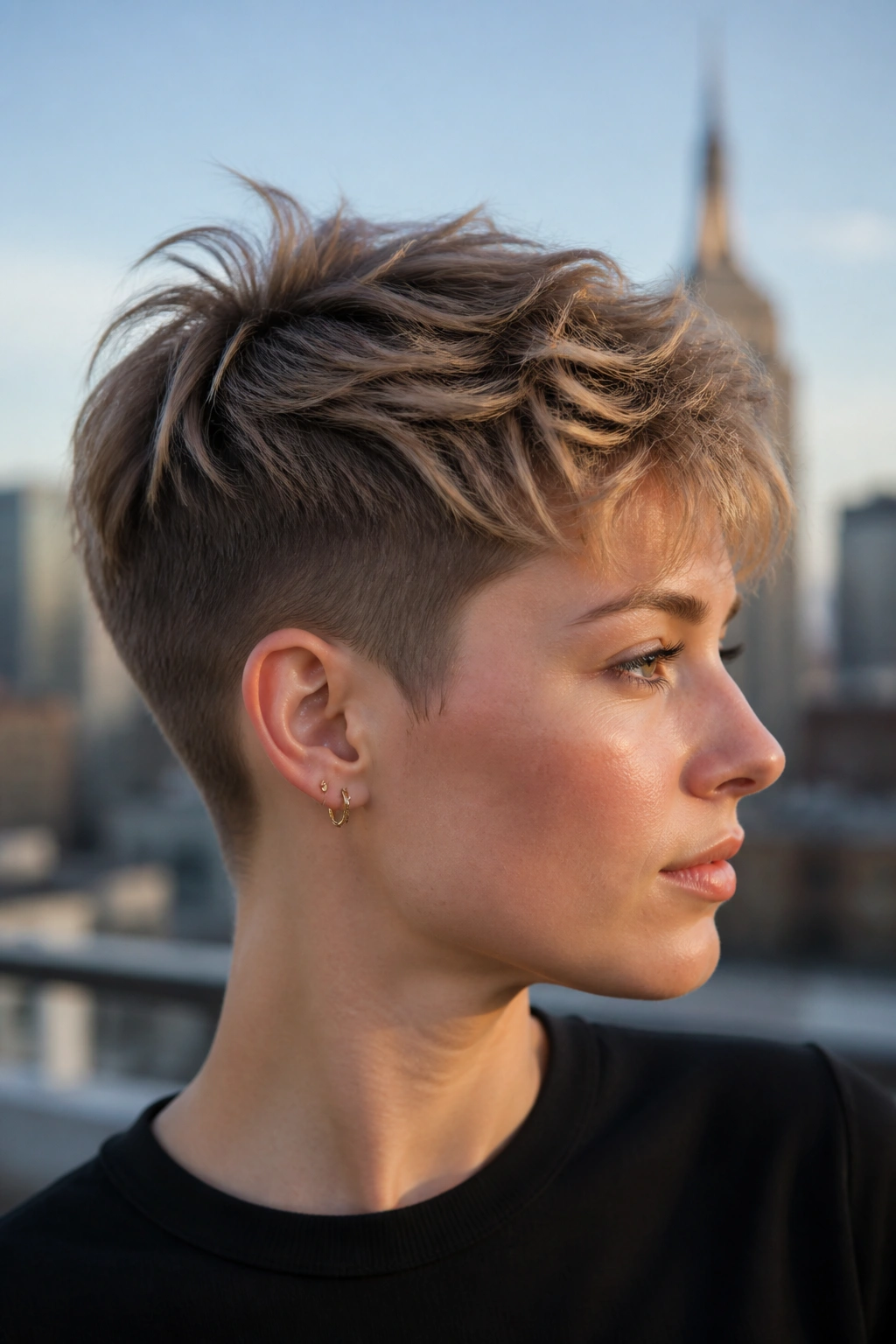
An undercut pixie can sound extreme, but on thin hair it can be a smart move when the hair at the nape and sides feels too bulky or too flat. Removing some of that extra weight lets the top sit higher, which gives the illusion of more hair where people notice it most.
The key is restraint. You do not need a dramatic shave to make this work. A soft undercut or a closely tapered nape can be enough. If the undercut is too severe, the grow-out gets annoying fast, and thin hair does not always hide that transition kindly.
Best when you want:
- More height through the crown
- Less bulk around the ears and neck
- A shape that dries fast
- A cut that looks neat even on day two
A little root spray at the crown helps, but the real trick is the cut itself. If the top has length and the sides stay snug, the style nearly does the work for you.
18. Curly Shag Bob with a Soft Halo

A curly shag bob works when the curls are loose enough to build a halo around the head without exploding outward. Thin hair with curl can look fabulous in this cut because the shape makes the movement visible, and visible movement is what creates fullness.
The layers should sit carefully. Too high, and the curls separate into thin wisps. Too low, and the cut loses its lift. I like seeing most of the shaping around the cheekbone and above the ear, where the hair can move and still keep some width.
A diffuser helps, but don’t overdo the heat. Five minutes at a time, with a pause in between, is often plenty. Once dry, separate only the bigger curls with your fingers. If you break them apart too much, the halo disappears and the haircut starts to look fuzzy instead of full.
19. Graduated Bob with a Tapered Nape

A graduated bob can make thin hair look denser at the back without adding bulk to the sides. The stacked shape near the nape lifts the crown a little, which is useful if your hair tends to flatten there and stay there.
This cut depends on precision. If the graduation is too steep, it starts to look dated or wedge-shaped. If it is too mild, you lose the lift. The sweet spot is a soft angle that builds volume gradually from the neck upward.
Angle matters.
This is a strong choice for straight hair because the lines show clearly. A quick round-brush blow-dry can make the back look fuller in a way that air-drying often cannot. If you’re asking your stylist for this, bring a photo and point out the stack at the nape. That part is doing the heavy lifting.
20. Swoopy Side-Parted Crop
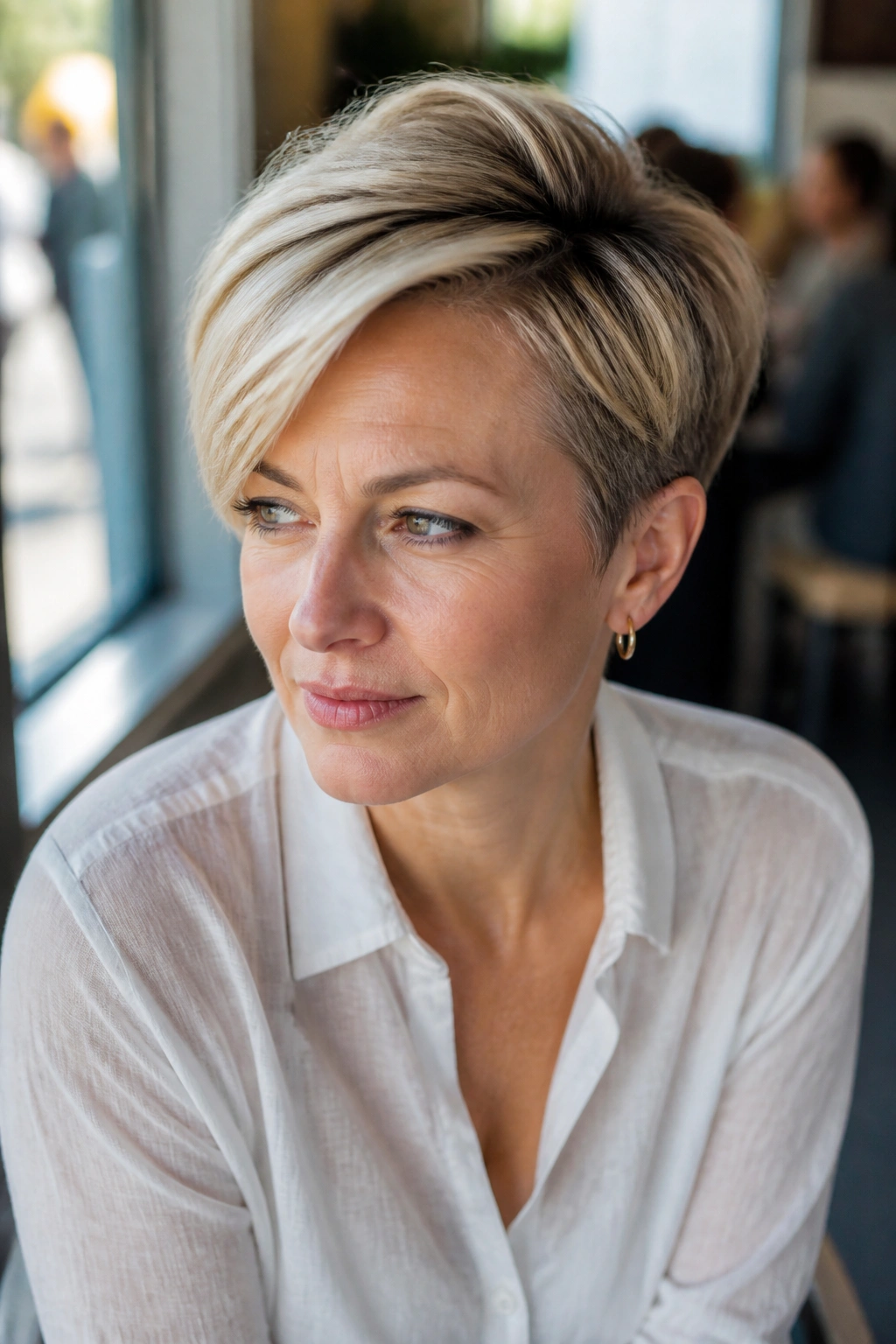
A swoopy side-parted crop sits between a pixie and a bob, which gives you a lot of flexibility. The top has enough length to sweep across the forehead, and the sides stay short enough that the hair never looks weighed down. For thin hair, that balance is gold.
What makes this cut flattering is the diagonal line. Diagonals create movement, and movement creates the impression of more hair. A straight-down style can sometimes expose density issues. A swoop distracts from them in a clean way.
You can style this with a quick side part, a small round brush, and a velcro roller for 5 to 10 minutes at the front if you want extra lift. If not, finger-dry the top and let it fall softer. Either version works. The point is that the cut already has shape, so you do not need a lot of product or time.
21. French Crop with a Micro Fringe
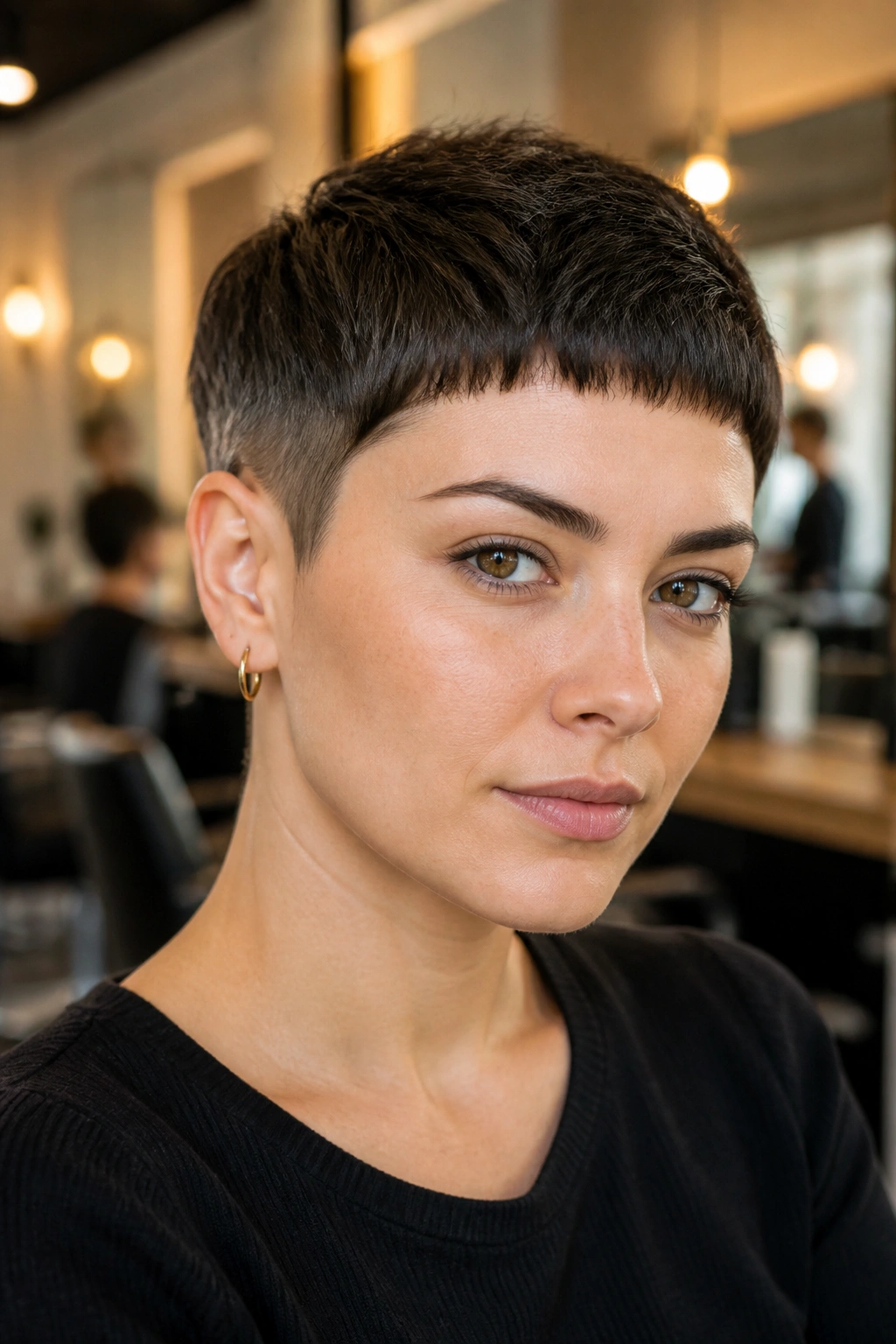
A French crop with a micro fringe is not for everyone, and that is fine. On thin hair, it can look sharp and deliberate, especially if the fringe is kept soft at the edges rather than cut into a hard bar across the forehead.
I like this cut on straight hair that holds a clean line. The crop keeps the sides compact, the fringe draws attention upward, and the whole shape feels neat. The one catch is upkeep. Micro fringes can grow out fast, and once they start dropping into the eyes, the shape loses its crisp edge.
Useful things to know:
- Trim the fringe every 3 to 4 weeks if you want the original shape
- Keep the top slightly textured so it does not look helmet-like
- Ask for soft point-cut edges, not a blunt shelf
- Use a tiny amount of styling paste, because too much will show
It’s a small cut with a strong opinion. That’s part of the appeal.
22. Rounded Bob with Interior Layering

A rounded bob can make thin hair look fuller because the shape wraps gently around the head. It does not fight the natural fall of the hair. It works with it. The trick is to keep the interior layers subtle so the outline stays plush.
Where the fullness lives
The fullness should sit at the sides and slightly through the back curve. That is what gives the bob its rounded look. If the layers go too high, you lose the mass that makes the haircut useful in the first place.
How much layering is enough
Not much. Honestly, less than most people think. A few internal cuts can help the hair bend, but the perimeter should stay strong. Think of the layers as support, not the main event.
This cut is especially useful if your hair is fine but not pin-straight. A bit of natural body makes the round shape easy to hold. Blow-dry with a medium brush, direct the ends inward, and stop before the hair gets too polished. A little softness suits this one.
23. Razor-Cut Pixie Bob
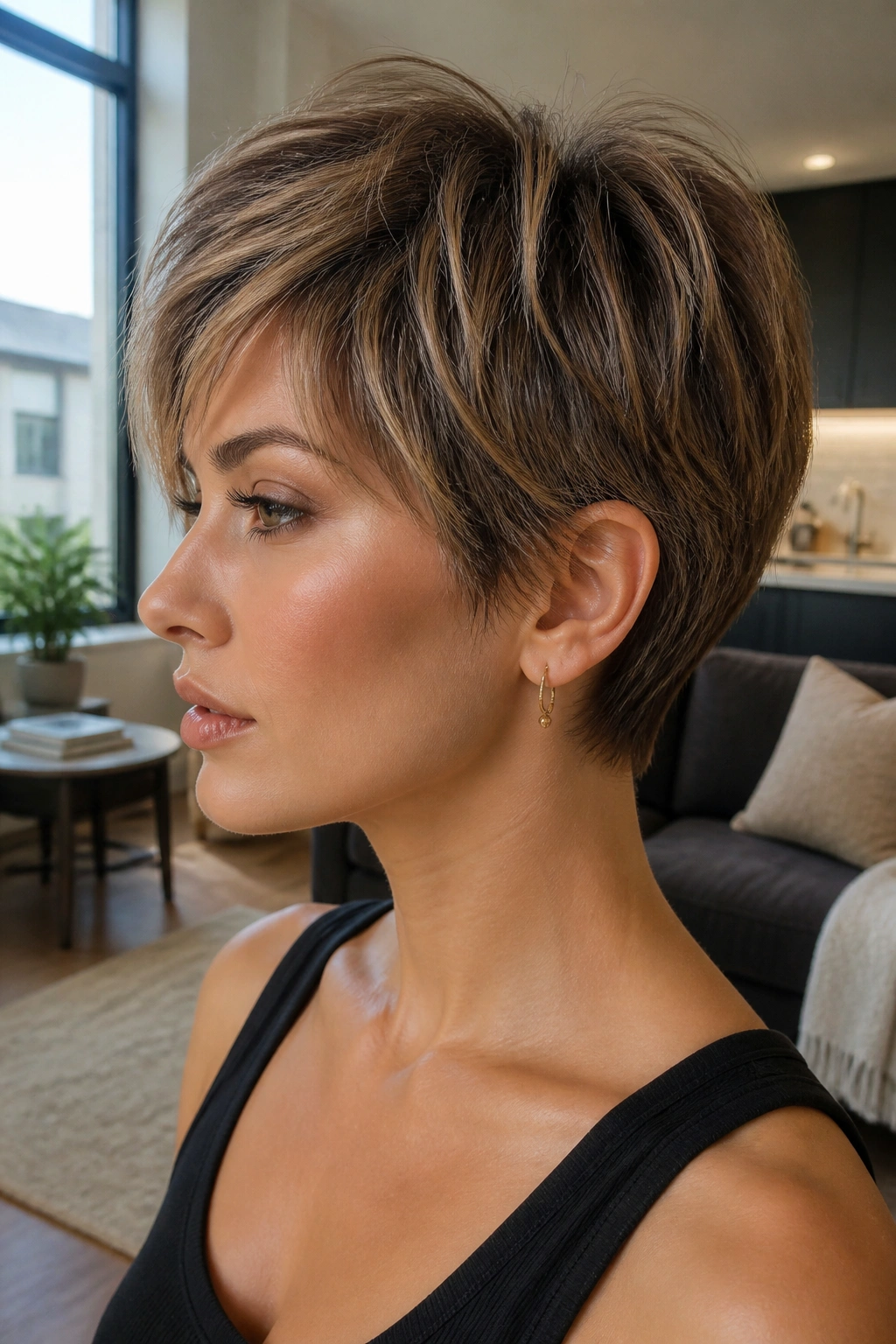
A razor-cut pixie bob can be excellent on thin hair, but only if the razor is used with a light hand. Too much razor work makes the ends look frayed. Just enough softens the perimeter and keeps the cut from feeling blocky.
The reason this style works is the mix of structure and softness. The bob length gives the hair body. The pixie-inspired top gives it lift. The razor finish keeps the edges from looking heavy or stiff. That combination can be very kind to fine strands.
How to know if it is right for you? If your hair looks bulky at the ends but flat at the crown, this cut can help. If your hair is already very sparse, ask your stylist to use the razor only at the very tips. You want movement, not holes. That distinction matters more than most salon chatter makes it sound.
24. Tousled Crop with a Piecey Crown
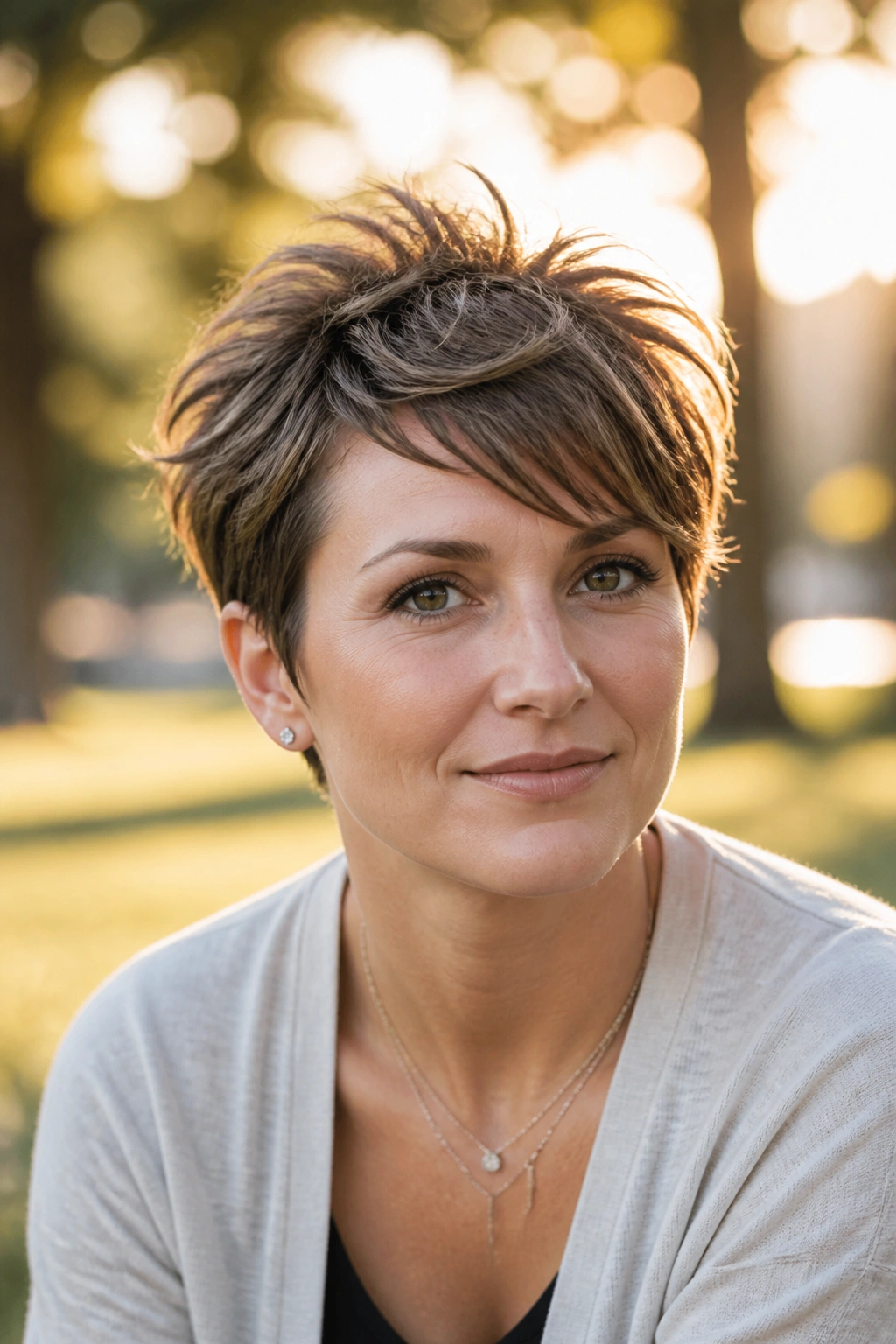
A tousled crop is one of the few short hairstyles for thin hair that can look intentionally messy without seeming unfinished. The crown is the whole story here. Give it a little height, break up the top pieces, and keep the sides close so the cut doesn’t spread outward.
The best part is how easy it is to wear on day two. A spray of dry texture mist at the roots, a quick pinch of the top pieces, and you’re done. No long blow-dry. No round brush wrestling match. Just enough separation to make the hair look alive.
A few small rules:
- Start with clean, dry hair or hair that is only lightly damp
- Use texture spray at the roots, not through the ends
- Pinch 3 to 5 pieces at the crown, then stop
- Leave the front slightly softer than the top so the cut doesn’t look too spiky
This style has a little attitude. It also hides flatness well, which is the real reason people keep coming back to it.
25. Sleek Short Cut with a Glossy Finish
Sometimes the answer is not texture at all. A sleek short cut with a glossy finish can make thin hair look healthier, denser, and more expensive in the plain old visual sense of the word. When the cut is short and clean, the light reflects more evenly off the surface, which makes the hair look smoother and fuller.
This approach works best when the ends are blunt and the shape is tight. A short bob, a polished crop, or a neat pixie can all live here. The shine matters, but the cut matters more. If the shape is weak, gloss only makes the weakness easier to see. If the shape is strong, a little serum or smoothing cream can make the whole thing look finished.
I like this option for people who don’t want a lot of fuss. A center part, a side part, or a tucked-behind-the-ear style can all work. Just keep the product light. One drop of serum is enough for the ends. More than that, and thin hair can slide into limp territory fast.
Final Thoughts
Thin hair tends to look best when the cut does the heavy lifting before you even touch a brush. Blunt edges, careful side parts, and controlled layers usually help more than dramatic shaping or aggressive thinning. That part is boring, maybe, but it works.
The smartest short hairstyles for thin hair make a choice and stick to it. Either the cut is clean and compact, or it is soft and piecey, or it is rounded and full through the edges. Mixing all three too hard can leave the hair looking smaller than it really is.
Bring photos. Better yet, bring two or three and point out the exact part you like — the fringe, the nape, the outline, the crown. That is where the real decision lives, and that is usually where a good haircut starts to feel like your haircut instead of just another short style.
