



Hair after 50 gets a lot of lazy advice. Cut it short. Hide the gray. Add volume everywhere. Most of that misses the point.
The best hairstyles for women over 50 are the ones that work with the hair you actually have: the texture, the part that insists on splitting a certain way, the crown that has gone a little flatter, the wave that shows up only when humidity is rude. A good style should look like you, not like a haircut trying to fight your head.
Gray hair changes the conversation, too. It can look crisp, silvery, and expensive-looking when the shape is right. It can also look heavy or wiry if the cut is doing too much or too little. Fine hair usually needs lift and clean lines. Thick hair usually needs weight removed in the right places. Curls need room to move. Straight hair often needs a bit of bend so it does not fall flat by noon.
So no, there isn’t one haircut that belongs on every woman over 50. There are shapes, lengths, and styling tricks that make life easier, and a few that are just plain smarter than the old rules. The useful part starts here.
1. Soft Pixie Cut for Women Over 50
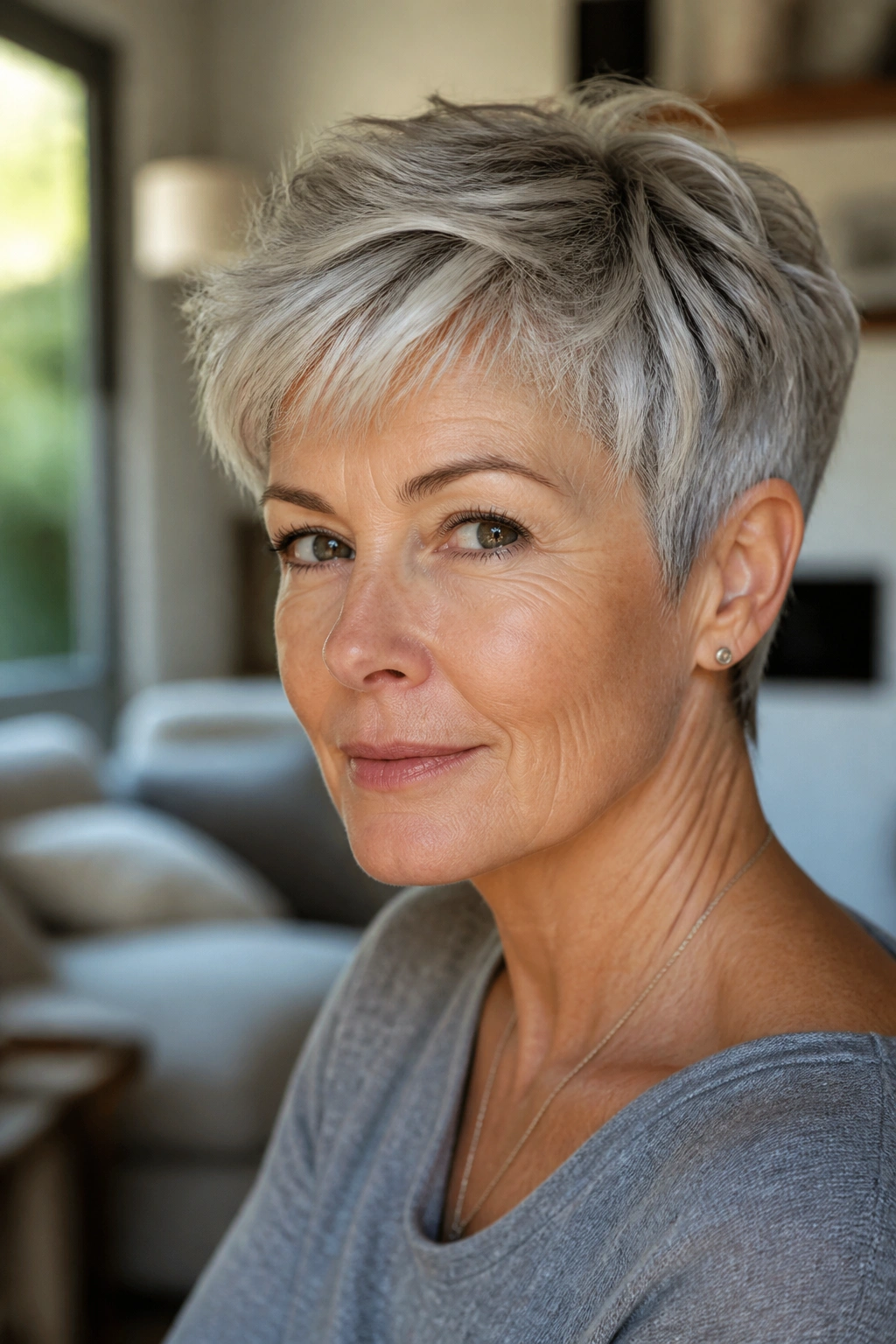
A soft pixie cut is one of those styles that looks sharper than the effort it takes. It keeps the sides and neckline neat, but the top stays a little longer so you still get movement, not a helmet.
Why It Works
The magic is in the contrast. Shorter sides clean up the silhouette, while the top layers can be tousled with a pea-sized bit of styling paste or cream. If your hair is fine, that extra lift at the crown makes a bigger difference than a long cut ever will.
A pixie also shows off glasses, earrings, and the shape of your jaw in a way that feels clean, not harsh. Keep the top around 1½ to 3 inches long, and ask for texture instead of choppy spikes. That little distinction matters.
- Best for fine to medium hair
- Usually needs trimming every 4 to 6 weeks
- Works well with a side part or a soft sweep across the forehead
- Takes about 2 minutes to style with fingers and a bit of product
Styling tip: Blow-dry the front section forward first, then push it back with your fingers. It gives the top more lift without looking stiff.
2. Chin-Length Bob

A chin-length bob is tidy in the best way. It lands right where the face needs a bit of structure, especially if your hair has started to lose fullness at the ends.
This cut works because the line hits the jaw or just below it, which gives the whole face a cleaner frame. It can be tucked behind one ear, worn sleek, or bent under with a round brush. If your hair is straight, this shape feels crisp. If it’s wavy, the slight bend makes it look softer and less severe.
The trick is not to make it too blunt if your hair is thin. A tiny bit of internal layering near the back keeps it from hanging like a curtain. If your hair is thick, ask for the ends to be thinned just enough to keep the bob from puffing out at the sides.
A chin bob is a good match for women who want a style that looks polished after a quick blow-dry. It is neat. It does not fuss.
3. Layered Lob with Side Part

Why does the layered lob work so well? Because it gives you movement without asking you to give up length. A lob that sits between the collarbone and the top of the shoulders still feels grown-up and easy to wear, but the layers stop it from becoming heavy.
The side part is the part most people skip, and that’s a mistake. A deep or medium side part creates instant lift at the roots, which matters a lot if your crown has gone flatter over time. Keep the shortest layers around the cheekbone or chin so the front has shape.
How to Style It
Use a 1¼-inch curling iron or a flat iron to add a slight bend, not a tight curl. Wrap only the middle section of the hair for 5 to 8 seconds, leave the ends out, and brush it out with your fingers. That keeps the finish modern instead of overdone.
A layered lob suits women who want options. Tie it back. Wear it loose. Tuck one side behind the ear. It doesn’t box you in, which is a nice thing to say about a haircut.
4. Shoulder-Grazing Shag

Picture hair that looks better after you’ve slept on it. That is the charm of a shoulder-grazing shag.
This cut uses layers to break up weight, which is a gift if your hair has a little wave or a bend that shows up only when it wants to. The shag is not about messy hair. It’s about controlled texture. Ask for layers that start around the chin and continue down through the ends, with enough length left at the shoulders to keep it from feeling too short.
A shag is especially good if your face needs a softer frame. The broken-up layers around the cheekbones and jaw create movement without making the cut look stiff. A little mousse at the roots and a light scrunch on damp hair can do most of the work.
- Use a lightweight mousse, not a sticky gel
- Let the front pieces dry with a little lift at the roots
- Keep the ends soft, not razor-thin
- Trim every 8 to 10 weeks so the shape stays clean
One good shag is worth five failed blowouts.
5. Feathered Mid-Length Cut
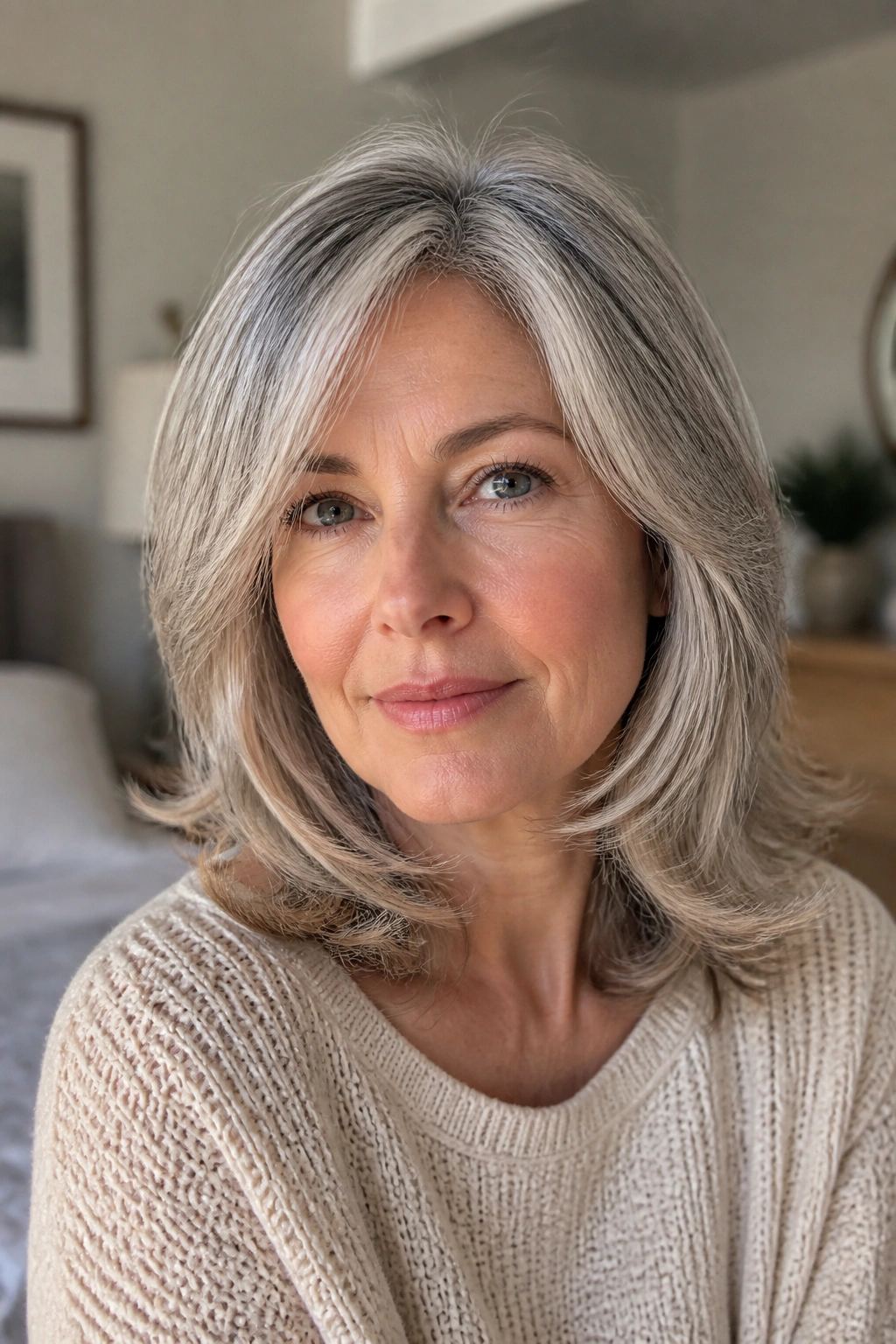
Feathering never really left. It just got quieter.
A feathered mid-length cut works because the ends are softened, not chopped into a blunt block. That softness is flattering when hair has become a little finer or drier over time. The shape falls around the shoulders and cheekbones, so it can slim the face without making it look over-styled. I like this cut on straight or slightly wavy hair best.
What makes feathering different from layers alone is the direction. The ends are brushed or cut so they sweep away from the face, which makes the whole style feel lighter. That helps if your hair tends to sit flat at the sides or turn in at odd angles around the jaw. It’s also forgiving when you air-dry it.
A round brush and a medium heat setting are enough. You do not need a giant salon blowout to make this cut work. A little bend at the ends is the whole point.
6. Sleek Blunt Bob with Soft Ends

Unlike layered cuts, a blunt bob gives the illusion of more density. That makes it a smart choice for hair that has thinned a bit at the ends and needs a cleaner line.
The catch is that blunt can look harsh if the cut is too rigid. Soft ends solve that problem. Ask for a straight baseline at the perimeter, then a barely-there bevel so the bob curves in instead of looking boxy. That small change keeps it modern and easier to live with.
This style shines on straight or lightly wavy hair. It also does a nice job of showing off gray hair, because the light catches the clean edge and makes the color look intentional. If you wear it with a side part, the shape gets a little more movement. If you prefer the middle, the line feels sharper.
Best for women who like neat hair and do not want to spend much time on it. A quick pass with a flat iron is usually enough.
7. Curly Bob with Side Fringe

Can curly hair wear a bob after 50? Absolutely. In fact, it often looks better when it is not stretched into something it’s not.
A curly bob should sit around the chin or just below it, with enough room for the curls to spring. The side fringe softens the forehead and gives the cut a little shape at the front. Keep the fringe longer than you think you need; curls shrink, and they do it with no warning. A fringe cut at eyebrow length in the chair can land an inch shorter once it dries.
How to Get the Most From It
Diffuse on low heat. Use a gel or cream that keeps the curl together without turning it crunchy. Then leave it alone. That part matters more than people admit. Over-touching curls makes them puff.
This style is good for women who want energy in the hair without a lot of length. It looks lively, not fussy. And that is a nice place to land.
8. Tapered Crop for Fine Hair
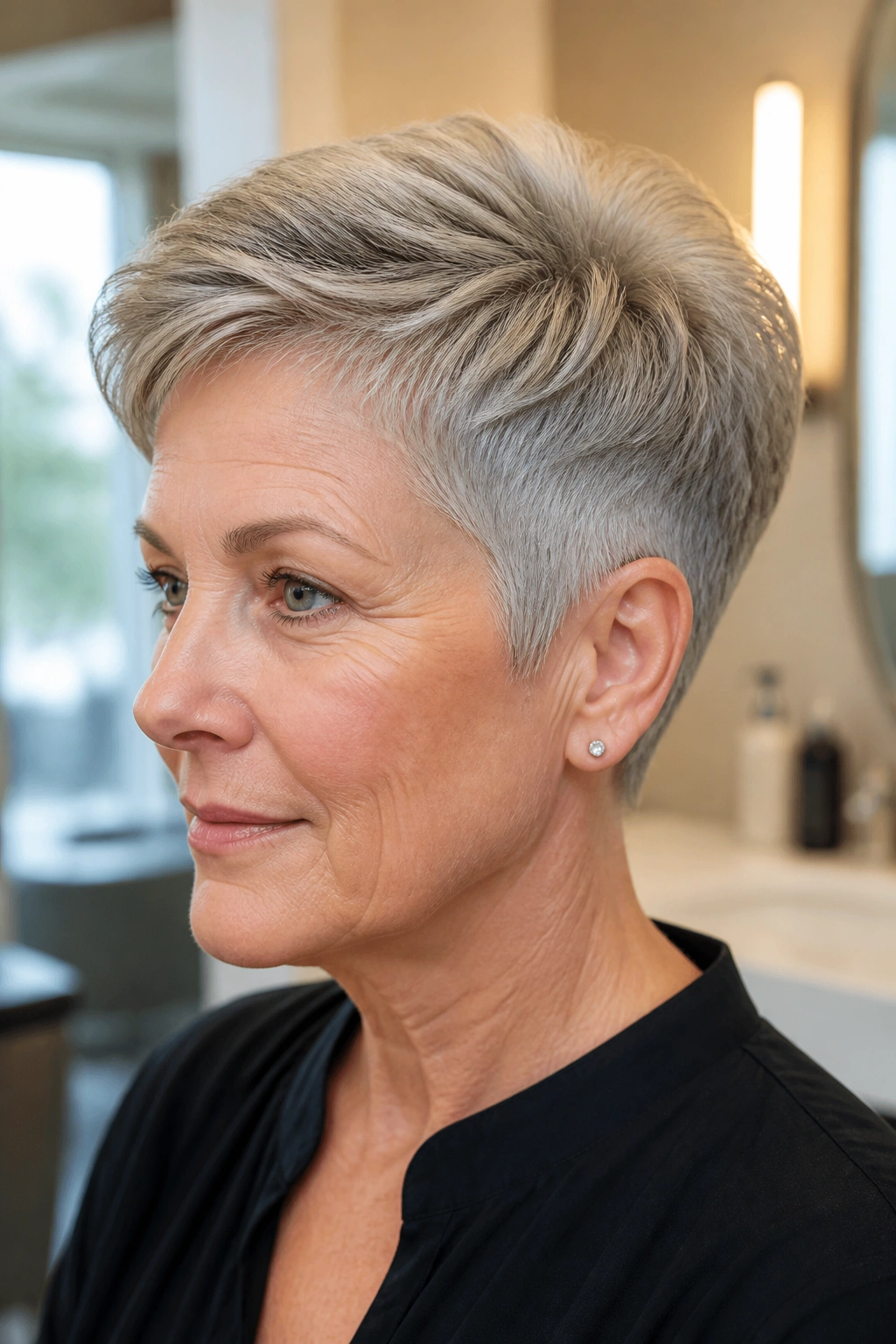
If your hair is fine, a tapered crop can be a small miracle. It gives you shape where you need it and keeps the rest tidy.
The back and sides are cut short, while the top stays longer so it can be lifted or swept across the forehead. That little contrast gives the illusion of thickness. Fine hair often looks best when it has a clear shape instead of trying to mimic fullness it doesn’t have.
The main thing to ask for is softness at the hairline. A too-sharp crop can feel severe. A tapered crop with a bit of texture through the top feels friendlier and easier to grow out. Put a root-lift spray at the crown, blow-dry for 30 to 45 seconds with your fingers lifting the roots, and stop there. More heat will not help if the cut is already doing the work.
This is one of those styles that looks expensive because it looks deliberate. Nothing about it is accidental.
9. Wavy Collarbone Cut with Curtain Bangs

What makes a collarbone cut so flattering is simple: it gives the hair enough length to move, but not so much that it drags the face down. Add curtain bangs, and the whole thing softens.
The bangs should start around the nose or cheekbone and open out toward the sides. That shape frames the eyes without taking over your whole forehead. If your hair has a natural wave, this cut is especially forgiving. You can air-dry it with a bit of cream and get a finish that looks casual, not messy.
How to Style It
Take a large round brush or a blow-dry brush and bend the bangs away from the face for a few seconds on each side. Keep the rest of the hair loose and a little undone. The point is not perfect symmetry. The point is movement.
This is a good choice if you want something easy to tie back but not boring when it’s down. It has range. That matters more than people think.
10. Silver-Shine Shag for Gray Hair

Gray hair can look flat fast if the cut is too polite. A silver-shine shag fixes that by giving the color edges, movement, and a little attitude.
The layering is what makes the silver look intentional. When gray hair is cut into a shag, the different tones and streaks show up better in the light. You don’t get one heavy block of color. You get dimension. That’s the whole point. Ask for layers that are broken up enough to create texture, but not so many that the ends look thin and wispy.
What to Ask For
- Layers that start around the chin or slightly below
- A fringe or face-framing piece if you want more softness
- A cut that removes bulk without shredding the ends
- Styling that keeps the crown lifted
Use a lightweight cream or mousse, especially if your gray hair feels coarse. Too much product can dull the shine. A little gloss spray helps, too, but not a heavy one. Silver hair looks its best when it moves.
11. Long Layers with Face-Framing Pieces

Long hair after 50 is not the problem people make it out to be. The problem is long hair with dead ends and no shape.
Long layers fix that. They keep the weight from turning the hair into a single heavy sheet, and the face-framing pieces draw the eye upward. Ask for the shortest face pieces to hit around the cheekbone or jaw, depending on how much softness you want. That small shift can change the whole cut.
This style works especially well if you still like wearing your hair up. Long layers keep a ponytail from looking like one big rope, and they help a half-up style fall better around the face. If your hair is a bit dry, keep the ends trimmed every 8 to 10 weeks and use a small amount of oil only on the bottom few inches.
It is a quieter look than a short cut, but not a boring one. That distinction matters.
12. French Bob with Jaw-Length Edge

Unlike a chin-length bob, a French bob sits a touch shorter and feels more finished around the face. It usually lands at or just above the jaw, often with a fringe or a soft front section that bends inward.
The shape is neat, but not severe. That’s why it works so well with gray or silver hair. The shorter length makes the color look deliberate, almost graphic. It also works nicely with glasses because the hair does not crowd the frame of the face. If you wear your hair straight, this cut has a clean edge. If you have a small wave, it looks a little more relaxed.
A light styling cream and a quick round-brush pass are enough. Keep the ends smooth, but don’t flatten the top. A little root lift gives the cut its charm.
This is a good pick for women who like structure and do not mind a little maintenance. The payoff is a shape that looks finished even on ordinary days.
13. Side-Swept Crop

A side-swept crop can rescue hair that grows in a stubborn direction. Cowlicks, high foreheads, a swirl at the front — all of it behaves better when the top is long enough to sweep.
Why It Works
The sides stay trimmed close, while the top leaves enough length to comb or finger-style across the forehead. That creates softness without hiding the face. If your hair is fine, the side sweep gives it a bit of lift. If it’s thick, it keeps the top from looking puffed out.
This is also one of the easiest cuts to grow out. A side-swept crop can slide into a short bob or a longer pixie without looking awkward for long. Use a light wax or paste only on the top layer, and keep the edges clean around the ears and neck. That contrast is the whole trick.
Styling note: Dry the front section in the opposite direction first, then sweep it back. It helps the hair hold its shape without needing half a can of spray.
14. Classic Pageboy-Inspired Bob

A pageboy-inspired bob sounds old-school until you see it cut with a softer hand. Then it makes perfect sense.
The shape curves under at the ends and keeps the outline tidy. That curve matters. It stops the bob from hanging straight down and gives the hair a bit of bounce around the jaw and neck. If your hair is straight and fairly thick, this cut can feel clean and controlled without being flat. If your hair is fine, the shape helps it look fuller at the perimeter.
Keep the sides slightly longer if you want a softer frame. A deep side part can also keep the cut from looking too exact. I’d avoid making it too helmet-like. That is where this style goes wrong.
A round brush and a little heat at the ends are enough. Roll under for a second or two, let it cool, and move on. Easy enough, really.
15. Soft Curls with Bangs

Can bangs work with curls? They can, but the bangs have to be cut for the curl pattern, not against it.
Soft curls with bangs look best when the bangs are longer and a little piecey. Straight-across micro bangs are a gamble unless you like a lot of maintenance. Keep the fringe long enough to skim the brows or split in the middle, then let the curls do their own thing around the face. The result is gentle, not busy.
How to Style It
Dry the fringe separately if you can. A small round brush or even a velcro roller can keep the front from drying too short and too wide. Use a light cream or mousse through the curls, then scrunch them and leave them alone. If the curls are already well-shaped, do not keep poking at them trying to “fix” them.
This style suits women who want softness and a bit of playfulness. It has personality. That’s a good thing.
16. Asymmetrical Bob

An asymmetrical bob gives the face a little tension in the right way. One side sits slightly longer than the other, which sharpens the jaw and keeps the cut from feeling too predictable.
The difference does not need to be dramatic. Even a half-inch to one-inch shift can change how the hair falls around the cheeks. That small angle is enough to make the style feel modern without making it look like a statement piece. It also works well if one side of your hair behaves better than the other — which happens more often than people admit.
Key Details
- Keep one side just a touch longer, not wildly uneven
- Ask for clean edges around the neckline
- Use a smoothing cream if your hair frizzes easily
- Works especially well on straight to wavy textures
This style is good if you like a bob but want something with more edge than a standard cut. It has a little bite. Not too much.
17. Mid-Length Cut with Curtain Bangs

Mid-length hair gets a bad reputation for being “in between,” but that is exactly why it works. It leaves room to wear the hair down, clipped back, twisted up, or brushed loose.
Curtain bangs make the shape feel finished. They split around the center and open out around the eyes and cheekbones, which softens the whole face without swallowing it. Start the bangs at the bridge of the nose or a bit lower, then blend them into the side layers so they don’t look like a separate piece. That blend is what keeps the style grown-up.
This cut works well for women who want movement but not a lot of length on the shoulders. It is also a smart choice if you are letting gray grow in, because the bangs and layers break up the color line in a gentle way. A blow-dry brush can handle most of the styling in five minutes.
If you want one haircut that can behave on a good day and still cooperate on a busy one, this is a strong candidate.
18. Natural Gray Afro or Tapered Coils
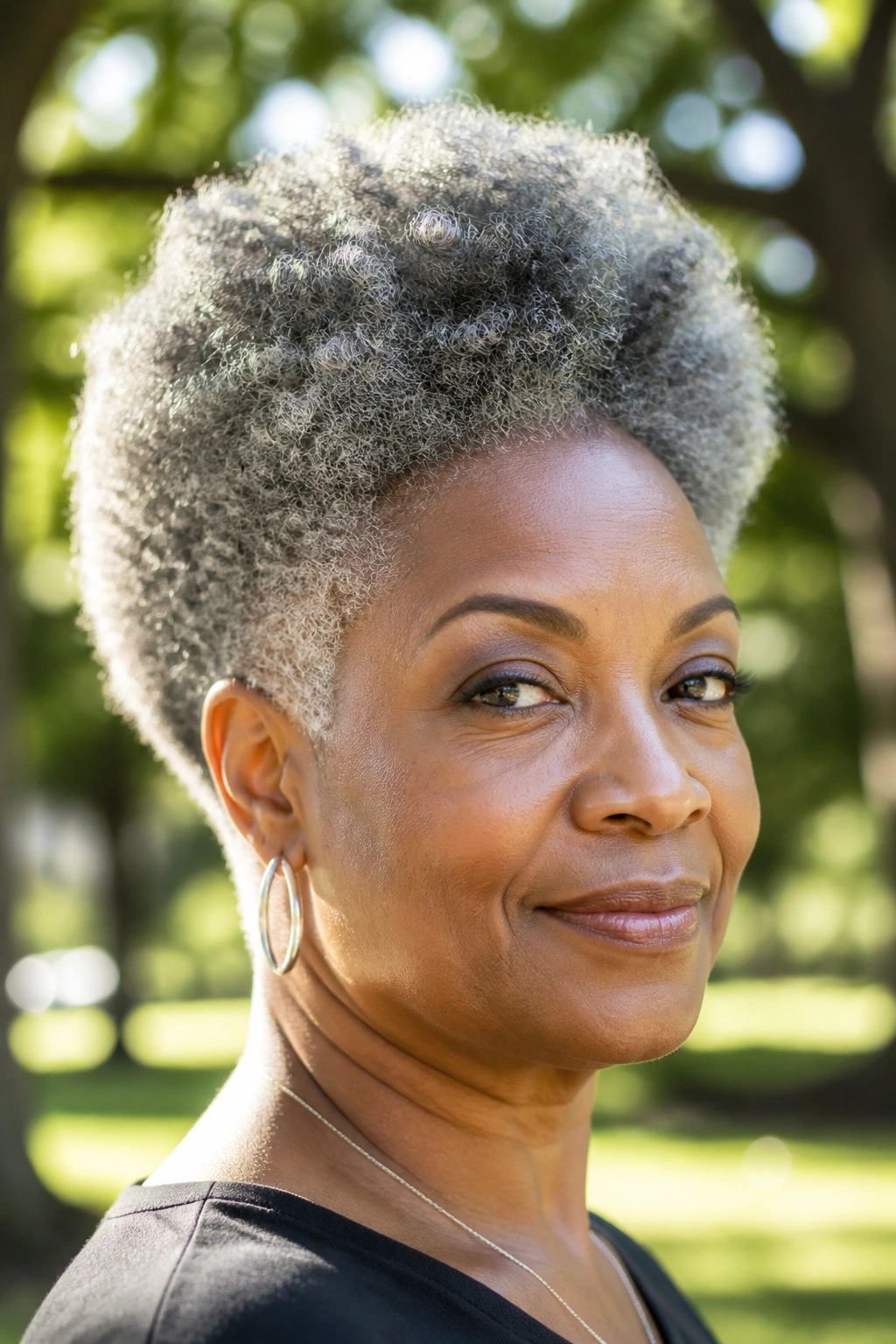
Unlike straight styles that try to smooth everything down, a natural gray afro or tapered coil shape lets the curl pattern lead. That is the whole appeal.
The taper keeps the sides and neckline neat while the top stays full enough to show texture. On gray hair, that shape looks especially clean because the lighter color catches the coils and makes the silhouette stand out. It also protects the ends from getting scruffy, which is a real issue with shorter natural textures.
The key is moisture and shape. Use a leave-in conditioner, a little butter or cream if your hair likes it, and a pick only at the roots when you want lift. Do not drag a brush through dry coils and expect them to behave. That just creates frizz and a bad mood.
This style is for women who want the hair to look like itself. That sounds simple, but it is not a small thing.
19. Layered Cut for Thick Hair

Thick hair needs strategy. If you cut it blunt and heavy all the way down, it can balloon at the sides and steal the shape from your face.
A layered cut helps remove bulk where it actually lives — usually in the mid-lengths and lower sections — while keeping enough weight at the bottom so the hair still falls well. The layers should be hidden, not stripey. That means the stylist should focus on internal shaping instead of hacking visible shelves into the hair. Too many obvious layers can make thick hair look busy.
This is one of the few styles where a good cut saves you time every morning. Thick hair takes longer to dry, and a smart layered shape can cut that down a lot. It also makes ponytails and half-up styles feel lighter.
If your hair is dense, ask for movement around the face and a clean outline at the hem. That balance matters more than chasing volume. You already have enough of it.
20. Long Hair with Internal Layers

Long hair can look elegant after 50, and it does not need to be dramatic to do it. The real issue is whether the hair has shape.
Internal layers solve the classic long-hair problem: too much weight in the middle and too little movement at the ends. By removing bulk from the inside, the hair keeps its length but stops acting like a curtain. That matters most if your hair is straight or slightly wavy, because those textures can go flat fast when they get long.
I like this style for women who still want the option of a bun, braid, or low ponytail. It keeps the length useful. Ask for a few face-framing pieces around the chin or collarbone, then keep the rest long and healthy. The ends need regular trims, or the whole thing starts looking tired.
A little leave-in conditioner on damp hair and a small amount of oil on dry ends is often enough. Long hair does not need to be fussy. It just needs to be looked after.
21. Wedge Cut

Is the wedge cut old-fashioned? A little. Does that matter? Not if it is softened and cut well.
The wedge keeps the back shorter and stacked, while the top and sides stay longer, which creates a lifted shape at the crown. That’s useful for fine hair because the back gets fullness without making the whole head look wide. It also frames the face neatly, especially if you wear glasses or want the neckline clean.
How to Get the Most From It
Ask for softer graduation through the back and a smooth transition at the sides. A hard wedge can feel dated. A modern one has movement and a little swing. Blow-dry the crown upward with a round brush, then tuck the sides in just enough to keep the outline neat.
This is a practical cut. It is not trying to be trendy. It just works.
22. Low Chignon with Face-Framing Layers

A low chignon is one of the few updos that can look calm instead of severe. Leave a few face-framing layers out, and it softens immediately.
This style is especially useful when hair is between washes or when you want something tidy for dinner, a meeting, or a formal event. The bun should sit low at the nape, not pulled tight against the skull. The face-framing pieces can be curled slightly or left straight, depending on the texture of your hair. Either way, they keep the style from feeling too polished.
Key Details
- Best on medium to long hair
- Works nicely with second-day texture
- Use 2 to 4 pins, depending on thickness
- A light mist of hairspray is enough; do not shellac it
The low chignon is a reminder that neat hair does not have to look stern. A little softness goes a long way.
23. Twisted Half-Up Lob
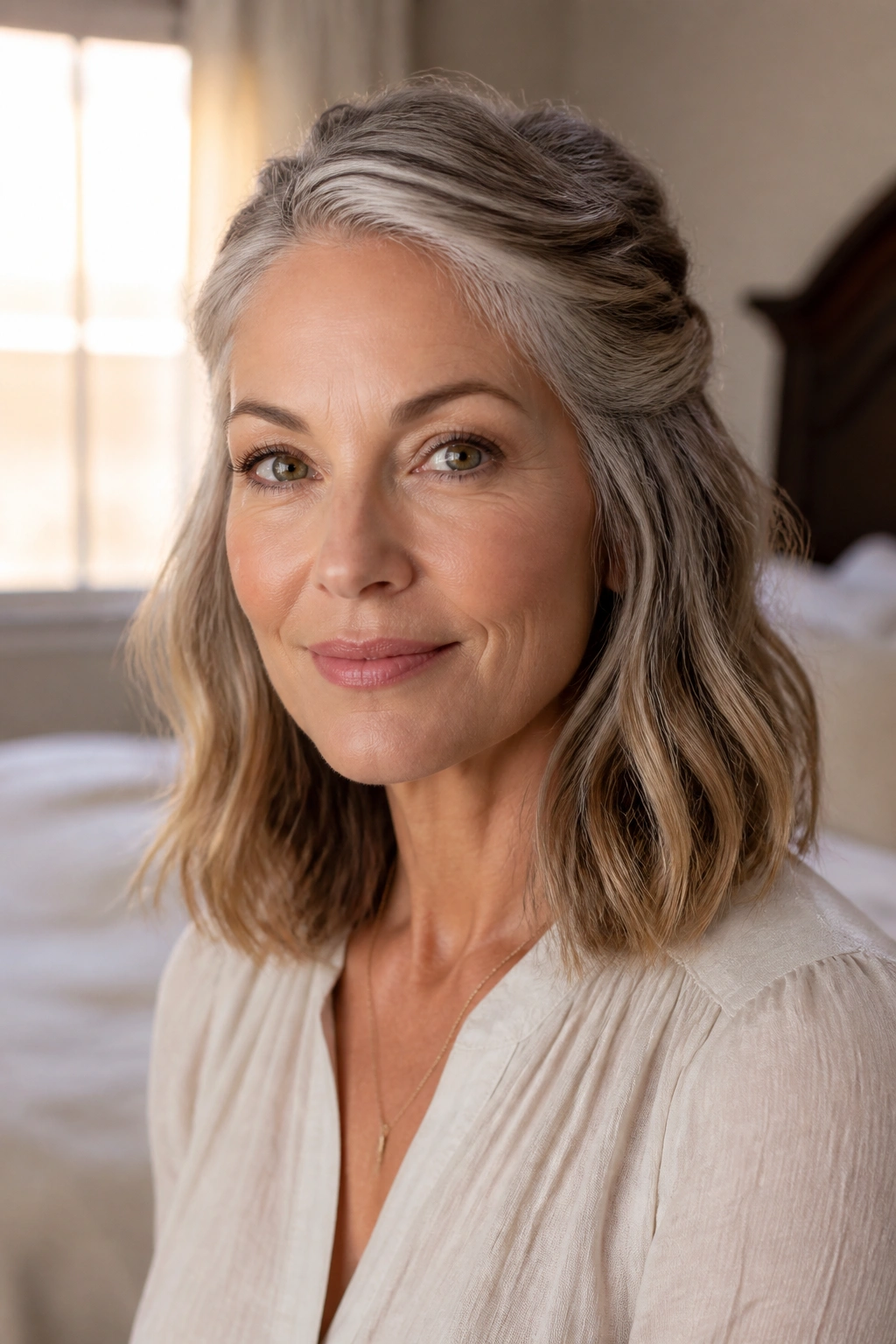
A twisted half-up lob is one of those easy styles that looks more done than it really is. You twist back the front sections, pin them loosely, and leave the rest down. Simple. Fast. Reliable.
The reason it works on lob-length hair is that the length gives the twist something to hold. On very short hair, the style can fall apart. On longer hair, it can look more formal than you want. The lob is the sweet spot. If your roots are oily or your ends are behaving badly, this style buys you time without making you hide everything.
It’s also a nice way to show off gray streaks or blended highlights. The twist lifts the color around the face, and the loose ends keep the whole thing from looking stiff. Use two bobby pins crossed in an X if your hair slips. That tiny trick saves a lot of frustration.
This is a good “I have ten minutes” style. Honestly, sometimes that’s enough.
24. Sleek Ponytail with Crown Volume

Unlike a flat ponytail, a ponytail with a little crown lift looks intentional. The top gets brushed up and back first, then the rest is smoothed into place so the face still has shape.
The volume at the crown matters more than the ponytail itself. That lift keeps the style from pulling your features down. It is especially useful if your hair is straight, fine, or a bit long and heavy. Wrap a small strand of hair around the elastic to hide it, and the whole thing looks cleaner right away.
Why It Works
A sleek ponytail is good for days when you want your hair off your neck but still want polish. It suits errands, travel, dinner, or any situation where loose hair would feel like too much. Use a boar bristle brush or a soft smoothing brush, not a rough one that creates frizz. A tiny bit of serum on the ends helps, but keep it off the roots.
If you like low-effort styles that still read as finished, this one earns its keep.
25. Loose Shoulder-Length Blowout
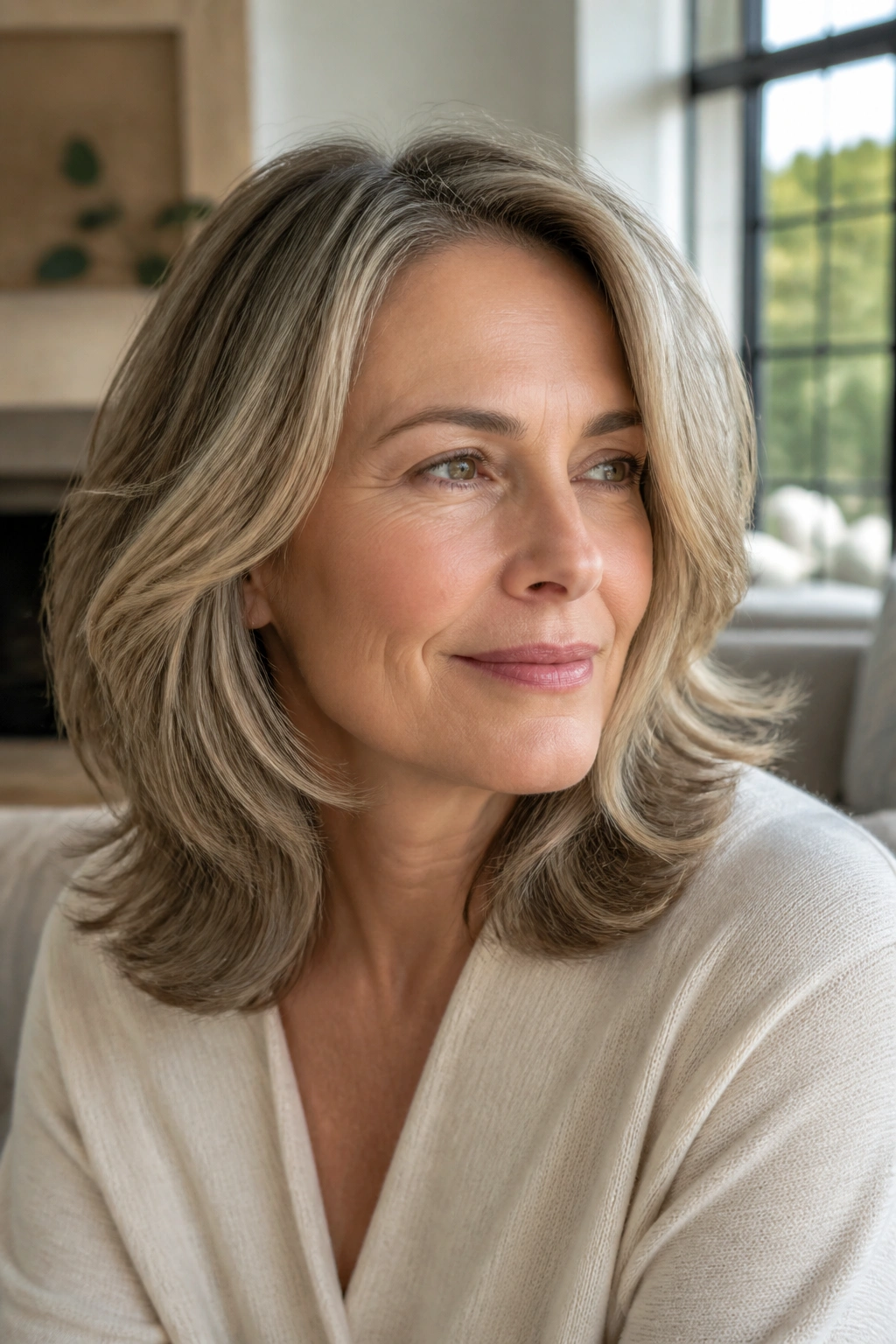
A loose shoulder-length blowout is not about big curls. It is about movement, bend, and a little swing through the ends.
This style works best when the hair falls around the shoulders and the layers are light enough to move. Use a medium or large round brush, depending on how much bend you want. The front should turn away from the face just enough to open it up. The ends should feel soft, not rigid. If the blowout is done right, the hair moves when you turn your head. That sounds small. It isn’t.
This is a good choice for women who like their hair to feel a bit more dressed up without going formal. A touch of mousse at the roots and heat protectant through the mids is usually enough. If your hair is thick, work in sections about 2 inches wide. If it is fine, keep the sections smaller so the heat reaches the root.
A blowout like this can look polished on a Tuesday and easy on a Friday. That’s useful.
26. Modern Mullet with Soft Fringe
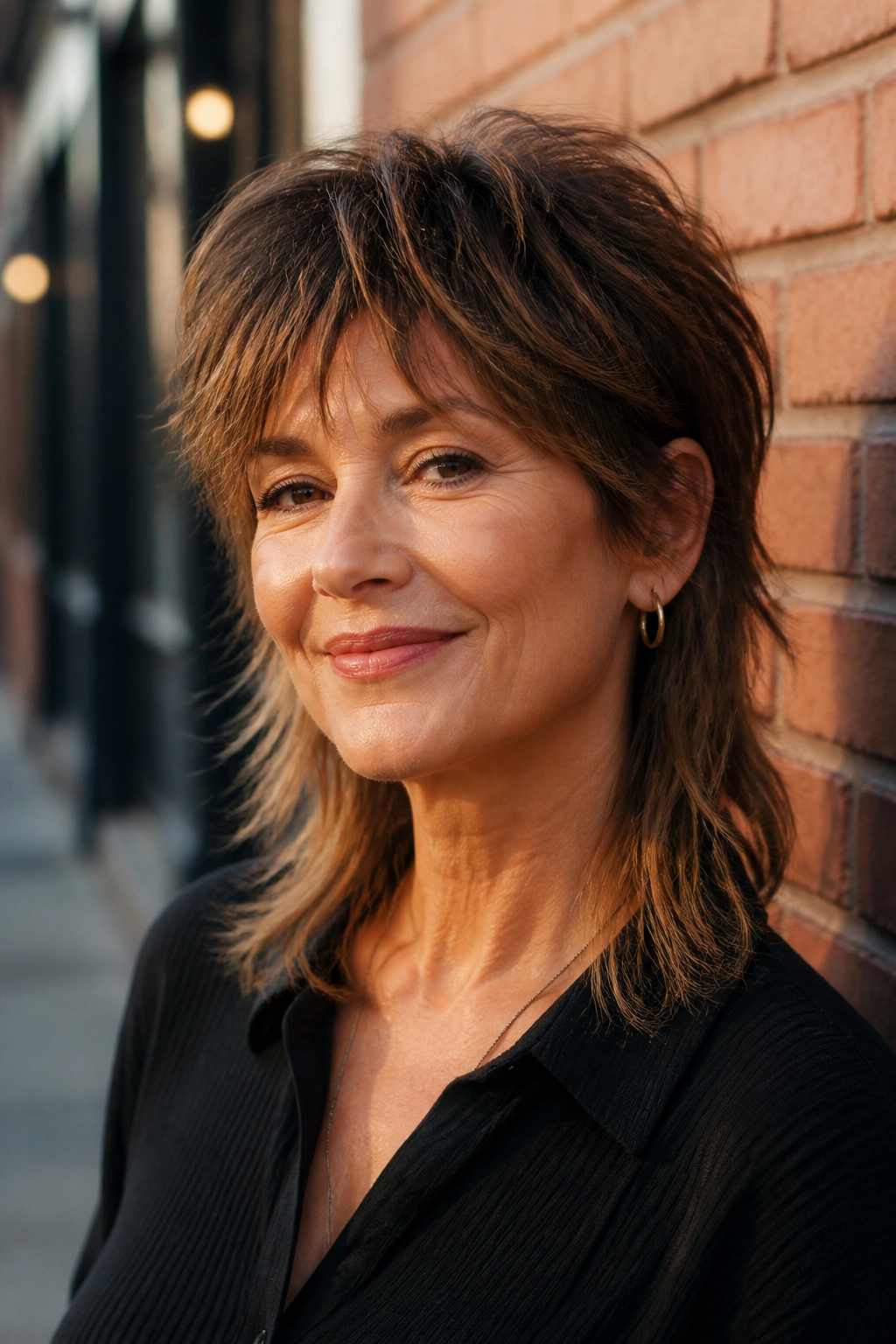
A modern mullet sounds braver than it actually is. The updated version is softer, with shape at the crown, length in the back, and a fringe that keeps the front from looking severe.
This cut works best on hair with a bit of wave or texture, because the shape depends on movement. The top and sides are cropped shorter so the face opens up, while the back stays longer for a little swing. It is not the hard-edged version people remember from old photos. It’s gentler, and frankly, much more wearable.
This style suits women who want something different and do not mind a little attitude in the haircut. It can be especially good on gray hair because the texture makes the color look layered rather than flat. If you try it, keep the fringe airy and the neckline clean. That keeps it from tipping into costume territory.
A modern mullet is not for everyone. Fine. Most haircuts are not. But on the right head, it looks lively in a way a safe cut never does.
27. Bouncy Shoulder-Length Layers
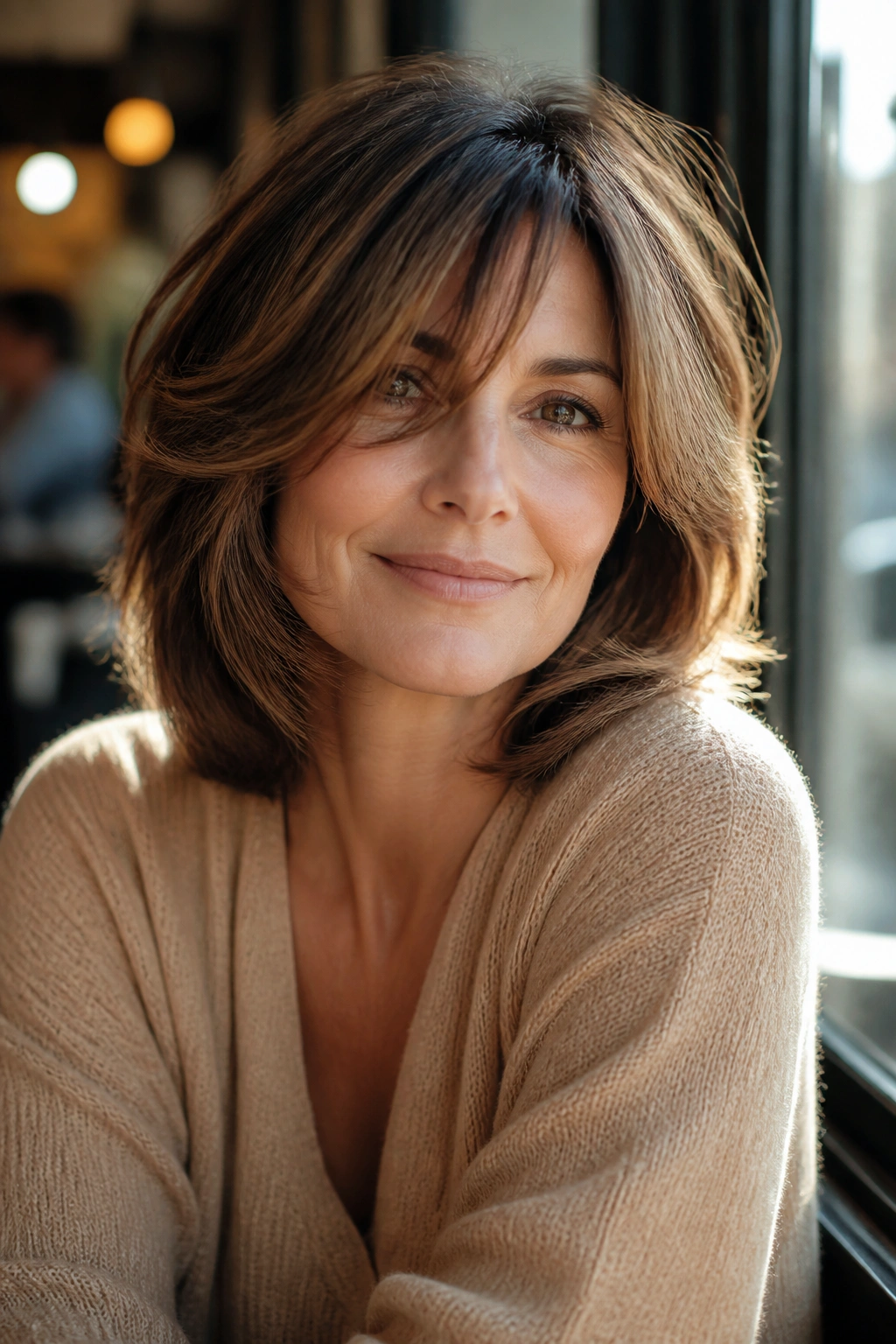
Can shoulder-length hair still have bounce after 50? Yes, if the layers are cut in the right places.
The shortest layers should start around the chin or just below it so the hair lifts when you move, but doesn’t fray at the ends. This cut is a good middle ground for women who want softness without giving up enough length to tie it back. It also works well if your hair is thick enough to hold shape but not so thick that it feels heavy.
How to Style It
A velcro roller at the crown for 10 minutes can make a real difference. So can a medium round brush and a cool shot at the end of each section. If you prefer air-drying, scrunch a little mousse through the mids and twist a few face-framing pieces while they dry.
This is one of those cuts that benefits from a little movement more than a lot of product. Keep it airy. Keep it light.
28. Tucked-Behind-the-Ear Pixie Bob
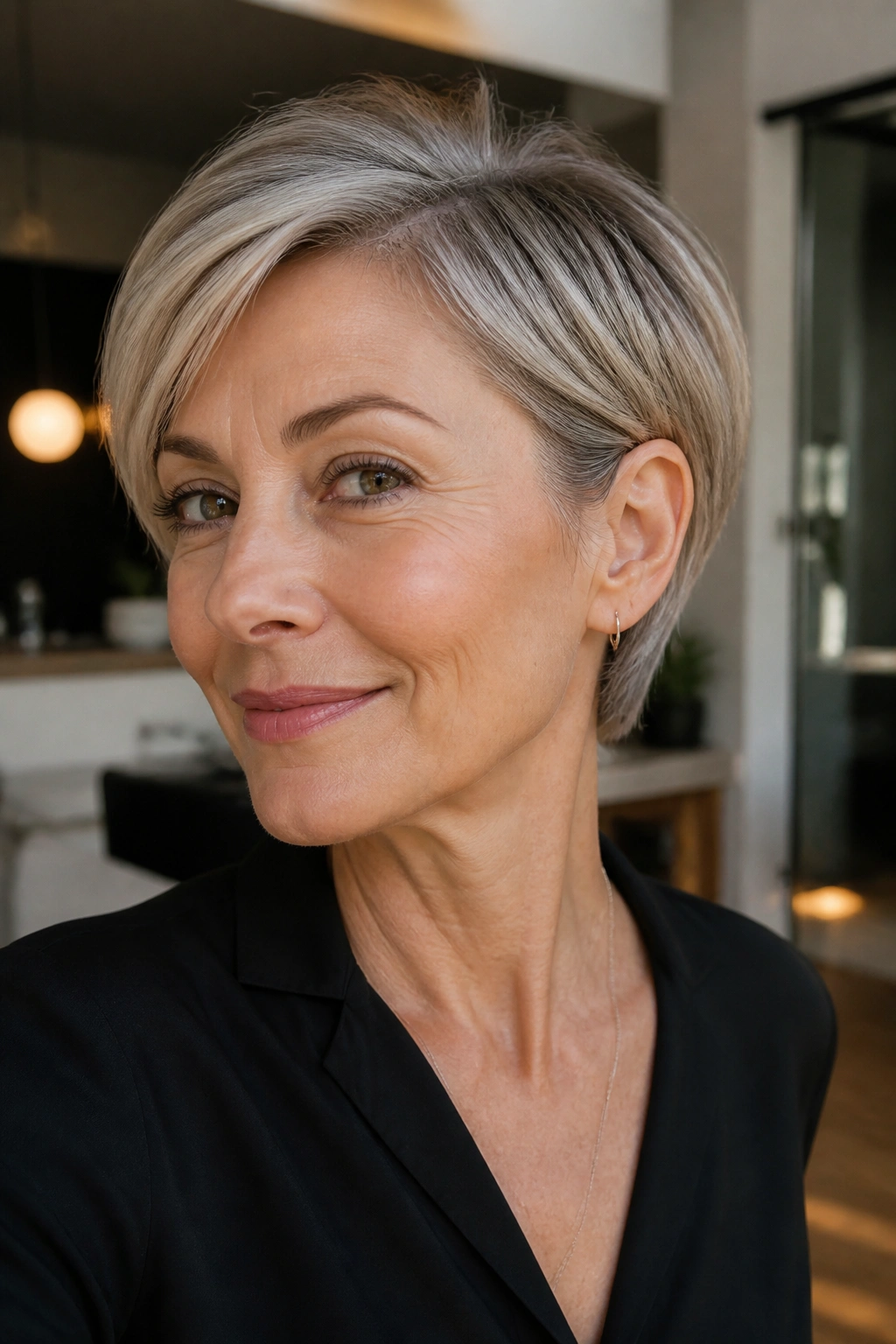
A pixie bob sits in the sweet spot between short and structured. It is long enough to tuck behind the ear, short enough to dry fast, and neat enough to look deliberate.
The tucked-behind-the-ear part changes the whole feel of the style. It opens the face, shows earrings, and gives the cut a clean line that works especially well with glasses. If the hair around the temple is too short, the tuck won’t hold. If it’s too long, the shape loses its edge. That middle ground is where this cut lives.
Key Details
- Best on straight or lightly wavy hair
- Needs a trim every 5 to 7 weeks
- Works well with a side part
- Can be smoothed with a flat brush or fingers alone
This is a smart style for women who want ease without looking like they gave up on shape. It does not ask for much. That’s the point.
29. Braided Crown for Growing-Out Gray Hair
Growing out gray hair can be awkward for a while. A braided crown gives you a way to wear the transition without feeling like you need to hide it.
The braid pulls attention upward and around the head, which means the two-tone line near the roots stops being the only thing people notice. It works best on medium to long hair, but even shoulder-length hair can handle a loose crown braid or two side braids pinned back. Keep the braid soft. Tight braids look severe and can make the hairline puff up.
This style is also handy on days when the front sections refuse to cooperate. A few bobby pins and a light mist of spray are usually enough. If your hair is slippery, texture powder at the roots can give the braid more grip. That tiny bit of friction helps a lot.
There is something nice about a style that makes the in-between stage look intentional. That stage can feel long. The braid shortens the feeling.
30. Soft Roll-Up Bun with Side Pieces
Unlike a tight bun, a soft roll-up bun leaves room for the face to breathe. The hair is gathered low, rolled or tucked into a loose bun at the nape, and softened with a few side pieces near the temples.
That softness is what keeps the style from looking harsh. Women with fine hair can use a small doughnut or a twisted base for a little fullness. Women with thicker hair can roll the length under and pin it in place. Either way, the goal is a bun that sits calmly, not one that looks pulled into submission.
This is the style I’d hand to someone who wants tidy hair without losing warmth around the face. It works for daytime, dinners, travel, and those days when your hair is doing its own thing and you’d rather not negotiate. Leave two pieces out if you want more softness, or tuck them in if you want a cleaner line. Both are fine.
A good hairstyle after 50 should make life easier. This one does.
