



A haircut can make gray hair look crisp, soft, or tired in about ten minutes. The difference is usually the shape, not the age of the person wearing it.
Hair after 60 often changes in two directions at once. Some areas get finer and flatter, while other spots feel wirier, drier, or more stubborn than they used to. That mix can make a blunt, lazy cut look heavy at the ends and thin at the crown, which is why the right hairstyle matters so much with silver hair.
The good cuts do a few things well: they lift the face, keep the neck line tidy, and work with the natural texture instead of fighting it. I also like styles that still look decent when you skip a blow-dry. That matters more than people admit. A haircut that only behaves for twelve minutes under salon lights is not doing you any favors at home.
These 25 styles cover short, medium, straight, wavy, curly, and coily hair, because there isn’t one magic answer for older women with gray hair. There is, though, a smart answer for each texture and face shape. The first one is the haircut I keep coming back to when fine hair needs lift without looking fussy.
1. Soft Pixie Cut for Women Over 60 with Fine Gray Hair

A soft pixie is one of those cuts that earns its keep fast. It opens the face, keeps the crown from sagging, and makes fine gray hair look fuller than it is because the shape stays close to the head.
Why It Works
The trick is leaving a little softness on top instead of shaving everything down too tight. Ask for 1 to 2 inches on the crown and shorter sides that taper into the neckline, not a harsh clipper line. That bit of length gives you room to lift the hair with your fingers and a dab of mousse.
- Keep the fringe side-swept, not blunt.
- Leave the nape neat so the cut stays clean for 4 to 6 weeks.
- Use a pea-sized amount of styling cream, not a heavy paste.
- Blow-dry the top with your fingers for 30 to 60 seconds if you want extra height.
Best move: let the top stay soft and piecey. A pixie gets older-looking when it turns helmet-like.
2. Chin-Length Bob with Side-Swept Bangs
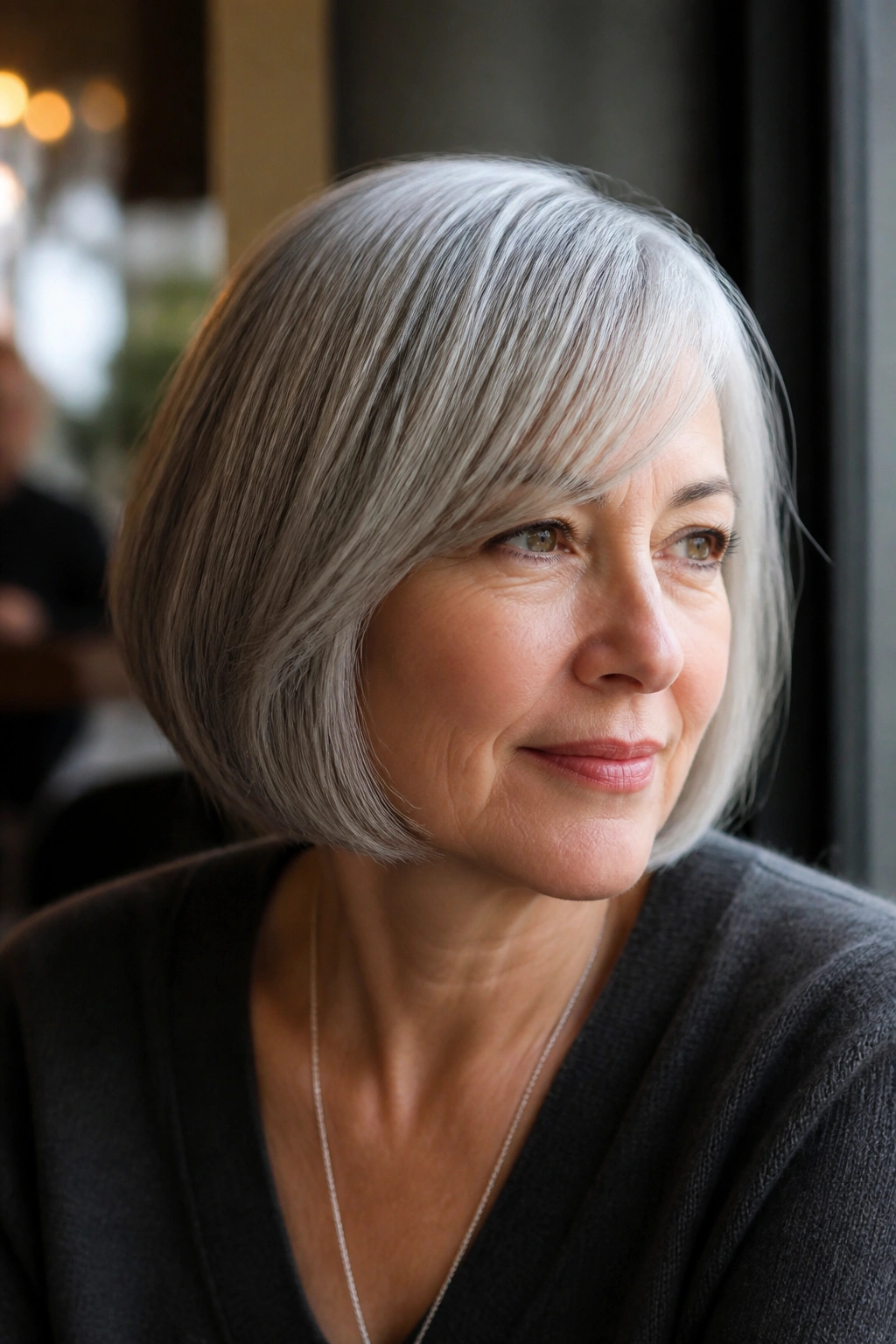
Why does this cut work so well on gray hair? Because it gives you shape without making the hair feel trapped. A chin-length bob sits right where the jaw needs a little structure, and the side-swept bangs break up forehead lines without closing the face off.
This is a good pick if your hair is straight or only slightly wavy. The line at the bottom should feel clean, but not severe. If the ends are too blunt, silver hair can look boxy. If they’re too shattered, the bob loses its edge.
I like this style on women who want a cut that still looks polished after a quick round-brush pass. Use a 1-inch brush, turn the ends under just a touch, and stop there. The beauty of this shape is restraint.
3. Feathered Crop with Crown Volume

The crown lifts first. That is the whole point here.
A feathered crop gives fine or thinning hair a little air around the head, which matters more than length ever will. The layers should be cut so they stack softly upward, not chopped in obvious steps. That keeps the top from collapsing flat by noon.
What Makes It Different
Feathering works best when the hair has enough movement to separate. If your strands are dense, the stylist can thin only the upper layers. If they’re delicate, the cut should stay light but not wispy enough to expose the scalp too much.
A small root-lift spray at the crown helps, but don’t drown the hair in product. Too much and the top gets sticky. Too little and the lift disappears. A dry, touchable finish usually looks better on gray hair than a stiff one.
4. Collarbone Lob with Long Layers

Long hair after 60 is not the problem. Dead ends are.
A collarbone lob gives you enough length to tuck behind the ears, clip back, or wear loose, but it still has a shape that feels deliberate. Long layers stop the ends from hanging like a curtain, and they keep silver hair from looking heavy around the shoulders.
This cut is especially useful if you like a little movement when you walk. The ends should graze the collarbone, not sit way below it. That length tends to flip, bend, and fall in a flattering way without much work.
If your hair is thick, ask for soft internal layers. If it’s finer, keep the layers long and minimal so the perimeter holds its weight. Either way, this cut looks best when the ends are healthy and the neckline is clean.
5. Tapered Pixie with Longer Top Layers

If you hate spending ten minutes with a round brush, this one is worth a look.
A tapered pixie keeps the back and sides close, then leaves the top long enough to sweep, spike, or smooth to one side. It gives gray hair an easy, modern line without asking for much styling. The shape also makes the neck look longer, which is a nice bonus.
A lot of women think a pixie has to be severe. It doesn’t. The softer version works better when the top stays around 2 to 3 inches, especially if you want movement instead of a strict crop. A little pomade on the fingertips is enough.
The best version of this cut grows out well too. That matters. Nobody wants a style that looks good only for the first twelve days.
6. Rounded Curly Bob
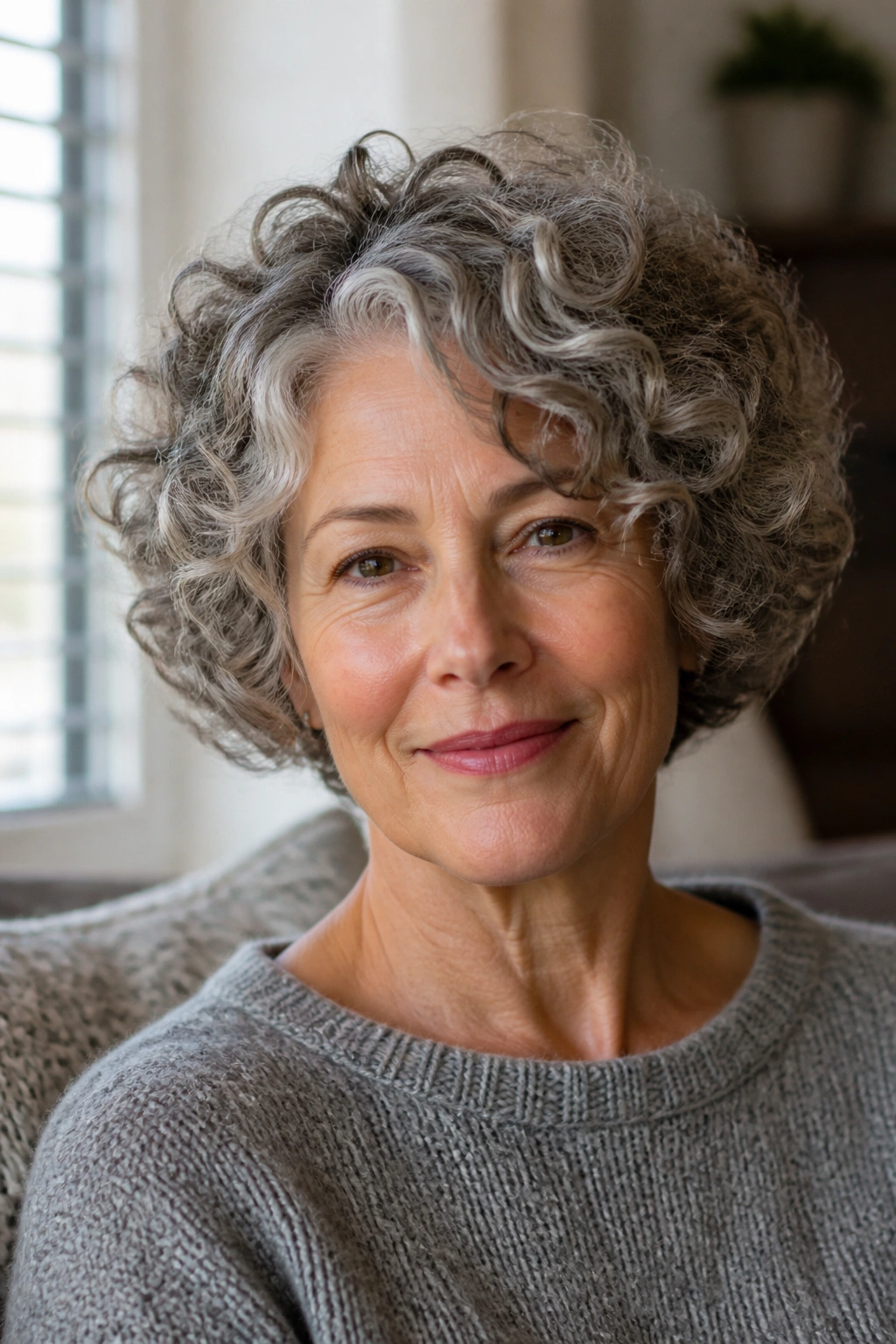
Curly gray hair loves room. A rounded bob gives it exactly that.
The shape follows the natural curve of the curl instead of flattening it into a triangle or puffing it out at the sides. The length usually sits between the jaw and the neck, which keeps the curls springy and defined. That sweet spot is useful because curls can shrink a lot when dry.
How to Style It
- Apply leave-in conditioner to damp hair.
- Scrunch in a curl cream, then use a diffuser on low heat.
- Stop drying when the curls are about 90% dry.
- Separate only the top layers with your fingers.
A rounded bob can look polished or relaxed depending on how much you smooth the crown. Do not brush it out when dry. That’s the fastest way to turn tidy curls into frizz.
7. Shoulder-Length Cut with Curtain Bangs
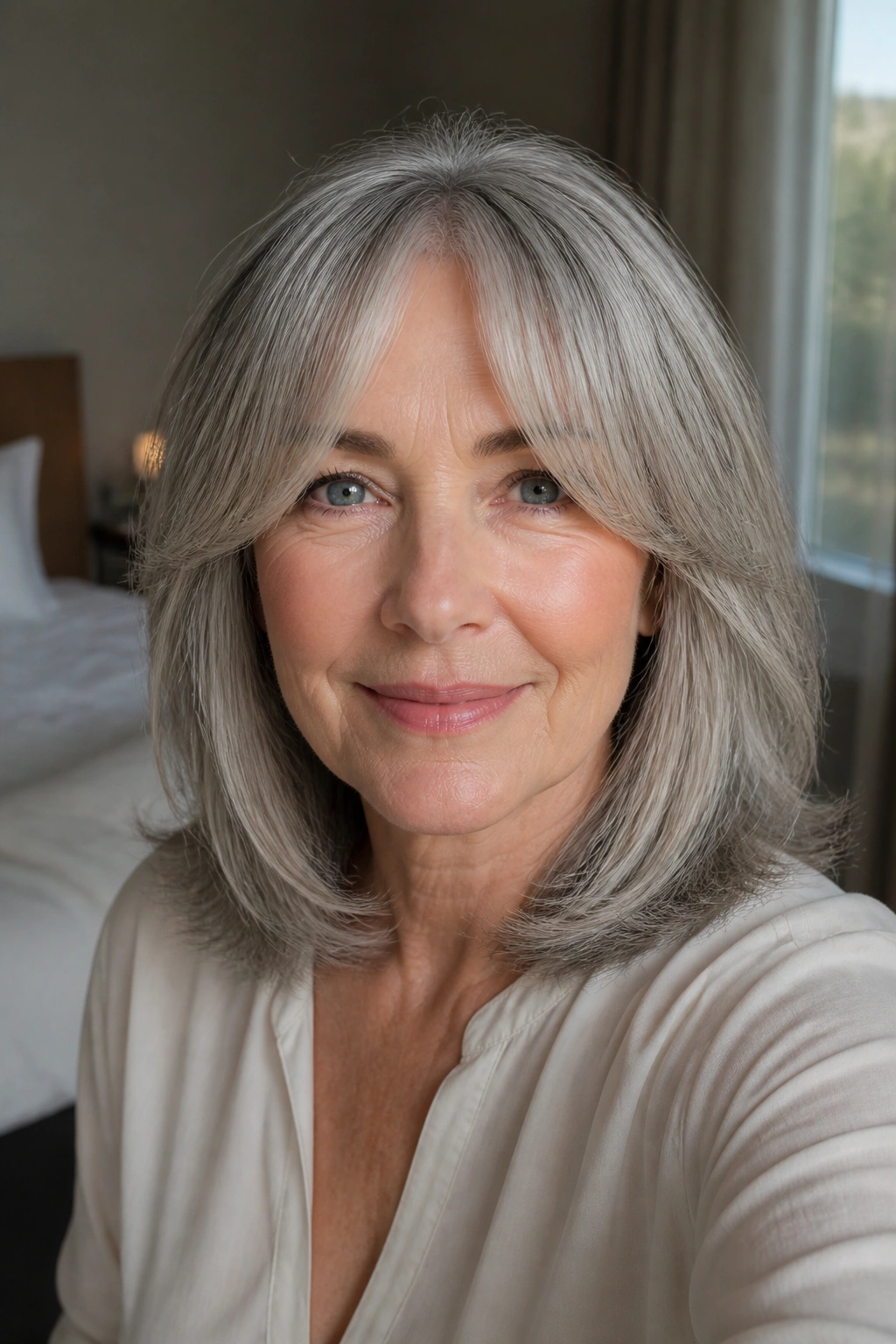
Why does this style keep showing up? Because it flatters a long list of face shapes without feeling dated.
Curtain bangs are useful on gray hair because they soften the forehead and slide into the rest of the cut instead of sitting there like a separate piece. At shoulder length, the hair still has enough weight to look healthy, especially if the strands are a little dry or porous.
The key is keeping the layers long enough to move. If the bangs are cut too short, they can separate in odd ways when the hair air-dries. Better to aim for cheekbone length and let them part naturally in the middle or just off-center.
This cut is also a good bridge style if you’re not ready to go short. It gives shape without taking away the option to tie your hair back.
8. Stacked Bob with a Clean Nape
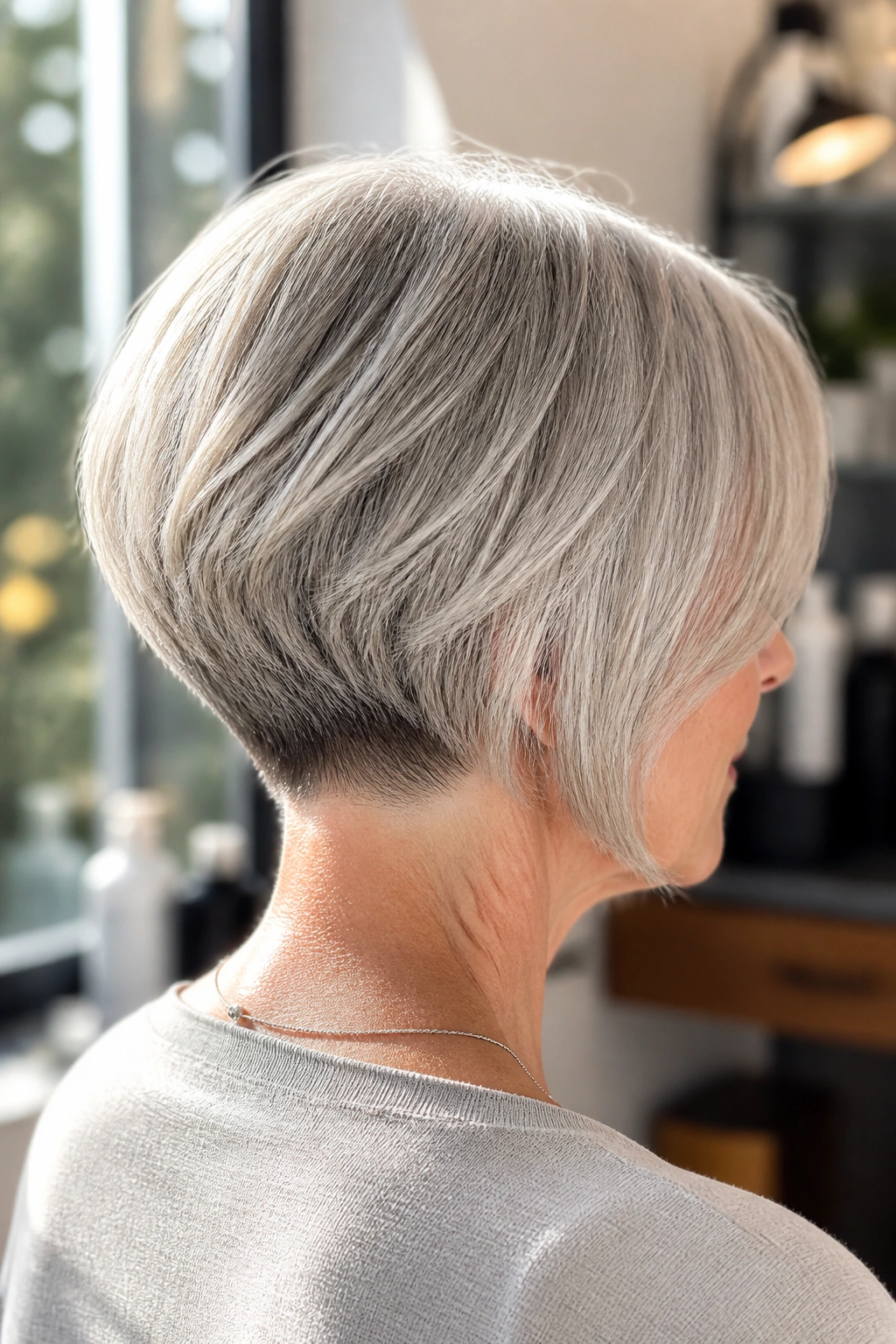
A stacked bob has one job: make the back of the head look fuller and neater.
It does that by building short layers in the back while keeping the front a little longer. On gray hair, that lifted shape can be a lifesaver if the crown falls flat or the sides puff out. The cut looks especially sharp when the nape is trimmed close and the line hugs the neck.
Quick Shape Notes
- Best for fine to medium hair.
- Needs trims every 5 to 7 weeks.
- Works well with a round brush and a little heat.
- Looks cleaner when the color is bright silver or white.
This is not a “wash and forget” cut if you want the stacked shape to stay crisp. But it’s not high-maintenance either. A few minutes with a blow-dryer gets the job done.
9. French Bob with Soft Fringe
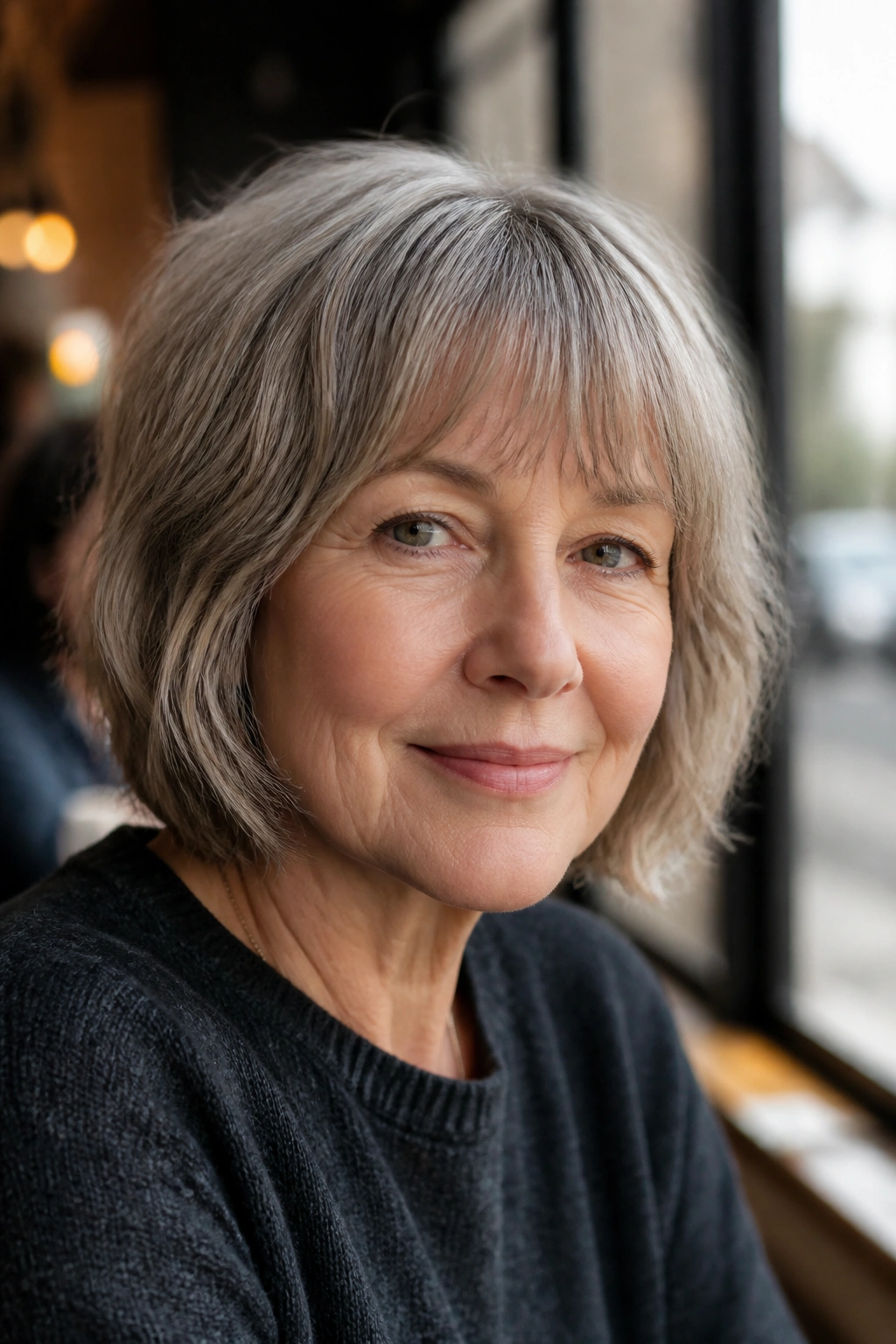
A French bob lands somewhere between chic and plain-spoken. It’s short, but not severe.
The cut usually hits around the jawline and pairs well with a soft fringe that skims the brows or sits just above them. On gray hair, that little fringe keeps the face from looking too bare. The whole style feels neat, almost tailored, but not stiff.
This one works best when the hair has a slight wave or bend. Straight hair can wear it too, but it helps to tuck the ends under with a small brush or flat iron. The line should look clean, yet not carved like a helmet.
I like this cut for women who want their glasses to be part of the look instead of fighting the haircut. The fringe sits nicely above most frames, which saves a lot of fiddling in the morning.
10. Wedge Cut with Clean Back
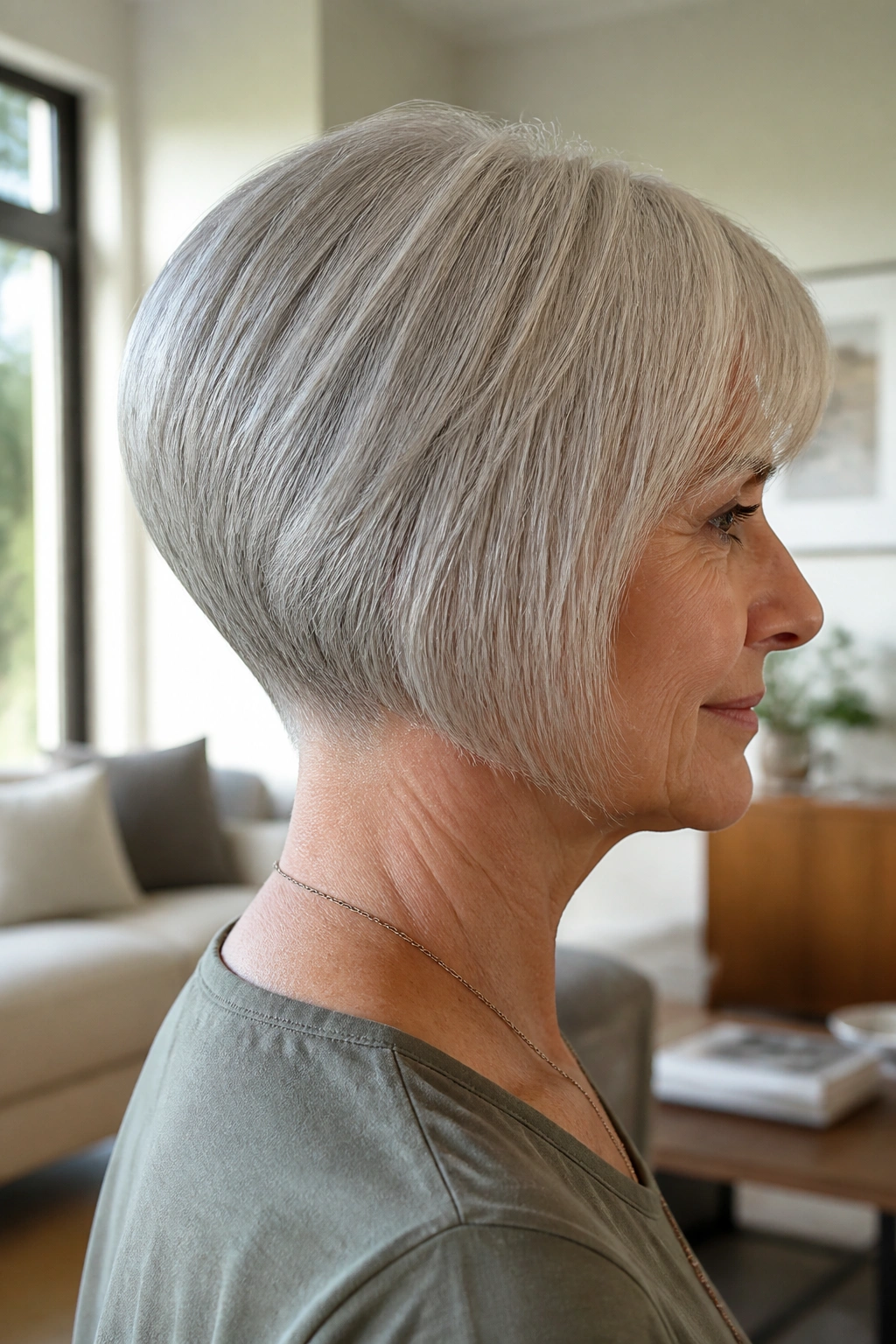
A wedge cut is sharp in a good way. The back rises into a gentle angle, while the front stays soft enough to frame the jaw.
It’s a smart choice for straight gray hair that needs structure. The cut creates the illusion of thickness at the crown and back, which is useful if your hair lies flat against the head. You get shape without chasing volume with half a can of spray.
The best wedge cuts don’t look hard. The edges should be smooth, not chopped. A light bevel around the sides keeps the style from feeling boxy, and a side part can soften it even more.
This is one of those cuts that photographs better in real life than people expect. It has a clean outline. No fuss.
11. Shag with Wispy Layers

A shag can be fantastic on older women with gray hair, but only if the layers are handled with some restraint.
Too many short pieces and the style starts to frizz or stick out in the wrong spots. Keep the layers wispy, especially around the cheekbones and jaw. That gives movement without turning the head into a cloud. A soft fringe helps, but it should blend, not shout.
What to Ask For
- Long layers through the sides.
- Light texture around the crown.
- Face-framing pieces that start below the cheekbone.
- A fringe that can split in the middle or sweep aside.
This style suits wavy hair especially well. Air-dry it with a little curl cream, then shake it out with your fingers. The whole point is motion, not perfection.
12. Long Layers with Face-Framing Pieces
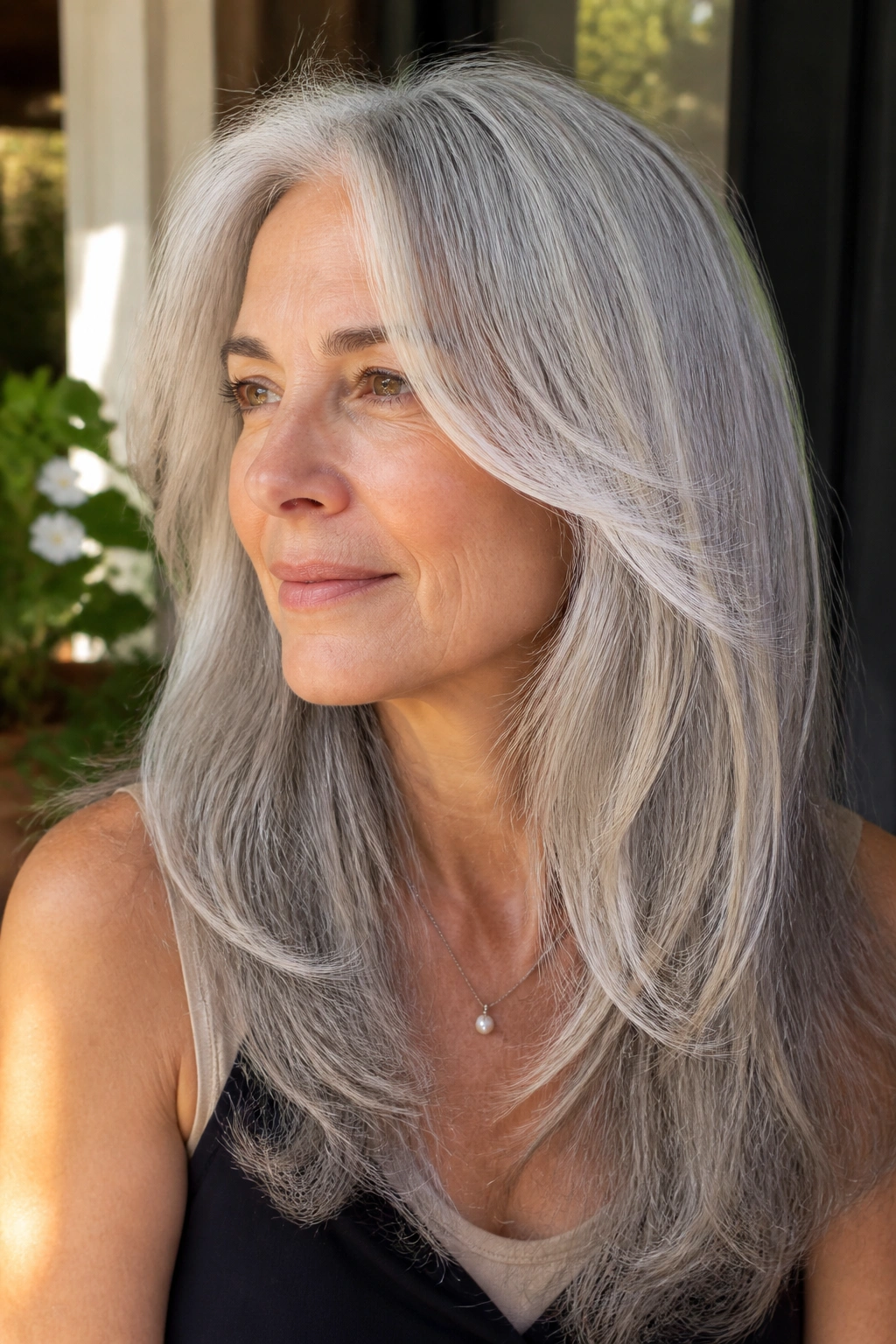
Keeping length after 60 is fine. The real question is whether the cut has enough shape to keep it from dragging down the face.
Long layers solve that by removing bulk in the right places. The face-framing pieces should begin around the cheekbone or chin, depending on how much softness you want. That keeps the front lively while the back still carries the length.
This style works especially well on silver hair that has a nice natural shine. Long, healthy gray hair can look elegant in a way short cuts sometimes can’t. But the ends have to be in good shape. Split ends show fast on lighter hair.
If you wear your hair up a lot, this cut also gives you more to work with. The layers slide out of clips more gently and leave a softer outline around the face.
13. Asymmetrical Bob with Side Part

A slightly asymmetrical bob is a good answer when one side of the face needs a little more length than the other.
The difference does not have to be dramatic. Even half an inch to 1 inch longer on one side changes how the haircut sits. The side part adds lift at the crown and keeps the style from looking too centered or flat.
Why It’s Worth Trying
It can make a round face look longer, and it gives a square jaw a softer line. Gray hair tends to show shape more than color, so a tilted bob like this can look polished without much extra styling. If you use a flat iron, keep the ends slightly curved under. Straight-out ends can look harsh.
This is a good choice if you want something modern without crossing into edgy territory. Subtle matters here. Subtle is better.
14. Textured Crop with Piecey Finish
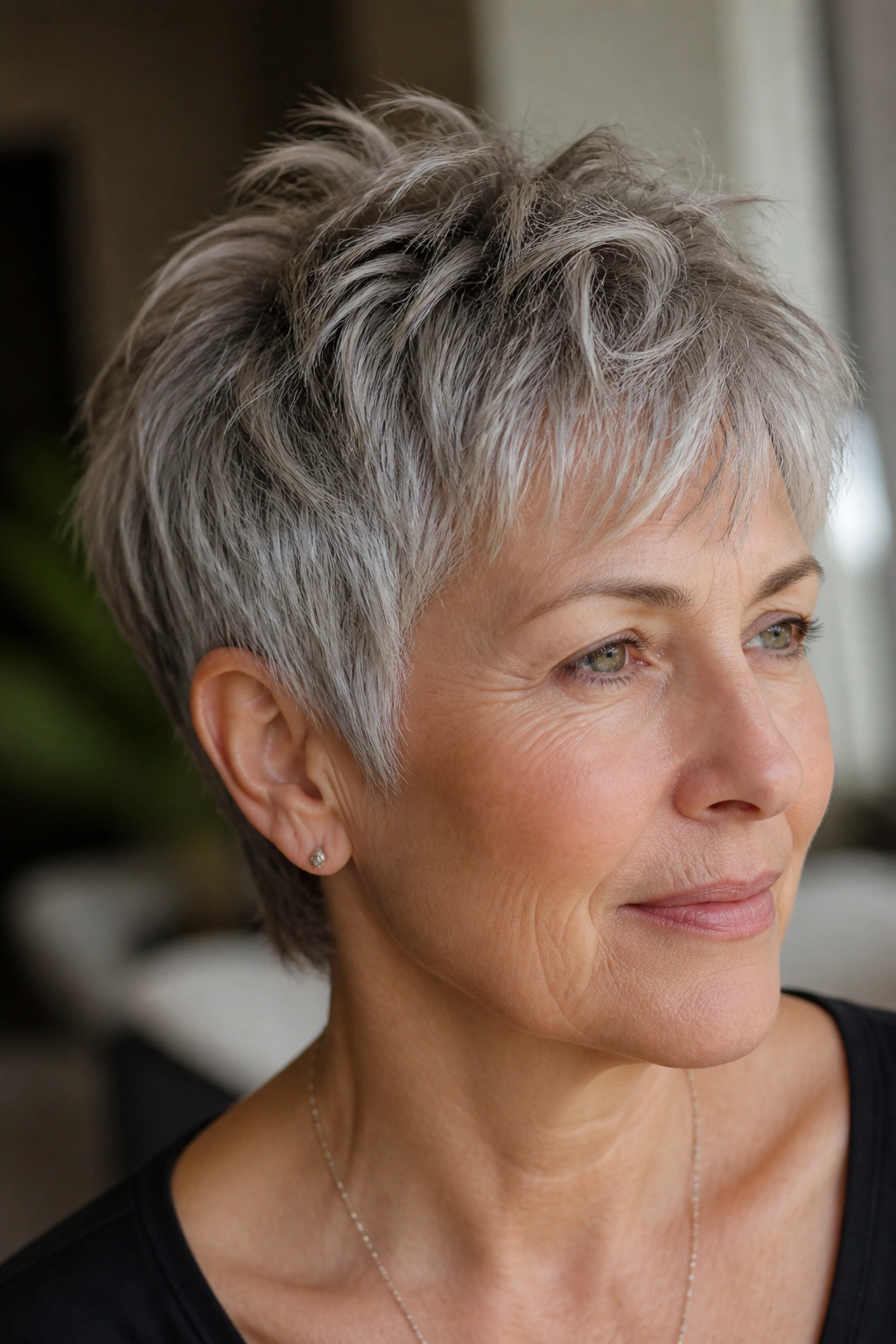
This cut is for women who want short hair that still feels playful.
A textured crop uses short layers, but the finish should stay piecey, not shredded. That means the stylist removes bulk carefully and leaves enough surface texture for the hair to separate in small sections. On gray hair, that texture catches light and gives the haircut some personality.
A matte paste works better than a shiny gel here. Warm a tiny amount between your fingers, then pinch pieces near the front and crown. That’s enough. If you pile on product, the hair can start to look greasy, and gray hair shows grease faster than darker hair does.
The best part is how little time it takes. Five minutes. Maybe less.
15. Inverted Bob with A-Line Front
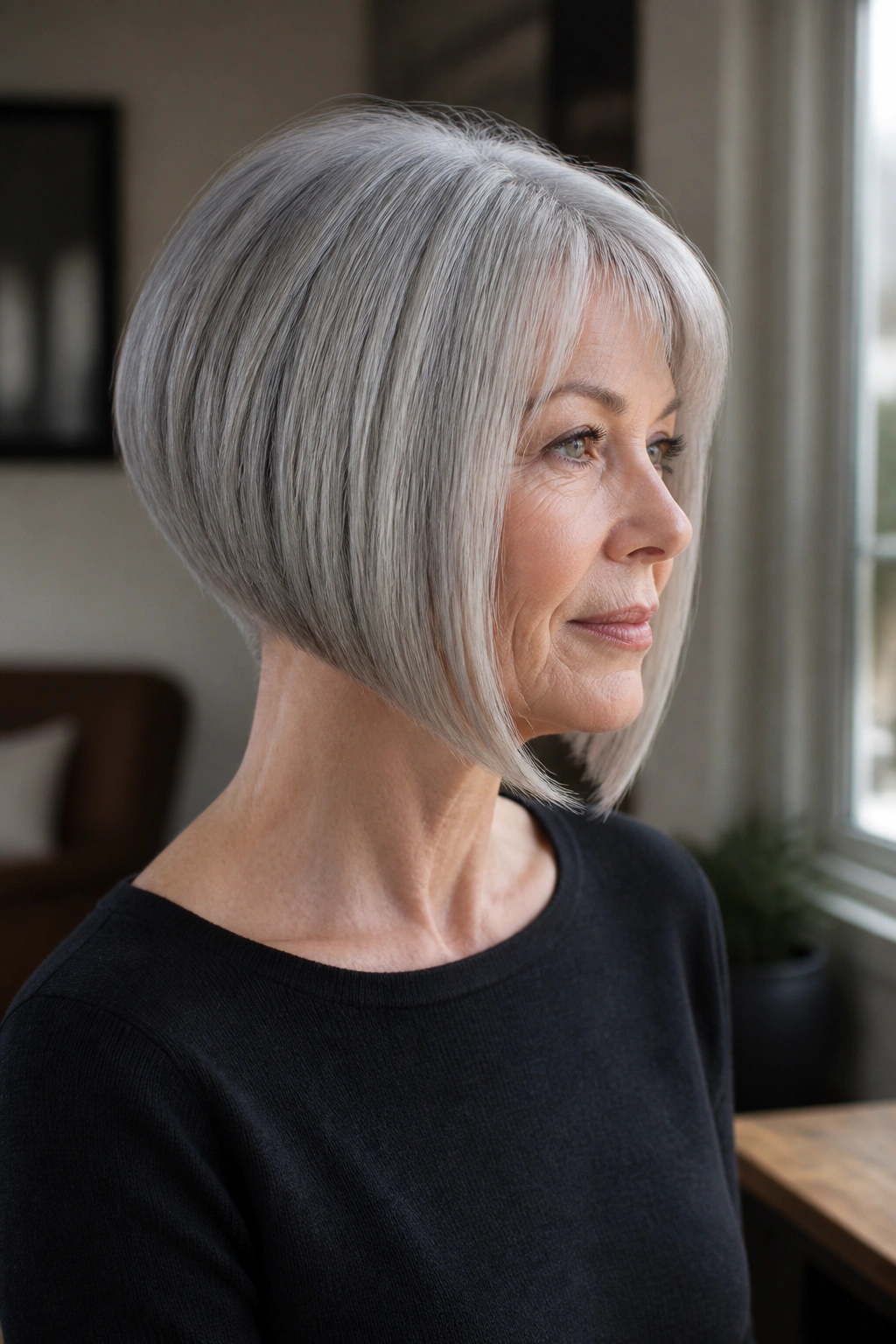
A good inverted bob has a little drama built in.
The back sits shorter, and the front angles down toward the chin. That A-line shape helps elongate the neck and creates a clean frame around the face. It’s a nice choice for women whose hair has become flatter at the back but still has enough density in the front to show a line.
The cut works best when the angle is gentle, not sharp. If the front drops too steeply, the whole style can feel heavy. A mild inversion looks more natural on gray hair and grows out more gracefully.
Small Details That Matter
- Keep the neckline tidy every 4 to 6 weeks.
- Use a smoothing cream if the ends flare out.
- Ask for face-framing pieces if you wear glasses.
- Let the front skim the chin, not the shoulders.
16. Shoulder-Length Blowout Layers

You can feel this haircut before you see it. The hair moves.
Shoulder-length blowout layers are built to bounce away from the face and curve at the ends, which is why they’re so useful for women who still like a fuller, brushed finish. The layers should be long enough to hold shape when dried with a round brush, but not so short that they kick out unpredictably.
This style suits medium-density hair that wants some polish. A little root-lifting mousse at the crown and a 1.5-inch round brush make a big difference. Dry the hair in sections, aiming the airflow downward near the crown so the surface stays smooth.
The result is softer than a blunt cut and neater than a shag. That middle ground is often the sweet spot.
17. Rounded Natural Curls Cut

Natural curls after 60 deserve a shape that respects their pattern.
A rounded cut keeps the silhouette balanced from top to bottom, which stops curls from building too much width at the sides. The best version follows the curl pattern dry or mostly dry, because wet hair lies. It always lies.
If your curls are loose, the shape can sit just below the jaw. Tighter curls may do better a little shorter so the weight doesn’t pull the roots down. Either way, the edges should look soft and full, not sliced into a blunt block.
I like this cut because it does not ask curls to behave like straight hair. That’s the whole mistake with a lot of bad haircuts. They ignore the curl pattern and then act surprised when the result is uneven.
18. Ear-Length Crop with Bangs
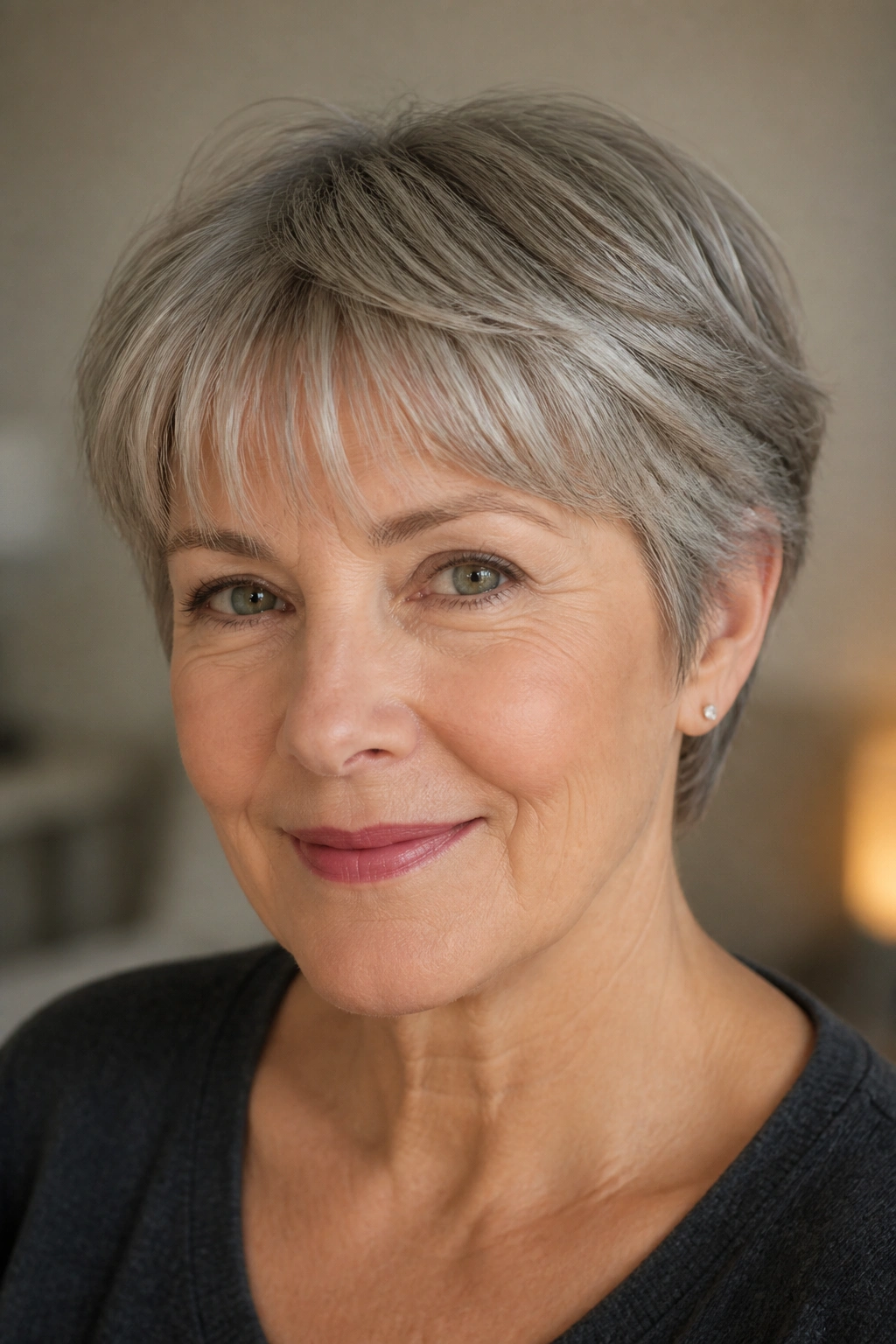
This one sounds bold, but it can be surprisingly gentle on the face.
An ear-length crop keeps the sides short and lifts the cheekbones, while bangs soften the forehead. On silver hair, the short length can look clean and fresh if the shape around the ears is carefully blended. Too much bulk near the temples will make the cut look boxy, so that area matters.
Best For
- Fine hair that needs a sharper outline.
- Women who like earrings to show.
- Short natural styles that need less heat.
- Faces that look better with some forehead coverage.
The trick is keeping the bangs light. Heavy bangs can weigh the whole cut down. A soft, feathered fringe gives you the face-softening part without the helmet effect.
19. Blunt Bob for Thick Gray Hair
Thick gray hair can look amazing in a blunt bob. The density gives the cut presence.
The line should sit around the chin or just below it, with the ends cut cleanly so the shape feels deliberate. On thick hair, too many layers can make the perimeter fray and puff outward. A blunt edge contains the bulk and makes the hair look controlled, not chopped up.
What to Watch For
- Keep the bottom edge dense.
- Remove bulk only where the hair swells.
- Ask for subtle internal thinning if the hair is heavy.
- Style with a paddle brush for a smooth finish.
This is not the haircut for someone who wants a lot of movement. It’s for women who like a strong line and do not mind a more tailored look.
20. Low-Maintenance Lob with Subtle Layers
A lob can be the easiest haircut in the room when it’s cut right.
The length sits between the chin and collarbone, which gives you enough hair to tuck behind the ears or clip back on busy mornings. Subtle layers keep it from falling into one flat sheet, but the cut should stay mostly one length. That helps gray hair look thicker at the ends.
This style is forgiving. Air-dry it. Blow-dry it. Bend the ends slightly under with a brush. It tends to work either way, which is why so many women keep coming back to it.
A side part usually gives it a little more lift, but a center part can look elegant if the face is symmetrical enough. The best part is that it grows out without turning awkward too fast.
21. Modern Pageboy with Tucked Ends
A pageboy is back in a softer, cleaner form.
The modern version keeps the ends curved inward and the shape close to the head, but it skips the stiff, old-fashioned feel that sometimes comes with the classic version. On gray hair, that tucked-under line can look polished and deliberate, especially if the hair is straight or slightly wavy.
Why It Stands Out
The shape frames the jaw and neck in a neat way, which helps if you want your haircut to look controlled all day. It also works well with low heat styling. A flat brush and a blow-dryer can push the ends inward in under five minutes.
This cut is for women who like structure. If you want movement, skip it. If you want clean lines that stay in place, it’s a strong option.
22. Soft Mullet with Feathered Crown
A soft mullet sounds edgy, and it can be. But the gentle version is more wearable than the name suggests.
The crown stays feathered and lifted, the sides stay shorter, and the back keeps a little extra length. That shape gives gray hair movement without asking for a perfect blowout. It works especially well on wavy or textured hair that wants room to breathe.
- Keep the transition between short and long sections soft.
- Avoid razor-heavy ends if your hair is dry.
- Use a light cream to control frizz.
- Trim regularly so the shape does not wander.
The point is not to look rebellious for the sake of it. The point is to get lift and shape in places where many older haircuts go flat.
23. Pixie with Sweeping Bangs
Sweeping bangs can change a pixie from practical to flattering in one move.
The bangs should travel across the forehead rather than stop abruptly. That diagonal line softens the face, which is useful if your forehead is more noticeable or if you simply want a little more movement around the eyes. The rest of the cut can stay short and neat, but the front gets the style.
This is a good choice for women who want short hair without losing softness. It also plays nicely with glasses because the bang line can sit above the frames instead of getting trapped behind them. A tiny bit of styling paste on damp hair is enough to guide it into place.
The whole effect is easy, but not careless. That’s the sweet spot.
24. Layered Midi Cut with Wispy Ends
Why keep some length if you don’t need it? Because not every flattering cut has to be short.
A layered midi cut lands somewhere below the shoulders and uses wispy ends to remove heaviness. It suits women whose hair has enough density to hang nicely but not enough weight to support a blunt, heavy edge. The layers should be long and blended, not chopped into obvious steps.
How It Wears
- Air-dries into soft movement.
- Can be curled with a 1.25-inch iron.
- Looks good half-up.
- Needs end trims every 8 to 10 weeks.
This style gives you options. You can wear it loose on quiet days or pull it back when you want the hair out of your face. The wispy finish keeps it from feeling old-fashioned.
25. Short Tapered Cut for Coily Hair
Coily gray hair deserves a shape that respects its spring and shrinkage.
A short tapered cut keeps the sides and back close while letting the top keep enough length to show the curl pattern. That taper sharpens the outline and prevents the hair from puffing out into a round cloud, which is a common problem when coily hair is cut too bluntly.
The top should be shaped while the hair is in its natural state or close to it. That way the curl pattern stays visible, and the cut follows the way the hair actually moves. A moisturizing cream or butter helps, but only in a thin layer. Too much product can make the curls sit heavy.
This is a strong choice for women who want definition, ease, and a shape that looks good from every angle. It’s short, yes. It’s not small.
Final Thoughts
The smartest haircut is the one that matches your hair’s real behavior, not the version you wish it had. Gray strands can be fine, thick, wiry, smooth, springy, or all of those in the same head, and the cut has to account for that.
A lot of women spend years blaming their hair when the problem is the shape. Fix the shape, and the rest gets easier.
If you’re sitting between two lengths, choose the one that gives you the cleaner neckline and the simplest morning routine. That tiny decision does more for confidence than a lot of people admit.
