



Gray hair changes the rules. Haircuts for gray hair over 50 work best when they respect texture, density, and the way silver strands show every blunt line and every sloppy layer.
Gray hair often feels a little drier and a little sturdier than pigmented hair. That can be a gift, because the right cut holds shape longer, but it can also turn bad layering into frizz or puffiness in a hurry. A haircut that looked harmless on paper can suddenly feel too wide at the sides, too thin at the ends, or too flat at the crown once the color shift happens.
The sweet spot is shape. Not gimmicks. A sharp bob can make fine gray hair look fuller. A soft pixie can make strong features look clean. A shag can keep waves from collapsing into one heavy curtain. And if you want to keep length, that works too, as long as the outline is doing some actual work.
The first cut is the blunt bob, because it solves more problems than people expect.
1. Chin-Length Blunt Bob for Gray Hair Over 50
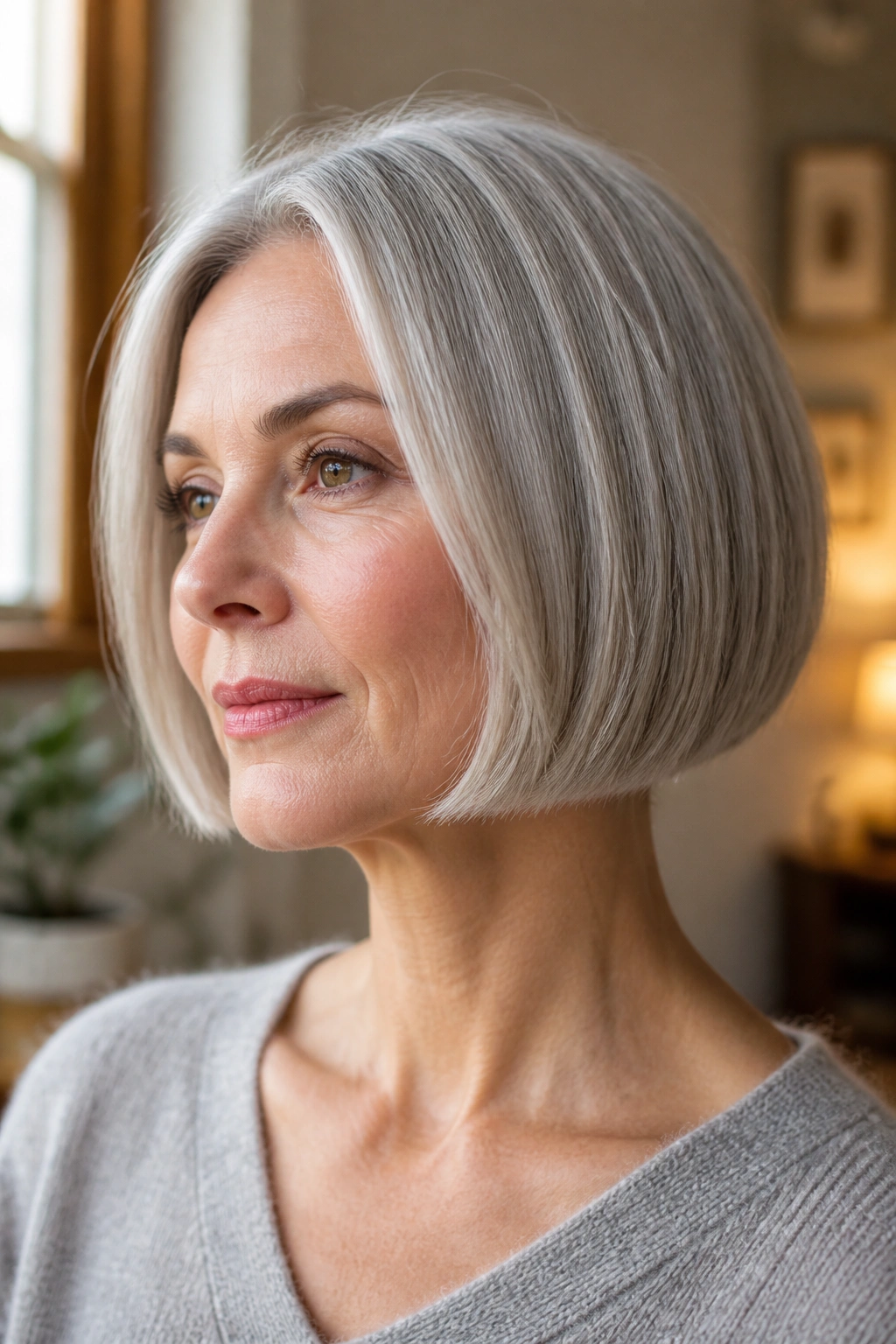
The chin-length blunt bob is the haircut I keep coming back to when gray hair starts looking thin at the ends. A blunt line gives the eye something solid to follow, and that alone can make fine silver hair look denser.
Why the blunt edge matters
Gray strands reflect light differently, which means every see-through layer shows faster than you think. A clean bob sits at the jaw, keeps the shape neat, and lets the color look intentional instead of accidental.
- Best for straight to slightly wavy hair
- Good for fine or medium density hair
- Ask for the line to hit at the chin or a finger below it
- Keep internal layers very light, or skip them entirely
One smart move: if your neck feels short, drop the length a little lower than the chin. That tiny shift keeps the cut from pressing too hard against the jaw.
2. Soft Layered Pixie
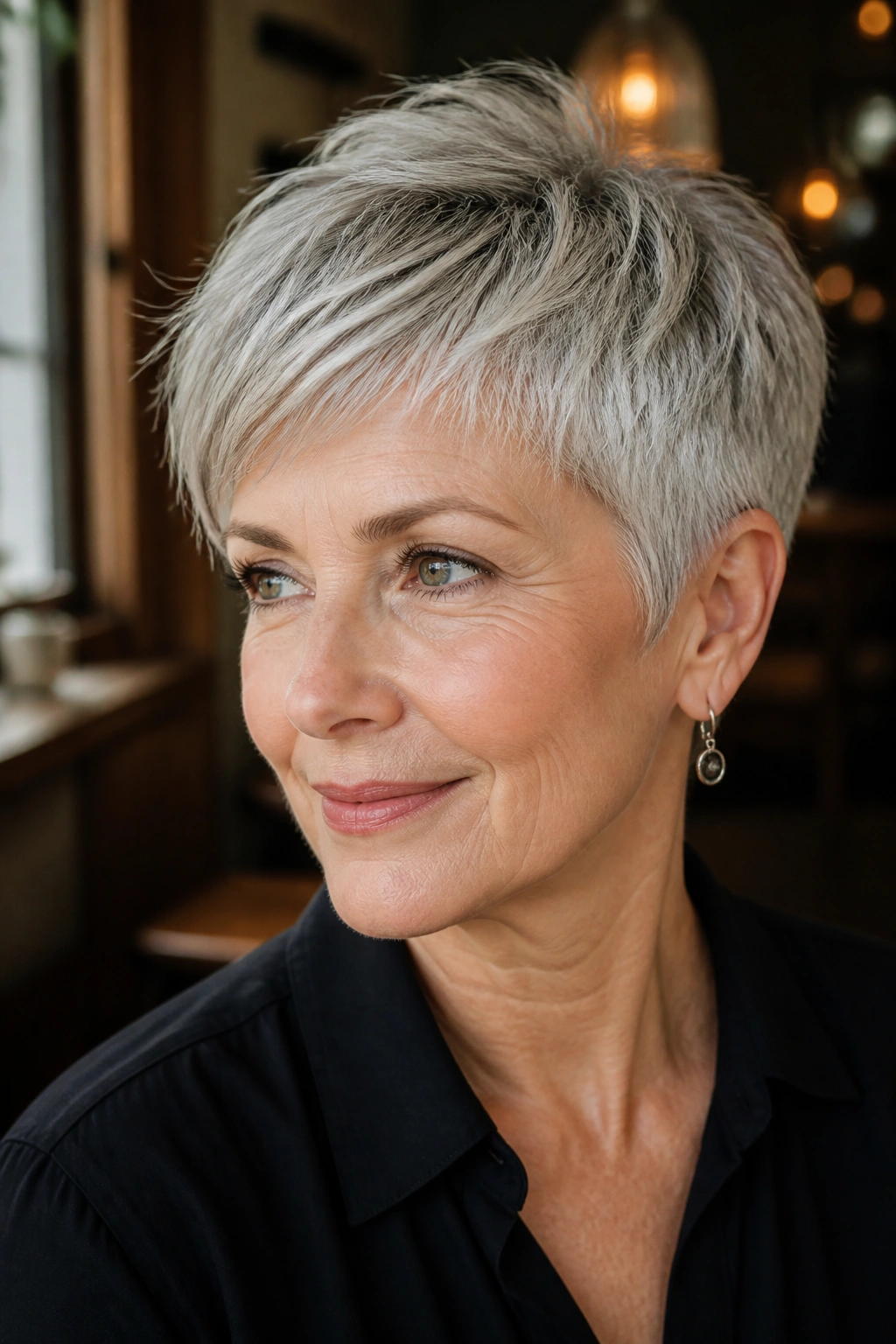
A pixie does not have to feel severe. The soft layered version keeps enough length on top to move, which matters a lot when gray hair has gone a little wiry or dry.
The trick is restraint. You want texture, not a hedgehog effect. Shorter sides clean up the outline, while longer pieces through the crown keep the cut from looking flat or helmet-like. If your hair grows in with some lift, this cut follows that pattern instead of fighting it.
I like this cut on women who want to spend less time styling but still want shape around the face. It also plays nicely with glasses, earrings, and strong brows, which sounds minor until you see how much those details change the whole look.
A pixie like this needs regular trims, usually every 4 to 6 weeks, because gray hair shows uneven growth fast. Let it get shaggy and the whole point gets lost.
3. Shoulder-Length Shag
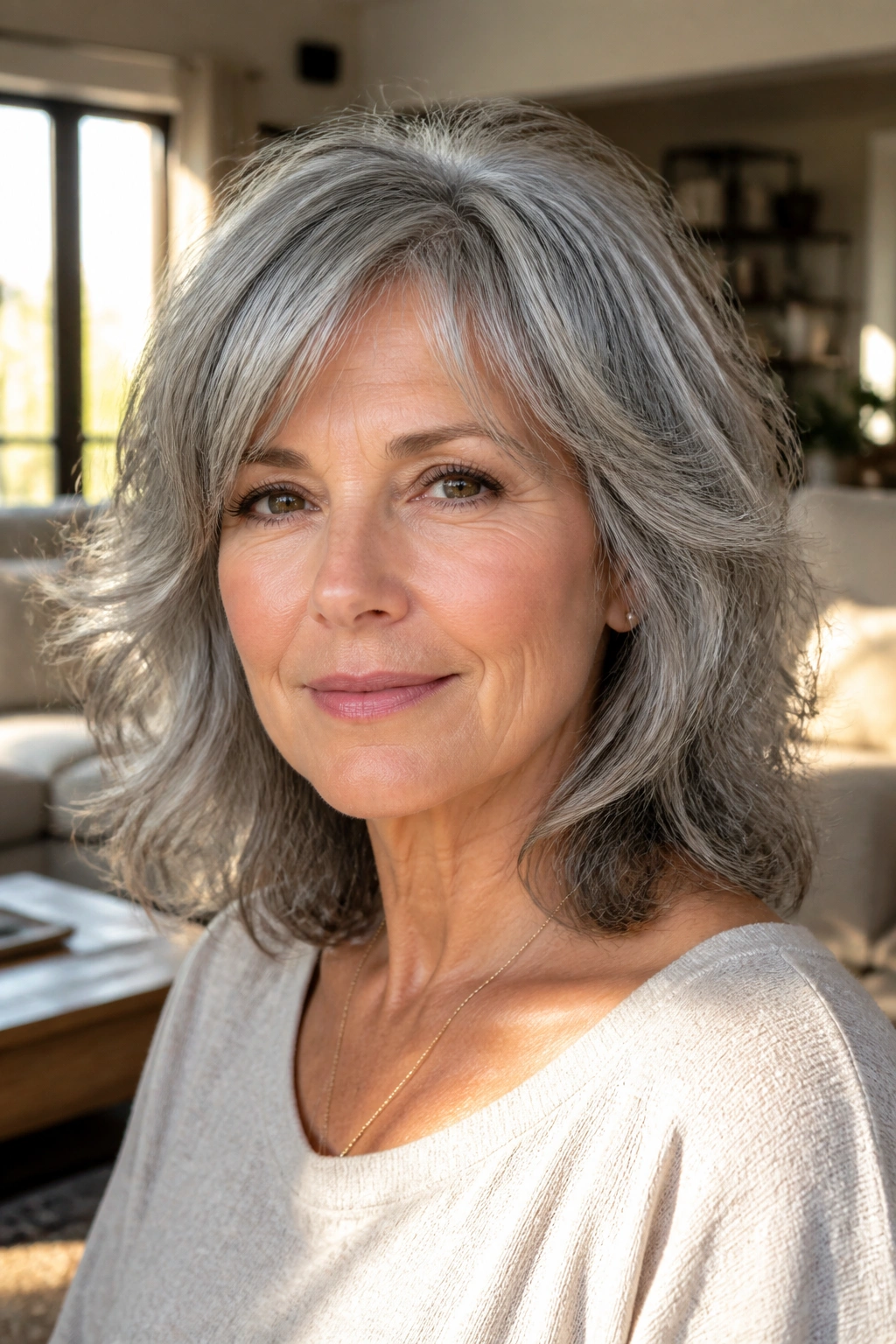
Why does a shag look so good on silver hair? Because it gives movement to hair that might otherwise hang in one heavy sheet.
How to keep it soft
The best shoulder-length shag has layers that start around the cheekbone or lower, not up near the temples. Higher layers can turn gray hair into a triangle if the texture is coarse, and nobody wants that. The cut should look loose, not chopped up.
- Ask for broken-up layers around the face
- Keep the ends lightly textured, not thinned to bits
- Use a diffuser if your hair waves
- Air-drying with a light mousse helps keep the shape honest
This cut is a good choice if you want your hair to move when you walk. That sounds simple, but movement hides a lot of sins.
4. Collarbone Lob with a Side Part
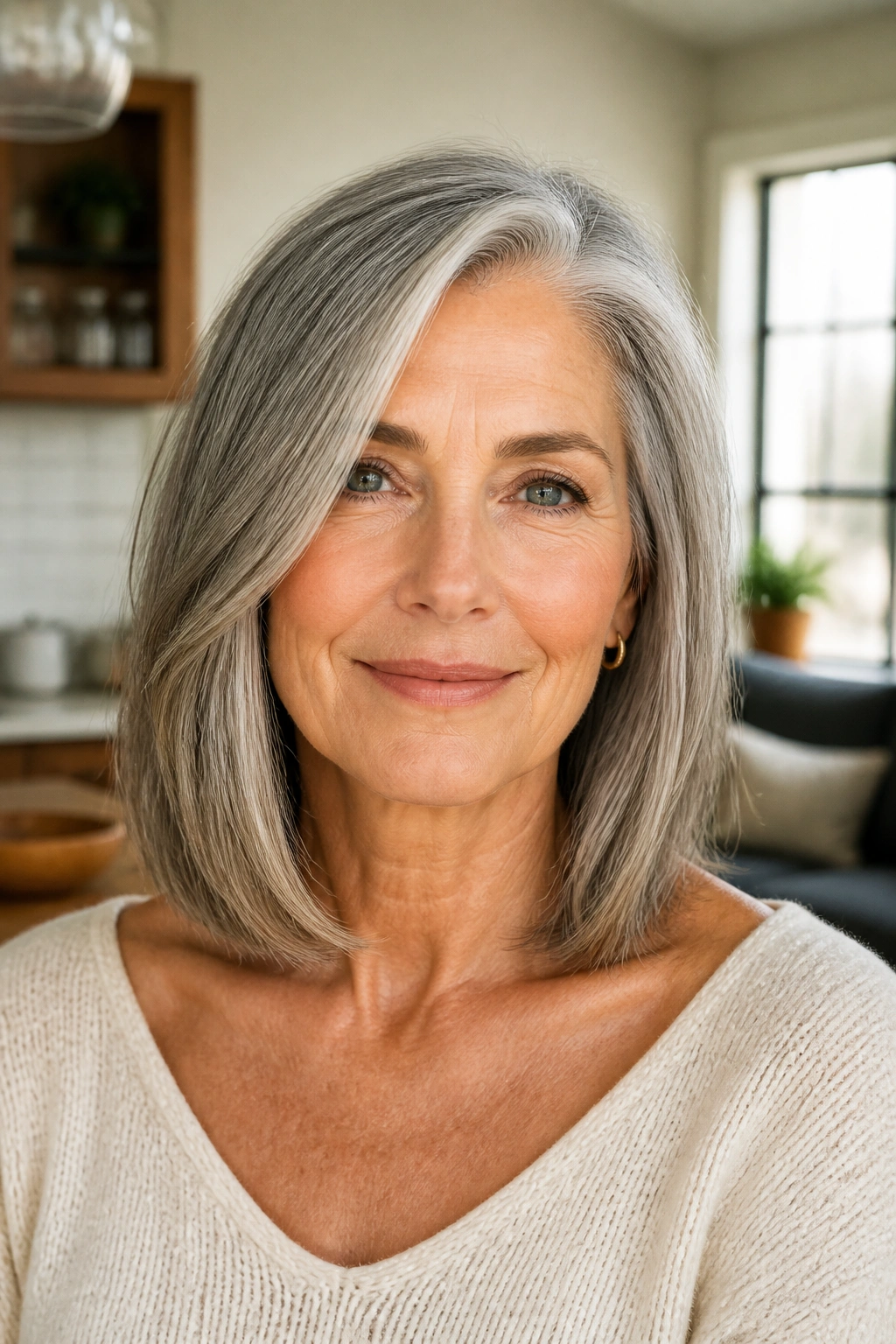
If your hair has started to collapse on one side and puff out on the other, a collarbone lob with a side part can clean that up fast. It gives you length, but not so much length that the gray looks stringy.
This cut is especially useful when you want to keep your hair up, half-up, or tucked behind one ear. The side part adds lift at the crown, which is useful if your roots lie flat and your ends have a mind of their own. And yes, that happens a lot.
What to ask for
- Length grazing the collarbone
- A deep or medium side part
- Light interior layers only if the hair is thick
- Ends that are blunt enough to keep fullness
I like this cut because it behaves on ordinary days. You can rough-dry it and still look put together.
5. Feathered Crop
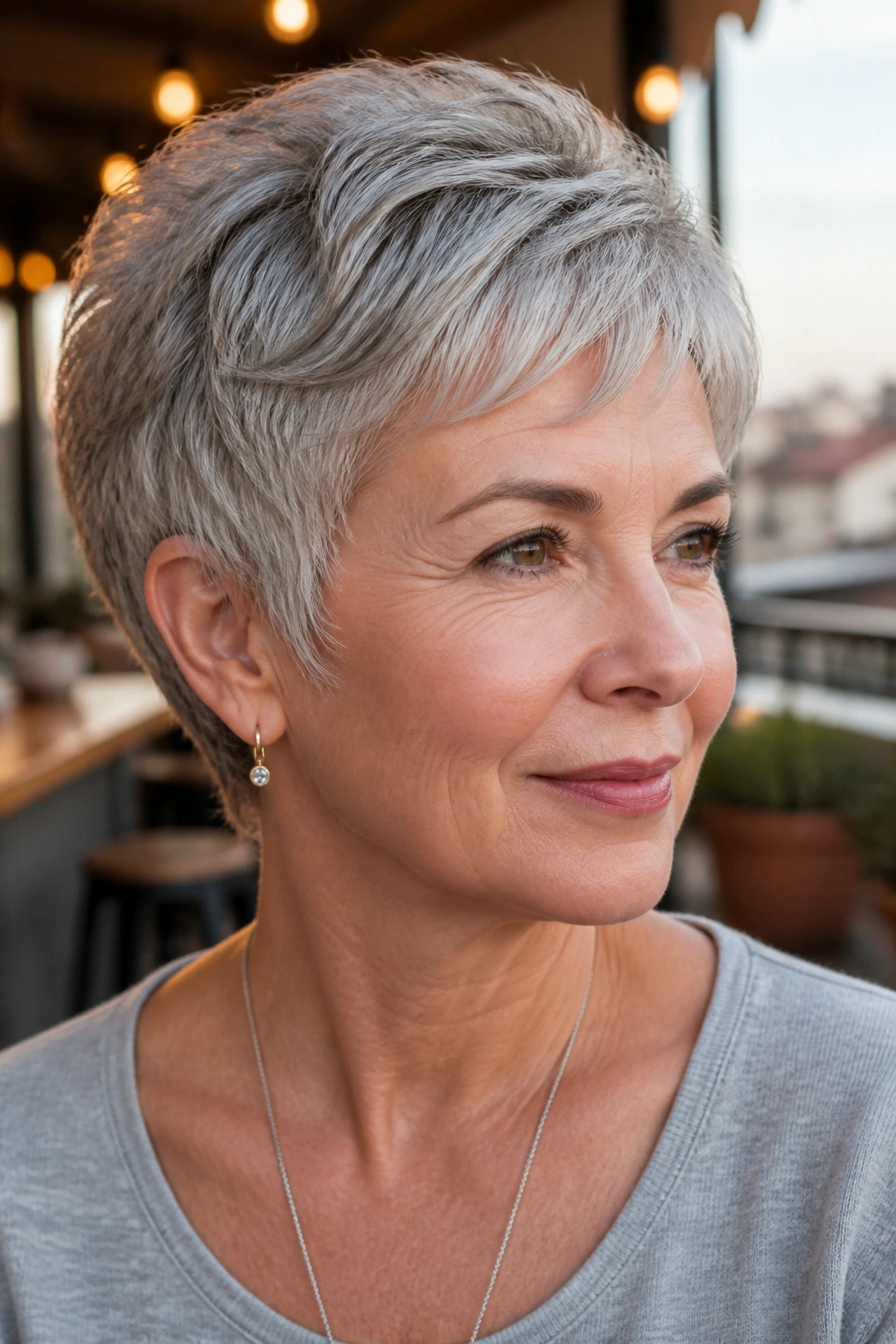
Feathering gets an unfair reputation. Done badly, it looks airy in the wrong way. Done well, it softens the whole head and stops gray hair from sitting like one hard shape.
This cut works best when the feathering stays around the crown, temples, and upper sides. That gives lift without chewing up the density at the ends. For women with fine hair, that matters a lot. Too much feathering at the bottom and the cut starts to look tired by the second week.
A feathered crop is also kind to strong features. It softens a sharp jaw and keeps the face from feeling boxed in by short hair. If your hair is naturally straight, ask for the ends to be point-cut lightly rather than razored into bits.
One thing I like here: it grows out gracefully. That is rare in short hair.
6. Curly Bob

A curly bob is not the same thing as a straight bob with curls forced into it. That difference matters more than people think.
Gray curls tend to spring wider and drier than darker curls, so the cut needs room to breathe. A bob that lands around the jaw or just below it gives the curl room to settle without puffing into a triangle. If the hair is cut too short, the curl can stack too high and the whole shape gets boxy.
Where the curl should sit
A dry cut is often the smartest move, because curls shrink in ways that surprise even experienced stylists. You want the shape to be built around where the curl actually lands, not where it looks during the shampoo stage.
The curl should fall around the cheek, jaw, or neck in a way that feels balanced from the side view. That side view is where bad curly cuts usually give themselves away.
7. Long Layers with Face-Framing Pieces
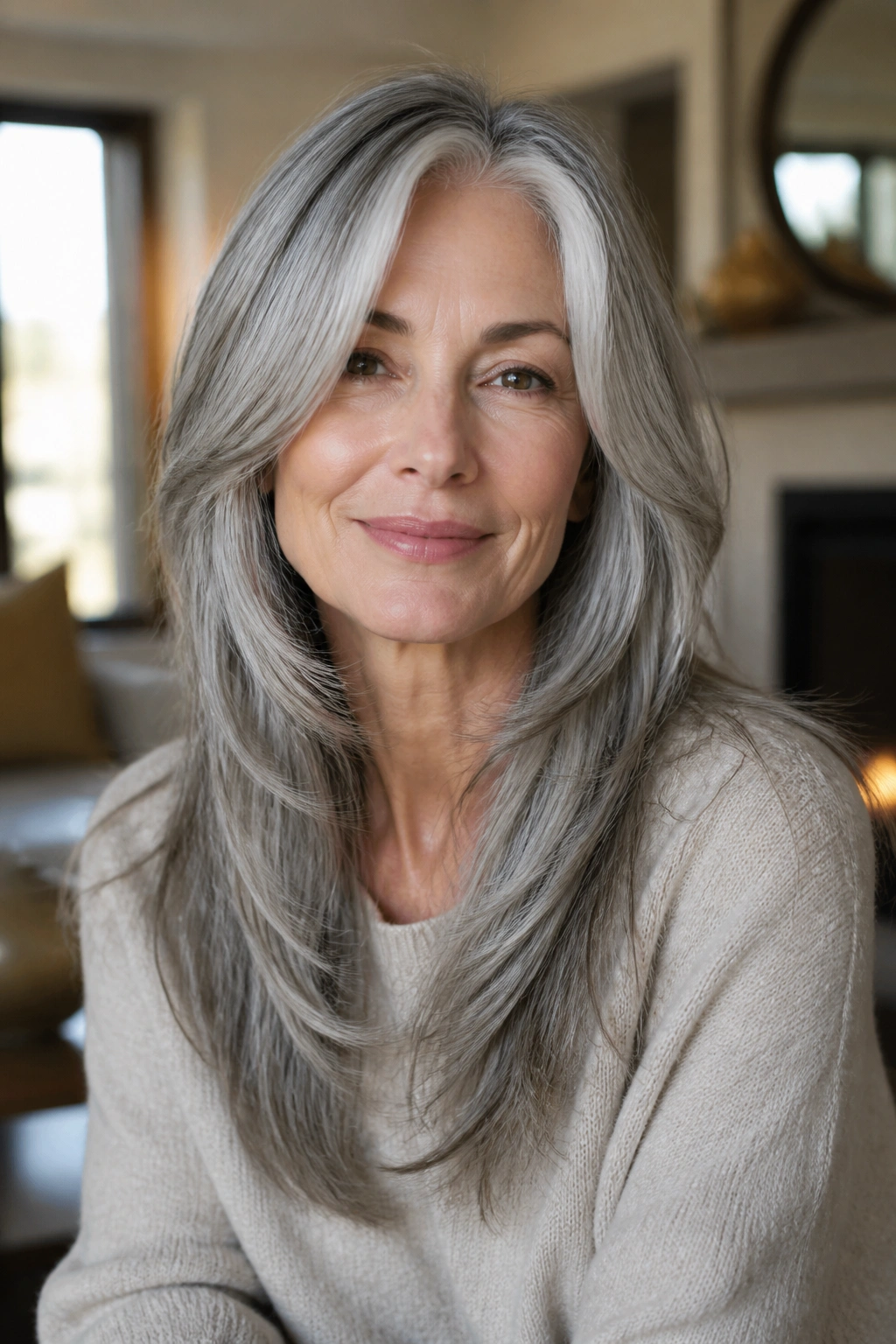
Long layers can work on gray hair over 50, but only if they are placed with some discipline. Random layers are the enemy here. Face-framing pieces are the part that earns their keep.
Best places for the layers
- Start the softest layers below the cheekbone
- Keep the longest length below the shoulders if the hair is fine
- Use shorter framing pieces only around the front, not all the way around the head
- Leave the ends full so the hair does not look see-through
This cut is a good answer for women who are not ready to go short. It keeps movement near the face, which helps if your jawline has changed a bit and you want more softness without hiding behind hair.
Gray hair can look gorgeous long, but only when it still has a shape. Without that, it becomes curtain-like fast.
8. Asymmetrical Bob
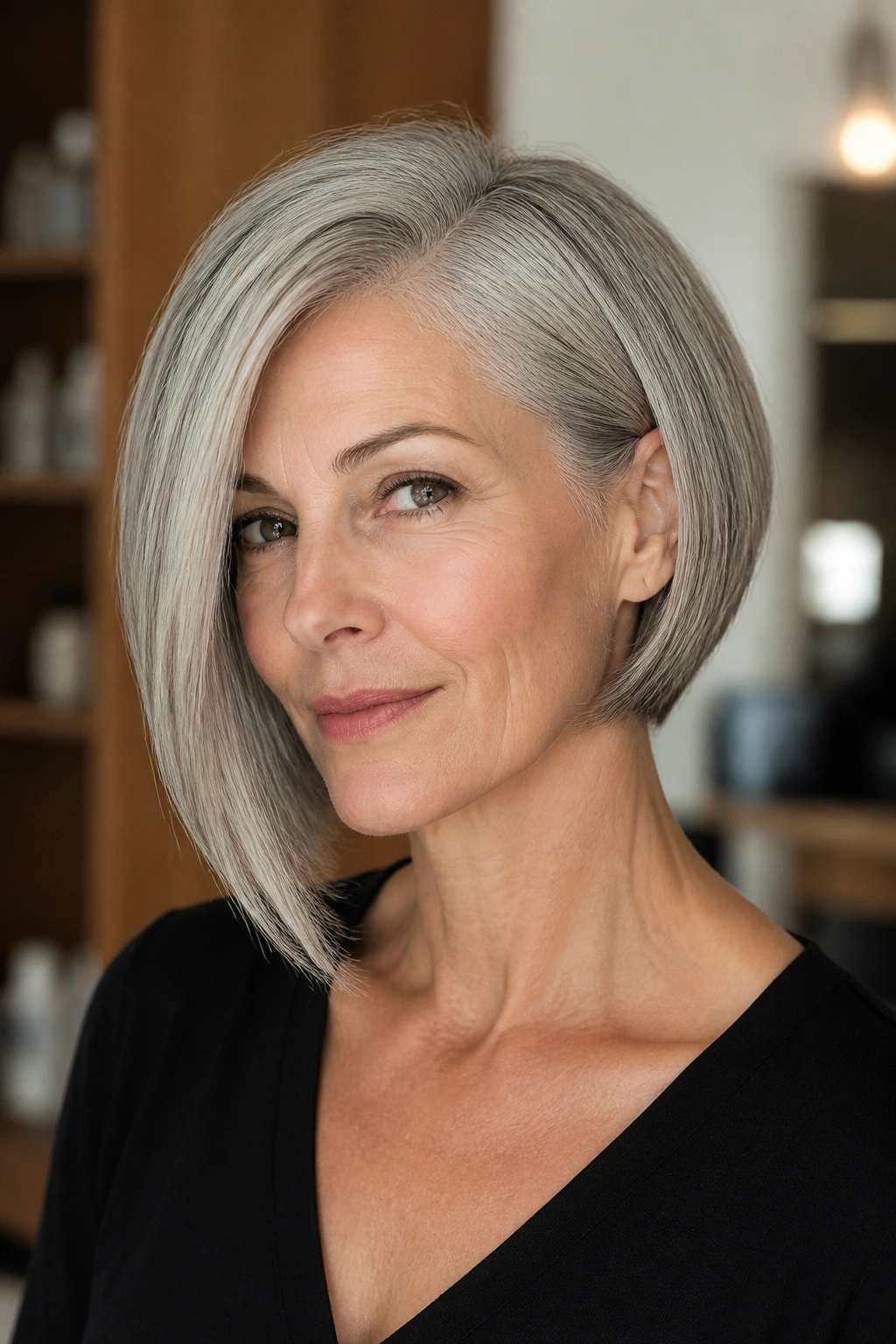
A little imbalance can look sharper than symmetry. That is especially true with gray hair, where a small angle can make the whole cut feel modern without trying too hard.
The version I trust keeps one side only 1 to 2 inches longer than the other. Any more than that and the cut starts to announce itself before it flatters you. The point is movement, not drama.
This is a nice pick if you wear a side part, because the longer side gives the front some sweep while the shorter side keeps the neck open. It also works well for women with a stronger jaw or fuller cheeks, since the angle draws the eye diagonally instead of straight across.
If your hair is very fine, keep the ends blunt. The asymmetry can handle the shape work on its own.
9. Tapered Natural Cut
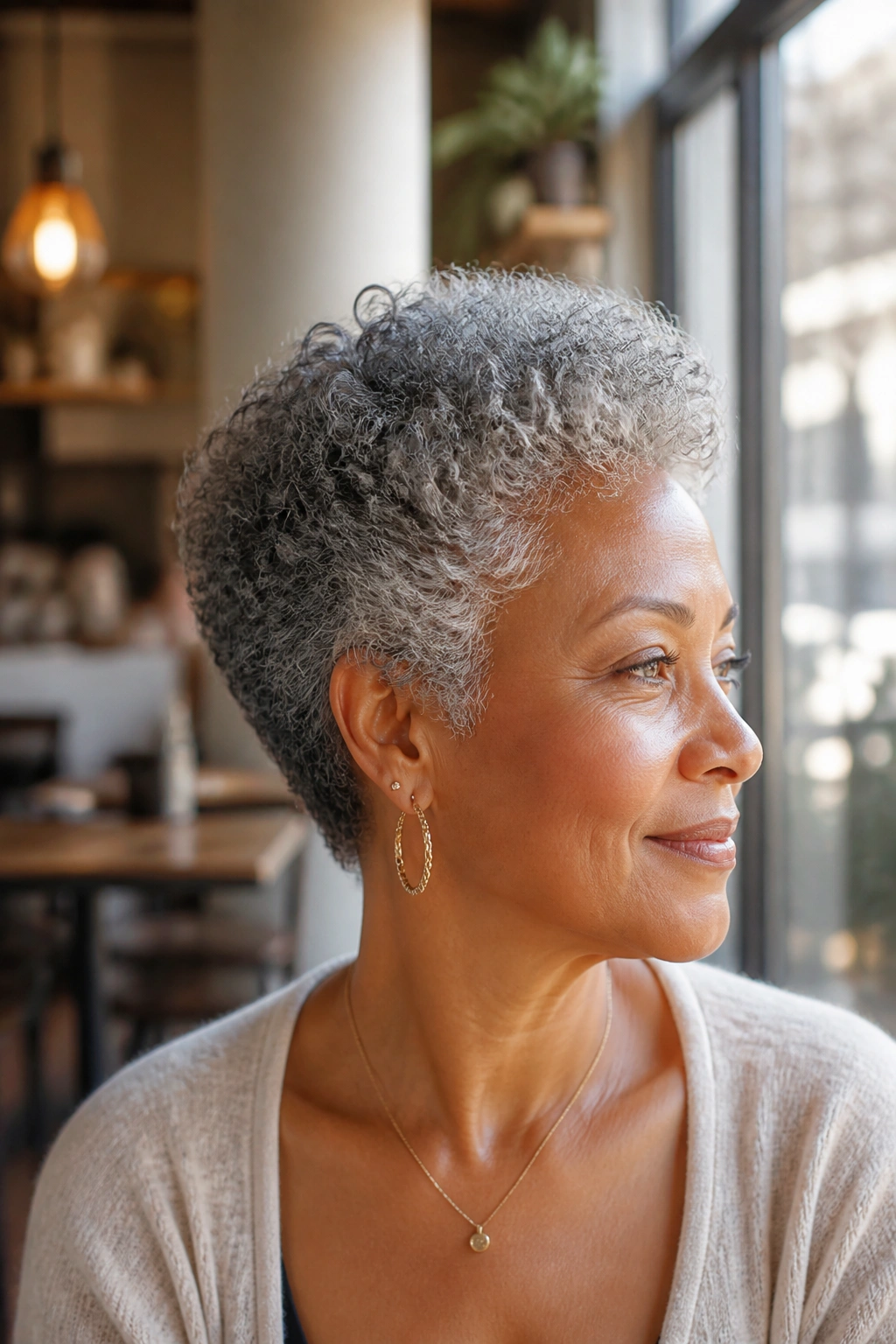
Natural texture does not need to be bullied into a tidy little shape. A tapered cut respects the curl pattern or wave pattern and cleans up the outline where hair meets the neck.
For gray hair, that taper is useful because it removes bulk from the nape without stripping away the fullness on top. The result feels lighter, and it wears well under scarves, collars, and coats. Small thing. Big difference.
Who should keep it close at the nape
- Women with curls that spread outward at the sides
- Hair that feels bulky at the neck
- Anyone who wants a shape that stays neat between trims
The best versions leave enough length on top to keep the silhouette soft. If the top is cut too short, the whole thing can look harsh, and gray hair usually looks better with a little softness around it.
10. Curtain Bangs and Collarbone Length for Gray Hair Over 50
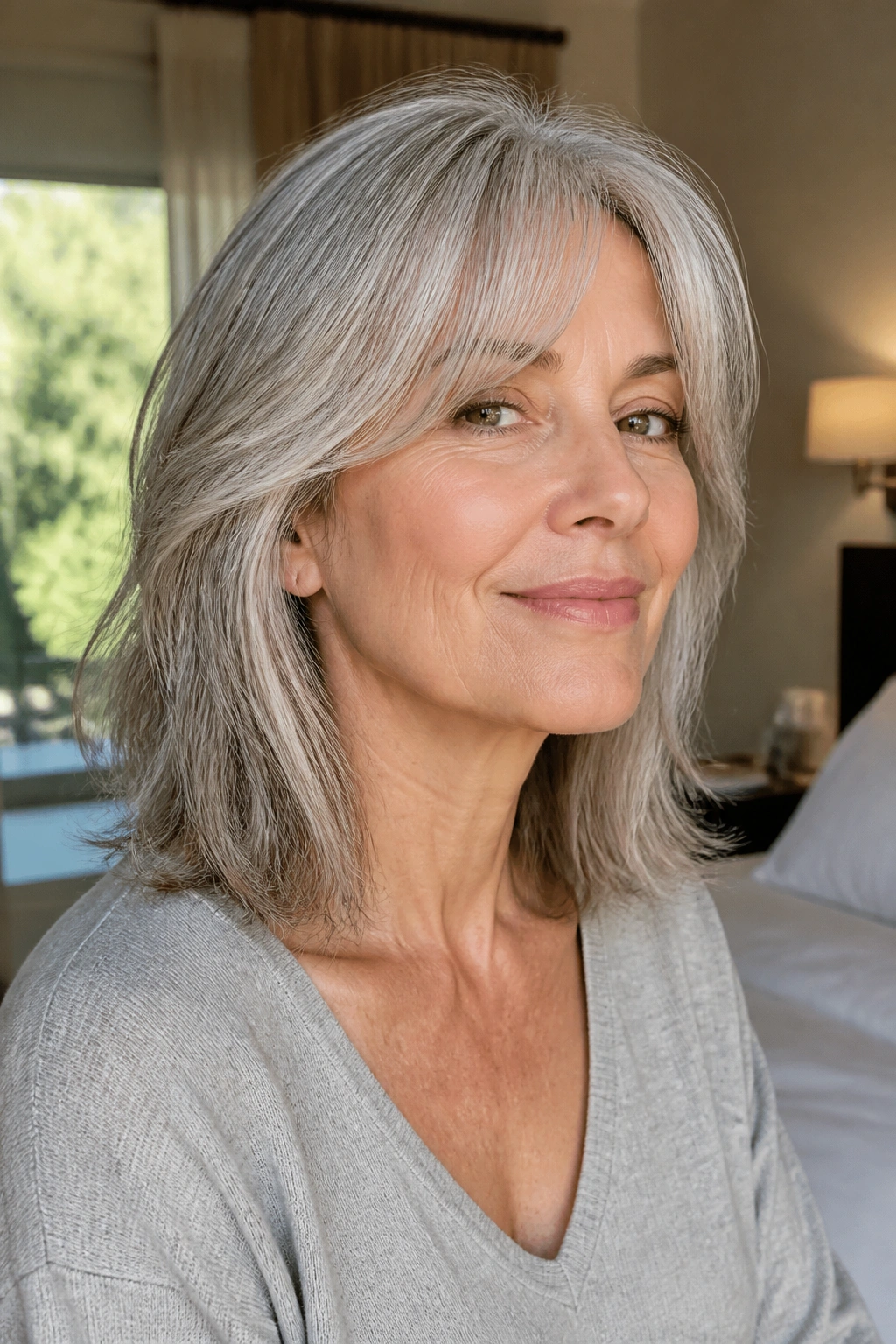
Can you keep length after 50 and still frame the face well? Yes, if the bangs are cut with some thought.
Curtain bangs are one of the easiest ways to update collarbone-length hair without losing the ability to tuck it back. They split away from the center, brush the cheekbones, and give lift around the eyes. That is useful when the face has started to feel a little heavier in the midsection, which happens to almost everyone.
How much fringe is enough
The ideal curtain bang usually starts near the cheekbone or just below it. Shorter than that and you may fight cowlicks every morning. Longer than that and the whole thing can drag down the face.
Ask for the bangs to blend into the side lengths rather than sit like a separate piece. That seamless blend is what keeps the look soft instead of fussy.
11. Classic Pageboy
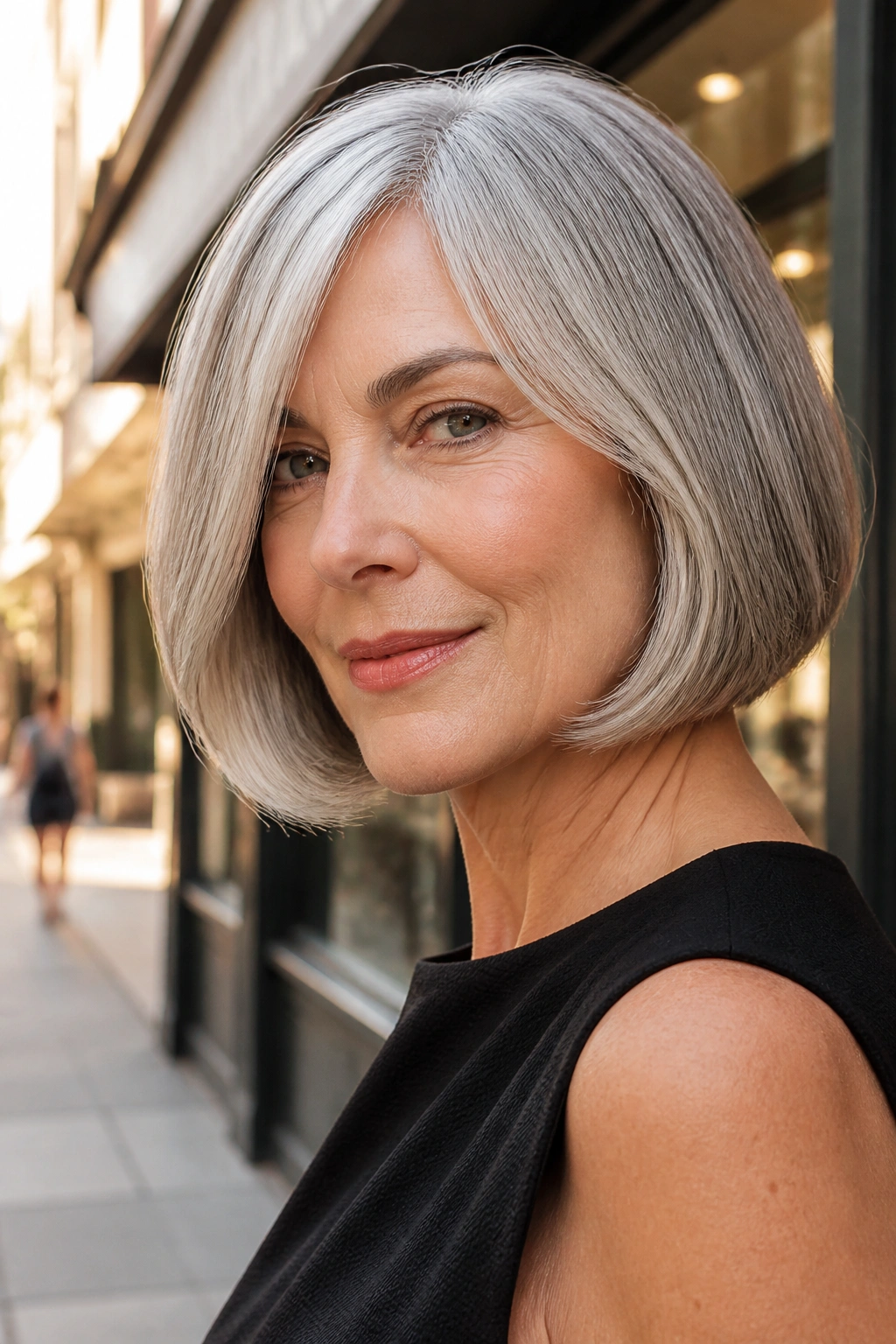
If your hair likes to swing at the ends, the pageboy can be a sleeper hit. It has that rounded undercurve that sits neatly at the neck, and gray hair shows the shape with unusual clarity.
The modern version should be softer than the old-school one. You want a controlled bend under the ends, not a hard little bowl. A touch of movement around the face keeps it from feeling frozen in place.
This cut works especially well on straight hair that gets puffier when it grows out. The pageboy contains that puff. It also looks clean under glasses and with a side part, which gives it some extra life. If your hair is thick, ask for internal weight removal instead of heavy layers. Too many layers wreck the curve.
It is not a loud cut. That is exactly why it works.
12. Textured French Bob
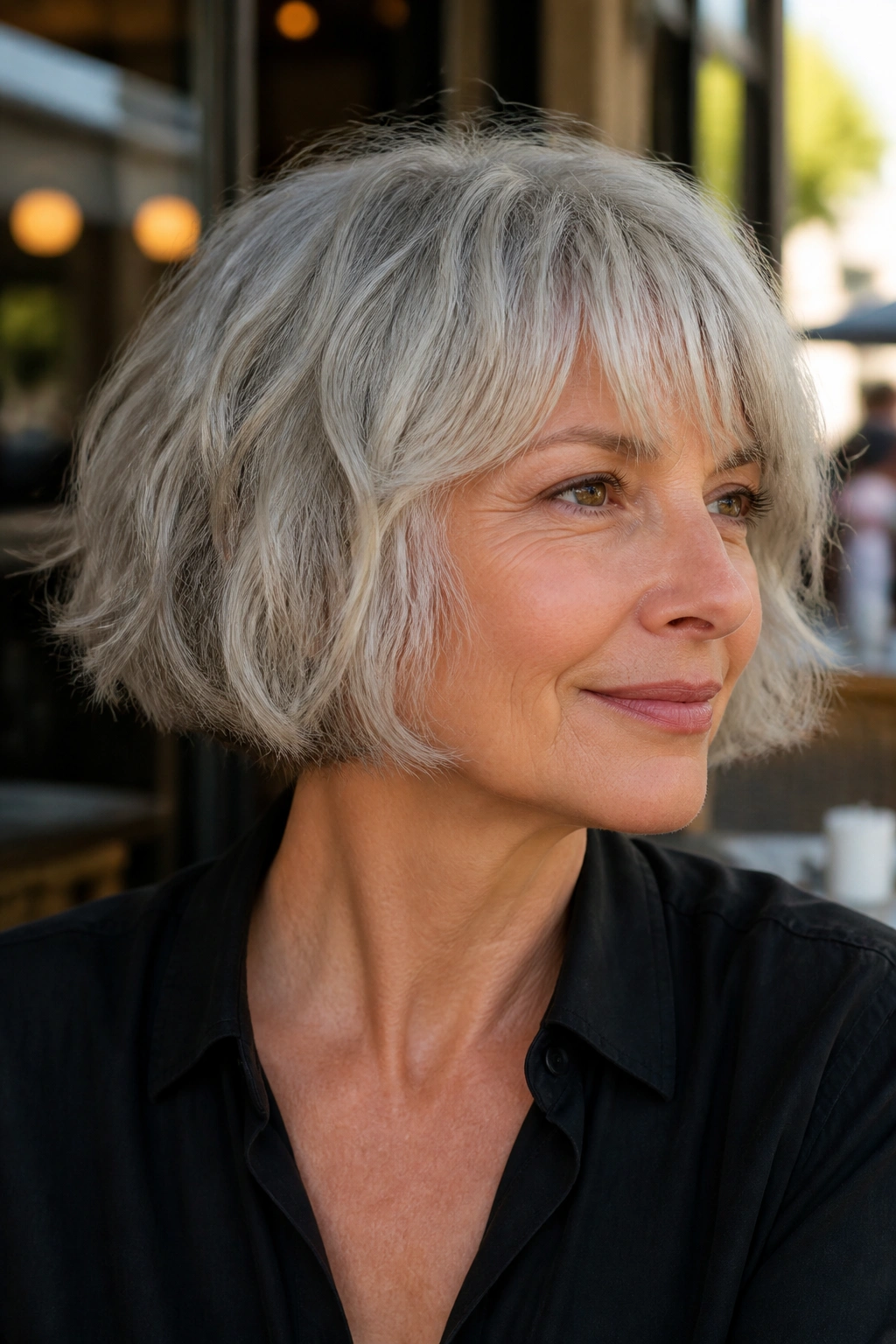
Short hair does not have to look severe. The textured French bob proves that point in one shot.
This cut usually sits around the jawline, with a soft fringe or a broken-up front that keeps the face open. Gray hair gives it a clean, crisp feel, which is nice because the texture can do the styling work. You do not need much else.
The version I like most leaves enough softness around the ends that the bob bends instead of sticking out. A little roughness is the point. If it is cut too neatly, it can feel stiff. If it is cut with some air in it, the whole thing comes alive in a way that reads easy, not overdone.
This is a strong option if you want a cut that looks polished after five minutes and a comb. That matters on real mornings.
13. Pixie with a Long Crown
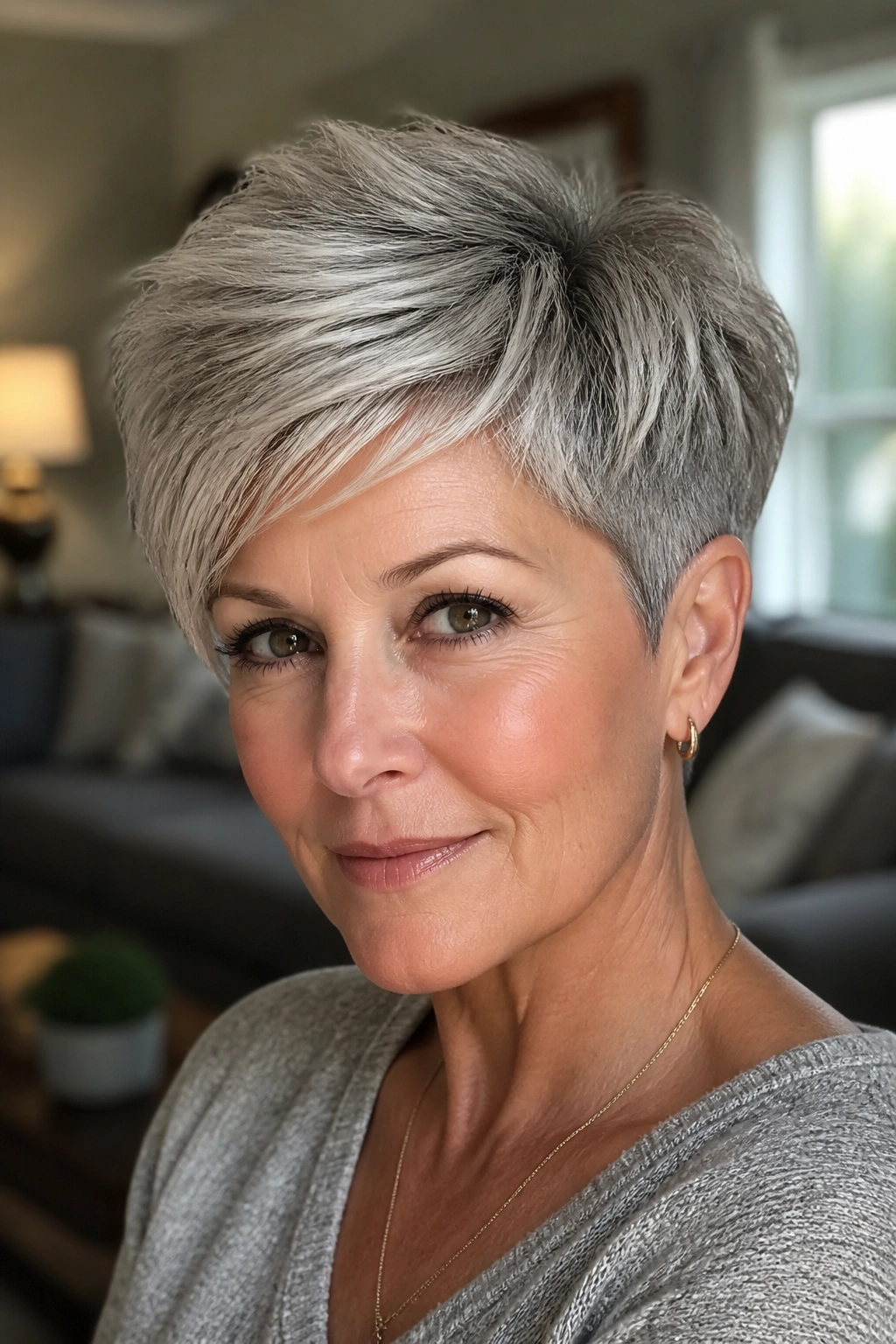
A standard pixie can flatten fast on gray hair. A long-crown pixie keeps lift where you need it most.
Unlike a super-short crop, this version leaves extra length on top and trims the sides closer. That shape gives height, and height does a lot of work on fine or thinning hair. It also gives you room to sweep the front to one side, which softens the face.
What to tell the stylist
- Leave the crown longer than the sides
- Keep the top pieces piecey, not spiky
- Use scissors more than a razor if the hair is fragile
- Trim every 4 to 5 weeks to hold the shape
This cut can look bold in the right way, but it should still move. If it feels too rigid, the crown is probably too short.
14. Wavy Lob with Soft Ends
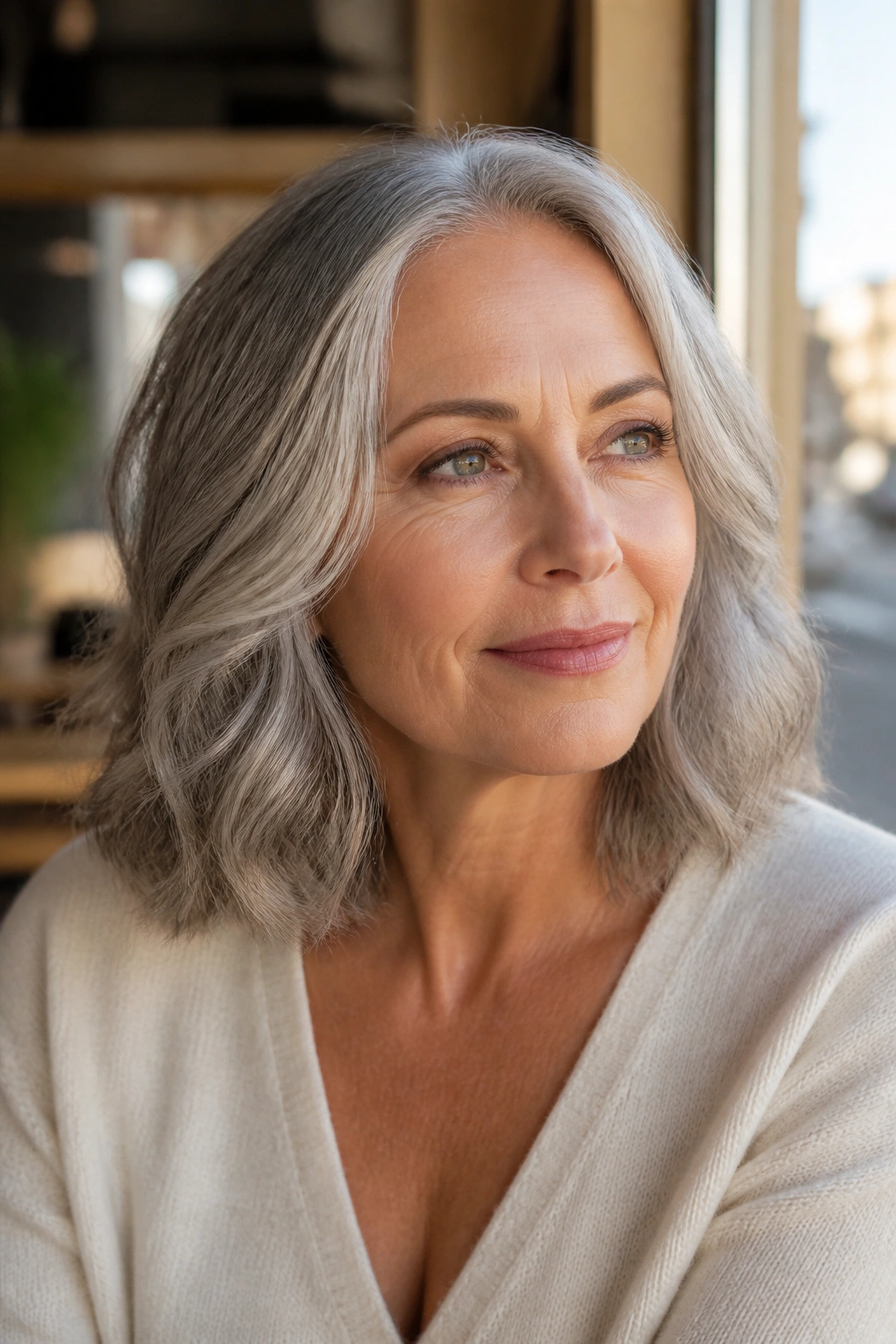
A wavy lob is one of those cuts that never tries too hard, and that is its charm. It sits around the shoulders or a bit above, so the hair has enough length to move but not so much that it hangs flat.
Soft ends are the key here. Gray hair can look sharp at the cut line if the ends are too blunt and the texture is dry, so the finishing has to be gentle. Not thinned out. Gentle. There is a difference.
This shape works well if your hair has a natural bend or if you like to use a medium barrel iron on just a few sections. You do not need every piece curled. In fact, that can look dated fast. A couple of loose bends, a side tuck, and a clean perimeter are enough.
It is an easy style to live with, which is maybe why it keeps showing up in good salons.
15. Rounded Afro
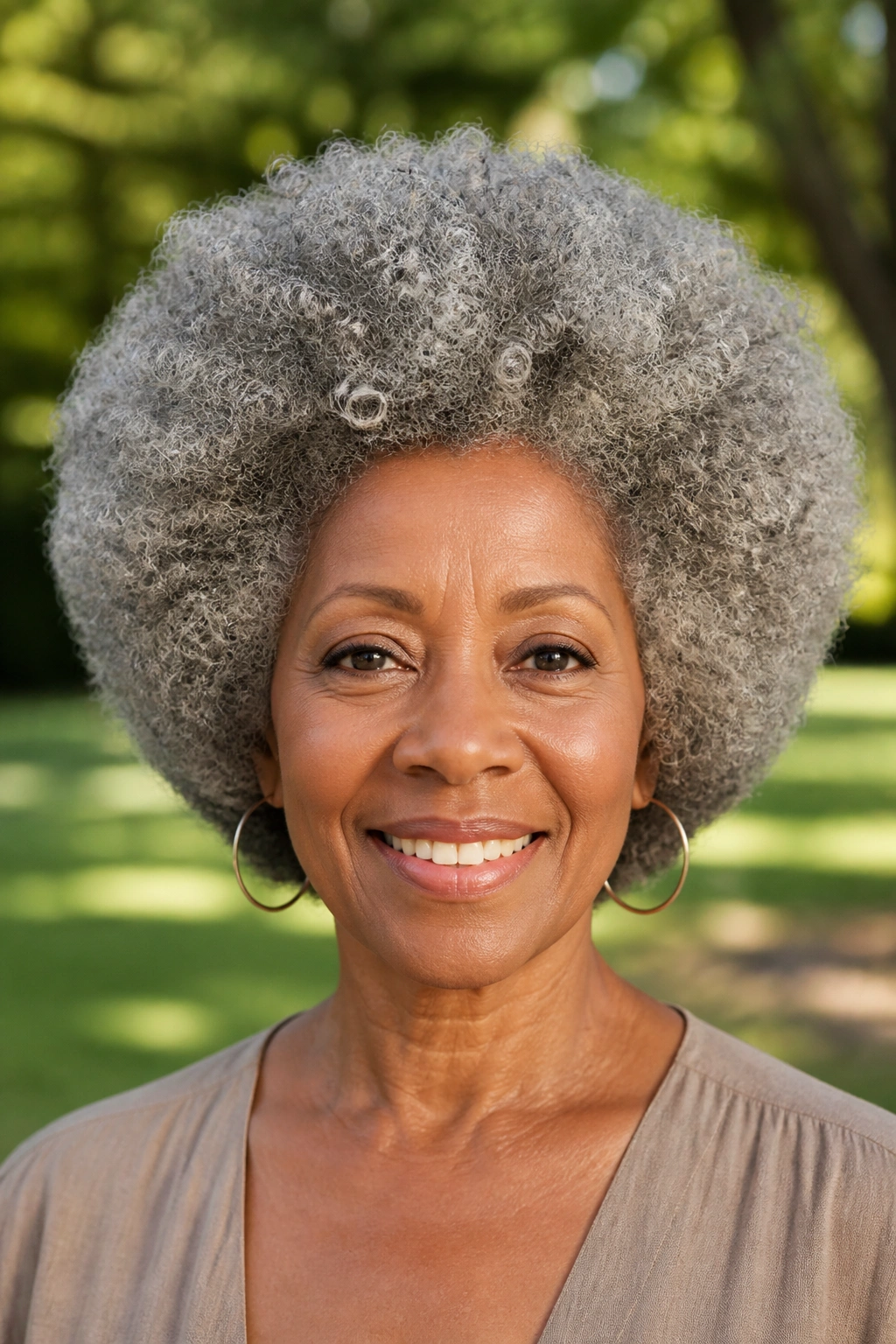
How do you keep natural texture looking shaped instead of shapeless? A rounded afro does the job by honoring the curl pattern and giving it a clear outline.
The shape matters more than length
Gray coils and curls can be drier, so the haircut should keep the ends healthy and the silhouette balanced. A rounded shape helps the hair hold together visually, especially if the sides tend to spread wider than the top. That shape also makes the silver look intentional, which is half the battle.
- Keep the outline rounded rather than boxy
- Trim often enough to stop split ends from puffing out the shape
- Ask for the crown to stay full
- Let the hair dry into its own pattern before judging the final line
A good rounded afro does not fight the texture. It frames it.
16. Layered Midi Cut
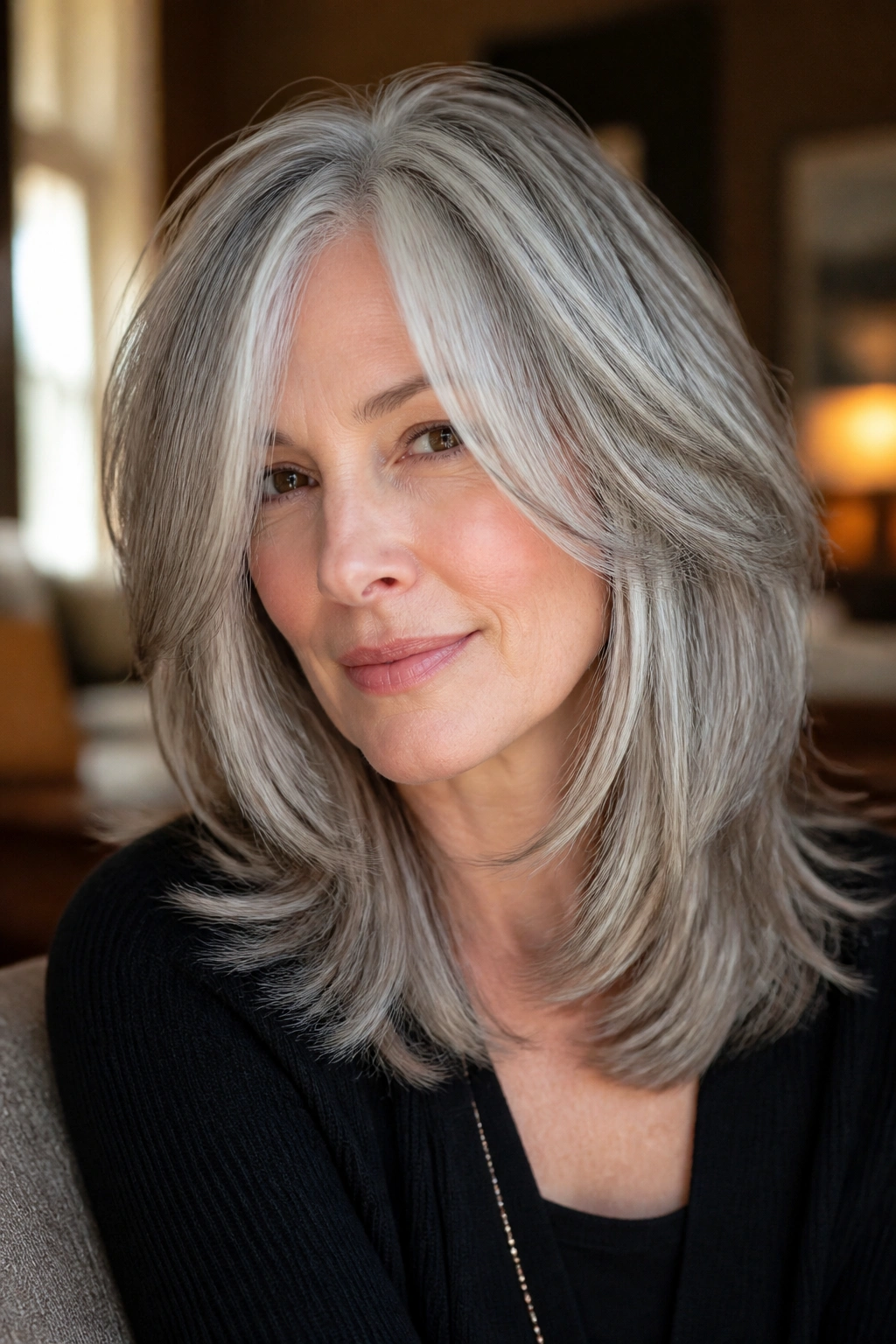
A midi cut hits somewhere between the shoulders and the upper back, and that middle ground is useful if you are not ready to go short. The layers keep it from feeling heavy, while the length still gives you options.
This is a smart cut for women who like a ponytail but also want the hair to fall nicely when it is down. The layers should start low enough that the ends stay full. If they start too high, the hair starts to look stringy, and gray hair rarely forgives that.
Why it stays useful
- Easy to tuck, pin, or braid
- Enough length for an updo
- Less likely to flip out awkwardly than a short layered cut
- Works on straight, wavy, or thick hair
The best version keeps the front pieces soft and the perimeter clean. That balance keeps the cut from wandering into mullet territory.
17. Modern Mullet
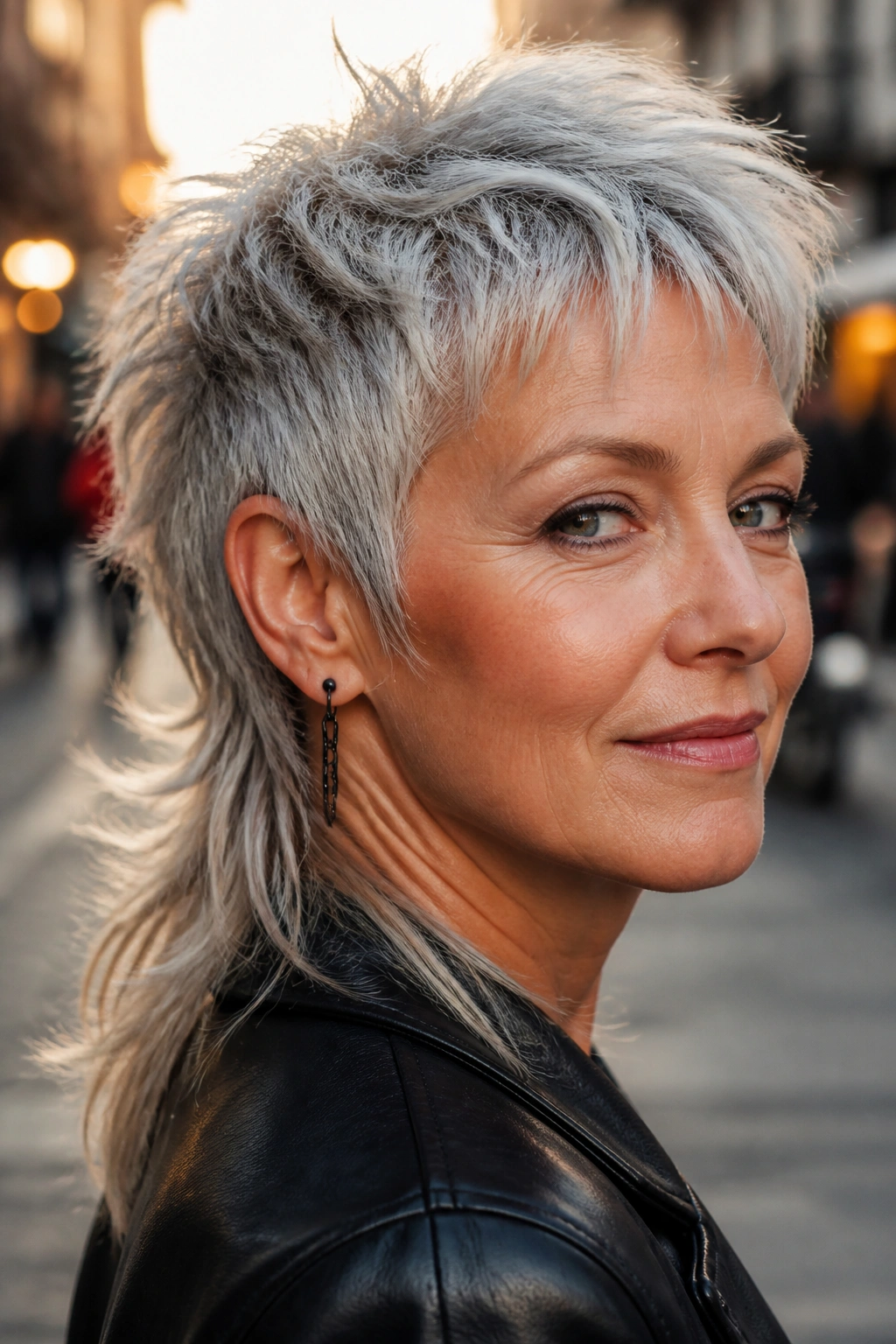
The word mullet still makes people flinch. Fair enough. The old version was rough.
The modern version is softer, shorter on the sides, and more wearable than its reputation suggests. On gray hair, it can look surprisingly fresh because the texture and the shape do half the work for you. If the hair is wavy or curly, the cut can follow the natural lift instead of trying to flatten it out.
What matters is restraint. You want a gentle difference between the crown, the sides, and the back. If the contrast gets too extreme, the cut starts to wear you. Keep the top a little airy, the sides close enough to stay neat, and the back long enough to show movement.
It is not for everyone. I would not hand it to someone who wants a quiet haircut. But if you want something with personality, this one has it.
18. Blunt Mid-Length Cut
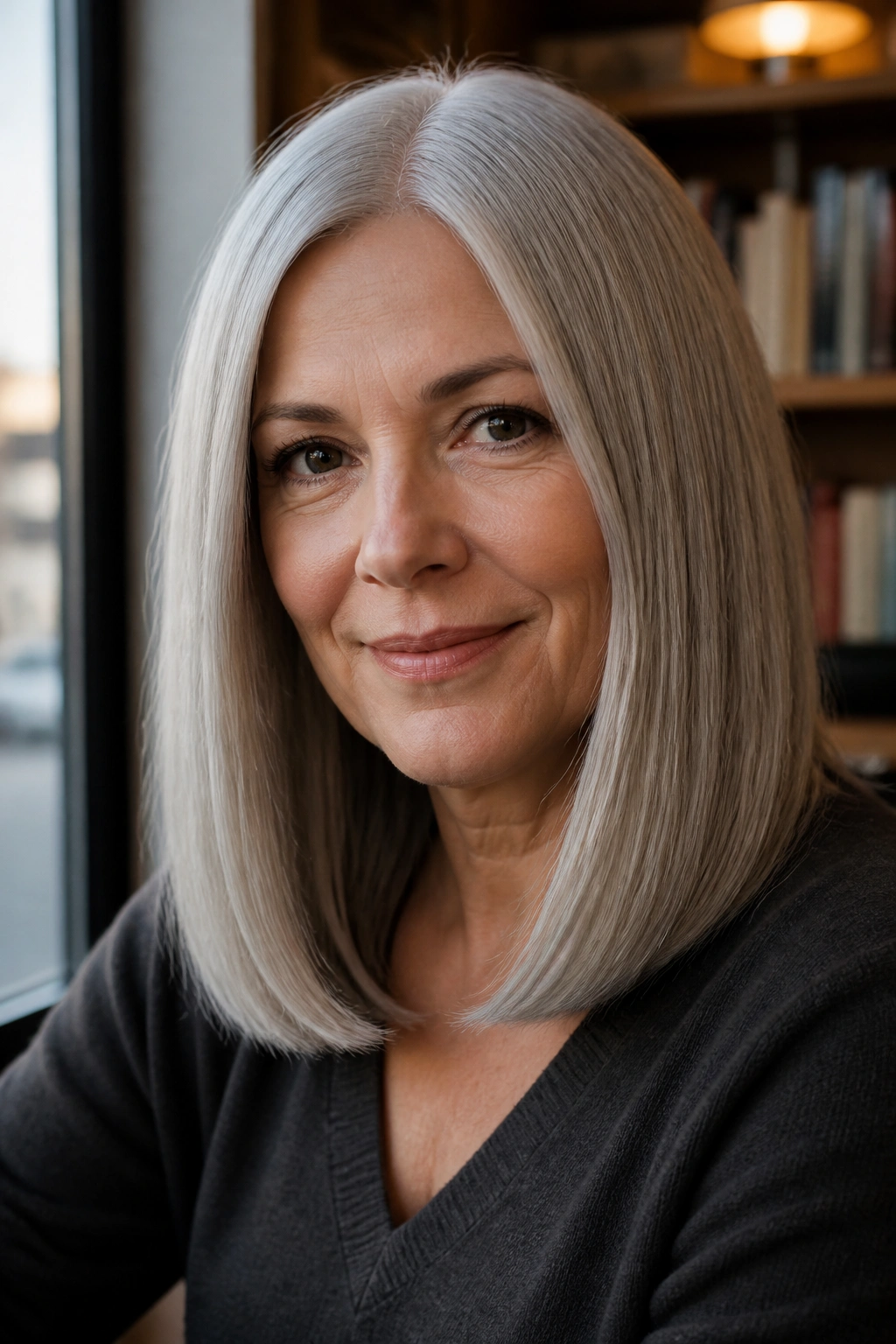
A blunt mid-length cut is one of the strongest moves for gray hair that needs more heft. The blunt line gives the ends weight, and weight keeps the hair from looking fuzzy at the bottom.
Why the extra length matters
At this length, usually somewhere between the collarbone and the top of the chest, the hair still has swing. That swing matters because it keeps silver hair from looking static. You get a clean perimeter, but not a stiff one.
If your hair is thick, this cut can handle it without much layering. If your hair is fine, the blunt line can create the illusion of density. Either way, the cut needs precision. Uneven ends show up fast on gray hair, so the finish has to be clean.
A side part gives this shape even more lift. A center part can work too, but the side part usually feels softer around the face.
19. Short Wedge Cut
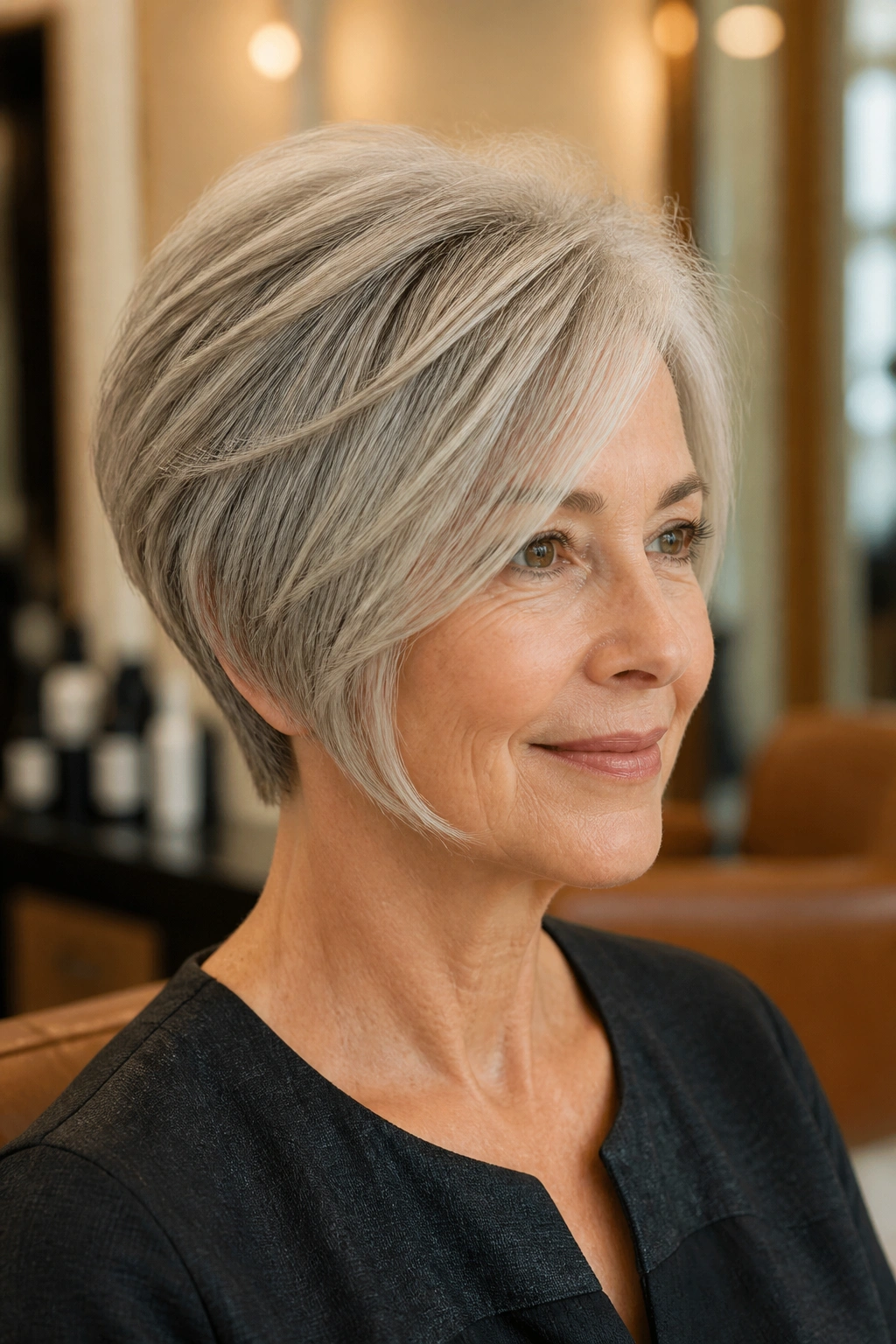
Does a short cut have to mean flat hair? Not at all. The wedge cut builds lift at the crown and narrows at the nape, which makes the head shape look balanced instead of boxy.
This cut is especially useful if your hair is fine, or if you wear glasses and want the hair to sit neatly around the temples. The back is stacked enough to hold shape, and the front can be left slightly longer to soften the face. That angle is the whole point.
What to ask for
- Stacked layers at the back of the head
- A tapered nape
- Soft side lengths that touch the jaw or ear
- Regular trims every 5 to 7 weeks
The wedge has a reputation for being old-fashioned, but that usually means people have seen a bad one. A crisp wedge with some softness in the front looks clean and strong.
20. Silver Bob With a Deep Side Part for Gray Hair Over 50
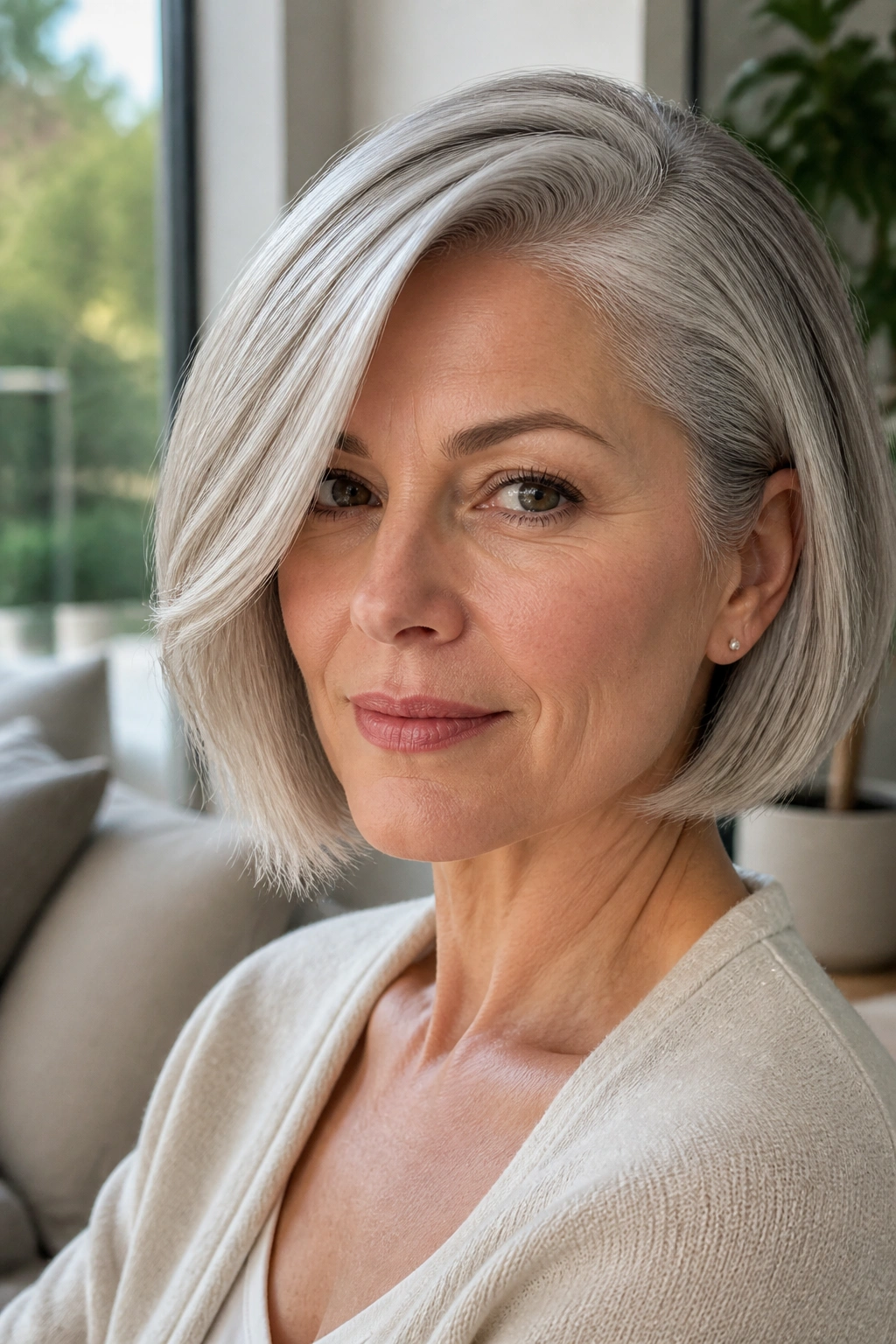
A deep side part can change everything. On gray hair, it lifts the roots, shifts the balance of the face, and makes even a simple bob feel more deliberate.
This is one of the easiest haircuts for gray hair over 50 to wear when you want polish without fuss. The bob itself can be chin-length or a little longer, but the part is what brings it to life. It breaks up flatness at the top and gives the silver a bit of swing near the eyes. If your hair tends to collapse in the middle, this is a practical fix, not a style trick.
The best version keeps the ends blunt enough to hold fullness. If the hair is too thinned out, the side part will expose that fast. A little movement at the front is fine. Too much layering is not.
If you want one cut that can go from casual to sharp without a lot of effort, this is a strong place to land. It works with earrings, with glasses, with a clean neckline, and with the kind of gray that looks even better when it is not trying so hard.
