



A good medium cut does something short pixies and long layers often miss: it gives hair enough swing to look fresh, but not so much length that it hangs flat by lunch. That balance matters a lot once hair changes texture, density, or shine after 50.
And yes, medium length hairstyles for women over 50 can be the sweet spot. The length sits in a useful range — around the jaw, neck, shoulders, or collarbone — so you can tuck it, curl it, straighten it, or let it air-dry without a fight. Gray hair often looks especially strong at this length because the shape matters more than the color. A clean line, a soft wave, or the right layer placement does most of the work.
The real trick is choosing a shape that fits how your hair behaves now, not how it behaved ten years ago. Fine hair needs lift. Thick hair needs control. Wavy hair needs room to move. And if your strands have gone silver, a cut that keeps the ends neat usually looks sharper than one that tries too hard.
Some of these styles are polished. Some are relaxed. A few lean a little edgy, which is fun when the haircut is doing the heavy lifting and you do not want to spend twenty minutes making it obey.
1. Soft Layered Lob with a Side Part
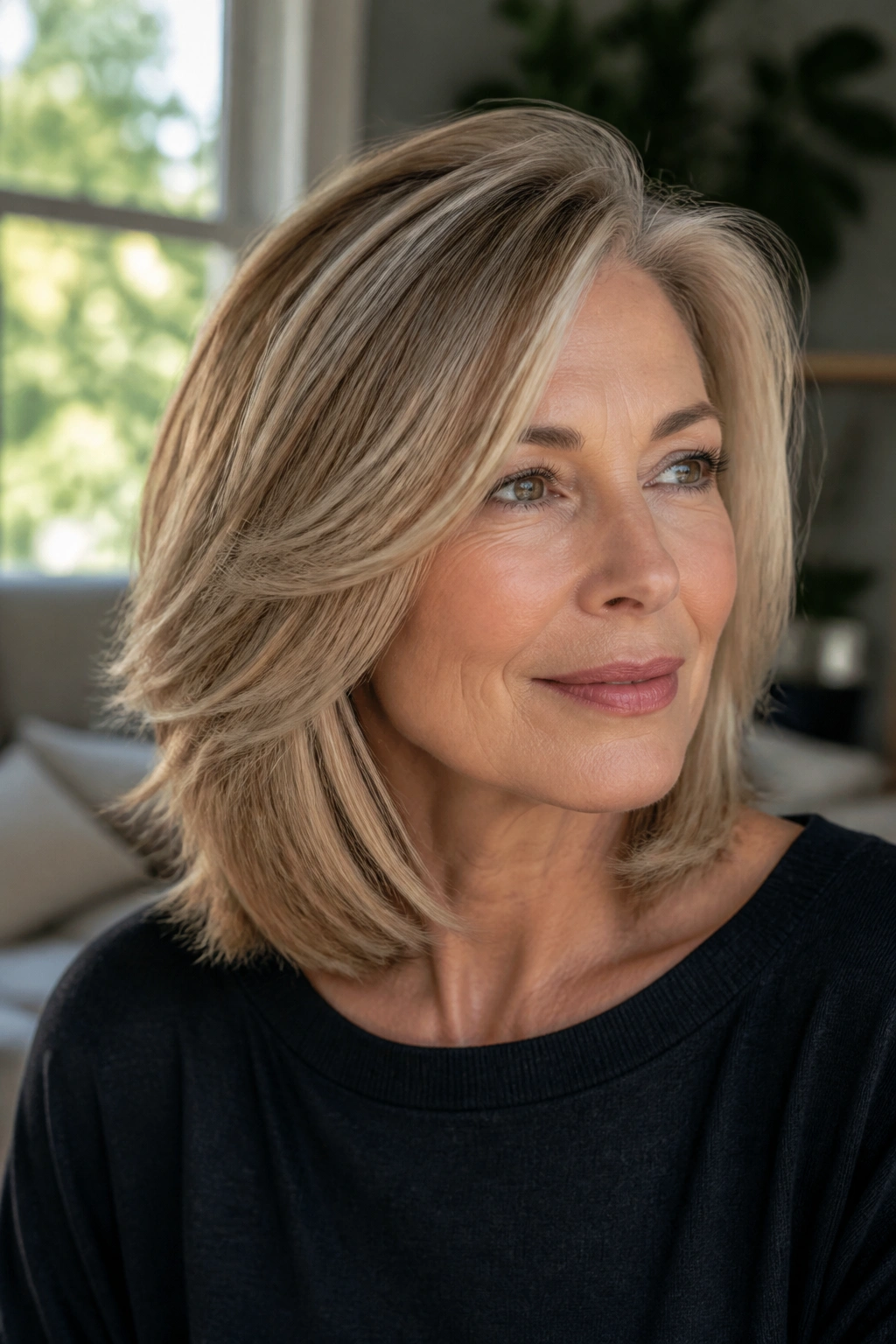
A side part gives this cut a small jolt of lift right where many women want it most: at the crown. The lob sits around the collarbone, so it feels long enough to pull back but short enough to keep shape. The layers should be soft, not choppy, so the ends move instead of fanning out.
Why It Works
- The side part makes the hair look fuller on top without teasing.
- Collarbone length is long enough to tuck behind one ear.
- Soft layers keep gray hair from looking heavy or boxy.
- It works especially well on straight or slightly wavy hair.
Best for: fine to medium hair that needs movement but not a dramatic chop.
2. Feathered Shoulder Cut
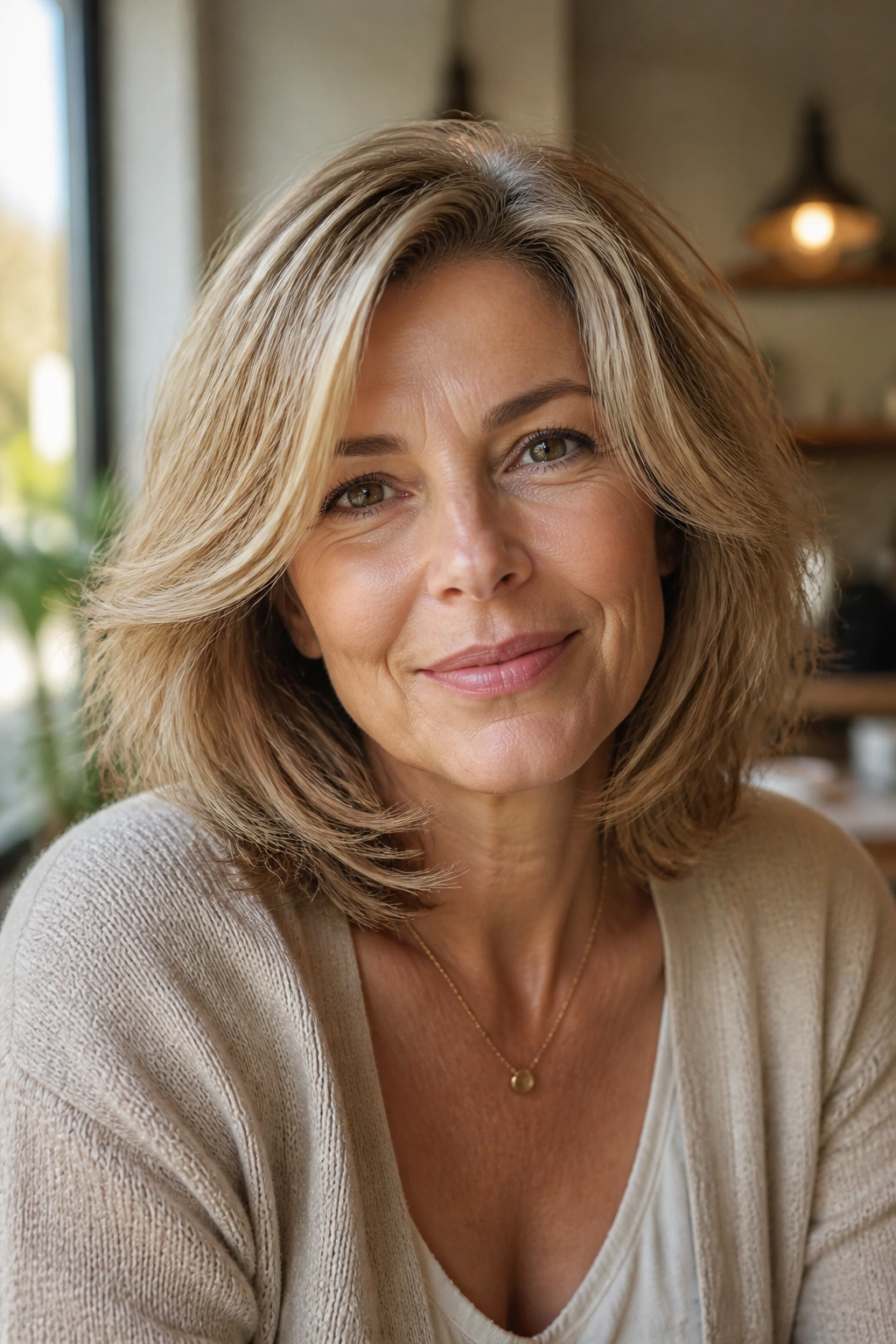
A feathered shoulder cut is one of those styles that quietly flatters almost everyone. It lifts the shape away from the jaw and neck, which can make the whole face look brighter and more open. The feathering should start around the cheekbone and soften toward the ends, not explode into old-school pageant layers.
It’s also one of the better options if your hair has started to feel a little coarse at the ends. Feathering removes that blunt weight, so the cut moves when you turn your head. That movement matters. Flat hair can feel tired even when the rest of your style is on point.
For styling, a medium round brush and a blow-dryer set on medium heat are enough. Pull the front pieces away from the face, then curve the ends under just a touch. That tiny bend keeps the cut from looking too puffy.
3. Collarbone Shag with Curtain Fringe
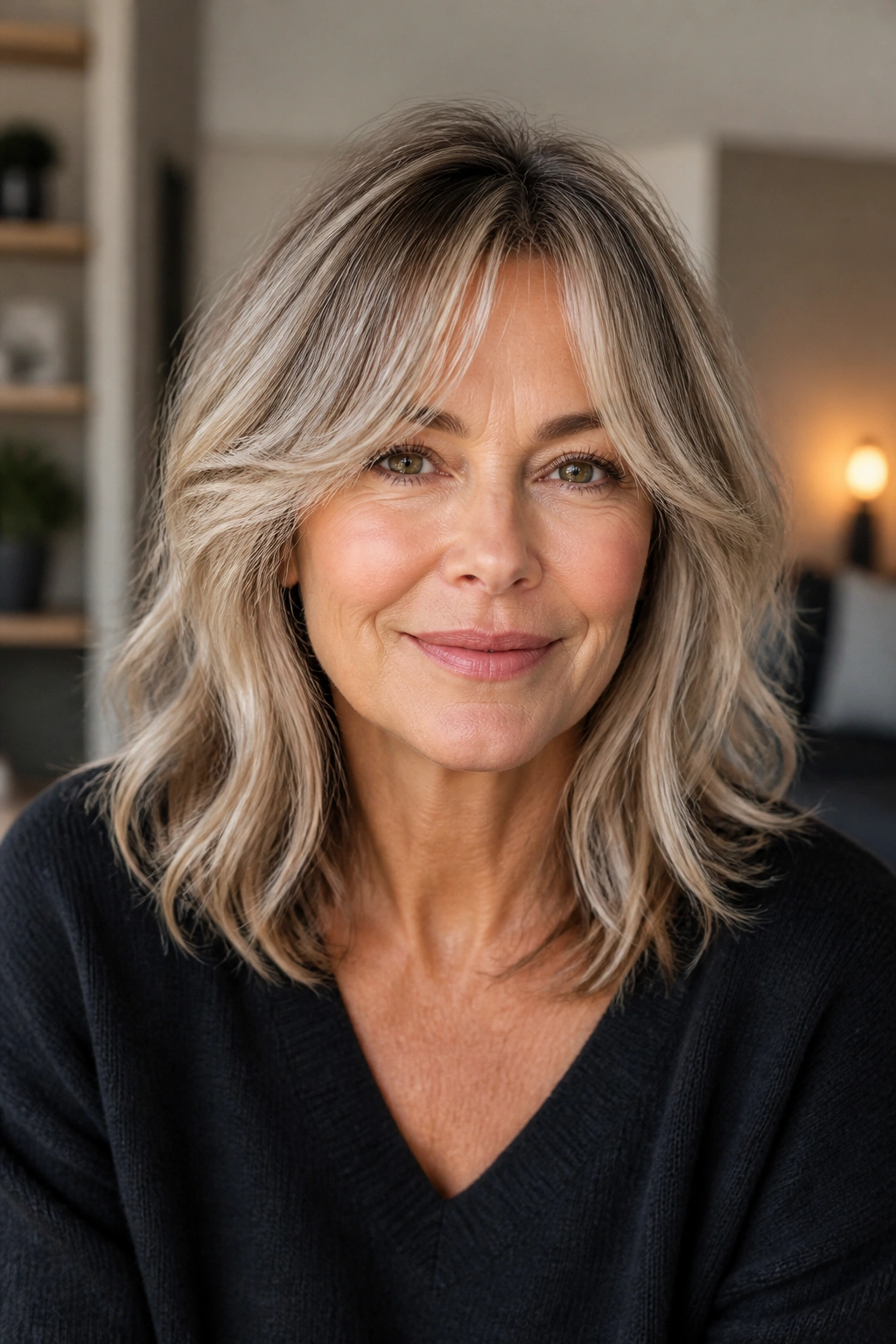
Does your hair wave up in some spots and collapse in others? Then a collarbone shag may be the cut that stops the daily argument. It gives the hair room to bend and keeps the shape loose enough that you are not chasing perfect symmetry every morning.
How to Style It
A shag at this length works best when the layers are long and the fringe is soft. Curtain bangs help the haircut settle around the eyes without looking heavy, and they grow out more gracefully than blunt bangs. For styling, scrunch in a curl cream or light mousse on damp hair, then either diffuse for 5 to 10 minutes or let it air-dry until it is about 80 percent dry.
- Use a pea-sized amount of curl cream on the mid-lengths.
- Scrunch from the bottom upward to keep the wave pattern.
- Avoid brushing it dry unless you want a puffier finish.
- Trim it every 8 weeks if you want the fringe to keep its shape.
4. Sleek Blunt Lob with Soft Ends
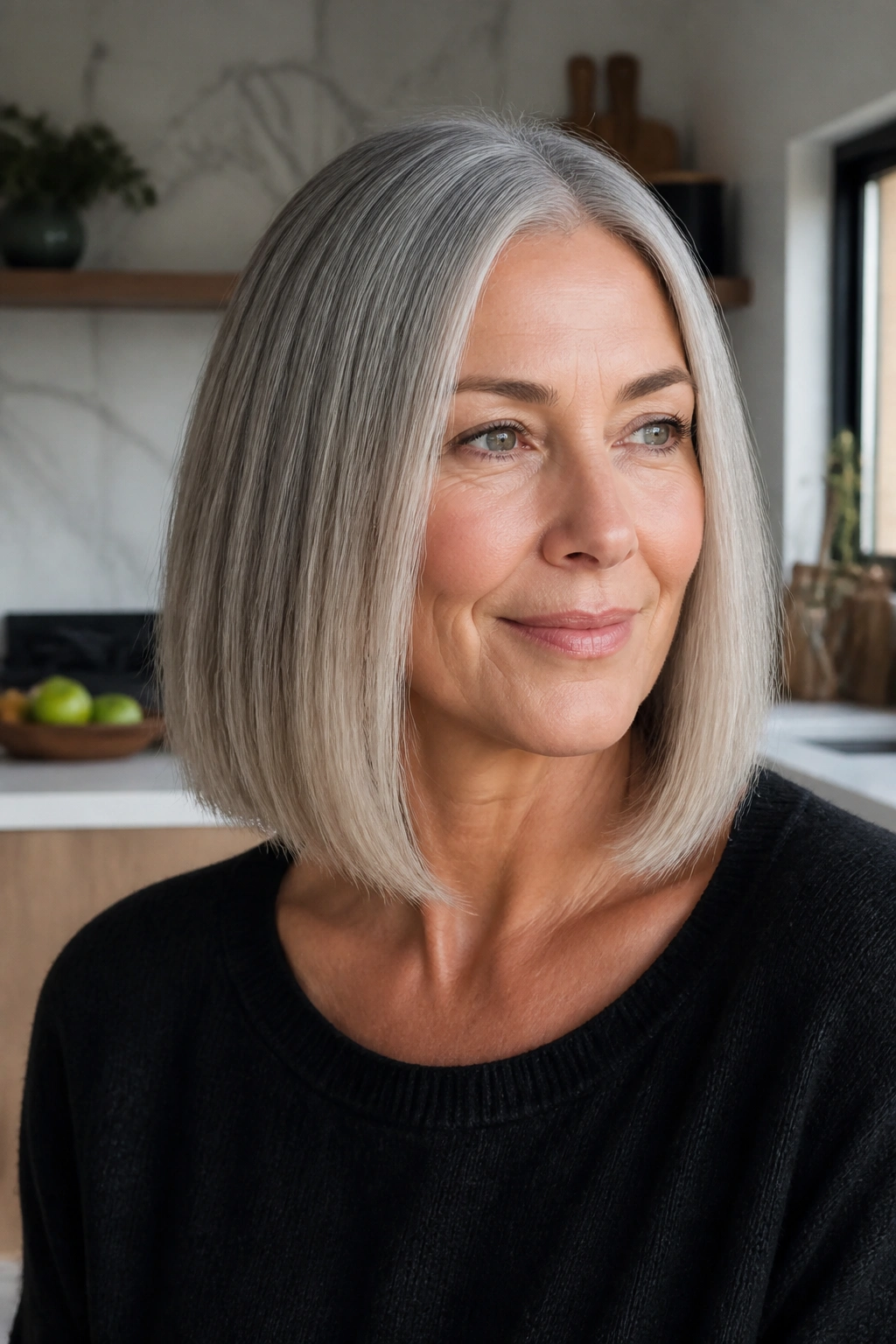
A blunt lob is a strong choice when you want your hair to look clean and expensive without actually spending half the morning on it. The straight edge gives the cut a denser look, which is handy if your hair has thinned a bit through the ends. The trick is to soften the last half inch with point cutting so the line stays sharp but not harsh.
This style is especially good for gray hair because silver strands reflect light cleanly when the surface is smooth. That is one reason a blunt lob can look so crisp in real life. It catches the eye quickly, and it does not need much fuss.
If your hair tends to puff at the shoulders, ask your stylist to keep the perimeter just above or just below the collarbone. That small placement choice can decide whether the cut flips out or falls neatly.
5. Curtain Bangs with Mid-Length Layers
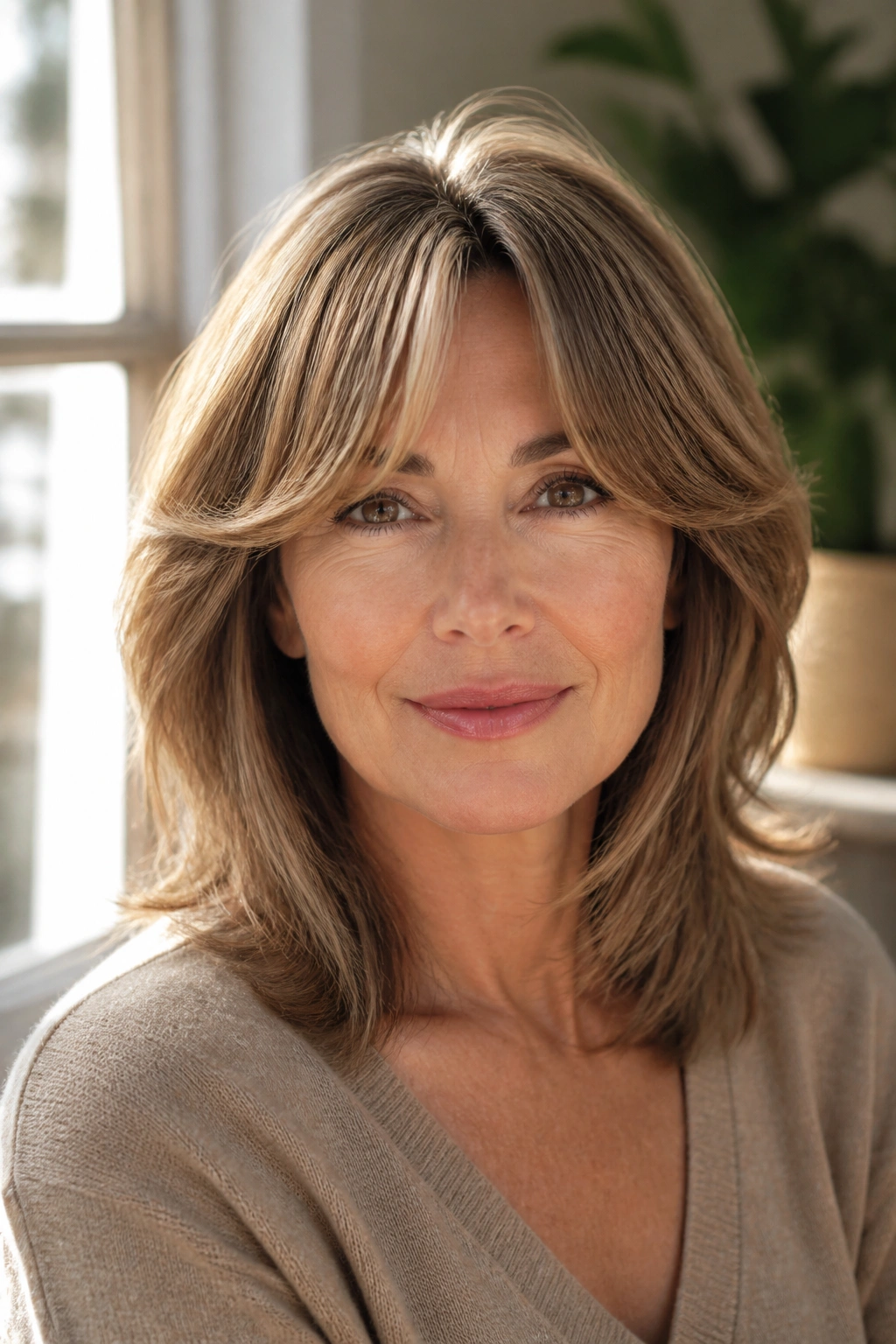
Curtain bangs can change a plain shoulder cut faster than most people expect. They split softly at the center, skim the cheekbones, and make a medium-length style feel intentional even on days when the rest of the hair is barely cooperating.
What makes them so useful after 50 is the way they frame the upper face without sitting in one hard line. If you have a higher forehead, a stronger jaw, or a face that feels too long in a straight style, curtain bangs bring the eye inward. They also play nicely with gray roots and silver streaks, which can be a blessing when you are growing out color.
Ask for bangs that hit somewhere between the brow and the top of the cheekbone when dry. Wet hair lies, and fringe often shrinks more than people think. That tiny bit of extra length saves a lot of regret later.
6. Tousled Waves with Razored Ends
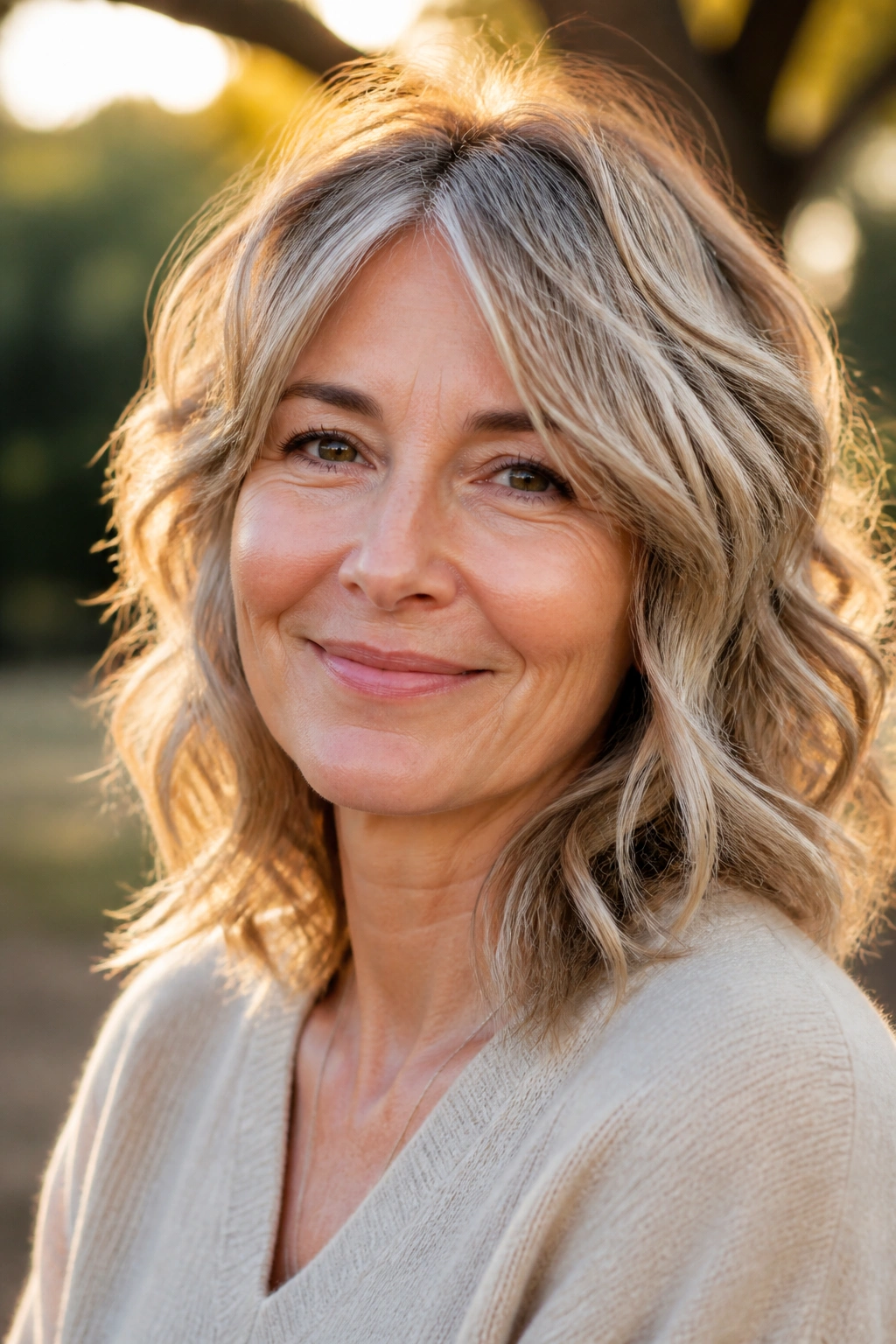
A little texture goes a long way here. Razored ends make the shape airy, which keeps shoulder-length waves from turning into a heavy curtain. The cut feels relaxed, but not sloppy. That is a harder balance than it sounds.
This is one of the best medium length hairstyles for women over 50 who want movement without obvious layering. The razoring lightens the lower half of the hair, so the waves stack instead of sitting in one flat sheet. If your hair has a natural bend, this haircut will work with it. If your hair is pin-straight, a 1-inch curling iron and a quick brush-out will create that soft, broken-up finish.
What to Watch For
- Keep the razoring mostly near the ends.
- Use a heat protectant before curling.
- Wrap sections away from the face for a softer frame.
- Finish with a dry texture spray, not a sticky hairspray.
7. Inverted Lob with Longer Front Pieces
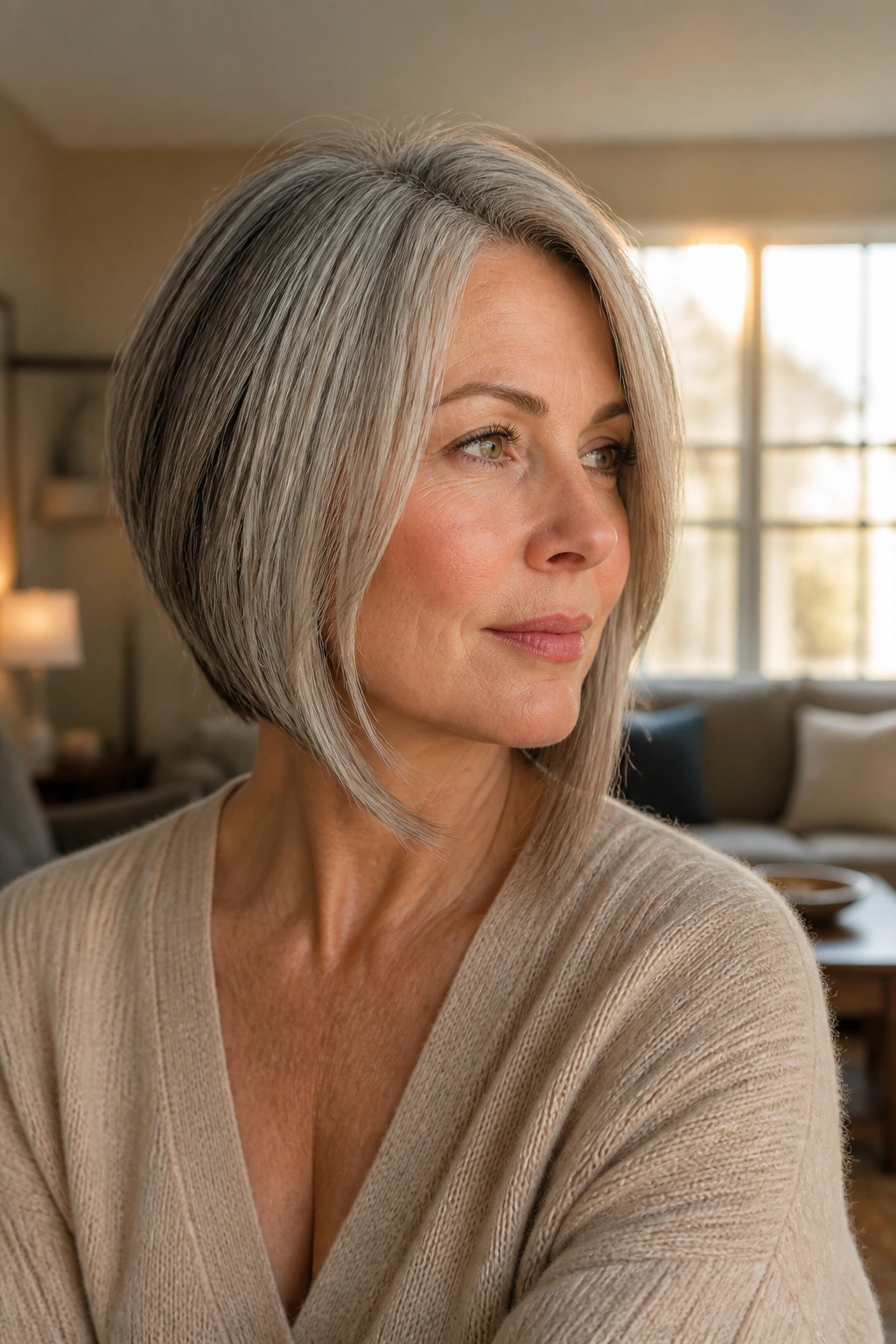
An inverted lob is shorter in the back and slightly longer in the front, which gives the haircut a neat, lifted look right away. It is a smart choice if your hair tends to collapse at the nape or if you want the neck to look a little longer and cleaner.
The angle also helps create the feeling of structure without making the cut severe. That matters. Too much angle can look dated fast. A gentle slope, though, gives you shape and motion at the same time. On gray or salt-and-pepper hair, the diagonal line looks sharp in a good way.
This cut works best when the front pieces graze the chin or just skim below it, not when they drag all the way down. You want enough length to soften the jaw, but not so much that the shape loses its lift.
8. Choppy Midi Shag
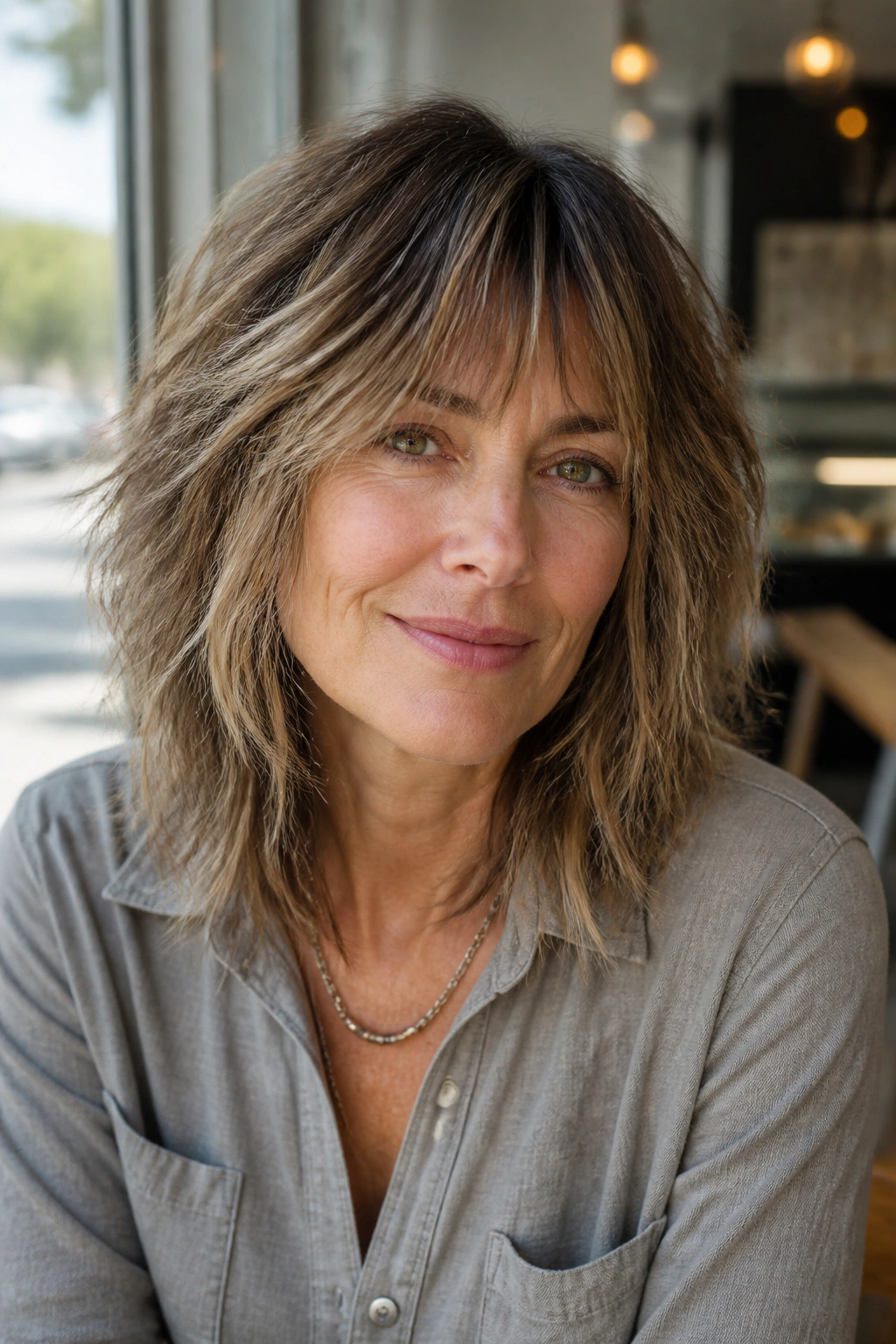
Some haircuts whisper. This one has a little attitude. A choppy midi shag uses broken-up layers and piecey texture to create a cut that looks relaxed even when it has not been perfectly styled.
It’s a strong pick for women who want something modern without going short. The choppiness keeps the crown from falling flat, while the longer middle layers stop the cut from turning into a triangle. If your hair has a wave pattern that seems to appear only on one side of your head, the uneven texture actually helps. Strange as it sounds, a shag often looks better when it is not over-controlled.
A dab of mousse at the roots and a touch of pomade on the ends is often enough. Do not pile on products. This cut wants separation, not helmet hair.
9. Voluminous Blowout Layers
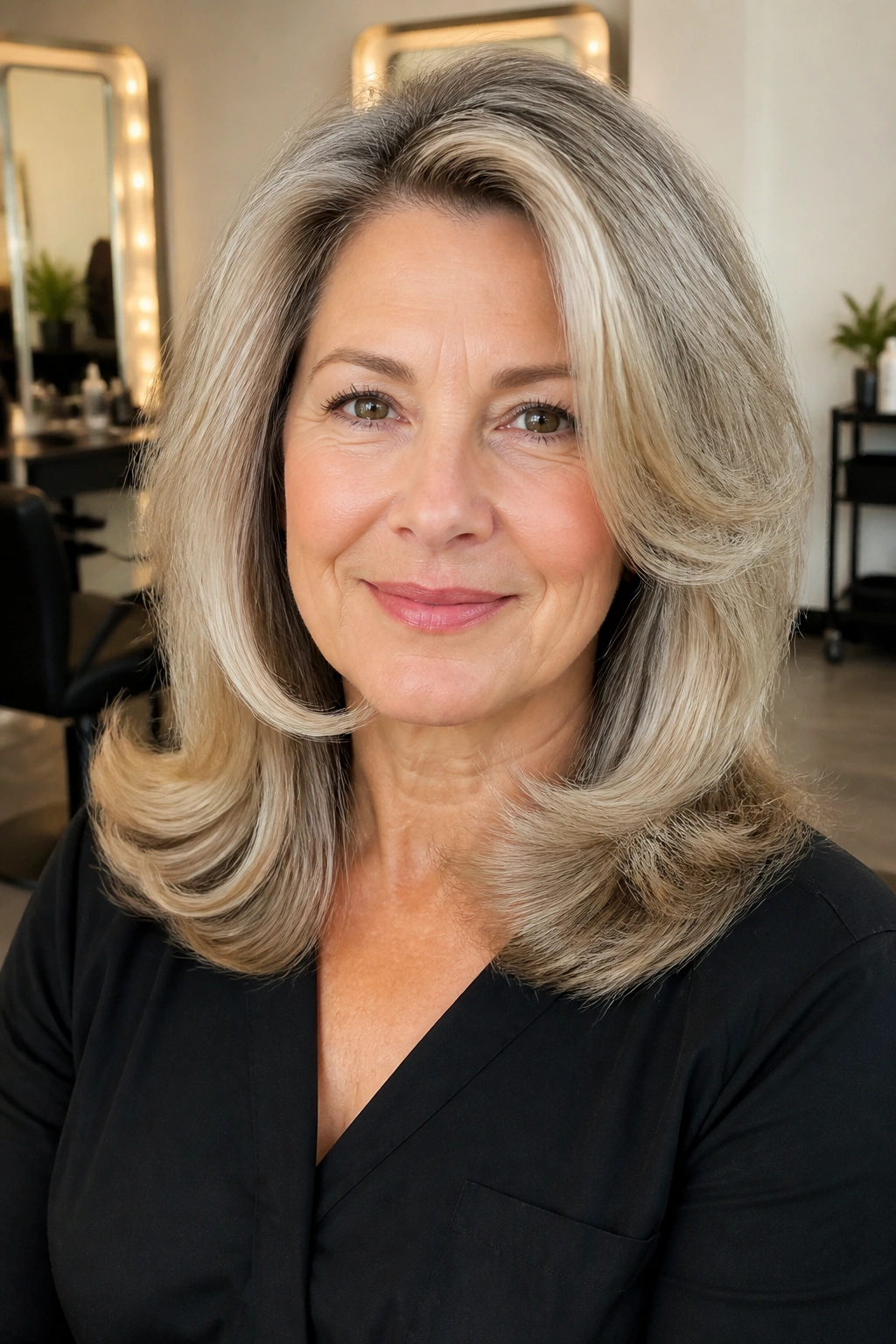
If you like hair with a little lift, a voluminous blowout cut gives you room to build it. The layers are placed to support bounce through the sides and crown, which makes the style useful when hair has lost a bit of body over time.
The best version sits around the shoulders and uses long internal layers, not short chopped ones. That keeps the style from feeling thin at the ends. A round brush with a 1.5-inch barrel works well for the blow-dry, especially if you roll the top sections away from the face and set them with clips until they cool.
Styling Notes
A root-lift spray at the crown helps. So does drying the roots first and the ends later, which is the opposite of what a lot of people do out of habit.
- Blow-dry the top first for height.
- Lift the crown with clips while it cools.
- Turn the ends under just once.
- Finish with a light flexible spray, not a stiff lacquer.
10. Fine-Hair Shoulder Cut with Internal Layers
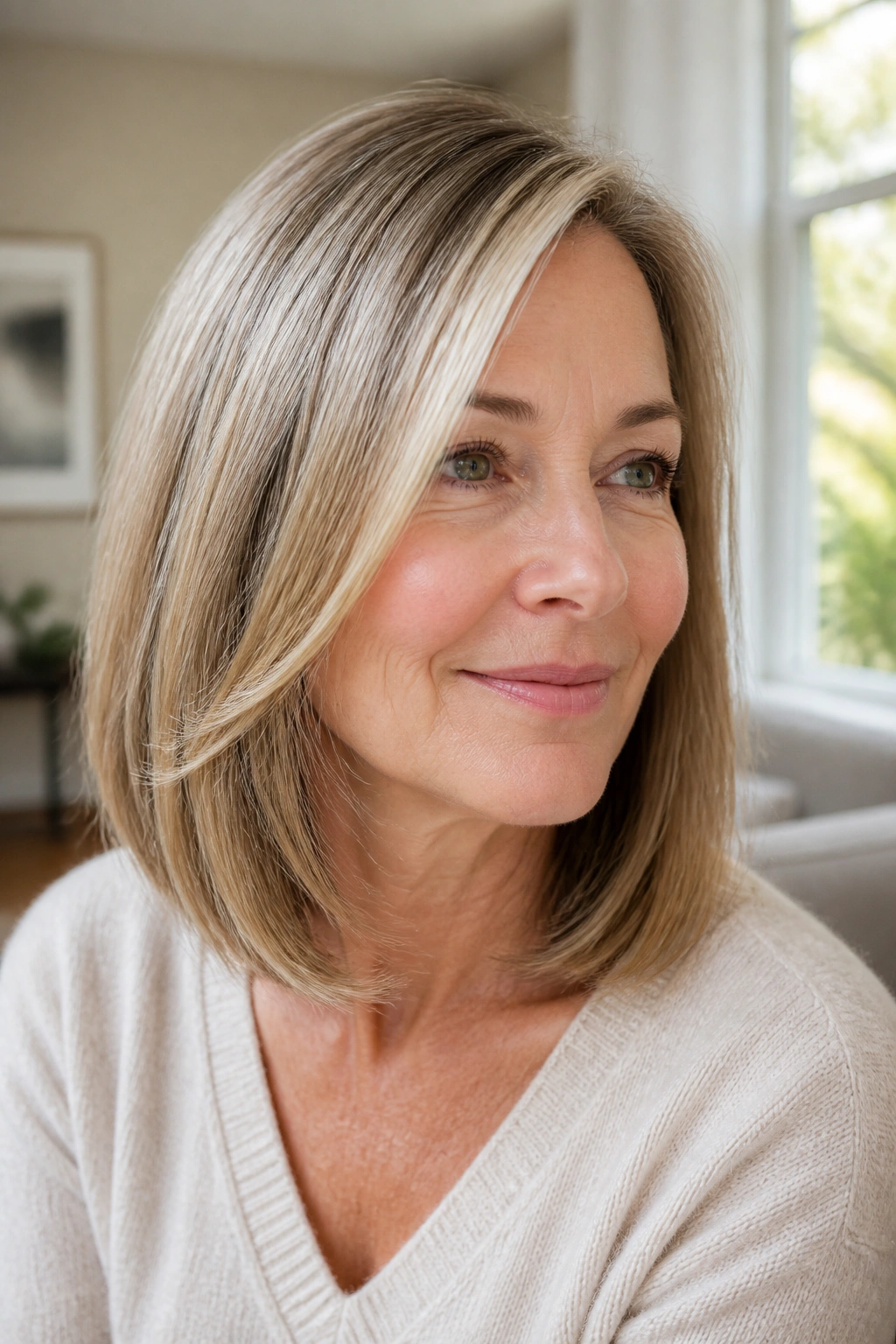
Why do some shoulder cuts look full and others look stringy? Usually, the difference is in the layers you cannot see. Internal layers remove weight from the middle of the hair, which creates lift without making the outline thin.
This is a smart cut for fine hair because it keeps the perimeter strong. Too many visible layers can make fine strands look feather-light in a bad way. Ask for a blunt outer line with subtle interior shaping. That gives the ends a sense of thickness, which is what people usually want when their hair starts feeling sparse.
A side part helps too, but the real win is how easy this cut is to style. A small round brush, a light volumizing mousse, and 10 minutes is usually enough to make it look awake.
How to Ask for It
Tell your stylist you want full-looking ends and soft interior movement. Those words matter more than asking for “lots of layers,” which can go sideways fast on fine hair.
11. Silver Bob with Tucked Under Ends
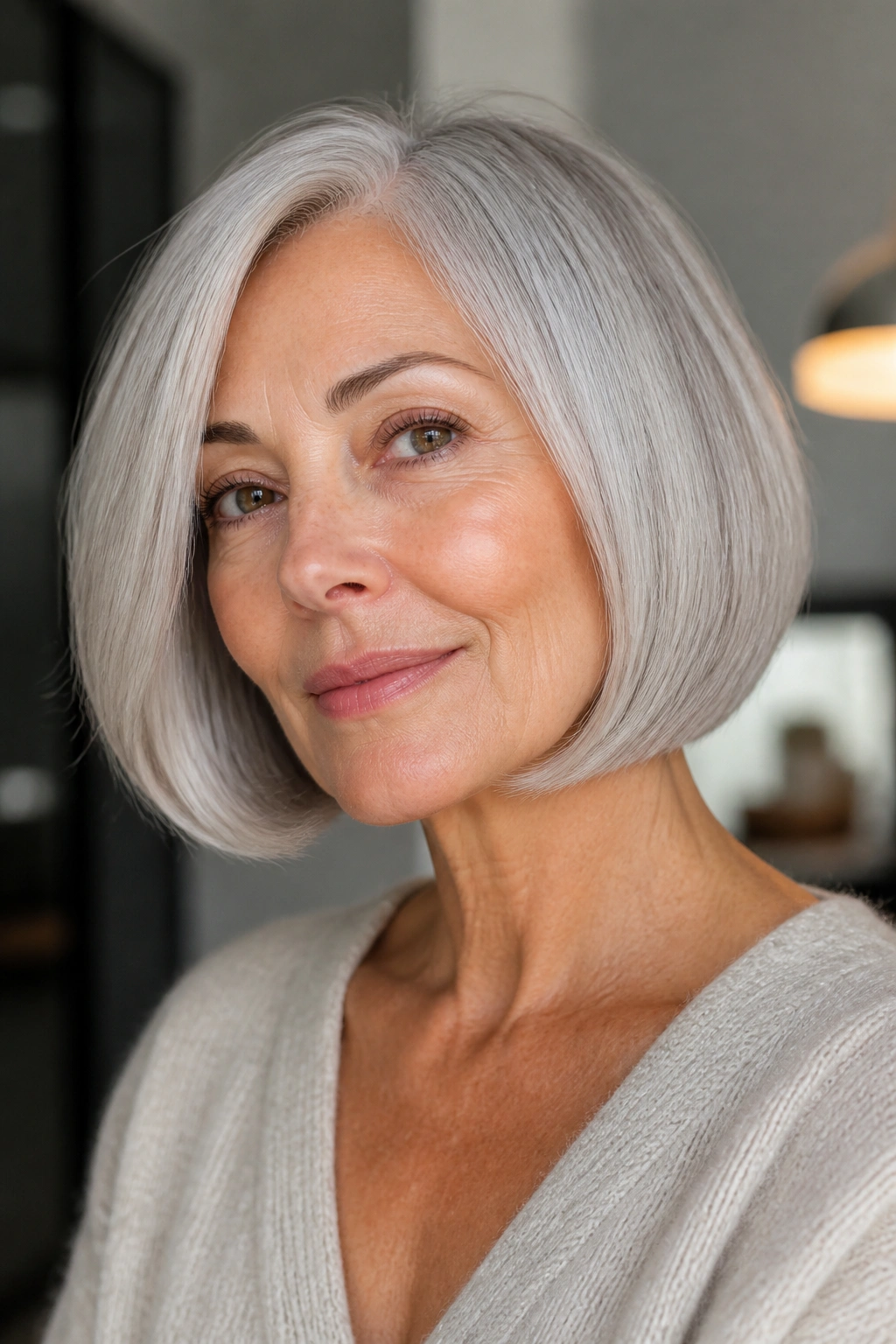
A silver bob does not need to be long to count as medium, especially when the shape sits right at the jaw or just below it. Tucked-under ends give the cut a crisp finish, and that neat curve can make gray hair look polished without feeling fussy.
This style has a nice side effect: it makes glasses sit better. Hair that flares outward around the cheeks tends to fight frames. Hair that curves inward settles more calmly around the face. It also works well if your hair is naturally straight or if you like using a flat brush while drying.
I like this cut for women who want a clean line and do not want layers all over the place. It is sharp, but not severe. There is a difference, and it matters.
12. Side-Swept Fringe Lob
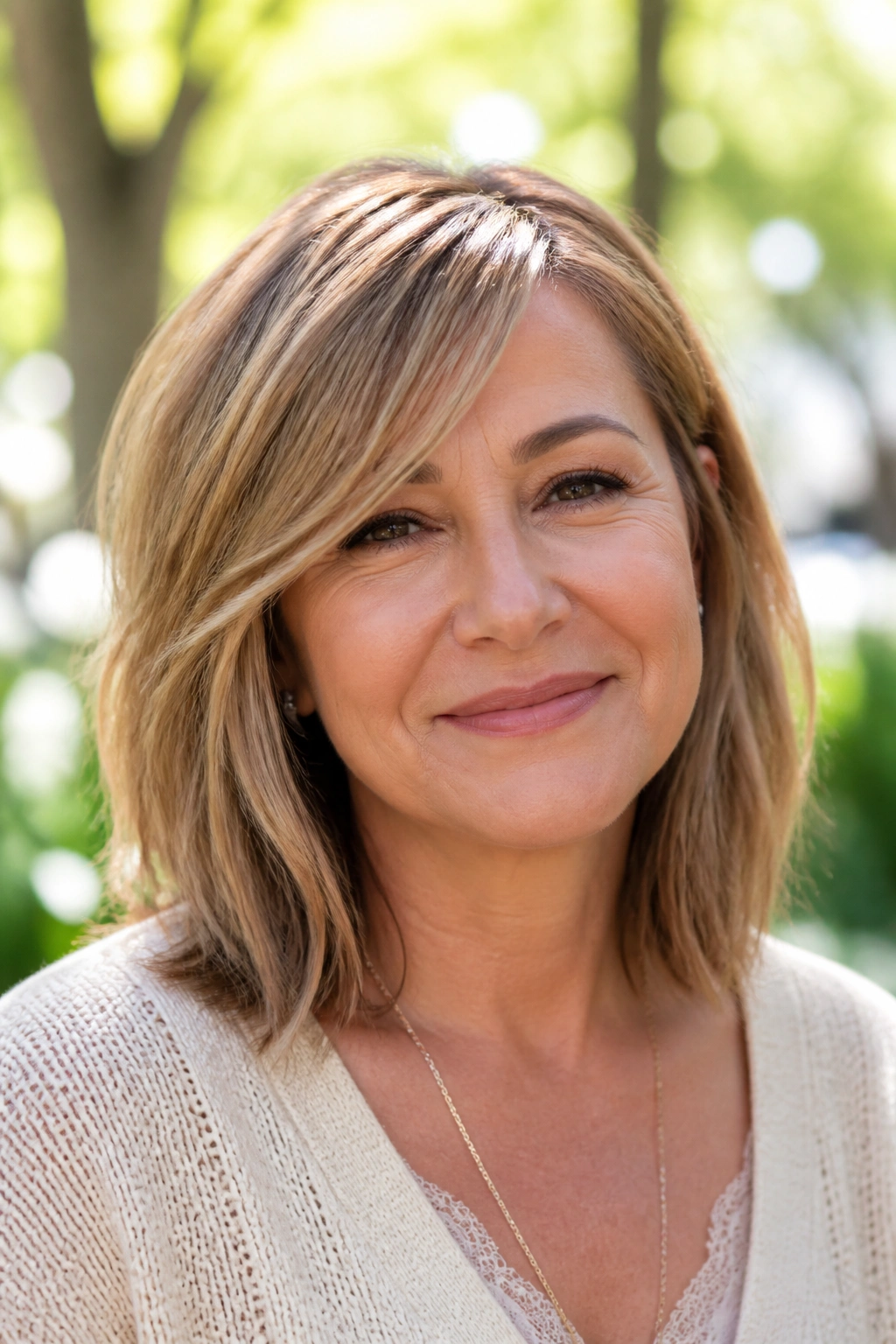
A side-swept fringe is the easy answer for people who want bangs but do not want to feel trapped by them. It softens the forehead, covers a bit of width at the temples, and blends into a lob without drawing too much attention to itself.
Compared with curtain bangs, side-swept fringe usually looks a little more classic. It is also less fussy on days when you just want to brush and go. If your hair has a stubborn cowlick near the front hairline, this fringe can hide it better than a blunt bang. The longer sweep gives the hair something to do.
Keep the fringe long enough to tuck behind the ear if needed. That small detail helps on windy days and on the mornings when you decide you do not want bangs after all. We all have those mornings.
13. Air-Dry Layered Cut
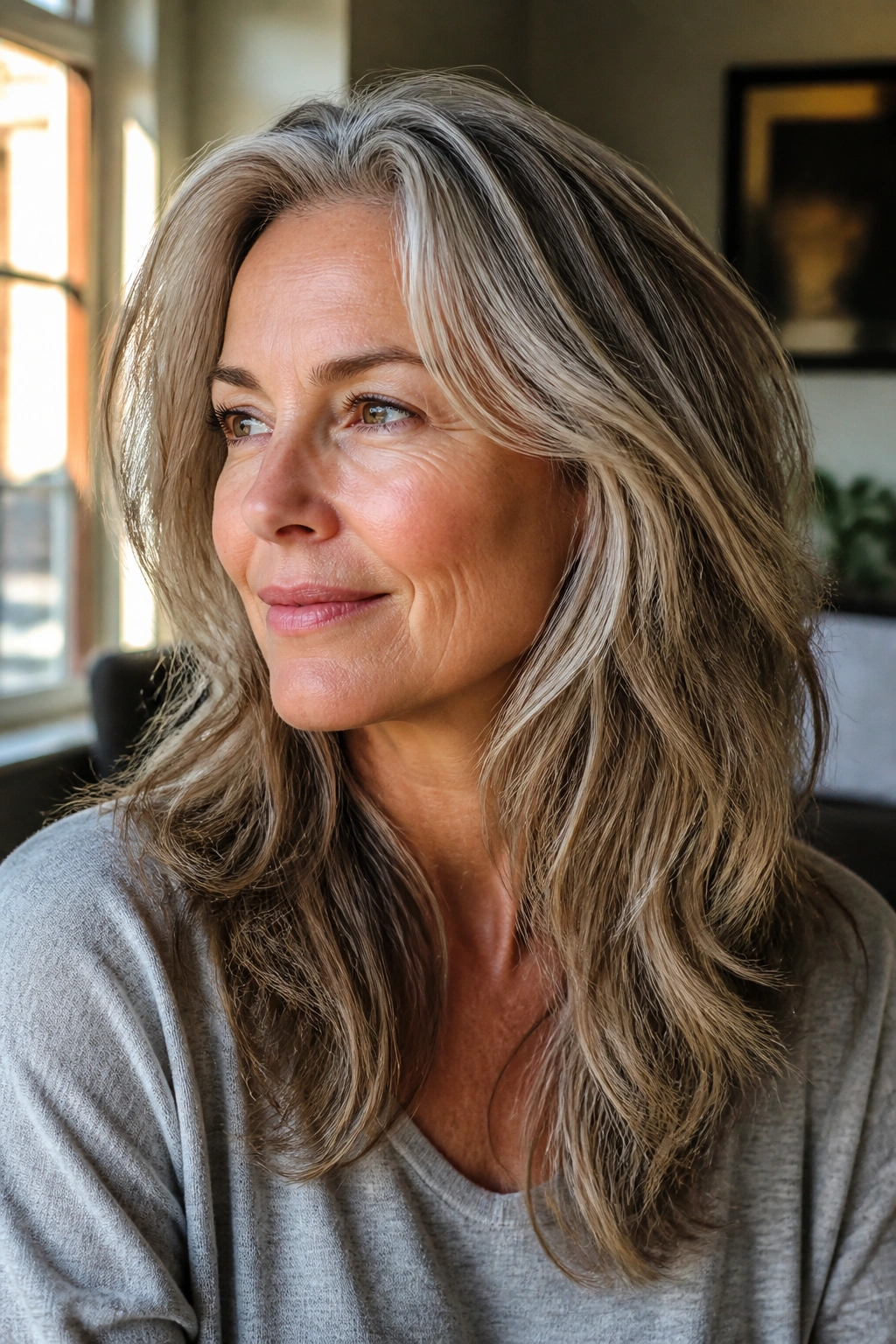
Some cuts only look good after a blowout. This is not one of them. An air-dry layered cut is built for hair that bends, curls, or frizzes a little as it dries, which makes it practical for women who do not want to spend time with a hot tool every day.
The key is long, soft layers that support the natural texture instead of forcing it into a shape it cannot hold. A leave-in conditioner and a light curl cream are often enough. Put them on while the hair is still damp, scrunch once or twice, and leave it alone. That last part matters more than people like to admit.
Products That Help
- Leave-in conditioner for slip and softness.
- Curl cream for wave memory.
- A microfiber towel to cut down on rough frizz.
- A tiny bit of oil on the ends after drying.
14. Straight Mid-Length Cut with Face-Framing
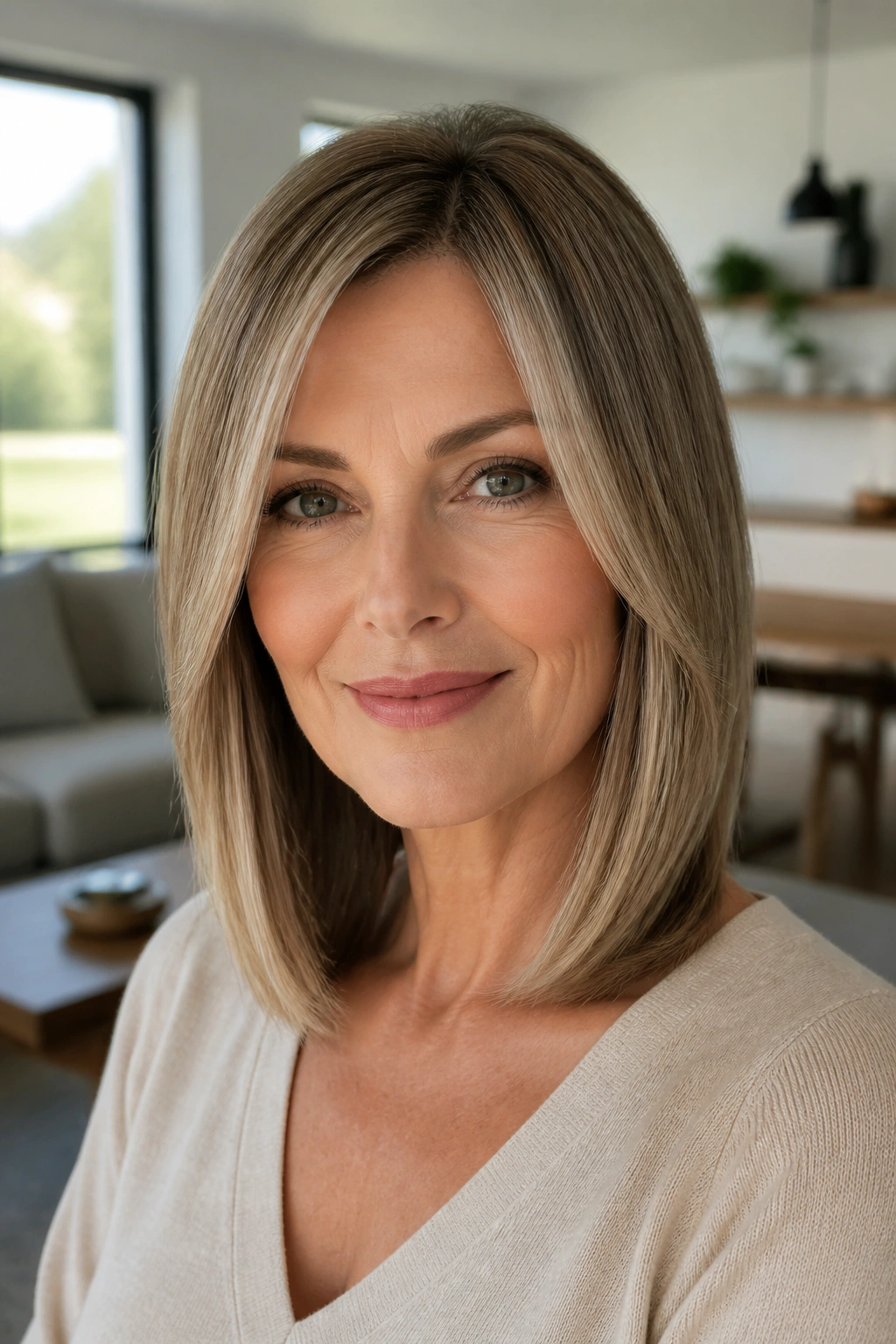
Straight hair can look harsh when it is cut without any softness near the face. A mid-length cut with face-framing pieces solves that neatly. The overall line stays straight, which keeps the style clean, while the front pieces open the face enough to avoid that heavy blocky look.
This is one of the better options if you like a simple profile and do not want obvious layering. It also works well with silver hair because the shine reads clearly on a smooth surface. There is no need to overcomplicate it. The cut itself does the talking.
Ask for face-framing pieces that start around the chin and blend slowly into the rest of the length. If the shortest layer begins too high, the whole cut can feel overworked. Low and gradual is the better move here.
15. Rounded Cut with Light Layers
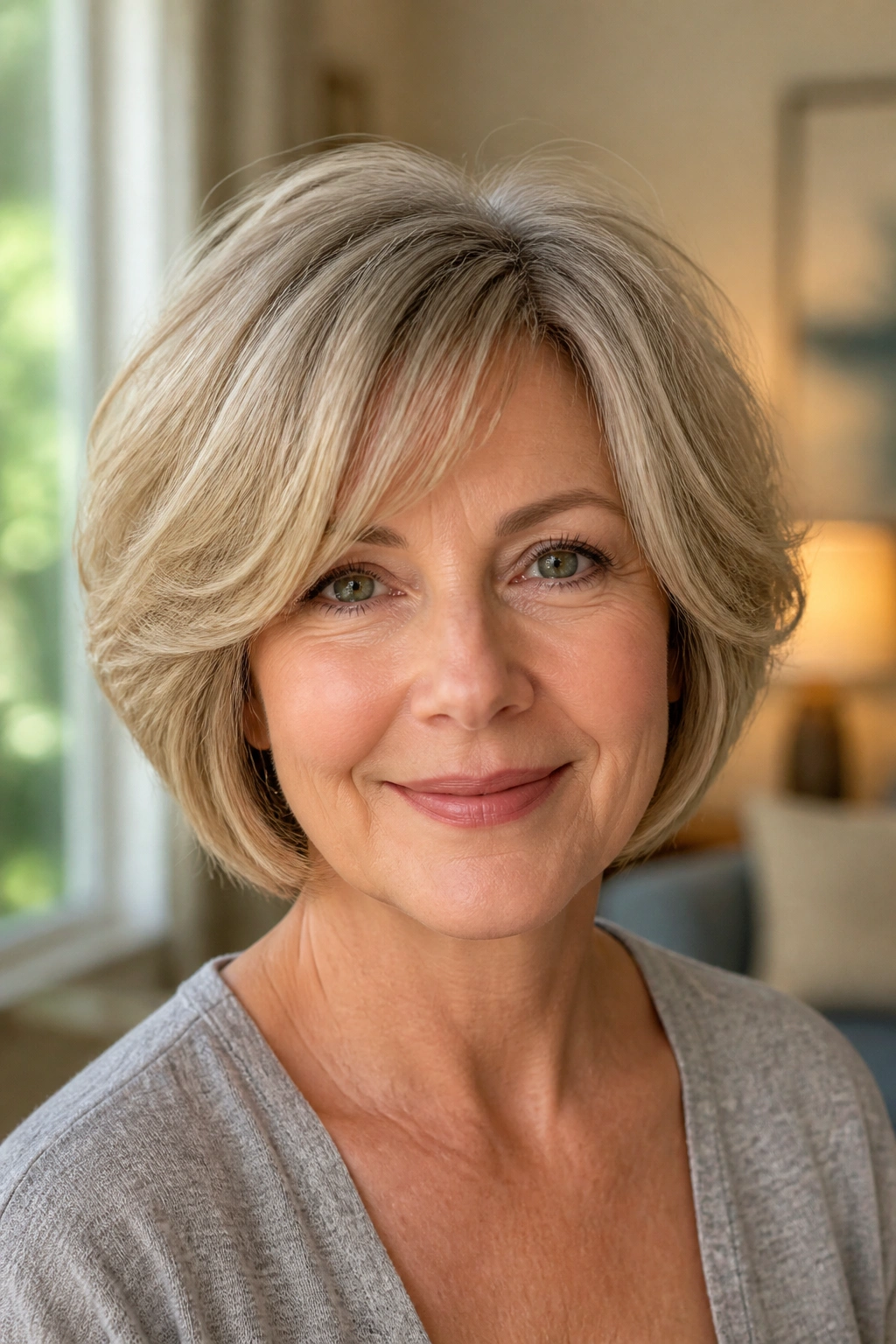
A rounded cut is a nice answer when your hair feels too straight at the sides and too flat at the top. The shape follows the curve of the head and gives the silhouette a little softness, which can be especially flattering on thinner or finer hair.
This cut is more about balanced shape than about obvious texture. Light layers keep the sides from puffing out, and the rounded outline helps the hair sit close to the face in a controlled way. It is a strong choice if you want something neat but not severe.
The easiest styling trick is a medium brush and a blow-dryer focused on the roots first. Once the hair is about 90 percent dry, flip the brush under the ends and let the shape cool. That cooling part locks in the curve better than people expect.
16. Soft Curls at the Collarbone
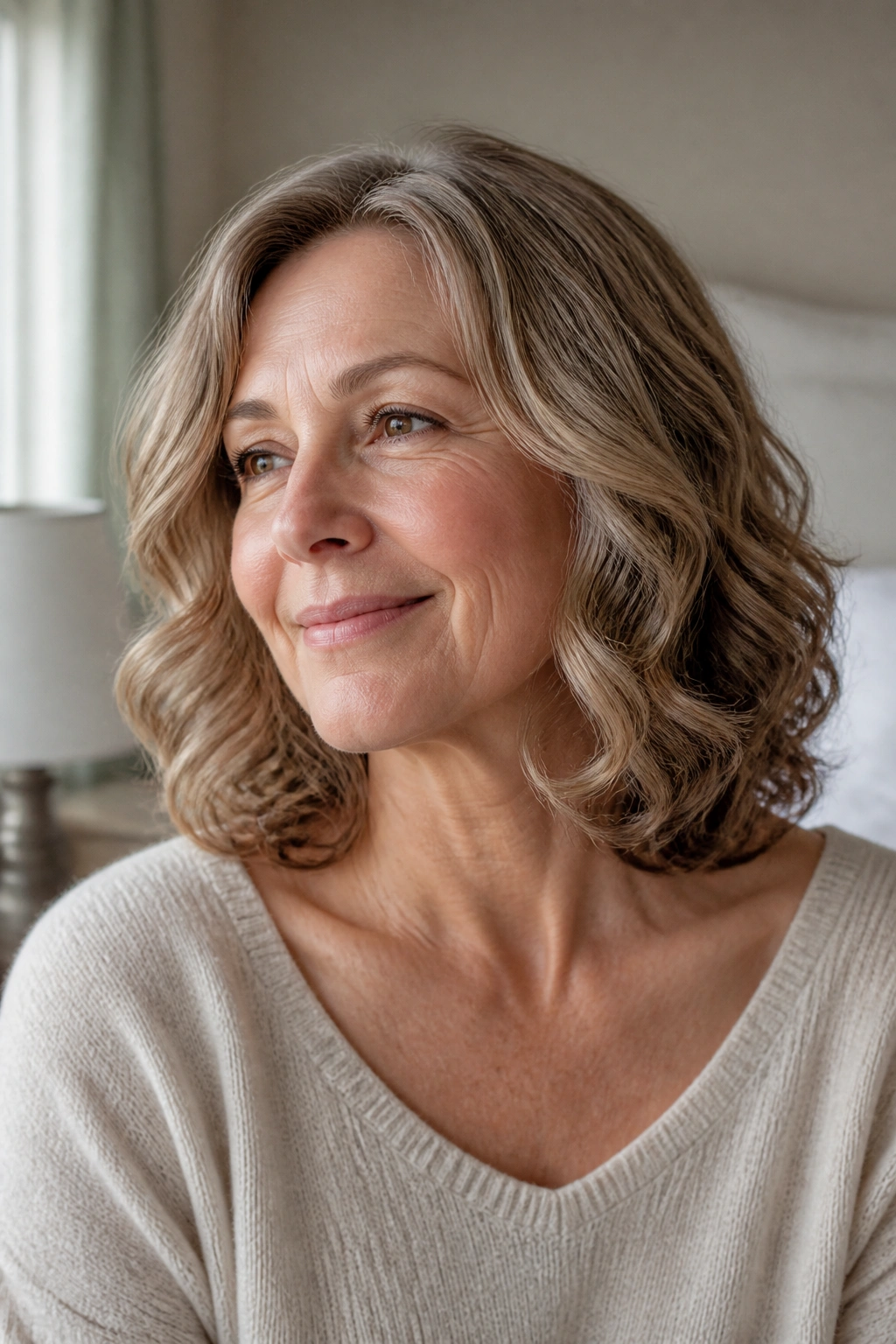
Soft curls at the collarbone give medium hair a little spring without turning it into a formal style. The length is long enough to hold shape, but not so long that the curls drag down and go limp by noon.
If your hair is naturally curly or wavy, this shape keeps the curl pattern from getting stretched out by weight. If your hair is straight, a 1-inch iron or medium rollers can create the bend. The trick is to leave the ends slightly undone. Perfect ringlets can look dated fast. Soft, touchable curls feel fresher.
A Few Details That Matter
- Curl in alternating directions for a looser finish.
- Let the curls cool before you touch them.
- Break them up with your fingers, not a brush.
- Use a humidity-resistant spray if frizz is a problem.
17. Thick-Hair Debulking Layers
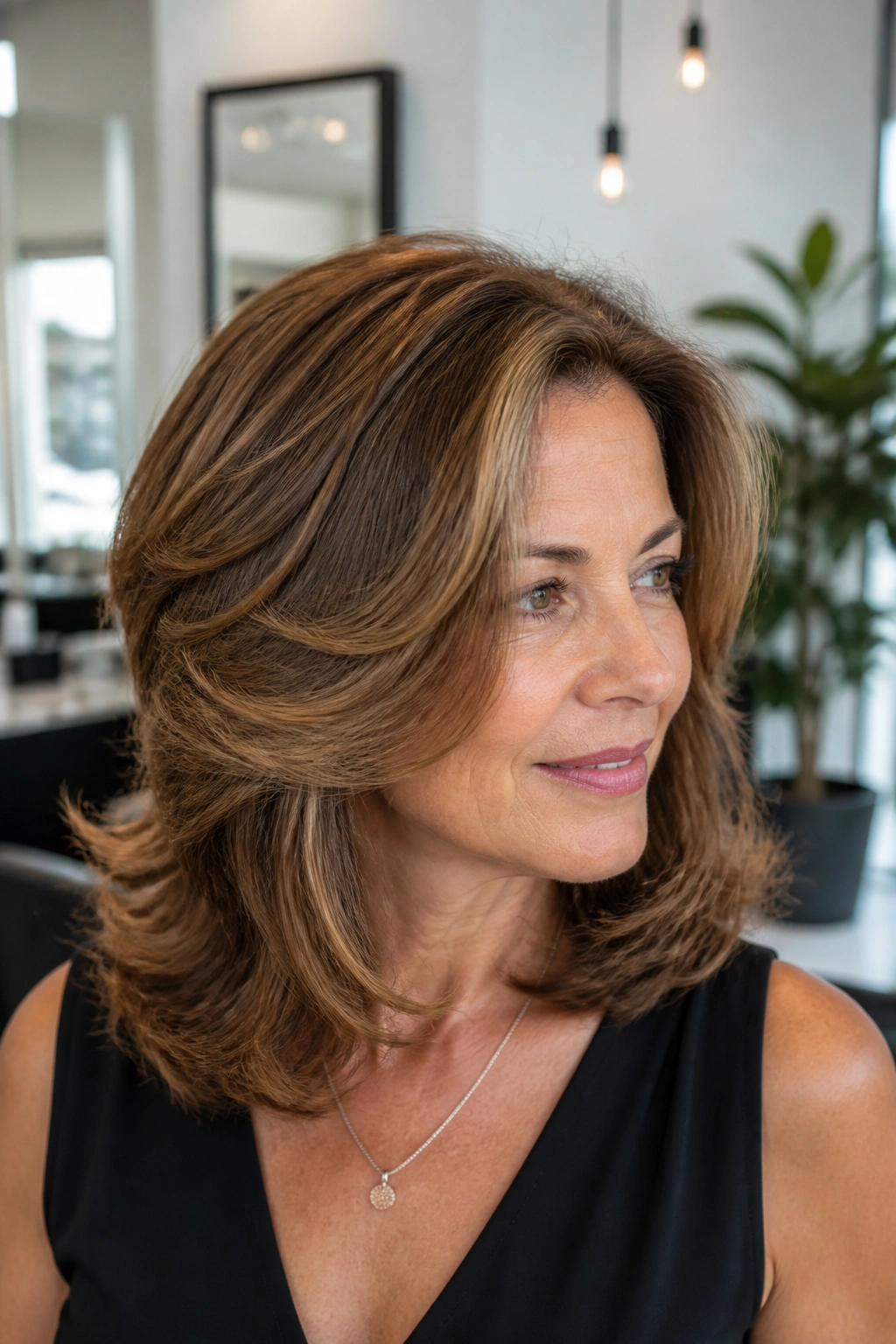
Thick hair can be a gift until it turns into a triangle. Debulking layers fix that by removing weight from the inside while leaving the outer shape intact. The cut feels lighter, moves better, and takes less time to dry.
The mistake a lot of people make with thick hair is over-thinning the ends. That leaves the perimeter looking wispy and uneven. A smarter cut keeps the bulk out of the middle and near the crown, where the hair tends to pile up. Ask for slide cutting or internal weight removal if you want to keep the length but lose the heaviness.
This is one of those styles that looks calm even when the hair is not perfectly styled. That alone makes it worth a closer look.
18. Wedge-Inspired Medium Cut
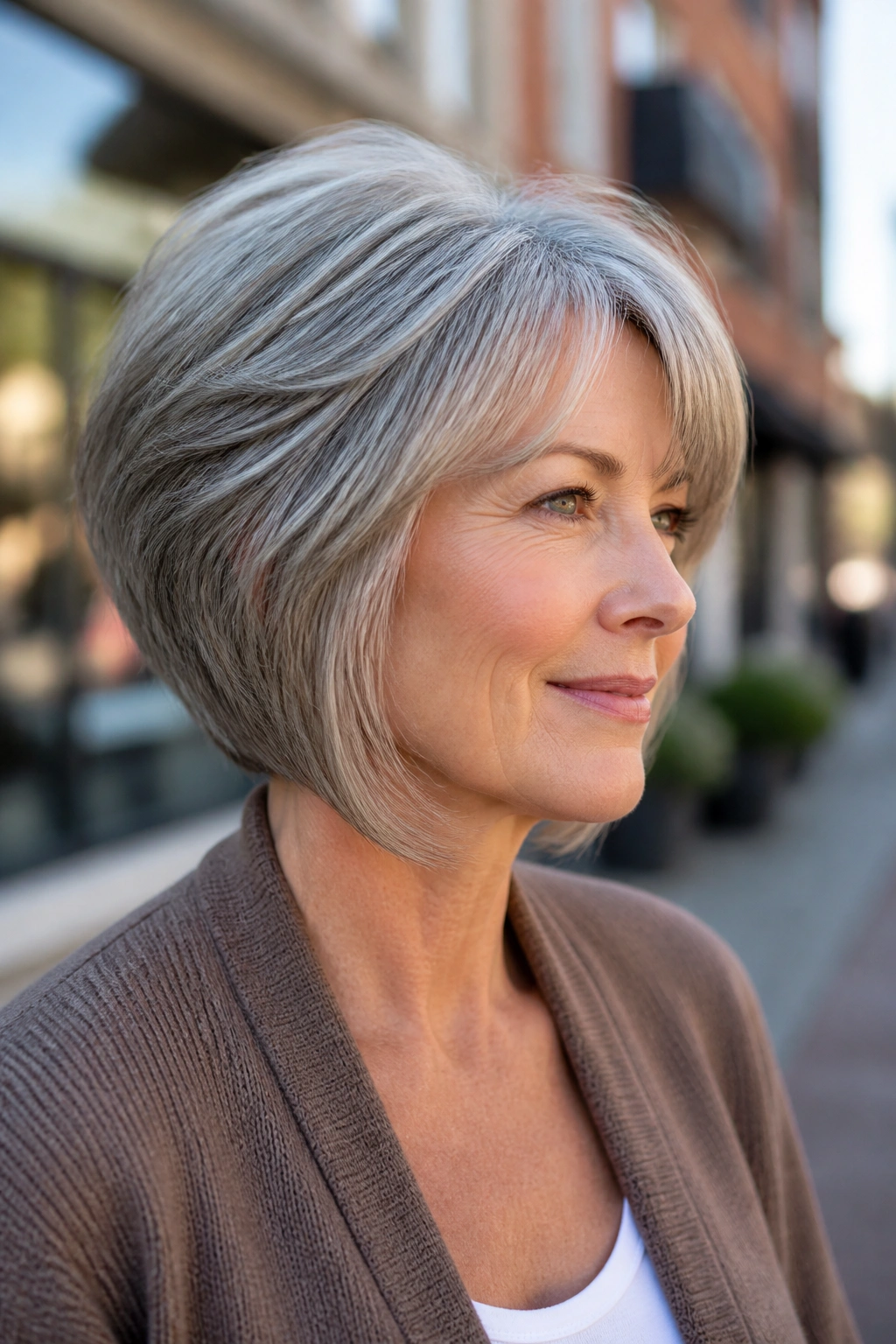
A wedge-inspired medium cut gives you a little lift at the back and a clean angle through the sides without going into full short-hair territory. It is especially handy if your crown tends to flatten and you want something with shape that does not depend on daily volume tricks.
The modern version should be softer than the classic wedge. Think controlled shape, not helmet. The top layers can stay a little longer so the cut flows into the rest of the hair instead of stacking too abruptly. On gray hair, the angle shows off the shape clearly, which can look sharp and tidy.
This cut is also good if you like your hair tucked behind the ears, because the front pieces stay neat instead of flaring out. Small thing. Big difference.
19. Piecey Textured Cut
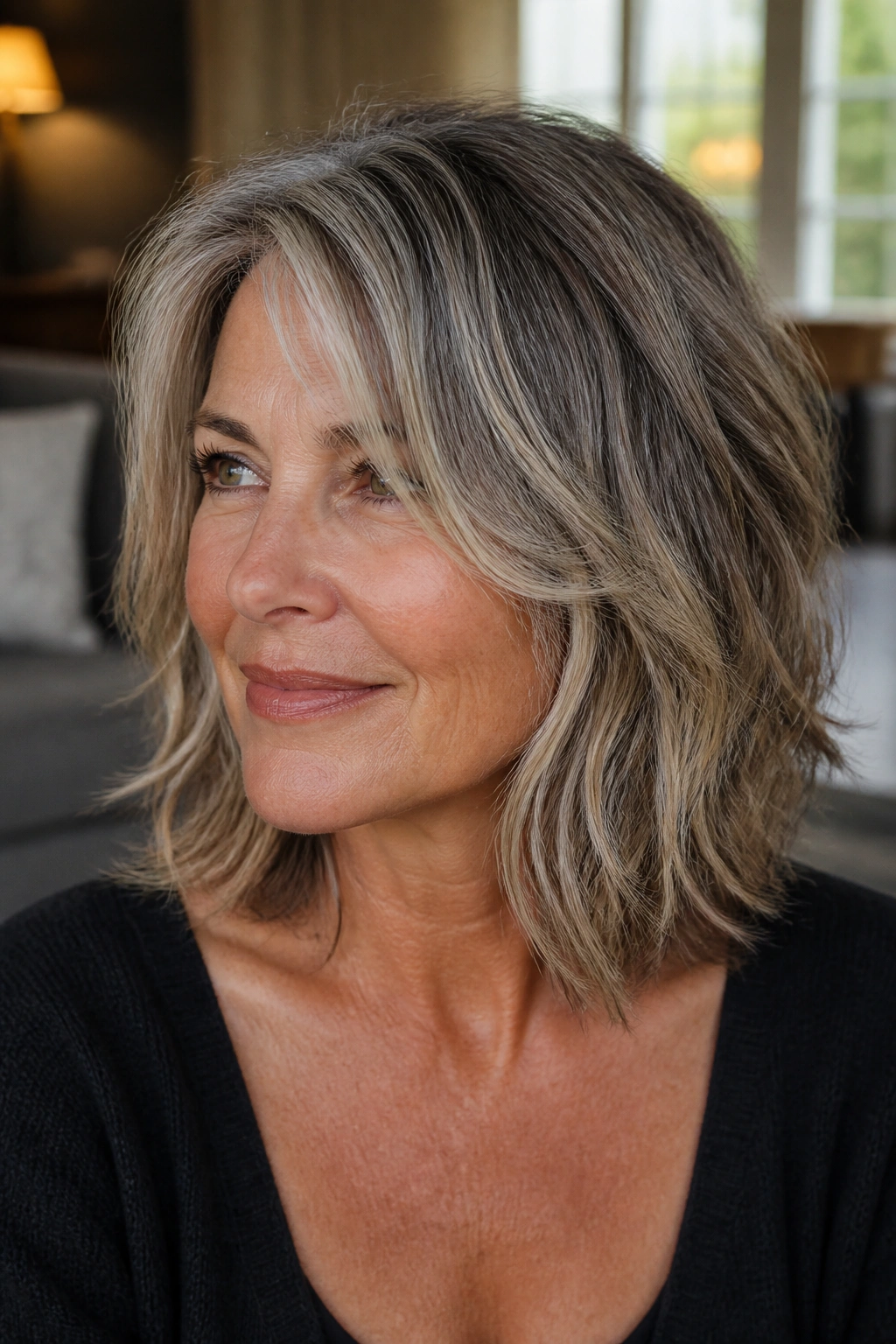
Piecey texture gives the hair separation, which is useful if you want your style to look casual instead of perfectly set. It works well on shoulder-length hair that has a little natural wave or on straight hair that needs a small push from a texturizing product.
The real trick here is restraint. Too much product and the pieces stick together in clumps. Too little and the cut just falls flat. A pea-sized amount of styling paste warmed between your palms is usually enough for the ends. Work it into the last 2 or 3 inches of the hair only.
This style looks especially good on salt-and-pepper hair because the contrasting strands catch the light in different ways. The texture gives those color shifts something interesting to do.
20. Elegant Tapered Cut for Glasses
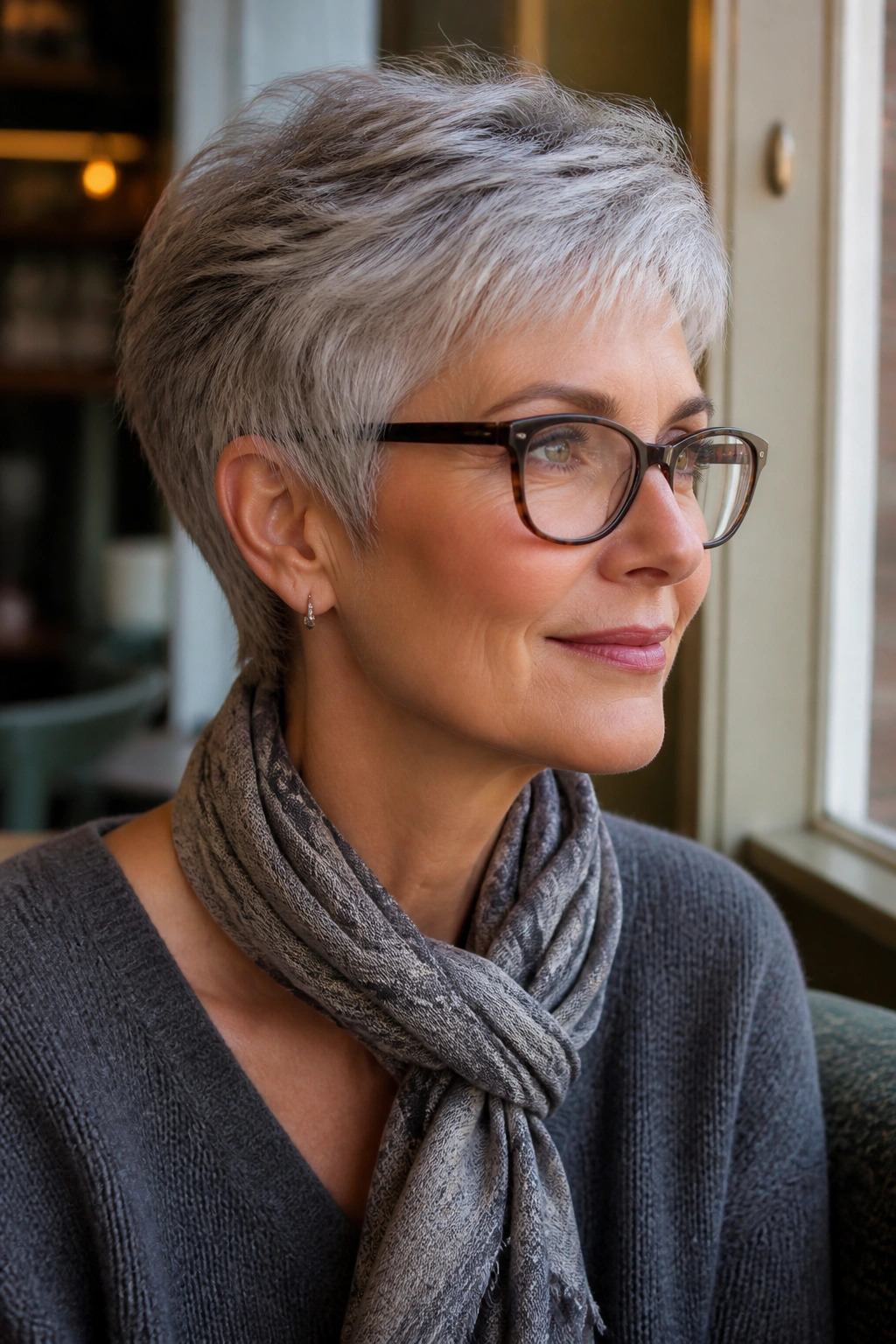
If you wear glasses, you already know the battle: hair can either frame the frames or crowd them. A tapered medium cut solves that by staying a bit narrower at the sides and fuller through the back and top.
This is not a dramatic cut, which is exactly why it works. The taper keeps hair from sitting on the temples, and the length around the jaw softens the face instead of boxing it in. It’s a smart choice for silver hair, too, because the clean shape makes the color look deliberate. There is a nice precision to it.
A quick blow-dry with a paddle brush usually does the job. If you like a little bend at the ends, use a flat iron to turn the front pieces inward by a half-inch. Enough to guide the eye. Not enough to look stiff.
21. Half-Up-Friendly Layered Cut
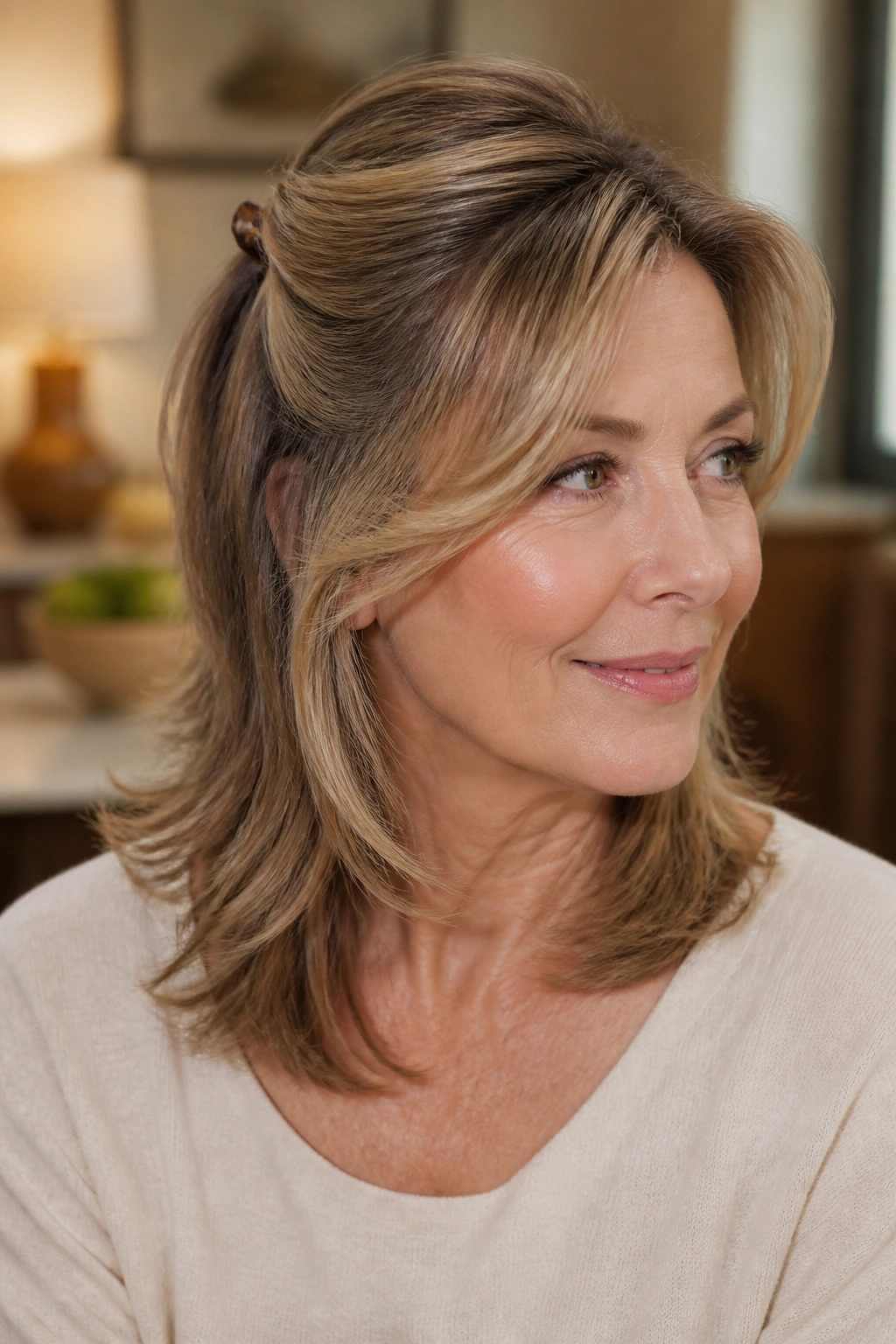
A medium cut that still pulls back easily is one of the most practical things you can wear. This version keeps enough length for a clip, a small ponytail, or a half-up twist, while the layers around the face stop it from feeling too plain when you wear it down.
That matters for busy days. Hair that can flip between “styled” and “out of the way” earns its keep fast. Ask for layers that begin below the cheekbone so the front pieces do not fall out of clips immediately. If they are too short, the whole style becomes annoying.
This is a good choice for women who want options without going long. Options count. They really do.
22. Deep Side-Part Waves
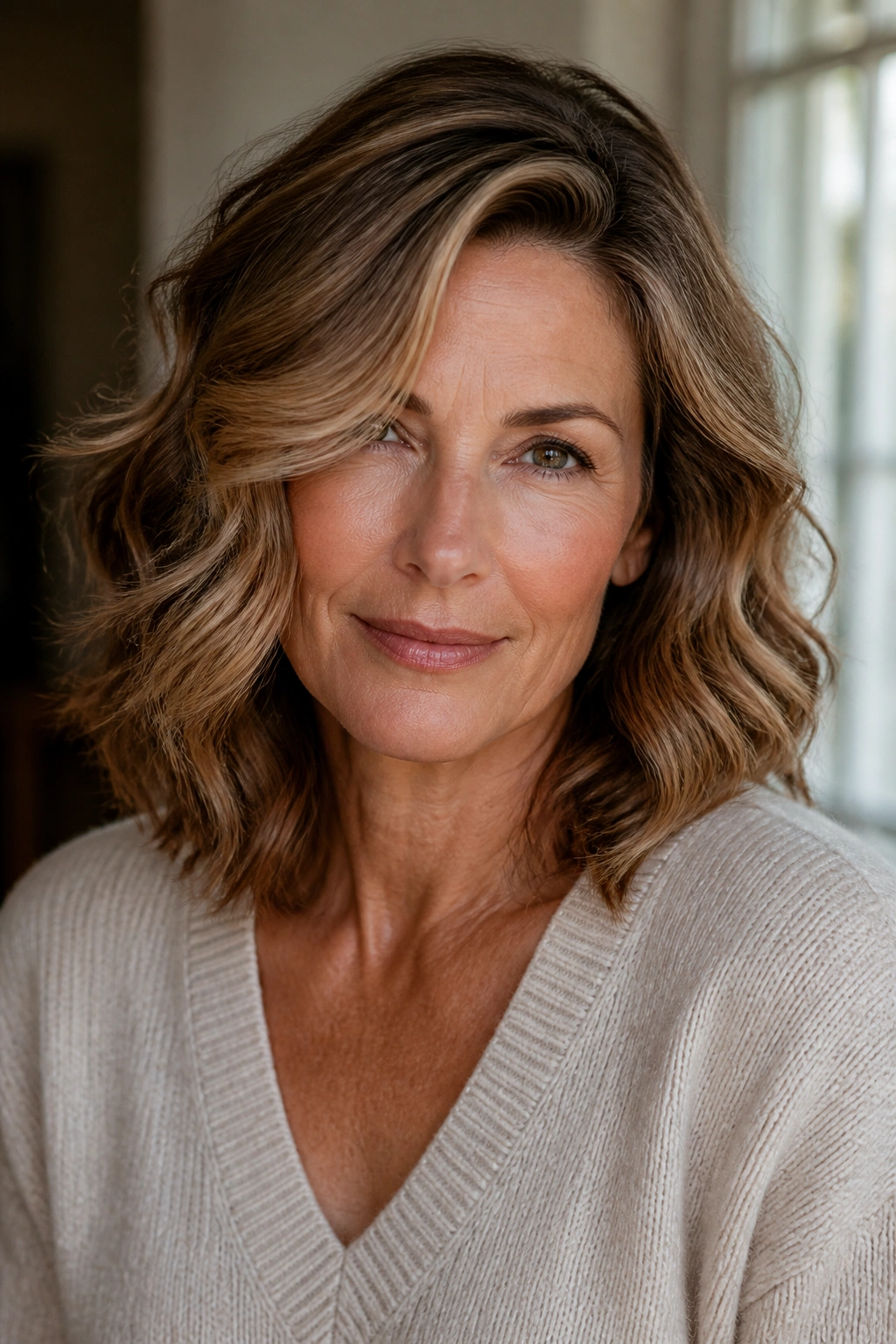
A deep side part changes the whole face, which is why I like it on medium-length waves. It creates a little asymmetry at the top, adds height to one side, and can soften a square or round face without doing anything dramatic.
The waves should be loose and brushed out, not tight and separate. You want a shape that looks soft around the cheek and jaw. A 1.25-inch curling iron or large hot rollers can set the wave pattern, and then a quick finger-comb breaks it up. The side with more volume gives the style its lift.
How to Get the Most From It
- Move the part while the hair is still warm.
- Clip the heavier side up for 5 minutes if you want extra lift.
- Finish with shine spray on the ends only.
- Keep the roots touchable, not stiff.
23. Feathered Flip with Ends Out
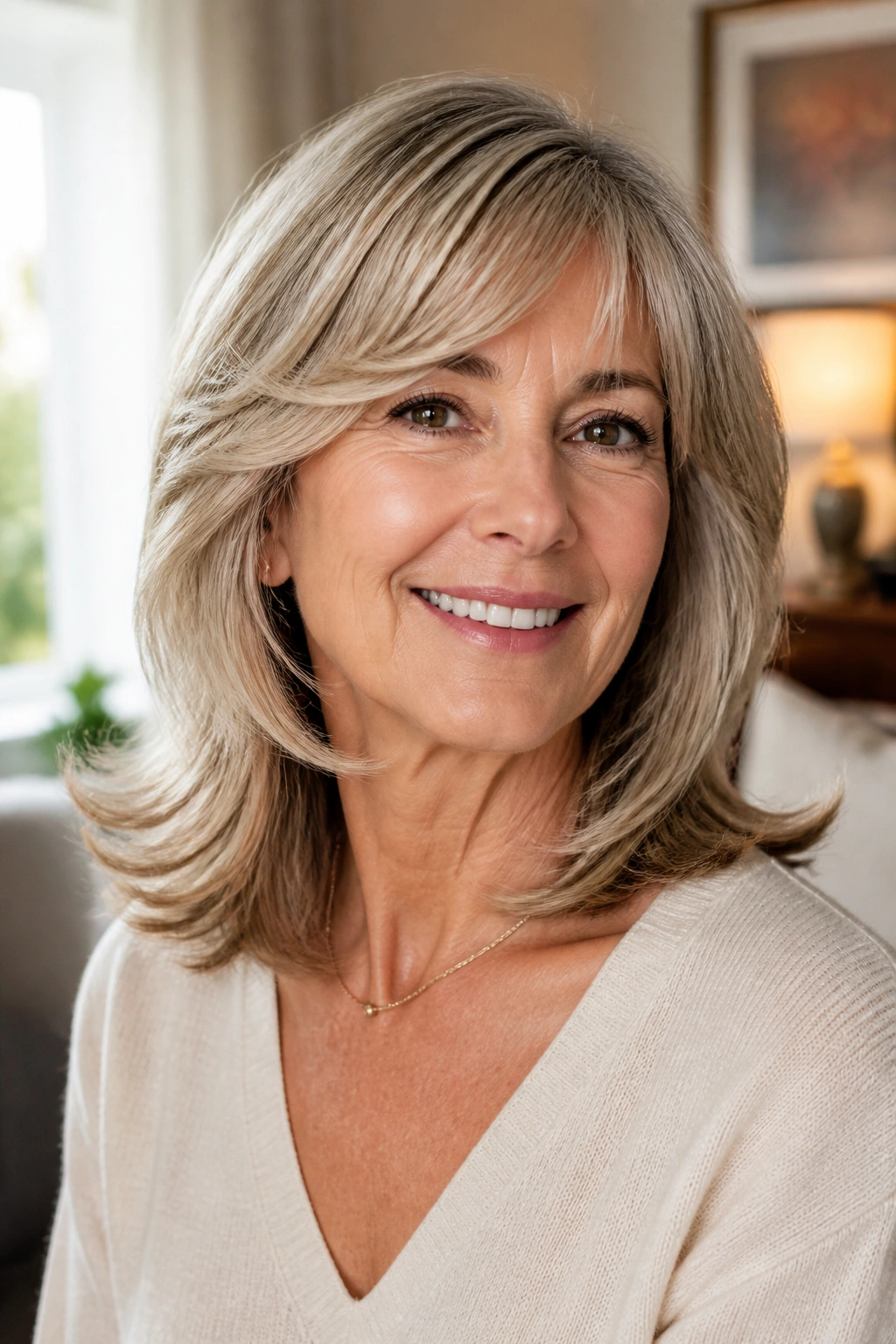
A feathered flip gives medium hair a little movement at the bottom without making it look overdone. The ends turn outward just enough to create a lively shape, and the feathering keeps the body light through the mid-lengths.
It has a bit of retro energy, but the modern version should be softer than the old blowout styles. You do not want huge wings at the sides. You want a gentle flip that makes the cut feel lively when you walk. This style can be especially fun on gray or white hair because the shape looks crisp against a clean color.
Use a round brush or a flat iron to bend the ends out just once. A tiny bit is enough. The cut should suggest movement, not shout for attention.
24. Soft Shag with Long Fringe
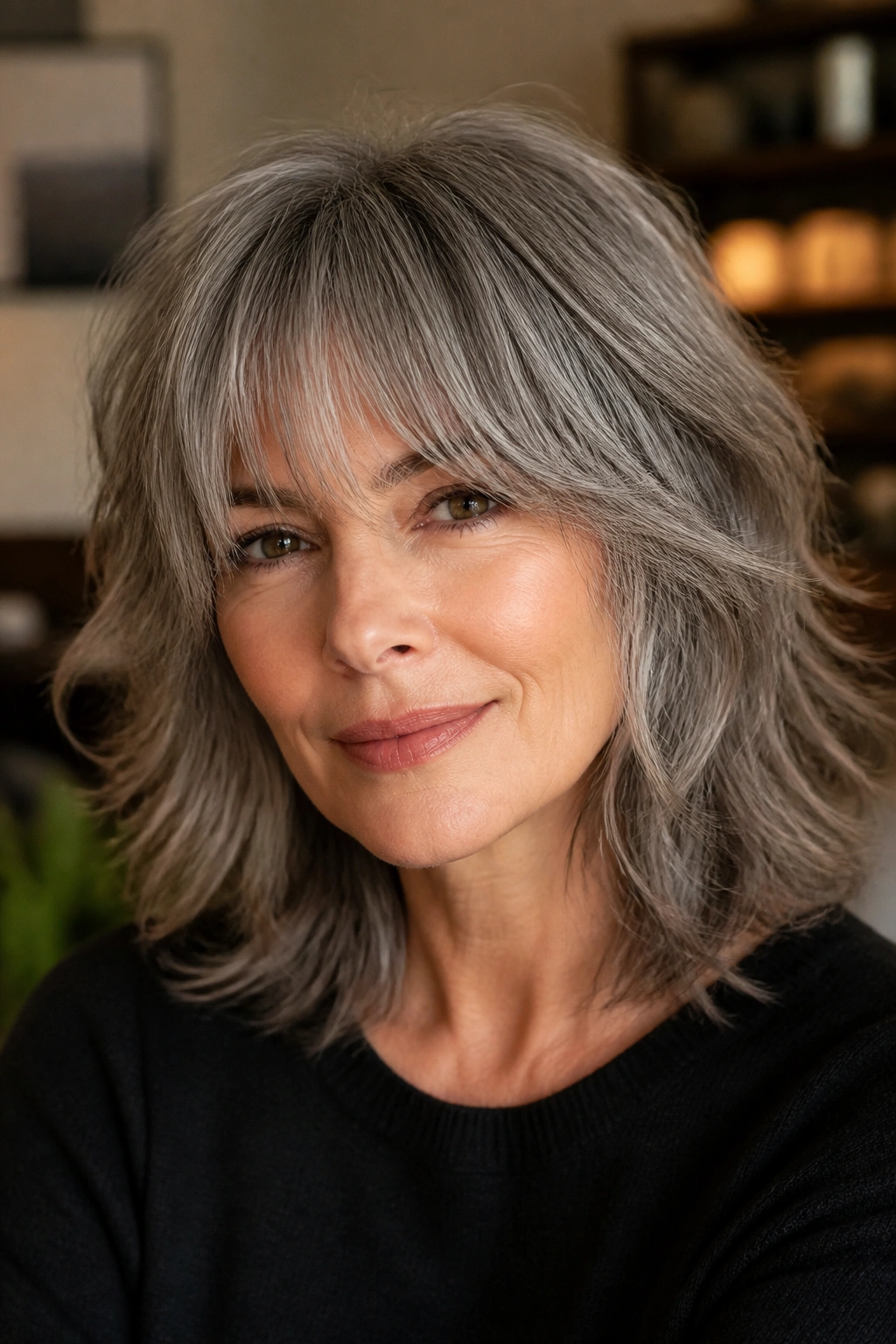
A soft shag with a long fringe is what I recommend when someone wants texture but does not want a cut that looks too chopped up. It has the relaxed shape of a shag, but the layers are longer and easier to grow out. That makes it friendlier for women who are nervous about going too short or too edgy.
The long fringe softens the forehead and blends into the sides, which helps the haircut feel polished rather than wild. If your hair is wavy, this cut can look almost effortless in the best sense of the word. If your hair is straight, a little bend at the front and around the crown keeps it from feeling flat.
This style tends to look best when the ends are a little undone. Not messy. Just lived-in enough that the layers can breathe.
25. Low-Maintenance Medium Cut with Soft Ends
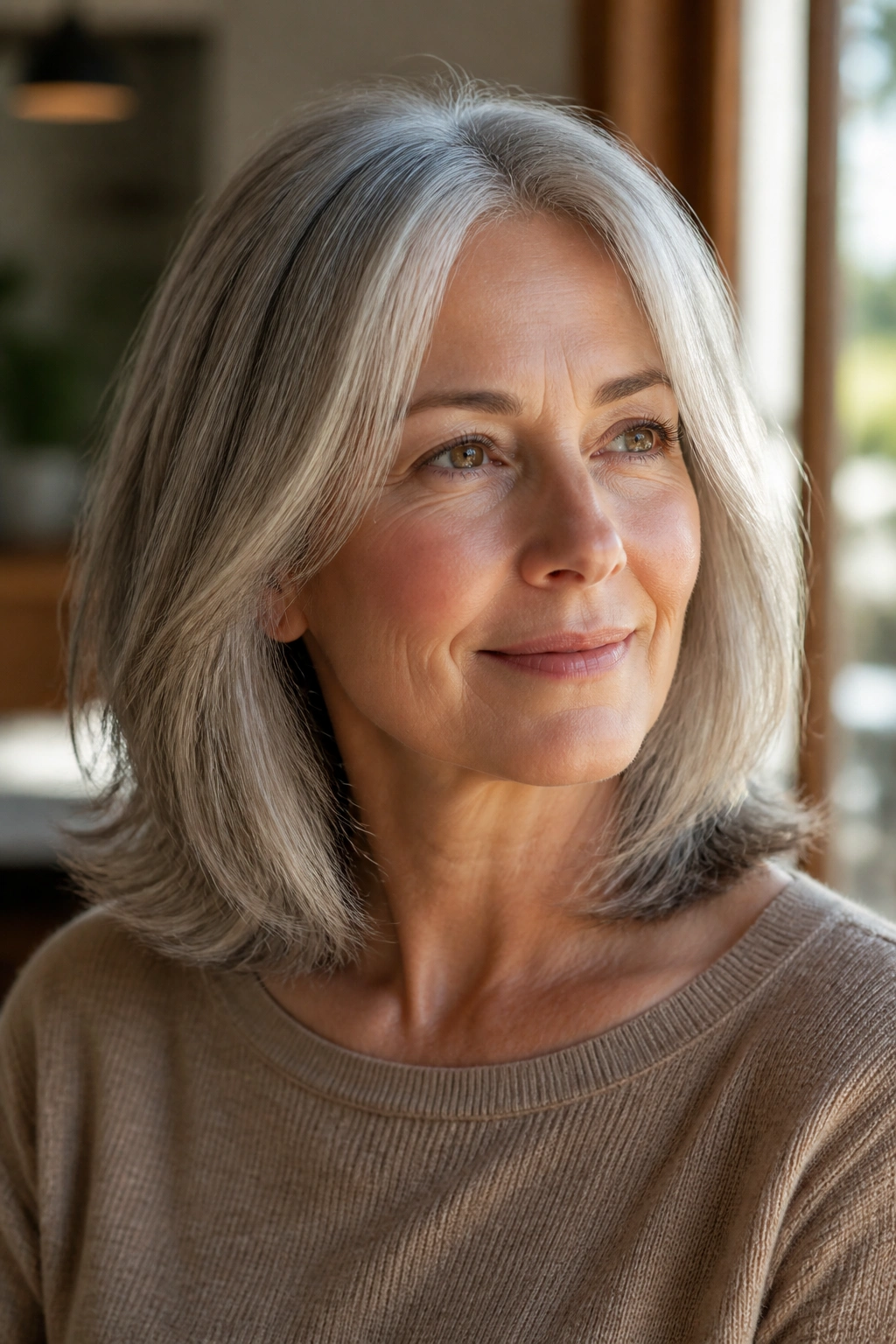
Sometimes the best haircut is the one that does not ask much from you. A low-maintenance medium cut with soft ends sits around the shoulders, keeps the outline clean, and uses only a light touch of layering so it grows out gracefully.
That makes it a strong final pick for women over 50 who want a style that still looks neat on the days when styling time is short. The soft ends prevent the shape from becoming too blunt, and the length is long enough for a clip or a scarf when you need it. It also suits gray hair well because the finish looks calm and intentional rather than forced.
Ask for a cut that keeps the weight line steady, with only enough movement to stop the shape from sitting like a block. If you want one haircut that can handle errands, dinner, and a skipped wash day without drama, this is the one I would start with.
