



A haircut after 60 has a job to do. It has to sit nicely when you air-dry it, work with glasses, and still look decent when the weather turns damp and your hair decides to do its own thing. That’s a tall order.
Gray hair makes the whole equation a little more interesting. Silver strands can be soft, wiry, sleek, coarse, fluffy, or all four at once, sometimes on the same head. I see that as a good thing, not a problem. It means the right cut can do a lot of the heavy lifting.
The styles that work best at this stage of life usually share one trait: they respect the hair you actually have. Not the hair from ten years ago. Not the hair on a perfect salon day. The real stuff. The cut that flatters a rounder face, keeps fine hair from collapsing, or gives thick hair a cleaner shape is usually the one you end up wearing over and over.
1. The Chin-Length Bob With Soft Layers for Women Over 60
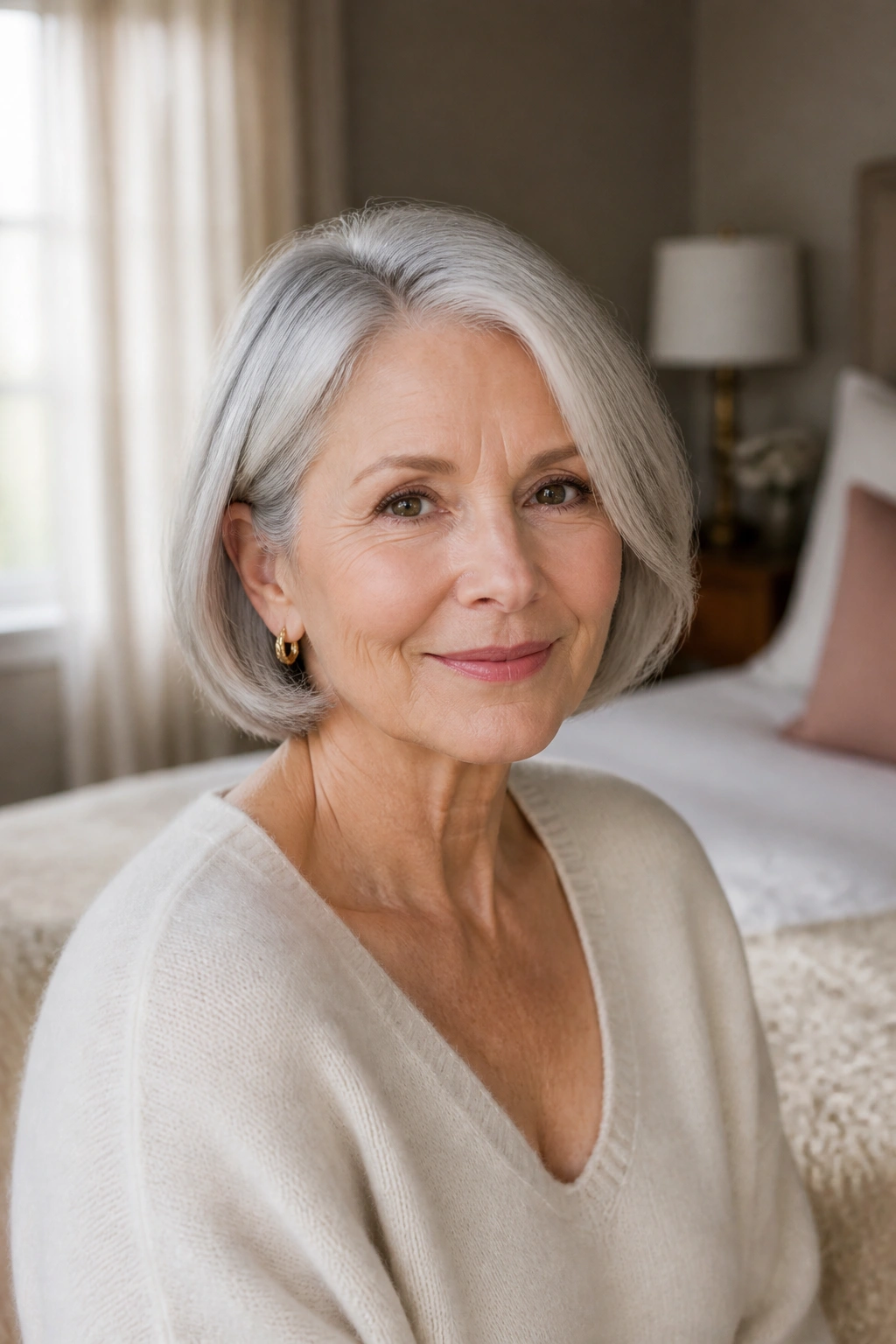
A chin-length bob is one of those cuts that looks polished without trying too hard. It gives the face a clean frame, leaves enough length to tuck behind the ears, and usually plays well with gray hair because the soft layers stop the shape from turning boxy.
Why it flatters
The chin is a useful stopping point. Shorter than that and the cut can feel severe; longer than that and it sometimes loses the crisp outline that makes a bob so easy to wear. A light layer through the interior keeps it from puffing out at the sides.
Fine hair gets a lift from the shape. Straight hair gets a little swing. And if you wear glasses, the line usually sits just below the frames, which keeps everything from crowding your face.
- Ask for a blunt perimeter with very light internal layering.
- Blow-dry with a 1.5-inch round brush for a soft bend under the ends.
- Keep the nape a touch shorter if your hair kicks out at the back.
- Trim every 6 to 8 weeks if you want the line to stay neat.
Best tip: If your gray hair is a little coarse, finish with one drop of lightweight serum on the ends only. Too much product will flatten the shape fast.
2. The Tapered Pixie With a Little Height
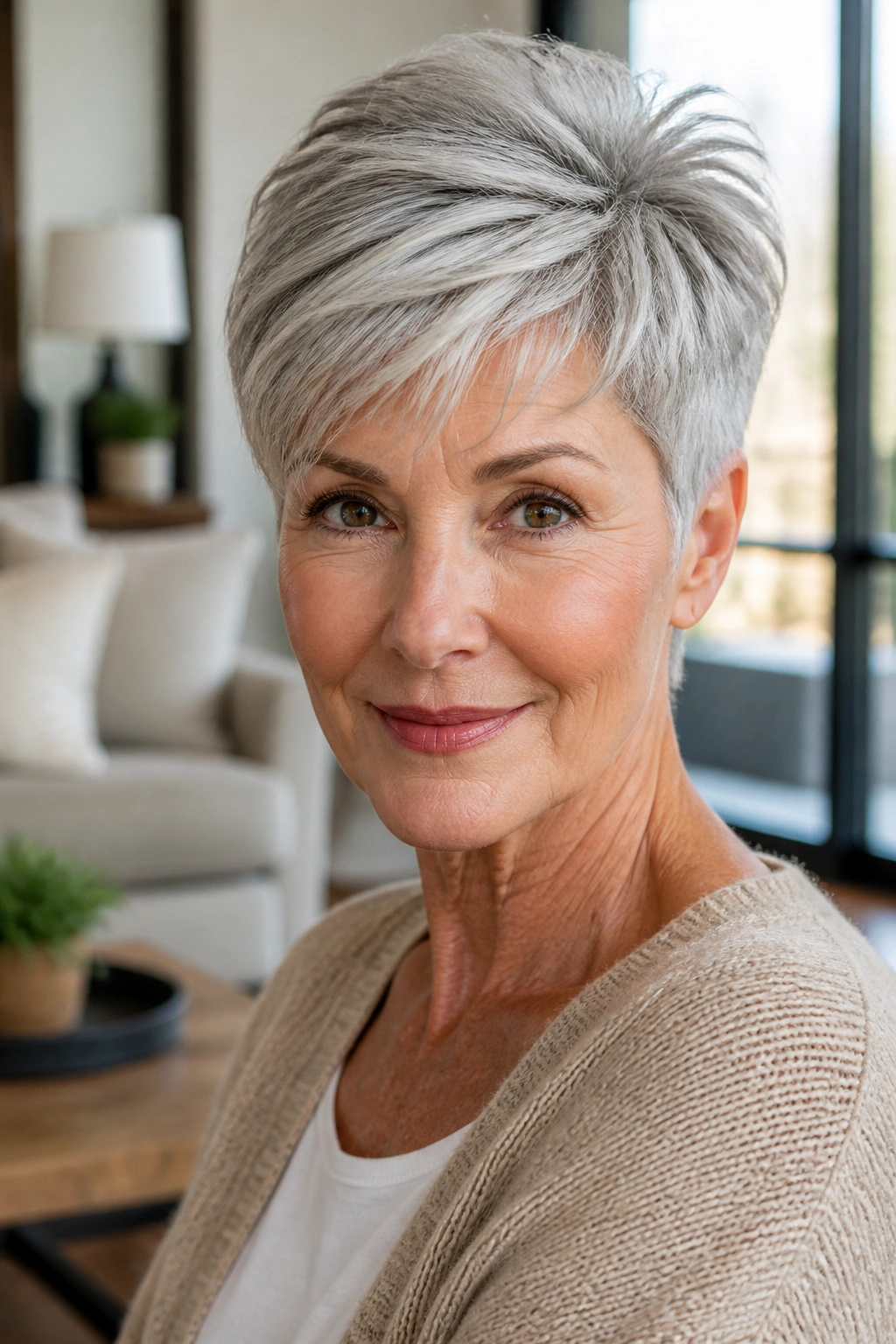
Short hair does not have to look harsh. A tapered pixie with softness at the crown can feel fresh, modern, and much easier to manage than a cut that hangs around the face and needs constant pushing back.
The trick is in the balance. Keep the sides close to the head, but leave enough length on top to move. That little bit of height draws the eye upward, which can be useful if your hairline has changed or if you want the face to look more open.
A lot of women avoid pixies because they picture something spiky and overly styled. That is not what I mean here. I mean a cut that can be finger-combed in under a minute and still look deliberate.
Wear it with a side-swept fringe if you want softness. Wear it with a little lift at the crown if your hair is fine. Either way, keep the texture piecey, not helmet-like.
3. The Shoulder-Length Lob With a Side Part for Women Over 60
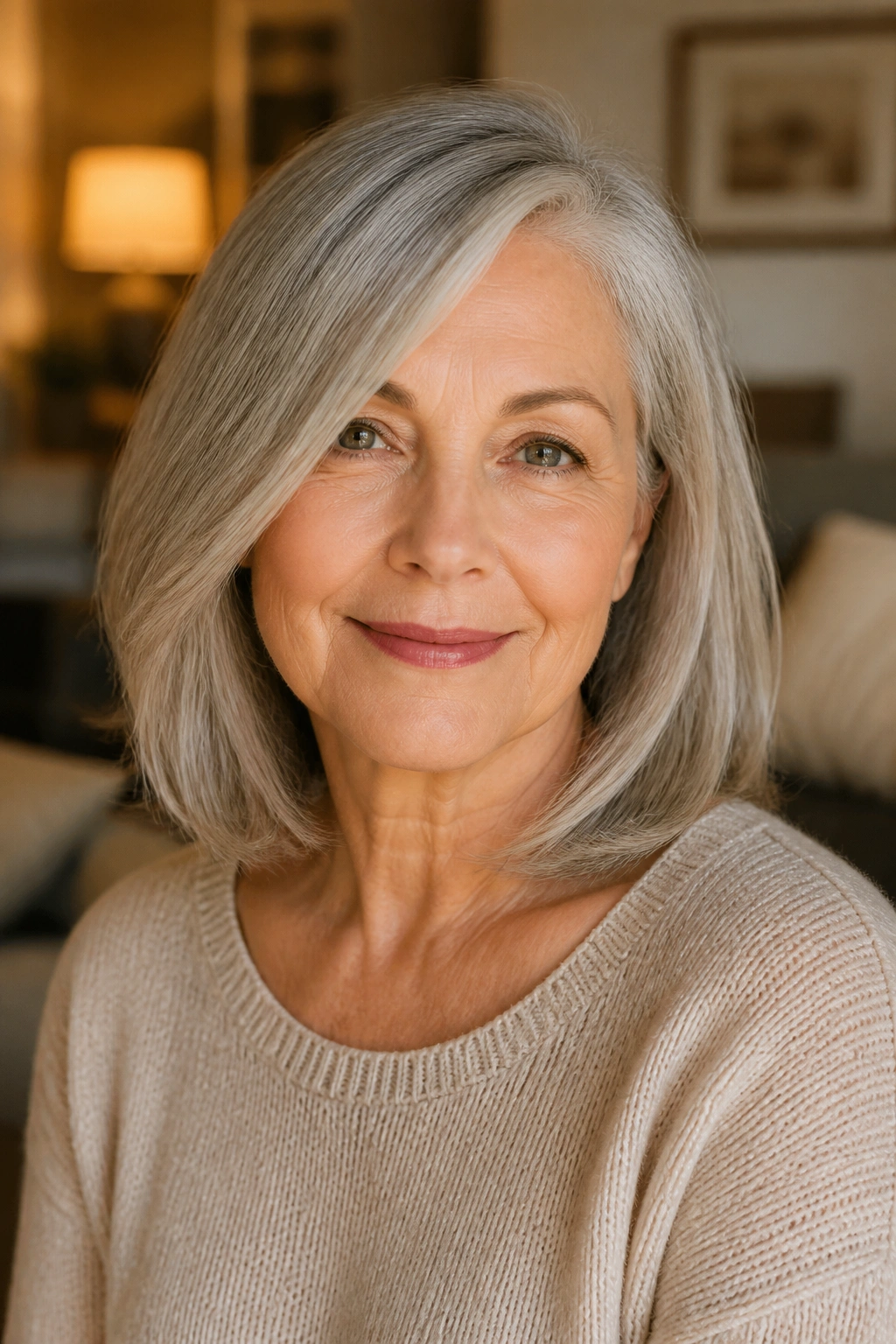
Want hair that still feels like hair? A shoulder-length lob does that job beautifully. It gives you enough length for a ponytail or clip, but the shape still looks intentional when you leave it down.
A side part makes the cut more interesting than a straight middle part. It also helps if one side of your hair is flatter than the other, which happens more often than people admit. The longer length keeps silver hair from looking too airy, while soft ends prevent the whole thing from hanging like a curtain.
How to wear it straight or bent
Straight hair should get a slight bevel at the ends, not a poker-straight finish. The difference sounds small, but it matters. A tiny bend gives the cut movement.
Wavy hair can air-dry with a little leave-in conditioner and a wide-tooth comb. If you use heat, keep the ends slightly tucked under so the shape doesn’t spread out.
- Best for medium-density hair
- Easy to clip up on busy days
- Works with most face shapes
- Looks good with subtle highlights or solid gray
A lob is one of the few styles that can look low-key in the morning and polished at dinner without much work in between.
4. The Feathered Shag for Movement
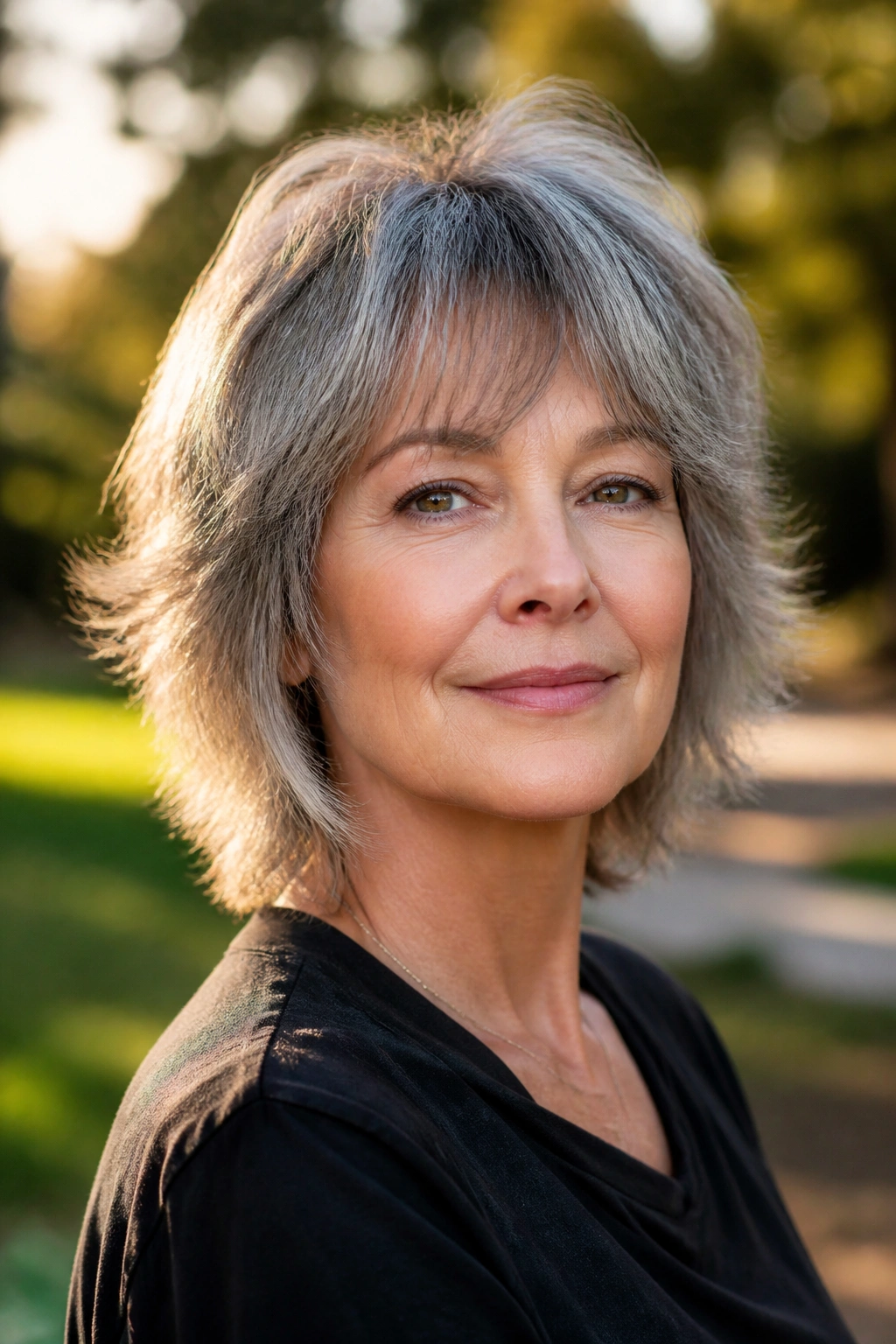
If your hair goes flat at the crown by lunchtime, a feathered shag may be the smartest cut in the room. It puts the weight in the right places and keeps the layers soft enough that the style still feels feminine, not choppy.
The beauty of a shag is that it gives the hair a bit of air. That matters more than people think. Gray hair can become dry and lose some bend, and a shag works with that texture instead of fighting it. The feathered ends also soften the jawline, which is handy if you want the face to look less square.
What to ask for
- Layering that starts around the cheekbones
- A soft fringe or side-swept bang
- Texturizing only at the ends, not too high up
- Enough length to tuck behind the ears
A shag can go wrong if the layers are cut too aggressively. Then it starts to look wispy in a bad way. Keep the shape airy, not shredded. That line matters.
5. The Curly Crop That Keeps Its Shape
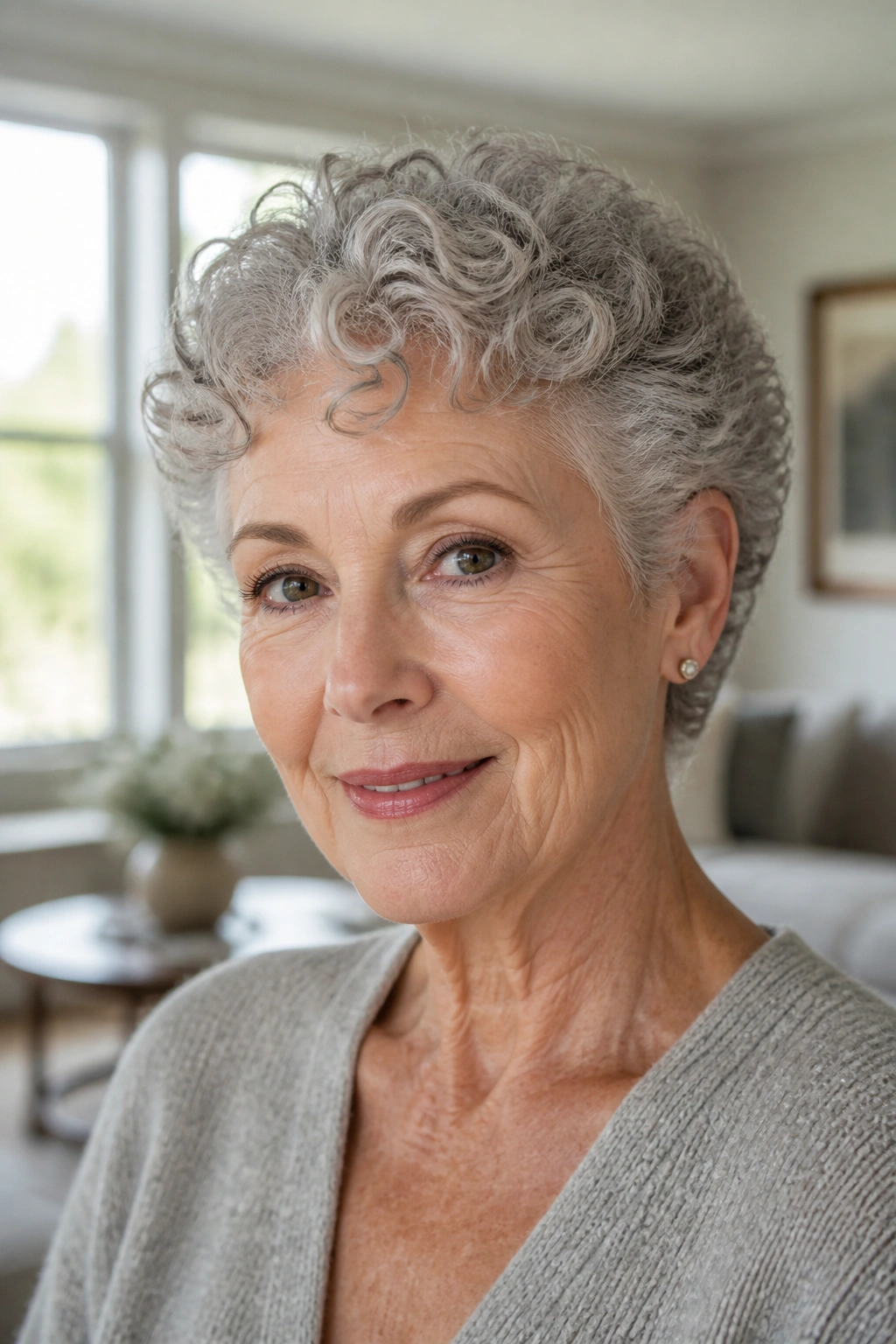
Curls after 60 often need a different kind of haircut than straight hair. Too much length pulls the curl down. Too little can make it balloon. A crop that sits around the ears or just below them tends to land in a sweet spot.
The best version keeps enough length on top for the curls to spring, but not so much that they droop by the end of the day. Gray curls can be gorgeous, but they can also be dry and unpredictable, so the cut needs to support the pattern rather than fight it.
A good curly crop is cut dry or nearly dry, so the stylist can see where the curls actually fall. That part matters. Wet curls lie.
Use a leave-in cream, scrunch gently, and let the shape do the rest. If you diffuse, keep the airflow low and stop when the curls still look a little damp. That keeps them from frizzing into fuzz.
6. The Blunt Bob With Tucked-In Ends
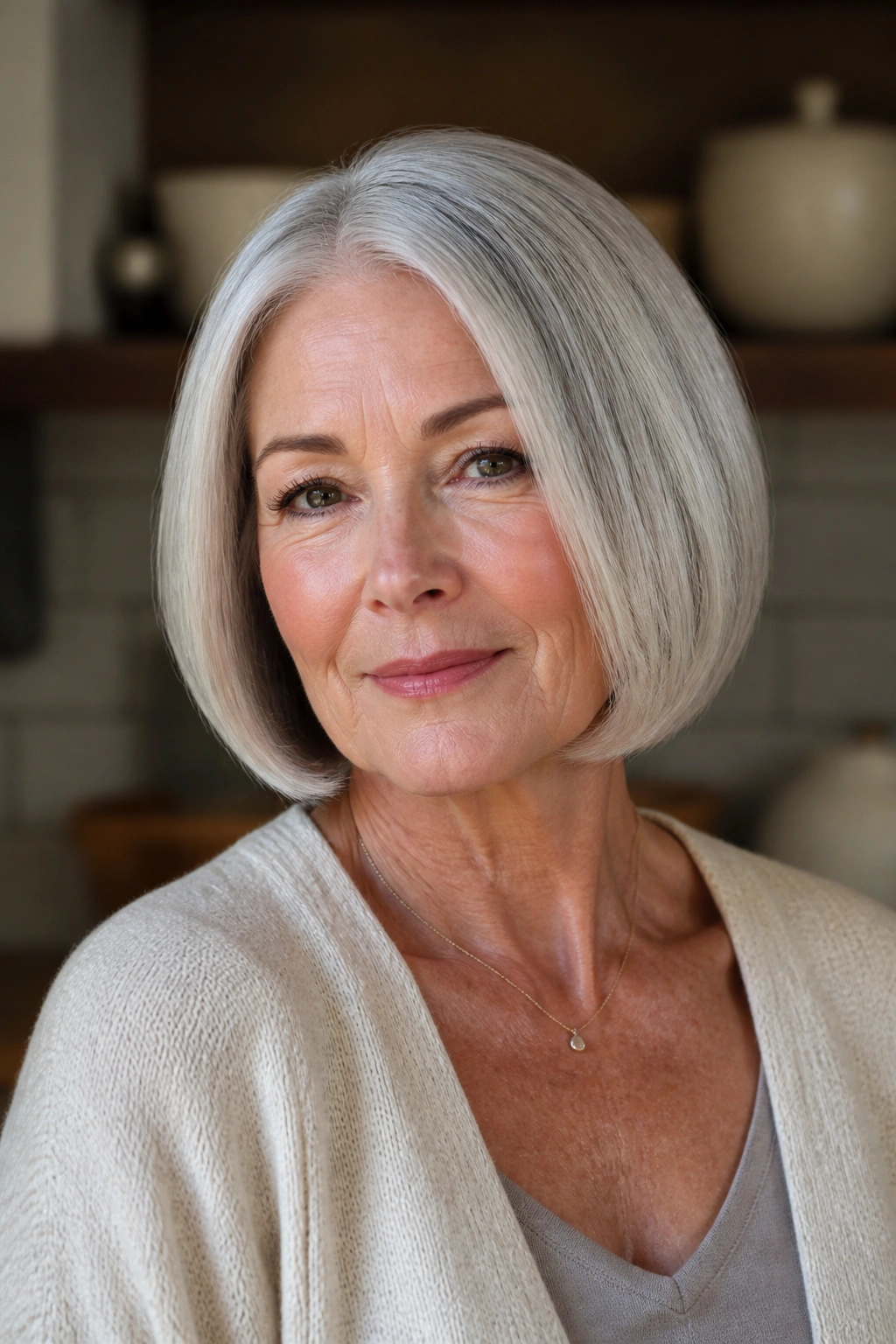
A blunt bob has a sharpness that some women love and others avoid. I’m in the first camp when the hair is straight or only slightly wavy, because a clean line can make silver strands look expensive without a lot of styling effort.
Unlike a layered bob, this one relies on the edge of the cut. That means the ends need to be healthy and even. Split ends ruin the whole effect. If your hair is thick, the blunt shape can feel heavy in a good way; if it’s fine, the line can make the hair appear denser.
The tucked-in finish matters. A bob that flips out can look playful, but a bob that tucks gently under feels neater and more controlled. A round brush and a quick pass from the blow-dryer usually handle it.
Best for women who want structure. Not the best choice for stubborn cowlicks at the nape. That’s the tradeoff.
7. The Layered Cut With Curtain Bangs for Women Over 60
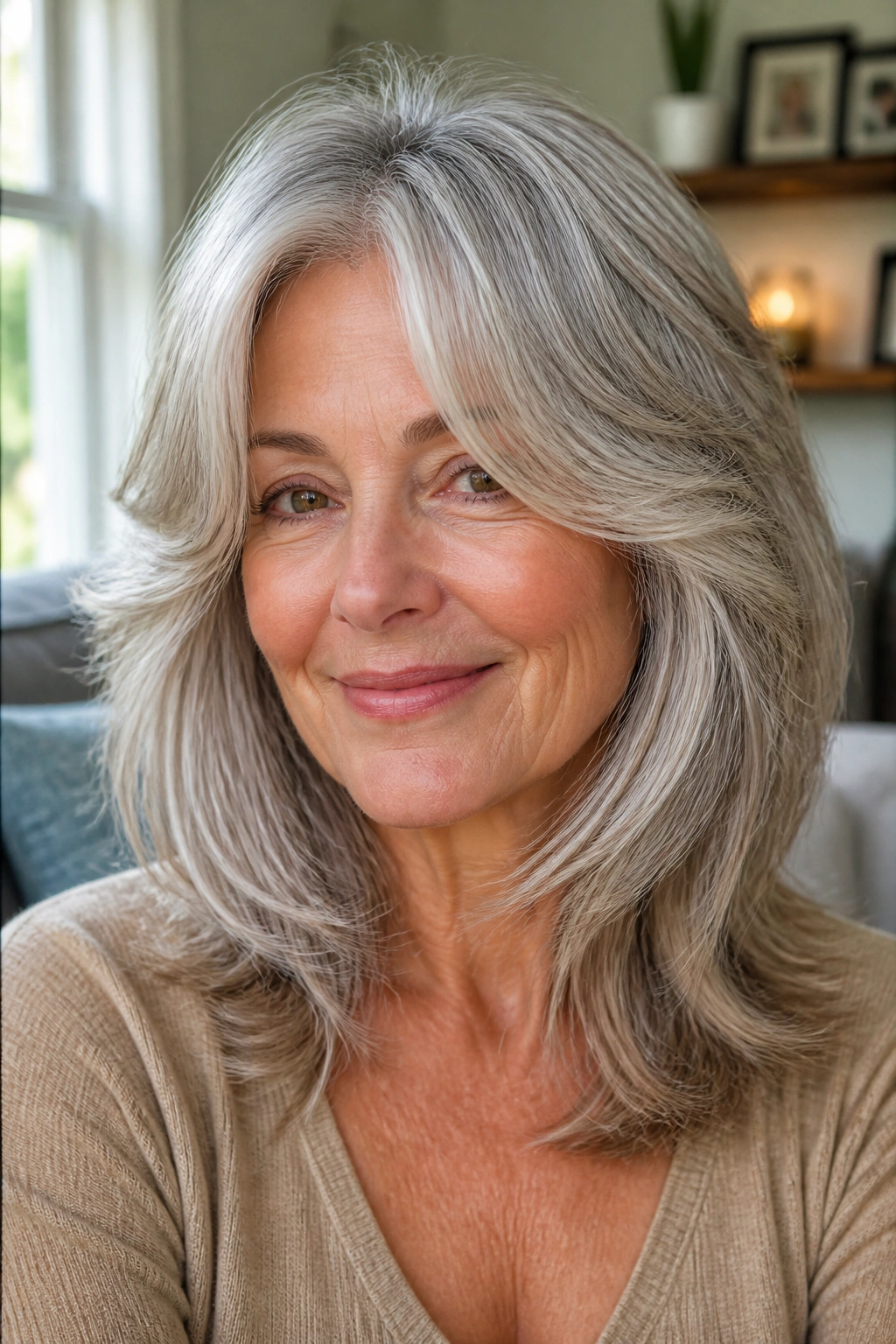
Curtain bangs earn their keep when the forehead needs a little softening but you don’t want heavy bangs sitting on the face all day. They split in the middle, sweep out to the sides, and blend into the rest of the cut instead of making a hard line.
Why this cut works
The layers keep the hair from hanging flat around the cheeks. The bangs bring attention to the eyes. And the whole style grows out more gracefully than a blunt fringe, which is a relief if you do not love constant trim appointments.
This cut is especially useful if your hair is medium in density and you want a bit of movement without losing shape. Gray hair tends to show texture well in this style, which is a nice bonus. It can look soft and lively rather than stiff.
Styling note
Use a medium round brush and bend the bangs away from the face. Not inward. That one detail changes the whole mood of the cut.
8. The Sleek Jaw-Length Bob
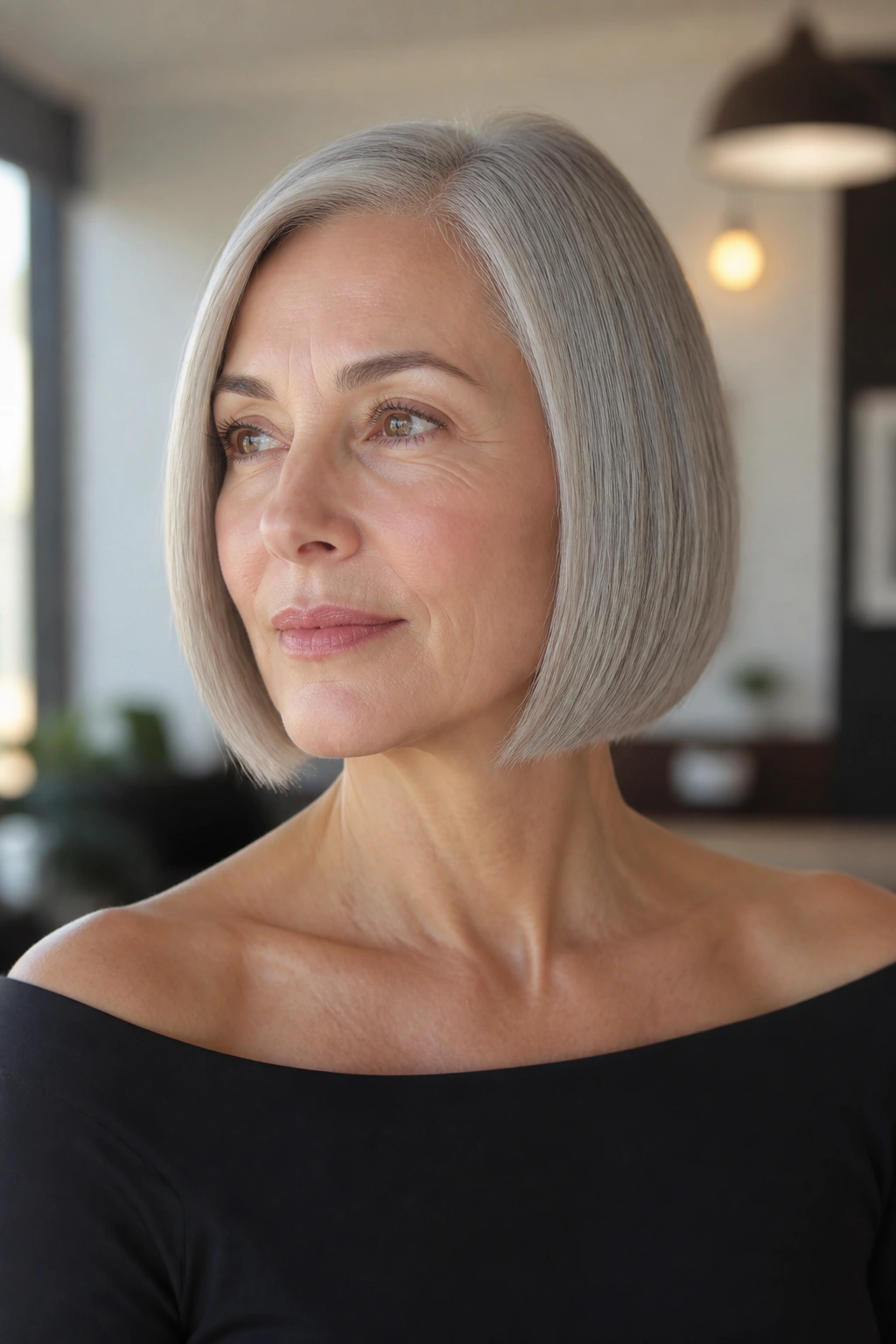
A jaw-length bob is a little bolder than a chin-length version. It stops right at the jaw or just below it, which can sharpen the face and make gray hair look polished, especially if the natural texture is smooth.
This cut is all about line. If the cut is crooked or the ends are too thin, the whole thing loses its shape. But when it is done well, it has a neat, almost tailored feel that works with earrings, scarves, and clean neckline shapes.
It is not the easiest style for every head of hair. Strong cowlicks around the front can push it outward, and very curly hair may fight the line. Still, for straight or softly wavy hair, it can be a strong choice.
Wear it with a deep side part if you want softness. Wear it tucked behind one ear if you want a bit of asymmetry. Simple cut. Big effect.
9. The Classic Wedge Cut
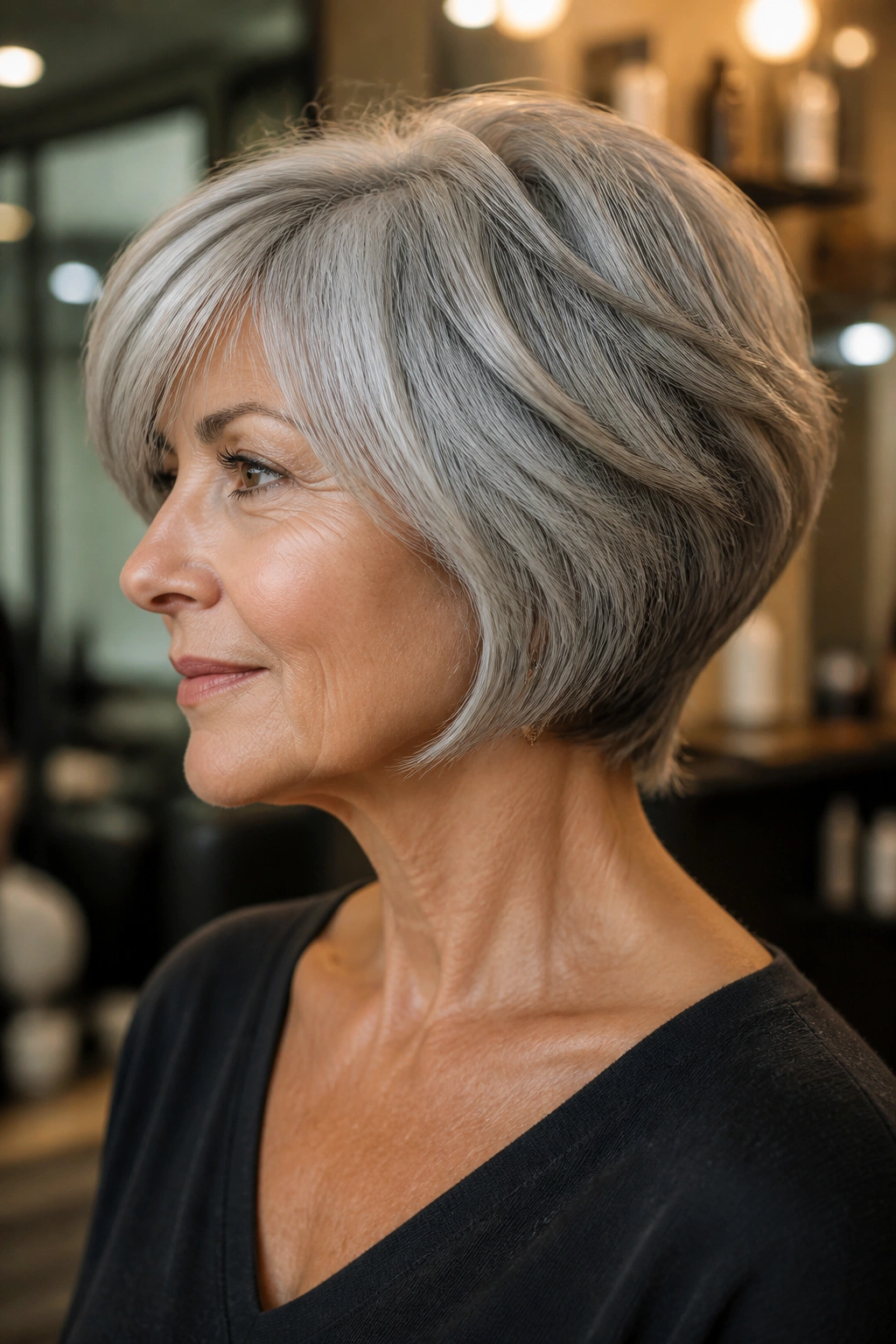
Why do wedge cuts keep coming back? Because they solve a real problem: hair that needs shape at the back without looking bulky at the sides. The stacked angle in the nape gives lift, while the longer top keeps the style from feeling too severe.
How to style the back
The back should be rounded enough to follow the head, but not so full that it balloons out. A little root lift spray at the crown helps, and a small round brush can direct the hair under at the nape.
A wedge is a smart pick for women with fine hair who want the illusion of thickness. It also works well if your neck-length hair tends to flip or bunch up when it gets longer.
For the front, keep the framing soft. Too much angle around the face can make the style look dated. A modern wedge has cleaner edges and less obvious stacking.
It’s a practical haircut. Boring on paper, maybe. Good on real heads.
10. The Textured Crop With a Lifted Crown
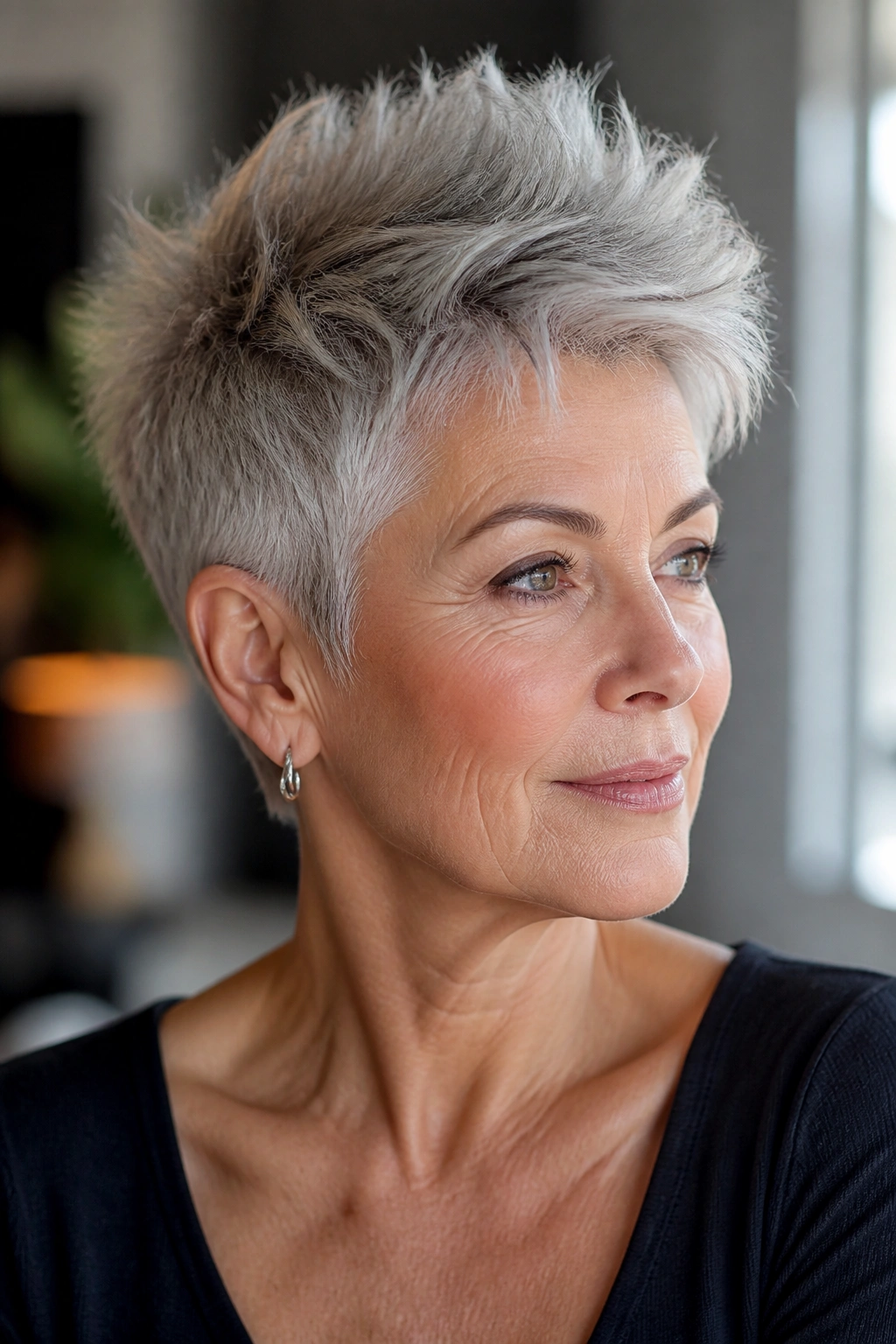
Picture a short cut that gives you height where you need it and quiets down the sides. That’s the textured crop. It’s especially useful if your hair has started to lie flatter than it used to, which is a common complaint and a fair one.
The lifted crown gives the face more presence. The textured top stops the cut from looking too neat or too stiff. And the short length makes styling faster, which matters if you’d rather spend five minutes on hair than twenty.
- Use a pea-size amount of styling paste.
- Work it through dry hair, not soaking wet hair.
- Pinch the crown pieces upward for lift.
- Keep the sides close so the shape stays balanced.
One caution: if your hair is very fine, too much product will make the crown collapse. Less is more here. That’s one of those irritating truths that happens to be true.
11. The Mid-Length Cut With Long Layers
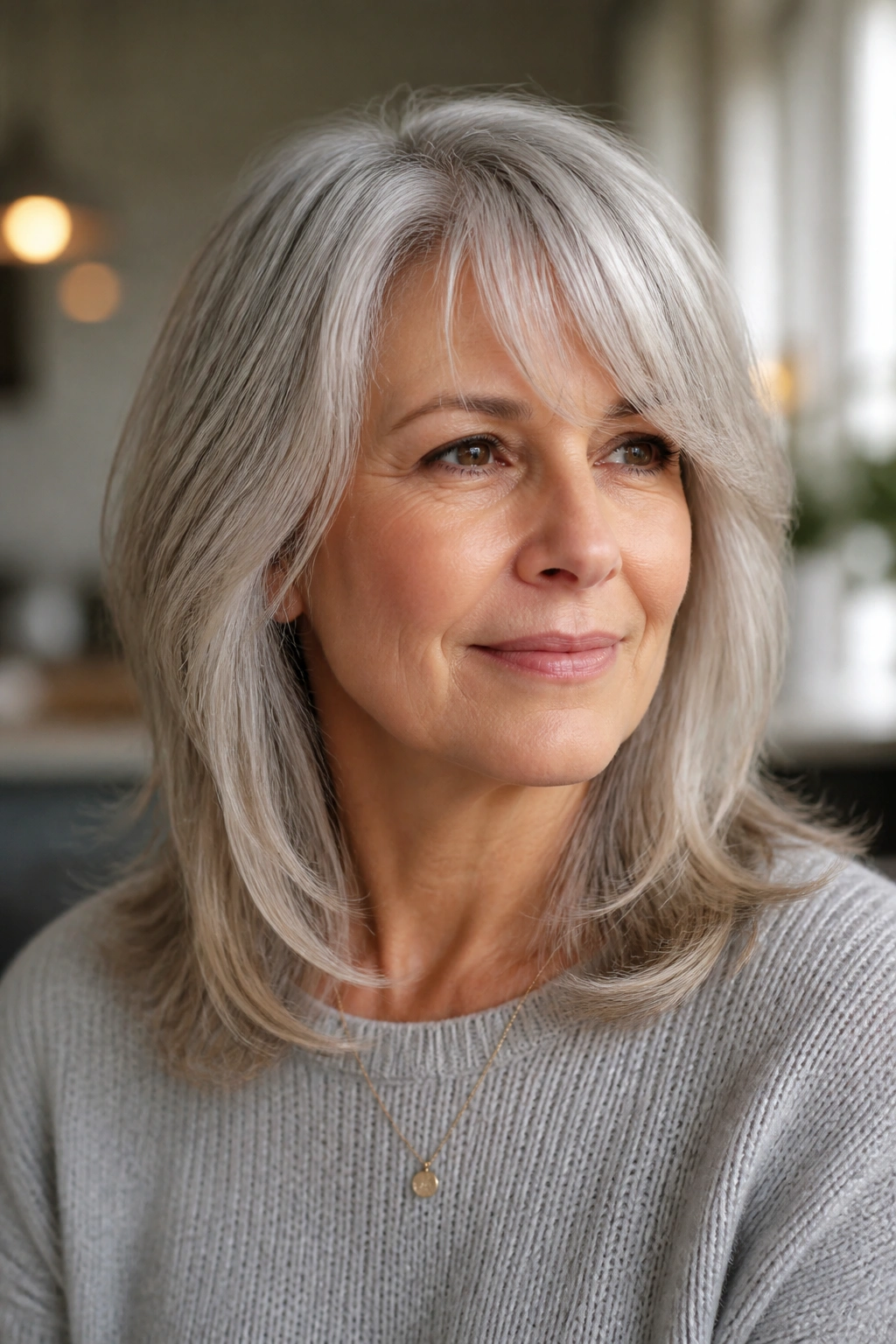
Mid-length hair can be a sweet spot for women who like a little length but don’t want heavy ends sitting on the shoulders all day. Long layers keep the shape from feeling blunt while preserving enough weight to stop the hair from floating away.
This is one of my favorite answers for women who still want to tie their hair back sometimes. You can clip it, braid it, or wear it loose. And because the layers are long, the style tends to grow out in a calm way rather than turning ragged after a few weeks.
The key is restraint. Long layers should move, not thin out the whole head. If the stylist takes too much weight from the bottom, the hair starts to fray and lose its shape.
Gray hair looks especially nice at this length when the ends are healthy and the layering is quiet. It gives the color room to show off its shine.
12. The Side-Swept Pixie Bob
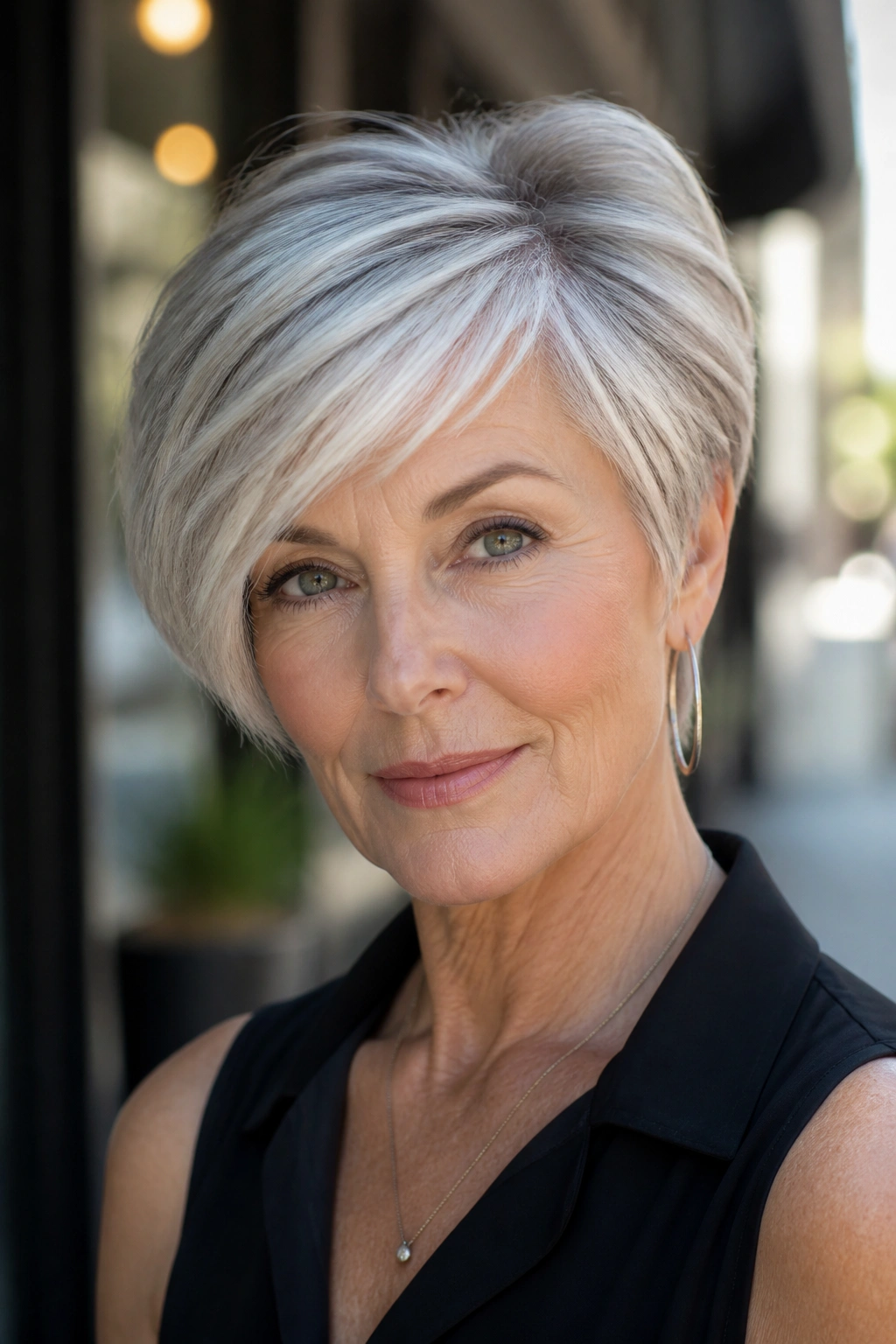
A pixie bob sits in that useful middle ground between short and shorter. It has more length than a pixie, more lift than a bob, and enough shape to flatter the face without swallowing it.
Unlike a standard bob, this version is lighter around the neck and easier to push forward or to the side. Unlike a pixie, it still gives you some hair to play with. That makes it a strong choice for women growing out a shorter cut who don’t want an awkward stage for too long.
Best for hair that has a little body but not a ton of density. It also plays well with glasses because the side-swept front opens the eye area instead of crowding it.
If you want a haircut that feels modern but not loud, this is one worth showing your stylist. Ask for a soft side fringe and a back that hugs the head.
13. The Tousled Crop With Wispy Bangs
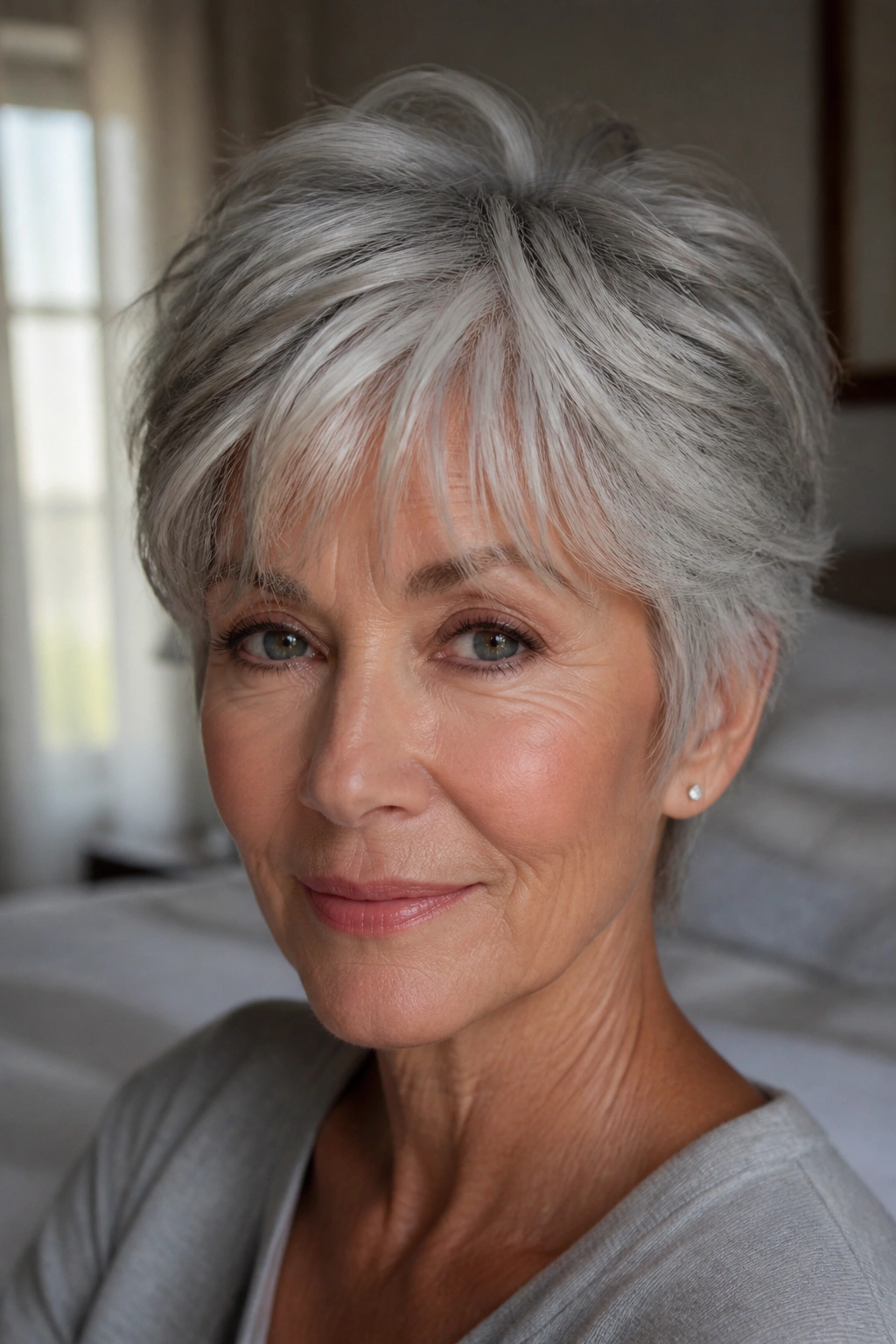
There’s a difference between messy and tousled. Messy looks like you gave up. Tousled looks like you understood the assignment and then loosened your grip a little. That’s the sweet spot for this crop.
What makes it different
Wispy bangs keep the forehead soft without creating a heavy wall of hair. The cropped length around the ears keeps the silhouette tidy. A bit of texture through the top gives the style movement, which stops gray hair from feeling flat or helmet-like.
It’s a friendly style for women with fine hair, but it can also work on medium hair if the texture is cut in carefully. Use a matte paste or a light wax, then separate the pieces with your fingers. No need for a brush once it’s dry.
Quick reality check
This cut needs a stylist who knows how to texturize without overdoing it. Too much thinning and it turns frizzy. Too little and it loses the tousled effect.
14. The Collarbone Cut With Face-Framing Pieces for Women Over 60
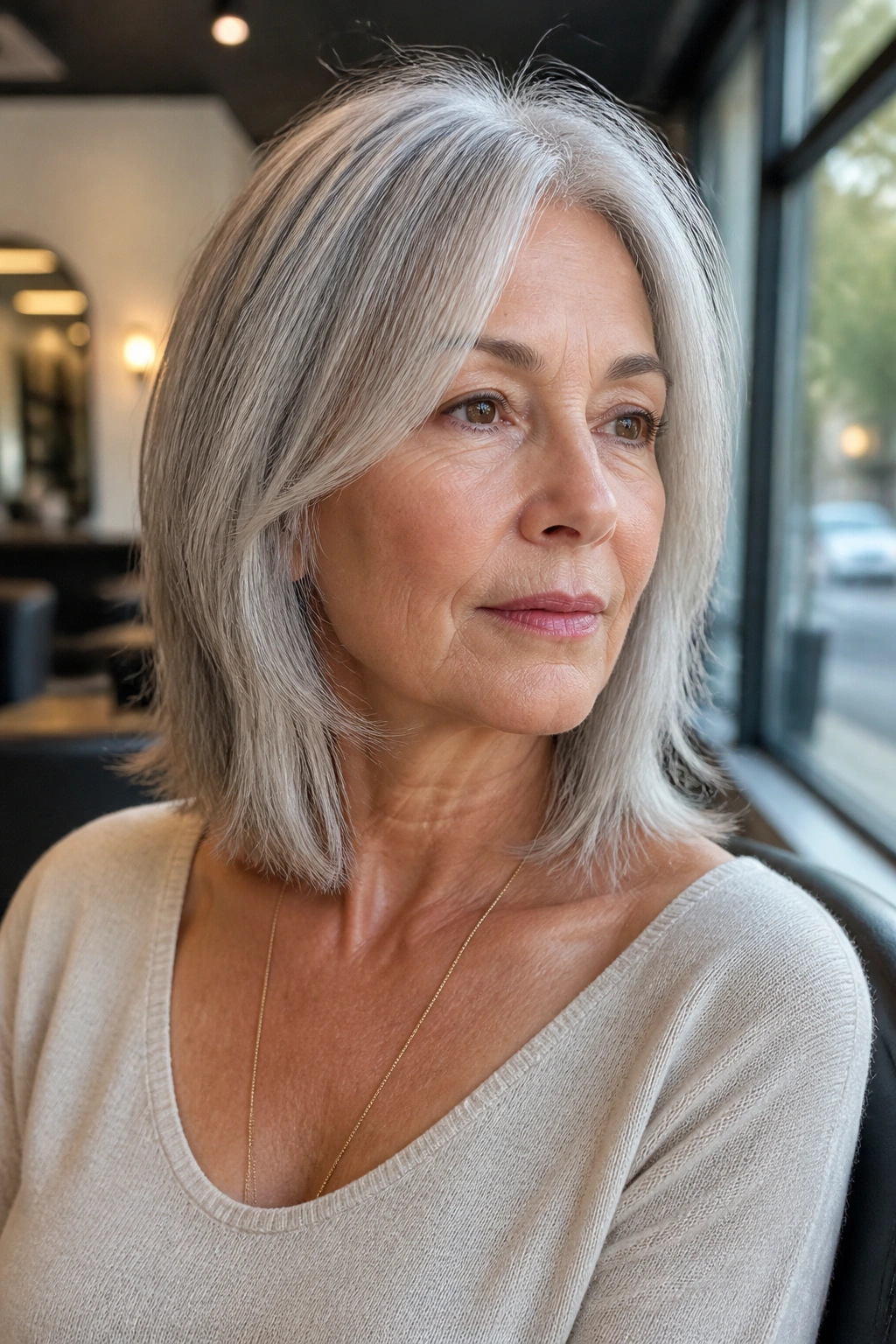
A collarbone cut has one big advantage: it lands in a spot that still feels feminine, even if the hair has lost some density. The ends skim the collarbone, and the face-framing pieces soften everything from the cheeks to the jaw.
That length works especially well for women who want to keep some fullness around the perimeter. Hair that is too short can expose thin spots more quickly. Hair that is too long can drag the face down. The collarbone cut sits in the middle and does a nice job of balancing both.
The face-framing pieces should start around the cheekbone or chin, not at the jawline only. That small shift can make the style feel lighter. If you wear it with a soft wave, it looks relaxed. If you blow it smooth, it looks a bit more refined.
This is also one of the easiest cuts to grow out. That matters more than people admit.
15. The Rounded Bob for Thick Hair
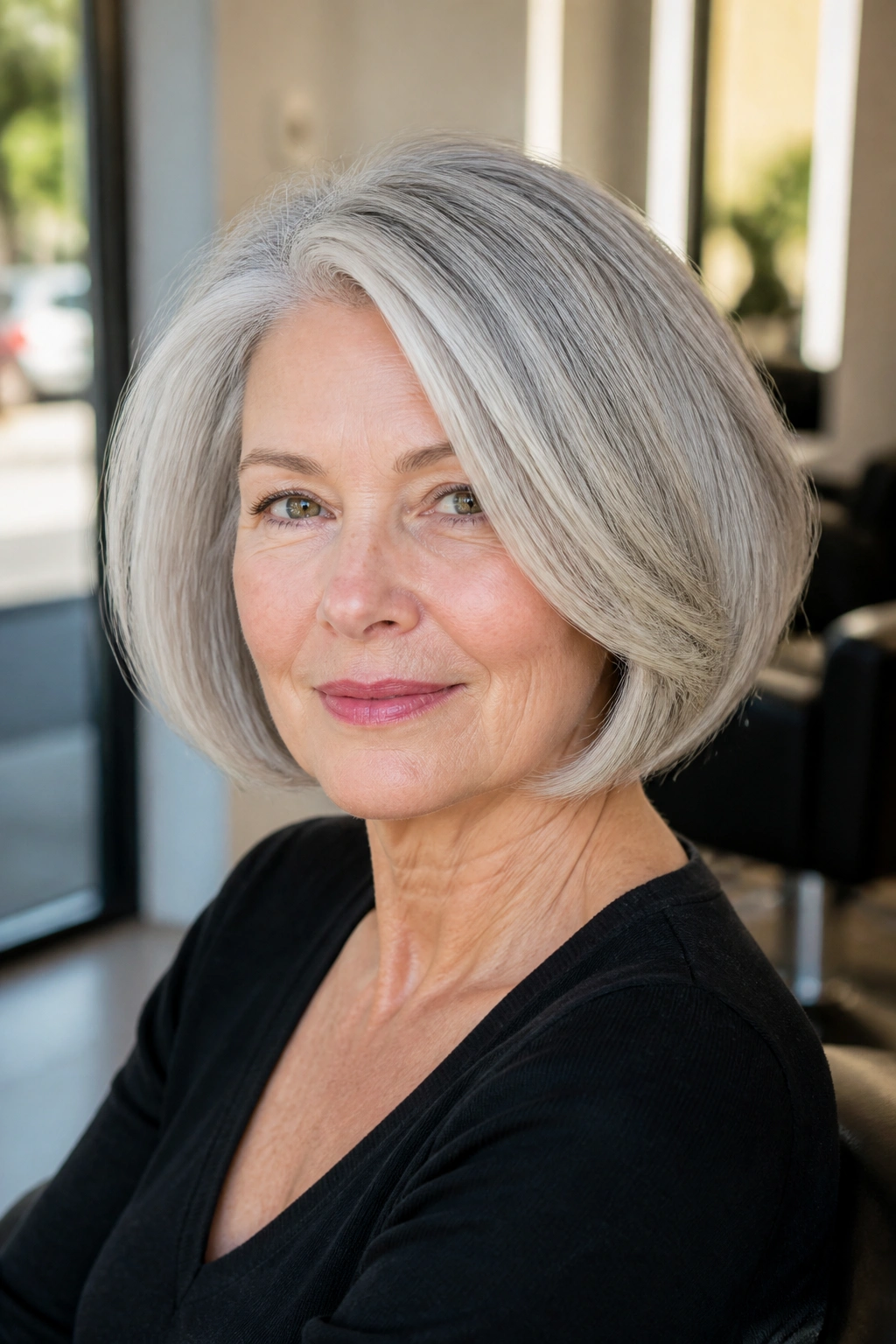
Does thick hair need to be long? Not always. Sometimes it needs to be shaped. A rounded bob can take a lot of bulk and turn it into a controlled, soft curve that sits neatly around the head.
How to keep the shape from puffing
The back should be graduated just enough to remove weight, while the front stays a little longer. That keeps the silhouette from turning into a triangle. Good thick-hair bobs are about subtraction, not extra layers everywhere.
A stylist who knows how to thin hair carefully is worth listening to here. Not with a razor, usually. Better with internal layering and a clean outline.
- Dry the roots first.
- Smooth the crown with a paddle brush.
- Use a light cream, not a heavy oil.
- Finish with a quick pass at the ends to tuck them in.
A rounded bob can look luxurious on thick silver hair. It has presence. It also keeps the volume in the right place, which is half the battle.
16. The Asymmetrical Bob
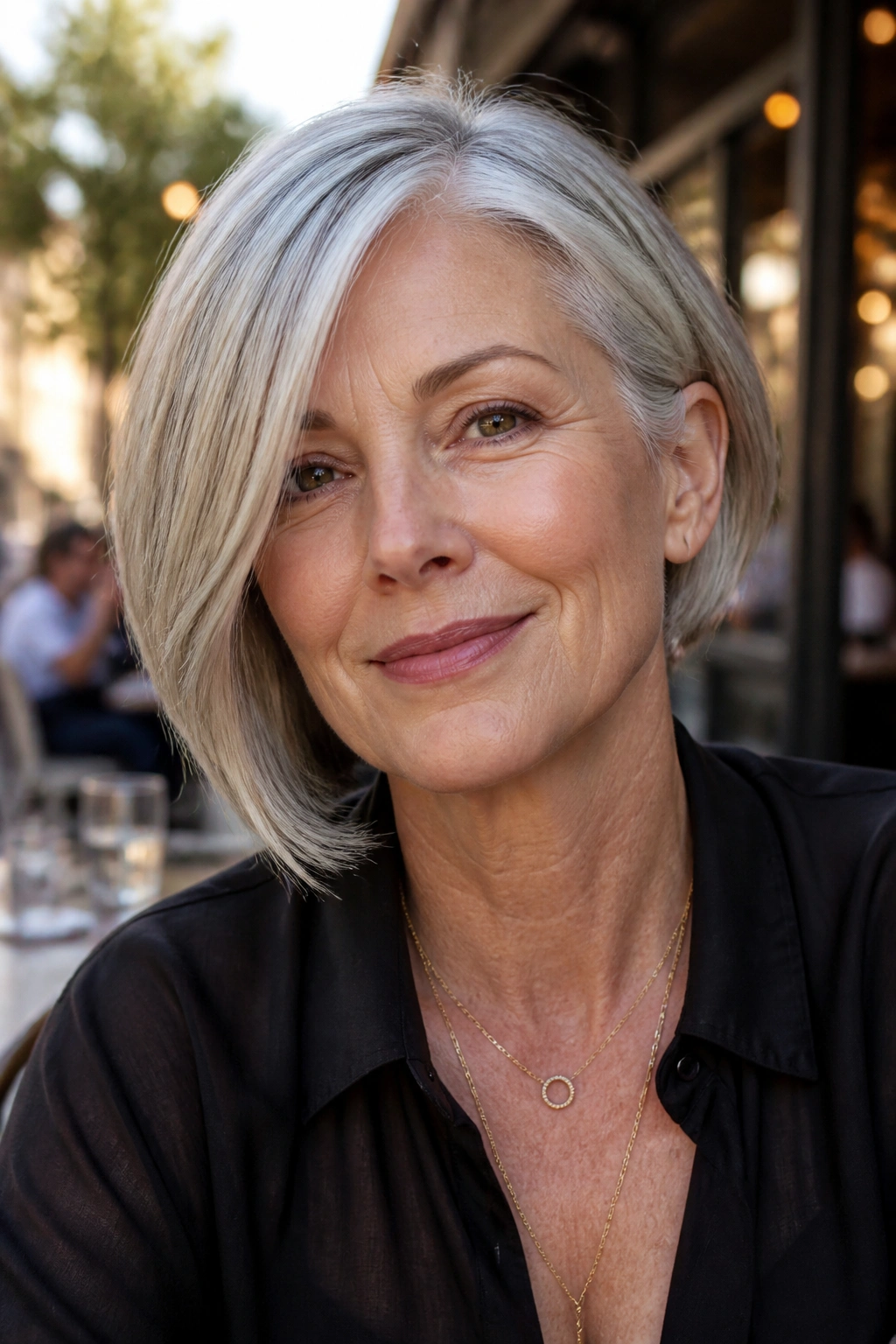
One side longer than the other. That’s the whole point, and it works because the eye likes movement. An asymmetrical bob can make a basic cut feel sharper without needing a lot of styling every morning.
It suits women who want a little edge but not a dramatic haircut. The longer side can skim the cheek or jaw, while the shorter side keeps the neck open. If your hair has some natural wave, the asymmetry shows up in a softer way. Straight hair makes the line more obvious.
What to ask for
Ask your stylist to keep the difference subtle unless you want a strong statement. A half-inch to an inch of difference is often enough. More than that can be fun, but it also grows out with more attitude than some people want.
This cut works well with silver hair because the contrast in lengths shows off the sheen. It’s clean, but not boring.
17. The Soft Curly Bob
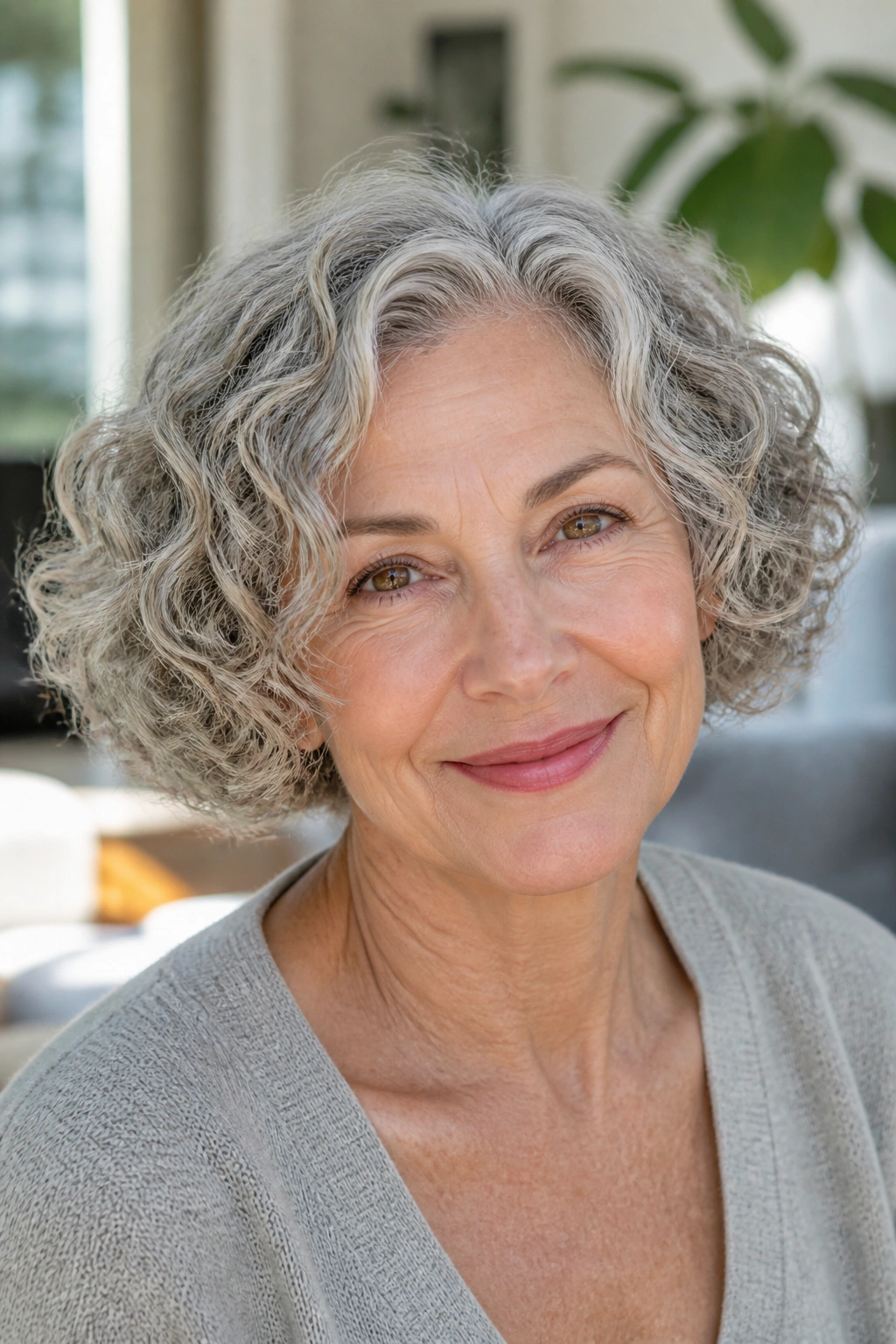
Curly bobs can go wrong when they’re cut too short or too blunt. The soft version avoids that trap by keeping enough length for the curls to form without piling up.
The shape should follow the curl pattern, not fight it. That usually means a bit longer around the chin and slightly shorter underneath so the curls stack in a gentle curve. On gray curls, that softness matters. Coarse silver strands can spring outward if they’re boxed in too tightly.
Use a diffuser, but don’t blast the hair dry. Leave a little moisture in the ends and let the curls finish on their own. A curl cream with slip helps, too. If the ends look frayed, a touch of leave-in can calm them down fast.
This is a cheerful cut. Not in a silly way. Just in the sense that it moves well and doesn’t need much fuss to look alive.
18. The Tapered Crop for Natural Gray Hair
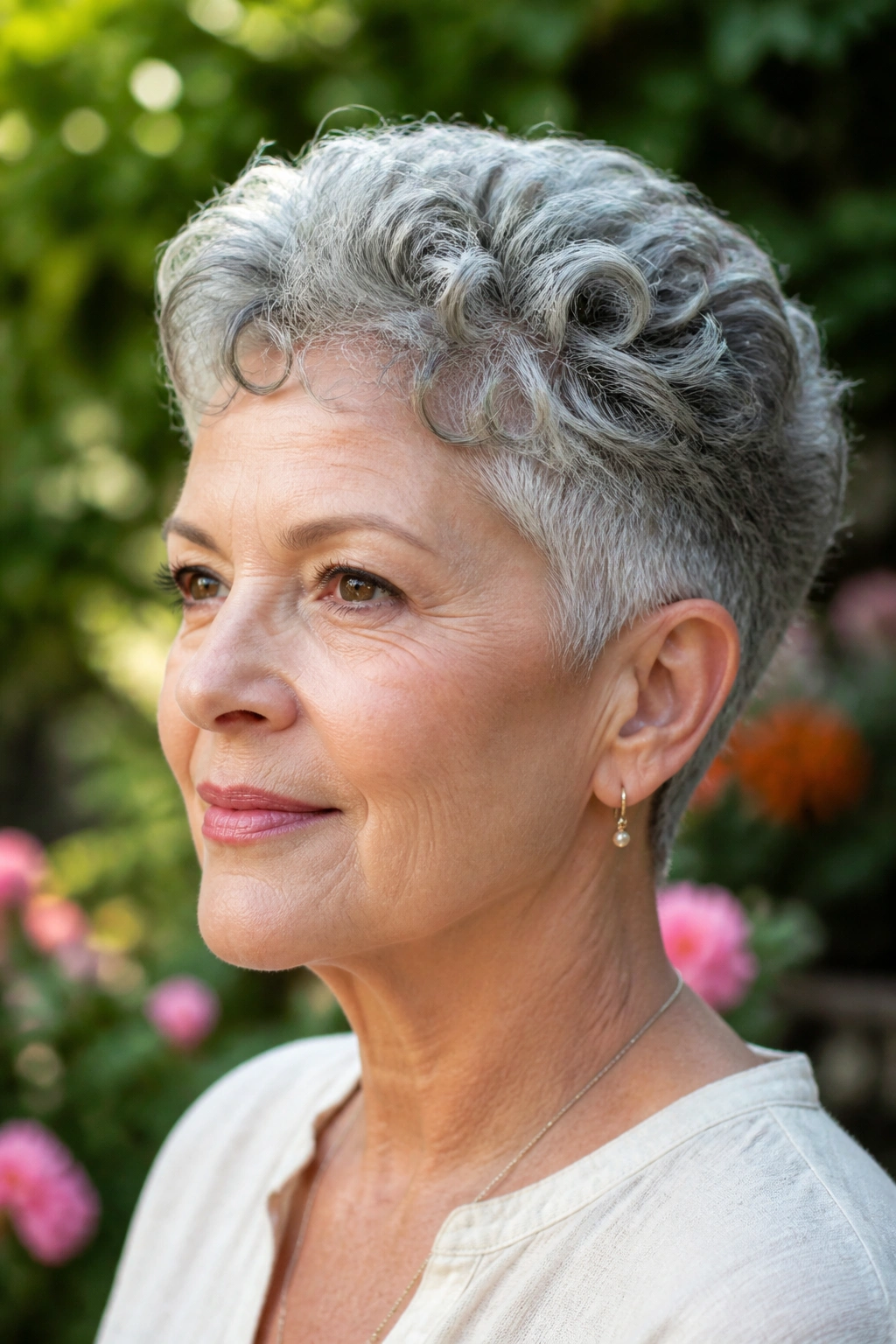
A tapered crop is one of the best choices for natural gray hair when the texture is curly, coily, or tightly waved. The sides and back are kept close, while the top has enough length to show the curl pattern and create a clean shape.
Compared with a softer pixie, this cut feels more controlled. Compared with a longer curl cut, it feels lighter around the head and easier to maintain. That makes it a strong fit for women who want a short style that still has personality.
The taper keeps bulk down at the nape and around the ears, which is helpful if your hair expands when humidity rises. It also gives the gray color a nice frame. Silver, white, and salt-and-pepper tones all pop when the cut is neat.
Best of all, it looks intentional on day one and day three. That’s a rare trait.
19. The Long Layered Cut for Silver Hair
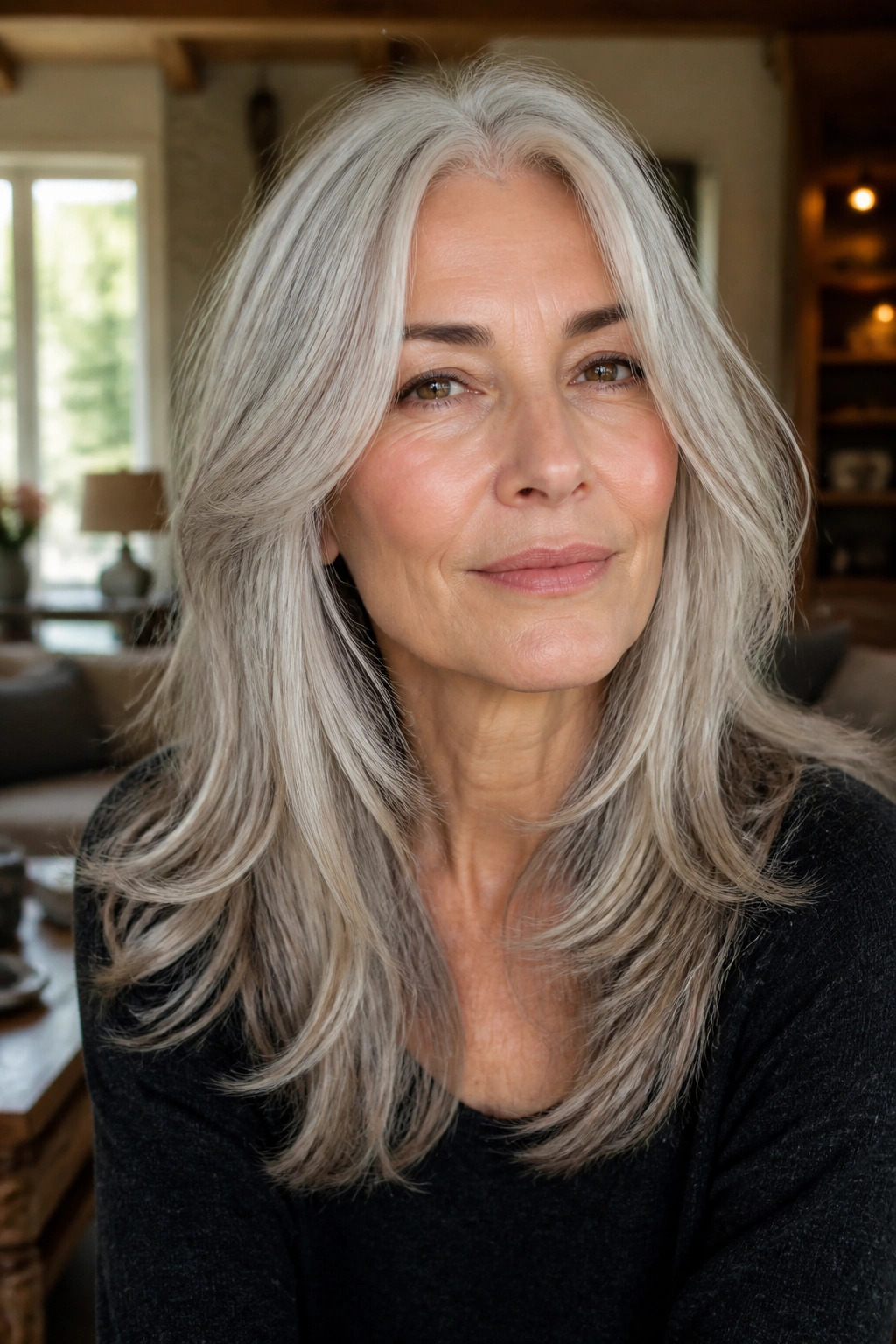
Long hair after 60 can be beautiful, but it has to be treated with care. Long layers keep the shape from dragging down the face and stop the ends from looking too heavy.
Why silver hair likes this cut
Silver strands often shine best when they have movement. Long layers catch that movement without forcing the length into a hard shape. If your hair is straight, the layers give it swing. If it’s wavy, they help the waves separate instead of bunching together.
You do need healthy ends. Long gray hair with dry tips can look rough fast. A trim every 8 to 10 weeks helps more than most people realize.
How to wear it well
A middle part gives a calm, balanced look. A side part softens the forehead. Loose waves with a 1-inch iron can make the hair look fuller, but don’t curl every piece the same direction or it gets fussy.
Long layers suit women who like a little length around the shoulders and are willing to care for it. That’s the bargain.
20. The Pageboy-Inspired Cut
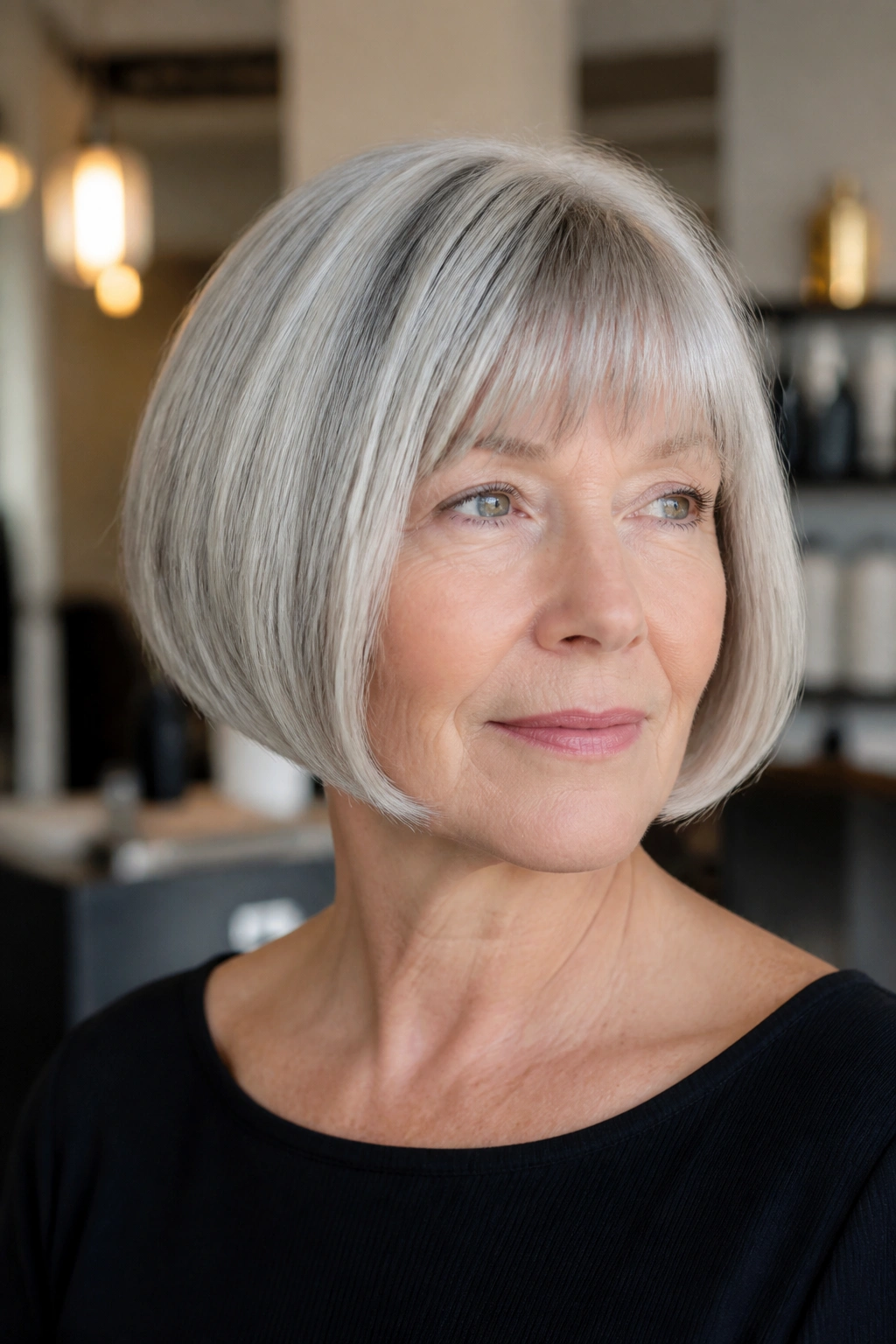
The pageboy gets a bad reputation because people remember the stiff versions. The modern take is softer. It still has that rounded outline and inward bend, but the edges are lighter and the shape feels less rigid.
This is a strong cut for hair that likes to stay smooth. It keeps the neck open, frames the face, and works well when the hair is one length around the bottom with only modest shaping on top. If your hair naturally falls flat, that can be a good thing here. If it’s very wavy, you may need more heat styling than you’d like.
I like this cut for women who want order. Some styles are meant to look tousled. This one is meant to look neat. There’s nothing wrong with that.
Ask for a soft curve under the ends and enough length in front to graze the jaw. That keeps it modern rather than costume-like.
21. The Chin-Length Cut With a Wispy Fringe
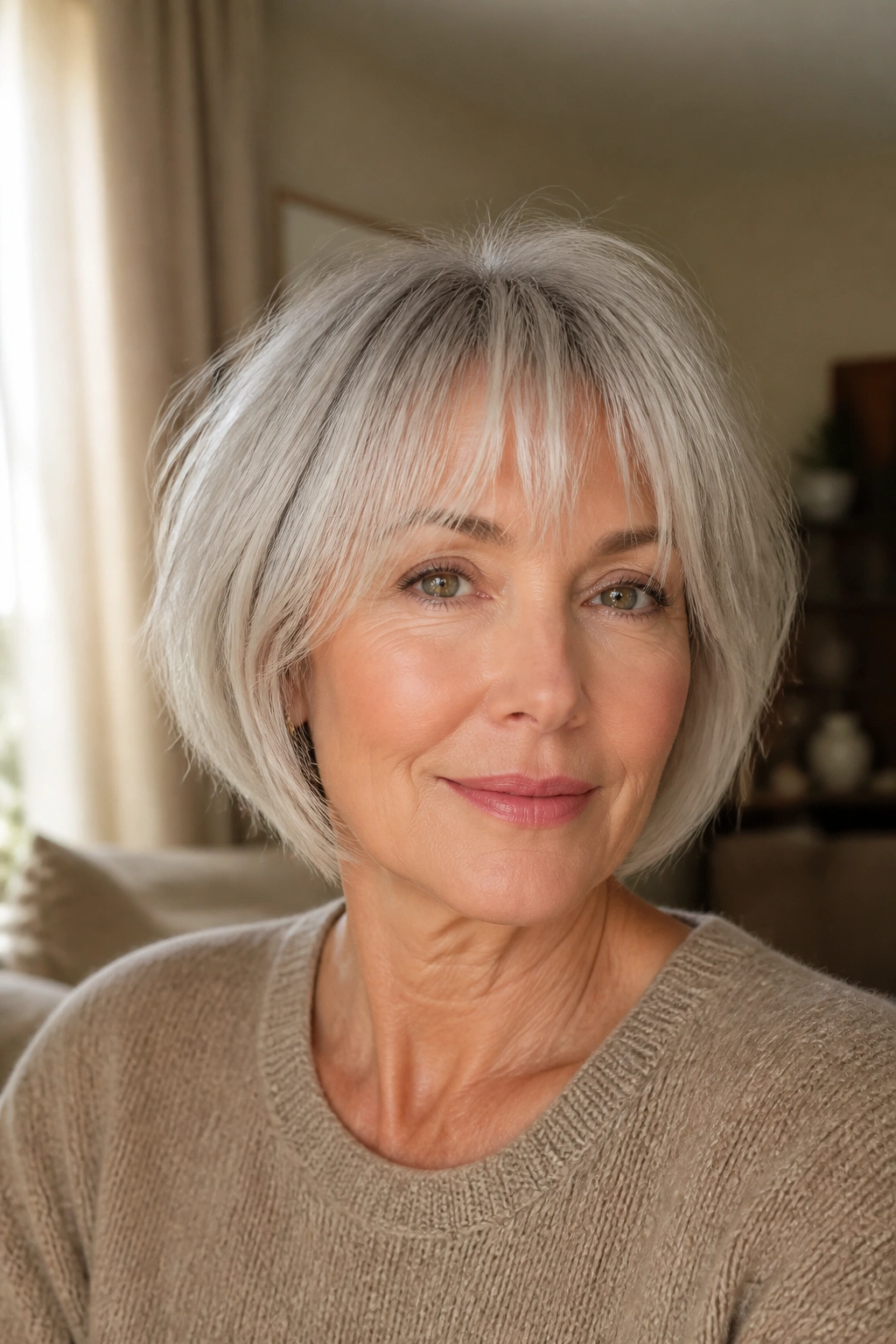
A wispy fringe is a kinder bang option than a heavy straight bang. It lightens the forehead, softens lines around the eyes, and doesn’t demand the same level of commitment if you’re unsure about bangs in the first place.
What the fringe should not do is sit like a dense curtain. It needs space between the pieces. A little separation keeps it airy and stops the cut from closing in around the face.
How to ask for it
- Keep the fringe light and piecey
- Blend the sides into the front layers
- Stop the shortest pieces above the brows
- Leave the chin-length shape clean at the bottom
This cut is nice for women with fine to medium hair who want a little softness near the eyes. It also works well with gray hair because the fringe catches light without looking heavy. A quick mist of water and a round brush usually resets it in the morning.
22. The Stacked Bob With a Short Back
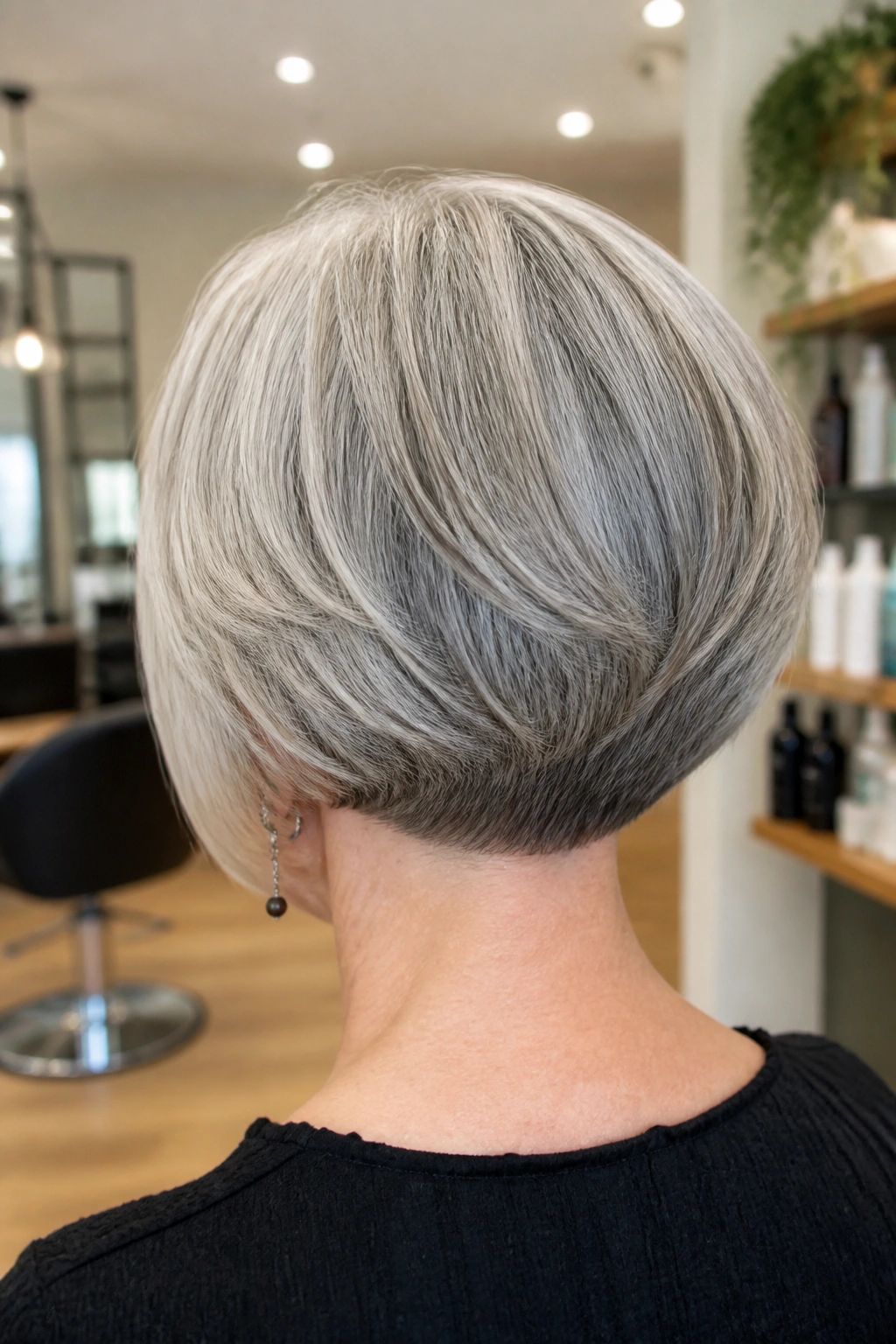
If you want more lift at the back of the head, a stacked bob earns its place. The shorter layers in the nape create shape and support, while the front stays a little longer for balance.
A woman who has lost some volume at the crown often likes this cut because it builds structure where it counts. It also keeps the neck clear, which can make the whole silhouette feel lighter. If you wear scarves or higher necklines, that shape usually sits well.
Practical detail
The stack should be visible, but not exaggerated. A sharp wedge at the back can feel dated fast. A softer stack looks more current and grows out more easily.
For styling, lift the root with a blow-dryer and direct the ends inward with a brush. If the back flips out, your nape is probably too long. Easy fix. Ask for a cleaner graduation next time.
23. The Swept-Back Crop
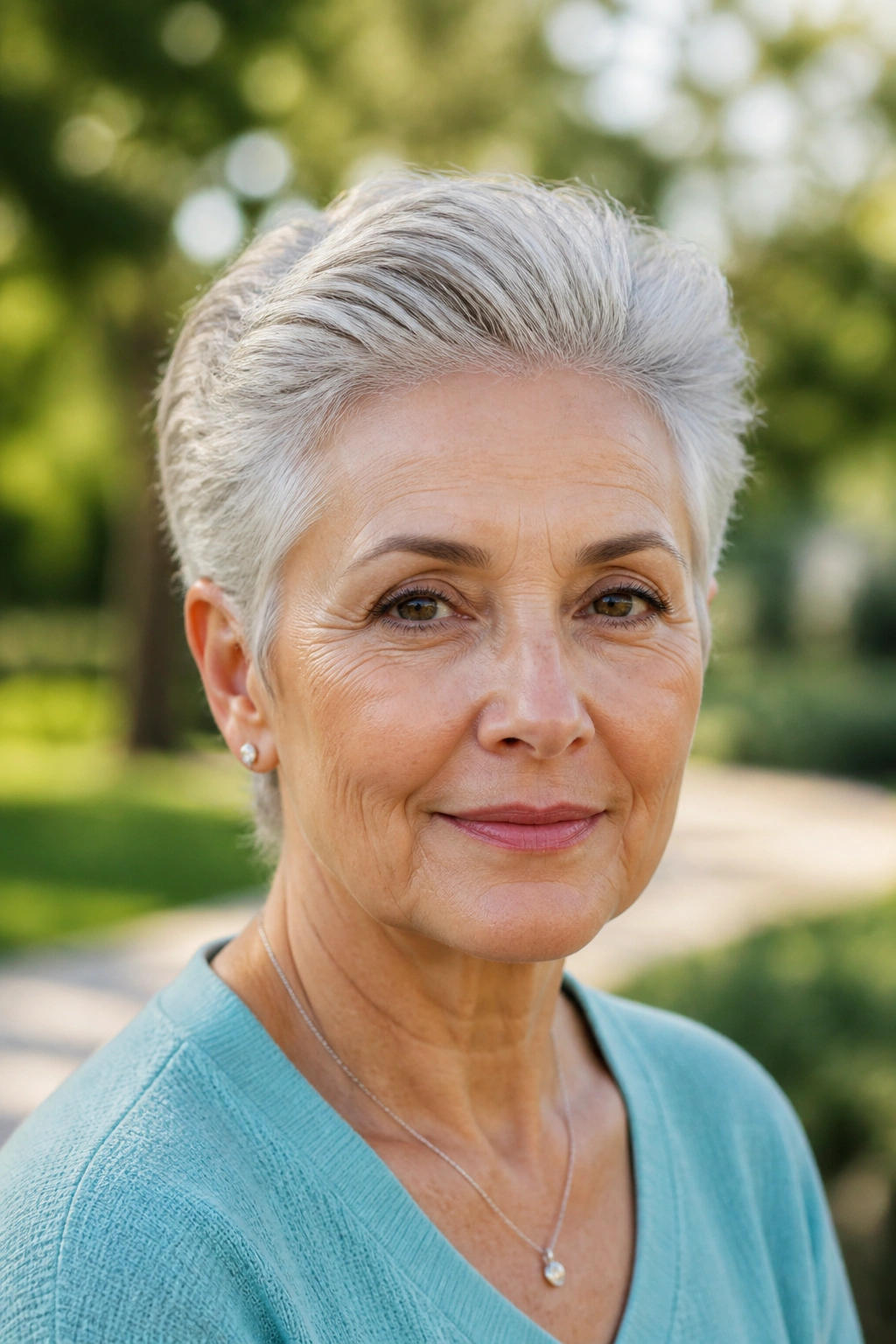
A swept-back crop has a quiet confidence to it. The hair is short, the face is open, and the styling moves away from the forehead instead of falling forward. That makes it a smart choice for women who wear glasses or like their features fully visible.
The best versions keep enough softness on top that the style doesn’t feel severe. You want a gentle push back, not a slicked-down look. That means a light mousse at the roots and a small amount of styling cream through the top after drying.
This cut works especially well with silver hair because the color line reads cleanly against the skin. It’s also one of the easiest styles to manage when hair density is uneven. Fewer lengths. Less fuss.
Some people think short hair limits options. I’d argue the opposite. A crop like this makes the shape of the face matter more, which can be a good thing.
24. The Neck-Length Cut With Flipped Ends
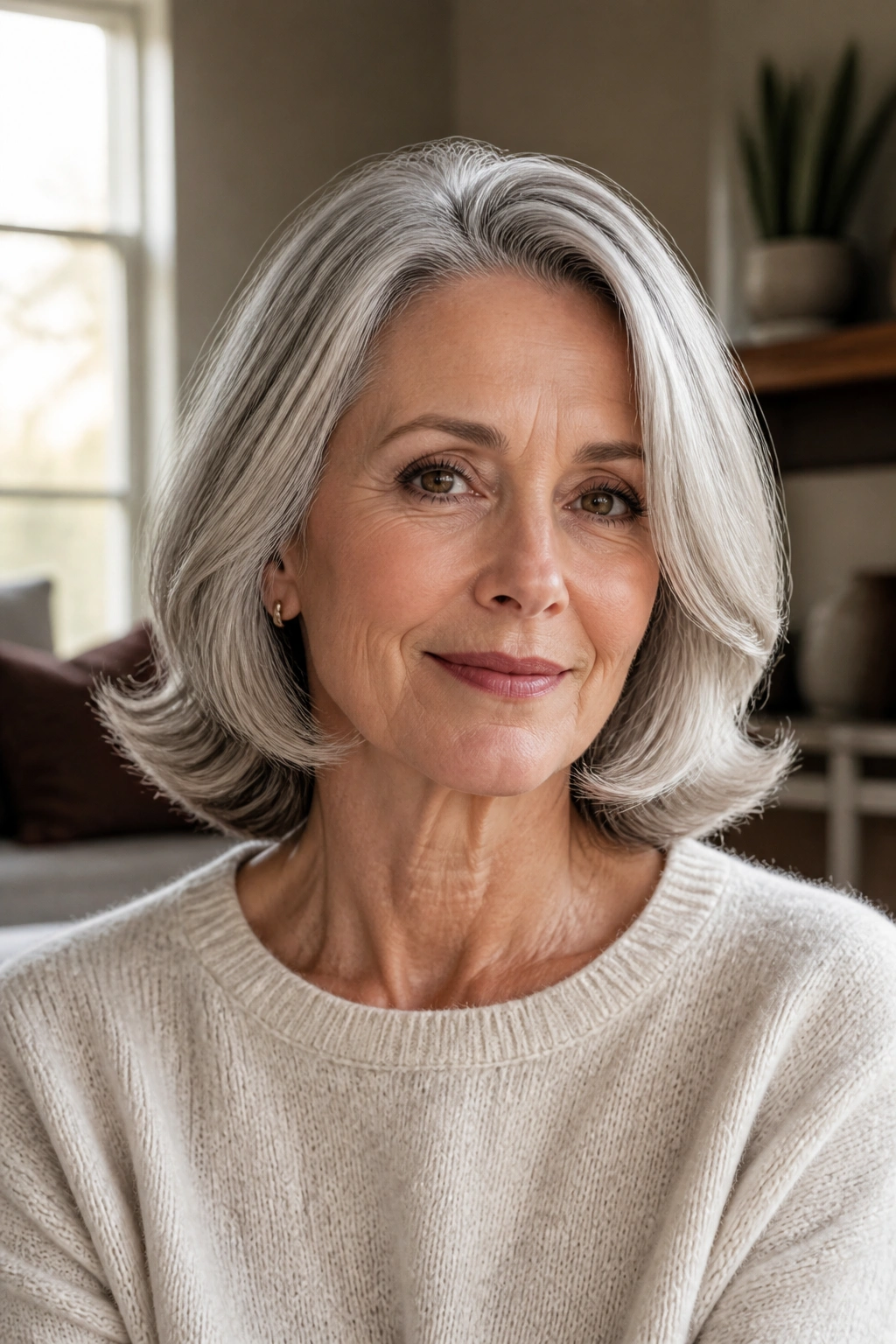
Not every woman wants hair that sits at the jaw or above. A neck-length cut gives a little extra softness and can be especially nice if you dislike the feel of very short hair on your ears or nape.
Unlike a heavy shoulder cut, this version keeps the weight off the ends so the hair doesn’t hang too flat. A slight flip at the bottom adds movement and keeps the outline from looking plain. If the ends curve outward a bit, the style feels lighter and less formal.
This is a good option for women who want a middle ground: longer than a bob, shorter than a lob, easy to tuck, and still simple to dry. It also works well with gray hair that has a natural bend.
Best paired with a side part or soft layering around the face. That stops the length from feeling too one-note.
25. The Bixie With Feathered Edges
A bixie sits between a bob and a pixie, and that middle ground is exactly why it has such an easy appeal. It has the shortness and lightness of a pixie, but it leaves enough shape around the sides and nape to feel feminine and flexible.
Why it lands so well at this length
The feathered edges keep the cut from looking heavy. The slightly longer top gives you room to sweep the hair to one side, lift it at the crown, or let it fall naturally. That makes it forgiving on busy mornings, which is not a small thing.
It’s a useful style for women with fine hair who want texture, and it can work on thicker hair too if the bulk is removed carefully. Gray hair often looks especially good in this cut because the soft edges show off the color change instead of hiding it.
Styling note
Use a light wax or paste, then twist a few top pieces with your fingers. That’s enough. If you over-style it, the cut loses the easy charm that makes it worth wearing.
Final Thoughts
The best hairstyle after 60 usually does one simple thing well. It makes your hair easier to live with. That might mean a shorter shape, a cleaner line, or a cut that lets gray hair move instead of sitting there in a solid block.
Bring a photo or two to the salon, but also say what you do not want. Too much volume, too much bang, too much length on the nape. Those details matter more than the style name.
The right cut should feel like it belongs to your face, your texture, and your routine. When that happens, you stop thinking about your hair all day — and that’s the real win.
