



Shoulder length haircuts for women over 40 hit a sweet spot that longer hair often misses. You get enough length for movement, ponytails, clips, and soft waves, but not so much that the ends start looking tired by lunchtime. That balance matters even more once hair changes texture, which it often does: gray strands can feel drier, coarser, or flatter at the root, and the old haircut that used to behave perfectly can suddenly act like it has a mind of its own.
A blunt edge can make fine hair look fuller. Layers can stop thick hair from blooming into a triangle. Bangs can soften the face, open up the eyes, or make glasses look intentional instead of accidental. The trick is picking a shape that suits your texture and your routine, not just the photo you liked on a screen.
Gray hair deserves a quick mention on its own because it changes the game. Silver, white, and salt-and-pepper strands show off clean lines, but they also expose weak cutting faster than darker hair does. A shoulder-grazing shape gives you enough room to wear movement near the face while keeping the overall outline neat, which is why this length keeps winning for so many women.
And yes, there’s a haircut here for almost every head of hair. Some are sharp and polished, some are soft and airy, some lean into natural wave, and some are made for the woman who wants to blow-dry once, then forget about it until the next wash.
1. Blunt Collarbone Lob
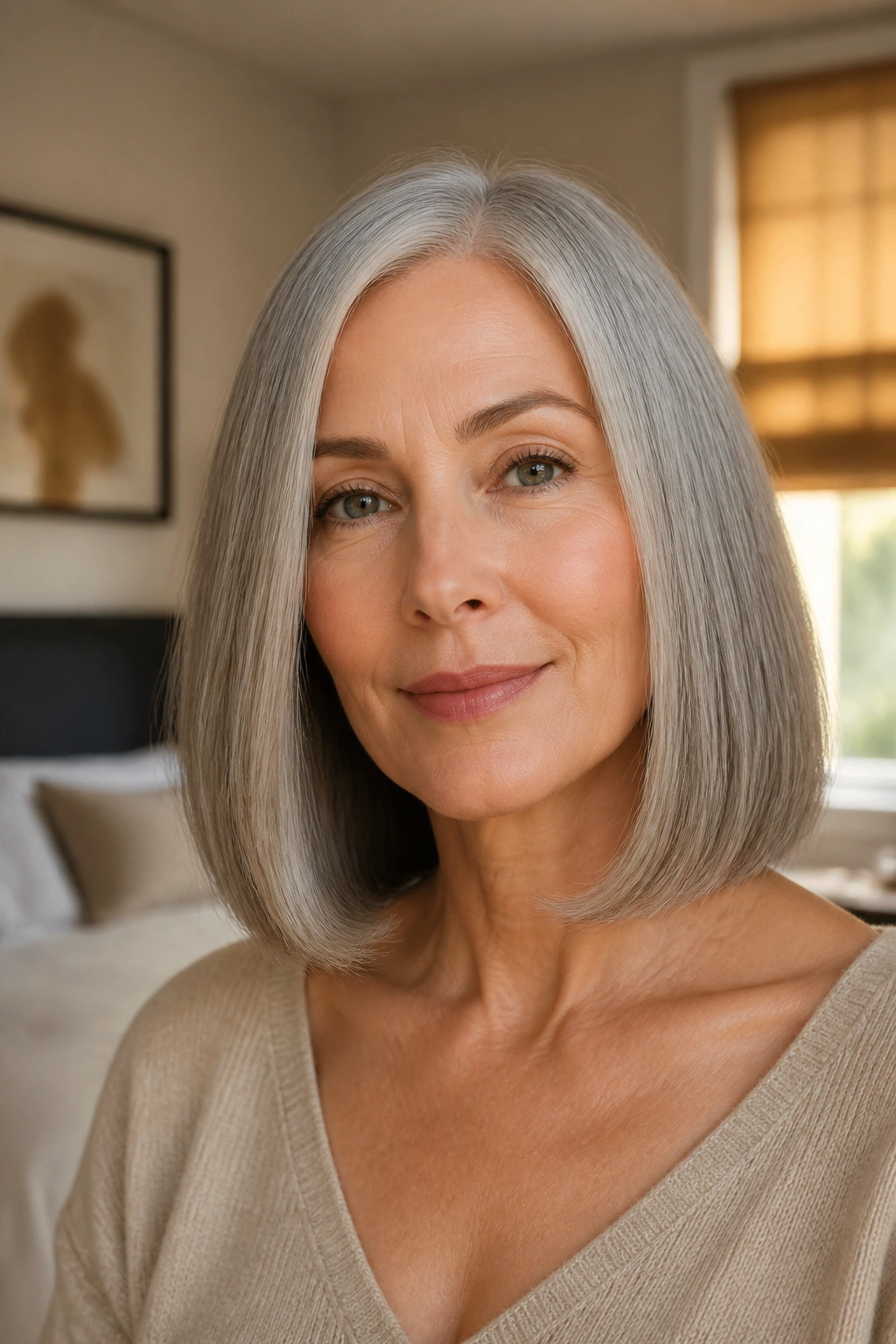
A blunt collarbone lob is the haircut that makes hair look instantly thicker. The clean edge gives the eye a solid line to follow, which is especially helpful if your hair has started to feel a little finer than it used to. On silver or gray hair, that crisp finish looks deliberate, not fussy.
Why it flatters
The cut works because it keeps all the weight at the perimeter. That means the ends don’t taper away too fast, and the style holds its shape even when you tuck one side behind your ear or let it air-dry a little imperfectly. If your hair is straight or only slightly wavy, this is one of the easiest ways to make it look polished without adding a lot of product.
Ask for the ends to be cut straight and clean at the collarbone, then have the stylist check the line from both the front and back. A round brush and a small amount of smoothing cream are enough. Keep the movement near the bottom inch or two. That’s where the shape lives.
- Best for fine to medium hair
- Good if you want low daily styling
- Strong choice for gray hair with a bright, glossy finish
Pro tip: if your ends fray fast, trim this cut every 6 to 8 weeks. The blunt line is the whole point.
2. Soft Layered Lob
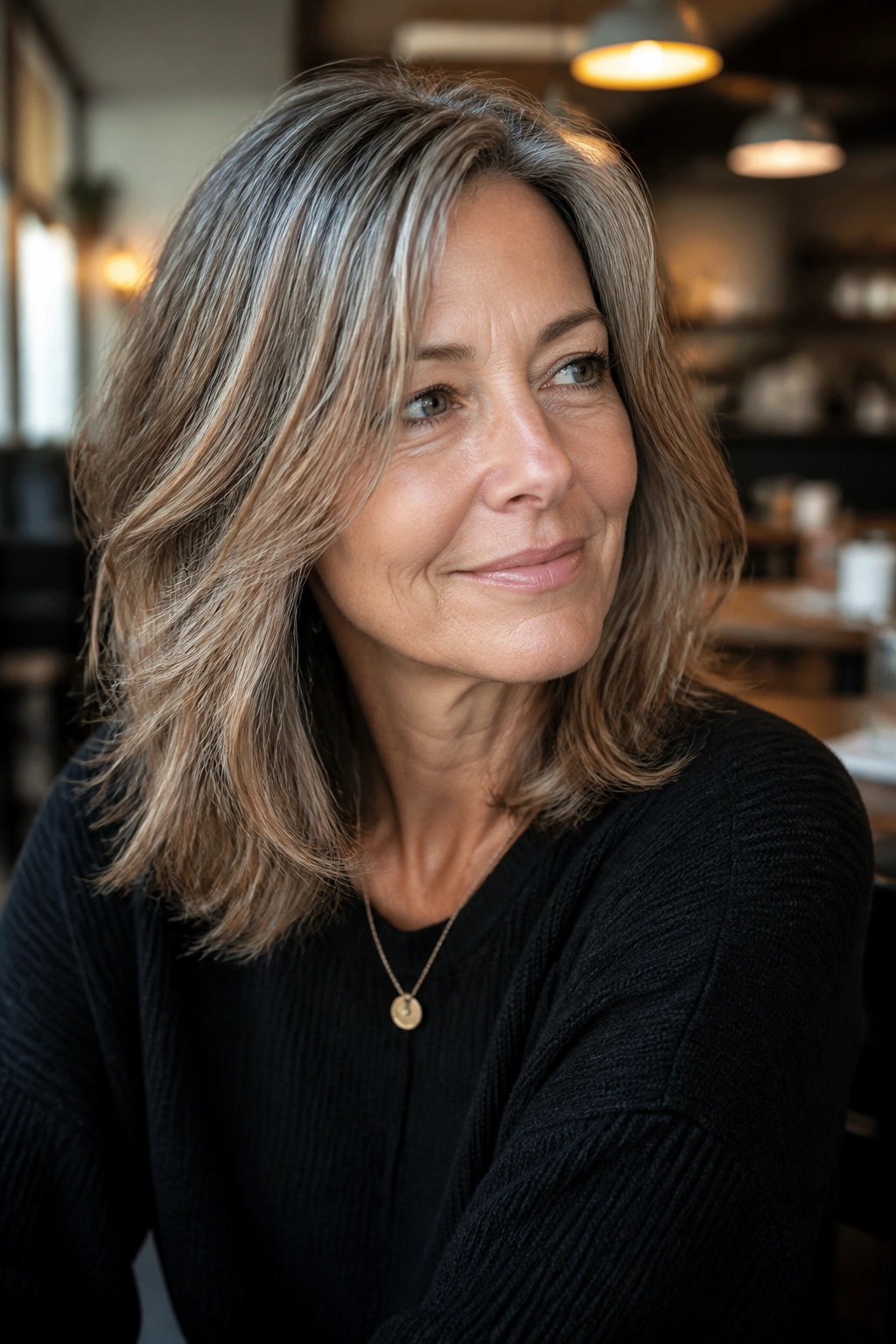
A soft layered lob is for the woman who wants movement but does not want to look overdone. The layers are long enough to keep the shape calm, but they break up bulk and give the hair some lift around the shoulders. It’s a good answer if your hair falls flat at the crown and puffs at the bottom.
The trick is restraint. You do not want choppy layers all over the place. You want long, connected pieces that start around the chin or just below it, then melt into the lower lengths. On gray hair, that kind of layering keeps the cut from feeling heavy and blocky, which can happen fast when the hair has more texture and less slip.
This one works especially well if you like a round brush blowout or loose bends from a curling iron. A 1.25-inch iron wrapped in alternating directions gives the ends a soft swing. It looks natural. Not sleepy. Not stiff.
3. Curtain Bang Lob for Women Over 40
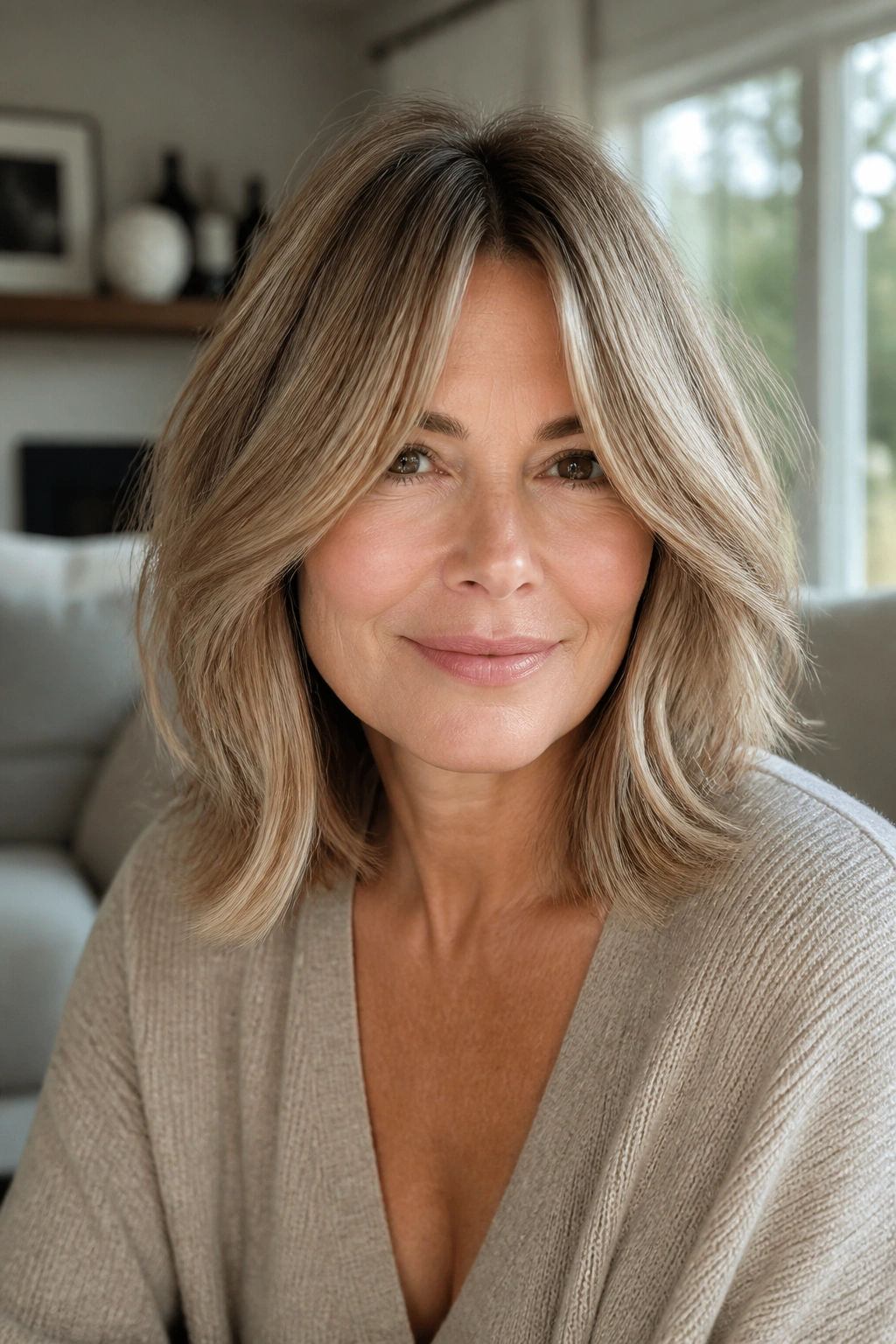
Curtain bangs can change a shoulder length cut in a hurry. They soften the forehead, pull attention toward the eyes, and make the whole haircut feel lighter around the face. If you wear glasses, they’re even more useful, because they add shape without crowding the frame.
What makes this version so wearable is the length of the bang itself. You want the pieces to part in the middle and sweep into the cheekbones, not sit like a hard fringe across the forehead. That gives you room to tuck them back, twist them, or let them fall naturally on days when you don’t want to style much.
Styling note
Blow-dry the bangs first, while they’re still damp. Use a small round brush and direct the pieces away from the face, then let them cool in place before touching them again. That cooling step matters more than people think.
A curtain bang lob also plays nicely with gray roots because the softer front shape keeps regrowth from looking harsh. It’s a smart cut if you want softness near the face and structure everywhere else.
4. Side-Swept Fringe Cut
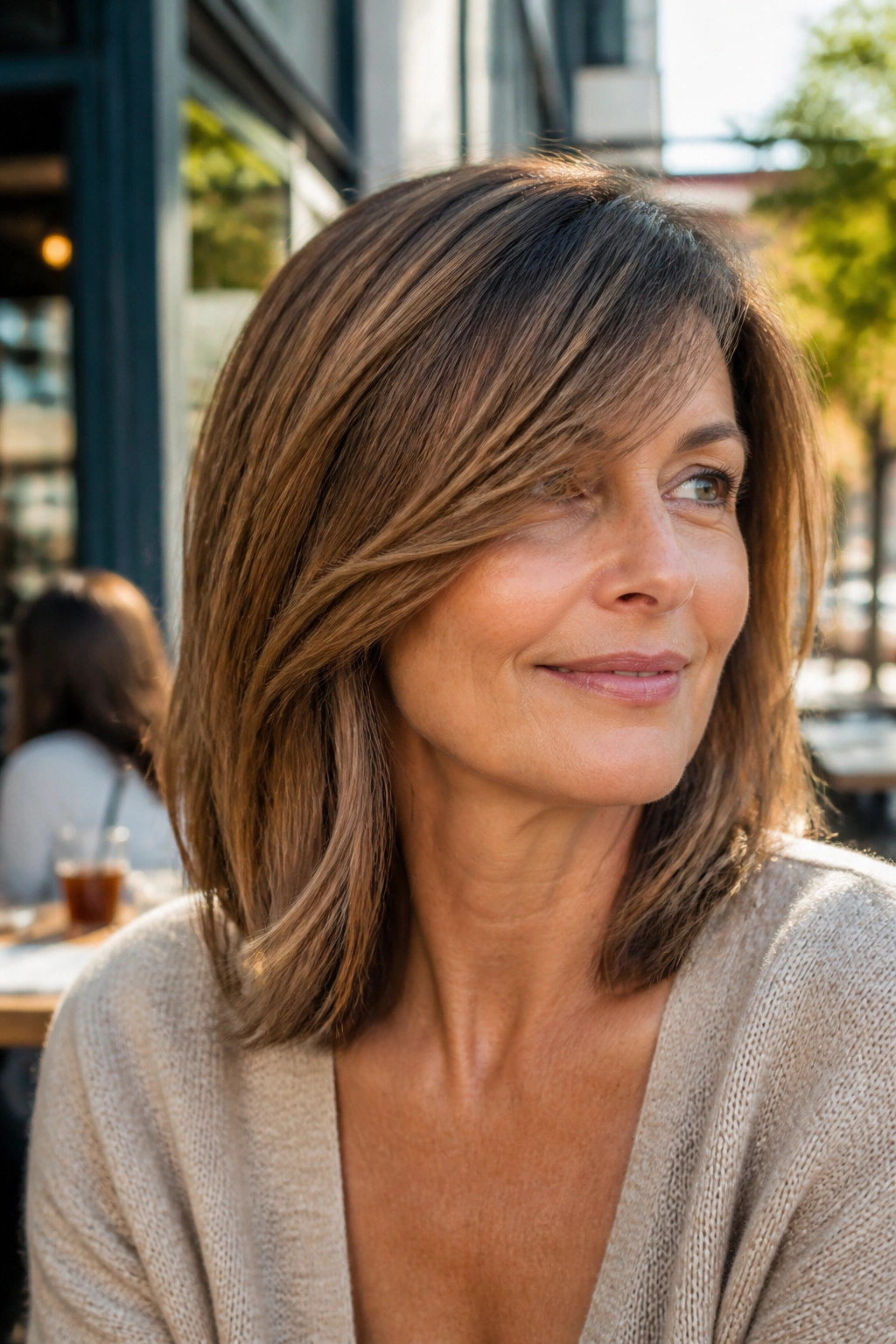
A deep side-swept fringe can be a quiet fix for hair that feels too open at the forehead. It gives the face some angle, which is useful if your features have softened over time and you want a little more definition. It also grows out in a friendly way, which is a blessing when you don’t want a bang trim every few weeks.
This haircut works best when the fringe is long enough to blend into the rest of the cut instead of sitting on its own like a separate event. The side sweep should start around the eyebrow and taper down toward the cheekbone. That shape can hide a cowlick near the hairline, soften a wider forehead, and take a little attention off thinning at the temples.
One thing I like here: it looks good even when the rest of the hair is plain. Straight, wavy, tucked behind one ear—still good. A dab of styling cream on the fringe is enough. Too much product and it starts clumping.
5. Angled Lob
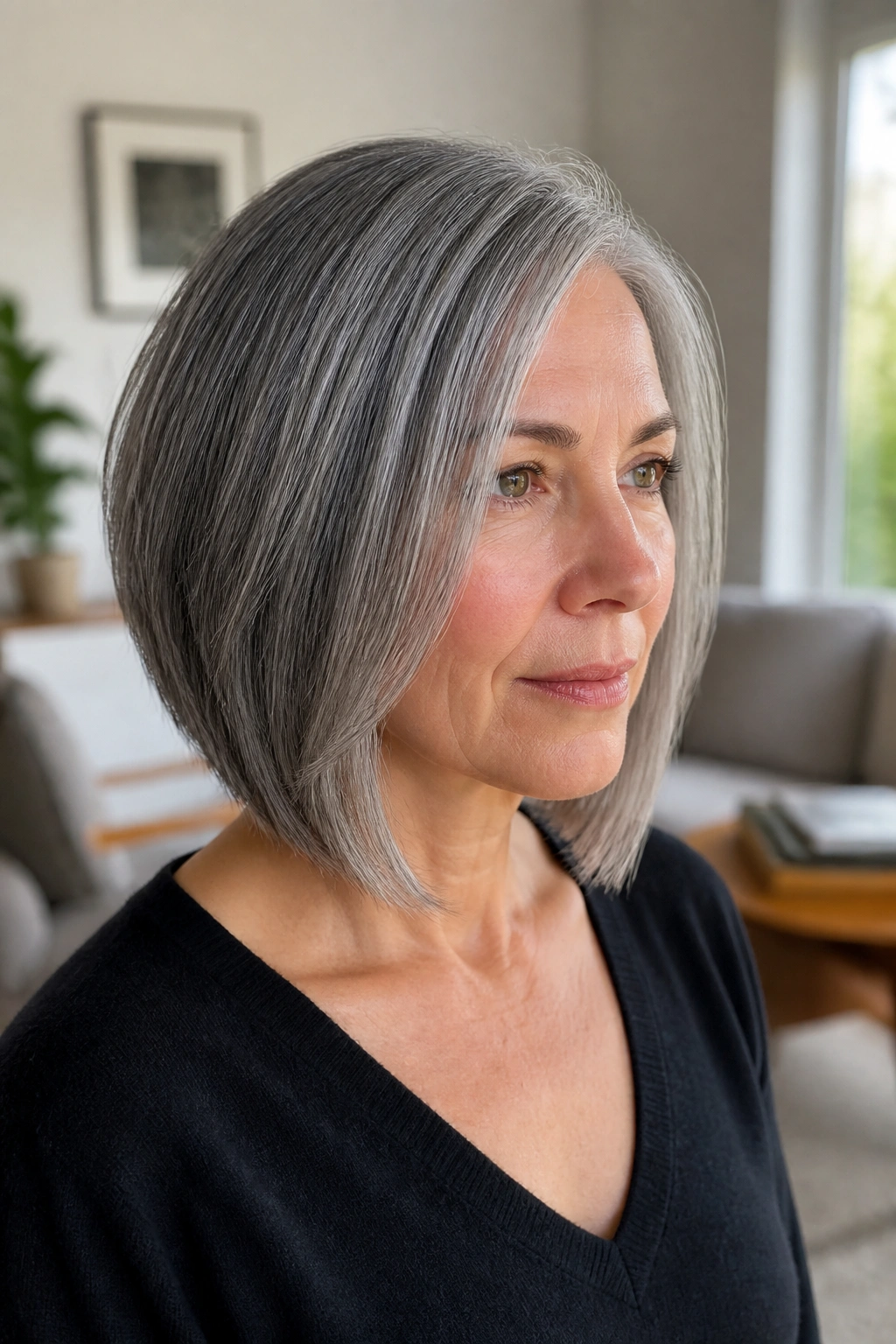
An angled lob gives you shape without needing a dramatic stack in the back. The cut is shorter in the rear and a bit longer near the front, so the eye reads lift and movement right away. That slight slope is enough to make the neck look longer and the hair look more intentional.
The key is keeping the angle subtle. If the front gets too long, it starts to feel disconnected. If the back gets too short, it stops being a shoulder length haircut and turns into something else entirely. A difference of about 1 to 2 inches from back to front is usually plenty. More than that can look sharp in a way that is hard to live with every day.
Ask your stylist to keep the weight line smooth, not over-thinned. The cut should swing when you move, not flick out at odd angles. A flat iron bent slightly inward at the ends gives this shape a clean finish, especially on gray hair with a bit of wiry texture.
6. Feathered Shoulder Layers
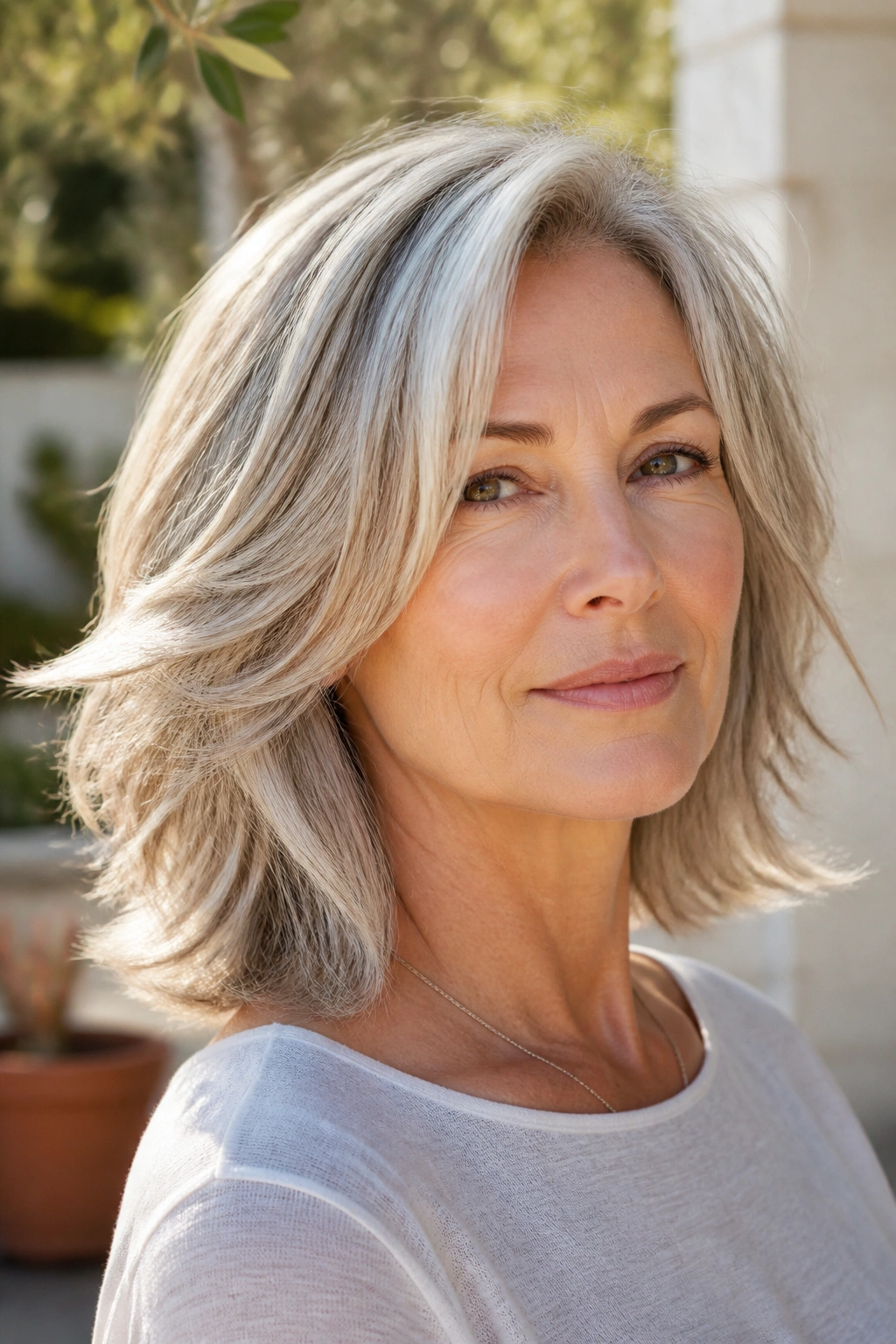
Feathered layers have a soft, airy feel that flatters hair that wants to sit heavy. The edges are thinned just enough to move, but not so much that the haircut loses body. There’s a reason this shape keeps showing up on women who want a little lift around the face and a little swing at the shoulders.
This is one of the better choices if your hair is coarse, dense, or silver and a little dry at the ends. Feathering takes some of the visual weight off, which makes the whole cut feel lighter. It also helps when you want that polished blowout look without having to fight each strand into submission.
What to ask for
- Soft feathering through the mid-lengths, not the top
- Ends that taper, not slice
- Face-framing pieces that fall below the cheekbone
- A finish that still keeps the perimeter full
A medium round brush and a quick pass with a smoothing serum are enough. Don’t overdo the layers. The point is movement, not thinning.
7. Soft Shag
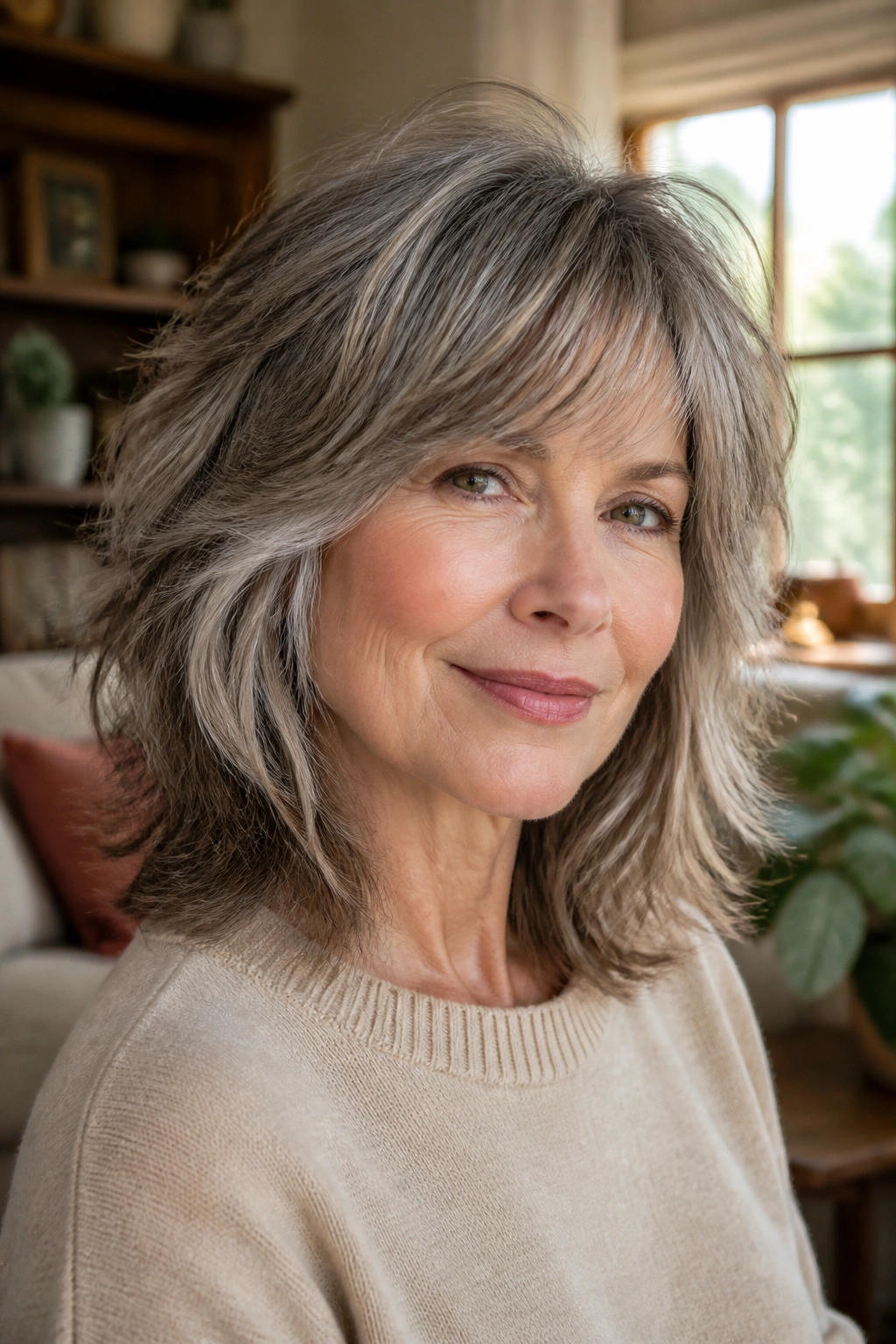
A soft shag gives shoulder length hair some personality. It’s lived-in, a little messy in the right way, and much kinder to hair that has picked up wave or frizz over time. The crown gets a touch more lift, the ends get a little piecey texture, and the whole cut moves instead of hanging there.
This is not the wild, shredded shag people sometimes picture. A softer version keeps the layers blended and the outline near the shoulders. That matters because too much choppiness can make gray hair look dry and over-processed, even when it isn’t. The better version keeps the edges light but still gives the hair a shape you can recognize in the mirror.
If you air-dry, this cut makes life easier. Scrunch in a light mousse, twist a few damp sections with your fingers, and let the texture do the work. A soft shag looks best when it doesn’t look too planned.
8. Wavy Lob with Long Layers
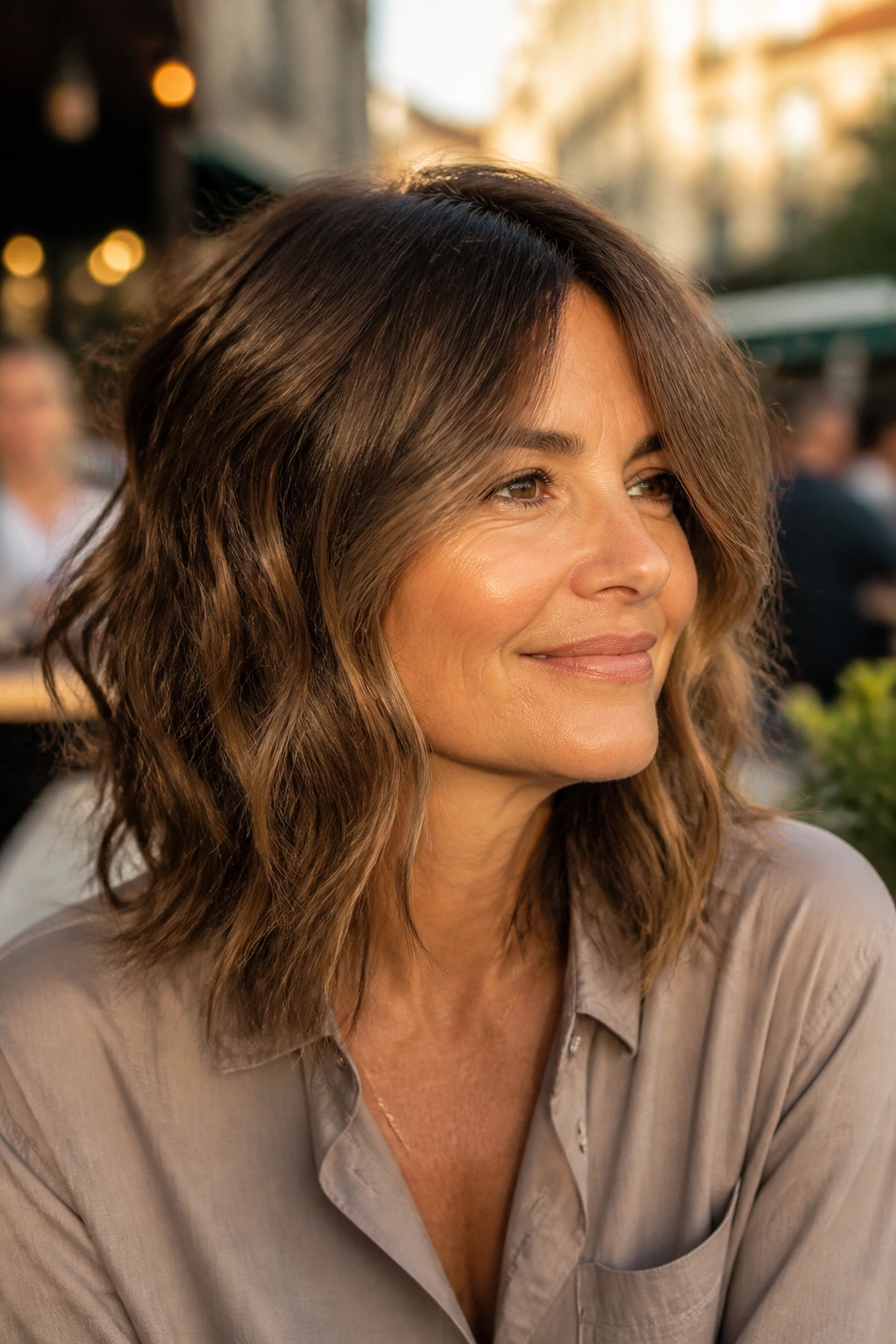
If your hair already wants to wave, don’t fight it. A wavy lob with long layers gives natural texture a place to land, which is half the battle. The cut keeps enough length to feel grown-up and versatile, but the long layers prevent the ends from sitting like one heavy block.
This shape is especially good for women who want a relaxed style that still looks finished. The waves can be loose and uneven. That’s fine. In fact, that’s part of the charm. A shoulder-grazing lob with long layers tends to look better on day two than a rigid, overly polished cut because the shape loosens in a flattering way.
Use a 1.25-inch curling iron or bend the hair with two to four braids overnight if you prefer heat-free styling. The goal is not perfect curls. The goal is a soft bend, a little bounce, and enough movement that the haircut shows off its shape.
9. Face-Framing Layers
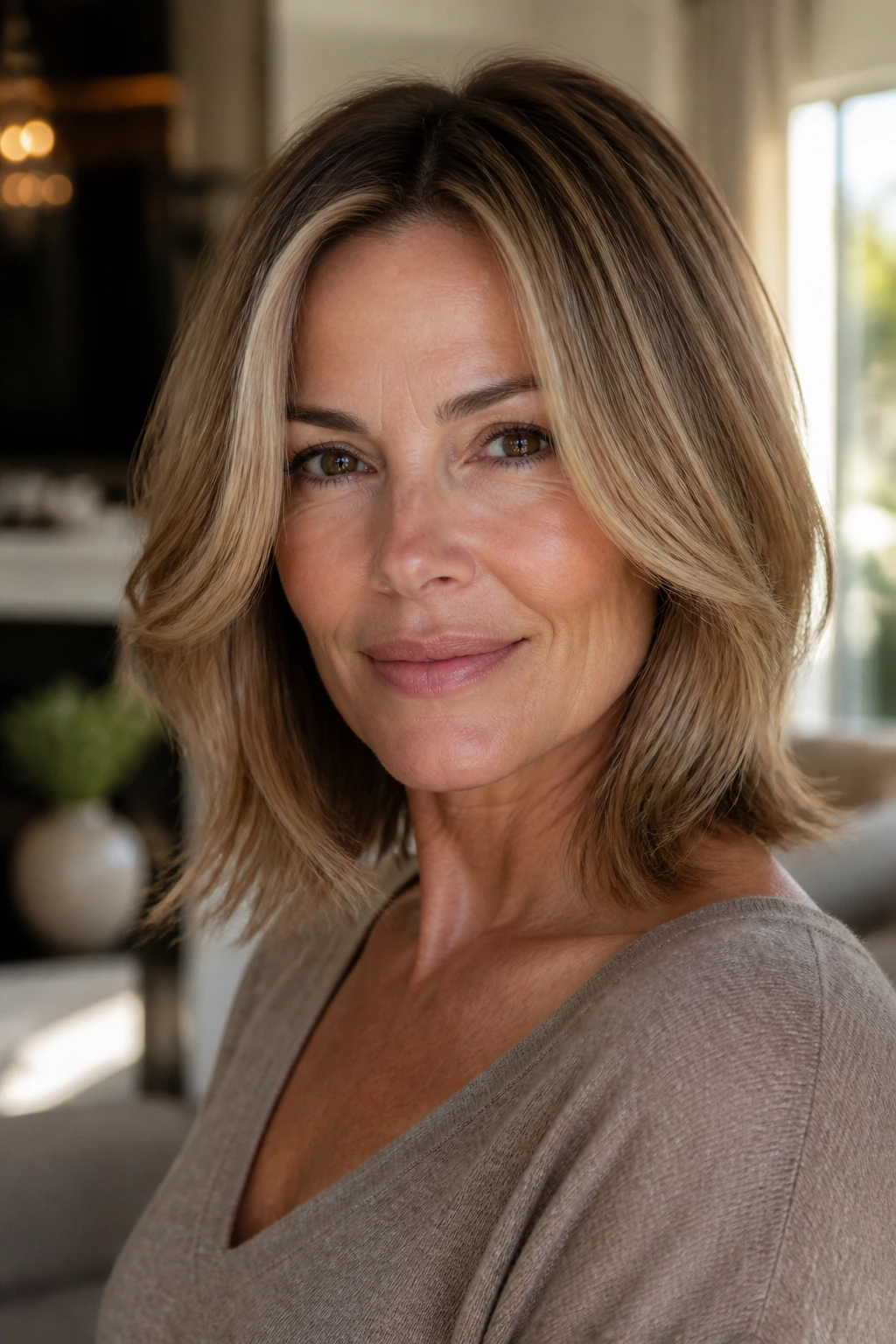
Face-framing layers are one of those small changes that can make a big difference. They brighten the face by opening up space around the cheekbones and jaw, which helps when hair starts feeling like it’s sitting too close to the face. You still keep the length, but the front of the cut stops feeling heavy.
This is a smart option if you want to keep your shoulder length hair but need the silhouette to look a little fresher. The layers should begin somewhere around the chin and slide down into the rest of the cut. If they start too high, you lose density. If they start too low, they barely do anything.
A soft blow-dry outward from the face gives these pieces their shape. Some women like a center part with face-framing layers; others prefer a slight off-center part for more lift. Both work. The important part is that the front pieces have enough length to move and enough control to stay flattering on a windy day.
Small trick, big payoff
A few fine highlights around the face can make this cut read even lighter, especially on gray or silver hair where dimension matters more than contrast.
10. Wispy Bangs and Rounded Ends

Wispy bangs take the edge off a haircut fast. They add a little softness at the forehead, which can be useful if a blunt fringe feels too heavy or if you want something that plays well with glasses. Paired with rounded ends, they give shoulder length hair a gentle curve instead of a flat shelf.
This cut has a calm, finished feel. The ends are beveled inward slightly, so the hair hugs the shoulders instead of jutting out. That shape suits straight hair especially well, but it can also help wavy hair look more controlled on days when it’s doing its own thing. The bangs should stay light enough to move; if they get too dense, the whole haircut can feel dated fast.
- Good for softer facial features
- Nice choice if you want coverage at the forehead
- Works well with a round brush and a light hold spray
Keep the fringe dry at the roots. That’s where it loses shape first. A tiny blast from the blow dryer is often enough to fix it.
11. Inverted Shoulder Bob
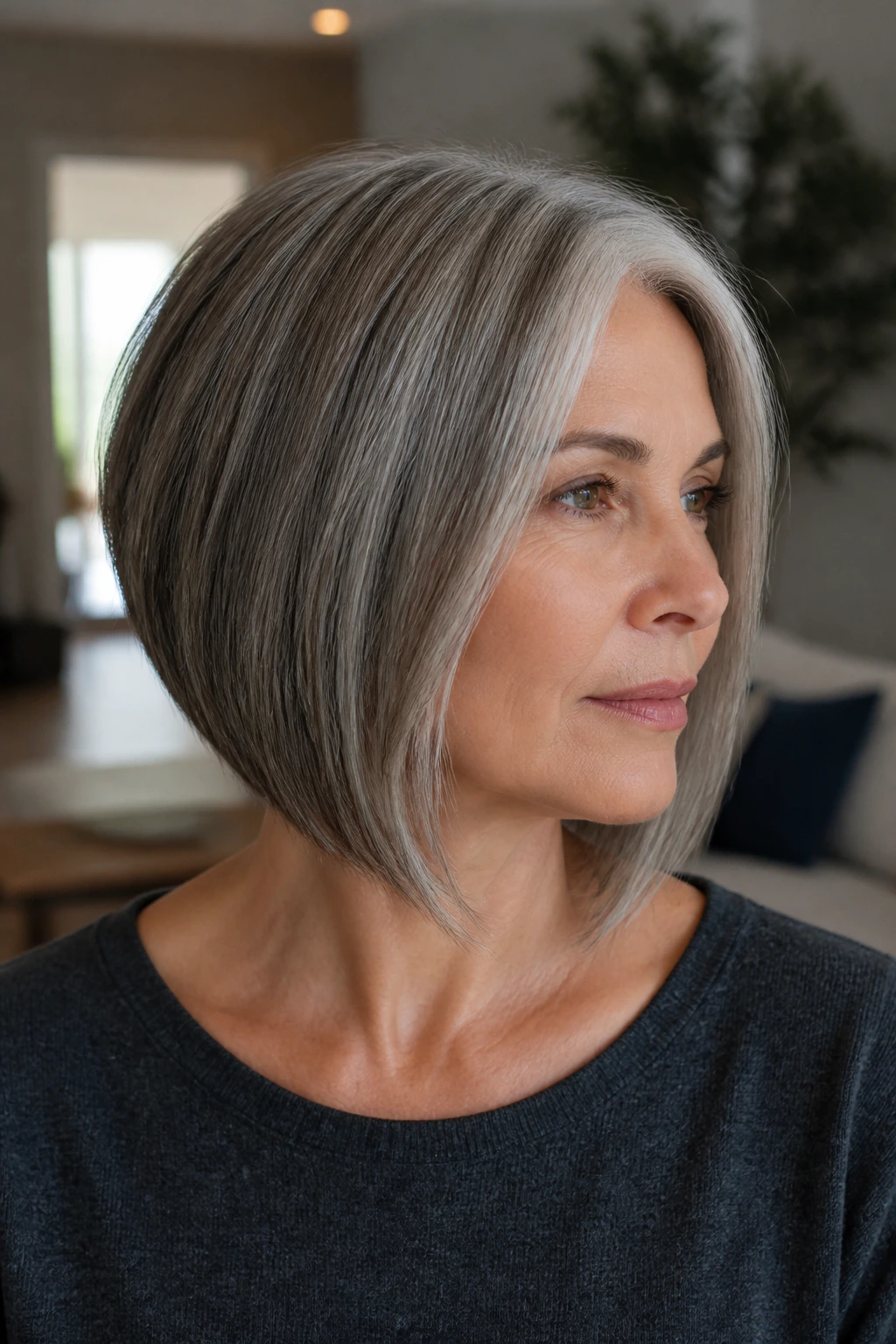
An inverted shoulder bob gives you structure in the back and length in the front, which creates a clean line without looking severe. It’s a sharper shape than a soft lob, and that’s exactly why some women love it. The haircut feels organized. Nothing hangs around doing nothing.
This style is a good fit if your hair is fine and needs a stronger shape to look fuller, especially at the nape. The stacked back gives lift, while the front pieces stay long enough to brush the collarbone. Gray hair can look especially striking in this cut because the line is so clear. A bright silver bob with an angled front has a lot of presence.
It does ask for maintenance. Not a huge amount, but enough that you’ll want regular shaping to keep the back from flattening out. If you like a sleek finish, this cut gives you something to work with. If you prefer wash-and-go hair, you may want a softer version instead.
12. U-Shaped Cut
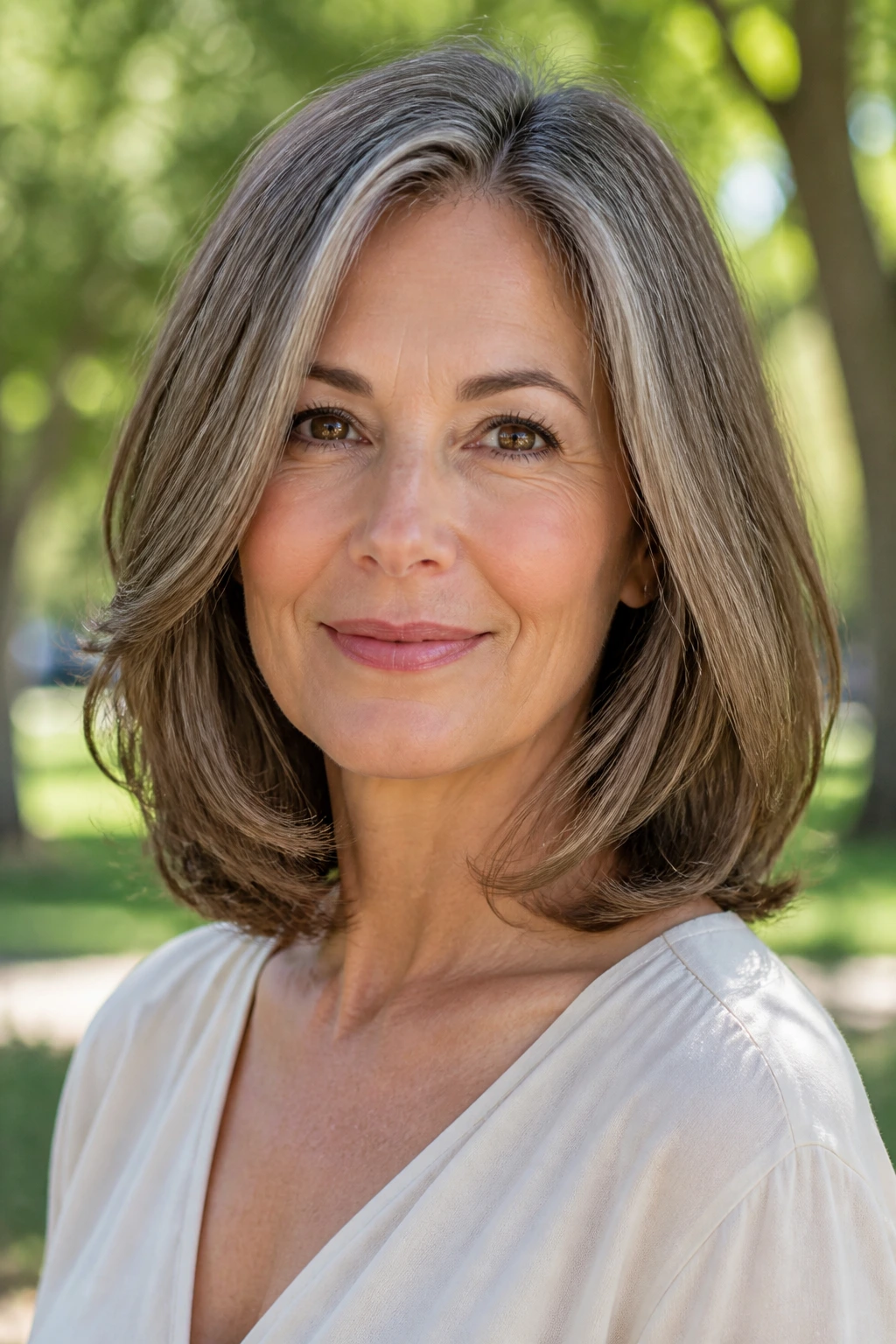
A U-shaped cut keeps length in the back while curving gently through the sides, so the silhouette feels softer than a blunt line. It’s a quiet haircut, and I mean that in a good way. No sharp corners. No heavy shelf. Just a shape that follows the head and falls naturally.
This is a useful choice for medium to thick hair because it keeps the weight distributed in a way that still looks full. The curve helps hair move around the shoulders instead of sticking out in a boxy shape. If your hair has a little wave, the U shape keeps the ends from flaring too much. If it is straight, the cut reads sleek and smooth.
Ask the stylist to keep the sides connected to the back rather than cutting them off too abruptly. The curve should be visible when the hair hangs down, but not so dramatic that it looks costume-y. A U shape is one of those cuts that doesn’t shout for attention. It just keeps working.
13. Swoopy Layers
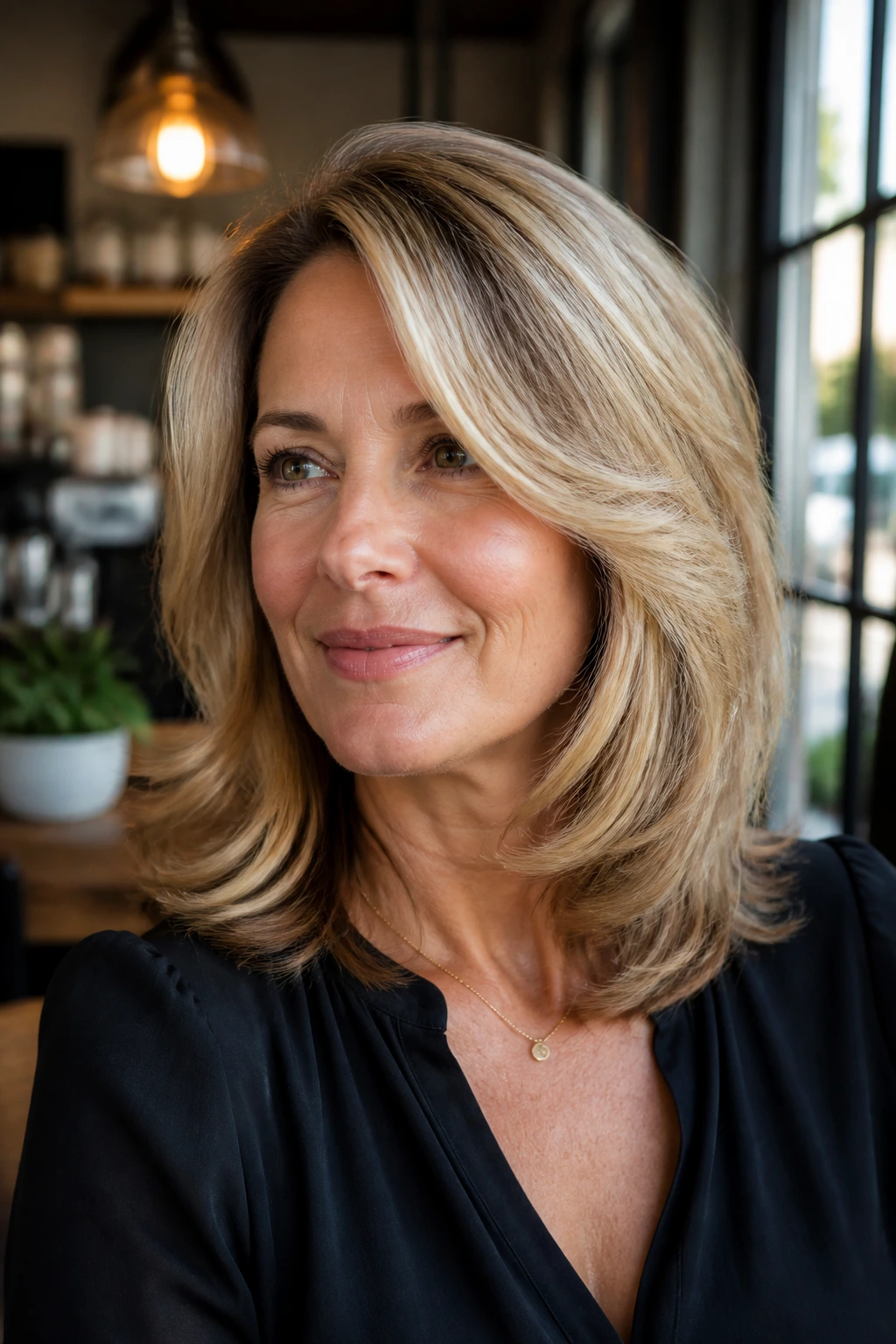
Swoopy layers are all about movement that looks expensive but not stiff. The layers are longer, broader, and designed to sweep away from the face instead of breaking the cut into little pieces. On shoulder length hair, that can feel polished fast.
This is a good haircut when you want hair that moves like it has a breeze in it, even on a still day. The front should have enough length to flip back softly, and the lower sections should keep enough density to hold the shape. That combination gives you fullness near the ends and lift around the face, which flatters a lot of face shapes.
A large round brush or a velcro roller set gives swoopy layers their finish. Use it when the hair is almost dry, not soaking wet. Wet hair stretches in the wrong way and the result can fall flat before lunch. Gray strands often take this style well because the layers catch light and show off the cut line.
14. Razor-Cut Movement
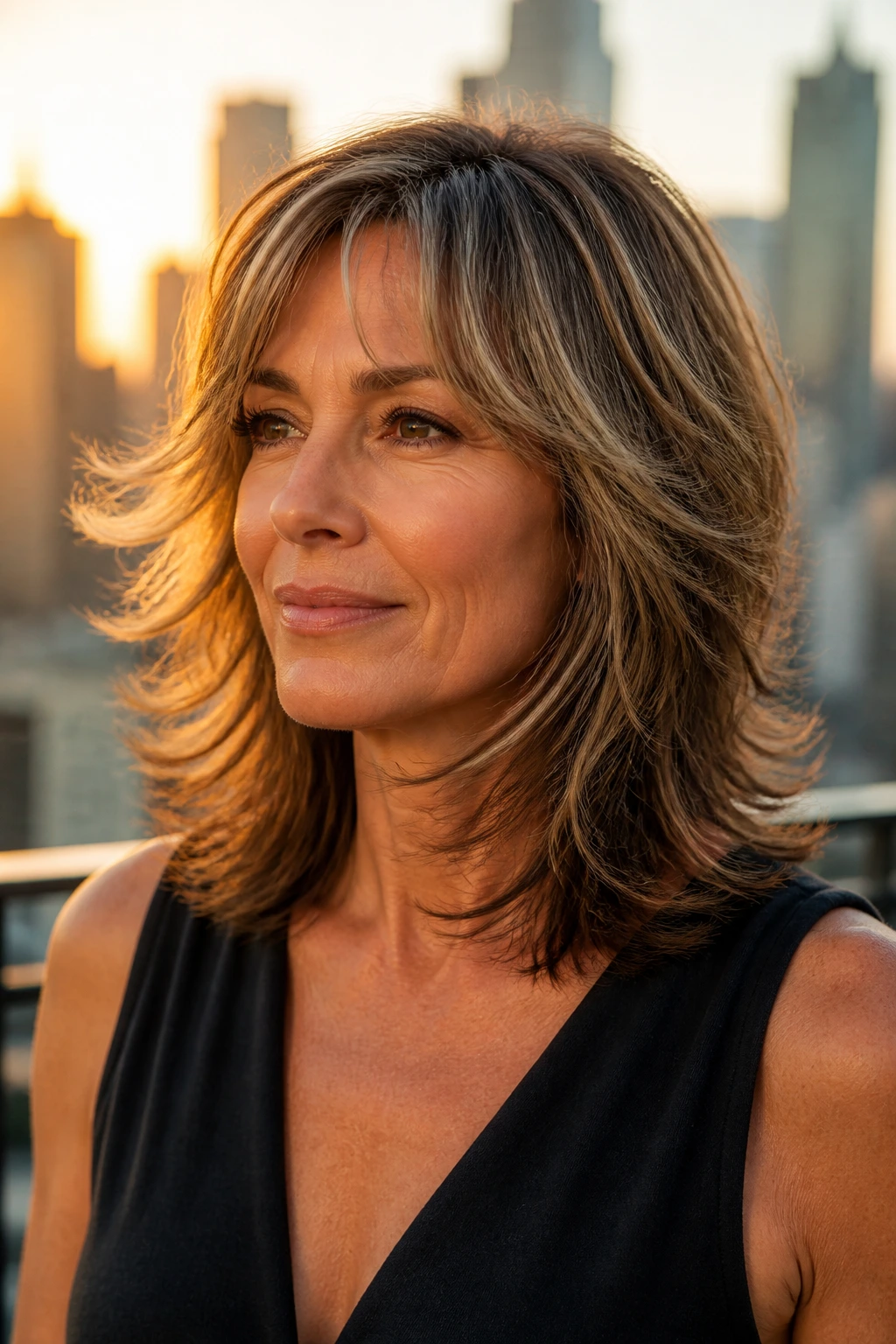
A razor-cut shoulder length style has a softer edge than a scissor-cut one. The ends taper lightly, which makes the hair feel more fluid and less blocky. That can be a good thing if your hair is straight but dense, or if you want the ends to move instead of sitting like one solid wall.
The catch is that razor cutting is not for every head of hair. If the ends are already fragile, very dry, or prone to splitting, too much razor work can leave them looking wispy in a bad way. The best version uses a light hand and a stylist who knows when to stop. A little softness is useful. Too much can turn messy fast.
What to watch for
- Ask for only the outermost perimeter to be softened
- Keep the layers long and connected
- Avoid heavy razor work on very frayed ends
- Style with a heat protectant before blow-drying or flat ironing
This cut shines when the hair has movement and a bit of shine. It is less forgiving if the hair is rough and neglected.
15. Gray-Blending Layered Lob for Women Over 40
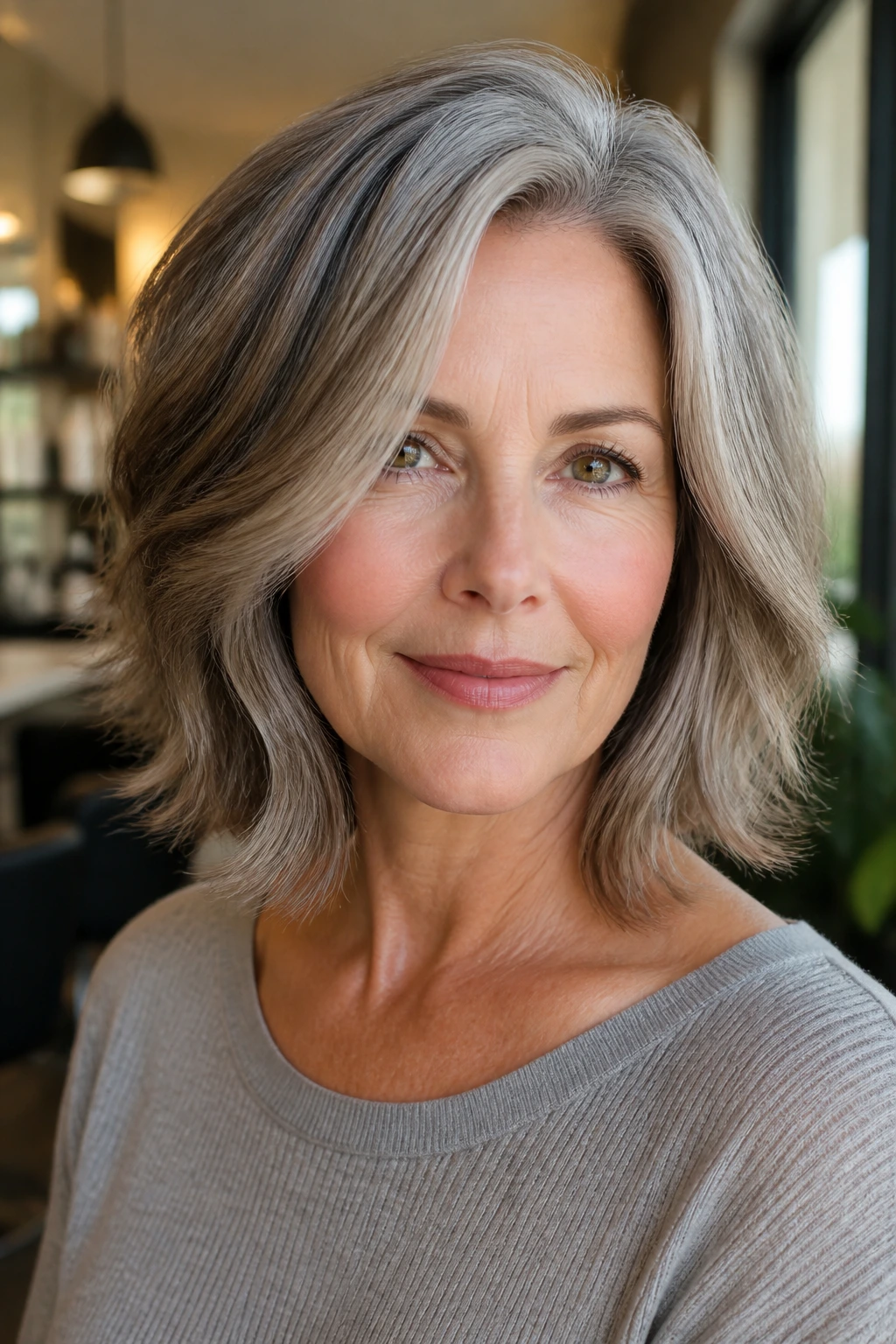
A gray-blending layered lob is a strong choice when you want to let silver grow in without making the transition look harsh. The cut and the color work together here. Soft layers break up the shape, and blended tones keep the grow-out line from shouting at you every time you look in the mirror.
This is one of the few styles that can make the grow-out phase feel intentional. Low-contrast highlights, cool beige tones, or a gloss that echoes the silver in your hair can make the gray look like part of the design instead of a problem to fix. The cut itself should stay long enough to keep fullness, with layers that move around the face and through the lower half of the head.
Why it helps gray hair
Gray strands can be wirier, and a layered lob gives them room to bend instead of sticking out. The shape also keeps the color from looking flat, because light hits the layers at different angles. That matters more than people expect.
A salon gloss every so often can keep the finish bright. If your silver has gone dull or yellowed from heat or hard water, this haircut gives you a better canvas to work on.
16. Shoulder-Length Cut for Natural Curls

Curly hair at shoulder length needs a shape that respects the curl pattern. Cut it the wrong way and you get shelves, random puffing, or ends that sit too wide. Cut it well and the curls form a neat halo that moves cleanly around the shoulders.
The most useful version is shaped curl by curl, usually on dry or mostly dry hair, so the stylist can see how each section actually falls. Layers should support the curl, not dismantle it. If the cut is too heavy, the lower curls stretch out. If it’s too thin, the silhouette goes fuzzy. That middle ground is the sweet spot.
A diffuser helps, but the haircut does most of the work. Scrunch in leave-in conditioner, dry on low heat, and stop touching it once the curls set. Gray curls can be gorgeous here because the texture shows off the cut, but they do need moisture. Dry curls look older than they are. Hydrated curls look alive.
17. Sleek Straight Lob
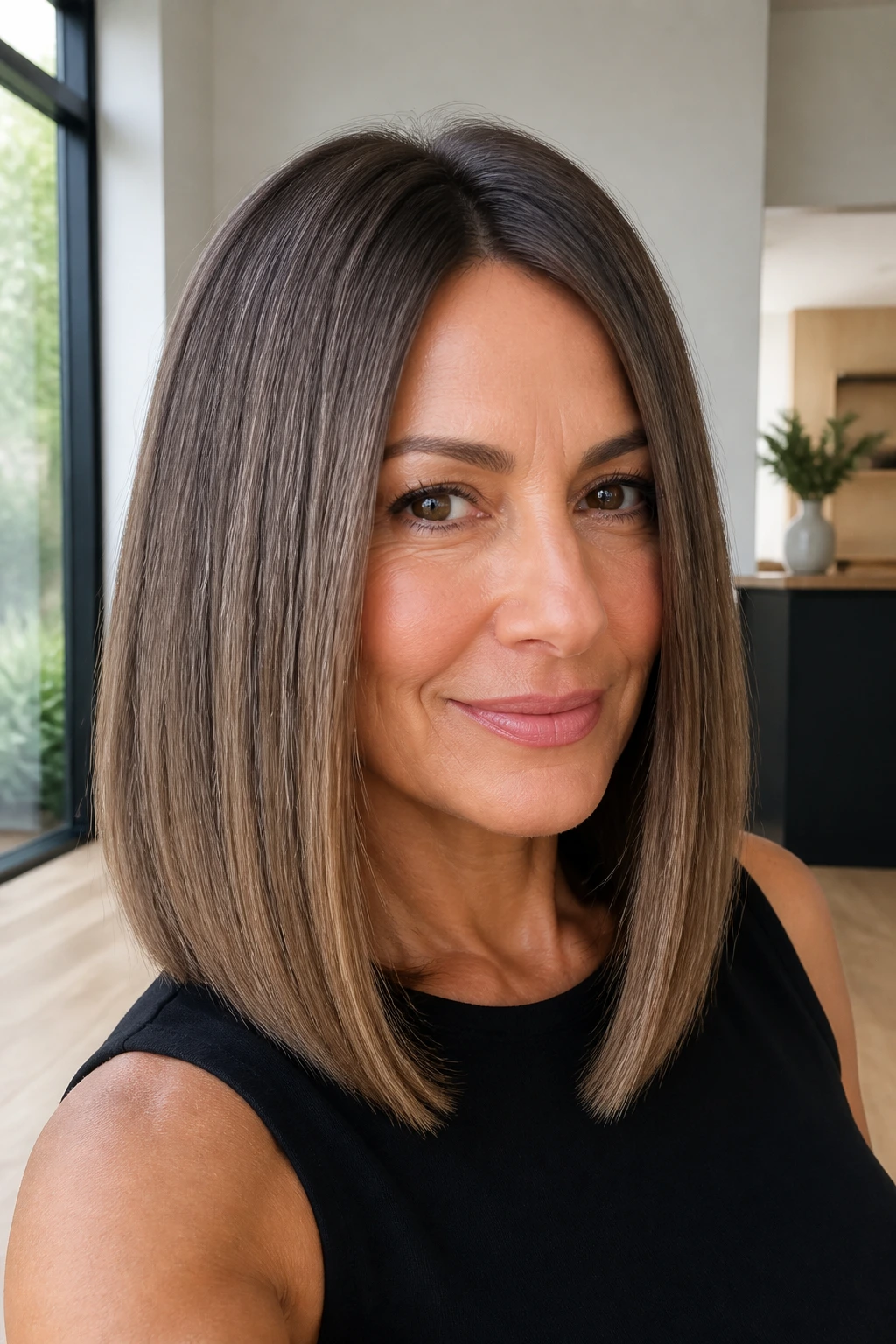
A sleek straight lob has a kind of honesty to it. No waves to hide behind. No layers trying to do all the work. Just a clean shoulder-grazing line that looks sharp when the hair is healthy and smooth.
This cut is especially good if your hair is naturally straight or if you like to flat iron it after washing. A center part can make it feel modern, while a slight off-center part softens the face a little. The ends should be tidy and slightly beveled, not puffed out. That detail matters, because a straight cut with rough ends can look blunt in the wrong way.
Heat protection is not optional here. Use it before blow-drying and again before flat ironing if you use both. A pass of the iron on medium heat, with the plates following the shape of the hair instead of pressing hard, is usually enough. On gray hair, this cut can look polished and bright, especially when the shine is there.
18. Deep Side-Part Shoulder Cut
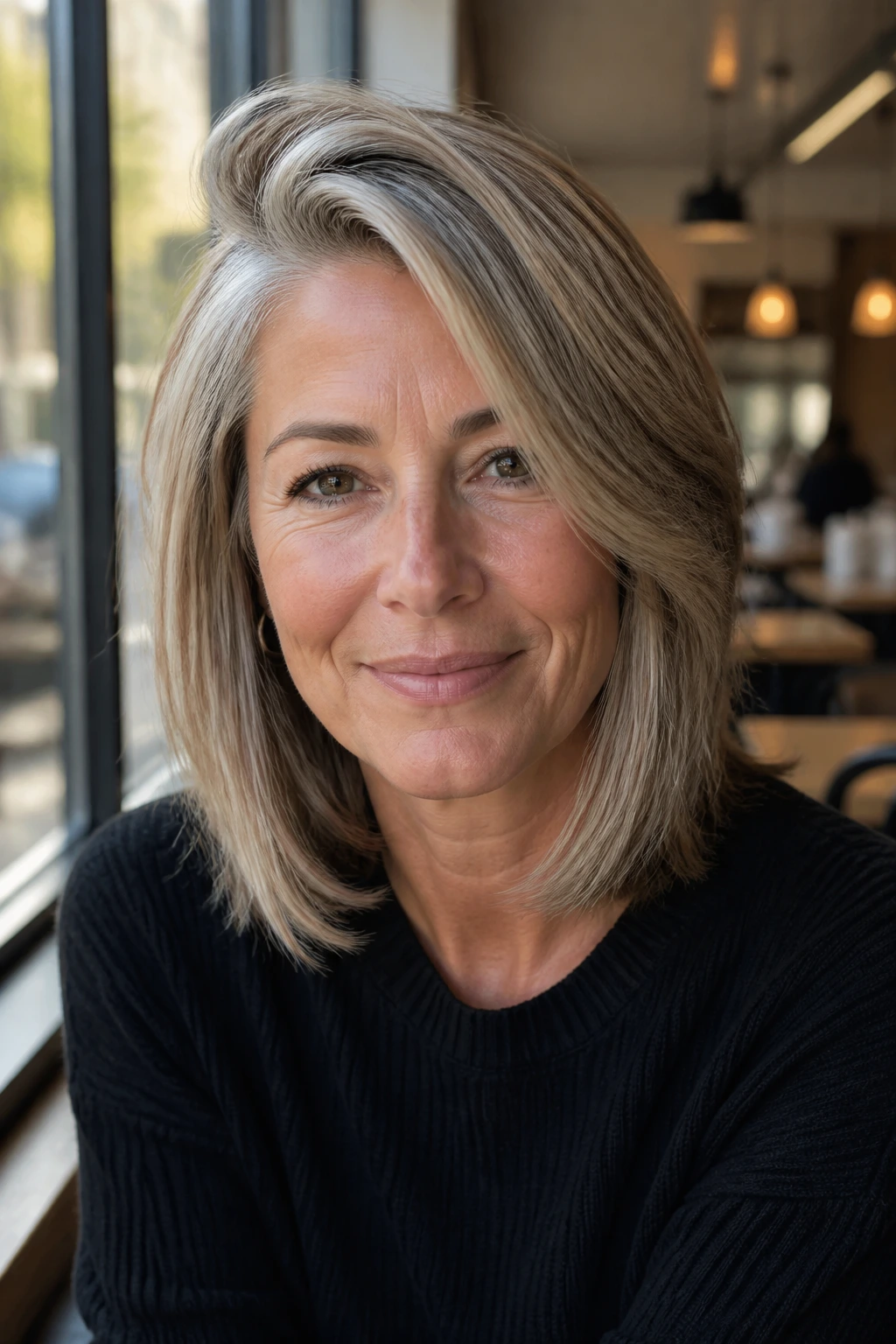
A deep side part changes the whole mood of shoulder length hair. It adds height at the crown, creates instant asymmetry, and gives the face a little more drama in the best sense. If your hair lies flat at the root, this is one of the cheapest fixes around. No cut change required. Just a different part can wake the style up.
The haircut itself can be layered or blunt. The part does most of the shaping. That makes it useful if you want a style that feels flexible and can be worn several ways. The side with less hair should skim the cheekbone or jaw, while the heavier side falls across the eye line or temple. That little bit of imbalance looks intentional, not messy.
Root spray helps keep the lift alive after the hair dries. Blow-dry the roots upward with your fingers first, then finish with a brush if needed. If you have gray hair near the part line, the side part can also hide regrowth for a few extra days, which is a small mercy but a real one.
19. Choppy Layers for Fine Hair
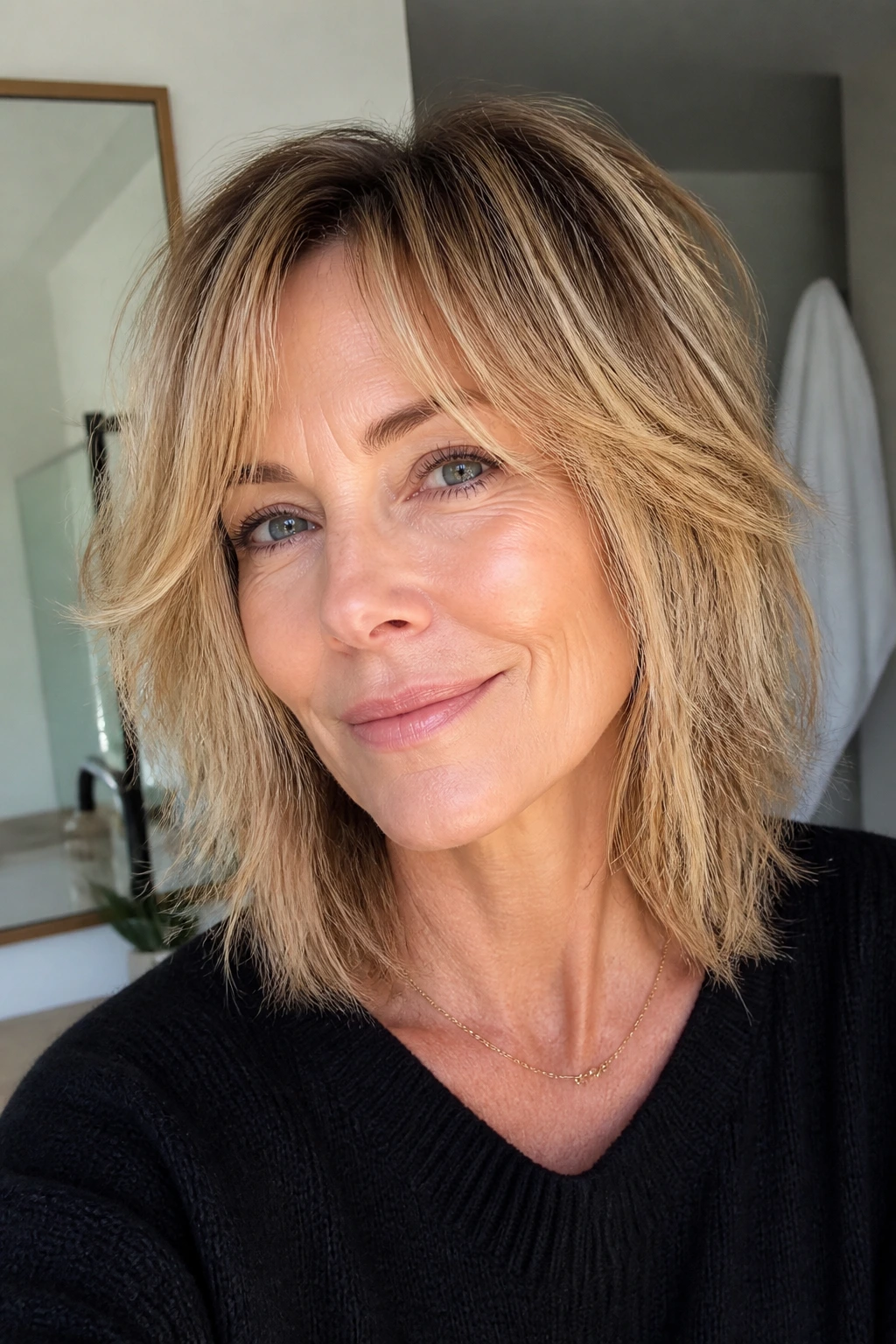
Fine hair needs help, but not too much help. Choppy layers can give it movement and the illusion of density, as long as the stylist doesn’t carve the shape to death. Too many short layers on fine hair can leave the ends looking scraggly. The right version keeps the perimeter healthy and adds texture only where it matters.
This cut works because it creates small shifts in length that make the hair catch differently as it moves. That gives the eye more to look at, which reads as fullness. It is a smart choice if your hair goes limp by the second day and you want a little lift without a lot of daily fuss.
Best ways to wear it
- A light mousse at the roots for lift
- A quick rough-dry with fingers instead of a round brush
- A small texturizing spray at the ends
- A trim schedule that keeps the layers from growing out unevenly
Gray fine hair can be slippery in one section and wiry in another. Choppy layering helps balance that split personality.
20. Internal Layers for Thick Hair
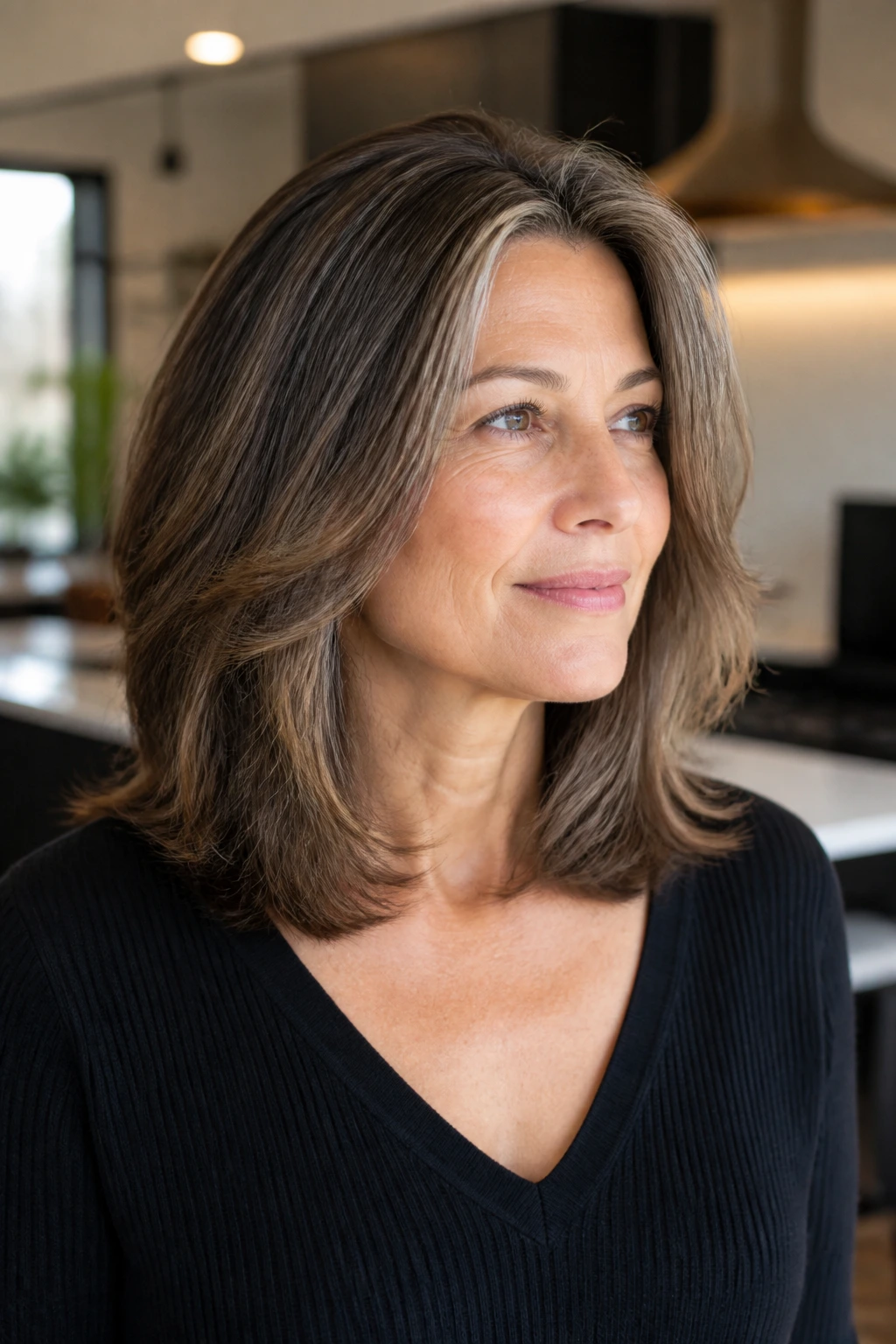
Thick hair looks great with length, until it doesn’t. Around shoulder length, it can puff at the sides and feel heavy at the bottom if the cut doesn’t remove some bulk inside. That’s where internal layers come in. They reduce weight under the surface while keeping the outside shape full.
This is one of the smartest cuts for women who want movement but hate the look of too many visible layers. The outside line stays clean, so the haircut still reads as polished. The hidden layers do the real work, letting the hair bend at the shoulders instead of sticking out. If your hair feels like it eats styling products, this cut can calm it down.
A good version of this shape still needs some face framing, or the result can look too solid. Ask for internal weight removal, not aggressive thinning. Those are not the same thing. Thinning shears can leave some thick hair looking frayed at the ends, and nobody needs that drama.
21. Soft Wolf Cut
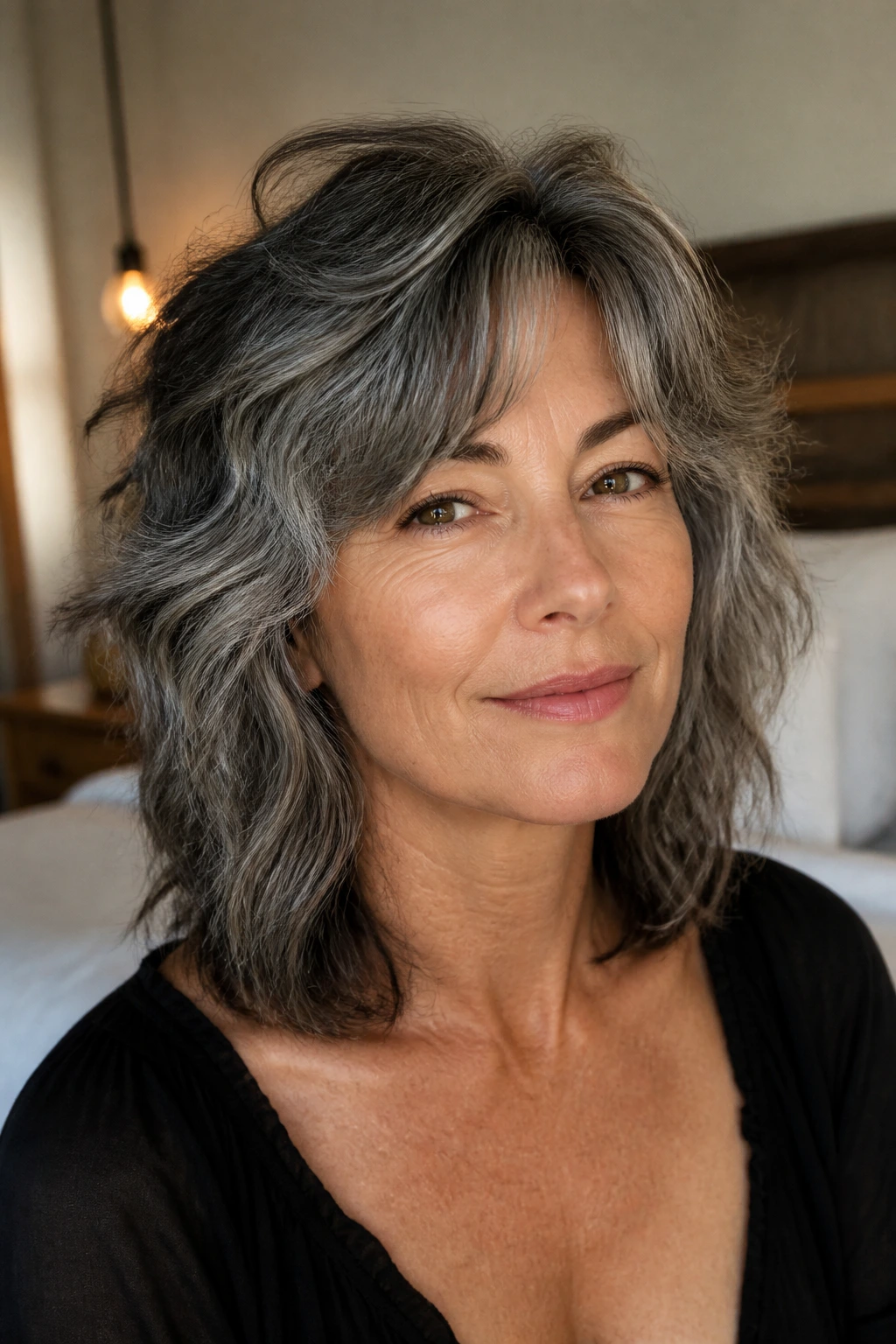
The soft wolf cut is the cooler cousin of the shag, but it needs a lighter hand when the goal is shoulder length hair. Think texture, not chaos. You want layers that create lift and movement around the crown, with a length that still brushes the shoulders and keeps the shape wearable.
This cut works especially well if your hair has a little wave or if you like a rough-dry finish. It has energy. That’s the main appeal. The top feels loose and airy, while the lower sections keep enough length to stop the style from tipping into full mullet territory. That line matters. Too short at the crown and too long at the back can look accidental fast.
A soft wolf cut is also a good match for gray hair that has picked up body. Silver strands often show texture better than darker ones, which means the layers can read as lively instead of frizzy. That said, the ends need to stay healthy. If they look dry, the whole cut loses its edge.
22. Rounded Shoulder-Length Cut for Women Over 40

A rounded shoulder length cut is one of the calmest options in the whole group. The shape curves gently around the head, with the ends tucked in just enough to keep the silhouette soft and polished. It is the haircut for someone who wants to look put-together without chasing trends or wrestling with her mirror every morning.
What makes it work is the way it frames the face and neck. The roundness keeps the sides from flaring, which can happen with thicker or wavier hair at this length. It also gives gray hair a very tidy finish, because the outline stays controlled even when the texture is a little coarse. If you like a neat sweater, a good pair of earrings, and hair that behaves, this is your lane.
Salon note
Ask for a gentle bevel at the ends and a shape that follows the curve of the head. Keep the layers minimal unless your hair needs weight removed. A simple blow-dry with a medium round brush is enough.
The beauty of this cut is that it wears well on ordinary days. Not the staged ones. The ones with errands, rain, and a quick coffee stop.
Final Thoughts
The best shoulder length haircut is the one that matches your hair’s actual behavior, not the photo you saved on your phone. Fine hair usually needs a clearer line. Thick hair usually needs weight taken out from the inside. Gray hair often looks best when the shape is clean enough to let the color do some of the talking.
If you want the safest starting point, a blunt lob or a softly layered lob is hard to mess up. If you want more personality, curtain bangs, a shag, or a soft wolf shape can add movement fast. And if your hair has gone silver, don’t treat that as a problem to hide. Shape it well, keep the ends honest, and the color can look deliberate in a way that feels much better than fighting it ever did.
