



Short hair and ombre have a funny reputation. People still act like you need waist-length hair to get that soft fade, but a bob, lob, or pixie can look sharper with the right color shift.
Placement matters more than saturation.
That’s the part most people miss. On short lengths, the gradient has less room to breathe, so a heavy hand can turn pretty fast into stripy or muddy. The good versions feel deliberate: a darker root that gives depth, a middle zone that blurs the line, and lighter ends that look like they belong there.
The best ombre hair ideas for short hair respect the cut first and the color second. A blunt bob wants a different fade than a shag. A curly crop wants a different melt than a sleek lob. Get that part right, and the style does the work for you.
1. Soft Mocha-to-Caramel Bob
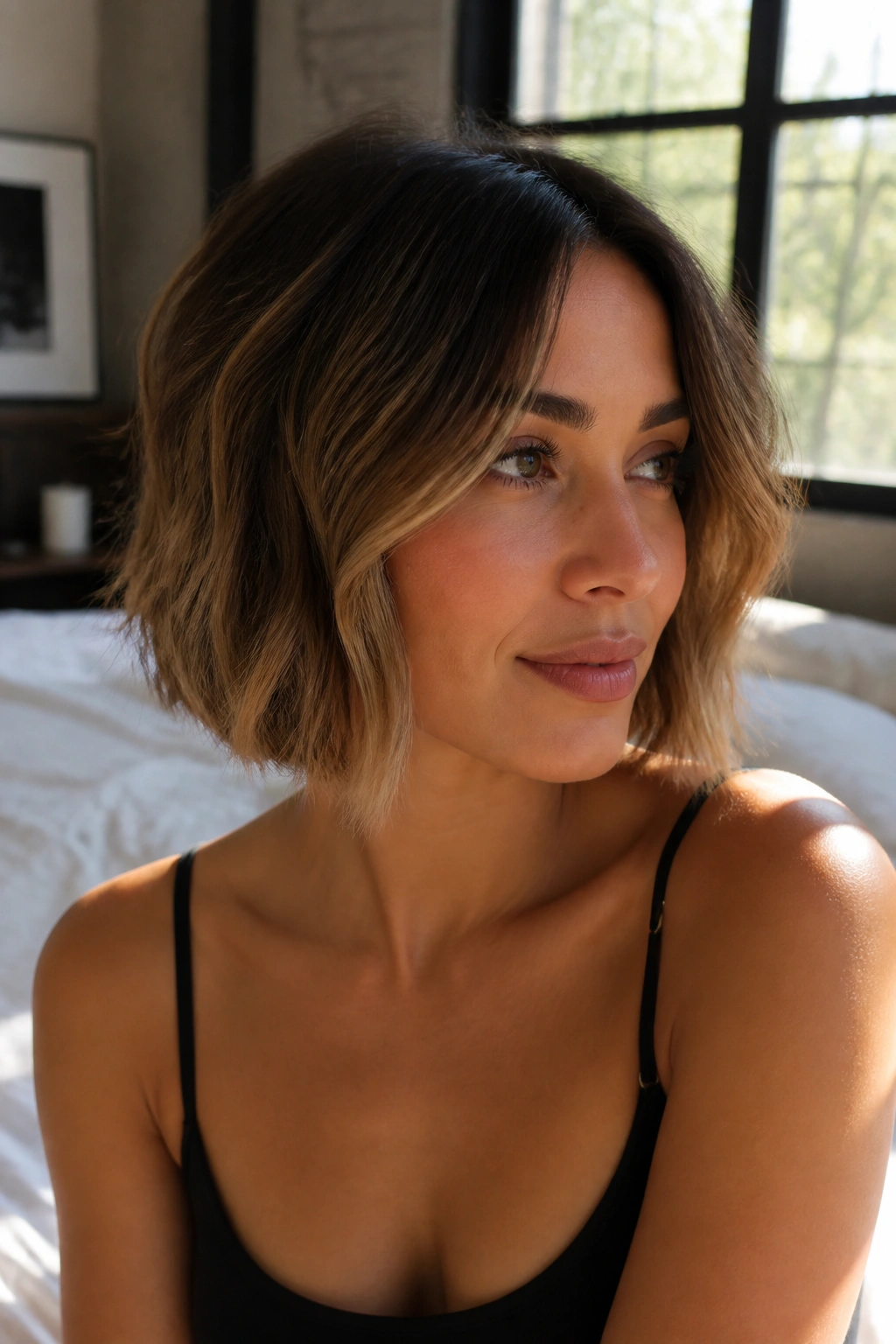
This is the one I reach for when someone wants an ombre that doesn’t shout. Mocha roots melting into caramel ends look especially good on chin-length bobs because the cut already has a strong shape; the color just softens the edges.
Why it works on shorter lengths
The fade starts low, around the cheek or just below the jaw, so the color change feels earned instead of abrupt. That matters on short hair, where a hard line can look chopped rather than blended. A few face-framing pieces one shade lighter than the rest help the whole cut feel brighter.
A round brush and a quick bend at the ends bring out the caramel pieces. Straightened to a poker-flat finish, the color reads more polished and a little cooler. Wavy, it looks softer and warmer.
- Ask for a root shade 1–2 levels deeper than your natural base.
- Keep the lightest caramel mostly on the mid-lengths and ends.
- Leave the very top near the part a touch darker for depth.
- Gloss the ends if they start looking dry or brassy.
My take: this is one of the easiest short ombre looks to wear every day. It grows out with grace, and that counts for a lot.
2. Ash Brown to Beige Blonde Lob
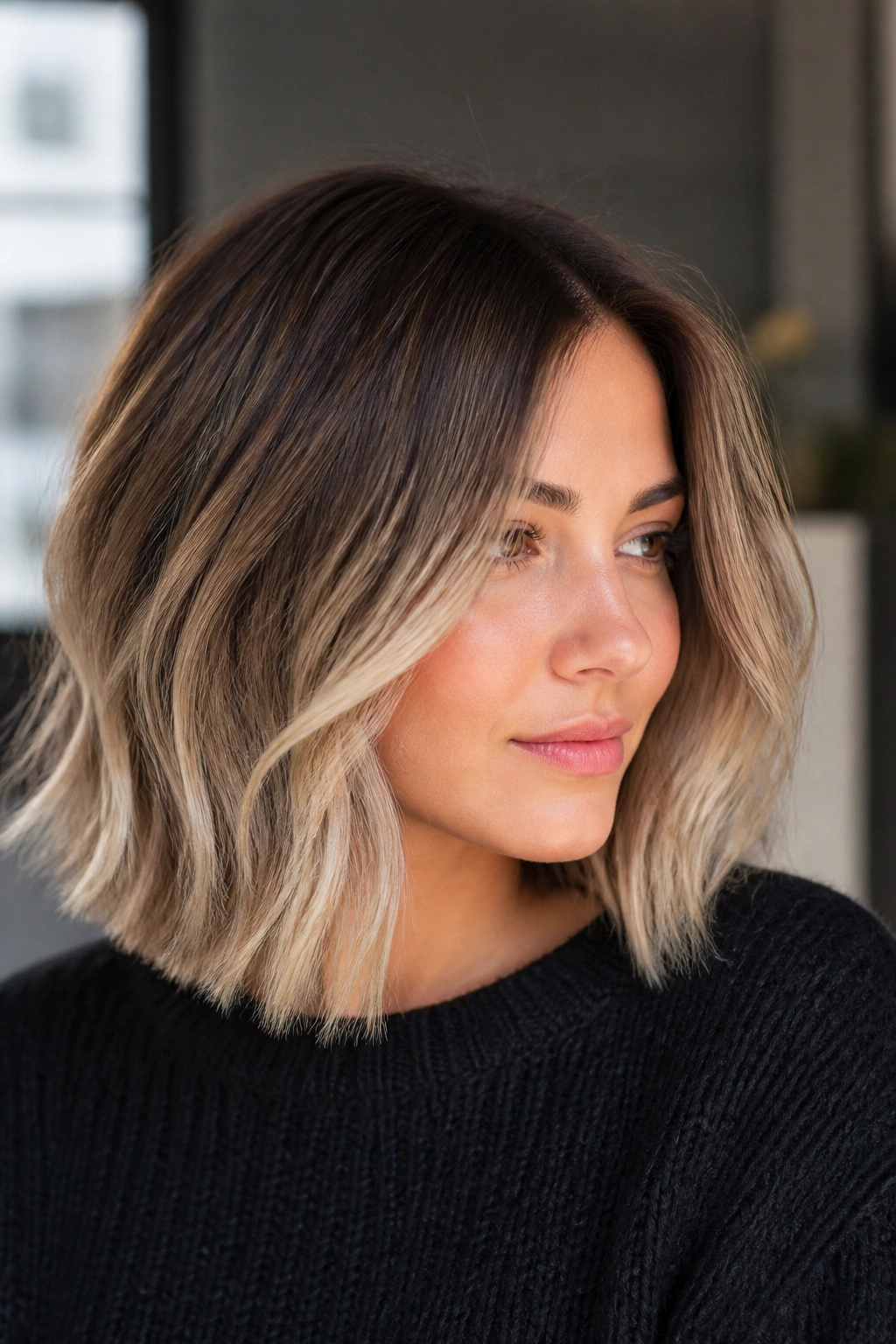
Ever see a lob that looks expensive without trying too hard? This is usually why. Ash brown fading into beige blonde gives you contrast, but not the harsh kind that makes short hair look overworked.
The cool base tone keeps the blonde from turning yellow, which is a real issue if your hair lifts fast. Beige is softer than platinum and less warm than honey, so the result sits somewhere between clean and lived-in. That balance is what makes it so wearable on shoulder-skimming cuts.
What to ask for
A colorist will usually paint the blonde through the lower half and keep a blurred root shadow up top. That shadow matters. On a lob, the root area is visible every time you tuck your hair behind an ear, and a bit of depth keeps the whole thing from looking flat.
Use a violet or blue-violet shampoo sparingly if the blonde starts drifting warm. Too much, and the ends can look dull. A once-a-week wash is usually enough.
This one suits straight, bent, and loose-wave styling equally well. Clean, airy, and a little cool. That’s the appeal.
3. Black Hair with Smoky Teal Ends
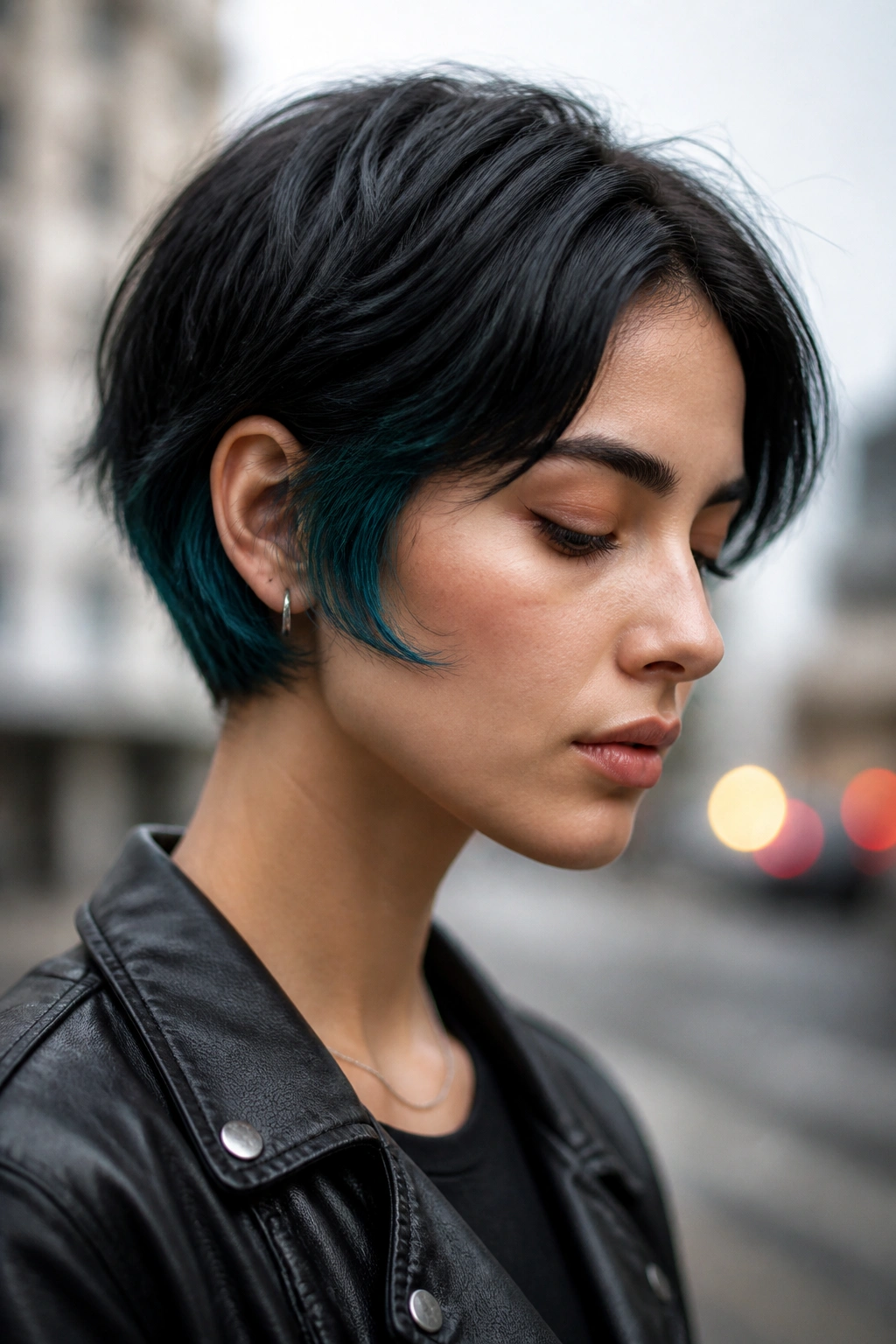
If you want something bolder, this is a strong move. Smoky teal on short black hair looks edgy without turning cartoonish, especially on a pixie or an undercut where the color only needs a few inches to make its point.
The trick is keeping the teal muted. Bright aqua can feel loud on short hair because there’s so little space for transition. Smoky teal, with a bit of green and gray in it, feels richer and more grown-up. It also fades in a nicer way. Bright fantasy tones can go patchy fast; this one softens instead.
How to wear it
A matte paste or lightweight wax shows off the texture, which is half the fun. If the top is slicked down, the color reads almost like ink. If you rough it up with your fingers, the teal catches in the lifted pieces and the whole cut comes alive.
- Best on pixies, bowl-ish crops, and tight bobs
- Looks strongest when the teal starts at the ear line or lower
- Needs pre-lightening on the ends before toning
- Pairs well with dark brows and cool-toned makeup
A little dramatic? Sure. But in a short cut, drama is the point.
4. Chestnut to Copper Bob
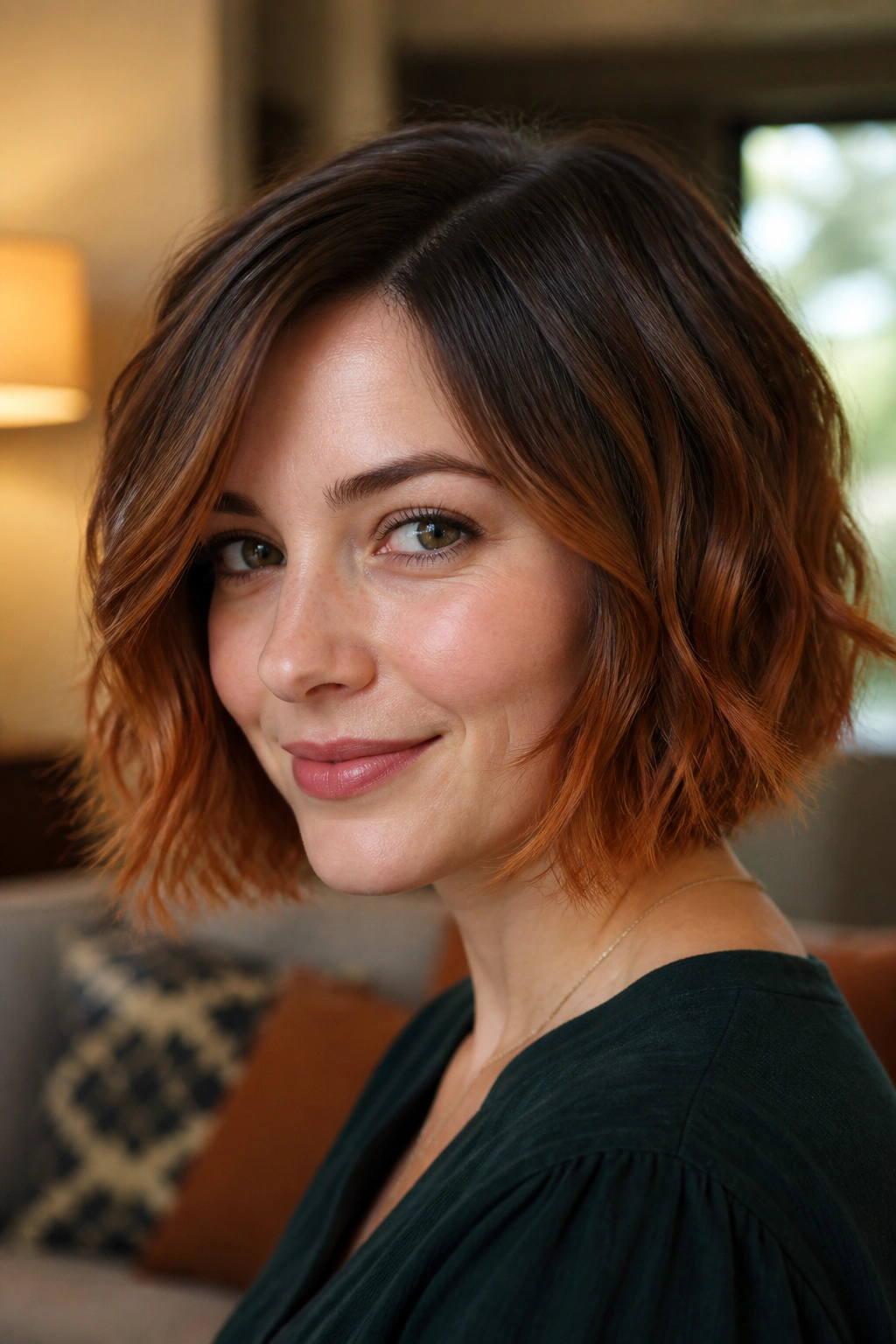
Copper and short hair get along better than most people expect. Chestnut roots fading into copper ends give a bob warmth and movement, and the shorter the cut, the more intentional the copper feels.
I like this when the hair has some texture. A smooth, glassy bob can make the color look almost too neat, while a slightly tousled one lets the warmer pieces show through in little flashes. Chestnut at the crown stops the whole thing from tipping into neon territory.
There’s also a practical side here. Copper tones tend to fade faster than browns, so keeping the root richer buys you more time between refreshes. A gloss every few weeks helps, especially if your water runs hard or your hair pulls brass easily.
One good rule: the copper should look like it belongs to the haircut, not like it was laid on top of it. If it feels too bright, ask for more brown in the mid-lengths. That one shift changes everything.
5. Dark Brunette with Honey Face-Framing Pieces
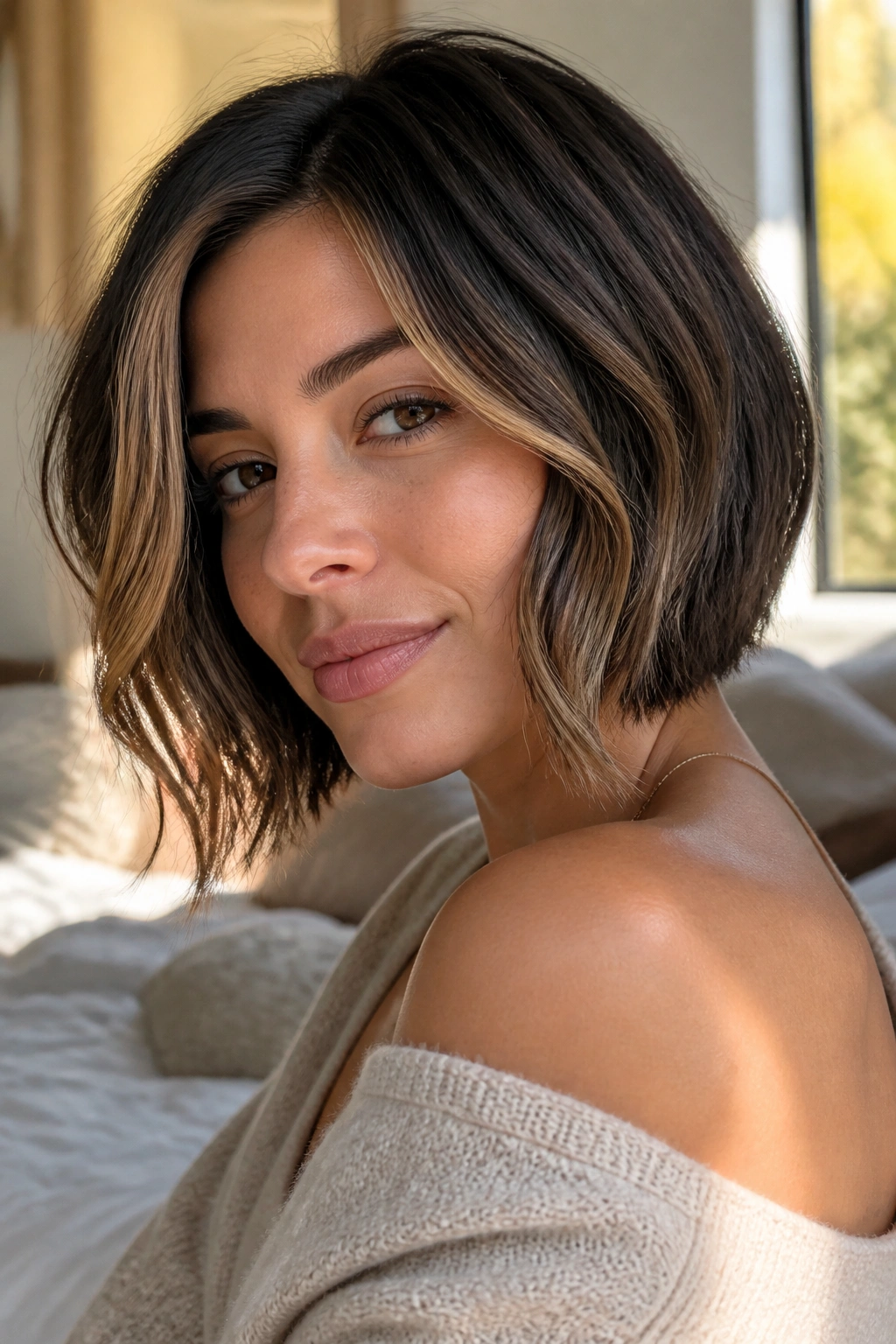
Honey around the face is flattering in the most straightforward way. It lifts the skin, softens a strong bob or lob, and keeps the overall look from feeling heavy at the roots.
This is not the kind of ombre where the whole head goes lighter. I prefer it when the darkest brunette stays underneath and the honey is concentrated around the front and lower half. That gives you brightness where you actually see it, instead of spending all your color budget on the back of the head.
How to place it
The sweetest spot is usually from the cheekbone down. Anything lighter above that can start to look stripey on short hair, especially if the cut has blunt ends. A soft face frame also helps if you wear side parts or tucks.
If you want low maintenance, ask for barely-there ribbons rather than a full blonde shift. The grow-out is calmer, and the contrast stays gentle. That means fewer awkward weeks when the color starts to move.
A quick curl with a 1-inch iron makes the honey show in the wave pattern. Straight hair works too, but the warmth gets more obvious when the hair bends.
6. Platinum Ends on a Cropped Curly Bob
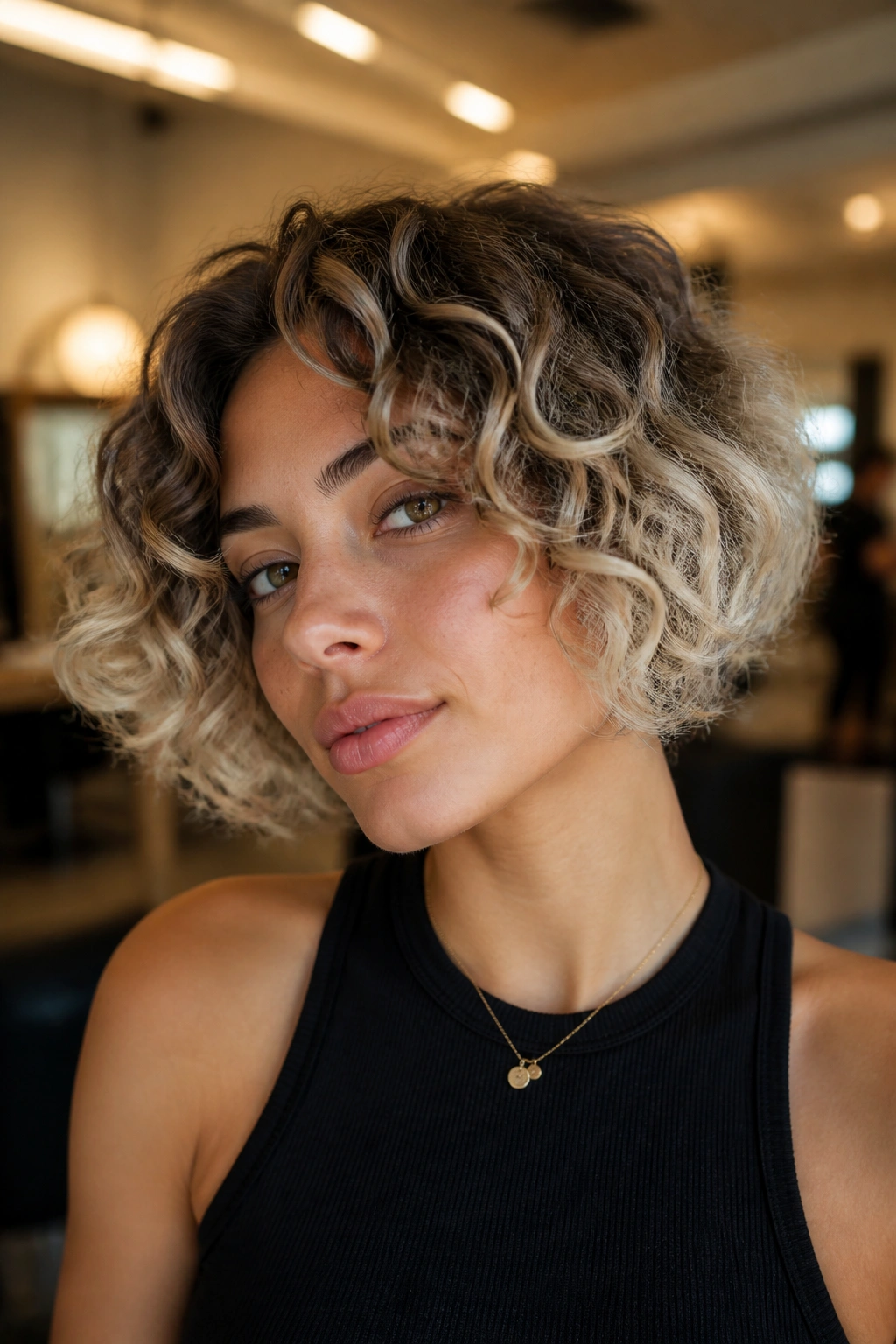
Curly short hair can carry platinum better than sleek hair sometimes can. The curl pattern breaks up the line, so platinum ends on a cropped curly bob read soft instead of harsh.
The shape does some of the blending for you. That’s the part people forget. On curls, even a dramatic lift can look gentle once it’s moving, because every coil catches light a little differently. A true white-blonde finish can be gorgeous here, but it needs healthy curls and a colorist who understands how much lift the ends can handle.
What to keep in mind
Leave some depth at the roots. If everything is light, curls can lose definition and start looking fuzzy. A darker base gives the platinum something to sit against.
- Works best when the curl pattern is loose to medium
- Needs careful bleaching, not rushed lift
- Looks cleaner with a curl cream than with heavy oil
- Benefits from regular bond care and trimming
If your curls already feel fragile, don’t chase ice-white ends. A creamy platinum is kinder and usually looks richer anyway. Sharp enough. Still bright.
7. Mushroom Brown to Silver Beige
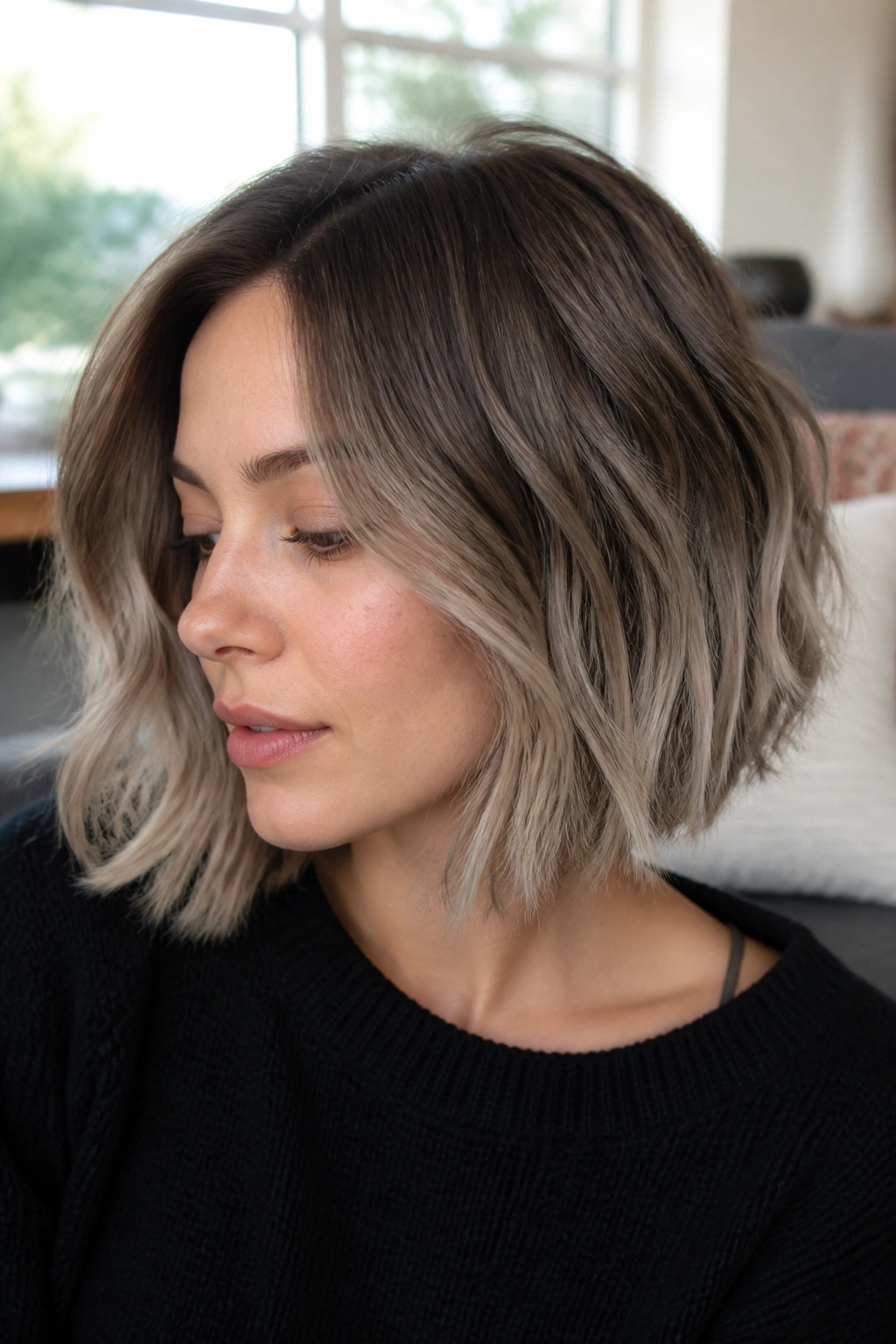
This one is for people who like cool tones but don’t want a flat ash-brown outcome. Mushroom brown fading into silver beige has a soft, smoky look that sits well on short lobs and layered bobs.
Mushroom brown is one of those shades that sounds subtle until you see it in motion. It has gray, taupe, and brown all working together, which means the fade into silver beige feels natural rather than sudden. On short hair, that matters because there’s less space for the color to ease in.
Why it avoids the “muddy” problem
The key is keeping the silver beige lighter and cleaner than the base, while the root stays earthy. If both shades are too close in depth, the whole thing can look dusty. If the beige is too pale, the contrast gets awkward.
A soft wave helps more than a polished blowout here. Movement gives the color a chance to show the tonal shift. Flat-ironed, it can look sleek but a little muted; waved, it starts to make sense.
This is a good choice if your wardrobe leans black, gray, cream, or denim. The hair doesn’t fight the clothes. It just sits there looking calm.
8. Rose Gold on a Short Layered Cut
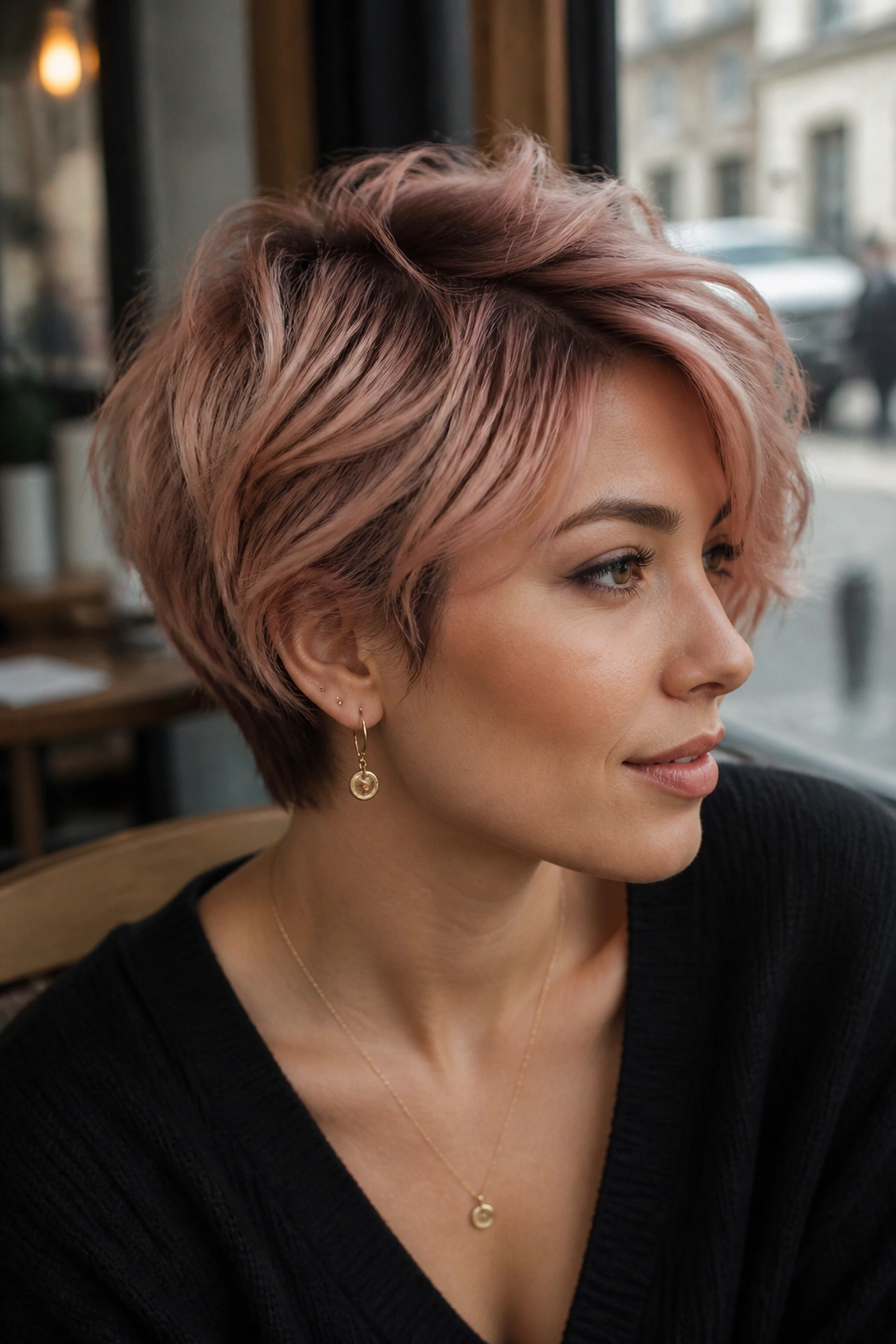
Rose gold is one of the few pastel-adjacent shades that can still look grown-up on short hair. A layered cut gives it depth, which keeps it from reading like one flat cotton-candy color.
The reason this works so well is simple: short layers create little ledges for the light to hit. If the rose gold is painted from mid-length to end and allowed to shift between pink, peach, and gold, the layers show off every tone. The result feels airy and lively, not sugary.
Before you ask for it
Your hair usually needs to be lifted to a pale yellow first. Not banana yellow. Pale lemon, maybe with a little warmth still in it. If the base is too dark, the rose gold turns muddy fast.
- Best on shags, pixies, and choppy bobs
- Fades faster than brunette ombre, so glosses help
- Looks softer with a cream blush or peach lipstick
- Needs a color-safe shampoo or the pink slips out quickly
I’m a fan of this on short hair because it doesn’t rely on length to make a statement. The color does the talking.
9. Espresso to Cherry Cola
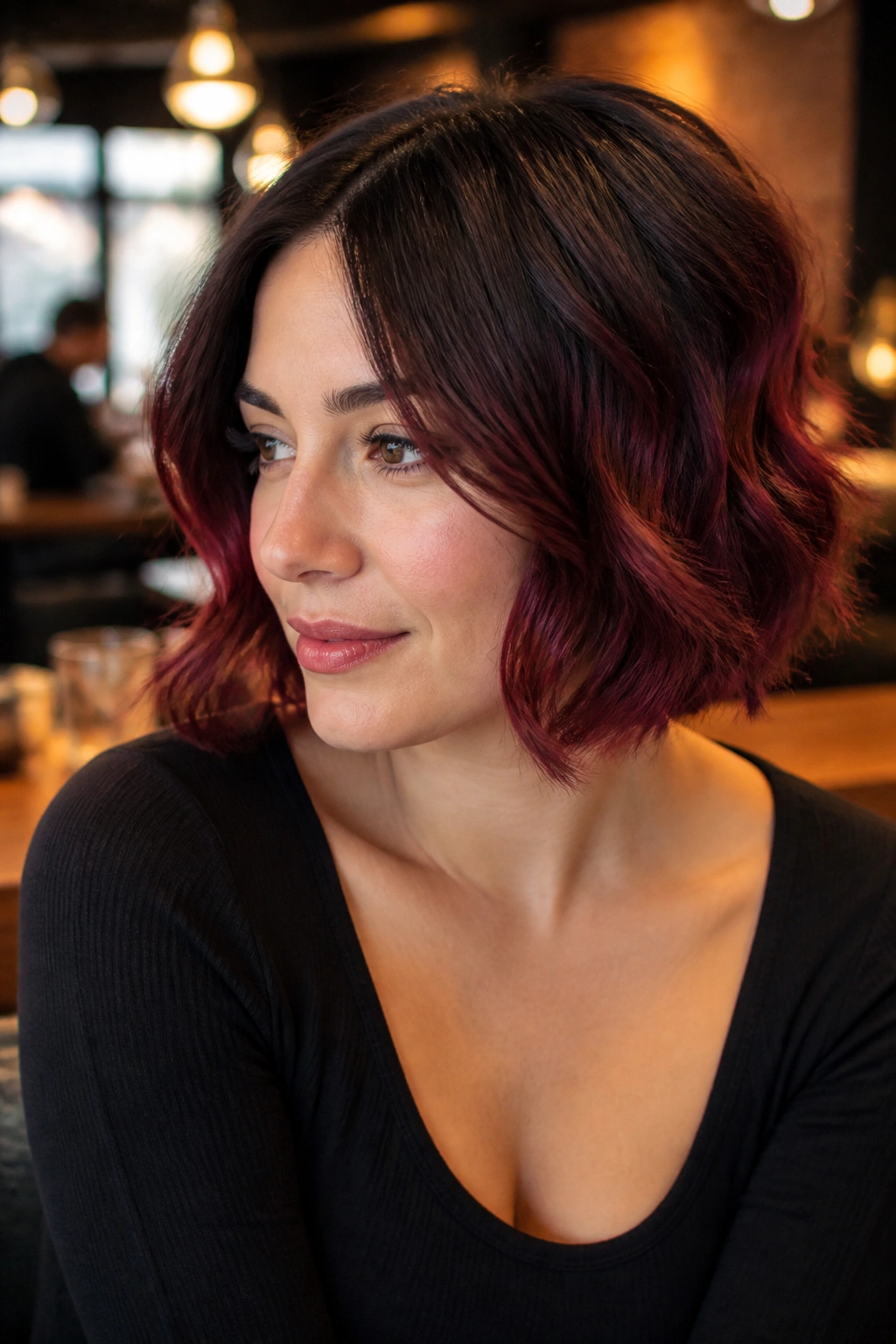
Not every red ombre has to be loud. Cherry cola on espresso hair gives you the dark richness of brunette with a wine-red shift that stays wearable on short cuts.
This shade lives in that sweet spot where people notice something is different, but they can’t always name it right away. On a bob or shag, that mystery is part of the charm. The ends lean red-violet, the roots stay deep brown, and the whole thing feels glossy rather than fiery.
A layered bob shows this color beautifully because the darker base peeks through the red. If the cut is blunt, the effect gets more graphic. I actually like both, but for different moods. Blunt says polished. Layered says moody.
Cherry cola can go flat if it’s too purple or too brown. The good version has enough red to catch light and enough depth to keep the shade grounded. A clear gloss on top helps a lot.
10. Dark Roots with Vanilla Cream Ends
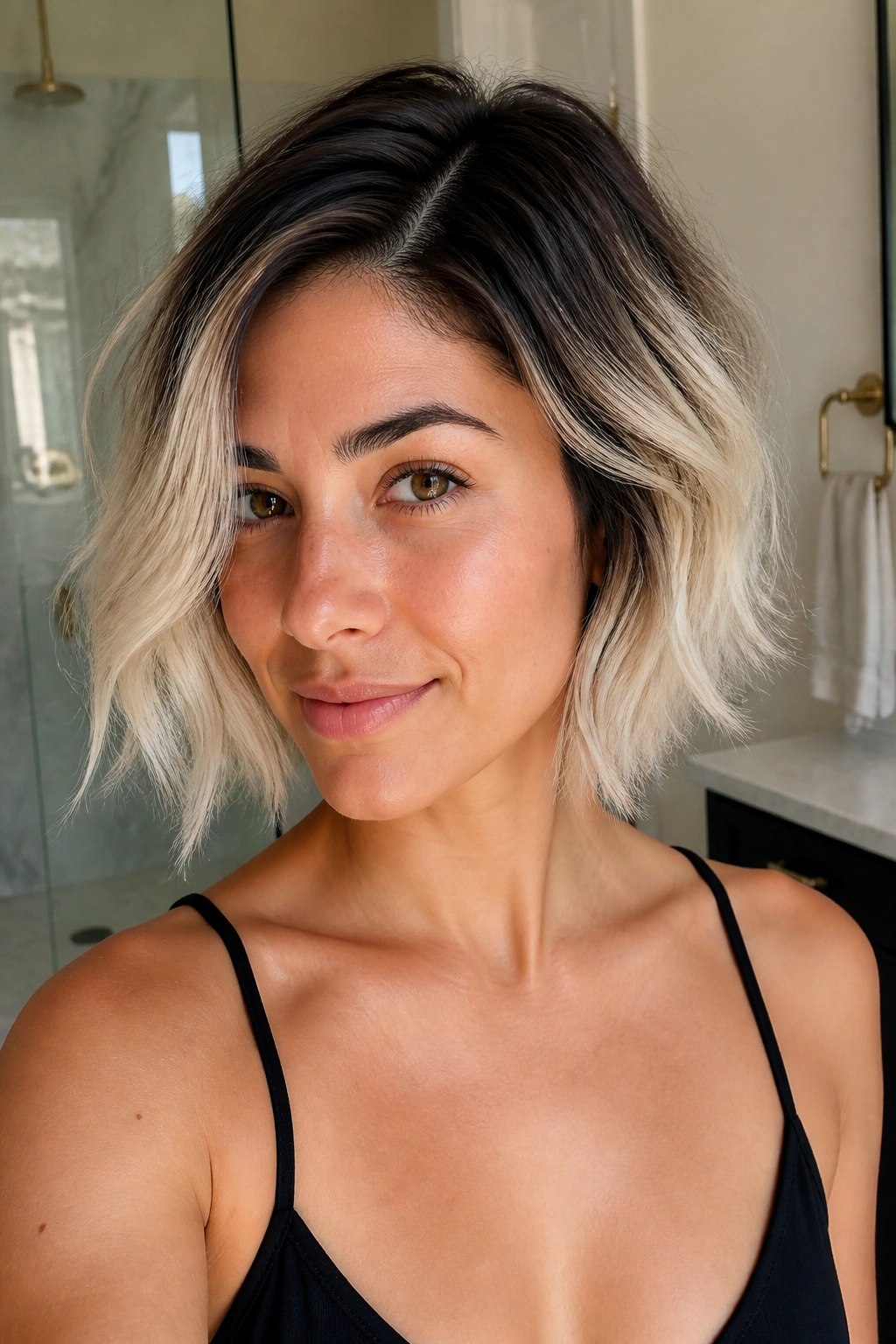
This is one of the cleanest short ombre looks out there. Dark roots and vanilla cream ends give you contrast without making the cut feel busy.
The vanilla tone is what makes it shine. Pure white blonde can be hard on short hair because every edge shows. Vanilla cream is a little softer, with a hint of warmth, so it blends into the transition instead of sitting on top of it. On a bob, that softness makes the ends look thicker, which is a nice bonus if your hair is fine.
What to ask the colorist
Ask for a root melt rather than a hard line. That means the dark shade is feathered downward so the change happens over a few inches, not all at once. You want the eye to travel, not stop.
A smoothing cream before blow-drying keeps the vanilla ends looking shiny instead of dry. If the hair starts to feel straw-like, the bleach work was too aggressive or the aftercare got skipped. Short hair shows damage fast. There’s no hiding it.
This is a classic for a reason. It’s crisp, wearable, and easy to style.
11. Sandy Blonde Shadow Melt on a French Bob
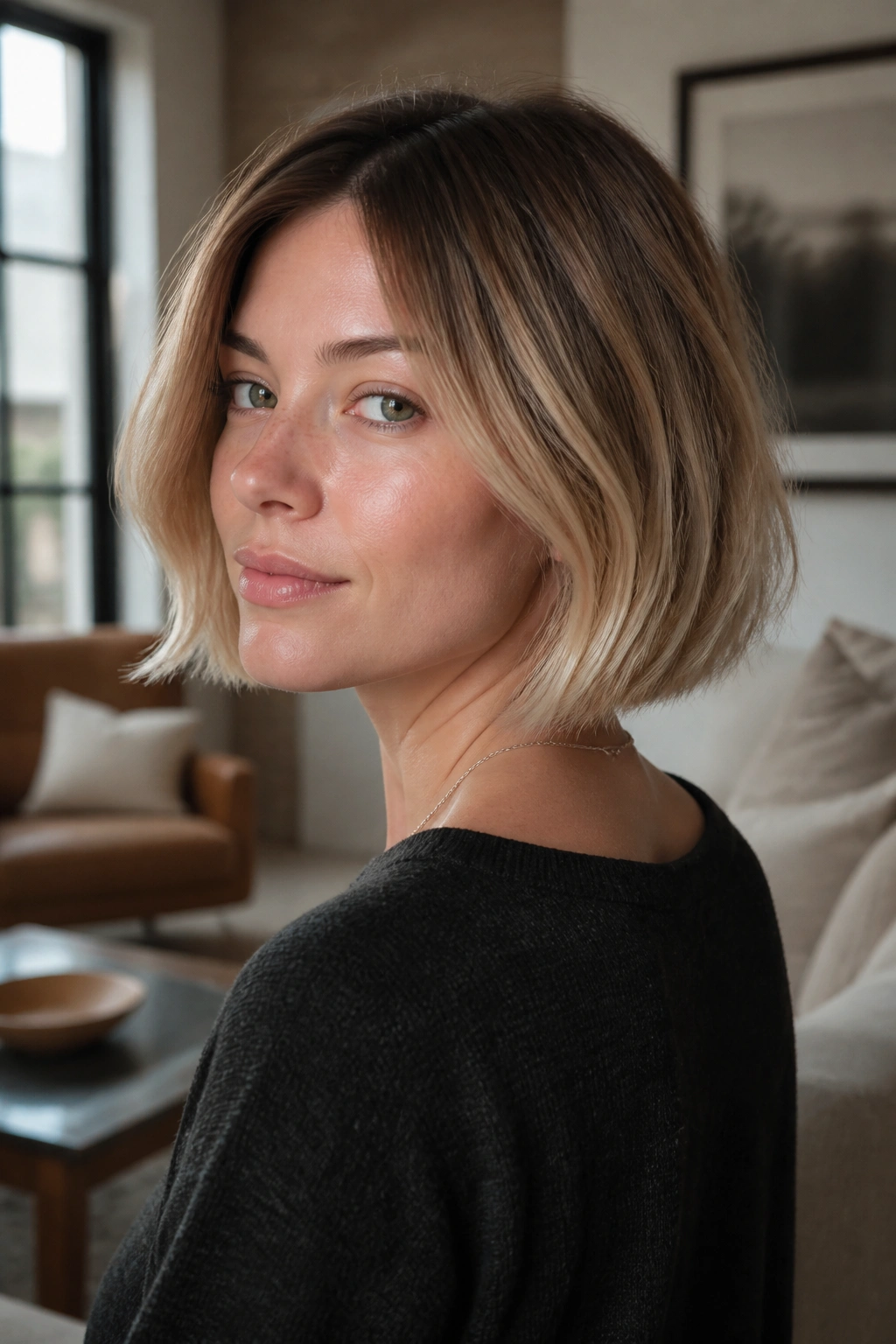
A French bob has a built-in point of view. The cut is blunt, usually jaw-skimming, and a little sharp. A sandy blonde shadow melt softens that edge without stealing the shape.
Sandy blonde sits between beige and light brown, which makes it ideal if you want brightness but not full-on platinum. The shadow root keeps the top from looking over-processed, and the lighter mids and ends give the bob movement when you turn your head. It’s subtle in the best way.
How it should feel
The transition should look like sunlight, not stripes. That means the lighter pieces need to be feathered through the lower third of the hair, especially near the front. If the change happens too high, the bob can lose its clean line.
A light texture spray brings out the airy part of the cut. I’d avoid heavy creams here. They flatten the ends and make the color less interesting.
If your hair is naturally straight, this shade can look almost Paris-street effortless without trying too hard. If it’s wavy, the contrast gets even better. Either way, it’s one of the easiest ways to make a short bob feel more expensive.
12. Burgundy Ombre on a Short Shag
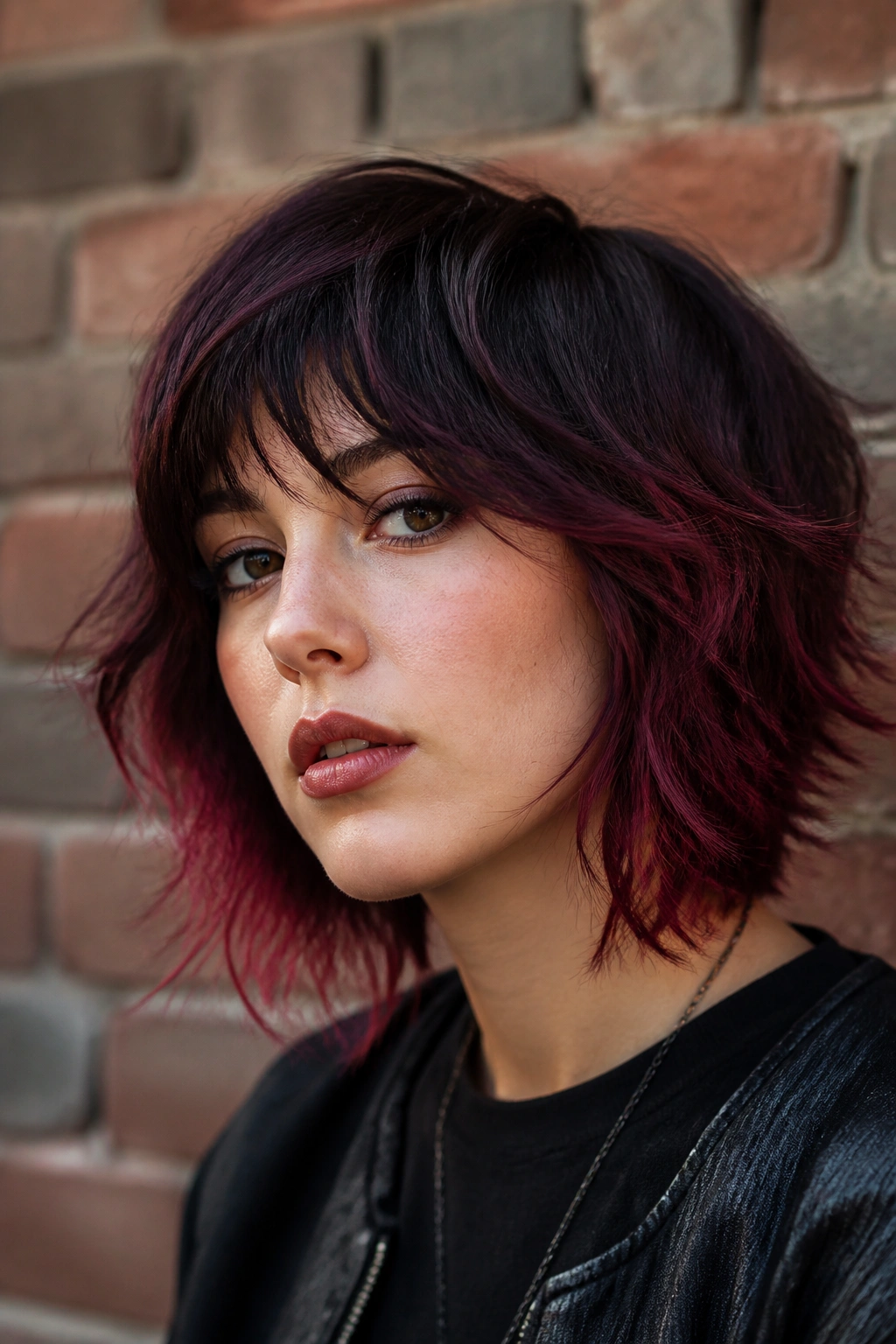
Shags love color with a little attitude. Burgundy ombre on a short shag leans into the layers instead of fighting them, and that’s why it works so well.
The top stays deeper, usually a deep plum-brown or wine brown, then the color brightens into burgundy through the ends. On a shag, the choppiness breaks the fade into pieces, so the shade never looks too flat. It’s moody, but not heavy.
What makes it click
Texture spray is your friend. So is a rough-dry with your fingers rather than a round brush finish. The shag wants movement, and burgundy looks richer when it can flick in and out of the light.
- Best on razor-cut or heavily layered shags
- Works with side bangs and curtain bangs
- Needs red-toning gloss every so often
- Looks strongest in dim light and sunlight alike
There’s a caveat, though. Burgundy can look too brown if your base is very dark, so the colorist needs to keep enough red in the mid-lengths. Otherwise the whole thing turns into “dark hair with a hint of color,” which is not the same thing at all.
13. Brunette to Apricot Blush
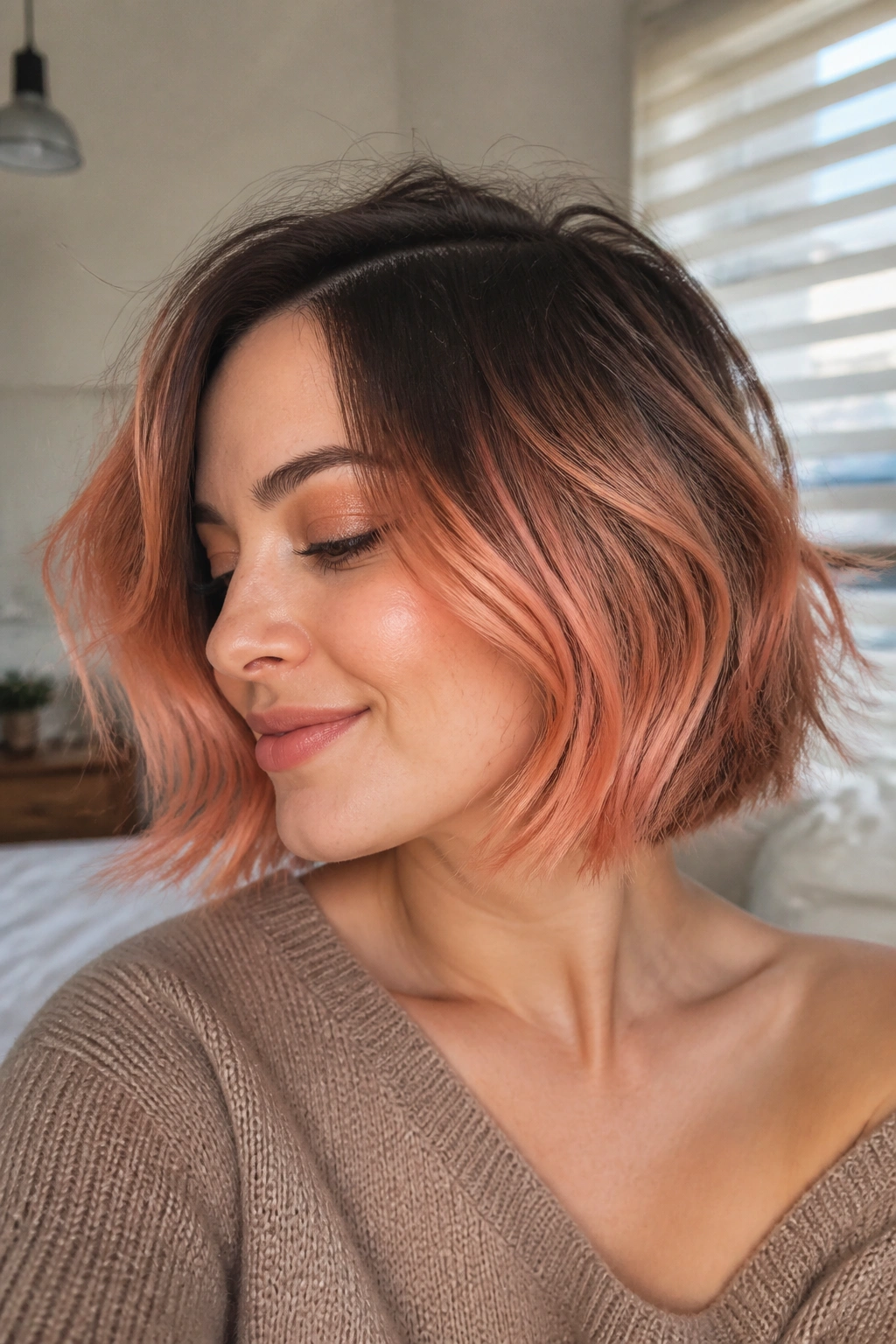
This is the softer cousin of rose gold. Brunette fading to apricot blush gives short hair a warm, playful edge without going full pastel.
I like it on a wavy bob because apricot has a gentle glow that shows up in motion. Straight hair can still wear it, but the softer color really wakes up when the ends bend a little. The brunette root keeps the look grounded, so the apricot doesn’t feel sugary.
A good way to think about it
Apricot blush should sit somewhere between peach and light copper. If it drifts too pink, it can look frosted. If it gets too orange, the whole thing starts feeling loud. The sweet spot is warm, soft, and a little translucent.
This shade is kinder than platinum on hair that’s already been lightened. The color may fade, sure, but the grow-out is gentle and the shift from root to end stays pretty. That matters on short hair because there’s less room to hide an awkward line.
If you want a color that feels friendly rather than severe, this is a good lane. It’s cheerful without acting like a costume.
14. Warm Bronde on a Chin-Length Bob
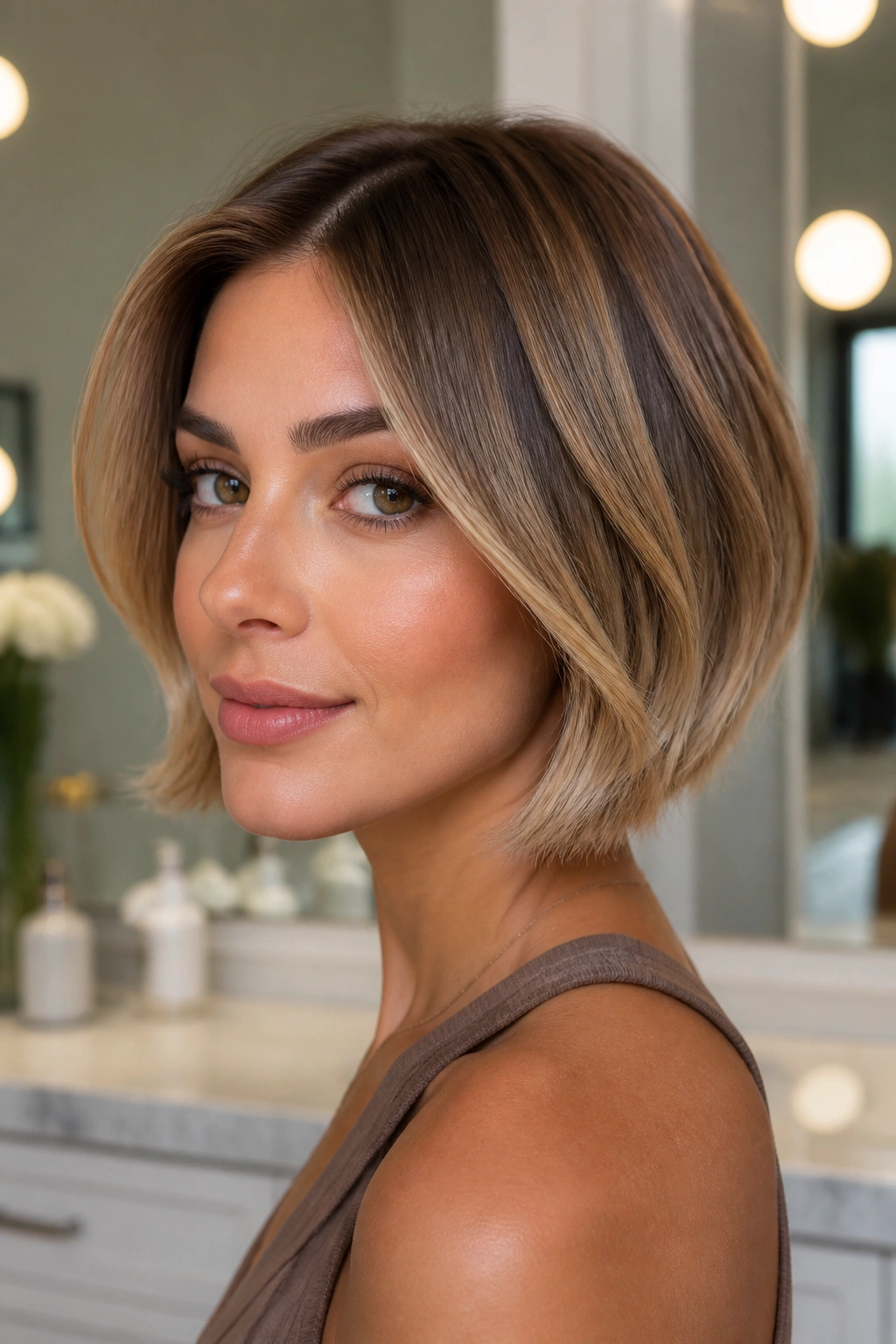
Bronde is underrated on short hair. It gives you brightness and depth at the same time, which is exactly what a chin-length bob needs if you want movement without high drama.
Warm bronde sits between brunette and blonde, but the real trick is in the placement. You want mocha at the root, honey through the middle, and a soft beige at the ends. That progression keeps the bob from looking chunked up or too flat. It also means the color works with side parts, middle parts, and everything in between.
A chin-length bob can sometimes feel boxy when it’s one color. Bronde loosens that up. The different tones create an illusion of shape, especially if the ends are a little feathered or tucked under with a blow-dryer.
Quick notes
- Better for people who want dimension over contrast
- Easy to dress up or down
- Usually less fussy than blonde-heavy ombre
- Looks especially good with a soft bend at the ends
This is one of those shades that keeps paying off long after you leave the salon.
15. Inky Blue to Indigo on a Pixie Undercut
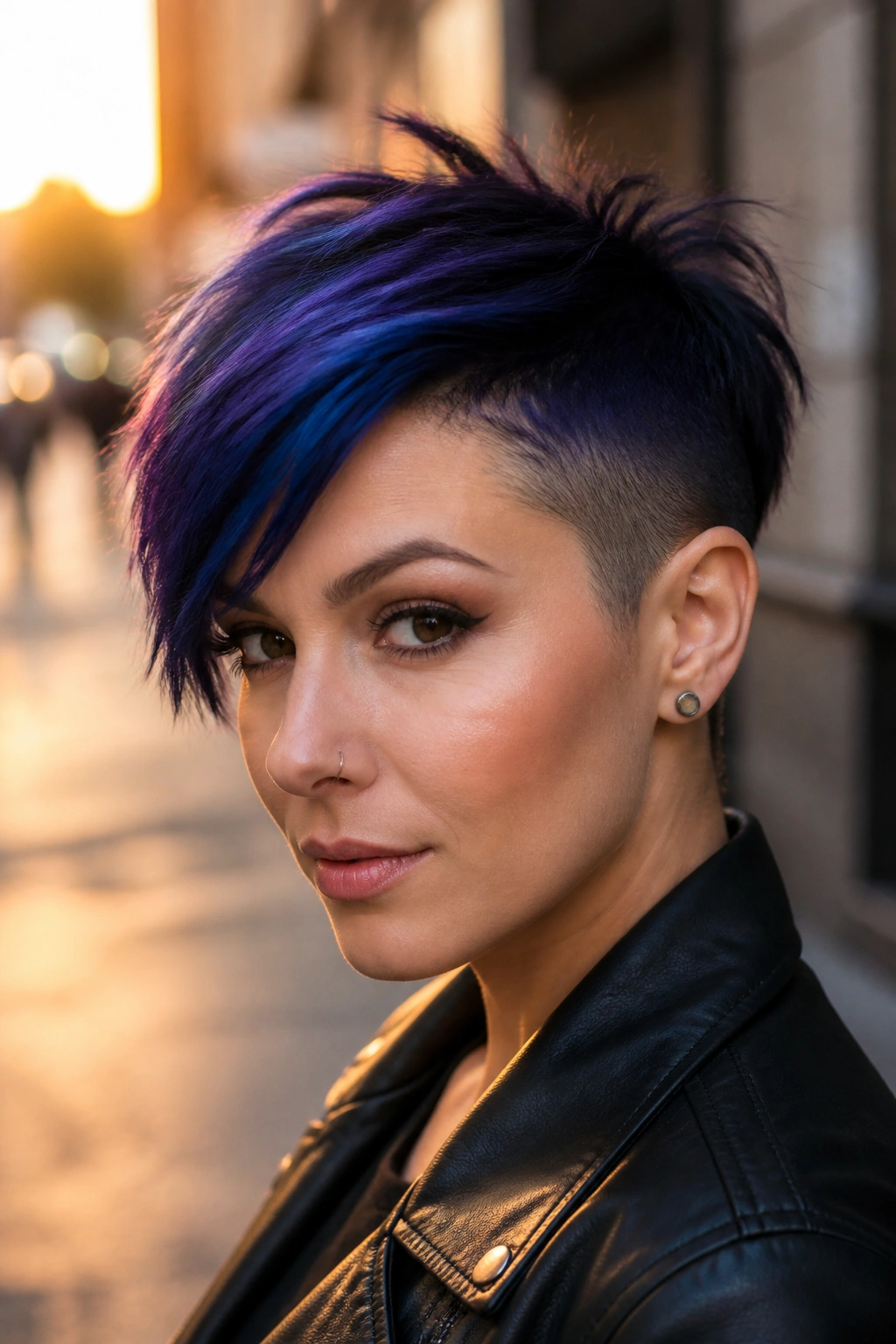
If the haircut already has an undercut, you can get away with a lot more color drama. Inky blue fading to indigo turns a pixie into something graphic and sharp, especially when the top is swept to one side.
The dark-to-darker shift sounds subtle, but in practice it has a lot of depth. Indigo shows a little more violet under indoor light and more blue in daylight. On short hair, that changing effect matters because the haircut is always moving. A pixie with this color never sits still.
How to keep it from looking flat
Ask for a slightly darker blue at the root and a brighter indigo toward the tips. That tiny contrast is enough. If the whole section is the same tone, you lose the ombre effect and end up with a single block of color.
A shine serum helps here, but use a tiny amount. Too much product can mute the blue and make it look heavy. And heavy is the opposite of what this cut wants.
This look suits people who like polish with a bite. It’s not soft. That’s the point.
16. Smoky Lilac on Short Waves
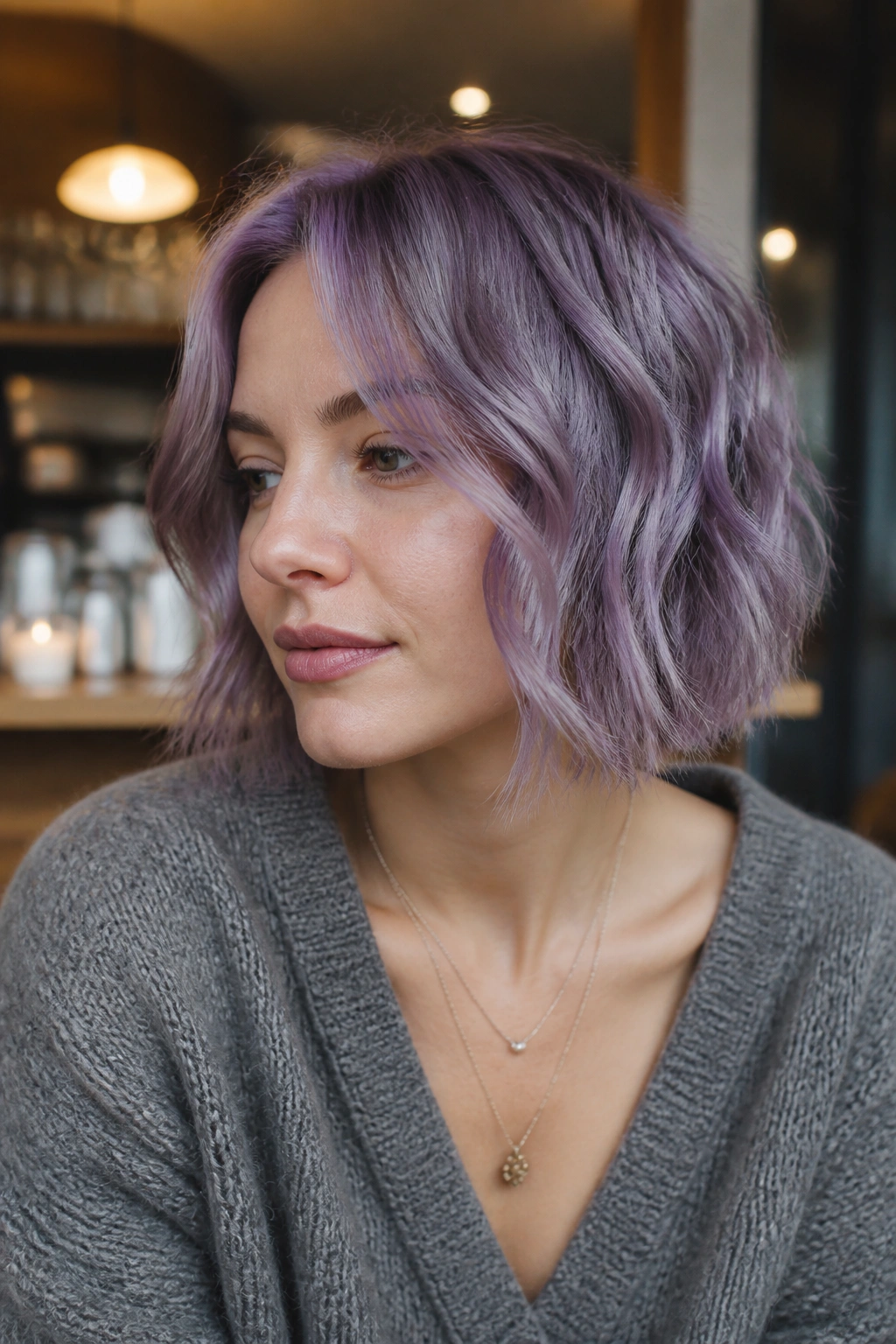
A lot of people picture lilac as candy-colored and loud. Smoky lilac is different. It has gray in the mix, which lets it sit on short waves with a calm, almost misty finish.
The color does its best work when the base is lifted to a pale blonde first, then toned down with violet and silver. On short hair, that smoky quality keeps the waves from looking busy. The bends catch the lilac in little flashes instead of showing one solid pastel strip.
The texture matters
Short waves make smoky lilac feel softer, because each bend picks up a slightly different tint. A loose wave iron or braid-out finish works better than tight curls here. You want variation, not ringlets.
- Best for cool-toned skin
- Needs gentle shampoo to preserve the tone
- Works well on shaggy lobs and layered bobs
- Loses clarity if the hair gets too yellow
I like this shade on people who want color but not fireworks. It feels a little dreamy, a little moody, and much easier to wear than a brighter purple.
17. Cinnamon to Golden Amber
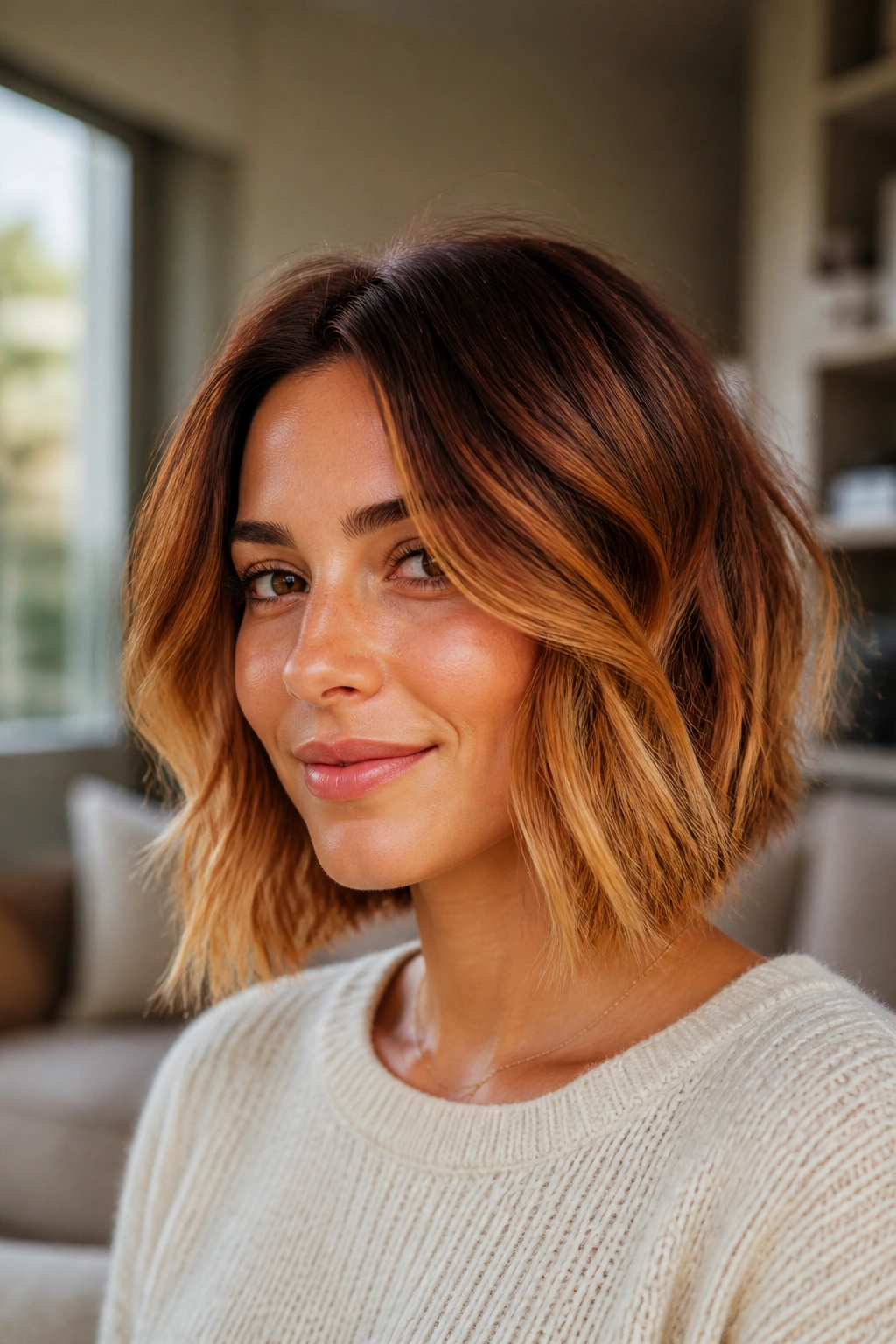
Cinnamon fading into golden amber has the kind of warmth that makes short hair look fuller. The shift is smooth, cozy, and much more flattering than people give warm colors credit for.
Cinnamon sits deeper and redder near the root, then the amber opens up through the ends. That keeps the color from flattening out, which is a risk on short bobs and lobs. The hair gets light where it moves, dark where it anchors, and the whole thing feels alive.
This is a good fit if your natural shade is medium brunette or darker brown. It doesn’t demand a huge lift, so the hair often stays in better shape than a blonde-heavy ombre. That’s a real advantage, not just a nice bonus.
If you wear soft waves, this shade looks especially rich. If you wear it sleek, the amber reads more polished and a little more dramatic. Either way, it has a glow that doesn’t feel fake.
18. Creamsicle Peach on Cropped Curls
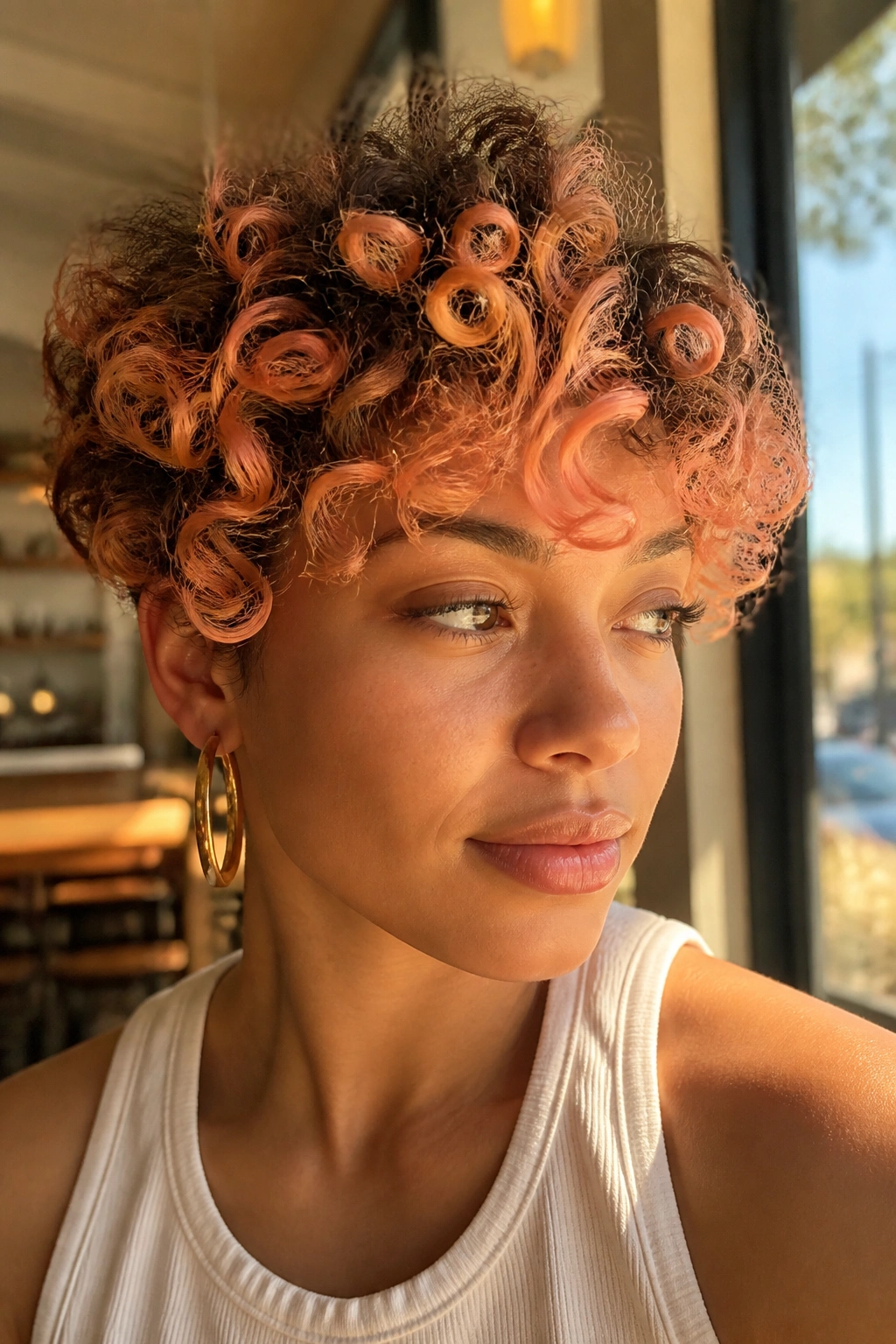
Peach on short curls can be ridiculously pretty when it’s done with restraint. Creamsicle peach keeps the color light and fresh, instead of pushing it into neon territory.
The curls are doing some of the work again. On a cropped curly cut, you don’t need a huge fade. A peachy ombre concentrated on the outer ring of curls and the ends gives you a bright halo effect without losing the structure at the root. That’s the secret: color should follow the curl pattern, not fight it.
What to expect
This shade usually needs a strong lift first, so hair health matters a lot. If the curls are already dry, I’d go slower and keep the peach a little deeper. A softer peach still looks intentional, and it’s easier to live with.
A curl mousse with a light hold helps the color show up because the ringlets stay defined. If the hair frizzes, the peach can get fuzzy at the edges. Nobody wants that.
This is a cheerful option for short curls that need a little spark. It’s playful, but not childish. There’s a difference.
19. Soft Red Wine Melt on an Angled Bob
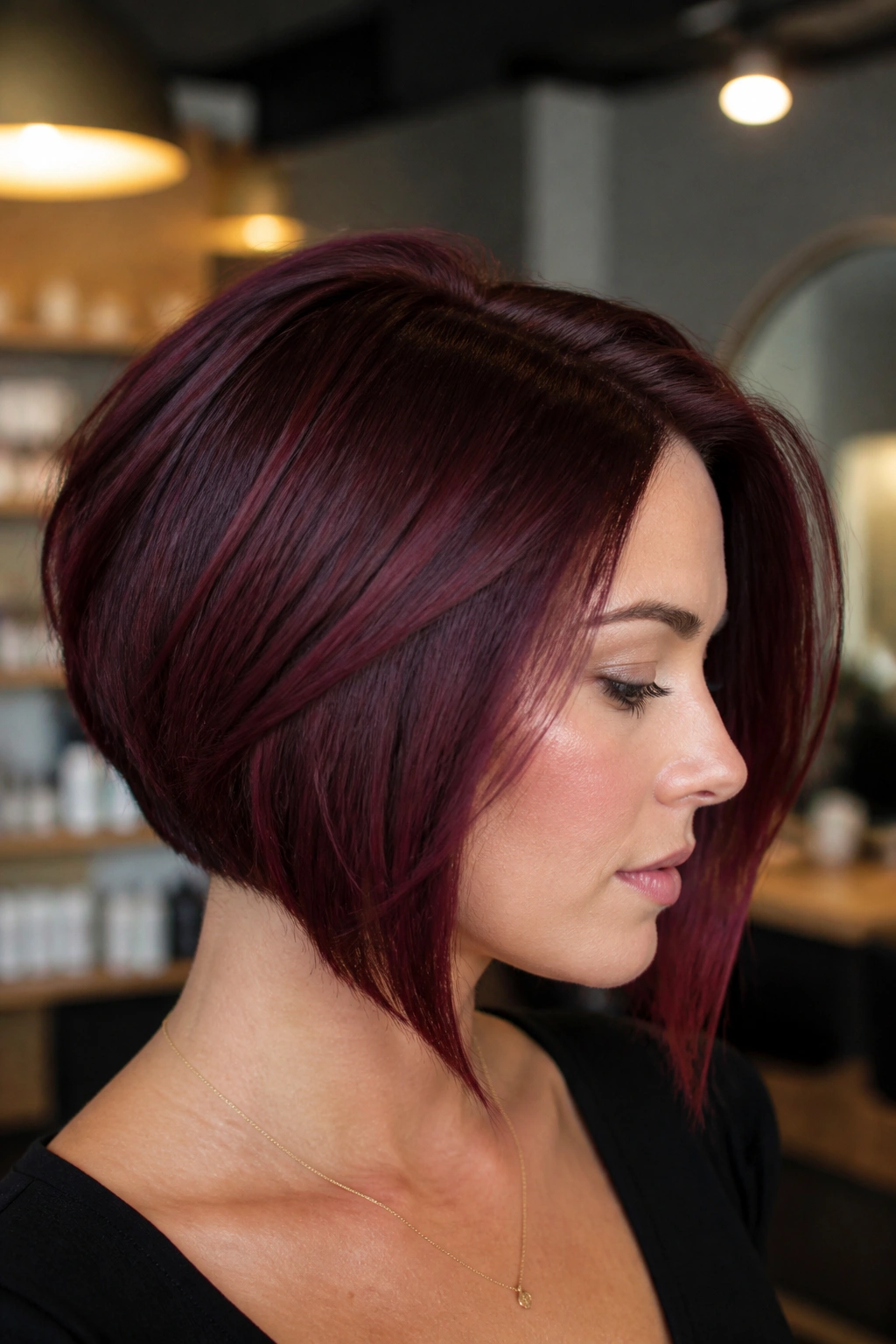
An angled bob already gives you built-in movement from back to front. A red wine melt uses that shape beautifully, because the color can deepen at the nape and open up toward the longer front pieces.
I prefer wine tones over bright red here. They feel richer and less obvious, which suits the cut better. The front pieces can carry more of the burgundy-plum mix, while the back stays deeper and darker. That lets the angle of the bob do some visual work for you.
Why the angle matters
The shorter back exposes more of the root area, so a soft melt keeps the transition looking smooth. The longer front, meanwhile, gives the lighter wine tones a little space to show off. If the fade is too abrupt, the angle starts looking carved instead of fluid.
A gloss finish makes this color sing. Red-violet shades can go dull if they’re not refreshed now and then, and short hair shows dullness faster than long hair does. Still, the maintenance is manageable.
This is one of my favorite choices if you want short hair that feels a bit sultry without being loud about it.
20. Beige Blonde with Shadow Root on a Blunt Bob
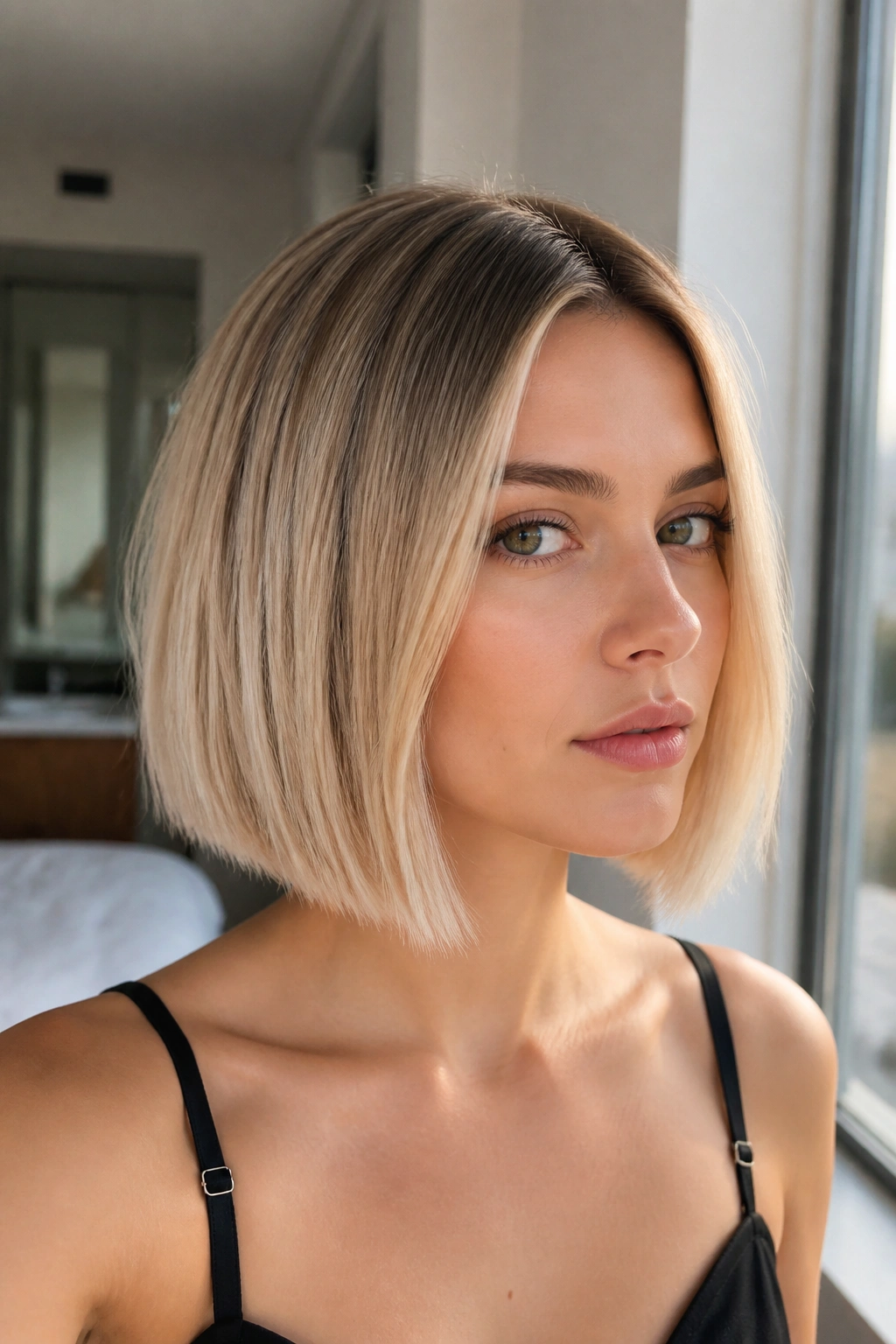
A blunt bob can look severe if the color is too uniform. A beige blonde with a shadow root softens the whole thing while keeping the strong outline of the cut.
Beige blonde sits in that useful middle zone between warm and cool. It doesn’t scream brass, and it doesn’t turn icy. That makes it easier to wear on a straight, precise bob where the haircut already brings the structure. The shadow root gives the illusion of thicker hair at the crown, which is a nice side effect if your strands are fine.
A practical way to wear it
Keep the root shadow a little diffused, not dark and heavy. You want to see the transition, but not as a hard band. The lightest blonde belongs mostly below the ears and toward the ends, where the bob can swing and move.
- Good for fine hair that needs visual fullness
- Works well with sharp center parts
- Needs toning if the blonde leans yellow
- Looks cleaner when the ends are blunt, not wispy
This one has a crisp, clean finish. No fluff. Just a very controlled color story.
21. Dark-to-Light Rainbow Tips on a Short Undercut
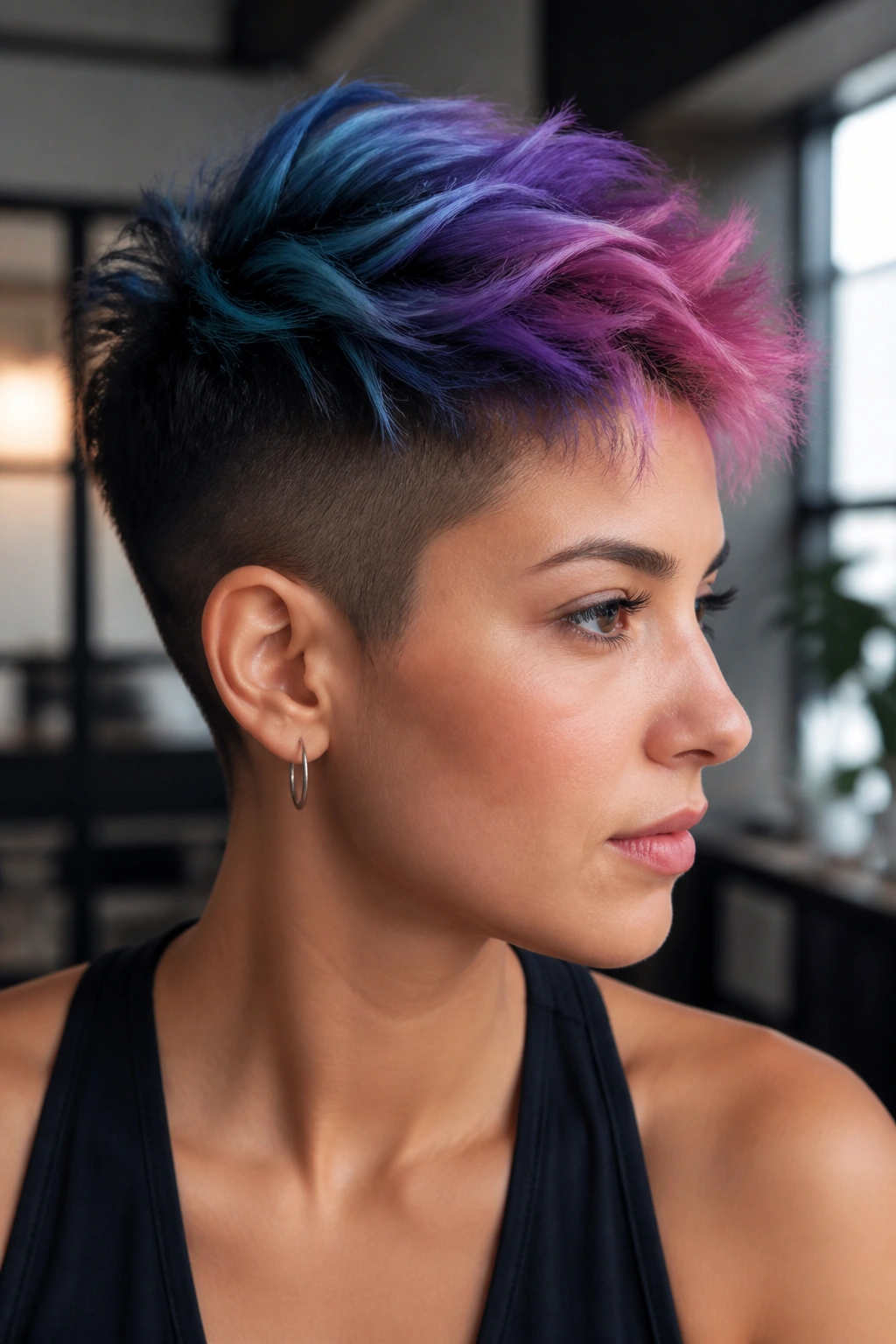
Rainbow ombre on short hair can look messy if the colors are too many and too bright. A dark-to-light rainbow tip design solves that by keeping the base grounded and concentrating the color only where it matters.
The undercut is the best place for it because the shorter sides create a frame. You can run blue, violet, and pink through the top tips, or stick to two shades if you want something calmer. The fade doesn’t need to be long; it needs to be clean. A few inches is enough when the haircut is already sharp.
What makes it believable
The dark base keeps the style from turning into a carnival. The lighter colors at the tips make the movement visible when the hair lifts, falls, or gets tucked back. That contrast is what keeps the look stylish instead of random.
I’d keep the rainbow slightly smoky, not primary-bright. Think jewel-toned and blended at the seams. It reads more like color work and less like stickers.
This one is for people who want their hair to say something. Loudly, maybe. But with shape.
22. Steel Gray Ombre on a Short Crop
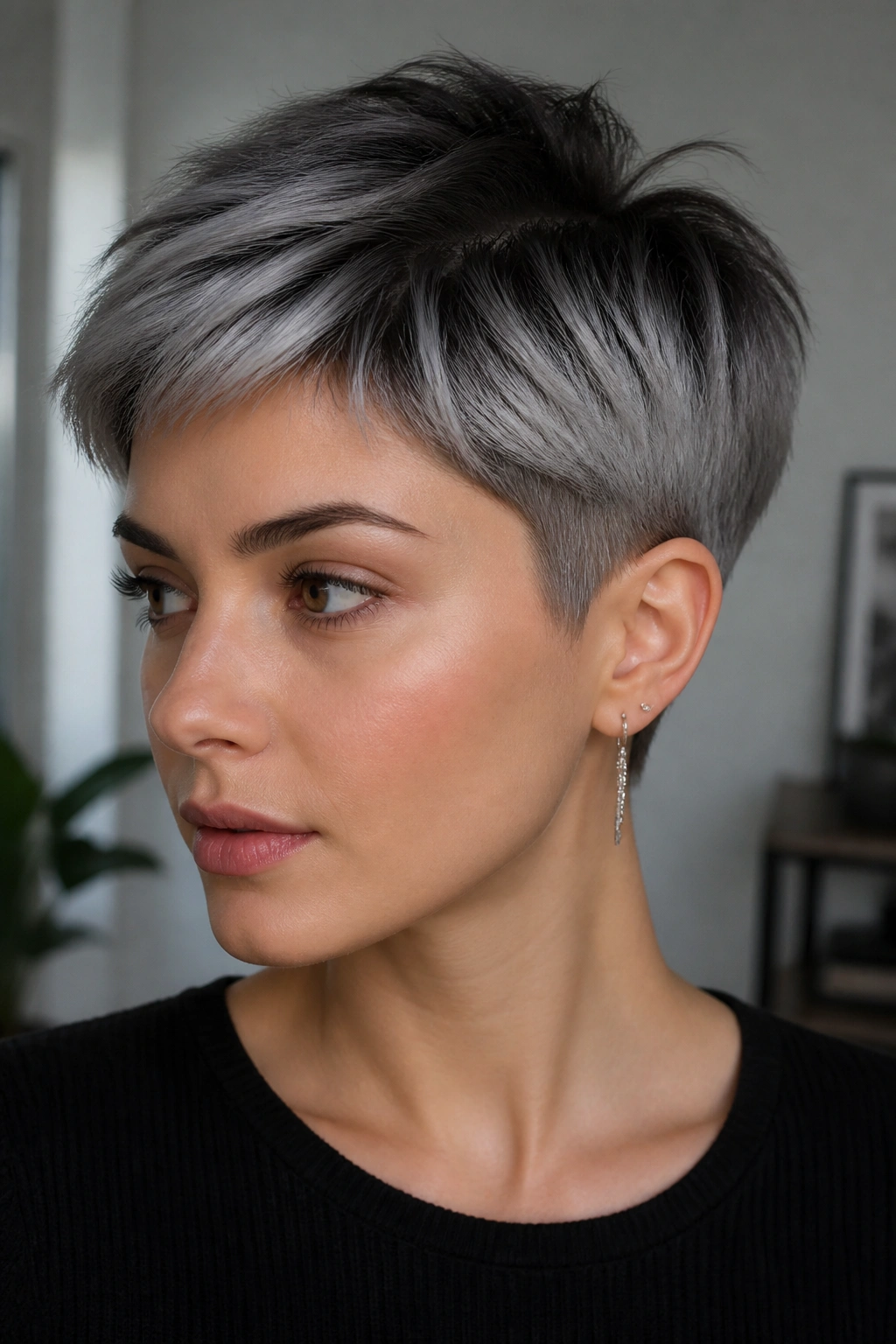
Steel gray on short hair has a graphic edge that people underestimate. On a crop, it looks intentional and modern, not washed out, as long as the gray is kept cool and clean.
The best version usually starts with a darker graphite root and moves into a lighter steel tone at the ends. On a short cut, that slight shift gives the shape more depth. It also helps the hair look denser, which matters when the cut is close to the head.
How to keep the tone sharp
Gray shades need toning discipline. If the blonde base underneath turns yellow, the steel shade loses its bite and can look beige instead. A blue-violet toner and a gentle shampoo routine help, but don’t overdo the purple shampoo. Too much and the gray goes dull.
- Best on straight crops and brushed-up pixies
- Looks strongest when the haircut has clean lines
- Needs regular glossing to avoid flatness
- Works well with cool clothing colors
I’m partial to this shade on people who like neatness in their haircut. It’s tidy. Slightly severe. Very good at showing off a strong bone structure.
23. Chestnut to Mushroom Ombre with Curtain Bangs
Curtain bangs change the whole mood of an ombre, and chestnut fading to mushroom brown uses that frame in a smart way. The bangs stay a touch deeper, while the longer sides lighten gently toward the ends.
That color pattern keeps the face from getting overwhelmed. Curtain bangs can be a lot on their own, so I like them paired with a tone that feels soft and earthy rather than bright. Mushroom brown gives you just enough ash to calm the chestnut, while the lighter ends keep the lob or bob from looking heavy.
A small detail that matters
Ask for the lightest pieces to start below the chin, not in the fringe itself. Too much light in the bangs can make them look disconnected from the rest of the cut. A soft bend on the front sections helps the whole thing feel blended.
This is one of those choices that looks easy but takes a careful hand. The good news is that once it’s done well, it’s easy to live with. The grow-out stays tidy, and the bangs soften the color shift even more.
If you like brunette shades but want movement, this is a solid lane.
24. Golden Bronze on a Textured Pixie-Bob
A textured pixie-bob needs color that moves with it, not against it. Golden bronze does exactly that. It gives short layers warmth, shine, and a little lift without turning the style too soft.
Bronze is one of my favorite short-hair shades because it sits between brown and gold in a way that feels rich instead of flashy. On a pixie-bob, the upper layers can stay deeper bronze while the tips warm up a bit more. That keeps the haircut dimensional and avoids the helmet effect that short cuts sometimes get.
Why it looks good in motion
A textured finish—think finger-styled, slightly piecey, not over-sprayed—lets the bronze catch in different spots. The ends show the gold when they separate. The crown holds the darker warmth, which gives the whole shape more definition.
This shade also plays nicely with medium skin tones and warm eyes, though it can flatter cooler complexions too if the bronze leans a little less orange. The difference is subtle, but it matters.
You do not need a huge contrast here. The value is in the depth, not the drama.
25. Cocoa to Taupe Ombre on a Tousled Bob
If you want something understated but still clearly color-treated, cocoa to taupe is a smart choice. It keeps the brunette family intact while adding enough lift to make a short bob feel lighter.
Taupe has that soft gray-brown quality that stops the ends from getting too warm. On a tousled bob, it looks relaxed and slightly smoky, which suits people who don’t want blonde upkeep but do want dimension. The transition should feel like a change in tone, not a jump in brightness.
What to ask for
Ask for a blurred melt from cocoa roots into taupe mids and ends. The colorist should avoid chunky highlights; those break the illusion. A few fine pieces around the face are enough if you want a bit more brightness.
- Good for low-maintenance brunettes
- Pairs well with air-dried texture
- Needs only occasional toning
- Keeps grow-out soft and quiet
This is one of those looks that doesn’t beg for attention. It just makes the haircut look more expensive. That may sound boring. It isn’t.
26. Auburn to Rose Copper on a Wavy Lob
Red ombre gets much more interesting when it isn’t all one red. Auburn fading into rose copper gives a wavy lob a layered warmth that feels rich and a little romantic.
The auburn at the top grounds the look. The rose copper at the ends brightens it without crossing into orange. On waves, the two tones alternate as the hair bends, which is exactly what makes the color so satisfying to wear. Every movement shows a different part of the shade.
Why this pairing works
Auburn and rose copper sit close enough to blend, but far enough apart to create depth. That means the ombre stays soft while still being visible. If the hair is cut blunt, the color looks more polished. If the lob has light layers, the red shift feels airy and loose.
I’d keep the finish shiny. Red shades lose their charm when they look dry. A lightweight serum or gloss spray keeps the ends looking full instead of faded.
This is a good choice if you like warmth and want something less predictable than standard copper.
27. Soft Champagne Blonde on a Short Shag
Champagne blonde has a soft sparkle to it that short shags wear well. It’s lighter than beige, warmer than ash, and far less brittle-looking than a stark platinum.
The shag is what makes it interesting. All those layers give the champagne blonde places to live, so the color doesn’t flatten out. You can keep the root a little deeper and let the lighter tone emerge through the choppy ends and around the fringe. The result feels airy, but not flimsy.
A few useful details
Champagne blonde usually needs a good lift first, but it doesn’t have to be the palest blonde in the room. That’s a relief if you want lightness without the maintenance of icy ends. A toning gloss keeps the shade from drifting too gold.
If you wear curtain bangs or wispy fringe, the champagne tone makes them look even softer. It also handles a little frizz better than a super-refined blonde, which matters on shaggy cuts because perfection would be the wrong goal anyway.
This shade has a bit of movement, a bit of shine, and enough depth to stay interesting as it grows.
28. Denim to Silver Ombre on Short Hair
Denim into silver is the cool-toned finish for people who want a short ombre that feels crisp, slightly unusual, and very deliberate. It works especially well on cropped hair because the color shift is compact; you don’t need long lengths for it to make sense.
Denim blue at the root softens into silver at the ends, and the two tones speak the same language even though they’re different. That’s why this pairing works. It feels cohesive, not crowded. On a short cut, especially a pixie or a blunt bob, the result can look almost architectural.
A clean blow-dry makes the silver read smoother, while a bit of texture gives the denim shade more bite. I’d avoid heavy oils here. They can mute the contrast and make the silver look foggy instead of bright.
If you want the safest version, keep the denim dark and the silver soft. If you want the sharper version, lift the ends a touch higher and let the silver catch more light. Either way, short hair wears this better than people expect. The cut keeps it grounded, and the color gets to be the fun part.
