



Red hair does not hide a haircut. Every line shows. A blunt edge can make copper look denser, while too many wispy layers can leave strawberry blonde ends looking thinner than they are. That is why haircuts for ginger and red hair need a little more thought than the usual salon menu of “long layers” and “face frame.”
I’ve always thought red hair looks best when the cut respects the color instead of fighting it. Bright copper wants shape. Deep auburn can handle softness. Fine red hair often needs a cleaner perimeter so it doesn’t go fuzzy at the bottom, while thicker red hair usually looks better when the bulk is removed in smart places rather than hacked away all over the head. Small difference. Big payoff.
And there’s another thing people miss: red tones show light in a different way. A good haircut can make that shine look glossy and intentional. A bad one can make the same shade look flat, wide, or strangely heavy around the ends. That is the real game here.
These 20 cuts cover short, medium, and long options, plus a few shapes that work especially well if you want your ginger or red hair to look richer, sharper, or a little more lived-in without losing its personality.
1. Blunt Bob for Copper Shine
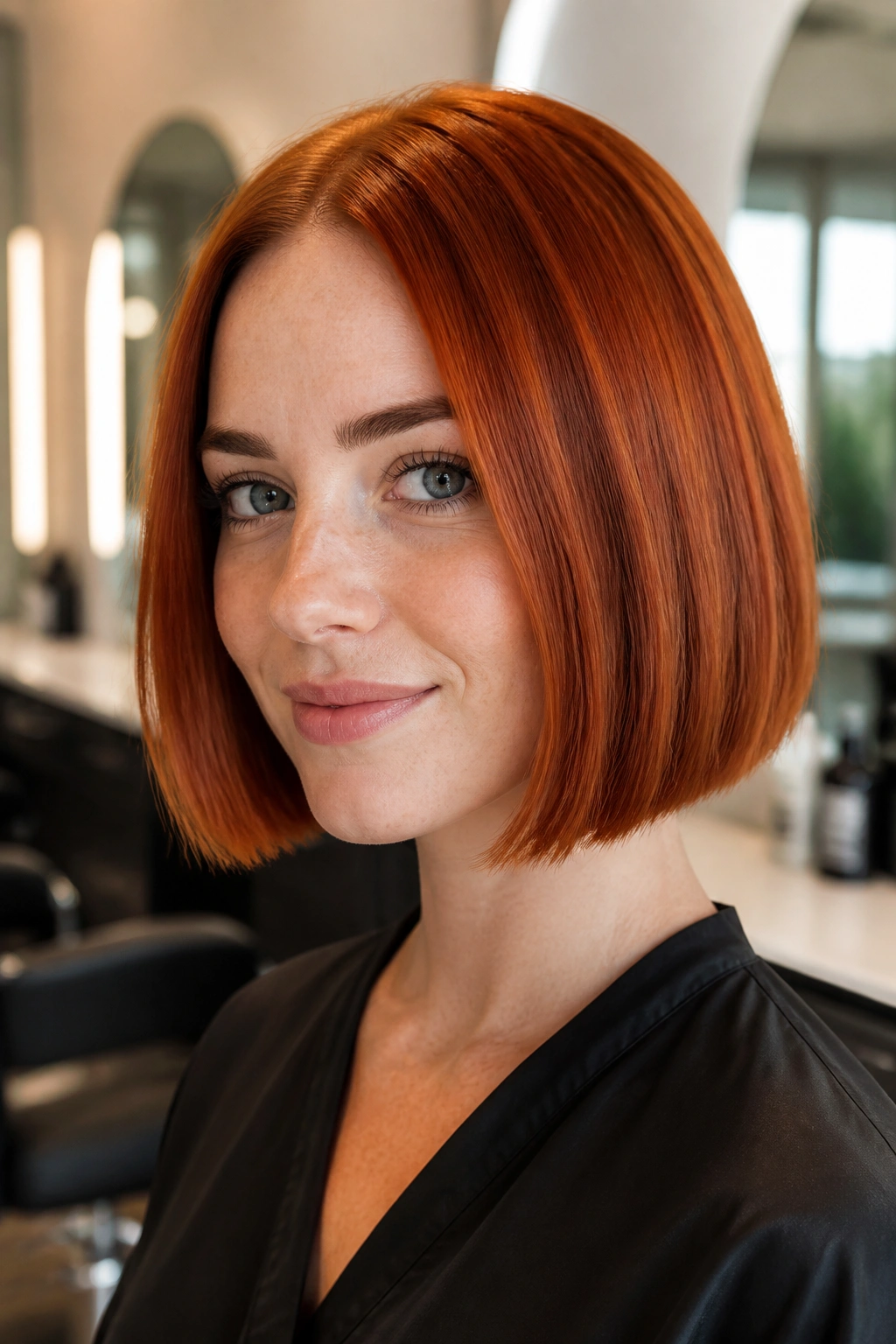
A blunt bob is one of the cleanest ways to make red hair look expensive without trying too hard. The straight line at the bottom gives copper and auburn a solid edge, so the color reads fuller from a distance and brighter up close.
Why It Works on Red Hair
The blunt line matters more than people think. On red hair, especially fine hair, a soft or heavily layered cut can make the ends look see-through. A bob that lands at the jaw or just below it keeps the shape strong and gives the color something firm to sit on.
This cut is best when you want the shade to do the talking. Bright ginger pops against a clean bob, and deeper auburn gets this rich, polished look that feels almost lacquered. It’s also one of the easiest cuts to style fast.
- Ask for a one-length perimeter with minimal internal layering.
- Keep the length at the jaw, chin, or just below the chin.
- Trim every 6 to 8 weeks so the line stays sharp.
- Smooth it with a pea-sized cream or serum, then tuck one side behind the ear for a little asymmetry.
My favorite part: it makes even plain straight hair look deliberate.
2. Curtain Bangs with Long Layers
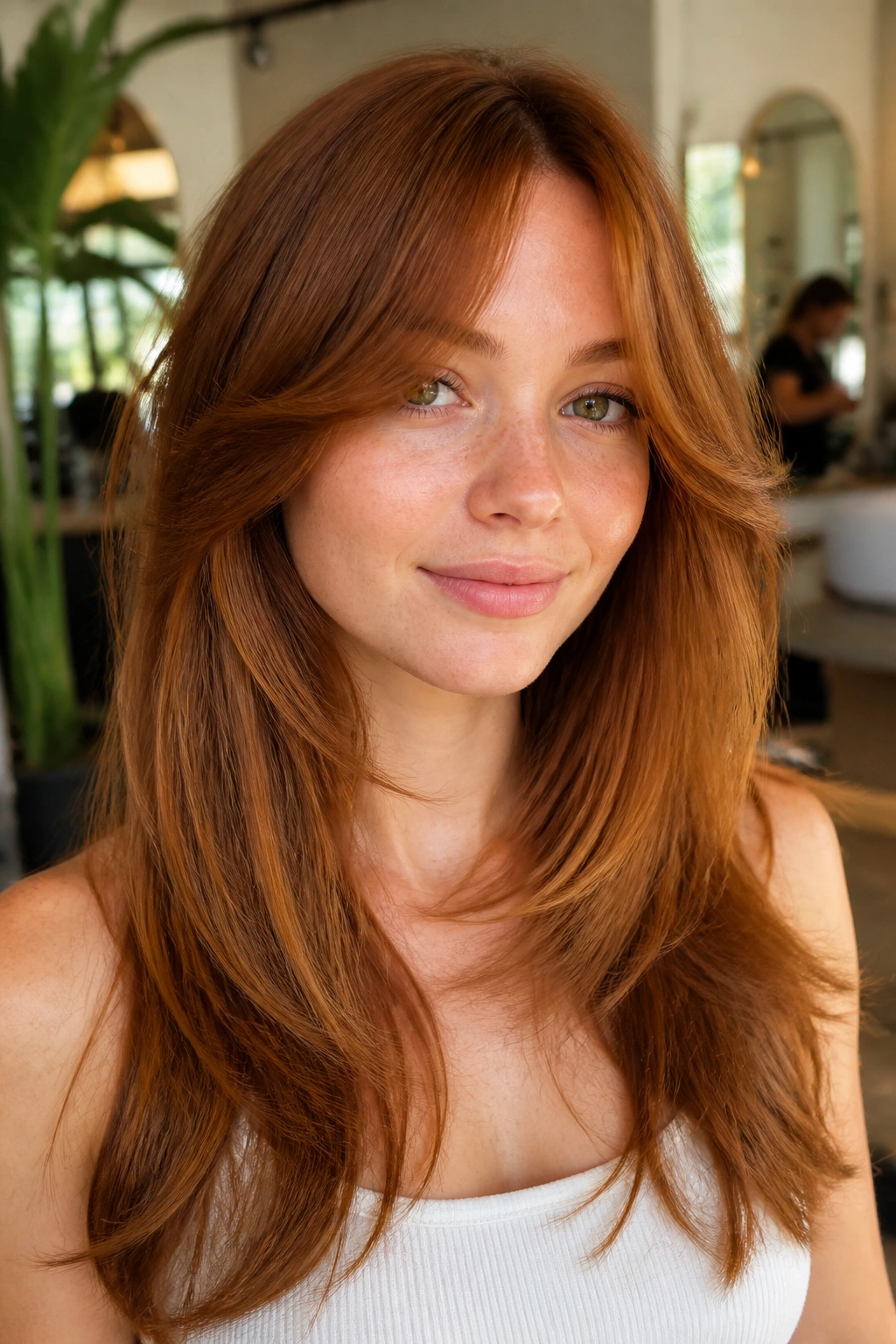
Why do curtain bangs keep showing up with red hair? Because they soften the forehead without stealing the whole show. On ginger hair, they create a little movement around the face, which helps the color feel lighter and less blocky.
The Shape That Keeps It Easy
Curtain bangs work best when they start around the cheekbone and blend into long layers. That gives you softness near the eyes and cheekbones without the heavy, helmet-like fringe that can make red hair feel dated fast. If your hair is thick, ask for the bangs to be thinned carefully at the middle only, not ripped apart everywhere.
This cut is especially nice on auburn and cinnamon shades because the face-framing pieces catch light from both sides. It’s a smart choice if you wear your hair down a lot but still want some movement when it’s tied back.
How to Style It
Blow-dry the bangs with a medium round brush, rolling them away from the face for 20 to 30 seconds on each side. That little bend matters. Straight-down curtain bangs can separate weirdly on cowlicks, and nobody needs that battle before coffee.
3. Pixie Cut with Piecey Texture
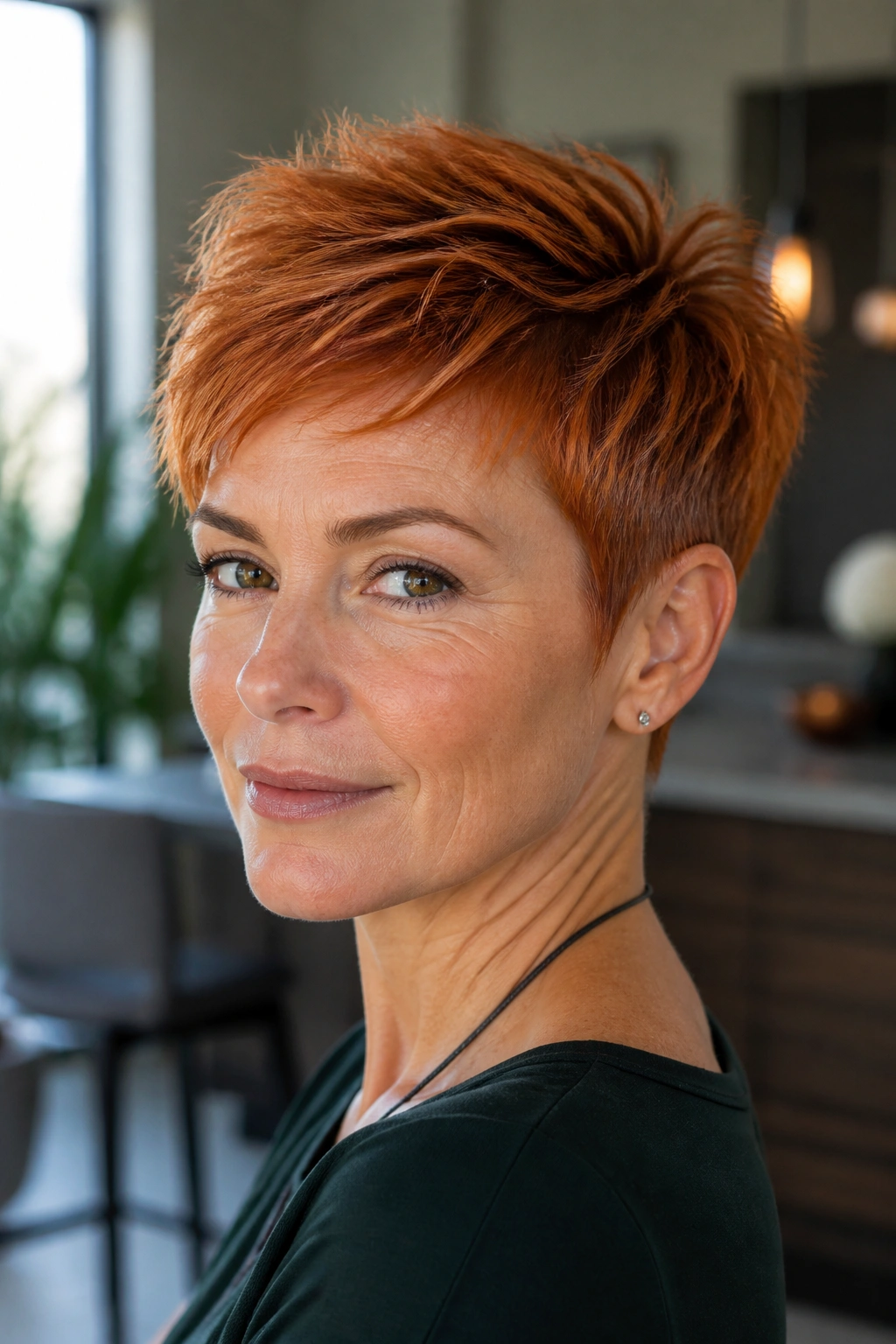
A pixie cut can be a knockout on red hair, but it has to be shaped with a bit of nerve. The wrong pixie makes ginger hair look puffy around the crown. The right one looks crisp, modern, and sharp enough to show every shine line in the color.
What Makes It Different
The best pixies for redheads keep length on top and around the fringe area, then taper the sides and nape close enough to expose the neck. That contrast gives the color a real punch. I like piecey texture here because it breaks up the mass and keeps the whole cut from looking helmeted.
If your hair is fine, ask for choppy texture in small sections rather than heavy razoring. If it’s thick, the stylist can remove weight under the top layer so the crown doesn’t stick up like a mushroom. Tiny details. Huge difference.
- Needs trims every 4 to 6 weeks.
- Works well with a matte paste or light pomade.
- Best for people who don’t mind daily styling.
- Looks especially good with bright copper and strawberry blonde shades.
One warning: if your hairline is very strong or your crown has a stubborn cowlick, a pixie needs custom shaping, not a generic clipper job.
4. Modern Shag with Soft Movement
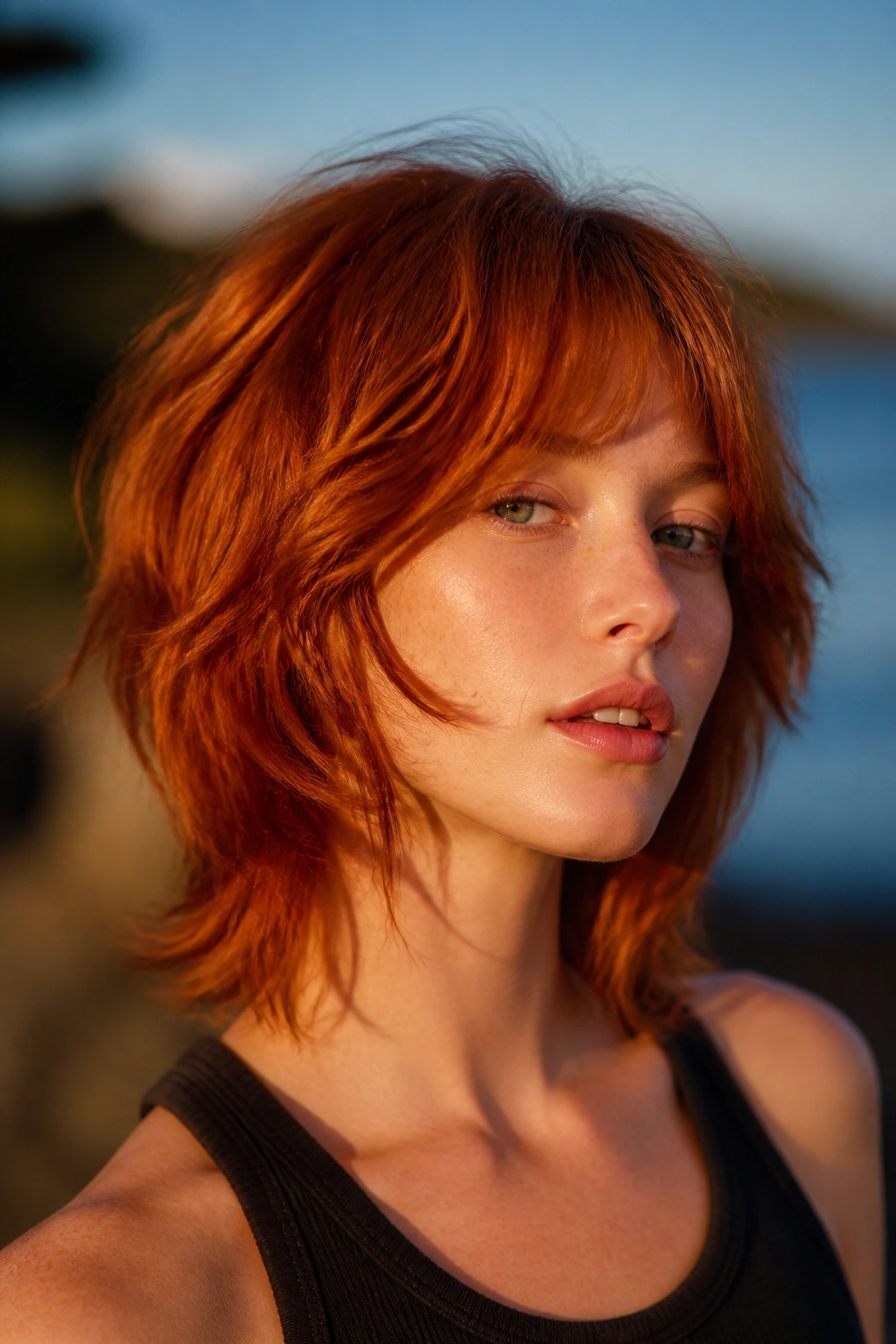
The shag is the haircut for red hair when you want energy, not perfection. It has more attitude than a standard layered cut, and that suits ginger shades because the color already brings a lot of visual life on its own.
Why It Flatters Red Tones
A good shag uses layers that start high enough to create lift around the cheekbones and jaw, but not so high that the whole shape collapses into frizz. On auburn hair, the layers make the color look deeper in the low pieces and lighter where the ends flip out. That shadow-and-light effect is the whole point.
I prefer a softer shag on red hair over a harsh, over-razored one. Too much feathering can make fine strands look stringy. A cleaner shag with interior texture gives you movement without losing density.
Who Should Try It
This cut works nicely if your hair is wavy or just a bit bendy when it dries. It also suits people who hate spending 30 minutes with a round brush. Air-dry it with a curl cream or light mousse, scrunch once, and leave it alone.
5. Collarbone Lob with Clean Ends

The collarbone lob is a strong choice because it sits in that sweet spot between short and long. It gives red hair room to swing, but still keeps enough weight at the bottom for the color to look rich and full.
A lot of people think a lob has to be layered to be interesting. Not true. On ginger hair, a clean lob with minimal layering often looks better because the perimeter creates a solid color block. That block makes copper feel stronger and auburn look glossier, especially if your hair is straight or only slightly wavy.
If you want a little more shape, ask for subtle face-framing pieces that start below the cheekbone. Keep them long enough to tuck behind the ear. That keeps the cut from tipping too hard into “mom bob” territory, which is a very real danger with an awkward in-between length.
Best part: it grows out well. Not every cut does.
6. Copper Wolf Cut
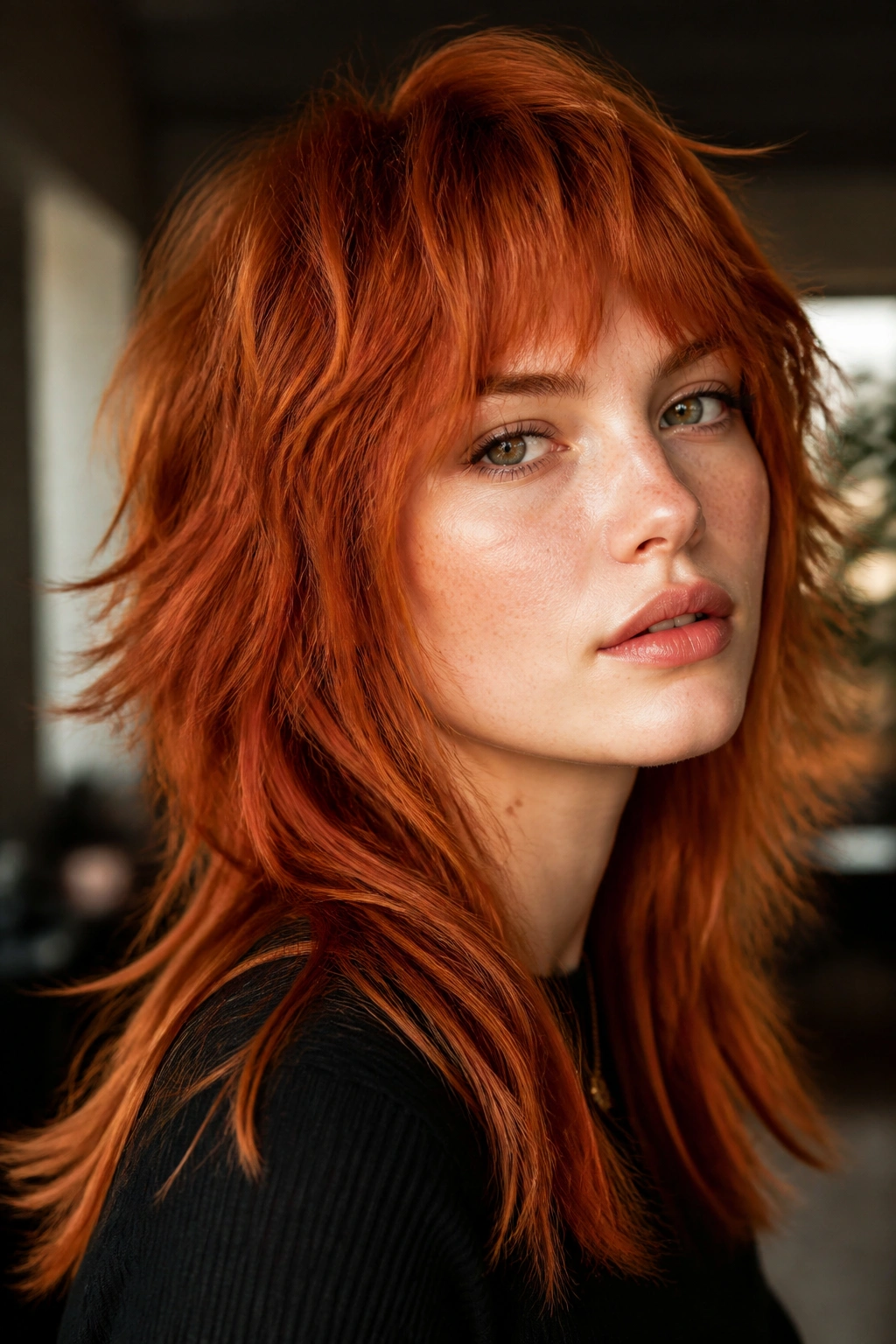
A wolf cut can look amazing on red hair when it is controlled, not chaotic. That matters. The whole point is a mix of shaggy layers and a fuller bottom shape, so the hair feels wild but still has a plan.
What makes this haircut work on copper and ginger shades is the contrast. Shorter crown layers give lift, while the longer outer pieces keep the silhouette from vanishing. On red hair, that contrast shows up fast because the color catches every bend. If you’ve got thick hair, this can remove a lot of bulk without making the ends look flimsy.
Keep the fringe soft and slightly broken up. A heavy, solid fringe can drag the whole cut down. I’d also avoid over-blowing it smooth. The wolf cut wants grit. A diffuser, a little sea-salt spray, and some scrunching usually do more than a perfectly polished finish.
Good for: wavy hair, thick hair, and people who want their red hair to look a little rebellious.
7. Side-Swept Crop with a Little Length on Top
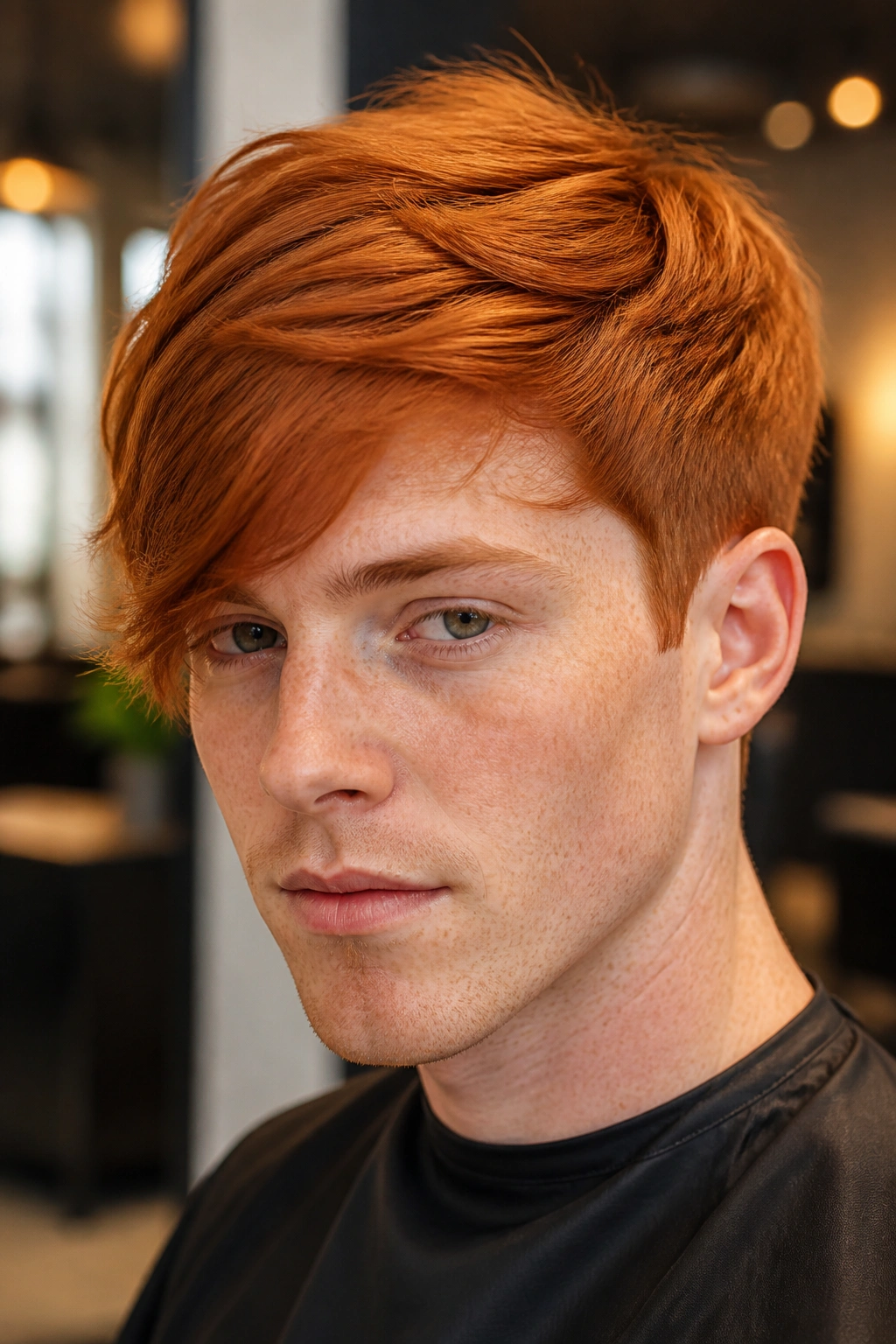
Looking for short hair that doesn’t feel severe? This is the one. A side-swept crop keeps the sides neat while leaving enough length on top for the red color to show movement instead of just sitting there like a helmet.
The Shape in Plain Terms
The top should have enough length to sweep across the forehead and soften one eye line. That asymmetry is flattering on a lot of face shapes, and it gives ginger hair a slightly softer edge than a full pixie. The color benefits too, because the longer top section creates a brighter plane when the light hits it.
This is especially good if your hair grows fast and you do not want to live in the salon. The shape stays tidy even when it softens a little. And that matters, because some short red cuts look messy the minute they grow out. This one usually doesn’t.
A Small Styling Note
Use a tiny amount of matte paste—less than a pea-sized amount if your hair is fine—and work it through the top with your fingers. Too much product will flatten the movement and make the hair look greasy fast.
8. Butterfly Layers for Long Red Hair
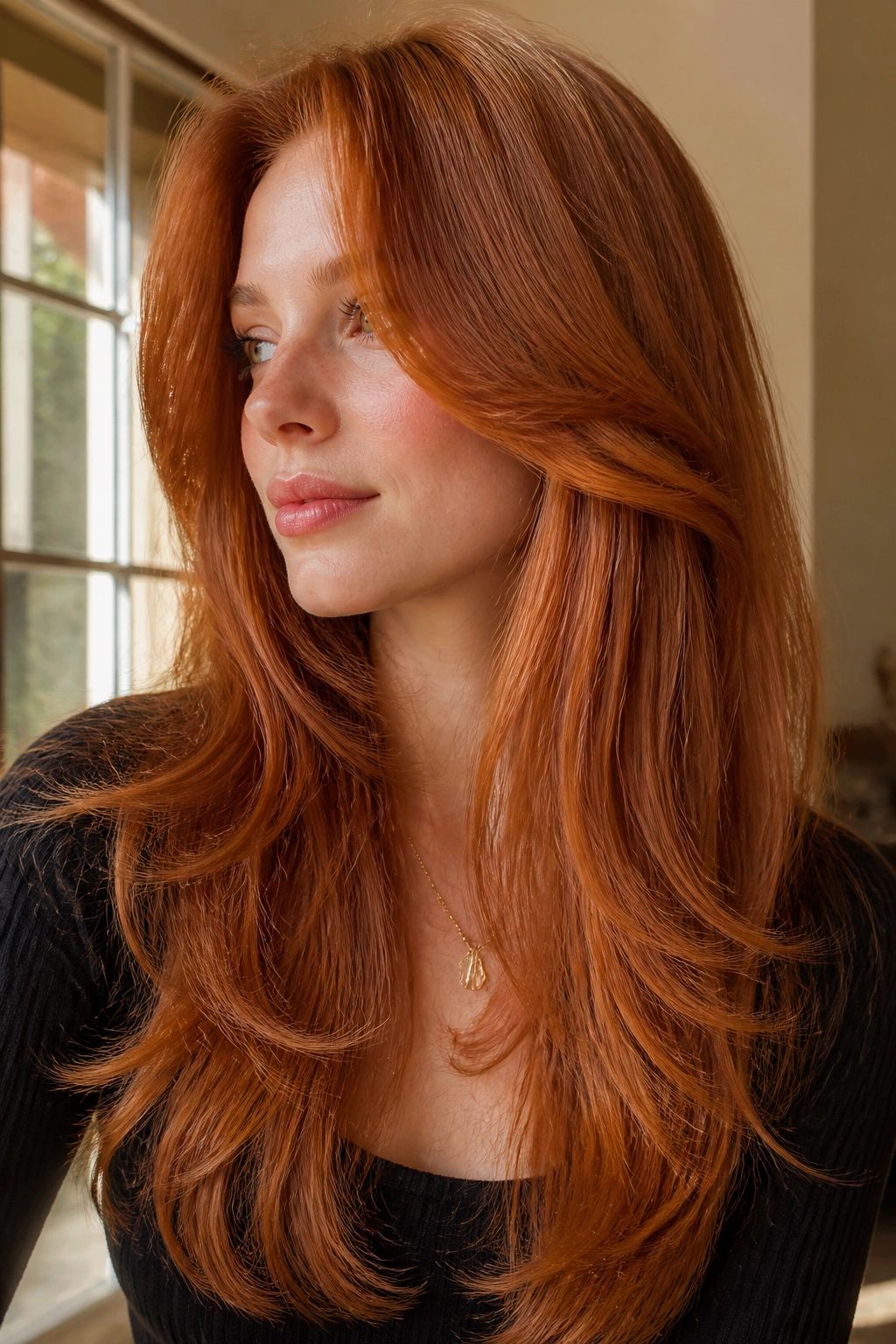
Butterfly layers are the rare long cut that gives red hair shape without stealing the length people love. They create shorter face-framing pieces and longer layers through the back, so the hair moves like two lengths in one.
Picture this: you still have long hair, but it no longer hangs like a single curtain. The shorter front layers swing when you turn your head, and the longer bottom keeps the whole shape grounded. On auburn, that contrast makes the color look deeper near the crown and softer through the ends. It is a nice trick, and a useful one.
How It Helps the Color
Red hair often looks especially good when there’s a little movement around the face. Butterfly layers do that without forcing you into a big shag or chopping off inches you wanted to keep. If your hair is thick, the layers can remove weight around the front so it doesn’t feel draggy.
If your hair is fine, ask for the shortest layer to start lower, around the collarbone. That keeps the ends from looking too sparse. Not every stylist says this out loud, but they should.
9. Italian Bob with Soft Bend
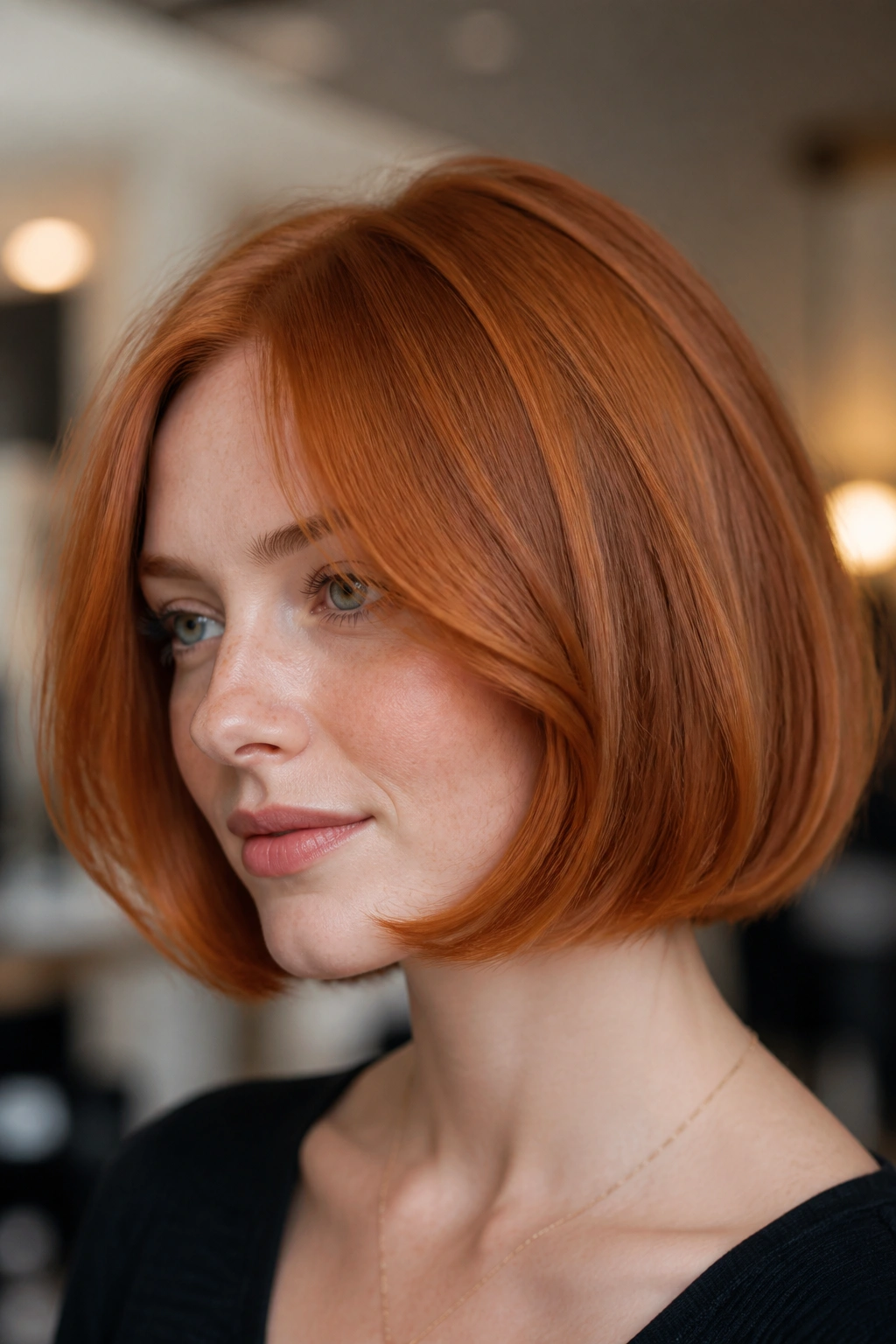
An Italian bob sounds polished, and it is—but not in a stiff way. It usually sits around the jaw or just above the shoulders, with a fuller shape and a soft bend through the ends. On red hair, that little bit of curve stops the cut from feeling severe.
I like this cut for auburn and deep copper because the fullness makes the color look plush. It has that old-school salon finish without needing a lot of volume at the crown. If your hair is naturally straight, a quick bend with a round brush or a 1-inch curling iron at the ends is enough.
The best version avoids over-layering. The Italian bob is about shape, not shredded texture. If you ask for too much thinning, you lose the whole point and end up with a bob that looks tired after one wash. No thanks.
It’s especially good if you want a short cut that still feels grown-up. Not fussy. Just nice.
10. Curly Shoulder-Length Cut
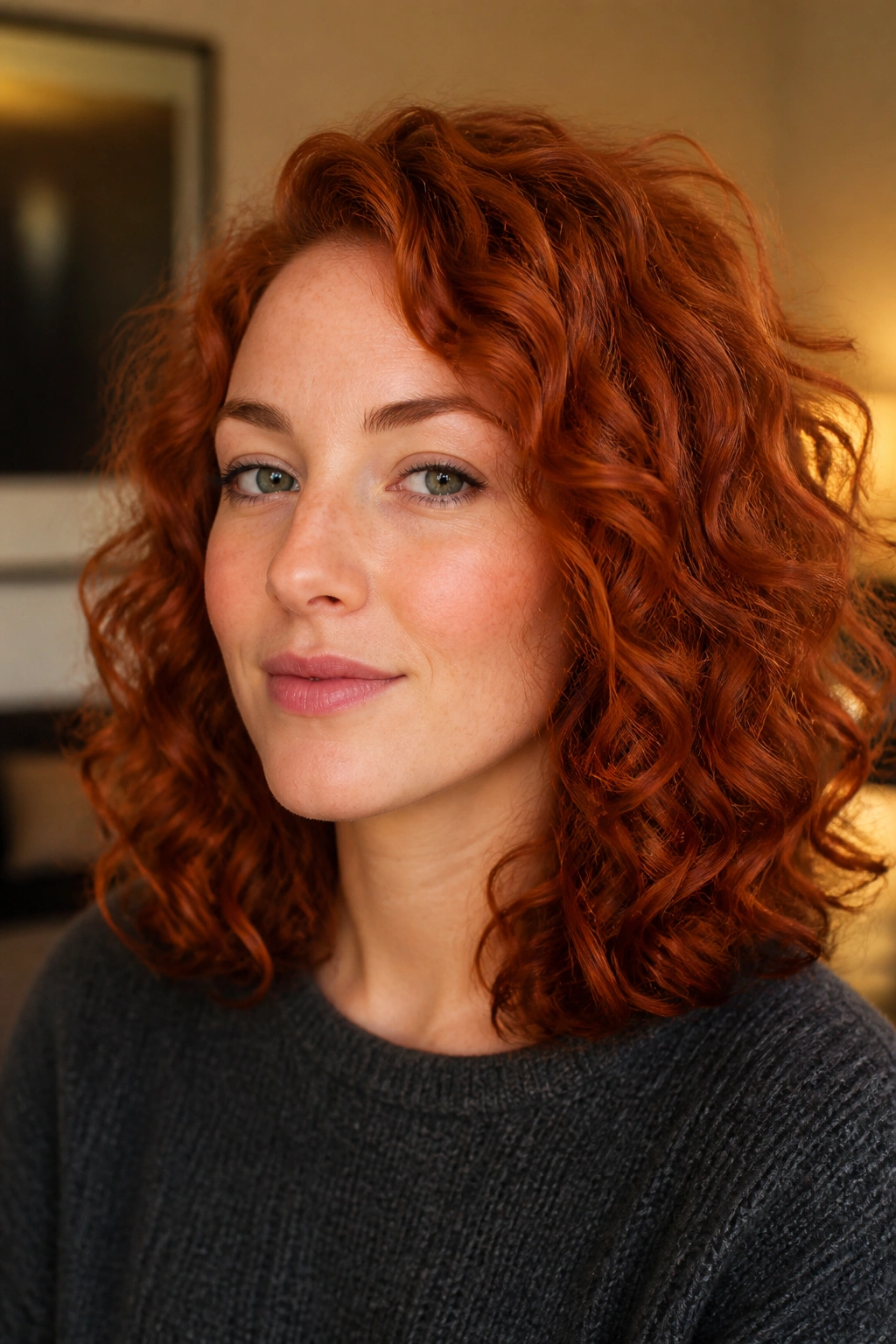
Curly red hair likes room at the ends. Cut it too short in the wrong places and the spring can turn into a triangle. Leave it too long and the shape can sink. Shoulder length hits a useful middle ground.
The reason this length works so well is simple: it lets curls stack without crushing them. Red curls already have a lot of personality, and a good shoulder-length cut lets the color show in different rings and coils instead of disappearing into one lump of shape. That matters more than people admit.
What to Ask For
- A dry cut or curl-by-curl shaping, if your stylist works that way.
- Layers that follow the curl pattern, not fight it.
- Enough length to keep the curl weight balanced at the shoulders.
- A soft perimeter, not a blunt shelf, unless your curls are loose waves.
Diffuse on low heat until the roots are set and the ends still feel springy. If the hair is fully dry and crunchy, you’ve gone too hard on product. A little softness is usually better.
11. Bixie Cut with Tapered Sides
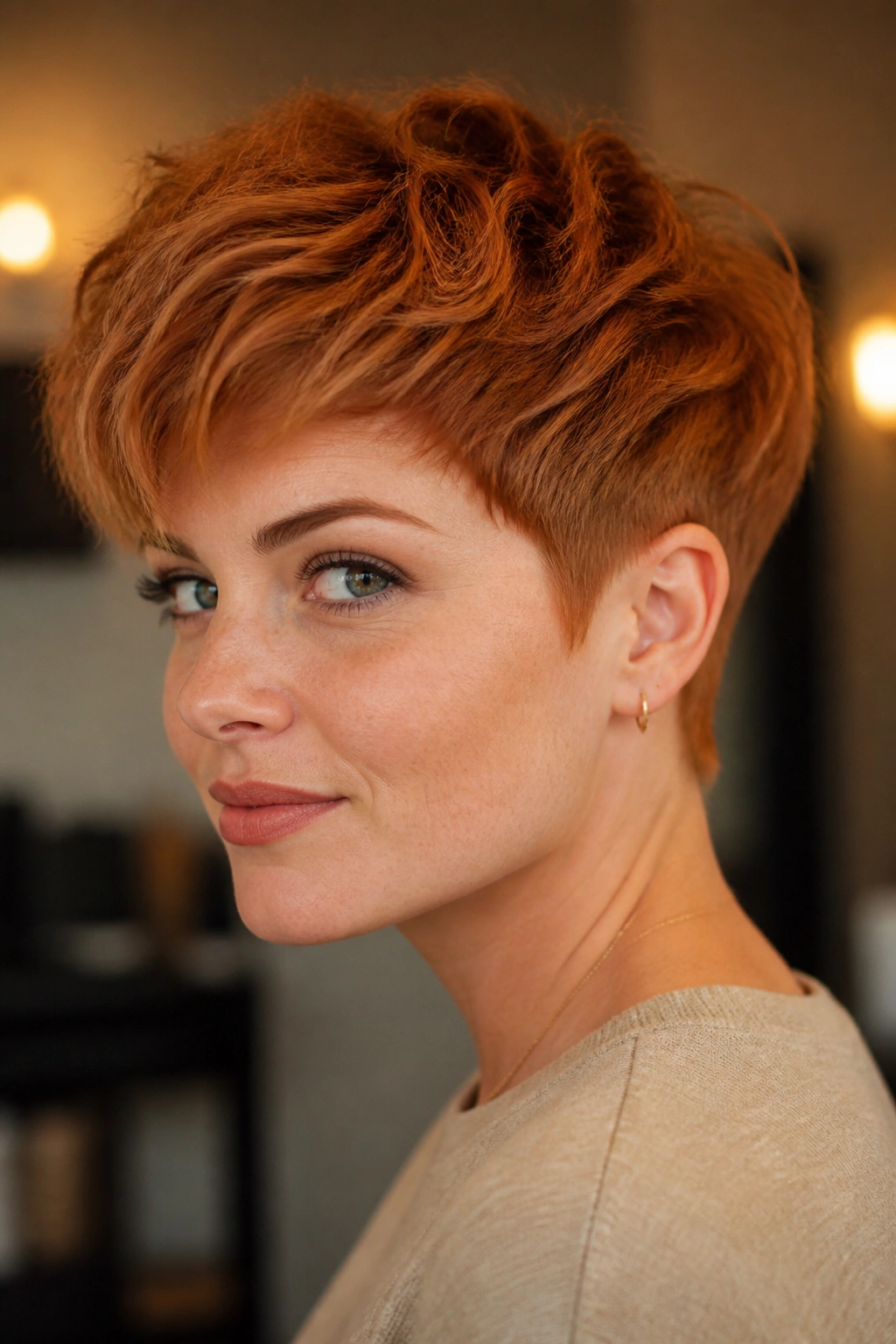
The bixie sits between a bob and a pixie, and that middle ground works beautifully on red hair. It gives you short hair energy without the full commitment of a cropped cut, which is handy if you like shape but still want some movement around the jaw.
Why Red Hair Loves It
A bixie gives copper and ginger a nice outline. The tapered sides keep the silhouette neat, while the longer top and fringe area let the color show texture. On finer hair, this can create the illusion of more body without piling on product. On thicker hair, it removes enough bulk that the shape feels light.
I also like the bixie for people who want a short cut that can be worn sleek one day and messy the next. It’s not precious. That’s its charm.
Quick Styling Facts
- Works best with a soft side part or broken center part.
- Needs a trim every 5 to 7 weeks.
- A small dab of styling cream is enough for most hair types.
- Air-drying gives it a more relaxed finish than a blowout.
12. Long U-Shape Layers
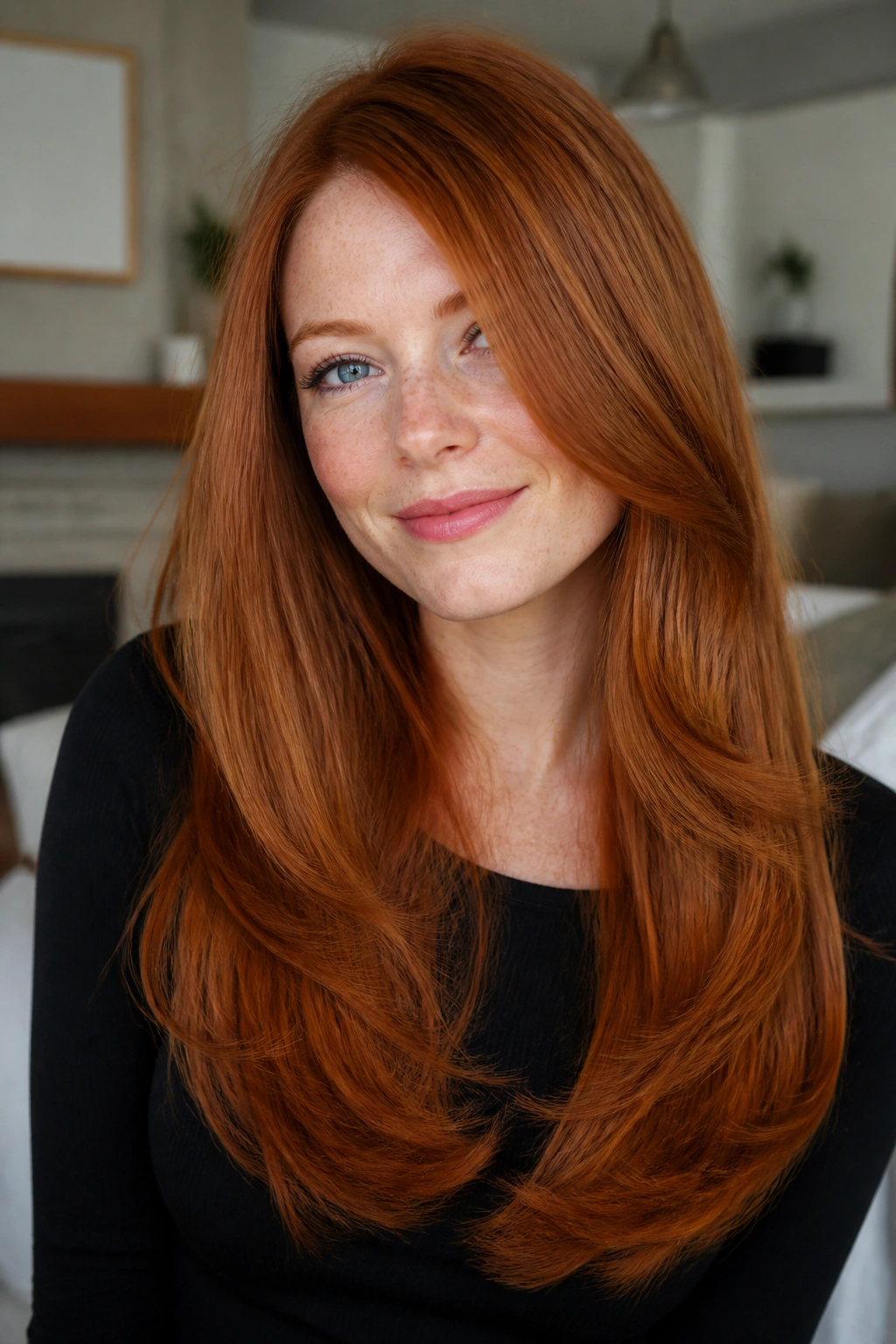
Long U-shape layers are the polite answer to “I want to keep my length.” They don’t slash the hair into obvious steps. Instead, they keep the longest pieces in the center back and let the sides fall a little shorter, which creates a smooth U when the hair hangs loose.
That shape is kind to red hair because it adds movement without taking away the lushness people usually want from long copper or auburn lengths. It also keeps the ends from looking like one flat curtain. The slight curve at the bottom feels softer than a blunt line, but still more controlled than random layering.
This is a good choice if your hair is medium to thick and you wear it down often. The layers help it move, but they won’t chew through the density. And if you like heat styling, U-shape layers hold a loose curl nicely because there’s enough length for the wave to travel.
The trick is to keep the layering invisible from the front. If you can see every cut line right away, the shape has gone too far.
13. Micro Fringe Bob

A micro fringe bob is not for the shy. It’s a bold cut, and red hair makes it look even stronger because the fringe sits like a sharp line against the face. That contrast can be brilliant on the right person.
Imagine a bob that lands at the cheek or jaw, paired with a short, blunt fringe that sits high on the forehead. The whole thing feels graphic. On bright ginger, it can look playful. On dark auburn, it can read almost editorial. Same cut, different mood.
What Makes It Work
The fringe needs to be cut carefully so it doesn’t puff up. Red hair can have a lot of body near the roots, and a tiny fringe will show every cowlick you’ve got. Keep the bob line clean and the fringe slightly softened at the corners if your forehead is narrow.
This style is best if you like regular maintenance. Short bangs grow fast. There is no pretending otherwise.
If you want drama without losing polish, this is one of my favorite options.
14. Textured Lob with Invisible Layers
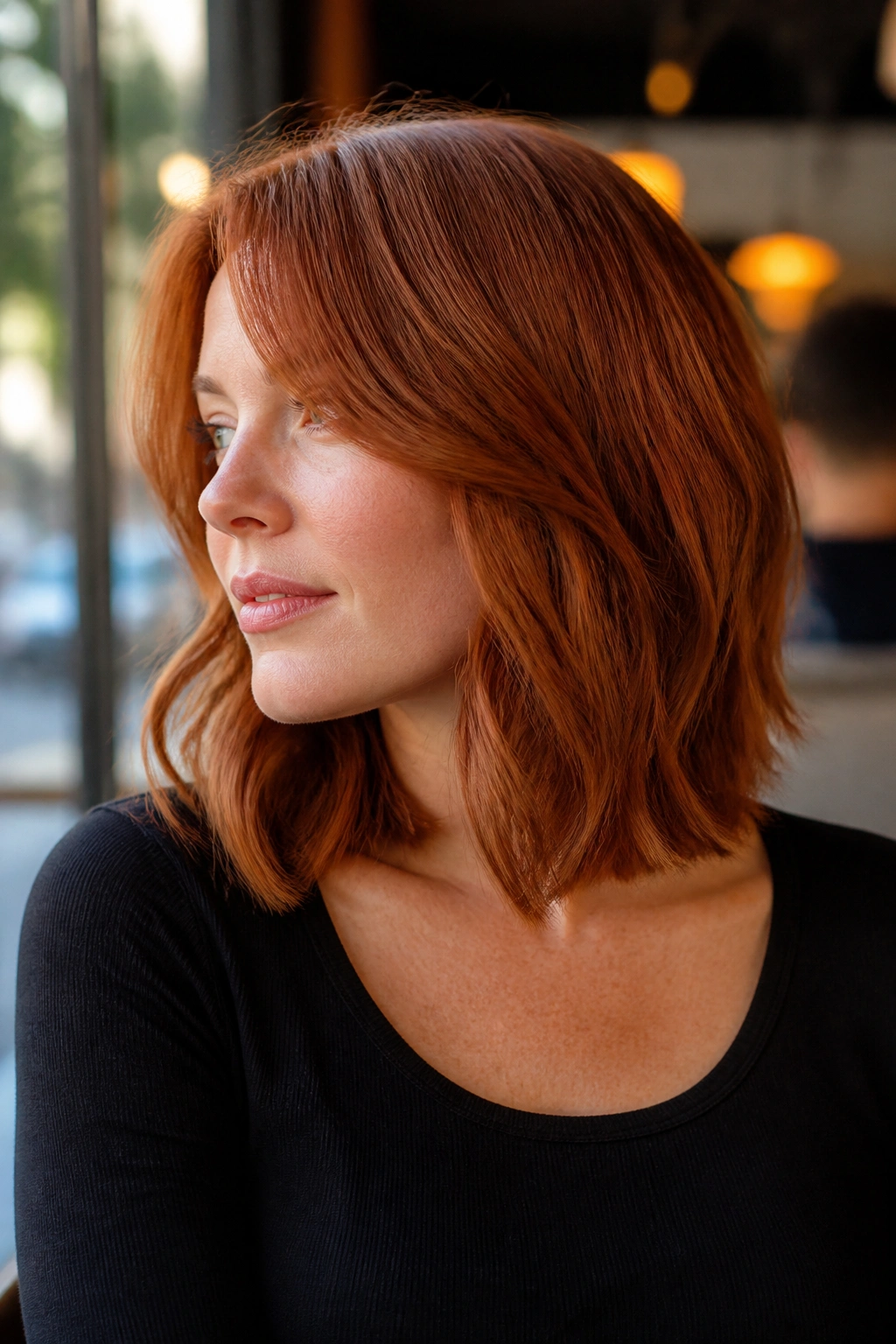
What makes invisible layers so useful? They give shape without making the cut look layered. That is the whole appeal. On red hair, especially when the color already brings natural dimension, you often do not need obvious steps everywhere.
A textured lob with invisible layers keeps the perimeter mostly full, then removes weight inside the shape. The result is movement that shows up when you walk or turn your head, but not a choppy outline. This is a smart cut for people who want their ginger hair to look airy but still thick at the ends.
It’s also friendly to second-day hair. A little dry shampoo at the roots and a quick bend with a flat iron can bring the shape back fast. You do not need to re-style the whole thing from scratch. That alone makes it easier to live with than a fussy layered cut that only looks good for six hours.
If your stylist starts snipping the visible ends too much, stop them. The point is hidden structure, not shredded length.
15. Tapered Natural Curl Cut
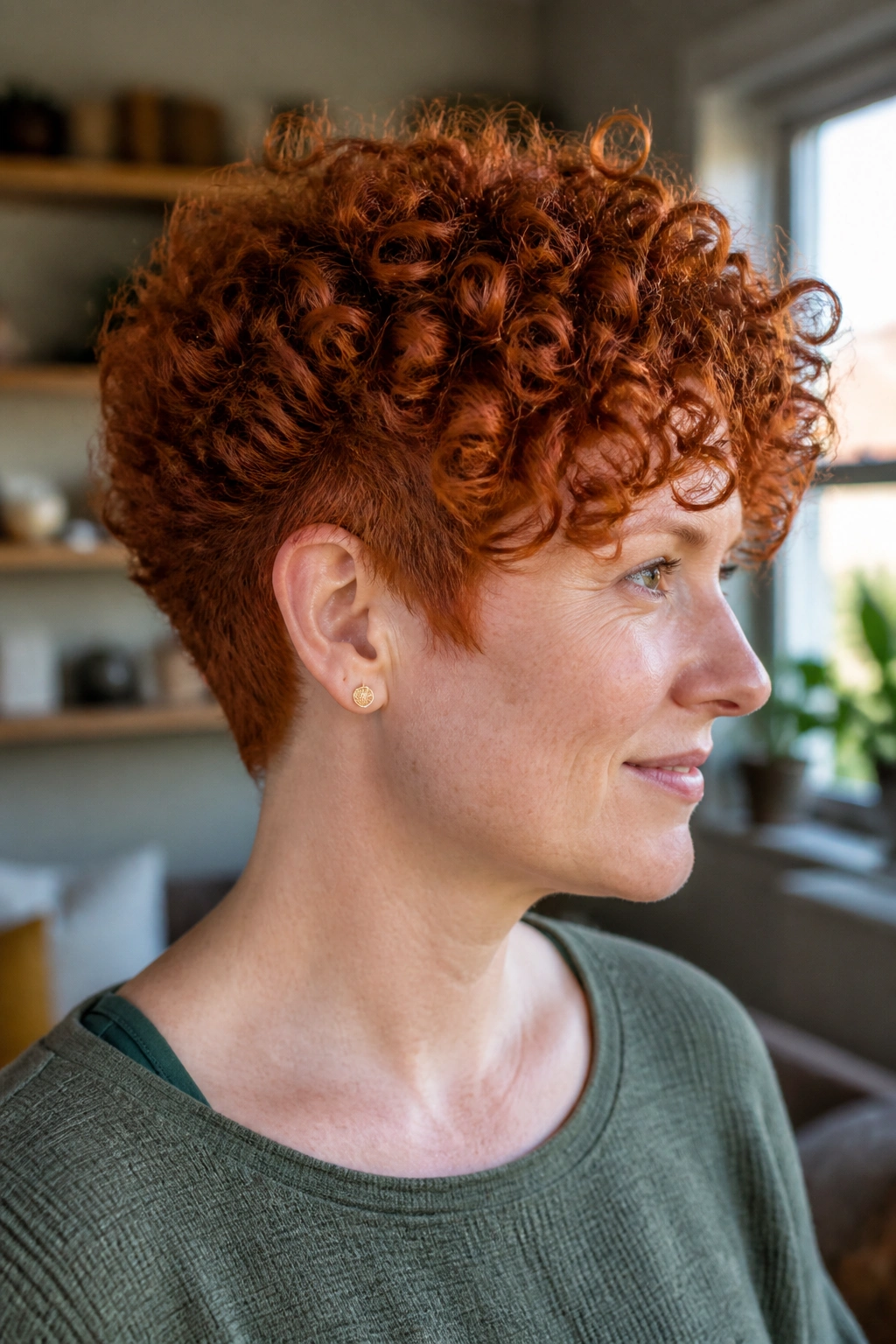
Tapered curls and red hair have a good relationship when the shape follows the curl pattern instead of forcing it into a box. A tapered cut keeps the sides and nape a little shorter, with more length and softness on top. That gives the style a lifted shape without losing the roundness curls need.
The Look in Real Life
This cut keeps the hair from puffing out wide at the bottom. On red curls, that matters because the color already draws the eye, and a bad shape can make the whole head look bigger than it is. A tapered cut narrows the base and lets the curls sit with some height around the crown.
I prefer this for tighter curls, coils, or very springy waves. It shows off the texture instead of flattening it. And if you wear your hair natural most days, it tends to age better between salon visits than a blunt curly shape.
Styling Note
Work in leave-in conditioner while the hair is wet, then use a curl cream or gel in sections. Scrunch from the ends up, not from the roots down. That helps the curl clump stay intact, which is what gives the shape its nice finish.
16. Asymmetrical Bob
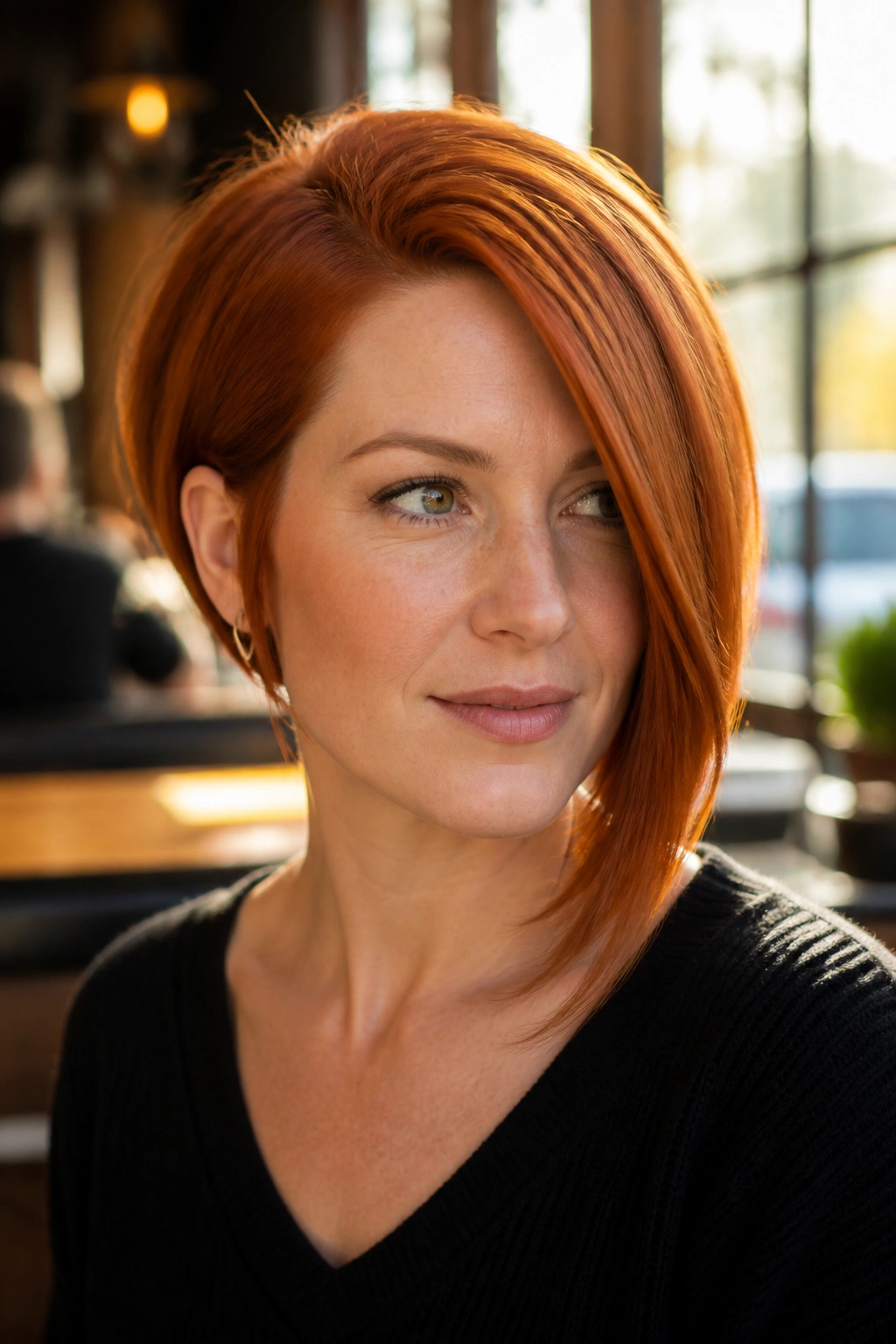
An asymmetrical bob is never shy. One side is longer than the other, and that simple shift gives red hair a bit of attitude that a standard bob sometimes lacks.
The reason it works so well on ginger and auburn shades is that the uneven line creates motion even when the hair is straight. The color gets to play across two different lengths, so the cut looks alive rather than static. If your hair is very straight, this can be a good way to build interest without piling on layers.
What to Watch For
The longer side should be intentional, not random. A tiny difference often looks like a mistake; a clear difference looks styled. Keep the line clean around the nape and let the front angle fall gradually toward the longer side. That keeps the haircut sharp.
This cut suits people who like a little edge but don’t want a full creative crop. It’s easier to dress up than a rough shag, and easier to maintain than a pixie. That middle lane is the sweet spot.
17. Mid-Length Razor Cut
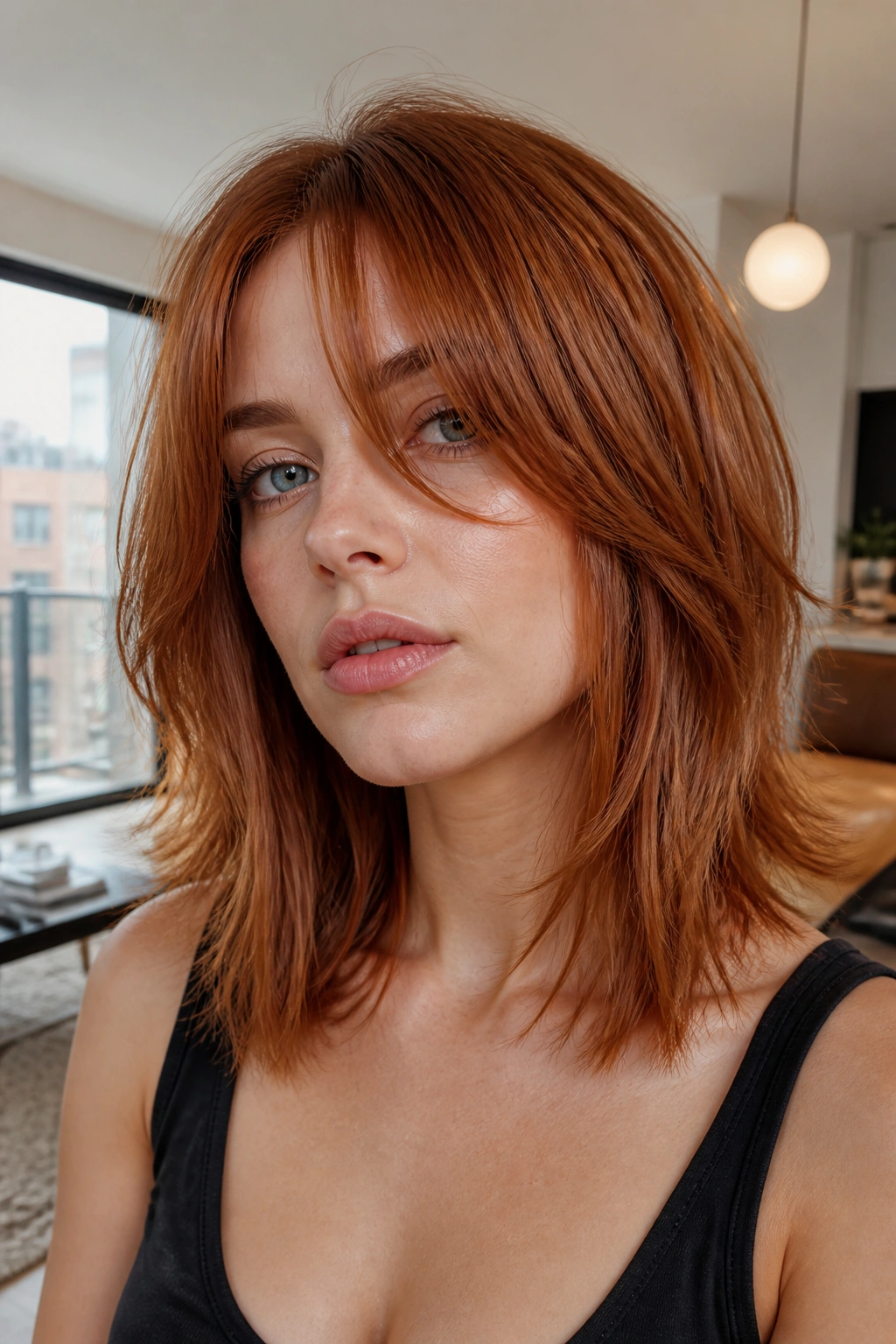
Razor cuts can look gorgeous on red hair, but they can go wrong fast if the hair is fine or if the razor is used too aggressively. When done well, the result is soft movement with airy ends that still hold a shape.
The mid-length version works best around the shoulders or just past them. That length gives the ends enough weight so they do not disappear. On auburn and copper, the razor texture catches the light in a softer way than blunt scissors, which can be lovely if you want a relaxed finish.
But here’s the catch: if your hair already frizzes easily, too much razor work can make the ends fuzzy. I’d only go this route with a stylist who knows how to read texture and doesn’t use the razor as a shortcut. There’s a big difference between controlled softness and a cut that looks over-thinned after one wash.
If you want something airy without going full shag, this is the lane to try.
18. Soft Mullet with Face Framing

The soft mullet is for the redhead who wants shape with a little bite. It has shorter pieces near the crown and front, with more length left in the back. Done softly, it feels modern and a bit cheeky instead of costume-y.
I like it on red hair because the color keeps the cut from looking too hard. Ginger tones soften the edges, while deeper red shades make the shape look richer and more dimensional. The contrast between short and long pieces shows up clearly, which is half the fun.
Who It Suits
This cut tends to work best on wavy hair, thick hair, or hair with natural bend. It can also be a good fix if you want to grow out a shag without looking awkward. The face-framing pieces should stay soft around the cheekbones and jaw so the cut doesn’t tip into mullet parody. Nobody wants that.
If you like texture, you’ll have fun with it. If you want polished and quiet, skip ahead.
19. One-Length Lob
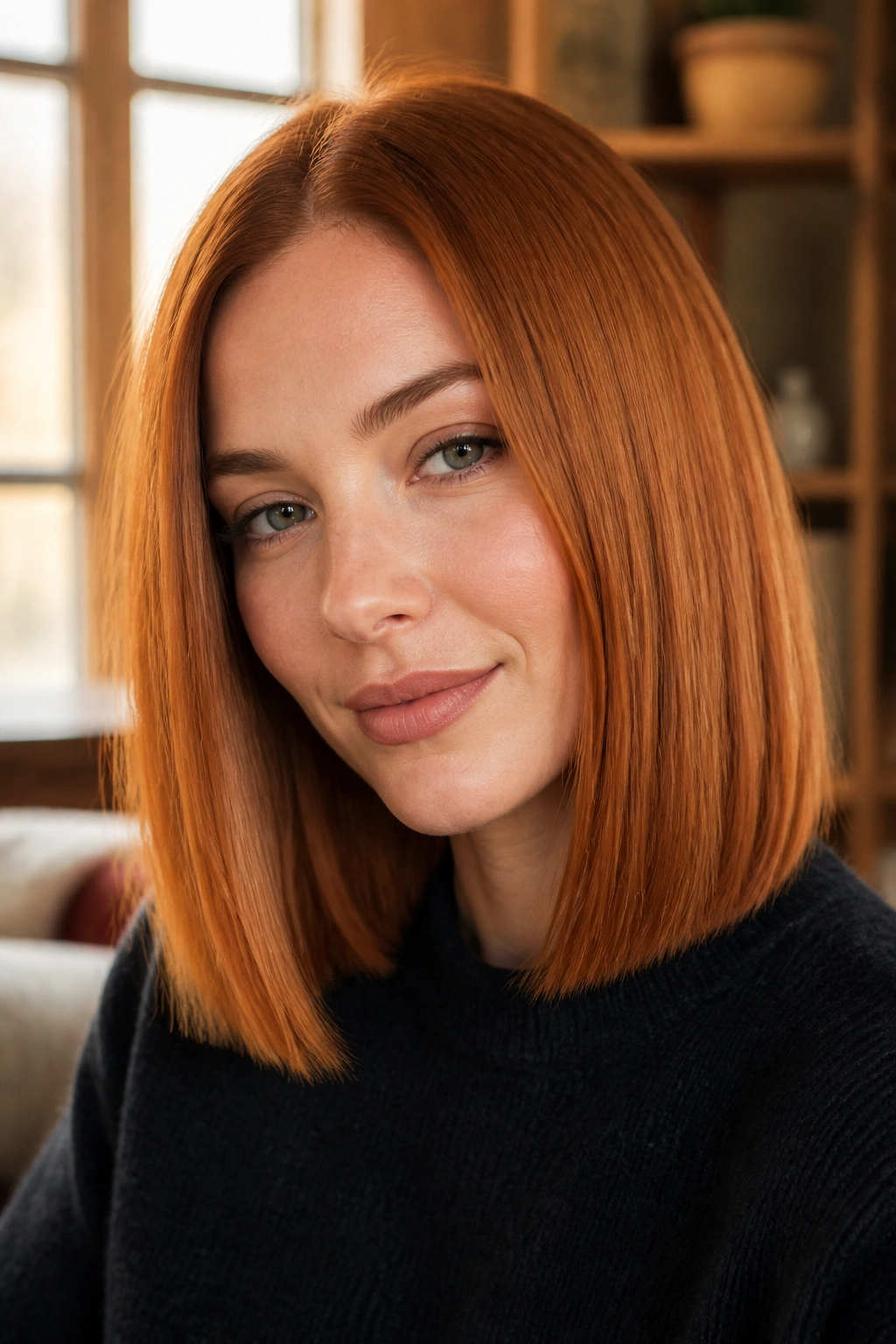
A one-length lob gets dismissed as boring by people who have never watched red hair sit in a clean line. It is not boring. It is controlled, and control can be a good thing when the color already carries a lot of visual interest.
This cut lands around the shoulders or collarbone and keeps the whole perimeter even. On ginger hair, that structure makes the color feel denser and more intentional. It’s a solid choice for fine hair because it keeps the ends looking thick. It’s also good for thick hair if you want a shape that behaves instead of exploding into layers.
The styling is simple, which is part of the appeal. A center part makes it modern; a side part softens it; a quick bend at the ends gives it movement. No drama needed. The haircut does the work.
If you want red hair that feels tidy, glossy, and easy to live with, this is one of the safest bets on the list.
20. Face-Framing Layers with Length
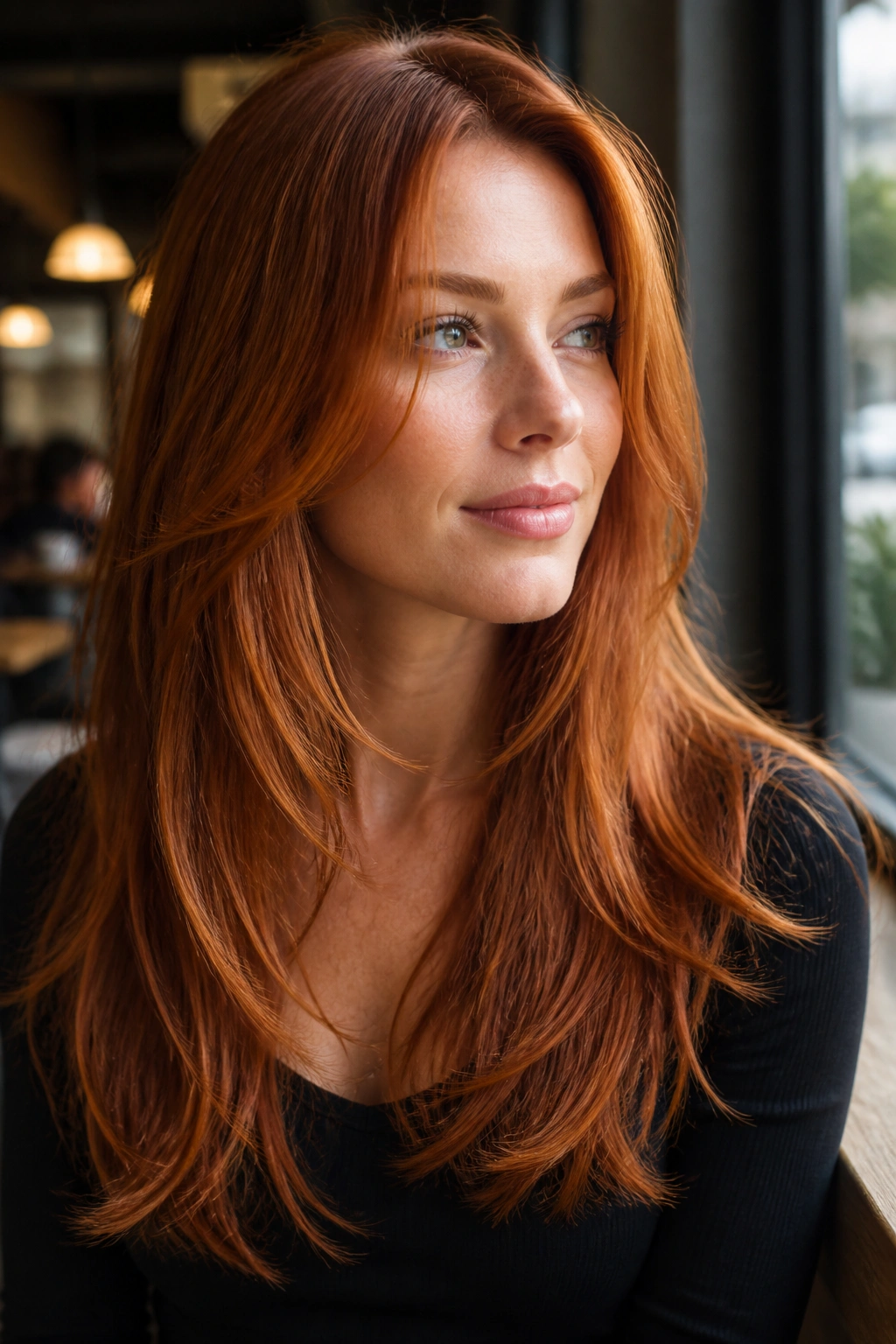
Face-framing layers are the compromise cut I recommend when someone loves their long red hair but wants it to stop feeling heavy around the front. You keep the length, trim the front pieces into a flattering shape, and let the rest fall naturally.
The best version starts the shortest pieces around the cheekbone or jaw, depending on your face shape and how much softness you want. On copper and auburn, those front layers can brighten the whole haircut because they sit where the light hits first. That is why the cut feels fresh even when the overall length stays the same.
This option also works across textures. Straight hair gets shape. Wavy hair gets movement. Curly hair gets a better outline around the face. It is not flashy, and that is exactly why it lasts. If you are stuck between “keep it long” and “please give me something better,” this is the move I’d point you toward.
And honestly, that may be the most useful thing a haircut can do: keep the length you love while making the color look sharper, softer, or richer than it did before.
