



Fine hair often gets a bad reputation in the world of hair styling. People assume that because the individual strands are thin, the overall look will inevitably be limp, flat, or see-through. That simply isn’t true. The reality is that your hair color can act as a structural tool, creating the optical illusion of density, movement, and fullness.
When you have fine or thin hair, the goal of any coloring service is to create “optical weight.” You want light to bounce around your head, not slide straight through. This is why a solid, single-process, flat blonde often looks the most lackluster—it has no shadows, no peaks, and no valleys. It just sits there. But when you introduce depth, shadow, and varied tones, you trick the eye into seeing more hair than is physically present.
Think of it like an oil painting. If you paint a background entirely in one shade of beige, it’s flat. But if you paint it with flecks of honey, strokes of cream, and deep golden shadows, the canvas gains dimension. Your hair operates on the same principle. The right blonde choice isn’t just about being light; it is about building a map of highlights and lowlights that makes your hair look substantial.
1. Honey Balayage
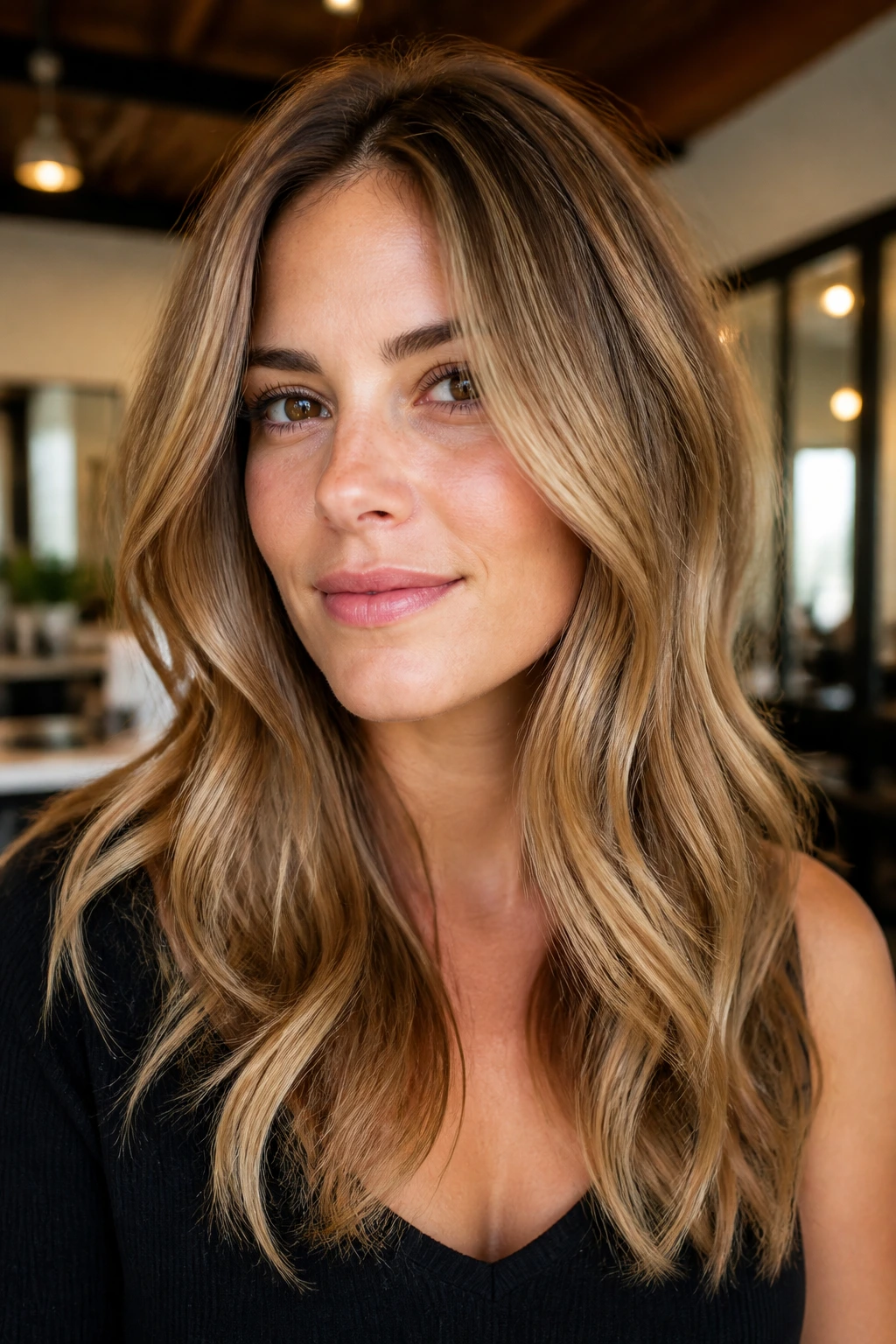
Honey is the gold standard for thin hair because it sits right in the middle of the spectrum—not too light, not too dark. It provides warmth that makes the hair appear healthier and shinier. Shinier hair reflects more light, which immediately makes it look like you have more volume.
Why This Technique Works for Density
Balayage involves hand-painting the highlights, which creates a softer, more blended transition. Unlike traditional foil highlights that can create distinct, chunky lines (which can sometimes highlight the scalp if not done carefully), balayage creates a gradient. This gradient keeps the root area darker, which provides a shadow that gives the illusion of a thicker base.
Key Maintenance Tip
Ask your stylist to keep the “honey” tones concentrated toward the mid-lengths and ends. This creates a natural-looking root tap, allowing you to go longer between appointments without a harsh grow-out line. A harsh line is the enemy of fine hair; it draws attention to the fact that you have less density at the scalp.
2. Root Shadow Blonde
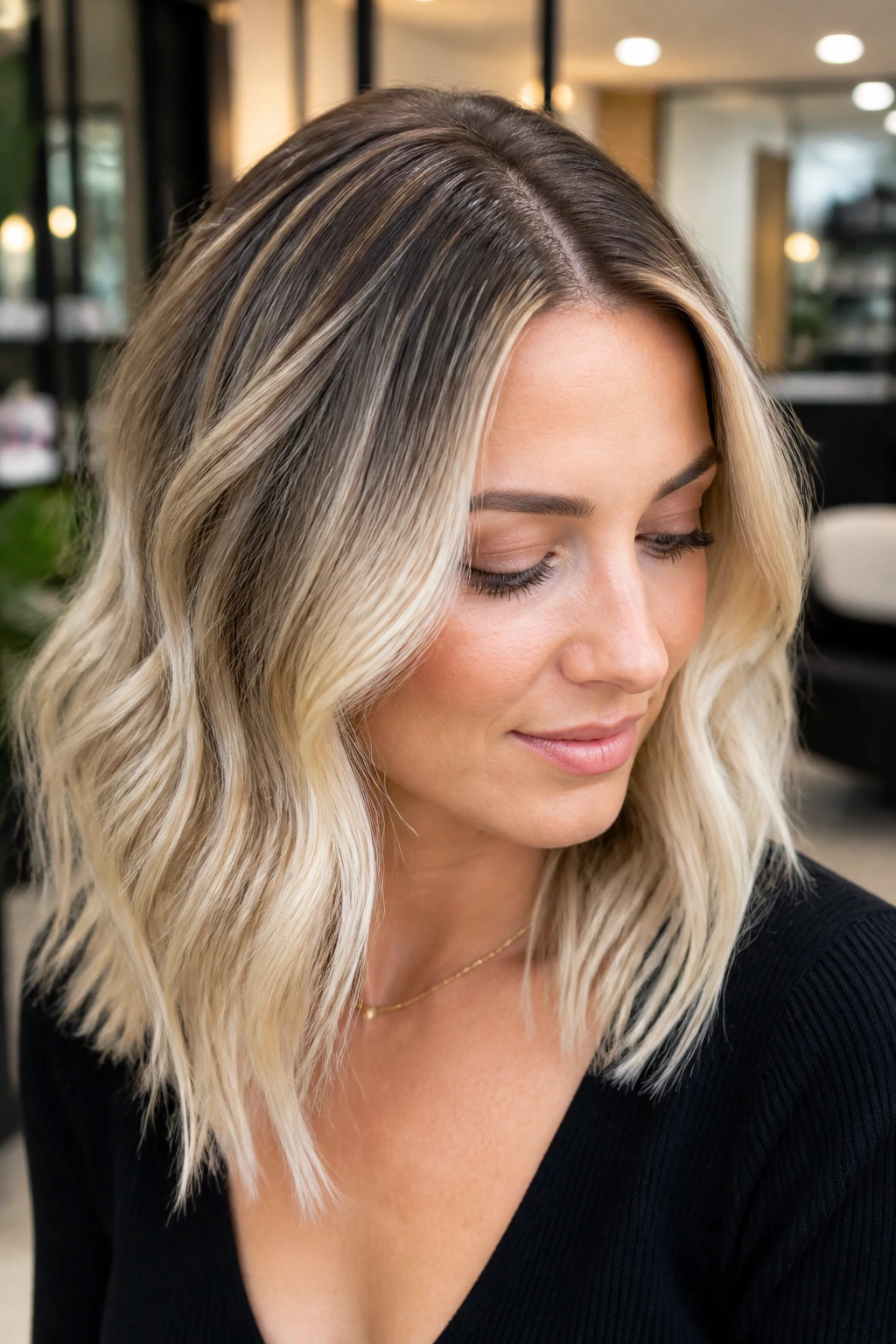
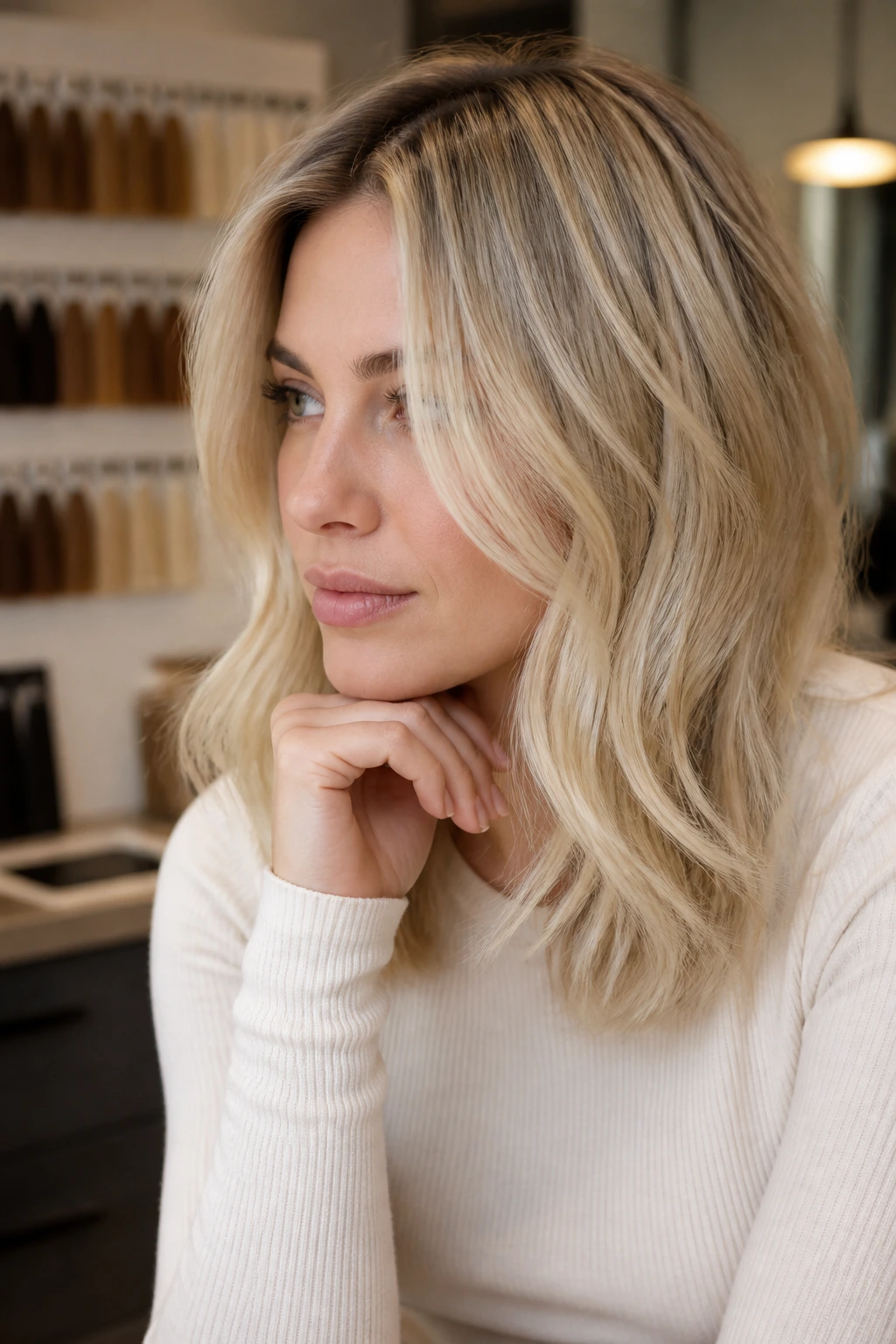
The root shadow is perhaps the single most effective technique for anyone with fine hair. It involves applying a darker shade to the roots—usually a level or two darker than your natural base—that fades into your blonde highlights. This mimics the appearance of a deeper, thicker root growth.
The Science of Depth
When your scalp and your hair are the same color, your head can look like it’s lacking hair. By darkening the roots, you create contrast. That contrast tricks the eye into perceiving more volume and density. It’s like wearing a dark turtleneck; your neck looks longer, or in this case, your hair looks thicker.
How to Ask for It
Be specific. Don’t just say “roots.” Tell your stylist you want a “smudged root” or “root tap” that extends about one to two inches down. It should be seamless. If you see a distinct horizontal line where the dark ends and the light begins, the technique has been rushed. You want a soft, smoky transition.
3. Cool Ash Blonde Highlights
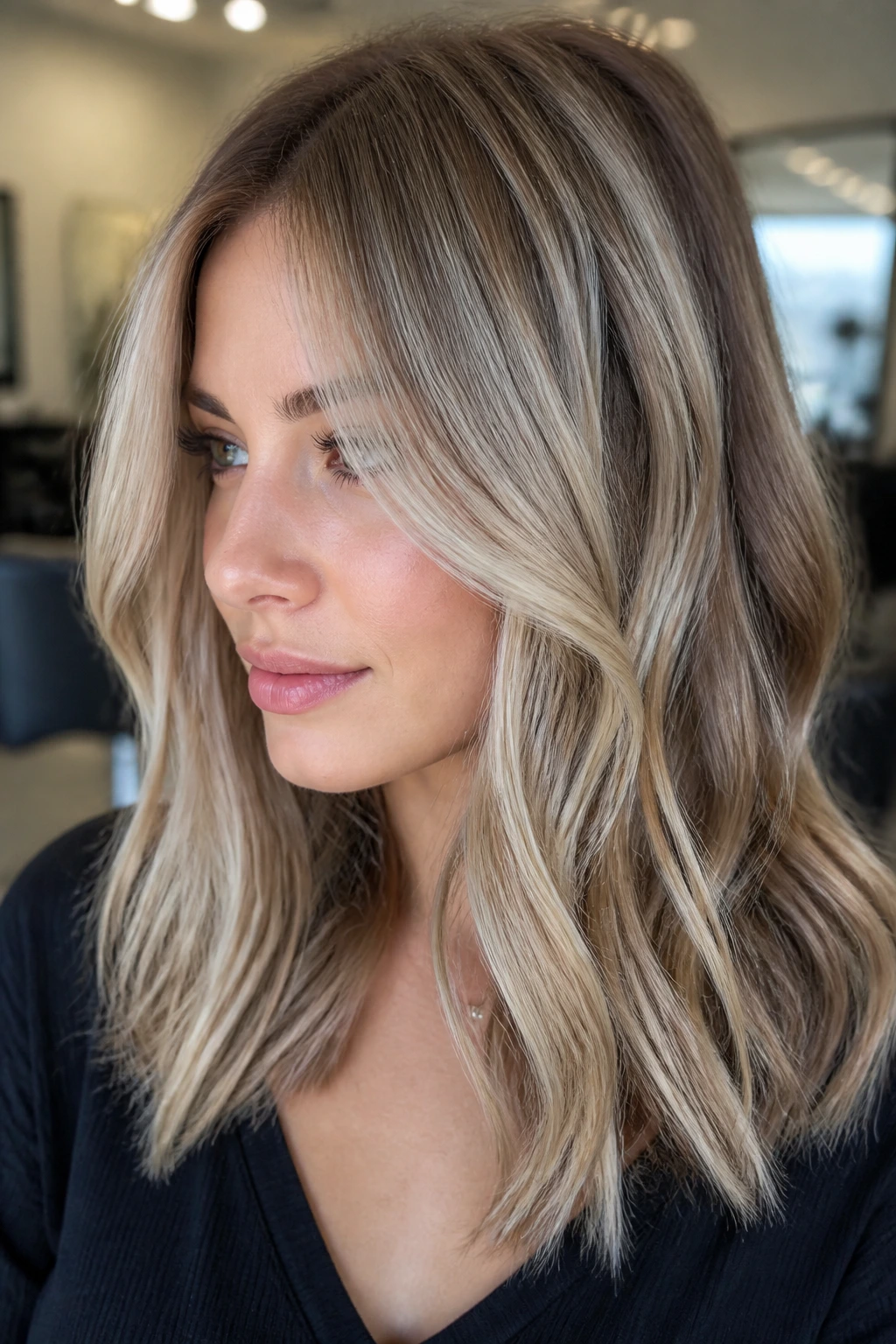
If you prefer a cooler tone, ash blonde is a fantastic choice, but it requires a strategic application. Because ash tones are matte and absorb light rather than reflecting it, they can occasionally make fine hair look a bit dull if applied all over.
Strategic Placement
The trick is to use ash blonde as a highlight against a slightly warmer or neutral base. This contrast creates “movement” within the hair. When you have thin hair, you need the highlights to break up the solid sheet of hair. If everything is one shade of ash, it can look heavy or flat.
Keeping It Bright
Ash blonde is prone to brassiness, which ruins the cool effect. Use a purple shampoo, but treat it carefully. If you leave it on too long, your fine hair might absorb too much pigment and look grey or muted. A quick, diluted rinse once a week is usually plenty.
4. Creamy Vanilla Blonde
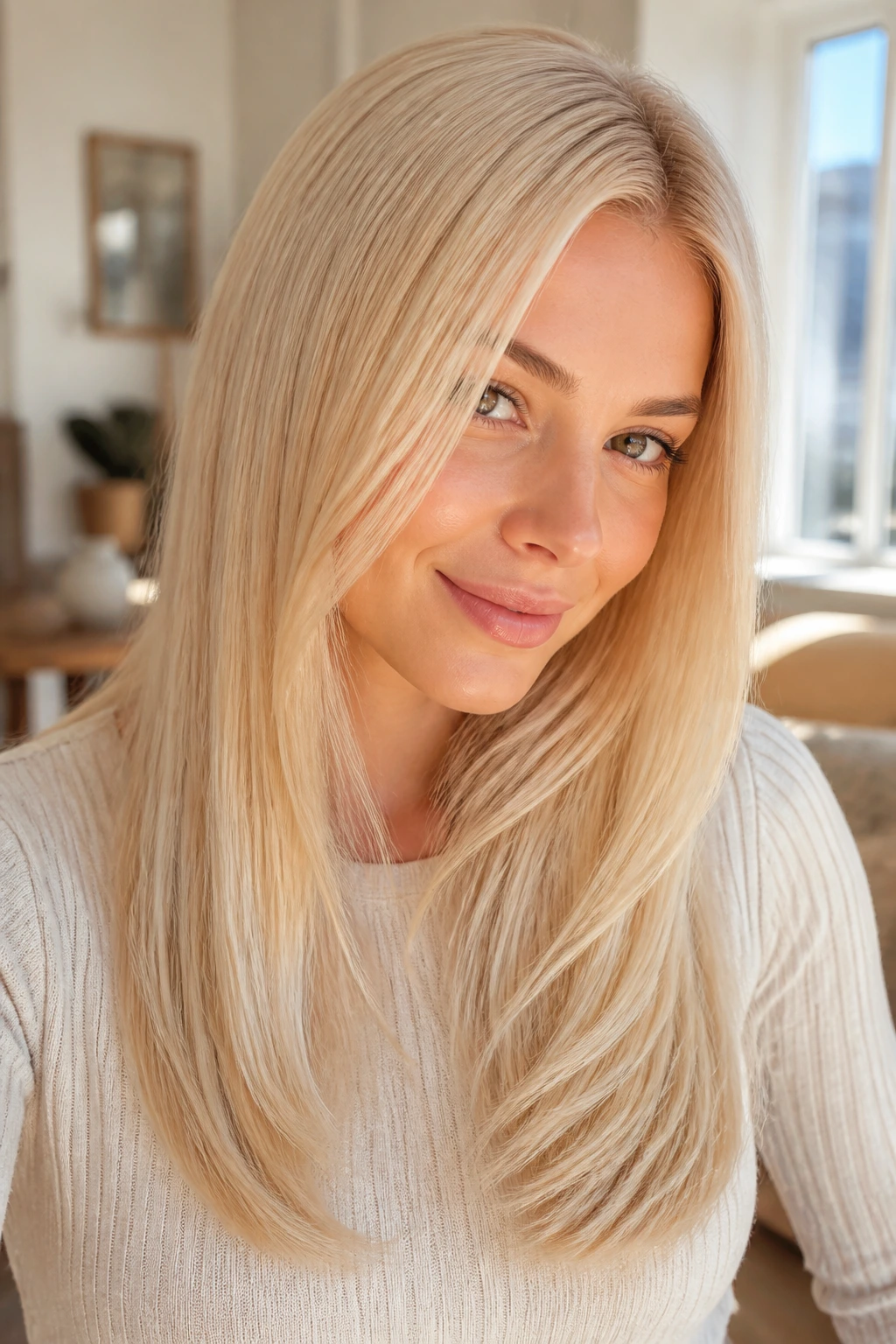
This is a rich, opaque, milky blonde that feels incredibly luxurious. It’s a bit lighter than honey but doesn’t have the translucent quality of platinum. It’s a solid-looking color, which is helpful if your hair is thin because it hides the scalp effectively.
The Illusion of Thickness
Because vanilla blonde is creamy and saturated, it doesn’t leave as much “negative space” between the hairs as a high-contrast highlight might. It creates a sort of blanket of color. If your fine hair is also prone to frizz, this creamy tone can make it look sleeker and more polished.
Styling for Volume
Since this color is somewhat uniform, you need texture to keep it from looking flat. Incorporate a texturizing spray or a light sea salt mist. The texture breaks up the color, allowing the light to hit the hair at different angles, making the vanilla tones really pop and shimmer.
5. Baby Lights
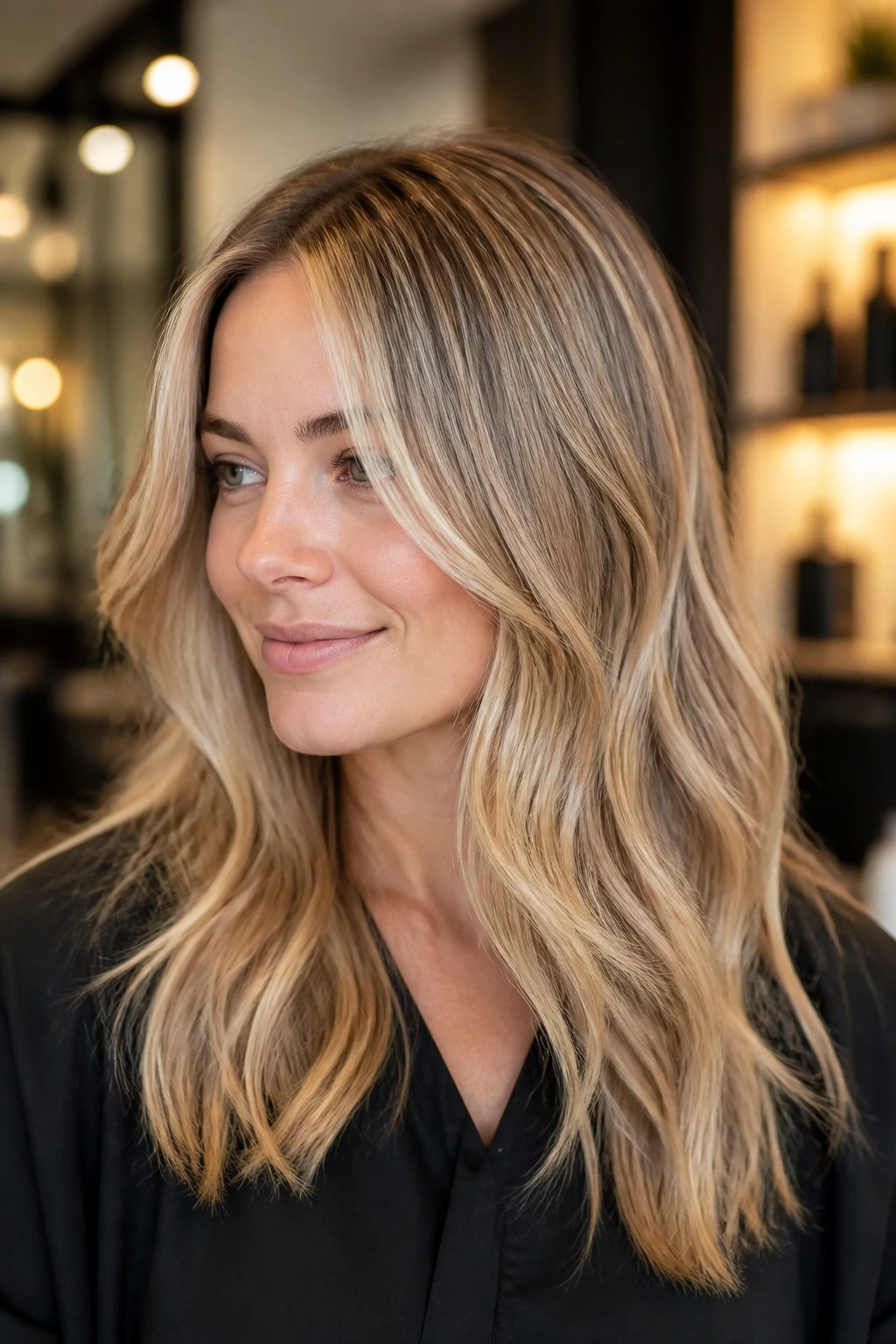
Baby lights are essentially super-fine highlights. They mimic the way hair lightens naturally in the sun—just a few shades lighter than your natural base. For fine hair, this is excellent because it adds dimension without the harshness of thick, chunky highlights.
Why They Work for Thin Strands
When you have thin hair, you have to be careful with the volume of bleach used. Thicker sections can sometimes look like distinct “strips” of color, which emphasizes the thinness of the hair. Baby lights are so fine that they blur into the base color, creating a multi-dimensional look that makes the hair appear fuller and more “lived-in.”
What to Watch For
This is a time-intensive process. Expect to be in the chair longer. Because you are essentially foil-highlighting every tiny section, the application is precise. The result, however, is worth it: a natural, sun-kissed effect that looks like you were born with it.
6. Strawberry Blonde
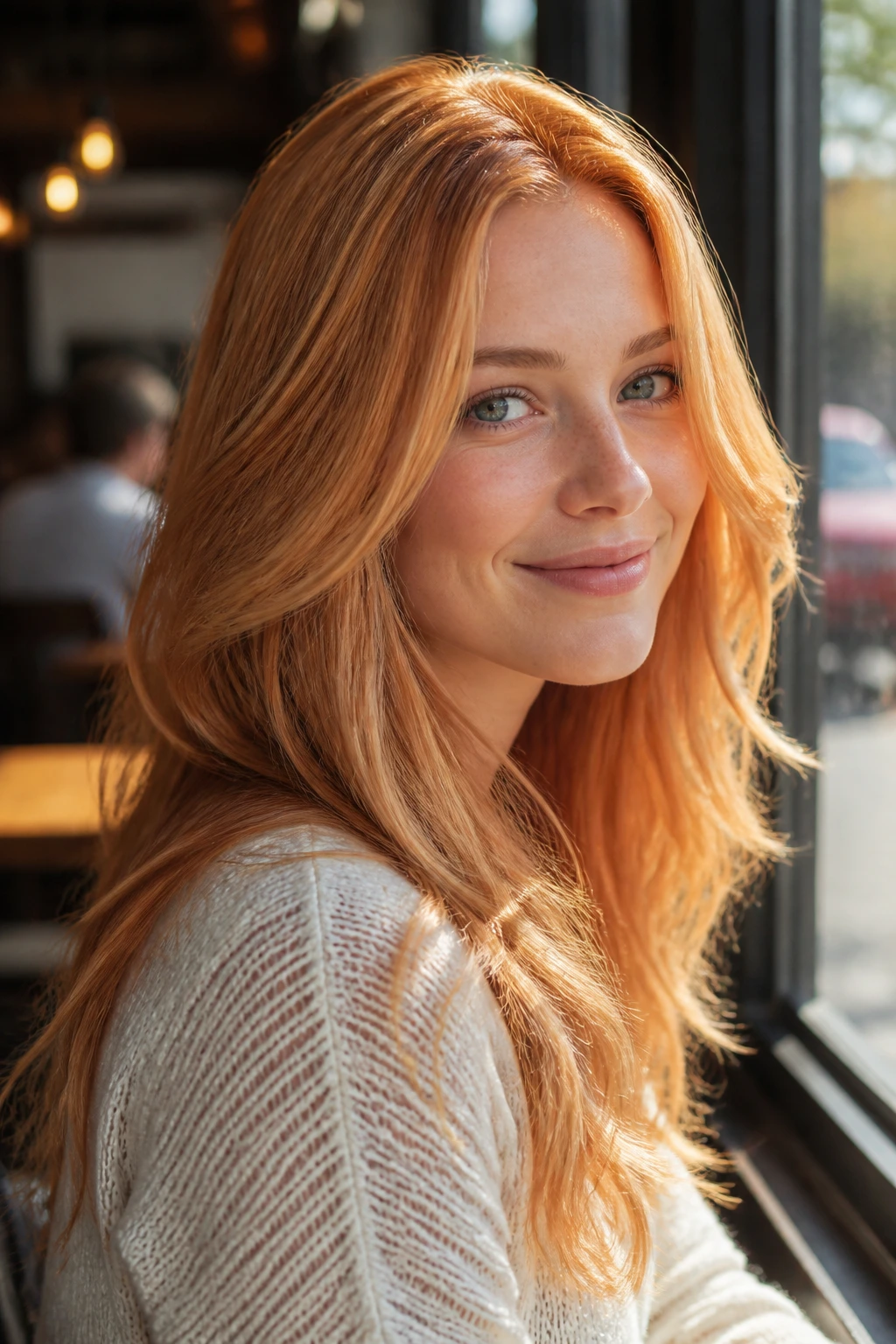
Strawberry blonde is a beautiful blend of golden blonde with a hint of red or copper. This warmth is incredible for fine hair. Why? Because red and copper pigments reflect light beautifully. They add a sort of “glow” to the hair that lighter, cooler blondes can sometimes lack.
The “Warmth” Factor
Warm colors tend to appear more vibrant, which makes the hair look more energetic and alive. If you have fine hair that feels flat or lifeless, adding a bit of strawberry warmth can give it an instant visual “pick-me-up.” It also tends to look great on many skin tones, which is a nice bonus.
Color Maintenance
Red tones fade faster than any other color. To keep your strawberry blonde looking fresh, consider a color-depositing conditioner with warm tones. It keeps the hair vibrant and prevents it from washing out into a dull, flat blonde that would expose the thinness of your hair.
7. Platinum Face-Framing Pieces
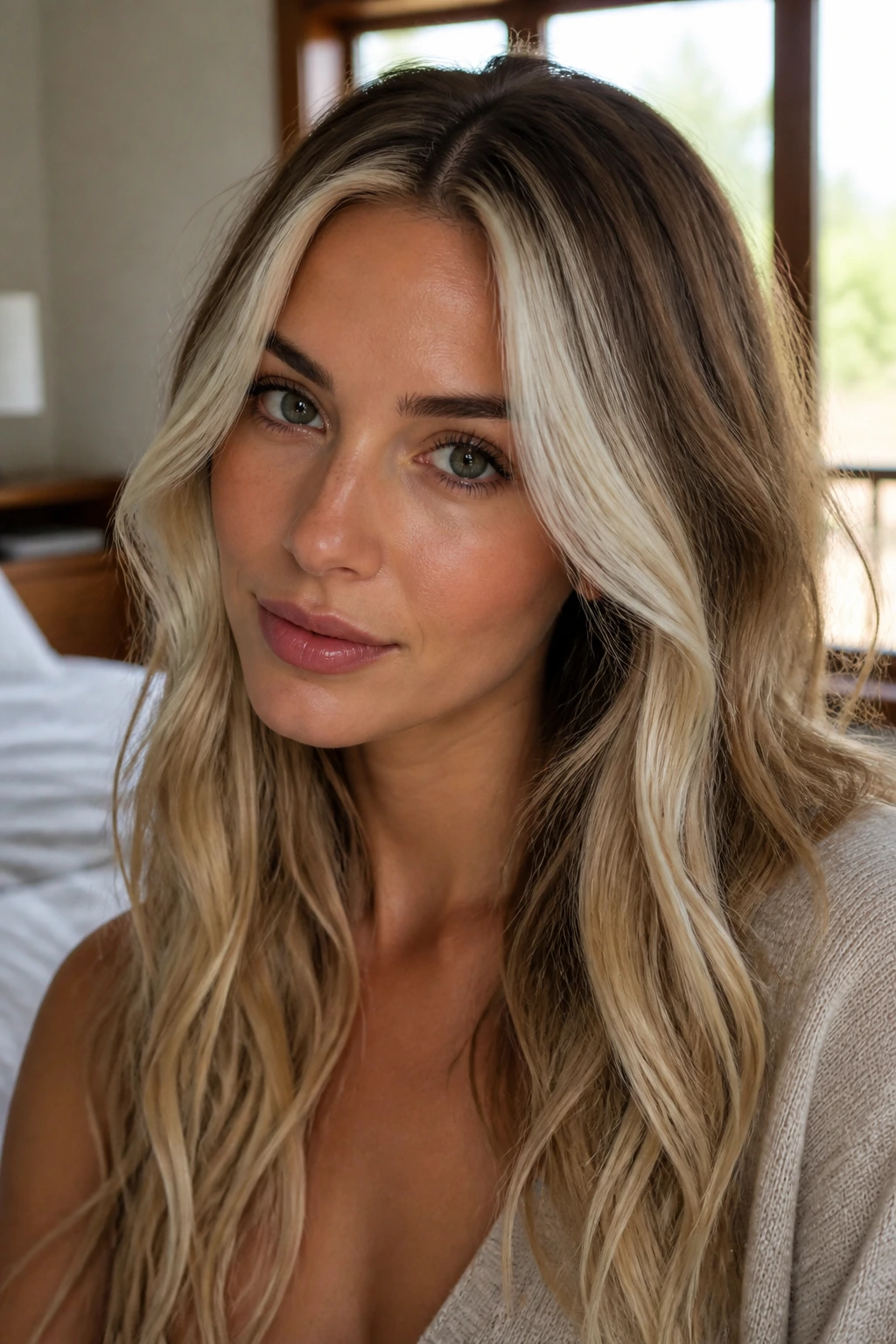
Even if you don’t want to go platinum all over (which can be risky for fragile, fine hair), you can use it in small, concentrated areas. The “money piece”—those two bright chunks of color right around the face—can change the entire perception of your hair.
The Power of Contrast
By making the hair around your face very bright, you draw the eye to the front of your face. This creates a focal point that distracts from the density of the hair at the back or sides. It’s a clever visual trick.
Keeping It Healthy
Since you are only bleaching a small amount of hair, you can afford to push it to a brighter platinum level while keeping the rest of your hair in a safer, darker blonde. This keeps your hair’s overall integrity intact while still giving you that striking, high-impact blonde look.
8. Toasted Coconut
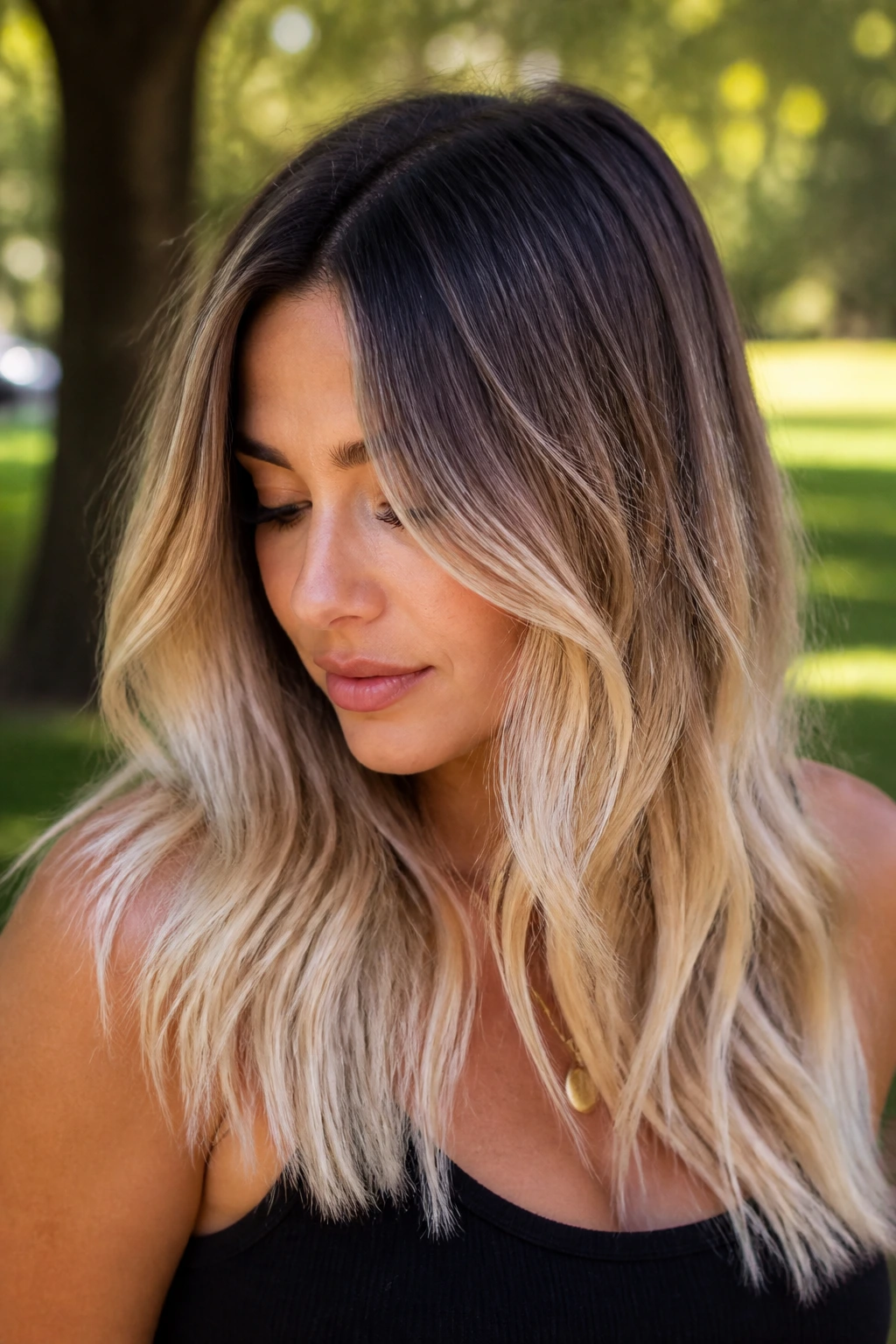
Think of this as a very deliberate, high-contrast ombré. The roots are left your natural, darker shade, and the ends are a cool, bright blonde. It is called “toasted coconut” because of the transition from dark to light.
Solving the Density Problem
This color is perfect for fine hair because the darker roots provide a sense of weight at the scalp, while the lighter ends provide a sense of volume. The transition area in the middle is where the magic happens—it’s a blend that creates an illusion of transition and movement.
Stylist Tip
Ask for a “soft” transition. If the line between the dark and light is too sharp, it looks like you haven’t had your roots done in a year. You want a blurred effect where the two colors bleed into each other.
9. Beige Blonde
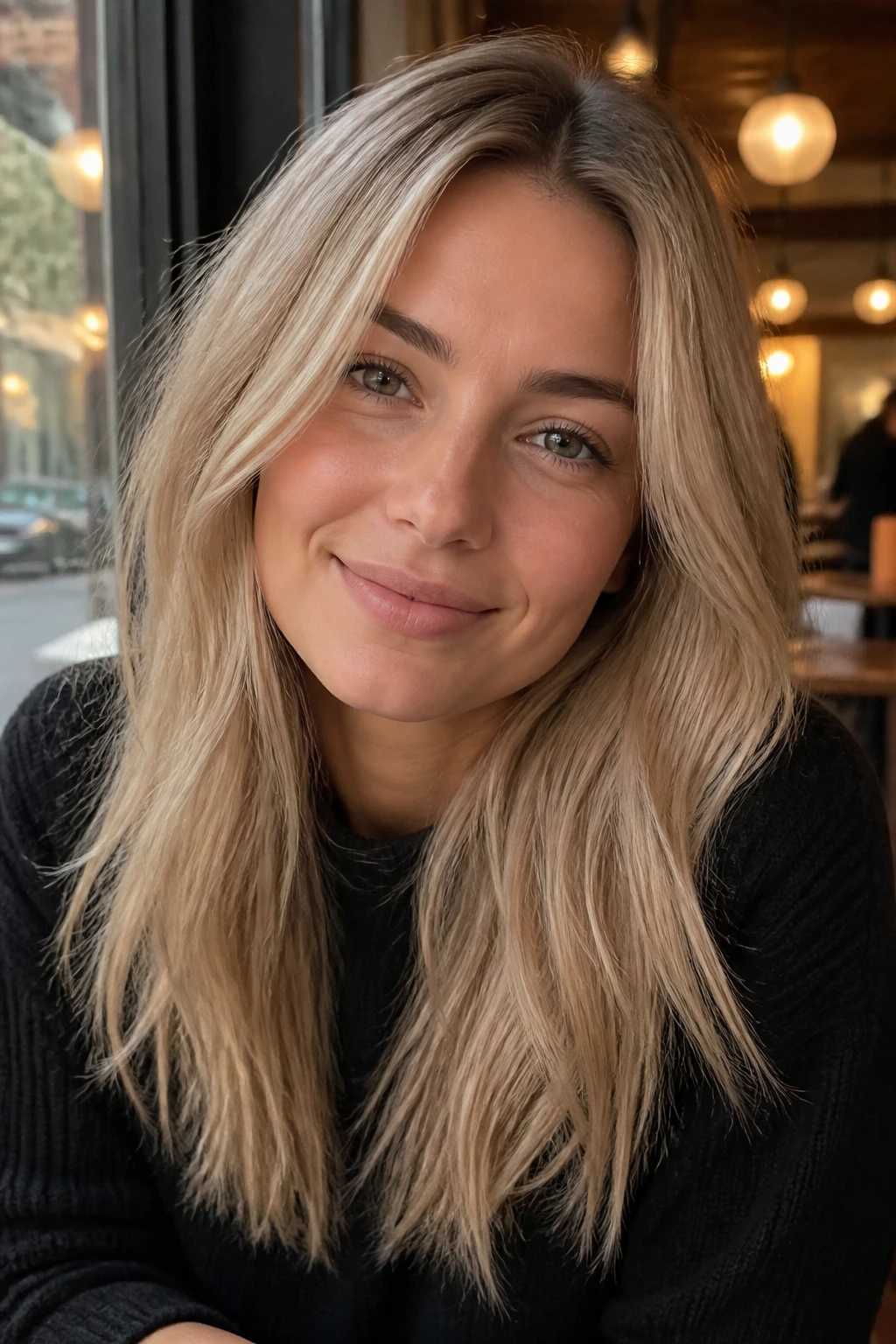
Beige is the perfect neutral. It’s not too warm (golden) and not too cool (ashy). It is a soft, earthy tone that mimics natural hair colors often found on children. Because it is neutral, it is very flattering and avoids the common traps of being too brassy or too grey.
Why It Helps Fine Hair
Beige blonde is essentially a “sandy” color. It has a bit of grit to the visual appearance. It isn’t overly shiny, which can sometimes make fine hair look greasy or flat. Instead, it has a softer, almost matte finish that makes the hair look fuller and less “slick.”
The “Matte” Effect
If you have fine hair, you might find that overly glossy products make your hair look stringy. Beige blonde pairs perfectly with texturizing sprays, which give the hair a bit of a matte, “undone” feel that inherently looks thicker.
10. Champagne Blonde
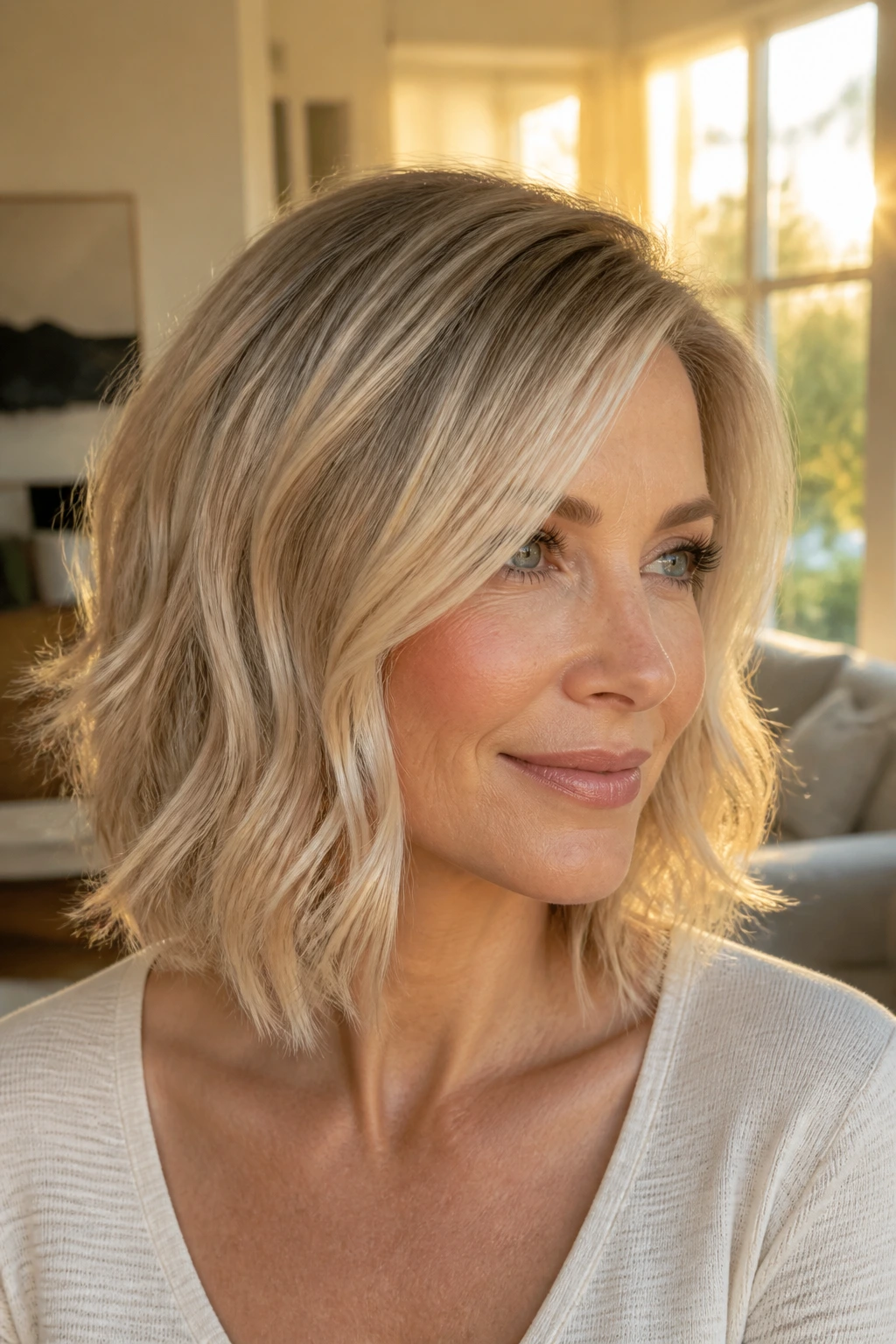
Champagne blonde is an effervescent, light, sparkly color. It’s very close to platinum but has a tiny hint of gold in it. That touch of gold is what makes it look expensive and sophisticated.
Light Reflection
Like the name suggests, this color is all about reflection. The tiny bit of warmth acts as a prism, catching the light as you move. When fine hair catches the light, it looks dynamic. A static, flat color does nothing for fine hair; champagne blonde does everything.
Managing the Tone
You need a good toner to maintain this. Champagne blonde can easily tip over into too-yellow or too-white. A monthly toning session at the salon (or a very careful at-home gloss) is necessary to keep that perfect, expensive, light-catching balance.
11. Low-Contrast Highlights
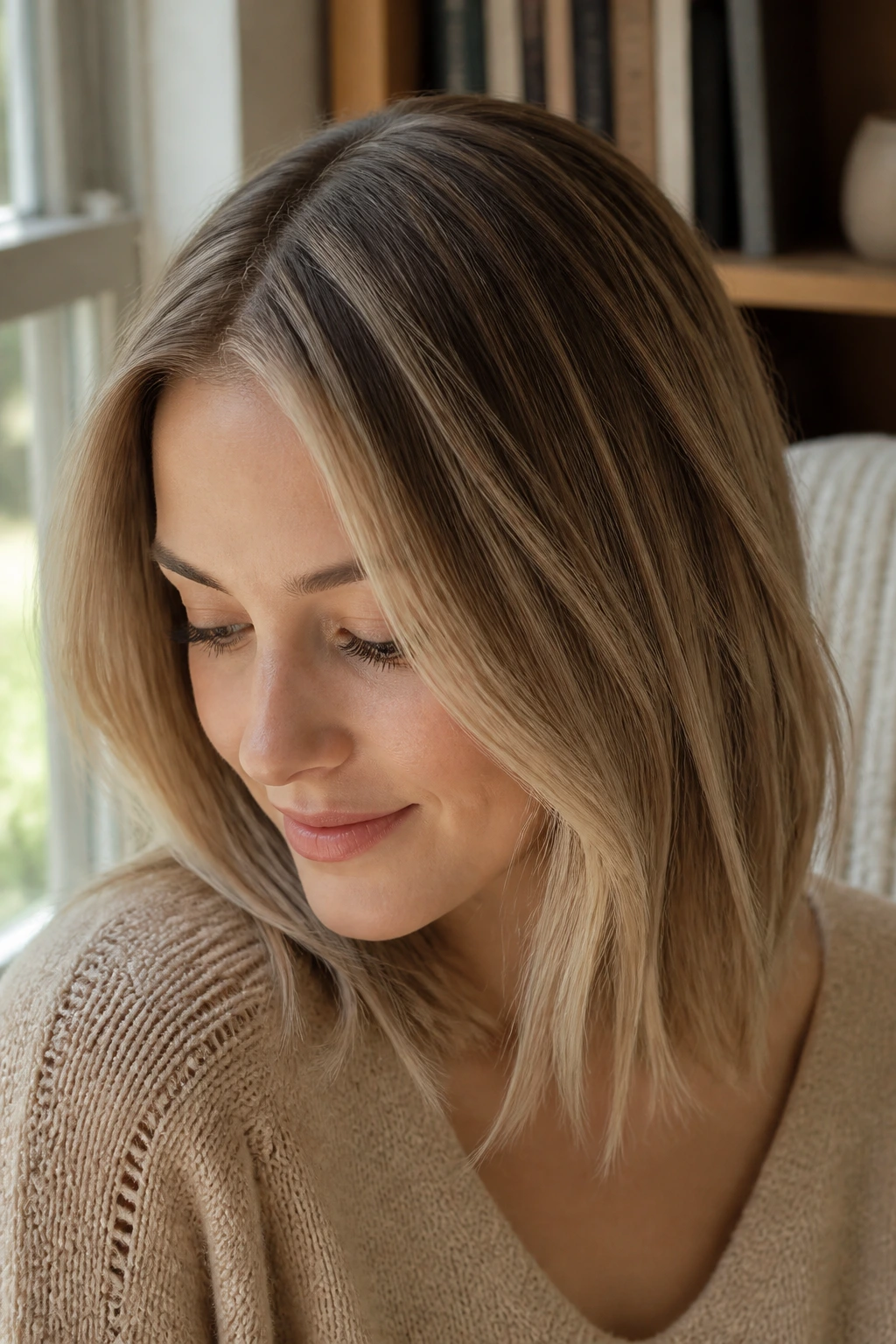
Sometimes, the best strategy for thin hair isn’t high contrast—it’s low contrast. This means your highlights are only one or two shades lighter than your base. It’s a subtle approach that adds dimension without creating a “striped” look.
Why “Subtle” Wins
When you have thin hair, you want to avoid anything that draws attention to the individual strands. Thick, high-contrast highlights can make your hair look like a series of strands rather than a cohesive, thick head of hair. Low-contrast highlights merge with the base, creating a uniform, thicker-looking blanket of color.
The “Blended” Aesthetic
This is often called a “babylights and balayage” hybrid. It’s very soft and incredibly low maintenance. It grows out beautifully because there isn’t a massive shift in color, which means you spend less time damaging your hair with frequent bleaching sessions.
12. Caramel Ribbons
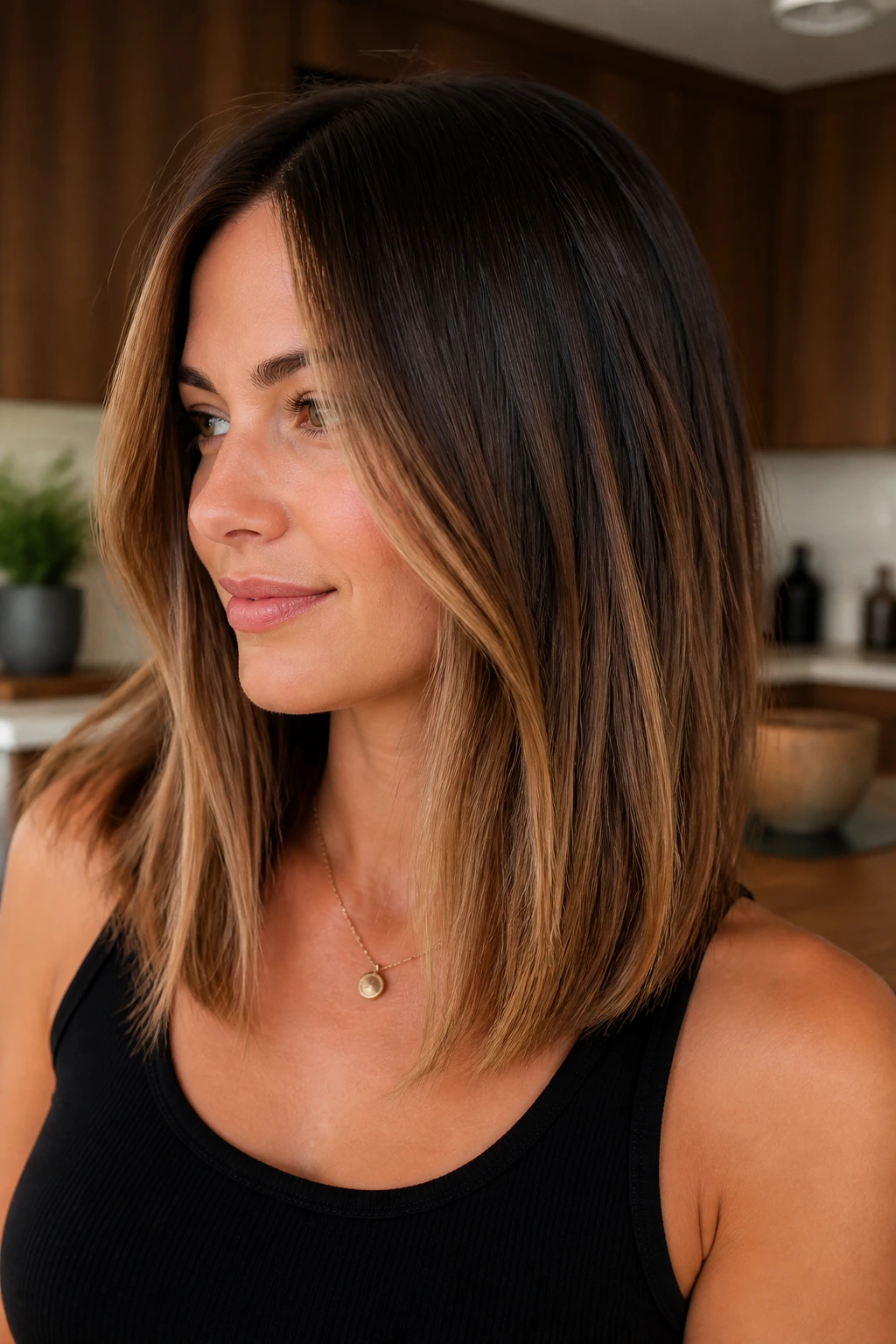
Caramel is a rich, warm, golden-brown blonde. It sits in that sweet spot where it works as a highlight in darker hair or as a lowlight in blonde hair. For fine, thin hair, caramel is a gift because of its richness.
Adding “Weight” to the Ends
You can paint caramel ribbons through the ends of your hair to make them look “heavier.” It’s an optical illusion: the darker, richer tones at the bottom of the hair make the ends appear blunt and thick, rather than wispy or tapered.
Pair with a Cut
If you do this, pair it with a blunt cut. The combination of rich caramel color and a blunt, straight-across cut creates a visual density at the bottom that is incredibly effective for fine hair.
13. Buttercream Blonde
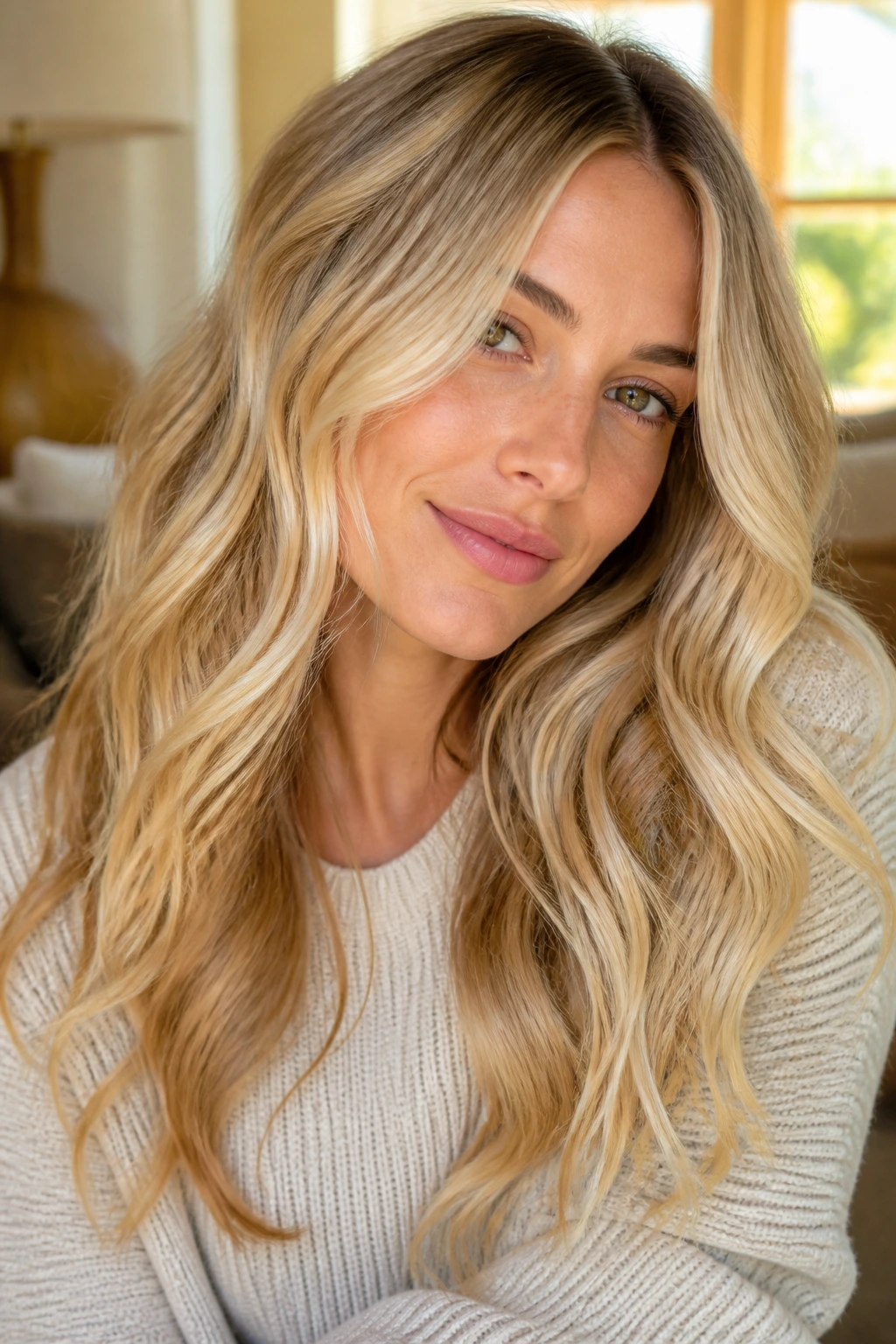
Buttercream is a softer, warmer, and more buttery version of vanilla. It feels very cozy and is less harsh than a stark, icy blonde. It is a fantastic option if you have a fair or neutral skin tone.
The Opaque Advantage
Like vanilla, buttercream has a degree of opacity. It covers well. If your hair is so fine that you can see your scalp through the part, a slightly more opaque, solid-looking blonde like buttercream can help camouflage the scalp, making your hair look denser.
How to Style
This color looks best with a bit of a wave. Use a large-barrel curling iron to create loose, soft waves. The curves of the hair create air and space between the strands, which is the ultimate volume builder. The buttercream color will catch the light on the curves, highlighting that volume.
14. Grey-Blended Silver Blonde
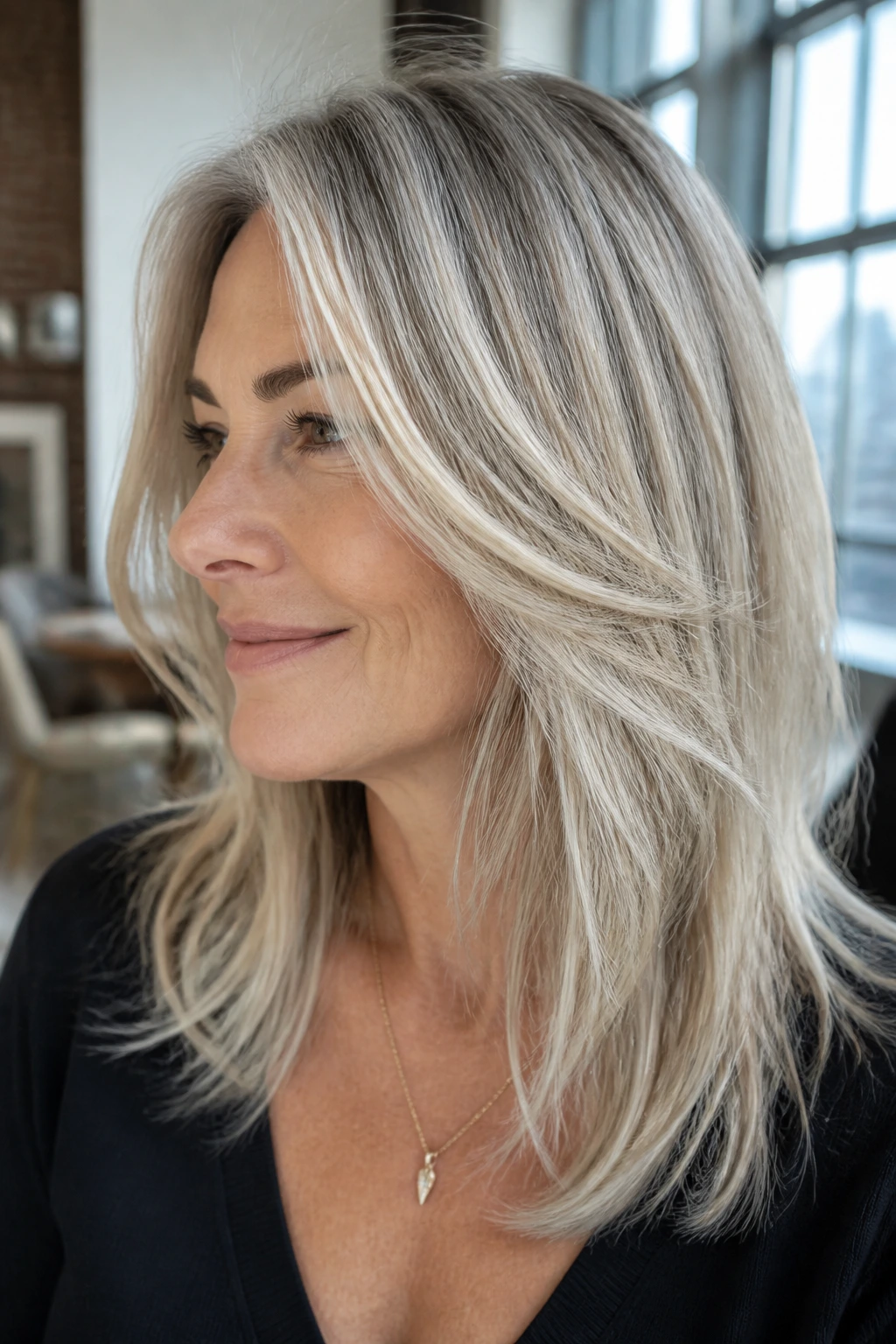
For those going naturally grey, or those who just love the look, a silver-blonde blend is a stylish way to embrace lighter hair. It’s a chic, modern color that is actually very helpful for fine hair.
The Illusion of Density
Silver and grey tones tend to be quite pigmented and opaque. They don’t have the same translucency that platinum blonde can have. This opacity makes the hair look like it has more physical presence on the head.
Embracing Texture
Silver-blonde hair is often a bit drier, which is actually a benefit for fine hair. Fine, silky hair often has no grip; a slightly drier texture (which you get from light-reflecting silver tones) holds a style much better. It gives the hair the “grit” it needs to stay in place.
15. Sandy Blonde
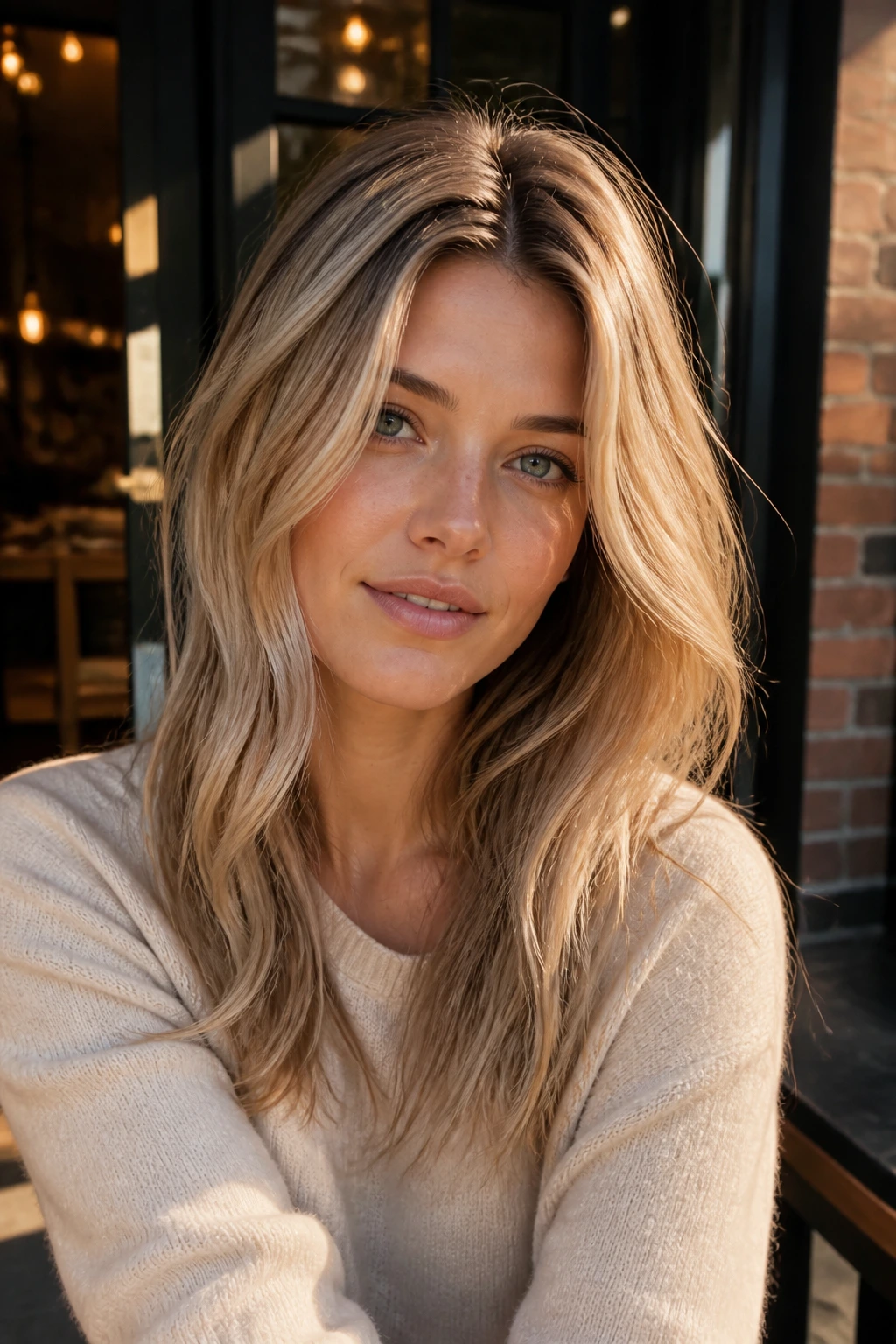
Sandy blonde is a neutral, slightly textured color. It’s the color of damp beach sand. It’s a complex, multi-tonal shade that rarely looks flat.
Natural Highlights
The beauty of sandy blonde is that it usually involves a blend of cool and warm tones, which makes it look natural. Because it isn’t “perfect,” it hides damage well. If your fine hair is fragile from bleach, a sandy blonde approach allows you to work with your natural pigment rather than trying to strip it all the way to a high-lift blonde.
Low Maintenance
This is one of the easiest colors to maintain. Since it mimics the look of hair that has been lightened by the sun, a little root regrowth actually adds to the aesthetic. You aren’t chasing the perfect root line, which saves your hair from extra processing.
16. Golden Ochre
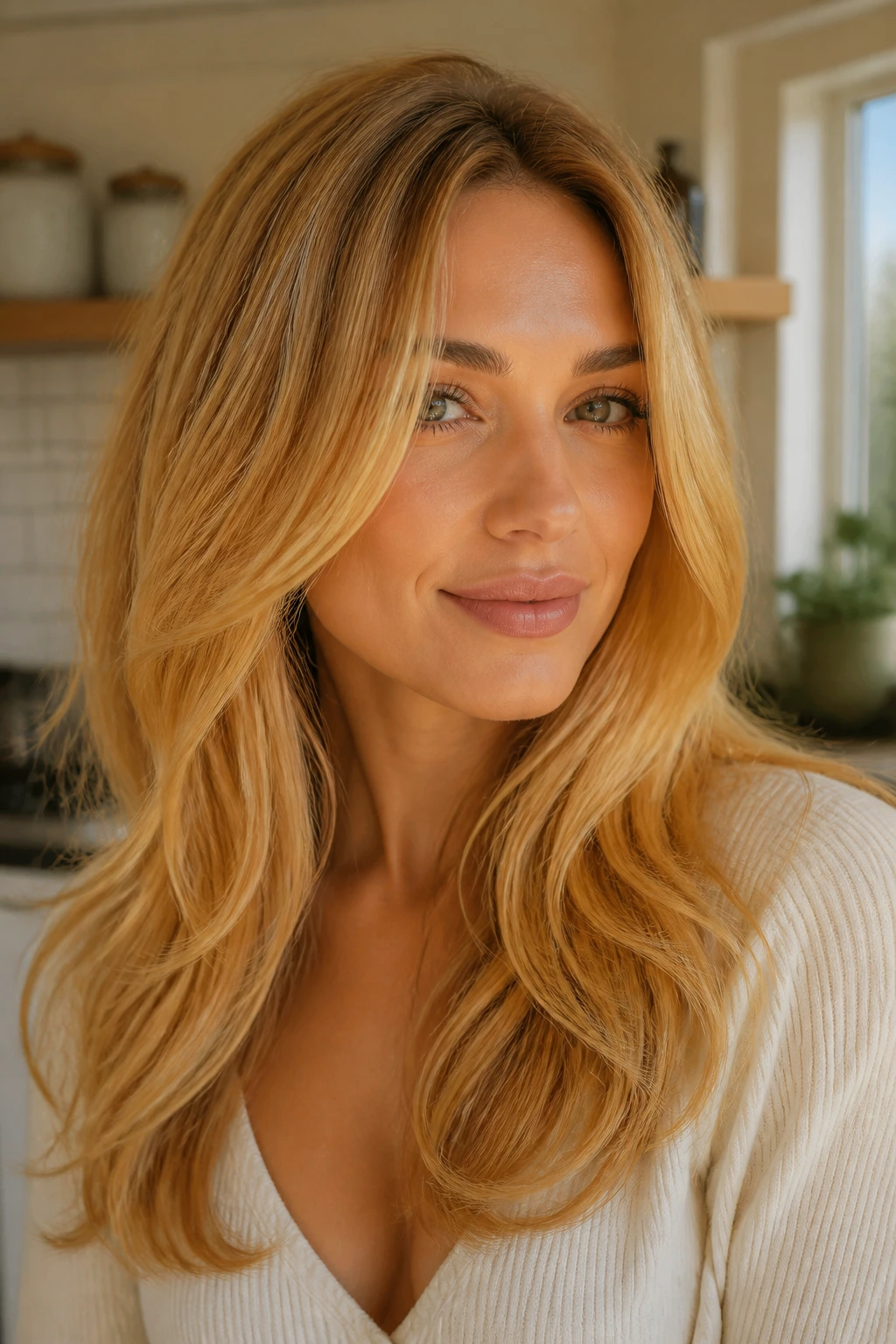
This is a rich, warm, golden blonde. Think of it as honey’s slightly deeper, more saturated cousin. It’s a color that exudes warmth and richness.
The Color Theory
Warm colors bring the hair “forward” visually, while cool colors can make hair recede. If you want your hair to look like it has more presence—more volume—warm, golden tones are your best friend. They make the hair look vibrant and full.
Who It Suits
Golden ochre is stunning on skin with warm undertones. If you find that ash blonde makes you look washed out, this is the solution. It brings color to your face and life to your hair.
17. Dirty Blonde
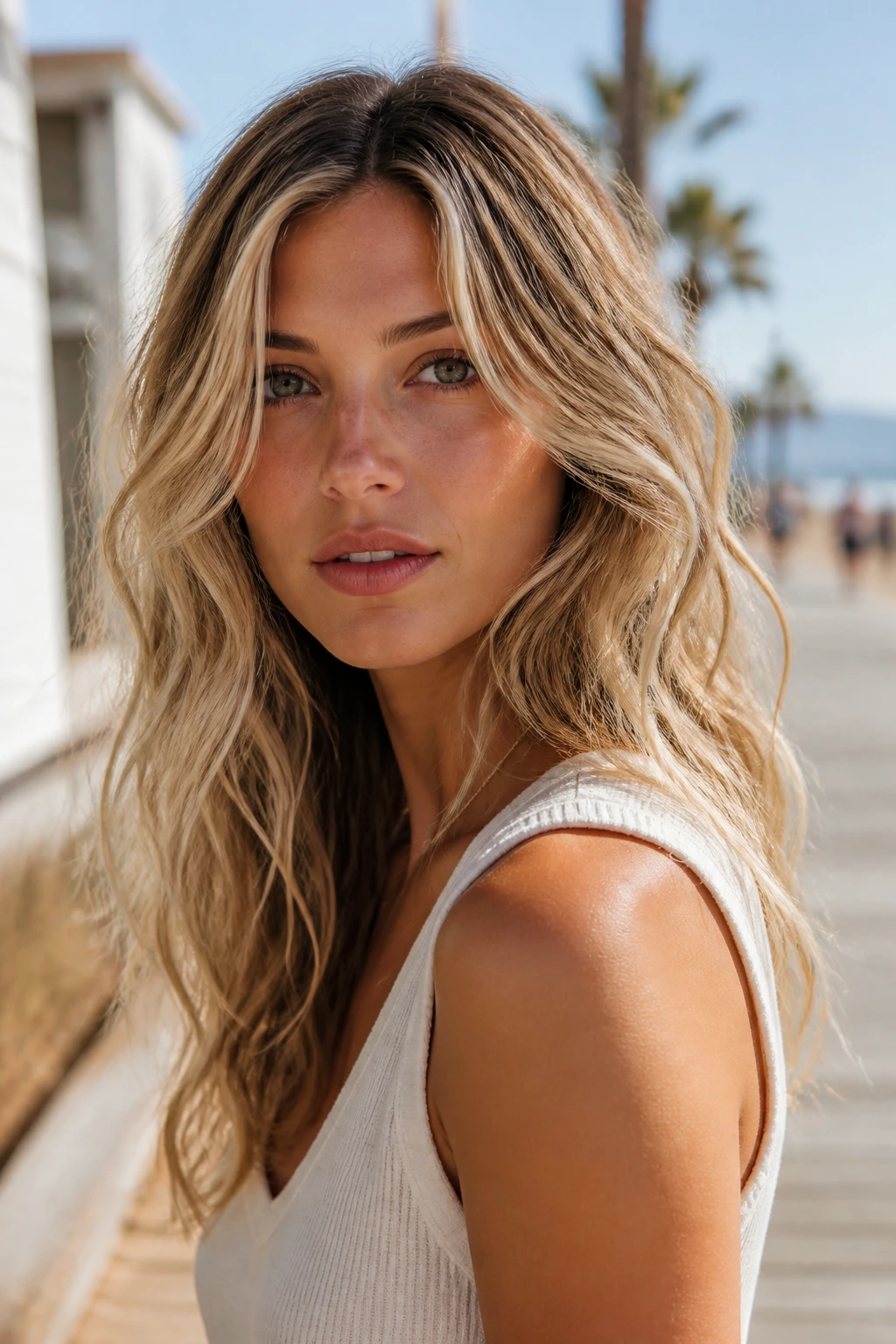
The term “dirty blonde” is slightly misleading—it’s actually a beautiful, complex color. It’s a mix of light brown and dark blonde, often resulting in a very natural, “lived-in” color.
The Density Trick
Because it contains darker elements, dirty blonde is essentially a built-in lowlight strategy. By having those deeper, darker strands mixed throughout the lighter ones, you are creating a visual tapestry that looks dense and thick.
No Need for Perfection
This look thrives on being a bit messy. You don’t need to spend hours styling it to perfection. A bit of sea salt spray and letting it air dry often looks better than a sleek, polished blowout with this color. It’s a low-pressure, high-reward look.
18. Mushroom Blonde
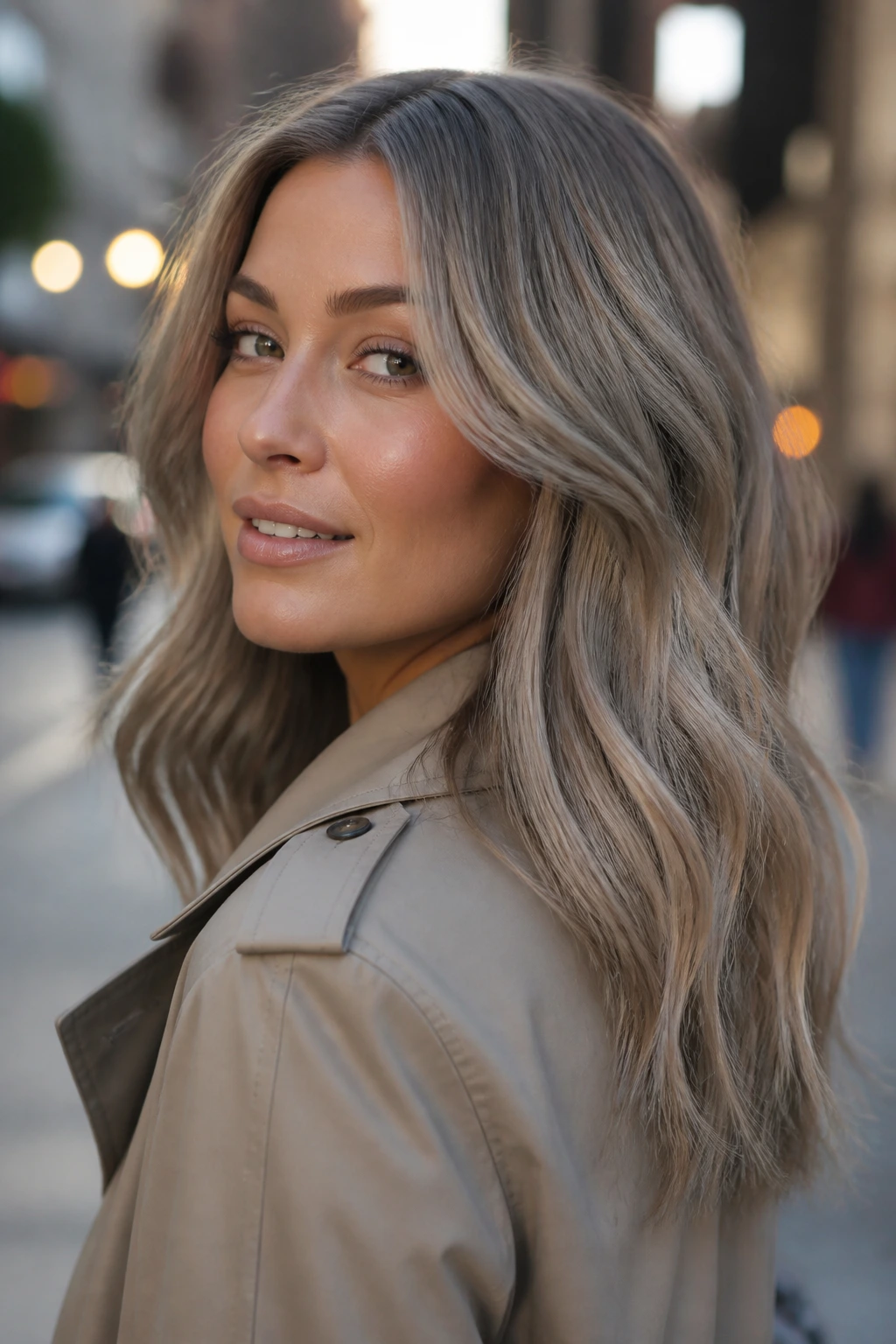
Mushroom blonde is essentially a cool-toned, earthy blonde that leans towards light brown or taupe. It’s been a popular, sophisticated shade for a while now because of how “expensive” and intentional it looks.
Adding Shadow
If you have fine hair, you might be tempted to go as light as possible. Resist that urge. Going “mushroom” or “taupe” keeps depth in the hair. That depth is what makes fine hair look thick. The contrast between the cool mushroom tones and any lighter babylights you add will give the illusion of volume.
Why It’s Sophisticated
It’s a very urban, polished color. It looks great with a sharp lob or bob haircut. The blunt cut combined with the multi-dimensional taupe-blonde color creates a very dense, heavy-looking style that defies the “fine hair is flat” stereotype.
19. Iridescent Pearl
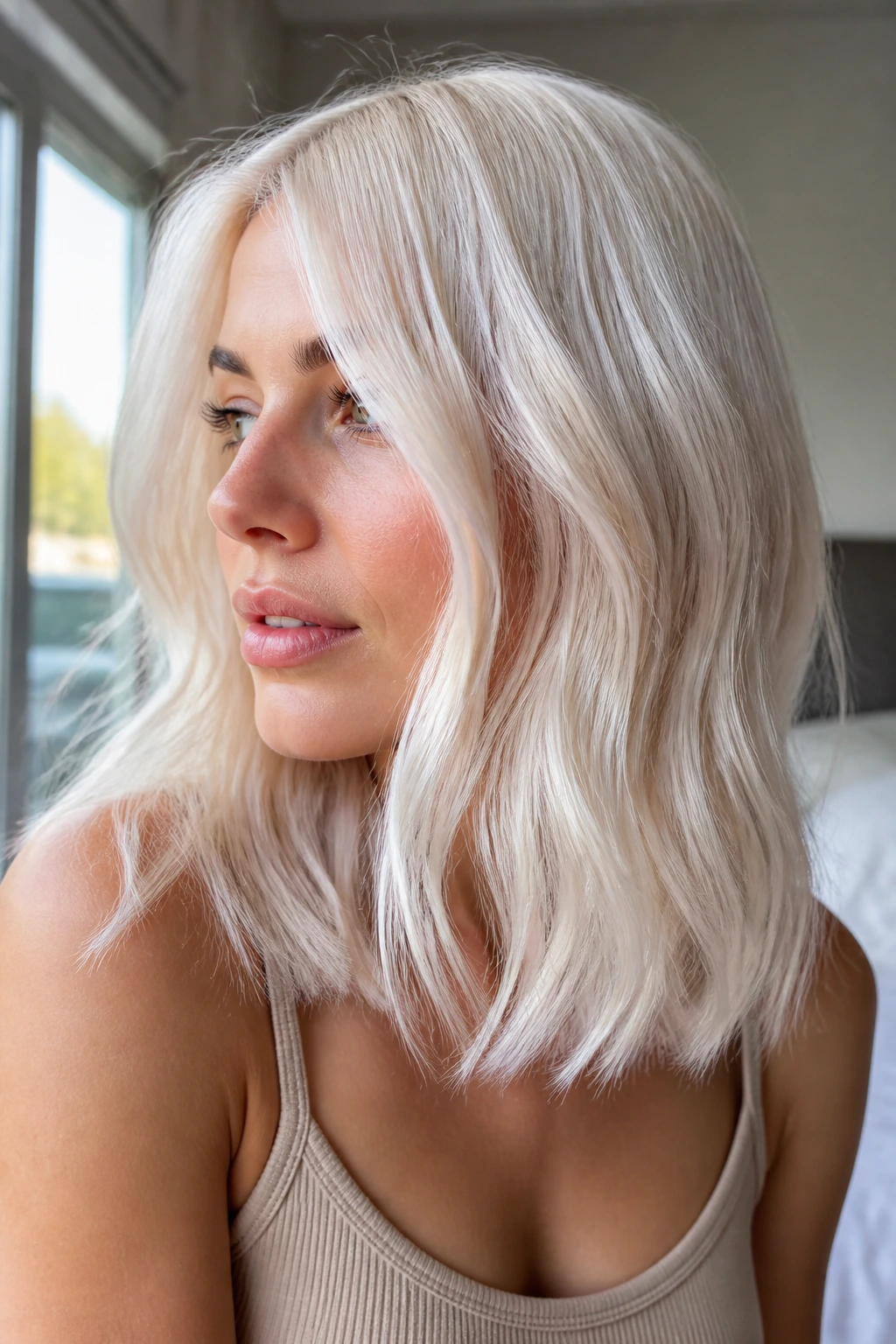
Pearl blonde is a very specific type of cool-toned blonde. It has a slight pearlescent, shiny finish. It’s almost white, but with a softer, more reflective quality.
Reflective Volume
The main benefit of pearl blonde for fine hair is the finish. It’s not flat-matte; it’s glossy and reflective. When hair is highly reflective, it looks healthy. Healthy-looking hair is often perceived as thicker than dull, damaged, fine hair.
The Risk
Pearl can be very unforgiving on fine, damaged hair. Because it requires a very clean, light base (almost platinum), it can dry out your hair. If you choose this, you must be rigorous with deep conditioning treatments. The second your hair looks “fried,” the illusion of volume is lost.
20. Apricot Glaze
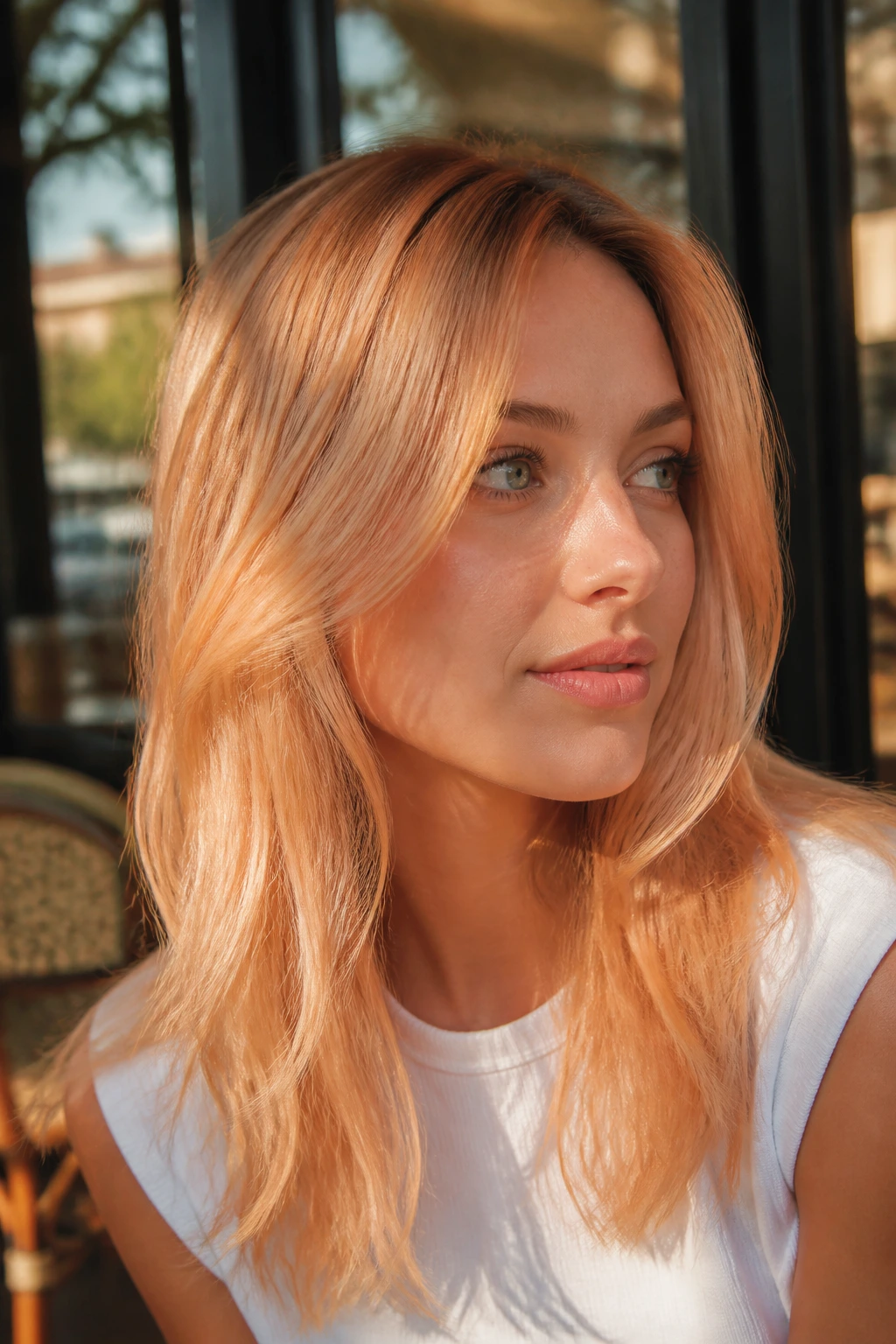
This is a very soft, subtle version of strawberry blonde. It’s less “red” and more “peachy.” It’s a delicate, beautiful color that adds a gentle warmth to the hair.
The “Glow”
Apricot glaze acts like a highlighter for your hair. It reflects light in a way that makes the hair look like it’s glowing from within. This light-reflecting quality is essential for fine hair, as it prevents the strands from blending together into a flat sheet.
Why It’s Unique
It’s a rare color. You don’t see it everywhere. If you want something that feels fresh and exciting but still wearable and professional, this is it. It brightens the complexion and adds a softness to your overall look.
21. Butterscotch Swirl
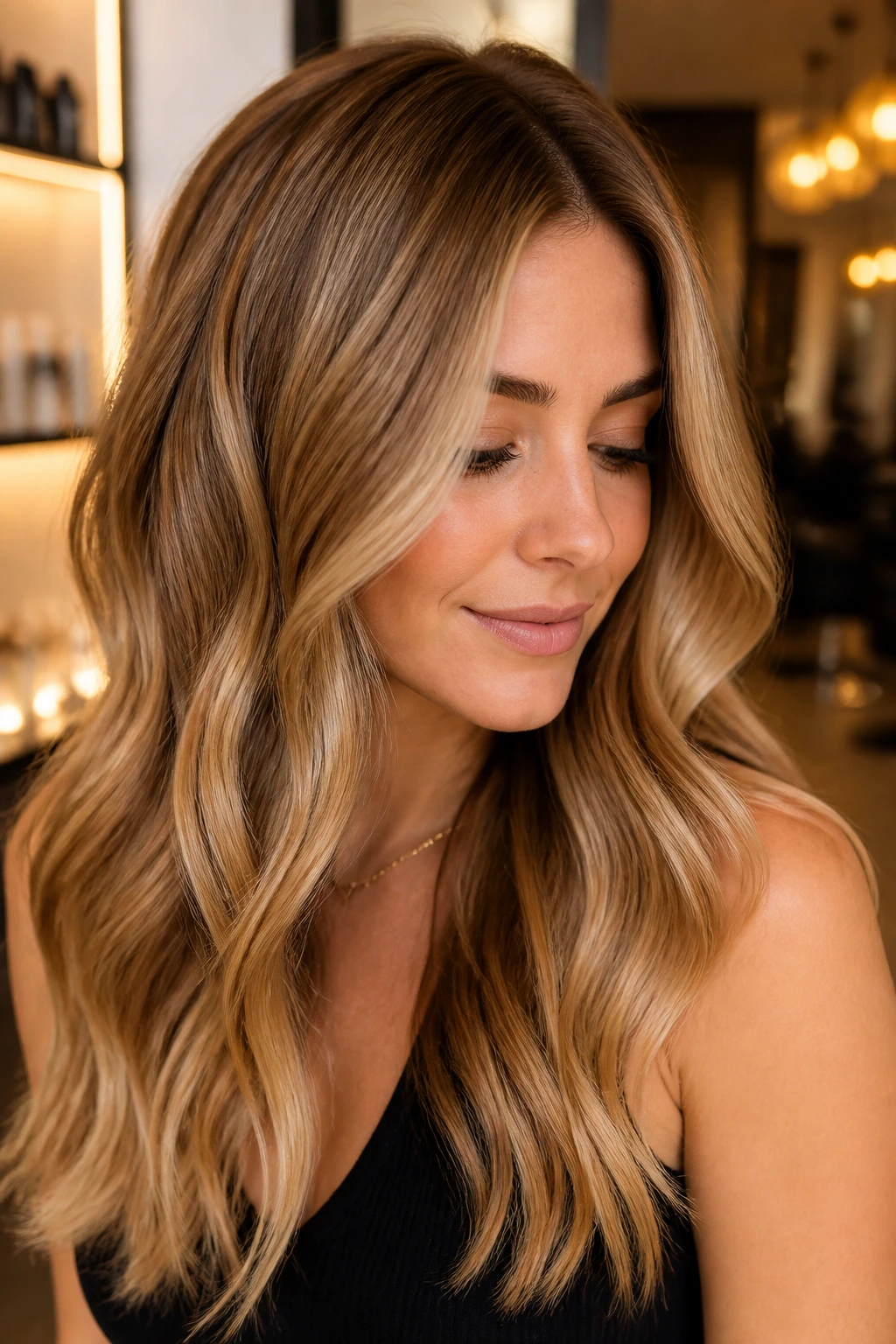
Butterscotch is deeper than honey, more golden than caramel, and richer than a standard blonde. It’s a warm, syrupy color that looks delicious and full.
Creating Density
Because butterscotch has depth, you can use it in a “swirl” technique—painting it through the hair alongside lighter highlights. The contrast between the light highlights and the butterscotch lowlights creates a rich, dense look that is fantastic for thin hair.
The “Weight” of Warmth
Warm colors look heavier and denser than cool colors. If your hair is prone to looking wispy or transparent, a dose of warm butterscotch can instantly make it look more substantial.
22. Pale Lemon
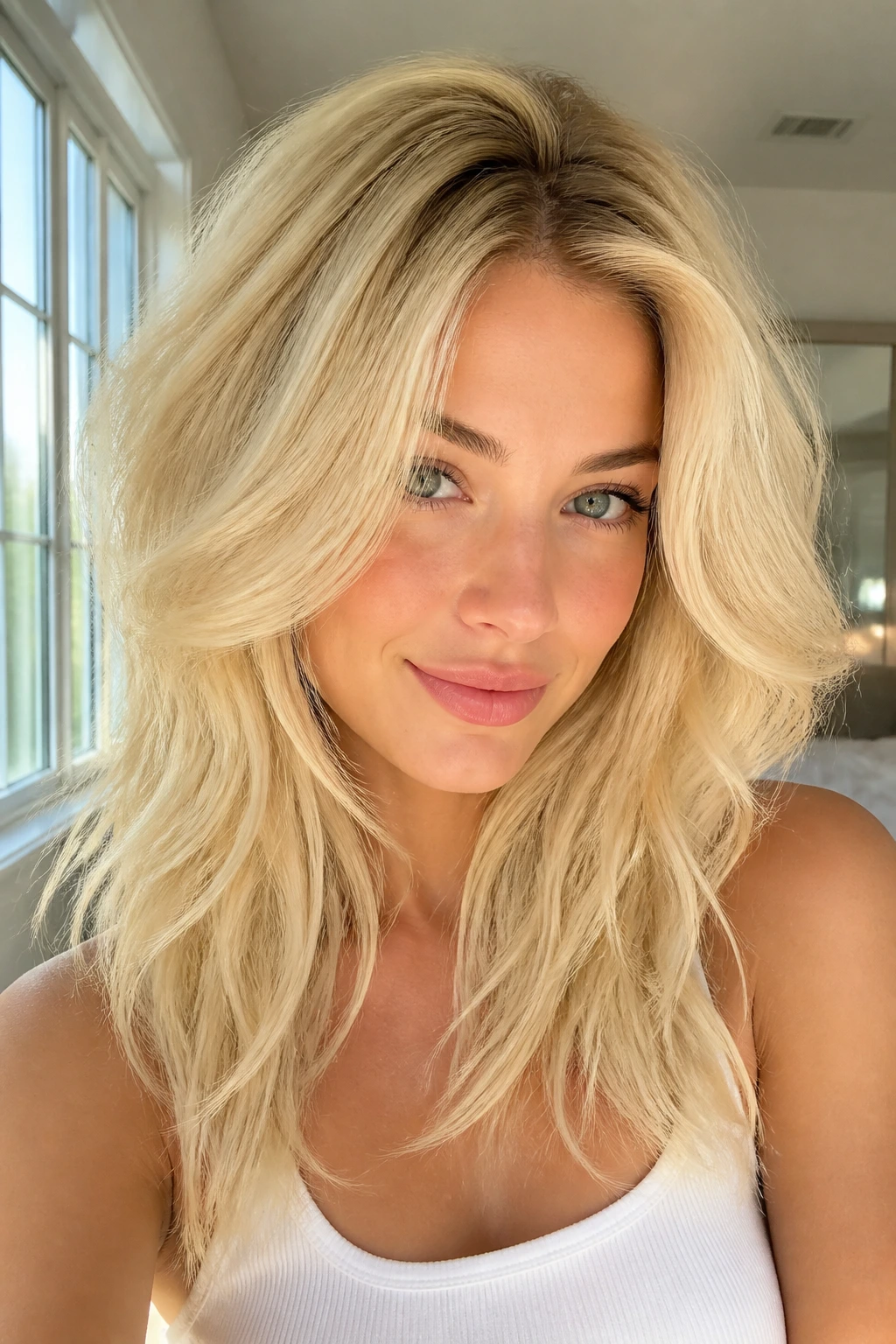
This is a very bright, punchy blonde. It’s almost a pastel-yellow but keeps the sophistication of a bright blonde. It’s very bold and fun.
Playing with Light
Pale lemon blonde is quite light, which means it can be tricky for fine hair if it’s too solid. The key here is to keep some of your natural root showing or to incorporate darker blonde lowlights. Use the pale lemon as a bright accent, not an all-over solid color.
Style with Volume
Because this is such a bright, airy color, it pairs perfectly with voluminous, bouncy styles. Think of a 90s-style blowout. The lightness of the color makes the bounce feel even more dramatic and “airy.”
23. Frosted Tips (The Modern Way)
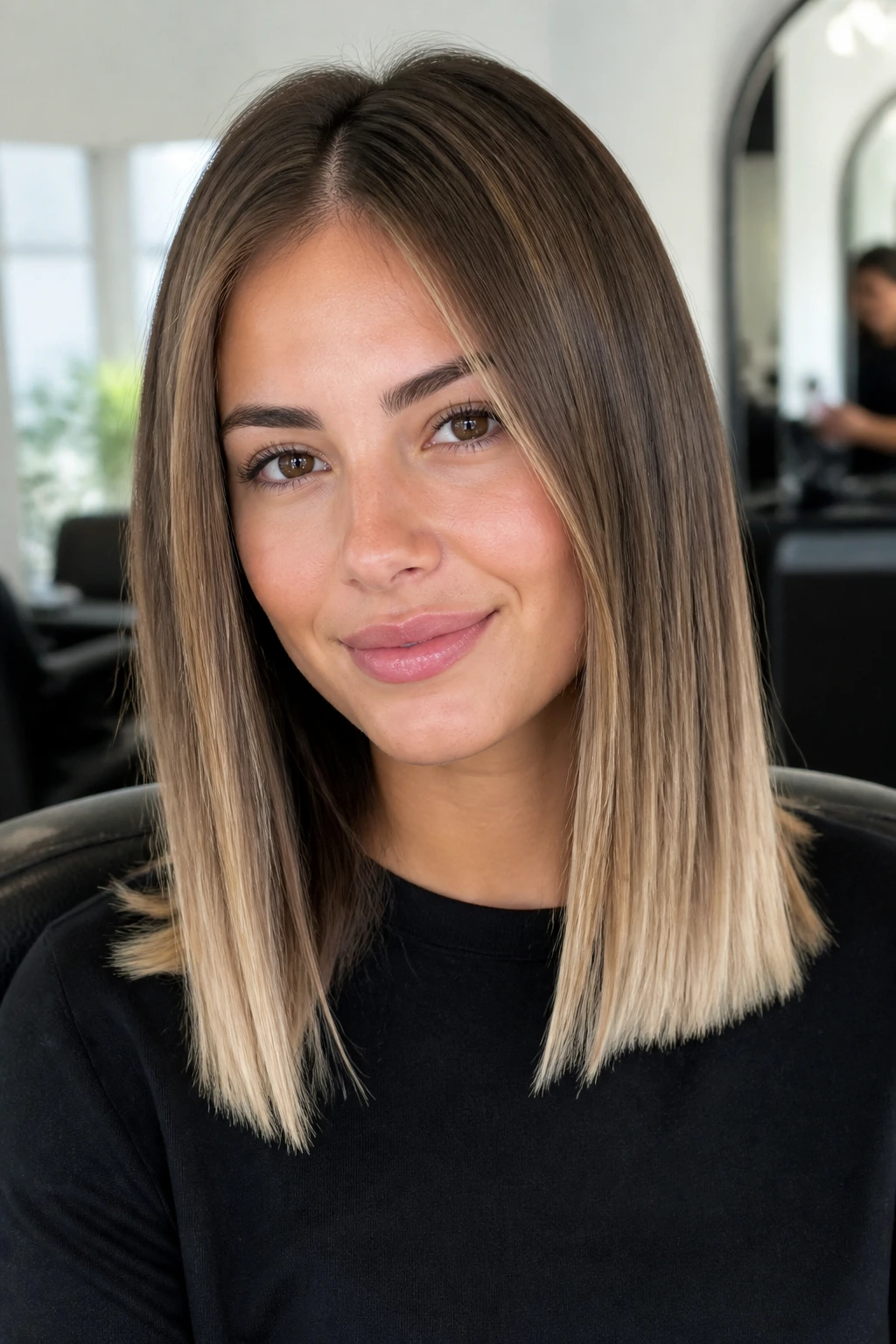
Before you panic, this is not the 90s frosted tips. This is a refined technique where the very ends of the hair are lightened, creating a dipped look. It’s a subtle ombré but focused only on the very tips.
Visual Volume
By brightening the very bottom of the hair, you draw the eye downward. This gives the illusion that the hair is heavier and “falling” more substantially. It creates a weighted effect at the bottom that is great for fine hair, which often lacks weight.
The “Blunt” Trick
Combine this with a blunt haircut. The bright ends emphasize the bluntness of the cut, making your hair look like it has a thick, solid line at the bottom, rather than wispy, layered ends.
24. Tonal Ombré
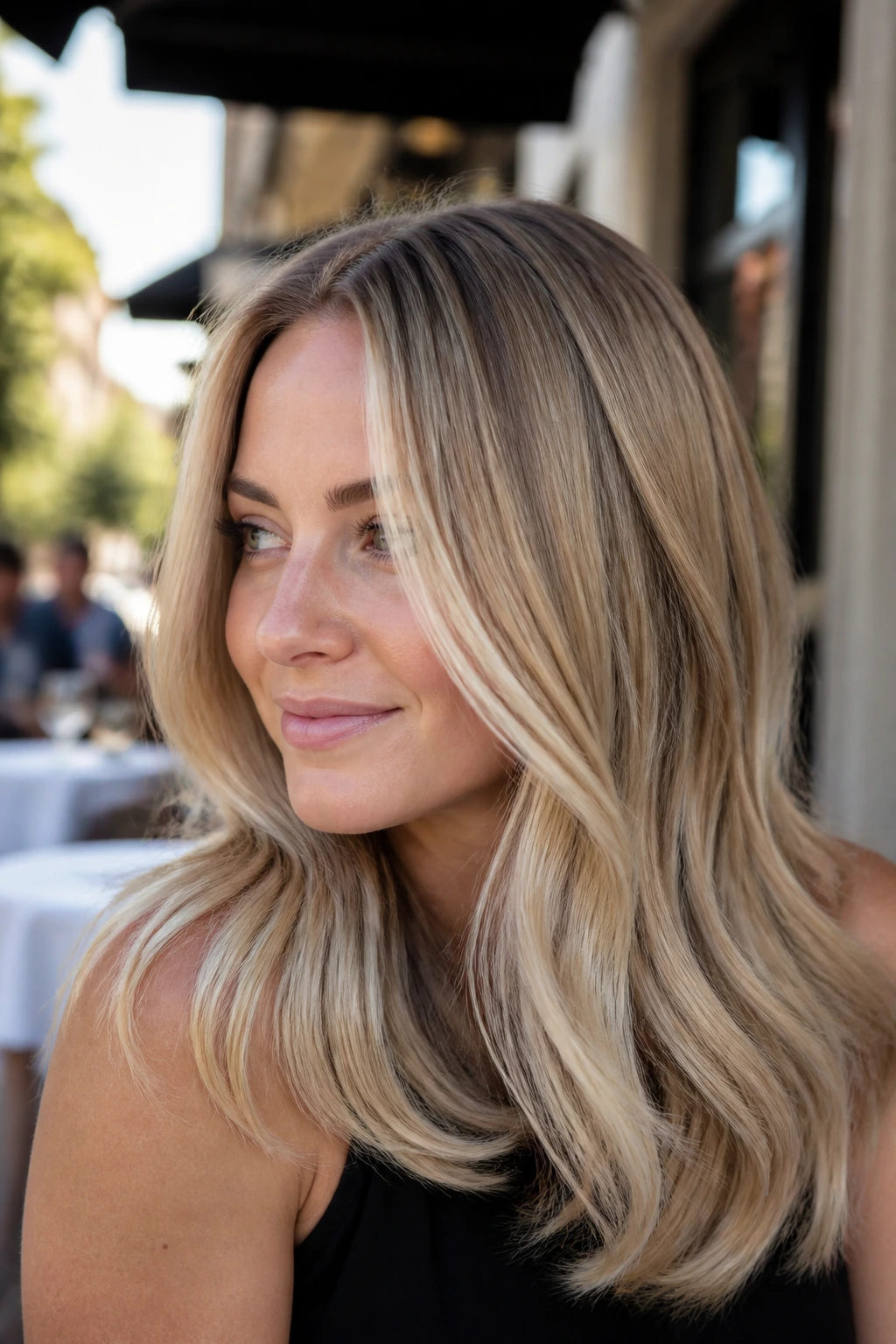
Tonal ombré is a technique where you use several shades of the same color family to create a gradient. For example, you might use three shades of beige-blonde.
Dimensional Depth
Because you aren’t using harsh contrasts (like dark brown to white), the transition is smooth and sophisticated. But because you are using multiple tones, you are creating depth. Depth = volume.
Why It Works
Fine hair often fails when it’s all one color. By introducing three or four subtle variations of blonde, you are essentially “faking” the depth that naturally thick hair has. It’s one of the most effective tricks in the stylist’s handbook.
25. Wheat Blonde
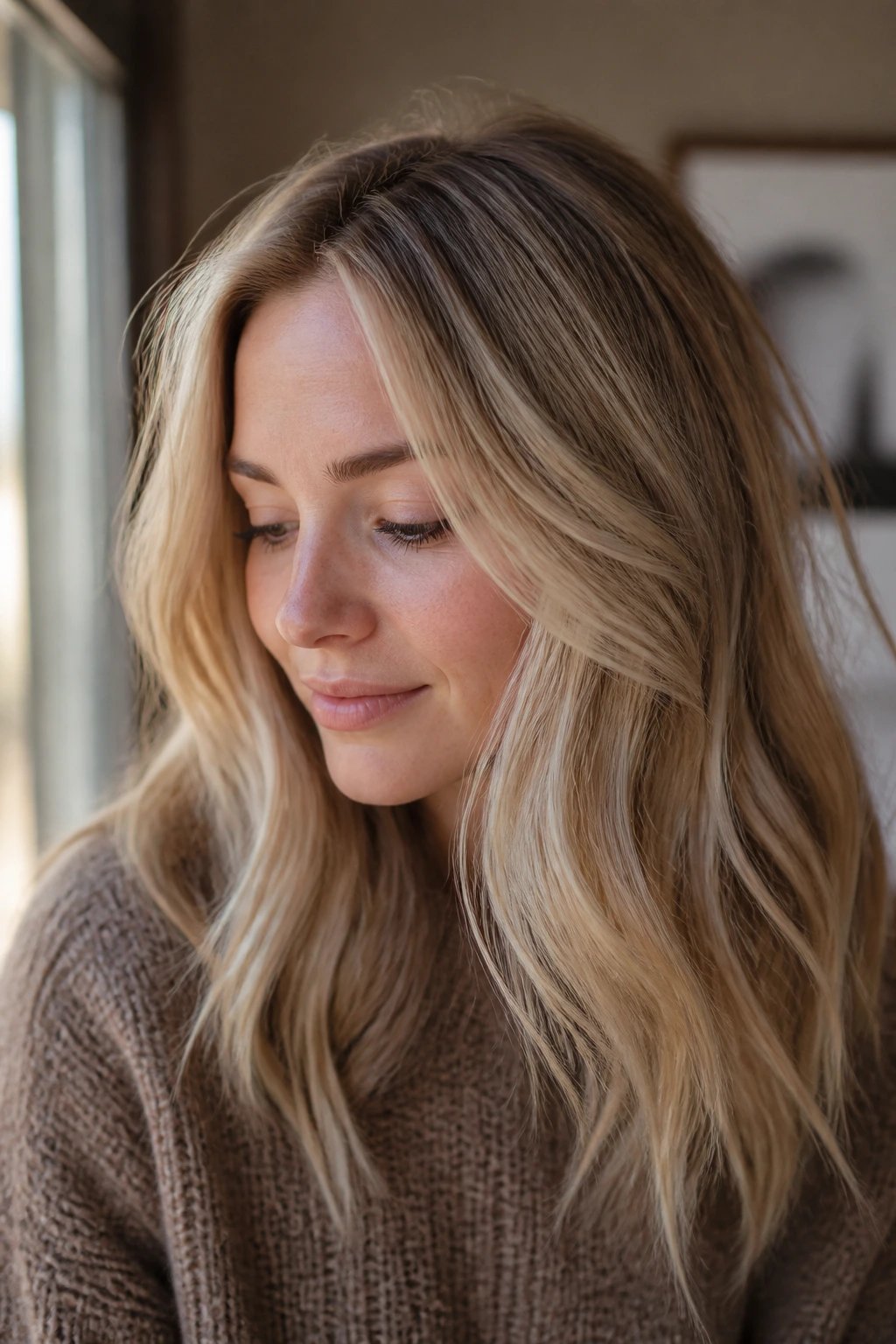
Wheat blonde is a natural, unpretentious, textured-looking shade. It’s the color of a field of wheat—a mix of light and dark gold.
The Texture Illusion
Wheat blonde is inherently matte and textured. It isn’t a “shiny” color. This is excellent for fine hair because it gives the hair the appearance of being coarser and thicker than it actually is. It looks like it has a bit of “grip” to it.
Effortless Style
This is a great color if you don’t like spending a lot of time styling. It looks good slightly messy. A bit of dry shampoo and some messy waves—that’s all you need.
26. Espresso-to-Blonde Sombré
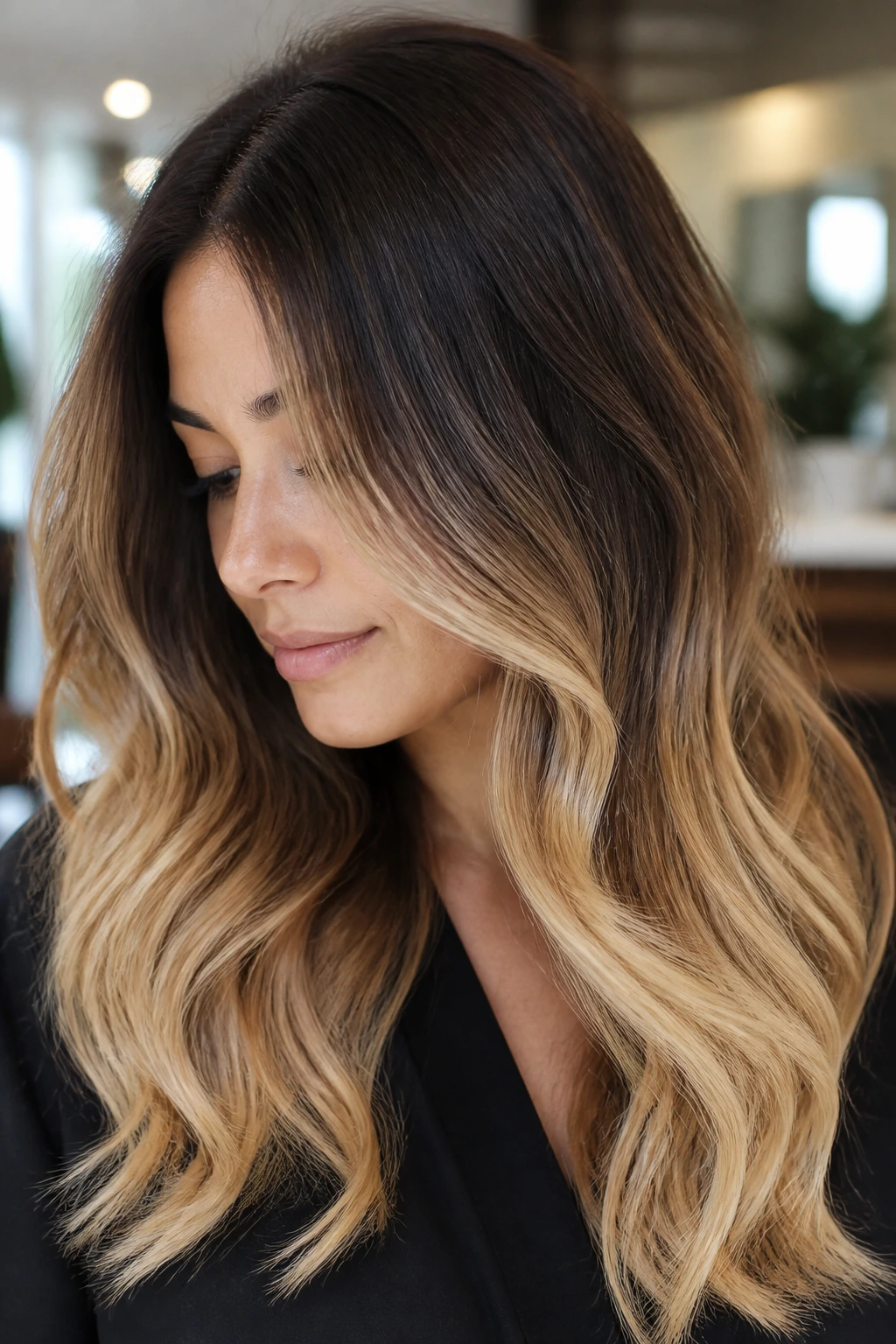
“Sombré” is a softer, more subtle version of an ombré. When you start with a deep espresso root and transition into a warm, golden blonde, you create an incredible amount of depth.
The Root Shadow Strategy
This provides the maximum amount of shadow at the root. For someone with very fine hair who struggles with the “see-through” look at the scalp, starting with a darker, espresso-toned base is the best way to hide the scalp and create a dense foundation.
High Contrast, High Volume
The contrast between the espresso root and the golden ends is visually arresting. It distracts from the hair’s diameter and focuses on the color gradient, which is a powerful illusion for fine hair.
27. Metallic Blonde
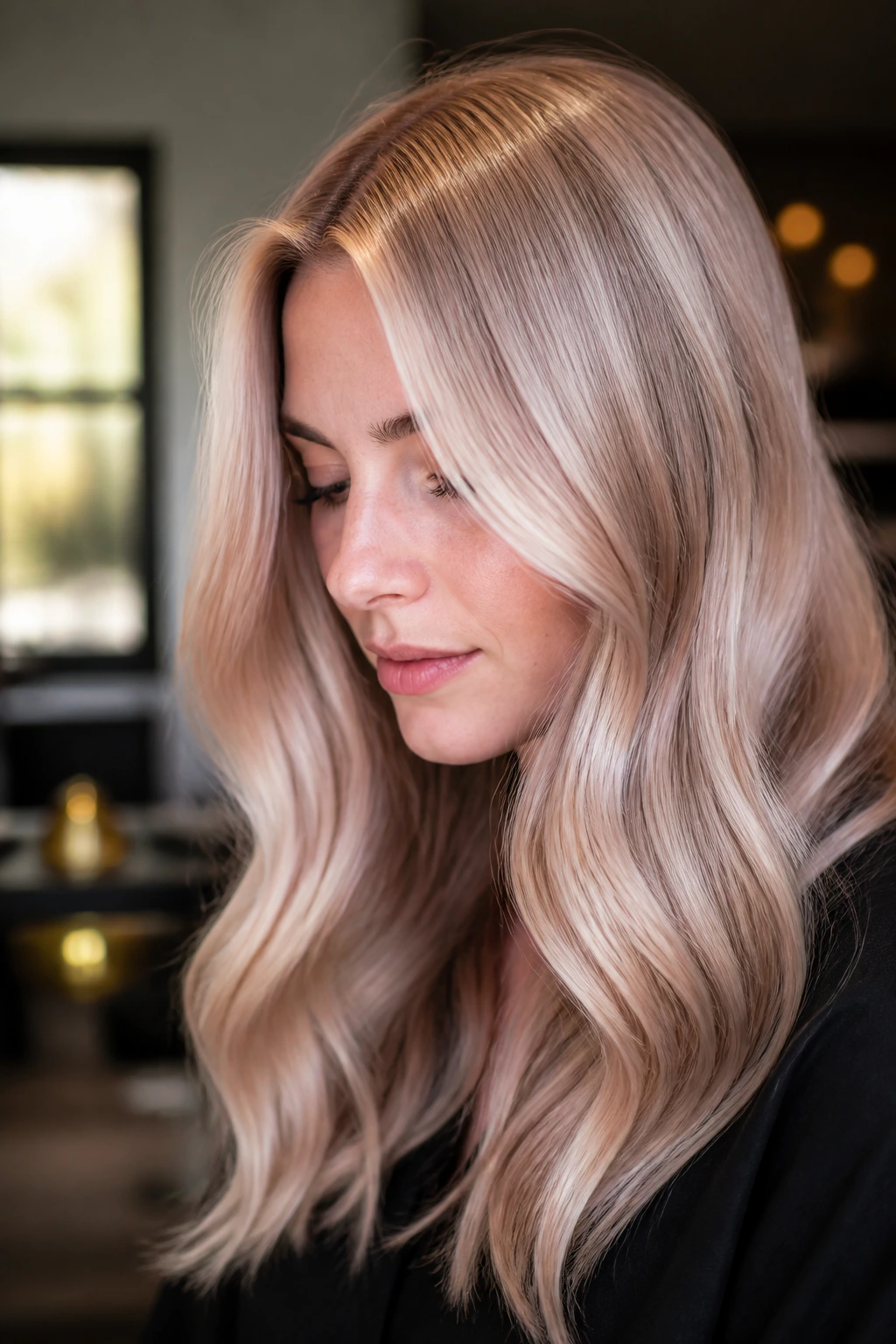
Metallic blonde isn’t just one color; it’s a finish. It uses toners that have a slightly metallic, chrome, or rose-gold sheen to them.
Reflective Quality
Metallic tones are hyper-reflective. They bounce light like crazy. As we’ve established, light reflection is the best way to make fine hair look more dynamic and less flat. The metallic finish adds a layer of “glaze” over the hair that can make it look thicker and healthier.
Precision Application
You don’t want to go overboard with metallic. Use it as a gloss over your highlights. It should be a finish, not necessarily the base color. It’s like putting a top coat on your nails—it adds depth and shine.
28. Soft Rose Gold Blonde
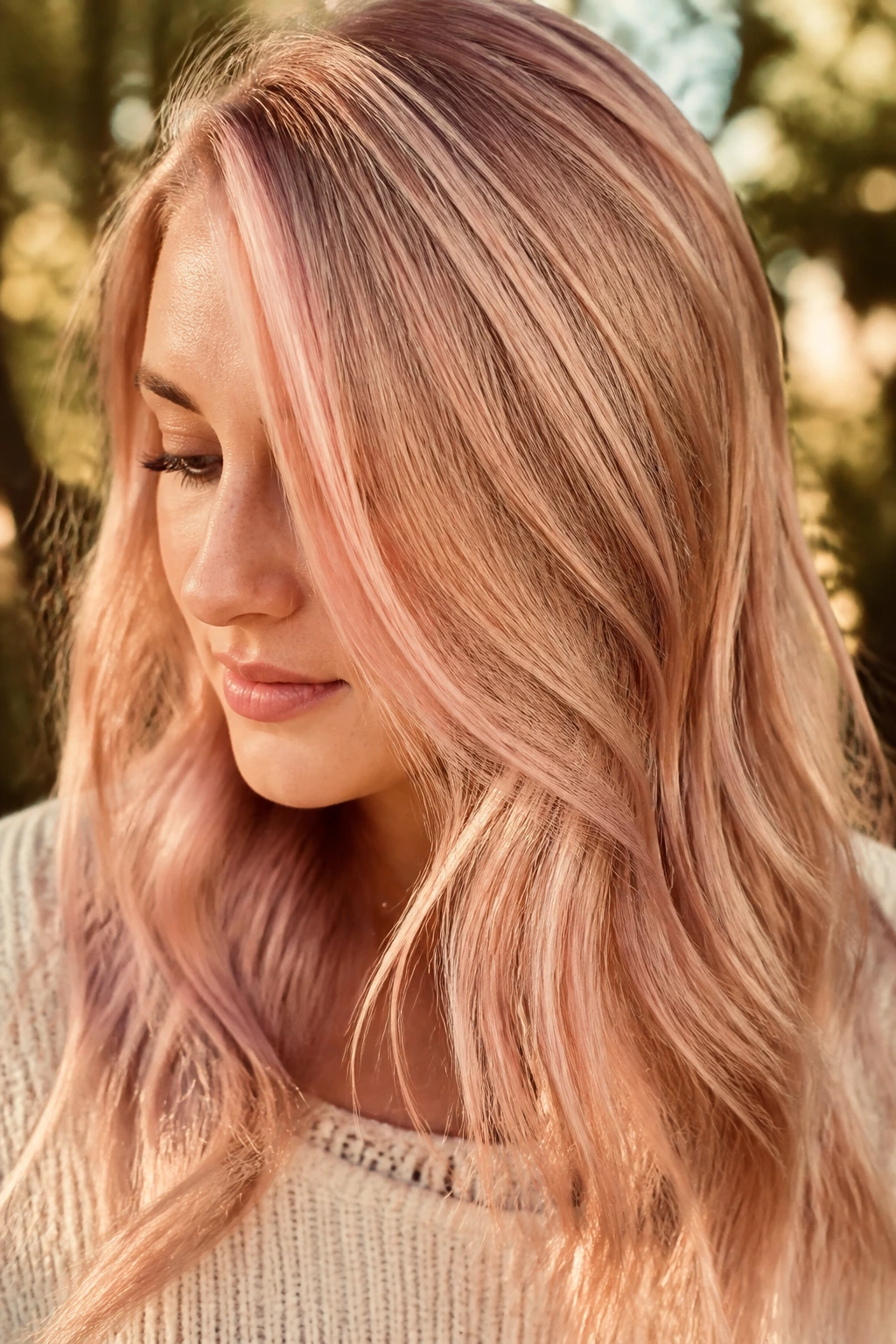
Rose gold is a mix of pink and gold. When it’s done softly—more “blush” than “bubblegum”—it is incredibly flattering and warm.
The “Warmth” Benefit
As mentioned with apricot and strawberry, warm, rose-tinted tones make the hair look healthy and vibrant. It gives a sense of energy to the hair. If your fine hair tends to look “tired,” rose gold is a great way to wake it up.
Keep It Sheer
Don’t make this a solid opaque color. Keep it sheer and light, allowing your natural highlights to peek through. The translucency of the rose gold mixed with the golden blonde highlights creates a multi-dimensional look that is undeniably fuller-looking than a flat, solid, single-process color.
Final Thoughts
When you are dealing with fine or thin hair, the biggest mistake is to assume you have to sacrifice color variety. You do not. You have to be smarter about where you place the color and what tones you choose.
It all comes down to the architecture of your hair. You need shadows to create depth, you need warmth to create energy, and you need tonal variation to create the illusion of density. Whether you opt for a deep, smoky root shadow to ground your style or a rich, golden balayage to add “weight” to your ends, remember that your colorist is your best partner in this.
Be honest with them. Tell them you are looking for ways to create the illusion of thickness. A great stylist will look at your hair and know exactly which technique—be it balayage, babylights, or a root tap—will give you that fuller look. You don’t have to settle for flat, lifeless color. Your hair has the potential for movement and depth; you just need to give it the right color palette to show it off.
