



A good medium cut can do more for a face than a shelf of styling products ever will. Medium length hairstyles for women over 40 sit in that sweet spot between polish and ease, and that’s why they keep showing up in salons over and over again. They can soften a jawline, bring lift back to flat hair, and make gray strands look intentional instead of like they’re in the middle of a battle.
Hair changes after 40. Texture shifts. Some people get more wave, some get less, and gray hair often comes in with a different feel than the rest of the head—coarser, drier, a little more stubborn around the ends. A cut that used to sit nicely at the shoulders can suddenly feel heavy or puffy or oddly flat at the crown. So the best medium styles are never random. They’re built around where the hair falls, how much weight it carries, and what your face actually needs.
I’m partial to medium hair because it doesn’t box you in. You can wear it straight on a workday, toss in a bend for dinner, clip half of it back when you’re busy, and let gray blend in without looking like you’re waiting for a “real” style to grow out. Some cuts make fine hair look fuller. Some keep thick hair from turning into a triangle. Some are just kinder to glasses, earrings, and the daily reality of not wanting to spend 45 minutes with a blow-dryer.
The styles below stay in that shoulder-to-collarbone zone for a reason. They’re practical, flattering, and easy to live with. And yes, a few of them are a little more stylish than “safe.” That’s the fun part.
1. Soft collarbone lob for women over 40

This is the cut I’d start with if you want the safest bet that still looks polished. A soft collarbone lob gives you length without dragging hair past the point where it starts to feel tired. It sits right where the neck opens up and the shoulders begin, which is one reason it flatters so many faces.
The trick is in the ends. You want them lightly beveled or dusted, not chopped blunt unless your hair is very fine and needs the bulk. Ask for the front to graze the collarbone and the back to sit a touch shorter, so the shape moves when you turn your head.
Why it works
- The length gives enough weight to calm frizz.
- It still tucks behind the ears without looking squeezed.
- It’s easy to blow out straight or bend with a round brush.
- Gray strands blend in cleanly because the cut line stays simple.
Pro tip: Ask your stylist to start any face-framing layers below the cheekbone. Too high, and the shape can get fussy fast.
2. Long layers with a side-swept fringe

Long layers are not boring when they’re cut with intent. On medium hair, they can wake up limp ends and make the whole head move instead of hanging in one heavy sheet. Add a side-swept fringe, and the cut gets a little softness around the eyes without the upkeep of full bangs.
This shape is especially good if your hair is fine but you still want some swing through the mid-lengths. A side fringe can also make a high forehead feel less dominant, which matters more than people admit. Hair should help the face, not fight it.
Best way to wear it
- Blow the fringe across the forehead with a medium round brush.
- Keep the longest layers around the jaw and collarbone.
- Use a light mousse at the roots if the crown tends to collapse.
- Skip heavy oils near the fringe; they make it separate in an unhelpful way.
A little lift at the root goes a long way here. Not a helmet. Just a bend.
3. Blunt shoulder-length cut with a clean line

Why do blunt cuts look so crisp on shoulder-length hair? Because they keep the eye on the line instead of the texture. If your hair is straight or only slightly wavy, a blunt medium cut can make the ends look thicker and the whole shape look tidier.
I like this one for women with fine hair that tends to feather out at the bottom. Layers can be lovely, but they can also make the ends disappear. A blunt edge says, “No, there is still hair here.” That matters.
What to ask for
A shoulder-length blunt cut should sit just above or right at the shoulders, with a clean perimeter and minimal internal layering. If you need movement, ask for tiny invisible layers under the top section only. Do not let the shape get over-thinned.
This cut is especially good with a center part and a flat iron bend at the ends. Simple. Sharp. Done.
4. Curtain bangs and loose waves

Curtain bangs are one of those things that keep surviving for a reason. They soften the forehead, blend into the sides of the face, and grow out without that brutal “I made a mistake” phase that blunt bangs can bring. On medium hair, they work best with loose waves that start below the cheekbone.
The result is easy to read: a little lift at the crown, a little movement through the lengths, and a face-framing shape that feels lived-in instead of overdone. I like this cut on hair that has natural bend, because the bangs and waves can work together instead of fighting for attention.
You do need a light hand with styling. Too much curling iron and the bangs start looking like they belong to a different haircut. Keep the wave soft, let the fringe split naturally, and let a few pieces fall where they want. That tiny bit of mess is the point.
5. Feathered layers with crown volume
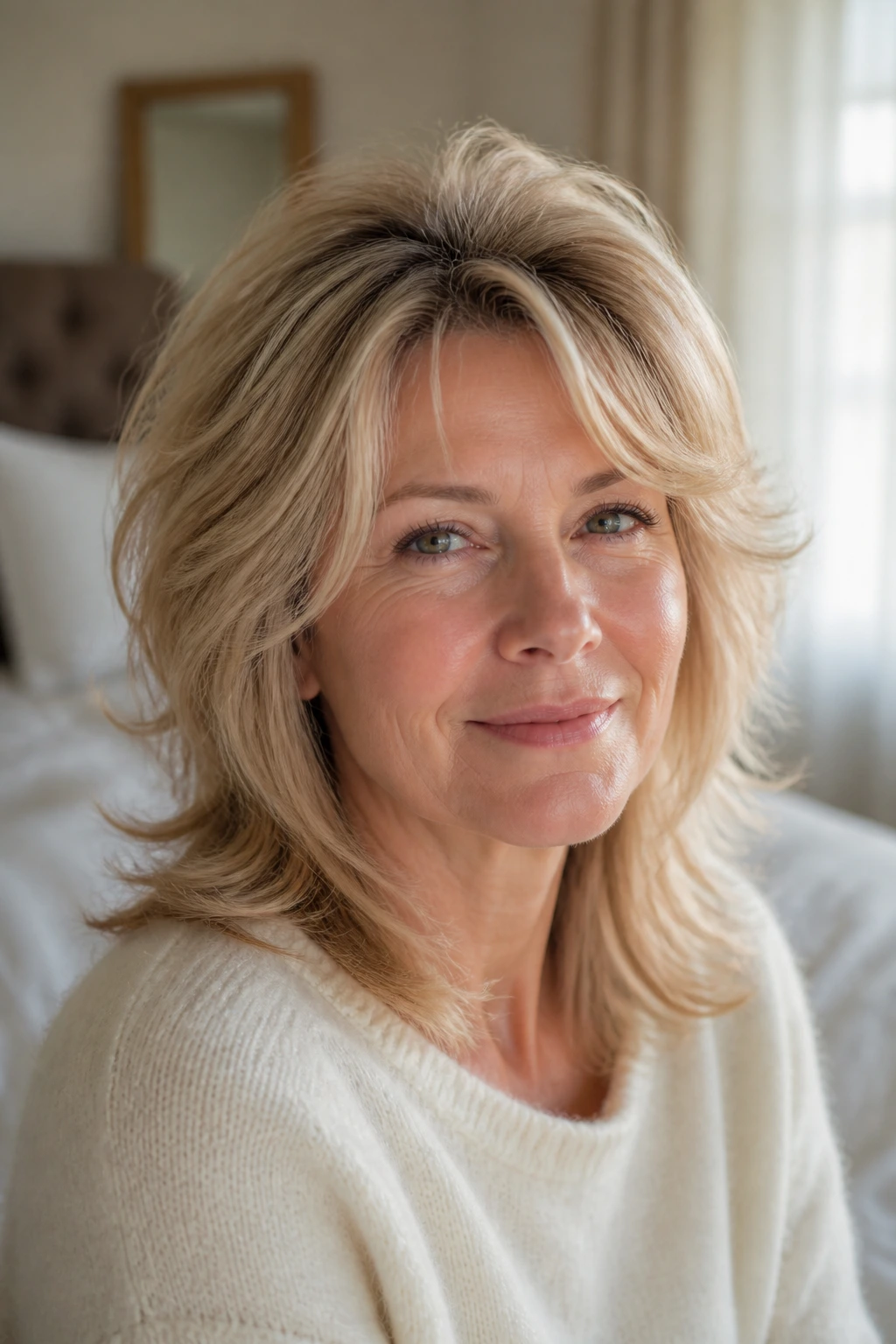
Old feathering could look sprayed into place. This version is much better. Feathered layers at medium length can lift the crown without making the ends look shredded, which is a real problem with overworked layering. The goal is airy movement, not little slices of hair floating everywhere.
This cut works especially well if your hair has lost some lift at the root. Layers around the crown and temple area can create the sense of fullness where you need it most, while the lower lengths stay soft. If you have thick hair, feathering also keeps the shape from becoming boxy.
How to style it
- Blow-dry the roots upward with a medium round brush.
- Use a light spray at the crown, not a sticky mousse.
- Keep the layers long enough to fall back into place on their own.
- Finish with a quick bend through the ends, not tight curls.
The best feathered cuts feel like the hair has room to breathe.
6. Sleek straight lob with a center part

A sleek straight lob is one of my favorite medium length hairstyles for women over 40 when the hair has shine and you want that shine to do the talking. The line is clean. The center part gives balance. The whole thing looks calm in a way that reads expensive without trying too hard.
The beauty of this cut is that it shows the hair you actually have. If the ends are healthy and the surface is smooth, the shape looks sharp immediately. If the hair is a little dry, though, you’ll notice that too. That’s why this style rewards regular trims and good conditioner.
It’s a strong choice for straight or mildly wavy hair that wants order. Keep the ends blunt or only lightly beveled, and use a heat protectant before flat ironing. A glassy lob works best when the bottom line stays full. Thin it out too much, and you lose the whole point.
7. Angled bob that slopes toward the front
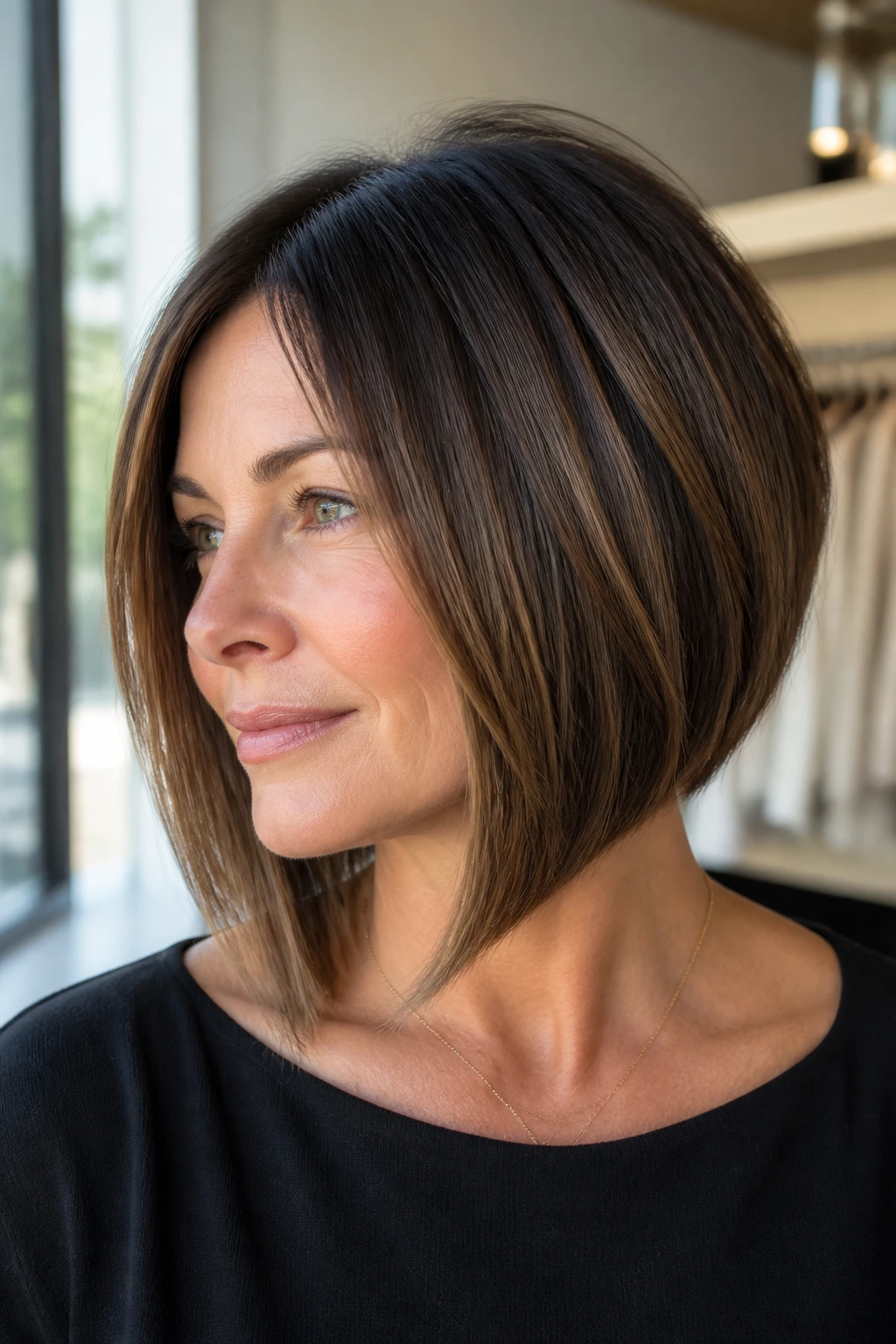
A slight angle changes everything. With an angled medium bob, the back sits a little shorter and the front hangs a little longer, which adds shape without making the haircut feel severe. It’s one of those cuts that makes the neck look longer and the jaw look cleaner.
I reach for this shape when hair feels too wide at the sides or too heavy under the ears. The forward slope gives you a line to your face instead of a blunt block. And because the front pieces are longer, you still have enough hair to tuck, twist, or pin back.
Key details
- Keep the angle gentle, not dramatic.
- Let the longest point skim the collarbone.
- Ask for soft graduation in the back if your hair is thick.
- Style with a round brush under the ends for a polished bend.
This one has enough structure to feel deliberate, which is half the battle.
8. Shaggy medium cut with soft texture
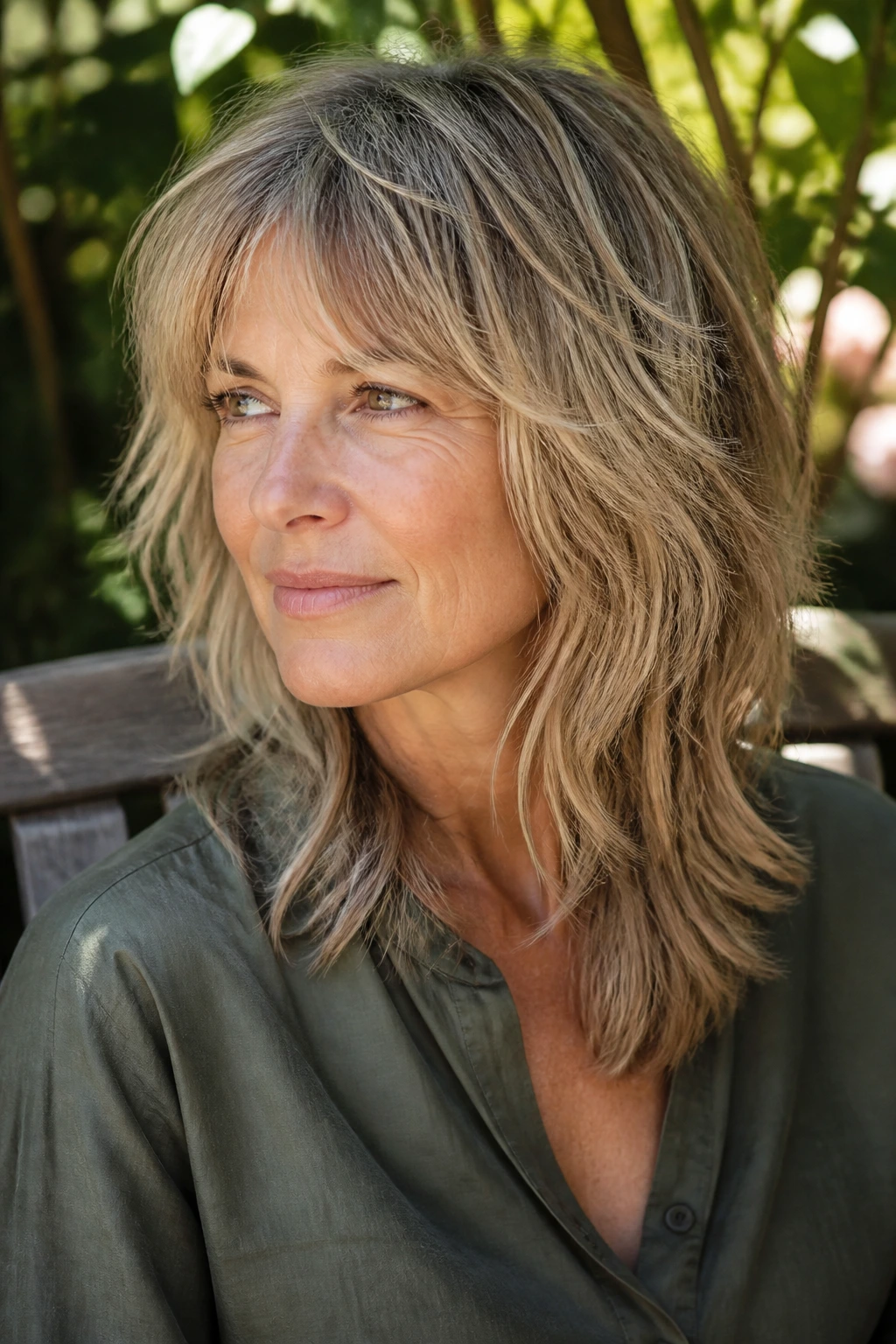
A shag does not have to look rebellious or messy. On medium hair, a soft shag can feel modern, light, and easy to wear if the layers are long enough to move instead of spike out. The right version is more airy than choppy.
The reason this cut helps women over 40 is simple: it gives body where the hair is starting to go flat, but it doesn’t rely on a heavy fringe or tiny chopped layers. The face gets softness. The crown gets some lift. The ends keep a little swing. That balance matters.
If you like to air-dry, this is a strong candidate. Scrunch in a curl cream or light mousse, rough-dry the roots, and leave the ends alone. The best shaggy cuts look slightly imperfect. That’s the charm. Too much smoothing can actually make them look less intentional.
9. U-shaped cut with face-framing pieces

Why does a U-shape work so well on medium hair? Because it keeps the back a touch fuller while letting the front come forward in a gentle curve. That shape feels softer than a straight line and less drastic than a full layered cut.
This is a smart option for someone who wants movement without losing the sense of thickness at the bottom. The face-framing pieces can start near the lips or chin and sweep down toward the collarbone. Done well, they make the haircut feel longer and lighter without taking away the bulk that makes hair look healthy.
Best for
- Medium to thick hair that looks boxy when cut straight.
- Faces that need a little softening at the jaw.
- People who want to wear hair down more than up.
- Anyone who likes a clean ponytail shape when it’s tied back.
Ask your stylist to keep the curve subtle. A U-shape should be there when you look at it, but it should not scream for attention.
10. Flipped-out ends for a retro bend
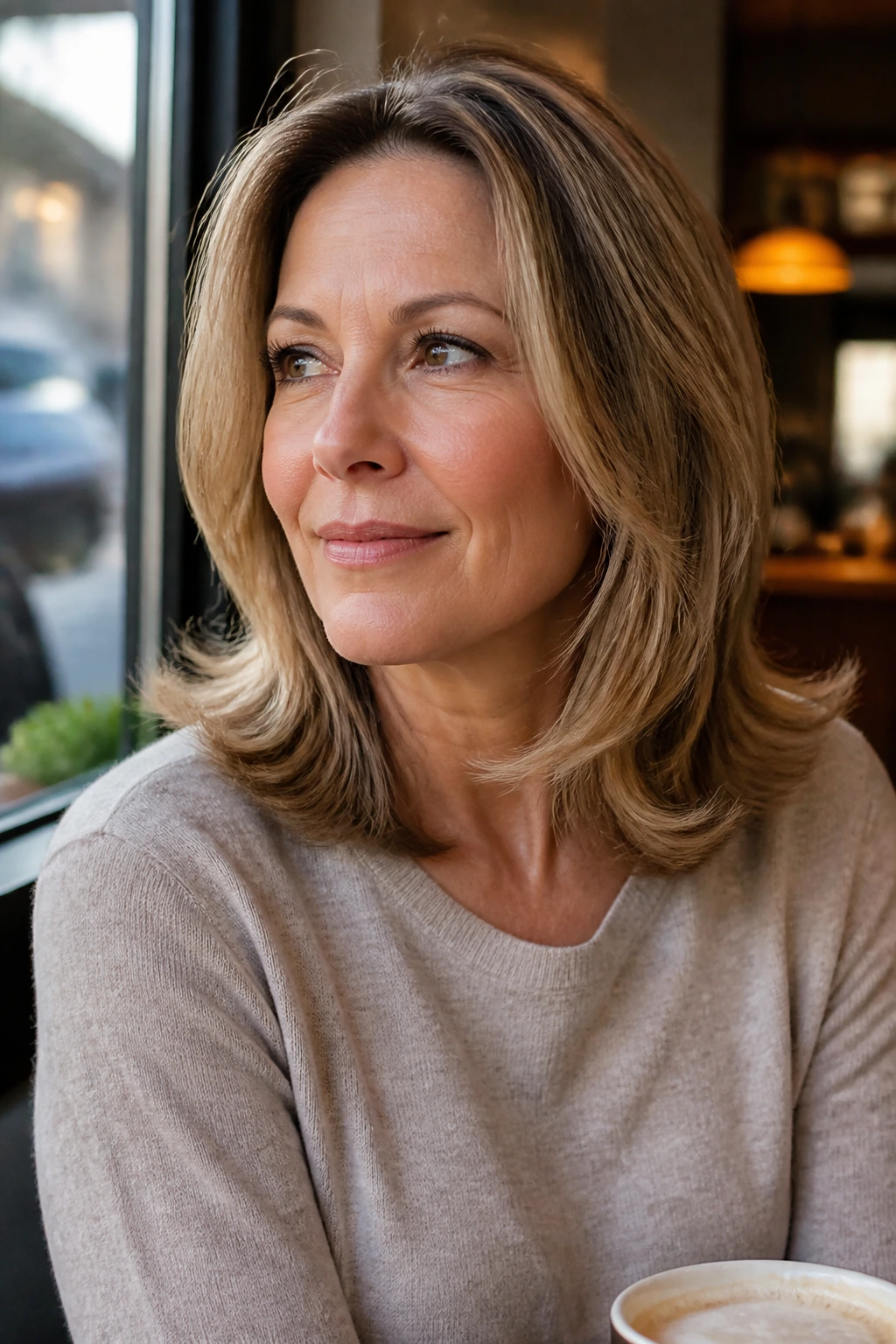
Some styles are good because they’re easy. This one is good because it has personality. Flipped-out ends bring a little movement to medium length hair without asking for a full curl pattern or a perfect blowout. The shape is especially nice on hair that sits flat against the shoulders.
The trick is to keep the flip soft, not prom-ish. A round brush or medium barrel iron can push the ends outward just enough to create lift. If the base cut is clean and the layers are light, the result looks playful instead of dated.
This is a strong choice when you want medium hair to feel a bit lighter around the face. It also works nicely with tucked sides, earrings, and a side part. A little bend at the ends can do more than another heavy layer ever will.
11. Curly shoulder-length cut with shape

Curly hair at shoulder length needs shape more than it needs drama. Too much length and the curls get weighed down. Too many short layers and the whole thing can puff out like a triangle. The sweet spot is a shoulder-length cut that lets the curls stack naturally.
I like this cut best when the hair is cut to follow the curl pattern instead of forcing every strand into the same rule. Some curls want a bit more length in front. Some need a shorter crown to keep the shape alive. That’s why curly cuts often look best when they’re adjusted curl by curl.
Drying matters here. If you have curls, don’t judge the cut when it’s soaking wet and stretched out. Let it dry, look at where the shape lands, and make tiny adjustments. The difference between “nice curls” and “great curls” is often just where the line lands around the shoulders.
12. Wavy clavicut with invisible layers

A clavicut lands right around the collarbone, which is one reason stylists keep coming back to it. It’s long enough to tuck, short enough to feel fresh, and usually flattering on more face shapes than people expect. The invisible layer part is what keeps it from feeling heavy.
Invisible layers are internal. You don’t see dramatic steps. You feel the movement when the hair swings. That’s a useful trick for women who want a cleaner outside line but still need the inside of the haircut to behave.
This cut works well if your hair is wavy and you want to keep the wave pattern without turning the perimeter frizzy. A light cream, a diffuser, and a little finger-raking are enough. The shape should look smooth at the top and soft at the bottom. Not fluffy. Not rigid either.
13. Side part with long internal layers for women over 40
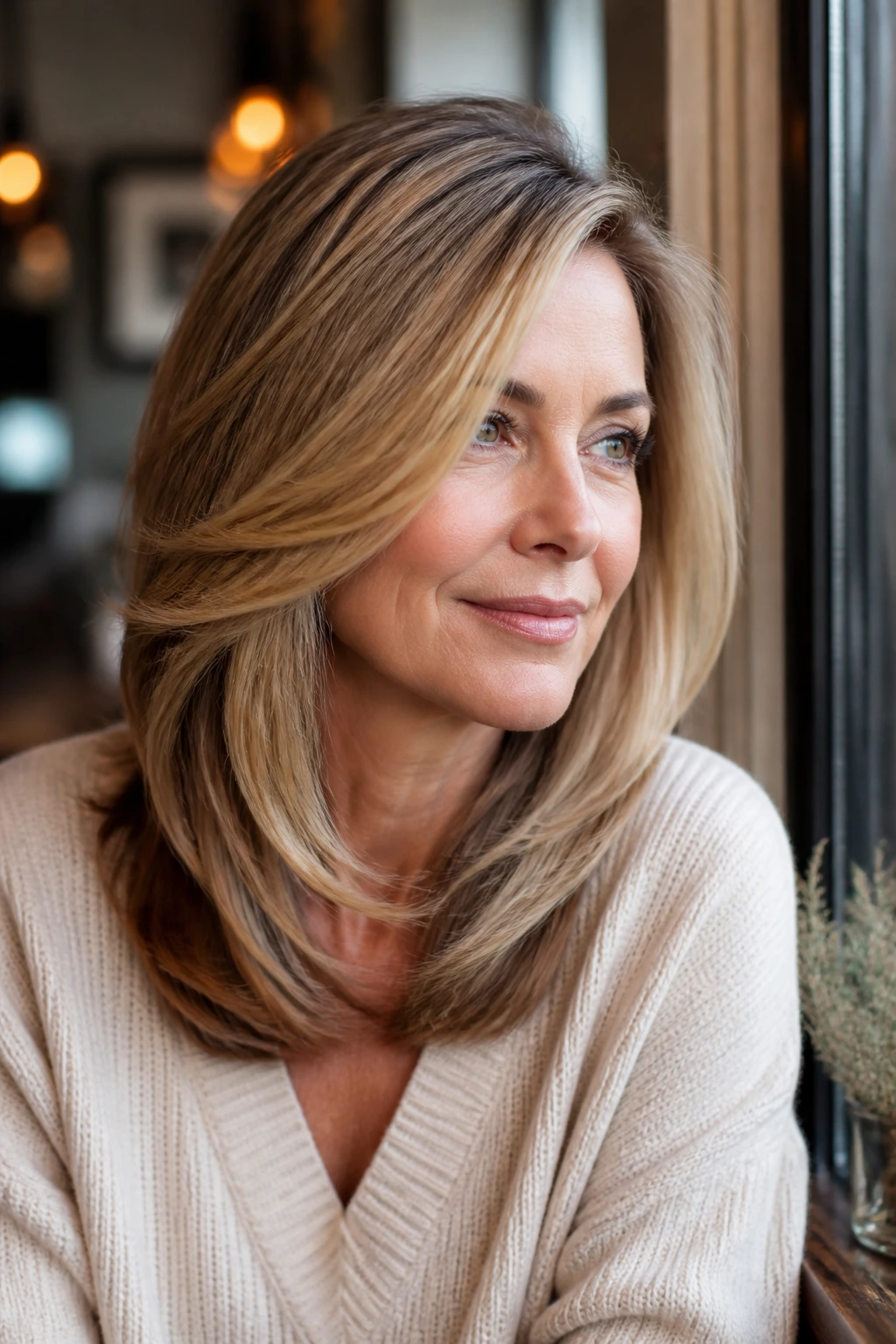
A side part still has real value when the haircut underneath it is good. Long internal layers give the hair lift at the crown and movement through the middle without making the ends look thin. Together, they create a shape that feels fuller and more forgiving.
The side part shifts the weight of the hair, which helps if one side has always looked flatter or if the crown has started to lose volume. It also creates a diagonal line across the face, and that line is flattering in a sneaky, low-drama way.
Why it feels balanced
- The part creates lift without teasing.
- The layers add movement without shouting.
- The front pieces can be tucked or left loose.
- It works on straight, wavy, and lightly curly textures.
If you’ve worn the same center part for years, this is a good place to change things up. It sounds small. It rarely is.
14. Wispy bangs with a soft perimeter
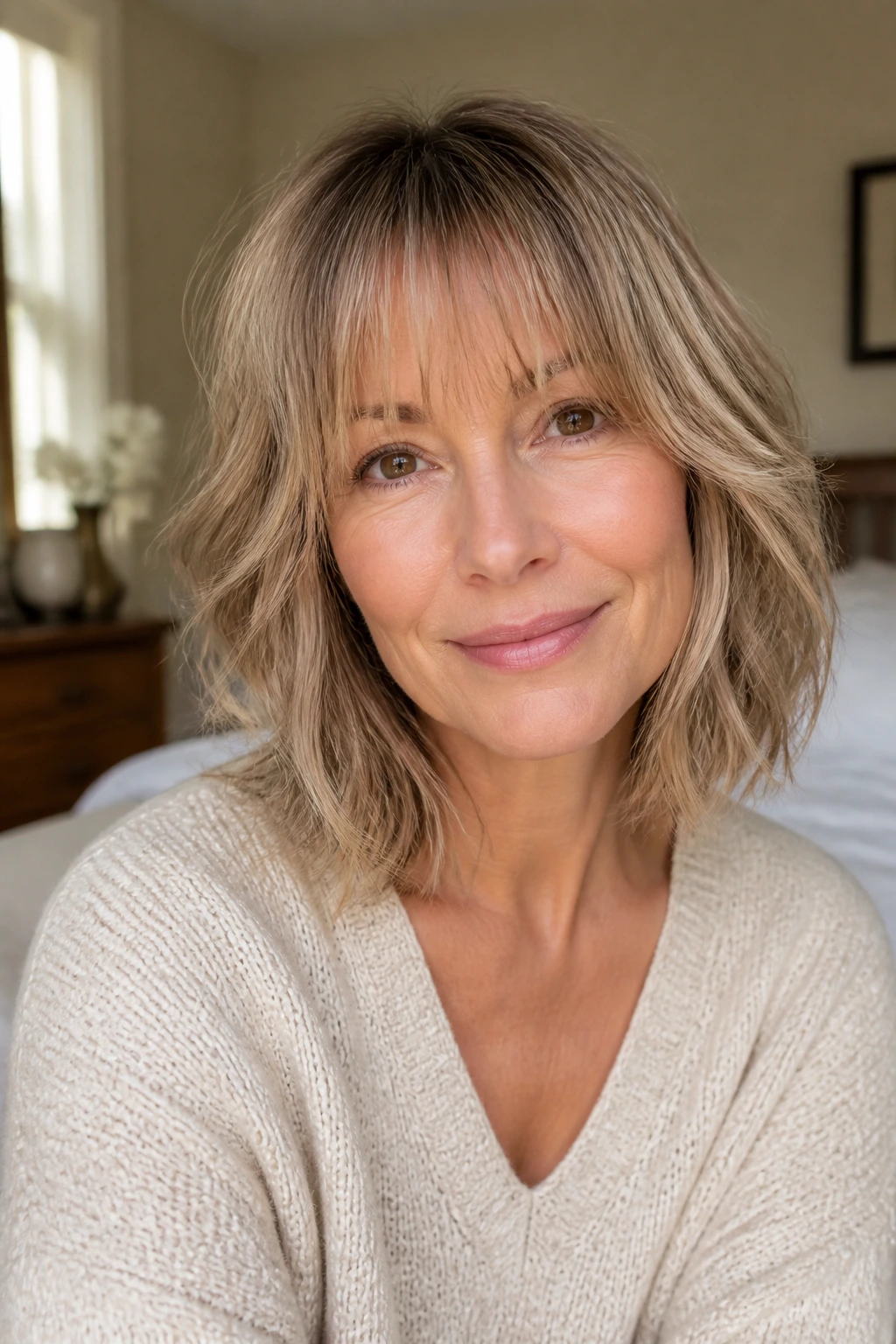
Are wispy bangs worth it after 40? If you want softness around the eyes, yes, they can be. The trick is keeping them light enough to move and long enough to blend into the sides. Heavy bangs can feel boxy. Wispy ones feel more like a whisper.
This style is especially useful if you want to draw attention upward without cutting a severe line into the face. The rest of the haircut should stay soft too—medium length, light layers, and ends that curve instead of stick out. If the perimeter is too blunt, the bangs can feel disconnected.
One practical note: wispy bangs need a trim schedule. They grow into your eyes fast. Still, they’re easier to live with than a dense fringe, and they’re kinder on busy mornings. A quick pass with a round brush usually does the job.
15. Rounded layered cut for thick hair
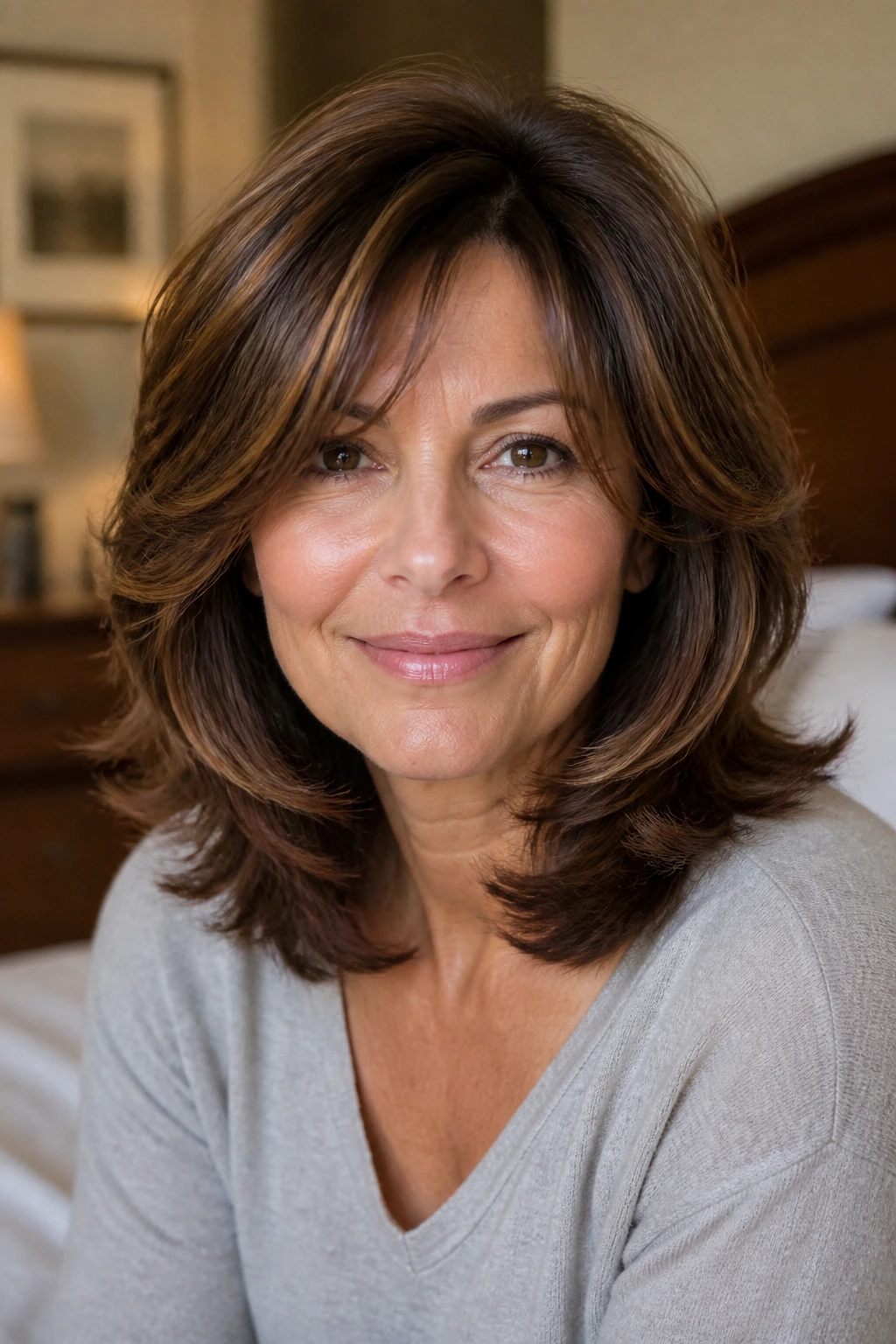
Thick hair can look gorgeous at medium length, but only if the shape is controlled. A rounded layered cut keeps the silhouette curved instead of wide at the sides. That matters when hair wants to expand outward the second it dries.
I like this cut for anyone who has dealt with the dreaded triangle shape. You know the one. Hair that looks narrow at the scalp and wide near the shoulders. Rounded layering fixes that by letting the top sit a little closer and the mids fall in a softer arc.
What to ask for
- Layers that start below the cheekbone.
- A curved outline instead of a blunt shelf.
- Enough weight left at the bottom to keep the shape from puffing.
- Soft face-framing pieces, not short chunks around the ears.
This is not a cut that needs constant fussing. It needs a smart shape, then a decent blow-dry.
16. Gray-blending lob for women over 40

Gray hair looks best when the haircut respects its texture. A gray-blending lob does exactly that. It keeps the length around the collarbone, gives the silver strands room to move, and avoids heavy shapes that make gray hair look dull or thick at the wrong spots.
I like this cut because it doesn’t treat gray like a problem to hide. The clean line of a lob makes the silver read as deliberate. If your gray comes in wiry or coarse, a slightly beveled edge helps the hair sit better than a razor-soft finish. If it’s fine and soft, keep the line full so the ends don’t vanish.
This is also a strong cut for blending in highlights or lowlights if you like a little dimension. The cut does most of the work. Color just follows along. And if you’re letting gray grow out, this shape keeps the transition from looking awkward.
17. Textured lob with razored ends

Razored ends are useful, but only when they’re used with a light hand. A textured lob with razored ends can take the edge off dense hair and give the mid-lengths some swing. It’s a good option if your hair feels heavy but you don’t want a full shag.
Compared with a blunt lob, this one moves more and feels softer around the shoulders. Compared with a heavily layered cut, it stays cleaner and easier to style. That’s the sweet spot for a lot of women who want something modern without looking like they tried too hard.
Who it suits
- Thick, straight, or slightly wavy hair.
- Hair that flips out in bulky ways at the ends.
- People who like a bit of texture but not a messy finish.
- Anyone who wants air around the face without losing length.
A quick warning: on dry, coarse gray hair, too much razoring can make the ends fray. Keep it controlled.
18. Soft wolf cut at collarbone length

A wolf cut gets a bad reputation when people think of the most chopped-up version. The softer collarbone-length version is different. It keeps the attitude, but the layers are long enough to move instead of sticking out like feathers from a bad haircut memory.
This style works for women who want a little edge and a lot of motion. The top has some lift. The sides fall forward. The back can stay more compact so the whole shape still feels wearable. It’s a good cut if your hair likes texture and you enjoy rough-drying it instead of smoothing every strand.
What keeps it wearable
- Long layers around the crown.
- Softer ends around the perimeter.
- Fringe pieces that blend instead of stop suddenly.
- Styling cream or light mousse, not crunchy gel.
If you’ve been bored by safe cuts, this one has a bit more personality. Not too much. Enough.
19. Shoulder-length cut with internal weight removal

Sometimes the problem is not length. It’s bulk. Shoulder-length hair can sit beautifully, then flare out at the sides like a bell the minute it dries. Internal weight removal fixes that without making the haircut look thin from the outside.
The outside line stays solid. The inside gets lightened in the right places. That means the hair can still look full, but it stops fighting your head shape. I especially like this for thick hair that grows wide at the temples or under the ears.
A good stylist will section the hair carefully and remove weight where it causes puffing, not where the ends need body. That distinction matters. Too many thinning shears in the wrong spot and you get frizz. The right internal cut gives you movement you can see and feel.
20. Polished blowout layers

A polished blowout is not a cut by itself, but on medium hair it becomes a whole style language. The layers matter because they give the brush something to shape. Without them, you get a heavy curtain. With them, the hair lifts, curves, and settles with a cleaner line.
This look works especially well if you like a more finished feel. It’s the style I’d pick for dinners, events, or any day you want your hair to look like it belongs in a good mirror. The ends should turn under softly, the top should sit smooth, and the sides should brush away from the face in a controlled way.
A round brush, heat protectant, and a cool shot at the end make a bigger difference than people think. So does sectioning. Small sections, medium heat, slow tension. That’s how you get a blowout that lasts past lunch.
21. One-length collarbone cut
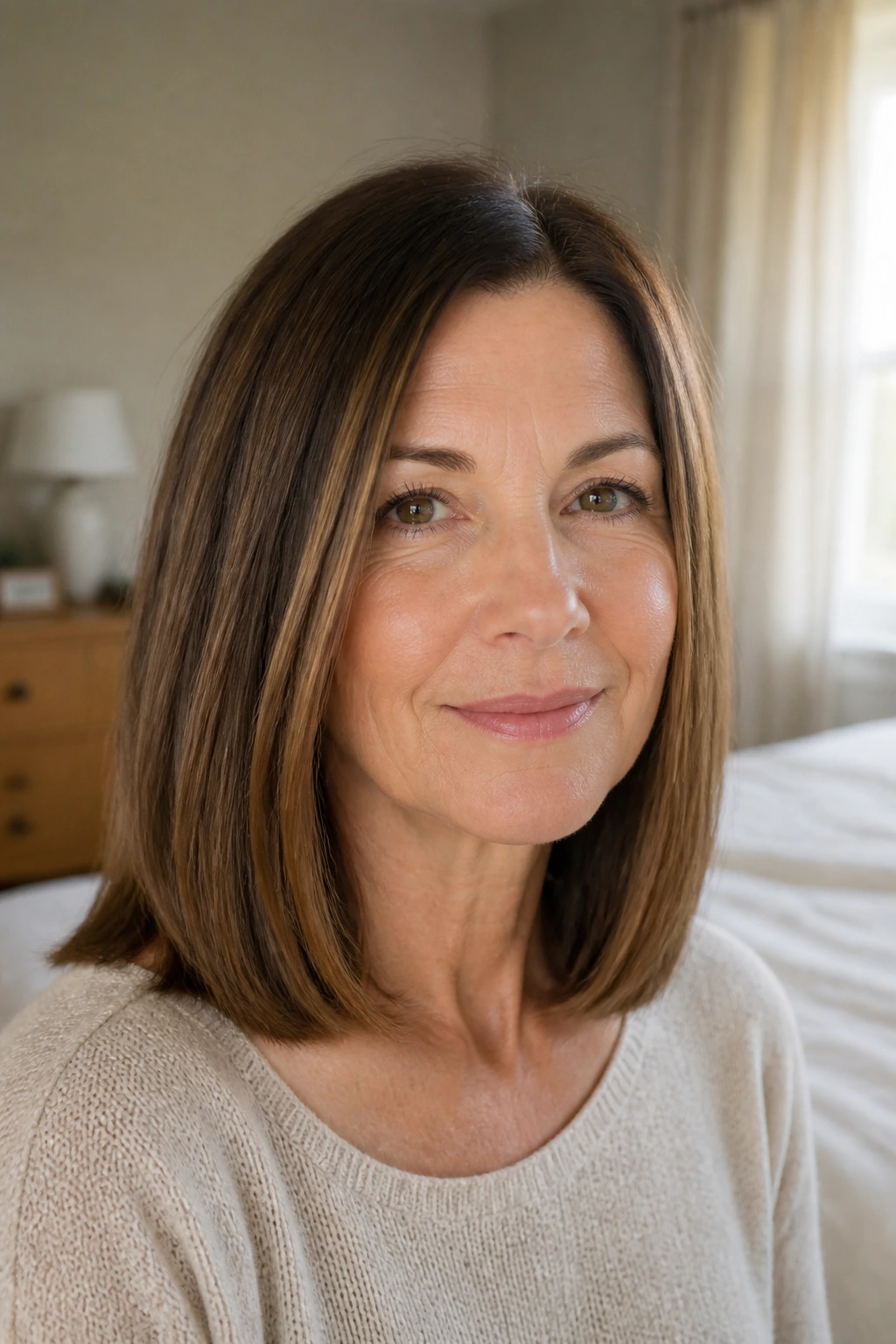
Everyone acts like layers are mandatory. They’re not. A one-length collarbone cut can be one of the best medium length hairstyles for women over 40, especially if the hair is fine, straight, or prone to looking wispy when over-layered.
The solid perimeter makes the ends look thicker and healthier. It also gives you a clean base for waves, bends, and simple styling. If you want movement, you can still add it with a curling iron or a big brush. You just don’t have to build the movement into the cut itself.
This style is low-drama and practical. It looks neat in a ponytail, tucks behind the ears neatly, and grows out without a weird shape shift. If your hair has started feeling sparse at the bottom, this is the cut that gives it some dignity back.
22. Curly lob with a side fringe
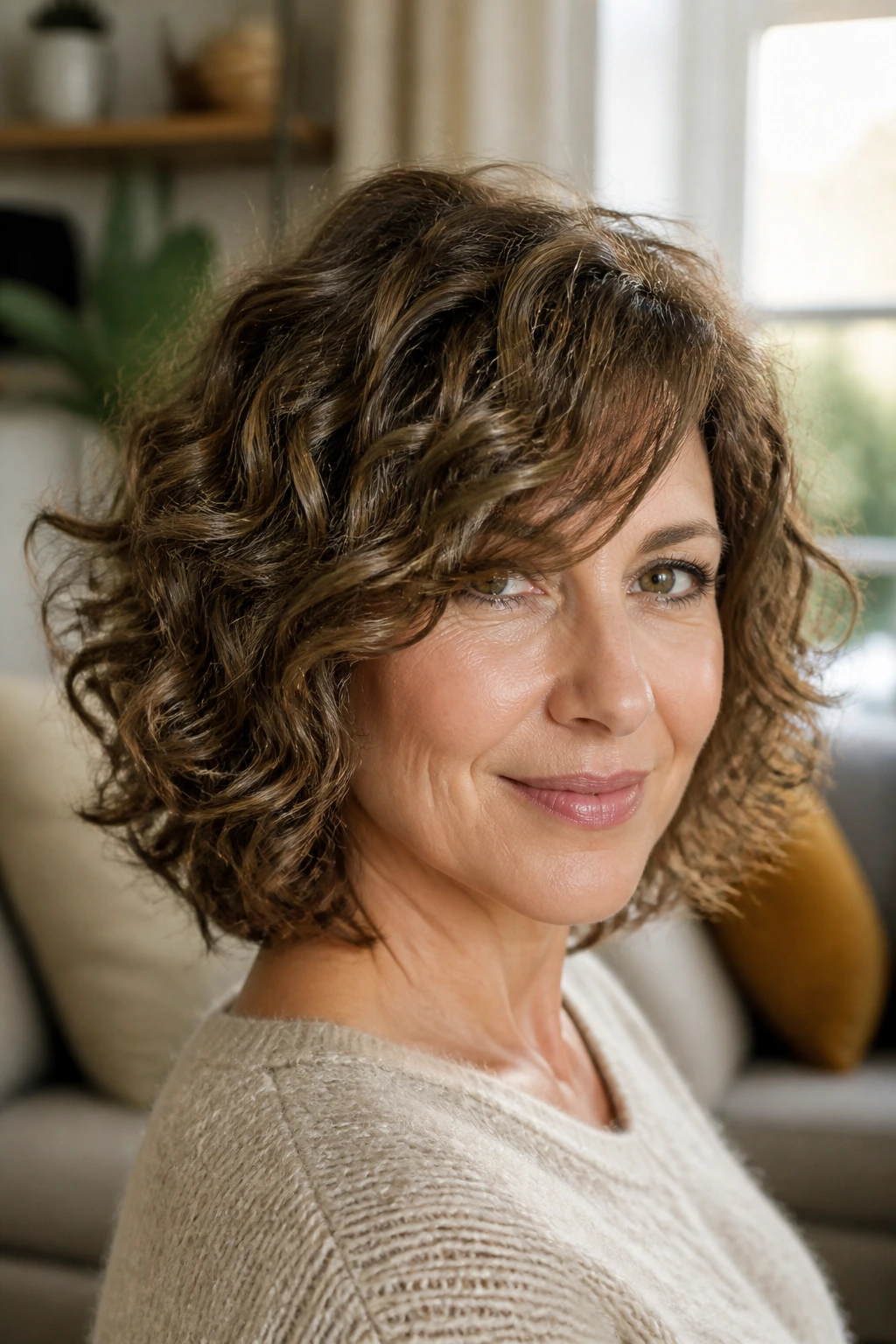
Curly hair and side fringes get along better than people think. A curly lob with a side fringe gives the face softness without forcing the curls into a strict front-and-center bang pattern. That matters because curls do what they want. Fighting them is a waste of time.
The side fringe should be left a touch longer so it can curl or bend naturally. If it’s cut too short, it shrinks and sits in the wrong place. The rest of the lob should keep enough shape to frame the face, with curls stacked in a way that keeps the neckline open.
Styling notes
- Cut curls dry or nearly dry so the shape lands where it should.
- Use a cream that defines without turning the hair stiff.
- Keep the fringe soft and separated.
- Diffuse just enough to set the pattern, then stop touching it.
This cut has a little elegance and a little ease. That’s a nice combination.
23. French-inspired mid-length bob

This cut has a relaxed, slightly undone feel that works well on medium hair. The shape usually sits at or just below the jaw and collarbone, with soft movement through the sides. It’s polished, but not precious.
What makes it different is the balance. The perimeter stays tidy, yet the styling stays loose enough to avoid that overworked salon look. A side part, a soft bend, or a barely-there wave all fit. The haircut should seem like it settled into place on its own.
I like this one for women who want a style that feels a little stylish without needing a long morning routine. It pairs well with natural texture, a tucked side, and simple earrings. If your hair is straight, a tiny bend at the ends keeps it from feeling flat. If it’s wavy, let the wave show.
24. Air-dried messy mid-length cut

Do you want hair that looks done without a full blow-dry? Then the cut has to help. An air-dried messy medium cut works best when the layers are soft, the perimeter is not too blunt, and the shape still looks good when hair dries with its own wave and bend.
This is a strong style for busy mornings and humid weather. A leave-in conditioner, a small amount of curl cream, and a little scrunching can be enough. If the hair dries too puffy, a drop of oil on the ends after drying keeps the shape from fuzzing out.
The biggest mistake here is trying to force a perfect style out of an imperfect drying method. Don’t. Let the hair land where it wants, then refine the front pieces with your fingers. A good air-dried cut should still look tidy around the face.
25. Face-framing layers for round faces

Round faces usually look best when the hair creates vertical movement instead of width right at the cheeks. Face-framing layers do that job well, but only if they start in the right place. Start too high, and the layers puff out at the widest part of the face. Start lower, and the line gets flattering fast.
Where they should start
- Around the mouth for a softer look.
- At the chin if you want more definition.
- Near the collarbone if you want the face to look longer.
- Never right at cheek level unless the rest of the cut is very controlled.
This style works on straight, wavy, and lightly curly hair. I like it because it doesn’t rely on a dramatic change. It just shifts the eye downward in a clean way. That’s often enough. A good face-framing layer should feel like a quiet correction, not a big statement.
26. Hidden undercut with medium length shape

A hidden undercut sounds bold, but on thick hair it can be the most practical move in the room. The nape area is where a lot of medium styles get bulky, especially if the hair grows strong at the neck or if you wear scarves and collars that push it outward. A hidden undercut removes some of that weight where nobody sees it.
The surface hair stays medium length. The shape looks normal from the outside. Underneath, there’s less bulk, which makes the top layers sit flatter and move better. That can be a relief if you’re tired of the base puffing out every time the weather changes.
This isn’t for everyone. If your hair is already fine, skip it. But if your hair is dense and you want a cleaner silhouette without losing length, it can be a lifesaver. And yes, it grows out fine if the cut is done carefully.
27. Mid-length cut with long curtain fringe

A long curtain fringe gives medium hair a little polish right around the face, and the longer version is the smartest one for most women over 40. It skims the cheekbones, softens the forehead, and grows out without looking like a mistake you have to hide for six weeks.
The rest of the cut should stay calm. Keep the length around the shoulders or collarbone, and let the fringe do the face-framing work. This look is nice when you want some change but not a full overhaul. It can be tucked back, split in the middle, or swept off to one side depending on the day.
I like this fringe on hair that already has some bend, because it blends more naturally. On straighter hair, a quick round-brush pass is enough. The fringe should open the face, not sit like a heavy curtain across it. A small difference. A big one too.
28. Easy grow-out medium hairstyle for women over 40
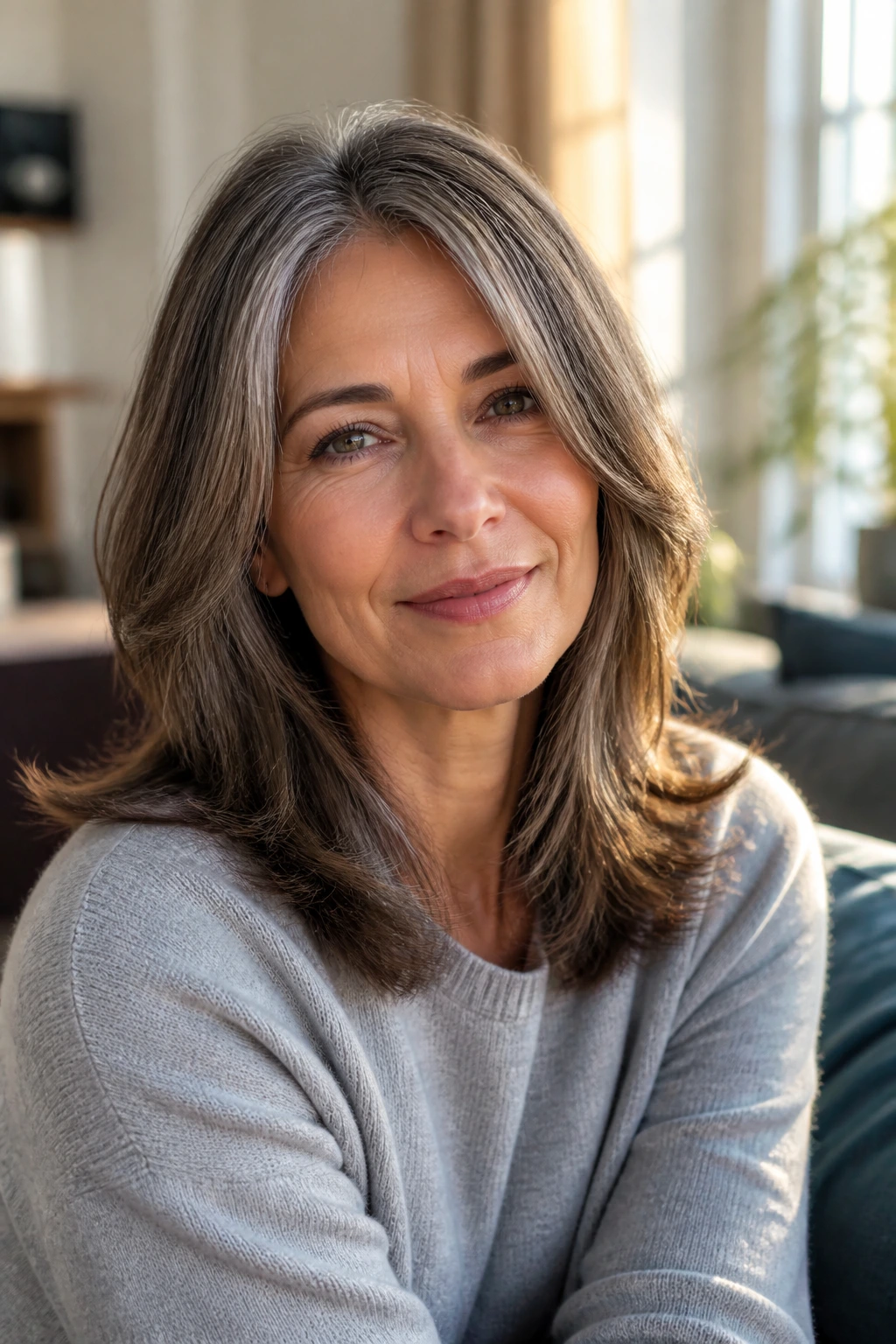
The best cuts are the ones that still look decent after they’ve grown for a few weeks. That’s why an easy grow-out medium hairstyle matters. You want soft edges, a shape that doesn’t fall apart, and layers that can stretch without turning awkward.
This is where restraint helps. Keep the layers long. Keep the perimeter soft. Let the front pieces blend into the rest of the cut instead of stopping in hard steps. If your hair is gray or partly gray, this kind of shape is especially forgiving because the line stays clean while the texture shifts a little as it grows.
A cut like this buys you time. Less panic. Fewer emergency trims. More mornings where the hair just works. And that, honestly, is what most women over 40 are after when they say they want something medium and manageable.
