



Women in their 70s do not need to play it safe with hair. In fact, some of the most flattering hairstyle ideas for women in their 70s are the ones that add shape, lift, and a little movement around the face instead of hiding everything under one heavy curtain.
Hair changes with age. That part is real. It can get finer at the temples, drier through the ends, puffier in humidity, or flatter at the crown by lunch. Gray hair can also feel wiry one month and soft the next, which means a cut that looked perfect years ago may suddenly feel too blunt, too heavy, or too much work.
The smartest styles work with what the hair wants to do. Short can be chic, but long can be lovely too. Gray, silver, white, or salt-and-pepper hair all look sharper when the shape is clean and the finish is intentional.
Here are 35 ideas that lean practical first and pretty second — which is usually the right order anyway.
1. Feathered Pixie With Soft Sideburns
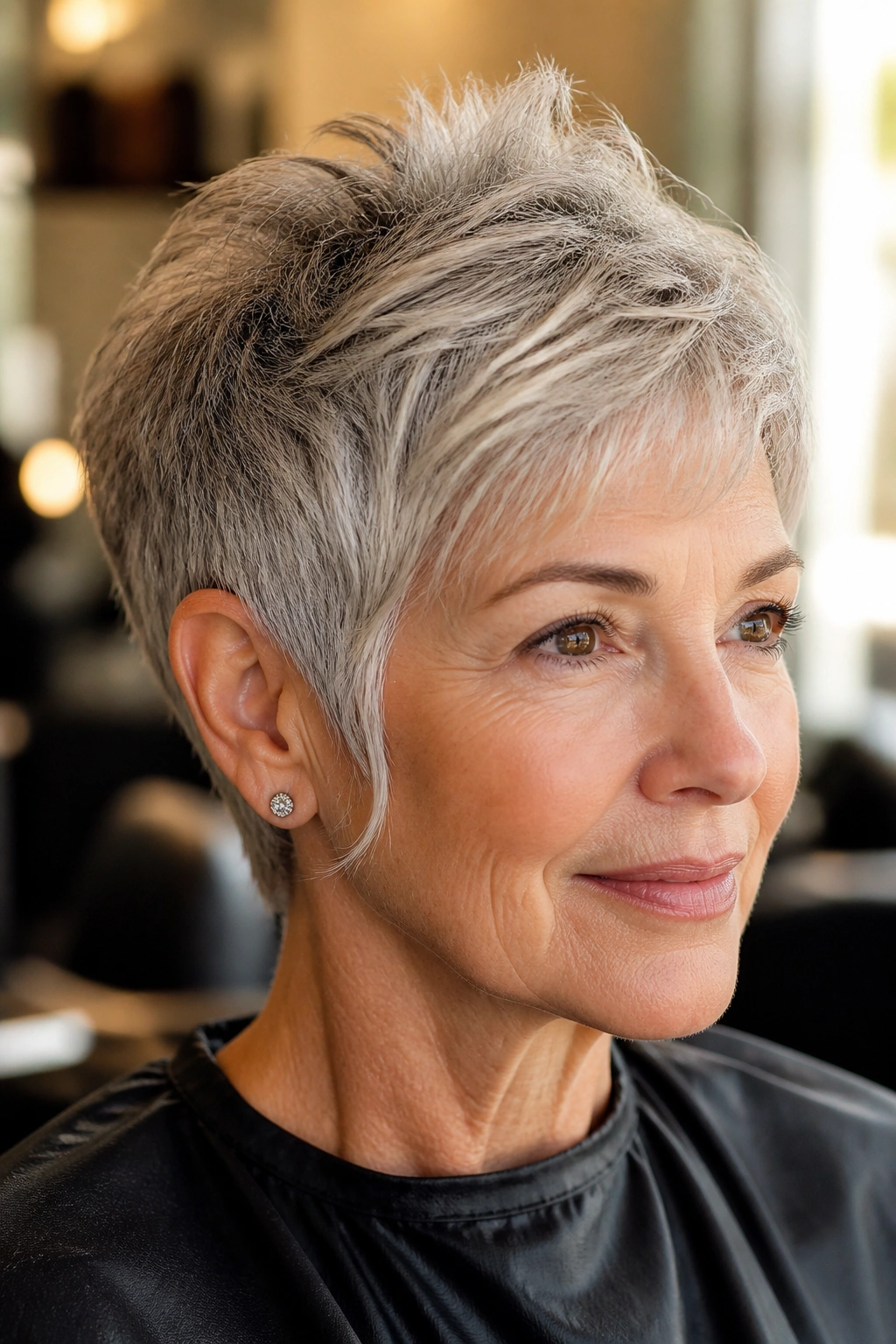
A feathered pixie gives the face lift without feeling severe. The top stays a little airy, the sides hug the head, and the sideburns soften the line near the jaw.
Why it works so well
Feathering breaks up dense-looking edges, which helps gray hair read lighter and more alive. If your hair tends to puff out at the sides, this cut keeps the shape neat. It also works nicely with glasses because it leaves room around the temples.
- Keep the top about 2 to 3 inches long for movement.
- Ask for the nape to be tapered, not shaved flat.
- Use a pea-sized dab of styling cream on damp hair.
- Direct the fringe slightly forward if your forehead feels a little bare.
Best trick: blow-dry the crown in the opposite direction of your part first, then sweep it back. That tiny move adds more lift than most people expect.
2. Soft Chin-Length Bob With a Side Part
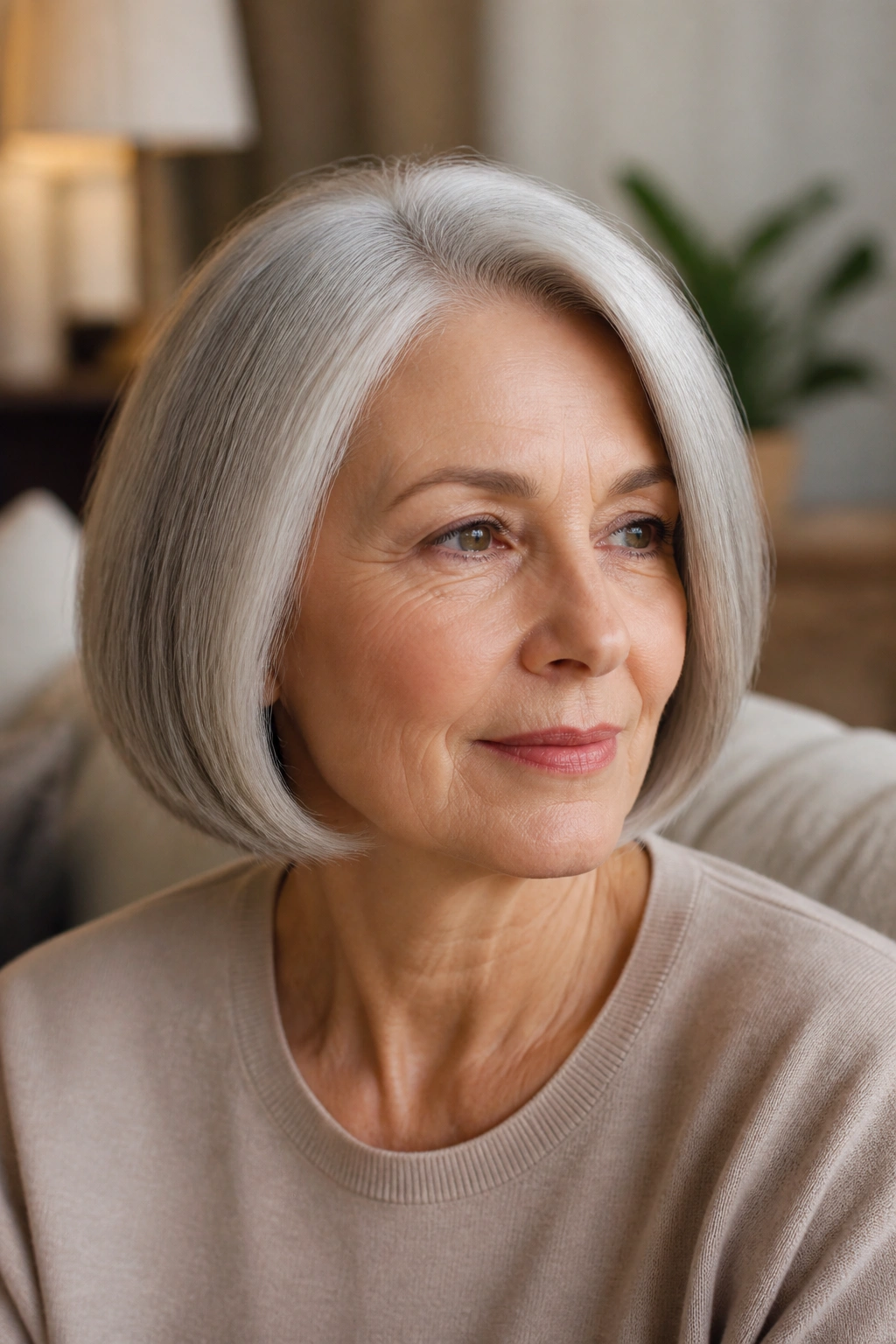
A chin-length bob can be very kind to the face. It lands right where the jaw wants a little shape, and the side part keeps it from looking stiff or boxy.
This is one of the easiest cuts to wear with gray hair. The clean line makes silver strands look crisp, not wispy. It also gives fine hair a fuller edge because the ends sit together instead of fraying out.
Ask for a blunt baseline with just a touch of internal texture. Too many layers can make a thin bob collapse. If your hair bends outward at the ends, a quick pass with a round brush or a flat brush while blow-drying keeps it smooth.
A side part matters here. A center part can work, but the side part often softens the face and makes the whole style feel a little less formal.
3. Collarbone Lob With Loose Waves

Why does a collarbone lob work so often? Because it gives you length without dragging the face down. It brushes the collarbone, which creates movement every time you turn your head.
The loose wave keeps it from feeling flat. One-inch sections around the face are enough; you do not need a full curl. The goal is a bend, not a prom curl. If your hair is fine, keep the ends slightly blunt so the cut still looks full when the wave relaxes.
How to wear it
Let a few front pieces fall forward and tuck the rest behind one ear. That tiny asymmetry makes the shape feel fresh. A soft mist of flexible hairspray is usually enough. Heavy spray tends to make gray hair feel crunchy, and nobody needs that.
4. Tapered Crop With a Longer Top
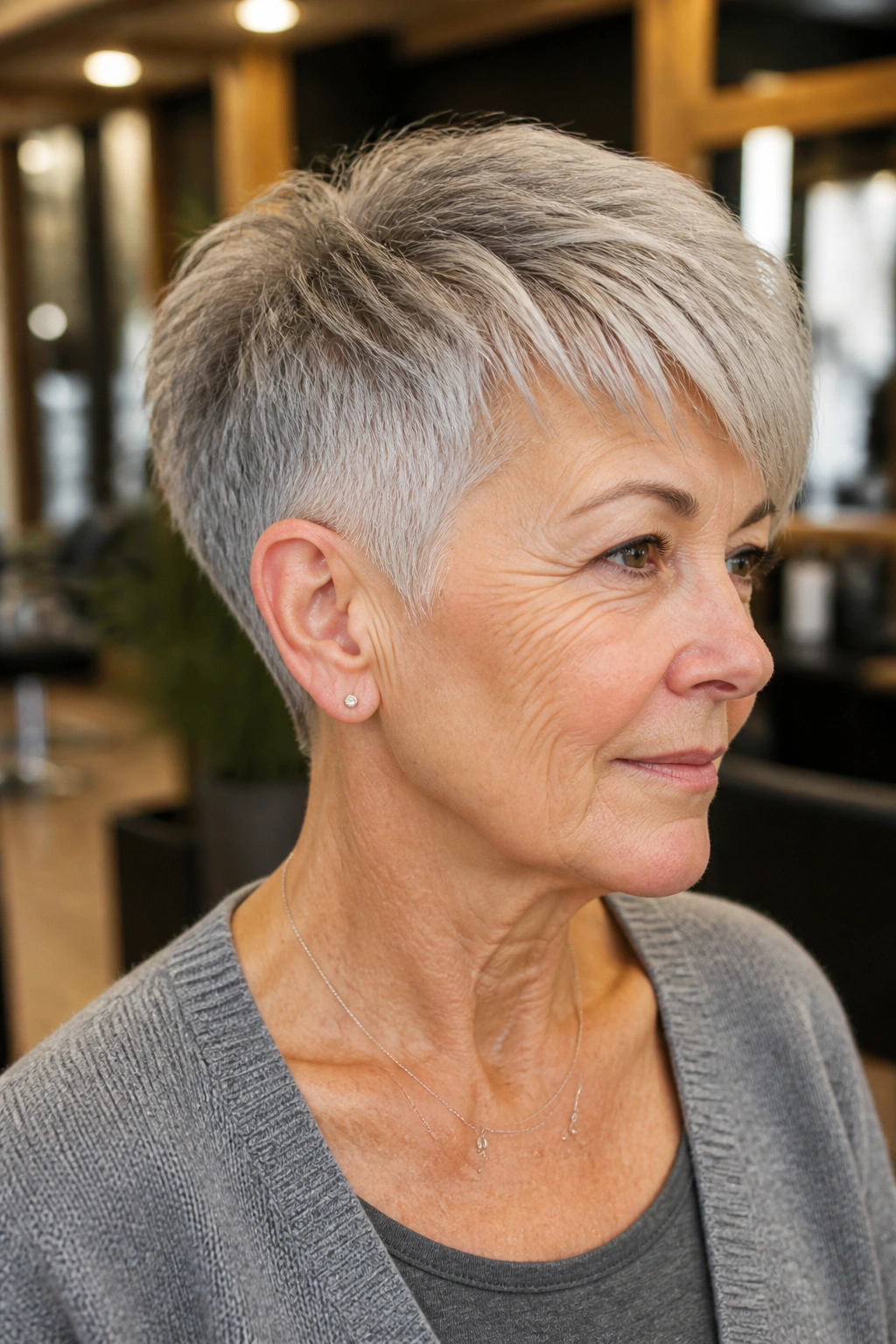
Some hair wants to stay short. Really short. And when it’s cut well, that can look sharp and easy in the best way.
A tapered crop keeps the sides close to the head while leaving enough length on top to sweep forward, off to the side, or slightly up. It’s a smart choice if the temples are thinner than they used to be. The longer top gives you coverage where you want it and air where you do not.
What to ask for
- A soft taper at the nape and around the ears
- Top length that can be finger-styled
- Texture through the crown, not at the ends only
- No hard helmet shape
If your hair is coarse, ask the stylist not to over-thin it. That can make the cut frizzier. A crop like this should feel neat, not feathery to the point of fuzz.
5. Curly Wash-and-Go Crop
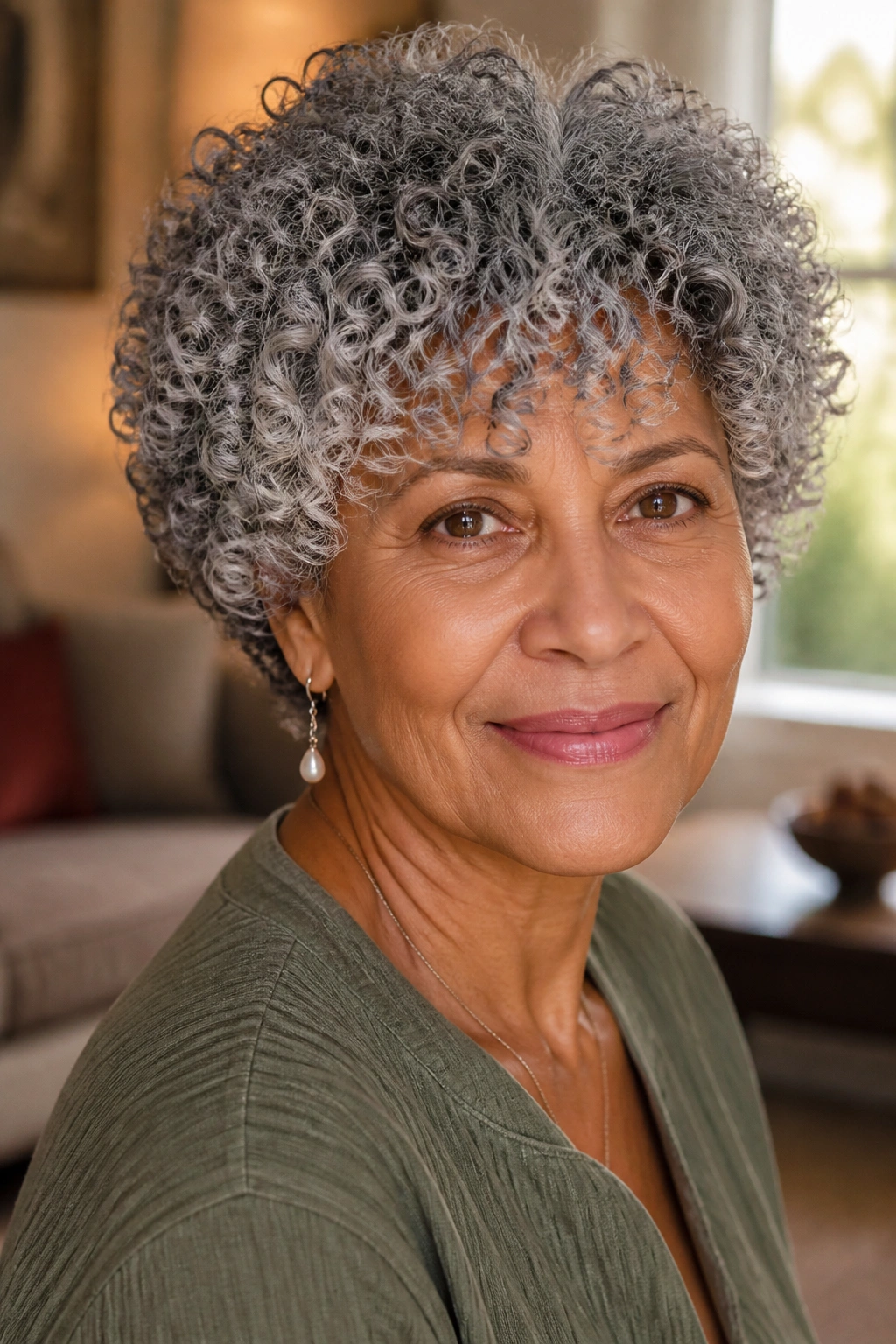
Curly hair in the seventies can look stunning when the cut respects the curl pattern. A wash-and-go crop keeps the shape short enough to control, but not so short that the curls lose their personality.
The key is moisture. Gray curls often need more cream or leave-in than they did before. If the hair feels rough when dry, a lightweight conditioner and a curl cream with slip can make a big difference. Work product through soaking-wet hair, scrunch with a microfiber towel, and leave the curls alone once they start to set.
One warning. Avoid piling all the length on top. That’s how you get the triangle effect. A good curly crop should feel rounded, soft, and tidy at the edges.
6. Airy Shag With Wispy Bangs
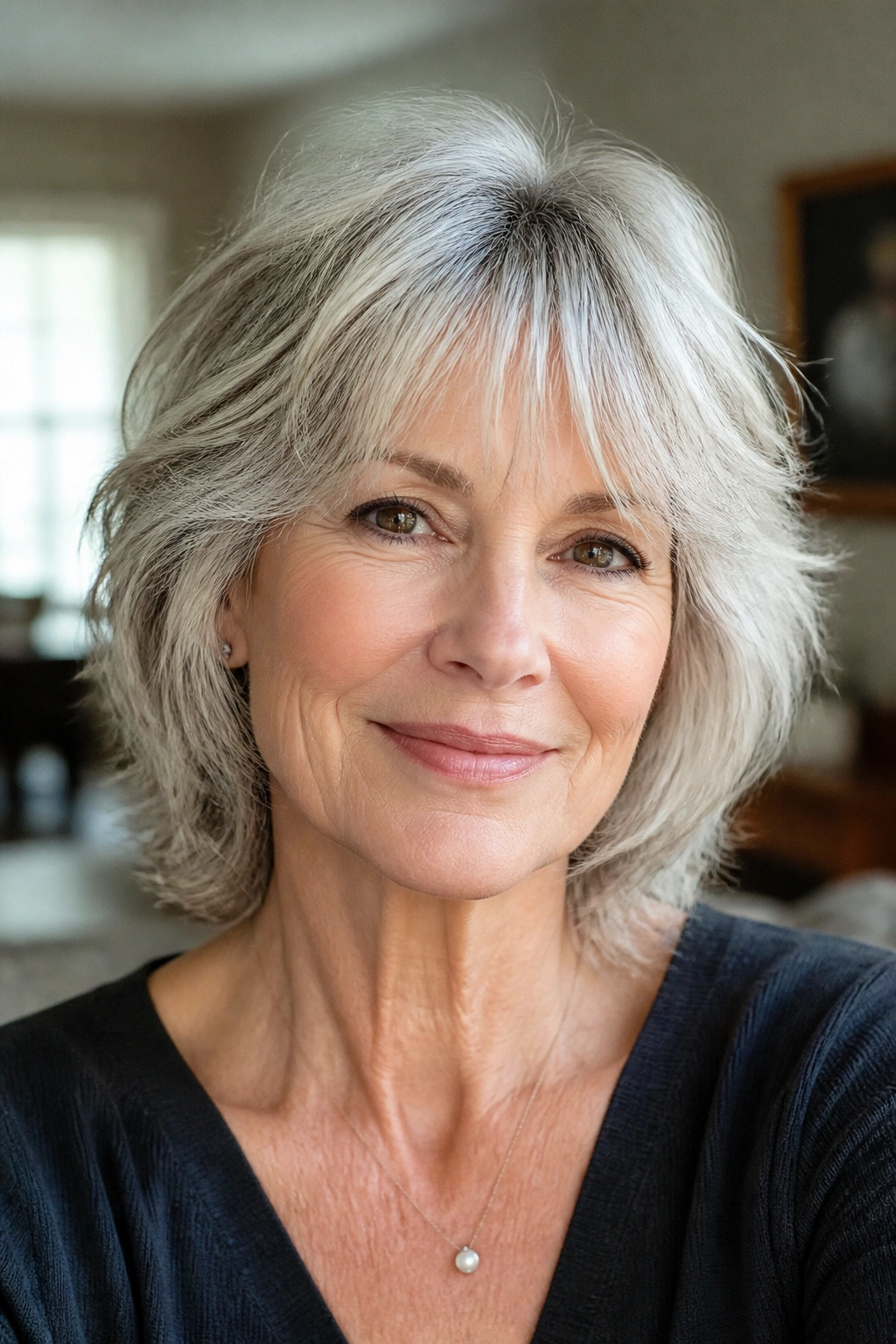
The airy shag is for the woman who likes a little edge but does not want a fussy cut. It has movement, piecey ends, and bangs that skim the brows instead of sitting like a curtain.
Compared with a blunt bob, a shag is looser and less formal. Compared with a heavily layered cut, it is easier to live with because the layers are soft, not choppy to the point of chaos. That balance matters. Too much shredding can make mature hair look thinner than it is.
This style works especially well on wavy hair. A bit of cream, a quick twist with the fingers, and a blow-dry with a diffuser or air-dry routine can be enough. If your hair is straight, a few bends around the face keep it from falling flat.
7. Sleek Short Bob Tucked Behind the Ears

A short bob that can tuck behind the ears feels neat without looking severe. It shows the cheekbones, frames the eyes, and gives earrings a chance to do their job.
The trick is keeping enough length to move but not so much that the hair falls into the face all day. A bob that lands just below the jaw usually does the job. If the ends are slightly beveled inward, the whole cut looks polished with almost no effort.
What makes it click
- A clean side or off-center part
- Light serum on the ends only
- A flat brush for a smooth finish
- Ear tucking on one side, not both, to keep it relaxed
A little shine goes a long way on gray hair. Too much product can make it look wet instead of healthy.
8. Rounded Silver Afro
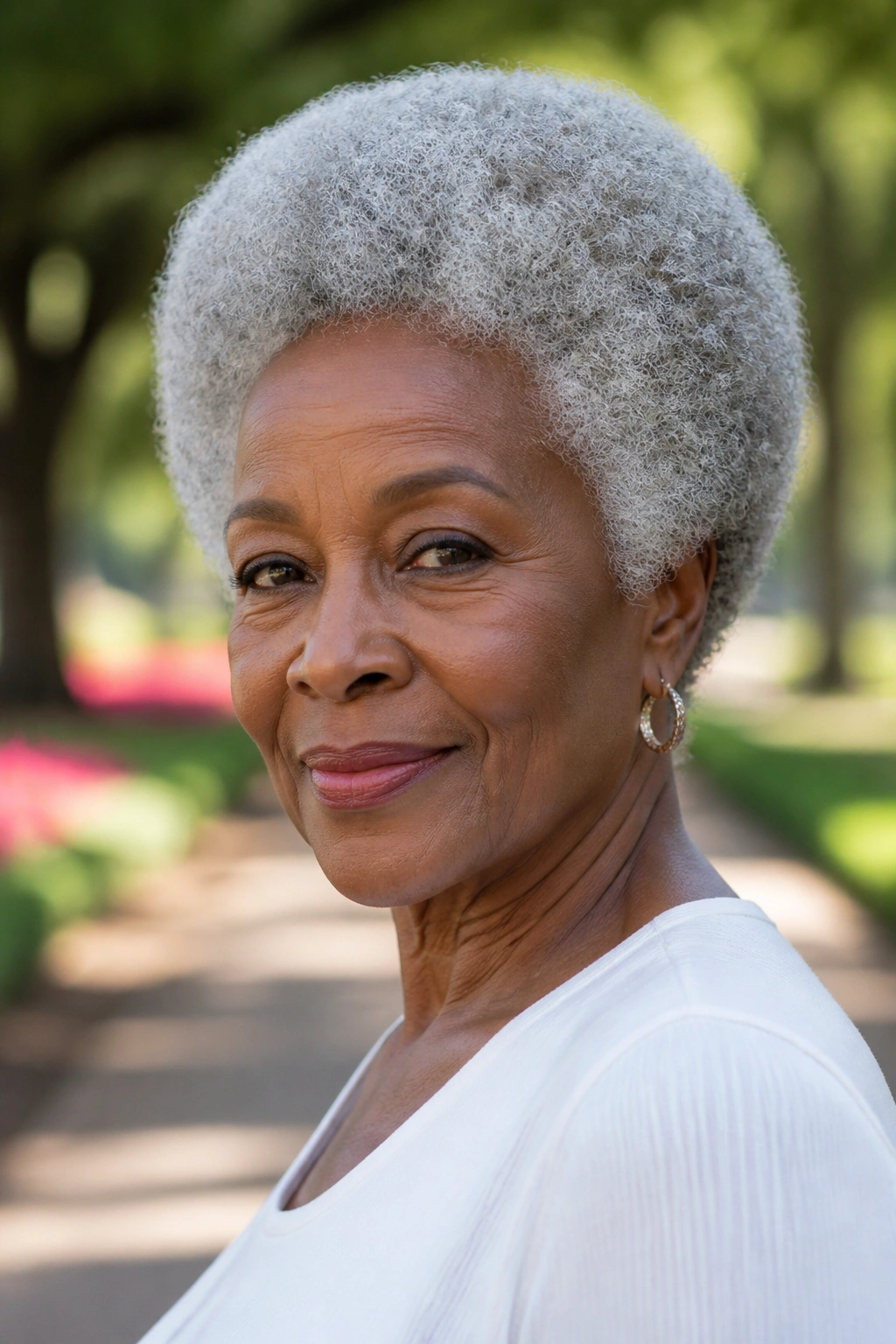
A rounded silver afro is one of those styles that looks confident because it knows exactly what it is. It does not chase length. It builds shape.
The round silhouette matters. It keeps coily and tightly curled hair from spreading outward in a wide, shapeless halo. Instead, the shape sits closer to the head and lifts upward, which draws the eye to the face. Silver and white strands look especially strong in this cut because the shape gives them a clean border.
Moisture is the whole game here. A rich leave-in, a curl cream, and a little oil on the ends help the hair stay soft. Trim the shape every 6 to 8 weeks if possible, because the outline starts to drift fast once the curls grow unevenly.
9. Mid-Length Cut With Face-Framing Layers
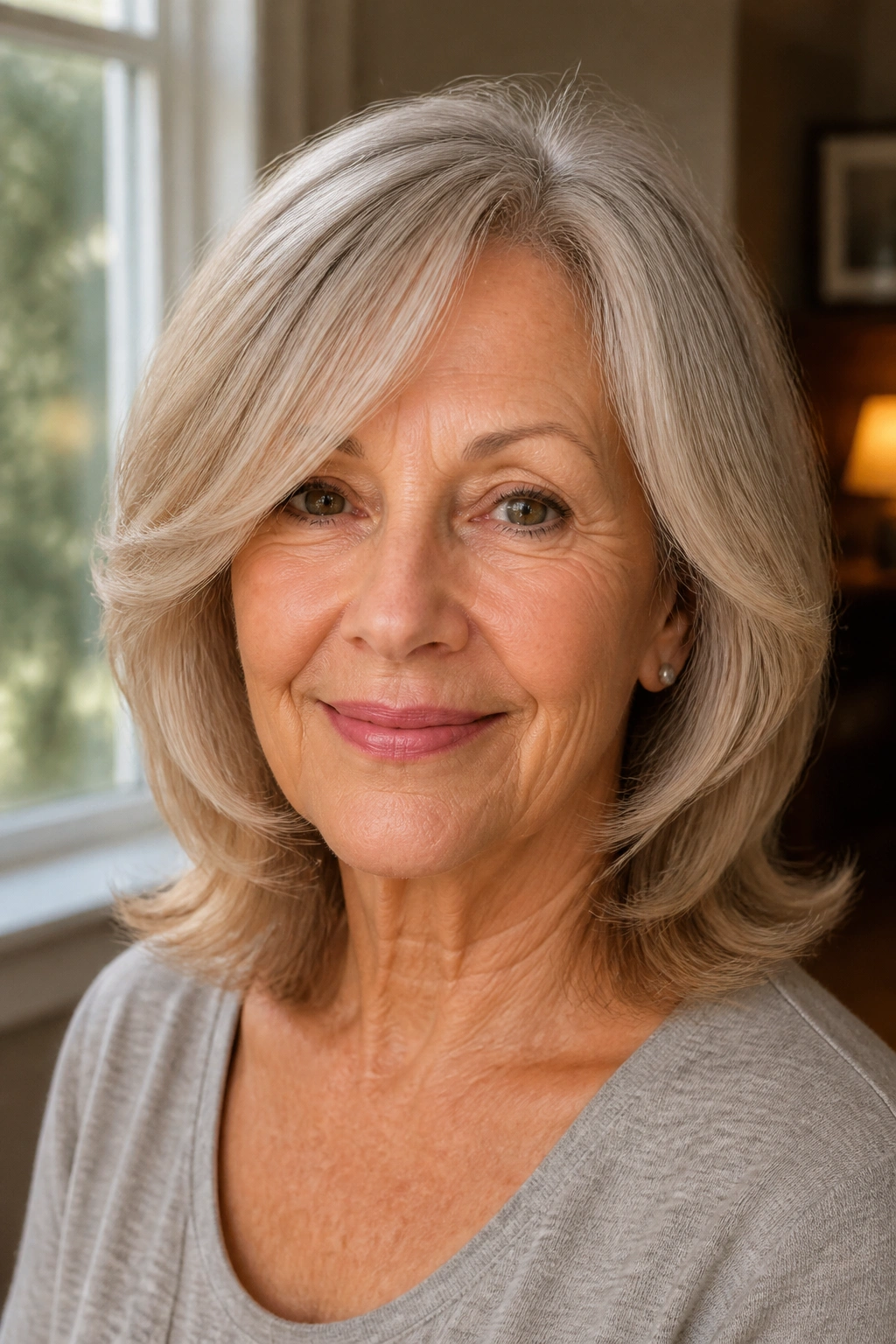
Can shoulder-skimming hair still look flattering in the seventies? Absolutely, if the layers are placed with care.
The best face-framing layers start around the cheekbone or jaw, not at the chin and not all the way up near the temples. That keeps the hair from looking stringy. If the face needs a little lift, those front pieces act like a visual nudge upward. If the neck is a feature you like, the length still gives you something to show off.
How to wear it
A soft bend with a round brush is enough on most days. If the hair is naturally wavy, let the texture do some of the work and smooth only the front. This cut is generous, not demanding. That is part of the appeal.
10. French Twist for Dressy Days
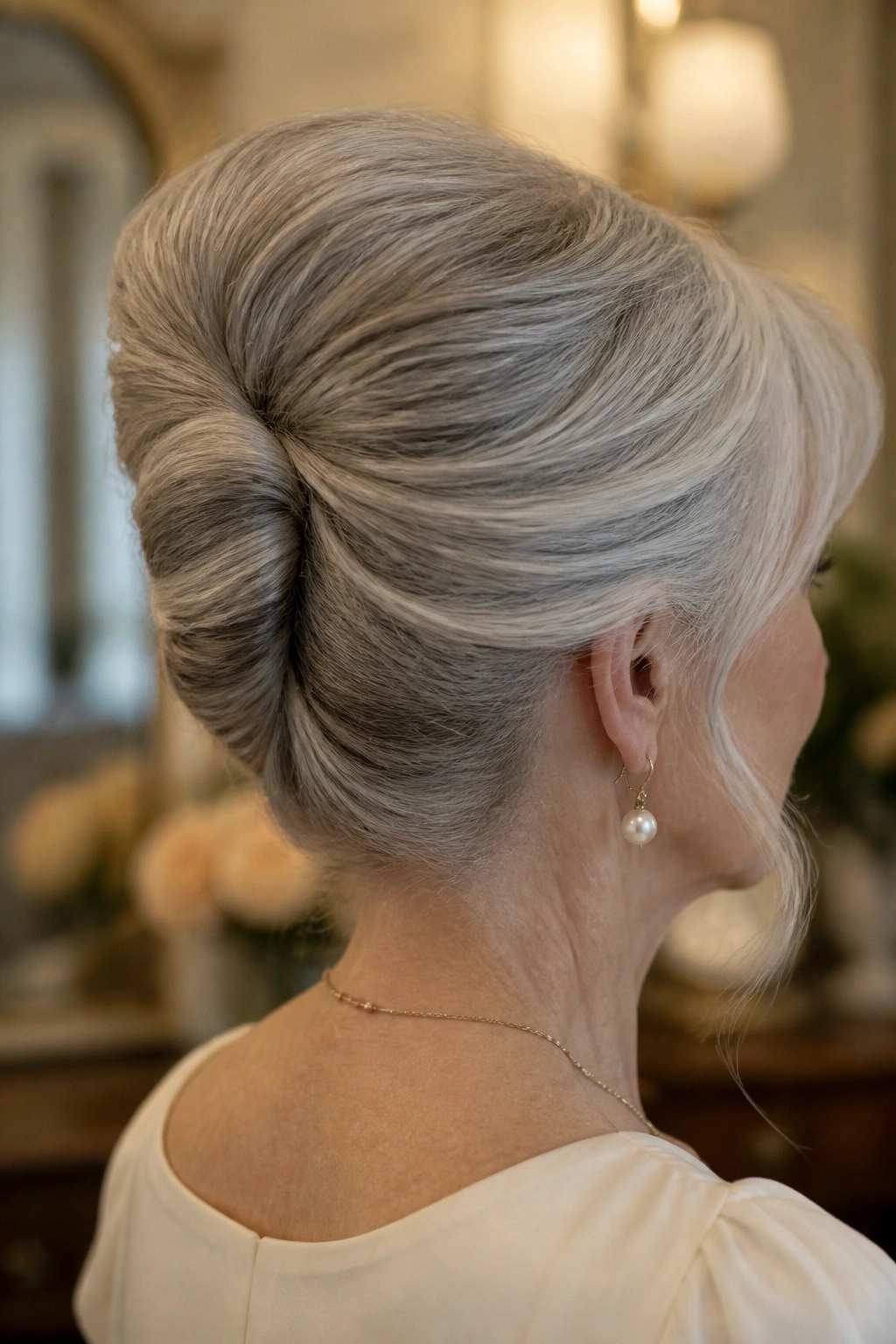
A French twist can look elegant without being stiff, but only if you keep it a little loose. Pull it too tight and it starts to look severe. Leave a soft shell around the hairline and it feels graceful instead.
This style works well when hair has enough length to gather into the twist, usually past the nape. Fine hair often benefits from a bit of teasing at the crown first. Thick hair needs strong pins and a little patience. The shape should feel secure, not hard.
- Leave a few softer pieces around the temples.
- Pin upward, not sideways, for a cleaner hold.
- Use a light spray before and after pinning.
- Keep the top slightly lifted so the profile looks balanced.
A French twist is one of those styles that makes a simple dress look finished.
11. Low Chignon With Loose Side Pieces
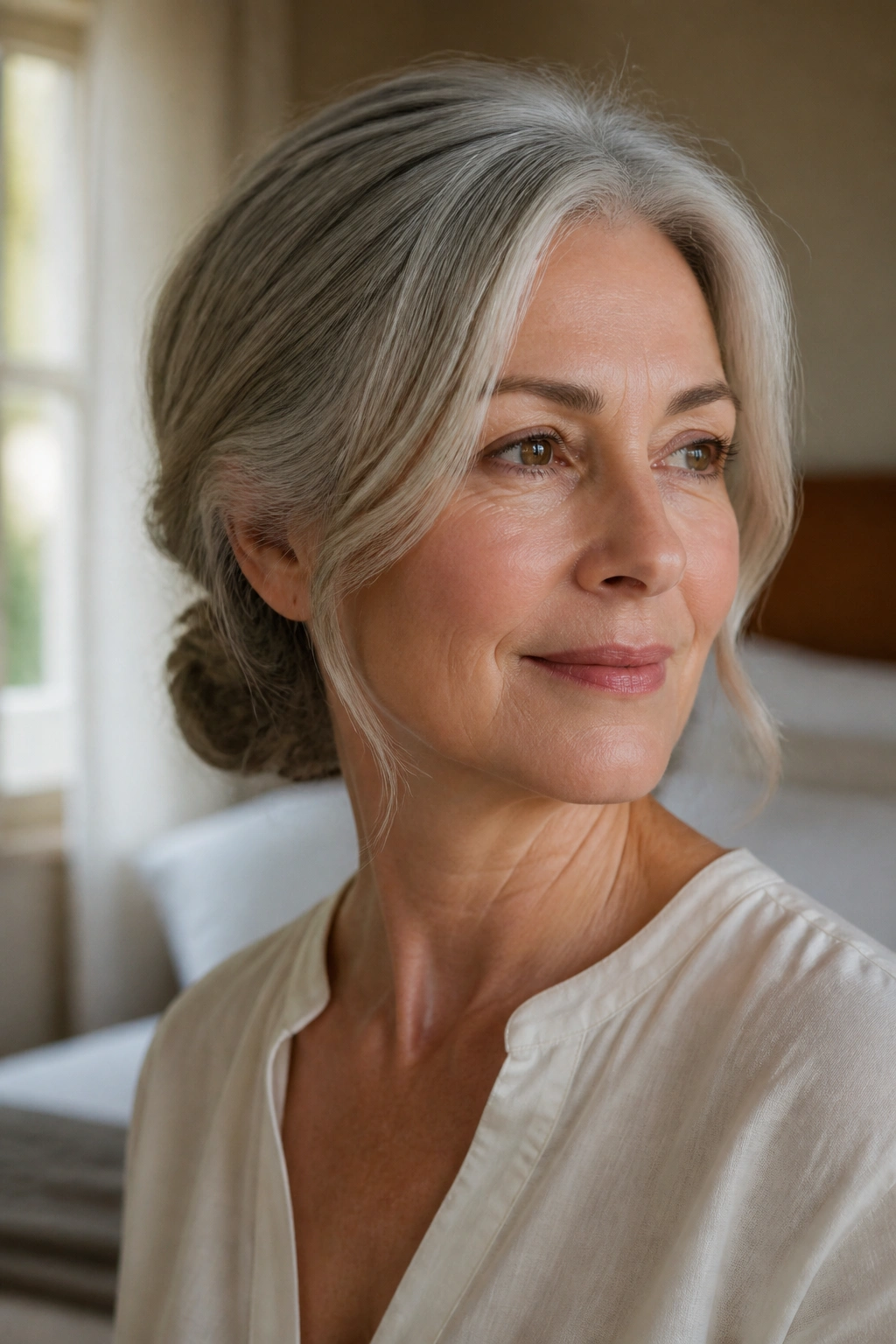
A low chignon at the nape is calm in the best sense. It does not fight the face. It sits low, keeps the neck open, and leaves room for earrings, scarves, or a collared blouse.
The loose side pieces matter. They keep the bun from feeling too tight or formal. A strand or two around the temples can soften features that have gotten sharper over time, especially if the hairline has thinned. That softness is not accidental; it is what makes the style wearable.
Use a small elastic, twist the length into a knot, and pin where the shape feels secure. If the bun is too large, it starts to look bulky. Small and tidy usually wins here.
12. Half-Up Twist for Fine Hair

A half-up twist is a clever fix for fine hair that falls flat by midday. It lifts the crown, keeps the length visible, and gives the back a little interest without asking for a full updo.
Unlike a full bun, this style does not steal all the movement from the hair. That matters when the ends are still the strongest part of the cut. It also plays well with longer bobs and lobs, where the hair needs a little help looking intentional.
How to do it
Backcomb a narrow strip at the crown, gather the top section from temple to temple, and twist it back before pinning. Keep the twist loose. If you pull it too tight, the lift disappears and the scalp shows more. A light mist of spray at the roots is enough.
13. Side-Swept Pixie With Long Fringe
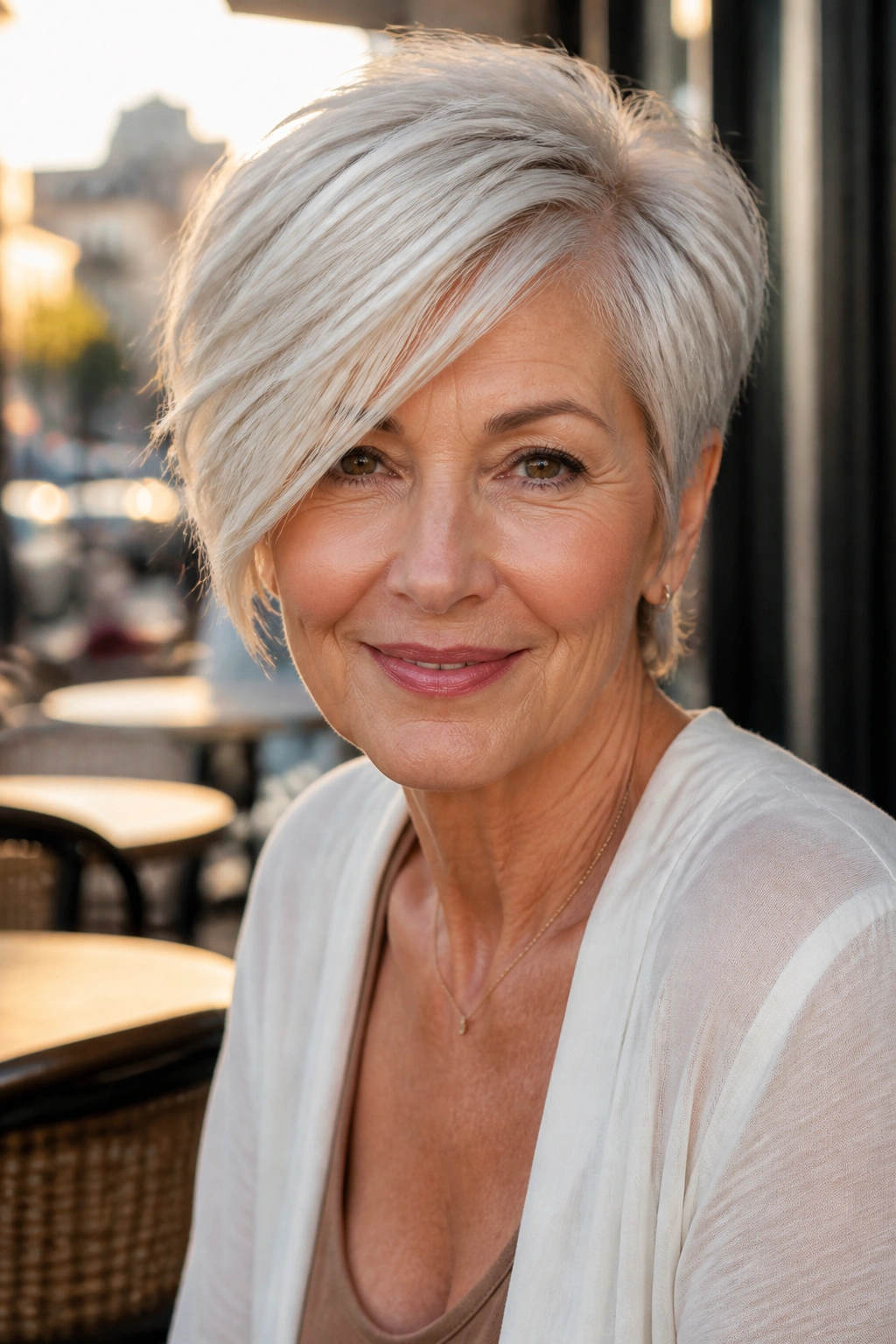
A side-swept pixie feels softer than a cropped cut with a straight fringe. The longer front pieces slide across the forehead instead of stopping abruptly, which can make the face look less sharp.
This is a strong choice for women who want short hair but not a super-close crop. The fringe can be cut to sit near the brow or just below it, depending on how much forehead you want to show. It also makes the hair look fuller at the front, which helps if the crown is thinner than the sides.
Ask for a diagonal line through the front, not a heavy blunt bang. That angle gives the cut movement. It also grows out more politely, which is a small mercy.
14. Blunt Bob With Softened Ends
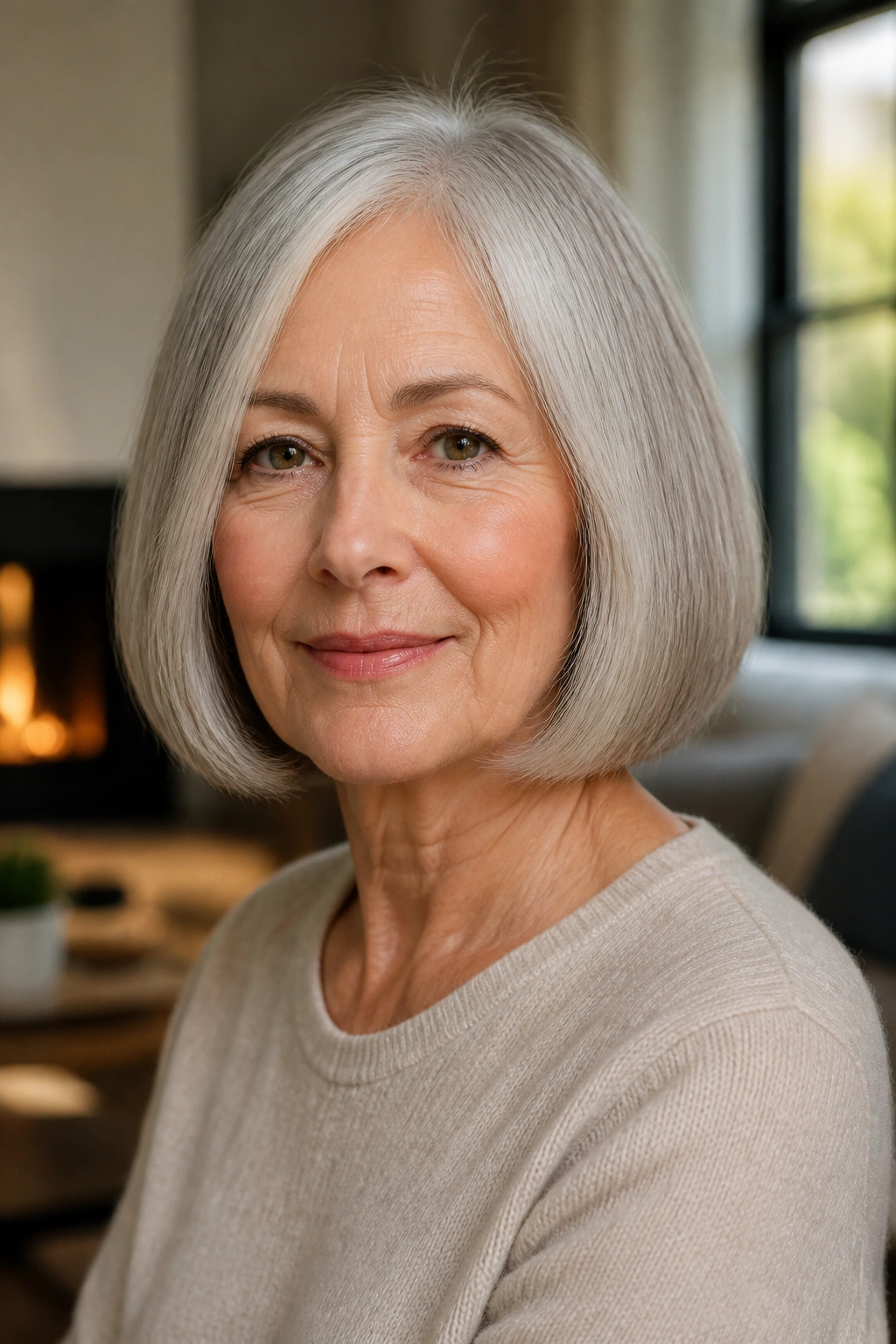
A blunt bob can be surprisingly flattering on gray hair because the edge looks dense. That clean perimeter gives the illusion of thickness, especially if the hair has started to thin a little at the bottom.
The trick is softening the ends just enough that the cut does not feel helmet-like. A tiny bit of point cutting or a slight bevel at the bottom helps. You want the line to stay strong, but not rigid.
This style suits women who like a low-fuss shape that still looks polished after a quick blow-dry. If your hair tends to flip out, a paddle brush and a smoothing cream can keep the ends tucked in. Keep layers light. Too many will break the whole point of the cut.
15. Braided Crown for Medium-Length Hair
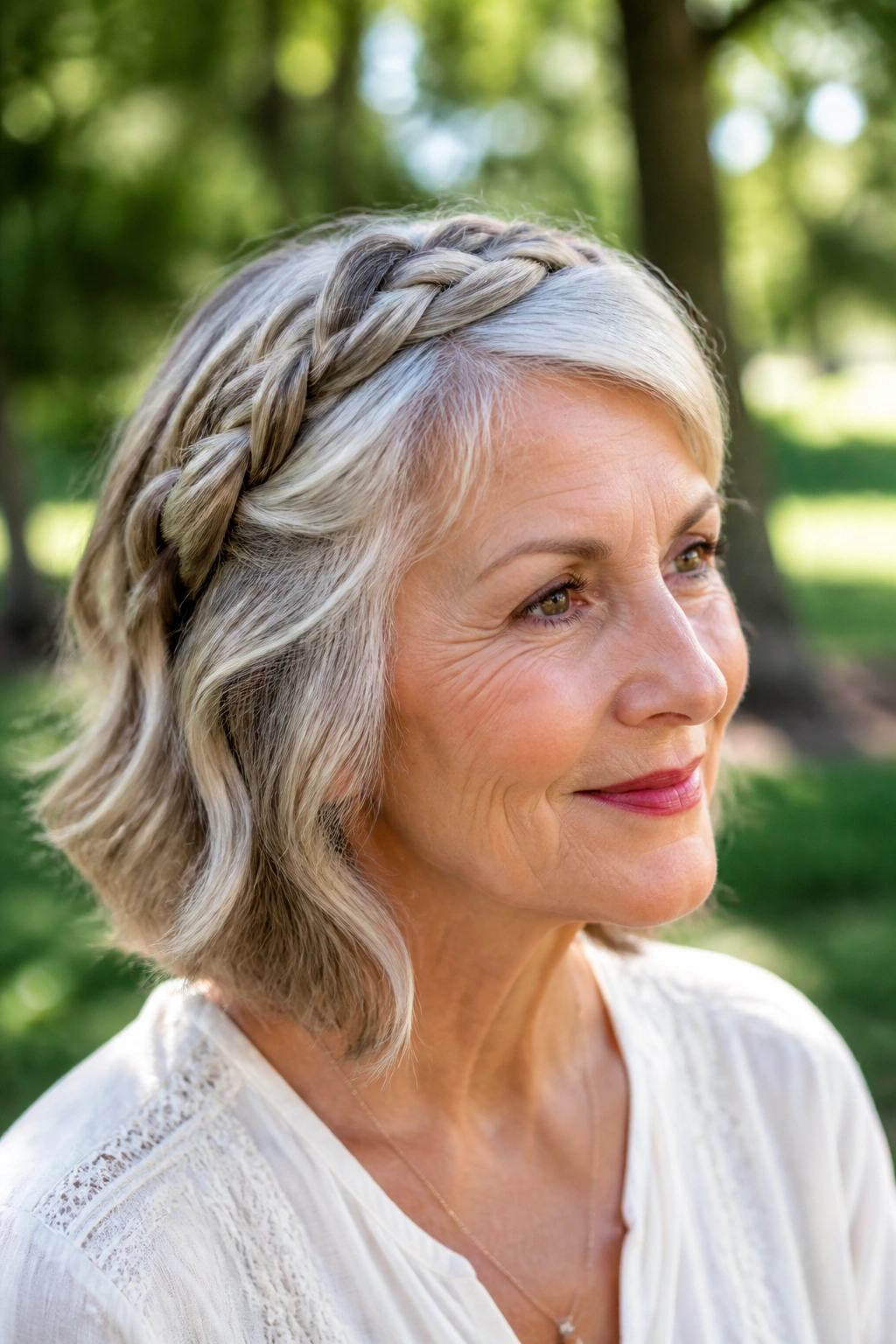
A braided crown has a quiet charm to it. It wraps the head, keeps the hair off the face, and looks thoughtful without trying too hard.
Why does it work for mature hair? Because medium-length strands often need structure. A braid gives them a path. It also keeps second-day texture in place when the hair has lost the clean slip it had on wash day.
How to wear it
Start two braids from the temples or make one braid along the front hairline and pin it across the crown. Keep the braid loose so it does not tug the scalp. A small bit of texture spray helps the sections hold. If your hair is very soft, a little dry shampoo at the roots gives the braid something to grip.
16. Rolled-Under Bob With Crown Volume
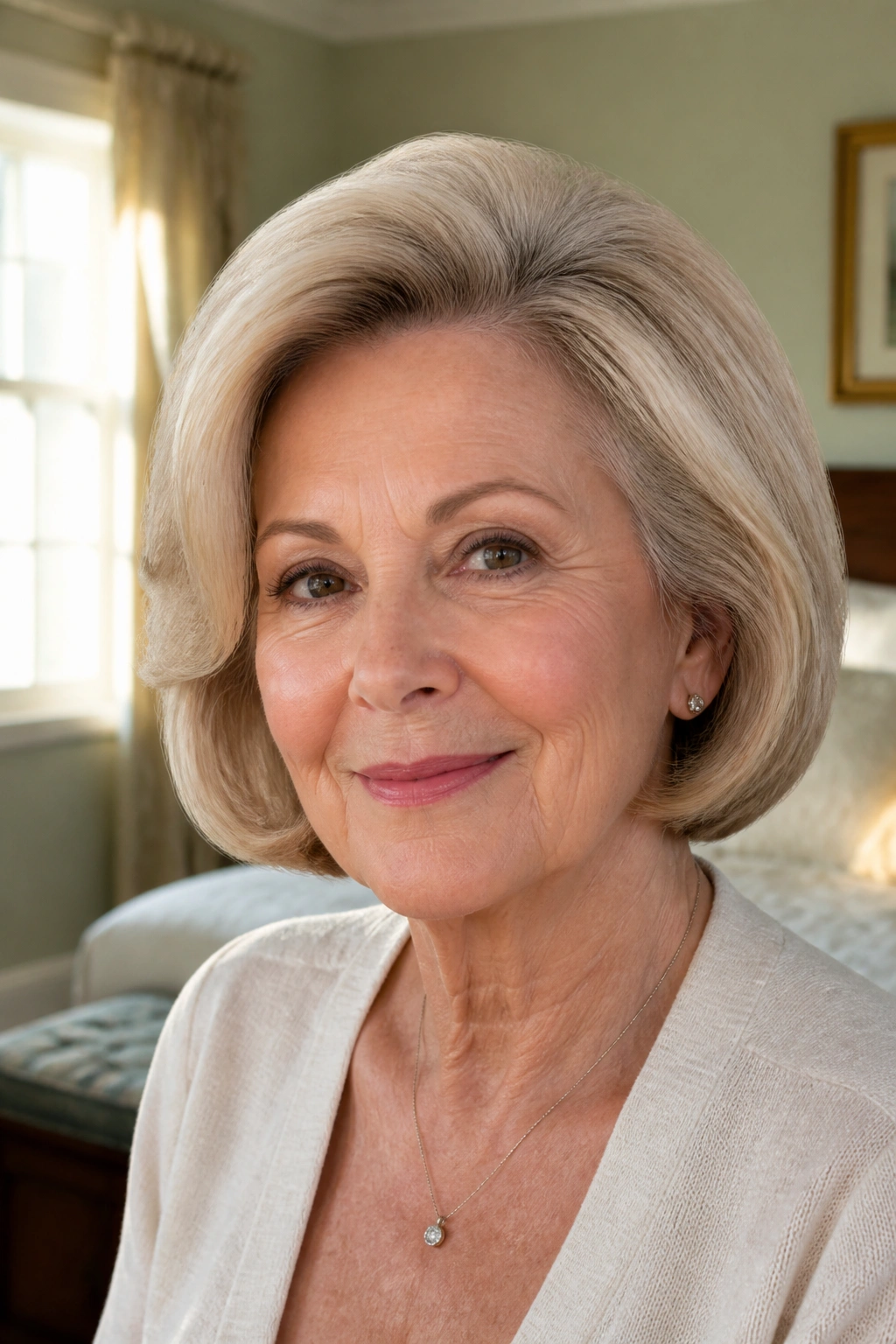
A rolled-under bob is a classic for a reason. It shapes the face, opens the neck, and gives the hair a finished look even on ordinary days.
The crown volume is what keeps it from feeling dated. Hair that lies too flat on top can drag the whole style down. A round brush or a few clips at the roots while the hair cools will help the lift stay in place. The ends should curve under, not curl under in a tight old-fashioned flip.
This cut suits women who like order in their hair. Not stiffness. Order. That distinction matters. A good rolled bob feels controlled but still soft enough to move when you turn your head.
17. Loose Barrel Curls on Shoulder-Length Hair
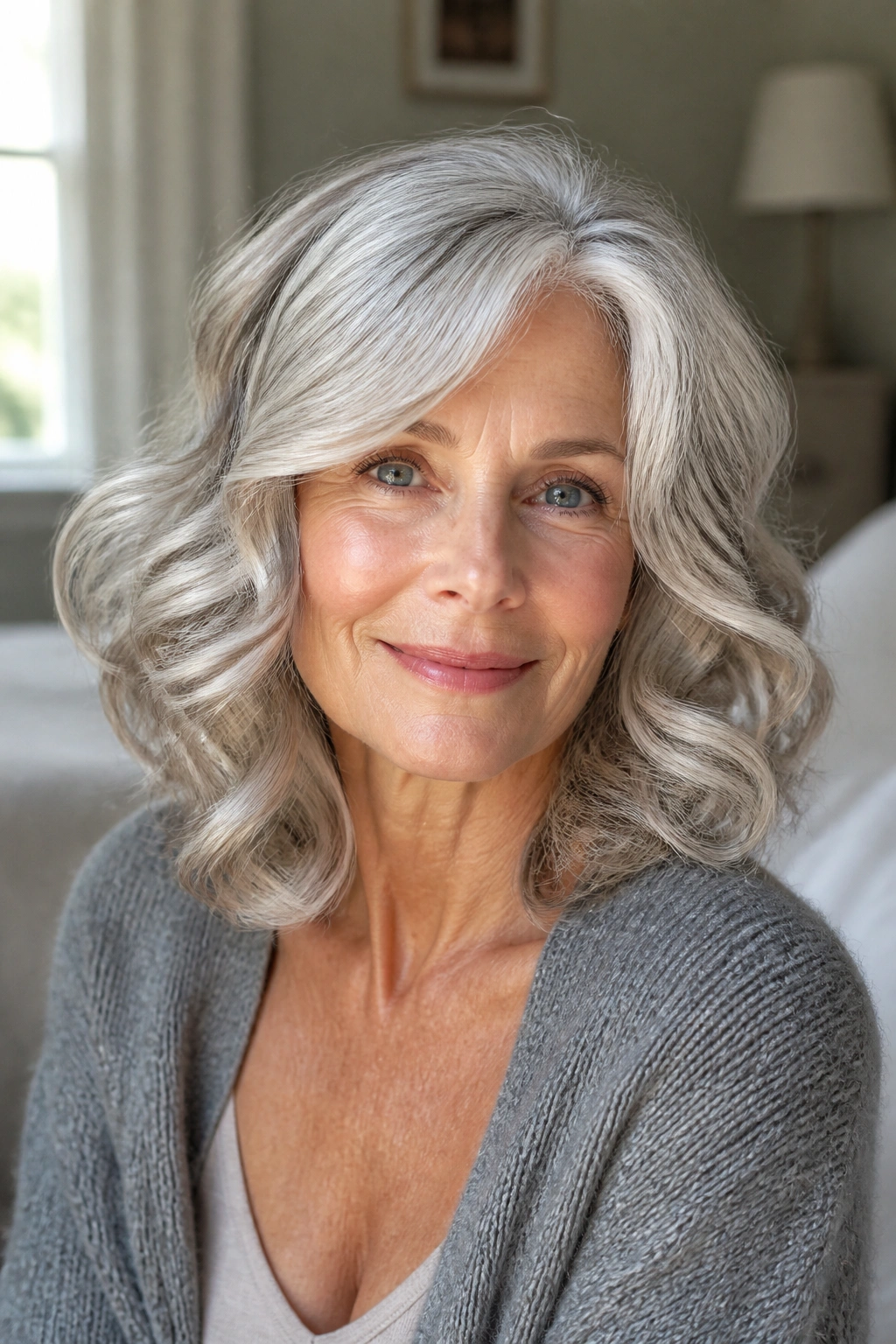
Loose barrel curls are a nice answer when you want body without tight ringlets. On shoulder-length hair, they create that soft, brushed-out texture that looks full but not fussy.
Use a 1.25-inch curling iron or wand and wrap sections away from the face on one side, then alternate the direction through the back. That gives the curls a more natural fall. Let them cool before brushing them out. If you brush too soon, the shape drops fast and the ends frizz.
A little shine serum on the mid-lengths helps gray hair catch the light in a clean way. Keep it off the roots, though. Flat roots and shiny ends is a better mix than shine everywhere.
18. Wedge Cut With a Stacked Back
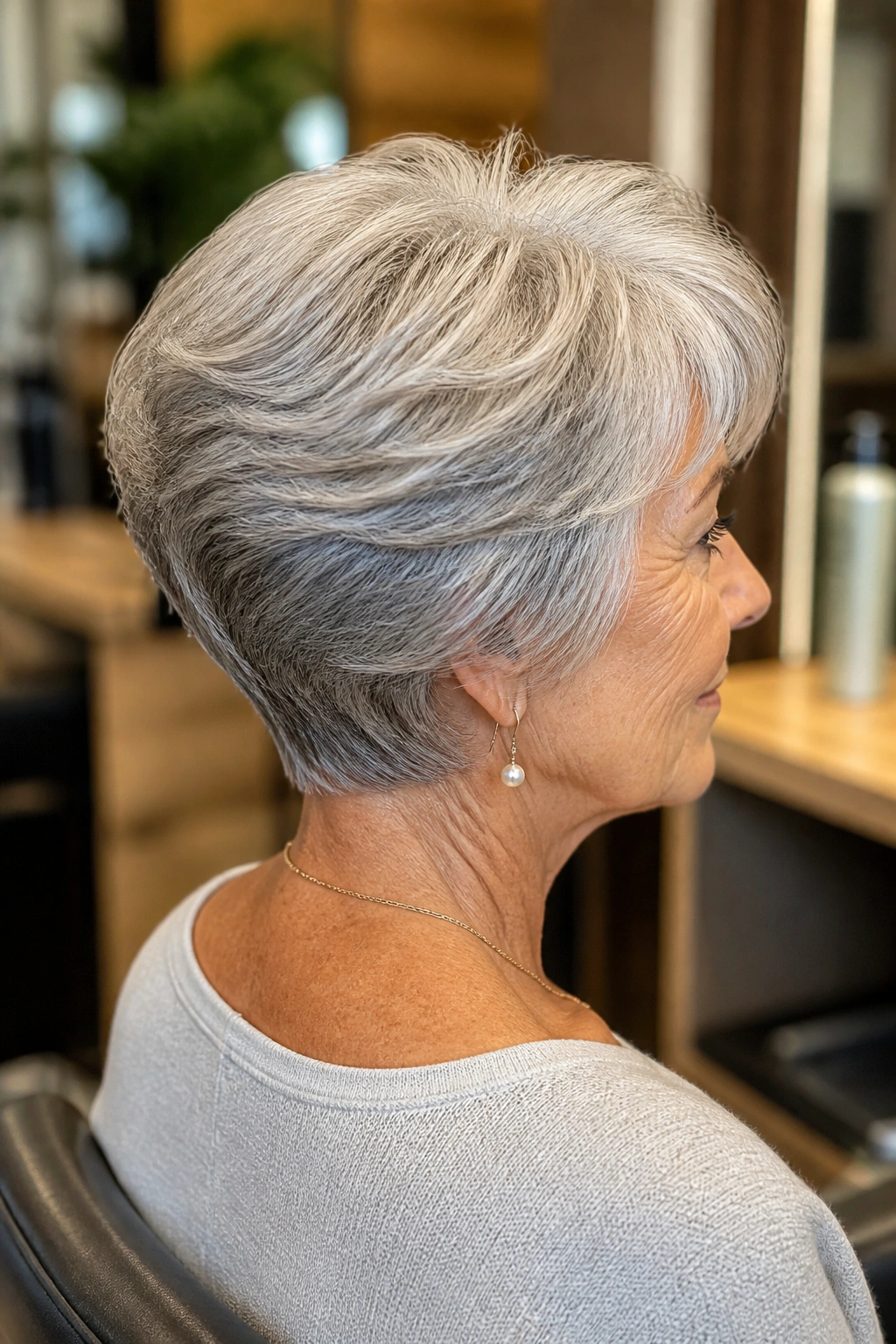
The wedge cut has a stronger shape than most people expect. Short in the back, fuller toward the crown, and narrower at the sides, it gives the head a tidy outline that works especially well on thick hair.
Compared with a shag, the wedge is more structured. Compared with a pixie, it offers a little more coverage. That makes it a smart option if you want shape without a lot of daily styling. The stacked back also lifts the neck visually, which can make the whole profile look cleaner.
Ask for the angle to stay soft, not too steep. A hard wedge can feel dated fast. A gentle one is easier to wear and looks better with silver or white hair that has a little natural sheen.
19. Long Layers With Silver Dimension
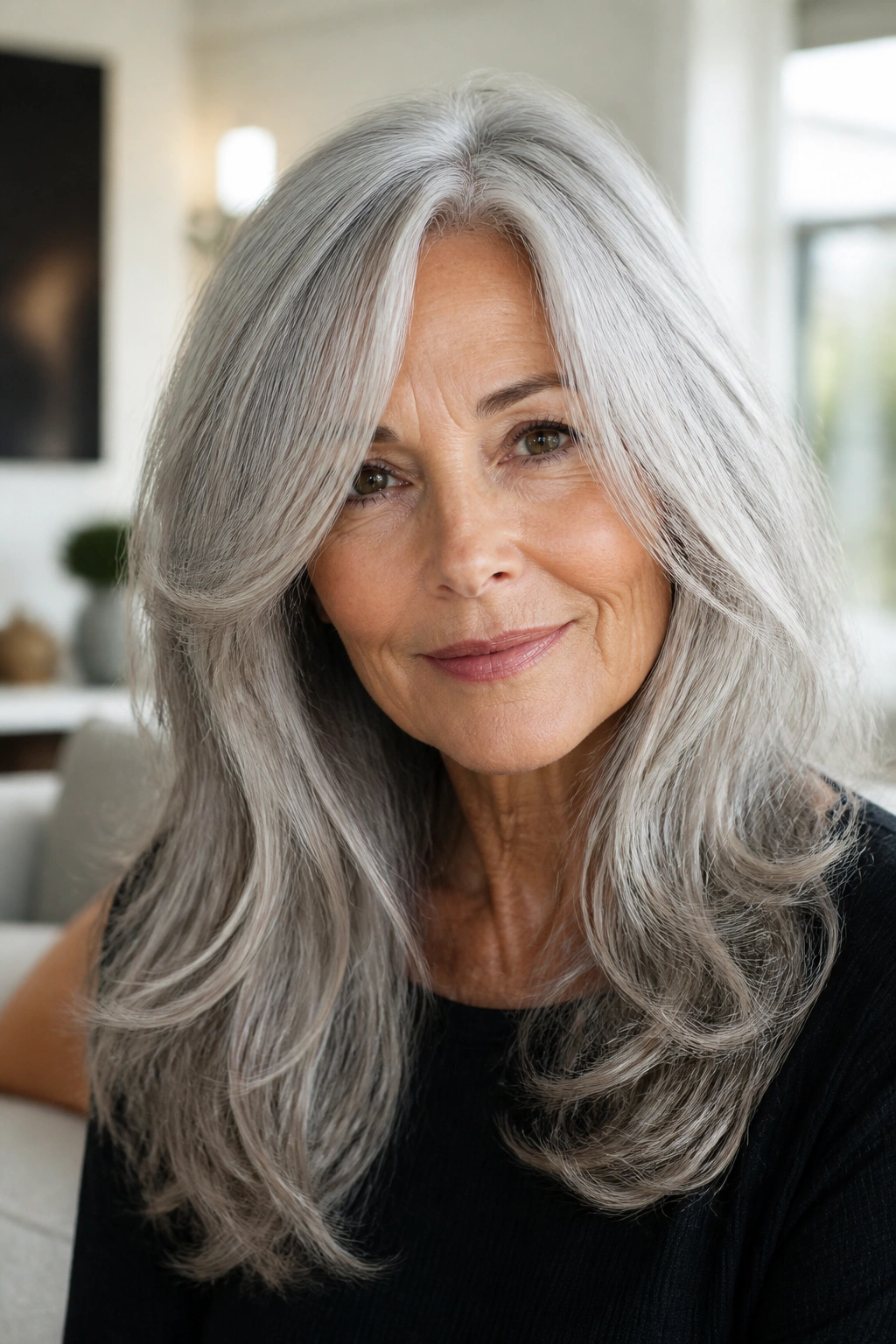
Long hair in the seventies is not a problem. Bad long hair is the problem. If the ends are thin and the layers are wrong, the style looks tired. If the cut is shaped well, long silver hair can look rich and graceful.
Why it flatters gray hair
Long layers let the color do some of the work. Silver strands catch light differently when the hair moves, and layers help that movement show up. A few face-framing pieces keep the length from dragging the face down. If the hair is fine, ask for only enough layering to remove heaviness, not enough to make the ends wispy.
- Keep the longest layer at or below the collarbone.
- Start the shortest face-framing pieces around the cheekbone.
- Use a wide-barrel brush or large rollers for bend.
- Trim split ends often so the bottom edge stays clean.
Good long layers should feel soft, not sparse.
20. Slicked-Back Low Bun With Texture at the Crown
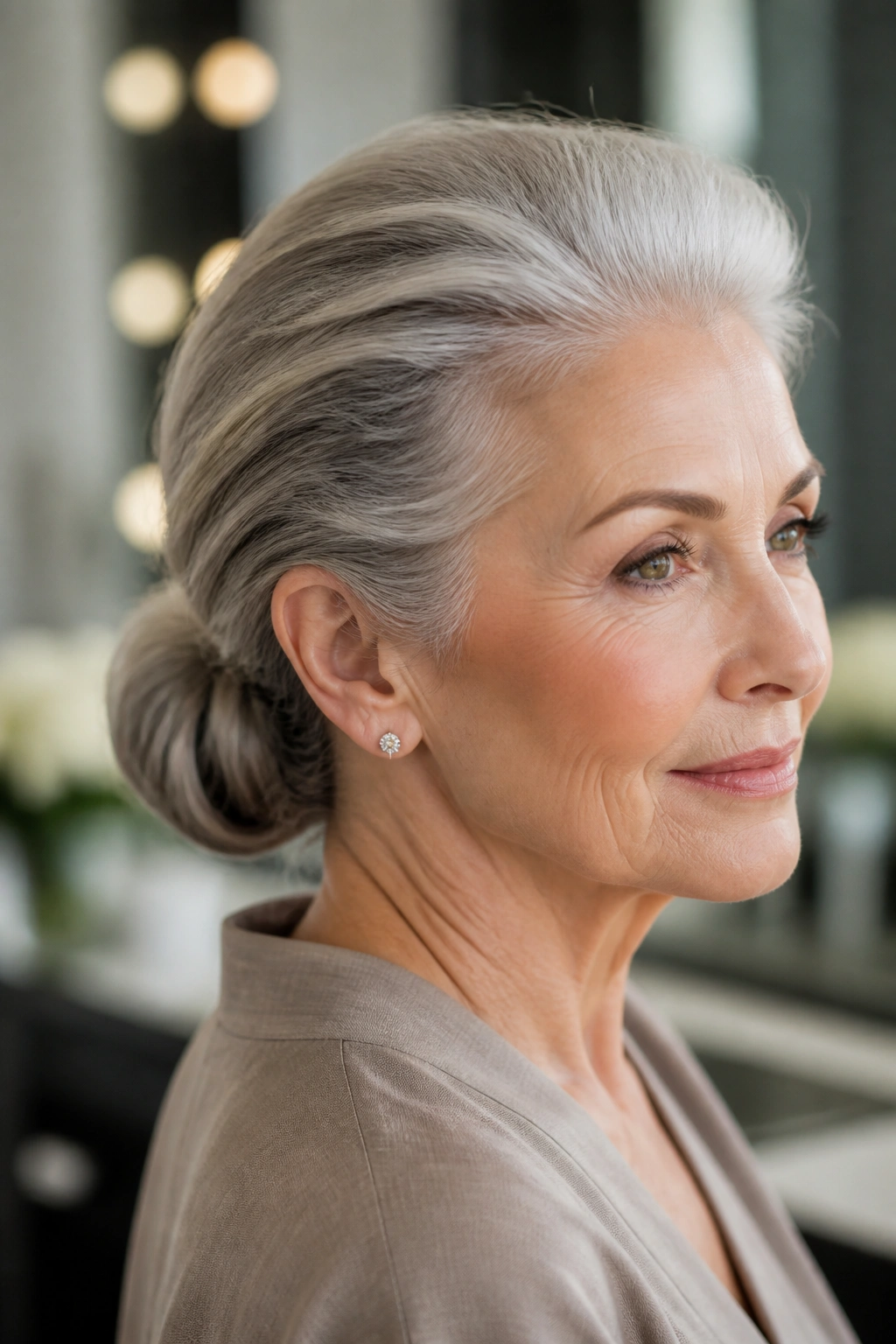
A slicked-back low bun can look sharp on older women when the crown keeps a little height. If the top is pressed flat against the head, the style can look severe. A bit of lift changes everything.
This is a good choice for straight or slightly wavy hair. Brush the sides back smoothly, then gather the bun low at the nape. Leave the crown with a touch of volume instead of smoothing every strand into place. That tiny lift keeps the face from looking compressed.
Use gel or cream only along the hairline and sides. Too much product on the lengths makes the bun look greasy. The bun itself should stay compact and neat, while the crown keeps a little life.
21. Pin-Curl Set for Defined Waves
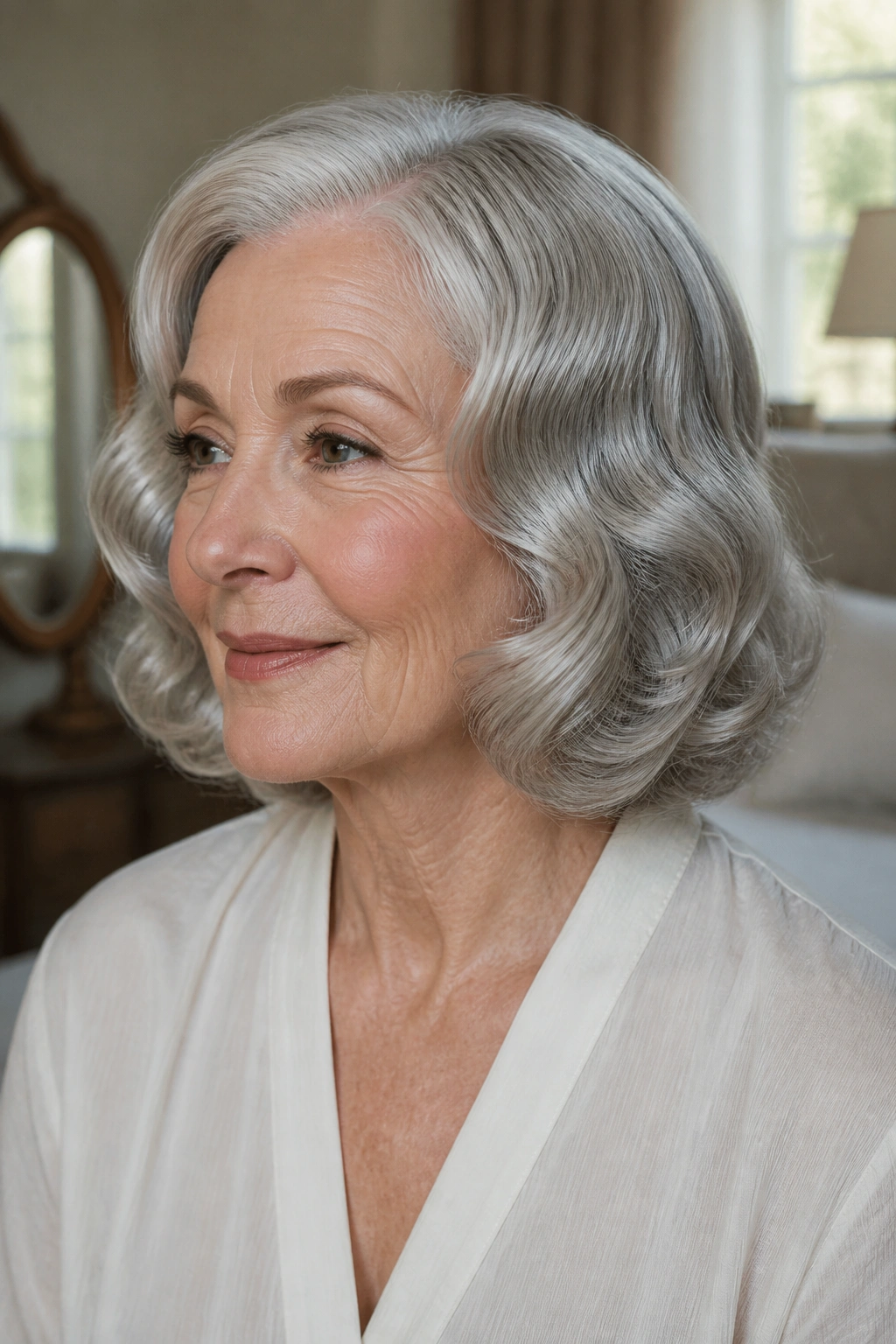
Why do pin curls still work? Because they build shape before the hair has a chance to collapse. That matters for hair that is fine, soft, or stubbornly straight.
A pin-curl set gives you waves with memory. The curls cool in place, which helps them last longer than a quick hot-iron pass. It also creates a cleaner wave pattern than random curling. On silver hair, that pattern can look especially polished because the light hits the bends in a neat line.
How to get the shape
Take 1-inch sections, wrap them flat around two fingers, and pin them against the head until fully cool. Brush them out lightly with a soft brush or your fingers. The end result should feel soft and touched, not crunchy or overdone. A flexible spray is enough.
22. Bob With a Scarf Wrap or Headband
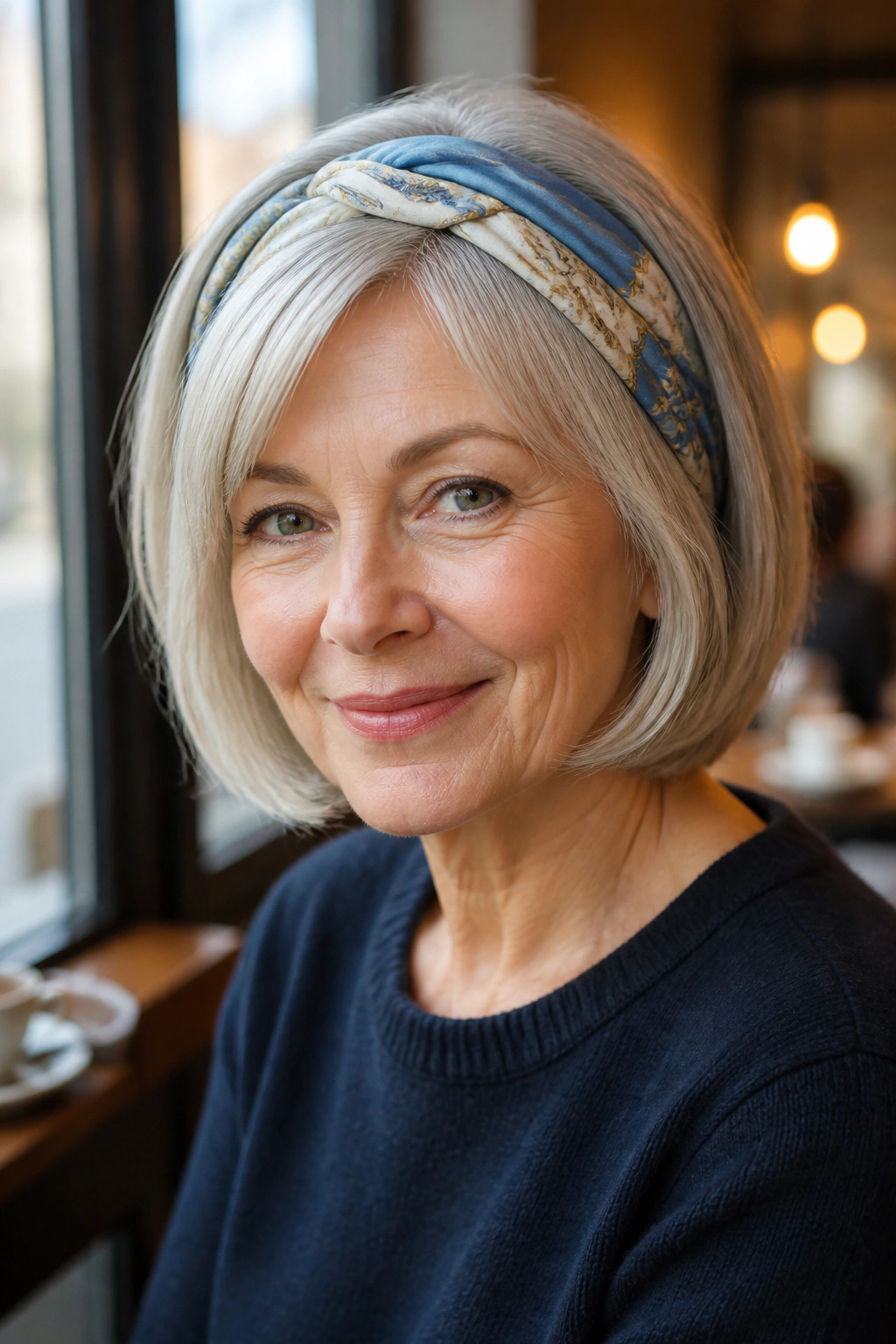
A scarf can rescue a plain bob on a day when the hair refuses to behave. It also adds color near the face, which is helpful when gray hair is leaning a little monochrome.
The cleanest versions use a silk scarf tied just above the ears or a padded headband that sits behind the hairline. Both work because they give the cut a clear focal point. The bob itself can stay simple. The accessory does the work.
- Choose a scarf that is not too wide, or it overwhelms the face.
- Keep the bob smooth at the ends.
- Let one side tuck behind the ear for shape.
- Match the scarf color to your lipstick or earrings if you want the whole look to feel joined up.
A scarf is not a shortcut. It is a style move.
23. Natural Coils Shaped Into a Halo
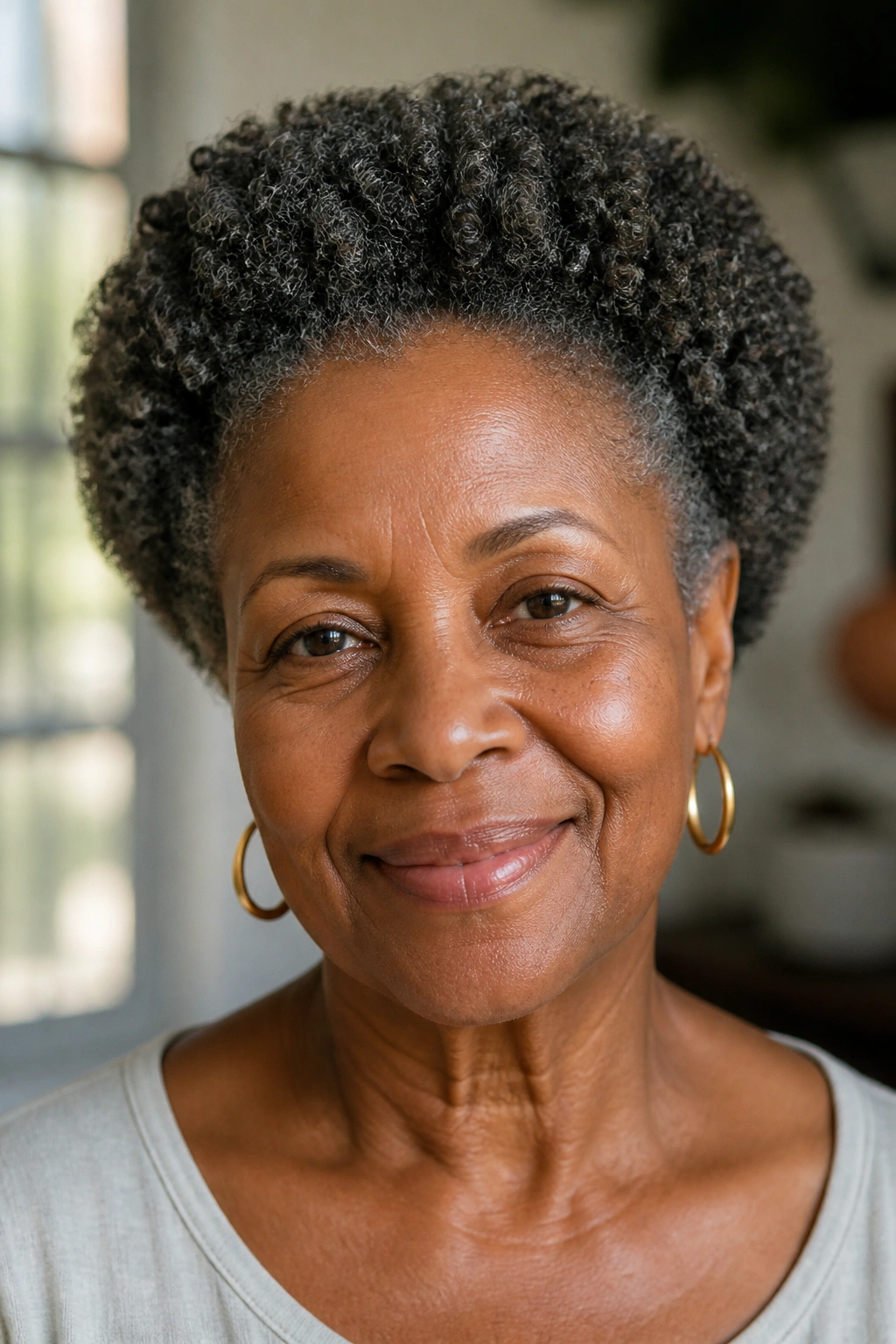
Natural coils look beautiful when the cut respects their roundness. A halo shape keeps the hair centered and balanced instead of stretched into a shape it does not want.
Moisture matters here, but so does restraint. Many people over-manipulate coily hair and flatten the very texture they wanted to celebrate. A halo cut lets the coils stack upward in a controlled circle. The effect is soft, full, and easy to read from every angle.
If shrinkage makes the style look shorter than you expected, that is normal. Do not chase the length. Chase the outline. Once the silhouette is right, the hair reads as deliberate and finished, which is what matters.
24. Shoulder-Length Blowout With Flipped Ends

A shoulder-length blowout with flipped ends has a little movement without drifting into big salon hair. The flip at the bottom keeps the length lively, and the smooth top makes the style feel controlled.
This works especially well if your hair has medium density. Fine hair may need rollers or root clips to keep the lift. Thick hair needs careful sectioning so the blow-dry does not puff out at the sides. A round brush with 1.5-inch sections is usually enough.
Compared with a straight lob, this version feels warmer and a bit more open around the face. It is a smart style for dinners, family gatherings, or any day when you want your hair to look done without looking stiff.
25. Short Shag With Choppy Fringe
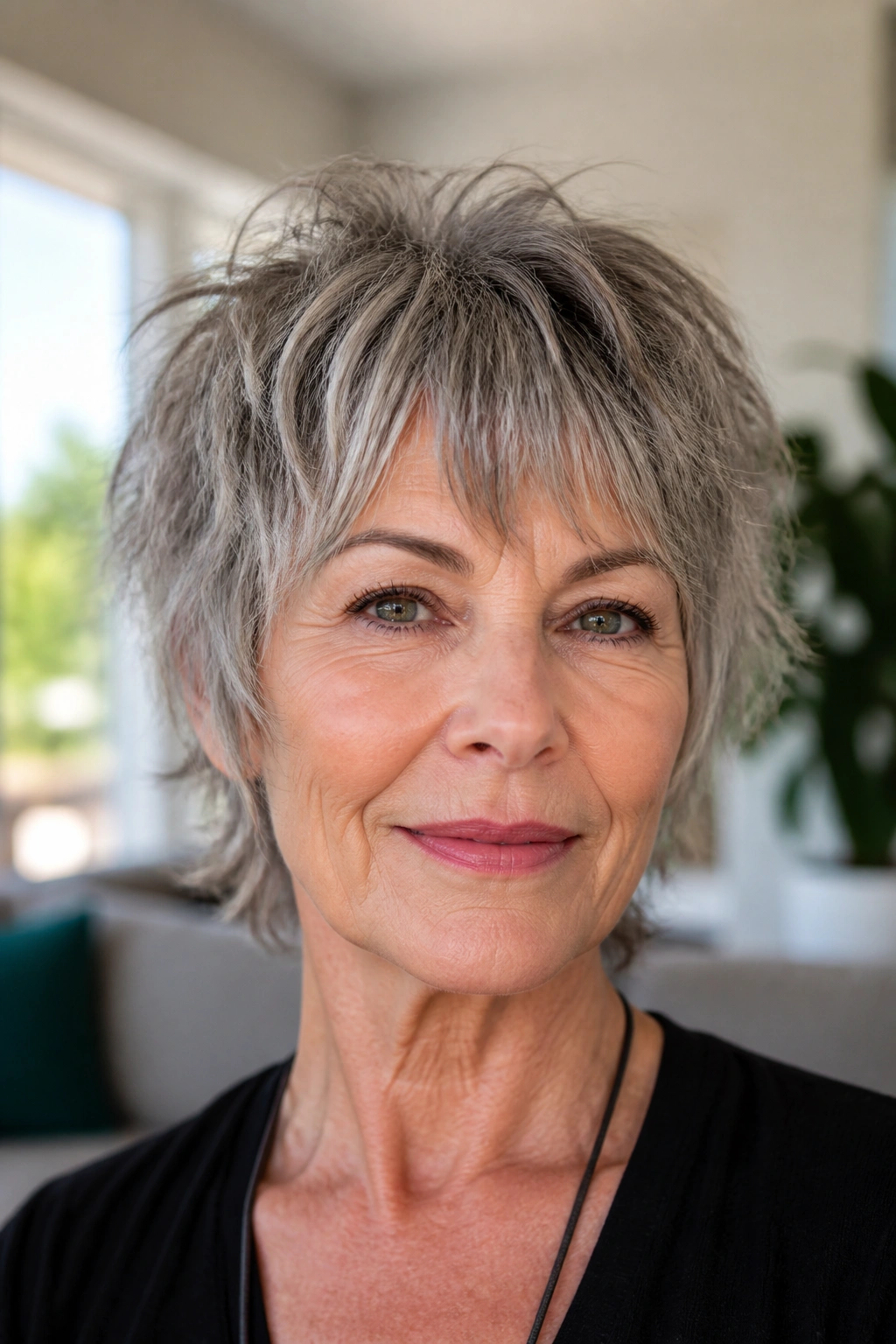
A short shag brings energy back to hair that has gone a little flat or too tidy. The fringe sits in pieces, the sides move, and the crown has lift without needing a lot of teasing.
This is not the same as an airy shag. It is shorter, more cropped, and a little more playful. The choppy fringe adds texture around the eyes, which helps if the forehead feels bare. It also breaks up the shape of thick gray hair so it does not sit as one heavy block.
What to watch for
- Keep the layers soft enough to avoid frizz.
- Ask for piecey bangs, not a dense blunt fringe.
- Use a small amount of wax on the ends.
- Air-dry or diffuse to keep the texture loose.
A short shag should feel slightly undone. That is the point.
26. Soft Perm With a Layered Shape
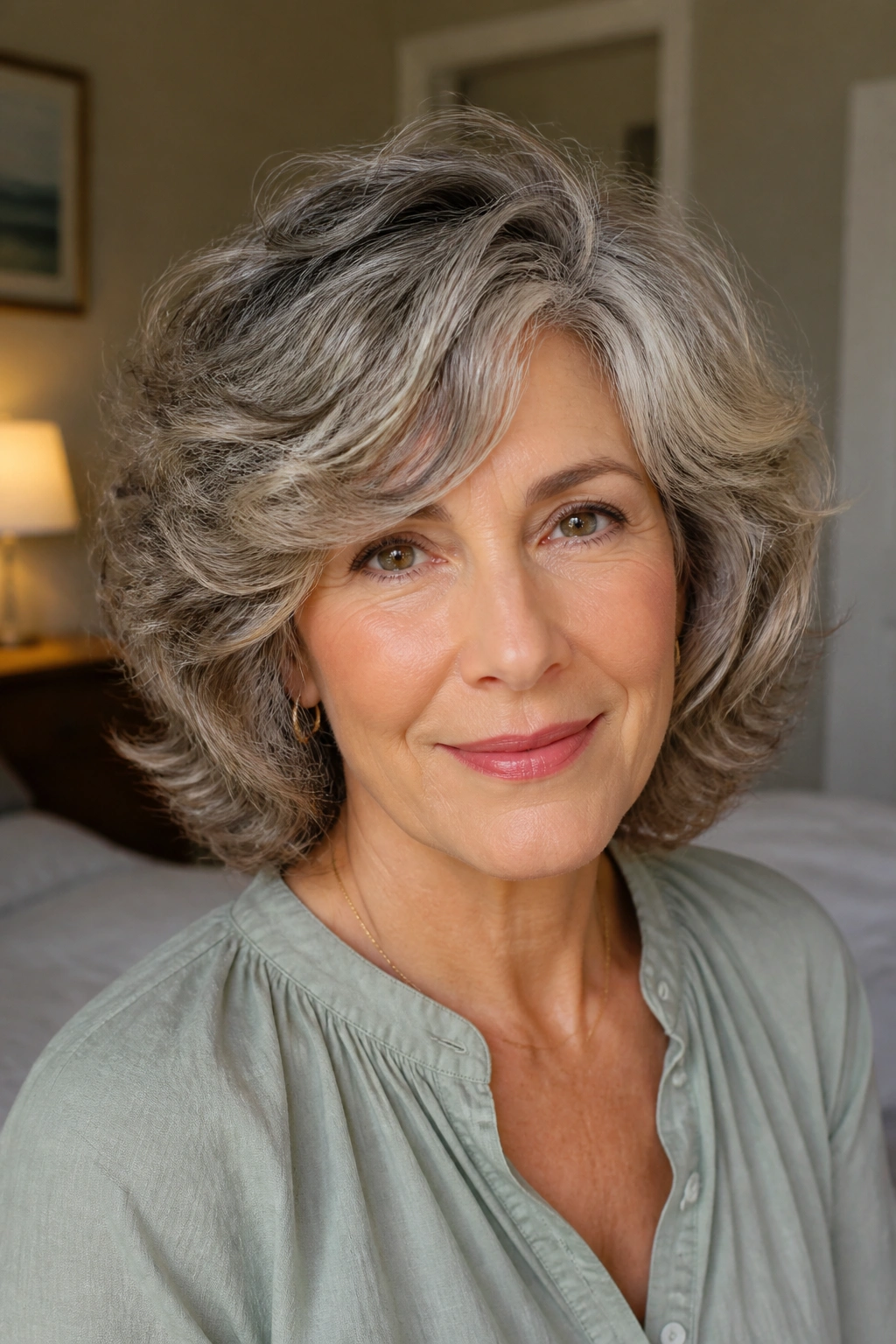
A perm can still make sense, provided the curl size is soft and the cut supports it. Small, tight curls on the wrong haircut can look busy. Larger, looser curls with layers can look full and easy.
This is a smart option for hair that is naturally straight but getting harder to hold a set. The perm gives the hair memory, which cuts down on daily styling time. Pair it with a layered shape so the curls do not bunch at the bottom.
You will need moisture after a perm. That part is non-negotiable. A weekly mask, a light curl cream, and a gentle diffuser can keep the texture soft instead of dry and puffy. The goal is movement, not stiffness.
27. Grown-Out Pixie With an Ear Tuck

A grown-out pixie is useful when you are between lengths and do not want the awkward phase to feel awkward. The ear tuck gives it shape while the top and front stay long enough to style in several ways.
This works because the cut stops trying to be perfectly short. A little length at the top, a little softness around the ears, and a nape that is cleaned up enough to look neat — that mix keeps the style modern without being fussy. It is also forgiving on days when the hair is not freshly washed.
How to style the in-between length
Brush the front forward or sideward, tuck one side behind the ear, and let the other side fall naturally. A small bit of pomade at the ends helps them stay tidy. That is all it usually takes.
28. Twisted Side Bun
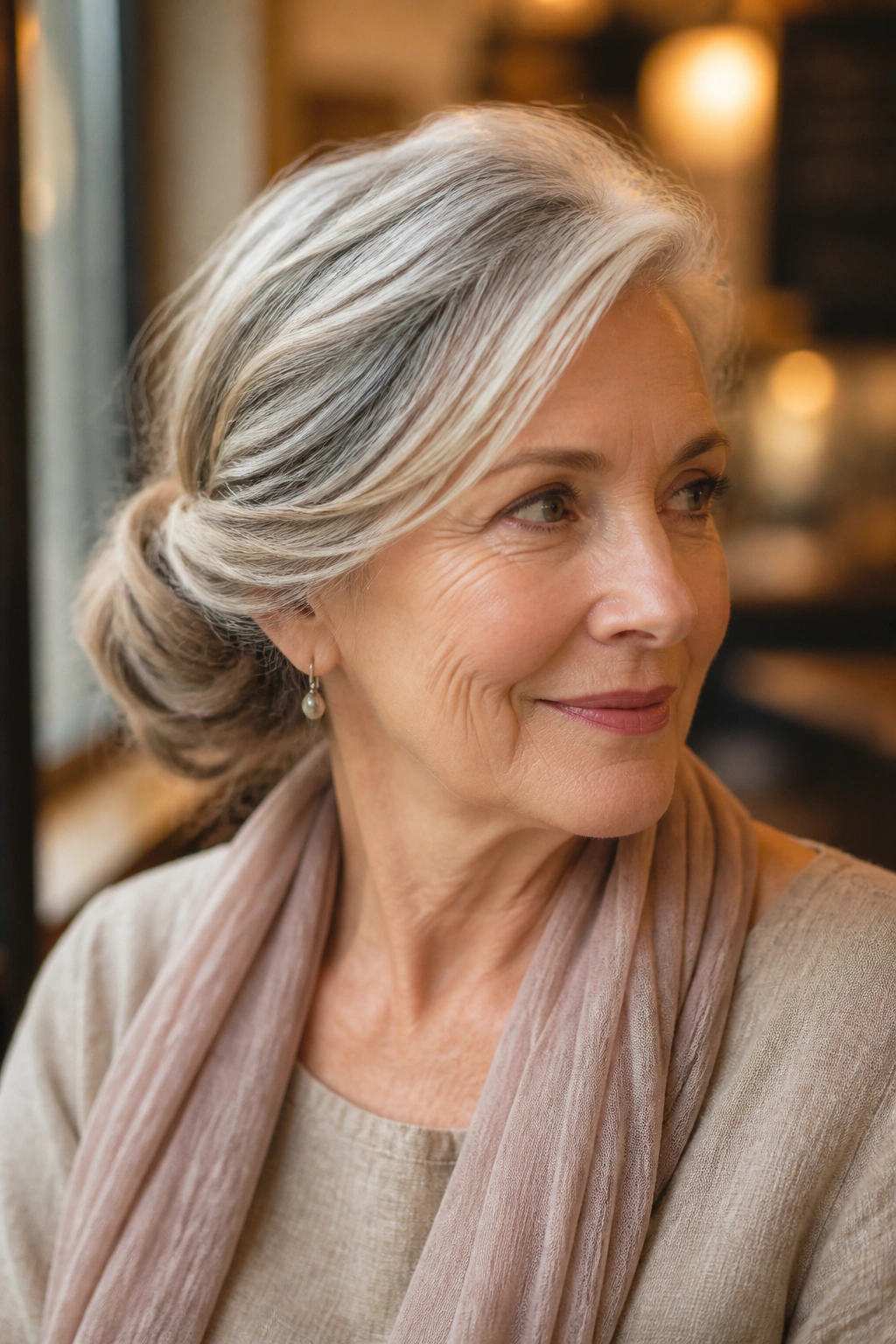
A twisted side bun feels softer than a centered bun and less formal than a French twist. It sits low or just behind one ear, which gives the face a gentle diagonal line.
The side placement matters. It shifts the eye upward and outward, which can be kinder to the jaw and neck. If the hair is medium length, twist sections before pinning them together. If it is longer, wrap the whole length into a loose knot and let a few pieces escape on purpose.
Keep the bun loose enough that the twist shows. A tight knot looks severe. A soft one looks like you planned it after thinking for five minutes — which is often the goal.
29. Straight Lob With a Center Part and Tucked Ends
A straight lob can look clean and modern when the ends are tucked under just slightly. The center part gives balance, while the tucked edge keeps the cut from hanging like a curtain.
This style works best on hair that already likes to lie smooth. If your hair is wavy, a quick blow-dry with tension at the roots will make the line cleaner. The length should sit between the chin and collarbone, where it can move but not overwhelm the neck.
The center part is a little less forgiving than a side part, so the cut has to be good. If the face framing is off, you will notice. If it is right, the whole style feels calm and neat without being severe.
30. Voluminous Roller Set
Roller sets still matter because they make hair look full from the roots down, not just curled at the ends. That root lift is the real prize.
Compared with a curling iron, rollers give a softer bend and more hold at the crown. They are especially useful for fine hair that collapses fast after blow-drying. Medium rollers create a rounded shape; smaller rollers create a tighter wave. Pick the size based on how much movement you want.
Let the hair cool completely before removing the rollers. That part is boring, and it works. Brush gently with a soft bristle brush or your fingers, then finish with a light spray. The hair should feel buoyant, not crunchy.
31. Afro Puff With Polished Edges
An afro puff is a smart, cheerful shape when you want height without a full rounded cut. It sits high, shows off texture, and keeps the face open.
The polished edges change the whole mood. Smooth the hairline with a soft brush and a tiny amount of gel or cream, then gather the puff where it feels balanced on your head. Too low and it droops. Too high and it can look lopsided. The sweet spot is usually at the crown or slightly above it.
Quick shape notes
- Use a satin scrunchie or soft elastic.
- Keep the puff full, not flattened.
- Moisturize the hair before gathering it.
- Refresh the edges with a damp toothbrush or edge brush.
That little contrast — neat edges, full puff — is what makes it sing.
32. Sleek Cropped Cut With Minimal Layering
A sleek crop with minimal layering is for someone who likes clear lines and low drama. The shape is close, neat, and easy to keep in order.
This is not the same as a feathered pixie. It is cleaner, with fewer moving parts. Gray hair often looks striking in this kind of cut because the line stays visible. If the hair is naturally soft or straight, the crop can air-dry well with a touch of cream. If it is coarse, a quick pass with a brush and blow-dryer smooths the surface.
Frequent trims matter here. Every 4 to 6 weeks is usually enough to keep the outline sharp. Once the edges grow too much, the whole style loses its point.
33. Loose Braid Over One Shoulder
A loose braid over one shoulder is simple, but simple is not the same as plain. The placement matters, the looseness matters, and the texture matters.
Why does it suit women in their 70s so well? Because it keeps the hair secure without flattening everything into a tight pullback. It also works on second-day hair, which makes it practical. A loose braid has enough softness to feel relaxed while still looking considered.
How to keep it graceful
- Braid from just below the nape or at one side of the crown.
- Pull the braid apart a little after tying it off.
- Leave the top a touch loose for volume.
- Use a small clear elastic or one that matches the hair color.
Too tight, and it looks severe. Too messy, and it reads as accidental. That middle ground is the sweet spot.
34. Textured Bob With a Piecey Finish
A textured bob with a piecey finish is good for women who want movement but do not want a lot of length. The ends separate a little, the shape feels lively, and the cut looks more relaxed than a blunt bob.
This style comes alive with a small amount of dry wax or styling paste worked through the ends. Use your fingers, not a brush, or you will lose the definition. A side part can make the piecey texture feel softer; a center part makes it feel a little sharper.
It’s especially useful for hair that gets flat at the roots but frizzy at the ends. The contrast gives the bob some personality. Without that texture, the cut can look too polite.
35. Signature Soft Cut With Movement at the Ends
There is a reason some women keep coming back to the same haircut for years: when it fits, it stops asking questions. A soft cut with movement at the ends is one of those shapes. It can be a bob, a lob, or even a longer crop, but the point is the same — the ends move, the outline stays clean, and the face gets a little room.
This kind of style works because it does not fight age or hair texture. It takes gray hair as it is and gives it a shape that feels easy to wear. If your hair has thinned, the ends can stay blunt enough to look full. If it has thickened or gone wiry, a little internal softening keeps it from ballooning. That balance is the whole game.
Ask your stylist to watch the profile, not just the front. Hair that looks fine head-on can still sit awkwardly in side view. And if you are bringing in reference photos, bring three — one you love, one you almost love, and one that shows the length you actually want. That saves a lot of guessing, which is always worth doing.
