



Long hair after 40 is not a compromise. The right long haircuts for women over 40 can sharpen the jawline, soften a strong neck, and make gray strands look intentional instead of halfway grown out.
Hair changes in ways people often pretend not to notice. The front can get finer, the crown can sit flatter, and the ends can start looking tired faster than they used to. A good cut works with that shift instead of fighting it.
I like long hair when the shape is doing real work. Clean edges, smart layers, and a little movement near the face can keep length from dragging everything down. The trick is choosing a cut that fits your texture, your styling patience, and how much silver you want to show off.
Some of these shapes are polished. Some are softer and more lived-in. All of them earn their keep in a mirror, in daylight, and on a busy morning when you have five minutes and no patience for a complicated blowout.
1. Long Layers With a Soft Face Frame
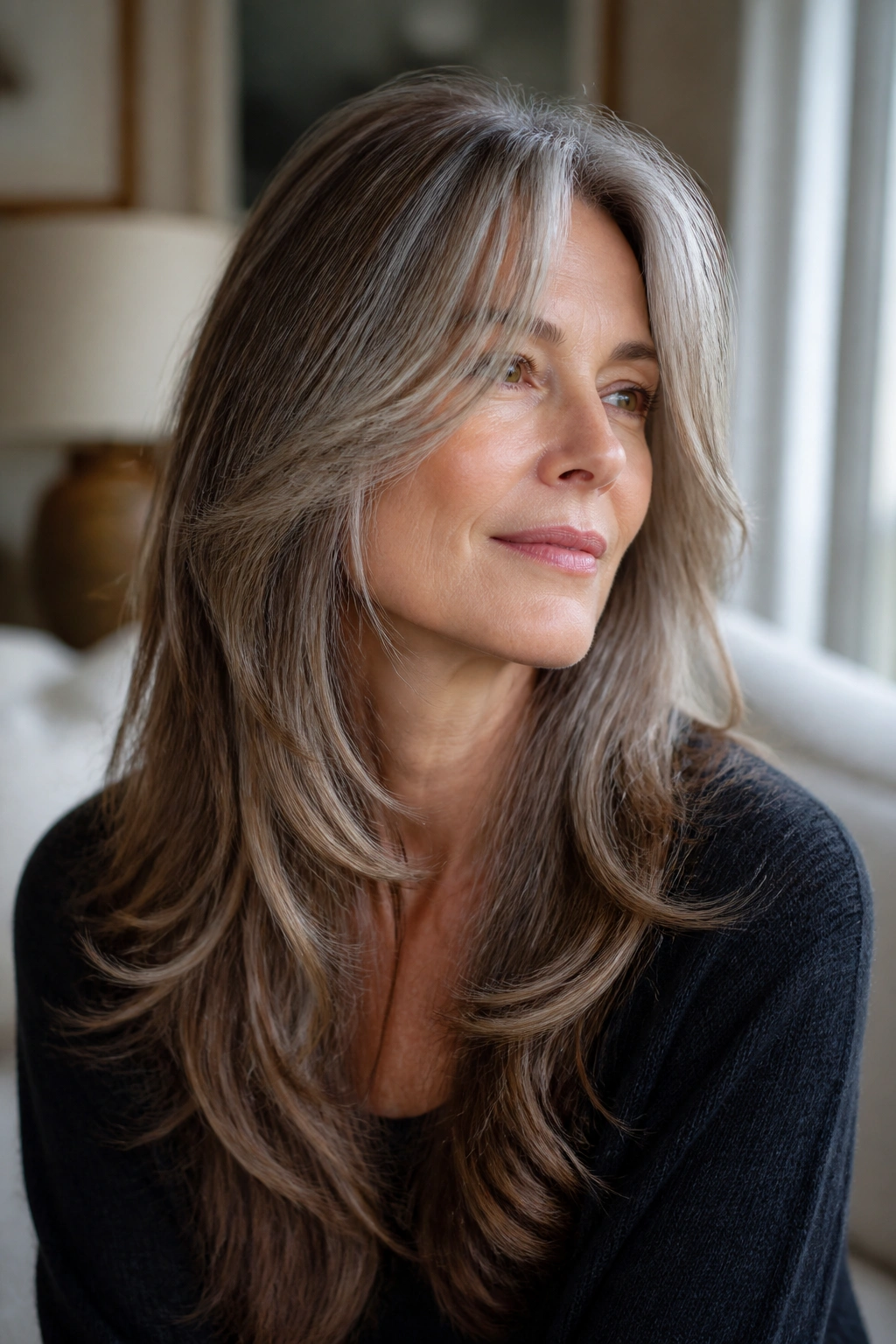
This is the cut I reach for when someone wants to keep the length but stop the hair from looking heavy at the sides. The face frame starts around the cheekbone or jaw, then melts into the longer lengths so the shape stays gentle, not choppy.
It works because the eye goes straight to the front first. A little lift around the face makes the whole haircut feel lighter, which matters even more if your hair is fine, flat, or showing more silver than it used to. Gray strands often have a little more texture, so a soft frame keeps them from sitting in one flat sheet.
Ask for layers that begin low enough to preserve density. Too many short layers can make the ends look thin, and that is the fast lane to a stringy finish.
2. The Blunt Long Cut
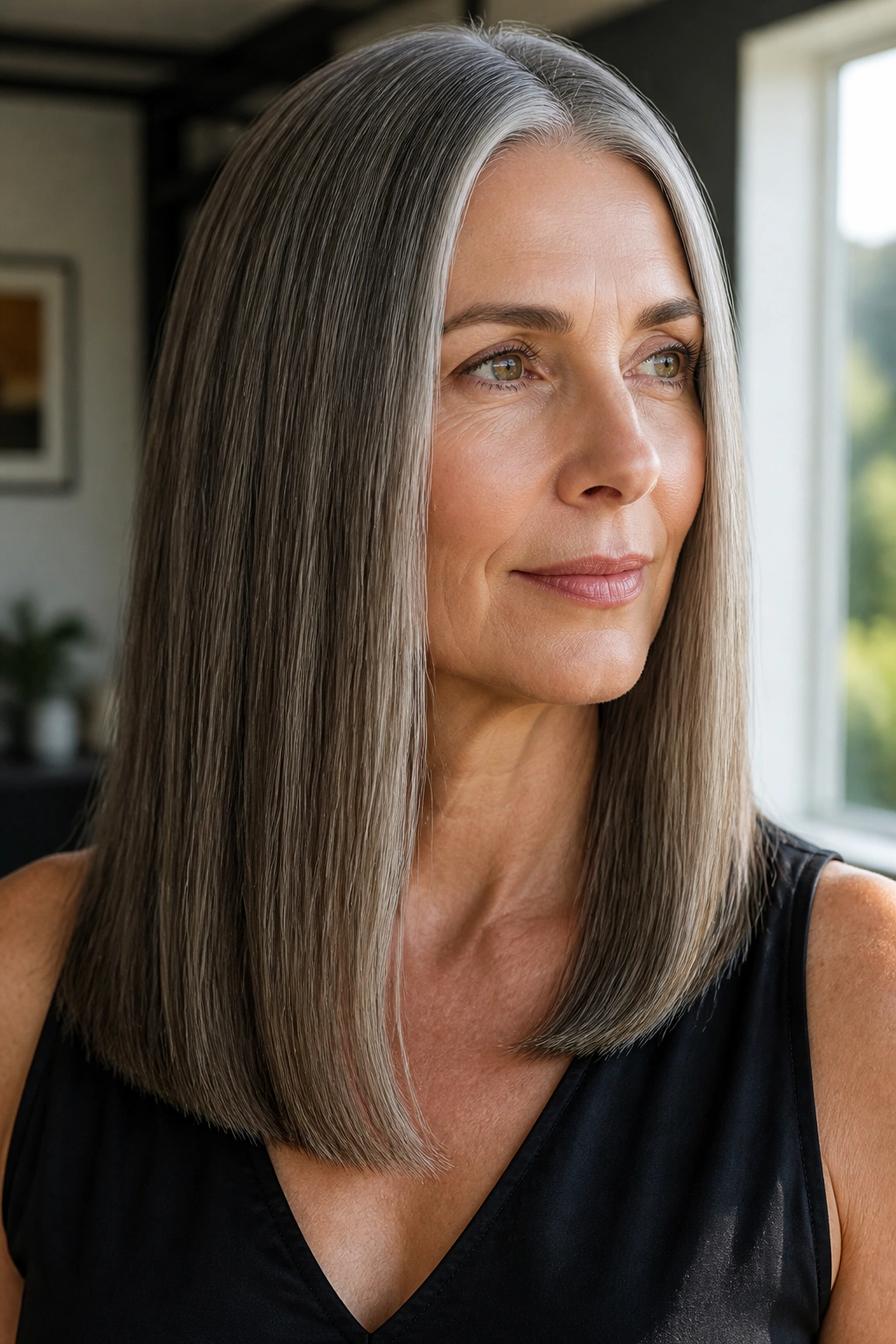
Do you want hair that looks clean without a lot of fuss? A blunt long cut is the answer when the hair is healthy enough to carry it. One straight line across the bottom makes the whole head of hair look thicker, especially if your strands are fine or medium and you wear them straight or softly waved.
The cut is honest. It shows the ends. That is the point.
It can also be a smart choice for gray hair, since silver strands often look best when the line is crisp and deliberate. If your hair is very thick, though, a blunt cut can feel heavy at the shoulders, so a stylist may need to remove a little weight inside without ruining the outline.
What to ask for
- A length that lands below the collarbone or a bit past it
- Very light internal texturing, if needed
- A soft bevel at the ends if you do not want a hard shelf
3. Curtain Bangs With Long Lengths
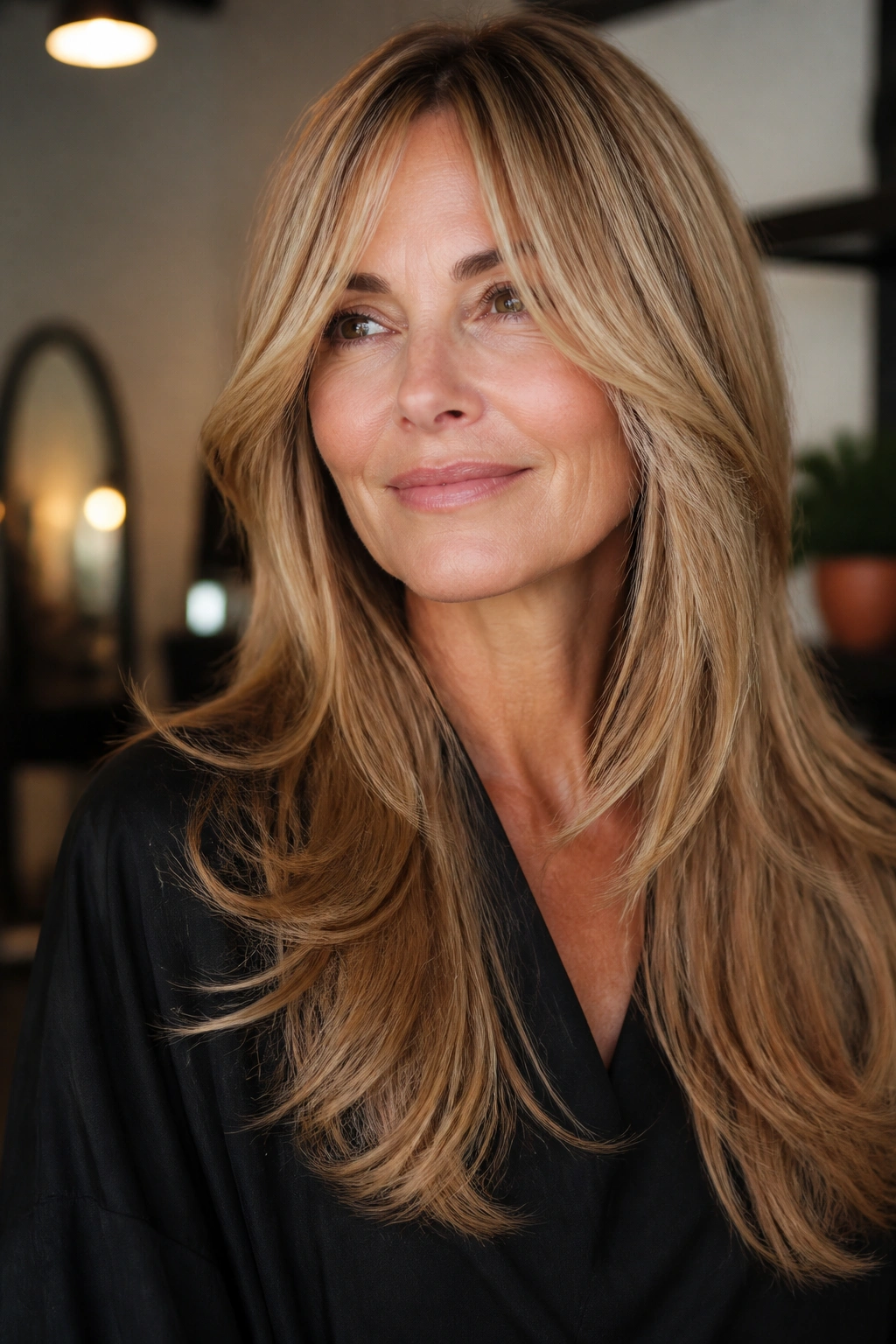
A woman walks out of the salon with curtain bangs and suddenly the whole haircut looks finished. That is the magic here. The bangs open at the center, skim the cheekbones, and blend into long layers so the forehead gets a little softness without a heavy fringe.
This is one of the easiest long haircuts for women over 40 when you want change without losing length. The bangs can soften lines around the eyes, and they also balance a strong jaw or a long face. If you wear glasses, they need a little extra thought so they do not fight your frames.
How to make them sit right
Curtain bangs need a round brush or a blow-dry brush if you want them to flip away from the face cleanly. Air-drying can work, but cowlicks will do what cowlicks do. If your hair separates naturally in the middle, you are in good shape. If it does not, keep the shortest point a bit lower, around the bridge of the nose or cheekbone, so the grow-out stays easy.
4. The U-Shaped Cut
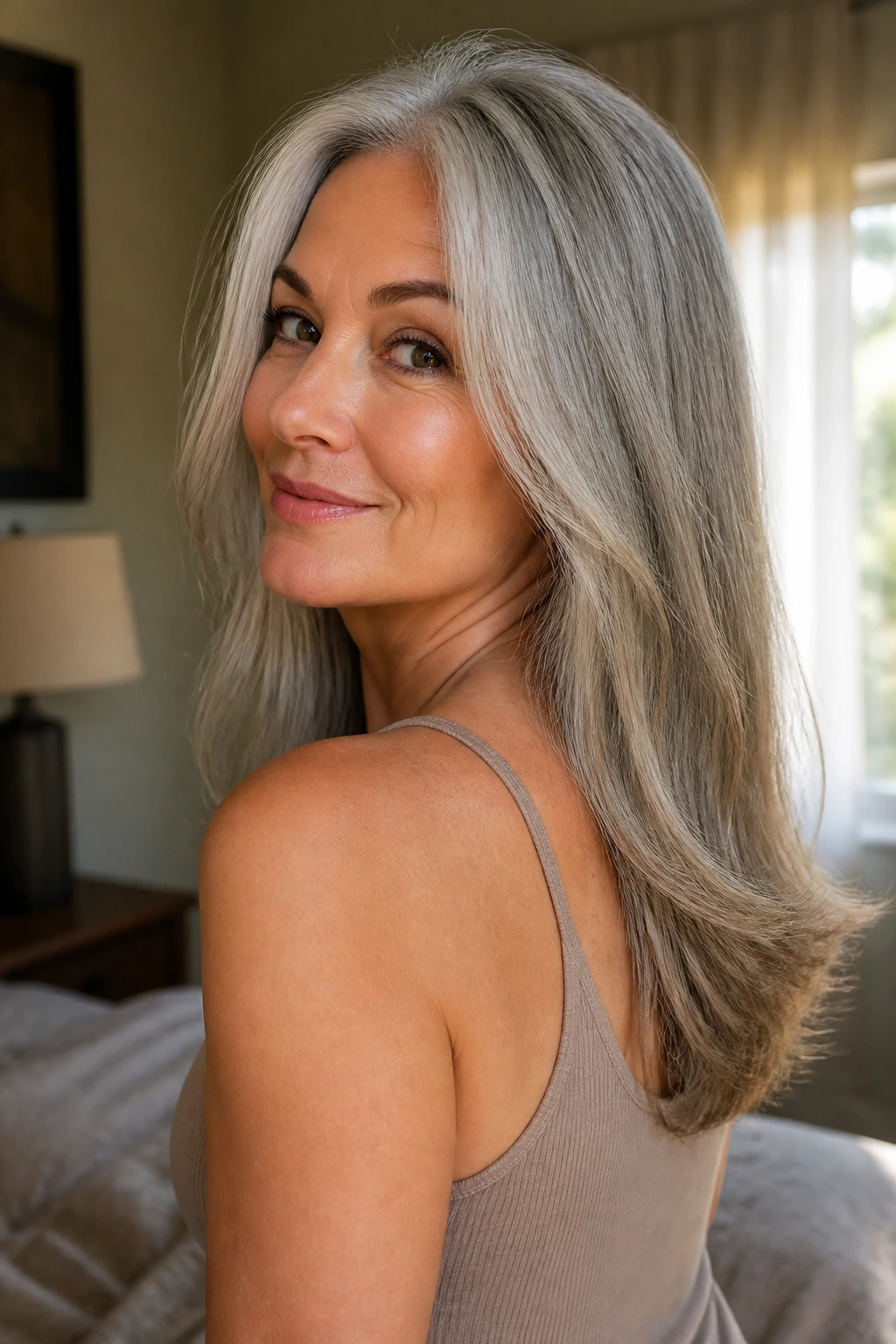
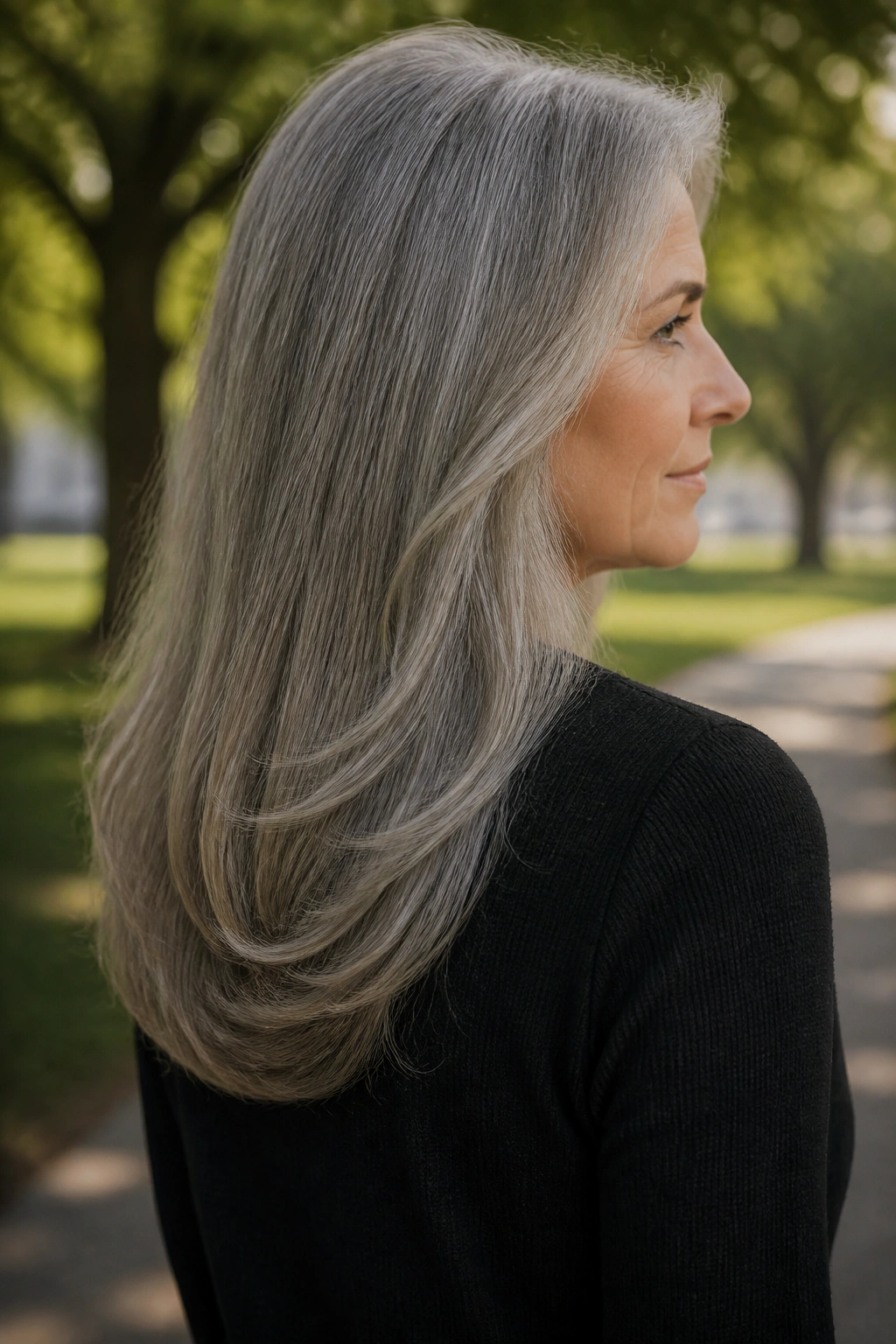
A soft U-shape gives long hair a rounded back edge instead of a flat shelf or a sharp point. The result feels calmer and a little more expensive-looking, even when you have not done much to style it.
I like this cut for women who want movement without obvious layers. The ends still keep their fullness, but the shape has enough curve to keep the hair from looking boxy. That matters a lot if your hair is naturally straight or only slightly wavy.
The U-shape also flatters gray hair nicely because the curve gives silver strands room to move. If the hair is coarse, the shape prevents the bottom from looking too bulky. If it is fine, ask your stylist to keep the curve subtle so you do not lose too much thickness at the perimeter.
5. The V-Shaped Cut
Run your hand down a V-cut and you feel the difference right away. The hair narrows toward a point in the back, which makes the length look dramatic and gives thick hair a cleaner fall.
This cut is a strong choice if your hair is dense and you love wearing it down. The V-shape pulls weight away from the bottom so the ends do not look like a blanket. It also gives waves and curls a little direction, which can help long hair look more deliberate.
The catch? Fine hair can go limp in a V if the point is too sharp. Keep the angle soft and the point lower if your strands are fragile or if you see a lot of scalp at the crown. A gentler version still gives shape without turning the back into a skinny tail.
6. The Butterfly Cut
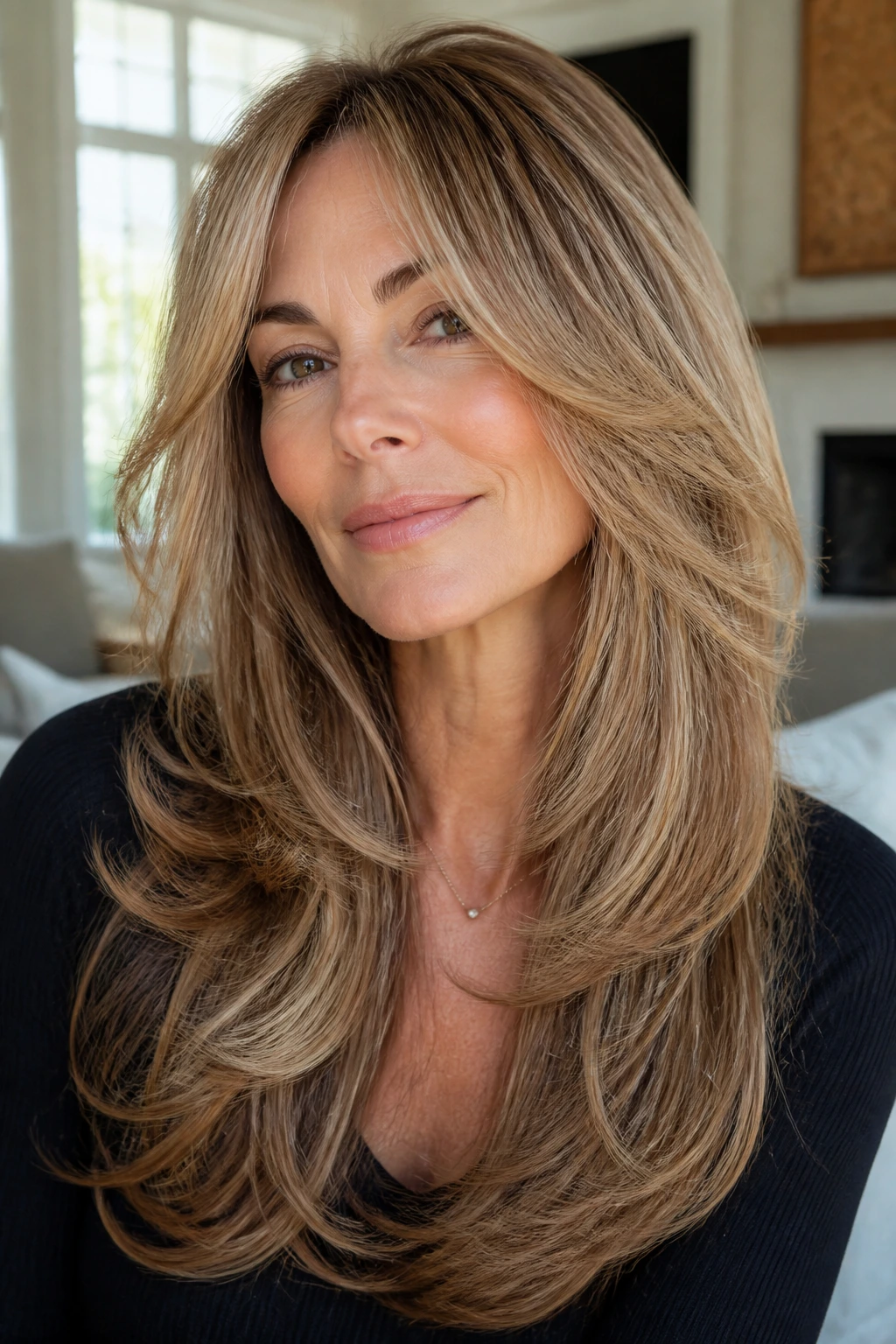
The butterfly cut gives you lift without sacrificing length, and that is why it keeps showing up in real salons, not just on mood boards. Shorter layers sit around the crown and cheekbones while the longest pieces stay down near the chest or ribs.
It creates a little movement around the head. Not a ton. Enough.
What makes it different
The top layers can be blown out to look full and airy, then the lower lengths stay long and smooth. That split is what makes the style feel so useful for women who want body near the face but do not want to lose their hair’s overall length. It is especially handy if your hair goes flat at the roots and puffs at the ends.
The downside is simple: it likes styling. A rough air-dry can still look decent, but the shape really wakes up with a round brush or a big hot brush.
7. Long Shag With Soft Ends
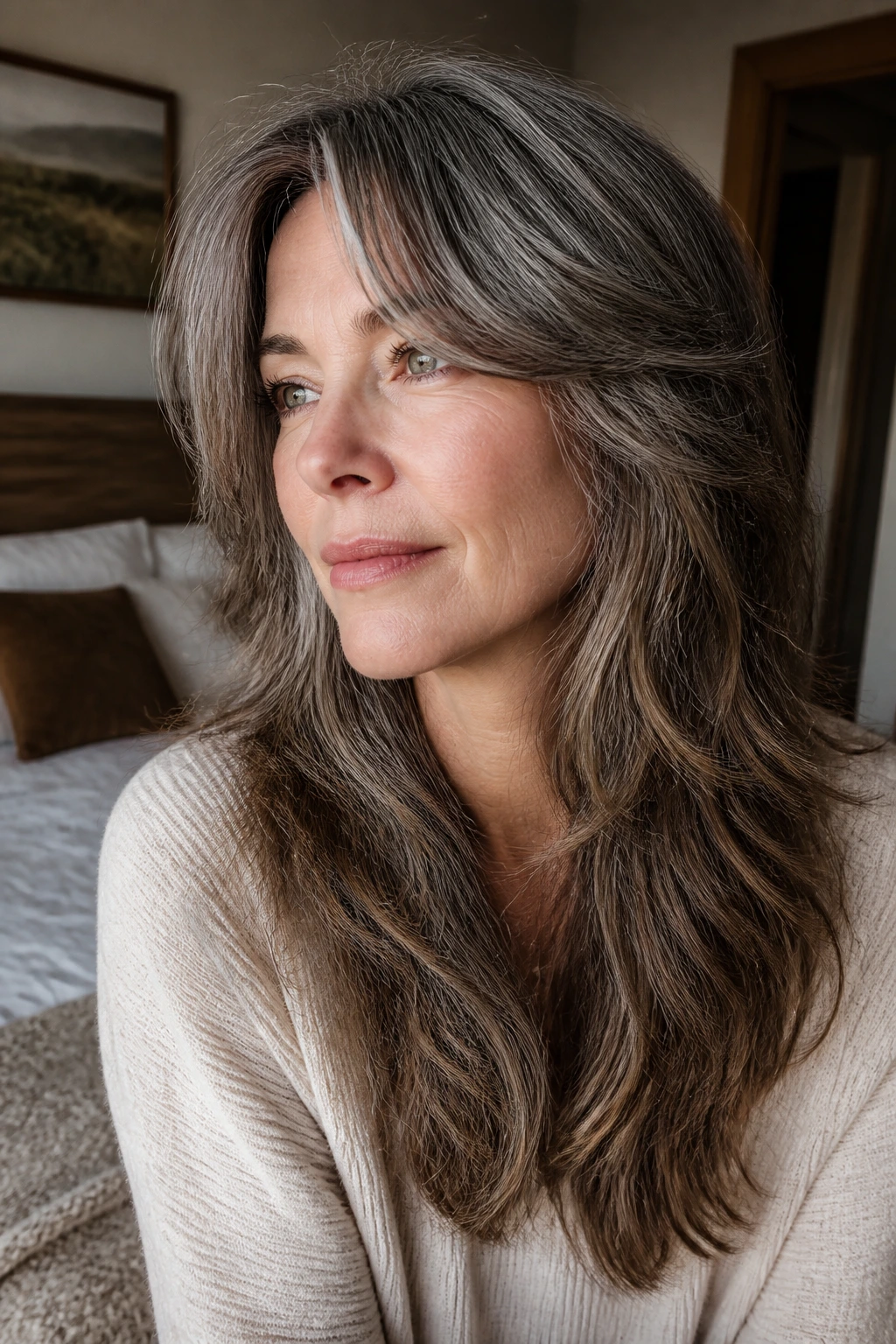
A long shag gives hair some attitude, and that is not a bad thing after 40. The layers are piecey, the ends are broken up, and the whole cut moves in a way that feels relaxed instead of stiff.
This works especially well on wavy hair and on gray hair that has picked up a little roughness. The layers keep the texture from ballooning out at the sides. If your hair is very fine, though, ask for a softer version. Too much chopping can leave the ends looking thin and wispy in a way that reads more tired than cool.
A good shag should still feel wearable on a Tuesday. If it looks amazing only after 25 minutes of styling paste and a curling iron, I’d pass.
8. Side-Swept Fringe With Long Lengths
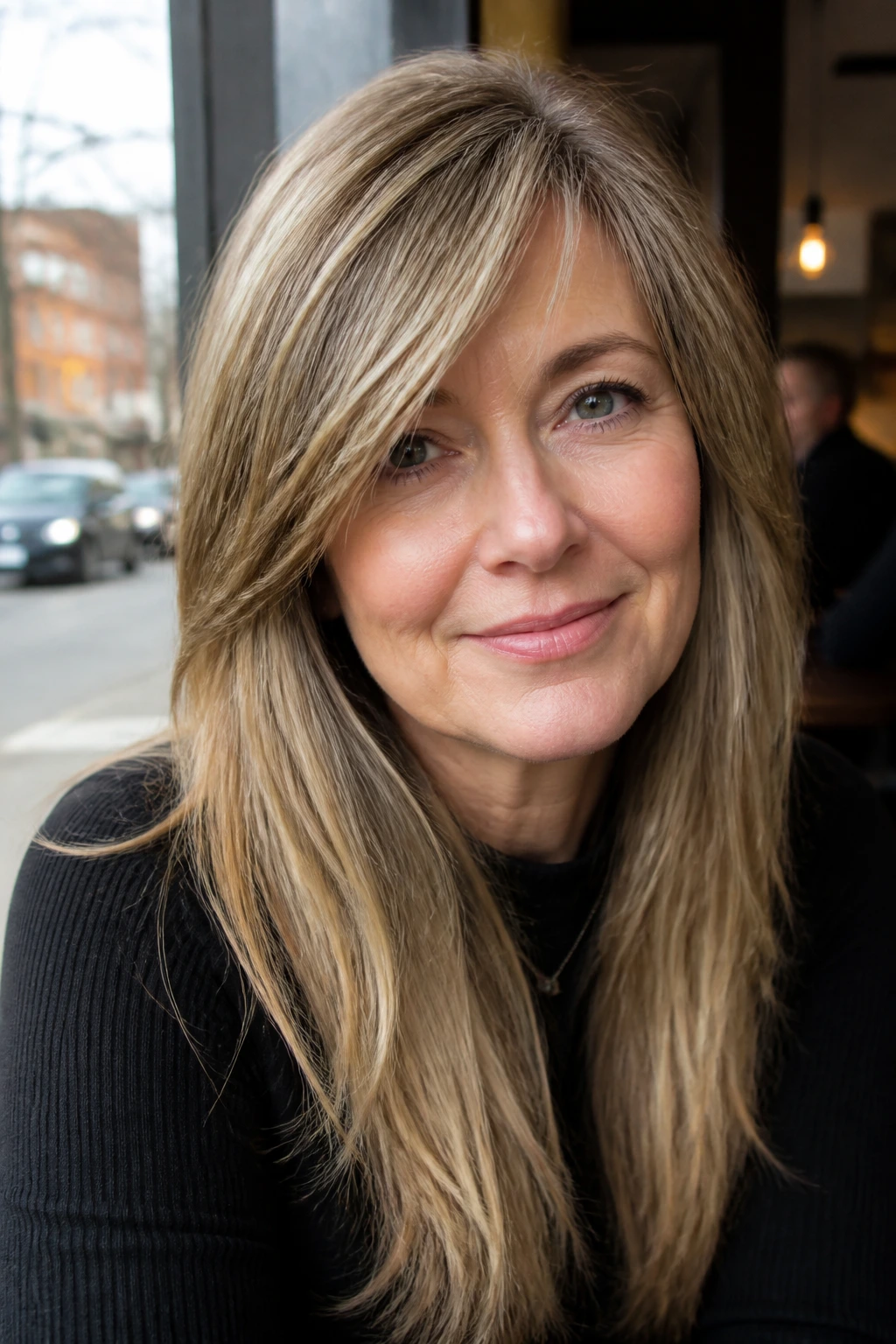
Side bangs are not old-fashioned when they are cut right. A long side-swept fringe can soften the forehead, break up a strong part line, and make long hair feel a little less severe.
This shape is useful if you do not want the commitment of curtain bangs. The fringe can be tucked, pinned, or brushed across the brow, and it grows out with less drama than a straight fringe. That makes it a practical pick for someone who trims less often or prefers to change the part from time to time.
If your hair is very straight, ask for a fringe that starts a bit longer than you think you need. Straight hair reveals every quarter inch, and a side fringe that is too short can kick up in a weird way. Been there. Not worth it.
9. The One-Length Cut With Beveled Ends
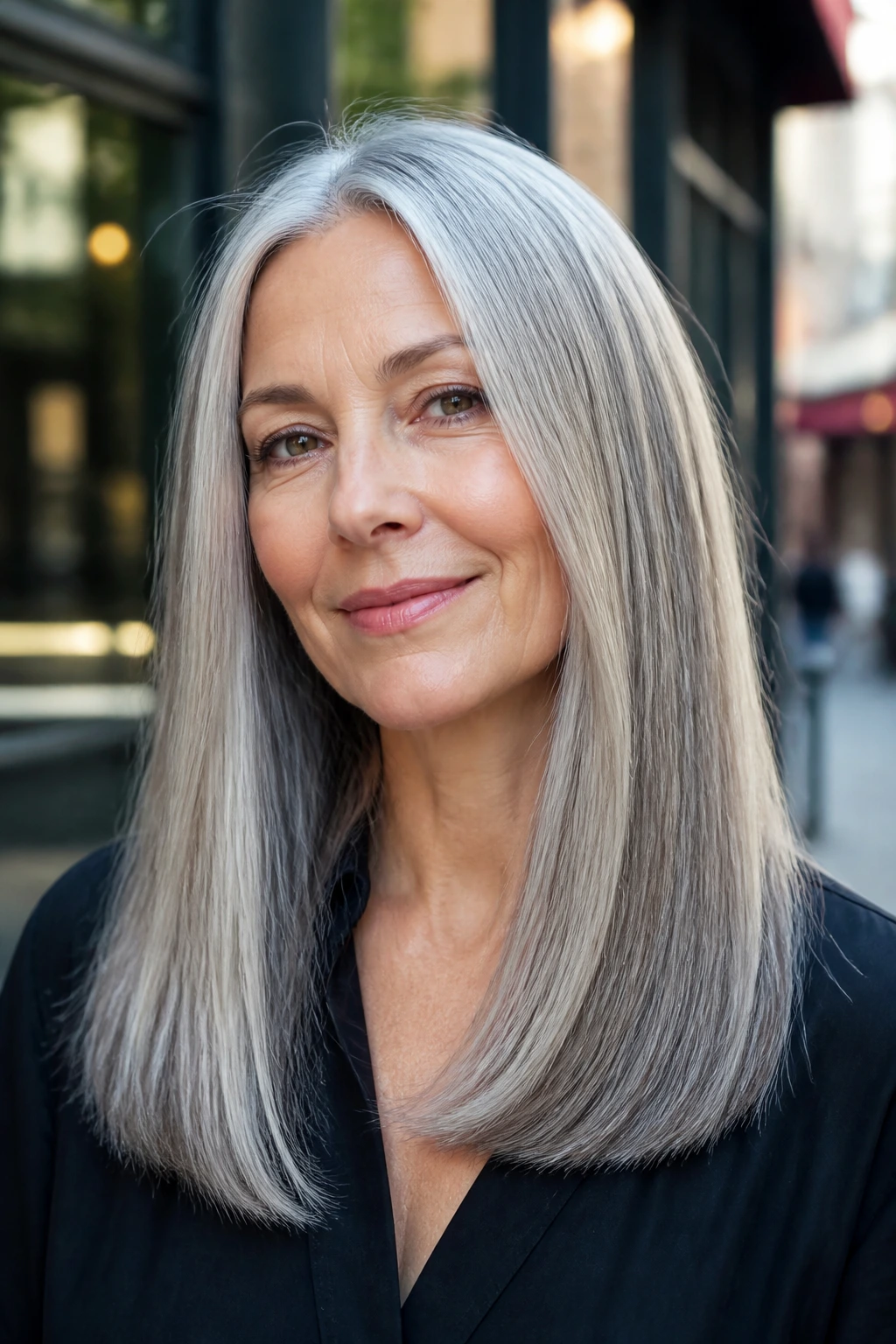
There is something blunt and graceful about one-length hair that falls well below the shoulders. The shape is simple, but when the ends are beveled just a little, the cut stops looking heavy.
This is a strong choice if you wear your hair straight, tucked behind the ears, or pulled into low clips. It shows off shine, and gray strands can look especially good in this kind of clean line. A one-length cut also makes color transitions easier when silver is growing in because the eye sees one polished shape instead of a lot of competing layers.
The only thing I would not do is overthink it. If the cut is healthy and the ends are tidy, the hair does the talking.
10. Invisible Layers
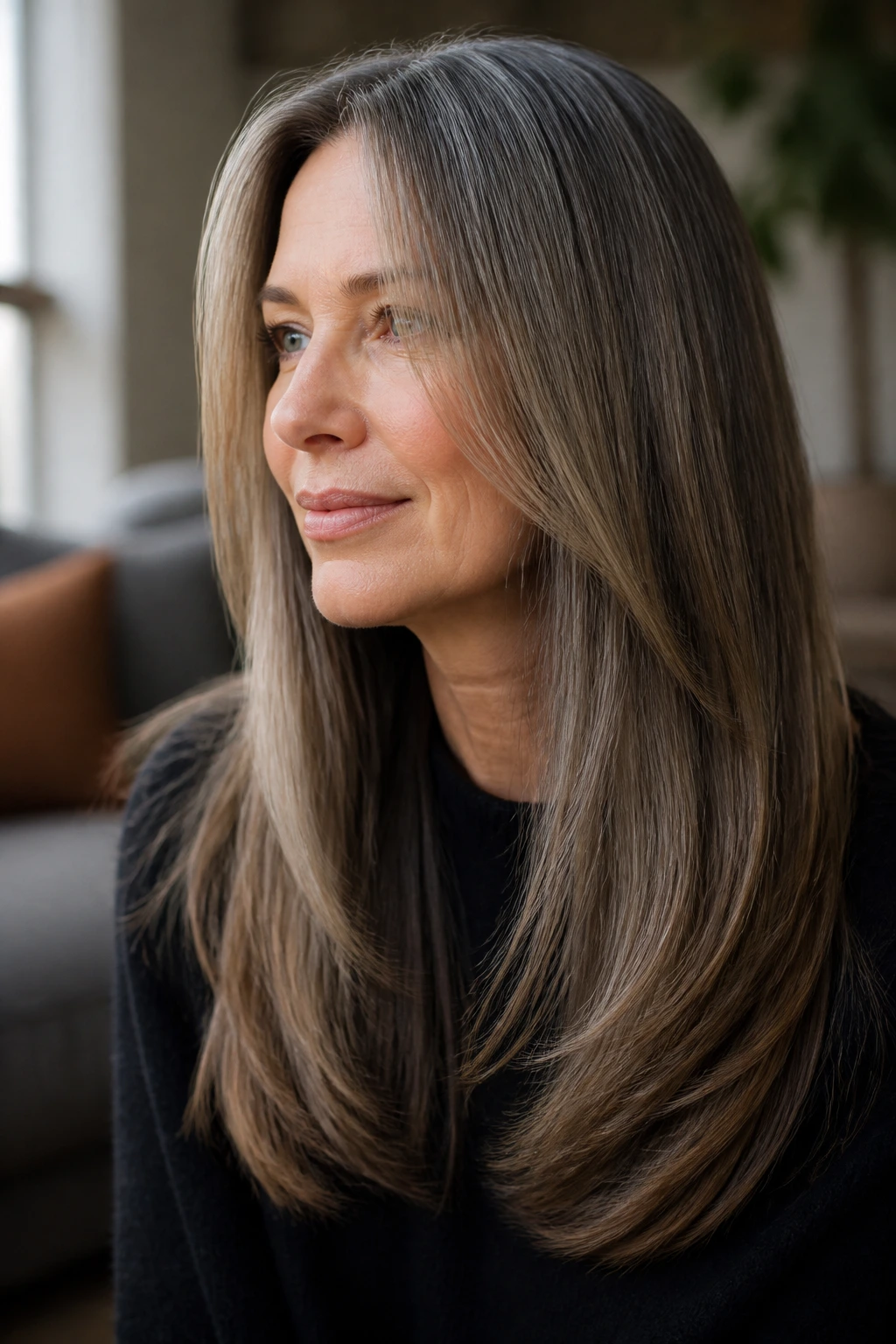
Invisible layers are the quiet ones. They sit inside the haircut, not on the outside, so the perimeter still looks smooth while the hair gains a little movement under the surface.
This is a smart move for women who like long hair but hate obvious layering. You get a lighter feel, a better bend through the mid-lengths, and less of that bulky triangle shape that can happen with longer hair. Fine hair benefits because the outline stays intact. Thick hair benefits because the bulk gets redistributed.
The catch is skill. If the layers are too aggressive, the cut stops being invisible and starts looking uneven. A careful hand matters here.
Best for
- Straight hair that goes flat fast
- Medium-density hair that needs motion
- People who want a polished finish with less obvious shaping
11. Collarbone-Start Layers
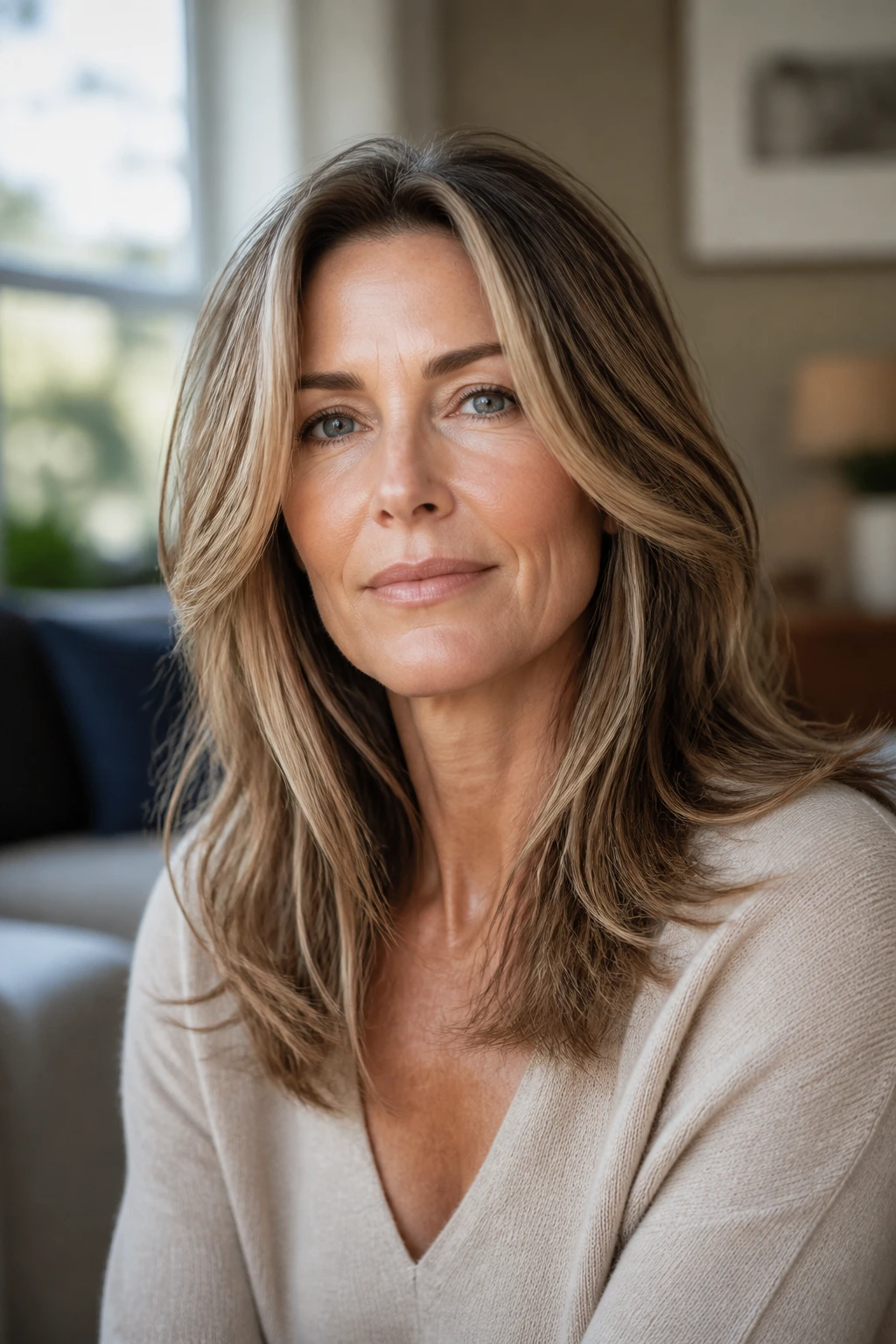
A lot of long-layered cuts go wrong because the layers start too high. Collarbone-start layers fix that by keeping the weight in the hair while still giving movement around the face and shoulders.
The result is flattering without being fussy. Hair keeps enough density at the bottom to look healthy, but the top and front do not collapse into one solid mass. That balance matters if your hair has started to feel thinner after years of heat styling or coloring.
What to ask for
- Layers that begin at or just below the collarbone
- A soft blend through the sides
- No heavy thinning at the ends
This cut is one of my favorites for women who wear their hair up often. It still looks good in a ponytail or a clip, which is half the battle with long hair. A cut that only works when it is down is a little annoying, and frankly, life is too short for that.
12. C-Shaped Layers
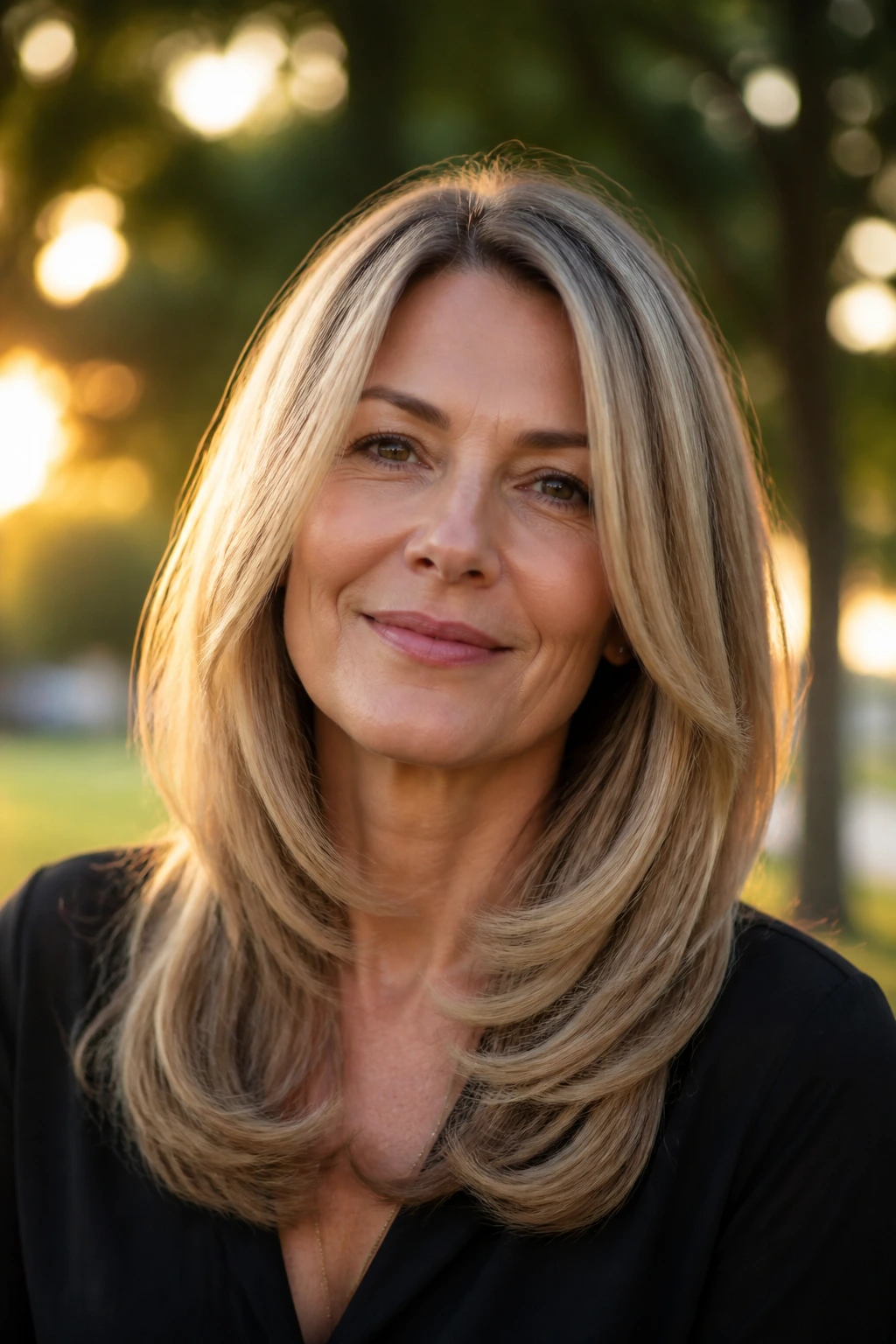
C-shaped layers curve inward around the face and through the shoulders, which gives long hair a softer outline than straight, blunt layering. Think of the shape as a gentle bend rather than a visible step.
The beauty of this cut is how it frames the face without shouting. It can soften a square jaw, add motion near the cheekbones, and keep long hair from hanging straight down like curtains. On gray or silver hair, that curve helps the light move through the shape instead of stopping at one hard edge.
It does need a bit of styling to show properly. A paddle brush or round brush while drying will help the curve sit where it should. If you let it dry with no help at all, it can still work, but the shape will be quieter.
13. Razor-Cut Long Hair
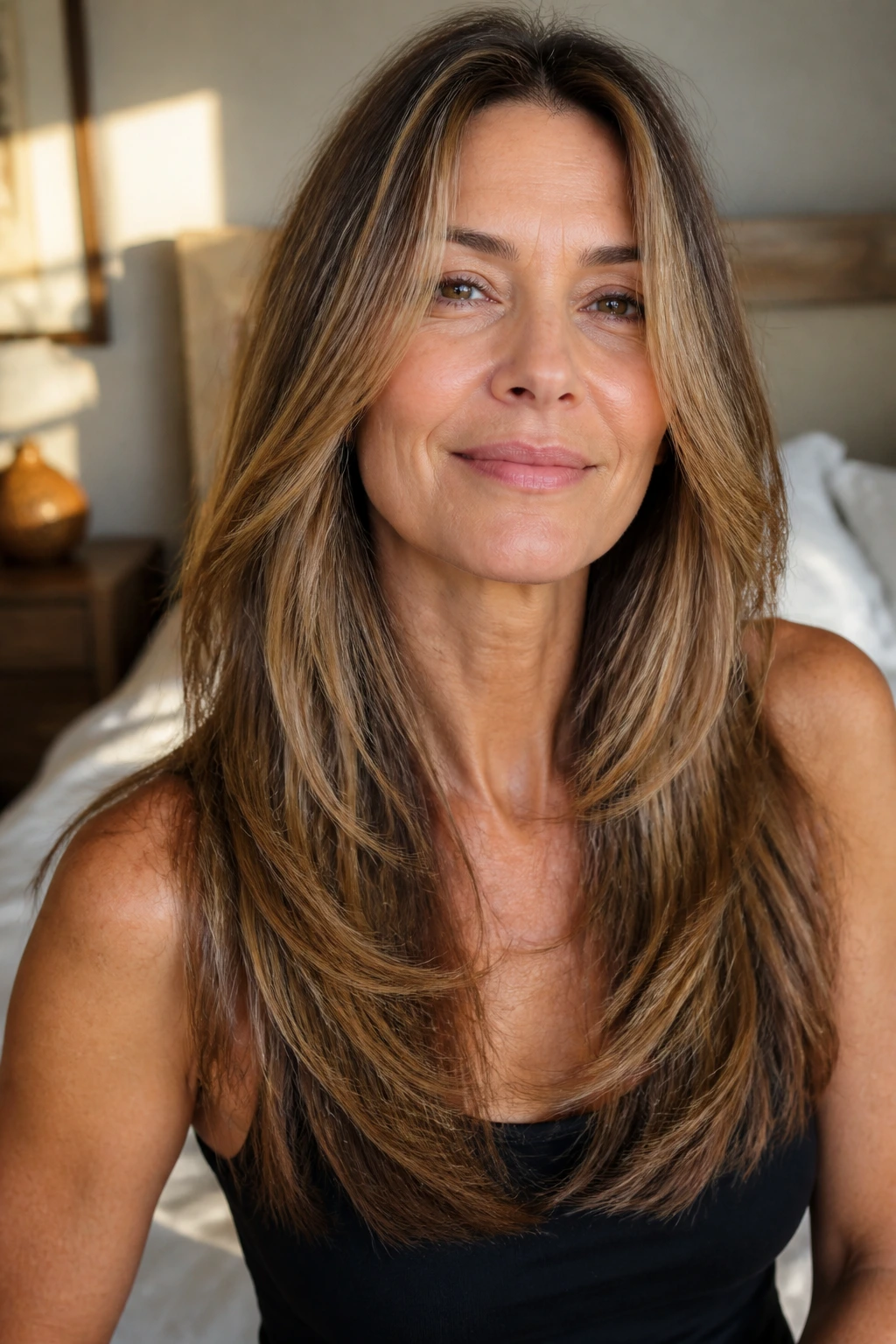
Razor cutting gives long hair a lighter, airier edge. The ends feather out a bit instead of landing in one heavy line, which can be lovely on thick straight hair or on waves that need less bulk.
It is a good cut when the hair feels dense and stubborn. The razor removes weight in a way scissors sometimes do not. That said, not every head of hair likes it. Fragile or very fine strands can fray if the razor work is too aggressive, and then the ends start looking dry before they actually are.
The science behind it
A razor creates a softer perimeter because it slices through the hair at an angle instead of making a blunt cut. That gives the finish a little swing. It also means you need a stylist who knows where to stop. Too much slicing and the shape loses its backbone fast.
14. Long Straight Hair With Internal Movement
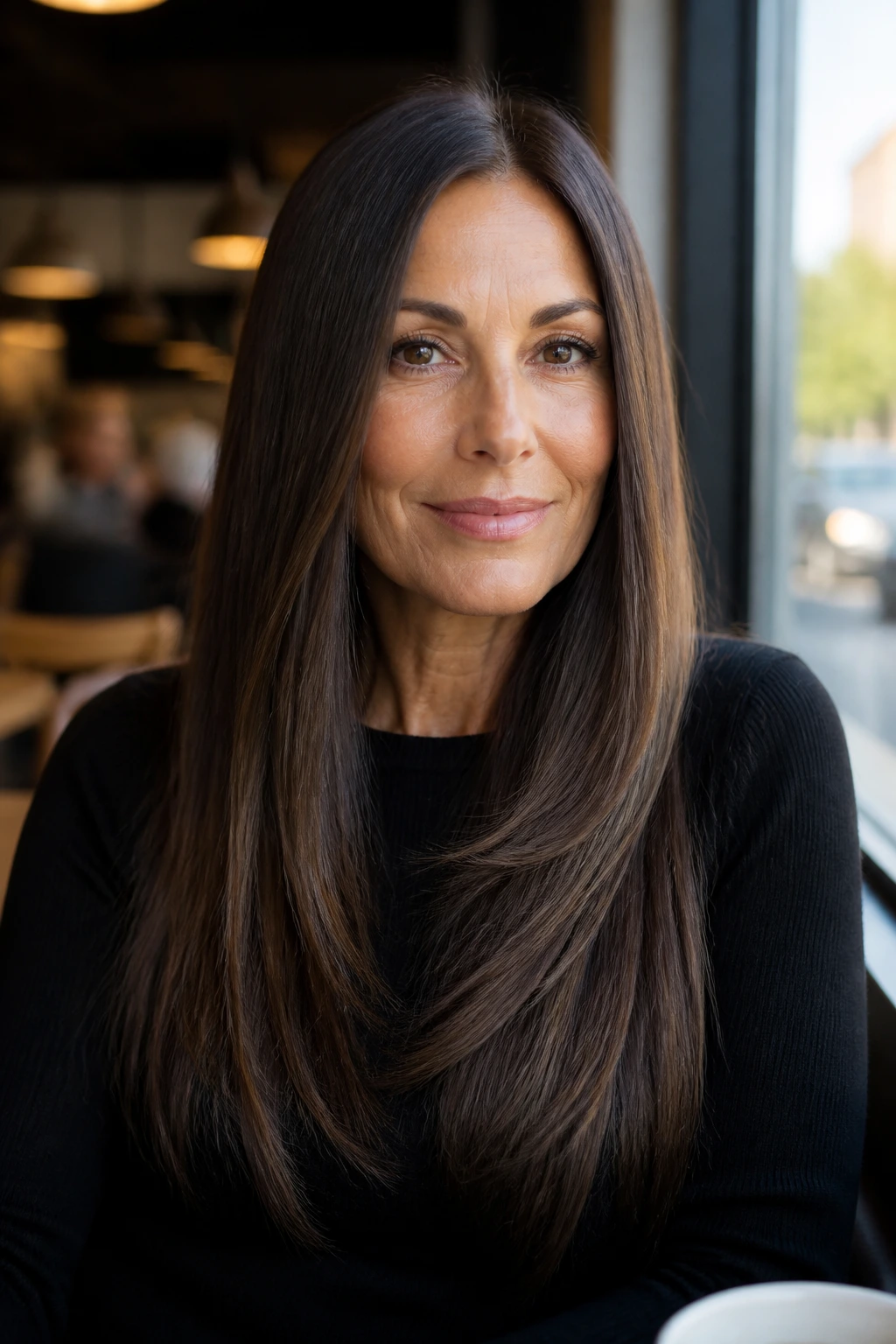
Straight hair can look gorgeous and unforgiving at the same time. If the cut is too plain, every flat spot shows. If it is too layered, it loses the sleek line that makes straight hair so nice in the first place.
Internal movement solves that problem. The outside stays long and neat, while subtle movement is built inside the haircut so the hair bends a little more freely. It is especially useful for women who like to wear their hair down but do not want a haircut that screams “layers” from across the room.
This shape tends to suit women who want control. It works with a center part, a low ponytail, or a tucked-behind-the-ear style. The more you like clean lines, the more this cut earns its keep.
15. Rounded Layers for Curly Hair
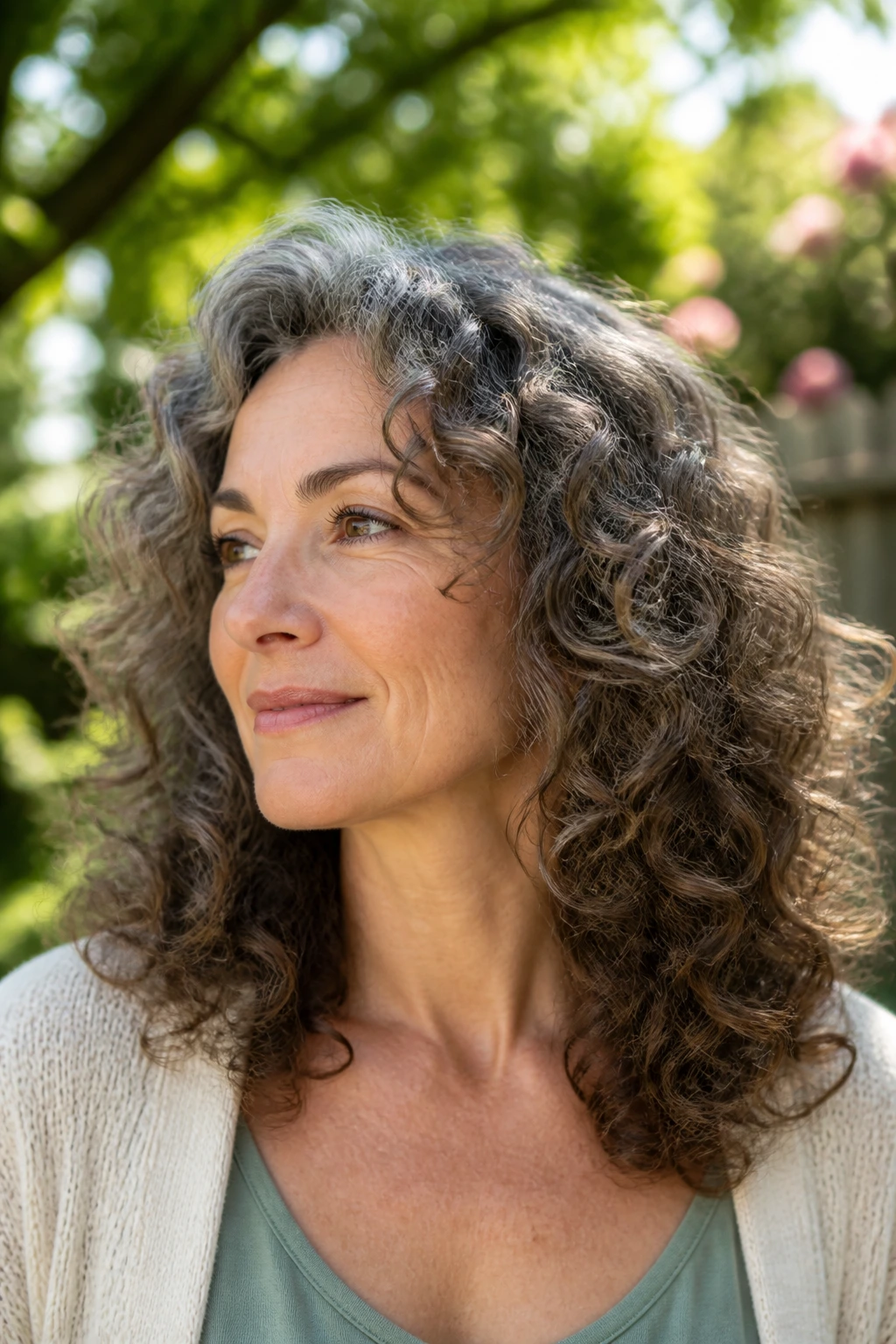
Curly hair needs shape, not flattening. A rounded layered cut follows the way curls spring, so the silhouette stays balanced instead of puffing out at the sides and collapsing at the top.
This is the cut that saves long curly hair from the triangle effect. The length stays long, but the layers are placed to support the curl pattern rather than fight it. On gray curls, that matters even more because silver strands can feel coarser and drier, which makes a bad shape look bigger than it should.
How to use it
- Ask for the cut to respect your curl pattern, not stretch it straight
- Keep the crown lighter if the top goes flat
- Leave enough weight at the bottom so the curls still hang with shape
A dry cut is often the safest bet here. Curls lie when they are wet. They always have.
16. An Airy Cut for Wavy Hair
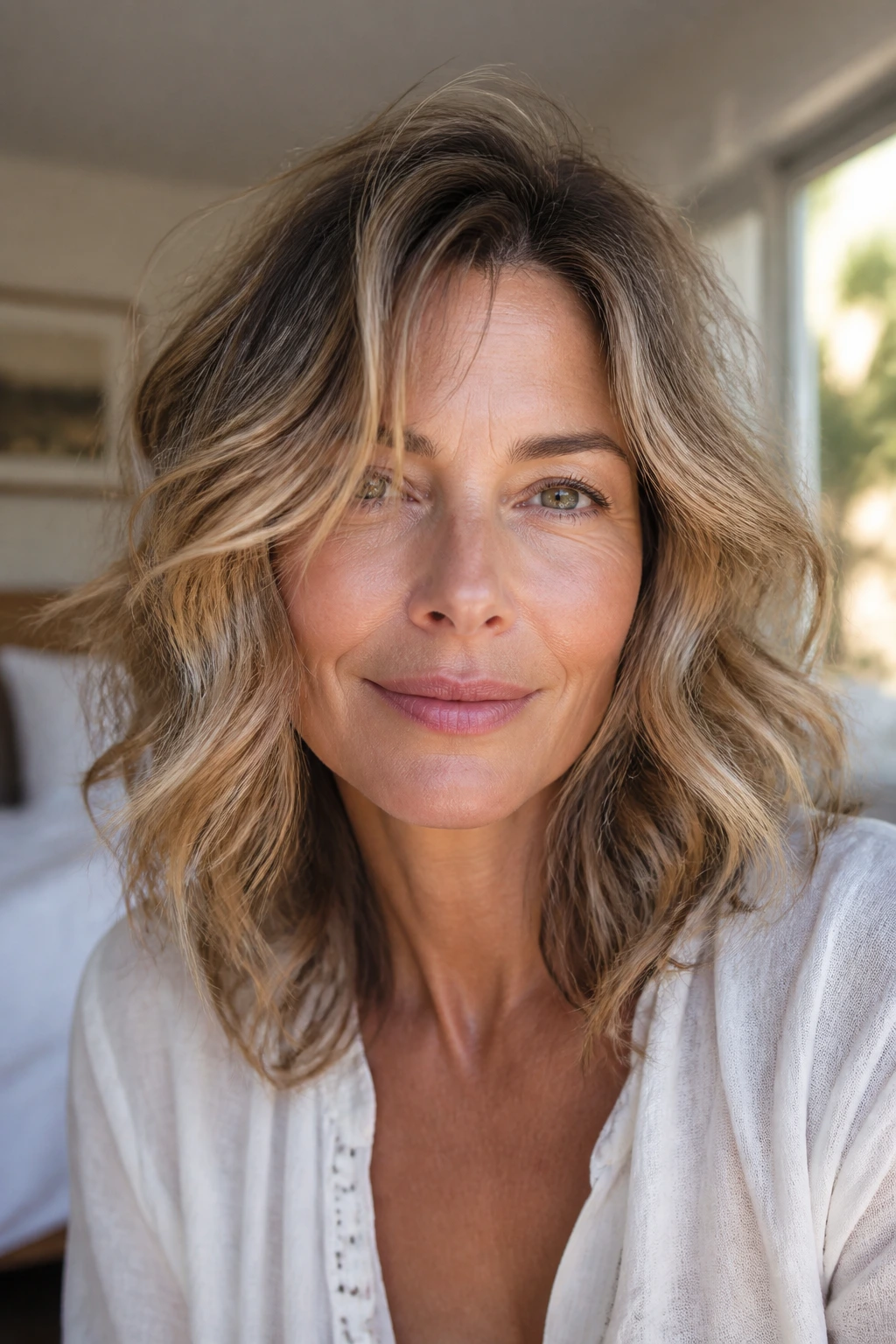
Wavy hair does not need much help to move; it needs the right help. An airy long cut keeps the ends light and the layers soft so the natural wave can show without getting puffy.
This is one of those haircuts that looks easy when it is done well and awkward when it is not. The layers should encourage the wave to fall in loose bends, not break it into random flips. If the hair is over-layered, the surface gets fuzzy and the nice S-shape disappears.
The best version usually has a little longer face framing and gentle spacing through the mid-lengths. That keeps the wave pattern from bunching at the bottom. It is a good choice if you like to air-dry, scrunch with a little cream, and walk out the door.
17. Feathered Layers for Fine Hair
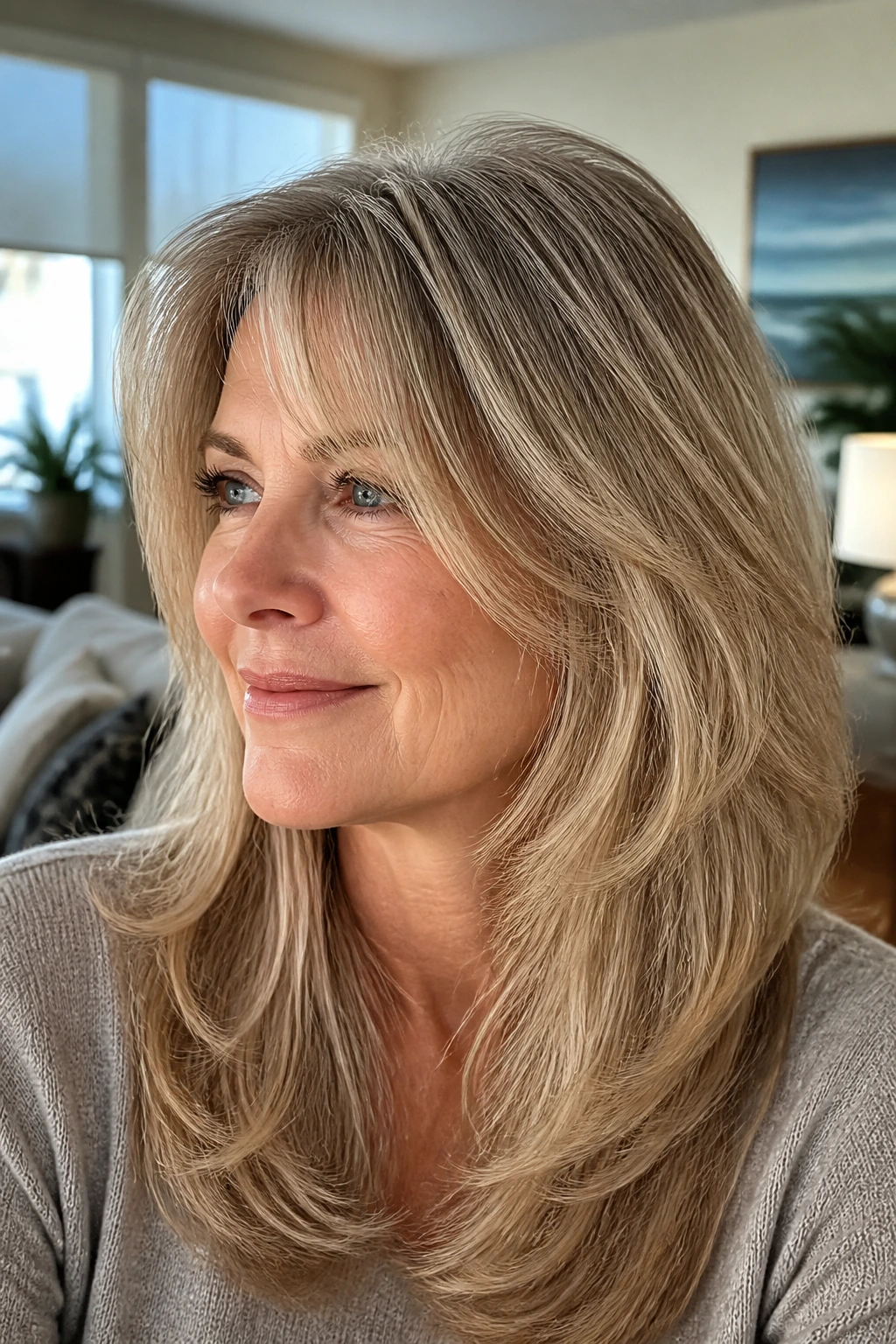
Feathering gets a bad reputation because people remember the wrong version of it. Done well, it gives fine hair lift near the crown and a little movement around the face without removing too much weight.
That matters after 40, when a lot of women start noticing the ends look thinner than the roots. Feathered layers keep the top from lying flat, which makes the whole head of hair feel fuller. They also blend nicely with gray streaks, since the lighter pieces catch the shape of the cut.
The trick is restraint. Too much feathering and the hair gets airy in a weak way. Keep the layers long, and let the texture happen at the ends rather than hacking the whole head apart.
18. Weight-Removing Layers for Thick Hair
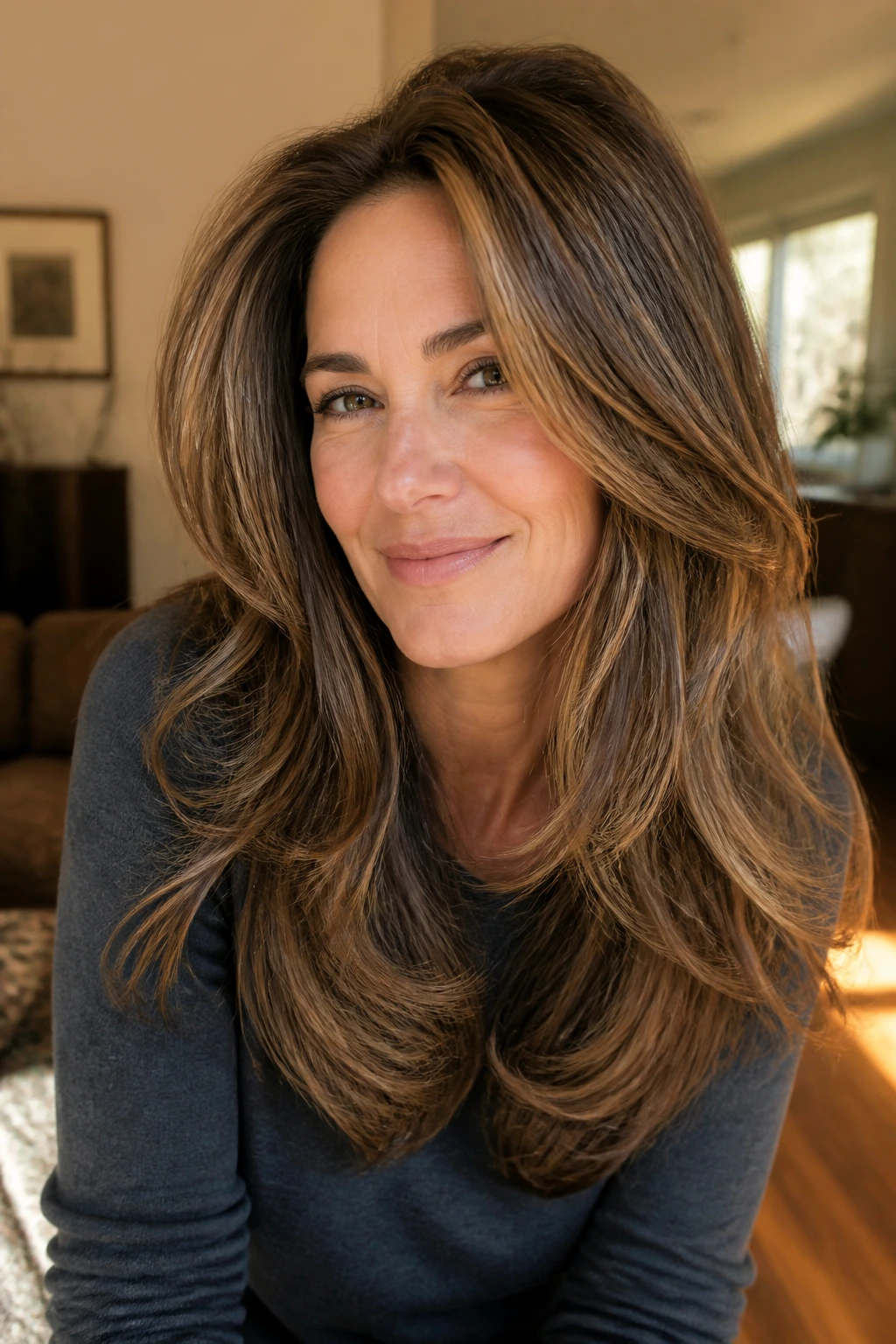
Thick hair can be a gift until you have to dry it. Then it can feel like a small labor project. A weight-removing cut makes the hair move instead of sitting in one heavy block.
The best version does not mean “thinned to death.” That is lazy cutting and it grows out badly. What you want is strategic removal inside the shape, with the perimeter still strong enough to hold the haircut together. The result is less bulk at the sides and less puff at the ends.
What to watch for
- Avoid over-thinning near the bottom
- Keep enough length to hold the shape
- Ask where the bulk lives before the scissors come out
This cut is a relief if your hair gets hot, heavy, or triangle-shaped by noon. It is also one of the few long cuts that can make thick gray hair look controlled instead of frizzy.
19. The Deep Side-Part Cut
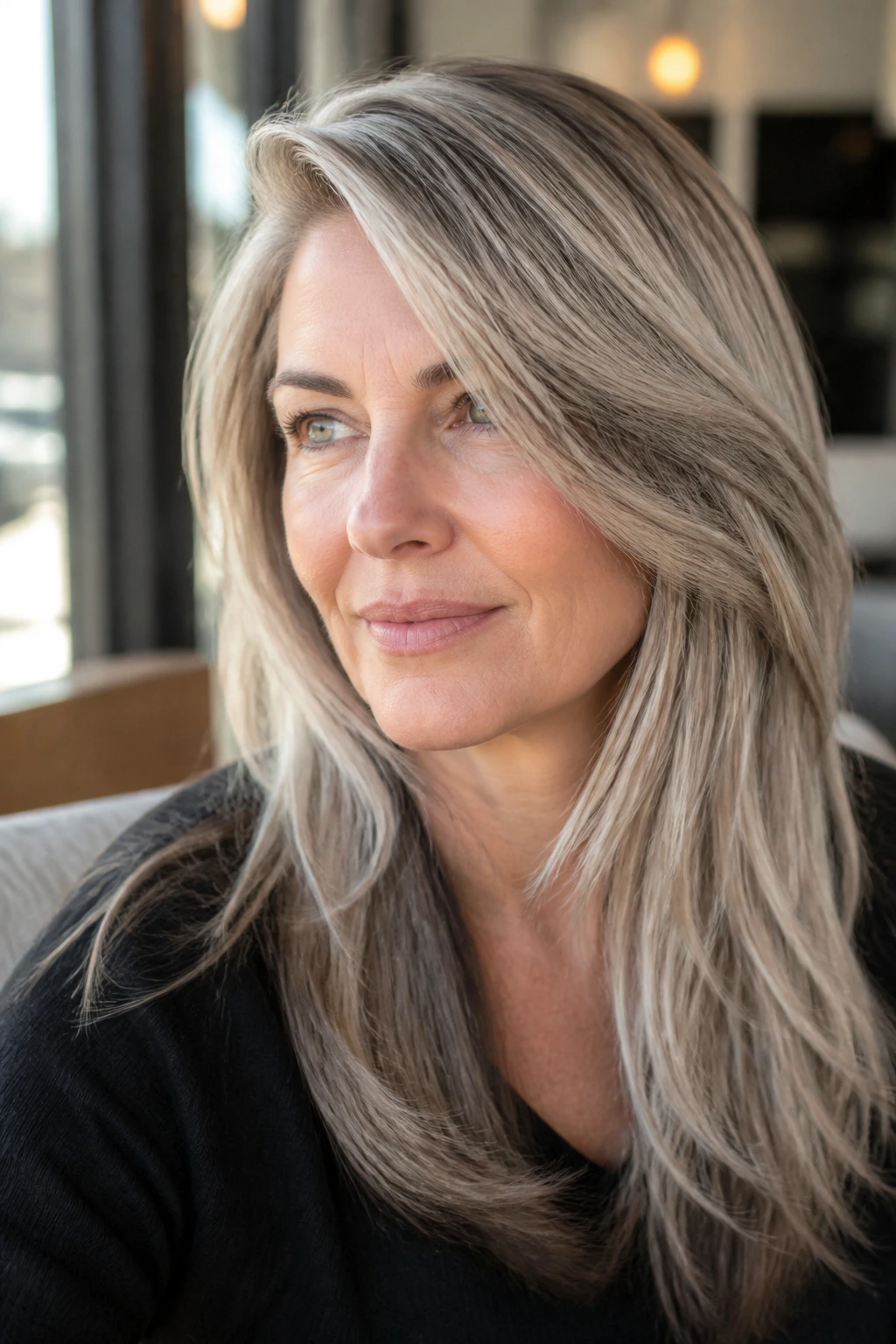
A deep side part can change the whole feel of long hair. It gives instant lift at the front, a bit of asymmetry, and a shape that looks more styled than a center part with very little effort.
The haircut beneath it should support that shift. Long diagonal layers around the front help the hair fall in a clean sweep instead of fighting the part. This is a nice move if your crown has started to flatten or if the front hairline needs a little softness.
It is not a loud look. It is just smarter than people give it credit for.
If you wear your hair this way often, keep the shorter side long enough to tuck back without sticking out. That little detail matters more than most stylists mention. Otherwise the part starts looking accidental, and nobody wants that.
20. The Extended A-Line Cut
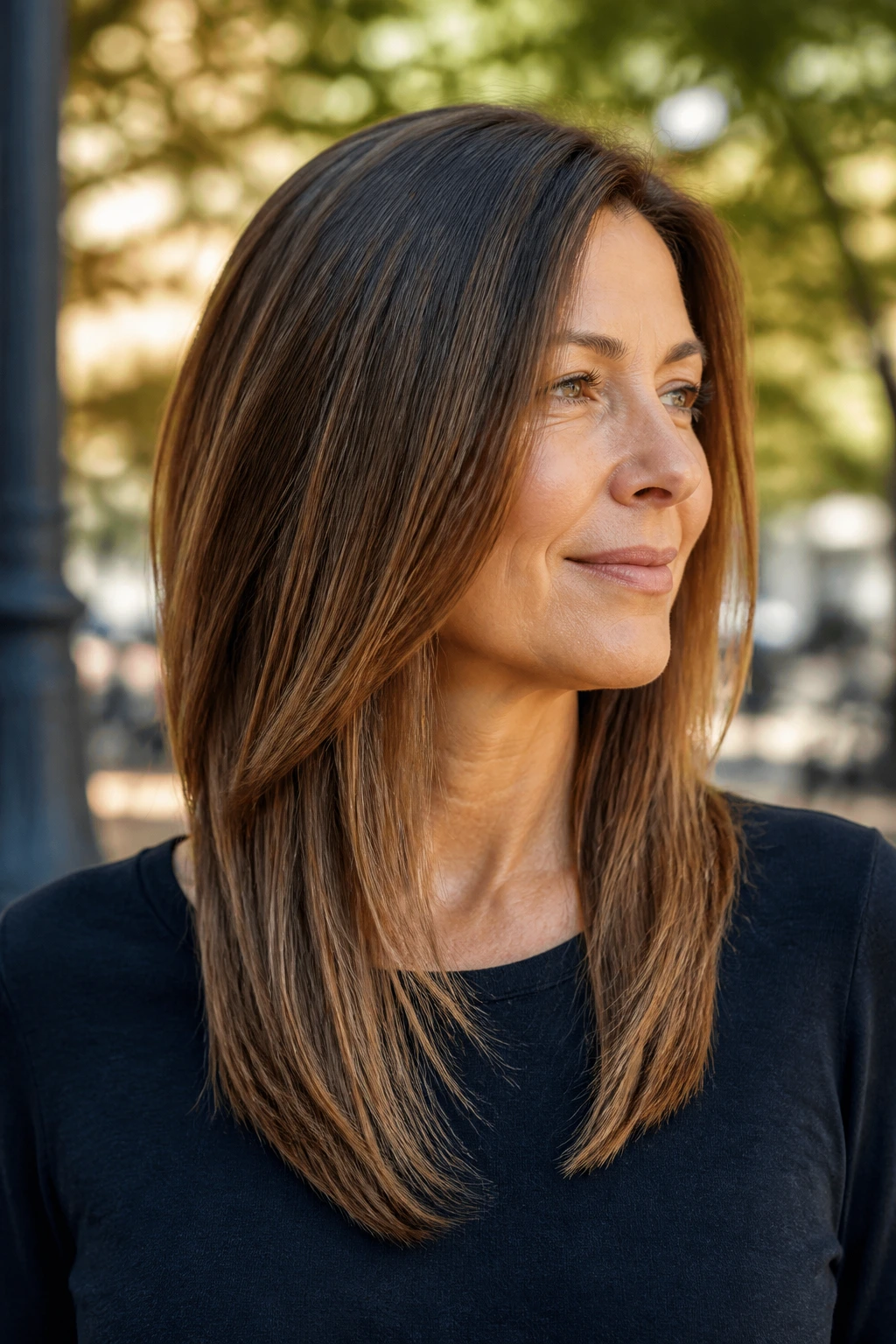
An extended A-line keeps the back slightly shorter and the front longer, but the angle is gentle enough to stay in long-hair territory. It gives the haircut direction without turning it into a lob.
This shape works beautifully when you want the front to frame the face and the back to feel a little lighter. It can make the neck look longer, and it also gives the jawline more structure. On women with straight or softly wavy hair, the angle reads clean and modern without trying too hard.
The angle has to be subtle. If it gets too steep, the haircut starts yelling at people. A mild version grows out better and stays easier to live with between trims.
21. Long Hair With Wispy Bangs
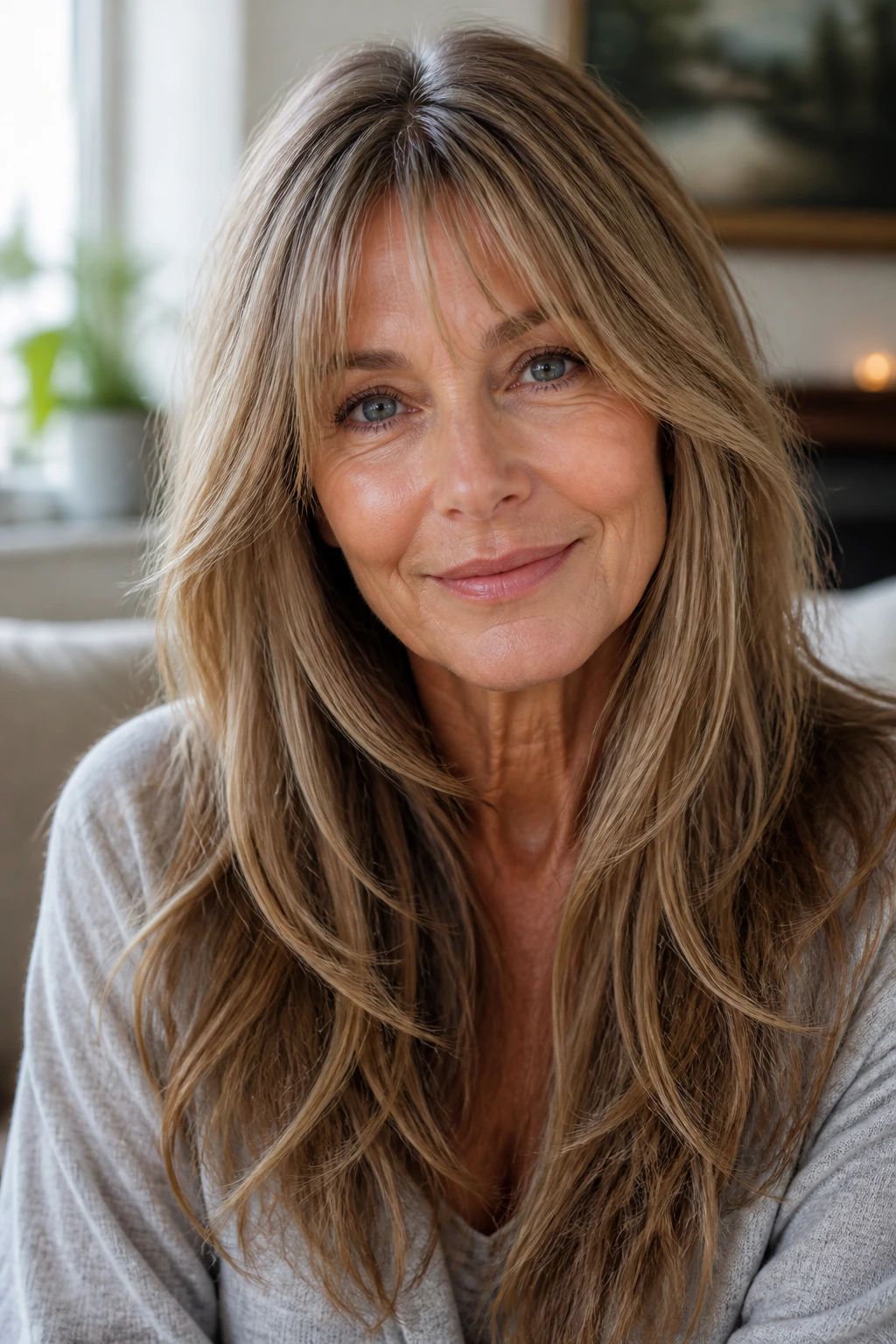
Wispy bangs are for people who want a little forehead coverage without the heaviness of a full fringe. They sit light, break up the face, and blend into long layers with less fuss than straight-across bangs.
They can be a good match for long hair that needs a fresh edge but not a full redesign. I like them on women who want to soften a strong brow, hide a little fine-line texture, or make a center part feel less severe. The bang area should stay airy, not chunky.
The downside is maintenance. Wispy bangs grow quickly in the mirror, and they can look stringy if they are cut too thin. A trim every few weeks keeps them from turning into a sad little curtain.
22. Tapered Ends for an Easy Grow-Out
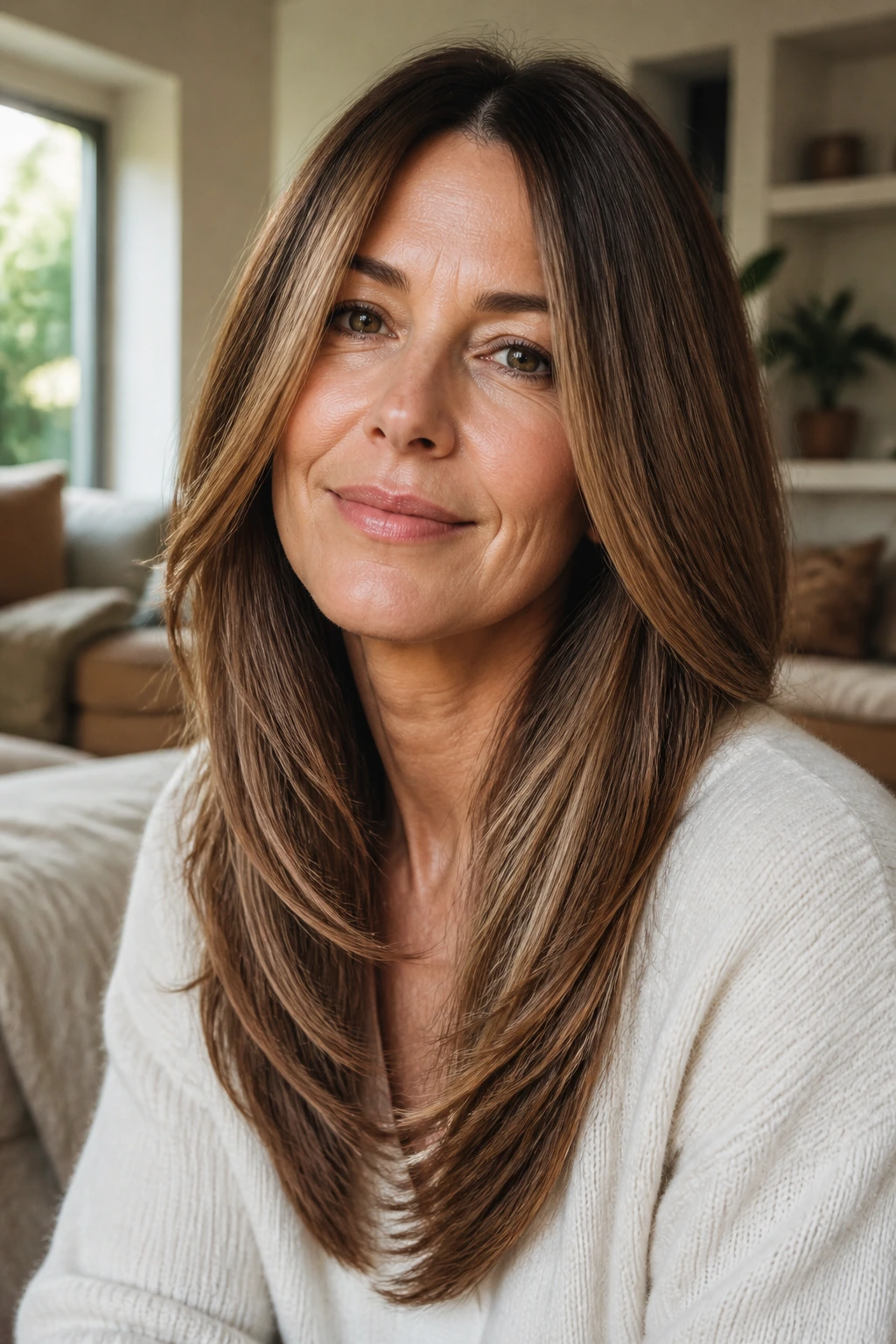
A tapered long cut is one of the most practical options on this list. The ends narrow gently, so the hair keeps its shape even when you go a little too long between appointments.
This is the haircut for someone who likes length and does not want a salon schedule running her life. It works well on straight hair, soft waves, and even gray hair that has a bit of coarse texture at the bottom. The taper keeps the finish from looking blunt in a heavy way, but it also avoids the choppy look that some layered cuts leave behind.
You will still want a dusting now and then. Split ends are rude. But a tapered shape buys you time, and time is often the real luxury.
23. Silver-Friendly Layered Hair
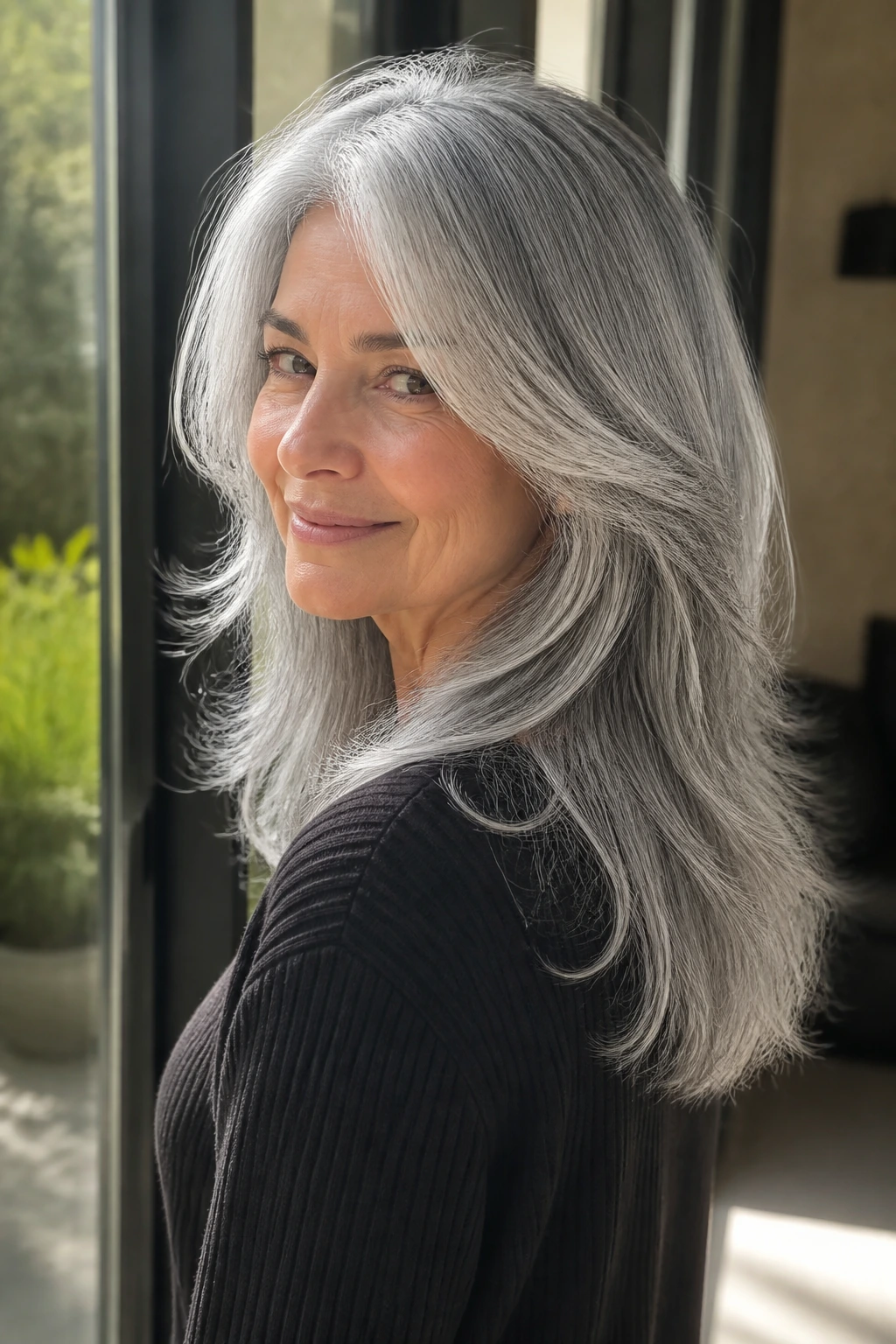
Gray hair is not one texture. Sometimes it is soft and fine. Sometimes it is coarse and springy. Sometimes one side has a different personality than the other, which is just rude, but there it is.
A silver-friendly layered cut respects that mix. The layers should add movement without chewing up the density, and the perimeter should stay clean enough to keep the silver looking polished. I like a little softness around the face here, plus enough length in the back to show off the shine and the natural variation in color.
Why it works on gray hair
- Silver strands show shape fast
- Clean ends keep the color looking intentional
- Soft layering helps coarse texture sit down better
If your gray has turned wiry, do not let anyone thin it aggressively. That usually makes it puffier, not smoother.
24. Crown-Lift Layers
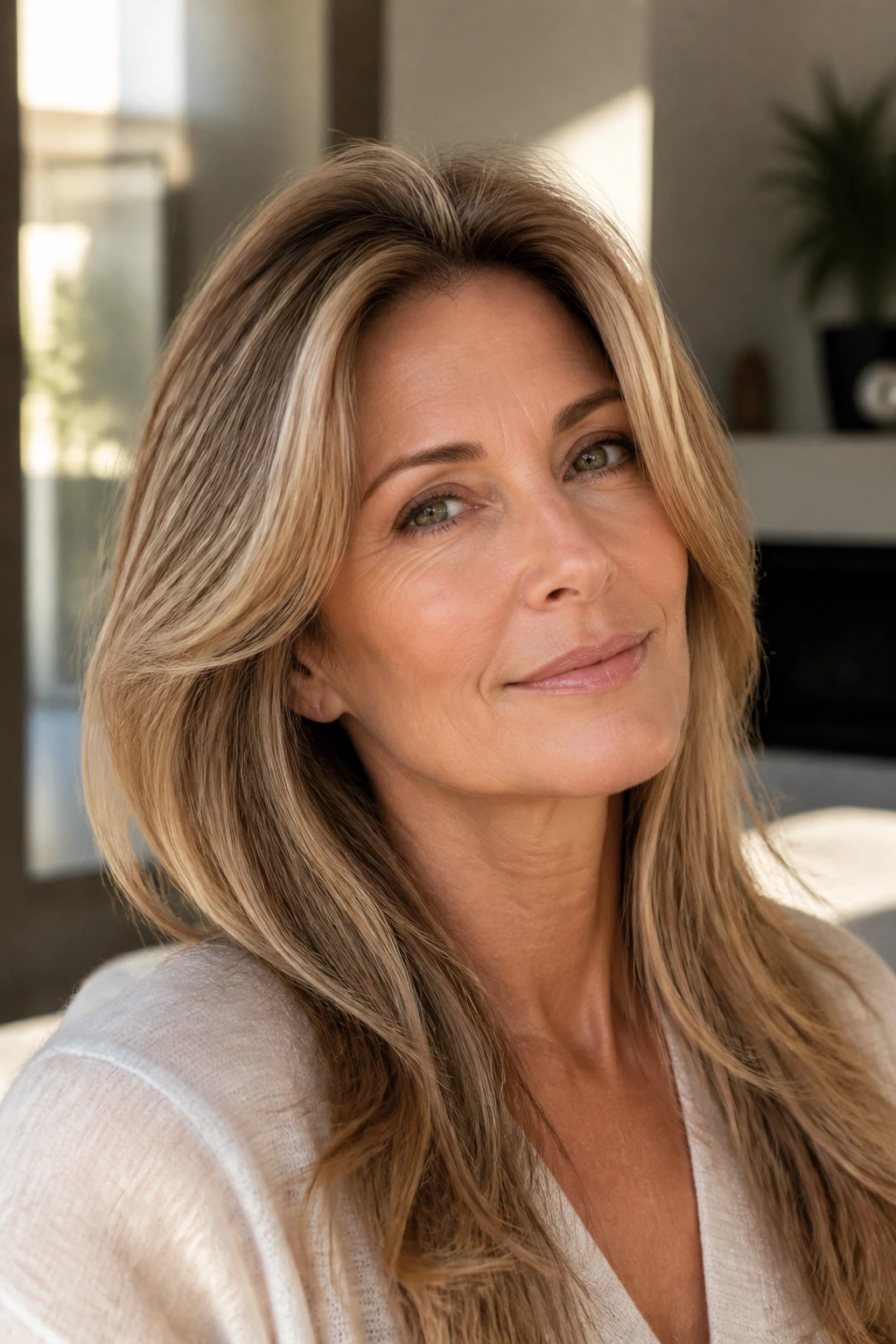
Flat crown, no patience, and a long length that feels stuck? Crown-lift layers are the fix. They concentrate the shaping near the top so the hair rises a little at the roots and stops clinging to the scalp.
This cut is useful for fine or straight hair that needs height without teasing. The layers are cut to support lift where the head needs it most, then they blend out into longer lengths. The shape can make the face look more open and the whole style feel less tired.
It does not have to be big. A small lift at the crown often reads better than a huge bump. Keep it soft, keep it movable, and style the roots with a round brush or clips if you want the height to last past lunch.
25. The Graceful Grow-Out Cut
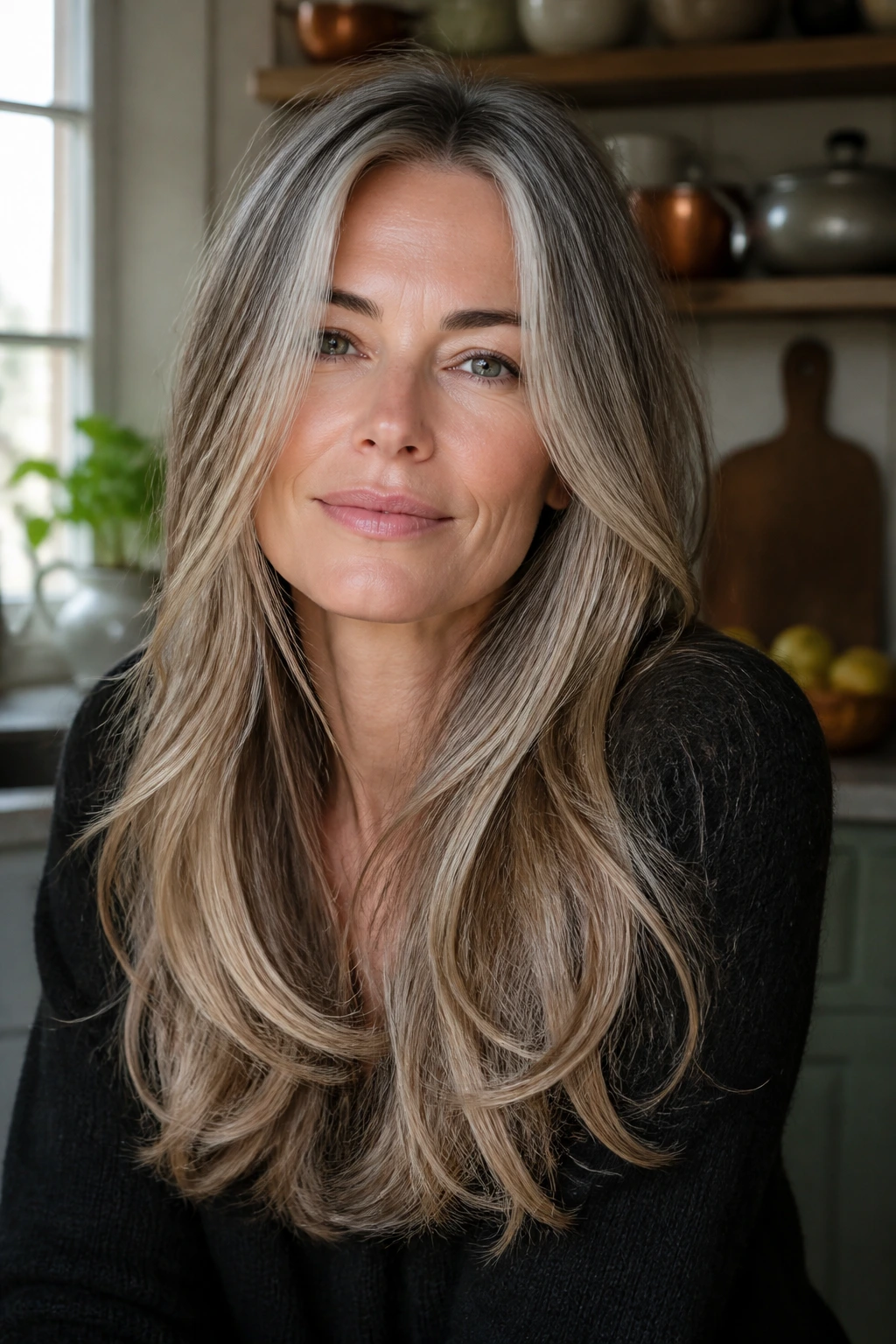
A haircut should not fall apart the second it gets a little old. That is why a graceful grow-out shape matters so much for long hair. It is built so the layers keep working even after a couple of inches of growth, which means fewer awkward phases and fewer emergency trims.
This is the cut I would hand to someone who wants long hair but hates constant upkeep. The front should frame the face enough to stay useful, the ends should stay full, and the interior shaping should be soft enough to age well. It is also a strong choice if you are letting gray grow in and want the transition to look deliberate, not messy.
Long hair after 40 looks best when it is doing something useful. Not flashy. Useful. If the cut still looks good when you pull it back, tuck it behind one ear, or let it air-dry on a rushed morning, you picked the right one.
