

The right layered haircut can change the whole mood of a face in its 70s. It can lift the crown, soften the jawline, and keep gray hair from lying flat and looking tired. When the cut is shaped well, the styling gets easier, not harder.
Layers are the trick.
But the wrong layers do the opposite. Too many short ones on fine hair leave the ends stringy; heavy hair without enough internal removal turns into a helmet; and a blunt outline can make the face look dragged down, especially when the hair has lost some of its old density. That difference shows up in the mirror, not just in photos.
Good layered haircuts for women in their 70s should work with the hair you actually have now. That means a little lift where the crown has gone soft, movement around the eyes and cheekbones, and enough perimeter left at the ends so the shape still feels clean. Start with the chin-length bob below; it is the cut I reach for most when someone wants polish without the daily drama.
1. Chin-Length Layered Bob With a Side Part
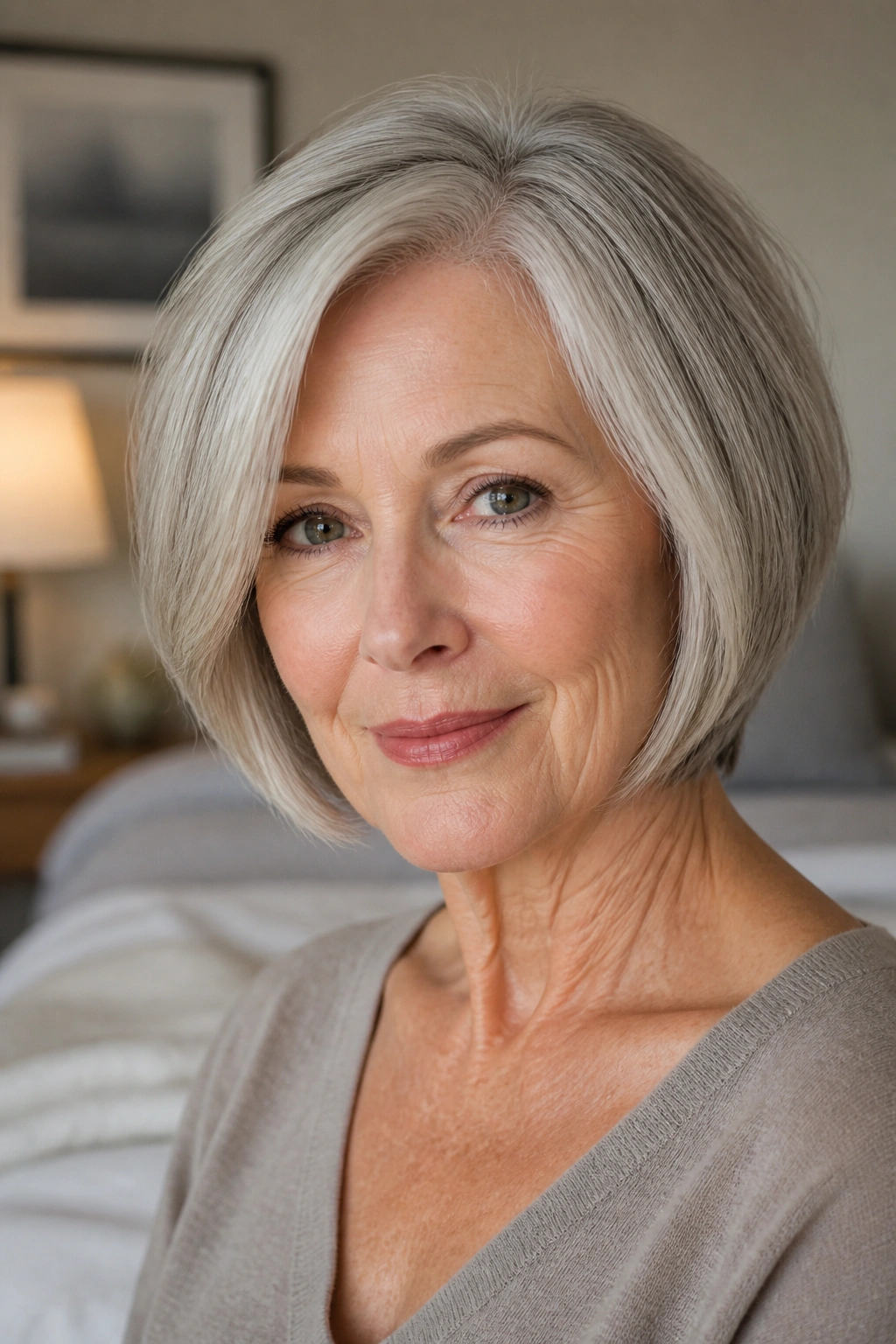
A chin-length layered bob is one of the easiest ways to get lift without losing polish. The length sits right where the jawline can use a little help, and the side part keeps the top from collapsing into a flat sheet.
Why It Works at the Jawline
The chin is a useful stopping point because it gives the face a clear edge. If the hair ends a little above or below that line, the whole shape starts to look intentional. On gray hair, which often has a bit more sparkle and a bit less bulk, that clean edge matters even more.
Ask for soft interior layers, not choppy bits cut all through the ends. The bob should swing, not fray.
- Best on fine to medium hair that needs lift around the crown.
- Ask for layers that start below the cheekbone so the face does not look hollow.
- Blow-dry with a 1-inch or 1.25-inch round brush to keep the ends tucked under lightly.
- A side part about an inch off center gives more height without looking fussy.
Pro tip: tuck one side behind the ear and leave the other loose. That tiny bit of asymmetry makes the cut look softer and much more alive.
2. Feathered Shoulder-Length Cut With Soft Ends

Why does shoulder-length hair start to feel heavy so quickly after 70? Because the longest pieces carry all the weight, and the face can look pulled down if the ends sit too bluntly. A feathered shoulder-length cut fixes that by lightening the mid-lengths and letting the edges breathe.
This is one of my favorite layered haircuts for women in their 70s with glasses, because the shape stays gentle around the temples and doesn’t crowd the frames. It also works well on gray hair that has gone a little coarse, since feathering softens the outline without making the haircut look thin.
Tell the stylist you want movement, not a lot of broken pieces. The layers should fall in smooth sections and taper near the shoulders, where hair tends to flip out on its own anyway. That small bit of flip is a good thing. It keeps the style from feeling stiff.
If you like a quick morning routine, this one is kind. A round brush, a little mousse at the roots, and a light pass with a dryer is usually enough. Anything more is extra.
3. Cropped Pixie With Crown Layers

Why does a cropped pixie with crown layers work so well on straight gray hair? Because it puts the energy where the eye wants it most. The crown gets lift, the sides stay neat, and the whole cut looks lighter than its actual length.
The biggest mistake with short cuts on women in their 70s is taking too much off the top and leaving the head shape flat. Crown layers solve that. They build a little height without making the style look helmet-like, which is a real risk when hair grows finer over time.
How to Wear It
Use a pea-sized amount of styling cream or lightweight paste and work it through towel-dried hair with your fingertips. Do not smooth it too much. A slightly piecey finish gives the pixie some edge and keeps the texture from reading as “done to death.”
- Best for fine hair that needs lift in the crown.
- Keep the sides soft around the ear instead of clipped too tightly.
- Ask for a little length at the fringe if your forehead feels prominent.
- A quick finger-dry often beats a full round-brush blowout.
A good pixie should make you feel sharper, not younger. There’s a difference.
4. Collarbone Lob With Face-Framing Pieces
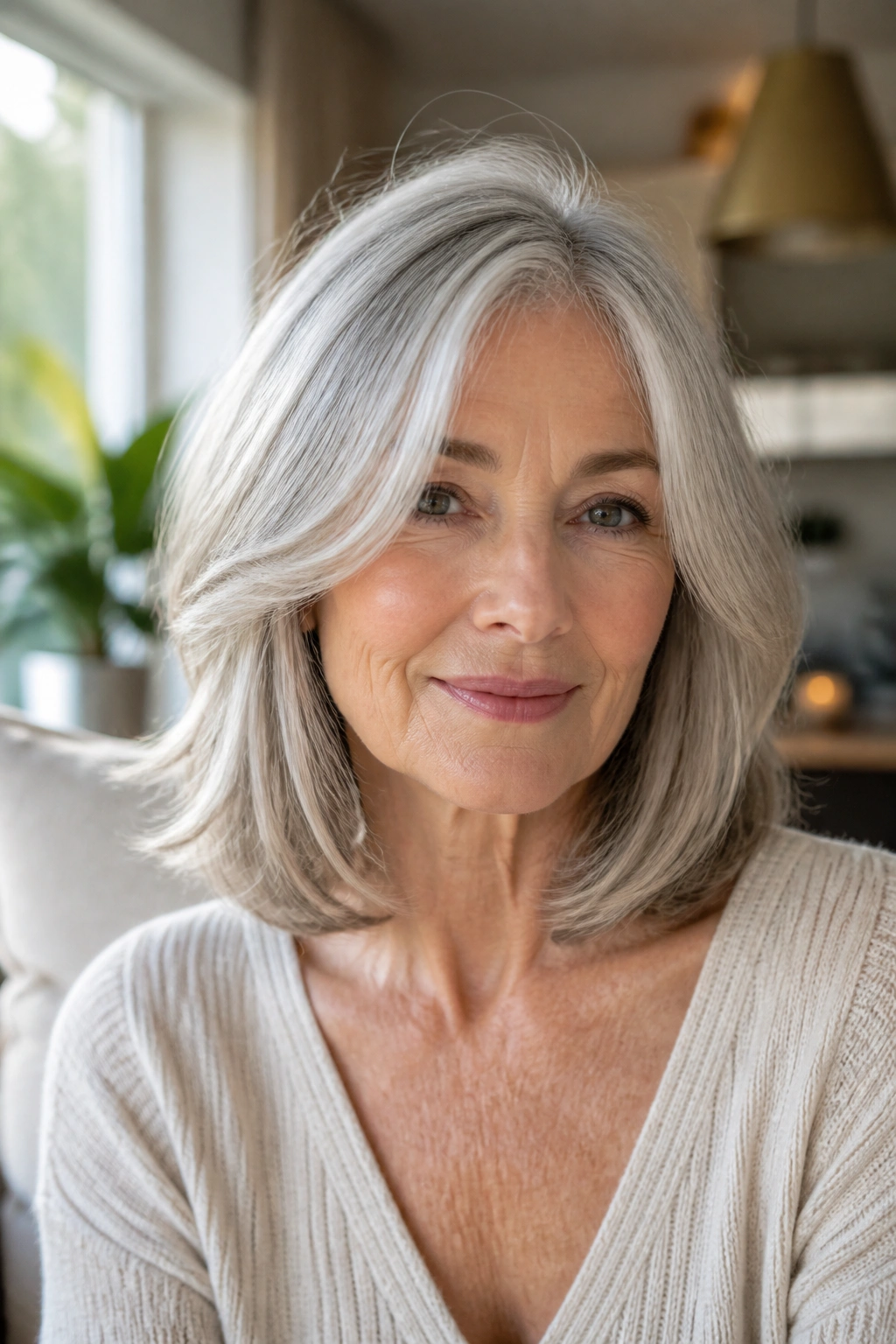
Picture a collarbone lob that brushes the sweater line and turns in just enough to frame the face. That is the haircut people often point to when they say they want length but not heaviness.
The face-framing pieces matter because they give the haircut a job. Instead of hanging straight down, the front layers skim the cheekbones or jaw and soften any hard angles. On silver hair, that little bend near the front can be surprisingly flattering, especially if the hair has a natural wave that gets ignored in a blunt cut.
The trick is to keep the layers long enough to remain elegant. Short face-framing sections around the chin can look jumpy if the hair is thin. Longer pieces around the collarbone feel calmer and grow out better, which matters when you do not want a salon visit to feel urgent every few weeks.
- Keep the front pieces 2 to 3 inches longer than the shortest layers.
- Ask for a center part if your face is long; choose a side part if you want more lift.
- A flat brush or large round brush can turn the ends under in 3 to 5 minutes.
- The cut should still look decent air-dried.
That last part is the real test. If the lob only works in perfect conditions, it is too high-maintenance.
5. Stacked Bob With a Soft Back Lift
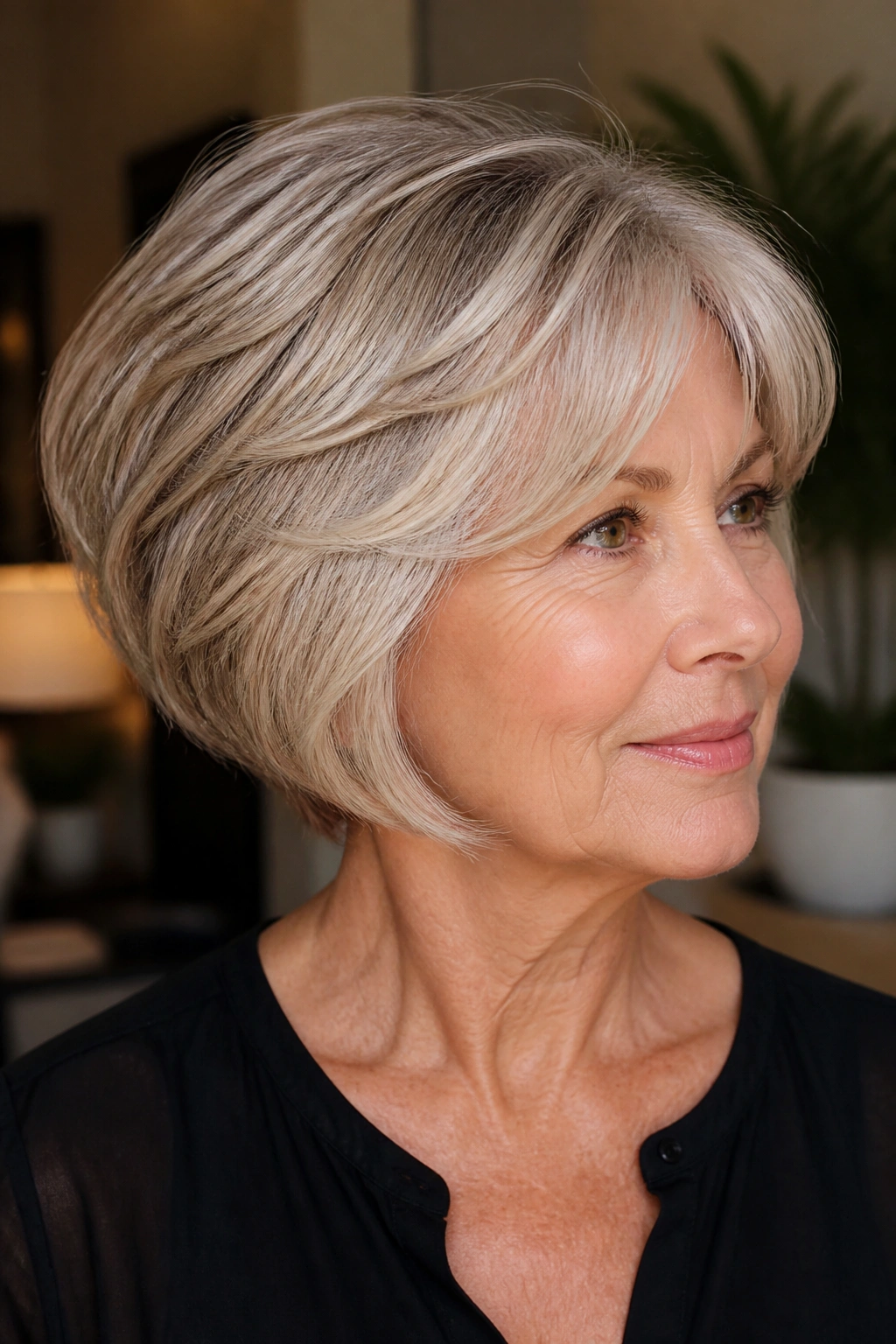
The back of the head loses shape fast when hair gets thinner, and a stacked bob handles that problem with a little quiet discipline. The layers are shorter in the back, so they build a rounded lift right where flatness usually starts.
What I like about this cut is that it looks structured without being severe. The stacked area gives the illusion of fullness, while the front remains soft enough to keep the whole haircut from feeling boxy. On women in their 70s, that balance is gold. Too much stacking can turn dated in a hurry, but a gentle rise at the back is still one of the best ways to make the head shape look neat.
Gray and white hair show the architecture of a bob more clearly than pigmented hair does, so the shape has to be clean. That sounds fussy, but it is not. It just means the graduation should be deliberate and the neckline should be tidy.
A little root spray helps. So does drying the back first, before the sides get too air-dried and stubborn.
6. Silver Shag With Curtain Bangs
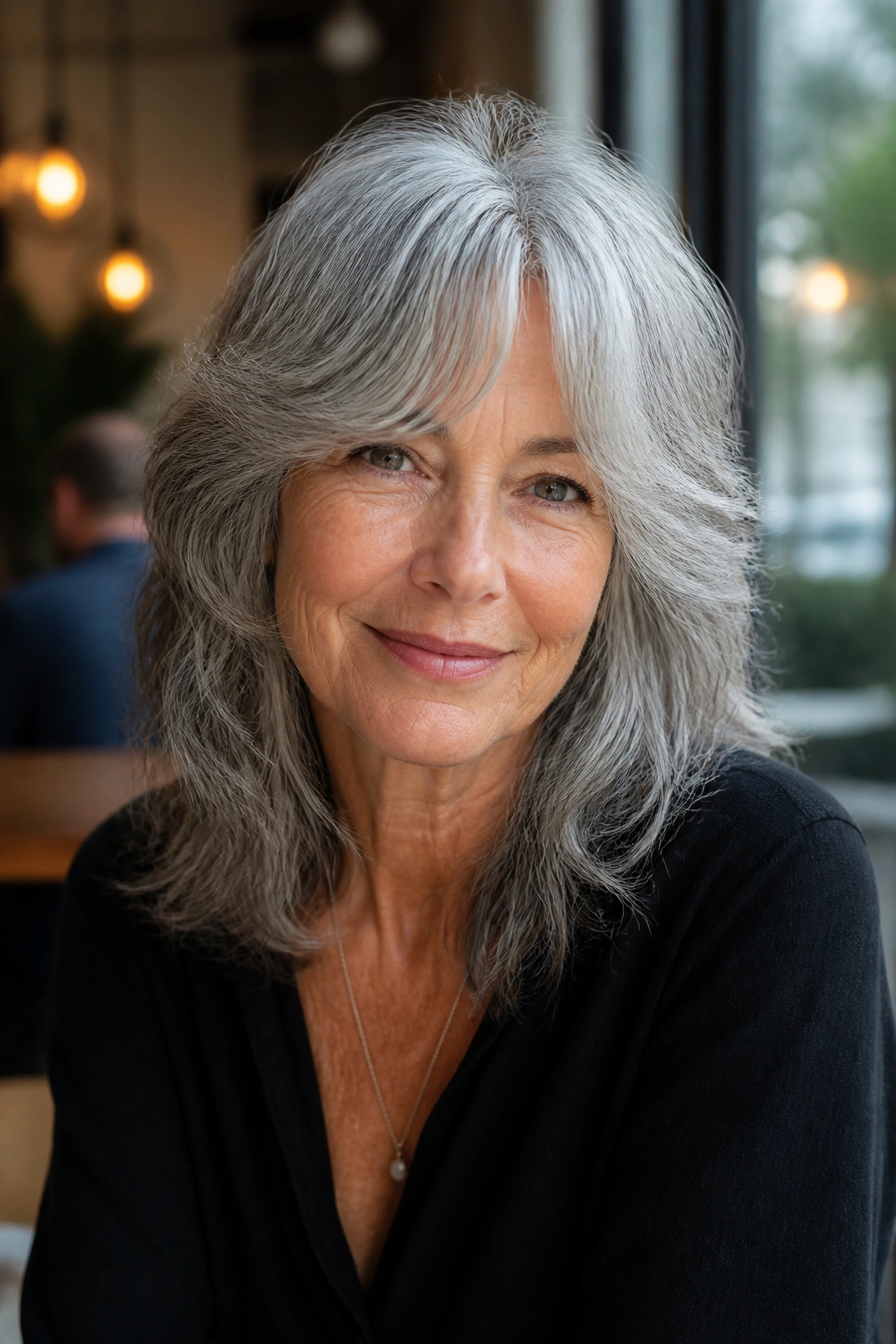
A silver shag does not pretend the hair is younger, straighter, or easier than it is. It works with movement, and that is exactly why it looks so good on wavy or coarse gray hair. The curtain bangs soften the forehead without boxing the face in.
Unlike a tidy bob, the shag has a looser feel. That’s the point. The layers are meant to break up a heavy outline and let the hair move around the cheeks and neck instead of sitting in one flat curtain. If your hair bends on its own, this cut is probably friendlier than a polished shoulder-length shape that asks for more heat styling.
It suits women who do not want their hair to look “set.” You know the look. Too smooth, too sprayed, and too polite. The shag keeps a little life in it.
A medium-hold mousse at the roots and a diffuser on low heat is usually enough. If the bangs separate a little at the center, leave them alone. That separation is part of the charm.
7. Tapered Crop With Longer Top Layers
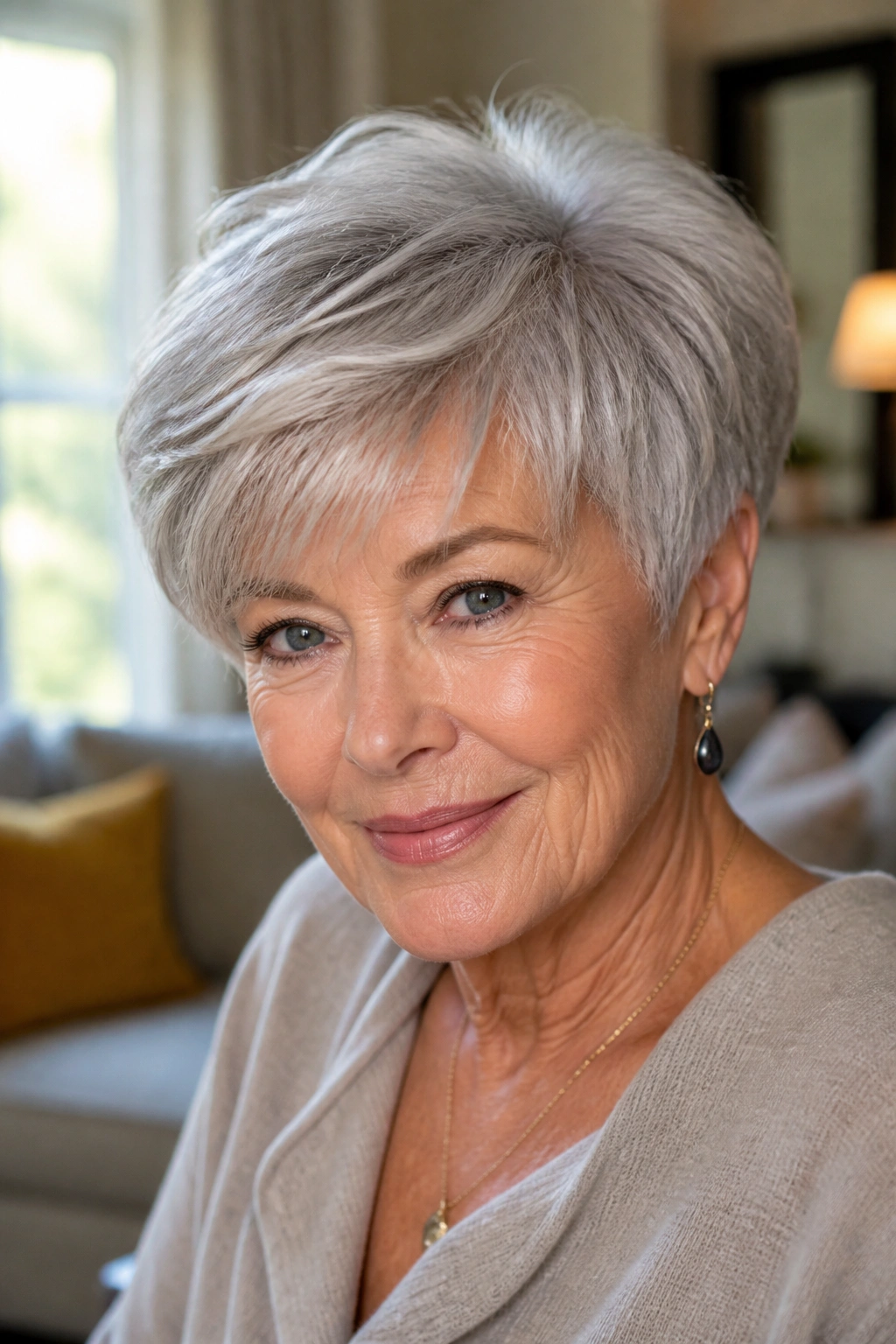
A tapered crop is the sort of cut that makes daily life easier when you are done wrestling with hair. The sides and nape stay close, while the top layers keep enough length to brush forward, back, or slightly to the side.
The Shape That Keeps It From Looking Severe
The taper is what makes this cut flattering. Without it, a short crop can feel square or too masculine for some faces. With it, the head shape looks neat and the hair around the temples stays soft, which helps a lot when glasses or earrings are part of the everyday uniform.
How to Ask for It
- Keep the nape softly tapered, not shaved close.
- Leave the top 1.5 to 2.5 inches longer so it can be styled in different directions.
- Ask for texture through the crown only if the hair is dense.
- Use a touch of light paste, not a heavy pomade.
This is one of those haircuts that rewards clean edges. If the neckline grows fuzzy, the whole style starts to lose its shape. But when it is maintained, it looks tidy in a way that never feels overworked.
8. Shoulder-Length Layers With Soft Flips
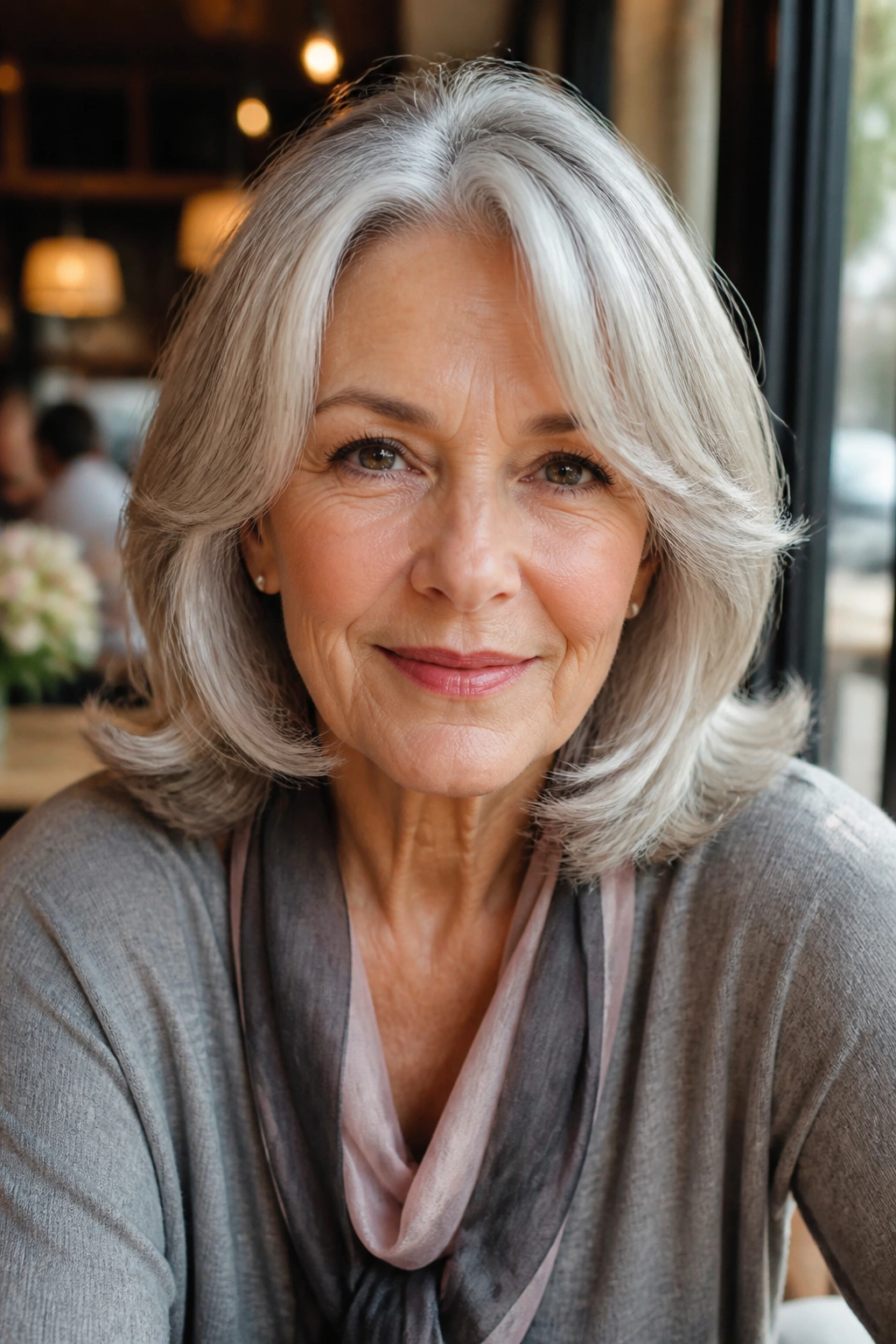
Shoulder-length layers with soft flips are for the woman who likes a little movement but does not want her haircut to shout. The ends can flip under, out, or both, depending on how the brush hits them that morning.
The best thing about this shape is that it gives medium-length hair a bit of air. Hair that sits at the shoulders often gets bent in awkward places, and the flip at the ends turns that annoyance into style. On silver or salt-and-pepper hair, the movement catches the eye without needing a lot of product.
Tell the stylist you want the layers to live mostly in the lower half of the haircut. If they start too high, the style can get frizzy and thin-looking near the crown. Lower layers keep the top fuller and make the flip happen closer to the shoulders, where it looks relaxed.
This cut likes a medium round brush, a little smoothing cream, and a quick bend at the ends. That is enough. It should never feel like a blowout that needs a support team.
9. Curly Layered Cut That Keeps Shape

Does curly hair need layers after 70? Yes, but not the sort that chew the shape to pieces. Curly hair needs enough layering to stop the triangle effect, while still keeping the curl pattern intact and bouncy.
The best curly cuts respect the curl’s spring. Each curl needs room to sit on its own, so the layers should be cut dry or close to dry whenever possible. That way, the shape follows the real curl, not the imagined one. On gray curls, this matters even more because coarse strands can spring in odd directions if the cut is too aggressive.
What to Ask For
Use curl cream first, then decide how much more product you need. Most women use too much. The hair should feel soft, not coated.
- Ask for longer layers around the crown to prevent bulk.
- Keep some weight at the perimeter so the curl does not puff outward.
- Use a diffuser on low air and medium heat.
- Trim every 6 to 8 weeks if the curl grows unevenly.
If you have spent years flat-ironing your hair, this cut is a relief. It lets the curl do the talking, and that is usually the better conversation.
10. Long Layers for Thick Silver Hair

Thick silver hair can be a blessing and a nuisance in the same morning. It has body, but it can also feel heavy at the ends and bulky around the sides if the cut is too blunt. Long layers solve that by taking some weight out without stripping the outline bare.
The thing to watch is over-thinning. A lot of stylists get too enthusiastic with shears and leave thick hair frayed at the bottom. That is a bad trade. Long layers should remove bulk from the interior, not make the ends see-through. The best result still looks full, just less puffy and less stubborn.
A few face-framing pieces help the front move, but the real work happens underneath. Ask for internal layering or soft debulking, then keep the perimeter strong. That keeps the haircut from turning wispy in a month.
Long silver hair with layers also looks especially good when the shine is healthy. A lightweight leave-in conditioner and a weekly moisturizing mask do more than fancy sprays ever will.
11. Classic Pageboy With Modern Movement

A pageboy sounds old-fashioned until you see it cut well. Then it looks clean, rounded, and oddly fresh. The trick is to keep the silhouette smooth but allow the layers to move just enough so it does not freeze into a museum piece.
This cut sits nicely on straight or slightly wavy hair. The ends usually turn under around the jaw or neck, and the crown gets a soft lift so the shape does not sink flat against the head. It is especially kind to women who like structure but do not want a severe bob.
The modern version keeps the front a little longer and less boxed-in. That means the haircut can bend around glasses and still feel soft near the face. On gray hair, the rounded shape shows off the shine along the top line, which can be lovely when the light hits it.
It is a good choice if you want a haircut that looks deliberate with minimal styling. A quick blow-dry with a paddle brush or a round brush is usually enough to make the line sit properly.
12. Textured Ear-Length Bob for Fine Hair
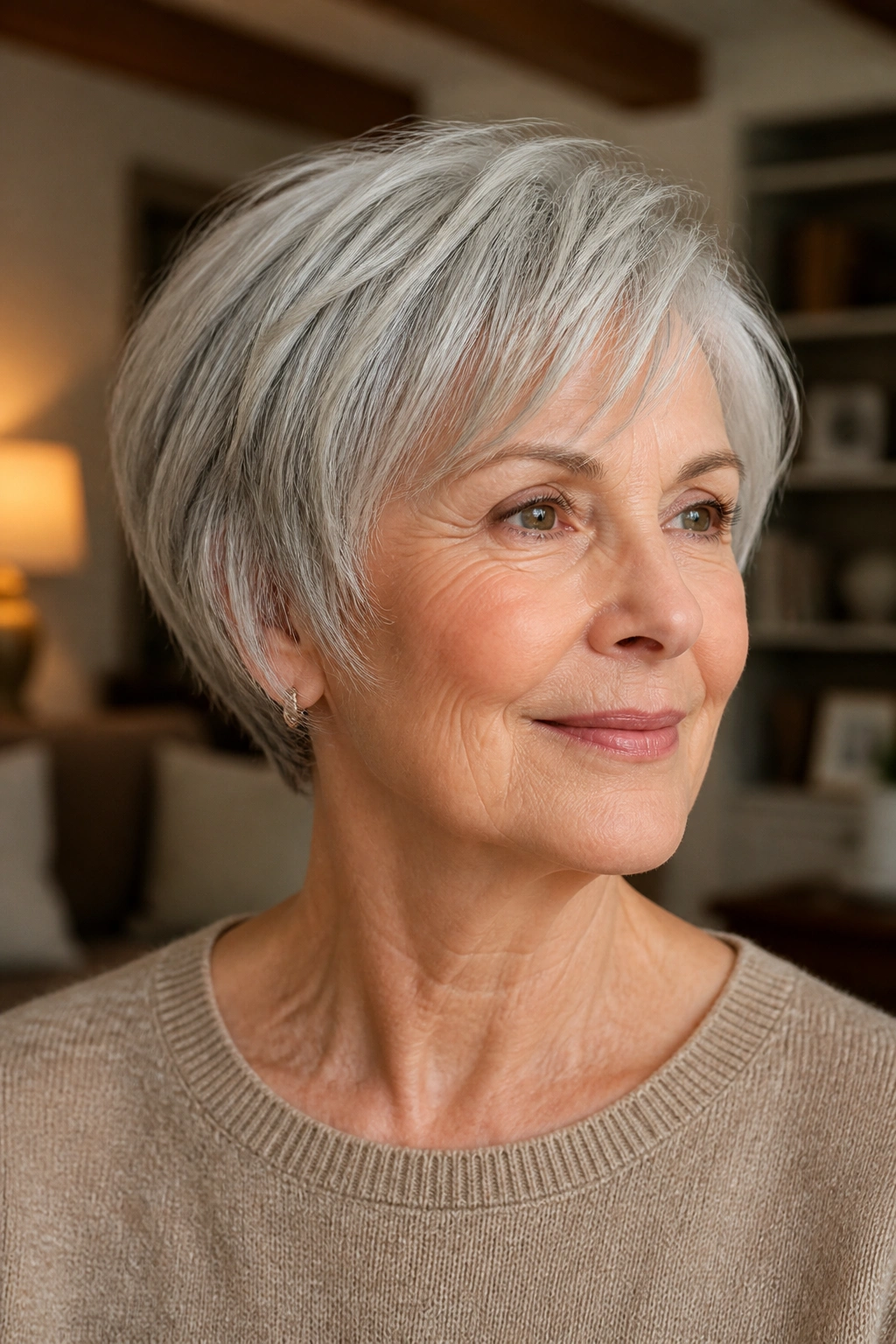
Fine hair at ear length needs more thought than people realize. If the cut is too heavy, it collapses. If the layers are too aggressive, it goes wispy and transparent. The textured ear-length bob lands in the useful middle.
The length sits short enough to lift the face and long enough to keep some softness around the cheeks. The texture should live inside the shape, not on the outer edges. That gives the bob a bit of movement without breaking the clean line that makes short hair look expensive, even when it is not.
The Small Details That Matter
A tiny root lift spray at the front can save you from having to backcomb. That stuff is overused, but on a short bob it can work.
- Keep the nape slightly tapered so the neckline feels neat.
- Ask for micro-layers, not chunky steps.
- Blow-dry with a small round brush to create bend at the ends.
- Finish with a light mist of flexible-hold spray, not helmet-level lacquer.
If you wear this cut with earrings, even simple ones, the whole look comes together quickly. It is a small haircut with a lot of visual payoff.
13. Layered Cut With Wispy Bangs

Wispy bangs can soften a forehead, break up a heavy brow line, and give a layered haircut a little personality. They should look light enough to move, never thick enough to sit like a curtain.
The danger here is overcommitting. Full bangs on mature hair can be a hassle if the hairline is cowlicky or the forehead changes shape as the hair grows. Wispy bangs are kinder because they sit in pieces and blend into the layers around the face. On gray hair, they also keep the top from looking too severe against the rest of the cut.
How to Keep Them Useful
Ask for the fringe to be cut dry or nearly dry so the stylist can see the actual fall. That one step saves a lot of regret.
- Keep the shortest pieces around brow level or a touch above.
- Let the sides lengthen into the cheekbone layers.
- Trim every 4 to 6 weeks if you want them to stay airy.
- Use a tiny dab of styling cream, then comb through with fingers.
A wispy fringe is not supposed to feel precious. It should look like it belongs there naturally, which is harder than it sounds.
14. Wedge-Inspired Cut With Clean Graduation
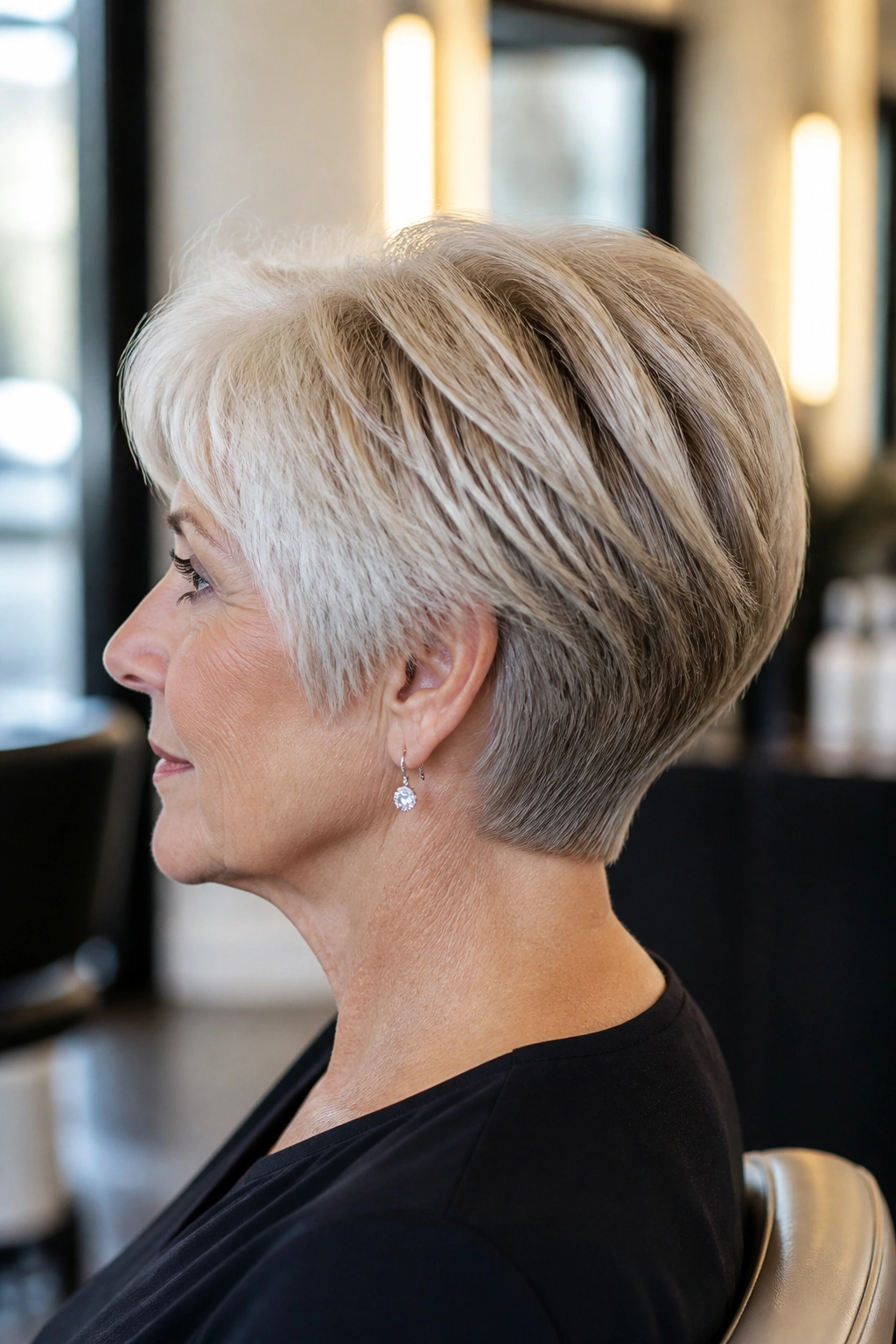
A wedge-inspired cut can sound a little severe, but the softened version works beautifully when the hair needs a clean shape at the back. It builds lift through the crown and narrows gently toward the neckline, which keeps the head shape from looking bottom-heavy.
What makes this cut useful is the graduation. The back is shorter, the sides swing longer, and the layers keep the transition smooth instead of obvious. That matters on women in their 70s because a hard line can make the haircut look dated. Soft graduation keeps the shape sharp without turning it rigid.
This cut shines on straight to slightly wavy hair. It can also help if you have a narrow face and want a little width through the sides. The structure creates that width without asking for volume products every day, which is the kind of practicality I like.
A flat brush and a quick bend at the ends are usually enough. If the crown gets a little lift, even better. That’s the whole point.
15. Soft Shag With a Slightly Longer Nape
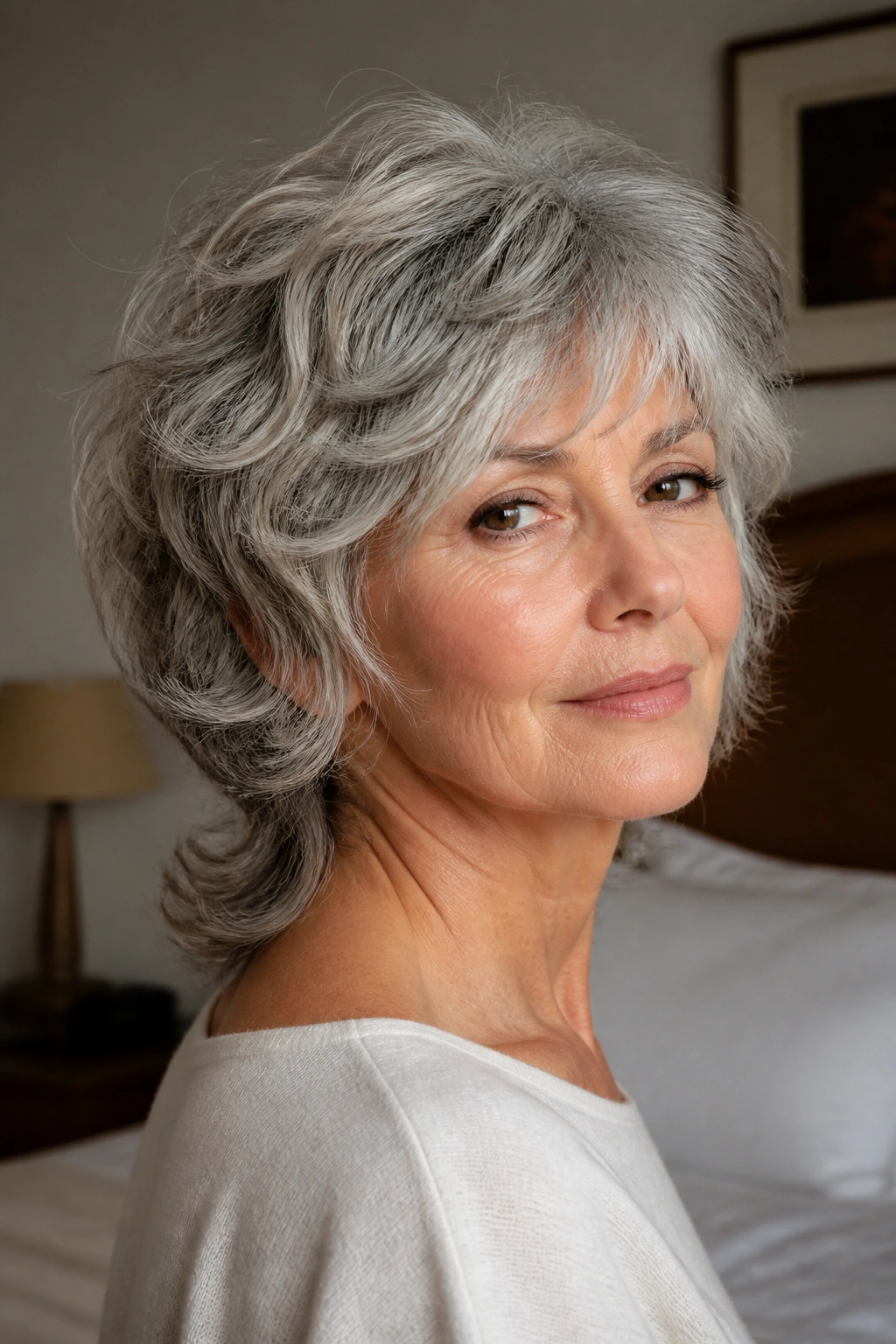
Can a shag still look polished? Absolutely, if the texture is controlled and the nape stays a touch longer. That little bit of length keeps the haircut from tipping into too much rock-and-roll and lets it sit more gracefully on the neck.
The soft shag is one of the better layered haircuts for women in their 70s who have a natural wave or a bit of bend they want to keep. It gives the hair room to move and lets the top layers fall in a looser way, which helps if the face has started to lose some of its old softness. A rigid cut can look harsh by comparison.
The longer nape also helps the grow-out. Instead of a sharp shelf line, the haircut fades into the neckline. That makes a big difference when you are not interested in constant maintenance.
This style likes a diffuser, a little wave cream, and a hands-off finish. If you keep touching it while it dries, it turns fuzzy fast. Walk away for a bit. Seriously.
16. Layered Cut for Thin Hair and Crown Lift

Thin hair needs layers, but not the kind that eat the structure. The point is to create the feeling of lift at the crown while keeping enough density at the ends so the haircut still looks like hair, not mist.
A lot of thin-haired women get talked into too many short layers, and the result is a haircut that looks airy for a week and then goes see-through. Better to keep the layering subtle, especially around the perimeter. Then add height at the crown and a soft bend around the face. That combination does more than any amount of razoring.
The Shape That Saves Density
The crown should have lift, yes, but the ends need to stay relatively blunt. That bluntness gives the eye something solid to read, which makes the hair look fuller. A slight side part can help too, because it lifts the front without much effort.
- Use a volumizing mousse at the roots only.
- Blow-dry with your head upside down for 30 seconds, then finish upright.
- Ask for layers that are soft and spaced out, not stacked everywhere.
- Skip heavy oils near the crown.
Thin hair often looks better in motion than in photos, and this cut takes advantage of that. It moves a little. That’s enough.
17. Side-Swept Bob With Temple Volume
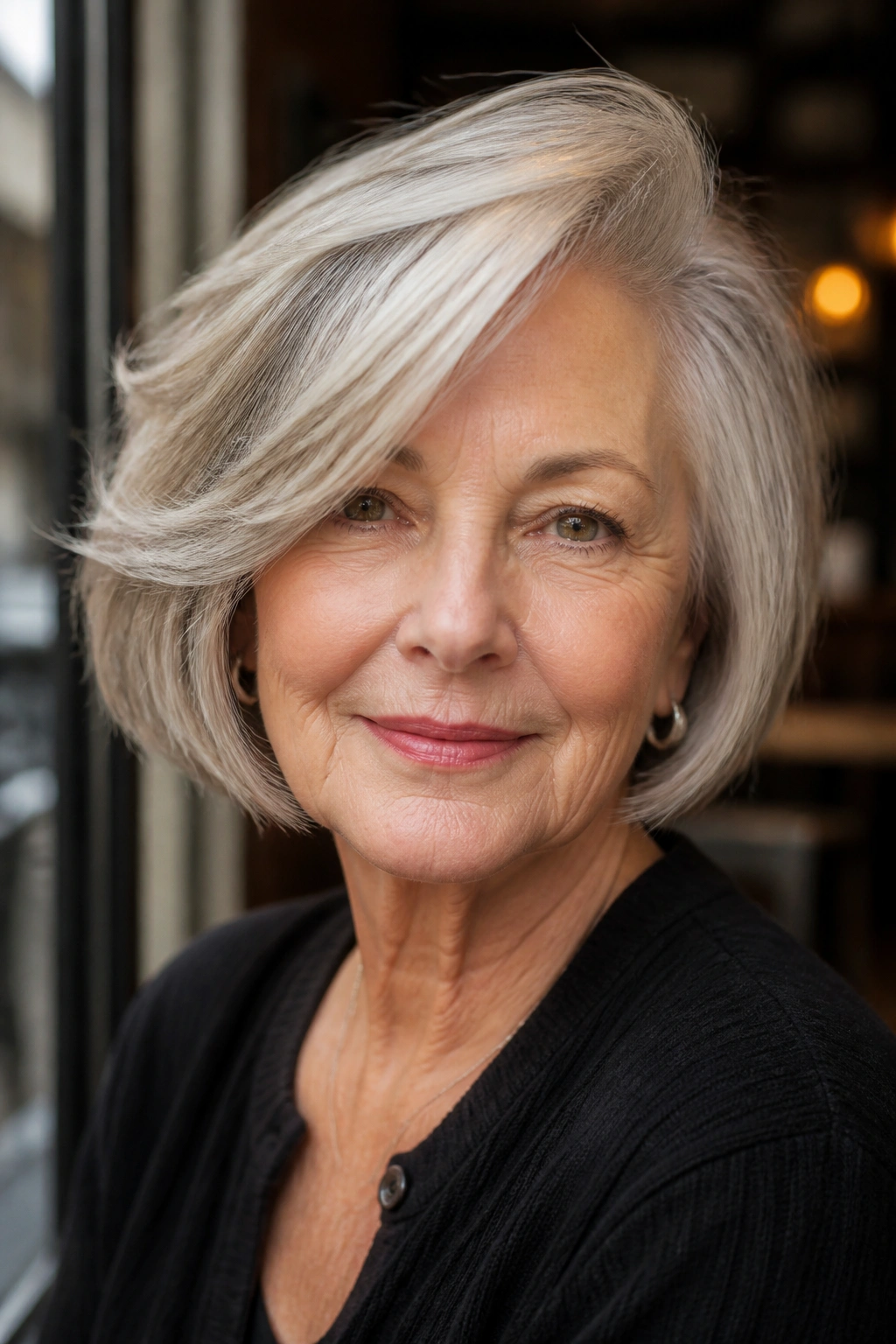
A side-swept bob can be a small miracle for faces that need a bit more width at the temples. The movement across the forehead brings attention upward, while the volume near the sides balances out thinning that can happen around the hairline.
The side-swept front also plays nicely with glasses. Instead of fighting the frames, it curves around them. That makes the whole haircut feel calmer and less crowded. On gray hair, which often shows texture more clearly, a side sweep can look polished without feeling stiff.
I like this style when the hair is a little straight and a little stubborn. The bob shape keeps it controlled, and the side sweep keeps it from looking flat and square. If you need to disguise a cowlick, this is one of the better options because the direction of the sweep works with the growth pattern instead of against it.
A medium round brush and a quick burst of heat at the front is often enough. Nothing dramatic. Just enough to make the front obey.
18. Grown-Out Pixie Bob With Neckline Softness
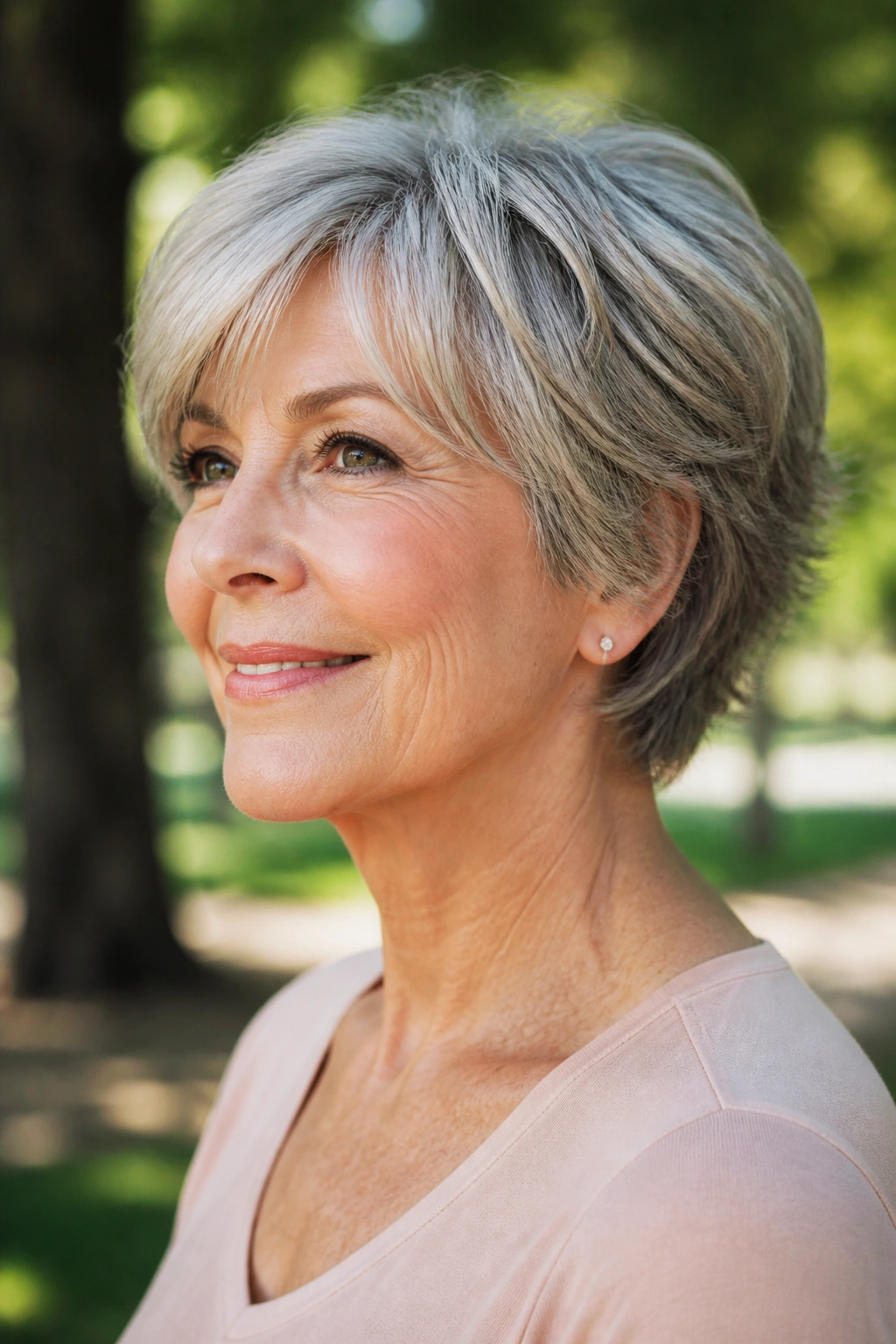
A grown-out pixie bob is the haircut for people who want to move away from ultra-short hair without starting from scratch. It keeps the ease of a pixie through the top and crown, but leaves enough length around the nape and sides to read as a bob.
That softness at the neckline matters. A harsh short neckline can look severe, especially if the face is already delicate. Leaving a little length there softens the profile and makes earrings, collars, and scarves look better. It also gives you a smoother grow-out if you decide to let it get longer later.
The top layers should still have some shape, or the whole thing loses its purpose. You want lift, not a flat cap of hair. A little texture through the crown keeps the style fresh and prevents that helmet effect that short cuts can get when they are too neat.
This cut is a sweet spot for women who want low maintenance but not zero style. It feels practical. It also photographs well in person, which is the real test.
19. Wash-and-Wear Crop With Piecey Layers
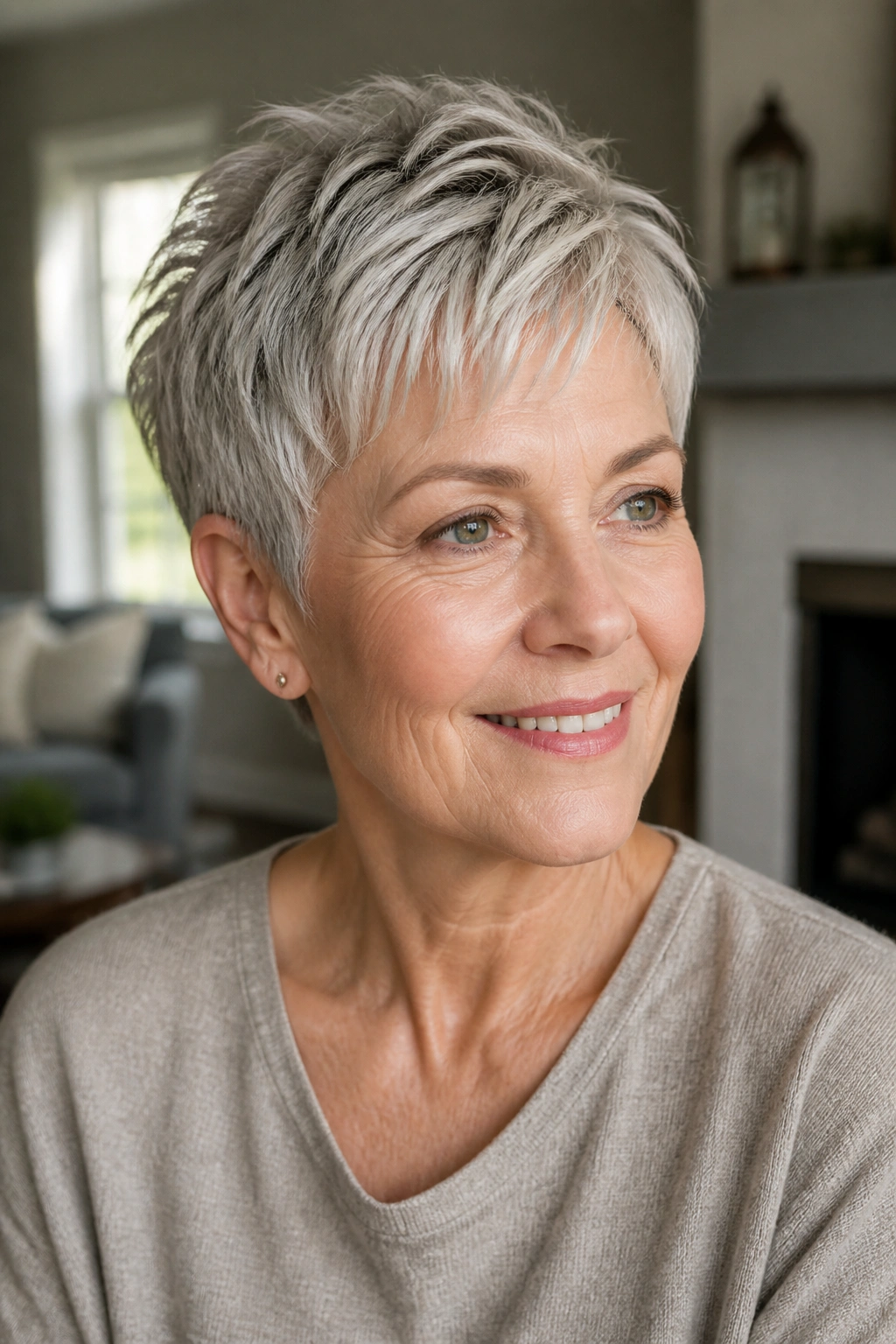
A wash-and-wear crop is for the days when you want hair that behaves without negotiations. Piecey layers give just enough separation to keep the shape from looking solid, but the haircut still falls into place with minimal fuss.
The texture should be light and controlled. Not spiky. Not shellacked. Just separated enough that the top moves when you run your fingers through it. On gray hair, that slight pieceiness can show off the natural sheen and keep the haircut from reading as one block of color.
What Makes It Easy
This is the sort of crop that likes a fingertip finish. If you are someone who hates blow-drying, that is half the appeal.
- Scrunch in a small amount of styling cream while the hair is damp.
- Use a towel, not a rough rub, to avoid frizz.
- Keep the sides neat so the top can be a little freer.
- Ask for layers that create separation, not choppiness.
It is a practical haircut, and I mean that in the best way. It does not demand a mood board or twenty minutes with a hot tool.
20. Layered Cut for Thick Hair With Weight Removed
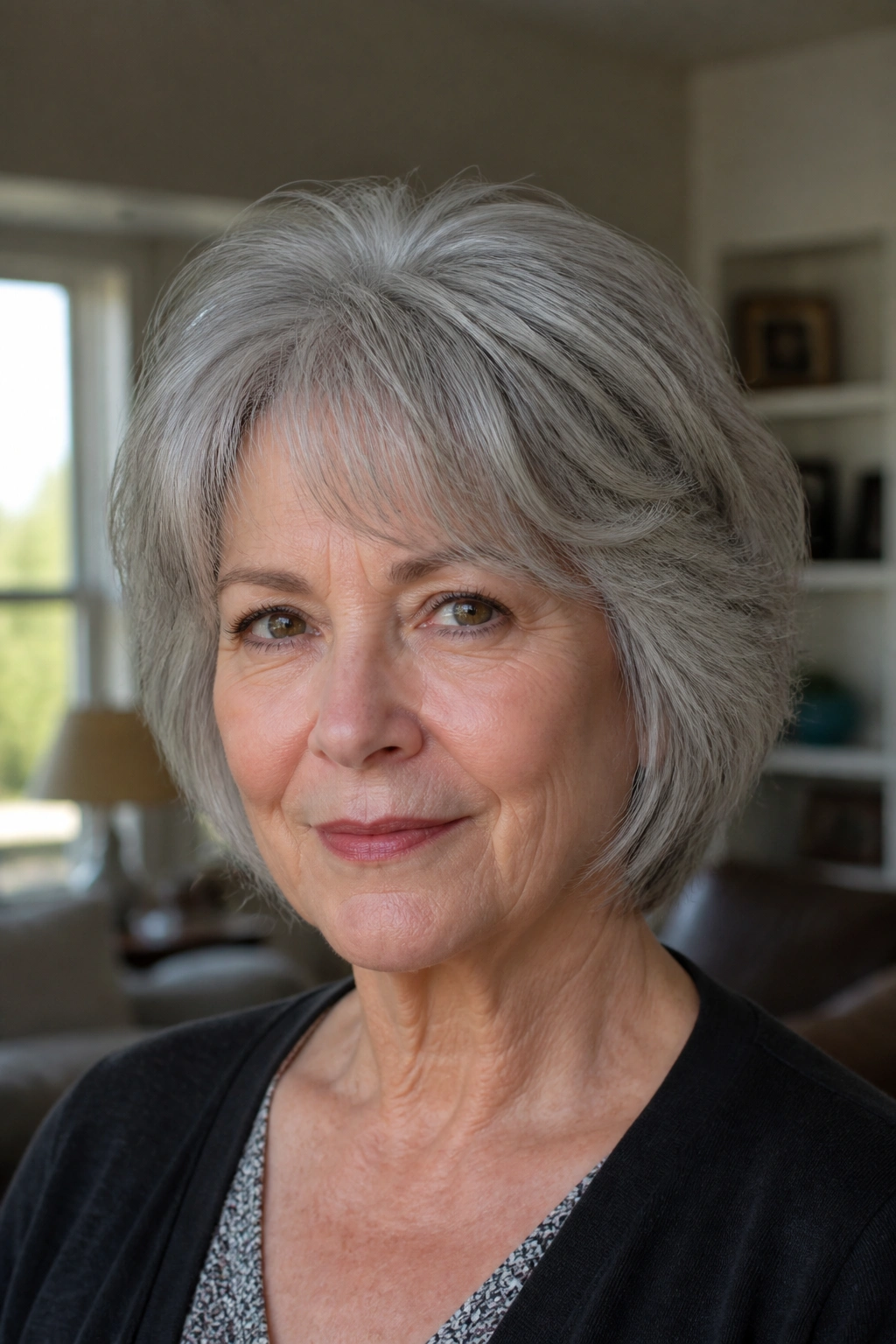
Thick hair after 70 can be beautiful, but it gets heavy fast when the layers are wrong. The answer is not to thin it to death. The answer is to remove weight from the right places so the shape sits closer to the head and the ends stop flaring out.
The biggest mistake is over-layering the top and leaving the bottom chunky. That gives a pyramid effect, which nobody wants. Better to soften the interior and keep the outer line clean. The haircut should feel lighter when you move, not look broken when you stand still.
This is where a stylist’s hand really matters. Thick gray hair often has a different feel from the roots to the ends, so the layers need to be placed with purpose. A little debulking near the back and sides can make the whole head look more balanced. But the cut should still have enough body to hold its shape on humid days, which is where razor-happy cuts tend to fail.
A smoothing cream and a wide paddle brush are usually enough for styling. If the shape is right, you will not need much else.
21. Short Layered Bob With Neck-Opening Shape

A short layered bob can do something subtle that people do not talk about enough: it opens the neck. That small change makes the face look longer, the posture look cleaner, and the whole haircut feel lighter around the shoulders.
The neckline is a detail, but it matters. If the bob sits too low and too solid, it can make the head look heavy. If it is cut to float just above the collar and curves away from the neck, it creates breathing room. That is especially nice with crew necks, turtlenecks, and simple earrings.
A Few Smart Choices
Keep the layers soft around the sides so the bob doesn’t puff out at ear level. That puff is what ruins the line.
- Ask for a rounded neckline instead of a blunt shelf.
- Keep the front a touch longer if your jaw is narrow.
- Use a small brush to bend the ends inward by half an inch to 1 inch.
- If your hair is gray and coarse, add a leave-in conditioner before drying.
This is one of those haircuts that looks modest in the chair and expensive once it is shaped correctly. Not flashy. Just clean.
22. Soft Layered Cut That Blends Gray and White
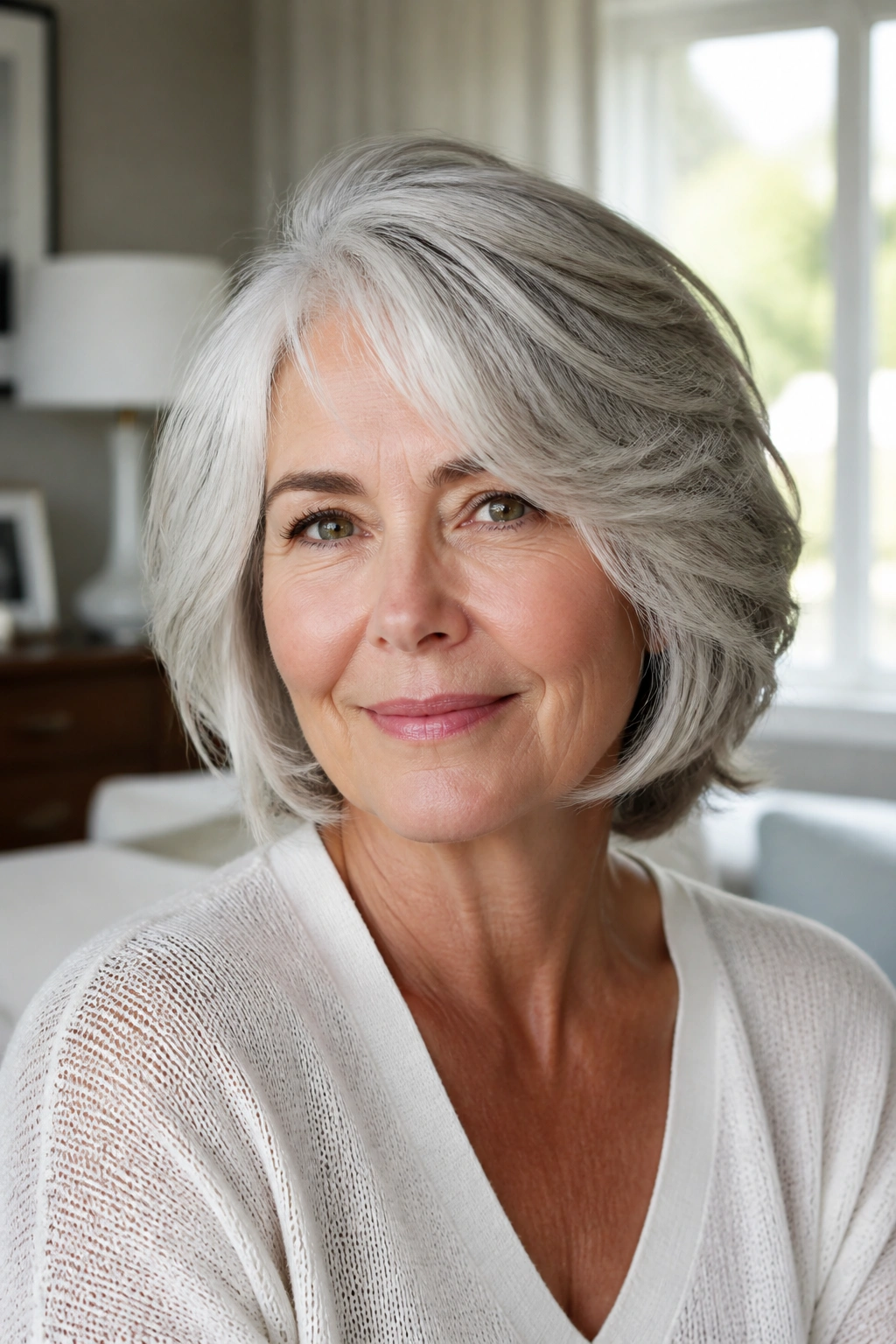
A soft layered cut can make mixed gray and white hair look intentional instead of transitional. That matters more than people admit. When the layers move, the different tones catch light at different points, and the whole head of hair looks richer.
The cut should never force the color to sit in one flat sheet. Layers break up the surface and let the silver tones show through in pieces, which is often more flattering than a blunt outline. If your hair has a mix of white at the front and darker silver underneath, the movement helps everything blend naturally.
This is a good choice if you want elegance without a hard shape. The layers can be long or medium, but they should stay soft enough to keep the hair looking full. Too much texture and the white strands can appear frayed. Too little and the color can look flat. The sweet spot is somewhere in the middle, and yes, that middle is worth hunting for.
A light shine spray, a careful trim every 6 to 8 weeks, and a shape that follows your hair’s real texture go a long way. Let the layers do their quiet work. They usually know what they are doing.