



A good haircut after 60 should do two things fast: make your face look fresh and make your mornings easier. The best hairstyles for women over 60 do not fight gray hair, fine hair, or changing texture. They work with them.
That matters more than people admit. Gray hair often comes in a little drier, a little coarser, and sometimes a bit more wiry than the hair you remember from years ago. Fine hair may lose spring at the crown. Thick hair can feel heavier than it used to. A cut that ignores that reality ends up looking stiff, flat, or fussy within a few weeks.
The sweet spot is a shape that gives lift where you want it, softness where you need it, and enough movement to keep the whole thing from feeling helmet-like. Short cuts can do that. So can shoulder-length styles, if they’re cut with a little intelligence and not just left to hang there.
1. Soft Chin-Length Bob
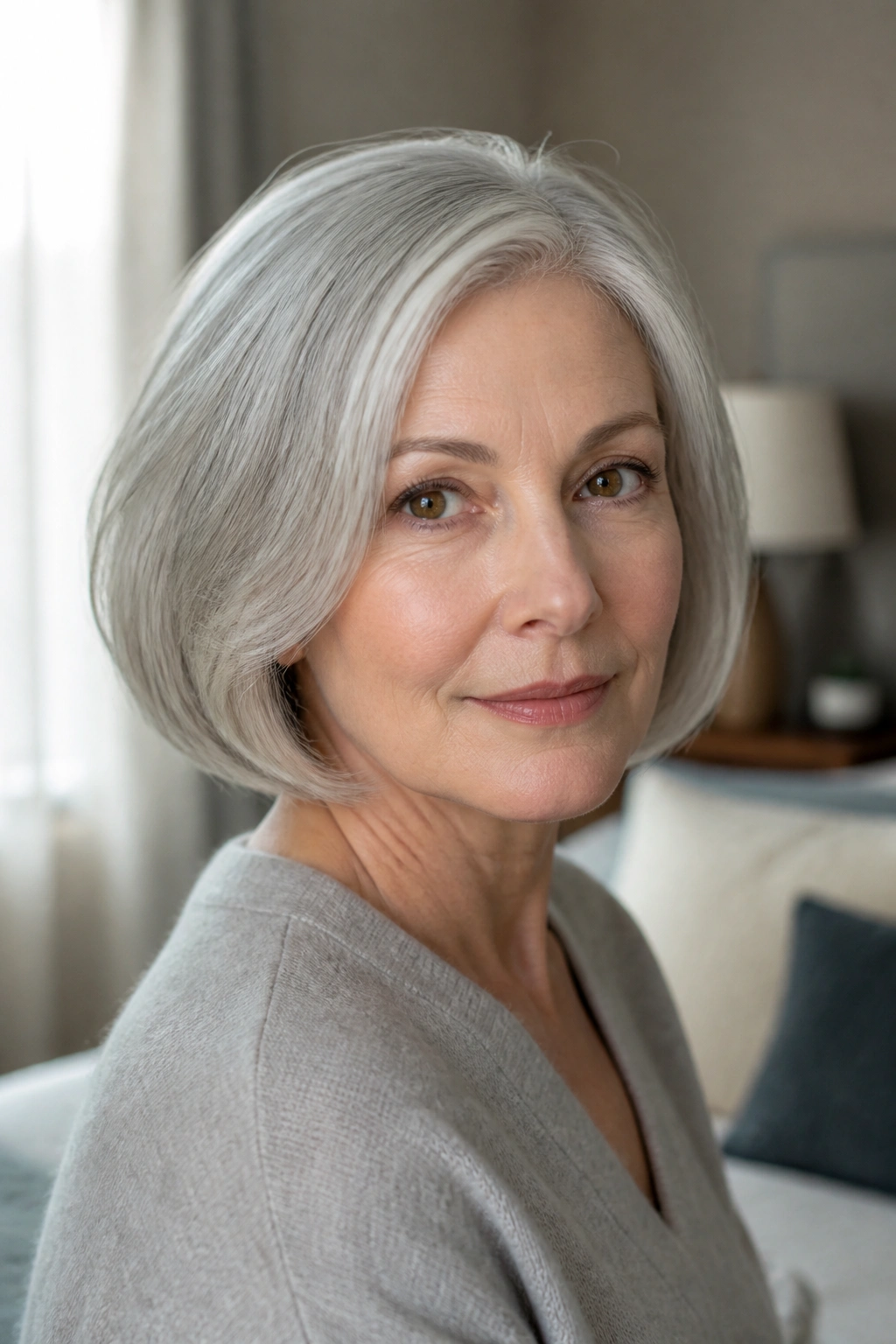
A chin-length bob is one of those cuts that keeps showing up for a reason. It frames the jaw without clinging to it, and it gives gray or silver hair a clean line that looks tidy even on a rushed morning.
Why it works
The chin is a useful anchor point because it creates shape without adding drag. That matters if your hair has gotten finer at the ends or if you wear glasses, since the cut sits neatly above the frame line instead of fighting it.
A soft bob also leaves room for movement. Ask for a blunt baseline with a few gentle internal layers, not choppy ends. You want the hair to swing, not puff. On straight hair, a round brush and a quick blow-dry are enough. On wavy hair, a touch of cream through the mids keeps the bend smooth.
Good for: oval, heart, and soft square faces
Style note: tuck one side behind the ear for a little asymmetry
Maintenance: every 6 to 8 weeks to keep the line crisp
My take: if you want one haircut that looks polished with almost no drama, this is it.
2. Layered Pixie Cut
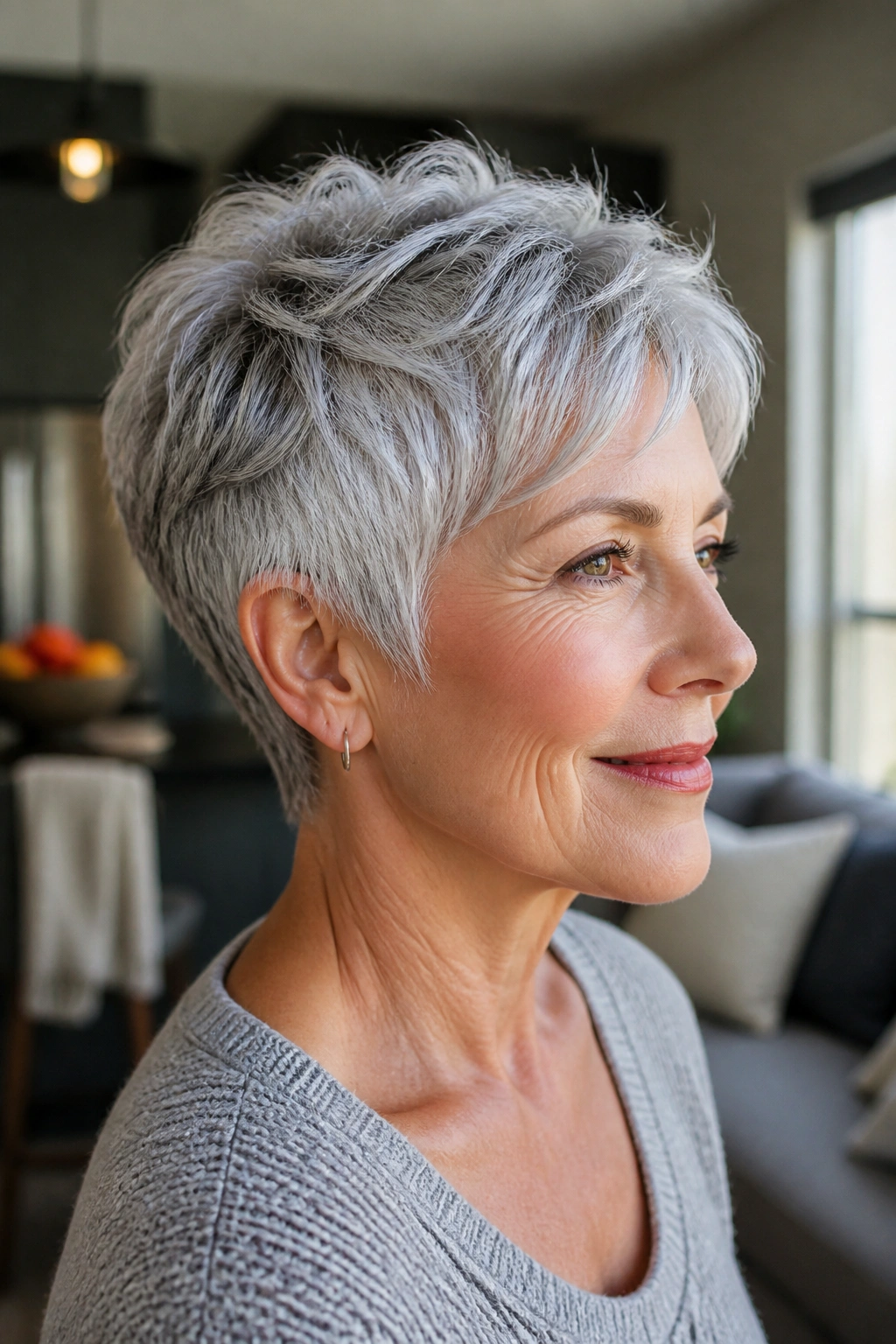
A layered pixie is a sharp answer to heavy, flat hair. It lifts the crown, opens the face, and makes silver strands look deliberate instead of accidental.
The key is movement on top and softness around the ears. Too much bulk at the sides makes a pixie feel dated fast, while a little length through the top keeps it modern and easy to style. I like this cut most on women whose hair has fine texture but a decent amount of density at the roots. It gives the illusion of fullness without needing much product.
You do need a good finish. A pea-sized dab of lightweight styling cream or paste is enough for most days. Work it through dry hair with your fingertips, then push the front slightly forward or to the side. Done.
Best version to ask for
- Shorter sides, not shaved unless you want a bolder look
- Soft texture on top, usually 1 to 2 inches longer than the sides
- A fringe that can sweep across the forehead
- Clean neck and ear lines so the cut stays neat as it grows
3. Feathered Shoulder-Length Cut
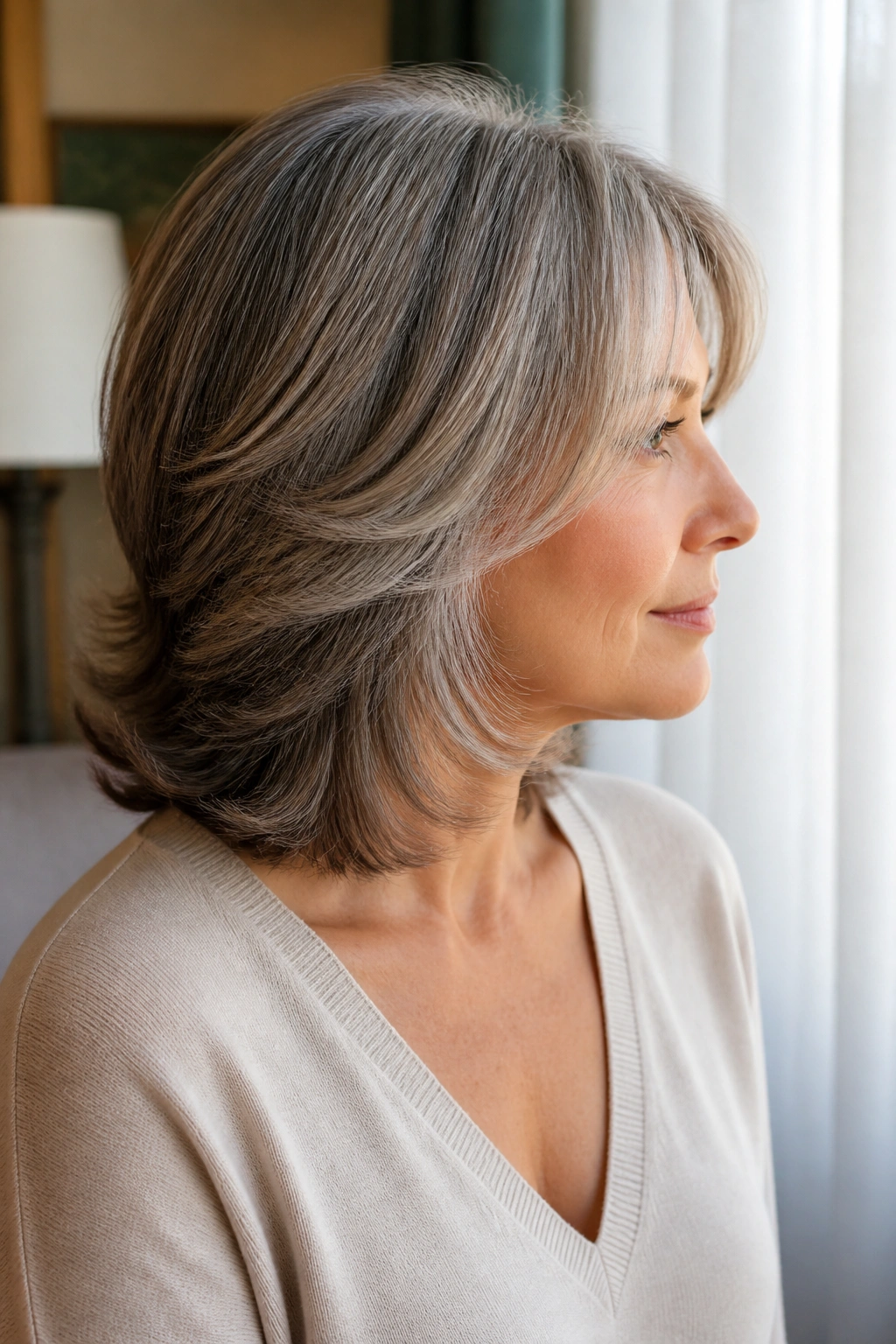
Why do so many women keep coming back to feathering? Because it gives shoulder-length hair a little life without making the layers obvious.
This cut sits nicely on hair that has lost some bounce but still has enough body to hold shape. The feathering should start around the cheekbone or jaw, then taper downward so the ends feel light rather than blunt. On gray hair, that movement matters even more, since silver strands can reflect light in a way that makes flat sections look heavier than they really are.
What makes it flattering
A feathered shoulder-length cut softens the line around the neck and collarbone. It also works with a side part or a center part, which is handy if your hair decides to change its mind depending on humidity. If you air-dry, scrunching a tiny bit of mousse into damp hair helps keep the shape from collapsing.
One small warning: too many layers can make the ends look stringy. Ask for soft feathering, not a pile of sliced sections.
4. Classic Tapered Crop
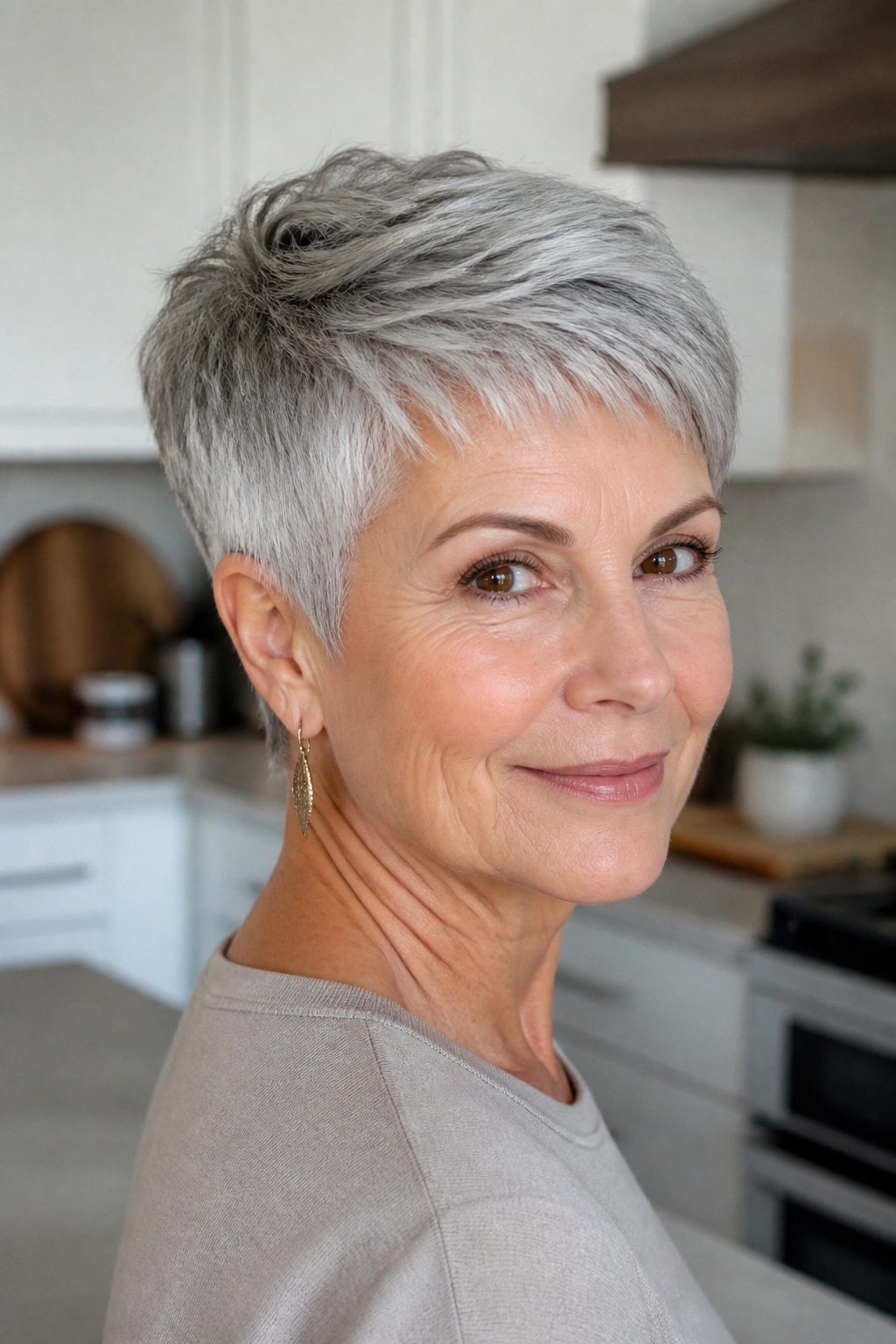
A tapered crop is neat, clean, and a little more interesting than a standard short cut. The back hugs the head, the sides stay slim, and the top holds enough length to create height without looking teased.
I like this one for women who hate fuss. You wash it, shape it with your hands, and move on. No round brush battle. No long drying time. If your hair is naturally straight or only slightly wavy, the cut almost styles itself. Gray hair especially shines in this shape because the clean outline makes the color look intentional and bright.
The trick is balance. The top needs a bit of lift, but not a spike. The neckline should be tapered softly so the shape grows out gracefully between salon visits. If you wear earrings often, this cut frames them nicely without competing.
Ask for: shorter sides and back, slightly longer textured top, soft edges around the ears.
Skip it if: you want to wear your hair up most days.
5. Long Layered Lob
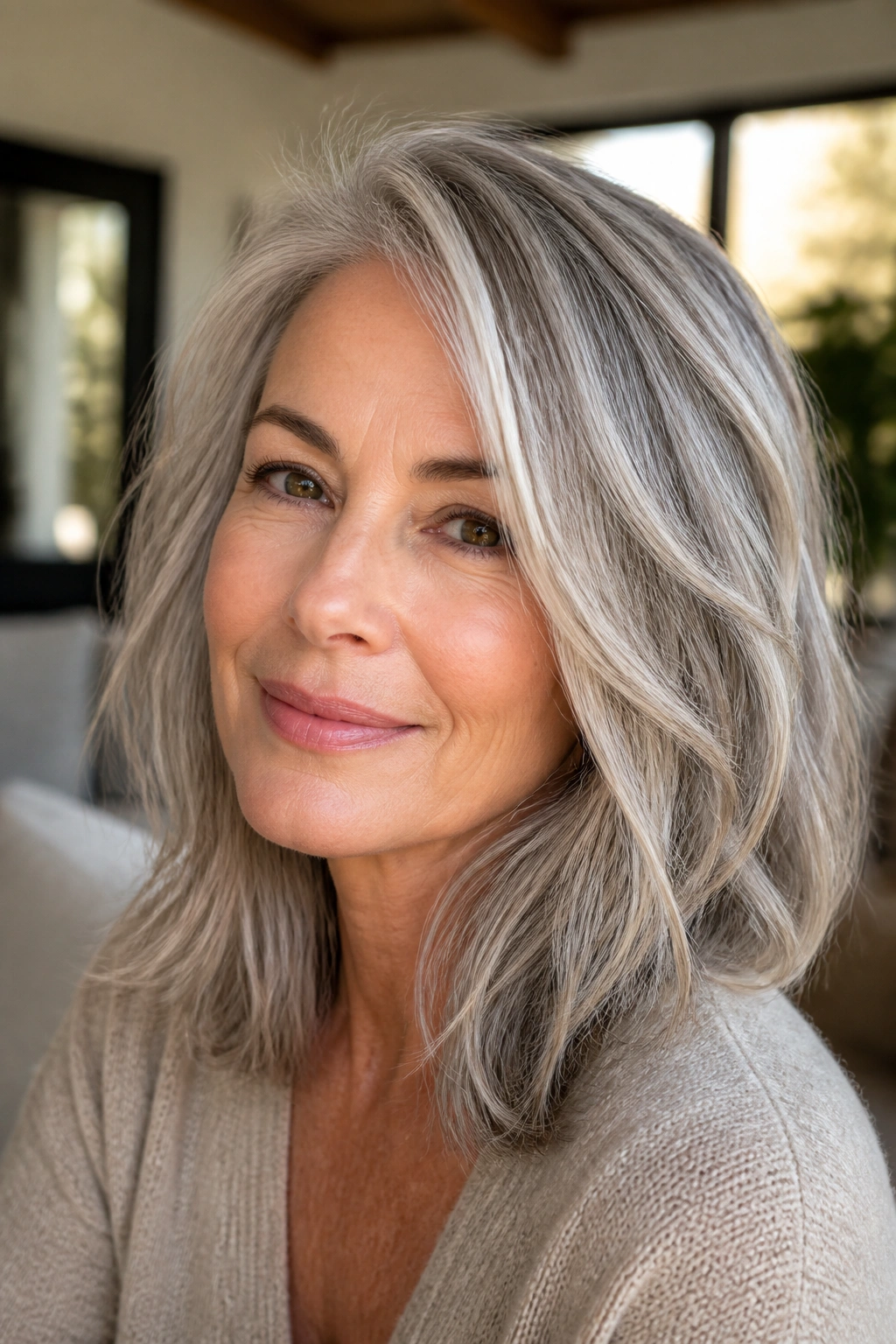
The lob stays popular because it solves a real problem: some women want length, but not the weight that comes with longer hair after 60.
A collarbone-grazing lob with long layers gives you enough hair to tuck, wave, clip, or curl, while still feeling lighter than a full mid-back style. The length is forgiving, too. If your hair is a little sparse near the ends, layers can keep the bottom from looking thin and stringy. If it’s thick, the layers stop the whole thing from hanging like a curtain.
This is one of the easiest styles to live with because it can be air-dried, blown out, or curled with a 1-inch iron. You do not need perfect styling. A little bend near the front is often enough.
I like it best with a soft side part. It lifts the face without looking severe. And if your gray hair has a mix of white, silver, and darker strands, the longer layers show that dimension in a flattering way.
6. Side-Part Shag
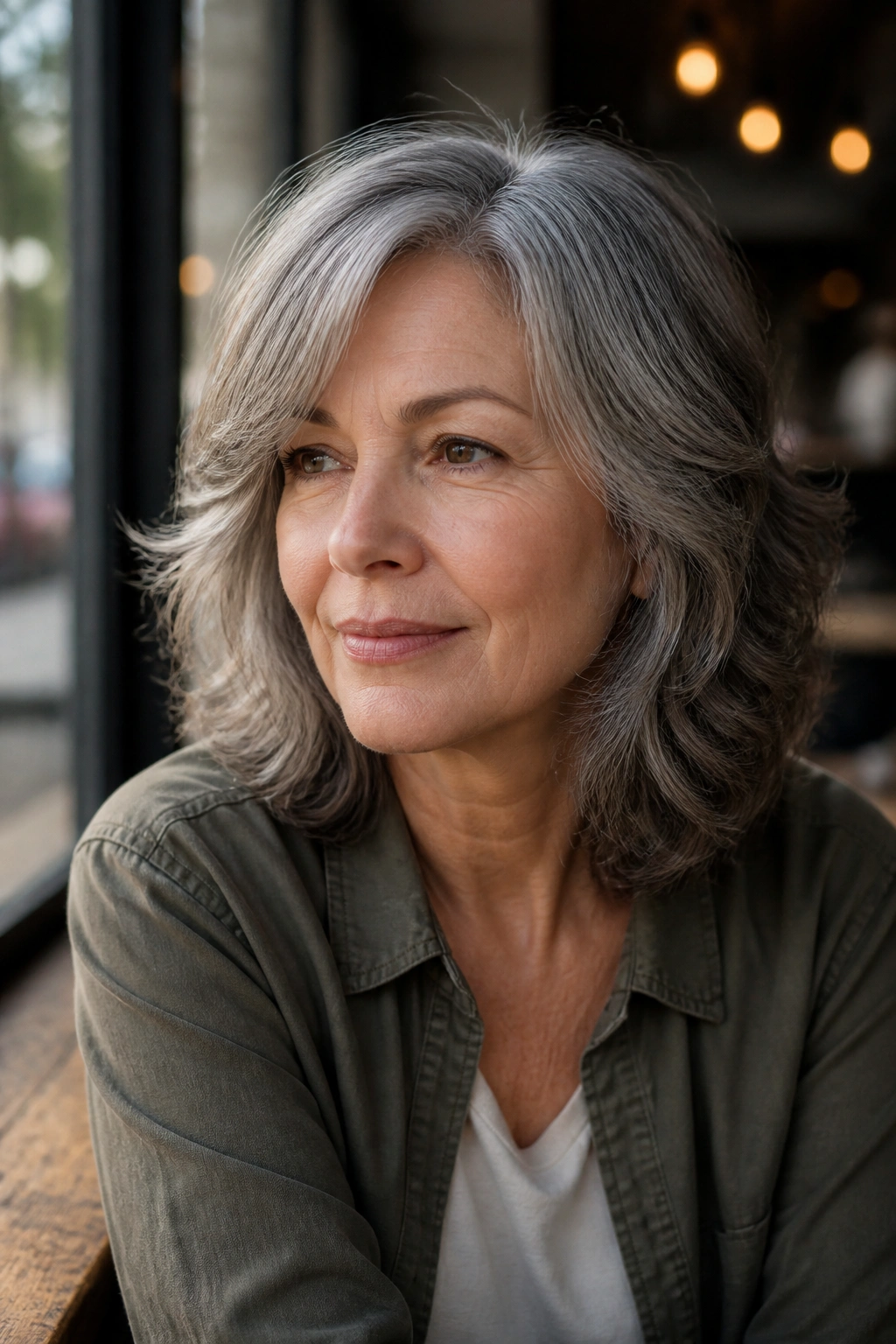
The shag is not the wild, messy version from old photographs unless you want it to be. A softer side-part shag gives you movement, lift, and a bit of edge without turning your head into a puffball.
This cut is a gift for hair that feels heavy at the roots and flat at the crown. The layers should start around the cheekbones and continue through the ends, but the shape needs restraint. Too much texture and it starts to look frayed. Too little and it turns into a plain layered cut that never really wakes up.
What makes it different
Unlike a bob, a shag does not need a crisp line. It wants air. It likes a touch of mousse, a diffuser, or a quick twist with your fingers while drying. That softness helps gray hair look lively, especially if your natural texture has a little wave or bend.
It suits women who do not want a polished salon finish every day. And honestly, that’s most of us.
7. Curly Rounded Bob
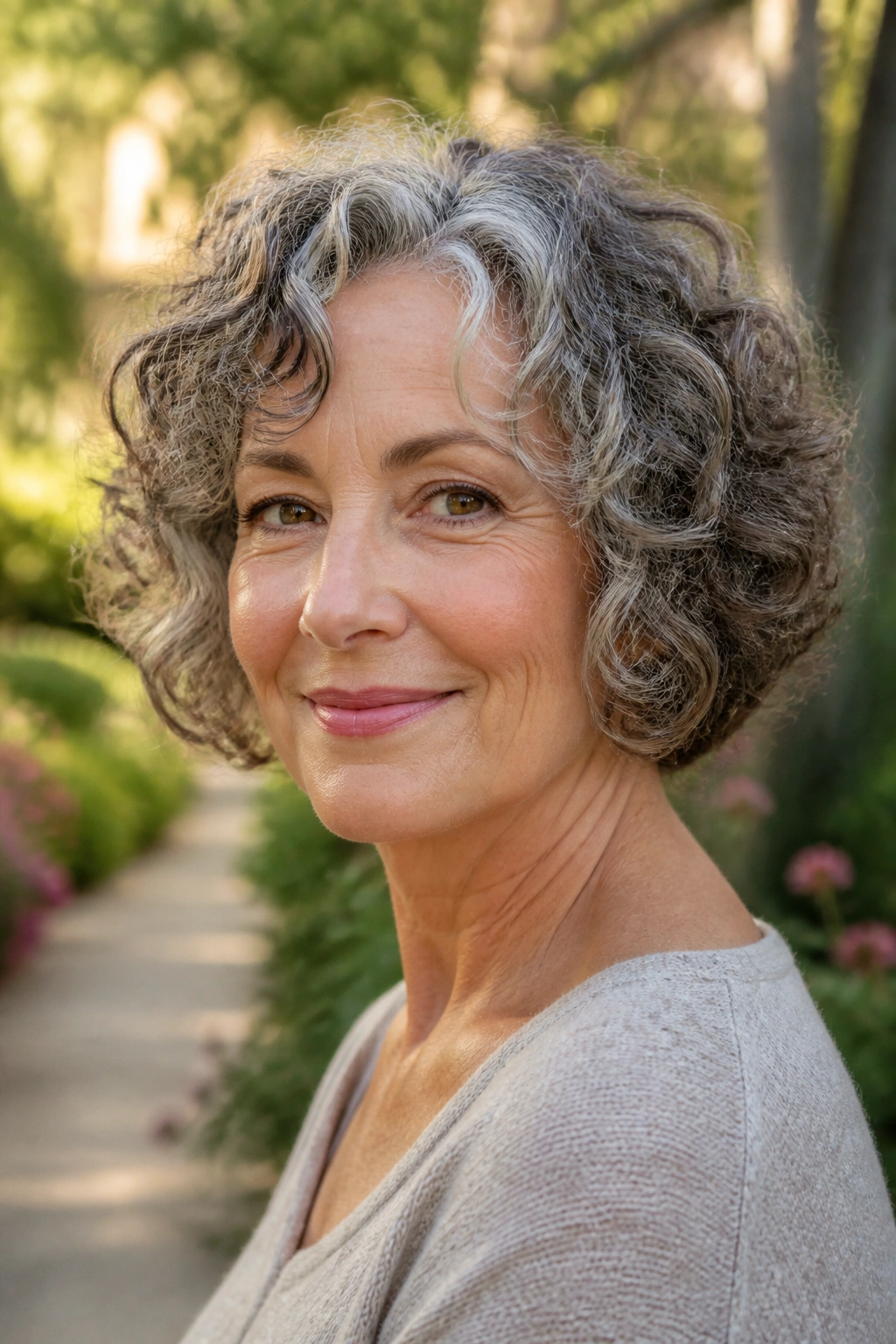
Curly hair after 60 can be gorgeous. It can also go sideways fast if the cut ignores the curl pattern. A rounded bob respects the curl instead of trying to flatten it into obedience.
The shape should follow the head, not fight it. That means a little extra length where the curls spring up and enough layering to keep the sides from turning into a triangle. If the curls are loose, the bob can land at the jaw. If they’re tighter, sitting a touch below the chin often looks better.
How to get the most from it
- Cut it dry or near-dry if your stylist knows curls well
- Keep the layers soft so the curl clumps stay intact
- Use a leave-in conditioner on damp hair
- Finish with a gel or curl cream, then let it dry without touching it too much
This style is one of the better hairstyles for women over 60 with natural gray curls, because it shows off texture instead of trying to tame it into something less interesting.
8. Short Stacked Bob
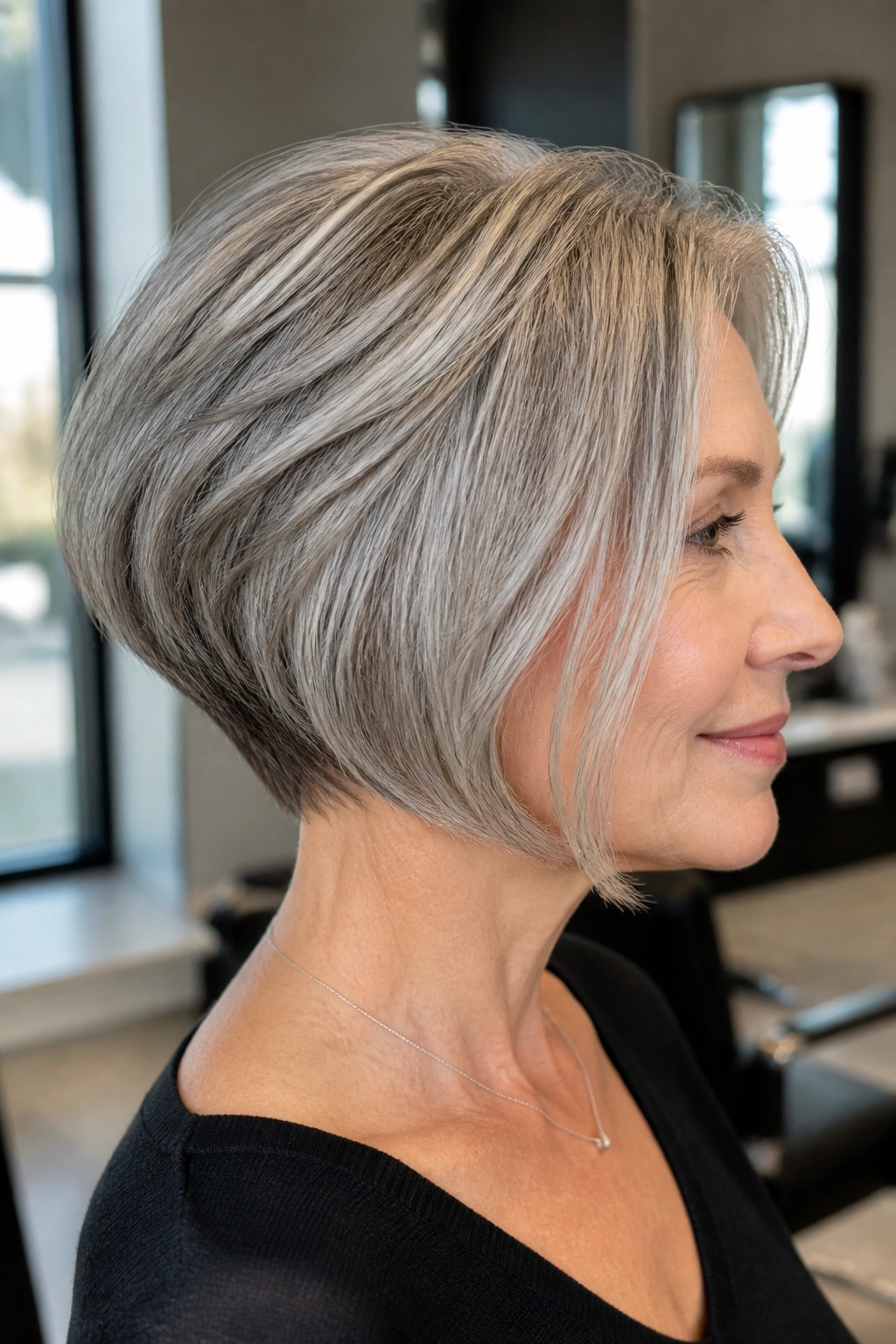
A stacked bob gives the back a little lift, which is exactly why it flatters so many women with fine hair. The stacked layers build a clean curve at the crown, and that curve creates the illusion of fuller hair without requiring a lot of product.
The best version is polished but not stiff. Ask for a stack that is visible when you turn your head, then keep the front pieces a little longer so the cut does not feel boxy. A side part usually helps, especially if your crown has started to flatten.
The maintenance is the trade-off. You will need regular trims if you want the shape to stay sharp. If you let it grow too far, the back loses that nice lift and the whole thing gets tired. Still, on silver or white hair, a stacked bob can look crisp in a way that feels expensive without being fussy.
It’s a solid choice if you like structure.
9. Collarbone Cut with Curtain Bangs
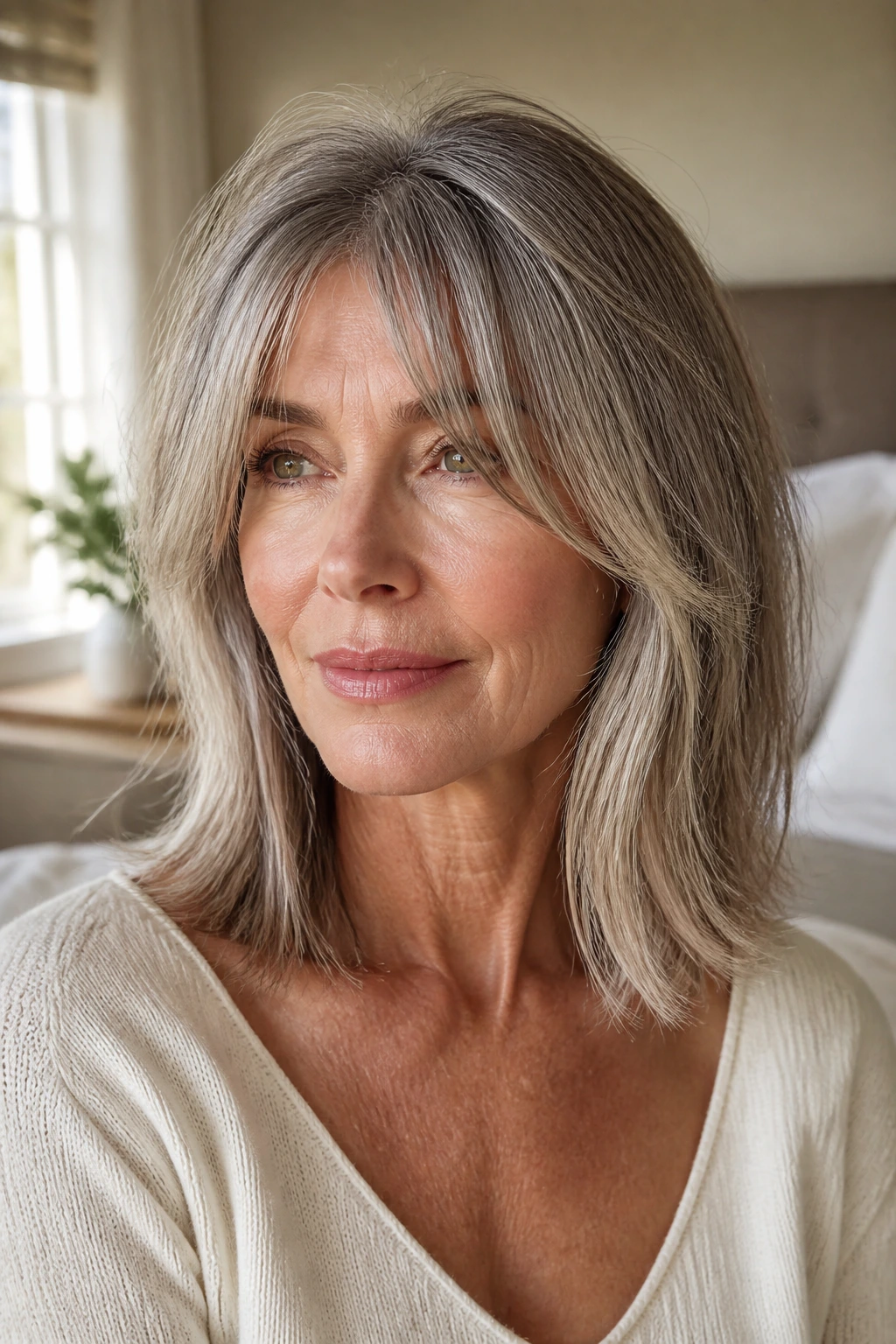
Curtain bangs can do a lot of work without looking heavy. They split the forehead softly, skim the cheekbones, and make a collarbone cut feel less plain.
This style is especially kind to women whose faces have softened a little around the jaw. The bangs draw the eye upward, while the rest of the hair stays long enough to tuck behind the shoulders. If your hair is straight, the look stays sleek. If it’s wavy, the bend around the face adds a little warmth and movement.
A small detail that matters
The bangs should be long enough to blend into the side sections. Short curtain bangs can be cute, but they need more styling and grow out oddly. Longer ones are easier to live with and less likely to split in annoying ways.
A light blow-dry with a round brush is usually enough. Or skip the brush and use a velcro roller on each side while your makeup sets. That tiny bit of lift makes a bigger difference than people think.
10. Wavy Mid-Length Layers
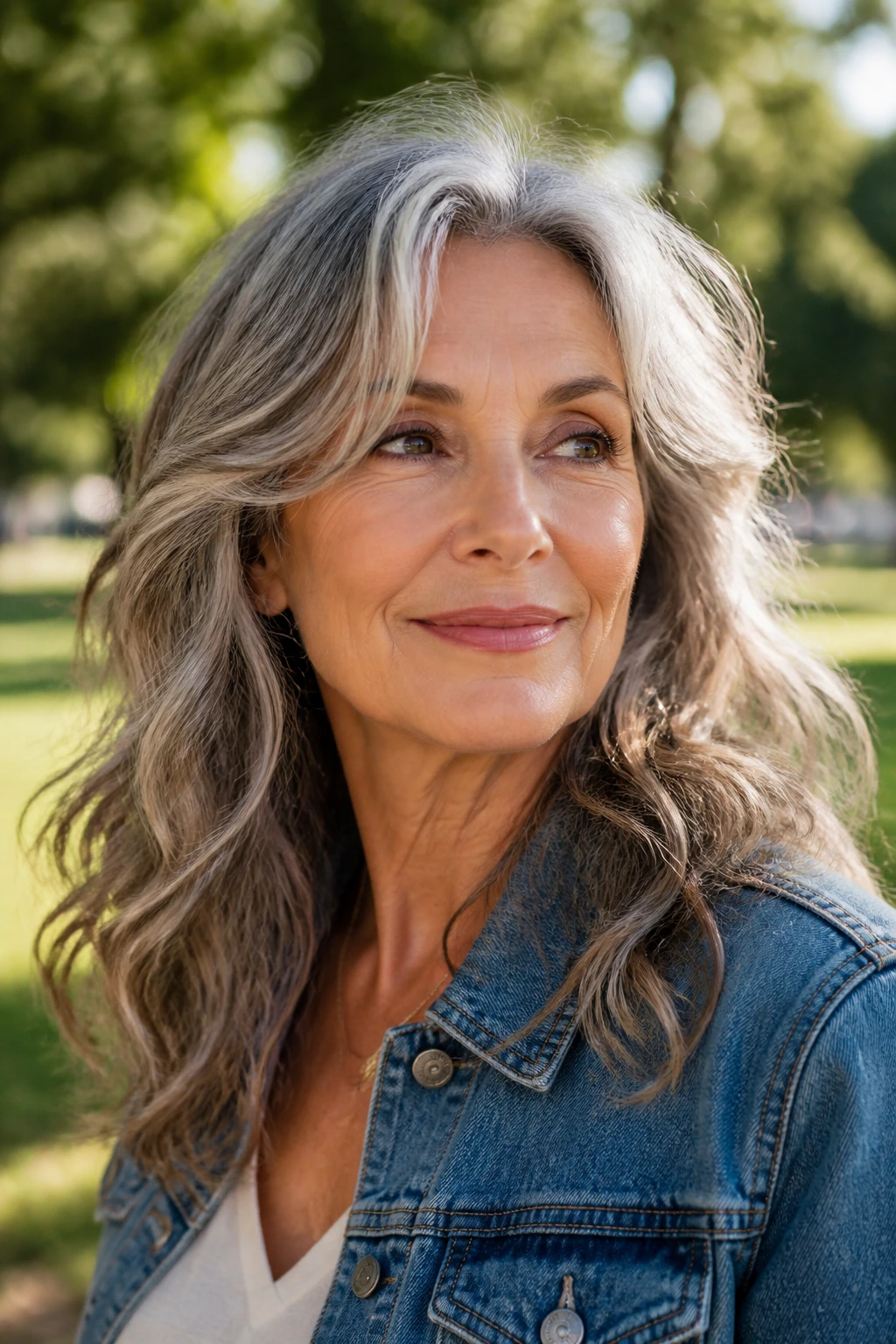
Mid-length layers are the answer for hair that wants to move but not disappear. When the hair hits between the shoulders and the upper chest, the weight still keeps it controlled, while the layers stop it from going limp.
This is a smart cut for gray hair that has turned wavy on its own. That happens more than people expect. A texture that used to lie flat can start bending, especially around the face and at the nape. Mid-length layers let that bend show instead of forcing it straight. If you blow-dry, use a medium round brush only at the front and let the rest dry naturally. That keeps the style from looking too done.
I also like this length for women who wear scarves, collar necklaces, or chunky sweaters. Short hair can get lost in those clothes. Longer hair can feel like too much. Mid-length lands in the middle without being boring.
11. Asymmetrical Bob
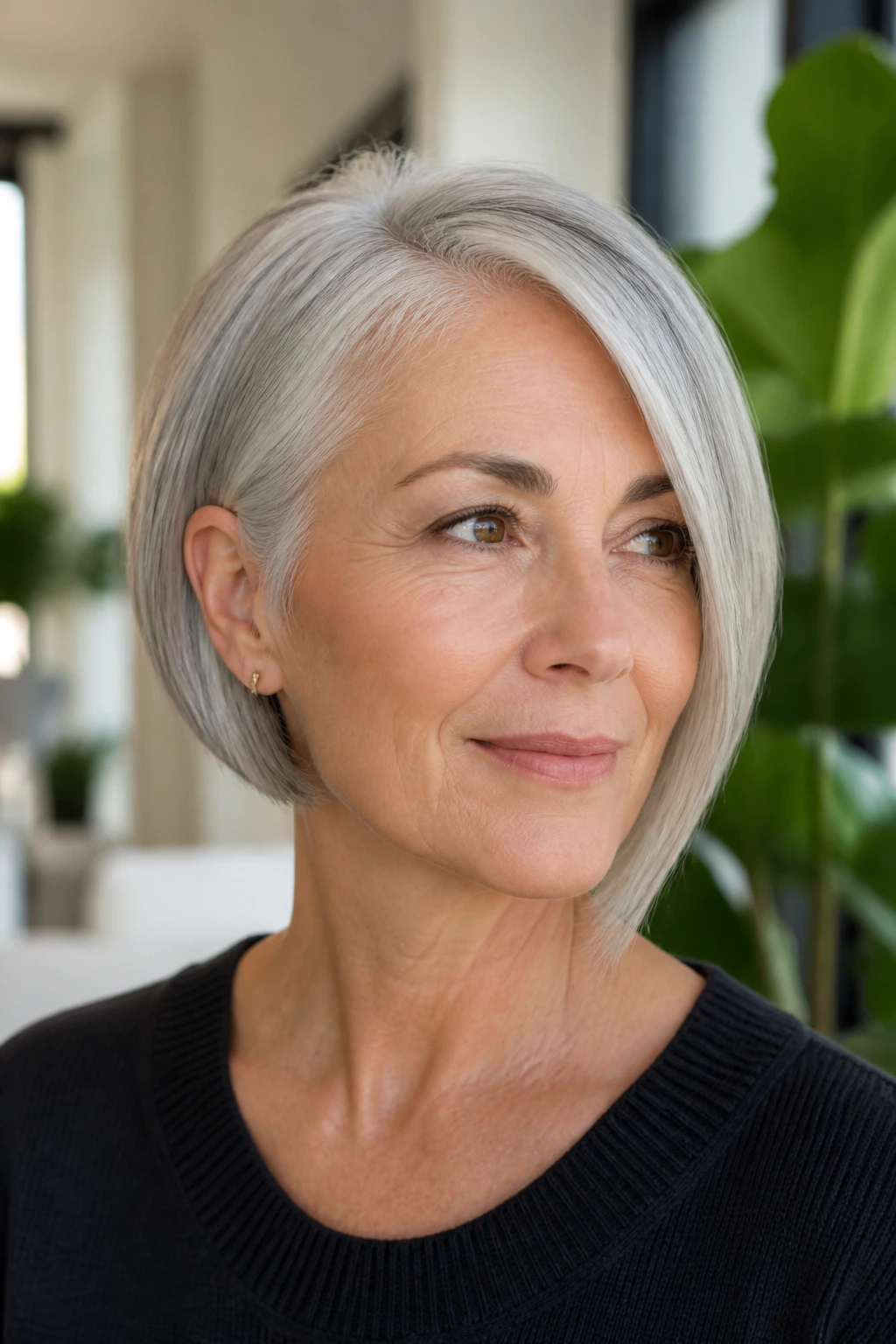
An asymmetrical bob gives the face a little motion even when the cut itself is neat and controlled. One side sits a touch longer than the other, which sounds subtle on paper and looks sharp in real life.
The trick is restraint. A dramatic asymmetrical shape can feel loud fast, but a modest difference of about half an inch to 1 inch creates enough interest without making the haircut hard to wear. That slight imbalance can be especially useful if one side of your hair grows flatter than the other or if you prefer a side part that never sits exactly the same way twice.
Why women keep choosing it
It feels modern without chasing trends, and it gives silver hair a clear edge. The clean line near the jaw draws attention to the cheekbones, while the longer side softens the neck. It is also a good way to freshen a plain bob if you’ve worn the same shape for years.
If you want something tidy with a little attitude, this is one of the better choices.
12. Wispy Pixie with a Long Top
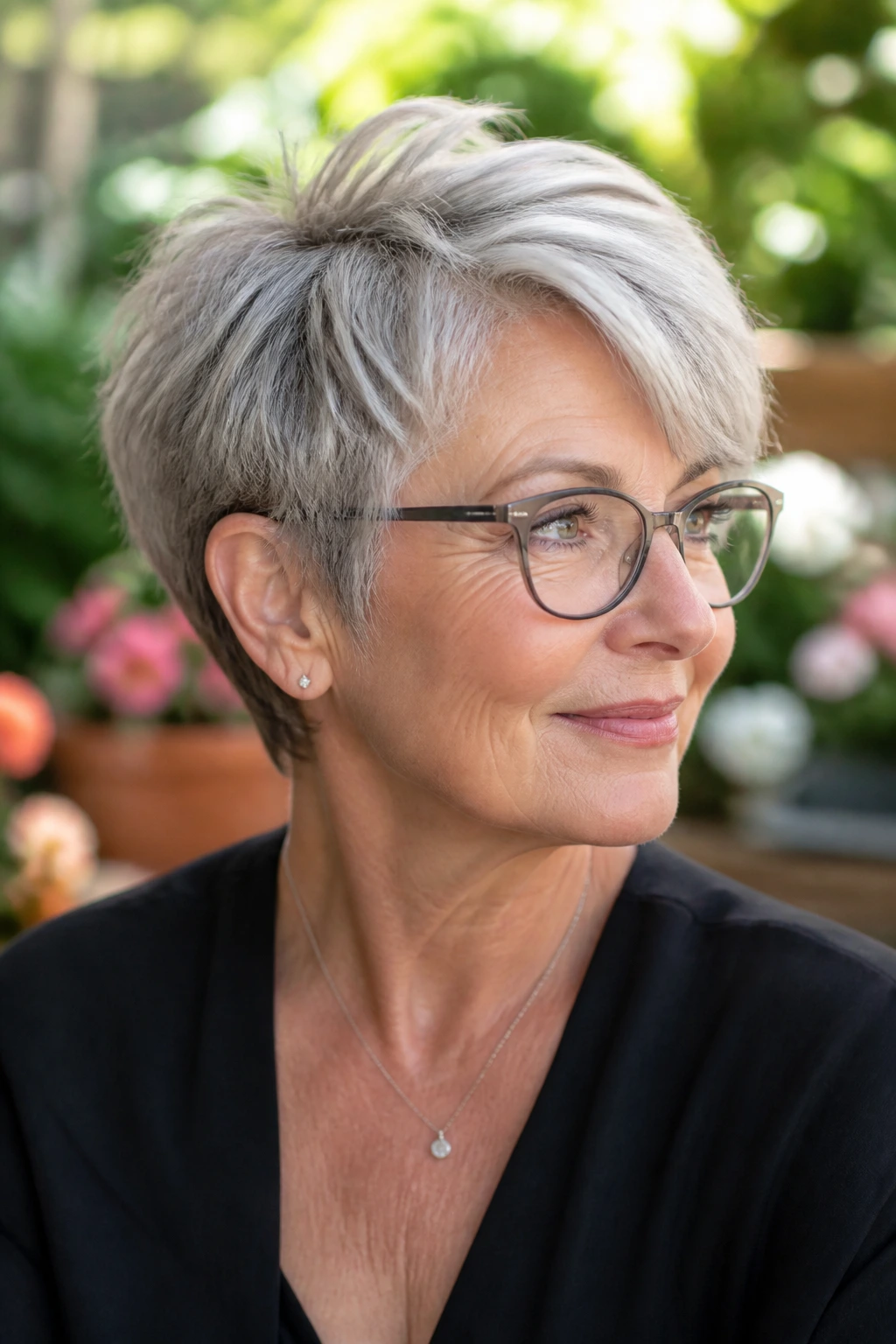
A wispy pixie is softer than the classic cropped version. It keeps the sides light, but leaves the top long enough to sweep, part, or brush forward depending on your mood.
This is a nice option for women with fine hair who want volume without a lot of daily styling. The wispy pieces move around the face instead of sitting in a hard line, which is kinder to softer features. It also works well with glasses because the cut doesn’t crowd the frames.
How to style it
- Use a tiny amount of matte paste or light wax
- Rub it between your palms first so it doesn’t clump
- Push the top forward for softness, or lift it slightly at the crown for height
- Leave the fringe piecey, not stiff
I prefer this cut on natural gray hair when the color has a mix of white and silver. The texture catches the light in a soft way, and the wisps keep it from looking overworked.
13. Blunt Bob with Soft Ends
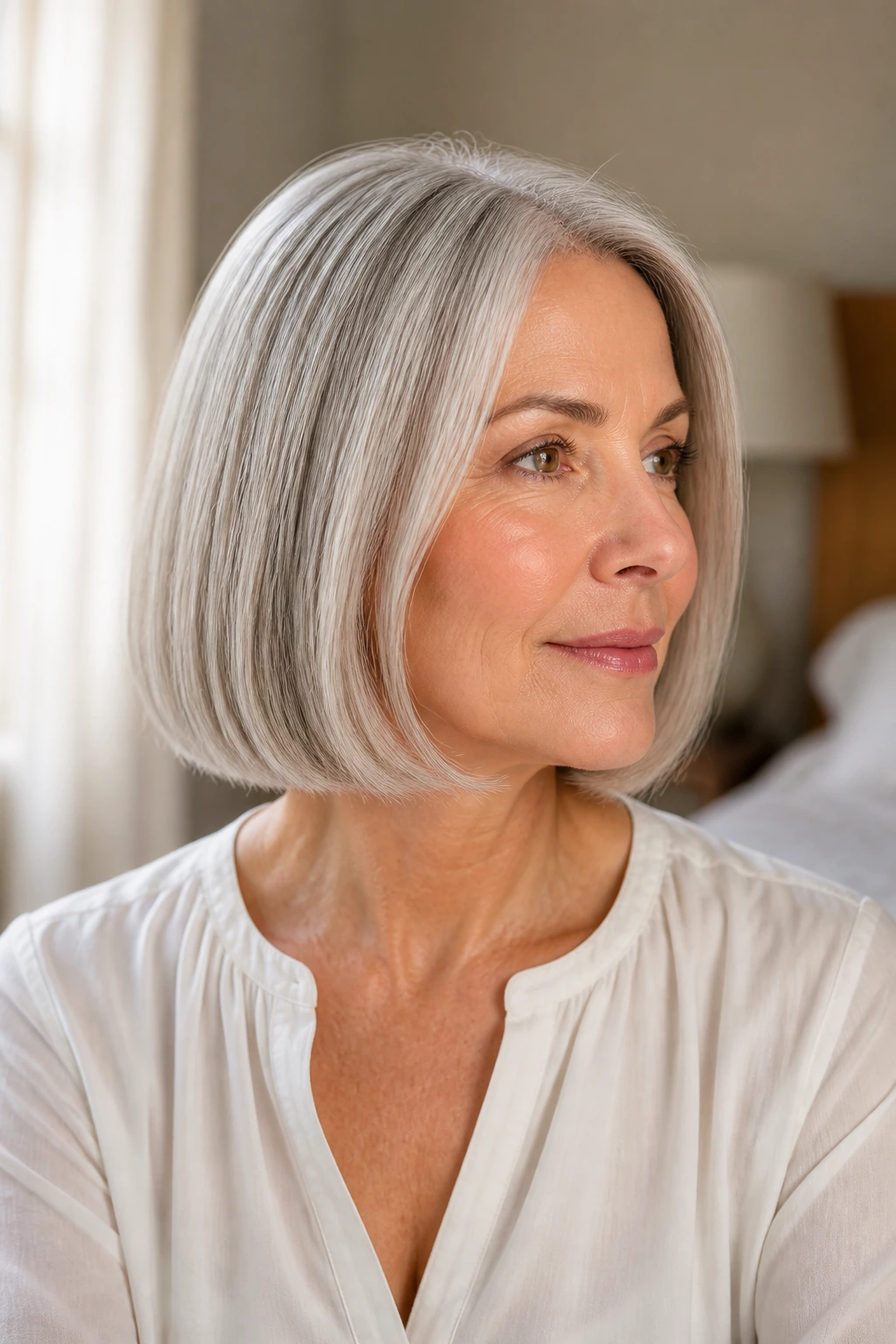
A blunt bob can be a strong move, but it works best when the ends are softened a little. That small detail keeps the shape from feeling harsh, which matters more as the face changes with age.
A sharp line through the bottom gives hair more visual weight. That helps if your strands are fine, sparse, or a bit fragile at the tips. The soft ends prevent the cut from looking boxy. Ask for a blunt perimeter with light point-cutting at the edges, not a lot of layering. Too many layers defeat the point.
This is one of the best styles if you want your gray hair to look full and clean. It takes a smooth blow-dry well, and it looks neat tucked under a coat collar or sweater. A flat iron can polish the ends in a few passes, but you do not need to make it pin-straight.
Sometimes the simplest shape is the strongest one. This is one of those times.
14. Face-Framing Layers
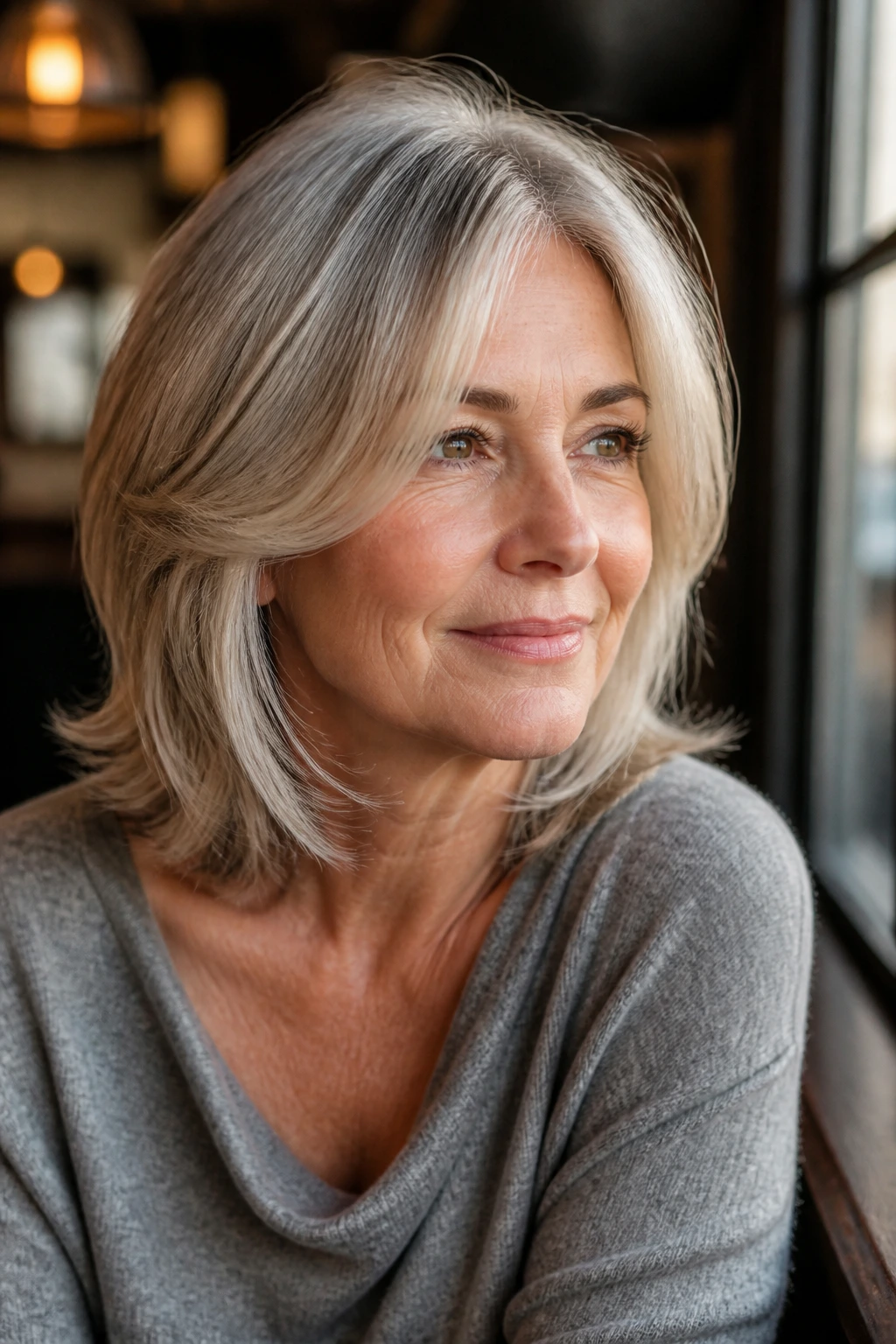
Face-framing layers are not a full haircut by themselves, but they change almost everything around them. A basic shoulder-length cut becomes lighter. A longer cut becomes less heavy. Even a plain bob gets more life when the front sections are cut to soften the jaw and cheekbones.
The best part is that these layers can be adjusted to your face, not to a trend photo. If you want to draw attention upward, keep the shortest point around the cheekbone. If you want softness around the neck, let the layers drop a bit lower. That small shift changes the whole feel of the style.
One-sentence truth: this is the easiest upgrade on the list.
You can wear face-framing layers with straight hair, loose waves, or a quick curl at the ends. They are especially useful if your gray hair has grown in a little unevenly, because the front pieces create intention around the face while the rest of the hair does its own thing.
15. Natural Curly Crop
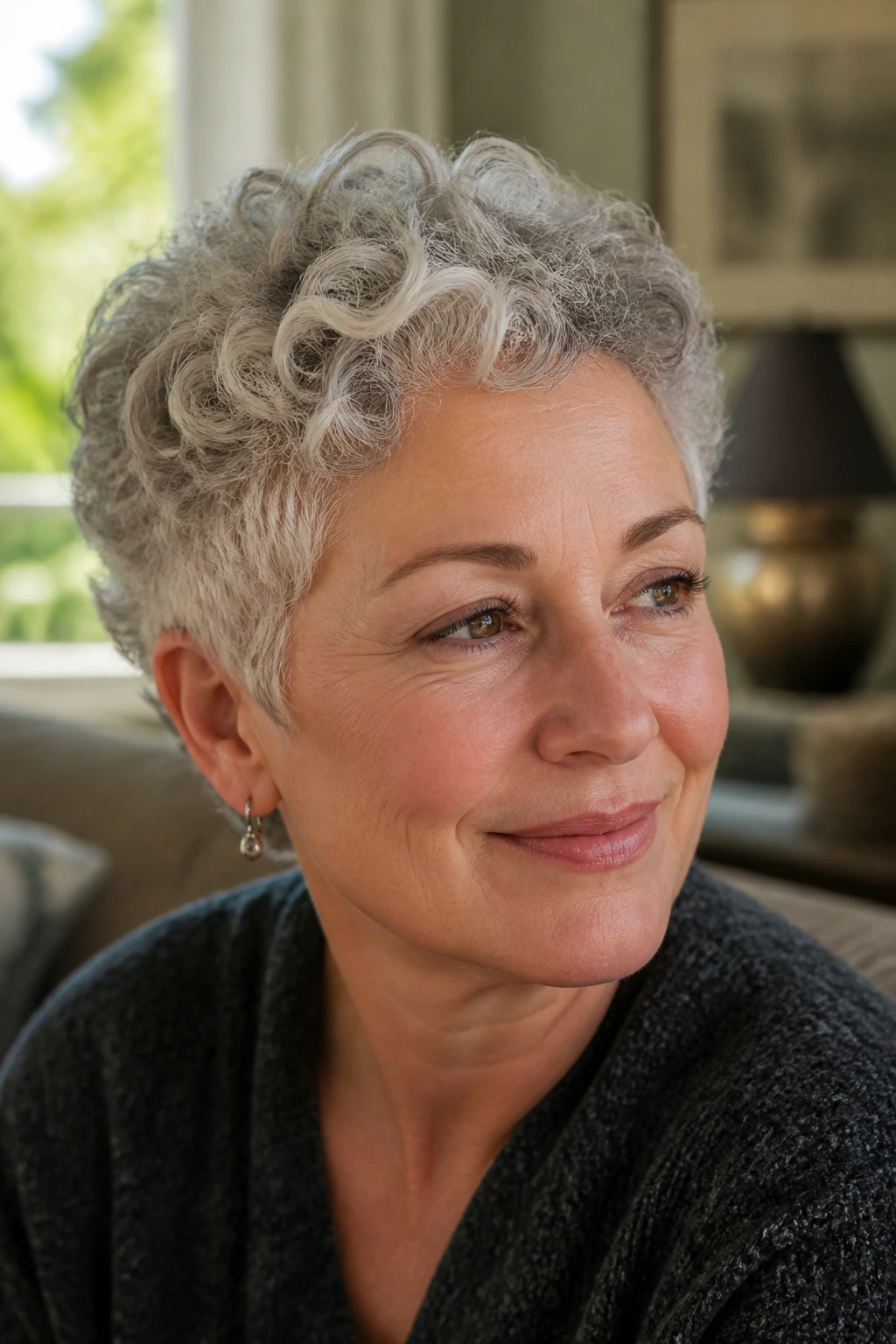
A curly crop is one of the most honest haircuts out there. It lets the curl pattern sit close to the head, keeps the sides neat, and gives the top enough room to show texture instead of bulk.
This cut depends on a stylist who understands curls, because the curl spring changes the length a lot once the hair dries. The shape should feel round, but not puffy. That means careful layering and a little space at the crown. If your curls are tight, the crop can be gorgeous at a shorter length. If they’re looser, a slightly longer top keeps the shape balanced.
What helps it hold up
A leave-in conditioner is usually enough for the base. Add a curl cream or soft gel if your hair frizzes in dry air. Then stop touching it. That part matters. Constant fussing breaks the curl clumps and makes the whole cut feel frizzy by lunch.
Gray curls can be stunning in this shape. They do not need to be tamed into obedience.
16. Neck-Grazing Flipped Bob

A flipped bob lands just at the neck and turns the ends outward a touch. It has a little retro energy, but when it’s cut cleanly, it feels fresh rather than costume-y.
This shape is useful if you want movement near the shoulders without committing to layers all over the place. The flip keeps the ends from sitting heavy on the neck, which can be a relief if you dislike hair touching your collar. It also gives thin hair a bit of bounce, especially when set with a round brush or a quick bend from a blow-dryer.
Unlike a shag, this cut stays controlled. Unlike a long lob, it does not need much length to make an impression. That makes it a nice middle ground for women who want something tidy with a little personality.
If your gray hair has gone bright white, this shape can look especially crisp. The flipped ends keep it from feeling severe.
17. Soft Wedge Cut
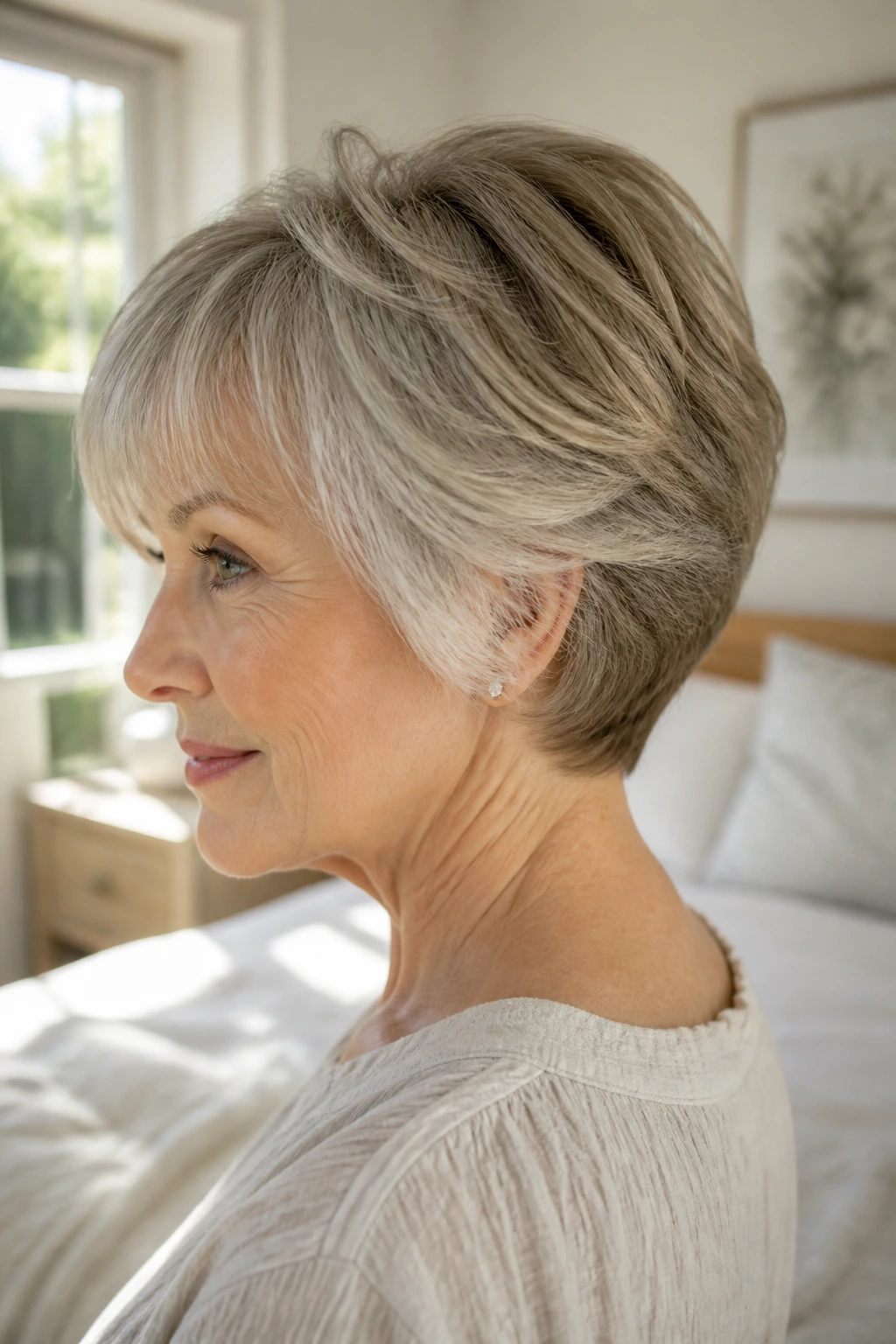
The wedge cut has a clear shape, and that is its charm. It’s shorter in the back, longer around the sides, and rounded enough to give the head a neat silhouette.
The soft version is the one I would point most women toward. The hard-edged wedge from old salon books can look too blunt. A softer wedge keeps the lift at the back but lets the sides blend better around the jaw and ears. That gives the haircut a cleaner, more current feel.
Who it suits best
- Women with fine hair who want volume at the crown
- Straight hair that needs a strong shape
- Gray hair that looks fuller when the back is stacked slightly
- Anyone who likes a defined cut without long styling sessions
It’s a good everyday haircut if you prefer structure. The only catch is growth. Let it go too long, and the wedge loses its shape fast. Trims matter here more than people expect.
18. Low-Maintenance Ringlet Cut
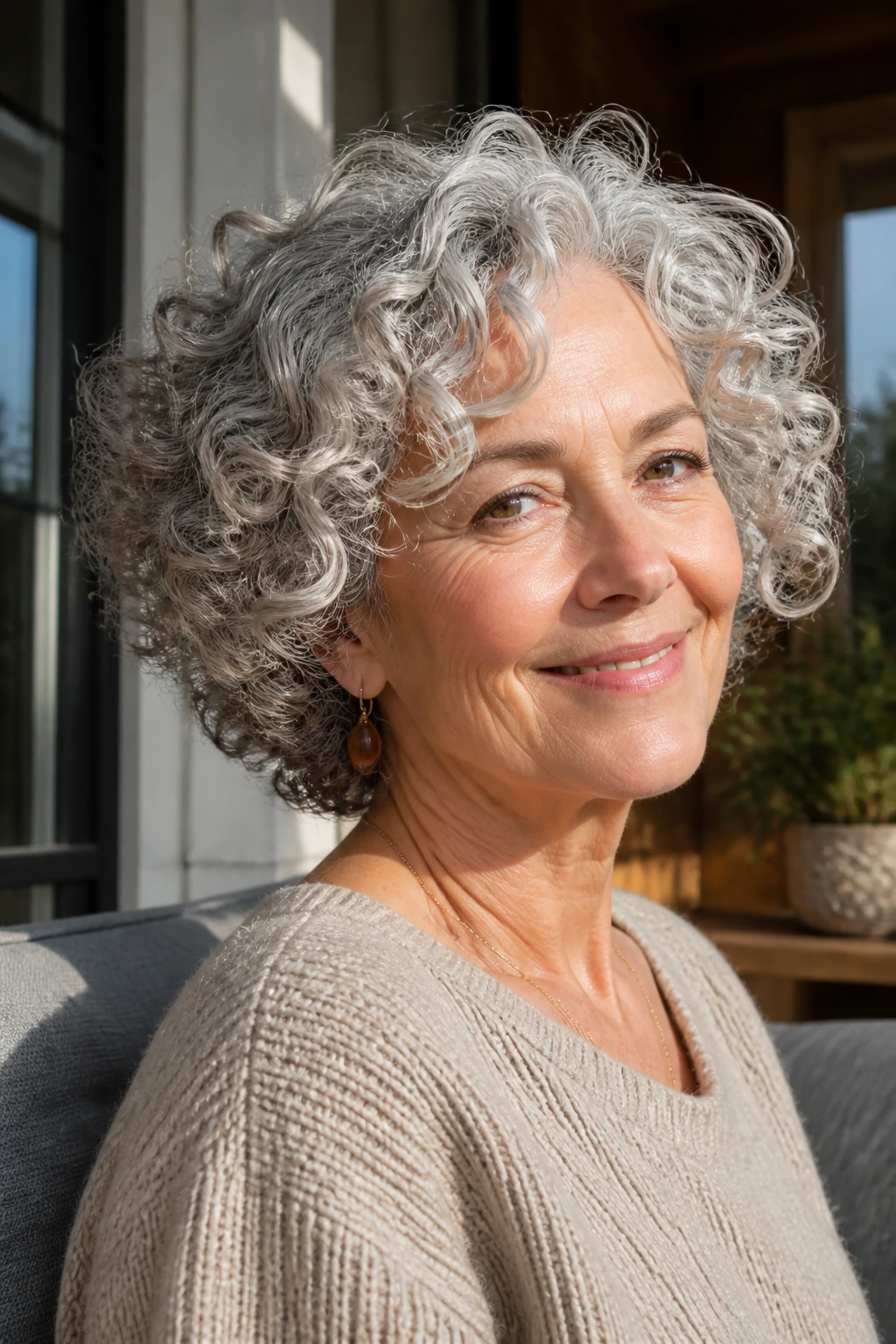
Ringlets need room. If you cut them too evenly or too tightly, they can shrink up into a shape that feels cramped and round in the wrong places.
A low-maintenance ringlet cut keeps the curl pattern intact while removing bulk where it gets too wide. The best version usually has layers that follow the curl groupings, not random slicing through the whole head. That helps the curls stack naturally and keeps frizz down. On silver or white ringlets, the shape can look bright and lively, especially when the hair is hydrated and the curls are defined from root to tip.
Quick care notes
- Use a wide-tooth comb only on wet, conditioned hair
- Scrunch in a curl cream from the ends upward
- Dry with a diffuser on low heat, or air-dry if you have time
- Refresh with water and a small amount of leave-in on day two
This cut is proof that older women do not need to hide curls. They need the right shape.
19. Sleek Shoulder-Length Cut with Side Fringe
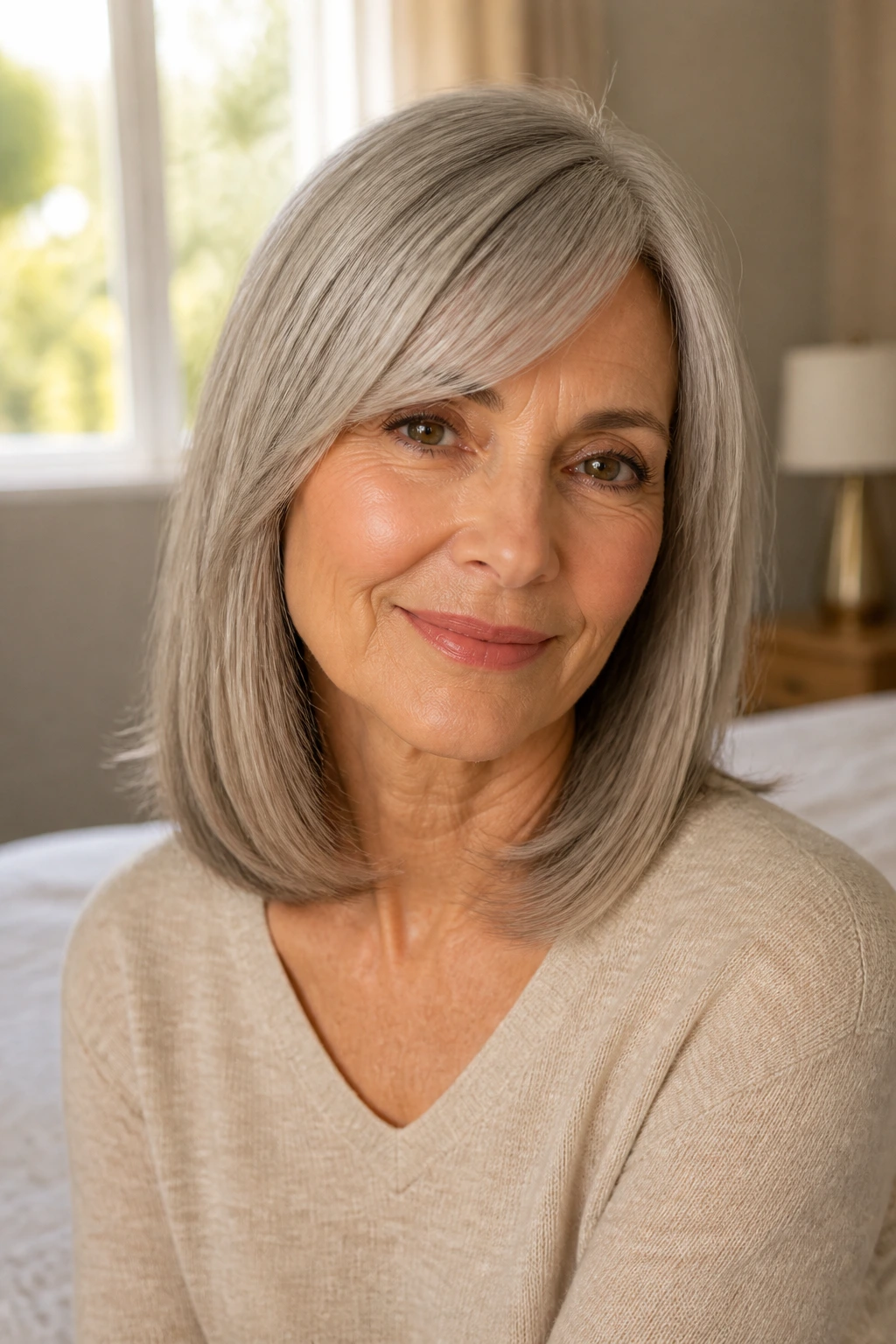
A sleek shoulder-length cut can feel very elegant when it has a side fringe. The fringe softens the forehead, the length keeps the style versatile, and the smooth line makes gray hair look shiny instead of flat.
This is one of the better picks if you like hair that can be worn down, pinned back, or tucked behind one ear. The side fringe should fall softly into the rest of the cut, not sit like a separate piece. That blending is what makes the style work. On straight hair, a smoothing cream and a medium brush are enough. On wavy hair, you may need a quick pass with an iron on the front sections only.
One detail I appreciate: it behaves well with earrings, scarves, and coats. Some cuts get swallowed by winter clothes. This one holds its own.
It’s polished, yes, but not stiff. That balance is hard to get.
20. Elegant Twisted Chignon
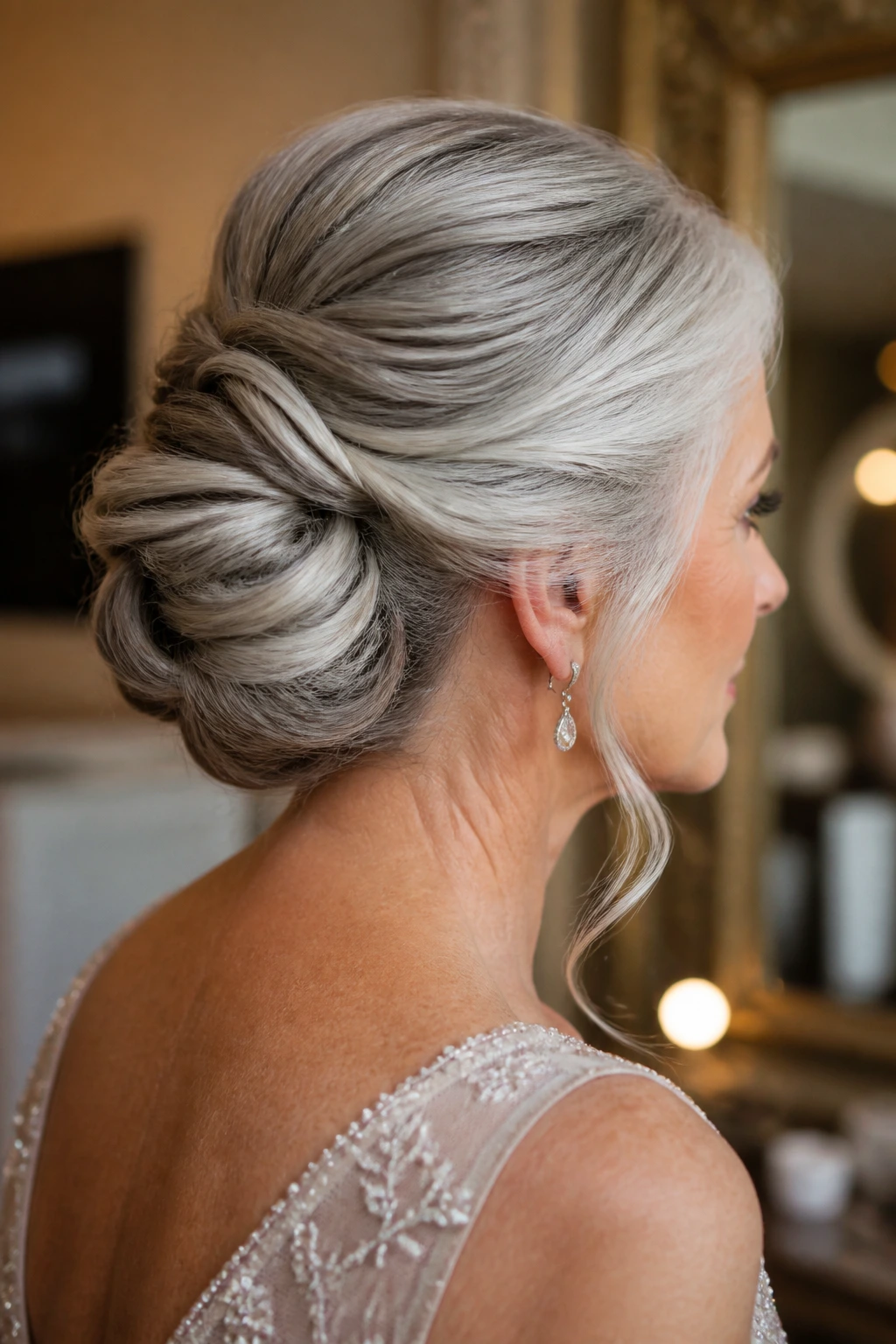
An elegant twisted chignon is the style I’d keep in my back pocket for weddings, dinners, and those days when your hair needs to stay off your neck. It also works better than people think for women with gray hair, because silver tones show the twists and loops cleanly.
This is not the same as a tight ballerina bun. A good chignon has a little looseness at the crown and a soft fold at the nape, which keeps it from looking severe. Leave a few face-framing pieces out if you want a gentler effect. If your hair is shoulder length or longer, you can twist it into place with a few pins and a light mist of hairspray. Shorter hair can fake the shape with a small tucked roll.
I like this style because it does not pretend to be casual. It is graceful on purpose. And on some women, that is exactly the right move.
If you want a simple rule to carry forward, pick the hairstyle that gives your hair the most useful shape with the least struggle. The right cut should make the mirror feel easier, not more demanding. That’s the real test.
