



Hair at 45 usually wants three things at once: shape, movement, and a style that doesn’t eat your morning. The trick is that those three don’t always show up together unless the cut is doing some real work for you.
The best hairstyles for 45 year old women are rarely the loudest ones. They’re the cuts that make silver strands look intentional, keep the crown from falling flat, and still look polished when you’ve done nothing more than run a brush through your hair and go. That’s the sweet spot.
I’ve always liked styles that behave. A good lob, a tidy bob, a soft shag, even a low twist on a hectic day — these aren’t about chasing some fake idea of “looking younger.” They’re about getting hair that sits well on your face, moves when you walk, and doesn’t turn into a project every single morning.
And gray hair changes the conversation a bit. It can be gorgeous, but it often has its own texture and stubbornness — a little coarser here, a little drier there, sometimes with a halo of frizz that wasn’t there before. That’s not a problem to hide. It just means the cut has to work smarter.
1. Collarbone Lob With Soft Ends
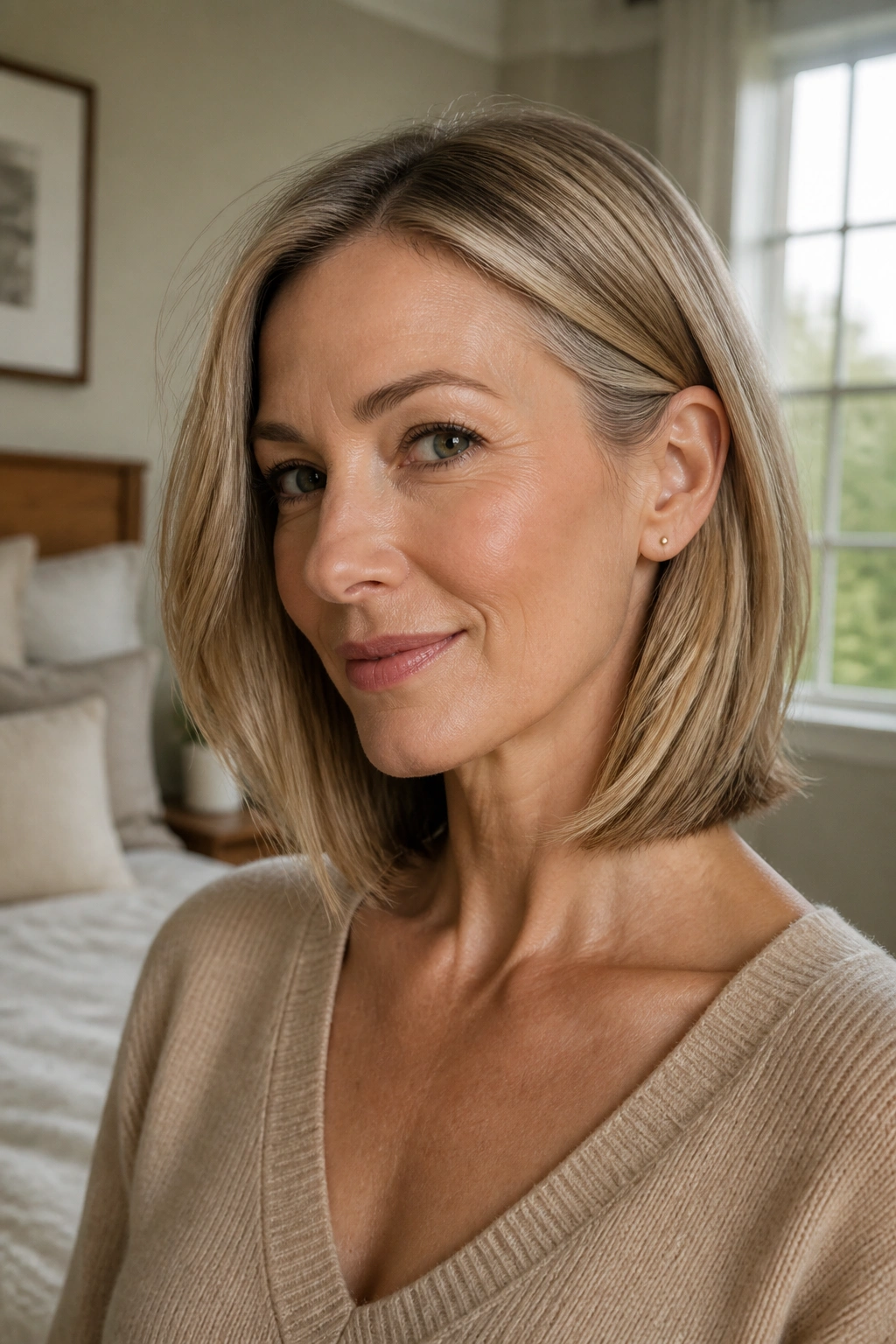
A collarbone lob earns its keep fast. It sits in that sweet zone between long and short, so you still get enough length to tuck behind an ear or pull into a clip, but it doesn’t drag your face down the way heavy long hair can.
Why It Works So Well
The collarbone length gives hair some weight, which is especially helpful if your strands have started to feel finer or the ends look wispy. Soft ends keep the shape from feeling blunt in a harsh way. The result is easy, clean, and a little bit relaxed.
Ask for layers only if you need them. A lot of women do better with just a slight bevel at the ends and a gentle face frame starting around the cheekbone. That keeps the line fresh without turning the cut into a feathered mess.
- Best for straight, wavy, or softly curled hair
- Good if you want to grow out a shorter cut
- Works well with gray blending and highlights
- Easy to style with a 1.25-inch curling iron or a round brush
Pro tip: keep the ends soft, not see-through. Once the bottom starts looking thin, the whole cut loses its shape.
2. Layered Bob That Gives Flat Hair Some Lift
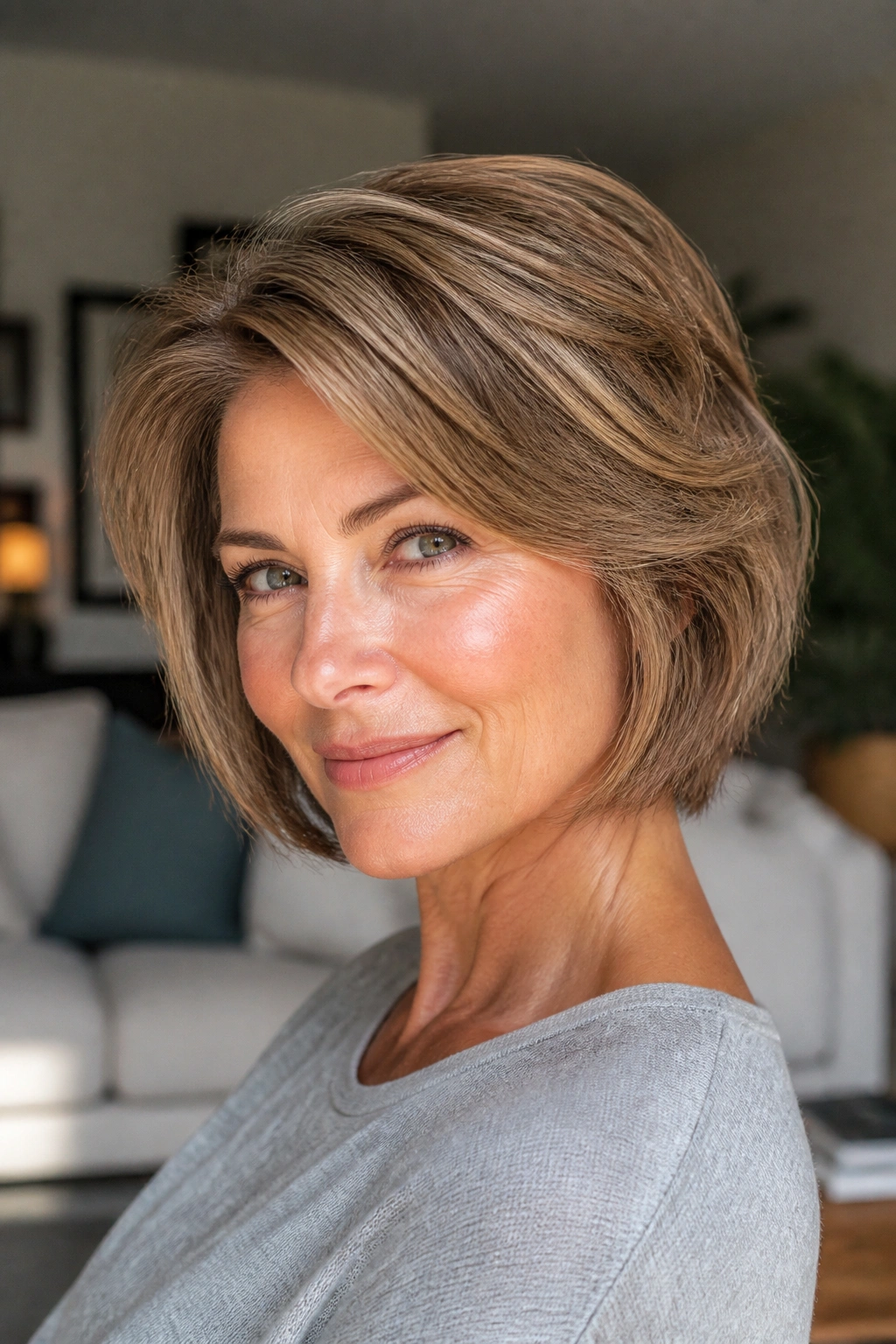
A layered bob is the haircut I recommend when someone says, “My hair used to have body, and now it just lies there.” That’s usually where the real problem lives — not length, but the way the hair has collapsed at the crown.
The best version is not choppy for the sake of it. It has discreet internal layers that lift the roots and stop the ends from stacking into a helmet shape. You want movement, not fluff. There’s a difference.
If your hair is fine, ask for layers that begin below the cheekbone. If it’s thicker, the layers can be a touch shorter through the back. A light mousse at the roots and a quick blow-dry with a medium round brush will usually do more than a drawer full of products ever will.
One sentence, and it matters: the bob should look fuller, not bigger.
3. Shoulder-Length Waves With Face-Framing Layers

If you want to keep some length, shoulder-length waves are hard to beat. They feel soft and feminine without looking heavy, and they don’t demand the kind of upkeep that long, one-length hair usually does.
Picture this: you step out with hair that moves, bends, and falls around your face instead of hanging straight down. That’s what face-framing layers do. They start around the chin or cheekbone, then melt into the rest of the cut so the front feels lighter than the back.
This works especially well if your hair has a natural wave or if you’re willing to add a few loose bends with a curling iron. I like a 1-inch iron for this because the bend looks more believable than a tight curl. Finish with a little cream on the ends, not the roots, or the whole thing can go limp fast.
Gray strands look beautiful in this shape because the movement breaks up the color in a softer way. You don’t get that hard line where the hair feels all one note.
4. Blunt Bob With a Side Part

People hear “blunt bob” and think severe. They’re usually picturing the wrong version. A blunt bob with a side part can look sharp, flattering, and surprisingly soft if the line lands in the right place.
The blunt edge makes hair look thicker because it gives the ends a solid visual line. That’s a gift if your hair has gotten finer or a little more transparent at the bottom. The side part keeps it from feeling too rigid, and it also brings a little lift where the hair wants to lie flat.
No fluff. Just shape.
This cut works best on straight or slightly wavy hair. If your hair is very dense, ask your stylist to remove a little bulk underneath so it doesn’t balloon out at the sides. And if you wear glasses, this style plays nicely with them because the frame and the cut don’t fight each other. They meet. They behave.
5. Pixie Cut With Height at the Crown
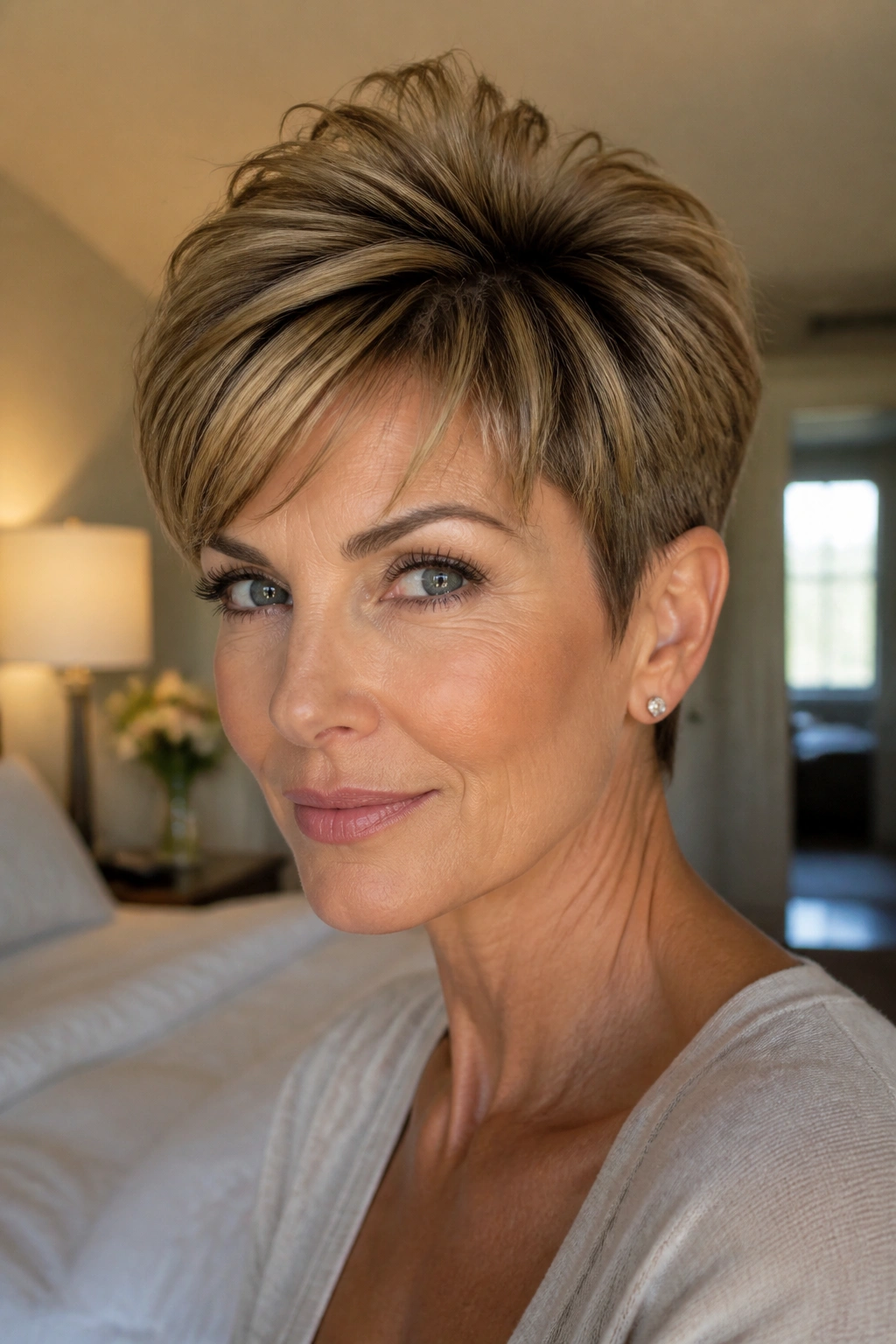
A pixie is not a surrender. It’s a decision. When it’s cut well, it can make cheekbones look sharper, necklines look cleaner, and mornings a whole lot shorter.
What Makes It Flatting
The secret is height at the crown, not too much length on the sides. That little bit of lift keeps the silhouette from flattening into your head. The top should have enough length to sweep forward, back, or slightly to the side, depending on the day.
What to Ask For
- 1 to 2 inches of length on top
- Tapered sides and nape
- A soft fringe if you want more face framing
- Texturizing only where the hair is thickest
A dab of paste or cream is usually enough. Rub it through your fingers first, then pinch the top pieces instead of rubbing it all over like lotion. That keeps the style piecey instead of greasy. A pixie needs confidence, sure, but it also needs good cutting. The shape does most of the talking.
6. Shag Cut With Curtain Bangs

A shag can be a gift if your hair has a little natural wave or if you’re tired of wrestling it into submission. The layers do some of the work for you, and curtain bangs soften the face without locking you into a heavy fringe.
What surprises people is how forgiving this cut can be. It doesn’t need a perfect blowout to look intentional. A little bend, a little scrunch, a little air-dry time — that’s often enough. Gray hair especially can look good here because the texture gives the silver more dimension.
How to Wear It
- Keep the shortest layers below the eyes, not up in the fringe line
- Ask for curtain bangs that split around the brow or cheekbone
- Use a lightweight cream, not a thick butter or oil
- Scrunch and let sections dry in their own direction
The one catch: too many short layers can turn into frizz if your hair is already coarse. So keep the shag soft. You want movement, not a halo that needs taming with a flat iron every morning.
7. Chin-Length Bob That Shows Off the Jawline

Want a cut that makes earrings look better and your neck feel a little longer? Chin-length is where things start to get interesting. It’s small enough to feel sharp, but not so short that it gets fussy.
This length sits right where the jaw ends, so it can define the face in a clean way. If your hair is straight, the line looks crisp. If it has a little wave, the shape softens into something more lived-in. Either way, it tends to make the eyes go up, which is why it’s such a good choice when you want a fresh look without going dramatic.
Keep the ends tucked under with a round brush or let them flick out just a bit. Both work. The important part is that the cut lands exactly where you want the attention to sit — chin, cheekbone, or just a hair below.
One small warning: if your neck is a place you prefer to cover, go slightly longer than the jaw. Half an inch can make all the difference.
8. Long Layers That Let Gray Blend In
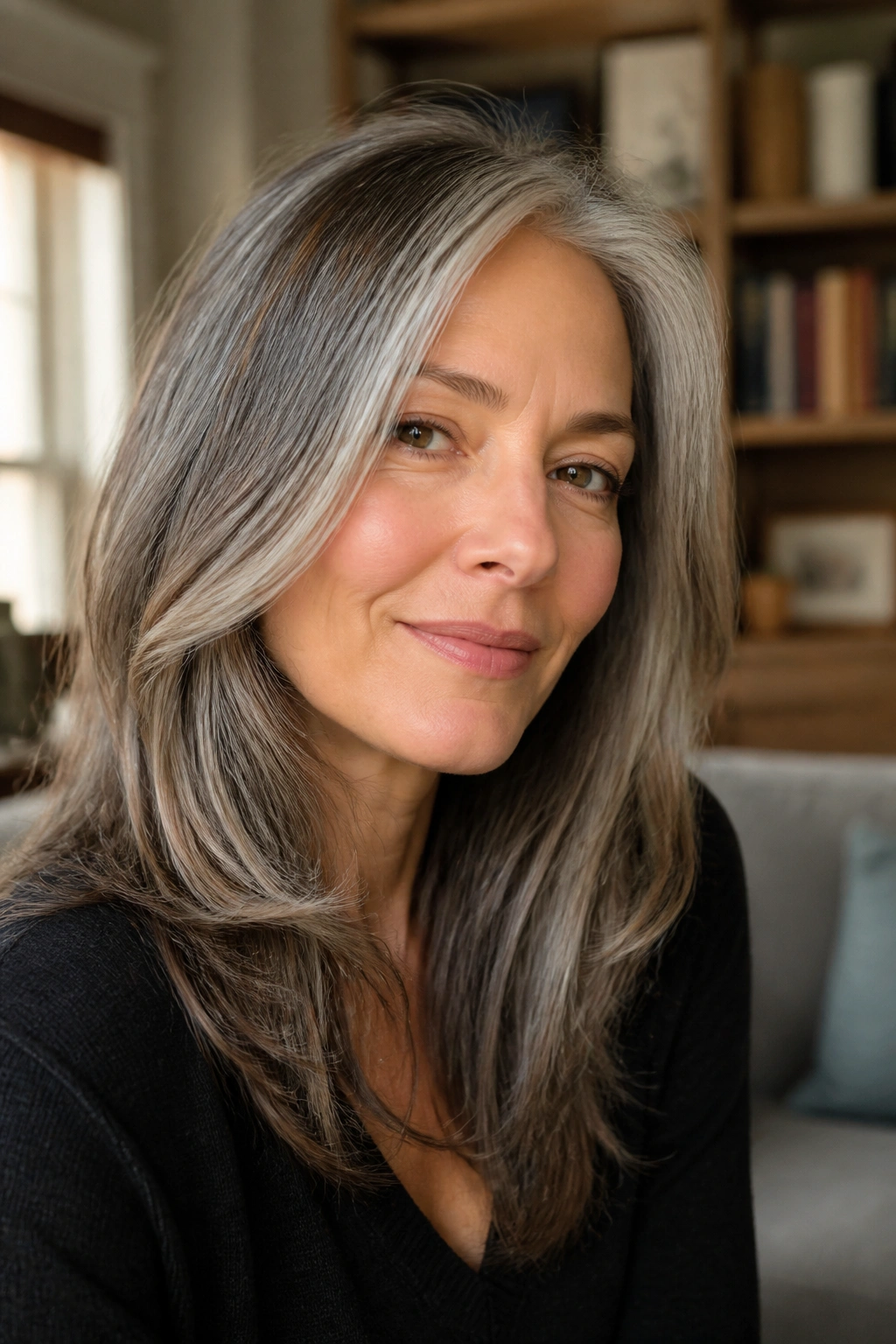
Not everyone wants to cut length off, and that’s fine. Long layers can look elegant, easy, and very current in the everyday sense of the word — not flashy, just good.
The reason they work so well with gray hair is simple: they keep the silver from turning into one big block of color. Layers break up the surface, so the texture and shimmer show through. If you’re growing out natural gray, long layers also make the transition less awkward because the lighter pieces don’t sit like a hard stripe.
I like this style when hair is still healthy through the mids and ends. If the bottom is thin or dry, trim more than you think you need. Long hair with scraggly ends has a way of looking tired fast. A trim every 8 weeks or so keeps the shape honest.
A light serum on the ends helps too. Not a lot. Just enough to keep the hair from puffing out when it dries.
9. Bottleneck Bangs With a Mid-Length Cut
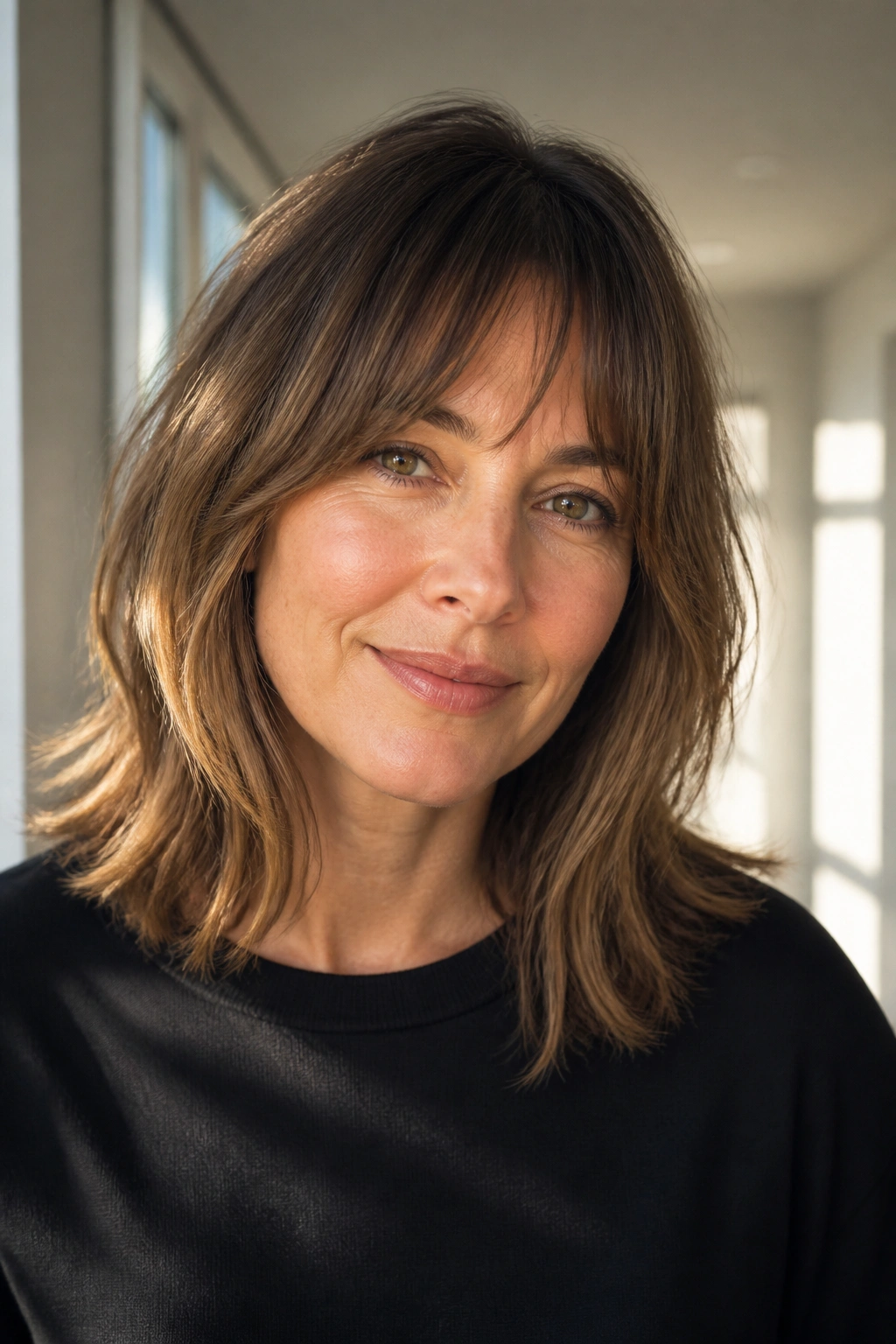
If you want fringe but you’re not ready for full bangs that sit like a curtain across your forehead, bottleneck bangs are a smart middle ground. They’re softer at the center, longer at the sides, and easier to grow out than a blunt fringe.
How They Sit
The shortest part grazes the middle of the forehead, then the length tapers out toward the temples and cheekbones. That shape matters because it blends into the rest of the cut instead of sitting on top of it like an afterthought.
Why I Like Them
They work with a collarbone or shoulder-length cut without stealing all the attention. They also soften the upper part of the face in a way that feels modern but not try-hard. A quick blow-dry with a small round brush is usually enough to get them to fall right. If you prefer air-drying, twist them lightly while they’re damp and clip them for 10 minutes so they set with a little bend.
A fringe like this can be a lifesaver if you want change but hate the idea of constant maintenance. It gives you something new without locking you into a huge commitment.
10. Textured Crop With Piecey Fringe
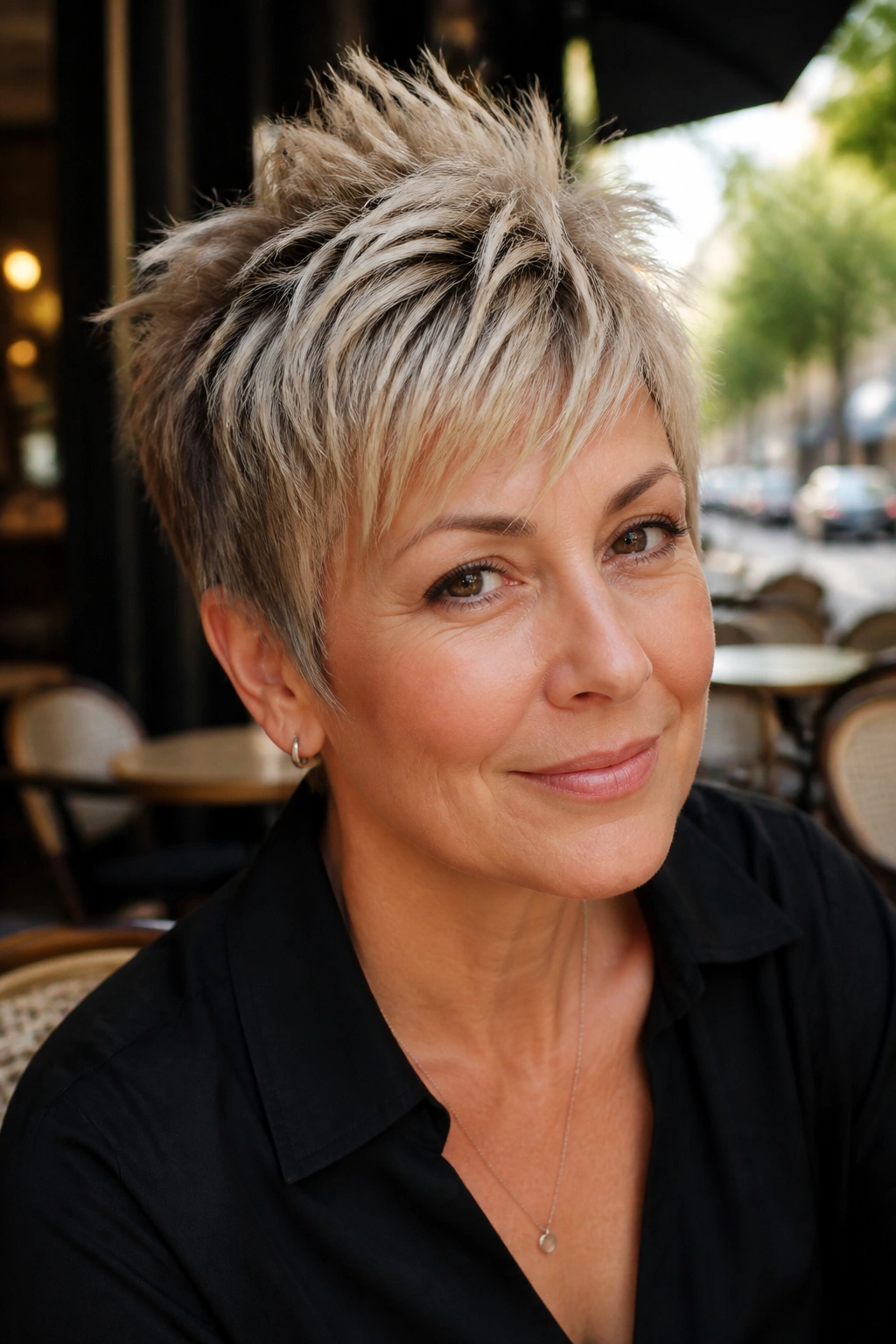
A textured crop is for the woman who wants her hair to look deliberate in five minutes or less. There’s no shame in that. Some mornings, that’s the whole point.
This cut keeps the sides and back short while leaving enough length on top to move around. Piecey fringe gives it some edge, but not in a costume-y way. It reads clean, confident, and a little playful. If your hair has salt-and-pepper color, the texture can look fantastic because the lighter strands catch different angles instead of lying in one flat sheet.
Use a matte paste or a small bit of styling cream, about the size of a pea. Warm it between your palms, then pinch and separate the top pieces. Don’t overwork it. If the hair starts looking too shiny or clumped, you’ve gone too far.
This is a good cut for busy schedules, gym days, and anyone who doesn’t want to spend twenty minutes negotiating with a blow-dryer.
11. Angled Bob With a Longer Front
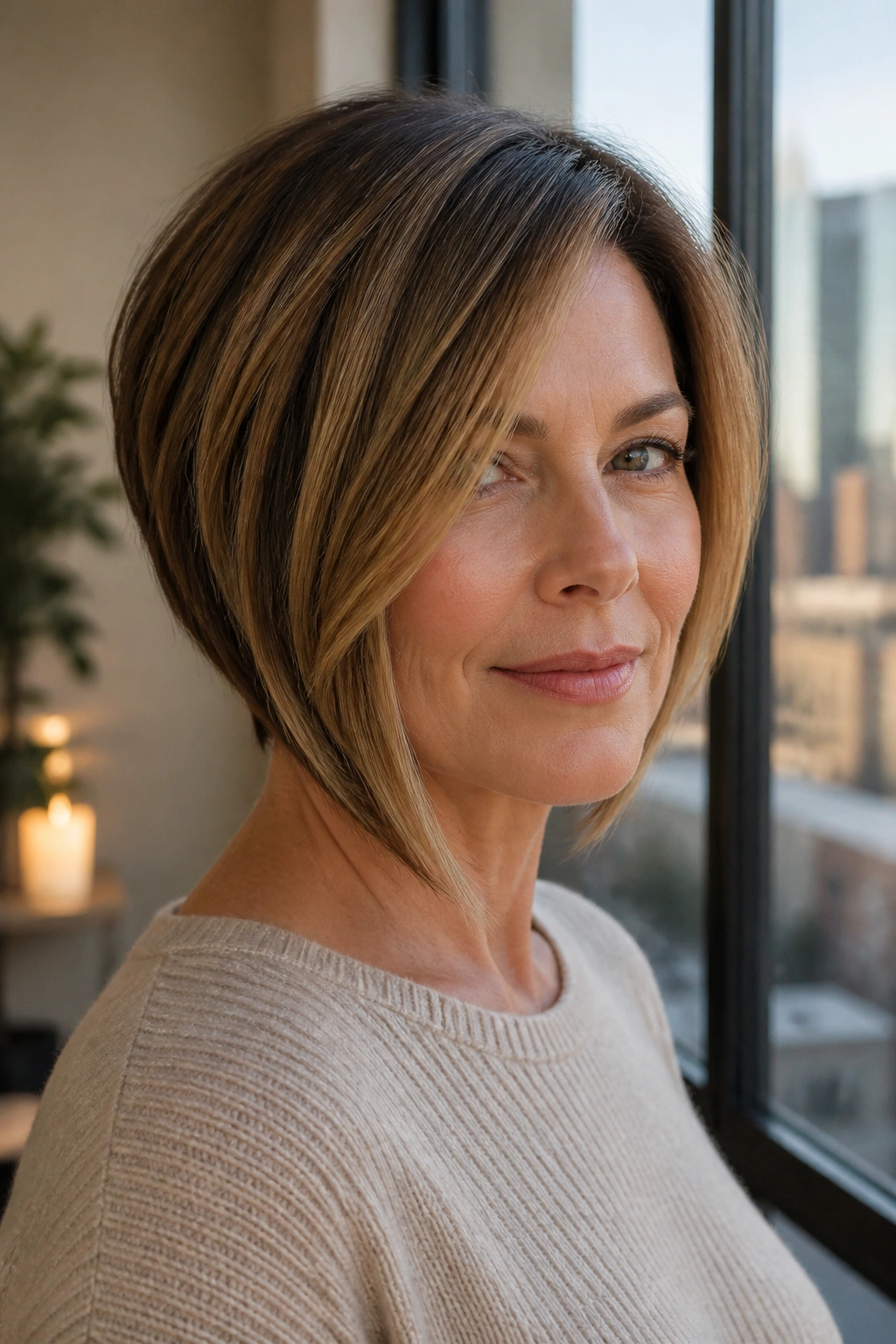
An angled bob gives you structure without the boxy look that some shorter cuts can pick up. The back sits a little shorter, the front drops longer, and the whole thing creates a line that feels clean and intentional.
That angle does two useful things. First, it gives the illusion of lift at the back, which helps if your hair lies flat around the nape. Second, it brings the eye forward, which can soften the face in a really flattering way. You get shape, not stiffness.
This cut is especially good if your hair is fine but plentiful enough to hold a shape. It also handles straight hair beautifully, since the line reads clearly. If you have waves, keep the angle subtle so the cut doesn’t kick out at strange places. And if you like a little drama, a deep side part makes the front fall with more presence.
Sharp doesn’t have to mean harsh. That’s the whole point here.
12. Soft Curly Bob for Natural Texture
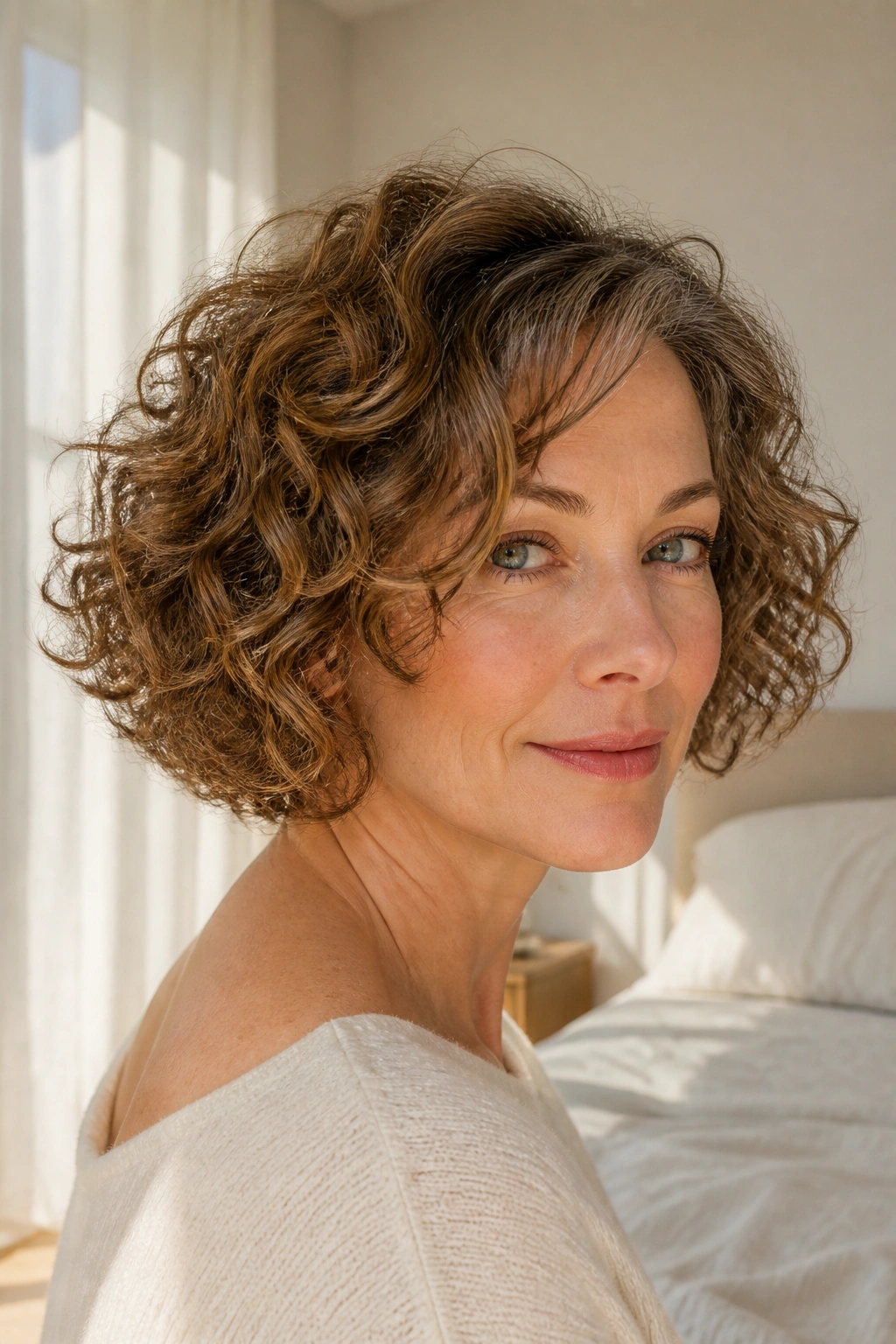
Curly hair should not be bullied into pretending it’s straight. A soft curly bob respects the curl pattern and gives it room to live without turning into a triangle.
Shape Matters More Than Length
The length usually works best somewhere between the jaw and just below it, depending on how tight the curl is. Too short, and the shape can puff outward. Too long, and the curls can pull flat at the top. Somewhere in the middle is usually where the magic sits.
Styling Note
Dry cutting often helps because curls bounce up when they shrink. A stylist who cuts curl by curl, or at least works with the natural pattern, will usually give you a better result than someone who tries to force everything wet and stretched. Use a curl cream, then diffuse on low heat until the hair is about 80% dry. Stop there. Let the rest finish on its own.
Gray curls can be thirsty. They frizz faster and can feel rougher, so a weekly moisturizing mask makes a real difference. Not glamorous, but effective.
13. Low Chignon With Loose Pieces

A low chignon is the kind of style that saves you when your hair isn’t cooperating but you still need to look put together. It works for dinners, work, weddings, and those days when the weather has already won.
The shape sits close to the nape, which keeps it neat, but the loose pieces around the temples and ears keep it from looking severe. That little softness matters. Without it, the bun can read older than it should. With it, the whole thing feels relaxed and polished at the same time.
I like to leave a few shorter pieces out at the front, then smooth the rest back with a brush before twisting it low. Secure it with pins, not a giant elastic, so the bun keeps some softness. If your hair is gray, the contrast between the polished shape and the silver strands looks especially good in low light.
Use this when you want control. It’s tidy, but not fussy.
14. Modern Wedge Cut With Built-In Lift
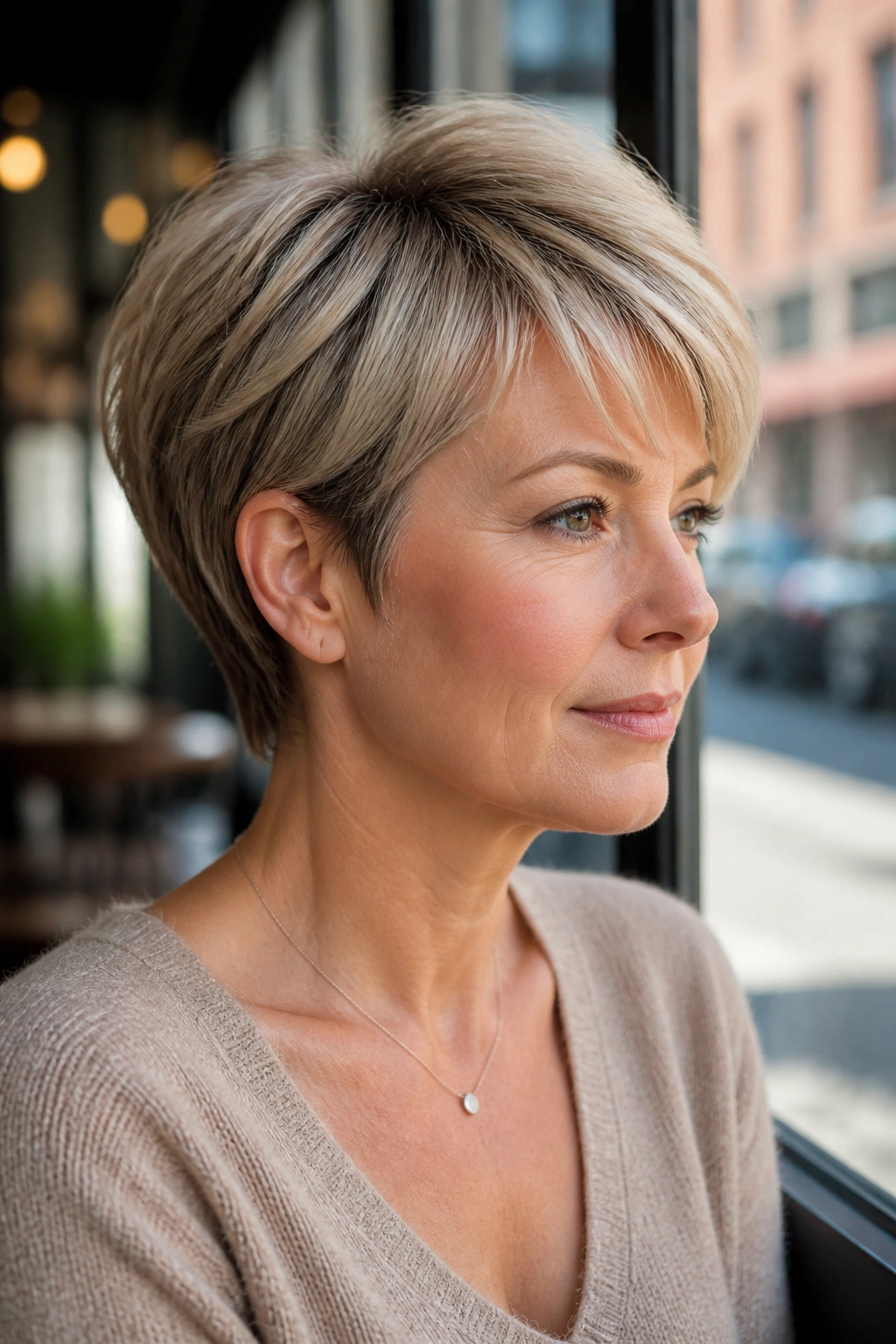
The wedge cut has a reputation problem, and frankly, it’s undeserved. The modern version is sleek at the nape, lifted through the crown, and much less stiff than the old-school shape people remember.
Why It Works
It builds volume where flat hair needs it most. Shorter layers in the back stack gently, while the top stays a little longer so the shape doesn’t look helmet-like. That balance is the whole game.
What To Ask Your Stylist For
- A tapered nape
- Slightly longer crown layers
- Soft texturing at the top
- A shape that curves, not puffs
This is a very good option for thick hair that feels heavy or for straight hair that refuses to hold volume. It also works if you like your hair to look neat with minimal effort. A quick blow-dry and a round brush can set the shape, but even air-dried wedge cuts keep a decent outline. That’s why people keep coming back to them. They do the job.
15. Shoulder-Grazing Cut With Hidden Internal Layers
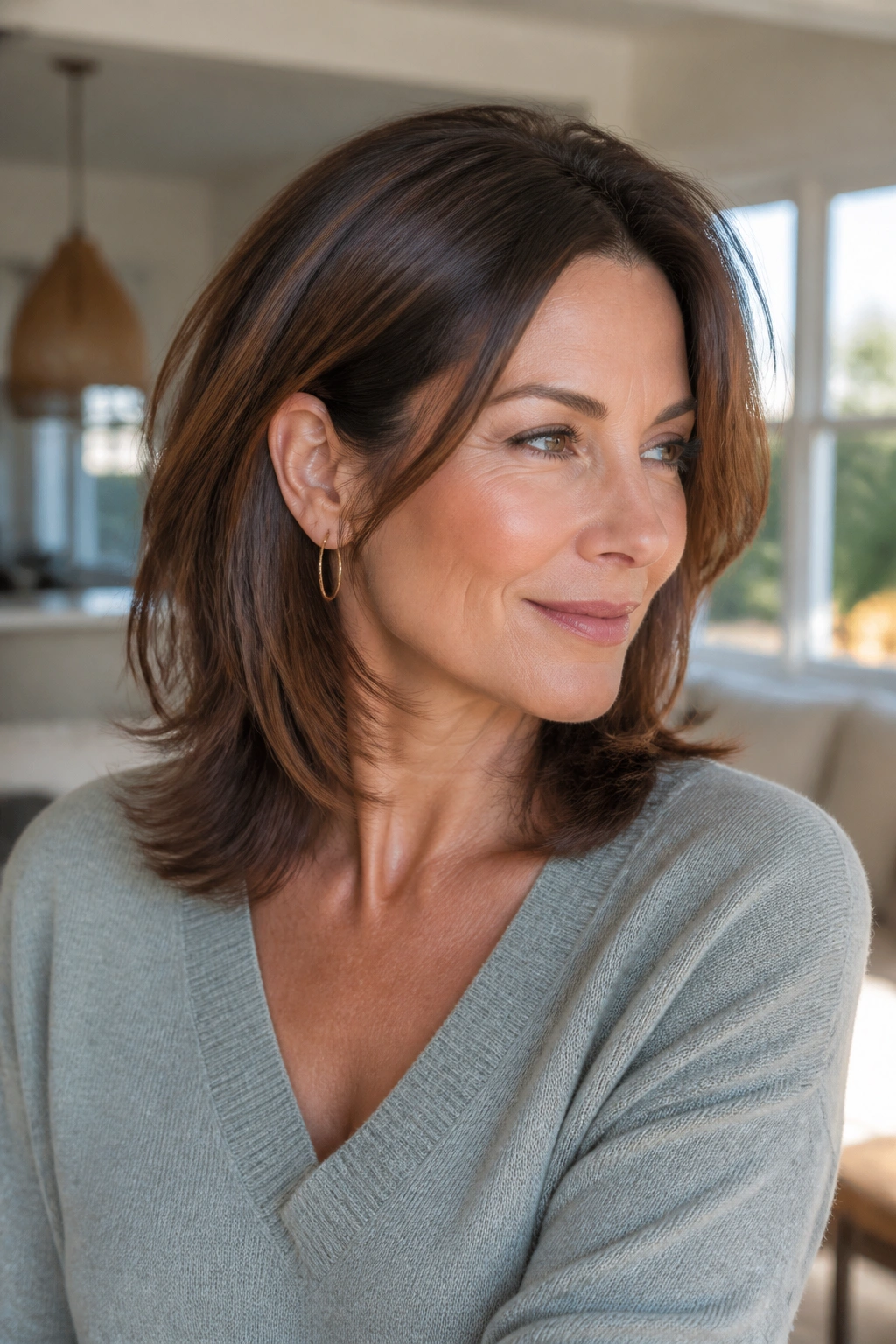
Sometimes you want movement without broadcasting that you have layers. Hidden internal layers are made for that. The outside line stays smooth, while the inside takes some weight out.
That makes this cut a smart choice for dense hair, especially if it swells at the sides or gets bulky at the bottom. You keep the length and the clean edge, but the hair moves more easily. It also helps gray hair, which can get puffy in a way that surprises people. A little weight removal inside can calm that down without thinning the shape too much.
This cut looks especially nice when tucked behind the ear on one side. You see the line, then you catch the movement. Nice and simple. If you like wearing your hair up half the time and down the other half, it gives you both options without feeling overworked.
A light leave-in cream and a rough-dry with your fingers are often enough. That’s the charm of it.
16. Asymmetrical Bob With One Side Slightly Longer
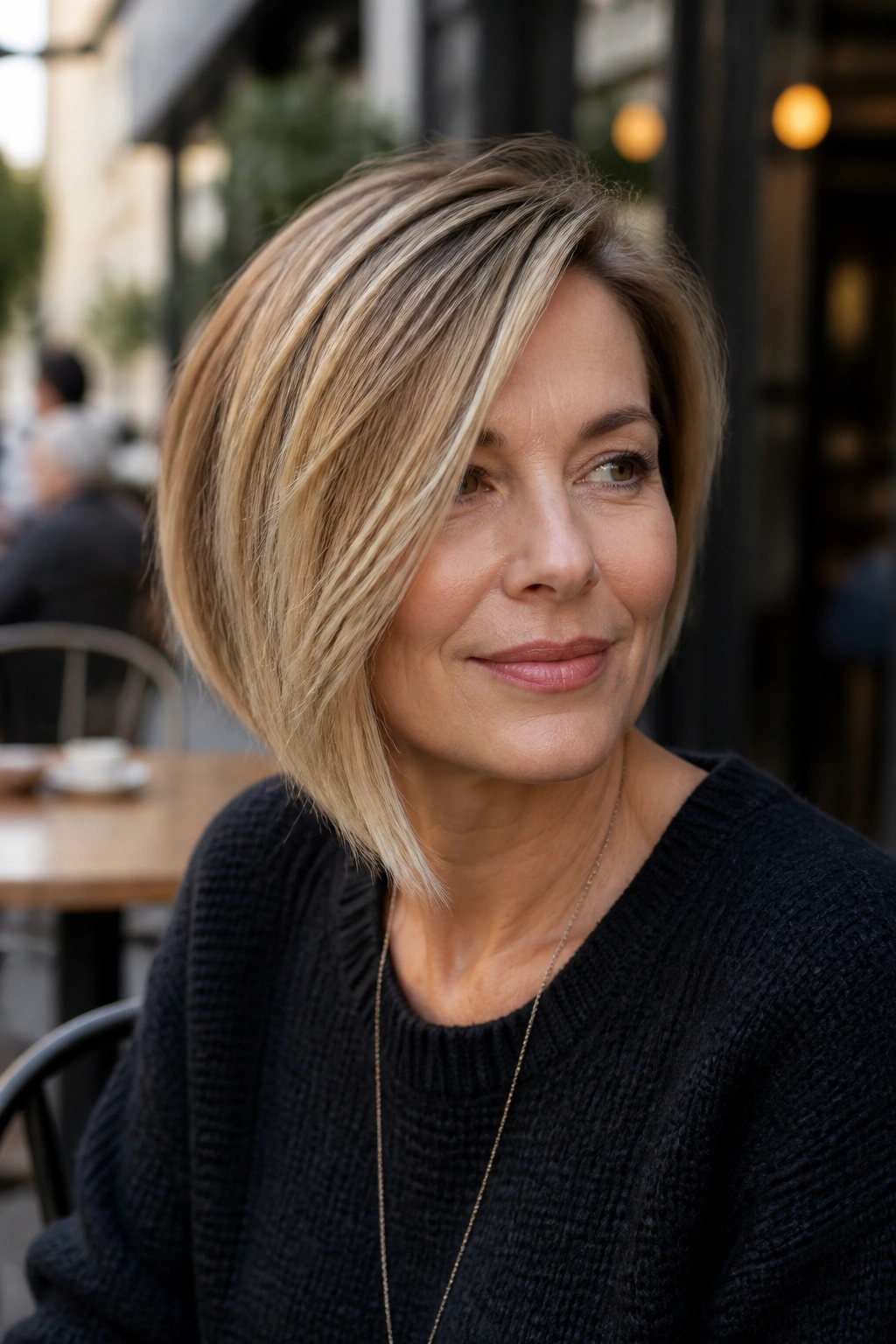
Want a cut that feels modern without needing a big styling routine? An asymmetrical bob does that trick. The difference between sides doesn’t need to be dramatic. Even a half-inch to an inch can change the way the whole haircut sits.
The longer side creates a soft line around the face, while the shorter side keeps things light and fresh. It’s a little unexpected, but not in a loud way. That’s what makes it wearable. A deep side part usually helps the shape fall correctly, especially if your hair tends to separate where it wants to, not where you want it to.
This style looks good on straight hair because the line stays visible. On wavy hair, it feels a bit more relaxed. I’d skip heavy layers here; the asymmetry is enough. Too much going on, and the cut loses its clean edge.
There’s a reason this one sticks around. It changes the profile of the face without asking for much in return.
17. Half-Up Waves for Busy Days

A half-up style is one of those quietly useful looks that gets overlooked because it isn’t technically a cut. Still, for shoulder-length or longer hair, it solves a lot of problems at once.
Pulling the top section back lifts the face and gives the crown a little height, which is useful if your roots have gone flat by lunchtime. Leaving the rest in loose waves keeps the style soft. That mix — neat on top, relaxed underneath — is what makes it work. It also lets silver streaks show through in a nice, deliberate way.
How I’d Wear It
- Take the top section from temple to temple
- Secure it at the back of the crown with a clip or small elastic
- Leave a few face-framing pieces loose
- Touch the ends with a 1-inch iron if they’ve gone fuzzy
This is a good style for second-day hair, gray blending, and days when a full blowout feels like too much. It isn’t trying to be fancy. It just makes the hair behave a little better.
18. One-Length Shoulder Cut With a Smooth Blowout

A one-length shoulder cut is the plainspoken option, and I mean that as a compliment. It’s clean, easy to understand, and often more flattering than people expect because the line stays strong from root to tip.
The smooth blowout is what makes this style sing. When the hair is dry with a little bend under the ends, the whole cut looks polished without looking stiff. Gray hair especially can shine in this shape because the clean surface lets the color do its thing. You see silver, white, charcoal, all of it, without the cut competing for attention.
This is a good choice if you dislike layers, want easy ponytail days, or just prefer a haircut that doesn’t shift around too much. Ask for the ends to sit right at the shoulders or just below. Too short, and it flips out at the wrong places. Too long, and it starts to lose the clean line.
A paddle brush, a blow-dryer, and a little heat protectant can carry this style a long way. Sometimes the simplest shape is the one that keeps showing up in real life because it works.
If there’s one thing I’d leave you with, it’s this: the right haircut doesn’t need to shout. It should sit well, move well, and make your hair easier to live with on a Tuesday morning. That’s a better test than any trend.
And if you’re choosing between two options, pick the one that looks good with less fuss. That usually tells you more than a mirror ever will.
