



Thick hair and short hairstyles can be a dream pairing when the cut has shape. Without shape, though, the same hair can puff out at the sides, sit like a helmet, or make the neck feel buried under all that bulk.
The fix is rarely about taking more hair off. That’s the trap. Thick hair usually needs a clean perimeter, smart internal debulking, and a silhouette that knows where to sit—at the jaw, at the cheekbone, or just under the ear.
A good short cut on dense hair should move when you move. It should feel lighter at the nape, controlled through the sides, and still full enough that you do not spend every morning fighting it with a brush and a prayer.
The 40 styles below cover blunt bobs, tiny crops, curly cuts, layered shapes, and a few hybrids that solve the “too much hair, not enough time” problem in different ways. Some are polished. Some are messy on purpose. All of them work better on thick hair than the average one-size-fits-all chop.
1. Blunt French Bob
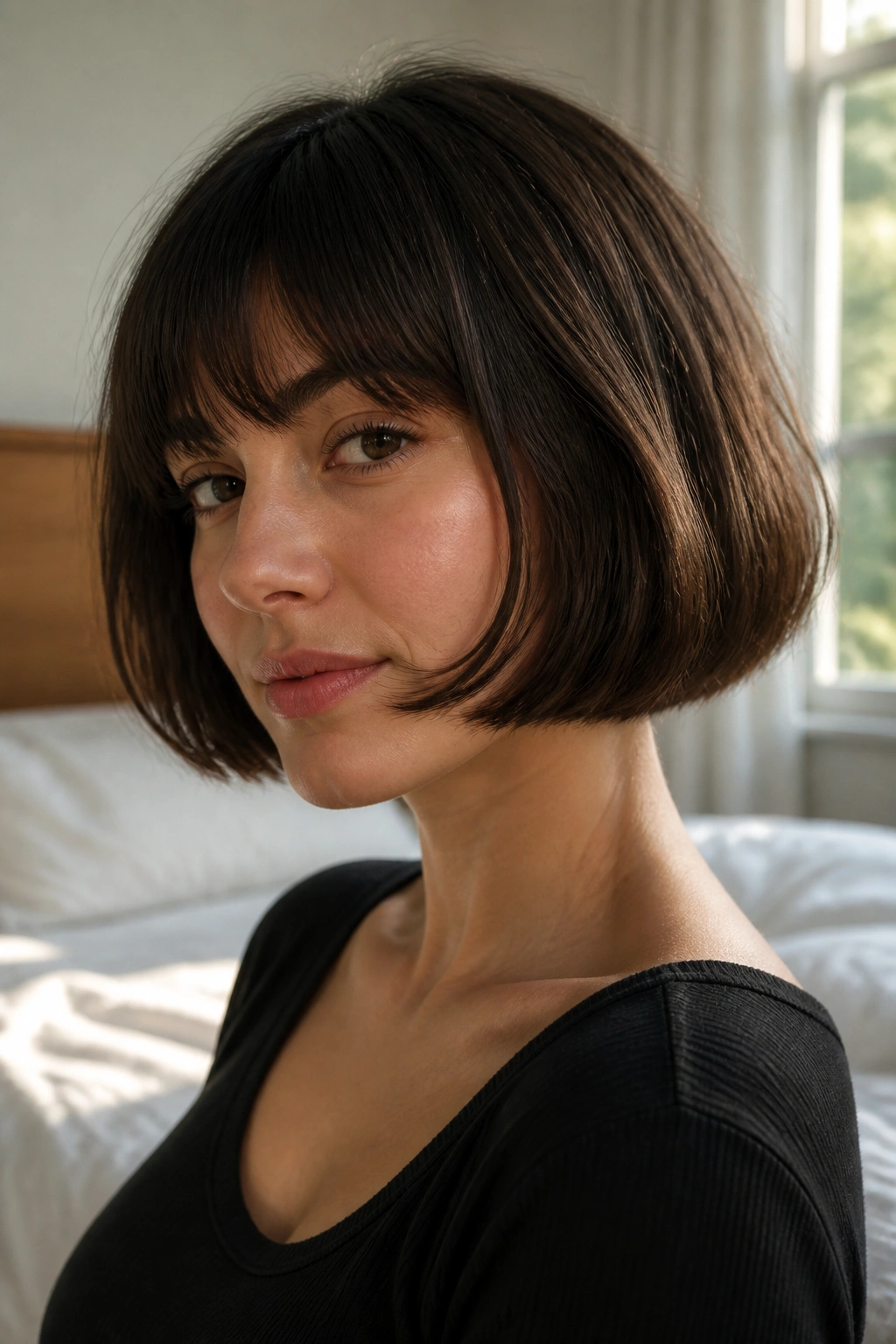
A blunt French bob is one of the cleanest short hairstyles for thick hair because it uses weight instead of fighting it. Keep the line at the jaw or just below it, and let the ends stay full. That heavy edge helps thick hair sit neatly instead of flipping out in random places.
Why This Shape Works
The magic is in the perimeter. A strong, blunt line gives dense hair a place to land, while a little interior point-cutting keeps the inside from feeling too boxy. If your hair has a natural bend, this cut looks especially good with a soft air-dry and a bend around the mouth and jaw.
Quick shape notes:
- Length: chin to jaw
- Best on: straight, wavy, or softly curly thick hair
- Styling tool: round brush or paddle brush
- Finish: smoothing cream or light serum
Stylist note: ask for full ends, not chopped-up layers. That’s the difference between chic and puffy.
2. Textured Pixie With Choppy Fringe
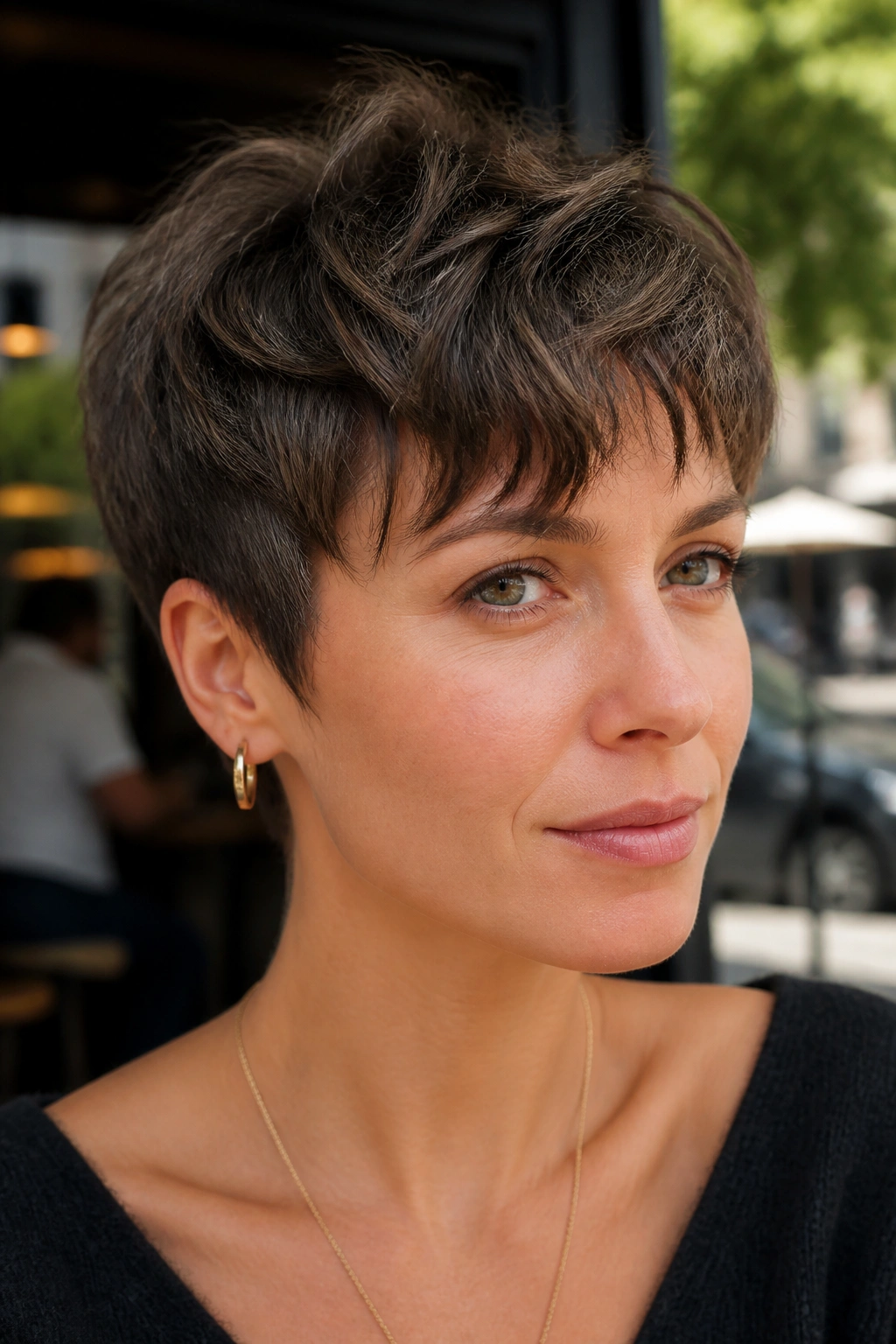
This is the cut for thick hair that wants to feel lighter fast. The sides stay short, the top keeps enough length to piece out, and the fringe gets broken up so it doesn’t sit in one heavy block across the forehead.
The whole thing works because density gets redistributed instead of removed all over the head. You still keep body on top, but the shape feels sharper and easier to move around with your fingers. A matte paste, used sparingly, keeps the style from turning greasy or flat.
Short. Sharp. Done.
3. Jaw-Length Italian Bob
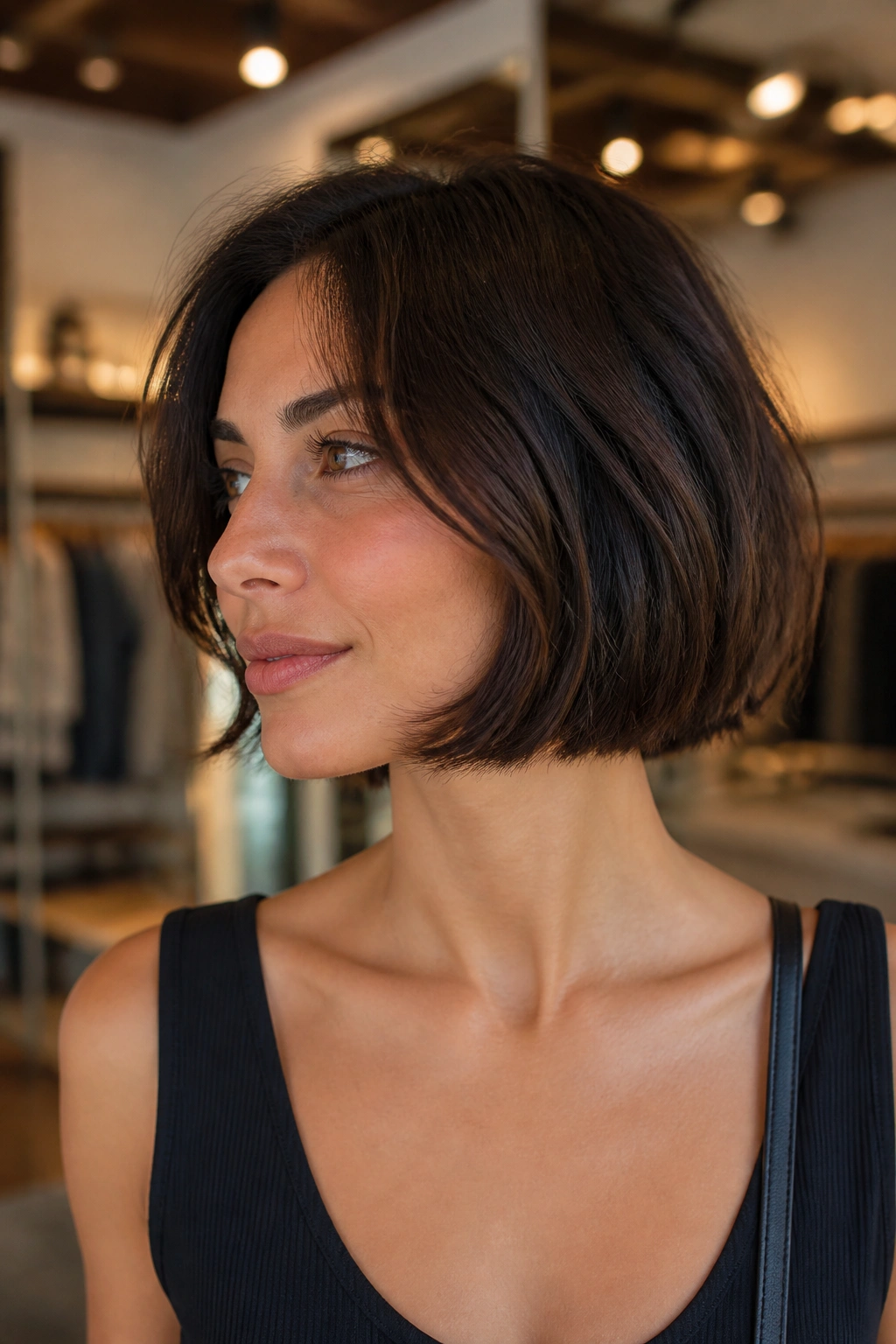
Why does this bob work so well on thick hair? Because it gives you room for fullness without letting the shape explode. The Italian bob is a little softer than a blunt French bob, a little rounder through the outline, and usually blown out with a bit of bend at the ends.
How to Wear It
Ask for jaw length with subtle internal layering and a perimeter that still looks full. If your hair is very dense, a stylist can remove weight from the middle sections without touching the bottom line too much. That keeps the cut from bulging out at the cheeks.
A medium round brush, a quick bend away from the face, and a touch of cream at the ends is usually enough. It’s polished, but not stiff.
4. Layered Crop With Side Sweep

Picture thick hair that always falls forward in the same annoying way. This cut fixes that by sweeping the weight to one side and softening the top with short, movable layers. It’s especially nice if your hair grows out fast and starts looking heavy after a few weeks.
The side sweep matters because it breaks up the bulk around the forehead and crown. That makes the cut feel lighter without making it thin. You get shape, lift, and a bit of movement around the face, which is a lot more useful than a flat crop that sits there like a cap.
Ask for a side part, choppy top layers, and tapered sides. Easy to wear. Easy to mess up if the top gets over-thinned, so keep the texture controlled.
5. Curly Bob With Rounded Shape

Curls love a rounded bob when the cut is done with care. Thick curly hair can balloon out into a triangle if the bottom gets too square, so the goal here is to let the curls stack in a soft curve from cheekbone to chin.
The best version keeps the outline even while allowing the curl pattern to do most of the work. Dry cutting often helps because you can see how the curls spring up as the shape is built. If your curls are tight, the bob may sit slightly higher than you expect once dry. That is normal.
A diffuser, a light gel, and hands off while it dries. That’s the whole dance.
6. Tapered Pixie Cut

A tapered pixie is a smart choice when thick hair feels heavy at the nape and sides. The cut stays close through the back and around the ears, then leaves more length on top so the shape doesn’t collapse.
Unlike a fluffy pixie that gets bulky everywhere, this one narrows toward the neckline. That taper makes the whole head look cleaner and usually easier to style on busy mornings. It also grows out in a friendlier way, which matters more than people admit.
Best For
- Dense hair that sits wide at the sides
- Anyone who wants a neat neckline
- Short hair that still needs a little lift on top
A bit of wax at the crown can be enough. No drama. No heavy blow-dry.
7. Shaggy Bob With Curtain Bangs

A shaggy bob with curtain bangs gives thick hair room to breathe. The layers keep the interior from building too much weight, while the bangs open the face and stop the front from feeling like one solid curtain of hair.
This one has a laid-back feel that looks better when it’s slightly imperfect. A round brush can shape the bangs, but the rest of the cut works nicely with natural bend and air-drying. If your hair is very dense, ask for the layers to be soft and scattered rather than razor-thin. You want movement, not frizz.
It’s a good cut when you want face framing without losing the strength of thick hair.
8. Asymmetrical Bob
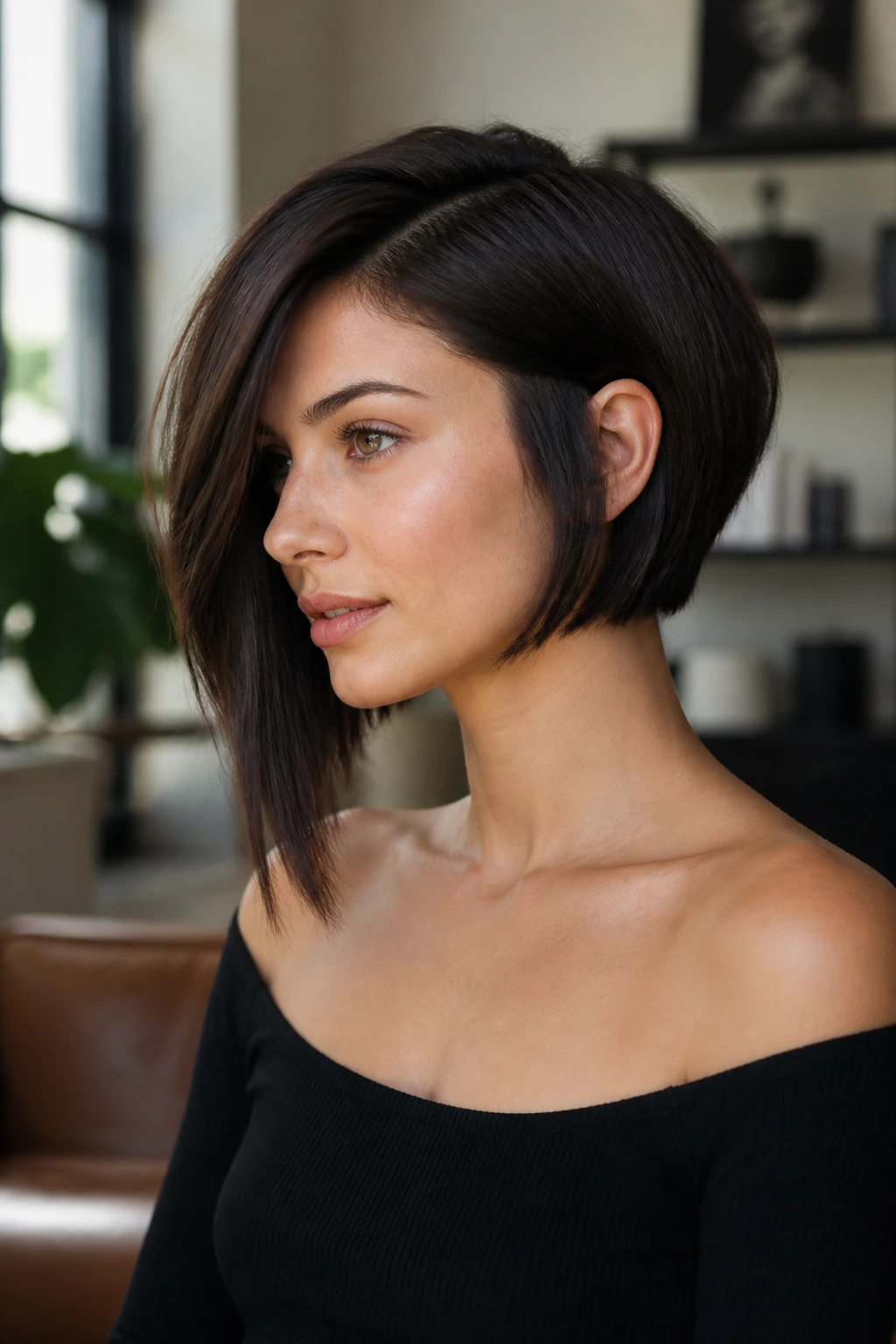
An asymmetrical bob is one of those styles that makes thick hair look intentional fast. One side sits a little longer, and that slight difference keeps the cut from looking too blocky or too heavy around the jaw.
The angle does a lot of work. It pulls the eye downward on one side and gives the whole haircut a sharper edge, which is useful if your hair tends to spread outward. Keep the back neat, and do not over-layer the longer side or the shape gets muddy. Clean lines matter here.
It’s a strong choice if you like a little drama but do not want a high-maintenance style. Bold, but not fussy.
9. Ear-Length Slicked-Back Crop
Want something sleek that still handles thick hair? Go short enough to let the hair sit close to the head, then slick it back with a light gel or cream so the density works in your favor instead of puffing out.
This style looks especially good when the sides are tidy and the top has just enough length to comb backward. Thick hair holds this shape better than fine hair, which is one reason it can look so strong. You get clean edges, a bit of shine, and very little bulk around the face.
How to Style It
Use a dime-size amount of gel on damp hair, then comb it straight back or slightly off-center. Let it dry without touching it. If the top feels too stiff, break it up with a few drops of serum after it sets.
10. Stacked Bob With A Clean Nape
A stacked bob is the haircut that proves thick hair can look neat without being flattened. The back is built with short graduation, so the nape sits close and the crown gets a little lift. That shape keeps the density from hanging all the way down the neck.
The cleaner the nape, the better this cut looks. You want the lower back section tidy and lifted, not bulky and square. Ask for stacking through the back only, then keep the front a little longer so the shape doesn’t turn into a helmet. A light blowout or even a big roller at the crown can make the top sit better.
It’s one of my favorites for thick hair that needs structure.
11. Soft Undercut Pixie
A soft undercut pixie is a relief if your hair grows out wide through the sides and back. The undercut removes hidden bulk, but the top stays soft and feminine, so the cut never feels shaved-down in an aggressive way.
The trick is keeping the undercut tucked low enough that it only shows when the hair is lifted or tucked behind the ear. That gives you options. Wear it smooth on workdays, rough it up on weekends, and enjoy the fact that your hair dries faster because there’s simply less of it stacked underneath.
It’s practical. And a little cheeky.
12. Bubble Bob
A bubble bob sounds cute because it is cute, but the shape matters more than the name. Thick hair gives this cut its rounded body, and the whole thing looks best when the ends curve inward instead of kicking out.
The line usually sits between the chin and jaw, with enough layering inside to stop the head from looking too wide. If your hair is naturally straight, a rounded brush and a quick inward bend at the ends will lock in the bubble shape. If it’s wavy, the shape gets a softer, puffier finish that still reads polished.
This one suits people who like their bob with a little personality and not too much edge.
13. Bixie Cut
A bixie is what happens when a bob and a pixie stop arguing and meet in the middle. For thick hair, that middle ground is useful because it gives you short sides, a fuller top, and just enough length around the face to feel soft.
The cut works especially well if you want to see some neck and cheekbone without going ultra-short. It’s also forgiving during grow-out, which is one of the few things I’ll happily praise in a haircut. Ask for tapered sides, textured crown pieces, and a fringe that can be swept or separated.
Best for: thick hair that wants movement but not a dramatic chop.
14. Feathered Crop
Feathering can save a short cut that feels too heavy. Instead of blunt, thick sections sitting on top of each other, the ends are sliced so they look lighter and move more when you turn your head.
This style fits thick hair well because it softens the outline without taking away all the body. The feathering should stay controlled, though. Too much slicing and the shape turns fuzzy. Keep the sides close, the crown layered in soft bits, and the fringe light enough to fall without sticking straight down.
A blow-dryer nozzle and a small round brush help a lot here. So does not overthinking it.
15. Short Wolf Cut
The short wolf cut is messy in the good way. Thick hair already has volume, so this cut uses that natural mass and turns it into a shaggier, more lived-in shape with a heavy crown and wispy ends.
What makes it different from a plain shag is the stronger contrast between the top and the bottom. The crown gets more lift, the layers are choppier, and the outline feels a little wild. If your hair is straight, use texturizing spray and bend a few pieces with a flat iron. If it’s wavy, air-dry and separate the sections with your fingers.
It’s not neat. That’s the point.
16. Deep Side-Part Bob
A deep side part can change thick hair faster than a full haircut, but on a bob it becomes a real shape move. The extra hair on one side gives the cut drama, while the smaller side keeps the style from ballooning around the face.
This is a good option if your hair naturally falls heavy at the center or if you want to hide a cowlick near the hairline. Keep the length around the chin or jaw, and ask for soft weight removal underneath so the part has room to sit. The bigger side can be tucked behind the ear for a sharp finish.
Simple idea. Big payoff.
17. Micro Bob
The micro bob is tiny, neat, and far more practical for thick hair than people expect. Because the length sits very close to the jawline, the hair doesn’t have as much room to puff out, which keeps the silhouette crisp.
This cut needs a clean edge and a little discipline. If the ends are too layered, it loses that graphic shape and starts looking fuzzy. Thick hair gives it a nice presence, though, because the bob never feels wispy or fragile. Use a flat brush and a smoothing cream, and let the haircut do the talking.
It’s sharp. It’s blunt. It’s not for anyone who wants hair to hide in the background.
18. Tousled Mop Top
A tousled mop top can work beautifully on thick hair when the goal is texture, not polish. The cut keeps the top a little longer, lets the sides stay soft, and uses irregular layers to build a loose, tousled shape that looks intentionally undone.
Unlike a slick crop, this one benefits from a little mess. The crown should have enough length to push forward or to the side, and the fringe can break up over the forehead in a casual way. Use a lightweight cream or sea-salt spray, then rough-dry with your fingers instead of brushing it flat.
It’s a friendly cut. Easygoing, but not boring.
19. French Girl Crop
A French girl crop usually sits somewhere between a pixie and a cropped bob, and thick hair gives it a lovely sense of fullness around the face. The magic is in the soft fringe and the slightly broken texture at the ends.
The best version avoids too much volume on the sides. You want the hair to curve around the cheekbones, not sit out like a mushroom. A little pieceiness around the crown helps the style feel lighter, and a side part can calm down any too-wide sections. This cut looks especially good when it’s not overstyled.
It’s the kind of haircut that looks better after you’ve lived in it for a few hours.
20. Curly Pixie
A curly pixie is short, lively, and much easier to manage than a long curly shape that keeps expanding. The back and sides stay close enough to keep the outline neat, while the curls on top keep the haircut from feeling flat or severe.
The key is shape, not compression. Let the curls spring up, but trim the sides so the head keeps a tidy edge. If your curls are thick and springy, a curl cream and a diffuser are usually enough. If they’re looser, a bit of gel can keep the top from frizzing apart too early in the day.
No need to fight the curl pattern. That never ends well.
21. Pageboy Bob
The pageboy bob is a strong option when you want thick hair to look smooth and controlled. The line usually curves under at the ends, and the top stays full enough to keep the shape rich rather than flat.
This cut has a retro feel, but the modern version is softer and less stiff. Ask for bluntness at the perimeter with subtle internal weight removal so the bob does not stand out from the head. The ends can be tucked under with a round brush or left with a tiny bend for a more relaxed finish.
It suits thick hair that likes structure and has a little patience for styling.
22. Stacked Pixie Bob
A stacked pixie bob gives you the lift of a bob and the shortness of a pixie without fully committing to either one. The back is stacked, the sides are kept neat, and the top stays long enough to show texture.
That stacked shape is useful for thick hair because it keeps the neckline light while preserving fullness where you actually want it. The crown sits higher, which can make the face look a little longer and the whole haircut feel more modern. Ask for close cropping near the nape and a softer, movable top.
It’s one of those cuts that looks expensive even when you did very little to it.
23. Razor Cut Bob
A razor cut bob softens thick hair in a way scissors sometimes cannot. The razor takes the edge off bulky sections and creates lighter ends, which helps the bob sit closer to the head without looking heavy.
The feel of this cut is different from a blunt bob. It’s airier, a little shaggier, and better for hair that has some wave or bend. If your hair is very coarse, make sure the stylist doesn’t thin the ends too much, or they can turn stringy. The best razor bob keeps movement but still has shape.
Use a cream or a light mousse, not a sticky product. That part matters.
24. Jaw-Length U-Shaped Bob
A U-shaped bob sounds subtle, and that’s why it works. The front pieces sit a touch longer than the back, which gives thick hair a softer curve and keeps the cut from feeling boxy at the jaw.
The shape is useful if you want movement without obvious layers. It also flatters thick hair that tends to sit wide, because the longer front pieces pull the eye down and in. Ask for a gentle U, not a dramatic one. The difference is a few centimeters, but those centimeters change the mood of the haircut.
It’s calm, neat, and easy to wear with a tuck behind one ear.
25. Cropped Afro
A cropped afro is one of the cleanest, strongest short hairstyles for thick hair with natural coils. The shape keeps the hair close enough to the head to feel neat, while the outline stays full and soft around the face.
The main job here is carving the silhouette. You want a shape that follows your head, not one that fights it. A pick can lift the roots a bit, but the real work is in the cut itself—especially around the temples and nape, where density can hide a lot of bulk. Moisture matters too. Dry coils lose their shape fast.
A little cream, a little oil, and a good outline. That’s the formula.
26. Sculpted Bowl Cut
A modern bowl cut can look striking on thick hair because the density gives it structure. The line is rounded, the fringe sits across the forehead, and the back stays compact so the shape feels intentional instead of accidental.
This is not the old-school helmet version people remember. The new take uses softness around the edges and texture through the interior so the cut moves a little. Thick hair is ideal for that because it keeps the line full even after some shaping. If your hair is straight, the bowl reads clean. If it’s wavy, it gets a cooler, more relaxed finish.
It’s bold. No denying that.
27. Sliced Bob With Flipped Ends
A sliced bob with flipped ends gives thick hair a lighter mood without taking away the body. The cut usually sits at the chin or just above it, and the ends are sliced so they can flick out or turn under depending on how you style it.
The point is flexibility. Thick hair often wants to hold its shape all day, so this cut uses that stubbornness in a good way. A flat brush or round brush can change the finish fast. Inward for neatness, outward for a little swing. If your hair is coarse, a smoothing balm helps the ends move instead of sticking out in hard angles.
Small details. Big difference.
28. Baby Bang Crop
Baby bangs can look fantastic on thick hair when the crop underneath stays light and neat. The fringe is short, blunt, and usually sits well above the eyebrows, which gives the haircut a graphic edge right away.
Because thick hair can make baby bangs look heavy fast, the rest of the cut needs some breathing room. Keep the sides tighter and the top softly textured so the fringe remains the statement piece. This cut has a strong personality. It suits people who like a little edge and don’t mind regular trims, because a short fringe grows out in a blink.
If you want subtle, skip it. If you want character, this one delivers.
29. Mushroom Bob
The mushroom bob has a rounded, almost cap-like shape, and thick hair gives it the fullness it needs. The key is to keep the line smooth and the internal layers soft so the haircut curves around the head instead of jutting out.
This style works best when the ends are neat and the crown isn’t overloaded. A heavy fringe can help balance the shape, but it needs to be softened so it doesn’t steal all the attention. Done well, the mushroom bob looks polished and slightly retro without feeling costume-y.
It’s a little unusual. That’s why it stands out.
30. Side-Swept Pixie Bob
A side-swept pixie bob gives thick hair a smart mix of control and softness. The front stays long enough to sweep across the forehead, while the back and sides are cropped shorter so the style doesn’t feel bulky.
This is a good cut when you want some face framing but not a full bob. The sweep helps direct the volume instead of letting it sit evenly all around the head, which thick hair often does on its own. A blow-dryer and a small brush can set the front quickly, and a touch of paste keeps the sweep from falling flat.
It’s tidy, but not stiff. A nice line to walk.
31. Short Shag With Loose Waves
A short shag with loose waves gives thick hair a lot of movement without making it look overworked. The layers should be choppy enough to break up the bulk, but not so chopped that the shape turns fuzzy by lunch.
The loose wave part matters because it keeps the shag from feeling too punk or too messy. If your hair has natural bend, air-dry with a little cream and scrunch the ends. If it’s straighter, bend random pieces with a curling wand and leave the tips out. That keeps it modern instead of curly in the old-fashioned sense.
It’s relaxed, a little rough, and good for hair that hates being too polished.
32. Grown-Out Pixie
A grown-out pixie is often better than the original pixie itself. Thick hair gives it a fuller top and softer sides as it grows, so the in-between stage can look deliberate instead of awkward.
The trick is keeping the nape and ears neat while letting the top gain a little length. That creates a shape that feels lived-in, not neglected. Ask for regular cleanup around the neck and temples if you want the style to stay sharp. The rest can get a little softer over time, which is part of the charm.
This is the cut for people who want short hair but don’t want to visit the salon every second month.
33. Wedge Cut
A wedge cut gives thick hair a sculpted back and a stronger angle through the sides. The nape stays short, the crown gets lift, and the shape fans out in a controlled way that makes dense hair look sleek rather than wide.
It has a bit of vintage energy, but the structure is what makes it work. Thick hair can hold the angle better than fine hair, which means the shape stays visible even after a full day of wear. A round brush helps the back curve in cleanly, and a smoothing lotion keeps the top from expanding too much.
The wedge is sharp without being severe. That’s why it lasts.
34. Curl-Enhancing Chin-Length Cut
A chin-length cut that encourages curls is all about giving thick hair a place to spring up without building a giant triangle. The length sits right where curls tend to behave best, and the layers are soft enough to let the pattern breathe.
Drying technique matters here. Use a diffuser or let the hair air-dry with minimal touching so the curls keep their shape. If your curl pattern is uneven, a slightly longer front can balance the face while the back stays a touch shorter. That keeps the cut from feeling bottom-heavy.
It’s a good everyday option when you want to show the curl pattern instead of hiding it.
35. Ear-Grazing Bob With Long Top
An ear-grazing bob with a longer top section has a nice tension to it. The sides stay short enough to reduce bulk, while the top carries enough length to move, tuck, or part in different ways.
This cut is especially handy if your thick hair gets bulky around the ears and temples. Keeping those sections close trims the visual width fast. The longer top adds softness, so the result doesn’t feel too severe. You can wear it slicked, tousled, or pushed to one side depending on the day.
It’s one of those cuts that looks more complicated than it is. That’s a good thing.
36. Faux Hawk Crop
A faux hawk crop turns thick hair into an asset instead of a problem. The sides get cut short or tapered, and the center strip stays longer so the hair naturally stands up a bit and forms a strong line down the middle.
The shape has energy. Not chaos—shape. If your hair is straight, a little paste can push the top upward. If it has texture already, the haircut may do half the work on its own. Keep the sides neat so the center section has something to contrast with. Without that contrast, the style loses its point.
It suits people who like short hair with attitude.
37. Comb-Over Bob
A comb-over bob uses a deep sweep across the forehead to control thickness at the front and create a more directional shape. Thick hair works well here because the sweep holds its line better than hair that falls flat.
The side opposite the sweep usually sits closer to the head, which cuts down on bulk. That makes the face look less crowded and gives the cut a cleaner finish. It can be polished for work or roughened up with fingers and a dry texture spray. The key is keeping the sweep soft, not rigid.
It’s a good fix if your hair fights center parts and wants to fan outward.
38. Layered Tapered Cut
A layered tapered cut is one of the most practical short hairstyles for thick hair because it removes weight where you feel it most. The nape gets tapered, the sides stay controlled, and the top gets layered enough to keep the shape lively.
What makes it different from a standard short layered cut is the gradual narrowing toward the neckline. That taper prevents the back from becoming bulky as the hair grows. Ask for layers that move with the head shape, not choppy pieces stuck on top of each other. The best version looks clean from every angle, which is harder than it sounds.
It’s a workhorse cut. Not flashy, but very good.
39. Tucked-Under Bob
A tucked-under bob gives thick hair a smooth, inward curve that feels tidy and feminine without being fussy. The ends are cut so they naturally bend under the jawline, which helps the hair stay close instead of flipping out.
This shape is useful if your thick hair wants to kick outward at the shoulders or chin. A round brush and a little heat can help the ends settle into place, but the cut itself should do most of the work. Keep the layers minimal and the outline clean. Too many layers and the tucked shape loses its polish.
It’s a quiet haircut. In the best way.
40. Face-Framing Crop
A face-framing crop keeps the bulk under control while placing the emphasis exactly where you want it: around the eyes, cheekbones, and jaw. The rest of the hair stays short and neat, but the front pieces get a little more length so the cut feels soft instead of severe.
That front softness matters on thick hair. It gives the style movement and helps balance a strong hairline or a broad forehead. Ask for textured pieces that curve inward near the face and shorter sections behind them that sit close to the head. The result is easy to wear, easy to grow out, and much less boxy than a uniform crop.
If you want short hair without losing shape around the face, this is a smart last stop.
Final Thoughts
The best short haircut for thick hair is the one that respects the density instead of pretending it isn’t there. Heavy lines, smart layering, and a clean neckline usually beat random thinning every time.
If you’re sitting between two choices, go with the shape that solves your daily problem. Too wide at the sides? Pick a taper, undercut, or side sweep. Too much bulk at the jaw? Choose a blunt bob, a U-shape, or a tucked-under finish.
And if your stylist asks how much weight you want removed, be specific. Show them where the hair puffs up, where it falls flat, and where it feels too heavy. That one conversation usually matters more than the haircut name itself.
