



A fresh new look does not have to come from a major chop.
Sometimes it’s a cleaner part, a softer fringe, or a shape that stops your hair from hanging in the same old way. That tiny shift can change how your face reads, how your outfit feels, and even how awake you look when you catch yourself in a mirror.
Hair has a funny habit of getting stuck in a pattern. Same middle part. Same low ponytail. Same flat ends that somehow look more “running errands” than “I made an effort.” Change the silhouette, and the whole mood shifts.
The best hairstyle ideas do one thing well: they make people notice the shape first and the effort second. That’s the sweet spot. A good cut or styling trick should work with your texture, not fight it, and it should suit the amount of time you’re actually willing to spend on your hair on a weekday morning. That part matters more than most people admit.
1. Curtain Bangs for a Fresh New Look
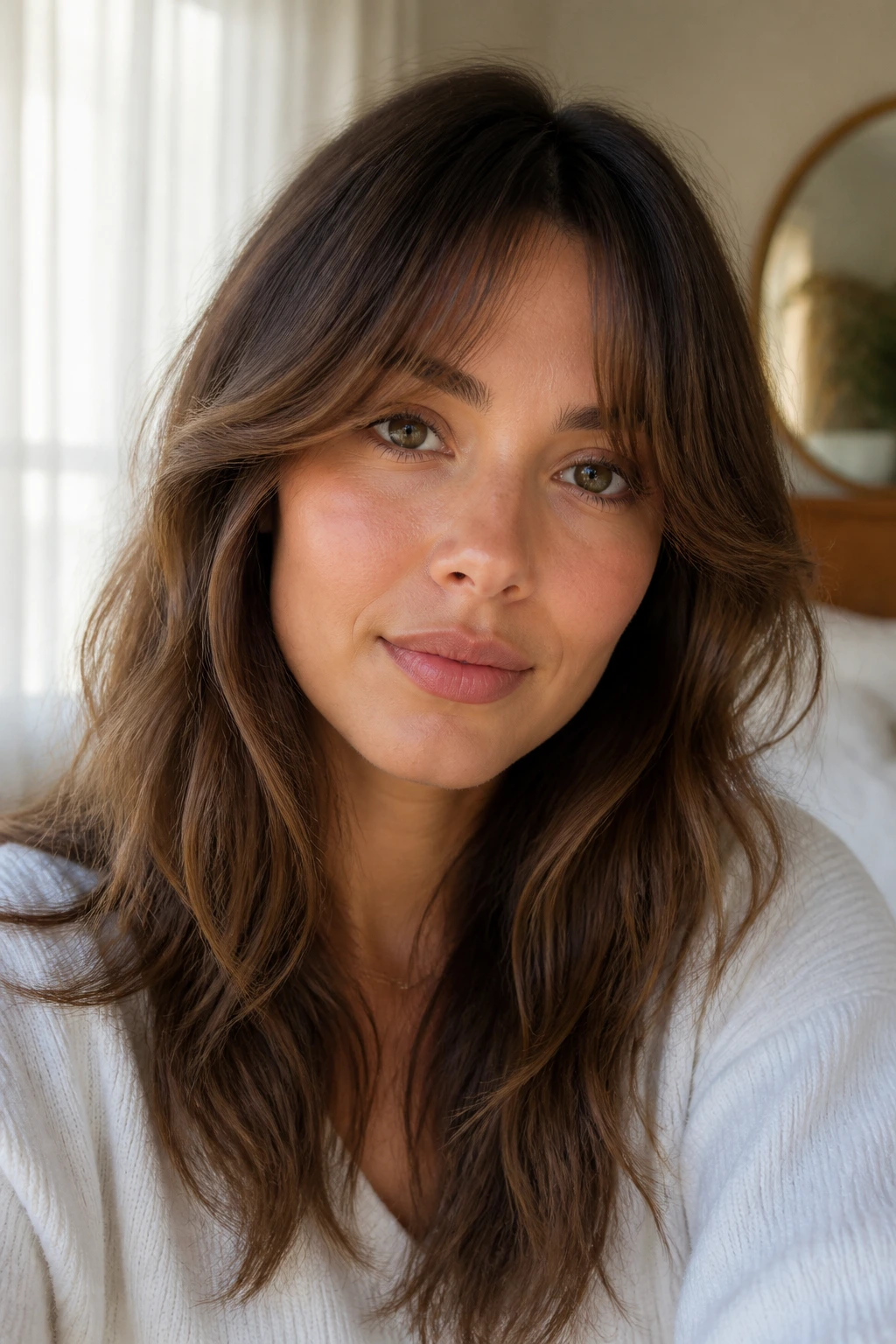
Curtain bangs are one of those small changes that can do a lot of heavy lifting. They soften a long length, open up the face, and make even simple hair look deliberate. If you want a fresh new look without losing much length, this is one of the smartest places to start.
Why they work
The best curtain bangs are not chopped straight across like a blunt fringe. They’re parted in the middle, then swept out toward the cheekbones so the shape blends into the rest of the cut. That means they grow out more gracefully than a heavy bang, which is nice because nobody wants a styling crisis every three weeks.
They suit straight, wavy, and loosely curly hair. The trick is keeping the shortest pieces long enough to tuck behind the cheekbones, not so short that they kick up and sit awkwardly on the forehead. Ask for face-framing layers that start around the nose or cheekbone if you want something soft, not severe.
- Blow-dry with a medium round brush.
- Aim the dryer downward first, then curve the ends away from your face.
- Use a pea-sized amount of lightweight cream, not a heavy balm.
- Trim every 6 to 8 weeks if you want the shape to stay clean.
Best tip: ask your stylist where the shortest piece should land when your hair is dry. Wet bangs lie.
2. Sleek Low Bun with a Middle Part

A sleek low bun has a quiet confidence to it. No fuss, no extra length, no drama. And yet it can make a plain T-shirt look sharper and a dress look finished in about five minutes.
The middle part is what gives it that crisp feel. Draw it straight back from the center of your forehead, smooth the sides with a fine-tooth comb, and gather the hair low at the nape. A tiny bit of gel or styling cream along the hairline keeps the flyaways from puffing up the second you step outside.
This style works especially well when your hair is a little dirty. Not oily, exactly—just on day two or three, when it has a little grip and does not slip out of your hands. That texture helps the bun stay put.
A low bun also makes earrings matter more. Small hoops, a bold stud, even one dangling piece on one side. The hair gets out of the way and lets the face do the talking.
3. Textured Bob with Soft Ends
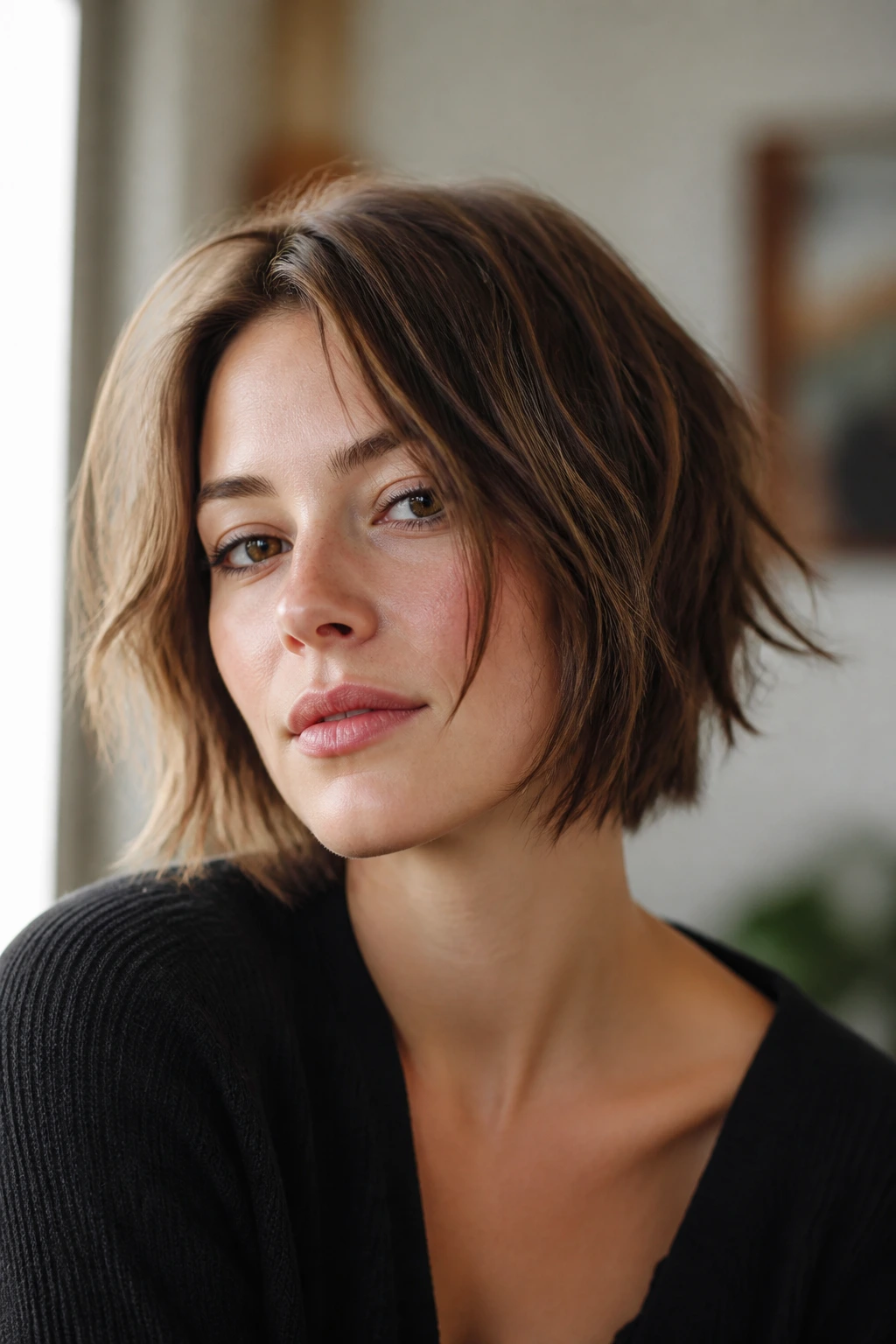
A bob can look severe if it’s cut too cleanly. A textured bob feels more relaxed, which is usually what people actually want when they say they want a change. It’s shorter, yes, but it still moves.
What makes this version different is the finish. The ends are lightly shattered, not blunt and boxy, so the perimeter doesn’t sit like a helmet. You get shape around the jawline, but with enough softness that the cut works with air-drying and a quick bend from a flat iron.
How to ask for it
Ask for a bob that lands anywhere between the chin and the top of the neck. If your face is narrower, a slightly longer bob can keep the proportions from feeling top-heavy. If your hair is thick, a stylist can remove bulk from the inside without making the ends look wispy.
Styling is easy if you keep it loose. A mousse or spray foam at the roots, a rough blow-dry, and a few bends through the mid-lengths are often enough. You do not need perfect curls. A little uneven movement looks better here anyway.
4. Shoulder-Length Shag

If your hair has been hanging in one long curtain for years, a shag can wake it up fast. It’s got layers, movement, and a little attitude without crossing into anything too edgy or hard to wear.
I like the shag best when it’s cut for real texture instead of just copied from a photo. You want shorter pieces around the crown, longer layers through the sides, and ends that don’t all stop in the same place. That unevenness is what gives the cut energy. It also helps fine hair look fuller and thick hair stop feeling like a blanket.
- Best for wavy hair that wants shape.
- Useful if your roots go flat by noon.
- Good with curtain bangs or a soft fringe.
- Needs a little styling cream or curl cream if you air-dry.
The downside? A shag can look messy if the layers are too short for your face or if the top is thinned too aggressively. Ask for movement, not feather dust.
My take: a good shag should look cool on a Tuesday and still make sense on a Saturday night.
5. Half-Up Claw Clip Twist
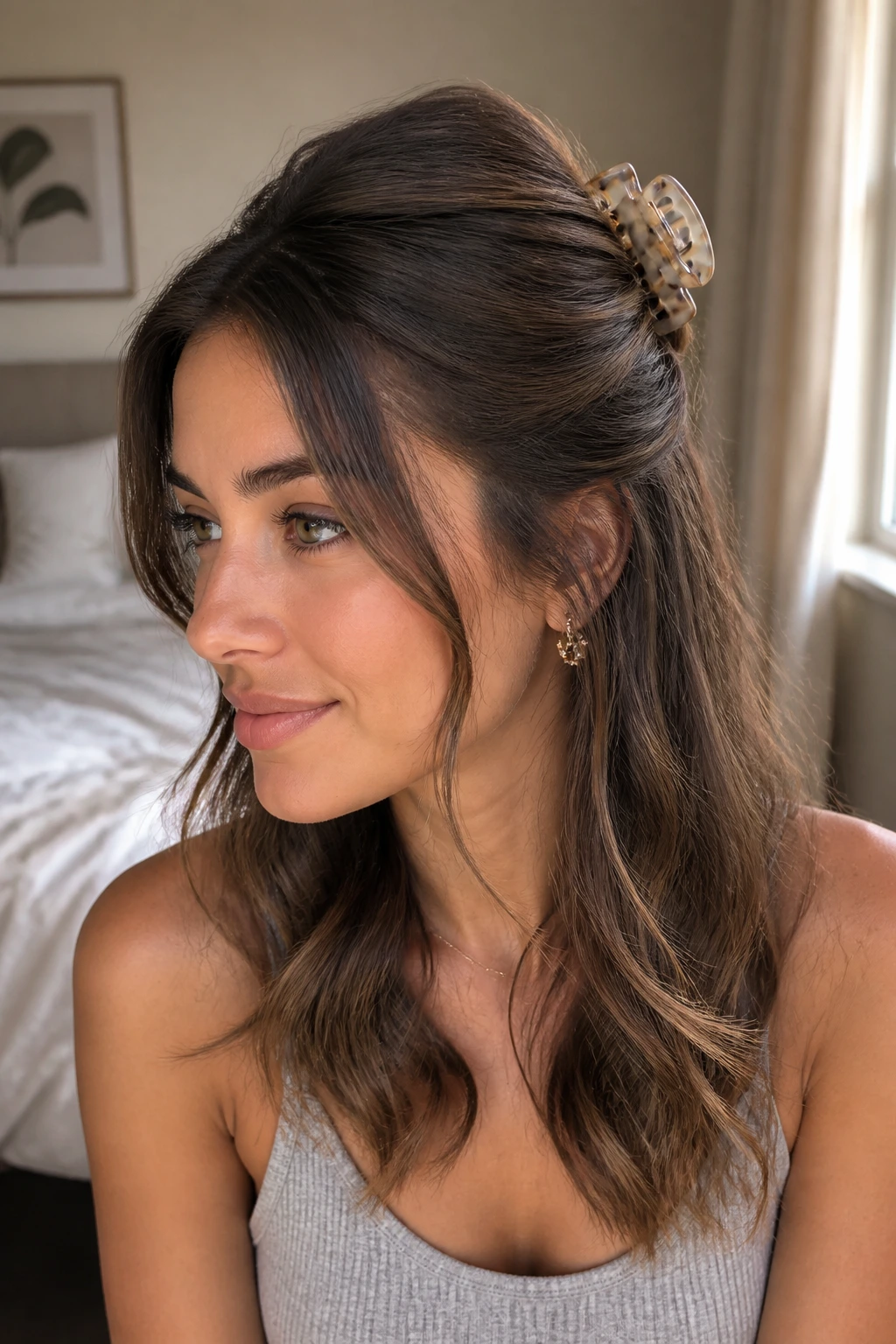
The half-up claw clip style is popular for a reason. It takes maybe 30 seconds, but it looks more thoughtful than a regular ponytail. And it works on hair that’s in that awkward place between “needs washing” and “too clean to hold a curl.”
The basic shape is simple. Pull the top half of your hair back, twist once or twice, and clamp it with a medium or large claw clip. Leave the ends loose. If your hair is very thick, use a bigger clip than you think you need. The little decorative clips are cute, but they often fail by lunchtime.
The best version has a few face-framing pieces left out. Not too many. Just enough to soften the front so it doesn’t feel like you’re wearing office hair from 1998. A quick pass with a curling wand on those front pieces can make the whole style look more finished.
This is one of my favorite everyday hairstyle ideas because it doesn’t ask for precision. Slightly messy is part of the appeal. If the clip sits a little off-center, it often looks better.
6. High Ponytail for a Fresh New Look
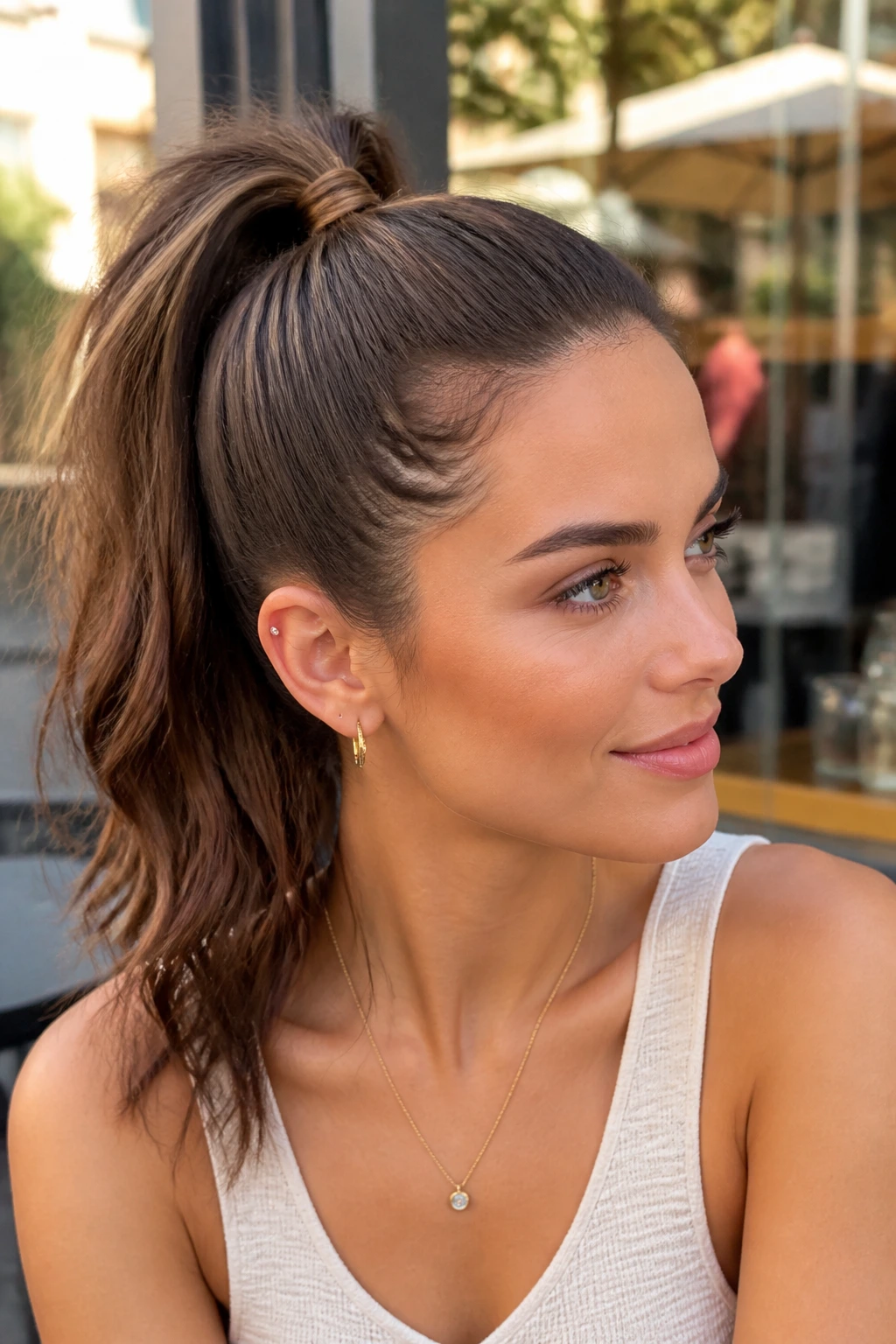
A high ponytail does more than pull the hair back. It changes the whole line of the face. The lift at the crown gives instant energy, and that alone can make a tired outfit look sharper.
Unlike a low ponytail, this one puts the focus higher. That matters. The top should be brushed upward, not flattened, and the base should sit at the crown or just above it. If you want a cleaner finish, wrap a small section of hair around the elastic and pin it underneath. It looks better than a visible band, and it takes almost no extra time.
What makes it different
A high ponytail can be sleek or airy. Sleek means gel at the hairline and a tight brush-up from the front. Airy means a little root volume and ends that keep some movement instead of being ironed flat. Both work. The choice depends on whether you want polished or sporty.
- Good for oval, heart, and longer face shapes.
- Works best when the crown has some lift.
- Looks strong with straight hair, waves, or blown-out curls.
- Needs a strong elastic if your hair is heavy.
If your ponytail keeps sagging, anchor it with two elastics instead of one. Small fix. Big difference.
7. Modern French Bob
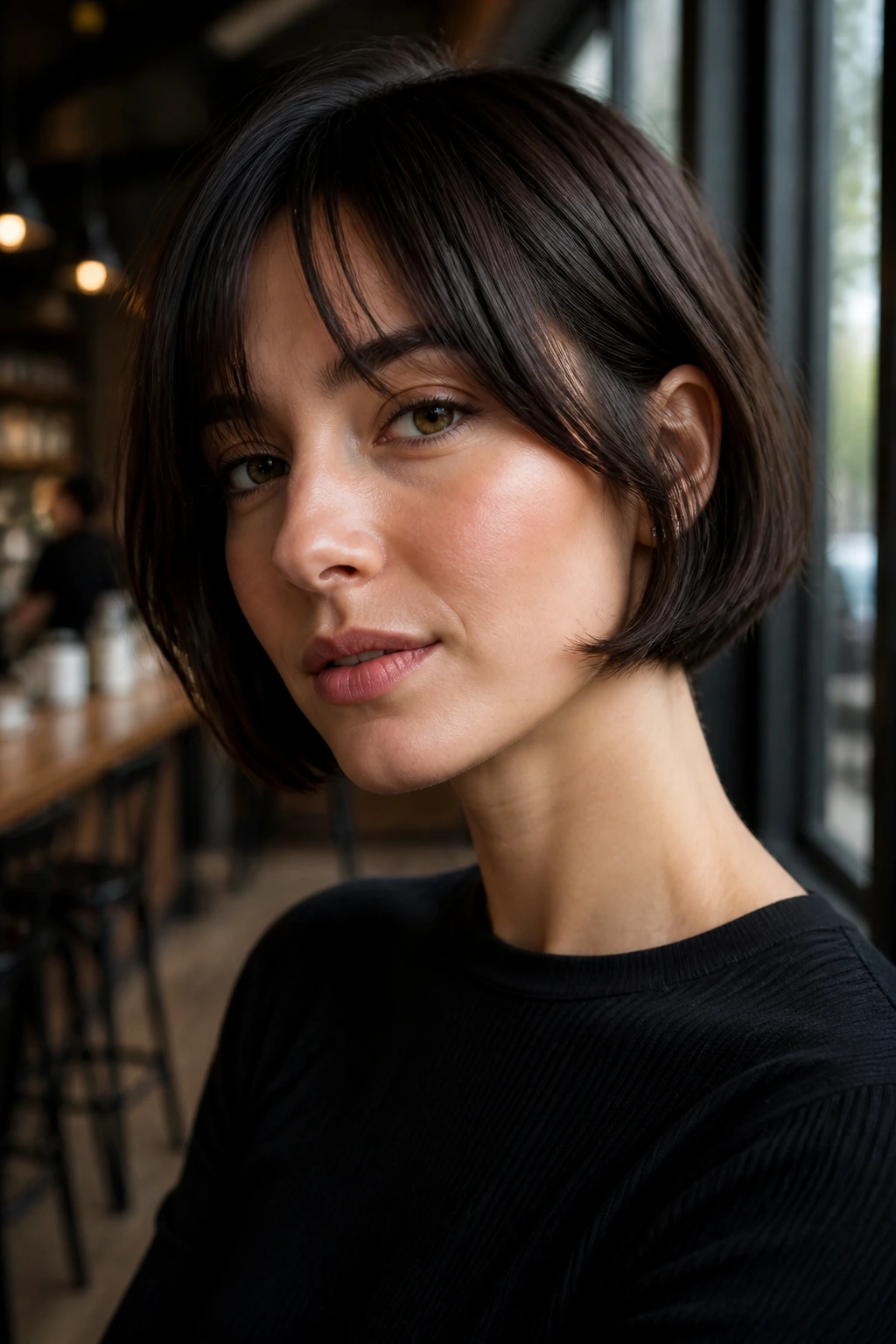
A French bob has a little attitude, but not in a try-hard way. It sits around the jaw, sometimes a touch above it, and the shape feels chic because it’s so simple. No extra layers cluttering the outline. No length hanging around waiting for attention.
The modern version usually has softer ends than the old-school blunt cut. You can wear it with a middle part, a side part, or a tiny fringe, though I think it looks best when the line is kept clean. It’s especially good for fine to medium hair because the shape gives the illusion of density.
A French bob can be styled in five minutes if you stop aiming for perfect smoothness. Bend the ends under slightly, add a touch of styling cream, and let the texture live a little. Pin-straight can look too rigid unless your hair is naturally glossy and even.
This cut is not the most forgiving if you hate regular trims. Short shapes grow out in plain sight. But when it’s fresh, it has real presence.
8. Face-Framing Braids

Two small braids at the front can change a whole hairstyle faster than people expect. They pull attention toward the eyes, break up long hair, and give a plain style a little edge without asking for much skill.
Why does this work? Because the braids create structure right where the face meets the hairline. That area is what people see first. Even if the rest of your hair is loose and simple, those front pieces make it feel styled on purpose.
You can braid just the front sections and leave the rest down, or pull them back into a half-up look. Either way, keep the braids loose if you want them to feel modern. Tiny tight braids can read a little too severe unless that’s the look you’re after.
How to keep them neat
Use a bit of texturizing spray on clean hair before you braid. It helps the sections grip. A small clear elastic or a tiny snag-free band at the ends keeps the braid from unraveling, especially if your hair is slippery.
This style is useful on days when you want something with shape but not a full updo. It’s quick, it’s versatile, and it doesn’t require a mirror mounted at every angle.
9. Glass Hair Straight Style
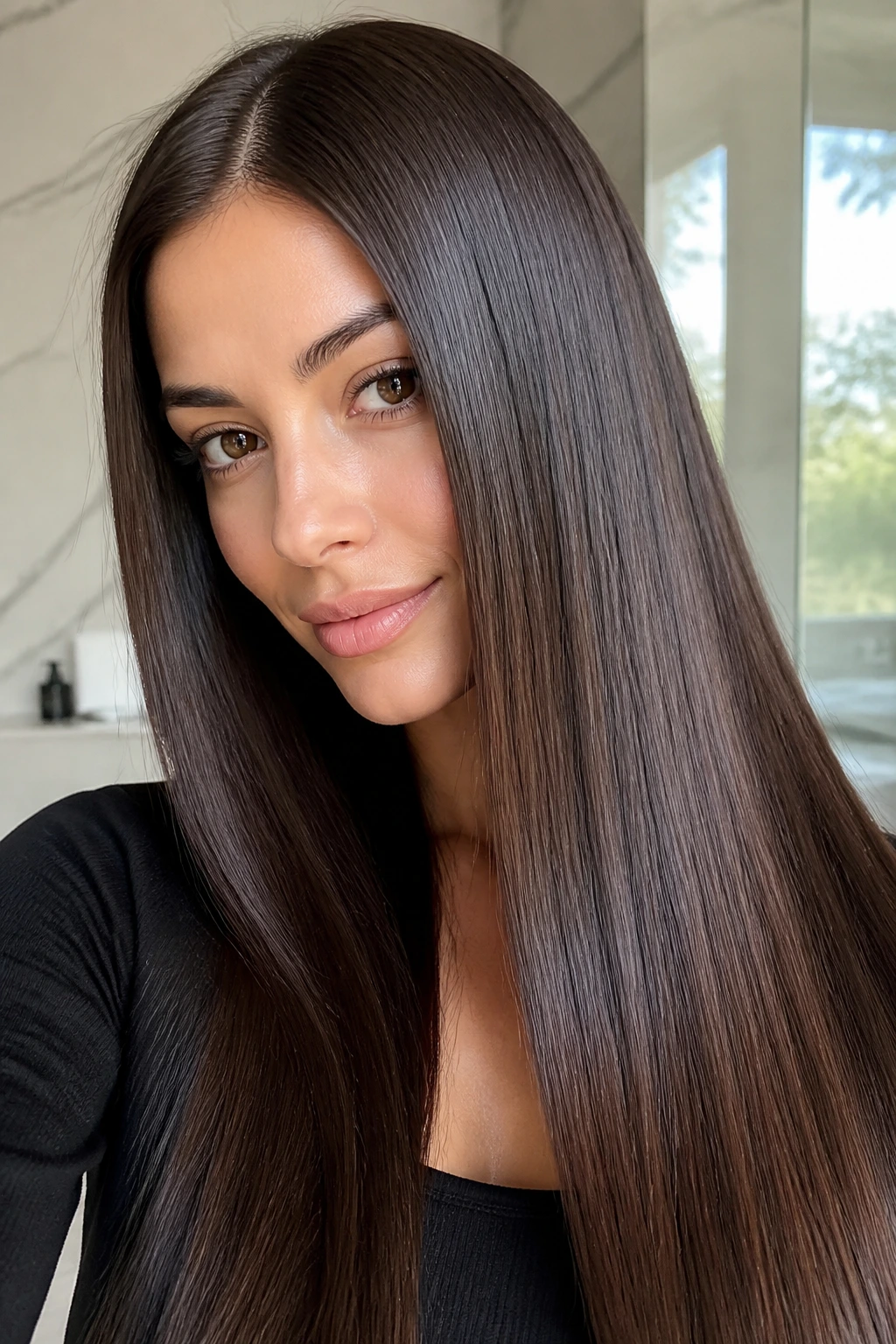
Glass hair is all about smoothness, shine, and a line that looks deliberate from root to end. When it’s done well, it has a sleek, glossy surface that feels a little dramatic in the best way.
The trick is prep. Start with a heat protectant, then blow-dry until the hair is fully dry and already fairly smooth before the flat iron ever comes near it. If you try to force this look on damp or rough hair, it turns into a frizz fight. Use a flat iron in small sections, about 1 inch wide, and keep the pressure even from mid-length to end.
A center part usually makes glass hair feel cleaner, though a deep side part can give it more shape. Either way, the finish should look polished, not stiff. A tiny drop of serum rubbed only on the ends helps, but too much will make it greasy fast.
This style suits hair that can hold a straight line. If your hair is extremely curly or very coarse, it can still be done, but the process takes longer and usually needs more smoothing passes. Worth it? Sometimes. Not every day.
10. Bubble Ponytail

A bubble ponytail is one of those styles that looks more complicated than it is. It’s basically a ponytail with sections puffed out between bands, and that simple trick gives the whole style shape.
Unlike a regular ponytail, which can hang flat and forgettable, the bubble version creates rhythm down the length of the hair. The sections make the ponytail look fuller, even if your hair is fine. That’s the part I like most.
Start with a ponytail at the height you want. Then add small elastics every 2 to 3 inches down the length. Tug each section gently so it rounds out into a bubble. You don’t need huge volume. In fact, the style looks better when the bubbles are neat and spaced evenly.
- Best on medium to long hair.
- Easier to build on hair with a little texture.
- Works with straight or wavy finishes.
- Use clear elastics if you want the bands to disappear.
A bubble ponytail is a good fix when you want something playful without braids, clips, or a lot of skill.
11. Deep Side Part for a Fresh New Look
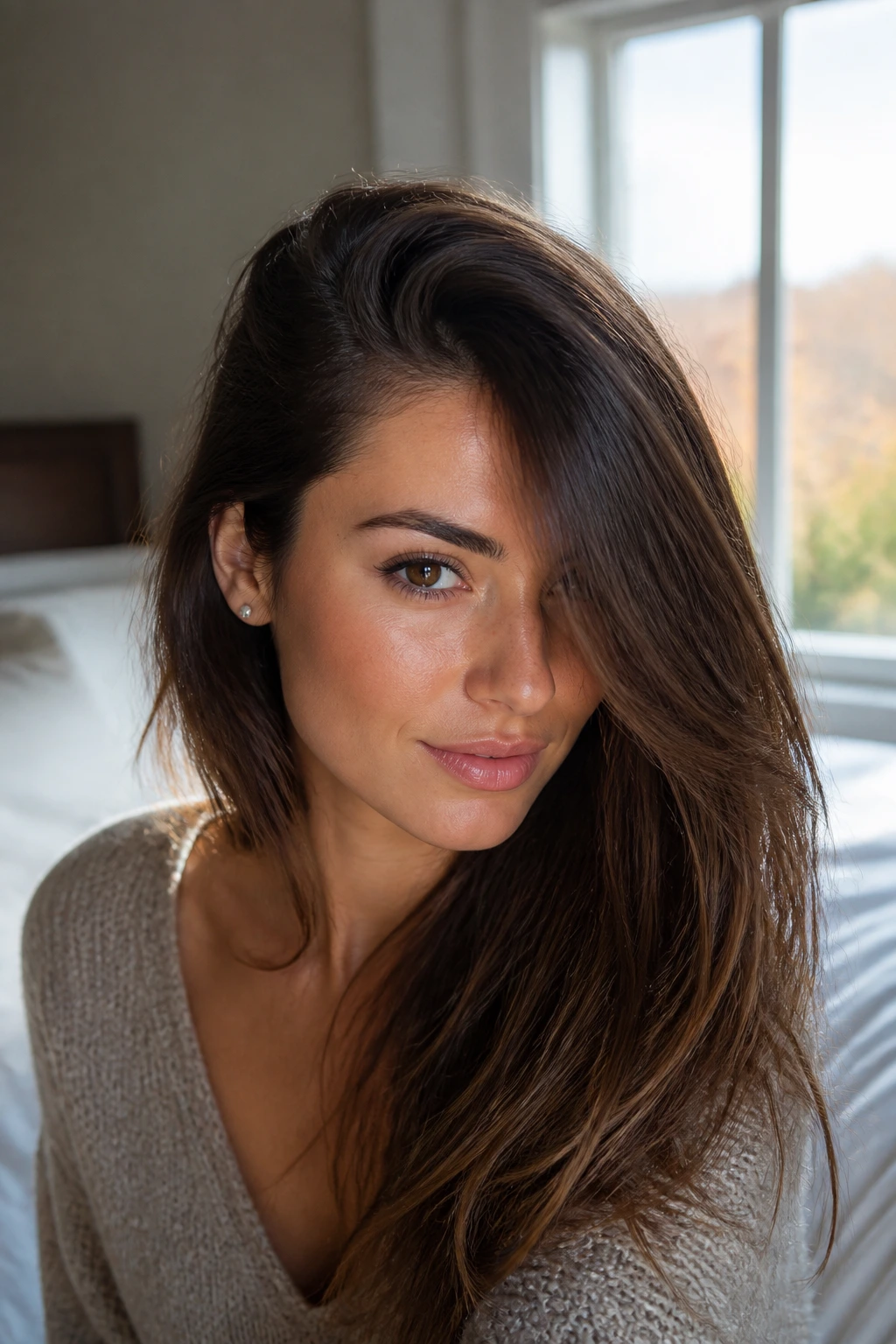
A deep side part is one of the fastest ways to make familiar hair feel different. That’s the entire trick. You’re not changing the length or the texture, just the way the weight falls, and the shift is bigger than it sounds.
Push the part well past the center, then let the heavier side sweep across the forehead or temple. The result adds lift at the roots and a little asymmetry, which can make waves look fuller and straight hair look less flat. It also gives curls a more dramatic shape without needing a cut.
This works best when the root area has some support. A quick blast of volumizing spray or a bit of mousse at the base helps the style stay lifted instead of collapsing halfway through the day. If your hair is stubborn, clip the smaller side back while it cools after blow-drying. That trains it to sit where you want.
I like this one because it changes the mood fast. Serious one day. Softer the next. No scissors involved.
12. Braided Crown
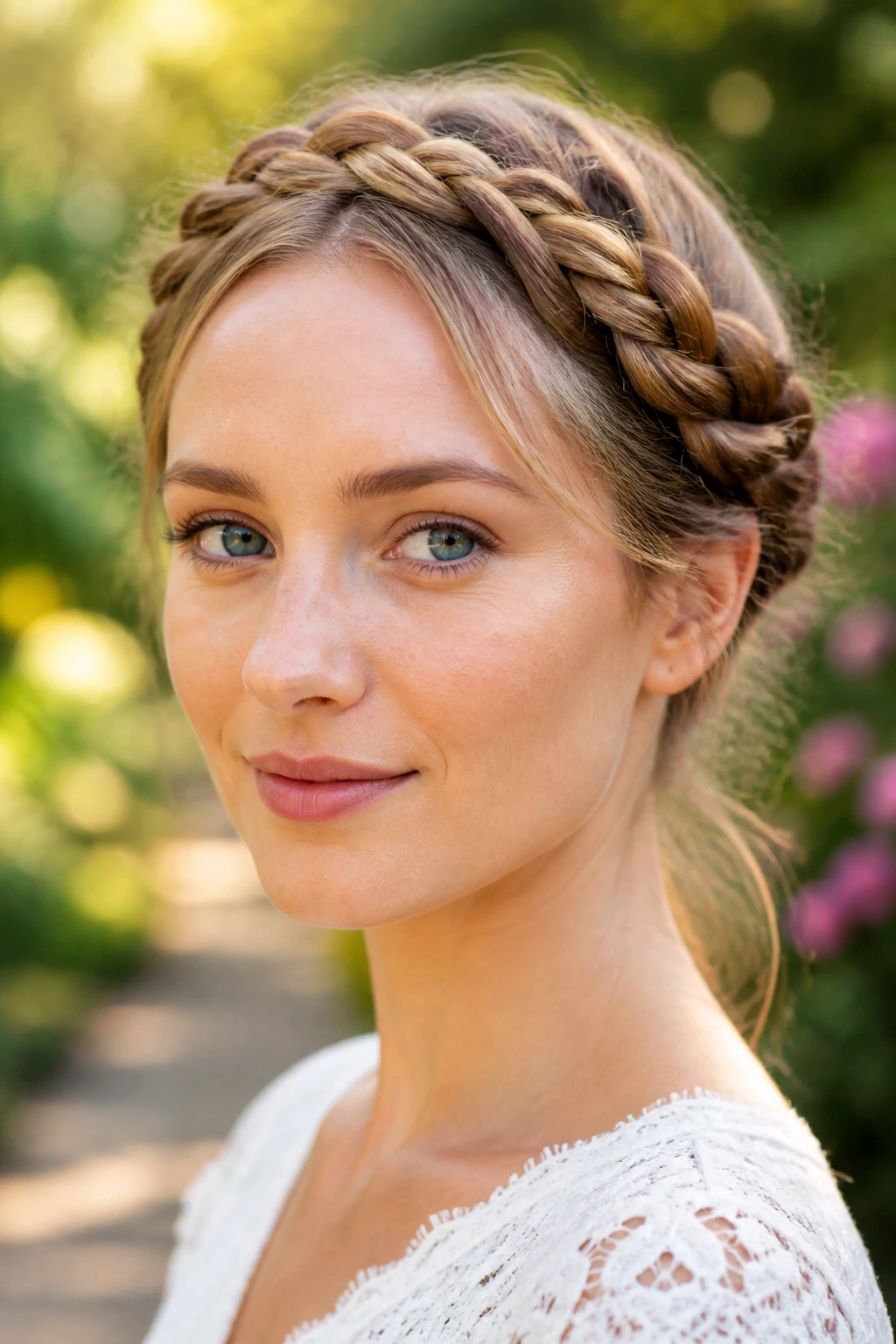
A braided crown can look ornate, but the daily version is surprisingly wearable. It wraps the hair around the head in a way that keeps it off your face and makes even simple clothes look more thought-out.
Best for fuller texture and medium length
Hair that has some grip is easier here. Freshly washed, slippery strands can slide out of the braid, which is annoying and not worth pretending otherwise. A day-old texture or a texturizing spray makes the braid stay put. If your hair is fine, a little dry shampoo at the roots can help before you start.
How to keep it modern
The crown should feel soft, not overly tight. Pull at the braid a little once it’s secured so it widens and looks fuller. A few loose pieces around the hairline keep it from reading too formal. A flower clip or a decorative pin can work, but I’d keep the rest of the look simple if you do that.
Where it shines
It’s a strong choice for weddings, dinner plans, or any day you want hair completely out of the way without defaulting to a ponytail. It stays put better than you might expect.
13. Loose Waves with a Tucked Side

Loose waves are common. One side tucked behind the ear is what changes them.
That single move gives the face some shape and makes the style feel more intentional. It also lets earrings show, which is half the fun if you’re wearing hoops or a sharp little drop earring. The tucked side creates a clean line, while the loose side keeps the softness.
A 1-inch curling iron works well for this if you wrap the hair away from the face and leave the last inch or so straight. That little straight end keeps the wave from looking too done. Alternate directions if you want a more lived-in finish, or curl all the pieces away from the face if you want a smoother shape.
Here’s the thing people miss: the tuck works best when the front section is not too polished. If the hair is ironed flat and sprayed hard, the tuck can look severe. Soft bend, light hold, one side tucked. That’s the sweet spot.
14. Sleek Pixie with Piecey Texture
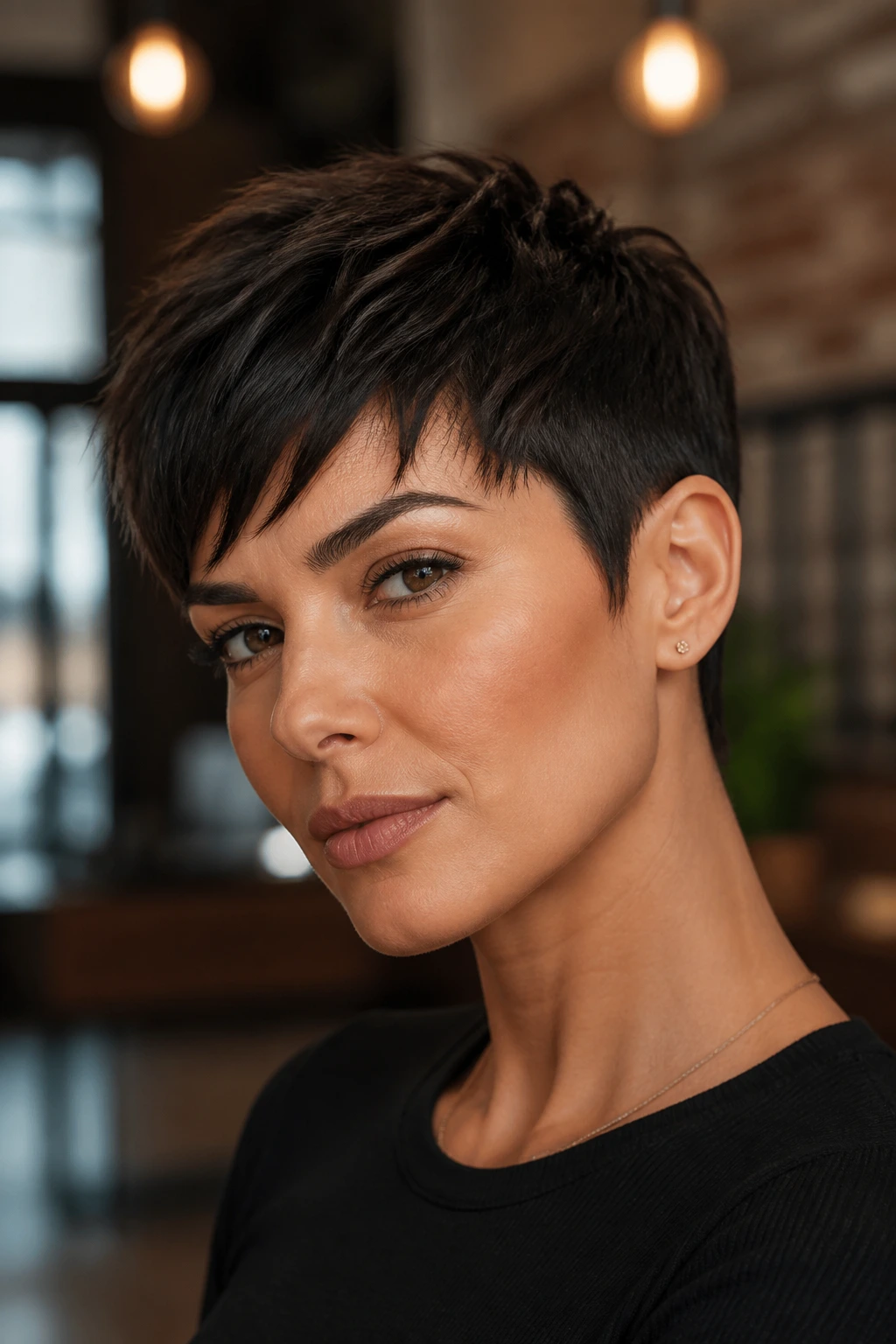
A pixie cut can be tiny and still feel like a full reset. If you want a fresh new look that makes a real statement, this is it. Short hair changes how you dress, how you wear earrings, and how you think about your own face.
The sleek version keeps the sides clean, then uses piecey texture on top so the cut doesn’t feel helmet-like. A small amount of styling paste warmed between the fingers is enough. Work it through the crown and fringe in tiny sections, then push a few pieces forward or to the side. You want separation, not a single solid cap of product.
Why it works
Short hair puts all the attention on shape. A strong outline at the ears and nape, then some movement on top, gives the style contrast. That contrast is what makes it interesting.
It’s also a good match for people who want faster mornings. Short hair can still take a minute, but it dries faster and usually needs less heat. The trade-off is upkeep. Pixies ask for trims more often than long cuts, so this is not the haircut for anyone who wants to ignore their hair for six months.
If you like a sharp look and don’t mind regular visits to keep the outline fresh, a pixie does the job.
15. Chin-Length Lob with Soft Bend
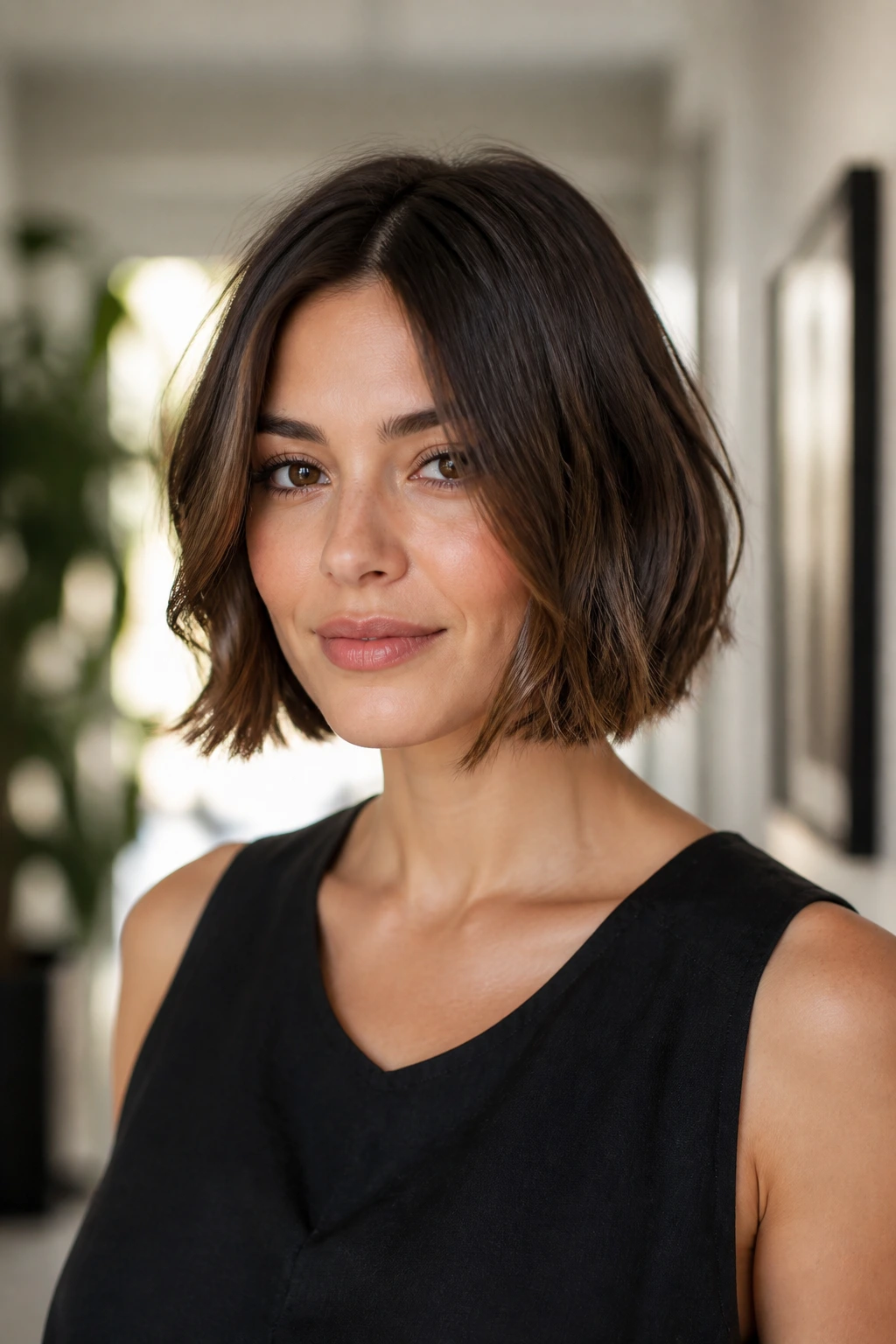
A chin-length lob is the kind of haircut that keeps paying off after the first day. It’s short enough to feel changed, long enough to pull back when needed, and soft enough to live through busy mornings without turning into a styling project.
The soft bend matters more than people think. Straight, dead-straight hair can make a lob feel boxy. A little bend through the mid-lengths — made with a flat iron, a round brush, or even a large curling wand — keeps the ends from looking blunt in a bad way. You want movement, not fuss.
This cut works especially well if you’re ready for a visible change but not ready to lose all your length. It frames the jaw, shows off the neck, and plays nicely with both middle parts and side parts. If your hair is thick, ask for the weight to be removed from the inside. If it’s fine, keep the perimeter strong so the shape doesn’t disappear.
A lob like this is also one of the easiest cuts to grow out. That sounds boring, maybe, but boring is useful when you want hair that looks good for more than one week.
