



A wavy lob can look crisp and swingy, or it can puff at the sides and collapse at the ends. The difference usually isn’t the wave pattern itself. It’s the cut.
With textured lob haircuts for wavy hair, the real job is balance: enough length to keep movement, enough structure to stop the shape from turning into a triangle, and enough internal texture that the waves don’t sit there like they’ve given up. A good lob usually lands somewhere between the collarbone and the top of the shoulders, but that’s only the starting point. Where the weight sits matters more than the raw length.
One of the biggest mistakes is treating wavy hair like it wants the same cut as straight hair. It doesn’t. Wavy hair shifts when it dries, springs up more in some spots than others, and tends to swell if too much bulk is left near the ends. A blunt perimeter can look sharp on one head and boxy on another. Small changes make a huge difference.
The cuts below all work with that movement instead of fighting it. Some are soft and airy, some are sharper, some lean shaggy, and a few are quietly practical in the way that ends up mattering most when you’re standing in front of a mirror with five minutes to spare.
1. Collarbone Shag Lob for Wavy Hair

This is the lob I’d point to first if you want your waves to look deliberate without going full shag. It lands at the collarbone, keeps a little length around the face, and uses long interior layers to stop the shape from feeling heavy. The result is movement that looks built in, not forced.
Why It Sits So Well on Waves
The collarbone is a sweet spot because the hair has room to bend without kicking out in a weird way at the shoulders. That matters more than people think. Once the ends hit the wrong spot on the neck or top of the shoulder, the whole haircut starts doing odd little flips.
This cut also gives your waves somewhere to fall. Instead of stacking layers all over the place, the shape keeps the perimeter intact and removes weight from the middle. That keeps the ends from looking thin while still letting the wave pattern breathe.
Quick Styling Notes
- Best for: medium to thick wavy hair that gets bulky at the sides
- Ask for: long layers, a soft perimeter, and movement around the face
- Avoid: too much thinning at the crown, which can make the top look flat
- Works well with: a diffuser, a light mousse, or air-drying with a little scrunching
Pro tip: ask your stylist to keep the front pieces a touch longer than the back. That tiny difference helps the haircut fall forward in a better way, especially when your waves shrink up after drying.
2. Soft Razor-Cut Lob
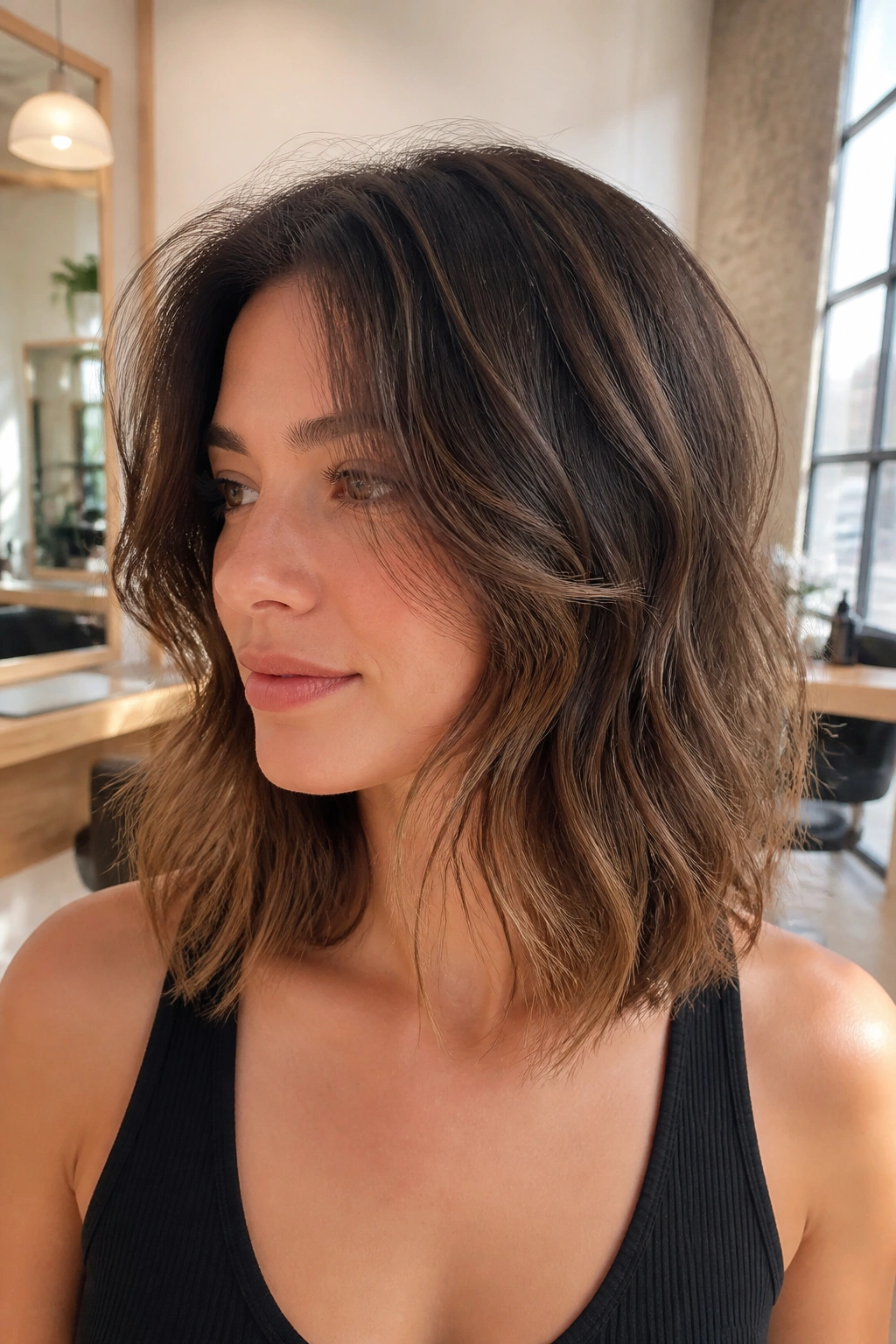
Why do some wavy lobs feel airy while others feel like a helmet with texture sprayed on top? Usually, the difference is in how the ends were cut. A soft razor cut can make waves look lighter, looser, and a bit more undone, which is exactly what a lot of people want from a lob.
Razor cutting removes some bulk from the ends and softens the line, but it has to be handled with a light hand. Too much razor work can fray the ends, especially if your hair is already dry, bleach-lightened, or prone to puffing in humidity. That’s where this style needs a careful stylist, not a heavy-handed one.
The sweet spot is softness, not wisps for the sake of wisps. A good razor-cut lob still has shape. It just doesn’t have that blunt, blocky edge that can make waves look stiff. If your hair is medium to thick and tends to sit wide at the bottom, this cut can take the edge off that bulk without making you lose the whole line.
It also grows out in a forgiving way. That’s a quiet perk. The haircut keeps looking intentional for longer because the ends already have movement built in, so a few extra weeks between trims do not wreck the shape the way they can with a very sharp blunt cut.
3. Curtain Bang Lob

If you’ve been growing out bangs, this is the easiest haircut to make that awkward middle stage look like a choice. Curtain bangs and a lob are a good match because both rely on movement around the face, not a rigid outline.
The key is where the fringe starts. On wavy hair, curtain bangs usually work best when the shortest point sits around the bridge of the nose to cheekbone area, then opens into longer face-framing pieces. Shorter than that, and the wave can spring up in a way that feels fussy. Longer than that, and the bang can disappear into the rest of the cut.
Where the Fringe Should Live
A good curtain bang lob should feel connected, not chopped into separate parts. The bangs should blend into the front lengths so the haircut still reads as one shape when the hair moves. That matters on windy days, in humidity, and on the days you don’t spend ten minutes coaxing every piece into place.
How to Wear It
- Part the fringe slightly off-center for a softer fall
- Use a round brush only at the roots if you want lift
- Let the ends stay wavy; don’t iron them flat
- Keep the longest face pieces around the cheekbone or jawline
This cut is especially nice if you want your hair to frame your eyes and cheekbones without committing to a full fringe. It’s flattering, but not precious. And that’s why people keep coming back to it.
4. Choppy Face-Framing Lob
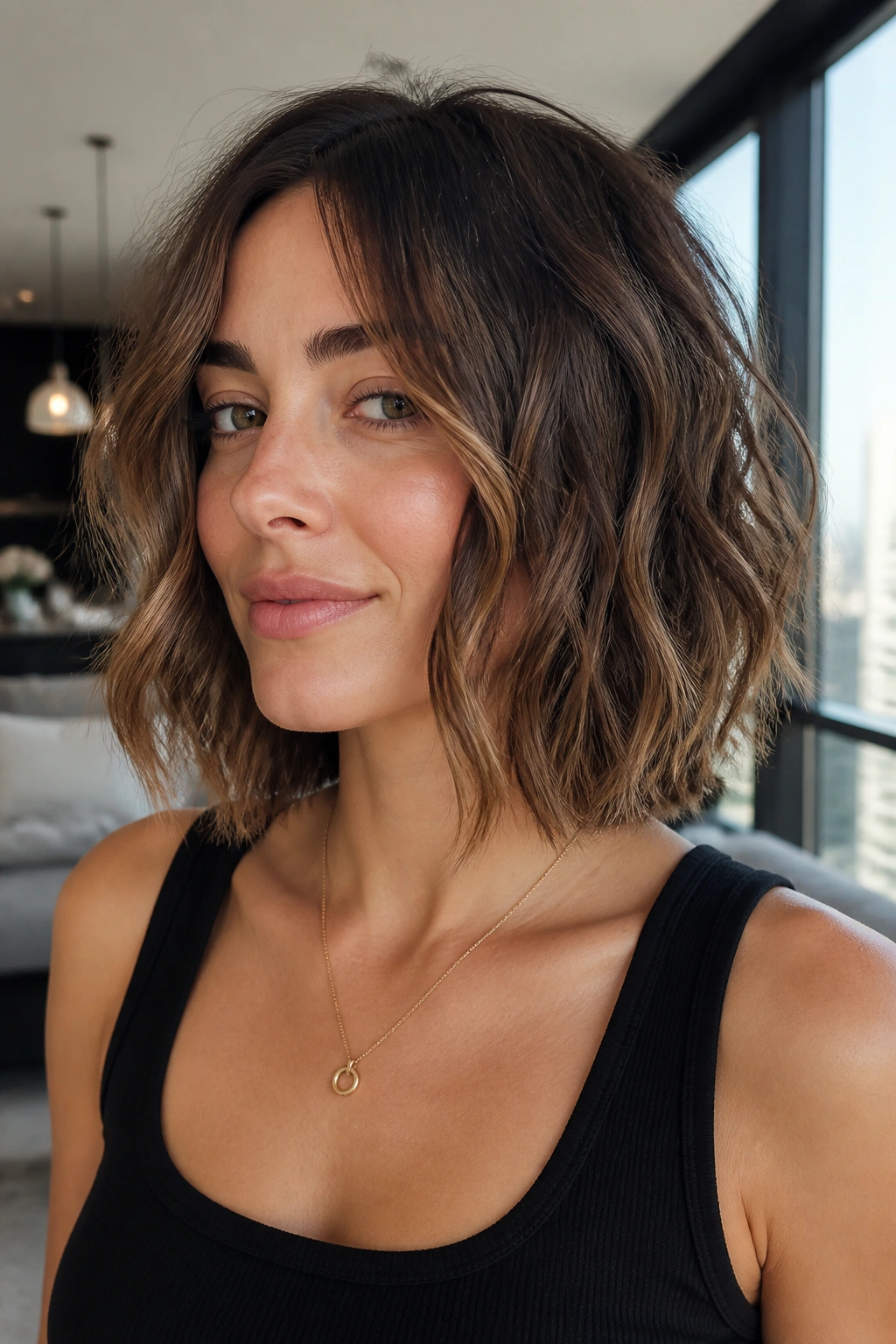
If your waves disappear under one blunt line, this is the fix. The choppy face-framing lob keeps the body of the haircut fairly clean, then breaks up the front with shorter pieces that start near the cheekbone or jaw. That small bit of irregularity gives the waves somewhere to show off.
I like this version for people who want movement without looking like they stepped straight out of a layered haircut catalog. It feels modern in a way that’s easy to live with. The face frame does the work, and the back can stay calmer.
What to Ask For at the Salon
Tell your stylist you want soft, visible pieces around the face but not a lot of layers through the back. That distinction matters. A lot.
You can also ask for the ends to be point-cut rather than left razor sharp. Point cutting, if you have not heard the term before, means snipping into the ends at an angle so the edge looks softer and less blocky. It’s a small detail, but it changes how the haircut moves.
This cut works well if your waves are strongest around the lower half of your hair and weaker at the roots. The front pieces can create shape even when the rest of the style is doing its quieter thing. It also plays nicely with a middle part or a soft side part, which makes it one of the more flexible textured lob haircuts for wavy hair.
5. Blunt Ends With Hidden Texture for Wavy Hair

Blunt does not have to mean heavy. That’s the mistake people make when they hear the word and imagine a shelf of hair sitting around the jaw. A blunt lob with hidden texture keeps the outline clean while removing bulk underneath, so the cut looks full but still moves.
This version is a good match for finer wavy hair that needs a little more visual weight. If you add too many visible layers to low-density waves, the ends can start to look wispy before you’re ready for them to. A clean perimeter helps prevent that. The trick is to keep the outside line intact and make the internal work invisible.
It also photographs better in real life than a lot of people expect. Not because it’s flashy. Because the line stays sharp while the texture keeps it from feeling stiff. You get that nice contrast between the straight edge and the wave pattern, which is often what makes a lob look expensive without needing much styling.
Do not over-thin this cut. Seriously. If your stylist removes too much from the inside, the ends will lose their shape and the whole point of the blunt outline disappears. The best version of this haircut feels easy, full, and a little polished when the waves fall naturally.
6. Deep Side-Part Lob
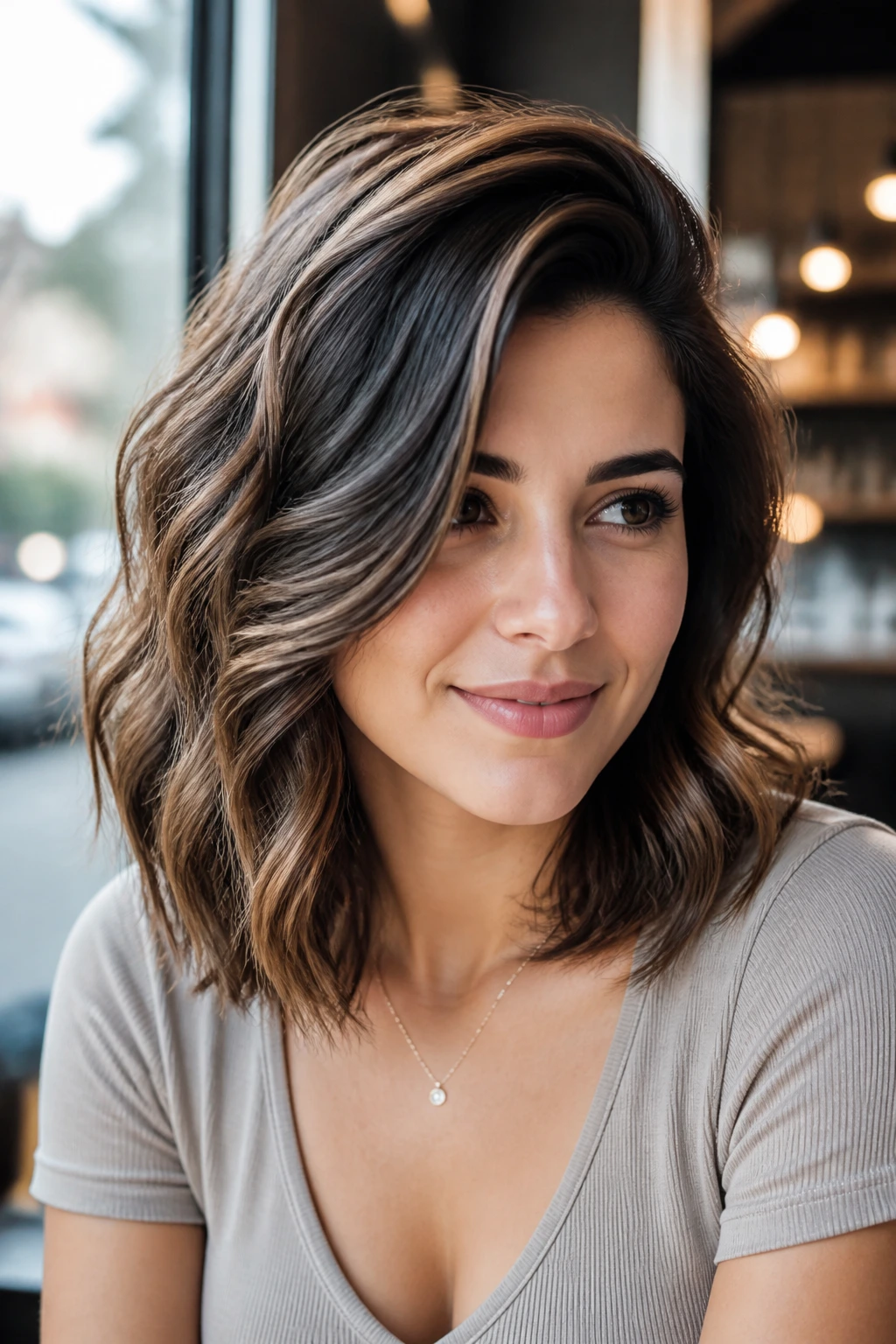
A side part changes everything. It shifts the weight of the hair, gives the crown a little lift, and breaks up symmetry in a way that makes wavy hair look fuller at the roots. If your center part tends to split your waves into two sleepy curtains, this is a better lane.
Unlike a center part, which can flatten the top and make the face lengthen, a deep side part adds a bit of drama and lets the hair sweep over one side. That sweep is doing more than people realize. It creates height near the crown and makes the waves stack in a softer, more dimensional way.
This cut is especially useful for square and round face shapes, though it can work on almost anyone who wants the haircut to feel less static. A lob with a little extra length in the front makes the side part read even better because the longest pieces can fall toward the cheek and jaw, not stop dead at the shoulders.
One thing I like about this look is how little it asks for. You do not need a complicated routine. A little root lift, a loose bend through the lengths, and a side part that sits about two to three inches off center is usually enough. The cut does the rest.
7. Slightly Angled Lob
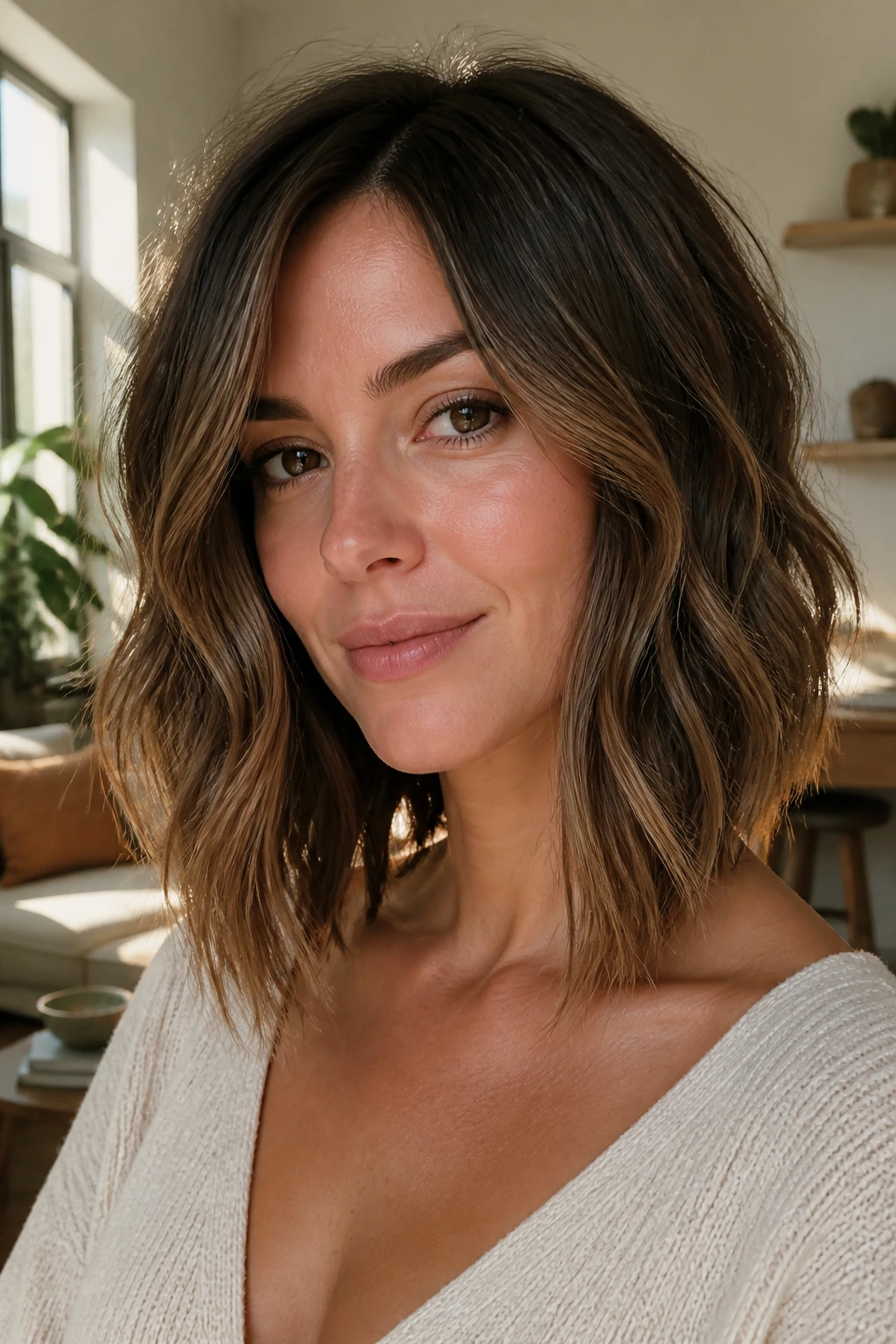
A small angle can do more than a dramatic one. Keep the front one to two inches longer than the back, and the whole haircut starts to look sharper without turning into a full A-line statement. That slight difference is enough to make waves fall forward instead of puffing out wide.
This is a good option if your hair feels heavy at the nape or if your ends tend to flip inward and outward at the same time. The angle gives the eye a clear line to follow, which makes the texture feel cleaner. It also keeps the cut from looking boxy when the hair dries naturally.
What Makes the Shape Work
- The back should stay light, not stacked to the point of looking short
- The front should skim the collarbone or just below it
- The angle should be soft enough that the wave pattern still shows
- Thick hair benefits most from this shape because it removes visual bulk
There’s a catch, though. If your waves shrink a lot when dry, an angle that looks modest when wet can read much steeper later. That’s why a dry cut or at least a dry check at the end helps. Hair lies. Wet hair lies more.
This is one of those cuts that looks cleaner the day after washing, once the wave pattern has settled and stopped moving around so much. That alone is enough reason to keep it on the list.
8. Piecey Lob With Internal Layers

Can a haircut look textured without looking choppy? Yes, and this is the version that proves it. A piecey lob keeps the overall outline soft, then uses internal layers to separate the waves into visible sections instead of one big soft mass.
The whole point is controlled separation. Not chaos. That word gets thrown around too much with wavy hair, and it usually means nobody wants to say the haircut was overdone. Here, the pieces should still relate to one another. They just shouldn’t all collapse into the same lump.
How to Style It
Start with a lightweight mousse at the roots, then work a small amount through the mids. Scrunch the hair while it’s damp, and stop messing with it once the shape starts to form. If you touch it too much, the pieces merge back together and the effect disappears.
A diffuser helps, but you do not need one every time. Air-drying to about 80 percent and finishing with a few bends around the face can be enough. A tiny bit of cream on the ends helps separate the texture without making it greasy.
This cut tends to suit medium-density waves best. Fine hair can lose too much body if the layers are too aggressive, and very thick hair may need the interior work spread out more evenly. Ask for a soft, piecey finish rather than a chopped-up one, because those are not the same haircut at all.
9. French-Girl Lob

There’s a reason this shape keeps showing up in salons: it’s relaxed without looking unfinished. The French-girl lob usually sits around the chin to collarbone zone, with soft movement through the front and just enough layering to keep the waves from hanging in one flat sheet.
It works especially well when you want the haircut itself to do less. That sounds odd, but it’s true. The best version of this style is slightly imperfect. The waves bend a little differently on each side, the face pieces are soft, and the ends do not need to be perfectly aligned to look right.
A lot of people confuse this with a shag. It isn’t the same thing. A shag pushes texture higher and can get wild fast. The French-girl version stays quieter. It has shape, but it doesn’t scream for attention. That makes it a smart option if you want something chic enough for work and casual enough for the rest of life.
One useful detail: keep the face-framing pieces long enough to tuck behind the ear. That little bit of reach gives the style flexibility. You can wear it forward, tuck one side, or let the whole thing fall around your face. It never feels locked in.
10. Inverted Lob

A slightly inverted lob is the sharper cousin of the angled cut. The back sits a touch shorter, and the front keeps more length, which creates a clean slope without going full stacked bob. On wavy hair, that slope can look especially good because it follows the bend of the wave instead of fighting it.
The biggest advantage here is neck clearance. If your hair tends to puff at the nape or stick out awkwardly against collars, a gentle inversion can take care of that. It removes a little weight in the back while keeping enough front length to feel like a lob, not a short crop.
This shape is best when the angle is subtle. Too much stacking in the back can make wavy hair look rounder than you want, especially if your crown already has lift. A stylist who understands wavy hair will usually keep the graduation hidden and let the surface layer do the visible work.
If you like your hair to feel a little sharper, this one earns its place. It has edge, but not the kind that gets awkward fast. And because the front stays longer, it still gives you room to tuck, wave, or braid the front sections when you want a change.
11. Hidden-Layer Lob

Can you keep the length and still take out the bulk? Absolutely. Hidden layers are the cleanest way to do it, and they are often the smartest option for dense wavy hair that swells the minute it dries.
The idea is simple: the perimeter stays mostly intact, while the stylist removes weight from underneath where you cannot see it right away. That means the haircut looks full from the outside, but it moves better because the inside has room to collapse a little. If you’ve ever had a cut that felt too wide at the bottom, this is the fix you were probably missing.
How to Explain It to a Stylist
- Keep the outer line visible and fairly even
- Remove bulk from the middle and lower sections
- Avoid too many short layers near the crown
- Let the front stay slightly longer so the shape falls forward
Hidden layers are especially useful if your hair gets bulky at the sides but you do not want a shaggy look. They also help if your waves clump differently from section to section. A more controlled interior makes those clumps sit better together.
One warning: this technique needs a stylist who knows how much weight to remove. Too little, and the hair still feels heavy. Too much, and the ends start to lose their shape. The difference is a few careful snips, not a dramatic chop.
12. Flip-Out Lob
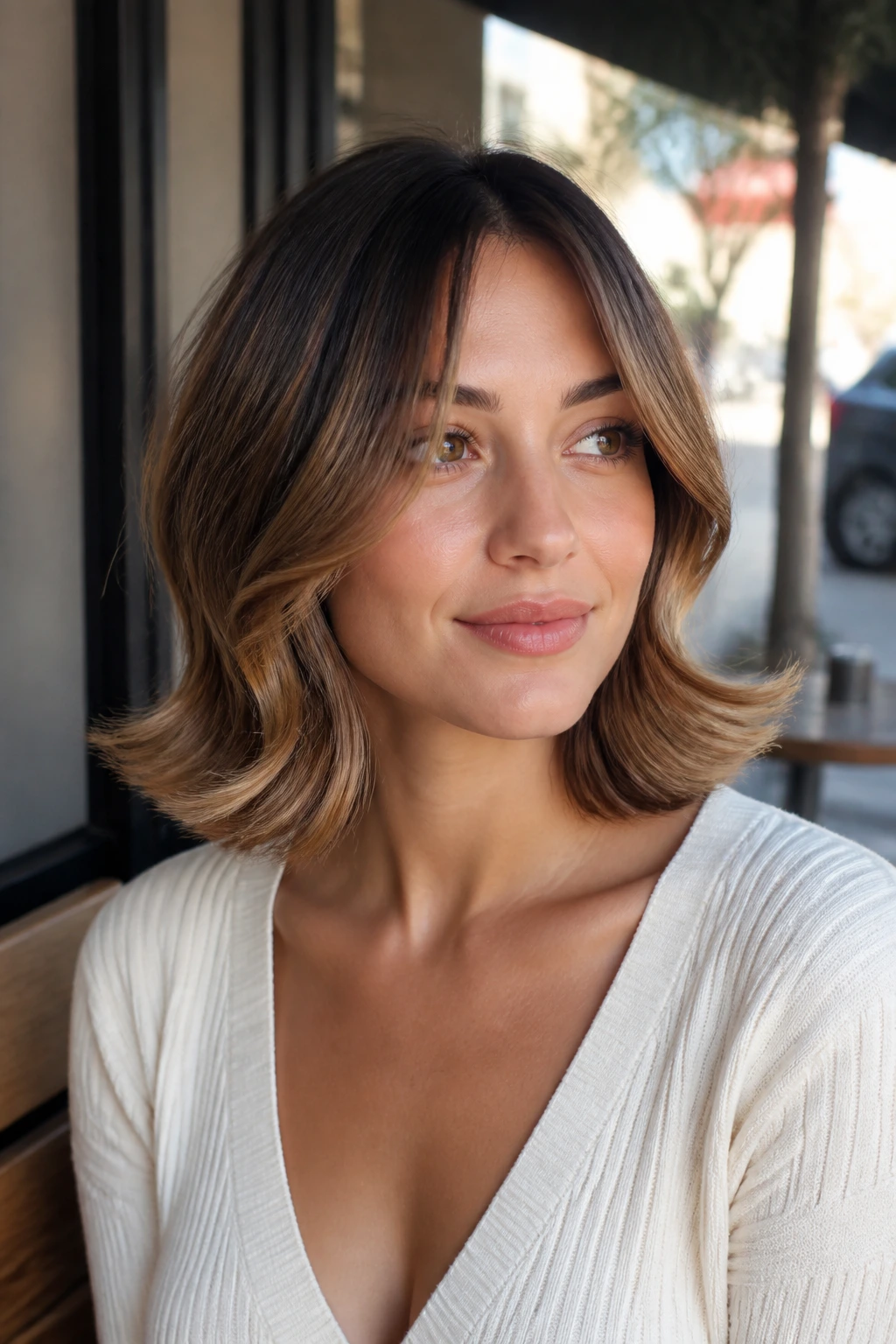
If your ends naturally kick out, stop fighting them. A flip-out lob works with that movement instead of flattening it, and it can be a nice fit for wavy hair that sits at shoulder level and wants to bend away from the neck.
This is the cut that makes sense when the hair almost styles itself. The ends can be left a touch beveled or softly angled so they lift outward rather than tucking under. Around the shoulders, that little flick keeps the haircut from getting stuck against the body and losing energy.
It’s a good choice if you like a bit of retro motion without the haircut itself looking retro. The shape still feels modern because the layers are restrained. You’re not building a sculpted blowout cut. You’re letting the hair have some attitude at the ends.
A Few Useful Details
- Works best when the length sits right at or just below the shoulders
- Needs a soft bevel at the perimeter, not a hard stacked shape
- Plays well with a round brush or a quick twist of the wrists while drying
- Looks even better when the front pieces are a little longer than the back
There’s a small delight in this one. When it’s cut well, the hair does half the work on its own. That’s worth something.
13. Soft Wolf-Lob

A wolf lob is not chaos with better lighting. It’s a softer version of the wolf cut, pulled down into lob length so it keeps the rough texture without losing the practicality of longer hair. Done right, it gives wavy hair lift at the crown, shape through the sides, and that slightly undone feel people keep asking for.
The softer version matters. A true wolf cut can get wild fast, especially on thick waves. The lob length tempers that by keeping more weight through the bottom. You still get the layered movement and the slight edge around the face, but the silhouette stays wearable.
This cut suits people who like texture to show. If you want your waves to look a little messy in a good way, this does the job. If you want smooth and sleek, it will probably annoy you by lunch. That’s fine. Not every haircut needs to please everyone.
What Keeps It from Looking Like a Mullet
The balance lives in the nape and the fringe area. Keep the crown layers soft, leave enough length at the back, and avoid over-shortening the sides. The haircut should feel shaggy in motion, not disconnected when it’s still.
I’d also keep the ends textured but not shredded. A few soft pieces around the cheek and jaw are enough. More than that, and the cut starts making too many promises.
14. Rounded Layered Lob

Some cuts are all about angles. This one is about curve. A rounded layered lob follows the shape of the head and lets waves fall in a softer arc, which can be a relief if your hair tends to stick out wide at the sides.
This shape is especially kind to fine to medium waves because it keeps the ends from looking sparse. The roundness gives the haircut a fuller outline, and the layers are long enough to create movement without breaking the line into too many separate pieces. It feels gentle, but not boring.
There’s also a practical reason it works. Rounded shapes tend to grow out in a less awkward way than sharply angled ones. If you are not the type to rush back to the salon the minute your hair moves half an inch, that matters. A lot.
The key is restraint. Too many short layers can turn the roundness into puffiness, which is a fast way to lose the shape you were trying to build. Ask for a softly rounded perimeter with long internal layers, and let the wave pattern provide the rest of the texture. That usually gives you the nicest balance of softness and movement.
15. Air-Dry Textured Lob for Wavy Hair

The best haircut for air-drying is the one that respects the way your hair actually behaves. That’s the whole point here. An air-dry textured lob keeps the length around the collarbone, softens the perimeter just enough, and removes weight where the hair would otherwise swell into a lump.
This cut is for people who do not want to wrestle with a blow dryer every morning. You need a shape that falls well when damp and still looks decent after a few hours of living your life. That means no overly short crown layers, no harsh angles that depend on heat styling, and no ends so blunt they form a little shelf when they dry.
What to Ask For
- Collarbone length, or just below it
- Long layers that start below the cheekbones
- A softly textured perimeter, not a thinned-out one
- Enough front length to frame the face once the hair shrinks
You can make this easier on yourself with a little mousse, a microfiber towel, and a quick scrunch at the end. That’s not a styling lecture. It’s just the difference between defined waves and the kind that dry into one fuzzy mass. A light gel or cream can help hold the shape, but the cut still has to do the heavy lifting.
If your routine is mostly wash, leave, and go, this is the lob I’d trust. It keeps the outline clean, lets the wave pattern show, and doesn’t ask you to become a full-time styling hobbyist. That’s a decent deal.
