



Thin hair has a way of telling on you. One wrong twist, and a bun goes flat before you even find your shoes.
Updo hairstyles for thin hair work best when they lean on shape, texture, and hidden support—not on pretending your strands are something they aren’t. A little grit helps more than a lot of spray. So does a smart part, a well-placed pin, and the willingness to leave a few pieces imperfect on purpose.
Clean hair can be slippery, which is why fine strands often look better with a light dusting of dry shampoo or texturizing spray at the roots before you start. Small elastics, crisscrossed bobby pins, and a gentle bit of crown lift usually beat heavy teasing that leaves the ends looking wispy. That’s the bit a lot of people miss.
The styles below are the ones I keep coming back to for thin hair because they do one or more of three things: they build the illusion of density, they hide the weak spots, or they make the shape itself the star. Some are polished, some are messy in a good way, and a few are almost laughably easy. Good. Thin hair does not need extra drama.
1. Low Twisted Chignon for Thin Hair
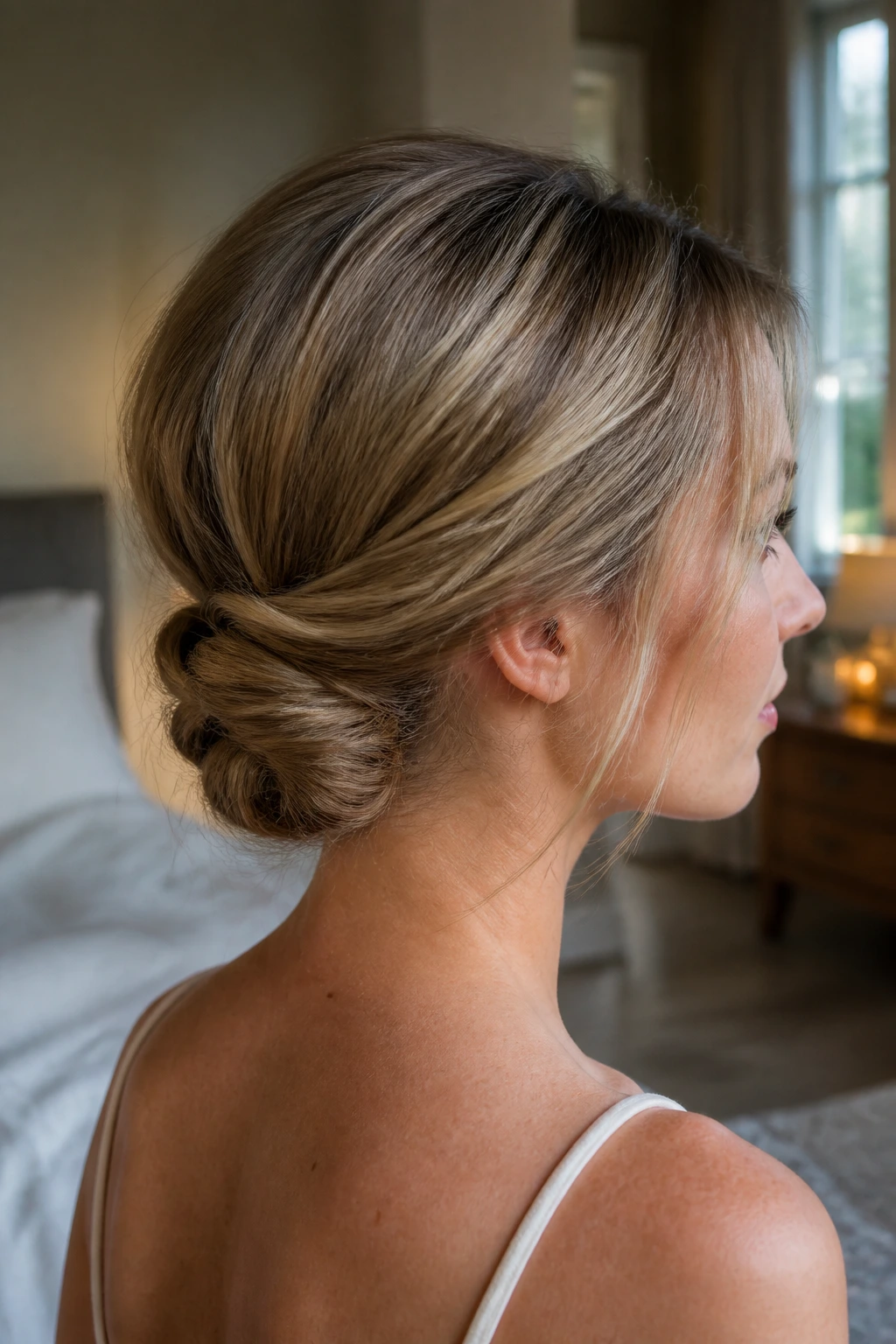
A low twisted chignon is the safest first stop because it uses the nape of the neck, where the eye naturally reads “full” before it notices individual strands. On thin hair, that matters. A high bun can expose too much scalp and too many ends, while a low twist can look compact and rich with very little hair.
Why It Stays Put
The trick is not size. It’s anchoring.
Twist each side of the hair back toward the center, then tuck the ends under the roll instead of wrapping them around the outside. That keeps the finished shape neat and stops the bun from looking like a tiny knot floating on top of your head.
- Works best on chin-length to shoulder-length hair.
- Use 2 to 4 bobby pins, crossed in an X, at the nape.
- Leave the crown slightly lifted instead of flattening it with a brush.
Best tip: Mist the roots with dry shampoo first, even if your hair is clean. It gives the chignon grip.
2. Textured Top Knot With Hidden Padding
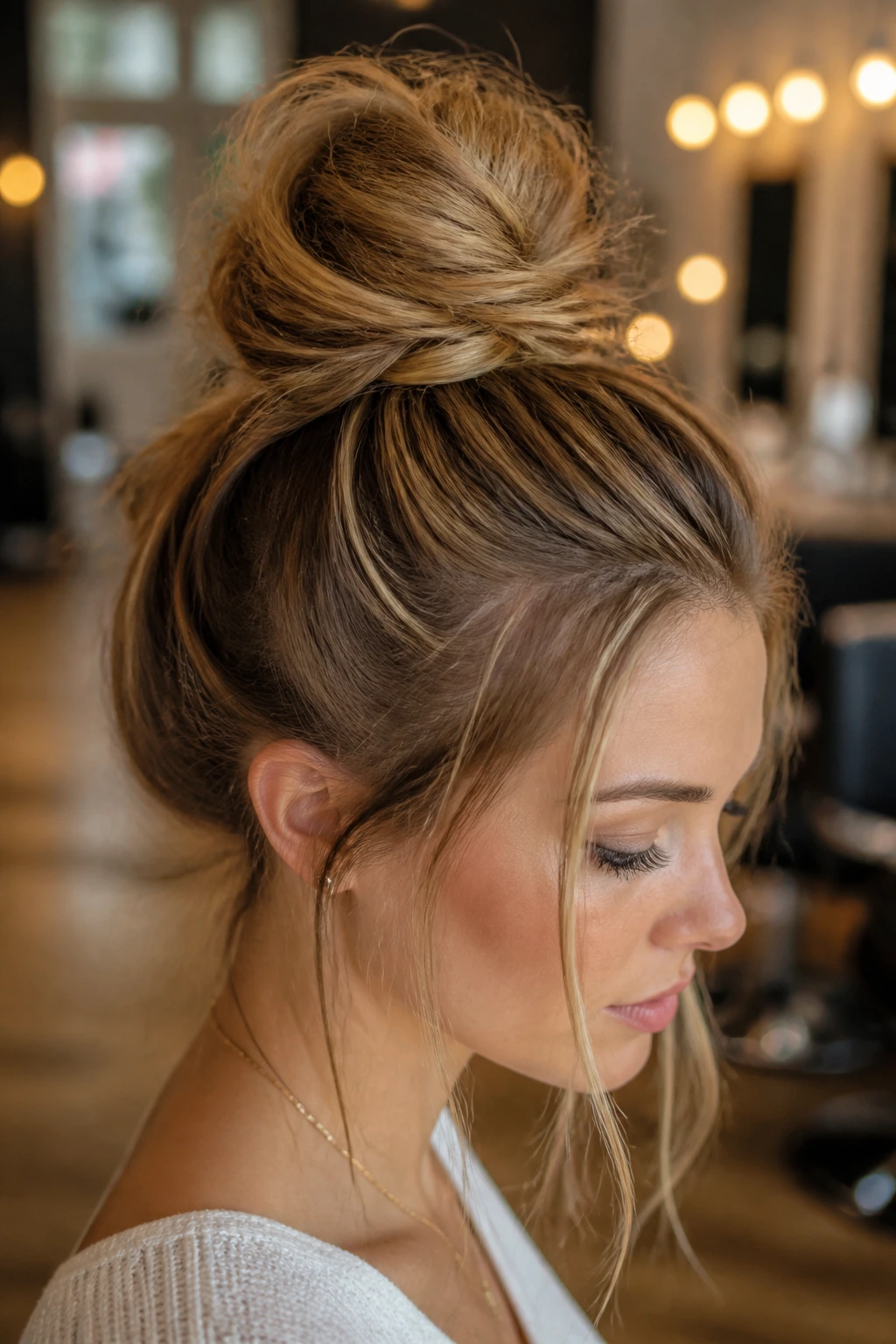
People hear “padding” and get nervous for no reason. A tiny bun donut or a small foam insert is not cheating; it’s smart styling. Thin hair often needs a little internal structure so the top knot sits high instead of collapsing into a sad loop.
Start with a high ponytail, then rough up the lengths with your fingers. No need to make the hair smooth as glass. In fact, too much smoothness can make the bun look smaller. Wrap the hair loosely around the base, hide the padding underneath, and pull out just enough pieces to make the knot look soft rather than stiff.
This style is good when you want height at the crown. It lifts the face, opens the neck, and makes fine hair read as thicker from across the room. Keep the bun slightly wider than you think you need, but not bulky. There’s a difference.
3. Half-Up Mini Bun
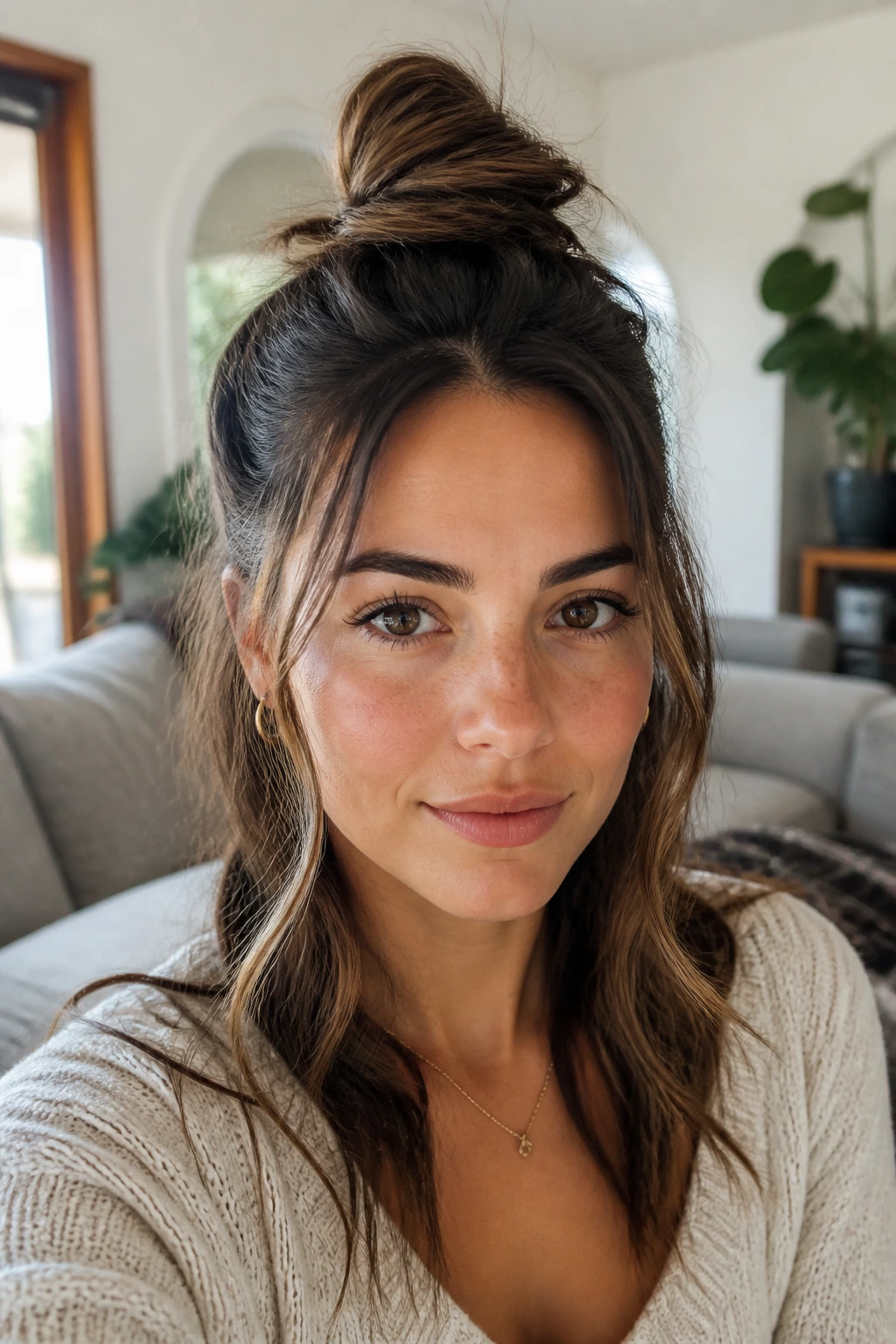
If your ponytail never quite feels full enough, a half-up mini bun solves the problem by using only the top section. That leaves the rest of the hair down, which creates more overall visual weight. Smart move. Less hair doing more work.
The bun itself should be small and a little messy. Pull the top half back from temple to temple, twist it once or twice, and secure it with pins or a tiny elastic. Then loosen the crown by a few millimeters with your fingertips. Not much. Just enough to stop it from looking pasted down.
This one is especially good for fine hair that still has decent length. The loose lower half gives the eye something long and soft to follow, while the mini bun adds shape at the top. If you want a little polish, curl the ends under with a 1-inch iron. If not, leave them straight. Either way works.
4. French Twist With Soft Texture
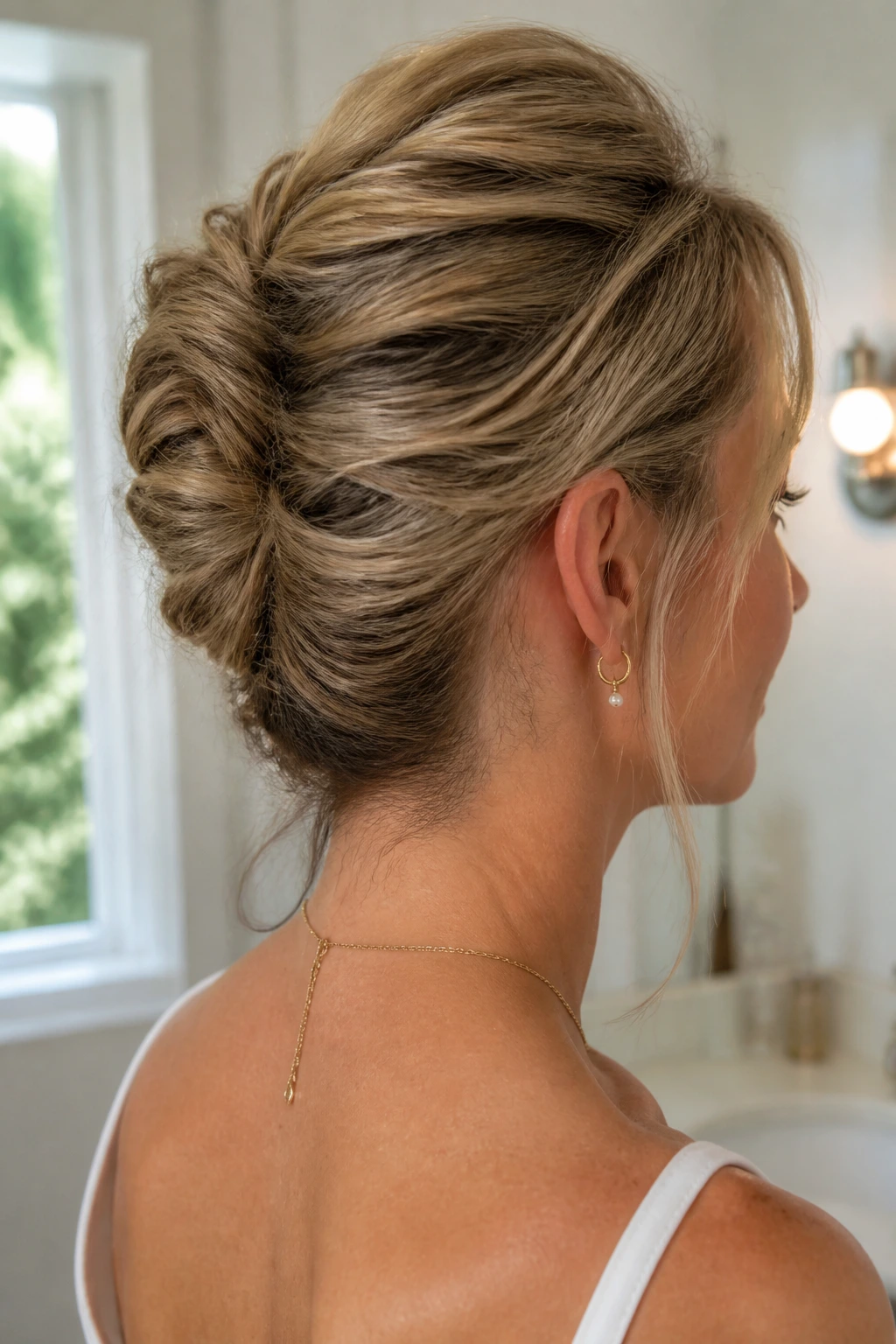
A French twist can be a dream on thin hair, but only if you skip the stiff, helmet-like version. The soft-texture French twist has a better attitude. It looks lived-in, not overworked, and that matters when the hair itself is fine.
Instead of brushing everything smooth, backcomb a narrow strip at the crown and along the center back. Then gather the hair low, roll it upward, and pin the seam with long bobby pins. The ends should disappear into the fold, not stick out like little flags. A light mist of flexible hairspray at the finish is enough.
What makes this style work is the vertical line. It draws the eye up and down, which makes the hair feel longer and fuller at once. If your hair is too slippery, rub a tiny bit of styling paste between your fingers before you start. Not a lot. Too much and the twist turns greasy fast.
5. Braided Crown Bun
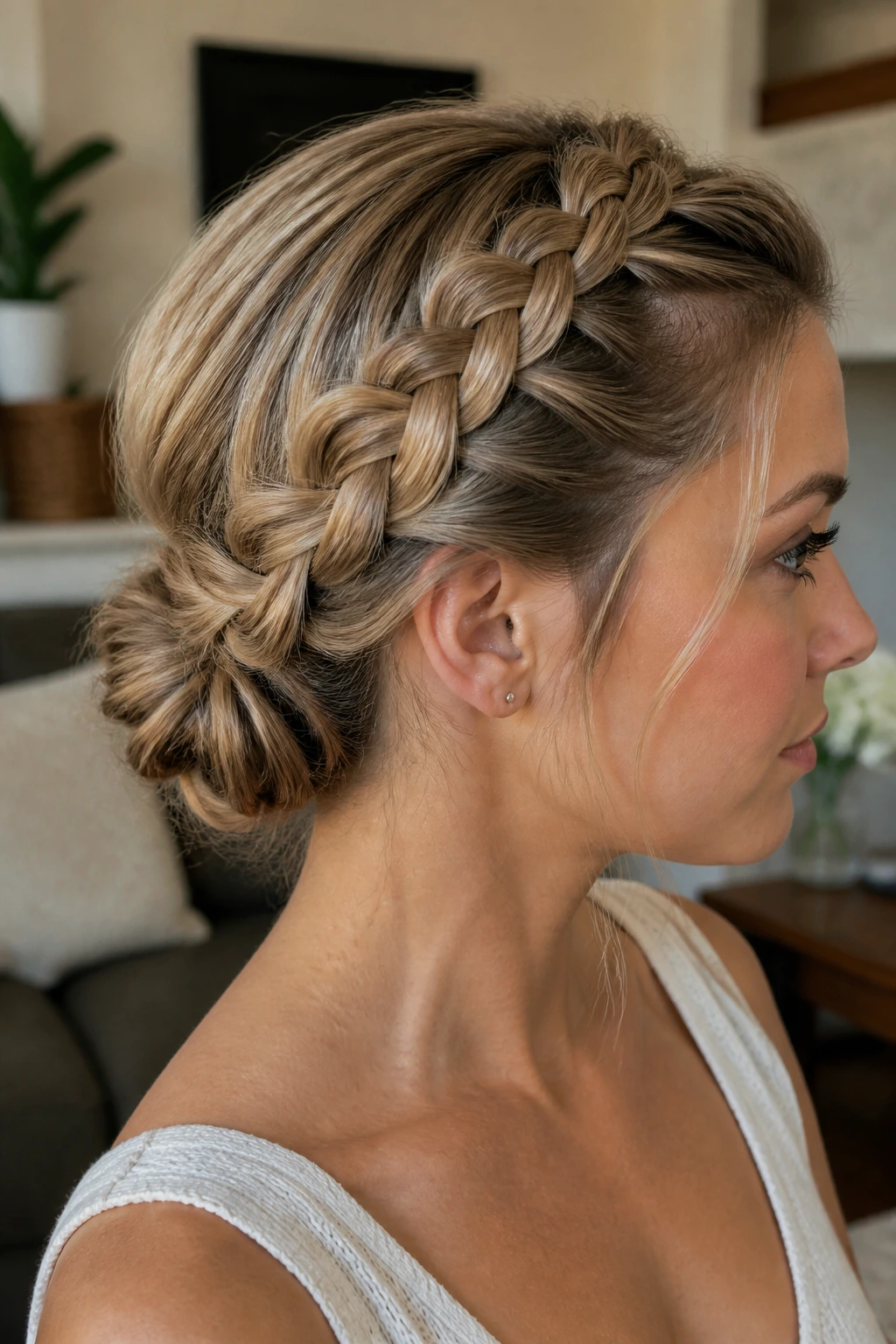
Why does a braid help thin hair so much? Because it adds surface area. The braid itself creates the illusion of density before the bun even enters the picture.
Start one braid from each temple, or make a single braid along the hairline if you prefer a cleaner look. Pull the braid edges outward a touch—just enough to make the plait look wider—and then tuck the ends into a low bun at the back. The braid acts like a frame, and the bun finishes the shape without needing much hair volume.
How to Get the Most From It
- Use a Dutch braid if you want the braid to sit higher.
- Use a regular three-strand braid if you want a softer finish.
- Pancake the braid gently, not aggressively, or it can look frayed.
This is one of those styles that looks more complicated than it is. Thin hair likes that. The braid gives the whole look some backbone.
6. Sleek Low Bun With a Deep Side Part
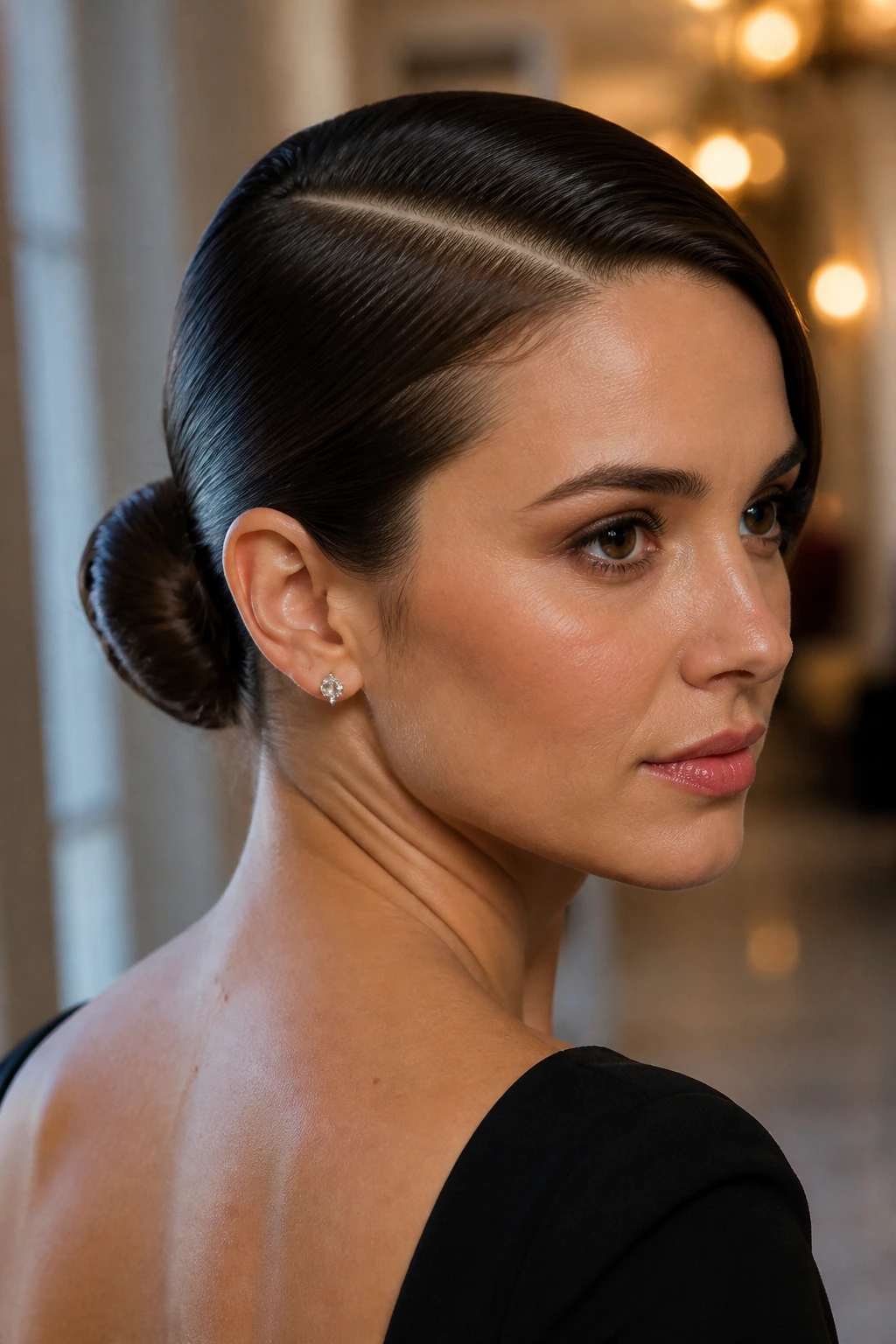
A sleek low bun is not boring when the part is deep enough. In fact, the side part does half the styling for you. It creates asymmetry, and asymmetry is one of the easiest ways to make fine hair look intentional instead of flat.
Smooth the hair back with a light cream or pomade at the hairline, then gather it at the nape. Twist into a tight bun, pin it close to the head, and keep the shape clean. The trick is to preserve the part line and let one side sit slightly heavier than the other. That little imbalance makes the style feel richer.
This is the updo I’d choose for a formal event, a presentation, or any day when you want the hair to stay in place for hours without fuss. It is neat. It is calm. It does not apologize.
7. Bubble Ponytail Updo
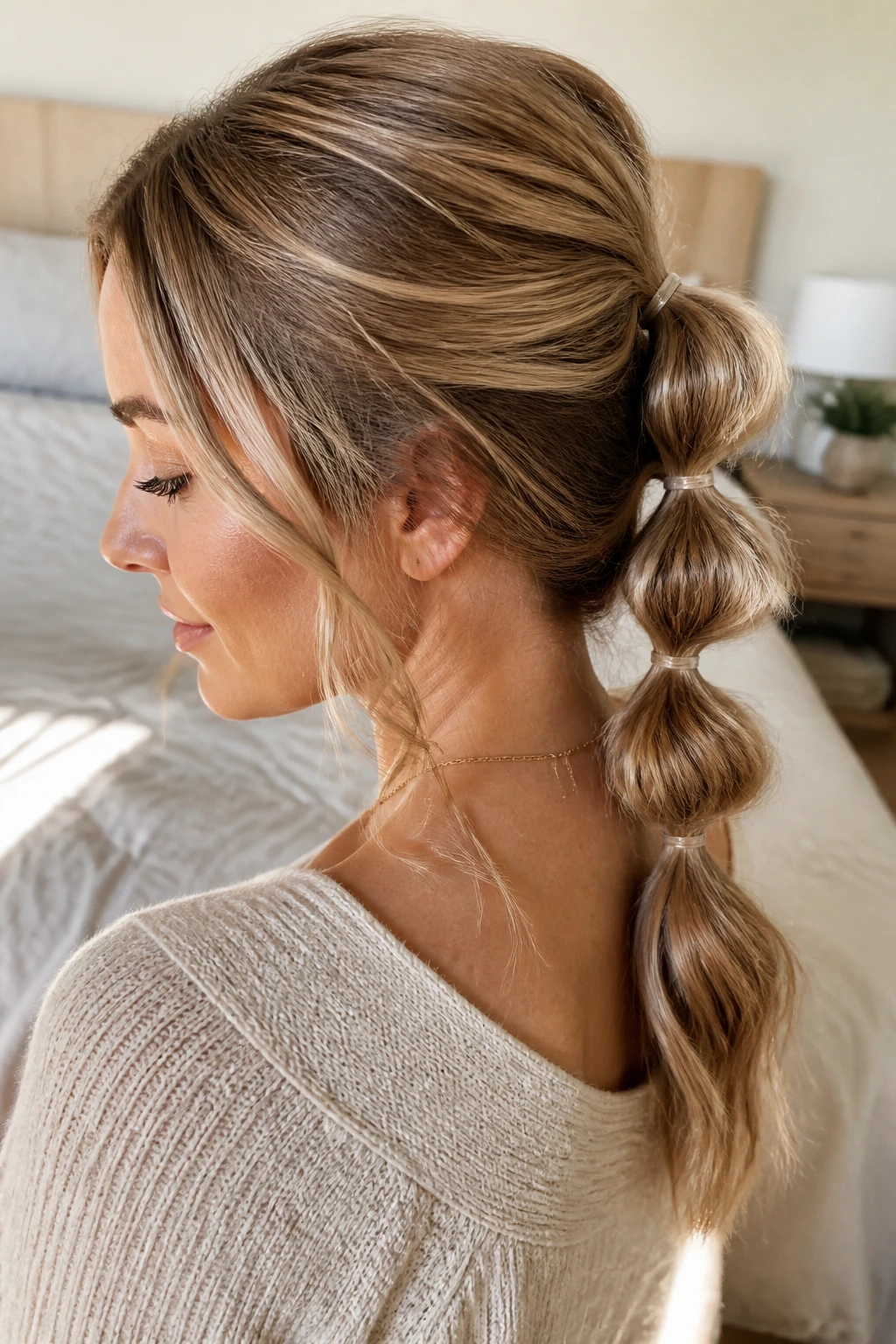
A bubble ponytail is one of the easiest ways to fake fullness on fine hair because the style creates sections that look puffed without needing thick strands. Each elastic gives the ponytail a little body of its own.
Gather the hair into a mid or low ponytail, then place small clear elastics every 1 to 2 inches down the length. Tug each section gently from the sides to make it rounder. That’s the whole trick. You are not trying to stretch the hair apart; you’re trying to give it shape.
What Makes It Work
- The bubbles hide sparse ends.
- The stacked sections create a fuller profile.
- A small ribbon or wrapped strand at the base can make it look finished fast.
This style is playful, but not childish. And if your hair is layered, it can still work; just mist the ends with a little spray before you tug on the sections so they do not slip out.
8. Claw-Clip French Twist
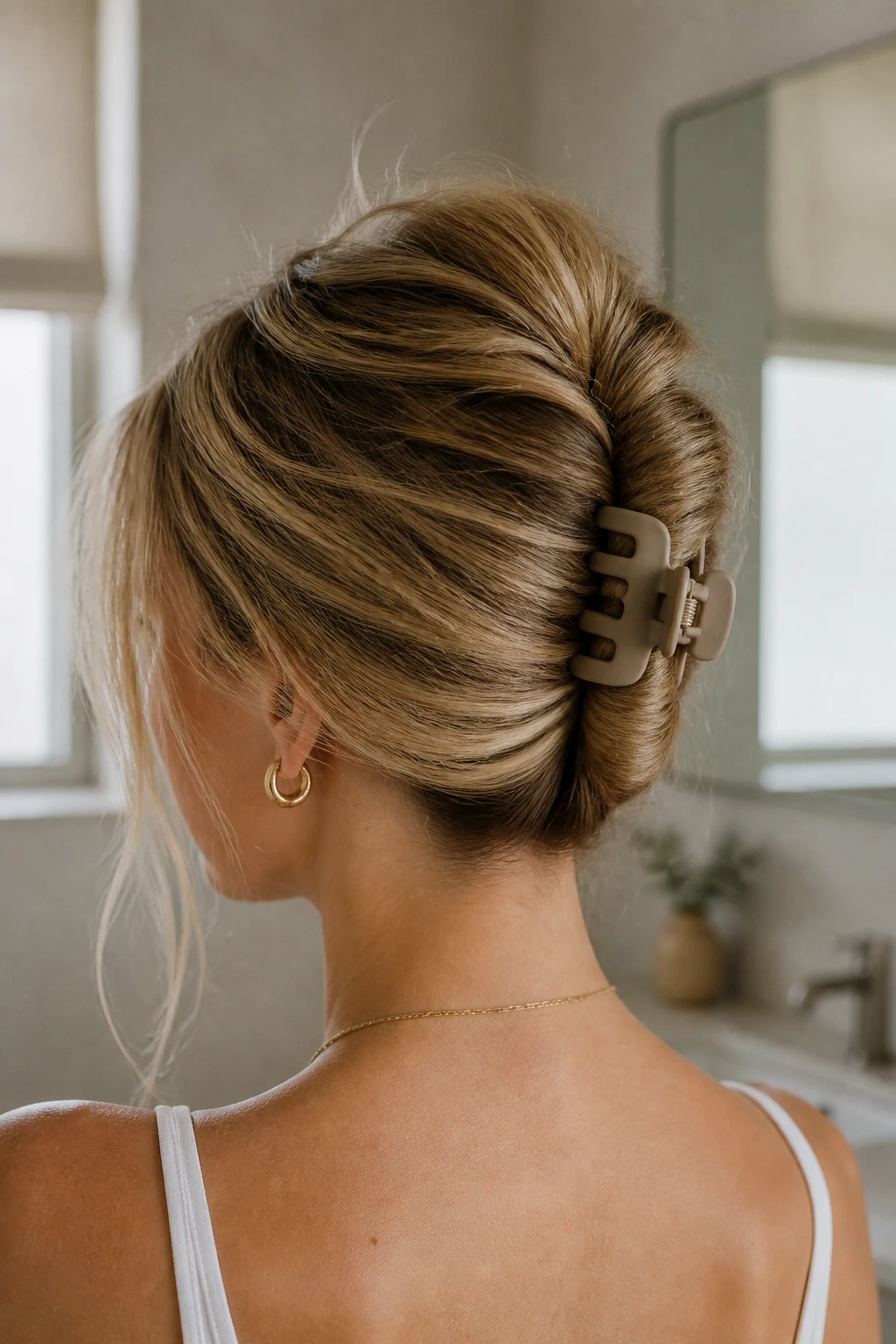
The claw-clip French twist is what I reach for when I need something fast that still looks like I made an effort. Thin hair and a good clip get along nicely because the clip does the gripping that the hair sometimes refuses to do on its own.
Twist the hair upward from the nape, fold the length inward, and secure the twist with a medium-size claw clip. Leave the top slightly loose so the style has height. If the clip is too large, the whole thing can slide; too small, and it will pinch flat. Aim for the middle.
This works especially well on shoulder-length fine hair because you do not need a lot of length to build the twist. I like a matte clip better than a shiny one here. It looks less office-generic, more deliberate. Small detail. Big difference.
9. Double Space Buns
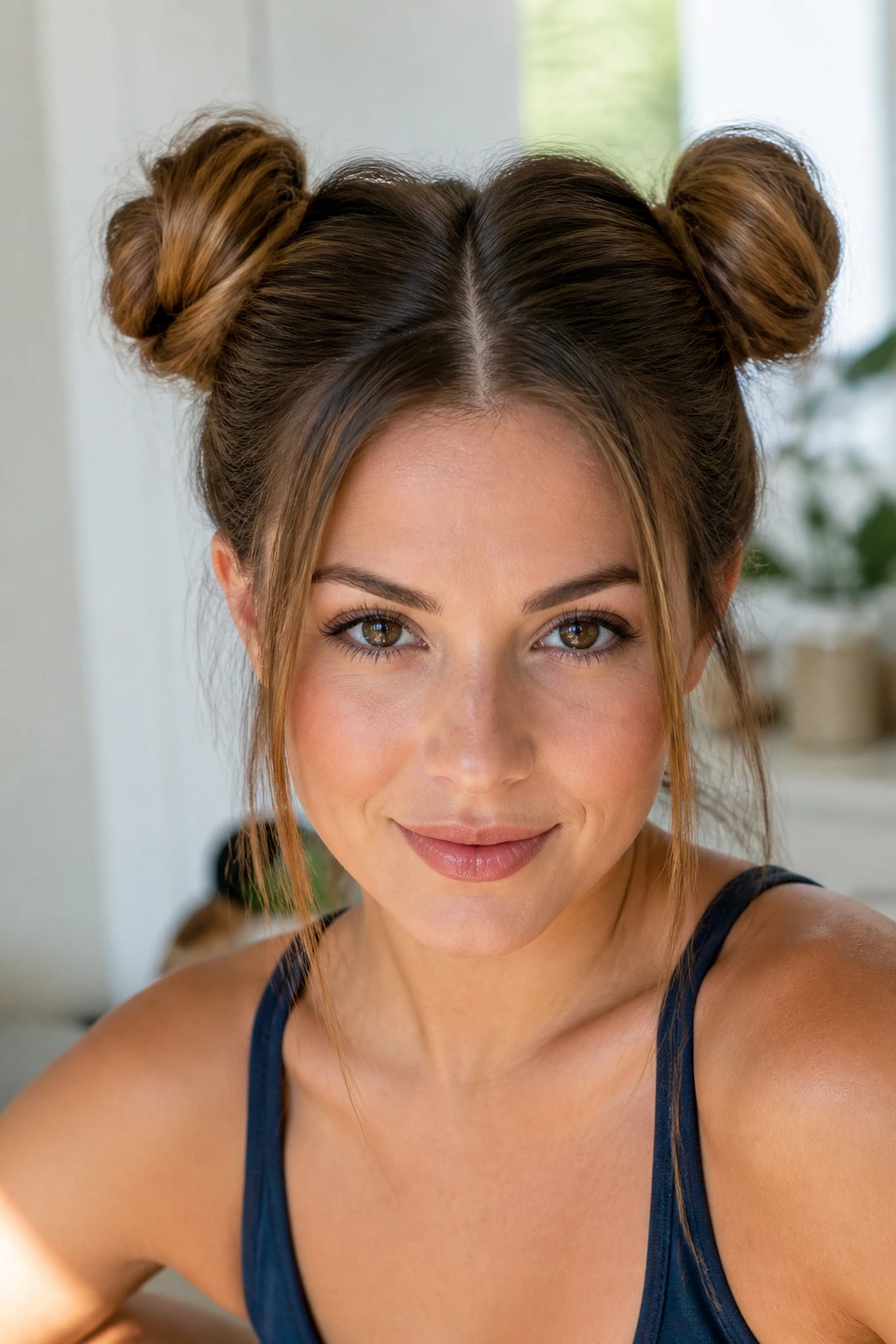
Space buns can look tiny on thin hair if you make them too far apart or too low on the head. Keep them a little closer together and a little smaller. That’s the version that flatters fine strands.
Part the hair down the center, create two high pigtails, and twist each one into a compact bun. Do not chase perfection. The slight looseness gives the buns a fuller edge. If your hair is very fine, backcomb the ponytails lightly before twisting them up. Just enough to rough the surface.
These are fun, yes, but they also solve a real problem. Two buns spread the volume around instead of asking one bun to carry everything. That makes the style feel more balanced. And if you leave a couple of face-framing pieces out, the whole thing softens up fast.
10. Loop-Through Ponytail Bun
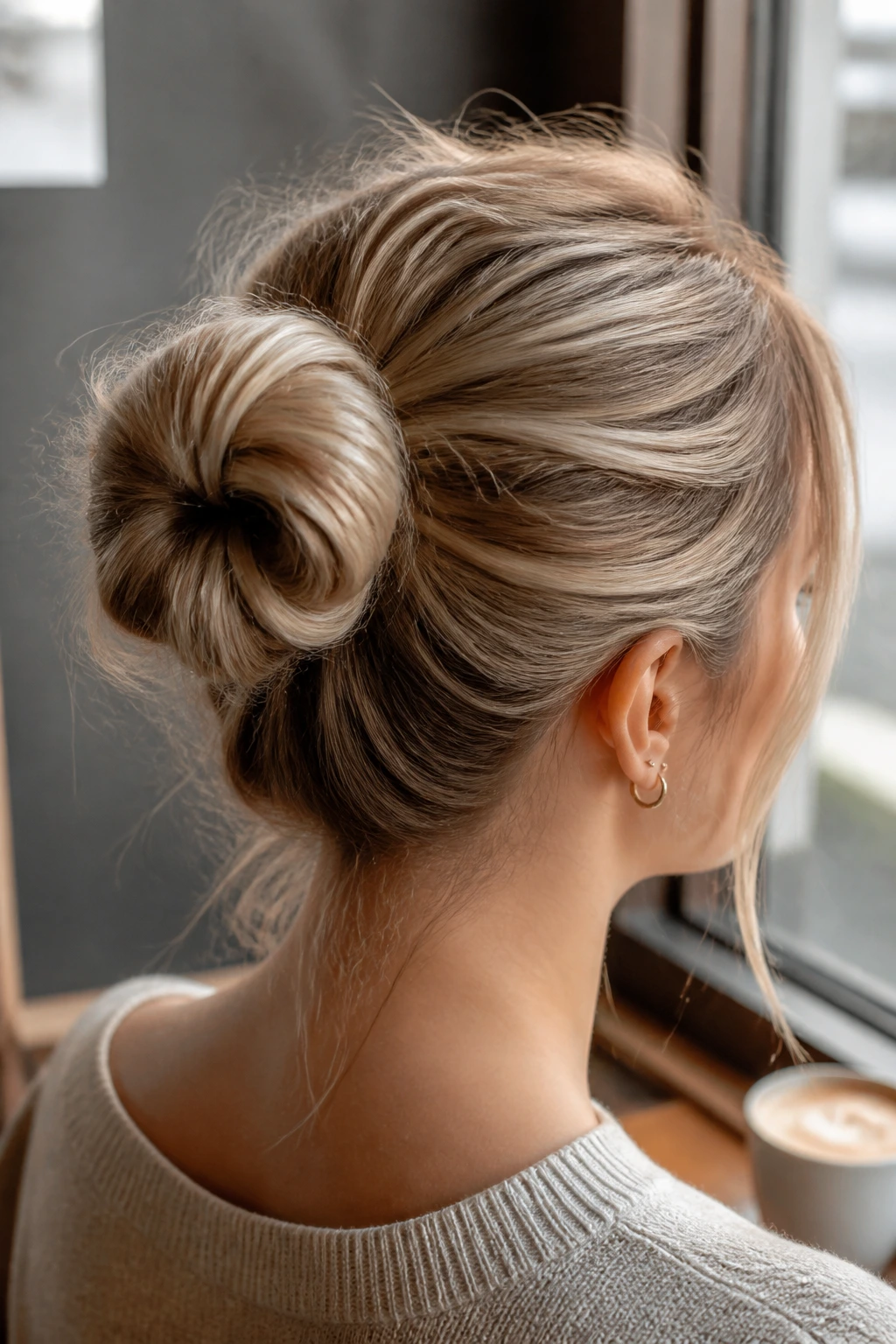
A loop-through bun is one of those styles that looks more complex than it is. You make a ponytail, pull the length halfway through the elastic on the last pass, and leave the ends tucked into a loop. Thin hair benefits from this because the loop gives the bun a thicker outline than a normal knot.
How to Fake the Fullness
First, use a small elastic so the base grips properly. Then fan the loop out with your fingers and pin the sides inward if they start to fall flat. The little ends that peek out should be hidden under the curve, not left hanging.
- Best for medium-length hair.
- Works well with a slightly messy crown.
- Looks fuller if the elastic is wrapped with a strand of hair.
This is a good “I need to leave in ten minutes” style. It reads neat, but not fussy.
11. Faux Bob With Hidden Pins
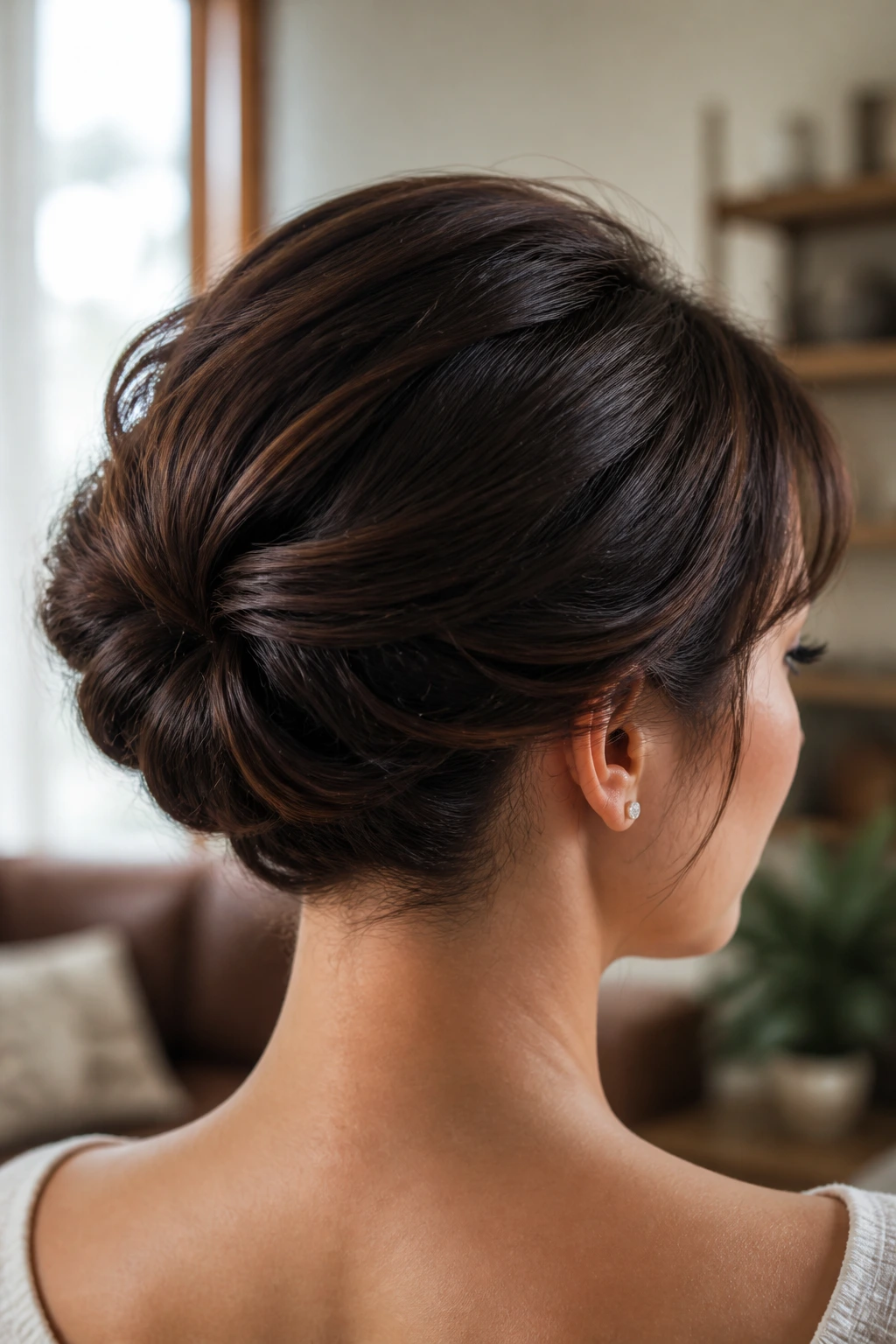
A faux bob is a clever answer when thin hair keeps refusing to hold a big updo. Instead of fighting for height, you tuck the length under and make a short, polished shape at the back. The shorter silhouette can actually look denser.
Start by curling or waving the ends lightly so they have some bend. Then pin the hair under itself at the nape, letting the outer layer form a soft roll. The hidden pins do the work; the visible shape should look smooth and slightly rounded. If you leave the ends too straight, they tend to poke out and ruin the illusion.
This style is especially nice with a side part or a tucked-behind-the-ear front section. It feels old-school in the best way. A little dramatic. A little elegant. And very good at disguising hair that is too fine to build a giant bun.
12. Side-Swept Braided Bun
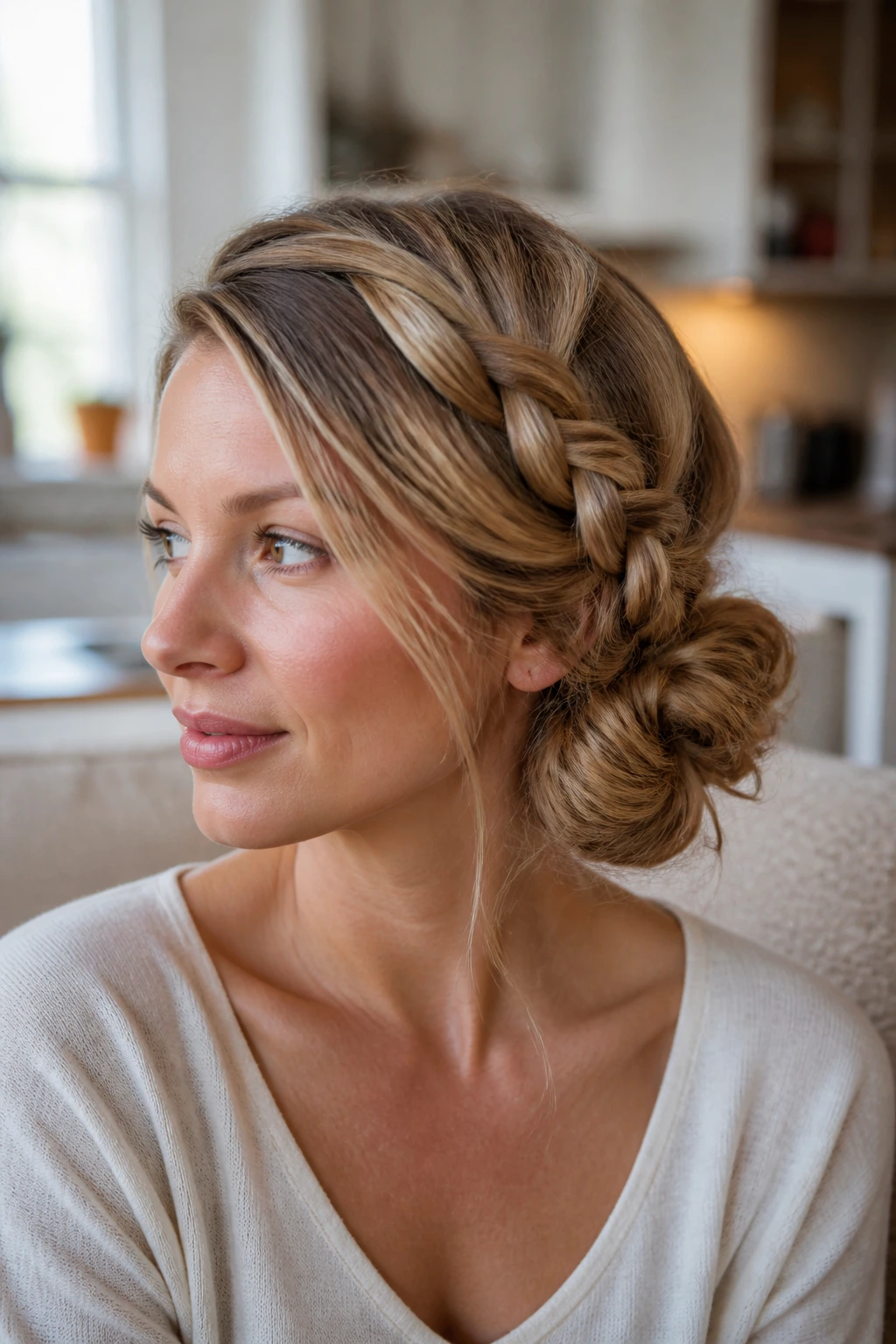
A side-swept braided bun gives thin hair something most styles lack: direction. The braid pulls the eye diagonally across the head, which makes the hair look more substantial than it is.
Bring all the hair to one side, braid it loosely, and wrap the braid into a bun near the ear or just behind it. The asymmetry is the point. It softens the profile and hides places where the hair may be sparse at the back. If you want more texture, use a little dry shampoo through the roots before you braid.
This is a good option when your hair has layers that refuse to stay perfectly centered. I actually like a slightly imperfect braid here. If every strand is tight and tidy, the bun can end up looking smaller. A relaxed braid has more visual weight, and that’s what fine hair needs.
13. Rolled Tuck-Under Updo
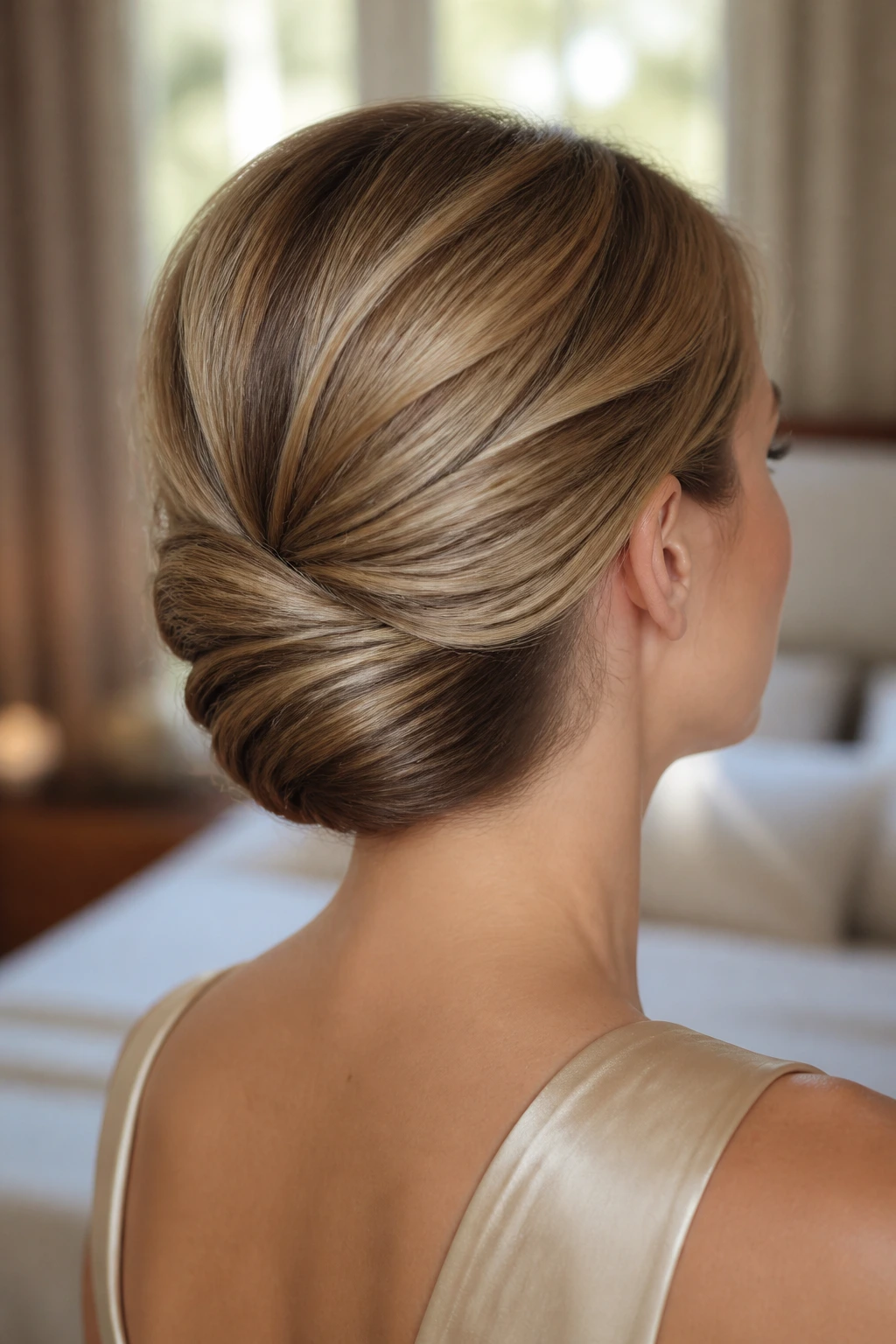
There’s something satisfying about a tuck-under updo. It feels neat the second you press the pins in. The shape is simple, but on thin hair it looks deliberate in a way that a loose knot sometimes does not.
Gather the hair low, roll the ends upward and inward, then tuck them under the roll at the nape. The finished look should have a smooth outer edge and a soft ridge across the back. It’s not a big style. That’s the point. Thin hair often looks best when the outline is clean and compact.
If you want a touch more width, curl the ends before tucking them. The bend helps the roll look fuller. And use pins that match your hair color if you can. The difference is tiny up close, but it keeps the style from looking patched together.
14. Rope-Braid Bun
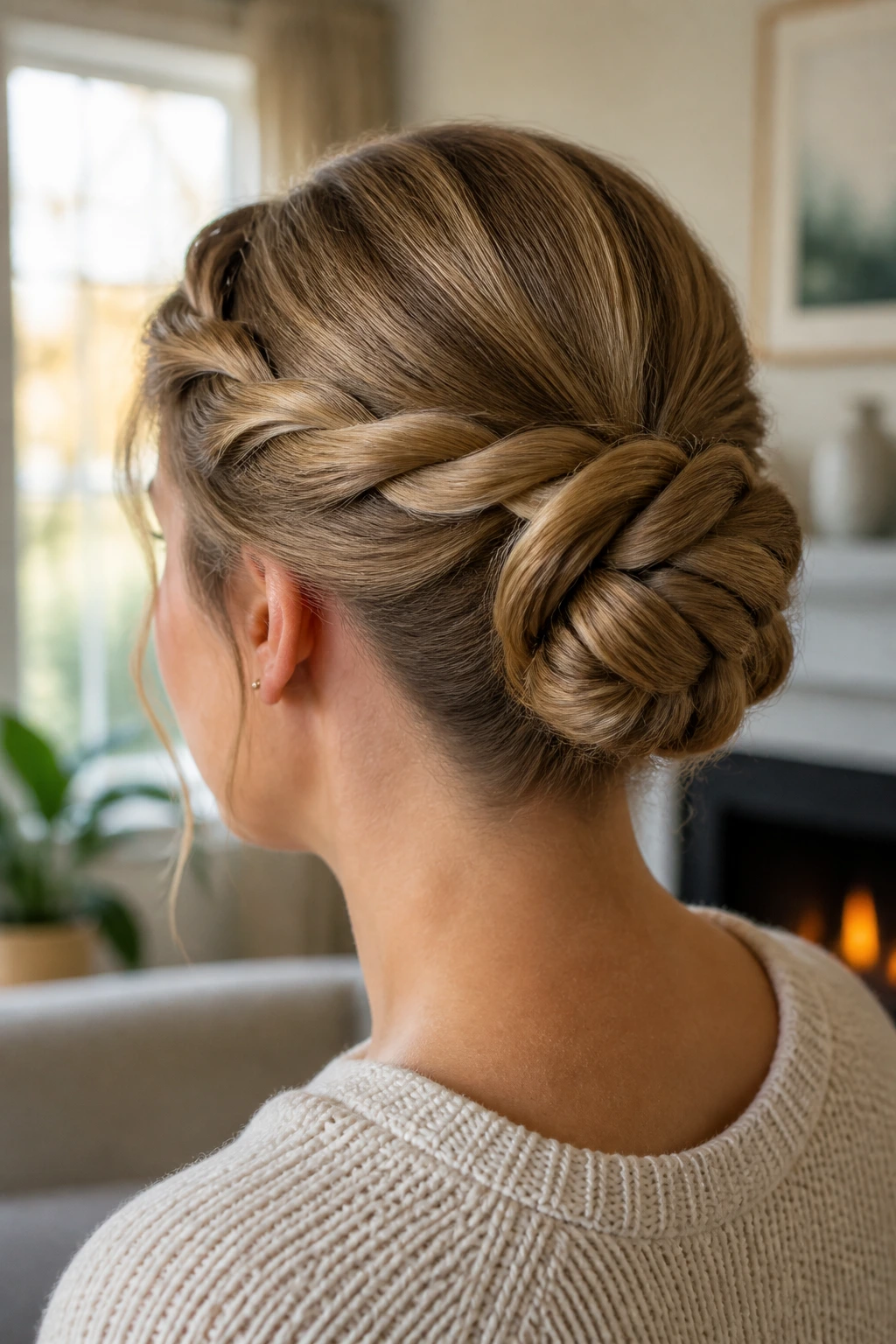
Rope braids are underrated for fine hair because they create texture without needing a lot of strands. Two twisted sections can look thicker than a plain three-strand braid, especially once you coil them into a bun.
Split the hair into two sections, twist each one in the same direction, then twist them around each other in the opposite direction to form the rope. Wrap that rope into a bun at the back of the head and secure it with pins. A touch of hold spray keeps the twist from unraveling.
Quick Details
- Best when the hair has a little grit.
- Good for medium and long thin hair.
- Looks best when the twist is not overly tight.
This one has a clean, sculpted feel. If you want the bun to look richer, tug the outer edges of the rope just slightly before wrapping. Not enough to ruin the twist. Just enough to widen it.
15. High Pony Wrapped Bun
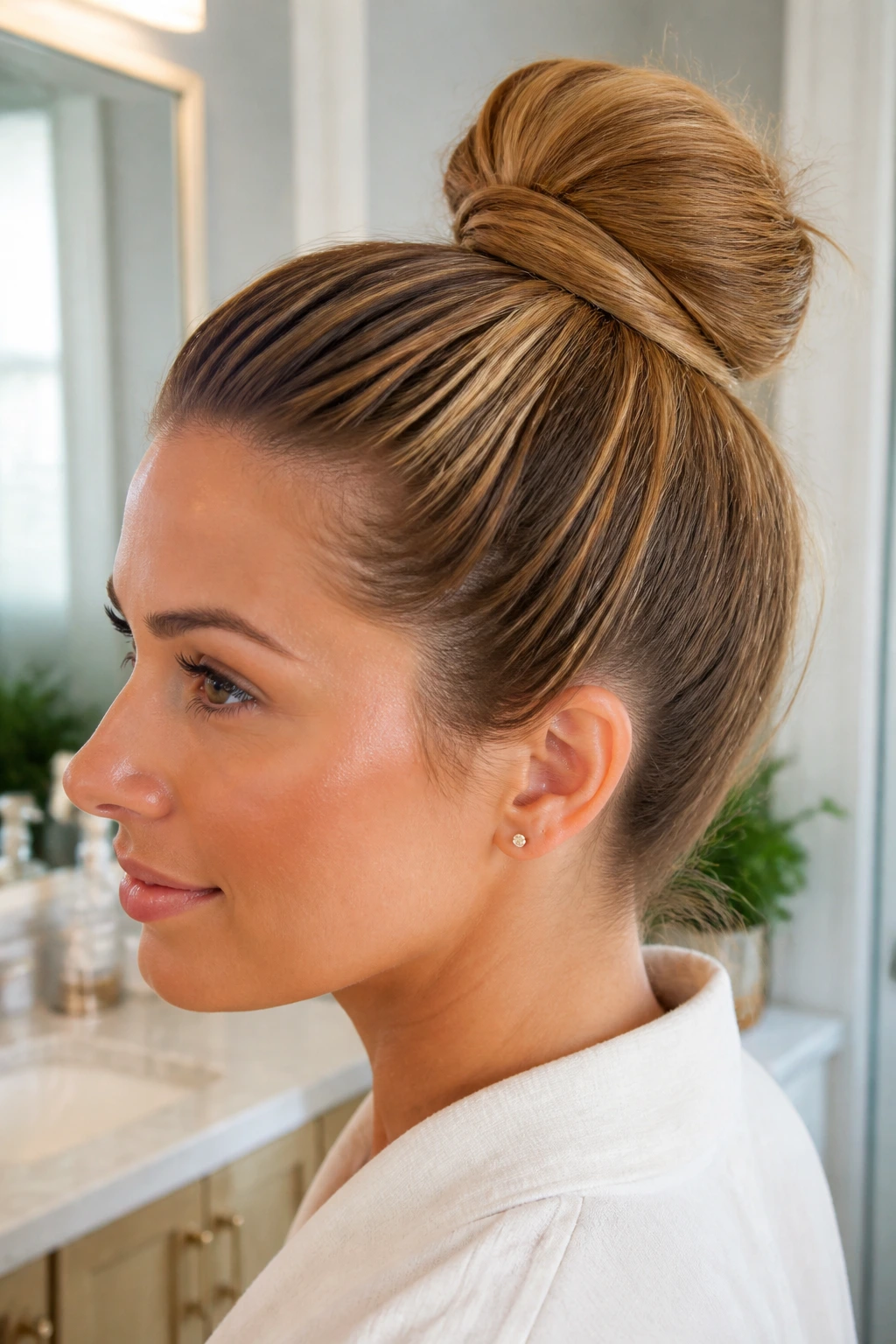
A high pony wrapped bun is one of the strongest options for thin hair because the ponytail base gives the style a focal point right where people look first: the crown. If you want lift, start there.
Pull the hair into a high ponytail and secure it well. Then tease the ponytail itself lightly before wrapping it around the base. The teasing is not for drama; it gives the bun enough texture to stay puffed instead of shrinking into a small knot. Wrap one thin section around the elastic to hide it, pin the tail under the bun, and stop overthinking it.
This style gives a clean neck, a lifted face, and a shape that reads fuller than a low bun. It can look sporty or polished depending on how smooth you keep the top. I prefer it with a slightly loose crown. Too tight and it starts to feel severe.
16. Infinity Braid Updo
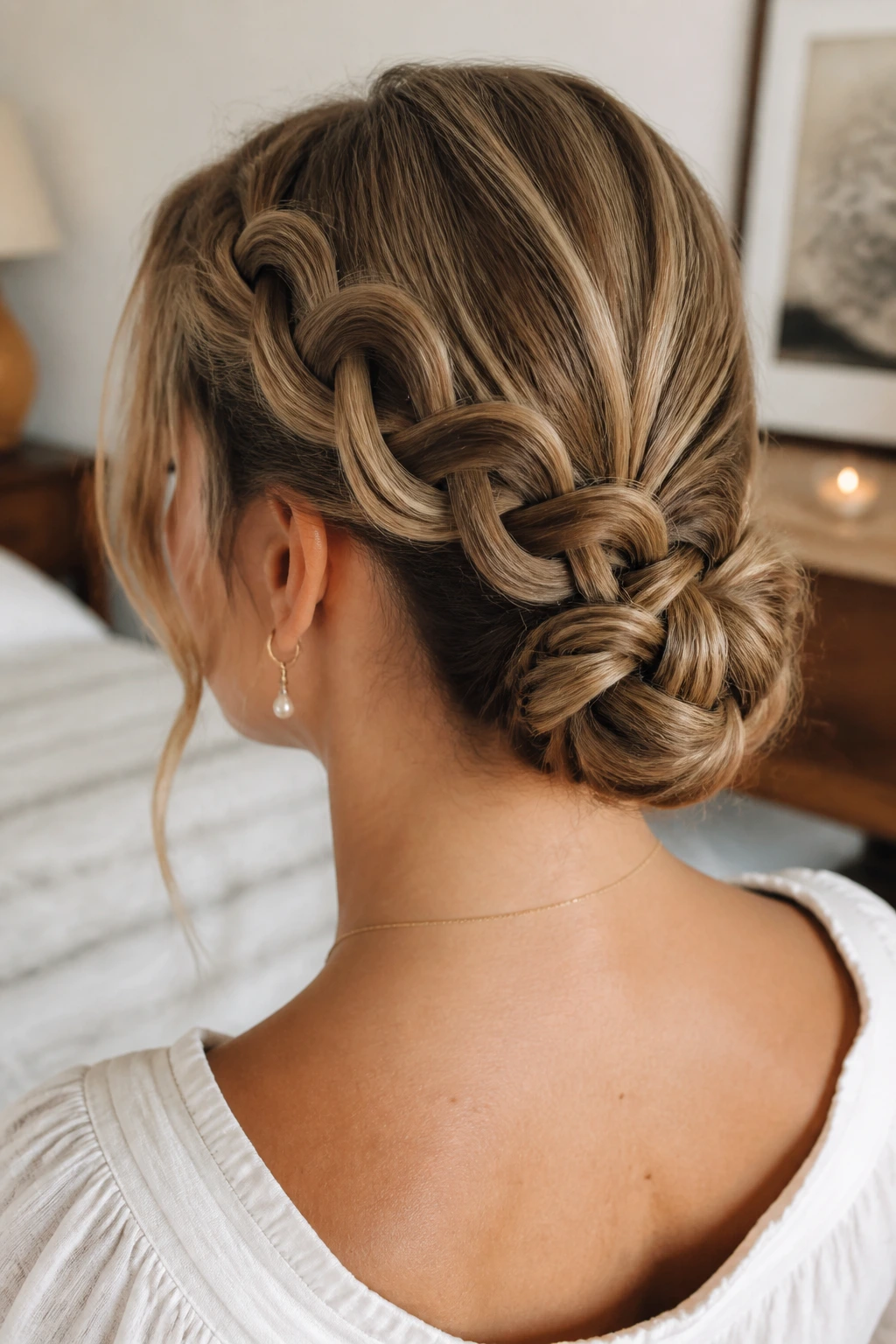
An infinity braid updo sounds fancy, but the appeal is simple: the figure-eight braid creates movement that thin hair usually lacks on its own. It gives the style a woven look that keeps the eye busy.
This one works best when the hair has enough length to hold repeated loops. Braid a section in the infinity pattern, then tuck the ends into a low bun or coil them into a pinned roll. If your hair is soft, add a little wax or paste to your fingers before braiding so the sections do not slide apart.
What I like here is the detail. The braid itself becomes the decoration, which means you do not need massive volume or a big accessory. The style reads complex even when the actual amount of hair is modest. That is a win for thin hair.
17. Low Knot With Face-Framing Pieces
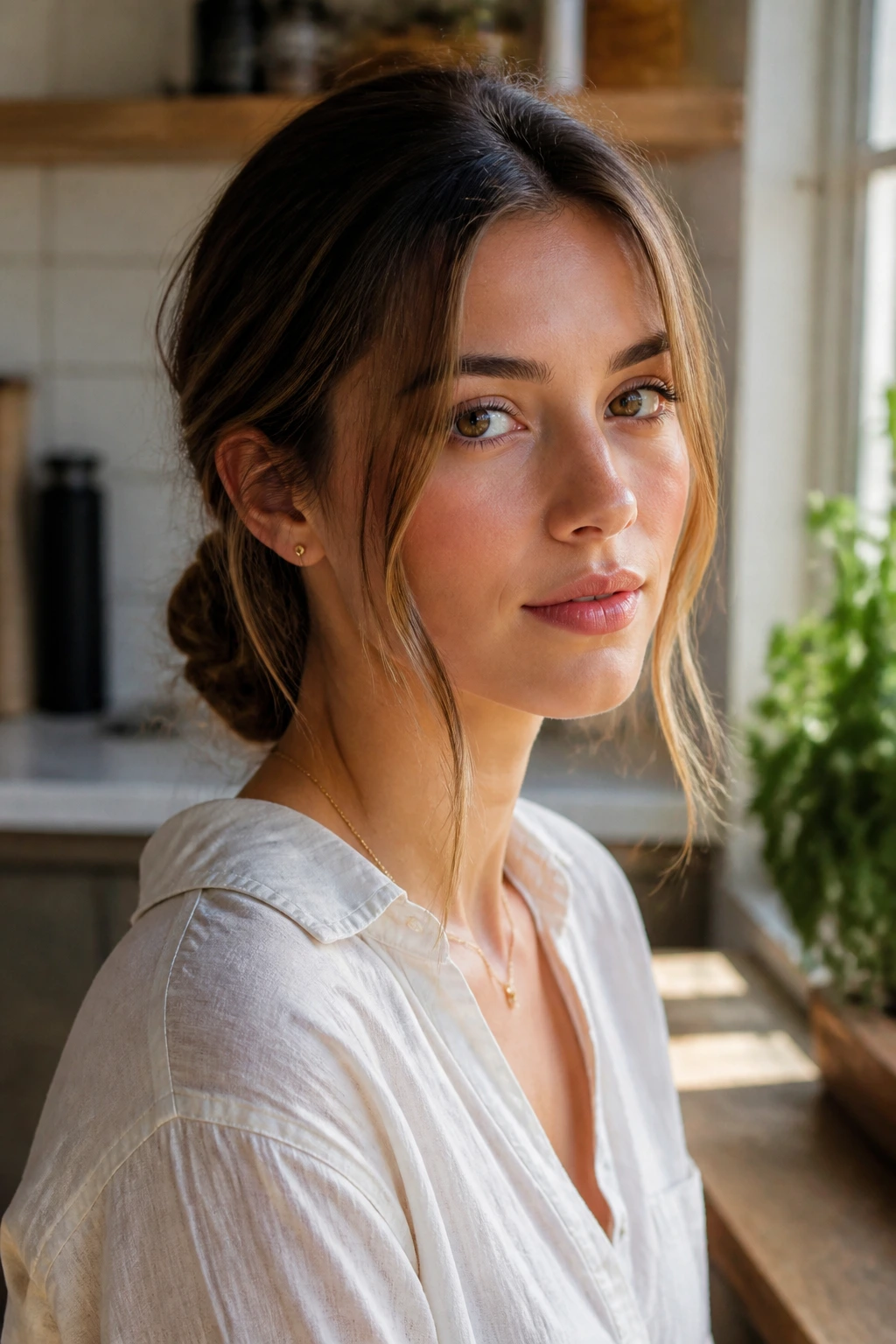
A low knot with face-framing pieces is the kind of style that looks casual in photos but still feels put together in real life. Thin hair benefits from that mix because the loose pieces keep the bun from exposing every strand count problem at the back.
Gather the hair low and twist it into a compact knot. Leave two thin sections out at the front, one on each side of the face. Those pieces should be soft, not thick enough to feel like curtain bangs unless that is the look you want. Curl them slightly or leave them straight; both can work.
This style is forgiving, which makes it useful. If the bun sits a little off-center, no one cares. If a few ends escape, it looks relaxed instead of messy. That is a rare and useful thing.
18. Double Twist Halo
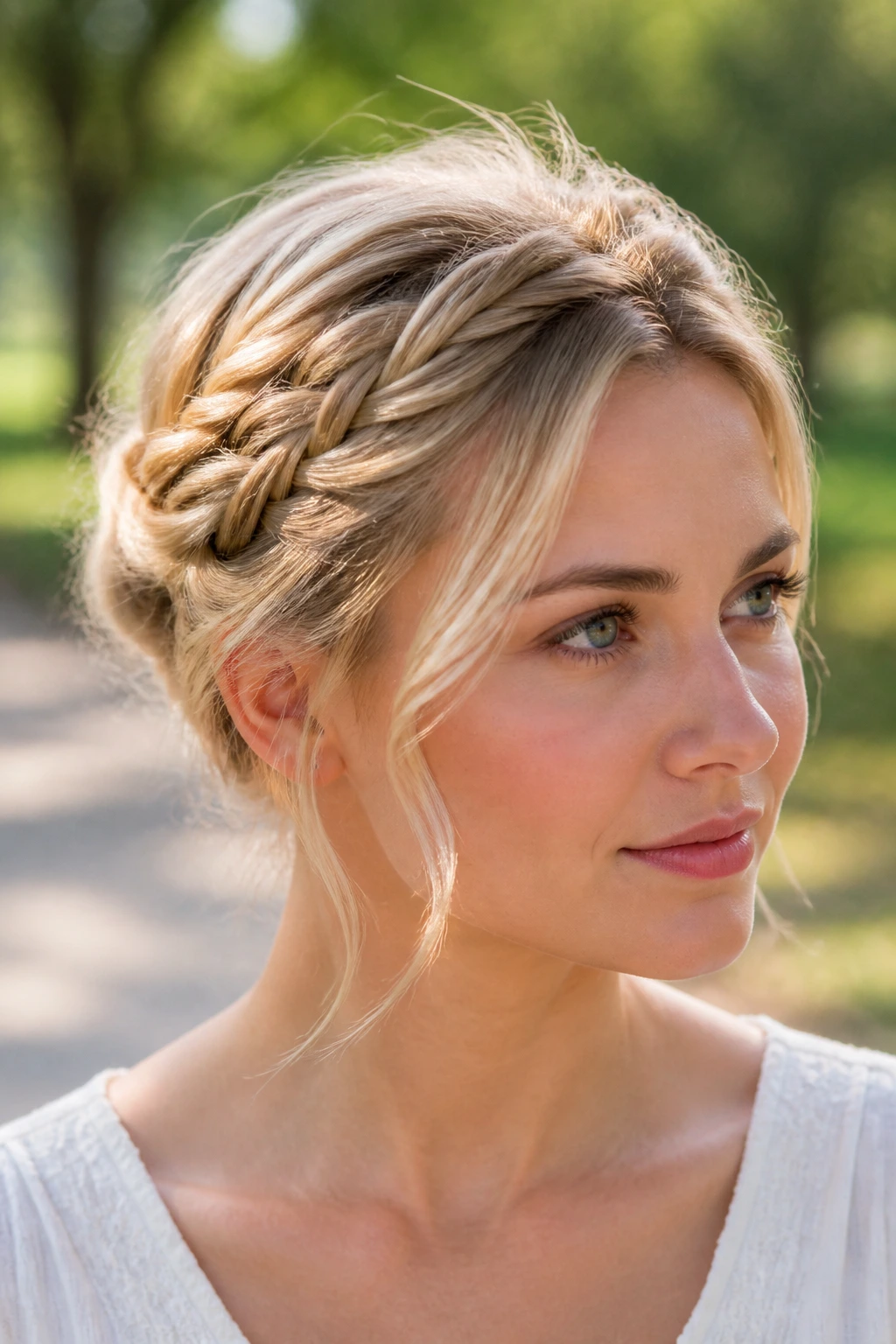
The double twist halo is a gentler cousin of the crown braid. Instead of braiding, you twist two side sections back from the temples and pin them across the back of the head. The result is soft, tidy, and quietly flattering.
Thin hair does well with twists because they lie flatter than braids and do not demand as much density. You can keep the twists close to the scalp, then loosen the front a touch so the style does not look too severe. If the ends are short, tuck them under the pinned section and hide them completely.
This is one of the best styles for days when you want your hair off your face but do not want anything stiff. It gives a gentle frame, a little lift at the sides, and a finish that looks more detailed than it really is. That’s a nice trick to have.
19. Low Ponytail With Mini Crown Lift
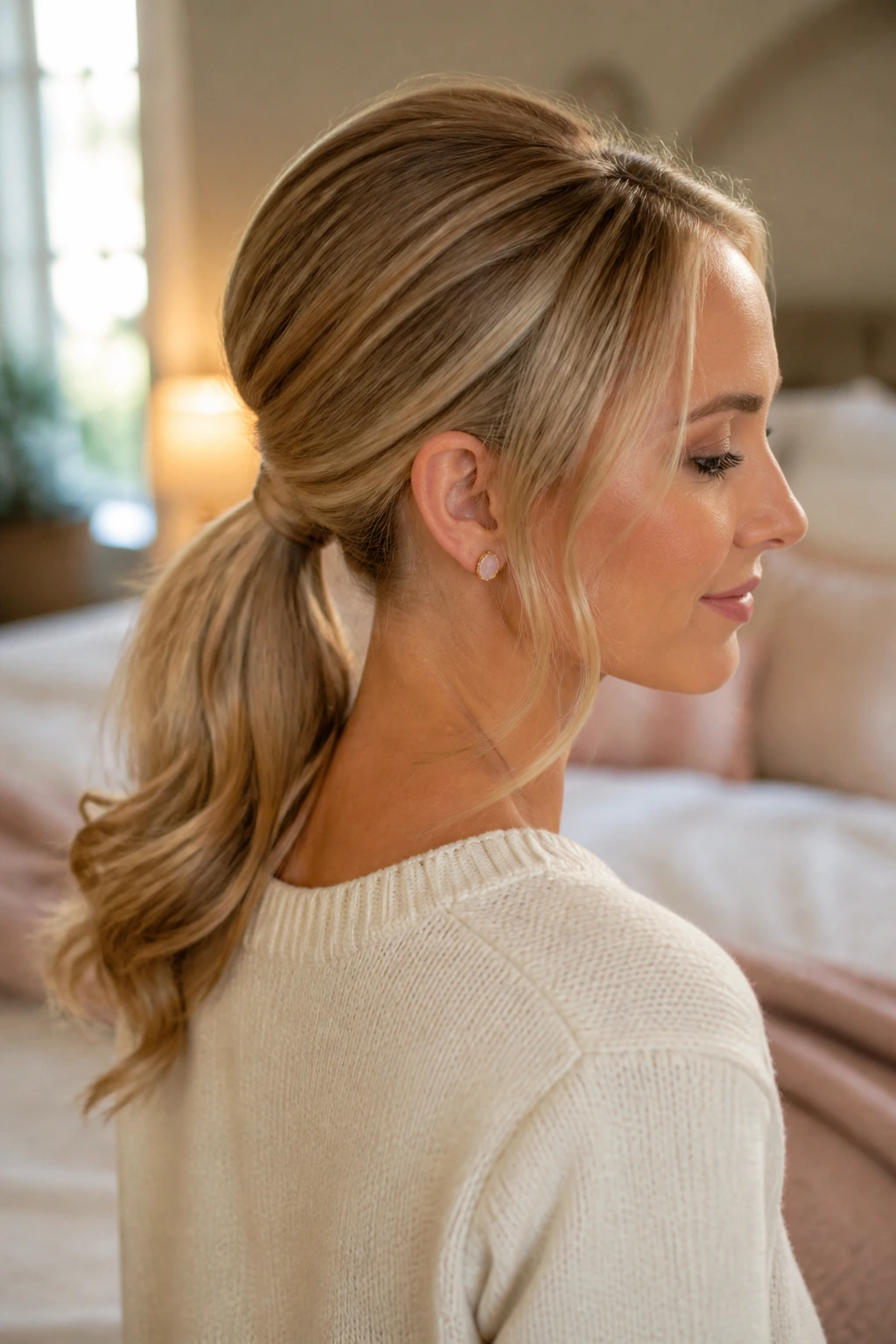
A low ponytail sounds too plain to count as an updo until you give it crown lift and a wrapped base. Then it starts behaving like a real style. Thin hair loves that bit of structure.
Backcomb a small section at the crown, smooth only the top layer over it, and gather the hair low at the back. Secure it with a small elastic, then wrap a short strand around the base to hide the tie. If the ponytail itself feels too sparse, curl the ends under once or twice to give the shape a little body.
The Tiny Lift That Matters
The lift should be subtle, not 1980s high. You want a soft rise, maybe half an inch to an inch at the crown, enough to stop the head shape from looking flat. That tiny bit of height changes the whole face angle.
- Use a tail comb or your fingertips.
- Keep the backcomb in a narrow strip.
- Finish with a light spray, not a heavy shell.
20. Crown Braid Into a Bun
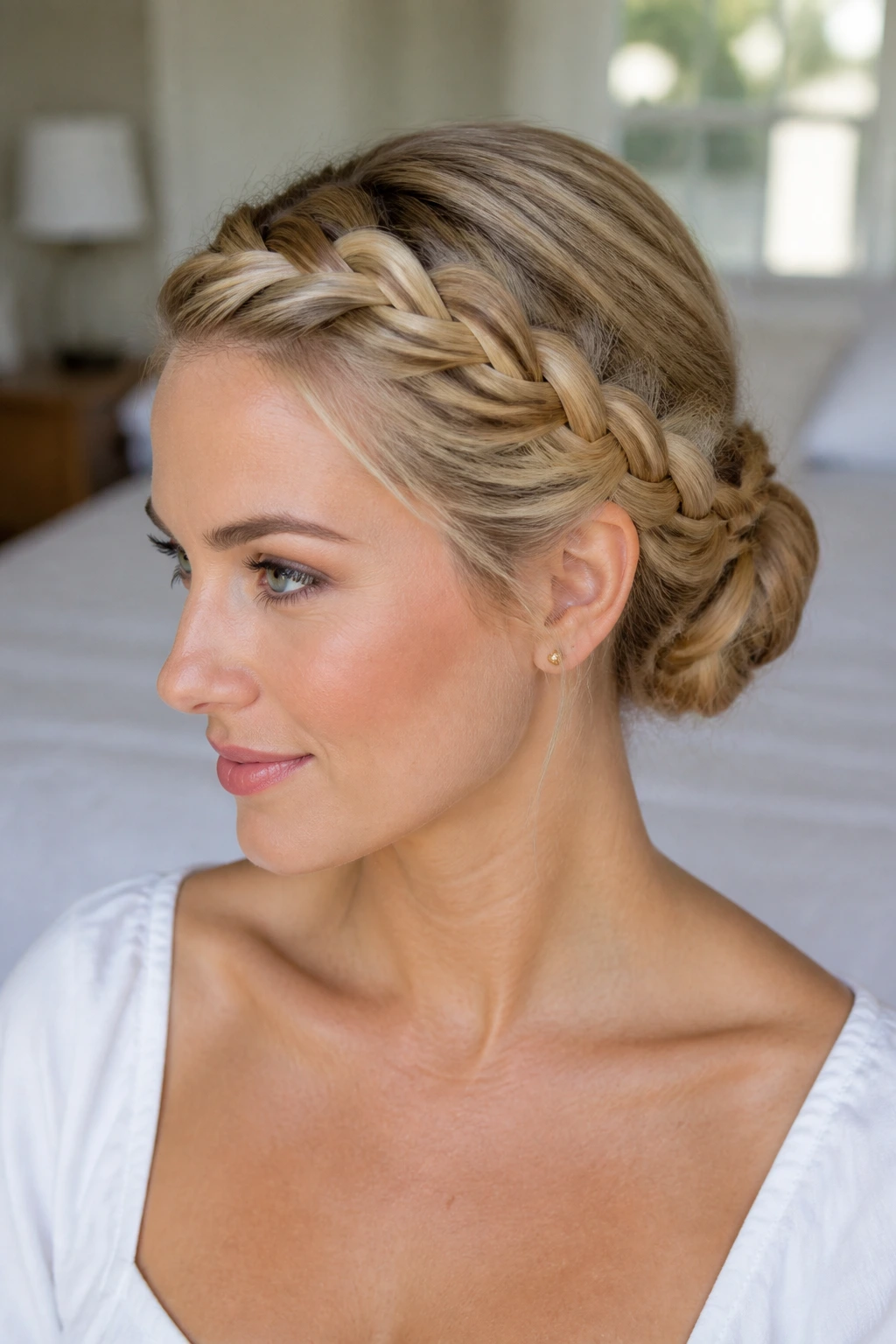
A crown braid that feeds into a bun is one of the prettiest ways to make thin hair look fuller without lying about it. The braid adds texture around the hairline, and the bun gives the style a stable center.
Braid along the front of the head from one side to the other, then gather the loose length into a bun at the back. If the braid feels too tight, pull the edges slightly wider once it is secured. That gives it more visual volume and stops it from looking stringy.
This style is especially useful when layers around the face are too short to stay in a plain bun. The braid catches those shorter bits and turns them into part of the design. Nice fix. Very practical. And it tends to hold better than a loose twist because the braid has built-in grip.
21. Gibson Tuck
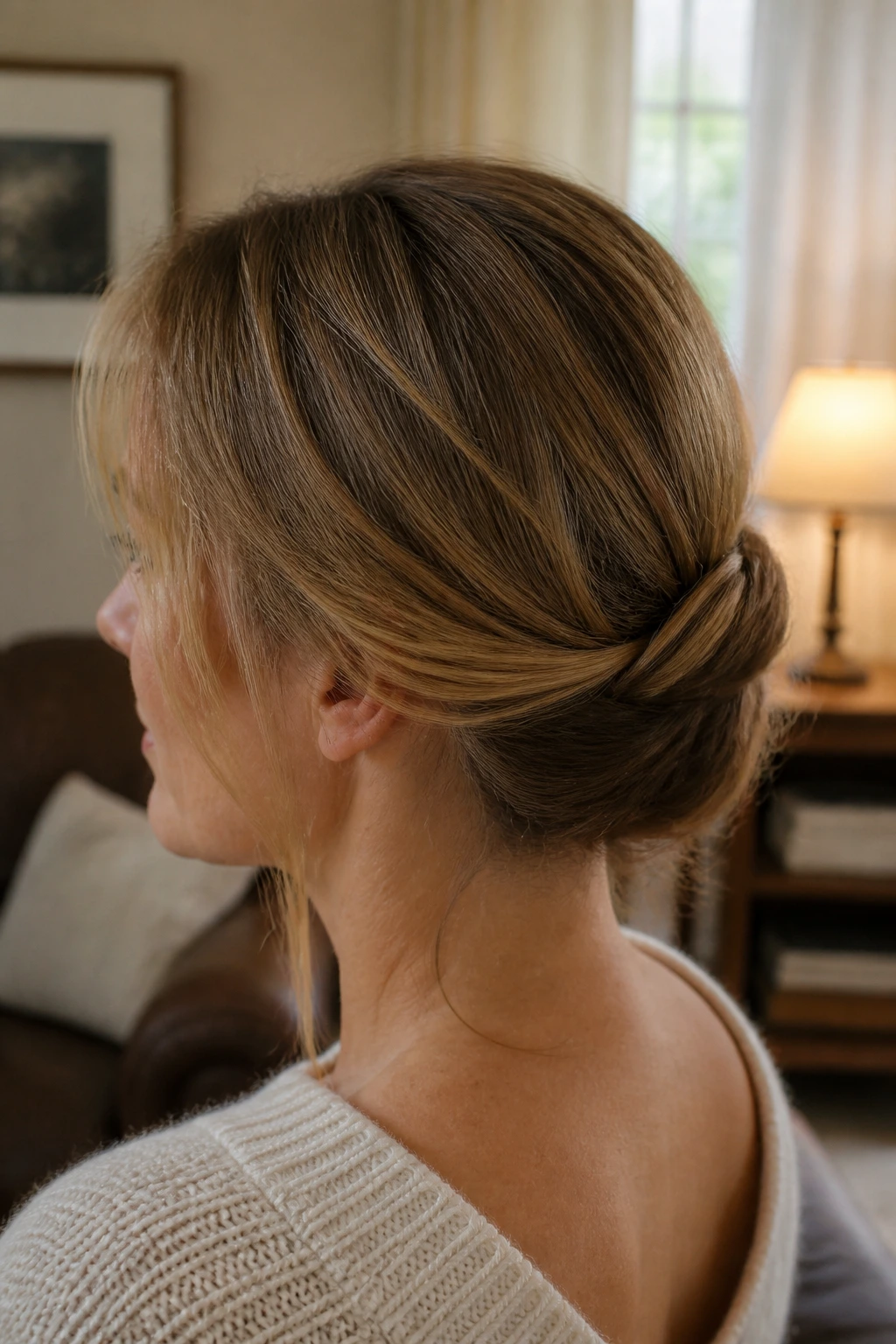
The Gibson tuck is old-fashioned in the best way. It rolls the hair under itself into a soft horizontal fold, which happens to be one of the easiest shapes to make look lush on thin hair.
Pull the hair into a low ponytail, loosen the elastic a little, and tuck the ponytail upward through the gap so it folds inward. Pin the roll in place and smooth the top just enough to keep the surface clean. You should see a soft roll, not a hard ridge.
Compared with a French twist, the Gibson tuck feels gentler and a touch more romantic. Compared with a bun, it is flatter and usually easier on shorter lengths. If your hair slips a lot, rough up the underlayer before you start. The roll needs something to catch on.
22. Braided Ponytail Roll-Up
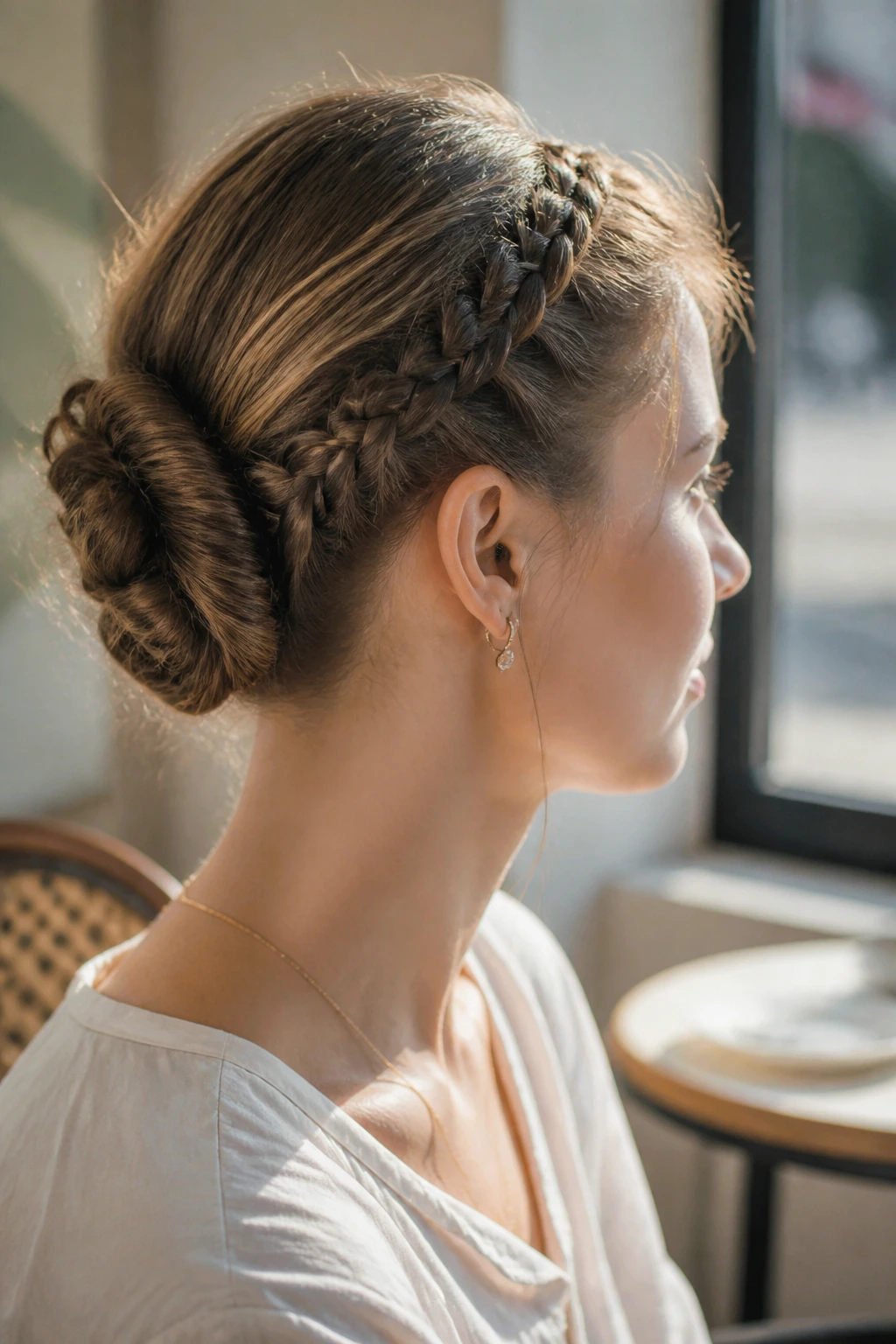
A braided ponytail roll-up is a smart way to hide thin ends because the braid gathers the hair before you coil it. That means the tail looks denser than it would if you wrapped loose strands into a bun.
Make a low ponytail, braid it down the length, then roll the braid upward and pin it into a compact shape. The braid acts like a rope with better texture and more body. If your hair is layered, this is especially useful because the braid keeps the shorter pieces from escaping everywhere.
How to Get the Best Shape
- Start with a ponytail that sits close to the head.
- Braid firmly, but not so tightly that the braid shrinks.
- Pin the roll from both sides so it does not slide.
This style lands somewhere between tidy and soft. It is one of those looks that can handle a little humidity and still hold together.
23. Fishtail Side Updo
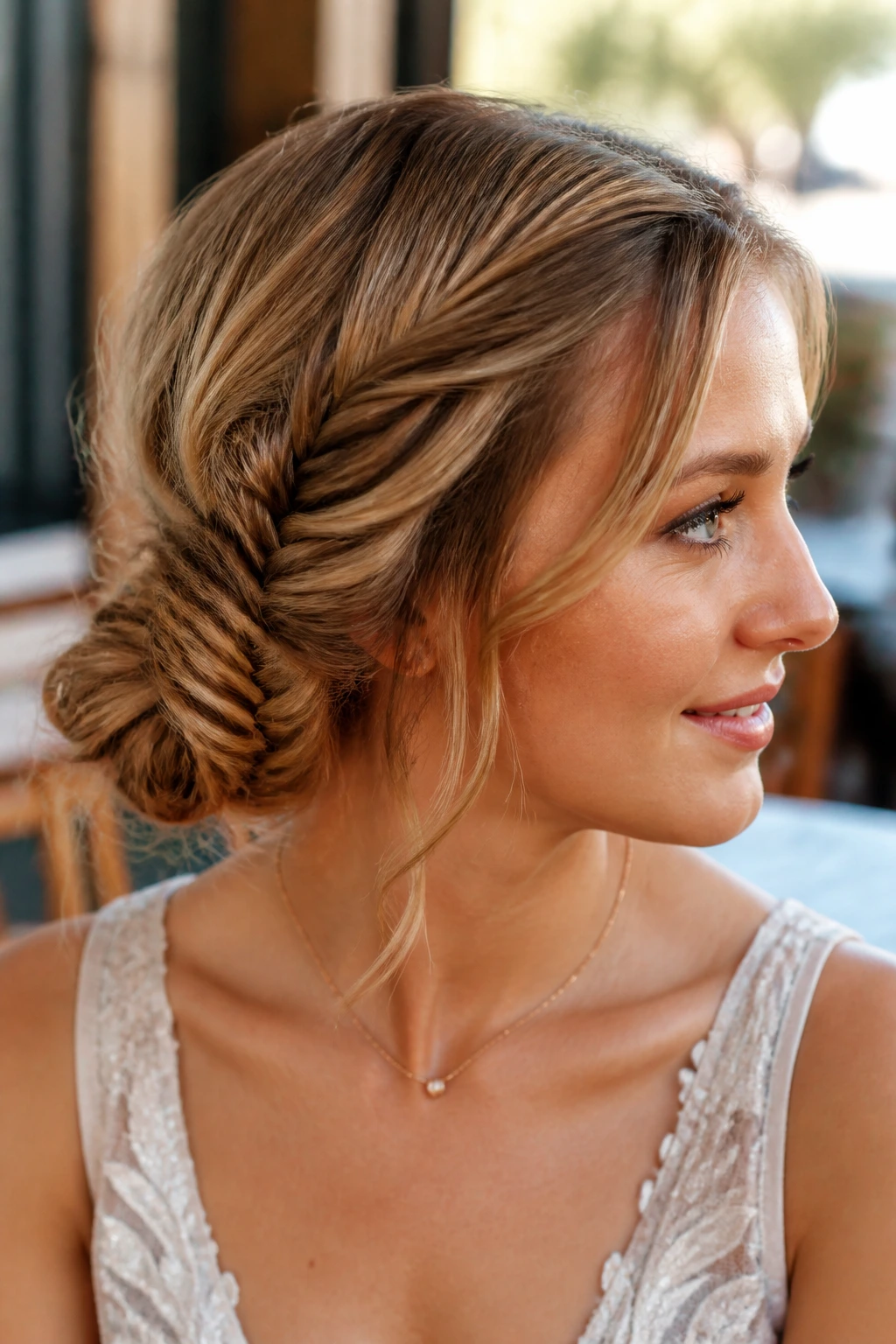
A fishtail braid can rescue thin hair in a way that a standard braid sometimes cannot. The weave is tighter in appearance, so even a modest amount of hair looks detailed and fuller.
Sweep the hair to one side, build a loose fishtail braid, and tuck the end into a low side bun or a pinned roll. Let the braid stay a little loose on the outer edges. That width is what makes it read as rich. If the braid is too tight, it turns narrow and loses the effect.
I like this style for layered hair that refuses to sit still. The fishtail pattern catches the shorter ends better than you’d expect, and the side placement keeps the whole look from feeling too severe. It has enough shape for a dinner out, but it is still soft enough to wear with a sweater and boots.
24. Textured Low Bun With Loose Ends
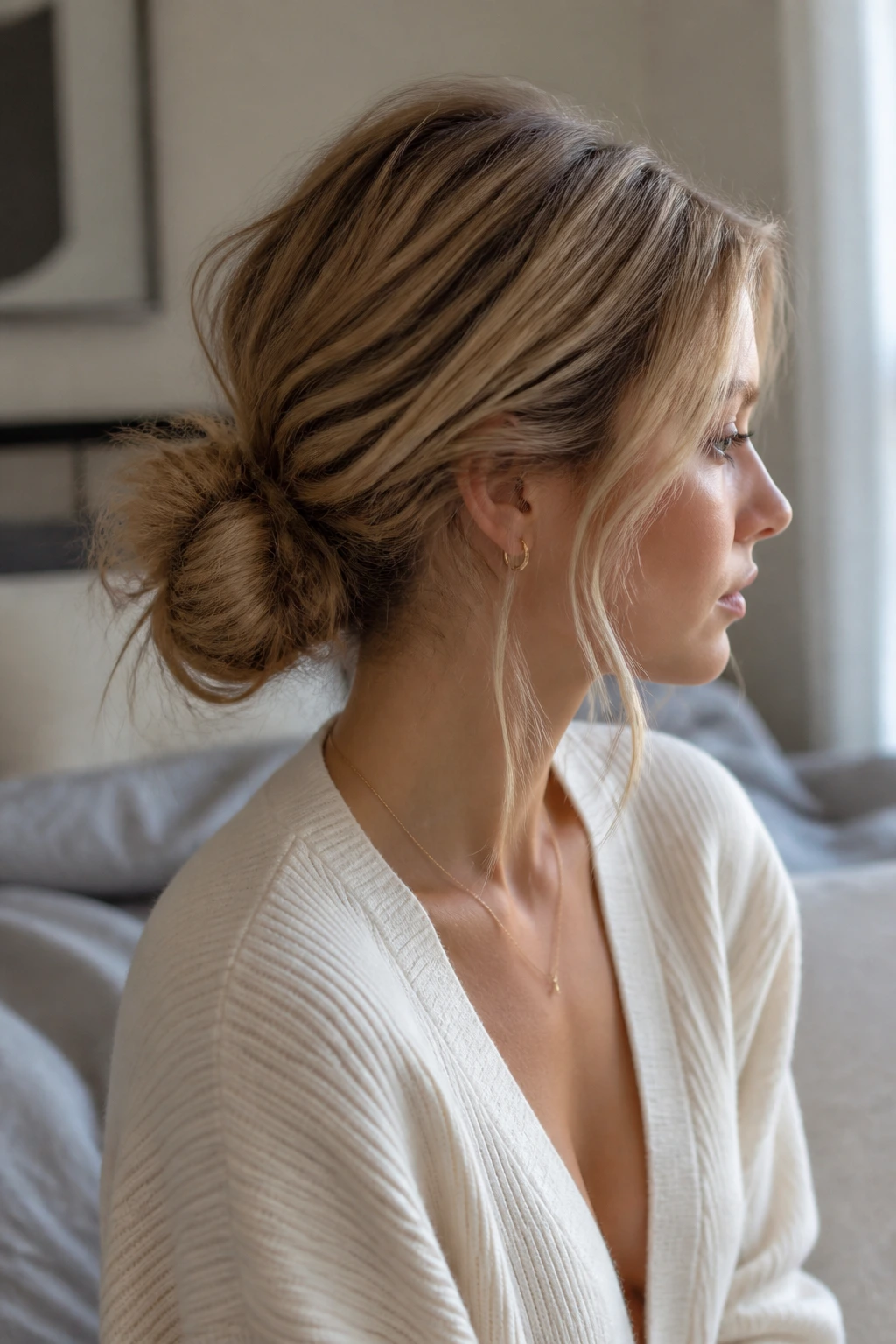
A textured low bun with loose ends is the style I would call the most forgiving in the whole bunch. Thin hair does not need every strand shoved into place; sometimes it needs permission to look a little airy.
Gather the hair low, twist it loosely, and pin it into a bun without flattening the life out of it. Let a few ends peek out. Let the crown breathe. Use your fingers instead of a brush when you’re shaping it, because a brush can make the bun too slick and too small. The loose ends are not mistakes here. They are part of the finish.
This one works when you want something soft that still feels styled. It is the least precious option, which is exactly why it works so well on fine hair. If the bun ends up slightly asymmetrical, that is usually better than forcing it into a perfect little circle.
25. Sleek Twisted Bun With a Hair Accessory
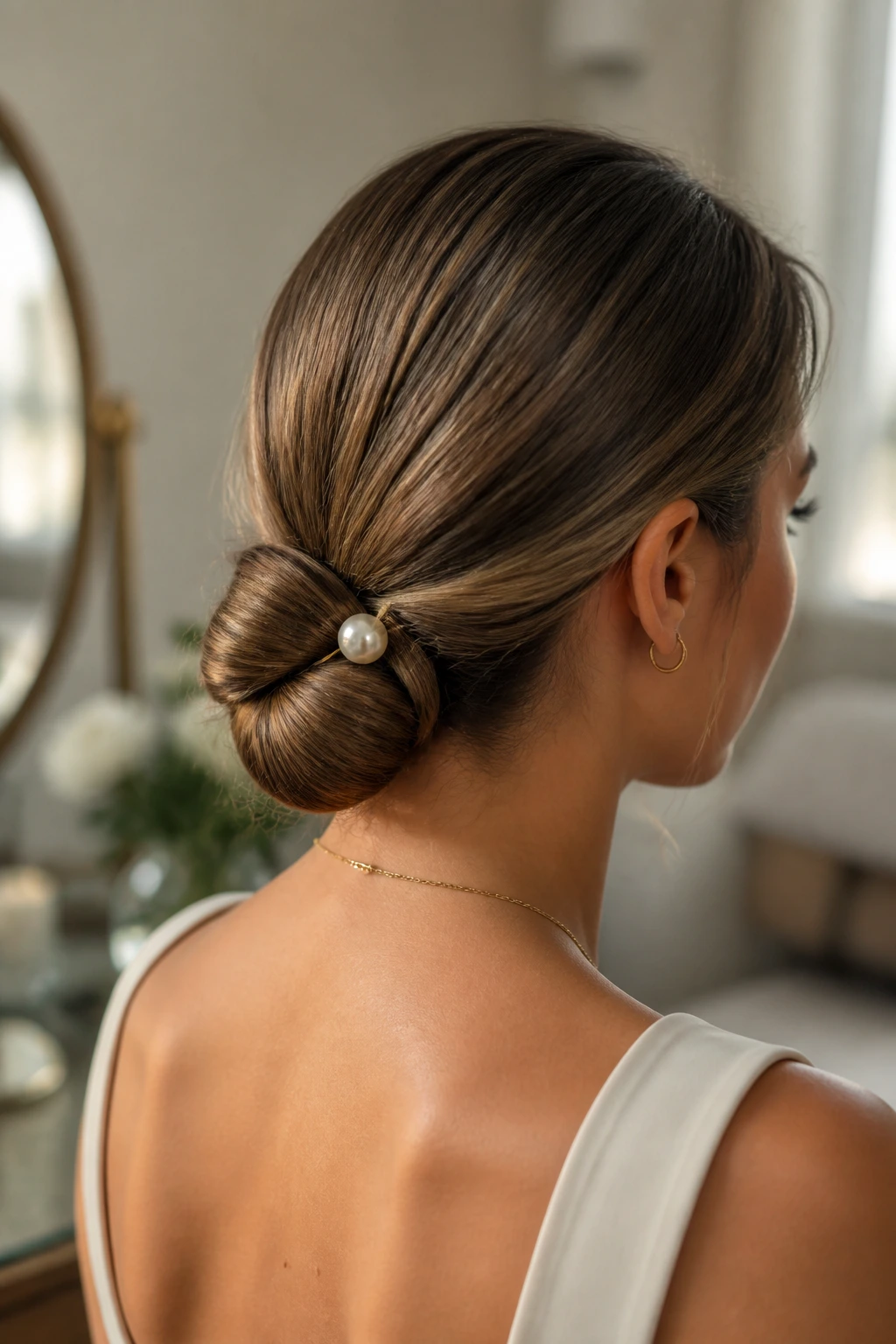
A sleek twisted bun with a hair accessory is what I recommend when thin hair needs a little help looking finished. The accessory does part of the visual lifting, which is useful when the bun itself is compact.
Smooth the hair back, twist it into a low bun, and secure it tightly at the nape. Then add one strong detail: a pearl pin, a slim barrette, a ribbon tie, or a single metal clip. The accessory should sit where the eye lands first, not disappear under the bun. That is the whole point. Thin hair often looks better when the style has one obvious feature instead of three small ones fighting for attention.
This is the kind of updo I’d wear when I want the hair to look polished without being fussy. Clean base. Strong line. One detail that says the look was planned, even if it took twelve minutes and two extra pins to get there. Which, honestly, is most good hair.
