



A side ponytail on long hair can look sleek and expensive, or it can look like your elastic slid south by lunchtime. The difference is usually not the ponytail itself. It’s where you place it, how much texture you leave in, and whether the base looks finished or forgotten.
That’s why side ponytail styles for long hair keep showing up again and again in real life. They work when you want your length to stay visible, but you do not want the heaviness of all that hair sitting flat down your back. A side sweep gives the face a little shape. It also gives you room to play with braids, ribbons, twists, waves, clips, and all the small details that make a hairstyle feel deliberate.
Long hair can be fussy. It gets heavy. It falls out of shape. It can also be gorgeous with barely any effort if you give it one smart anchor point and stop fighting the texture. That’s the trick here: not every side ponytail needs to look polished in the same way. Some should be glossy and tight. Some should be loose and airy. Some should look a little undone on purpose.
1. The Sleek Low Side Ponytail
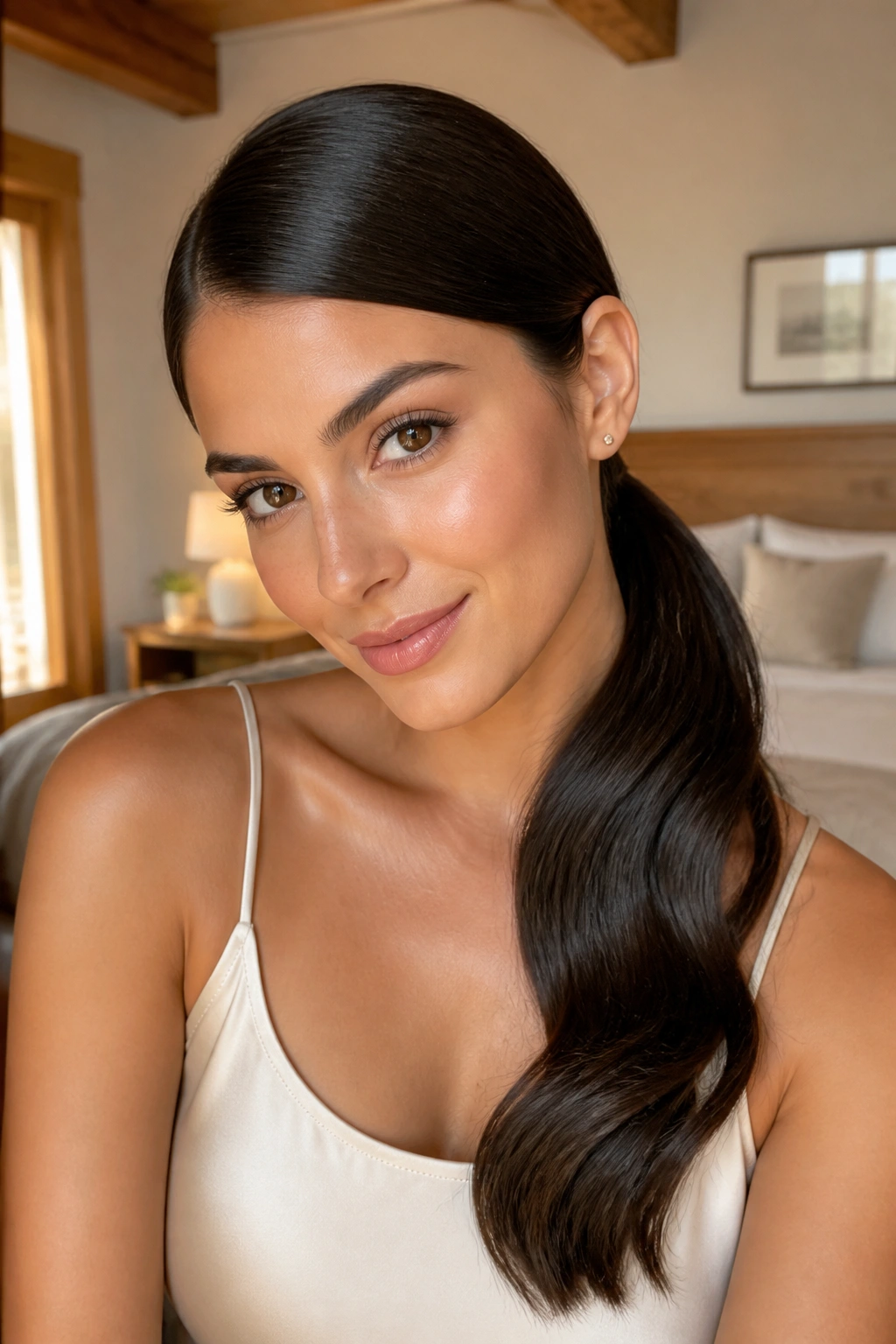
A sleek low side ponytail does one thing better than almost any other style: it makes long hair look intentional. The shape is simple, but long hair gives it weight, shine, and a clean line over one shoulder, which is why this style looks sharper than a plain center pony.
Where the Ponytail Should Sit
Set the elastic at the nape and slide it just behind one ear, not way out toward the shoulder. That placement keeps the ponytail from looking droopy, and it lets the front sections skim the cheekbone instead of hanging like curtain cords. A middle part works. A deep side part works too. The part just needs to feel chosen.
Smooth the roots with a paddle brush and a little serum or light cream before you gather the hair. If the ends are frizzy, run a flat iron through the bottom third first. The base matters more than the tail. A neat base makes the whole style look clean even if the rest of your day is not.
Small Details That Keep It Smooth
- Use a strong elastic that grips without snagging.
- Wrap a 1-inch strand of hair around the band and pin it underneath.
- If your hair is thick, use two elastics an inch apart so the weight does not drag one band down.
- Keep the tail brushed in one direction so it falls over the shoulder in one clean sweep.
A sleek low side ponytail is the one I’d reach for when the outfit already has texture. Leather jacket, sharp blazer, fitted knit — this ponytail knows how to sit back and let the clothes do some work.
2. The Bubble Side Ponytail
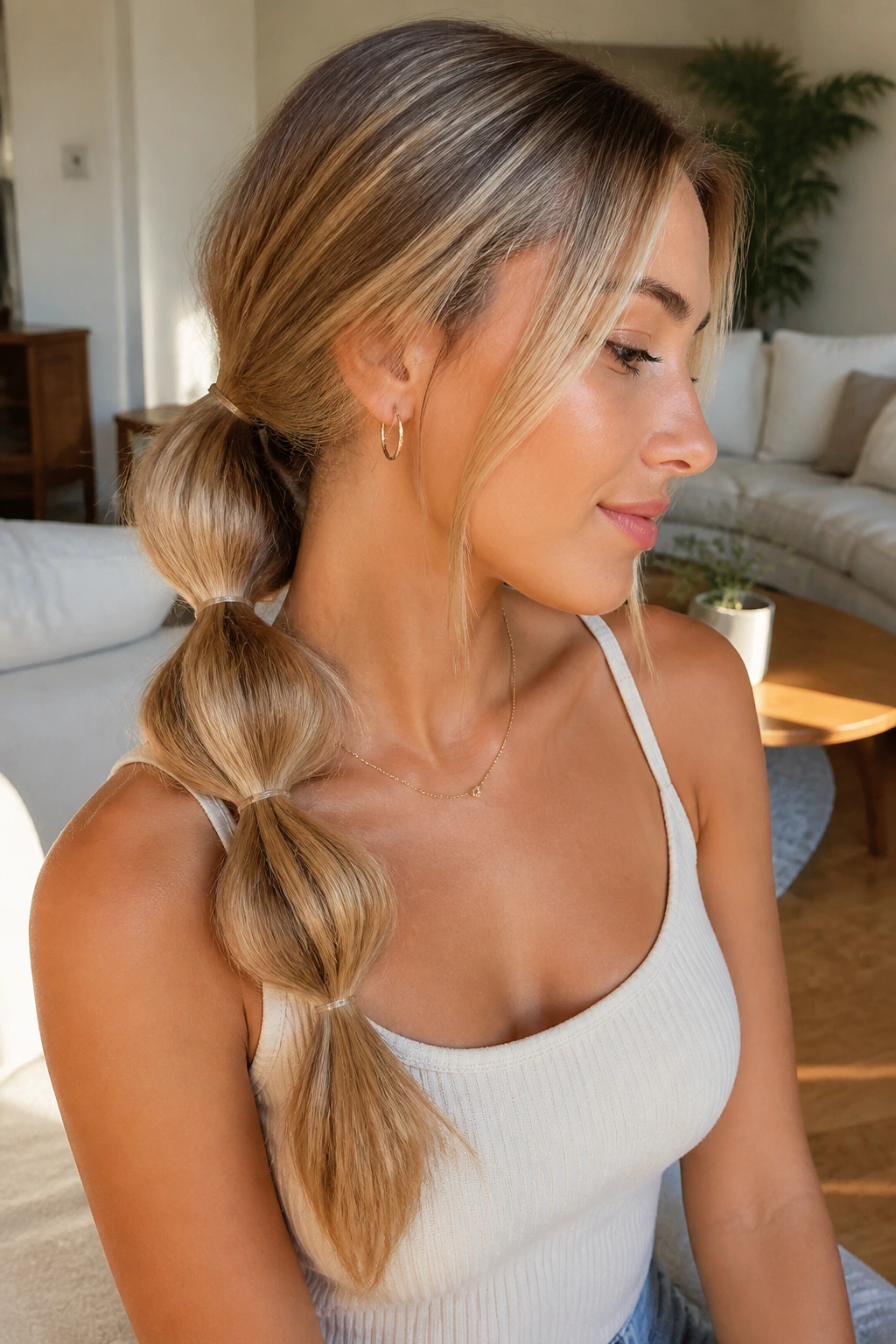
Bubble side ponytails are the easiest way to make long hair look styled without piling on heat. They give you shape in sections, which is useful when your hair is too long to stay lively in one plain tail. One elastic after another. That’s the whole idea, and it works.
The trick is spacing. Start with a side ponytail low or mid-low, then place clear elastics every 2 to 3 inches down the length. Gently pull each section into a rounder bubble. Not too hard. If you tug from every angle, the bubbles turn lopsided and the hair between them twists in a messy way that looks accidental rather than cool.
What I like about this style is that it plays nicely with long layers. The shorter pieces near the front keep falling around the face, while the longer tail makes the bubbles look substantial. It also holds a little better than a smooth ponytail on hair that likes to collapse under its own weight.
A little texture spray at the roots helps. So does misting the tail with a dry shampoo or texturizing powder before you start spacing the elastics. Dry, slightly gritty hair makes cleaner bubbles. Soft hair can still do it, but it needs more grip.
3. The Braided Side Ponytail
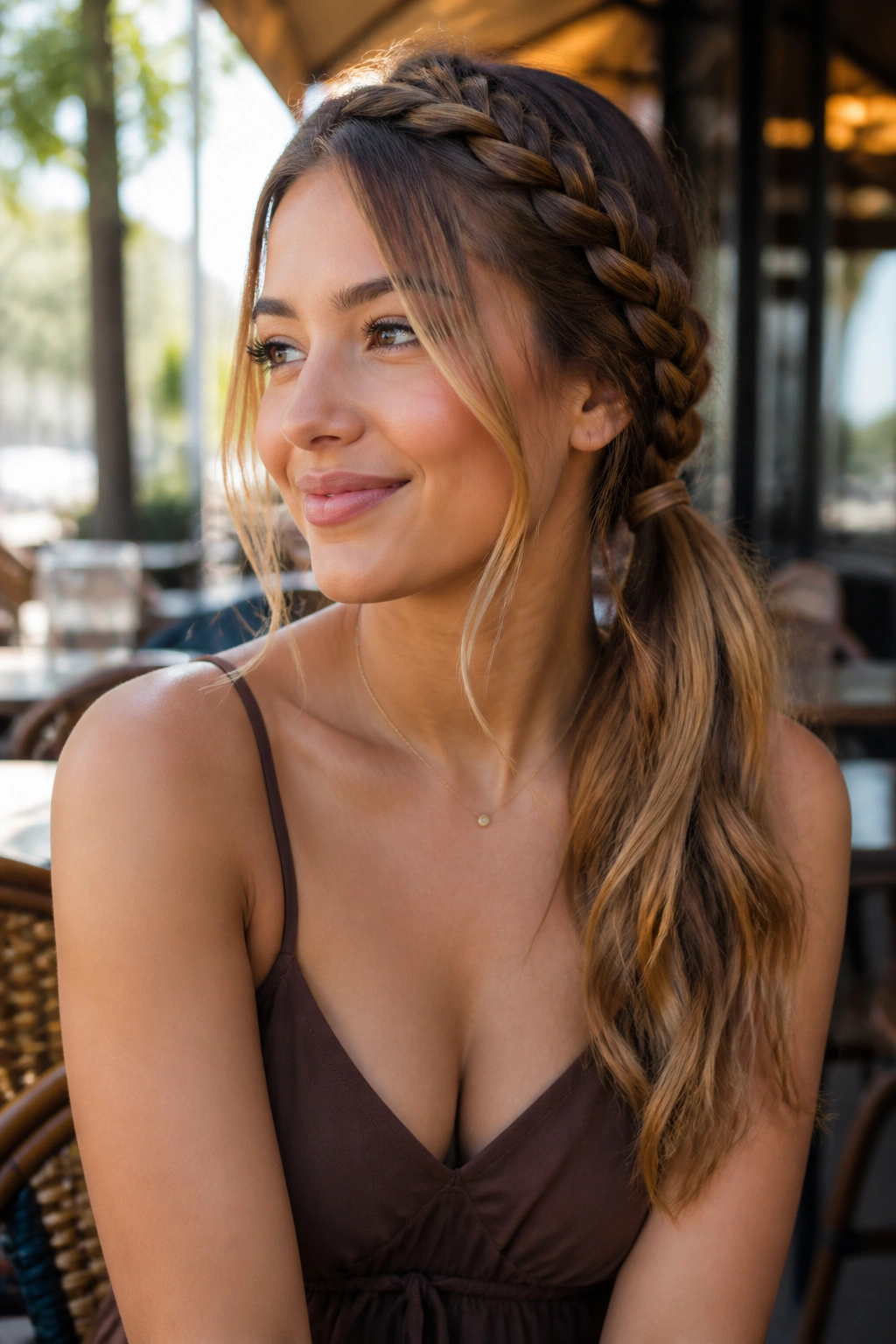
Why does a braid make a side ponytail feel more finished? Because it gives the eye something to follow. Long hair can look plain when it’s all in one piece, but the moment you braid part of it, the style gets rhythm and structure.
How to Use It
You can braid the front section into the ponytail, or you can braid the tail itself after you secure it. A side French braid that feeds into a low ponytail is the most polished version. A simple three-strand braid on the tail feels softer and quicker. A Dutch braid gives more edge, since it sits up off the head a little.
If your hair is layered, start the braid a bit tighter near the crown so shorter pieces stay in place. Once the braid hits the ponytail, loosen the plaits slightly with your fingers. That wider shape helps long hair look thicker, not stringy.
A braided side ponytail is one of the few styles that works for a gym day and a dinner plan without needing to be redone. That’s a good hair day trick, not a coincidence. It also plays well with highlights, because braids break the color into little panels and the whole tail looks more dimensional.
4. The Wrapped-Base Side Ponytail
You have ten minutes and the ponytail needs to look deliberate. This is the move.
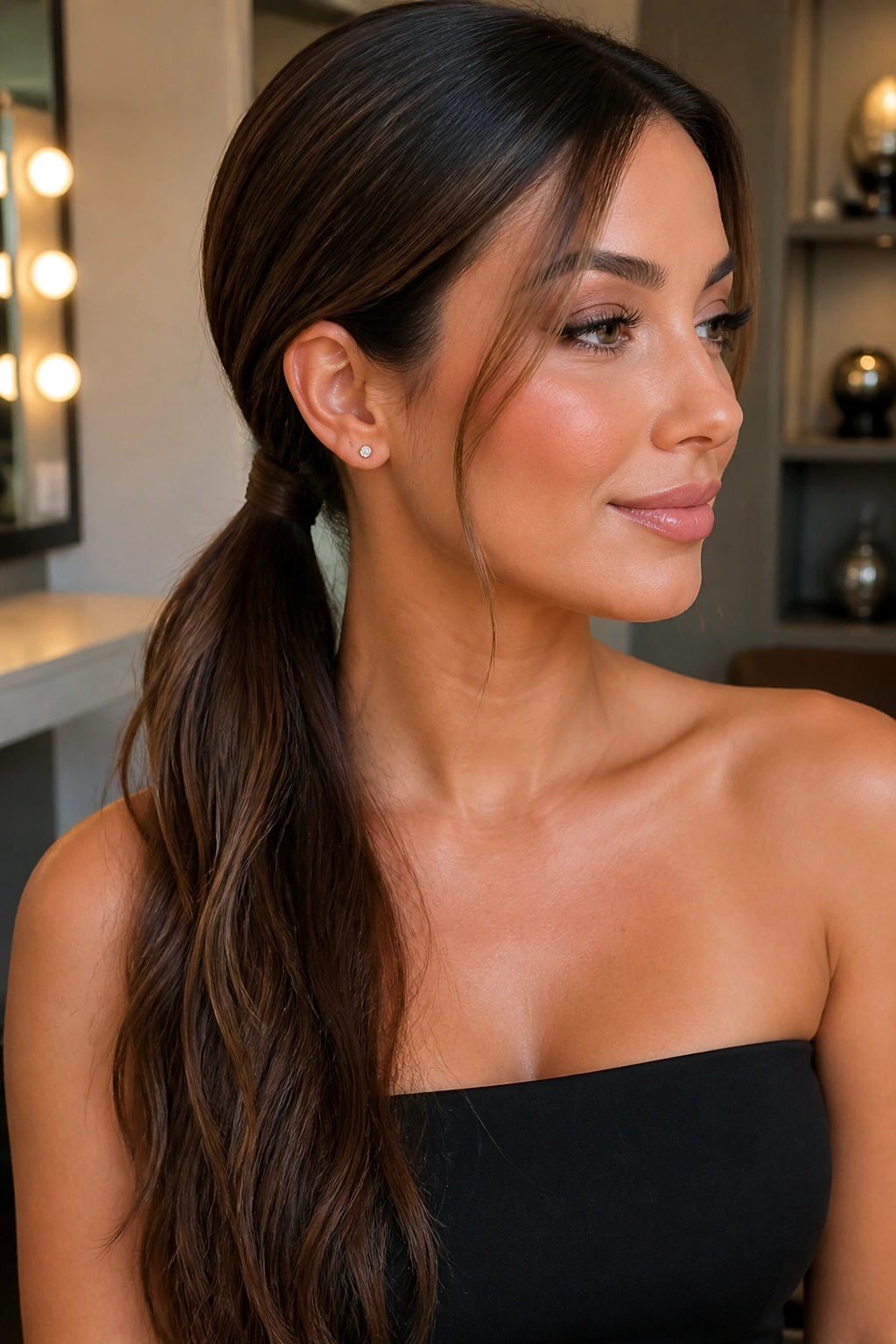
A wrapped-base side ponytail is basically a regular side ponytail with a clean cover over the elastic, but that one small change shifts the whole look. The hidden band makes the style feel more polished, and on long hair, the extra length gives you enough strand to wrap without running out halfway through.
Use a 1-inch section from underneath the ponytail, smooth it flat between your fingers, and wind it around the elastic until the band disappears. Pin the end underneath with one bobby pin, not two unless the hair is slick. Two pins can bulge out and ruin the line. The wrap should disappear, not announce itself.
- Best on straight, softly waved, or blown-out hair.
- Works well when the hair tie is the same color as your hair, but the wrap still looks cleaner.
- Keep the wrap snug, not tight, so the ponytail does not shift to one side.
- Use a matte pin if your hair is fine and slippery.
This style has a very practical charm. It looks like you planned ahead, even when you did not.
5. The Soft Wavy Side Ponytail
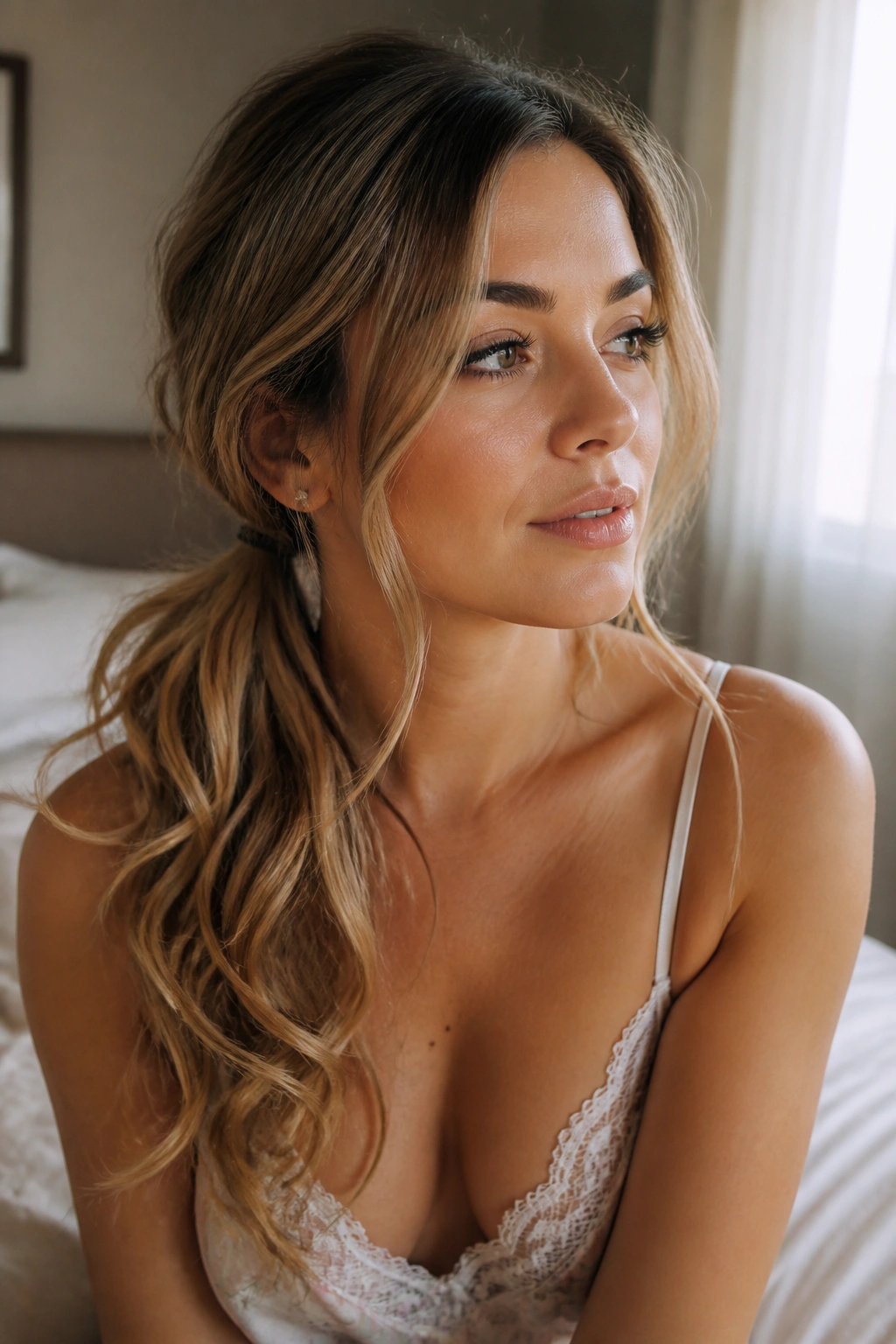
Loose waves falling over one shoulder have a different feel entirely. They look relaxed, but not lazy. That balance is why a soft wavy side ponytail shows up so often for date nights, parties, and any event where you want your hair to move a little when you turn your head.
Start with waves that have some bend left in them. A 1-inch curling iron gives a nice loose curve on long hair, though a flat iron can work if you prefer softer ends. Curl away from the face, then let the curls cool before you brush them out. If you pull them apart while they’re warm, the shape disappears and you lose that soft, expensive-looking bend.
Gather the hair to one side at the lowest point that still feels balanced. I like leaving a few face-framing pieces loose, especially if the hair is heavily layered. Those pieces keep the style from looking too packed or too severe. If your ends are thick, mist them with a flexible hairspray before you turn the ponytail over your shoulder.
The best version is not uniform. It has a little unevenness in the wave pattern, a little movement at the crown, and ends that still look touchable. If the hair feels crunchy, you’ve gone too far.
6. The Voluminous Side Ponytail With Crown Lift
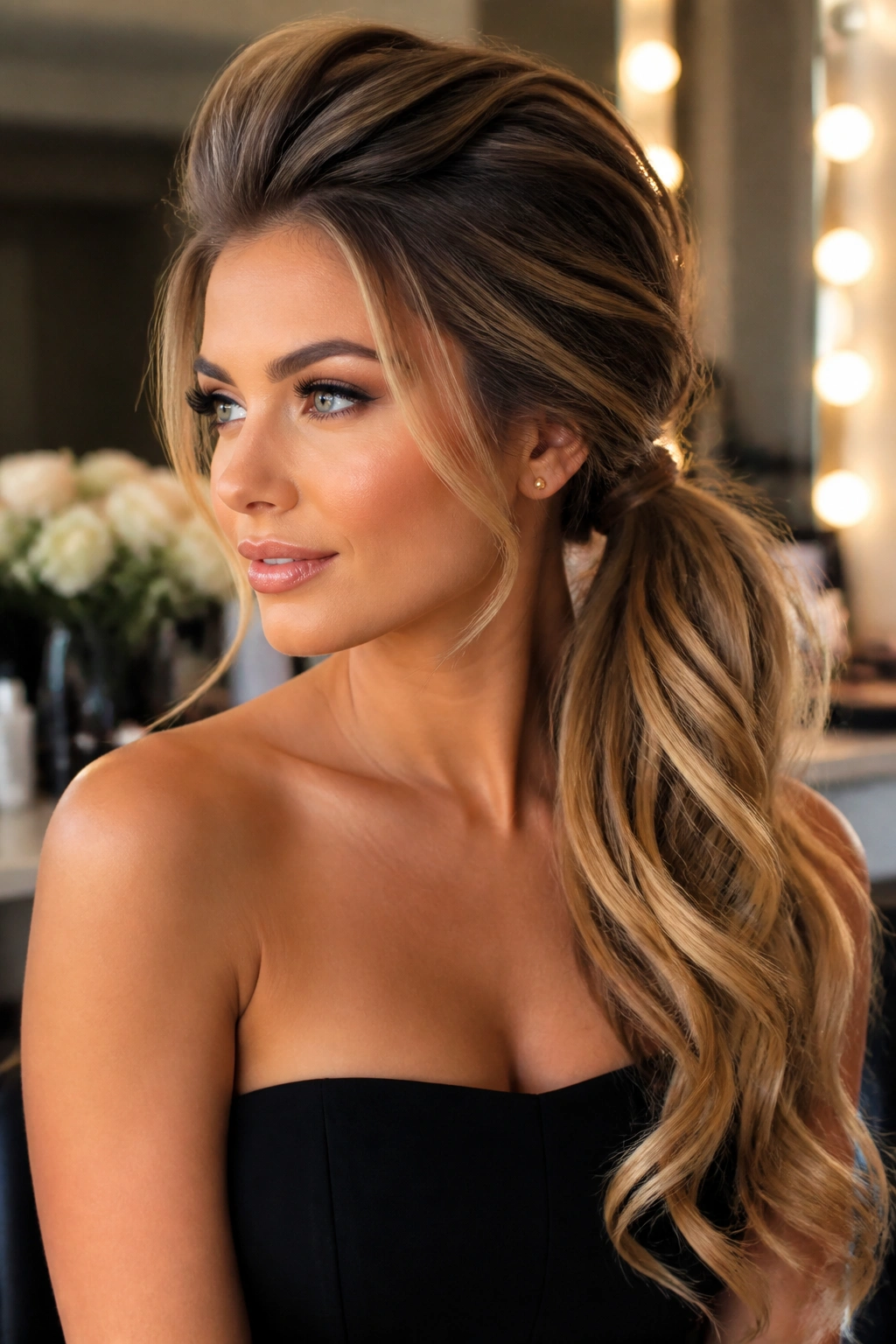
A little crown lift changes the whole mood. A flat side ponytail can feel safe. Add volume at the roots, and it becomes glam without turning stiff.
The lift should sit at the crown and slightly above the temple on the side you’re sweeping toward. That gives the top of the head a curved line instead of a straight collapse. Tease only the roots, not the full section. People often backcomb too much hair and then spend the next twenty minutes trying to smooth it back down. Waste of time. You want support, not a nest.
Where to Tease
- Lift 1-inch sections at the crown and mist the roots lightly.
- Backcomb the underside of each section 2 to 3 strokes.
- Smooth only the top layer with a brush so the tease stays hidden.
- Anchor the side ponytail a little lower than you think you need, because the lift will visually raise the whole shape.
This style is especially good if your hair is long and heavy, because the crown volume stops the whole look from sliding flat. It also balances fuller cheeks and soft jawlines nicely, since the height pulls the eye upward first. The ponytail itself can be sleek or softly wavy. The lift is the part that does the heavy lifting.
7. The Twisted Side Ponytail
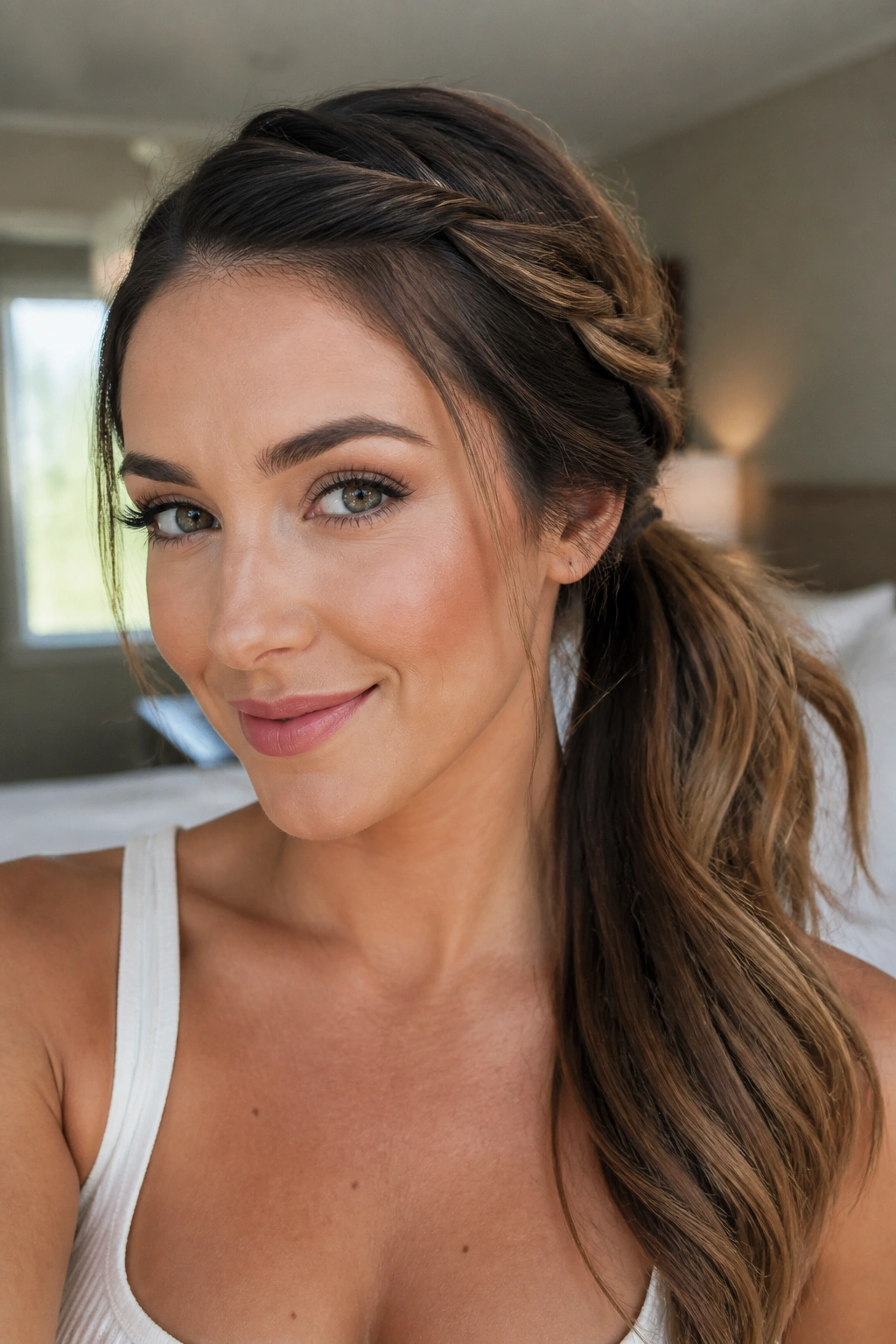
Twists are underrated because they do half the work of a braid with less fuss. They also flatter long hair that has a bit of slip or uneven texture, since the twist hides pieces that would otherwise fall out around the face.
Start by taking two front sections, one from each side of the part, and twist them back toward the side where the ponytail will sit. Secure them into the tail, then continue with a low side ponytail at ear level or just below. If you want more texture, twist the tail itself in two or three sections before you bind it together.
This style is good when your hair has been lived in for a day or two. Freshly washed hair can be too smooth, but second-day hair usually has enough hold to stay twisted without constant pinning. A little dry shampoo at the roots helps the sections grip, and a touch of cream on the ends keeps the finished tail from frizzing out.
There’s a nice contrast here: the front stays tidy, while the tail can stay loose and soft. That contrast keeps the style from looking overworked. Twist styles look better when they are not too perfect.
8. The Ribbon-Tied Side Ponytail
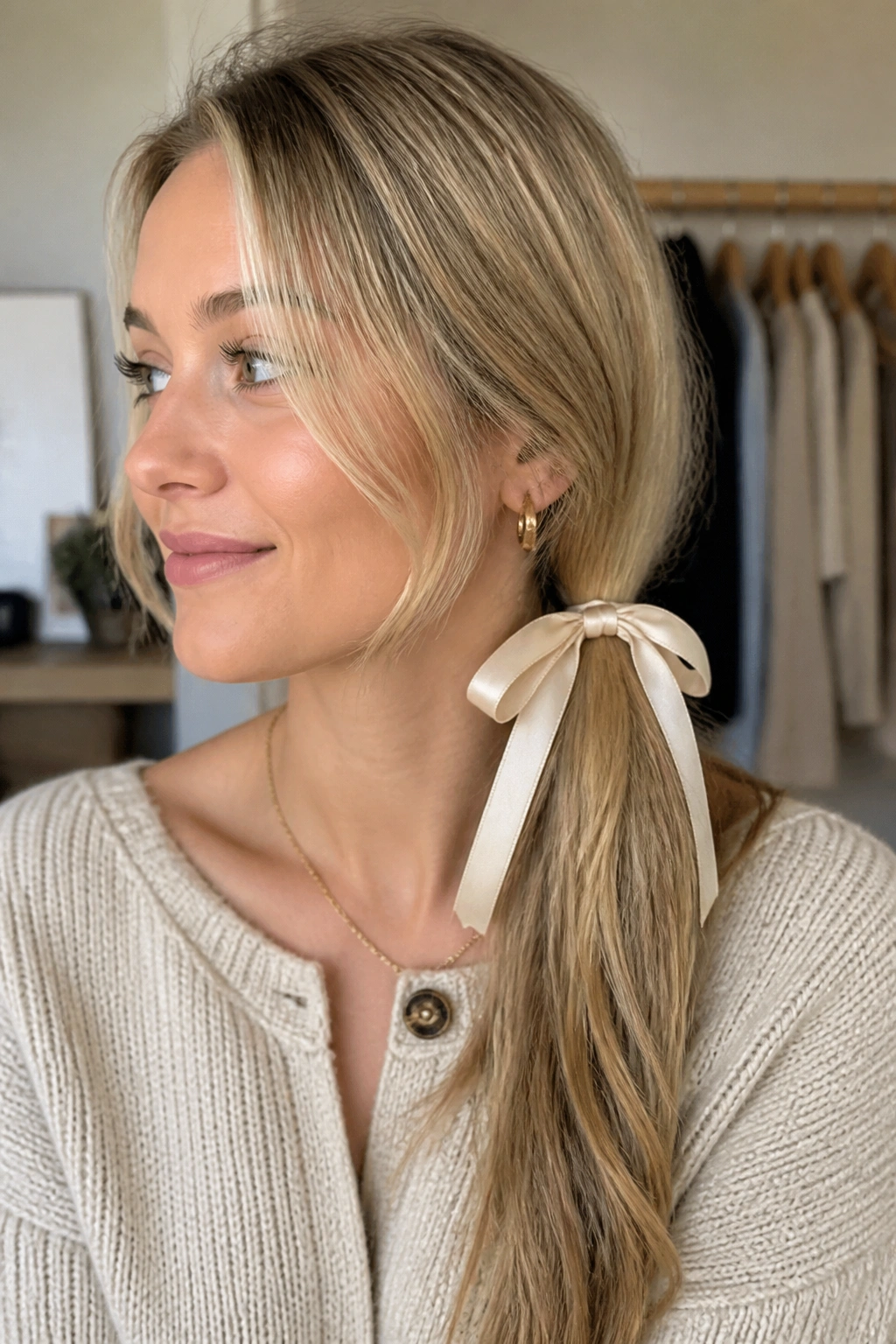
If you want the easiest upgrade, tie in a ribbon. Small bow, big difference.
A ribbon-tied side ponytail takes a basic style and gives it color, softness, or a little old-school charm, depending on the fabric. Silk feels airy and smooth. Velvet adds weight and works well with richer outfits. Grosgrain holds its shape and reads a bit more playful. On long hair, the ribbon tails can hang naturally alongside the ponytail, which keeps the whole look from feeling fussy.
Tie the ponytail first, then secure the ribbon over or just below the elastic. If the bow is too close to the ear, it can crowd the face. If it sits too low, it gets lost in the length. A spot about 1 to 2 inches below the elastic usually looks right. The ribbon should frame the ponytail, not strangle it.
This style works especially well when the hair itself is not doing anything dramatic. A simple smooth tail with a ribbon can look more polished than a complicated braid that fights the outfit. I’d use it when the clothes already have clean lines and you want the hair to echo that mood.
9. The High Side Ponytail With Flipped Ends
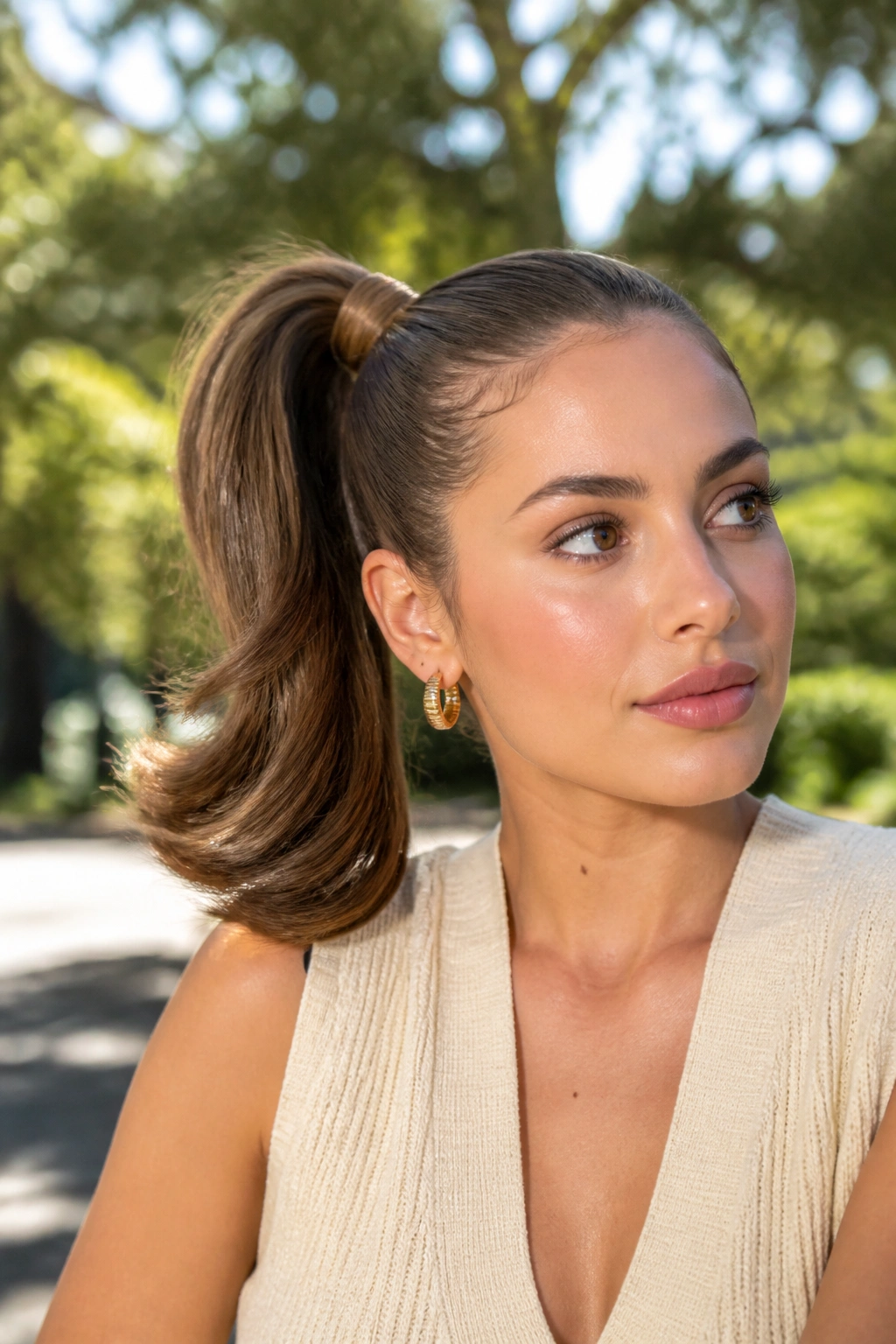
Can a side ponytail have height and still feel wearable? Yes, if you keep the lift controlled and let the ends do a little work.
A high side ponytail sits closer to the temple or upper cheekbone than the nape, which instantly gives the style more energy. On long hair, that upward placement changes the silhouette. The tail swings more. The face gets a sharper frame. And the whole thing feels less like “hair tied away” and more like an actual look.
How to Get the Bend
Use a round brush or a 1.25-inch curling iron to flip the ends outward, not inward. Outward ends make the ponytail feel light and a little retro. Inward curls can work too, but they soften the shape in a different way. Keep the base smooth and anchor the elastic securely, since a high side ponytail takes more tension than a low one.
A side part helps here, especially if you want the top to sweep across the head instead of sitting straight back. If your hair is layered, leave the shortest pieces near the front loose so they can curve around the cheek. The style looks good with a glossy finish, but it also works with a softer texture spray if you want it to feel less formal.
This is the ponytail I’d pick when I want motion. It does not sit still, and that’s the point.
10. The Half-Braided Side Ponytail
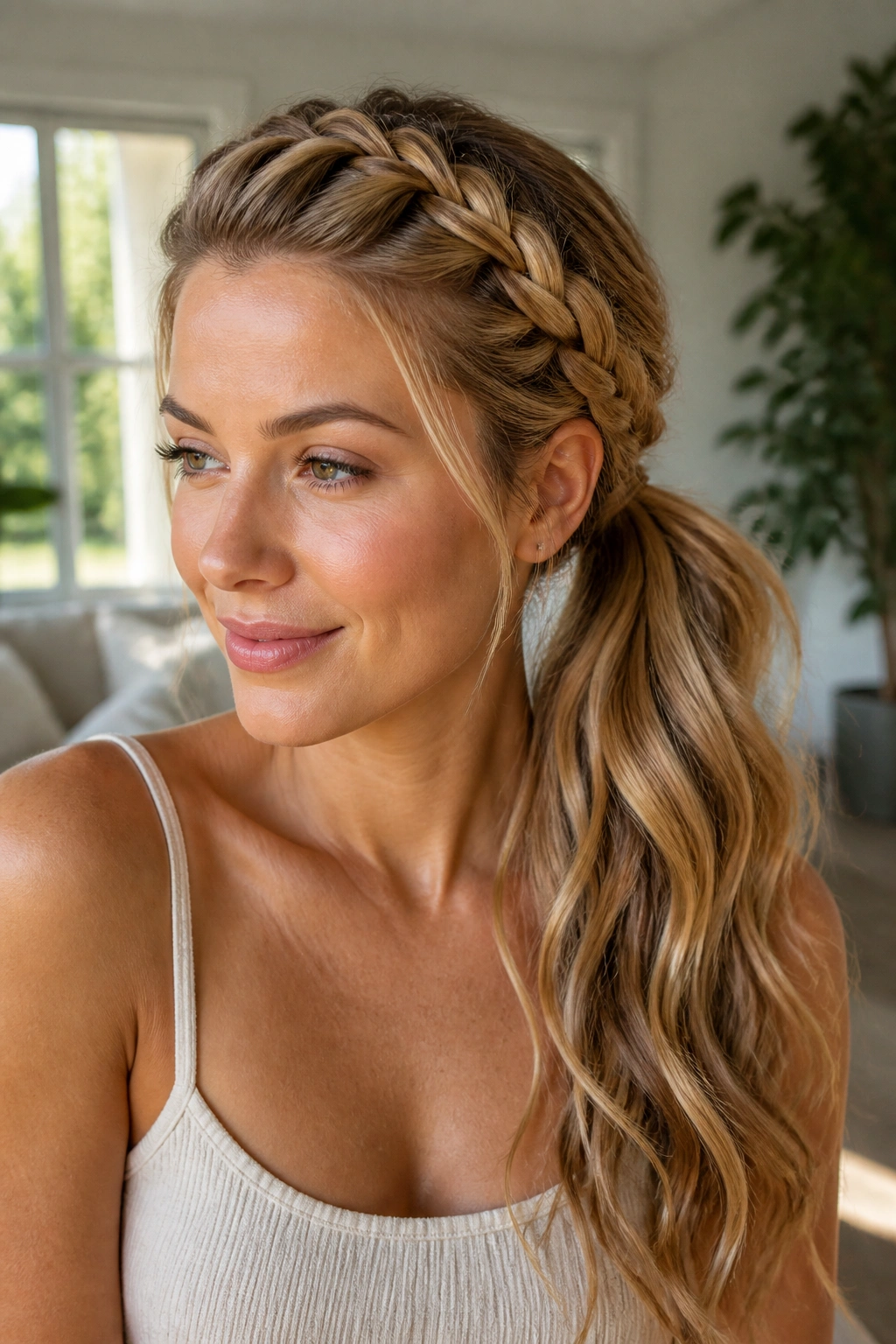
Some styles need to show off the length and keep the front from falling flat. A half-braided side ponytail does both.
The idea is simple. Braid the top section from the hairline or temple back toward one side, then gather the rest into a side ponytail and leave the lower half loose. You get the control of braiding where you need it most, and the open tail keeps the long-hair drama intact. That balance is the appeal.
A Dutch braid along the side part gives the most visible shape, while a loose French braid blends in more softly. Either way, stop braiding before the section gets too narrow. If you braid all the way down, the style turns into an ordinary braid with a tail attached. Not the same thing. The magic here is in the contrast between the woven top and the free-flowing lower length.
This style is handy for long hair that sheds layers around the face. The braid keeps those shorter pieces from falling into your eyes, while the ponytail keeps the back from feeling over-controlled. It’s also a smart choice for warm weather, because the braided top lifts some hair off the neck without locking everything away. That tiny bit of release makes a big difference.
11. The Fishtail Side Ponytail
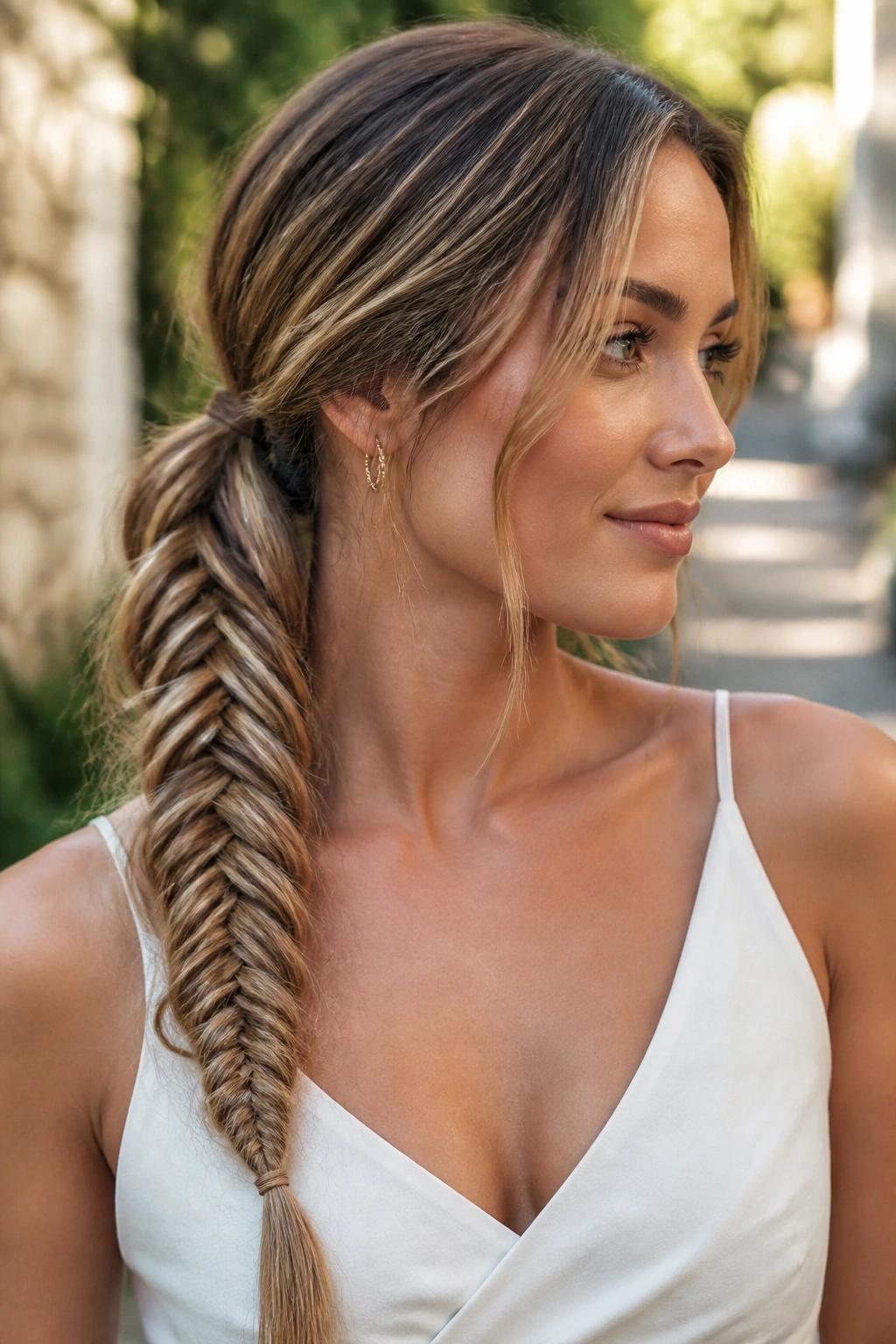
A fishtail has that woven, rope-like look that makes long hair feel richer. It looks intricate, but once the tail is secured, the process is mostly patience and small sections.
Gather the hair into a side ponytail first. Then split the tail into two sections and cross tiny pieces from the outside of one section into the other, alternating as you go. Small bites make the braid look tighter and more detailed. Bigger bites make it softer and quicker. Long hair is helpful here because the extra length lets the fishtail show off its pattern instead of disappearing after a few inches.
What Makes It Work
The tail needs grip. Very silky hair can slide apart, so a touch of texturizing spray or a bit of dry shampoo at the tail helps the weave stay put. Once the braid is done, tug the edges gently to widen it. Do not yank. Just open the braid enough so the pattern is visible and the braid feels full.
This is a style that looks good in motion, which matters. When long hair swings over one shoulder, a fishtail catches the eye because the texture changes every few inches. It’s a little more involved than a regular braid, but not by much once your hands learn the rhythm.
12. The Messy Textured Side Ponytail
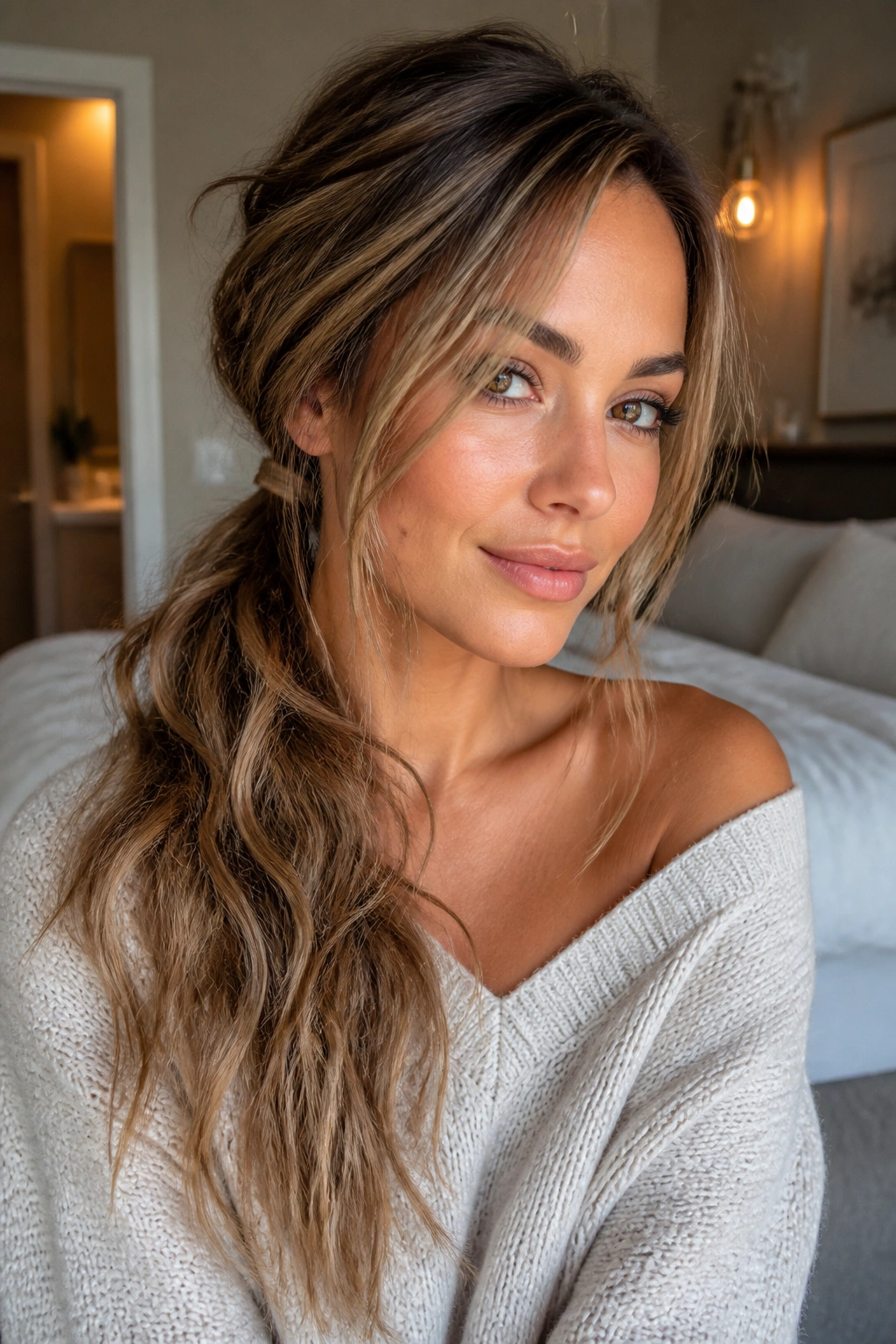
Messy does not mean random.
A messy textured side ponytail works because it has shape underneath all the loose movement. Think waves, bends, and a little controlled frizz — not a half-done ponytail that needs fixing. This is the one that saves hair that has lost its shine, lost its curl, or simply refused to cooperate after a long day.
Start with rough-dried hair or hair that has been bent with a curling iron in uneven sections. You want different sizes of wave. That makes the finish look lived in instead of manufactured. Flip the hair to one side, leave a few tendrils near the face, and secure the ponytail low enough that the volume above it can still fall naturally.
A texture spray is your friend here, but use it with restraint. Too much and the hair gets stiff at the roots and dusty at the ends. Too little and the style flattens out before you leave the house. The goal is hold with movement.
This style suits long hair with layers because the shorter pieces break up the silhouette in a nice way. It also hides second-day hair better than almost anything else on this list. If the ends are a bit uneven, the mess makes them look intentional.
13. The Side Ponytail With Curtain Bangs
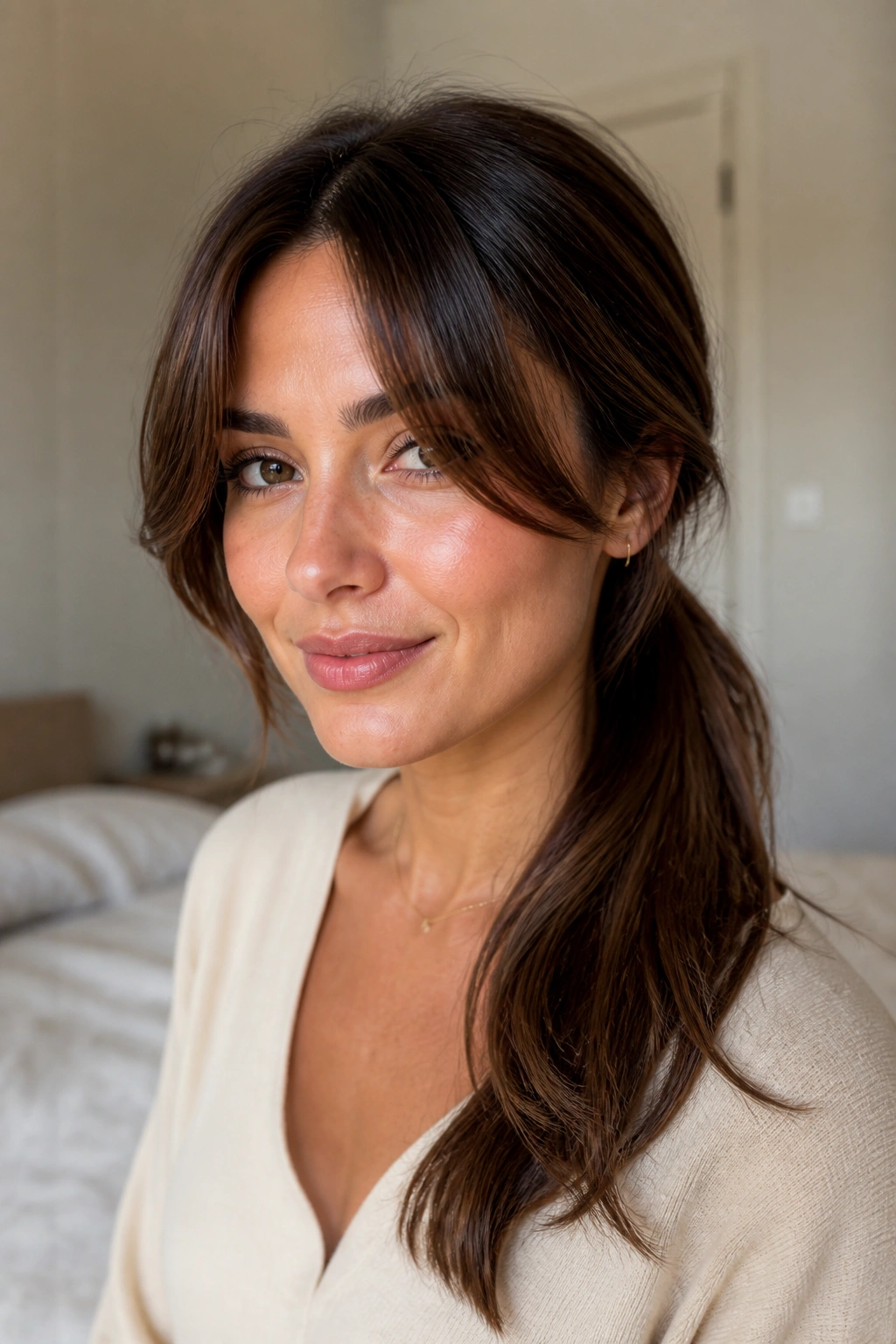
Curtain bangs and a side ponytail get along because both like a soft frame. Neither wants to be shoved too hard into place.
The bangs do most of the face work here, which means the ponytail can stay simple. A low side ponytail paired with curtain bangs feels easy and flattering. A slightly higher side ponytail gives the bangs a little lift and keeps the front from going flat. Either way, the movement around the eyes and cheeks is what makes the style click.
Where the Front Pieces Should Fall
- Let the bangs split naturally near the center or slightly off-center.
- Curl the ends away from the face for a softer bend.
- Keep the ponytail low and a little behind the ear so the bangs stay visible.
- If you do not have bangs, pull out two face-framing pieces and curl them away from the face.
I like this style because it gives long hair shape without asking the rest of the hair to do anything dramatic. The bangs carry the softness. The ponytail holds the length. That split of labor makes the whole look easier to wear, and honestly, easier to redo if one side goes a little wonky.
14. The Scarf-Wrapped Side Ponytail
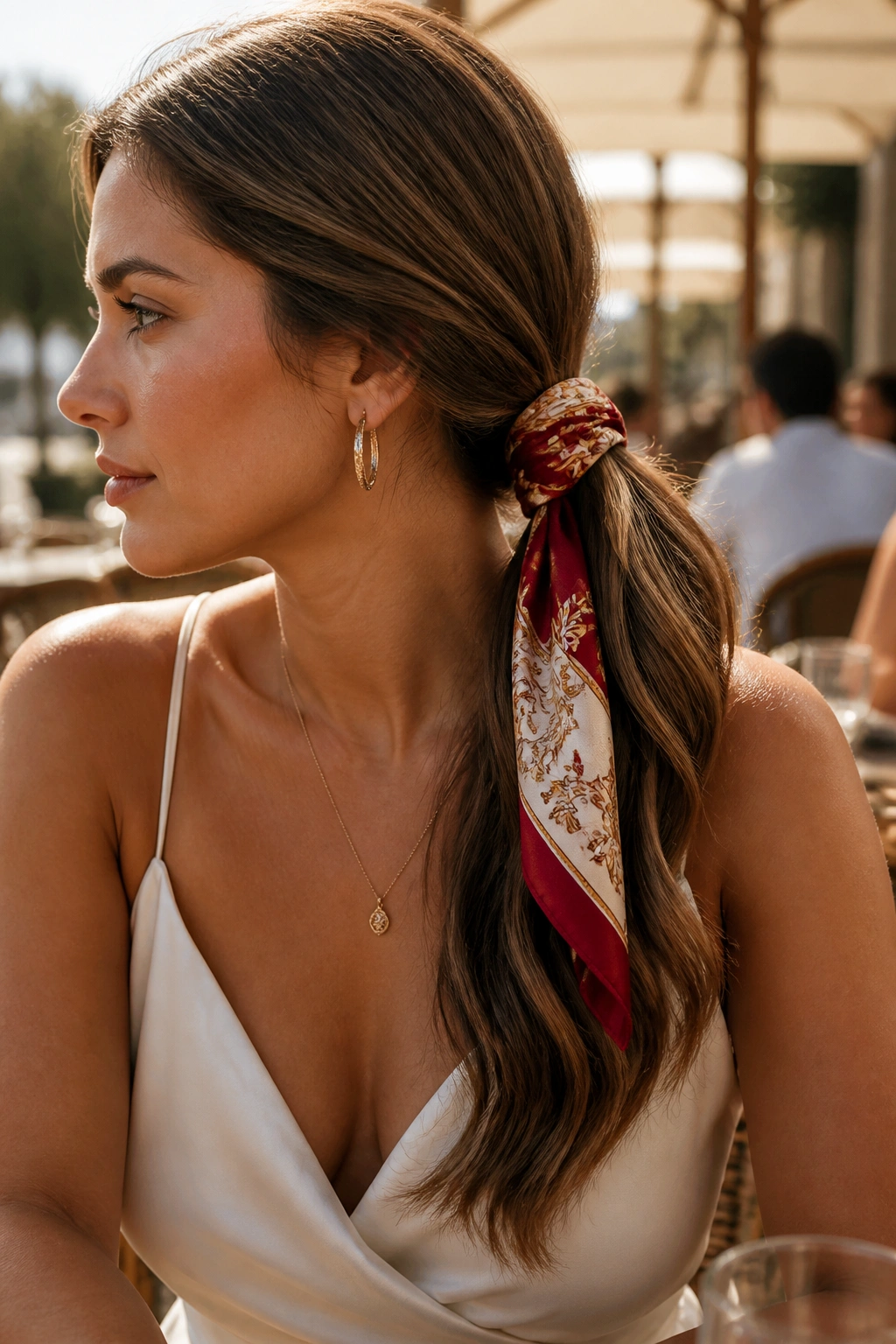
A scarf-wrapped side ponytail can rescue plain hair fast. It’s one of the easiest ways to make a simple tail feel styled, especially when the hair itself is clean but a little flat.
Choose a scarf that gives you enough length to tie securely without making a giant knot. A narrow silk scarf reads elegant. A cotton bandana feels more casual and gives extra grip. If the hair is very long, wrap the scarf around the base once or twice, then let the ends hang with the ponytail so they become part of the shape instead of fighting it.
What to Watch For
A slippery scarf can slide down if the base is too smooth, so anchor the ponytail first and rough up the roots a little. If the scarf is patterned, keep the rest of the hair simpler. If the scarf is plain, you can afford a little more texture in the ponytail itself. Do not pull the knot too tight. The pressure can leave a dent that sticks around longer than you’d like.
This style works for travel, warm days, or any time you want long hair off the face without looking like you gave up on styling. It also photographs well in the ordinary, non-magical sense: the scarf creates a clear focal point, and that keeps the ponytail from disappearing into the outfit.
15. The Low Side Ponytail With Statement Accessories
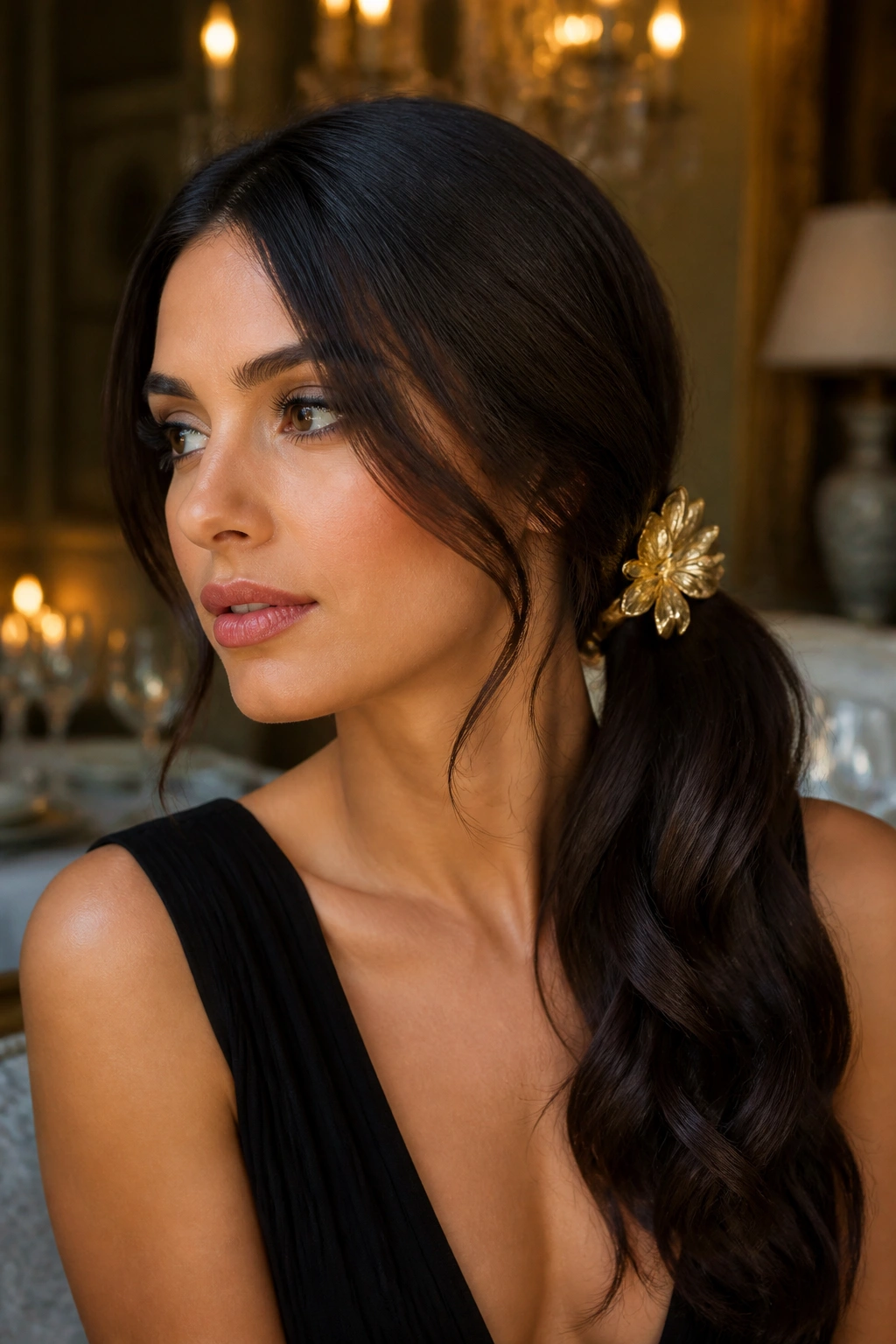
This is the style that makes long hair look dressed up without overworking it. A low side ponytail with one strong accessory — a pearl clip, a metal cuff, a jeweled comb, a row of pins — can carry an entire look if the rest of the hair is clean and calm.
The key is choosing one focal point. Too many accessories start fighting each other, and long hair can absorb clutter faster than people expect. One large clip near the base. Or a comb tucked above the ear. Or a line of pins trailing along the side sweep. Pick one lane and stay in it.
If the hair is glossy, use something reflective. If the hair is textured or waved, choose an accessory with a little weight so it does not disappear. A low side ponytail gives the accessory room to be seen, which is why this style works so well for dinners, weddings, photos, and any event where the hair needs to feel finished but not stiff.
I like this one because it has range. Swap the clip, change the mood. Keep the same base, change the outfit, and it still works. That kind of flexibility is hard to beat.
