



Ponytail hairstyles that look polished usually share one thing: the front of the style is handled with intent. Loose ends are not the problem. A messy crown is.
That sounds picky, but it’s the whole game. A good ponytail has a deliberate part, even tension from temple to nape, and an elastic that disappears or at least looks like it belongs there. You can spot the difference before you get close.
I’ve always liked ponytails because they leave room for personality. A side part changes the mood, a ribbon softens the shape, and a little texture at the tail keeps the style from looking severe. Fine hair, thick hair, curls, layers — each one asks for a different trick.
The styles below all look finished in their own way. Start with the one that fits your hair’s natural shape, not the one that seems hardest. The cleanest ponytail is usually the one you can set in place without fighting your own texture.
1. Sleek Low Ponytail With a Deep Side Part
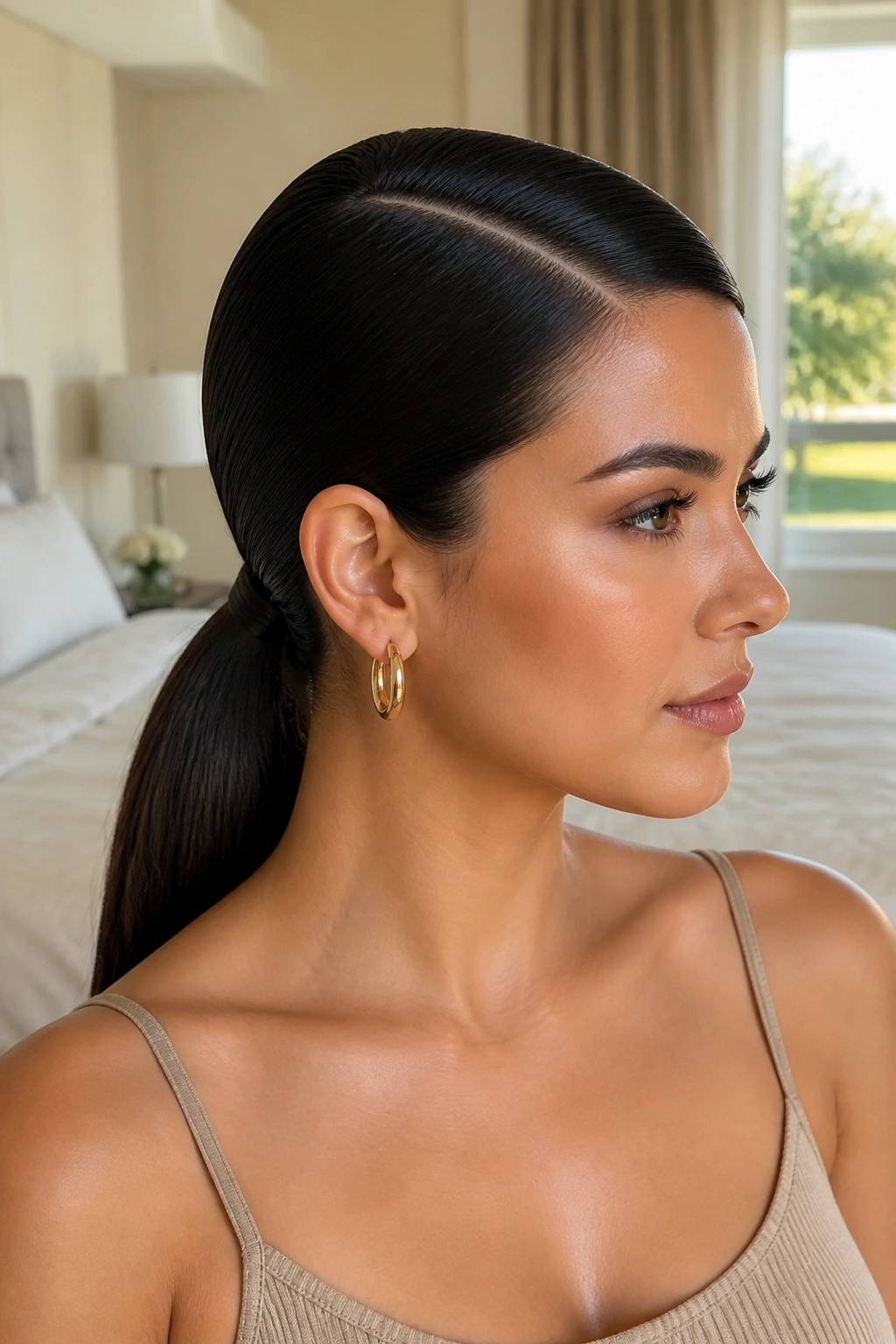
A sleek low ponytail with a deep side part is the fastest route to a sharp finish. It reads calm, tidy, and deliberate, even when the outfit is doing most of the talking.
Why the Shape Looks So Clean
The side part pulls the eye away from the elastic and gives the front of the hair a long, smooth line. That matters. A ponytail at the nape can look plain if the crown is fluffy, but a deep part and flattened roots make the whole style feel planned.
Use a tail comb to draw the part a finger-width above the arch of one eyebrow, then smooth the hair toward the opposite side with a boar bristle brush. A pea-sized amount of styling cream or gel on damp hair helps, but don’t soak the roots. You want control, not a helmet.
- Keep the ponytail low, right at the nape.
- Wrap a 1-inch strip of hair around the elastic.
- Pin the wrapped section underneath with one flat bobby pin.
- Mist the crown lightly and press flyaways down with a toothbrush or edge brush.
Best move: tuck one side behind the ear before you gather the ponytail. It gives the style a cleaner frame and makes the part look even more deliberate.
2. Wrapped-Base Middle-Part Ponytail
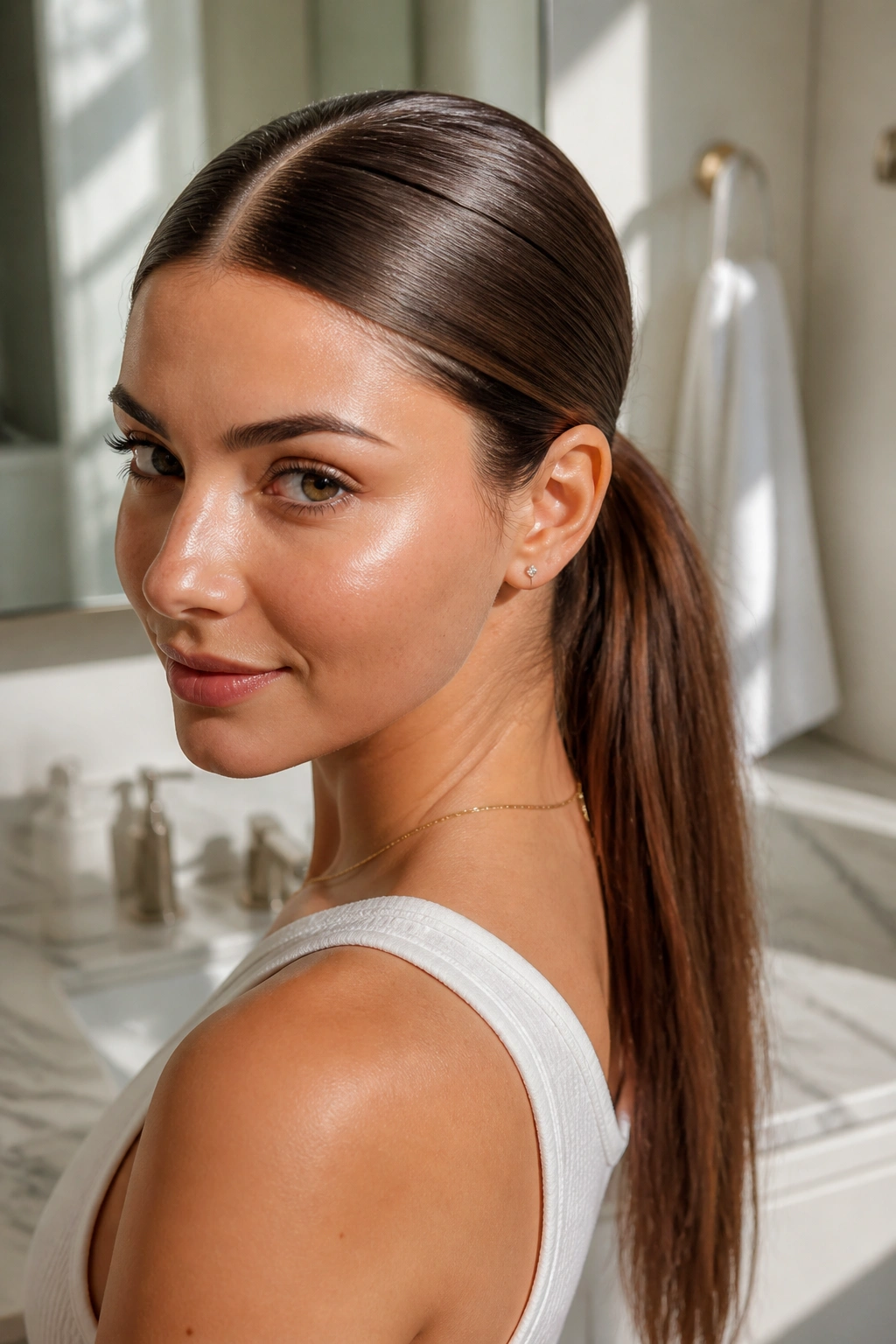
If you want a ponytail detail that instantly looks more finished, wrap the base. It is such a small move, and it changes everything.
A middle part keeps the front balanced, which is why this style feels calm instead of fussy. The wrapped section hides the elastic, smooths the visual break at the base, and makes even a simple low ponytail look like you thought about it for more than ten seconds. That’s not a small thing.
Keep the hair flat through the crown before you tie it. A little styling cream through the top layers helps, but the real work is in the brushing. Pull the hair back with firm, even strokes so there are no little ridges sitting above the ears.
The wrapped section should be narrow, about the width of your thumb. Any wider and it starts to look bulky. Any thinner and it can unravel if the hair is slippery. Pin the end underneath the ponytail so the pin disappears into the base rather than sticking out at an angle. Clean. Done.
3. Bubble Ponytail With Even Sections
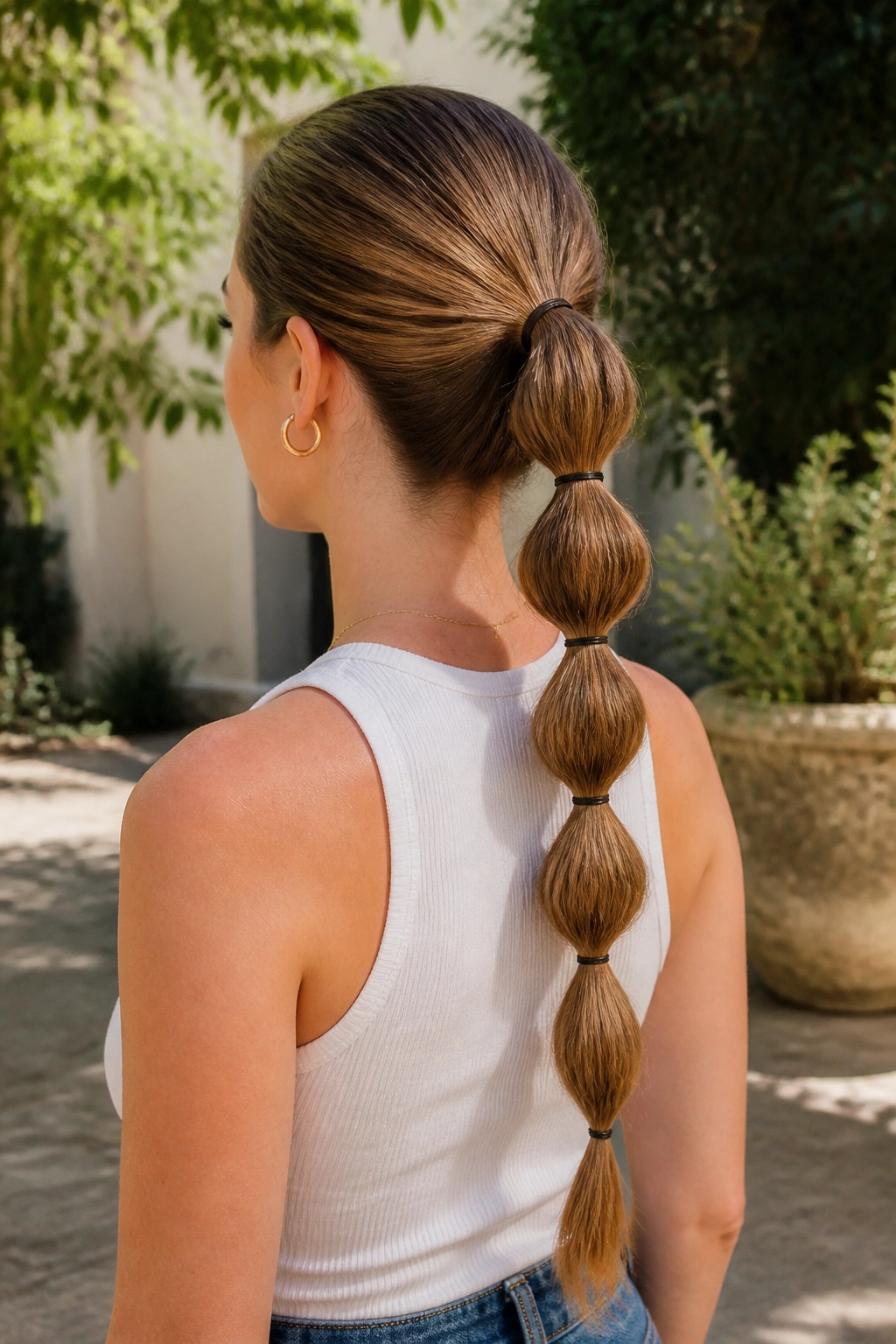
Long hair, one elastic, and ten minutes. That is enough.
A bubble ponytail looks playful from a distance, but the polished version is all about spacing. If the sections are uneven, the whole thing turns lopsided fast. If the bubbles are the same size, the style gets this neat, almost tailored look that works far better than people expect.
How to Space the Bubbles
Start with a smooth ponytail at the height you want. Then add clear elastics every 2 to 3 inches down the length, depending on how long your hair is. After each elastic goes in, gently tug the hair between the ties until the section puffs out into a round bubble. Keep the pull even on both sides.
- Use 4 to 6 small elastics for mid-back length hair.
- Tug each bubble about 1/2 inch on each side.
- Leave the last section smaller so the shape tapers cleanly.
- Smooth the crown with a brush before you start, because fixing flyaways after the bubbles are set is annoying.
A good bubble ponytail should look structured, not stuffed. If the bubbles are huge, the style gets clunky. Keep them compact and even, and the ponytail suddenly feels more styled than busy.
4. High Ponytail With a Smoothed Crown
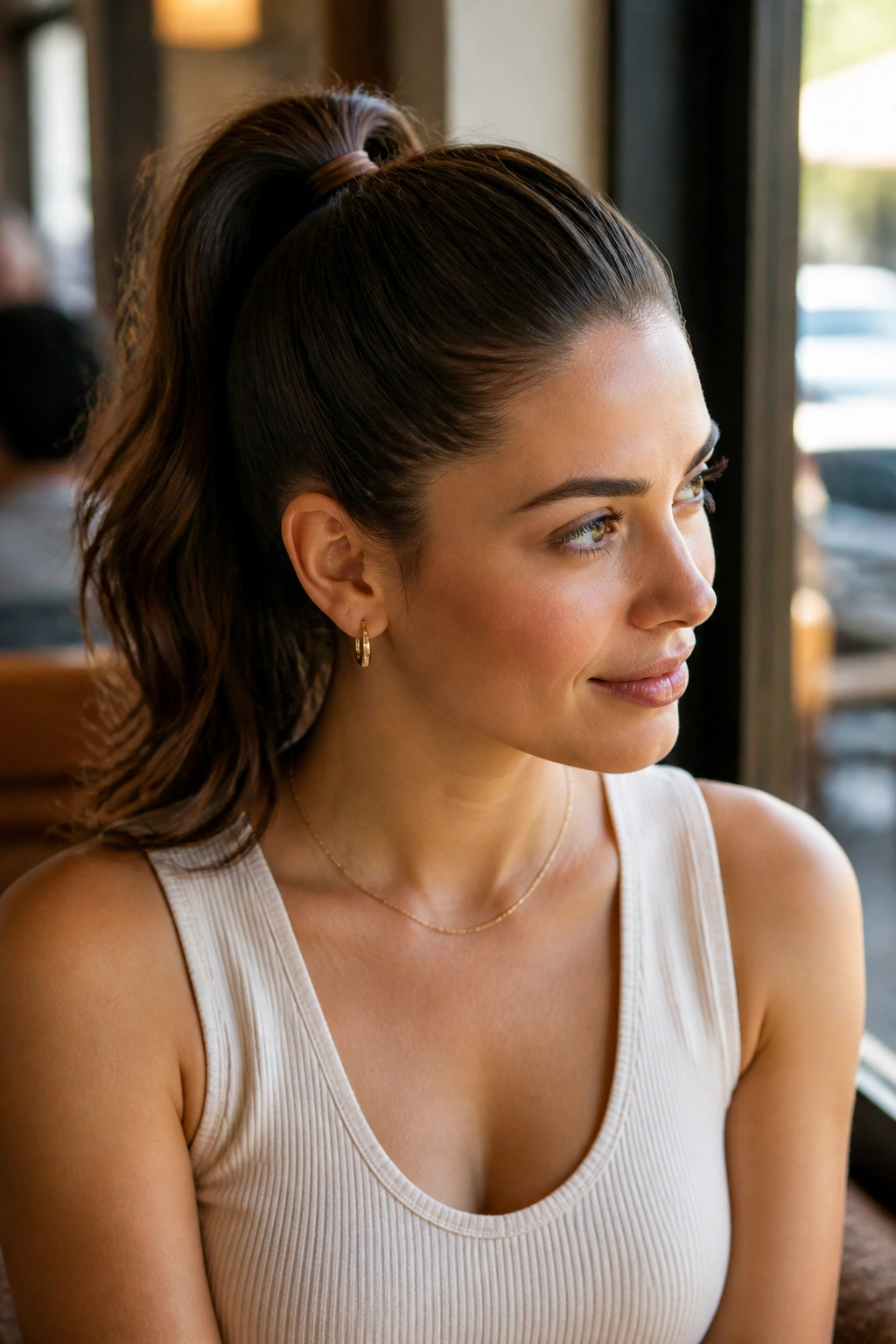
High ponytails are not the problem; rough crowns are.
Put the elastic near the top of the head, above the line where a low ponytail would sit, and the whole face opens up. The crown needs real attention here. If the roots puff up, the style looks rushed. If the crown lies flat and the tail has a clean lift, it looks crisp in a way that never gets old.
I like to smooth the front section with a light mousse or gel on damp hair, then finish with a brush once it’s dry. On dry hair, a mist of water and a dab of cream can help, but too much product makes the top look wet in a bad way. You want shine, not slickness.
For thick hair, split the ponytail into two smaller ponytails first, stack one over the other, and then merge them. It sounds fussy. It isn’t. It keeps the base from sagging by lunchtime. For finer hair, tease just the underside of the crown lightly so the ponytail sits higher without showing the tease through the top layer.
5. Braided-Base Ponytail
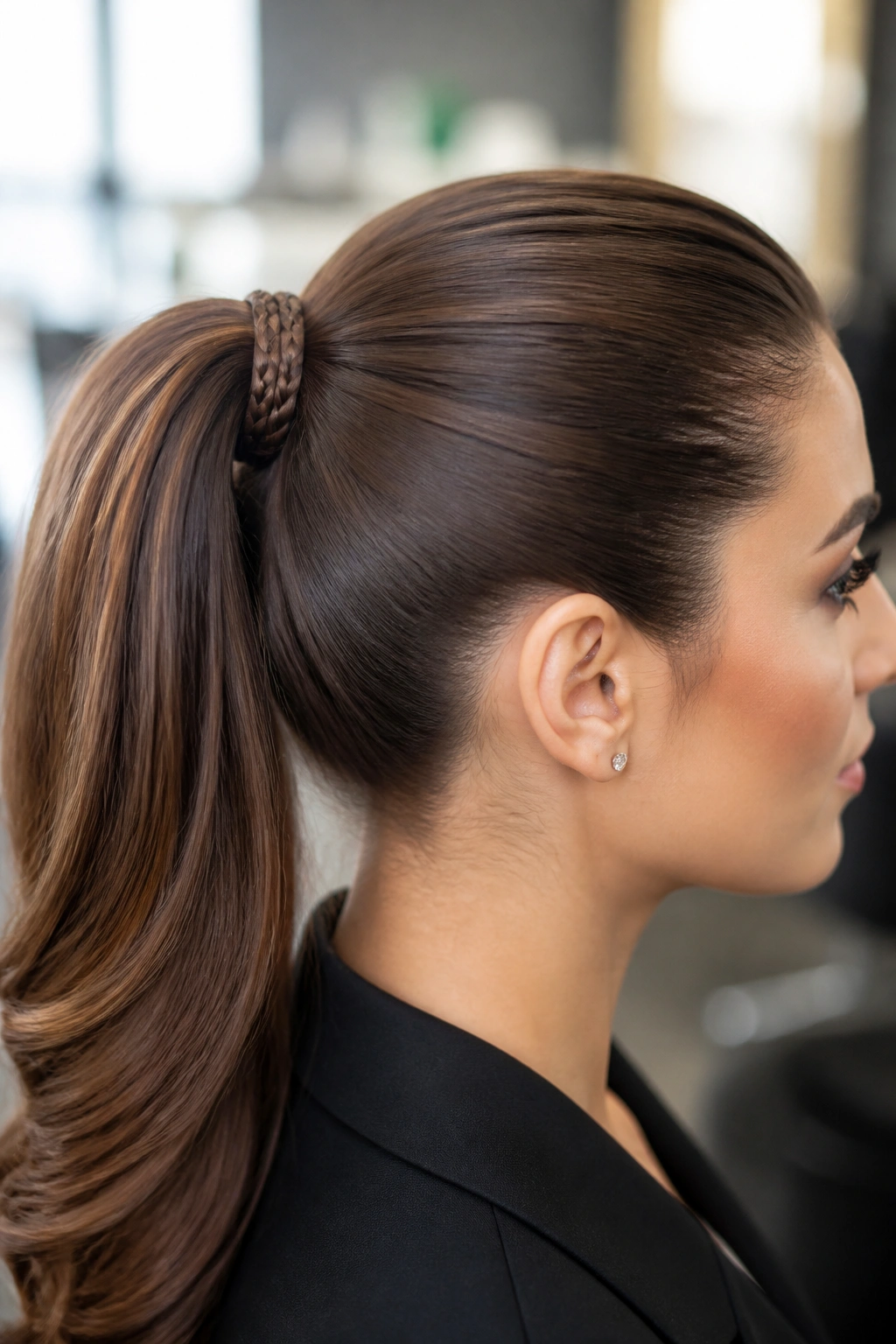
Why does a tiny braid around the base make a ponytail look dressed up? Because it adds a clean detail without making the style heavy.
The braid can start at one temple and curve along the hairline before it joins the ponytail, or it can be a small three-strand braid taken from the tail itself and wrapped around the elastic. Either way, it breaks up the plain band of hair at the base and gives the style a finished edge.
Best Hair Types for the Braid
This is a good move for medium to long hair, especially if your layers tend to slip out of a simple ponytail. Braids hold those shorter pieces in place better than a plain tie. They also work well when you want polish but not stiffness.
A few things matter here:
- Keep the braid narrow, about 1/2 inch wide.
- Braid tightly enough that it lies flat, but not so tight that it dents the hair.
- Secure the braid with a clear elastic before it joins the ponytail if the ends are slippery.
- Finish with a light mist of hairspray so the woven section stays neat.
The style has a nice balance. The braid does the visual work, and the ponytail keeps the rest of the hair simple. That combination never looks overdone.
6. Twisted Low Ponytail
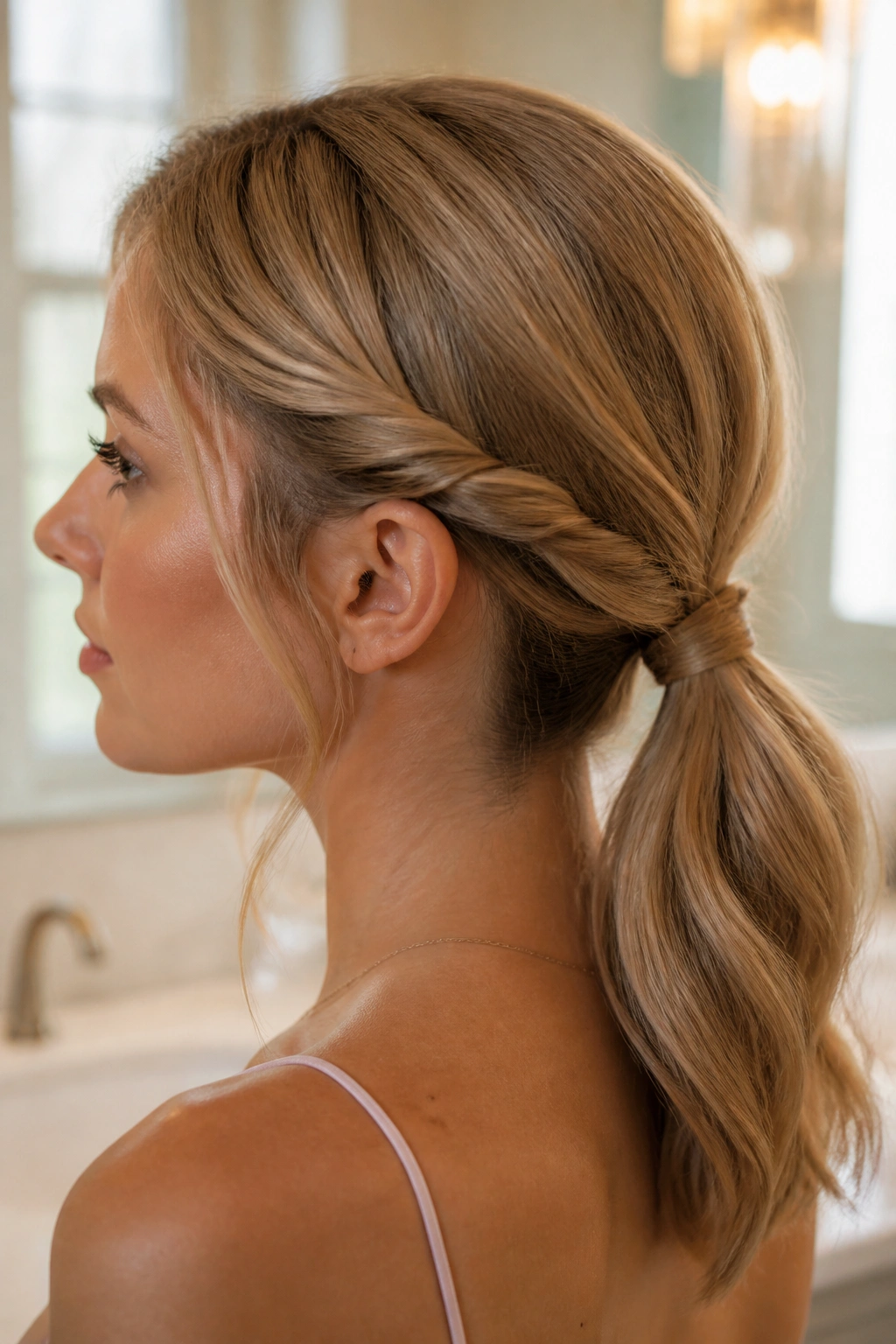
Unlike a braid, a twisted low ponytail stays softer and takes less finger work. That is the appeal.
Take a section from each side of the head, twist them back toward the nape, and meet them at the center before you secure the ponytail. The result feels tidy but not rigid. It’s a good option if you like the idea of a braided detail but don’t want the texture of a full plait.
The twist works best on hair with a little grip. If your hair is slippery, spray a bit of texturizing spray through the mid-lengths first. If it’s already coarse or wavy, you may not need anything at all. That’s the nice part — it is forgiving.
This version suits office days, dinners, and any situation where you want the hair out of the way but still need the style to feel polished. It’s not the loudest ponytail in the room. Good. It does not have to be.
7. Polished Curly Ponytail
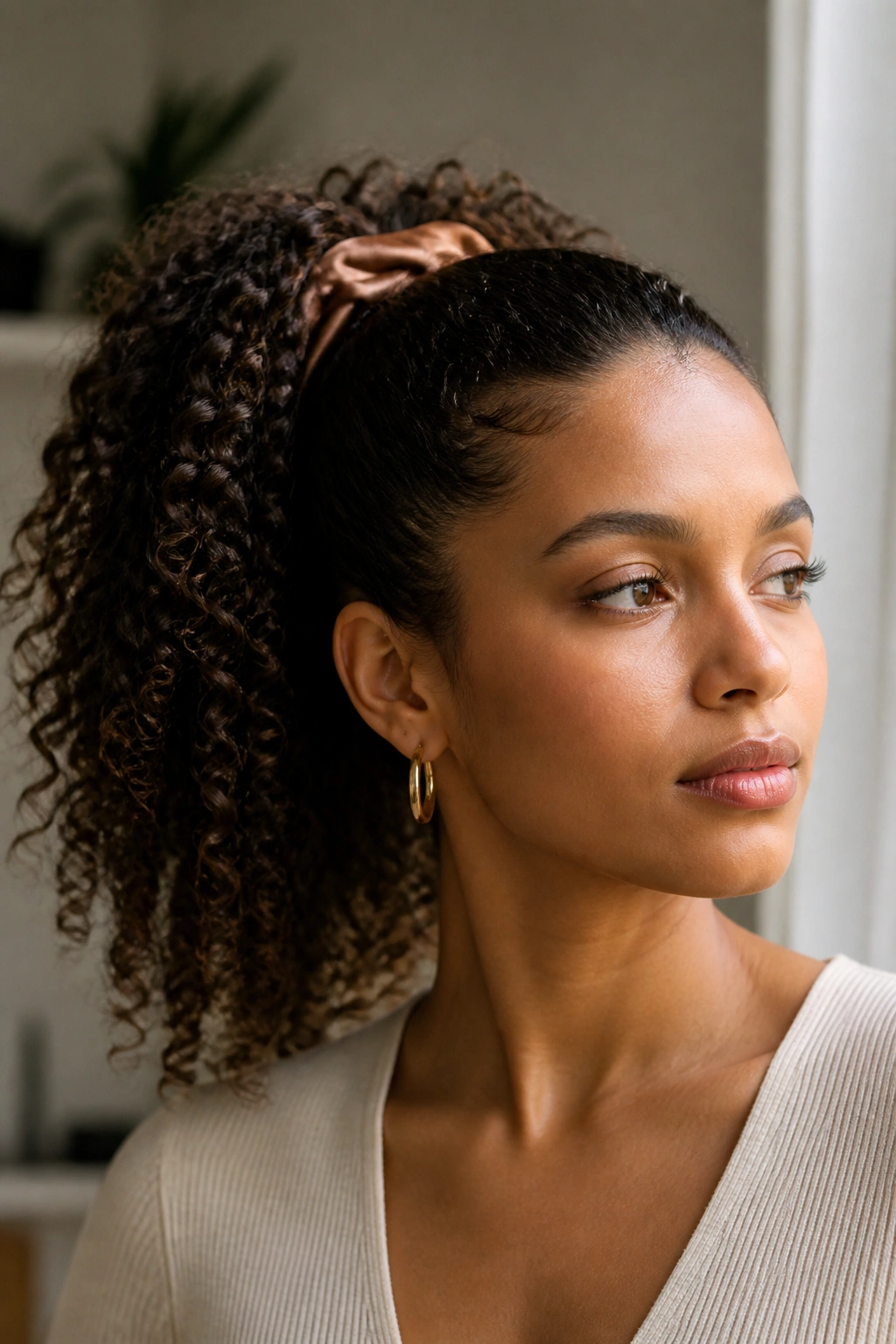
Curly hair feels different in a ponytail. The shine lives on the outside of the curls, not on a glassy surface, so the polish comes from shape and control, not from flattening everything down.
Start by defining the curls first. A curl cream or gel on wet hair keeps the pattern intact, and a diffuser helps the roots dry without losing lift. Then gather the hair gently with your fingers instead of a brush. A brush can stretch out curls and make the tail look wider than you want.
Keep the crown smooth, but let the ponytail itself stay full. That contrast is the sweet spot. If every strand is polished flat, the style can look stiff. If the crown is controlled and the tail has natural bounce, the whole thing feels intentional.
A satin scrunchie or covered elastic can help here because it won’t tug at the curl pattern the way a thin tight band sometimes does. Leave a few face curls free if they already sit well. Those pieces soften the look and keep it from feeling too pulled back.
8. Half-Up Ponytail With a Sleek Crown
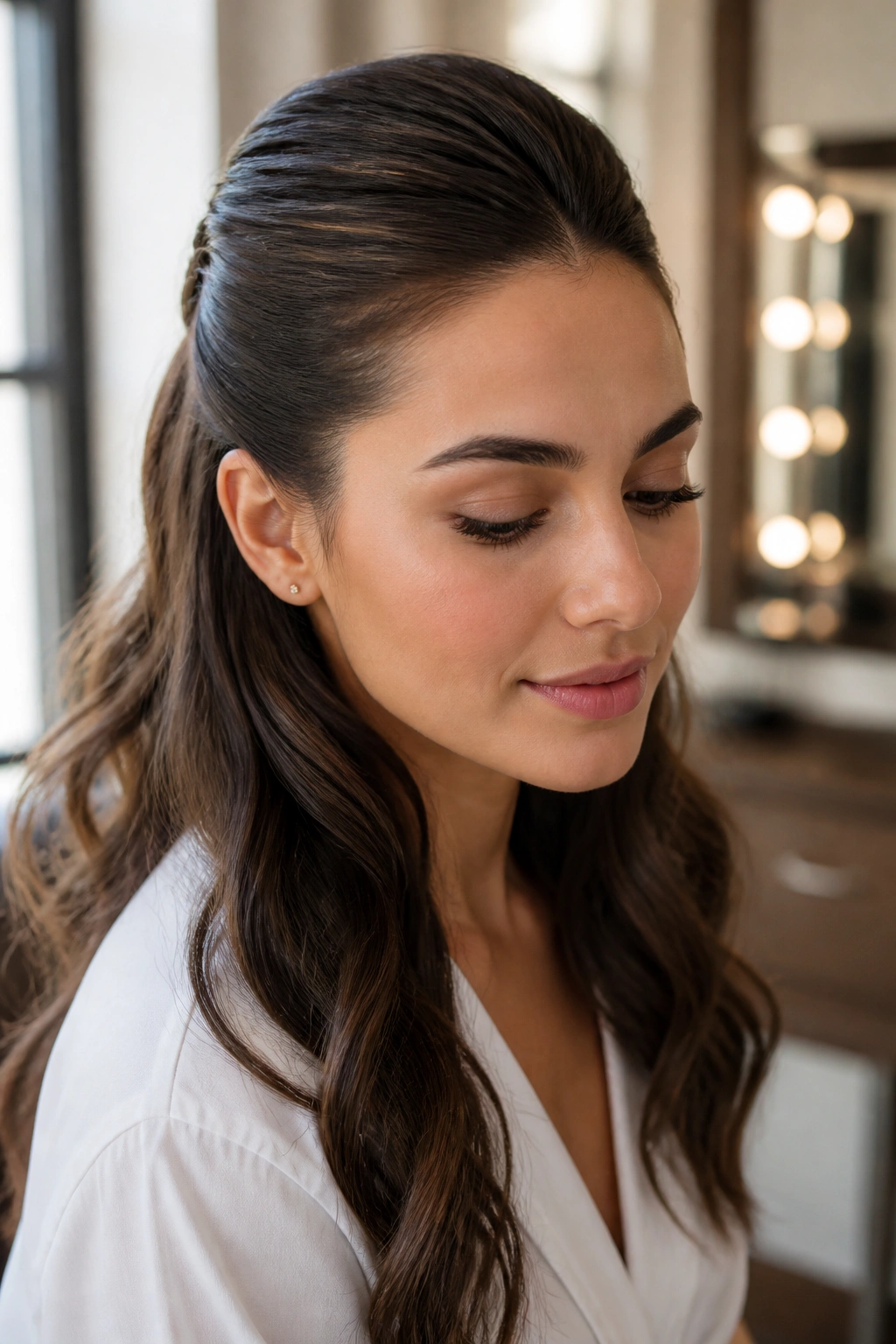
When you need hair off your face but not fully back, a half-up ponytail solves the problem cleanly.
This style works especially well on layered cuts, shoulder-length hair, and second-day hair that needs direction more than rescue. The top section stays sleek, while the lower length hangs loose and keeps the style from feeling severe. That balance is what makes it look polished rather than casual.
Pull hair from the temples and crown only, then smooth that top section with a brush before you secure it. The lower section should stay untouched except for a quick comb through the ends. If the top is neat and the bottom is free, the contrast does the styling for you.
A tiny elastic works best here. A big one can make the half-up section look clumsy. If you want a little more finish, wrap a narrow strand around the elastic or clip in a slim barrette just above it. Keep the details small. That’s where the polish lives.
9. Double-Elastic Ponytail
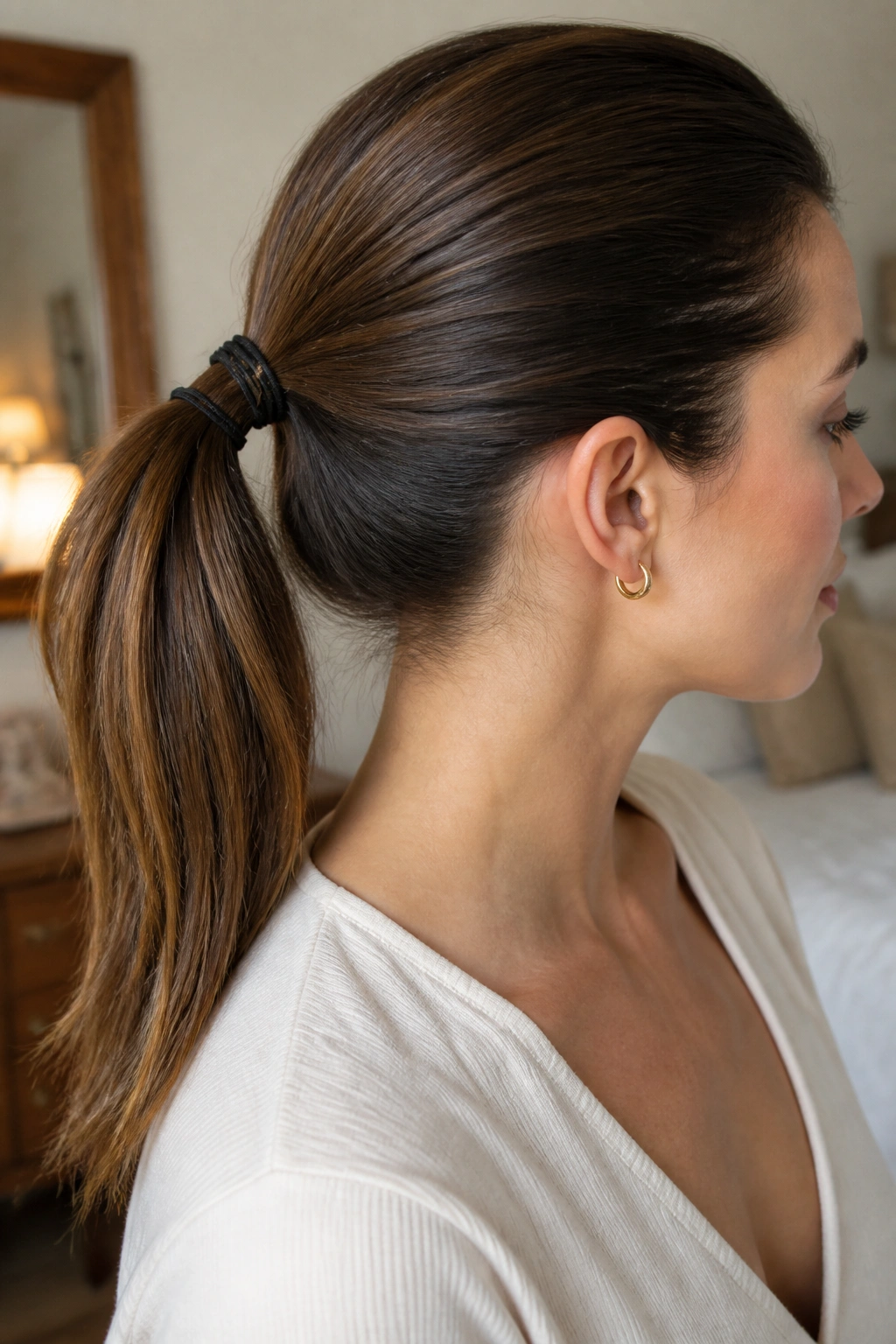
A double-elastic ponytail is one of the easiest ways to keep heavy hair from drooping halfway through the day. It looks simple, because it is.
The first elastic anchors the base. The second one goes an inch lower and takes some of the weight off the top tie. That tiny shift changes the whole structure, especially if your hair is long, thick, or a bit slippery. One elastic can sag. Two tend to hold the line better.
The Small Trick That Stops Sagging
After you place the first tie, slide the second one down just enough to create a narrow stem between them. Don’t yank it tight. The goal is support, not a kink in the hair. If the stem is smooth, the ponytail still looks refined.
This is a good style for days when you’ll be moving around a lot. It also helps if you like a higher ponytail but hate the way one elastic can collapse under the weight. If the crown is smoothed first, the rest of the style feels almost unfairly easy.
A second elastic is not a glamorous tool. It’s useful, though, and sometimes that matters more.
10. Side-Swept Ponytail
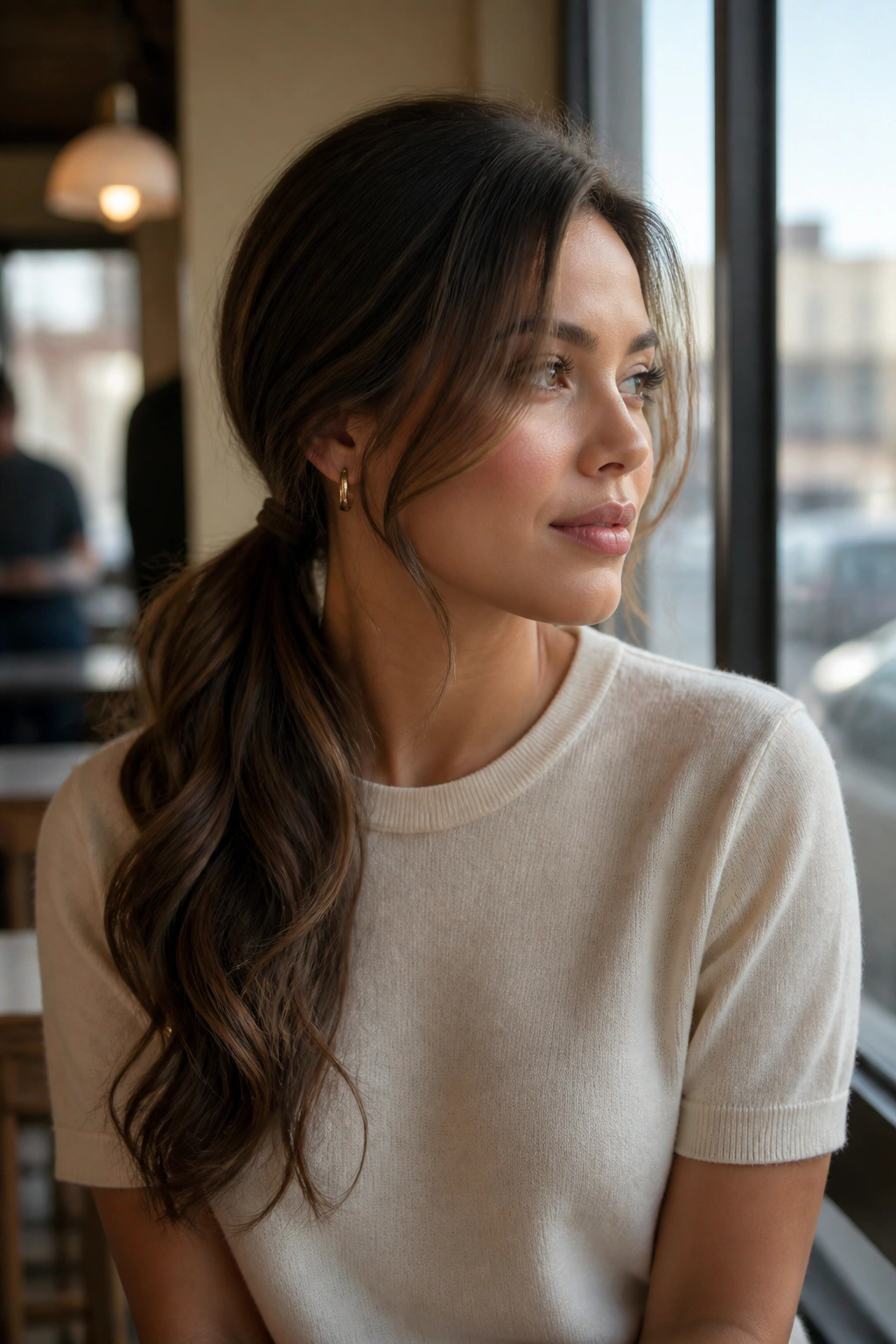
What if the cleanest ponytail isn’t centered at all? That’s the whole point here.
A side-swept ponytail takes the same basic shape and shifts it over one shoulder, which gives the style a softer line and a little movement. It pairs especially well with a deep side part, since the front already wants to travel in that direction. You’re working with the hair’s natural fall instead of arguing with it.
The polish comes from the root area. Smooth the heavier side well, tuck the smaller side behind the ear if needed, and keep the elastic low enough that the ponytail sits cleanly over one shoulder. If the style pulls too high, it starts to feel awkward. If it sits too low, it loses the sweep.
This version is nice with a blazer, a simple dress, or anything with a wide neckline. The ponytail gives the outfit a line that feels put together without trying too hard. And yes, it is a little more forgiving on second-day hair than a dead-center ponytail.
11. Low Ponytail With a Silk Ribbon
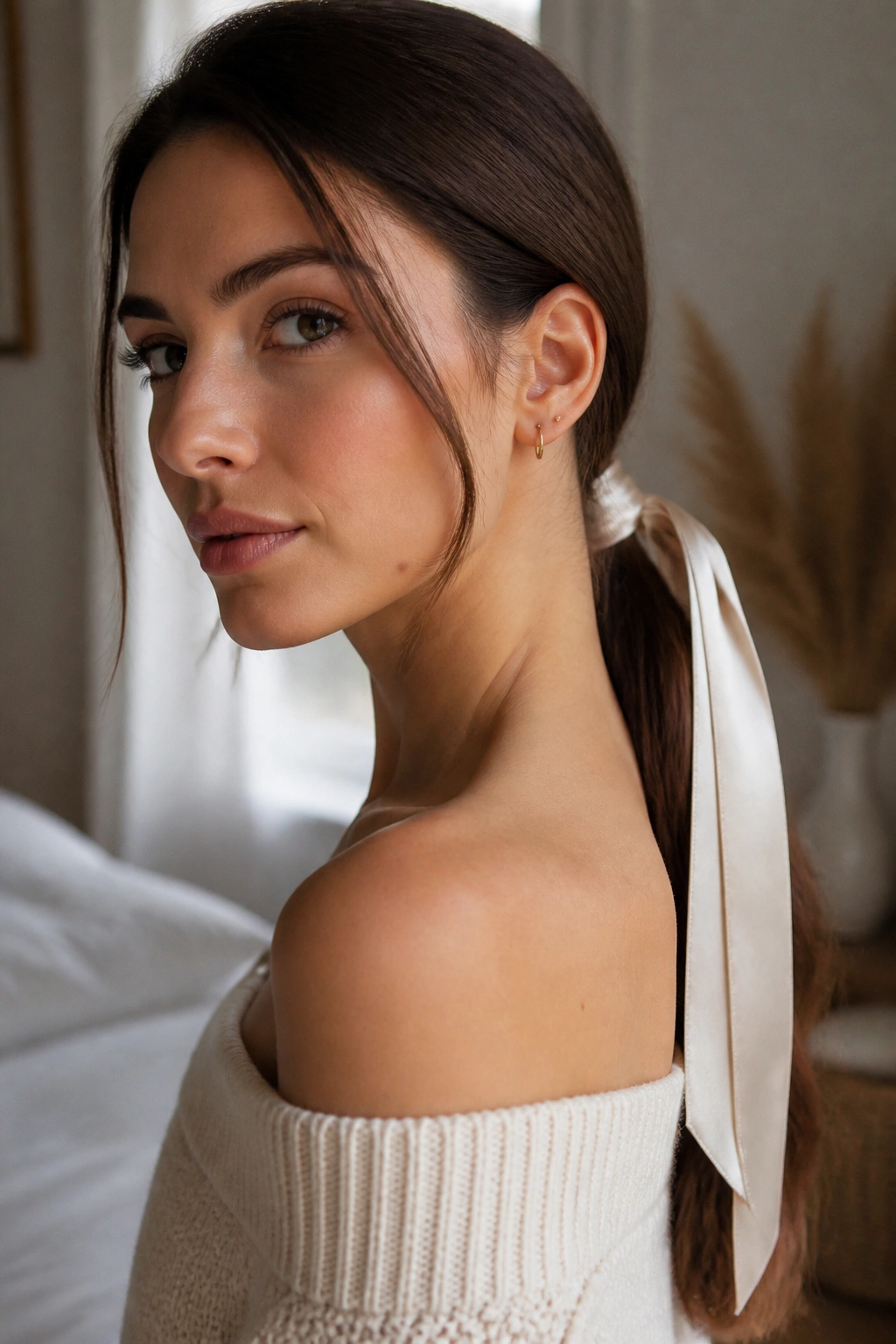
There are days when an elastic alone feels too plain. A silk ribbon fixes that fast.
Tie the ponytail first, then wrap the ribbon around the base so the knot sits underneath or just to one side. A ribbon that is about 1 to 1 1/2 inches wide tends to look clean on most hair types. Thin ribbons can disappear. Very wide ones can swallow the ponytail. Middle ground wins.
Ribbon Width and Placement
The placement matters more than people think. If the ribbon sits too high on the base, it can look like an afterthought. Let it rest right at the elastic, then leave the tails long enough to hang beside the ponytail or fall over one shoulder.
- Use a smaller bow on fine hair.
- Choose a wider ribbon on thick hair so the detail doesn’t vanish.
- Secure the ponytail with a clear elastic first if the silk is slippery.
- Pick matte ribbon for a softer look, or a smoother finish if you want more shine.
The whole style feels easy and elegant, but not in a fragile way. It looks especially nice when the rest of the hair is simple and the ribbon is the only obvious detail.
12. Wavy Ponytail With Soft Ends
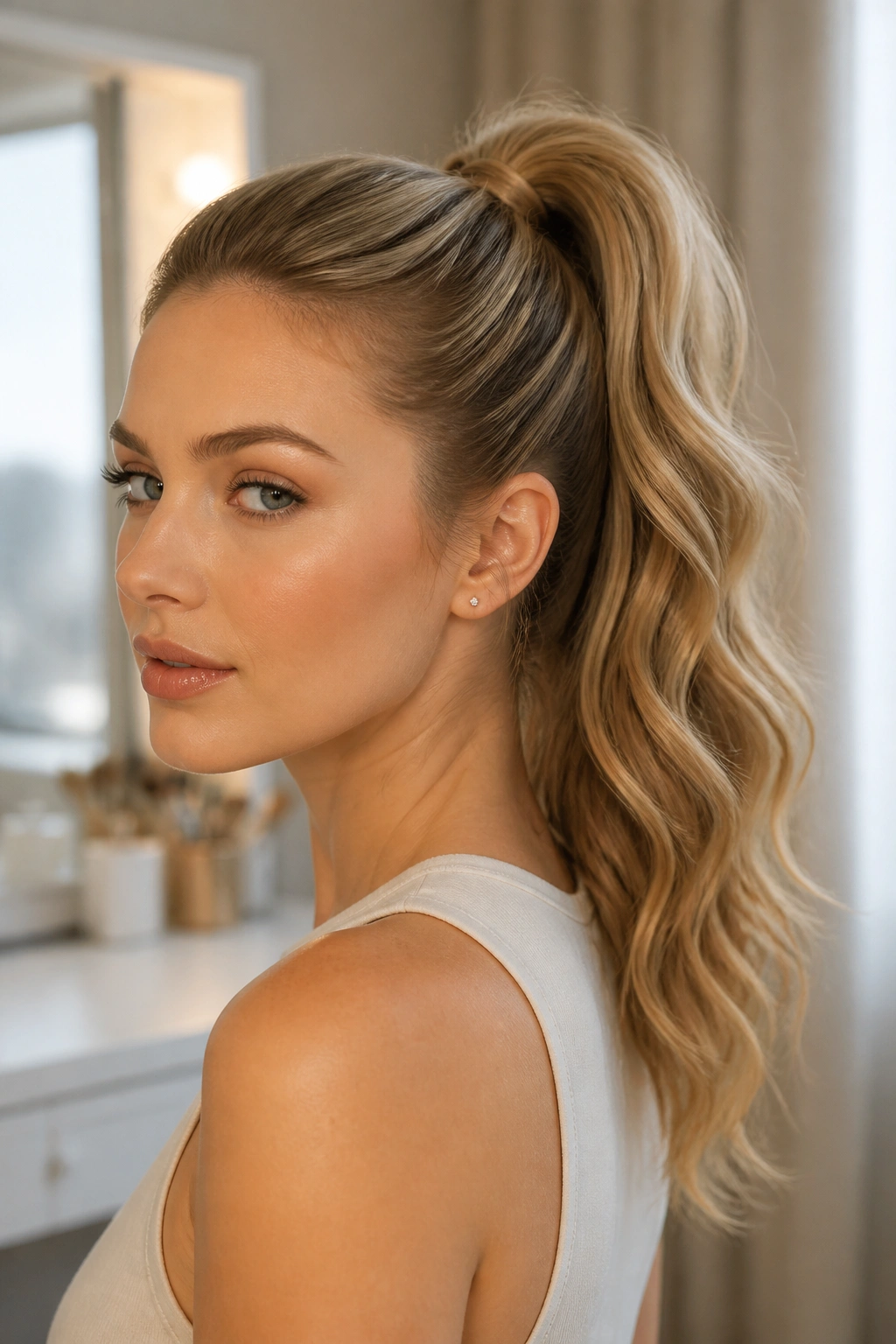
Unlike a curled ponytail that starts near the roots, this one keeps the crown smooth and puts movement only in the last third of the hair. That is what keeps it polished.
Gather the hair into a clean ponytail first. Then add loose bends to the tail with a 1-inch curling iron or flat iron, starting below the elastic so the top stays flat. Brush the waves out once or twice if you want a softer finish. Stop before the shape turns fluffy.
This is a smart choice for medium to long hair because the movement at the ends keeps the length from looking heavy. If the hair is very long, the waves also help the ponytail move instead of hanging straight and flat. If it’s shoulder length, keep the bends subtle so the tail still looks smooth.
A tiny mist of shine spray on the mids and ends can help, but only a little. Too much and the style starts to look greasy, which is not the point. You want the tail to swing, not slide.
13. Tucked-Under Ponytail
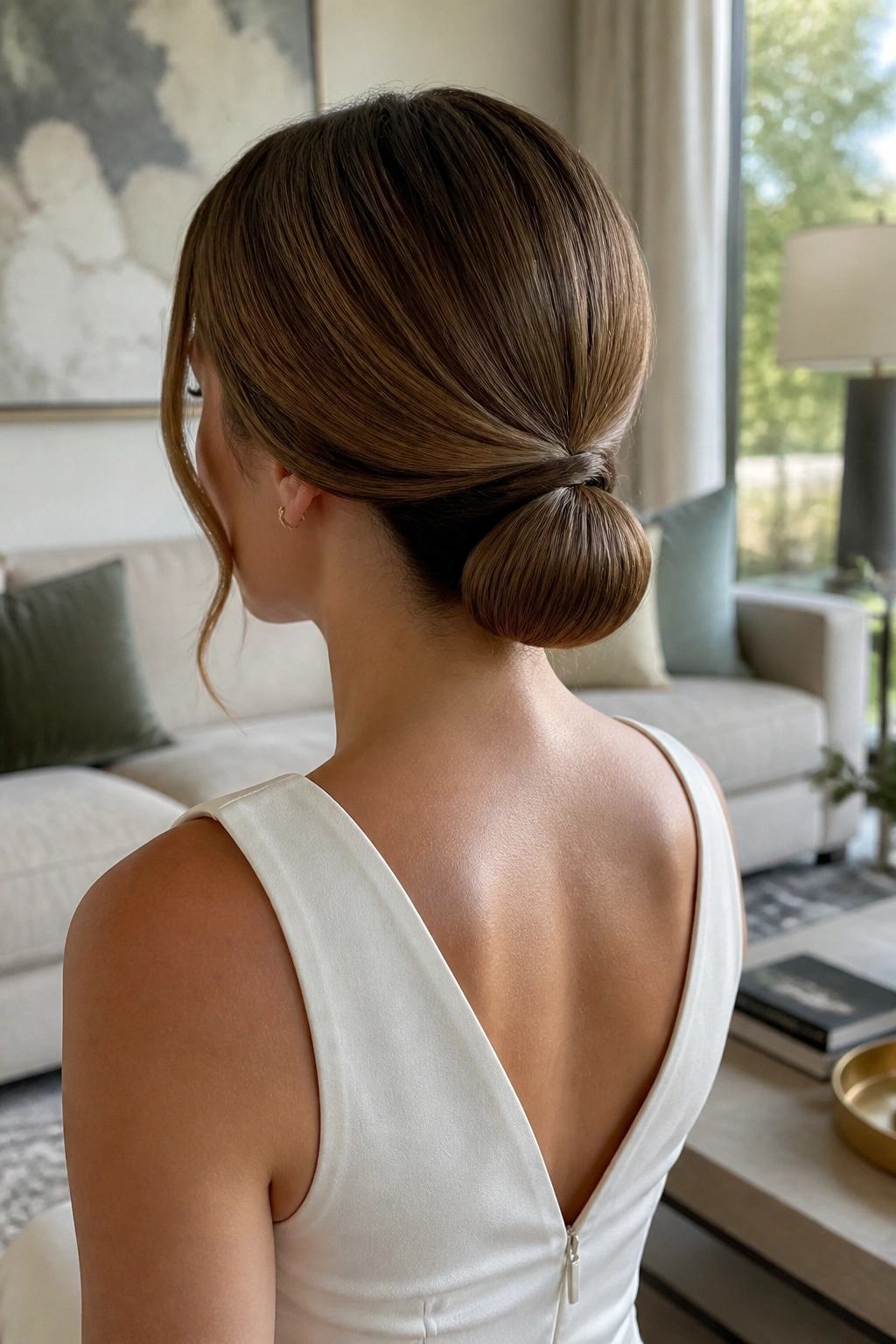
A tucked-under ponytail is what I reach for when the hair should look neat from every angle.
Tie the ponytail low, then fold the length upward and tuck the ends under the base so they disappear against the nape. A few bobby pins hold it in place, and the shape ends up looking almost like a soft roll rather than a plain ponytail. It’s one of those styles that looks more complicated than it is.
The trick is tension. If the base is too loose, the tuck slips. If it is too tight, the style loses its soft curve and starts to look stern. The sweet spot is a secure nape with enough give to fold the hair neatly underneath.
This is a good option for formal events, interviews, or any moment when you want the back of the head to look clean. It also works well when the ends are dry or a little rough, because they stay hidden instead of hanging out in the open. That alone is worth something.
14. Face-Framing Ponytail With Clean Edges
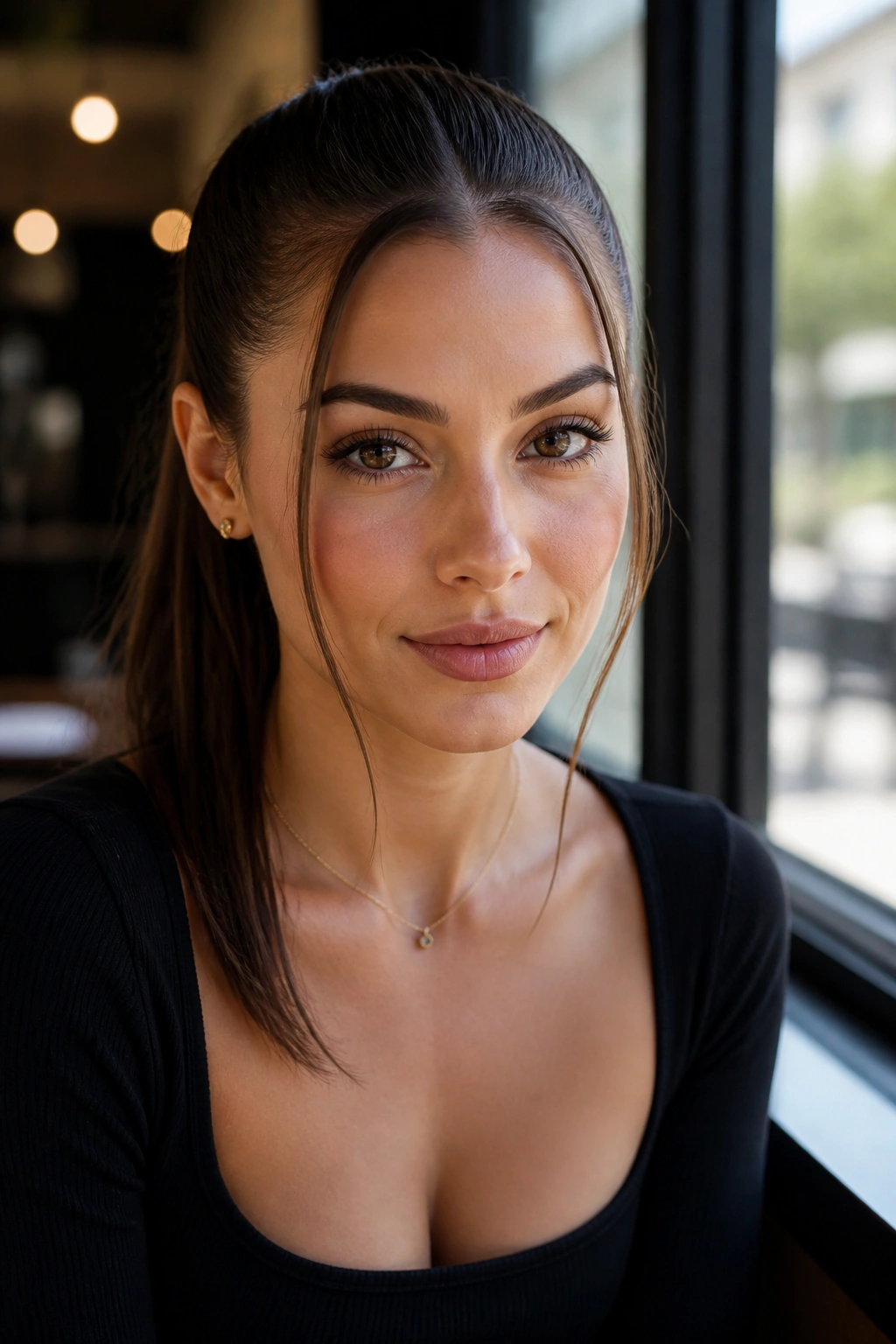
Can a ponytail leave pieces around the face and still look polished? Absolutely — if those pieces are narrow and deliberate.
The face-framing strands should look chosen, not accidental. Leave out two slim sections at the front, then smooth the rest of the hair back into a ponytail with a clean crown. The contrast between the neat top and the soft front pieces is what keeps the style from slipping into “I forgot to finish my hair” territory.
Keep the face pieces narrow, about 1/2 inch to 3/4 inch each, and curl them away from the face with a small iron if you want a softer line. Straight face-framing pieces can work too, but they need to be smooth and even. Ragged ends make the whole thing look unfinished.
A tiny bit of gel or cream around the hairline helps the edges stay neat, especially if you have baby hairs that spring out fast. Don’t overdo it. The goal is a crisp frame, not a glued-down helmet. When this style works, it looks airy and clean at the same time.
15. Loop-Through Ponytail
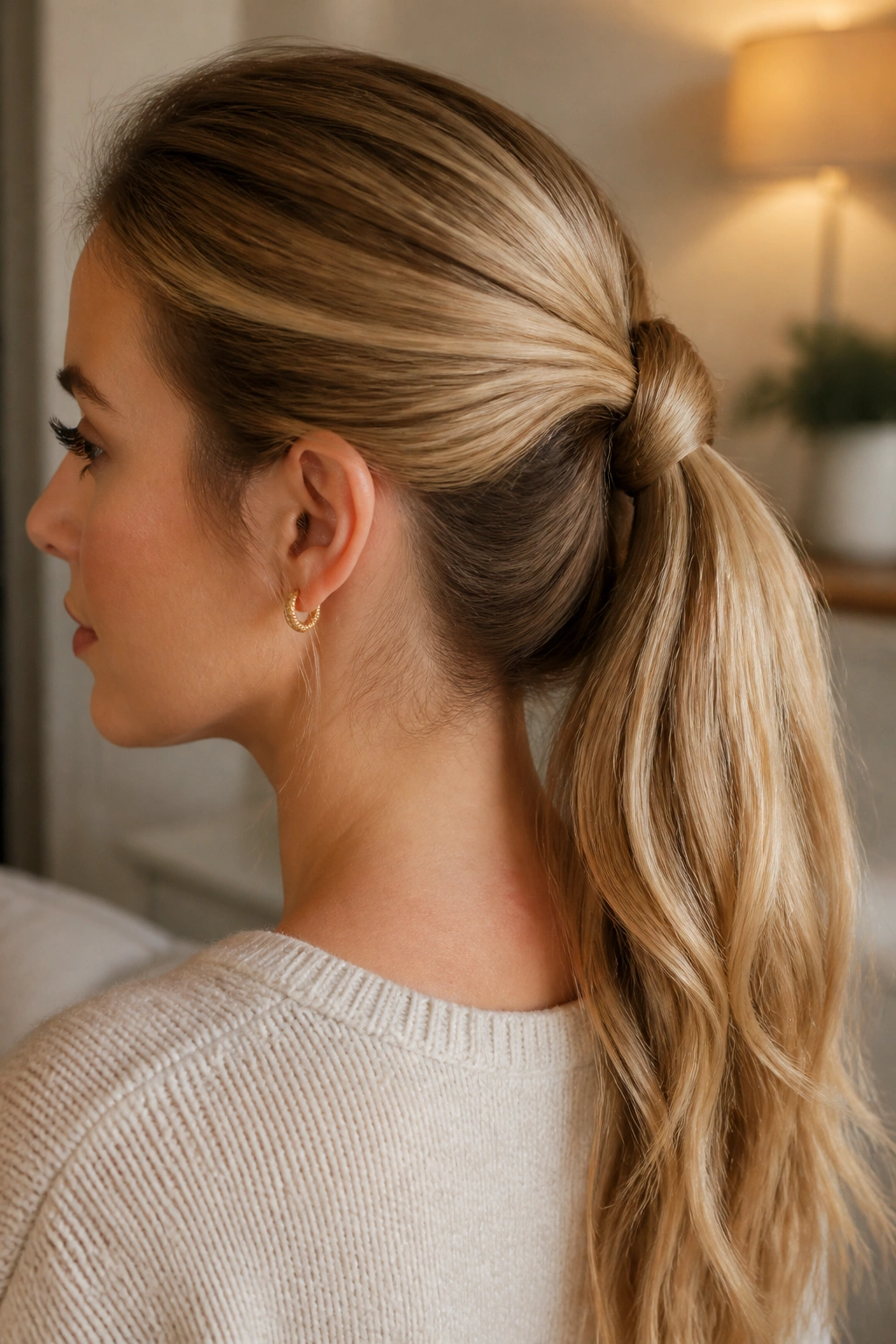
The loop-through ponytail gives you more shape than a plain tie without needing braid skills. That is why I keep coming back to it.
Make a low or mid-height ponytail, then split the hair just above the elastic to create a small gap. Pull the tail up and through that gap once, and you get a neat twist at the base that makes the whole style feel finished. If the hair is long enough, you can loop it twice for a more dramatic shape.
How to Keep the Loop Tight
The loop needs a firm base and a smooth top section. If the hair is too slippery, the twist can slide open. A little texture spray at the roots or a second tiny elastic under the first one helps keep everything in place.
- Use this on medium-length to long hair.
- Keep the gap small so the loop stays clean.
- Pin the ends underneath if the tail is thick.
- Add a narrow ribbon or barrette if you want the base to stand out a bit more.
This style has a neat, almost tailored look that works well with straight hair and lightly waved hair. It gives you one extra detail without making the ponytail fussy. That balance is the reason people remember it.
Final Thoughts
A polished ponytail is not about piling on tricks. It usually comes down to three things: a clean crown, a clear shape, and one detail that feels intentional instead of random.
The easy version is fine. The better version is usually the one with a better base. Wrap the elastic, change the part, add a braid, or hide the ends — any one of those moves can change the whole read of the style.
If your hair is fine, start with styles that create structure, like the wrapped base or double-elastic ponytail. If your hair is thick or curly, choose shapes that work with the bulk instead of flattening it. That is where the style starts to feel natural instead of forced.
A ponytail is one of the few styles that can look relaxed and precise at the same time. When the lines are clean, the rest takes care of itself.
