



Shoulder-length hair on an oval face can look clean and flattering, or it can land in that awkward middle place where the ends sit too heavy and the whole shape loses life. The difference is rarely dramatic. One inch here, a better part there, or a smarter line through the ends can change the whole feel.
That is why shoulder-length hair for oval faces is such a useful category. Oval faces already have balanced proportions, so the haircut does not need to do heroic work. It just needs to place the weight in the right spot, keep the face from looking longer than it is, and avoid that flat, dragging shape that sometimes happens when hair hits the shoulders with no plan.
The cuts that work best usually do one of three things: they build movement around the cheekbones, they sharpen the outline with a clean edge, or they add enough texture that the hair feels lived-in instead of stiff. Bangs can help. So can a side part. So can a blunt line that looks almost severe in the mirror but softens up the second you move.
Here are the versions I keep coming back to, and the reason I like them is simple: they do the job without making you wrestle with your hair every morning.
1. Soft Side-Part Lob That Tucks Behind One Ear

A soft side part is one of the easiest ways to give shoulder-length hair a little attitude without making it look styled to death. On an oval face, that off-center line breaks up the symmetry just enough to feel modern, and the tuck behind one ear keeps the shape open around the jaw.
Why It Works on Oval Faces
The side part pulls the eye diagonally instead of straight down. That small shift matters because oval faces already have balanced length, and you do not want the haircut to overemphasize the vertical line. A tucked side also gives you a nice glimpse of the cheek and jaw, which keeps the whole look from feeling too covered up.
This cut shines when the hair is medium thick or fine. Fine hair gets a little lift from the part change, while thicker hair gets relief from the way the side opening keeps the shape from feeling boxy.
- Ask for the length to hit right at the collarbone or just above it.
- Keep the ends soft, not razor-thin.
- Try a 1 to 1.5 inch off-center part.
- Use one ear tuck and leave the other side loose for contrast.
Best move: keep a tiny bend in the front pieces so the tucked side does not collapse flat against the head.
2. Textured Waves That Sit Right at the Collarbone
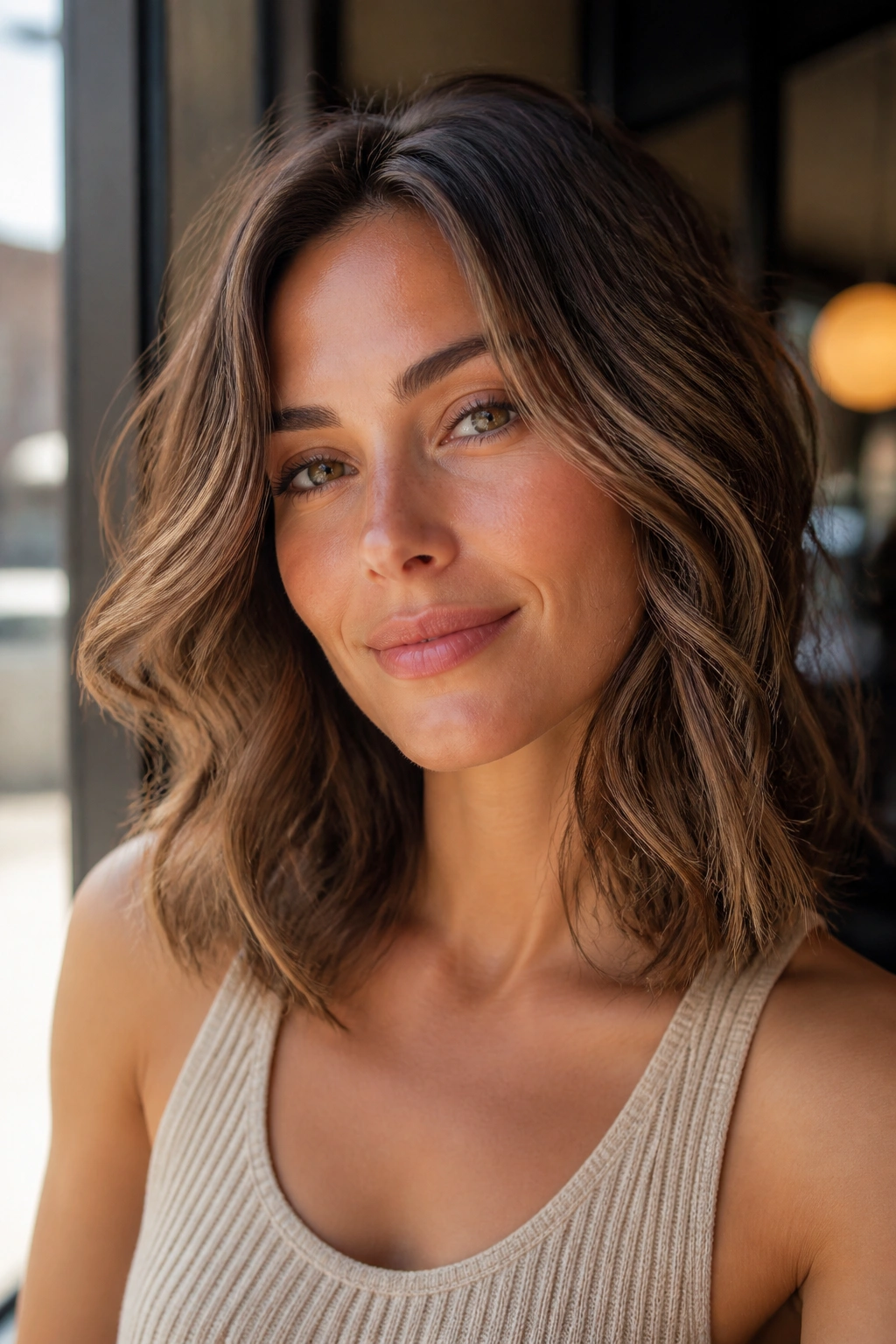
If you want the easiest shoulder-length haircut for oval faces, textured waves are usually the first place to start. They add width where you want it, soften the line around the neck, and keep the haircut from looking too tidy. That little bit of mess is what makes it work.
The sweet spot is a wave that bends through the mid-lengths and relaxes at the ends. Not tight curls. Not beach-hair chaos. Just enough movement to keep the cut from sitting like a block. On an oval face, that kind of texture brings attention to the center of the face and cheekbones without making the jawline disappear.
I like this shape on hair that has a natural bend, but it also behaves well on straight hair if you use a 1-inch curling wand and leave the last inch out. Don’t curl every piece in the same direction. That is the part people skip, and then they wonder why their waves look staged.
A light cream or spray with a little grip is usually enough. Too much product makes shoulder-length hair sag, and once it sags, it starts to read as tired rather than relaxed. That’s the line to watch.
3. Blunt Collarbone Cut for a Sharp, Clean Line

Why does a blunt collarbone cut look so good on an oval face? Because it uses shape, not tricks. There is no heavy layering to distract from the line, and no strong graduation to make the ends flare out in odd ways. The result feels crisp, almost tailored.
This cut gives hair a thicker look at the bottom, which is a gift if your strands are fine or medium and tend to separate. It also keeps the face open. Oval faces can carry that kind of clean outline without getting swallowed by it, and that is the part people often underestimate.
If your hair is naturally straight, the blunt collarbone cut is almost unfairly easy. It can air-dry into a neat shape and still look deliberate. On slightly wavy hair, the line softens just enough to keep it from feeling severe. That little bend in the texture is a nice thing.
How to Style It
Use a blow-dry brush or flat brush and keep the ends rounded just a bit under. A tiny inward bend at the shoulders stops the cut from flipping out in a clumsy way. If you want a sharper finish, run a flat iron over the last two inches only.
A center part works here. So does a deep side part if you want a little more drama. What does not work well is half-hearted layering that sits too high and leaves the bottom edge thin. That kind of cut loses the point.
4. Feathered Flip Ends That Bounce Out at the Shoulders
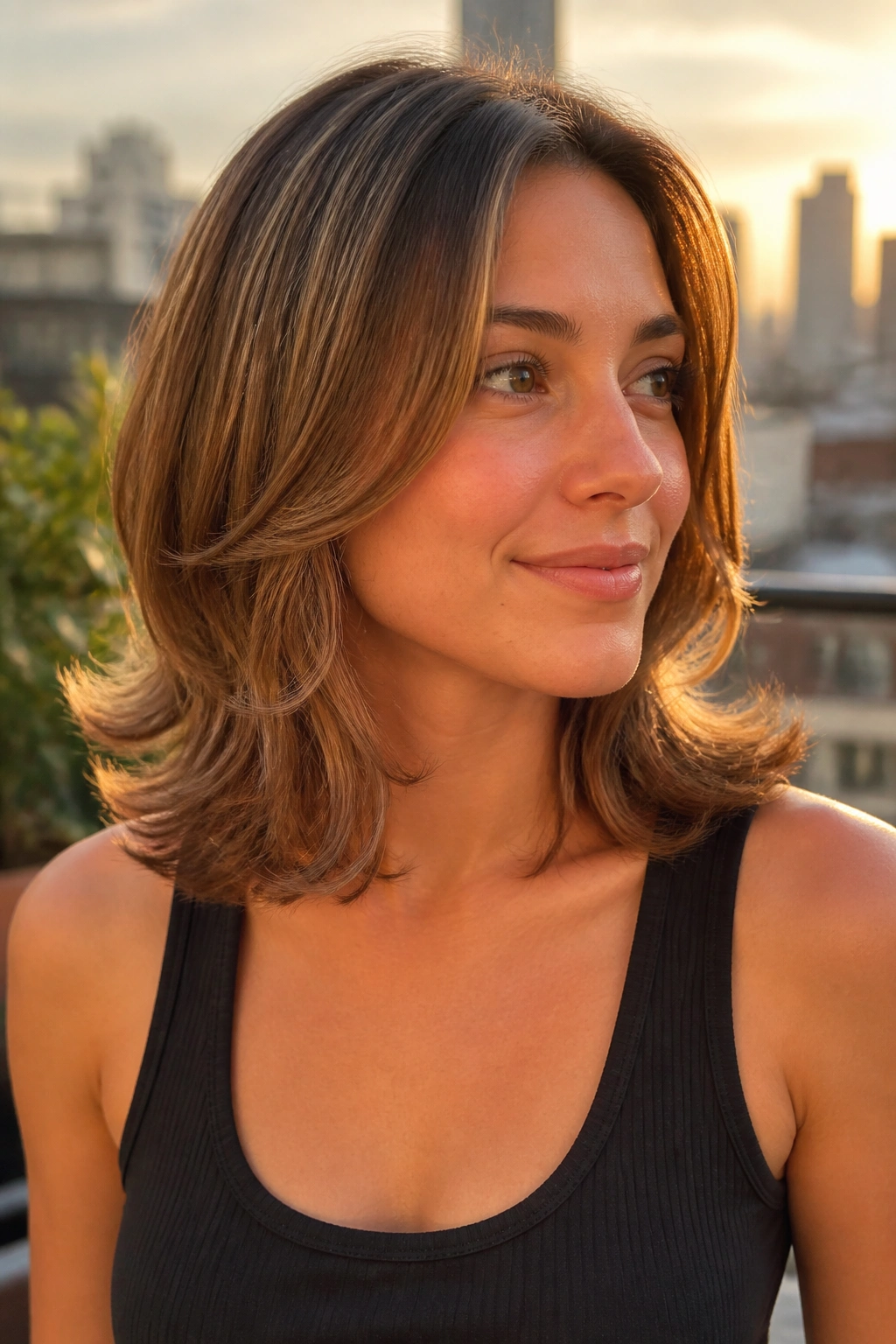
Picture hair that swings at the ends instead of hanging there. That is the whole appeal of a feathered flip cut at shoulder length. It gives oval faces a little motion near the shoulders, which keeps the style from feeling too long or too straight.
The flip adds energy right where the hair meets the body. That matters more than it sounds. Shoulder-length hair can get trapped against coats, collars, and sweater necks, and once that happens the whole cut starts to look heavy. A feathered edge breaks that up.
- Ask for long layers through the last 3 to 4 inches.
- Keep the crown fairly smooth.
- Use a round brush or blow-dry brush to direct the ends outward.
- Finish with a light spray, not a sticky one.
The flip should feel intentional, not retro-costume. I like it best when the ends bend away from the neck just enough to keep the neckline visible. That makes the whole cut breathe a little.
5. Long Face-Framing Layers for Oval Faces
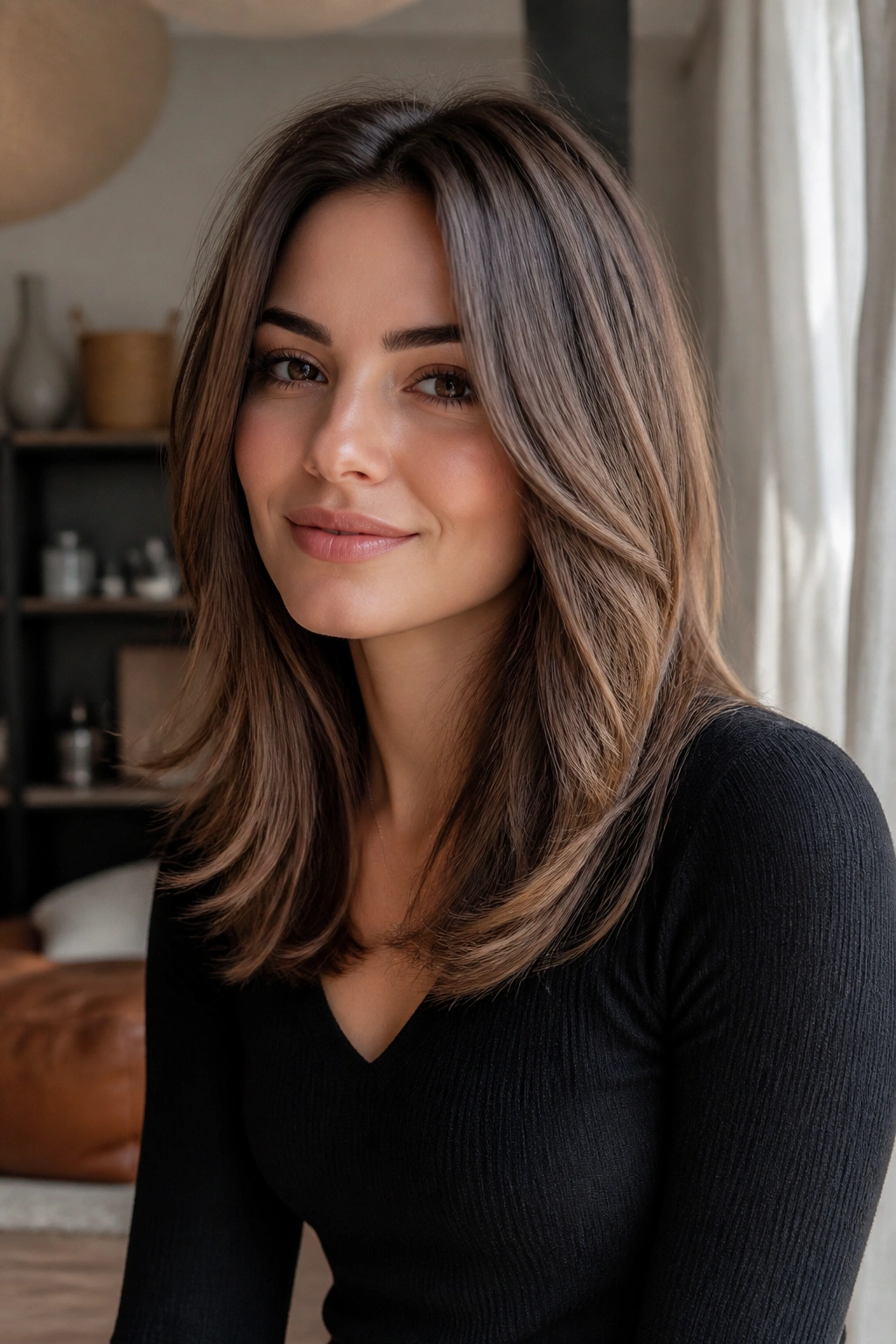
Long face-framing layers are one of those cuts that looks plain on a hanger and gorgeous in motion. On an oval face, they work because they keep the length you want while softening the edges that can otherwise make shoulder-length hair feel like a single sheet.
The key is where the layers start. Too high, and the cut gets choppy. Too low, and you lose the face-framing effect entirely. The nicest version usually starts somewhere around the cheekbone or a touch below, then drifts down toward the collarbone. That shape opens the face without narrowing it too much.
What I like most is how adaptable it is. You can wear it sleek, bend the front pieces with a curling iron, or let it air-dry into something loose and casual. It still makes sense in all three versions.
There is also a quiet benefit here: these layers make growing out bangs much easier. The front pieces blend into the rest of the cut instead of looking like an obvious afterthought. That saves a lot of awkward in-between months.
A small detail matters here. Keep the shortest front piece long enough to skim the cheek, not jump straight to the jaw. That tiny difference keeps the face looking open instead of boxed in.
6. A Softer Shag With Airy Crown Layers
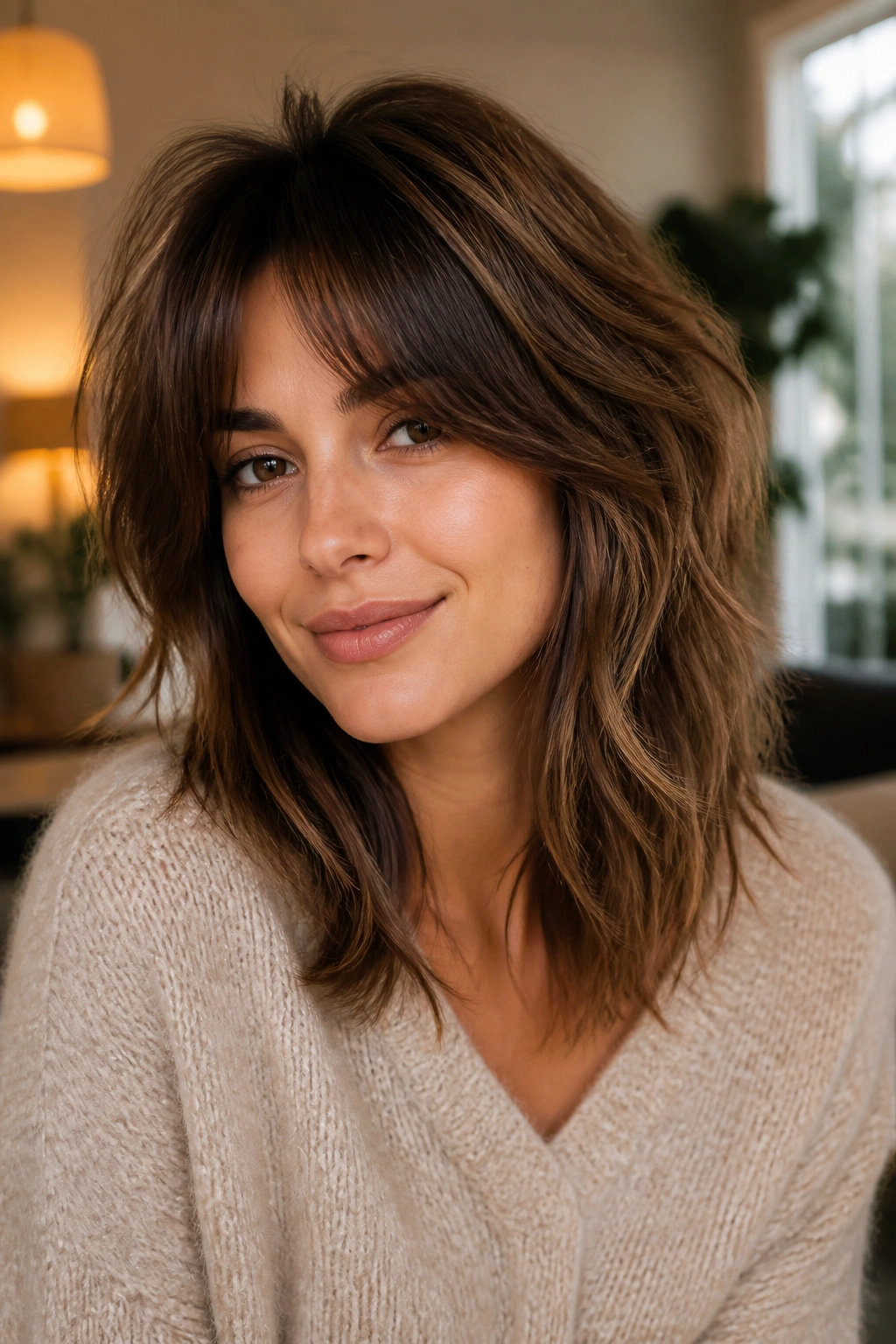
A shag and an oval face get along better than people expect, as long as the shag is softened a little. The crown gets lift, the ends stay light, and the shape feels airy instead of ragged. If you like a cut that looks cool even when you have not done much to it, this is the one.
Unlike a blunt lob, a soft shag spreads the volume around. The top gets a bit of height. The sides get movement. The bottom does not sit like dead weight. That makes shoulder-length hair easier to live with if your natural texture leans wavy or thick.
This cut suits people who hate flat hair. If your roots collapse by noon, the shorter crown layers give the haircut a better backbone. If your hair is fine, ask for restraint. Too many short pieces can make the top look fluffy while the ends look thin.
The nicest shag version for oval faces keeps the perimeter close to the shoulders and lets the internal layers do the work. You get shape without losing the feeling of length. That balance is the whole trick.
7. Deep Side-Part Blowout With Lift at the Roots
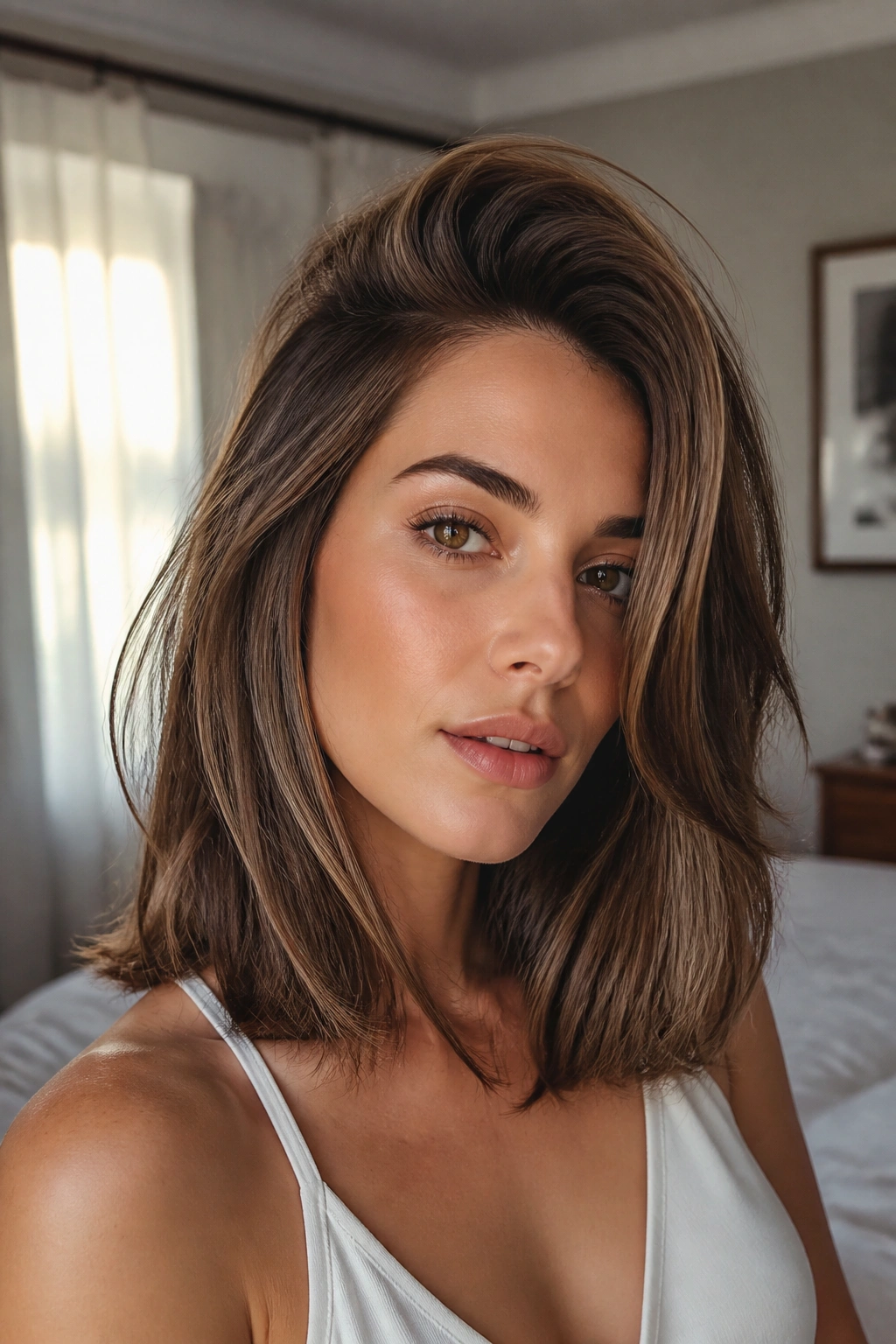
A deep side-part blowout is one of the few shoulder-length styles that can look polished without feeling stiff. The part builds height at the crown, and the smooth bend through the ends gives oval faces a bit of glamour without making the cut too formal.
Why the Lift Point Matters
The lift should begin near the roots, not halfway down the hair. If the volume starts too low, the haircut can widen at the shoulders and lose its clean line. A proper blowout keeps the root area airy and lets the body of the hair curve away from the face.
This style is especially kind to finer hair. The root lift gives the illusion of density, and the side part stops the whole look from falling flat through the center. It also photographs nicely in person — not because it is flashy, but because the shape has contrast.
- Blow-dry the front section away from the part first.
- Use a medium round brush for the crown.
- Set the front pieces on large rollers for 5 to 10 minutes if you want extra hold.
- Finish with a light serum on the ends only.
My favorite detail: one tucked side and one lifted side keep the style from feeling too perfect.
8. Sleek Center-Part Lob With Tucked Ends

A center-part lob looks sharp on an oval face because it lets the face do the talking. There is no fuss at the crown, no heavy fringe, no extra distraction. Just a clean line, a smooth middle, and hair that sits close enough to the head to feel deliberate.
This is one of the better options if your hair is straight or only slightly wavy. The center part emphasizes the natural balance of an oval face, and the shoulder-length cut keeps the length from dragging the features down. If the ends are blunt or only lightly beveled, the whole look stays modern.
The trick is control, not perfection. A little bend through the very ends can keep it from looking severe. Tuck both sides behind the ears sometimes, then let them fall loose later in the day. That simple shift keeps the style from feeling locked in place.
If your hair is thick, ask for internal weight removal rather than lots of visible layers. You want the cut to sit clean, not puff out at the sides like a triangle. That’s the mistake people make with sleek cuts. Too much haircutting on the inside can wreck the outline outside.
9. Soft Curled Ends With Invisible Layers
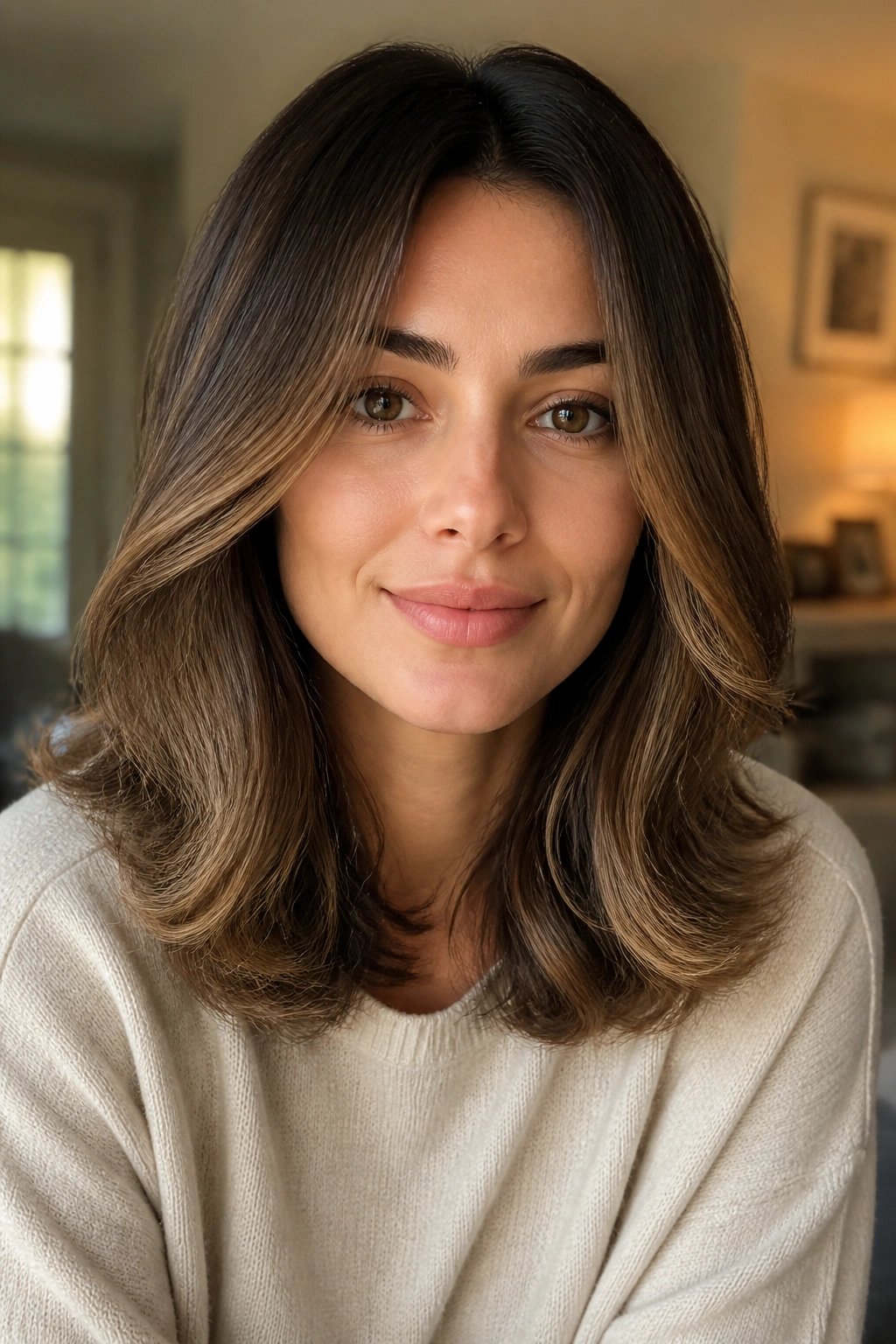
Why do soft curled ends look so good at shoulder length? Because they give movement without announcing themselves. The layers are there, but they hide inside the shape, so the hair still reads as full and polished. On an oval face, that subtlety works.
The curls should start low. Mid-lengths or lower is the sweet spot. If you curl too high, the hair can crowd the face and make the style feel puffy instead of soft. A 1.25-inch iron usually gives a better bend than a tight curl, especially if you brush it out once it cools.
How to Style It
Wrap each section loosely and leave the last inch out for a straighter finish at the ends. That little break keeps the look from turning into old-school ringlets. After the hair cools, use a wide-tooth comb or your fingers to separate the waves just enough.
A light mist of heat protection before curling is non-negotiable. So is letting the hair cool before you touch it. If you rush the brushing stage, the curl falls apart and the ends get frizzy. That is the annoying part, but it matters.
This style is a good middle ground if you want softness but not full wave texture.
10. Wolf Cut Lite With a Shoulder-Length Finish
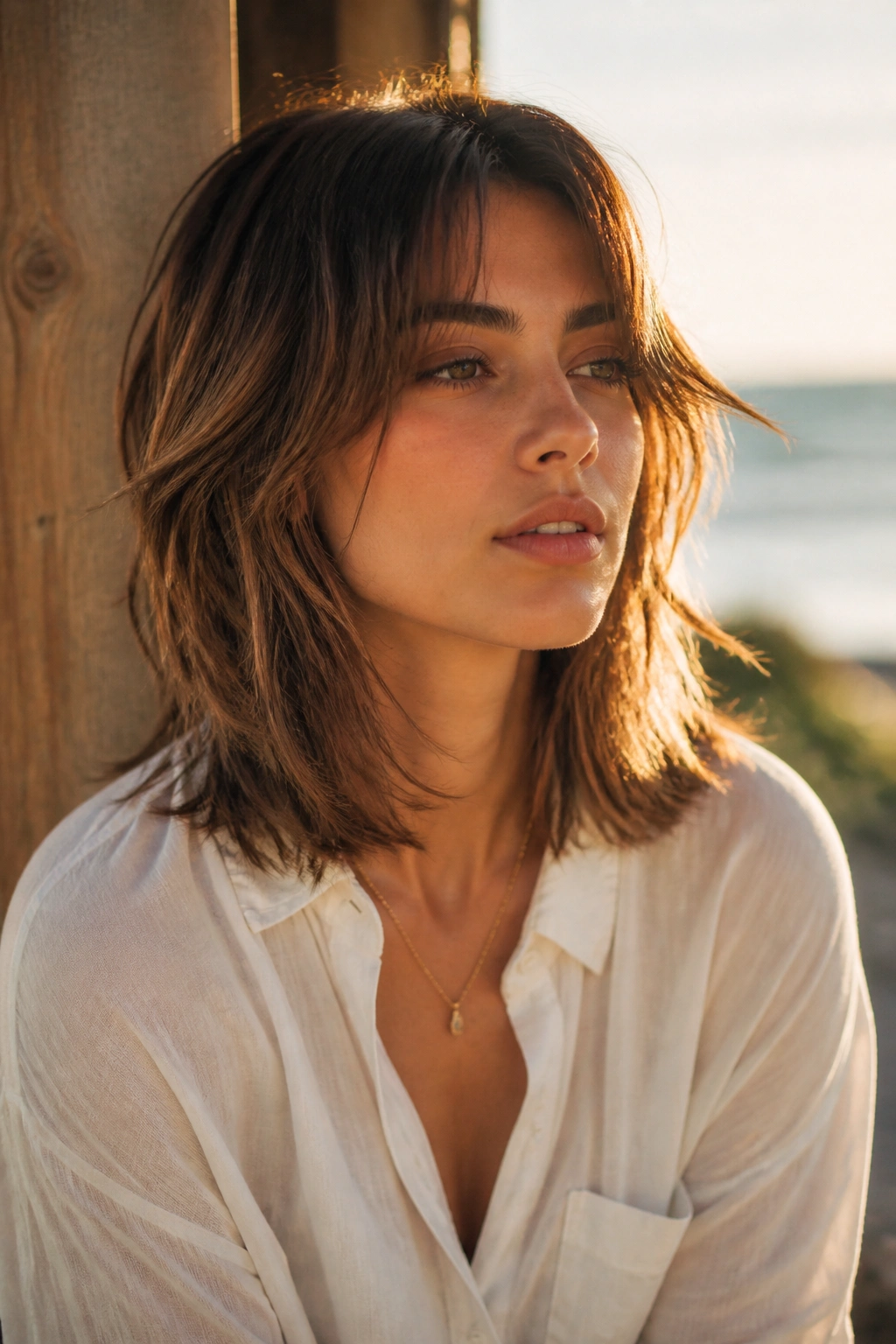
If a full wolf cut feels too wild, the softer version is usually the smarter pick. It keeps the shoulder-length finish, adds choppy texture around the crown, and leaves enough length at the bottom that the cut still feels wearable for everyday life. Oval faces can handle the shape because the face already has balance.
The point of this cut is movement with edge. The shorter top layers create lift, while the bottom stays loose and slightly undone. That contrast is what gives the style its energy. It is not neat, and it should not be. If the cut looks too polished, you have probably lost the whole point.
- Keep the top layers shorter but not spiky.
- Leave the bottom perimeter grazing the shoulders.
- Use a texturizing spray or light mousse.
- Avoid over-smoothing the crown.
This cut works best on wavy hair, but straight hair can wear it too if you are willing to bend a few pieces with a styling iron. The bigger issue is maintenance. If you hate regular shaping trims, the wolf cut lite can grow out in a less tidy way than a blunt lob. That is the tradeoff.
11. Long Front Pieces That Brighten the Face

Long front pieces do a lot of quiet work. They draw attention to the eyes, soften the cheek area, and keep shoulder-length hair from looking like it all ends at the same place. On an oval face, that front movement can be enough to shift the entire vibe of the cut.
I like this version when someone wants length but not heaviness. The back can stay fairly simple, even almost one-length, while the front pieces do the shaping. That means you still get the feeling of having hair to play with, but the face does not get buried under it.
The nicest thing about this approach is how easy it is to grow out. The front layers can blend into curtain bangs, middle-part waves, or a side-swept bend without any awkward line. That makes it practical if you change your mind a lot, which, frankly, most people do.
There’s also a small visual trick here. If the front pieces are cut to hit around the lips or chin, they create a gentle diagonal that keeps an oval face from looking too elongated. Not dramatic. Just enough.
12. Polished A-Line Lob With a Longer Front Edge

An A-line lob gives shoulder-length hair a sharper outline than a straight cut. The back sits a little shorter, the front drapes a bit longer, and the whole shape angles forward in a way that flatters oval faces without stealing the show. It is one of those haircuts that looks more expensive than it is.
Unlike a blunt lob, the A-line shape builds movement into the cut itself. You do not need much styling to see the angle. That makes it a solid choice if you want structure but do not want to spend twenty minutes every morning making the hair behave.
It suits straight hair especially well, though soft waves can make it feel a little less strict. If your hair is thick, ask for a gentle angle instead of a steep one. A big difference from back to front can look dated fast, and that is not the mood here.
Specific Recommendation
Ask for the front to be about 1 to 2 inches longer than the back. Keep the layers minimal so the line stays visible. If you tuck one side behind the ear, the angle becomes even more obvious, which is a nice bonus when you want the haircut to look intentional.
13. Bottleneck Bangs and Shoulder-Length Layers for Oval Faces
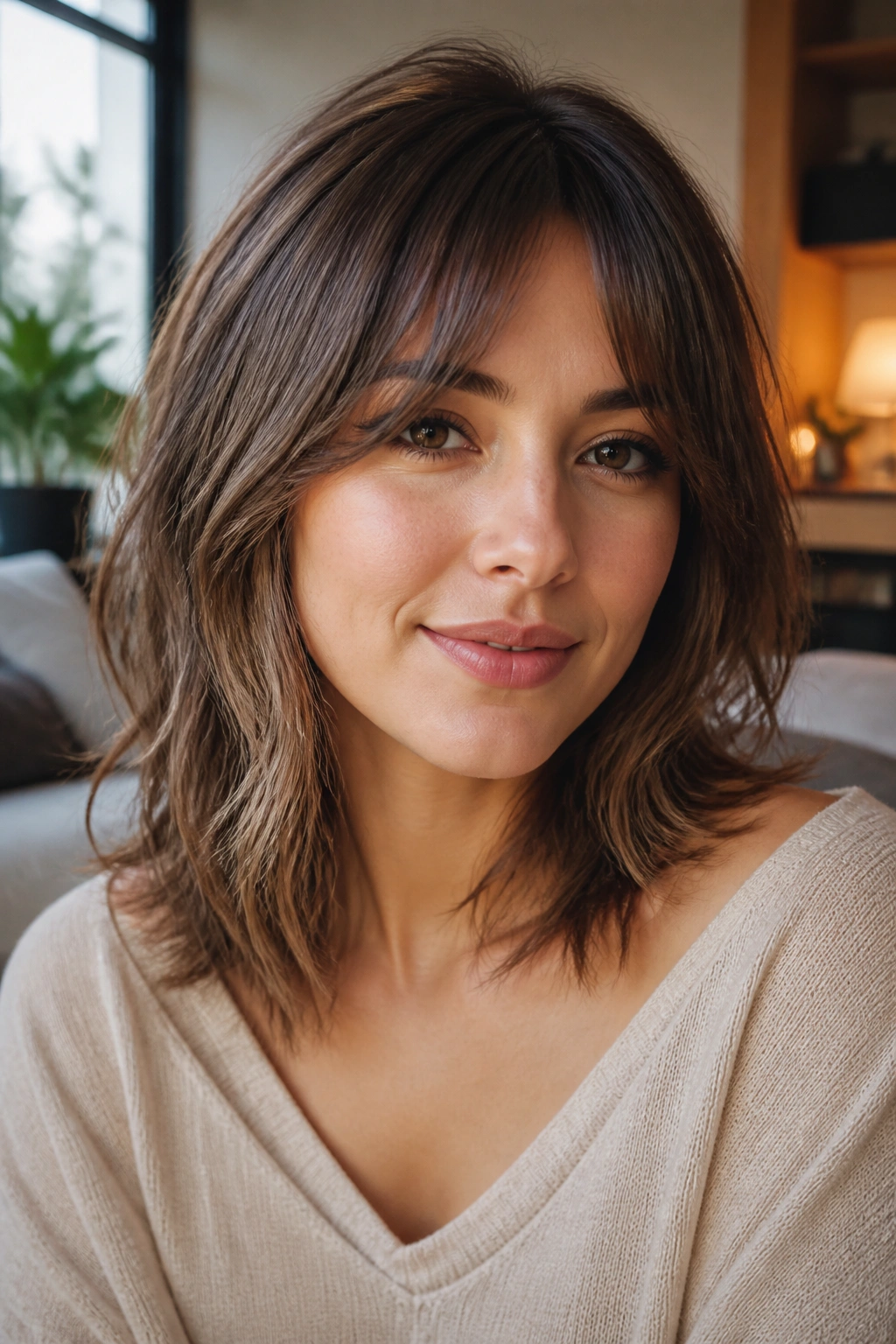
Bottleneck bangs are a smart move on oval faces because they bring shape to the front without cutting the face in half. The center is a little shorter, the sides taper longer, and the whole fringe blends into shoulder-length layers instead of sitting on top of them like a separate piece.
Why the Fringe Works
The bang shape helps because it keeps the forehead area soft while still giving the haircut a point of focus. Oval faces can wear bangs well, but the wrong fringe can shorten the face too much or make the features feel crowded. Bottleneck bangs avoid that by opening out at the sides.
This style feels especially good if you want your haircut to look current without relying on a strong color change or heavy layering. The bangs do the work. The shoulder-length cut supports them. That combination has a nice balance.
- Keep the middle shorter and the sides longer.
- Aim for a soft, piecey finish, not a solid wall of fringe.
- Blow-dry the bangs from side to side so they do not split too neatly.
- Let the shoulder-length layers stay light and mobile.
Best for: anyone who wants shape around the eyes without losing too much forehead space.
14. Rounded Curly Lob That Lets Curls Stack Naturally
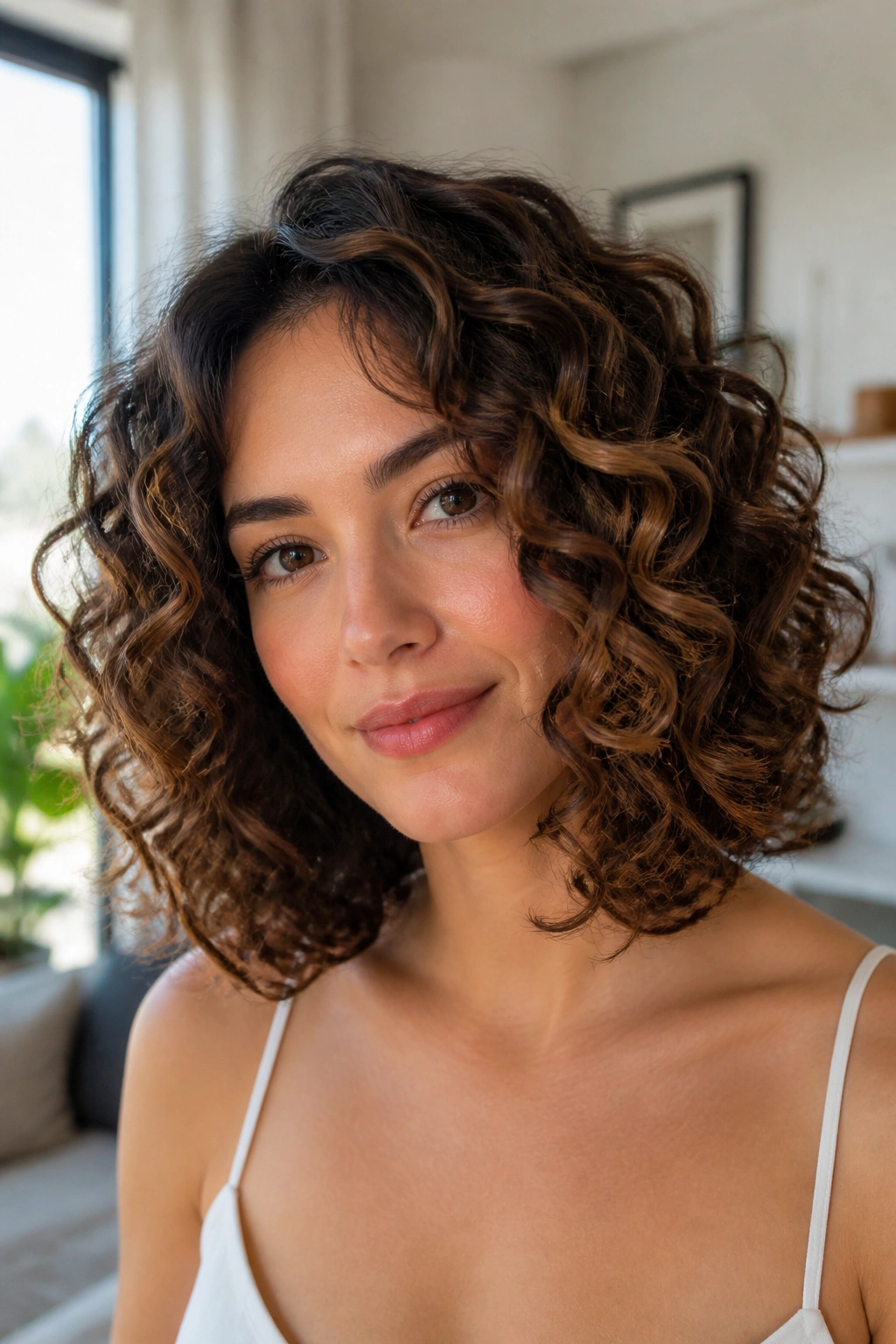
Curly hair at shoulder length looks best when the cut respects the curl pattern instead of fighting it. A rounded lob does exactly that. It keeps the shape full through the sides, lets the curls sit on top of each other in a natural way, and gives oval faces a soft frame that feels lively instead of bulky.
The mistake with curly shoulder-length hair is cutting it too square. That can create a triangle shape, which nobody wants. A rounded finish helps the curls stack in a cleaner curve, especially if the hair shrinks a little as it dries. The cut should leave room for that movement.
I like this shape on medium to tight curls because it keeps the outline around the chin and shoulders neat. If the curls are loose, the rounded lob gives them enough structure to avoid turning flat at the roots. If they are tighter, it keeps the silhouette from ballooning outward in strange spots.
Use a curl cream or light gel, scrunch from the ends upward, and diffuse on low heat. Then stop touching it. That last part is hard, but it matters. Curly shoulder-length hair often looks best once it has been left alone.
15. Tucked-Under Shoulder Lob for a Clean, Soft Finish

A tucked-under shoulder lob is one of the calmest haircuts on this list, and I mean that in a good way. It sits neatly at the shoulders, bends in just enough to keep the line soft, and gives an oval face a tidy frame without making the style feel severe.
This cut is especially useful if you like your hair to look polished with minimal effort. A round brush, a dryer, and a little patience at the ends are usually enough. The tucked-under shape also keeps the neckline open, which can make the whole look feel lighter than it sounds on paper.
It works across a lot of hair types, but straight to slightly wavy hair gets the clearest shape. If your hair tends to flip out at the ends, a larger round brush or a quick pass with a flat iron near the bottom can help direct it back in. That tiny bend under the shoulders is the whole point.
If you want one shoulder-length style that feels clean, balanced, and easy to live with, this is the one I’d keep near the top of the list. Not flashy. Not fussy. Just a cut that does its job and leaves room for the face to stay front and center.
