



Medium length hair is one of the kindest cuts after 40. It gives you enough swing to feel modern, but not so much length that it starts dragging your features down or stealing time from your morning.
Medium length hairstyles for women over 40 also play nicely with changing texture. Hair can get a little drier, a little finer, or a little more wiry at the front, and gray strands often show a different personality from the rest of the hair. A good cut works with that shift instead of pretending it does not exist.
That is the sweet spot here: shape, movement, and a length that still behaves. Some of these looks are polished and clean. Some are soft and undone. A few are built for gray hair that needs a sharper outline, and a few are better for thick hair that needs to lose some bulk without looking thin. The right one usually becomes obvious once you see how the pieces fall around the cheekbones, jaw, and collarbone.
1. Collarbone Lob for Women Over 40

A collarbone lob is the haircut I recommend when someone wants one cut that rarely argues back. It sits low enough to feel feminine and easy to tuck behind the ears, but it stops before the ends start looking tired and stringy.
The best version has a clean perimeter with just enough soft internal shaping to keep it from feeling boxy. That matters if your hair is fine, because blunt ends can make the whole head look fuller, while gray hair often looks especially sharp against a neat line.
Keep the front grazing the collarbone and let the shortest pieces barely skim the jaw. Simple. It works with air-drying, a rough blow-dry, or a quick bend at the ends with a 1-inch iron.
2. Soft Layered Lob
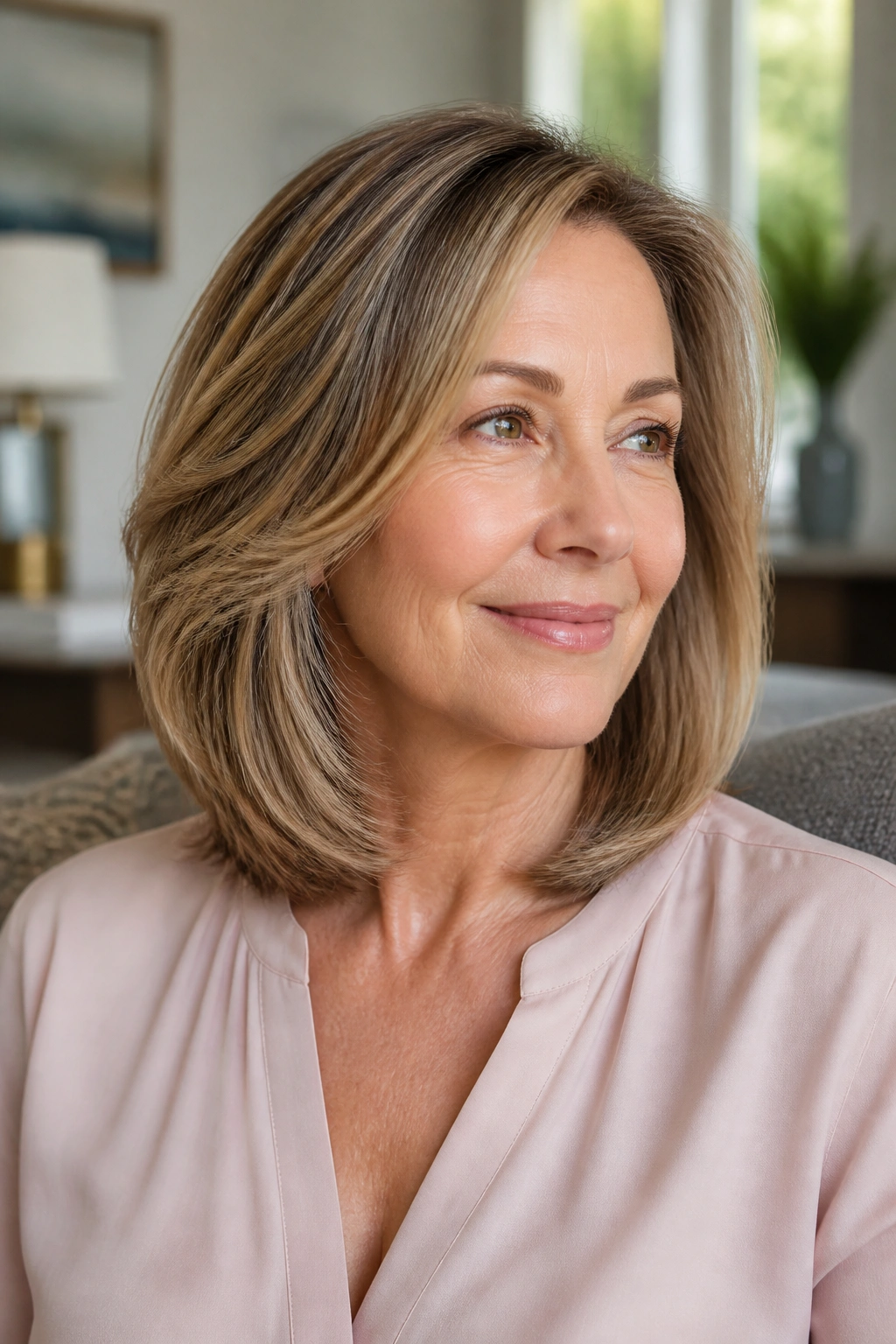
The soft layered lob is what you want when your hair has weight but not much movement. Instead of chopping layers high up, the shape stays medium length and the layers start lower, so the cut still looks grown-up rather than airy in a fussy way.
Why the layers matter
The goal is lift without puffiness. Long layers remove some of the bulk through the mid-lengths, which helps thick hair sit closer to the head and keeps the ends from flaring out like a triangle.
If your hair is wavy, this cut makes the wave look intentional instead of random. If it is straight, a round brush or velcro rollers at the crown will give it enough body to feel finished.
A little mousse at the roots and a light cream through the ends is usually enough. No need to wrestle it.
3. Curtain Bang Lob

Curtain bangs are popular for a reason: they soften the face fast, and they grow out in a way that does not feel punishing. Paired with a lob, they create a little frame around the eyes and cheekbones without turning the front of the haircut into a project.
The sweet spot is a fringe that parts in the middle and lands around the cheekbone to lip area. Too short, and the bangs can look boxy. Too long, and they disappear into the rest of the cut before they do any work.
How to keep it easy
- Blow-dry the bangs forward first, then sweep them apart with a round brush.
- Keep the center a touch shorter than the sides.
- Ask for softness, not a heavy curtain that swallows your forehead.
This one is especially kind to women with straight or slightly wavy hair. It gives shape without demanding perfect styling every day.
4. Blunt Mid-Length Cut

This is the cleanest-looking option in the group. A blunt mid-length cut lands somewhere between the chin and shoulders, with a straight edge that gives the hair a fuller, denser look even when the actual strand count is not what it used to be.
The magic is in the line. Sharp ends make fine hair look thicker, and they give silver or salt-and-pepper strands a crisp, modern finish. If you want your hair to look expensive without looking overdone, this is a very good place to start.
Thick hair needs a little care here. If the perimeter is too heavy, it can sit like a shelf, so ask for the ends to be softened just enough to move. Not thinned to death. Just softened.
5. Face-Framing Layers
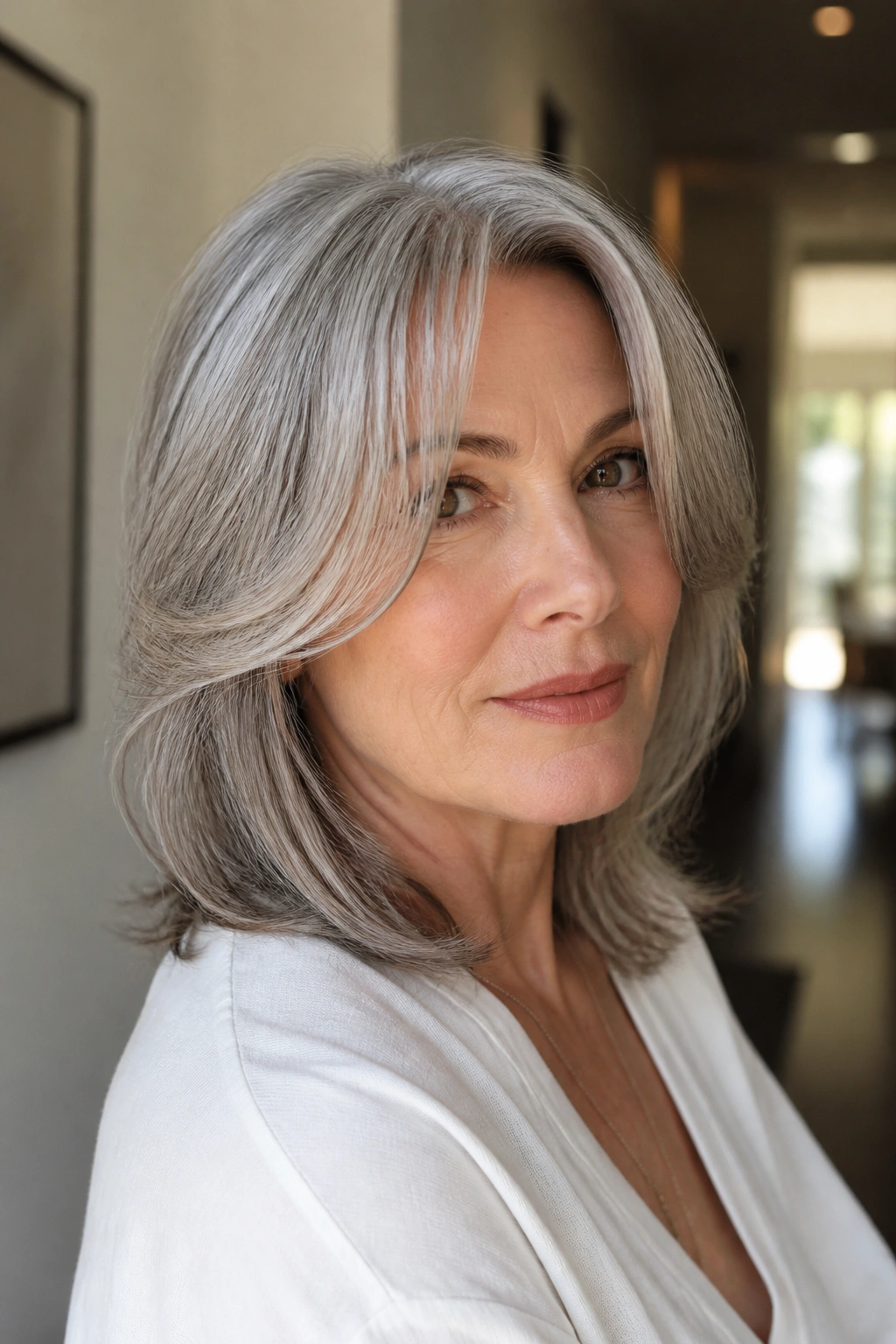
Face-framing layers are the quiet fix for hair that falls flat around the cheeks or jaw. Instead of changing the whole haircut, the stylist opens the front with a few carefully placed pieces that start around the chin or cheekbone and melt into the rest.
That small shift changes the whole mood of the cut. It can make a long face feel a little shorter, a square jaw look less hard, and a tired blowout seem more awake. The front matters more than people think.
I like this look on women who wear their hair loose most of the time but still want movement near the face. It also works well with gray hair because those front pieces catch the eye and keep the color from reading as one flat block.
6. Side-Swept Bangs with Layers
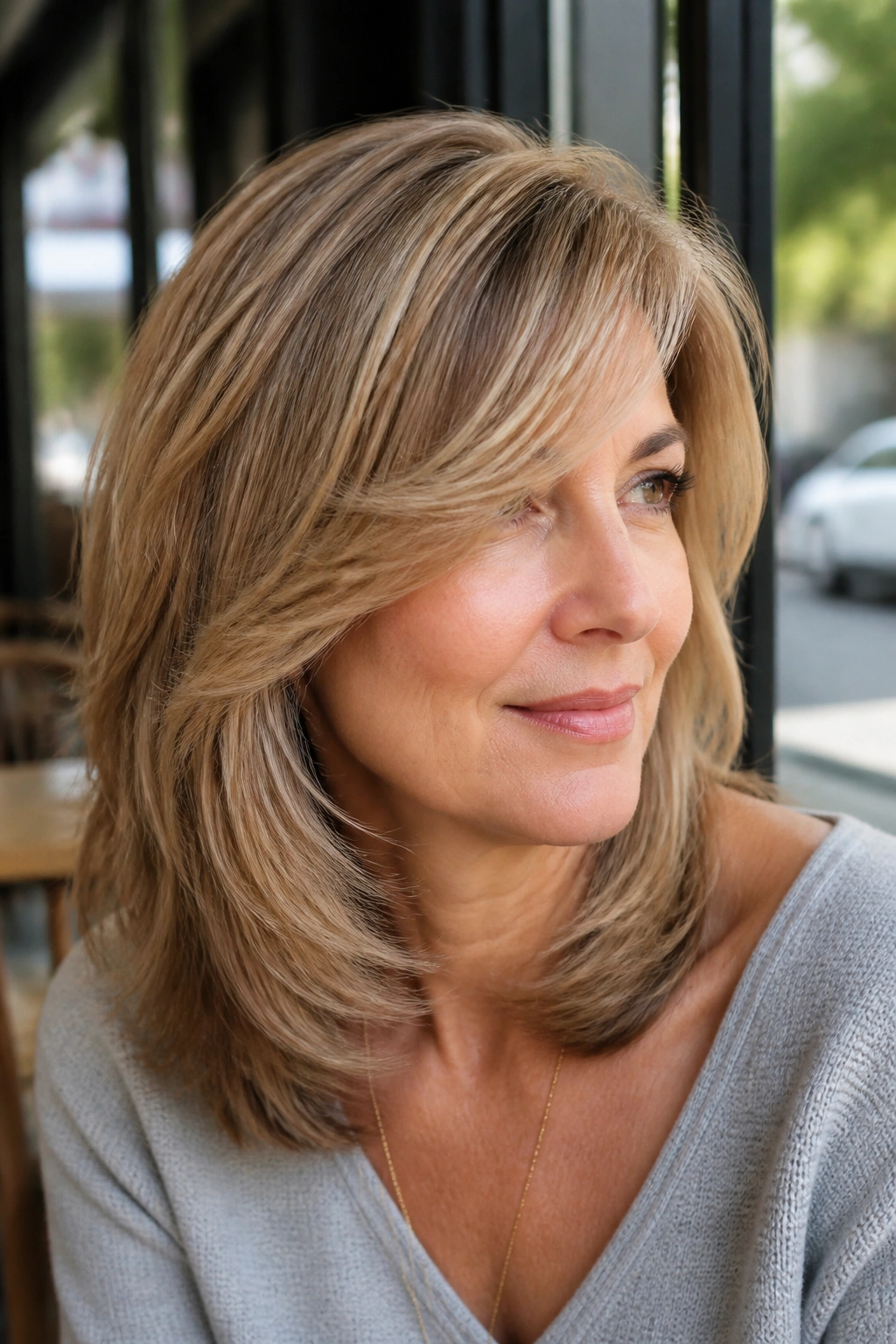
A side-swept bang is a good choice when you want softness but not a full fringe. It starts somewhere near the temple, falls across the forehead at an angle, and blends into the layers instead of stopping like a hard line.
The payoff is immediate. It lifts the front of the hair and gives a bit of motion near the eyes, which is useful if your hairline has shifted or your crown tends to lie flat. It also grows out gracefully, which is the part people usually care about after the first three weeks.
Tell your stylist to keep the bang long enough to tuck behind the ear. That keeps it from feeling fussy on busy days. A quick side blow-dry and a light spray are usually enough.
7. Textured Shag

The medium shag has come a long way from the choppy, over-styled versions people remember. The good version is softer, looser, and much more wearable. It keeps length around the shoulders while building movement at the crown and through the sides.
What makes it work
A shag lives on texture, not perfection. The layers are meant to break up heaviness and let the hair fall with a little attitude. That is especially useful for gray hair, which often has a more wiry feel and looks better when it has some edge.
Best results come from a cut that respects your natural wave or curl pattern. If you have straight hair, you can still wear it, but you will need some bend with a diffuser, round brush, or curling iron.
A tiny bit of mousse scrunched into damp hair goes farther than people expect. The trick is not to brush the life out of it.
8. Wavy Lob
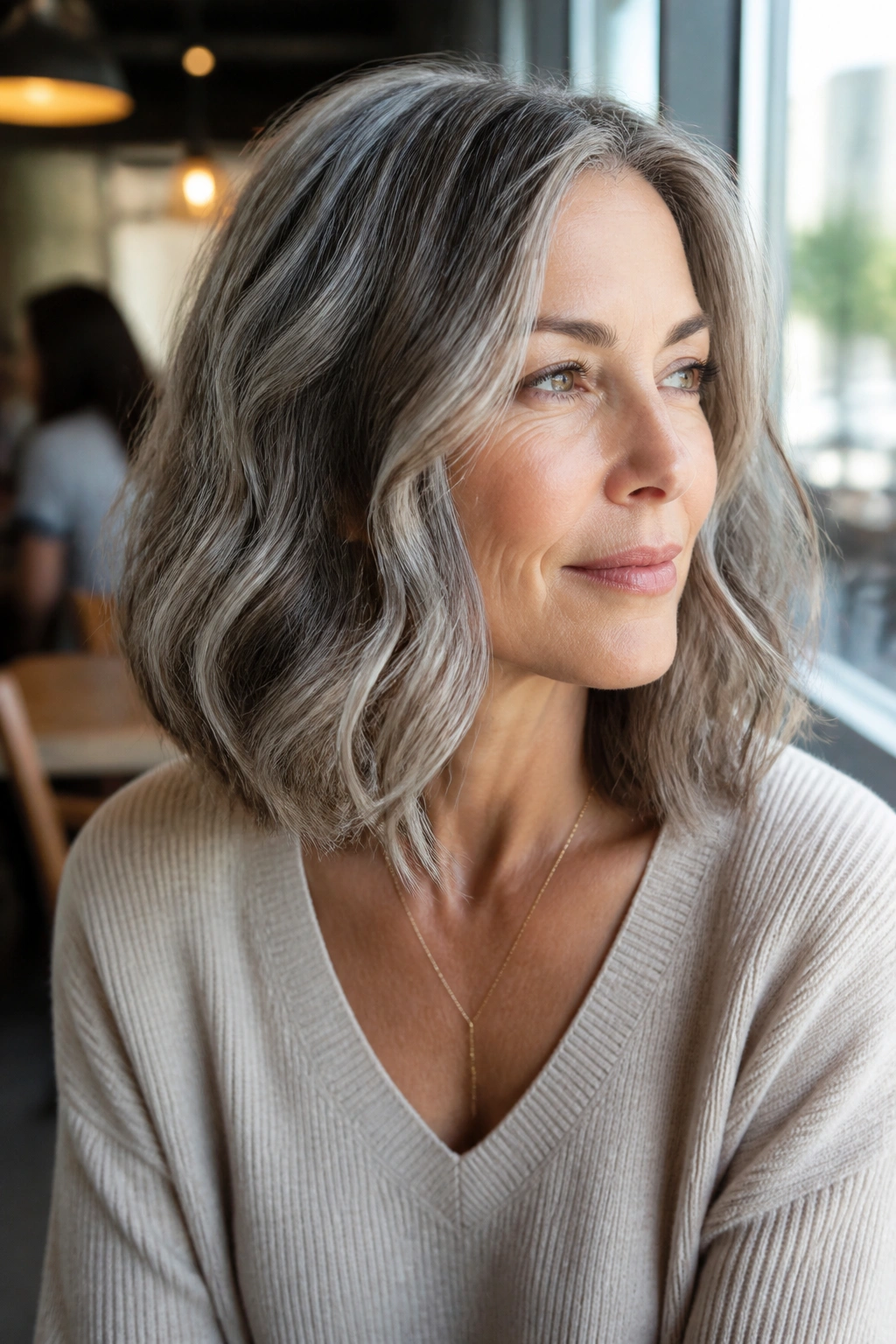
A wavy lob sits in that nice middle ground between polished and relaxed. The length stays near the collarbone, while soft waves add enough movement that the haircut does not feel stiff or heavy.
The cleanest version has waves that begin below the cheekbones and stay a little looser toward the ends. That keeps the look from turning into pageant curls. Loose bends are better than tight spirals here because they read as easy, not forced.
This cut flatters women with softer features, but it also balances sharper jaws nicely. If your hair is naturally wavy, air-dry with a little cream and stop touching it. If it is straight, wrap 1-inch sections around a curling wand and leave the ends out for a more relaxed finish.
9. Sleek Straight Mid Cut
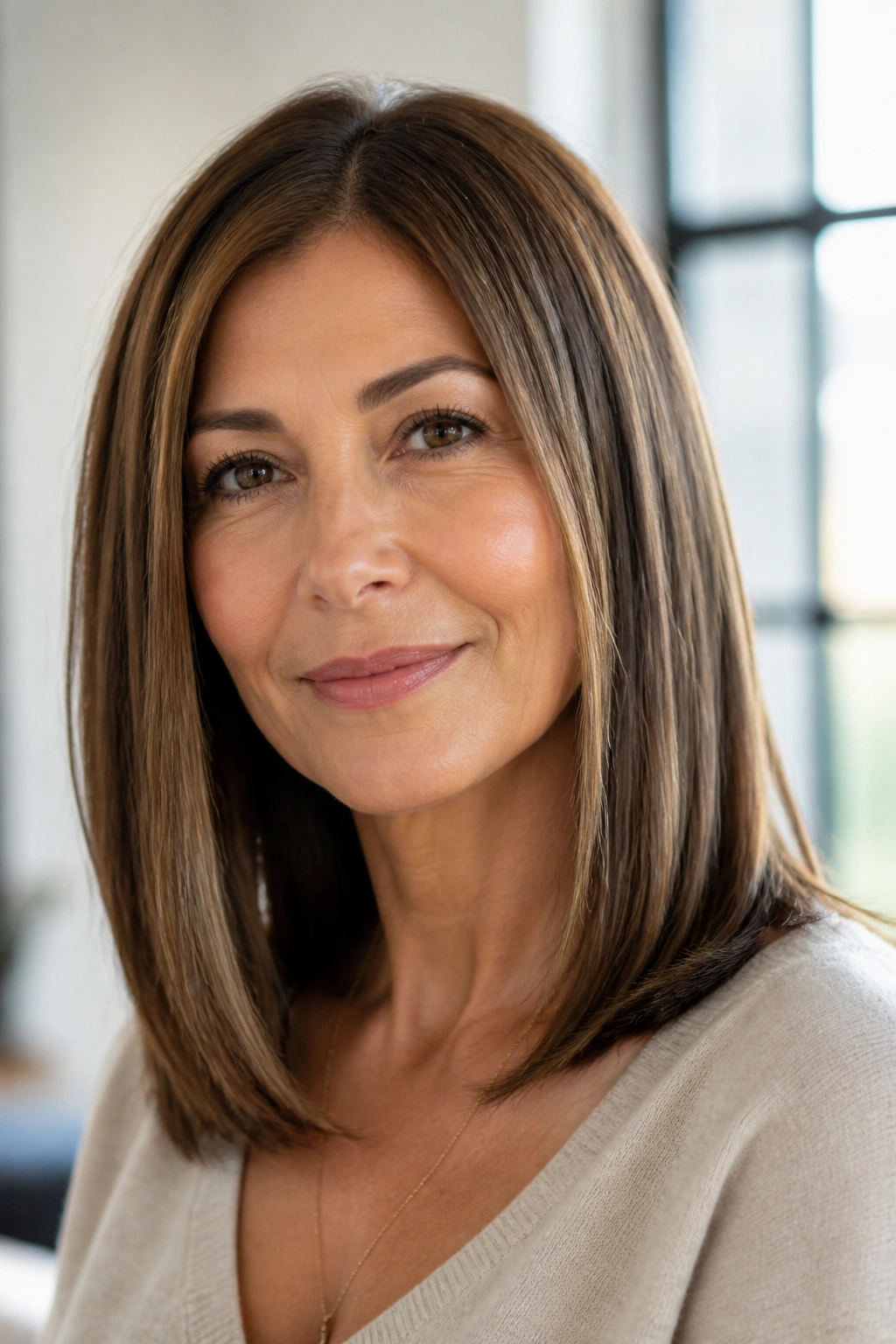
If you like hair that looks tidy, this one will make sense fast. A sleek straight mid cut depends on smooth lines, glossy ends, and a shape that sits close to the face without swallowing it.
The effect is polished, but not old-fashioned when it is cut well. The key is healthy ends. Split, wispy ends ruin the whole thing, so this cut only works when the perimeter is kept trimmed and neat.
It suits naturally straight hair best, though a flat iron can help if your texture is only mostly straight. A drop of serum at the ends and a middle or soft side part give it a clean finish. It is a good choice if you wear glasses, sharp jewelry, or structured clothes.
10. Shoulder-Length Flip-Out Ends

Flip-out ends bring a little energy to medium hair without needing a full layer overhaul. The shape is shoulder length, but the ends turn outward instead of curling under, which gives the cut a lively, slightly retro feel.
That flip can hide a lot of things. It softens a heavier jawline, lifts the silhouette, and keeps shoulder-length hair from sitting there like a curtain. A small outward bend is enough; you do not need a big 1960s blowout unless that is your actual thing.
Use a round brush or a flat iron to flick the last inch of hair away from the neck. A side part or a tucked-behind-one-ear finish keeps it from feeling costume-y. It is a fun cut for women who want motion without chasing a “messy” look.
11. Deep Side Part Cut
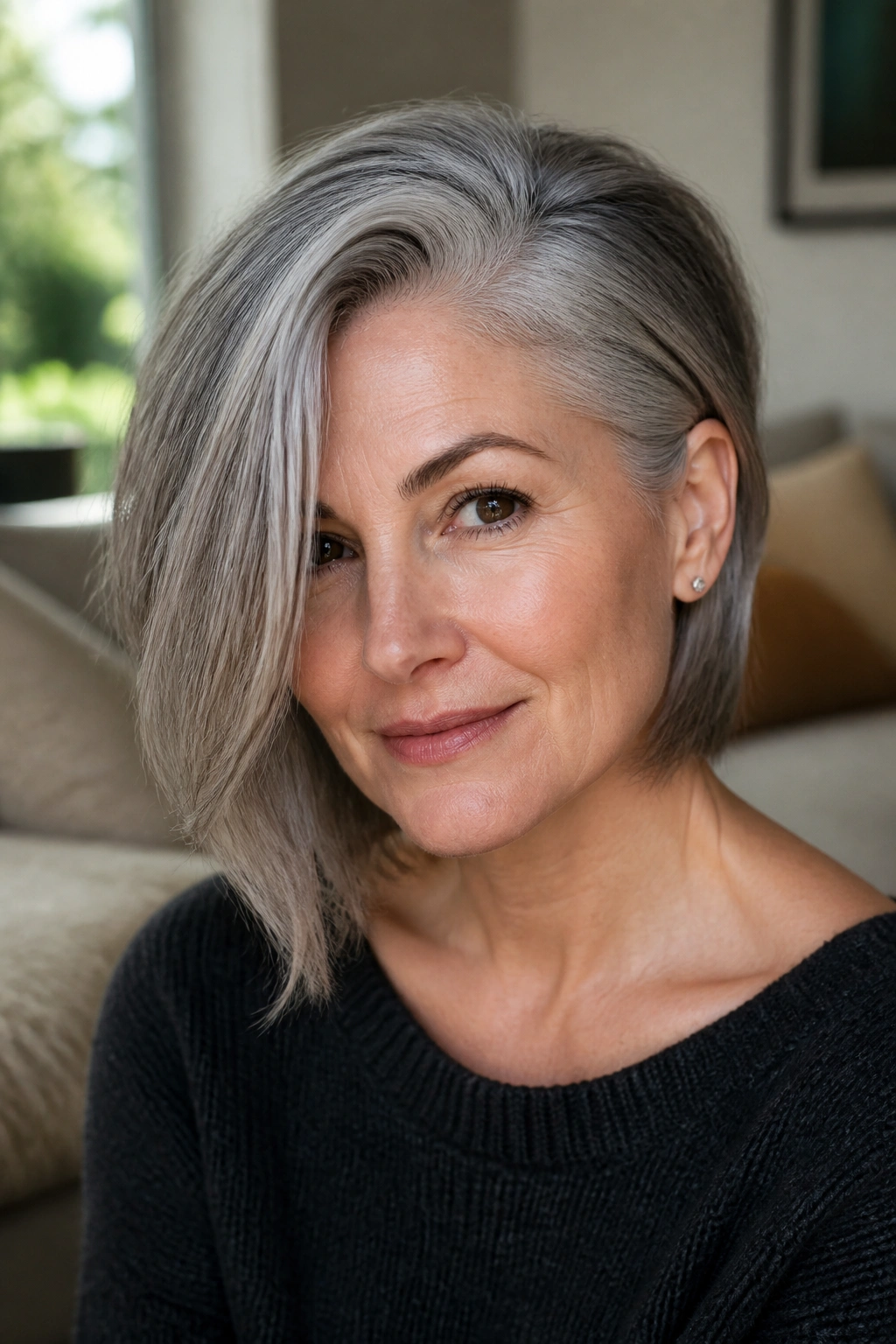
A deep side part is one of the cheapest-looking tricks in the best possible way. No salon magic, no heavy styling. Just move the part over by an inch or two, and the whole haircut suddenly has more lift at the crown.
Here is why that matters: roots that sit flat make medium hair look tired fast, especially around the temple and top of the head. A deep side part adds height where you want it and lets the front fall softly across one side of the face.
- It works well on fine hair that needs a little volume.
- It softens a wide forehead.
- It can make gray streaks look more deliberate because the color falls in a stronger line.
If you have never tried it, start with a loose side part after blow-drying. You might be surprised by how much shape you gain without cutting a single strand.
12. Long Bob with Subtle Highlights for Gray Hair
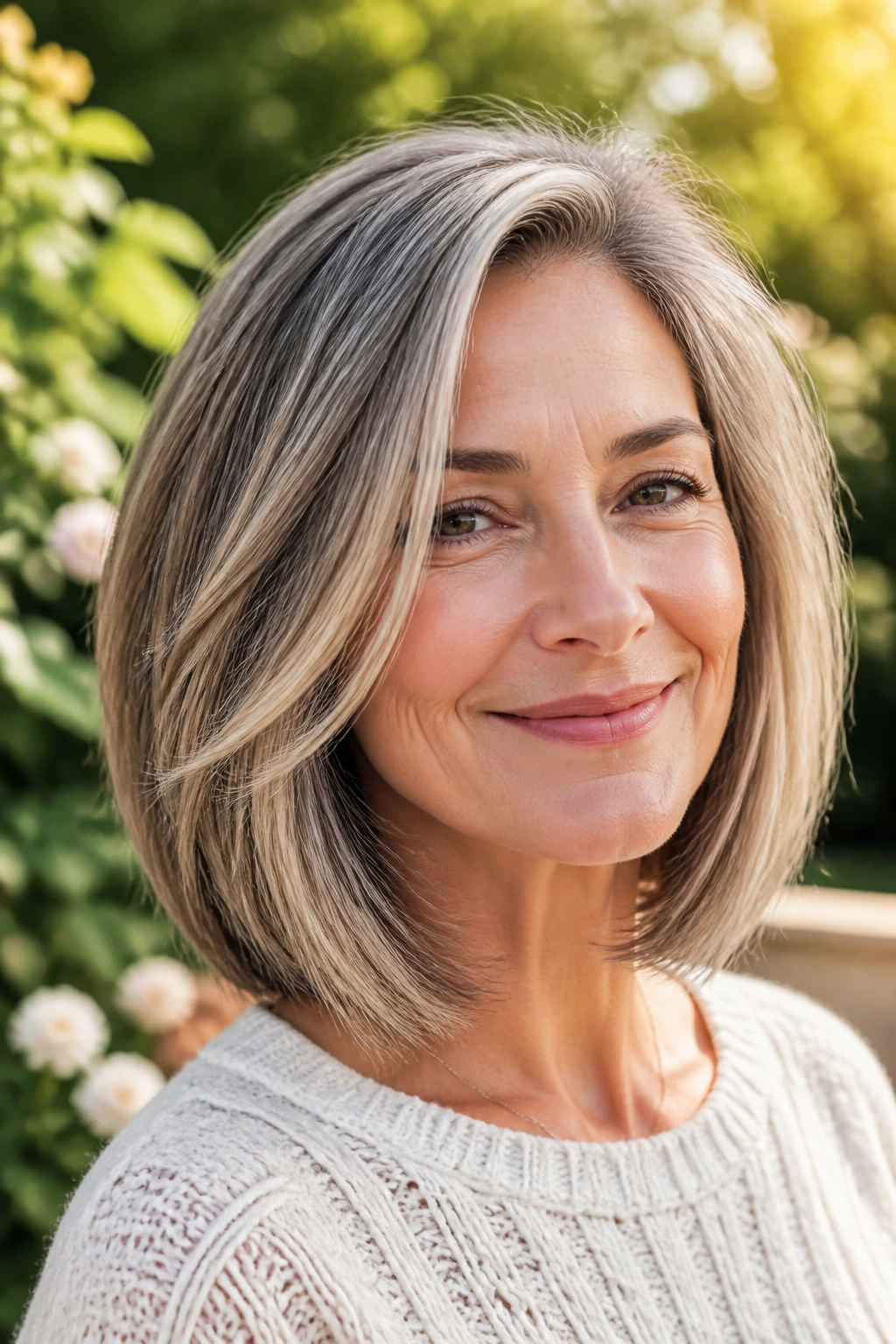
A long bob with subtle highlights can do something plain cuts cannot: it gives gray hair dimension without making it look striped. The trick is restraint. A few lighter pieces around the face, some lowlights in the interior, and the cut itself does the rest.
Color placement matters
Keep the brightest pieces near the front and crown. That pulls the eye upward and keeps the length from feeling heavy. If your gray is still mixed with darker strands, soft beige or silver-toned highlights can blend the transition instead of fighting it.
The cut should stay simple. Too many layers steal the point of the color work. A lob with a steady outline lets the highlights move around the face in a way that feels clean and flattering.
This is a good choice if you want your gray to look intentional, not accidental. That distinction matters more than people admit.
13. Layered Cut with Curls

Curly hair after 40 often needs shape more than length. A layered medium cut gives curls room to spring up without turning into a pyramid, which is the enemy nobody invited.
The best version keeps the bottom line around the shoulders or collarbone and adds long layers that follow the curl pattern. That helps the curl clumps stay defined. Dry cutting can make a big difference here because curls behave differently when wet and stretched.
A diffuser on low heat is your friend. So is a leave-in cream that keeps the curl soft instead of crunchy. If your curls are tighter, ask for layers that respect shrinkage so you do not lose too much length when the hair dries.
14. Feathery Layers

Feathery layers are a smart choice when you want lightness but not a shag. The hair still has structure, but the ends are softened so the cut feels airy around the cheeks and shoulders.
The feathering works best on medium to thick hair that tends to sit heavy. It takes some of the weight out of the outline and lets the movement happen near the front, where people actually notice it. The face reads softer almost right away.
This style usually looks best with a blow-dry, even a quick one. Use a paddle brush or a medium round brush and direct the ends away from the neck a little. If your hair is gray and coarse, a smoothing cream can keep the feathers from fraying out.
15. Bouncy Blowout Cut

A bouncy blowout cut is really a haircut that knows how to hold a round brush. The layers are placed so the ends curve under and the top lifts just enough to make the hair look fuller through the sides.
That shape flatters a lot of women over 40 because it creates softness without collapsing at the crown. It is especially good for thin or medium-density hair that loses body by midday. A little root lift and a curved end can carry the whole look.
If you like salon blowouts, this cut gives you a better base. If you air-dry, it still helps because the layers settle in a neater way than a blunt edge alone would. It feels polished without being stiff.
16. Wispy Bangs
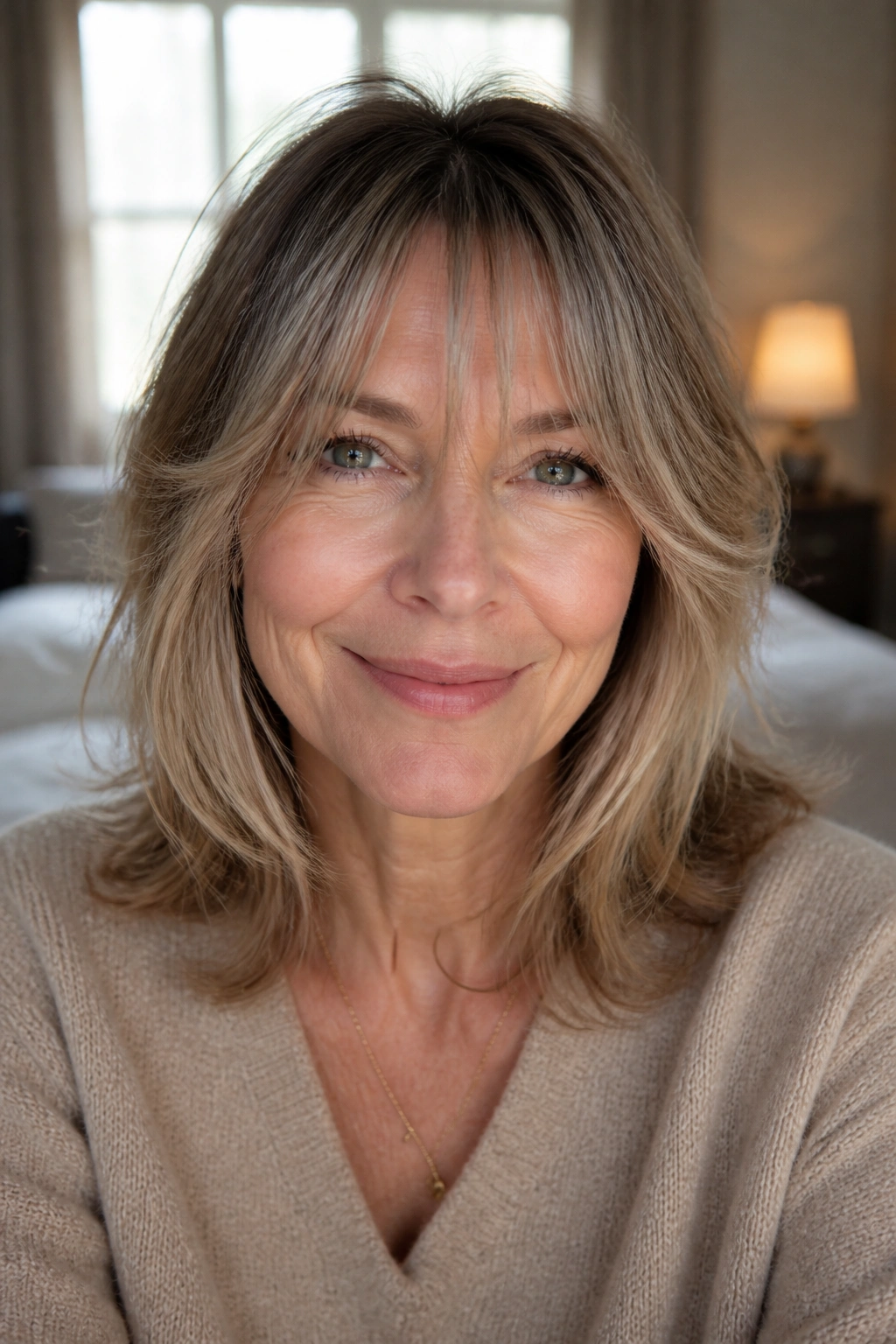
Wispy bangs are for people who want fringe without the weight of full bangs sitting across the forehead. They are lighter, pieceier, and easier to live with when you are not in the mood to style every strand.
How they differ from full bangs
Full bangs can dominate a face. Wispy bangs break up the forehead gently and keep the cut soft, which is useful if you like your features visible. They also leave room for glasses, which is not a small thing.
The ends should look a little airy, not chopped blunt. That means less density in the bang itself and more blend into the sides. If your hair is fine, this can be a very flattering move because it adds detail without making the hair look heavy.
A tiny round brush, five seconds of heat, and a finger-tousle afterward are usually enough. Do not overdo the hairspray. It makes the fringe look tired fast.
17. Angled Lob

An angled lob is shorter in the back and longer in the front, which gives the hair a clean forward line. Done well, it lengthens the neck, sharpens the jawline, and makes medium hair feel more intentional.
The angle does not need to be dramatic. In fact, the most wearable version is usually subtle. Too steep and it starts looking dated; too mild and you lose the point. The sweet spot sits somewhere between sleek and soft, with the front grazing the collarbone and the back just a little shorter.
This cut works best when the ends are kept crisp and the styling is smooth. It is a strong choice for straight or slightly wavy hair. Tucked behind one ear, it has a nice, clean line that looks sharp with a simple shirt or blazer.
18. Modern Pageboy

The modern pageboy is the shape people forget until they see a good one. It curves under gently, usually with a neat outline around the jaw and a little extra length at the sides. The effect is structured, but not severe.
Unlike a blunt bob, the pageboy has that slight inward bend that keeps the silhouette from looking boxy. It works especially well on straight hair, where the curve shows up cleanly, but it can also be softened on wavy hair with a round brush.
This one is for women who like clear shape. If you want hair that looks deliberate even on a windy day, the pageboy has a lot going for it. It also plays nicely with gray hair because the rounded edge gives the color a strong frame.
19. Soft Curls and Side Part
A side part and soft curls can turn a plain medium cut into something dinner-ready in ten minutes. The hair does not need to be tight or formal. It just needs a little bend through the mid-lengths and a part that lets the front sweep naturally.
The soft curl pattern keeps the style from looking overworked. Loose curls around the cheekbones soften the face and give movement to the sides, while the side part gives the whole shape a little tilt. That is useful if your hair tends to fall flat in the middle.
I like this on shoulder-skimming cuts because the curls do not fight the length. A 1.25-inch iron, brushed out lightly, gives a more grown-up finish than tiny ringlets. A flexible spray is enough. Anything harder than that usually looks too set.
20. Tousled Shoulder Cut
The tousled shoulder cut is the one that forgives a rushed morning. It sits at the shoulder, has a little separation in the layers, and looks better when it is not trying too hard.
What to ask for
- Keep the ends soft, not razor-thin.
- Add movement through the mid-lengths, especially if your hair is thick.
- Leave enough weight at the bottom so the cut still has shape when air-dried.
- Avoid too many short layers near the crown if your hair is fine.
This cut works well with a bit of salt spray, a diffuser, or even just sleeping on it and shaking it out. The goal is controlled mess, not frizz. Gray strands often look good in this kind of cut because texture reads as style instead of damage when the shape underneath is solid.
21. Collarbone Crop With Tapered Ends
A collarbone crop with tapered ends is a nice fix for hair that feels heavy at the bottom. The length stays medium, but the ends narrow slightly so the cut does not look boxy or wide across the shoulders.
That taper is subtle. It should not feel thinned out or wispy. Just enough narrowing to let the hair move is all you need. Thick hair benefits a lot from this because it loses some bulk while keeping a strong outline.
This is one of those cuts that looks better when the styling is plain. A quick blow-dry with a medium brush and a touch of smoothing cream is usually enough. If you like to tuck pieces behind the ears, the tapered ends keep the silhouette from puffing out at the sides.
22. Polished Silver Lob
A polished silver lob is a strong choice if you are letting gray hair be gray hair, not hiding it under too many tricks. The cut should be simple and clean so the color gets to do the talking.
Why the shape matters
Silver hair can look flat if the perimeter is uneven. A crisp lob line gives the shade a clear edge and makes it look deliberate. That is one reason blunt or softly angled versions work so well here.
A little shine matters too. A lightweight oil, a smoothing cream, or a glossing treatment can keep silver strands from going dull at the ends. If your hair runs coarse, that detail is not optional. Gray texture tends to show dryness faster than pigmented hair.
I prefer this look when the length grazes the collarbone and the part is slightly off-center. It feels modern without trying to disguise age, and honestly, that is the point.
23. Inverted Lob
An inverted lob creates shape fast. The back is shorter, the front stretches longer, and the whole cut angles forward in a way that opens the face and lifts the nape.
It is a good haircut when you want more structure than a standard lob gives you. The forward angle makes the neck look longer and gives the hair a little swing when you turn your head. That can be flattering on square or round faces because it breaks up the width.
This style likes clean styling. Straight hair shows the line best, but slight waves can still work if the angle is not too dramatic. Keep the back neat and the front soft enough to tuck behind the ears when you want less shape.
24. Half-Up Friendly Lob
If your hair spends half the week clipped up, the cut has to behave. A half-up friendly lob gives you enough length for a twist, a clip, or a small ponytail, while the front pieces stay long enough to frame the face instead of escaping in odd little spikes.
The best version keeps the top layer light and the face-framing pieces below the cheekbone. That way the style still looks good when you wear it down. You should not need to restyle the whole head just because you used a claw clip for ten minutes.
This cut is practical, but not boring. It works for school runs, gym days, office days, and dinner. If you like easy hair that still has shape, this is one of the safest bets on the list.
25. Soft Side-Swept Lob
A soft side-swept lob is the closest thing to a universal answer here. It gives you the movement of a lob, the softness of a side part, and enough length to do a quick bend, a clip, or a tucked-back style without fuss.
What makes it so useful is that it does not force one feature to do all the work. The side sweep softens the forehead, the length eases the jaw, and the ends keep the whole cut grounded. It suits straight hair, wavy hair, and gray hair that needs a gentle shape more than a dramatic one.
If you are stuck between several options, this is the one I would put on the shortlist first. Bring two photos, one with the length you like and one with the texture you want, and be honest about how much time you spend styling. That conversation usually matters more than the haircut name itself.
