



Fine hair after 50 does not need more drama. It needs a shape that does some of the heavy lifting for you.
That’s especially true if your hair has gone silver, white, or salt-and-pepper. Gray strands often feel a little coarser, a little drier, and a little less obedient than they did before, which is part of why a cut that looked fine years ago can suddenly feel limp, fuzzy, or oddly puffed out at the ends. The wrong layers make that worse. The right ones make the hair look fuller from the first glance.
I like haircuts that hold their own without a heroic blowout. A blunt edge can make fine hair look denser. A short nape can lift the whole head. A bit of crown height can save a style that would otherwise collapse by noon. Small choices. Big difference.
Bring that idea with you as you read the list below: shape matters more than length. Some of these cuts are short and sharp, some are soft and movable, and a few are built to grow out without turning into a sad triangle. That part matters too.
1. Chin-Length Blunt Bob
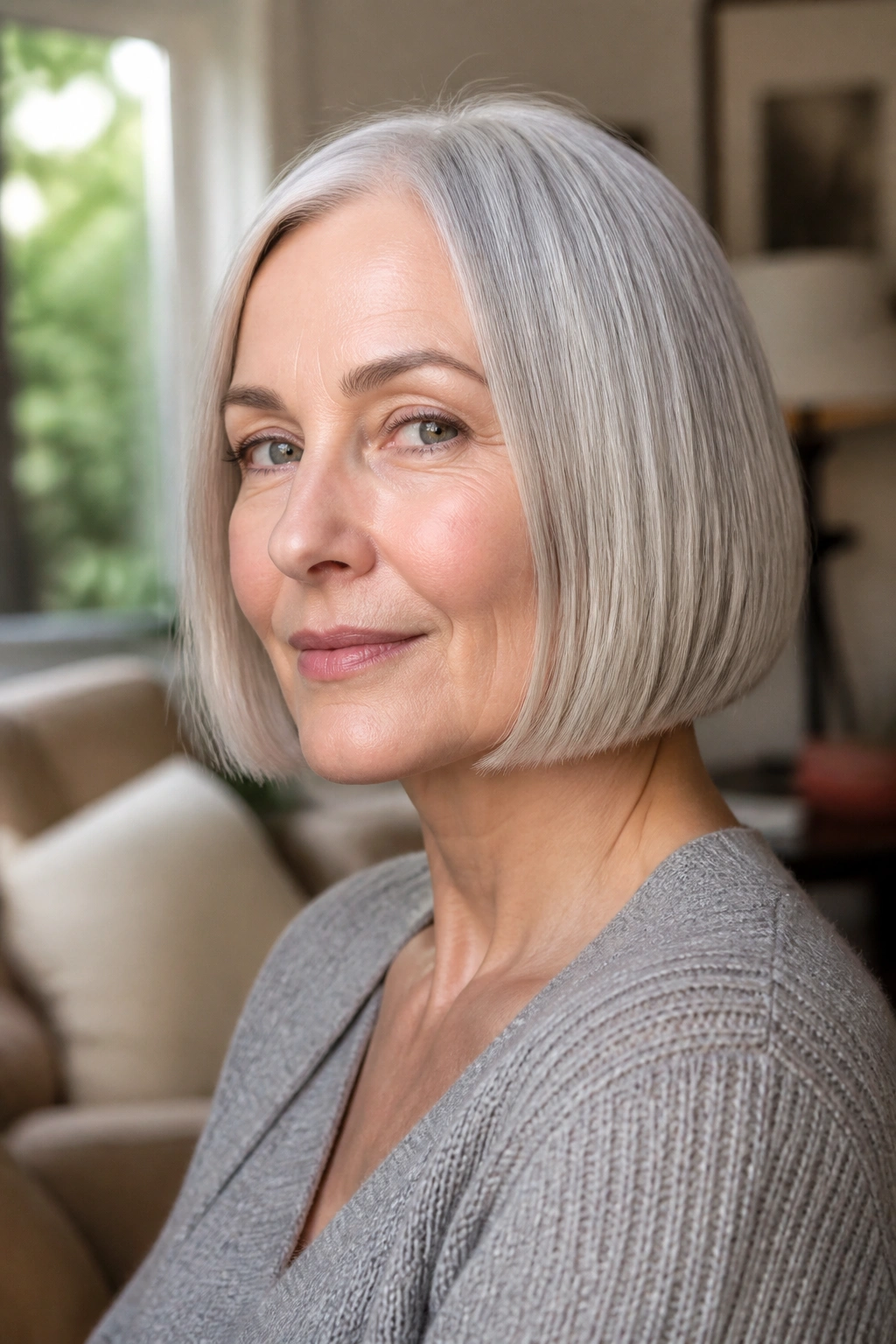
A chin-length blunt bob is one of the smartest haircuts for fine hair over 50 because the line does the work for you. When the ends are cut clean and even, the eye reads the whole shape as fuller.
I like this cut most on straight or slightly wavy gray hair. The silver shows off the edge, and that makes the bob look deliberate instead of airy in a way that fine hair sometimes does not pull off well.
Ask for a one-length perimeter with only the lightest surface refinement. Too many layers will take away the density you’re trying to keep. No need for drama here. A quick bend with a flat iron or a round brush at the ends is enough.
2. French Bob with a Soft Fringe
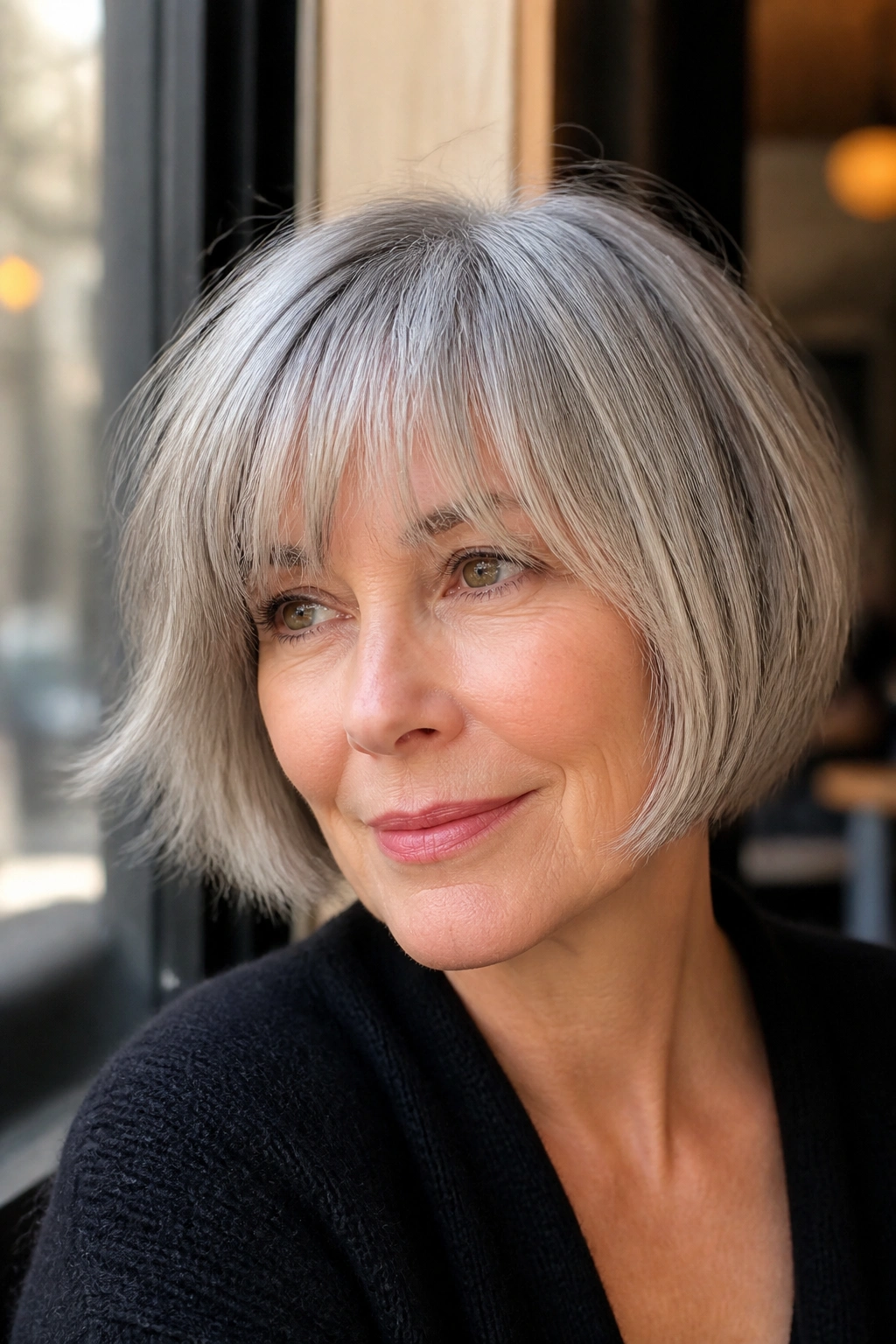
Can a short cut feel polished without looking severe? Yes — and the French bob proves it.
Why It Works
This cut usually sits around the cheekbone or a little below the jaw, and that shorter length gives fine hair more shape than a longer, softer cut ever will. A soft fringe adds fullness near the face, which is a nice trick when the crown has lost a bit of lift.
The charm of this style is that it looks better with a little imperfection. A tiny bit of movement in the fringe keeps it from looking helmet-like, and gray hair gives the whole thing a clean, expensive-looking line. If your hair is very sparse at the temples, keep the bangs wispy rather than heavy.
How to Ask for It
- Ask for a bob that lands at or just above the jawline.
- Keep the fringe light and piecey.
- Leave enough length around the ears so the shape does not puff out.
- Style with a small round brush or let it air-dry with a little mousse at the roots.
3. Layered Lob with Internal Texture
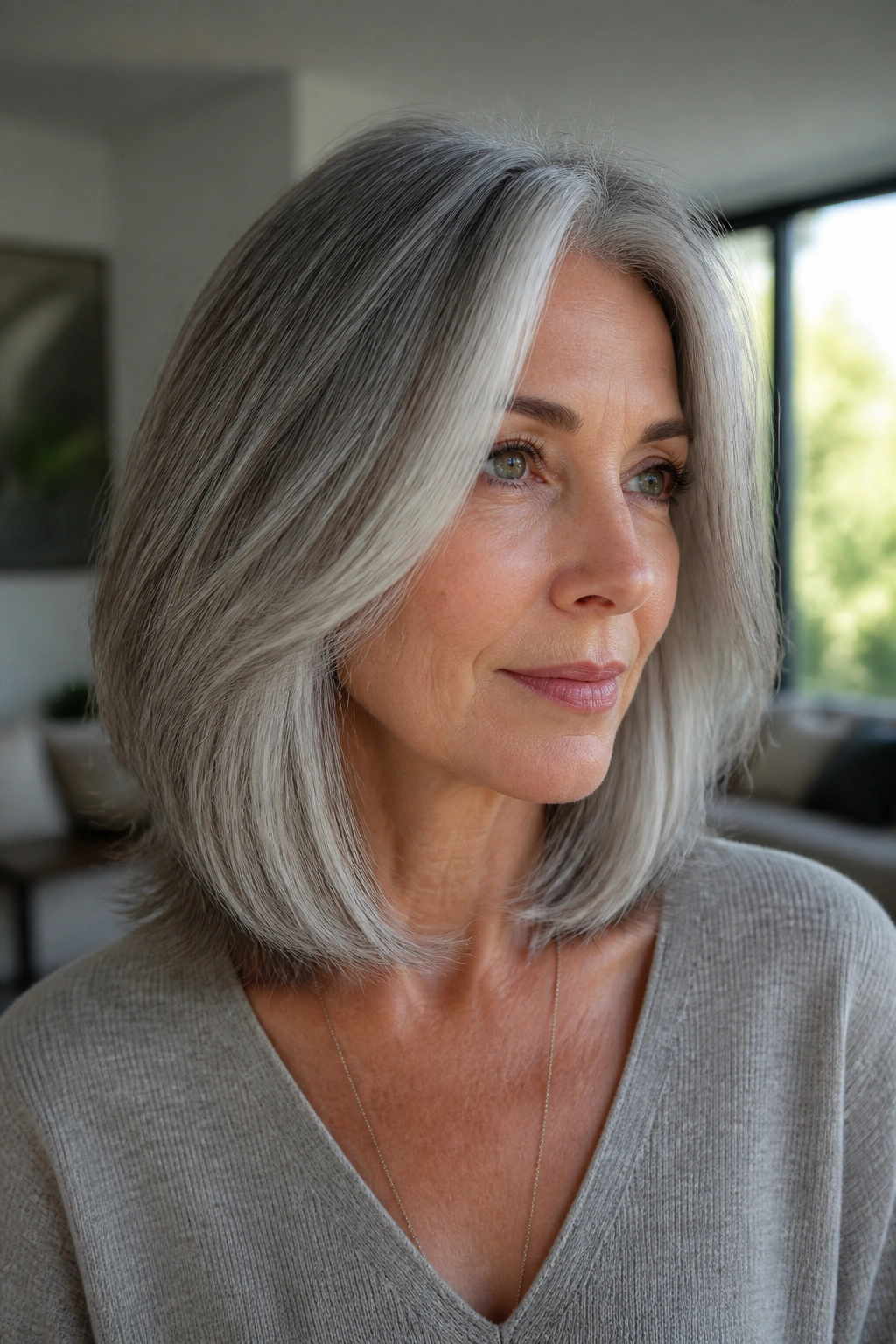
A lob can be a trap for fine hair if the layers are too obvious. Long, wispy layers often make the ends look thin and tired.
This version works because the texture is hidden inside the shape instead of carved all over the surface. You keep the outline fuller, which is the point, and the movement lives underneath where it can give lift without eating away at the bulk. That’s the detail many stylists miss when they thin hair out too enthusiastically.
I’d choose this for hair that falls flat but still has a decent amount of strands. It’s flattering with silver hair because the longer surface catches light in a smooth way, while the inside layers stop it from hanging like a sheet. A little wave spray helps. A lot of layers does not.
4. Bixie Cut
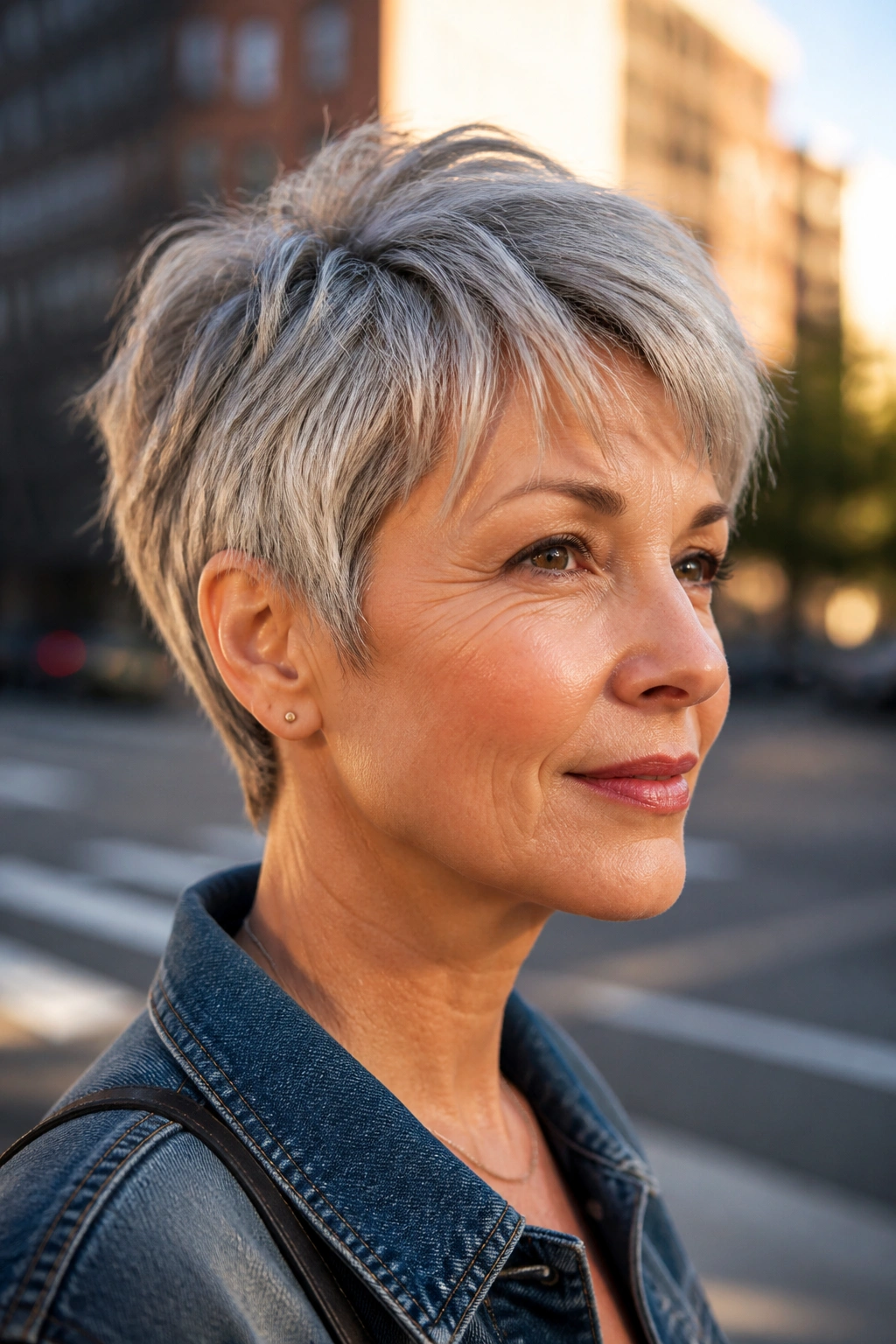
A bixie is the sweet spot between a bob and a pixie, and that middle ground is often where fine hair looks its best. It gives you short-hair lift without fully exposing the scalp line.
This is a good cut if you want movement around the crown and ears, but you still want enough length to tuck a side behind one ear or brush forward at the forehead. Fine gray hair often gets a lovely soft texture in this shape because the lighter pieces break up the silhouette without making it look thin.
The best version keeps the top slightly longer than the sides and nape. That tiny difference creates lift. Dry it with your fingers and a dab of styling cream, or use a vent brush if you want more polish. Either way, it should feel easy.
5. Feathered Pixie
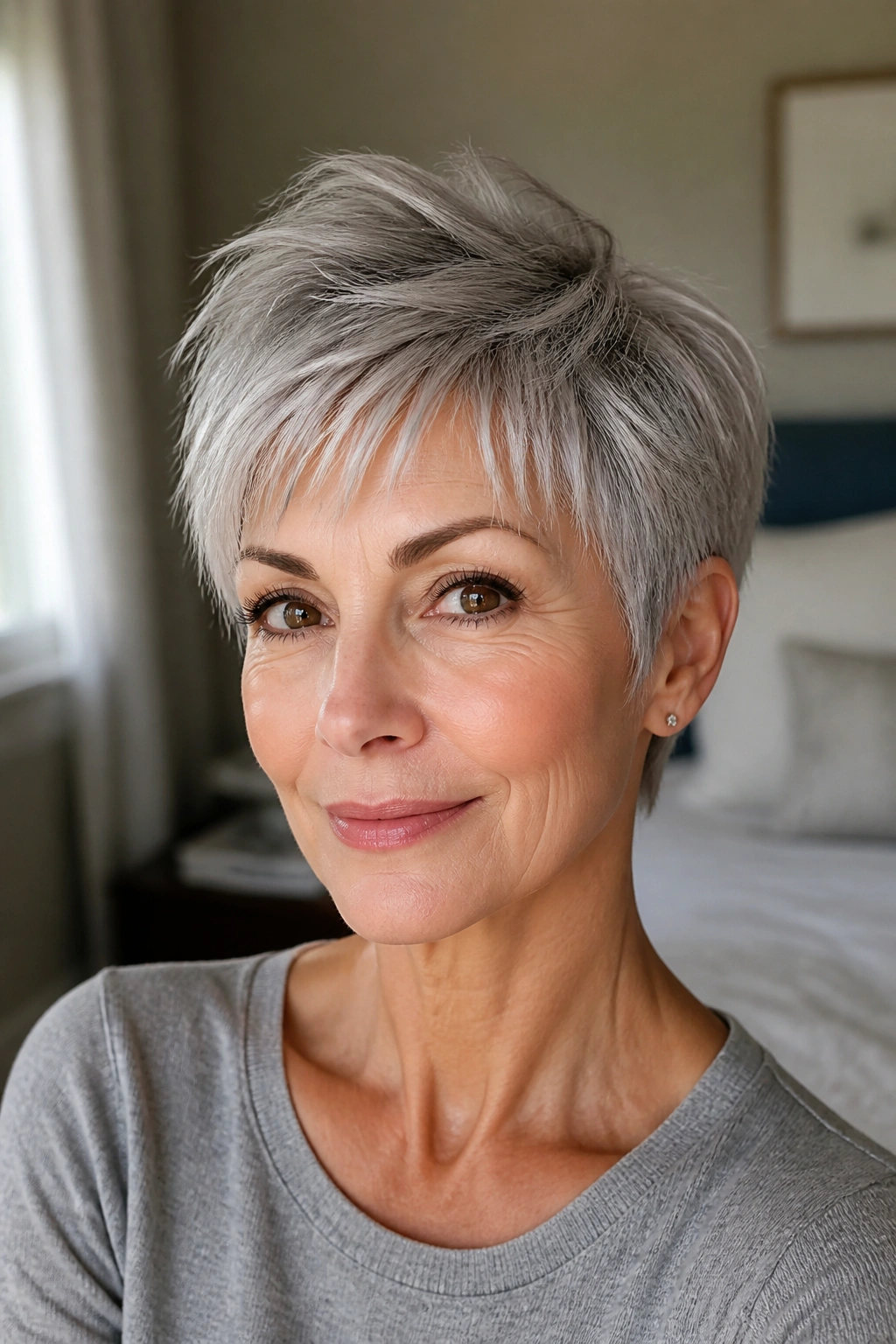
Feathered layers can be lovely on fine hair, but only when they’re used with a light hand.
A feathered pixie keeps the sides neat and the crown soft, which gives you height without bulk. The trick is to avoid choppy ends that stick out like little splinters. You want soft movement, not a shredded look. Gray and white hair take to this shape well because the feathering adds air, and the short length keeps the hair from dragging itself flat.
I’ve always liked this cut on women who want a wash-and-go routine that still looks finished. A pea-sized bit of paste, worked through the top and brushed forward or to the side, is usually enough. If your hair grows in stubbornly straight at the temples, this cut behaves better when the top is a touch longer than the sides.
6. Stacked Bob with a Short Nape
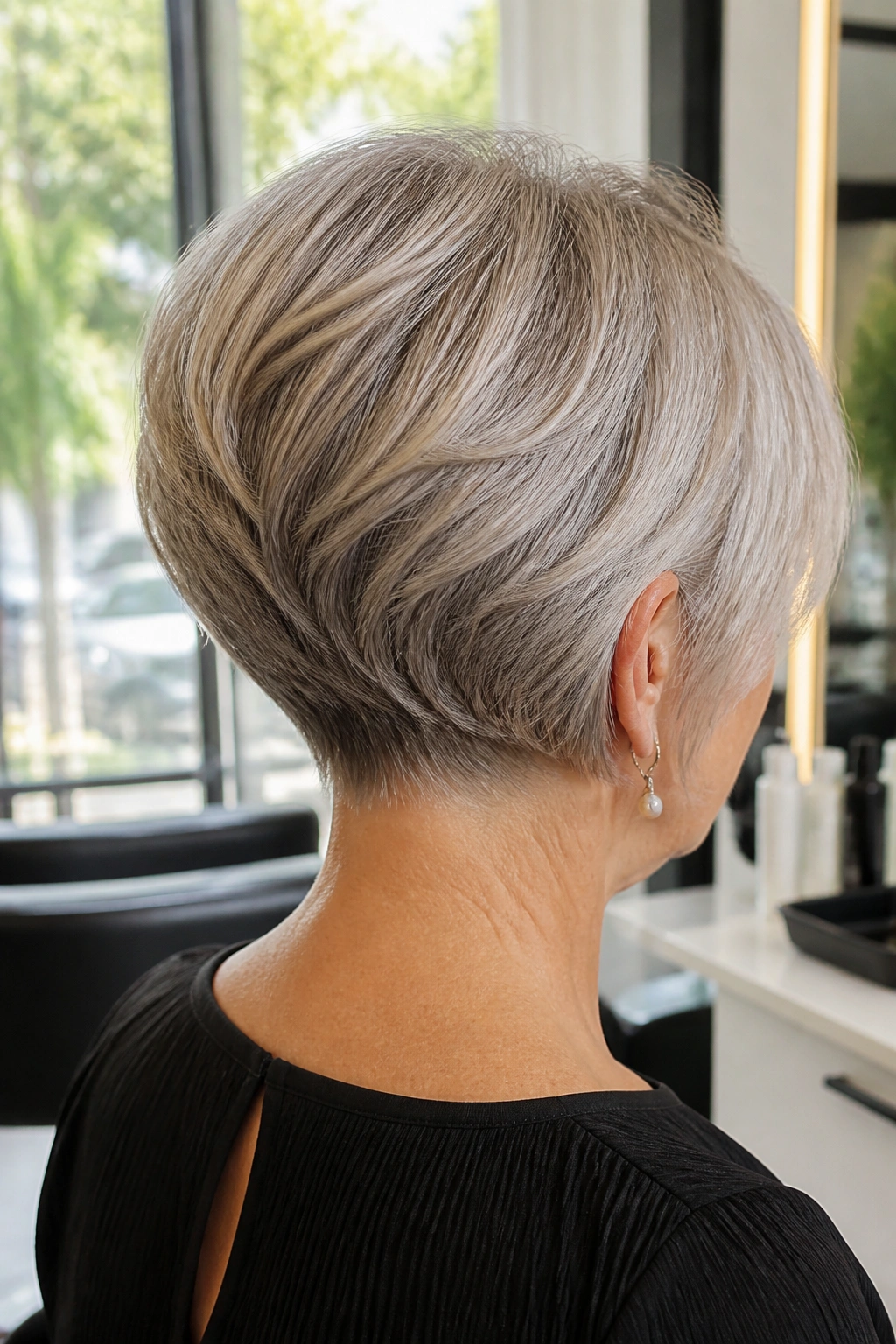
A stacked bob earns its keep by lifting the back of the head where fine hair often goes limp first.
The graduation at the nape gives the style a little internal structure. That means the hair can sit higher without needing tons of teasing or heat. On silver hair, the stacked shape looks crisp, which I love. It also dries faster than a longer cut, and that matters more than people admit.
What Makes It Different
- The back is cut shorter and rounded.
- The crown gets natural lift from the stacked shape.
- The front can stay slightly longer to soften the face.
- The style holds up well with a quick round-brush blowout.
If your hair gets flat at the crown, this cut is worth a serious look. Keep the stacking moderate, though. Too much and the shape starts feeling dated fast.
7. Side-Part Bob
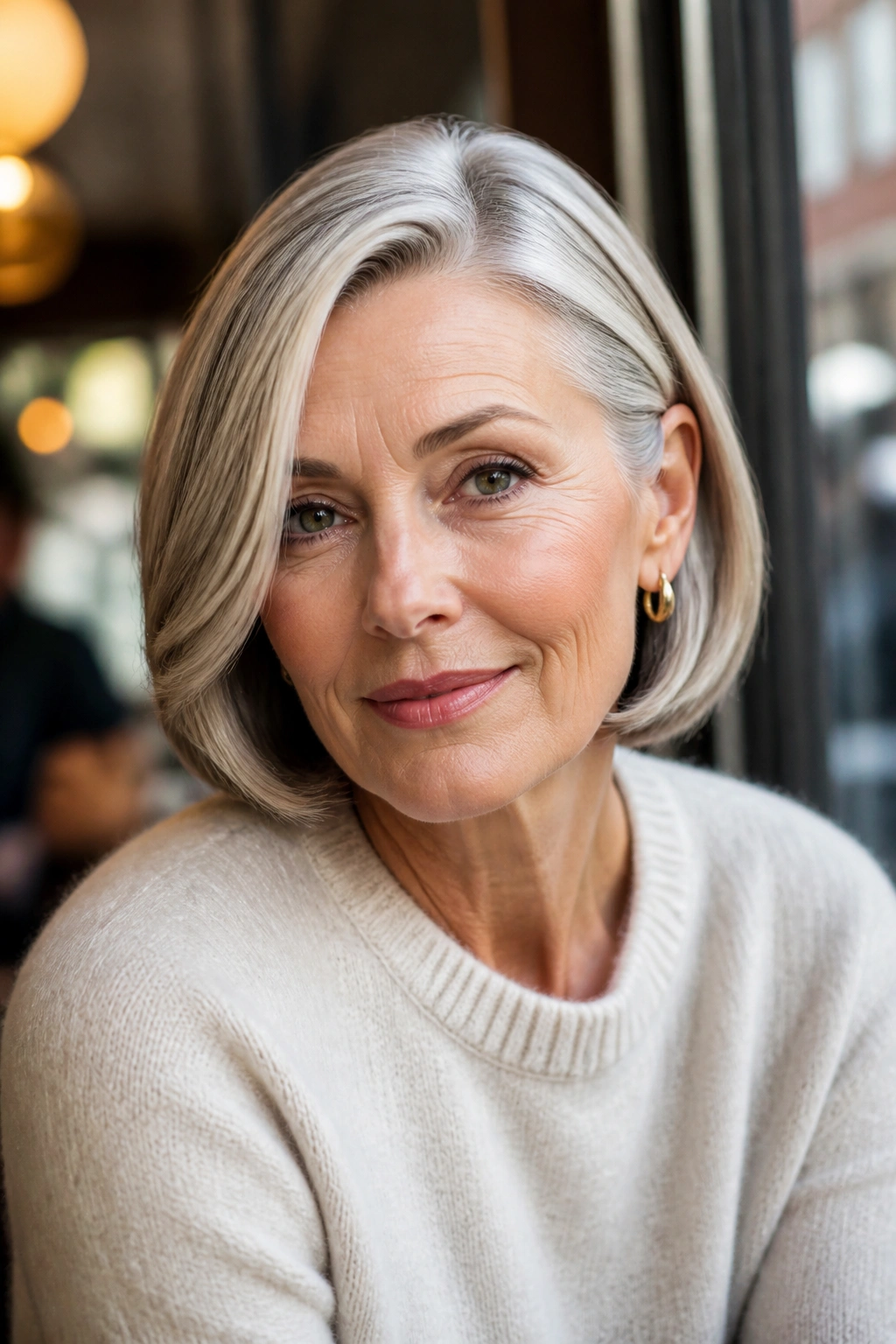
Sometimes the easiest fix is also the best one. A deep side part can create lift that no product will fake for long.
This bob works because the part shifts the weight of the hair. Fine hair often collapses where it’s parted most often, so moving that line even an inch or two can make the roots stand up better. On gray hair, the contrast across the part gives the style a clean, sharp look.
I like this cut for women who want something low-maintenance but not boring. Keep the length around the chin or just below it, and do not overload it with layers. A light root spray and a quick blow-dry in the opposite direction of the part before flipping it back can help the roots stay lifted longer. Simple. Effective.
8. Asymmetrical Bob
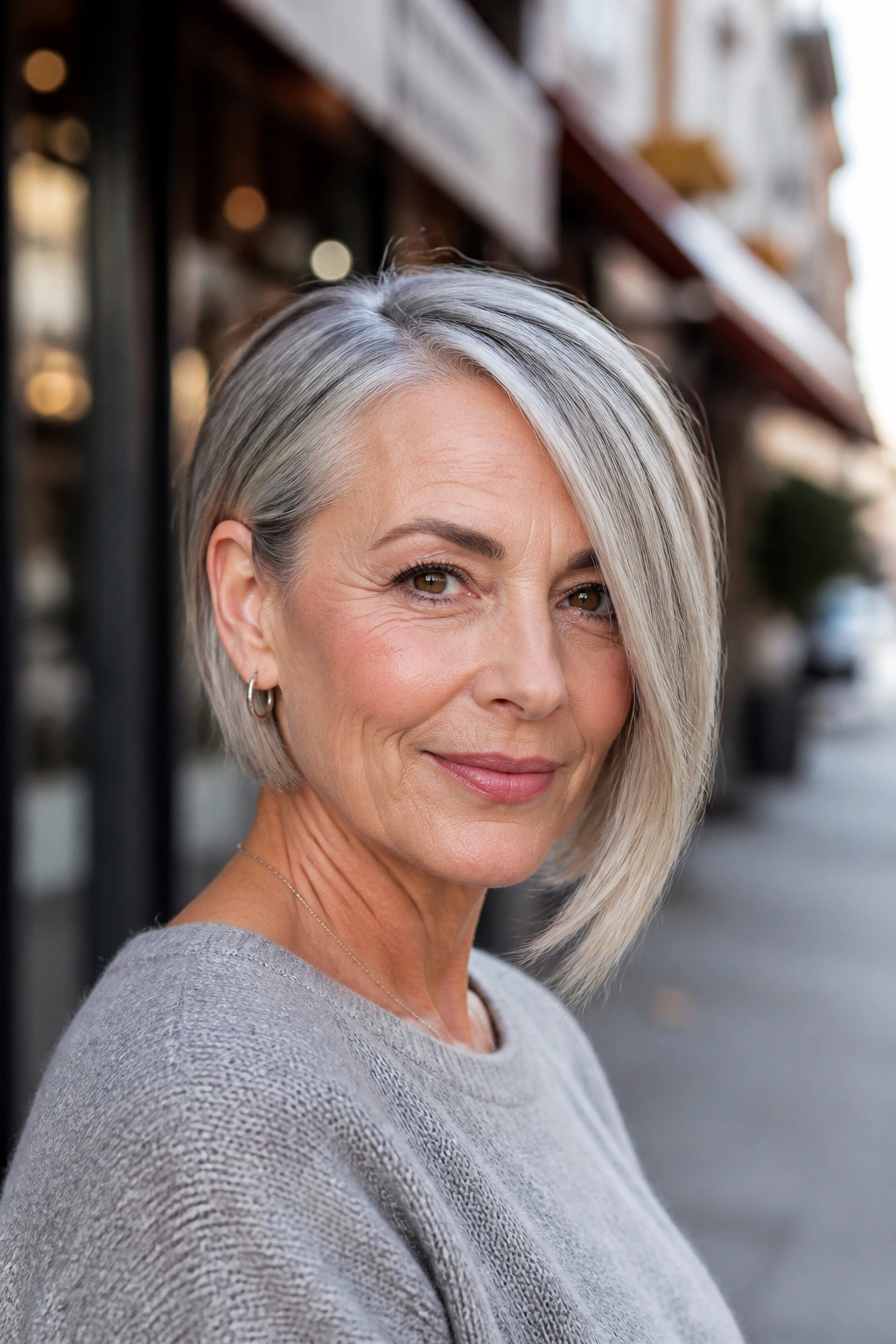
An asymmetrical bob sounds bold, and it can be. But on fine hair, the uneven line is doing practical work, not just style work.
The longer side creates the illusion of more hair, while the shorter side keeps the overall shape from dragging down the face. This is one of those cuts that looks especially good with gray hair because the line is so visible. You can see the shape right away, which makes the hair seem more deliberate and controlled.
I’d call this a good choice if your hair has some bend and you like a modern edge. Ask for a subtle difference between the sides, not a dramatic one, unless you want the cut to read fashion-first. A big difference can look sharp. A smaller one tends to age better.
9. Tapered Crop
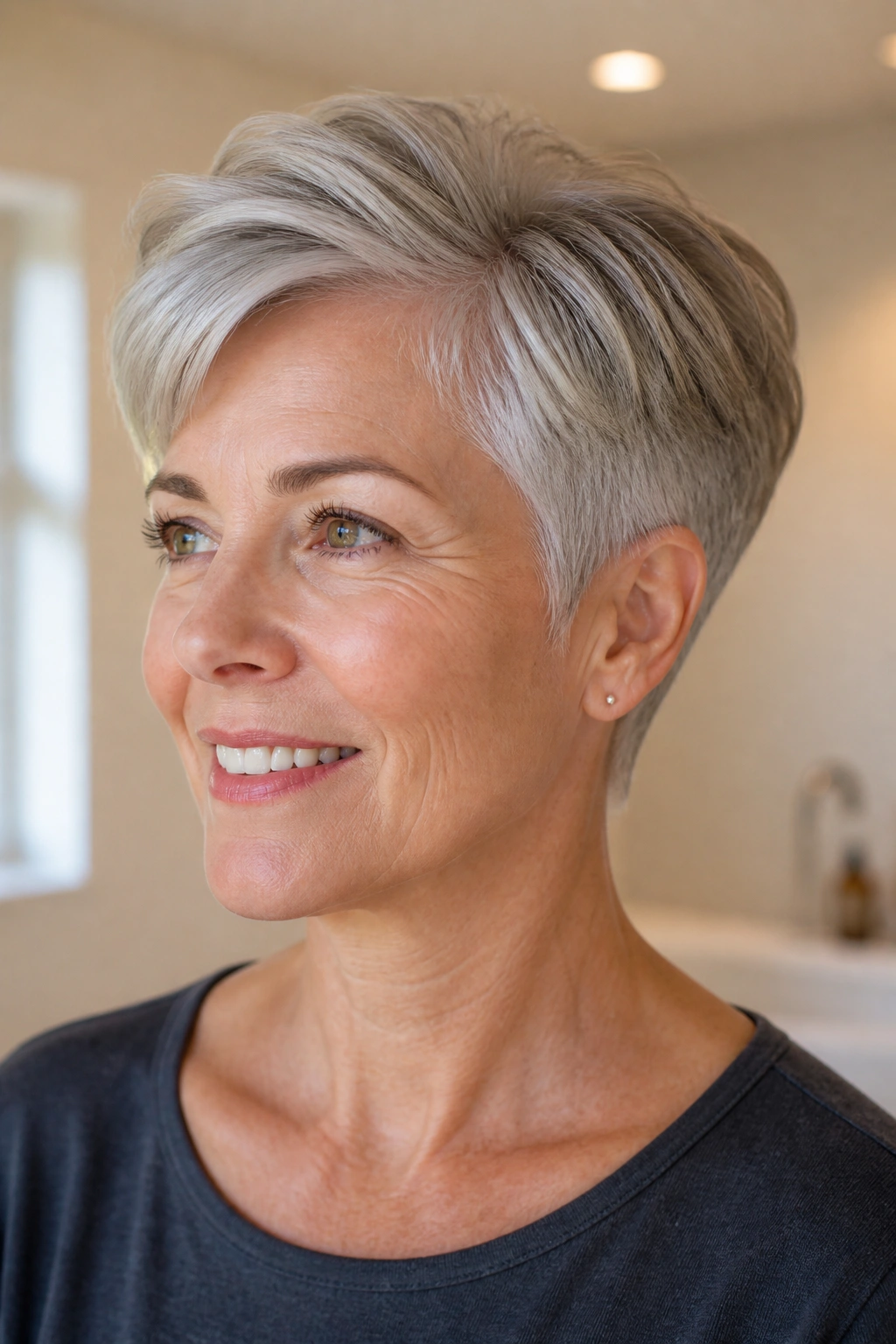
A tapered crop is short, neat, and excellent if you’re tired of fighting your hair every morning.
The reason it helps fine hair is simple: the cut removes excess weight without taking the top too short. That keeps the silhouette light around the ears and nape while preserving a bit of height at the crown. Gray hair often shines in this shape because the cropped edges make the color variation obvious.
How to Get the Most From It
- Keep the top long enough to sweep forward or to the side.
- Ask for a soft taper at the nape, not a hard clipper fade.
- Use a tiny amount of styling paste on damp hair.
- Let a few pieces fall where they want. That’s part of the charm.
This cut is not for everyone. If you hate regular trims, skip it. The shape depends on staying tidy.
10. Rounded Bob
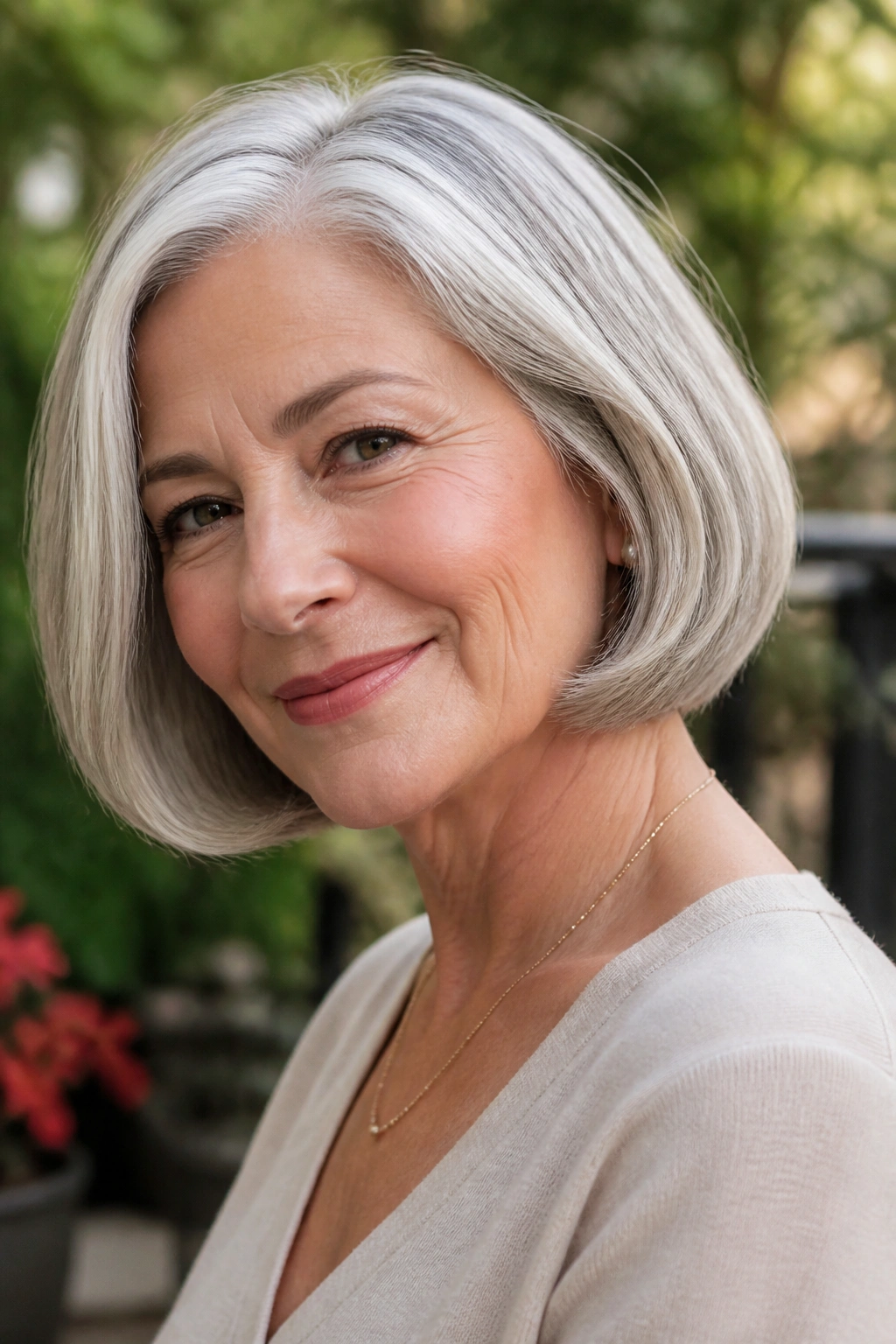
A rounded bob is a good answer when fine hair spreads too flat at the ends.
The shape curves inward slightly, which makes the hair look fuller and more contained. That rounded silhouette is especially useful on silver hair that has lost its former thickness at the hemline. Instead of wispy ends, you get a clean edge with a little body.
I prefer this bob when the hair is straight or mostly straight, because the shape shows up best without fighting texture. A small round brush or a hot-air brush can tuck the ends under in a few minutes. If your hair likes to flip out, ask for the perimeter to be cut with that behavior in mind. Stylists know what to do with it. You do not need to battle it at home.
11. Long Pixie with Side-Swept Bangs
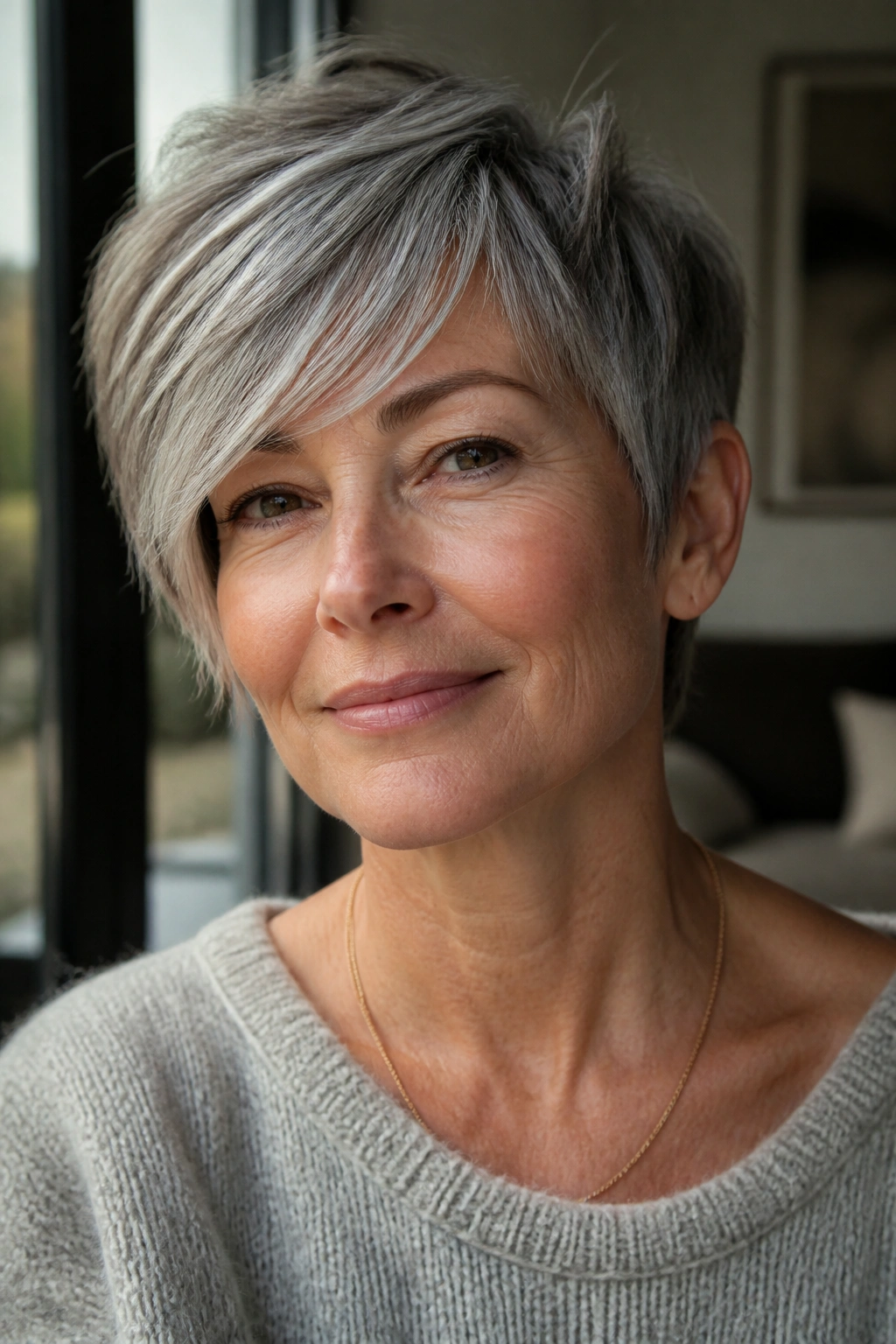
A long pixie gives you a little softness around the face without sacrificing the lift that short hair usually gives fine strands.
The side-swept bang is the star here. It adds weight where you want it — at the forehead and cheekbone area — while the cropped back keeps the head shape neat. Fine gray hair often looks especially pretty in this cut because the color variation shows up in the longer top pieces.
This one is a strong pick if your hairline has thinned a bit and you want more coverage without hiding everything under a heavy fringe. Keep the top textured, not spiky. I’d ask for enough length on top to brush forward or across, not straight up. The difference sounds small. It isn’t.
12. Shoulder-Length Cut with Face-Framing Layers
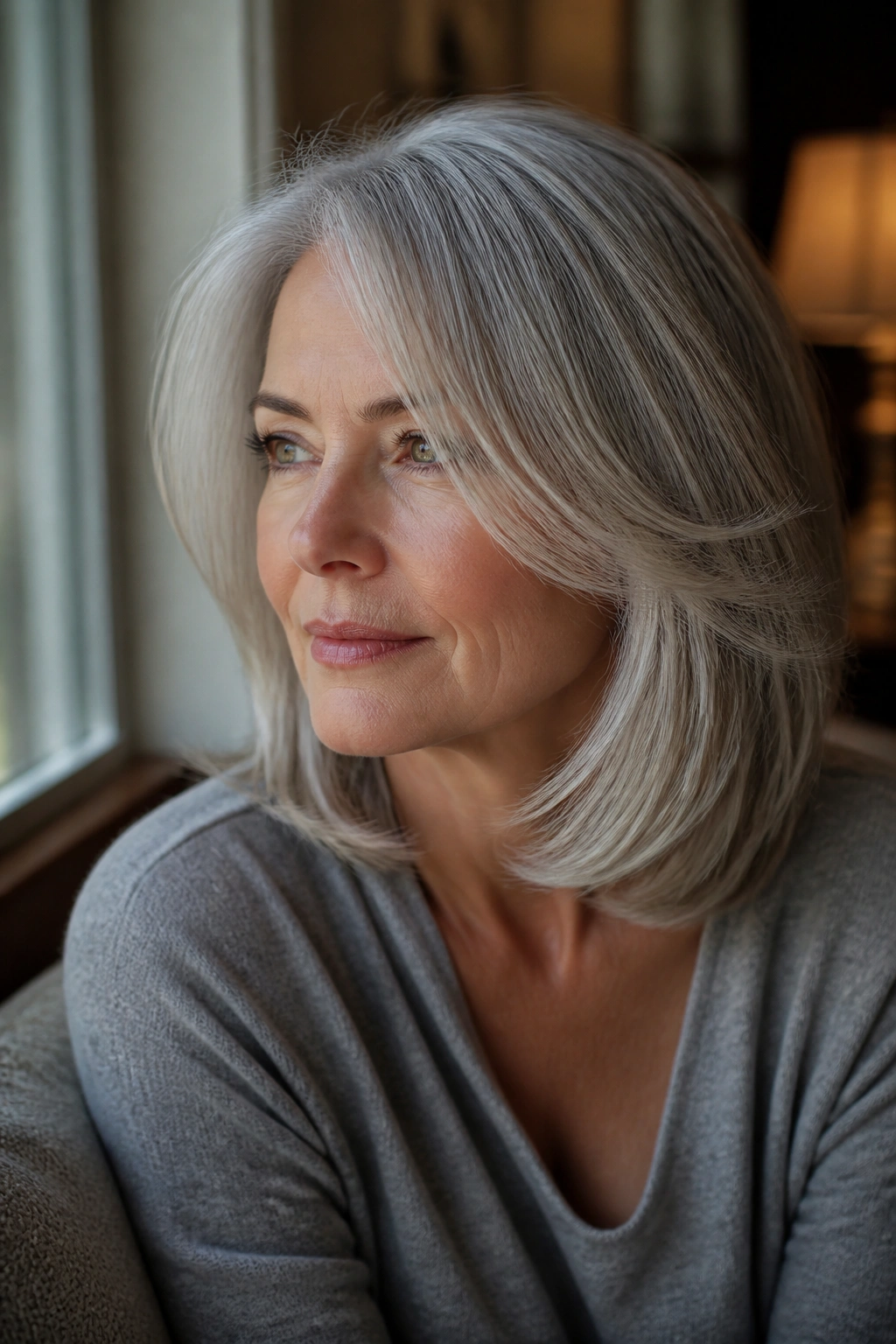
Shoulder length can work for fine hair over 50 if the cut is disciplined. Loose, all-over layers are where people get into trouble.
The smarter move is face-framing layers that start low and stay light. That keeps the perimeter full while softening the sides around the jaw and neck. Gray and silver hair can look elegant at this length because the shape feels calm, not overworked.
A Better Way to Think About It
You want shape around the face, not a bunch of airy ends all over the back. That’s the part many people miss. The front can have a little swing, but the back should still hang with some weight.
This cut suits women who still like to tuck hair behind the ears or wear it in a low clip on busy days. It’s also one of the easier cuts to grow out without a crisis, which is worth a lot.
13. Inverted Bob
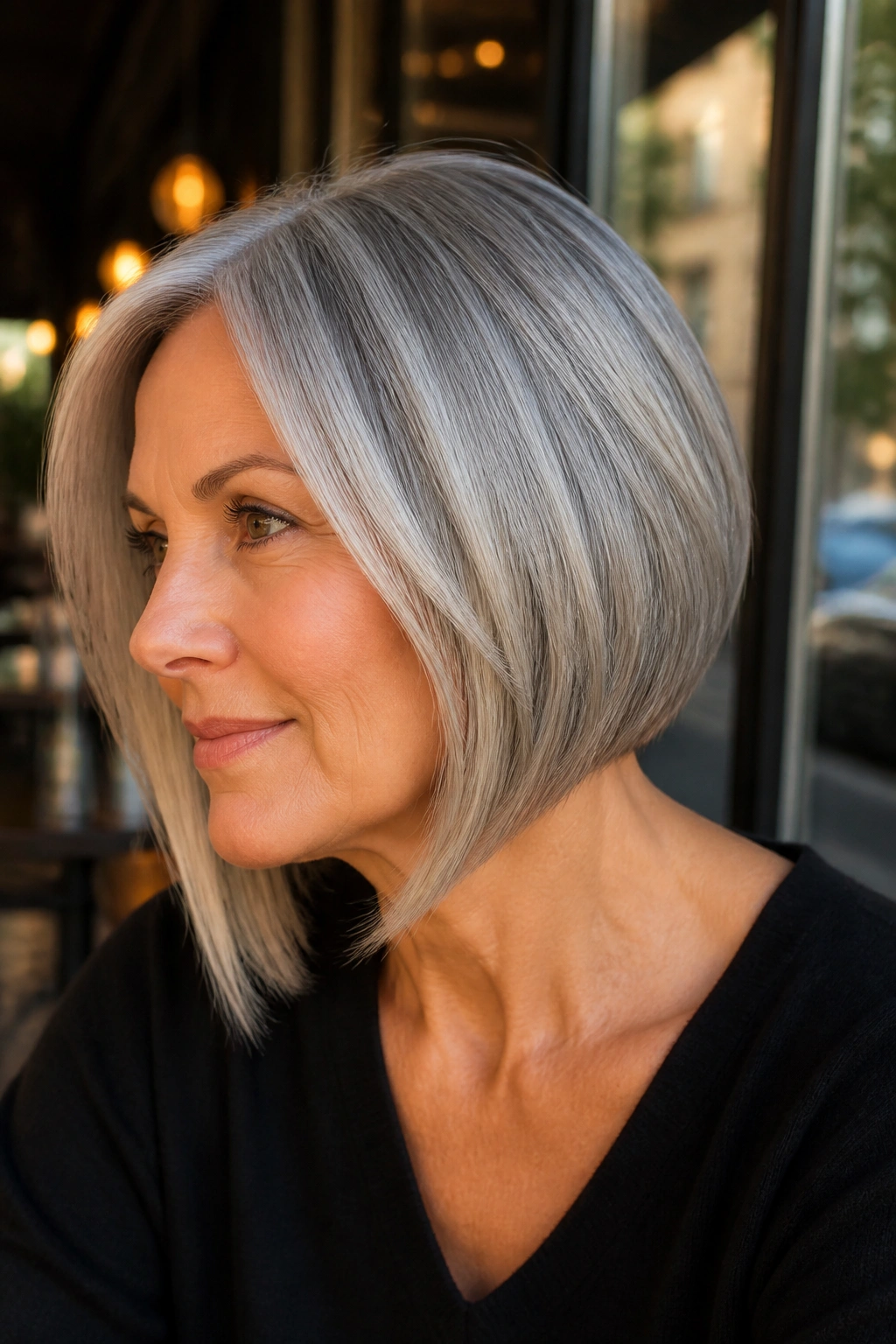
An inverted bob gives you a shorter back and a longer front, and that angle can be magic for fine hair.
The forward movement draws the eye down and makes the front pieces feel fuller. At the same time, the shorter back lifts the whole profile. On gray hair, the slant reads clearly, so the haircut itself becomes the main design element.
I like this shape on straight hair especially, since the angle shows best when the strands lay smooth. If your hair is very fine, keep the graduation gentle. Too much stacking can leave the crown hollow. The best inverted bobs feel sleek, not stiff.
14. Blunt Collarbone Cut
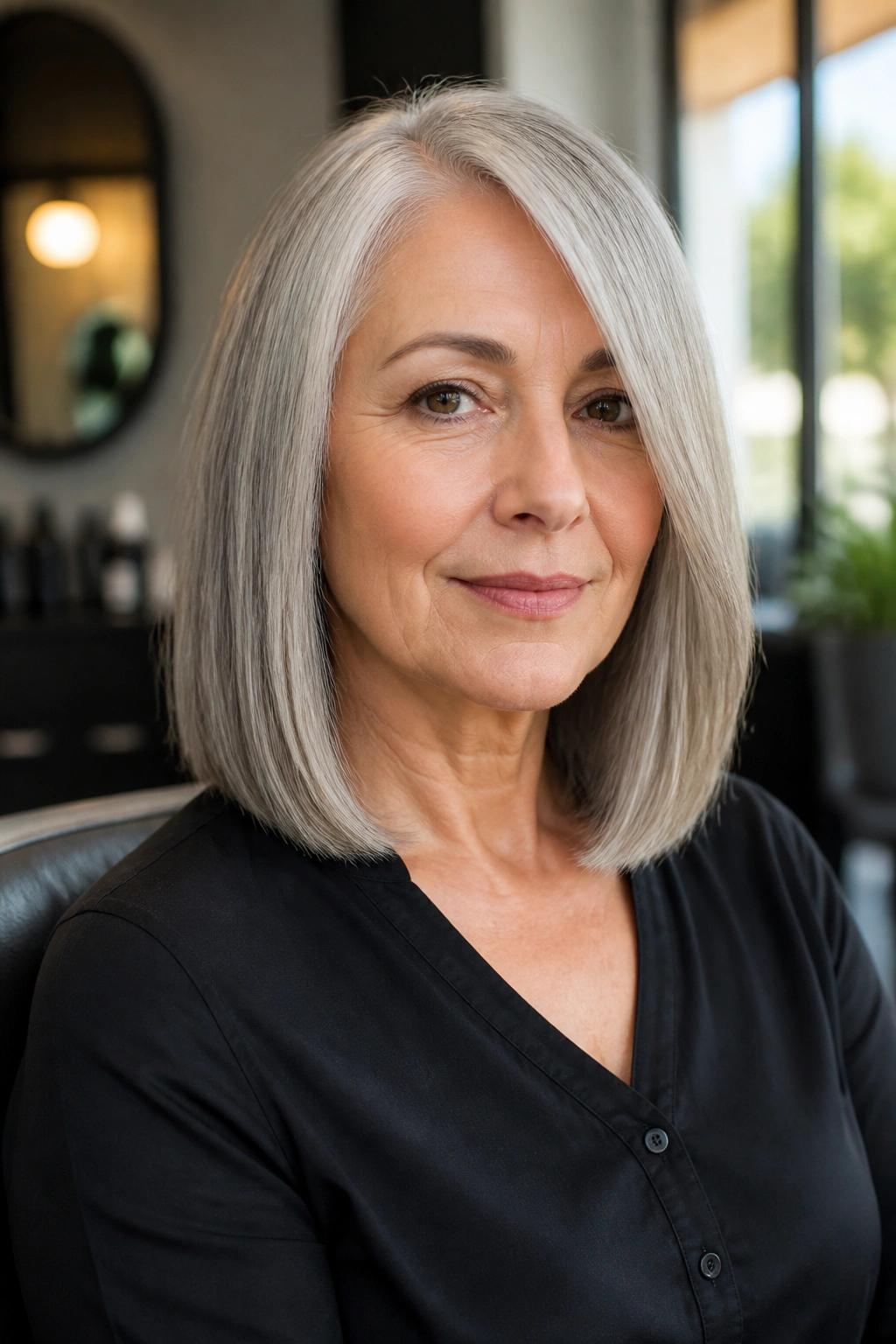
If you are not ready to go short, a collarbone cut with a blunt edge is one of the safer bets.
The length gives you versatility, but the blunt perimeter keeps the ends from looking see-through. That matters a lot with fine hair, which can turn stringy when it gets too long. Gray hair often looks clean and expensive at this length because the ends stay solid and the color reads as one smooth surface.
A middle part can work here, but I often prefer a soft side part for a little lift. Dry with a medium round brush, then bend only the last inch or two. Skip heavy layering. The goal is density, not movement for its own sake. Fine hair can look busy in all the wrong ways when it’s overcut.
15. Soft Pageboy

The pageboy has a slightly retro feel, but the soft version is more wearable than people think.
Why It Still Works
This cut curves under at the jaw or just below it, which gives fine hair a tidy outline. The shape is especially kind to gray hair because the edge is visible and the curve around the face adds softness. It can look polished with very little styling.
The key is softness at the perimeter. You do not want a stiff helmet. You want a rounded line with a little bend, maybe a light fringe, maybe a tucked-under finish at the nape. If your hair is straight and fine, this can be one of the easiest short cuts to live with.
What to Ask For
- A curved outline through the sides and back.
- Minimal layering through the ends.
- Enough length at the front to skim the jaw.
- A gentle finish, not a sharp, squared-off shape.
16. Choppy Bob with Kept-Full Ends

A choppy bob can look fantastic on fine hair if the choppiness stays inside the shape instead of shredding the outline.
That distinction matters. I see too many fine-haired women get cut into a wispy mess when what they really needed was texture inside a fuller bob. Keep the ends solid, then add a bit of internal movement so the hair can lift without looking sparse.
This cut is a good match for salt-and-pepper hair, because the contrast between light and dark pieces makes the texture pop. A little sea-salt spray or dry texture spray can help, but don’t lean on it too hard. Too much product makes fine hair feel dirty by lunchtime.
17. Wedge Cut
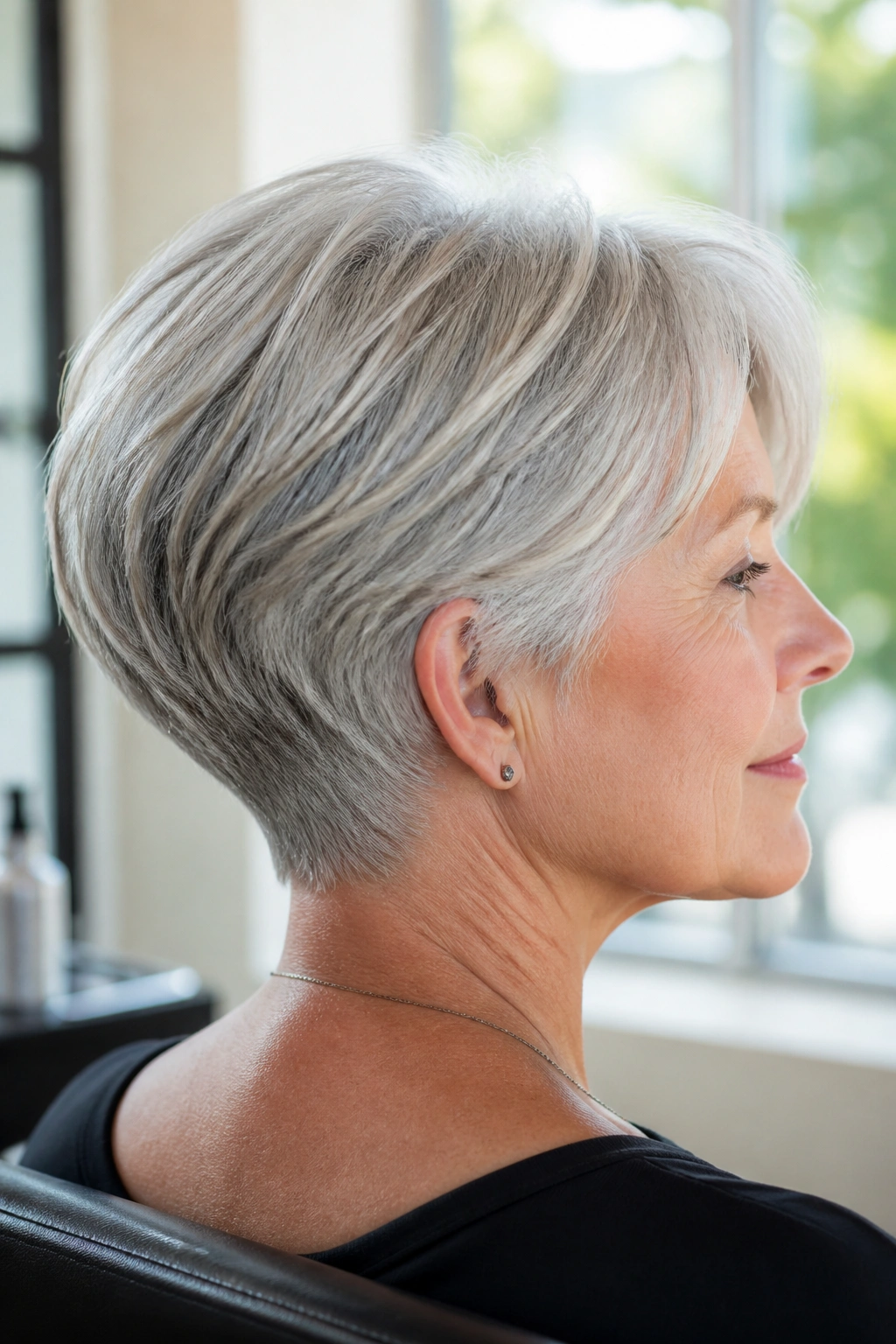
The wedge cut is strong medicine, and I mean that in a good way.
It brings weight to the back while keeping the overall profile compact. Fine hair likes that because it needs direction, not more length. The wedge can make the crown look fuller and the neckline neater, which is a pretty useful combination if you want shape that holds up between salon visits.
The Short Version
- Best for hair that is straight or only slightly wavy.
- Works well when the back tends to go flat.
- Needs clean trimming to stay sharp.
- Looks especially clear on silver or white hair.
I know the wedge gets dismissed sometimes because people remember old versions that felt stiff. A softer, updated wedge is a different story. It can be elegant, practical, and frankly a little underrated.
18. Curly Bob for Wavy or Bendable Hair
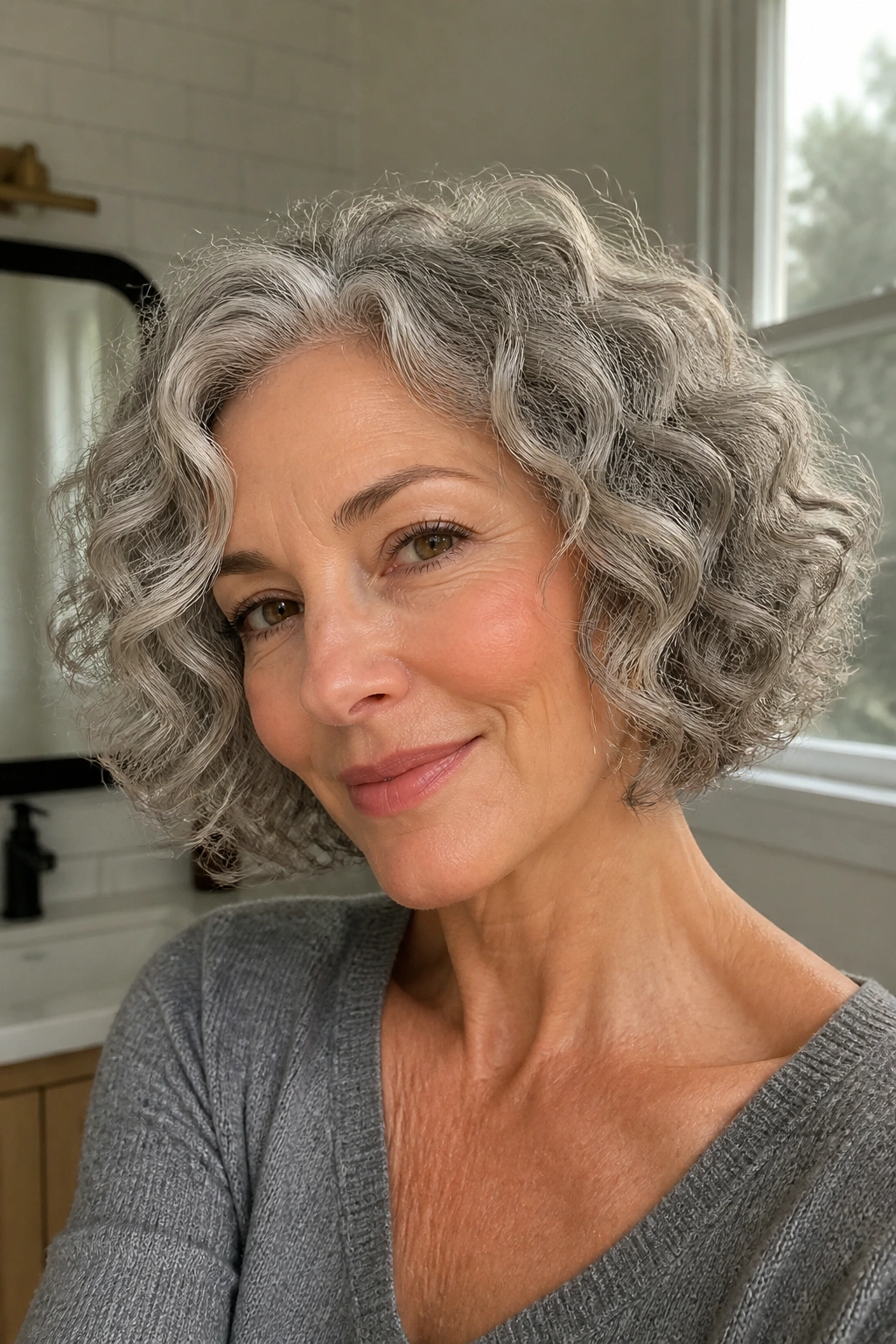
If your fine hair has any wave at all, stop forcing it into a pin-straight shape every day.
A curly bob — or a bob that works with your natural bend — can look much fuller than a sleek cut on the same head of hair. The curve gives the illusion of body, and gray strands often hold definition well when they’re cut to the right length. Usually that means somewhere between the cheek and the jaw.
The mistake here is cutting it too long. Fine waves lose their spring when they drag. Keep the shape compact enough to bounce. A diffuser, a little curl cream, and a hands-off drying routine can do more than a flat iron ever will. Some hair wants to move. Let it.
19. Layered Lob with Curtain Bangs
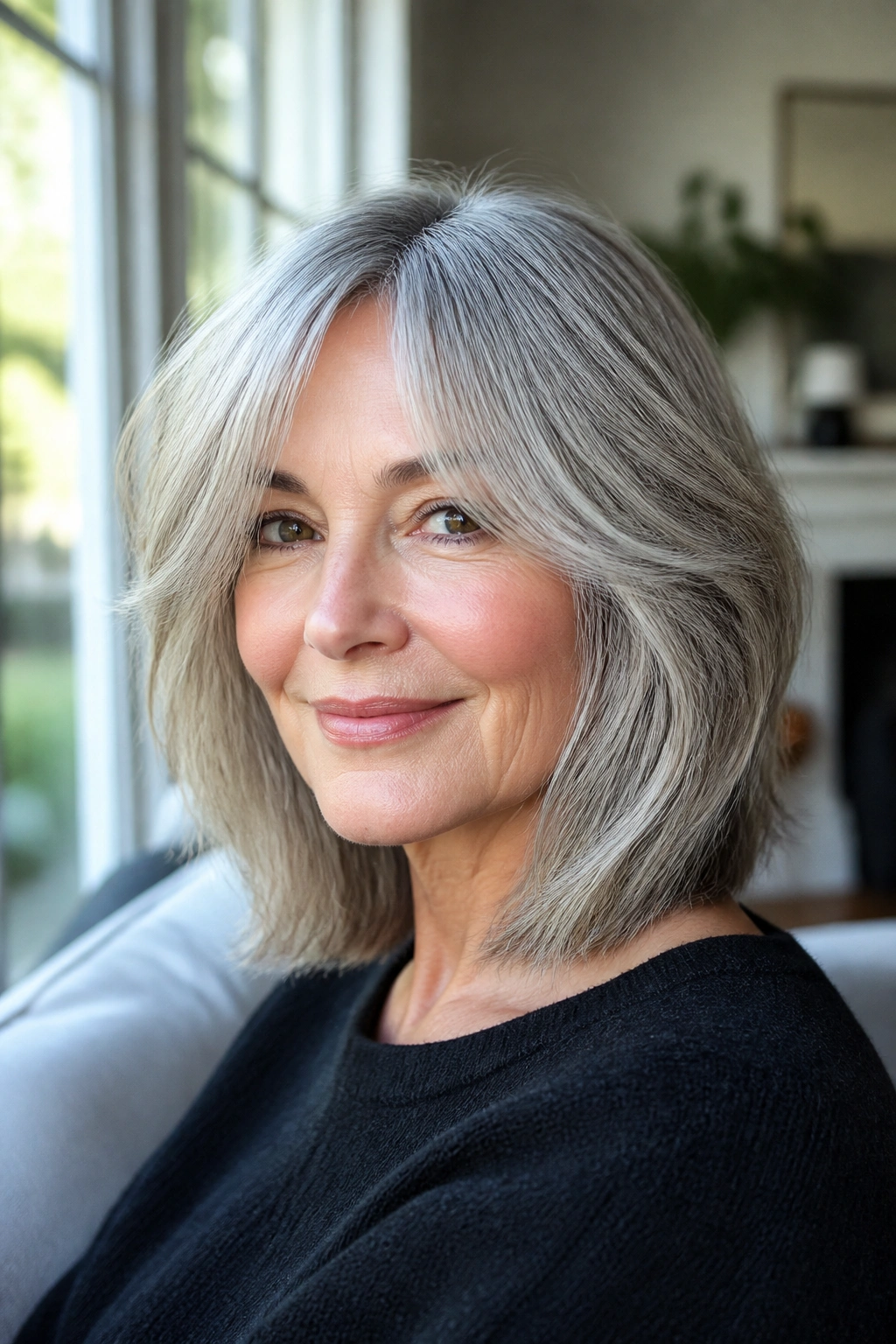
A layered lob with curtain bangs can be lovely if the layers are restrained and the bangs are handled like part of the haircut, not a separate event.
The bangs open up the face, which helps if fine hair has become thinner around the temples. The layers around the collarbone give the rest of the hair a little swing without stripping away the bulk. Gray and silver tones look soft and dimensional in this shape because the longer pieces move differently than the front.
What Makes It Different
Curtain bangs work best when they are long enough to split and blend into the sides. Short, chunky bangs can make fine hair feel chopped up. This version keeps the front airy and the rest of the cut full.
If you like wearing your hair up sometimes, this cut is useful. The bangs fall out in a nice way, and the rest can still tuck into a low clip or barrette without looking unfinished.
20. Tapered Shag
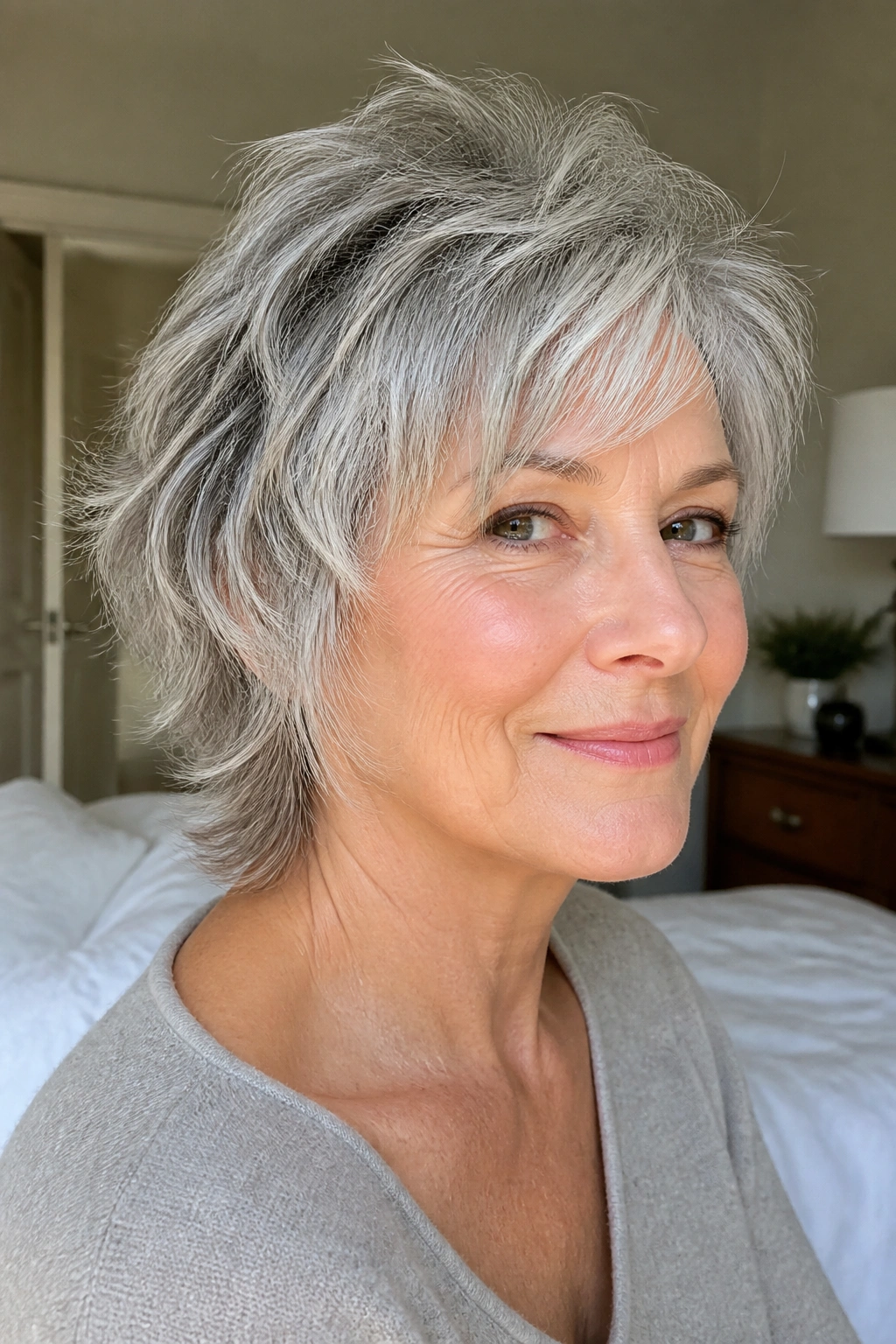
A shag can be a brilliant cut for fine hair over 50 — or a complete disaster. The difference is restraint.
A tapered shag keeps the layers soft around the crown and lighter through the sides, which creates movement without turning the hair into frizz. Fine gray hair often benefits from that kind of controlled looseness because the shorter pieces around the face give body where the eye notices it most.
I would not ask for a shag if your hair is already very sparse at the ends. But if your strands are fine and fairly even, this cut can be a nice answer to flatness. A little mousse at the roots, a little scrunching, and you’re done. It should look lived-in, not messy in a tired way.
21. Box Bob
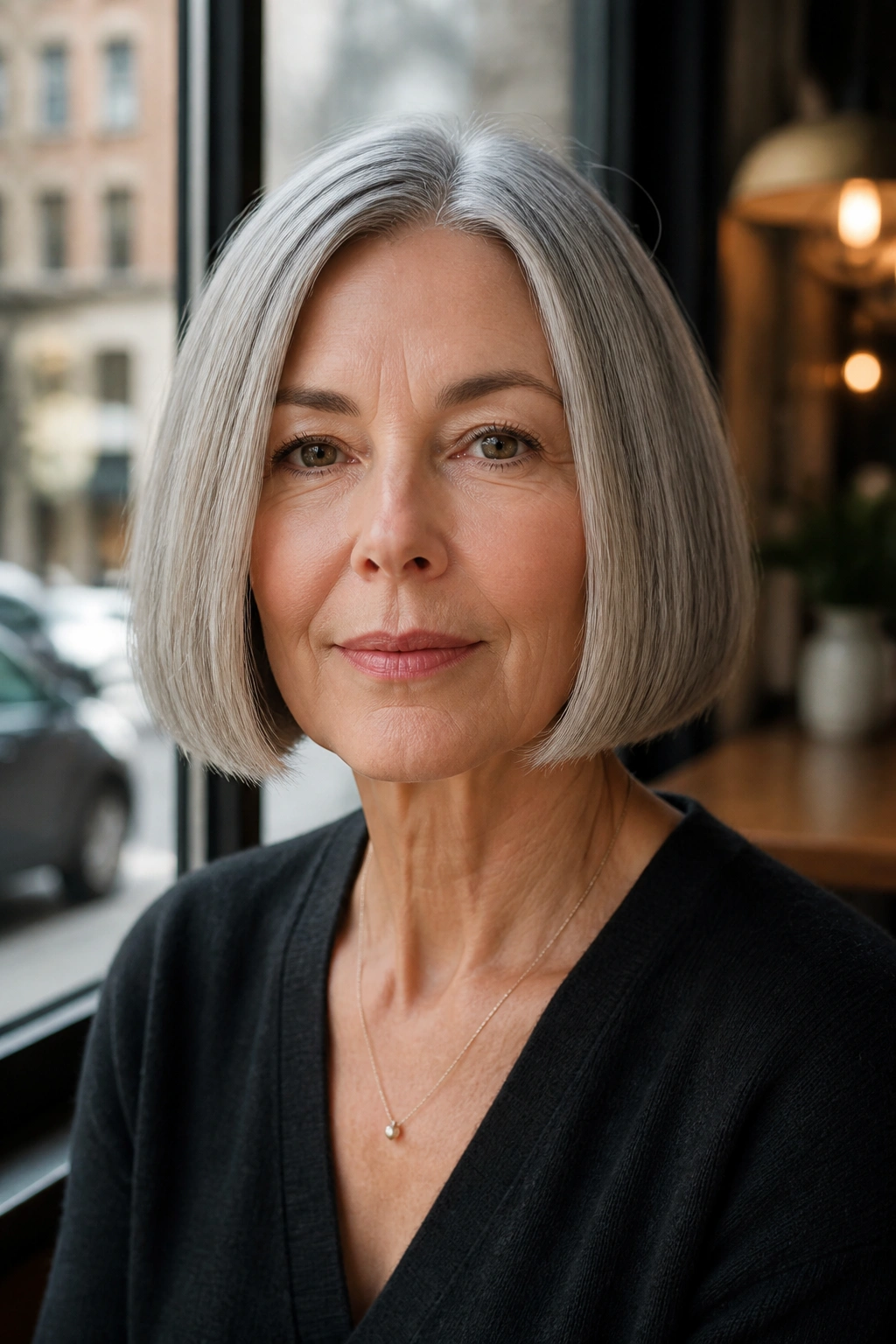
A box bob is blunt, square, and a little uncompromising. That is exactly why it can work so well on fine hair.
The straight sides and strong perimeter make the hair look denser than a softer cut would. Gray hair especially likes this shape because the geometry is visible right away. You see the boxy line before you think about the strands themselves.
This cut works best when you want something clean and low fuss. It does not need much layering, and it does not forgive heavy texturizing. If your hair is very fine, keep the ends full and let the sharp outline do the visual heavy lifting. That’s the whole game here.
22. Undercut Pixie
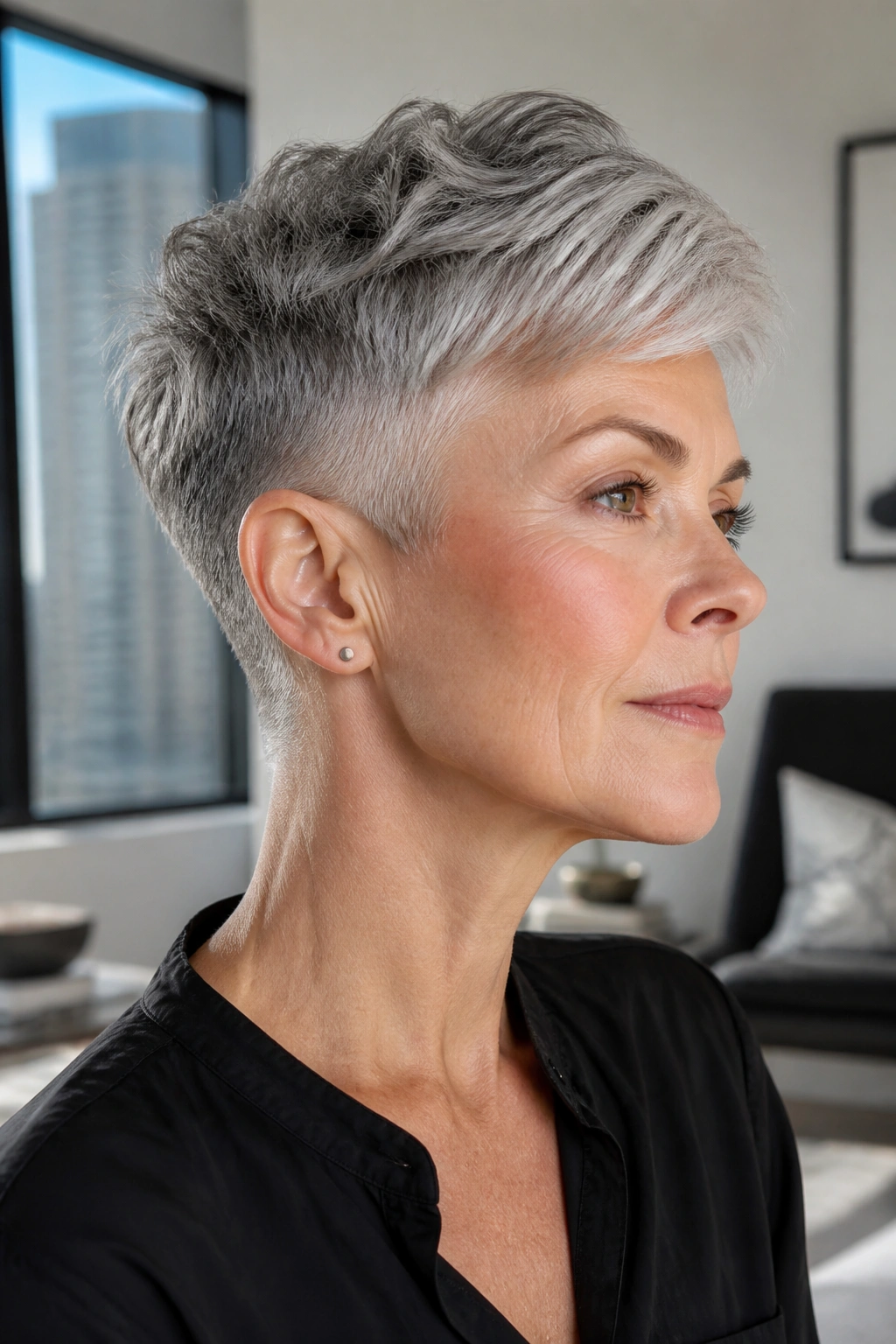
An undercut pixie is not shy, but it solves a real problem: too much bulk in the wrong places.
By taking out weight at the nape or around the sides, the cut lets the top sit higher and look fuller. Fine hair often benefits from that relief because it no longer has to fight its own softness. On gray hair, the contrast between the short undercut and the longer top can look crisp and modern.
How to Wear It
- Keep the top long enough to sweep or tousle.
- Ask for a soft undercut, not a shaved strip unless you want that look.
- Style with a matte paste or light cream.
- Book trims often enough to keep the shape from growing shaggy.
This one is for the woman who wants a bit of attitude. It’s practical, too. The back dries fast.
23. A-Line Bob
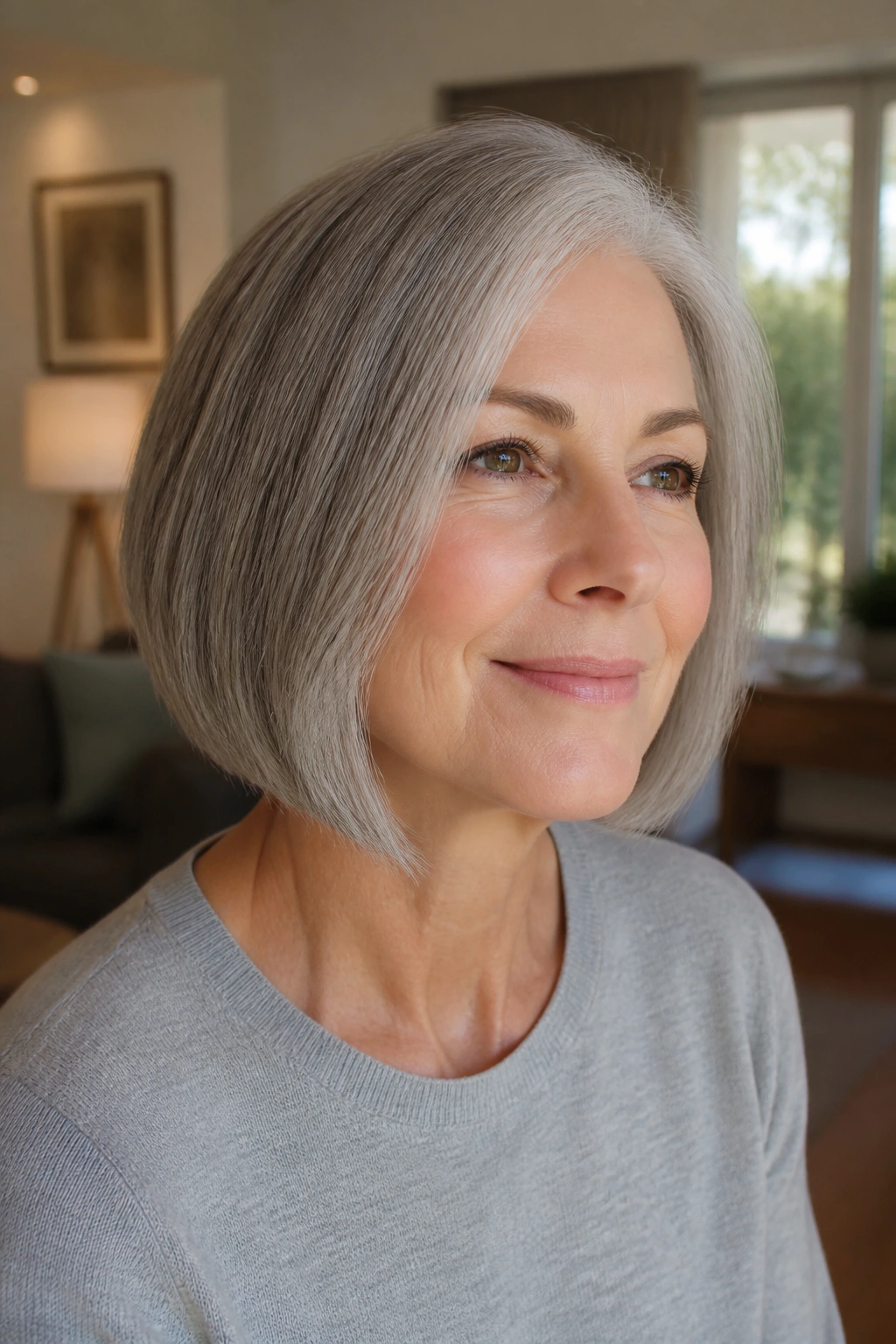
The A-line bob is longer in the front and shorter in the back, but the angle is usually gentler than an inverted bob.
That softness makes it useful for fine hair because you get movement without losing too much density. The front pieces can graze the jaw or collarbone, while the back stays neat and lifted. Gray hair shows the angle well, which gives the whole style a clean, tailored look.
I like this cut when someone wants a bob but worries about face length. The forward angle can slim the face a little, and the shorter back keeps the style from dragging down. It’s one of those cuts that looks good with a tuck behind one ear and a little bend at the ends. Easy to live with. Easy to dress up.
24. Sliced Mid-Length Cut
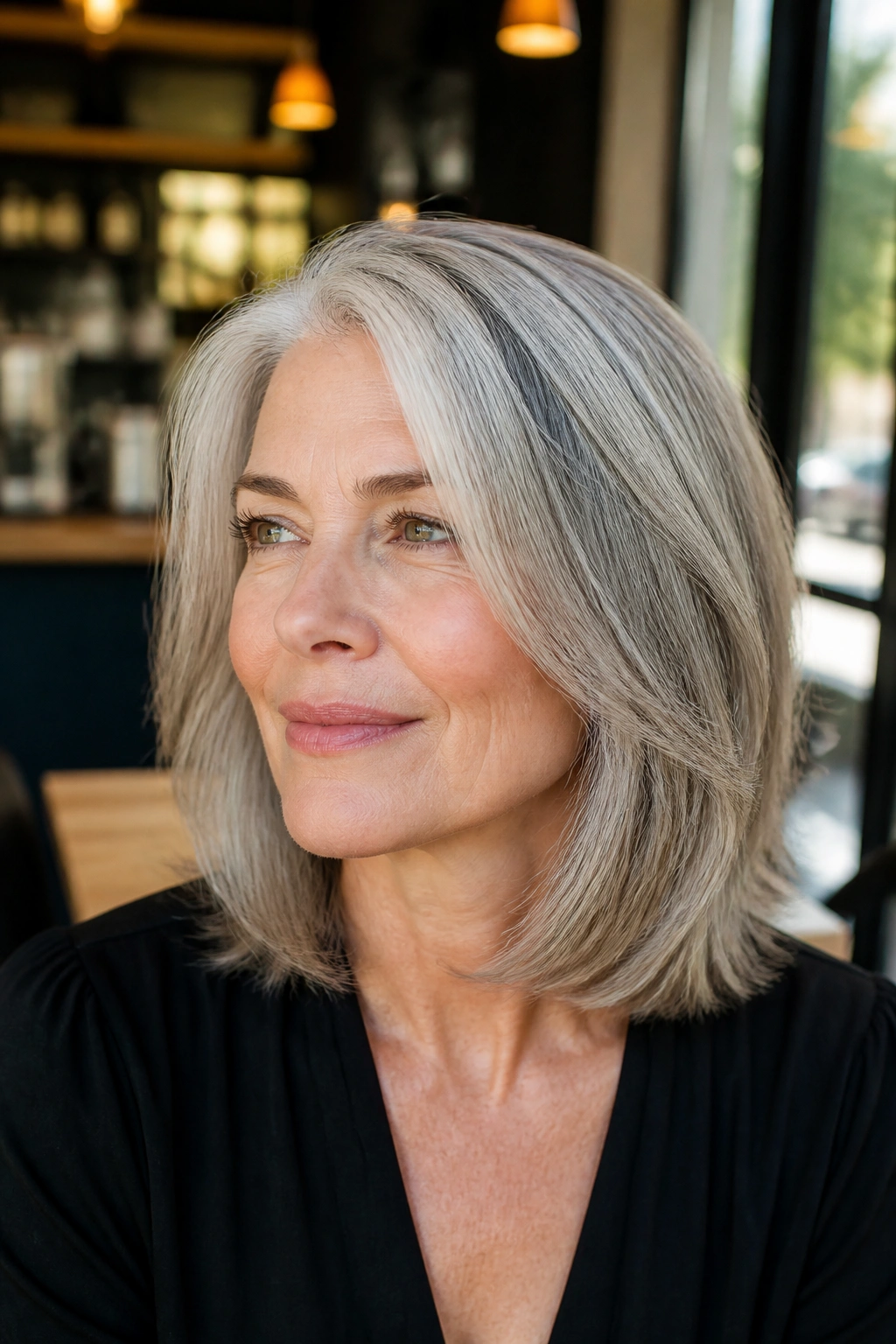
A sliced mid-length cut is what I reach for when someone wants movement but hates the see-through ends that come with too many layers.
The idea is to keep the length around the shoulders while using controlled interior slicing to remove only enough weight to help the hair move. That way, the outer line still looks full. It is a far better choice than choppy, all-over thinning on fine hair, especially if your strands have gone silver and you want them to look clean instead of frayed.
The Shape at a Glance
- Length sits around the shoulders.
- The perimeter stays blunt enough to look thick.
- Interior pieces create bend and flow.
- Works well with a side part or soft center part.
This is a solid option if you like putting your hair up part of the time and wearing it down the rest of the time. The cut should still look like a haircut even when it’s loose. That sounds obvious, but so many mid-length cuts miss that point.
25. Transitional Grow-Out Bob

A transitional grow-out bob is the unsung hero of haircuts for fine hair over 50 because it gives you room to change your mind without looking like you’ve given up.
This is the cut I’d call the most forgiving on the list. It usually sits somewhere between the jaw and the collarbone, with enough shape to look intentional but enough length to move toward short or long later. Fine gray hair often behaves better in this middle zone than in extreme lengths, because the cut does not need to carry too much weight.
The best part is the grow-out. A smart transitional bob still looks tidy after several weeks, which is not something every haircut can claim. If you want one style that can live through a season of appointments, a haircut change, and a little indecision, this is the one I’d keep in my back pocket.
