



The hardest part of growing out gray hair is not the gray itself. It’s the line of demarcation — that blunt stripe where your old color gives up, your silver starts showing, and every mirror in the house suddenly feels a little too honest.
A good cut changes that. Not in some magical, fairy-tale way. In a practical way. It softens the contrast at the roots, gives the eye somewhere else to land, and makes the transition to grey hair look planned instead of accidental.
That matters more for older women than most salon chatter admits. Hair often gets finer, drier, or a little less dense with age, and a cut that worked five years ago can start hanging limp or looking too severe. The best hairstyles for gray hair do two jobs at once: they flatter your face and they make the grow-out easier to live with.
Some styles blur the line with movement. Some add lift at the crown. Some use bangs to break up the front. A few are short and sharp, a few keep length, and a few are just plain useful when you need a low-maintenance answer that still looks like you thought about it.
1. Blunt Bob with Soft Ends

A blunt bob is one of the easiest ways to make a gray root line look deliberate. The clean edge gives your hair a strong shape, and that shape keeps the eye on the cut instead of on the color shift.
Why It Helps the Grow-Out
The blunt line is doing half the work here. When silver pieces come in against dyed lengths, a soft, even perimeter keeps the whole look tidy instead of patchy. Add a little point-cutting at the very ends — not much, just enough to keep the edge from looking like a helmet — and the style stays modern instead of stiff.
It also plays well with the way gray hair often grows in. Some strands come in wirier, some flatter, and a bob can hold both without fighting them. If your hair is straight or barely wavy, this cut is especially kind. If it’s thicker, ask for a light internal removal of bulk so the ends don’t puff out.
What to Ask For
- A length that hits the chin or just below it.
- Soft, not razor-thin, ends.
- A slight bend under at the blow-dry stage if your hair likes to flip out.
- A side or center part based on where your hair naturally falls.
Best trick: tuck one side behind the ear and leave the other loose. It makes the bob look intentional, not fussy.
2. Long Pixie with Side-Swept Bangs
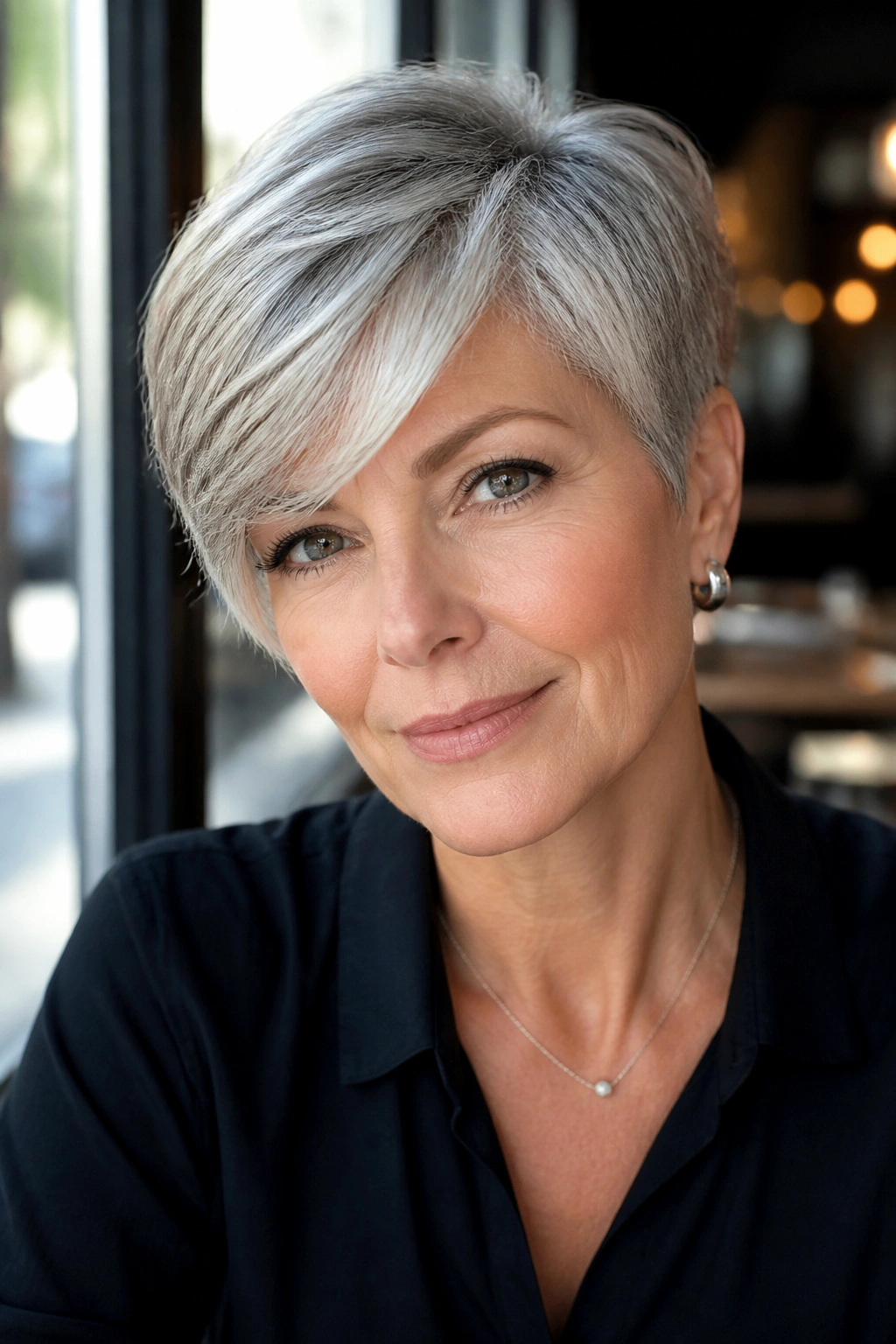
A long pixie is the cut I recommend when someone wants their gray hair transition to look cleaner overnight. It’s short enough to feel fresh, but long enough on top that you can still move it around if the grow-out gets uneven.
The side-swept bang matters a lot here. Gray usually shows first around the temples and hairline, and that little sweep breaks up the bright streaks before they form a hard stripe. It also softens the face in a way that can be really flattering when hair has thinned a bit around the front.
This cut works best with a light styling cream or paste, not heavy gel. You want the top pieces to have touchable lift, not crunch. If your hair is fine, ask for a bit of extra length at the crown so you can get volume without teasing it into submission. If it’s coarse, keep the sides close enough that the shape doesn’t balloon.
Short hair sounds bold. It often feels easier.
And for a lot of women, easier is the point.
3. Shoulder-Length Shag
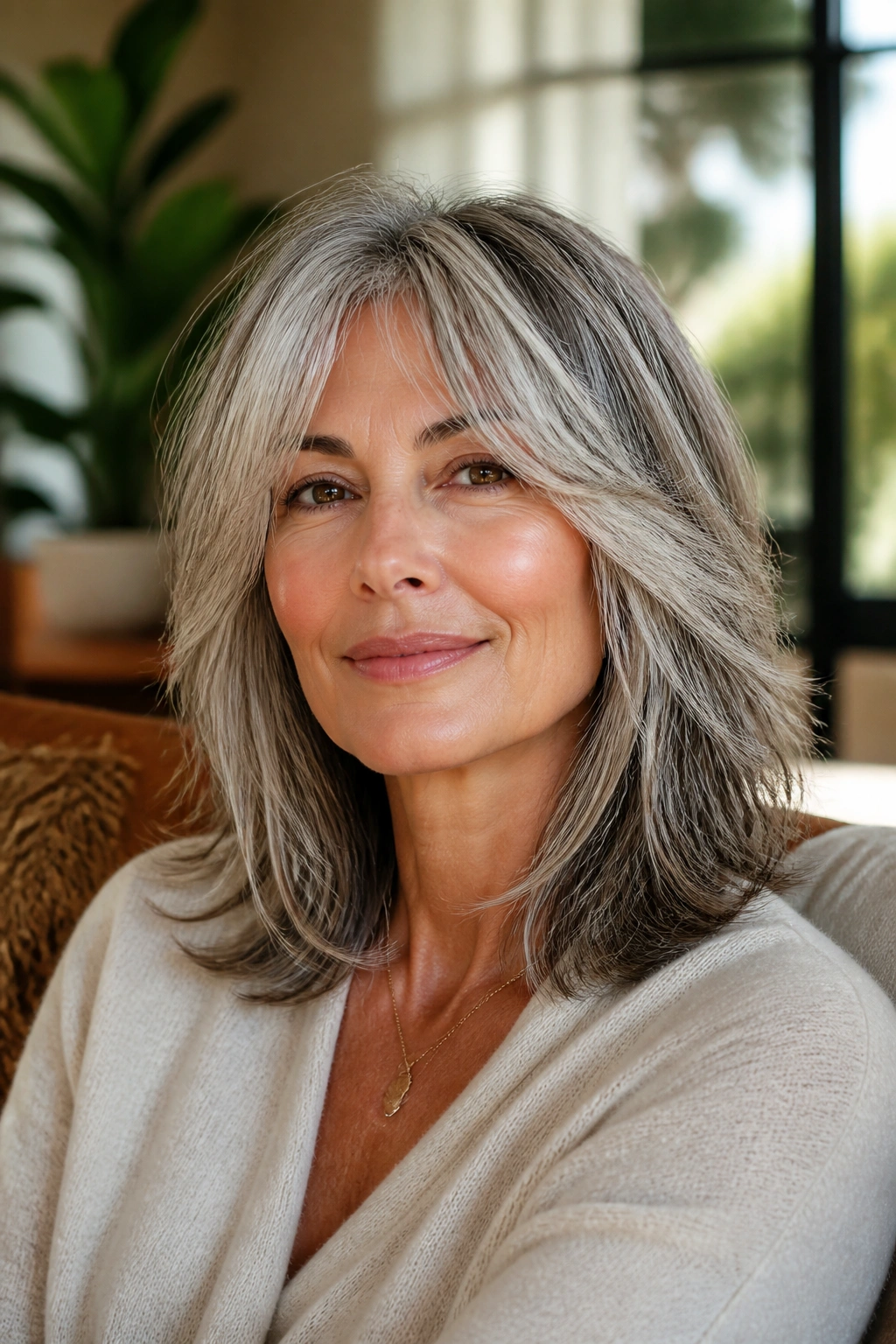
Why does a shag make gray roots look easier? Because it breaks up everything that feels too neat. A shoulder-length shag gives the grow-out movement, and movement is your friend when color changes are still uneven.
The layers should start below the cheekbones and continue softly through the mid-lengths. That keeps the top from collapsing and lets the silver strands scatter instead of sitting in one obvious line. If your old color is hanging on at the ends, the texture will help blend it into the new gray instead of making the contrast feel harsh.
How to Style It
- Scrunch in a lightweight mousse on damp hair.
- Dry with a diffuser if you have waves.
- Use a round brush only at the crown if you need lift.
- Finish with a dry texture spray, not a heavy serum.
A shag can be messy in the best way. Not sloppy. Just lived-in.
If your hair has lost some density, this is one of the better haircuts for older women because it creates shape without asking your hair to be thick everywhere. The one thing to avoid is over-layering. Too many short pieces can make the ends fray and make gray hair look wispy in the wrong sense. Soft is better than choppy here.
4. Collarbone Lob for the Gray Hair Transition

If you are not ready to go short, the collarbone lob is the safe bet that doesn’t look safe. It sits right where hair can still swing and move, but it’s short enough to keep the grow-out from feeling endless.
I like this cut for women who are halfway through a transition to gray hair and tired of seeing the demarcation line every time they pull their hair back. A loose wave or a soft bend through the mid-lengths makes the different shades mingle. The silver doesn’t disappear. It just stops shouting.
A Few Details That Matter
- Keep the length grazing the collarbone, not the chest.
- Ask for long layers only where the hair needs movement.
- Use a 1-inch or 1.25-inch curling iron if you want soft bends.
- Leave the last inch of the ends out so the style doesn’t look overdone.
This cut is also easy to grow into from almost anything. A shoulder-length blunt cut? Fine. A long bob with old highlights? Also fine. The collarbone length gives you room to decide what comes next without making every salon visit feel like a commitment ceremony.
And that’s the charm, honestly. It looks polished even on an ordinary Tuesday.
5. Curtain Bangs and Long Layers
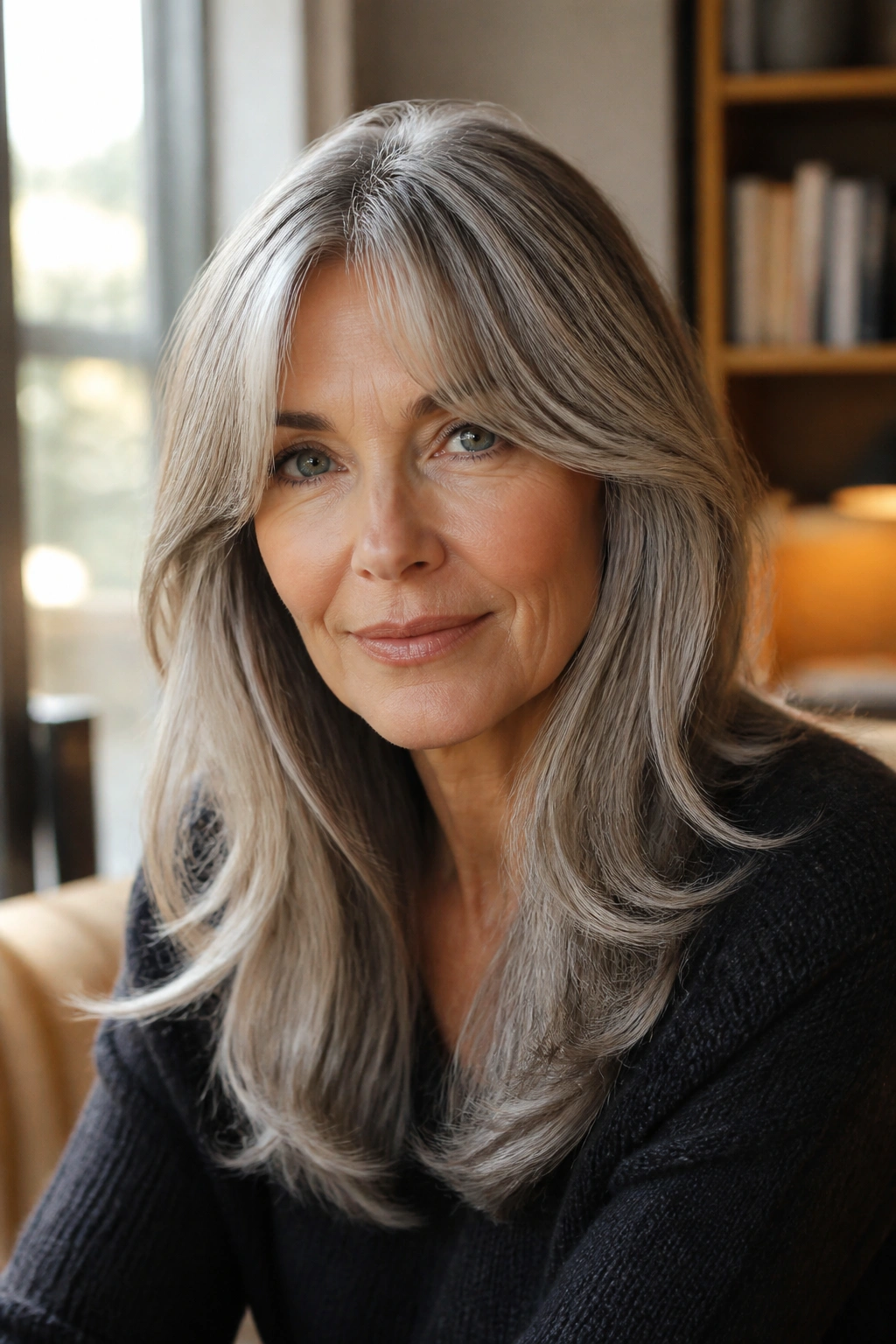
Curtain bangs are one of the smartest ways to soften a gray hair grow-out, especially if your silver is coming in around the front. They open the face, break up the forehead area, and keep the new color from forming one hard band across the hairline.
Long layers carry the same job through the rest of the hair. They make the old dye and the new gray move together instead of sitting in separate zones. If your hair is medium to thick, this shape takes weight out without making the ends look stringy. If it’s finer, keep the layers longer and softer so the length still feels full.
There’s also a small but real benefit here: curtain bangs are easy to live with during awkward regrowth. They can be center-parted, pushed to one side, or tucked back on a humid day. That flexibility matters more than people admit. A style that gives you three ways to wear it is easier to keep.
Use a round brush or a blow-dry brush to bend the bangs away from the face, then finish with a touch of lightweight cream. Skip heavy oils near the front; gray strands can get greasy faster than you’d expect, and bangs show it first.
6. Tapered Crop
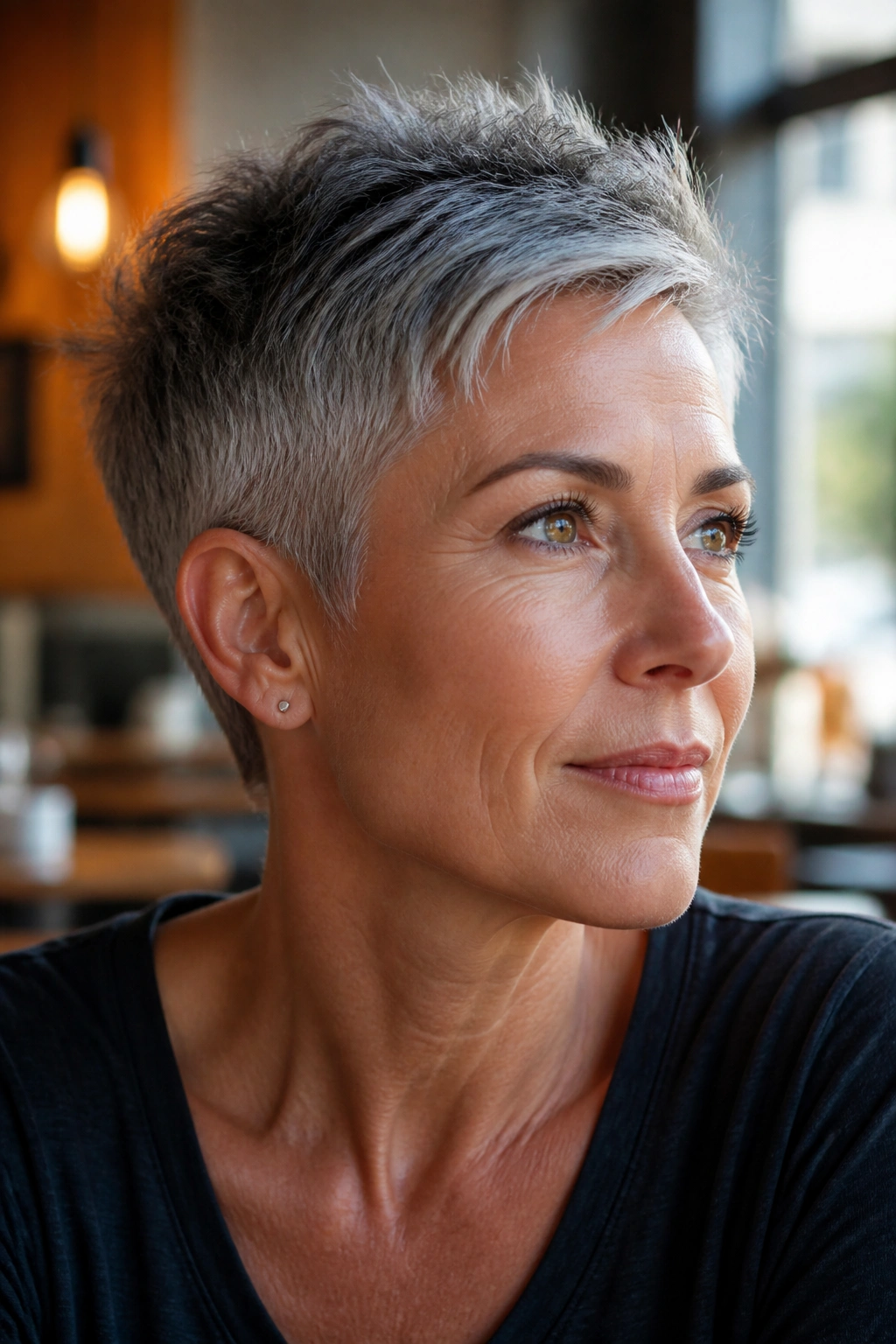
A tapered crop is a good answer when you want gray hair to look sharp, not softened into invisibility. The back and sides sit shorter, the top stays a little longer, and the whole shape feels tidy without being severe.
Unlike a close buzz or an ultra-short clip, a tapered crop still gives you some styling room. You can lift the top with a small brush, sweep it forward, or mess it up a little with paste. That tiny bit of length on top helps the silver read as texture instead of patchiness, which is especially useful if your gray comes in with streaks rather than an even blanket.
It’s also a strong choice for coarse or dense hair. Shorter sides keep the bulk from puffing out around the ears, and the shape around the nape stays neat for weeks without much help. If you’ve ever felt like your hair has a mind of its own, this is one of the few cuts that can talk back.
Who It Suits Best
- Women who want low daily styling.
- Hair that is thick at the crown.
- Strong jawlines and cheekbones.
- Anyone who wants a cleaner silhouette during grow-out.
A little mousse at the roots is usually enough. Too much product will flatten the top, and then the whole point is lost.
7. Angled Bob

An angled bob is one of those cuts that makes a gray transition look sharper on purpose. Shorter in the back, longer in the front, it pulls the eye forward and down, which is useful if the roots at your temples are doing something awkward.
The angle does more than look polished. It gives the front pieces enough length to frame the face while the back stays light and easy to shape. That matters if your hair has started to feel thinner in some spots and heavier in others. The cut balances the whole head without asking for a perfect texture.
This style is especially good if you like a little structure. Not stiff structure. Just enough line to make your hair look finished when you have five minutes and a brush. If you blow-dry it smooth, the gray strands usually read as sleek streaks. If you add a bend with a flat iron at the front, the shape softens and looks more relaxed.
Ask your stylist to keep the front angle subtle rather than dramatic unless you want a bolder look. A hard diagonal can be a little unforgiving on some faces. A gentle slope is easier to wear and grows out better.
8. Feathered Mid-Length Cut

Feathered layers are one of the oldest tricks in the book, and honestly, the book was right. A feathered mid-length cut gives gray hair lift without making the ends feel chopped up.
The point is softness. Gray strands often show texture more than pigment, and feathering helps that texture look airy instead of rough. Around the face, the movement can be flattering if your features have softened a bit with age. Around the back, it keeps the length from hanging like a curtain.
You do need a light hand from the stylist. If the feathering gets too aggressive, the ends can start to look thin and tired, which is the opposite of what you want. Ask for pieces that skim rather than shred. That’s the difference.
A feathered cut also works well if you are blending old highlights into natural gray. The layering keeps the color shifts from becoming too obvious, especially when hair moves. Wind, turning your head, tucking it behind one ear — small things. They matter.
Best styling product: a small amount of mousse at the roots and a soft finishing spray. Nothing sticky.
9. Curly Shape Cut for Transitioning to Grey Hair
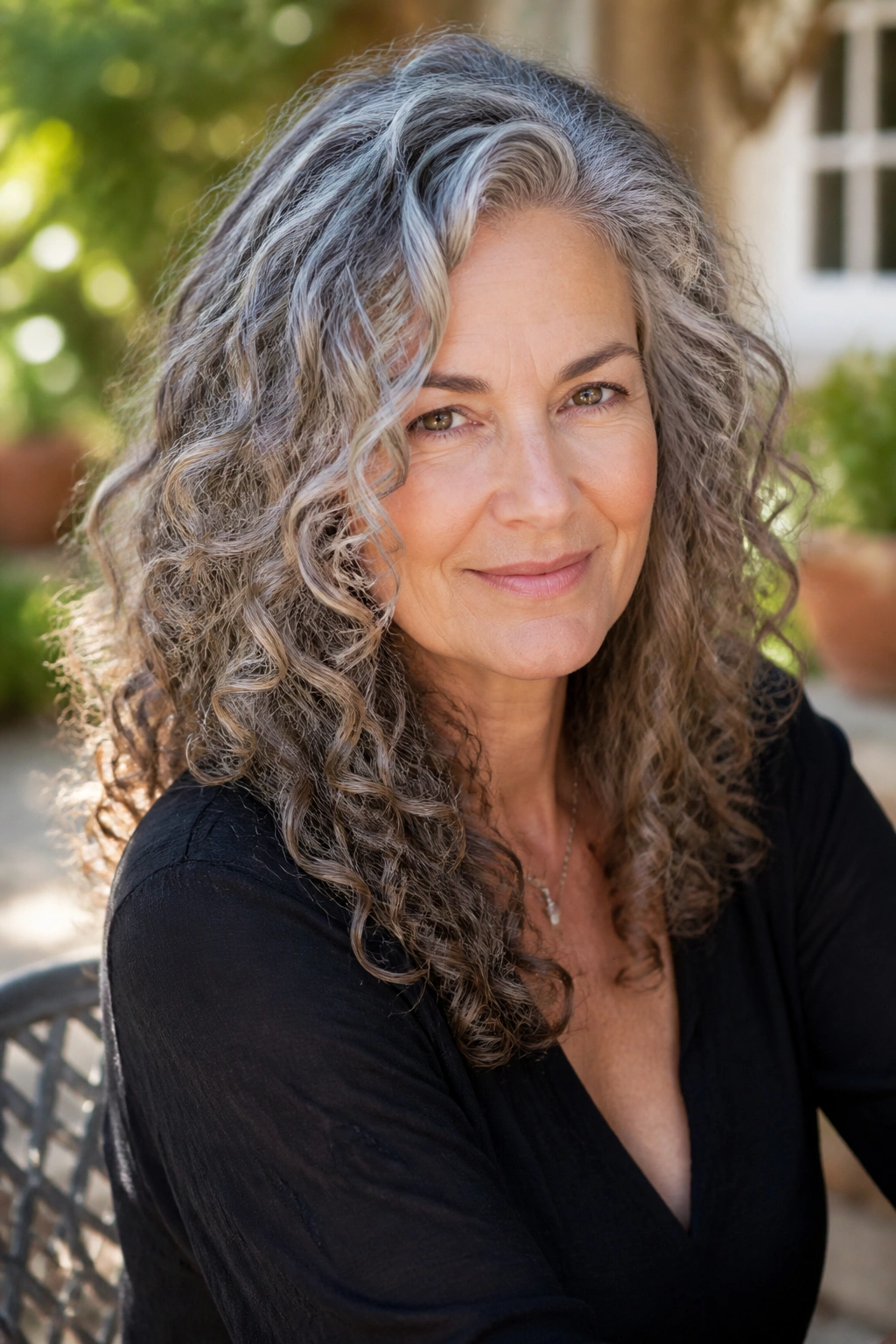
Curly hair changes the rules a little. A good curly cut is not about forcing every strand into one neat line. It’s about shaping the curl pattern so the gray and the remaining color mingle in a way that feels intentional.
That matters because silver curls can be drier and more springy than your old color-treated ones. If the cut ignores that, the top can pucker and the sides can balloon. A shape cut respects where your curls naturally live. Some pieces may be slightly longer around the front, some shorter at the crown, and that unevenness is a good thing when the hair dries.
Ask for the cut dry, if possible, or at least with your natural curl pattern in mind. A stylist who cuts curly gray hair as if it were straight usually gets the shape wrong by an inch or two, and that inch is the difference between bounce and chaos.
How to Get the Best Result
- Use a rich leave-in on damp hair.
- Scrunch in curl cream, not heavy oil.
- Diffuse on low heat until the curls set.
- Refresh with water and a little cream between washes.
Gray curls often look gorgeous when they are hydrated. Dry ones? Not so much. The curl shape does the flattering.
10. Chin-Length Bob with a Deep Side Part
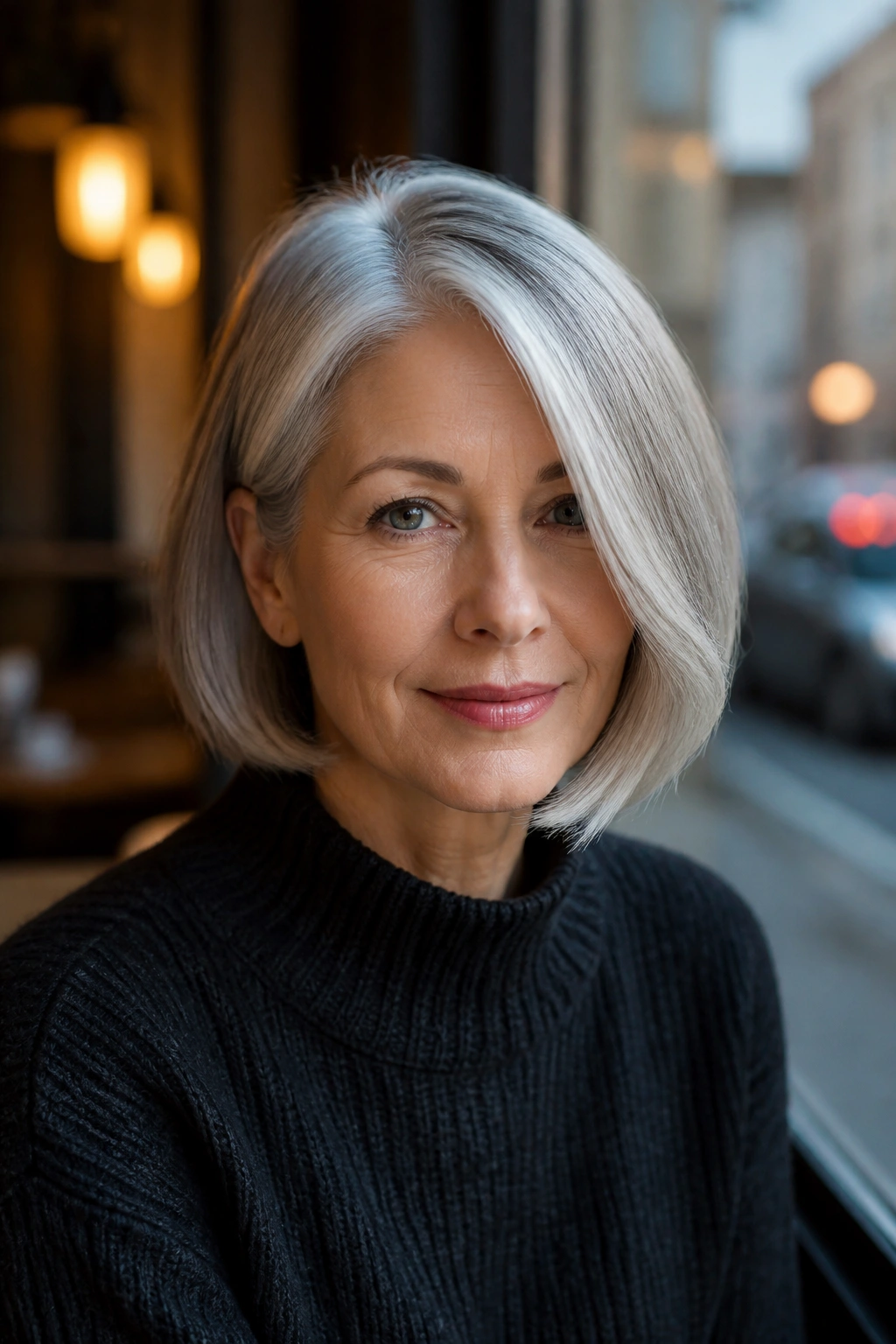
A chin-length bob with a deep side part is simple, but not boring. The side part shifts where the eye lands, which can make the grow-out line less noticeable and give the face a little lift at the same time.
This is one of my favorite styles for women who want clean edges without a severe look. The chin length is short enough to feel fresh, but not so short that you lose the swing around the jaw. If your gray is coming in in streaks, the side part helps break them up. If your color is still hanging on at the ends, the shorter length makes it easier to cut away the old part gradually.
The style works especially well with a smooth finish and a tucked side. That tiny tuck makes the whole thing feel finished, like you made a choice. You did.
It’s also a strong option for round or soft oval faces because the side part adds a little lift and direction. A center part can work too, but a deep side part gives more drama and usually hides the regrowth line better if your temples are going silver first.
11. Textured Bixie Cut

A bixie sits between a bob and a pixie, which sounds like a compromise until you see how well it handles gray hair. You get short sides, some length on top, and enough texture to keep the cut from looking flat.
Unlike a classic pixie, a bixie gives you more styling options. Unlike a bob, it takes less time to dry. That middle ground is useful during a gray transition because your hair is already changing texture; a cut with a little edge can make those changes look on purpose instead of accidental. It also grows out more gracefully than a super-short crop, which means fewer awkward weeks between salon visits.
This cut is especially good if your hair is thinning at the temples or crown. The longer top can be lifted with a round brush or a dab of styling paste, and the shorter sides keep the shape neat. It is a little bit playful, which I like. Gray hair does not need to look serious all the time.
What to Watch For
- Keep the crown soft, not spiky.
- Ask for texture, not thinning shears everywhere.
- Use a pea-sized amount of paste.
- Style it with fingers first, brush second.
A bixie works best when it looks touched, not overworked.
12. Layered Midi Cut for Growing Out Gray Hair
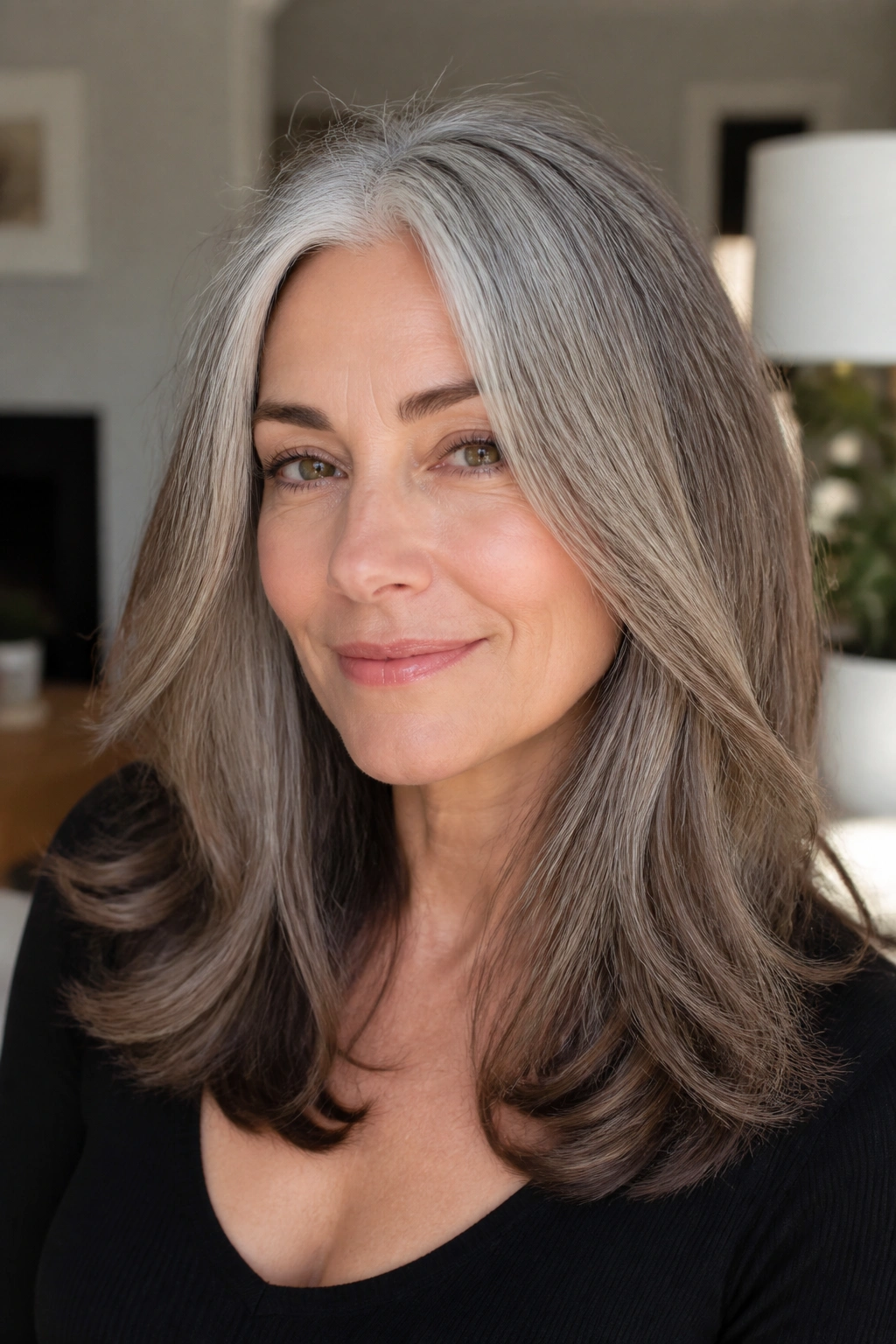
If you want length and movement, a layered midi cut is one of the most forgiving options during gray grow-out. It keeps enough hair past the shoulders to feel feminine and familiar, but the layers take away the heavy block that can make two-tone hair look dated.
The face-framing pieces are the part I care about most. They help the eye move away from the roots and toward the shape around your cheekbones and jaw. When those front pieces hit around the chin or collarbone, they soften the transition without making the whole style feel short.
This cut also gives you room to live with your hair in different states. Straight one day, loose waves the next, clipped back after lunch if you are tired of dealing with it. Gray hair often needs more moisture than pigment-heavy hair, and a layered midi cut is a friend to that reality because it doesn’t rely on glassy shine to look good.
A center part gives it a calm, modern feel. A side part gives more lift. Either way, the length should move. If it hangs too heavily, the grow-out line looks harsher than it needs to.
And yes, this is one of those cuts that ages well as it grows. That’s not a small thing.
13. Halo Braid
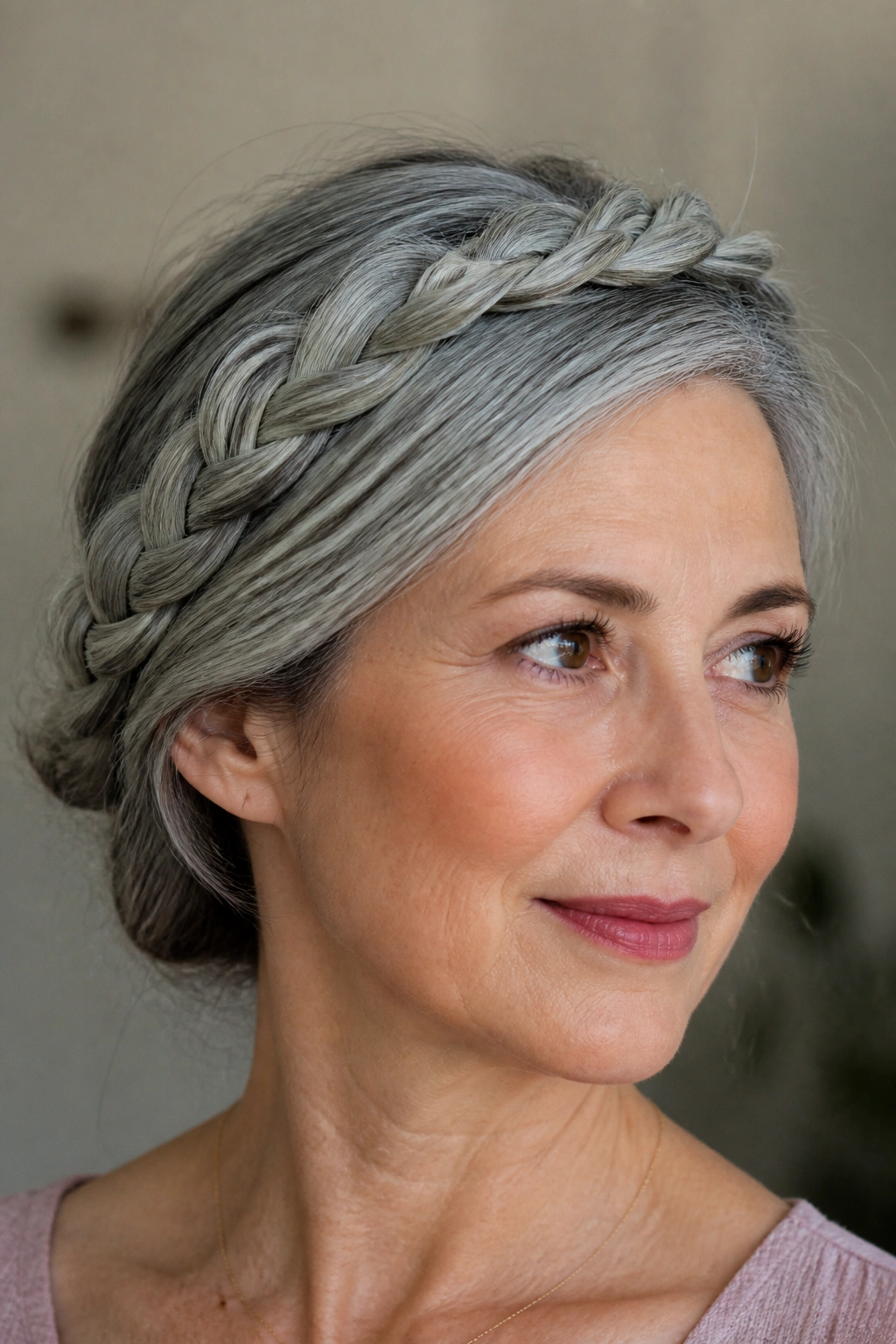
Some days the answer is not another haircut. It’s a braid. A halo braid wraps around the head and turns the different shades in your hair into a pattern instead of a problem.
That’s what makes it so useful during the transition to grey hair. The braid pulls silver strands, old color, and new growth into one woven line, which means the contrast gets broken up in the best possible way. It’s also kind to women whose hair is medium or long and too fine to hold a big updo. A halo braid looks polished without needing a lot of volume.
What Makes It Work
A halo braid should sit low and soft, not tight and severe. If you pull it too hard, the hairline can look bare and every gray at the front becomes more visible. Leave a little softness around the temples. A few wisps are fine. Actually, they help.
This is a strong style for events, family dinners, church, or any day when you want your hair off your neck but still want it to look finished. A little matte pomade on the hands helps keep flyaways in check without turning the braid shiny or stiff.
Braids are underrated in gray hair transitions. They do not hide the silver. They frame it.
14. Low Twist Bun
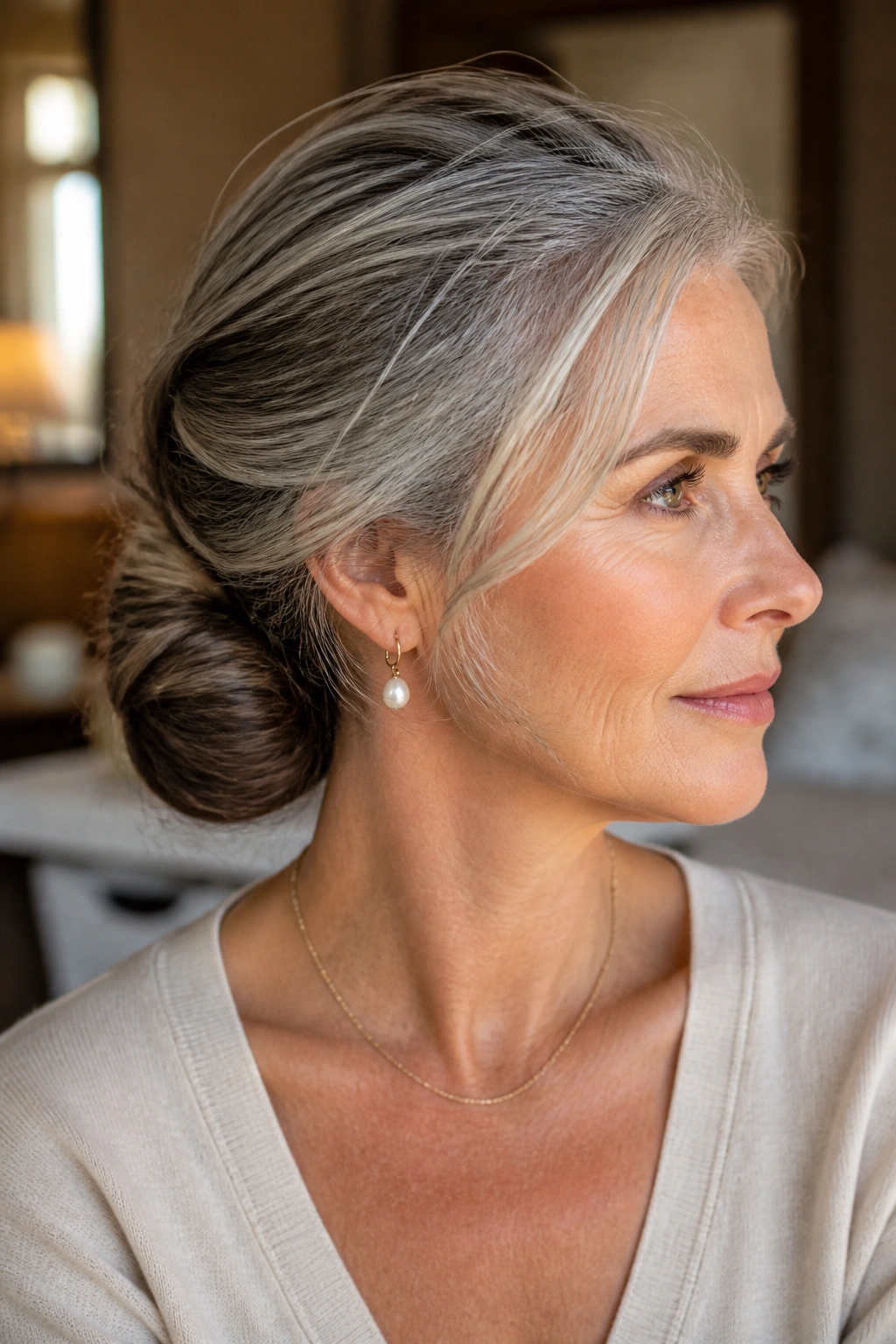
A low twist bun is the kind of hairstyle that saves you on days when the grow-out looks uneven and you need to look pulled together fast. The knot sits at the nape, the twist keeps the shape soft, and the gray around the hairline becomes part of the style instead of a distraction.
What I like here is the contrast. A low bun has enough polish for a nicer setting, but it does not require the full rigidity of a sleek chignon. If your hair is wavy, let a little texture stay in the twist. If it’s straighter, keep the bun loose enough that the crown has a bit of lift. Flat buns can age the face. A little height fixes that.
This is also a good move when your ends are still carrying old dye or brassiness. Tucking them away buys you time. And some days that is all you need.
How to Keep It Soft
- Gather hair at the nape, not the middle of the head.
- Twist once or twice, then pin as you go.
- Leave a small amount of volume at the crown.
- Pull out a few face-framing pieces if you want a softer line.
A low twist bun is not boring when it’s done with intention. It reads calm, not plain.
15. Soft Silver Pixie
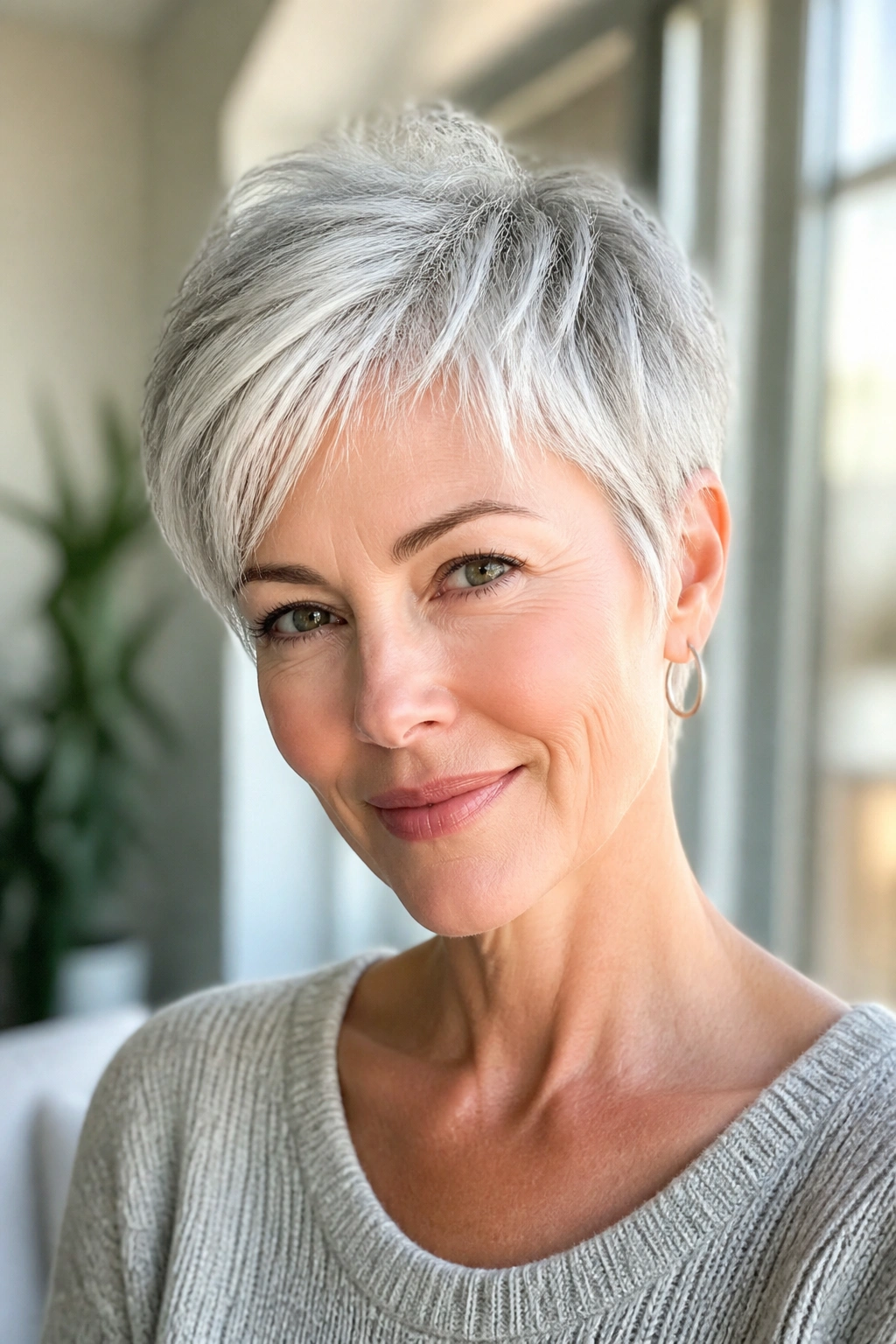
A soft silver pixie is the cut that says the transition is over, or close enough to feel like it. The shape is short, light, and easy to move around, but the softness keeps it from looking harsh. That matters, because short gray hair can go too severe fast if the edges are cut too hard.
The version I like has a little length on top, a gentle taper through the sides, and enough softness around the fringe to keep the face from getting boxed in. It is not a helmet. It is not a buzz. It’s a clean little cut with some air in it, which is a nicer way to say it still has life.
Gray hair often looks best once the color struggle stops fighting the texture. A pixie can make that moment feel clean. The silver shows. The shape holds. Morning styling gets easier, and you stop spending energy hiding roots that were never going to stay hidden anyway.
A dab of lightweight cream or paste is enough. Use your fingers. Push the top a little forward, a little up, then stop. The charm is in the softness. If you polish it until it looks lacquered, you lose what makes the cut work.
This is the one I’d pick for a woman who wants to stop negotiating with her grow-out and start wearing it. Quietly. Confidently. No drama.
Final Thoughts
The best styles for the transition to grey hair do not try to erase the change. They shape it. That’s the real trick — cutting in a way that makes silver read as texture, light, and movement instead of as an unfinished dye job.
If you’re stuck between keeping your length and cutting it all off, start with the shape that fits your real life. A blunt bob, a shag, a lob, or a pixie all do different jobs. The right one is the cut you can live with on a sleepy Tuesday and still feel good about at dinner.
And if your gray is coming in unevenly, don’t panic. Uneven is normal. A good haircut can make it look like part of the design.
