



The best haircuts for women over 50 are the ones that make hair look fuller, lighter, and easier to live with before coffee.
That sounds obvious, but plenty of cuts still fight the hair instead of working with it. Gray strands can be wirier, fine hair can sit flatter at the crown, and a style that felt effortless once can turn fussy when you want movement without a 20-minute blow-dry.
Age does not decide the haircut. Texture does. Face shape matters too, along with how much time you want to spend with a brush in your hand and whether you wear glasses, because that changes where bangs should land and how much width you can carry around the temples.
A good cut should do at least one of three things: lift the crown, soften the jaw, or make the ends look denser. The better ones do all three without asking for a circus routine every morning. That is where these 25 cuts earn their keep.
1. Classic Pixie Cut
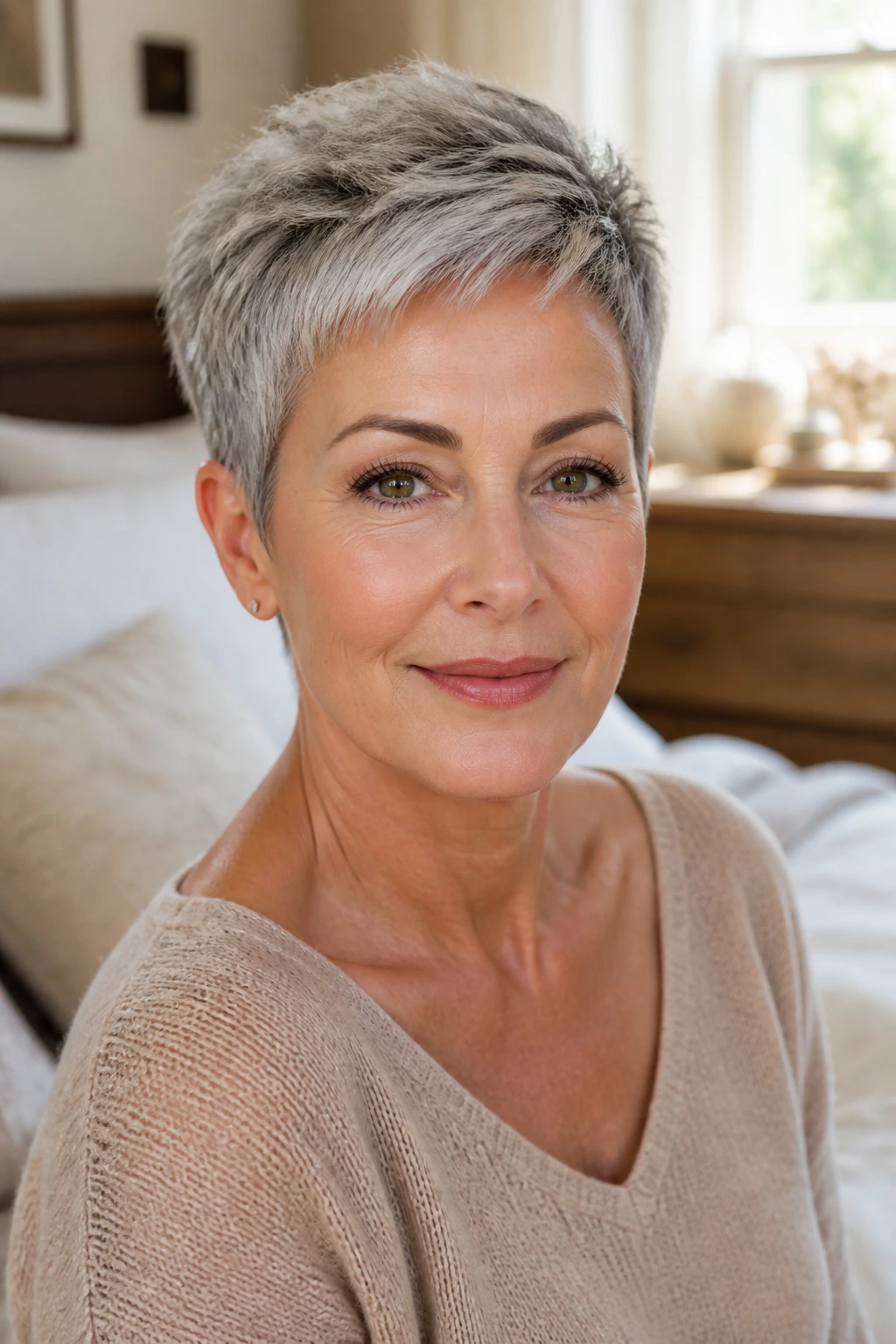
A classic pixie cut has been around forever for a reason. It opens up the face, shows off silver hair beautifully, and keeps the neck cool and clean-looking without making you feel overly cropped. The shape usually sits short at the sides and back, with a little more length on top so you can push it forward, sweep it to the side, or leave it piecey.
The best part is how much it does for fine hair. Shorter ends look thicker, and the crown gets a lift that longer hair sometimes hides. If your hair has gone gray and feels a little drier than it used to, a pixie can also stop those ragged ends from dragging the whole look down.
This cut does ask for upkeep. Every 4 to 6 weeks keeps the outline crisp, and a tiny dab of matte paste is usually enough. No heavy cream. That stuff can flatten the top in a hurry.
2. Soft Layered Pixie
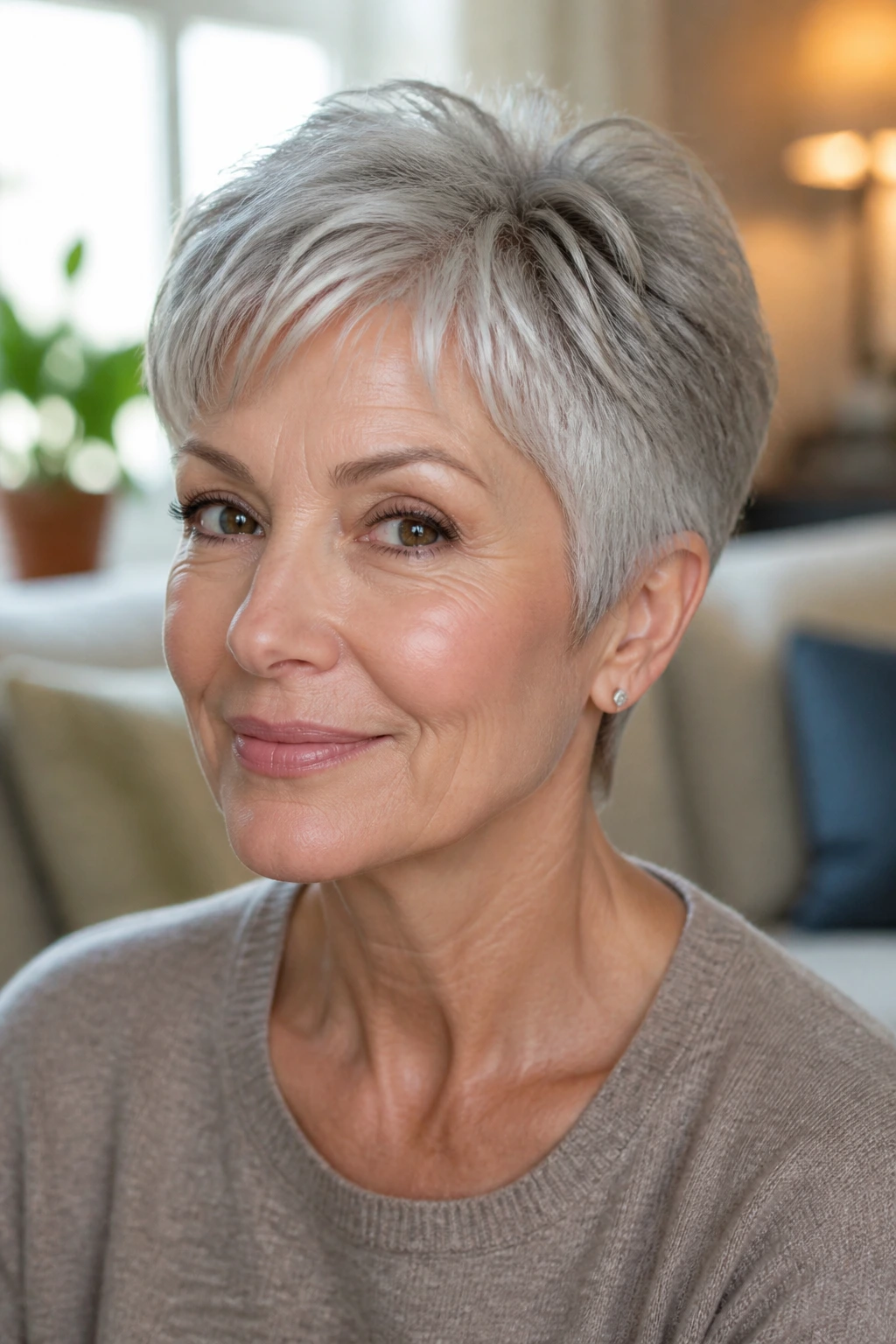
A soft layered pixie is the friendlier version of the classic cut. It keeps the same short shape, but the edges are less sharp and the top has more broken-up movement, which matters if you do not want that neat, almost severe finish some pixies can have. Gray hair often looks especially good here because the layers catch the light in different ways.
Why It Feels Less Harsh
The length around the temples and nape stays a touch softer, so the cut doesn’t box in the face. That makes it useful for women with a narrower jaw, a strong forehead, or hair that naturally swirls around the crown.
You can style it in about five minutes with a blow-dryer and a small round brush, or air-dry and pinch a bit of paste through the ends. If your hair is fine, ask for light layering, not heavy thinning. Over-thinned hair starts to look wispy fast.
- Best for fine to medium hair
- Works well with side-swept bangs
- Needs trimming about every 5 weeks
- Looks good with silver, salt-and-pepper, or white hair
3. Textured Crop

A textured crop is the cut I’d point to when someone says, “I want short hair, but not a helmet.” It’s close to a pixie, yet more choppy and deliberate, with little bits of length left in the top and fringe so the finish feels lively rather than rigid. On gray hair, that texture keeps the style from looking flat or overly polished.
Picture a morning where you do not want to fuss. This is the haircut for that day, and most days after it.
Ask for point-cutting through the ends. That means the stylist snips into the hair at an angle instead of taking one blunt line across it, which breaks up the shape without making it frizzy. It’s especially helpful if your gray hair has a coarse feel or tends to puff a little in humidity.
A pea-sized amount of styling cream is usually enough. More than that, and the crop can start to lose its airy feel.
4. Chin-Length Bob
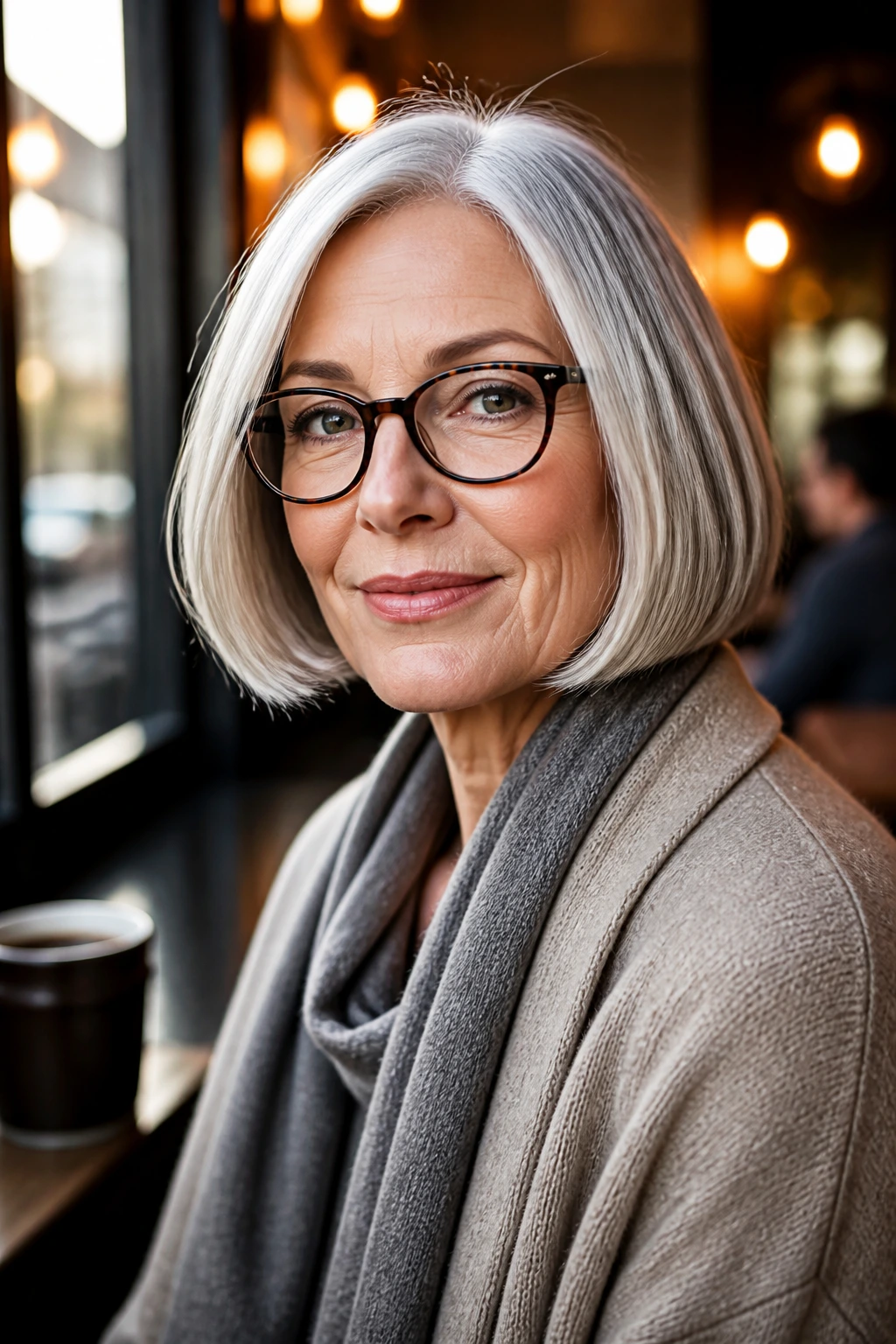
The chin-length bob is a clean, smart cut that lands right where a lot of women over 50 want shape: near the jaw, but not right on it. It frames the face, adds polish, and gives a kind of built-in structure that works well when the hair around the crown has started to lie a little flatter than it used to.
Why does it stay so popular? Because it behaves. It tucks behind the ears easily, works with glasses, and can be worn straight, waved, or slightly bent under with a round brush.
If you have a long neck, this length looks elegant without trying too hard. If your jaw feels softer and you want some definition, the chin line helps with that too. Keep the ends blunt or only lightly layered so the shape stays full.
A straightening brush or a quick pass with a 1-inch round brush is enough for most people. This is not a high-maintenance cut. That is the point.
5. Blunt Bob With Clean Edges
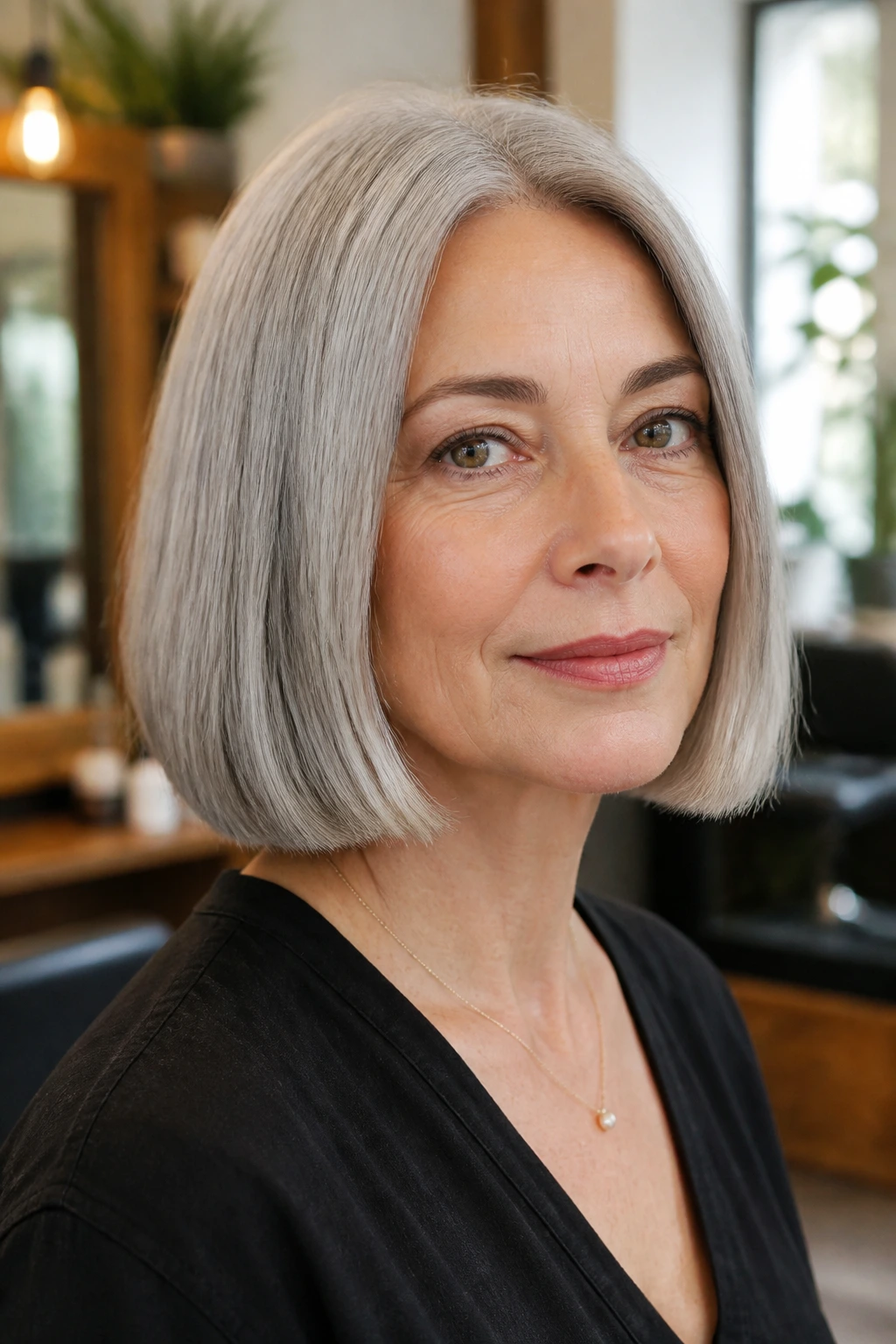
A blunt bob is one of the best tricks for making finer hair look denser. The line at the bottom is clean and even, so the eye reads weight and thickness instead of wispy ends. On gray hair, that crisp edge can look especially sharp in a good way — polished, not stiff.
What Makes It Work
The shape works because it removes the see-through ends that long, thinning hair often gets. If your hair has started to feel weaker at the bottom, a blunt bob pulls the focus back to the body of the cut.
It’s most flattering when the length hits between the jaw and collarbone. Too short can feel boxy on some faces. Too long and you lose the clean effect that makes the style stand out.
You do need to style it. Not a lot, but enough to smooth the ends and keep the part tidy. A paddle brush and a heat protectant are the bare minimum. I’d also ask for a tiny bit of internal weight removal only if your hair is thick, because a super-heavy blunt bob can flip out in awkward ways.
6. Layered Bob With Movement
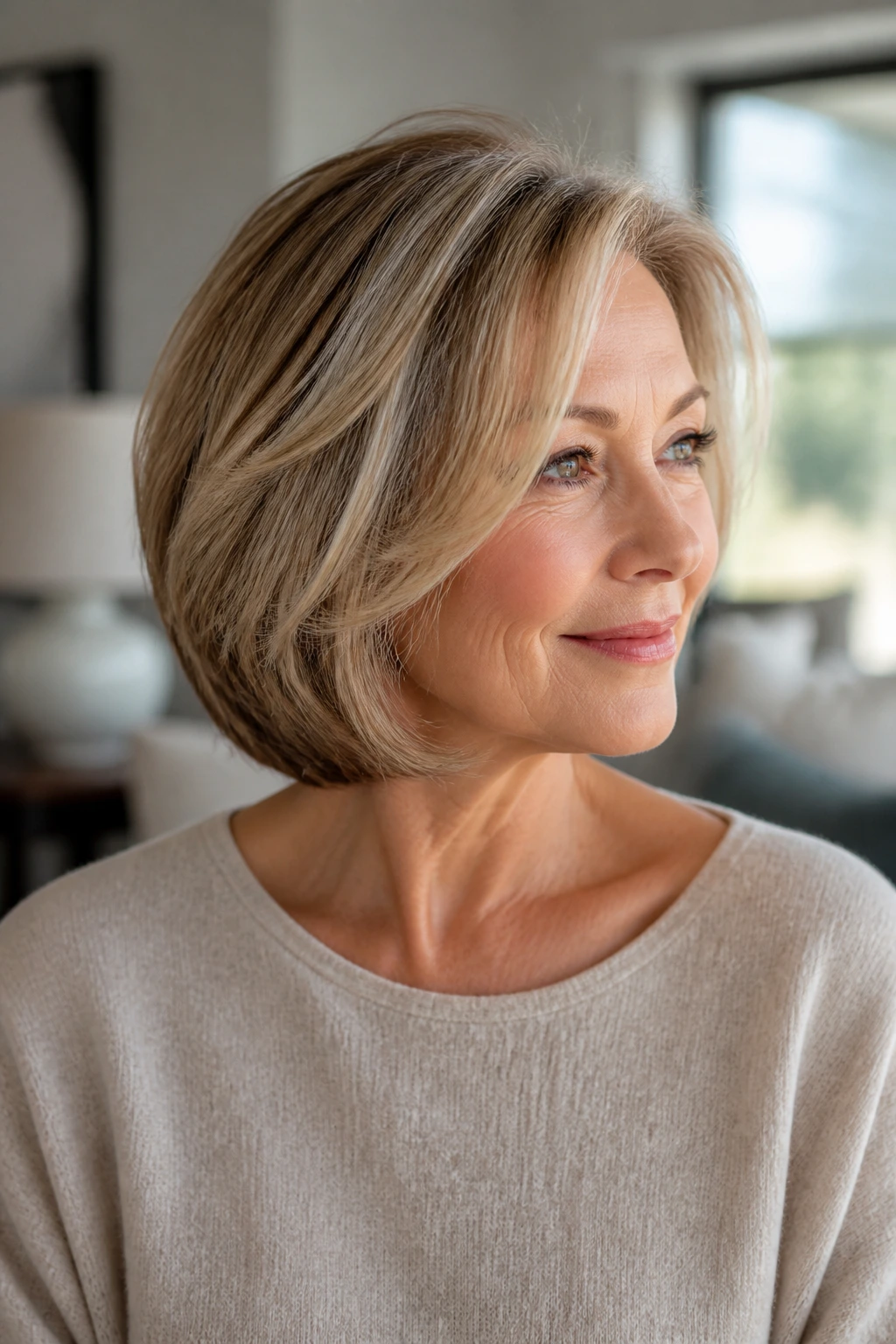
A layered bob gives you the shape of a bob, but with air between the strands. That matters if your hair sits in one heavy curtain or if gray growth has made the texture a little unpredictable. Layers let the hair move instead of hanging in one block.
The key is restraint. Too many layers and the bob starts to fray at the bottom. Too few and it can feel stiff. The sweet spot is usually soft layers around the cheekbones and a lightly shaped bottom edge, so the whole cut still looks like a bob when you turn your head.
This style is a nice middle ground for women who want volume but not a lot of drama. It also grows out well. That’s underrated. A lot of haircut advice ignores the months between salon visits, which is where most people actually live.
Best Styling Habit
Flip your head upside down for 30 seconds while drying the roots. Then finish with a round brush only at the front pieces. That keeps the movement without turning it into a perfect blowout every day.
7. French Bob With Soft Fringe
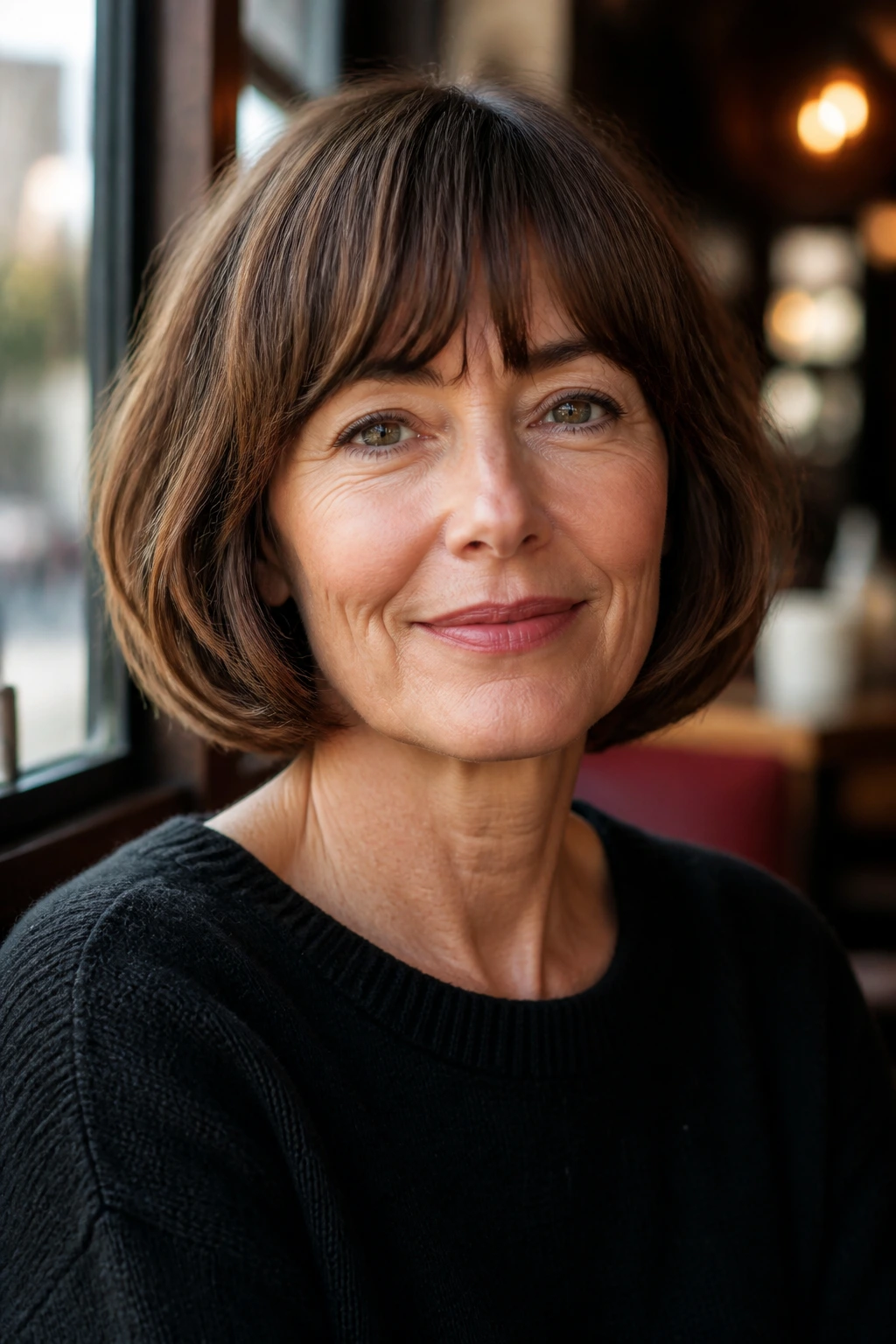
A French bob brings a little attitude, but the soft fringe keeps it from feeling too severe. The cut usually sits near the jawline or just above it, and the fringe is shorter and lighter than a heavy bang. On gray hair, the combination can look chic in that unfussy, slightly artsy way that never seems forced.
What I like about this cut is the balance. The bob is compact, yet the fringe keeps the face from feeling boxed in. If your hair is naturally wavy, even a little bend in the ends makes the whole style better. Pin-straight hair works too, but it needs a bit more shaping.
What to Ask For
- A fringe that skims the brows or sits just above them
- A bob that curves softly under the jaw
- Minimal layering through the sides
- A dry cut if your hair behaves differently when it’s wet
This cut does not love heavy styling products. Keep the finish light, or the fringe falls flat and loses that airy look.
8. Lob With Loose Waves
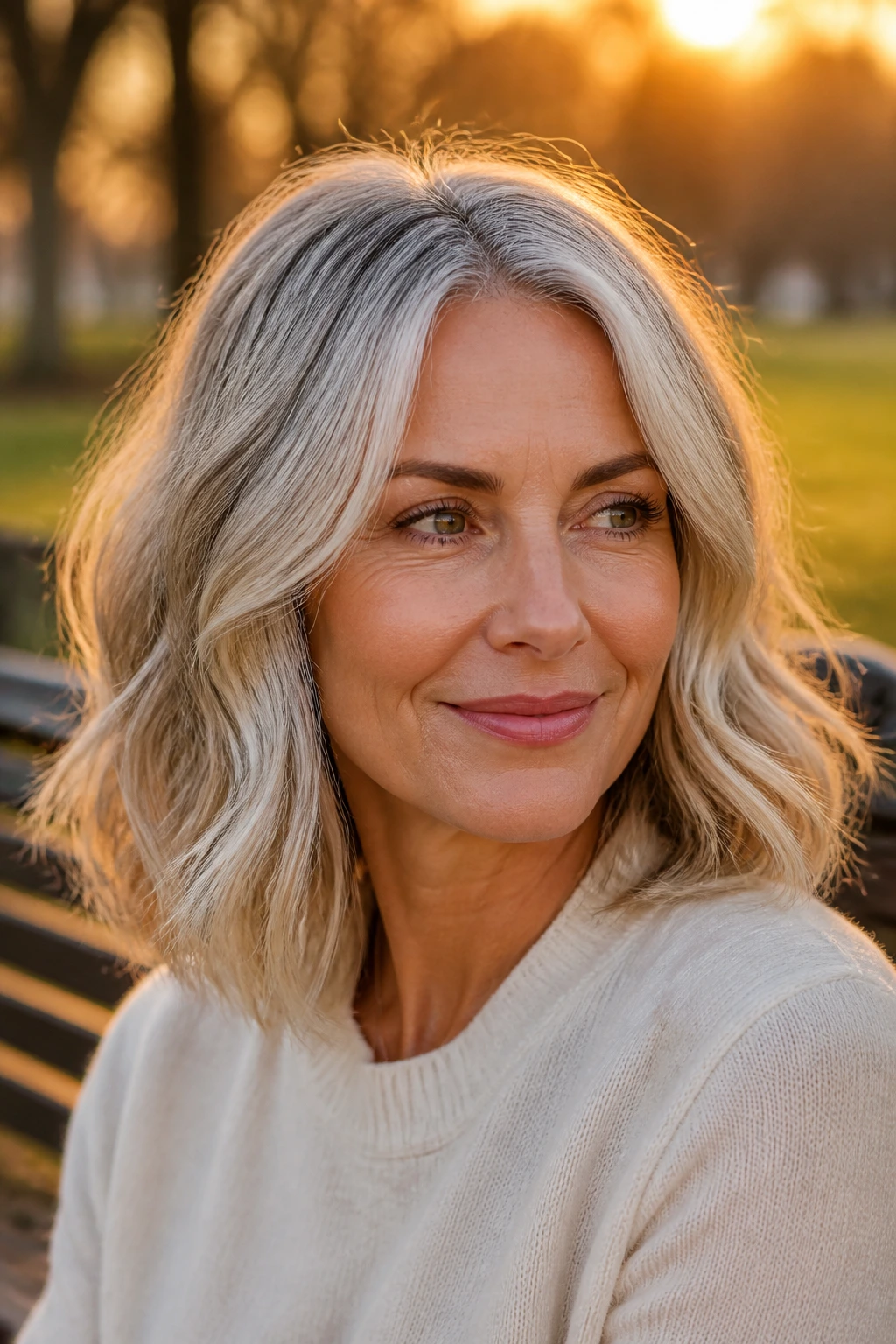
The lob — that long bob that lands somewhere around the collarbone — is one of the easiest haircuts to wear after 50 because it gives you enough length to tuck, tie, and wave without the weight of truly long hair. Loose waves make it even better. They soften the line and keep gray hair from looking too solid or rigid.
A lob is also forgiving on busy days. Air-dry it with a little mousse, braid it for an hour, or use a medium curling iron on just the top layer. You do not need a perfect finish for it to look good.
This is a smart cut if you are growing out shorter hair or not ready to go short. It also works when your hair texture changes from one section to another, which happens more than people admit. Some strands go fine, others come in coarse, and the lob handles that mix better than a strict one-length cut.
The only catch is weight. If your hair is thick, the ends need some internal removal so the shape doesn’t sit like a heavy shelf.
9. Shoulder-Length Layers
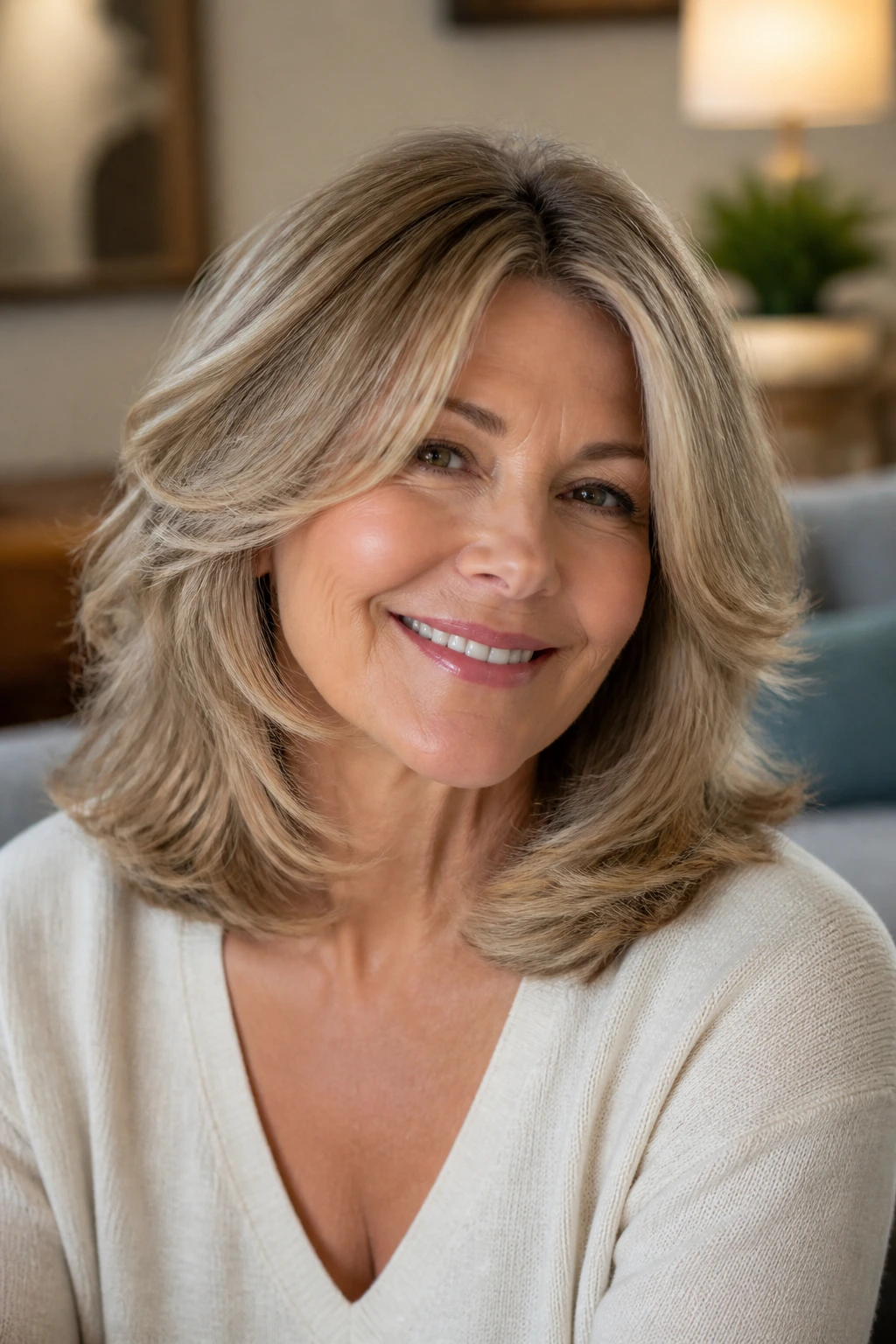
Shoulder-length layers are the classic safe bet, but “safe” is unfair here. When the cut is good, it gives the hair lift at the crown, movement through the sides, and enough length to feel feminine without dragging your face down. That matters more as hair gets a little drier and less cooperative.
This length suits women who still like ponytails, clips, and half-up styles. It also works if you wear glasses or have a strong cheekbone area you want to soften. Gray hair often looks especially nice at this length because the layers let the silver catch the light instead of sitting in one flat sheet.
Don’t let the cut get too heavy at the bottom. That is the mistake. Ask for long layers that start below the chin so the ends stay full. If the layers begin too high, the style can turn stringy, which nobody needs.
A quick blow-dry with a medium round brush is enough. You’re aiming for movement, not perfection.
10. Long Layers With Face-Framing Pieces
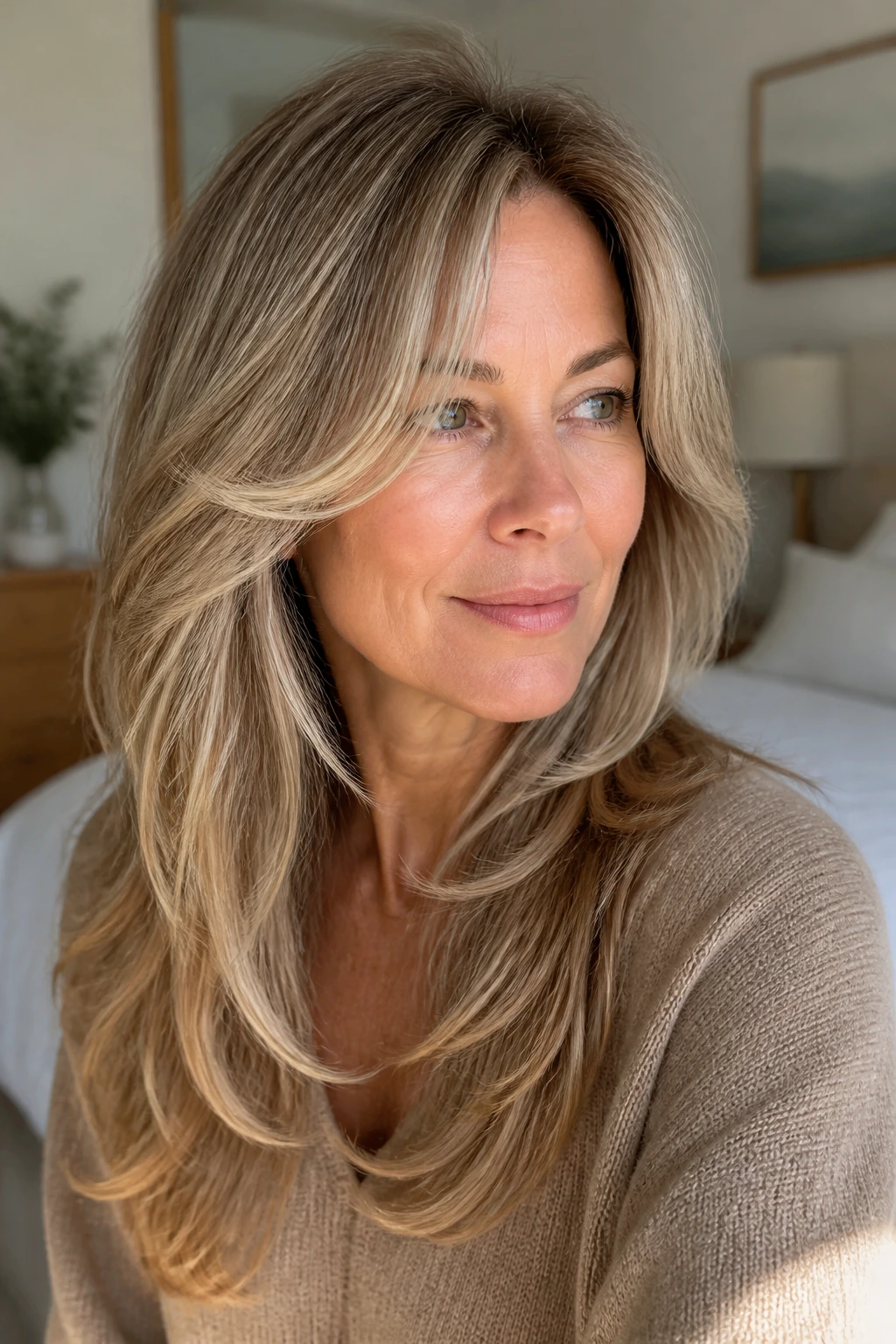
Long layers can still work after 50, especially if the length has enough shape around the face. Without that, long hair can feel like it’s wearing you instead of the other way around. Face-framing pieces change the whole mood. They soften the front, lighten the hairline, and stop the sides from pulling straight down.
Why This Cut Avoids the Heavy Look
The real trick is where the shortest pieces land. Around the cheekbones or just below the jaw usually works well, because those spots bring the eye back up toward the face. If the face-framing starts too low, the effect gets lost.
This cut is a good fit for thick hair that needs motion or for women who simply like having their length. It also lets gray grow in with less drama, since the layers break up the contrast between old color and new silver.
A few things help it behave:
- Use a lightweight leave-in, not a rich cream
- Blow-dry the front pieces away from the face
- Trim every 8 to 10 weeks so the layers do not sag
- Keep the shortest pieces soft, not razor-sharp
The style can look flat if you skip the front. That’s where the life is.
11. Shag Cut With Feathered Ends
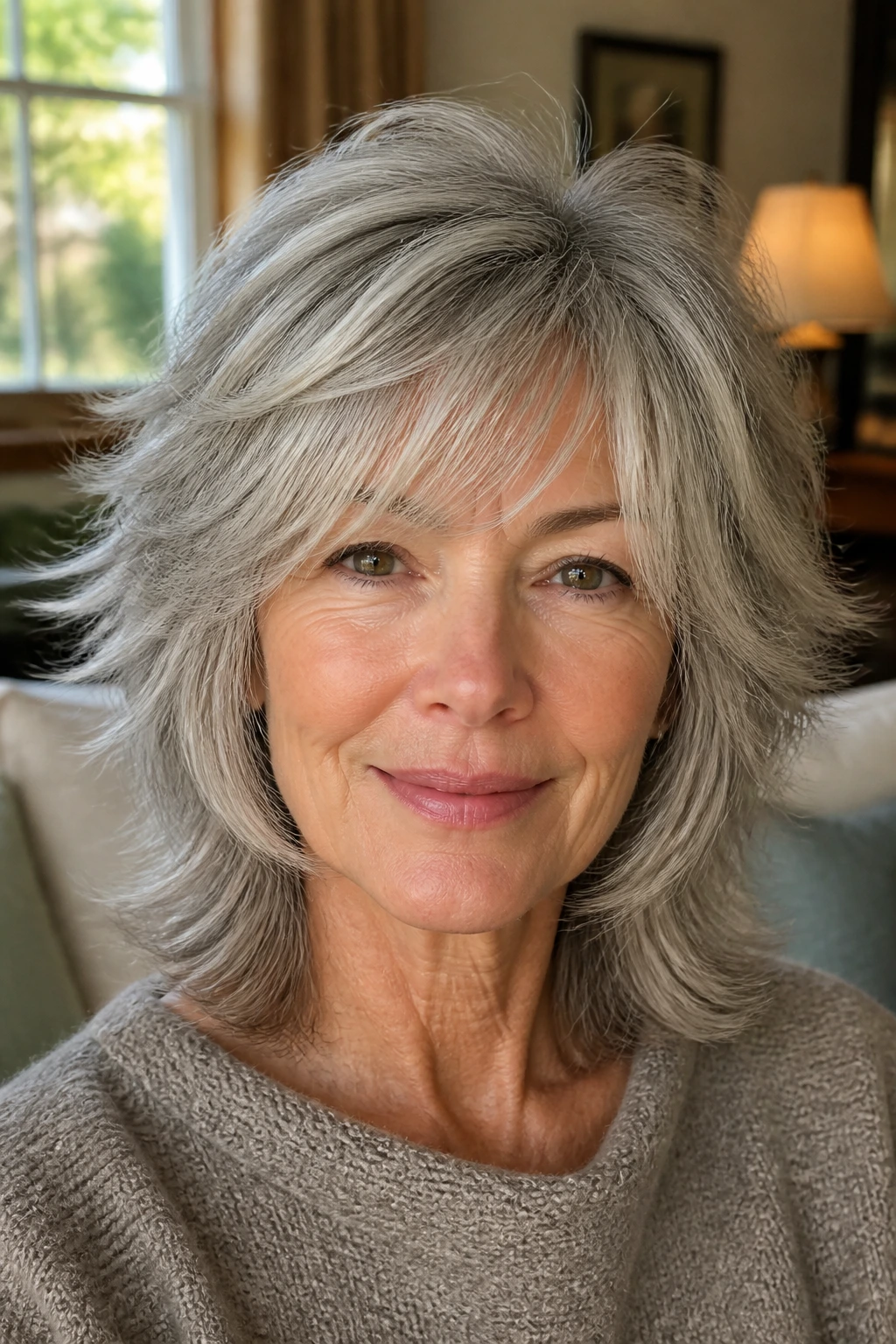
The shag is a gift to anyone whose hair has changed texture over the years. It builds movement into the cut itself, so you are not trying to create body from scratch every morning. Feathered ends keep it soft, and that softness is a nice match for gray hair, which can look wiry if it is cut too bluntly.
I have always thought a good shag looks better slightly imperfect. That’s part of the charm.
The layers sit in different places — some around the crown, some through the sides, some at the ends — which means the haircut has shape even when you let it air-dry. That is why people with waves and loose curls keep coming back to it. It gives the hair a purpose.
If your hair is very fine, ask for a gentle shag rather than a heavily chopped one. Too much texture can leave the ends see-through. A diffuser helps, but even a little scrunching with mousse will get you most of the way there.
12. Soft Wolf Cut
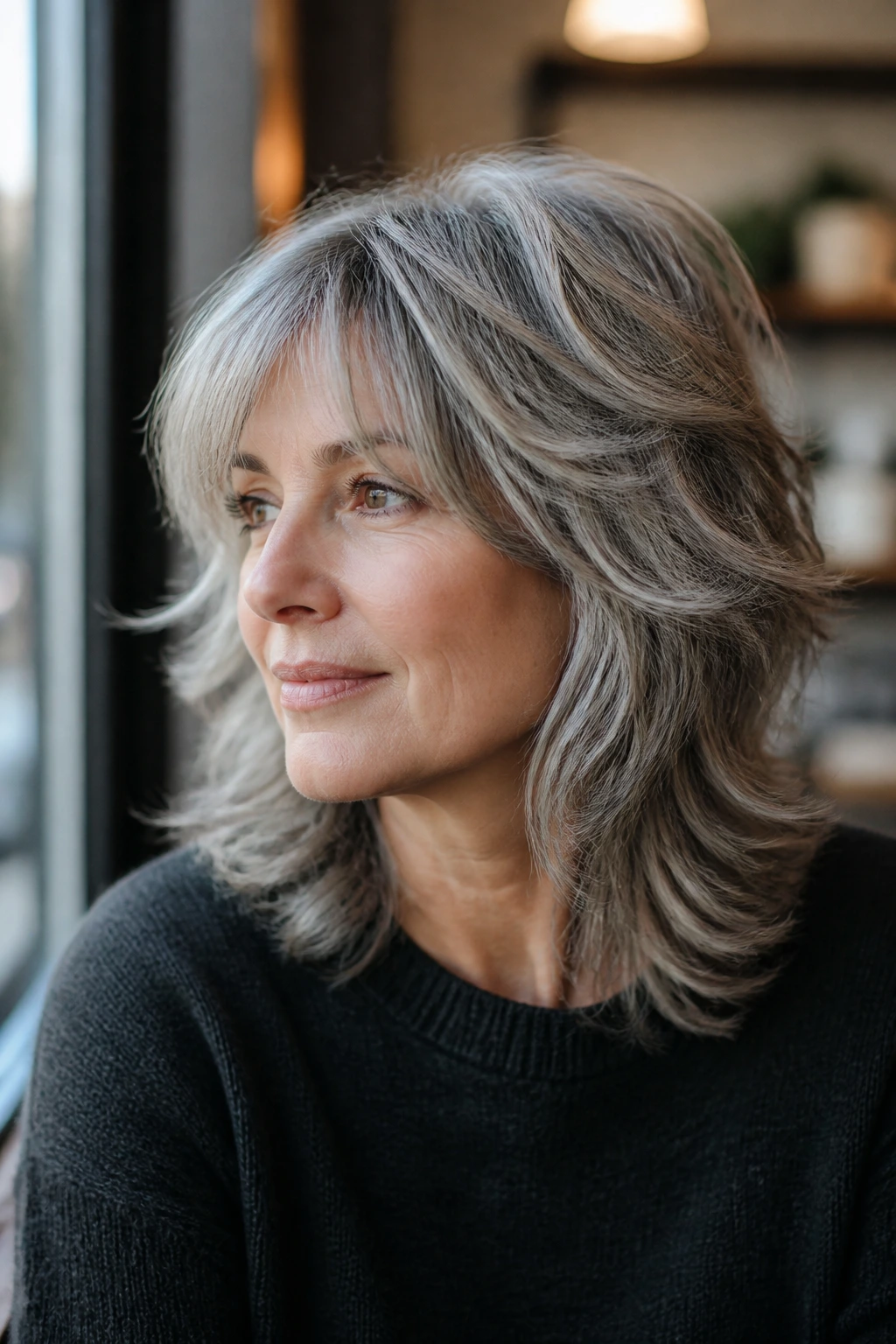
A soft wolf cut is for the woman who wants movement but doesn’t want a shag that feels too wild. It keeps the crown a little shorter, with longer length through the back and around the face, but the edges are softer and less dramatic than the internet versions that look almost spiky.
The reason it works on mature hair is simple: it builds volume where hair often goes limp. The top layers lift the crown, while the longer bottom pieces keep the cut from feeling too chopped up. On gray hair, that mix of lengths can look fresh without being loud.
This is a better choice for medium to thick hair than for very fine hair. Fine hair can lose too much density if the layers are aggressive. Ask for a toned-down version, and be honest that you still want to wear it to the grocery store, not just under perfect lighting.
A little wave cream and a rough blow-dry are enough. If a cut needs a full engineering session every day, I’d pass.
13. Bixie Cut
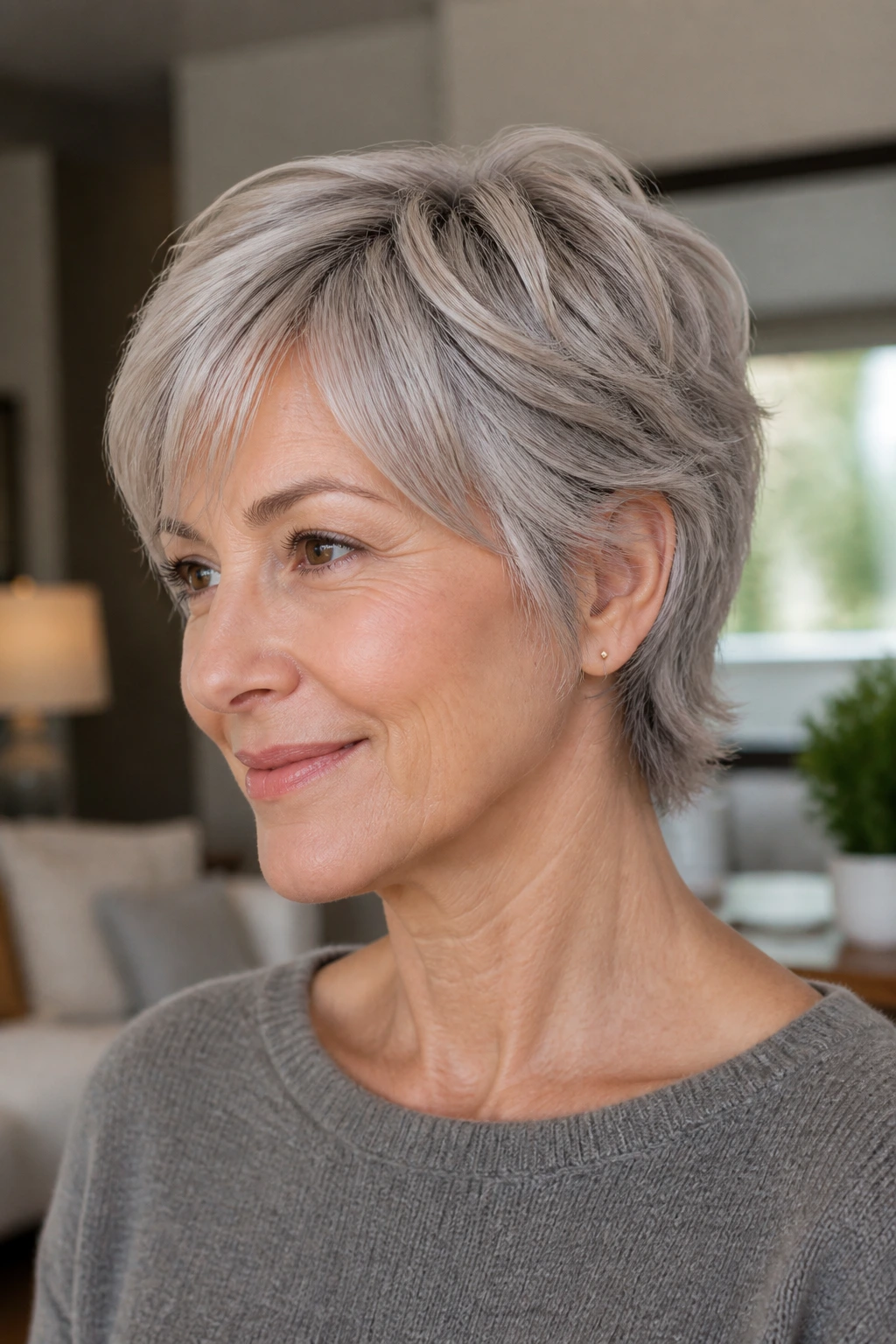
The bixie sits between a bob and a pixie, and that middle ground is exactly why it gets so much attention from women who want shorter hair but not a hard jump. You get the softness of a bob around the front and the lift of a pixie at the back. It’s tidy, light, and easy to wear with gray or silver strands.
What makes it different from a plain short cut is the length variation. The top and fringe have enough room to move, while the nape stays short enough to keep the shape neat. That makes it a strong choice if your hair starts to puff at the back of the neck or if you want something that looks styled even on lazy days.
This cut works best when the stylist leaves a little extra length around the ears and front. If everything is clipped too tight, the whole point is gone. You want a shape, not a shave.
It’s also one of the best transitional cuts if you’re growing out a pixie. It buys you time without making you look stuck in between.
14. Asymmetrical Bob
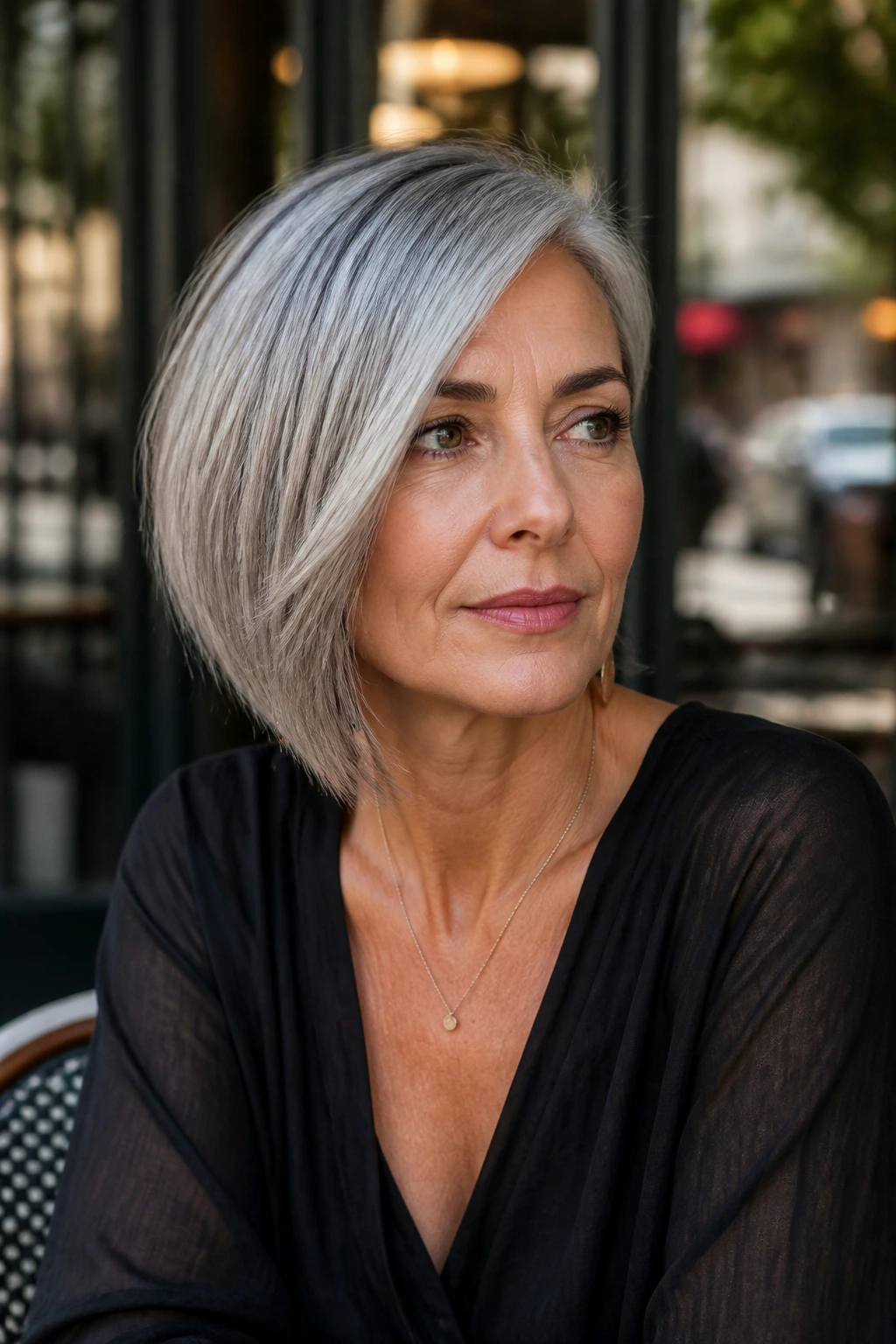
An asymmetrical bob has one side a little longer than the other, and that small imbalance gives the whole haircut energy. It’s a good move when you want a bob that feels modern, not predictable. On gray hair, the uneven line stands out in a way that looks intentional rather than fussy.
This cut works especially well with a deep side part. The longer side draws the eye downward, which can slim a rounder face, while the shorter side shows off the jaw and neck. If you wear glasses, make sure the longer side does not crash into the frame. That’s one of those tiny details that makes or breaks the look.
A straight finish shows the line best, but a soft wave can be prettier if you want less edge. The haircut does need accuracy. If the angle is off, it looks accidental. That’s why it pays to find a stylist who cuts bobs with confidence.
For maintenance, expect trims around every 6 weeks. Angled lines grow out fast.
15. Inverted Bob
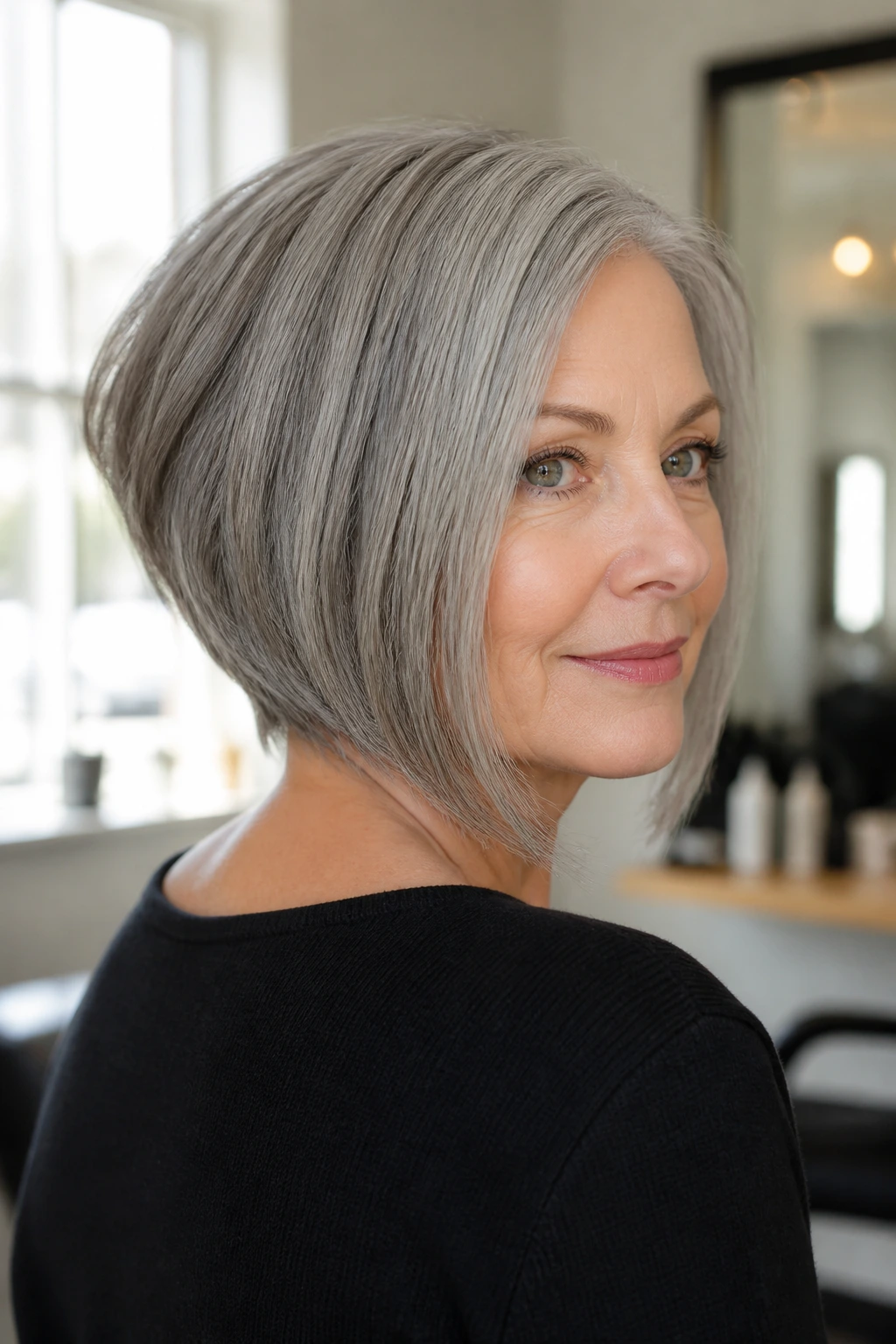
An inverted bob gives you lift in the back and length in the front, which sounds technical but really just means the haircut does some of the volume work for you. That stacked shape is helpful when the crown has gone flatter over time and you want a little more height without teasing or spray.
The cut is especially useful on straight or slightly wavy hair. It shows the angle clearly, and gray hair often makes the shape even more visible because the contrast in light across the layers is stronger. That can be a good thing. The back looks clean, the front looks long enough to soften the face, and the middle doesn’t puff out awkwardly.
What to Watch For
If your hair is very thick, the back can get bulky unless it is thinned carefully. If it’s very fine, the angle can disappear if the stylist leaves it too long. So the proportions matter.
I’d ask for a version that keeps the nape neat but not shaved close. That gives the cut a little longevity between appointments.
16. Side-Swept Fringe Cut
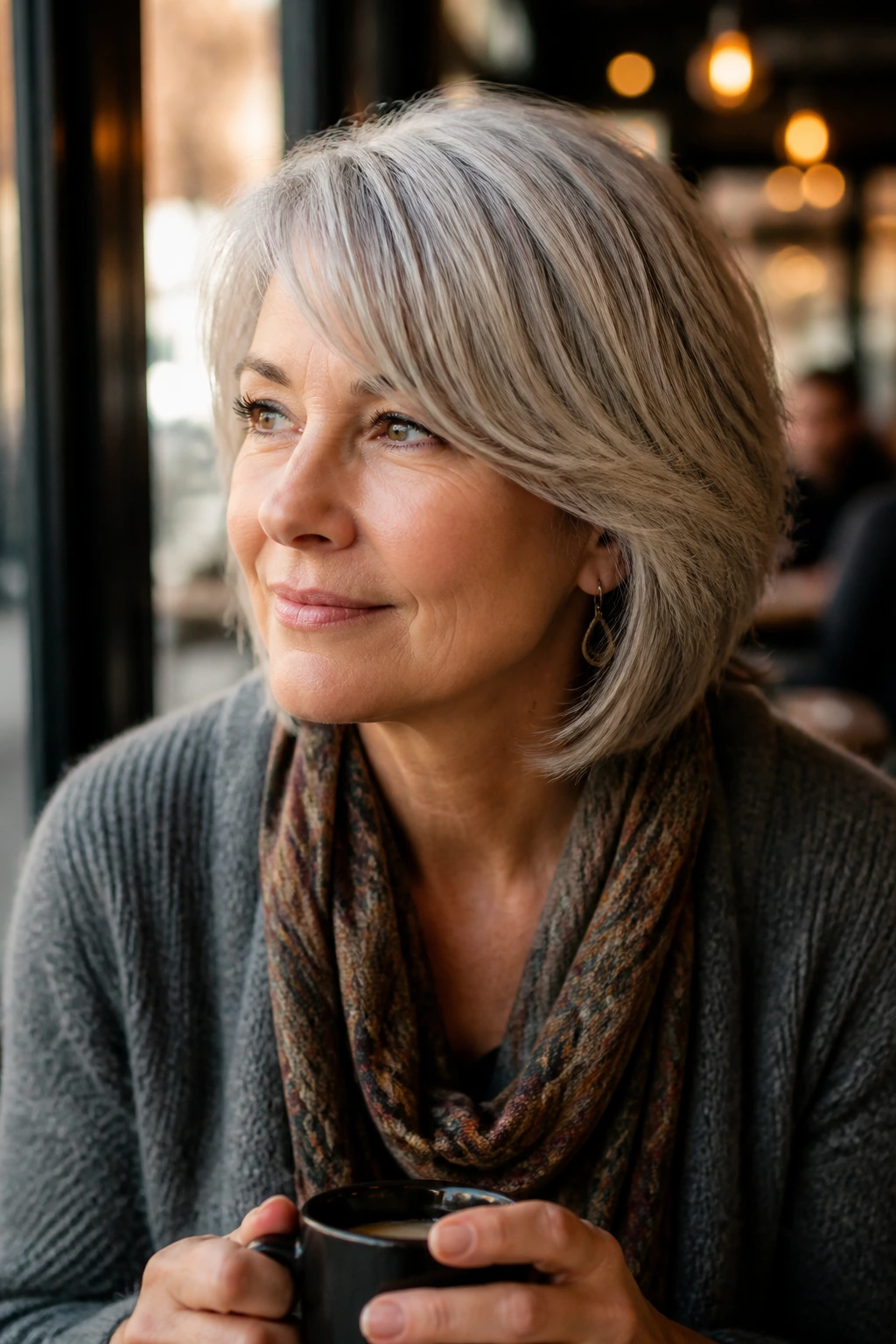
A side-swept fringe can change a haircut more than people expect. It softens the forehead, hides a cowlick better than a blunt bang, and lets you keep some openness around the face. For women over 50, that matters because fringe can sharpen or soften a look depending on where it lands.
This style is useful if you want a haircut that does not announce itself too loudly. The fringe can sit over a bob, a lob, or even a shoulder-length cut. It’s the front pieces that do the work, not a giant style overhaul.
How to Wear It Well
- Keep the fringe long enough to sweep, not cut straight across
- Blow-dry it from the root with a small round brush
- Trim it every 3 to 4 weeks so it doesn’t slide into your eyes
- Avoid heavy wax near the front, which can make the bangs separate in odd chunks
Side-swept fringe also plays nicely with gray hair because the gentle angle keeps the front from feeling severe. If you like a softer, more forgiving finish, this is a smart place to start.
17. Curtain Bang Lob
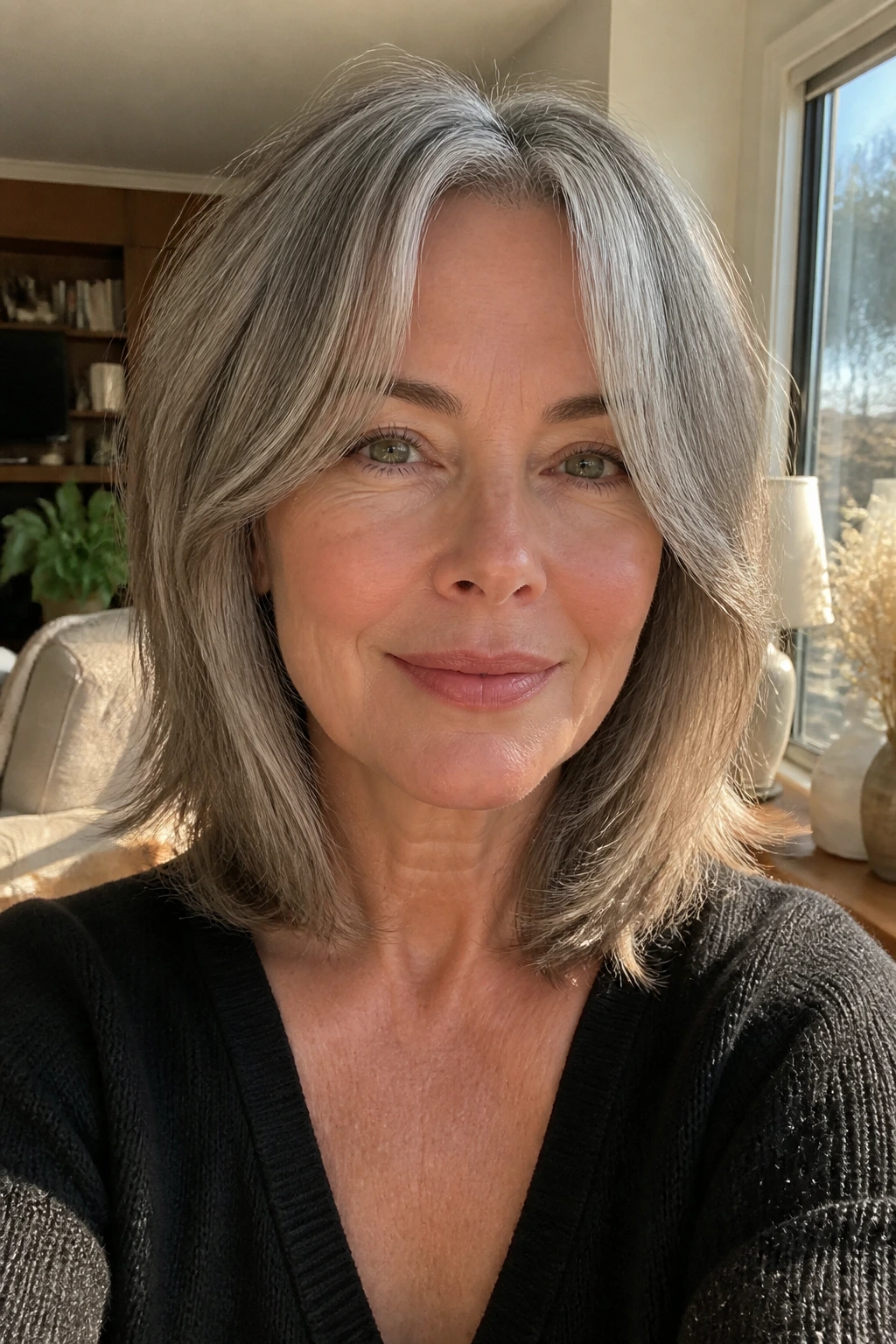
Curtain bangs are still one of the best ways to add shape without committing to a full fringe. On a lob, they split softly down the middle and sweep toward the cheeks, which is flattering if you want to soften the face but keep the forehead partly open. That balance is why this cut keeps showing up in salons.
The length matters. If the bangs are too short, they can feel blunt and high-maintenance. If they’re too long, they just become face-framing layers. The sweet spot usually lands around the cheekbones, where the sweep looks natural and gives the hair a little swing.
This cut can be a gift for gray hair that’s coming in around the front, because the bangs blend the transition instead of spotlighting it. They also work well with glasses, as long as the bangs are trimmed to sit above or around the frames without crowding them.
A round brush and a quick bend at the ends are enough. You do not need perfect symmetry. A little looseness is part of the appeal.
18. Collarbone Cut
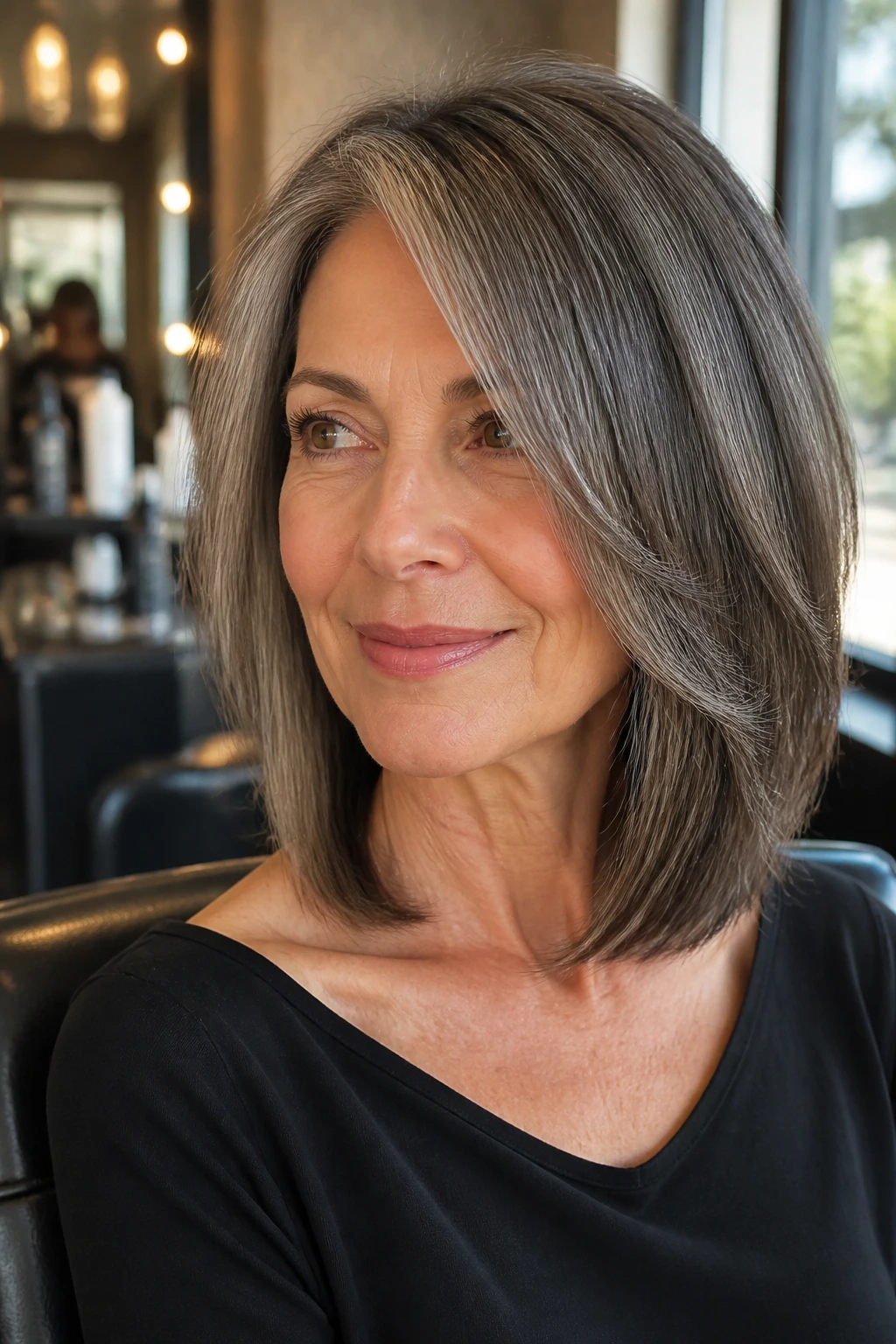
The collarbone cut lives in that useful middle zone where hair is long enough to feel feminine and short enough to stay light. It hits around the collarbone, which means it brushes the shoulders just enough to feel soft without getting stuck in a constant flip-out battle. That is a real problem with some mid-length cuts, and this one handles it better than most.
Why It Works So Well
The collarbone is a natural stopping point for the eye, so the length feels intentional. It flatters a lot of face shapes, especially if the cut includes a little bevel at the ends. Gray hair can look sleek here because the shape gives the strands a clean path instead of a bulky outline.
If your hair is thick, ask for soft internal removal through the middle layers. If it’s fine, keep the perimeter blunt enough to preserve fullness. Either way, the cut looks best when the front pieces are a touch longer than the back.
This is one of those cuts that can be dressed up or down without changing the haircut itself. That counts for a lot.
19. Sleek Shoulder-Grazing Cut
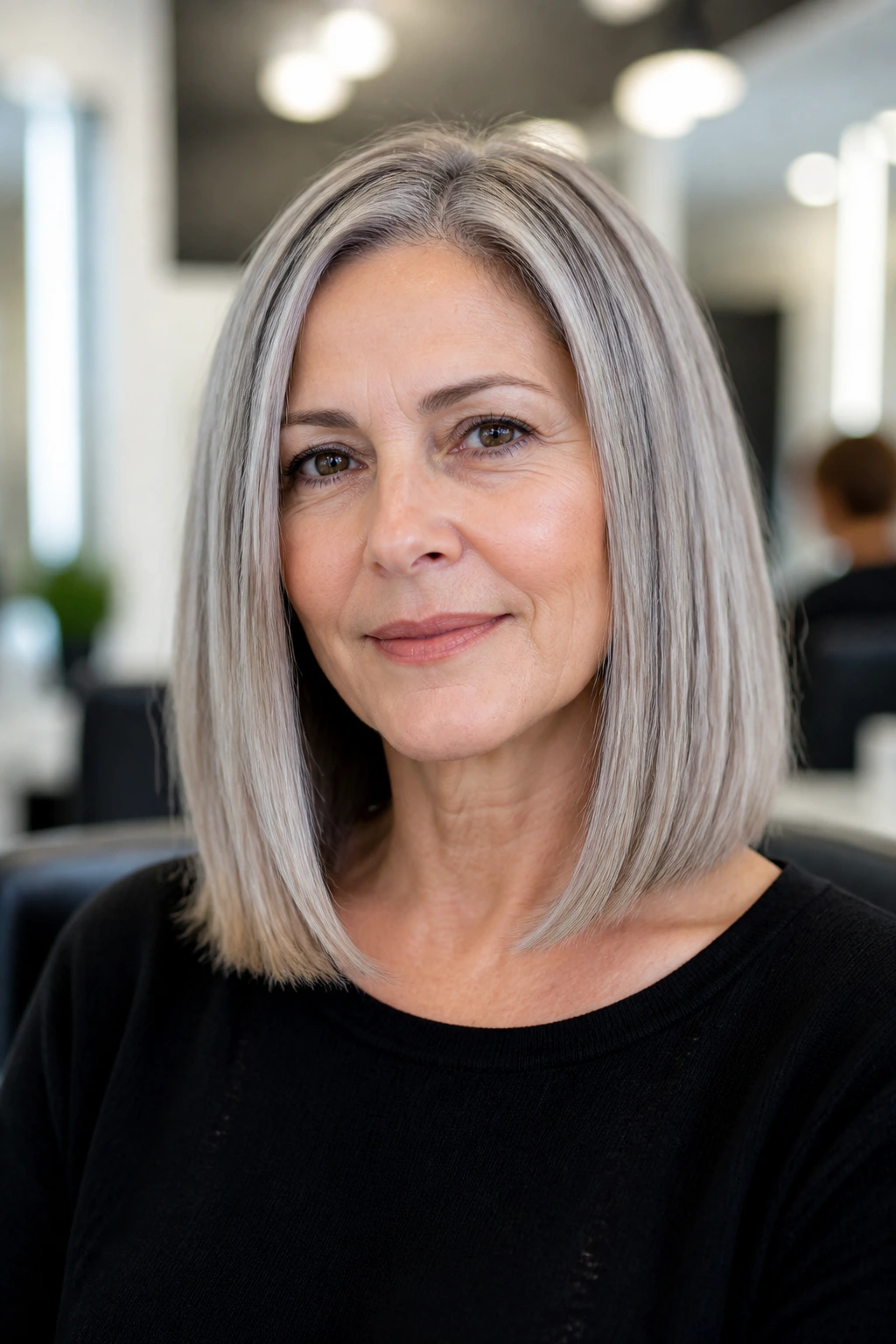
A sleek shoulder-grazing cut is for women who like a clean finish and do not mind a little heat styling. The line sits near the shoulders, the ends are smooth, and the overall look is polished without being stiff. Gray hair shines in this shape because the smooth surface reflects light nicely.
The cut is especially good if your hair is straight or close to it. Wavy hair can wear it too, but it may need a bit more smoothing around the ends to keep the shape from kicking out. A heat protectant and a paddle brush are not optional here. They are the difference between sleek and frizzy.
You can keep the front slightly longer for a softer frame or go evenly around for a more refined feel. I prefer the slightly longer front. It keeps the cut from looking like a block.
This style does not demand much from the salon chair, but it does ask for maintenance at home. A quick blow-dry every few days usually keeps it in line.
20. Mid-Length Cut With Internal Layers
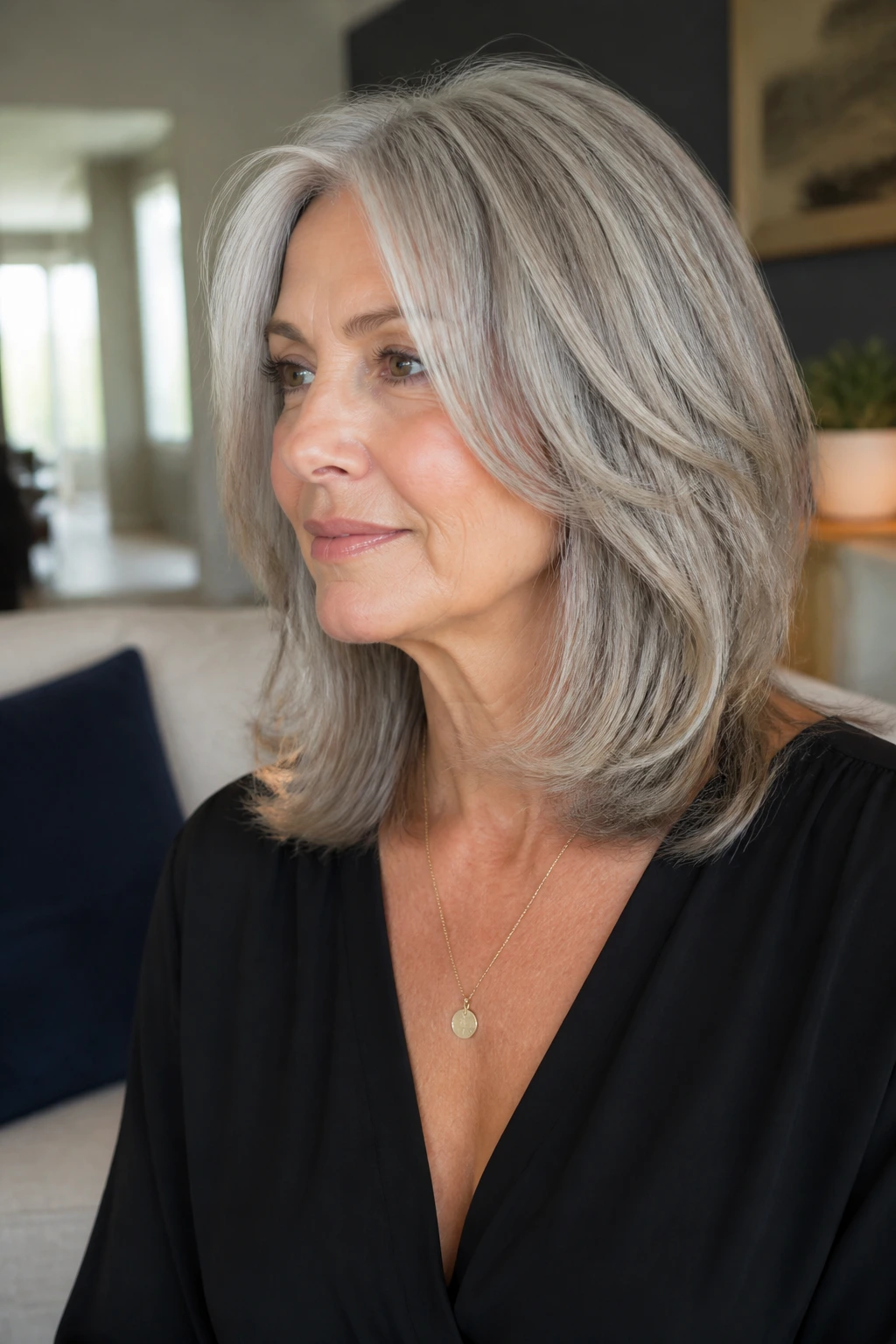
A mid-length cut with internal layers looks plain from the outside, and that is the trick. The shape stays full at the edges, but the inside has weight removed so the hair doesn’t sit like one heavy sheet. It’s a practical cut for women with thicker gray hair, because gray can grow in coarse and start to puff where you least want it.
Imagine hair that feels bulky at the ends but flat on top. This solves both problems without making the cut look choppy.
Ask Your Stylist For
- Internal layers, not short surface layers
- A perimeter that stays full and clean
- Soft movement around the face
- A shape that doesn’t lose density at the bottom
This cut is one of my favorites for people who want to keep length but hate bulk. It also grows out well, which is more useful than people admit. A haircut that still looks decent six weeks later is worth its weight in gold, especially if you travel or stretch appointments.
21. Curly Bob
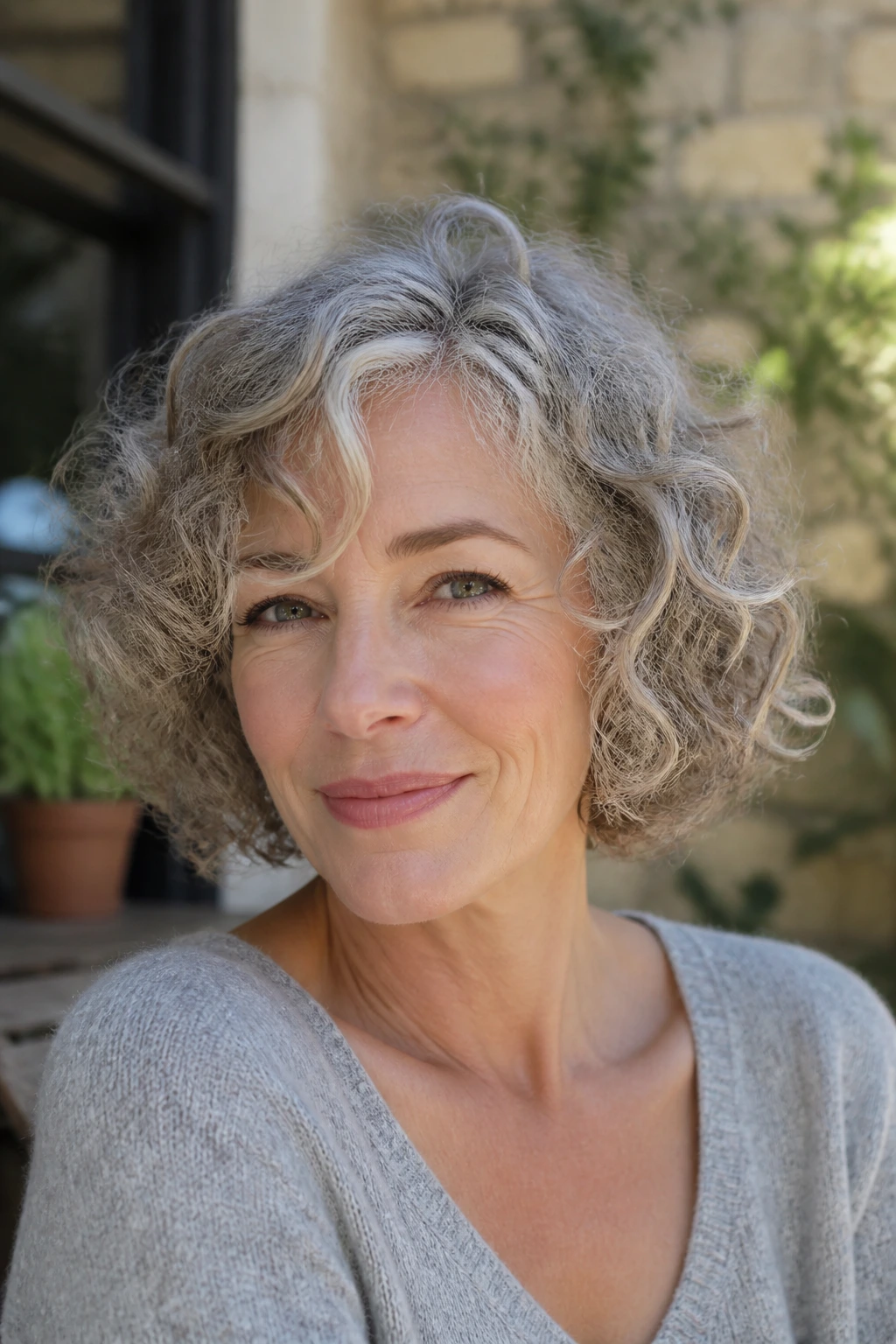
A curly bob is one of the most flattering cuts for natural curls because it lets the curl pattern form its own shape instead of fighting gravity. On women over 50, that can be a relief. The hair often needs less length to feel balanced, and gray curls can look gorgeous when the shape is set at the jaw or just below it.
How to Keep the Shape Round
The biggest mistake is cutting curly hair too bluntly while it’s wet and stretched out. Once it dries, the shape can jump up in places and look uneven. A dry cut or at least a curl-by-curl approach usually gives a better result.
I like a bob that keeps a little length in front and avoids too much bulk at the sides. That keeps the cut from turning into a triangle, which curly hair can do when the bottom is too dense.
A curl cream, a wide-tooth comb, and a diffuser are usually enough. Skip heavy oils near the roots, or the curls can collapse. Gray curls often have a thirstier feel, so moisture matters, but the product still needs to be light enough to let the curl spring.
22. Curly Shag
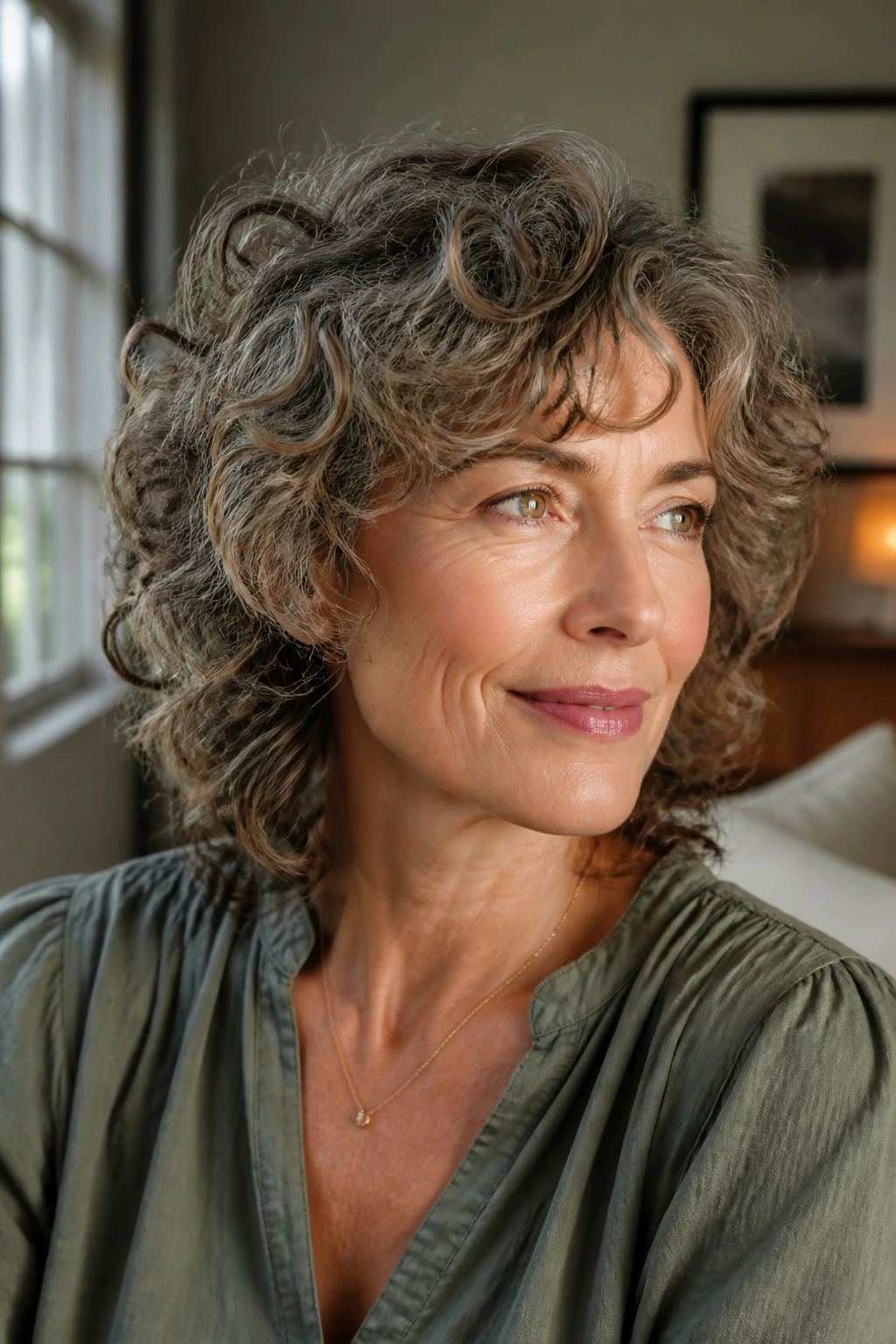
A curly shag has a little more attitude than a curly bob, and it gives curls room to stack without turning into a block. The layers help each curl fall where it wants, which is why this cut works so well for people whose hair is thick, springy, or uneven from one side to the other.
What I like most is the movement around the face. A curly shag can soften the jaw, lift the crown, and make gray curls feel lively instead of weighed down. That’s a big deal when the texture has changed and the curls are no longer behaving exactly like they used to.
The key is not to over-layer the top. Too much height there and the cut can get too round. You want shape, not a mushroom effect. A good stylist will know how to leave enough weight in the right places while still opening up the curl pattern.
Use a diffuser on low heat and stop touching it once it starts to dry. That part is hard for some people. Still worth it.
23. Tapered Crop
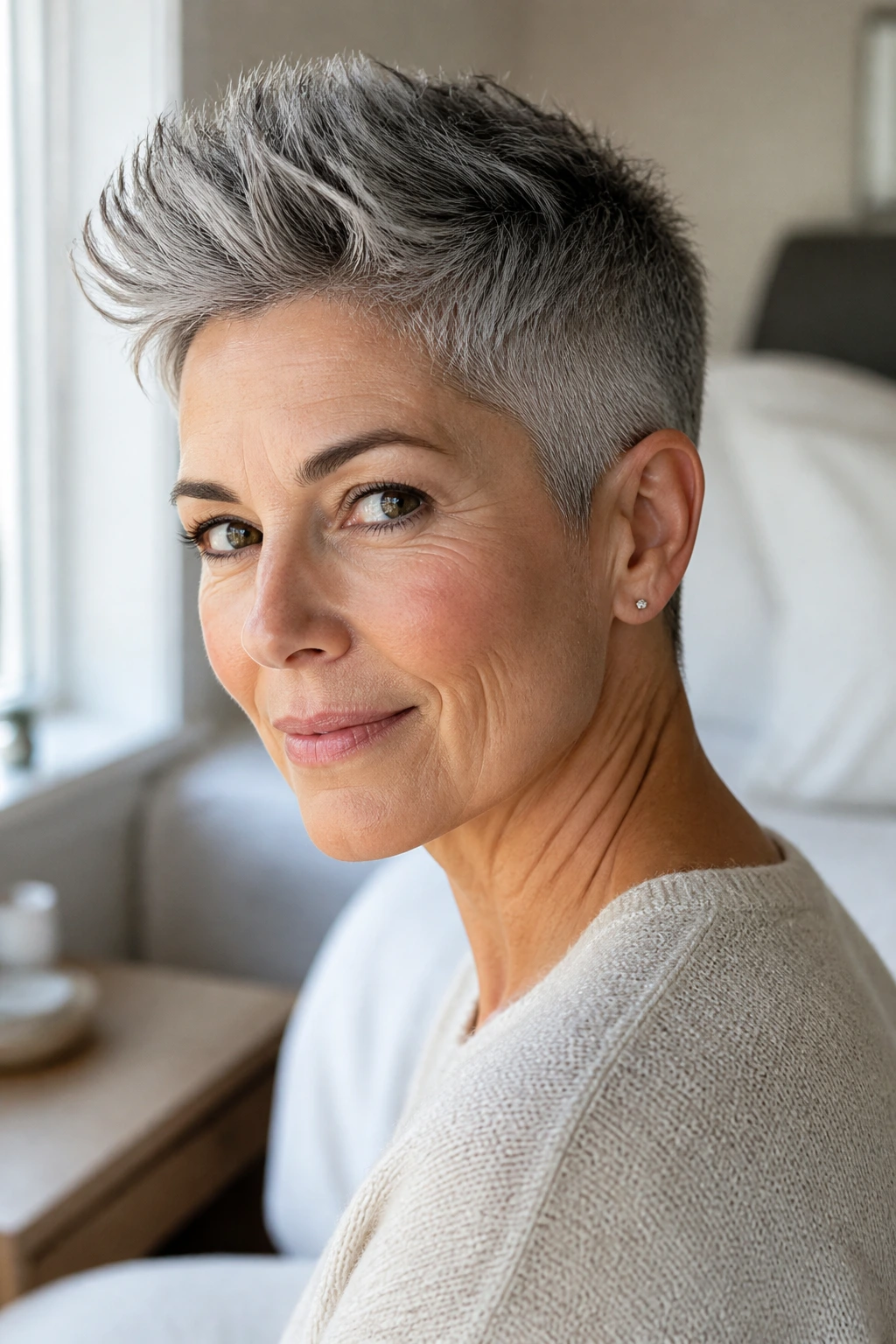
A tapered crop is short, neat, and a little bolder than a pixie. The sides and back get tighter, while the top keeps more length for shape and styling. It works well on women who want a strong outline and easy mornings, especially if the hair at the nape grows in coarse or sticks out.
This cut can look elegant on gray hair because the taper gives the silhouette a clean edge. It also puts attention on the eyes and cheekbones, which is often the point of going shorter in the first place. If you like a style that feels sharp but not fussy, this is a strong contender.
No, it is not for everyone. If you prefer softness around the face, this may feel too crisp. But if you want a cut that holds its shape and doesn’t collapse by lunchtime, the tapered crop does the job.
A little styling paste on the top is enough. Keep the sides close, the top piecey, and the neckline tidy.
24. Modern Pageboy
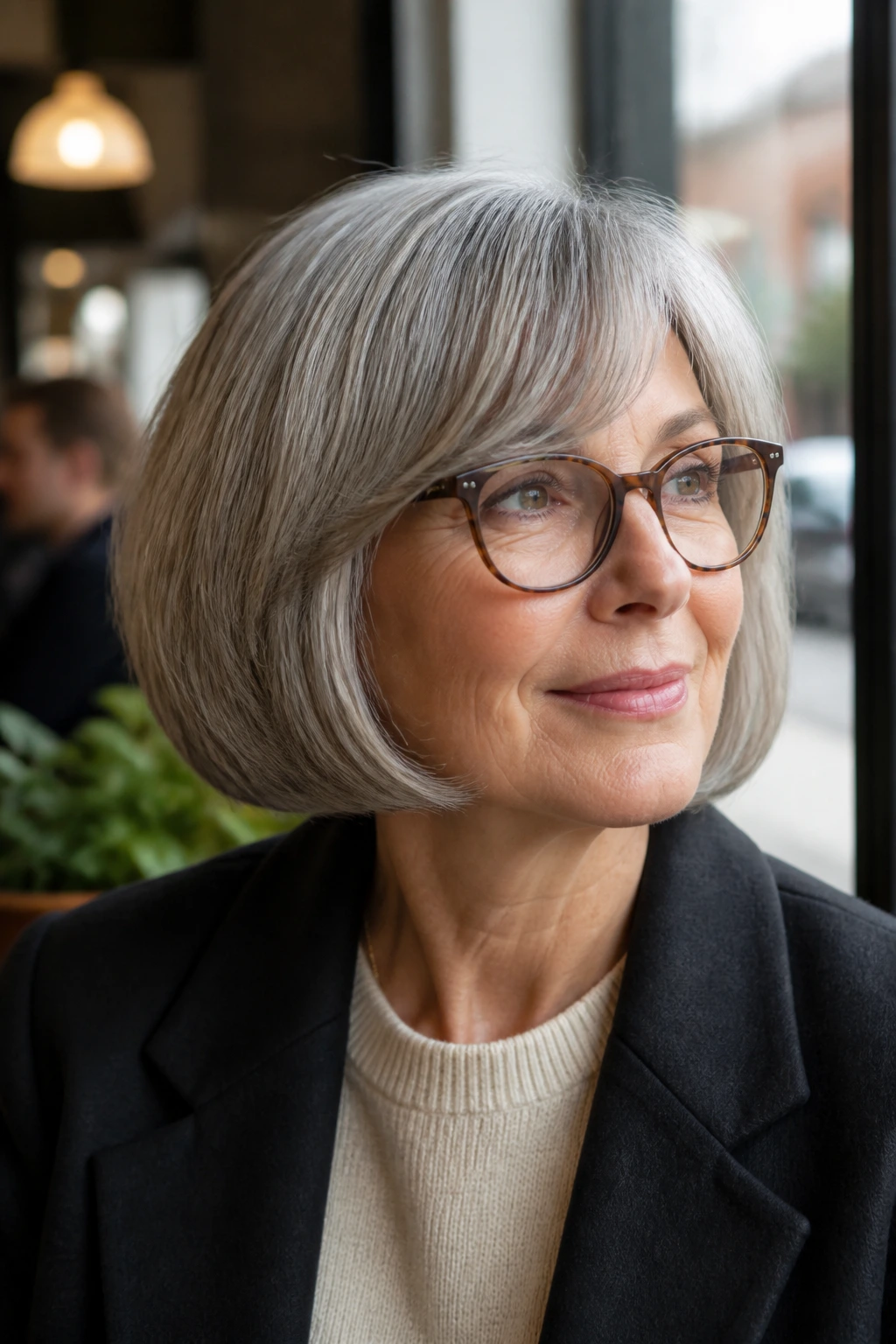
The pageboy has a retro backbone, but the modern version is softer and easier to wear. It usually has rounded ends, a smooth curve under the jaw, and sometimes a fringe or side sweep to keep it from looking costume-like. On gray hair, that rounded shape can look polished in a way that feels calm, not stiff.
This cut is a good pick if your hair is straight or only slightly wavy. It also works nicely with glasses, because the curve around the face doesn’t compete with the frames. The shape can give the illusion of thickness at the ends, which is useful if your hair has thinned a little over time.
Best For
- Fine hair that needs a clean outline
- Straight gray hair with a smooth fall
- Women who like a tidy look
- Anyone who wants a short-to-mid cut with some softness
The pageboy does need regular shaping. The curve looks best when the ends are controlled, not flicking out in random directions. But when it’s cut well, it has a quiet confidence that a lot of modern styles try and fail to fake.
25. Feathered Shoulder Cut
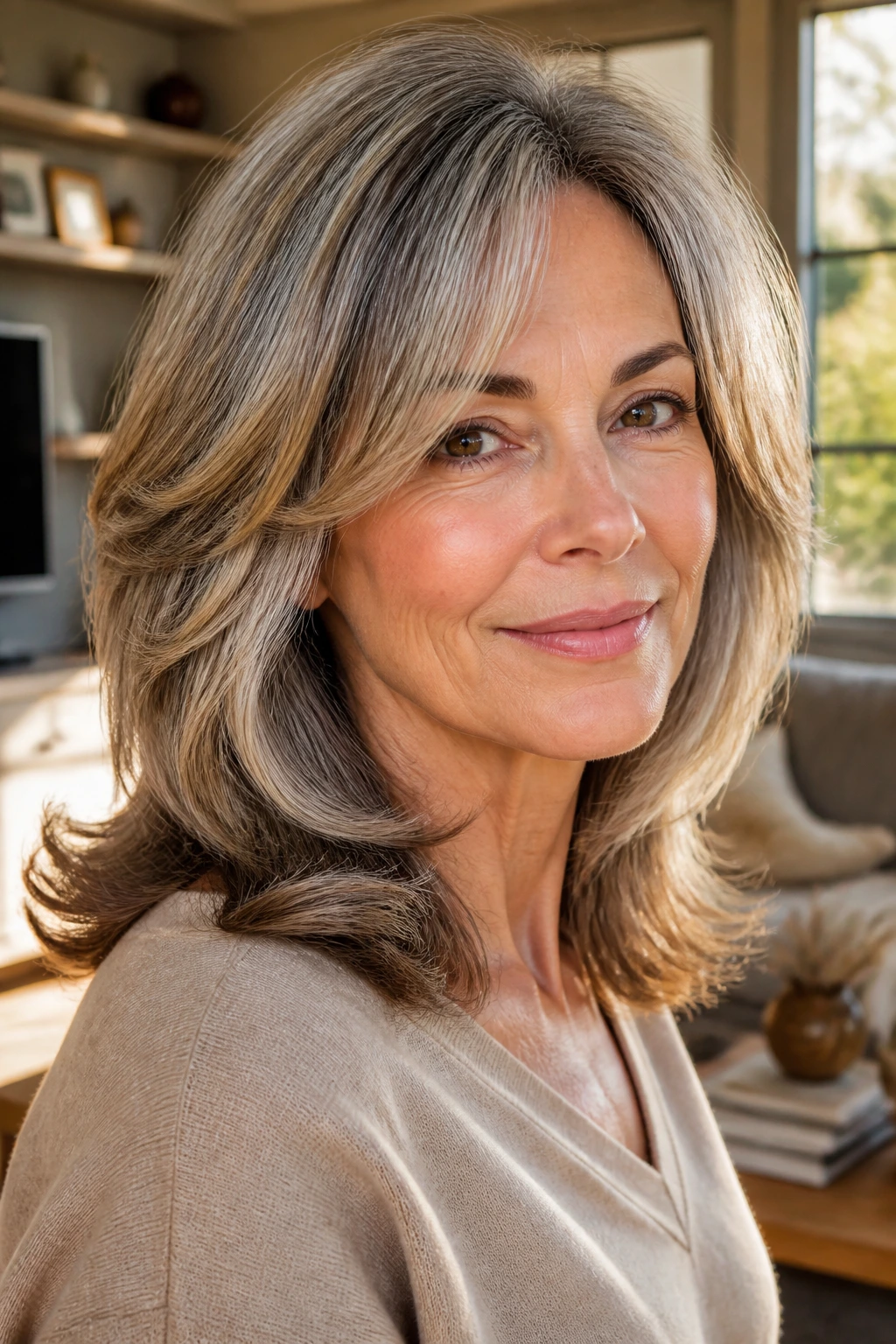
A feathered shoulder cut is one of those styles that keeps coming back because it flatters a lot of different hair types without looking like it is trying too hard. The ends are light and airy, the layers move away from the face, and the whole cut sits around the shoulders with enough softness to avoid harsh lines. Gray hair often looks lovely with this shape because feathering breaks up heaviness and lets the silver show in pieces instead of one flat sheet.
This is a smart cut if you want body without a lot of length. It also works for women whose hair feels coarser at the crown and thinner at the ends, which is a common combination. The feathering balances that out better than blunt cutting does.
A round brush, a little root lift, and a quick pass at the ends are usually enough. I’d avoid overly heavy serums here. They flatten the very movement that makes the cut worth wearing.
If you want one haircut that can look soft, neat, and easy to grow out, this is a strong final stop.
