



A mullet has to earn its edge. If the front is too polite and the back is too long, the whole cut reads like a dare gone wrong. Mullet hairstyles for men work best when the shape has tension: tighter sides, some movement up top, and a back section that looks like it belongs there.
The strongest versions have a clear point of view. A barber can make a mullet look sharp, but only if the cut has structure first and attitude second. The line at the temple, the blend behind the ear, the way the nape falls against the collar — those details matter more than people think.
The mistake I see most is treating every mullet the same. Thick hair needs different handling than curls. A fade changes the whole mood. Even the product matters; one heavy cream can flatten a cut that should feel lifted and a little wild.
Some of these styles are loud. Some are clean enough to wear into a nice dinner without looking like you got lost on the way to a concert. All 20 below have teeth.
1. Classic Shaggy Mullet
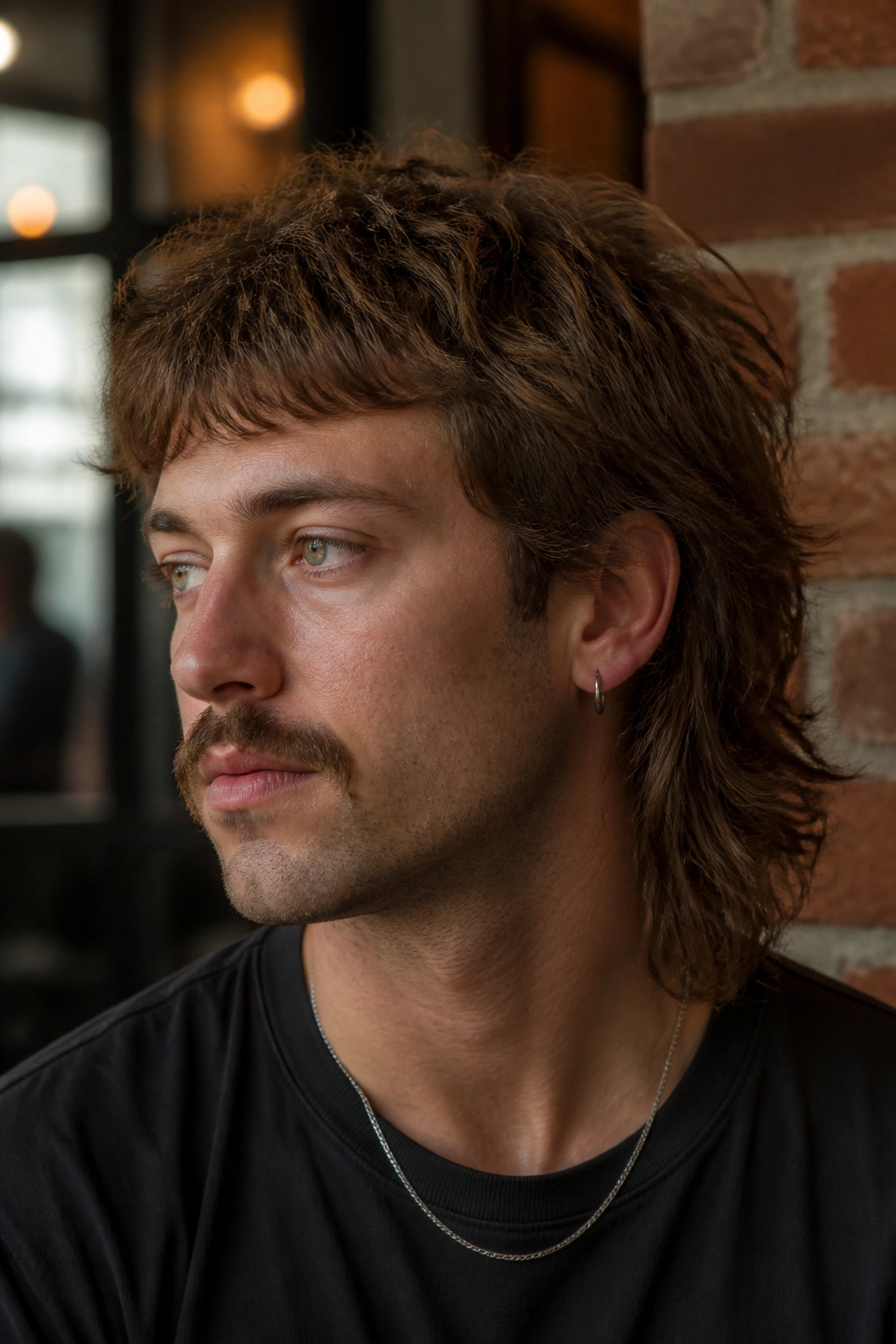
The classic shaggy mullet is the cut that made the style stick in the first place. It keeps the sides light, the top messy, and the back long enough to feel deliberate instead of accidental.
Why It Works
- The top has enough texture to move, which stops the cut from lying flat.
- The back usually sits around the collar, not halfway down the shirt.
- The sides stay soft, so the transition feels natural rather than chopped up.
A good shaggy mullet is all about broken edges. Ask for layers through the crown, then tell your barber you want the nape to hang a little longer than the rest. Thick wavy hair does this best, though straight hair can get there with a sea salt spray and a rough blow-dry.
Skip heavy gel. It makes the back clump and turns the haircut into a wet mess by noon. A matte paste or lightweight cream gives you that lived-in finish without dragging the shape down.
Best tip: keep the neckline loose, not razor-sharp. The haircut looks richer when the back has movement.
2. Skin Fade Mullet
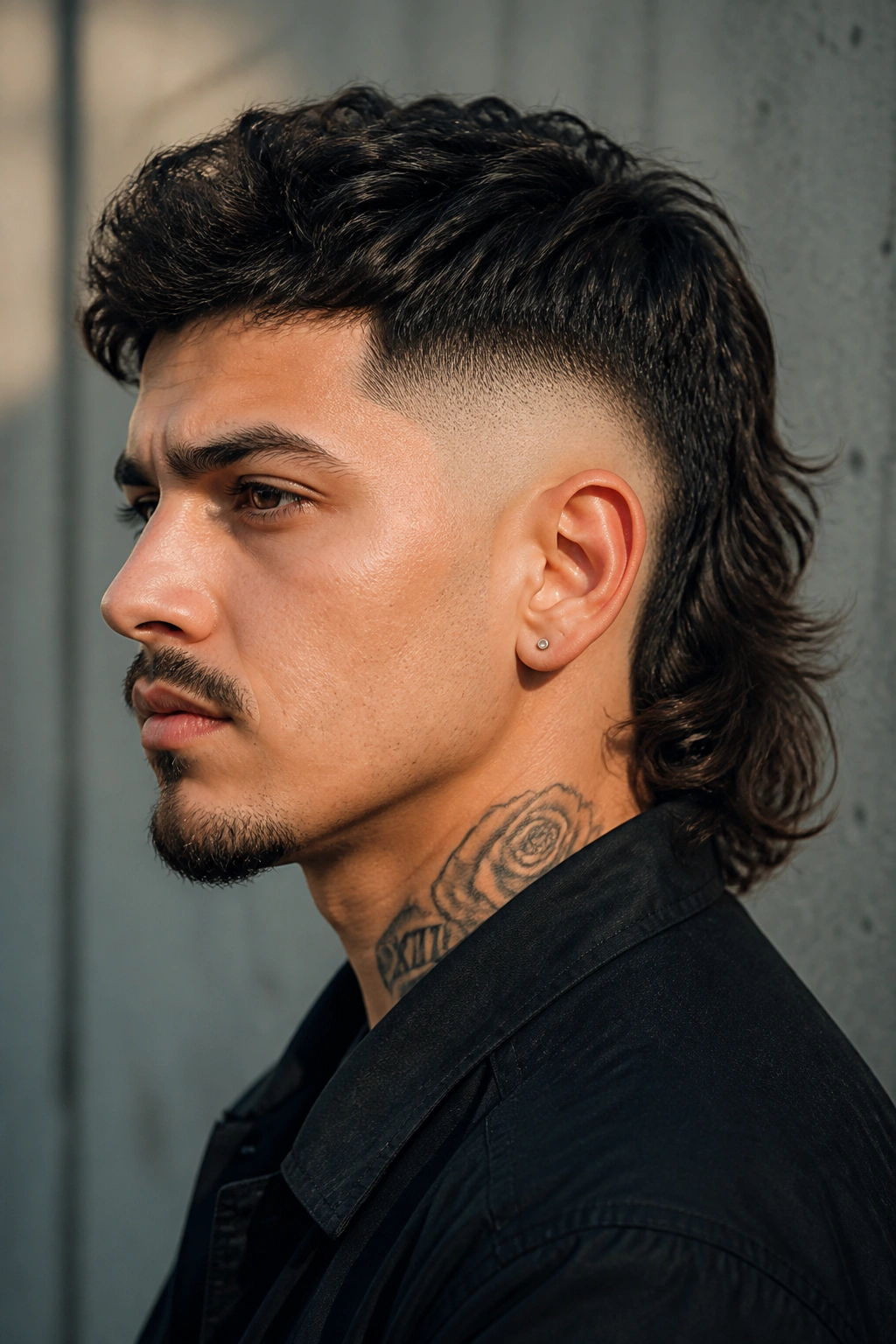
A skin fade mullet is the version that makes people notice the haircut before they notice the outfit. The contrast is the point. Clean sides. Strong top. A back section that stays long enough to keep the mullet identity intact.
It works because the fade strips away the visual clutter at the temples and around the ears. That leaves the top and rear section to do the talking. If you want a mullet with a harder edge, this is the one I’d send you toward first.
The cut looks best when the fade is precise and the transition from the top is controlled. Ask for a low or mid skin fade, not a random buzz on the sides. If the top is too short, the whole thing starts to look like a failed buzz cut with a tail. If the top is too long, the fade loses its punch.
This style likes straight or slightly wavy hair, and it’s especially strong if your hairline is neat. Sharp jaw, clean fade, textured top. Easy win.
3. Curly Mullet

Why does curly hair look so good in a mullet shape? Because the curl pattern does half the work for you. The top gets lift, the back gets personality, and the sides can stay close without making the haircut feel thin.
Curly mullets live or die by shape. The barber needs to leave enough weight for the curls to bounce, but not so much that the back turns into a triangle. A little layering around the crown keeps the top from puffing out like a mushroom. The back should fall in soft, springy pieces, not one heavy curtain.
How To Wear It
- Use a curl cream on damp hair, not dry hair.
- Scrunch with a microfiber towel or a T-shirt.
- Let the curls air-dry when you can.
- Diffuse on low heat if the top needs more lift.
A curly mullet has edge without trying too hard. That’s the charm. It looks like you know exactly what your hair does and you’re not fighting it. Which, frankly, is smarter than forcing curls into a neat shape that they’ll reject by lunch.
4. Burst Fade Mullet

Picture the side of the head from the mirror view. If the fade curves around the ear like it was drawn with a compass, you’re in burst-fade territory. That curve gives the mullet a sharper outline, and it makes the back section feel even more intentional.
I like this version on guys with dense hair because it removes bulk without flattening the whole head. The burst fade lets the crown stay full while the sides tighten up in a clean arc. It’s a small detail, but it changes the whole profile.
Ask your barber to keep the fade tight around the ear and leave the nape longer with a soft finish. Too much length at the back can make the silhouette drag. Too little, and the haircut stops being a mullet at all.
- Works well with thick, straight hair
- Looks especially good with a textured top
- Needs regular cleanups around the ears
- Benefits from a matte clay, not shine
This is one of those cuts that looks great from three angles, which matters more than people admit.
5. Wolf Cut Mullet
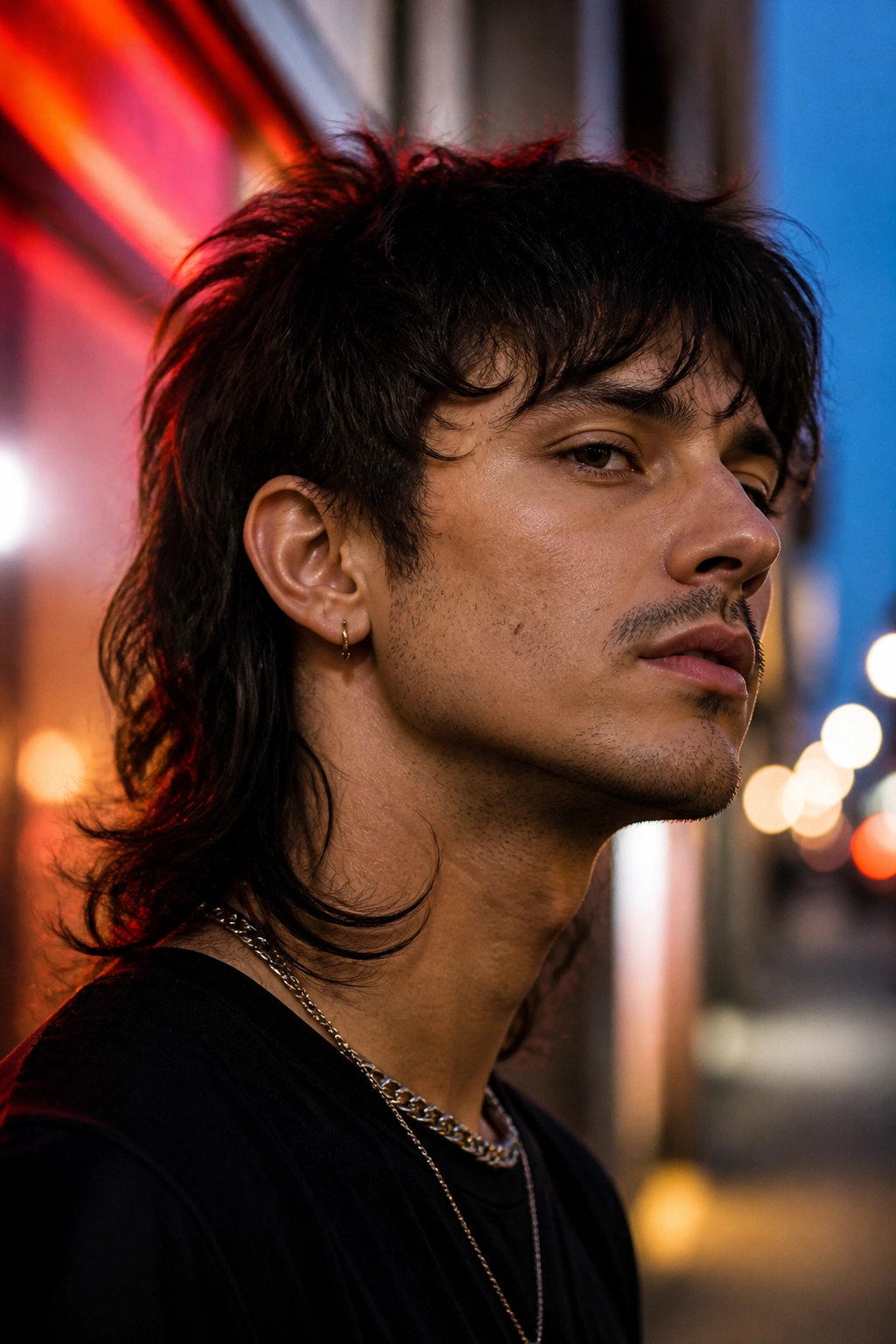
The wolf cut mullet is what happens when a shag gets a little more attitude and stops asking permission. It keeps the rough layers, but the top is choppier and the back is looser, almost wild in a good way.
What I like here is the lack of fuss. You do not need a hard fade or a perfectly trimmed tail. The cut works because the layers stack in a way that gives movement from the forehead to the nape. It feels younger, grittier, and a touch undone, which is exactly the point.
Straight hair needs a little help to keep this from falling flat. Sea salt spray and a rough blow-dry give it body. Wavy hair gets the easiest ride, since the layers catch naturally and break up the shape without much effort.
A wolf cut mullet can look a little too soft if the edges are left alone for too long. That’s not a flaw in the cut. It’s just a sign you need the ends cleaned up before the shape turns fuzzy.
6. Mohawk Mullet
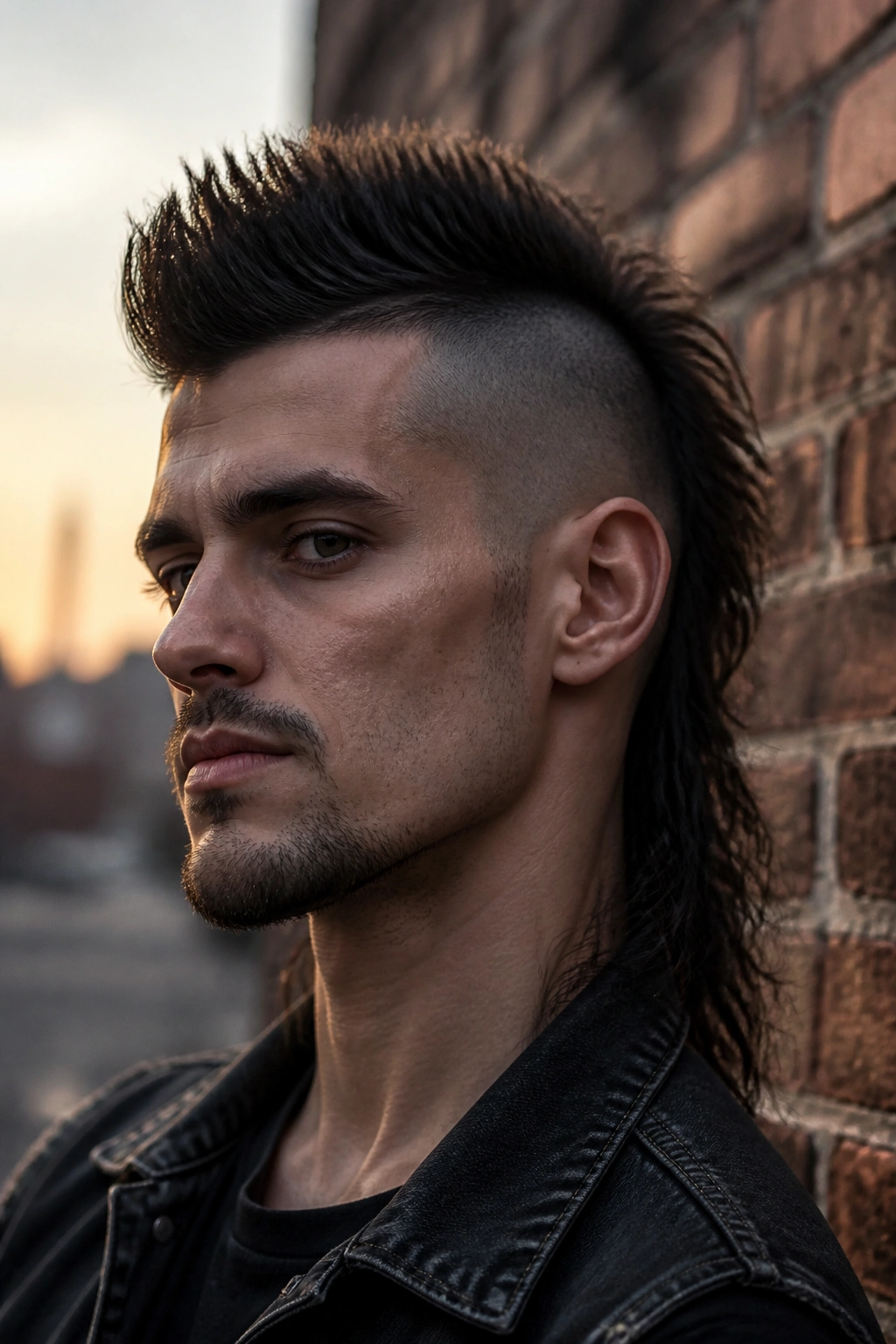
A mohawk mullet is not for the guy who wants to blend in. It takes the center strip of a mohawk and lets the back hang longer, which gives the whole cut a rebellious, almost cartoon-level confidence.
Unlike a full mohawk, this version doesn’t demand a shaved scalp on both sides. The sides can be faded or clipped short, and the strip down the middle can stay textured rather than stiff. That makes it easier to wear without looking like you’re headed to a costume party.
This cut fits people who like strong lines and don’t mind a high-maintenance outline. The central ridge needs shape, and the back needs enough length to keep the mullet part alive. If either one gets too soft, the style loses its bite.
Best on thick hair. Best on guys who actually enjoy styling their hair. And best when the top has some lift, because a flat mohawk mullet just looks tired.
7. Tapered Mullet
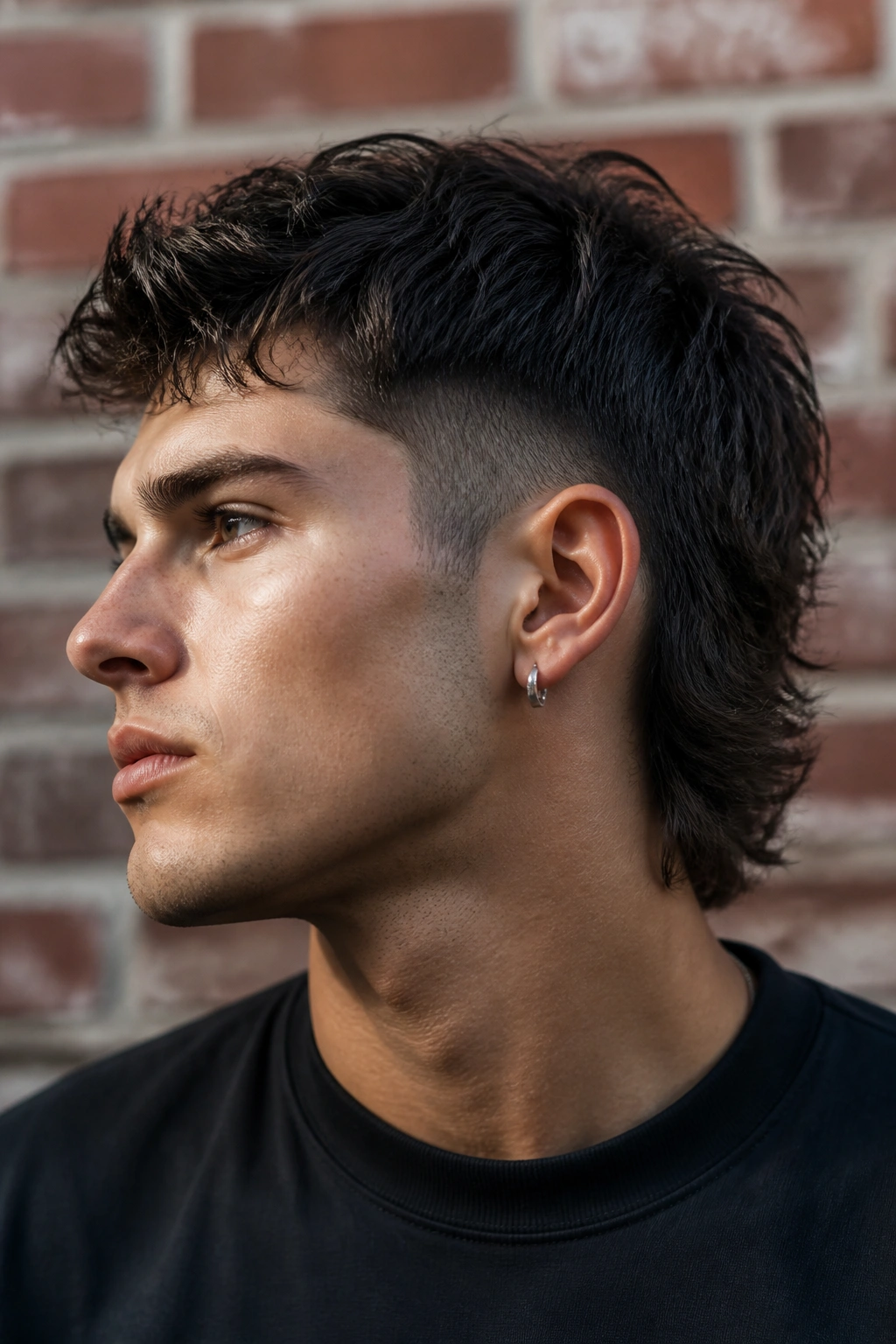
The tapered mullet is the version I’d point to when someone wants the shape without the drama. It still has length in back, but the sides blend down gradually instead of dropping into a hard fade. That softer change makes the whole cut easier to wear.
What Makes The Taper Matter
A taper is doing a lot of quiet work here. It keeps the neckline neat, trims the bulk around the ears, and lets the back stand out without screaming for attention. If you wear collars, jackets, or button-downs a lot, this version sits cleaner against the neck than a heavier, shaggier mullet.
- Keeps the edge, loses some of the aggression
- Works on straighter hair and mild waves
- Easier to grow out than a skin fade version
- Looks sharp with a side part or brushed-forward top
This is the mullet for the guy who wants people to notice the cut on the second glance, not the first. That may sound small. It isn’t. A good taper can make a mullet feel expensive instead of sloppy.
8. Razor-Cut Mullet
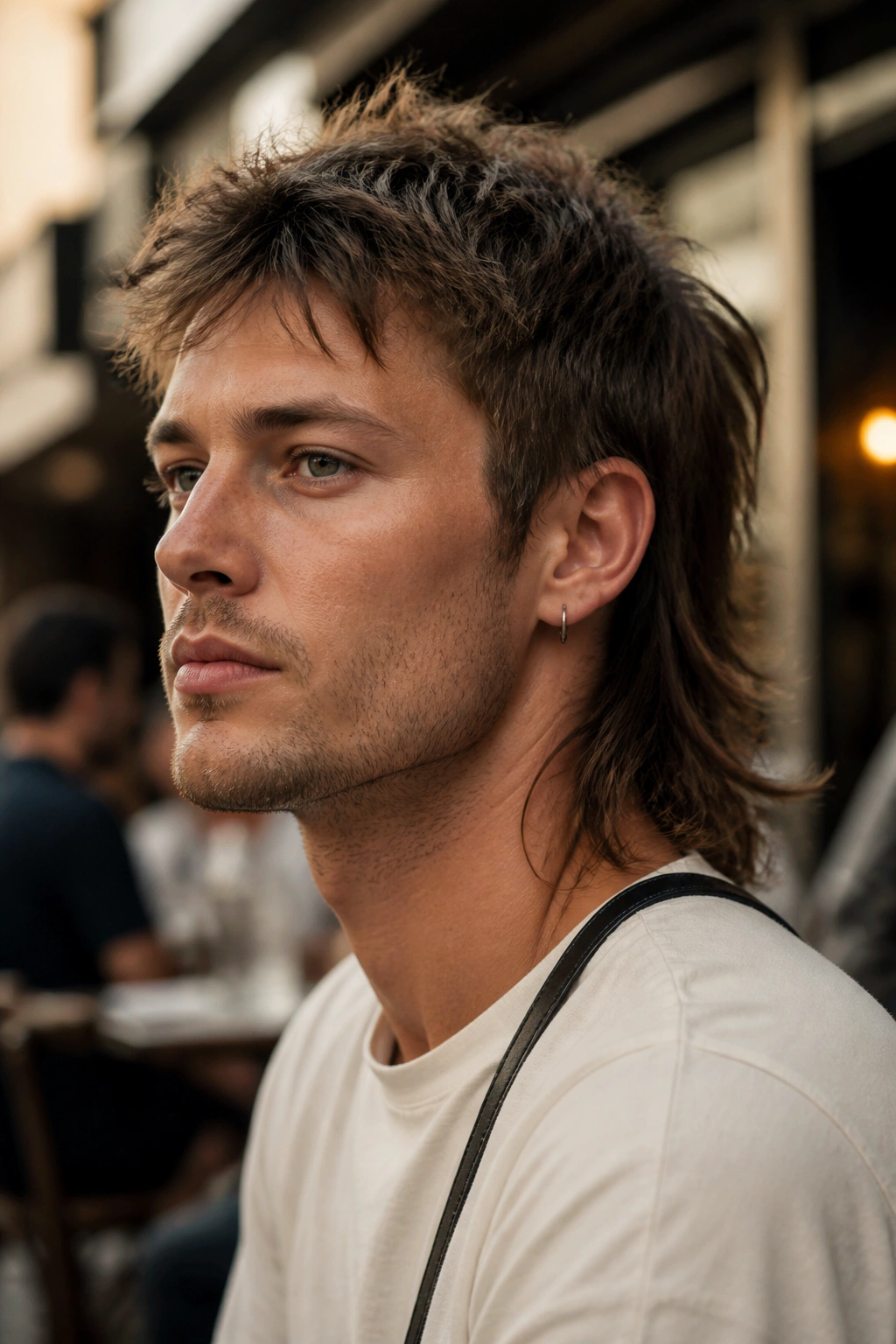
A razor-cut mullet has a different mood from the layered styles above. The edges feel feathered, the ends look airy, and the whole haircut carries a little motion even when the hair is sitting still.
That softness comes from the razor work. The barber uses the blade to take weight out of the ends, which gives straight hair a rough, piecey finish that scissors can’t always create. It’s a smart move if your hair likes to hang heavy or stick in one direction.
This is not the cut for someone who wants crisp lines. Razor-cut mullets look better when they’re a little imperfect. A touch of fray at the ends helps the style, and a tiny bit of bend in the top keeps it from looking too polished.
Use a light texture spray, then let the hair settle without fussing over it. Too much combing kills the effect. Too much product does the same thing. The charm is in the looseness.
9. Permed Mullet
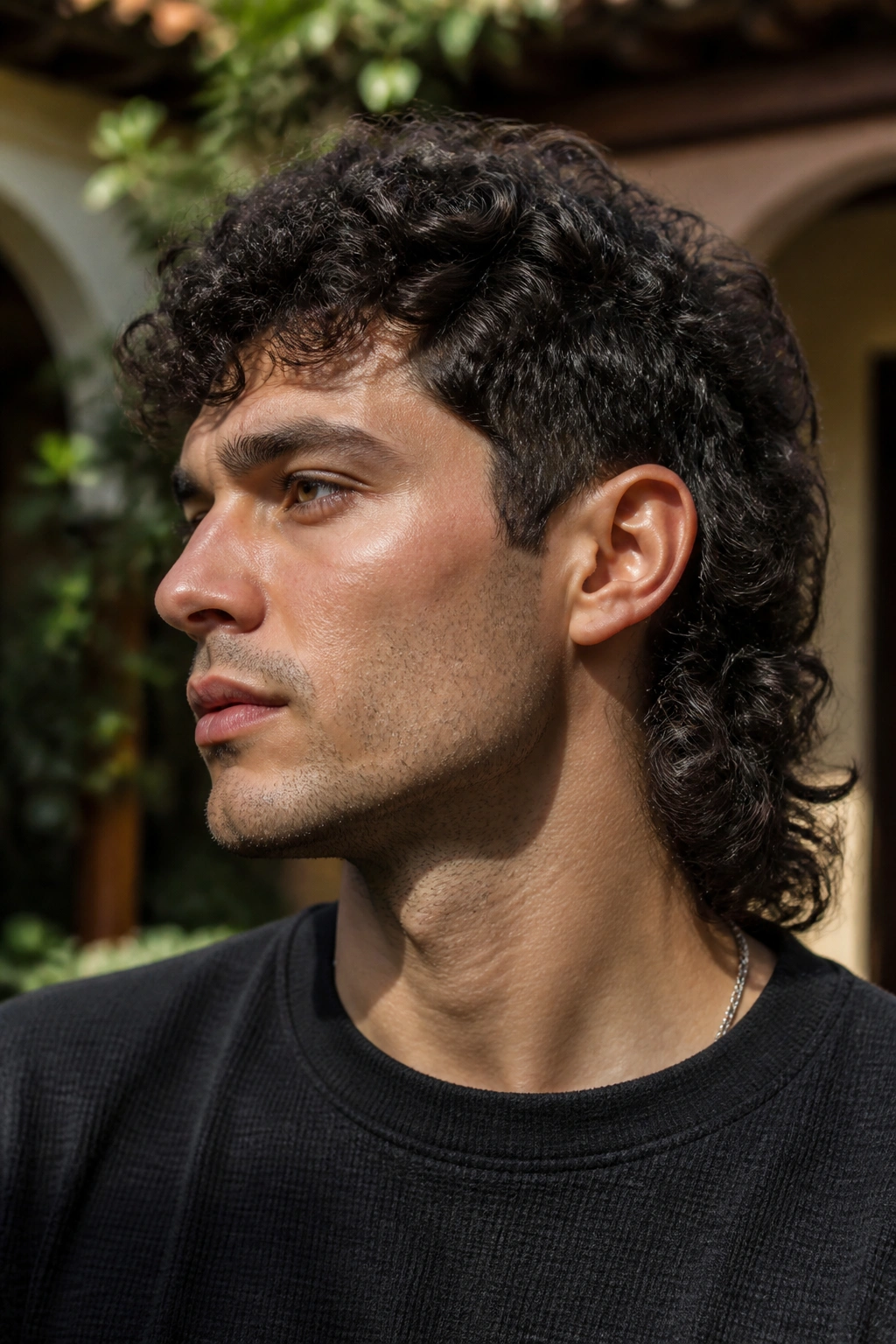
Can a perm and a mullet work together without turning into a joke? Absolutely. When the curls are controlled and the length is balanced, a permed mullet has a ton of shape and a lot more lift than people expect.
The trick is keeping the top from ballooning. You want enough curl to give the style body, but not so much that the sides and crown fight each other. A perm adds texture that helps the back look fuller, which is handy if your natural hair is straight and stubborn.
How To Keep It From Getting Puffy
- Use a moisturizing curl cream after washing.
- Dry with a diffuser on low heat.
- Trim the ends before they start fraying.
- Avoid heavy waxes that make the curls stick together.
Permed mullets need care. There’s no pretending otherwise. But when they’re done right, they have that gritty, retro energy that makes a plain haircut look forgettable.
10. Slicked-Back Mullet
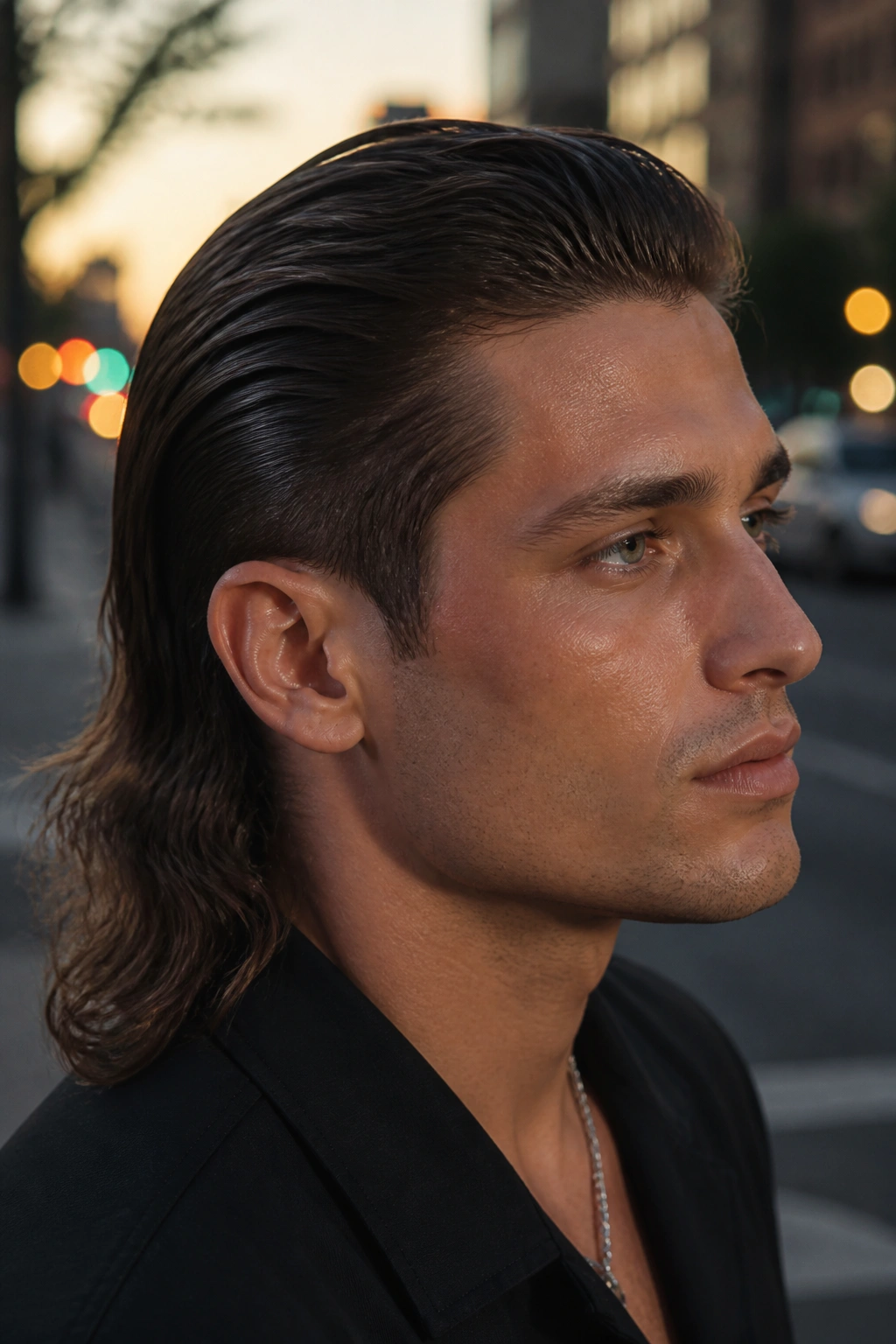
A slicked-back mullet is what I’d call the dressed-up version of the cut. The back still hangs long, sure, but the front gets brushed away from the face and the sides stay cleaner, which gives the whole thing a sharper, more deliberate feel.
I’ve seen this style work especially well with straight hair that has a little natural shine. The hair can be combed back with a medium-hold pomade or cream, then left slightly loose at the ends so the back doesn’t turn into one hard block. It looks especially good with a jacket collar or a clean neckline.
The danger is going too glossy. When the front is wet-looking and the back is limp, the style loses its edge and starts to feel dated in the wrong way. Keep the finish controlled, not greasy.
- Best with medium-length top sections
- Use a comb first, then your hands
- Keep the sides tidy around the ears
- Works well for nights out and dressier settings
This one has a strong personality. It doesn’t whisper.
11. Asymmetrical Mullet

The asymmetrical mullet is for guys who want the shape to feel a little off-center on purpose. One side might hang a touch longer, the fringe might sweep differently, or the back might tilt just enough to make the whole cut look unpredictable.
That slight imbalance is what gives it character. Done well, it looks sharp and creative. Done badly, it looks like a haircut that got interrupted halfway through. Which is why the barber has to be very sure about the line before they start cutting.
This version works best on straight or lightly wavy hair because the shape is easier to read. Curls can hide the asymmetry if the texture is too busy, unless the cut is heavily structured at the base. Keep the top loose, but not random. Those are not the same thing.
It’s a strong choice if you want a mullet that leans artistic rather than retro. Not many guys can wear it well. That’s part of the appeal.
12. Drop Fade Mullet
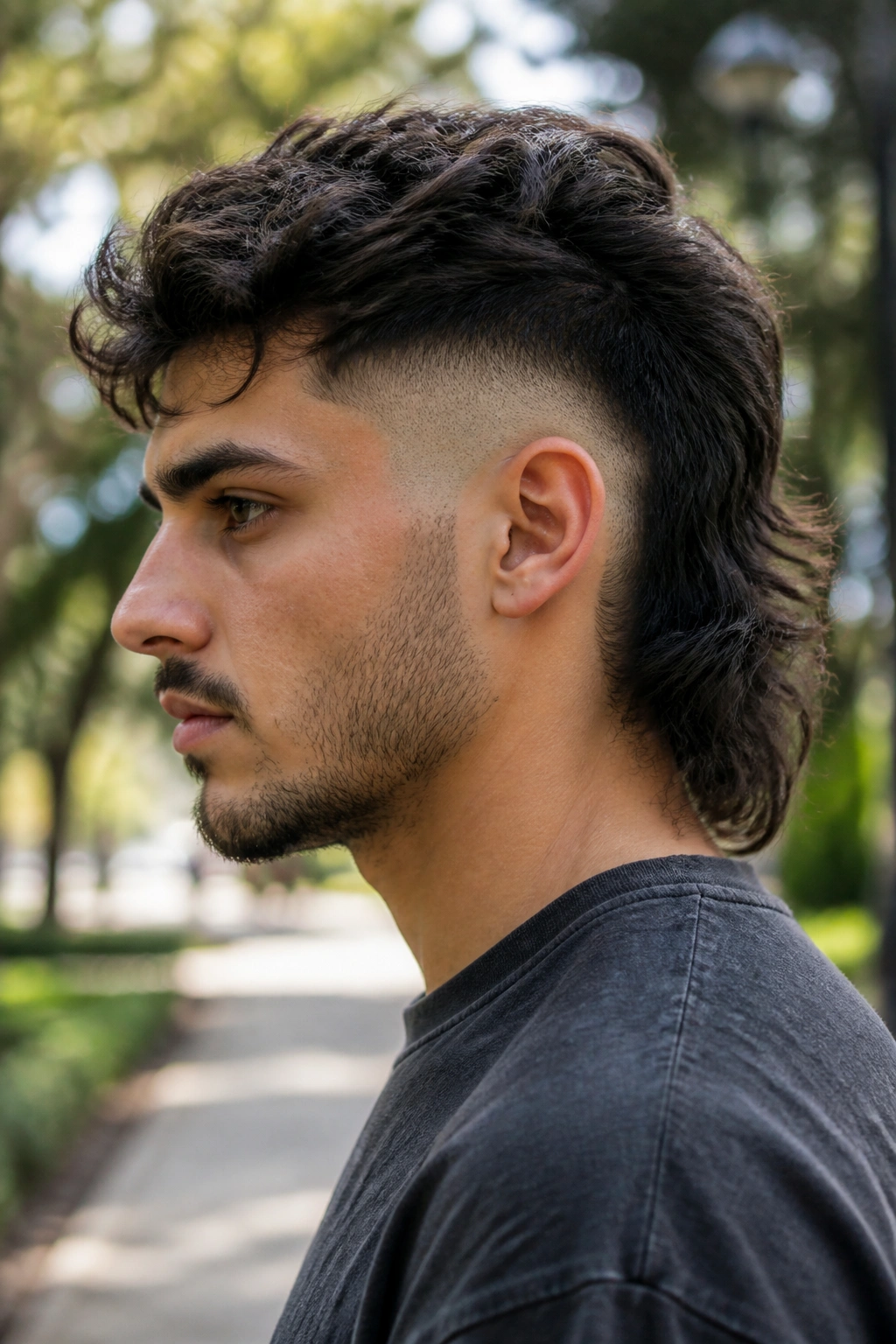
Unlike a standard fade, a drop fade follows the curve of the head and dips lower behind the ear. That little drop gives the mullet a smoother frame, especially when the back section is left long enough to carry the shape.
The cut works because the fade creates a nice visual valley between the crown and the nape. Instead of looking blocky, the silhouette bends with the head. It’s a cleaner outline, and it often looks better on round or oval faces because the curve adds structure without making the sides too wide.
A drop fade mullet does best when the top has texture. If the top is flat, the whole style loses energy and starts looking heavy. If the back is too short, the drop fade does all the work and the mullet part gets lost.
This is a solid option if you like a sharper haircut but don’t want the harshness of a skin fade. It has enough edge to feel modern, and enough softness to wear for more than a weekend.
13. Afro Mullet
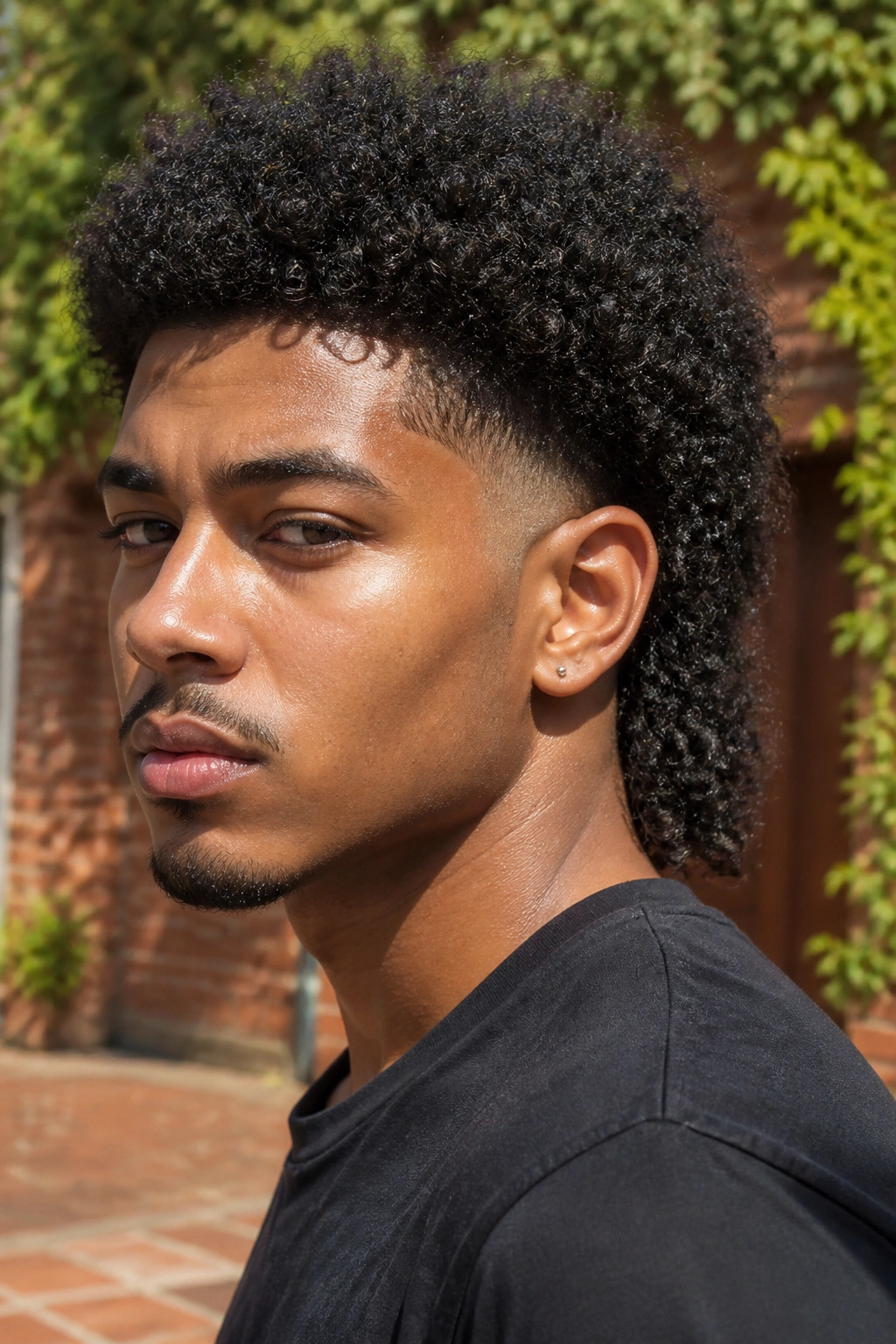
The afro mullet is one of the cleanest examples of texture doing its own thing. The coils bring height up top, the sides stay shaped, and the back keeps enough length to read as a mullet without wrecking the natural pattern.
Why It Looks So Good
The hairline and the silhouette matter here more than tiny details. A good afro mullet keeps the crown shaped, the side contours neat, and the back rounded out so the cut feels balanced from every angle. Shrinkage changes the look more than people expect, so the barber should cut with that in mind.
- Keep moisture in the hair with cream or leave-in conditioner
- Shape the outline every few weeks
- Ask for clean sides, not over-thinned sides
- Let the back keep some fullness so the texture stays rich
This style has presence. It doesn’t need extra tricks. The shape alone is enough when the cut is balanced and the hair is healthy.
One warning: don’t chase too much length at the back without keeping the top under control. The style loses its clean outline fast when the shape gets heavy.
14. Long-Length Mullet

A long-length mullet is a commitment, and I mean that in the nicest way. The back falls farther down the neck, the top keeps its movement, and the whole cut starts to look more like a statement than a haircut you can ignore.
The danger with longer versions is weight. Hair that hangs too heavily around the crown can drag the shape down and make everything look tired. The fix is layering. Not a lot of people want to hear that, but it’s true. A long mullet needs internal shape so it can move instead of sitting like a blanket.
This style suits guys who already live with longer hair and want the mullet outline without chopping everything off. Straight hair gets a cleaner line; waves bring more texture; curls add drama, which is either a plus or a problem depending on your taste.
Keep the ends clean. A long mullet with split, dry ends stops looking rugged and starts looking neglected, which is a different vibe entirely.
15. Fringe Mullet
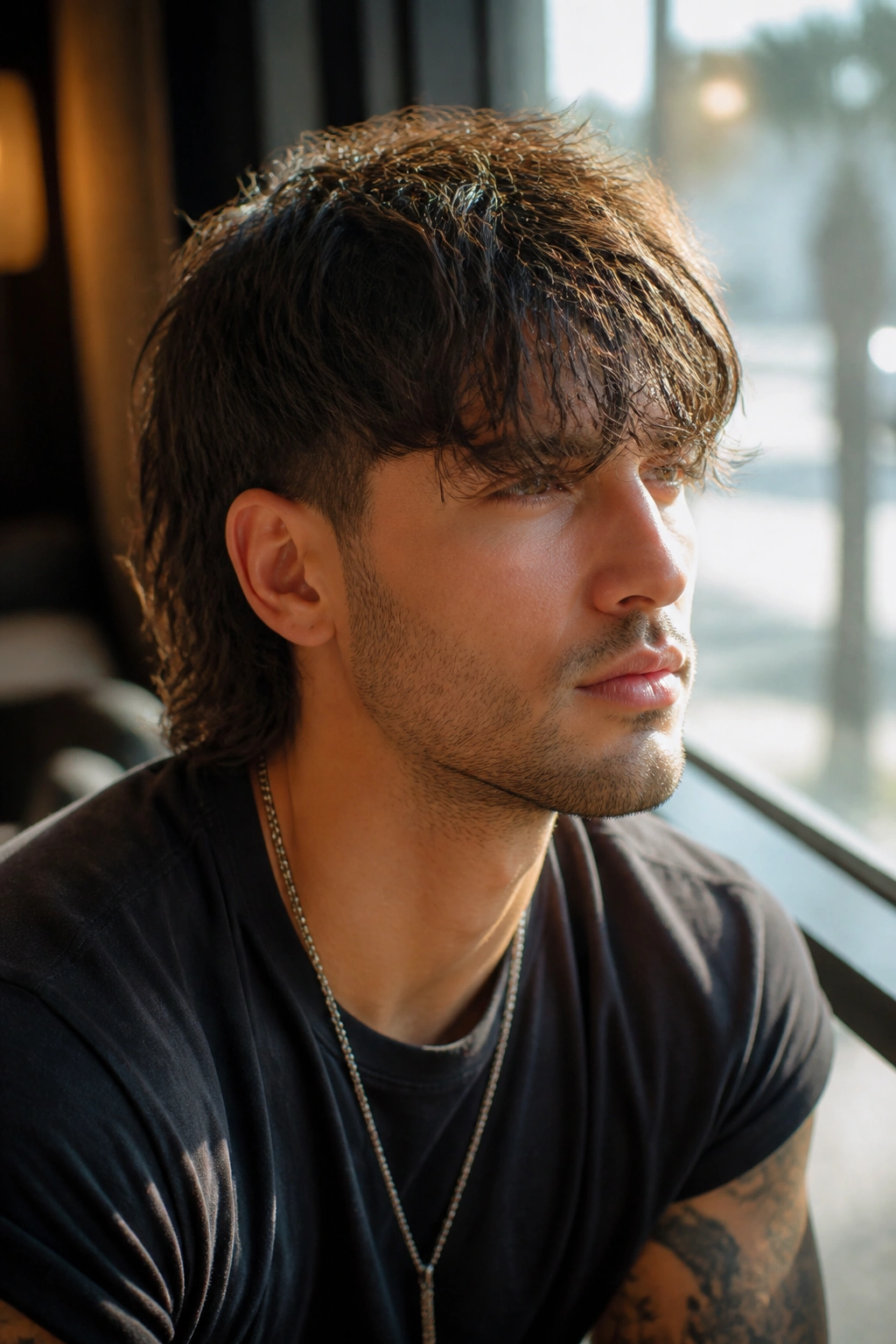
Why do fringe mullets keep showing up in barbershops? Because they solve two problems at once. You get something on the forehead, which gives the front a purpose, and you keep the back long enough to hold onto the mullet shape.
A fringe up front changes the whole mood. Instead of brushing the hair back or pushing it to the side, the style lets the front fall forward with a little weight. That works well if your forehead is wider or if you just like a cut that sits low and frame-y around the face.
How To Wear The Fringe Without Hiding Your Face
- Keep the fringe textured, not blunt and heavy
- Ask for movement at the temples
- Use a matte cream if the front needs control
- Blow-dry the fringe forward, then pinch it into pieces with your fingers
The back can be shaggy or tidy, depending on how sharp you want the look. Either way, the fringe keeps the front from feeling empty. It’s a smart move when you want the cut to feel a little moody without going full punk.
16. Dyed Mullet
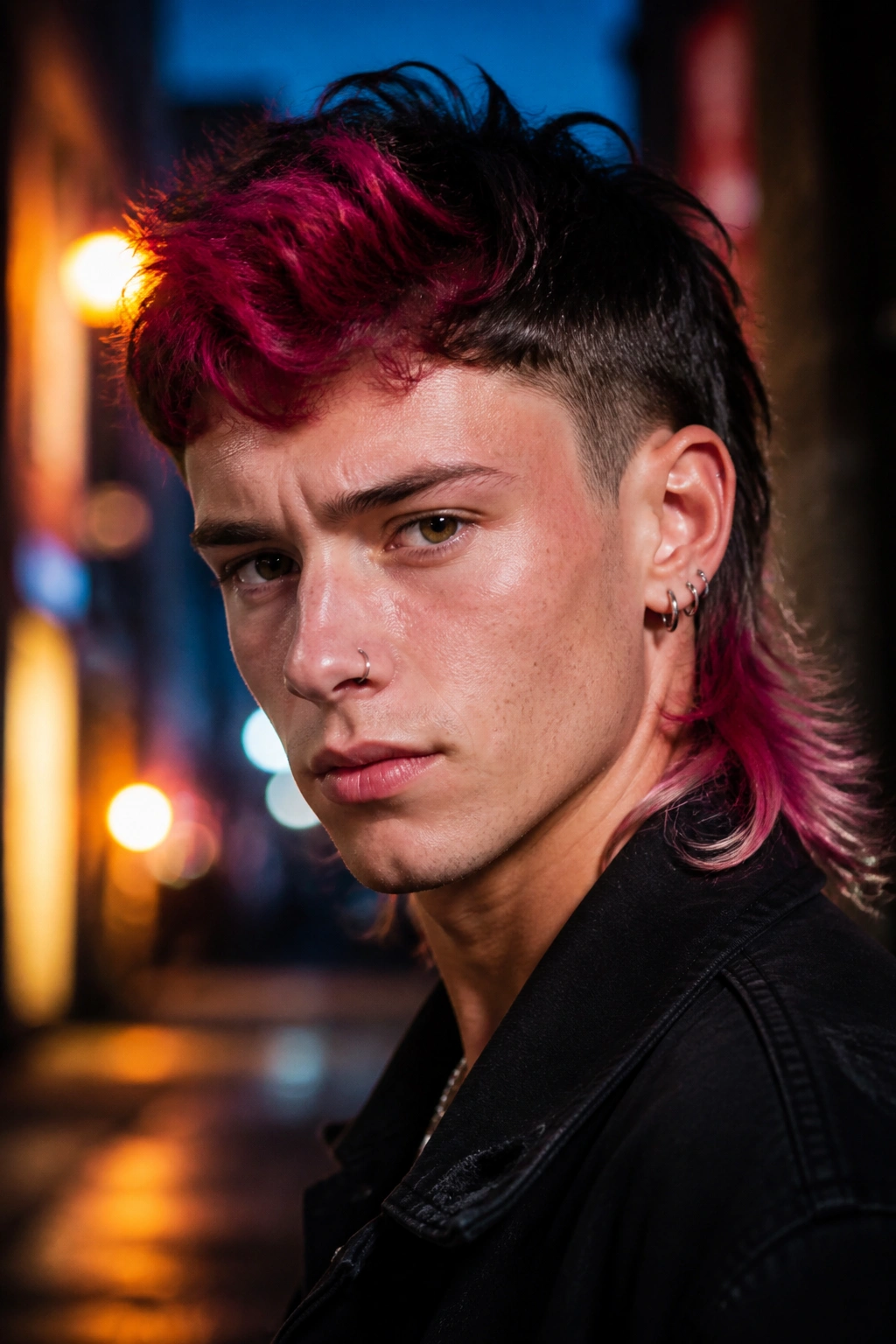
Color changes everything. A dyed mullet can look subtle, loud, or somewhere in between, but the haircut has to be clean before the dye goes on. If the shape is sloppy, color only makes the problems easier to see.
I like this style when the color is used with purpose — a bleached tip, a darker root, a bold panel through the fringe, or a full all-over shade that gives the texture more depth. The back especially can take color well because the length shows off movement when the hair swings.
The maintenance is the part people forget. Bleach needs care, and vivid color fades fast if you wash too often or use hot water all the time. Purple shampoo can help blond pieces, but don’t overuse it or the hair can go dull and chalky.
- Best with a fresh cut underneath
- Needs protein and moisture in balance
- Avoid harsh heat on lightened sections
- Plan for trim-ups so the color and shape stay synced
A dyed mullet is not shy. Good. It should not be.
17. Undercut Mullet
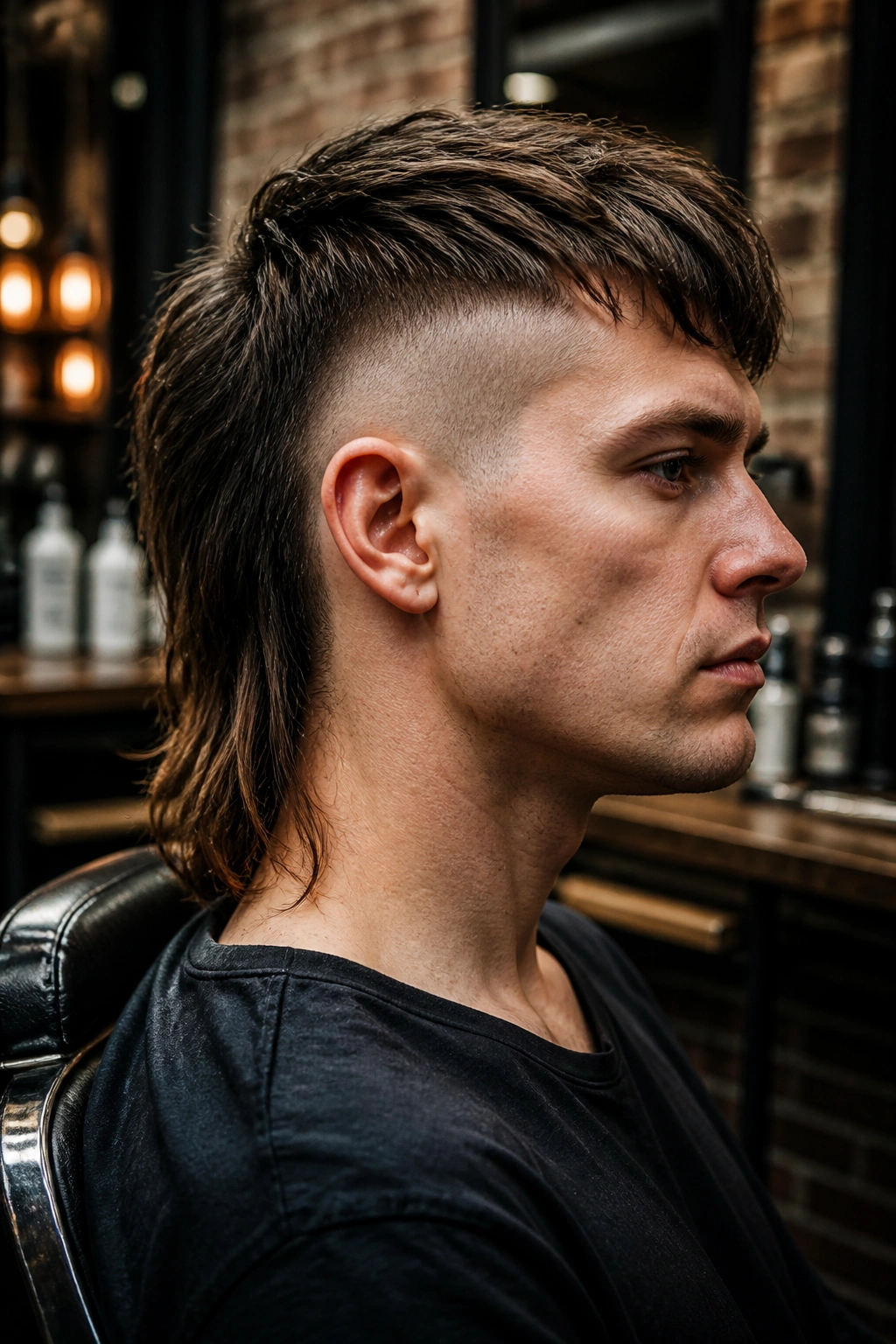
The undercut mullet has a hard split between the top and the sides, and that disconnect is what gives it bite. There’s no soft blending pretending to be nice. The top stays long, the sides get cut short, and the back carries the length that makes the style a mullet.
This is one of the edgier versions because the undercut creates a visible break around the head. It can look brutal in a good way, especially if the hair on top is thick and you can push it into a shape with some height. The back should stay loose enough to move, or the whole thing feels rigid.
It grows out fast. That’s the price. When the sides start filling in, the clean contrast fades, and the haircut needs a touch-up sooner than a softer version would. If you hate frequent barber visits, keep that in mind.
Still, for pure attitude, this one is hard to beat. It’s blunt, clear, and a little rude. Sometimes that’s exactly the right energy.
18. Rockabilly Mullet
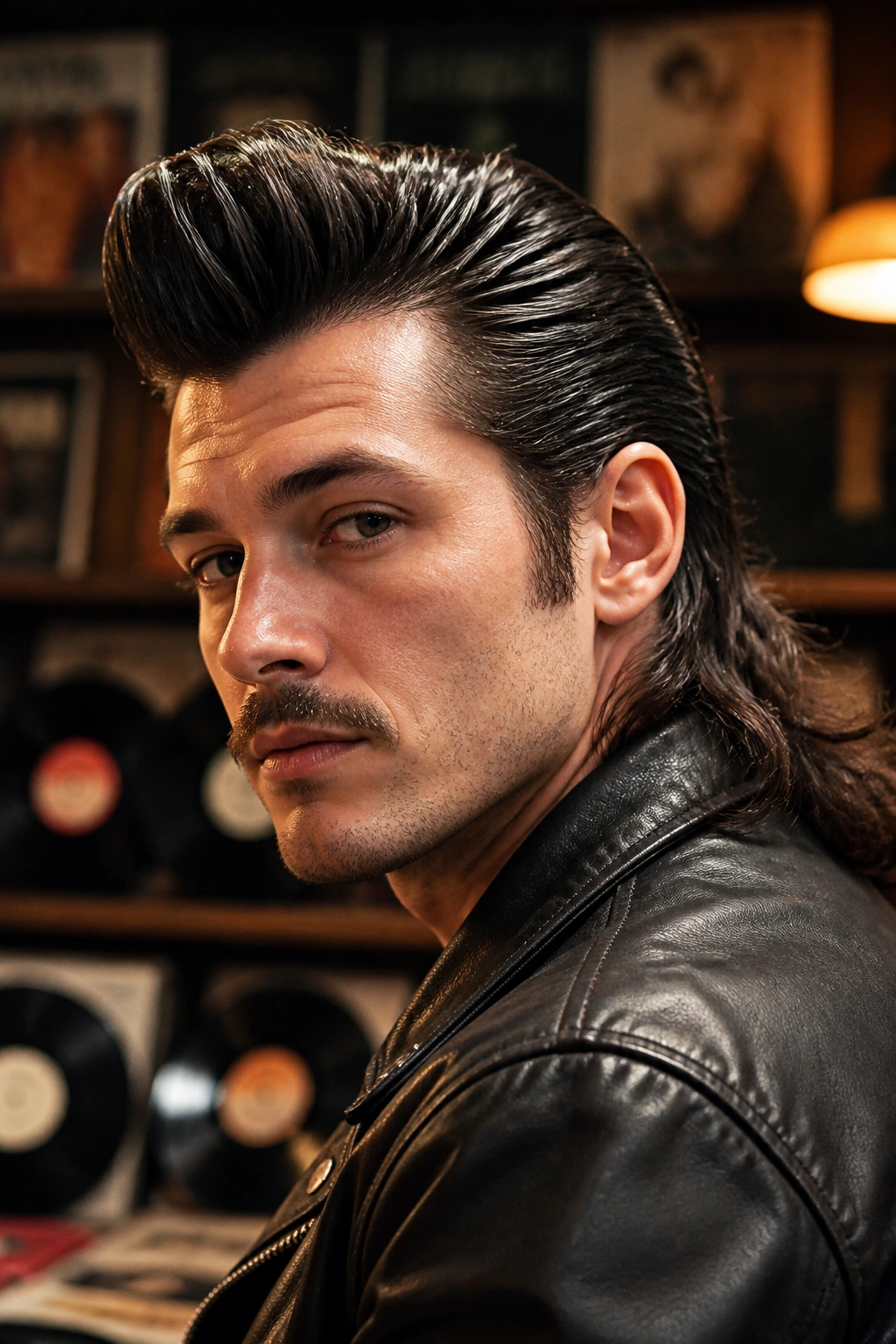
A rockabilly mullet brings polish to a cut that usually gets accused of being messy. The front gets lifted and shaped, often with a bit of height or sweep, while the back keeps enough length to keep the mullet identity alive.
This style works because it borrows from old-school pompadour structure. The top isn’t floppy. It’s set with intent. A comb, a dryer, and a medium-shine product can shape the front into something smooth without making it look stiff. The tail in back can stay softer, which keeps the cut from feeling too formal.
A lot of guys get this wrong by making the front too tall or the back too thin. Then it stops reading as rockabilly and starts feeling like a costume. The key is balance. Keep the hair glossy enough to look dressed, but not so shiny that every strand looks glued into place.
This cut likes confidence and clean lines. No point pretending otherwise.
19. Short Crop Mullet
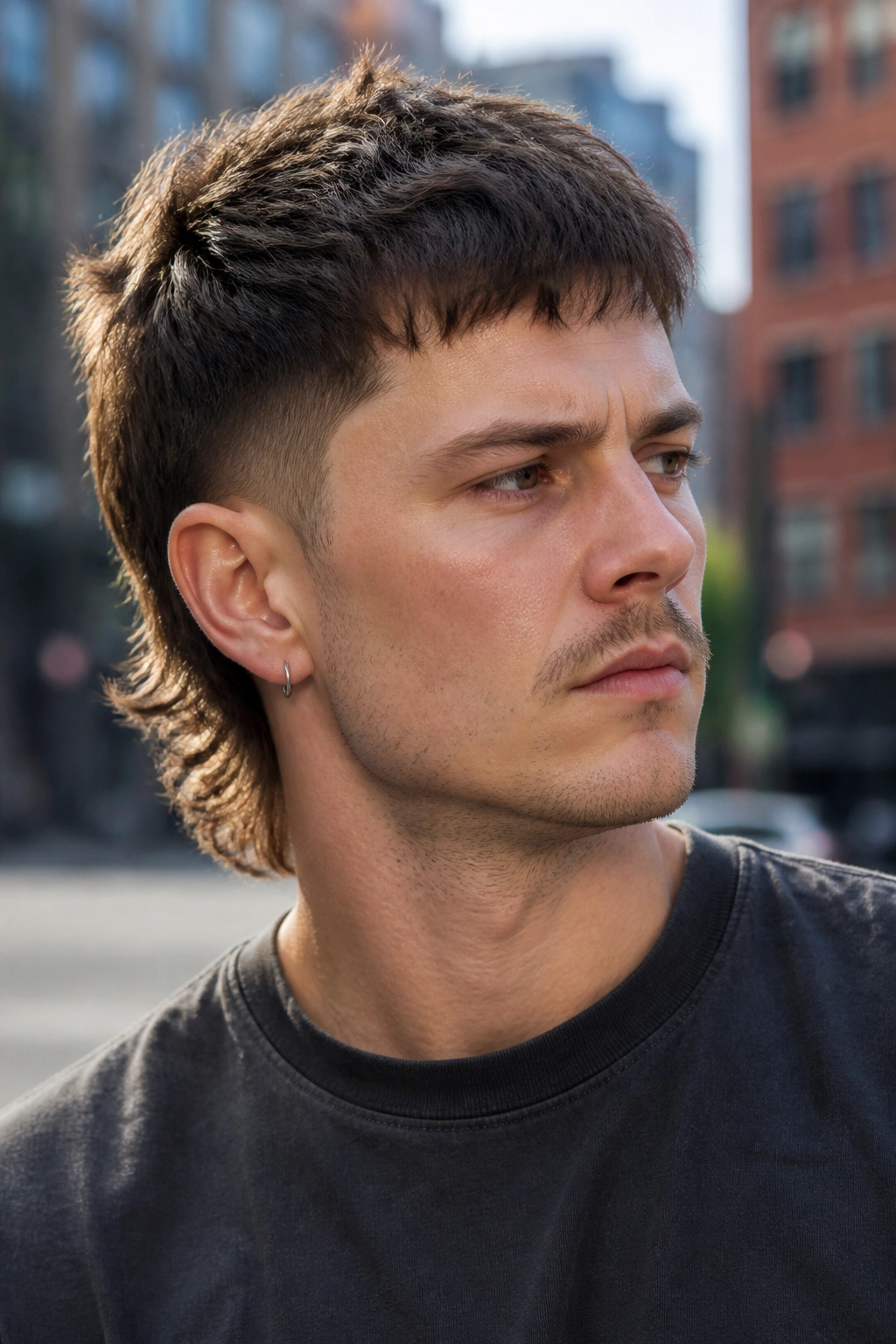
Can a mullet be short and still count? Absolutely. The short crop mullet keeps the overall length tighter, which makes it a good entry point if you want the shape without committing to a long tail.
Why It’s Easier To Wear
The back is still longer than the sides, but the difference is modest. That means less drama, less maintenance, and a lower chance of the haircut overwhelming your face. If you work with your hands, move around a lot, or simply don’t want hair brushing your collar all day, this is a practical place to start.
- Ask for a short top with texture
- Keep the nape only slightly longer than the crown
- Use a small amount of clay or paste
- Trim every 3 to 5 weeks to preserve the outline
This is the mullet for first-timers or cautious guys. It gives you the silhouette without turning your head into a headline. Which is useful, sometimes.
20. Clean Office Mullet
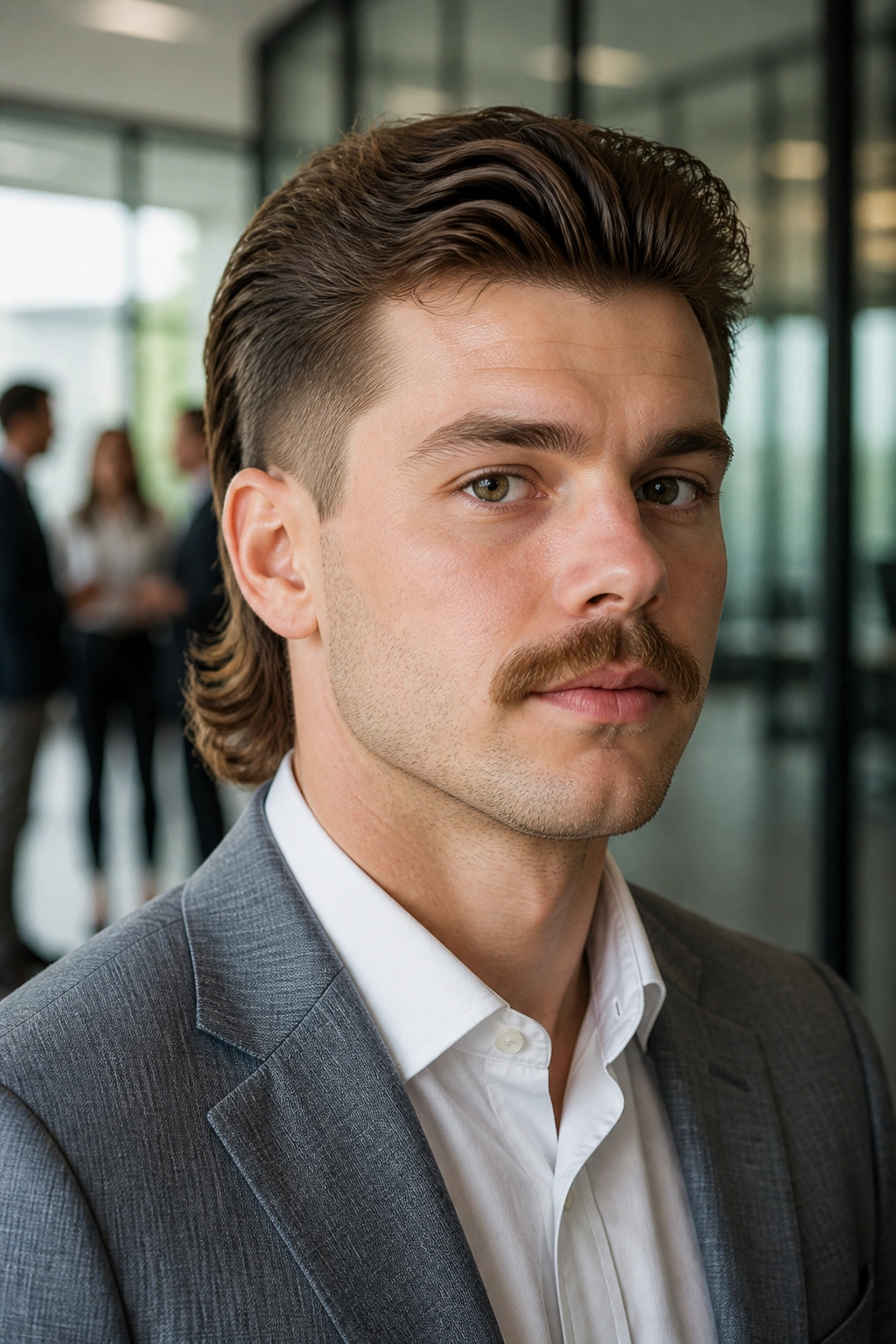
A clean office mullet is what happens when the haircut learns some manners. The sides are tapered, the neckline is neat, and the back has length — but not so much that it reads as a stunt. It’s a mullet that can survive a shirt collar and still look good after hours.
I’d choose this version for straight or lightly wavy hair, especially if you want something that moves from daytime to nighttime without needing a full restyle. A matte cream works well here because it keeps the top controlled and stops the back from looking heavy. The finish should be tidy, not stiff.
The cut depends on clean lines around the ears and a controlled transition through the crown. If the barber leaves too much bulk, the style loses that polished feel. If they cut too tight, the mullet part disappears. There’s a narrow lane here, and that is what makes it interesting.
This is the one I’d point to for guys who like edge but don’t want chaos every morning. Sharp enough to matter. Calm enough to wear all week.
