



Easy care hairstyles for women over 50 work best when they still look decent after a rushed shower, a bad sleep, and a glance in the bathroom mirror that lasts ten seconds. That is the real test. Not whether the style looks perfect under salon lights, not whether it wins compliments from strangers, but whether it still has shape when you’ve had to live your actual life.
Hair changes with time. Some strands go finer, some go wirier, and gray hair often feels drier because the scalp tends to produce less oil along the way. That means a cut that looked fine five years ago can start acting needy now — falling flat at the crown, puffing at the sides, or hanging on the face in a way that feels heavy instead of flattering.
The best haircuts for this stage do a few things at once: they keep the outline clean, they grow out without turning embarrassing, and they don’t demand a round brush every morning. That’s the sweet spot. If a style needs a 20-minute repair job to look like itself, I’d call that maintenance, not ease.
So the useful question is not “Should you go shorter?” It’s which shape gives you polish with the least fuss, and which one works with your texture instead of fighting it.
1. The Chin-Length Bob With a Soft Edge
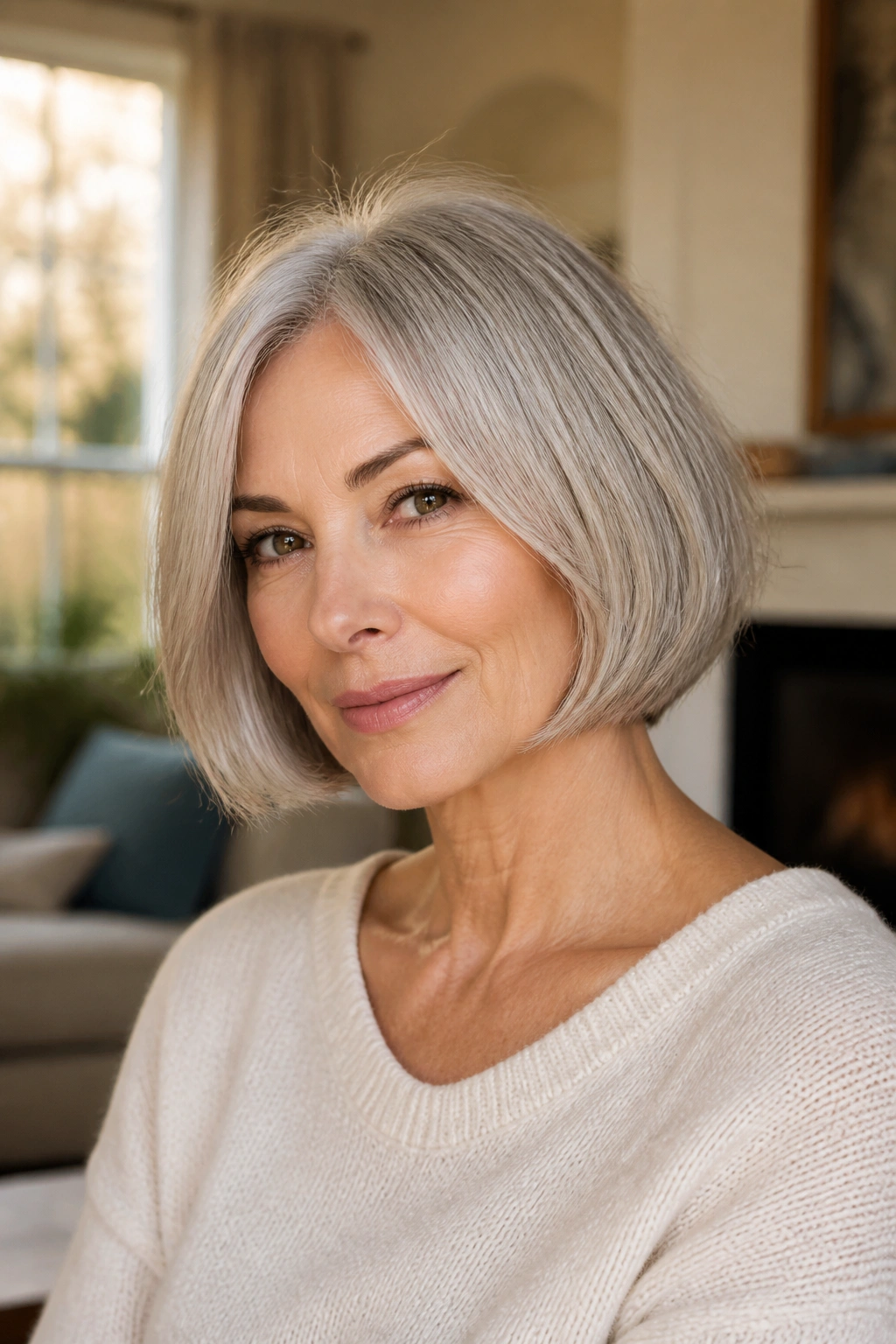
A chin-length bob is one of those cuts that looks crisp on day one and still behaves on day twenty-one. It sits in that sweet middle ground where the hair is short enough to feel light, but not so short that every growth spurt turns obvious. Around the face, it gives a neat line that works well with glasses, jawlines, and silver hair that has a bit of bend to it.
Why It Works
The chin is a useful stopping point because the shape feels intentional even when the hair moves a little. If your hair is fine, the blunt edge makes it look fuller. If your hair is thick, a small amount of internal weight removal keeps it from ballooning outward.
Ask for a clean perimeter with only a soft bevel at the ends. Too many layers will make this bob feel flimsy.
- Best for straight to slightly wavy hair
- Easy to tuck behind the ears
- Grows out without losing its shape right away
- Needs a trim about every 6 to 8 weeks
Pro tip: part it a little off-center. That tiny shift gives the bob a better lift at the front and keeps it from looking helmet-like.
2. The Layered Lob That Skims the Collarbone
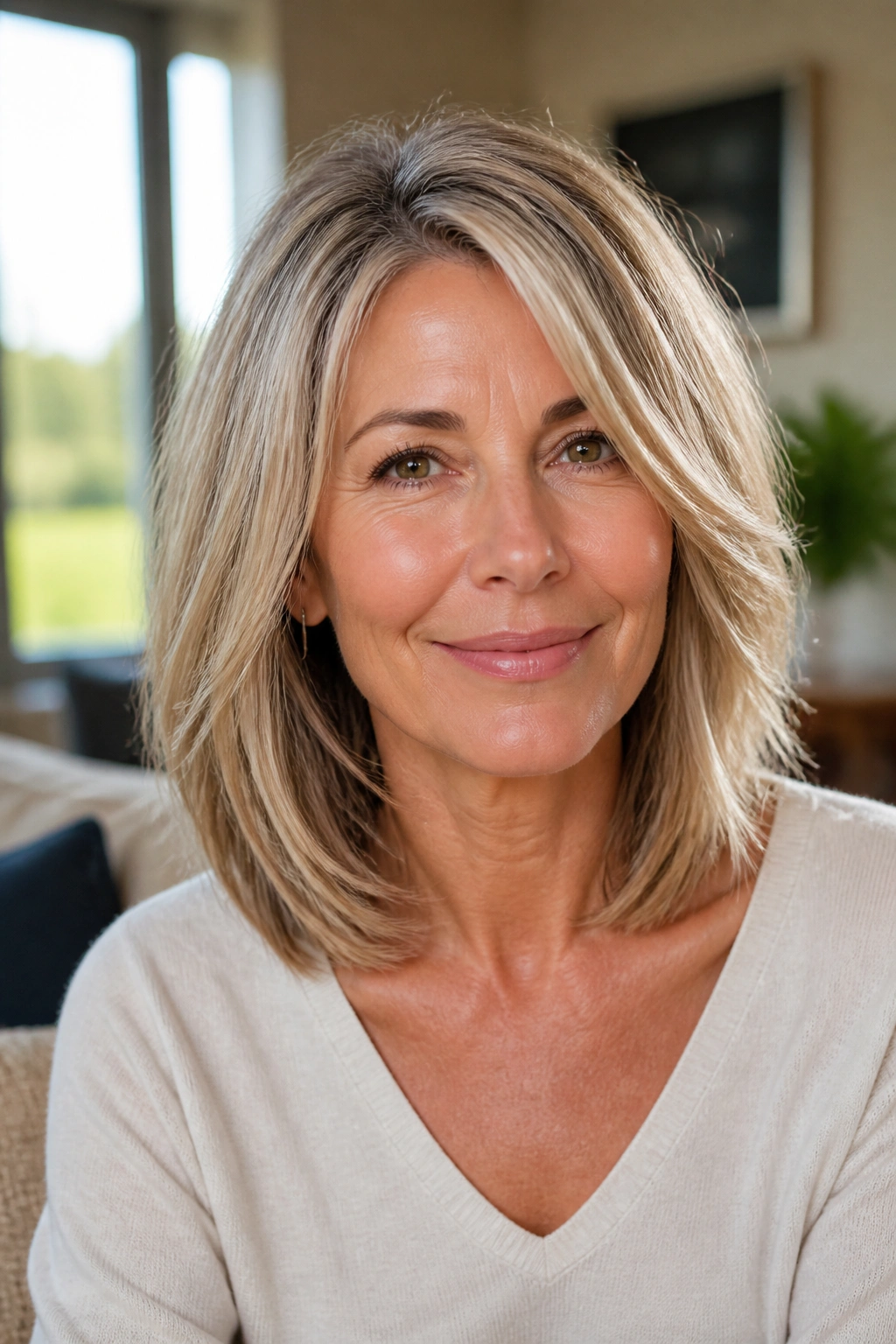
The layered lob earns its keep because it gives you length without the daily drama of long hair. It sits around the collarbone or just above it, which means you can wear it down, clip it back, or tie it into a low knot without much effort. That flexibility matters more than people admit.
A good lob should not be full of choppy layers that stick out in every direction. Keep the layers long and soft, starting below the chin so the ends still have some weight. That helps the cut swing instead of frizzing out.
This is a strong choice if you like to air-dry. A little leave-in conditioner, a light mousse, and a quick twist with your fingers is often enough. The hair can fall into place on its own.
And that’s the whole point. You get movement without a styling routine that eats your morning.
3. The Textured Pixie Cut
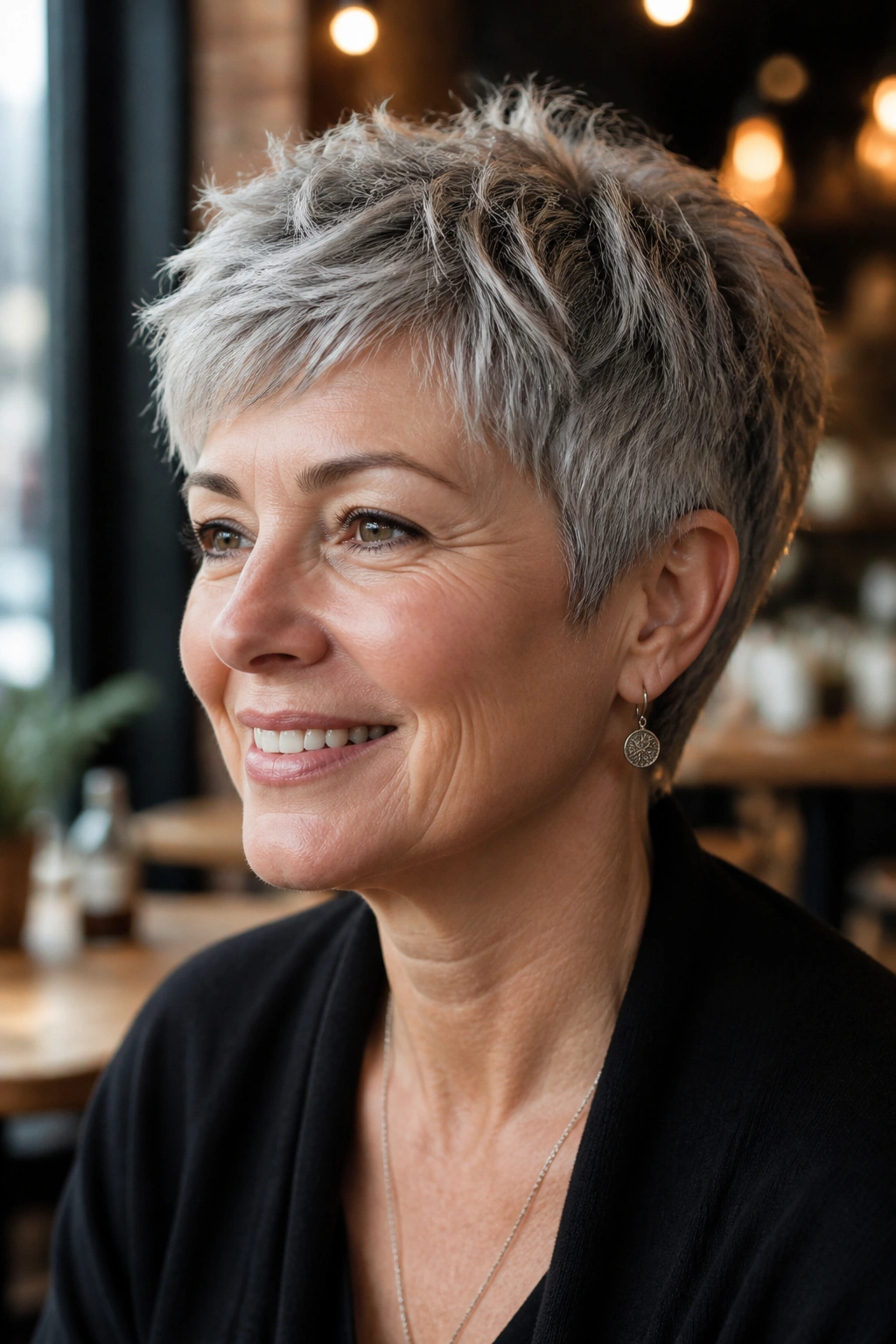
How short is too short when you want less fuss? For a lot of women, the pixie is the answer that shows up once the longer cuts start feeling heavy. A textured pixie dries fast, takes almost no product, and usually looks better with a little lived-in movement than with a perfect blowout.
How to Style It
The trick is not to cut everything equally short. Leave enough length on top — usually around 2 to 3 inches — so the hair can be brushed forward, to the side, or lifted slightly at the crown. The sides and nape can be shorter, but they should still look soft, not clipped down to the scalp.
Use a pea-sized amount of paste or styling cream, rub it between your palms, and work it through the top with your fingertips. That’s enough. More product tends to make short gray hair look greasy fast.
- Great for hair that dries in a halo of fuzz
- Needs regular trims every 4 to 6 weeks
- Works well with natural wave
- Looks polished even on a quick wash day
Pro tip: if your hair sticks straight up at the crown, keep a little more length there and dry it forward first. It behaves better that way.
4. The Tapered Crop With a Side Fringe
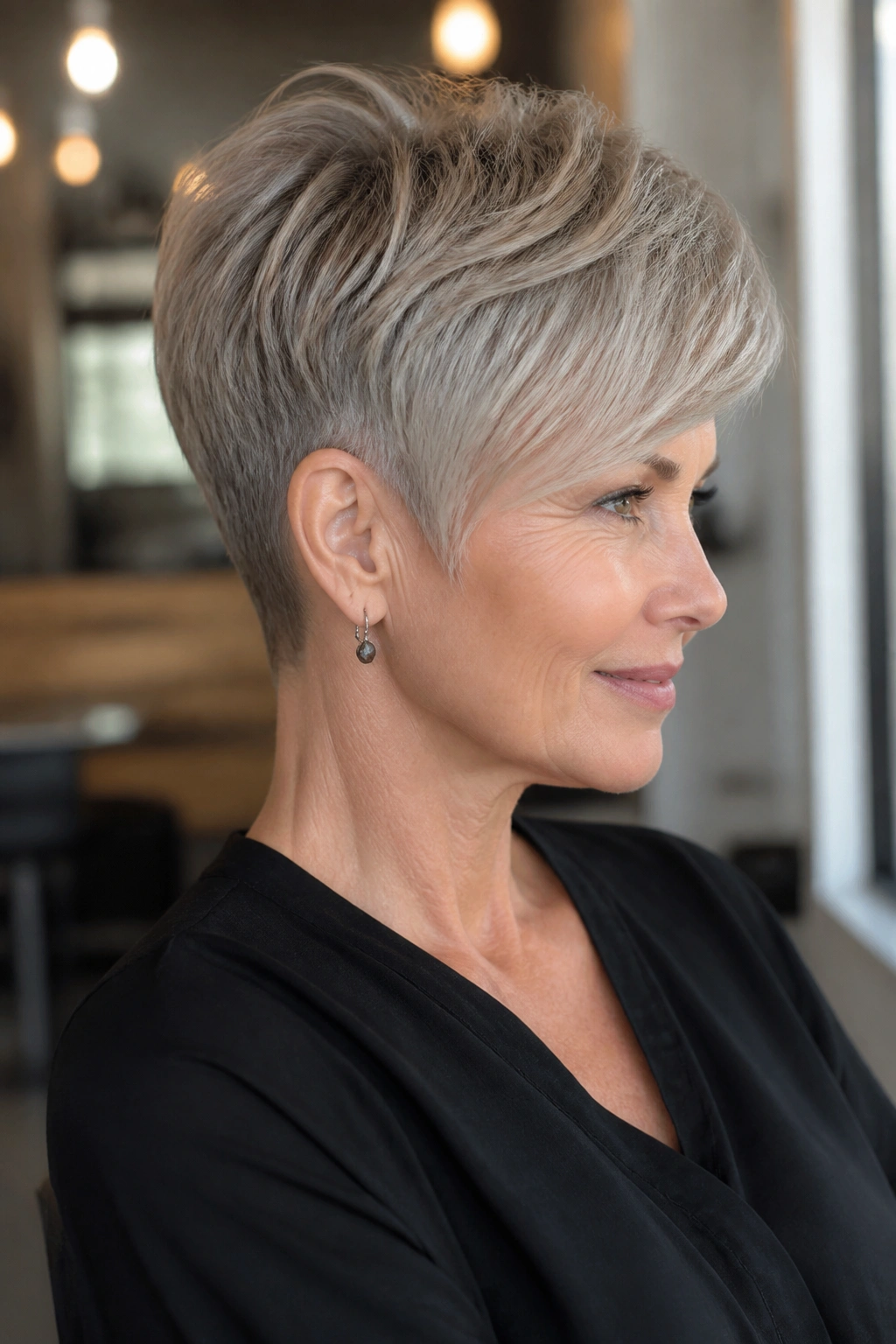
If your hair puffs out at the sides the minute humidity shows up, a tapered crop solves a real problem. The nape is cut close, the sides are kept neat, and the front carries just enough length to soften the face. Add a side fringe and the whole thing feels gentler, especially around the forehead.
This cut is a good fit for women who want shape without softness turning into fluff. The taper keeps the back tidy, which is useful if you dislike that awkward grow-out stage around the neck. It also plays nicely with gray hair that has a bit of stiffness to it.
The fringe should be side-swept, not heavy. A thick, blunt bang can turn fussy fast. A lighter fringe moves with the rest of the cut and makes morning styling less annoying.
Best Features to Ask For
- Short, tapered nape
- Longer top for lift
- Side fringe that stops around the eyebrow or cheekbone
- Soft texture around the ears, not a hard line
Short. Neat. Done.
5. The French Bob With Wispy Bangs
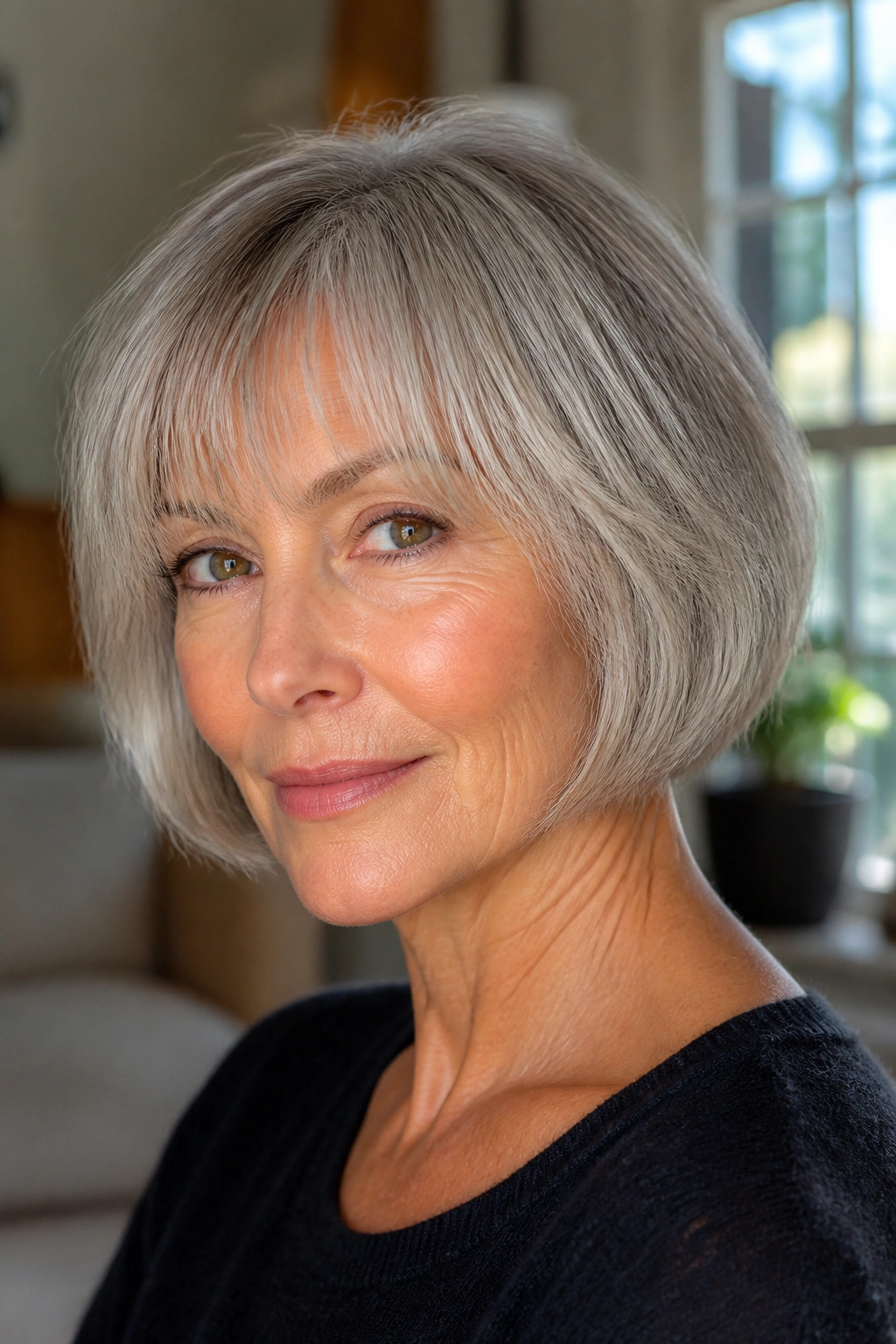
The French bob sits at the jawline and keeps the neck open, which is part of why it feels so fresh on gray hair. It doesn’t need much styling to look deliberate. In fact, a little imperfect texture usually helps it more than a polished finish does.
What keeps this cut from looking stiff is the fringe. Wispy bangs break up the front and make the whole style feel lighter. If the bangs are too thick, the bob loses that easy, airy quality and starts looking like a costume from a much fussier decade.
I like this cut on hair that has a bit of natural body. It can be wavy, slightly coarse, or straight with a bend at the ends. The shape does a lot of the work for you, so you do not need to fuss with hot tools every day.
The best version is soft around the edges, not razor-sharp. A jaw-length line with point-cut bangs tends to grow out more gracefully than a severe shape. That matters if you want something you can live in, not just photograph once.
6. Shoulder-Length Layers You Can Tuck Behind the Ear

Compared with long hair, shoulder-length layers are much easier to put up and still have look finished. Compared with a bob, they give you more room to play. That middle length is why so many women keep coming back to it, even after trying shorter cuts.
The real win here is the tuck. When the front layers are cut to graze the cheek or jaw, you can slide them behind your ears and instantly open your face. It sounds small, but it changes the whole mood of the haircut. The style becomes less heavy around the cheeks and a lot easier to wear with earrings or glasses.
Keep the layers long enough to avoid a choppy look. You want movement, not a staircase. A few soft pieces around the face are enough.
This is the kind of cut that works when you want options. Loose and down. Half up. Low ponytail. Clipped back at the sides. No drama.
7. The Soft Shag That Flatters Gray Hair
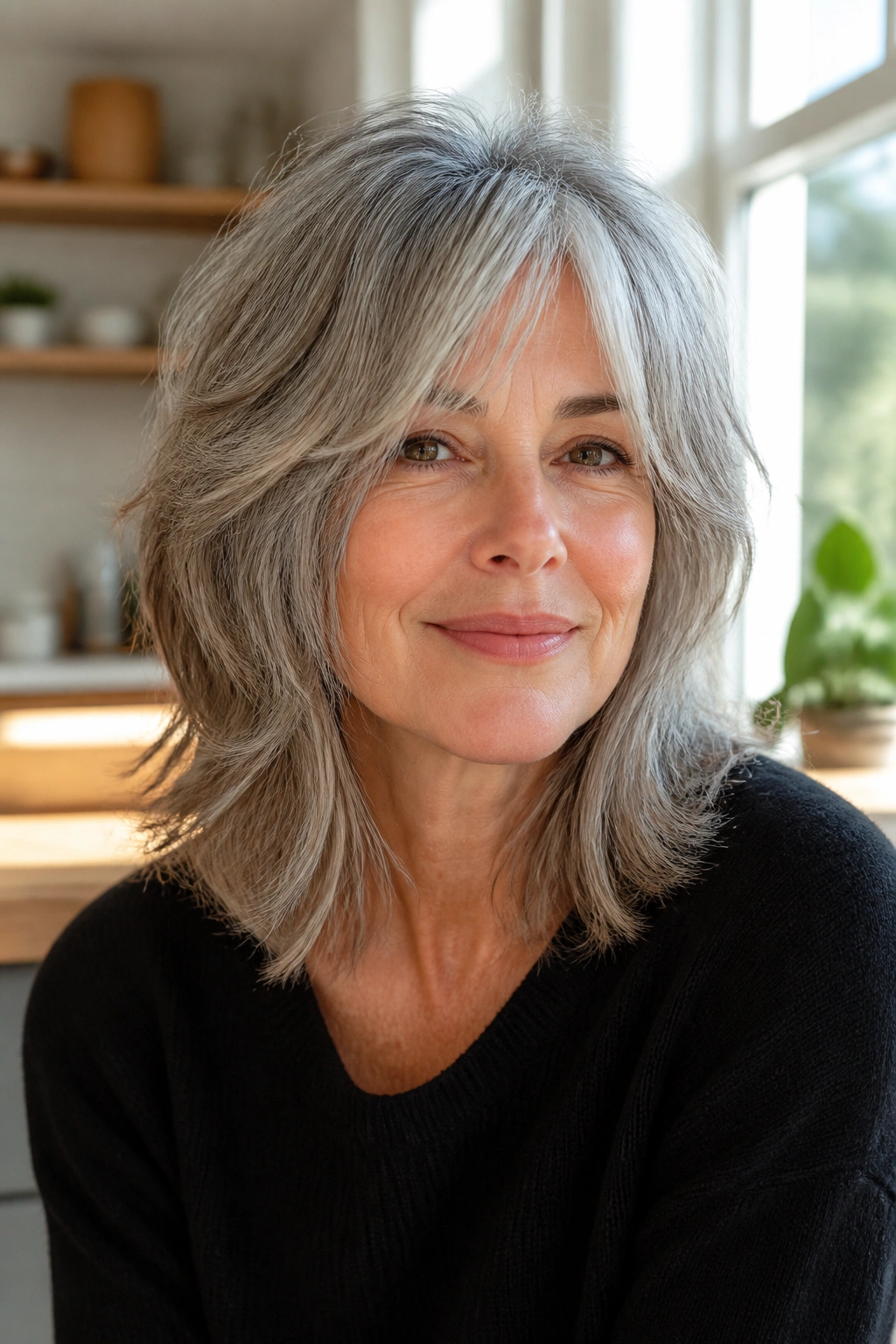
Gray hair loves a soft shag when the layers are cut with some restraint. Not a choppy mess. A soft shag. There’s a difference, and it matters. The right version gives the hair lift at the crown and movement through the mid-lengths without making the ends look thin.
What Makes It Different
The layers should start high enough to create shape, but not so high that the cut turns puffy around the ears. That’s the mistake people make with shaggy styles. They ask for “lots of layers” and end up with a triangle they can’t tame.
Ask for textured layers that follow the head shape. If your hair is wavy, this cut lets the wave do half the work. If your hair is straighter, it still gets a bit of swing without heavy styling.
- Good for natural wave and loose curls
- Helps flat crowns look less limp
- Works well with a side part or curtain bangs
- Needs a light cream, not a heavy balm
Pro tip: scrunch a small amount of mousse into damp hair and let it dry on its own. That usually gives the shag more life than blow-drying it flat.
8. The Blunt Shoulder-Length Cut
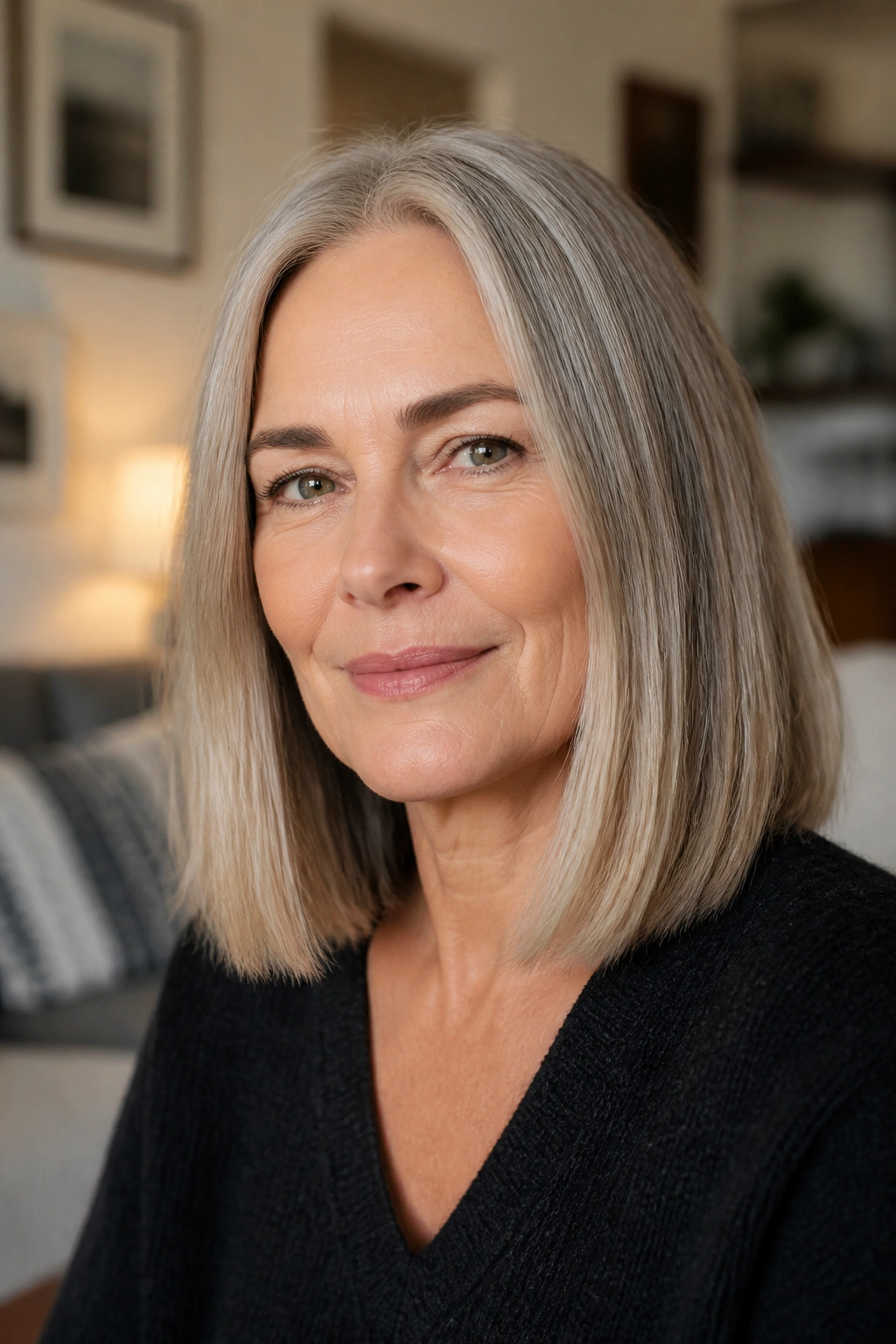
A blunt shoulder-length cut is the quiet hero for fine hair. It doesn’t need layers to create the look of thickness. It relies on one clean line, and that line makes the ends look denser than they really are.
That’s why this cut is so useful if your hair has thinned a bit over time. Excess layering can make the bottom look see-through. A straight perimeter avoids that problem. It also makes gray strands look a little more deliberate, which is a nicer word than “wispy,” frankly.
This is not the cut for someone who wants a lot of movement. It’s the cut for someone who wants neatness. Air-dry it with a little smoothing cream, or bend the ends under with a round brush if you like a more finished look.
Simple. Clean. Fewer decisions in the morning.
9. The Angled Bob
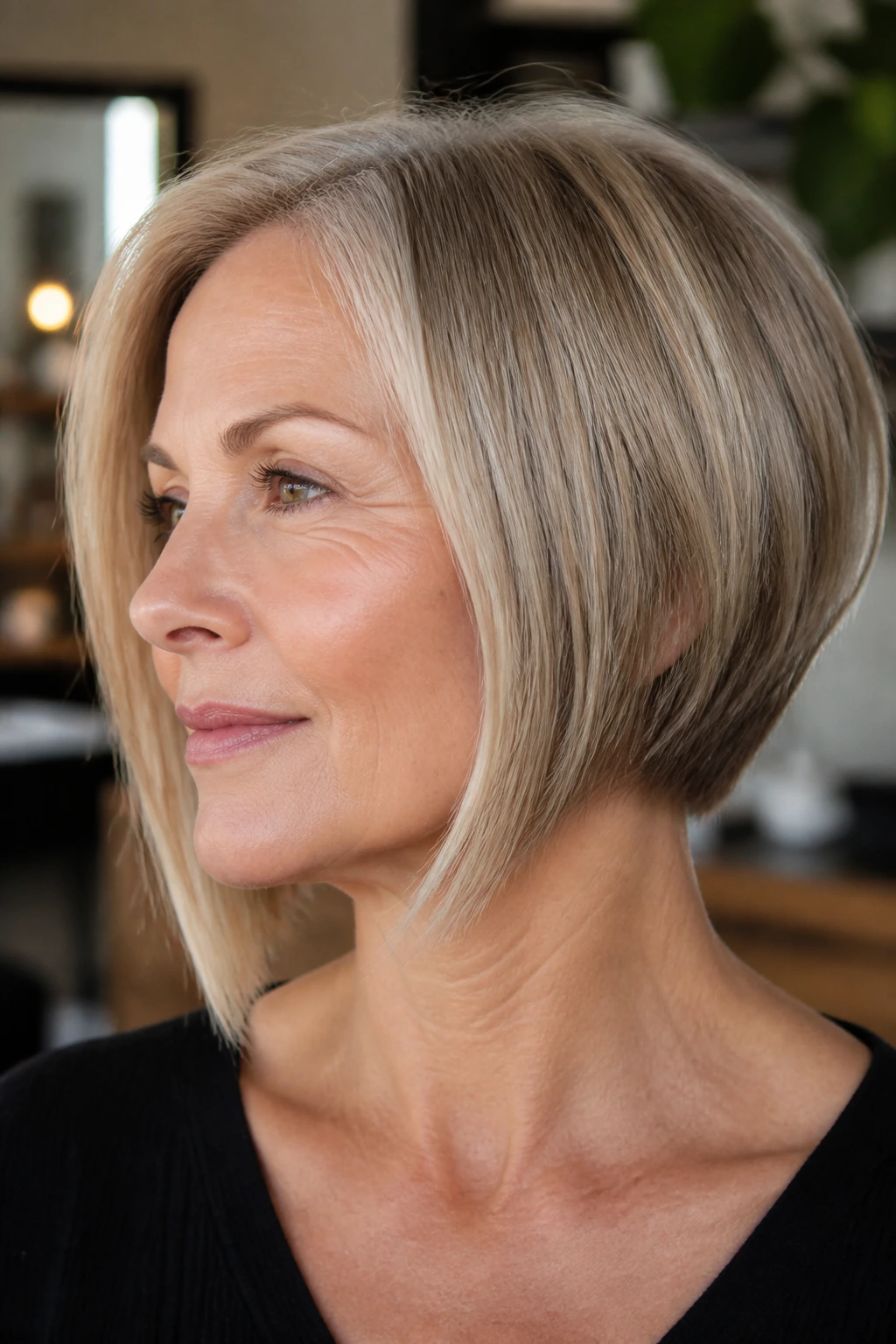
Why does an angled bob feel lighter than a blunt one? Because the front keeps a little extra length, which pulls the eye downward and gives the cut motion without adding bulk. The back sits shorter, so the nape stays neat and the shape looks clean from every side.
That slight angle can do a lot for the jawline. It softens rounder faces, adds lift to flatter profiles, and gives you a bit of edge without becoming severe. I like it especially when the line is subtle — maybe an inch or two longer in front, not a dramatic wedge.
How to Ask for It
Tell the stylist you want a soft angle from back to front, with the front pieces grazing the jaw or collarbone. If the angle is too steep, the cut starts looking dated fast. If it’s too flat, you lose the whole point.
- Shorter at the nape
- Longer in front by about 1 to 2 inches
- Soft bevel at the ends
- Easy to wear tucked on one side
It’s one of the easiest ways to get shape without a lot of styling time.
10. The Feathered Mid-Length Cut
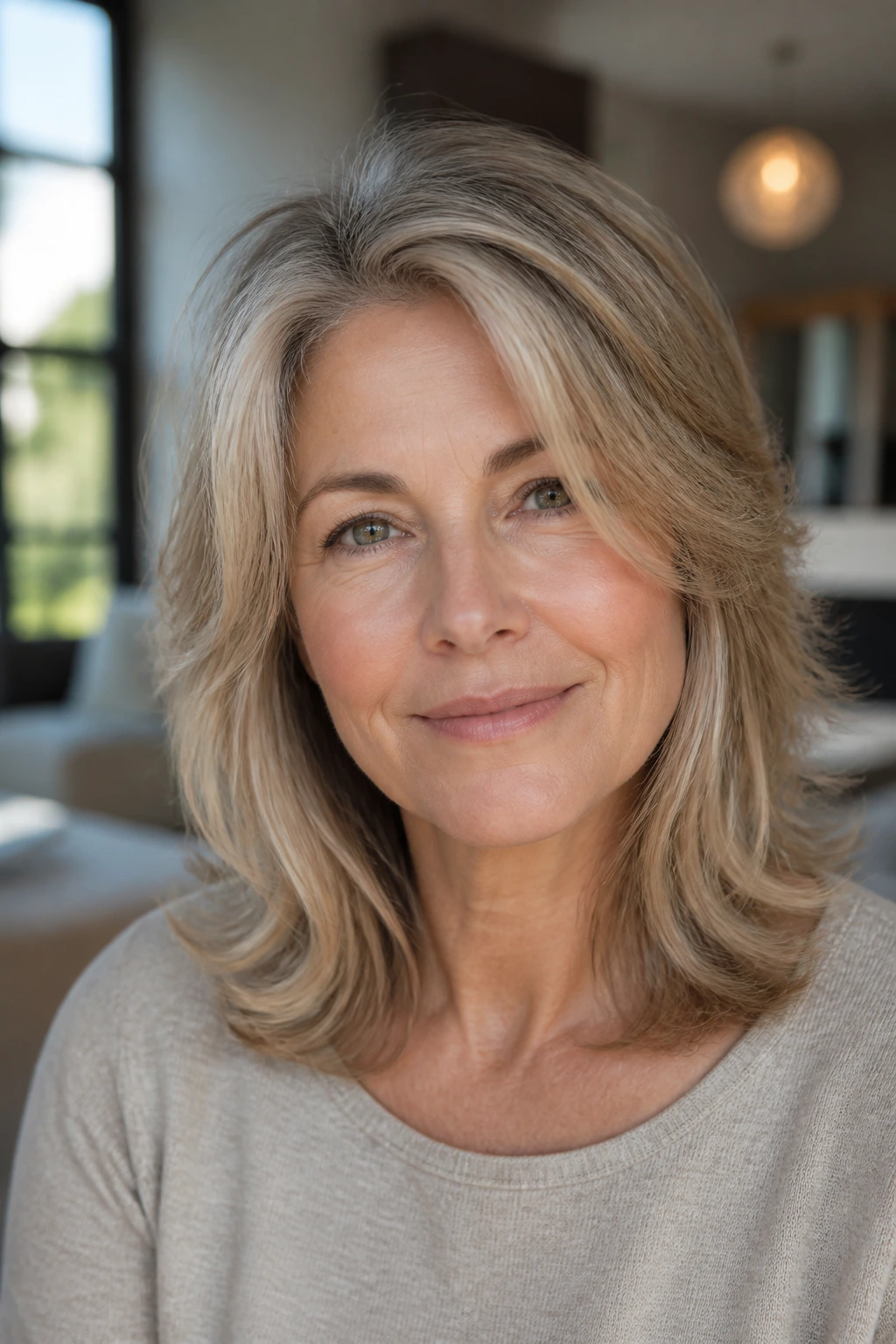
You know the cut that looks like you spent an hour on it when you spent ten minutes? Feathered mid-length hair has that effect when it’s done well. It takes the old salon idea of feathering and makes it softer, less stiff, more wearable.
The key is restraint. Feathering should lift the layers around the face and through the mid-lengths, not shred the whole haircut into pieces. Done right, it makes the hair move when you turn your head, which keeps the style from settling into a flat curtain.
This cut is friendly to women who like some length but hate blunt heaviness. It’s especially good if your hair is medium-thick and gets bulky below the ears. A little shaping takes the weight out without forcing you into a short cut.
Use a round brush only if you enjoy it. You don’t have to. A medium-size velcro roller or even a quick finger-dry can be enough.
11. The Curly Crop
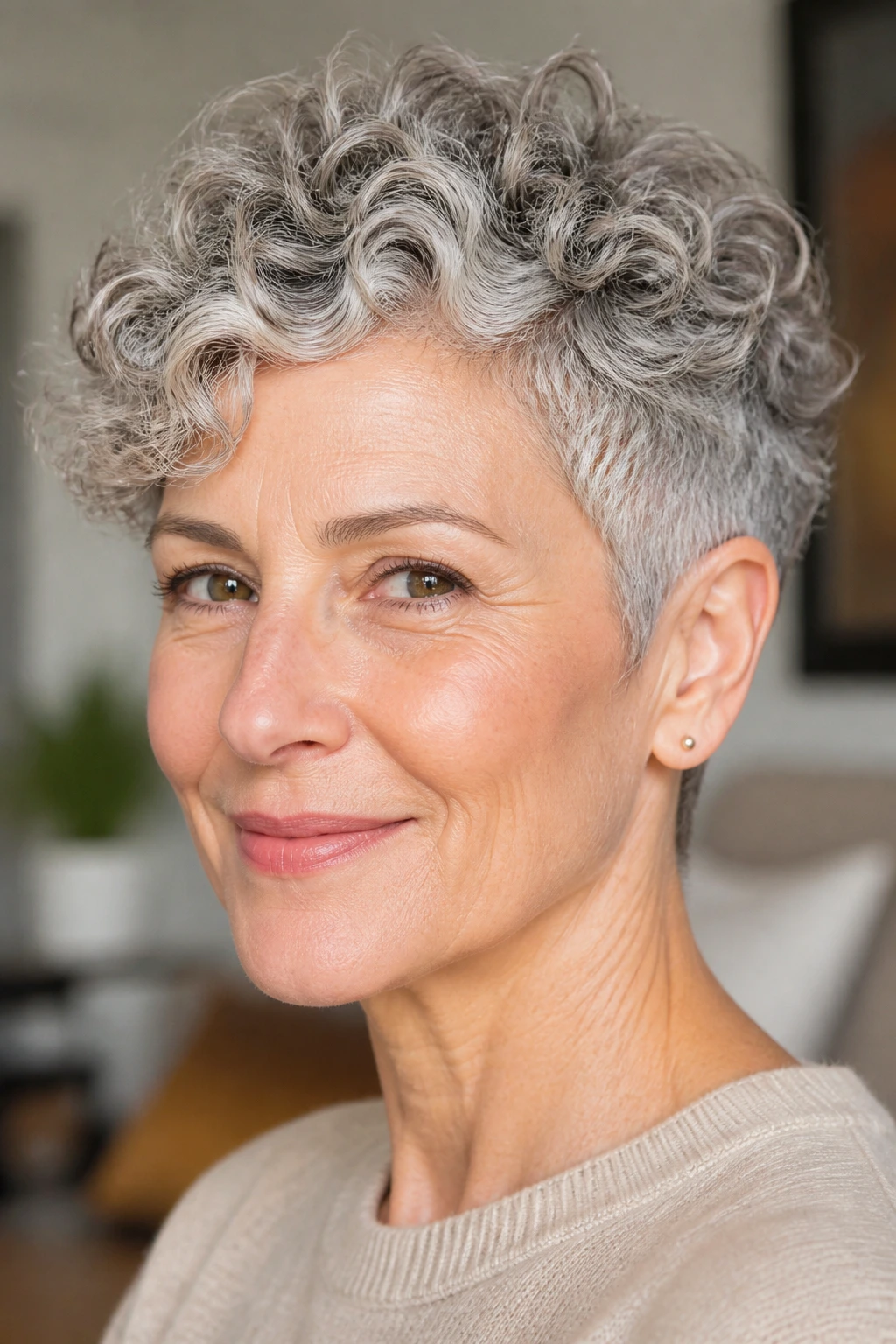
Curls love room. That is the entire secret. A curly crop keeps the curls short enough to spring up, but long enough that they don’t become a stiff puff on top of the head. When the cut is balanced, gray curls look lively instead of dry or overworked.
The shape matters more than the exact length. You want the curls to form a soft round outline around the head, with the sides trimmed enough to control bulk and the top left long enough to show the curl pattern. If the cut is too short all over, you lose definition. If it’s too long, the curls pull down and spread out.
This style usually looks best with a diffuser or simple air-drying. Use a light gel or curl cream while the hair is damp, then leave it alone. Touching curls too much is how frizz starts.
A good curly crop can make gray hair look wonderfully alive. Not trendy. Alive.
12. The Side-Parted Bob
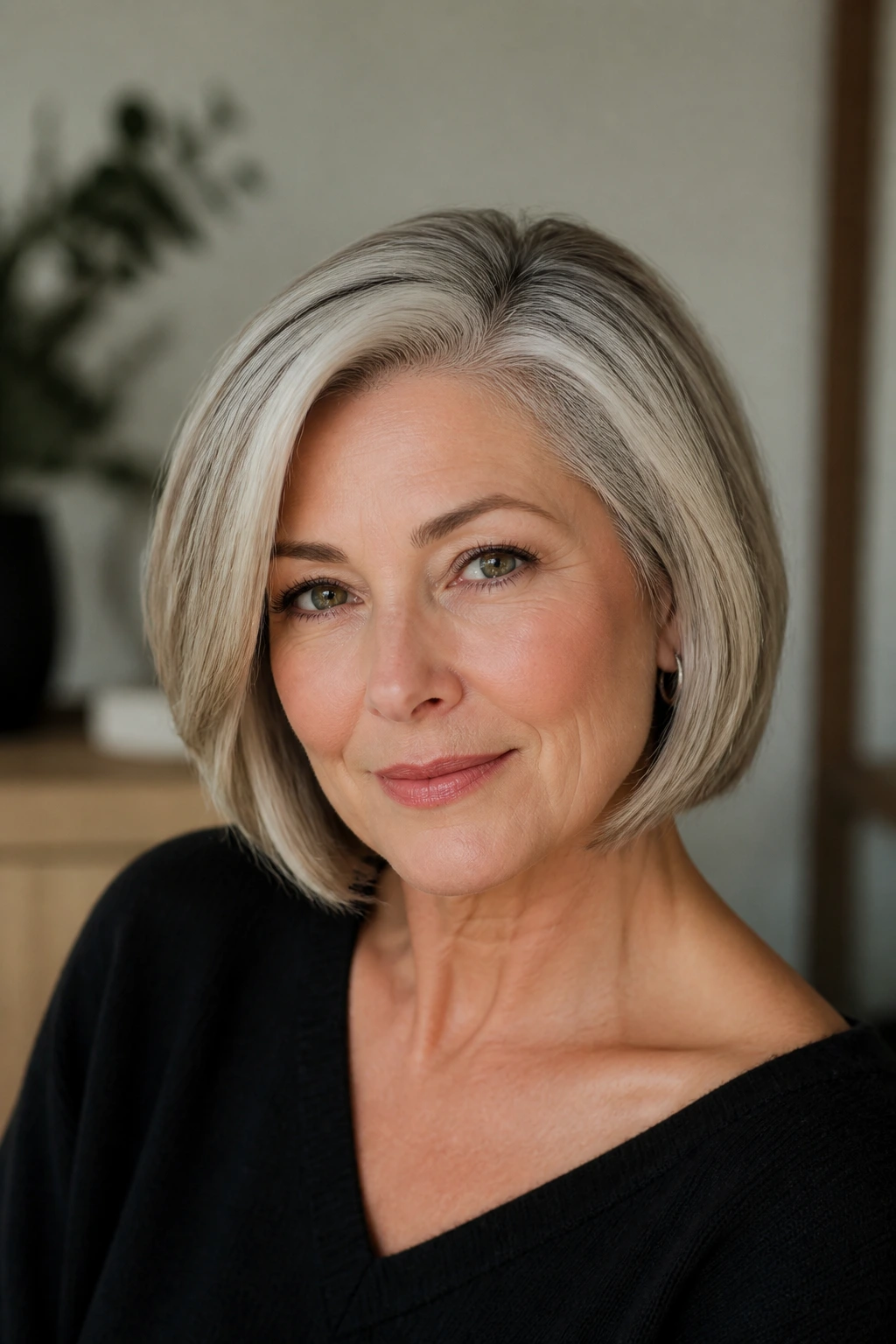
If your crown goes flat, a side part often does more than any product. That’s why a side-parted bob is such a useful haircut for women over 50. The cut itself can be simple, even plain, but the part gives it lift and direction.
The bob can sit at the jaw or slightly below it. What changes the whole look is where the hair starts. A part about an inch or two off center creates a bit of volume on the heavier side, and that makes the face look less narrow and the hair look fuller.
This is a smart choice if you have a cowlick, too. A strict center part can fight the hair’s natural growth pattern. A side part usually works with it.
If you want the style to last all day, dry the roots in the opposite direction first, then flip the hair back into the side part. It sounds fussy, but the lift is worth it.
13. Long Layers With Face-Framing Pieces
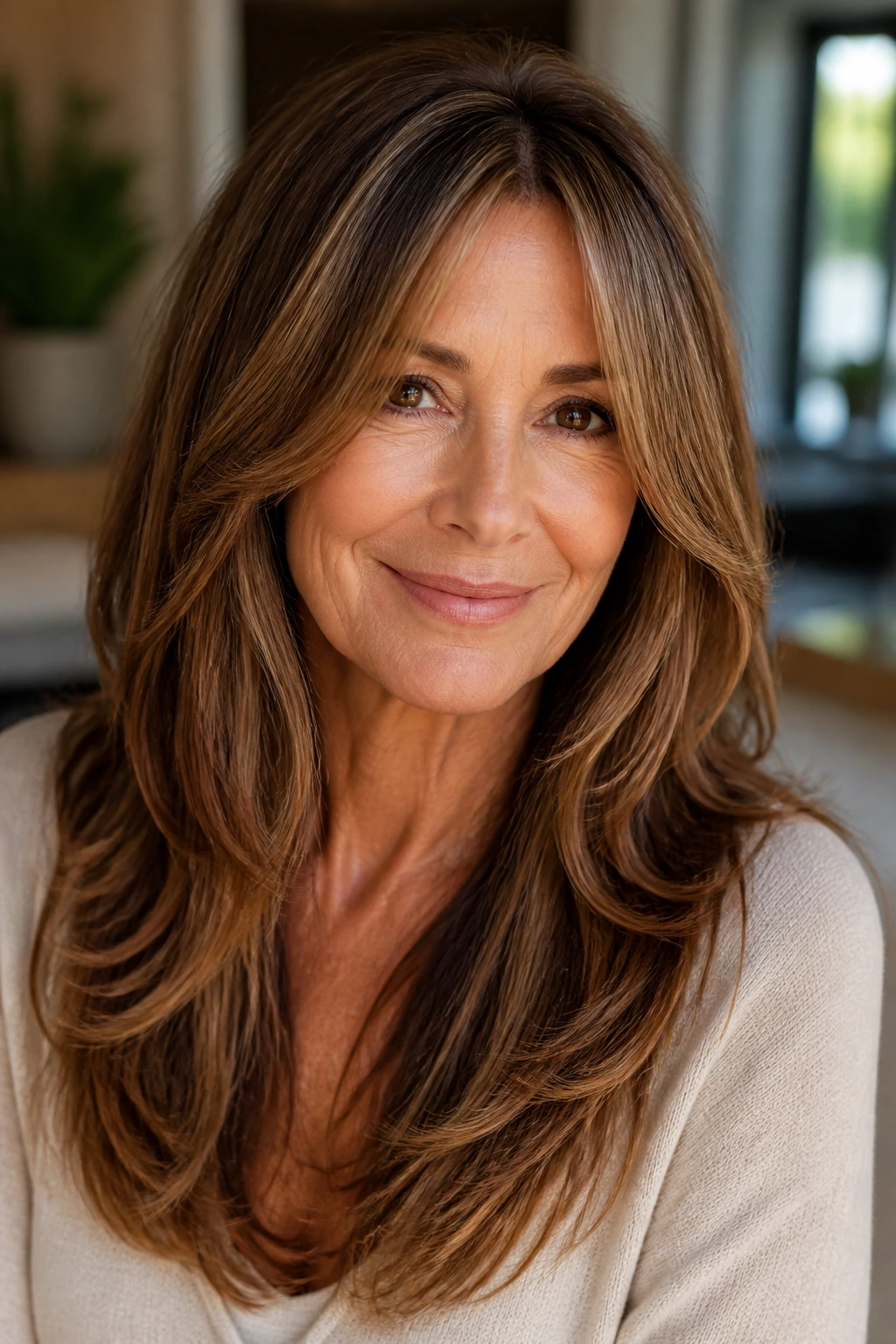
If you still like hair past your shoulders, long layers are the cleanest way to keep it from looking heavy. The trick is to put the layers where they do real work — around the face, through the lower half, and near the ends — rather than stripping out weight everywhere.
Face-framing pieces can be flattering without being obvious. They soften the sides of the face, make earrings show better, and give long gray hair a little movement near the front so it doesn’t just hang there. That’s the common problem with longer cuts after 50: the weight slides down and the shape disappears.
Long hair needs more care than a bob, no question. But if you love it, you can make it easier. Keep the layers soft, use a leave-in conditioner, and avoid over-thinning the ends. A little fullness is your friend.
Who This Suits Best
- Women who still pull hair into low ponytails
- Thick hair that needs weight removed
- Hair that waves but does not curl tightly
- Anyone who wants options without cutting too much off
It’s the easiest way to keep length without letting the length run the show.
14. The Stacked Bob
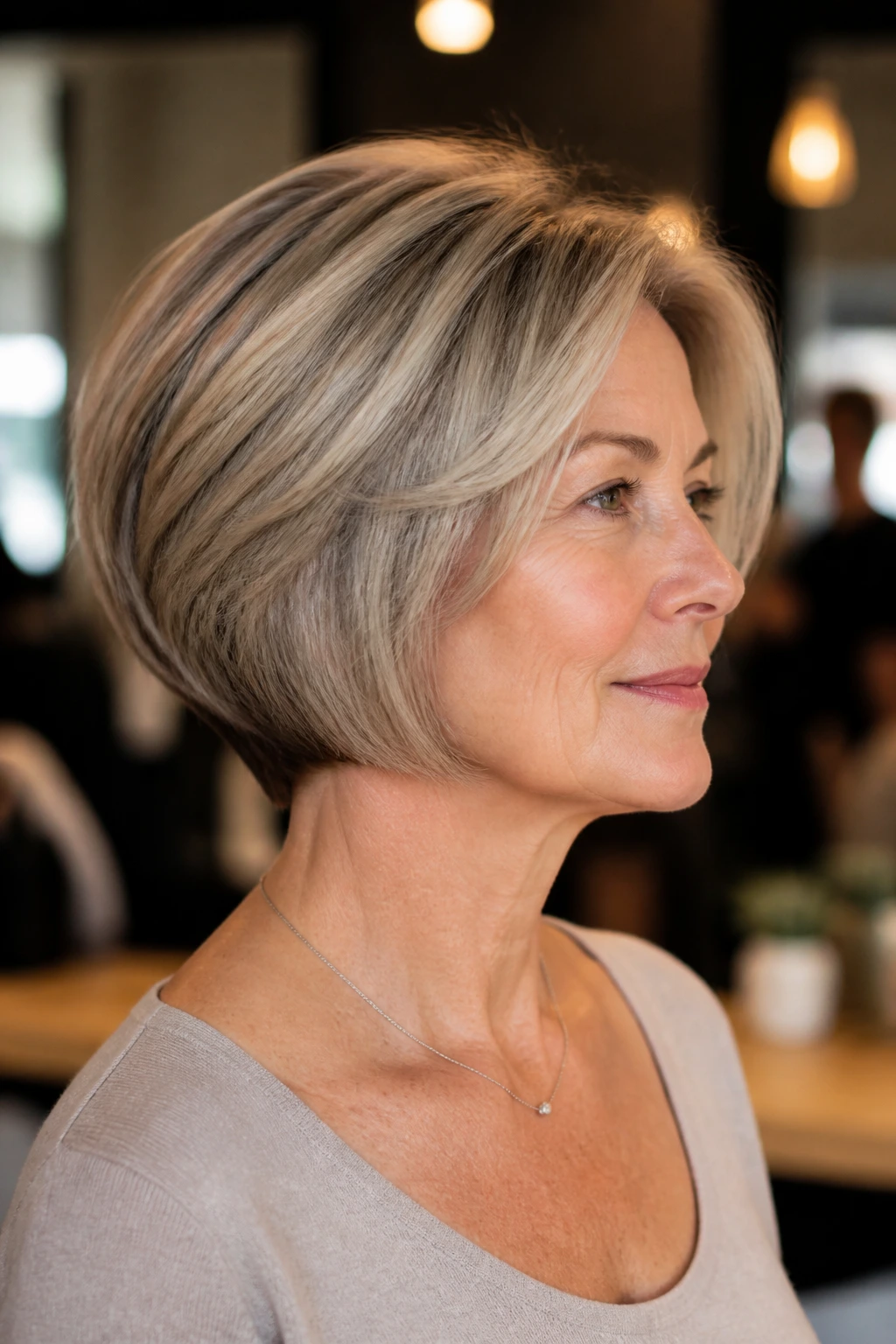
A stacked bob cheats volume in the best possible way. The back is cut with more lift, so the hair rises slightly at the crown and curves under near the nape. If your hair has started to lie flat in back, this shape gives you support without a lot of teasing or spray.
The line needs to stay smooth, though. If the stack is too dramatic, the haircut can look busy. A soft stack, where the layers build gently rather than sharply, is easier to wear every day and grows out more cleanly.
This is a strong pick for fine to medium hair. It gives the illusion of thickness at the back, which is usually where older hair needs help first. It also works well if you wear collared shirts or jackets often, because the nape stays neat instead of getting crushed.
A stacked bob is a bit more structured than a lob, but less severe than a pixie. That middle ground is useful.
15. The One-Length Lob

Can a one-length cut still feel modern? Yes, if the line is clean and the length is chosen well. A one-length lob sits around the collarbone or just above the shoulders, with very little layering. That simplicity is the whole point.
This style is especially good for thick hair. Too many layers can turn thick strands into a fuzzy cloud, while a blunt one-length cut keeps the ends tidy and the body controlled. It also makes gray hair look more polished, especially if the hair has a little wave and not much frizz.
You do need to watch the length. If it gets too long, the weight can drag the shape down. If it sits right on the shoulders, it may flip in odd directions. The sweet spot is usually just above or just below the collarbone.
How to Wear It
A one-length lob can go sleek, tucked, or softly air-dried. It does not ask for much. A smoothing cream, a wide-tooth comb, and a quick bend at the ends is often enough.
16. The Soft Undercut Pixie
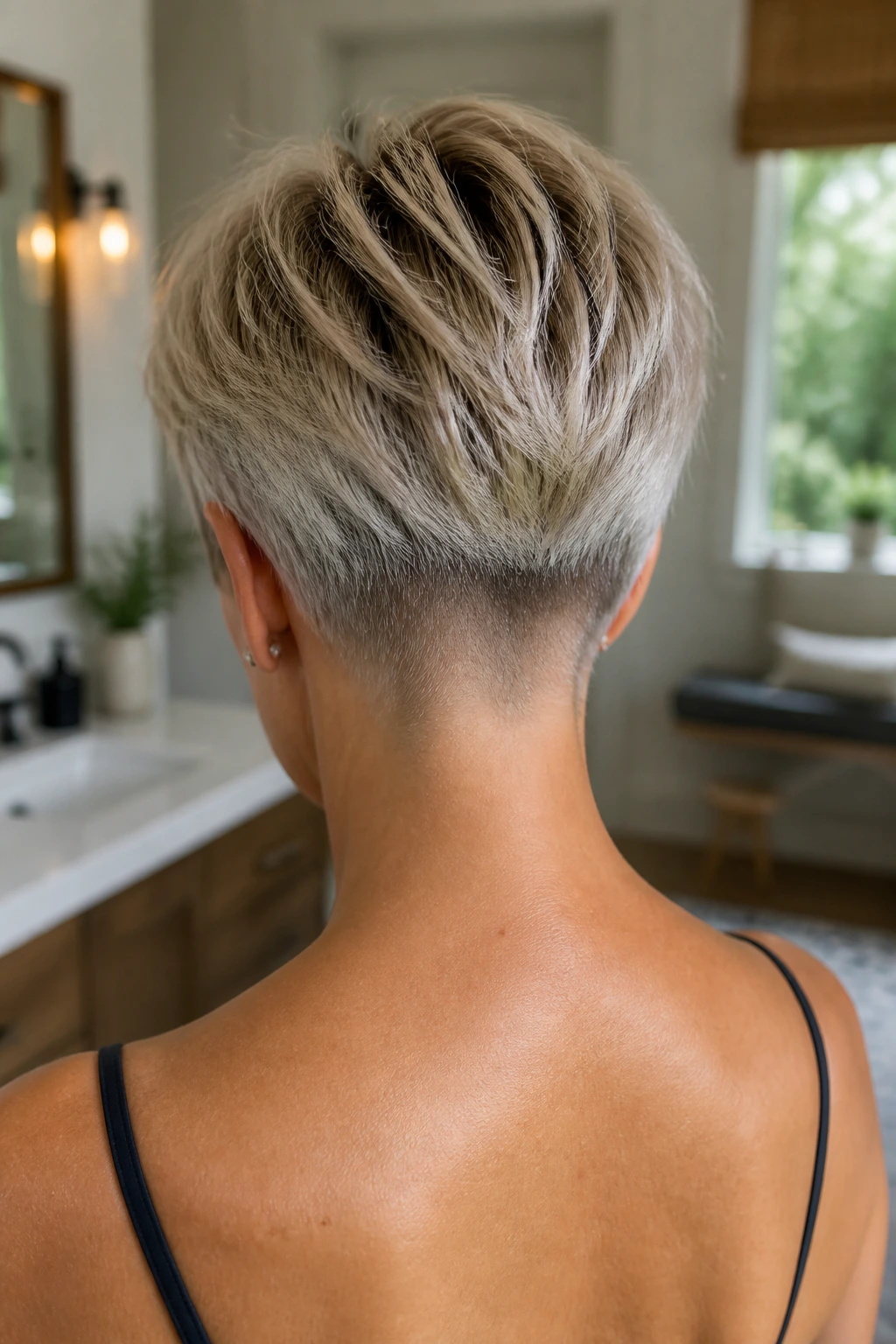
If your hair is thick, coarse, or stubbornly puffy around the neck, a soft undercut pixie can feel like a relief. The undercut removes hidden bulk where the hair tends to stack up, while the top stays long enough to keep the cut looking feminine and soft rather than clipped down.
This is not the same thing as a shaved side. It’s subtler. The undercut usually lives at the nape or under the top layer, so it grows out quietly and doesn’t scream for attention. That makes it easier to live with if you want short hair but hate harsh edges.
The top should still have some movement. You want enough length to brush it forward, sweep it to the side, or lift it slightly. Without that, the cut can feel too severe for everyday wear.
A good stylist can make this shape look elegant instead of edgy. The difference is in the blending. Harsh lines age the cut fast. Soft lines keep it useful.
17. The Wavy Shag With Curtain Bangs
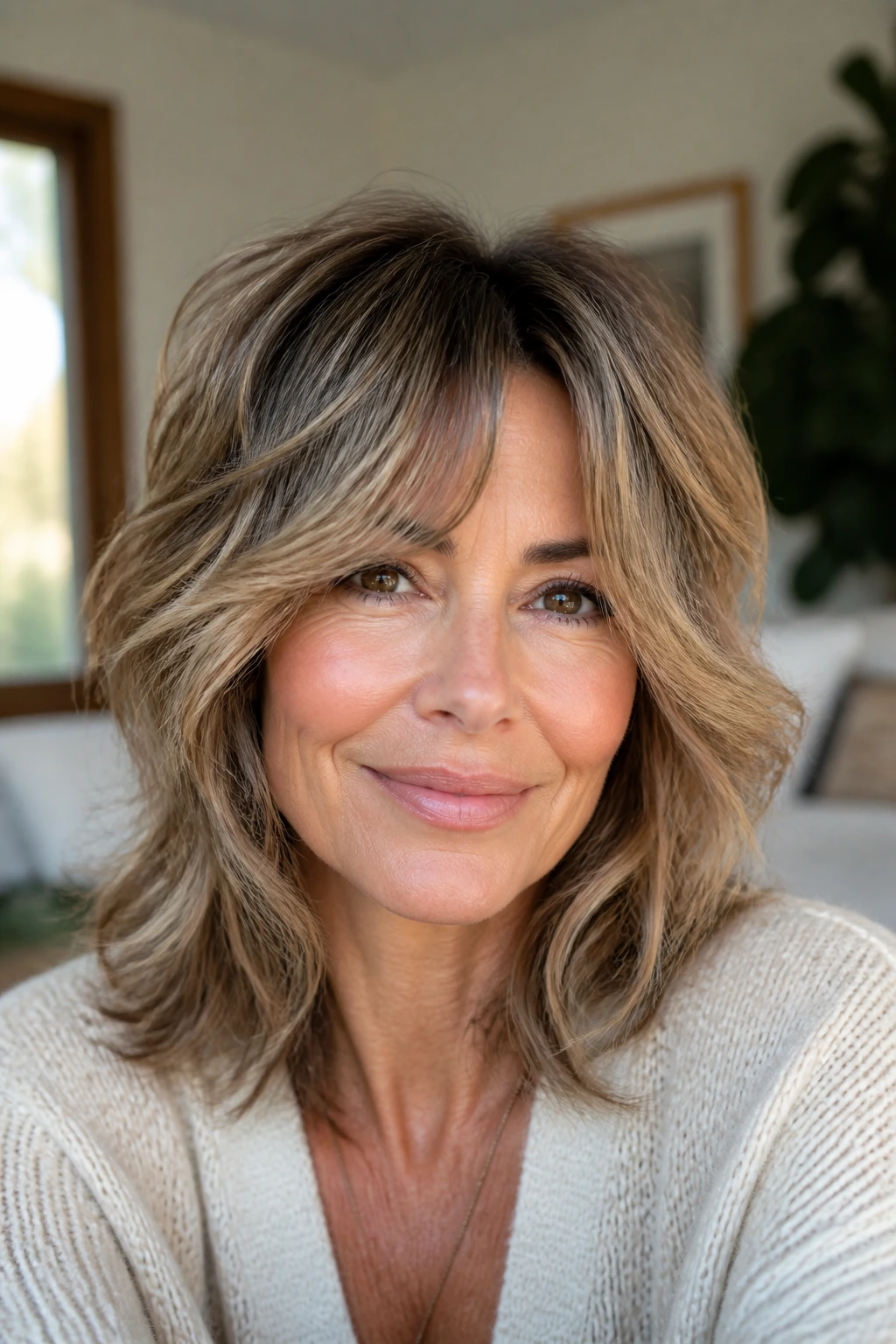
A wavy shag with curtain bangs is one of the least demanding styles if your hair already has a bend to it. The waves fill out the shape, and the curtain bangs break up the front without the weight of a full fringe. It looks relaxed because it is relaxed.
Curtain bangs work best when they start around the cheekbone and fall away from the face. They should not sit as a heavy curtain, despite the name. A light split in the center gives the hair some lift and makes the style feel less boxed in.
This haircut is forgiving on gray hair that has started to texture up a little. The wave hides minor frizz. The layers keep the length from dragging. And because the front opens away from the face, the whole style feels lighter than a straight mid-length cut.
Air-dry with a small amount of cream, then scrunch a few pieces around the face if they need help. That’s usually enough. Anything more starts to look overmanaged.
18. The Low Chignon
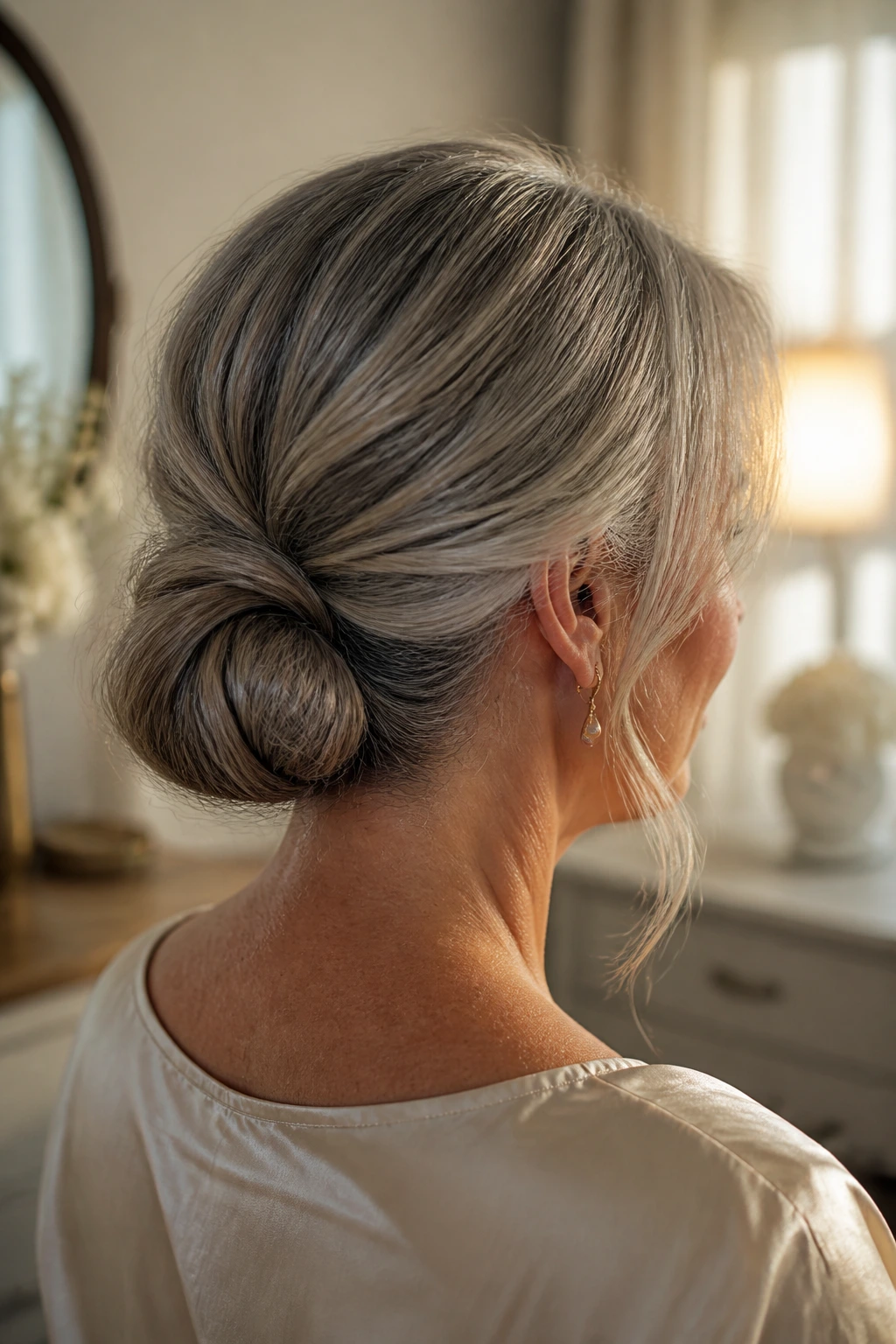
A low chignon is what you wear when you want your hair up but don’t want it to look formal. It sits at the nape, keeps the neck open, and works especially well when your hair has a little second-day grip. Clean hair can slip; slightly lived-in hair tends to behave.
The style can be polished or loose. A tighter twist gives a neat finish for dinners or events. A softer twist, with a few face-framing pieces left out, reads more relaxed and is easier to wear during the day. Either way, the key is to keep it low. High buns can pull at the scalp and feel fussy.
This is also a smart style when your ends are not cooperating. Dry, frizzy, or uneven hair can disappear into a chignon instead of fighting the rest of the look.
What You Need
- 2 to 4 bobby pins
- A small elastic or hair tie
- Light hairspray or styling cream
- A tail comb if you want a clean part
Simple tools. No drama.
19. The Claw-Clip Twist
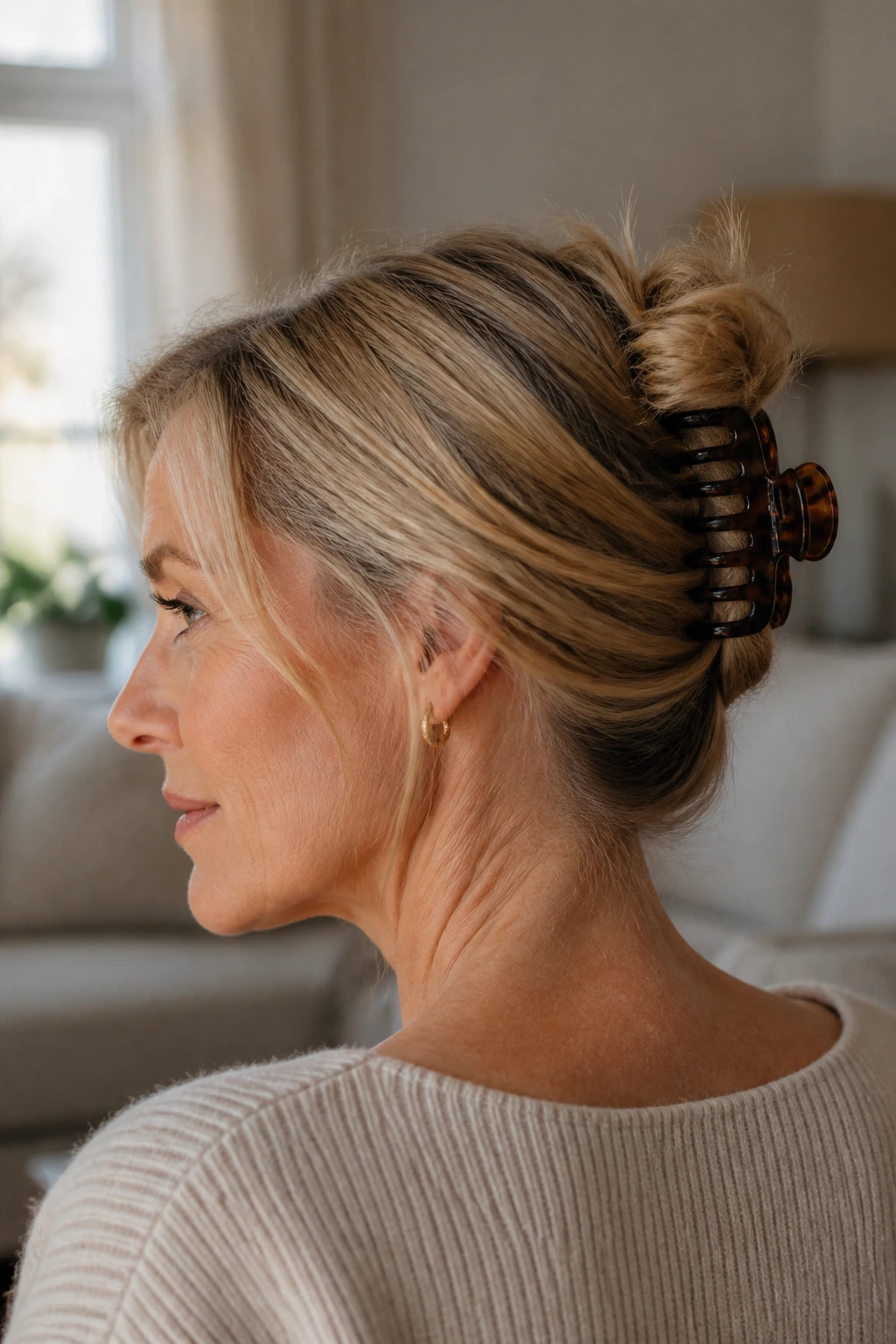
The claw-clip twist has become popular for a reason: it takes about thirty seconds and still looks like you made a choice. Twist the hair upward, gather it at the back, and secure it with a strong clip that can hold the bulk without snapping. That’s it.
This style is especially helpful for shoulder-length or longer hair that slips out of elastics. A good clip gives more room and less tension at the scalp, which matters when you don’t want a headache by midafternoon. Choose a clip that’s wide enough to hold all your hair, not one that barely pinches the top layer.
I like this for gray hair because the texture usually gives the twist some natural grip. Slick hair can fall apart faster. Slightly rougher strands tend to stay put.
Keep a few front pieces loose if you want softness. Or pull everything back if you want the face fully open. The beauty of it is how little it asks from you.
20. The Half-Up Crown Lift

A half-up crown lift is one of those styles that does a lot for a very small effort. You take the hair from temple to temple, lift it at the crown, and secure it with a clip, barrette, or small elastic. The result is instant height where many women want it most.
That lift matters if the top of your hair has gone flatter over time. Pulling the crown section up gives the illusion of fullness without teasing or spraying the hair into a helmet. It also keeps the hair off the face while leaving enough length down to feel soft.
The style works well on straight, wavy, or loosely curled hair. It is less useful on very short cuts, obviously, but for shoulder-length hair it’s one of the easiest fixes around. You can wear it neat or a little loose.
A tiny bit of texture spray at the roots helps the top section stay where you put it. No need to overdo it. You want lift, not stiffness.
21. The Loose French Twist
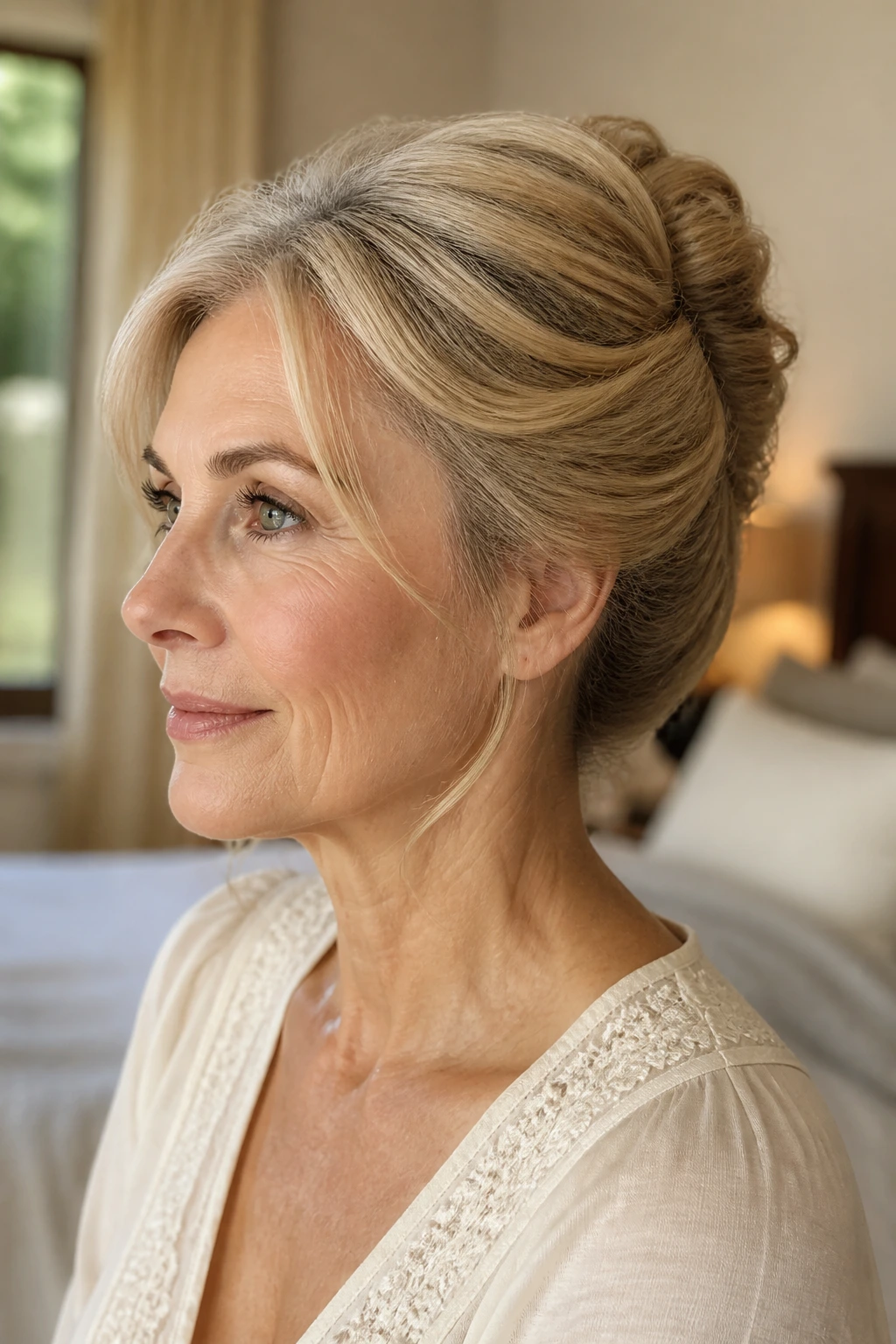
Can a French twist feel relaxed? Absolutely, if you stop trying to make it perfect. The loose version sits low, folds the hair upward without much tension, and leaves the surface a little soft instead of shellacked. That makes it far more wearable for everyday occasions than the strict formal version people picture.
This style needs hair that has some length — usually shoulder-length or longer. It also behaves better when the hair has a bit of grit, so if your hair is very clean and slippery, a touch of dry shampoo can help. The twist holds better when the hair is not freshly washed and silky.
Use bobby pins to anchor the roll from the inside. You do not need a dozen pins if the shape is correct. A few well-placed pins beat a pile of hardware.
Best Time to Wear It
- Dinner out
- A wedding or party
- Any day your hair feels flat
- When you want your neck open and your face clear
It looks far more difficult than it is. That’s part of the charm.
22. The Braided Crown
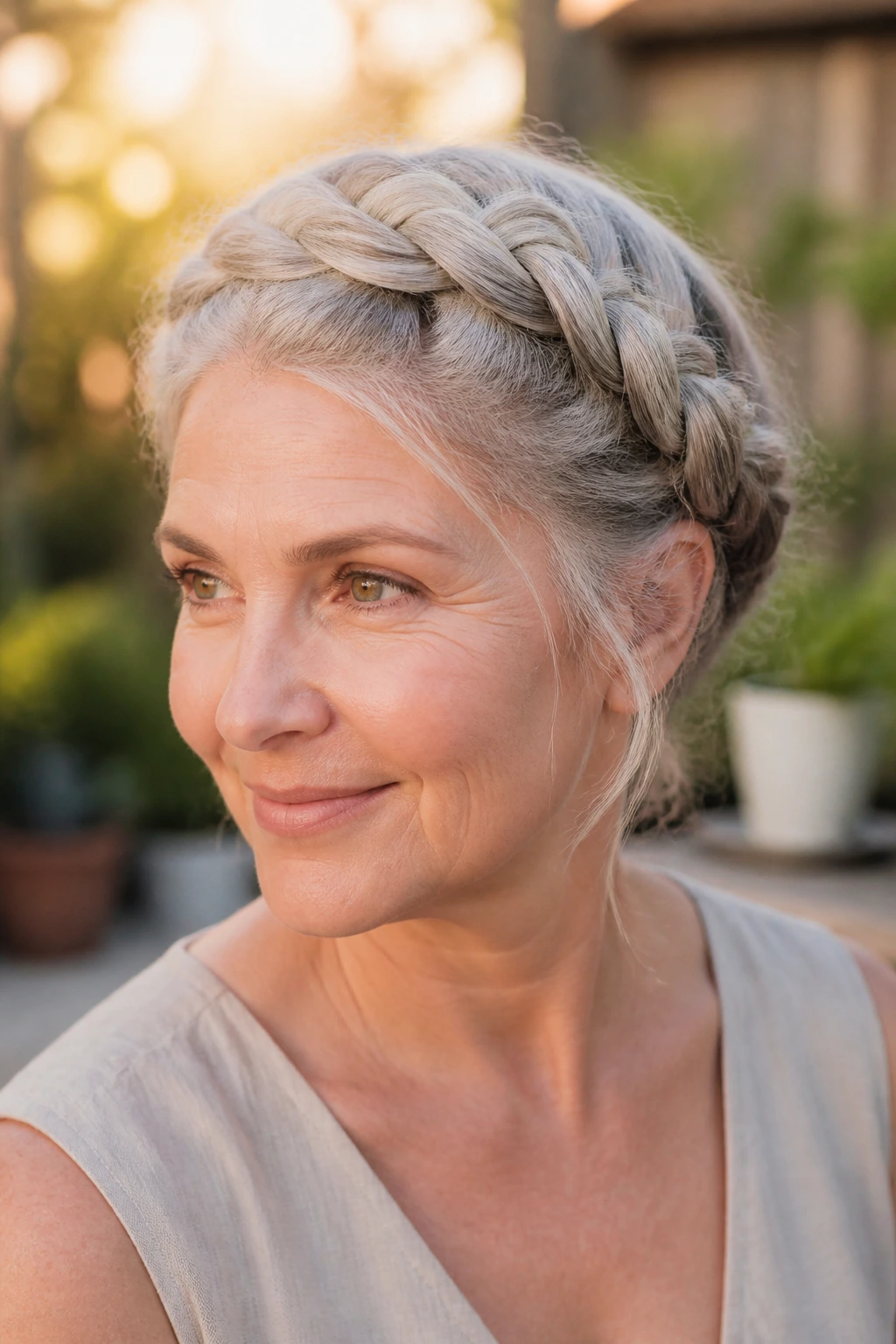
A braided crown is a smart choice when you want the hair off your face and off your neck, but still want something softer than a plain updo. It works especially well with gray hair because the braid shows off the mix of silver tones in a way that feels clean and calm.
You can keep it simple with a side braid that wraps toward the back, or go for a full crown braid if your hair is long enough. Either version hides frizz nicely and helps longer layers stay put. That makes it useful on days when your ends are behaving badly or your hair looks a little uneven after a trim.
A small amount of texturizing spray helps the braid grip. If the hair is too smooth, it slips apart. If it’s too dry, it looks fuzzy. A light hand is the answer.
How to Keep It Looking Soft
- Pancake the braid slightly by tugging the outer edges
- Leave a few thin pieces around the ears
- Secure the ends low and hide them under the braid
- Use pins that match your hair color if you can
It’s practical. It’s pretty in a low-key way. And it keeps working even when the rest of your hair is having an off day.
Final Thoughts
The easiest hairstyles are the ones that still look shaped when you stop fussing with them. That’s the real mark of a good cut after 50. It should let your hair do some of the work, not demand a daily performance.
If you want the lowest-maintenance path, start with a bob, a lob, or a cropped cut that matches your texture. If your hair is thinning, look for a shape that builds lift at the crown or keeps the ends full. If you like longer hair, keep the layers soft and the outline tidy.
The best test is simple: wash it, air-dry it, and see whether you still like what’s in the mirror an hour later. If the answer is yes, you’ve probably found your haircut.
