



At 50, the wrong haircut can make hair feel harder to live with than it needs to be.
That is why the smartest hairstyles for women at 50 usually do three things at once: they lift the crown, soften the edges around the face, and keep the cut moving even on a lazy air-dry day. Gray hair changes the rules a little, too. It often comes in a touch coarser, sometimes drier, and it can sit differently than the hair you had ten years ago.
Short hair isn’t the answer for everyone. Long hair isn’t off limits either. What matters is shape, balance, and whether the haircut works with the way your hair actually behaves after a wash, not with the idea of the hair you used to have.
Some of the cuts below are neat and polished. Others are softer and more relaxed. A few lean into silver strands on purpose, which I always like, because gray hair looks best when the haircut gives it structure instead of apology.
1. Soft Layered Lob for Women at 50
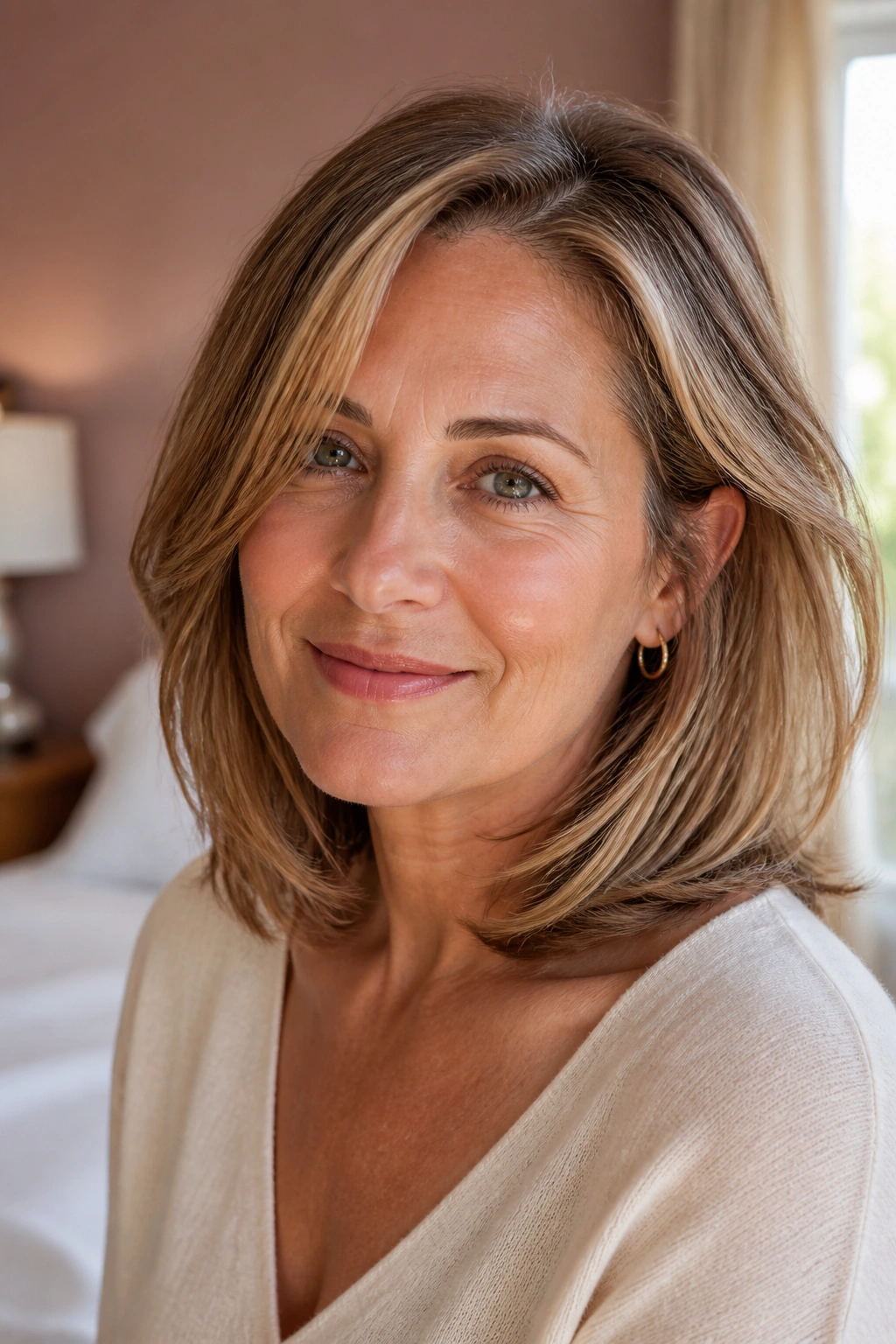
A collarbone-length lob does a lot of quiet work. It gives you enough length to tuck behind one ear, twist into a clip, or sweep into a low knot, but it stops before hair starts feeling heavy and dragged down. That sweet spot matters more after 50 than people admit.
Why It Works
The best version of this cut has long layers that begin below the chin, not choppy pieces that stick out. That keeps the ends from flaring while still giving movement around the face. If your hair is fine, the layers create lift. If it’s thicker, they remove the bulk that makes a lob look square.
Ask for a blunt-ish perimeter with soft internal layers. That phrase matters. Too much layering and the style turns thin at the ends; too little and it sits flat like a sheet.
- Best for: Straight, wavy, or slightly curly hair
- Face shapes: Oval, heart, and square
- Good detail to request: Face-framing pieces that land between the chin and collarbone
- Styling note: Use a round brush only on the front sections if you want polish without spending 20 minutes at the mirror
My favorite part: it grows out gracefully. That alone makes it a smart haircut.
2. Chin-Length Bob with Side-Swept Bangs
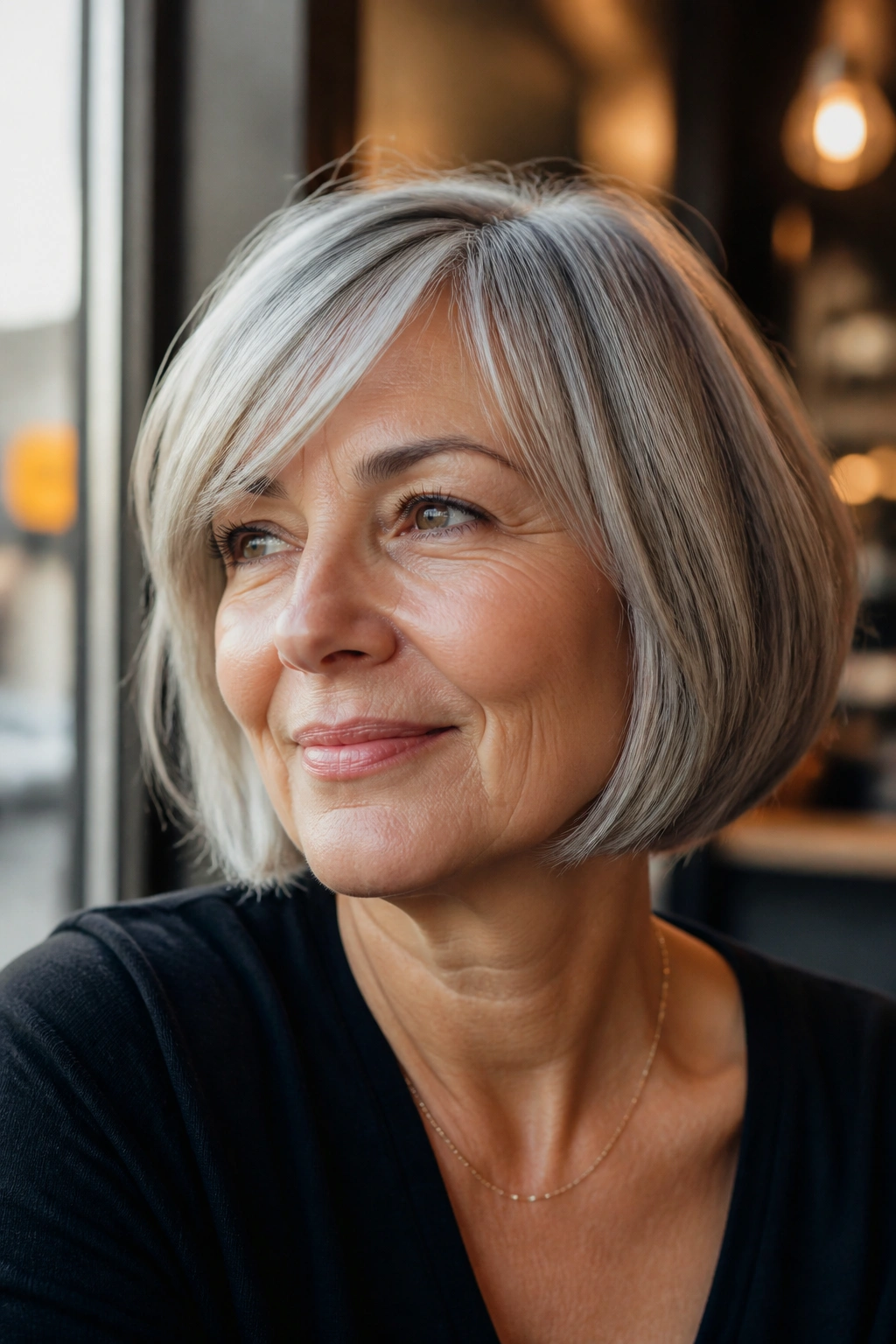
A chin-length bob is one of the cleanest ways to sharpen the face without making the haircut feel severe. Add side-swept bangs and the whole thing softens. It draws the eye diagonally, which is kinder to a fuller cheek, a softer jawline, or a forehead you’d rather not spotlight.
The cut looks especially good with gray hair because silver strands pick up light along the sides and fringe. That little bit of shine makes the shape read clearly. And clear shape is everything here.
Keep the bangs light. Heavy side bangs can fall into the eyes and start acting like a curtain. You want them to skim, not hide. A good stylist will cut them so they blend into the side of the bob instead of sitting on top of it like an add-on.
A quick blow-dry with a small round brush is enough for this one. Keep the ends tucked in just a touch. Not curled. Just bent. That tiny bend keeps the bob from looking too rigid.
3. Textured Pixie with a Tapered Neckline
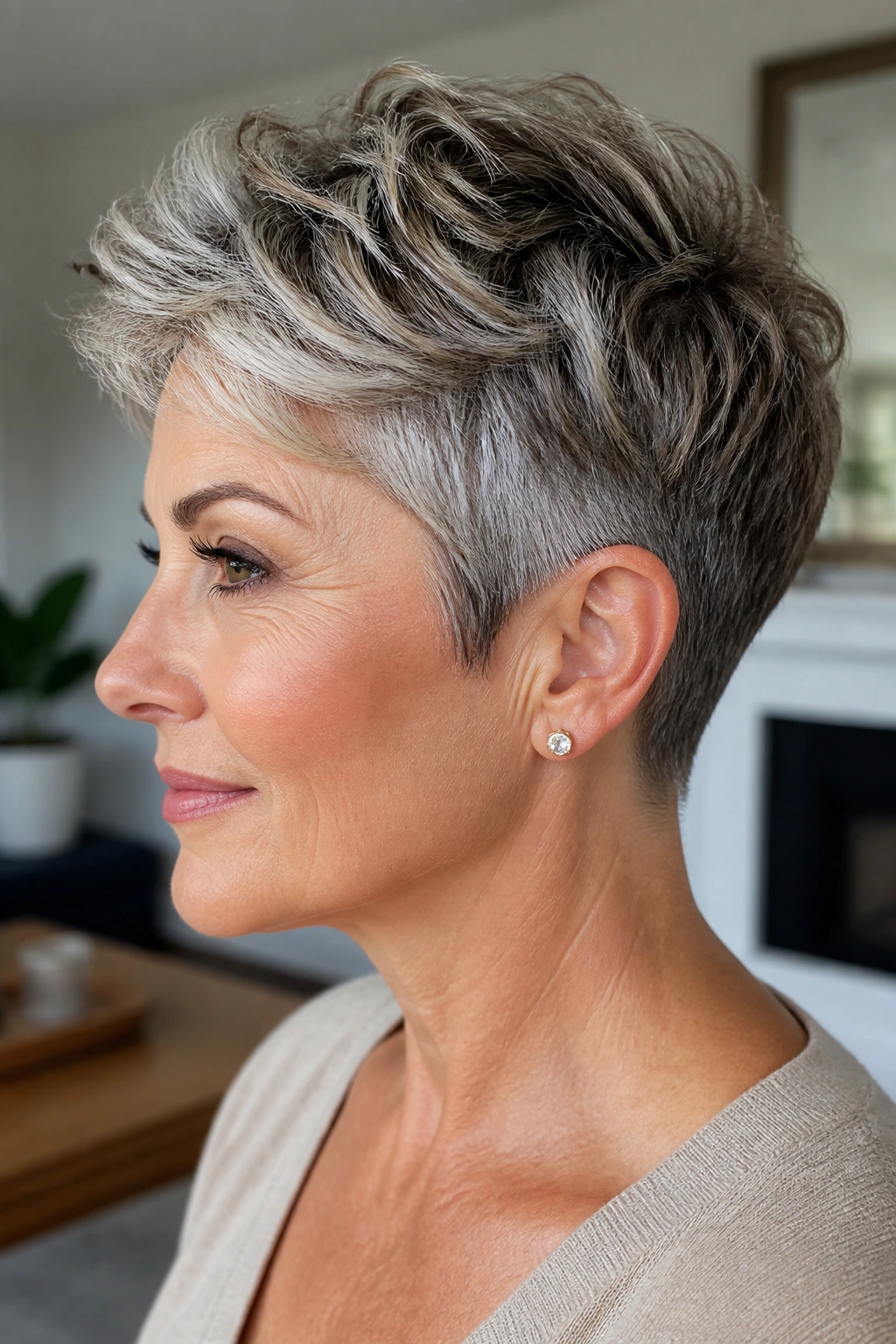
Does a pixie have to feel severe? Not at all.
A textured pixie can be soft, modern, and flattering without trying to shout. The key is the neckline. If the back is tapered neatly and the top has a little piecey lift, the cut feels light instead of helmet-like. That’s the line I care about.
How to Style It Without Flattening the Top
Ask for about 1.5 to 2.5 inches on top, depending on your hair density. That gives you enough length to move the hair around with your fingers, but not so much that it collapses by noon. If your hair is fine, keep the sides clean and the top slightly longer. If it’s thick, ask the stylist not to over-thin it. Over-thinning makes short hair stick out in weird little spikes.
- Work a pea-size amount of matte paste through dry hair
- Lift at the roots with your fingertips, not a brush
- Leave the fringe a touch longer if you wear glasses
- Keep the nape close and tidy for shape
This cut suits women who want ease. No fuss. No round-brush marathon.
4. Shoulder-Length Shag with Feathered Ends
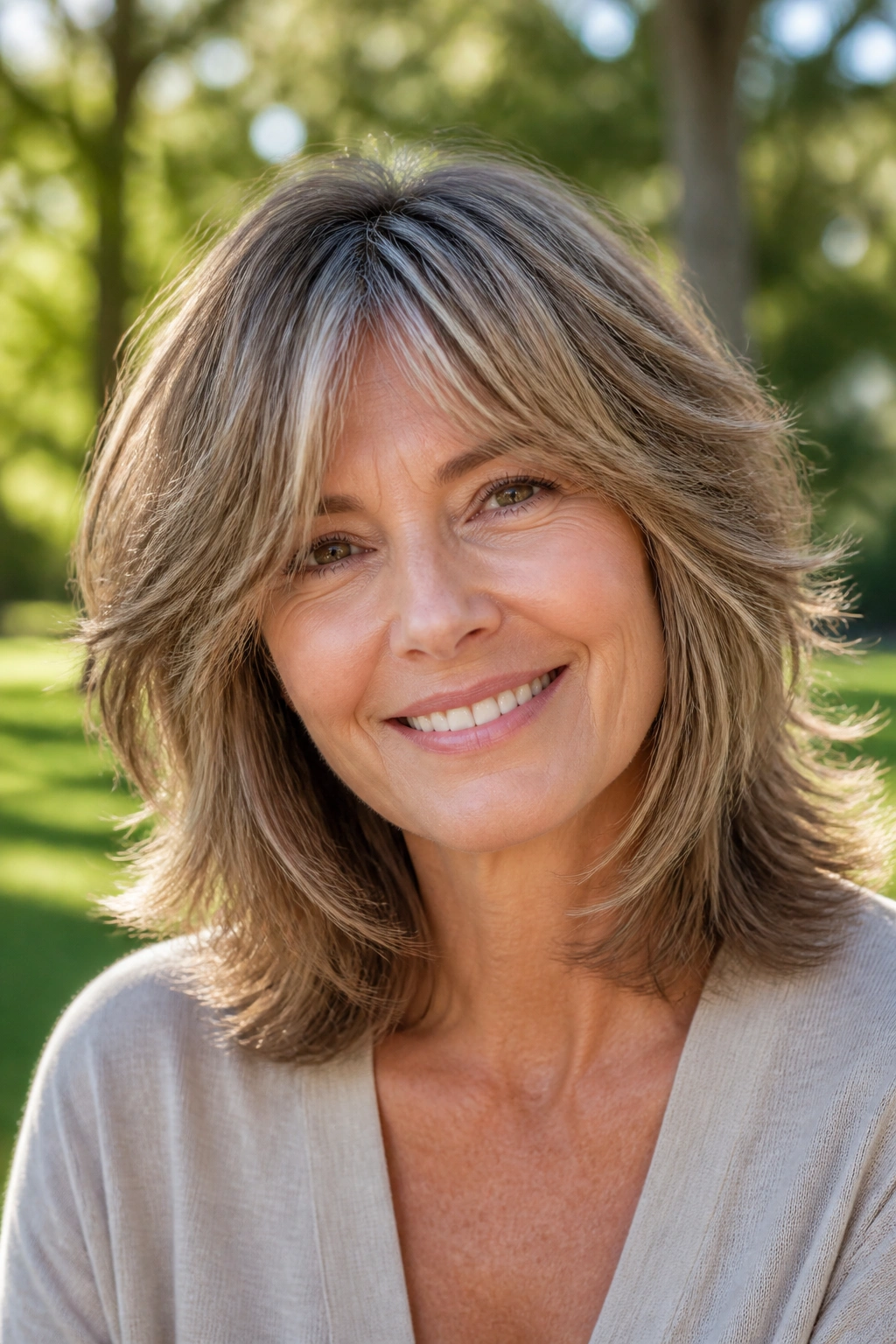
Picture someone who wants hair off the neck but doesn’t want it chopped into something stiff. That’s the shag.
A shoulder-length shag with feathered ends has movement built into it, and that matters for women whose hair has started to lose a bit of spring. The layers break up weight at the bottom, while the feathered ends stop the cut from feeling blunt or boxy. On wavy hair, it looks lived-in in the best way. On straight hair, it gives the shape some bend.
This is one of the better hairstyles for women at 50 if the hair has a habit of flipping out at the bottom but lying flat at the crown. The layers help even out that contradiction. Hair does contradictory things all the time. That’s normal.
Ask for the shortest layers around cheekbone level or just below. Go too high and you can get old-school mushroom shape. That is not the goal. A little mousse at the roots and a soft diffusing pass is often enough.
5. Classic Blunt Bob with Soft Under-Curve
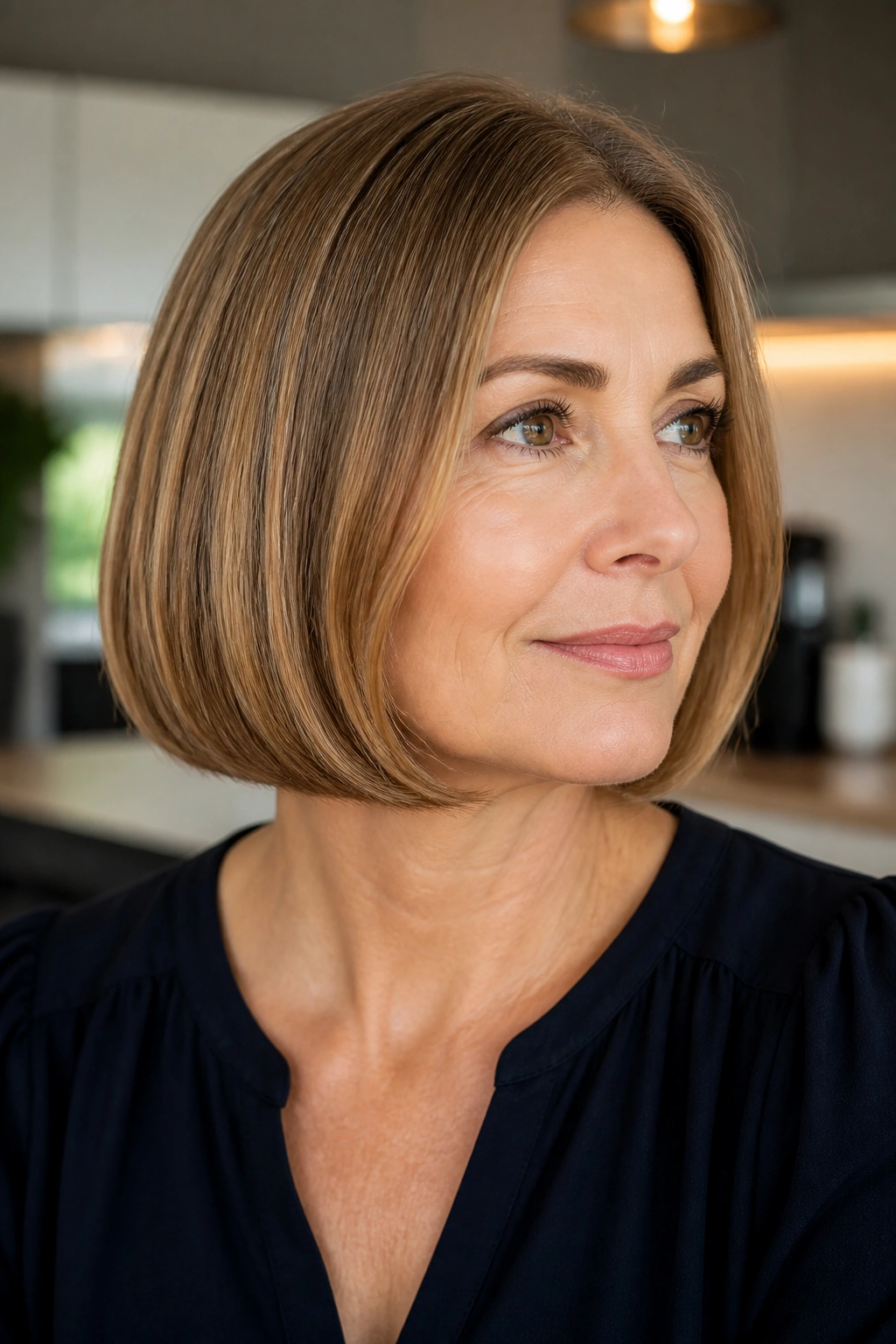
The blunt bob gets dismissed as plain, which is a mistake.
When it’s cut well, a blunt bob gives gray hair a crisp outline that can make the color look cleaner and shinier. The trick is in the ends. A soft under-curve at the bottom — just enough bend to tuck the line under the jaw — keeps the style from feeling boxy. It’s a very small detail. It changes everything.
I like this cut most on fine to medium hair that has started to look a little wispy at the ends. One solid line makes the hair look fuller than it really is. That is one of the oldest haircut tricks in the book, and it still works.
You’ll need regular trims. Not because the style is fussy, but because the shape depends on a clean edge. Once the perimeter starts fraying, the bob loses its crispness and starts looking sleepy. A quick trim every 6 to 8 weeks keeps it sharp.
No heavy layering here. The point is restraint. Clean, not severe.
6. Curtain Bangs with Long Layers
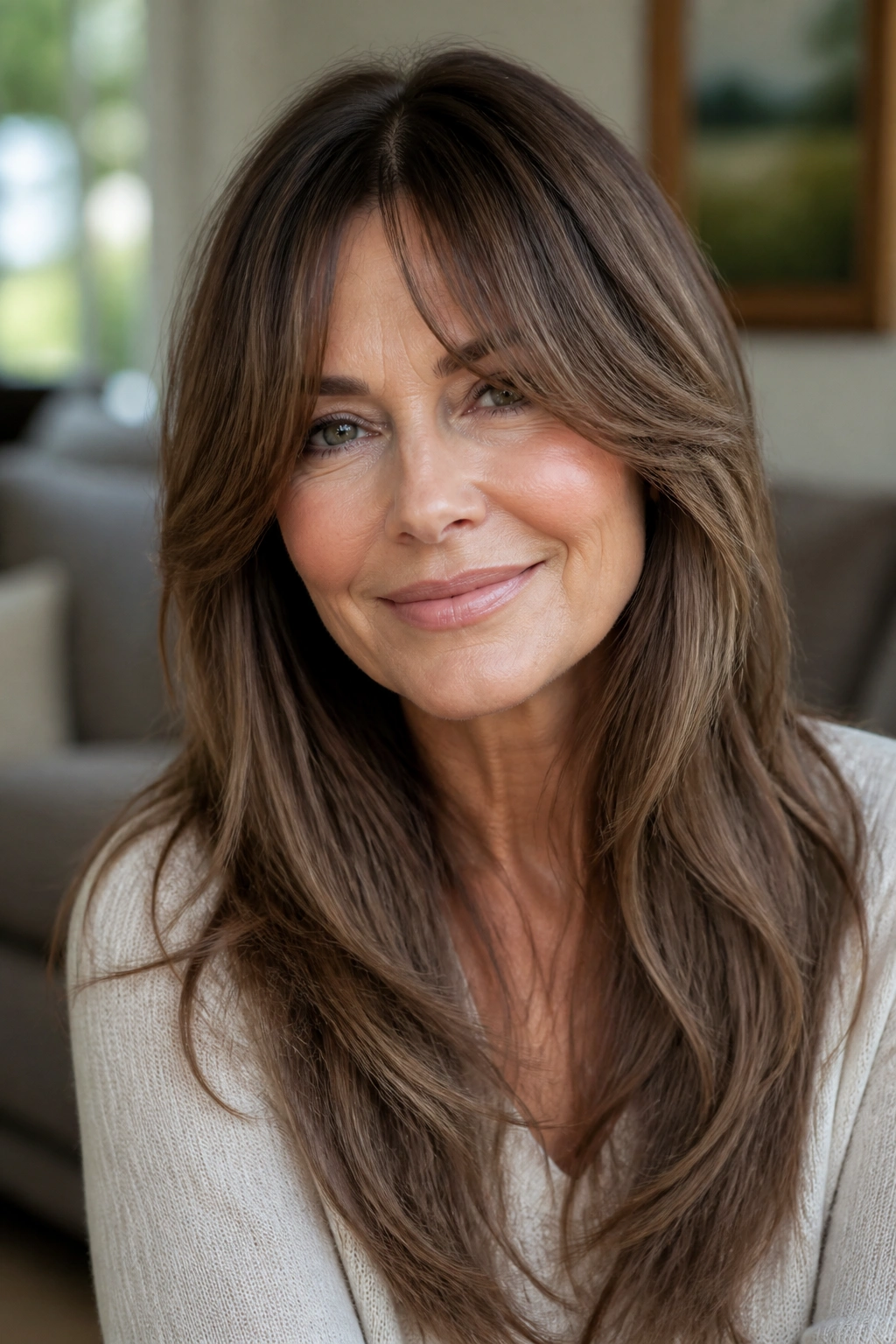
Curtain bangs changed the haircut conversation for a reason. They give you face framing without the commitment of a full fringe, and they grow out in a way that is far less annoying than blunt bangs.
They also sit nicely with long layers, which makes this one of the easiest hairstyles for women at 50 who do not want to give up length. The bangs open from the center and sweep out toward the cheekbones, so the whole face looks softer. If you’re dealing with a higher forehead, a receding hairline, or just want the front to feel less heavy, they’re worth a look.
Where the Bangs Should Start
The shortest part usually begins around the bridge of the nose or just under the eyebrow arch. The longer edges blend into the sides near the jaw or collarbone. That arc is what makes curtain bangs feel airy instead of chopped.
A round brush is useful, but keep the lift gentle. If you over-roll the bangs, they can look dated fast. A soft bend is enough.
- Best for: Straight, wavy, and loose-curly hair
- Low-effort trick: Clip the bangs to one side while they cool after drying
- Watch out for: Cutting them too short if your hair shrinks when dry
- Good match for: Women who want a little softness without losing length
7. Silver Crop with Piecey Top Layers
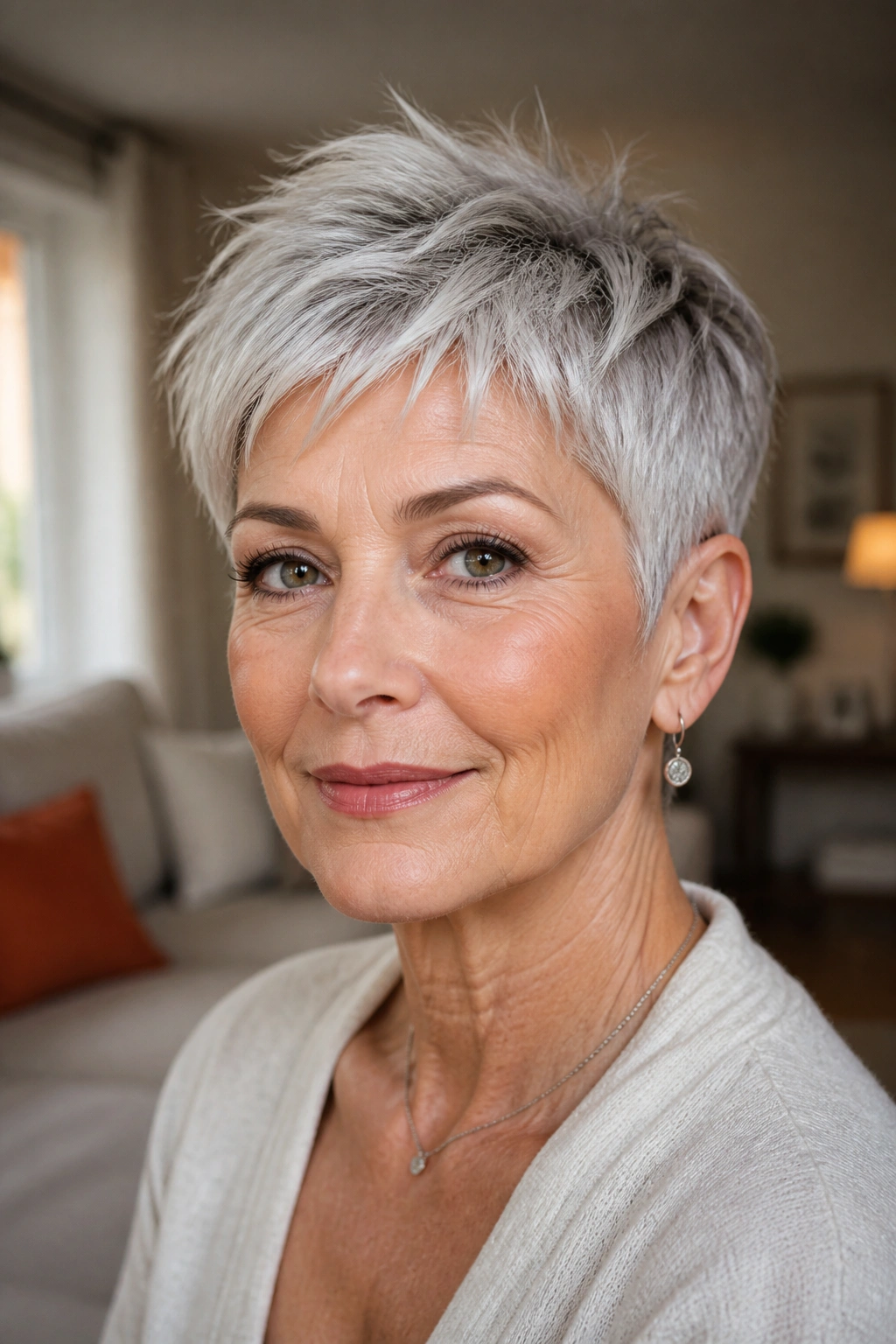
Want your gray hair to look intentional instead of accidental? A cropped cut can do that in a hurry.
A silver crop with piecey top layers works because it gives the hair a point of focus. Instead of letting every strand sit the same way, the cut lets the top move a little while the sides stay close. That contrast is what keeps the style lively. Without it, short gray hair can drift into “set and forget” territory, which is not flattering on anyone.
How to Keep the Top Lively
Keep the top long enough to separate with your fingers. If it’s too short, the texture disappears. If it’s too long, the cut loses shape and starts flopping. The sweet spot is usually somewhere in the 1.5-inch to 3-inch range, depending on curl and density.
A little styling cream or matte paste is enough. Skip heavy gel unless you want a stricter finish. Silver hair often looks best when it has motion, not crunch.
This cut works especially well if your hair has a bit of natural wave or if you like a low-maintenance morning. It also plays nicely with glasses, which matters more than people say out loud.
8. Wavy Mid-Length Cut with Face-Framing Pieces
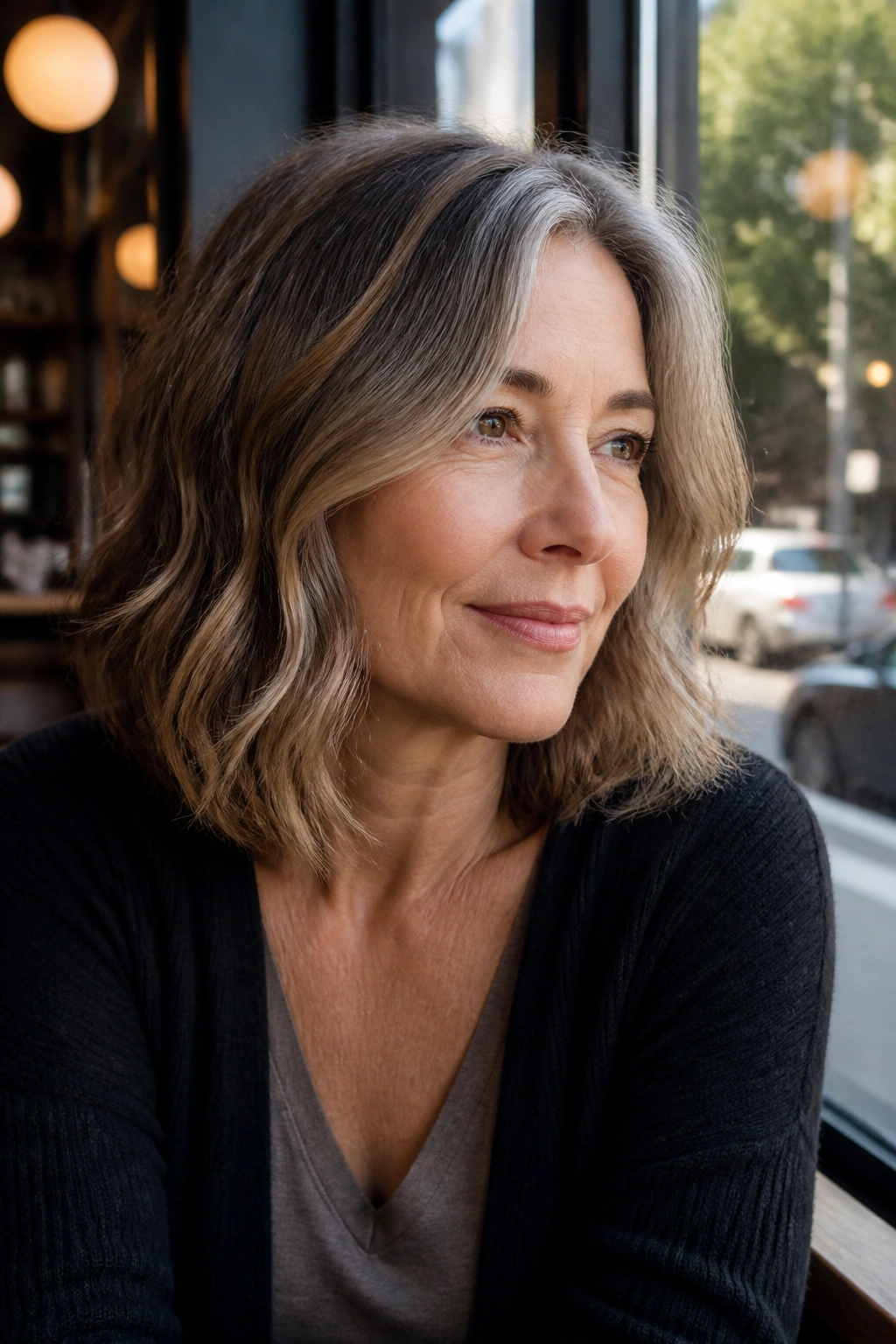
Some cuts look better when the hair moves.
That is the whole appeal of a wavy mid-length cut. It sits somewhere between shoulder and collarbone, which means it’s long enough to feel soft but short enough not to drag the face down. Face-framing pieces keep the front from becoming a single heavy curtain. They break the outline in a way that feels easy and flattering.
This haircut is a good fit if your natural texture has become more unpredictable over time. Many women notice that hair starts doing a little less of what it used to do and a little more of what it wants. This cut works with that change instead of fighting it. A medium barrel iron or a bit of mousse can add shape, but the cut should still look decent on its own.
The one thing I would avoid is over-layering the ends. If they get too thin, the whole style loses substance. Keep the front pieces longer and the bottom line soft. That’s the difference between a nice cut and one that looks stringy after two weeks.
9. Asymmetrical Bob with a Deep Side Part
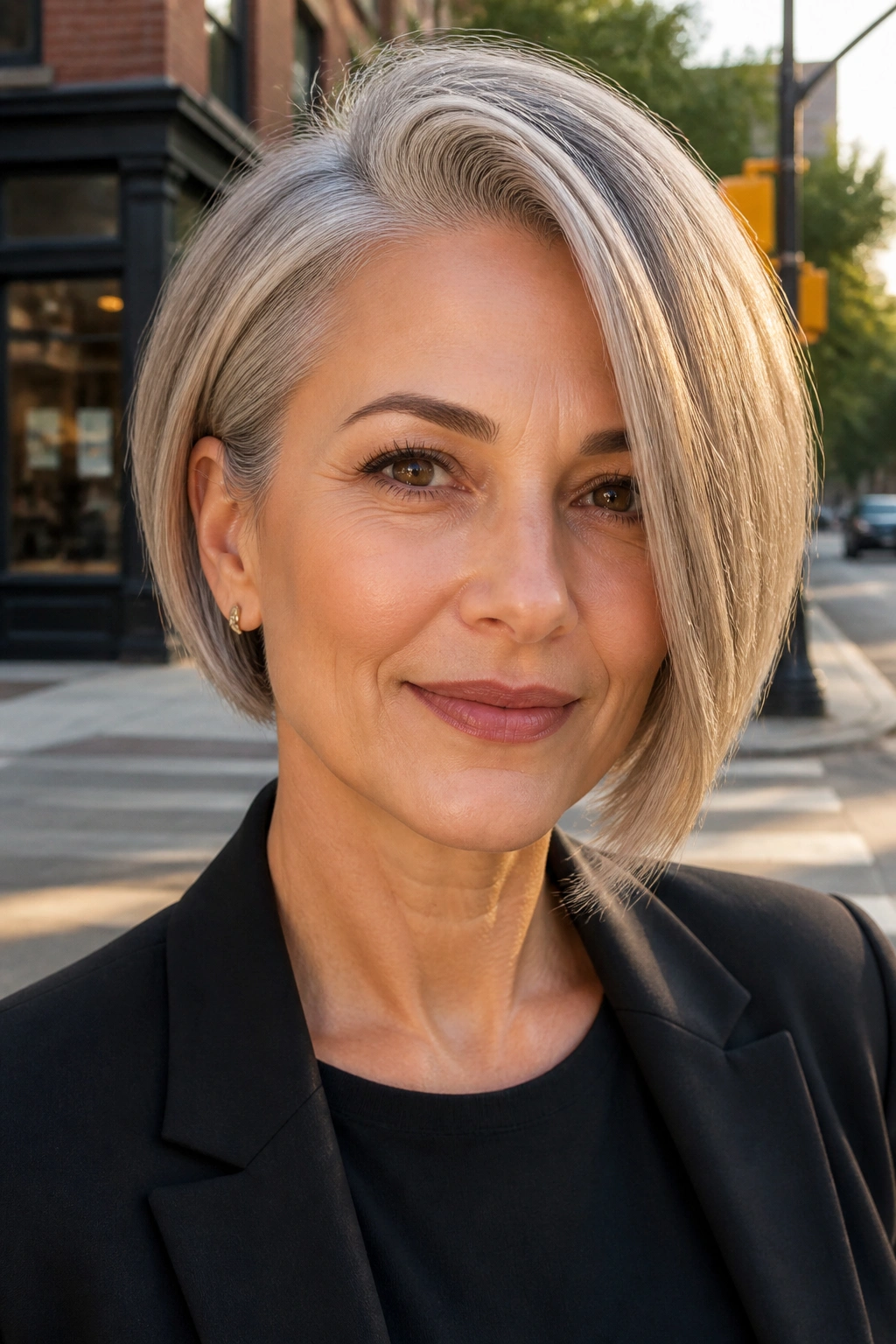
An asymmetrical bob works because the eye follows the diagonal. Simple. Effective.
One side stays a little longer than the other, often by just 1 to 2 inches. That difference is enough to make the haircut feel deliberate without turning it into a stunt. A deep side part adds even more shape, especially if your hair tends to lie flat on one side or if your face feels widest around the cheeks.
Details That Matter
- Keep the length difference subtle, not dramatic
- Ask for a clean line at the back so the shape doesn’t get sloppy
- Use the deeper side to create a little lift at the crown
- Let the longer side skim the jaw or collarbone, depending on how much length you want
This cut can hide a stronger jawline or add softness to a round face. It also looks good with silver streaks because the diagonal line makes the color shifts more visible. That can be a nice thing, not a flaw.
The main warning? Don’t let the longer side get too long. Then the whole point disappears.
10. Curly Rounded Cut That Follows the Hairline
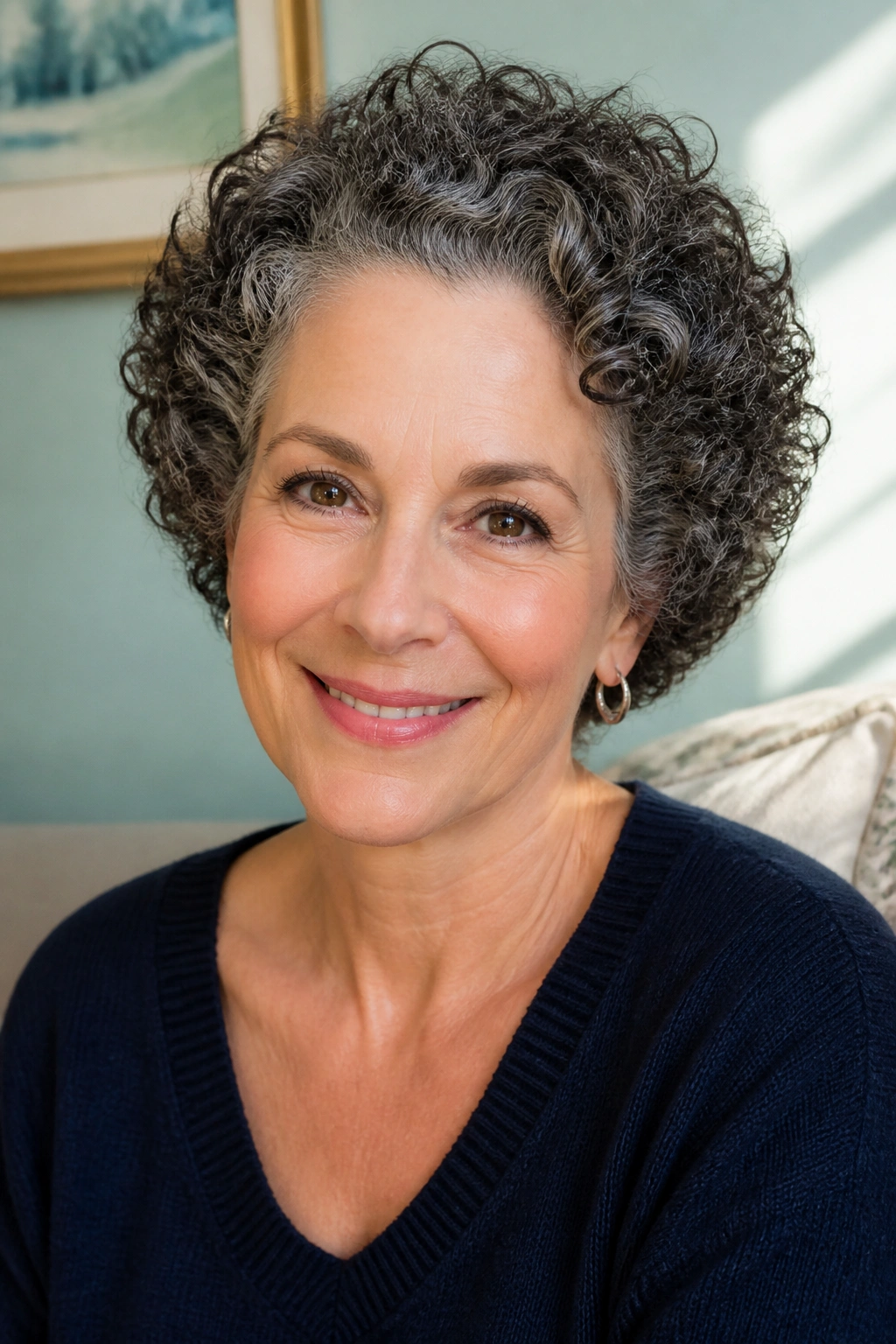
Curly hair at shoulder length can go in a dozen wrong directions. Too much length and it drags. Too many layers and it puffs out. Too blunt and it turns into a triangle. A rounded cut solves that by following the shape of the curls instead of forcing them into some flat outline.
Curls need respect. That sounds like a slogan, but it’s true.
A rounded shape keeps the weight distributed so the curls stack in a pleasing way around the head. It also helps gray curls, which often feel drier and springier, sit with less bulk at the ends. A good stylist may cut this dry or mostly dry, because curls lie. Wet curls lie the most. The shrinkage can be sneaky.
The best rounded cut has enough length at the sides to keep the cheeks soft and enough shape at the crown to avoid a mushroom shape. That balance is a little fussy to explain and easy to see in the mirror once it’s done right. Add a cream that encourages curl clumps, then leave the hair alone while it dries. That’s half the battle.
11. Tapered Crop with Height at the Crown
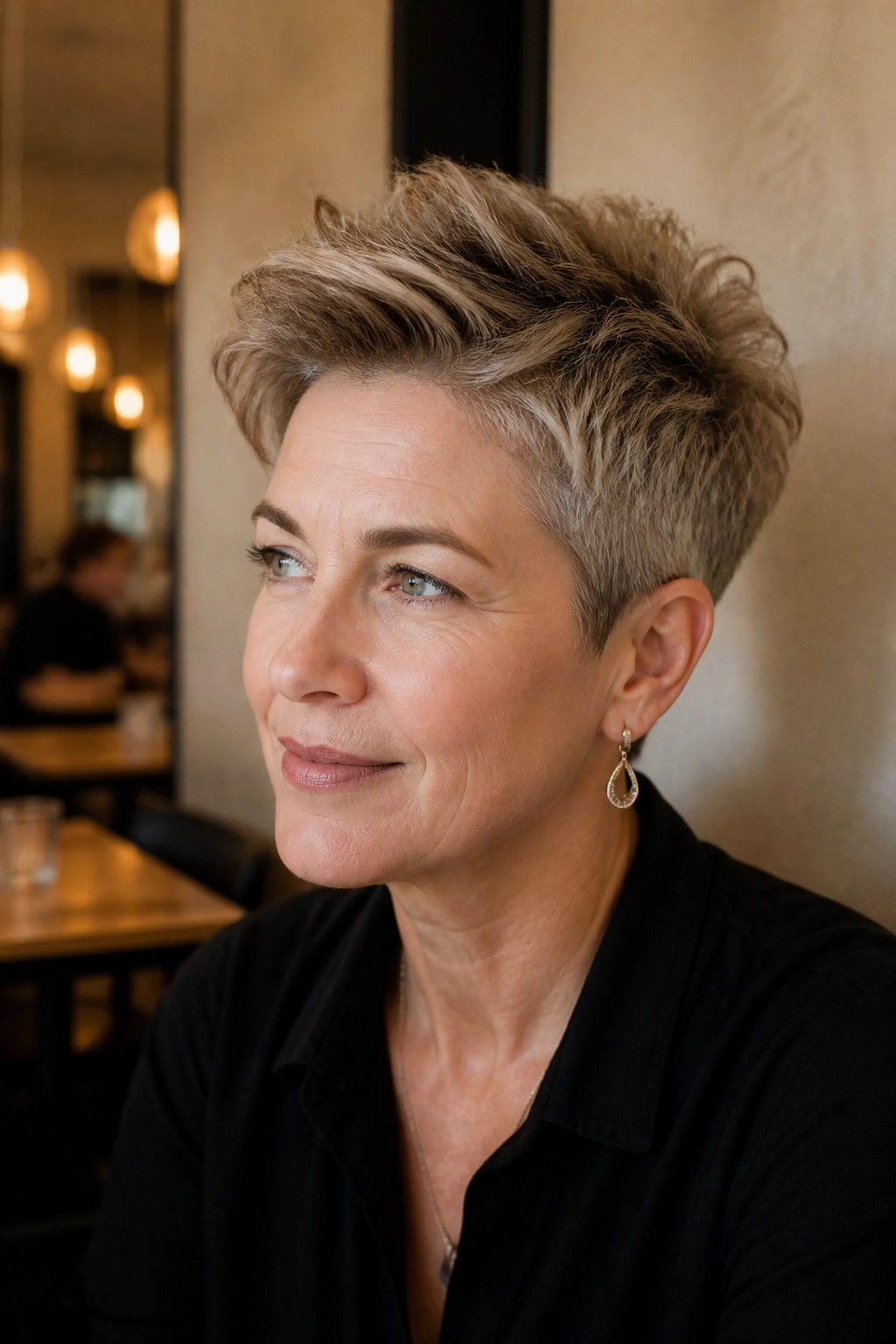
A tapered crop is for women who want lift without teasing, sprays, or fuss.
Unlike a flat pixie, this cut keeps the sides and back close while leaving a little height on top. That gives the face a longer line and makes the head shape look cleaner. It’s especially useful if your hair has lost some body at the crown, which happens to more people than salon photos would suggest.
Best For Women Who Want Lift Without Drama
This cut is smart for fine hair, especially when the top has enough length to sweep slightly to one side. The shorter sides keep the silhouette tidy, and the crown does the visual work. If you wear earrings, this kind of crop puts them on display in a nice way. That’s a small thing, but it matters.
A tapered crop can feel too severe if the top is cut too short. Ask for softness through the crown and a little texture near the front. That keeps the shape from reading as military.
I like this cut on women who want a fresh look without a lot of daily styling. It looks intentional in the morning, which is more than can be said for many “easy” cuts.
12. Long Layers for Gray Hair with Airy Ends
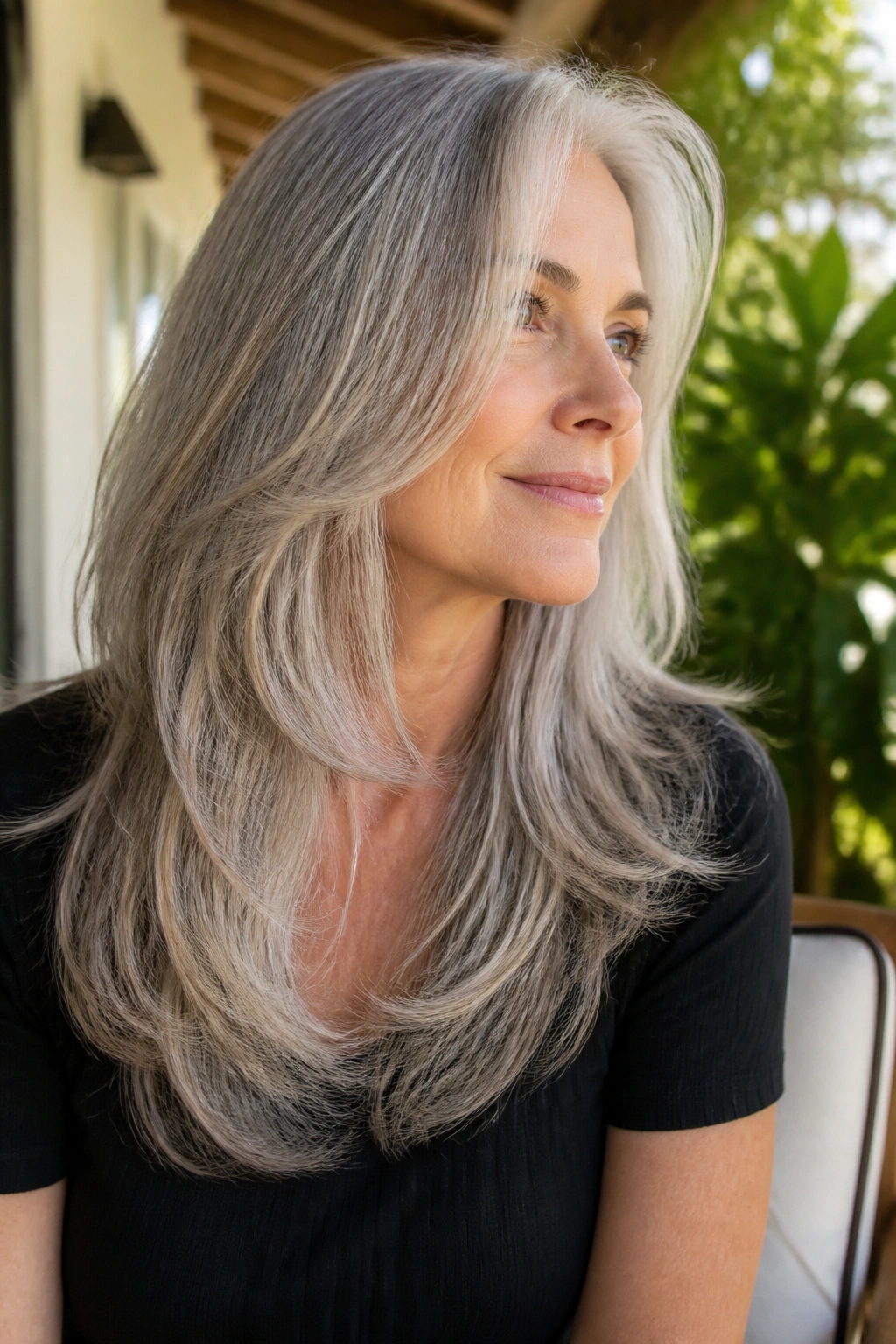
Can long hair still work after 50? Absolutely, if the ends are handled well.
That is the part most people miss. Long gray hair does not need to be chopped off just because it has gone silver. It needs shape, and it needs clean ends. Long layers help the hair move, while airy ends keep it from looking weighed down. If the layers start too high, though, the hair can start to look thin and stringy. That is the trap.
The best version of this cut keeps the first layers below the collarbone, especially if your hair is fine. That preserves thickness around the face and lets the length feel deliberate. Gray hair also tends to show split ends faster, so regular trims matter even when you’re keeping the length.
Use a leave-in conditioner or light oil on the ends. Not much. Long silver hair looks best when it has softness and shine, not when it’s coated. If you want movement, a large-barrel blowout or a few soft bends from a curling iron will do more than a heavy styling product ever will.
13. French Bob with a Slight Bend
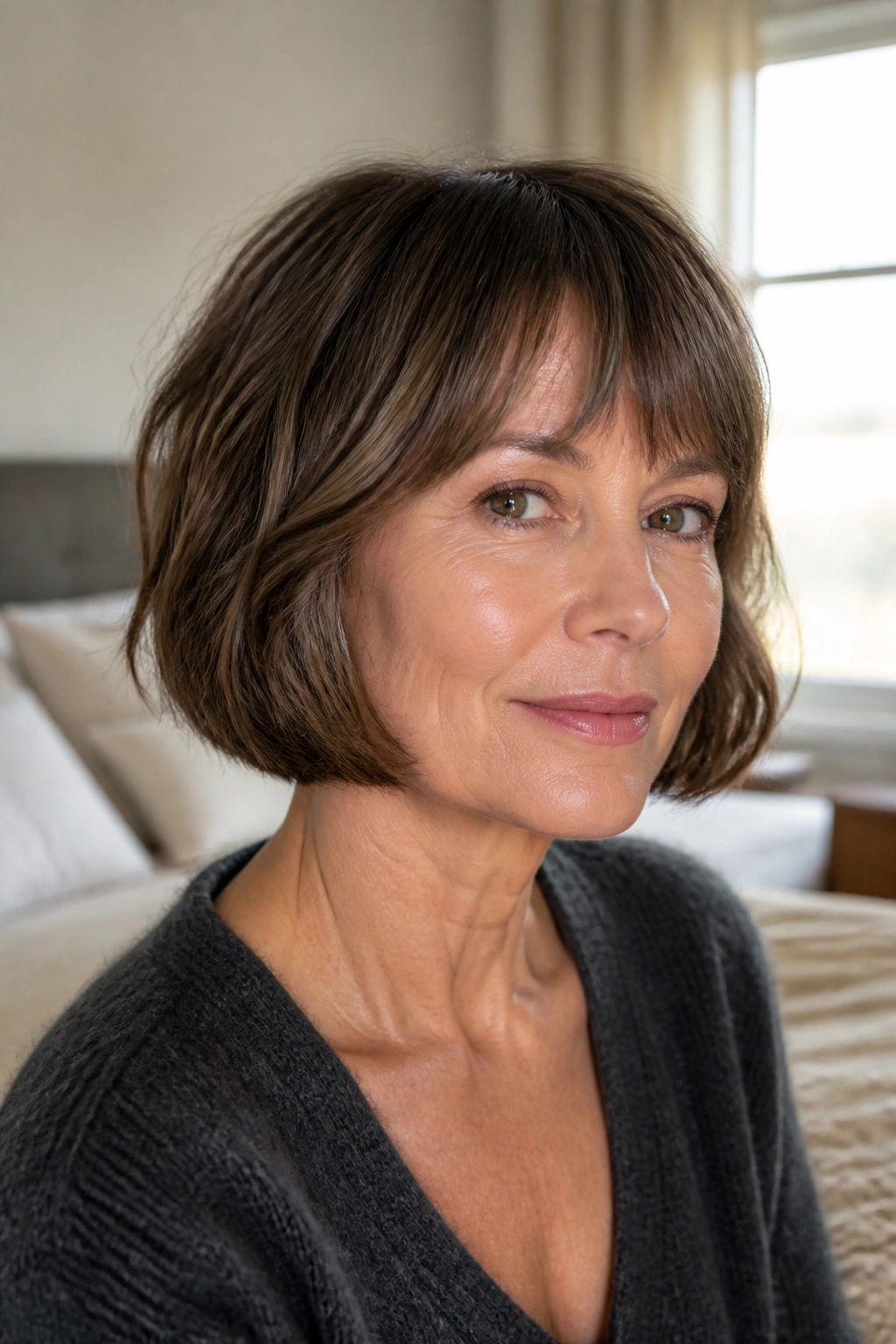
There is a reason this cut keeps showing up on women who want polish without fuss.
A French bob usually sits near the jawline or a touch above it, and the modern version is softer than the old sharp version. A slight bend at the ends keeps the line from feeling too square. The style has a little attitude, but it does not need to be loud about it.
The best French bob for mature hair usually has a little air at the sides and maybe a soft fringe, not a heavy one. Straight hair wears it cleanly. Slightly wavy hair gives it that lived-in shape that looks effortless without trying to look effortless, which is a phrase I normally dislike but can’t avoid here because it fits the result.
If your neck is one of your best features, this cut shows it off. If your jaw is softer, it frames it nicely. A 1-inch curling iron or even a round brush through the ends is enough to give that bend. Keep the finish loose.
14. Sleek Shoulder-Length Cut for Women at 50
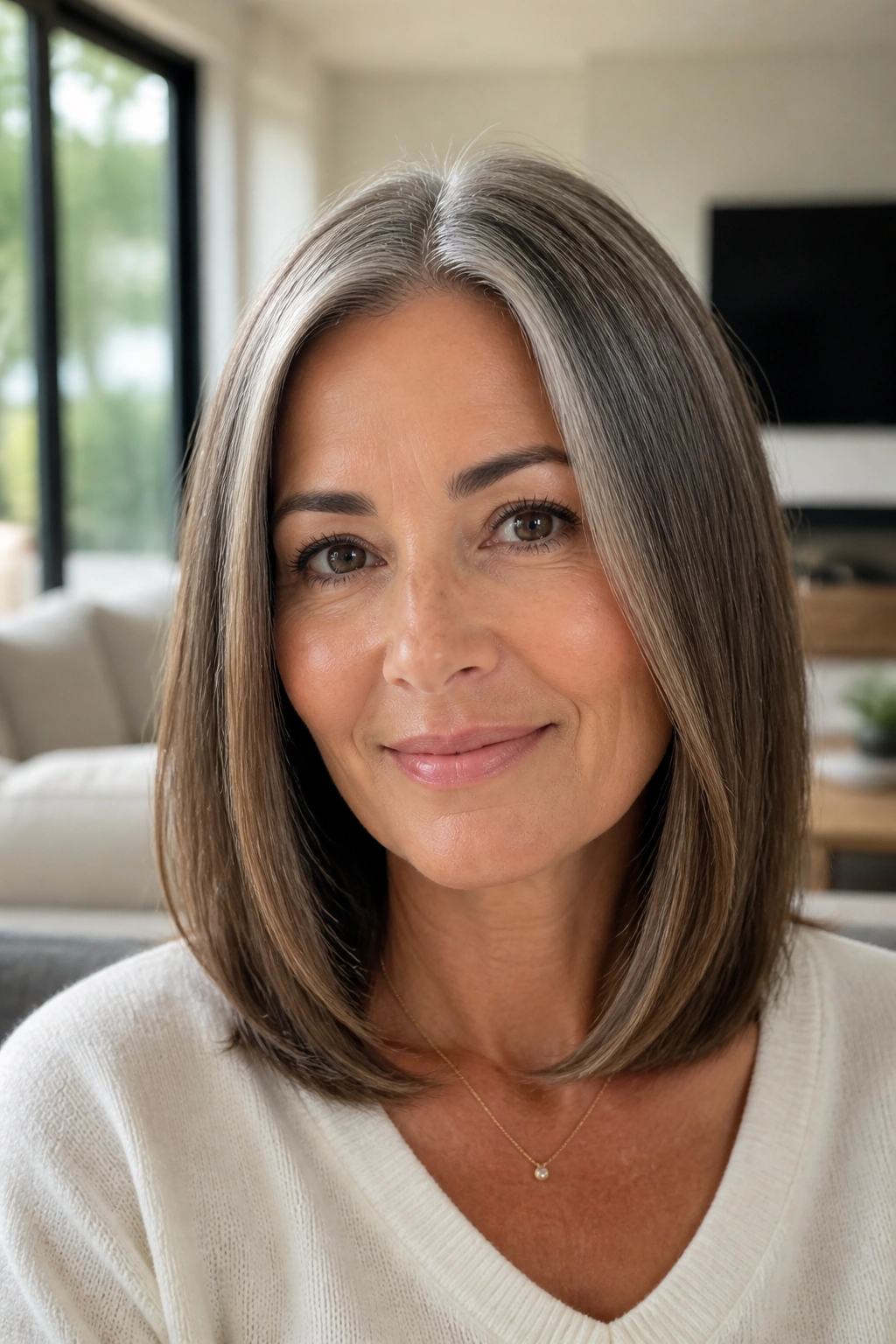
A sleek shoulder-length cut is the one I recommend for women who want polish without a daily fight.
The reason it works so well is the line. Shoulder length gives you enough hair to move, but not so much that the ends start to look tired. Add invisible layers — the kind that remove weight without announcing themselves — and the style stays smooth without becoming flat. It also lets gray hair look deliberate, which matters when silver strands are still coming in unevenly.
This cut is especially good if you wear your hair mostly straight or with a slight bend at the ends. A center part can make it feel clean and modern. A soft side part gives a little more lift. Either way, the cut should sit at or just below the shoulders so it doesn’t keep catching on sweaters and collars.
- Best if you want: A neat, low-friction daily style
- Ask for: Light internal layering and a clean perimeter
- Style with: A blow dryer and paddle brush, or a flat iron only on the top layer
- Skip if: You want a lot of natural volume at the sides
15. Feathered Flip with Volume at the Ends
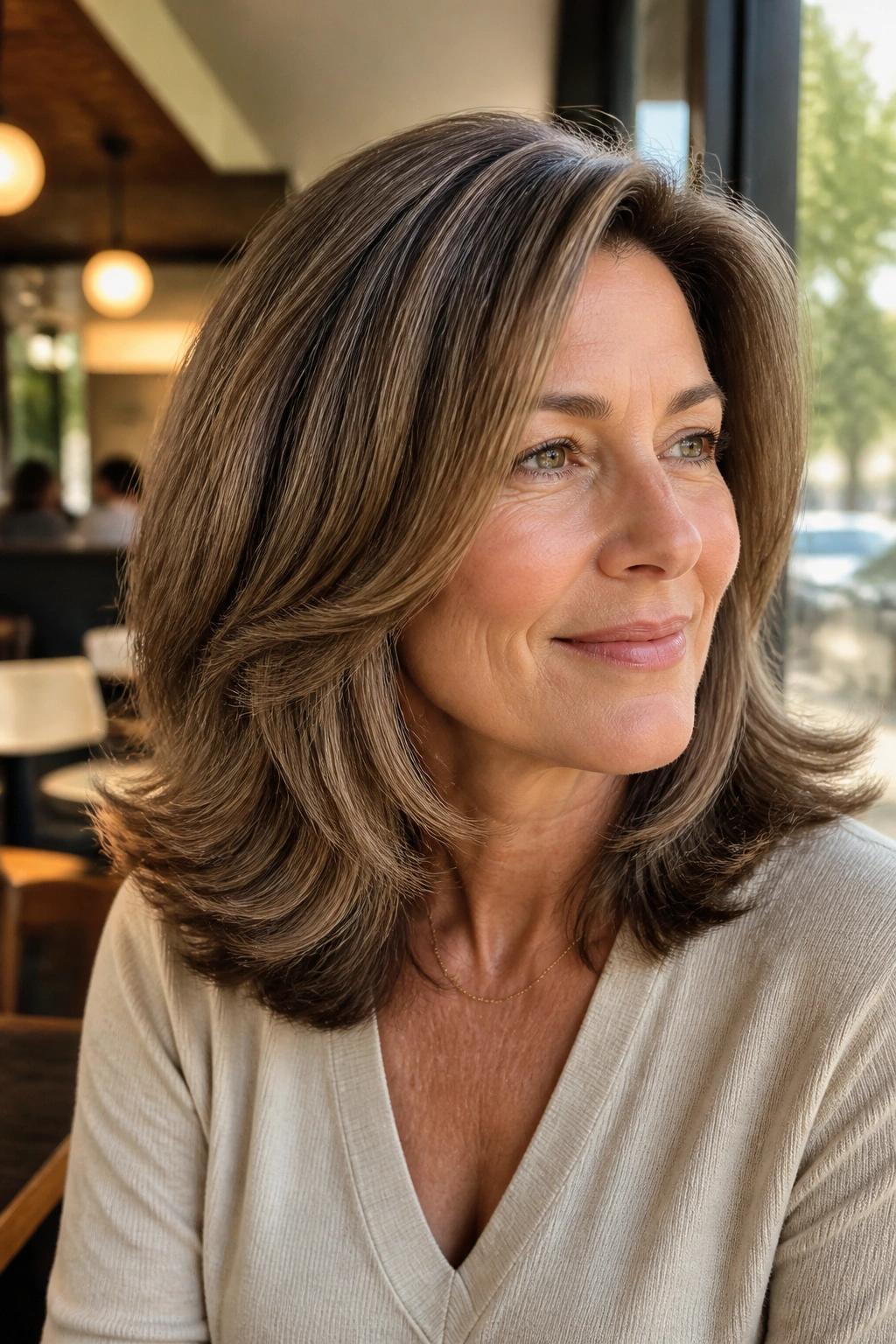
Feathered ends are back for a simple reason: they make medium-length hair move.
This isn’t the stiff flip from old salon magazines. The better version keeps the top smooth and lets the ends turn out just enough to catch the eye. On women at 50, that little flip can keep the haircut from hanging straight and dull around the shoulders. It also works well with gray hair because the light hits the feathering and makes the shape easier to see.
A feathered flip suits straight to slightly wavy hair best. If your hair is very curly, the ends may turn out more than you want unless the cut is shaped carefully. The layers should begin around the jaw or cheekbone, then taper softly toward the bottom. That keeps the movement in the right place.
Styling Notes
Use a medium round brush or large hot rollers if you want a fuller finish. A quick pass with the brush just at the ends is enough. No need to overwork the whole head.
This is one of those cuts that looks better when the hair is clean but not squeaky dry. A tiny bit of softness gives the feathering life.
16. Short Stack Bob with Lift in Back
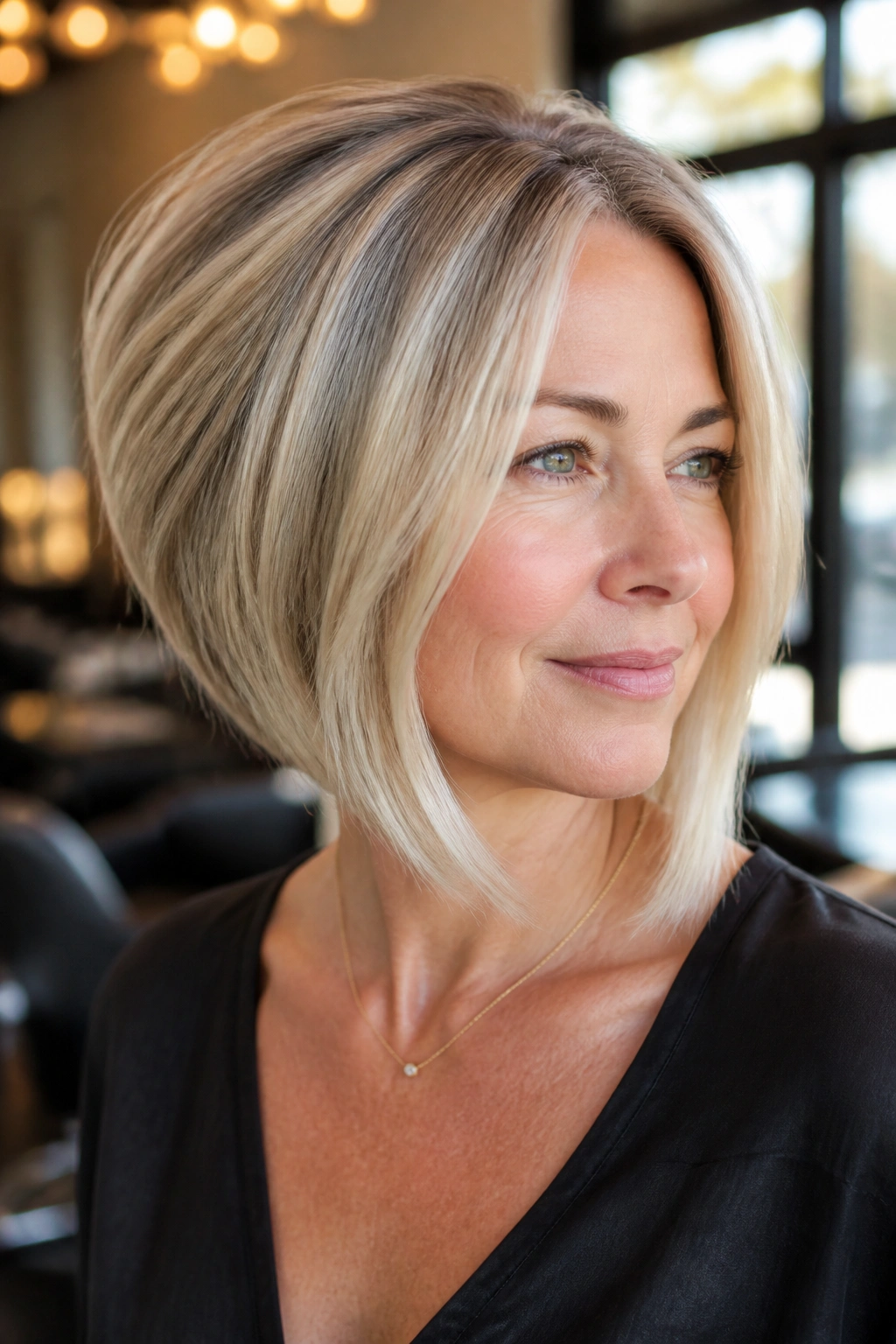
A stacked bob gives the back of the head shape, which flat hair badly needs.
The graduation at the nape builds volume where it matters most, then the front pieces stay a little longer to keep the cut from looking boxy. That makes it a strong choice for women with straight or fine hair that collapses at the roots. It also helps if you like a clean neckline, because the back stays neat between trims.
Unlike a one-length bob, a stack bob has more built-in shape, so the stylist’s angle matters. Too much stacking and the back puffs out. Too little and the cut loses its lift. The sweet spot is a gentle rise from the nape into the crown, not a dramatic shelf.
I like this cut on women who wear glasses or small earrings because it keeps the silhouette tidy around the ears and neck. It also grows out fairly well if the transition from short back to longer front is subtle. Keep the front no longer than the collarbone if you want the shape to stay crisp.
17. Soft Undercut Pixie for Thick Hair
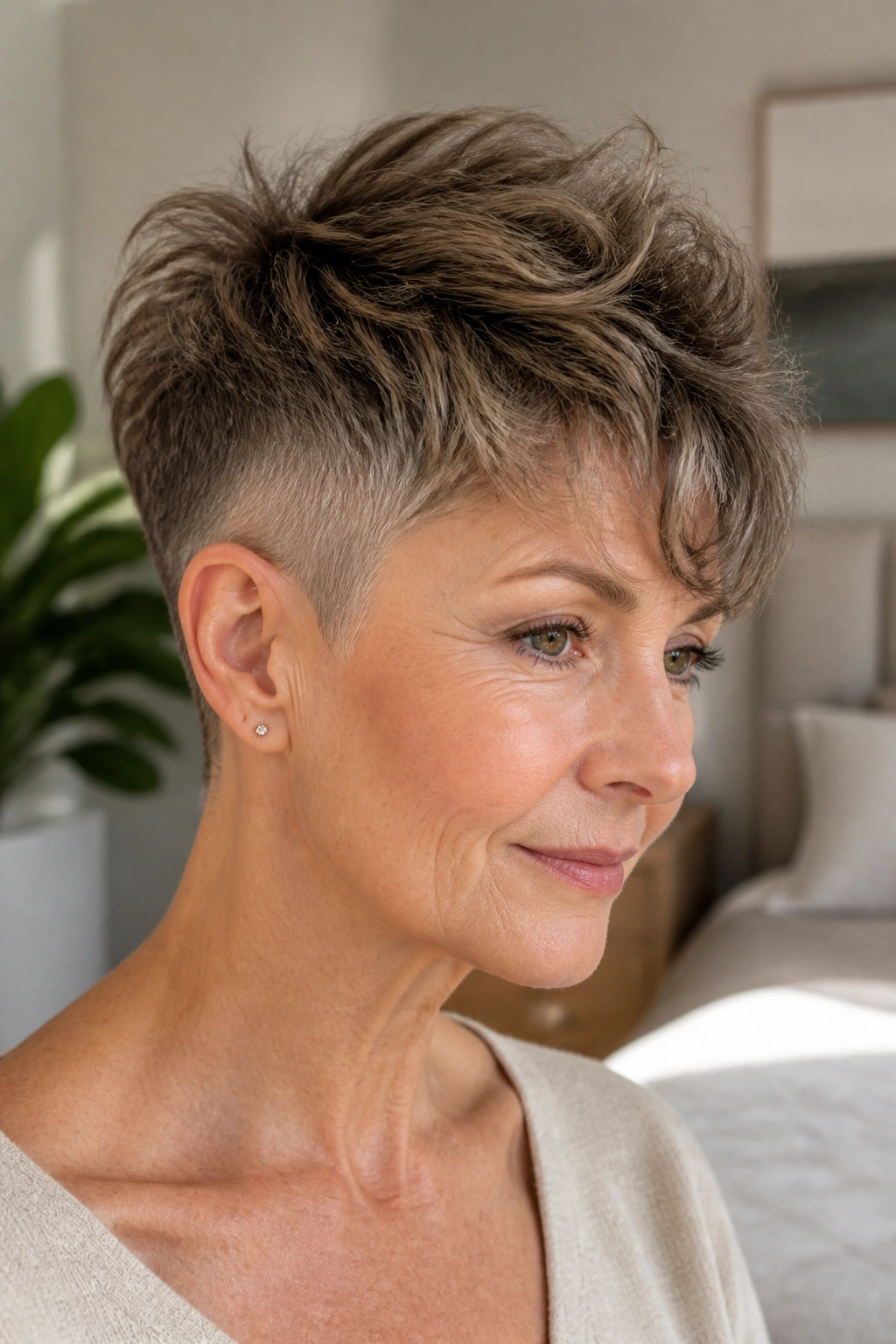
Thick hair can swallow a pixie if the cut isn’t handled carefully.
A soft undercut solves that by removing bulk under the crown or at the nape while leaving the top and front feminine and movable. The word “undercut” sounds dramatic, but it does not have to look shaved or edgy. In a softer version, the hidden bulk is the real point. The shape stays lighter, the hair dries faster, and the back does not feel like a helmet.
What to Ask for at the Salon
- An invisible undercut through the lower nape or below the crown
- Enough length on top to sweep forward or sideways
- Soft edges around the ears, not hard clipper lines
- Texture only where bulk needs to be reduced
This is a very practical haircut for women whose hair feels too dense to control. It also helps if your hair expands in humidity. Less bulk means less puff, and that is a win.
The one caution: thick hair can hide a bad undercut for a week and then reveal it all at once when it grows out. So the cut needs to be clean. No shortcuts there.
18. Shoulder-Grazing Cut with Side Fringe
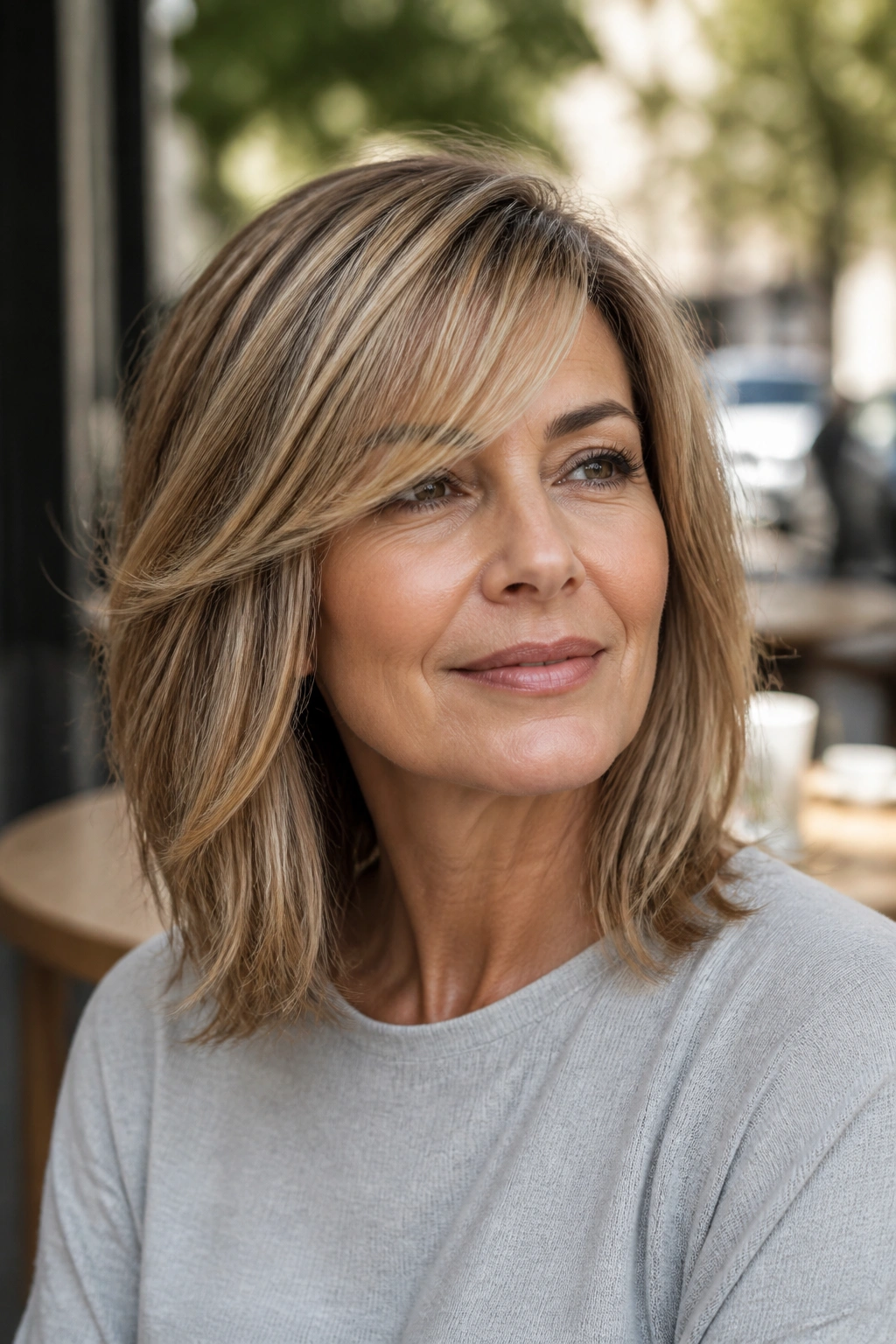
You do not have to cut your hair short at 50.
That idea gets repeated so often that it starts to sound like a rule, and it isn’t one. A shoulder-grazing cut with a side fringe is a good answer for women who still want length but need the hair to feel lighter around the face. The side fringe softens the brow and can make the whole cut look more relaxed, less severe.
This style works especially well when the shoulders are one of the places hair tends to hang heavily. Bringing the line right to the shoulder keeps enough length for ponytails and clips, but the ends no longer drag the face down. The side fringe also gives you a place to play if your hairline has changed a little or if you want to soften the forehead without a full bang.
Keep the fringe light and movable. Heavy side fringe gets sweaty, then annoying, then clipped back every day. No one needs that.
This is one of the best middle-ground styles for women who are not ready for a short cut but are tired of fighting long hair.
19. Wash-and-Go Layered Cut for Natural Waves
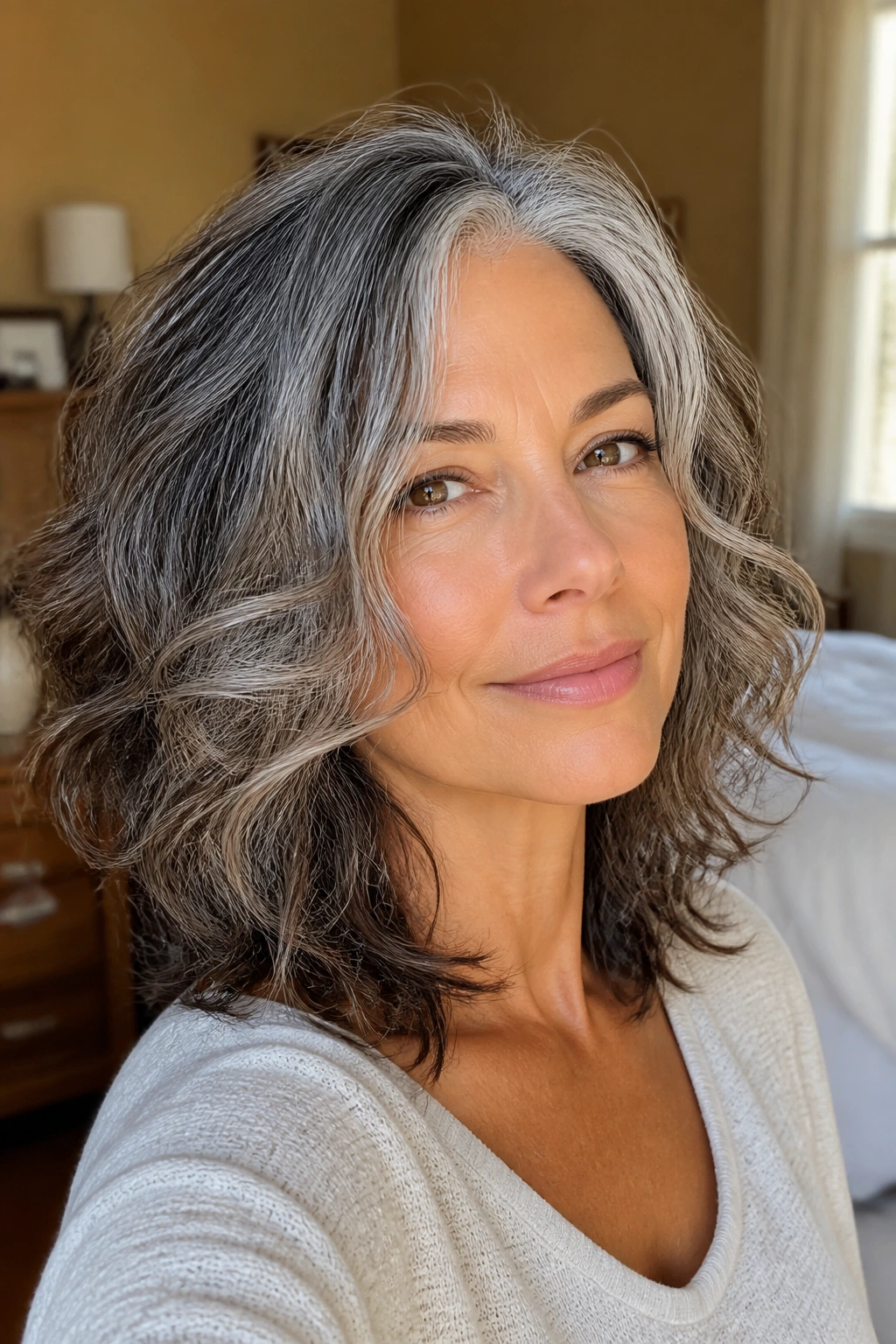
If your hair bends on its own, why fight it every morning?
A wash-and-go layered cut respects the wave pattern instead of flattening it. The layers should follow the movement of the hair, not chop into it at random. That’s the whole trick. Done well, the cut gives waves enough space to separate and form without turning into a frizzy cloud.
How to Air-Dry or Diffuse It
Start with a light leave-in conditioner, then add a wave cream or mousse from mid-length to ends. Scrunch with your hands. Not aggressively. Just enough to coax the wave pattern. If you diffuse, use low heat and medium speed, and stop when the hair is about 80% dry. Over-diffusing makes the wave pattern frizzier than it needs to be.
- Keep the layers longer through the bottom half
- Let the front pieces fall around the cheek or jaw
- Avoid cutting too much texture into the ends
- Use a wide-tooth comb in the shower, then leave the hair alone
This cut is a gift on mornings when you do not want to spend twenty minutes negotiating with your hair. It gives you a good shape with less effort, and that kind of haircut earns its place fast.
20. Smooth Blowout Cut with Light Face Framing
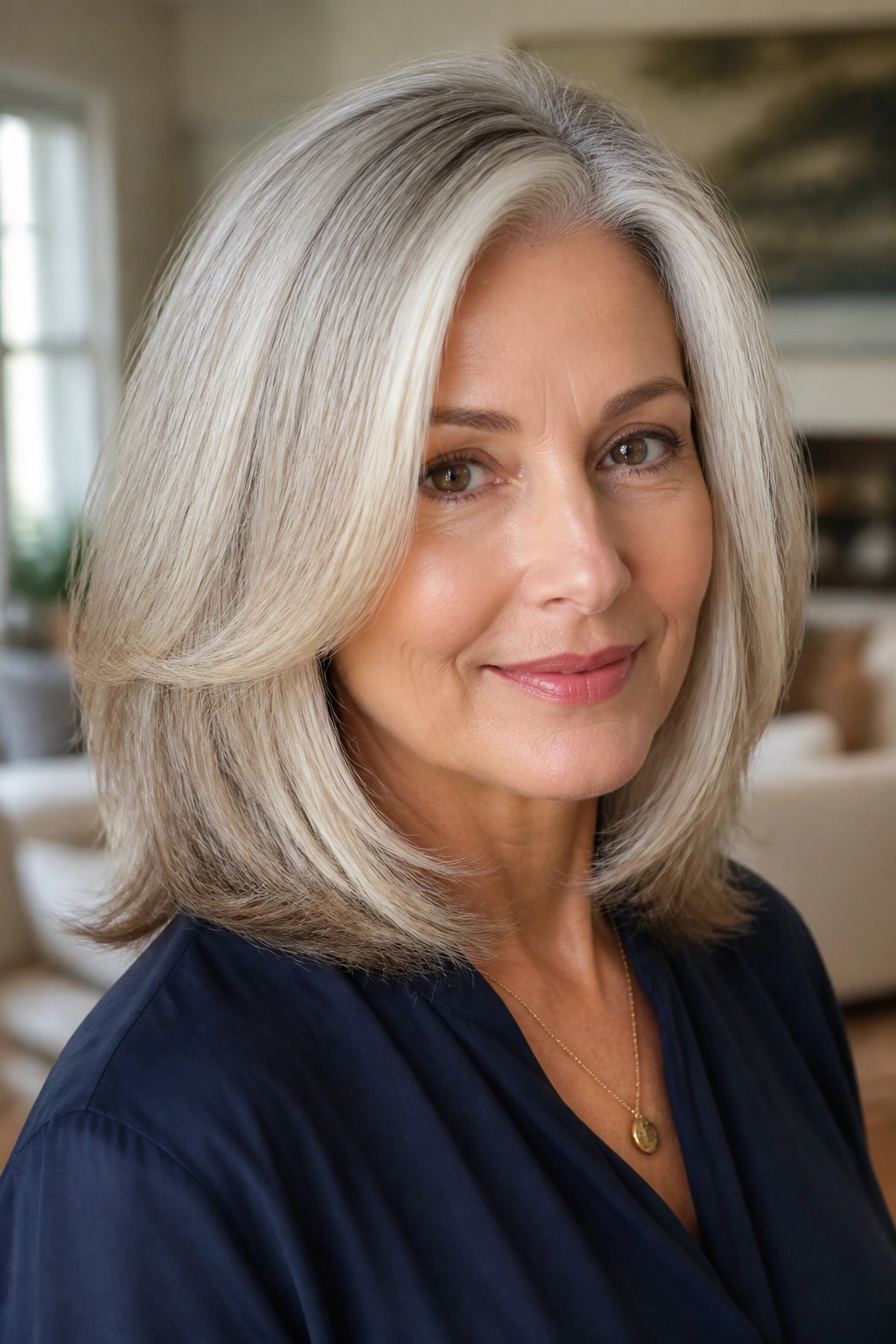
Some women want one haircut that can go straight, bendy, or fully blown out.
A smooth blowout cut with light face framing is for that woman. It keeps the outline clean, but it leaves enough movement around the face to stop the style from looking stiff. The best version sits around the shoulders or just below, with soft layers that begin under the cheekbones. That keeps the front flattering without thinning out the ends.
This is a strong choice if you like a polished finish, especially for dinners, events, or workdays when you want your hair to look done without looking sprayed into place. Gray hair takes a blowout well when the cut is clean, because the silver strands reflect light and make the shape show up clearly. A round brush, a heat protectant, and a little patience go a long way.
I like this cut because it has range. Wear it smooth one day, tuck one side behind the ear the next, then let it air-dry with a loose bend when you can’t be bothered. That flexibility matters more than most people think. Hair that can behave three different ways without a fight is worth keeping around.
One last thing: if your ends are dry, trim them before you chase a blowout look. Dry ends ruin the whole effect. Always.
