



A good haircut after 40 earns its keep. If it needs a round brush, a curling iron, three products, and a small prayer just to look awake, I’d call that a bad bargain.
Modern hairstyles for women over 40 work best when they do three things at once: soften the face, keep the shape under control, and play nicely with the texture you actually have. That texture might be finer than it used to be. It might be coarser. Gray hair can feel wirier, and silver strands often show every blunt line and every sloppy layer, which is why the cut matters so much.
Modern does not mean severe. It does not mean young, either. It means the haircut looks intentional on a Tuesday, not only in a salon mirror.
Some women want length without heaviness. Others want a short cut that still feels feminine, or a style that lets gray hair look crisp instead of unruly. The good news is that there are plenty of shapes that do exactly that, and the best ones are simpler than people think.
1. Collarbone Lob with Soft Ends

The collarbone lob is the haircut I recommend more than almost anything else when someone wants a change without drama. It sits in that sweet spot between short and long, which means it still feels feminine, but it does not drag the face down. The soft ends keep it from looking blunt in a stiff, helmet-like way.
Why It Works on Gray Hair
Gray and silver hair can look gorgeous in a lob because the length lets the color move. The light catches the shape, not just the shade. A slightly piecey finish also helps thicker gray strands avoid that heavy blocky look.
- Ask for the length to land right at the collarbone.
- Keep the perimeter soft, not chopped into tiny pieces.
- Add a few face-framing layers that start around the cheekbone.
- Style it with a bend, not pin-straight polish.
Best detail: tuck one side behind the ear and leave the other loose. It sounds tiny. It changes everything.
2. French Bob with Cheekbone Fringe
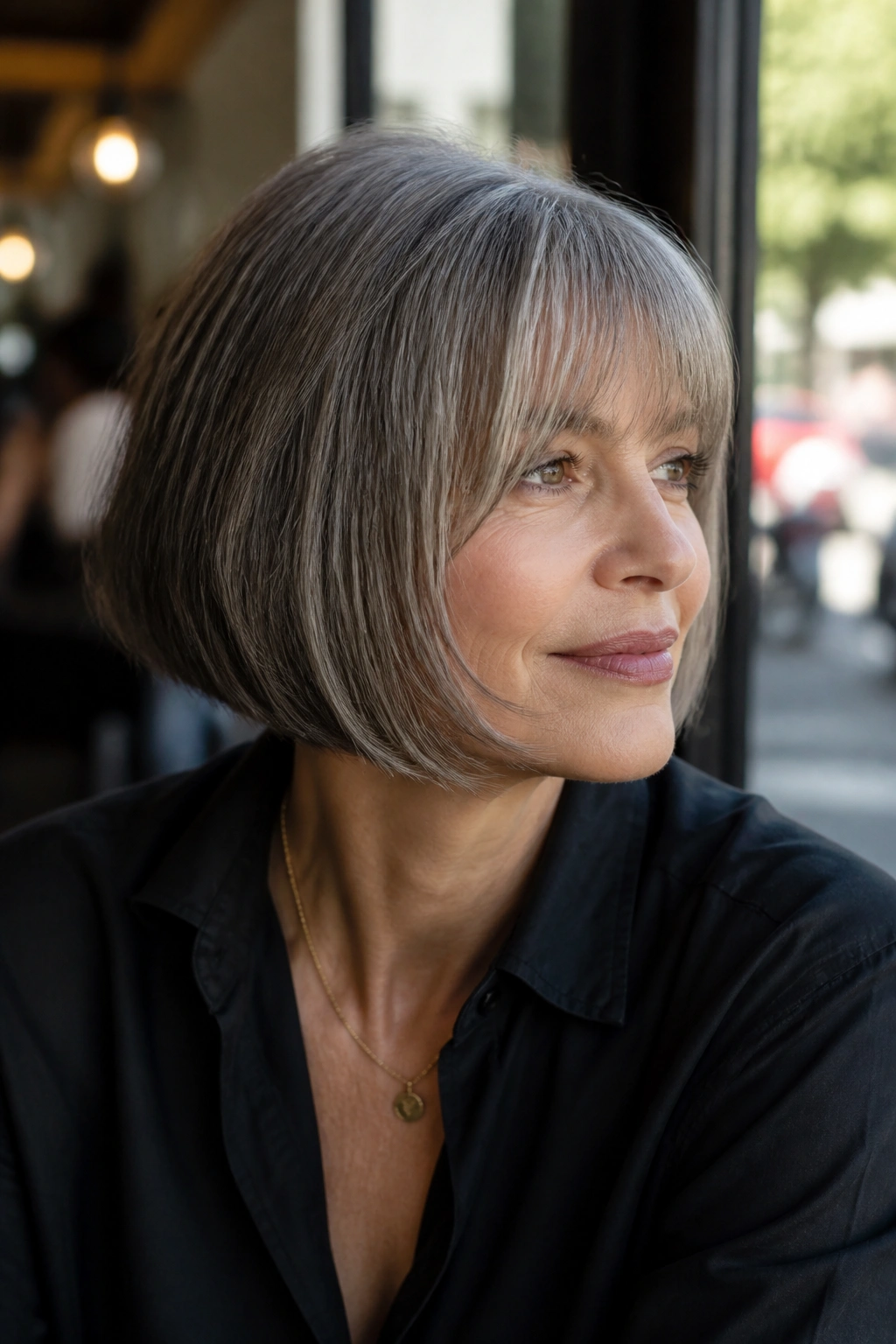
A French bob is sharp in the best way. Not severe. Sharp. The line sits around the jaw or just above it, and the fringe grazes the cheekbones instead of sitting in one heavy curtain across the forehead. That little bit of air around the face makes the whole cut feel modern fast.
This is one of those styles that looks expensive even when you do almost nothing to it. Air-dry it with a little cream, rough it up with your fingers, and the shape does the rest. Straight hair gets instant structure. Wavy hair gets a little attitude.
If you wear gray hair, this cut can be excellent because the clean line makes the silver look deliberate. It can also be ruthless if the bob is cut too wide through the sides. Keep the shape close to the head. Small head, strong line. That’s the point.
3. Long Layers with Face-Framing Pieces

Can you keep long hair after 40? Absolutely. The mistake is keeping all the weight and hoping it somehow behaves. It won’t. Long layers with face-framing pieces keep the length but remove the drag that makes older hair look tired.
The best version starts the shortest face frame around the jaw or cheekbone, not halfway up the ear. That gives lift without making the front look too chopped up. If your hair is wavy, those layers will encourage movement. If it’s straight, they stop the whole style from hanging like a curtain.
Where the Shortest Layer Should Fall
A good stylist should look at your face shape, your part, and how you actually wear your hair. That matters more than the layer count.
- Jaw-length face frame for stronger cheekbone emphasis
- Cheekbone-length frame for softer, more lifted shape
- Minimal layering through the back if your ends are thin
- Longer layers if you like ponytails and braids
Keep the ends healthy. Long hair with wispy, see-through tips looks older than a shorter cut ever will.
4. Side-Parted Bob with Volume at the Root
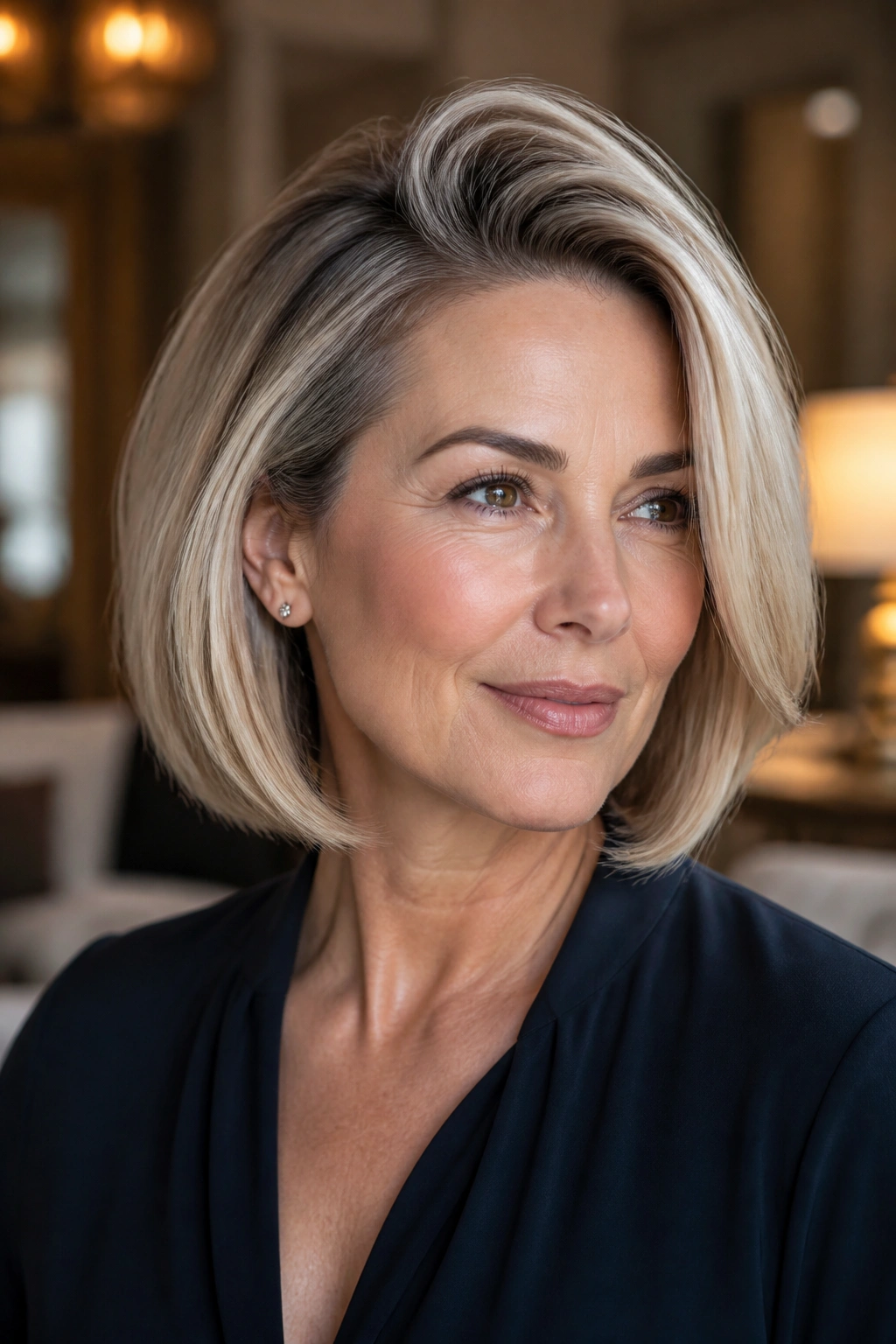
A side part can be a rescue job for flat hair. It shifts the weight, lifts the crown, and gives the bob a little asymmetry without making it fussy. If your hair collapses at the top by lunch, this is worth trying.
I like this cut for women whose hair feels a bit fine at the front but fuller in the back. The side part creates a small pocket of height where you need it most. That’s the whole trick. You do not need a giant blowout. You need a shape that works with the head you have.
- Part it about 1 to 2 inches off center.
- Keep the nape a touch shorter than the front.
- Blow-dry the roots in the opposite direction first.
- Finish with a light mist of flexible spray.
It’s polished without looking overdone. That balance is hard to fake.
5. Textured Pixie for Women Over 40

A textured pixie can be fantastic, but only if it has enough softness at the top. The blunt, blocky pixies from bad salon history are not the goal here. You want movement. You want a little lift in the crown. You want edges that look feathered, not carved from one piece of plastic.
This cut is especially kind to fine hair because it removes dead weight. It also works well with silver hair, since the short length shows off tone changes and gives the color dimension. I’ve always liked pixies that leave a bit more length at the front or crown. They feel less severe, and they grow out better.
The maintenance is real, though. A pixie needs shape. If you hate trims, this one may annoy you. If you like a wash-and-go routine, it can be a dream.
6. Curly Shag with Curtain Bangs
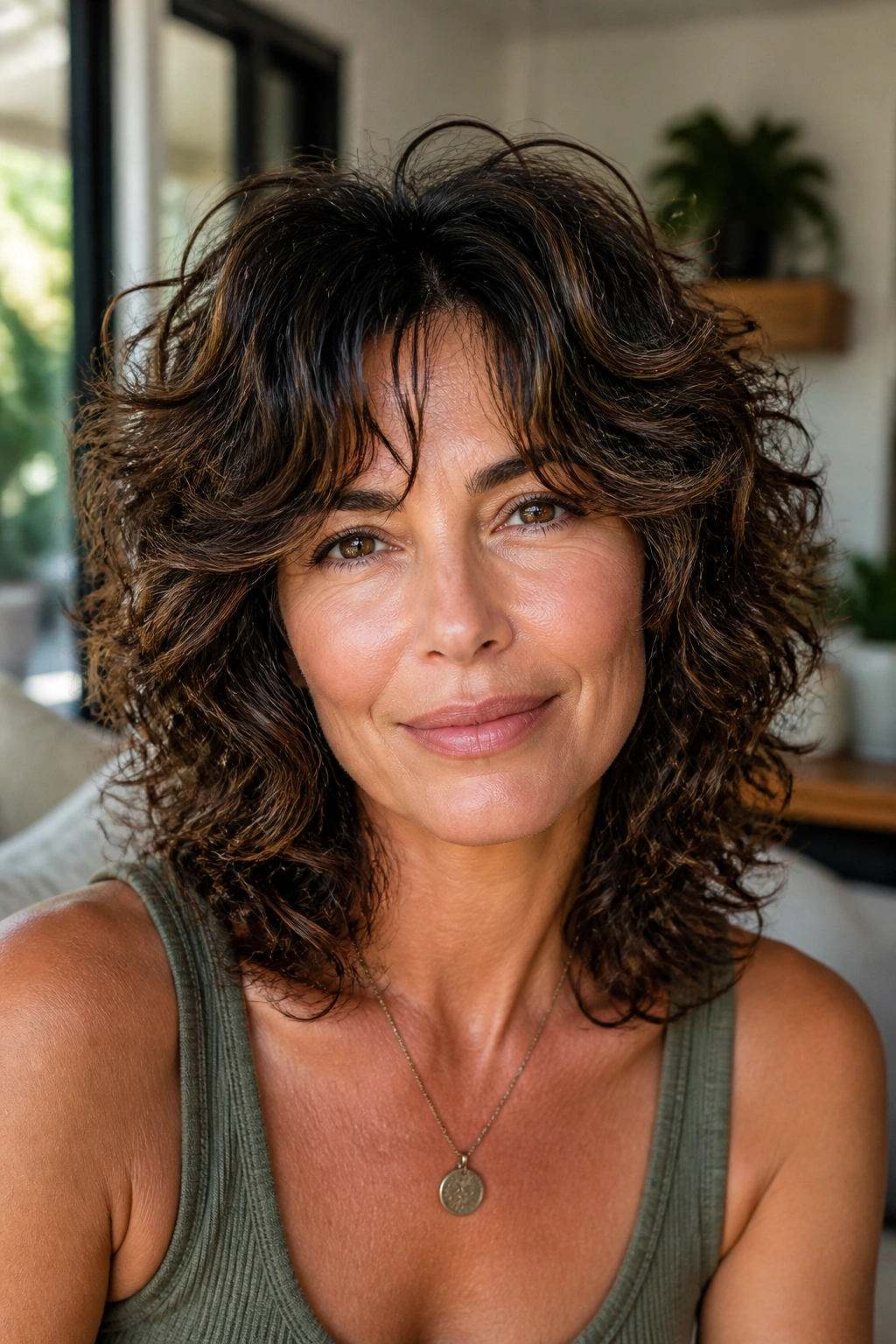
A curly shag is not the wild, messy thing people sometimes imagine. The better version has structure at the crown, room through the sides, and curtain bangs that open away from the face instead of sitting like a wet towel. Done well, it gives curls definition without turning them into a triangle.
This cut works because curls need space. They also need layers placed with some thought. Too many short layers and you get a puff. Too few and the shape drags. Curtain bangs help a lot because they soften the forehead and blend into the rest of the cut instead of fighting it.
The result feels easy. That’s the appeal. A little mousse, a good diffuser, and the hair looks like it knows what it’s doing.
7. Shoulder-Length Feathered Cut

Shoulder-length feathering is one of those old ideas that came back with better taste. The modern version is softer and less blown-out than the ones many people remember. It gives movement around the face and keeps the ends from feeling heavy against the shoulders.
What to Ask for at the Chair
Ask for feathering that starts below the cheekbone and opens outward, not choppy layers that stick out in every direction. That difference matters.
- Keep the ends brushing the shoulders or just above them
- Add soft layers around the front only
- Avoid too many short pieces through the crown
- Use a round brush only at the front if you like polish
This cut is a good match for women who want to wear hair down most of the time but still want some lift. It’s friendly. It behaves.
8. Blunt Bob with Hidden Movement

A blunt bob can look brutally clean in the best way, especially on gray hair. The trick is not to make it too flat. If the line is too rigid, the cut starts to feel hard. Hidden movement fixes that. A few interior layers, placed where the hair wants to bend, keep the bob from sitting like a slab.
I like this shape when the hair is healthy and the ends are strong. Gray strands often shine beautifully in a blunt line because the edge looks crisp. You get that little hit of contrast between smooth and strong, which is much more interesting than loose, shapeless length.
The best version usually lands somewhere between chin and jaw. Short enough to show the line. Long enough to tuck behind the ear. That’s a useful bob.
9. Tapered Pixie with Longer Crown

A tapered pixie with a longer crown has more lift than a classic crop and more edge than a soft shag. The back and sides are close, while the top keeps enough length to sweep, spike, or bend over with your fingers. It is a smart cut for women who want short hair that still moves.
This shape works especially well with glasses. The haircut does not crowd the face, and the longer crown keeps the style from looking flat against the temples. If your hair is coarse or gray, the taper helps control bulk around the ears and neck.
A little styling paste goes a long way here. Too much, and the hair starts to look greasy. Too little, and the shape disappears. Medium hold is the sweet spot.
10. Sleek Low Bun with a Soft Side Part
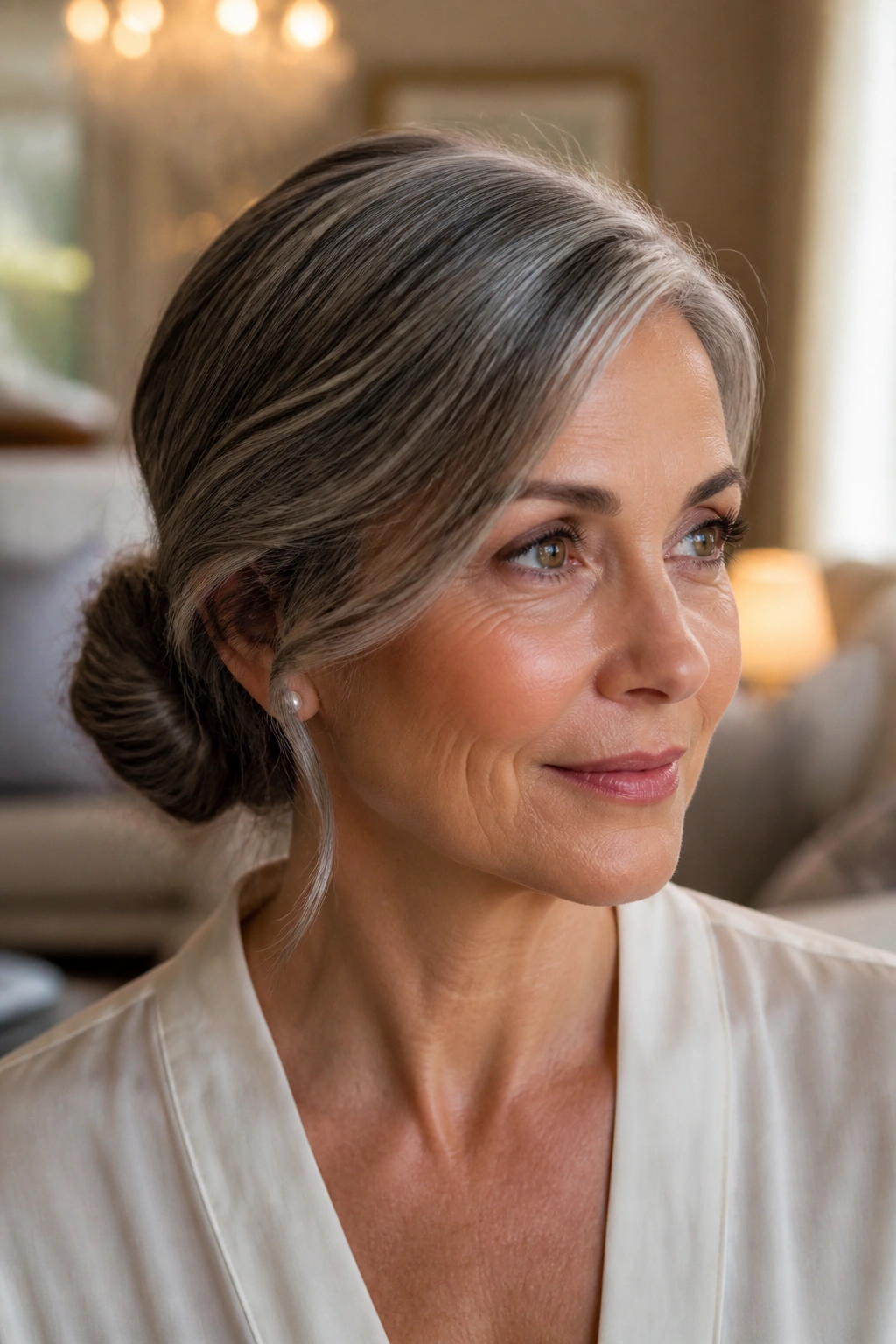
A low bun sounds simple because it is simple. That’s why it works. Pull the hair back too tightly and the style gets severe. Leave a little softness at the side part and around the hairline, and it suddenly feels modern instead of matronly.
This is a good option when your hair is medium to long and you want polish without heat styling. It’s also a decent choice for gray hair because the smooth surface shows off the color nicely. The bun itself should sit low, near the nape, with a wrapped section hiding the elastic.
Small Details That Keep It from Looking Severe
- Keep the side part soft, not sharp.
- Pull a few fine strands loose near the temples.
- Add a little volume at the crown before you tie it back.
- Use a cream or serum so the surface looks smooth, not crunchy.
A bun can be plain. Or it can look considered. The difference is about 30 seconds.
11. Mid-Length Blowout Layers
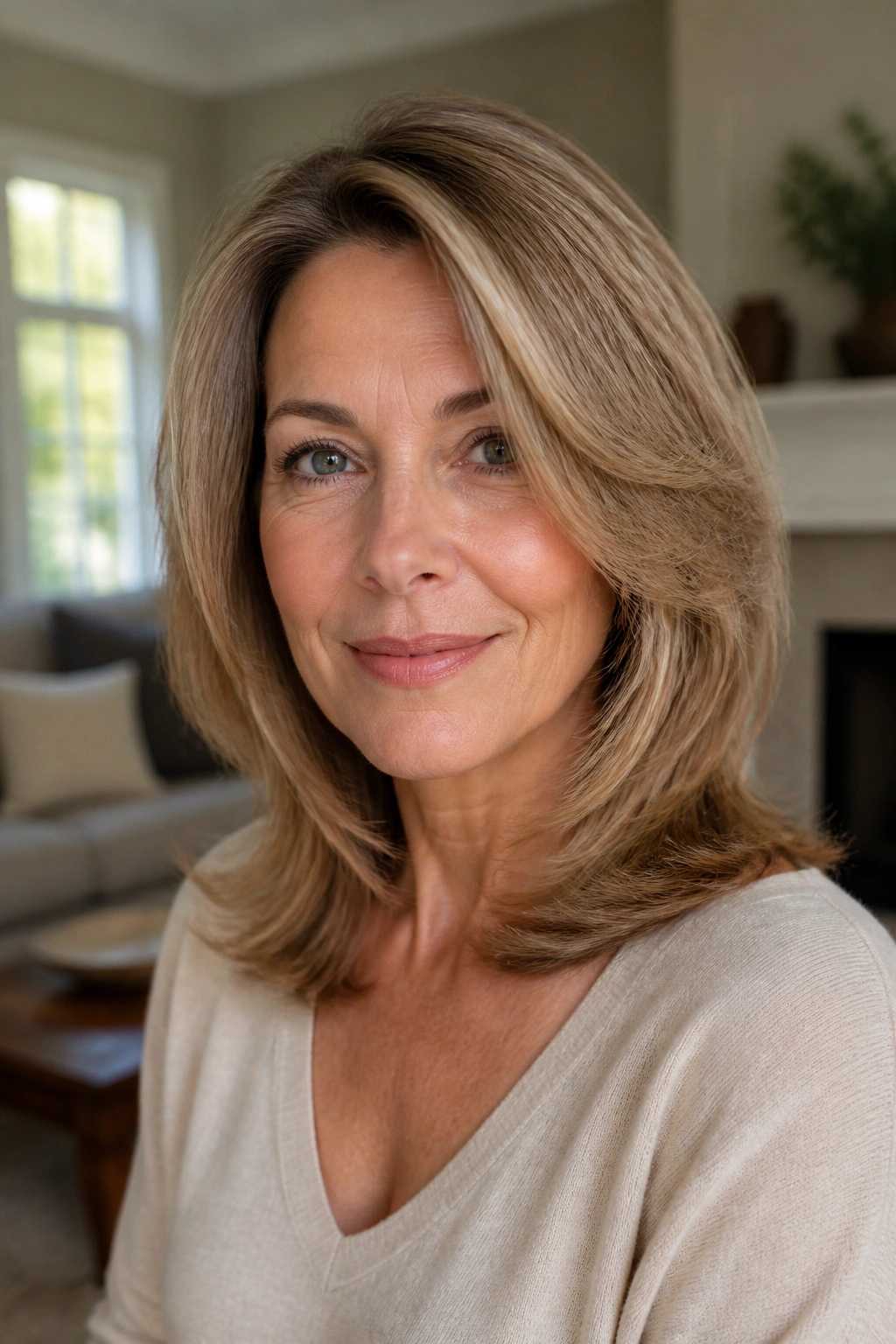
Why does this cut show up so often on women who want hair that feels polished without feeling stiff? Because it solves a real problem: it gives shape to the sides while keeping enough length for movement. Mid-length blowout layers work especially well if your hair falls just below the shoulders and gets heavy at the bottom.
The layers are usually rounded rather than choppy. That gives the ends a soft flip when you blow-dry them with a round brush. The front frames the face, and the rest of the hair moves instead of hanging straight down like a curtain.
If you hate flat roots and limp ends, this cut earns its keep fast. It looks finished on a good day and still holds up on an ordinary one.
12. Asymmetrical Bob with a Tucked Side

An asymmetrical bob gives you shape without shouting. One side sits a little longer, or the part pushes the weight to one side, and the whole haircut gets a bit of tension. I prefer this to a perfectly even bob when the face needs some length or when the jawline feels strong and you want to soften it.
It is not a gimmick. Done well, the asymmetry is subtle enough that people notice the effect before they notice the math. The tucked side can skim the jaw, while the longer side creates a nice diagonal line.
Best for: women who want a little attitude, a little structure, and a bob that does not feel predictable. If that sounds like you, this one is worth a serious look.
13. Feathered Shoulder Cut
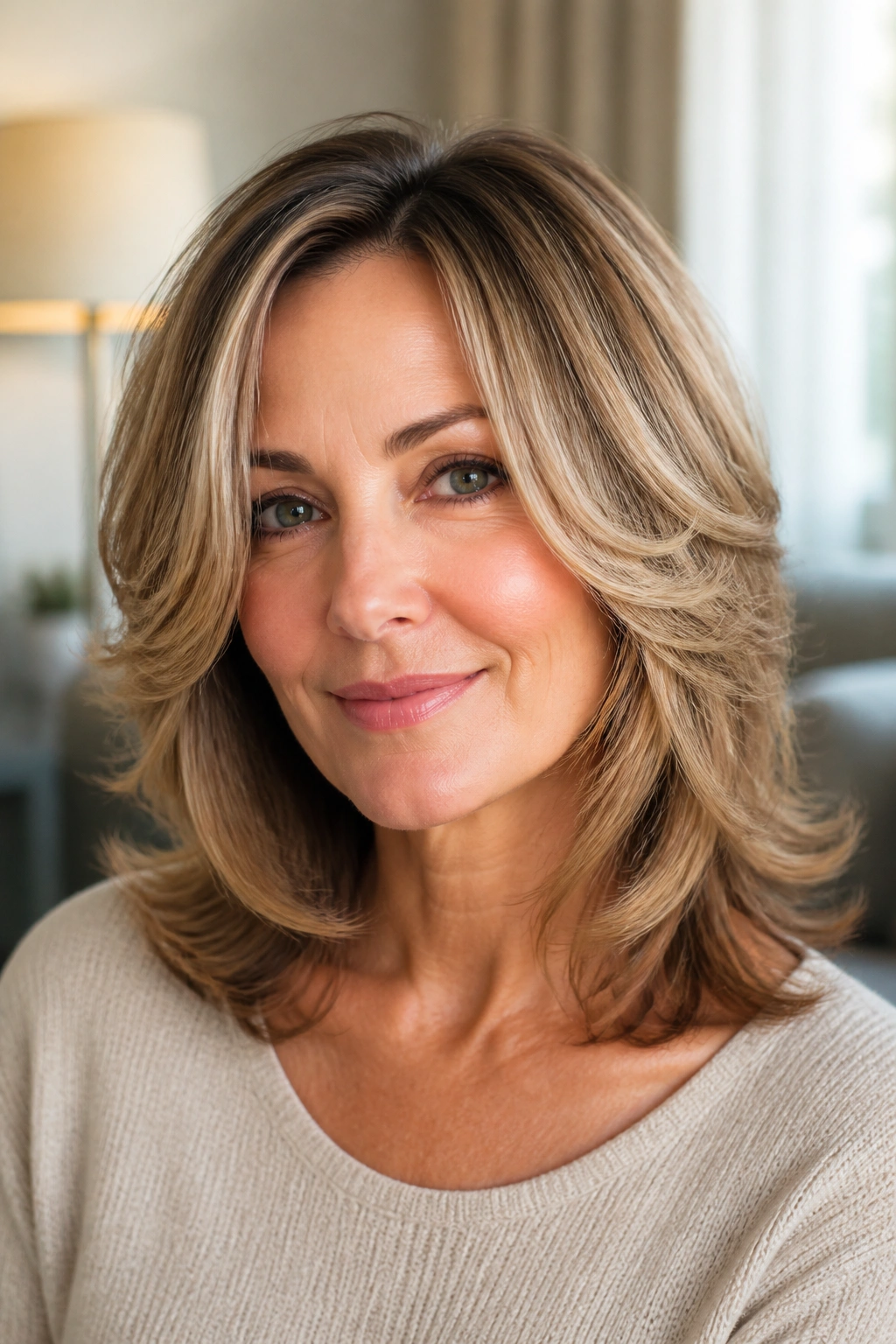
There’s a reason feathered cuts keep showing up in different forms. They make shoulder-length hair feel lighter without chopping it to pieces. The shape opens away from the face and keeps the ends from resting in one solid block.
I like this cut for people growing out a shorter bob or trying to bring life back into thick hair. It also works on gray hair that feels coarse around the hairline, because the feathering removes some of the visual density. The cut should feel soft, not wispy in a sad way.
The Shape to Ask For
Ask for feathering that starts around the cheek and continues through the sides. The back can stay a little fuller if you want your hair to feel healthy.
A little volume spray at the roots helps. So does flipping the ends under or out, depending on your face shape. Both can work. Choose the one that looks less forced.
14. Curly Rounded Bob

A rounded bob for curls can be lovely when it’s cut with respect for the curl pattern. The goal is not a perfect geometric shape. The goal is a soft dome that keeps volume balanced from top to bottom. If the top is too flat, the hair looks wide. If the sides are too long, the curls drag.
This style can be very good for gray curls, which often need more moisture and a shape that prevents frizz from spreading. A rounded bob lets the curl stack naturally and keeps the overall look neat without flattening it.
Diffused drying helps. So does not touching the curls too much once they set. That part is boring, but it matters. Hands in the hair too soon, and the shape falls apart.
15. Long Silver Layers with Minimal Shaping
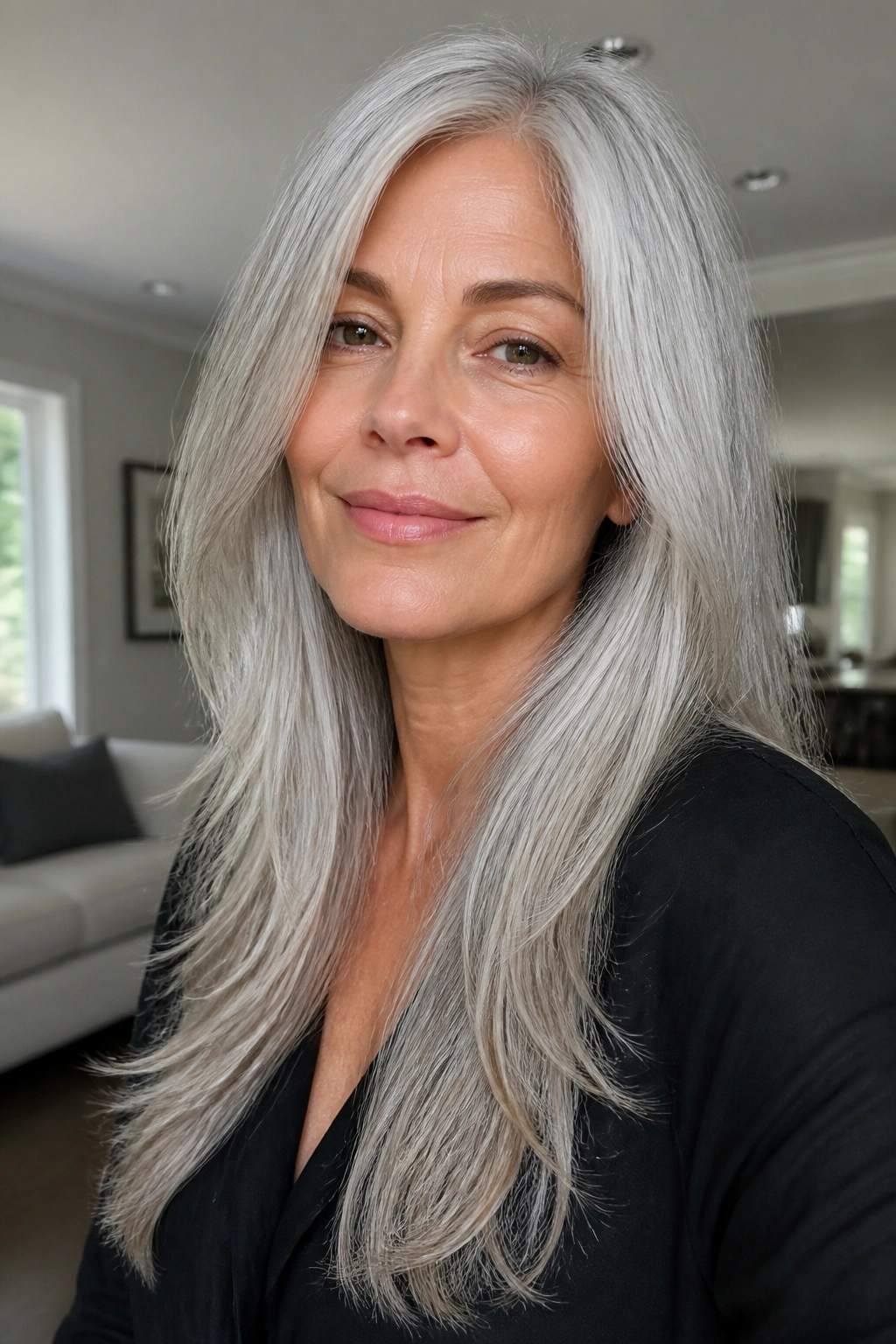
Long silver hair can look refined, but only if the cut respects the ends. Keep the shaping minimal, and let the color do the talking. Too many layers can make silver hair look thin and stringy. Too few can make it hang. There’s a narrow middle path, and it’s worth finding.
The best version has long, slow layers that start below the collarbone. That keeps the length but gives the hair a little movement when you walk. If your hair is naturally straight, the cut can look sleek and elegant. If it’s wavy, the movement feels softer and more casual.
- Keep the ends blunt enough to look full.
- Use only a few long layers through the front.
- Trim often enough to keep split ends from fraying the line.
- Add shine with a light serum, not a heavy oil.
Silver hair deserves a clean shape. It looks intentional that way.
16. Short Crop with Piecey Fringe

A short crop with piecey fringe is one of the easiest ways to keep short hair from looking too severe. The fringe breaks up the line across the forehead, and the piecey texture keeps the whole cut feeling light. This is especially handy if your hair has started to grow in different directions or if your forehead area needs a little softness.
What I like most is how little fuss it needs. You can rough-dry it, pinch in a tiny bit of paste, and stop. No full blowout required. That makes it a strong choice for busy mornings and for anyone who would rather spend five minutes than forty.
The Small Details That Matter
- Keep the fringe short enough to show the eyes.
- Ask for texture at the tips, not razor-thin ends.
- Leave a touch more length at the front if you wear glasses.
- Avoid too much thinning at the crown.
Small changes. Big difference.
17. Shoulder-Grazing Cut with Beveled Ends
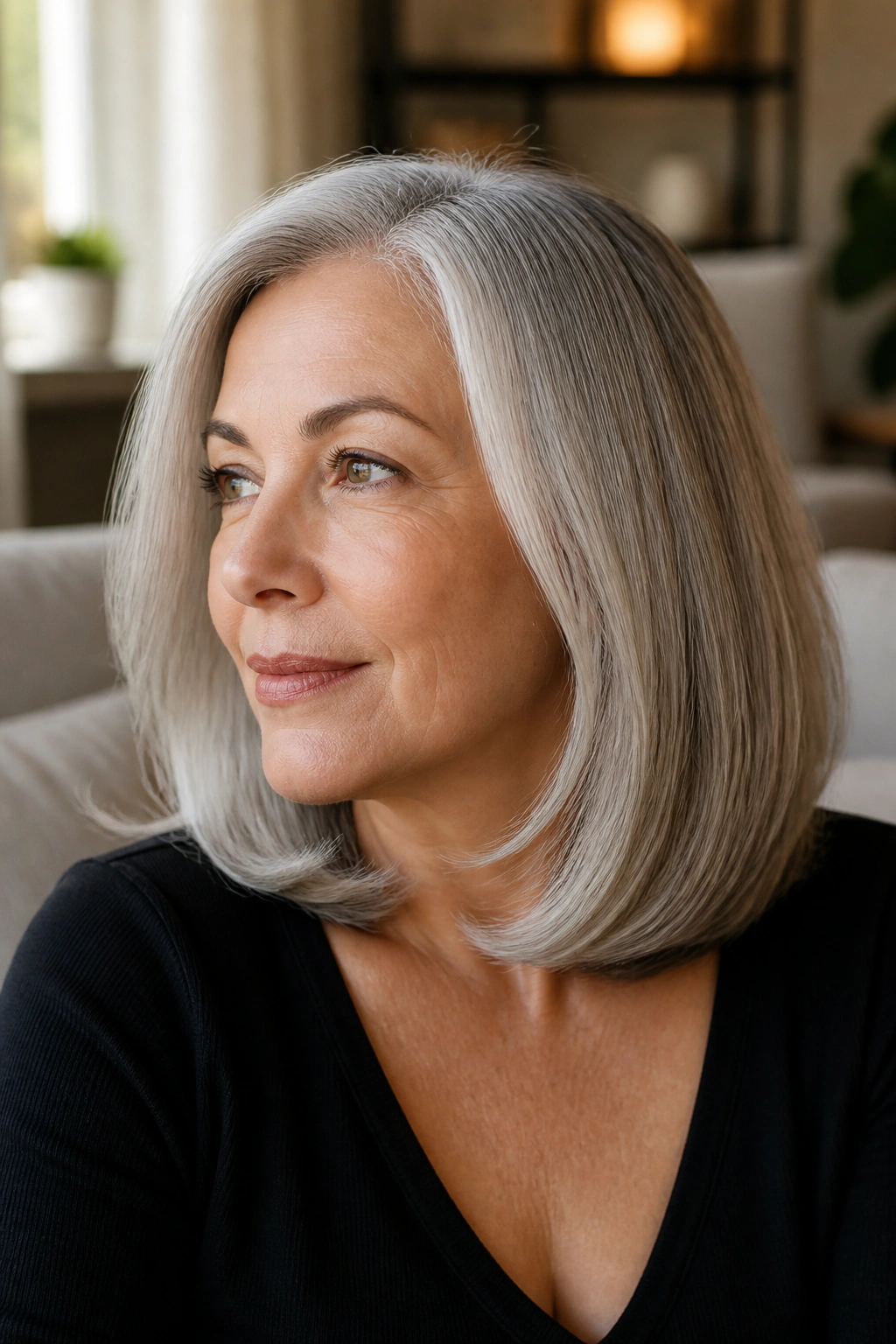
A shoulder-grazing cut is the answer when you want movement but not layers everywhere. The beveled ends give it shape, so the hair curves inward just enough to look finished. Compared with a blunt shoulder cut, this version feels softer and easier to wear.
It’s a good middle ground for thick hair that needs control but not a lot of slicing. The bevel keeps the length from looking heavy. On gray hair, it can look especially polished because the curve catches the light and keeps the outline neat.
This cut usually works best with a round brush or a quick bend from a large barrel iron. Nothing complicated. The point is a clean edge with a little softness at the ends, not perfect curls.
18. Chin-Length Crop with Soft Volume

Why does a chin-length crop work so well on women who want a fresh face without losing all their length? Because chin length sits at one of the most flattering points on the head. It frames the jaw, opens the neck, and gives the hair enough body to look full.
Soft volume at the roots keeps the shape from sticking too close to the scalp. That matters a lot if your hair has gotten finer over time. A tiny lift at the crown and some bend through the sides make the whole cut feel younger without trying too hard.
This style can be worn straight, tucked, or lightly waved. It’s one of those cuts that changes mood depending on how you part it. Useful. Quietly useful.
19. Deep Side-Part Waves
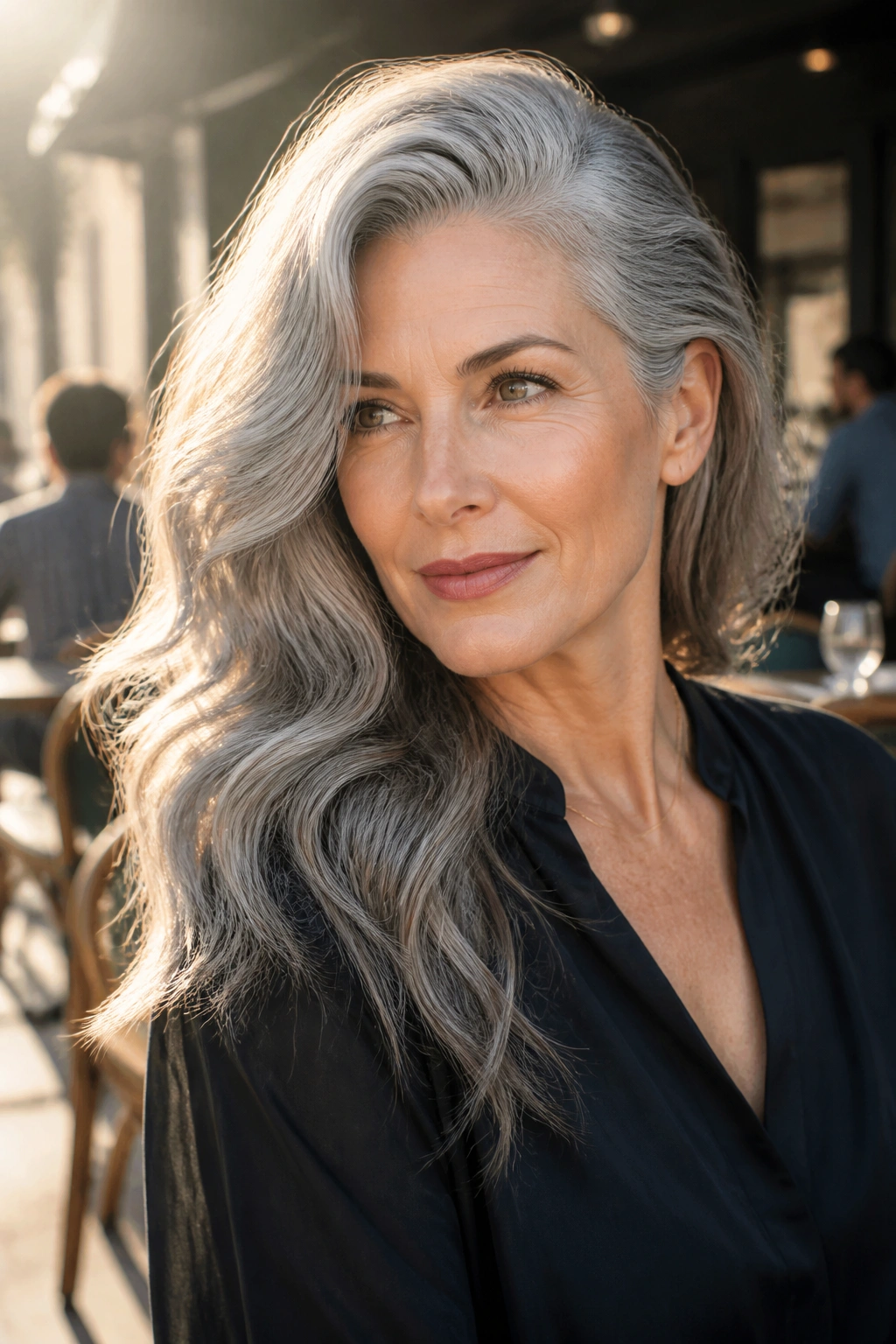
A deep side part can make old styling habits look suddenly new again. Pair it with loose waves, and the effect is polished but not stiff. The side part gives height. The waves give body. Together, they keep medium-length hair from falling flat around the cheeks.
I like this when someone wants a style for dinners, work, or any day they want a little more shape without a full curl set. The waves do not need to be perfect. In fact, the best version looks slightly undone, as if the hair settled that way after a good blow-dry.
It also plays nicely with silver streaks. The changing light across the waves makes gray hair look dimensional, not dull. That’s a small thing, but a real one.
20. Wrapped Ponytail with Lifted Crown

A ponytail can look too casual fast, or too tight, or like you gave up halfway through the morning. The wrapped ponytail fixes that. It sits low or mid-low, with a section of hair hiding the elastic, and the crown gets a little lift so the style doesn’t collapse your face.
How to Make It Feel Finished
- Tease the crown lightly or blow-dry it upward first.
- Secure the ponytail at the nape or just above it.
- Wrap a 1-inch section around the elastic and pin it underneath.
- Leave the front softly parted, not scraped back.
This is a strong pick for medium to long hair on days when you want clean lines and no fuss. Gray hair looks especially good in it because the smooth surface shows color clearly.
21. Soft Wolf Cut
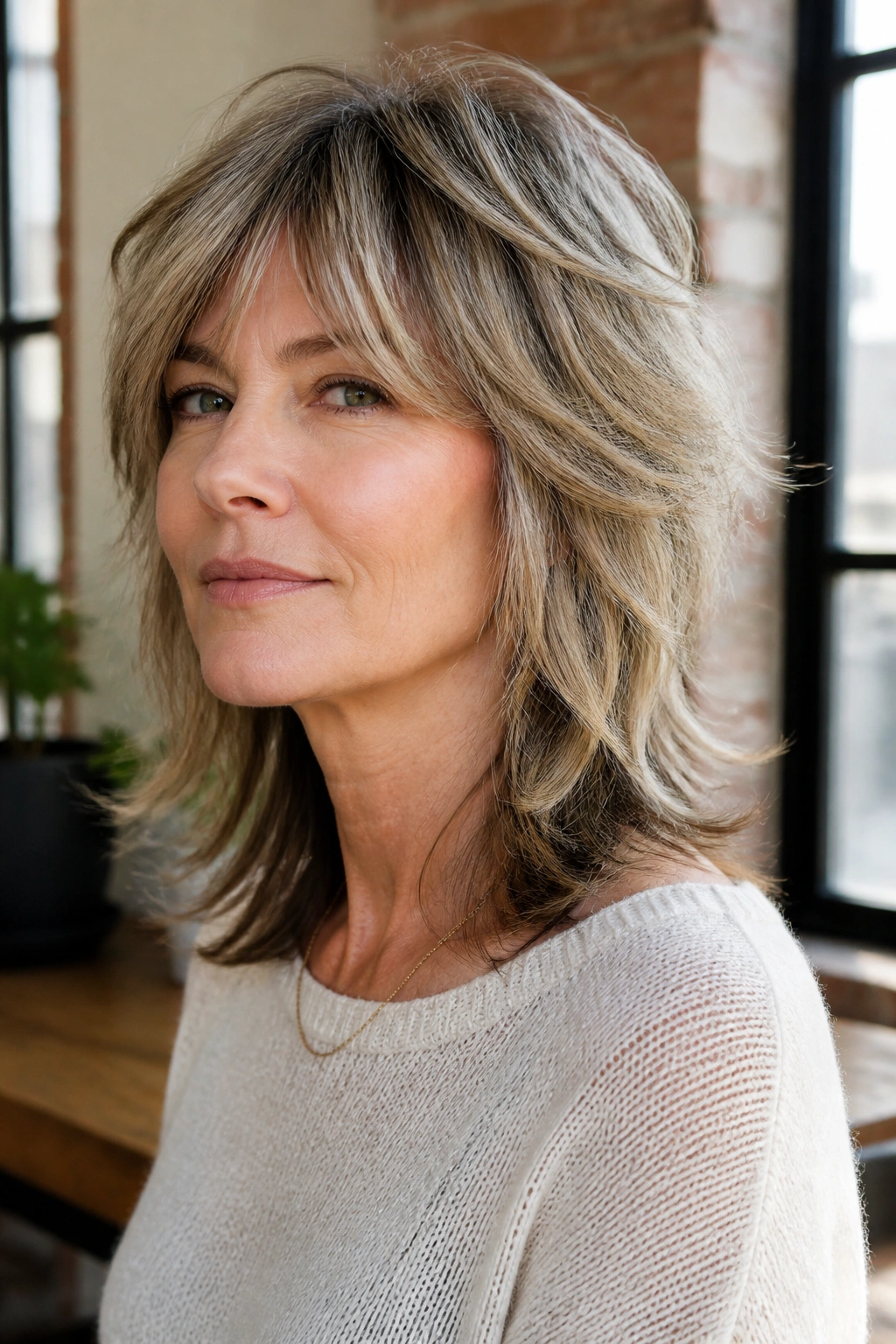
The soft wolf cut is for anyone who likes layers but does not want the full messy edge of the more extreme version. That older, choppier wolf cut can look cool in photos and exhausting in real life. The softer version keeps the cheekbone layers, some texture through the ends, and enough length to wear it down without feeling like a costume.
This works best on hair with natural bend or wave. The crown gets some lift, the sides stay airy, and the ends don’t bulk up. It can be a nice fit for women over 40 who want something current but still wearable at work or dinner.
If your hair is straight and fine, this cut may need more styling than you want. If your hair already has movement, it can look fantastic with very little effort.
22. Half-Up Twist on Collarbone-Length Hair
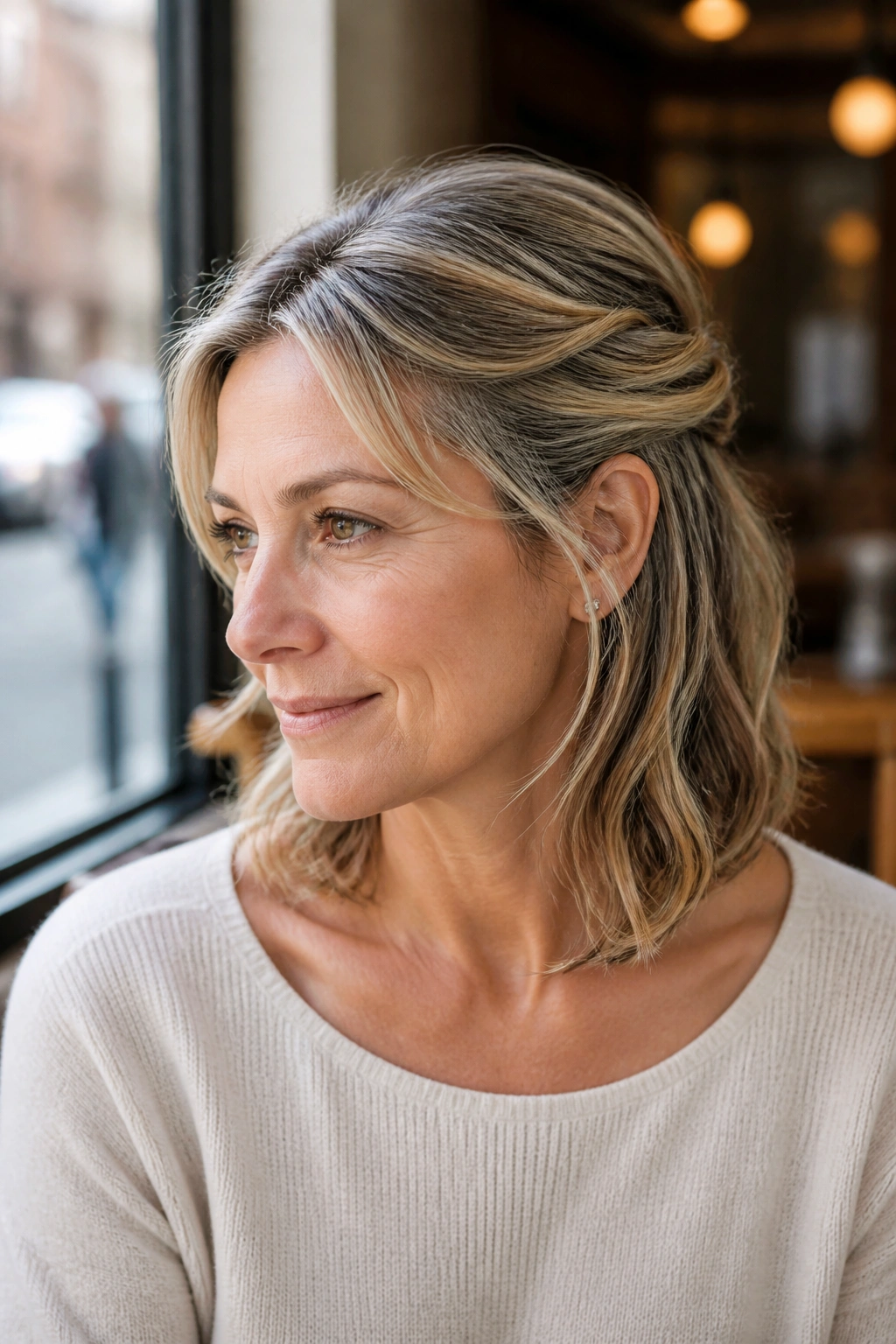
A half-up twist is one of those styles that sounds fussy and turns out to be practical. On collarbone-length hair, it keeps the front off the face, shows the neckline, and still leaves enough hair down to feel soft. It’s the kind of thing you can do in three minutes once your hands know the move.
Best Pin Placement
The twist should start just above the temples and meet at the back of the head, not high on the crown. That keeps the style relaxed.
- Twist each side loosely before pinning.
- Hide the pins under the twist, not on top of it.
- Pull a few strands loose around the ears.
- Keep the lower section smooth or lightly waved.
This style works especially well on second-day hair. A little texture helps it hold.
23. Glossy Straight Mid-Length Cut with Micro Layers
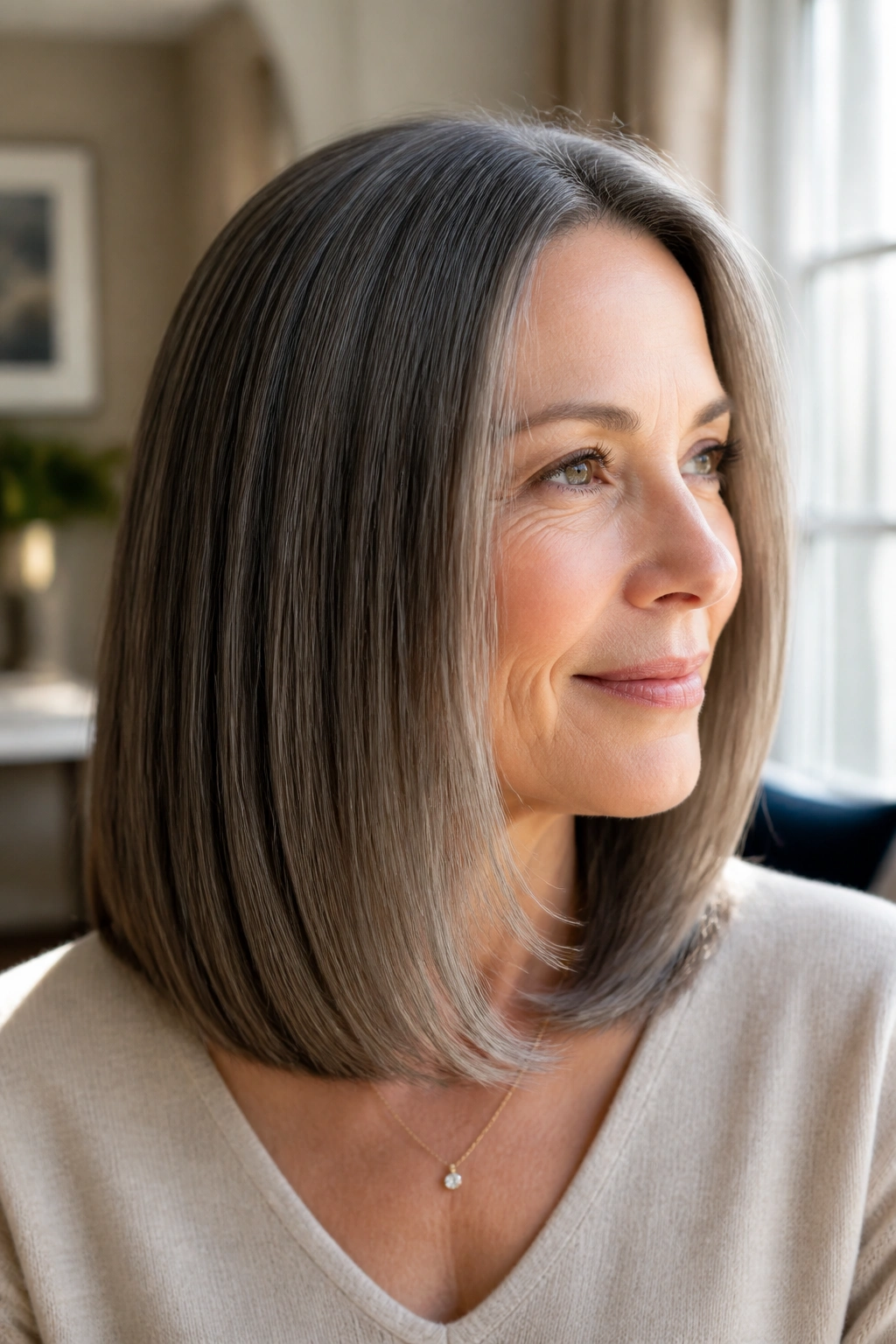
A glossy straight cut can be one of the best looks for gray hair if the lines are clean and the ends are healthy. Micro layers help it move without losing that sleek surface. Tiny layers, not obvious ones. That distinction matters.
The cut usually lands somewhere between the collarbone and the top of the chest. Long enough to feel elegant, short enough to stay light. The micro layers keep the whole shape from looking like a flat sheet, which is a common problem with straight medium hair.
This style likes shine. A smoothing cream, a careful blow-dry, and maybe a pass with a flat iron if needed. Keep the temperature moderate. Too hot, and the hair loses that soft, reflective finish.
24. Wavy Lob with Undone Texture

A wavy lob is probably the easiest style on this list to live with. It sits in a usable length, takes wave beautifully, and does not demand perfection. The undone texture keeps it from looking like a formal blowout, which is exactly why so many women keep coming back to it.
What makes this version feel modern is the balance between polish and looseness. The waves should bend, not curl into ringlets. The root stays a little lifted, the ends stay soft, and the overall shape looks like hair with a plan rather than hair that got lucky.
If your hair has a natural wave, this cut can be a gift. If it’s straighter, a large iron or a sleep-in braid routine can fake the effect without making the style feel stiff.
25. Classic Shoulder Cut with Soft Curtain Fringe

The classic shoulder cut survives for a reason. It gives enough length to tie back, enough weight to look full, and enough room for curtain fringe to soften the face. That fringe is the part that keeps the style from feeling plain. It opens in the middle and falls away from the cheeks in a shape that flatters more faces than people expect.
I’d choose this for someone who wants a haircut that doesn’t argue with daily life. It works with air-drying, blowouts, clips, ponytails, and those mornings when the only styling tool you can face is a brush. Gray hair can look particularly good here because the soft fringe keeps the color from reading too stark.
The cut is easy to live with. That may sound boring. It isn’t.
The Cut That Feels Like You

The best hairstyle is rarely the loudest one in the room. It’s the one that makes your hair look like it belongs on your head, on your face, and in your real life without a lot of arguing from anyone involved.
If you’re drawn to shorter shapes, the clean bob and the pixie cuts are hard to beat. If you want to keep length, soft layers and collarbone cuts do a lot of quiet work. Gray hair, in particular, looks better when the shape is crisp and the ends are healthy. That’s the part people forget.
Pick the one that fits your mornings. That’s usually the right answer.
