



Grey hair does not need to look apologetic.
If you’re hunting for grey hair ideas for women in their 40s, the smartest cuts are the ones that make the silver look deliberate. Hair often changes texture around this stage — a strand can come in wiry at the temple, soft at the crown, and stubborn at the ends — so the same cut that worked a few years ago can suddenly feel off.
A blunt edge can make fine grey hair look fuller. Layers can keep thick silver hair from turning into a triangle. And the right fringe can soften the forehead or temples without hiding the face.
What I keep coming back to is simple: grey hair looks best when it has shape, movement, and a little shine, not when it is buried under a cut that fights the texture. The ideas below lean into that, with styles that can feel polished, soft, edgy, or low-effort depending on what you want to see in the mirror.
1. The Soft Silver Bob

A soft silver bob is one of those cuts that makes grey hair look calm and intentional. It sits close to the jaw, but the edges stay a little rounded, so the whole shape feels light instead of hard.
Why It Flatters
Grey hair often gets a touch of stiffness as pigment fades. A bob like this works with that change instead of pretending it is not there. The shape holds its own, and the soft curve at the ends keeps the look from feeling boxy.
Ask for a chin-skimming length if you want the jawline to look a little cleaner. A tiny bevel at the ends helps the hair curl under without a big round-brush battle. That matters on busy mornings.
- Best for hair that has medium density or a little natural bend
- Looks especially good with side parts and off-center parts
- Easy to style with a 1-inch round brush or a flat brush blow-dry
- Needs a trim about every 6 to 8 weeks to keep the line neat
My favorite detail: let one side tuck behind the ear and leave the other side loose. It takes the cut from tidy to polished in five seconds.
2. The Chin-Length Blunt Bob
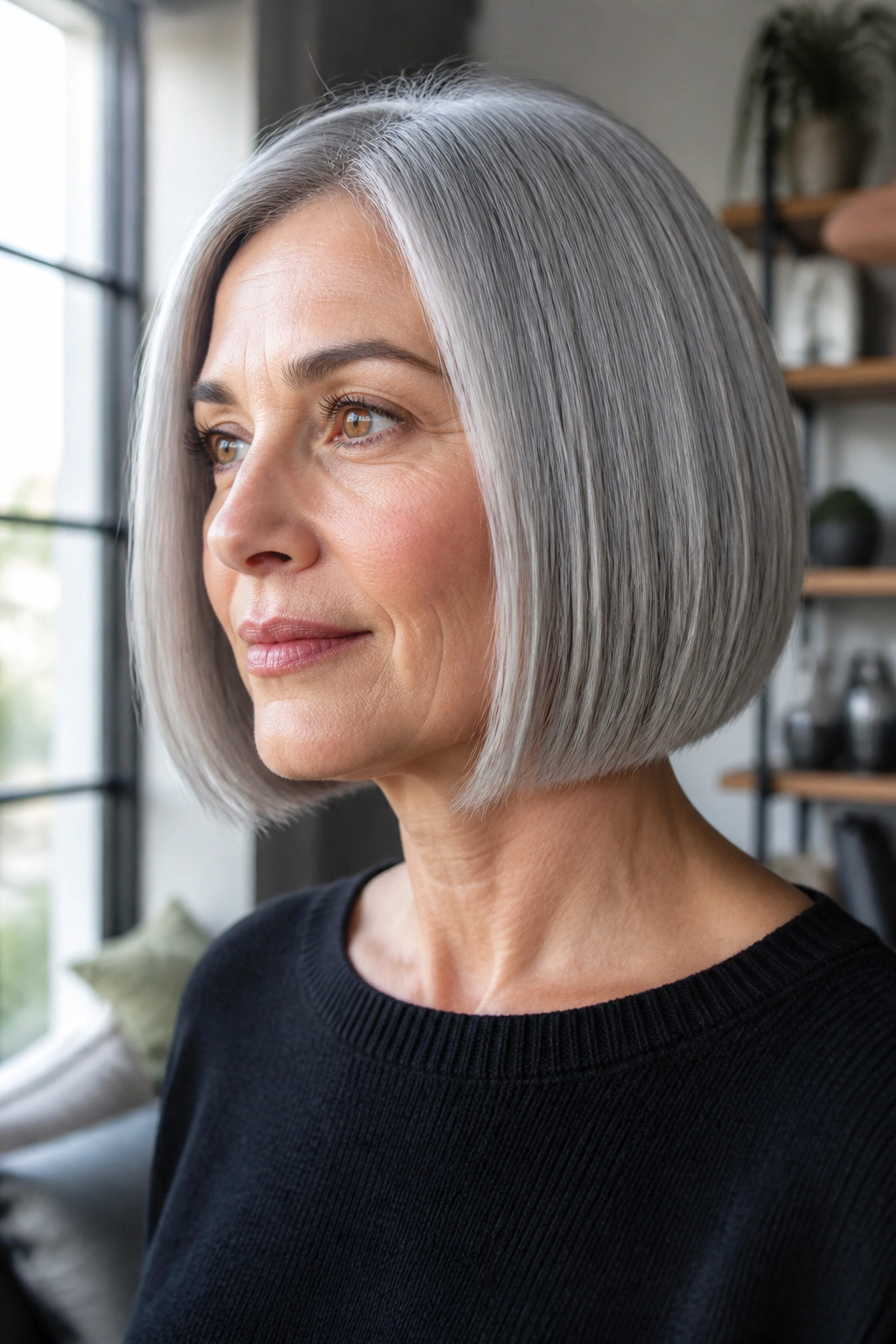
A blunt chin-length bob is the fastest way to make grey hair look fuller. Full stop.
The clean line at the bottom gives fine strands more visual weight, which is useful when hair has started to feel softer or thinner at the ends. I like this cut on women who want their silver to look crisp, not fluffy. It has a little attitude, and I mean that in a good way.
Keep the finish smooth. A small amount of heat protectant and a flat brush can make the ends sit neatly, while a touch of serum keeps the grey from looking dry. If the hair is naturally wavy, a blunt bob still works, but the edge needs regular shaping or it starts to lose that sharp feel.
This is not a cut that wants to be over-layered. The whole point is the line.
3. The Layered Lob With a Side Part
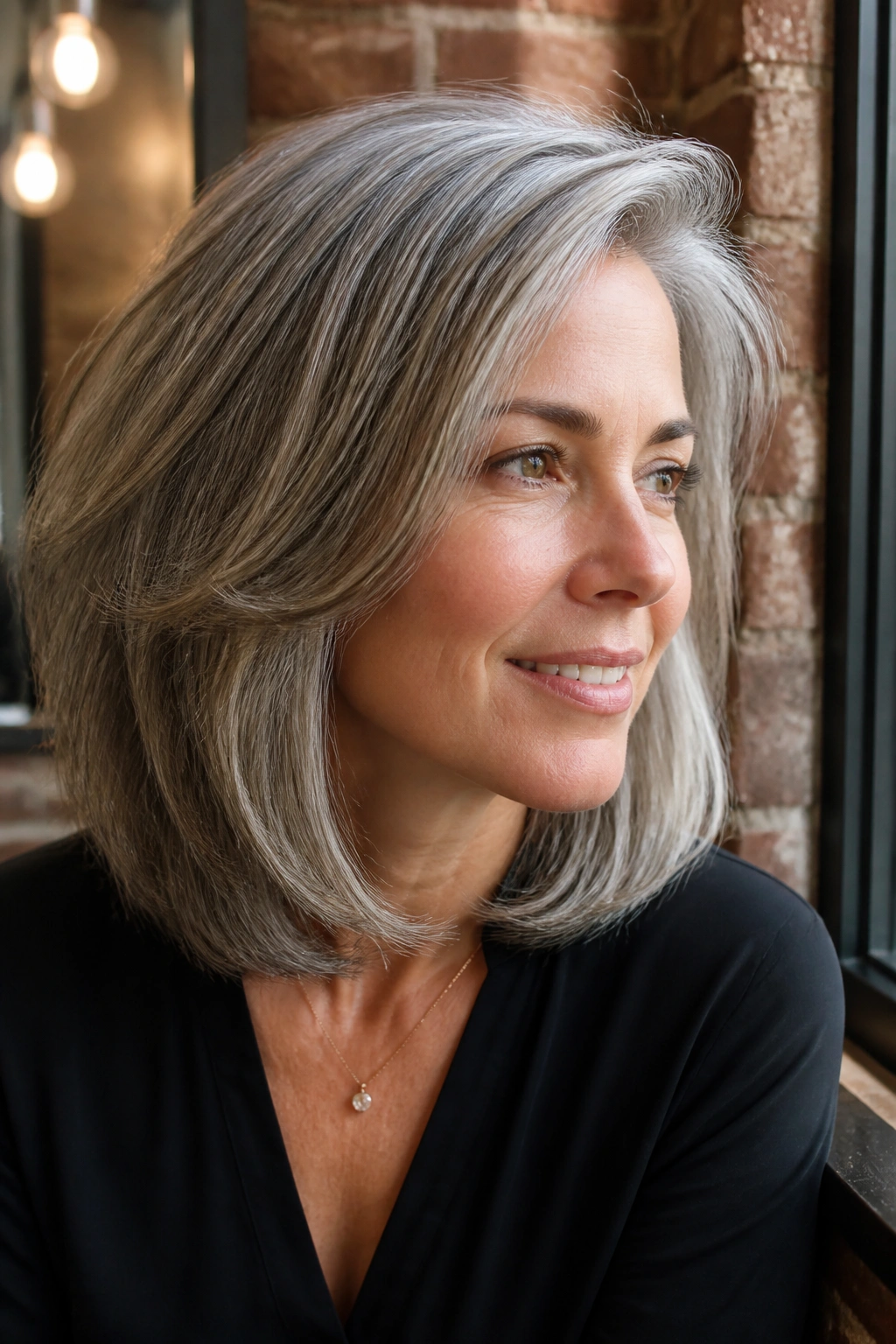
Want length without dragging the face down? A layered lob with a side part is the easy answer.
The lob — sitting somewhere between the collarbone and the shoulders — gives you enough hair to tie back, but it does not pile up around the neck. Add soft layers and a side part, and the crown gets a little lift that makes grey hair look lively instead of flat.
How to Wear It
The side part does more than people think. It shifts volume toward the top of the head, which is handy if your hair has started to lie flatter than it used to. A few layers around the front keep the silver strands from looking heavy at the cheeks.
A medium curling iron, around 1¼ inches, gives this cut a soft bend without turning it into full curls. Or you can air-dry with a light mousse and scrunch the ends with your hands. Either way, the shape should move when you move.
If you like hair that works for office days and weekends without changing the whole routine, this one earns its place.
4. Long Waves With Face-Framing Layers

Picture hair that still has length, but does not drag the whole face downward. That is the sweet spot here.
Long waves with face-framing layers are a strong option when you want to keep your hair long but make the grey look softer around the temples, cheekbones, and jaw. The front pieces do the flattering work. The longer back keeps the style feeling familiar.
- Face-framing pieces should start around the cheekbone or just below it
- Loose waves are better than tight curls for grey hair with shine
- Works well with a middle part or a soft side part
- A salt spray or light cream can keep the wave from dropping too fast
The trick is not to over-layer the back. Too many chopped layers can make grey hair look frizzy at the ends, especially if the texture is dry. A few precise layers are enough. More is not always better.
5. The Long Pixie, Also Called a Bixie
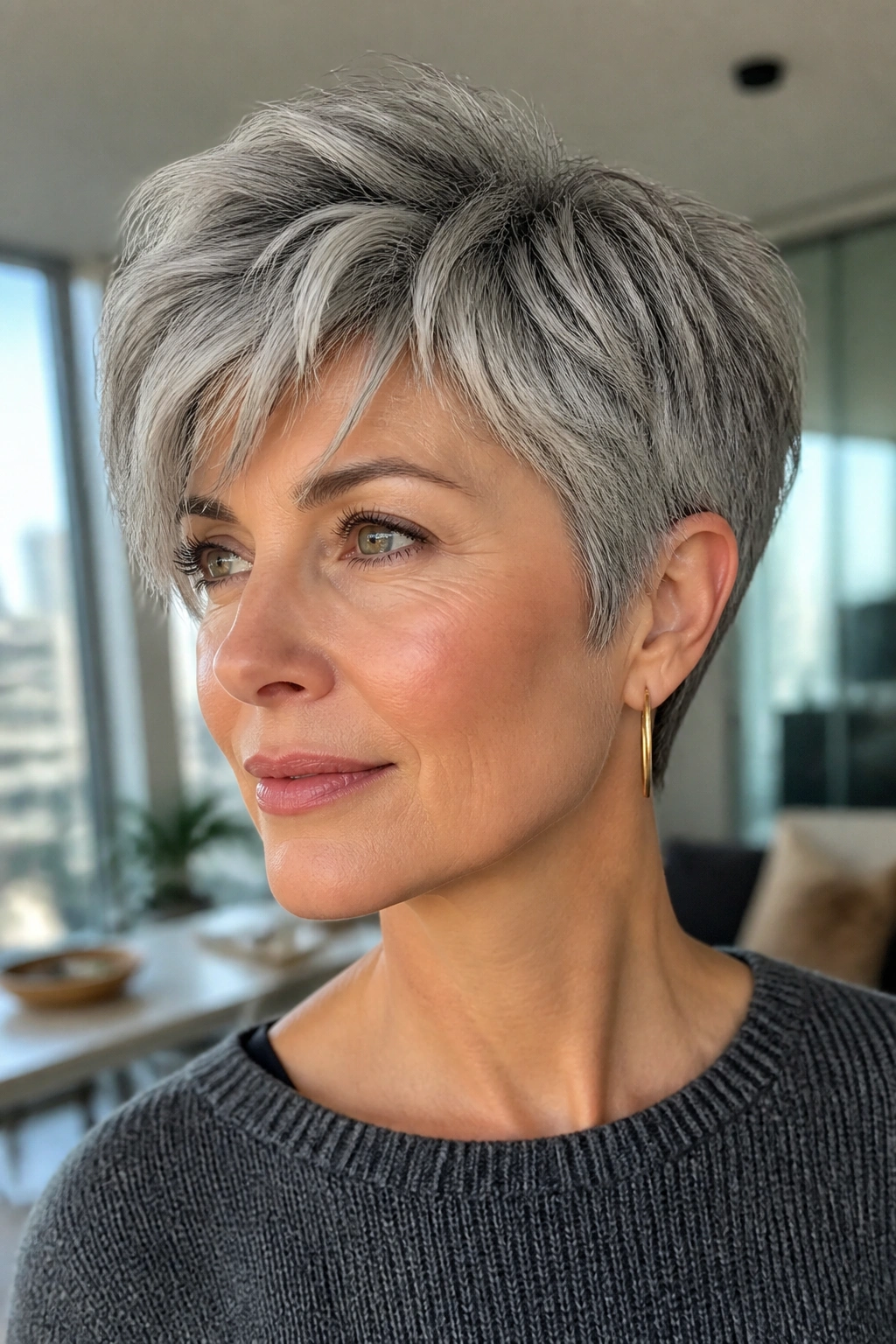
Short hair is not the same as boring hair.
A long pixie, or bixie if you want the in-between term, leaves enough length on top to style with your fingers while keeping the sides and nape neat. Grey hair shines in this cut because the shape is close to the head, so the color variation reads as texture, not noise.
I like this for women who want a cut that dries fast and still has some softness around the face. The top can be tousled with a pea-sized amount of paste, and the front can fall forward or sweep back depending on your mood. It is one of the few short cuts that can look polished or a little messy without needing a full restyle.
One small warning: if the crown gets cut too short, the whole thing can puff up. Keep the top long enough to bend, not stand at attention.
6. The Salt-and-Pepper Shag
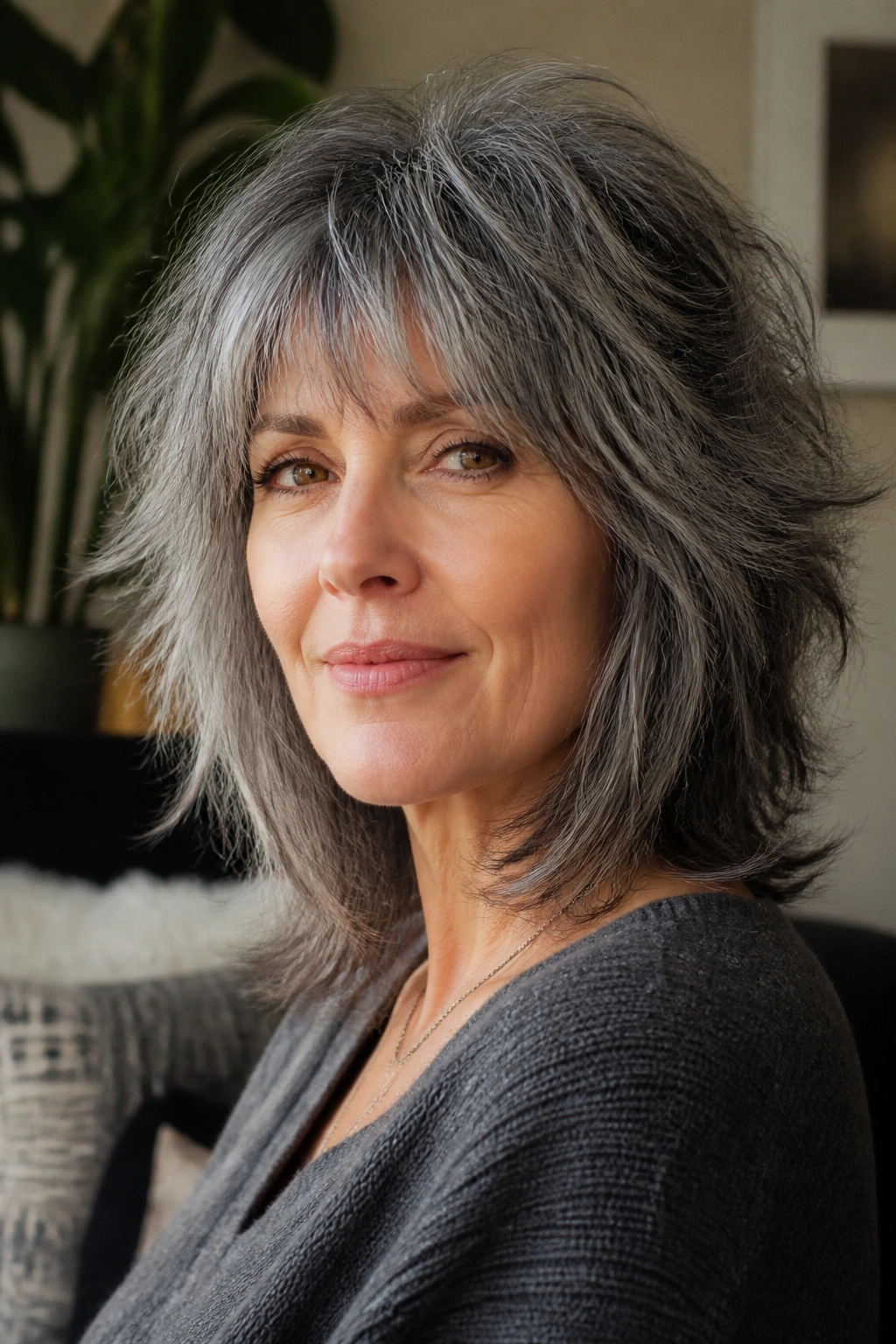
Unlike a neat bob, the shag likes a little mess. That is the point.
Grey strands often have enough texture to hold a shag well, especially if your hair is wavy or if it has started to grow in with a bit more body. The layers break up the weight, and the fringe or front pieces stop the style from looking too square.
A shag also does something useful: it makes mixed tones look on purpose. Salt-and-pepper hair can look streaky in a one-length cut, but the shag scatters the light and keeps your eye moving. It softens the line between dark and silver.
This cut is best when you do not want to spend ten minutes trying to make every hair lie flat. Let it live a little. A diffuser, a touch of cream, and a scrunch of the hands are often enough.
7. Curtain Bangs With Shoulder-Length Hair

Do curtain bangs help grey hair look softer? Yes, when they are cut right.
The split in the middle opens the face without hiding it, and the longer sides sweep into the rest of the hair. That matters if your forehead feels more prominent now, or if you simply want to soften the edges around the eyes. Grey hair around the temples can look striking with this shape.
The rest of the haircut should stay shoulder length or just above it, so the bangs have room to blend. If the hair is too short, curtain bangs can feel awkward and separate. If it is too long and heavy, they can collapse into the face.
Styling Note
Blow-dry the bangs with a round brush, lifting them away from the forehead for a few seconds, then let them fall. Do not flatten them with too much product. A little movement is what makes this style feel easy.
8. The Curly Crop With Tapered Sides
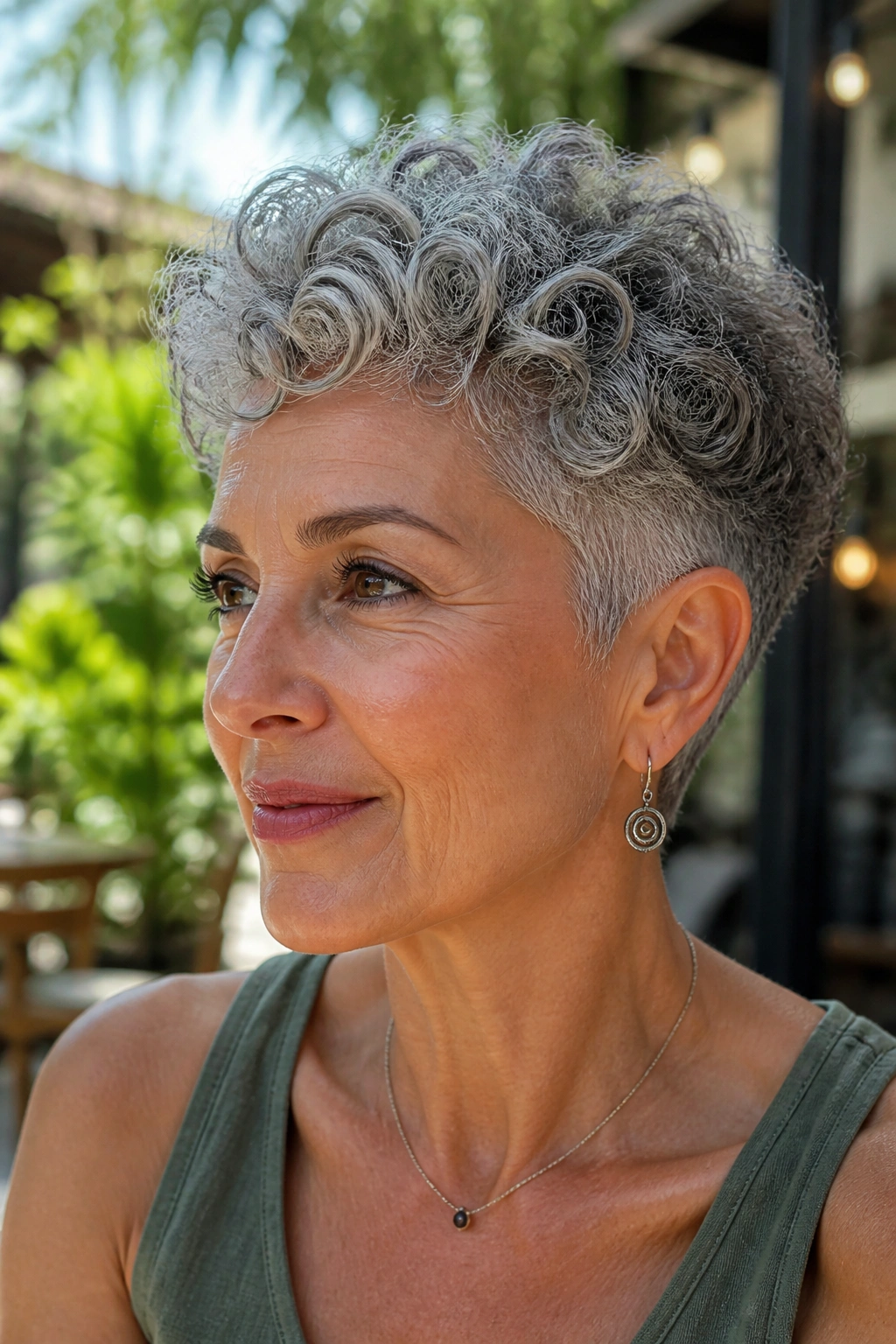
On curly grey hair, weight is the enemy.
A curly crop with tapered sides lets the curls sit up instead of collapsing outward. The sides stay neat, the top keeps its shape, and the grey pattern becomes part of the texture. It is one of the best options for women whose curls have changed over time and need a cut that respects shrinkage.
- Ask for shape, not bulk removal
- Keep the top long enough to show the curl pattern
- Taper the sides and nape gradually so the silhouette stays soft
- Trim curls dry, or at least in their natural state, if your stylist knows how to do that
This cut looks especially good when the curls have a mix of silver, white, and darker strands. That variation adds dimension all by itself. You do not need extra drama. The curl pattern already does the work.
9. Silver Balayage Blend
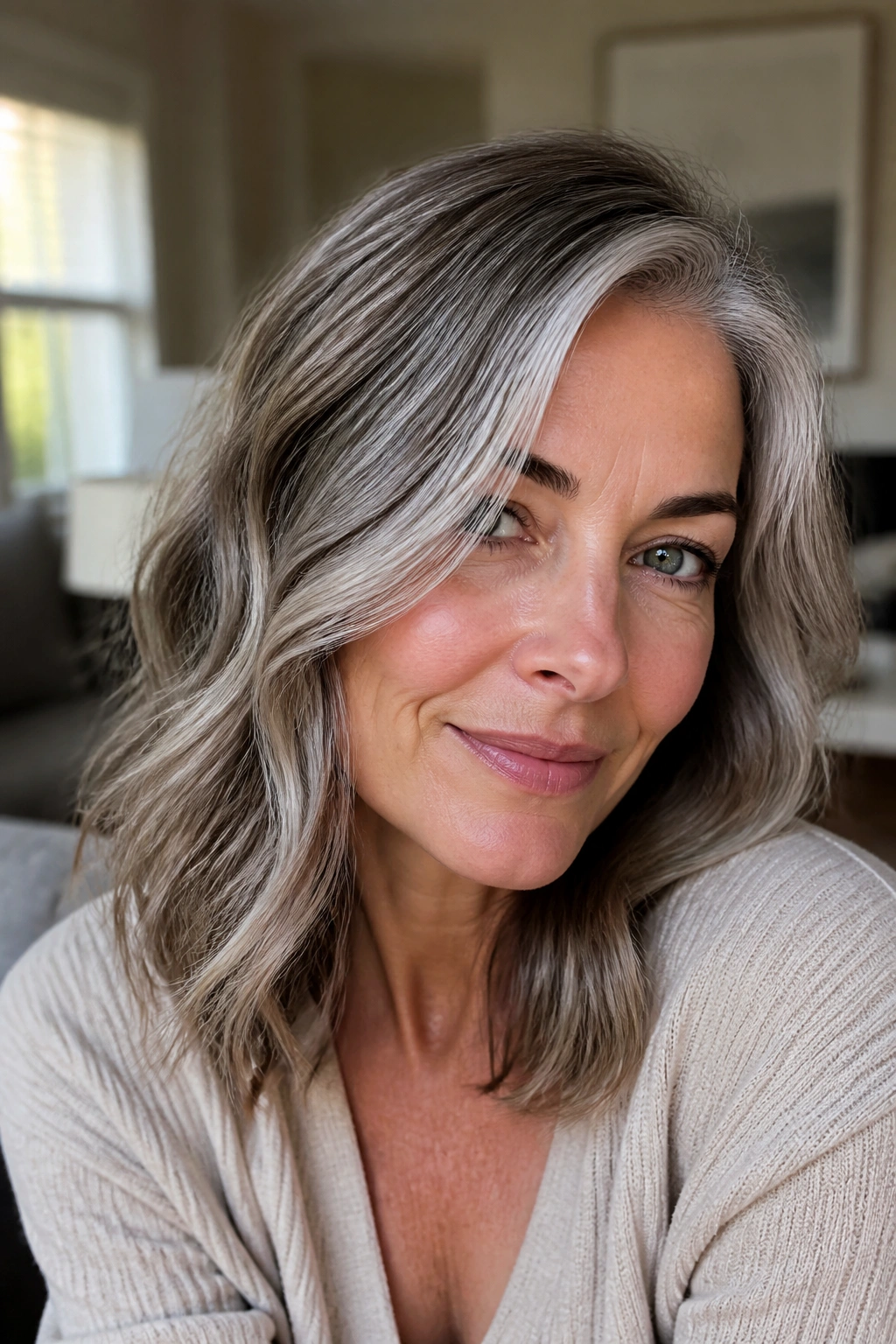
Not every grey transition has to be all or nothing.
A silver balayage blend is useful if you still have some dyed pigment left and want the grow-out to look softer. The lighter pieces are painted where silver naturally appears — around the hairline, part, and top layers — so the transition feels blended instead of striped.
The key is restraint. Too much contrast can make the hair look chunky. A good balayage for grey hair should blur the line between old color and new growth, not draw a marker around it. That is why this technique often looks better a month later than it does on day one.
It works well on medium to long hair, where the soft ribbons can move. On very short cuts, the effect can look too busy. If you want to ease into grey instead of making a hard switch, this is one of the better paths.
10. The Asymmetrical Bob

A little imbalance goes a long way.
The asymmetrical bob keeps one side slightly longer than the other, and that small shift makes grey hair look sharper. It draws the eye down the line of the cut, which can slim the face a bit and stop the style from feeling too safe.
This is a good option if you like a classic bob but want something with a little edge. The difference between the two sides does not need to be dramatic — even half an inch to an inch can change the feel. Keep it subtle if you wear glasses or if you want the cut to stay wearable every day.
I prefer this on straight or lightly wavy grey hair, where the angle stays visible. If the texture is too fluffy, the asymmetry gets lost. And that would be a shame, because the shape is the whole point.
11. Feathered Layers
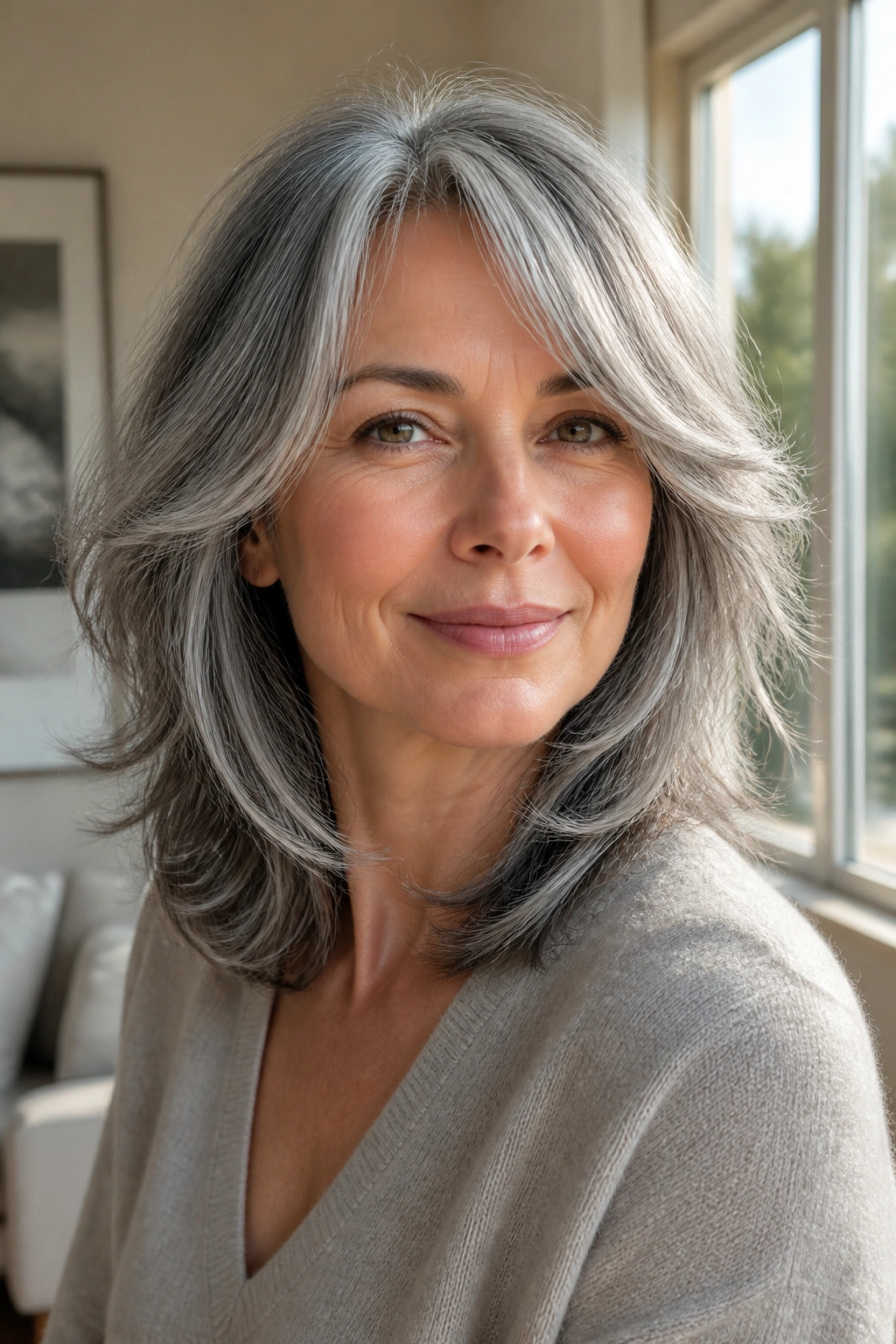
Feathered layers make grey hair move instead of sit there.
The cut has a softer edge than heavy layers, so the hair swings away from the face in a light way. That makes it a strong choice for medium-density hair that needs lift but not too much bulk removal. It also works well if you want a cut that feels a bit retro without looking stuck in another decade.
What to Ask For
- Long, blended layers instead of sharp steps
- Ends that are softened, not chopped blunt
- A face frame that starts around the cheekbone
- Enough length in the top section to sweep with a brush or round brush
Feathering can be unforgiving if the layers are cut too high. Then the hair starts to look wispy at the ends and heavy at the crown, which is not the goal. Keep the shape airy, not stringy.
12. The Sleek Center-Part Lob

A sleek center-part lob is not fussy, which is why it works.
Grey hair with a smooth finish can look almost glossy, especially when the silver strands catch the light evenly across the head. The center part makes the style feel clean and modern, while the lob length keeps it from looking severe. It is one of those cuts that can look expensive in the plainest possible way.
This is best for hair that can handle a smooth blow-dry or a low-pass flat iron. If the ends are dry, use a light cream or serum on the bottom two inches only. Too much product near the roots will flatten the crown and make the whole thing drag.
I like this style when the hair is in good shape and the grey pattern is strong. It lets the color speak for itself.
13. The Textured Collarbone Cut
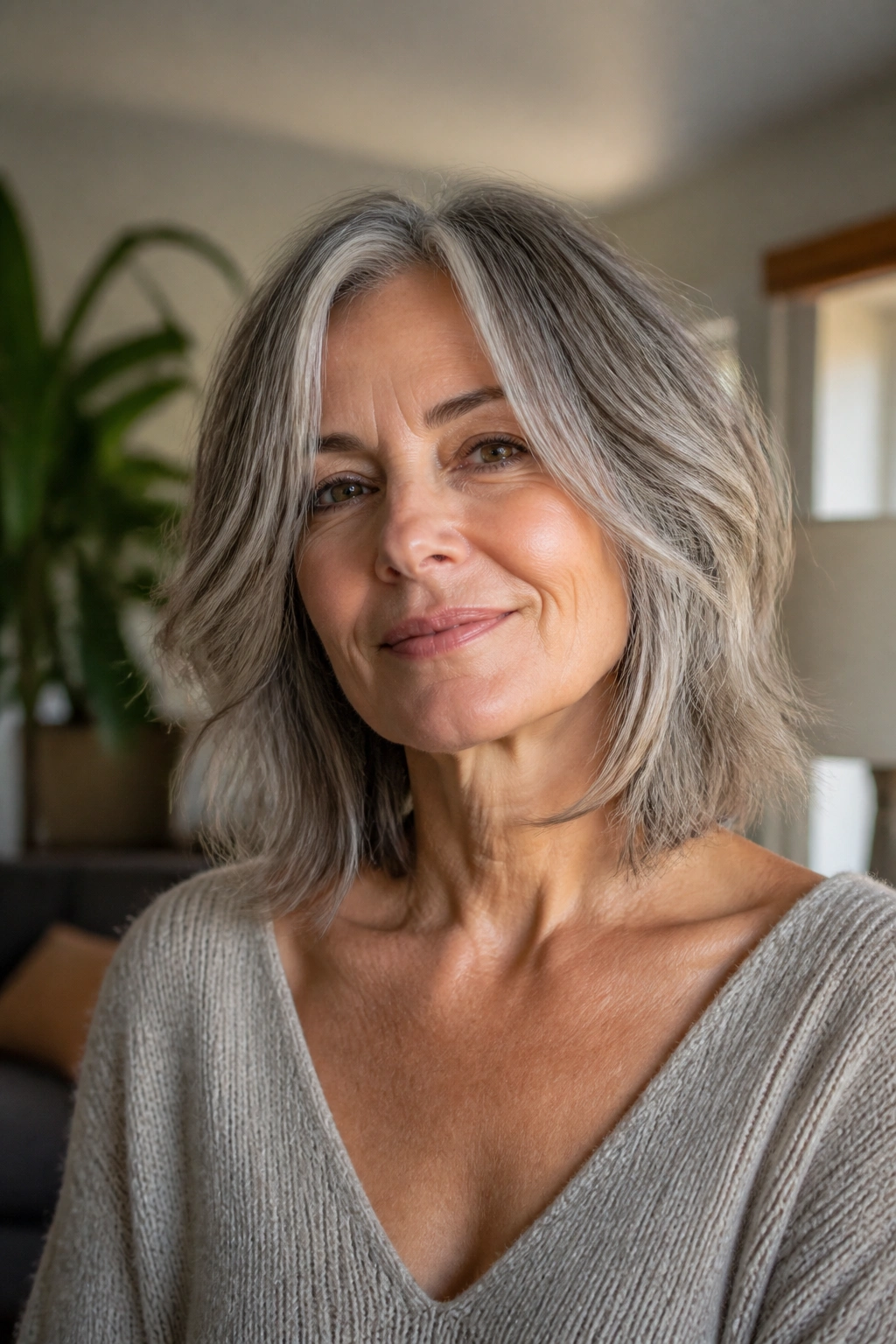
Why does collarbone length feel so easy? Because it sits in that sweet zone between short and long.
A textured collarbone cut keeps enough length for clips, small buns, and braids, but it does not get caught on coat collars or feel heavy around the shoulders. Grey hair often looks nicer at this length when the interior has a few broken-up layers that soften the outline.
You do not need a lot of carving here. A few bends around the face and some softness at the ends are enough to keep the cut moving. If the hair is thick, this length can become a triangle fast, so ask for shape through the mid-lengths rather than a blunt shelf at the bottom.
This cut is a good match for women who want flexibility. It can look polished at work and loose on a weekend without a full restyle. That kind of easy range matters more than people admit.
14. The French Bob
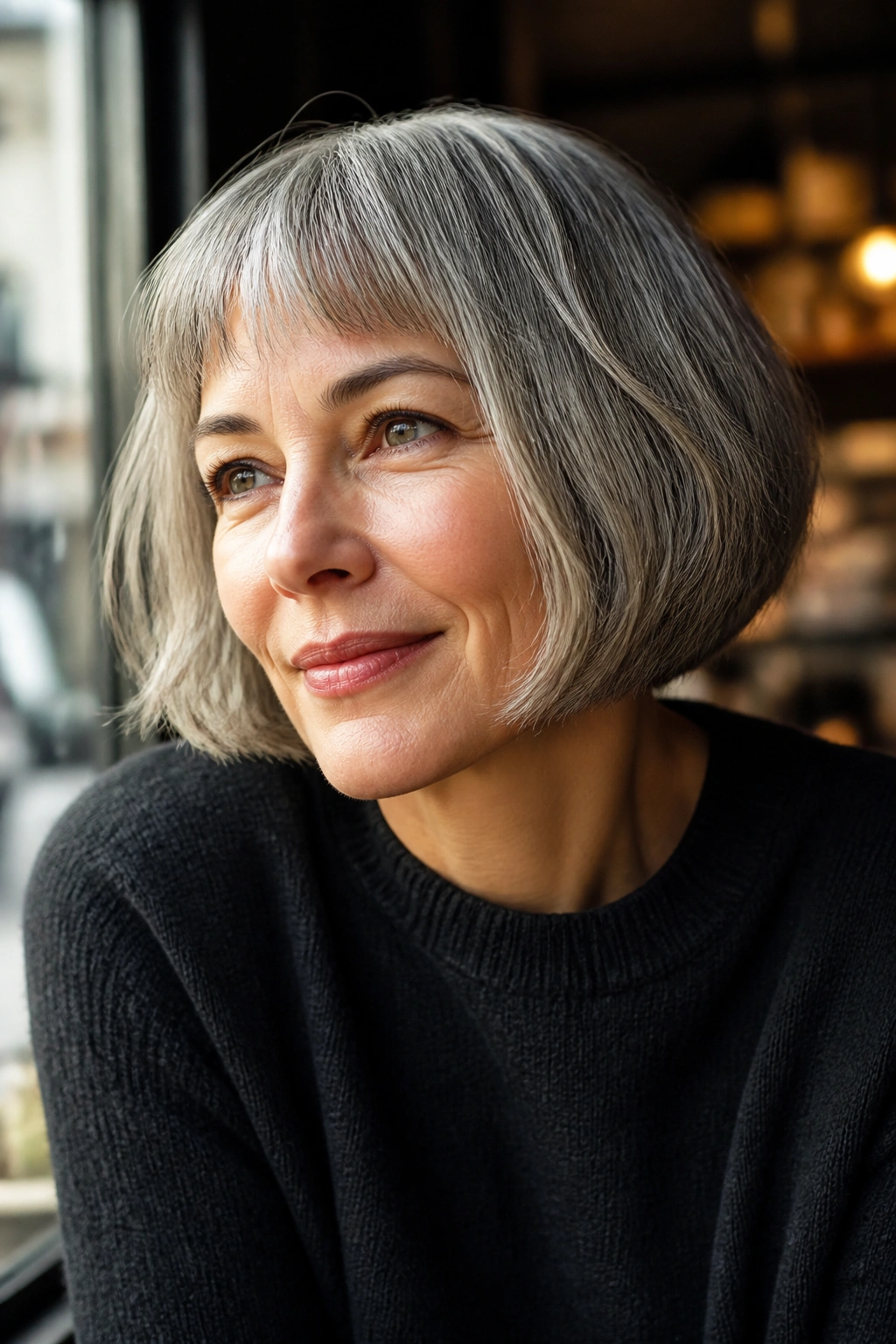
The French bob is tiny but not timid.
It usually sits around the jaw or slightly above it, and the charm comes from the shape more than the length. Grey hair gives it a nice edge because the shorter cut shows off the silver while keeping the neck and jawline open. A small fringe or soft front piece can make the whole thing feel even more intentional.
What keeps this from looking too severe is a little micro-layering or a soft bend at the ends. Without that, the bob can feel like a helmet. With it, the hair moves just enough to stay human.
This style is especially good if you like earrings, scarves, or a bold lip. The haircut leaves room for the rest of the look to matter. That is a detail people miss.
15. The Modern Mullet, or Shullet
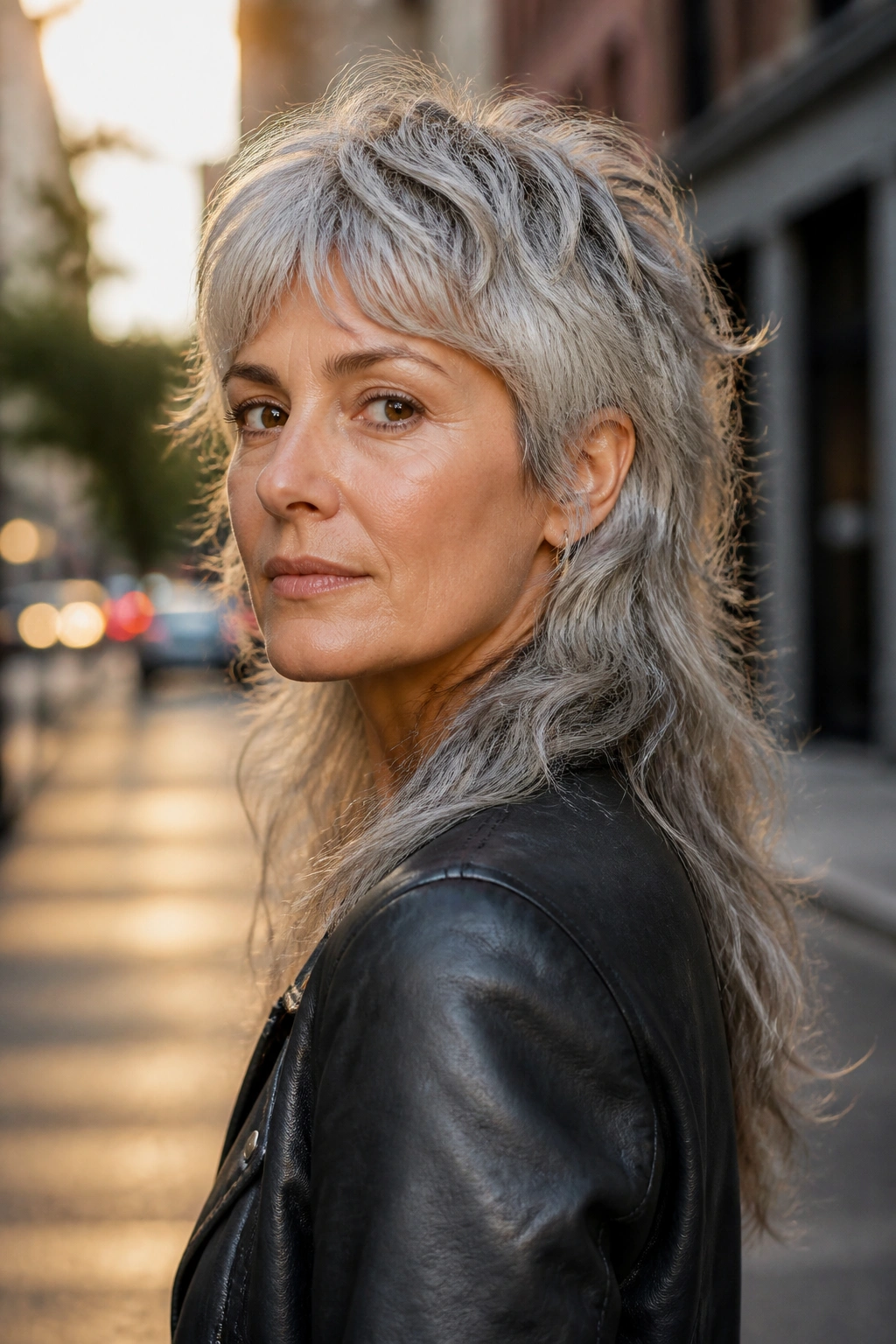
A little edge helps grey hair look deliberate.
The modern mullet — or shullet, if you prefer the softer version — keeps the front and crown shorter while letting the back stay longer and freer. It is not for everyone. Some people will hate it the minute they hear the word. Fine. Those people can move on.
For the rest of us, the cut offers something useful: movement around the face and a less obvious grow-out line. Grey hair with a bit of natural wave or body can wear this shape well, especially if the front layers are kept soft instead of spiky.
The best versions are not heavy on the contrast. They feel more like a shag with attitude. If you want grey hair to look current without pretending it is trying too hard, this is a strong choice.
16. The Braided Crown for Transition Days
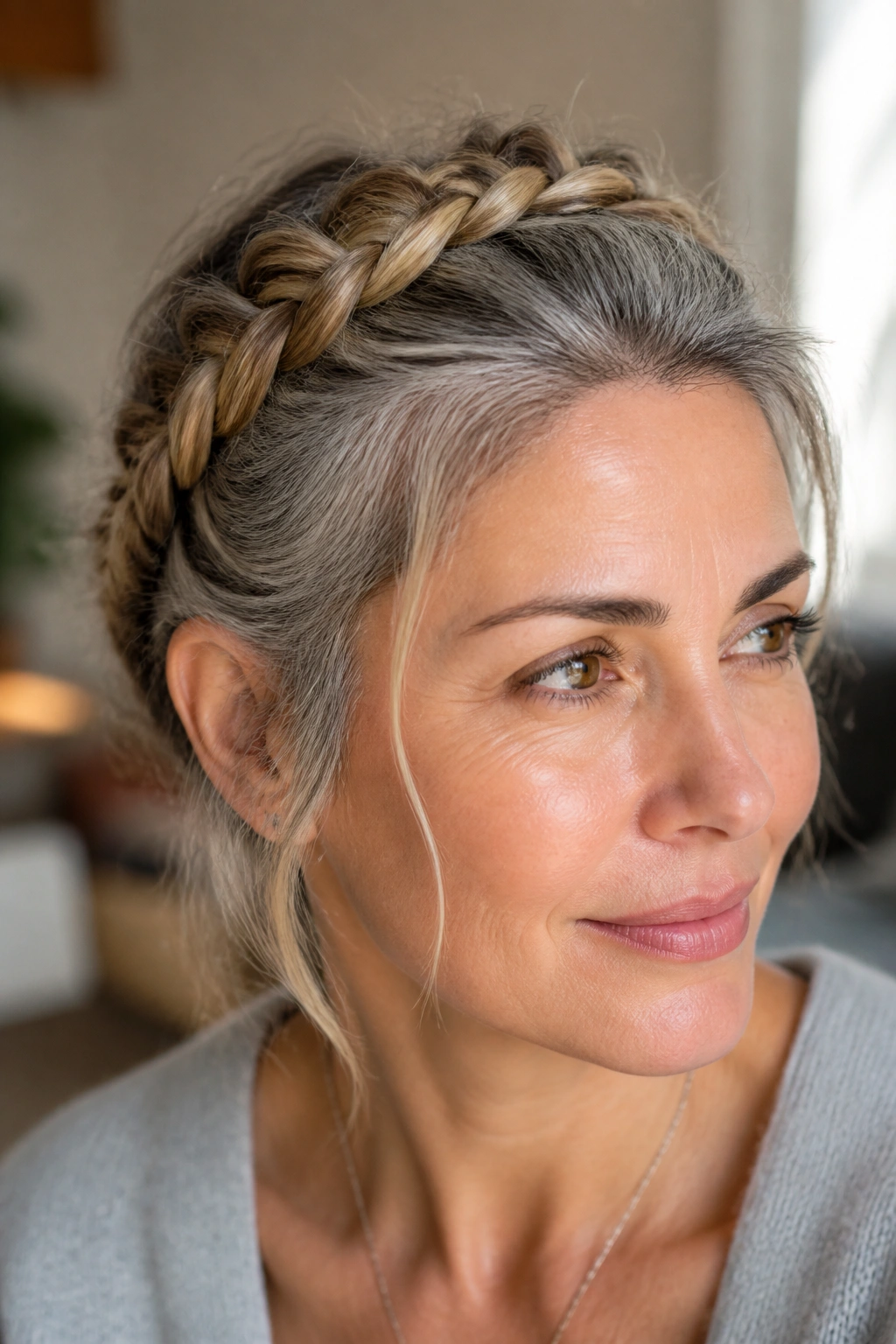
The awkward middle of a grey grow-out can make people reach for the nearest hat. A braided crown is better.
It pulls the darker lengths and lighter roots into one shape, which takes attention away from the line of demarcation. That is useful when the roots are halfway there and the ends still carry old dye. A braid around the hairline also feels polished enough for dinner, work, or a special event.
- Start with hair that has a little grip; day-two hair helps
- Leave a few soft pieces around the temples
- Pin the braid low enough that it sits close to the head
- Mist with a light-hold spray, not a crunchy one
A braided crown can save a transitional month. Maybe two, if you like it enough. And if not, it still works as a backup style on days when the hair needs to behave.
17. The Low Twisted Bun

A low twisted bun is the quiet answer to a busy week.
It sits at the nape, so grey strands stay visible around the hairline and crown instead of disappearing into a tight knot on top of the head. That matters if you want to keep some softness around the face. A few loose pieces near the ears can make the whole look less formal.
I like this for hair that is medium to long and not too slippery. If the hair is very fine, a little dry shampoo at the roots helps the bun hold. If it is thicker, use a few pins instead of one elastic and let the twist do the heavy lifting.
The best part is how fast it is. Ten minutes, maybe less. Clean, calm, done.
18. The Half-Up Knot
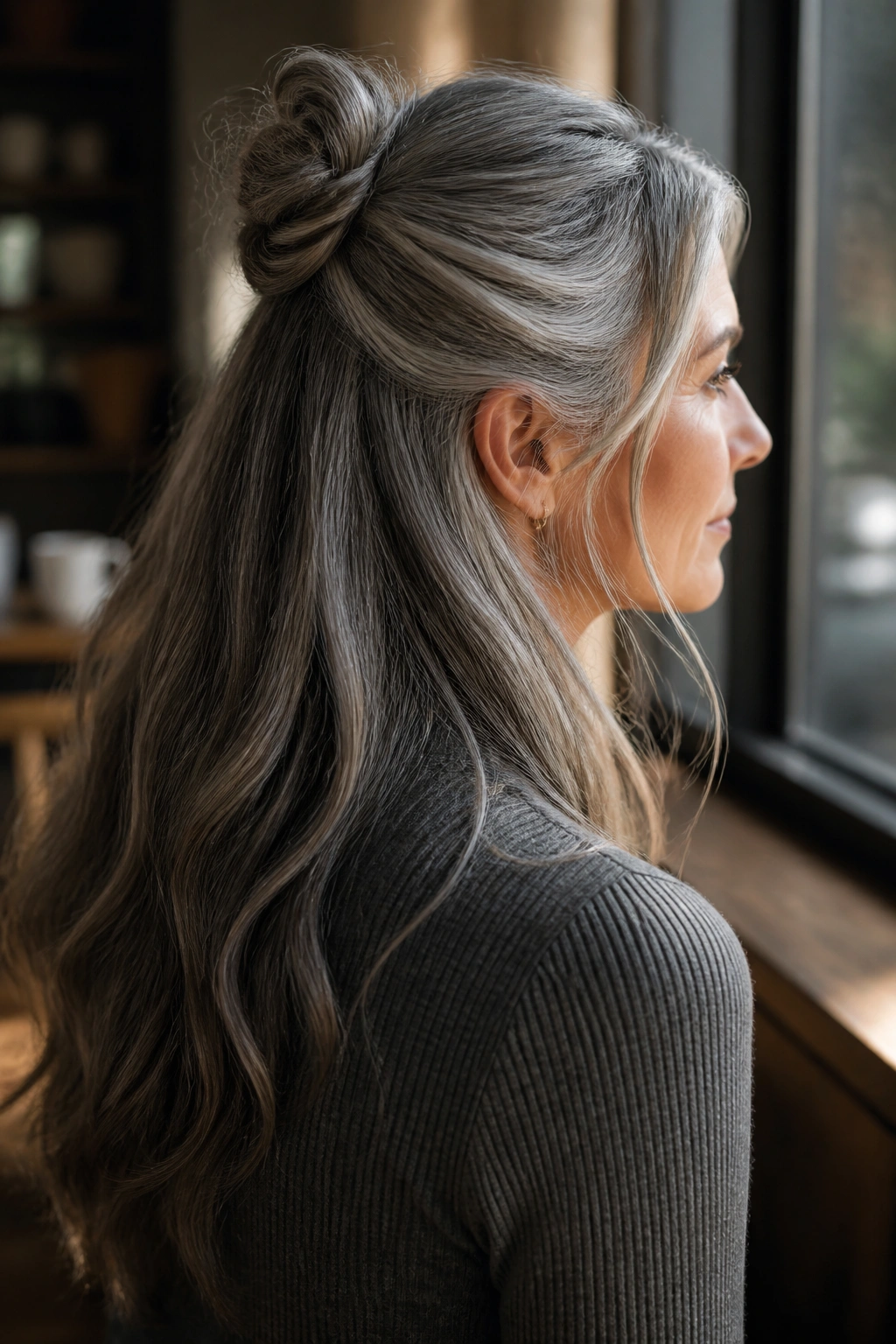
Unlike a full ponytail, the half-up knot keeps the crown alive.
That little lift at the top helps grey hair look bouncy, especially when the roots have some natural volume. The back still hangs down, so you get movement and softness without pulling everything away from the face. It is a nice compromise when you want your hair up, but not all the way up.
Keep the knot small. Huge top knots can make the head look top-heavy, and that is rarely flattering after 40. A compact twist at the crown with the rest left loose feels more balanced.
This style works well on second-day hair, wavy hair, and hair that has a few silver streaks you want to show off. It also plays nicely with earrings, which is a small thing, but a useful one.
19. The Tapered Natural Coils
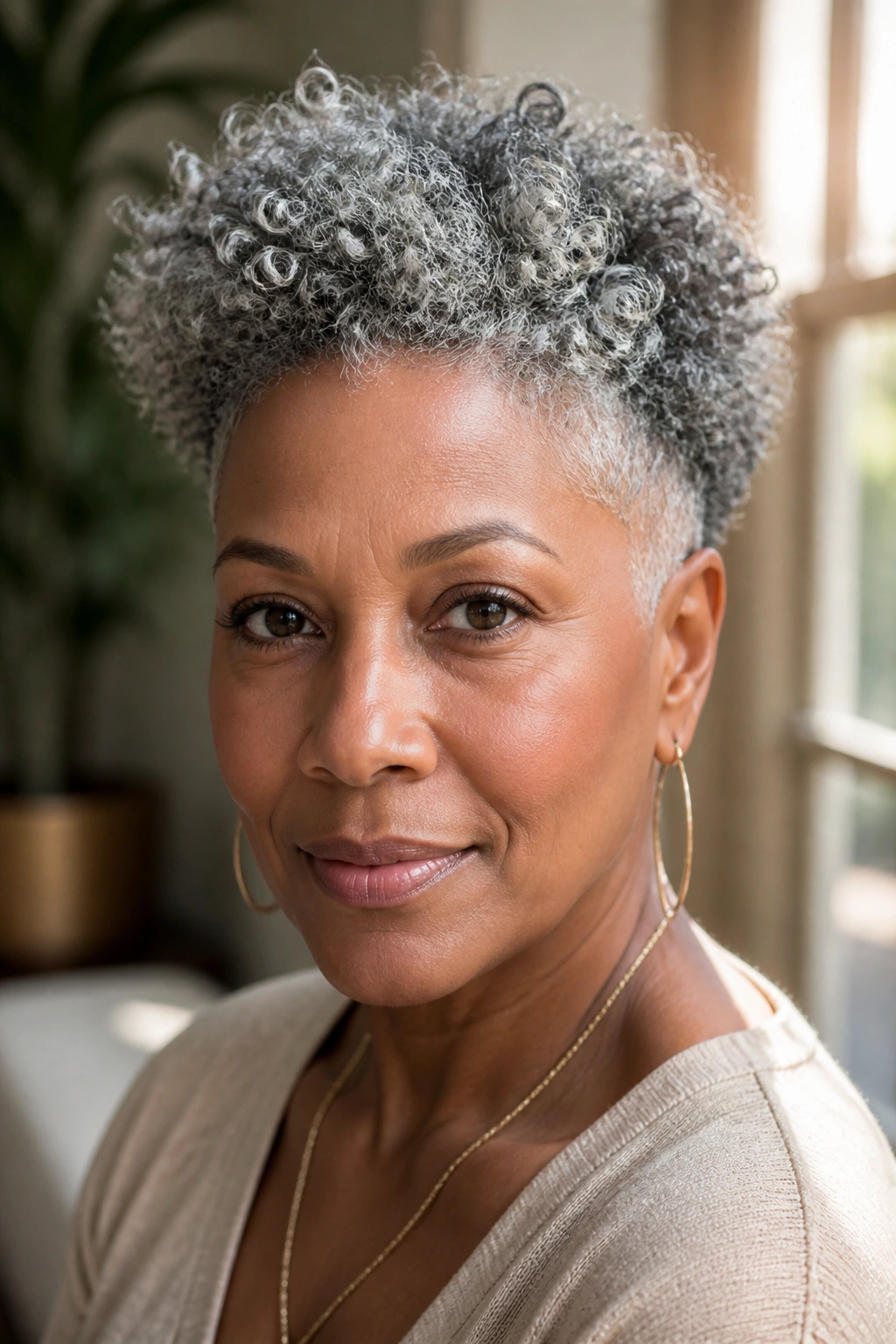
Natural coils look especially strong when the shape is cut to fit the head.
A tapered cut keeps the sides and nape closer, while the top and crown stay fuller. That gives grey coils room to spring up without spreading wide. The result is clean, sculpted, and easy to wear, which is not always true of longer natural styles.
Shape First, Length Second
The biggest mistake is cutting coils only for length. Length means little if the shape sits awkwardly. A good tapered cut respects the way the hair shrinks and grows outward, so the silver pattern stays visible and the profile stays neat.
- Moisture matters more here than shine alone
- A leave-in cream or butter should be light enough not to dull the curl
- Shape should be trimmed every 6 to 10 weeks, depending on growth
- The top can stay rounded, lifted, or a little fuller at the front
If you wear natural coils, this cut can make grey strands look like a design choice instead of an afterthought. That is the difference.
20. Shoulder-Length Curls With a Diffuser Finish
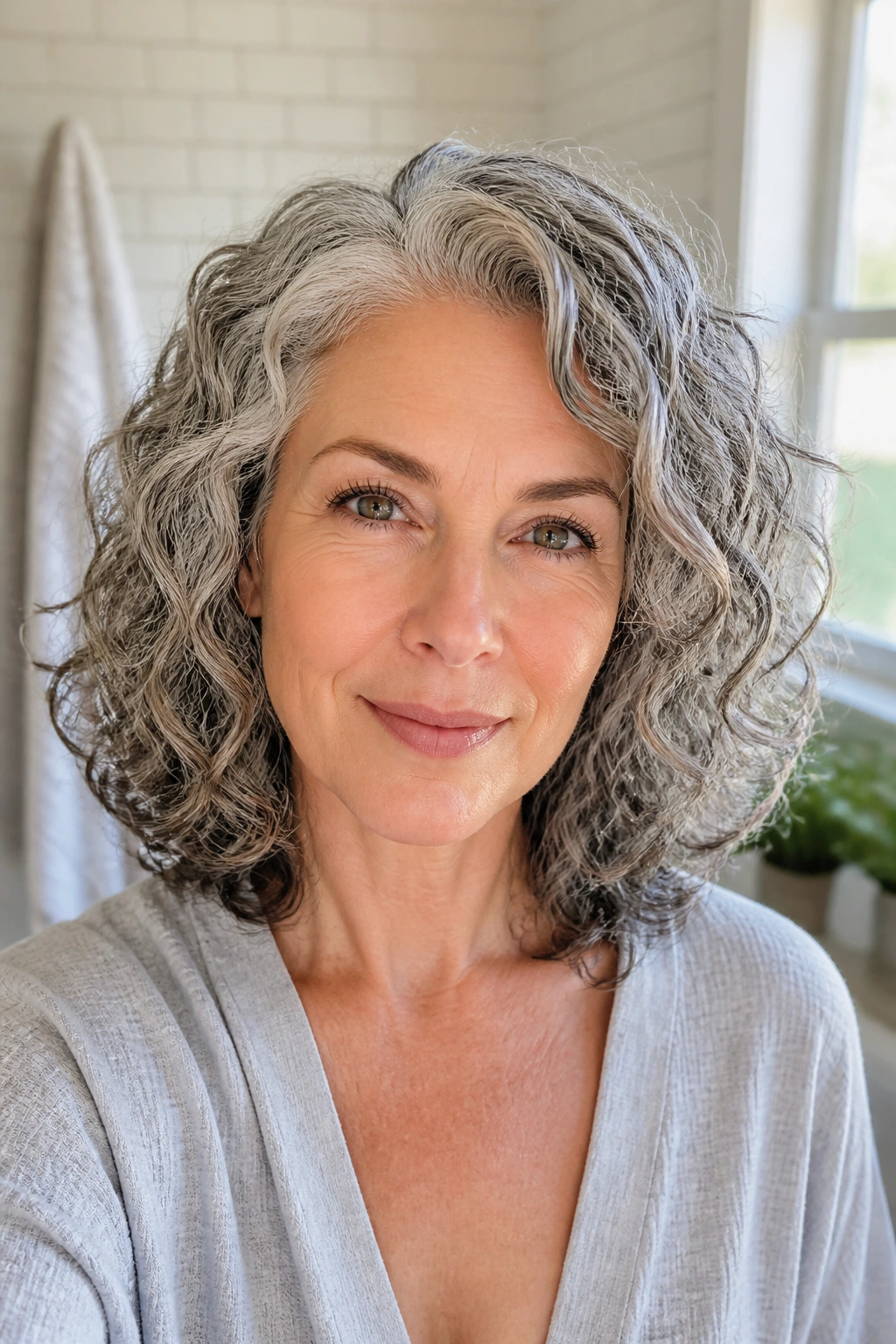
Shoulder-length curls can be a sweet spot for grey hair.
Too short, and curls may spring up harder than you want. Too long, and they can lose definition under their own weight. Shoulder length sits right between those problems, especially when a diffuser helps set the curl without blasting it into frizz.
Start with damp hair and a curl cream that gives slip, then diffuse on low heat until the outer layer feels dry and the inner layers are close behind. Do not touch the hair too much while it is drying. That is where the frizz comes from.
What Helps Most
A curl that is allowed to settle keeps its shape better than one that is constantly picked at. Once the hair is dry, you can separate a few pieces with oiled fingertips, but only a few. Grey curls often need less manipulation than people think.
21. The Blunt Lob With a Glossy Finish
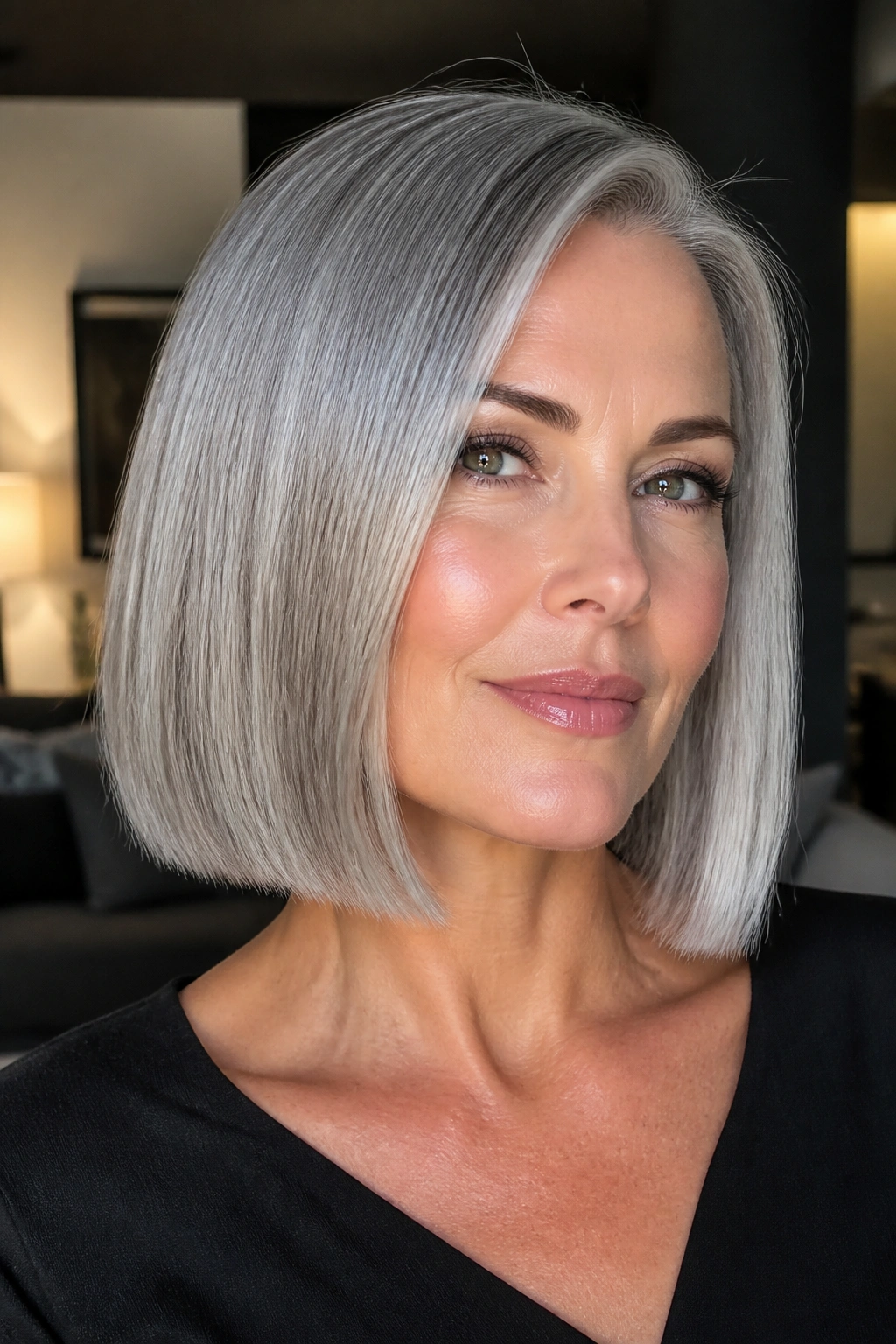
A blunt lob looks especially good when the grey is shiny.
The strong bottom edge keeps the shape clean, while the length — usually somewhere near the collarbone — gives enough softness to avoid a hard block of hair. The gloss finish matters because grey strands can sometimes read dry under indoor light, even when they are healthy.
I like this on hair that has enough density to support a solid line. If the hair is very fine, the blunt edge can still work, but the cut needs precision. No choppy ends. No unnecessary razoring. A small misstep shows up fast.
A light smoothing cream or shine spray on the mid-lengths and ends is enough. Skip the heavy stuff near the roots. That only flattens the shape and makes the lob lose its edge.
22. The Tucked-Behind-Ear Bob

A bob that can tuck behind one ear is wildly practical.
It gives you two looks in one cut: open on one side, soft on the other. Grey hair often looks brighter when one side is tucked back, because it exposes the shape of the cut and lets the silver sit next to the skin. Earrings help too, but the haircut does the heavy lifting.
This style works best when the front pieces are long enough to stay put but not so long that they fall right back into the face. The overall bob can be chin length or a touch longer. The important part is that the hair cooperates when you push it back.
It is a small thing, but a useful one. Some mornings you want neat hair. Some mornings you want one side out of the way. This cut handles both without drama.
23. The Silver Money Piece Around the Face
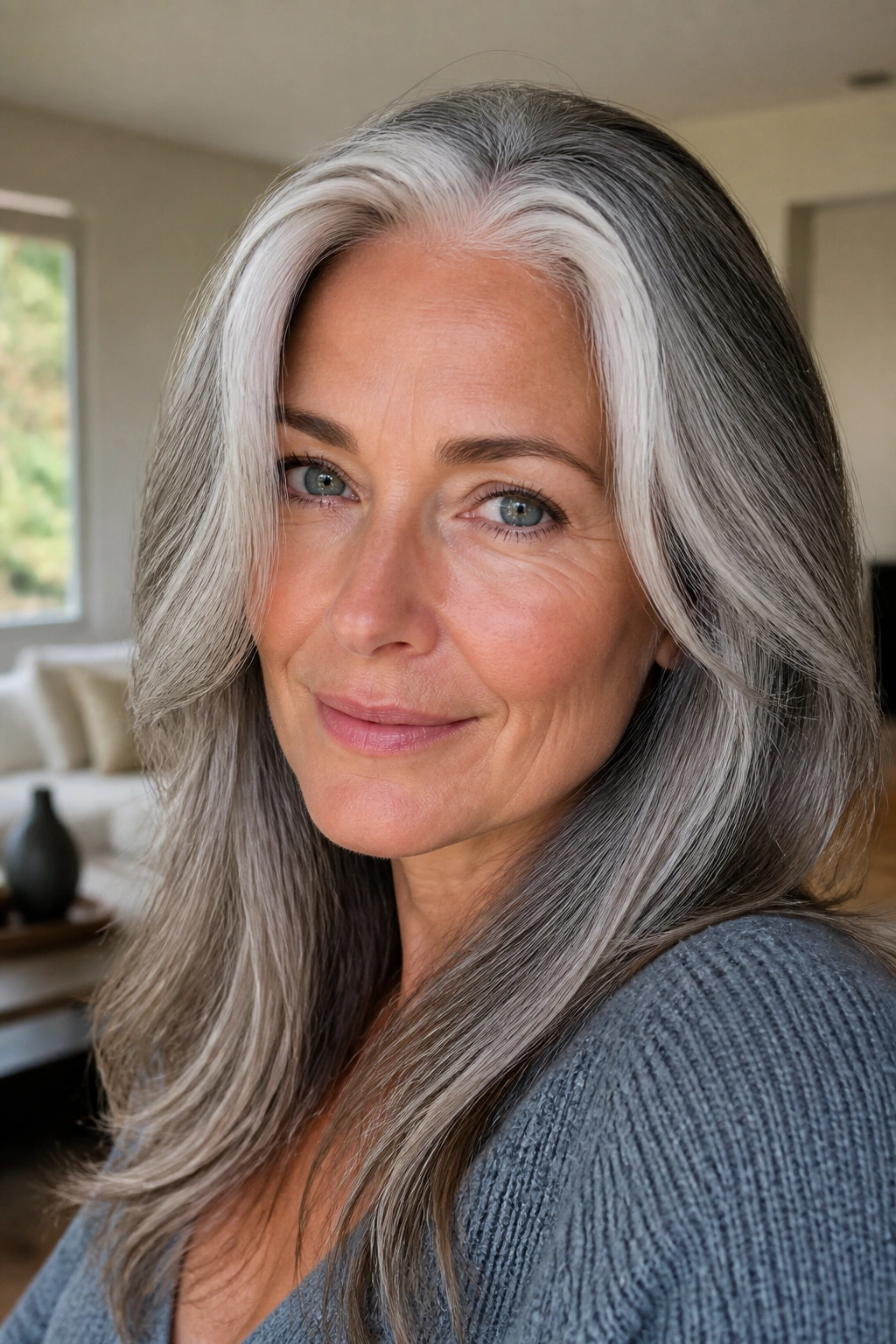
Brightening the front of the hair can change the whole face.
A silver money piece places lighter strands around the hairline, part, and temples so the grey shows up where the eye naturally lands. That can soften the look of grown-out dye and brighten the skin at the same time. It is especially handy if your silver is coming in faster around the face than it is in the back.
This idea works best when the front pieces are cut to move. If the silver streaks sit in stiff, long lengths with no shape, they can feel a bit stripe-like. A little layering keeps the effect soft.
I would use this when you want to keep some depth in the rest of the hair but still let the grey show. It is a smart middle ground. Not full coverage. Not full surrender. Just a well-placed bright spot.
24. The Soft Perm
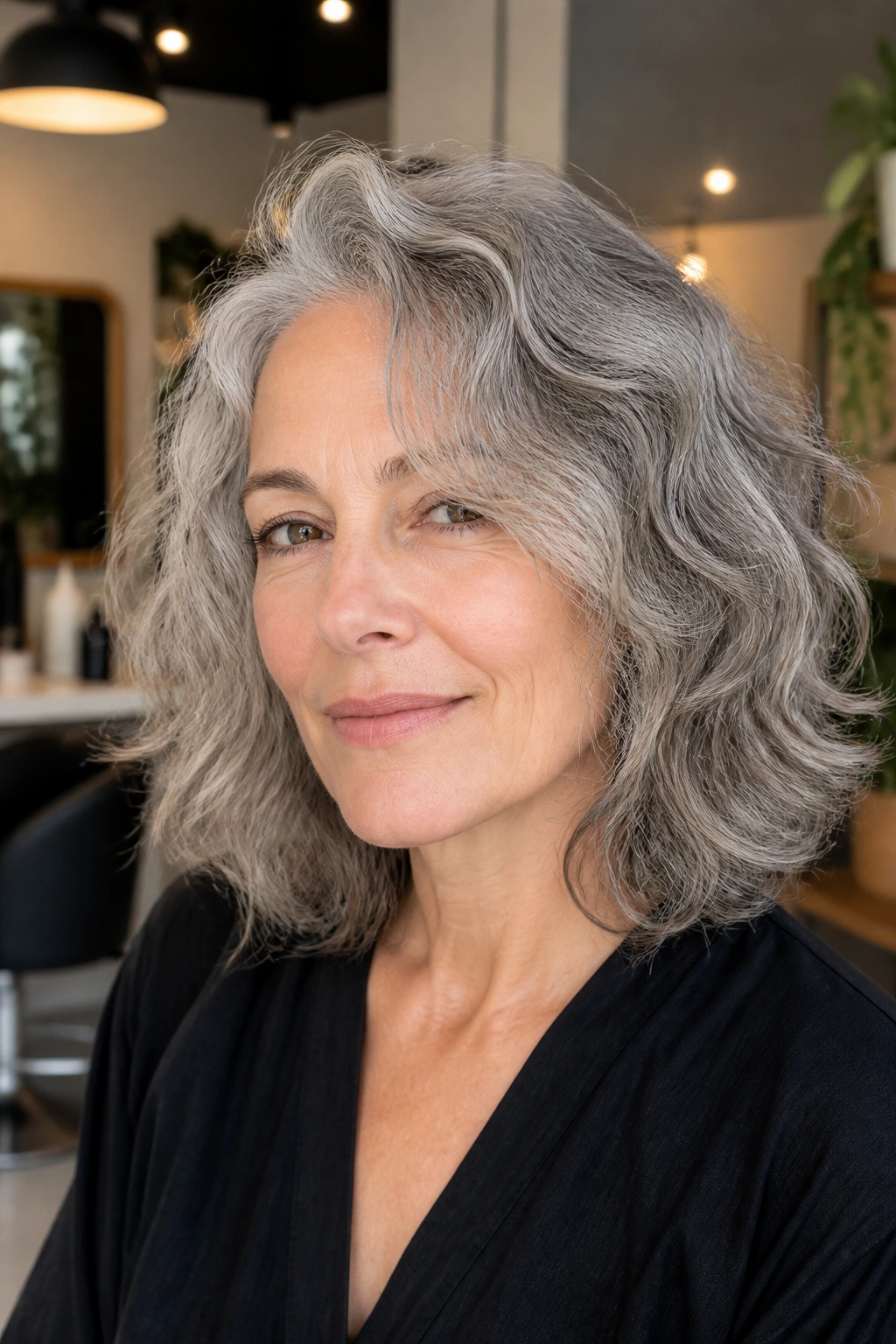
A soft perm can be a gift for straight grey hair that refuses to hold shape.
Grey hair is not always easy to curl with hot tools alone, and sometimes the strand texture changes enough that the old routine stops working. A loose perm or body wave can give the hair built-in movement so the style holds without constant heat. The right version should look airy, not tight or old-fashioned.
That said, this is a salon job, not a guess-and-hope project. Grey hair can be more resistant in some spots and more delicate in others, so a strand test matters. So does a stylist who knows how to read texture, not just wrap rods.
The best soft perm is the one nobody can quite name. They just see hair that bends well and falls in a flattering way. That is enough.
25. Long Grey Layers With a U-Shape Cut
A U-shape keeps long hair from looking like a curtain.
The sides stay a little shorter than the center back, which creates a soft curve and stops the ends from hanging in a flat line. Grey hair benefits from that curve because it gives the length movement without chopping off the good part. If your hair is thick, this cut can remove some weight while leaving the overall length intact.
What to Ask For
- A gentle U-shape, not a sharp V
- Long layers that blend into the shape
- Face-framing pieces that start low enough to keep the front soft
- Ends dusted clean so the longest part does not fray
This is a smart choice if you are attached to long hair but need it to feel lighter. It is also useful when the grey pattern is pretty and you want to keep as much of it visible as possible.
26. The Short Stacked Bob
A stacked bob gives the crown a lift that fine grey hair often needs.
The shorter layers at the back build shape near the head, while the front stays longer and softer. That little stack can make the whole style feel more energetic. It also helps if your hair tends to collapse at the roots and puff out at the ends.
The cut works best when the stack is subtle. Too much stacking can go retro in a bad way. Keep the angle gentle, and the result looks clean rather than dated.
This is a strong option for women who want short hair but do not want the bluntness of a one-length bob. It gives structure. It gives lift. And it does not take long to style with a round brush or a quick blow-dry.
27. The Side-Swept Pixie
A side-swept pixie softens the face without losing the ease of short hair.
The longer fringe sweeps across the forehead, which is flattering if you want to soften lines or shift attention upward. Grey hair in a pixie like this often looks especially bright because the short length lets the silver reflect light from every angle.
I like this cut for women who want something neat but not severe. The sides can stay short, while the top carries enough length to move over the forehead or tuck back with a dab of cream. That flexibility matters more than people expect.
It is also one of the quickest cuts to wash and go. If your mornings are busy, that alone may be the argument that wins.
28. The Wrapped Ponytail
A wrapped ponytail is plain in the best possible way.
Pull the hair back low or mid-height, then take a small strand and wrap it around the elastic so the base looks finished. That one detail turns a simple ponytail into a style. Grey hair looks cleaner this way because the finish keeps the focus on the color and shine, not the hair tie.
The crown should stay smooth but not pinned down to the skull. A little lift near the top keeps the face from looking pulled tight. If the hair is textured, leave a few soft pieces around the temples. It stops the style from feeling too strict.
This is the kind of look that earns its keep on days when you need hair out of the way and still want to look put together.
29. Rooted Ombré for Grow-Out
A rooted ombré can make the grey transition feel less sudden.
Instead of fighting the roots, this look keeps depth near the scalp and lets the length drift lighter, which makes the grow-out line easier on the eye. It can be a helpful move if you are moving away from full dye but are not ready for a sharp silver contrast yet.
The blend should be soft. A hard line between dark root and light mid-lengths is exactly what you do not want. The whole point is to blur the shift so the hair grows in without a harsh stripe at the part.
This idea is especially practical for women who want to stretch salon visits or keep some dimension while the silver takes over. It is not about hiding the grey forever. It is about making the journey look good while it happens.
30. The Airy Layered Cut With a Glasses-Friendly Fringe
If you wear glasses, the fringe matters more than most people think.
An airy layered cut with a glasses-friendly fringe keeps the front light enough that it does not collide with your frames, which is a small but real problem. Too much hair around the eyes can make the face feel crowded. Too little can leave the forehead exposed in a way that looks harsher than intended. This cut sits in the middle.
The layers should stay soft through the sides and cheeks, with the fringe cut to skim above or around the frames rather than jam into them. Grey hair in this shape looks tidy, open, and easy to style. A quick blow-dry with a small round brush can keep the front pieces from sticking out at odd angles.
I like this cut because it solves an everyday problem instead of creating one. Hair should work with your glasses, your face shape, and your morning routine. If a style does all three, that is the one worth keeping.
Grey hair in your 40s does not need to be disguised to look good. The best cuts do something simpler: they give the silver a shape that feels lived-in, clean, and unmistakably yours.
A sharp bob, a soft fringe, a little movement around the face — those things carry more weight than another round of trying to cover every strand. If you choose a style that suits your texture and your habits, the grey stops looking like a problem to manage and starts looking like part of the picture.
