



Long hair gives color room to do real work. A flat one-tone brown can make the ends look heavier than they are, while a smart mix of depth and light can make the same haircut feel looser, cleaner, and more alive. The best hair color inspiration ideas for long hair usually depend on placement, not just shade.
That matters because long lengths show everything. They show banding. They show toner that fades unevenly. They show when the roots are too sharp or the mids are too orange. A bob can hide a lot. Waist-length hair cannot.
The good news is that long hair is also the easiest canvas for dimension. Balayage, root melts, money pieces, ribbon highlights, and glossy all-over color all behave differently when they have a few extra inches to stretch out. You can go soft, loud, smoky, warm, cool, or somewhere in the middle.
So let’s keep it practical. Start with the finish you want—soft, glossy, bright, or smoky—and the right shade gets easier from there.
1. Soft Espresso Balayage for Long Hair
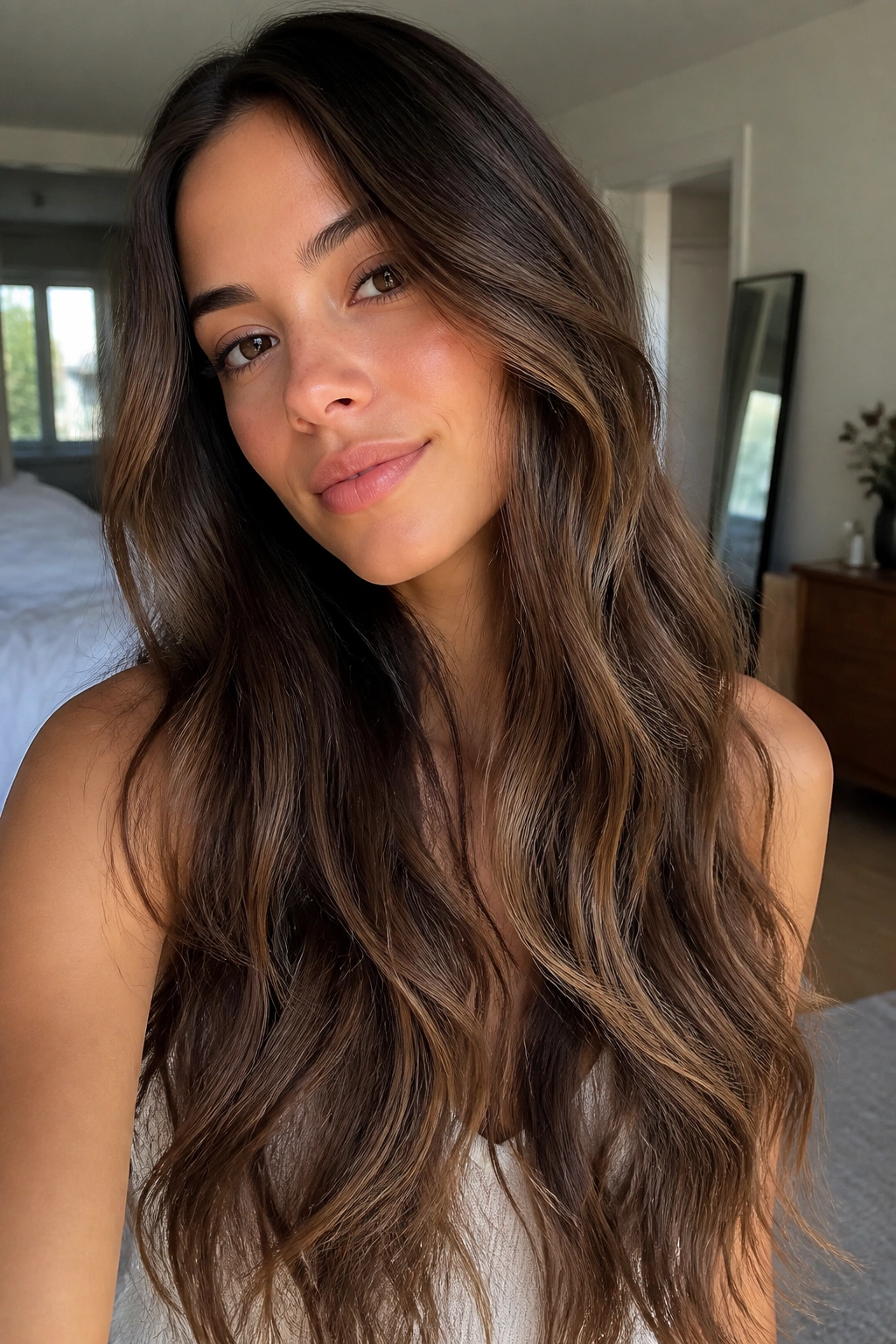
Soft espresso balayage is the shade I reach for when someone wants change without losing depth. The base stays a rich level 4 or 5 brown, while the lighter ribbons move up only a shade or two through the mids and ends. On long hair, that small lift matters more than a dramatic contrast.
Why It Works on Long Lengths
Long layers can swallow color if everything sits at the same depth. Espresso balayage keeps the length looking full at the top and lighter toward the bottom, which stops the ends from reading heavy. It also grows out quietly, so the line at the root never screams for attention.
The best version has a few brighter threads around the face and softer, wider pieces through the back. Not stripes. Ribbons. That difference matters.
- Ask for a level 4 or 5 espresso base
- Keep the lightest pieces around level 6 to 7
- Place brighter ribbons 1 to 2 inches away from the root
- Refresh with a gloss every 6 to 8 weeks
One good highlight placement can change the whole haircut.
2. Champagne Ribbon Highlights
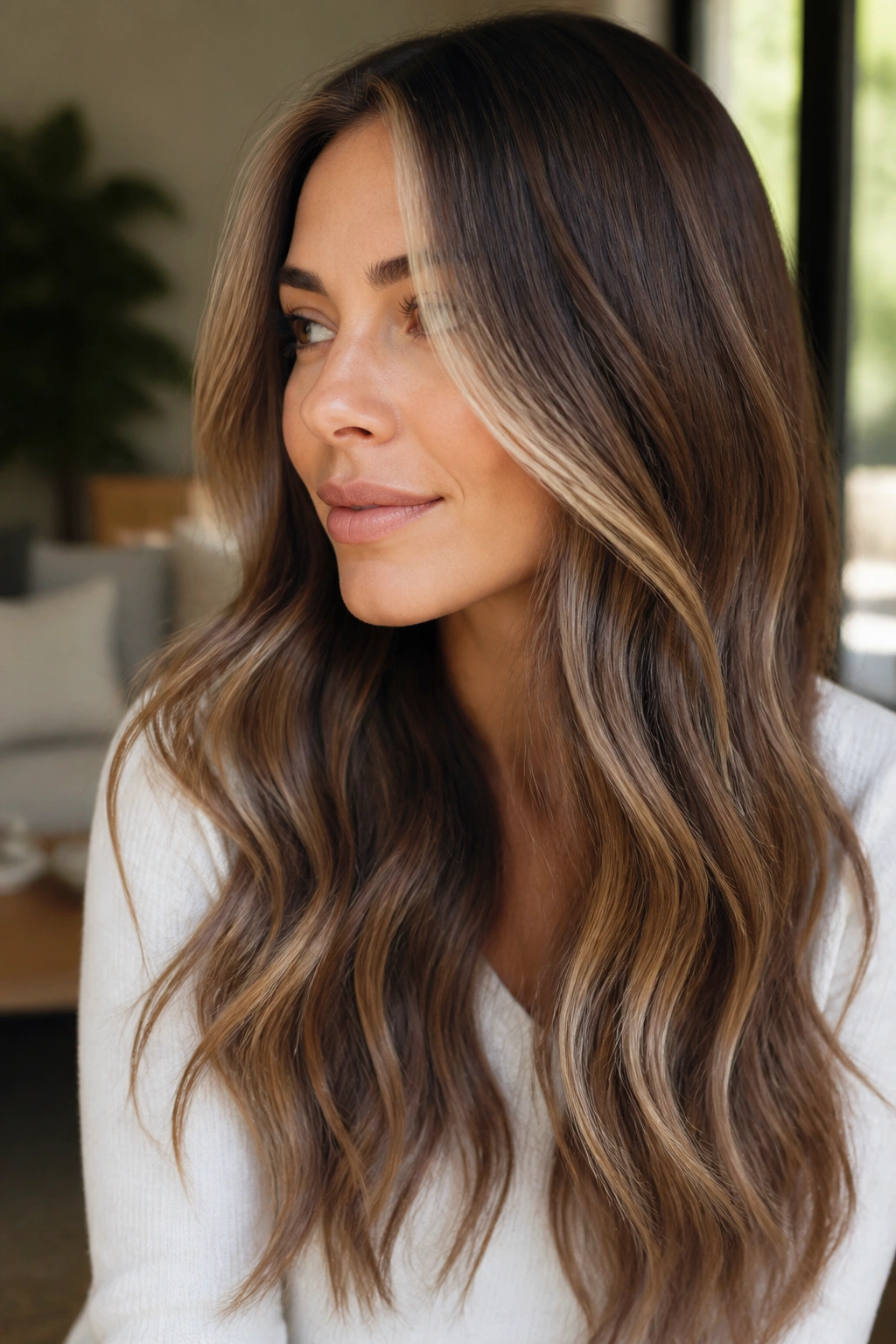
Champagne ribbon highlights are what I suggest when blonde needs to look expensive rather than loud. The tone sits between beige, pale gold, and a touch of pearl, so it avoids that harsh yellow edge some blondes pick up on long hair. It looks especially good when the hair is waved in loose, broad bends.
What makes this shade work is the narrowness of the ribbons. You want thin, hand-painted pieces that move through the top layers and frame the face, not chunky streaks that break up the length. On very long hair, those ribbons act like light strips through the cut, which gives the whole shape more movement.
A good colorist will often keep the root softer and the mids a little brighter, then taper the ends to a creamy finish. That keeps the color from looking stripy when you wear your hair straight.
3. Copper Melt
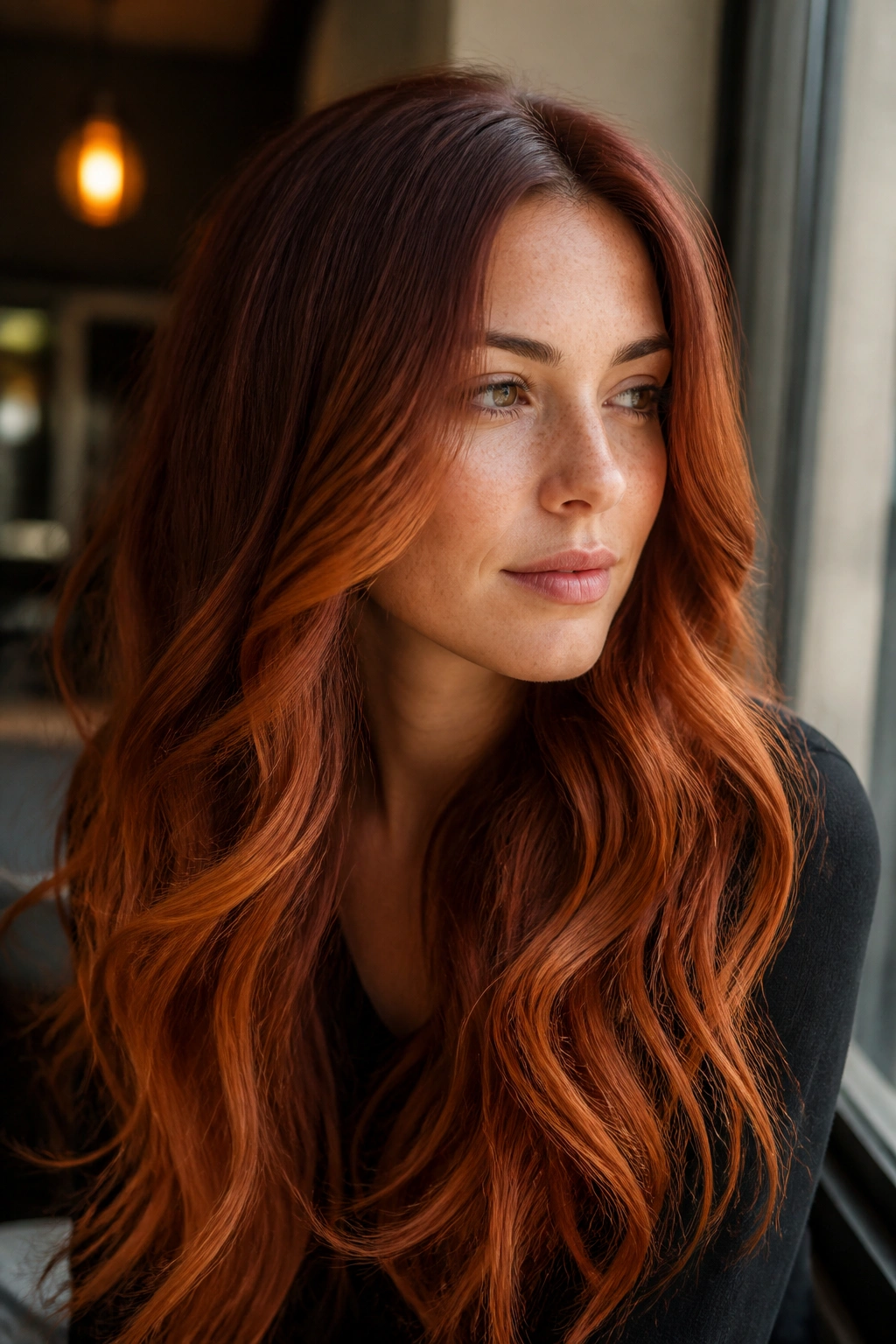
Want warmth that does not turn brassy after one wash? Copper melt is the answer I keep coming back to. It starts with a deeper auburn or cinnamon root and eases into brighter copper through the mids and ends, so the color feels like one long gradient instead of separate blocks.
How to Ask for It
Tell your colorist you want dimension, not a solid orange-red sheet. That phrase helps. Ask for a deeper root at level 5 or 6, then lighter copper through the lower half of the hair. If your hair is very long, ask them to keep the brightest copper below the cheekbones so the face stays soft.
Copper looks richest on hair that has enough texture to catch the different tones. Braids, waves, and layered blowouts all help. Straight, one-length hair can still wear it, but the melt needs to be done with a light hand or it can flatten.
A copper glaze every few weeks keeps the shade from turning dusty. Skip anything that strips too hard. Copper fades fast when you bully it.
4. Mushroom Brown
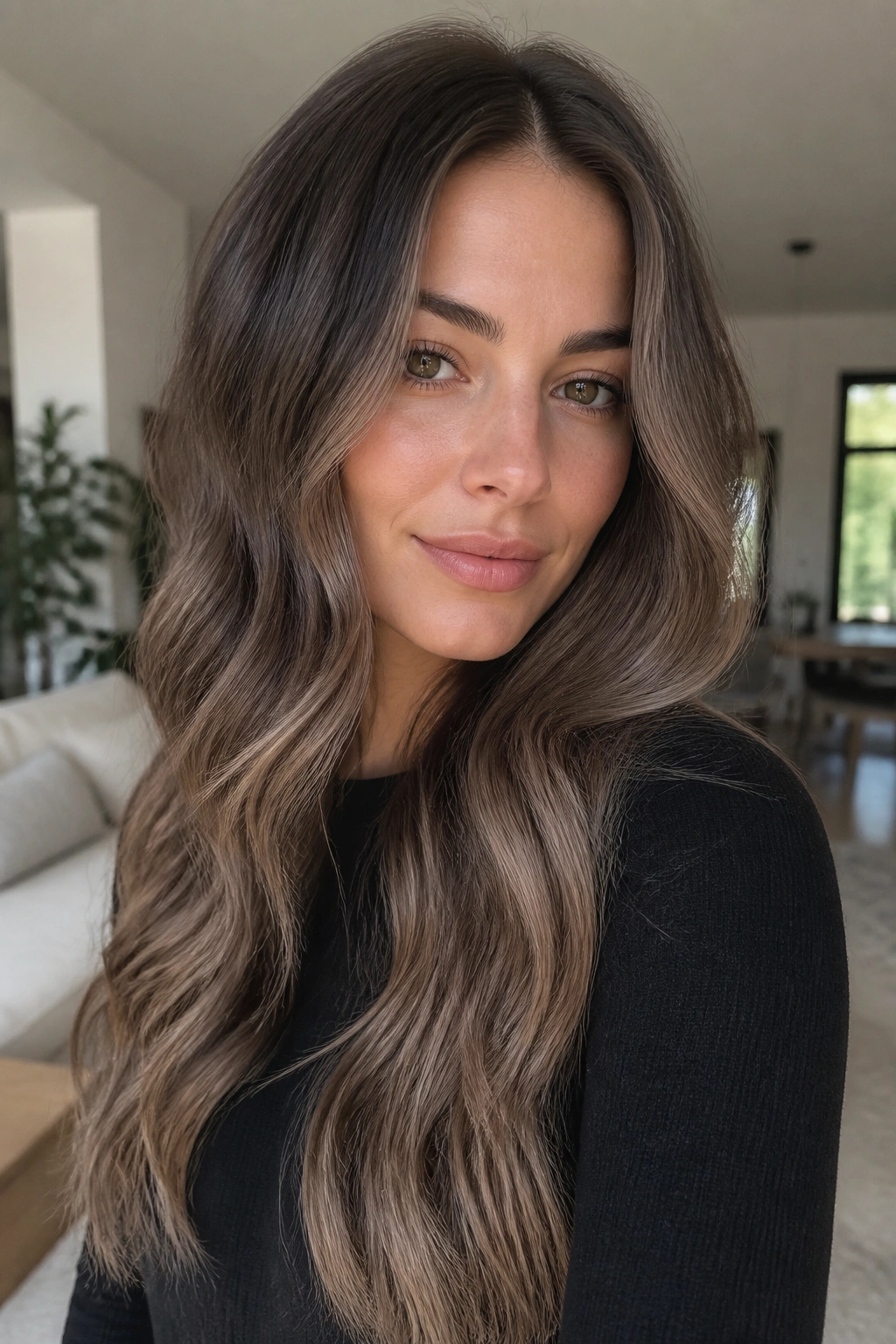
Mushroom brown is the cool, muted brunette that keeps sneaking back into my mood board because it just works on long hair. It mixes ash, taupe, and beige-brown so the tone stays soft instead of red or golden. On a long cut, that quiet coolness makes the hair look denser and a little more polished.
I saw this shade look especially good on a client with long curtain layers and medium thickness. The colorist kept the base around level 5, then added lowlights that sat one shade deeper. The result was not flashy, but it had movement every time she turned her head.
- Best when your hair pulls orange easily
- Good for people who want a cool brunette without going flat black
- Looks especially clean on layered waves and blunt ends
- Needs a neutral or ash gloss to stay in range
Mushroom brown is the shade people call “low key” until they see it in daylight.
5. Face-Framing Money Pieces
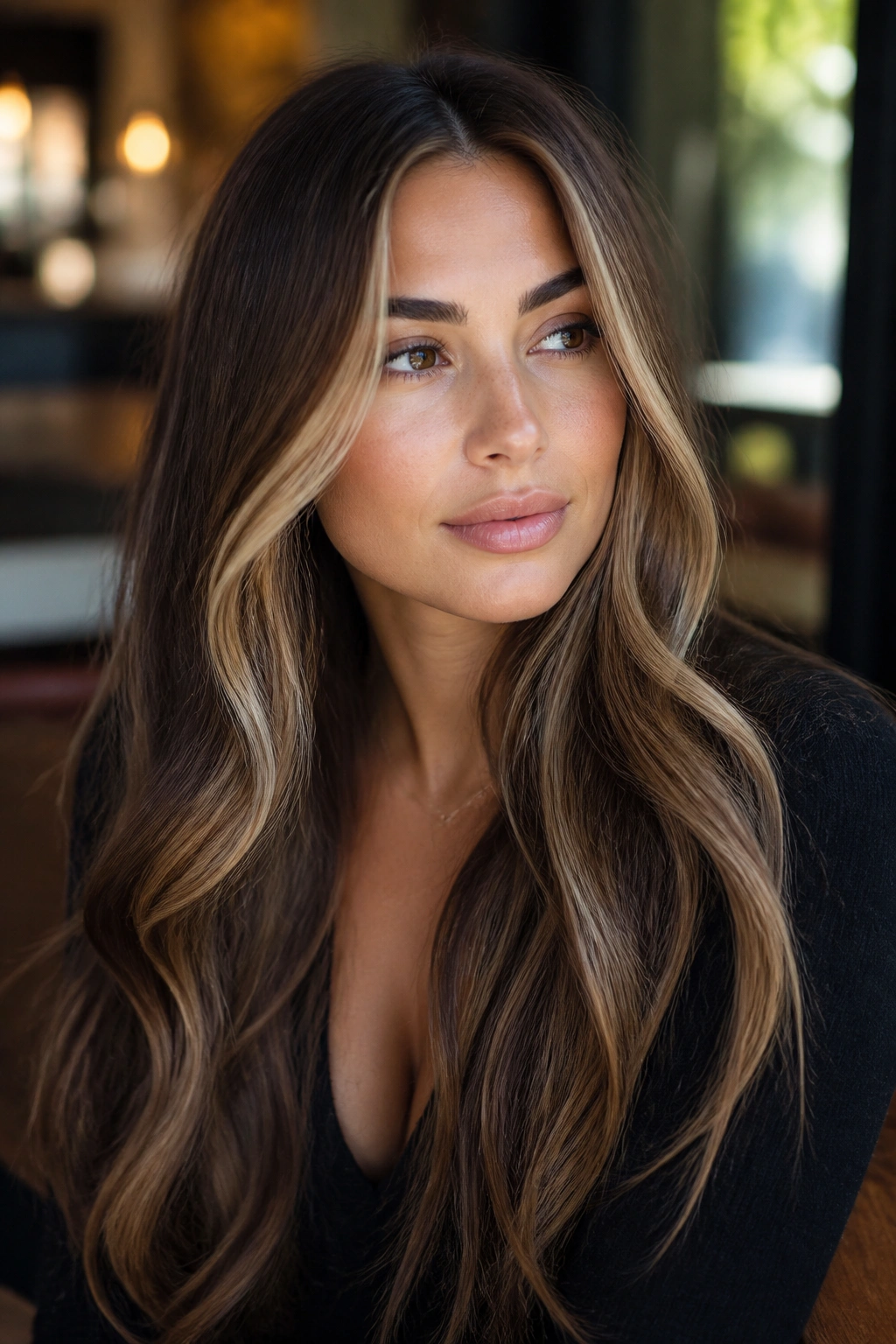
Face-framing money pieces can do more for long hair than a full head of highlights if you want impact without a major shift. These are the lighter strands that sit closest to the face, usually starting around the cheekbone or collarbone and traveling downward with the haircut. On long hair, they pull the eye toward the front and make layers show up better.
The trick is restraint. Too wide, and the face frame takes over. Too narrow, and it disappears. I like pieces that are no wider than a pinky finger at the hairline, then softly blended into the front layers. That way the color looks intentional when the hair is down, but it still softens into the rest of the length.
Bright front pieces work best when the base stays dimensional. If everything else is flat, the money piece looks pasted on. A few deeper lowlights through the mids fix that fast.
This is one of those colors that looks good in a ponytail too. That matters more than people think.
6. Smoky Brunette Ombré
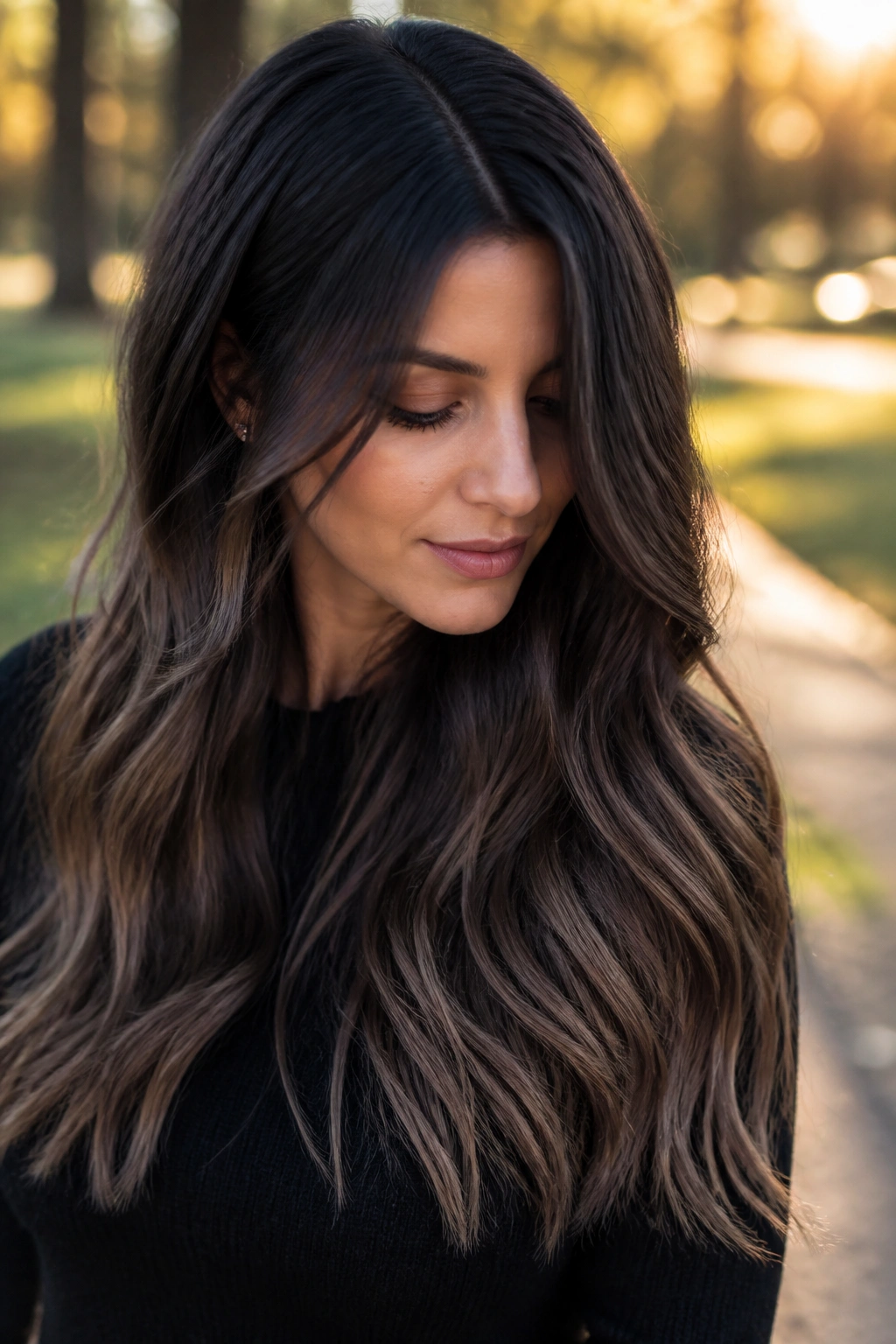
Unlike classic ombré, which can jump too sharply from dark roots to light ends, smoky brunette ombré keeps the shift muted. The root stays deep espresso or chestnut, then the mids move into hazy brown, ash cocoa, or soft taupe. It never feels like two separate colors arguing with each other.
Long hair gives this look room to stretch. That’s the whole point. The transition can start around the mid-back or lower, so the eye sees a long sweep of shadow before it reaches the lighter ends. On shorter hair, the same idea can look abrupt. On long hair, it feels deliberate.
This is a good choice if you want movement but hate hard lines. It also plays nicely with loose curls because the bends catch the smoky tones in different places. If you like a color that looks a little different every time you move, this one earns its keep.
7. Honey Bronde
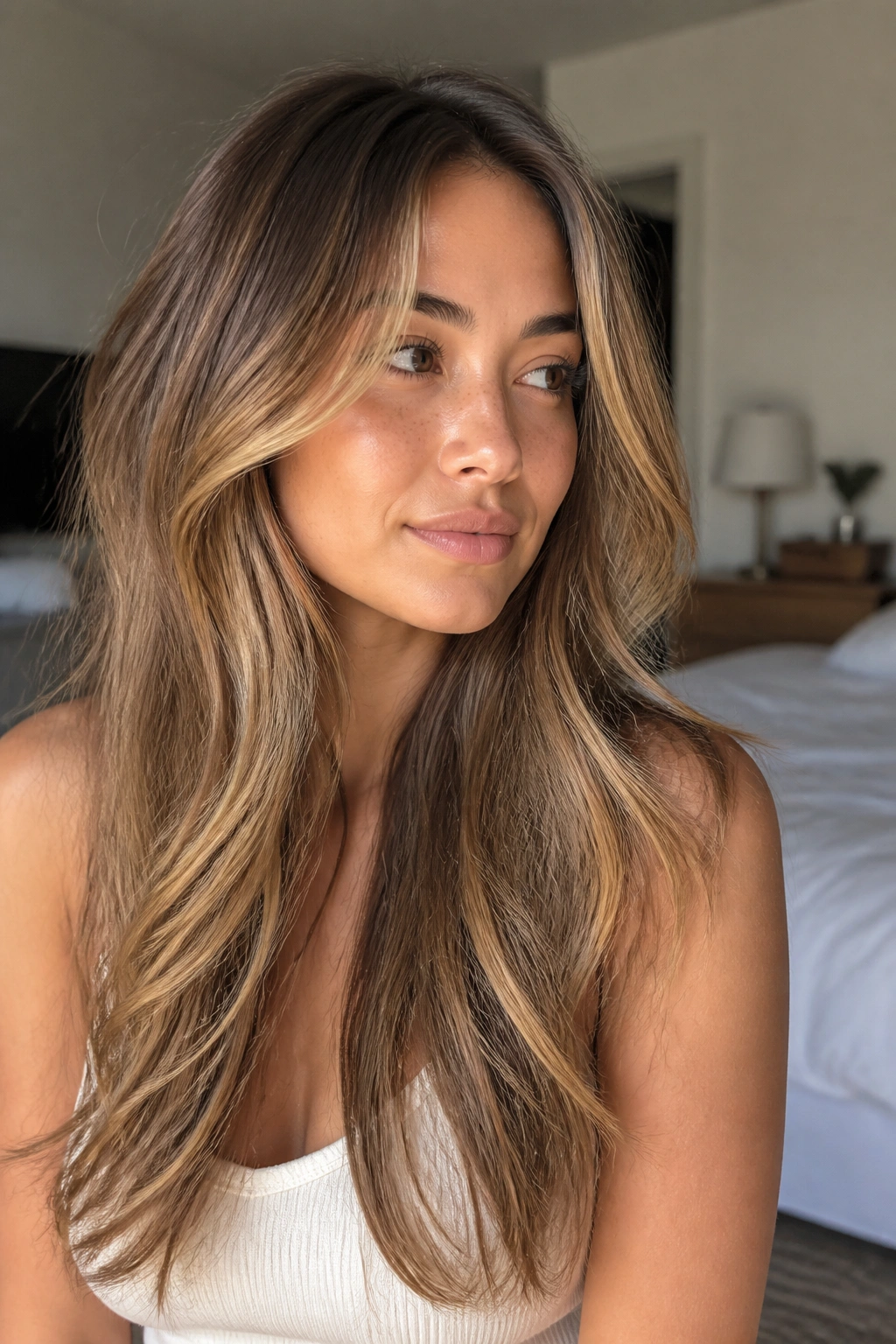
Honey bronde sits in that sweet spot between brunette and blonde, and long hair gives it the room it needs to look expensive rather than muddy. The base stays a warm beige-brown, then honey ribbons thread through the mids and ends. Nothing about it is harsh. It just reads sunlit.
What Makes It Different
The best honey bronde has more warmth than ash-blonde but less gold than caramel. That balance is what keeps it from going brassy. On long layered hair, the lighter pieces separate the shape and stop the bottom from looking like one large block.
- Ask for beige-brown roots
- Add honey ribbons through the mids
- Keep the face frame slightly lighter than the back
- Use a gloss when the warmth starts looking dull
How to Wear It
Loose waves are the easiest match, but a smooth blowout works too. The tone shows up beautifully in sunlight and indoor lighting, which is why so many people end up sticking with it. It is easy to live with. That counts for a lot.
8. Cherry Cola Gloss
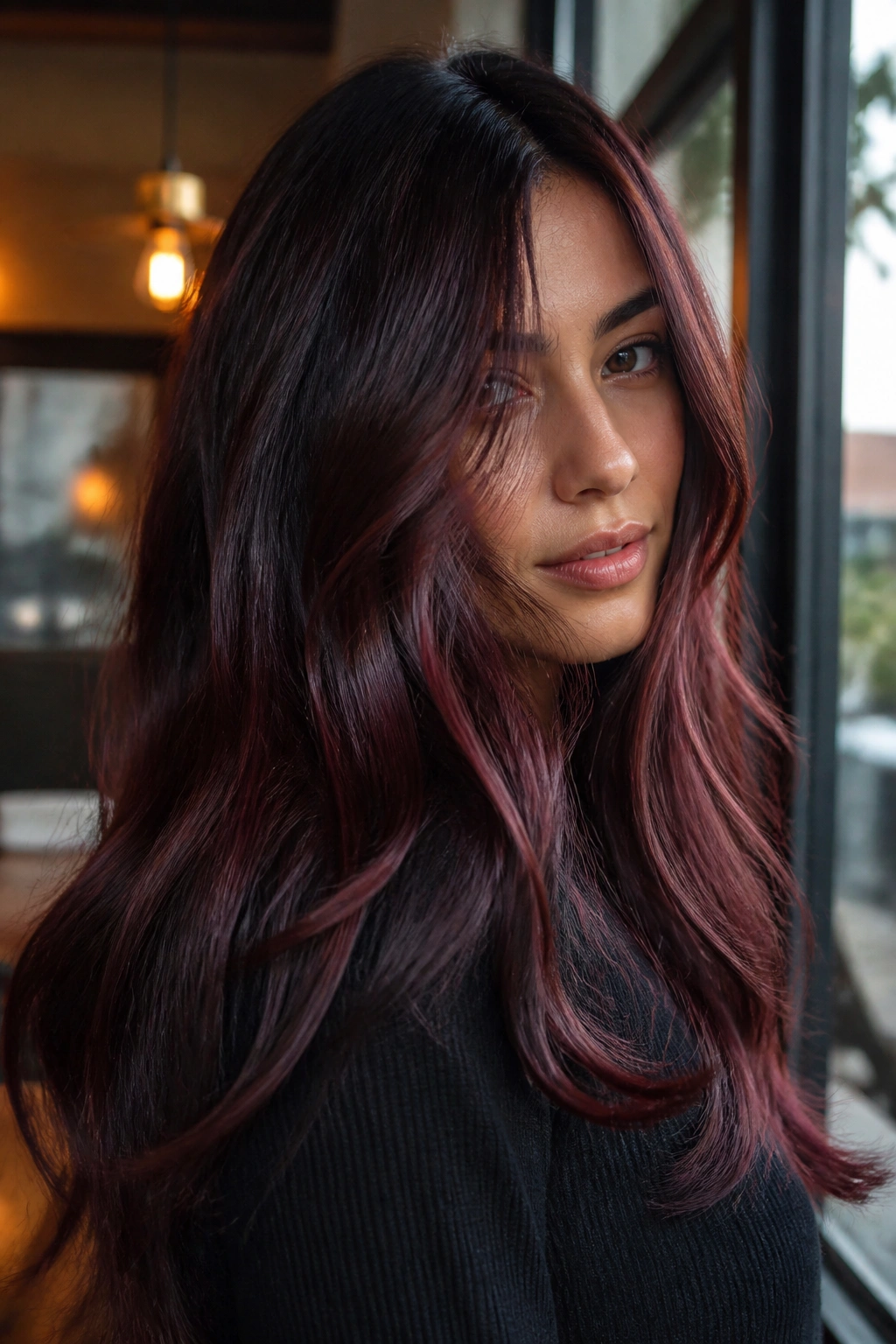
Cherry cola gloss is one of my favorite choices for long hair because it does not need to shout to be noticed. The base stays dark brown or black-brown, then a red-violet gloss adds that deep cherry sheen that shows up in movement. In dim light it looks nearly brunette. In brighter light, the red wakes up.
That shift is the whole appeal. Long hair carries the color through the ends, so the gloss has more surface area to reflect. A chin-length cut can handle it, sure, but the effect is much richer when the hair has weight and length to it.
If you like red but do not want to live in copper maintenance, this is smarter. It fades softer than a vivid red, and it grows out with less drama. A color-depositing conditioner in burgundy or red-violet can help between salon visits, especially if your ends are porous and drink up color fast.
9. Ash Beige Blonde
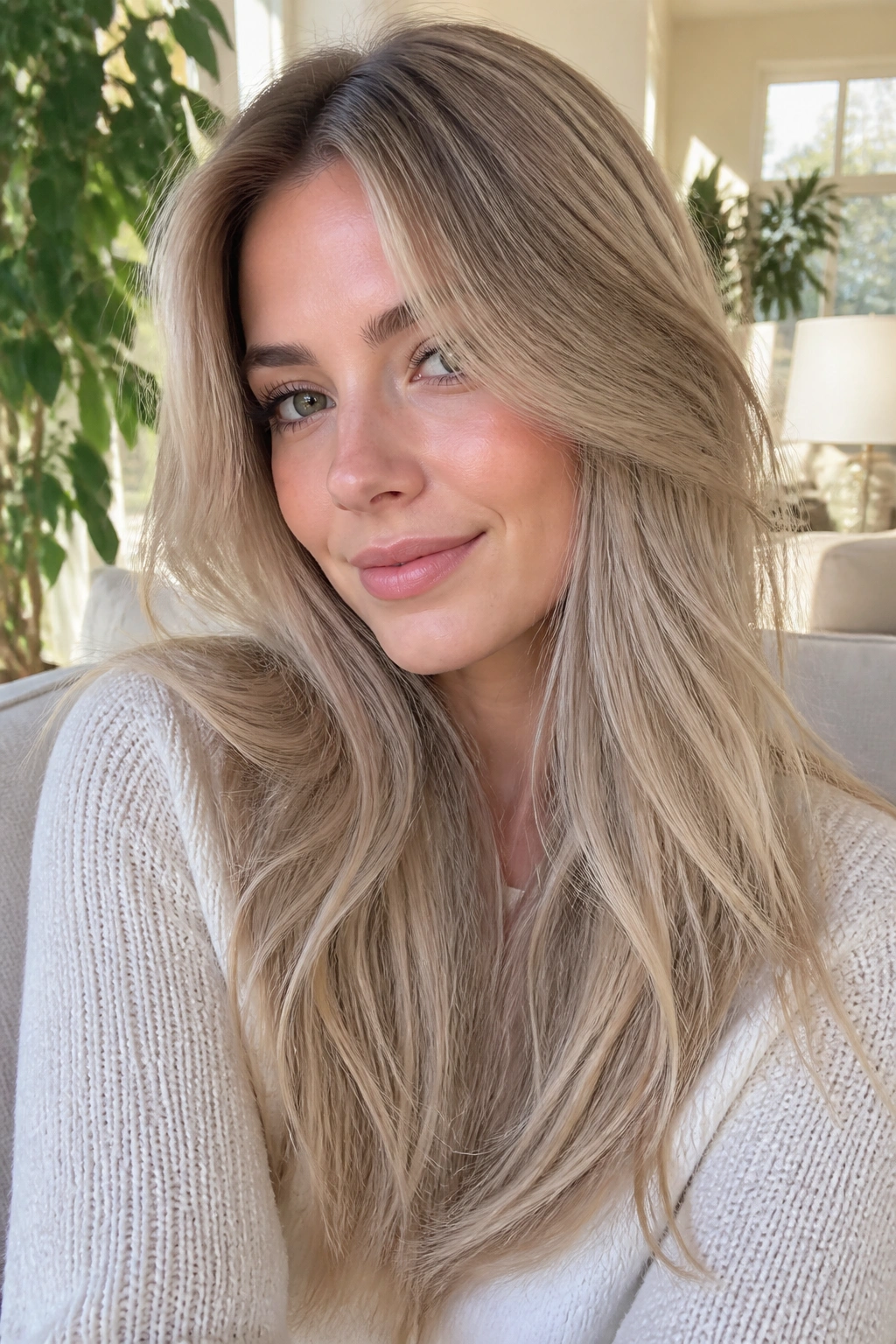
Ash beige blonde is for anyone who wants blonde without yellow, gold, or white noise. The tone lands cooler than honey and warmer than icy platinum, which makes it one of the easiest blondes to wear on long hair. It has enough softness to look lived in, but it still feels clean.
Keeping It Clean, Not Flat
The danger with ash beige is making it too flat. Long hair needs some depth at the root or the whole length can look washed out. A shadow root one shade deeper usually fixes that. Then the mids and ends can sit in a beige-blonde range with just enough ash to keep brass in check.
Ask for a tonal finish rather than a stark lift. That means the colorist should weave in a little lowlight and keep the face frame slightly brighter. The contrast should be gentle, not stripy.
This shade shines on layered cuts because the different lengths show the subtle tone shifts. If your hair is one long curtain with no layers at all, the color can still work, but it benefits from movement. A round brush and a little bend at the ends help.
10. Blackberry Black
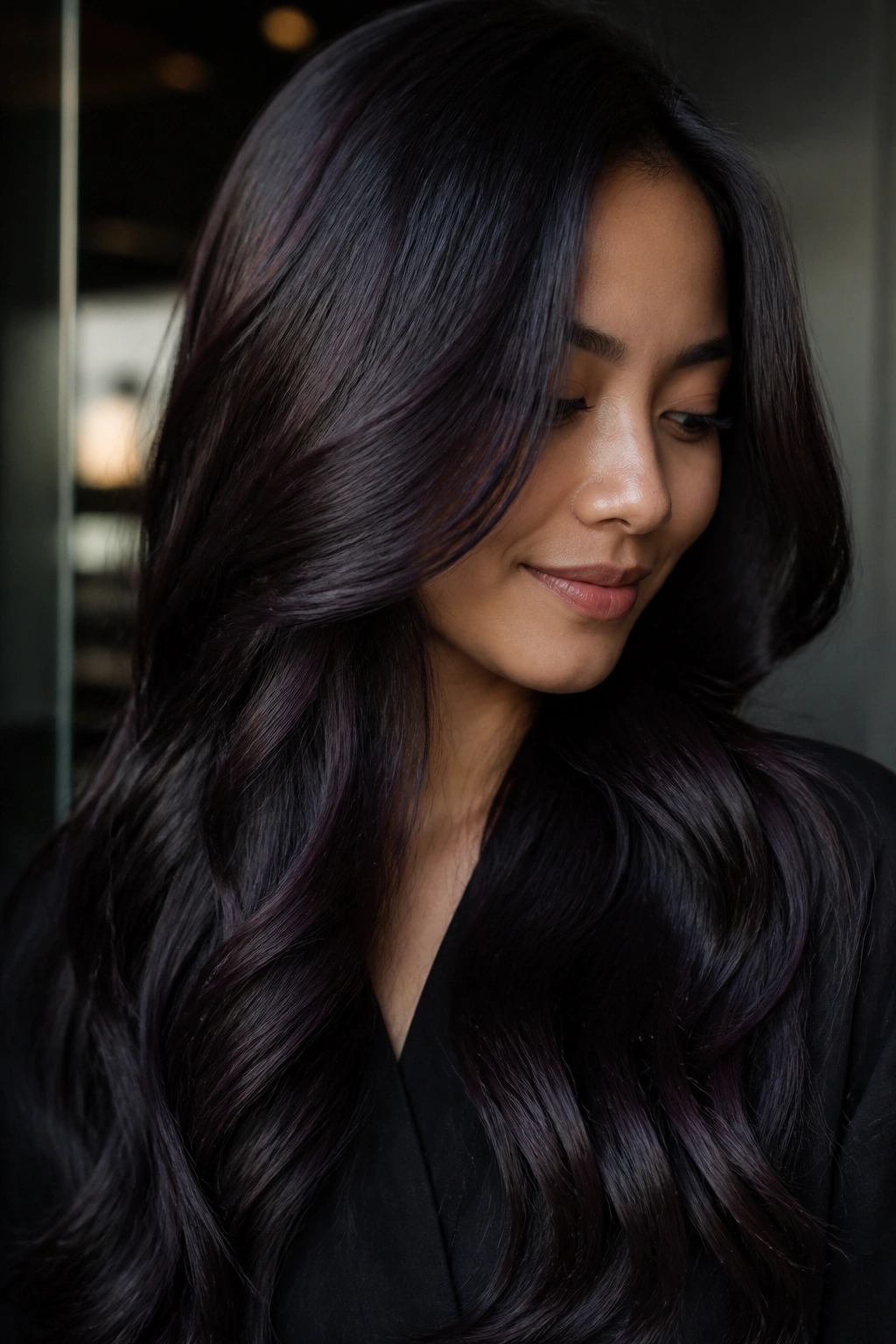
Blackberry black is not plain black, and that’s why it works so well on long hair. It has a cool berry undertone—sometimes violet, sometimes a faint blue-black cast—that keeps the color from looking heavy. In strong light, you get that quiet berry sheen; indoors, it reads as a very deep dark shade.
I like this color on long, thick hair because the extra length gives the dark tone more surface to reflect from. A blunt line can make black look severe. Long layers soften that instantly.
- Best on hair that already sits at level 2 or 3
- Ask for a blue-violet gloss if you want the cooler edge
- Works well with sleek blowouts and high-shine waves
- Needs regular shine treatment, not just color refreshes
The main mistake here is overloading it with too much warmth. If the black goes reddish-brown, you lose the whole point. Keep the tone cool.
11. Rose Gold Tint
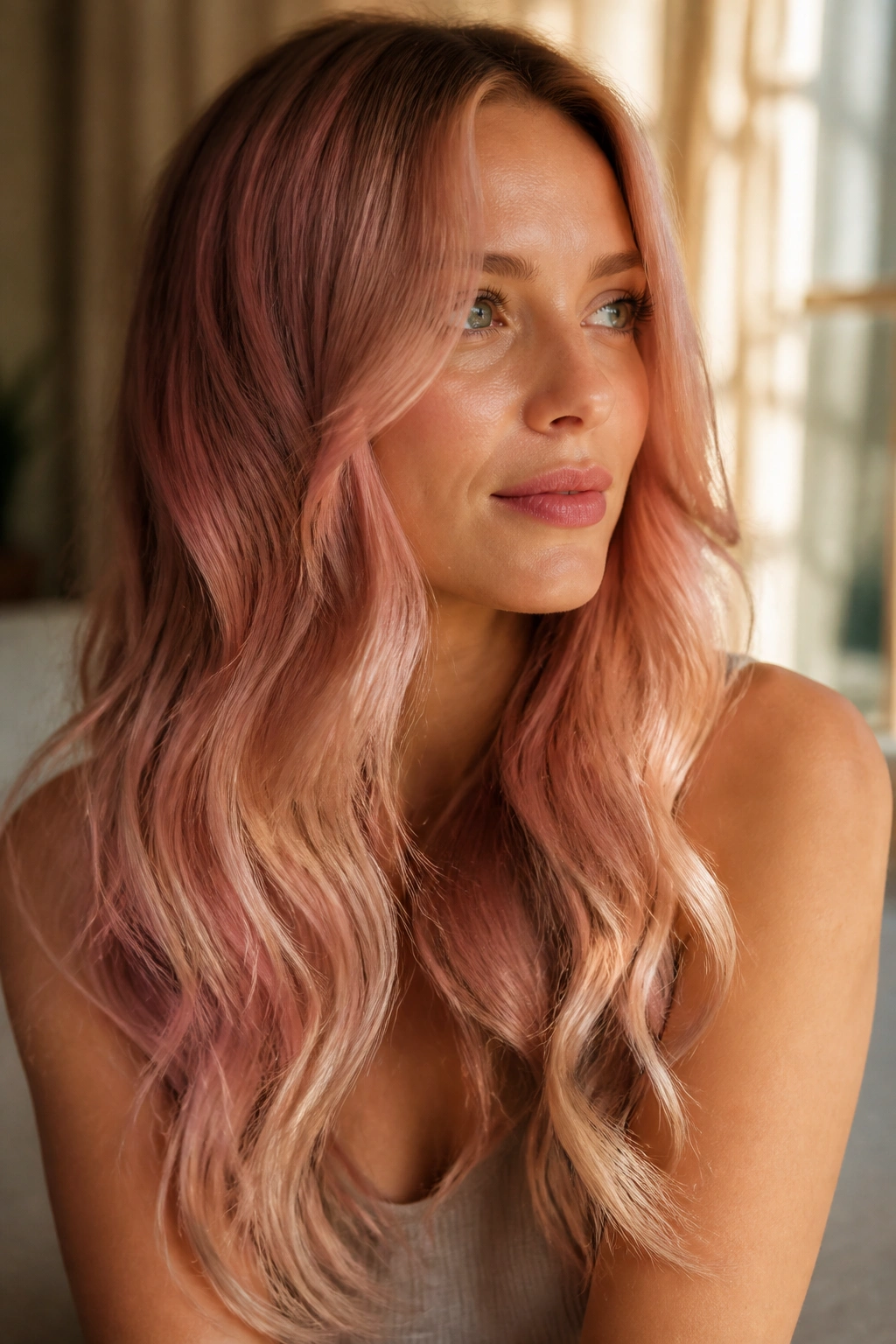
Rose gold tint is softer than people expect. It is not a loud pink. On long hair, it usually reads like a warm blush with a metallic edge, especially when the ends are pre-lightened to a pale blonde. The color moves between peach, soft gold, and a muted pink cast that shows up best in waves.
This shade is happiest on hair that already has lightened mids and ends. On darker bases, rose gold can disappear into warm copper or strawberry tones. That is not bad, just different. If your hair is level 8 or higher, the rose reads more clearly. If it is darker, the color becomes a glaze with warmth.
Long layers help because the lighter tone can sit in the movement rather than flattening the whole cut. A soft wave makes the pinkish reflect show up at the edges. Straight hair still works, but the finish looks subtler.
12. Buttercream Blonde
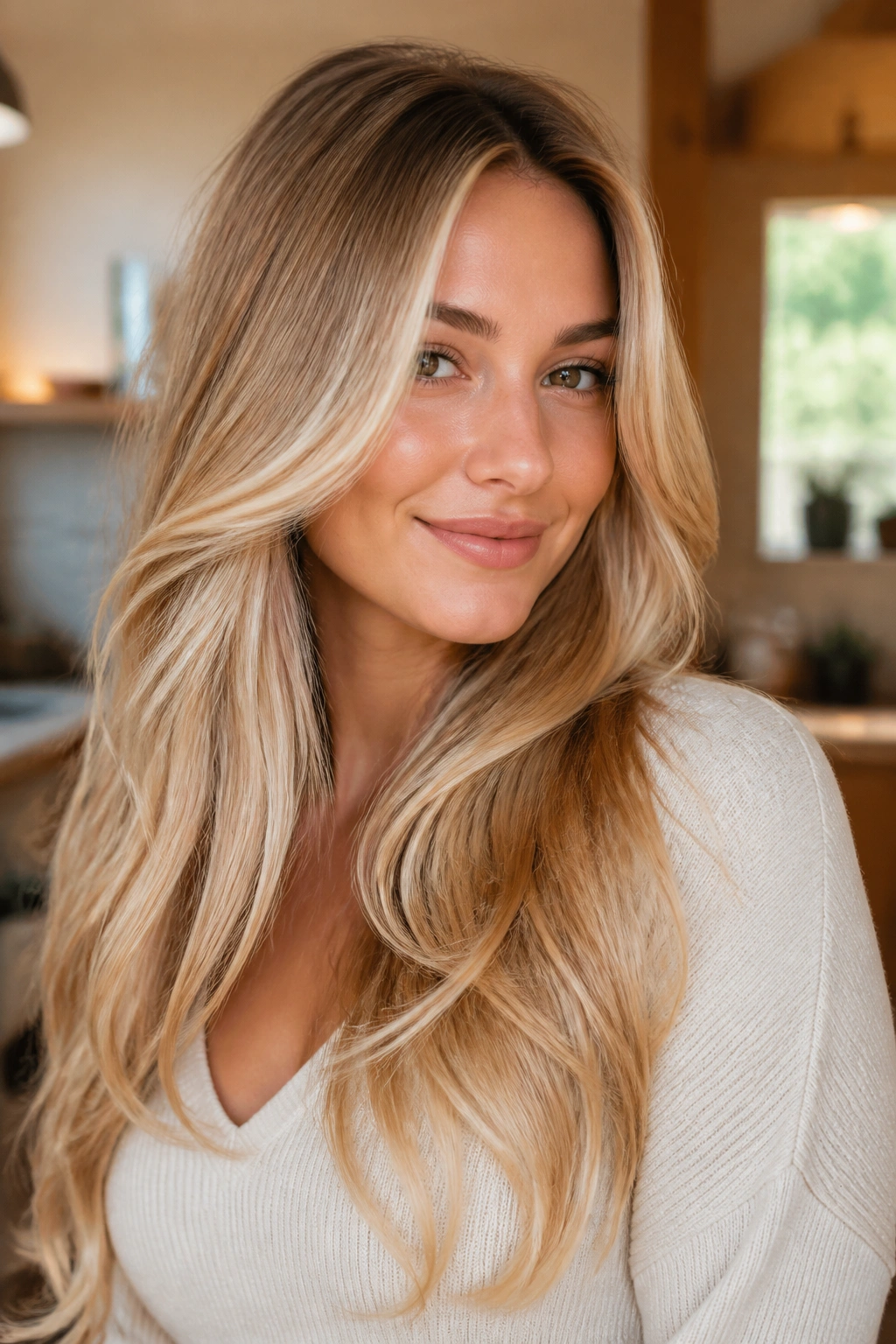
Buttercream blonde is the creamy blonde I like when icy tones start feeling a little too sharp. It has a soft, warm edge that sits between pale gold and beige, which makes it easier on long hair that can look brittle under cooler platinum. The color reads cushioned, not hard.
Why It Beats a Stark Blonde on Long Hair
Long hair shows dryness fast. Buttercream blonde forgives that better because the creamy tone softens the ends. It also looks kinder against layered cuts, where the color can fall in ribbons instead of one bright sheet. If your hair has any natural warmth left, this shade uses it rather than fighting it.
The best way to wear it is with a root shadow or soft beige base. That keeps the blonde from looking like one giant pale block from roots to ends. A few lowlights through the underlayers help too, especially if your hair is very dense.
This is a good pick if you like polished blonde without a sharp edge. It grows out gracefully, and that alone saves a lot of salon stress.
13. Cinnamon Spice Brunette
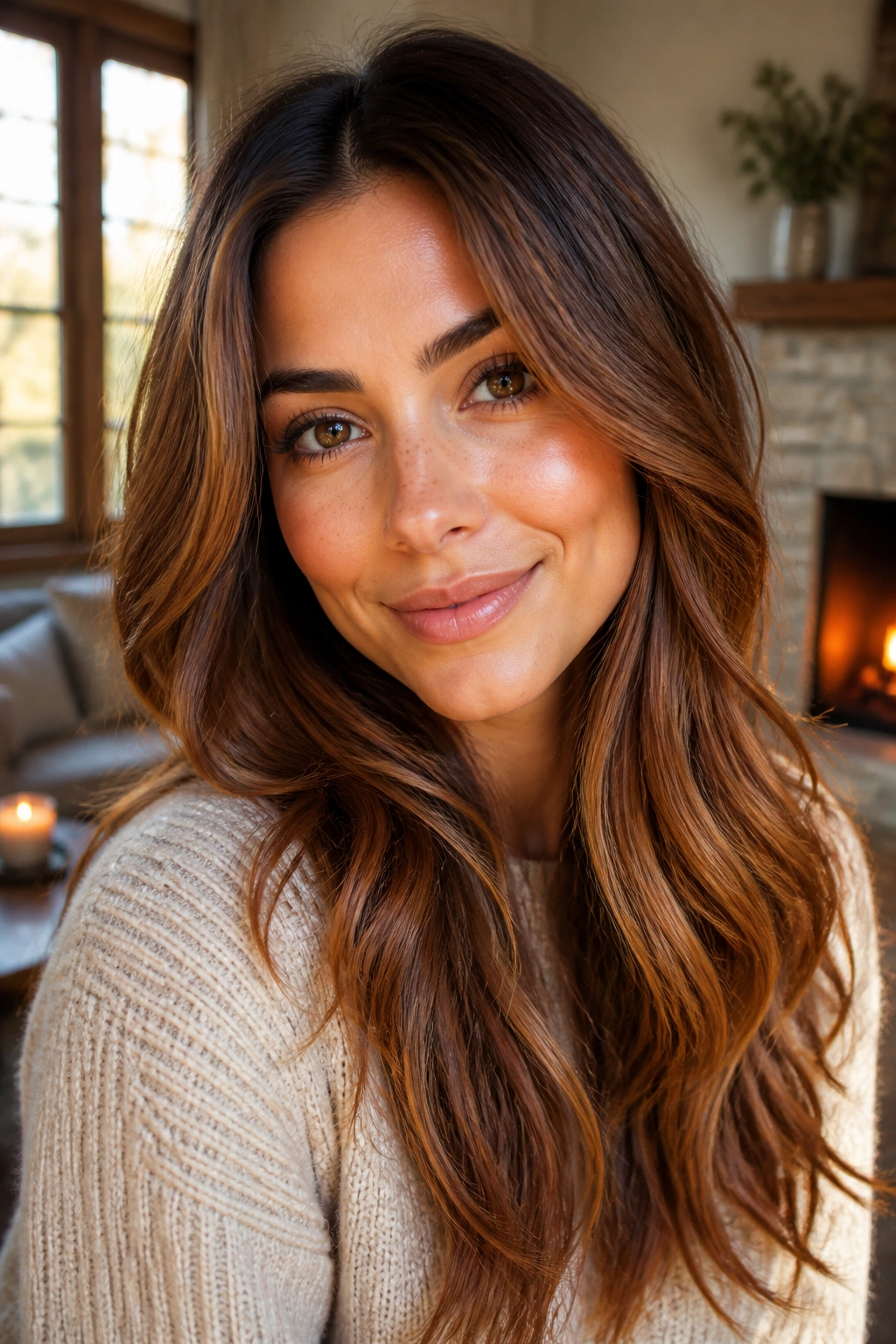
Cinnamon spice brunette sits between warm brown and muted copper, and it looks especially good on long hair with movement. The base remains brunette, but the mid-lengths pick up a cinnamon warmth that gives the whole style a little fire without turning it red.
Where to Place the Warmth
Keep the cinnamon tone mostly in the mids and ends, then leave the root a shade deeper. That keeps the hair from looking too orange at the scalp. Around the face, a few lighter cinnamon pieces can brighten the skin without screaming for attention.
This shade is stronger in curls and loose waves than in pin-straight hair. That’s not a flaw. It just means the color rewards texture. Braids also look good because the different strands catch the copper-brown mix in a way flat hair cannot.
If you are nervous about red, this is a safer step than full copper. It gives warmth, shine, and movement without a dramatic shift in identity. Some people want that. I usually do too.
14. Midnight Blue-Black
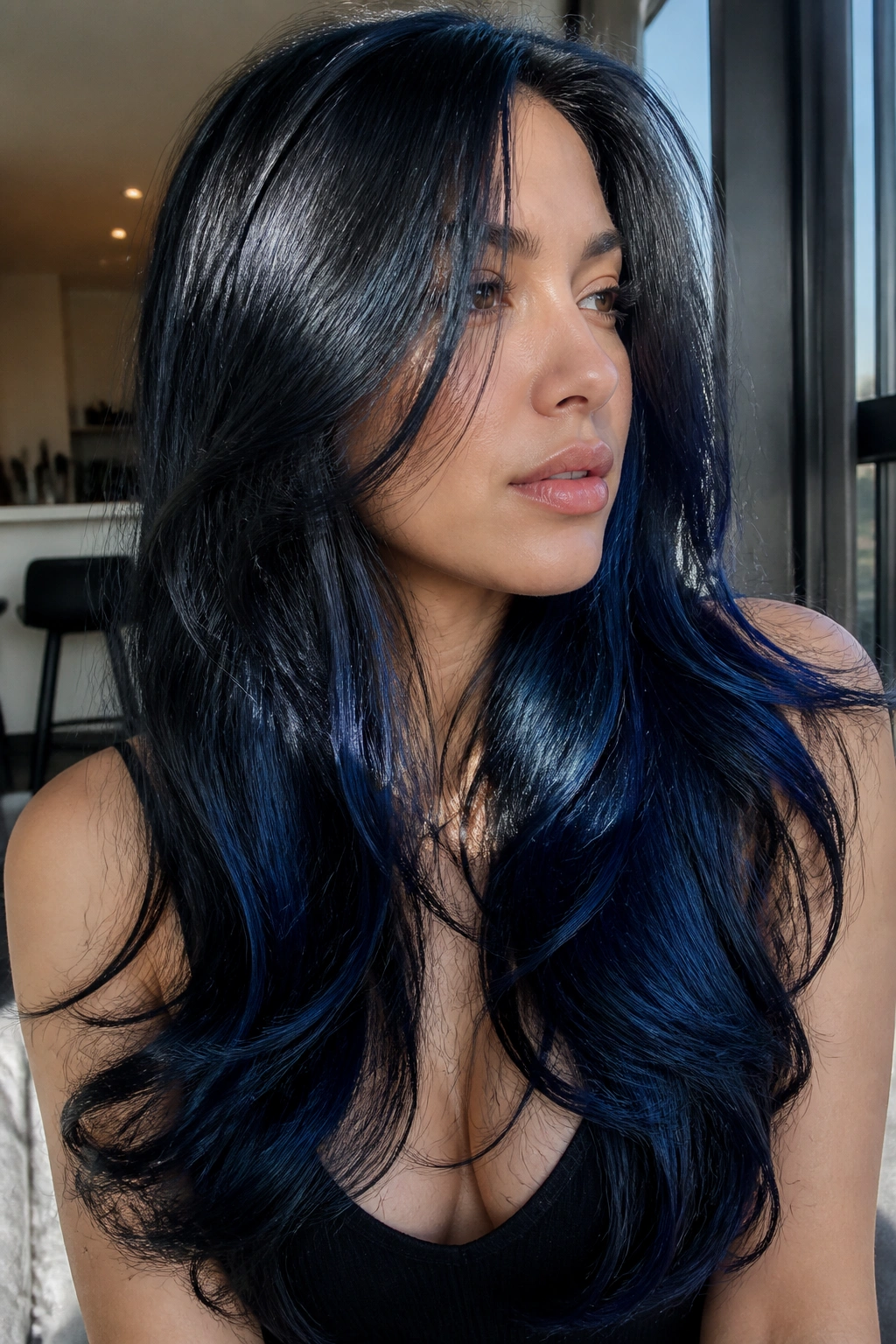
Midnight blue-black is for people who want dark hair with a little edge. The base is nearly black, but the blue reflect changes the way it reads in light. Indoors it looks sleek and deep. Under daylight, the blue comes forward in a way that is subtle but noticeable.
That is what makes it better than plain black for long hair. Long lengths can make black look heavy if there is no variation. Blue-black breaks that up just enough. It also pairs well with long layers because the movement reveals different tones as the hair swings.
Ask for a level 2 base with blue-black glaze, not a flat dye job. That difference matters. A gloss gives you shine and reflection; a solid black box color just sits there. If your hair is porous at the ends, the gloss may grab darker there, so your colorist should work carefully through the lower half.
15. Caramel Tiger-Eye Highlights
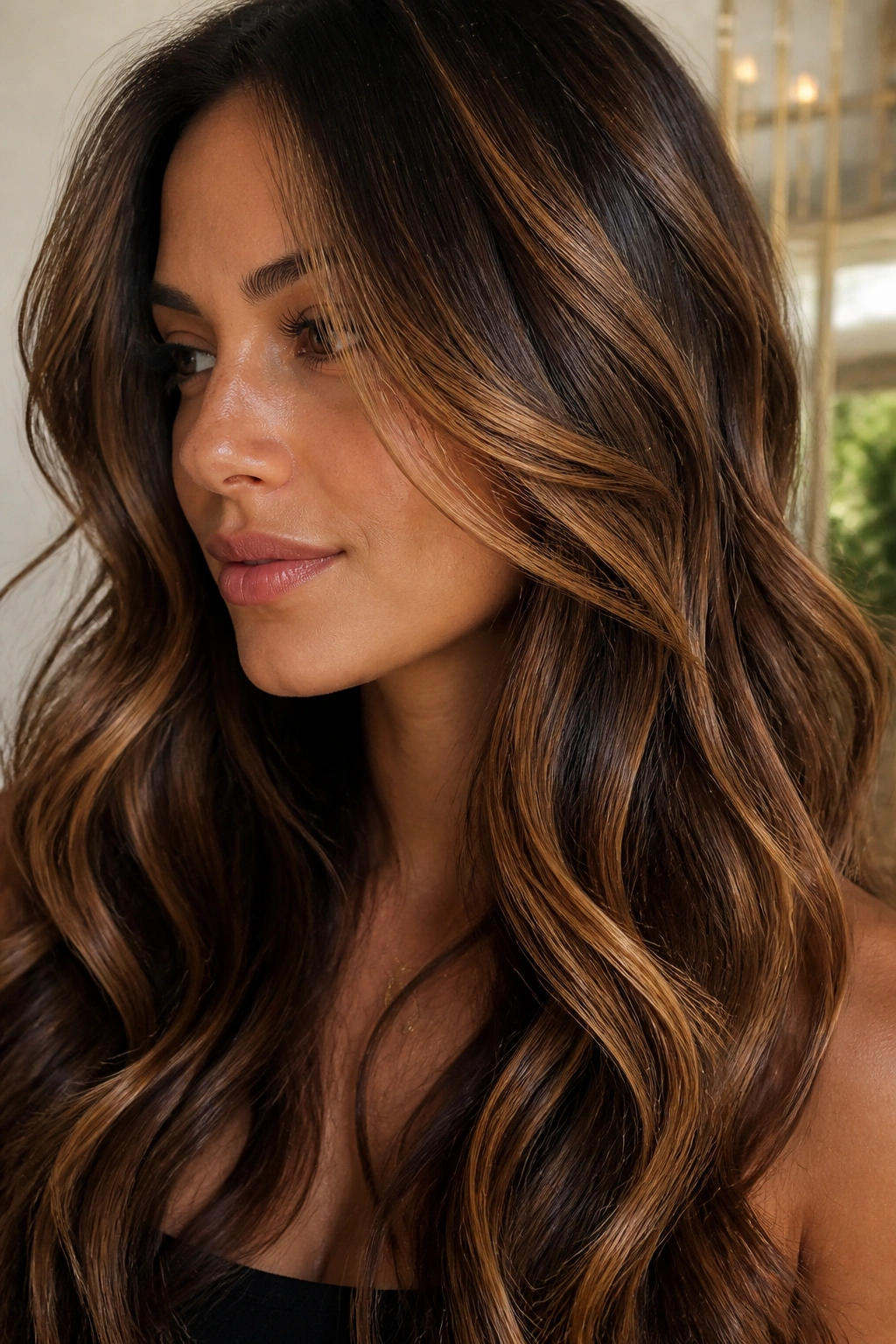
Caramel tiger-eye highlights are bold enough to notice but soft enough to wear every day. The idea is inspired by the layered bands in tiger-eye stone: warm caramel, amber, and brunette moving through one another in wide, curved ribbons. On long hair, that creates a natural-looking sweep of color that feels richer than standard highlights.
I like this on thick, long waves because the larger sections hold the pattern better. Tiny foils can get lost in all that hair. Wider caramel ribbons, about 1/4 inch to 1/2 inch, make the dimension show through the length.
- Keep the base around level 4 or 5
- Lift the highlights to level 7 or 8
- Place the brightest pieces through the front and top layers
- Add a gloss if the caramel starts turning too orange
This shade is one of the easiest ways to make long brunette hair look fuller without going blonde.
16. Chestnut-to-Toffee Ombré
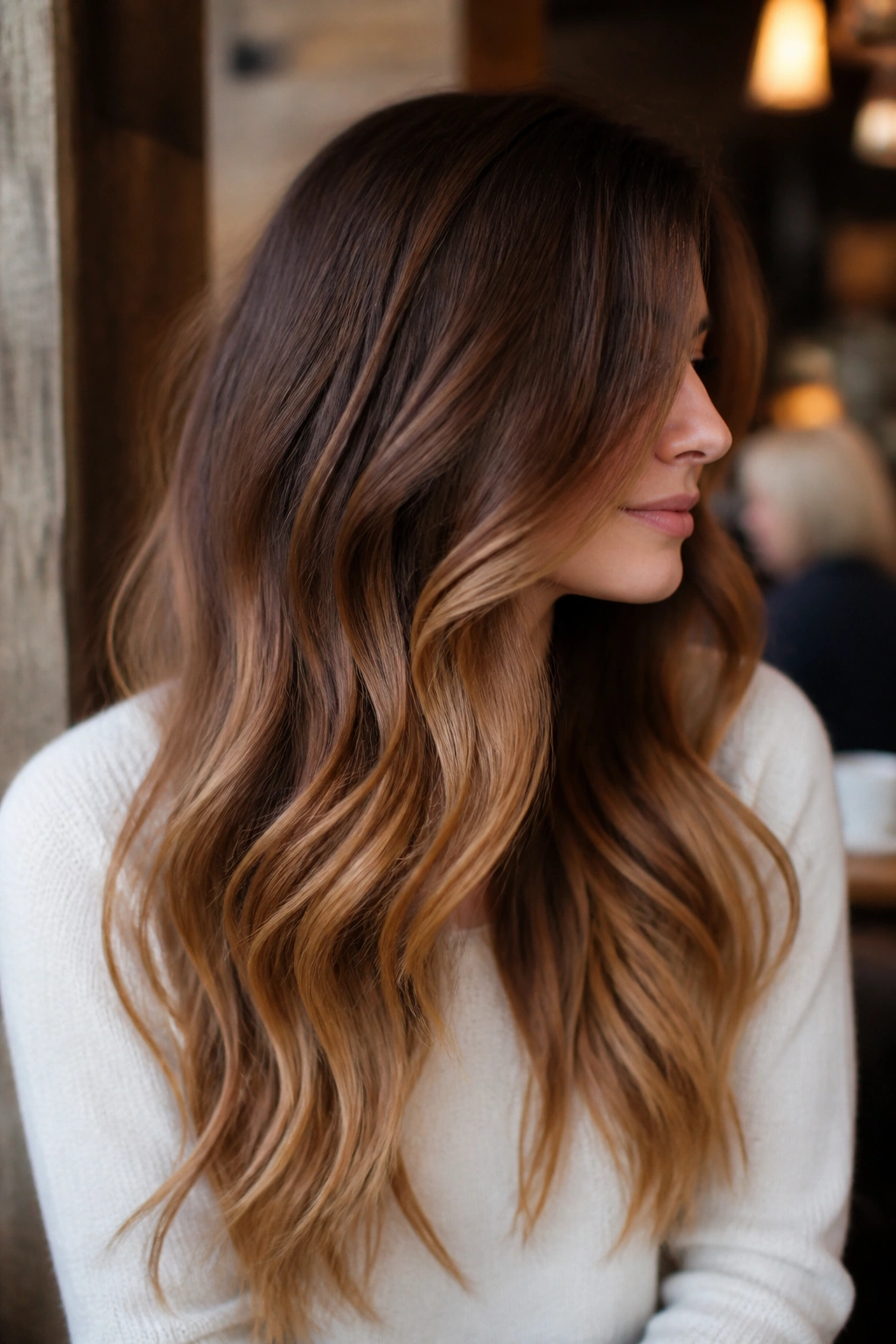
Chestnut-to-toffee ombré gives long hair a soft, warm gradient that never feels forced. The roots stay chestnut or cocoa brown, then the ends open into toffee, light caramel, or a warm beige-brown. It is a calmer cousin of high-contrast ombré, and that calm is why it works so well on longer lengths.
The key is keeping the transition blurred. If the break between shades happens too suddenly, the hair starts to look like two different heads glued together. Not a good look. A better version fades gradually through the mid-lengths so the eye moves from dark to light without hitting a hard stop.
This color is forgiving if you wear your hair up a lot. The root area stays darker and cleaner, while the lighter ends still give the style some life when the hair is down. It is one of the easiest long-hair ideas to live with.
17. Burgundy Wine Layers
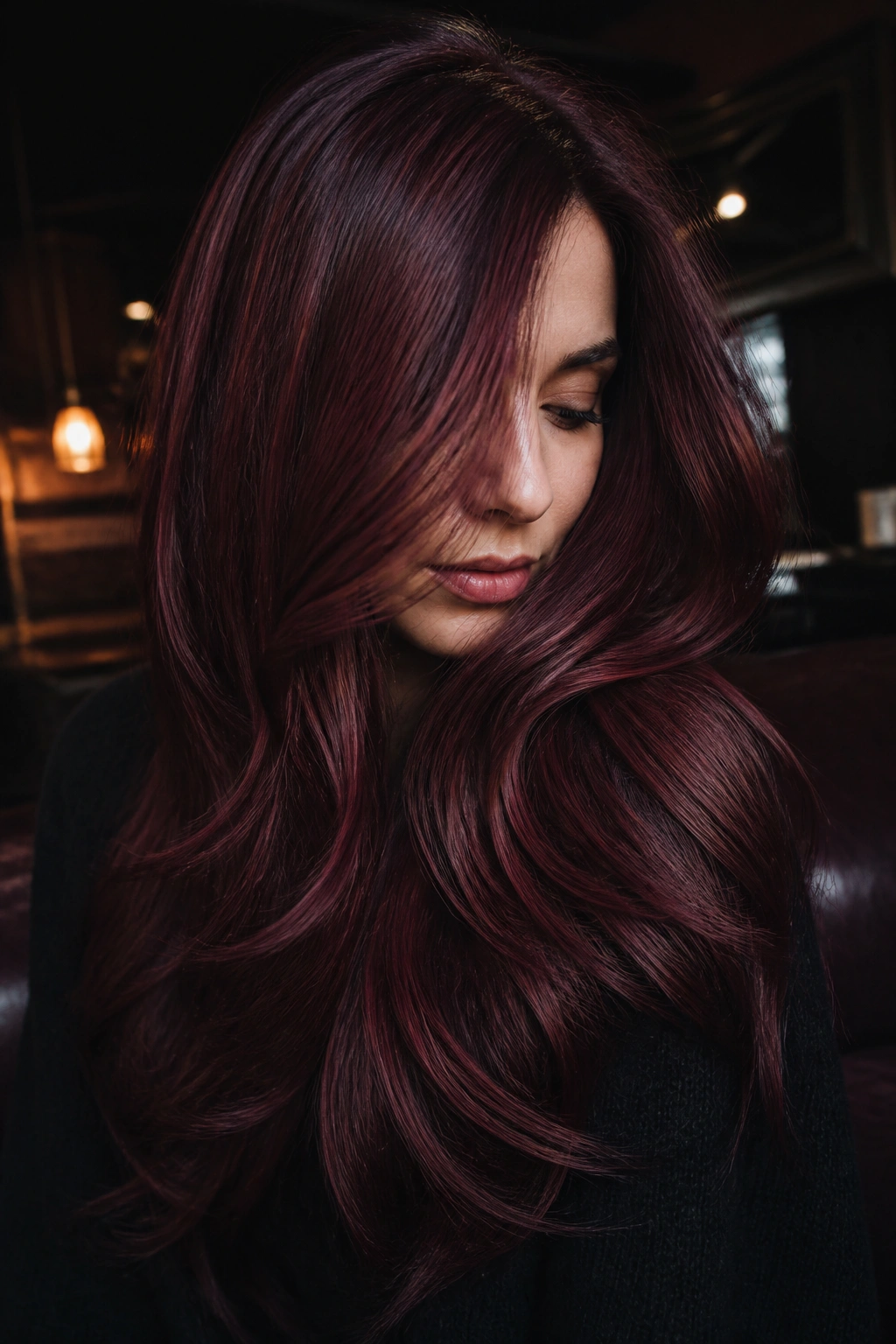
Burgundy wine layers bring a deep red-violet richness that long hair can carry without looking costume-like. The shade sits darker than cherry red and richer than plum, which gives it a grown-up edge. On layered long hair, every movement reveals a different side of the color.
Why It Looks Better on Long Hair Than on Short Hair
Layers create little ledges for the burgundy to sit on. When the hair shifts, the darker and lighter parts of the red separate just enough to show depth. That is why this shade feels plush on long cuts, especially when the ends are a little feathered or curled.
Ask for a burgundy glaze over a dark base if you want something subtle. Ask for stronger red-violet pigment if you want more visible color. Either way, a shine treatment helps. Burgundy can go dull if the finish is dry, and dry red hair is a wasted opportunity.
This color likes low light and movement. It is moody in the best sense of the word.
18. Sandy Mushroom Bronde
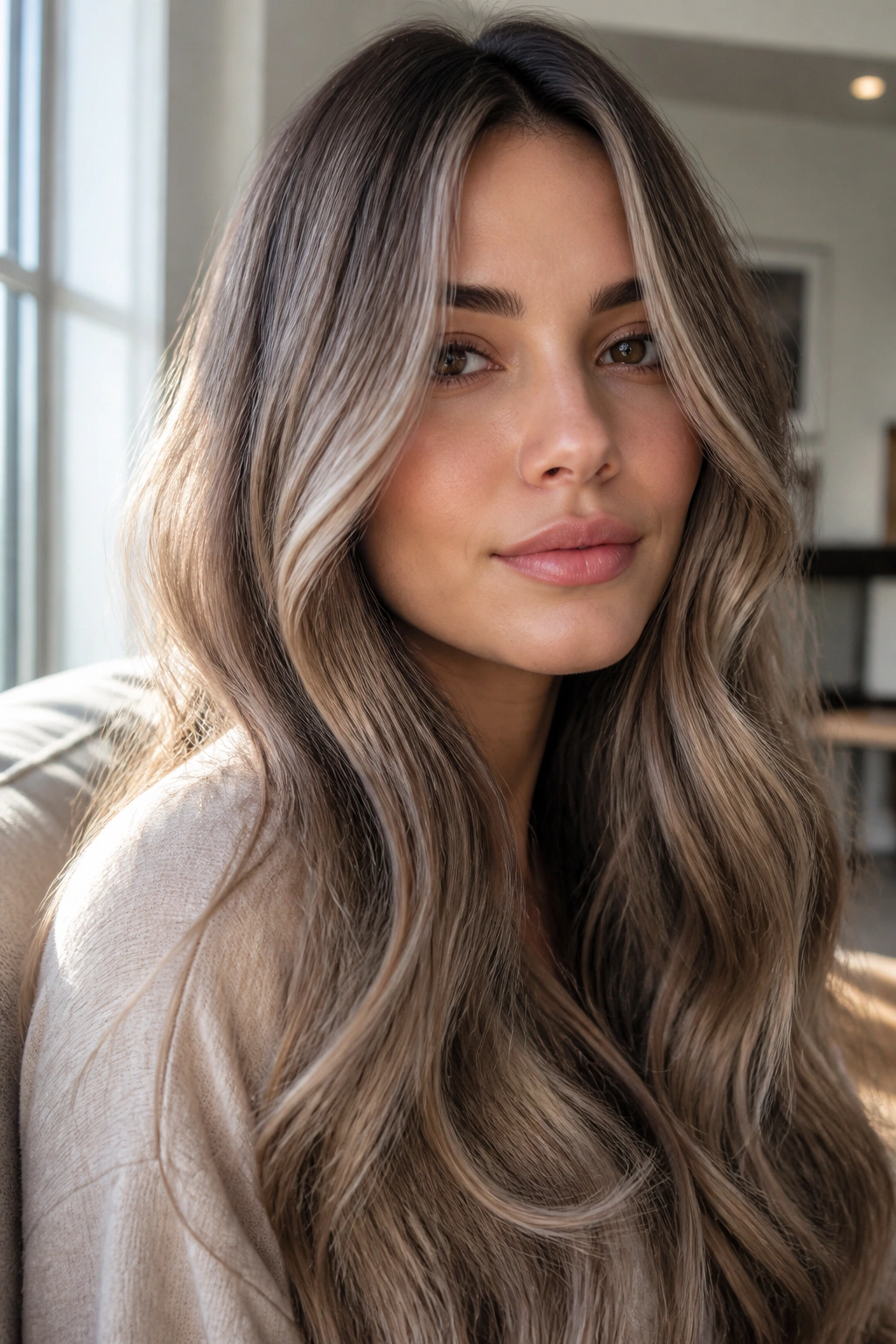
Sandy mushroom bronde is what happens when brunette and blonde meet in a cooler, softer middle. It has more beige and taupe than honey, which keeps it from leaning too warm. On long hair, that muted mix looks clean and layered instead of striped.
Unlike honey bronde, sandy mushroom bronde stays restrained. Unlike ash blonde, it does not go pale and icy. That middle ground is its whole personality. It suits people who want visible dimension but do not want the color to run warm or loud.
This shade works well with long, loose waves and air-dried texture. The slight coolness helps the strands separate visually, which gives long hair a lot of movement without heavy contrast. If your skin tends to look better beside soft neutrals than bright gold, this is worth a serious look.
19. Pearl Silver
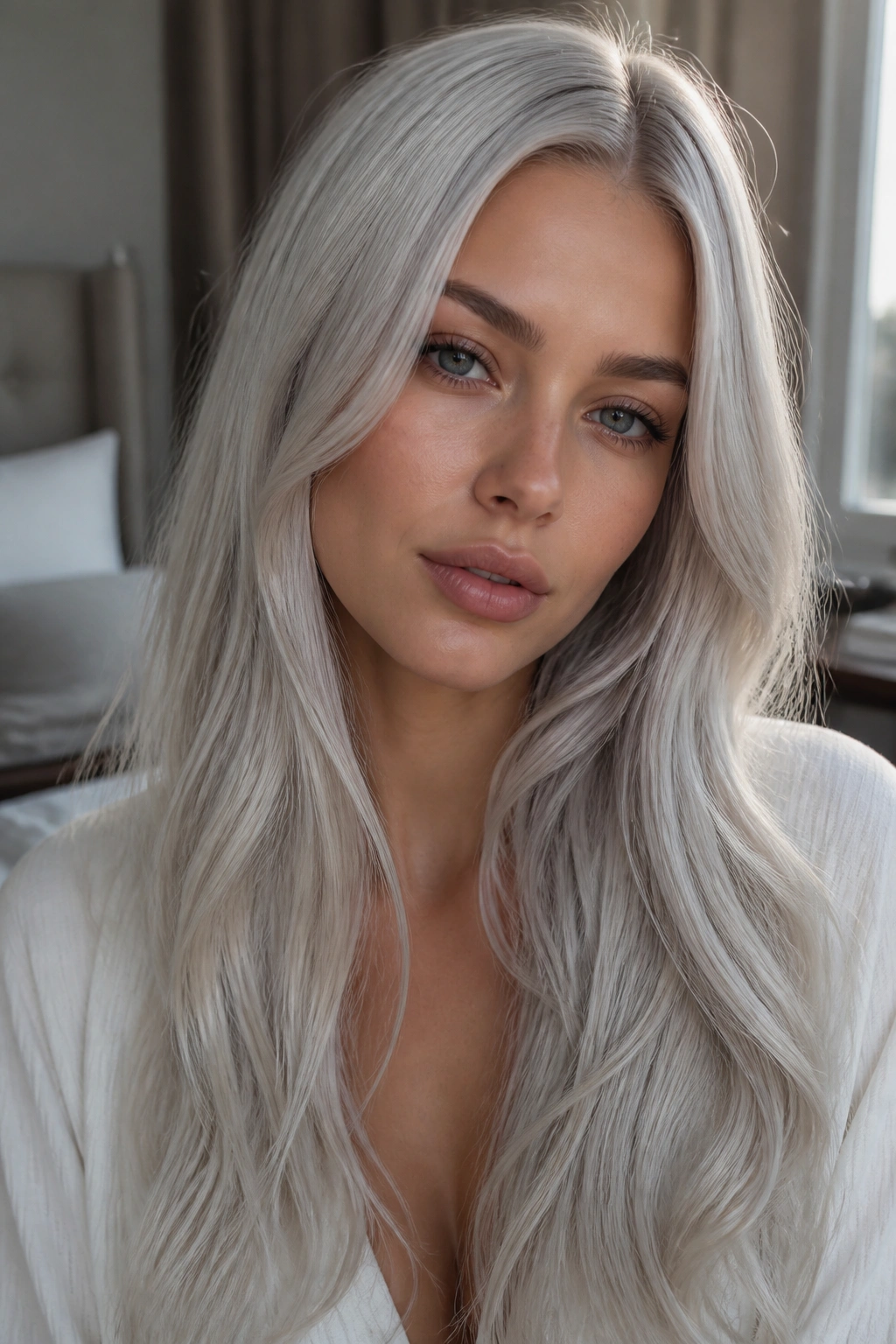
Pearl silver can look unreal on long hair when the lift is done cleanly. The base needs to reach a pale level 9 or 10, because silver only reads silver on very light hair. Anything darker and it turns muddy or gray in a flat way. That is not what we want here.
How to Keep It Even
Long hair can be tricky with silver because the ends often process faster than the roots. A colorist needs to keep checking the porosity from top to bottom so the tone does not grab too dark at the ends. That matters more than people think.
A pearl silver finish usually has a hint of violet or cool beige to keep it from turning chalky. It looks sharp on sleek styles and big, smooth waves. Braids work too, but the tone is most striking when the surface is glossy.
This is not a low-maintenance choice. It asks for toner, color-safe care, and a little patience. If you like commitment, though, it pays off.
20. Auburn Velvet
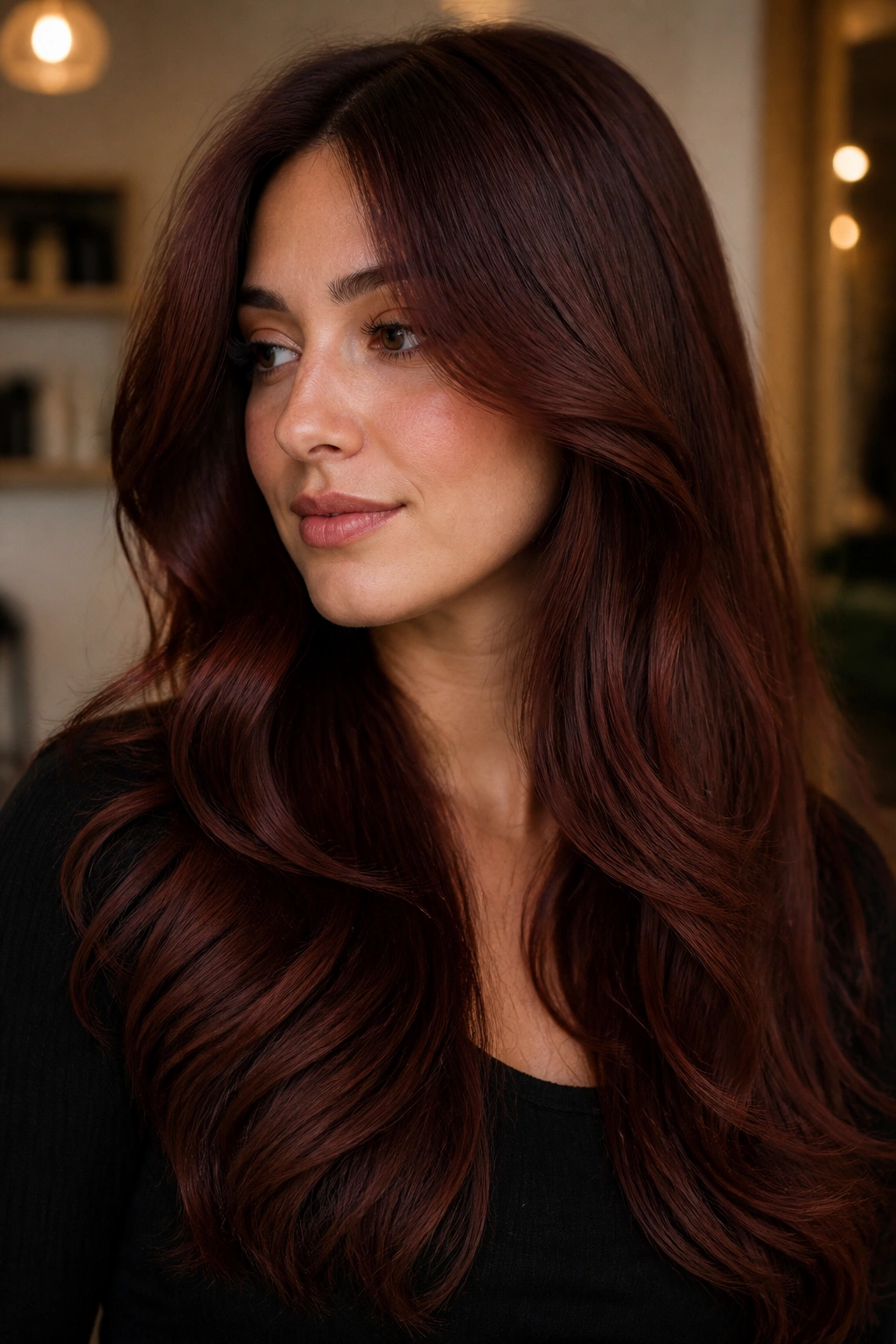
Auburn velvet is a deep red-brown that looks soft instead of bright, and that makes it a strong choice for long hair. It has the warmth of auburn, but the brown base keeps it grounded. The overall effect is rich and plush, especially on thick lengths.
I like this color on long curls because the red-brown catches on each bend differently. Straight hair still looks good, but curls make the warmth unfold in layers. The color does not need to be loud to read clearly.
- Best on natural brunettes who want warmth without a full red shift
- Looks strong with side parts and long curtain layers
- Refresh with a warm glaze every 4 to 6 weeks
- Keep shine high, or the auburn can look dusty
Auburn velvet sits in that very useful space between brunette and red. If you get bored easily, that space is worth exploring.
21. Peach Copper
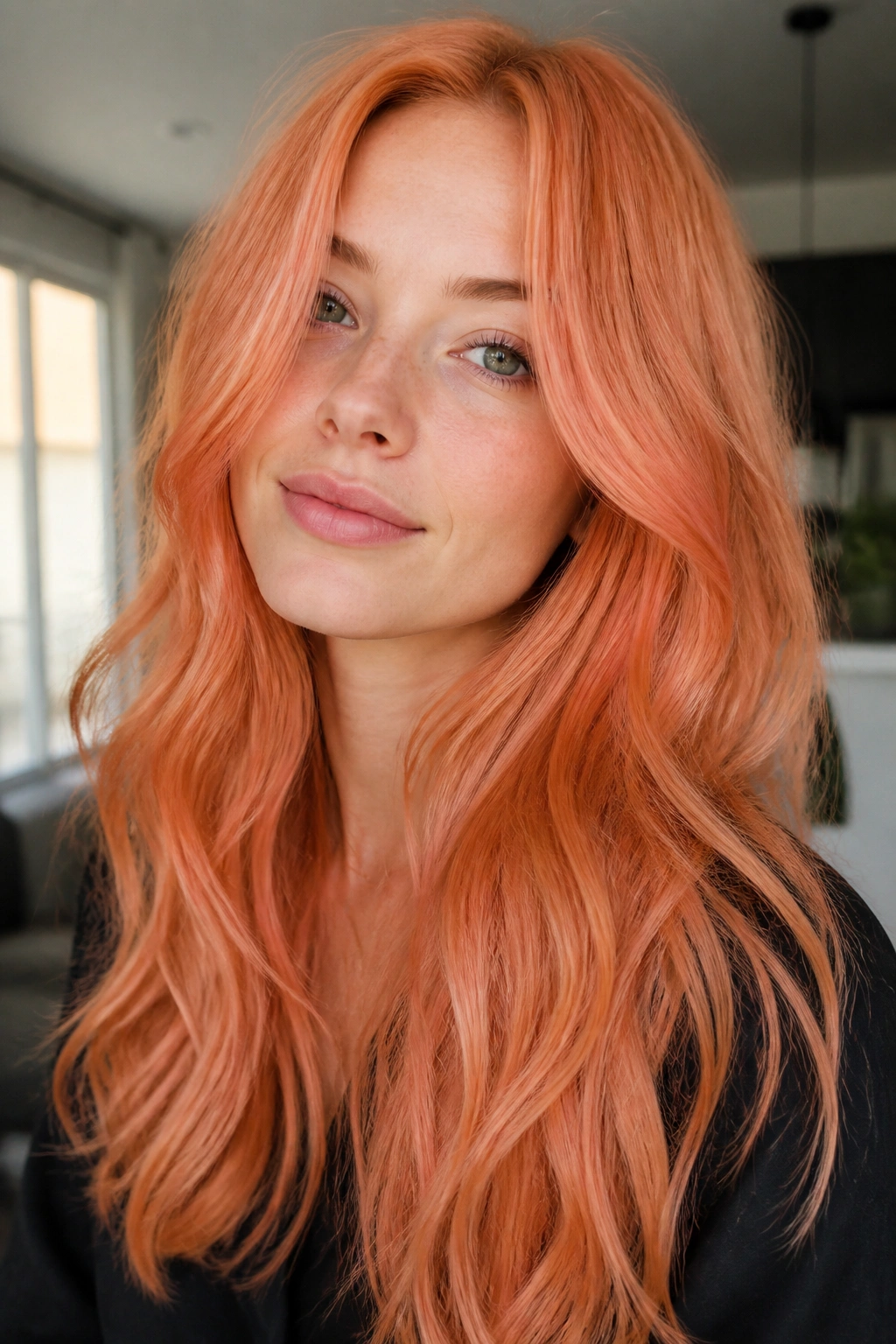
Peach copper is softer and sweeter than full copper, and long hair gives it room to breathe. The shade blends orange, gold, and a little pink-peach, so it has warmth without the hard edge some coppers carry. On long waves, it can look almost glowing; on straight hair, it reads more refined and delicate.
This shade works best when the hair is already lightened enough to hold the peach note. On darker hair, it may simply read as warm copper or strawberry brown, which can still be lovely. The trick is knowing which version you are actually getting.
Long layers help here because peach copper can go flat if the whole head is one solid color. A few lighter ends and a soft face frame keep it airy. If your wardrobe leans cream, tan, rust, or denim, the color fits right in without fighting your clothes.
22. Toasted Coconut Blonde
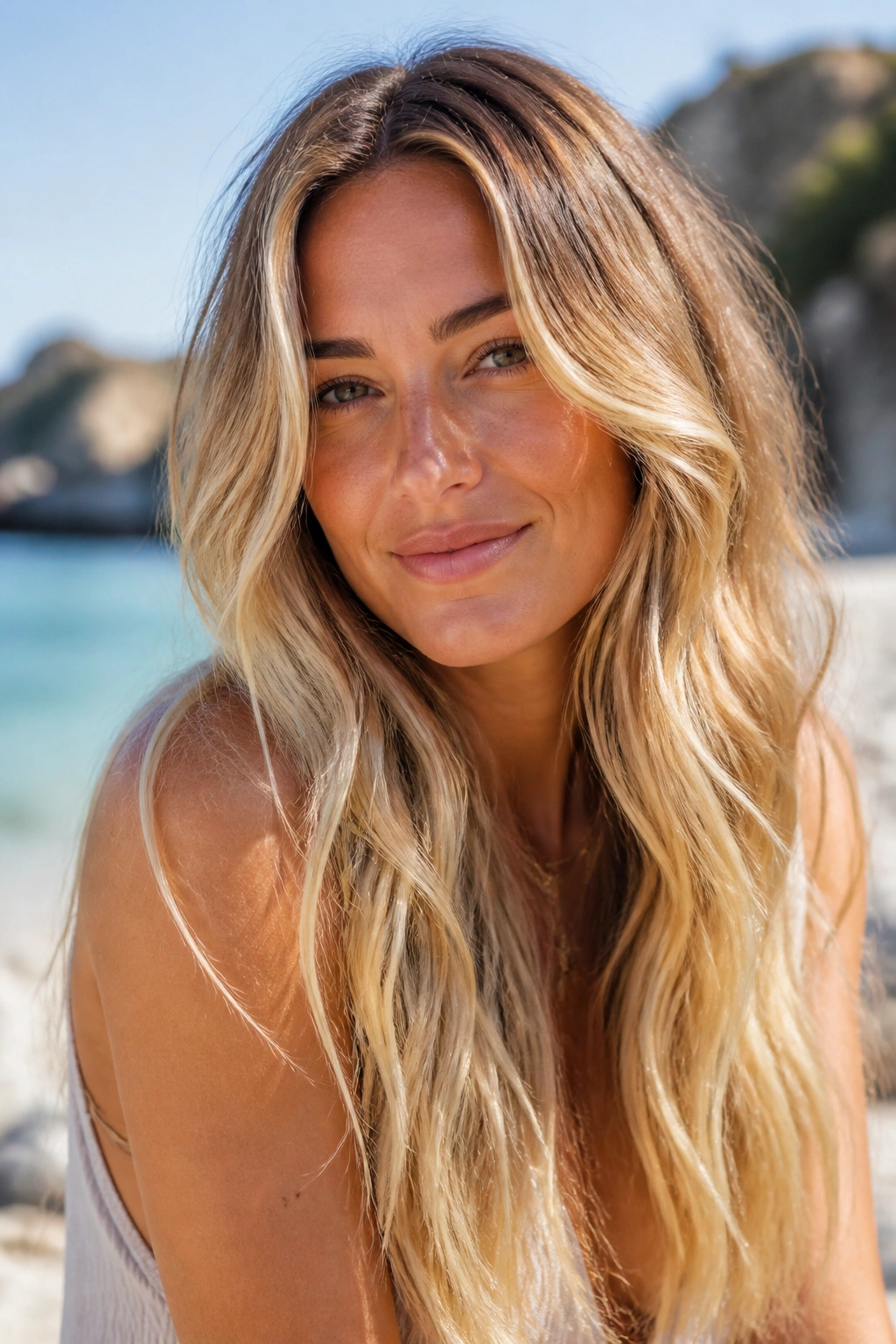
Toasted coconut blonde is the blonde I recommend when someone wants brightness but not an all-over pale head of hair. The root stays deeper, the mids turn beige-blonde, and the ends land in a creamy, toasted shade that keeps the look grounded. On long hair, that root-to-end shift feels natural instead of overprocessed.
Why It Works So Well on Long Lengths
Long hair can show a harsh grow-out line fast. A toasted coconut blonde avoids that by keeping a darker root and softer transition. You get brightness through the length, but not a hard line at the scalp. That alone makes it easier to live with.
The tone is also useful if your hair tends to go too yellow. The beige and toasted notes cut some of that warmth without sending the color all the way into ash. It is a nicer middle road than people expect.
This is especially good on long beachy waves, loose braids, and layered blowouts. The different textures keep the roots, mids, and ends from blending into one flat blonde sheet.
23. Rooted Platinum for Long Hair
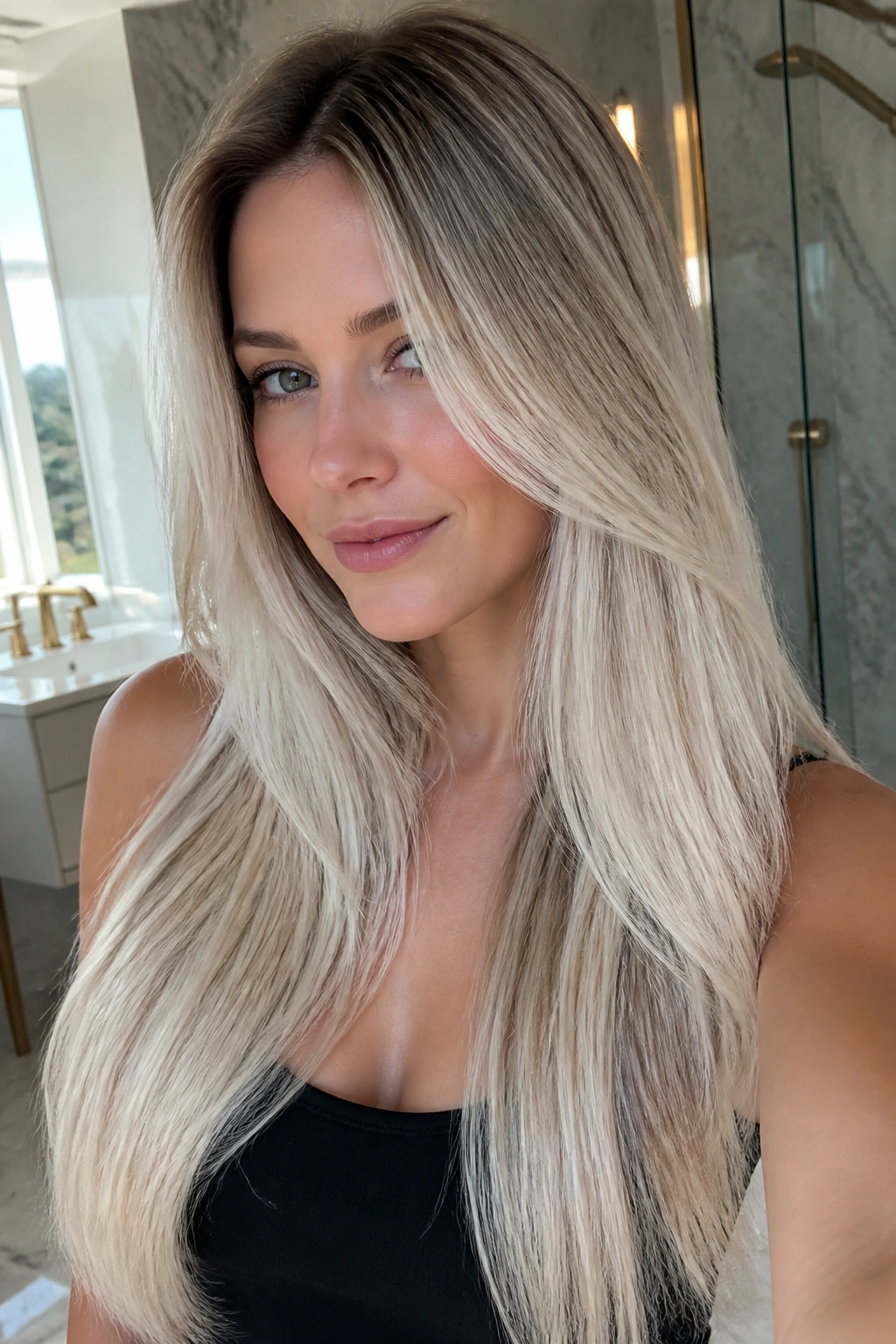
Rooted platinum is the practical cousin of full platinum, and I mean that in the best way. The darker root shadow gives long hair a place to start, which makes the platinum ends feel brighter by contrast. Without that root, the whole color can look stark and hard to maintain.
On long hair, a root melt also buys you time. New growth does not announce itself as fast, and the style keeps its shape for longer between salon visits. That matters when the ends have already been lifted close to pale blonde. A little root depth keeps the color from looking like one giant block of white.
This shade is sharpest on sleek layers or soft curls. It can look a touch severe on very thick, very blunt hair unless the toner is kept creamy. If you want platinum but not the washed-out glare some versions have, ask for a neutral-to-cool finish with a smudged root.
24. Denim Smoke
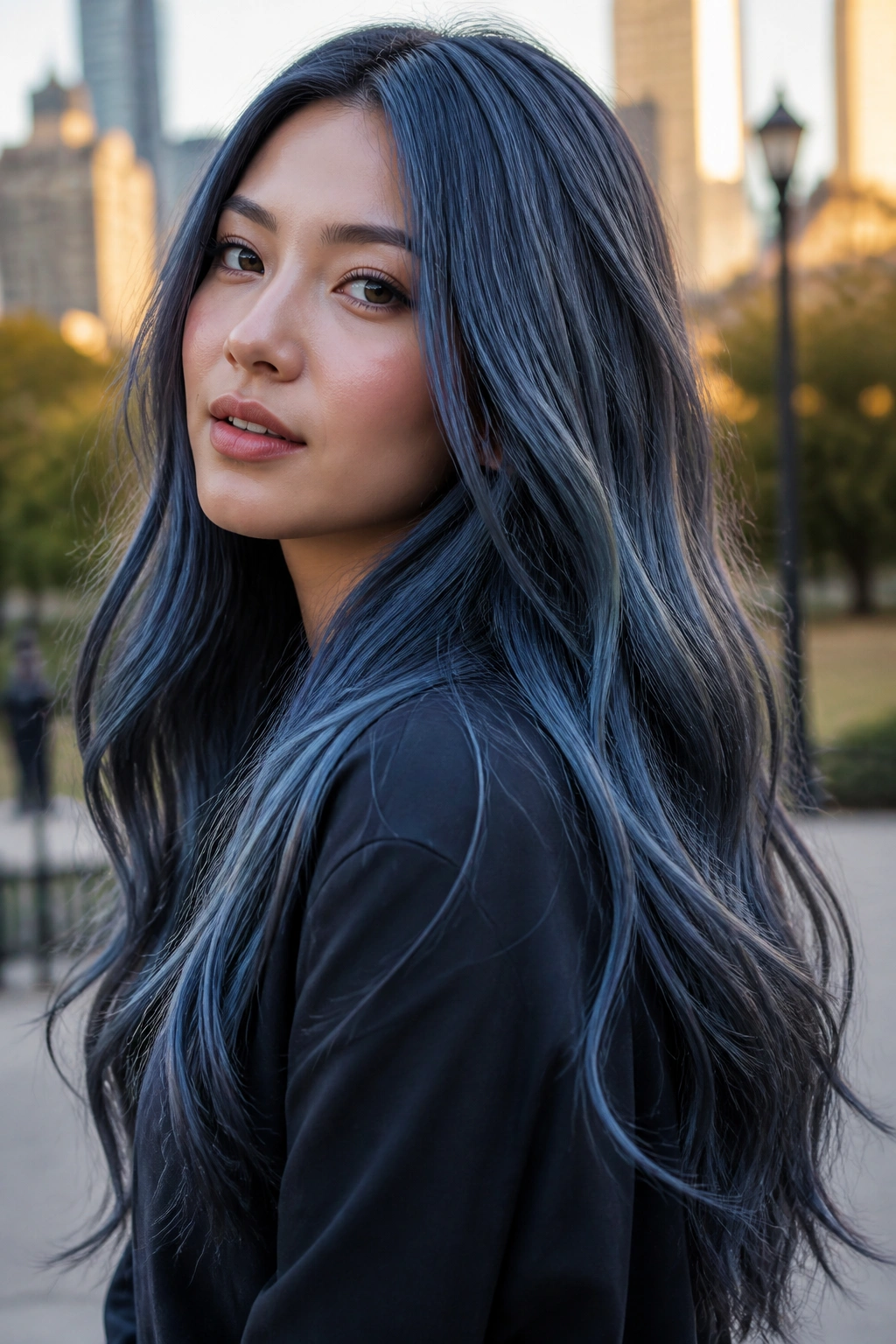
Denim smoke is the cool-toned fashion shade that still feels wearable on long hair. It mixes blue, slate, and a smoky gray base so the color looks muted rather than neon. On pre-lightened lengths, the tone can read almost like faded denim fabric, which is exactly why it feels interesting.
This is a shade for people who want edge without going full fantasy color. It has personality, but it is restrained enough to work through long waves or straight, glossy lengths. The color really shifts depending on light: softer in low light, sharper in daylight, and a little more blue when the hair moves.
Ask for a smoky blue toner over a pale blonde base. That gives you the denim feel without forcing the hair into a loud cobalt place. If your ends are porous, the toner may sink darker there, so the application needs careful sectioning. Messy application shows fast on long hair.
25. Soft Black Gloss
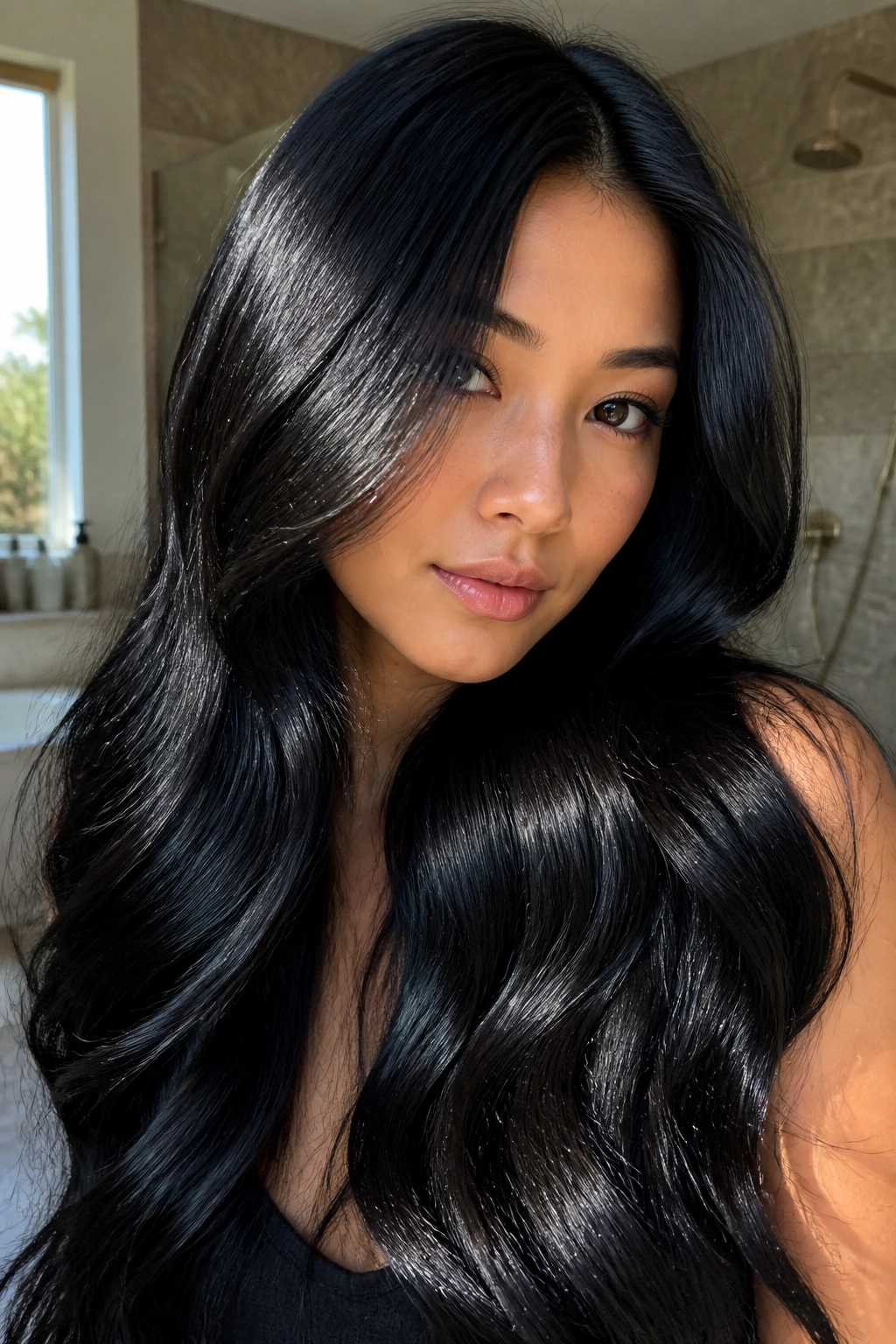
Soft black gloss proves that black hair does not have to look flat. The best version has a blue-black or deep brown reflect that keeps the finish reflective instead of heavy. On long hair, that shine matters because there is so much surface area for the light to hit.
I like this on people who want minimal color drama but still want the hair to look finished. A gloss over a level 2 or 3 base can deepen the shade without making the lengths look painted on. If your hair is already dark, the gloss adds polish. If it is lighter, you may need a stronger deposit to get the same effect.
A soft black finish also loves long layers. The movement breaks up the darkness just enough. Add a clear gloss or shine treatment every few weeks, and the color stays sleek instead of going dull and inky.
Final Thoughts
Long hair gives you room to play, but it also punishes weak color choices. Flat tones get heavy. Harsh blondes look stripey. Shades with a little depth at the root and a little softness at the ends usually last longer in the real world and look better between salon visits.
The smartest move is to bring your colorist two things: a photo of the shade you like, and a second photo of the finish you want. Those are not always the same thing. One picture can be about the tone; the other can be about placement, shine, or how bright the front pieces should be.
And if you are still deciding, pay attention to how your hair behaves when it is worn down, braided, and tucked behind the ears. Long hair changes its mind three times a day. The right color should keep up.
