



Long hair can eat a pretty color job alive. A single blonde panel or red streak that looks lively on a bob can disappear once the hair falls past the shoulders, especially if the rest of the length is all one tone. That’s where tri-color highlights for long hair make so much sense. Three shades give the eye something to follow: depth near the root or underneath, a middle tone through the body, and a lighter ribbon where the hair moves.
The best versions do not look busy. They look layered. A good colorist usually thinks in terms of an anchor shade, a transition shade, and a brighter accent, because long hair has enough real estate for a color story instead of one flat stripe. When the tones are too far apart, the result can get chunky fast. When they sit close enough to talk to each other, the hair looks richer from every angle.
That’s the part people miss. Long hair is not forgiving, but it is generous. Give it a darker base, a middle tone that softens the shift, and a lighter piece that catches motion, and the whole style starts doing more work for you than a single-process color ever could.
Some of these tri-color highlight ideas lean glossy and natural. Others are louder, and a few go full fashion-color without tipping into costume territory. The useful part is that each one can be adjusted to your base color, your haircut, and how much maintenance you can stand, which matters more than the mood board.
1. Espresso, Chestnut, and Caramel Ribbon Layers
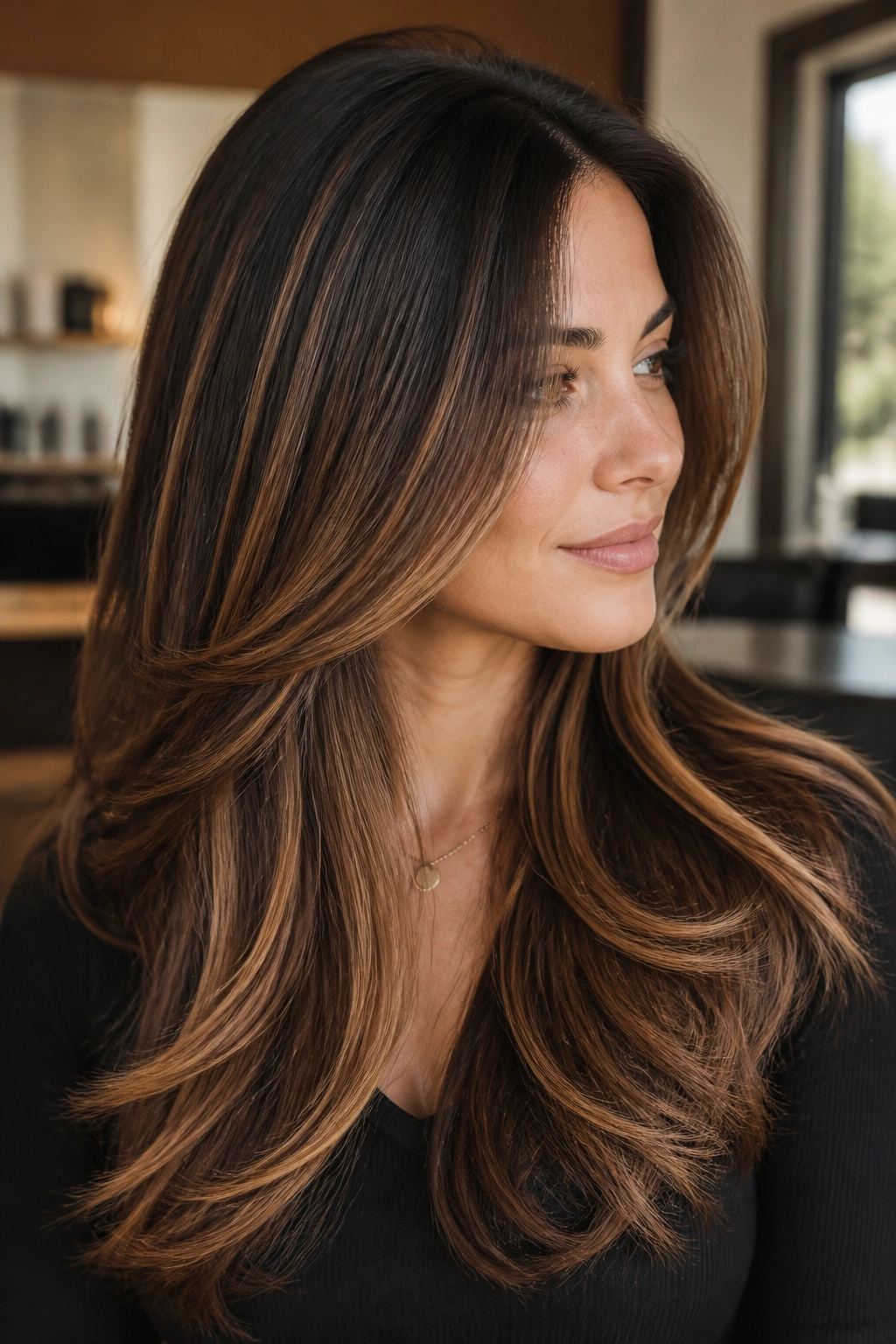
Long hair loves contrast, and this is the most wearable kind. Espresso at the root, chestnut through the mid-lengths, and caramel threaded in ribbon shapes gives the hair movement without making every section look the same. On layered hair, those ribbons show up when the hair bends, which is the whole point.
Why It Works on Long Hair
The darker espresso keeps the overall look grounded, so the caramel does not float away and look thin. Chestnut sits in the middle and bridges the gap, which stops the color from reading as root, stripe, stripe, stripe. That middle tone matters more than people think.
Ask for 1/4-inch ribbon highlights rather than tiny micro-foils if your hair is thick. The wider placement lets the long lengths show off the blend. On wavy hair, the caramel peeks through in different spots every time you turn your head. Nice. That’s the effect.
- Best base: Level 4 to 6 brunette
- Best placement: Mid-lengths and lower third, with a few face-framing ribbons
- Maintenance: Gloss every 6 to 8 weeks to keep the chestnut from going muddy
- Styling note: Loose bends show the three tones better than pin-straight hair
Tip: Keep the brightest caramel off the very ends if your hair is fine; the last few inches can start to look see-through if they get too light.
2. Mocha, Toffee, and Honey Face-Framing Panels
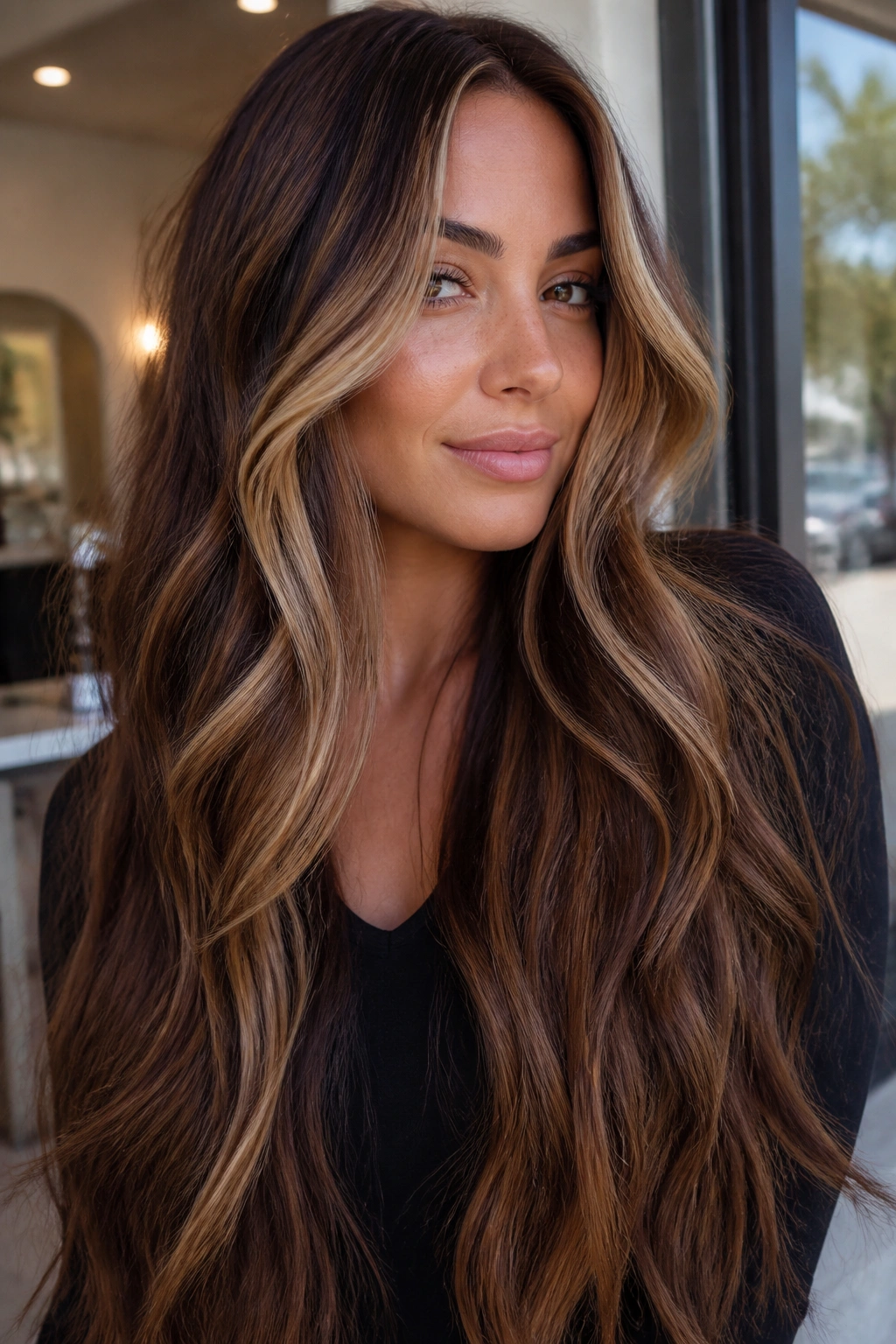
This is the fastest way to brighten long hair without repainting the whole head. A mocha base, toffee panels through the front, and honey concentrated near the face gives you the lift people usually want from blonding, but with less upkeep and less of that overprocessed look on long ends.
The front pieces do a lot of heavy lifting here. Put the honey around the cheekbone and jawline, and it will pull attention upward even when the rest of the hair stays deep and rich. That matters on waist-length hair, because otherwise the eye can get lost in all that length. The toffee shade softens the step between dark and light, which keeps the face frame from looking chopped in.
This trio suits round and heart-shaped faces especially well, because the brighter front panels can lengthen and open the face. It also works on thick hair that needs a little brightness near the top without turning the whole head into a light brown blur. The grow-out is forgiving, too. The front pieces will need attention first, but the rest can breathe.
If you wear your hair in a center part, ask for the lightest pieces to start just below the brow and continue into the front layers. If you switch your part often, keep the placement a little softer so the color does not look lopsided.
3. Black Cherry, Plum, and Burgundy Melt
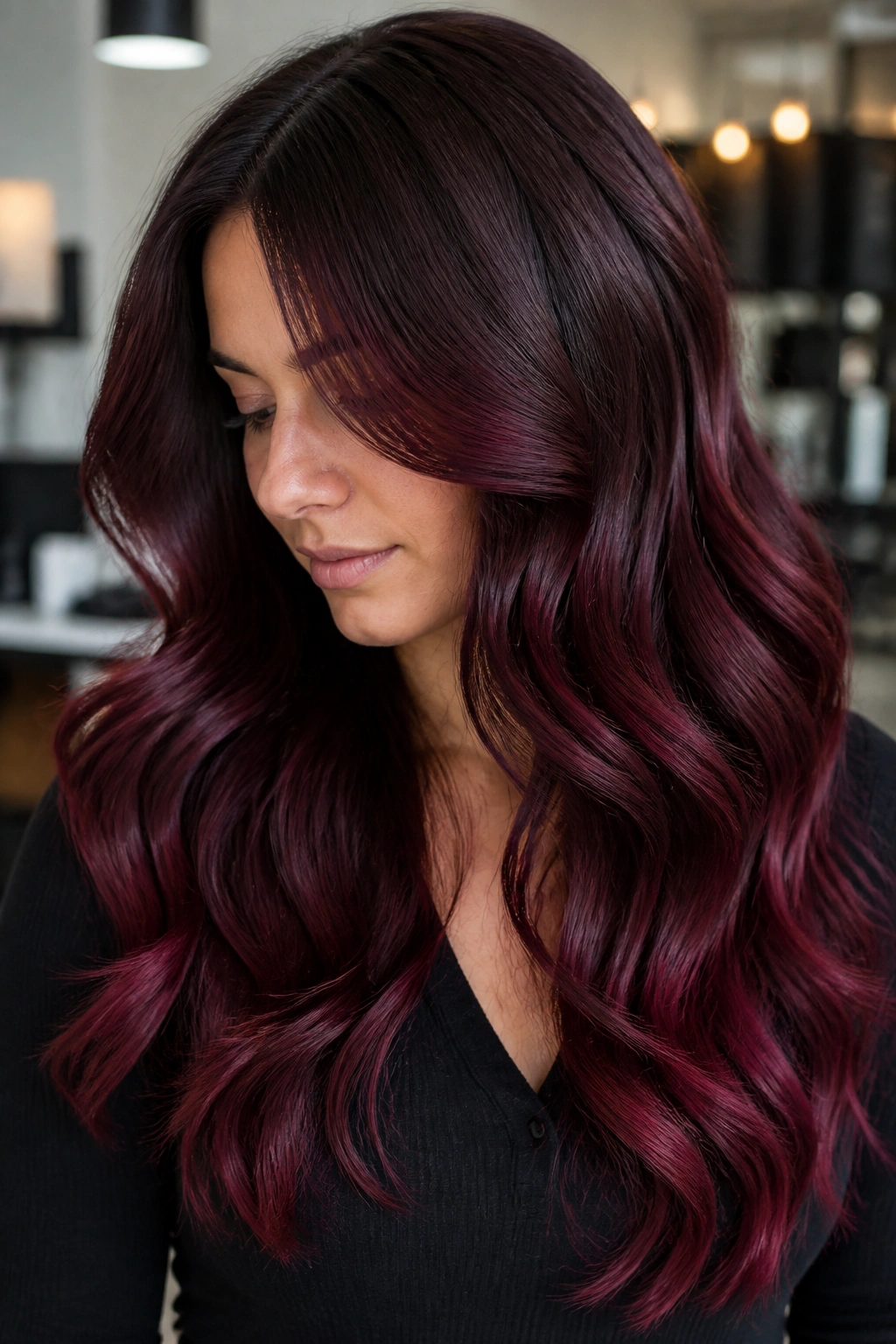
Why does dark red so often look flat on long hair? Because one red is rarely enough. Black cherry, plum, and burgundy give the hair a shift in depth that makes the color feel expensive instead of painted on. The darkest shade near the root keeps the length from looking blocky, and the burgundy brings light back into the ends.
How to Wear It
This combo works best when the color is melted, not striped. A colorist can paint the plum through the mid-lengths and let the burgundy live on the outer curve of the hair where light hits first. On curls, that depth shows up in a really nice way. On straight hair, the shine does the work instead.
Long hair can hold red tones beautifully, but the fade can be rude if the hair is porous. Use a color-safe shampoo, and do not wash it every day unless you enjoy watching the burgundy drain out faster than you expect. Red pigment is stubborn and slippery at the same time. Weird combo.
- Best base: Dark brunette or natural black-brown
- Best finish: Glossy blowout or soft waves
- Best for: Thick hair, layered cuts, and people who want color that feels rich rather than bright
- Maintenance note: Burgundy fades into warm plum, which can still look good if the root stays deep
Small warning: If the ends are very light or damaged, they may grab the burgundy too hard and go almost wine-dark. That is fixable, but it takes a careful toner plan.
4. Mushroom Brown, Beige Blonde, and Pearl Ends
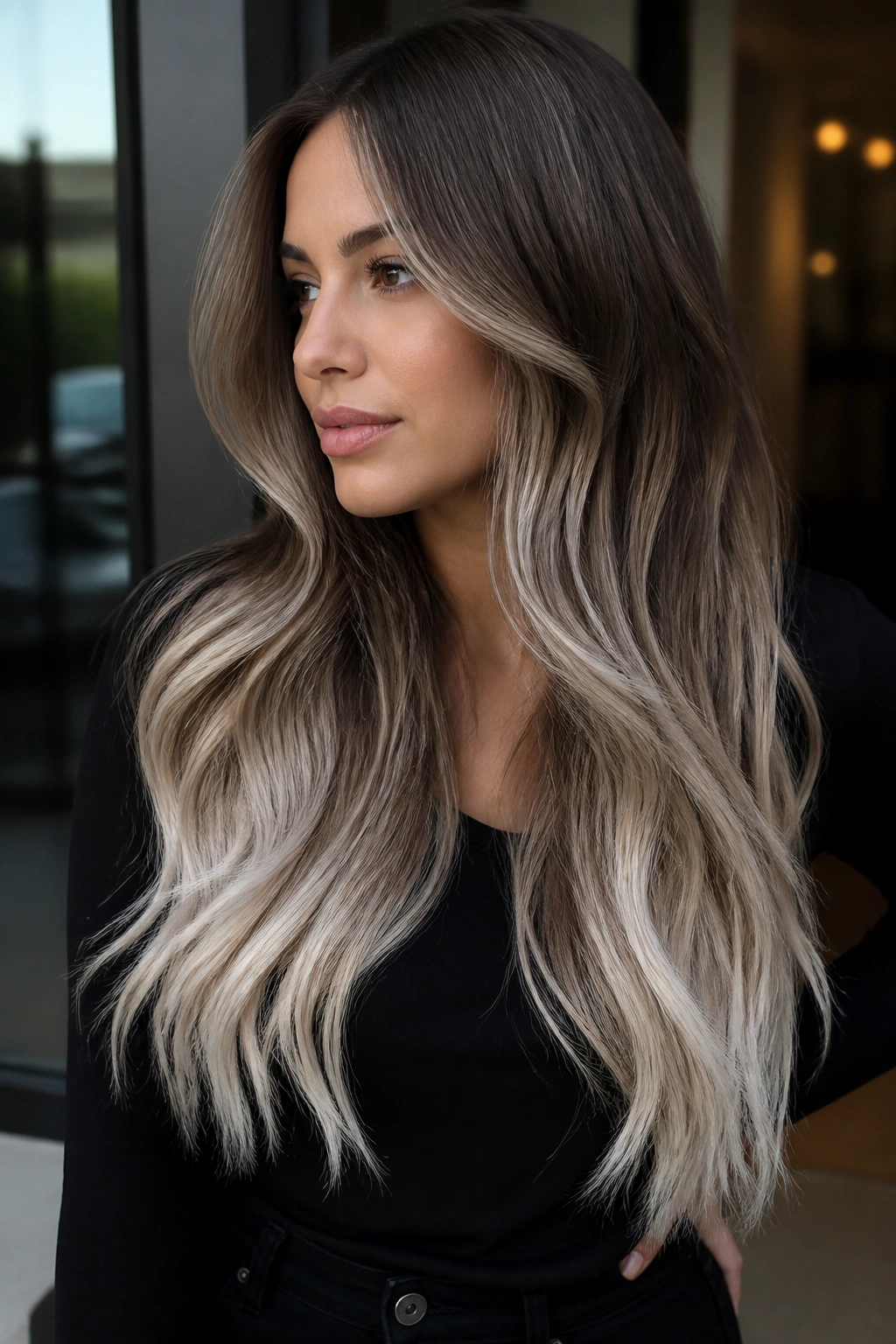
Not every tri-color idea needs warmth. Mushroom brown, beige blonde, and pearl ends is the cool, quiet version for long hair that should look polished without looking gold. It has a soft, smoky feel that sits well on sleek blowouts and loose bends alike.
The thing I like about this mix is that it avoids the usual blonde drama. Mushroom brown gives the base a muted, earthy depth. Beige blonde keeps the light pieces from going icy. Pearl on the ends adds a pale lift that looks clean rather than chalky, which is a real problem when long hair gets too pale at the tips.
This is a good choice if your skin tone tends to fight warm highlights or if you’ve spent years battling brass. It also photographs in a calmer way under indoor light, where yellow-toned blonde can suddenly look louder than you planned. Cool neutrals can be fussy, though. They need toning, and they need a stylist who knows the difference between beige and yellow pretending to be beige.
- Best base: Level 5 to 7 brunette or dark blonde
- Best cut pairing: Long layers or a U-shape, so the pearl ends do not feel blunt
- Styling: A straight blowout shows the smoky shift; soft waves make the beige and pearl pieces separate a little more
- Watch for: Brass at the ends if the hair is porous
My take: This is one of the best tri-color highlight ideas for long hair if you want people to notice the hair, not the color job.
5. Copper, Apricot, and Strawberry Peach Glow
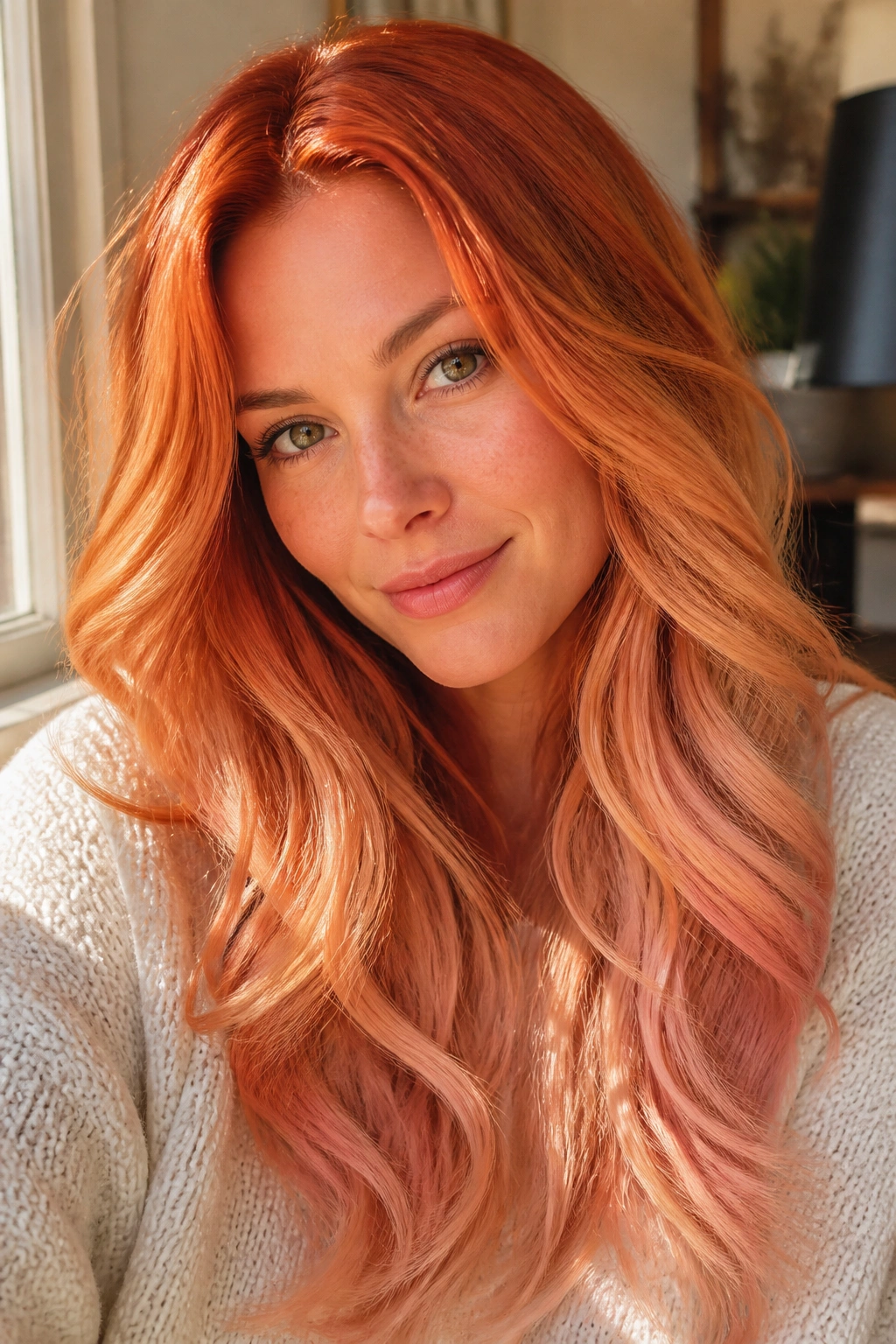
Copper has a way of making long hair look alive. Add apricot in the mid-lengths and strawberry peach at the ends, and the whole thing starts to feel warm from the inside out. It is one of those color families that can look soft in shade and much brighter when sunlight catches it.
The middle shade matters here. Pure copper on long hair can go loud fast, and pure peach can vanish on darker bases. Apricot bridges them. It keeps the red-orange family from looking like separate blocks, which is especially helpful if the hair is thick or heavily layered. Long layers can carry this trio well because each bend in the hair shifts a little differently.
I like this idea on medium brunettes and natural redheads who want more depth without losing the warmth they already have. It also flatters wavy hair because the tones separate just enough to show movement. If the hair is poker-straight, the peach may disappear unless the lightest pieces sit around the face and on the outer canopy.
This one fades with a soft charm if it’s done well. The copper usually drops first, then the apricot lingers, then the peach gets quiet. That fade can still be pretty, but only if you keep moisture in the hair and avoid cooking it with too much hot tool heat.
6. Ash Brown, Cool Beige, and Silver-Soft Ribbons
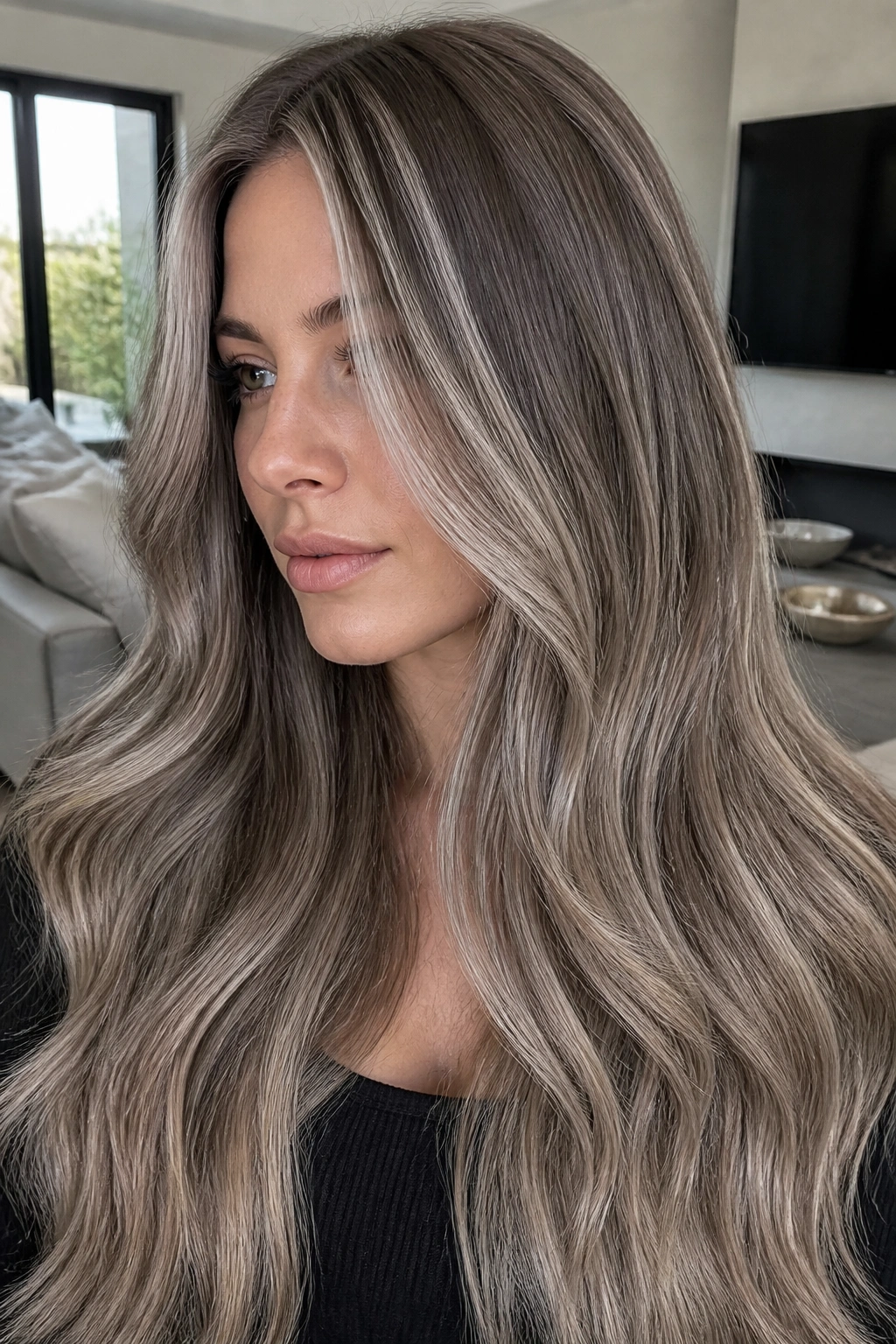
Cool color. Real cool. That’s the whole mood here. Ash brown at the root, cool beige through the body, and silver-soft ribbons near the top edge make long hair look sleek even when it’s air-dried and a little imperfect.
What Makes It Different
Unlike warmer brunette blends, this trio depends on restraint. The ash brown keeps brass out of the picture. Cool beige gives the mid-lengths a softer landing than a stark platinum stripe. The silver ribbon pieces are small, but they do a lot of work because they break up the darker base without screaming for attention.
This is a smart pick if your hair lifts warm whenever you color it. It can also be a relief if you like a crisp, clean finish and do not want caramel or honey creeping into the formula. Long hair often picks up warmth on the ends, so a cooler tri-color plan can keep the silhouette looking tidy.
The catch is maintenance. Purple shampoo helps, but too much of it can make the beige look flat and the silver pieces look dull. I’d use it once a week, maybe twice if your water runs hard or your hair pulls yellow fast. More than that and the color can start to look tired instead of cool.
Best on straight hair. Best on blunt ends, too, if you want the silver ribbons to look sharp rather than diffused.
7. Chocolate, Cinnamon, and Auburn Underpainting
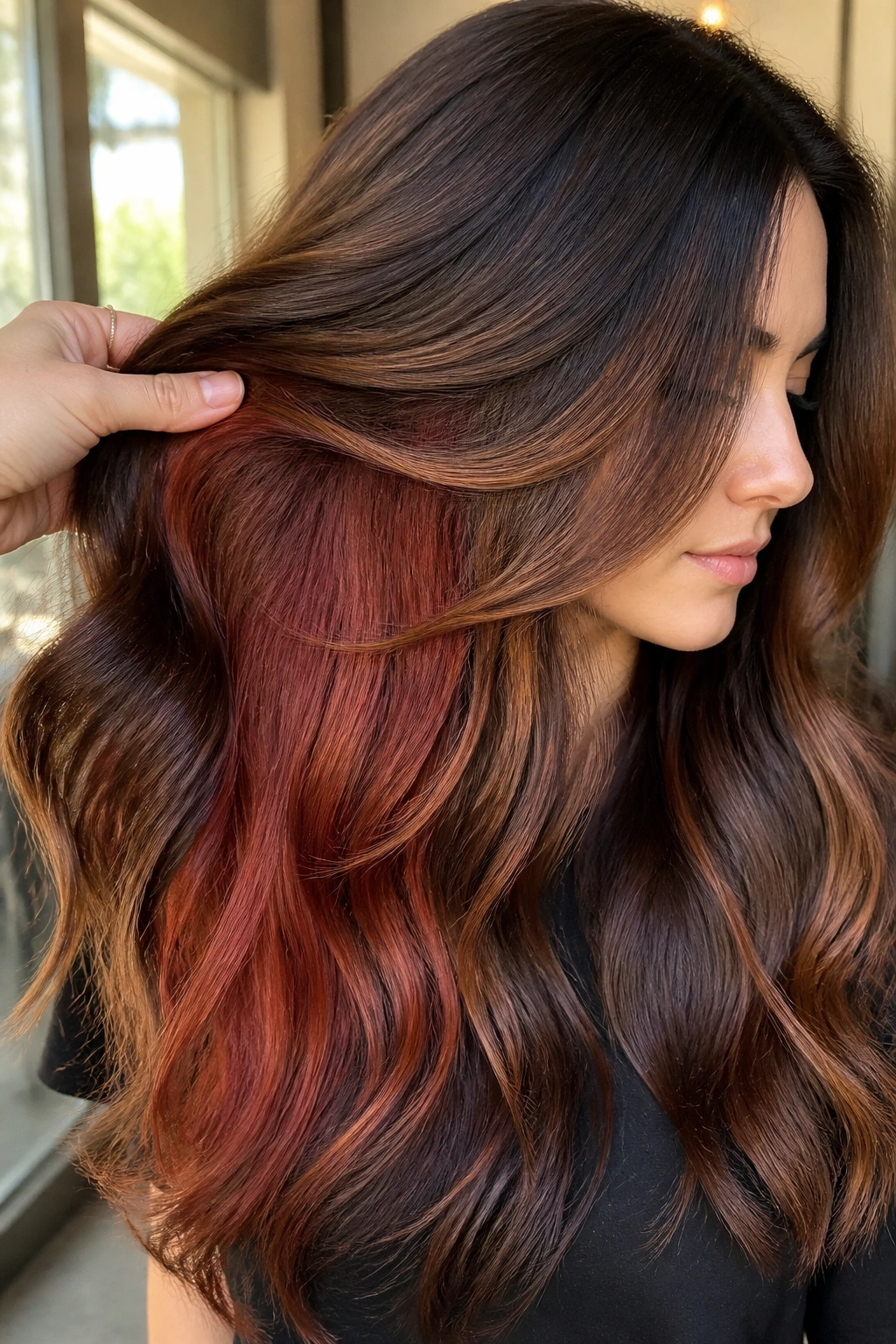
Three shades, one sneaky trick: put the hottest color underneath. Chocolate on top, cinnamon through the middle, and auburn hidden in the underlayers gives long hair depth that shows up when it moves instead of when it’s sitting still.
What Makes It Different
Underpainting is the quiet hero here. The top layer stays chocolate so the whole head still reads brunette from a distance. Cinnamon threads the transition so the auburn does not jump out too hard. Then the auburn sits underneath, where it flashes through when you curl the hair, tuck it behind the ear, or sweep it into a half-up style.
That makes this a strong choice for people who want dimension at work or in formal settings. It is colorful without being loud. On long hair, the lower layers have enough length to show off the auburn every time the top section lifts. You get a little surprise instead of a wall of color.
Ask for the auburn to sit in the interior panels and around the nape. That keeps the brighter tone from overwhelming the whole head. If your hair is very dense, the color will need a little extra saturation so the underlayer does not disappear into the darkness.
- Best styling: Curls, blowouts with movement, half-up twists
- Best base: Neutral to warm brunette
- Good to know: The underpainting stays fresh longer because it fades more slowly than face-framing light pieces
8. Golden Brown, Honey, and Champagne Balayage
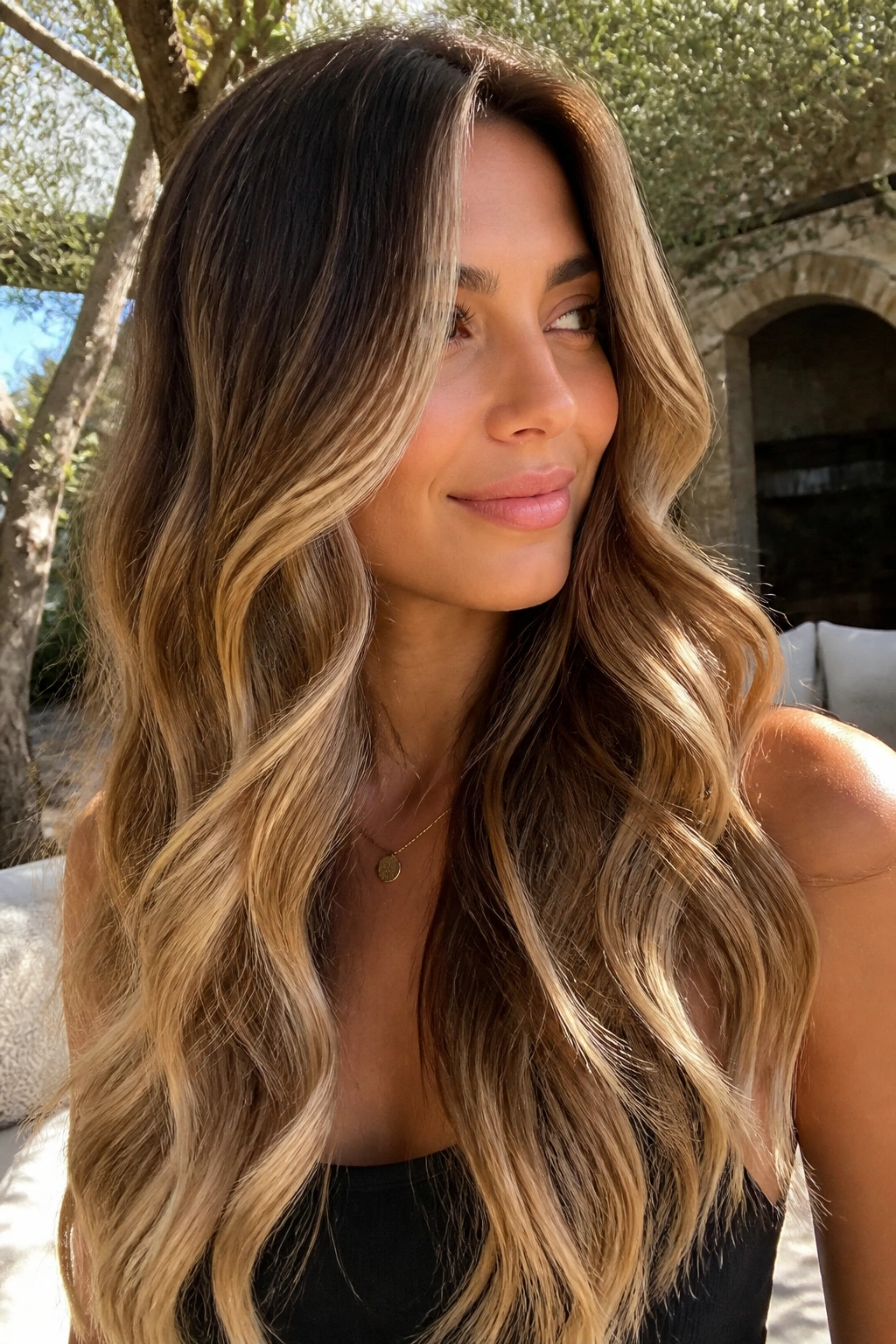
I keep coming back to this combo because it rarely looks overworked. Golden brown, honey, and champagne give long hair that sunlit depth people chase, but the placement can stay soft enough to wear every day without feeling too done.
Balayage is the reason this trio works so well. The golden brown stays close to the natural base, honey brightens the mid-lengths, and champagne lands where the light would hit the hardest — around the front, outer layers, and ends that move the most. On a layered cut, that painted placement helps the shape of the haircut show up more clearly.
This is a good option if you wear your hair in waves most of the time. The honey and champagne pieces separate just enough to create movement, and long waves let the tones drift in and out of view. Straight hair can wear it too, though it reads softer and more blended.
The only part I would be picky about is the champagne level. If it goes too pale, it can fight the honey and make the ends look striped. Keep it creamy, not icy. That keeps the whole color family warmer and easier to grow out.
9. Midnight Navy, Indigo, and Smoky Violet Veils
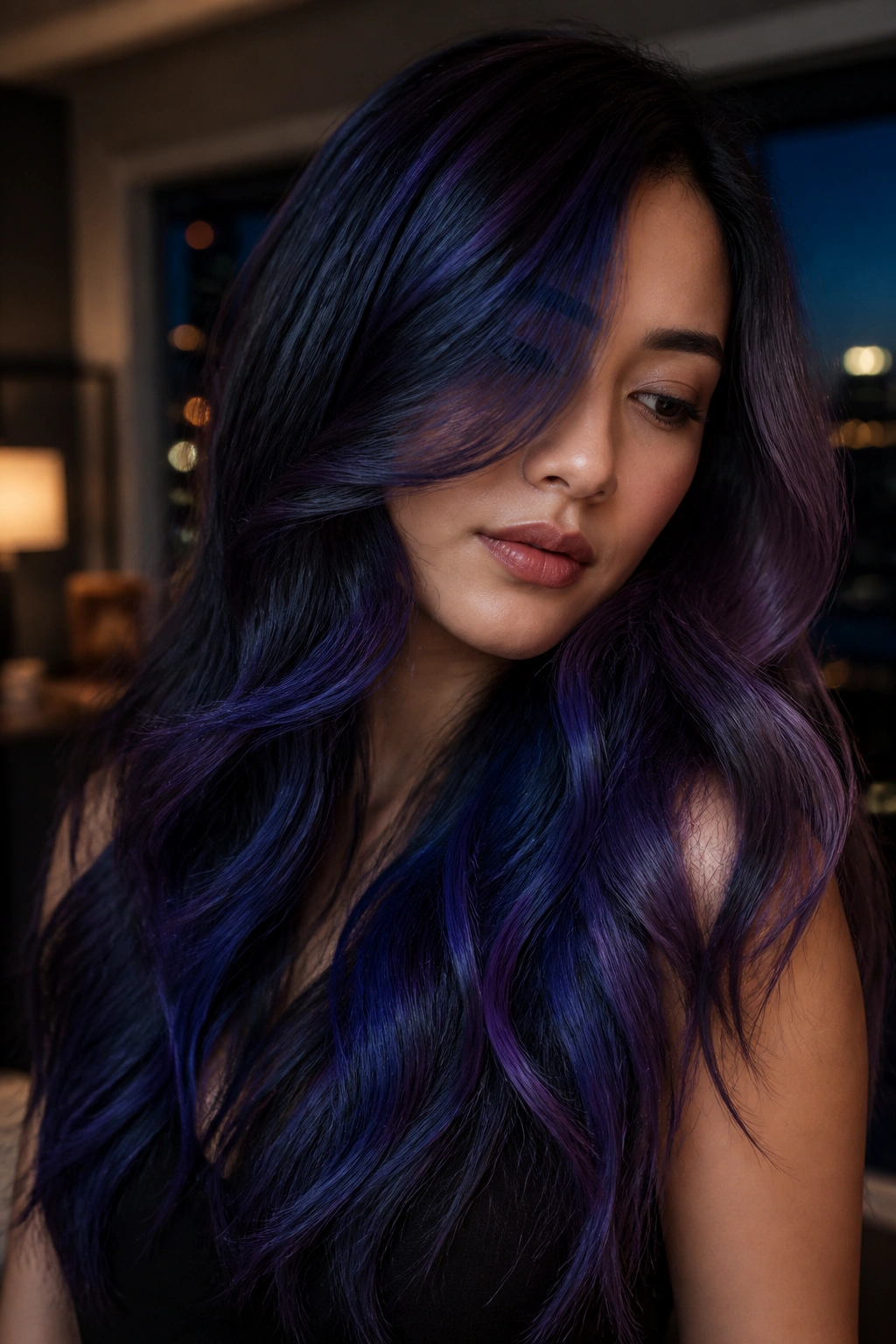
Fashion color on long hair works best when it whispers first. Midnight navy, indigo, and smoky violet do that better than a lot of louder blue or purple combinations, because the darkest shade acts like a base coat and the other two only show up when the hair swings.
How to Wear It
This trio shines on pre-lightened hair, but it can also work as a dark overlay on deeper bases if you want a moody effect rather than a bright jewel tone. The navy keeps the palette anchored. Indigo brings back the blue without turning everything flat. Smoky violet softens the line between them, which is the part that keeps long hair from reading like a striping exercise.
The placement matters more than the exact shade names. Put the indigo in ribbon sections through the mid-lengths, and let the violet appear around the face and on the outer surface of the hair. The navy can live underneath and near the root shadow. That mix gives the style movement without making it loud from every angle.
- Best for: Dark hair that has been pre-lightened, or naturally deep bases that want a cool fashion finish
- Maintenance: Blue tones can stain towels and fade unevenly, so use cool water and a color-safe cleanser
- Styling note: Loose curls show the navy-to-indigo shift better than pin-straight hair
This one is not low-effort. It does reward the effort, though.
10. Walnut, Maple, and Bronze Dimension
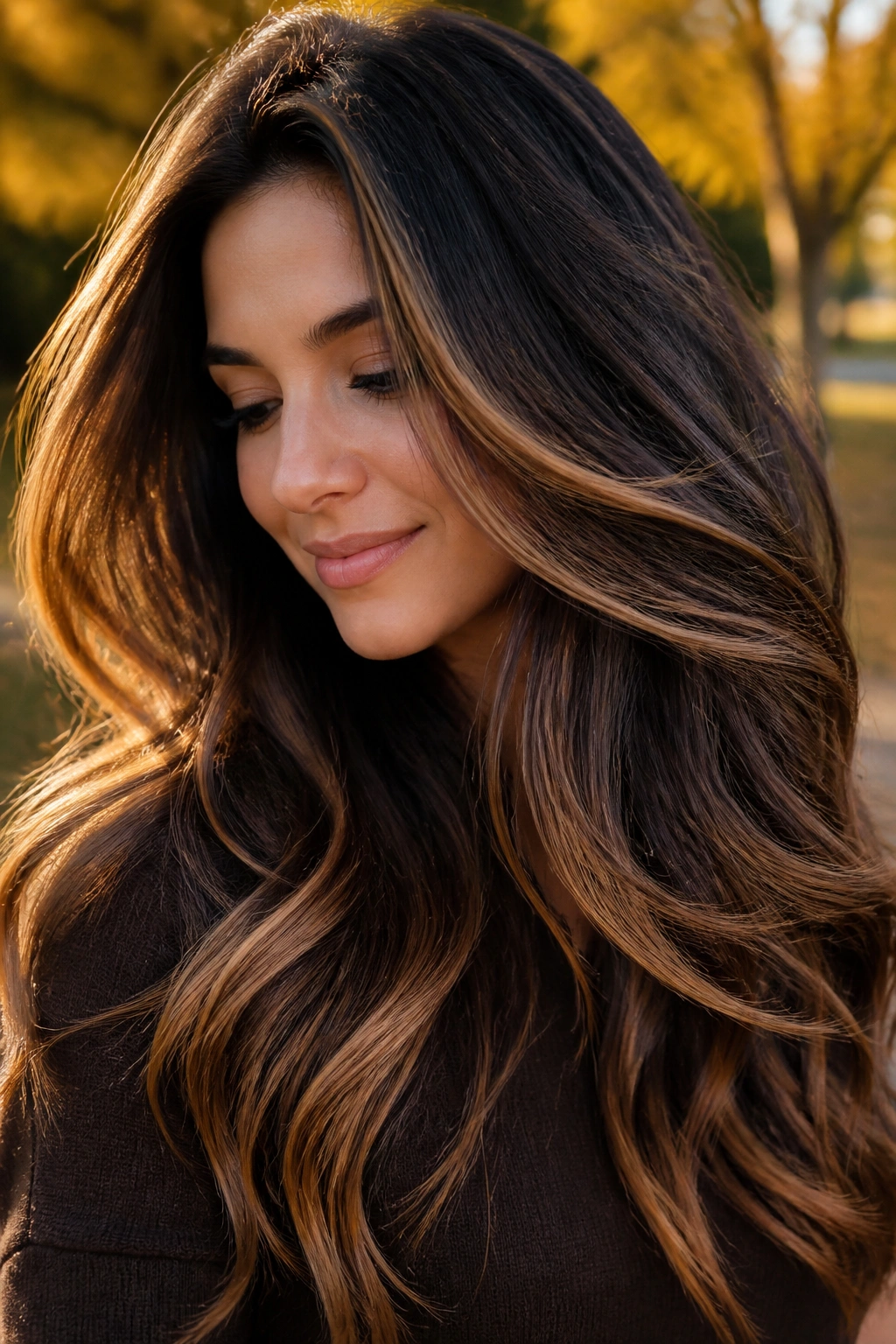
Want warmth without going copper? Walnut, maple, and bronze hit that sweet spot. The combination feels richer than plain caramel, and on long hair it gives the ends a glowing edge without making the whole head look orange.
Walnut sets the darker ground. Maple adds a slightly sweeter brown that reads warm in daylight but not red. Bronze lifts the whole thing with a metallic warmth that looks especially good on layered cuts, because the lighter pieces catch around the bends and edges of the hair. I like this trio for brunettes who want dimension but do not want the high-maintenance drama of blonde.
It also tends to age well with grow-out. The bronze fades into a soft warm brunette rather than turning harsh, so you can stretch the salon visit a little longer if you keep the color glossy. A clear shine treatment helps here. Bronze loses its charm fast if the hair gets dry and matte.
- Best base: Medium brunette
- Best placement: Mid-length balayage with a few bronze pieces around the face
- Styling: A round-brush blowout or big waves makes the warm tones read cleanly
- Note: This trio looks best when the walnut shade stays visibly deeper than the bronze, not equal to it
If you want your long hair to feel warmer but not lighter, this is one of the easiest wins.
11. Rose Brown, Mauve, and Dusty Plum Streaks
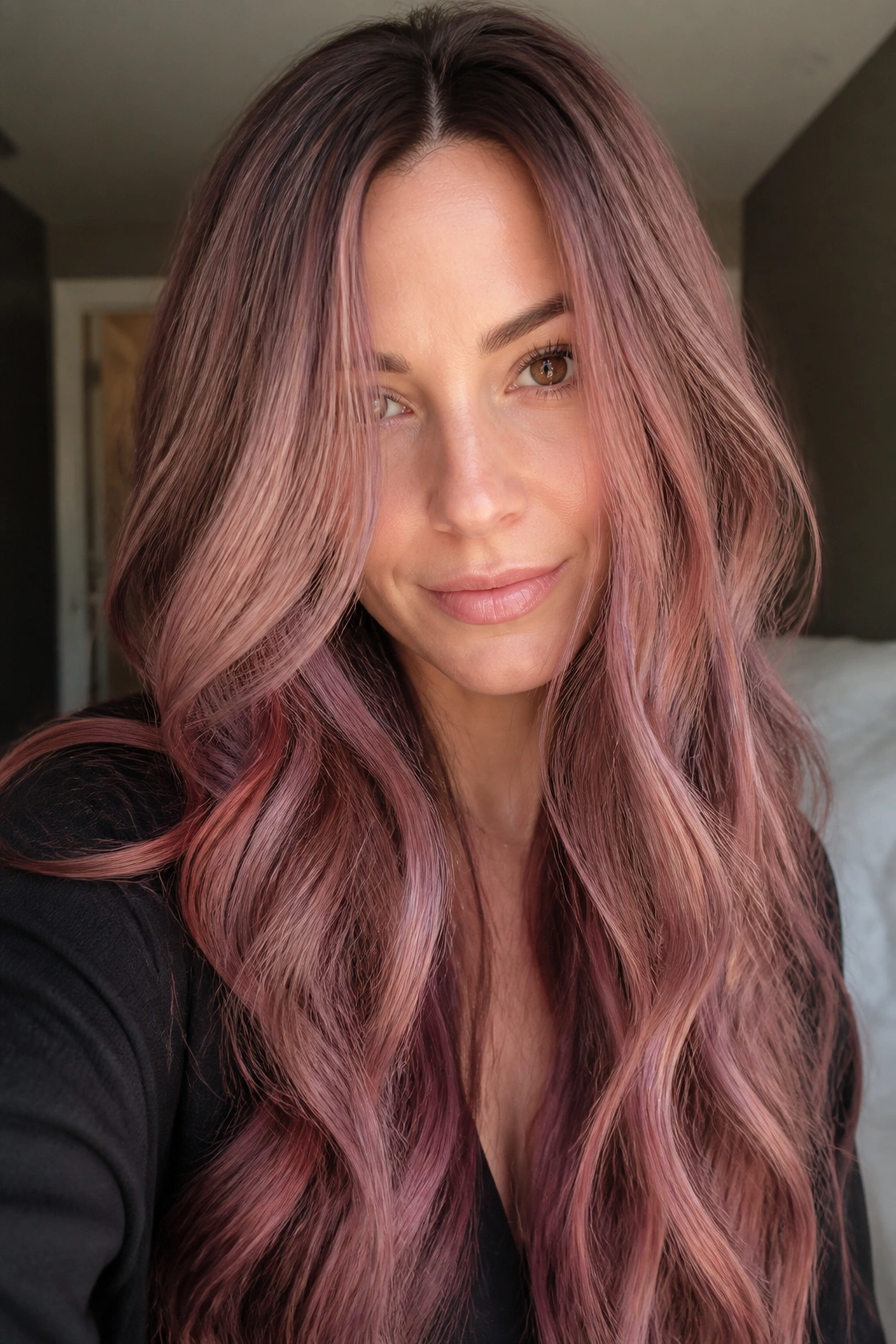
Pink does not have to scream. Rose brown, mauve, and dusty plum can sit on long hair in a way that feels soft, expensive, and a little moody, which is a nicer lane than the candy colors people often assume are the only option.
The rose brown keeps the color wearable. Mauve adds a muted pink-lavender shift that shows up in light without turning neon. Dusty plum gives the trio some depth, especially at the underlayer and near the ends. On long hair, those shades can move through the length like a haze instead of a block, which is exactly why they work.
This palette is strongest on cooler skin tones, though it can be adjusted if the rose brown is nudged a bit warmer. The important part is keeping the plum dusty rather than dark grape. If it gets too saturated, the whole look can go goth in a hurry. That can be fun, but it is a different conversation.
Use a soft wave or a loose braid to show the shift between the three tones. Straight, fine hair can flatten it a little. Thick hair usually holds the dimension better because the layers and density give the mauve somewhere to live.
12. Dirty Blonde, Buttercream, and Wheat Highlights
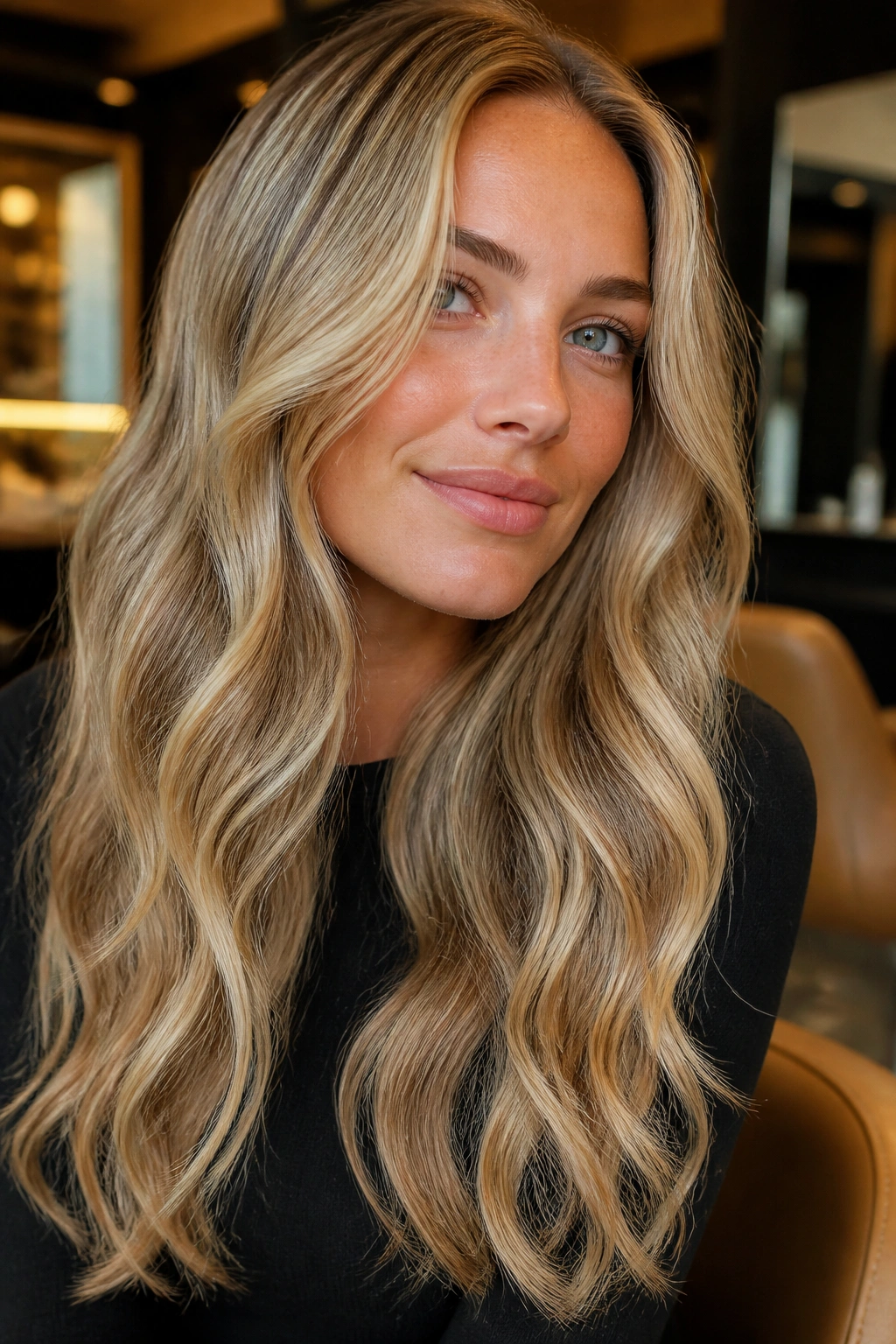
A long blonde mane can go stripey fast. That’s why dirty blonde, buttercream, and wheat is such a smart tri-color setup: it keeps the blonde soft, dimensional, and easy on the eyes instead of pushing everything into one bright lane.
What Makes It Different
Dirty blonde acts like the anchor. Buttercream sits in the middle and gives the blonde a creamy lift without going white. Wheat lands as the lighter, more textured note, especially around the ends and outer layers. Long hair needs that middle shade or the blonde can start looking like two different heads joined together.
This is a good match for people who want blonde but hate the harshness of platinum. It also works when the hair is fine, because the tones are close enough to preserve the feel of density. Chunky highlights can make long fine hair look thinner than it is. These softer tones avoid that.
A gloss every 4 to 6 weeks helps keep the buttercream from turning yellow and the wheat from turning dull. I would also avoid heavy purple shampoo here unless you need it. Too much can make the buttercream look chalky, and nobody wants that.
Best on layered cuts, face-framing curtain bangs, and soft waves. The movement matters. Without it, the trio can blur into one pale blonde sheet.
13. Sand, Almond, and Soft Taupe Melt
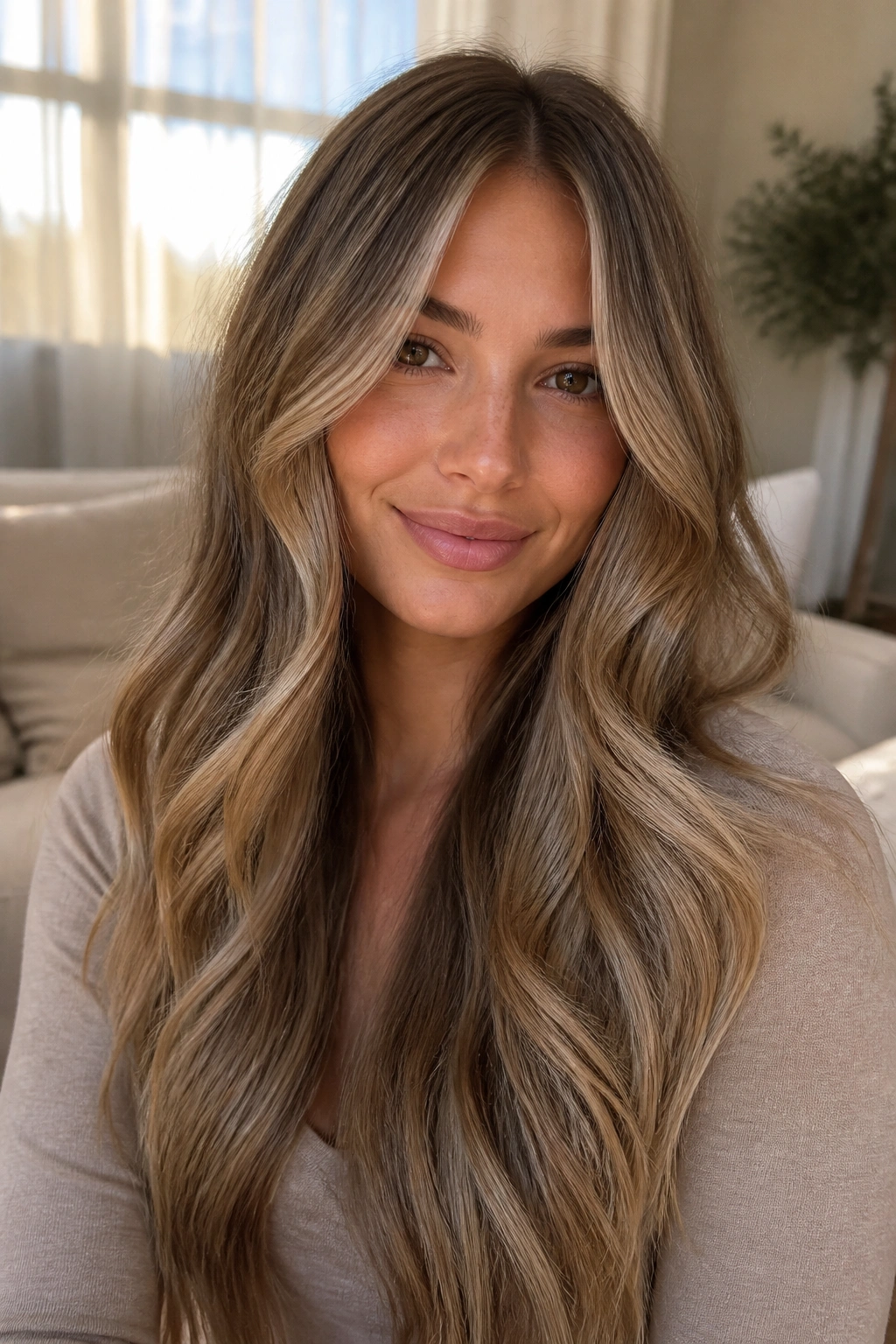
The prettiest thing about this combo is how quiet it is. Sand, almond, and soft taupe create a neutral melt that sits somewhere between blonde and brunette, which makes it useful for long hair that needs lightness without a hard contrast.
The sand shade gives the lightest pieces their lift. Almond keeps the middle from looking washed out. Soft taupe anchors the whole thing with a beige-brown note that stops the ends from turning chalky. On long hair, a neutral melt like this can make the haircut look expensive because it follows the shape instead of fighting it.
I like this idea for people who get tired of brass, tired of gold, tired of obvious stripes. There’s less drama here, and that is the point. It grows out with a softer edge than a traditional highlight job, so you do not get the same obvious line at the root.
- Best for: Naturally dark blonde to light brunette hair
- Placement: Keep the sand mostly through the surface layers and the almond in the mid-lengths
- Styling: Air-dried texture can make the taupe look smokier; a smooth blowout makes it read cleaner
- Watch for: If the base is too warm, the taupe can get lost and the whole blend turns beige in a hurry
This trio is for people who want dimension without a lot of fuss. Plain and simple.
14. Rich Brunette, Auburn, and Gold Money Piece
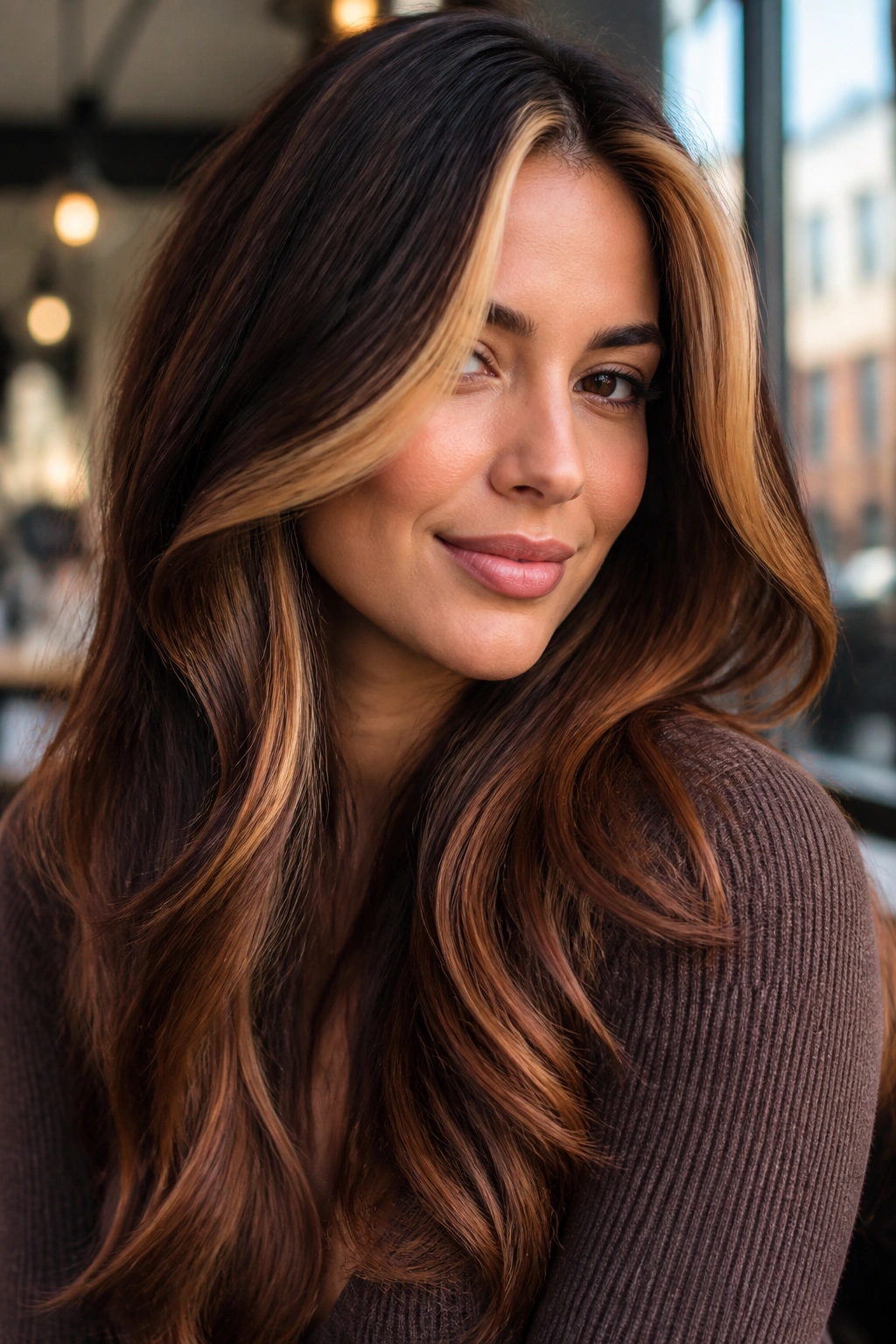
One bright strip. That’s the whole trick. Rich brunette, auburn lengths, and a gold money piece create a long-hair look that feels high contrast at the front and deep everywhere else. It gives the face brightness without forcing the entire head to lift.
The money piece should not be too wide, or it starts taking over. A narrow, gold-leaning panel at the front gives the illusion of more light around the face, while auburn through the mid-lengths keeps the rest of the hair warm and dimensional. The rich brunette underneath makes the whole thing look anchored instead of over-bleached.
This is especially good if you wear your hair down most days and like the front sections to do some talking. The gold piece catches first when you move, tuck hair behind your ears, or sweep the front layers out of your face. On long hair, that little bit of brightness can matter more than adding ten more highlights deeper in the length.
How to Ask for It
Tell your colorist you want the front piece to be bright, but not disconnected from the rest of the color. The auburn should bridge the brunette and the gold so the transition feels smooth. If the auburn is too red and the gold too pale, the front can look like it belongs to a different haircut.
A soft wave shows this placement best. Straight hair can make the contrast sharper, which some people love and some people absolutely do not.
15. Smoke, Cocoa, and Vanilla Contrast Panels
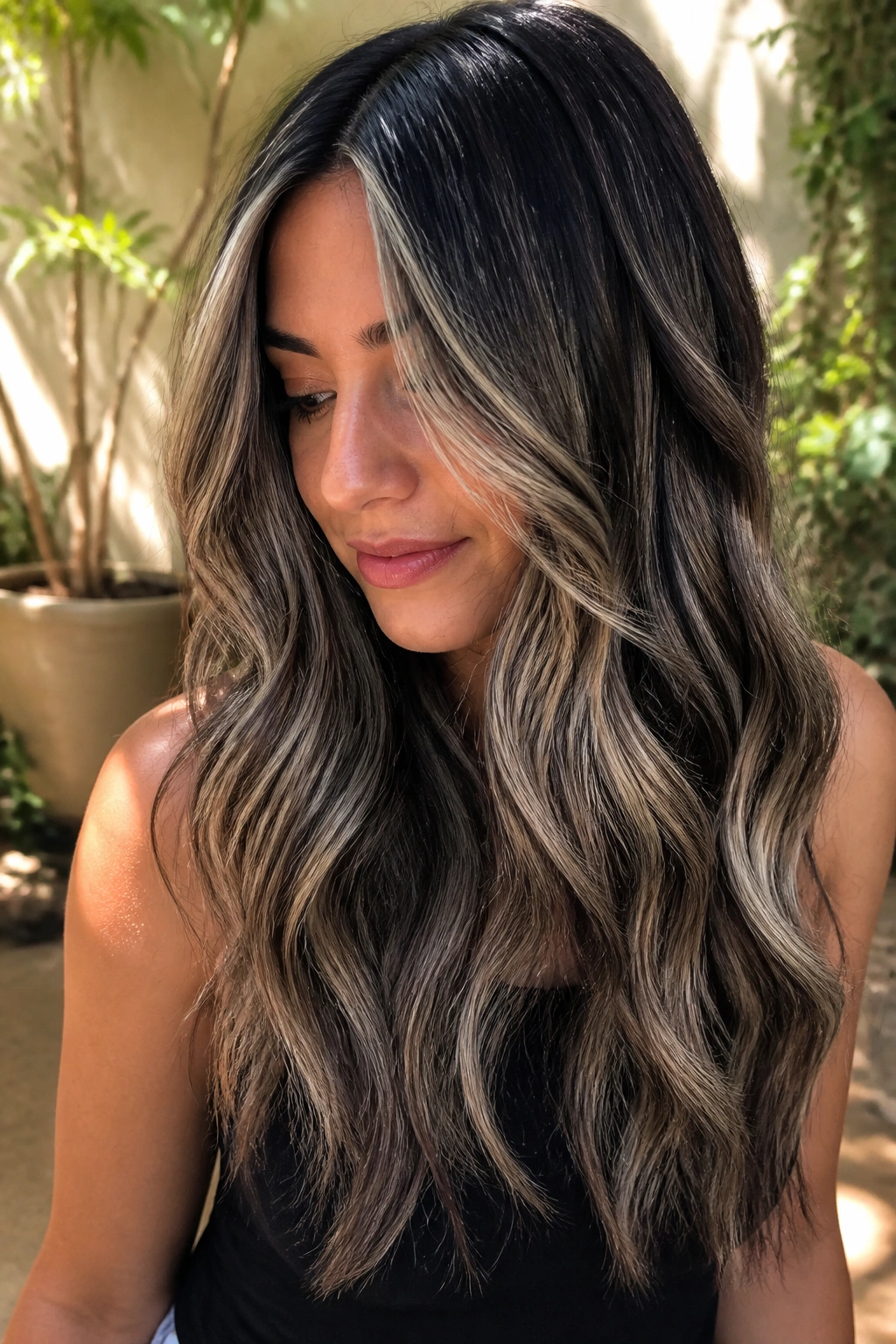
When long hair needs shape, I reach for contrast before I reach for brightness. Smoke, cocoa, and vanilla create a tri-color pattern that gives the lengths structure, almost like shadow and light doing a little dance across the hair.
Smoke works as the cool base tone, cocoa gives the middle some body, and vanilla shows up in the lighter panels where you want the eye to land. On very long hair, this trio can keep the style from feeling heavy at the ends. It’s especially good if your haircut has movement but the color keeps hiding it.
The nice part is that this can read soft or strong depending on placement. Put the vanilla in thin face-framing pieces and a few bottom-layer panels, and the hair gets a crisp edge. Spread it wider through the ends, and the whole look gets lighter and airier. Cocoa is doing the behind-the-scenes work either way.
This is one of those color ideas that looks more expensive when it is slightly imperfect. A few uneven ribbons of smoke or a little extra cocoa in the underside make the hair feel real. Too perfect, and it starts looking drawn on.
Long hair can carry this kind of contrast without losing elegance. That’s the whole advantage. The length gives the color space to breathe.
Long hair gives tri-color highlights room to spread out, which is half the battle. The other half is placement. A smart blend can make a haircut look fuller, shinier, and more intentional without throwing every shade at the same section of hair.
The styles that last longest are usually the ones that keep one shade anchored near the root or underneath, one tone in the middle, and one brighter accent where the hair moves. That structure sounds simple because it is, and simple is often what makes the result look better in real life than it does on a mood board.
