



Short hair tells on a colorist fast. A blunt bob, a pixie, or a cropped shag gives you nowhere to hide a harsh regrowth line, which is exactly why shadow root hair ideas for short hair work so well when the blend is done with a light hand.
The trick is not making the root disappear. It is giving the scalp area a softer, deeper shade so the cut keeps its shape and the lighter pieces look intentional. On short cuts, that usually means keeping the shadow one to two levels deeper than the midlengths and melting it down only about an inch on a bob, less on a pixie, more on a shaggy crop.
A bad shadow root on short hair looks stripy fast. The part gets loud, the crown looks flat, and every grow-out week becomes a reminder that the blend was too blunt.
The good versions feel smoother, fuller, and easier to live with. The fifteen looks below cover warm, cool, bold, and low-key options, from smoked espresso bobs to rose gold crops, and each one shifts the mood of a short cut in a different direction.
1. Smoked Espresso Shadow Root on a French Bob
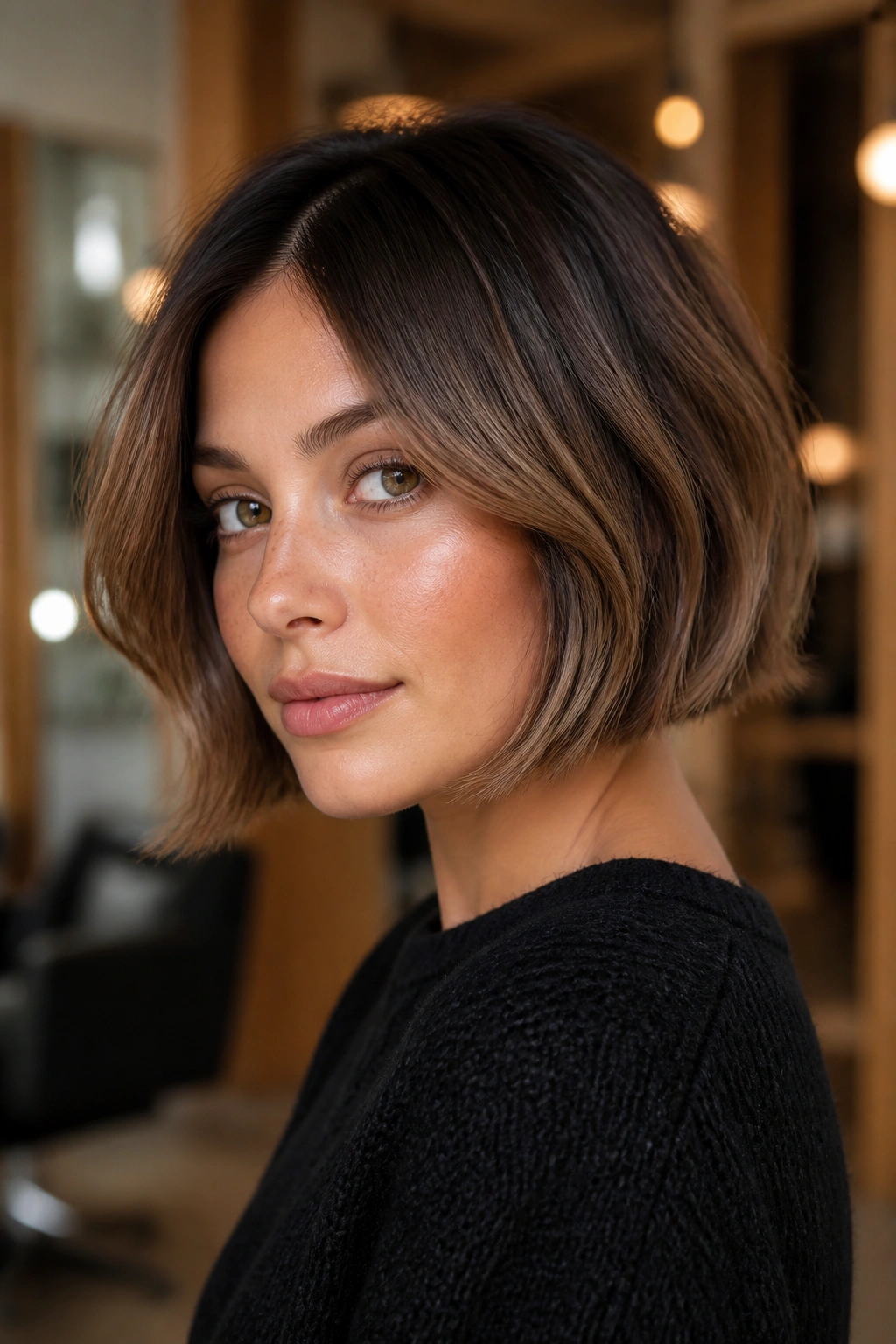
A French bob loves a little shadow. Give it a smoked espresso root—think deep brown softened to a matte, cool finish—and the whole cut suddenly looks denser at the base and cleaner at the edges.
What I like here is the contrast control. A jaw-skimming bob can look a bit too crisp if the color is flat from scalp to ends, especially when the hair is fine. A shadow root keeps the top from reading as one solid block, and the lighter lengths below get more shape because the eye can see the transition.
Why It Works on Short Hair
The cut does half the work. A French bob already has movement around the jaw, so the root shadow only needs to be soft and tidy, not dramatic.
- Best root depth: level 4 to 5 espresso or soft mocha
- Blend zone: about ¾ to 1 inch from the scalp
- Best finish: smooth blowout, tucked behind the ear, or a bend at the ends
- Good detail to ask for: a softer part line so the root does not look painted on
My favorite part: this one grows out gracefully. You can let it go longer between salon visits without the top of the bob looking obvious.
2. Beige Blonde Shadow Root for a Textured Lob
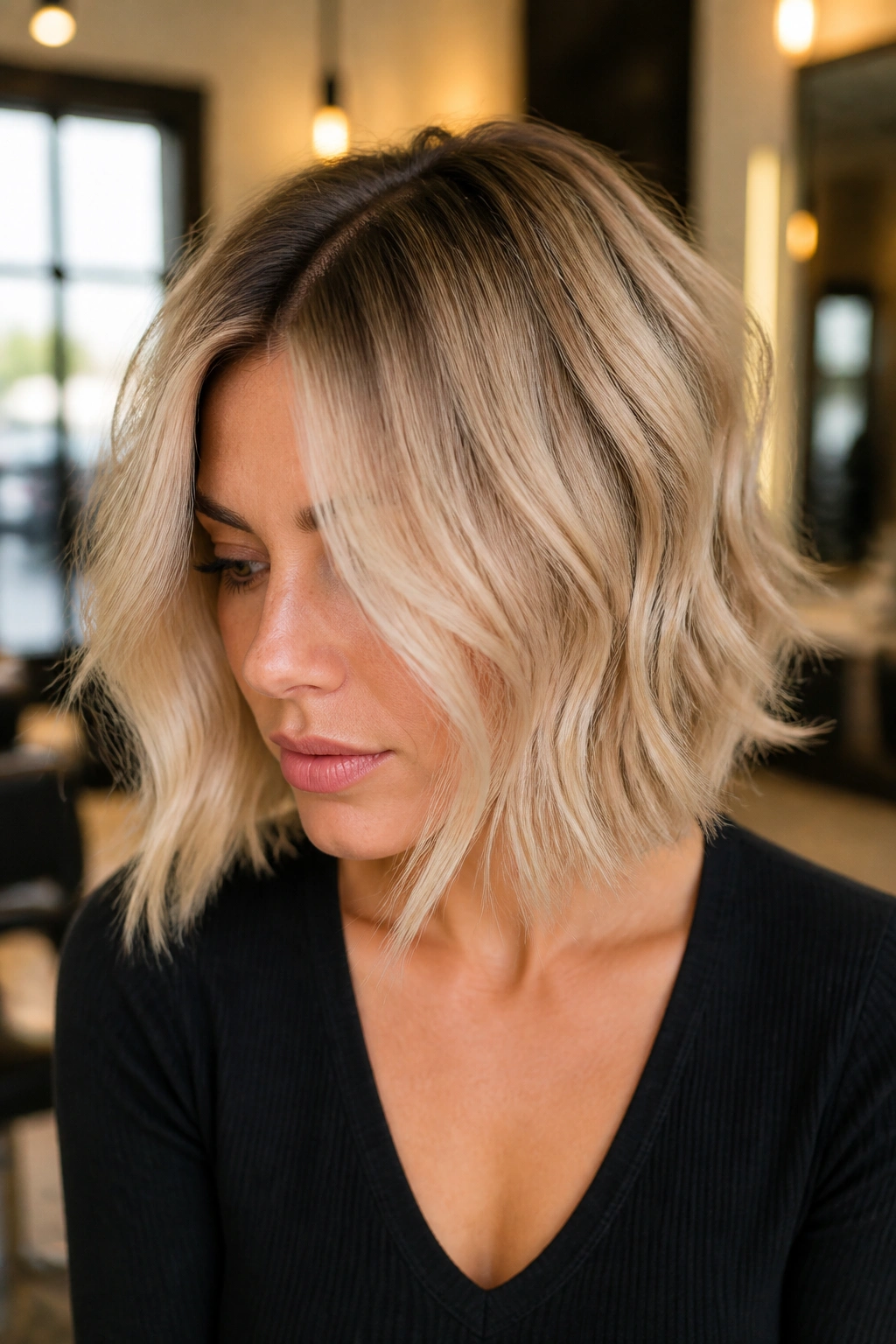
Want blonde that does not look freshly bleached every two weeks? A beige blonde shadow root on a textured lob is the calm answer.
The root stays a soft neutral blonde-brown, not dark enough to feel heavy, then melts into beige mids and lighter ends. On a lob, the extra length gives the root something to do; it adds depth near the crown and keeps the waves from turning puffy or over-bright.
How to Wear It
This look gets its best shape from loose bends, not tight curls. The shadow shows through the waves and makes the hair look thicker at the top, which is a nice trade if your ends are fine or a little see-through.
- Tone to ask for: neutral beige with a touch of warmth, not icy silver
- Placement: root shadow concentrated at the part and crown
- Styling cue: soft waves with a 1-inch iron or a flat iron bend
- Color note: keep the lighter pieces around the face a half-shade brighter
If your hair pulls yellow fast, this is one of those shades that benefits from a gloss more than a heavy toner. Heavy toning can make beige blonde look dull. Nobody wants that.
3. Platinum Pixie with a Soft Shadow Root
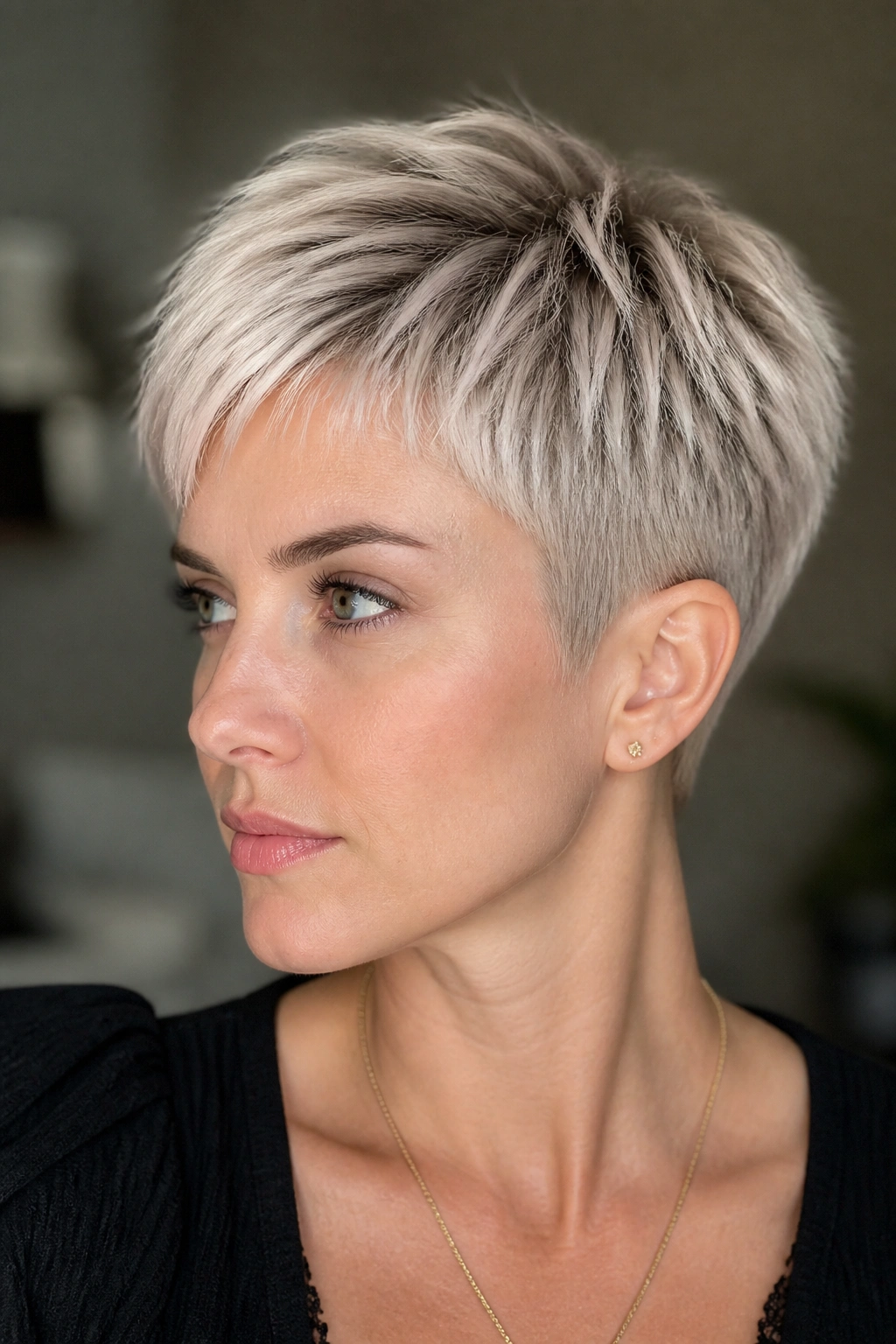
A platinum pixie does not need a hard scalp-to-ice line. It needs a whisper of depth.
That soft shadow root is what keeps the cut from looking like a helmet of white. Even a tiny bit of ash beige or pale taupe at the base helps the short layers show off their texture, and the platinum on top reads cleaner because there is contrast underneath it.
The best version is subtle. You want the root smudge to disappear into the light blonde within a short distance—usually less than half an inch on the sides, maybe a touch more on the crown if the pixie has length there. Anything heavier can make the cut feel dull.
A small warning: platinum on short hair shows every tone shift, so the blend has to be soft at the hairline and around the ears. That area gets the most sunlight and the most attention.
A pixie is blunt about color. So be blunt back. Ask for a pale root shadow that is a shade or two deeper than the ends, not a brown band. Big difference.
4. Mushroom Brown Shadow Root on a Wavy Crop
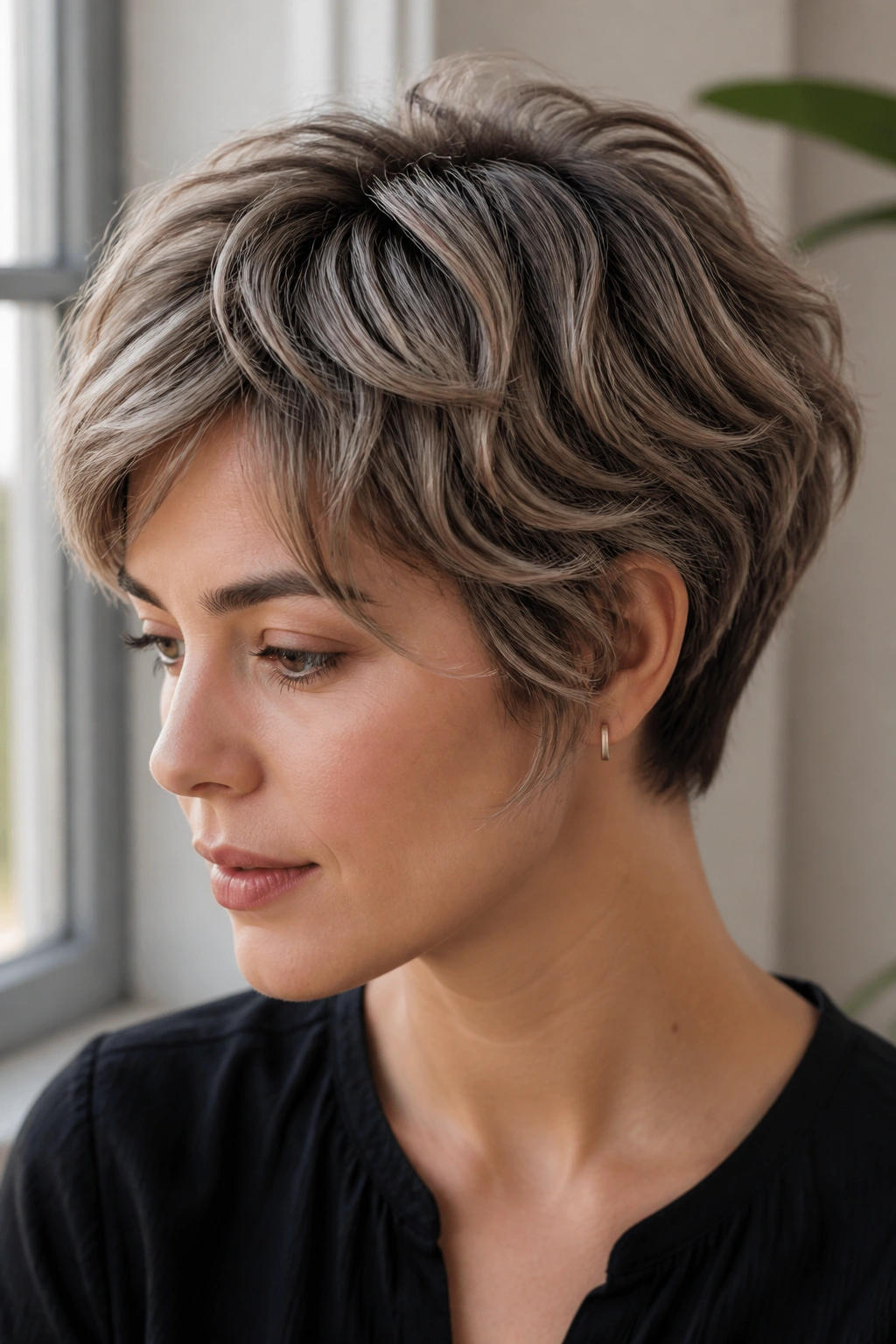
If your short hair tends to puff out at the crown, mushroom brown is your friend. The cool taupe-brown tone gives the top section a grounded look, and the shadow root keeps the color from going flat.
This one is quietly good. Not flashy. The root sits in that soft mushroom zone—part brown, part beige, with just enough ash to calm down warmth—then the mids lighten into a neutral brunette. On a wavy crop, that mix makes the cut look fuller without turning it dark all over.
The Tone Formula
You do not need a heavy-handed root here. In fact, too much depth can make the hair look muddy.
- Root shade: cool taupe brown, about a level 5 or 6
- Midlengths: neutral beige brown or soft toasted brunette
- Best cut shape: cropped layers, shaggy bob, or cheekbone-length waves
- Avoid: overly golden highlights that fight the cool root
The real win is texture. Mushroom brown works because it gives the waves a place to start. The top looks calm, the ends look lighter, and the whole haircut has a little more body. That matters on short hair, where every inch has to earn its keep.
5. Copper Shadow Root on a Curly Bob
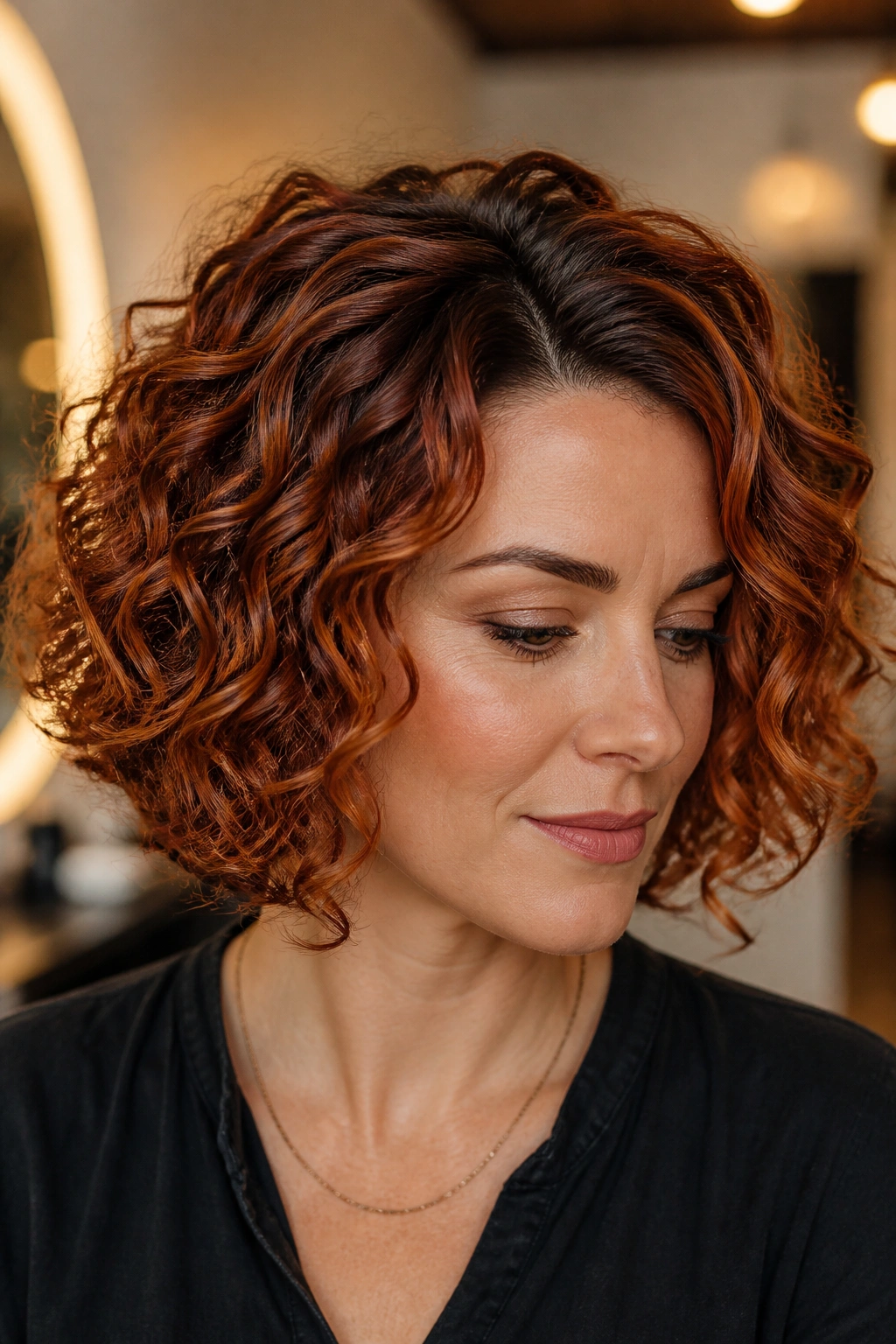
Copper looks richer when the root is deeper. Flat copper can be pretty for about five minutes; a copper shadow root gives it shape and keeps the curls from blending into one orange sheet.
Curly bobs are one of the best places for this idea because curls already break up the color. A root that stays a touch auburn or cinnamon near the scalp lets the brighter copper hit the curl pattern on the midlengths and ends. The result feels warm, not loud.
Why the Curl Pattern Matters
The curls are doing the decorating here. You do not need streaky highlights everywhere. A deeper root and brighter ribbons through the outer layer are enough.
- Root tone: auburn-brown or burnt cinnamon
- Length tone: copper, pumpkin spice, or soft penny
- Best curl pattern: loose to medium curls that show dimension
- Salon ask: keep the root shadow soft around the part, then brighten the outside curve of the bob
Copper fades fast, no way around it. But on short curly hair, that fading can still look good if the root stays richer and the ends land in a softer peach-gold zone. It is a little less polished after a few washes, and honestly, that can be the charm.
6. Caramel Ribbon Shadow Root on Dark Brown Hair
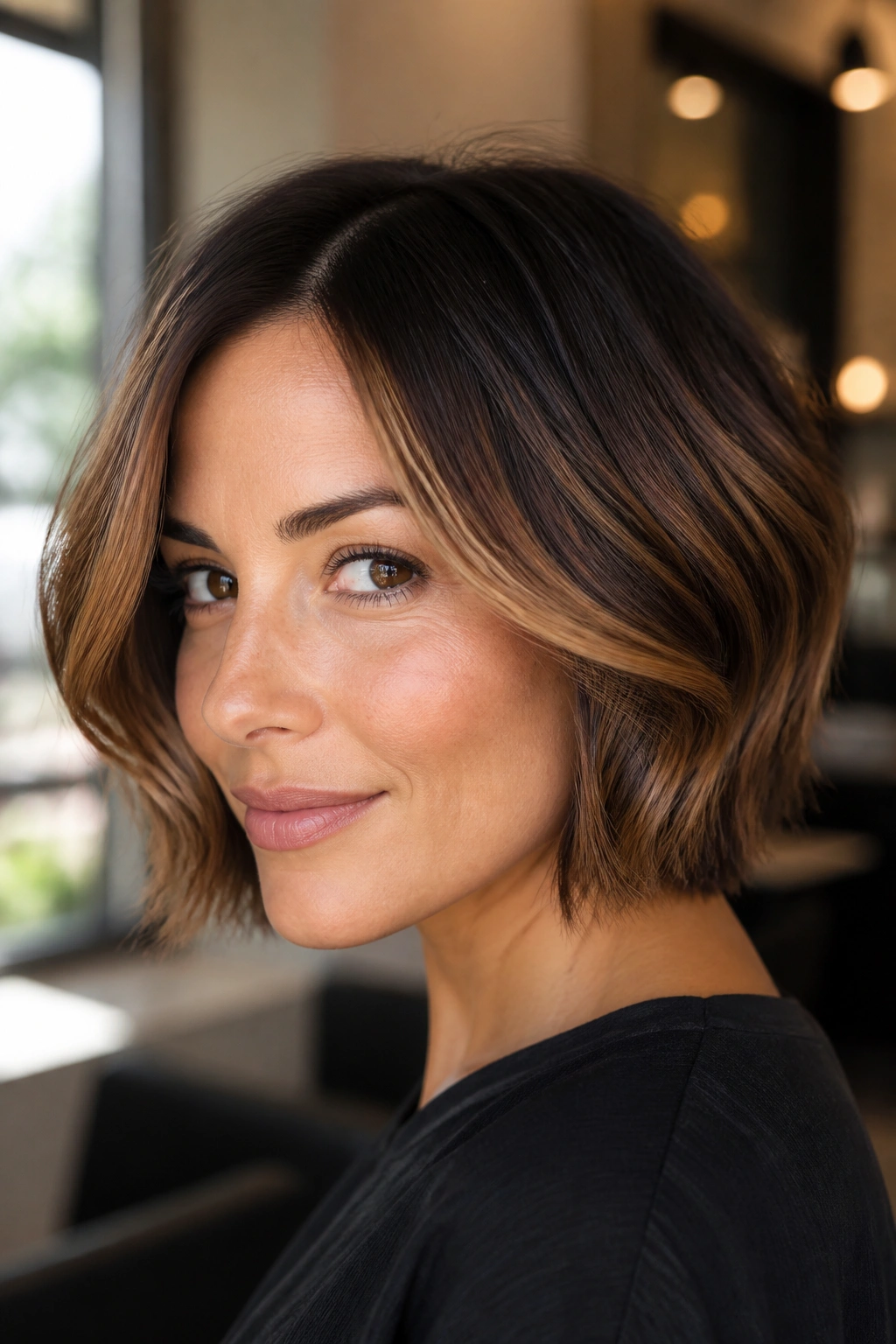
Unlike an all-over caramel blonde effect, this version keeps the base dark and lets the lightness live in ribbons. That is what makes it work so well on short hair.
A dark brown shadow root gives the haircut a solid anchor. Then caramel ribbons are painted through the top layer, around the temples, and maybe just under the surface near the face. On a bob or cropped shag, the pieces move as the hair moves, so the color keeps changing shape instead of sitting there like a fixed stripe.
I like this approach because it does not fight the haircut. A short cut needs a color pattern that supports the lines already built into the shape. Caramel ribbons do that better than chunky highlights ever will.
There is also a nice practical side. When the root stays deep, the grow-out looks soft. You do not get a bright band near the scalp, and the caramel still shows up when the hair is tucked, curled, or rough-dried with a little texture cream.
7. Ashy Bronde Shadow Root for a Layered Shag
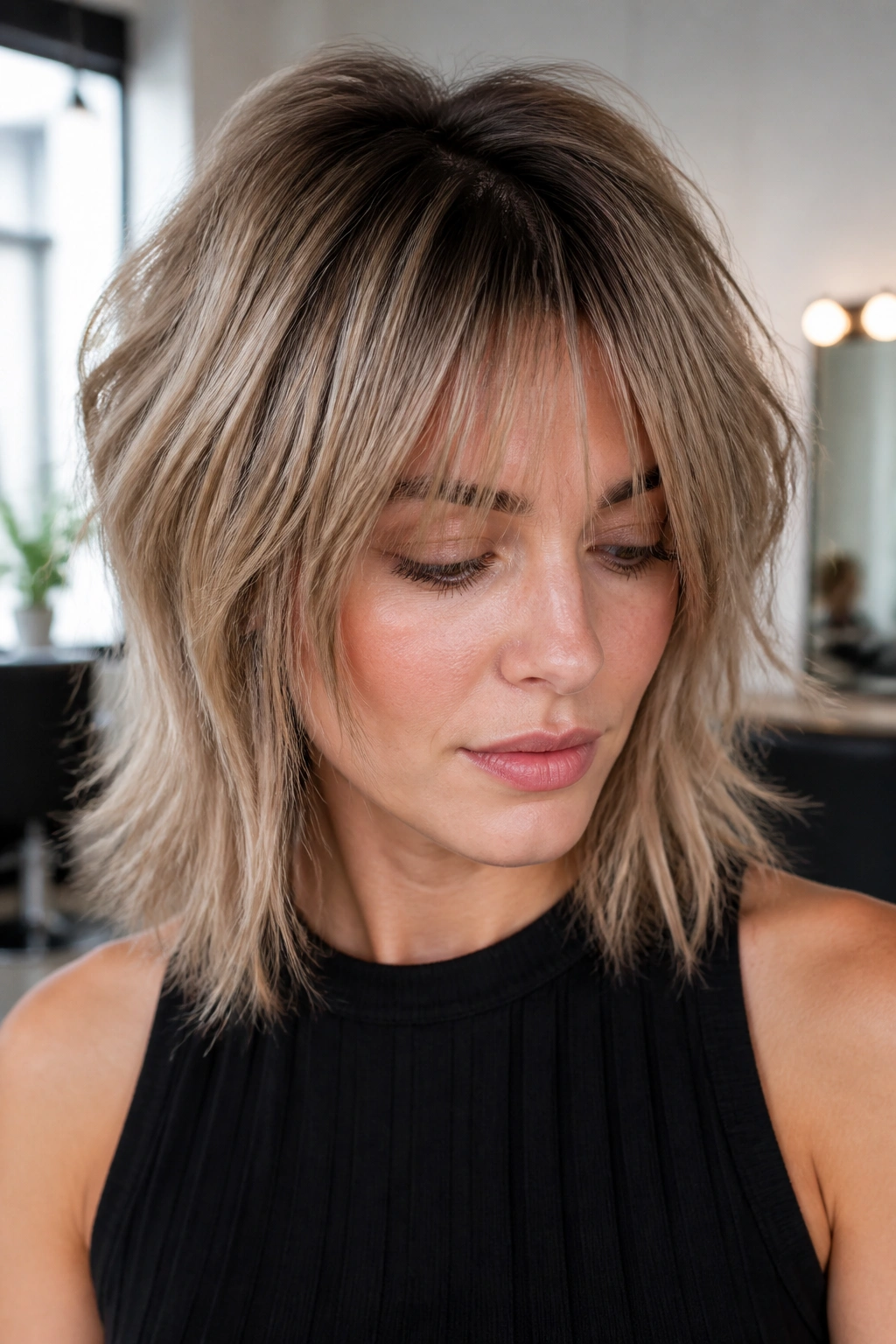
Why does a shag look so good with an ashy bronde shadow root? Because the cut already has movement in every direction.
The feathered pieces, the choppy fringe, the uneven ends—none of that wants a harsh block of color. An ashy bronde root gives the top a cool, smoky base, then fades into beige-brown lengths that can handle all that texture without getting messy.
What Makes It Click
The best version stays in a narrow tone range. You want ash, beige, and brown talking to each other, not fighting.
- Root depth: level 5 ash brown
- Midlength tone: beige bronde
- Finish: piecey blowout, air-dried waves, or a rough-dry with a diffuser
- Best for: curtain bangs, shag layers, and choppy nape areas
A shag can go orange fast if the highlights are too warm. That is the trap. An ash bronde shadow root keeps the whole cut looking cooler and more deliberate, especially when the hair hits the cheekbone and collarbone area. It is a strong choice if you like texture but do not want the color to shout for attention.
8. Cherry Cola Shadow Root with Piecey Ends
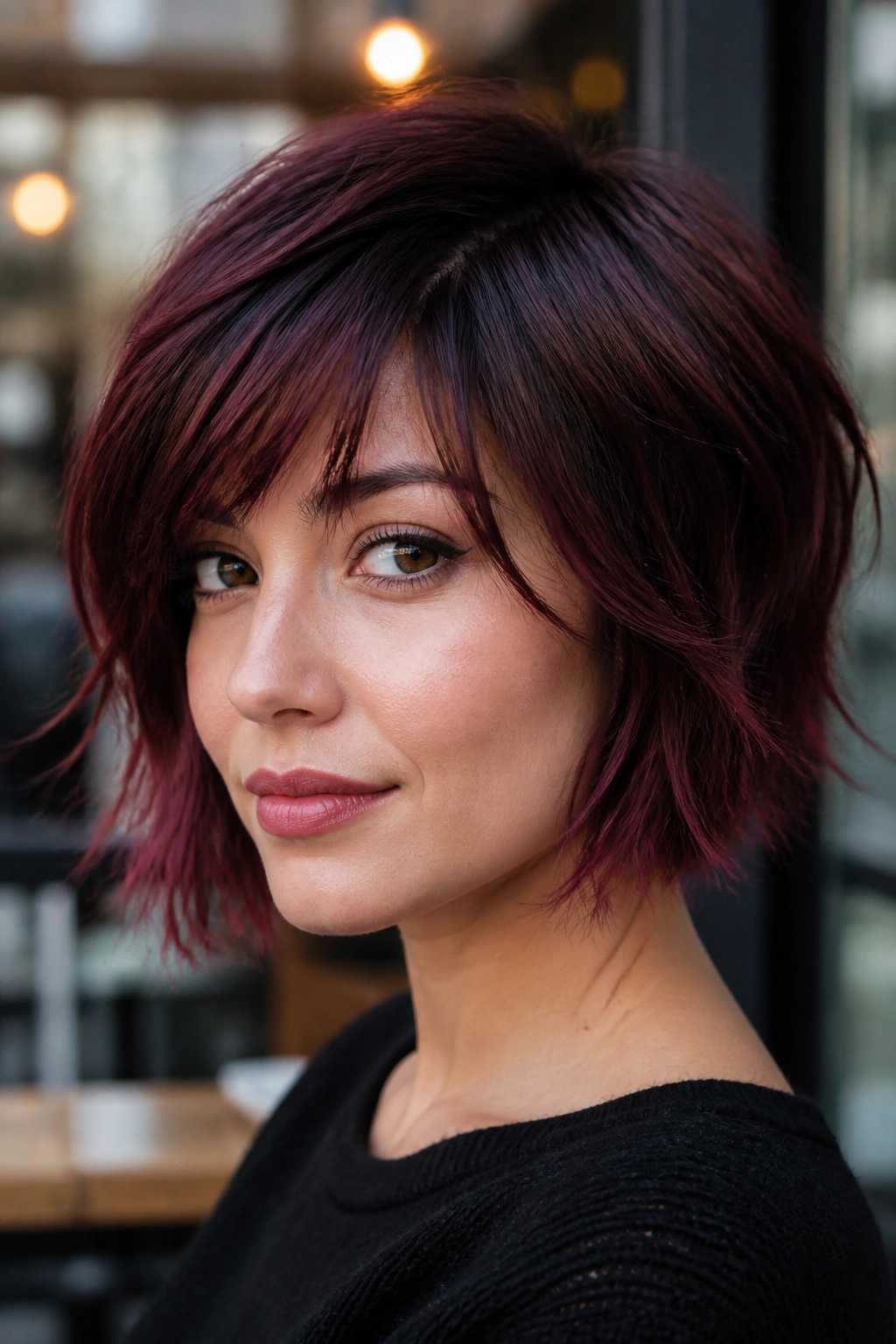
I like this when someone wants short hair that feels darker and richer, not flat. Cherry cola has enough red-violet in it to catch the eye, while the shadow root keeps the top from becoming one loud block of color.
The base usually sits in a deep brown or black-cherry zone, then the ends shift into a redder cherry tone that shows up most on bends and separated pieces. On short hair, those piecey ends matter. They stop the color from looking like a single tone under bad lighting, which is where red shades often go wrong.
A lot of people worry that red on short hair will look costume-y. It can, if the root is too bright or the red is too orange. Cherry cola works because the darkness at the scalp gives it some edge. It feels richer, more grounded, and a little bit glossy.
If you wear black clothes a lot, this shade looks especially good. The color has enough warmth to stand apart from dark outfits without clashing with them.
9. Rooted Champagne Blonde on a Sleek Chin-Length Bob
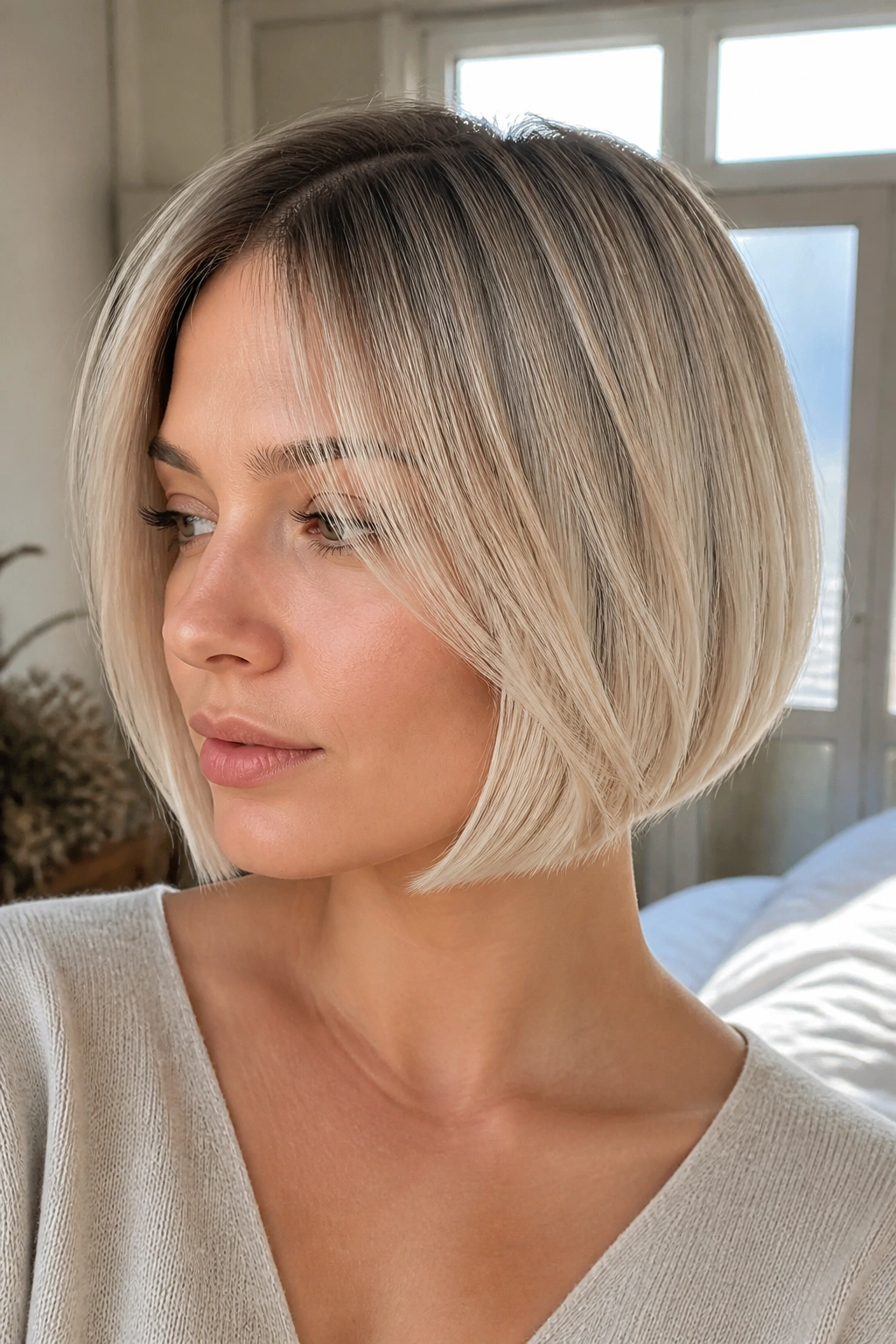
A chin-length bob looks sharper with a rooted champagne blonde than with a solid pale blonde. That is the whole point.
The champagne tone brings in a soft mix of beige and gold, while the root shadow keeps the hair from looking like one pale sheet from part to hem. On a sleek bob, that little bit of darkness at the base makes the shape easier to read. The ends turn brighter, the crown stays grounded, and the cut looks cleaner.
The Finish Matters
This color needs a smooth surface. If the bob is frizzy or the ends are bent in four different directions, the fine tonal shift gets lost.
A center part looks expensive here. So does a clean side part tucked behind one ear. The shadow root does not need to be heavy; it only needs to soften the start of the blonde so the champagne shades can do their job.
If you want extra shine, ask for a clear gloss rather than a more aggressive toner. Champagne blonde can turn chalky if the formula is too cool. On short hair, chalky is the fastest way to make a pretty color look tired.
10. Beige Brown Shadow Root on a Curly Tapered Bob
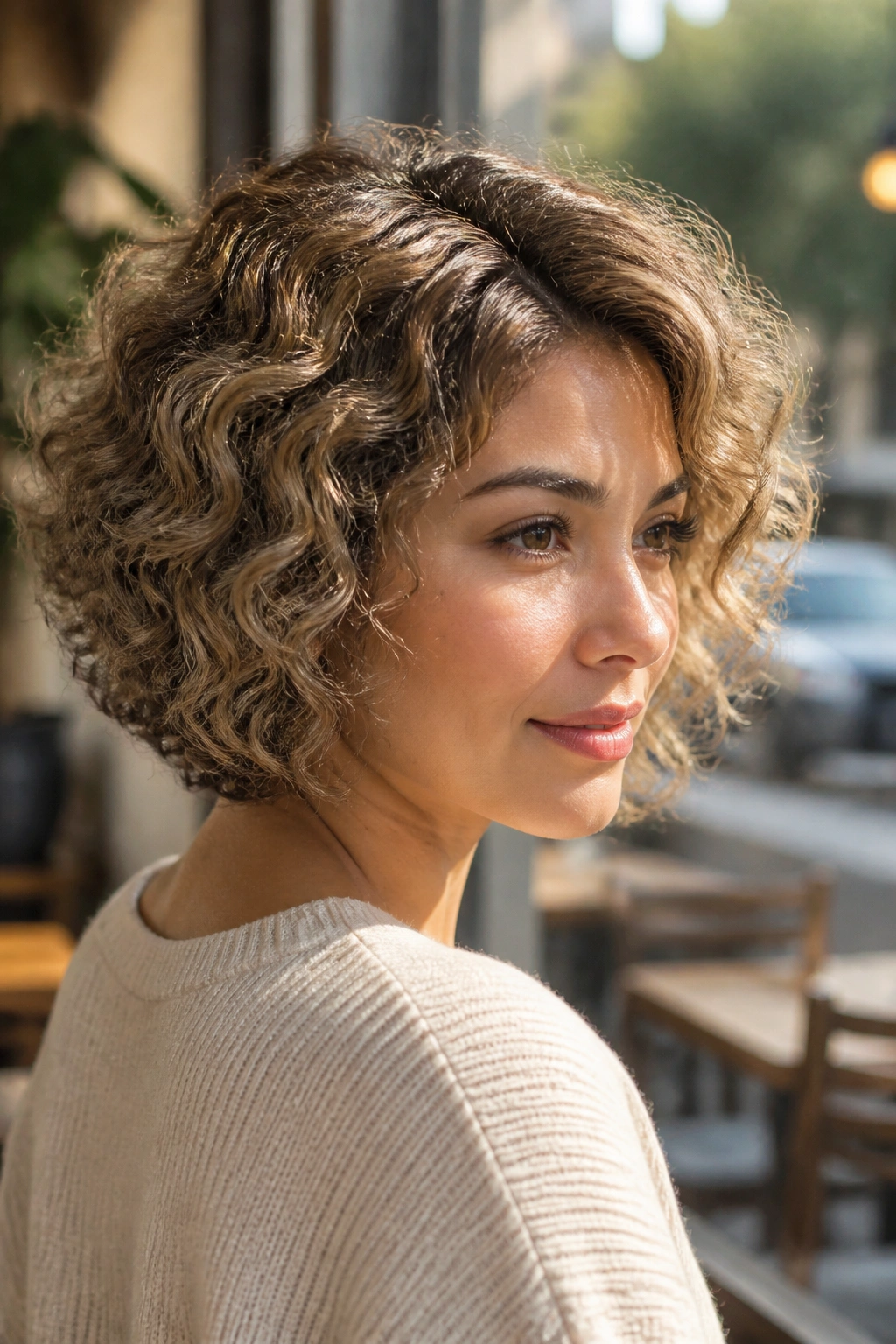
A curly tapered bob is one of those cuts that looks easy when it is done well and awkward when it is not. Beige brown shadow root helps the good version look even better.
The taper gives the haircut shape at the nape and sides, while the shadow root keeps the crown from ballooning out visually. Beige brown sits in the middle of warm and cool, which is useful on curls because curls already throw light in every direction. Too much warmth gets brassy. Too much ash can make the hair look flat. Beige brown stays calmer.
Best Places to Put the Shadow
The crown and the first inch around the part are the important spots. That is where a hard line shows most.
- Best root target: soft beige brown, not dark chocolate
- Where to brighten: outer curl layer and face-framing curls
- Styling tip: diffuse on low heat so the curl clumps stay separated
- Salon note: keep the nape slightly deeper if the haircut is very tapered
This is one of my favorite short-hair color ideas for people who want definition without too much drama. It has enough depth to sharpen the silhouette, but it still feels gentle when the curls expand on a humid day.
11. Soft Black Shadow Root with Blue-Black Shine
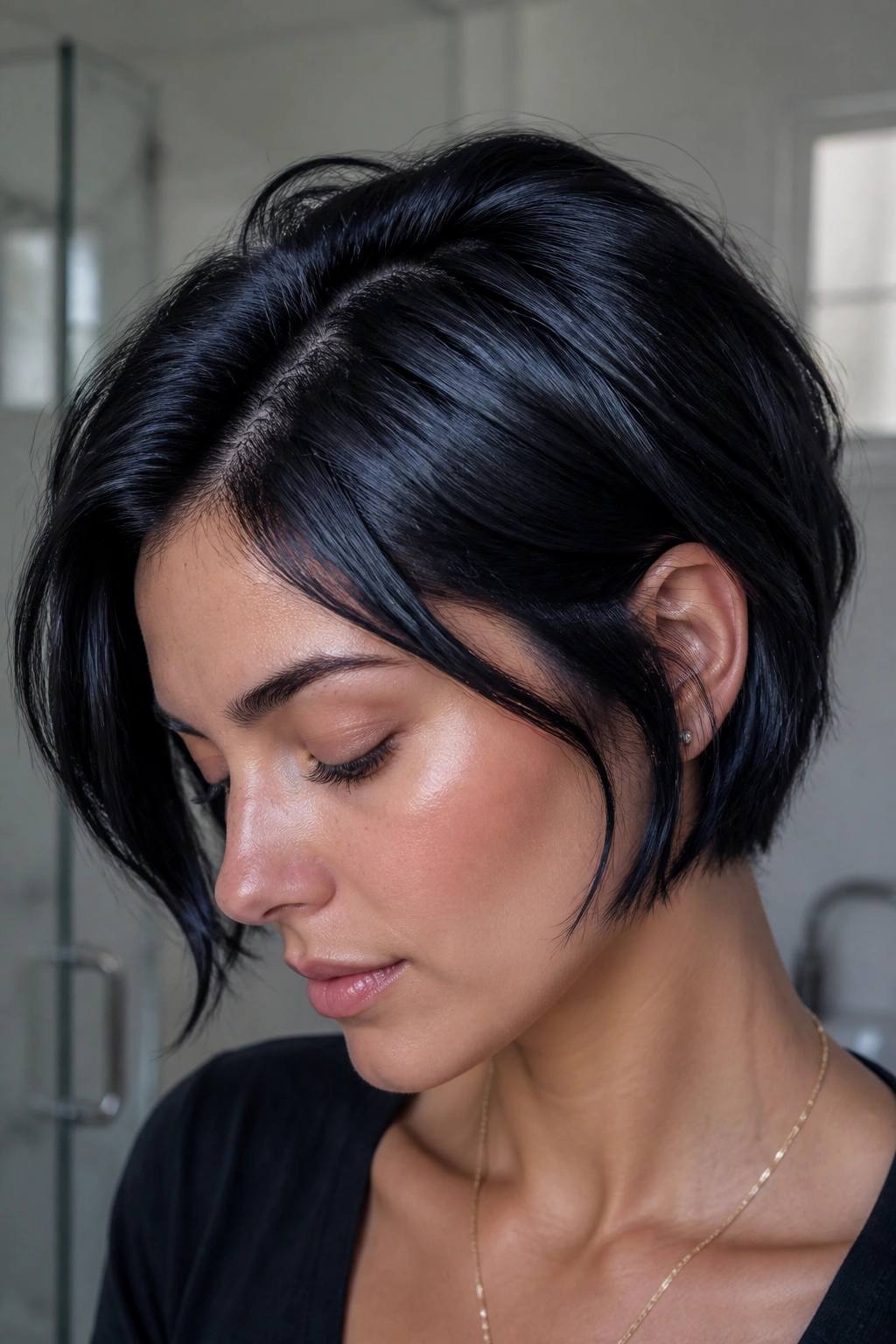
Soft black is not the same thing as flat black. Flat black can swallow the shape of a short cut; soft black keeps the depth but leaves room for shine.
A blue-black finish near the root gives the color a cool edge, and that is what keeps it from looking harsh. On short hair, especially a cropped bob or a blunt pixie-bob, the shine sits right where people notice it first. The root area reflects light in a narrow band, and the darker base makes the ends look sharper by comparison.
The best part is the simplicity. You do not need highlights or ribbons to make this work. A good gloss, a smooth blow-dry, and a clean cut line are enough. That makes it a strong choice if you like dark hair but hate fuss.
One caution: if the hair is porous, blue-black can grab too hard and turn inky. That is why the shadow root should be softened with a slightly translucent finish, not packed on like paint. Dark hair should look rich, not pasted on.
12. Face-Framing Money Piece with a Dark Shadow Root
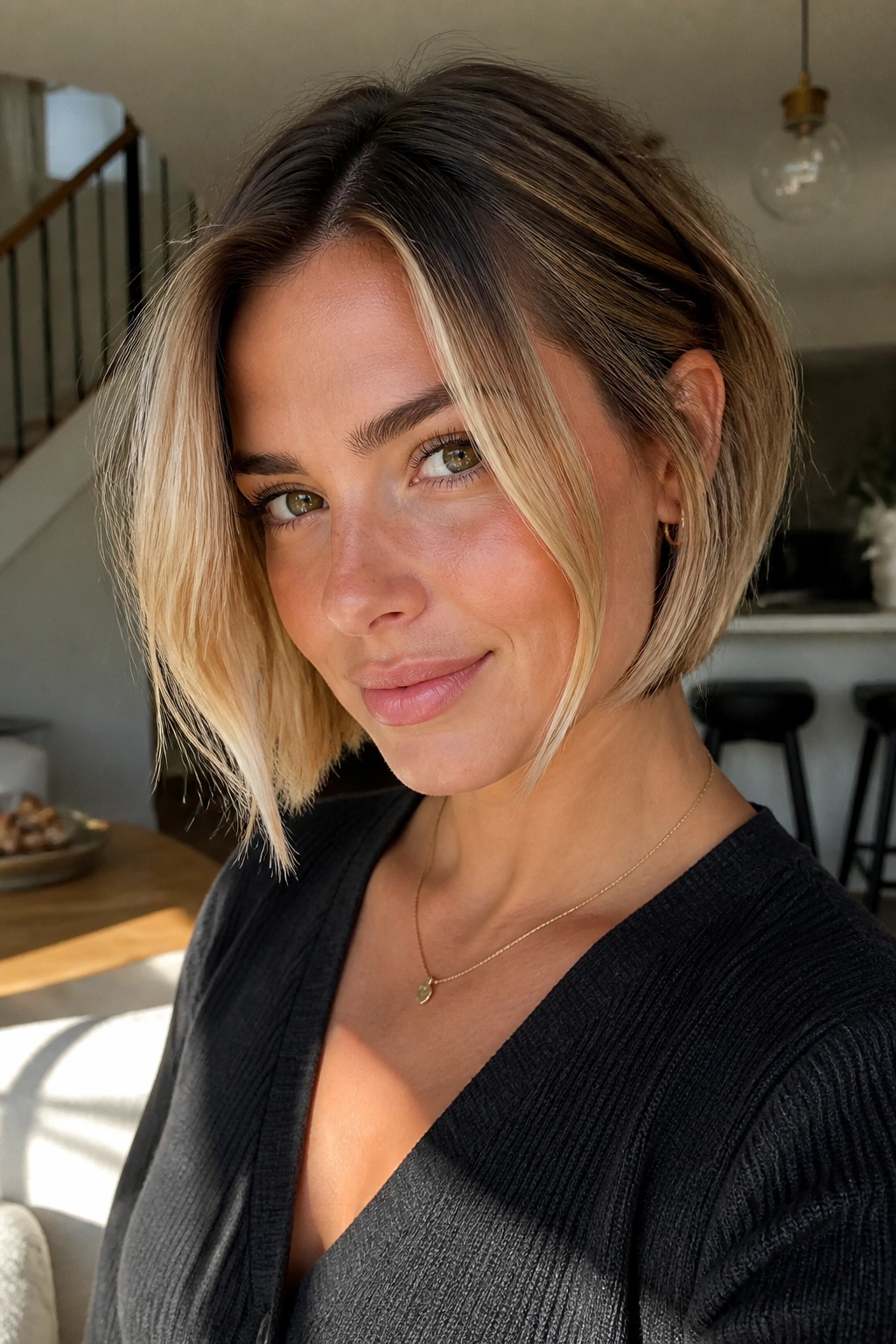
Want brightness without committing to a full head of light pieces? Keep the root dark and put the light where it matters most.
That is the whole logic of this look. The shadow root stays deep through the part and crown, then a bright money piece gets placed at the front so the face gets lifted. On short hair, that front brightness can do a lot of work. It can soften a strong jawline, open up a blunt bob, and make a pixie-bob feel less severe.
Where to Place the Bright Pieces
The placement is more important than the color name.
- Best spot: the first two face-framing sections on each side
- Best depth: a dark root that melts for 1 to 1.5 inches
- Good companion shades: beige blonde, champagne, caramel, or soft copper
- Cuts that love it: bob with curtain fringe, bixie, side-parted lob
A lot of people overdo the money piece and forget the root. That is when the look starts shouting. Keep the base dark, let the front panels do the talking, and the haircut stays balanced.
13. Warm Honey Shadow Root on a Blunt Bob
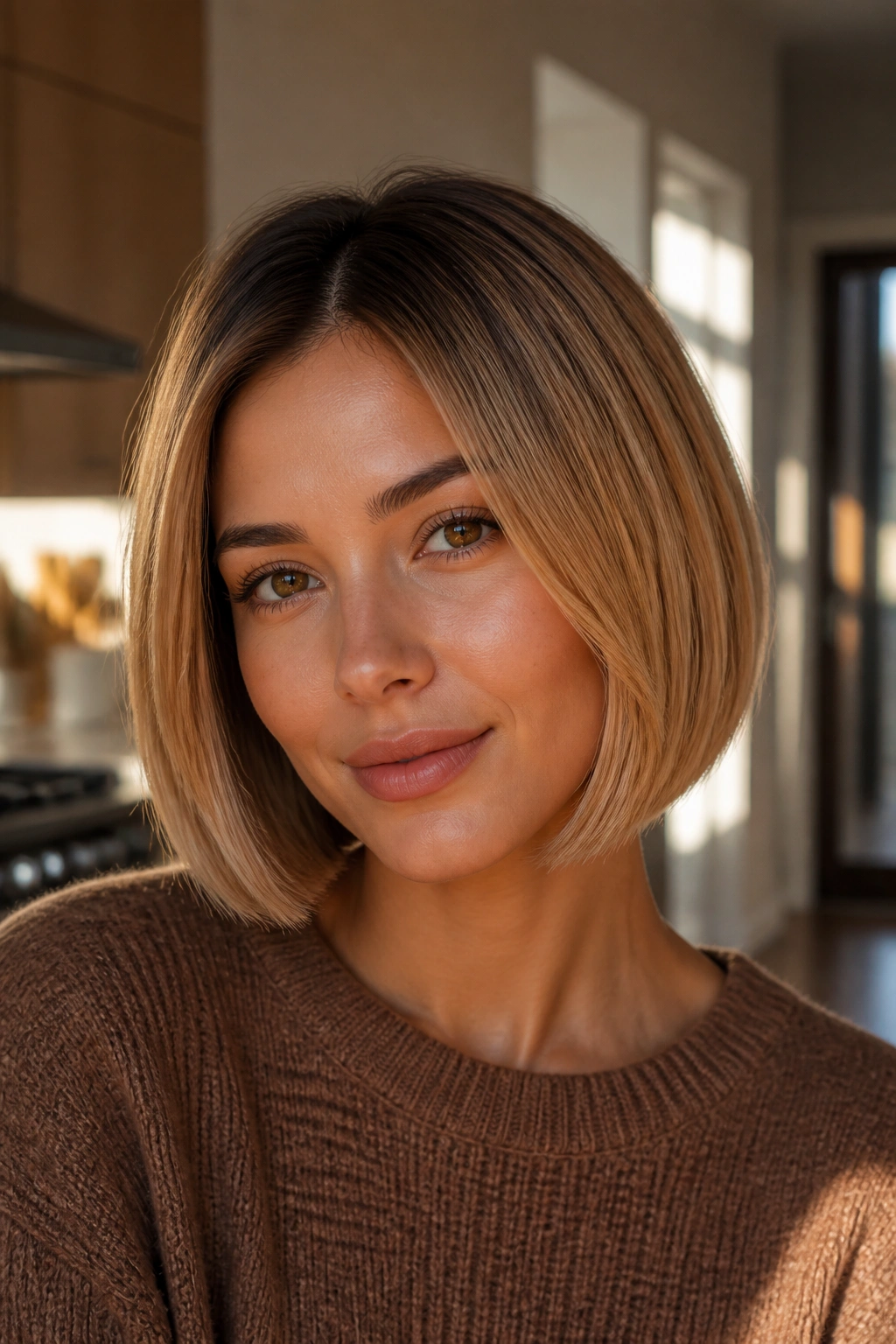
Honey blonde on a blunt short cut can go stripey fast. A warm shadow root fixes that before it starts.
The root stays a shade deeper—soft golden brown, maybe a level 6 or 7—then the midlengths move into honey and soft gold. On a blunt bob, that transition matters because the cut has such a strong edge. If every strand is the same brightness, the line can look harsh. The shadow root breaks that up and gives the bob some depth at the scalp.
This shade works best when the finish is glossy and the ends are clean. Split, dry ends steal the attention from the color, and short hair has nowhere to hide them. A trim every 6 to 8 weeks keeps the line crisp and lets the honey read as deliberate, not faded.
Warm skin tones tend to love this, but neutral skin can wear it easily too. The trick is making the root rich enough to support the gold without turning orange. That is a fine line, and yes, stylists argue about it more than they should.
14. Smoky Rose Gold Shadow Root on Soft Waves
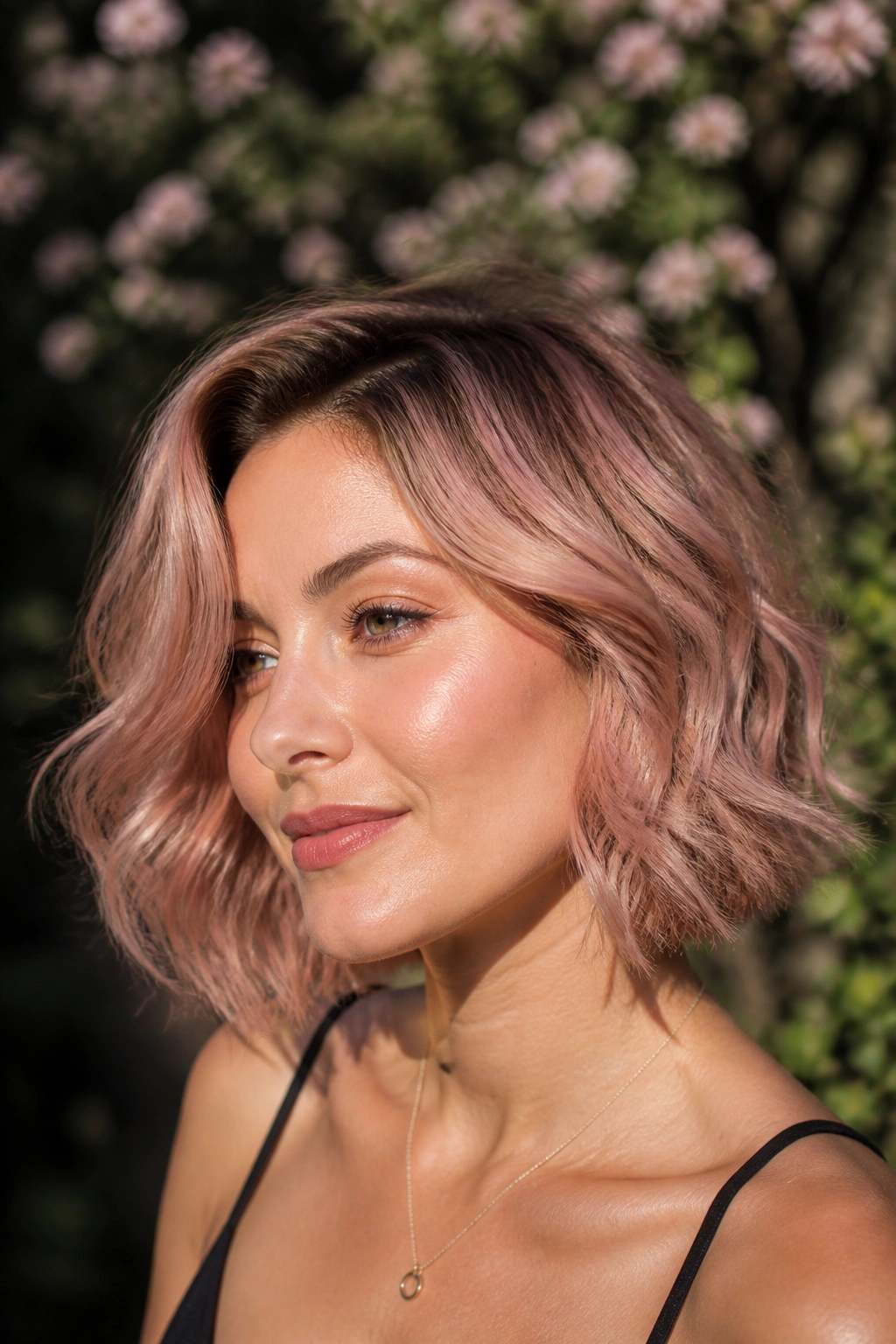
Pastel short hair usually needs a darker root or it flattens out fast. Smoky rose gold is the exception that proves the rule.
The root shadow keeps the color grounded, while the rose gold midlengths and ends bring in that soft blush tone people like on waves. Because short waves move a lot, the shade looks different depending on how the hair falls. One minute it reads peachy, the next it feels more dusty pink. That shift is the point.
The root should not be chocolate-dark. Too much depth will make the rose gold look sugary and detached from the cut. Aim for a muted beige-brown or dusty mauve-brown at the scalp, then blend into the rosier lengths.
This is a color that rewards softness. Loose waves, a little bend around the jaw, and a dry texture spray work better than tight curls or over-sleek styling. It is a little playful, a little grown-up, and honestly one of the most flattering ways to wear pastel on short hair without looking like you borrowed it from someone else.
15. Soft Mushroom Blonde Shadow Root on a Grown-Out Bob
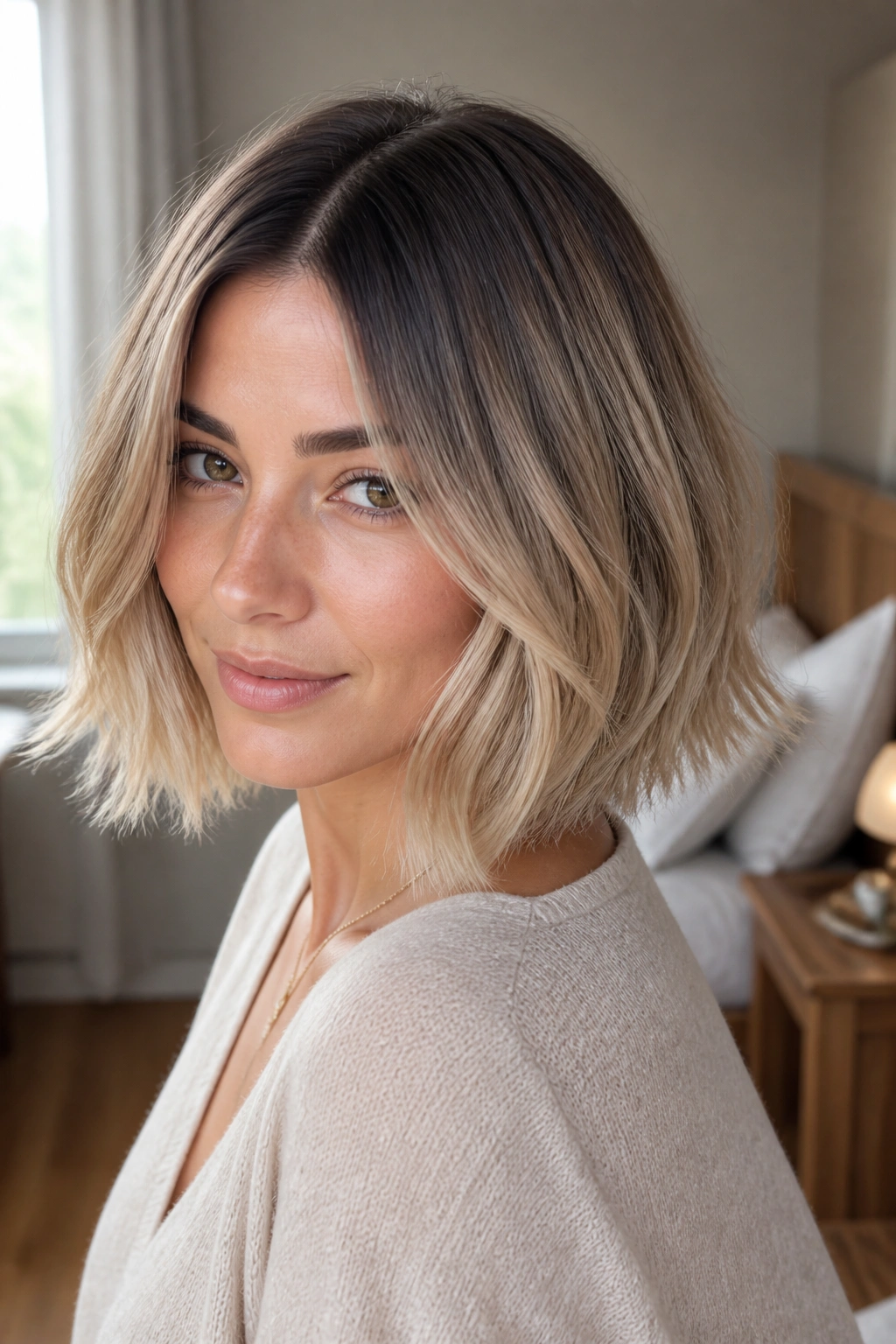
If you want a short style that can stretch between appointments, this is the one I’d put near the top of the list.
A soft mushroom blonde shadow root gives a grown-out bob that easy, lived-in depth people try to fake with toner alone. The root stays cool beige-brown, the mids drift into mushroom blonde, and the ends lighten just enough to keep the bob from feeling heavy. It is not icy. It is not muddy. It sits in that useful middle zone where the color still looks polished after the first few weeks of wear.
Why It Ages Well
Short hair grows out quickly, and that is usually the problem. This shade turns the grow-out into part of the style.
- Root shade: cool beige brown with a soft ash edge
- Blend length: about 1 inch on a bob, slightly less if the cut is very blunt
- Best styling: air-dried bend, loose blowout, or tucked-behind-the-ear finish
- Easy upkeep: a gloss every 6 to 8 weeks keeps the beige tone clean
The real trick is keeping the root soft enough to avoid a line but dark enough to preserve the shape of the cut. Bring photos that show the depth you want near the part, because “mushroom blonde” can mean five different things to five different stylists, and some of them drift too warm. The safest version lives in that cool beige zone and leaves the bob looking crisp, not flat, even when the grow-out starts to show.
