



Salt and pepper hairstyles for women over 50 can look sharper than dyed hair when the cut is doing its job. The silver, charcoal, and white strands bring their own shine, and a good shape lets that mix look deliberate instead of washed out.
That part matters more than people admit. Hair often changes after 50 — it can get drier, a little finer at the temples, or puffier in the wrong spots — so the style that behaved perfectly years ago may suddenly feel fussy, flat, or too heavy.
A strong cut fixes that fast. Some styles make the gray look bright and crisp. Others soften the forehead, lift the cheekbones, or make the jawline look cleaner without trying too hard. The trick is choosing the right kind of balance for your texture, your face shape, and how much time you want to spend with a brush.
1. Salt and Pepper Blunt Bob with a Clean Edge

A blunt bob is one of those cuts that looks calm from a distance and quietly impressive up close. The straight perimeter gives salt and pepper hair a clear outline, which helps the color read as a feature instead of something to hide.
Why It Works
The sharp edge is the whole point. Silver strands already catch the eye, so when you pair them with a neat line at the chin or just below it, the style looks intentional and polished. It’s especially good for straight or slightly wavy hair that tends to look wispy when it gets too long.
I like this cut on women with finer hair because the solid bottom line makes the ends look denser. Add a center part for a modern feel, or shift it a little off-center if you want a softer face frame. Do not over-layer this one unless your hair is very thick; too many short pieces can make it lose that crisp shape.
- Best length: chin to jaw
- Best texture: straight, fine, or lightly wavy
- Styling time: 10 to 15 minutes
- Maintenance: trim every 6 to 8 weeks
Tip: Aim the dryer nozzle downward so the cuticle lies flat and the gray looks shinier.
2. Layered Pixie with a Side-Swept Fringe
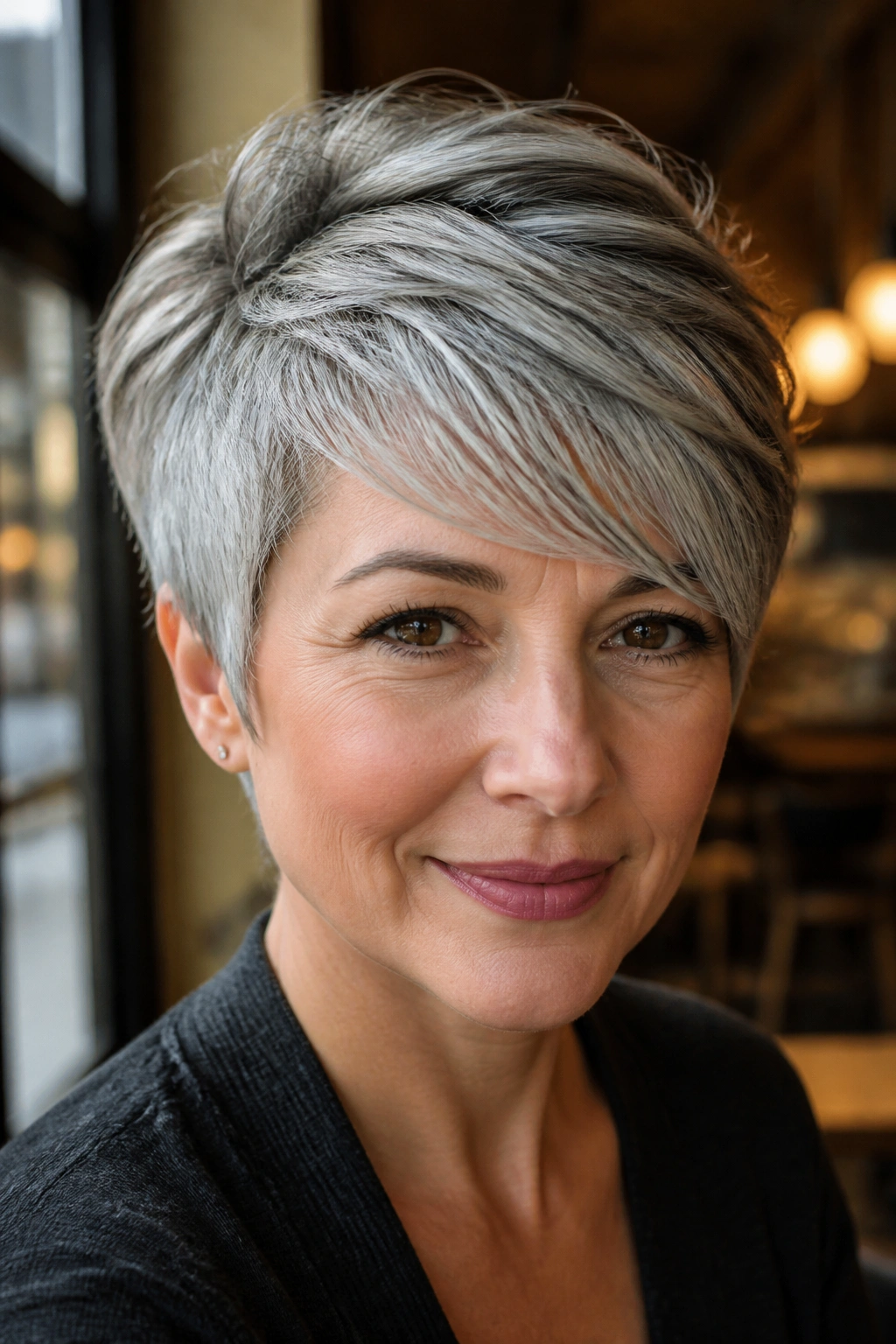
Short hair can be forgiving, but only when the shape is thoughtful. A layered pixie with a side-swept fringe gives movement around the eyes and temples, which helps if your face feels a little sharper than it used to.
The side fringe is the soft part. It can skim the forehead, hide a cowlick, and make glasses look intentional instead of crowded. I also like it for women whose hair has thinned a bit at the front, because the fringe adds visual fullness without needing a lot of product.
A tiny amount of mousse at the roots and a pea-sized bit of styling cream on the ends is usually enough. Push the fringe over with your fingers, not a round brush if you want it to stay relaxed. Too much wax will make this style look greasy in a hurry.
3. Collarbone Lob with Soft Waves

The collarbone lob is the hairstyle people keep coming back to because it solves so many problems at once. It has enough length to tuck behind the ears or clip back, but not so much that the ends drag the whole look down.
Soft waves work especially well here because they break up the color mix in a flattering way. Salt and pepper strands tend to show dimension when the bend lands somewhere between the cheekbone and the collarbone. If the wave starts too low, the shape can look sleepy. If it starts too high, you get too much puff.
A 1.25-inch curling iron is usually the sweet spot for this cut, though loose braids overnight can work too. Leave the last inch of the ends straighter so the style doesn’t turn fluffy. That little detail makes a big difference.
4. Tapered Crop with Lift at the Crown
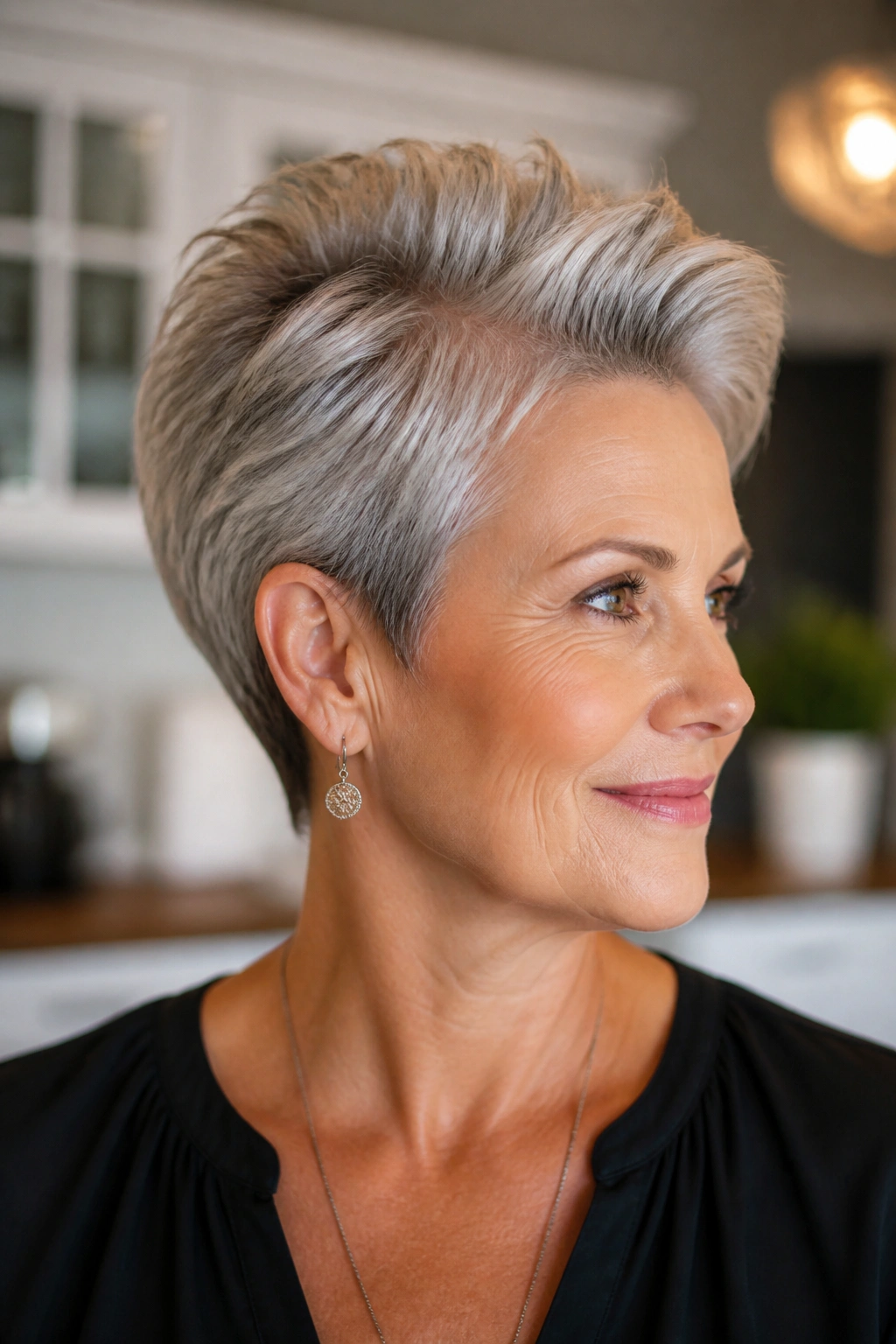
A tapered crop is a strong choice when you want short hair that still feels feminine. The nape stays neat and close, while the crown keeps more length so the whole shape has lift instead of sitting flat against the head.
This cut is a friend to women with dense hair, but it also helps finer hair if the crown needs a little height. The important part is where the weight sits. You want the top to rise and the sides to stay controlled, not puff out in a triangle. That mistake is common, and it makes the style look dated fast.
Ask for a taper that hugs the neckline and a little bit of texture through the top. If your stylist reaches for a razor everywhere, slow them down. The top needs movement; the sides need discipline.
- Good for: strong cheekbones, round faces, busy mornings
- Watch out for: cowlicks at the crown
- Product: lightweight root spray or airy mousse
- Trim schedule: every 4 to 6 weeks
5. Textured Shag with Feathered Ends
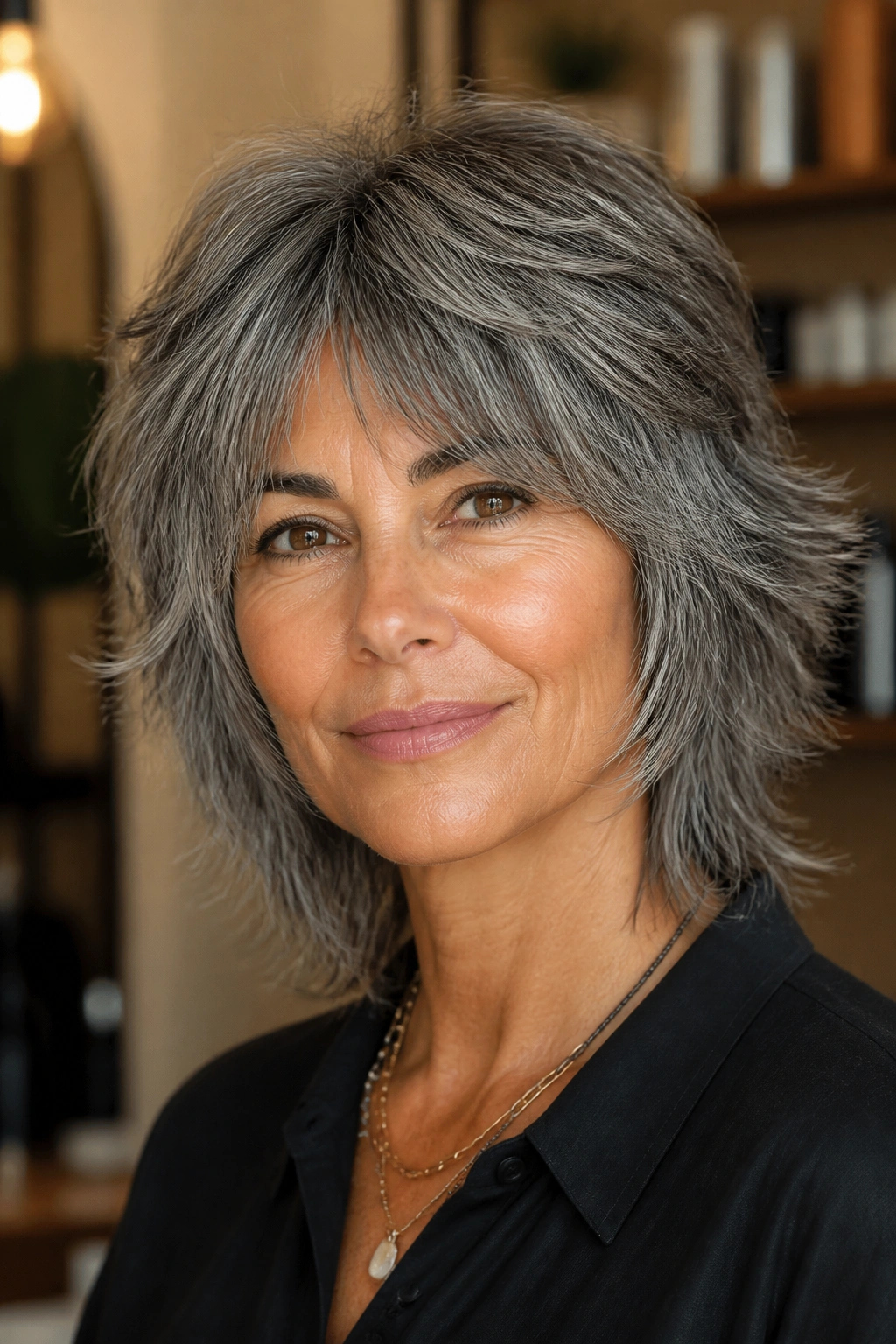
The shag is one of the few cuts that can look relaxed without looking sloppy. That’s the key. Feathered ends and layered sides give salt and pepper hair motion, and the mix of silver and dark strands makes the texture read even better.
What to Ask For at the Salon
Ask for layers that start around the cheekbone or just below it. Shorter than that, and the cut can start to fray around the face. Longer than that, and you lose the airy feel that makes the shag work in the first place.
Here’s the practical part:
- Keep the outer edge soft, not chopped.
- Leave some weight at the perimeter.
- Avoid heavy thinning on fine hair.
- Use curl cream or light mousse on damp hair.
This cut is especially good if your hair has a little wave and a little frizz. It turns both into texture. The worst version of a shag is one that has been thinned to death. That leaves you with fluff, not shape.
6. Side-Parted Crop with a Long Fringe
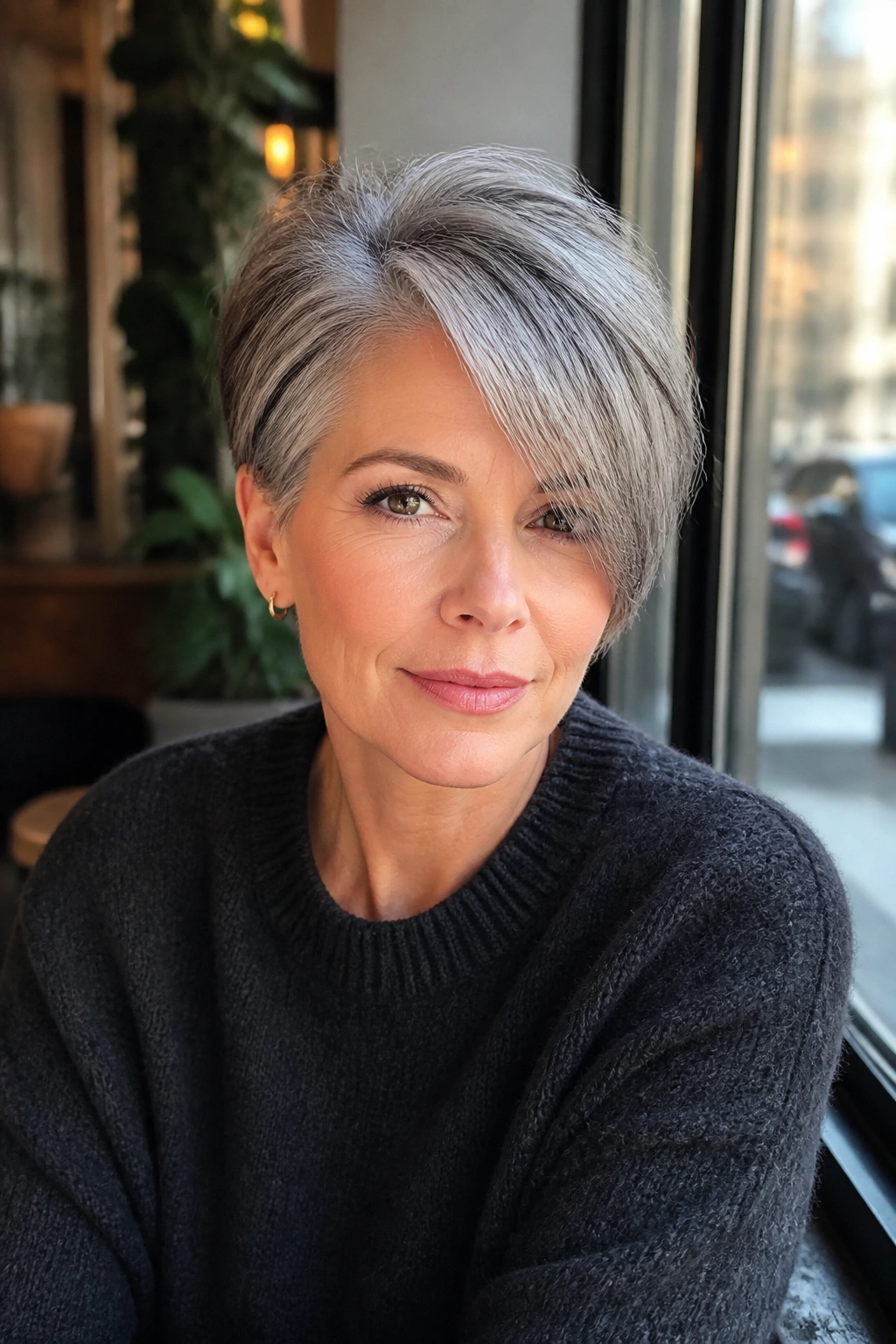
A deep side part changes the whole face in a way people underestimate. It creates lift, covers a wide forehead if you want that, and gives a short cut a little more drama without asking for extra length.
The long fringe is what makes this style feel soft. It brushes across the brow and cheek, then disappears into the rest of the cut so the effect isn’t heavy. I like this one for women who wear earrings, because the part and fringe keep attention moving upward and across the face.
This style also does a nice job of balancing asymmetry. One side can tuck close to the ear while the fringe falls over the other side. It sounds simple, and it is, but the result is cleaner than a lot of fancier haircuts. A neat side part still does a lot of work.
7. Curly Crop with a Rounded Shape

Curly hair and salt-and-pepper color are a strong pair when the shape is right. A rounded crop keeps the silhouette soft and gives the curls room to stack without turning into a pyramid.
Why the Shape Matters
Curly hair should be cut to the curl pattern, not against it. If the cut is too blunt or too square, the style can balloon out at the sides and lose its balance. A rounded crop keeps the top and sides working together, which matters even more when the strands are dry or coarse.
A good stylist will shape this cut while your curls are in their natural pattern. That part matters. They need to see where the hair springs up and where it falls flat. After that, a little leave-in conditioner and a gel that dries with a soft cast can keep the curls defined without making them crunchy.
- Dry with a diffuser on low heat
- Do not brush it once it’s dry
- Scrunch with a microfiber towel, not a rough bath towel
- Trim while the hair is in curl form, not stretched straight
8. Feathered Shoulder-Length Cut
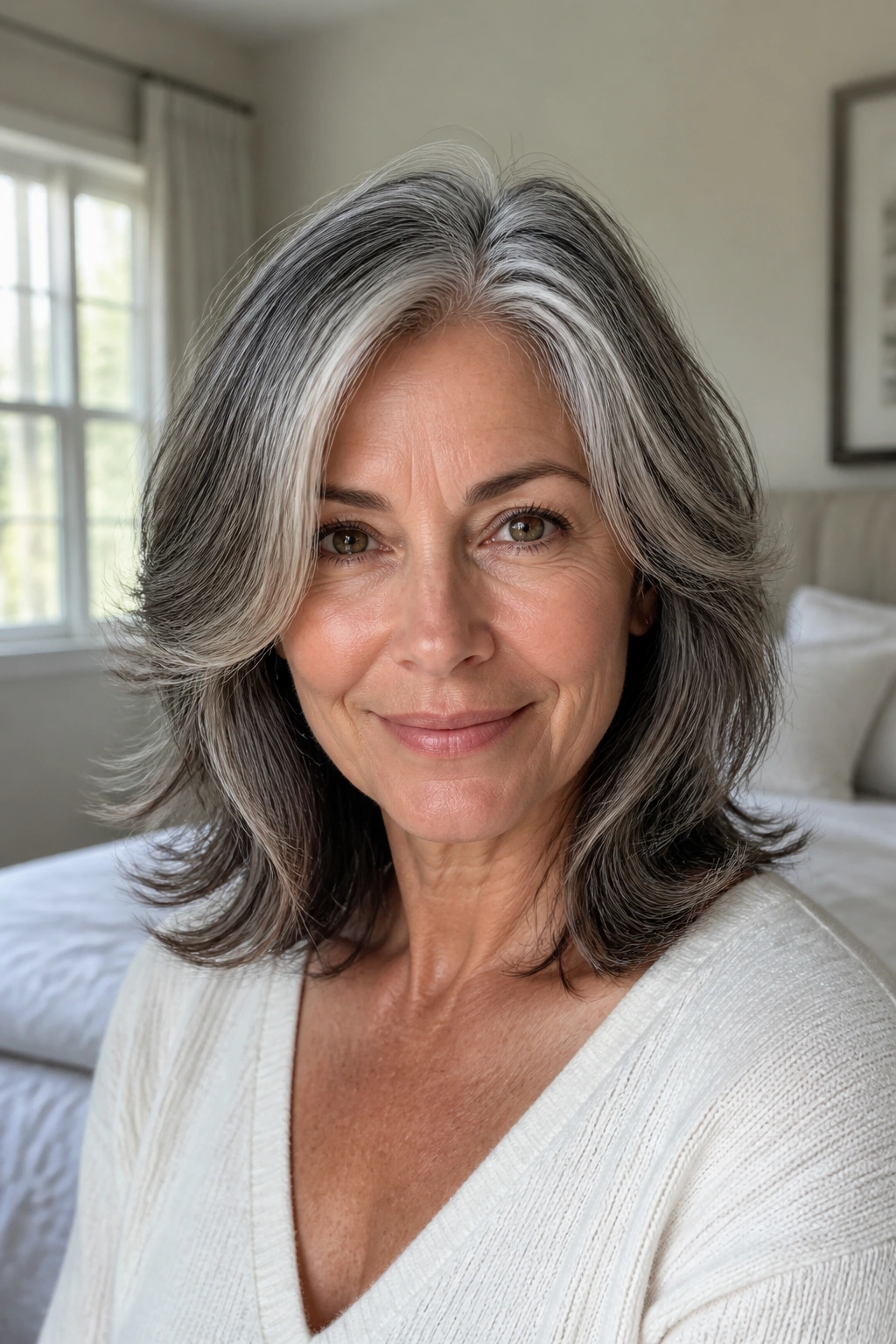
Shoulder-length hair can get heavy fast, especially when it’s all one length. Feathering takes away that weight in the right places and lets the salt-and-pepper mix move when you walk, turn, or tuck it behind your ear.
This is a good choice if you want to keep some length for ponytails or clips but don’t want the ends to hang flat. The feathering should live mostly around the face and through the lower layers. Too much feathering through the whole head can make the cut look hollow, which is not the goal.
I like this style for thick hair because it removes bulk without shrinking the outline too much. It also works nicely if your hair falls straight but has a little bend at the ends. A round brush and a quick blow-dry at the roots are usually enough.
9. Sleek Mid-Length Layers
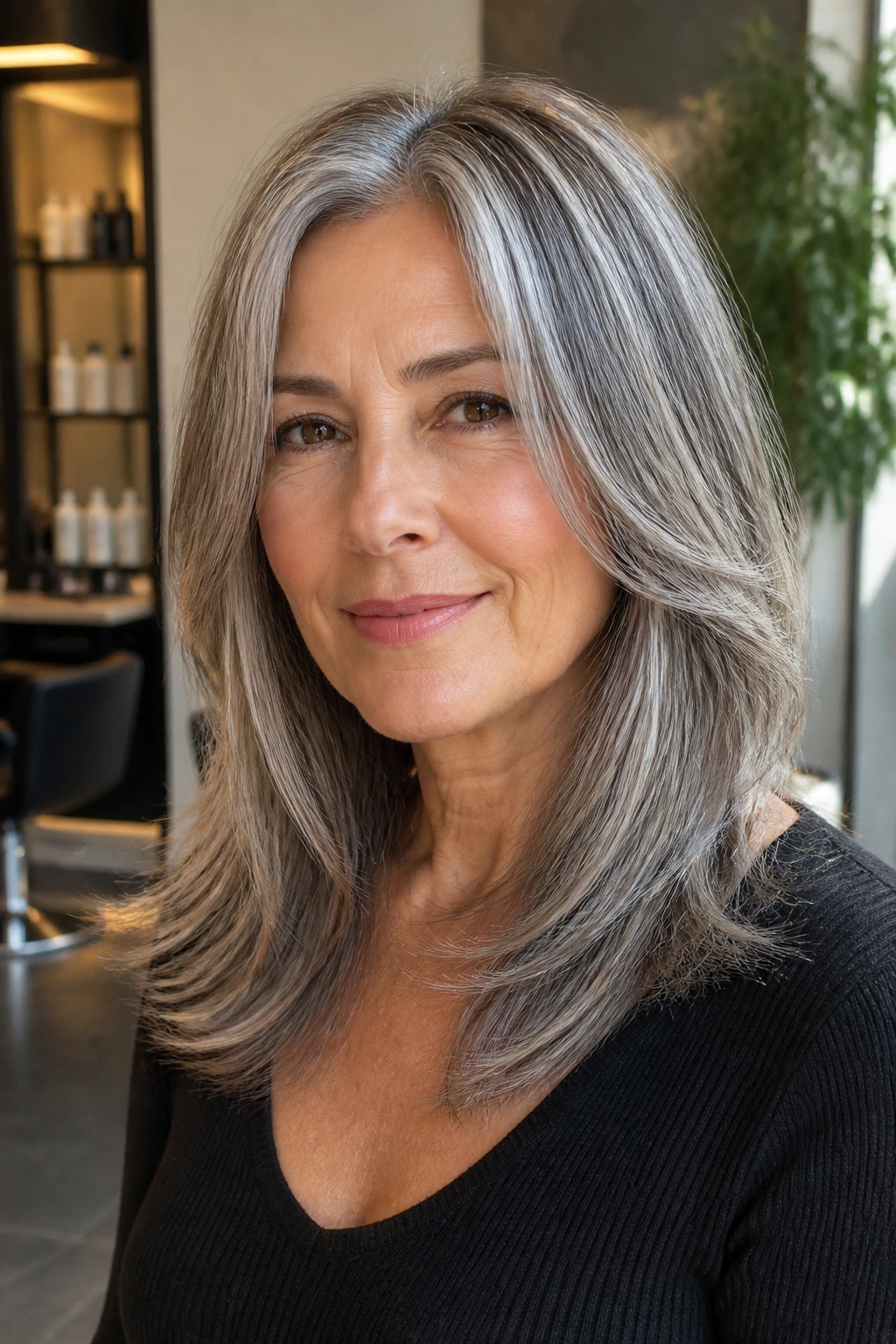
Sleek mid-length layers are for the woman who wants clean lines and a little movement, not a full haircut that shouts for attention. The style sits somewhere between polished and easy, which is probably why it stays useful year after year.
The layers should be subtle. That matters. If they’re too short or too many, the ends start to flick out in odd places, especially on gray hair that has a mind of its own. A few long layers are enough to stop the shape from hanging like a curtain.
This cut looks best when the surface is smooth. A light serum on damp hair, then a blow-dry with a paddle brush, keeps it under control. If you use a flat iron, keep the heat moderate and move quickly. Overheating gray hair strips the shine you want to show off.
10. Long Pixie with a Soft Nape
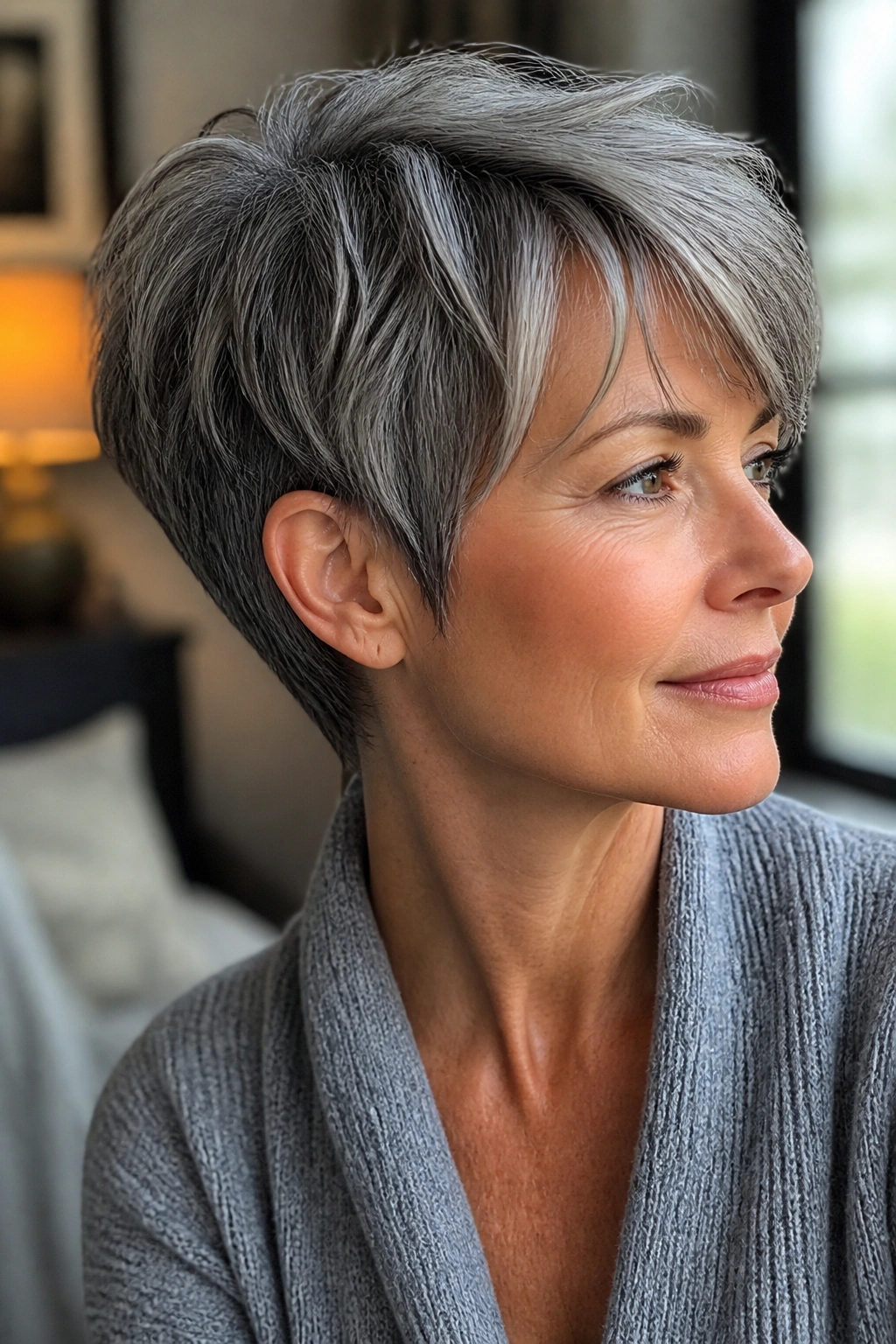
A long pixie is a smart middle ground for anyone who likes short hair but does not want a severe crop. The nape stays neat, the top stays soft, and the sides are long enough to tuck or sweep.
That extra length around the front matters. It gives you options. One day you can wear it forward for softness, the next you can sweep it back with a bit of pomade. The cut never feels frozen in one place, which is half the charm.
It also grows out well. That’s a big deal. Short cuts can become awkward fast, but a long pixie usually keeps its shape for several weeks longer than a very cropped style. If you want low-maintenance without looking plain, this is a strong bet.
11. Wavy Lob with a Deep Side Part
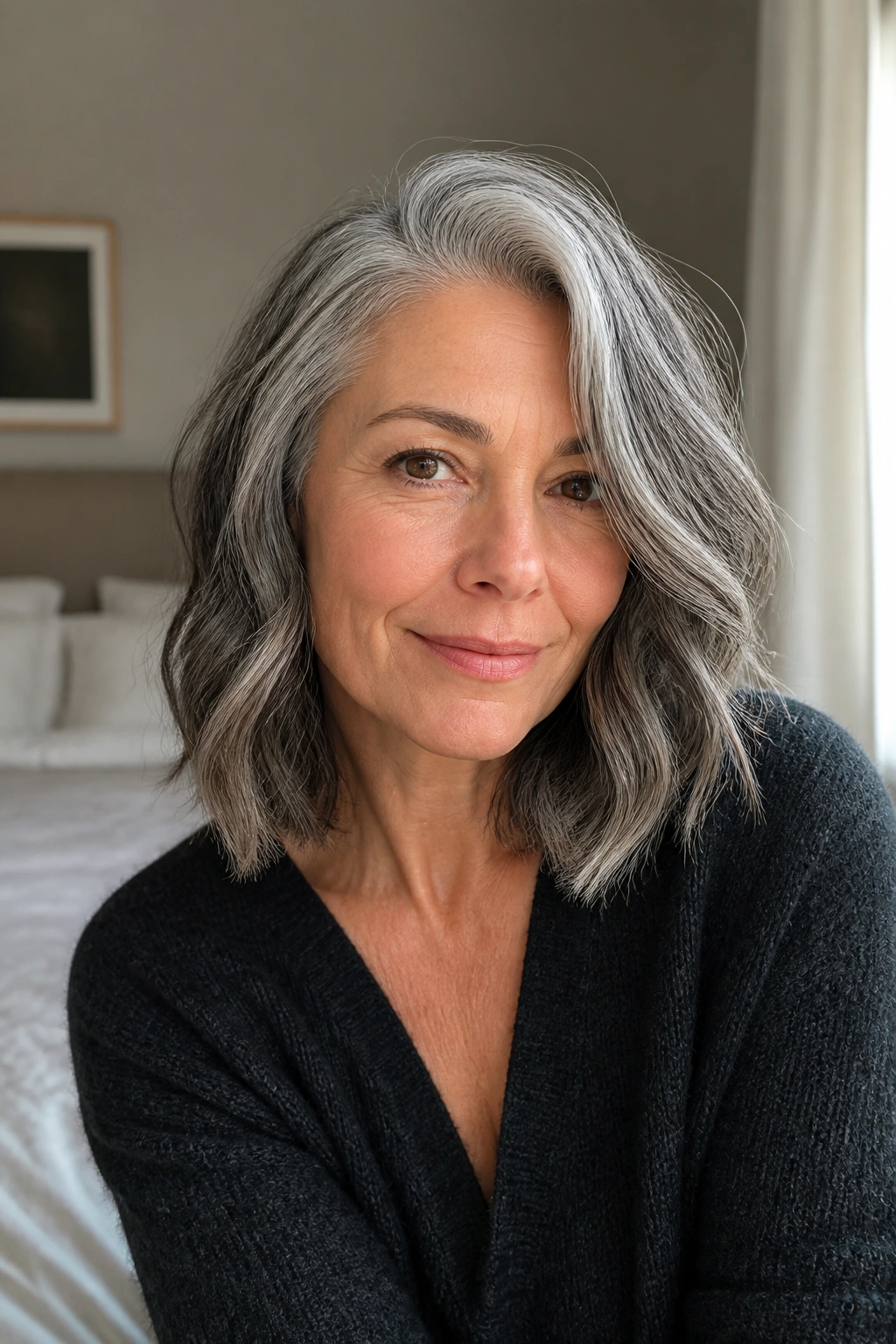
A deep side part gives a wavy lob a little attitude. Without it, the style can slide too casual. With it, the same cut suddenly has lift at the crown and a stronger frame around the face.
This version works well if you have a broader forehead or if one side of your face carries more softness than the other. The part draws the eye diagonally, which is flattering in a way that feels natural rather than staged. Keep the waves loose and touchable, not tight or overly uniform.
I’d avoid making the ends too curly. Let them stay a little straighter so the whole cut doesn’t puff outward. That contrast is what keeps it fresh. One sharp part and one easy wave can do more than a pile of product.
12. Salt and Pepper Pageboy with Rounded Ends
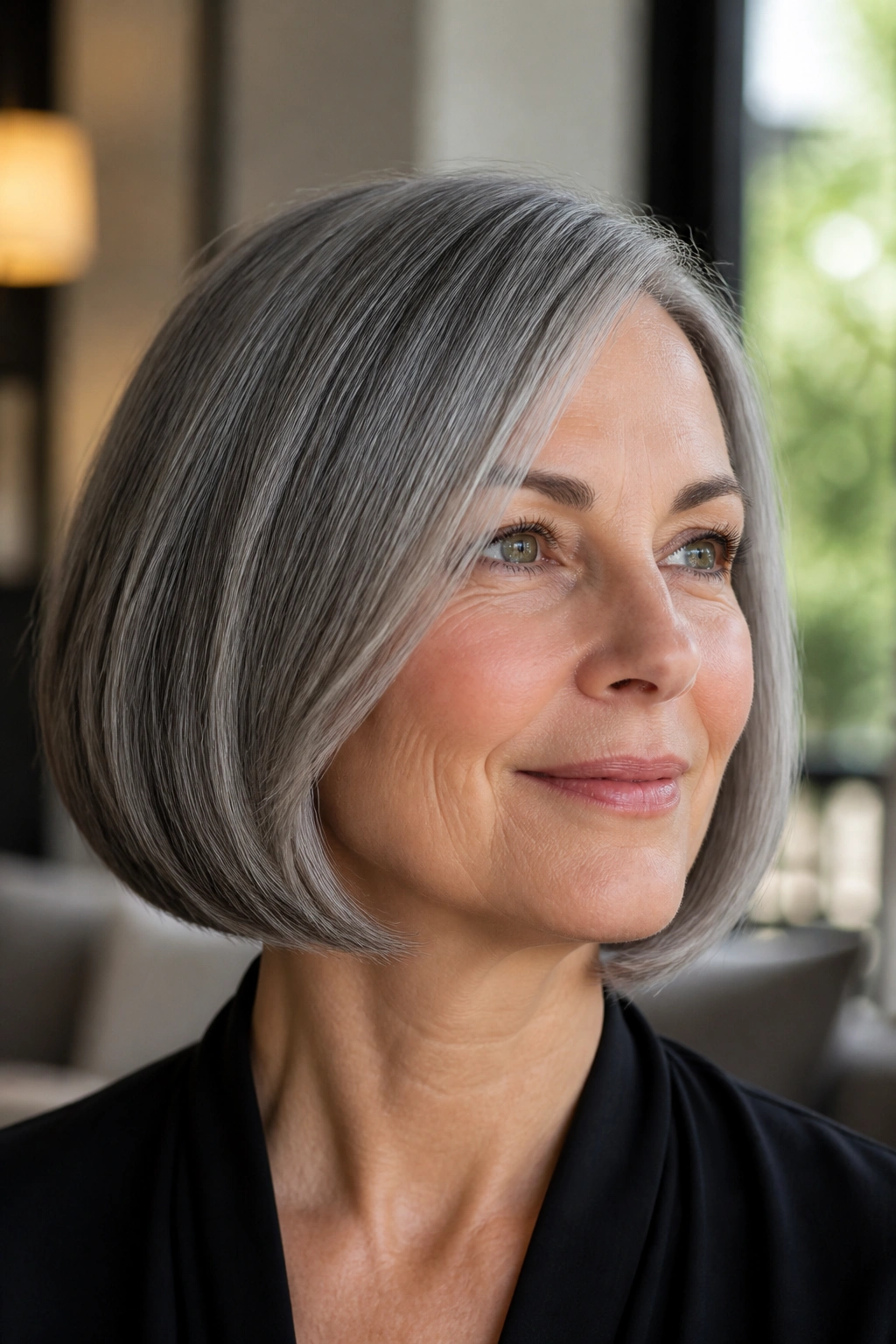
The pageboy has a retro shape, but the modern version is much softer than the old helmet-like cut people remember. The rounded ends curve under just enough to hug the jaw and neck, which gives salt and pepper hair a tidy, deliberate look.
This style suits straight hair especially well. Thick straight strands hold that curve without much fuss, and the color pattern makes the edge look even cleaner. It can feel a little formal, which is part of the appeal if you like clothes with structure or earrings with a bit of weight.
Compared with a blunt bob, the pageboy leans gentler. The curve is the point. If a blunt cut feels too hard on your face, this is the softer alternative.
13. Angled Bob with a Clean Undercurve
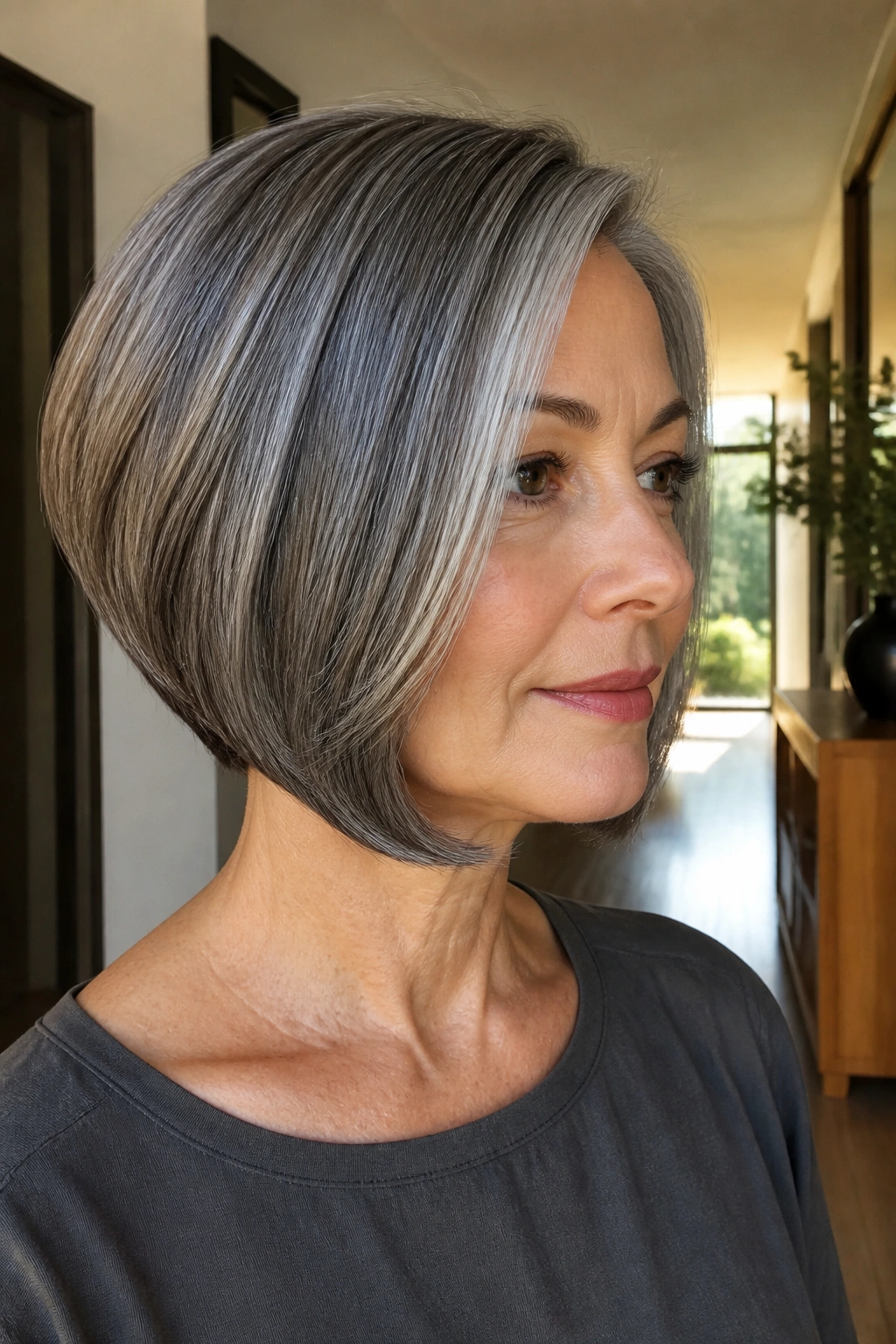
An angled bob gives you shape without a lot of extra styling. Shorter at the back and longer toward the front, it pulls attention to the jawline and neck in a way that feels crisp, not severe.
The undercurve matters more than the angle alone. If the ends turn in neatly, the whole haircut looks controlled. If the ends flip out, the shape loses its edge. That’s why this cut is best when the hair is healthy enough to hold a smooth line.
It’s a good pick if your face feels wider than you’d like or if you want a cut that makes the neck look longer. The front pieces should stop somewhere around the chin or slightly below it. Anything longer can flatten the angle and make the style lose its point.
14. Collarbone Cut with Curtain Bangs

Curtain bangs work because they don’t fight the face. They part in the middle, fall away from the forehead, and soften the area around the eyes and cheekbones without the heaviness of full bangs.
Bang Length Matters
The sweet spot is usually somewhere between the eyebrow and the cheekbone, depending on your face shape and how your hair falls. Too short, and the fringe can stick up in odd ways. Too long, and it stops reading as curtain bangs at all.
This is a friendly cut for people who want a little face framing but hate the feeling of a full fringe. It also grows out well, which matters because nobody wants a bang commitment that turns into a weekly fight with a round brush. Keep the front pieces soft and slightly longer than you think you need.
A collarbone base with curtain bangs can also be worn straight, bent, or with loose waves. That flexibility is what makes it practical.
15. Natural Afro with a Soft Shape
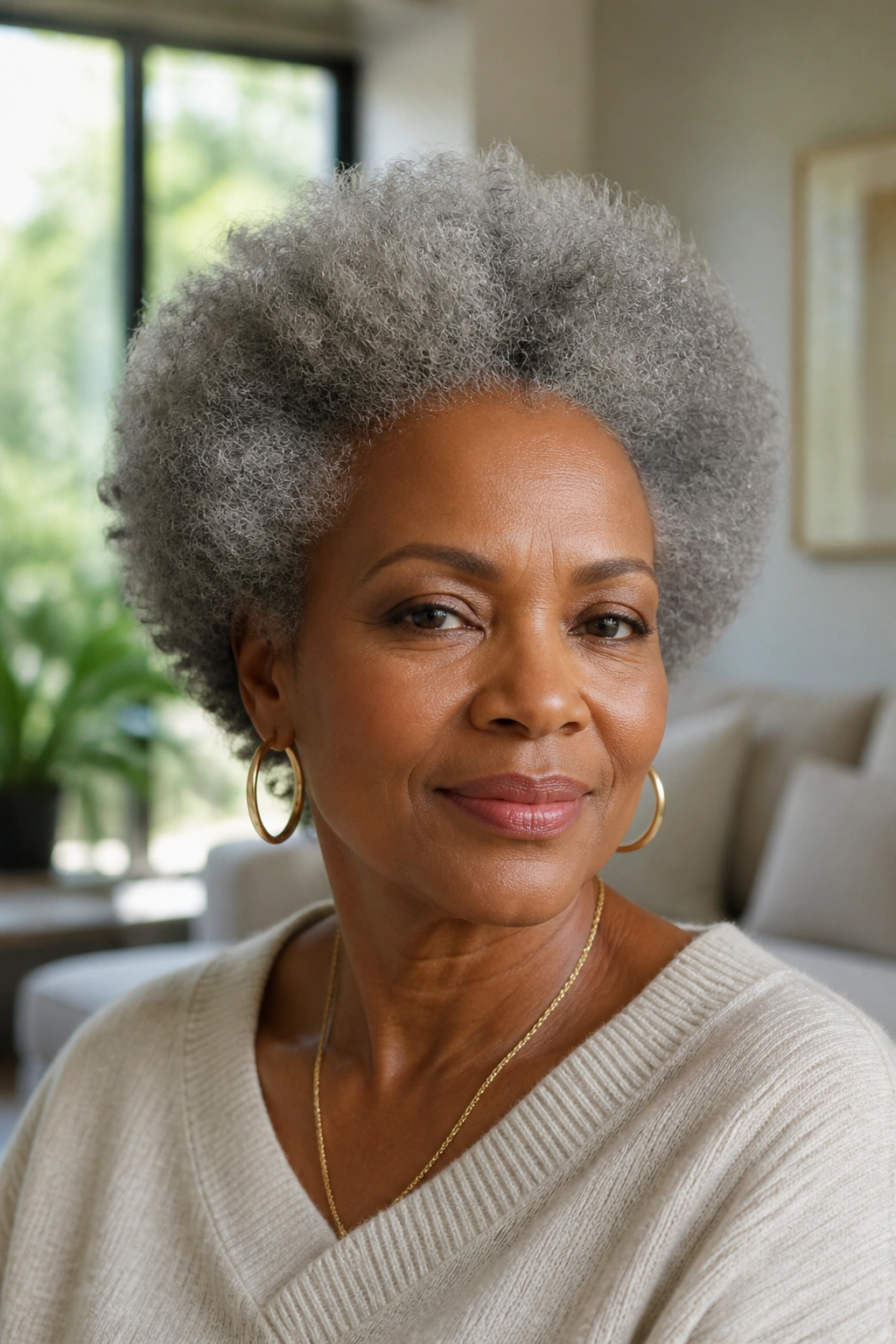
A natural afro can be one of the most elegant salt and pepper styles on a woman over 50, mainly because it respects the hair instead of trying to flatten or hide it. The shape should be rounded or gently oval, not boxy unless that is the look you want on purpose.
Hydration is the real job here. Gray and silver coils often need more moisture, so a leave-in cream, sealing oil, and regular deep conditioning matter more than fancy styling tricks. The trim should keep the silhouette even while leaving the natural texture intact.
What the Shape Should Do
- Lift the crown without stretching the curl pattern
- Keep the sides balanced, not heavy
- Preserve softness around the hairline
- Show the silver where it shines most
This style looks strongest when the shape is clean. A well-shaped afro does not need to be big to be beautiful.
16. Low Chignon with Silver Face Pieces
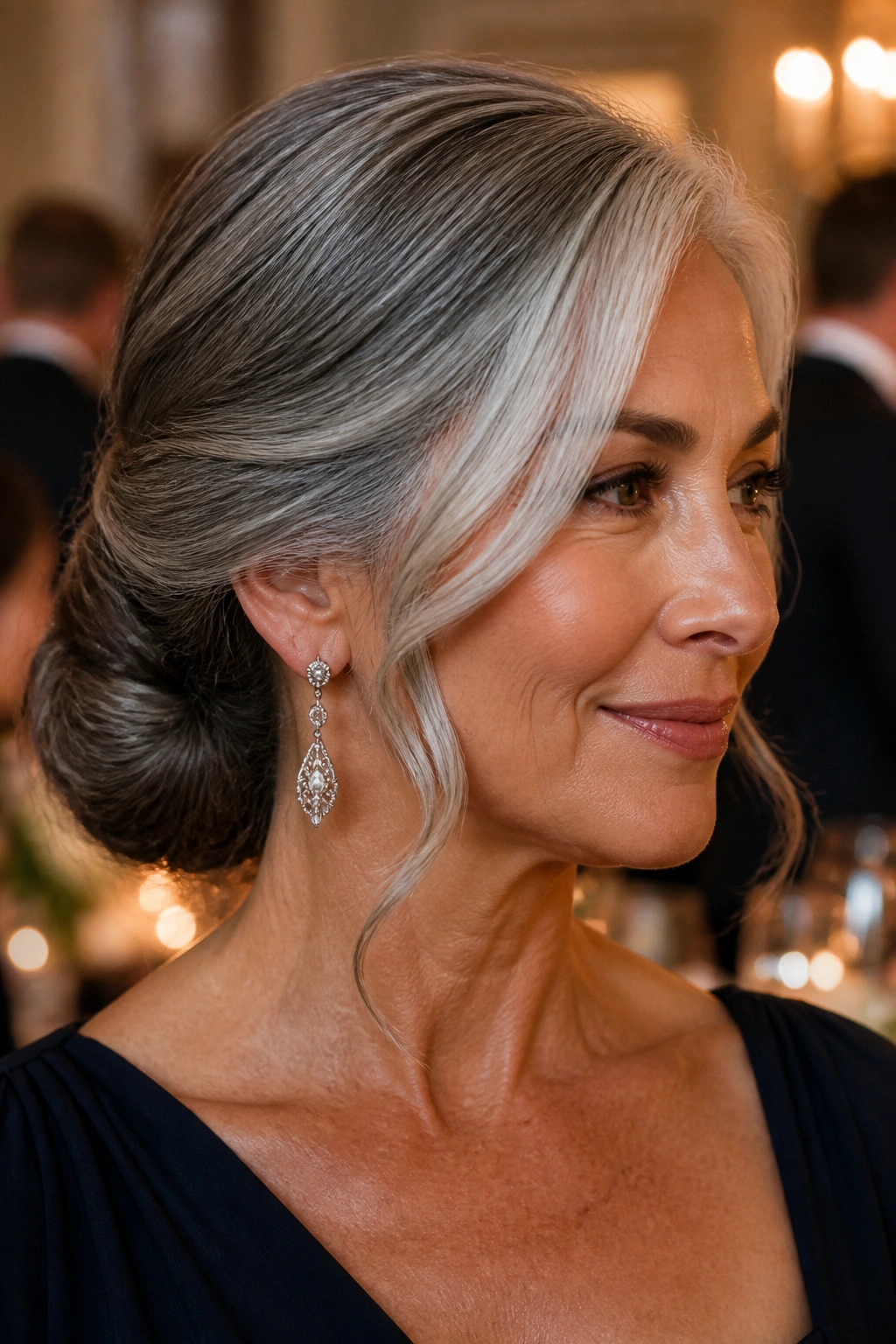
A low chignon is one of the easiest ways to make salt and pepper hair look calm and polished for an event. The silver pieces around the face stop the style from feeling too formal, and they soften the whole look in a nice way.
- Brush the hair back smoothly and gather it at the nape.
- Twist it into a loose coil, then pin it flat with bobby pins that match your hair color.
- Pull out two small face-framing pieces near the temples so the style does not look stiff.
- Mist lightly with flexible hold spray, then smooth any flyaways with a tiny bit of cream on your fingertips.
That’s enough. Don’t build a helmet out of hairspray. The best chignon looks as if it stayed in place on its own.
17. Curly Lob with Diffused Volume

The curly lob sits in a sweet spot for women who want length and movement without the weight of very long hair. It gives curls room to spring while keeping the shape close enough to the shoulders that it doesn’t drift into triangle territory.
Diffusing is where this style comes alive. Dry the roots first, then move the diffuser around the head instead of blasting one section for too long. If you need more crown lift, tilt your head from side to side and let the roots dry away from the scalp. That keeps the top from lying flat.
This cut is especially good when the salt-and-pepper mix is dense and rich, because the different tones show up in the curl pattern. Do not cut the layers too short; the lob needs enough length to keep its swing.
18. Rounded Short Cut with Soft Edges
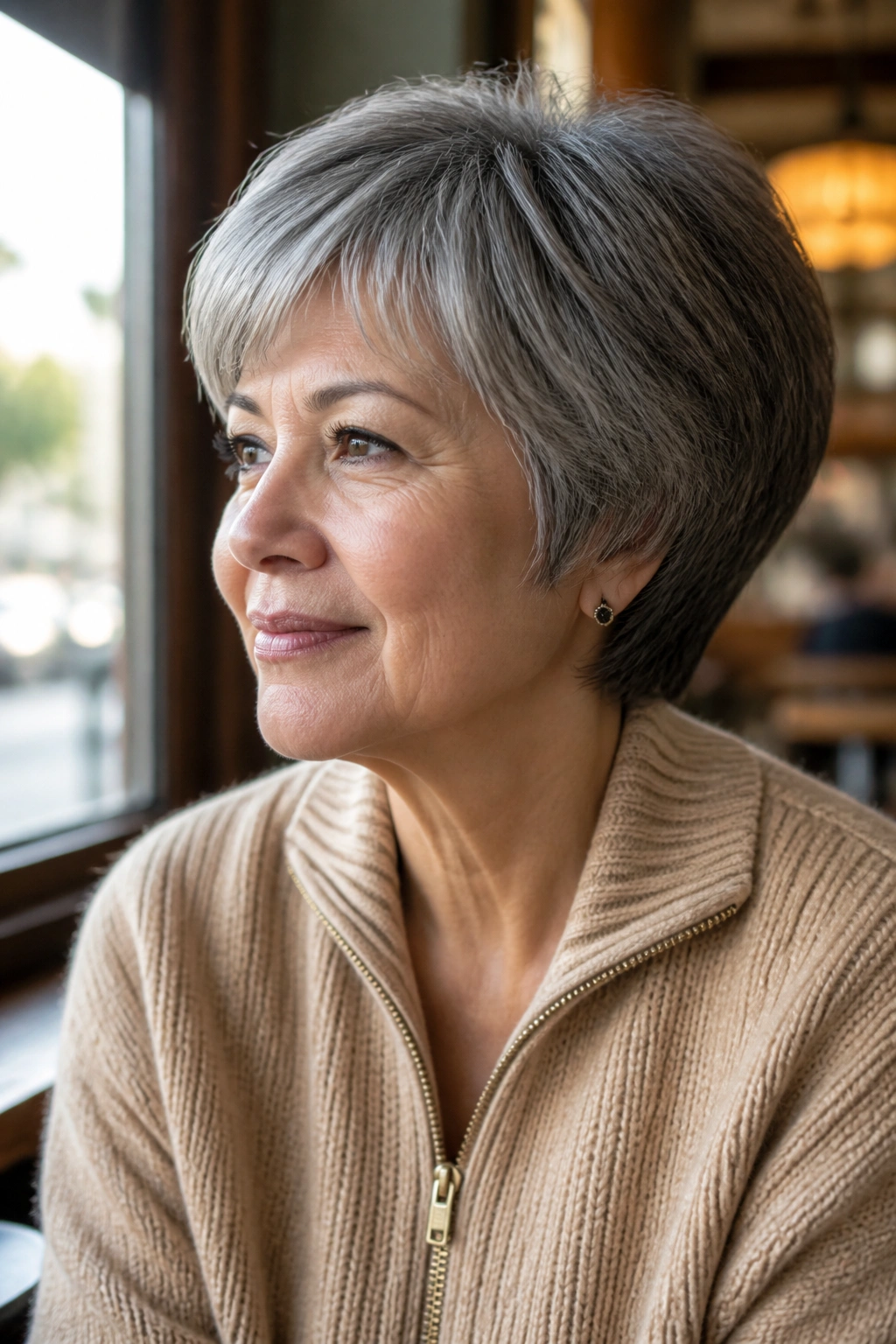
A rounded short cut is gentler than a pixie and less fussy than a bob. The outline follows the head in a soft curve, which makes the whole look feel neat without turning severe.
This style is useful if you want to keep the ears and neckline partly covered while still showing the face. It suits straight hair, light waves, and even some denser textures that need a tidy silhouette. The edges should stay soft, not razor-thin. That difference matters a lot on gray hair, which can look brittle if the ends are overworked.
A Few Good Requests to Make
- Ask for a rounded perimeter
- Keep the top lightly textured
- Leave enough length at the temples
- Avoid aggressive thinning at the ends
The shape should hug, not cling.
19. Layers with Wispy Bangs
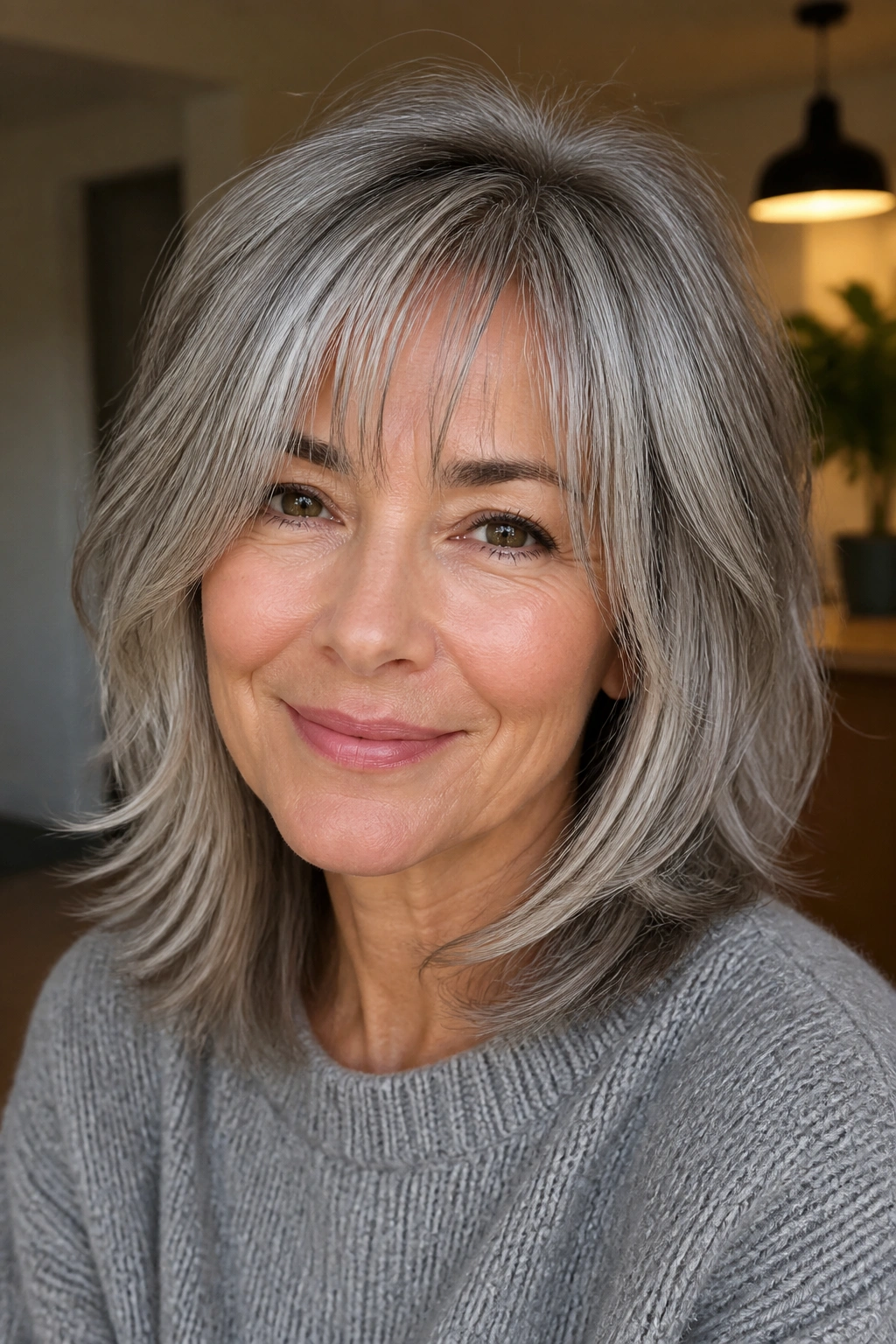
Wispy bangs are the quieter cousin of curtain bangs. They sit lighter on the forehead, which makes them useful if you want softness without a heavy fringe that needs constant trimming.
The trick is restraint. The bangs should be thin enough to move, but not so sparse that they look accidental. They’re good with layered shoulder-length cuts because the front softness keeps the rest of the hair from feeling too plain. I also like them on women whose brows and eyes are the main features they want to keep in view.
A light blow-dry with a small round brush is enough. Keep the bangs slightly piecey, not perfectly smooth. That little bit of separation is what keeps them from looking stiff.
20. Tucked-Behind-the-Ear Bob
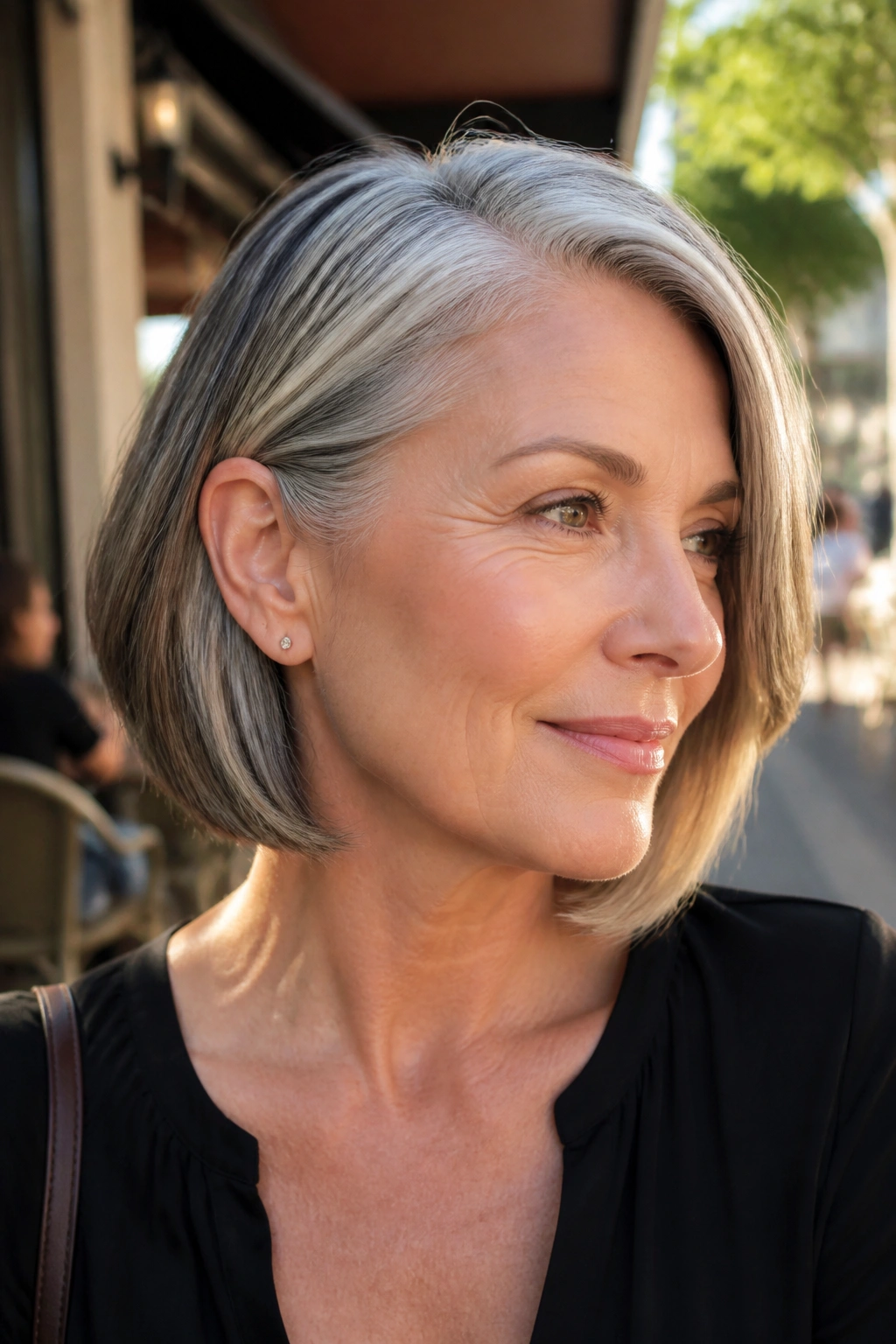
Some of the best hairstyles are the simple ones you can wear all day without thinking about them. A tucked-behind-the-ear bob is one of those cuts.
The shape should sit close enough to the head that the tuck looks neat, but not so tight that it feels severe. Tucking one side behind the ear opens the face, shows off earrings, and gives the haircut a quiet, tidy finish. It also works nicely with salt and pepper hair because the exposed side shows off the color blend right at the cheekbone.
This is a strong choice for fine hair since the ends stay compact. It’s also useful if you like changing the mood of the cut with almost no effort. One tuck. Done. No extra styling ritual required.
21. Shoulder-Grazing Curls with a Side Fringe

Shoulder-grazing curls are a good answer for women who want movement, fullness, and enough length to feel styled. The side fringe keeps the face open while the rest of the hair does the bigger, softer work.
This cut needs a good dry shape. Curls should be trimmed so they land where you want them, not where they collapse. If the fringe is too heavy, it will drop into the eyes. If it’s too short, it will spring up and fight the rest of the haircut. The best version sits lightly on one side and blends into the curl pattern.
I’d keep the layers long enough to preserve length at the back. That keeps the silhouette elegant and stops it from puffing out at the shoulders. The goal is fullness with control, not volume for its own sake.
22. Growing Out Salt and Pepper Layers with Soft Blending
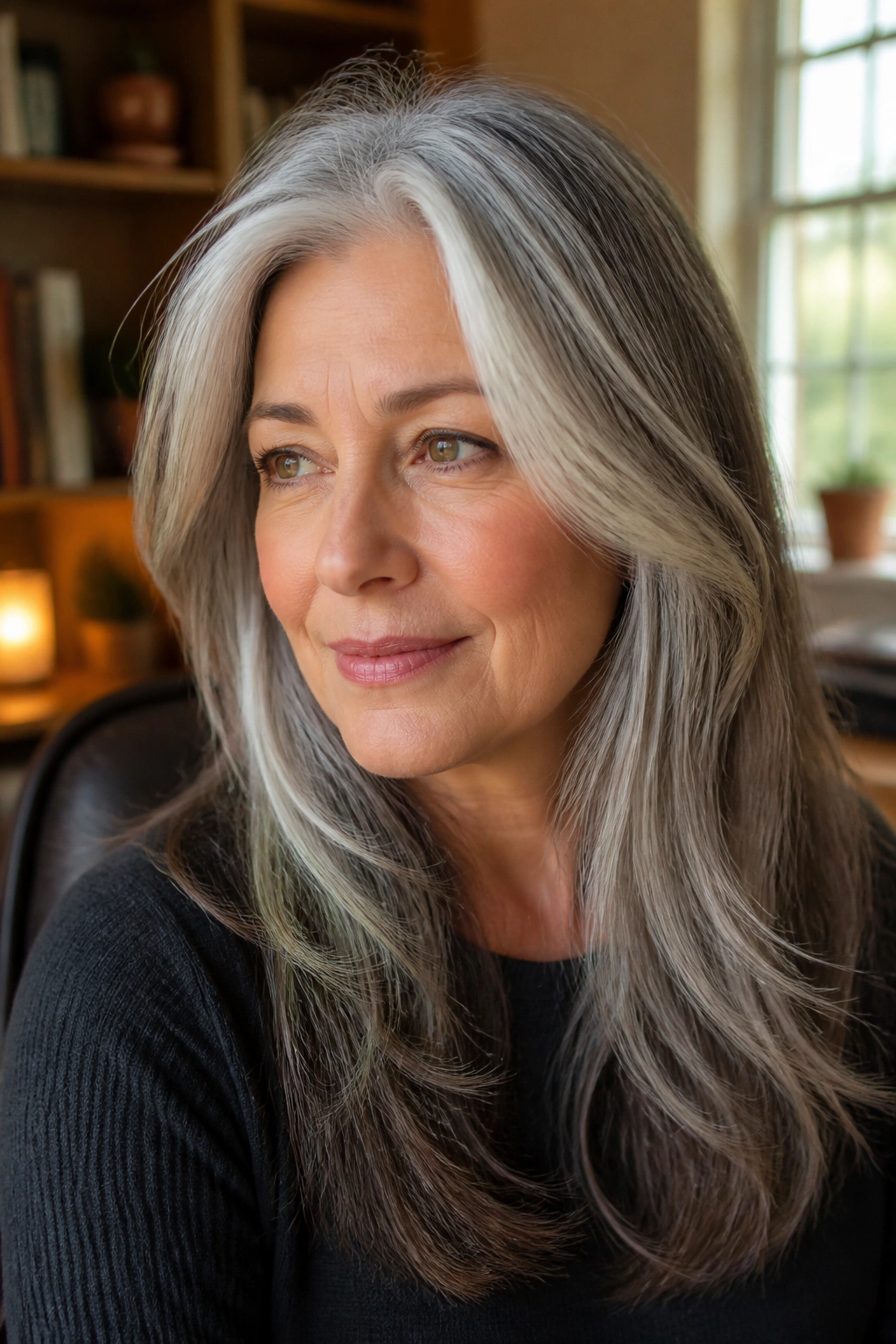
Growing out gray or blending an old color job into natural silver can look awkward if the cut is blunt and the layers are too stark. Soft blending solves that problem by keeping the transitions gentle from crown to ends.
This is the haircut I’d choose for someone who wants the grow-out to look deliberate instead of halfway done. The layers should be long enough to blur old color lines, especially around the temples and top. If the ends are too sharp, every inch of new gray shows. If the layers are too busy, the shape gets messy. The middle ground is what makes it work.
The Trim That Keeps It Calm
A light trim every 8 to 10 weeks helps the shape stay soft while the color changes underneath. Ask for movement around the face, a little more weight at the perimeter, and enough length that you can still tuck or clip it back on a lazy day.
That’s the nice thing about salt and pepper hair at this stage. It does not need disguising. It needs a good frame. And once the frame is right, the color can do the talking.
